AI-generated artistic interpretation · Not a photograph.
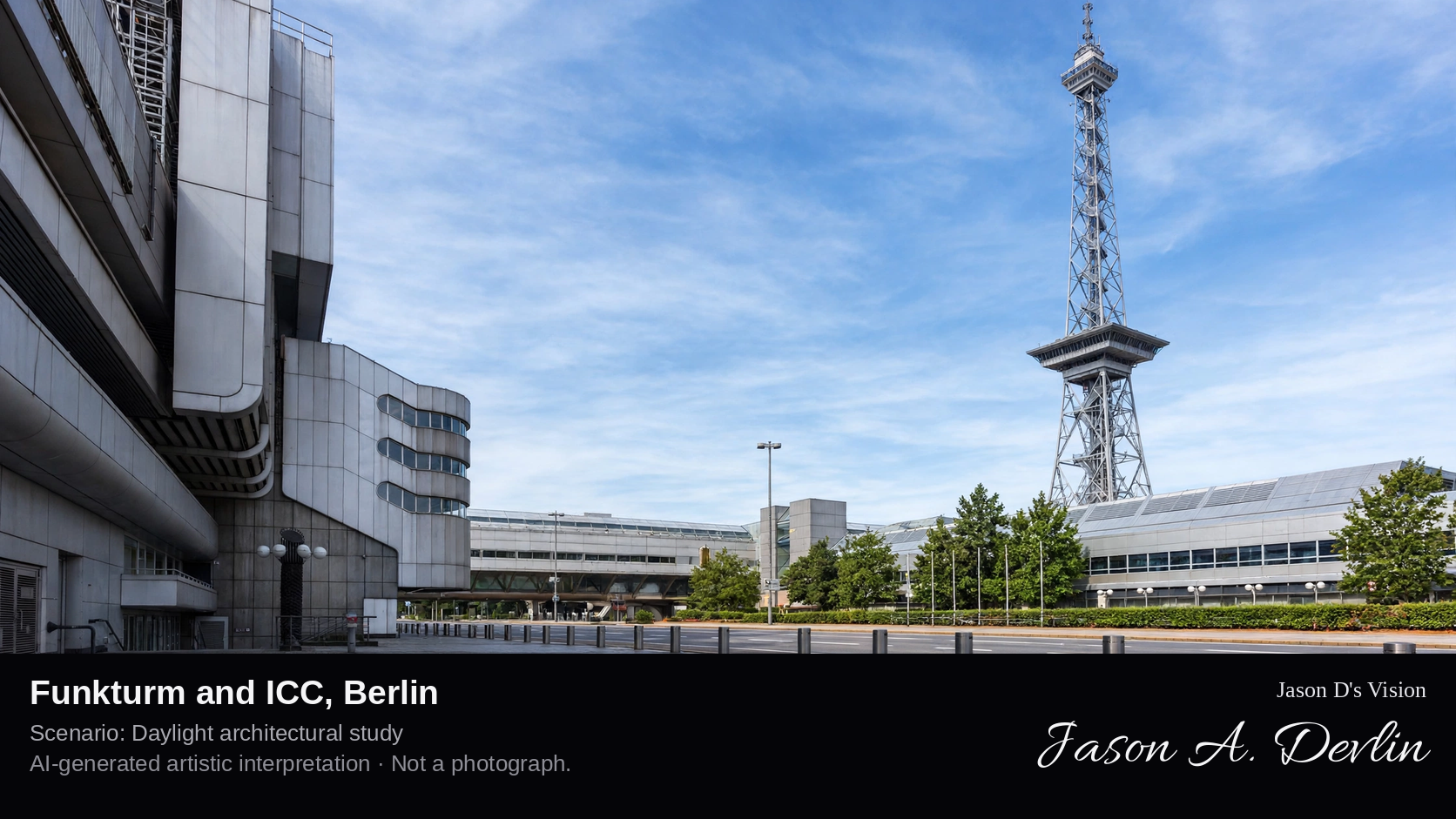
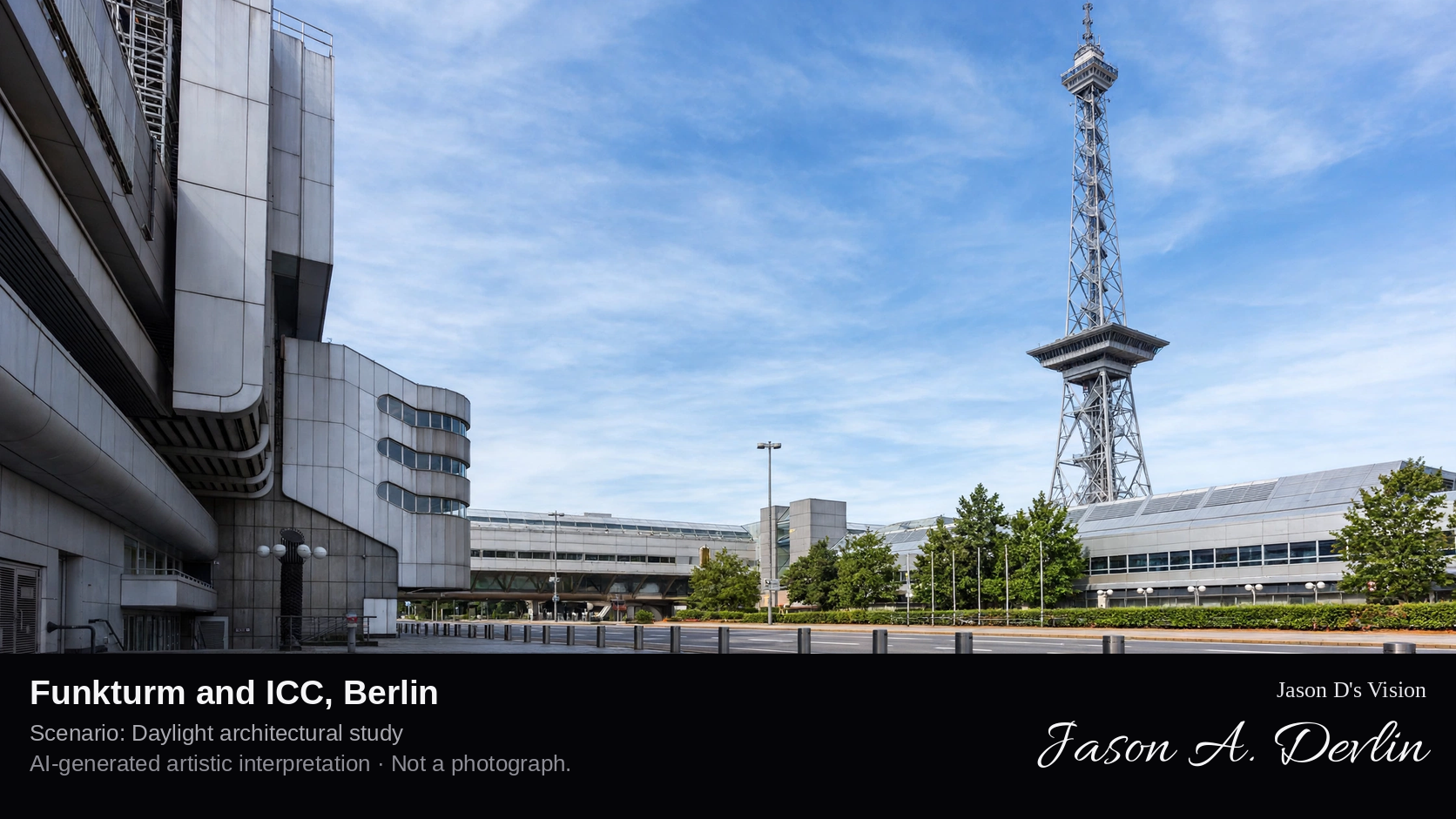
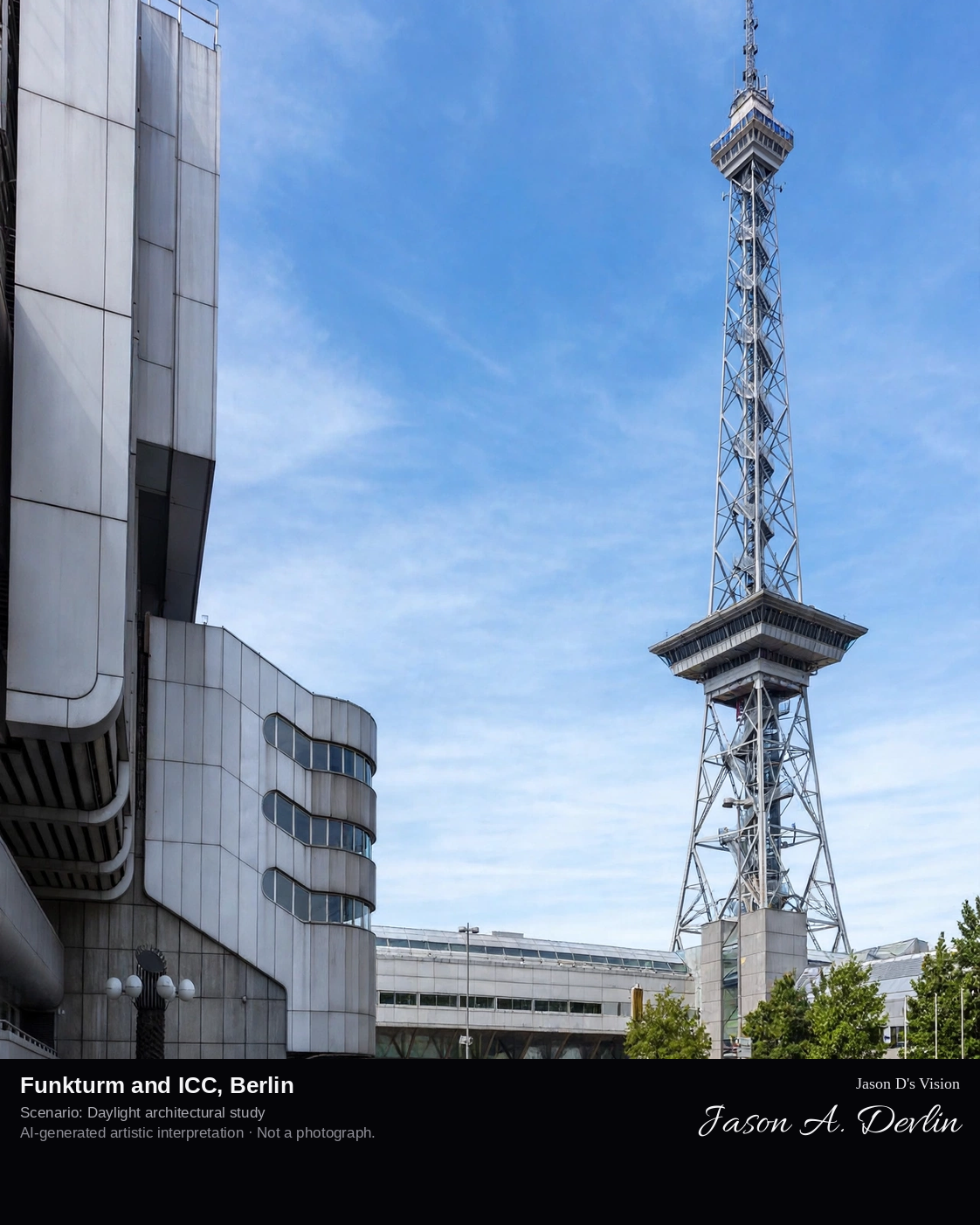
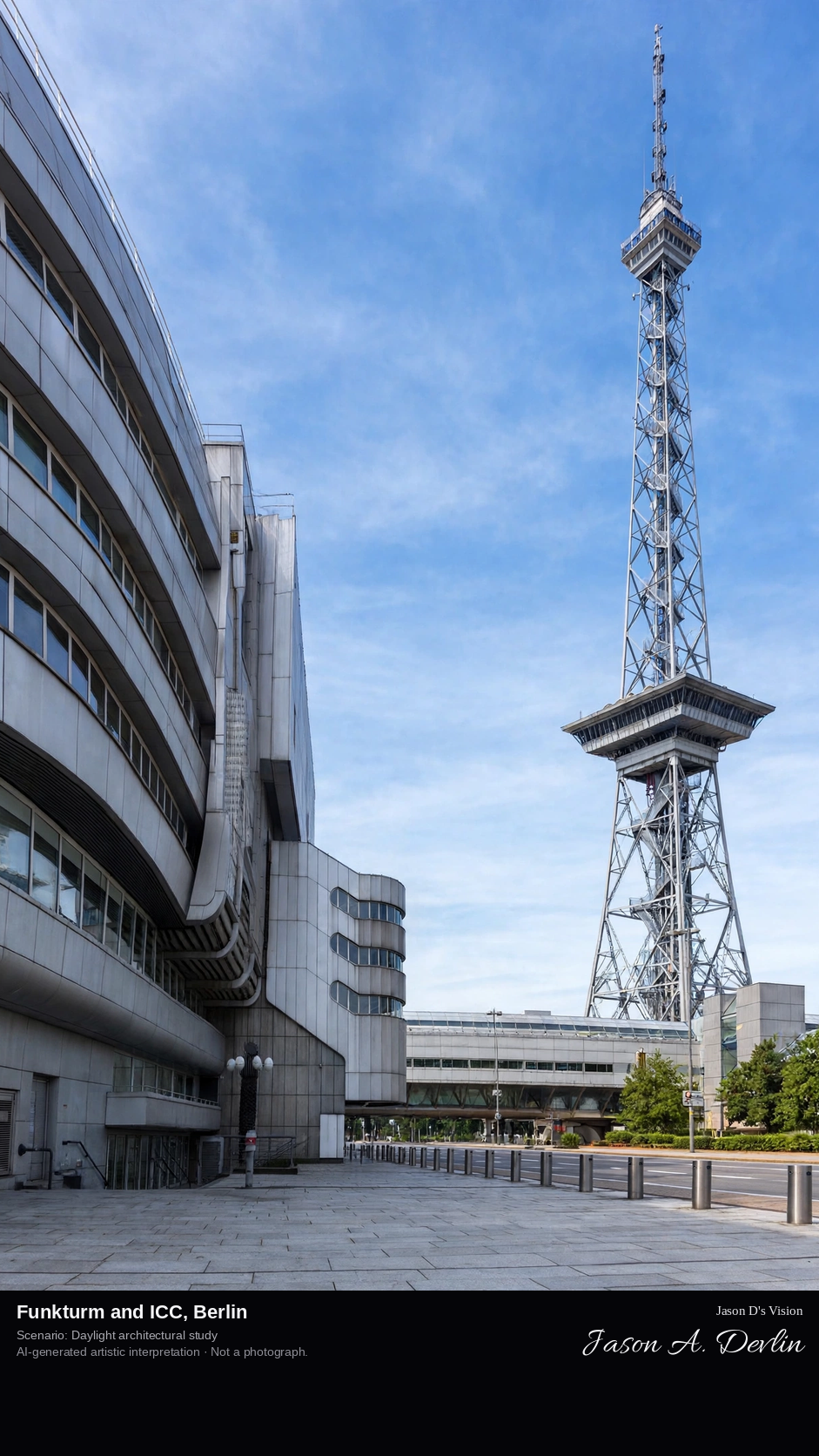
Berlin’s Funkturm opened in 1926 and stands beside the exhibition grounds. Its steel lattice structure contrasts with the large ICC building across Messedamm.
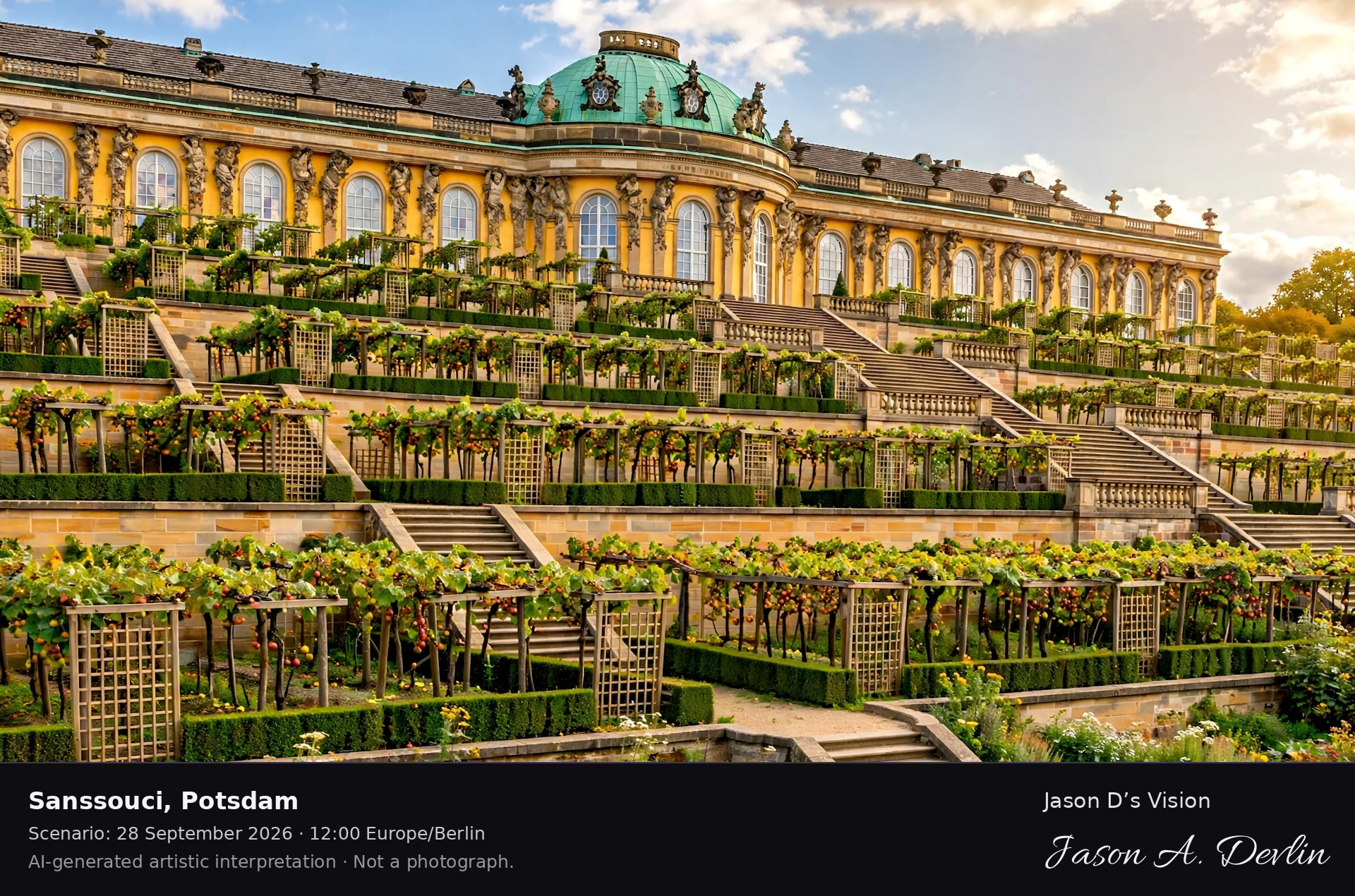
Terraces and palace · AI-generated artistic interpretation
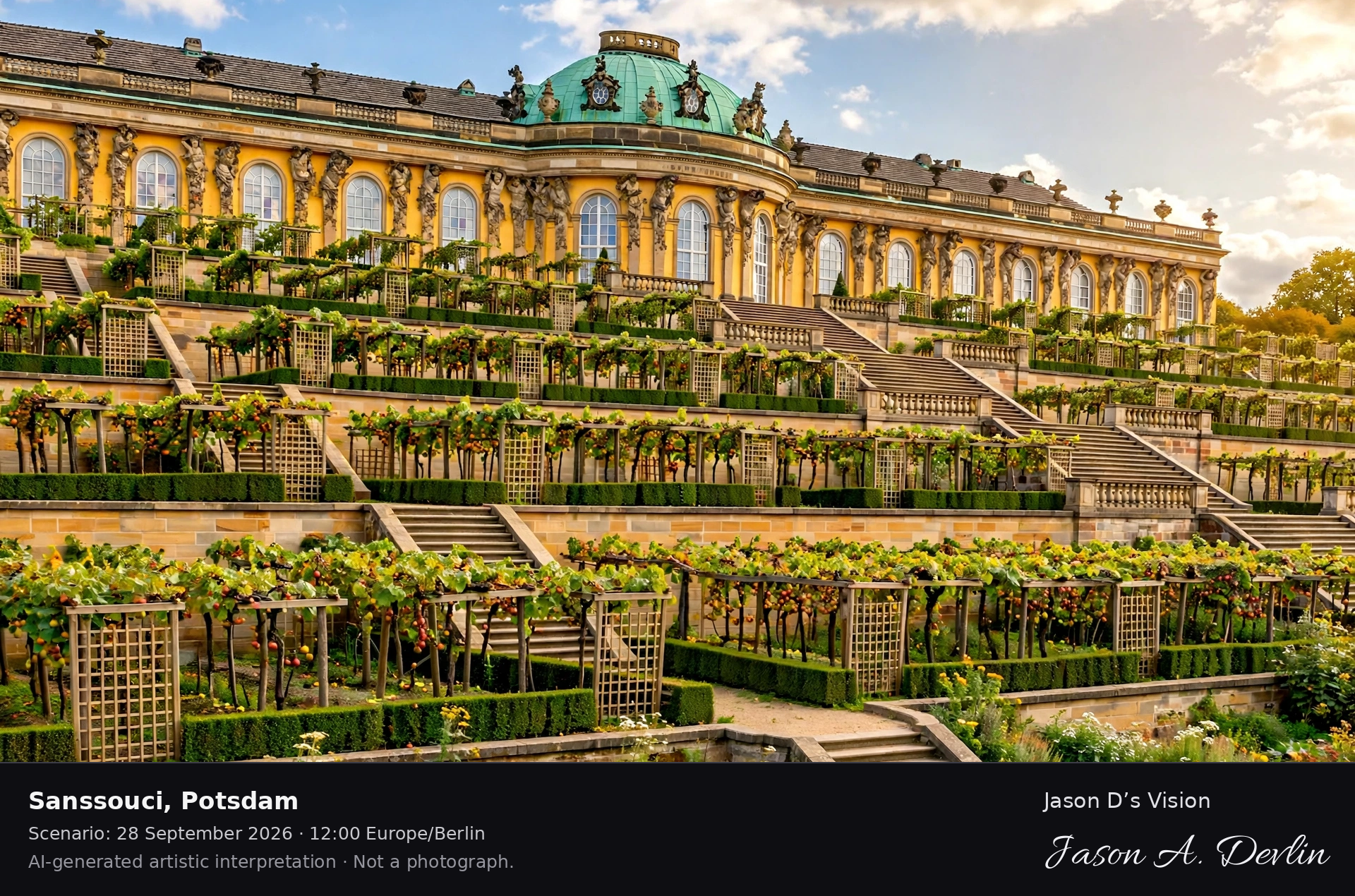
Sanssouci Palace glows floodlit at the top of its famous terraces, the verdigris dome rising against a rain-dark night sky. Espaliered vines and clipped hedges step down the slope in the center and right, with wide stone stairways glistening wet at the left. The 04:15 night-rain scenario turns the gold-lit terraces into mirrors, honest to a rainy Potsdam night.
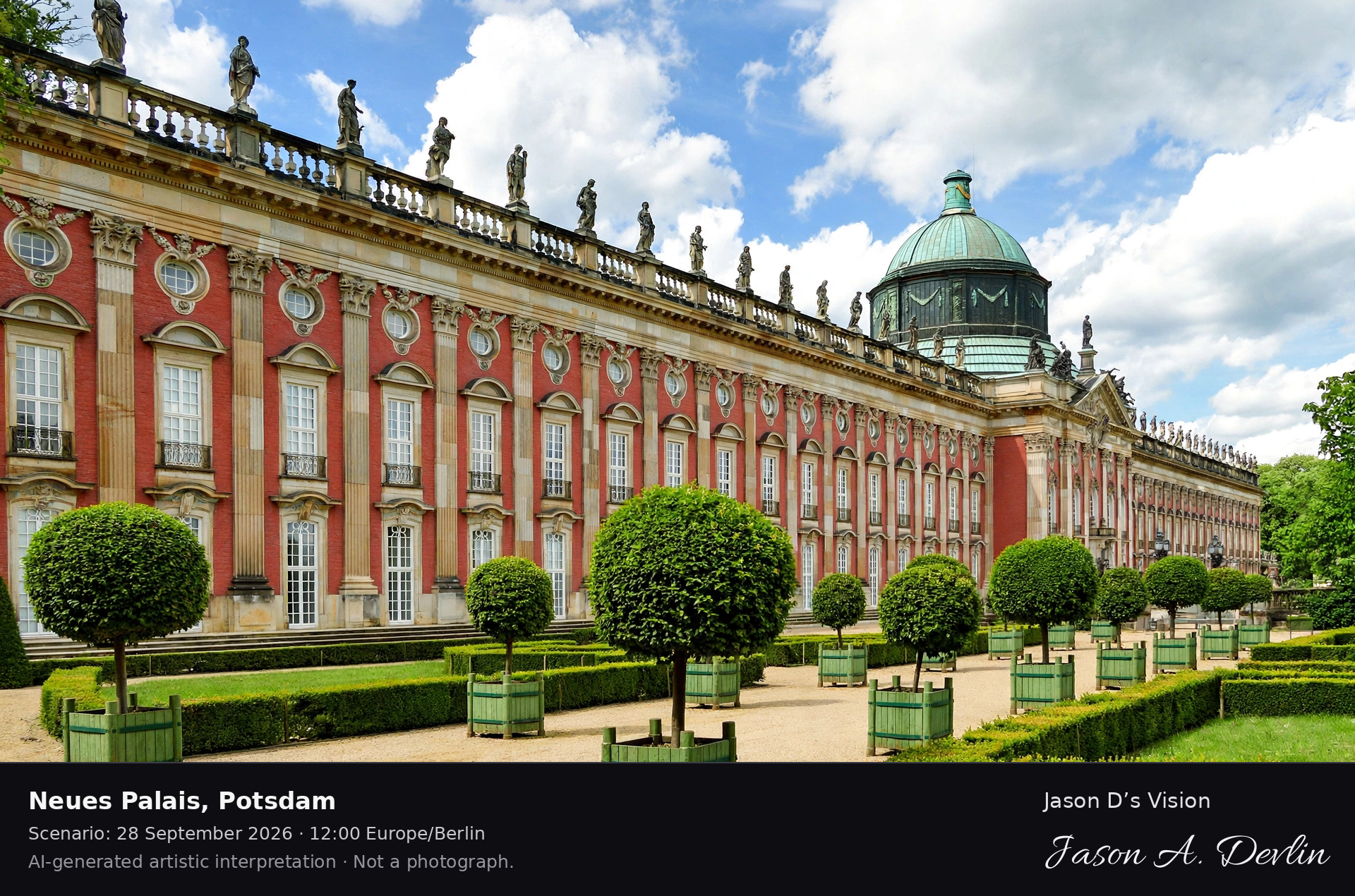
Palace and garden approach · AI-generated artistic interpretation
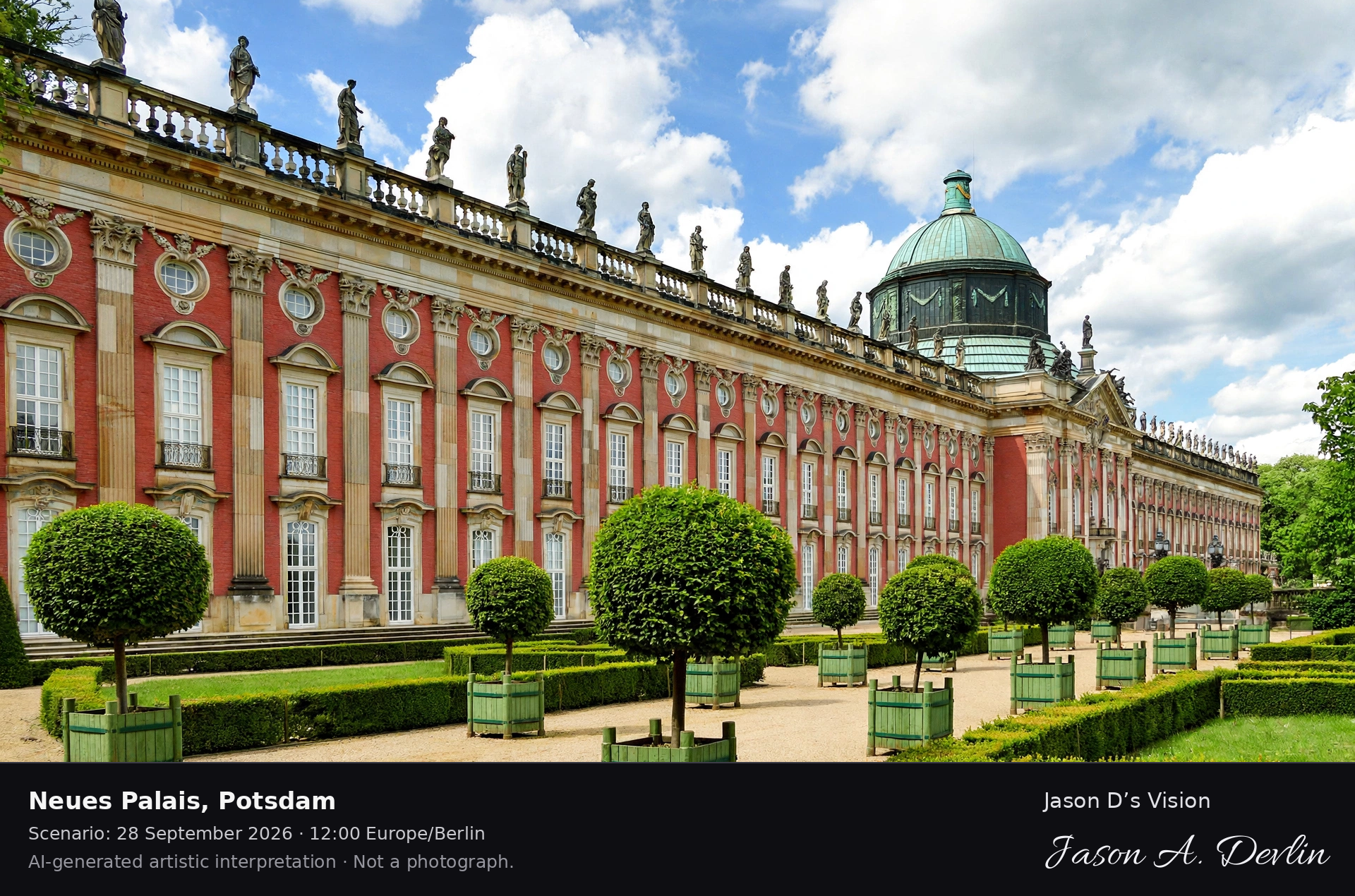
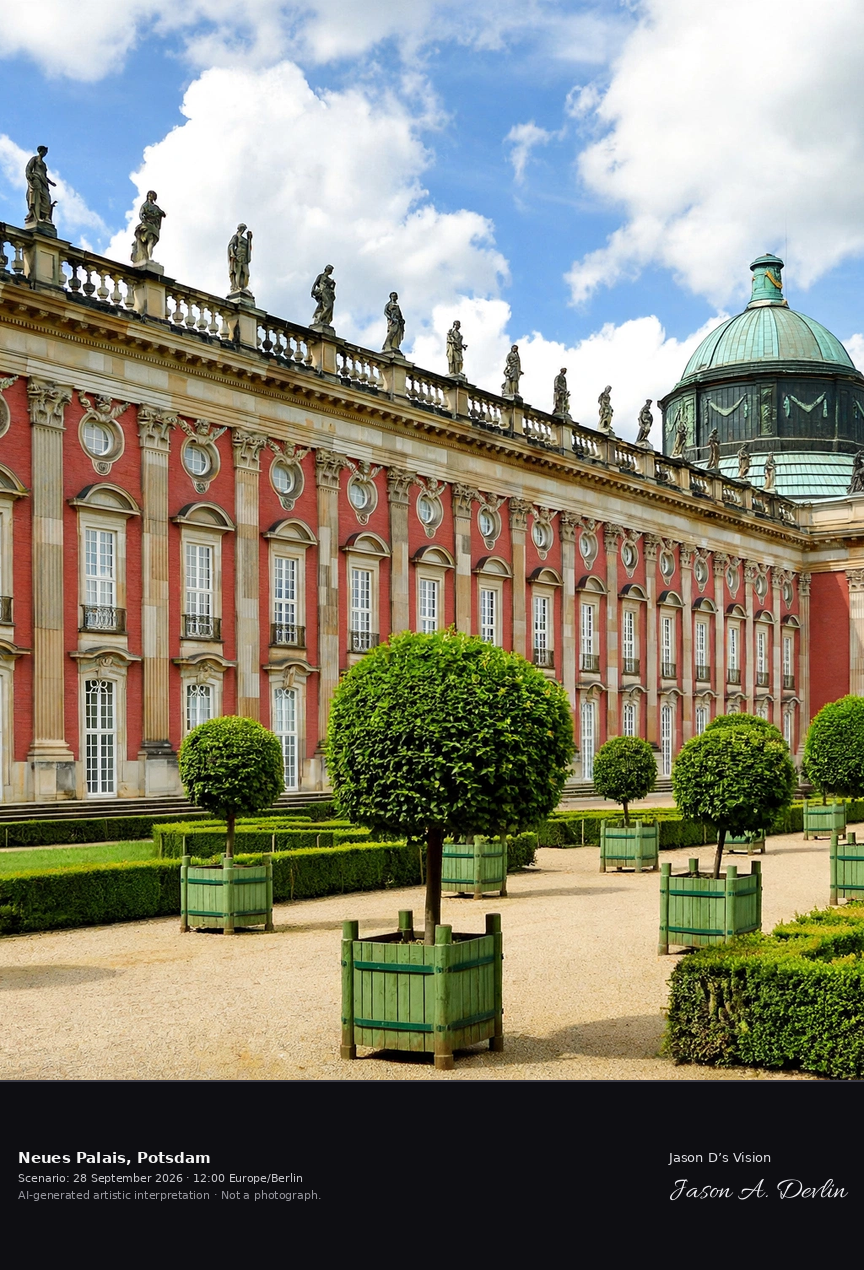
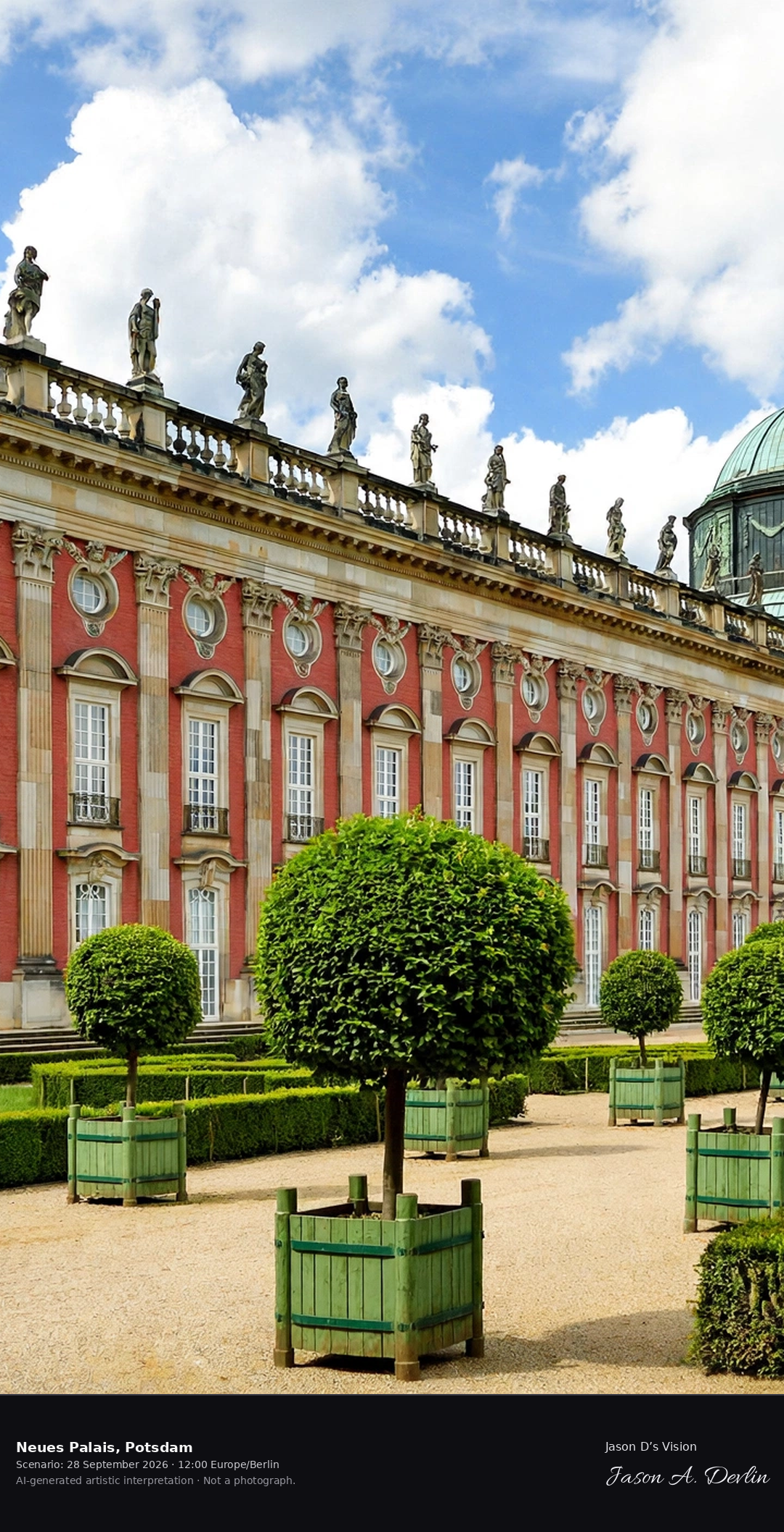
The Neues Palais stretches along the garden front, its red-ochre baroque façade glowing window after window beneath a dark rainy sky, rooftop statues lining the cornice at the left. The verdigris dome of the rotunda caps the right end above the portico, while wet gravel, fallen leaves, topiary tubs and lit park lamps fill the garden approach. A true night-rain scenario at 04:30, with lamps and warm windows the only light against the dark.
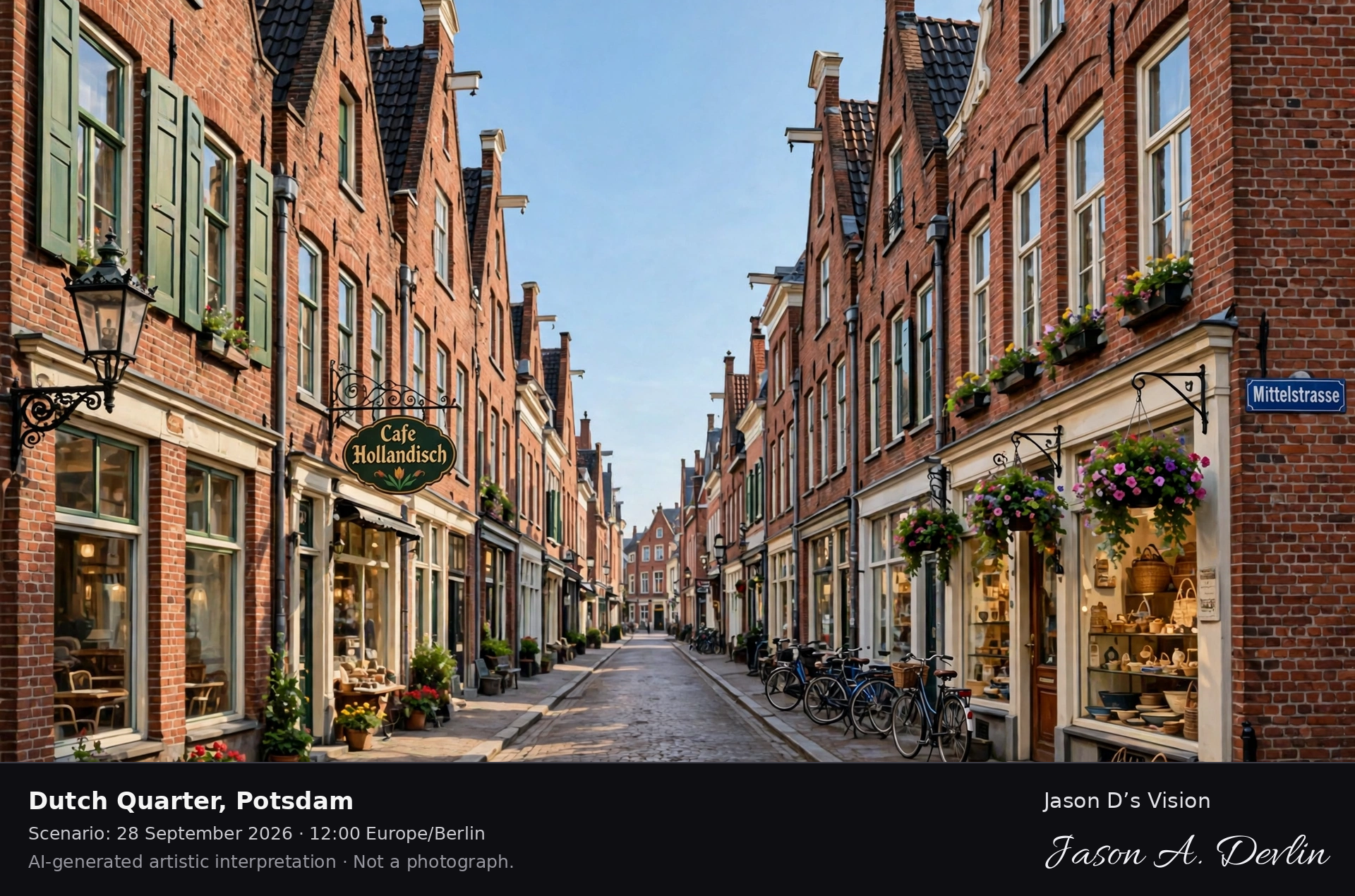
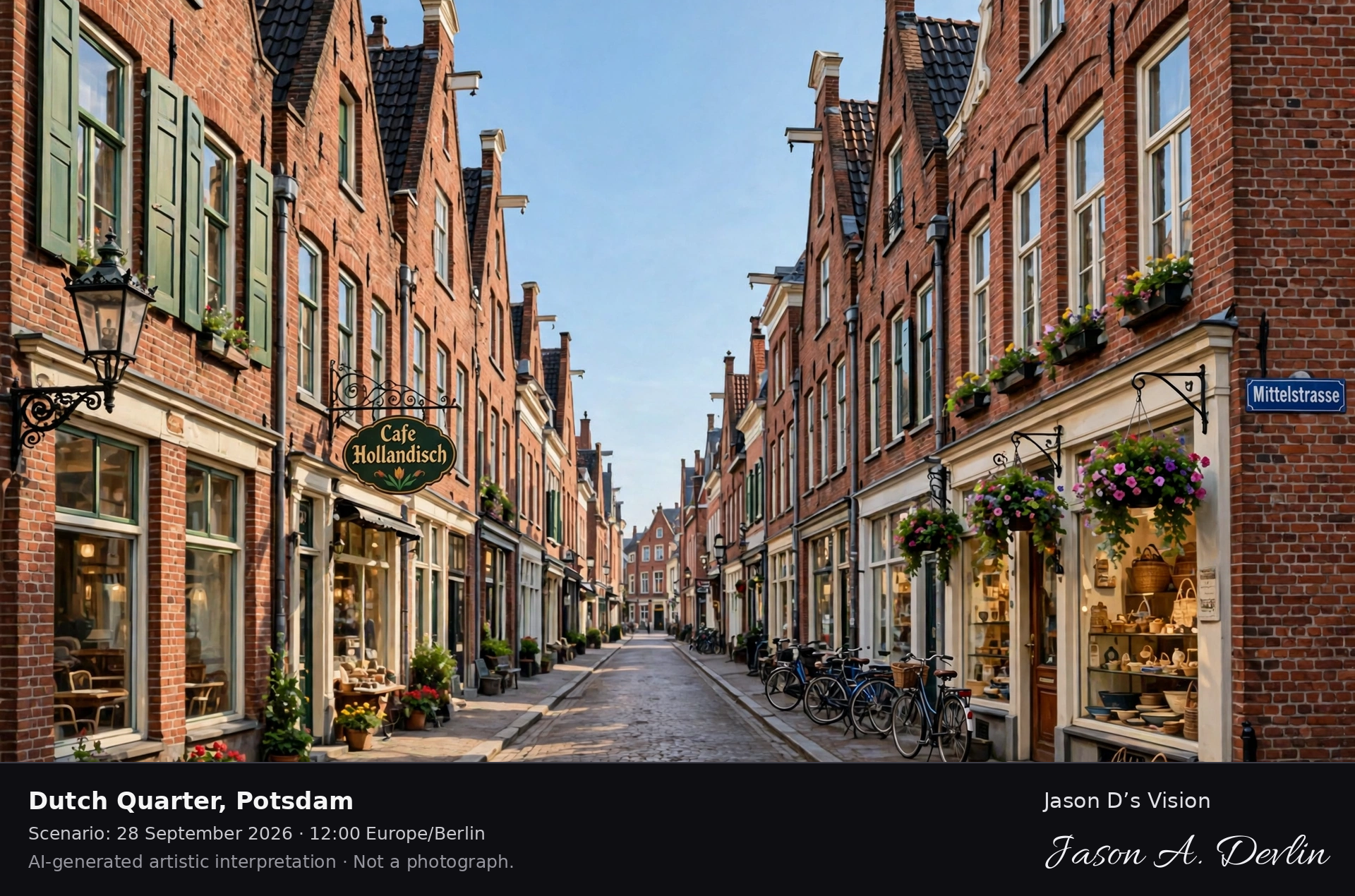
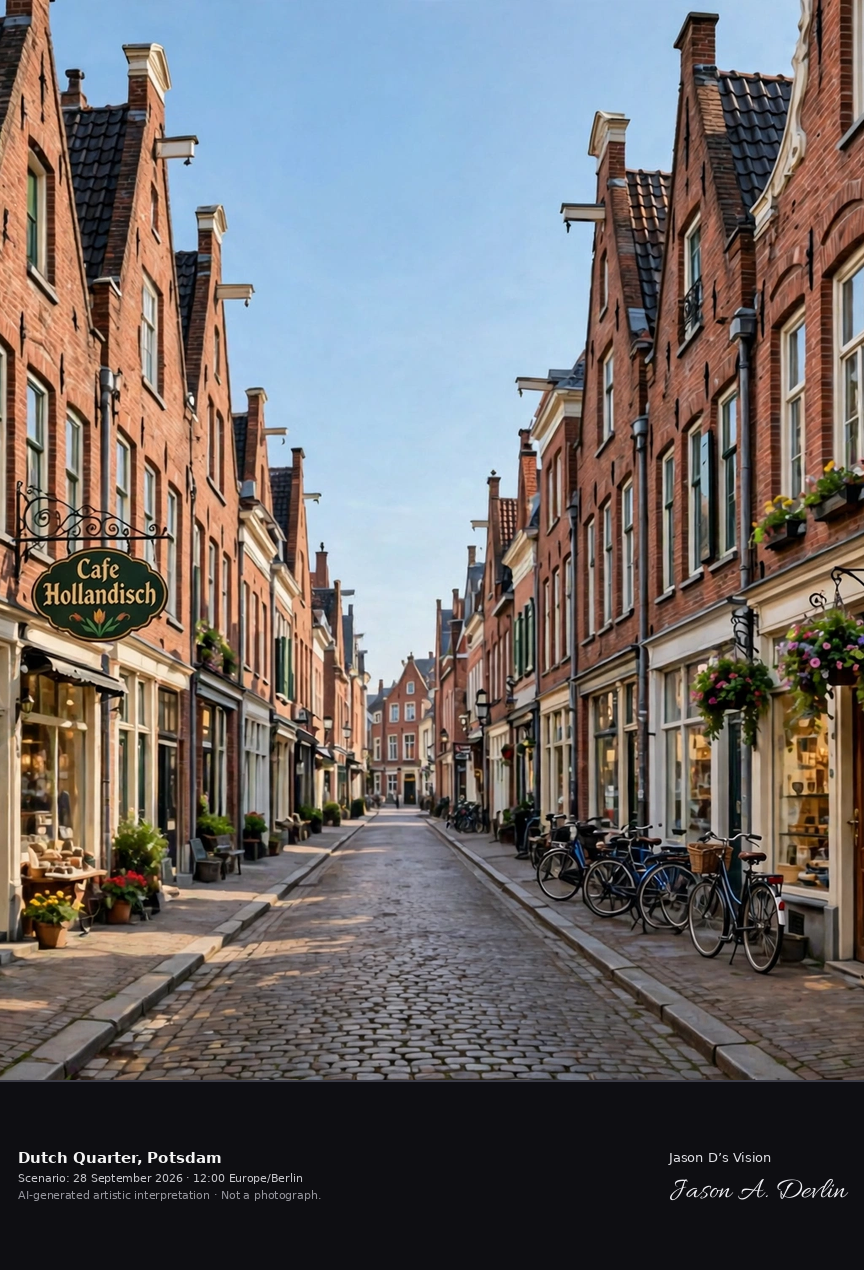
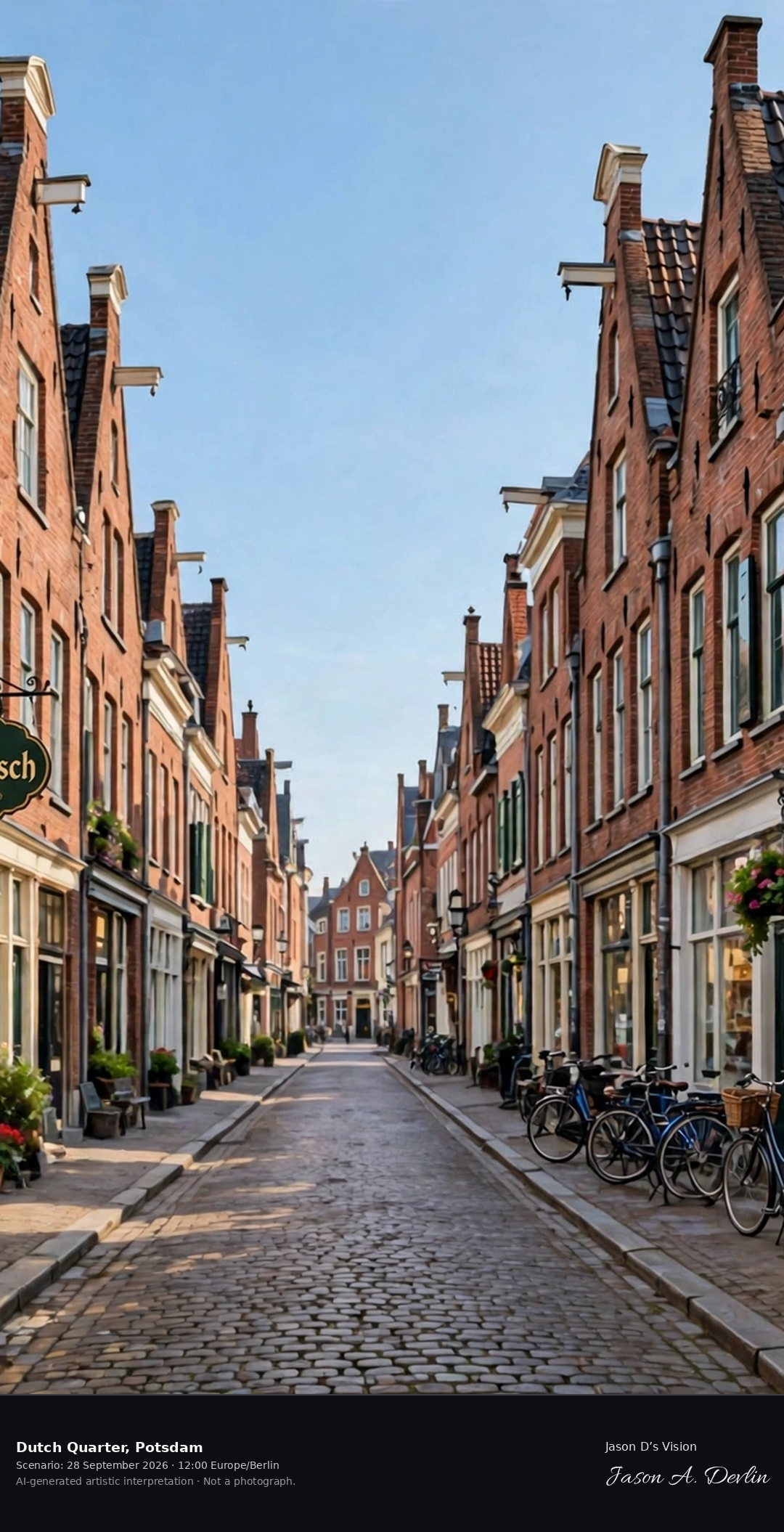
A rain-soaked street in Potsdam's Dutch Quarter at night, lined on both sides by the red-brick gabled houses that give the Holländisches Viertel its name. A hanging 'Café Holländisch' sign stands at the left edge, lit shopfronts run the left side while a 'Galerie · Kunsthandwerk' storefront glows at the right edge, and wet cobblestones mirror the lamplight. Fine rain streaks against the dark sky under the scenario's night conditions, with a Mittelstraße street sign anchoring the frame.
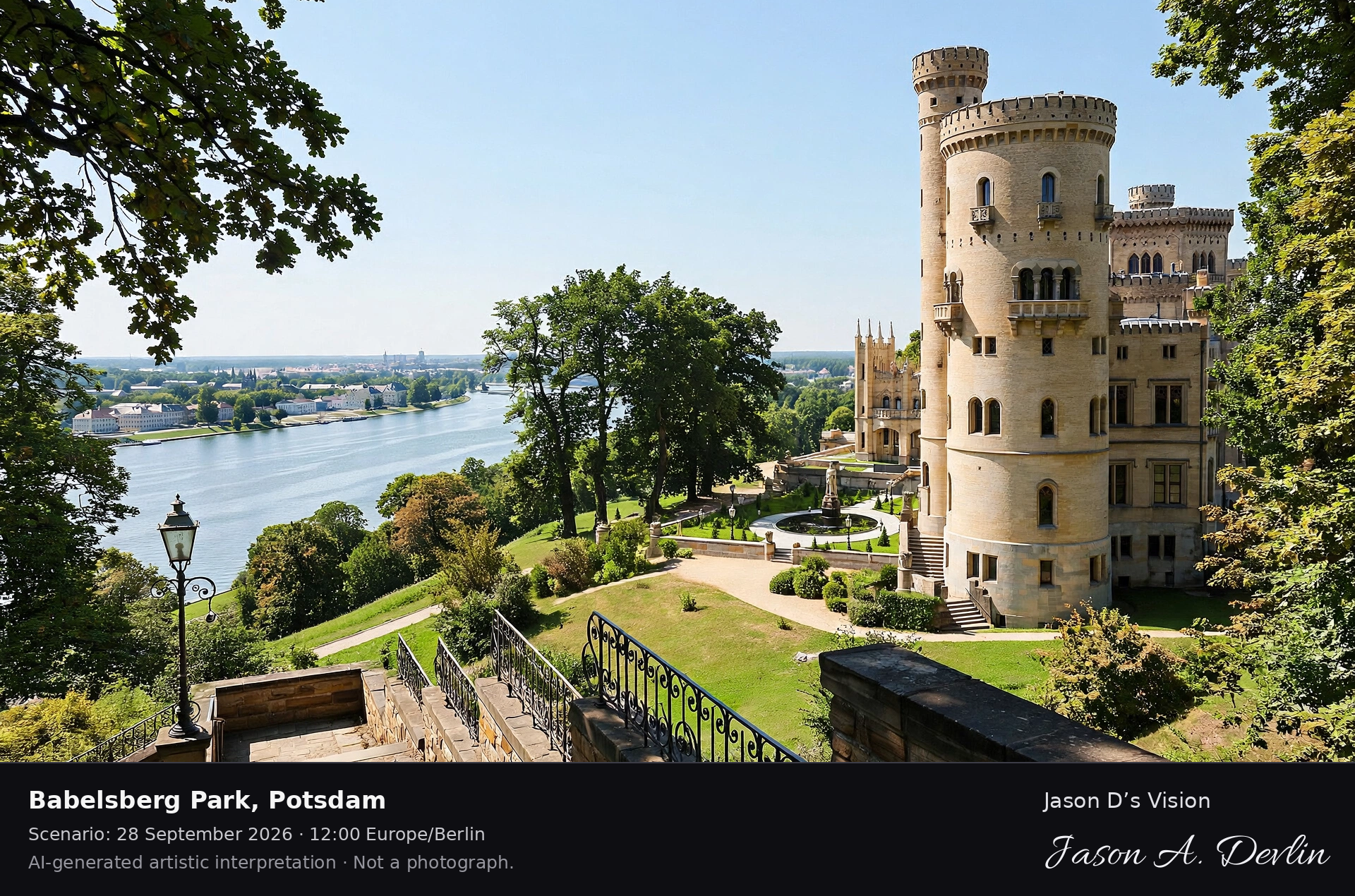
Palace and Havel views · AI-generated artistic interpretation
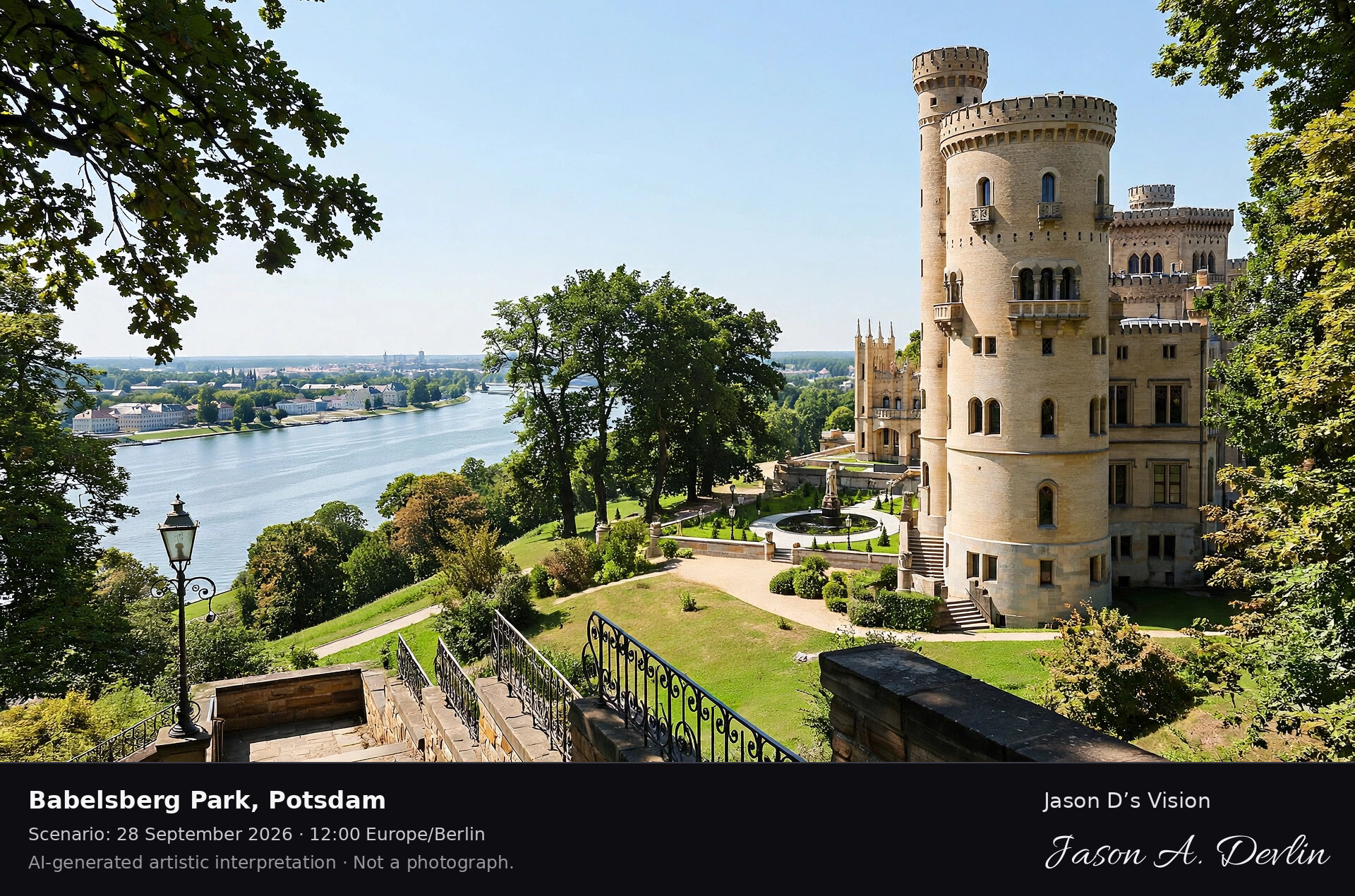
Schloss Babelsberg glows from its terraces above the Havel on a rainy night, its sandstone towers and neo-Gothic windows lit against the dark park. A wet stone terrace with fallen leaves runs along the left foreground while the river spreads across the left frame, carrying the reflected lights of distant Potsdam. Rain hangs in the lamplight and night sky under the scenario's slight-rain conditions, the park's trees and slopes fading into the blue-dark beyond.
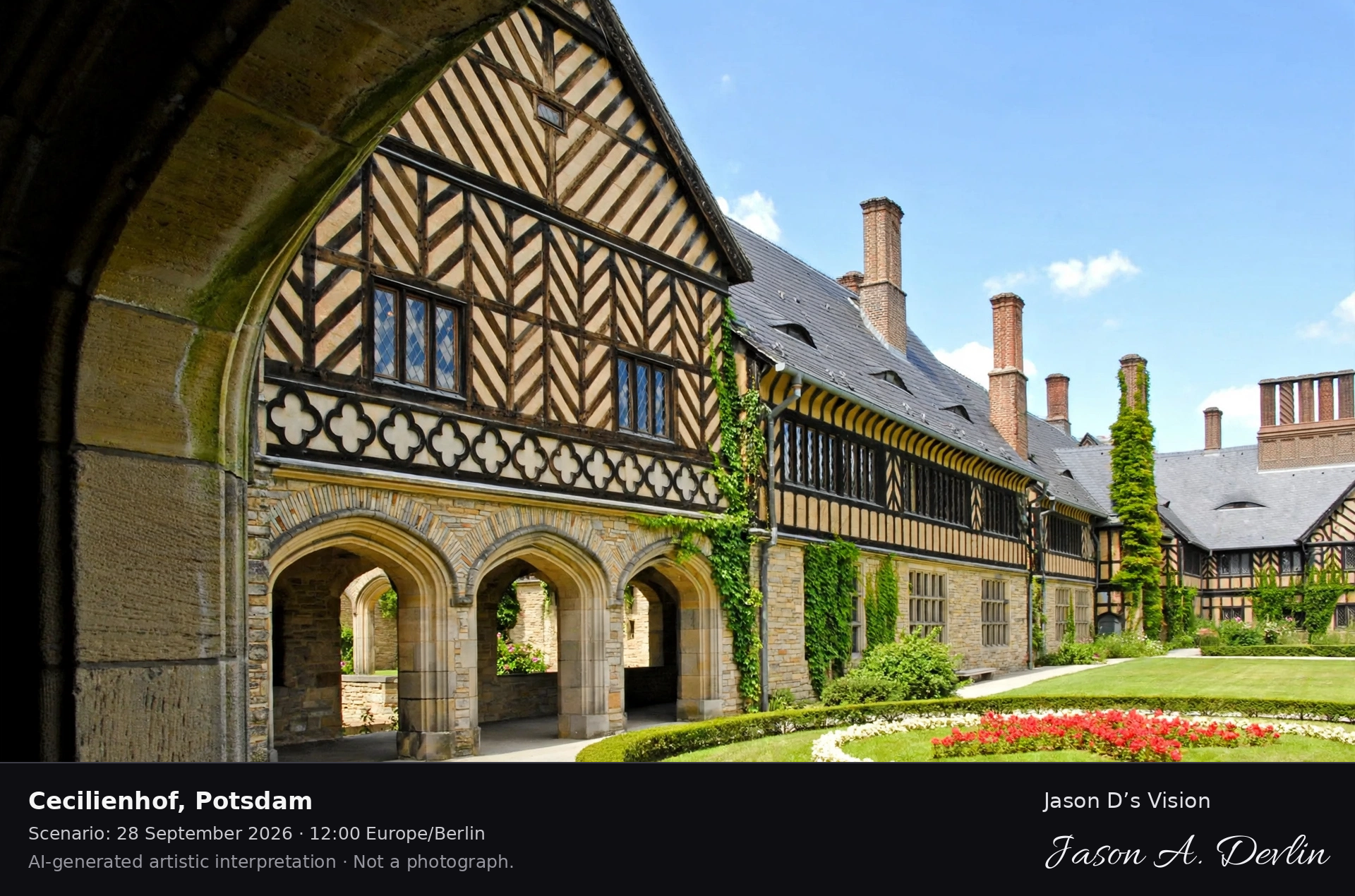
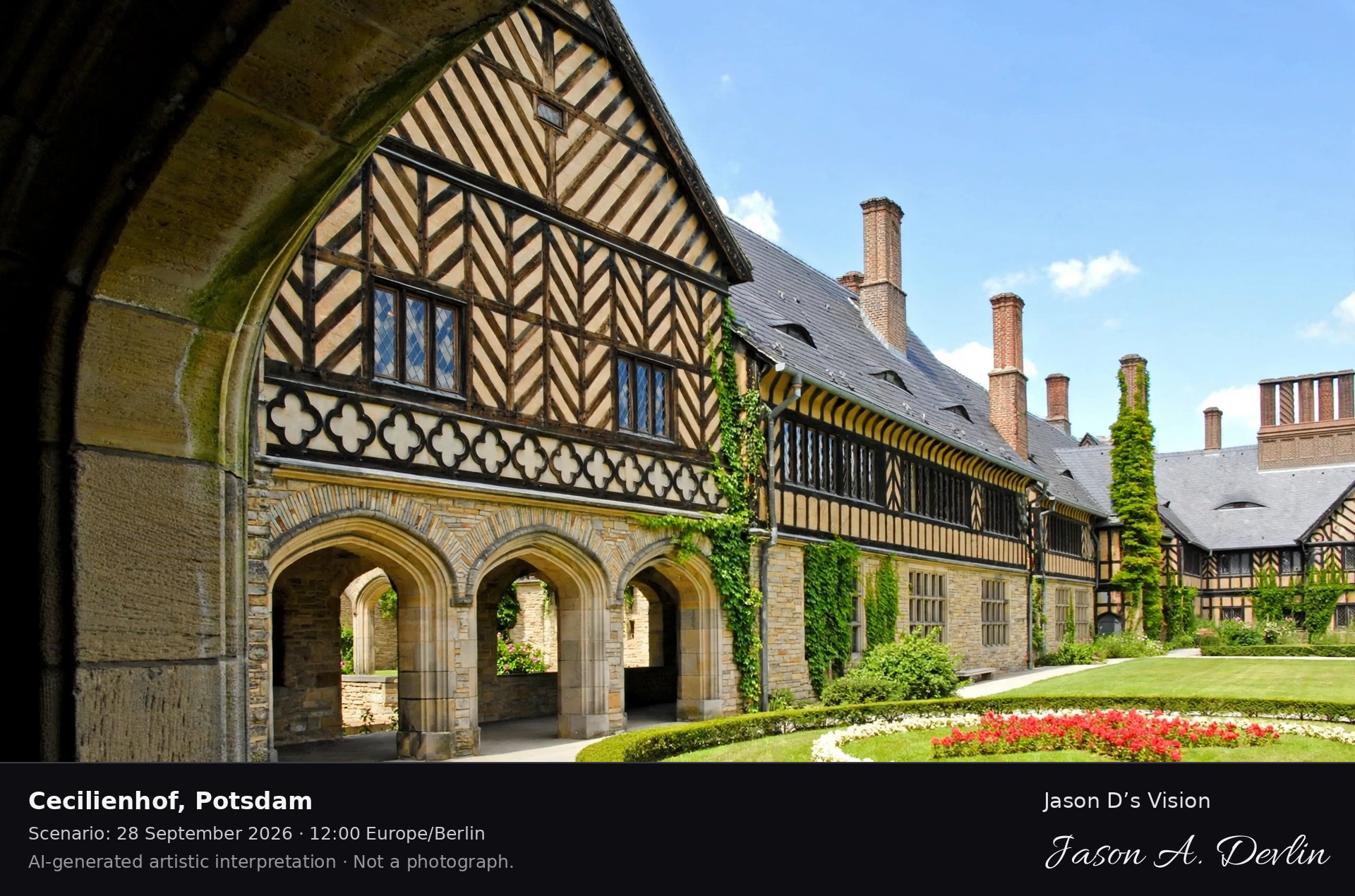
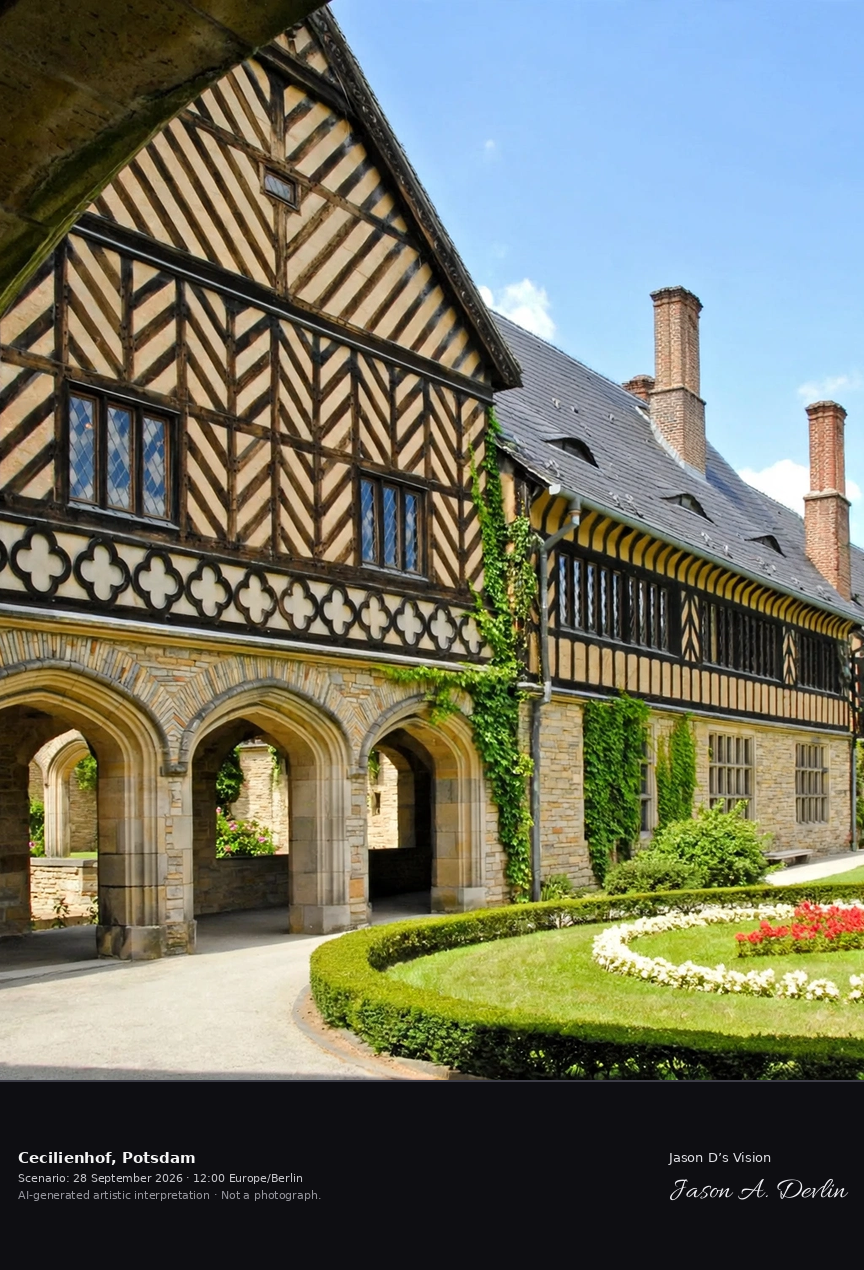
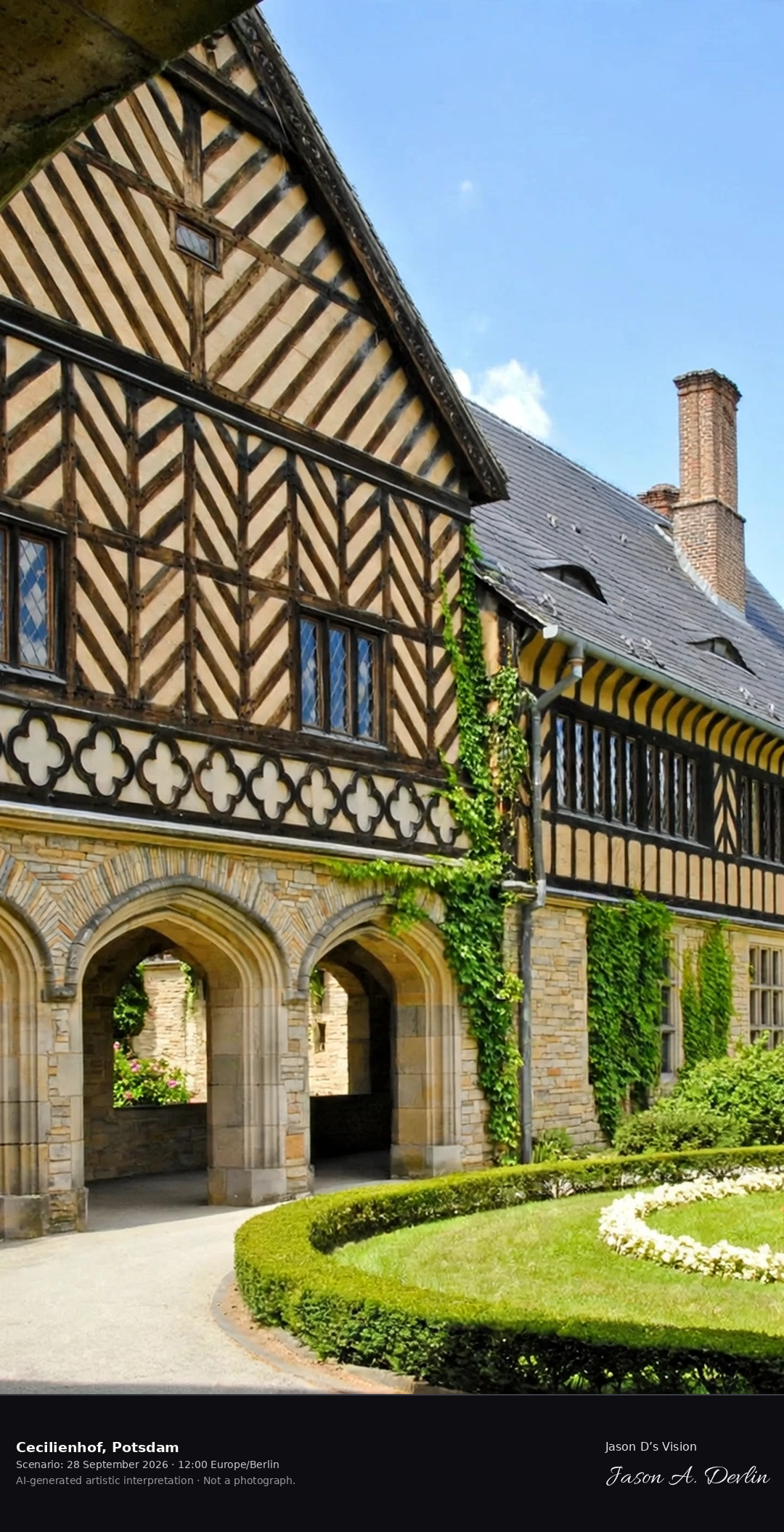
Cecilienhof Palace seen through a stone archway into its courtyard on a rainy night, the Tudor-style frontage rising left of frame with herringbone timbering, tall chimneys and warm leaded windows. A circular flower bed rings the lawn in the courtyard foreground while the right wing closes the composition, both glowing against the dark. Rain streaks the night sky above under the scenario's slight-rain conditions, lit lanterns and window glow lending the Potsdam Conference site its evening warmth.
Bridge and Havel · AI-generated artistic interpretation
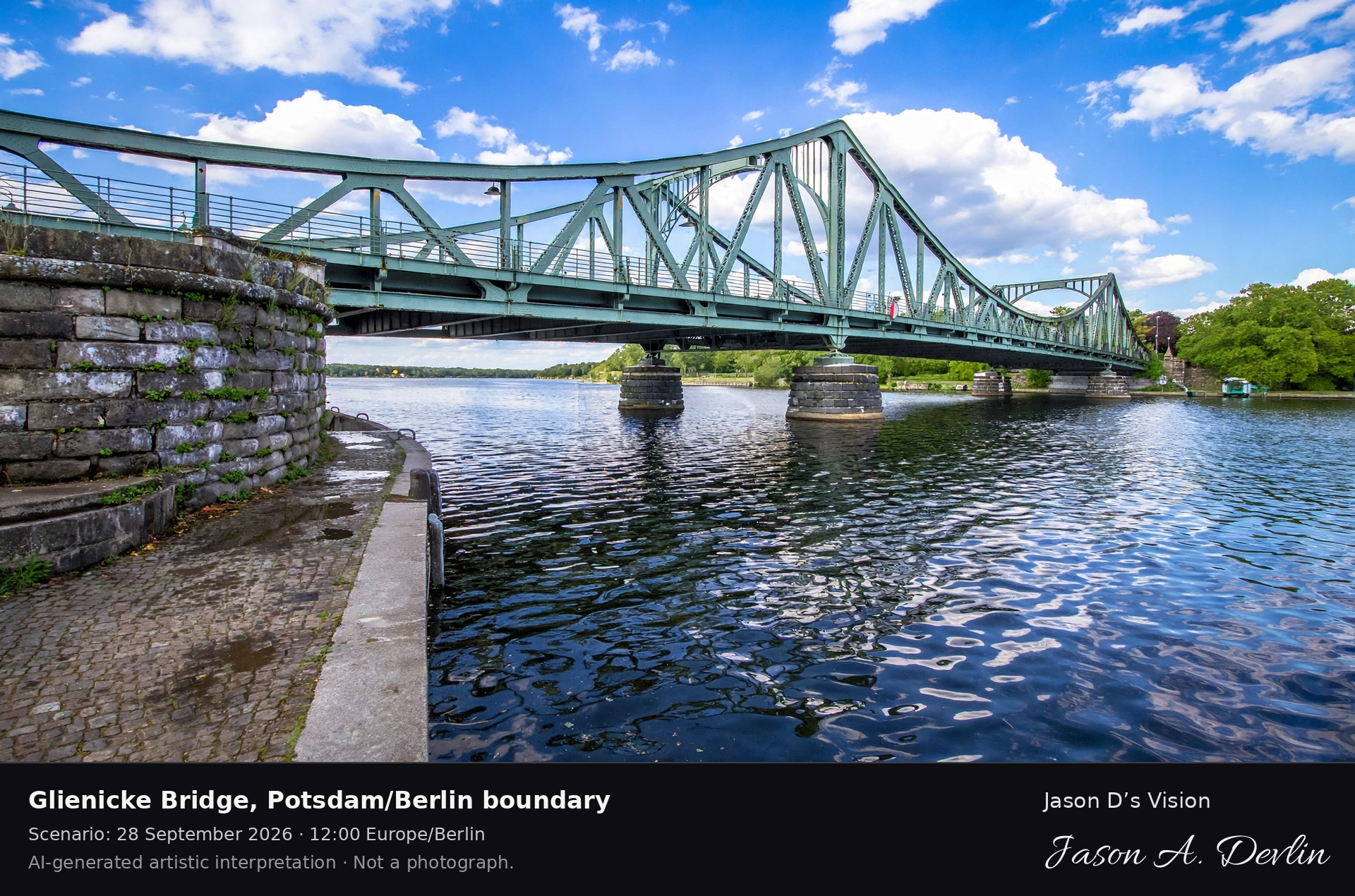
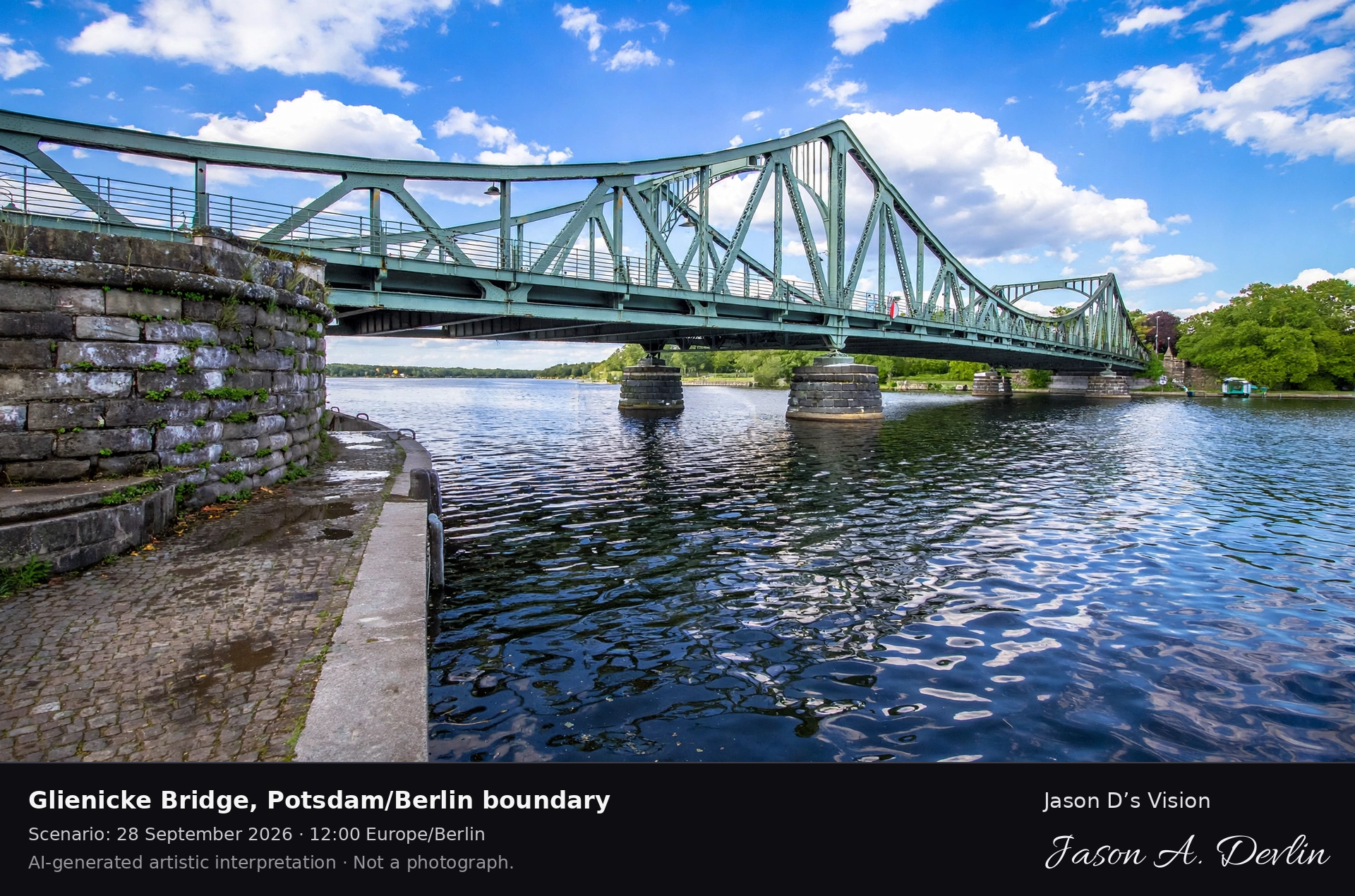
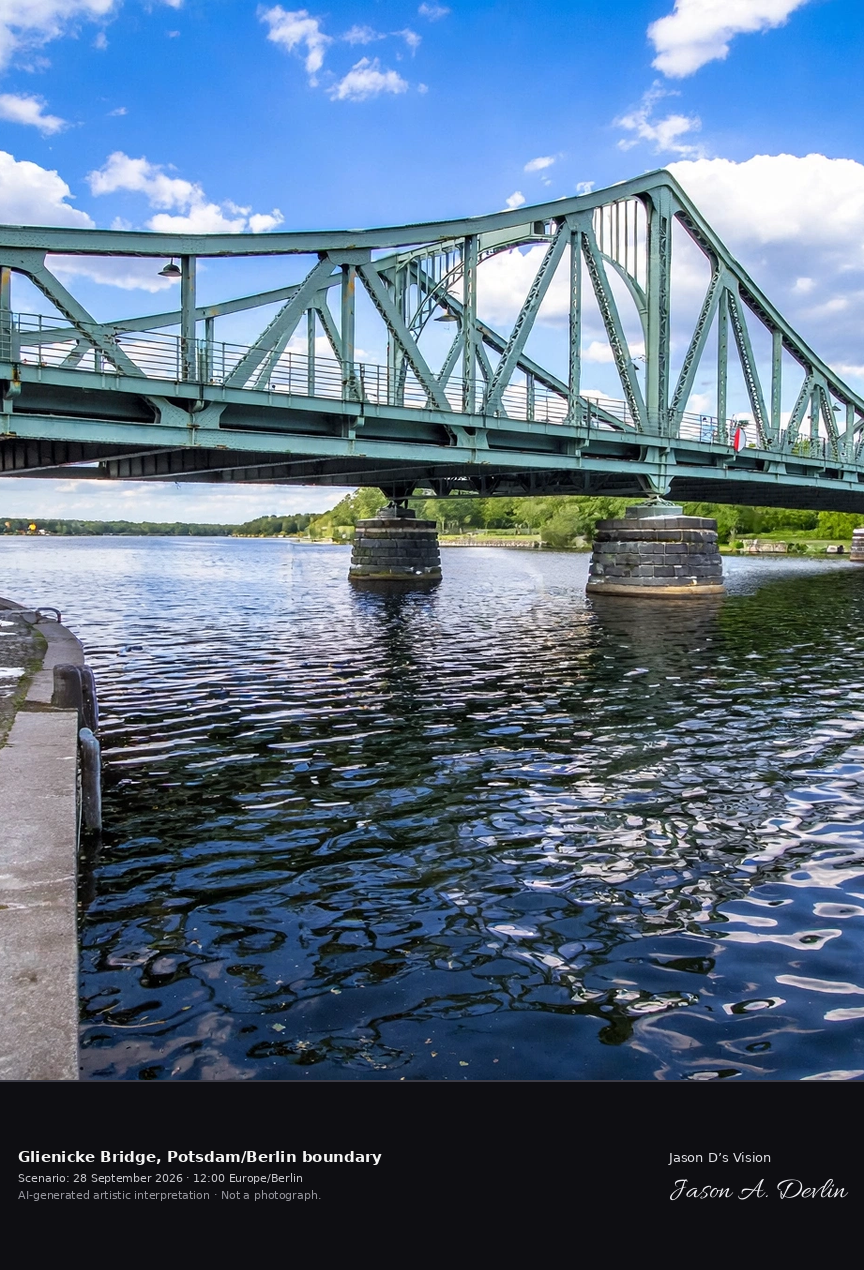
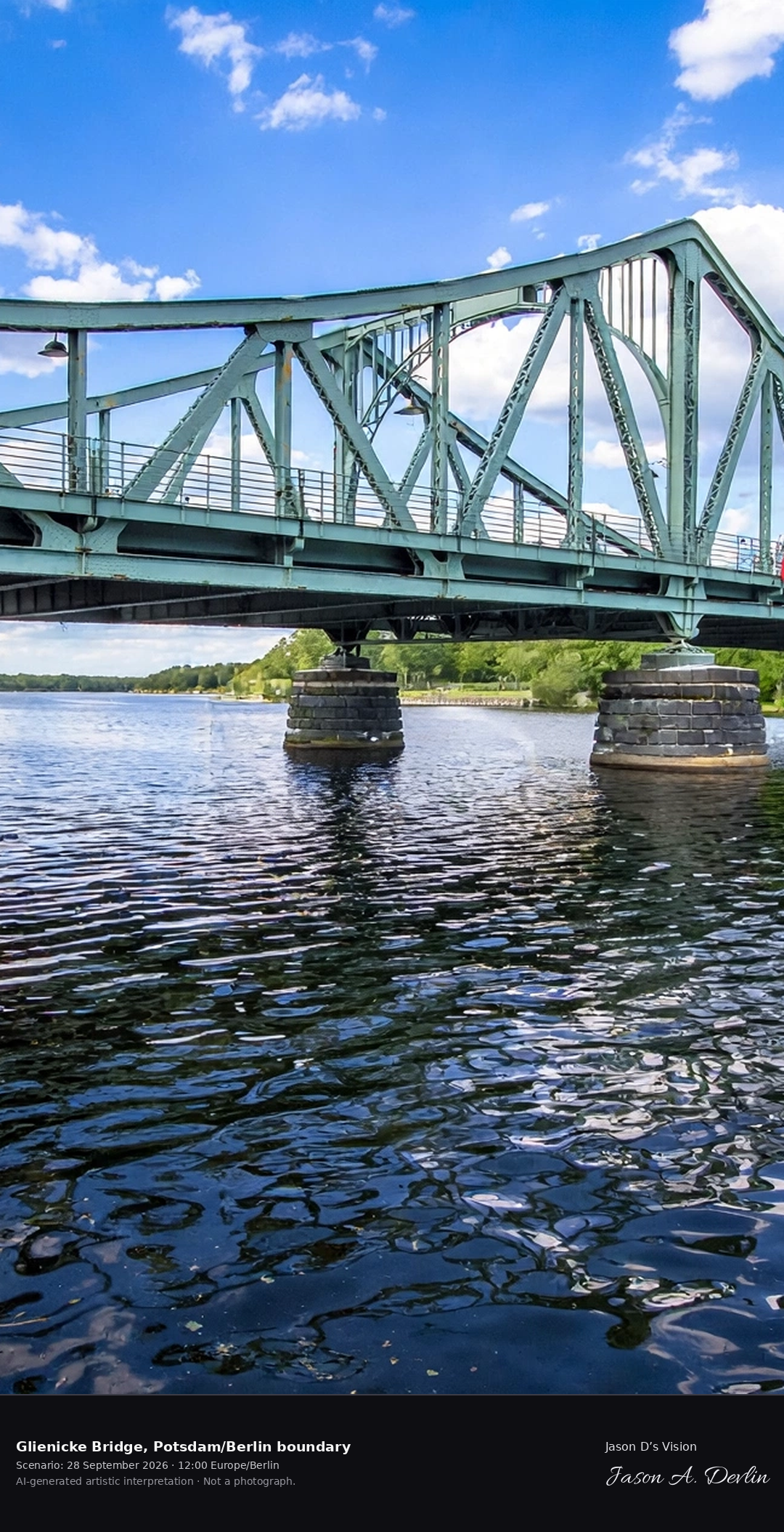
Seen from the rain-slicked riverside promenade before dawn, the Glienicke Bridge's green steel trusses stretch across the frame, its row of warm lampposts glowing through the night rain. The stone bridge abutment anchors the left foreground while the dark Havel shimmers with wet reflections below, and distant bank lights blur softly through the drizzle on the right.
Footbridges and waterside homes · AI-generated artistic interpretation
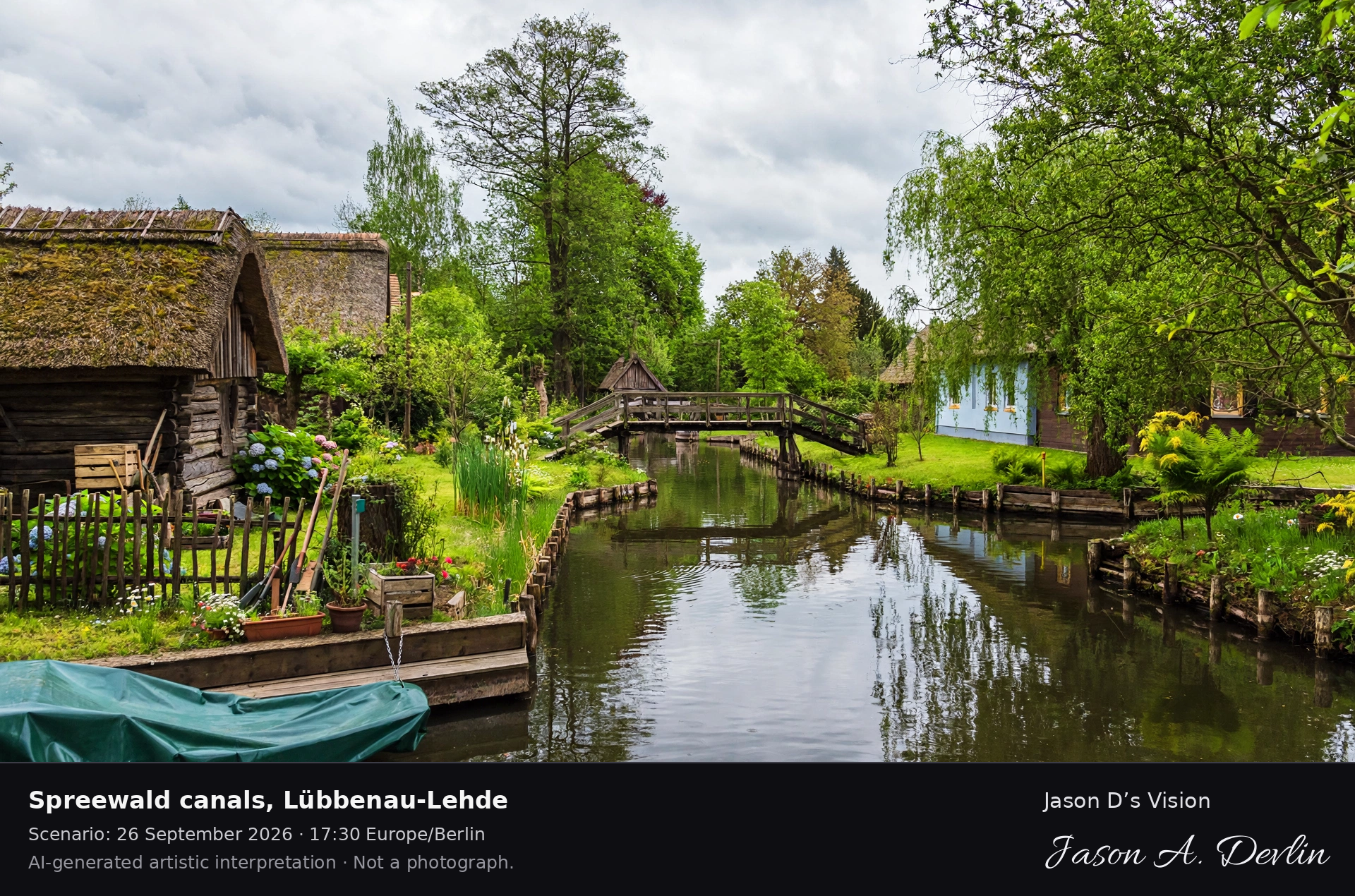
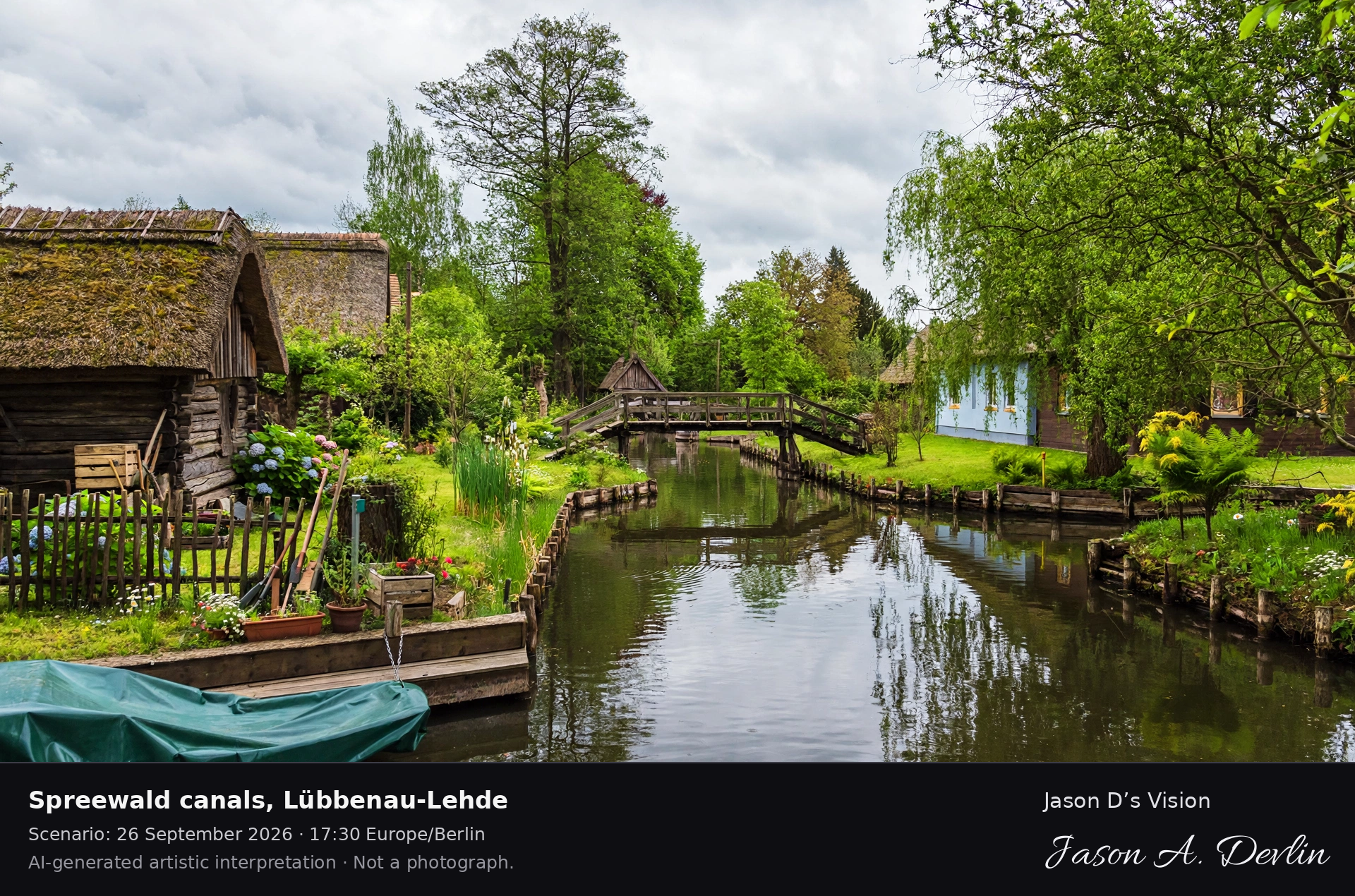
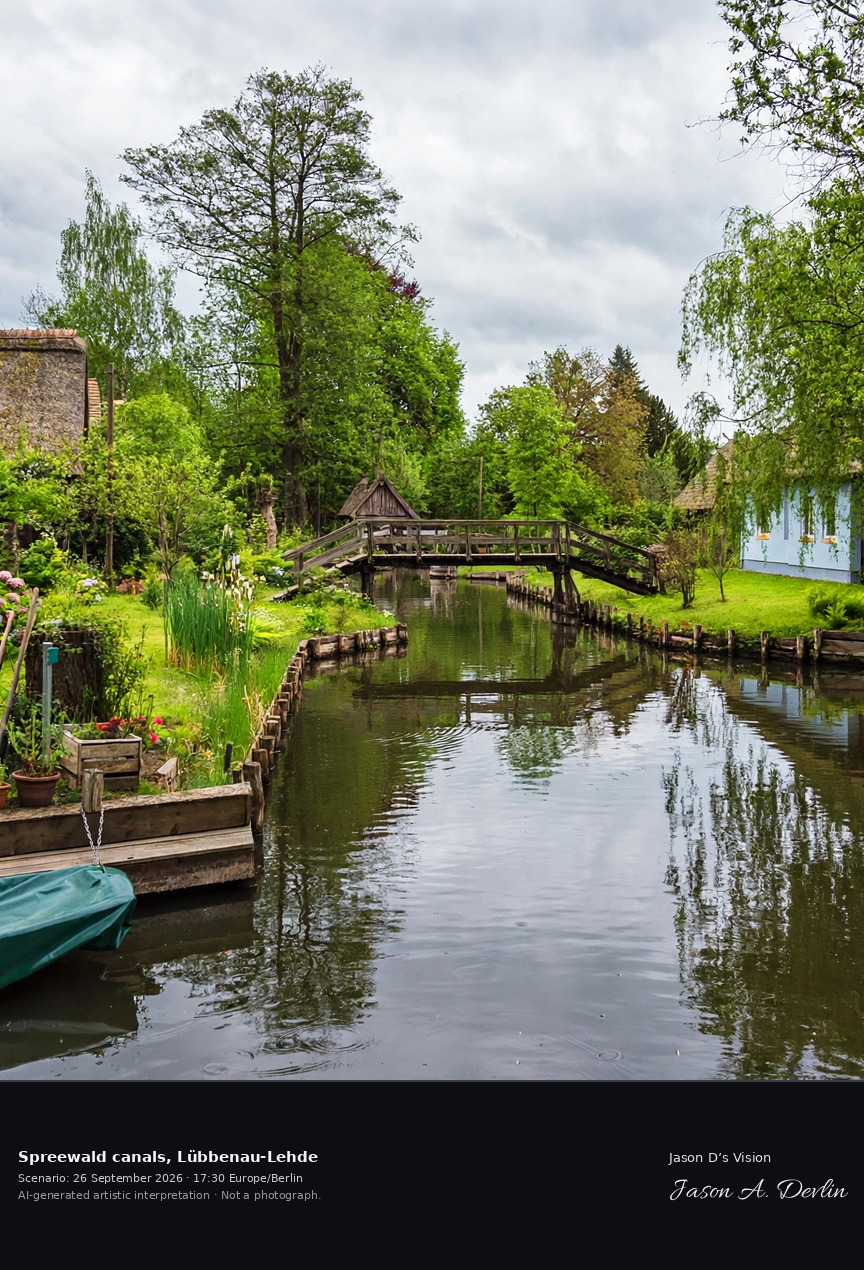
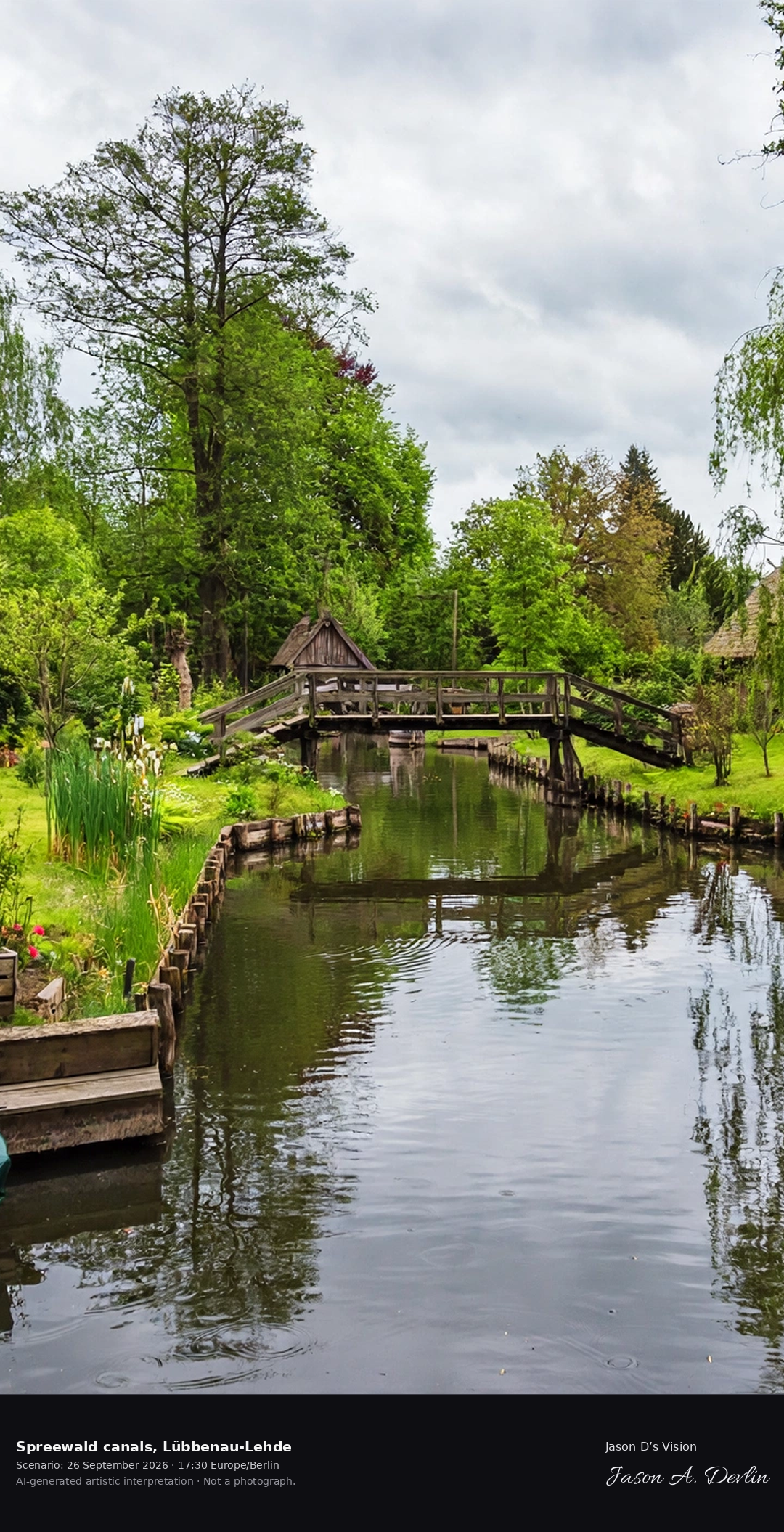
The Spreewald canal runs straight into the frame beneath a low wooden footbridge, its still water mirroring the overcast sky. To the left, thatched-roof timber cottages with flower-filled gardens line the bank and a tarp-covered punt rests at the wooden landing; to the right, willows and a pale-blue waterside house sit among lush late-September greenery. The 17:30 light is soft and diffuse under heavy cloud, carrying the bridge's reflection on the canal's quiet surface.
Rural canals and meadows · AI-generated artistic interpretation
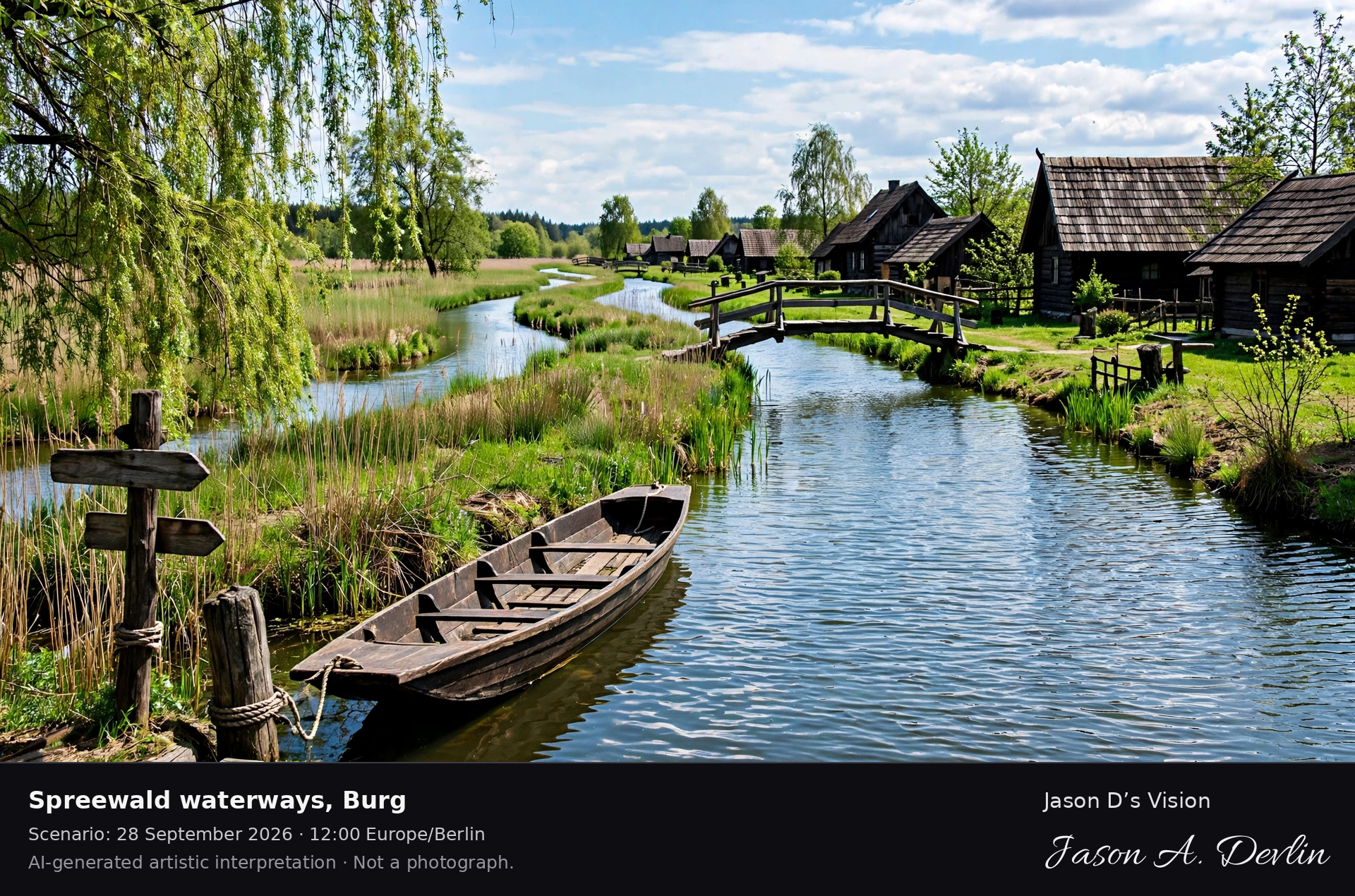
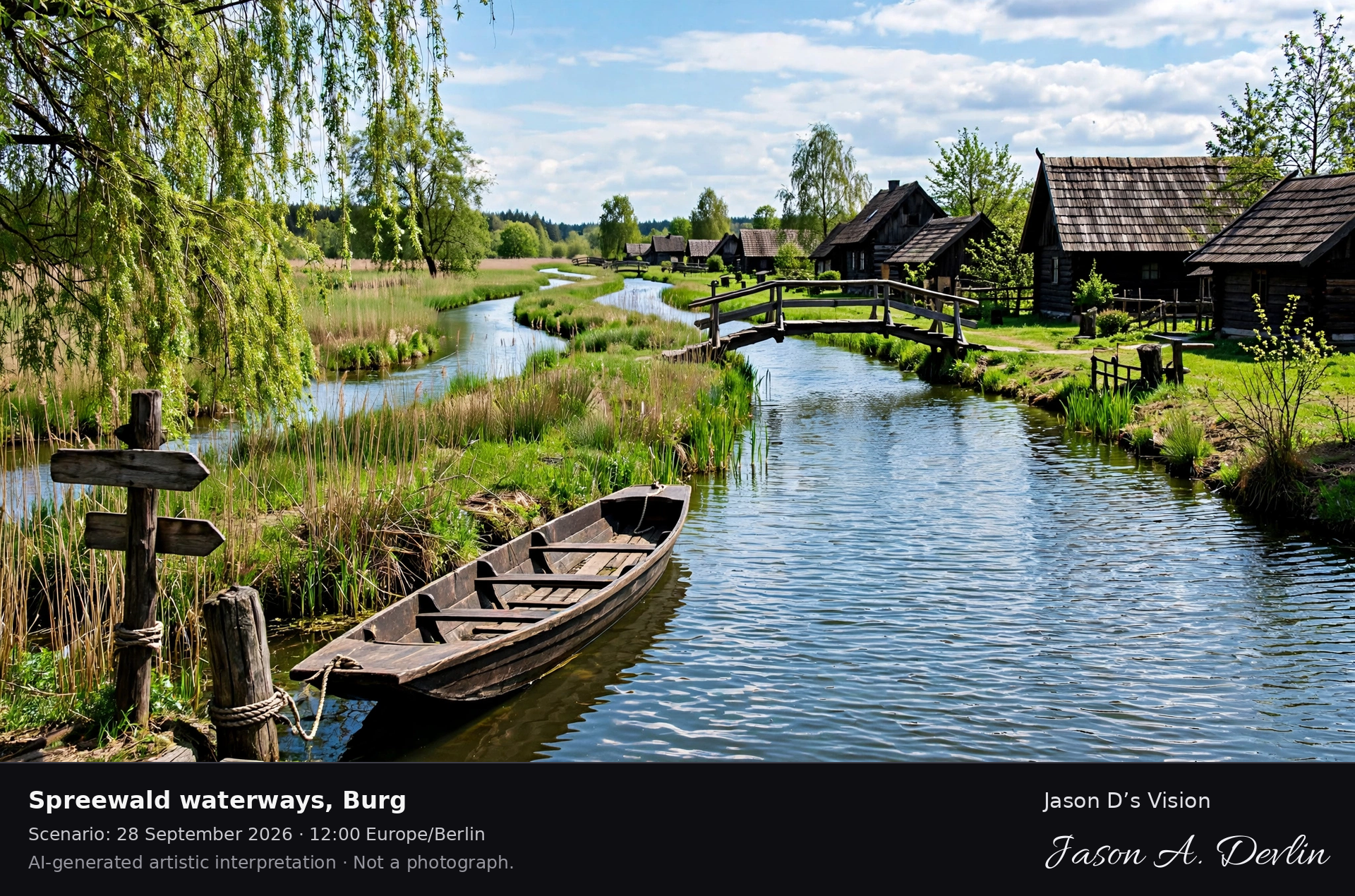
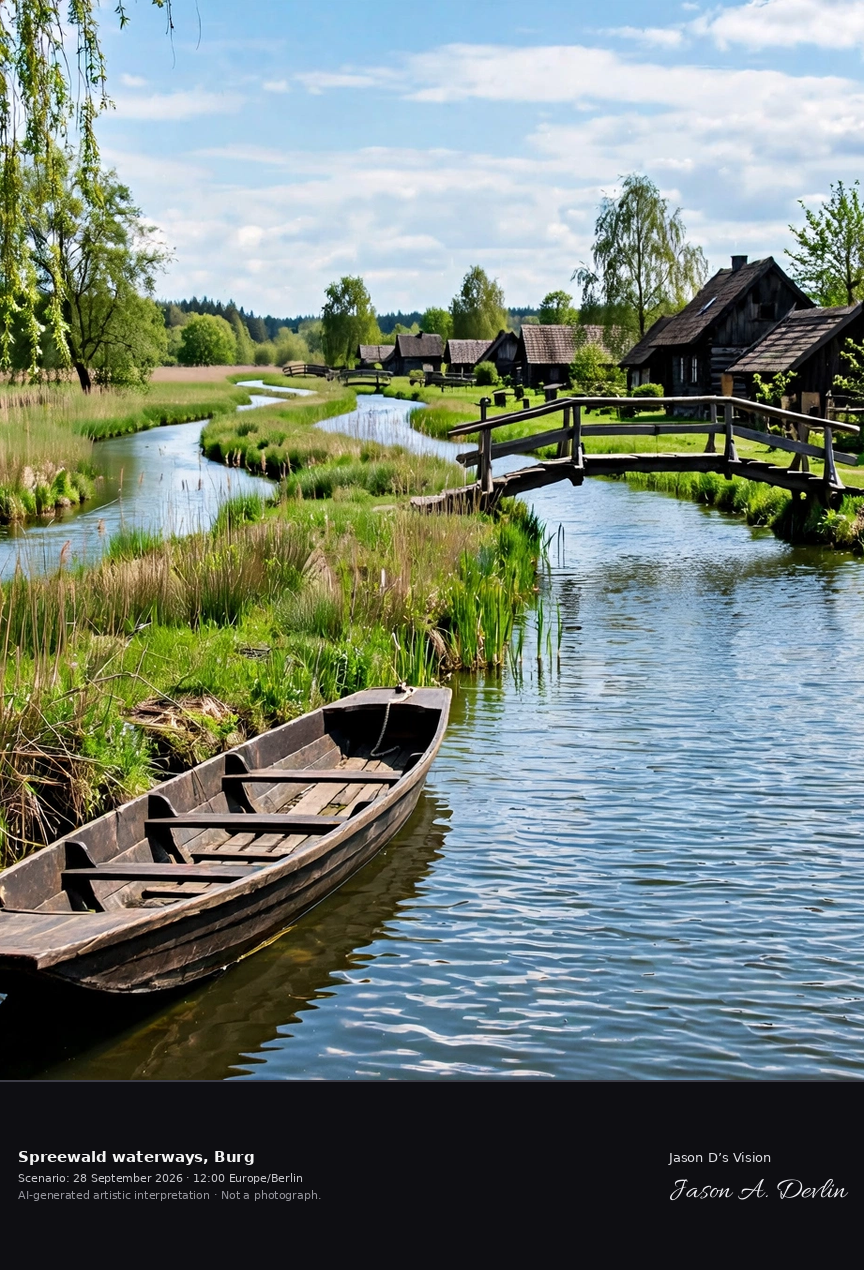
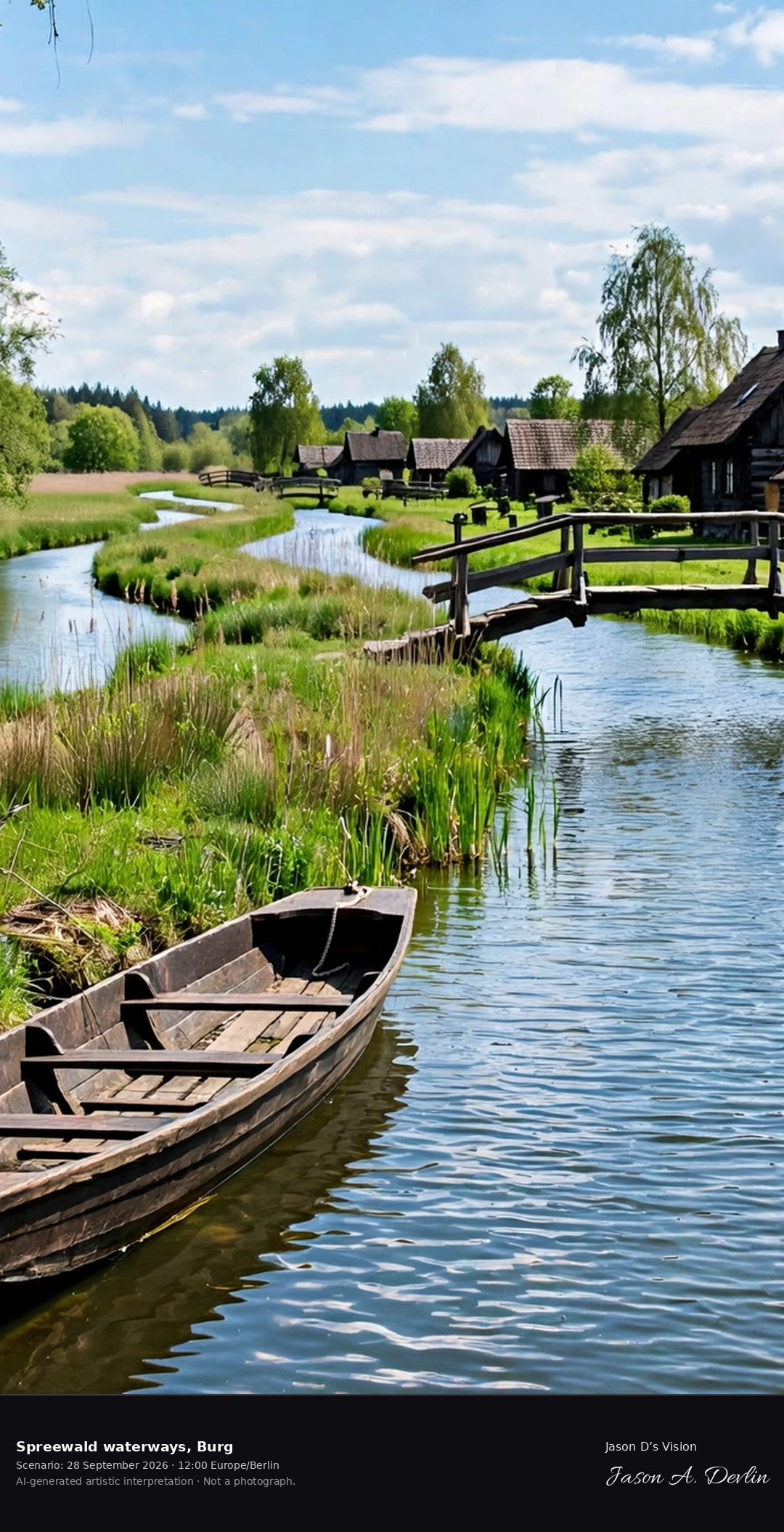
From the canal bank at pre-dawn, a narrow waterway winds past reed beds and misty meadows under a heavy overcast night sky. A wooden rowboat lies moored in the left foreground, a small footbridge arches over the canal mid-frame, and thatched-roof cottages glow with warm lamplight on the right bank, a 'Burg-Lübbener-Kanal' wayfinding sign standing at the grassy edge.
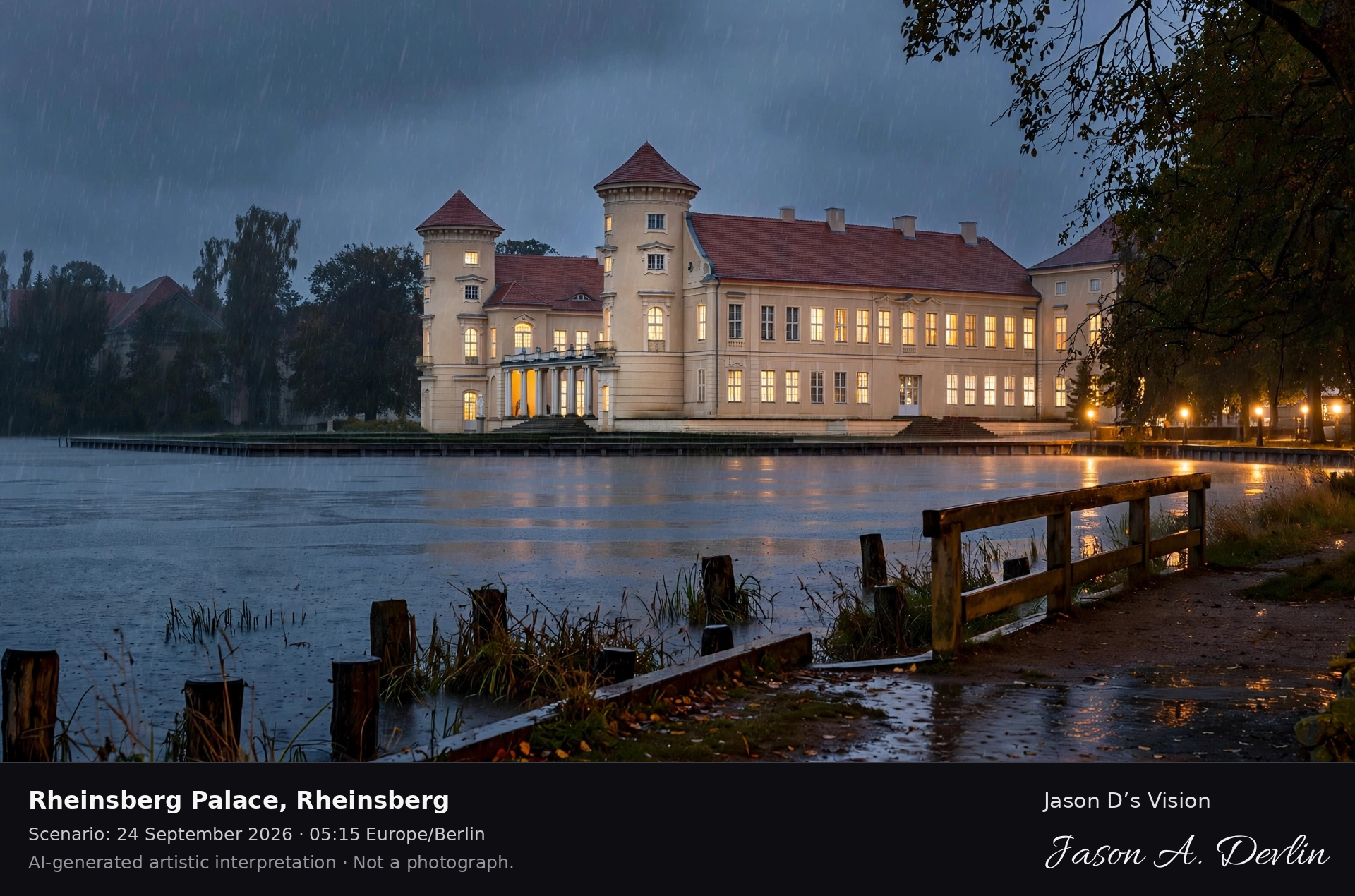
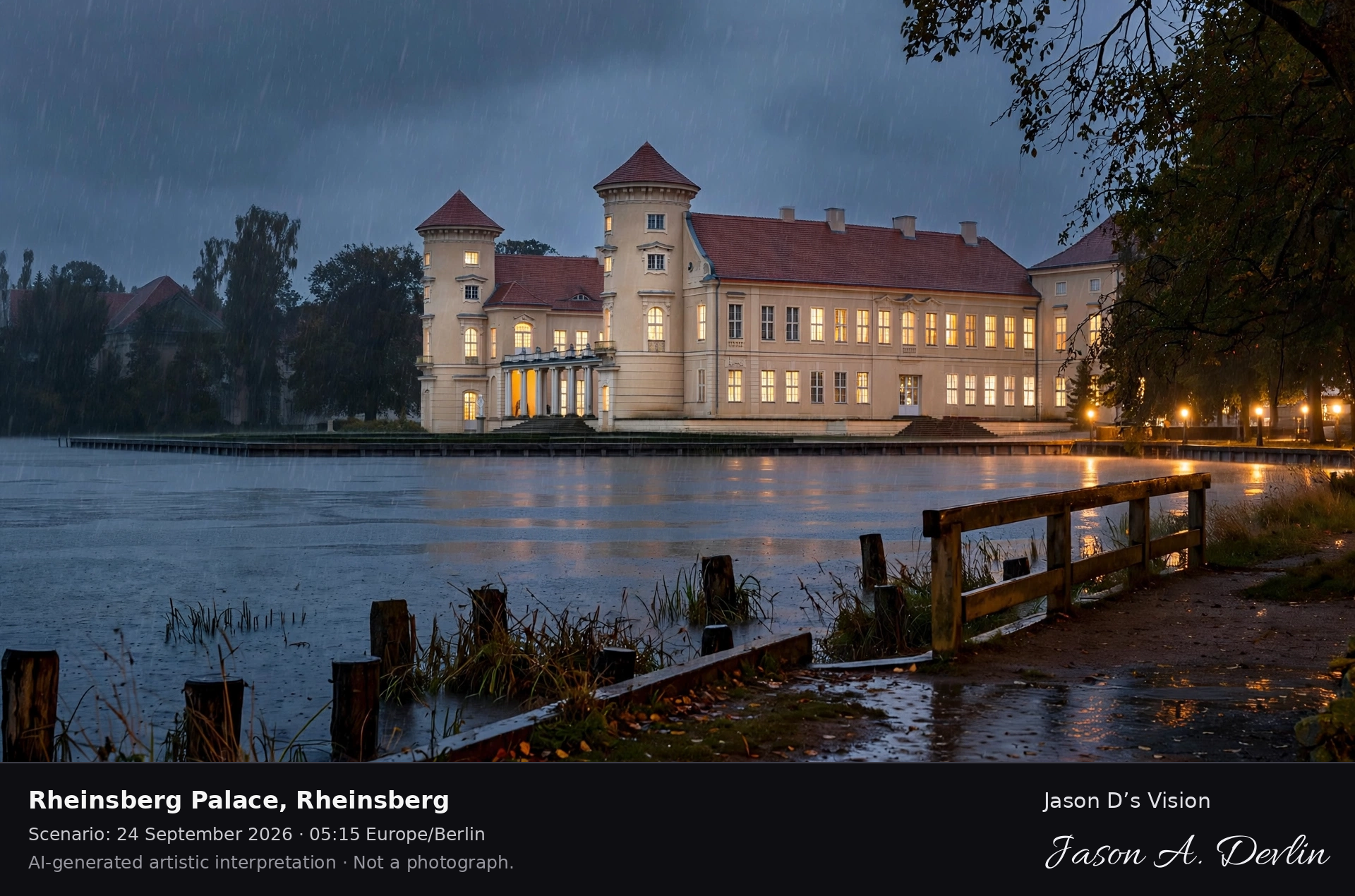
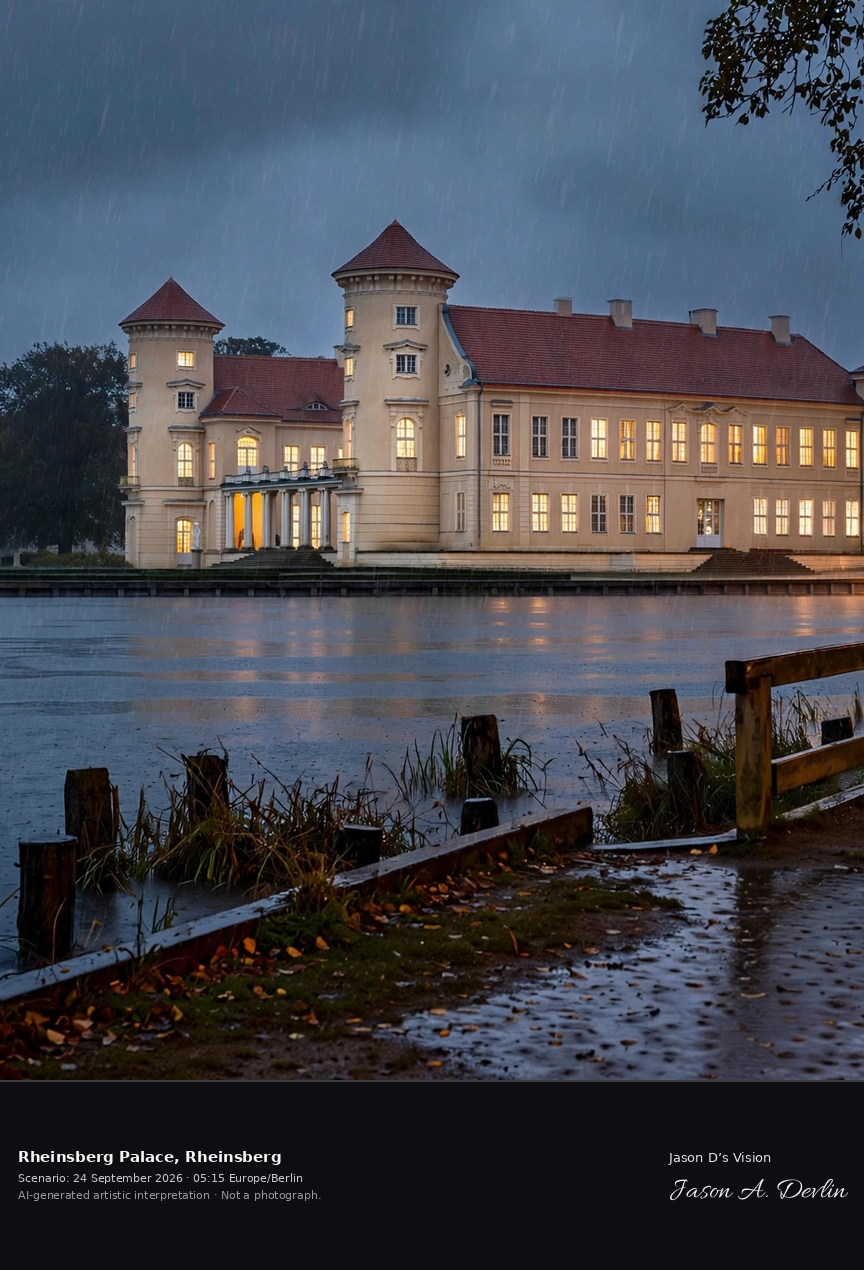
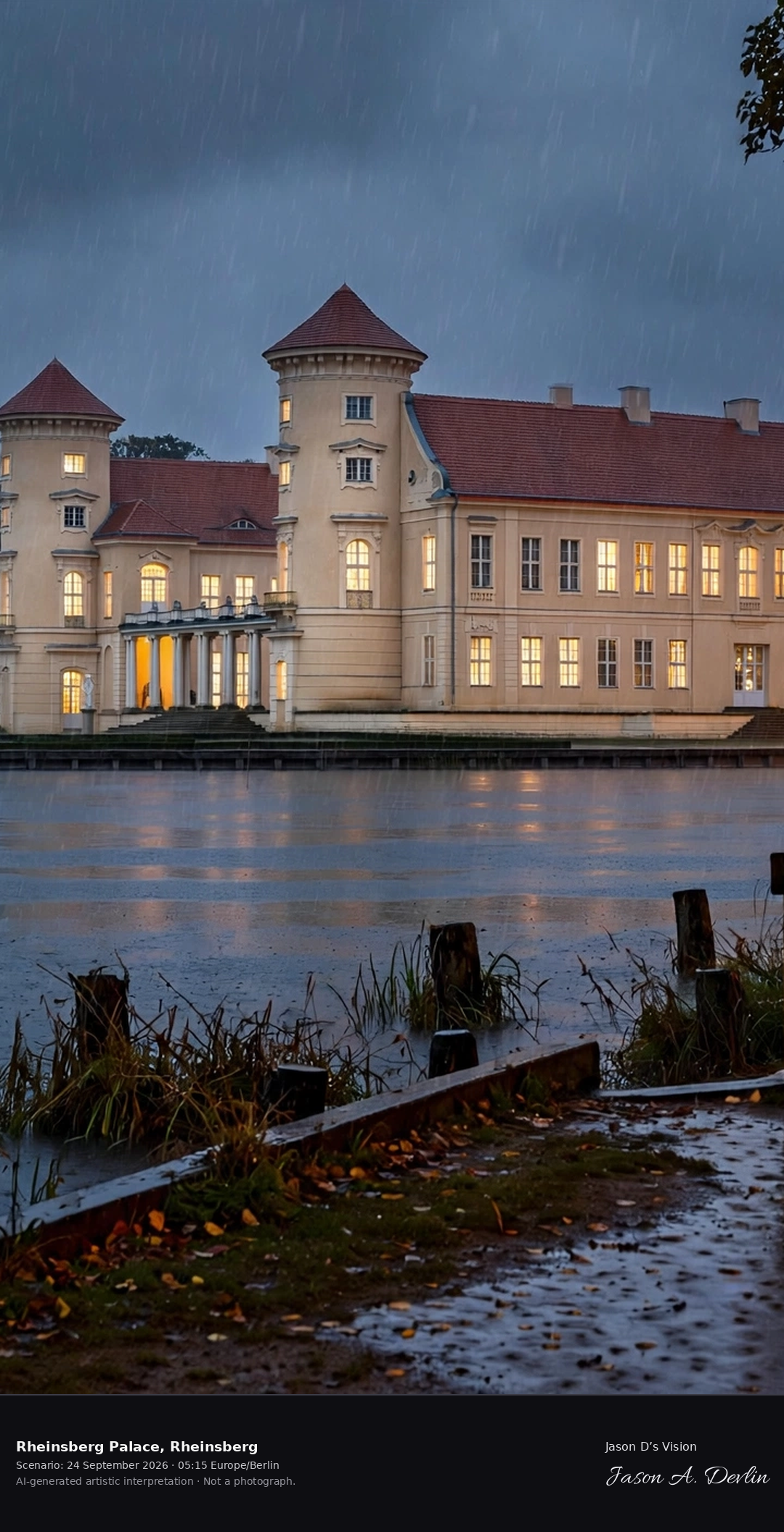
From the lakeside path before dawn, Rheinsberg Palace stands across the water with its twin round towers and red roofs, its warm windows mirrored faintly in the lake. Rain streaks drift through the pre-dawn gloom while a weathered wooden jetty reaches into the foreground at right, and overhanging trees frame the palace from the right edge.
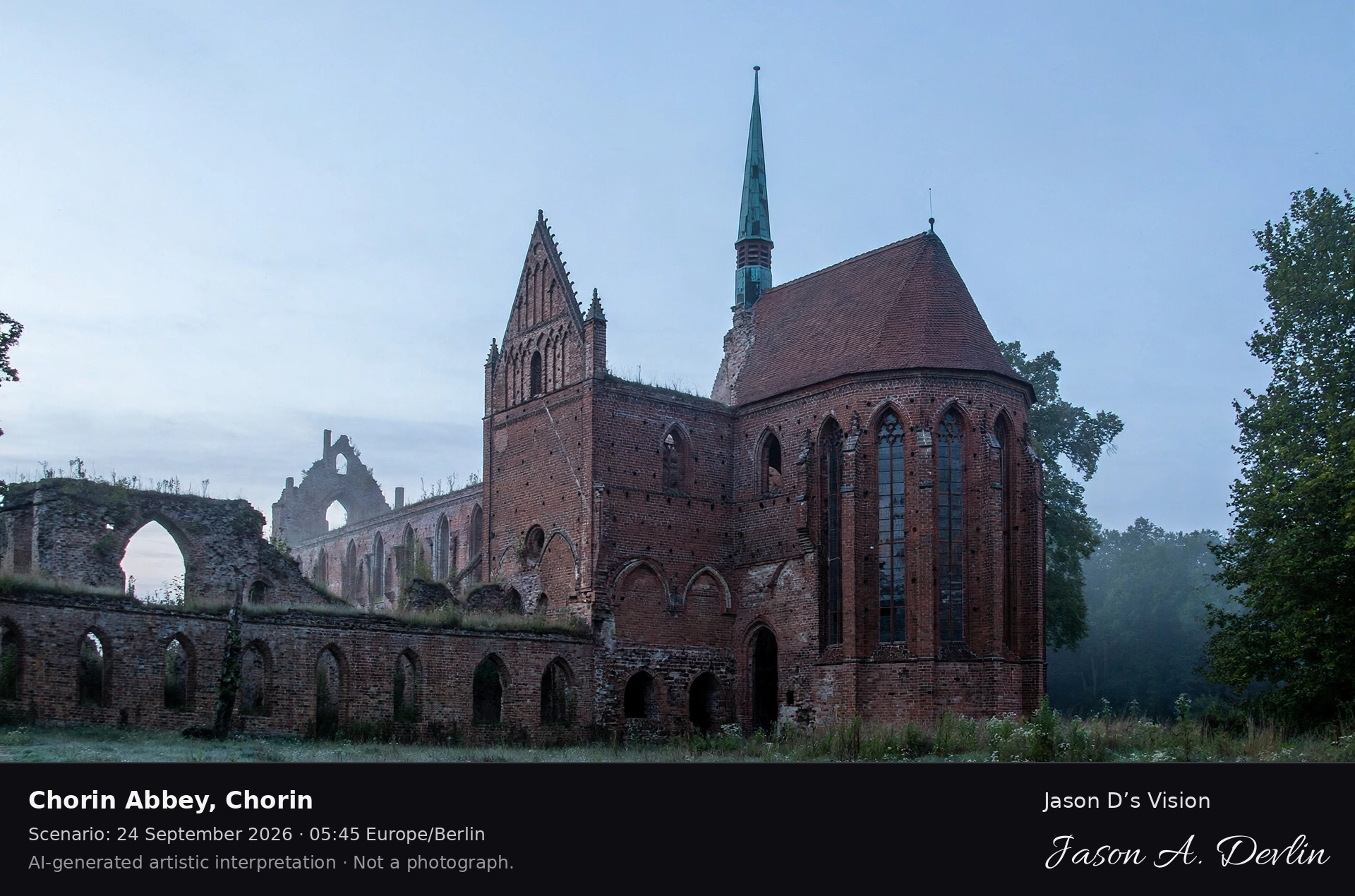
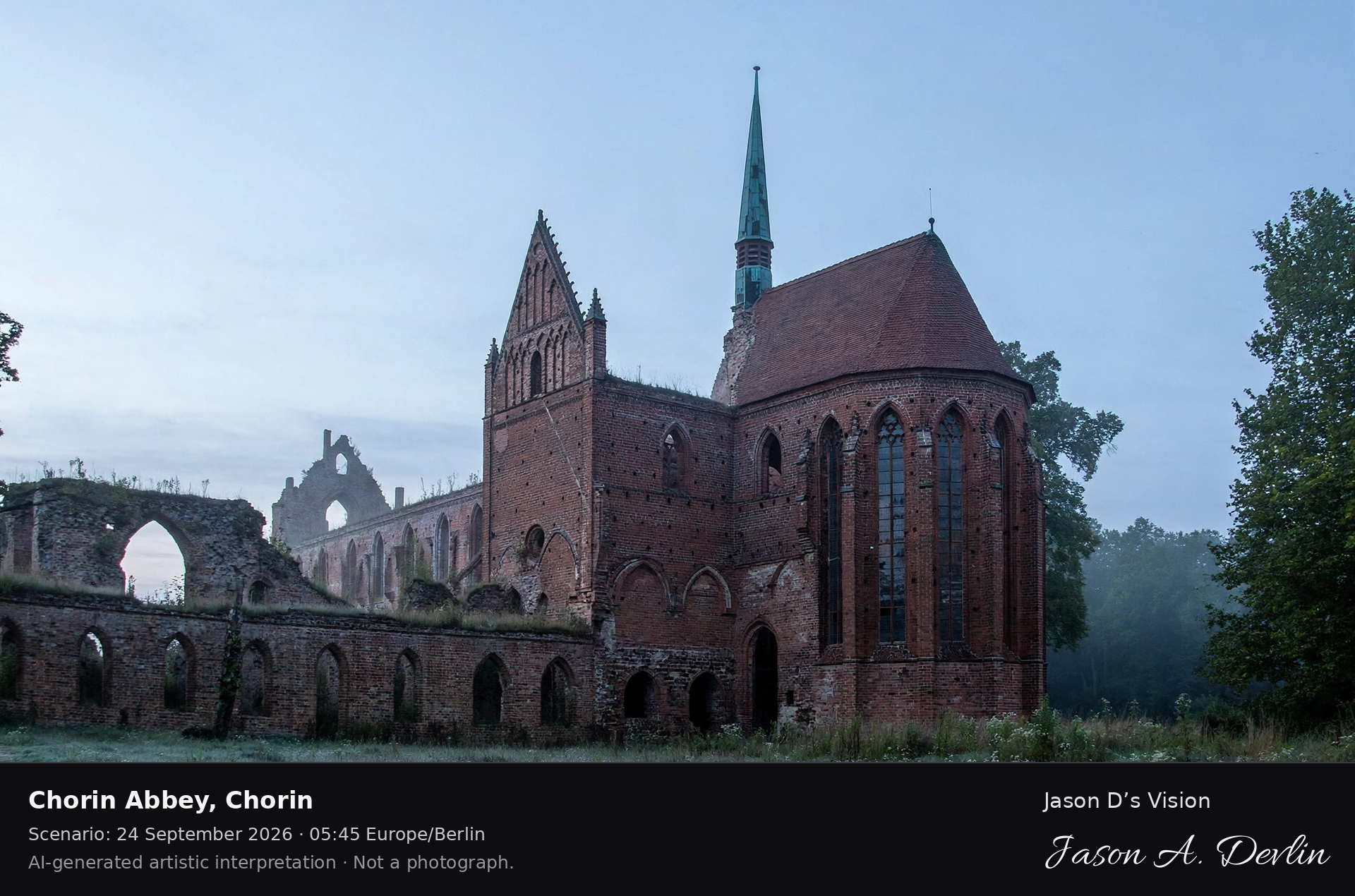
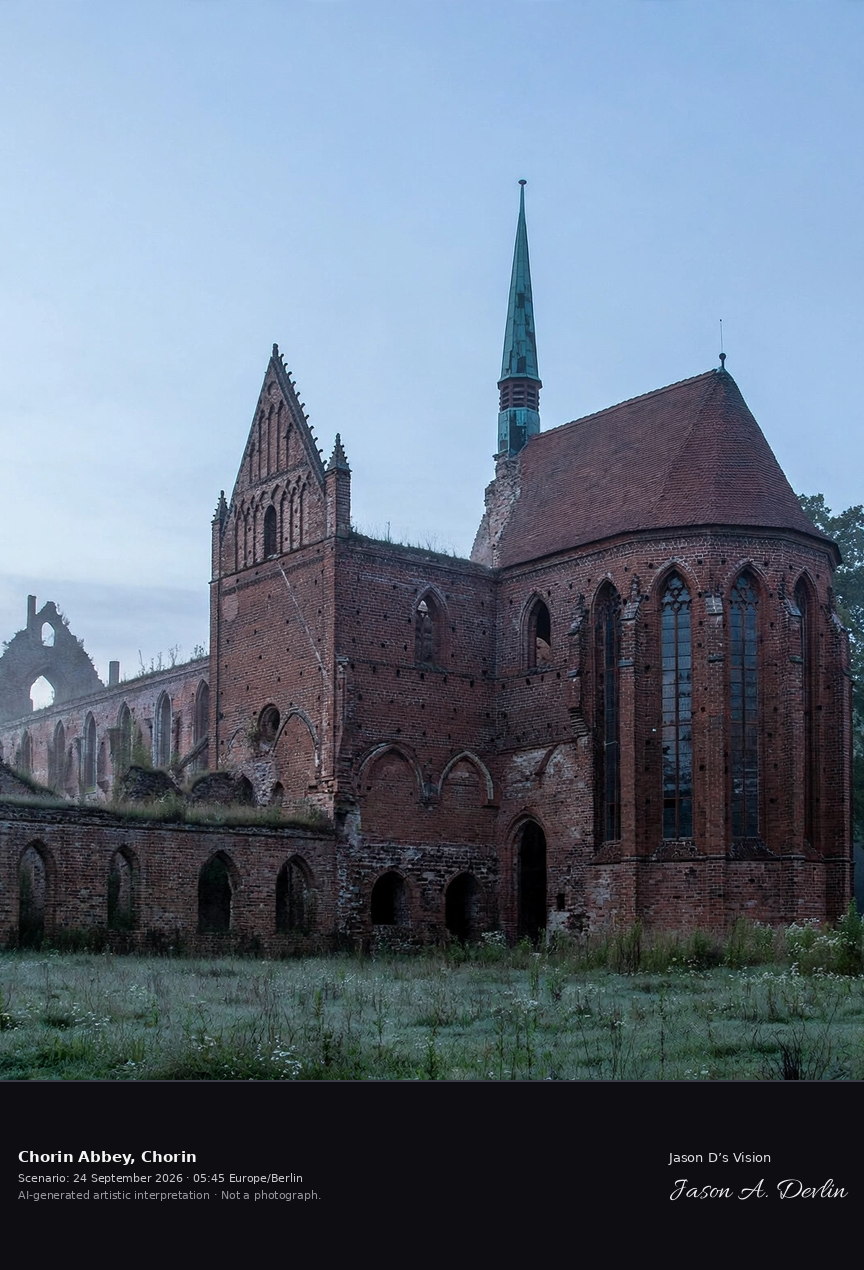
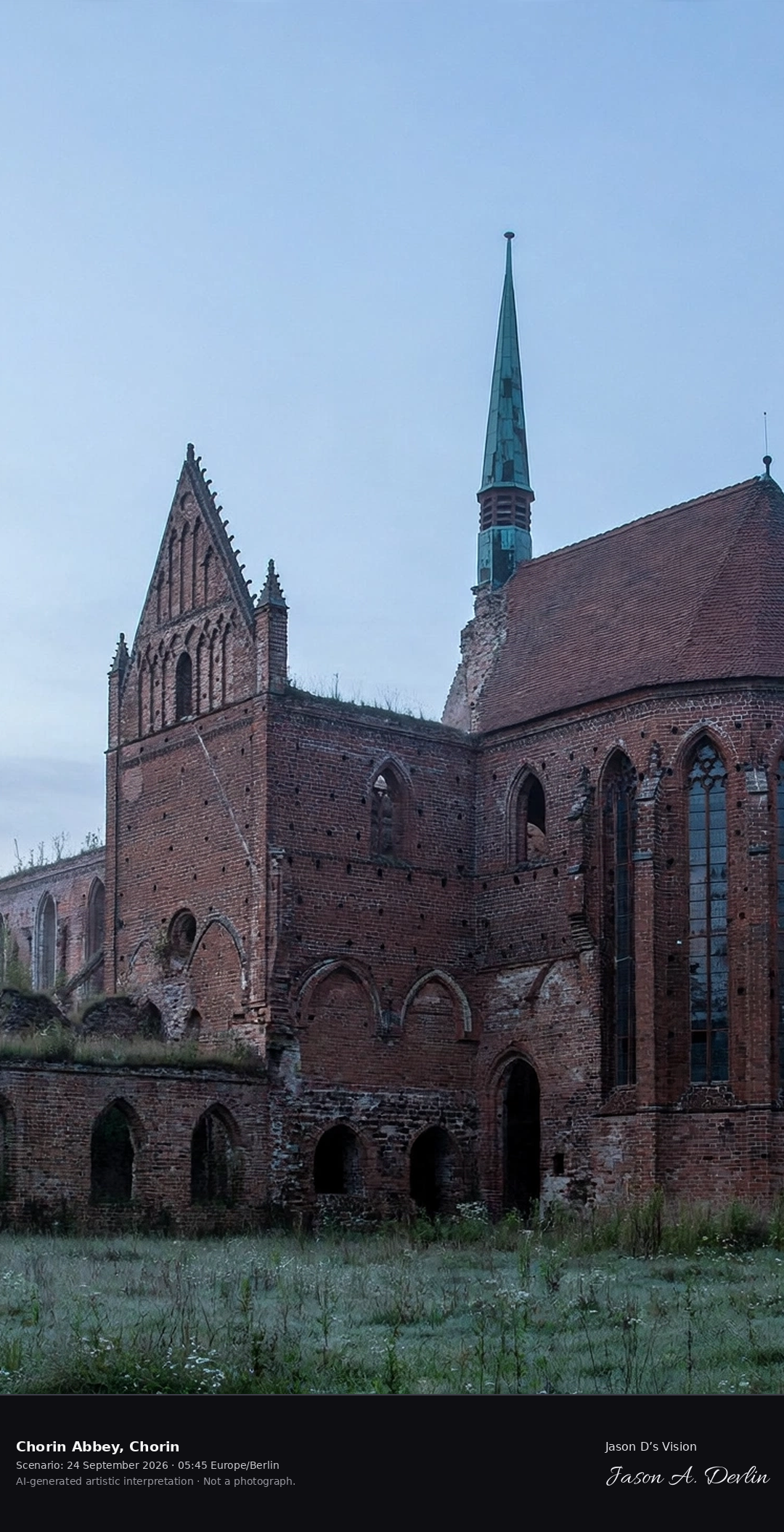
From a rain-damp cloister courtyard before dawn, the visitor looks across wet cobbles to the brick Gothic gables of Chorin Abbey: the tall church front with its lancet windows and slim green spire rises at the right, weathered red-brick arcades line both sides, and ivy drapes the left colonnade. Faint light and rain streaks give the scene a quiet, brooding stillness.
Lake pyramids · AI-generated artistic interpretation
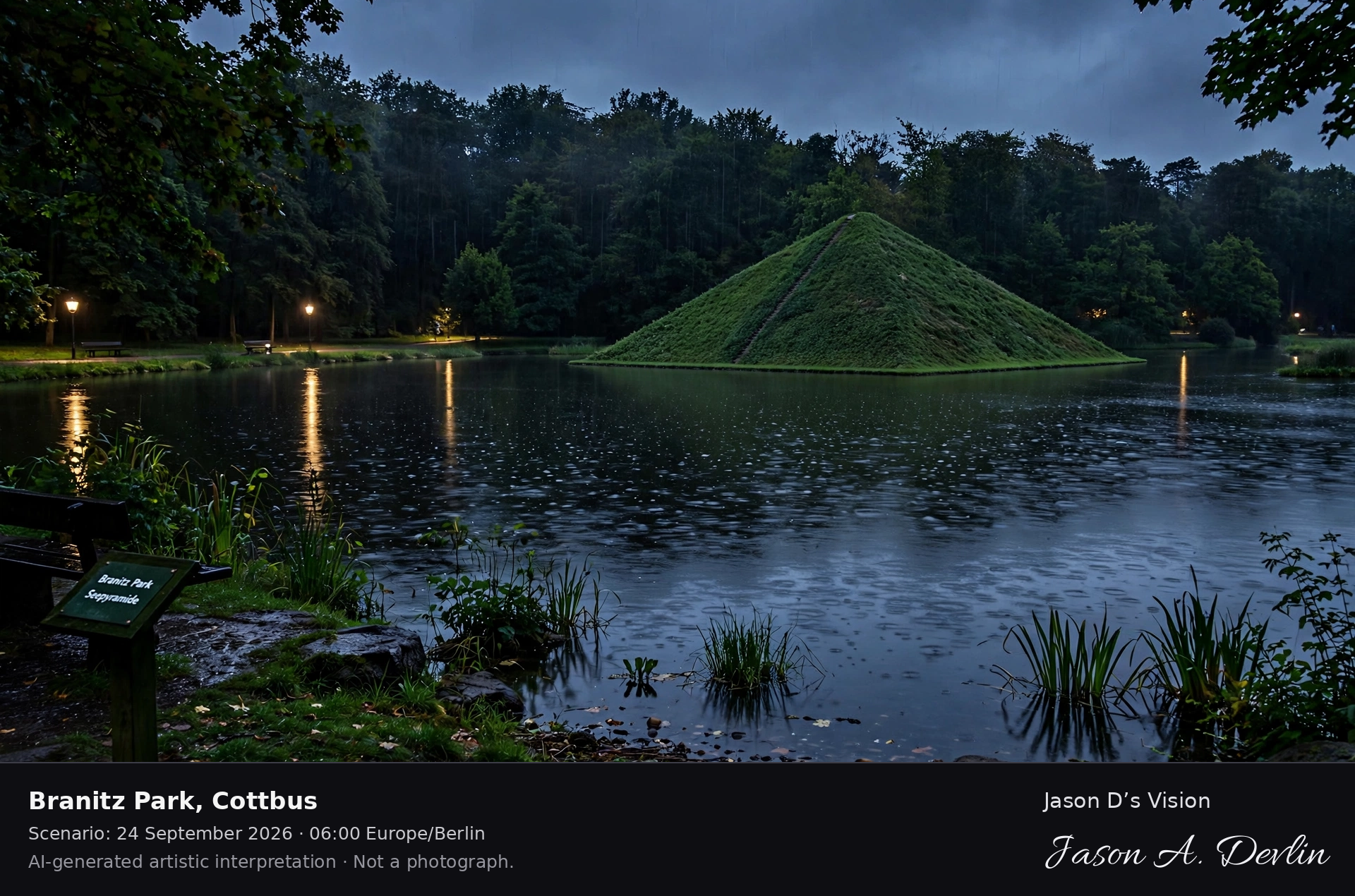
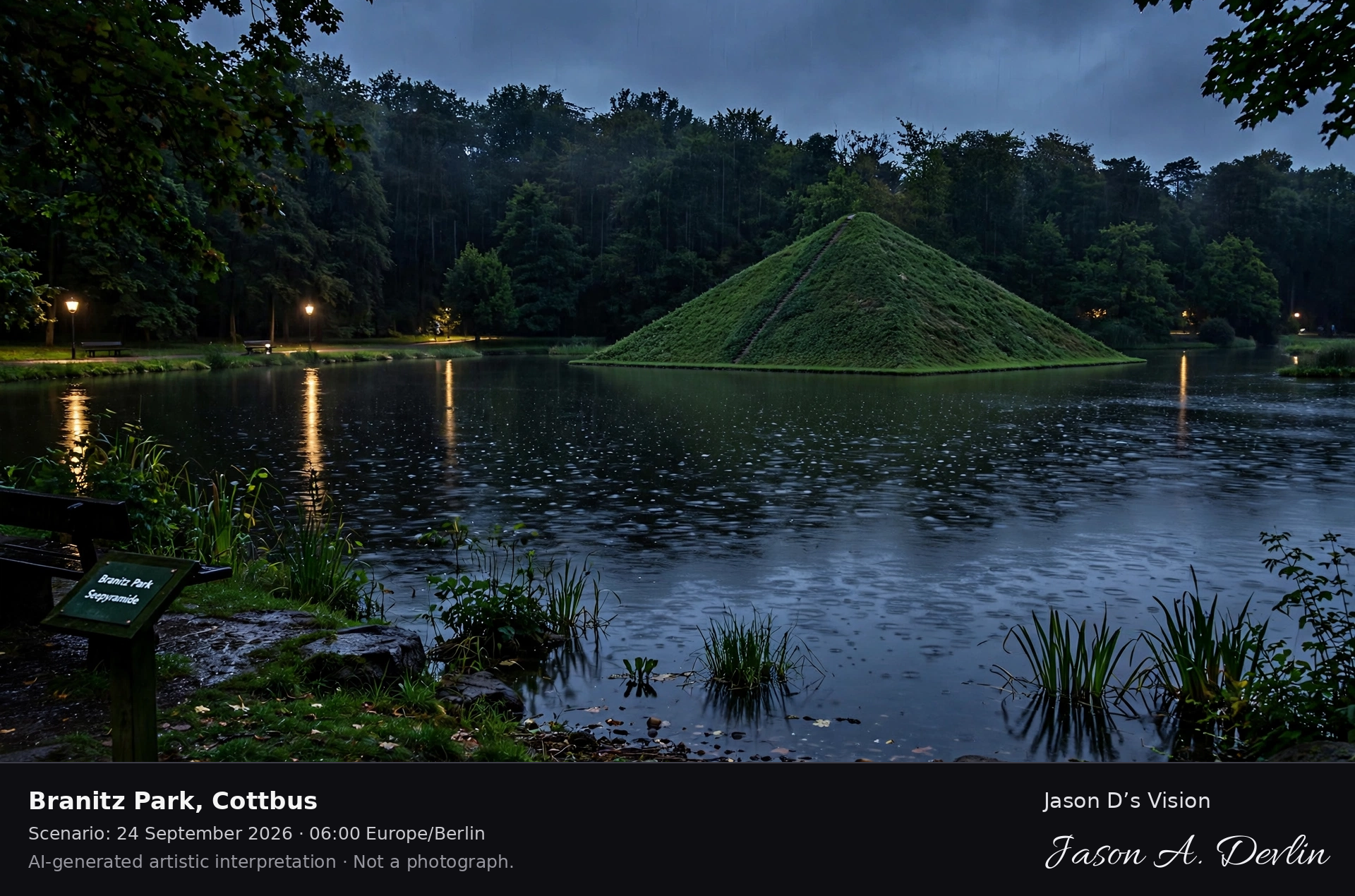
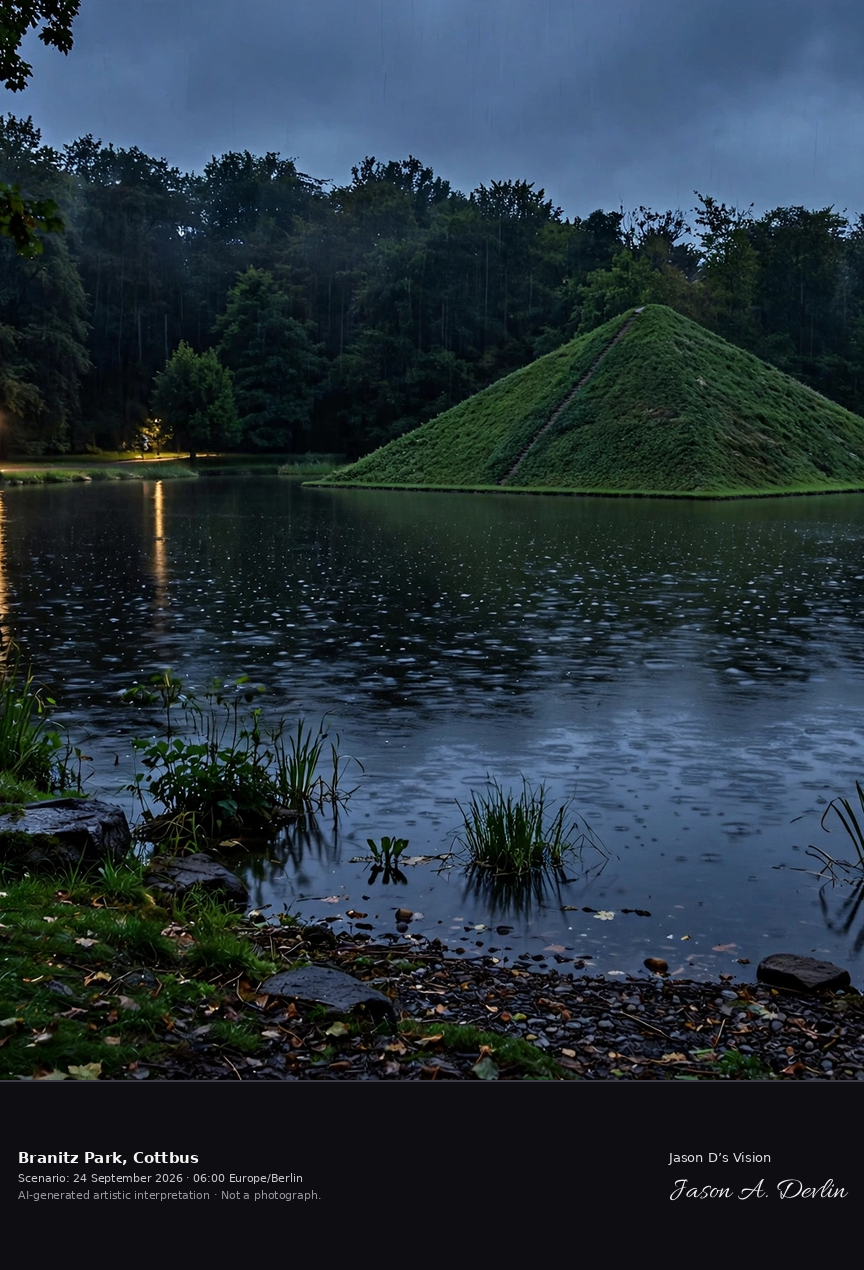
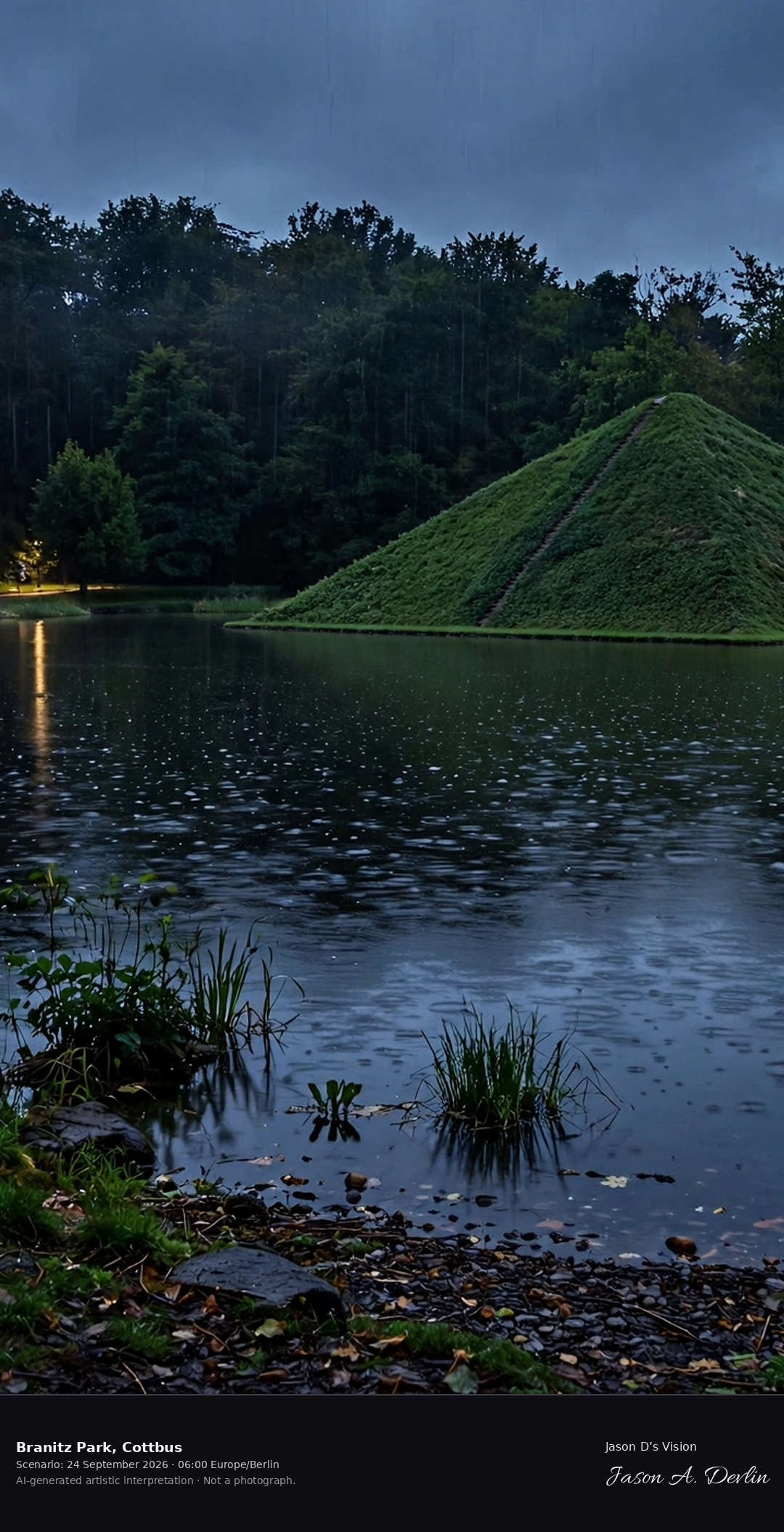
From the rain-wet lakeshore before dawn, the visitor watches the grass-topped Seepyramide rise from the dark, rain-rippled water at the center of the frame, park lamps glowing along the left shore and doubling as reflections. Reeds and a small wooden Branitz Park Seepyramide sign fill the left foreground while dense trees close the far shore, lending the scene a calm, rain-softened stillness.
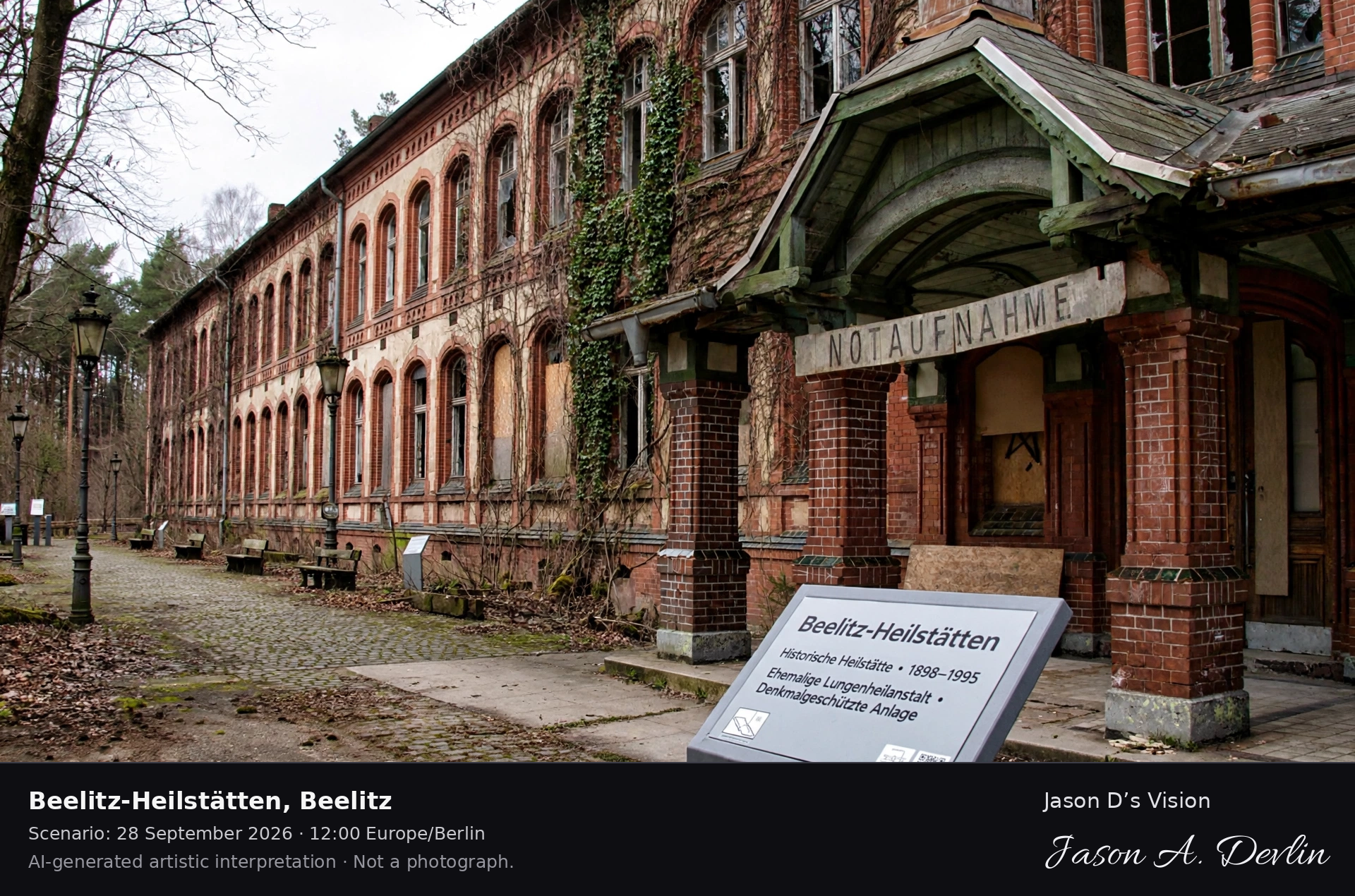
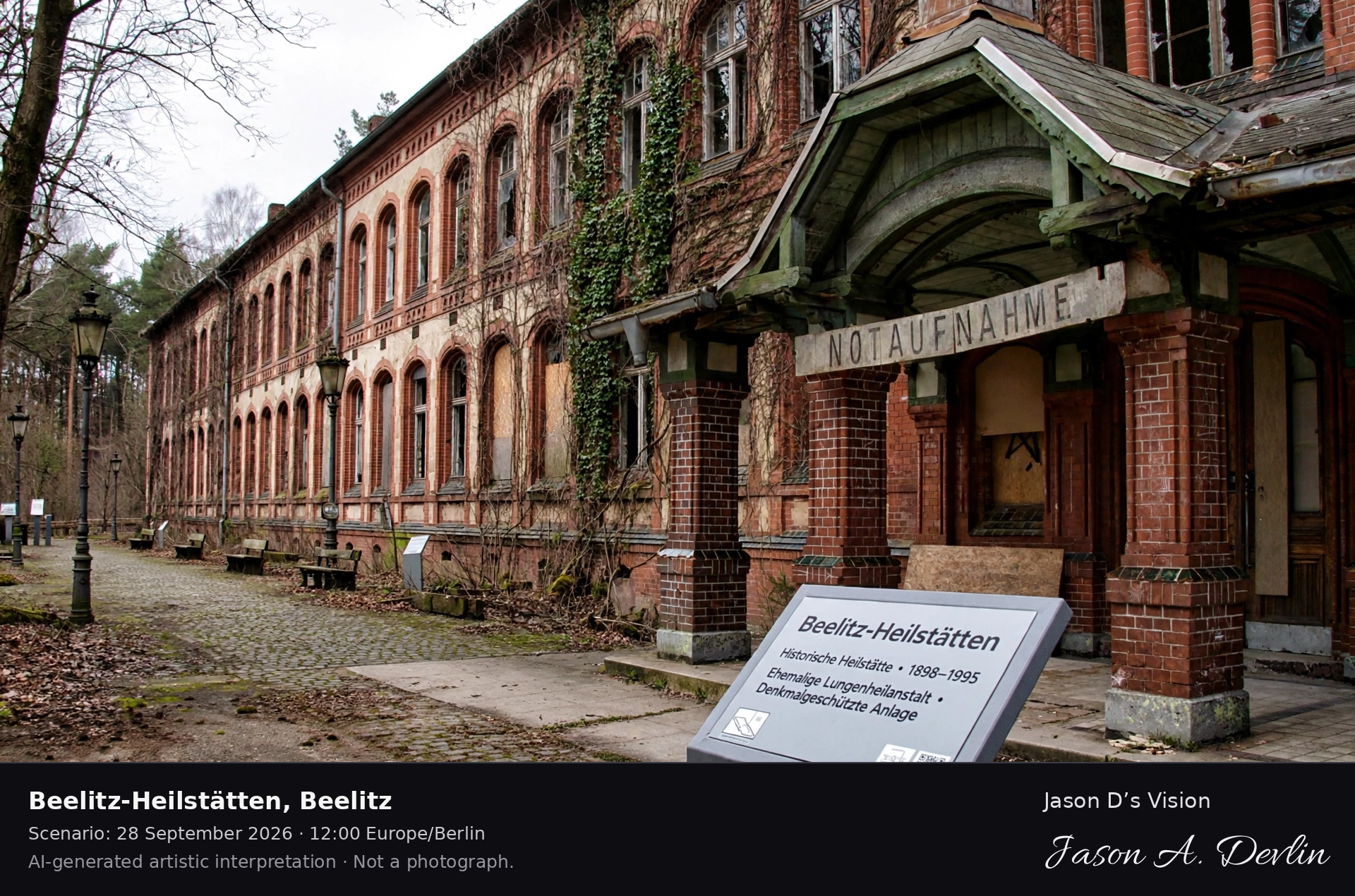
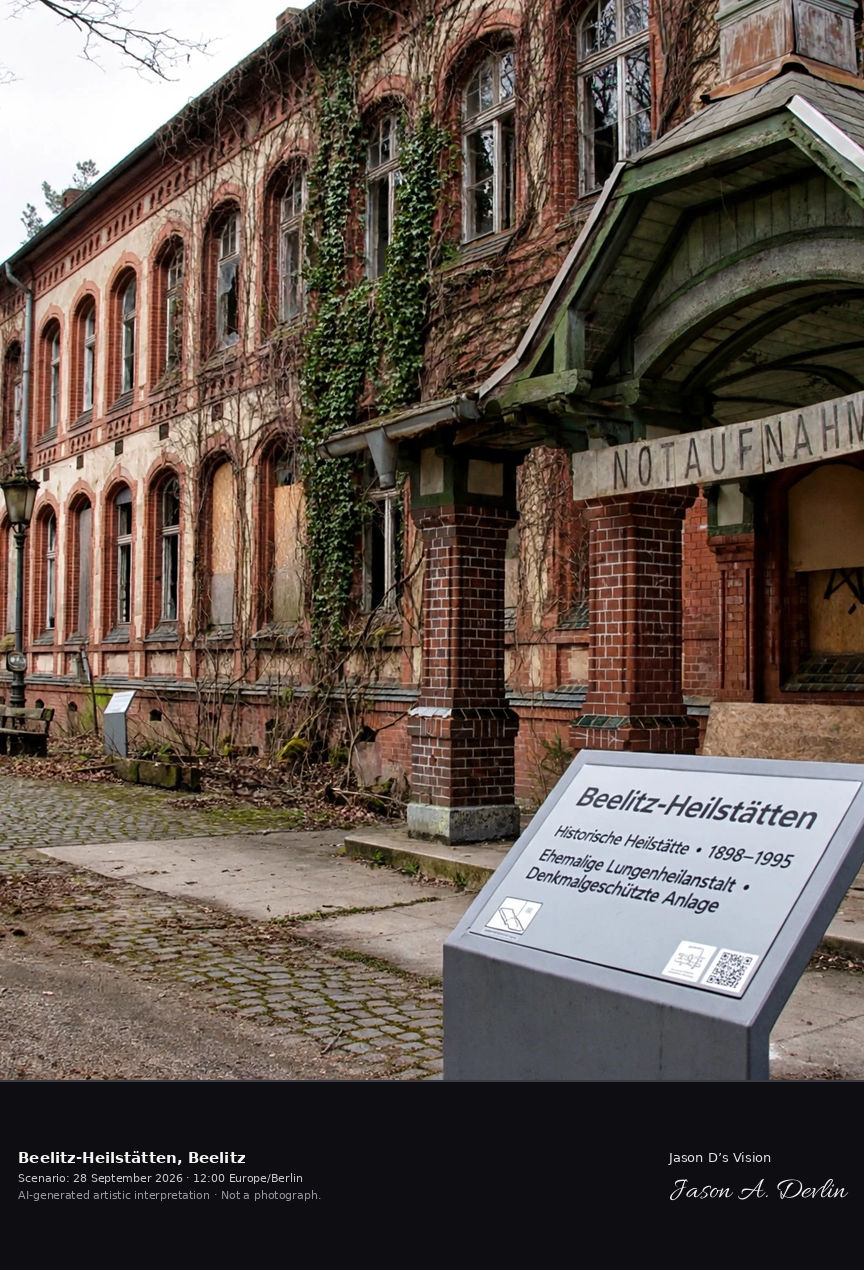
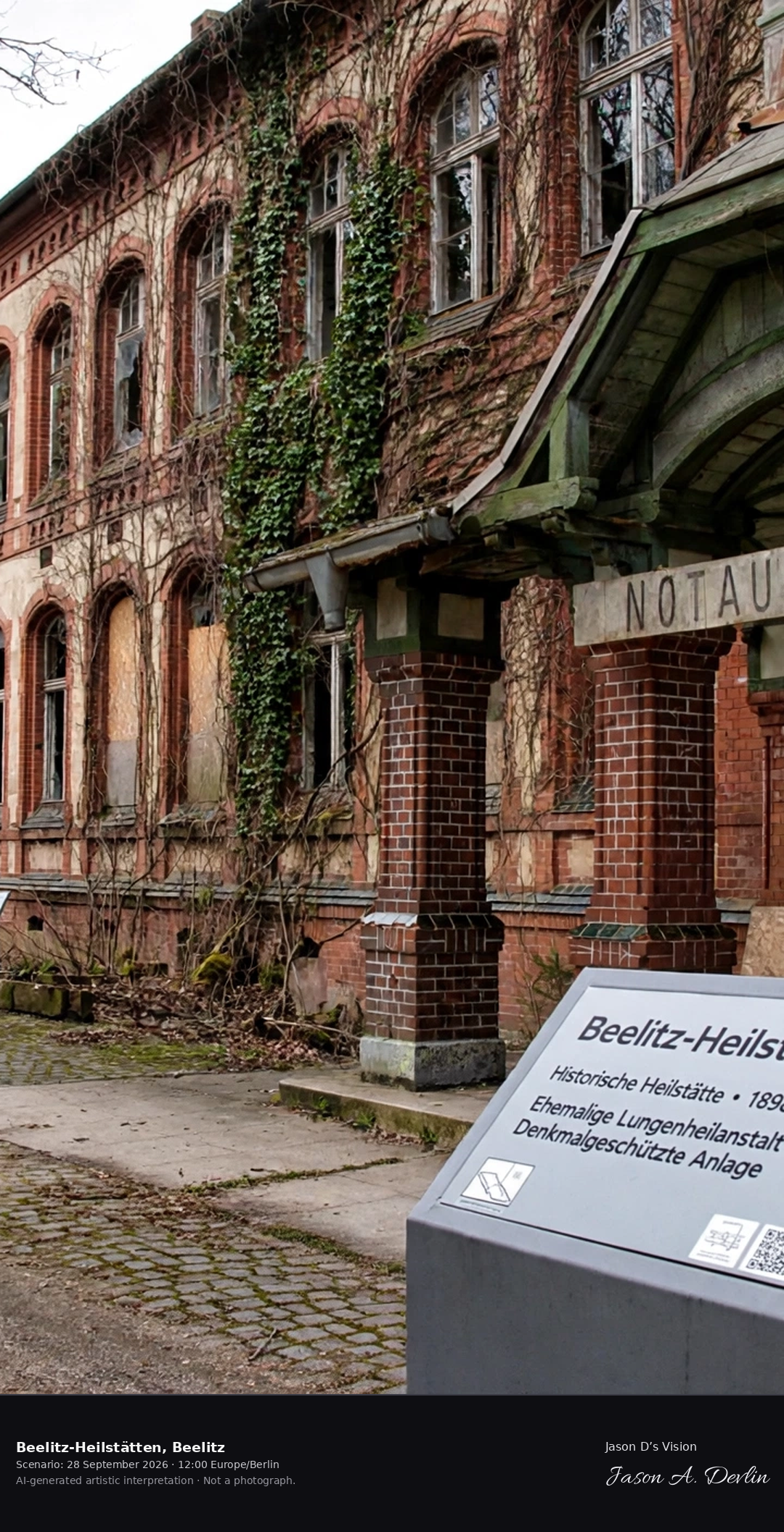
The red-brick sanatorium facade rises at right of frame, its tall arched windows and creeper-covered walls under a low overcast sky. A green-canopied NOTAUFNAHME porch juts toward the viewer at center, with an interpretive plaque standing in the gravel foreground. Warm lamps line the wet path to the left where autumn treetops thin against the grey clouds, the glow softened by early-morning mist.
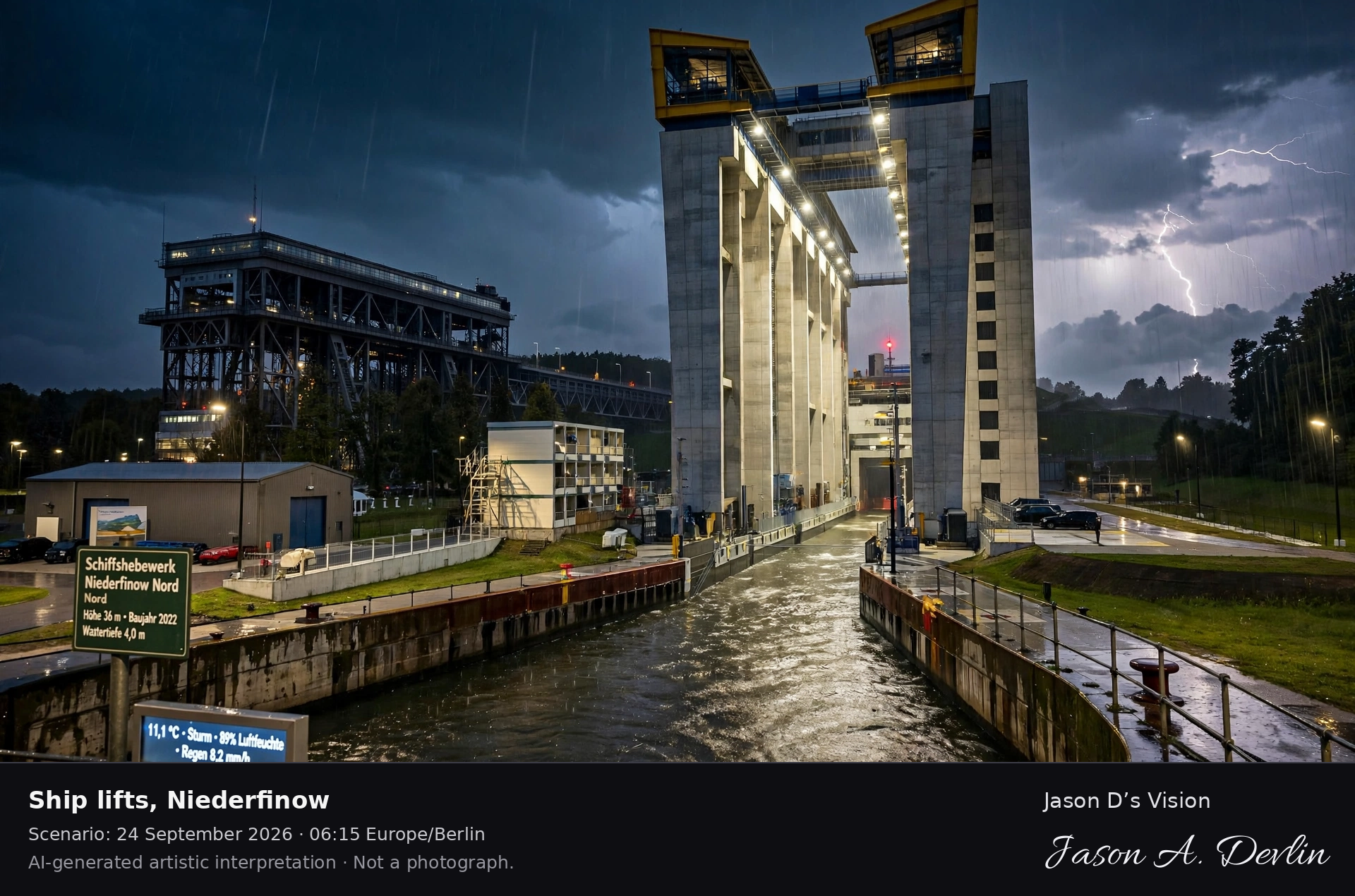
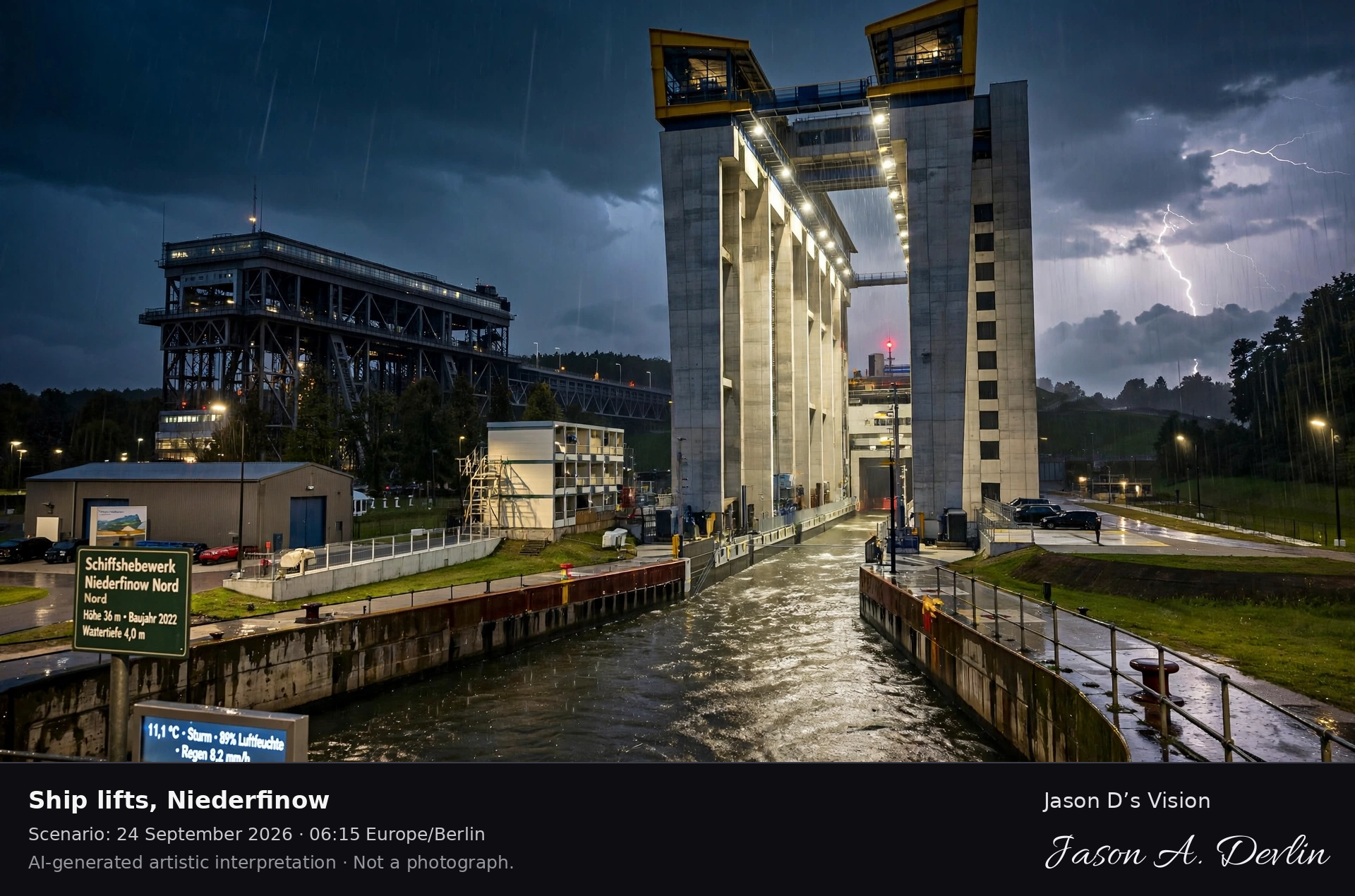
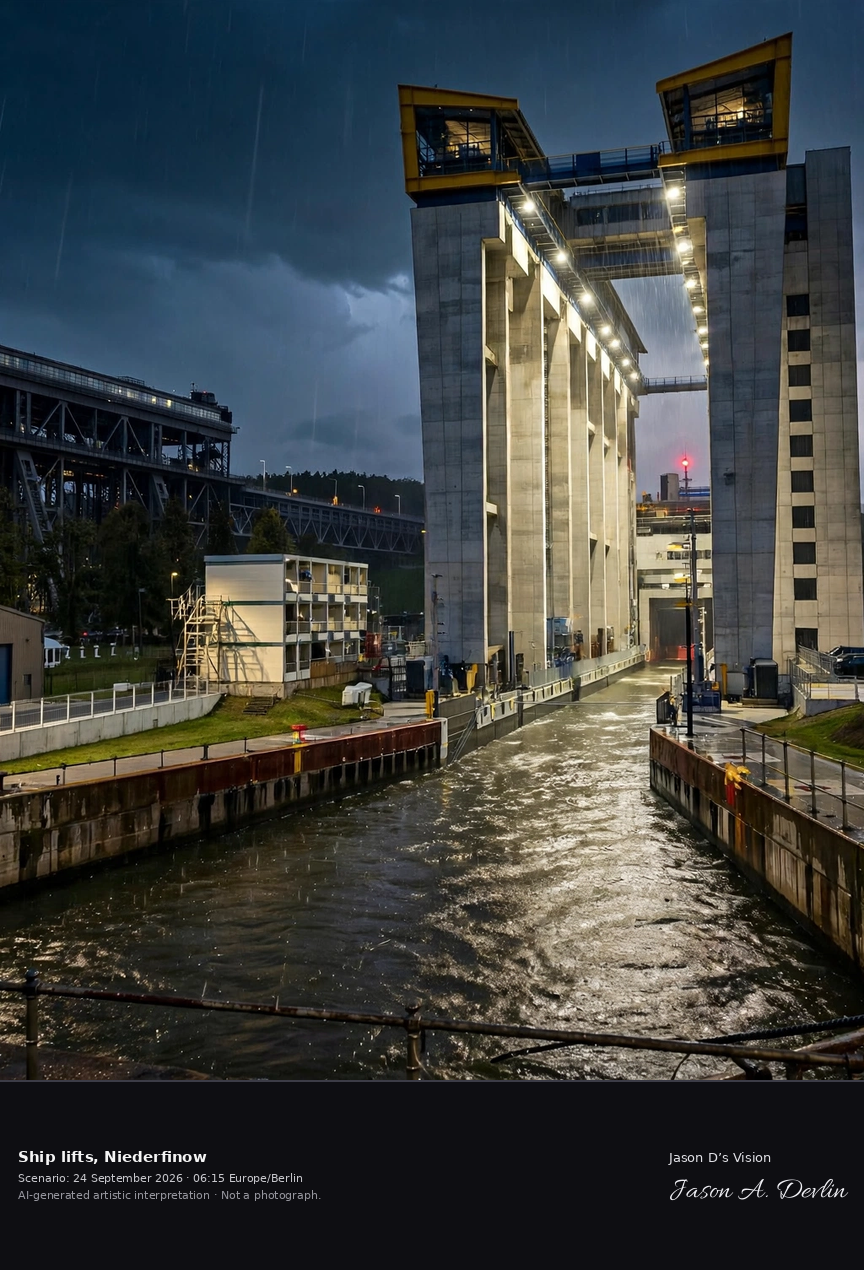
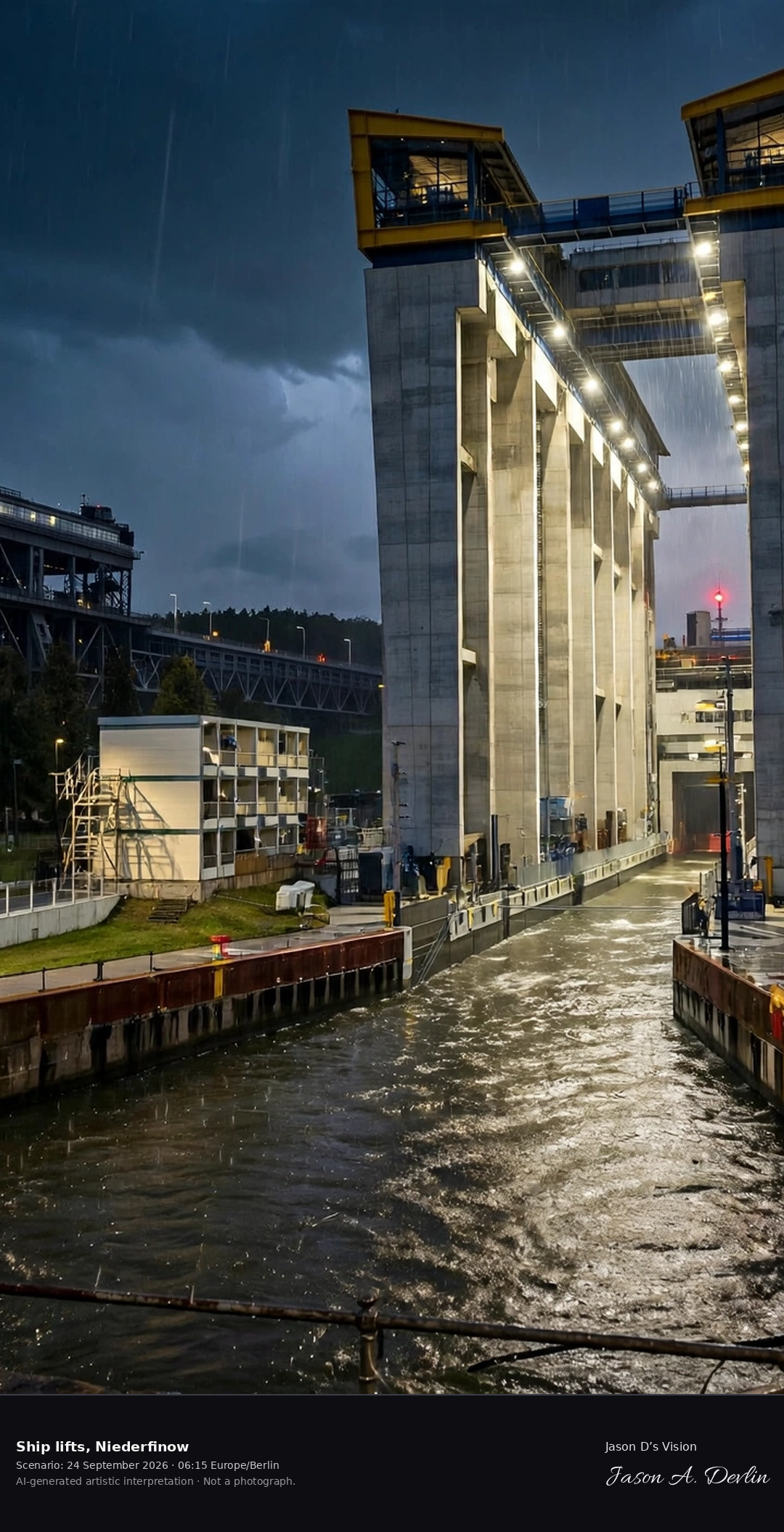
The new concrete ship lift towers right of frame with its yellow machinery houses floodlit, while the old riveted steel lift spans the background at left. A lightning fork splits the storm clouds overhead as rain streaks across the dark sky, and the wet canal water glistens between the quay walls. Street lamps and a green German information sign anchor the left foreground in the downpour.
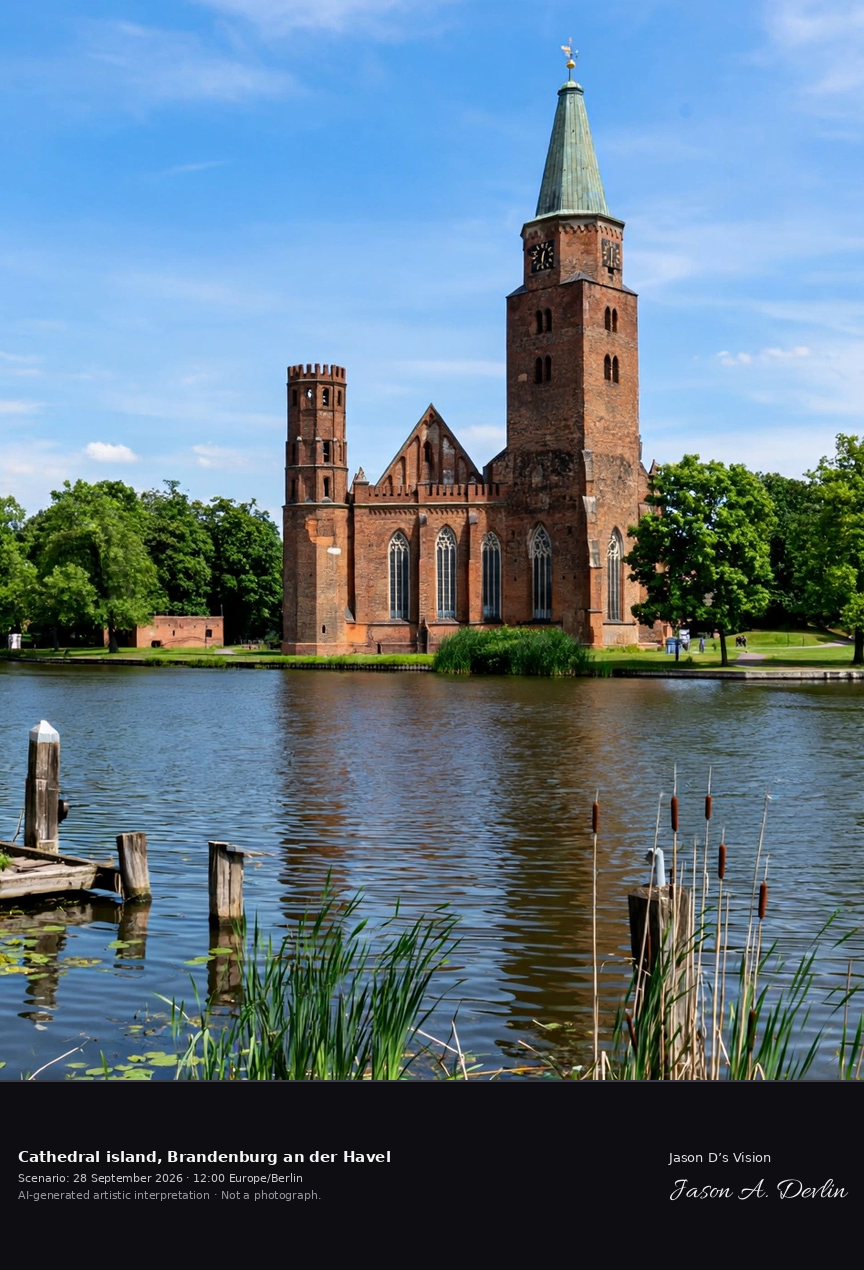
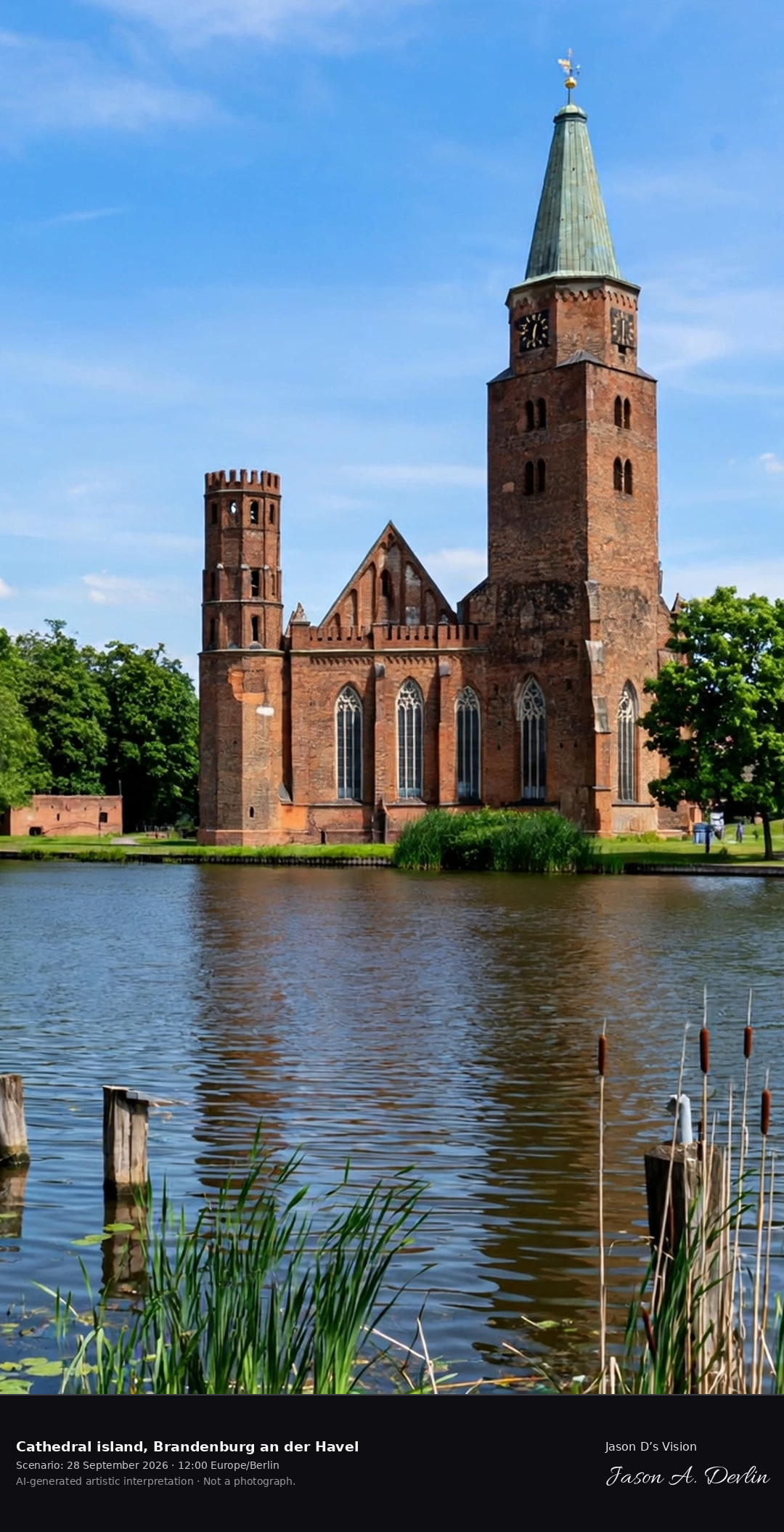
Cathedral and waterways · AI-generated artistic interpretation
The brick Gothic cathedral stands center-right on its island in the Havel, its tall spire piercing a moonlit partly cloudy sky. Lit windows glow against the dark stone while gas lamps line the cobbled embankment at left, their light pooling on the wet cobbles. A wooden boat bobs at the mooring posts in the foreground, and the far shore of the river glimmers with town lights to the right.
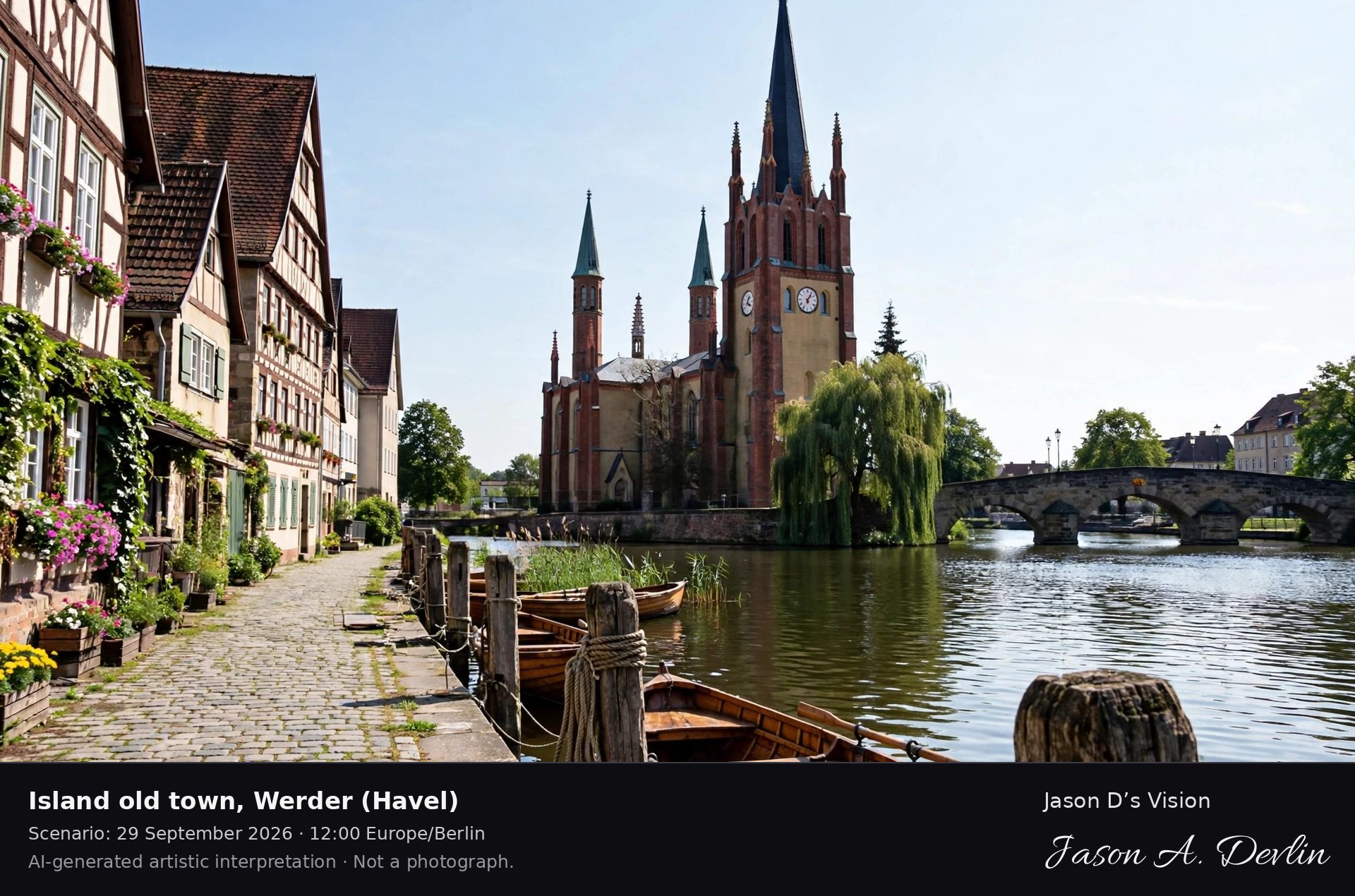
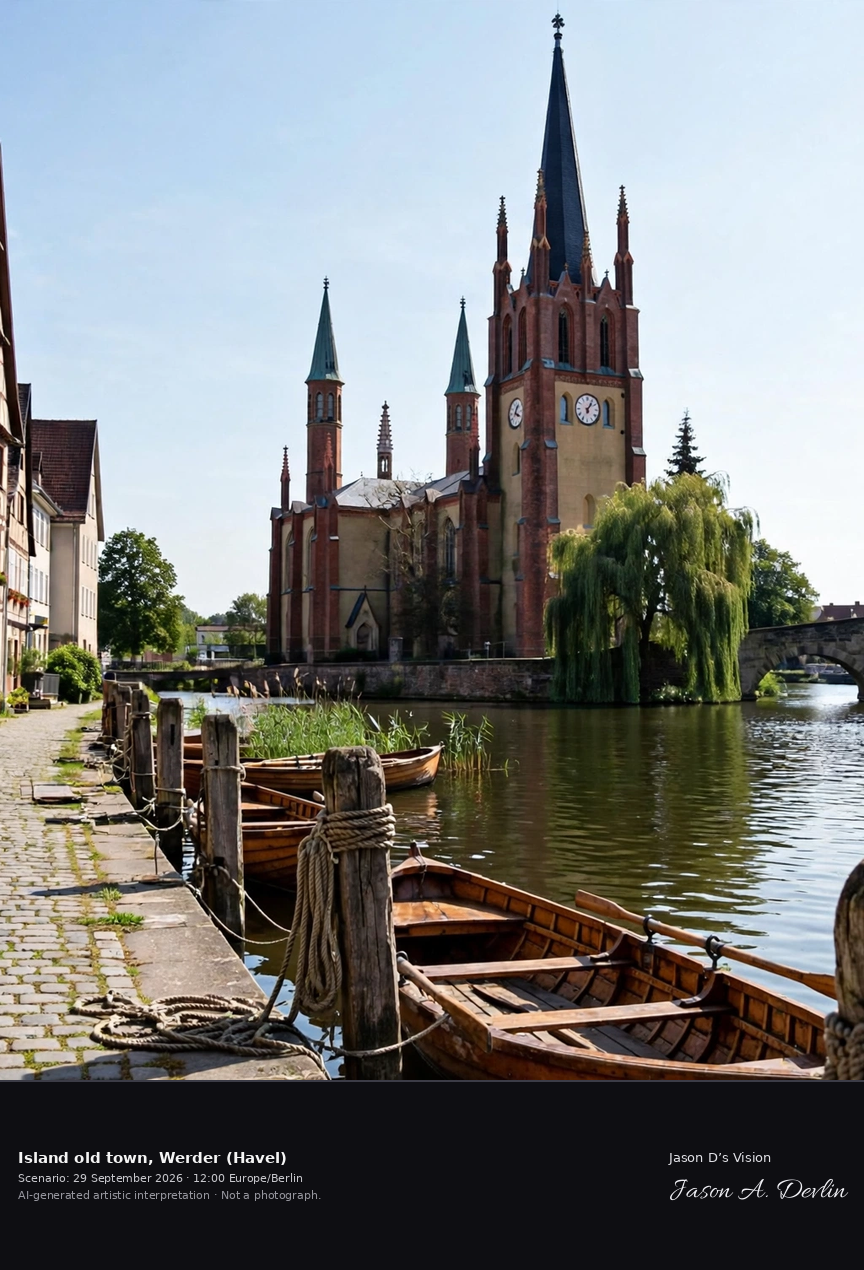
Waterfront and church · AI-generated artistic interpretation
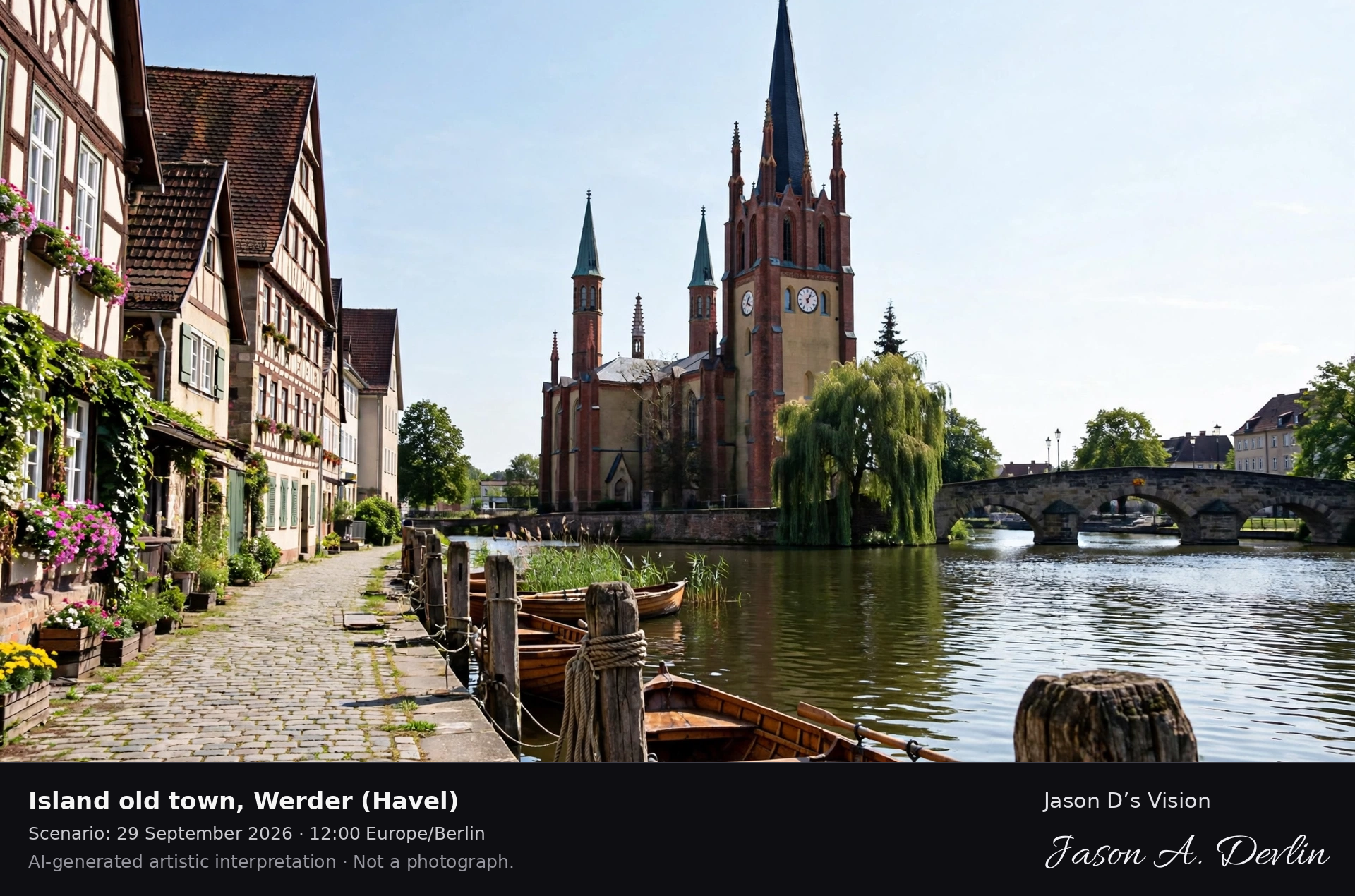
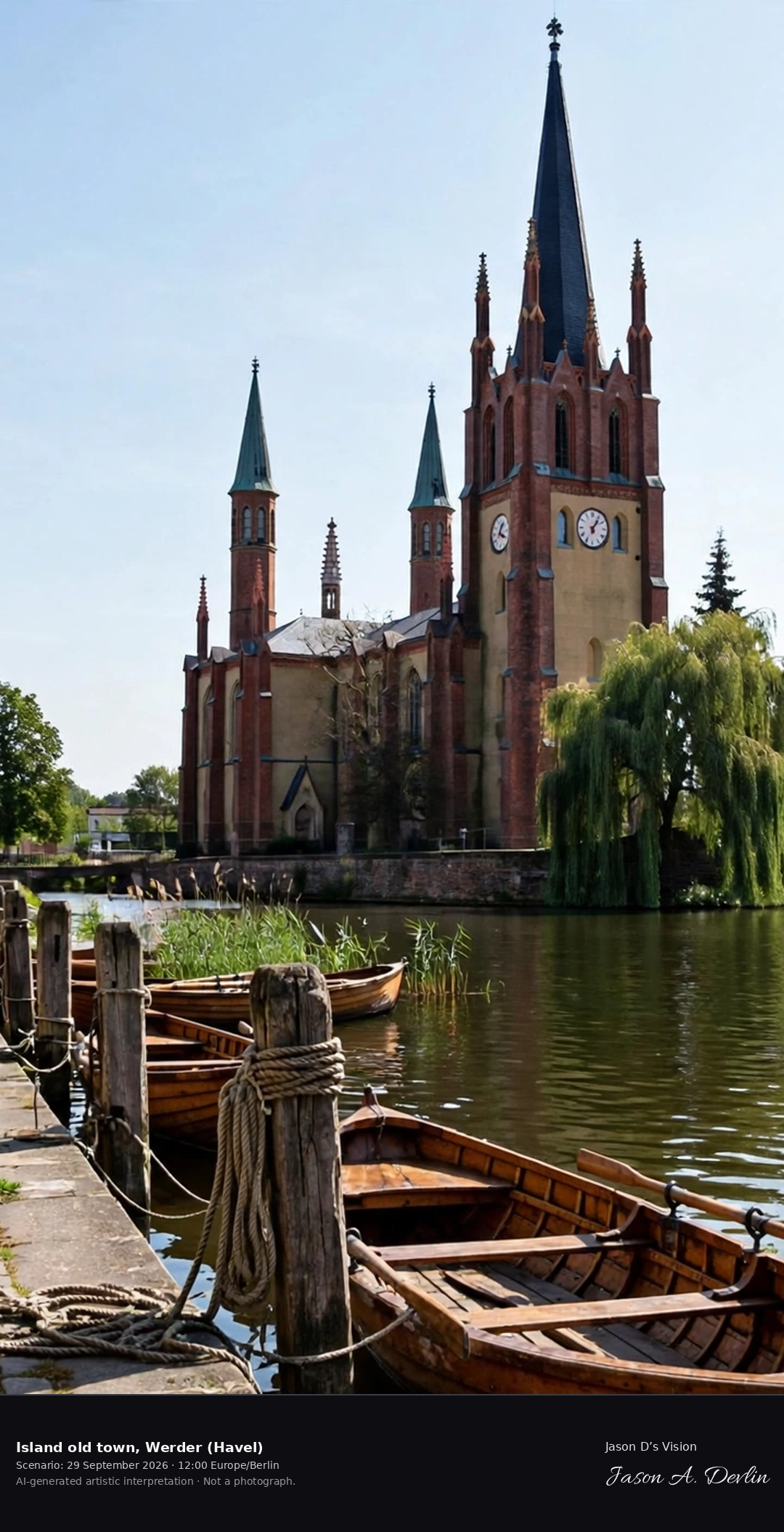
The floodlit neo-Gothic Heilig-Geist-Kirche stands center on Werder's island old town, its tall spire rising against broken night clouds. Moored wooden boats bob at the cobbled quayside on the left, old-town houses glowing warm along the banks, and an arched stone bridge crossing the Havel at the right edge — light and water reflections woven across the frame.
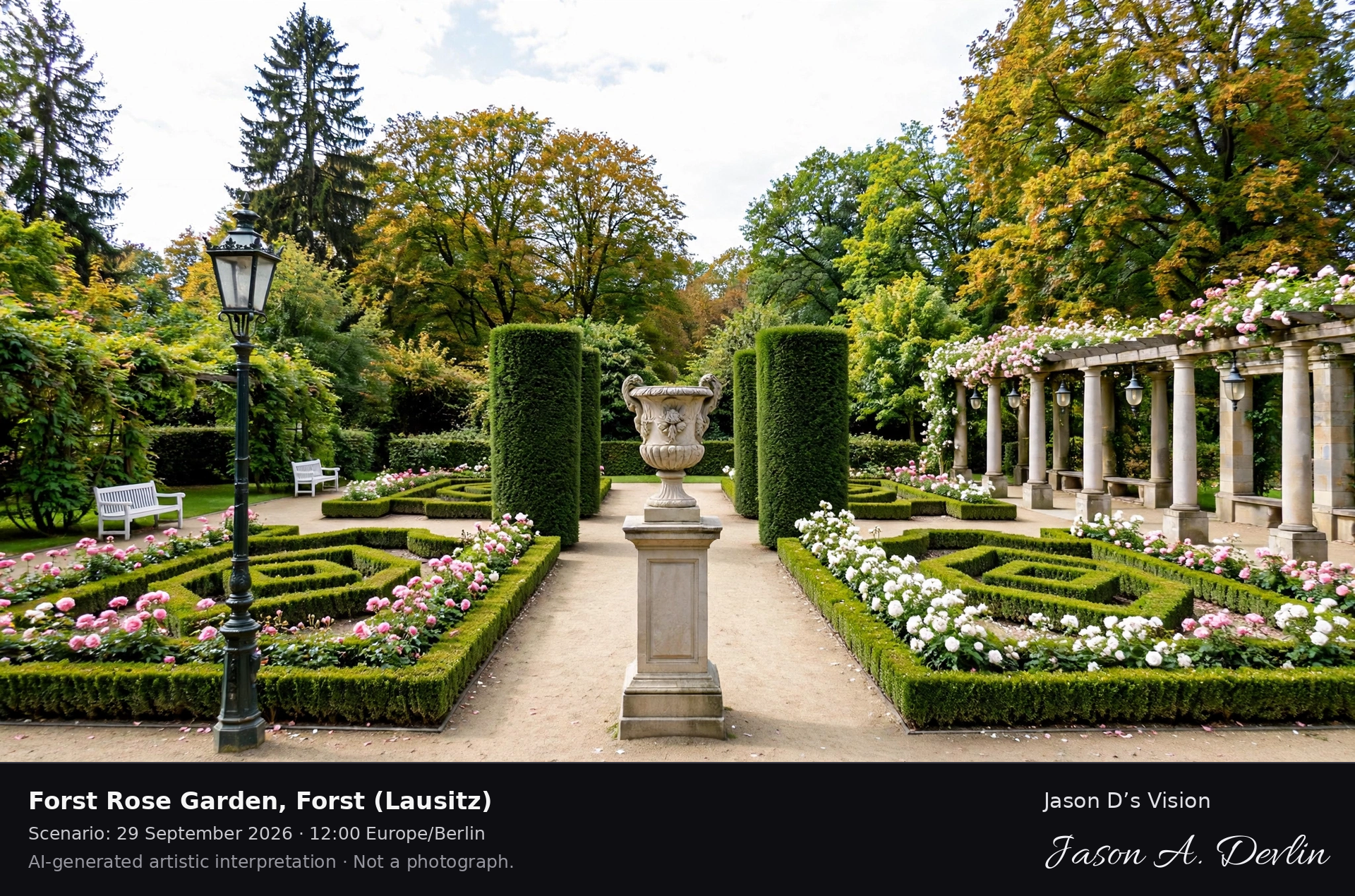
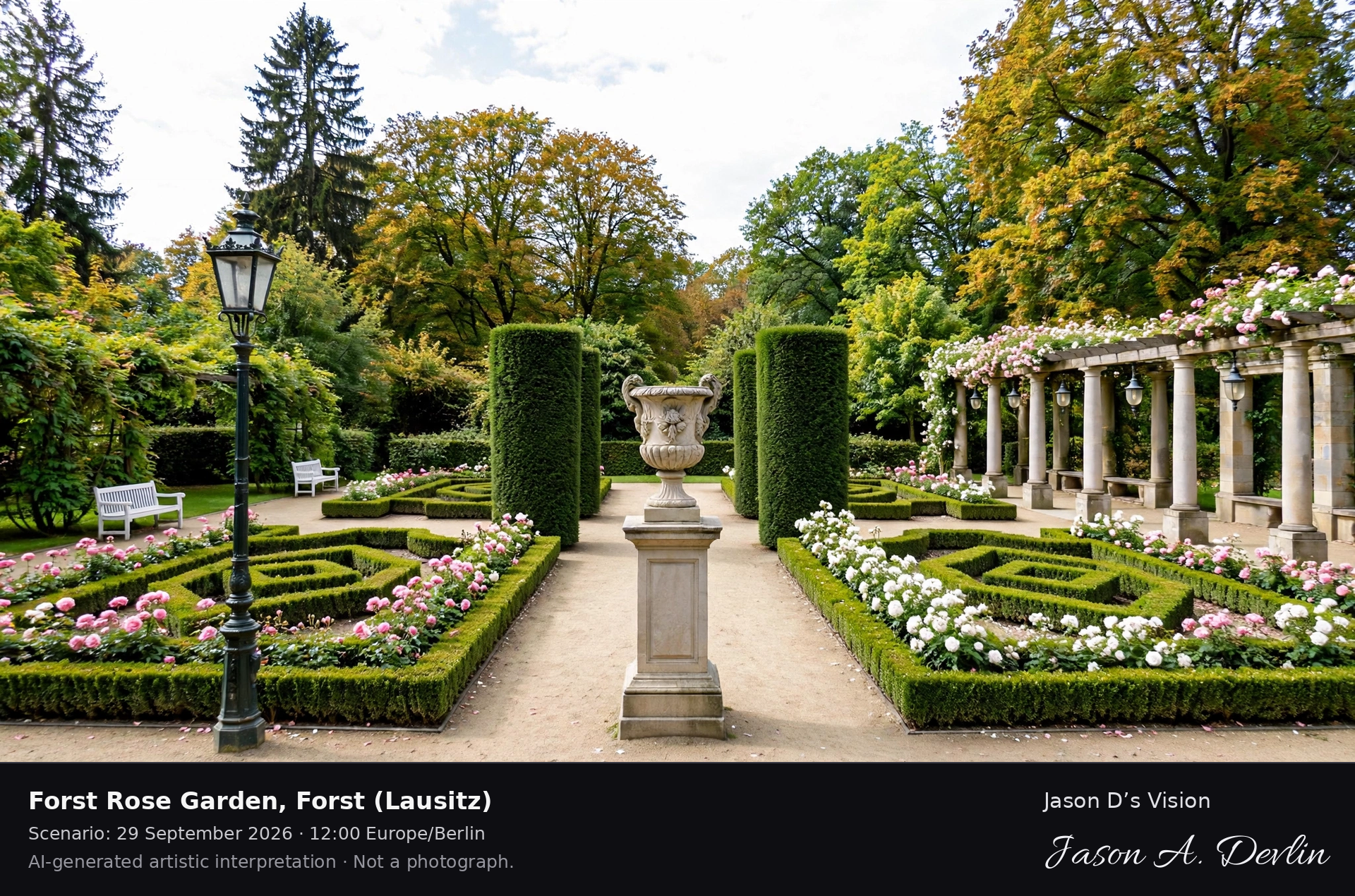
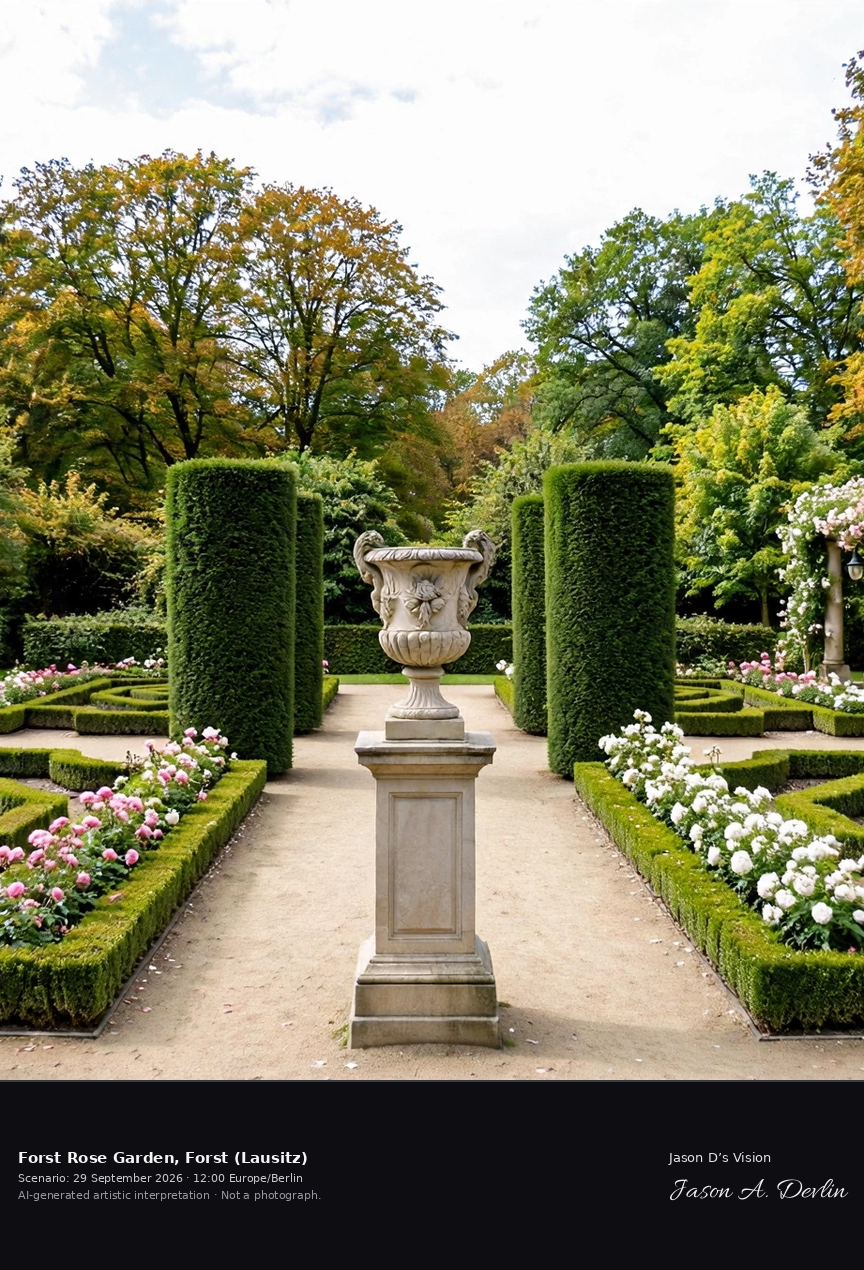
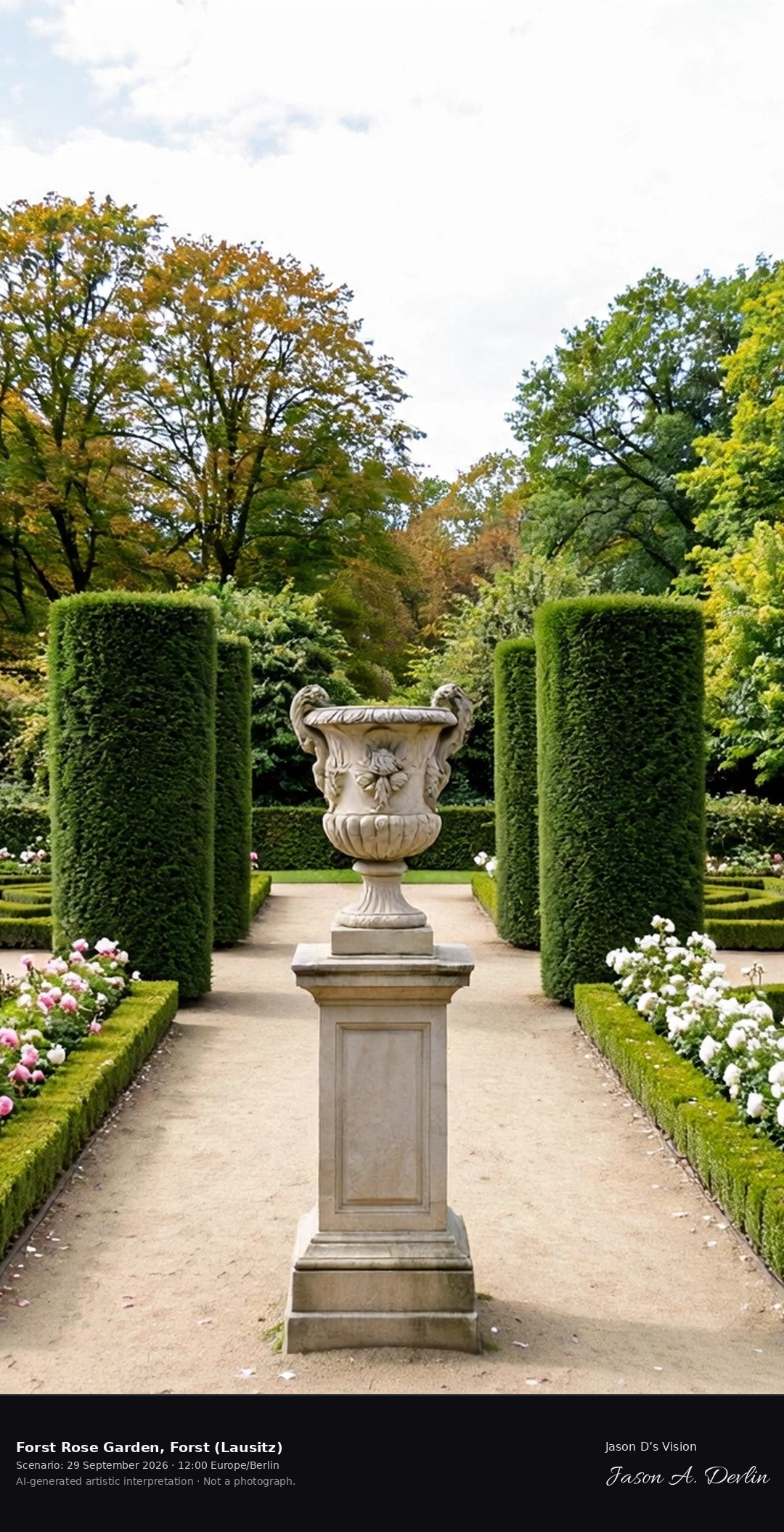
A lamp-lit stone pergola stands at the right of the formal rose parterre, its warm lanterns glowing against the night. Clipped box-hedge beds edged with rose bushes frame a weathered stone urn at the center, with white benches tucked along the paths and a dark canopy of mature trees rising behind under an overcast sky.
Gates and historic streets · AI-generated artistic interpretation
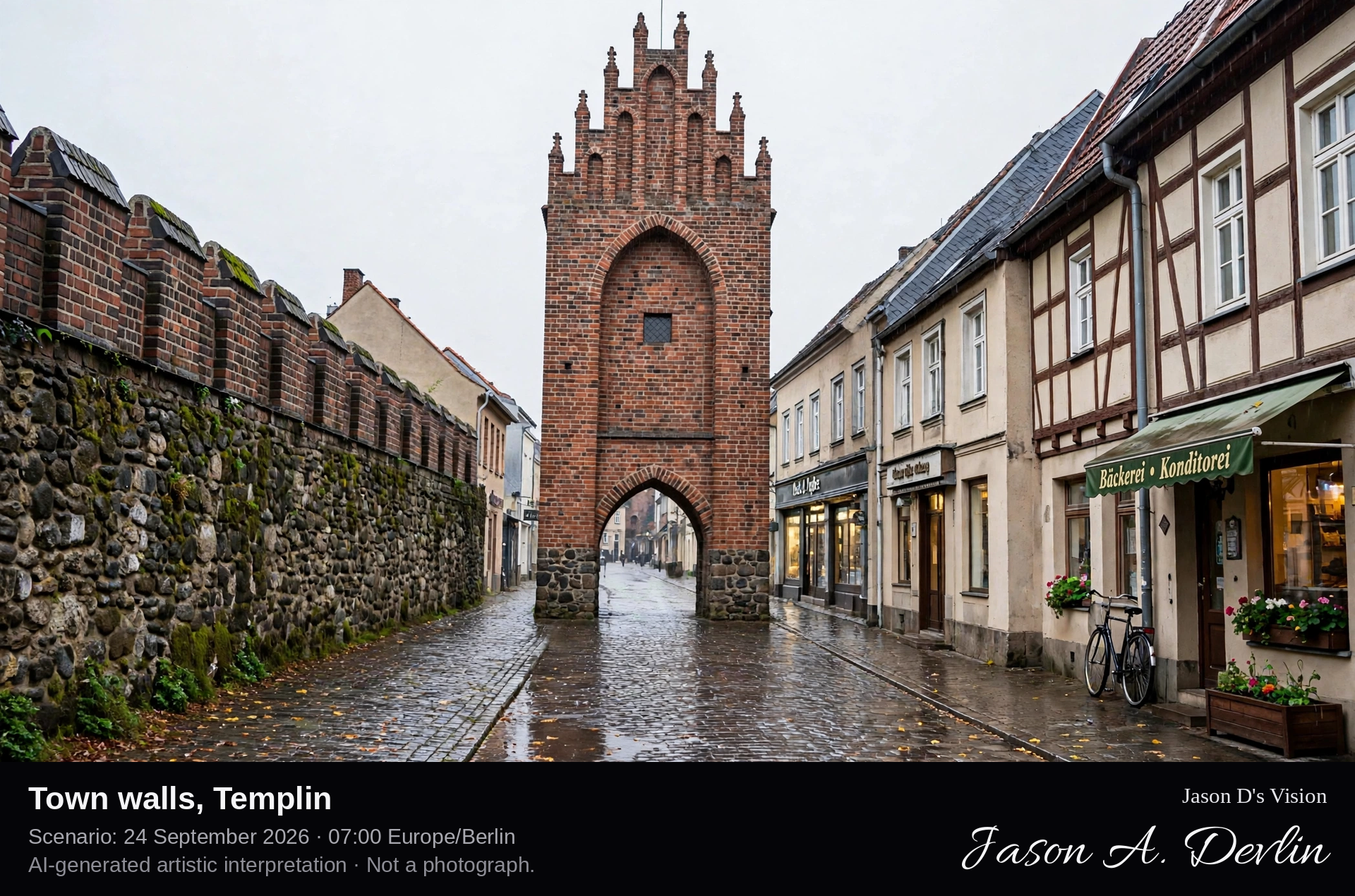
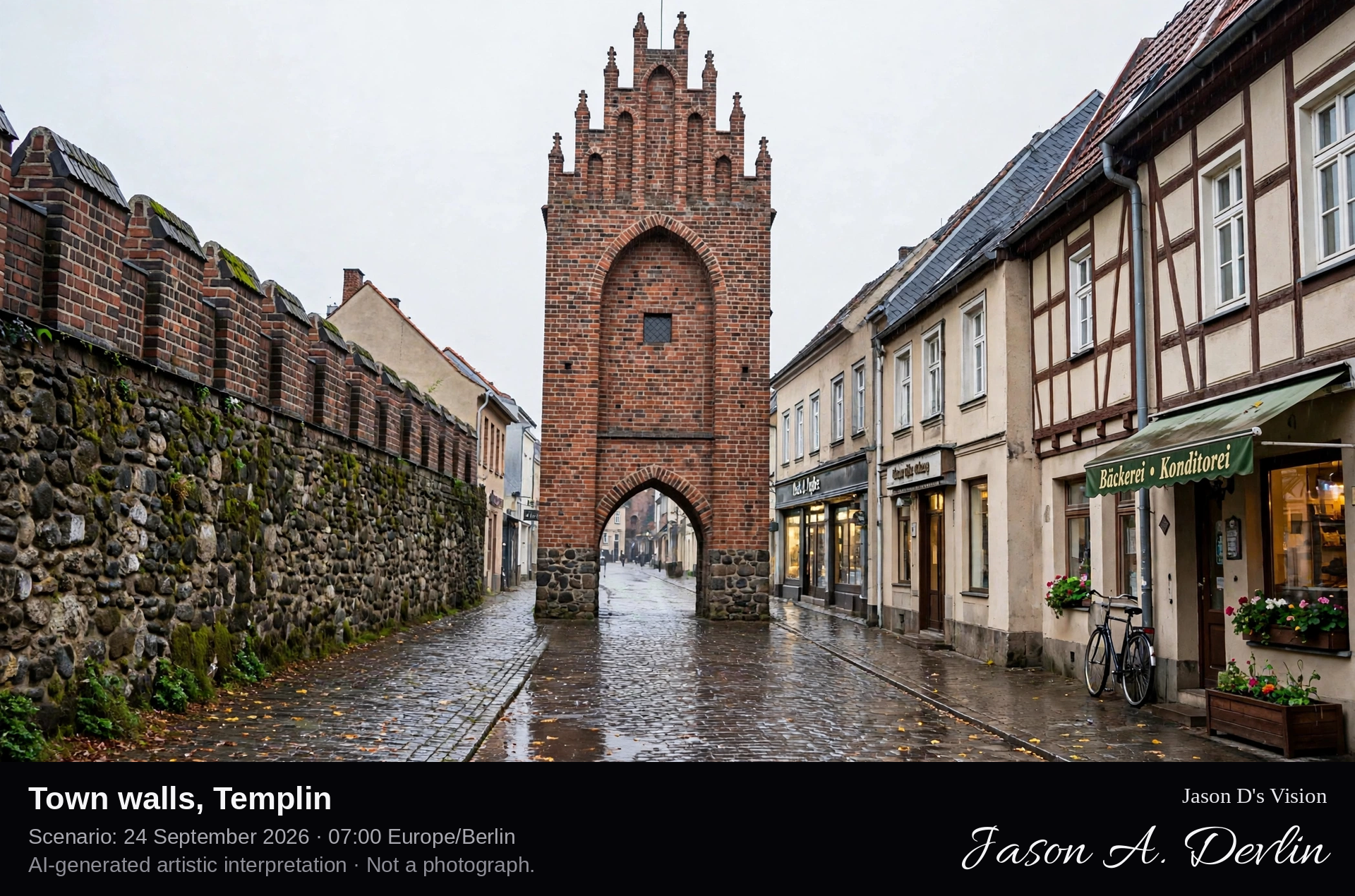
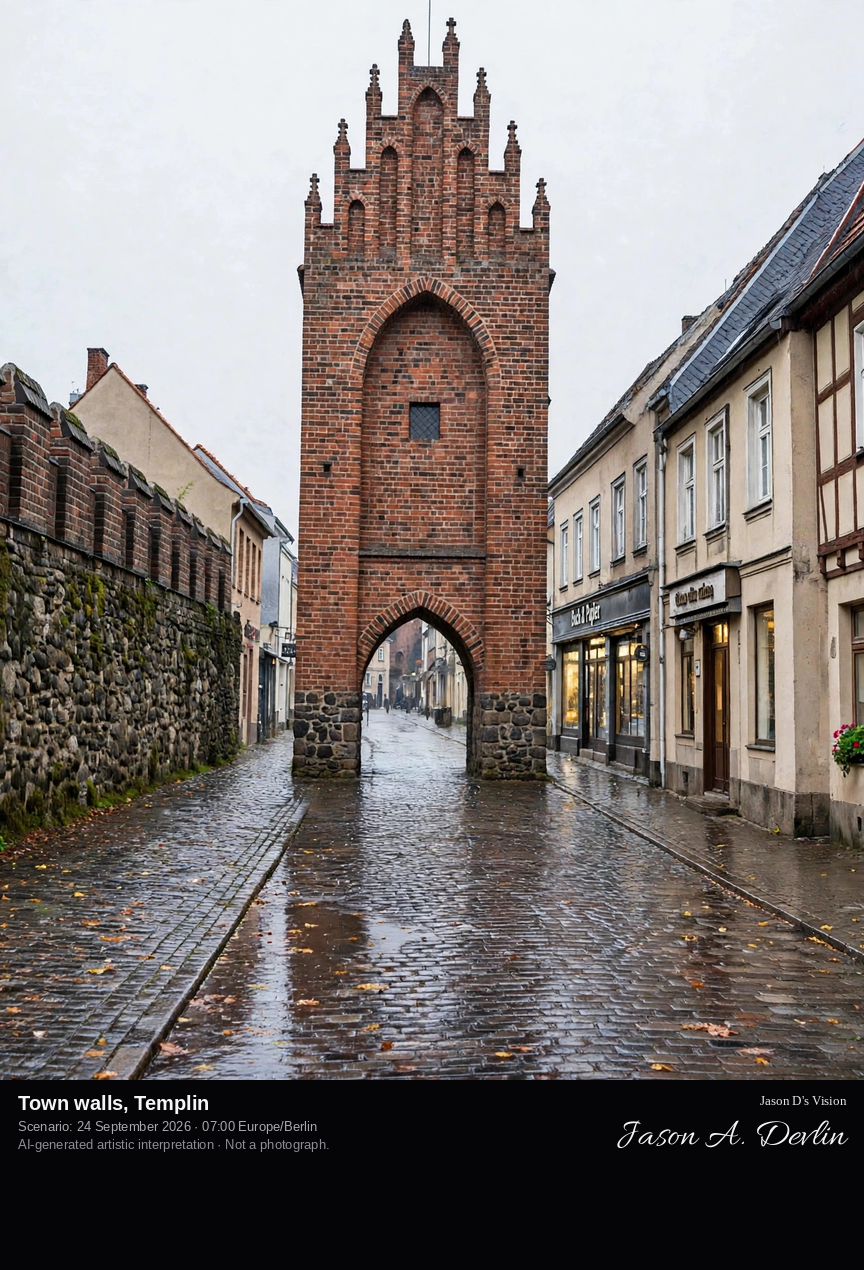
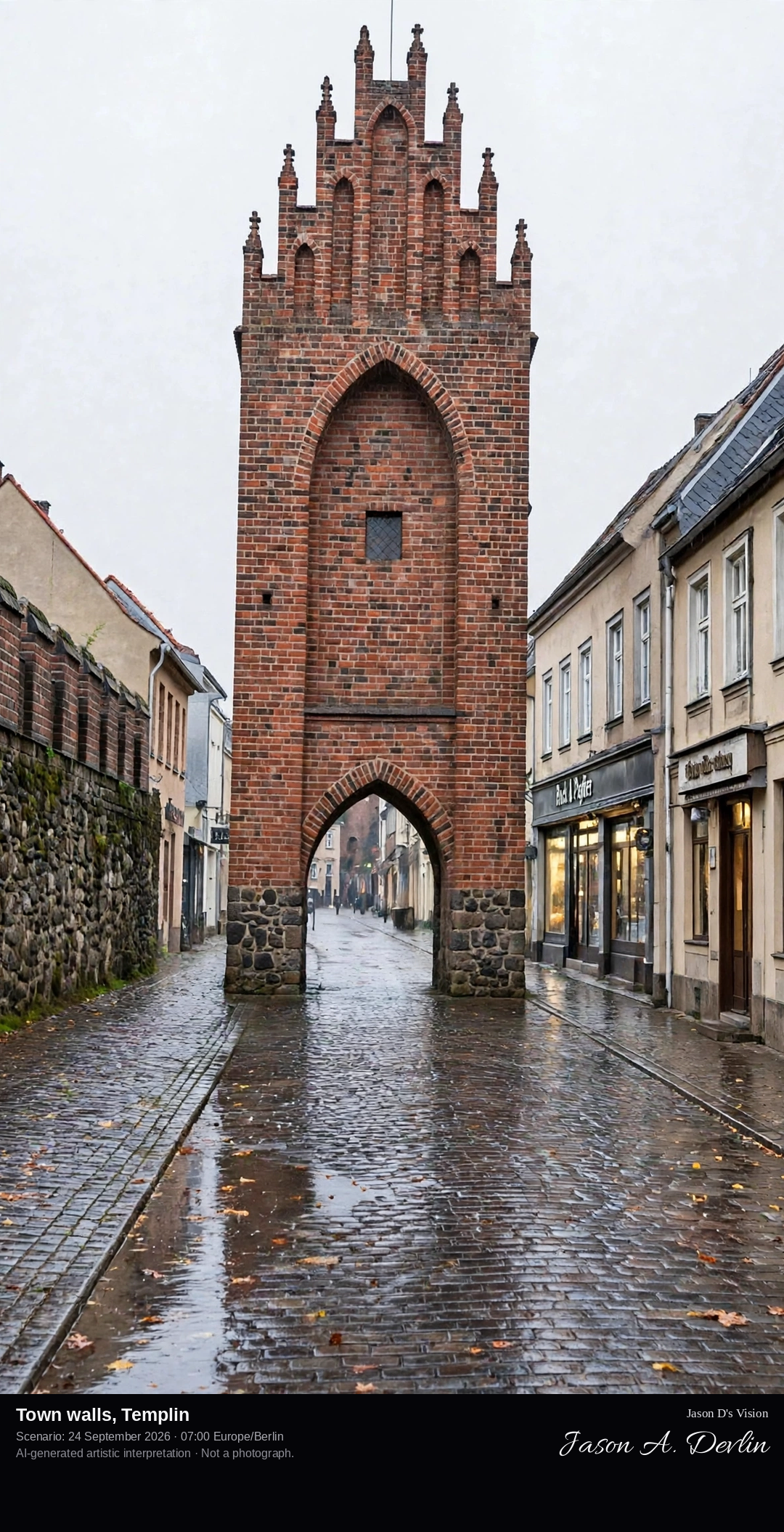
The crenellated brick gate tower rises center, its arched passage leading into the wet historic street beyond. A mossy fieldstone wall runs left toward the gate, while half-timbered houses with a bakery awning line the right; rain slicks the cobbles under a heavy grey daytime sky, with another tower glimpsed through the arch.
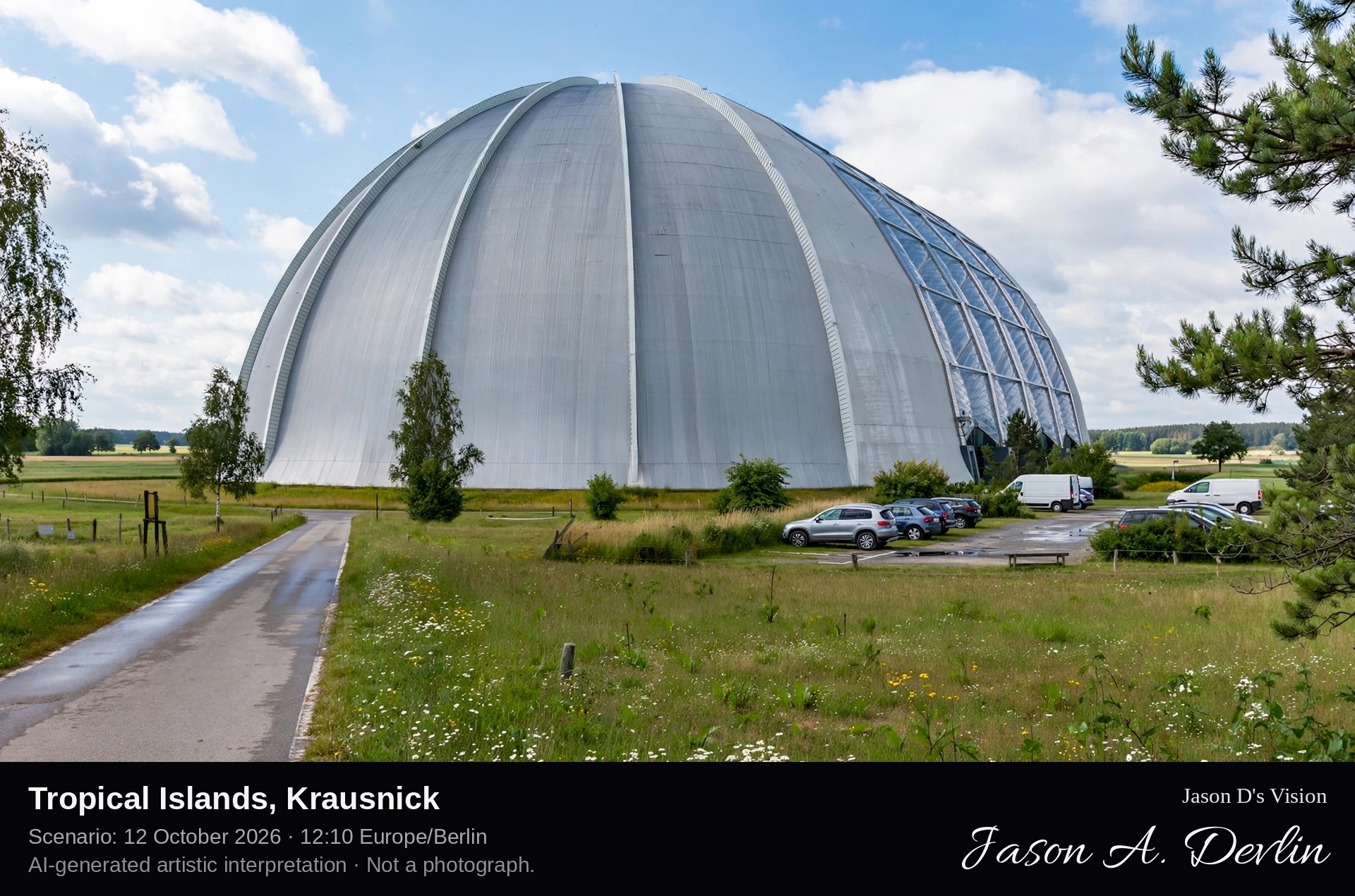
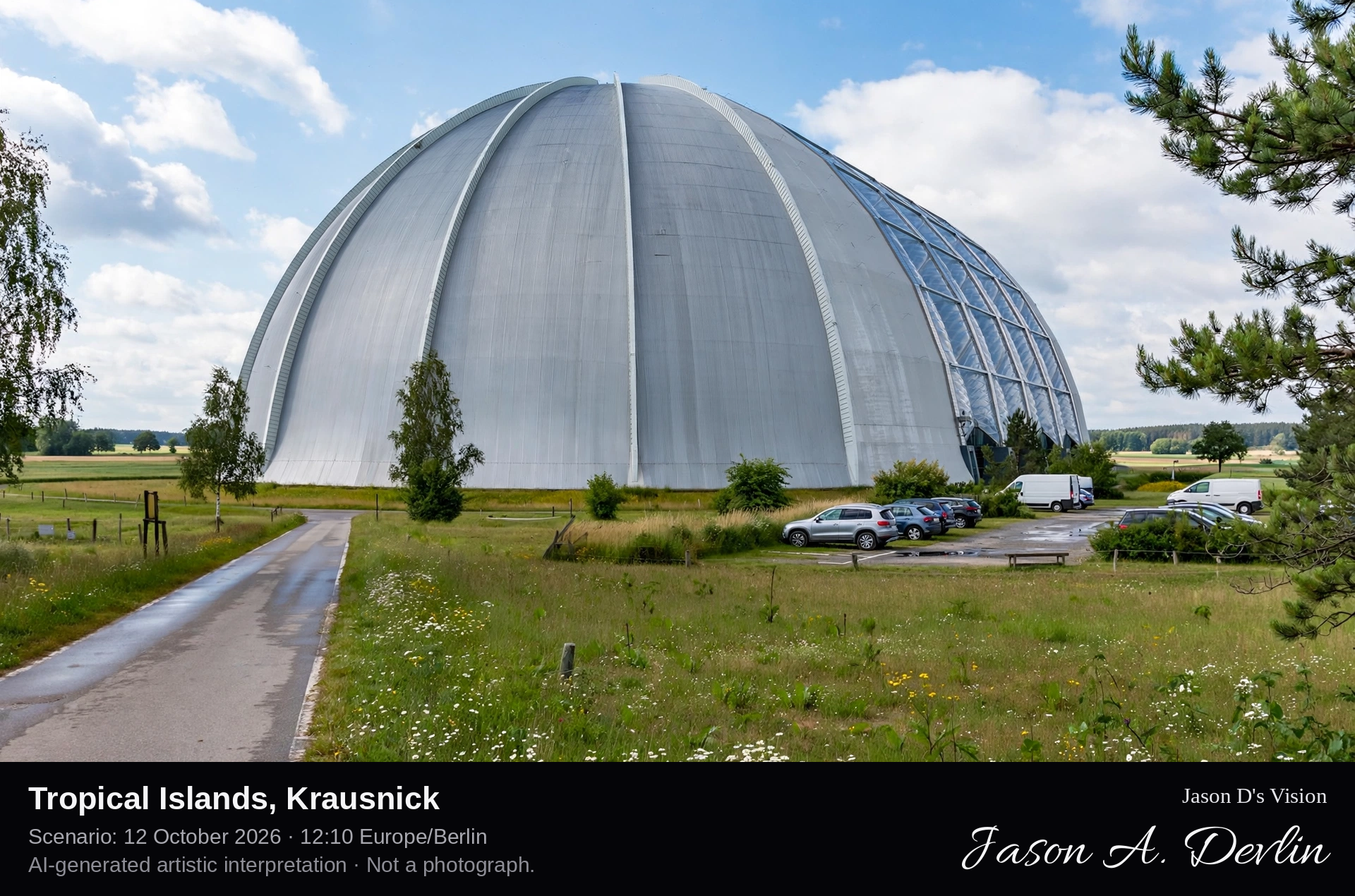
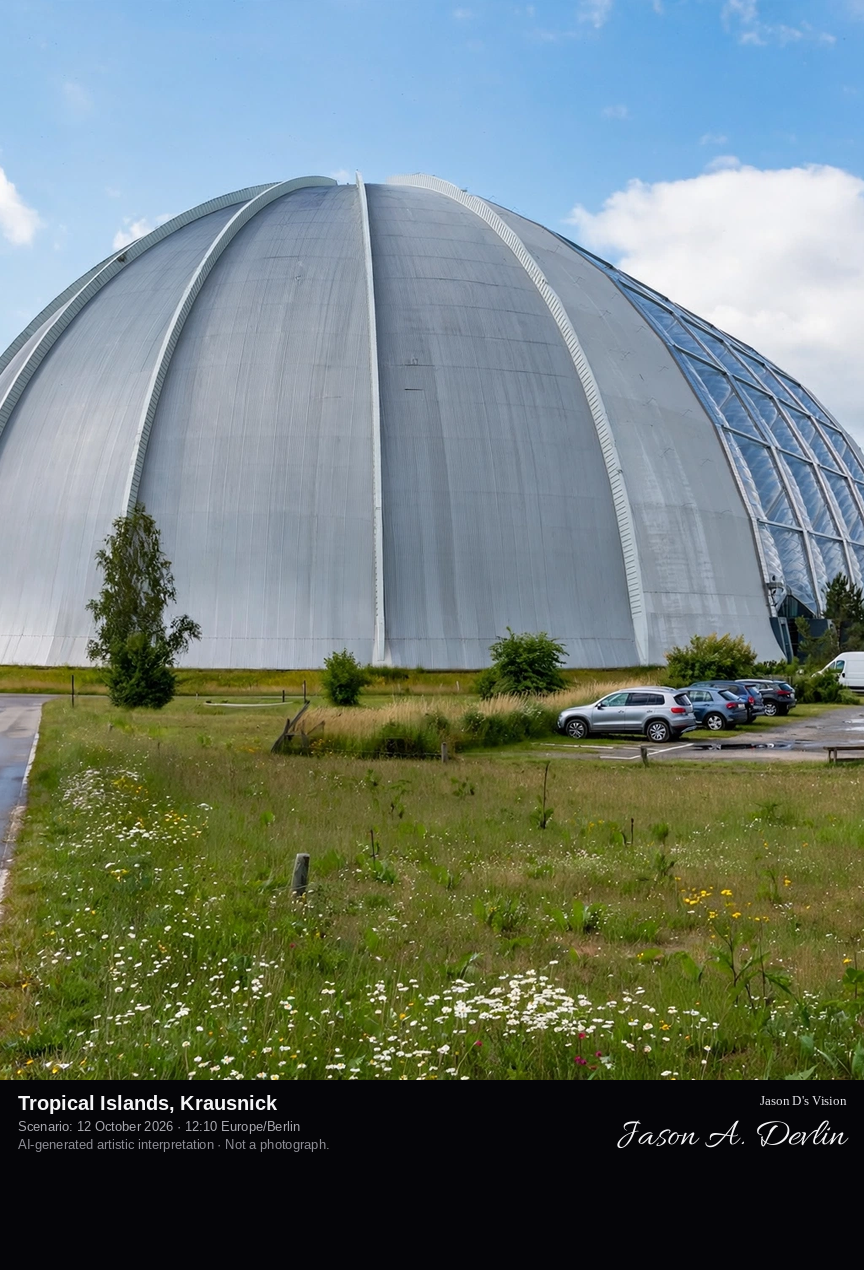
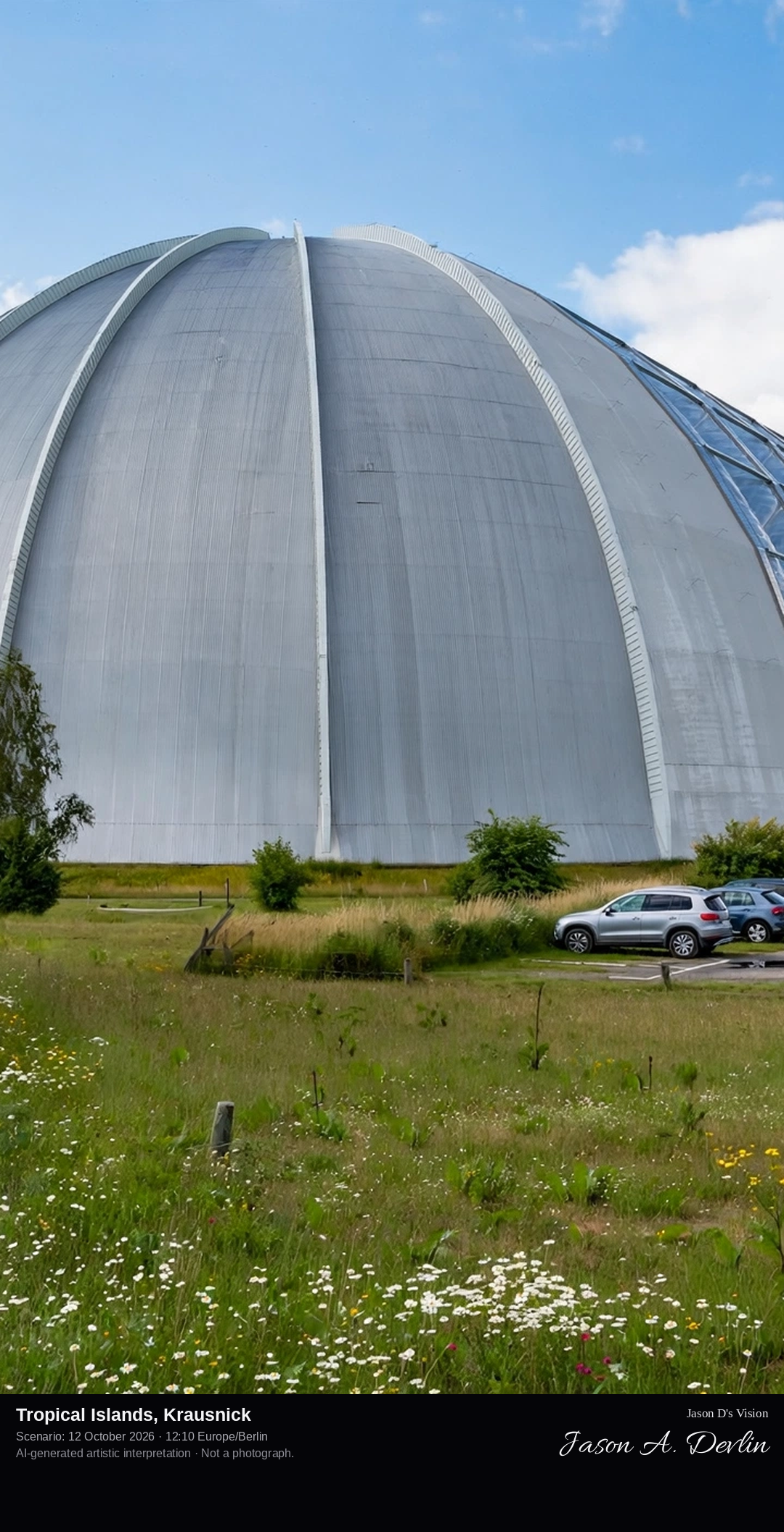
The vast arched hall of the former airship hangar above the treetops · AI-generated artistic interpretation
This immense hangar south of Berlin was built for the CargoLifter airship project and, when the company failed, reborn in 2004 as an indoor tropical resort. Beneath one of the largest self-supporting roofs in the world lie a rainforest, lagoons and a sandy beach kept warm all year.
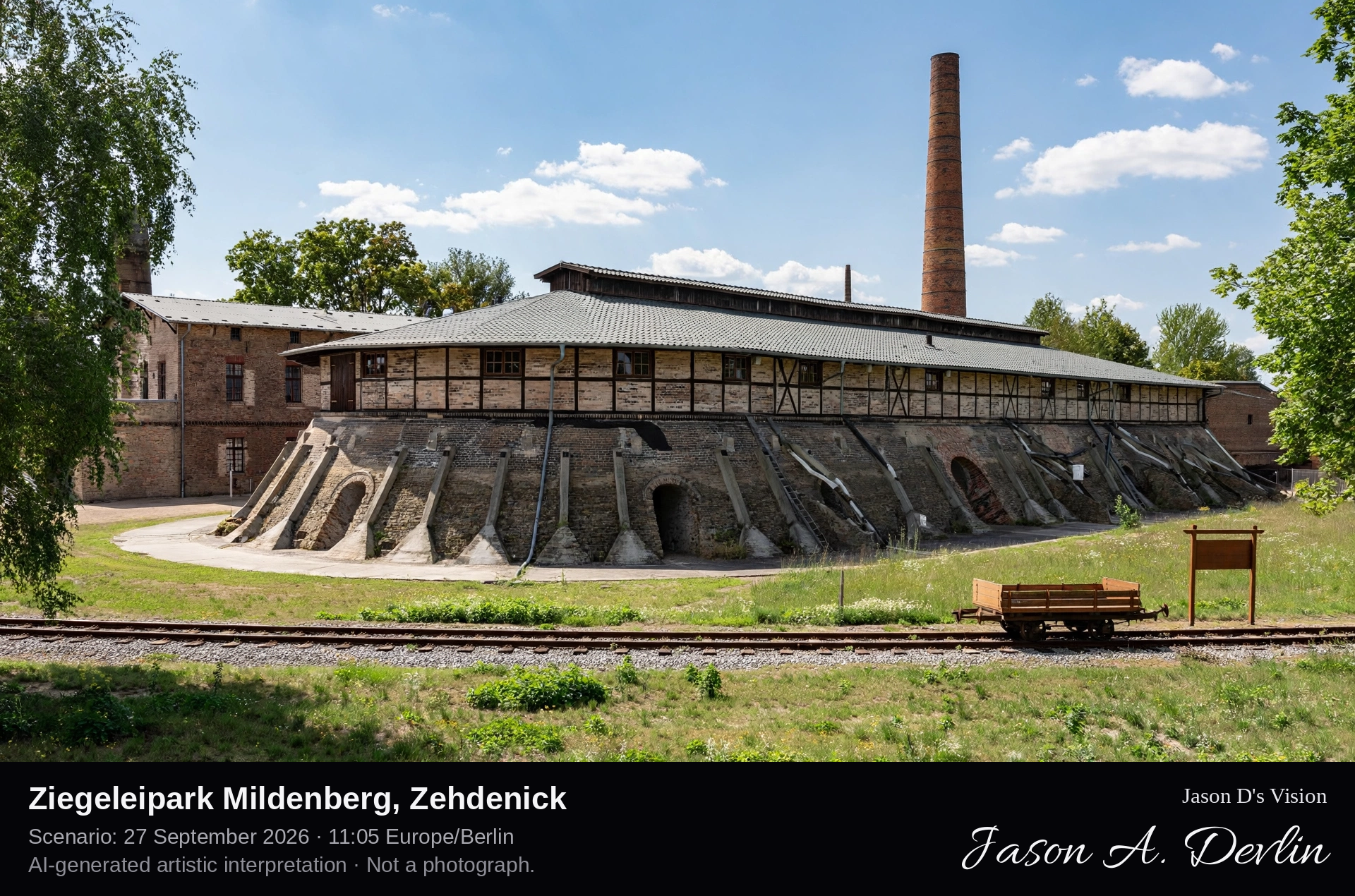
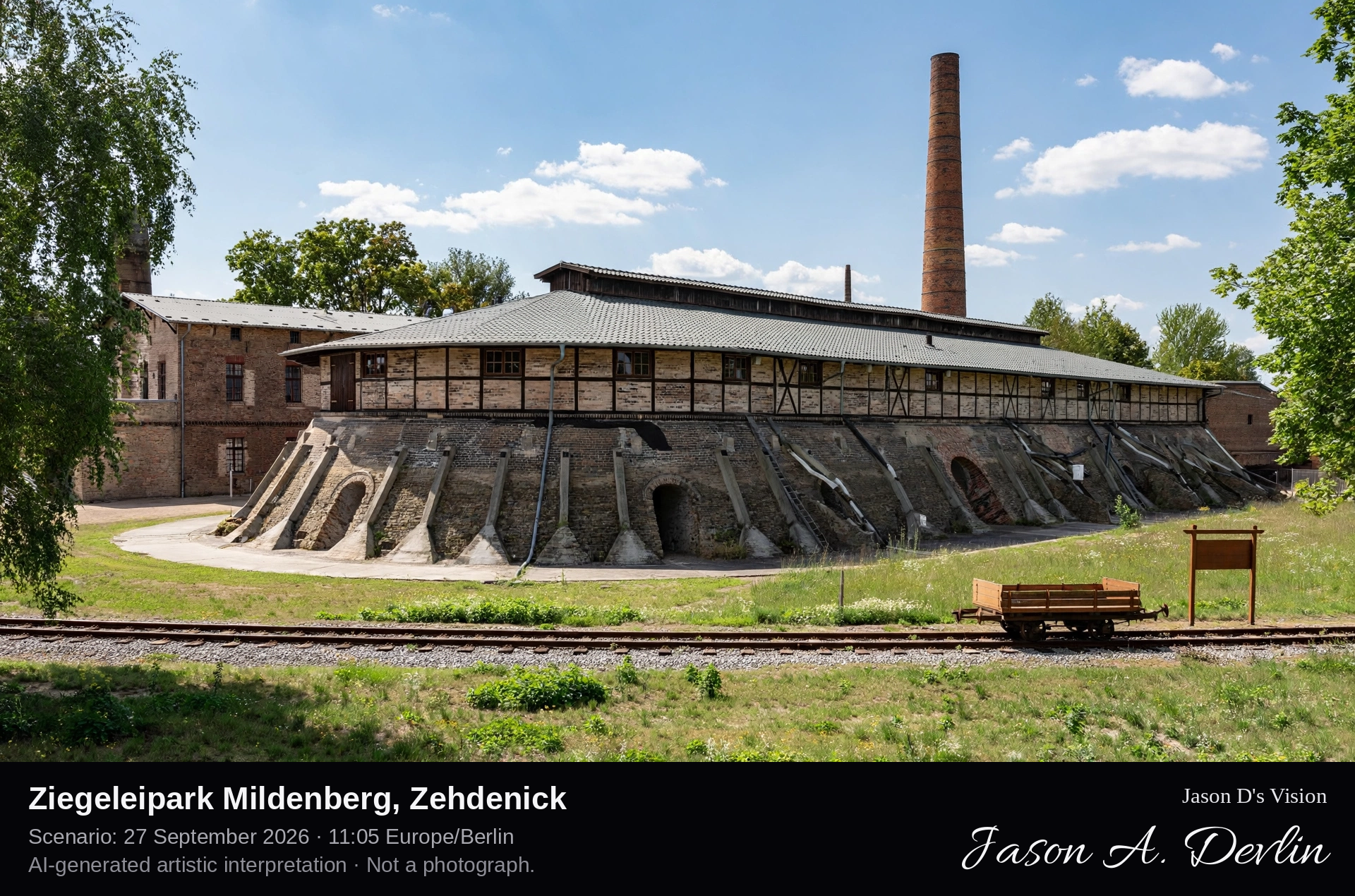
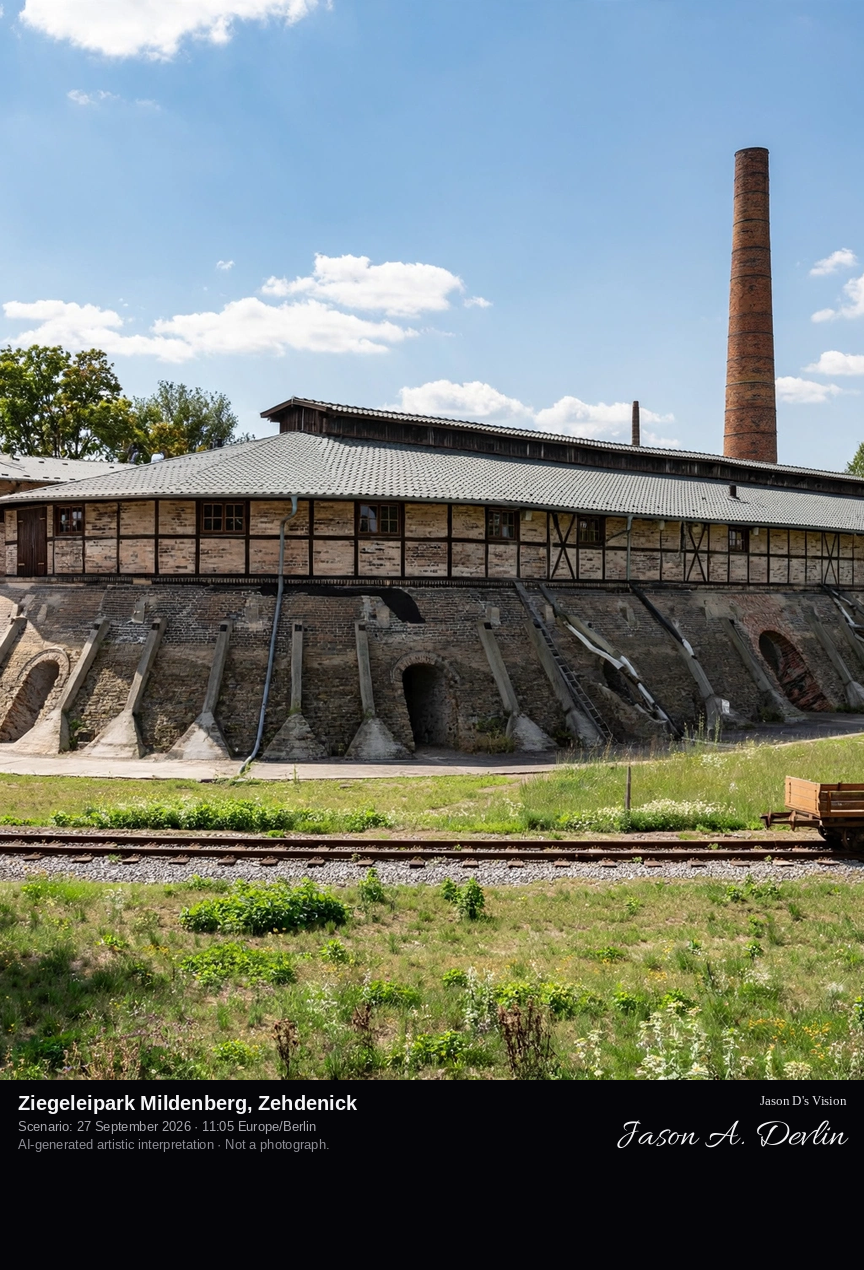
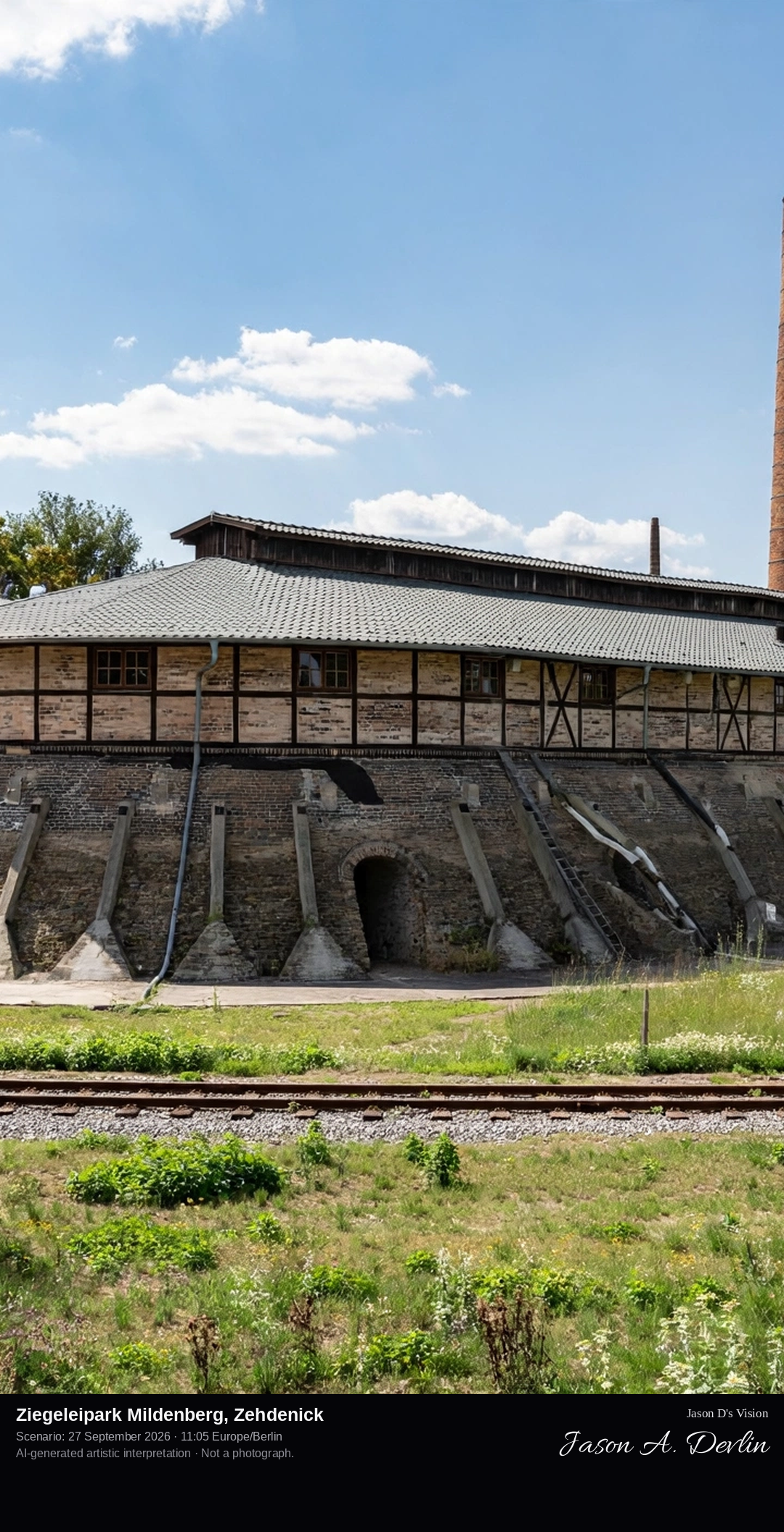
The broad Hoffmann ring kiln with its timber-banded, splayed furnace base · AI-generated artistic interpretation
The brickworks park at Mildenberg preserves the world of the Zehdenick brick district, once among the largest brick-making regions in Europe, whose kilns fired the bricks that built whole districts of Berlin. Its Hoffmann ring kilns burned continuously, the fire travelling from chamber to chamber around the great oval flue. The park is now an open-air museum of that vanished industry.
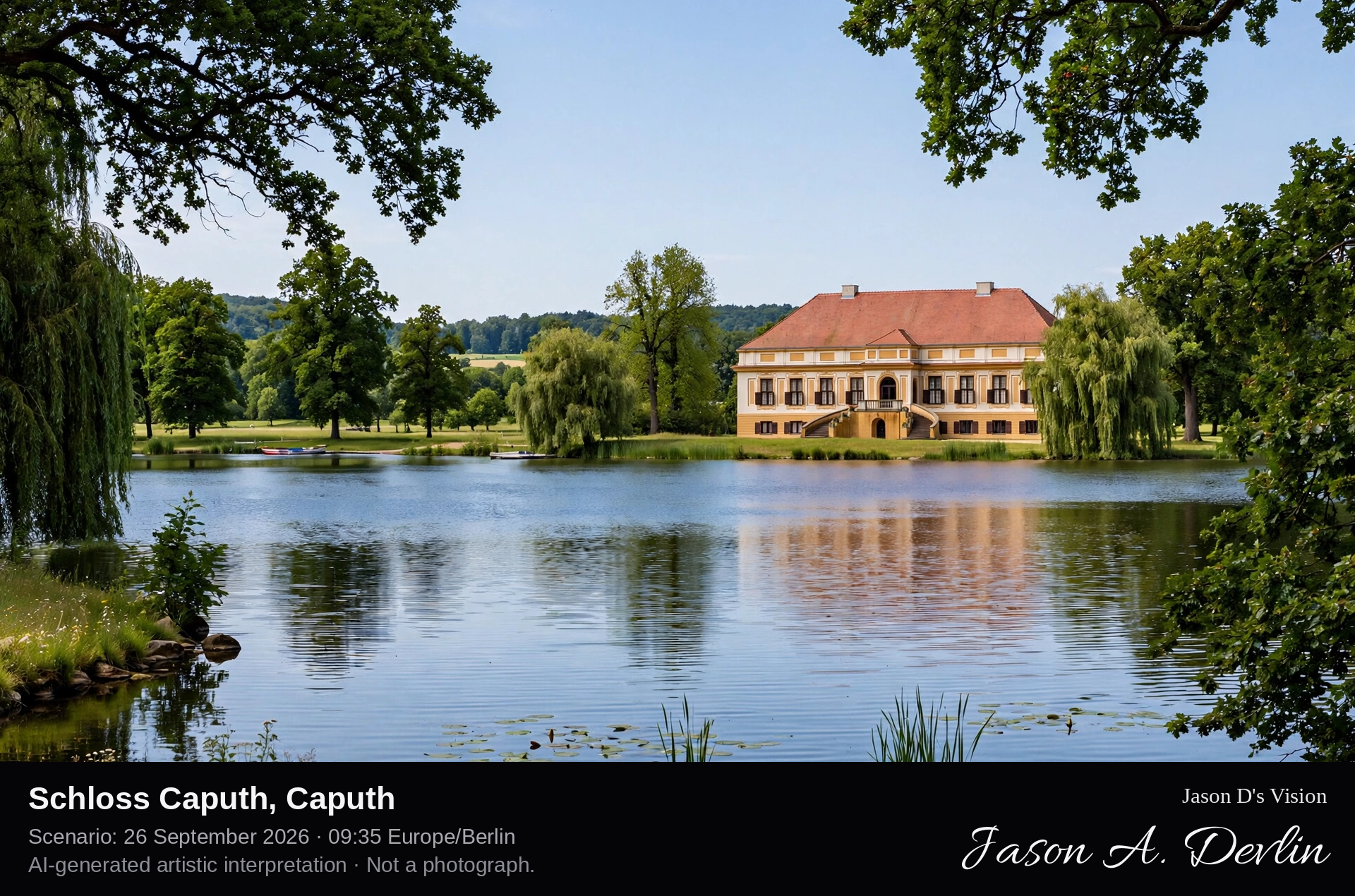
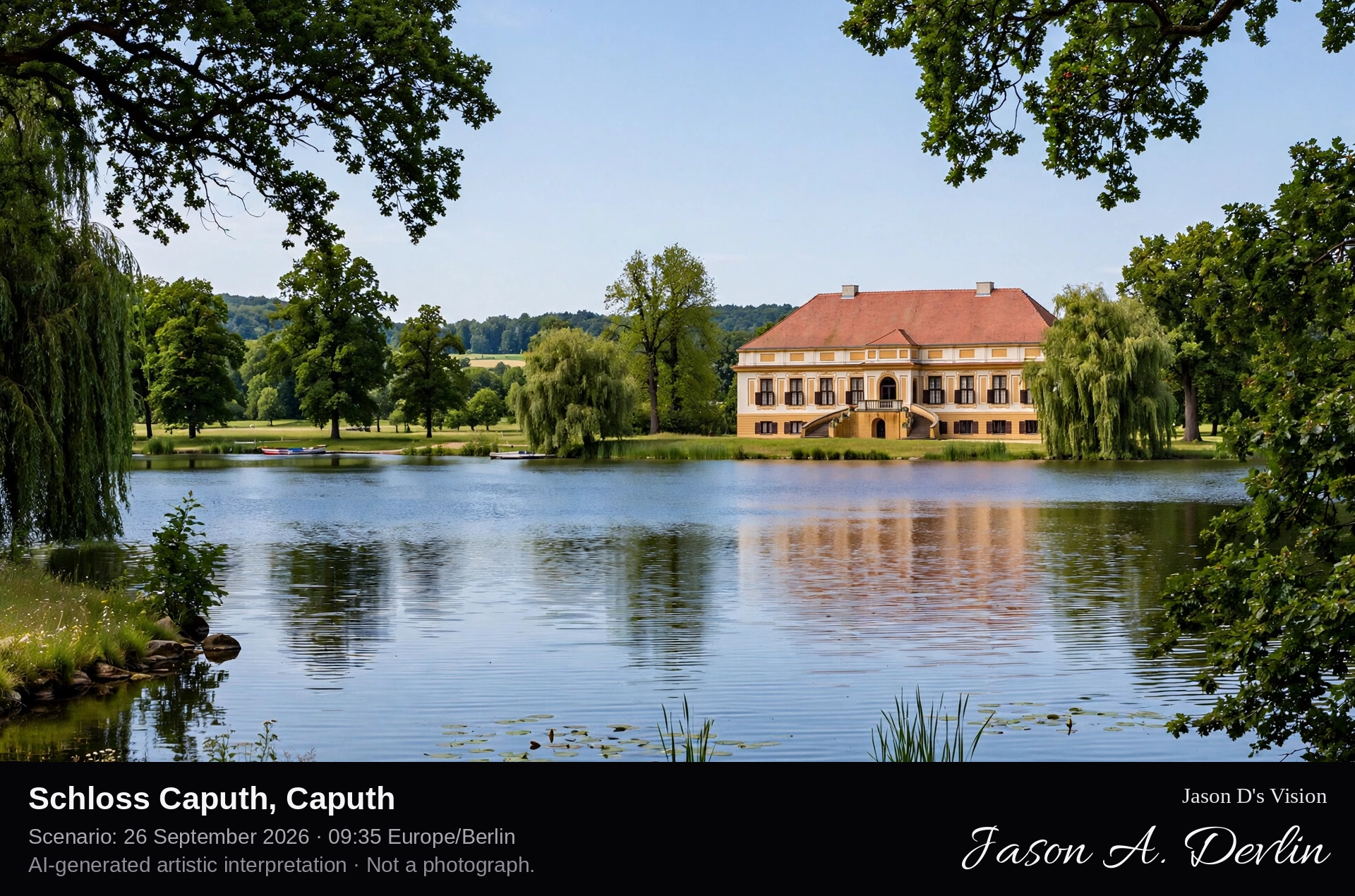
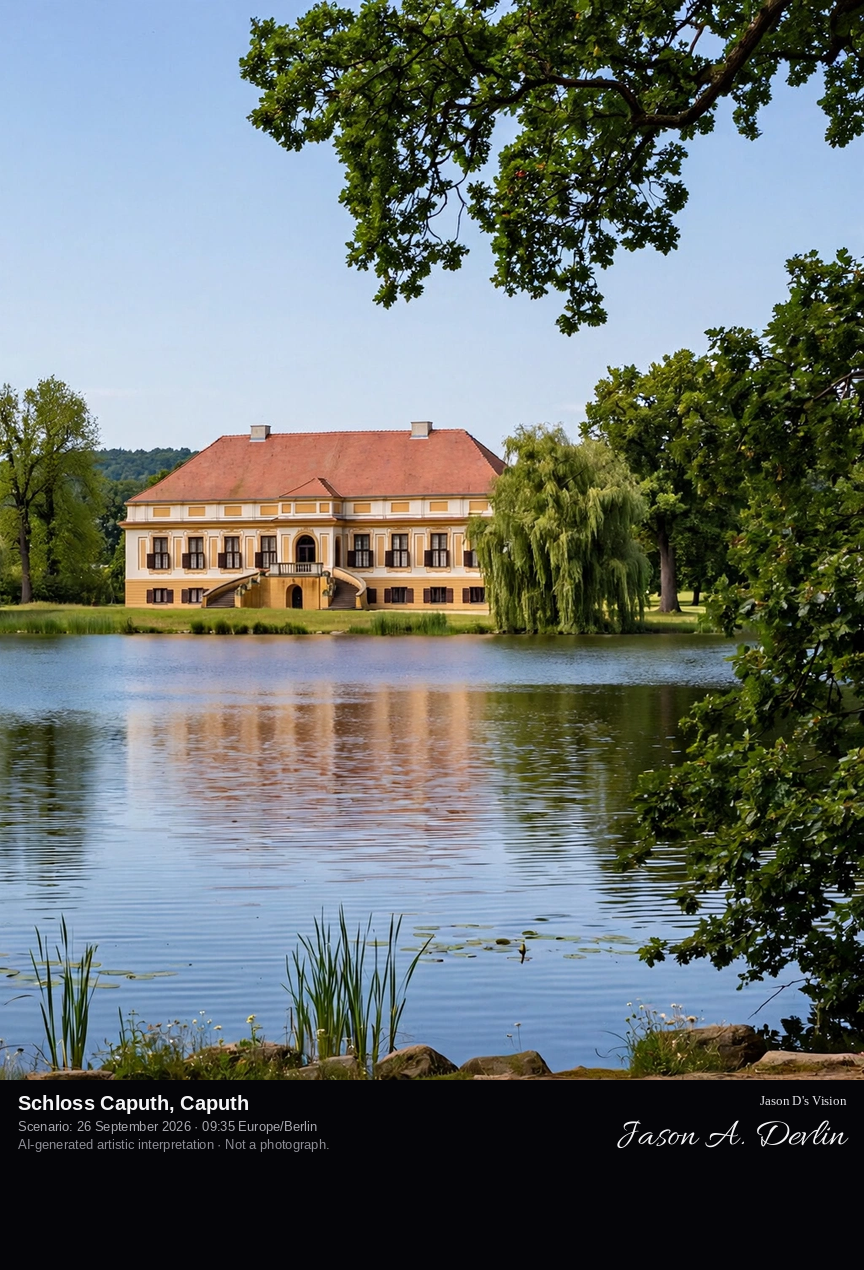
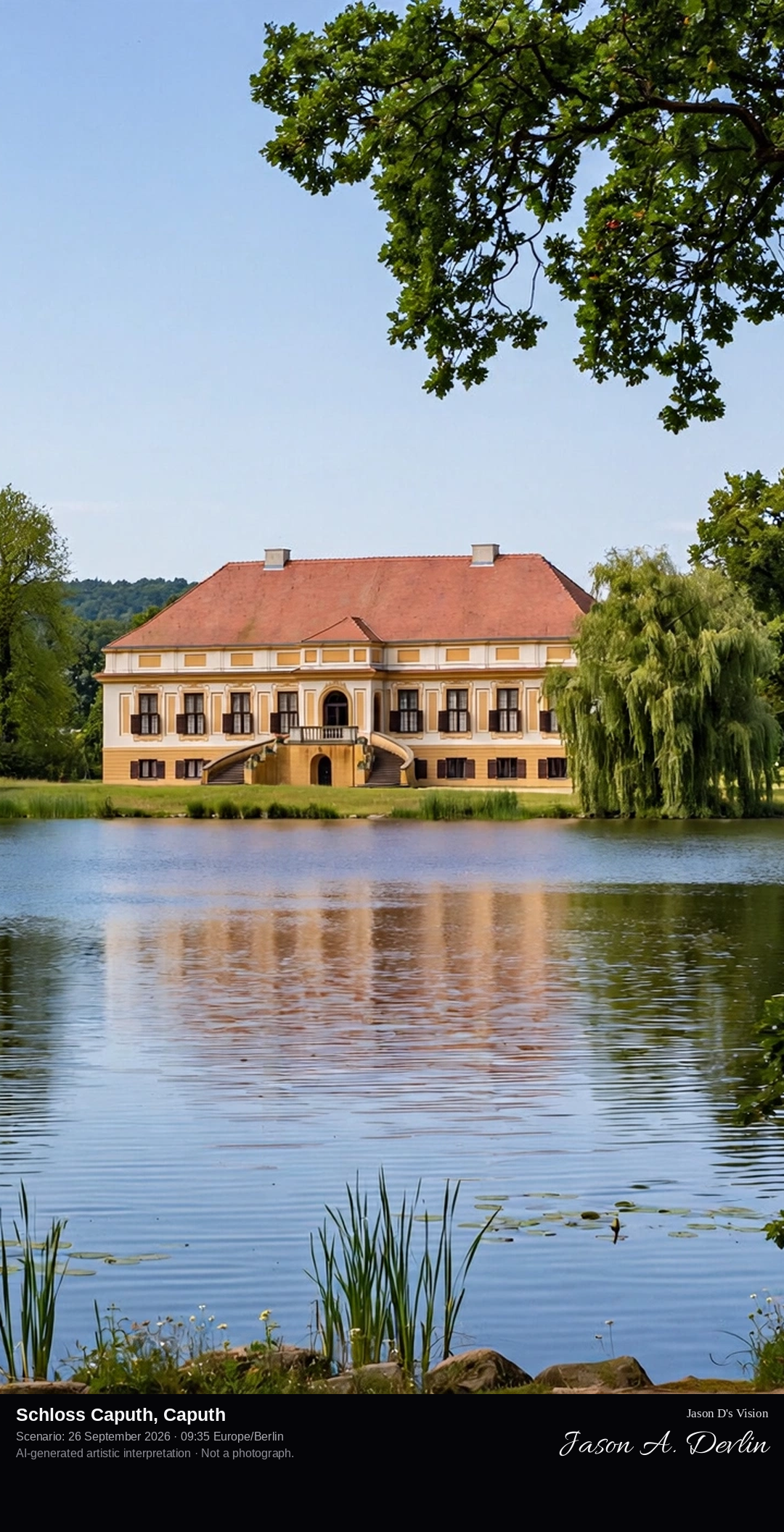
The compact Baroque palace front and its curving double stair above the garden · AI-generated artistic interpretation
Schloss Caputh is a small Baroque palace on the Havel, shaped by Electress Dorothea from 1671. Its preserved interiors include ornate stucco, ceiling paintings and a summer dining room lined with thousands of Dutch faience tiles. The garden and water setback in this view are compressed by the artist's hand.
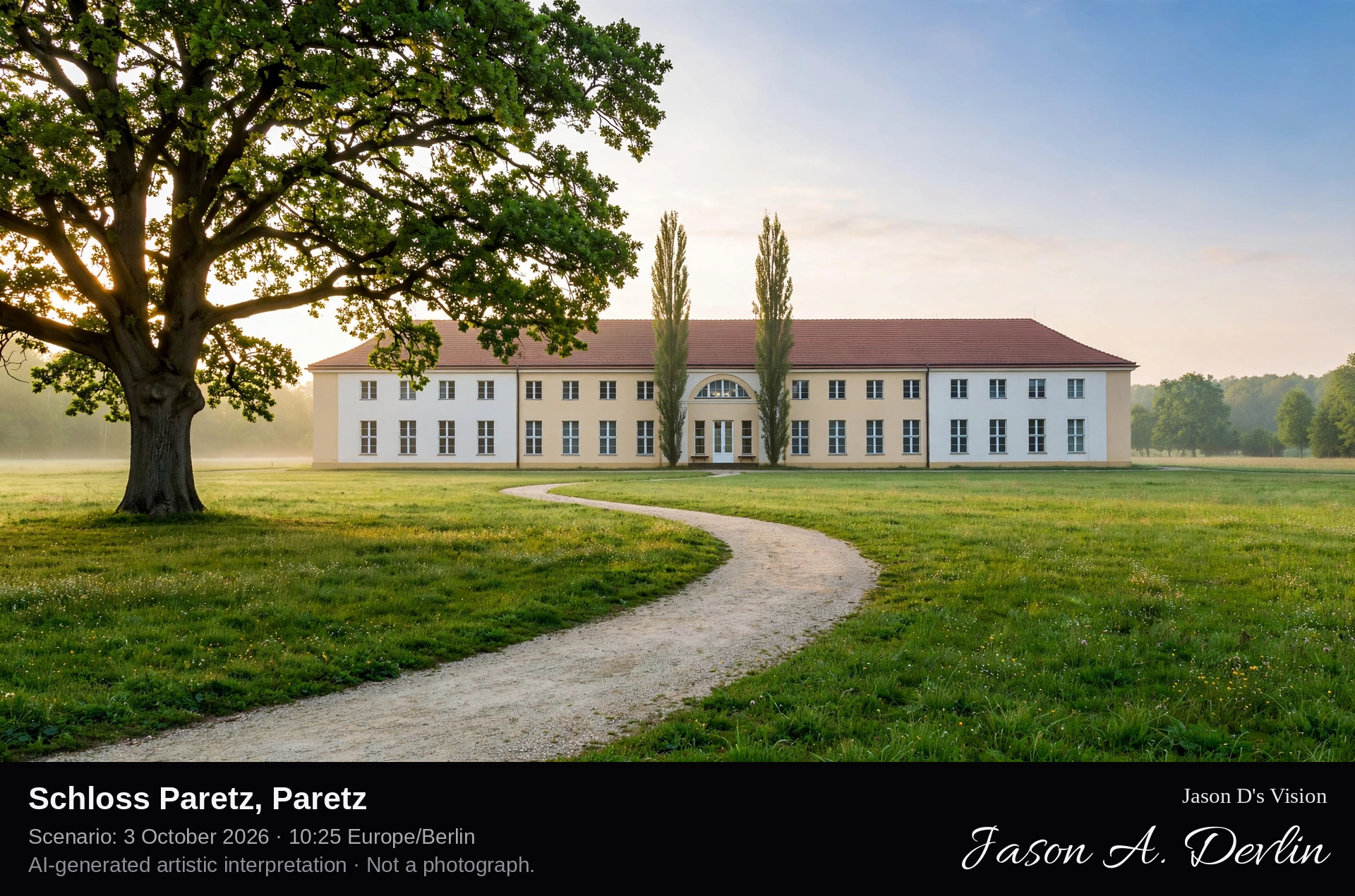
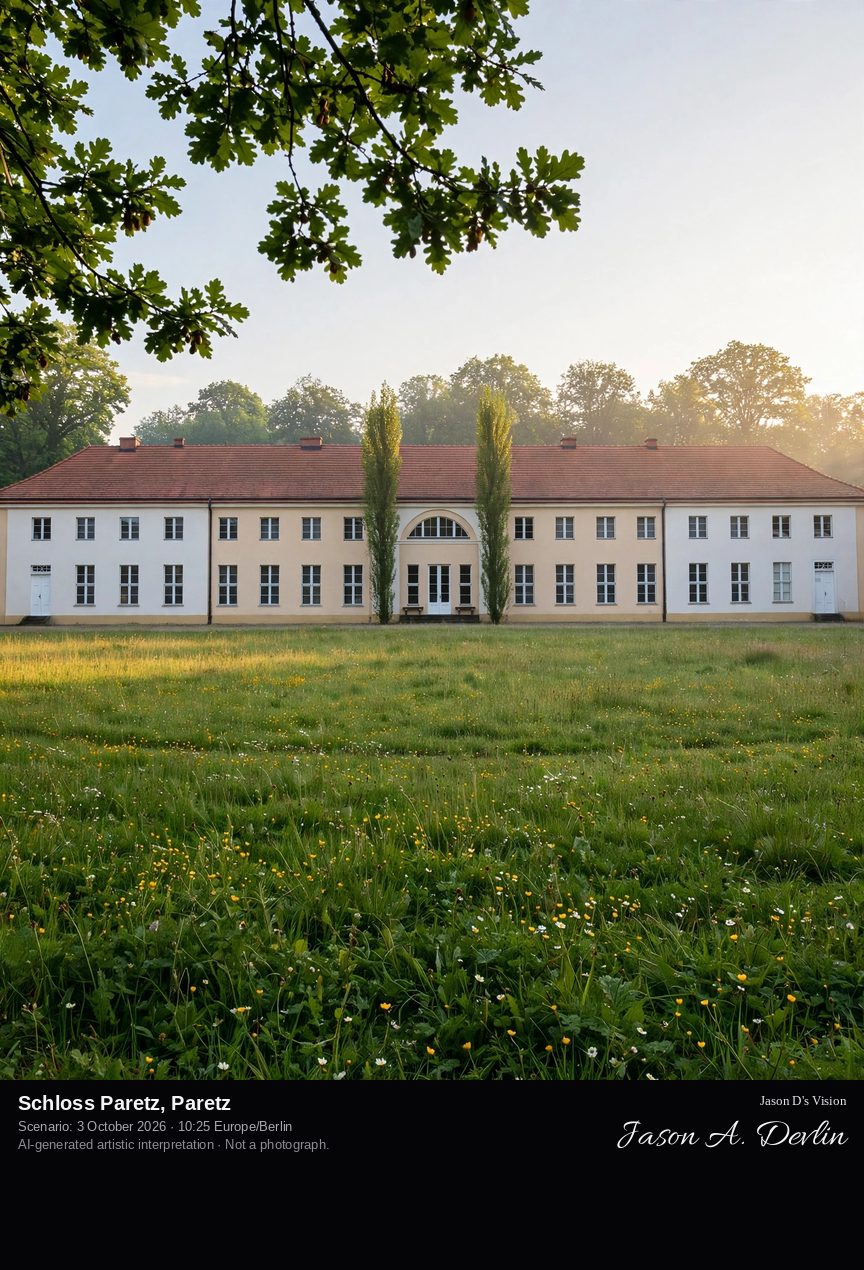
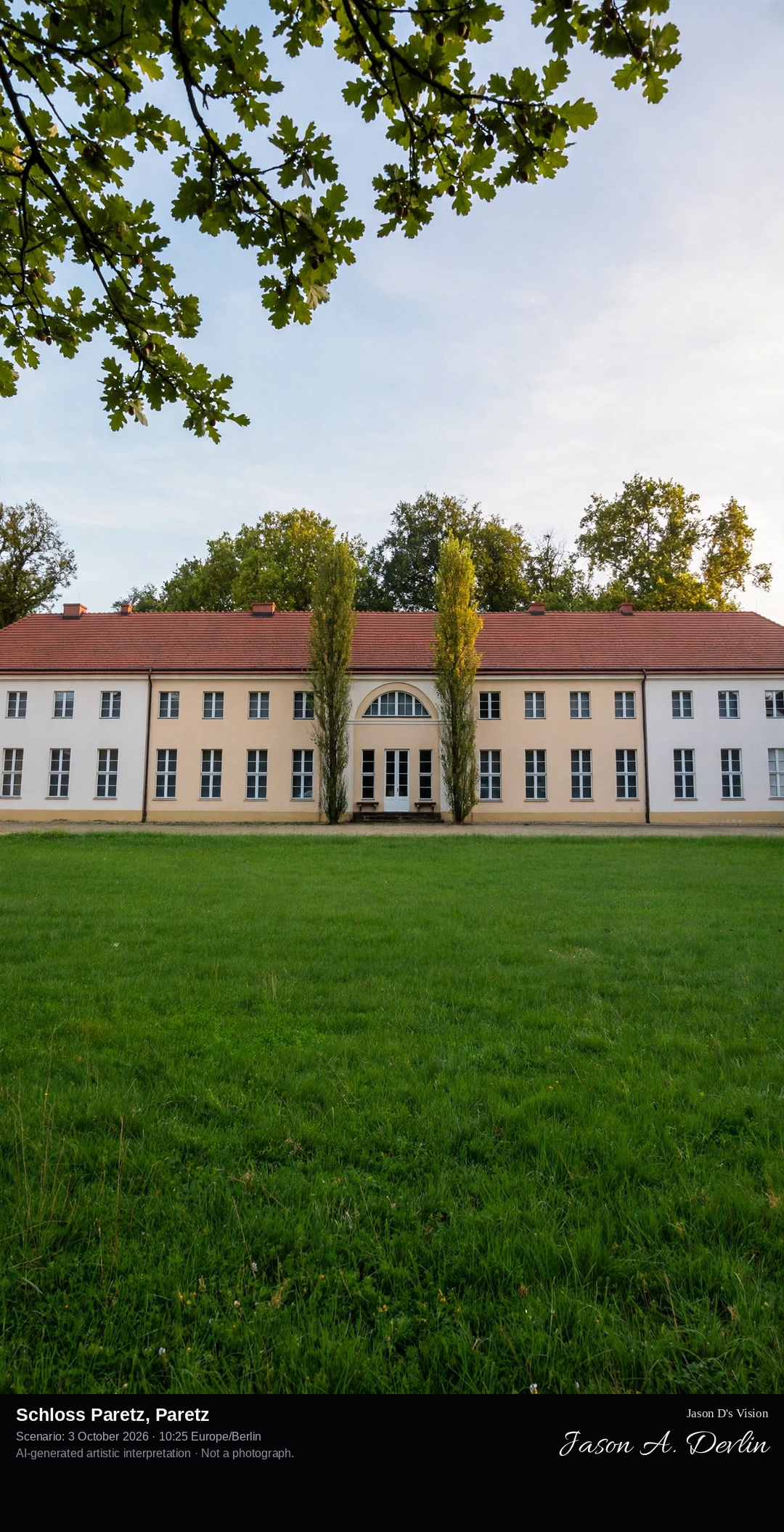
The restrained classical palace front in its park above the Havel · AI-generated artistic interpretation
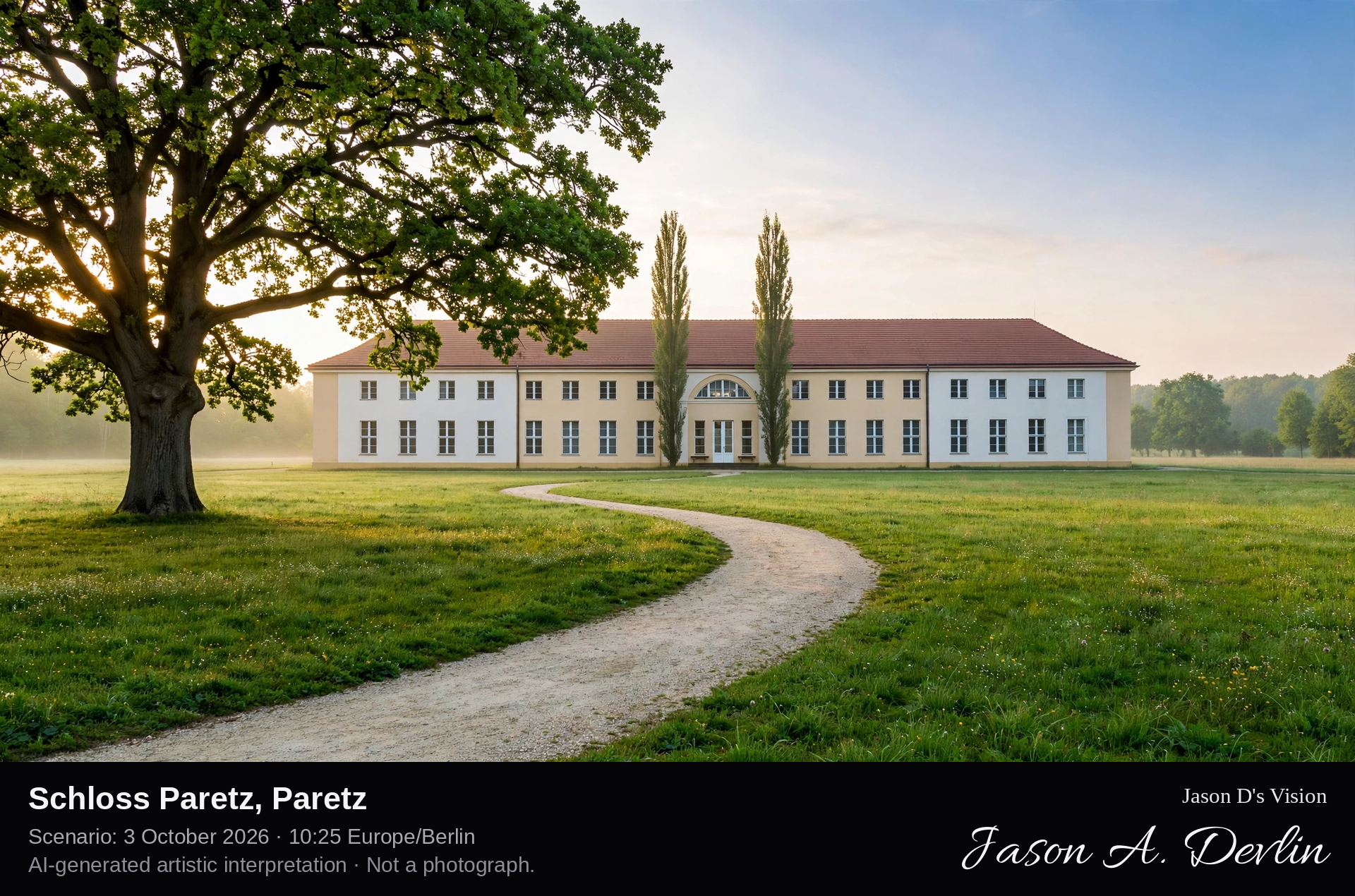
Schloss Paretz was built in 1797–1804 to David Gilly's designs as the quiet country seat of Crown Prince Friedrich Wilhelm and his wife Luise. The pale classical palace and its village on the Havel became the royal couple's favourite summer refuge.
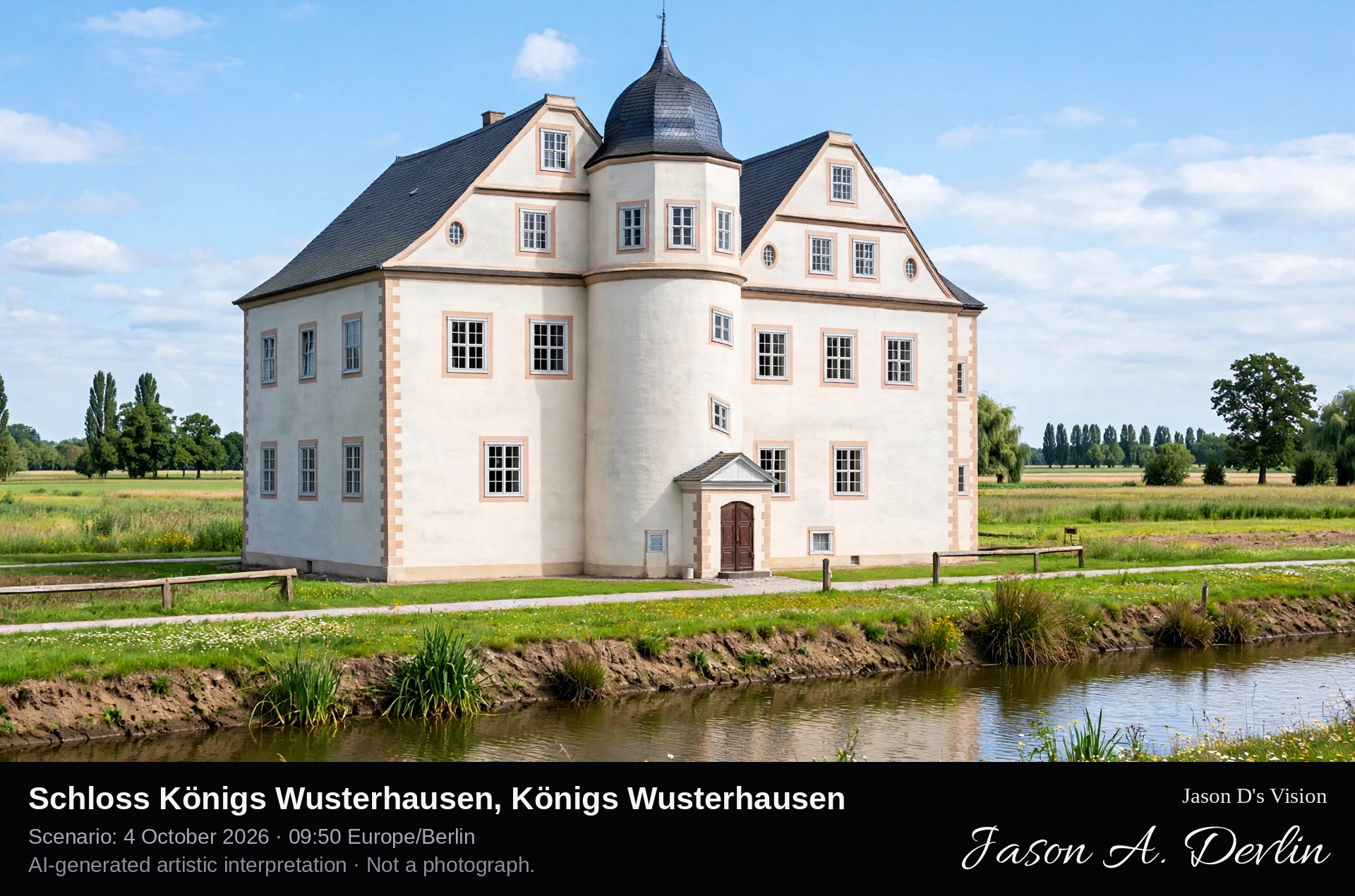
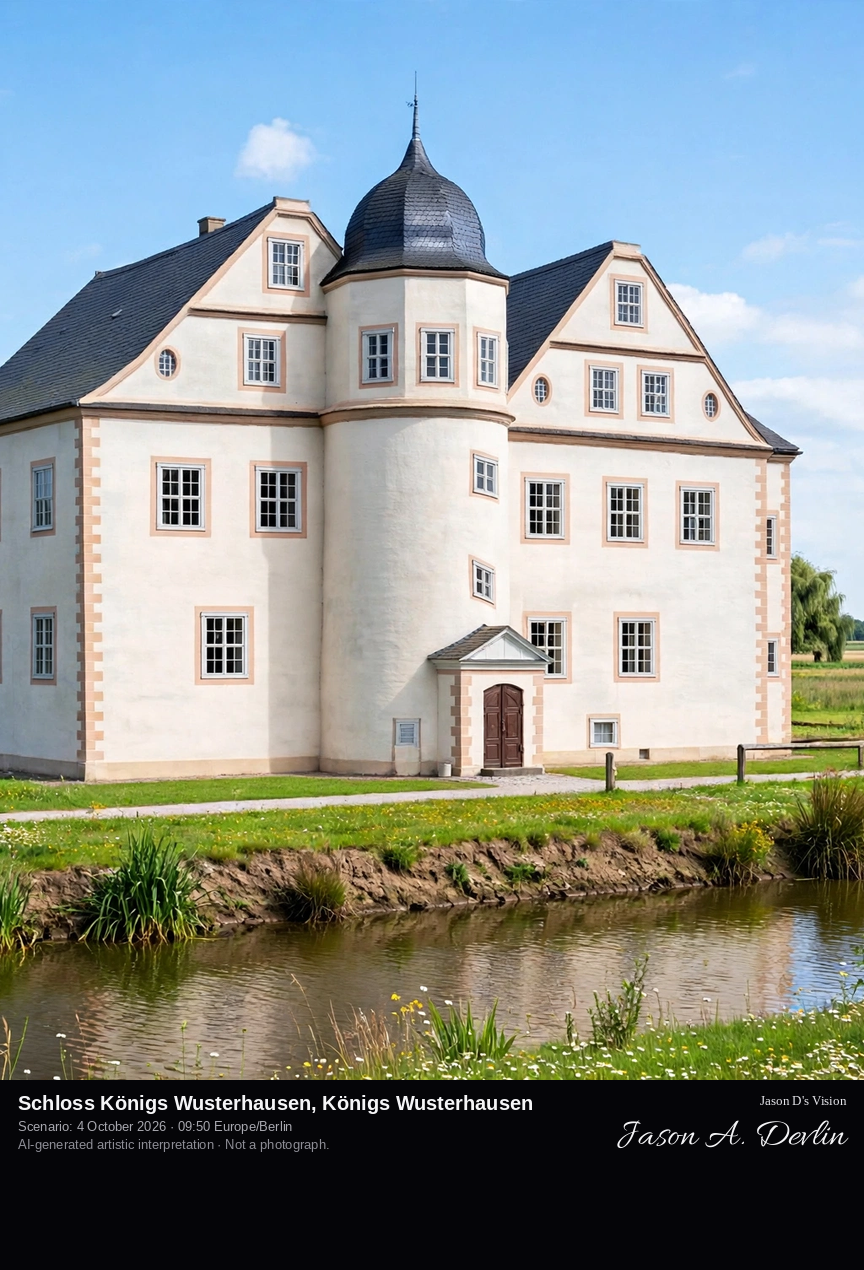
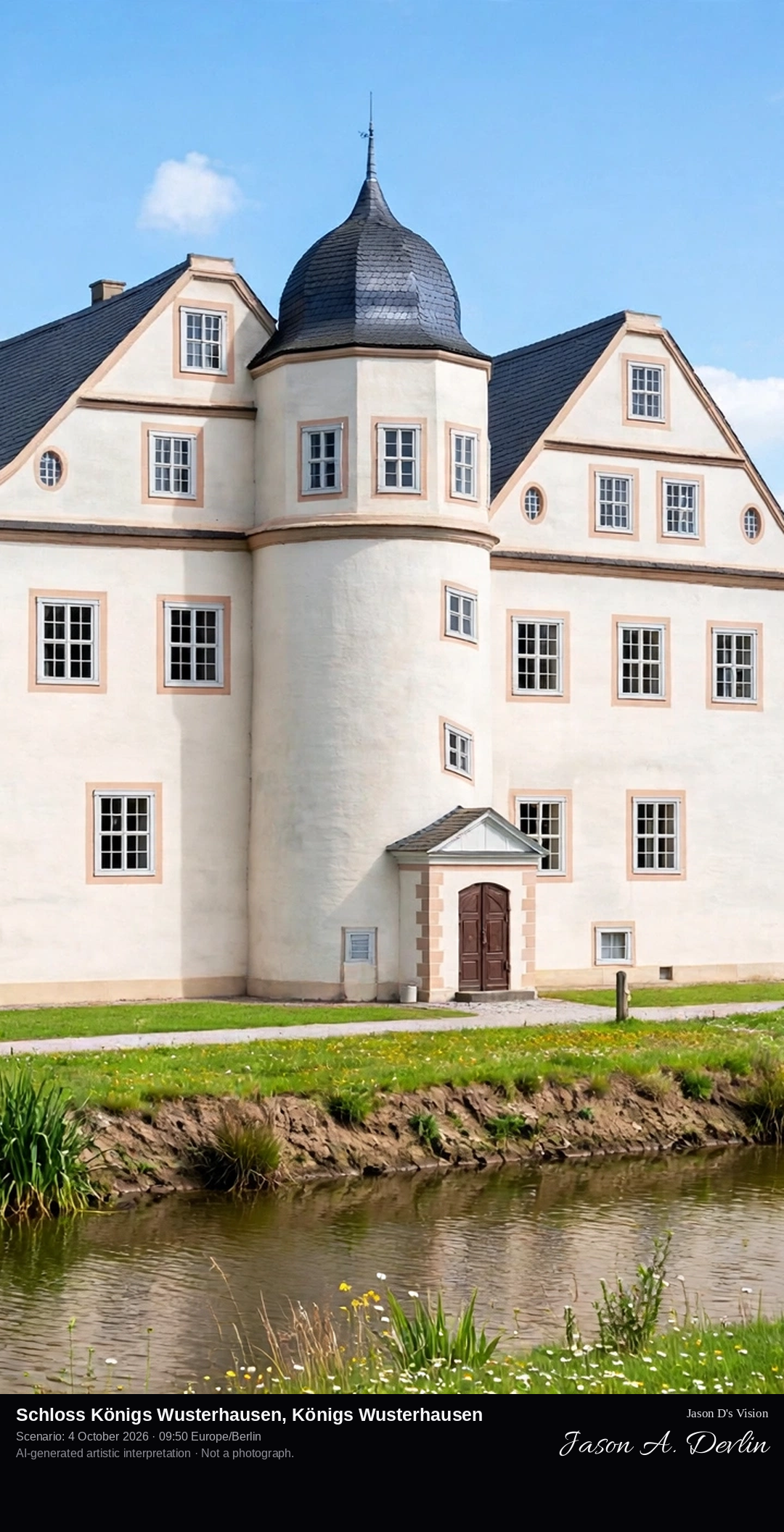
The moated hunting castle and its courtyard south-east of the capital · AI-generated artistic interpretation
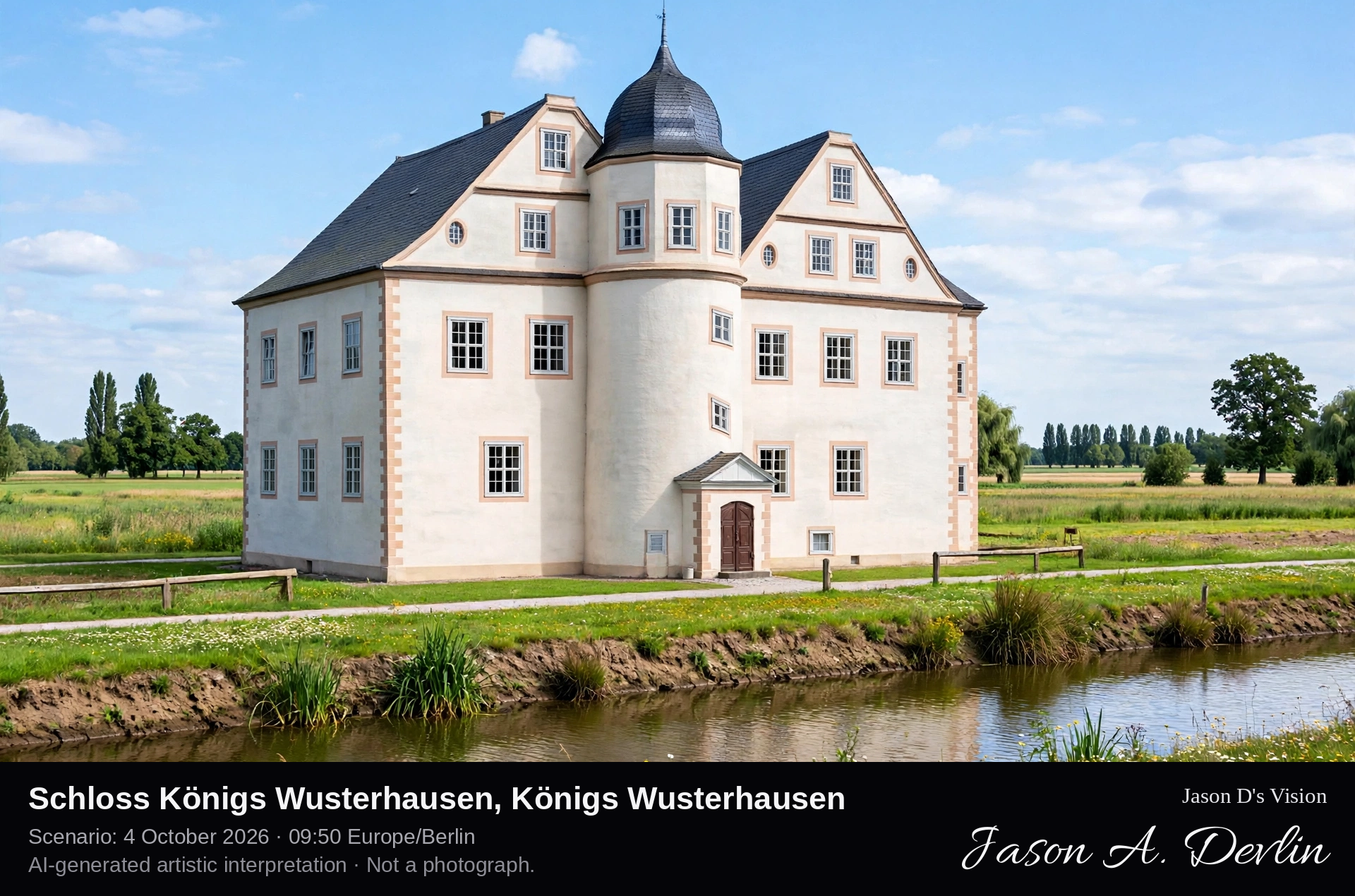
The moated castle at Königs Wusterhausen was the beloved hunting seat of Friedrich Wilhelm I, Prussia's Soldier King, who held his famous Tabakskollegium in its oak-panelled rooms. The pale lodge with its paired gables keeps the plain character of his spartan court.
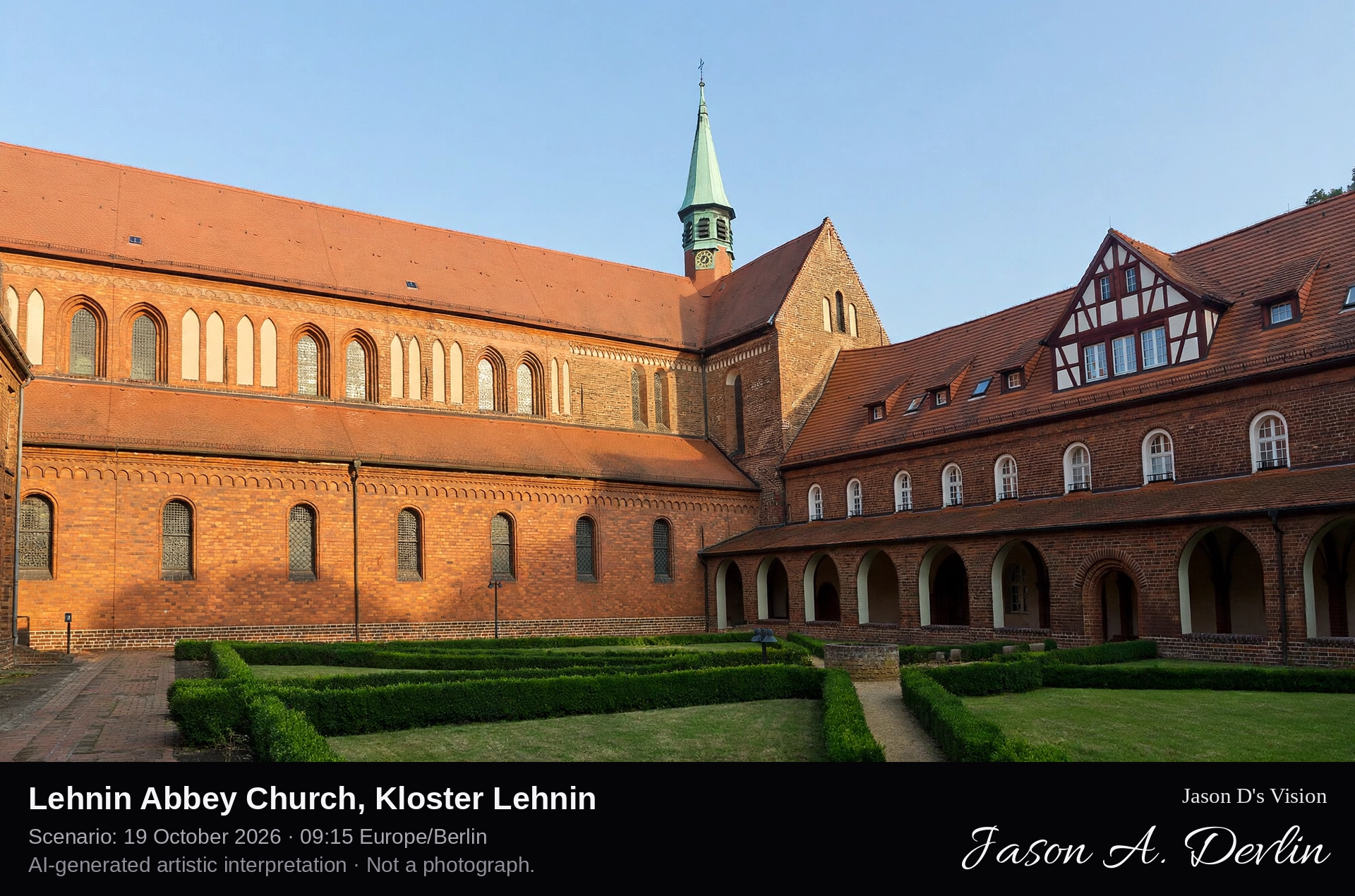
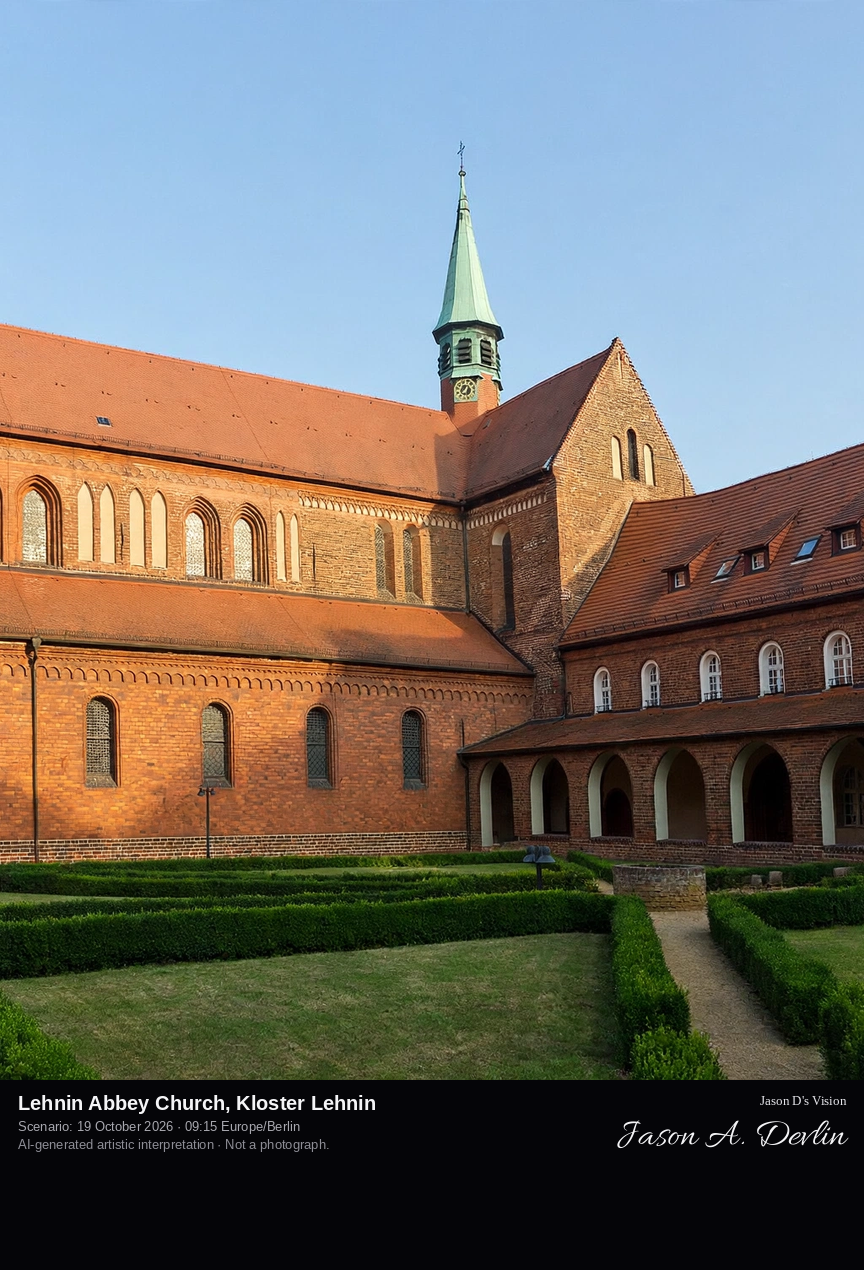
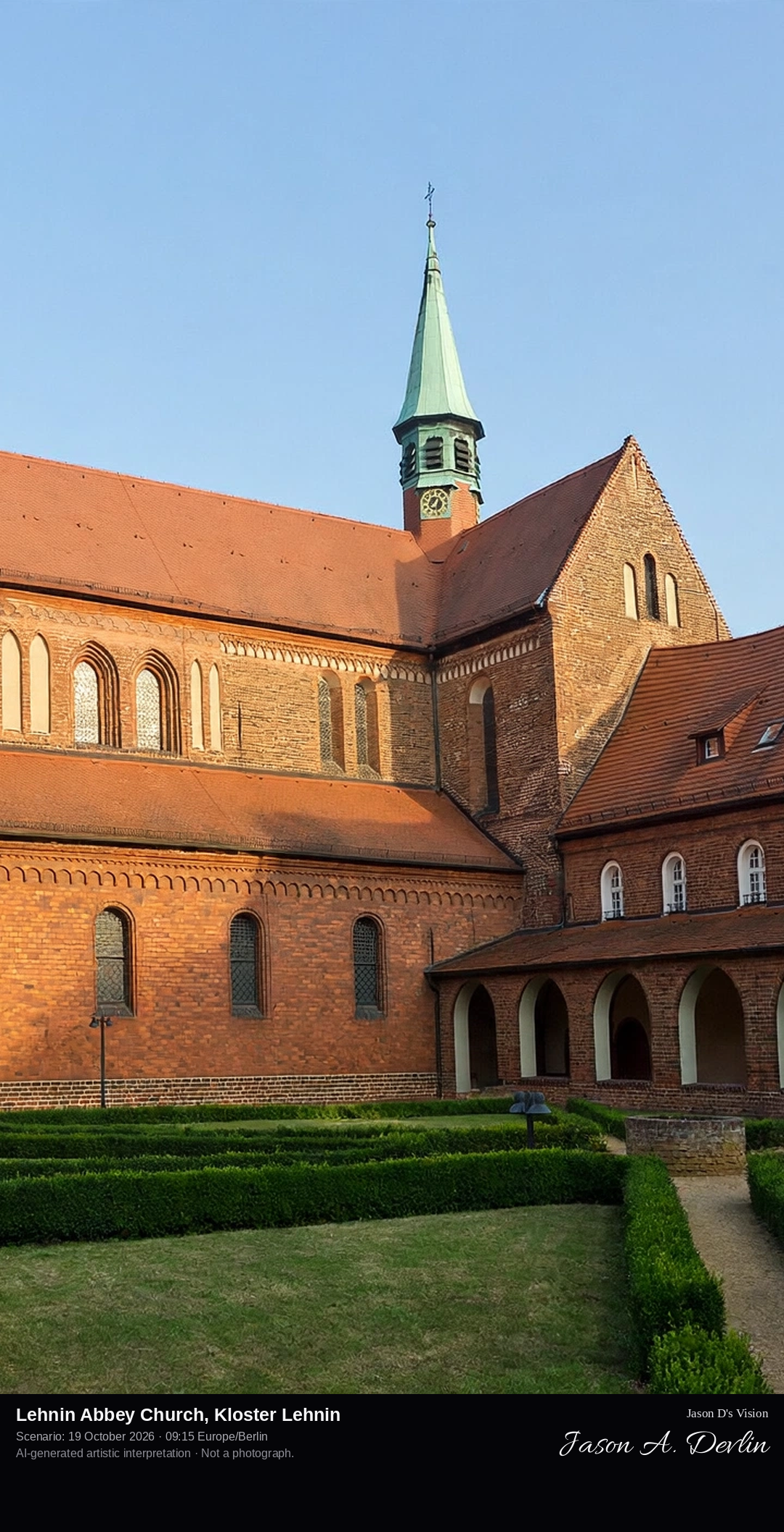
The red-brick abbey church across its quiet green monastic grounds · AI-generated artistic interpretation
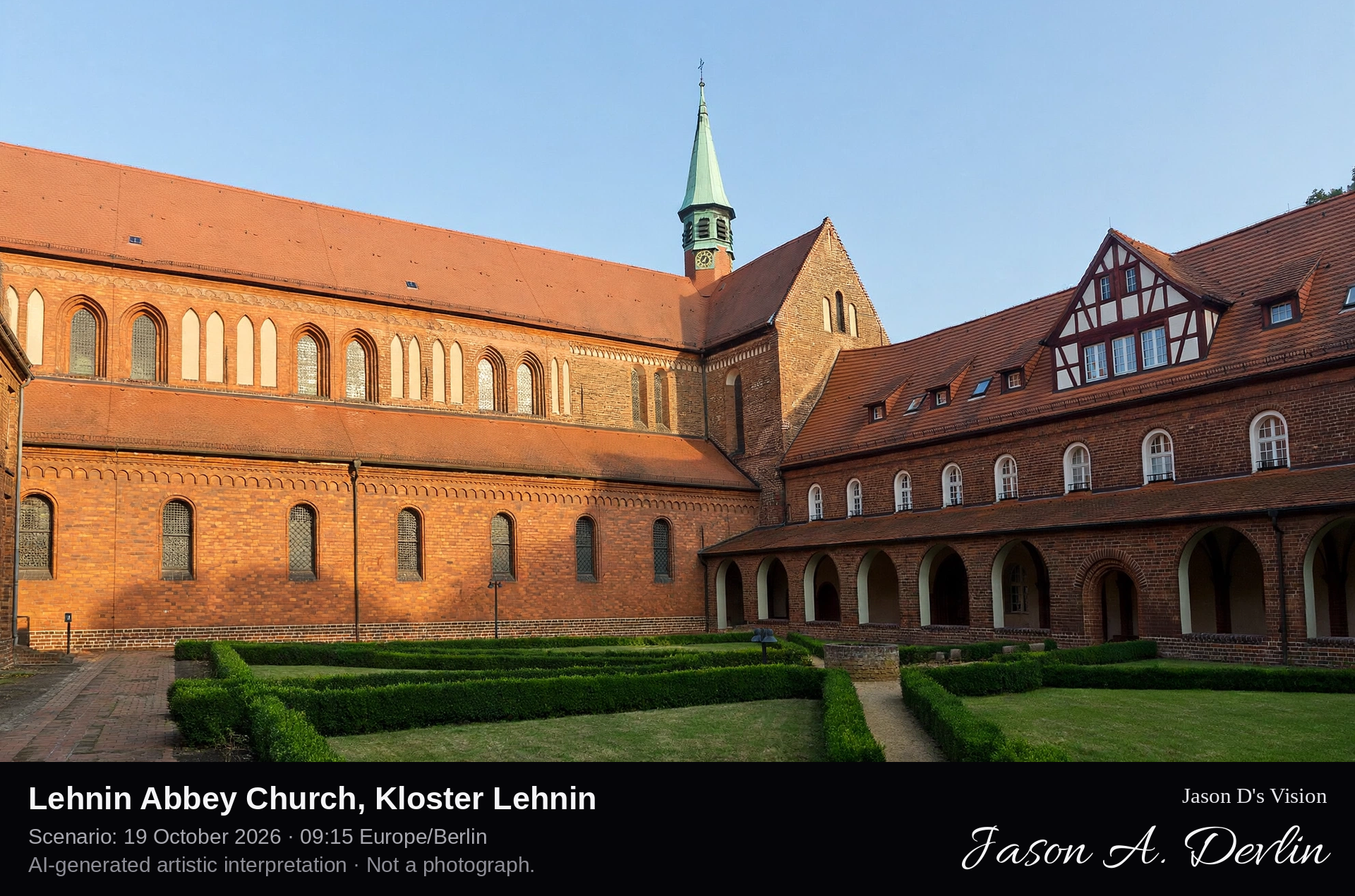
Lehnin Abbey was founded in 1180, and its church of St Mary is among the oldest brick churches in the Mark Brandenburg. The tall red-brick nave, rounded apse and plain Cistercian detailing survive in green grounds at the edge of the village of Kloster Lehnin.
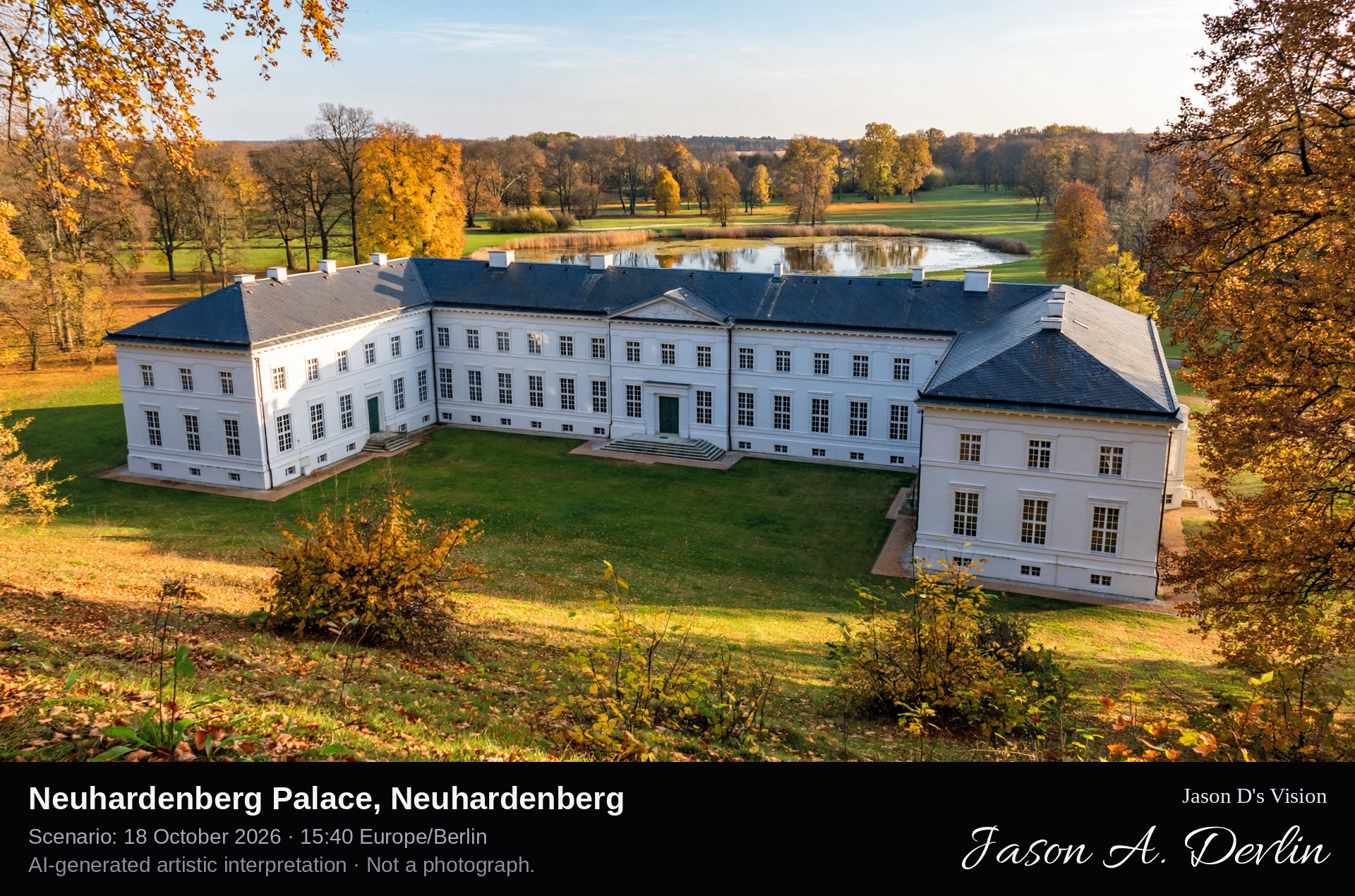
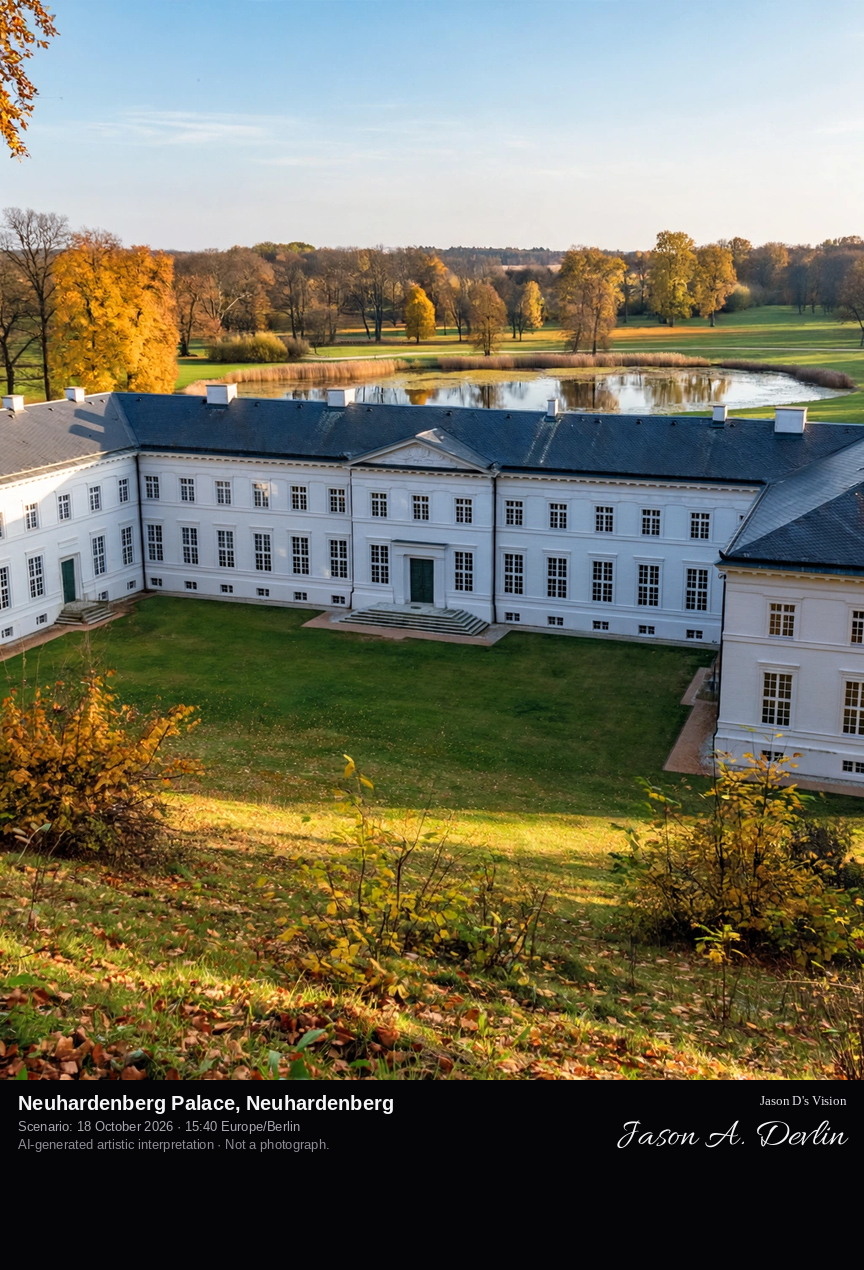
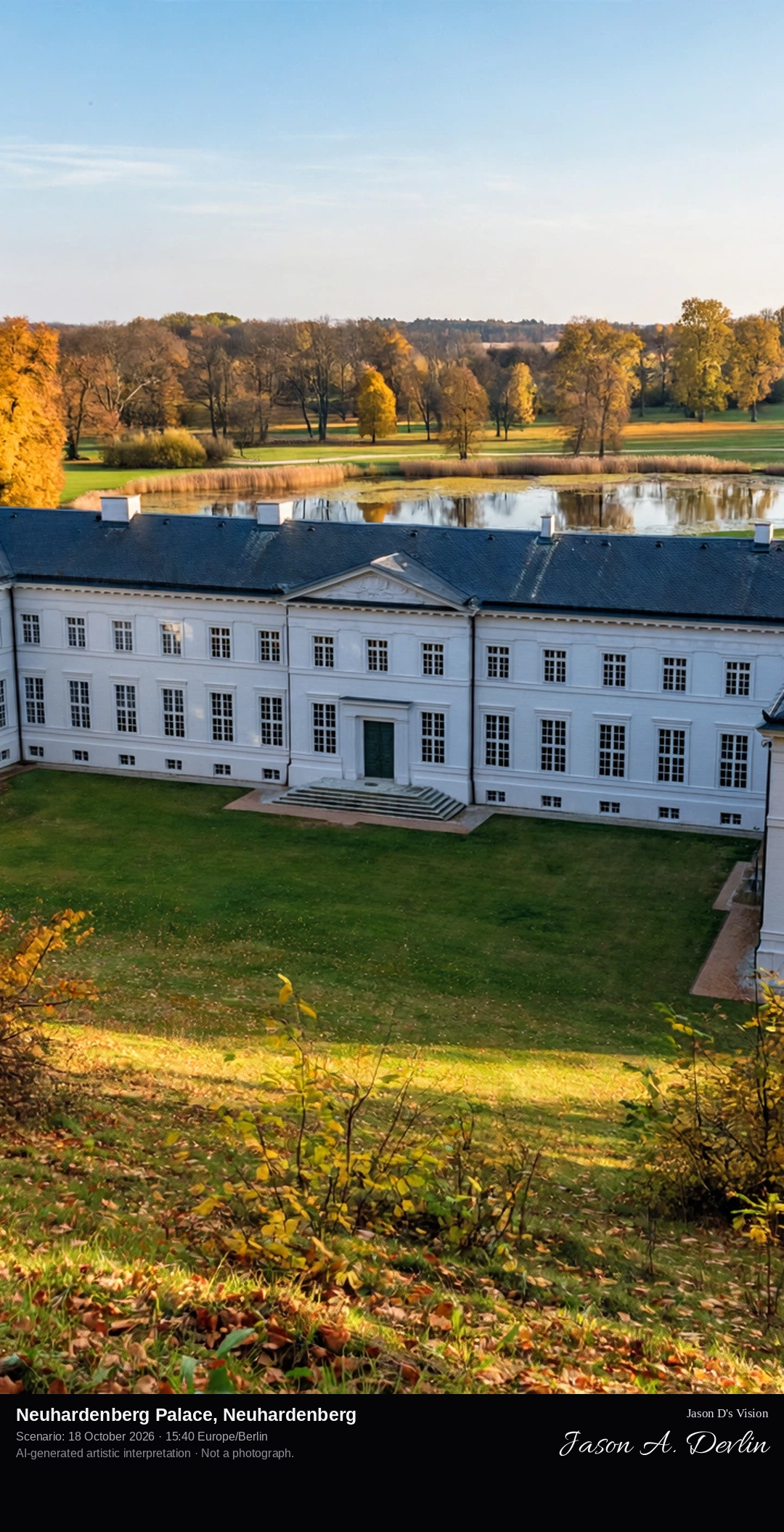
The porticoed classicist palace in its autumn landscape park · AI-generated artistic interpretation
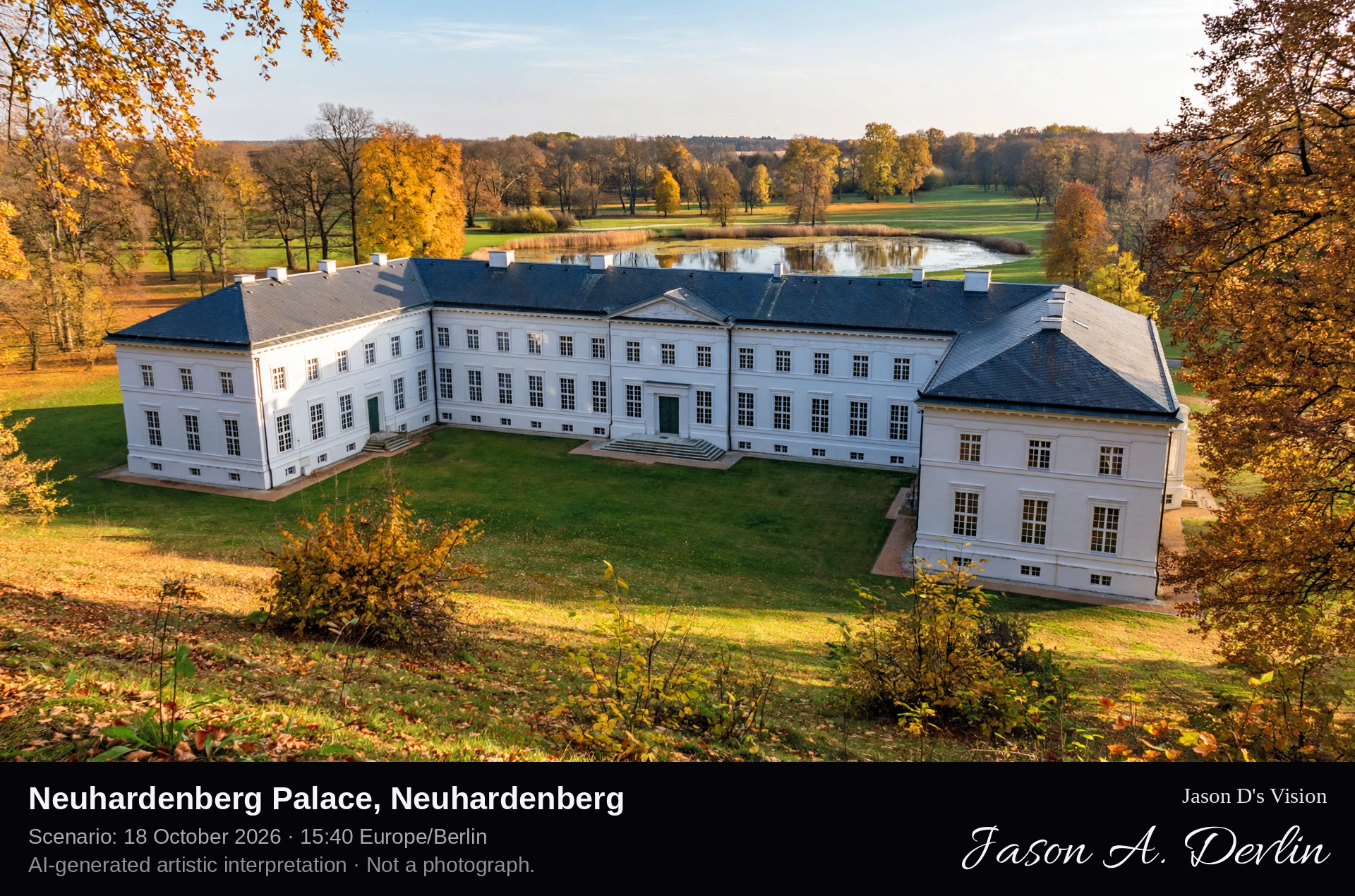
Neuhardenberg Palace took its classicist form under Karl Friedrich Schinkel, who remodelled the estate for Prussian state chancellor Karl August von Hardenberg after 1820. Its pale porticoed front faces a broad landscape park in the spirit of Peter Joseph Lenné, in flat country east of Berlin.
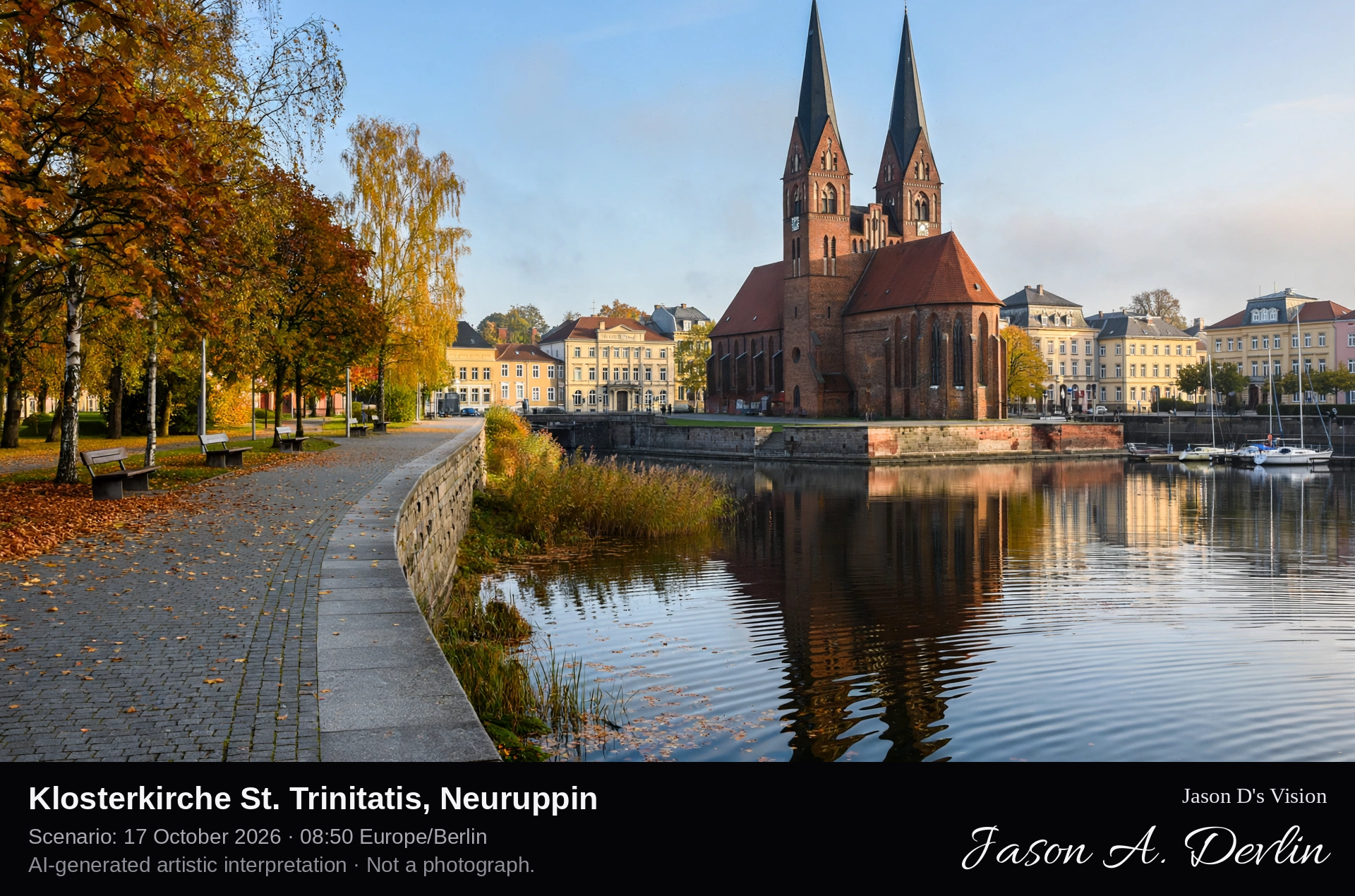
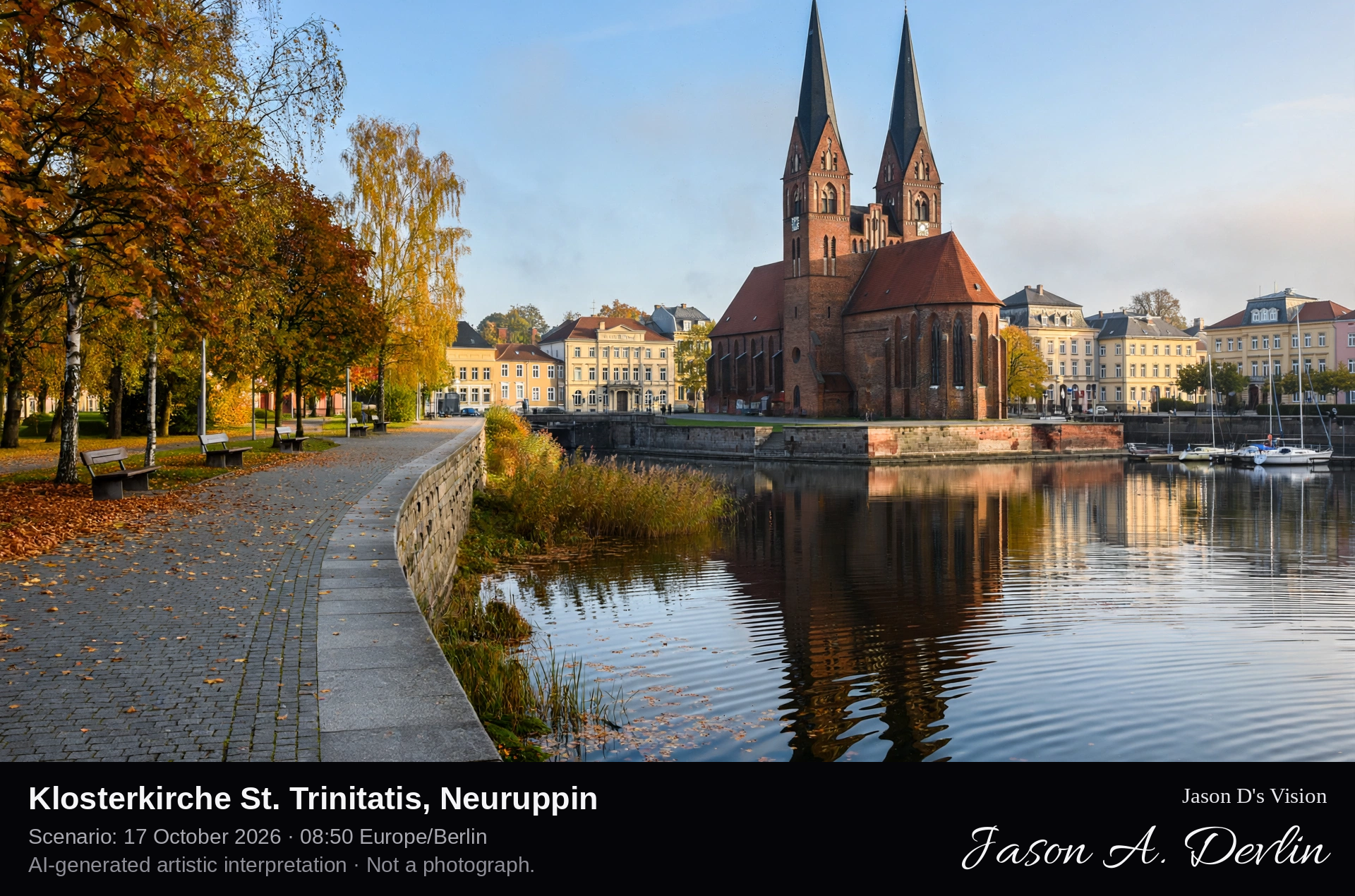
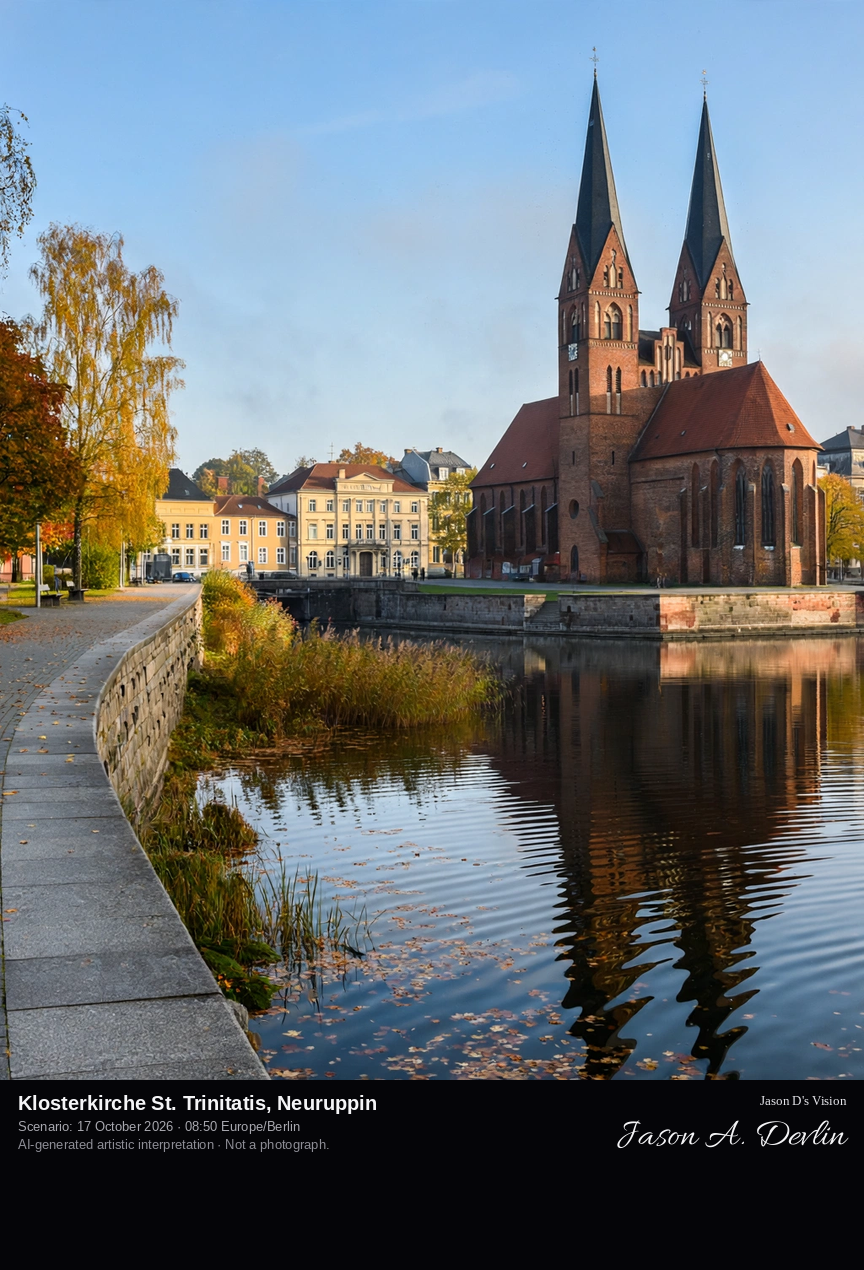
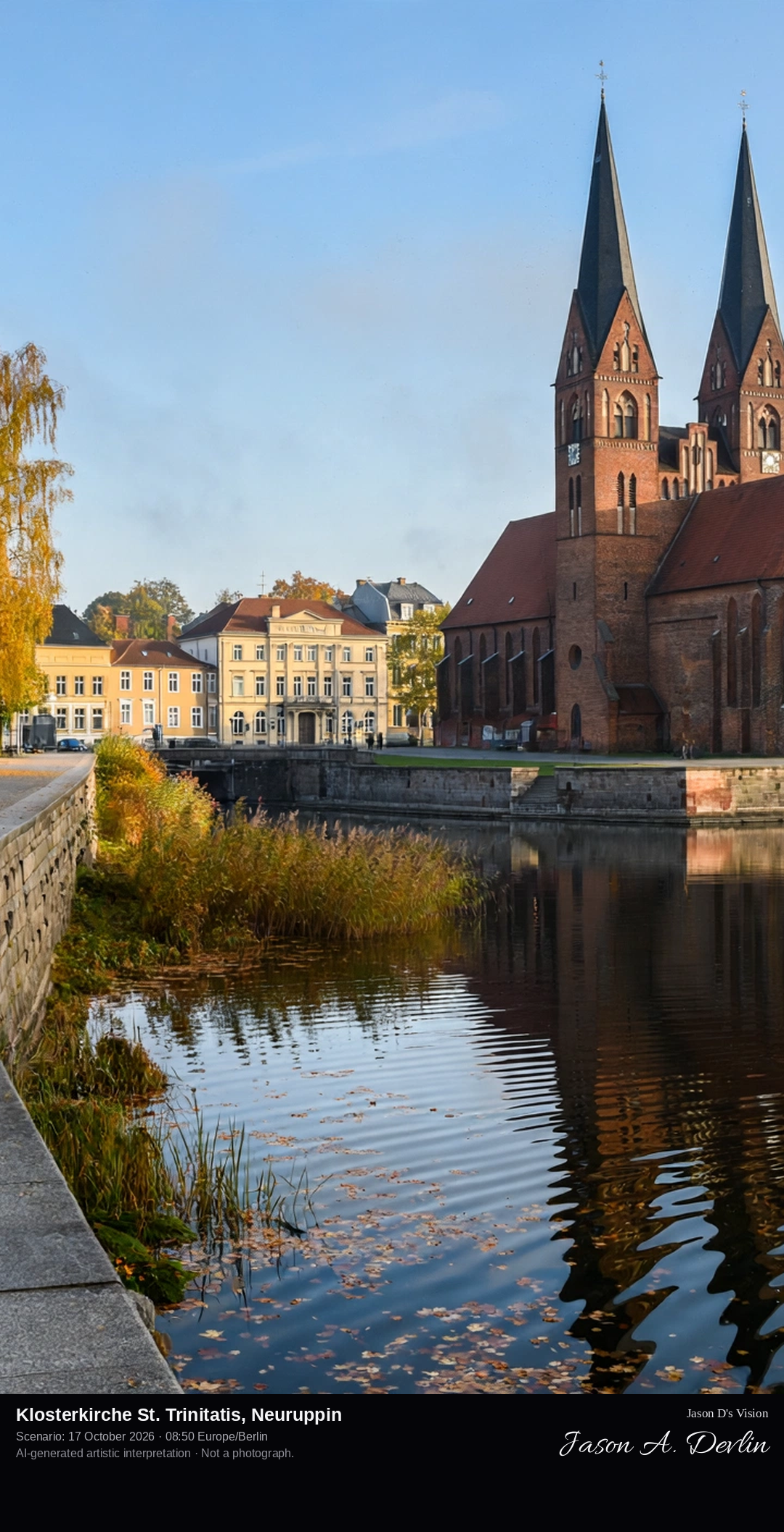
Twin-towered monastery church reflected on the Ruppiner See promenade · AI-generated artistic interpretation
Neuruppin stands on the Ruppiner See, where the twin towers of the Klosterkirche St. Trinitatis rise directly from the lakeside promenade. Rebuilt after a great fire in 1787 as a classical garrison town of broad streets and orderly plastered houses, it is the birthplace of the writer Theodor Fontane.
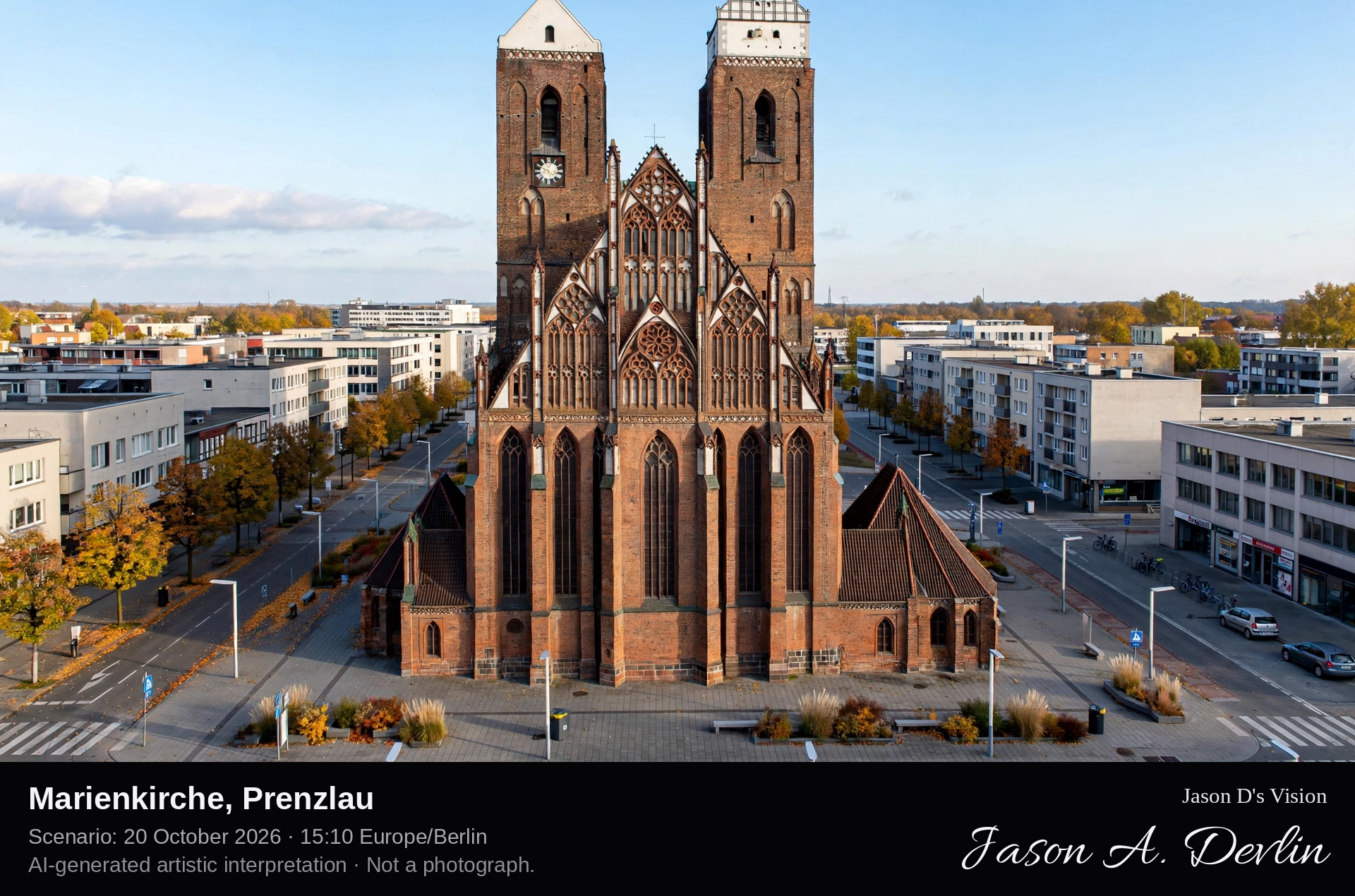
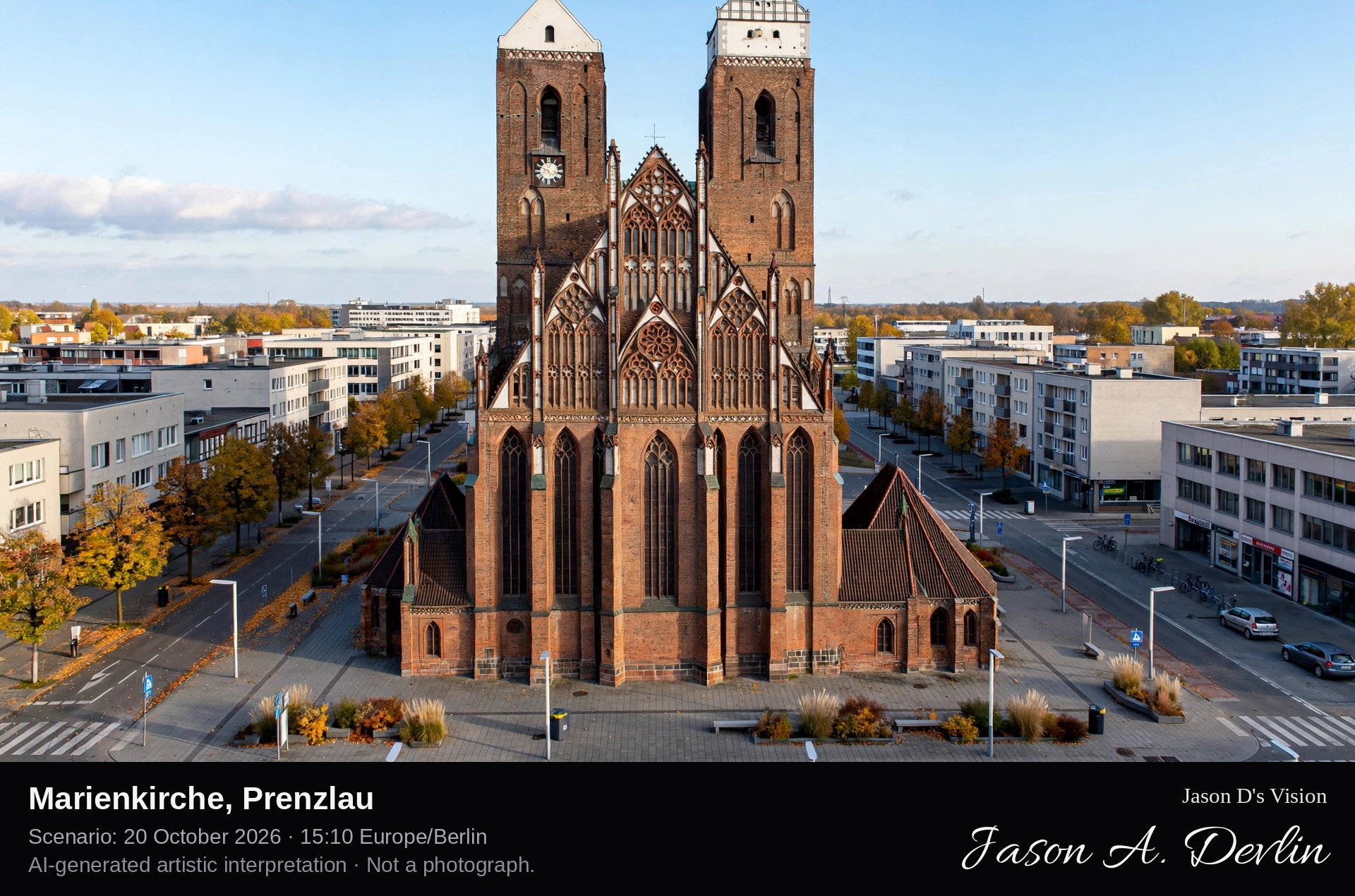
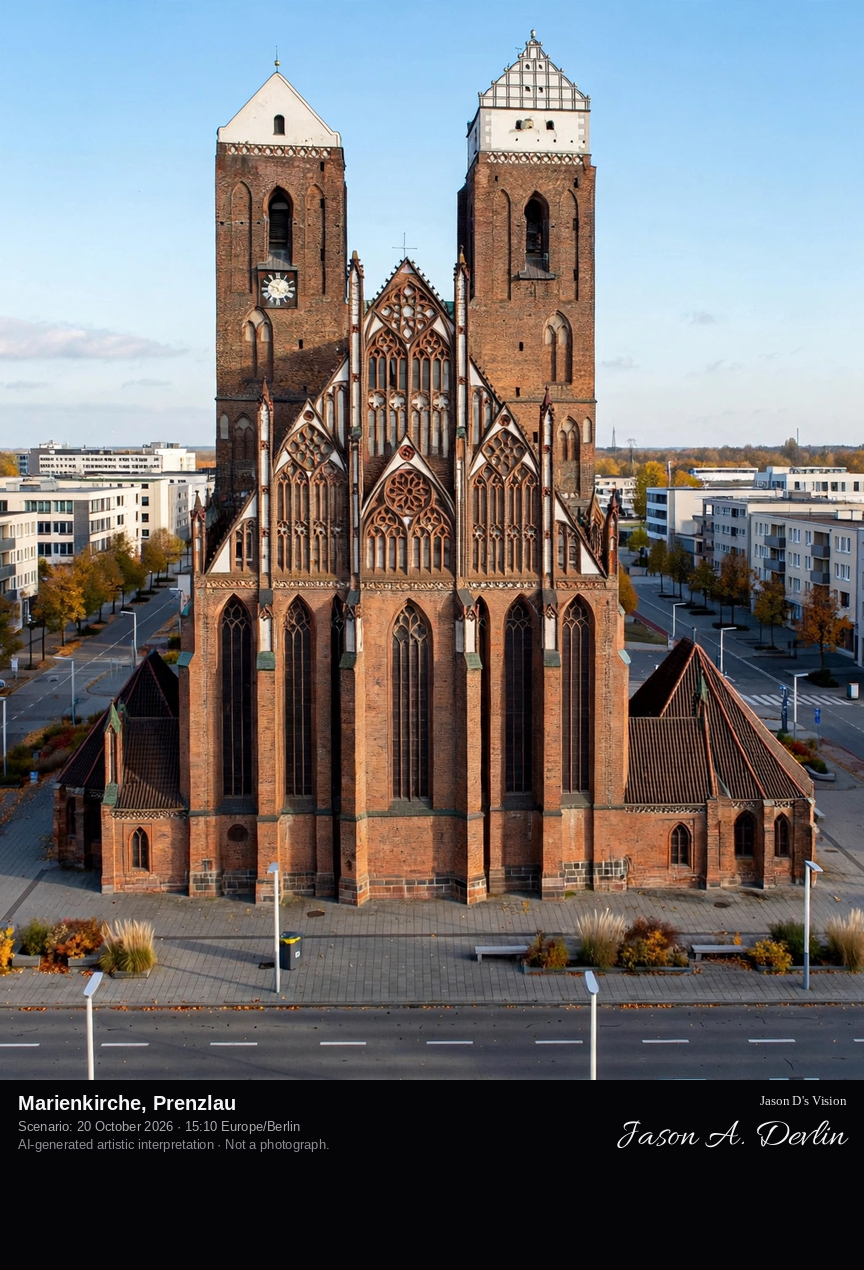
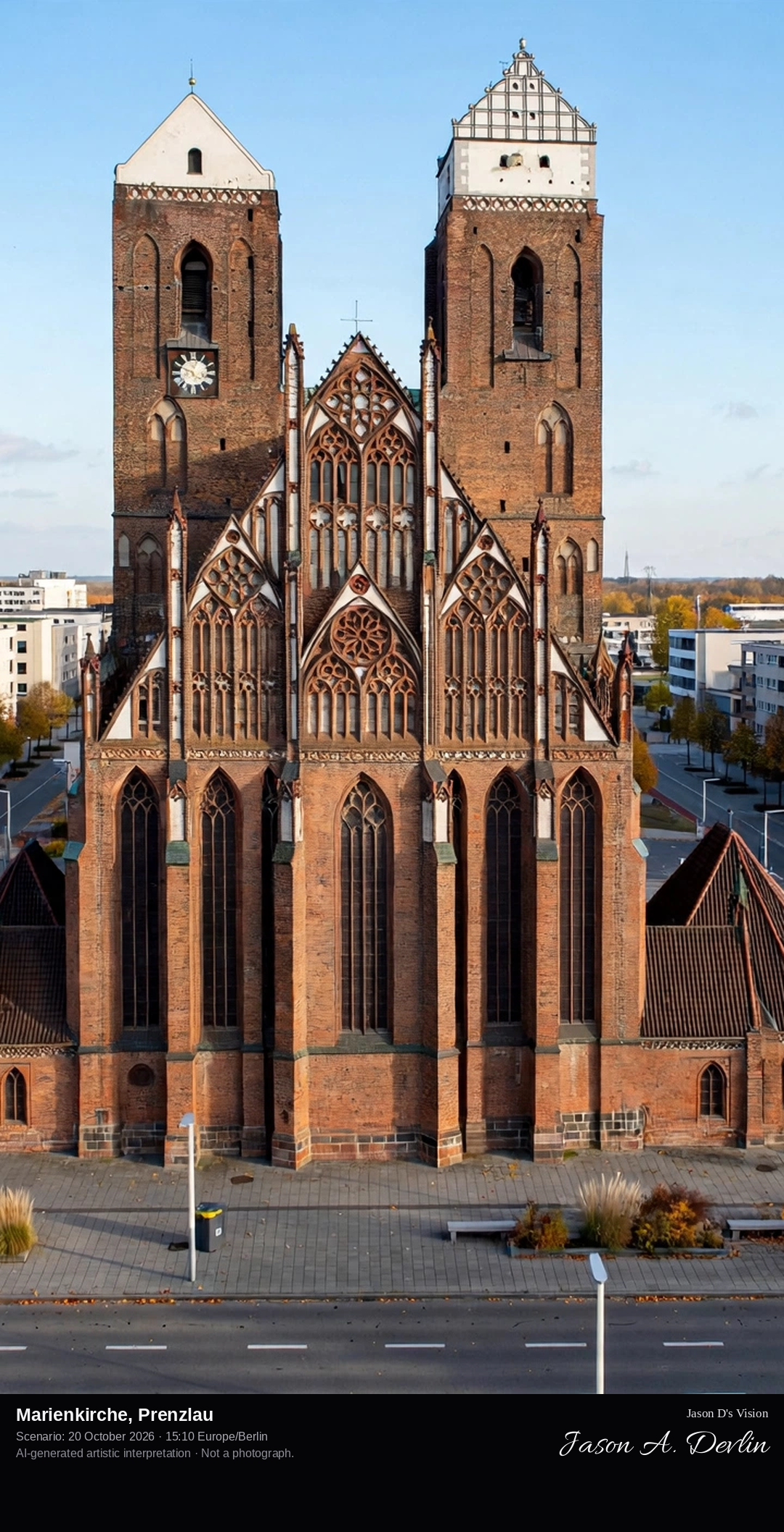
Ornate brick-Gothic east gable and twin towers over the Marktberg · AI-generated artistic interpretation
Prenzlau's Marienkirche is one of the most important brick-Gothic hall churches in northern Germany, its ornate east gable and twin towers rising some 64 to 68 metres over the Marktberg. The church stands at the head of the Unteruckersee, above a town centre largely rebuilt after heavy wartime destruction.
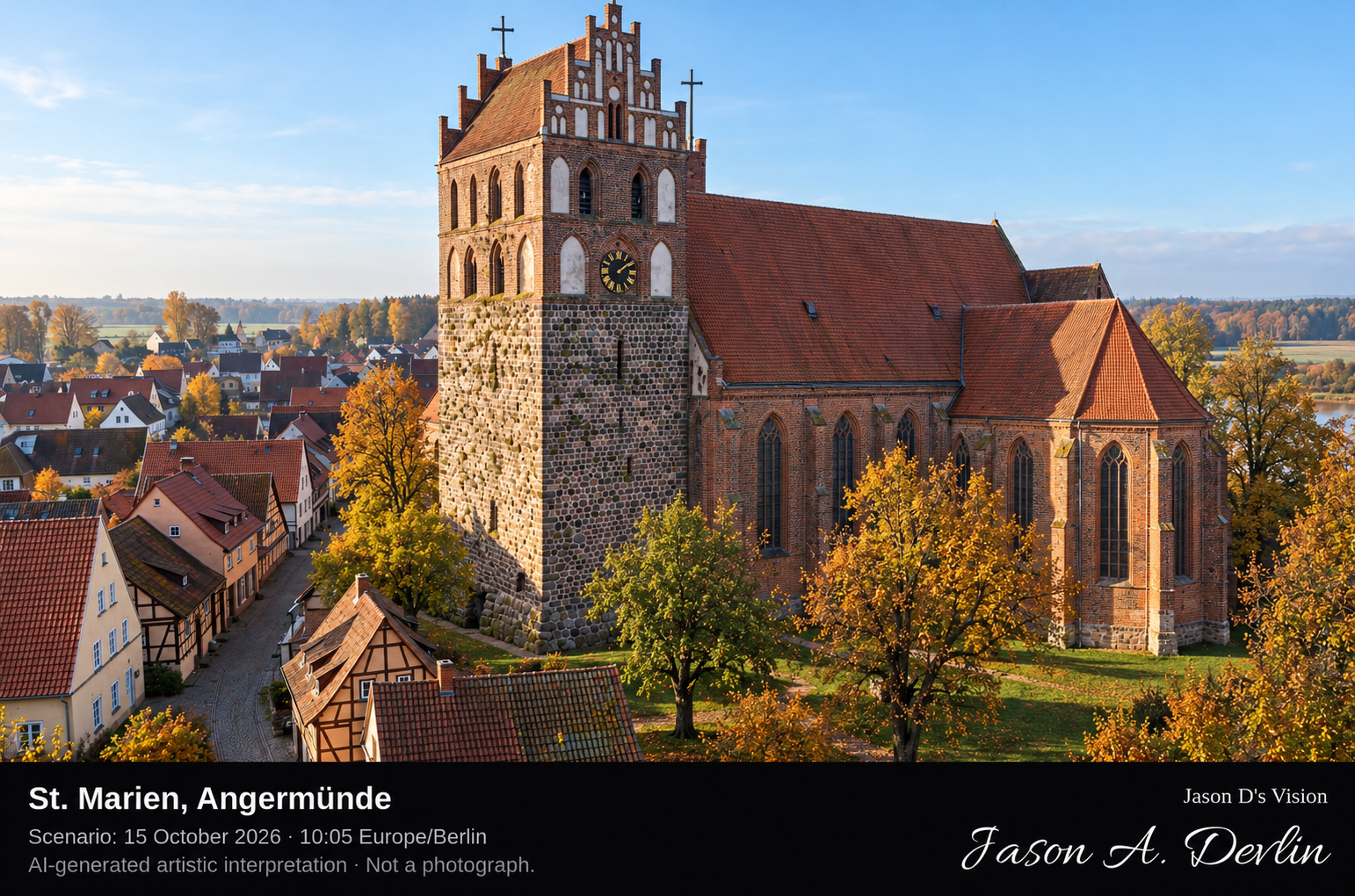
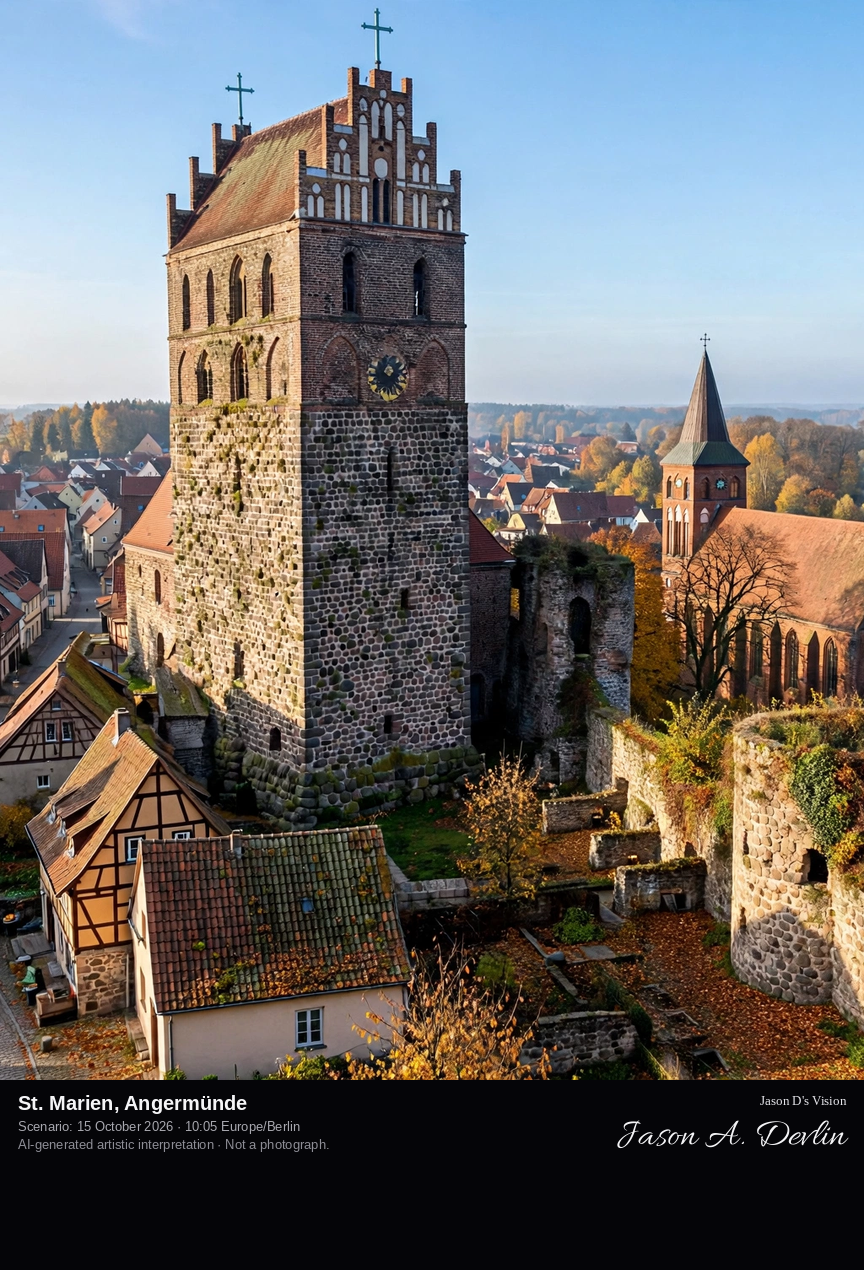
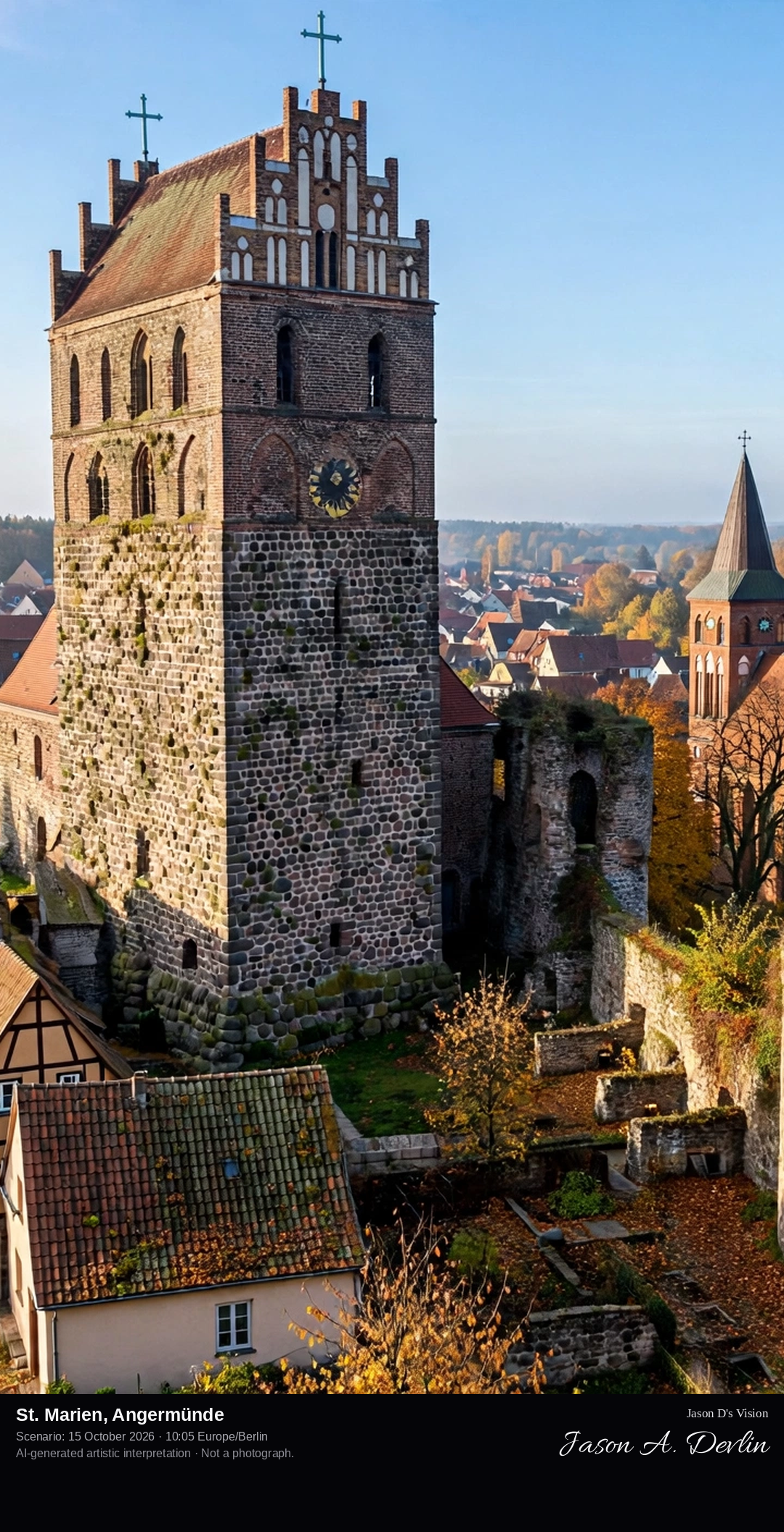
Massive granite church tower over medieval lanes and town wall remnants · AI-generated artistic interpretation
Angermünde preserves an almost complete medieval core of lanes, town wall remnants and the brick Franciscan monastery church at the Mündesee. Above the small historic houses rises the massive granite tower of St. Marien, landmark of a town largely spared war damage and later demolition.
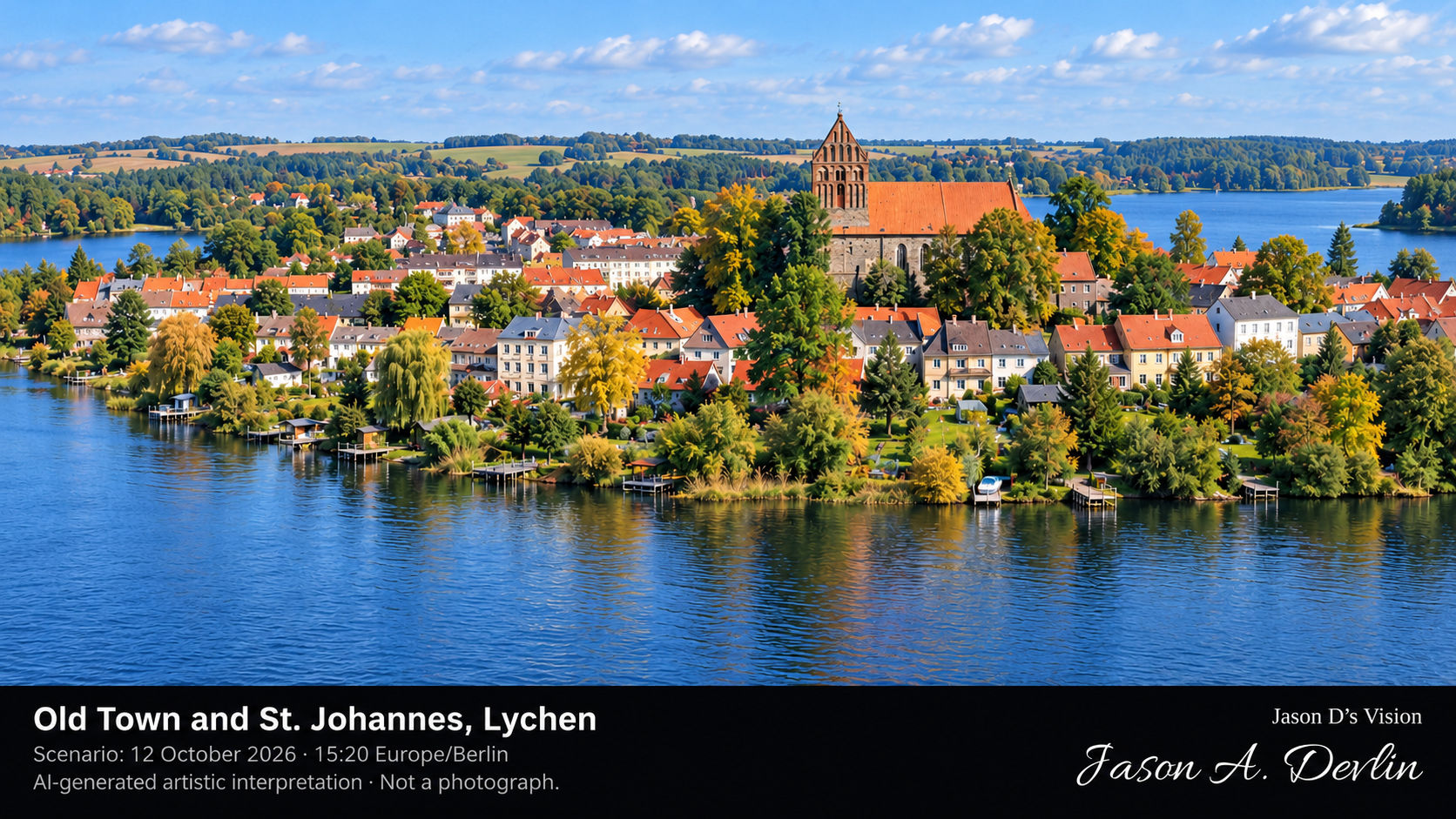
St. Johannes church and Lychen old town beside the lakes · AI-generated artistic interpretation
Lychen is a small historic town in the Uckermark lake district, ringed by seven lakes and dense pine forest. The church of St. Johannes rises over the rooftops of the old timber-rafting town. Its former town gates are not preserved.
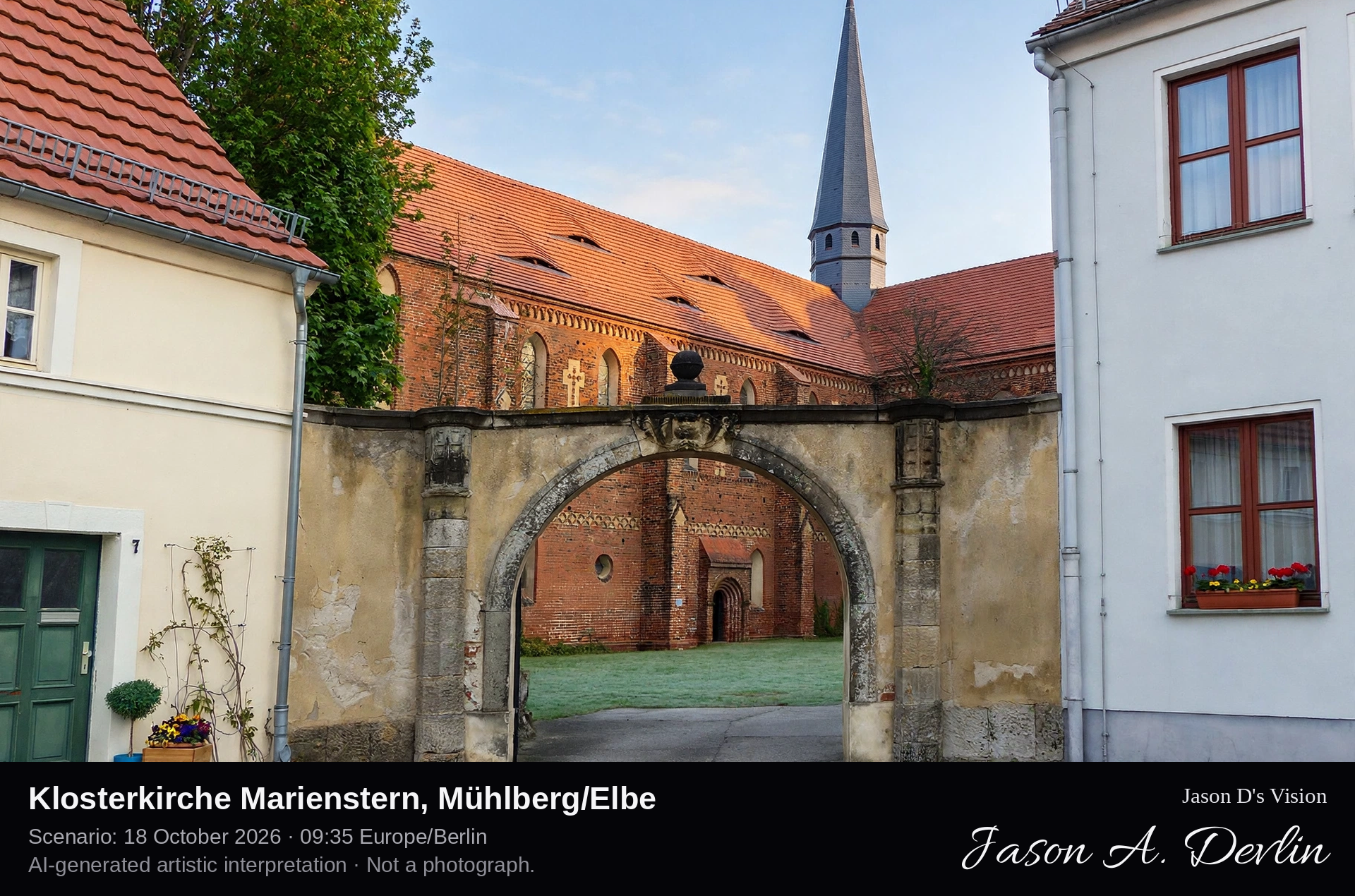
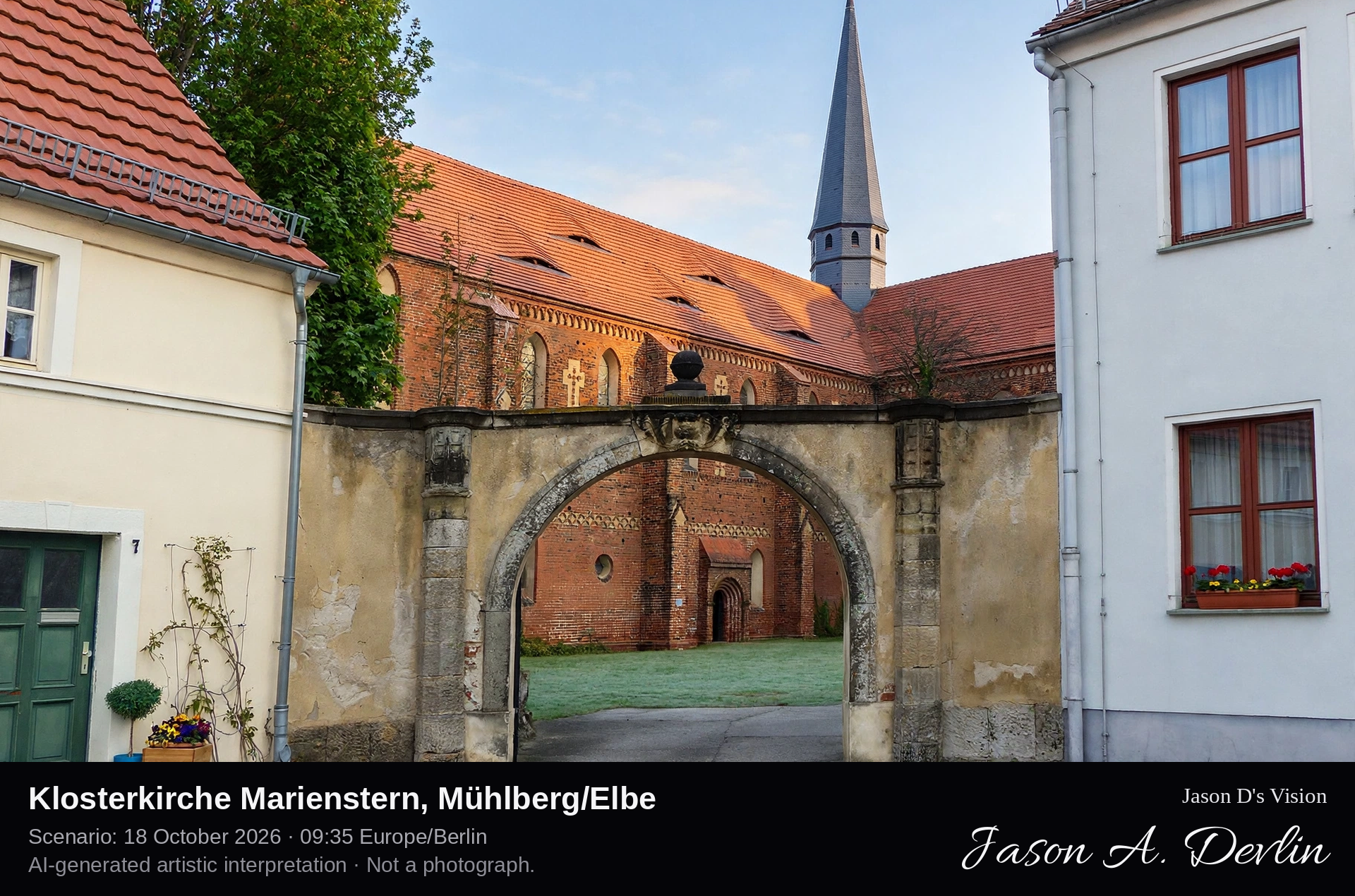
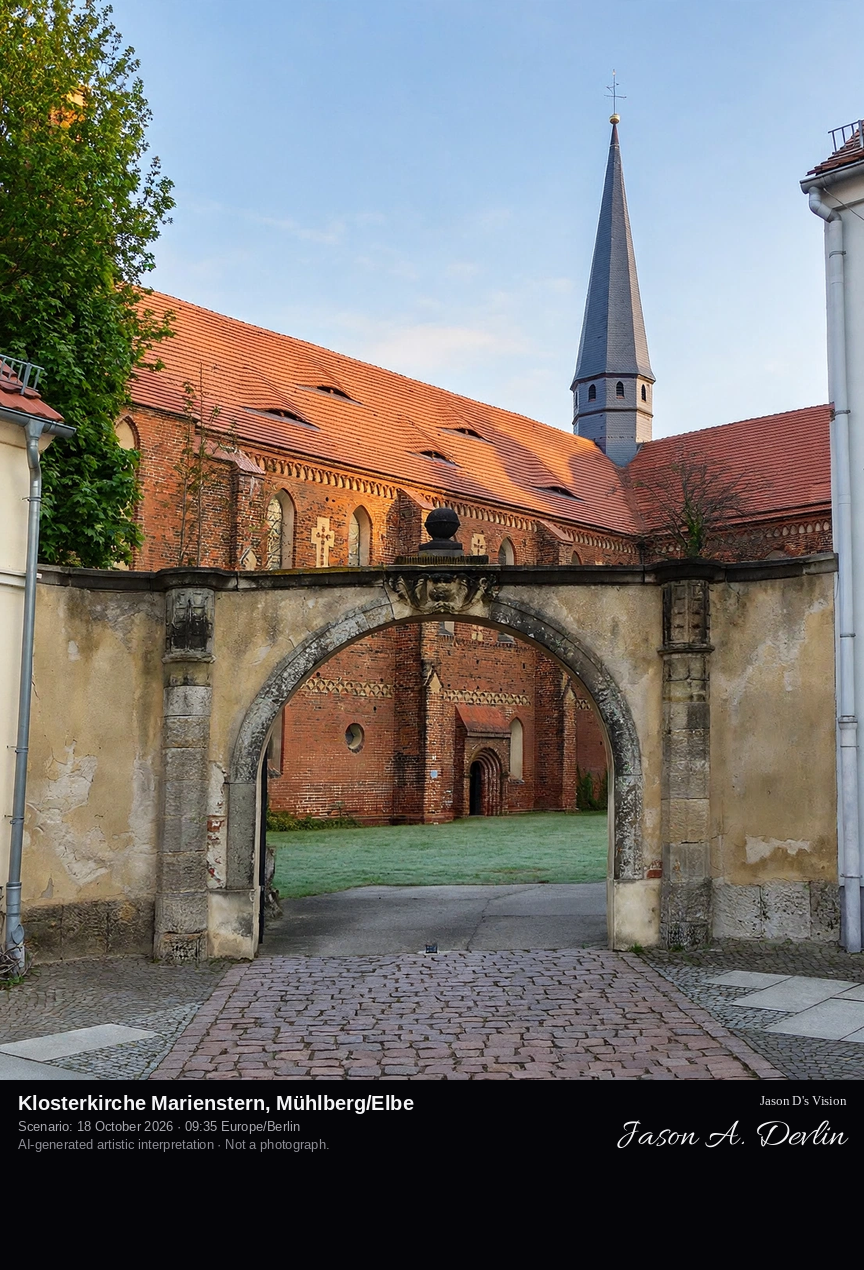
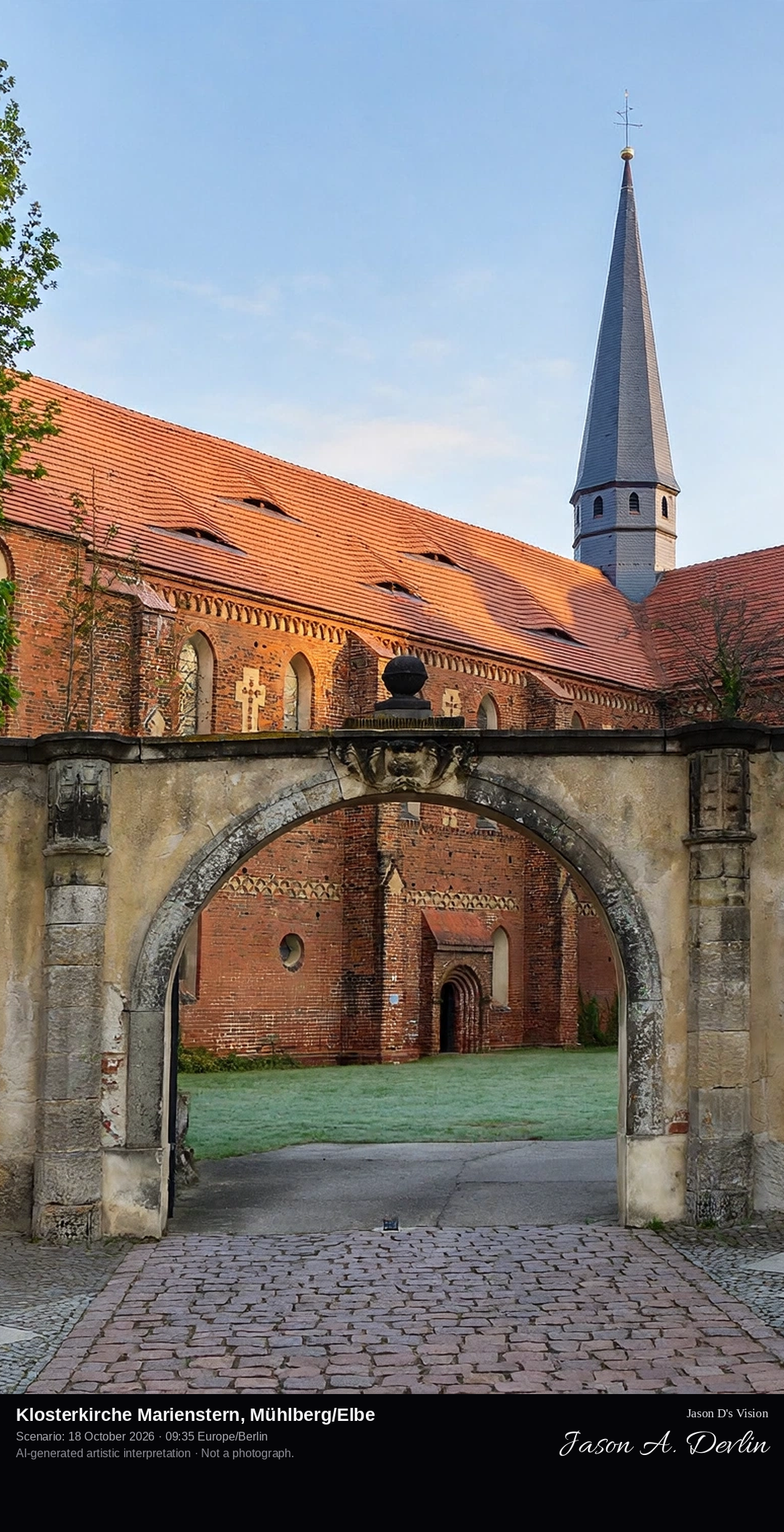
Stone archway framing the brick monastery church and its slender spire · AI-generated artistic interpretation
Mühlberg is a small town on the Elbe in Brandenburg, its old streets leading toward the Klosterkirche Marienstern, the brick church of the former monastery of Marienstern. Seen through a stone town archway, the church and its slender roof spire rise above the rooftops as the town's clear focal point.
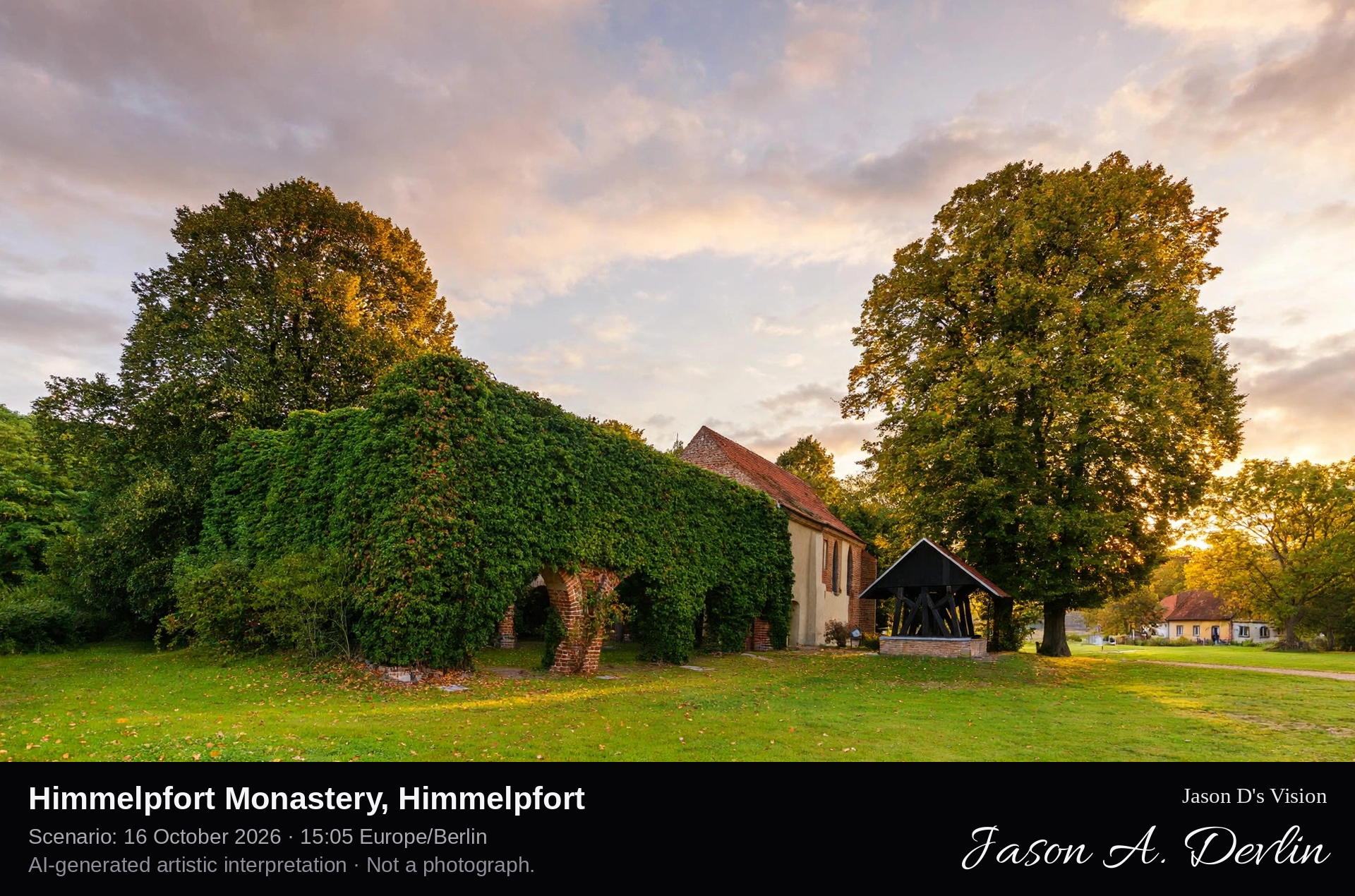
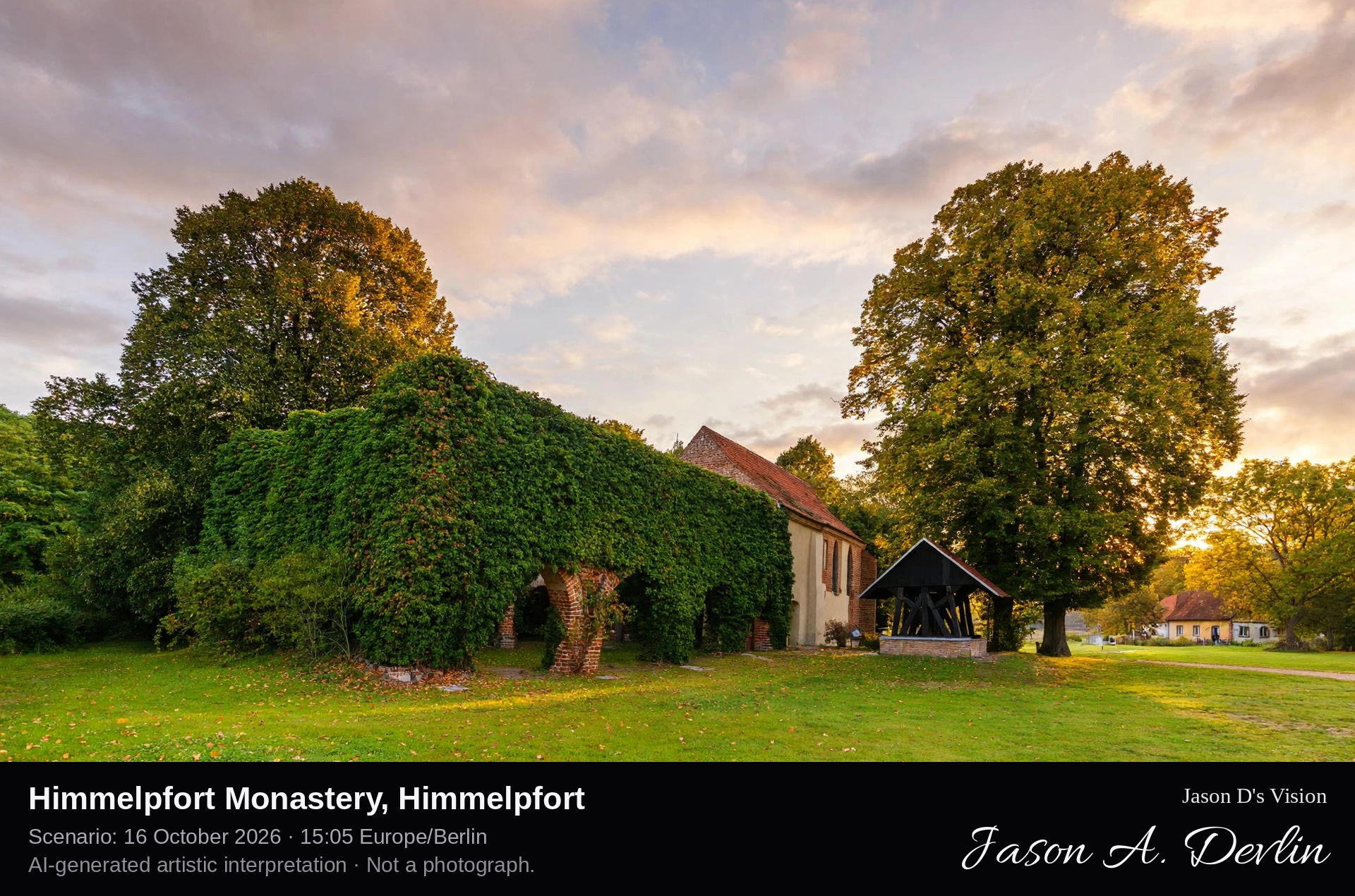
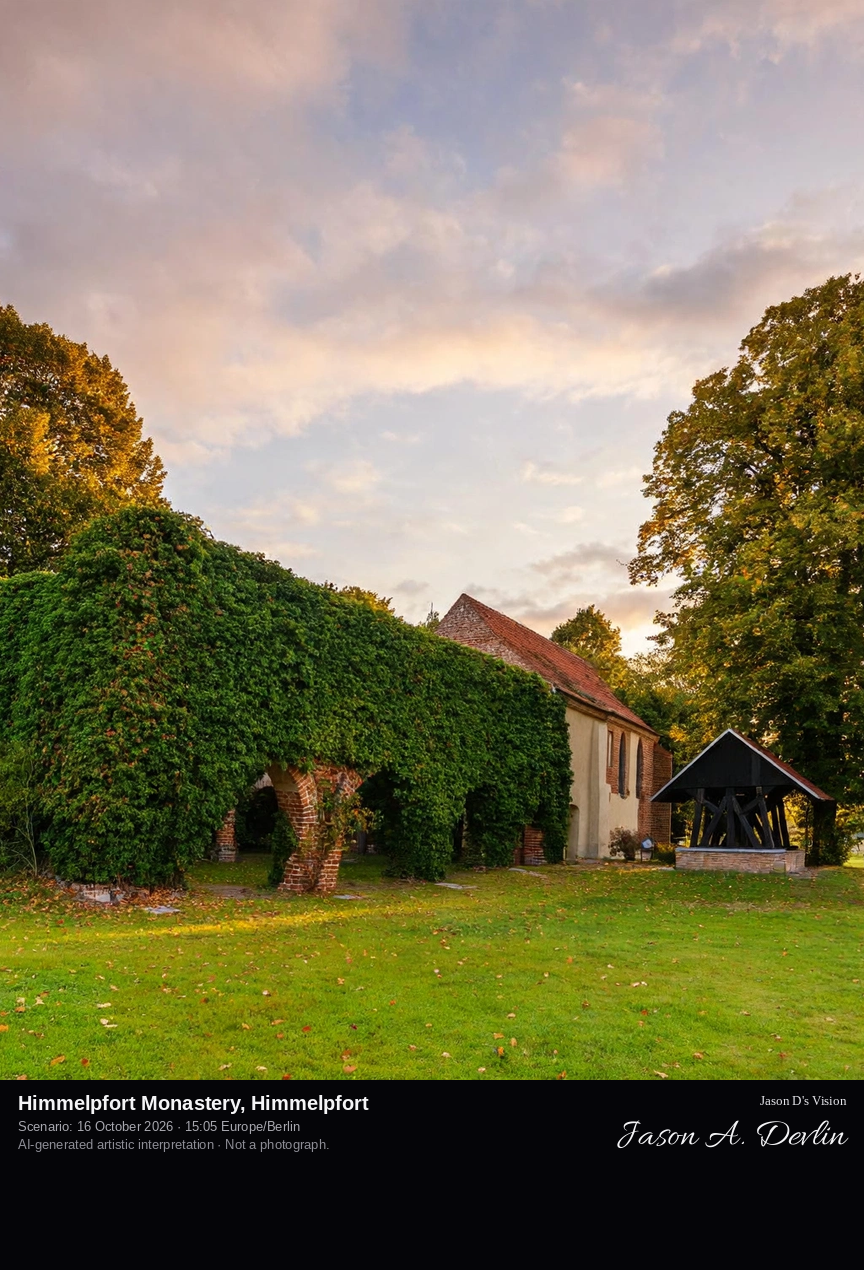
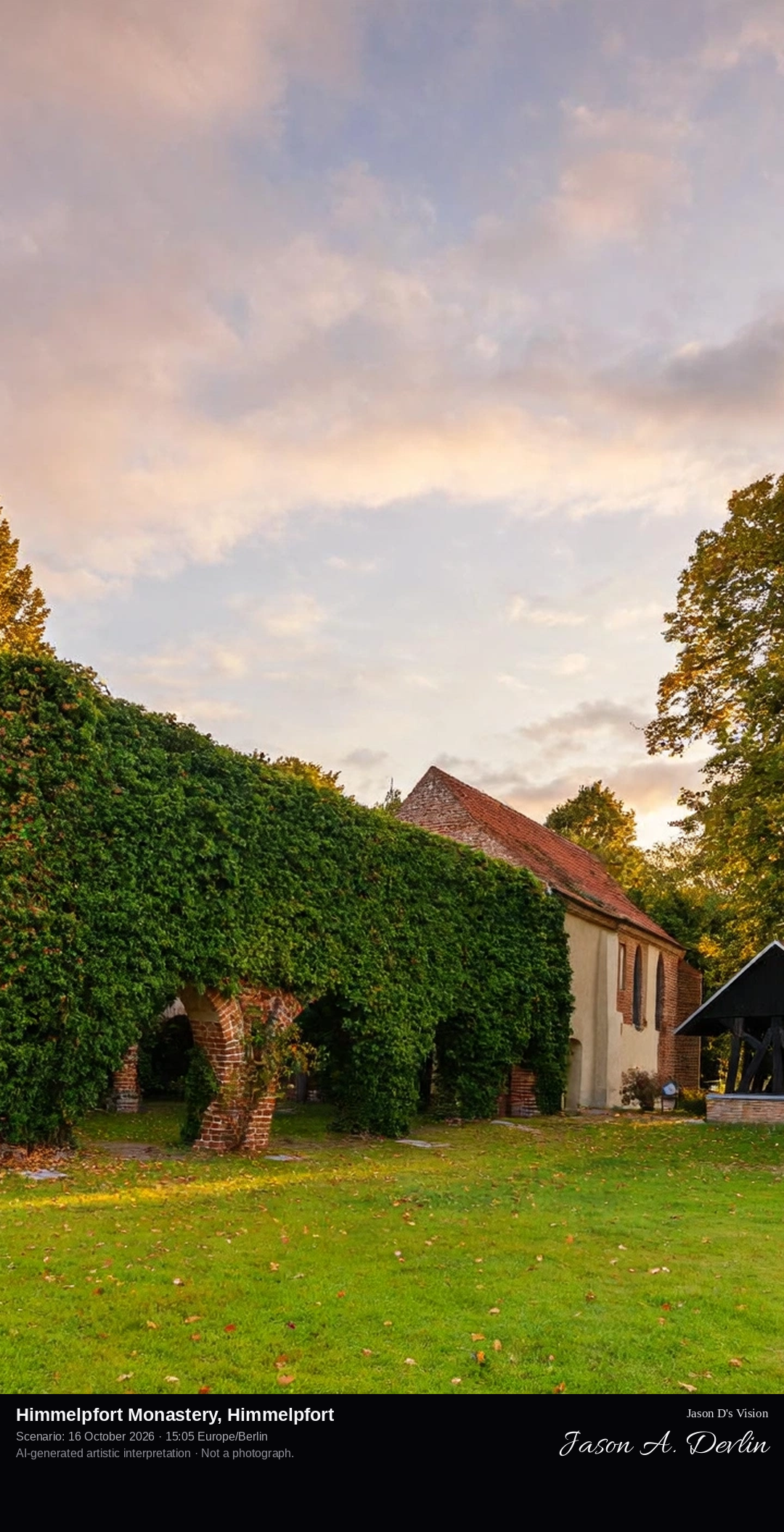
Brick monastery church and roofless ruins · AI-generated artistic interpretation
Himmelpfort is a tiny lakeside village on a peninsula in Brandenburg's lake country, long associated with its Cistercian monastery founded in the late 13th century. Red-brick monastery remains stand among the village houses, surrounded by water, reeds and pine woodland.
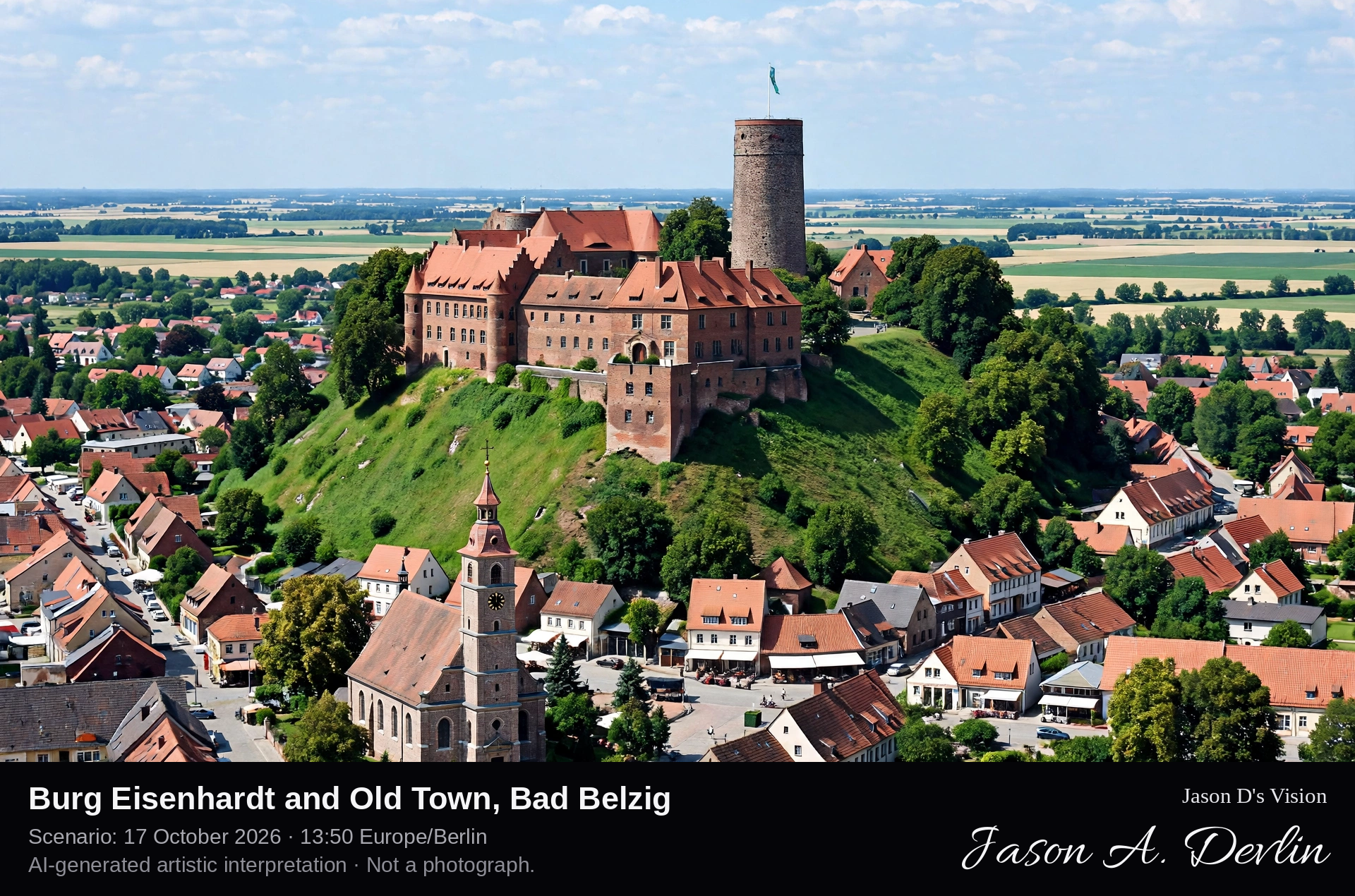
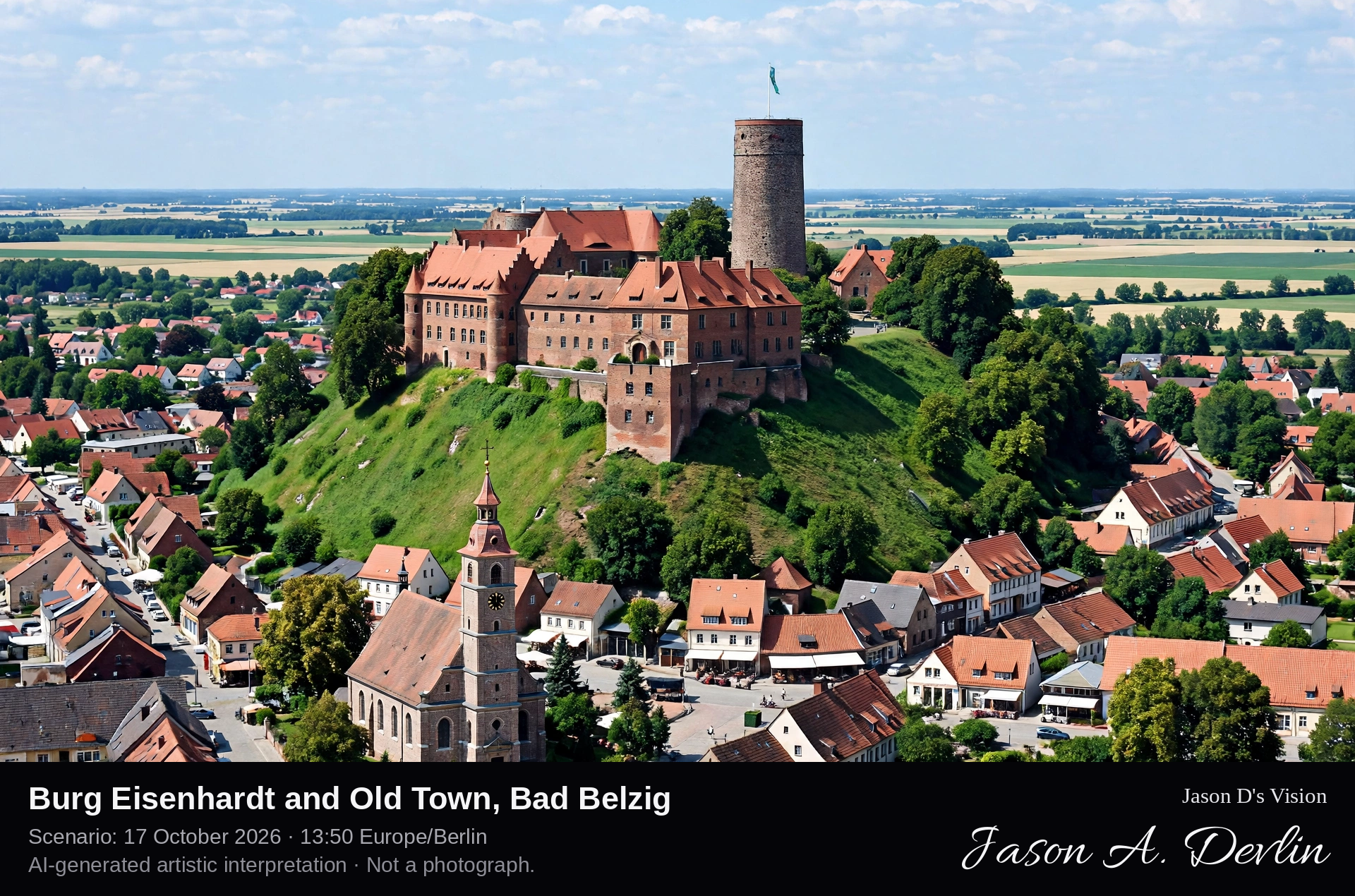
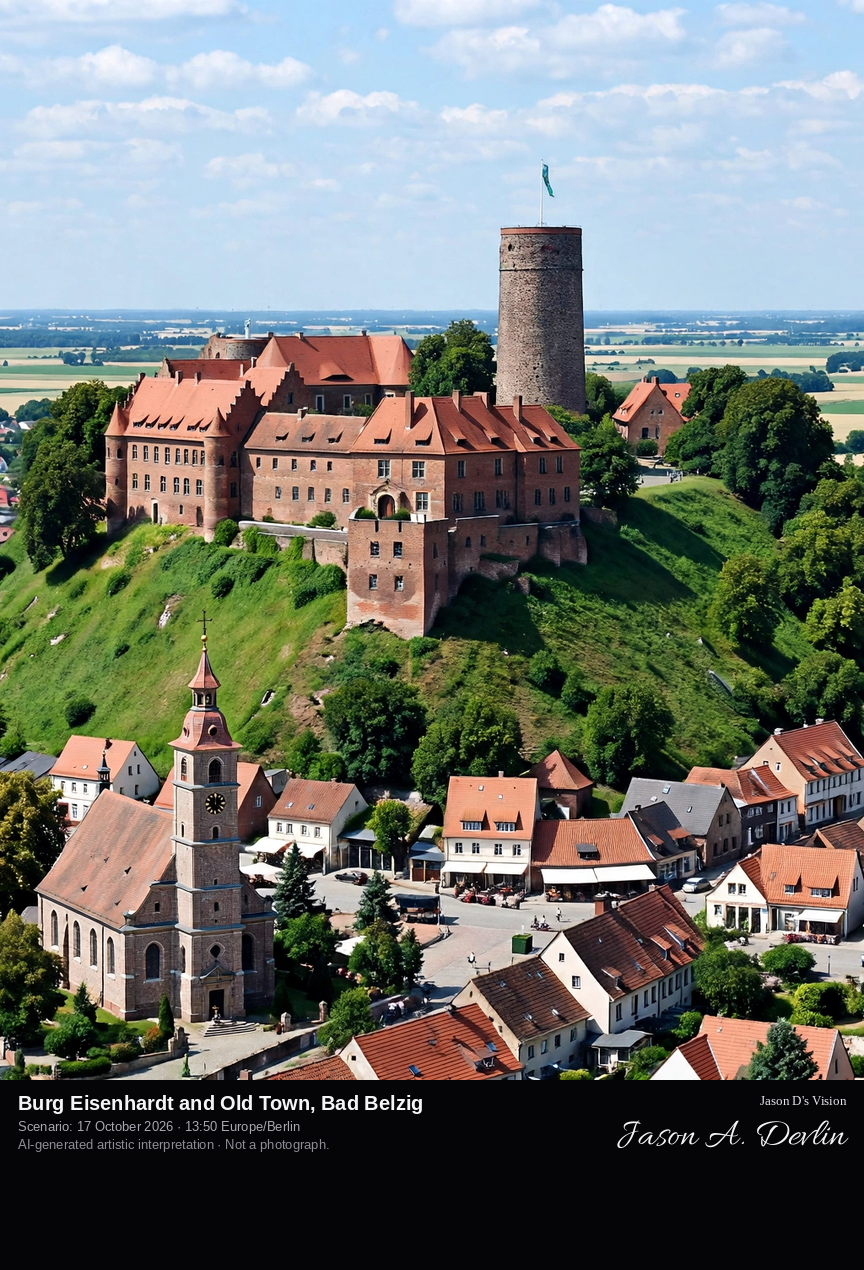
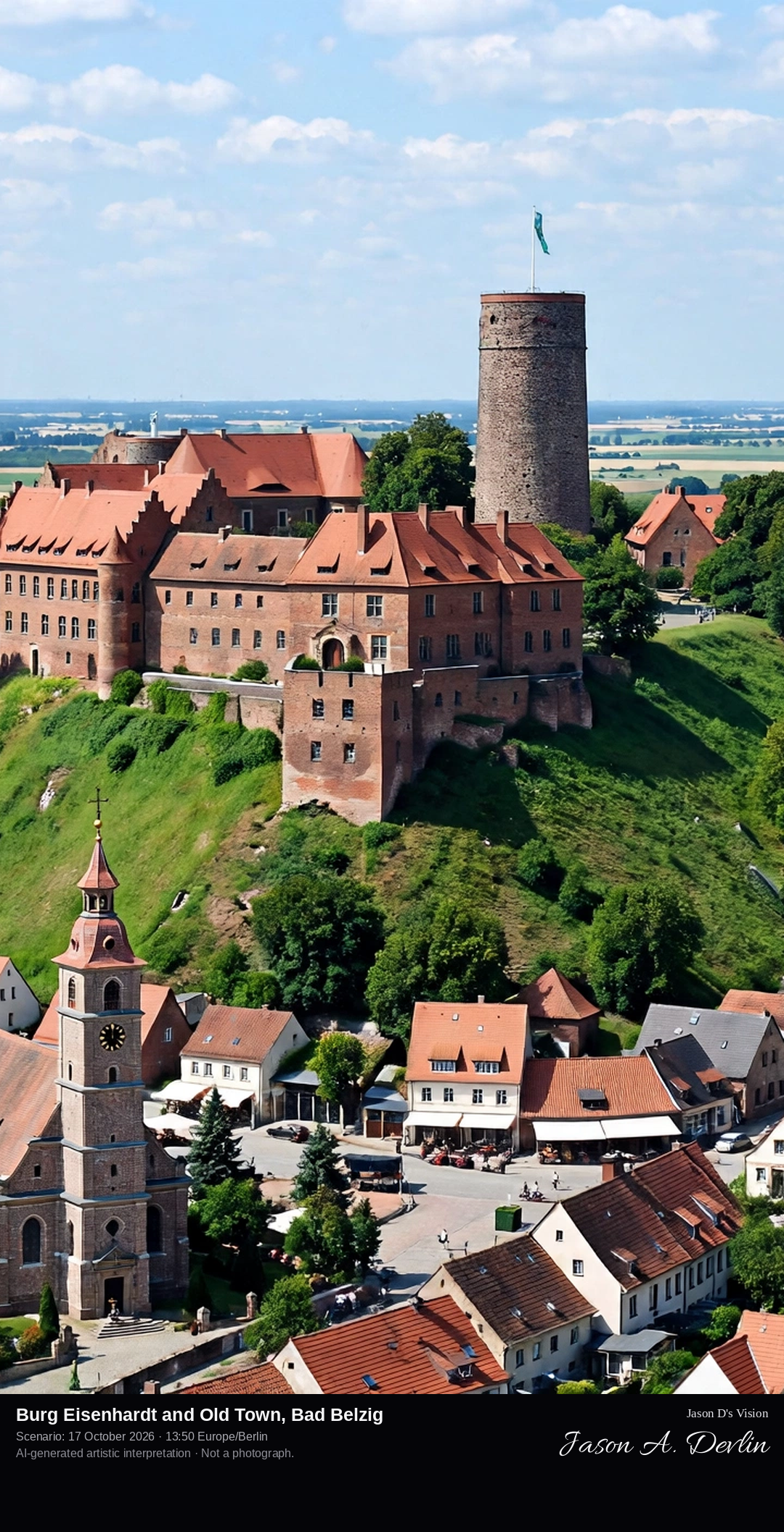
The medieval castle on its hill above the Fläming old town · AI-generated artistic interpretation
Bad Belzig lies in the Hoher Fläming hills of Brandenburg, its old town of small gabled houses watched over by Burg Eisenhardt, a medieval castle with a great round keep. Fieldstone churches, a former post mill and the flat heath horizons of the Fläming give the little spa town its quiet, old character.
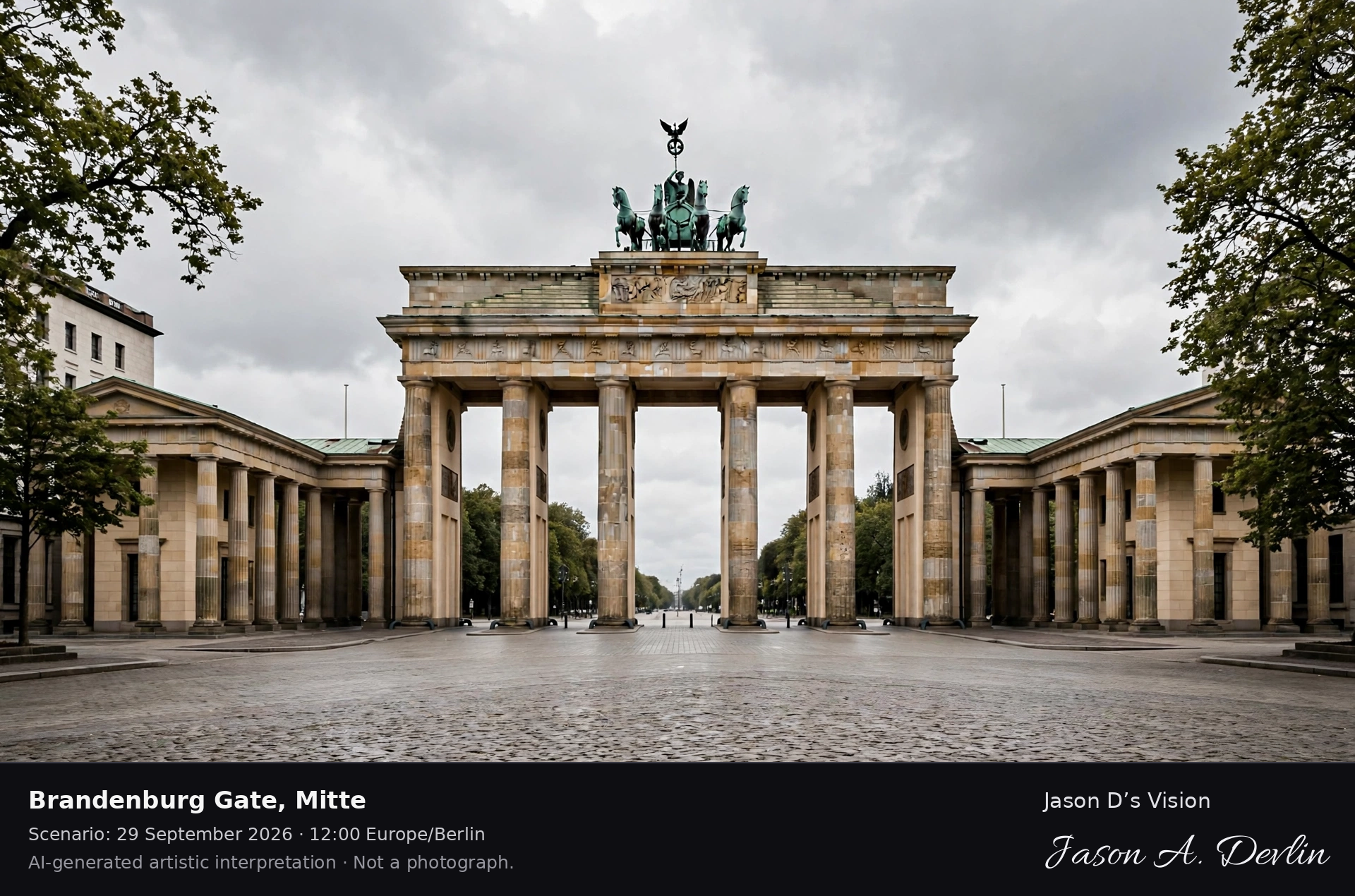
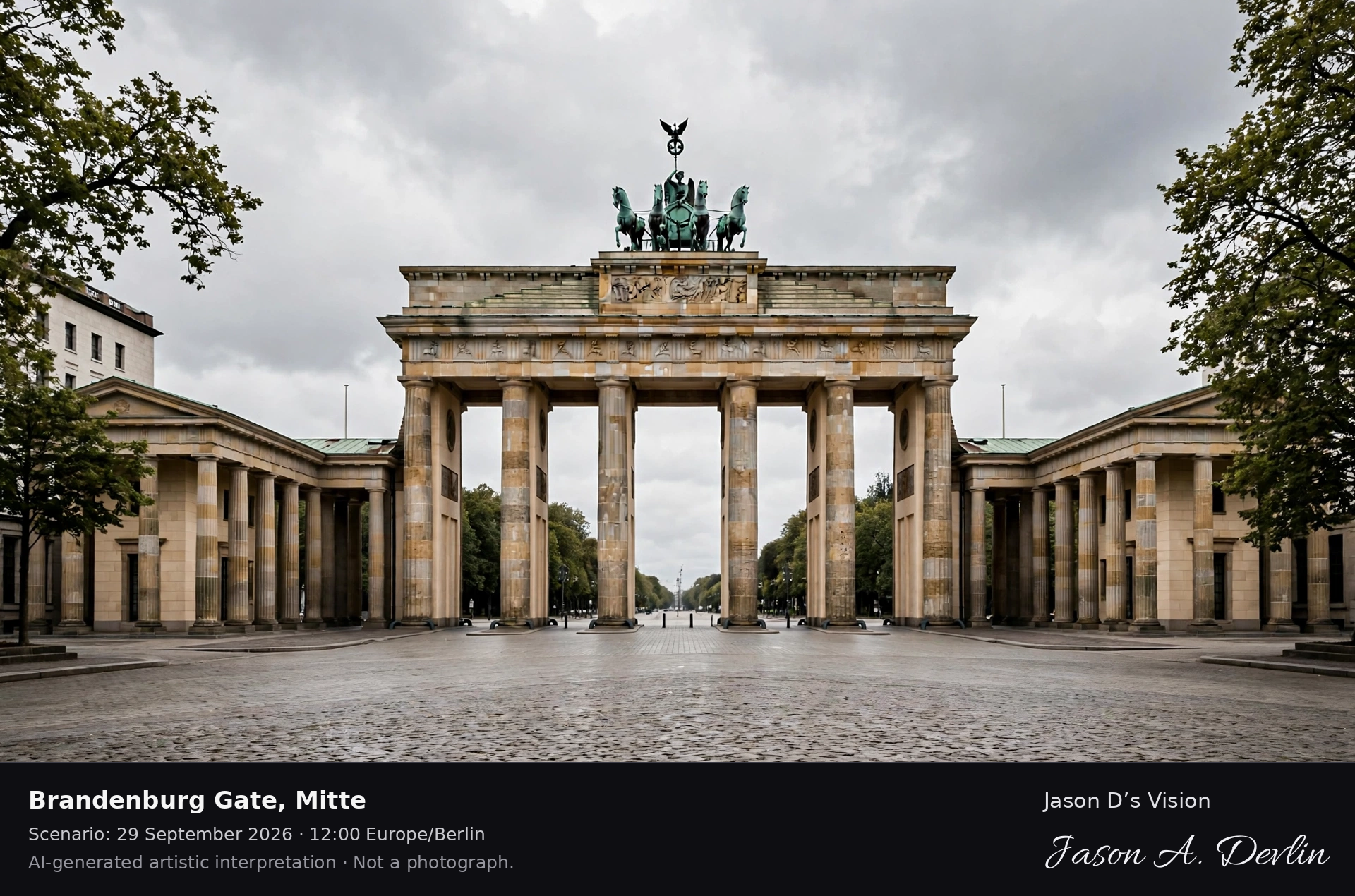
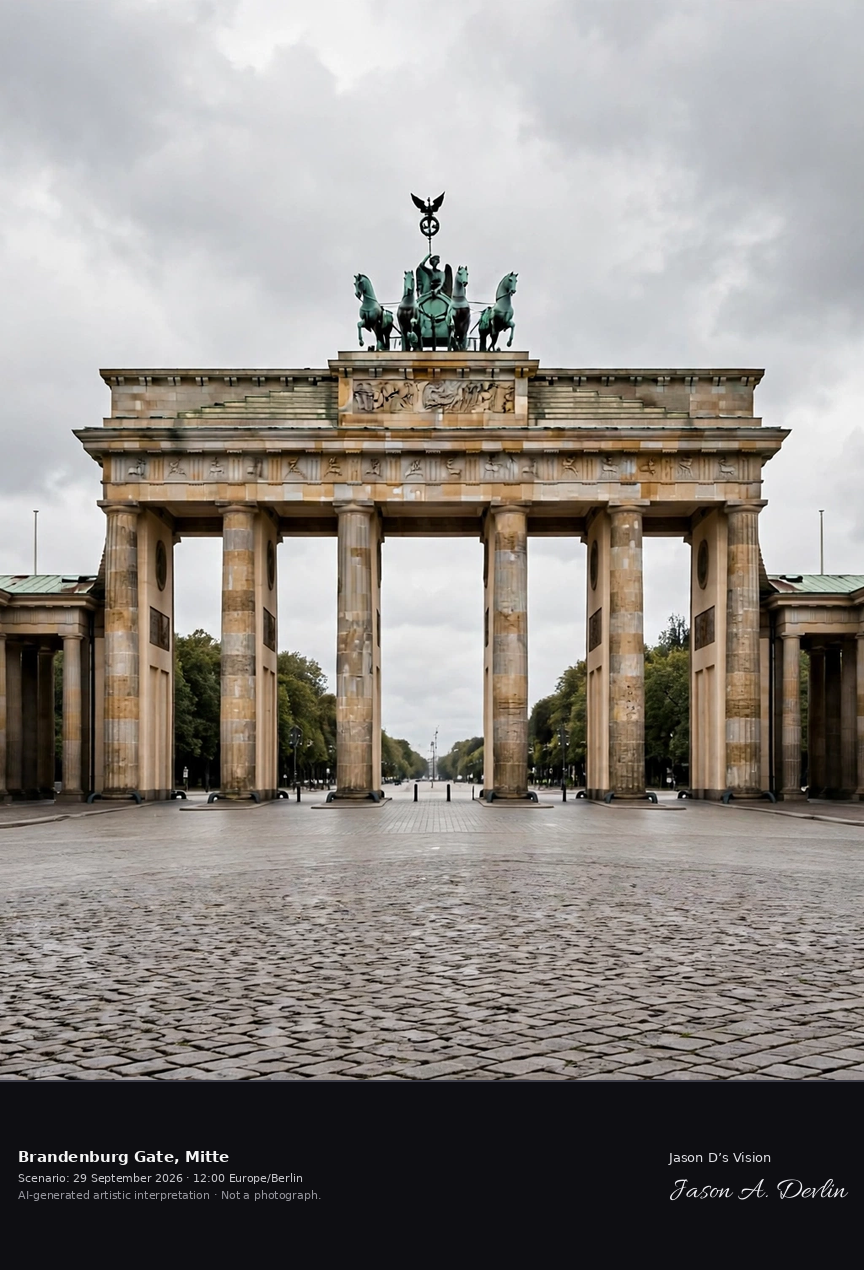
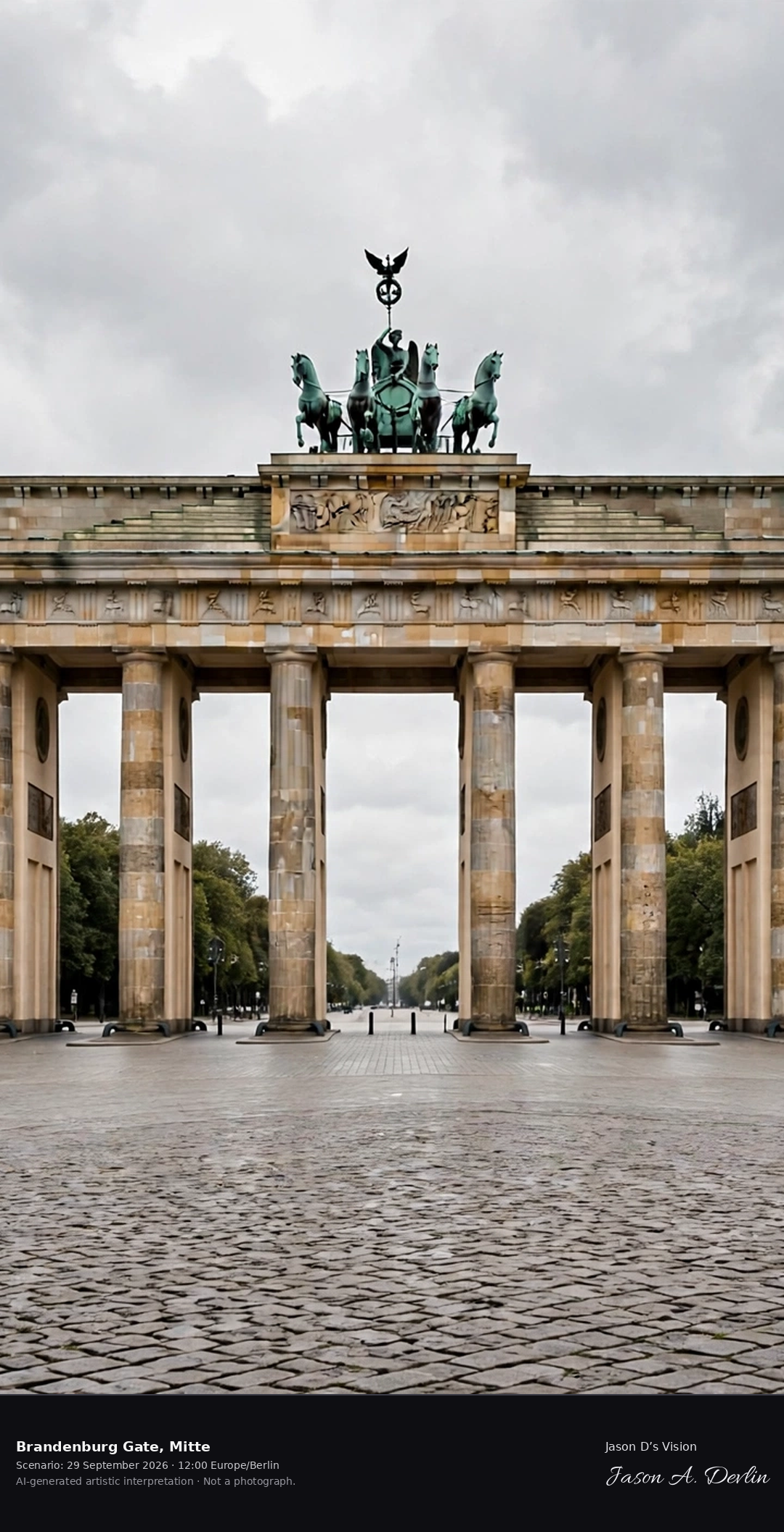
Pariser Platz frontage · AI-generated artistic interpretation
The floodlit Brandenburg Gate stands centered from Pariser Platz, its six Doric columns and the Quadriga glowing warm against a partly-cloudy night sky. Historic facades with lit windows frame the square left and right — the Adlon Kempinski at the left edge — while wet cobblestones catch reflections in the foreground and a "Pariser Platz" street sign and two parked e-scooters anchor the empty plaza at 01:00.
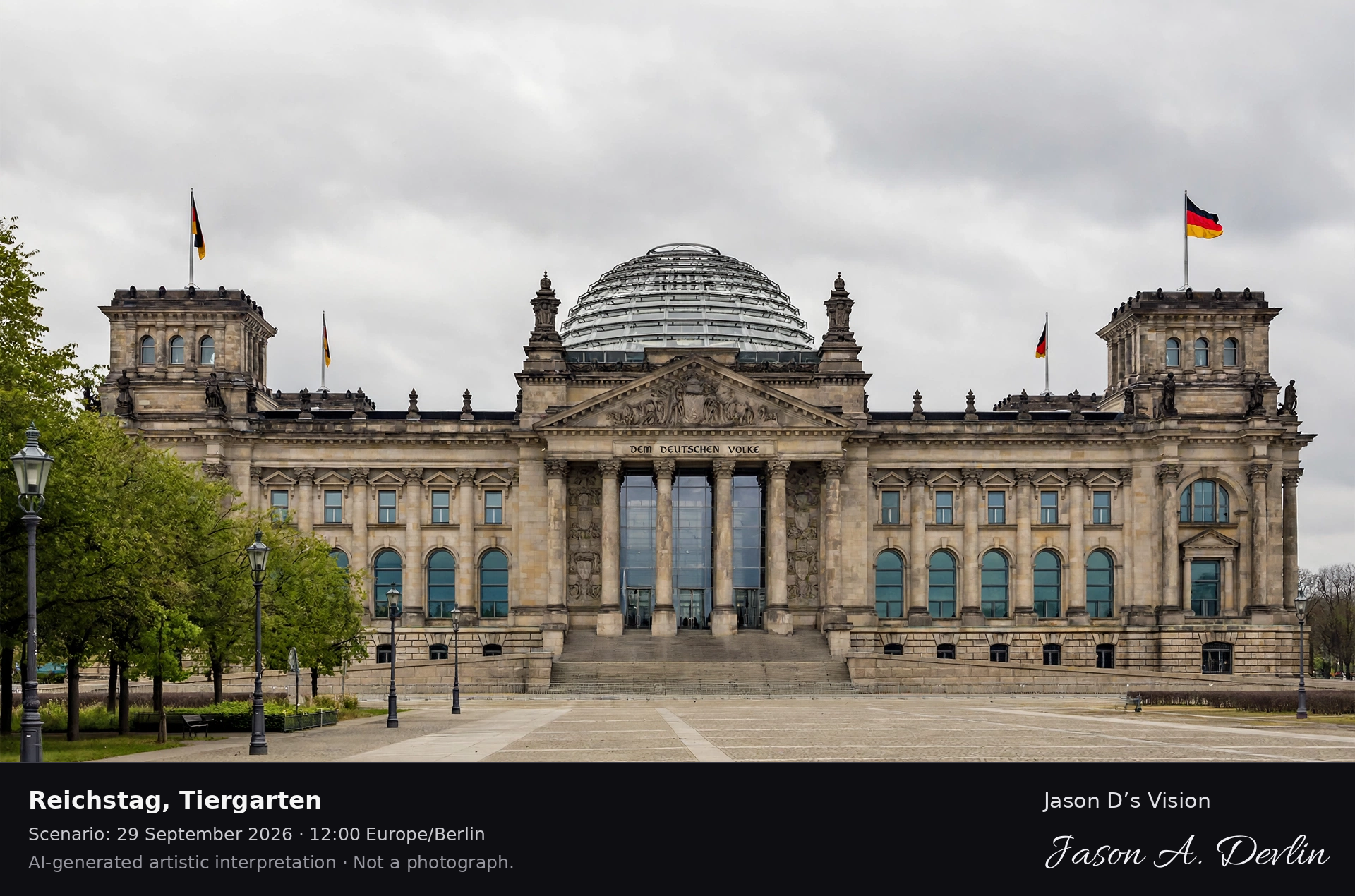
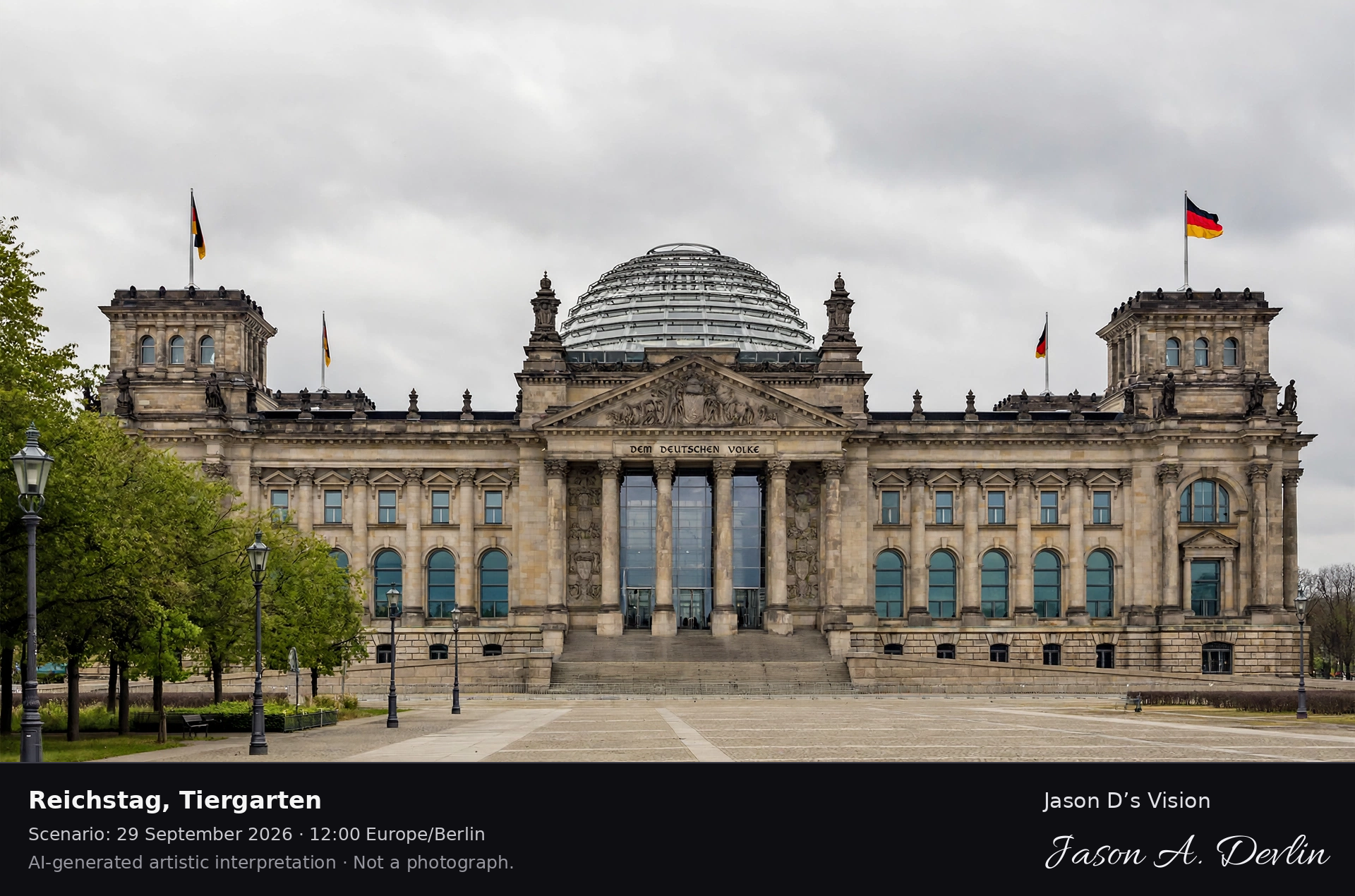
Parliament facade and dome · AI-generated artistic interpretation
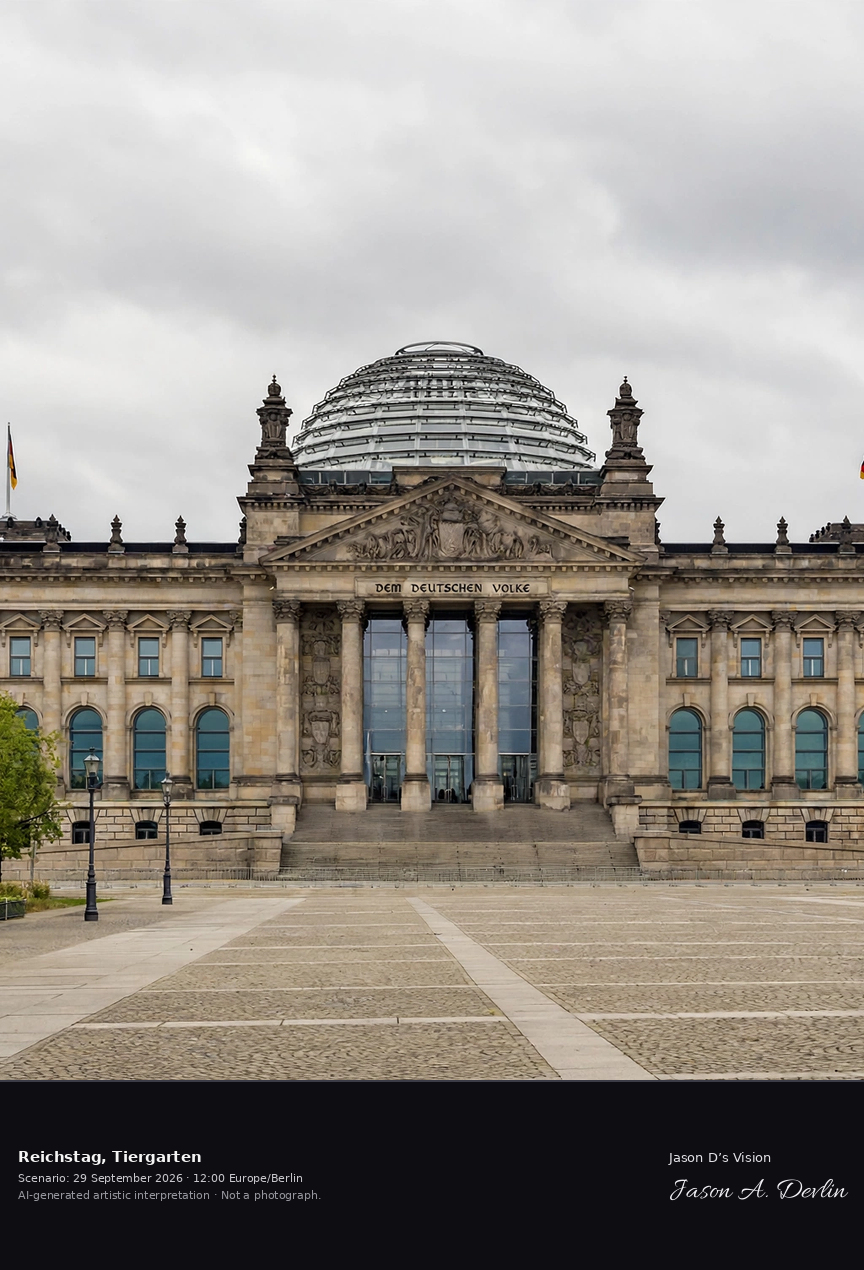
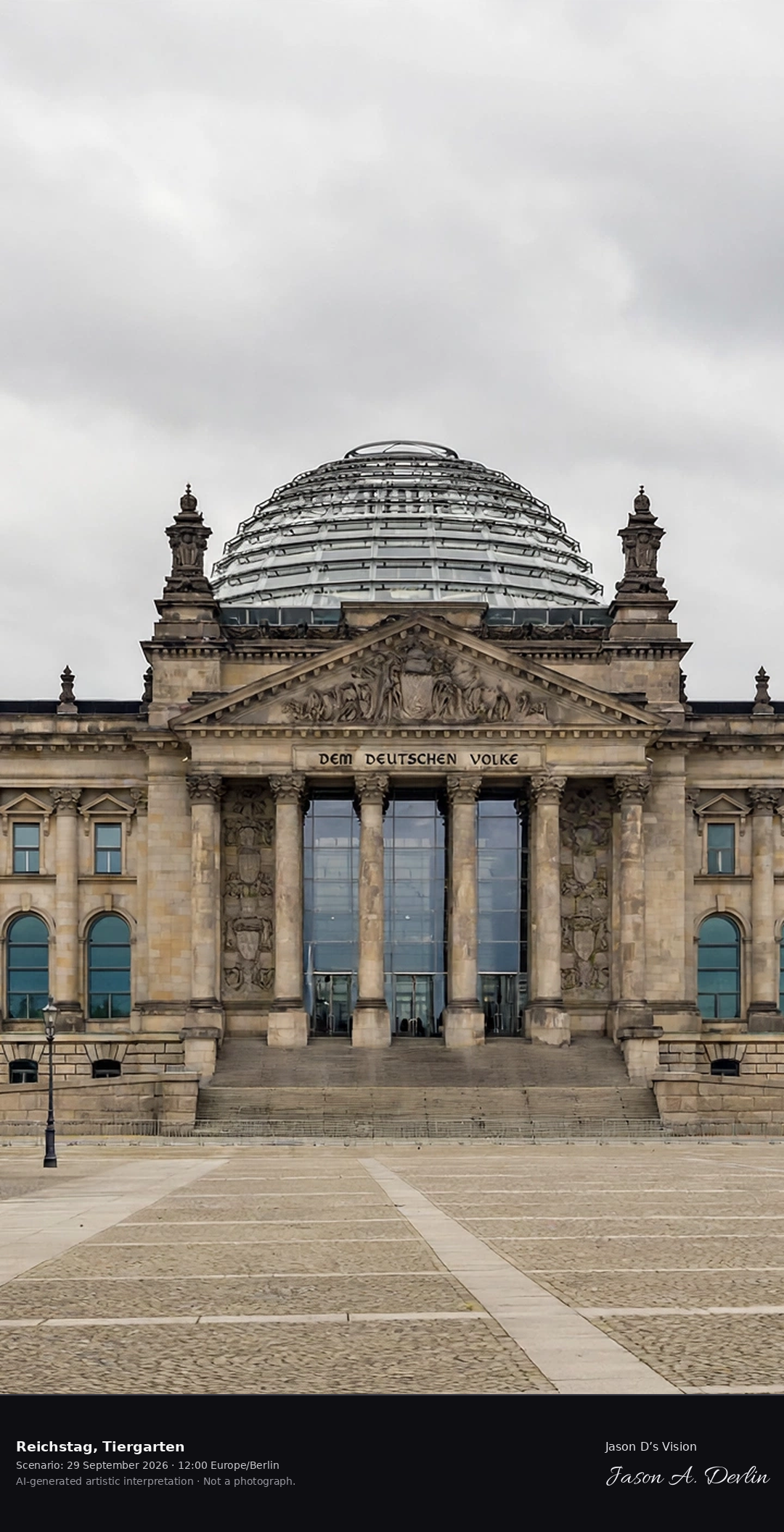
Foster's glass dome glows above the Reichstag's historic stone façade, its illuminated portico and DEM DEUTSCHEN VOLKE pediment at centre frame with German flags flying on both corner towers. A lit streetlamp and the Tiergarten park sign stand at the left edge, with wet plaza paving in the foreground mirroring the building's warm lights under the overcast 01:15 night sky.
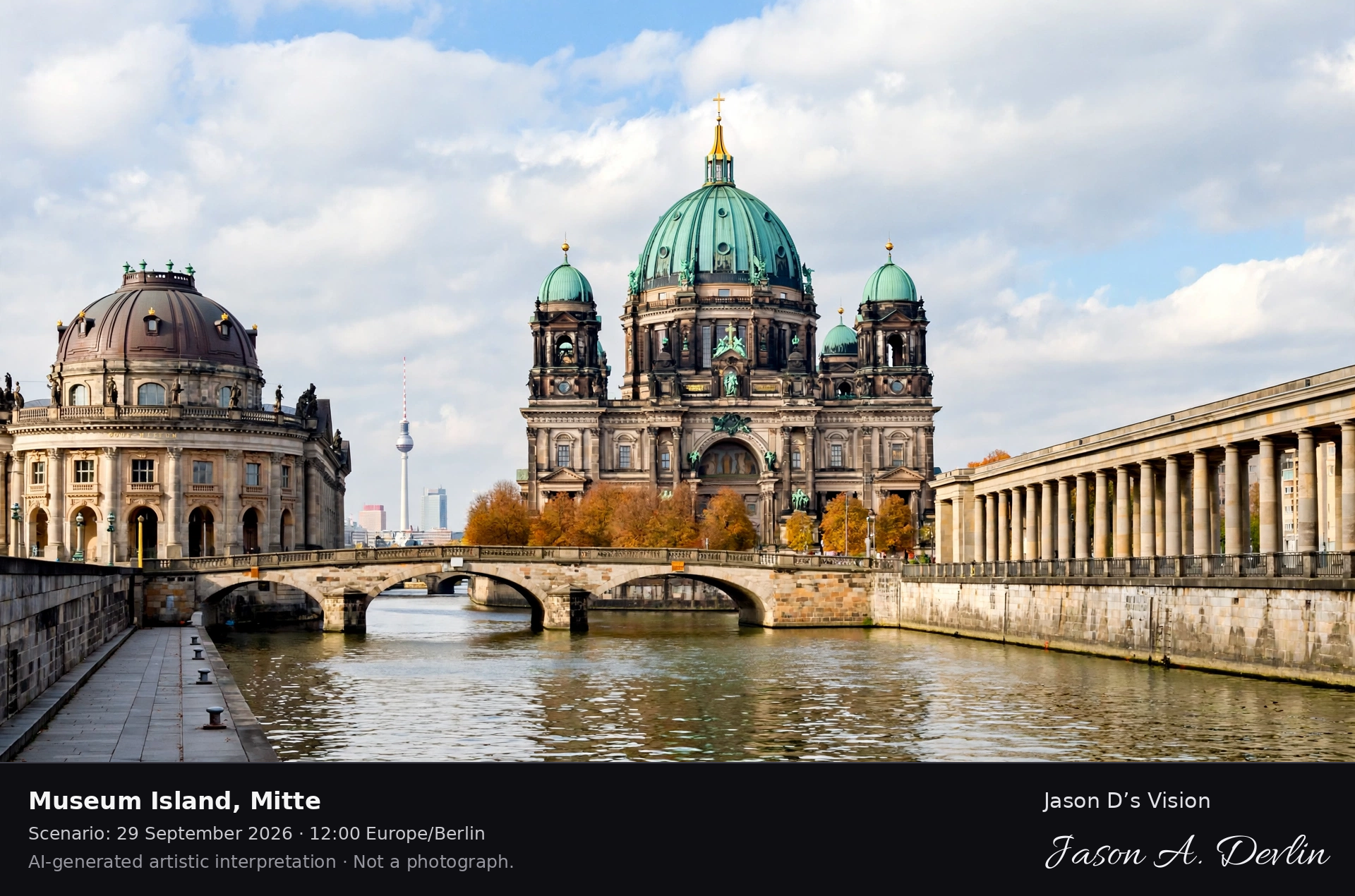
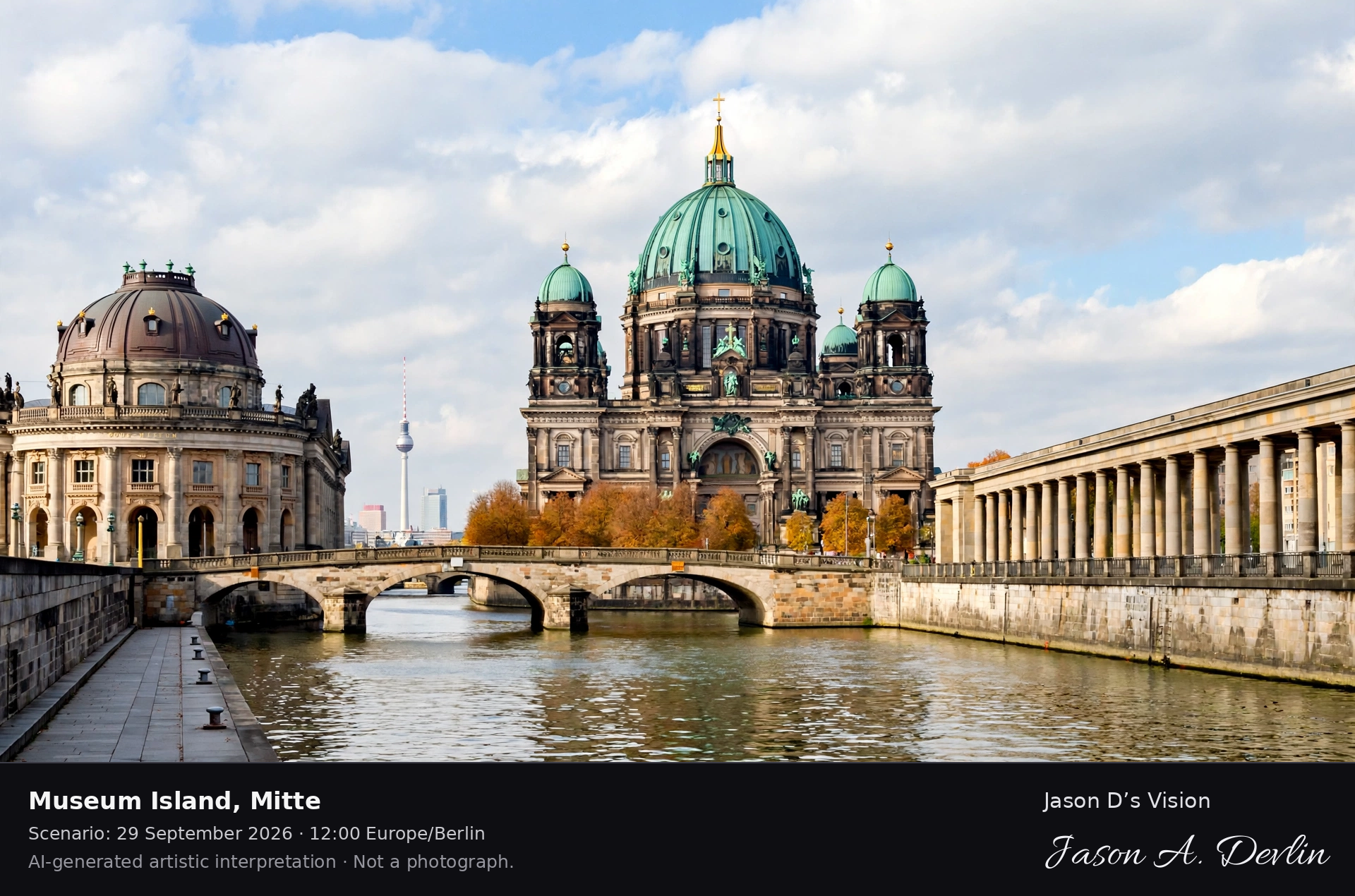
Spree and museum ensemble · AI-generated artistic interpretation
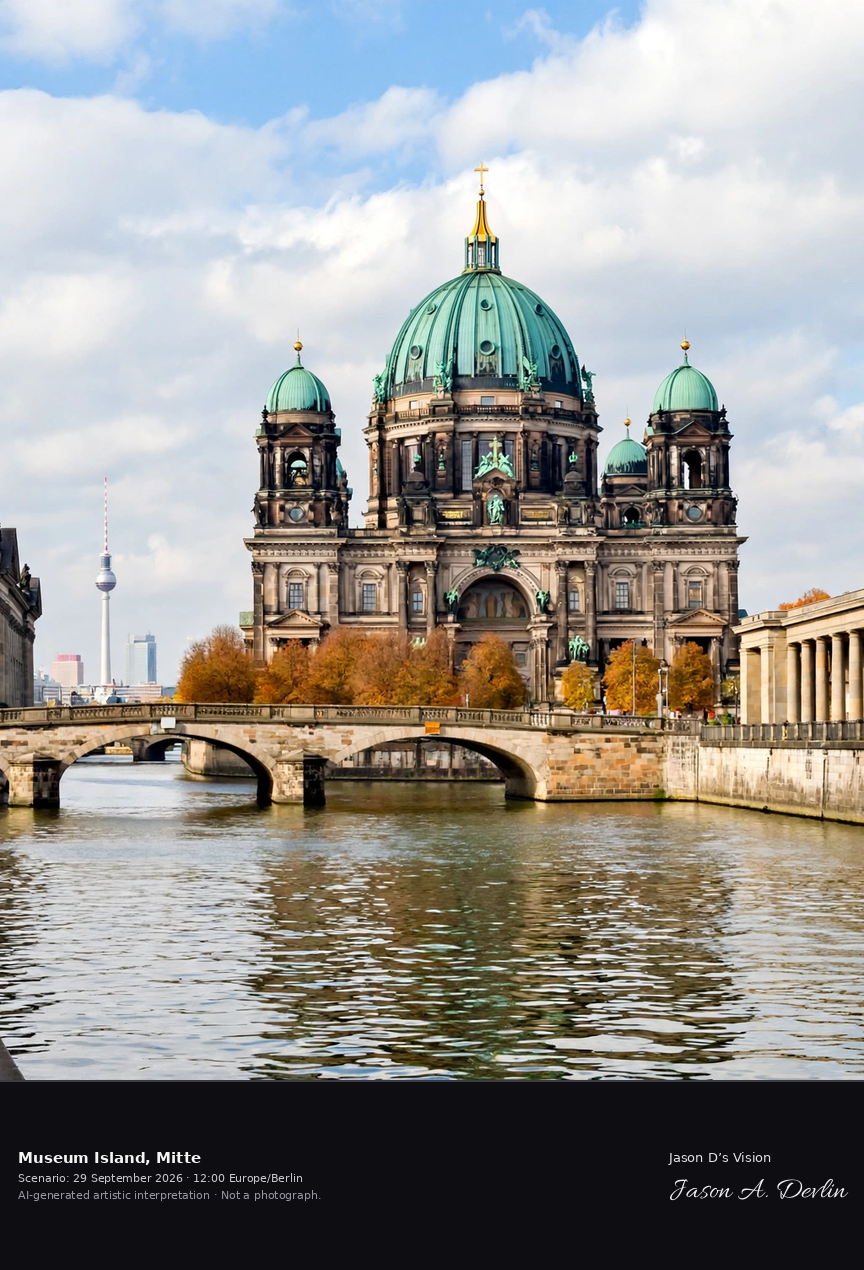
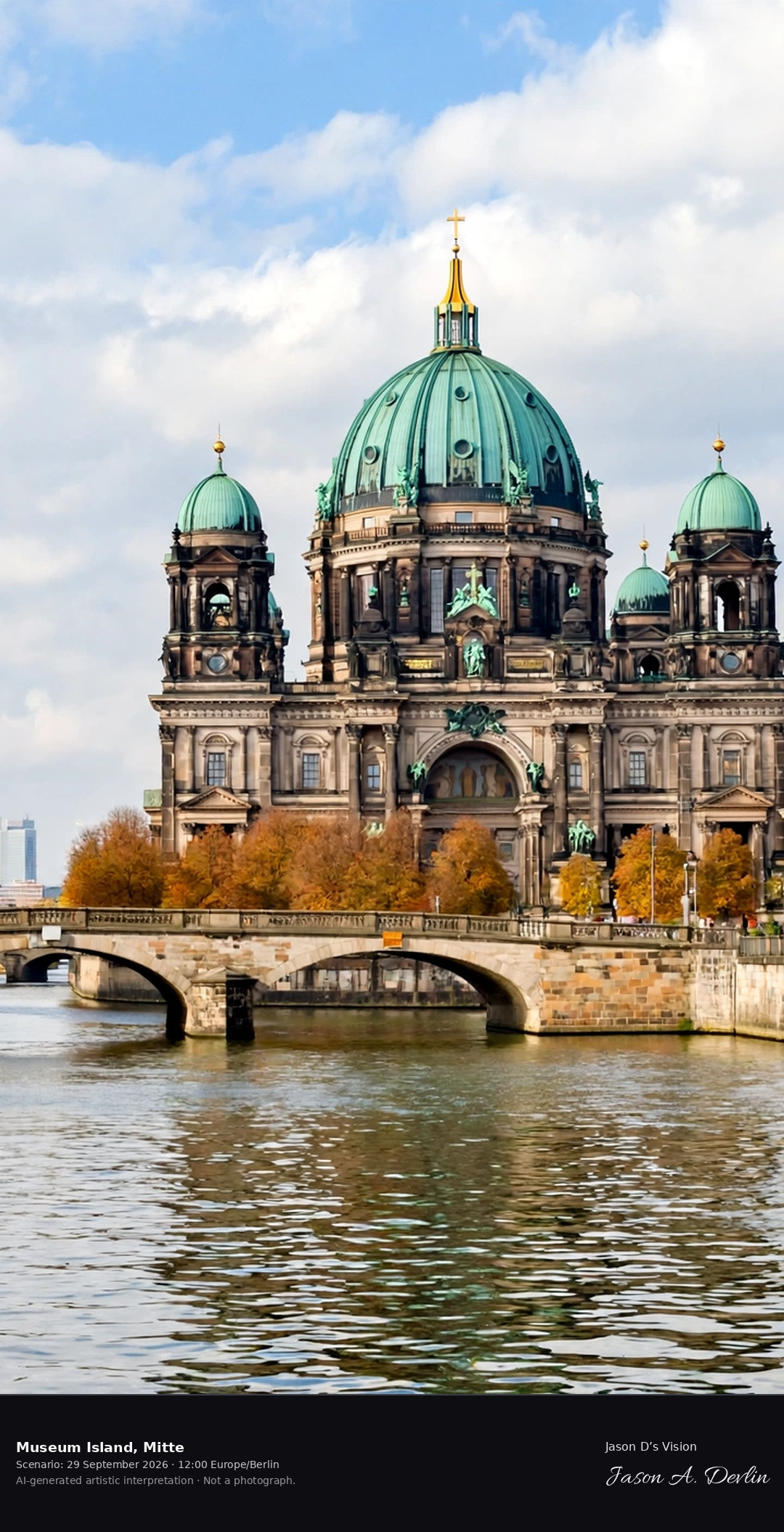
The Berlin Cathedral's greenish dome rises centre-left above the Spree, its warm lit windows reflected in the dark river; the colonnaded Alte Nationalgalerie runs the length of the right bank with light spilling between its columns. The bridge to the left leads toward the lit Bode dome with the Fernsehturm a faint presence in the distance, all under the heavy overcast night sky of the 01:15 scenario.
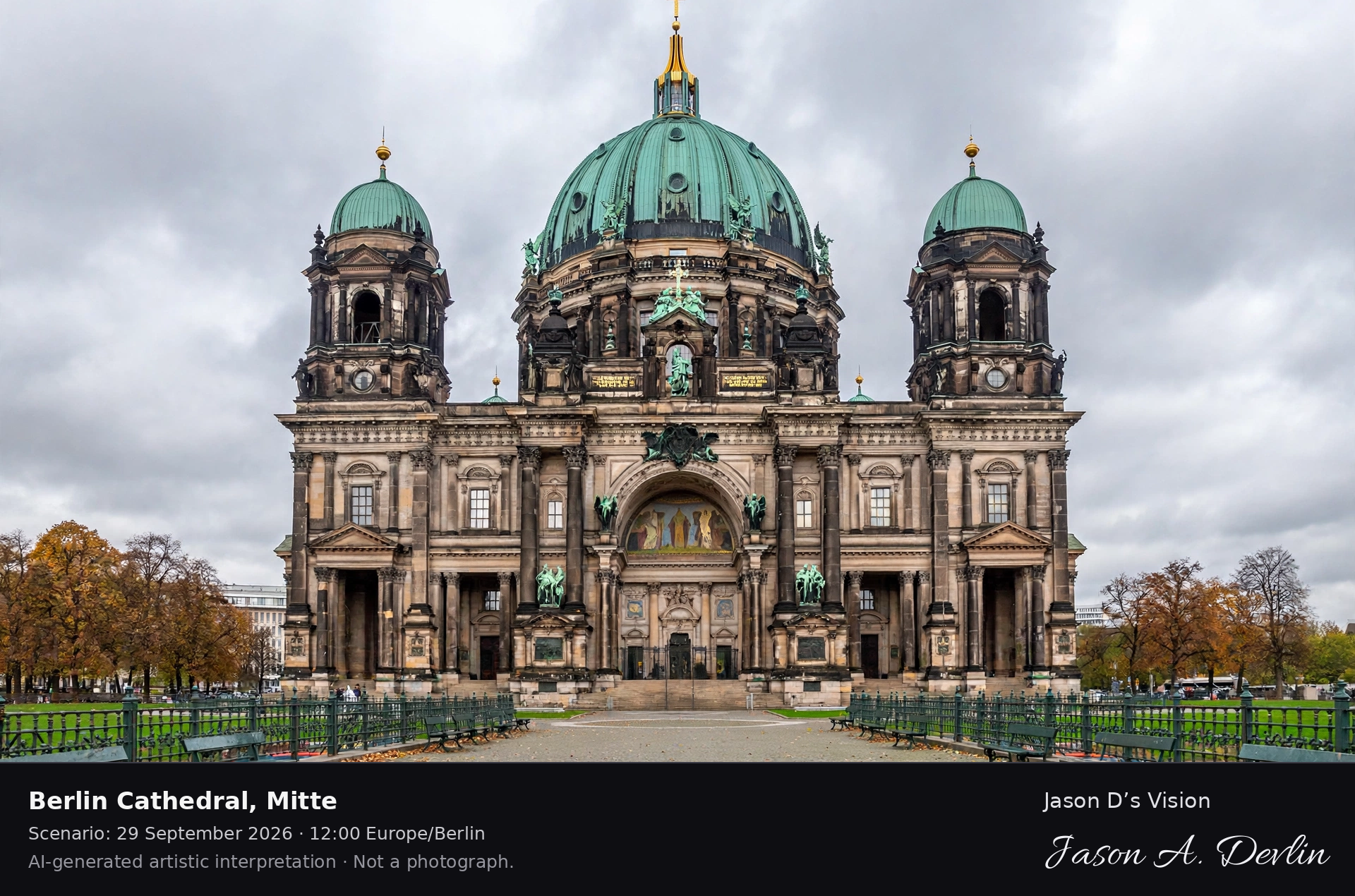
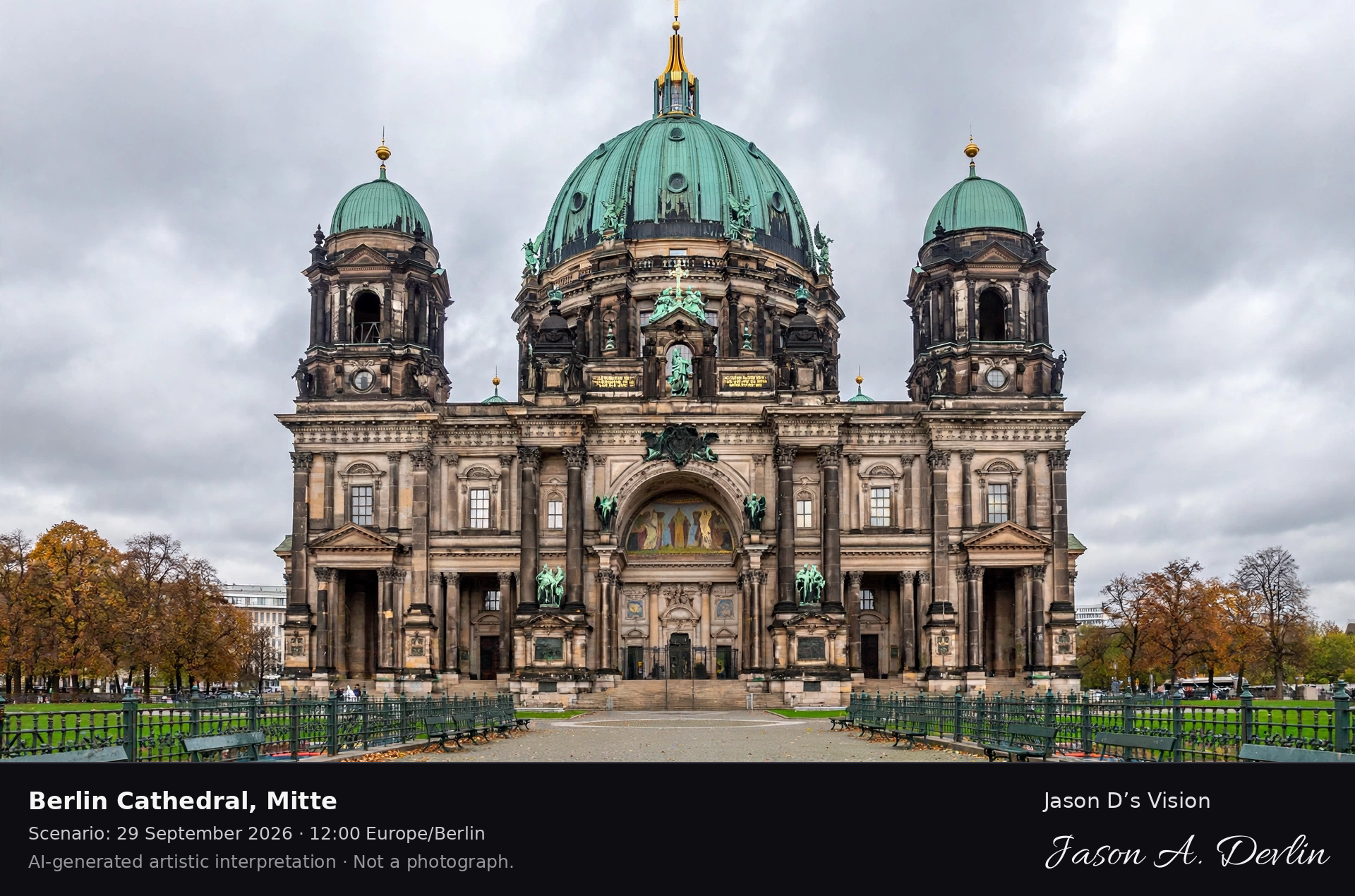
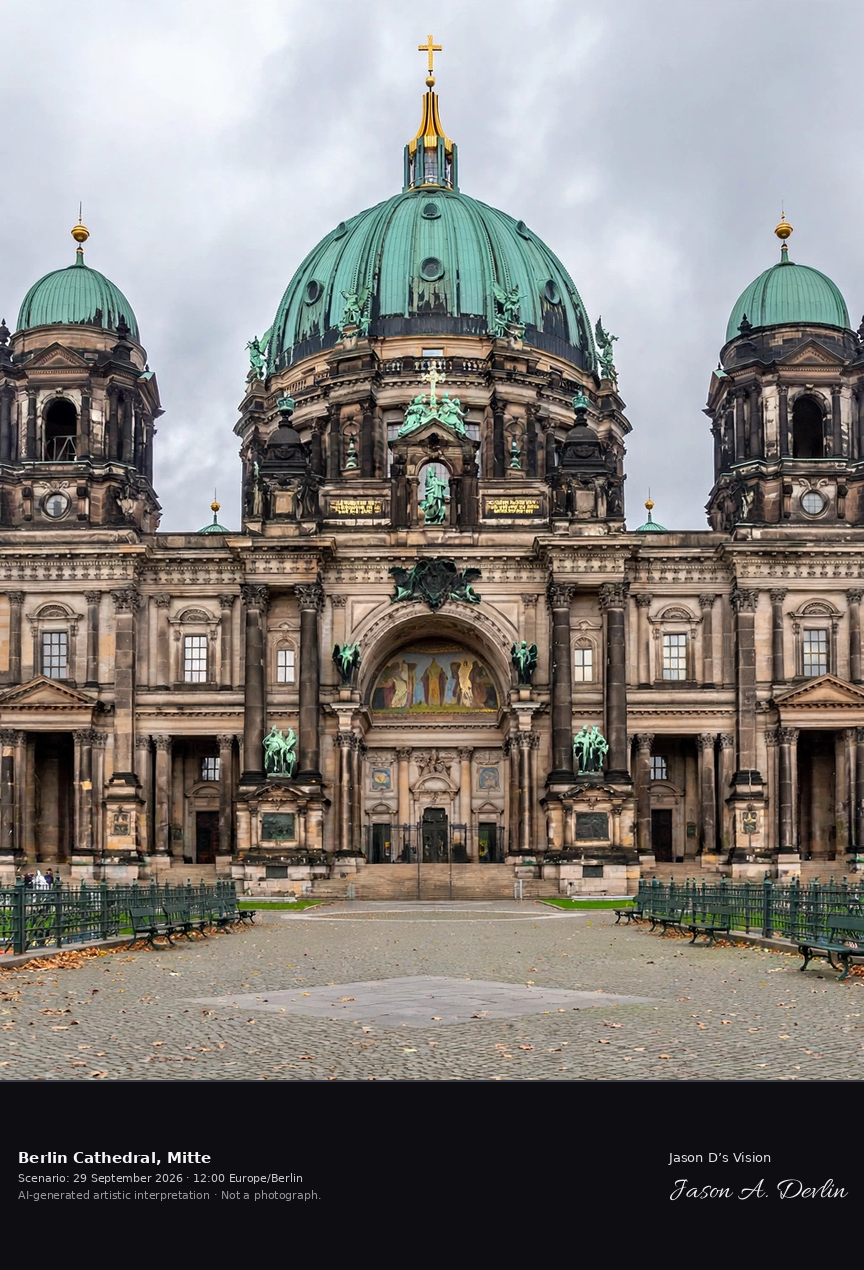
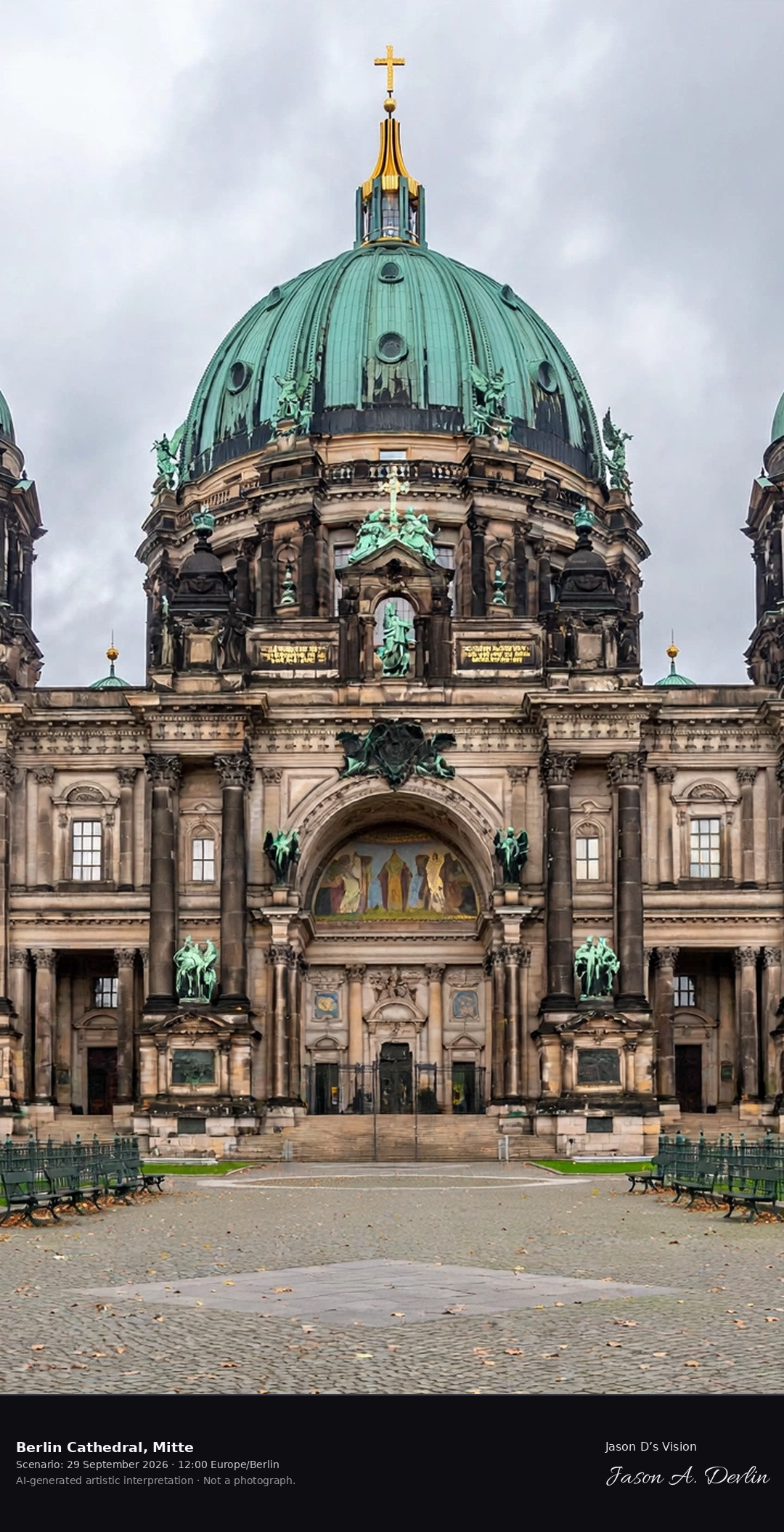
The Berlin Cathedral's patina-green dome towers centre frame, flanked by its twin bell towers, the floodlit stone façade and sculptural entrance portico glowing against the overcast night sky. Dark trees line the Lustgarten park at left, while streetlamps trace the path along the right edge; a lone pedestrian's silhouette crosses the far right under the 01:30 night scenario.
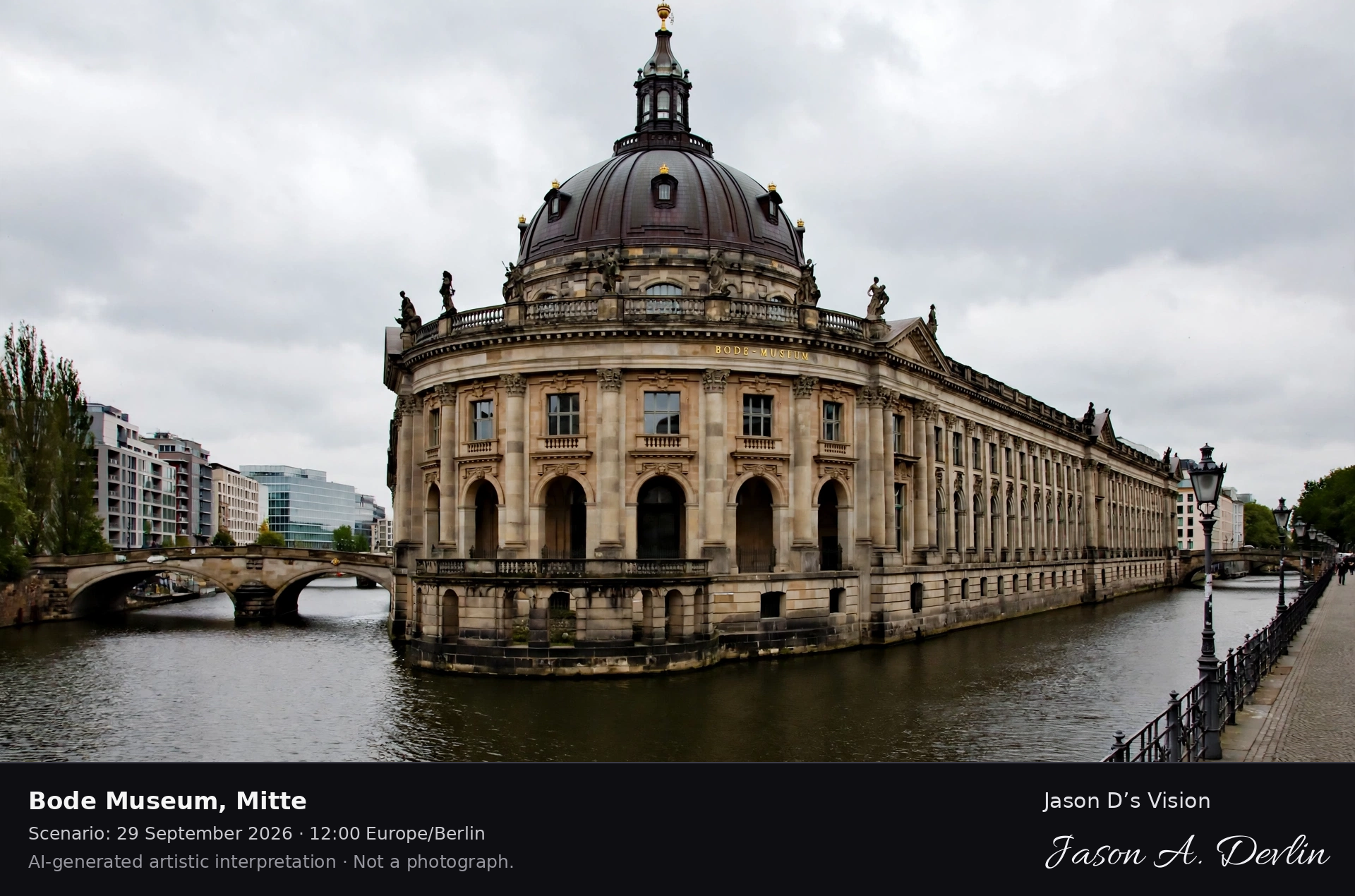
Museum and river junction · AI-generated artistic interpretation
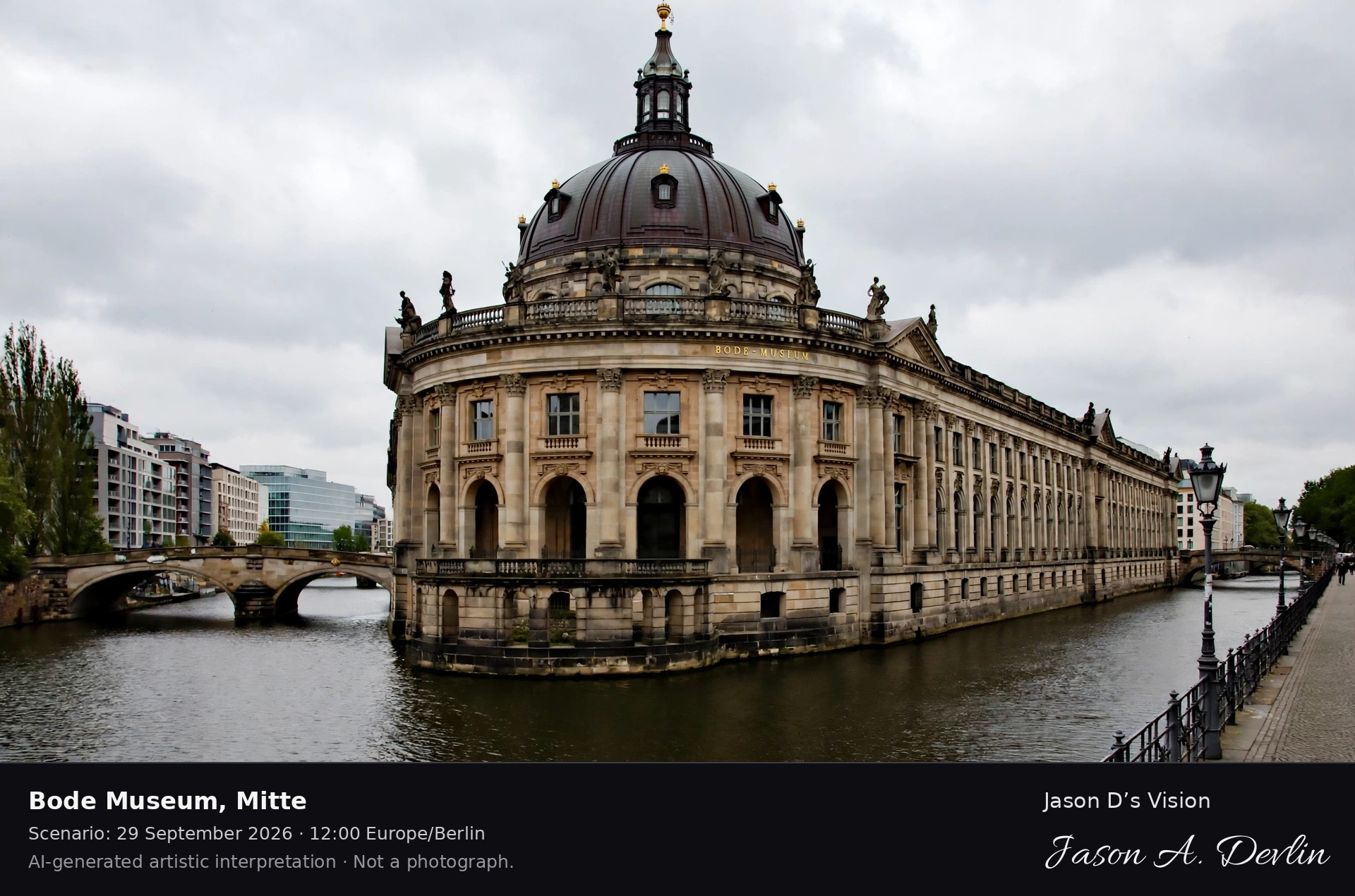
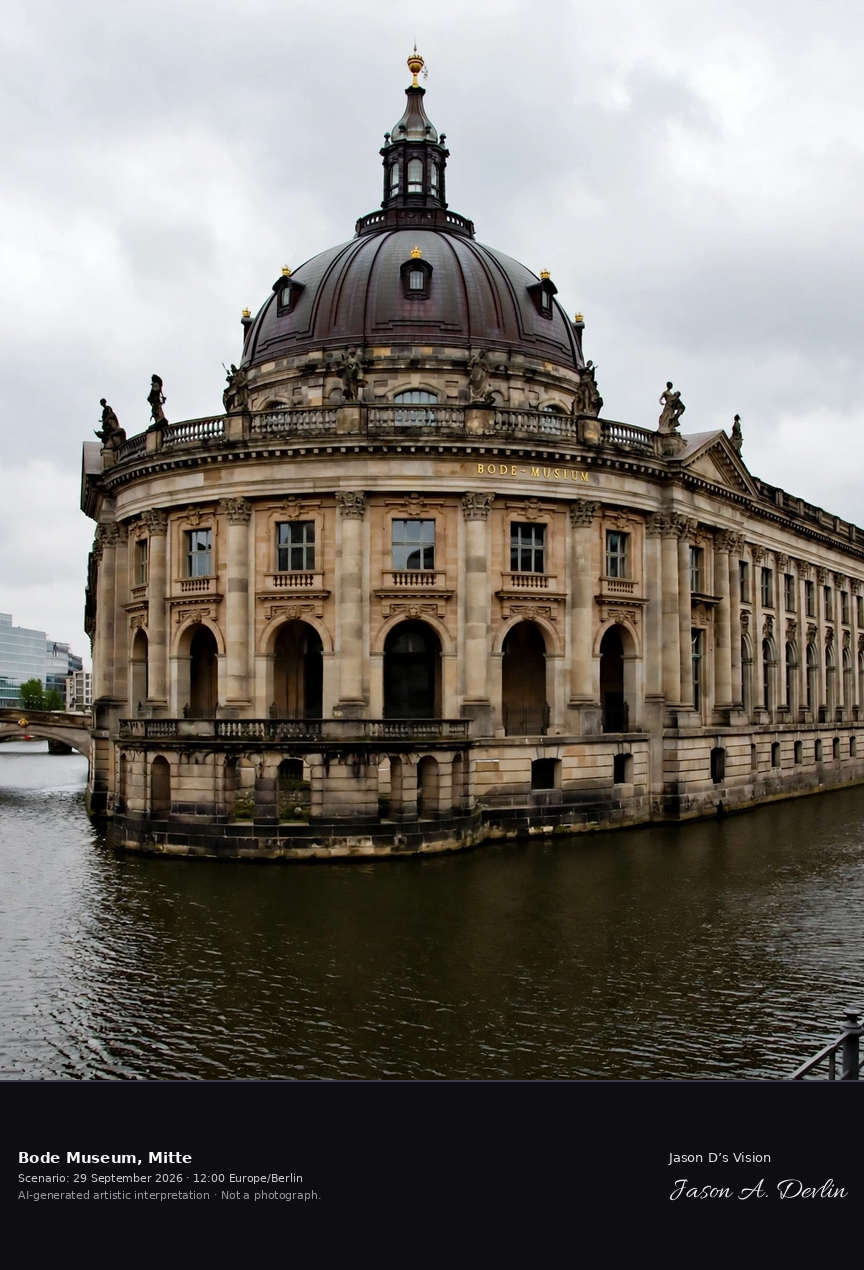
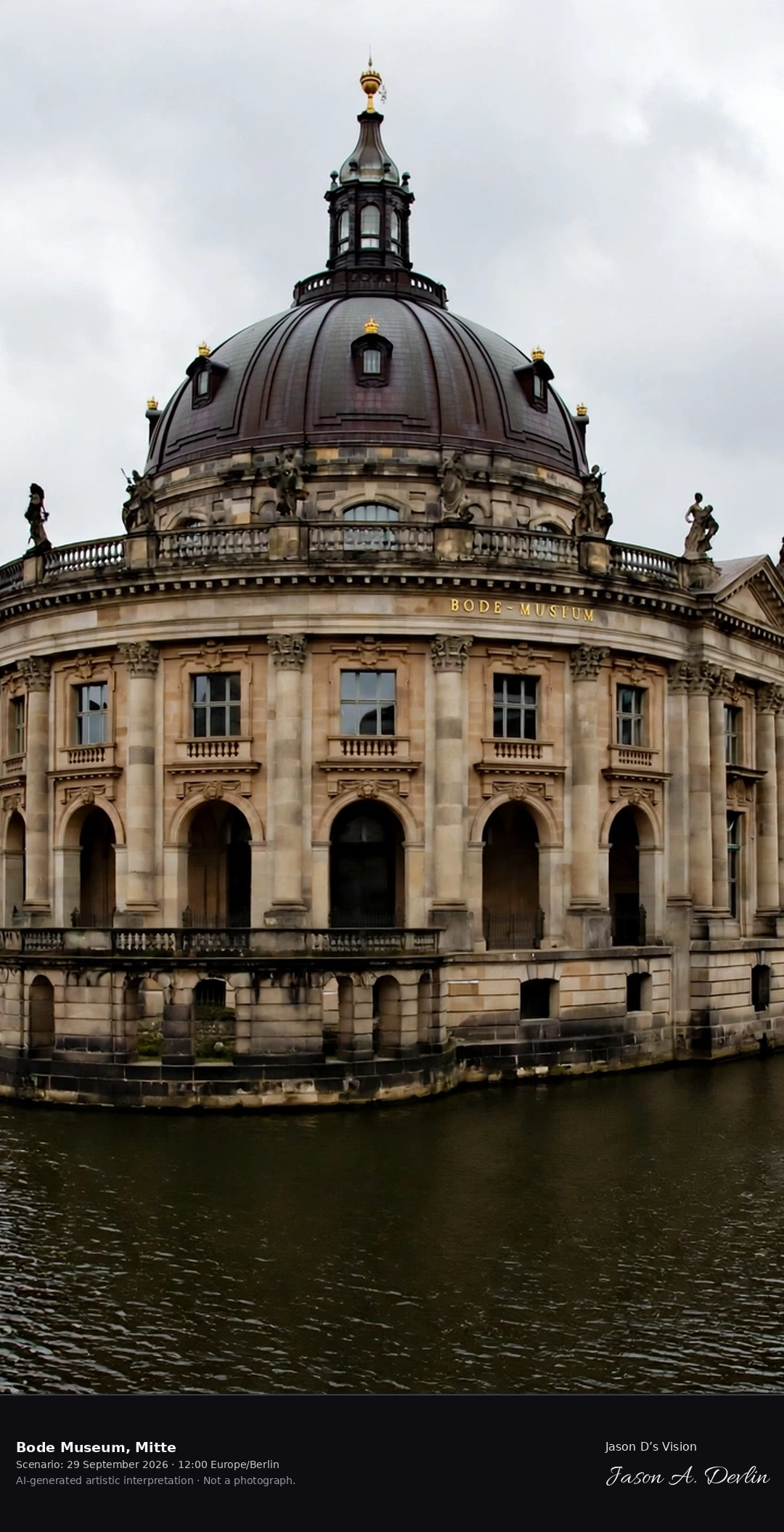
The domed Bode Museum glows from within on the Museum Island tip at 1:45 AM, its baroque silhouette rising over the Spree river junction. Stone arch bridges span the dark water at left and right of the frame, with faint city buildings beyond the left bank. Warm light spills from the museum's arched windows and riverside lamps against the overcast night sky.
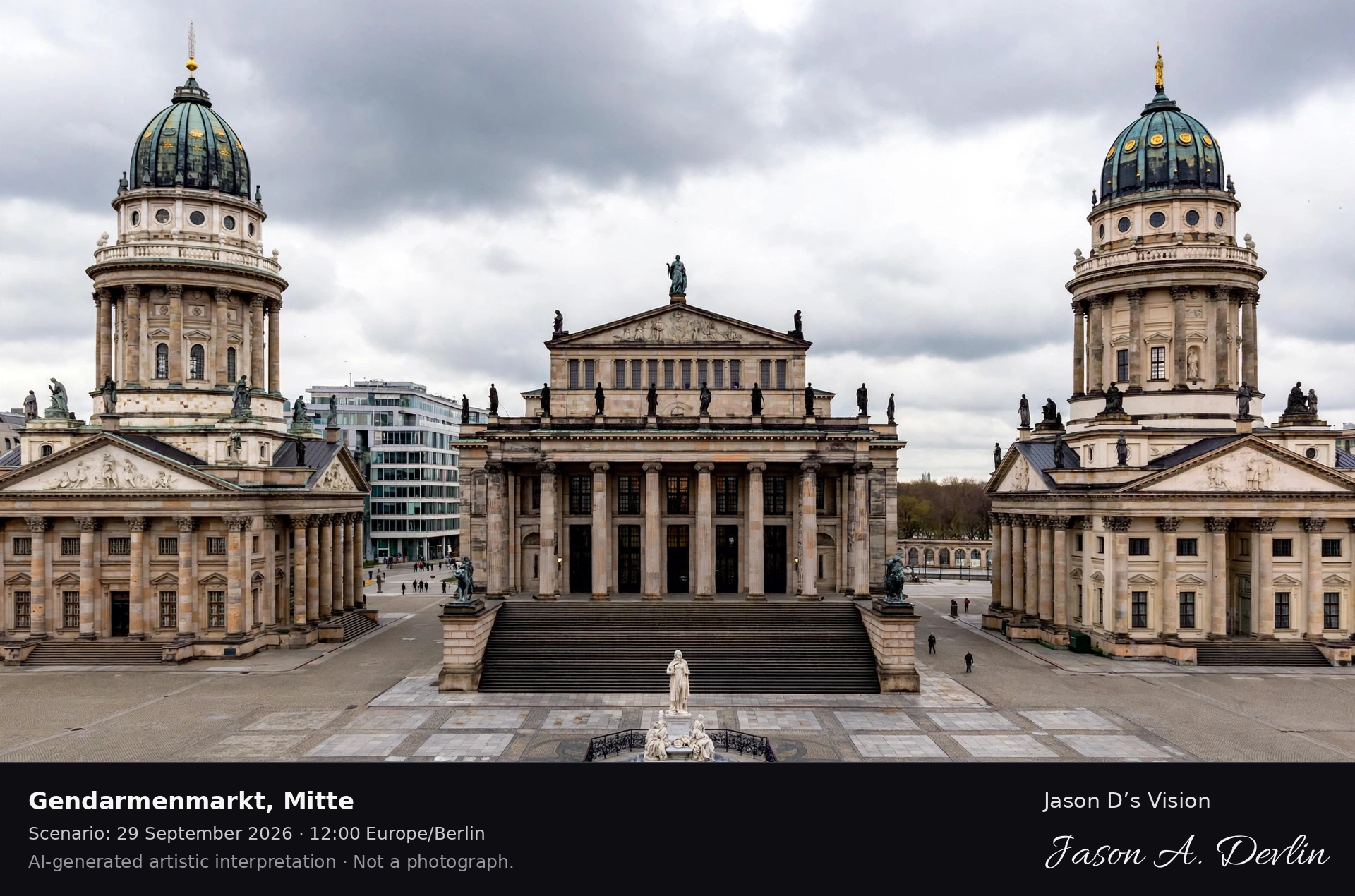
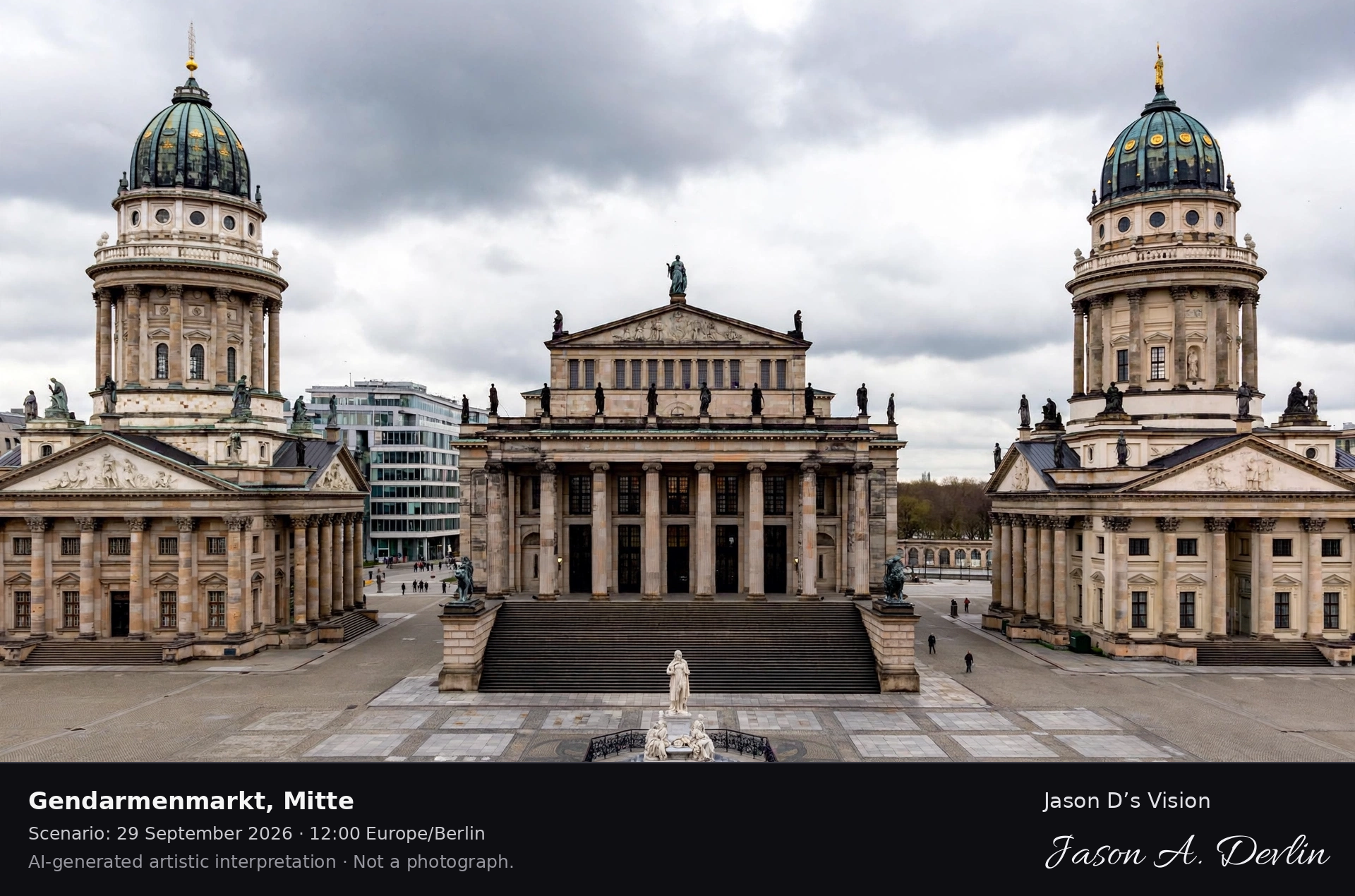
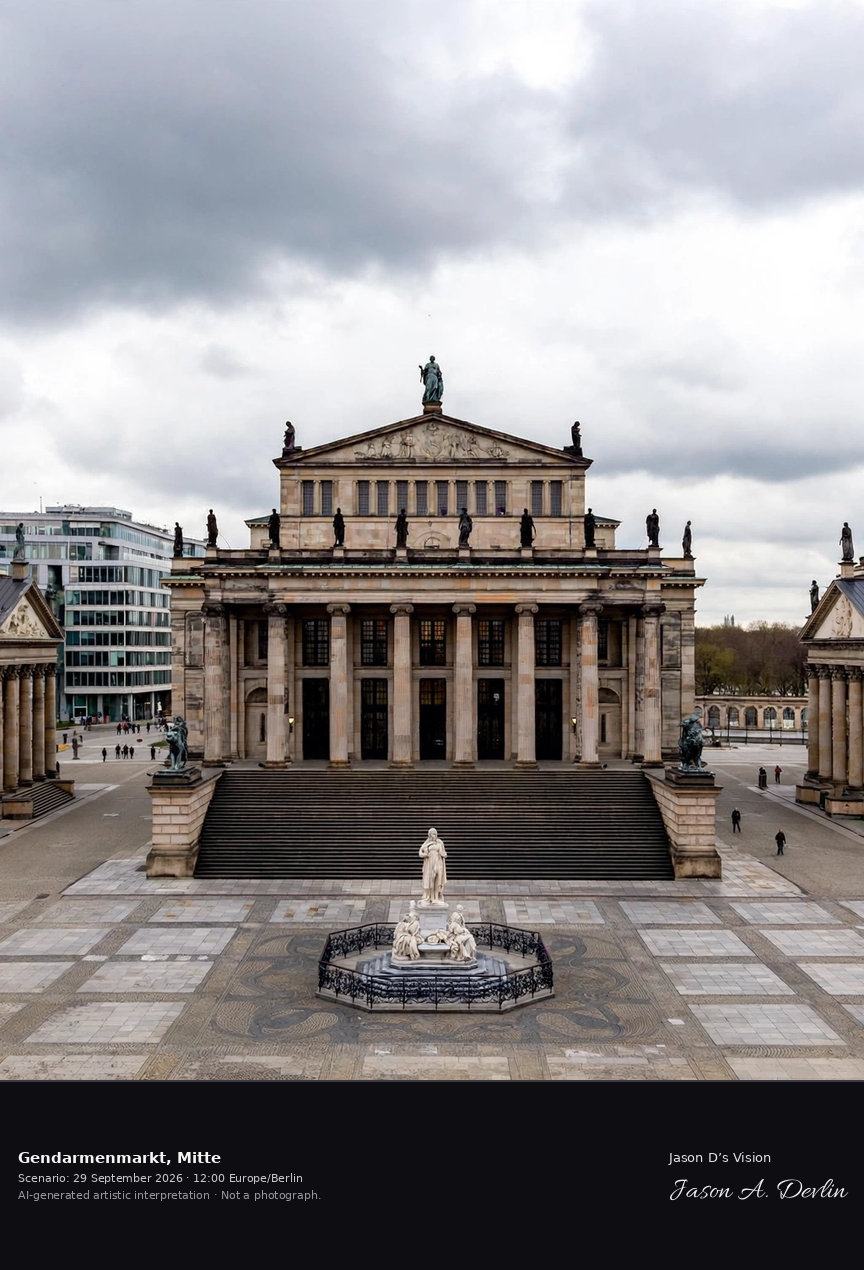
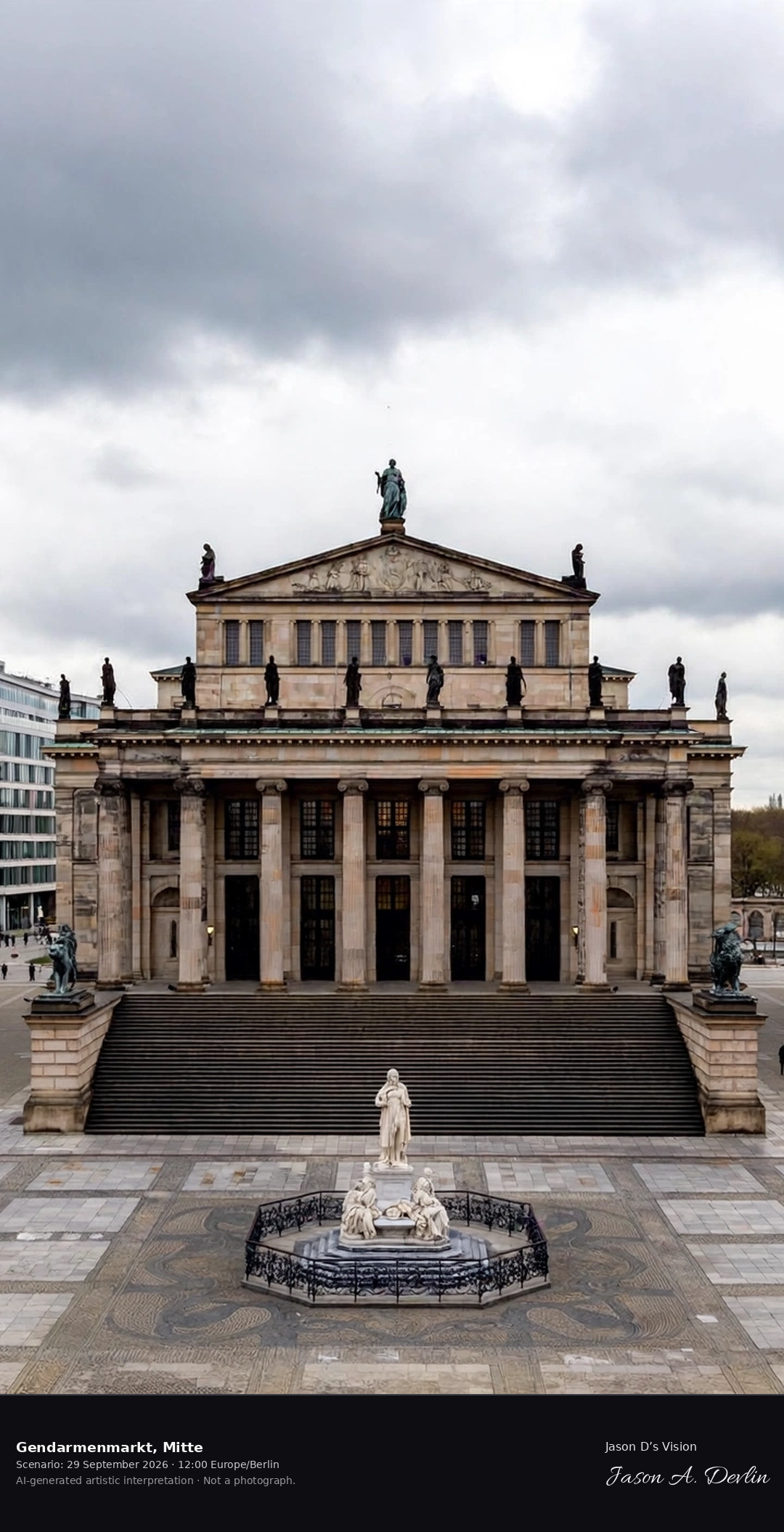
Concert hall and twin cathedral ensemble · AI-generated artistic interpretation
The floodlit Konzerthaus stands at the center of Gendarmenmarkt at 1:45 AM, flanked by the twin domed cathedrals on the left and right, with the Schiller statue on its forecourt facing the empty plaza. Wet cobbles mirror the warm window light beneath the overcast night sky, and shuttered café terraces with stacked furniture sit at the right edge.
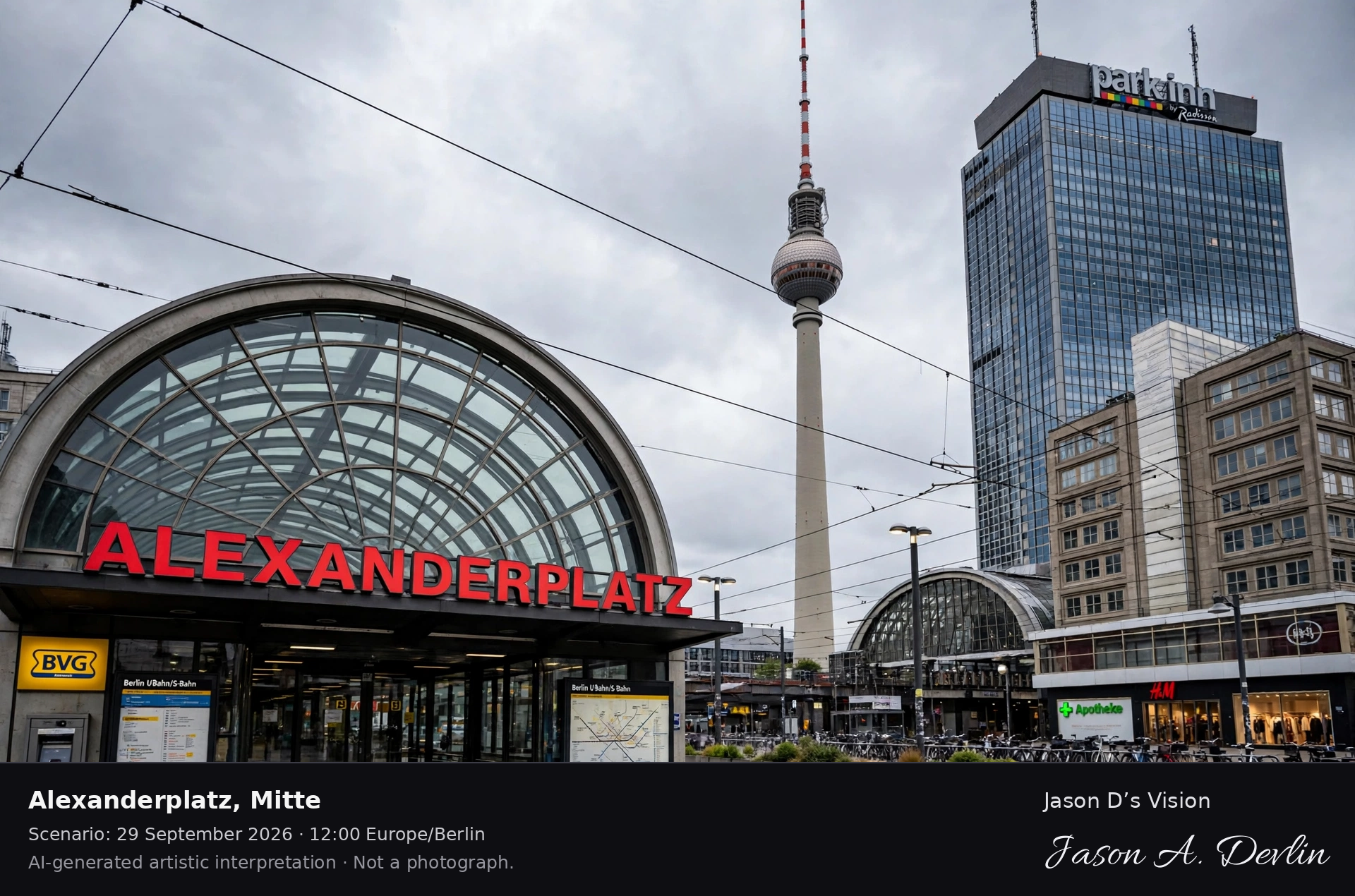
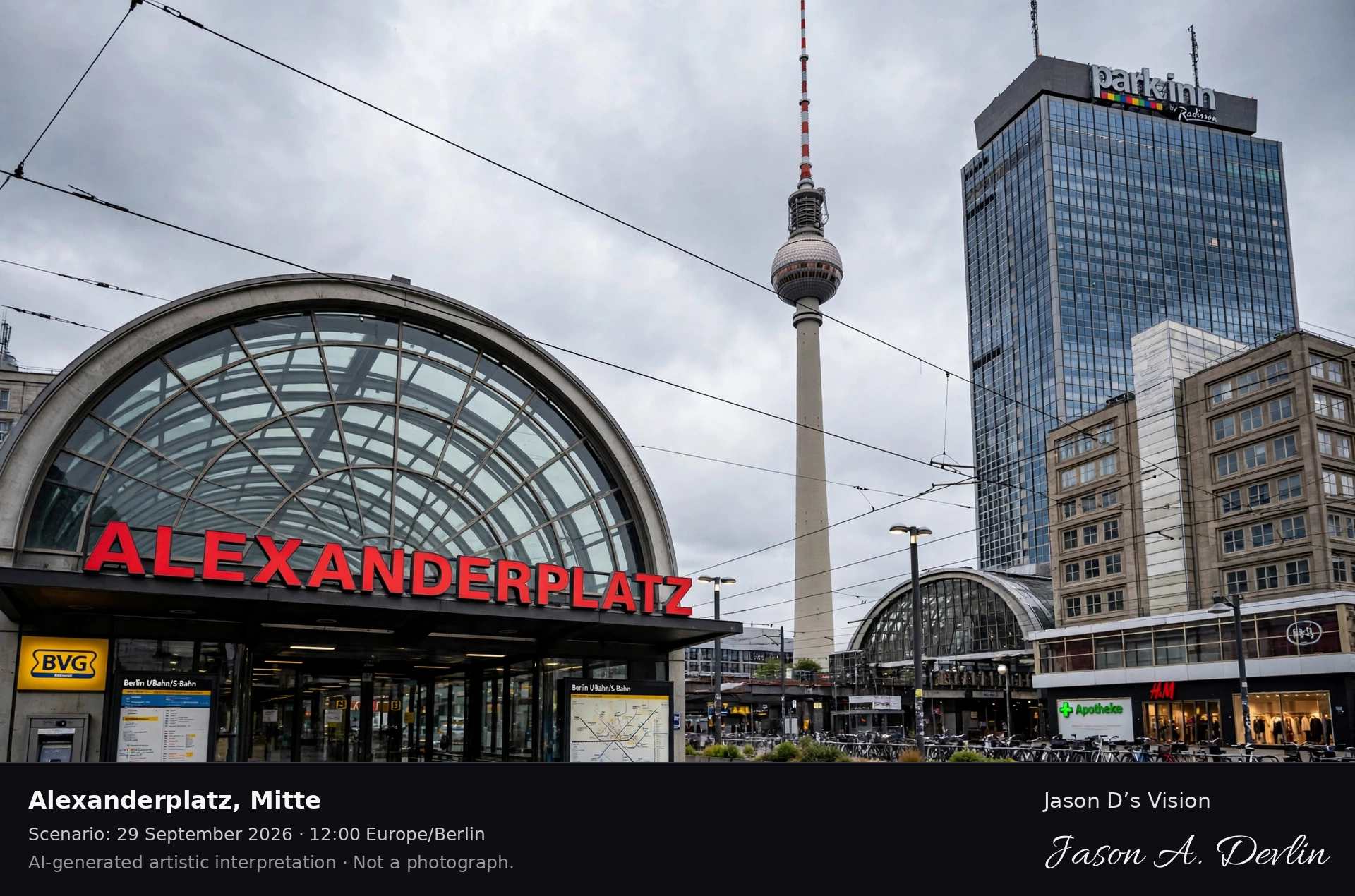
TV Tower and urban square · AI-generated artistic interpretation
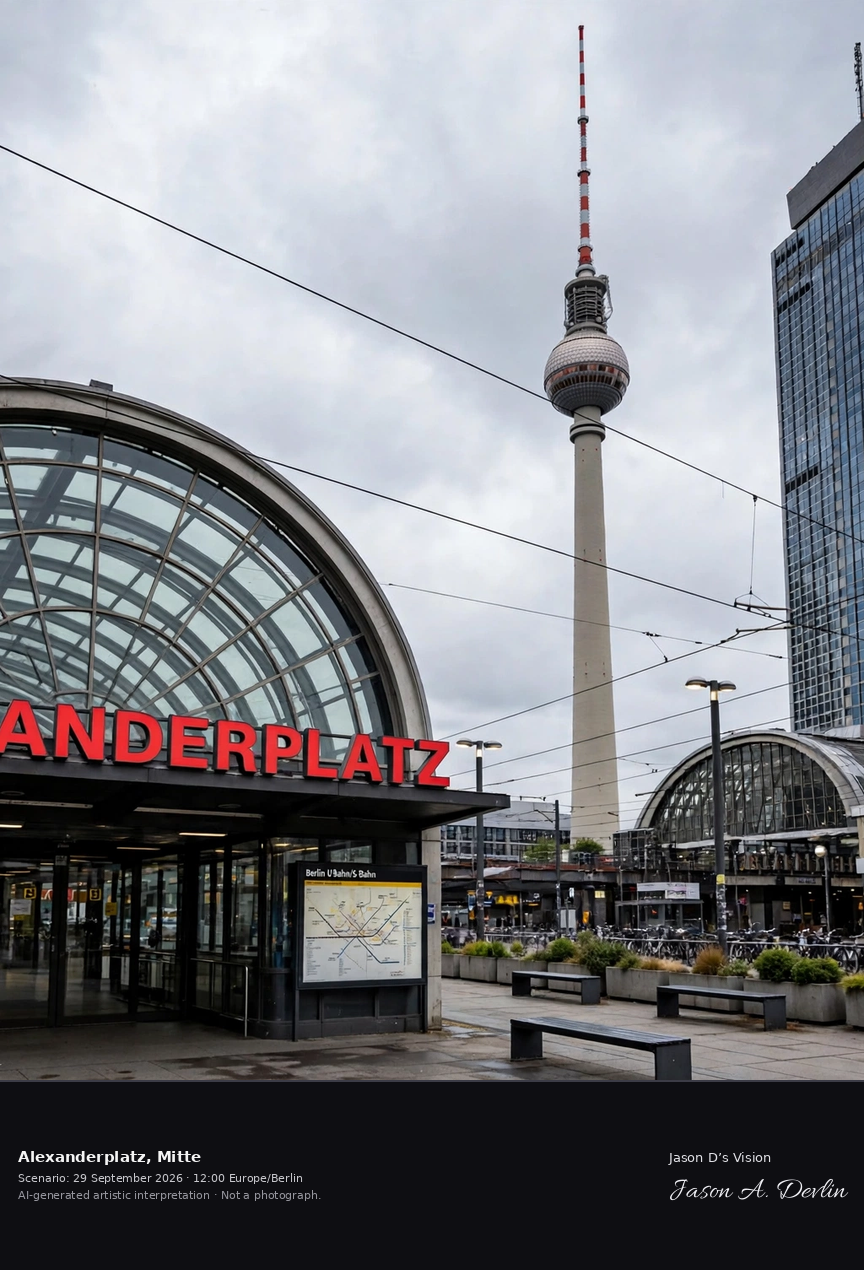
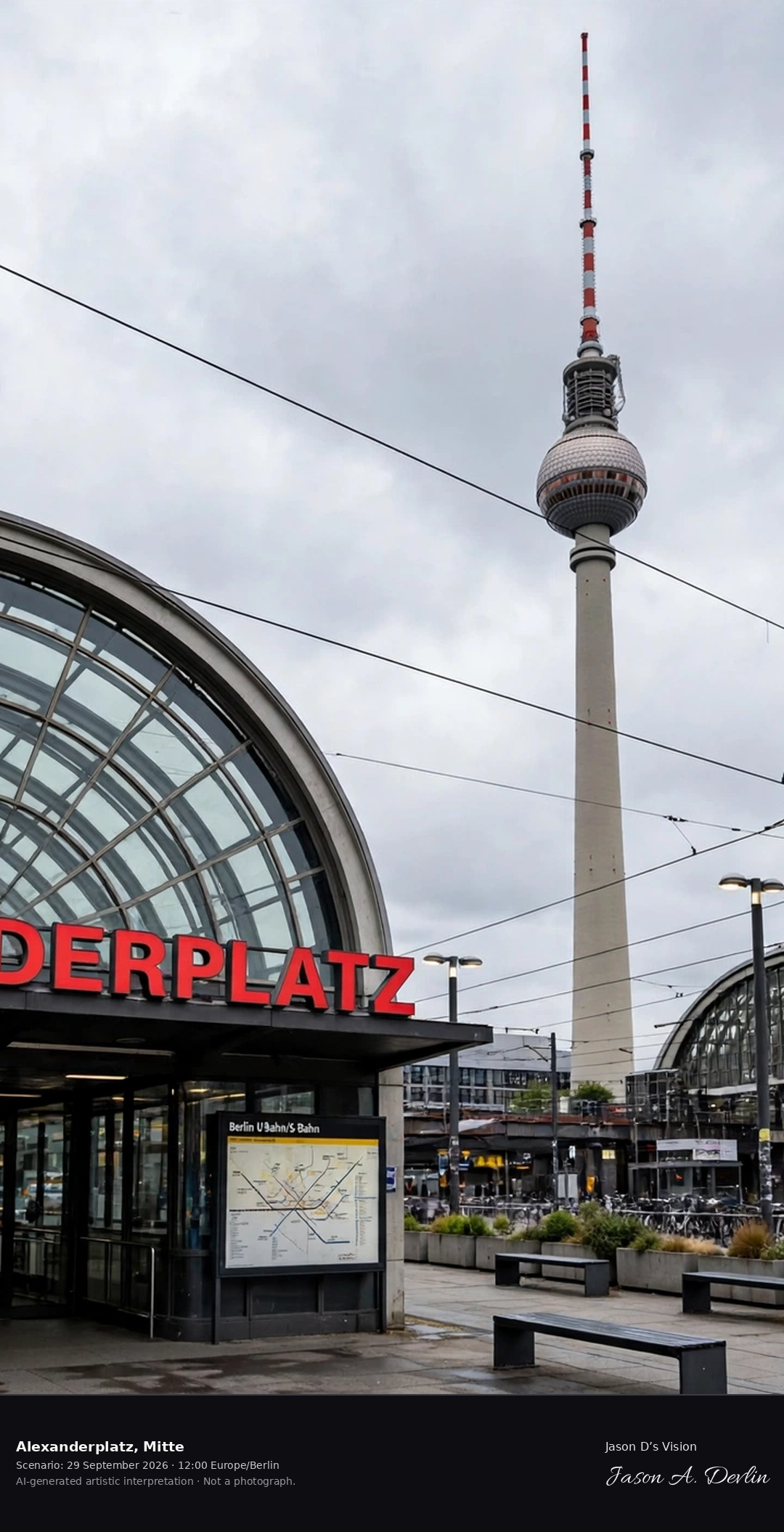
The TV Tower rises over Alexanderplatz at 2:00 AM, its lit sphere and beacon standing above the station arches with their red neon ALEXANDERPLATZ sign at the left of the frame. Tram wires crisscross the overcast sky, glowing shopfronts line the square, and the high-rise hotel with its rooftop sign anchors the right side, all reflected in the rain-damp pavement.
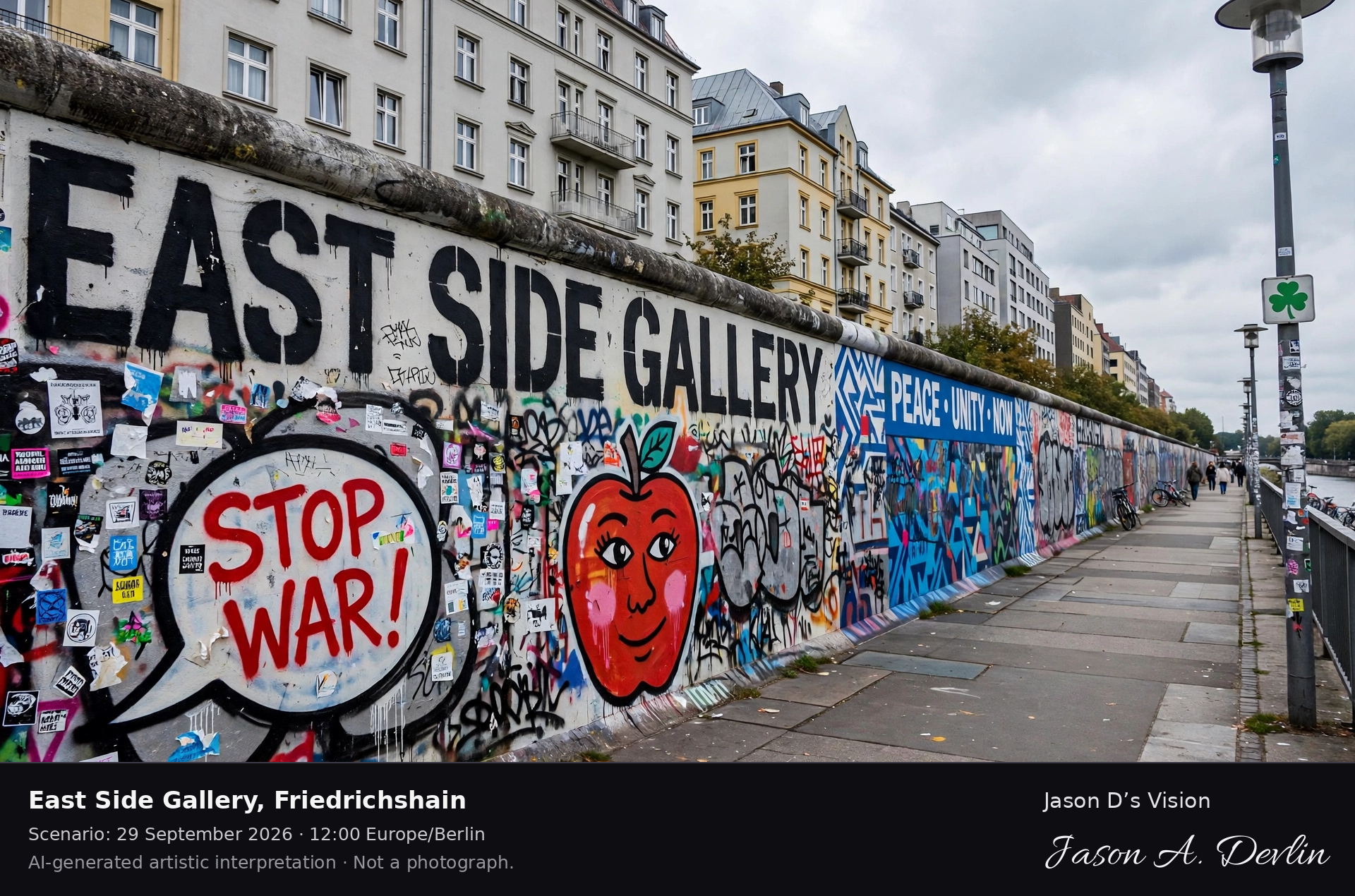
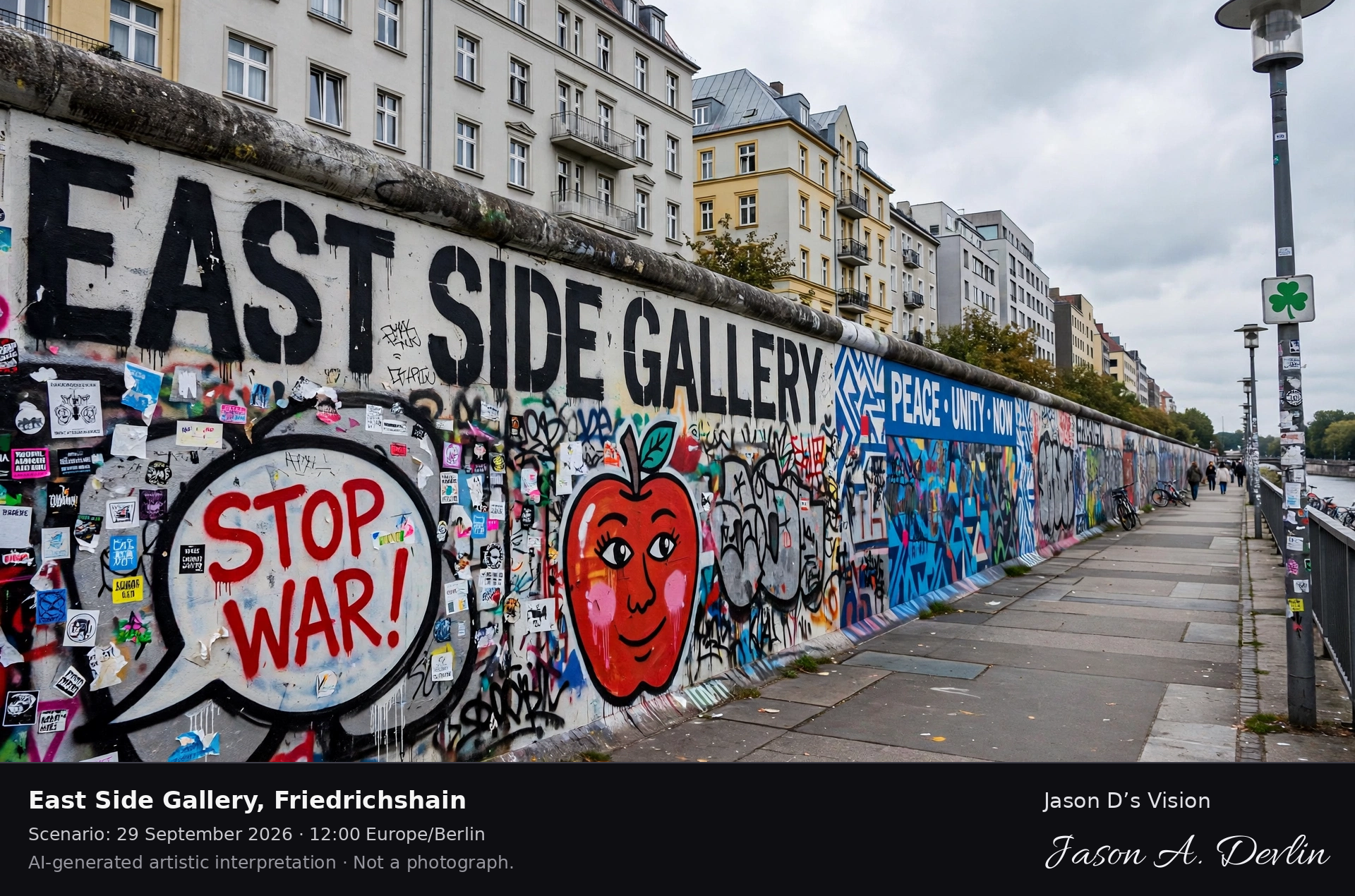
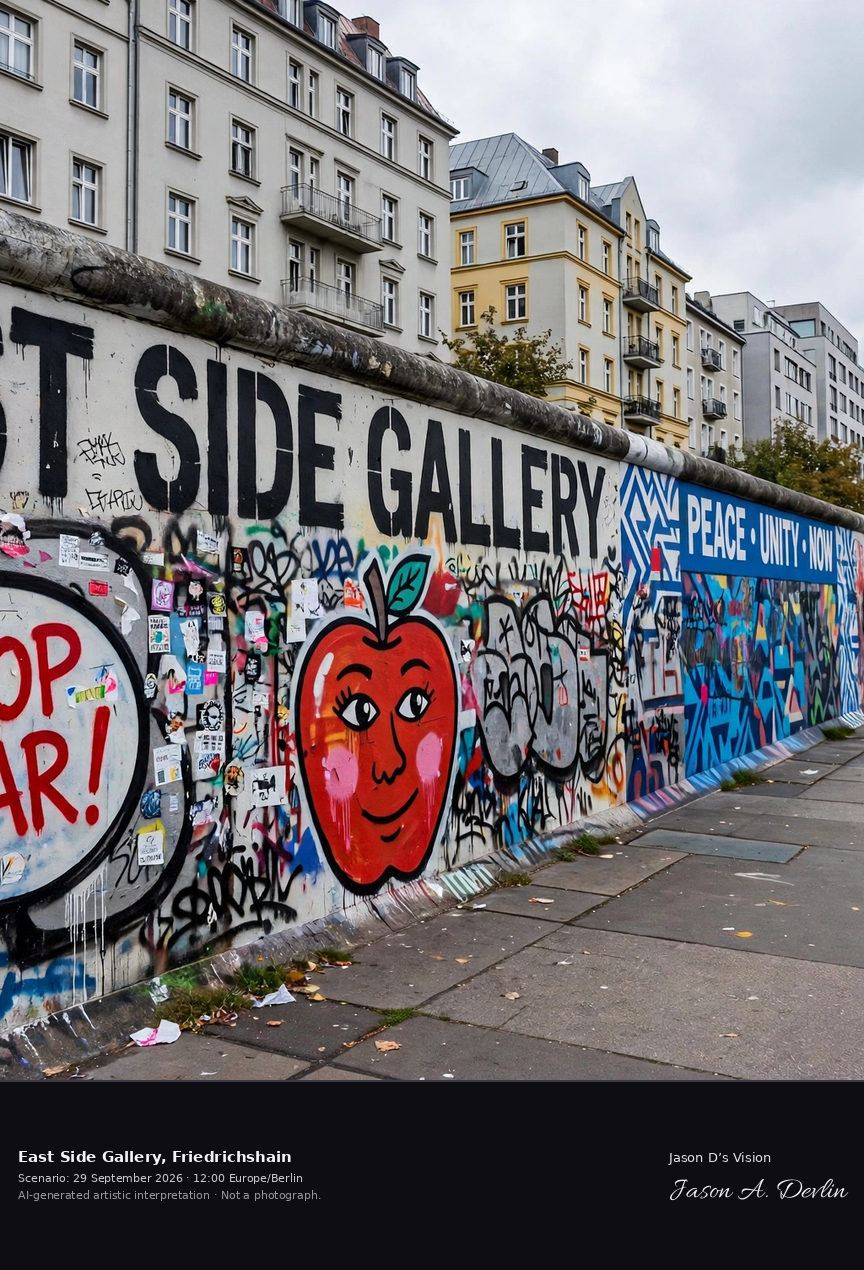
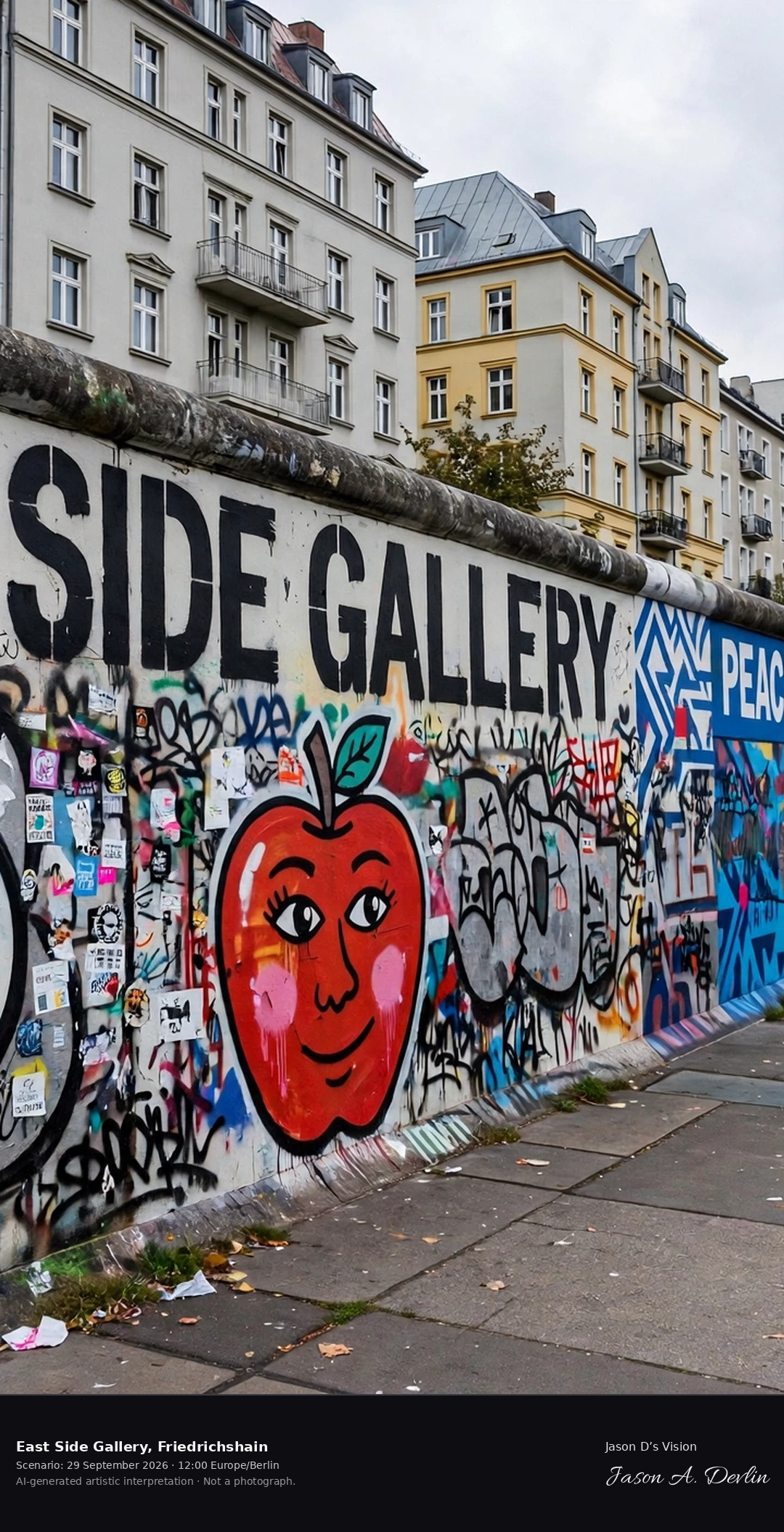
From an eye-level night viewpoint beside the street-facing murals, the mural-covered Wall runs diagonally through the frame: the bold EAST SIDE GALLERY lettering fills the foreground segment at left, a green cartoon-creature mural and a blue 'SIEBEN STUFEN' piece anchor the center, and the long painted run recedes toward street lamps and apartment façades at right. Overcast night sky and wet-looking pavement set the 02:15 mood, with stickers and tags layered thick across the concrete like the real gallery wall.
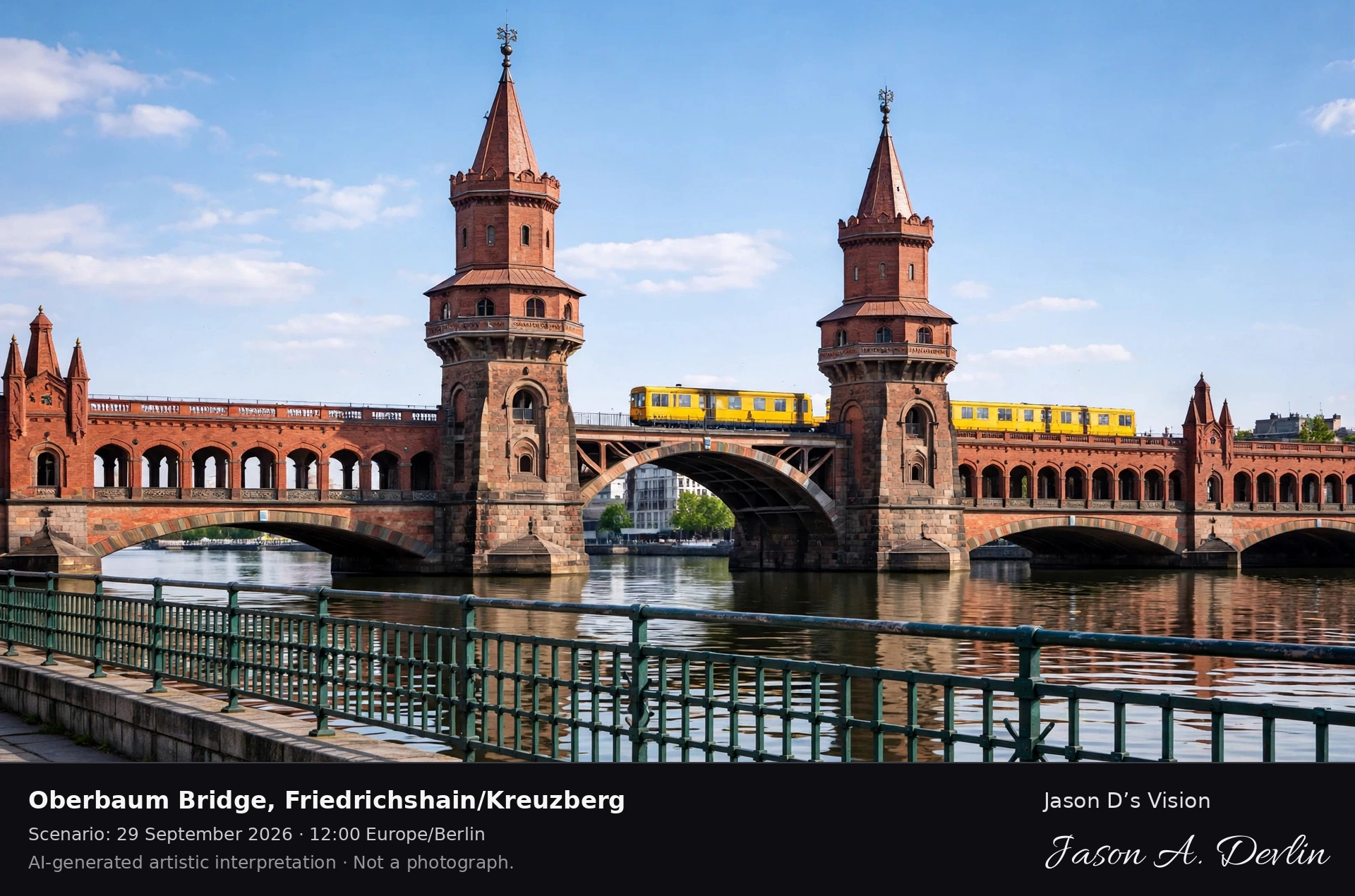
Brick towers over Spree · AI-generated artistic interpretation
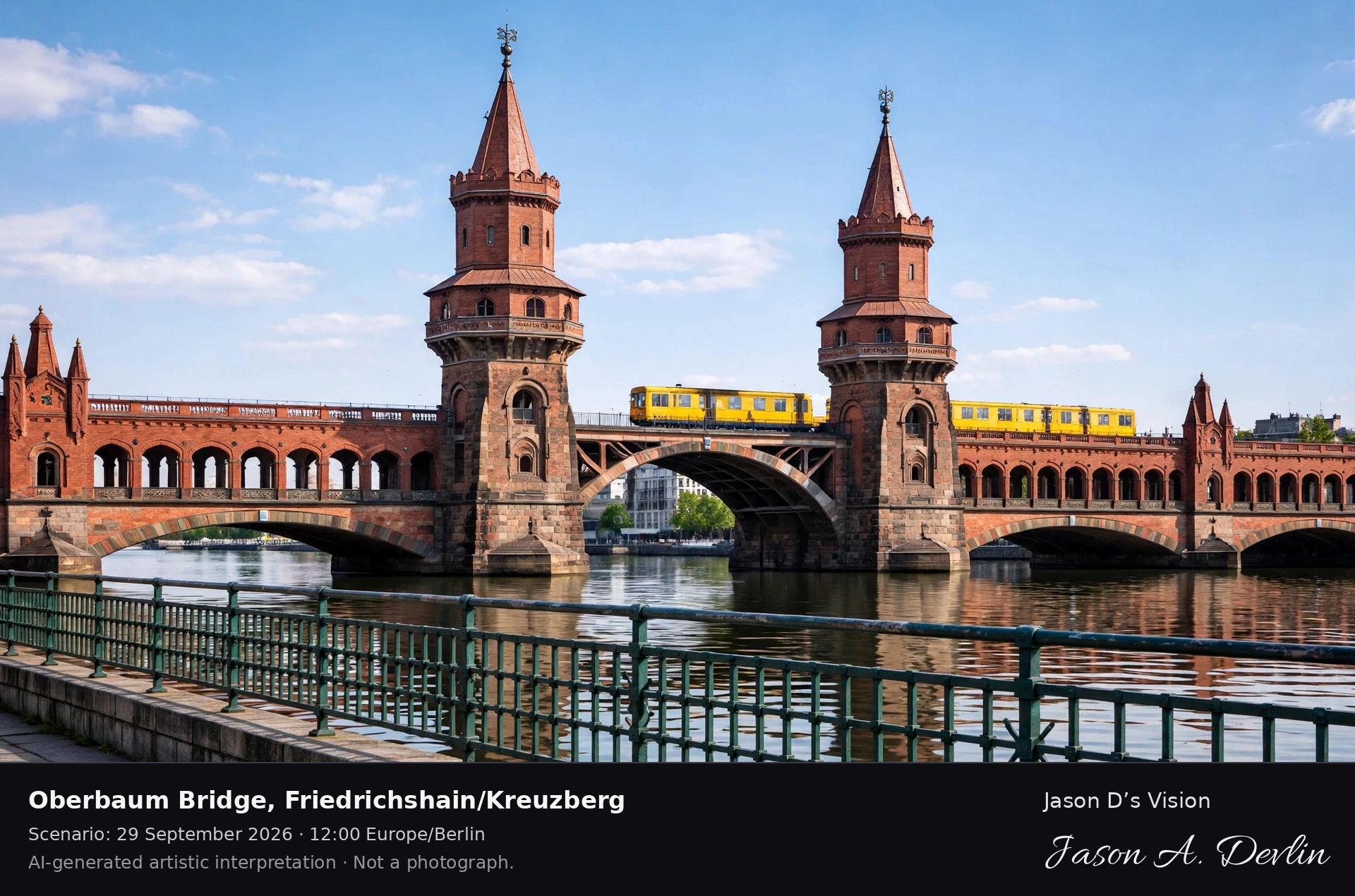
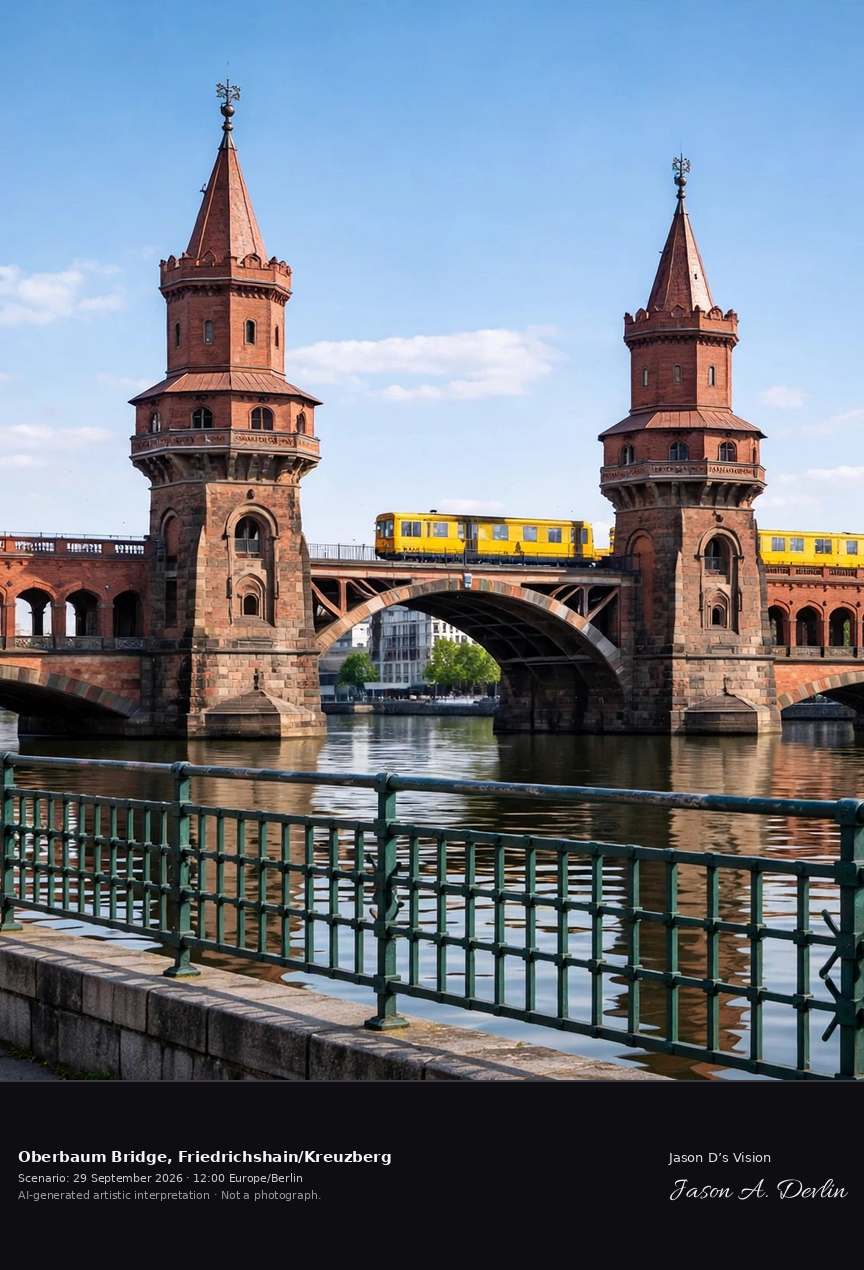
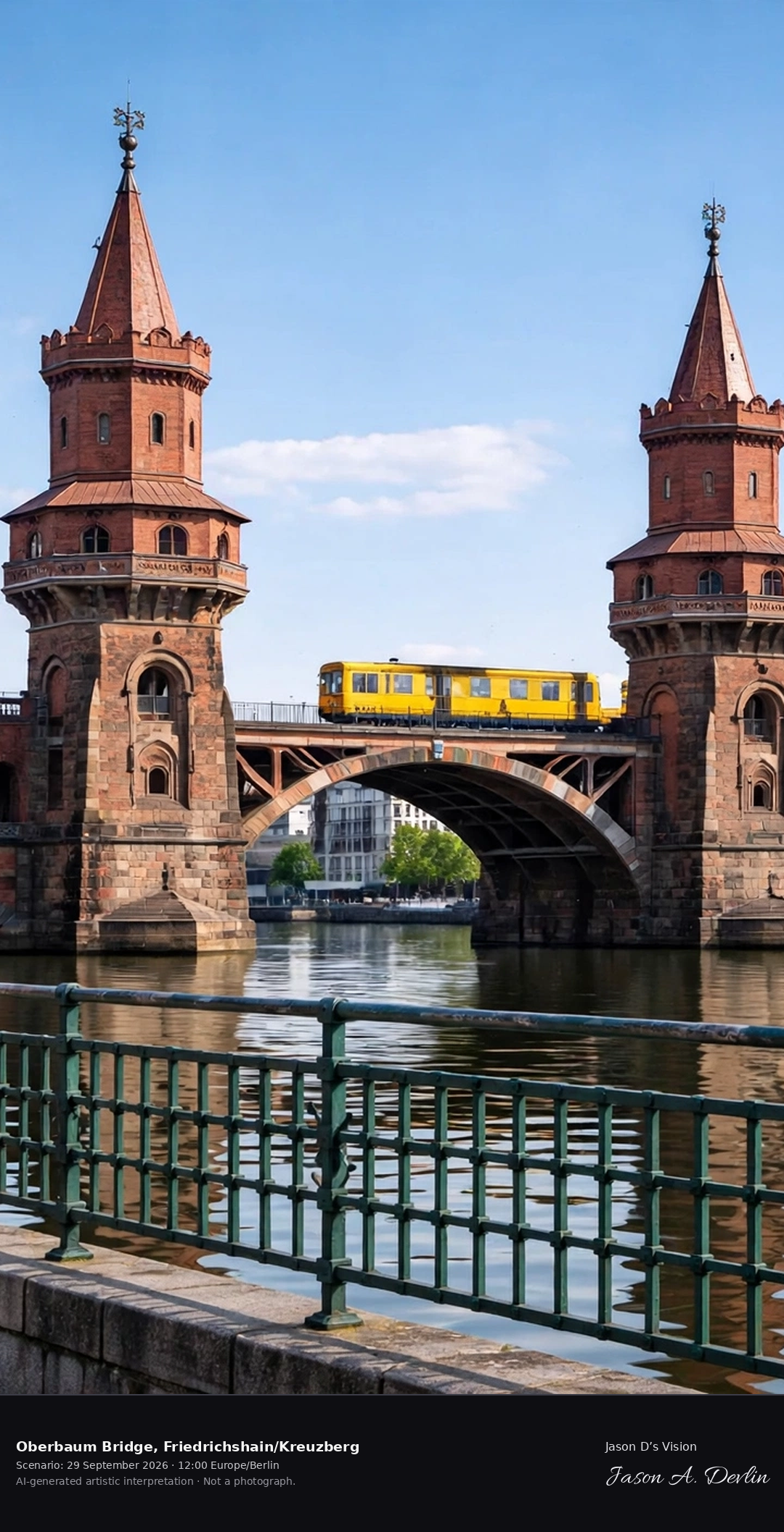
From an eye-level night viewpoint on the riverside promenade, the Oberbaum Bridge's two red-brick neo-Gothic towers rise from the Spree at left and center, their conical spires and finial figures silhouetted against an overcast night sky. The arched brick viaduct carries a light-streaked U-Bahn train across the middle of the frame, while the warmly lit brick wing with its small arches fills the right side and water reflections shimmer beneath.
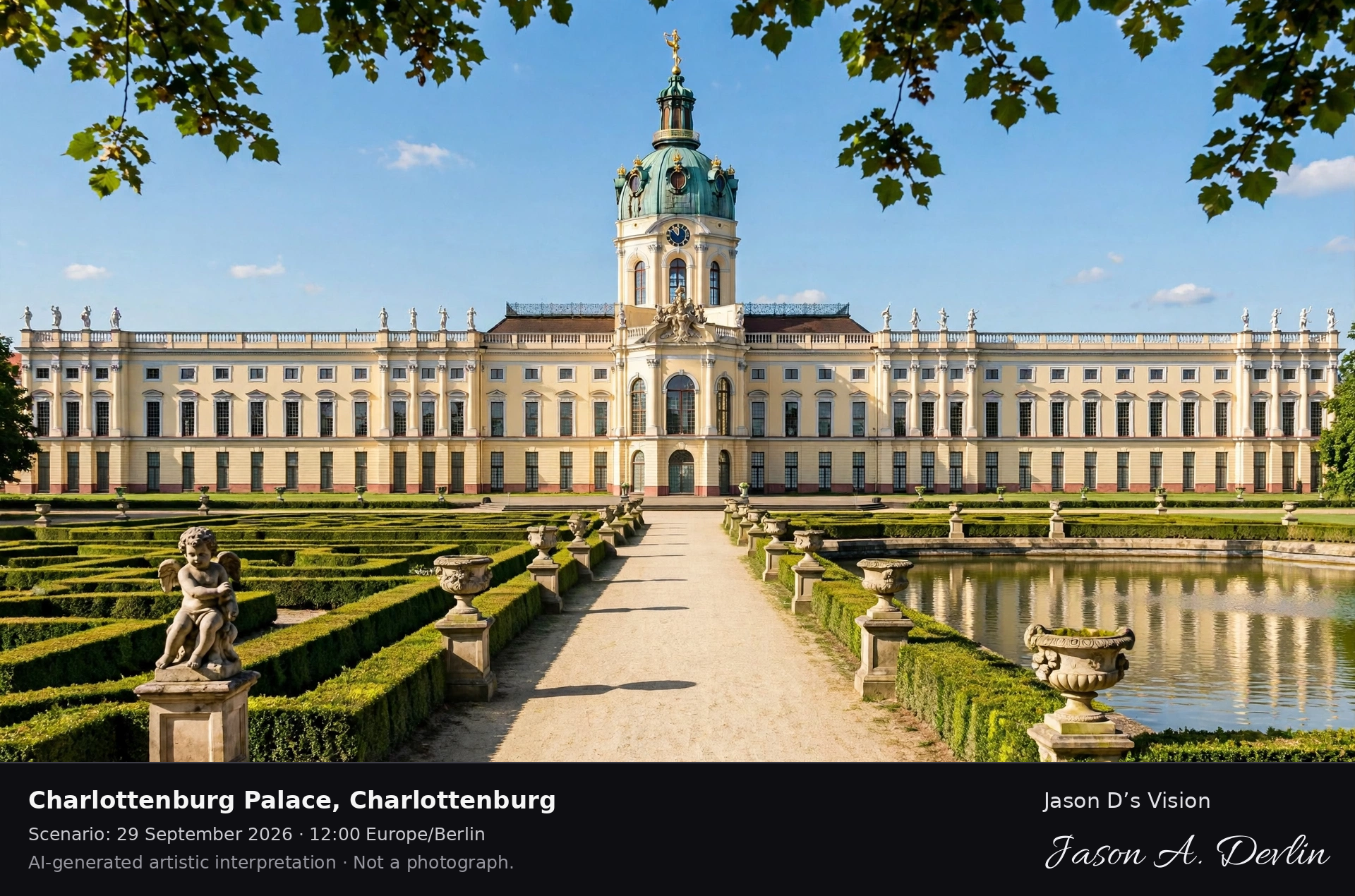
Palace and gardens · AI-generated artistic interpretation
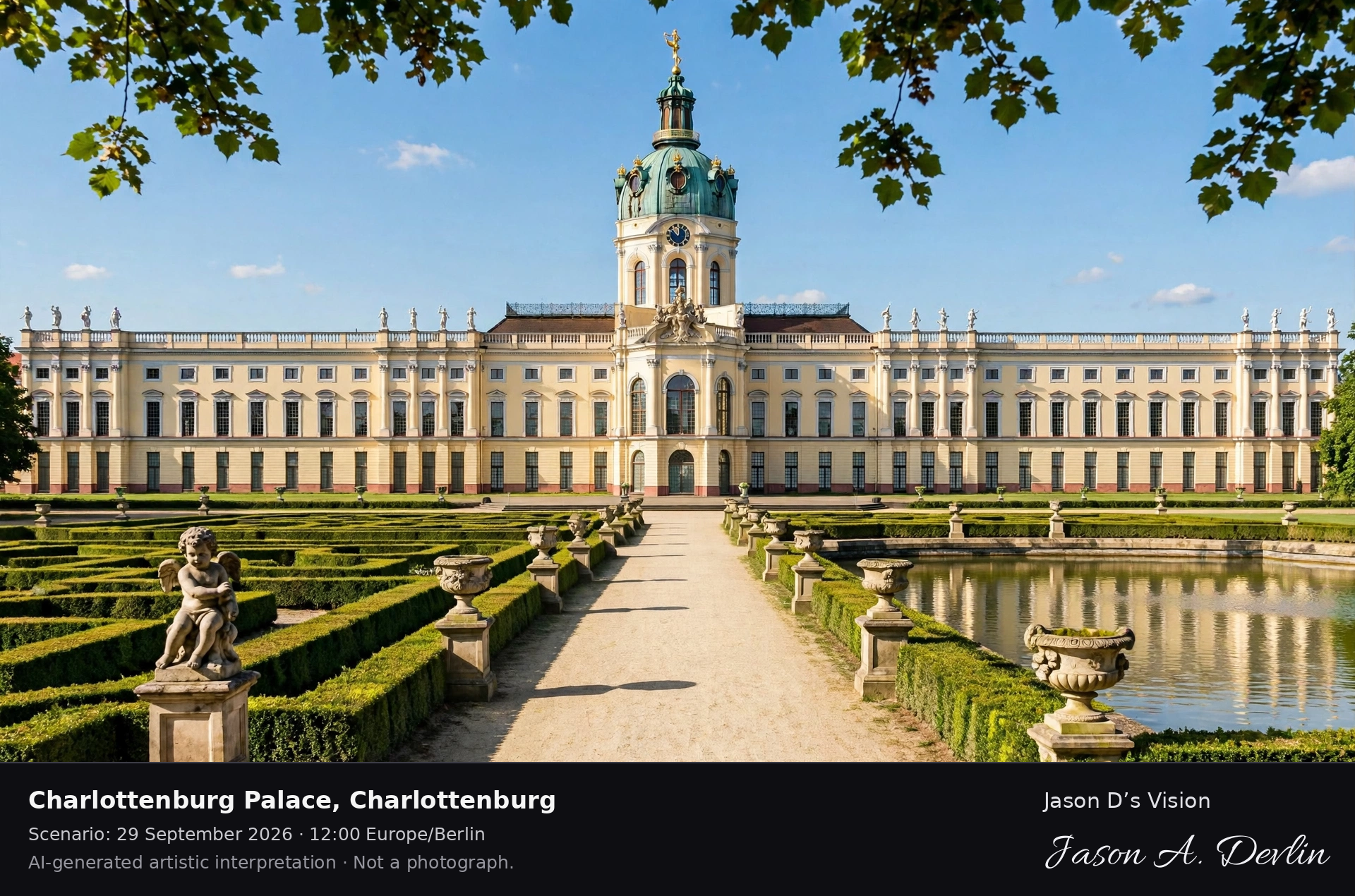
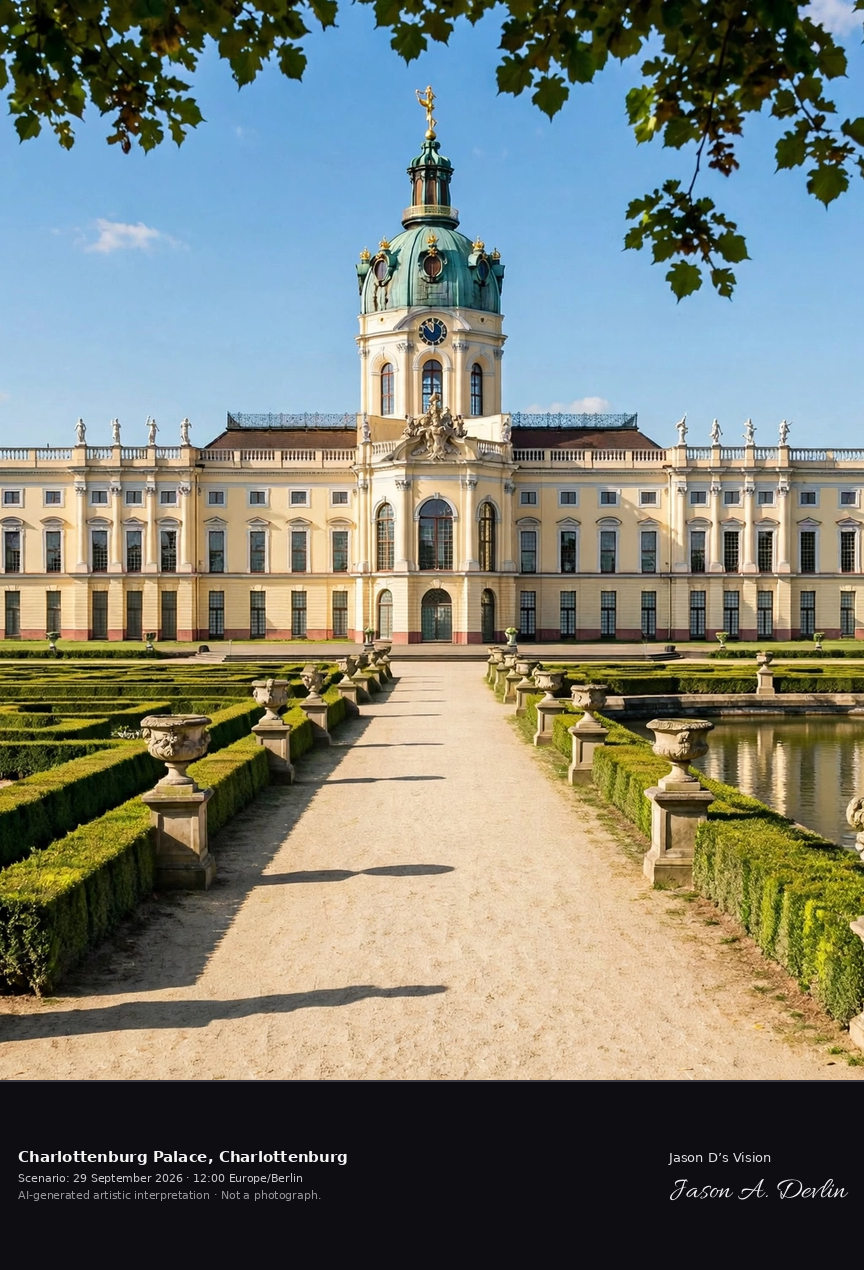
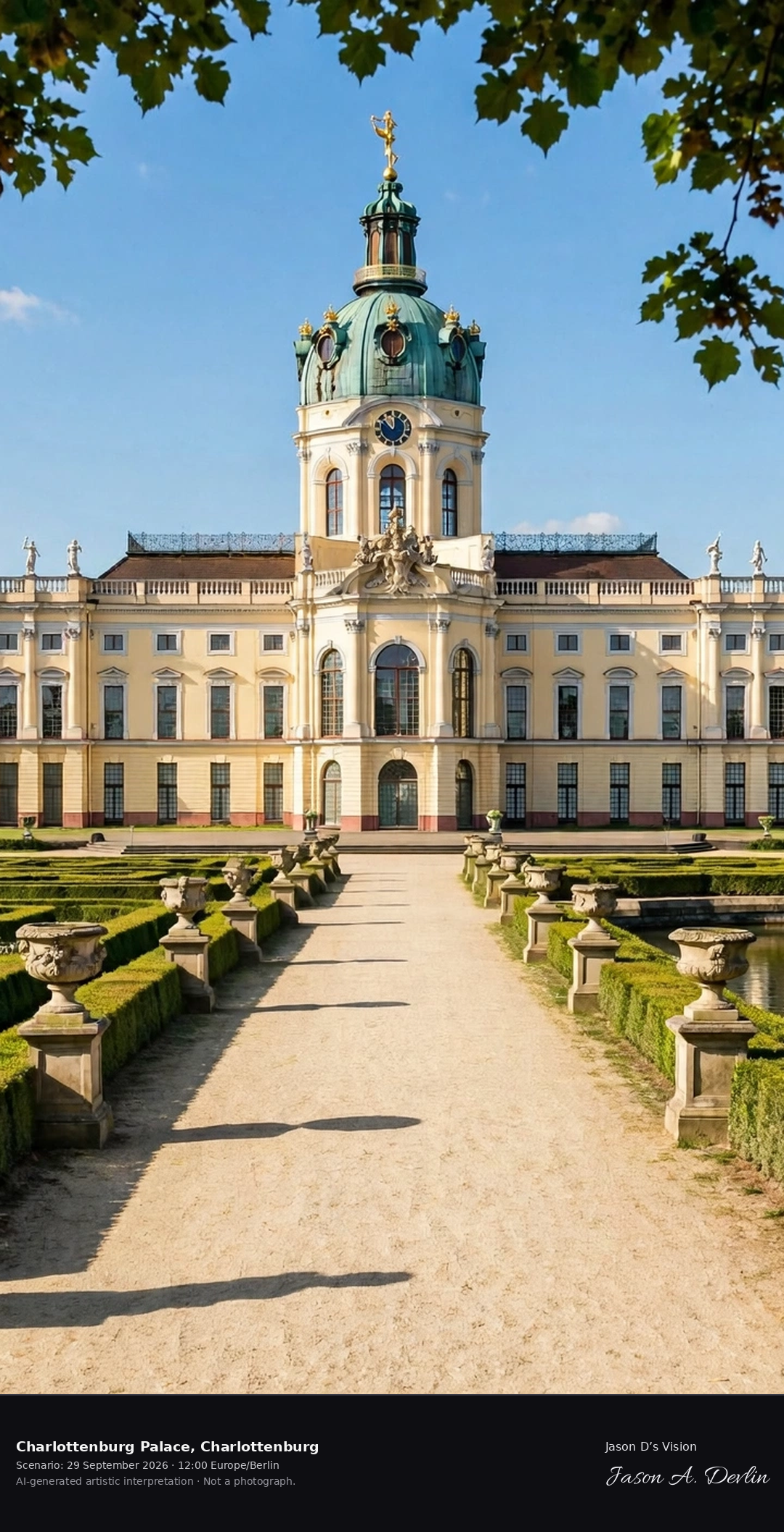
From an eye-level night viewpoint in the parterre gardens, the floodlit Charlottenburg Palace stands centered with its signature turquoise dome and golden finial crowning the warm ochre façade. Clipped hedges and glowing vintage lanterns flank the garden path leading toward the lit windows, a putto statue anchors the left foreground and a dark reflecting pond the right, all under a partly cloudy night sky.
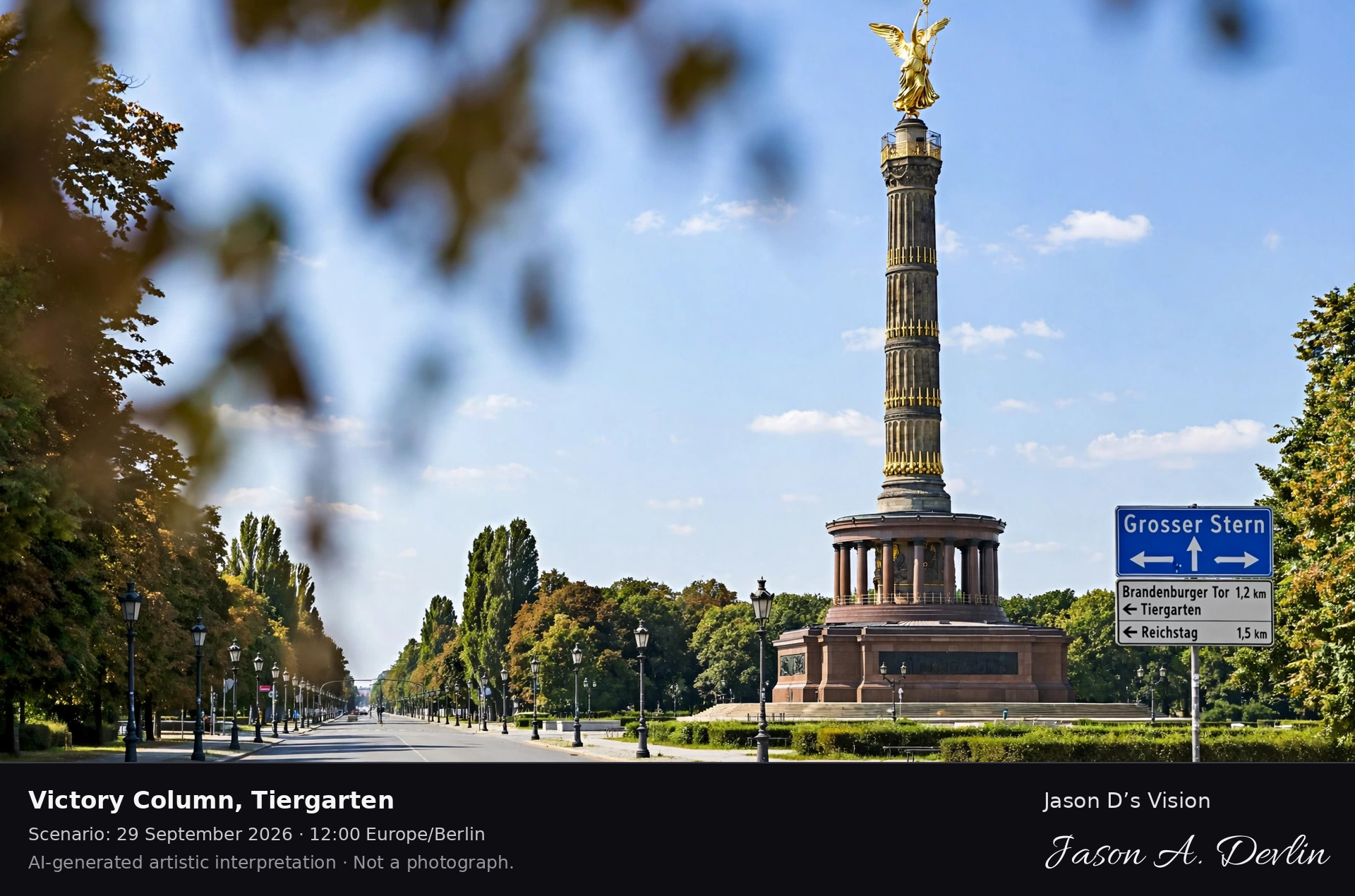
Monument and avenue · AI-generated artistic interpretation
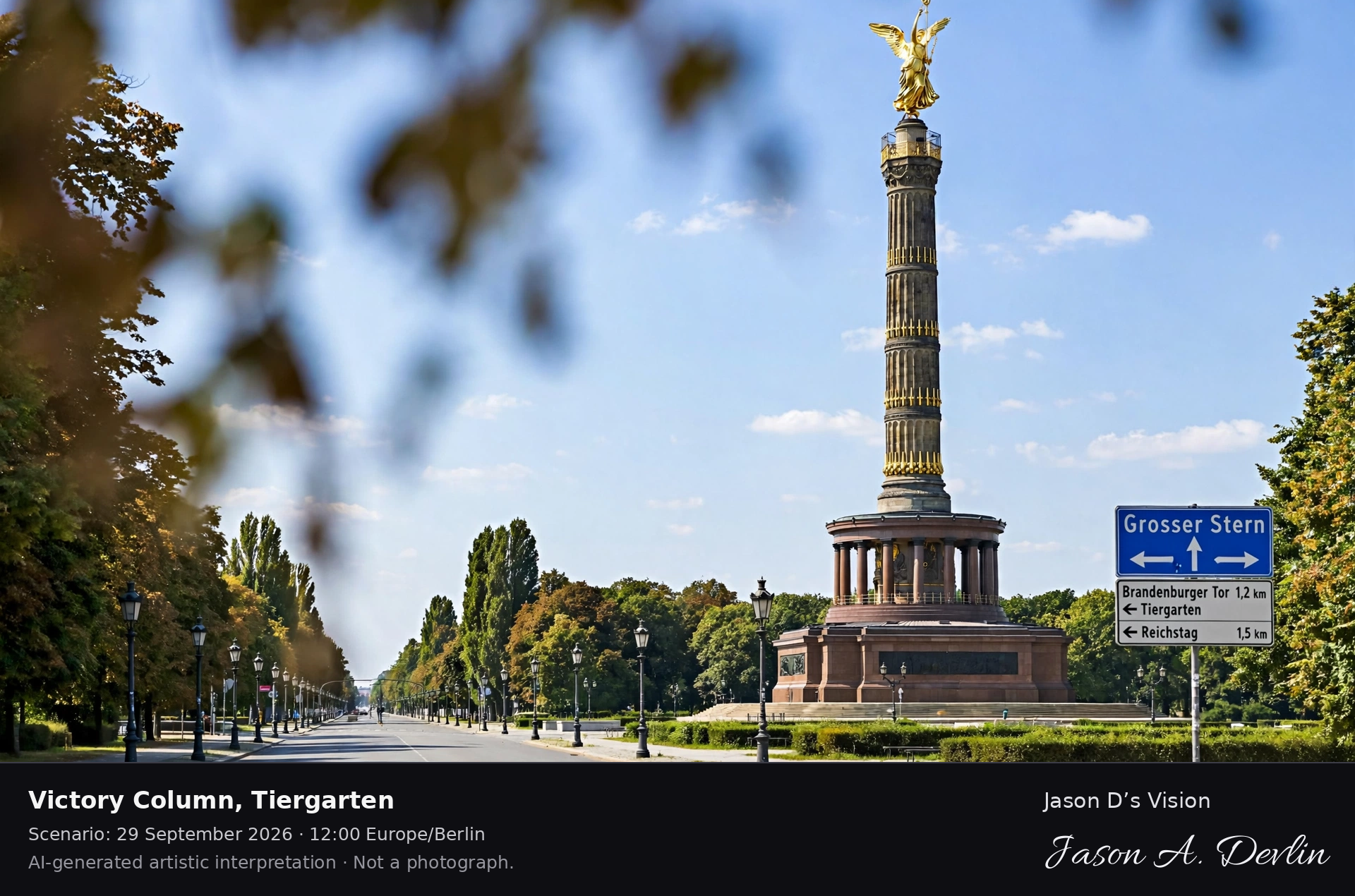
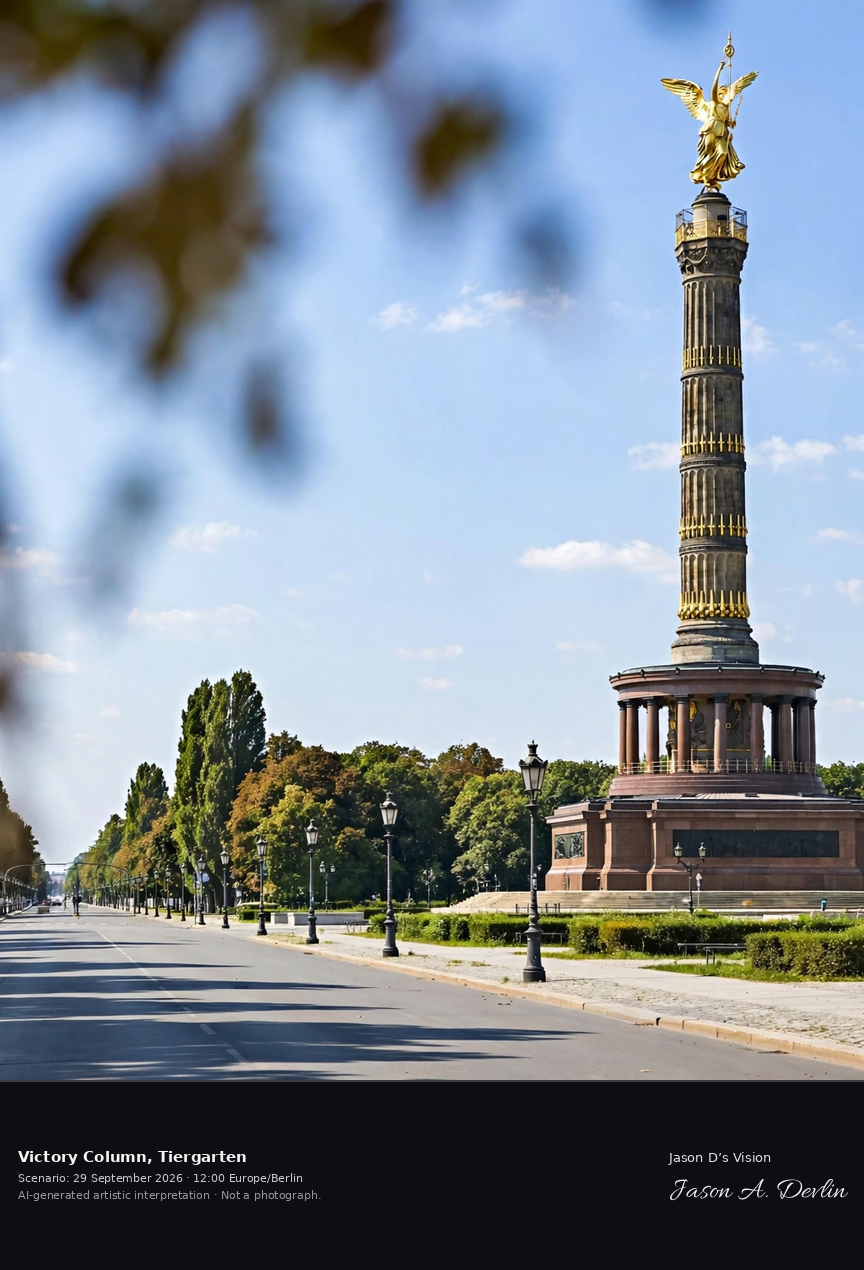
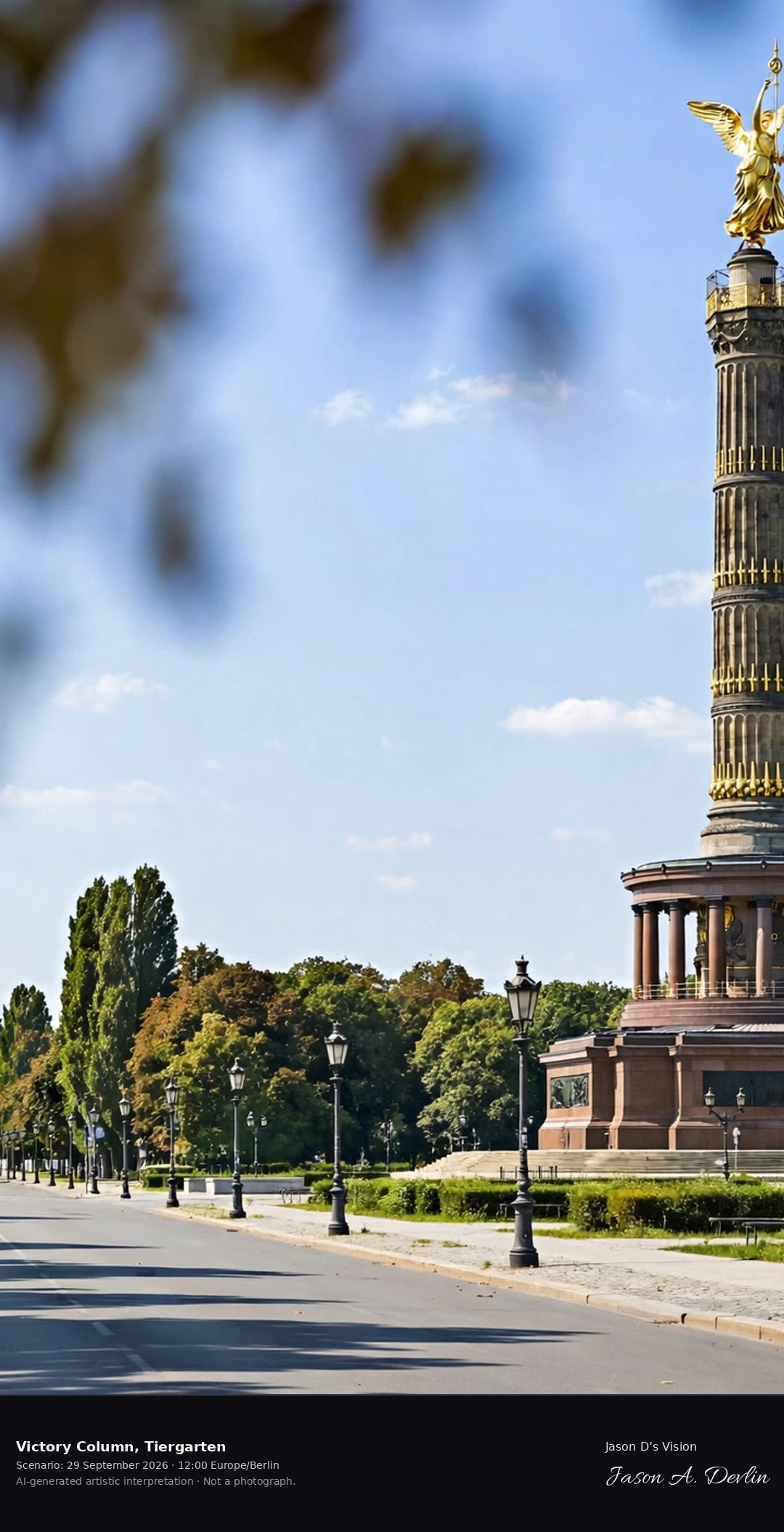
The Victory Column rises from the Großer Stern roundabout under a dark overcast sky, its gilded Victoria catching the lamplight at the top of the fluted drum. To the left, the tree-lined Straße des 17. Juni recedes in a string of glowing street lanterns, rainwater pooling on the avenue and throwing their light back. A lit direction sign at the right names Großer Stern, the Brandenburg Gate and the Reichstag, and autumn-brown leaves fringe the frame — a still, empty 2:45 a.m. view from the western pavement.
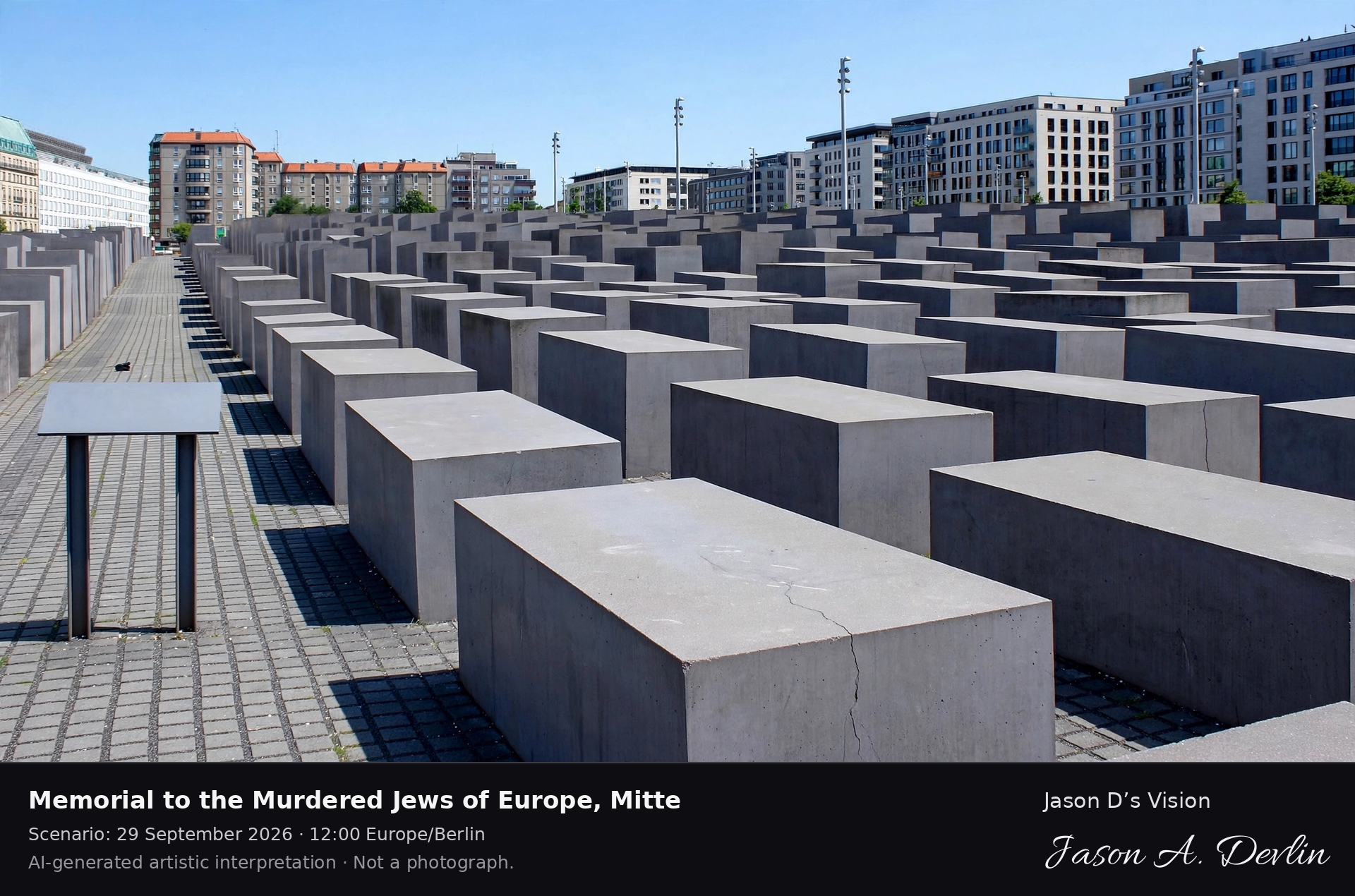
Memorial documentation · AI-generated artistic interpretation
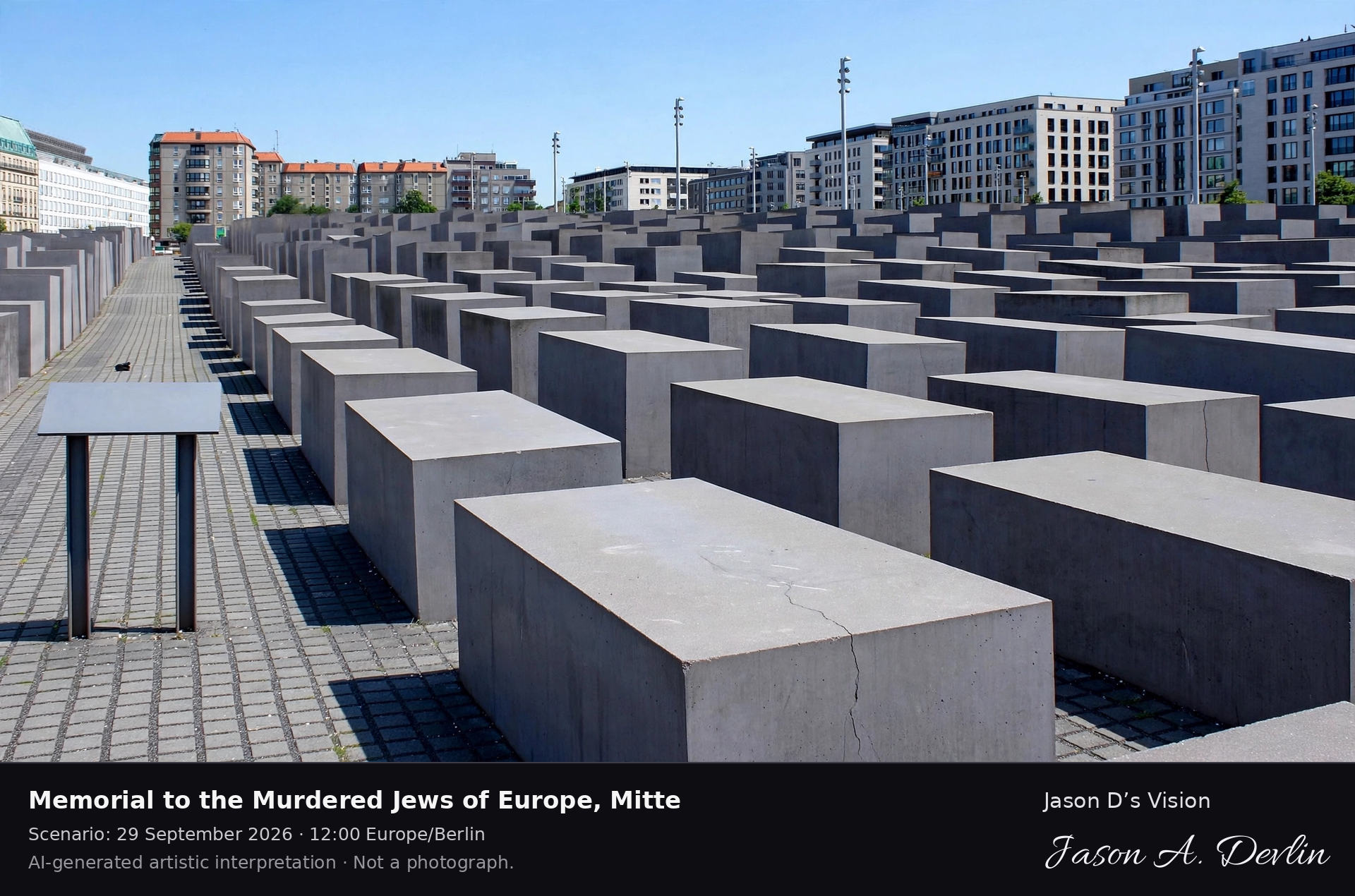
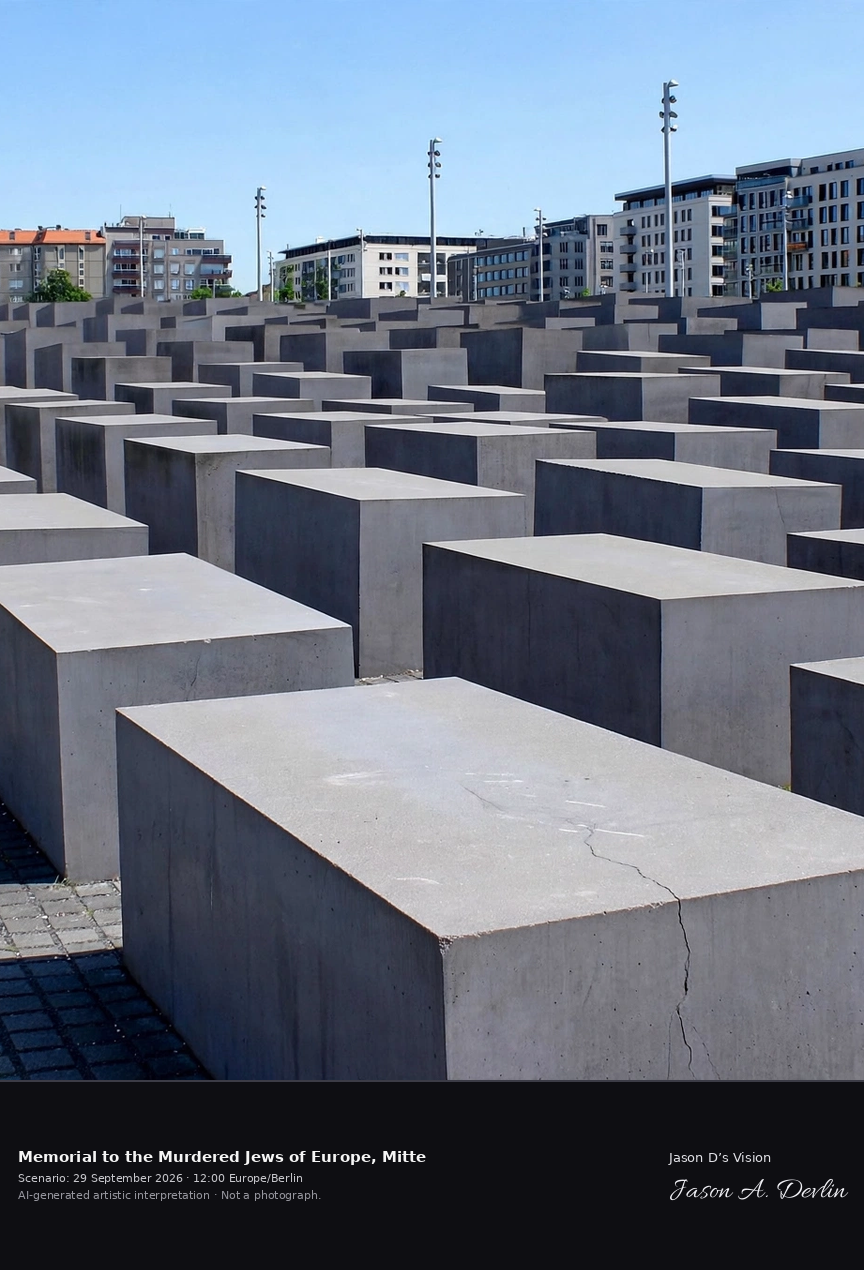
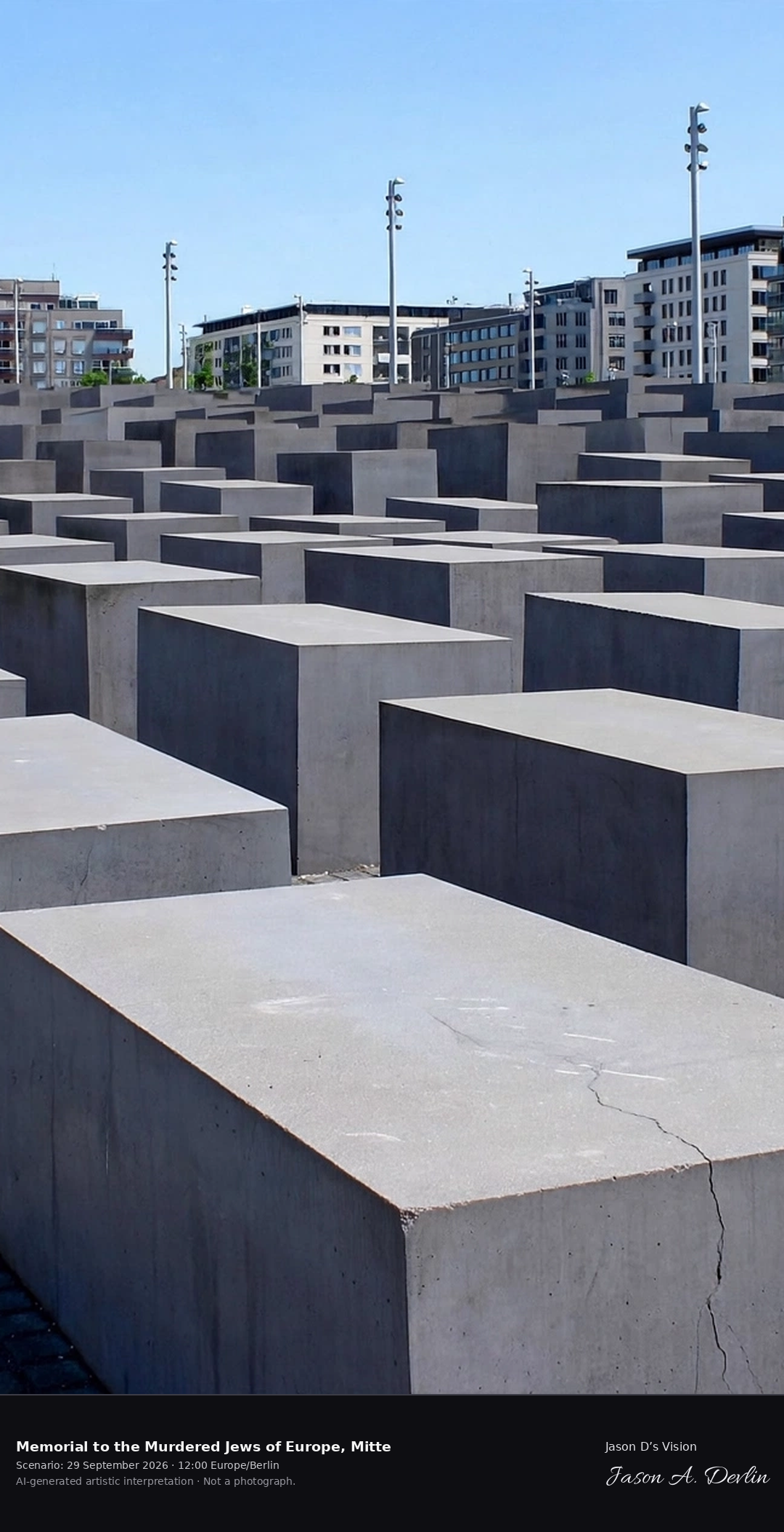
The Memorial to the Murdered Jews of Europe spreads its field of concrete stelae under a brooding overcast night sky, the grey slabs rising and falling in uneven heights. An information plaque in the left foreground names the site in German, while streetlamps cast warm pools of light on the rain-streaked stone. Behind the field, the lit office towers of Mitte glow through the dark, and fallen leaves gather in puddles between the rows — a solemn 2:45 a.m. visit with the memorial empty and still.
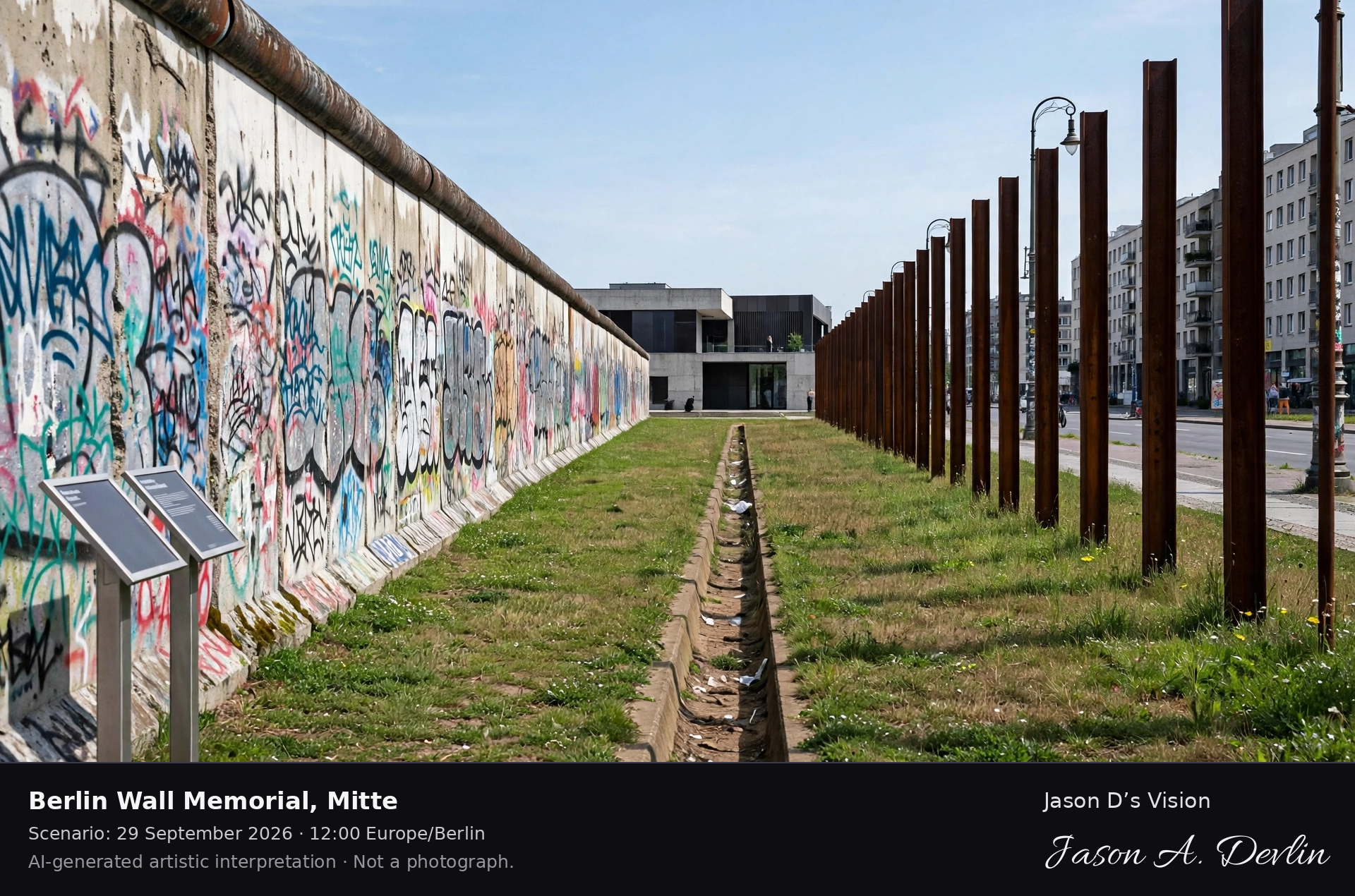
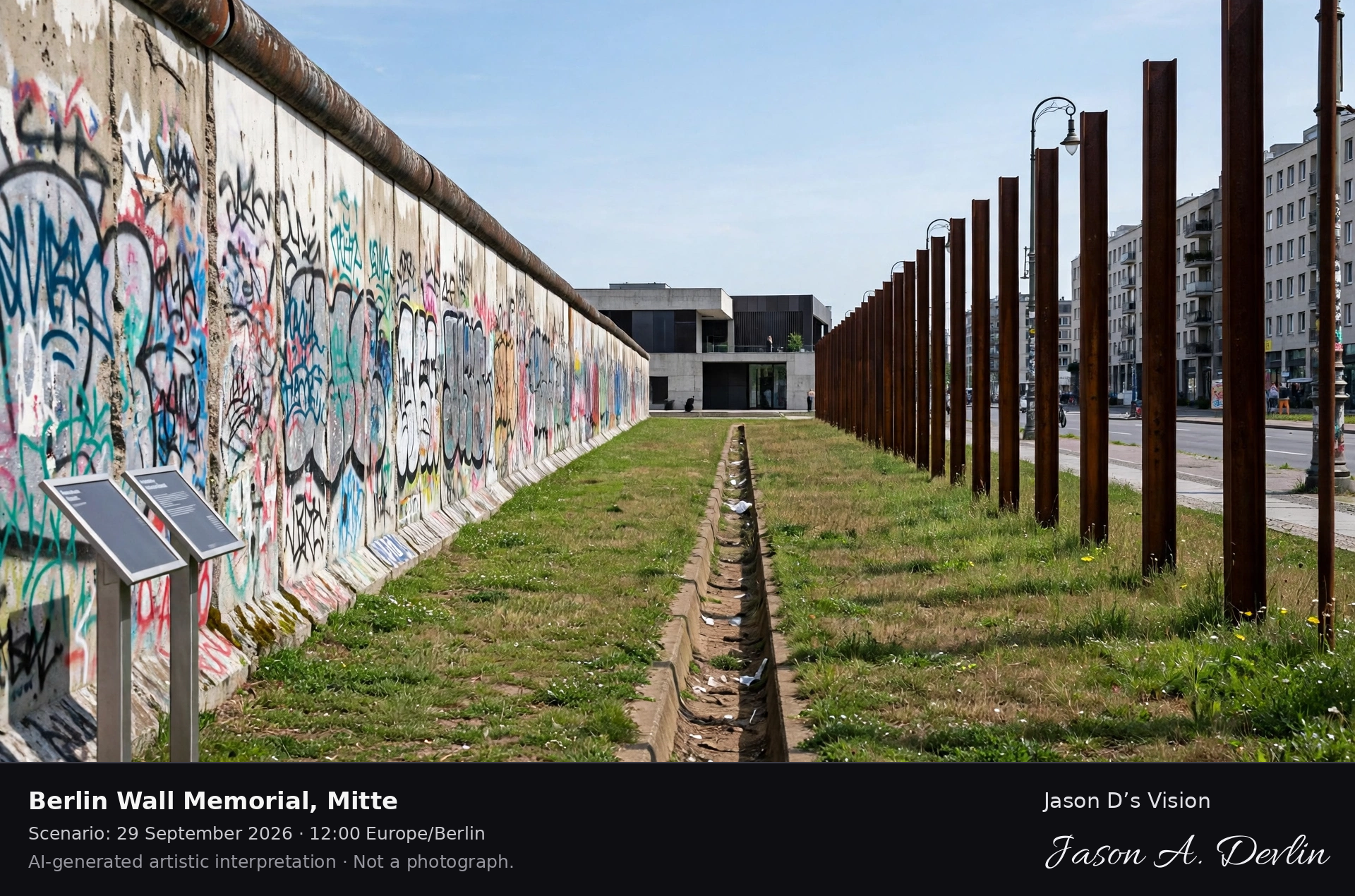
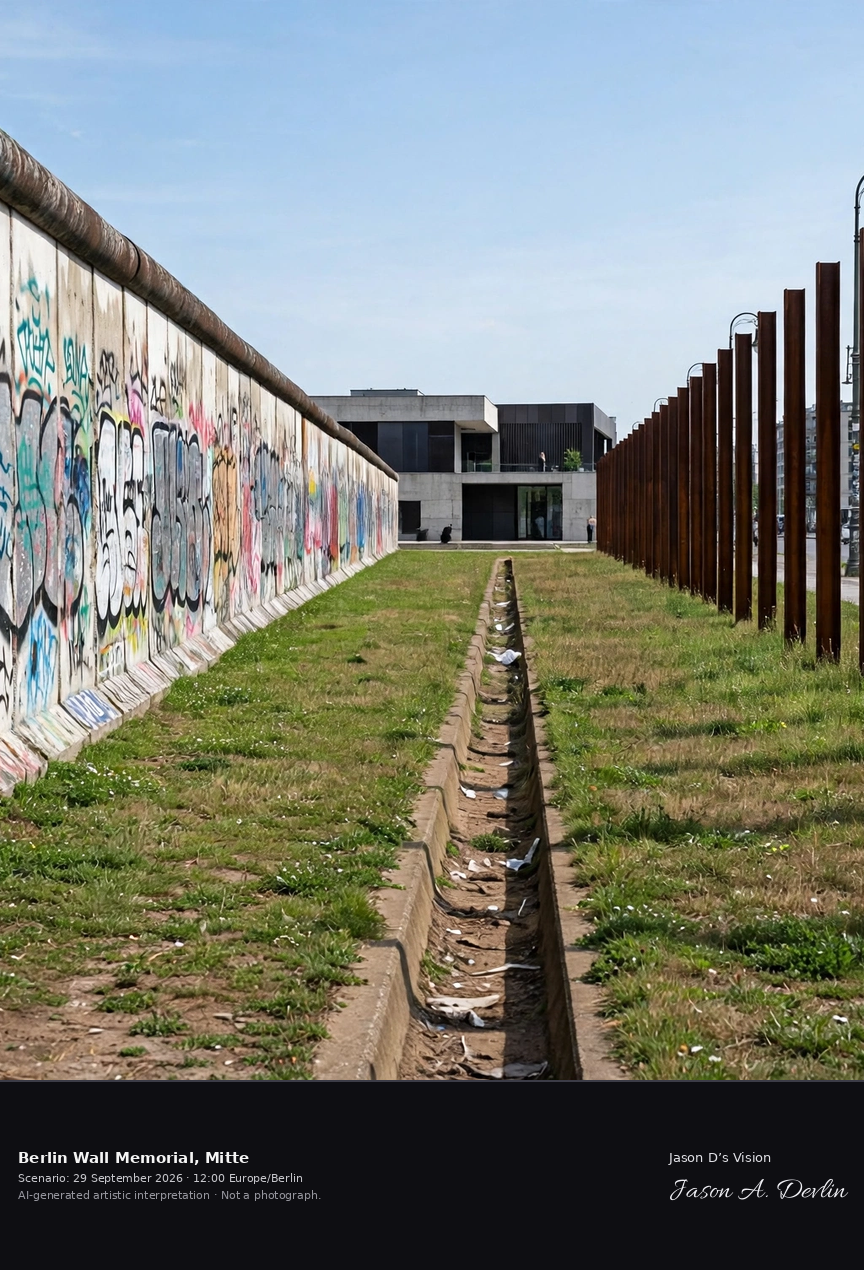
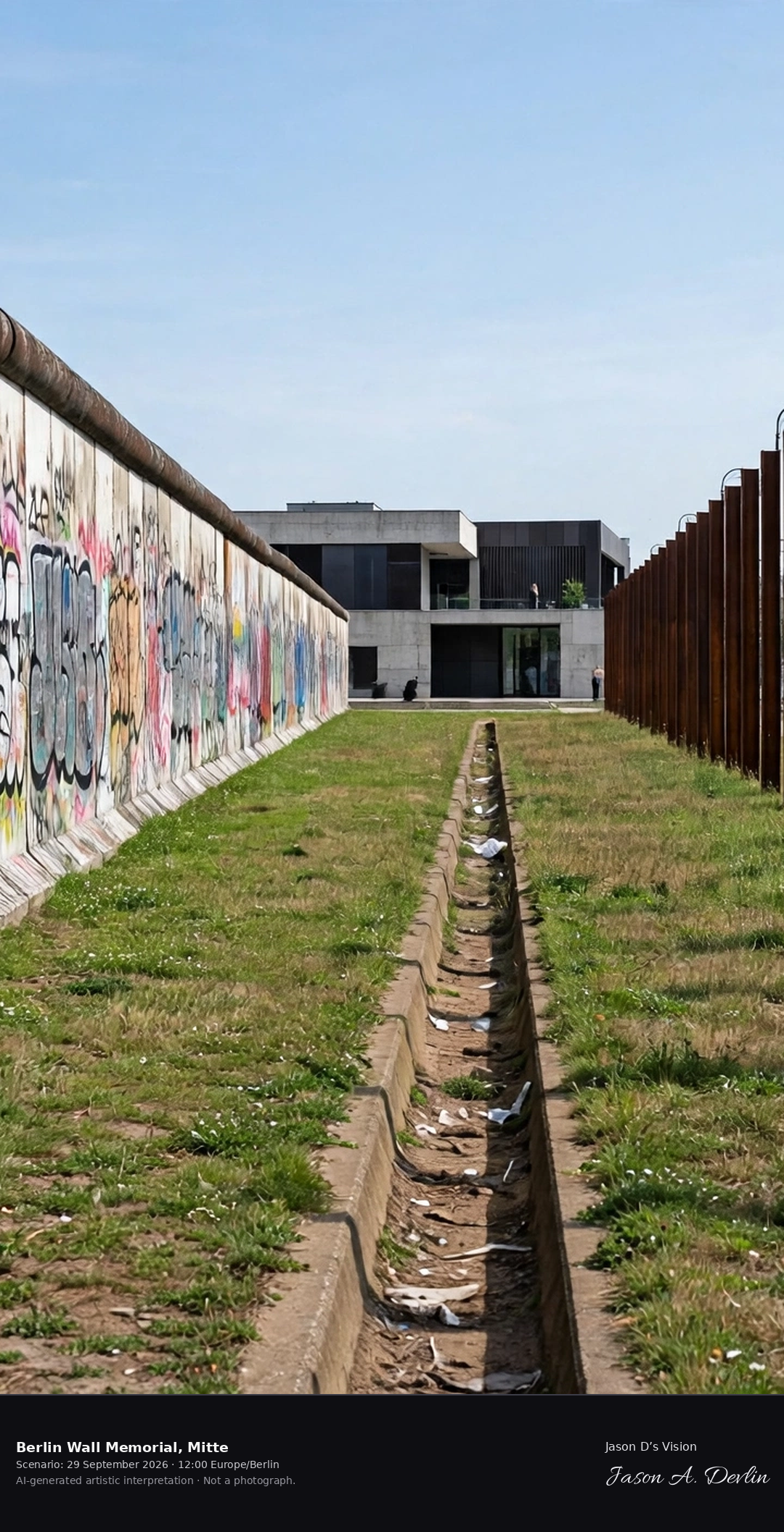
The Berlin Wall Memorial's preserved border strip on Bernauer Straße lies under a heavy overcast night sky: a graffiti-marked wall segment on the left, rust-brown Corten steel posts tracing the vanished border course, and the glowing glass visitor center mid-frame. Bilingual plaques name the Gedenkstätte Berliner Mauer and the Grenzverlauf 1961–1989, streetlamps warm the wet pavement and apartment windows beyond. A still 3:00 a.m. view along the grass death strip — empty, watchful, unadorned.
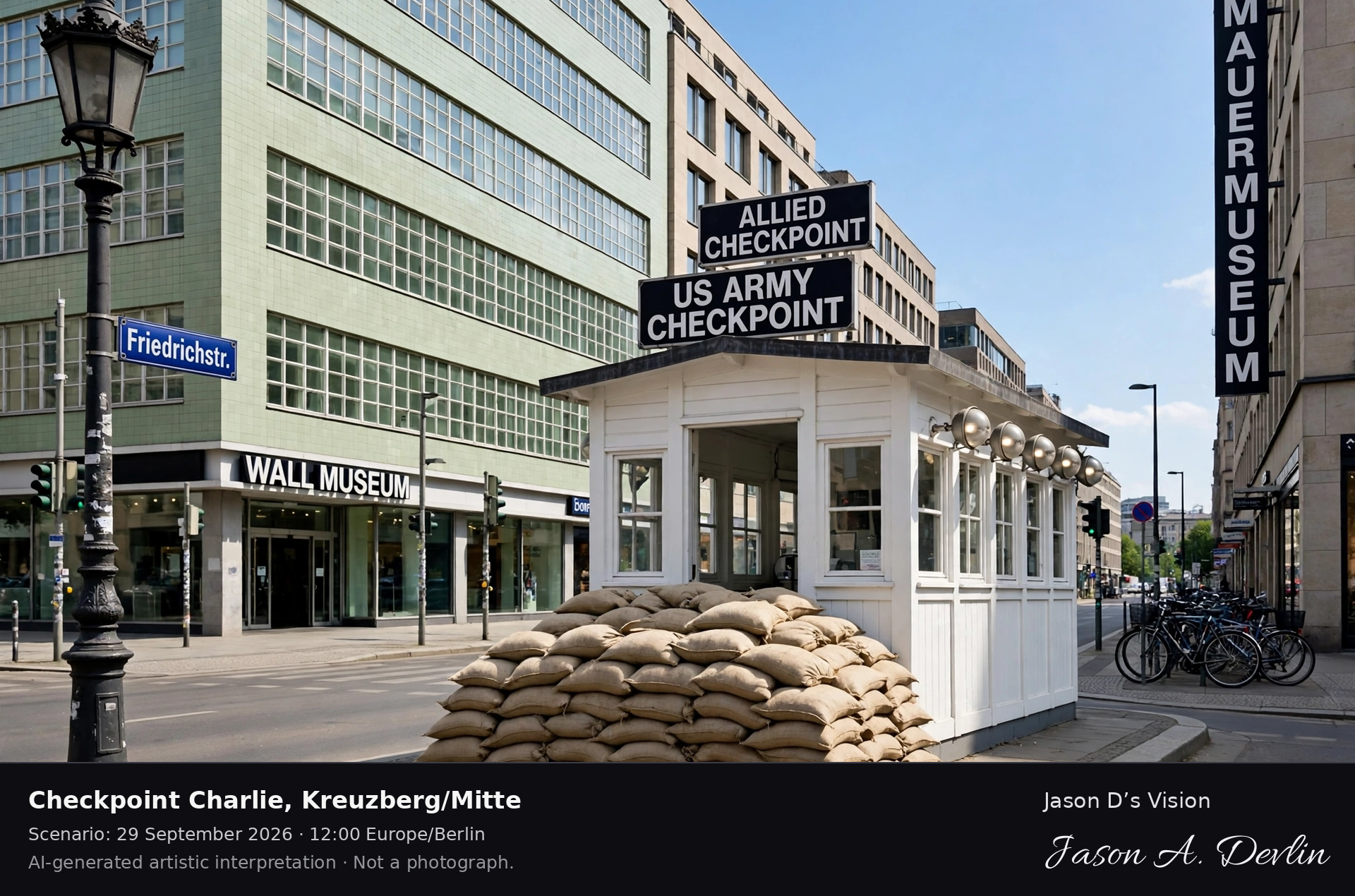
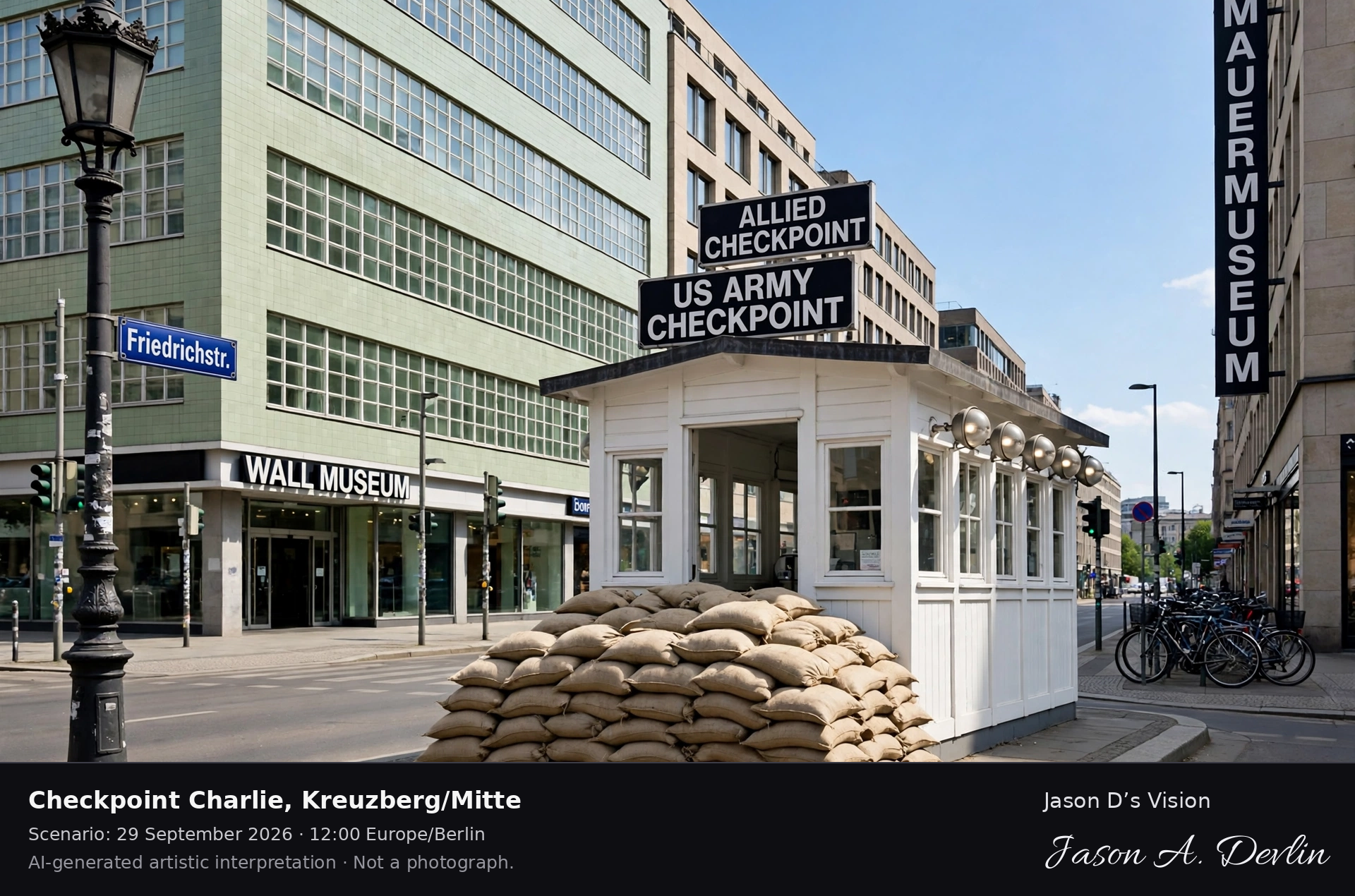
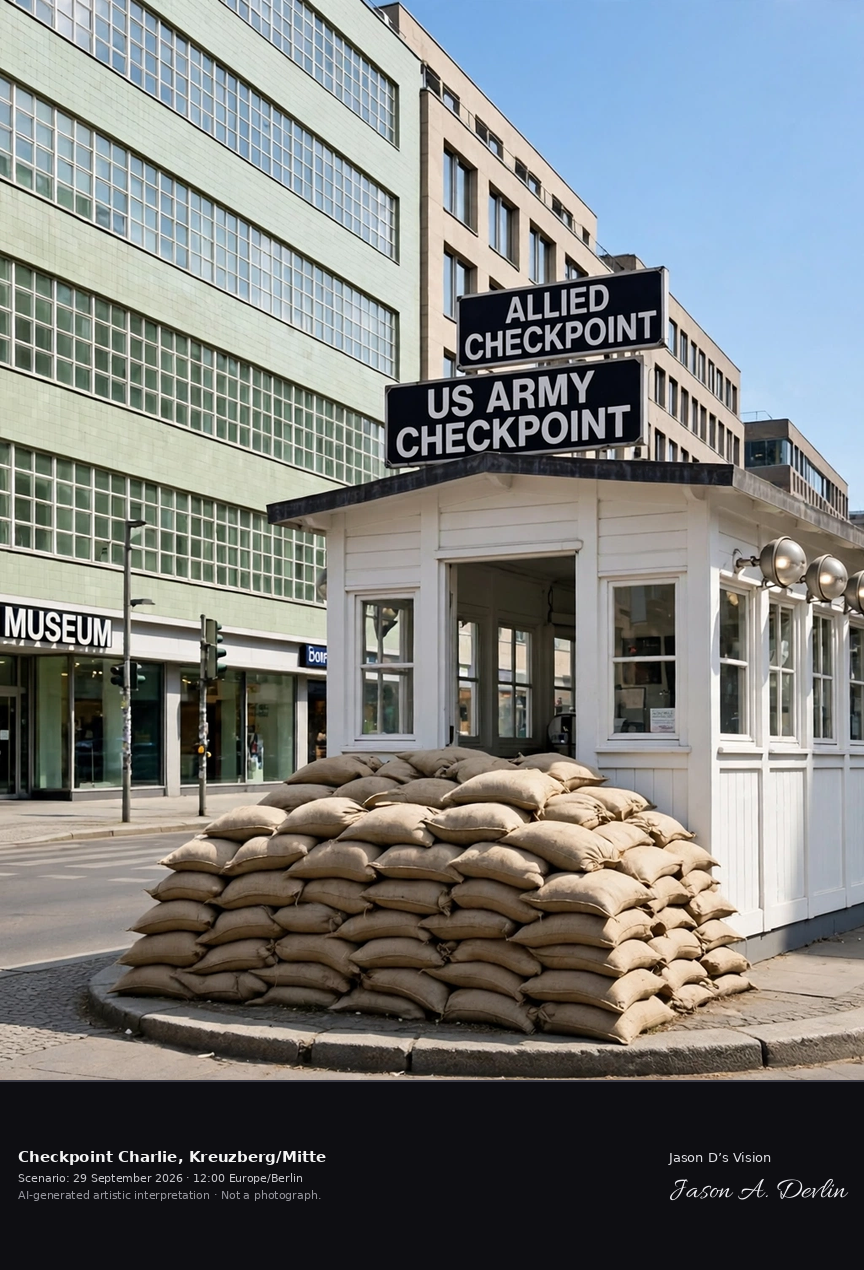
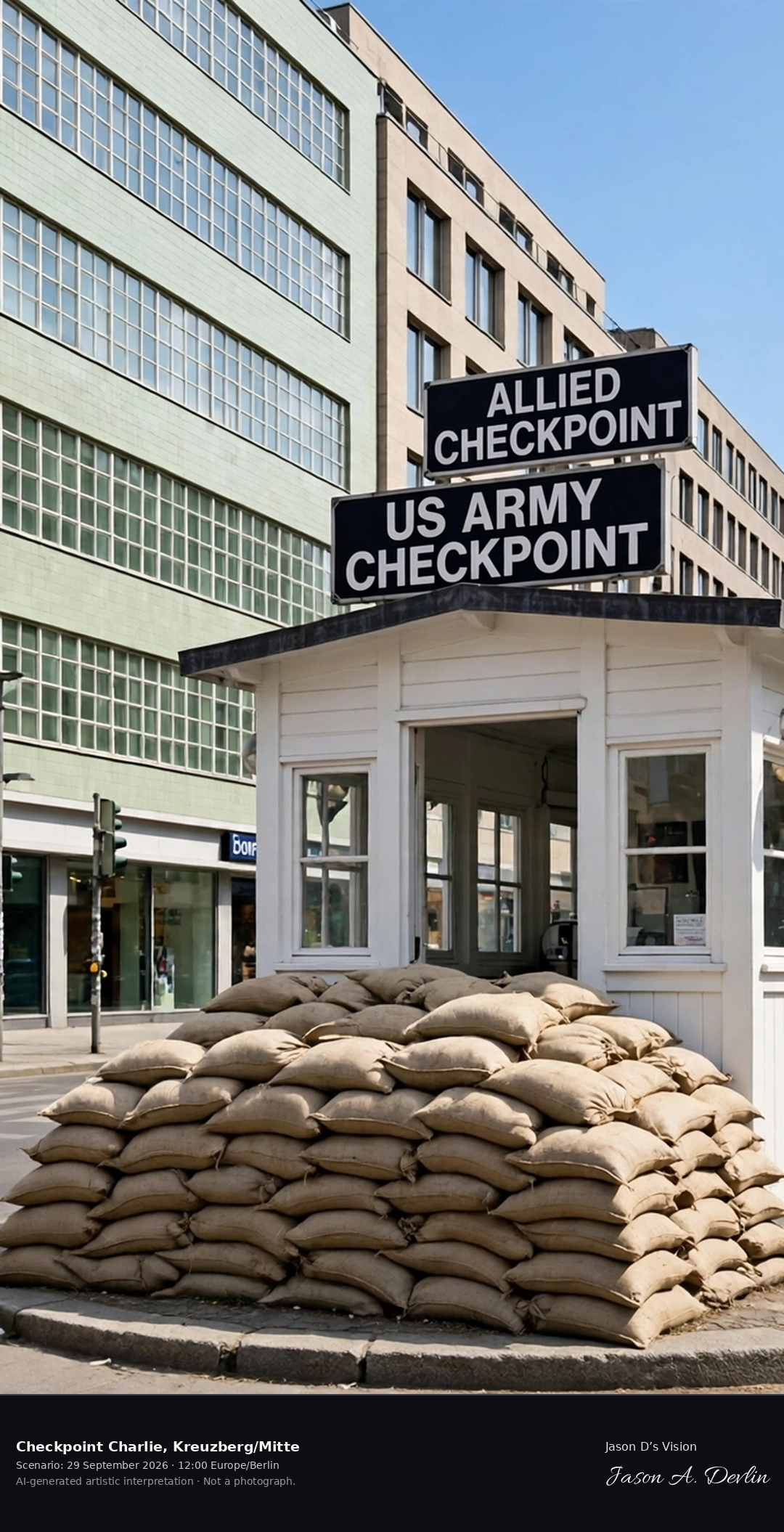
A quiet nighttime view of the Checkpoint Charlie memorial hut on Friedrichstraße, its sandbag barrier piled in front and the rooftop sign lit above. Behind it stands the Haus am Checkpoint Charlie with the glowing "WALL MUSEUM" lettering to the left, while the "MAUERMUSEUM" sign runs down the right edge. Street lamps and the booth's own lights reflect off the wet pavement under an overcast sky, giving the familiar tourist stop an unusually still, after-hours mood.
Ruin and modern church · AI-generated artistic interpretation
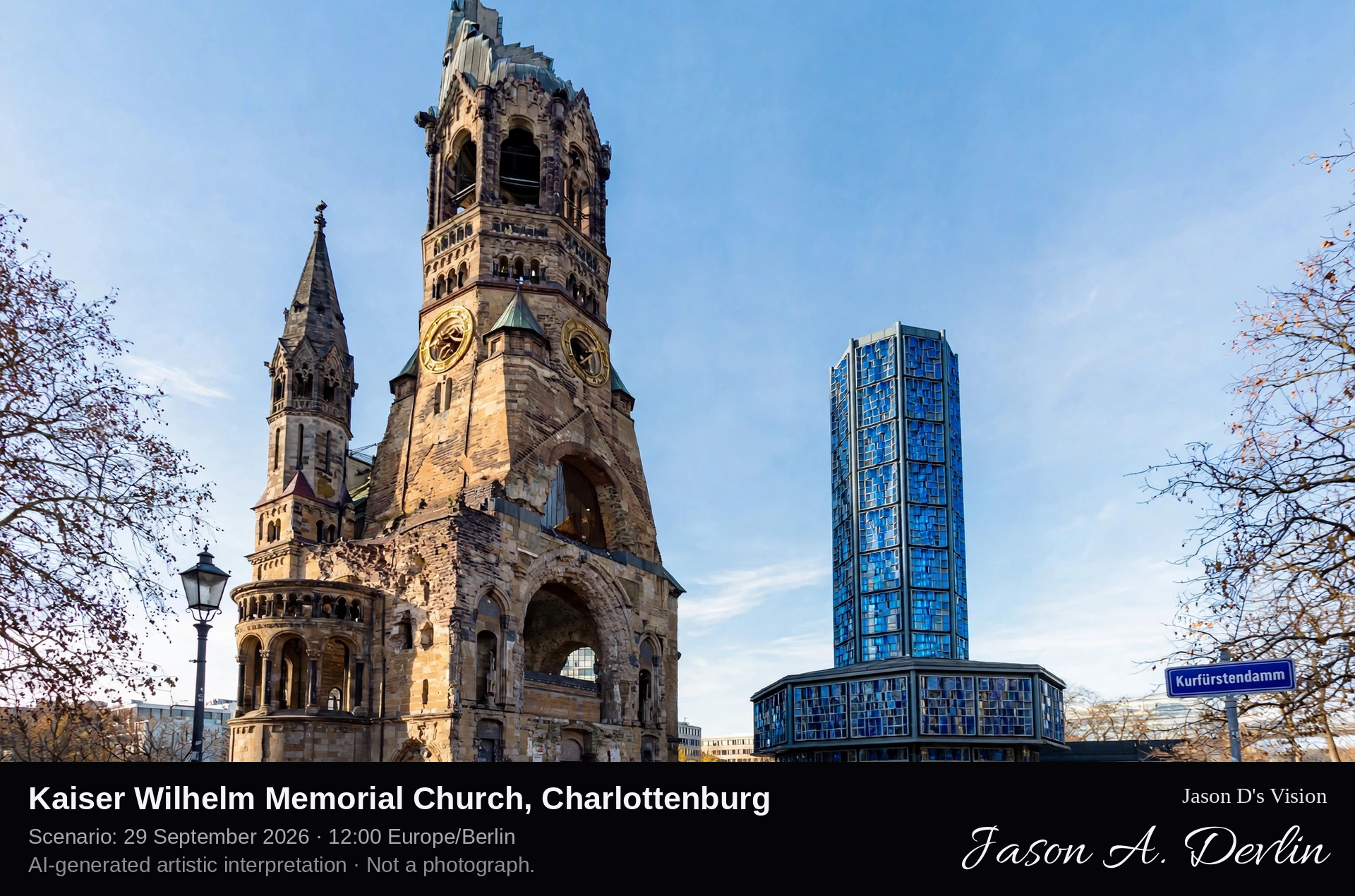
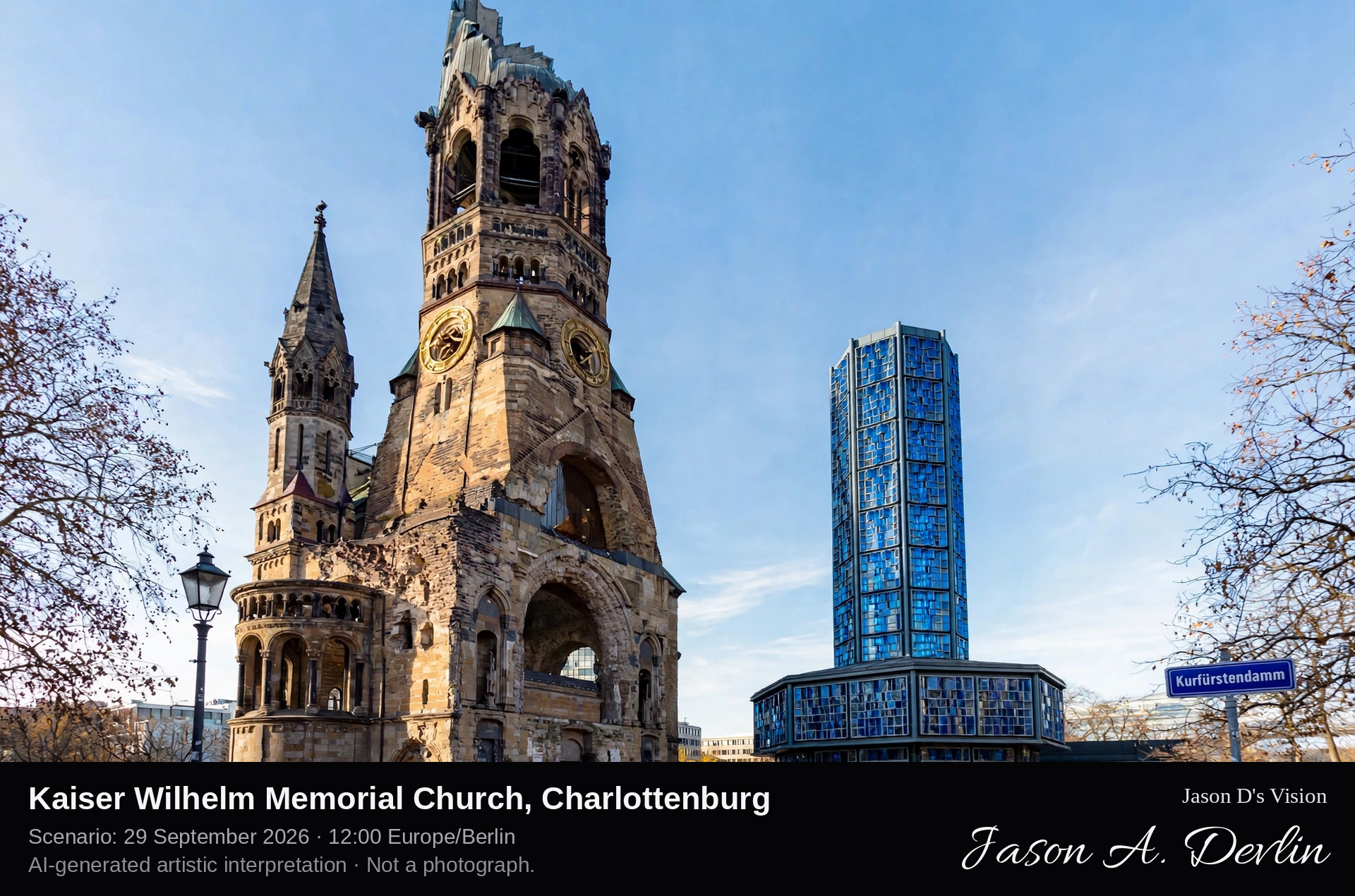
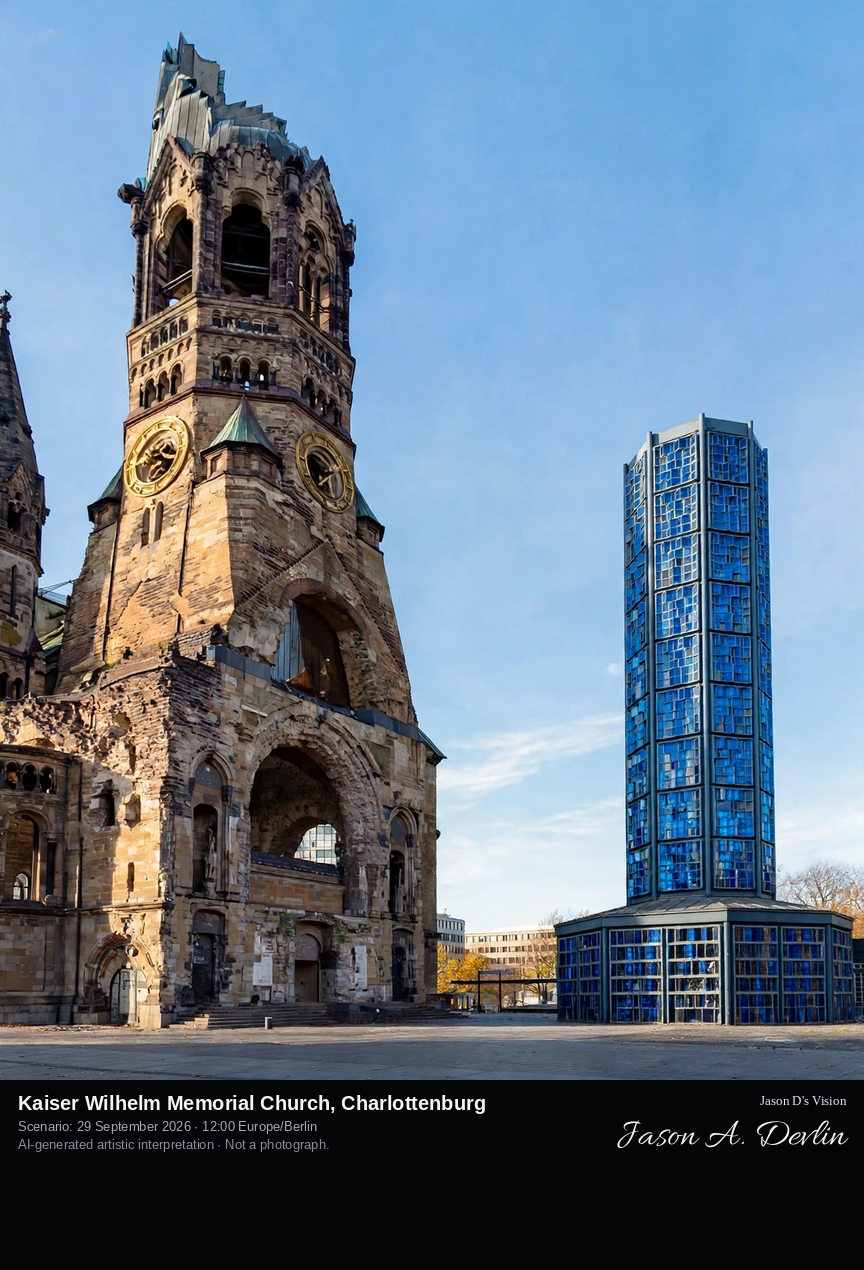
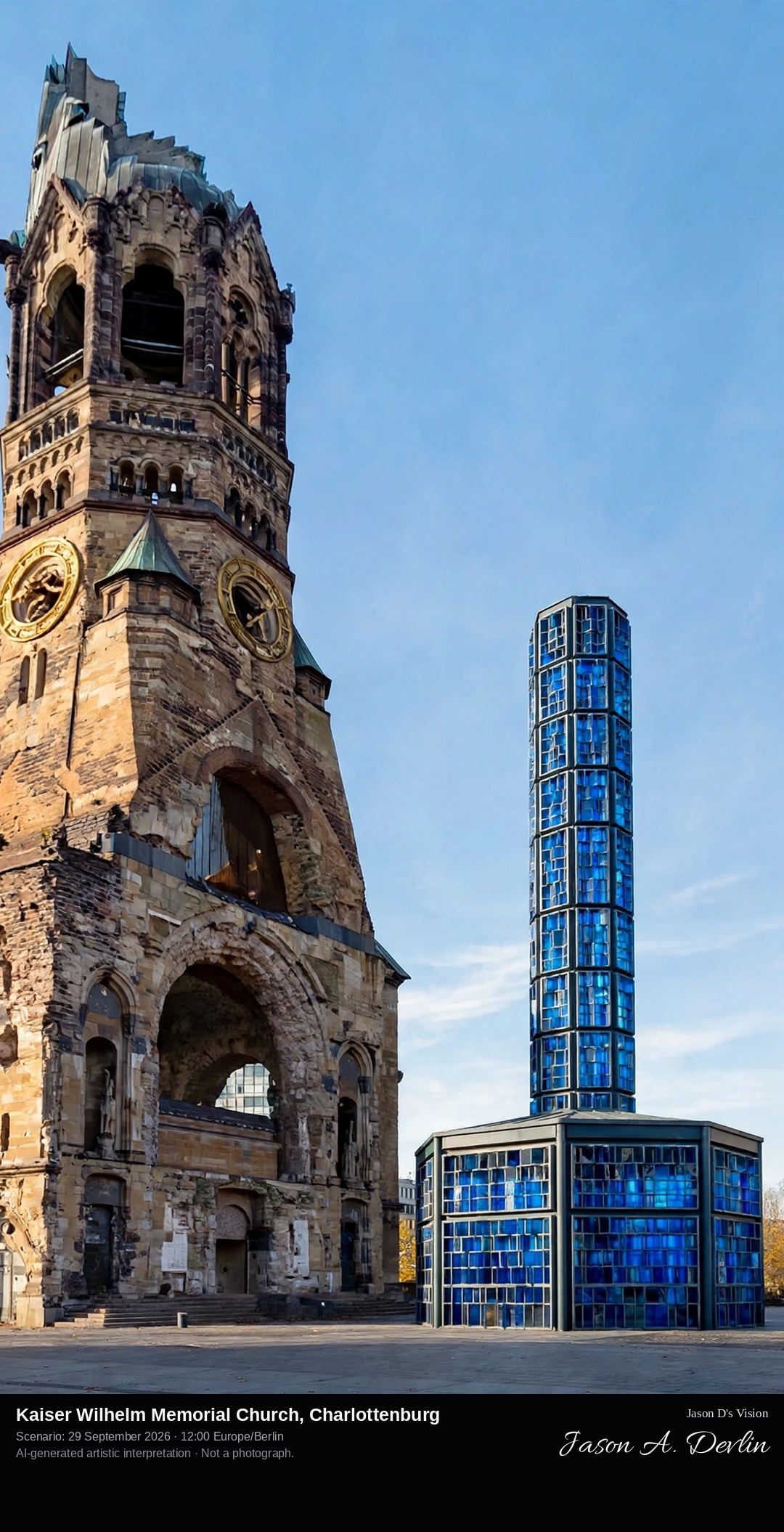
A night view of the Kaiser Wilhelm Memorial Church from Breitscheidplatz: the war-damaged neo-Romanesque tower ruin, its open belfry and scarred stonework warmly lit, stands left of the glowing blue glass-block belfry of the modern church. The "Kurfürstendamm" street sign glows at the frame's edge under an overcast sky, with street lamps and wet pavement scattered with autumn leaves reflecting the blue light in the quiet square.
Church and historic-style lanes · AI-generated artistic interpretation
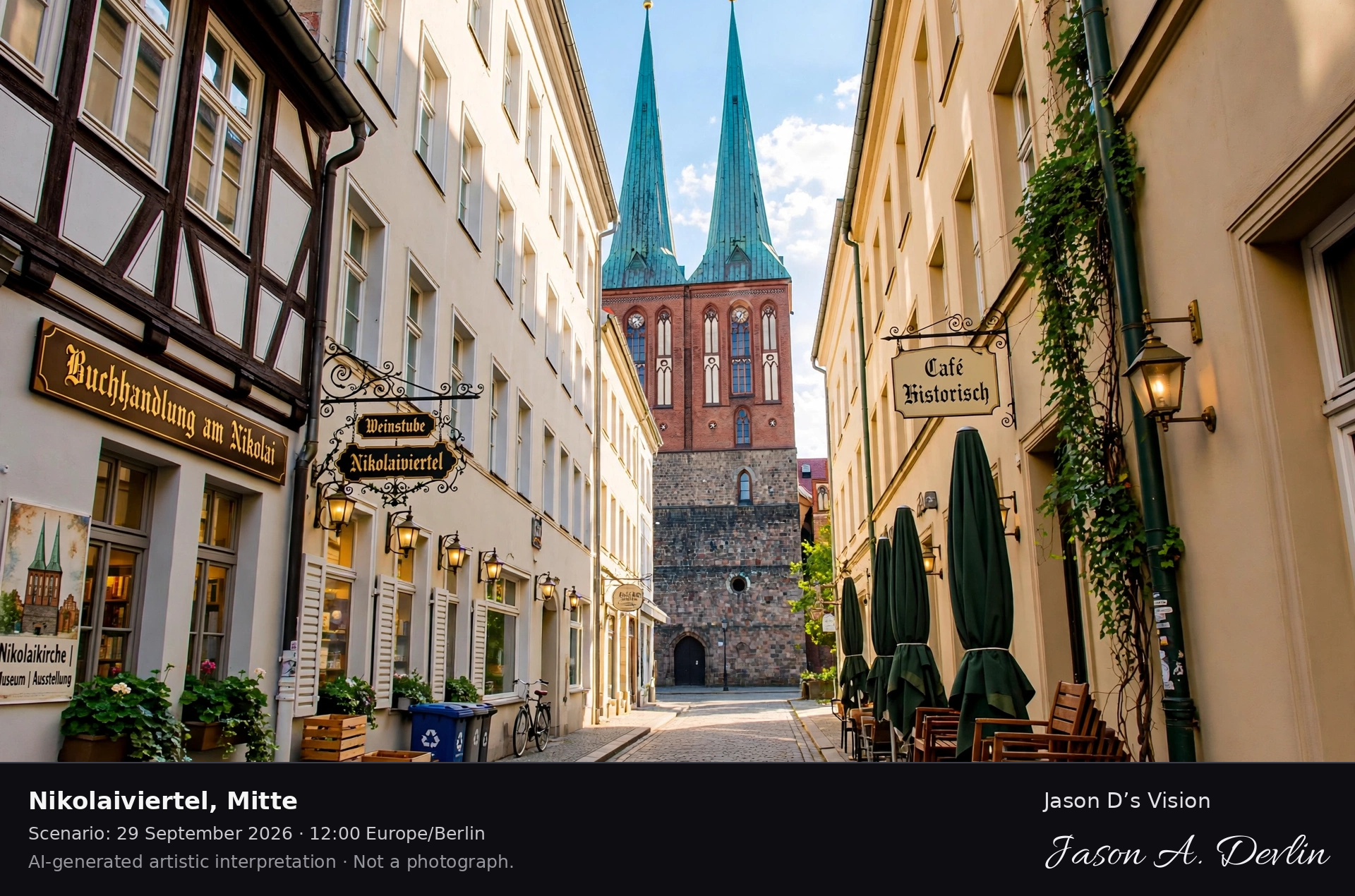
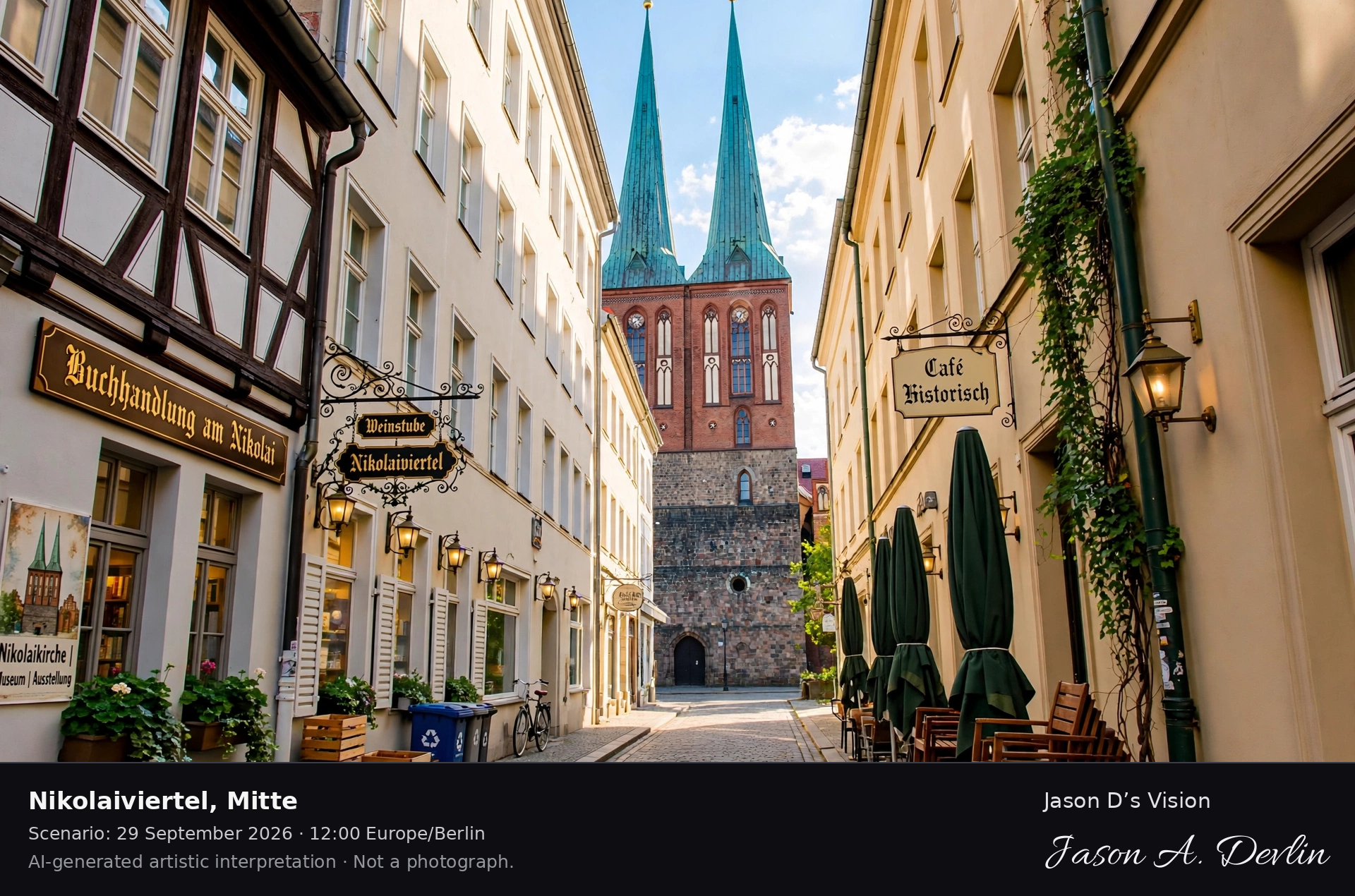
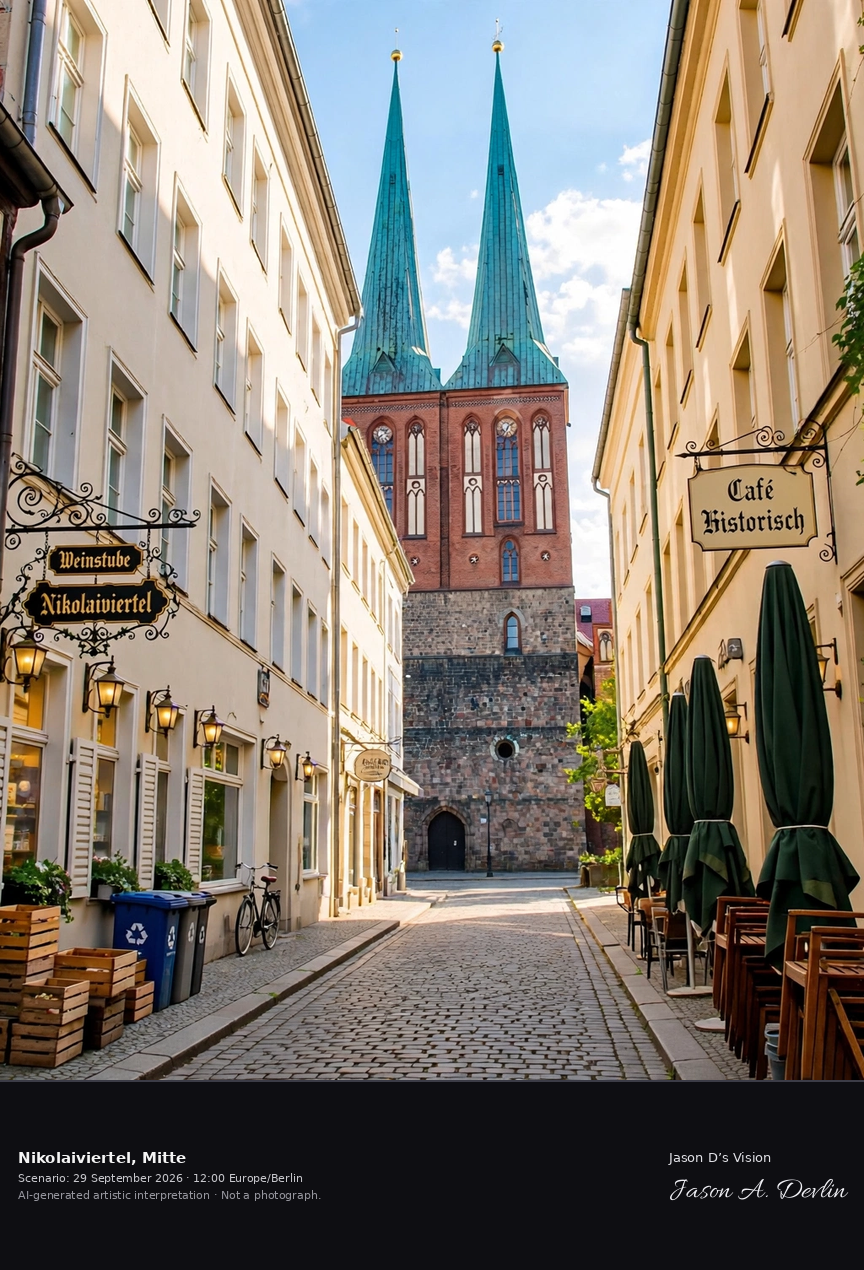
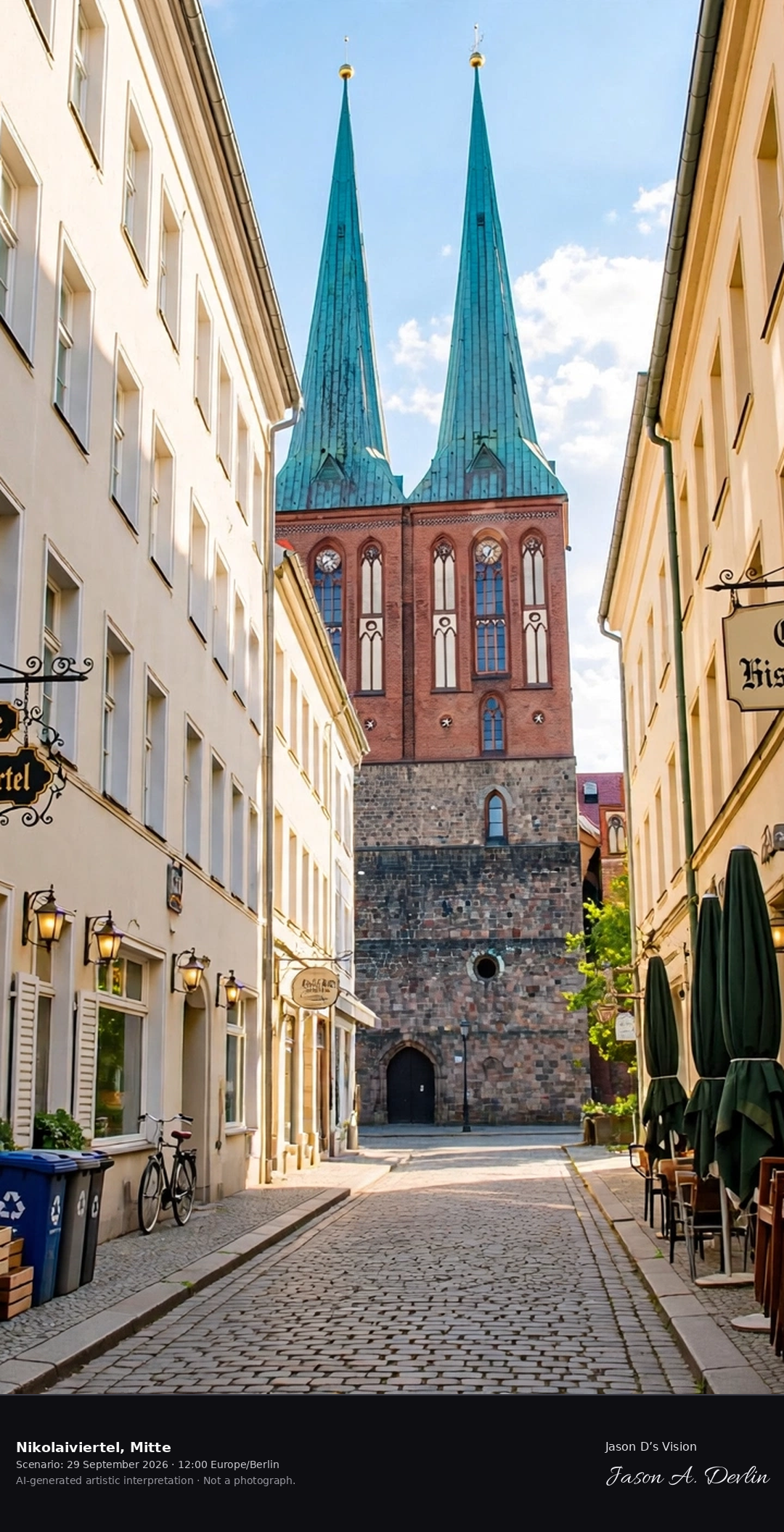
The Nikolaikirche's twin green-copper spires rise at the end of a wet cobbled lane in Berlin's Nikolaiviertel, the brick Gothic towers warmly lit from within. Historic-style houses line the lane — a weinstube and café with wrought-iron hanging signs and glowing shopfront windows to the left, café umbrellas folded for the night to the right. Lanterns reflect off the rain-darkened cobbles under an overcast night sky, the empty street giving the old quarter a hushed, after-hours mood.
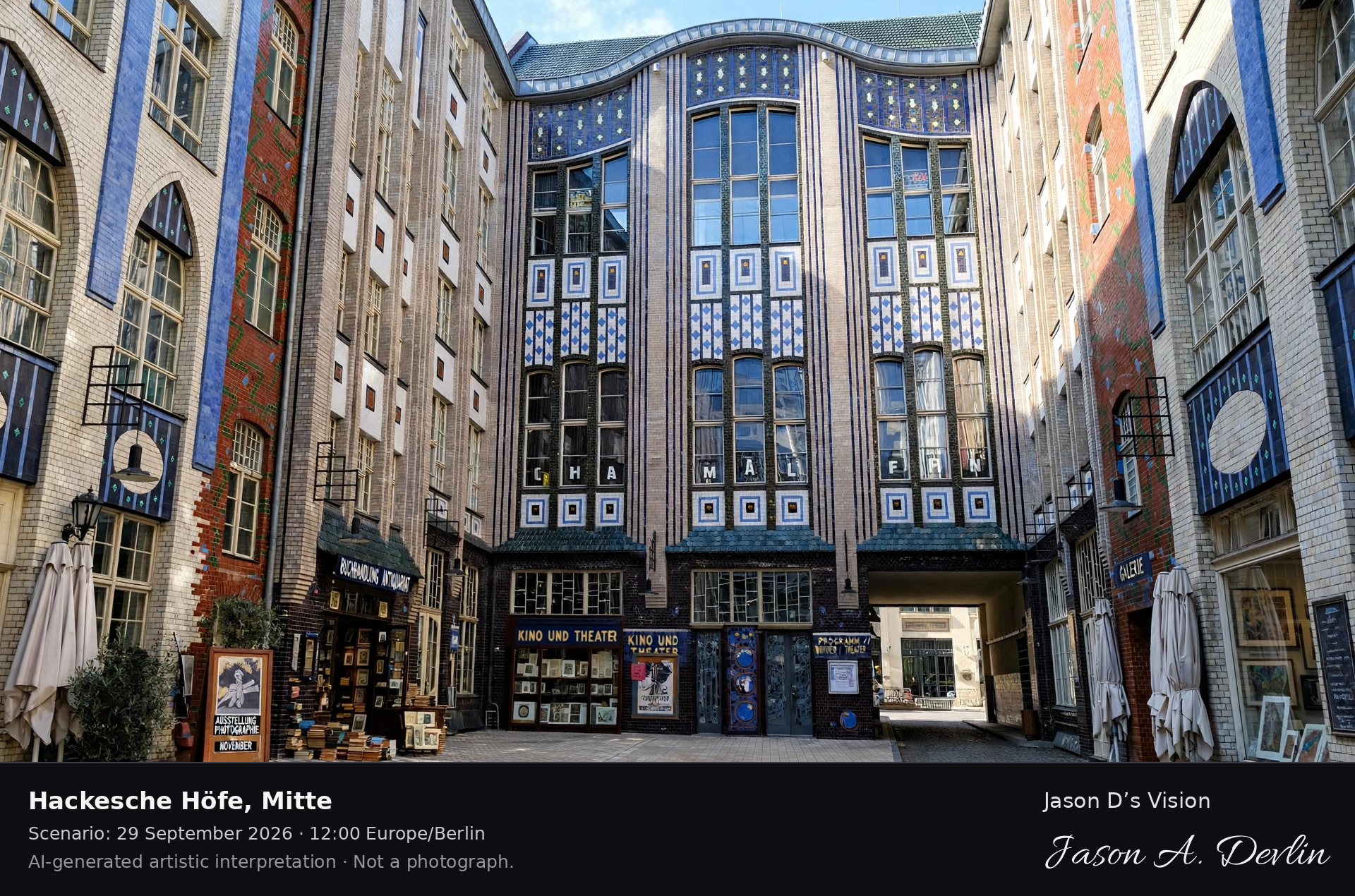
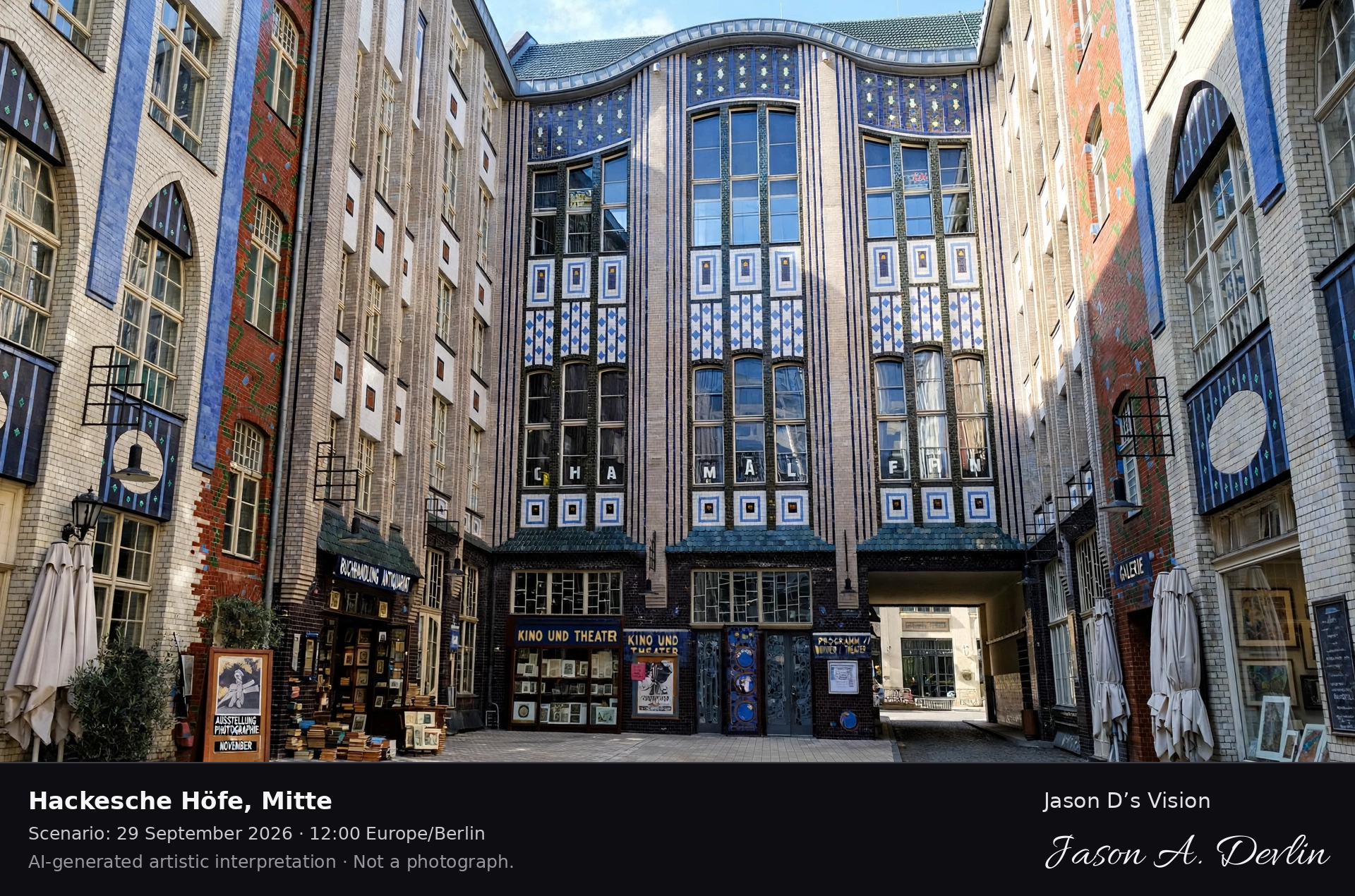
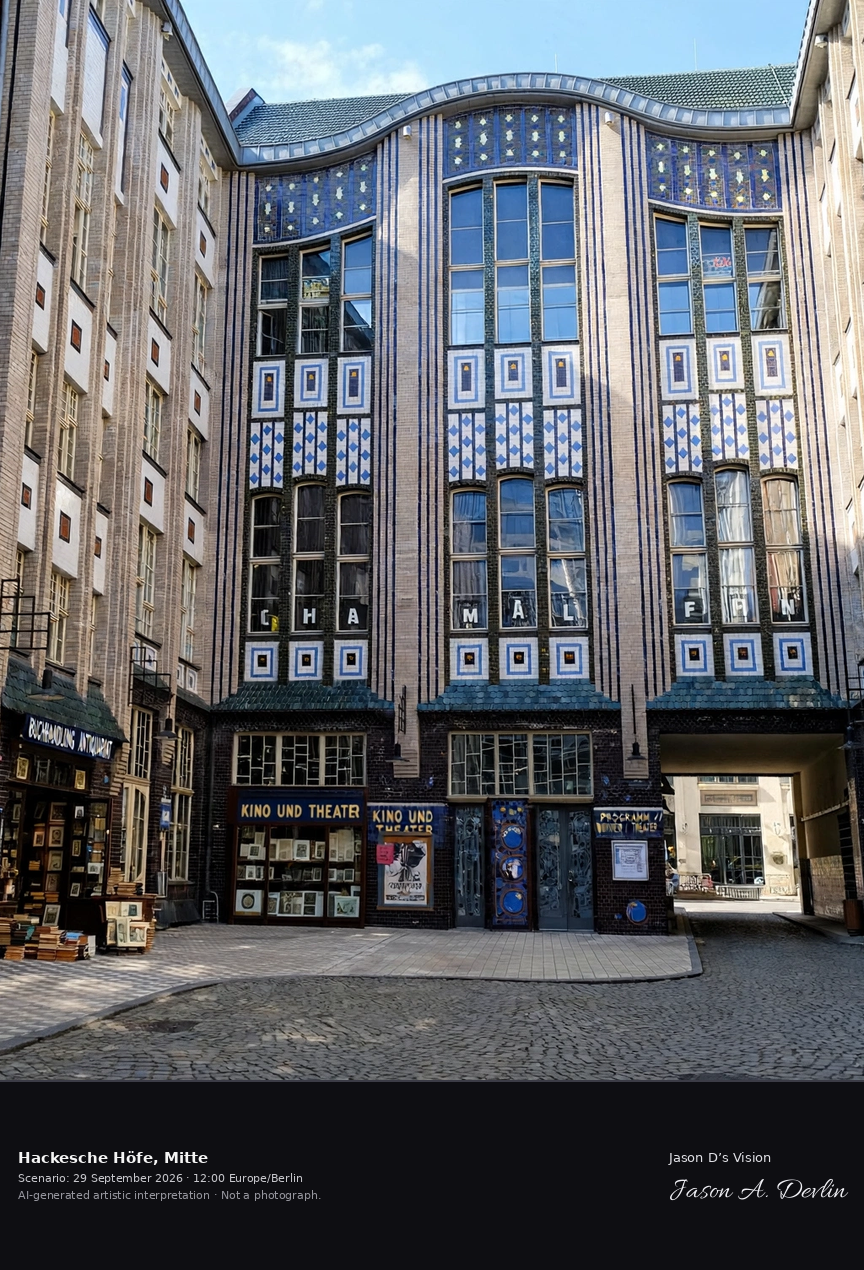
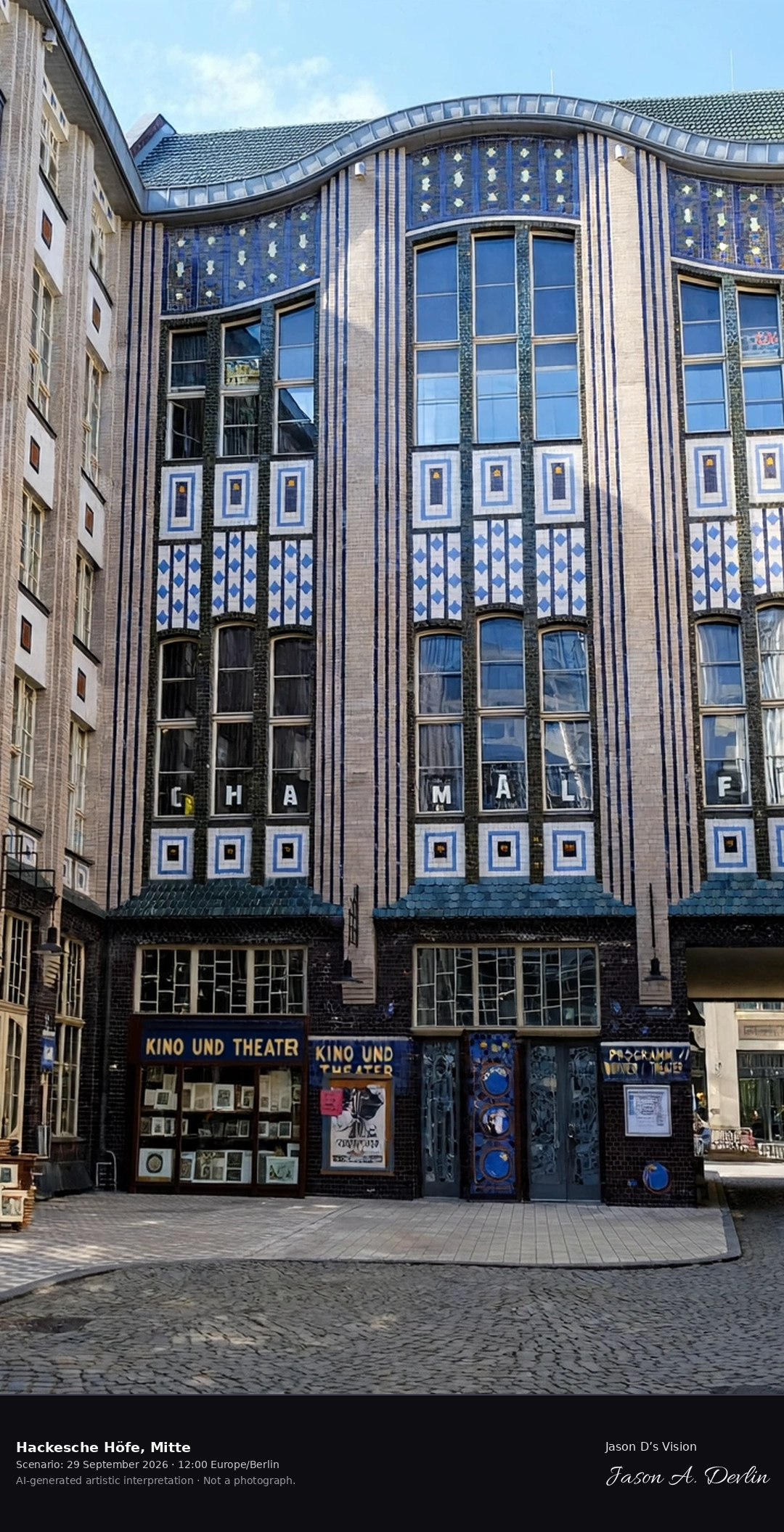
The August Endell courtyard rises on all sides in its signature glazed blue-and-white faience tiles, geometric frieze panels running across the upper floors and a curved, tiled gable anchoring the center of the frame. Warm lantern light spills from the bookshop and gallery doorways at street level while the wet cobbles mirror every glow. Under the overcast 03:45 night sky the Art Nouveau façades read dark and graphic, the courtyard empty and hushed.
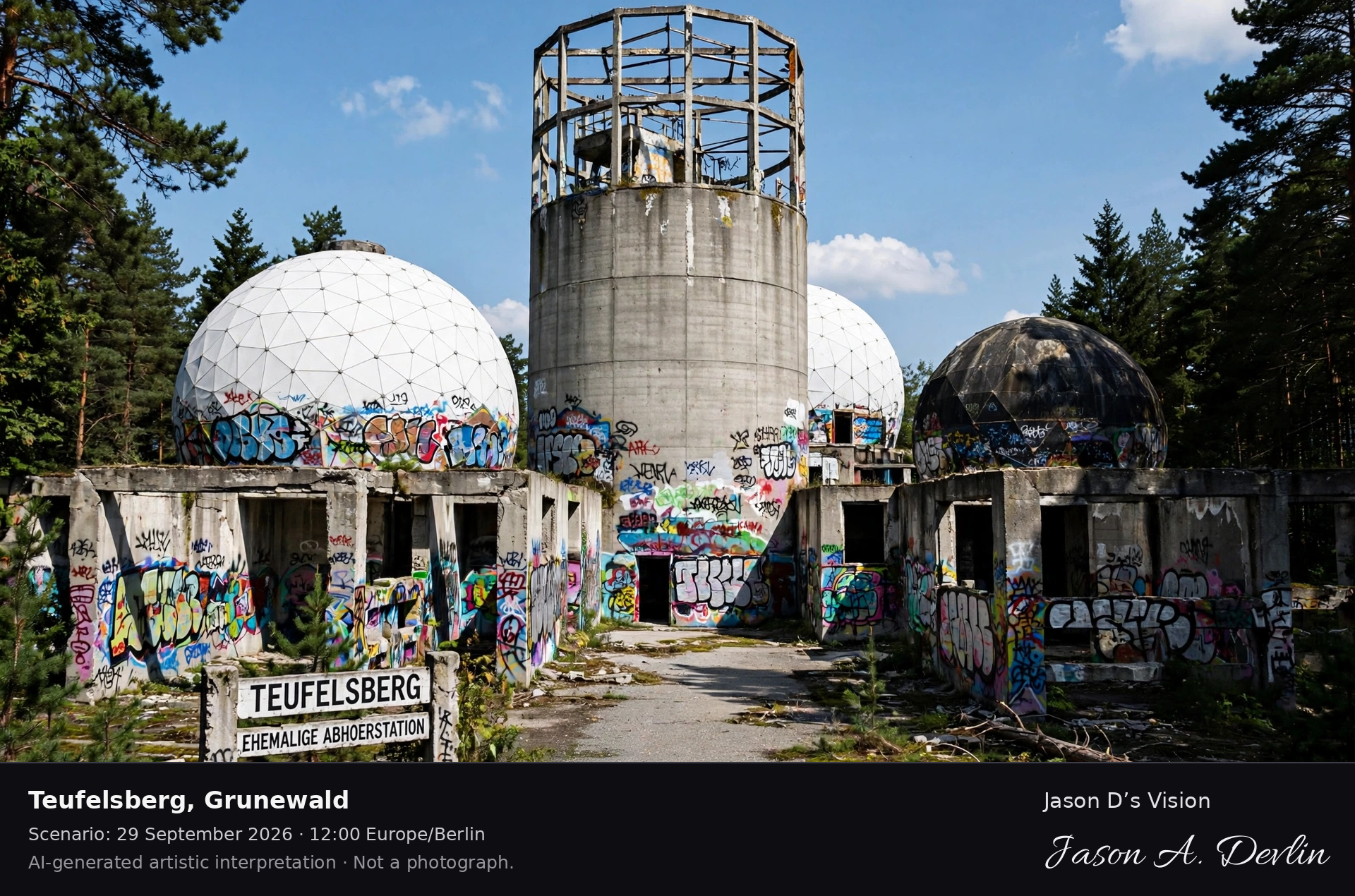
Former listening station · AI-generated artistic interpretation
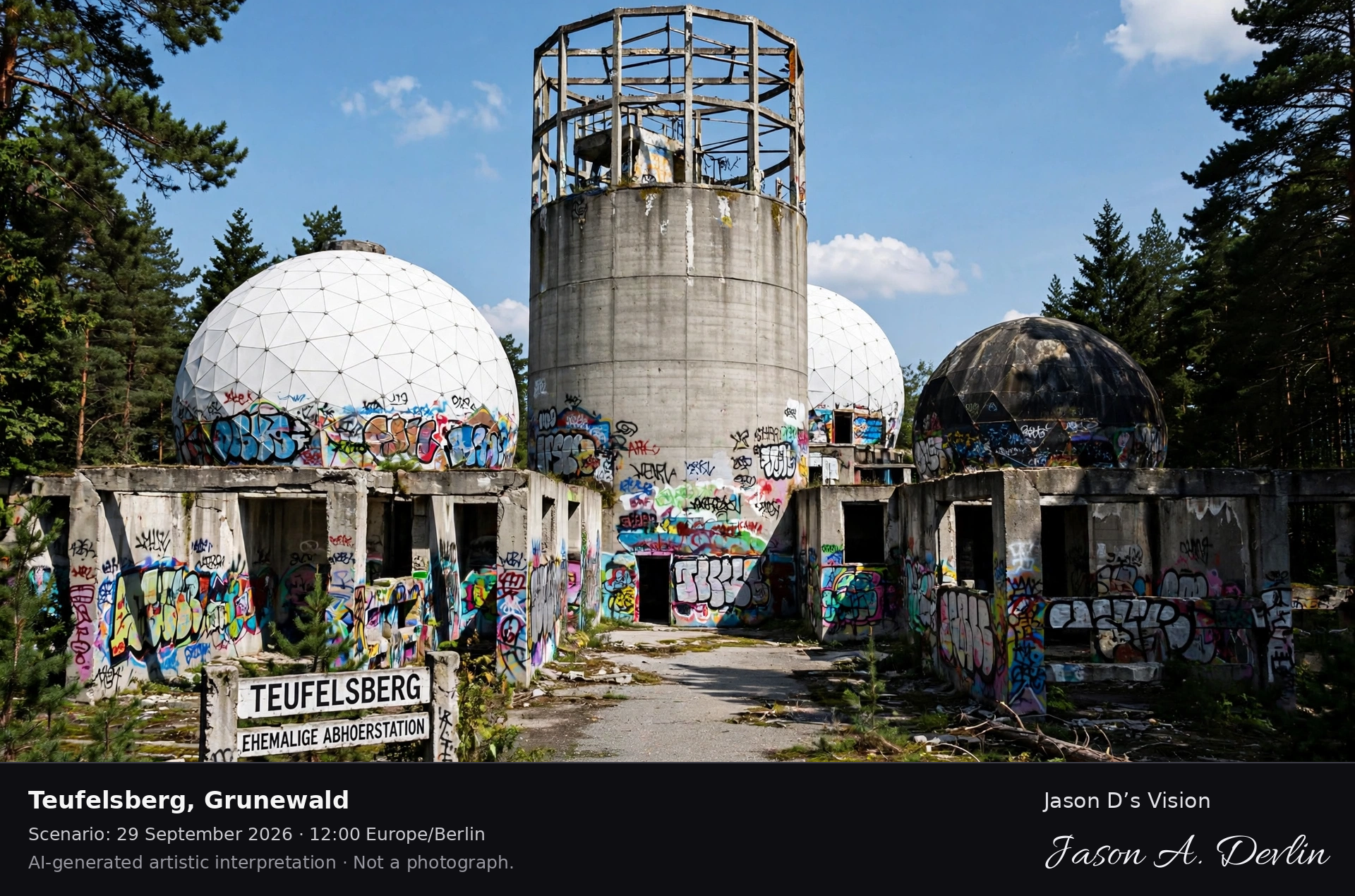
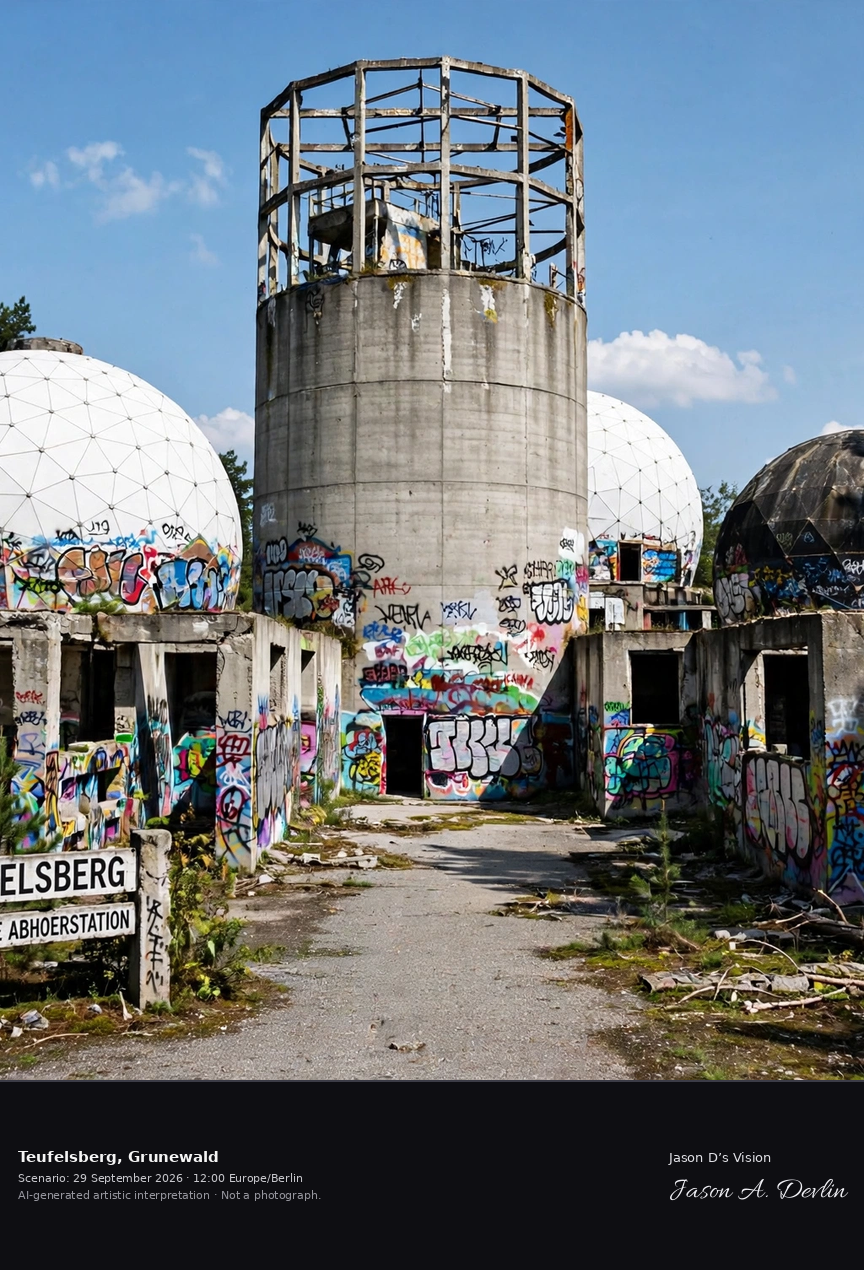
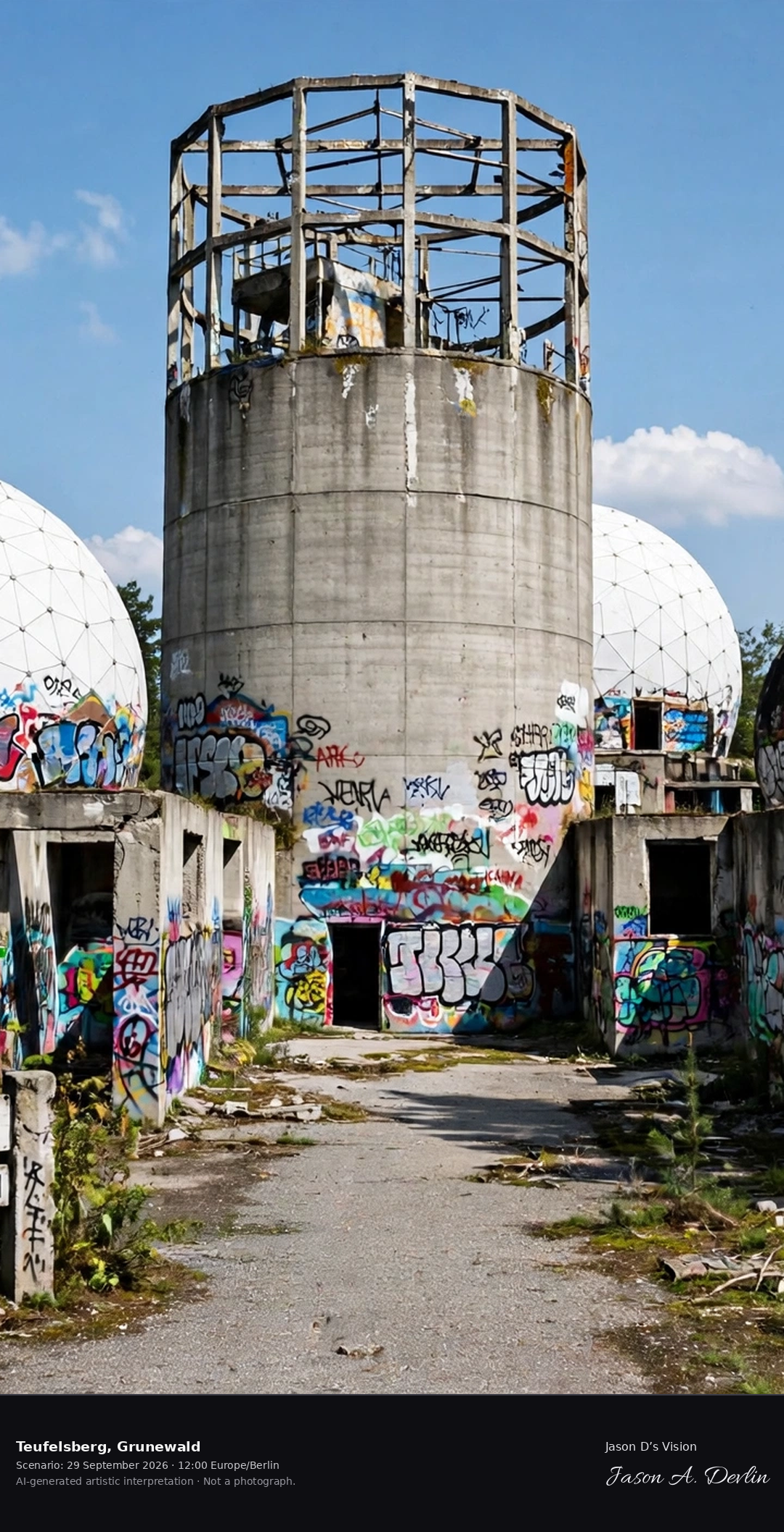
The Cold War listening station rises out of the Grunewald pines: torn white radome domes crowning graffiti-tagged concrete towers, the entrance sign TEUFELSBERG · EHEMALIGE ABHÖRSTATION visible at the lower left. Rain streaks through the beam-lit darkness while puddles on the broken ground mirror the station lights. The skeletal annex blocks and exposed steel framing give the whole scene its signature derelict monumentality.
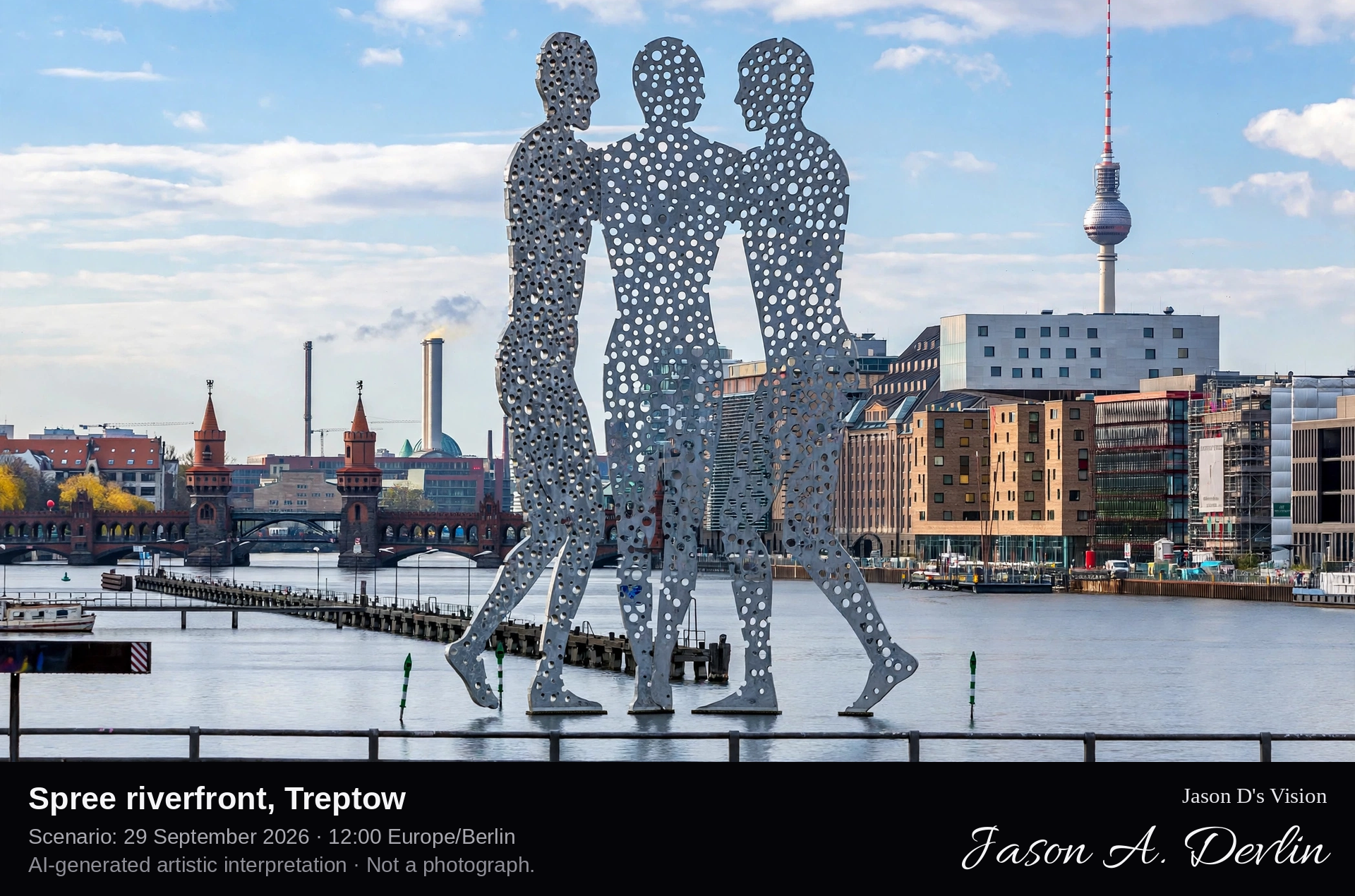
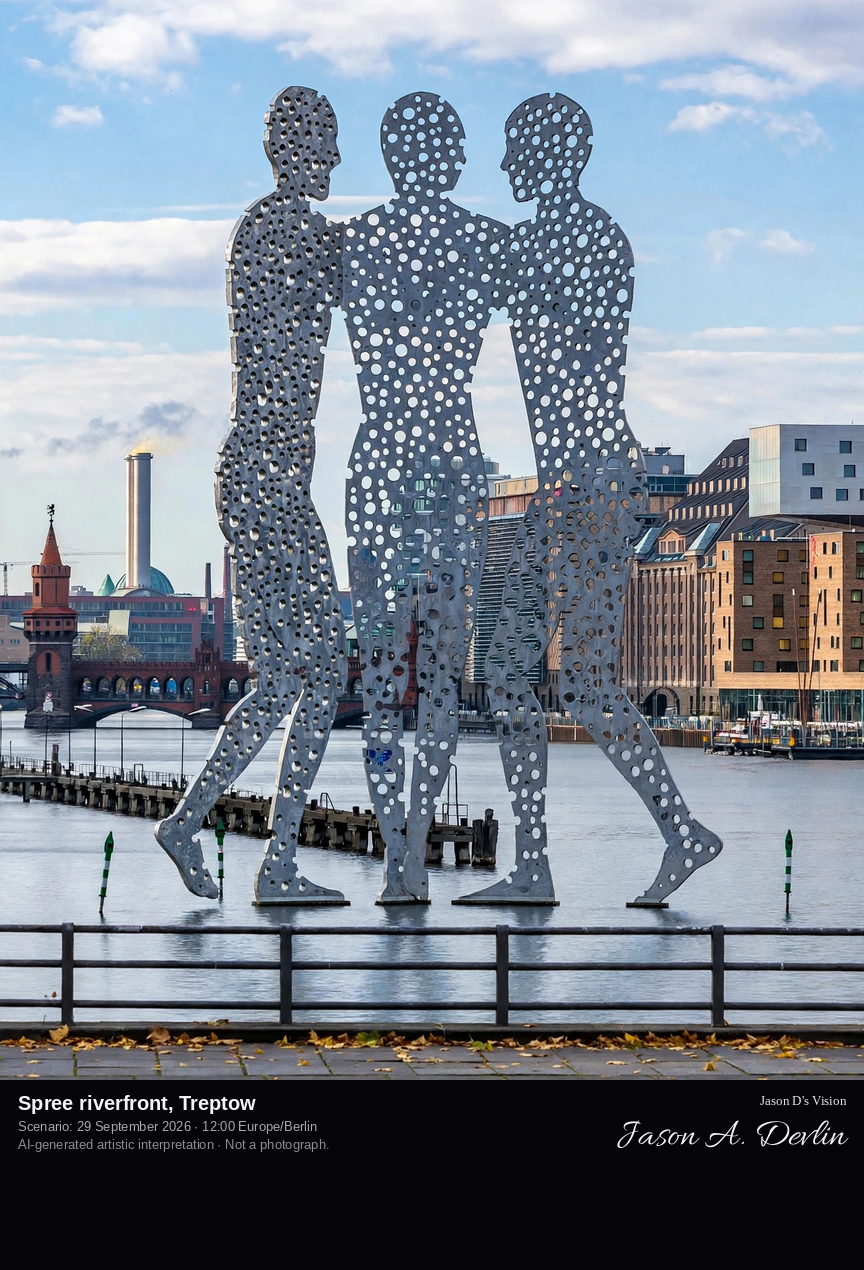
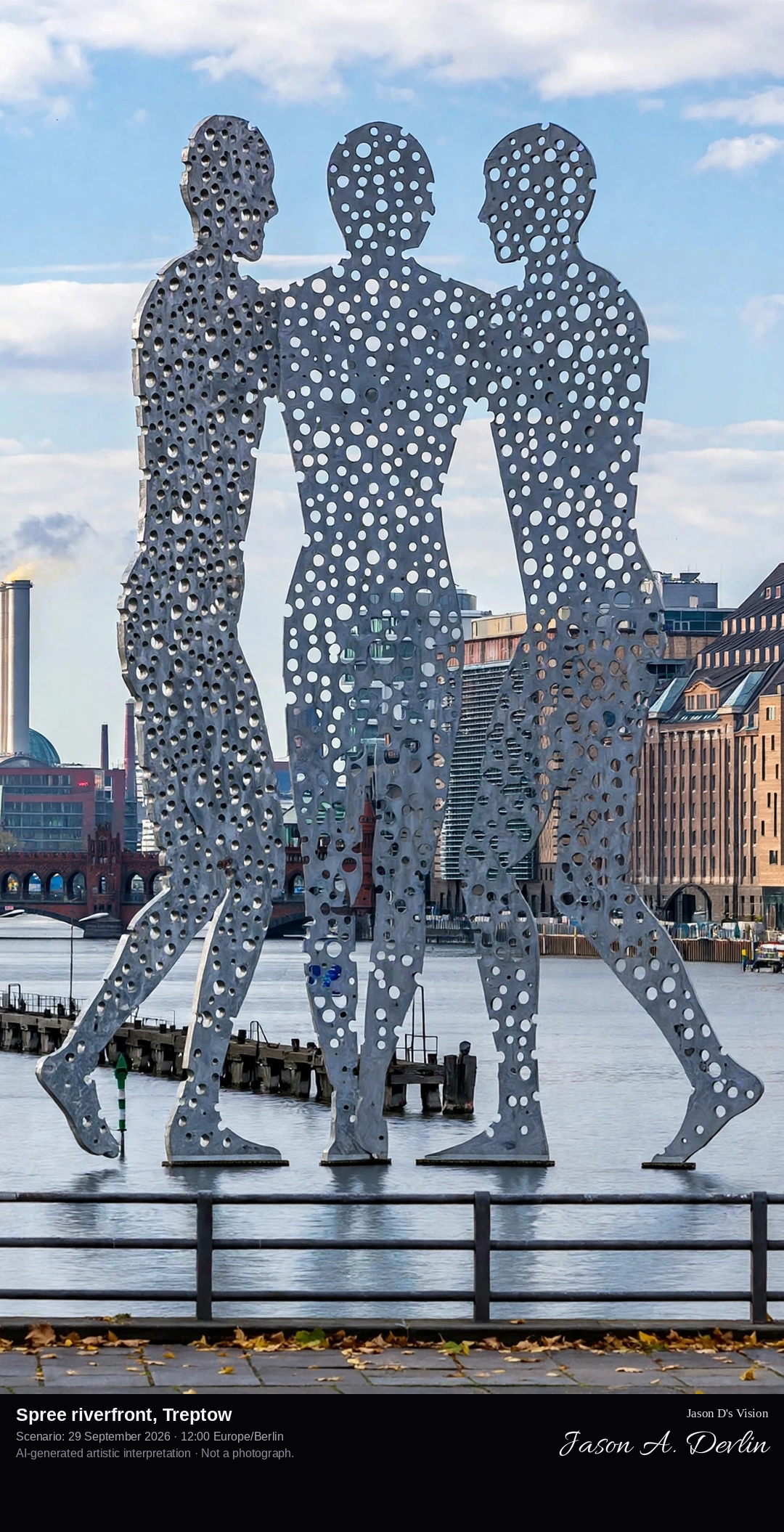
Molecule Man and city backdrop · AI-generated artistic interpretation
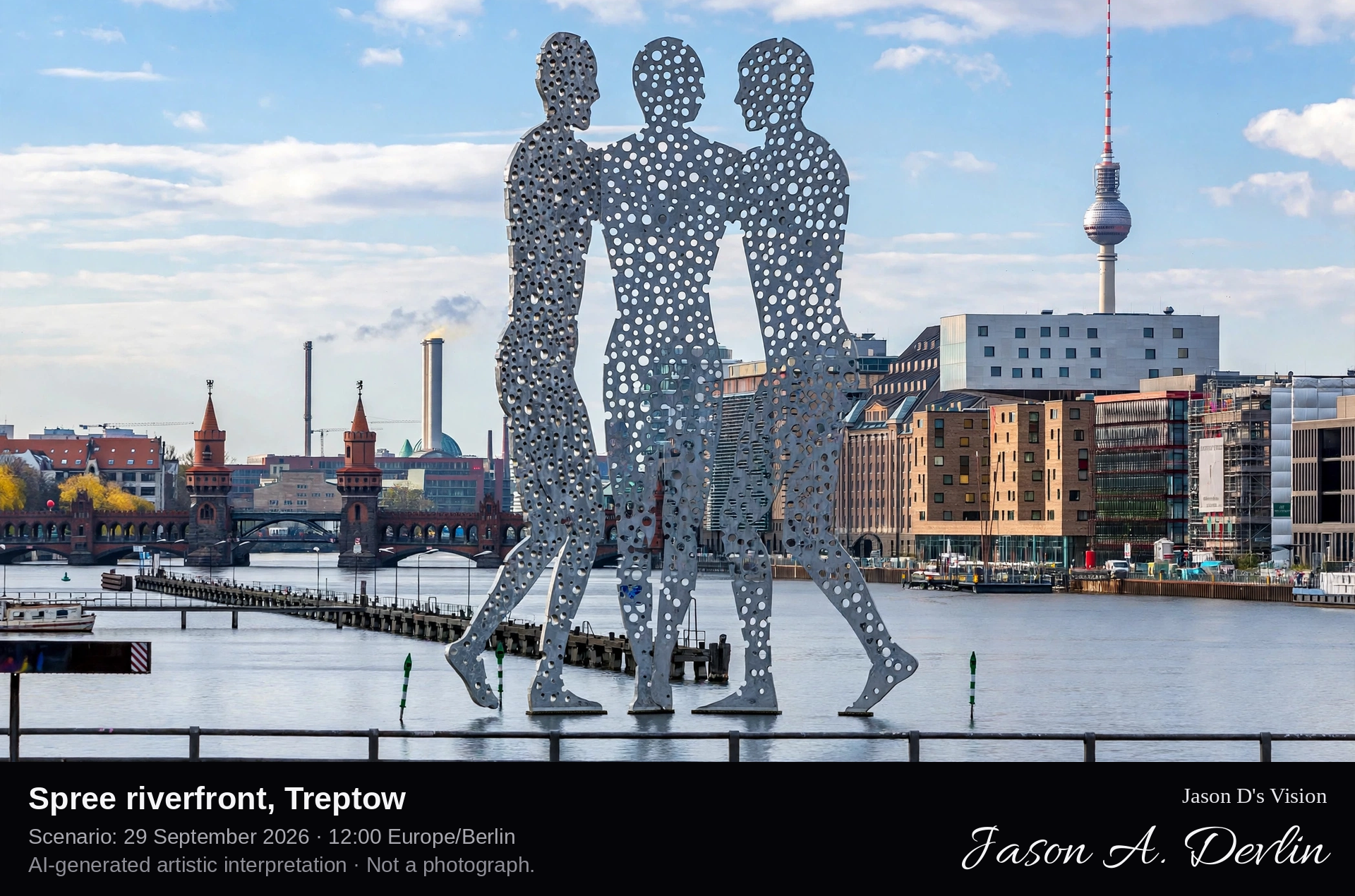
The perforated aluminum figures of Molecule Man stand mid-river with city lights glowing through their bodies, the illuminated Oberbaumbrücke arches stretching left and the Berliner Fernsehturm spire rising at the right edge. The Spree mirrors the riverside lights while the partly cloudy 04:00 sky holds the last blue of night above the skyline. A riverside railing and fallen autumn leaves anchor the tourist viewpoint in the foreground.
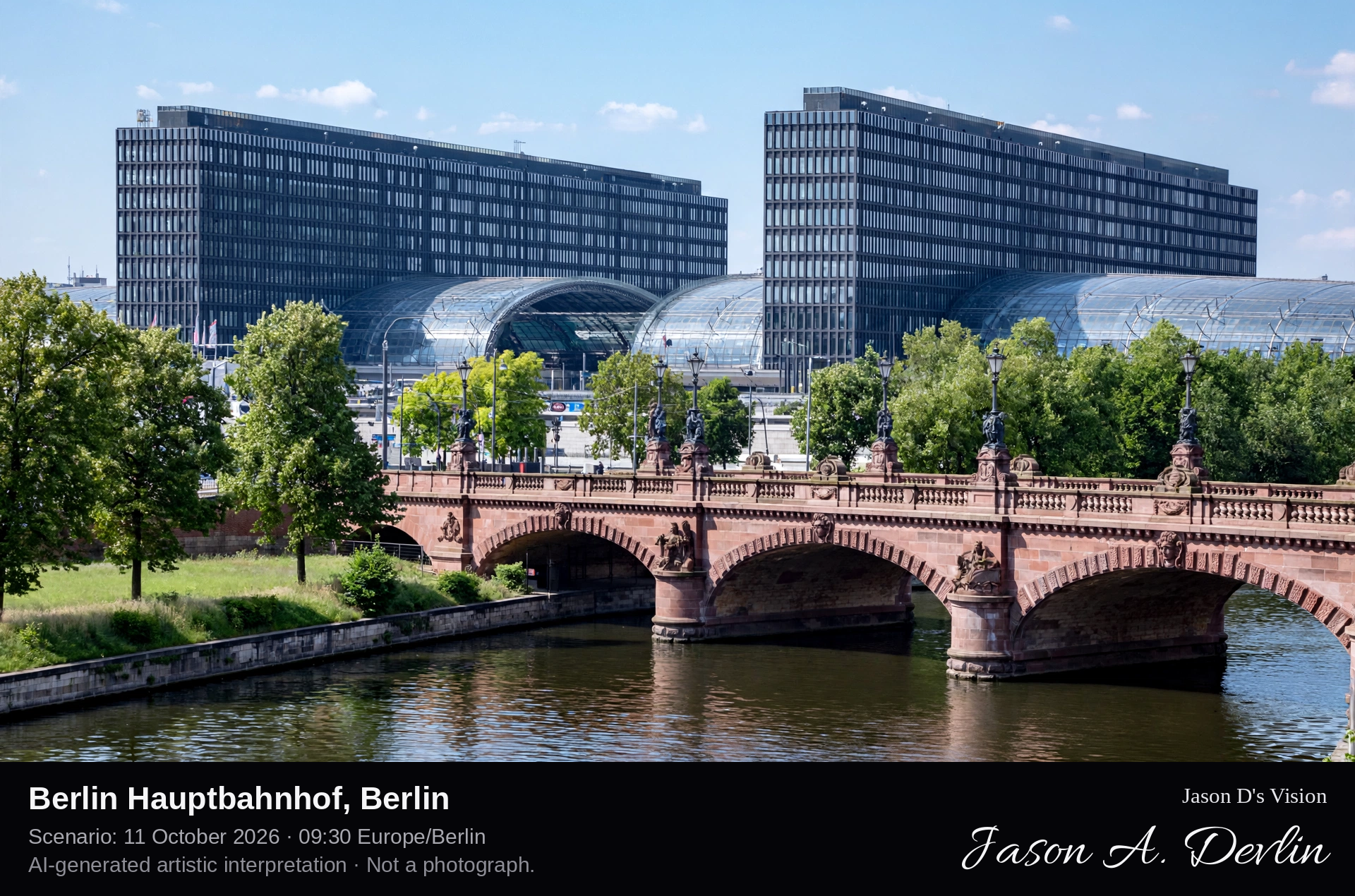
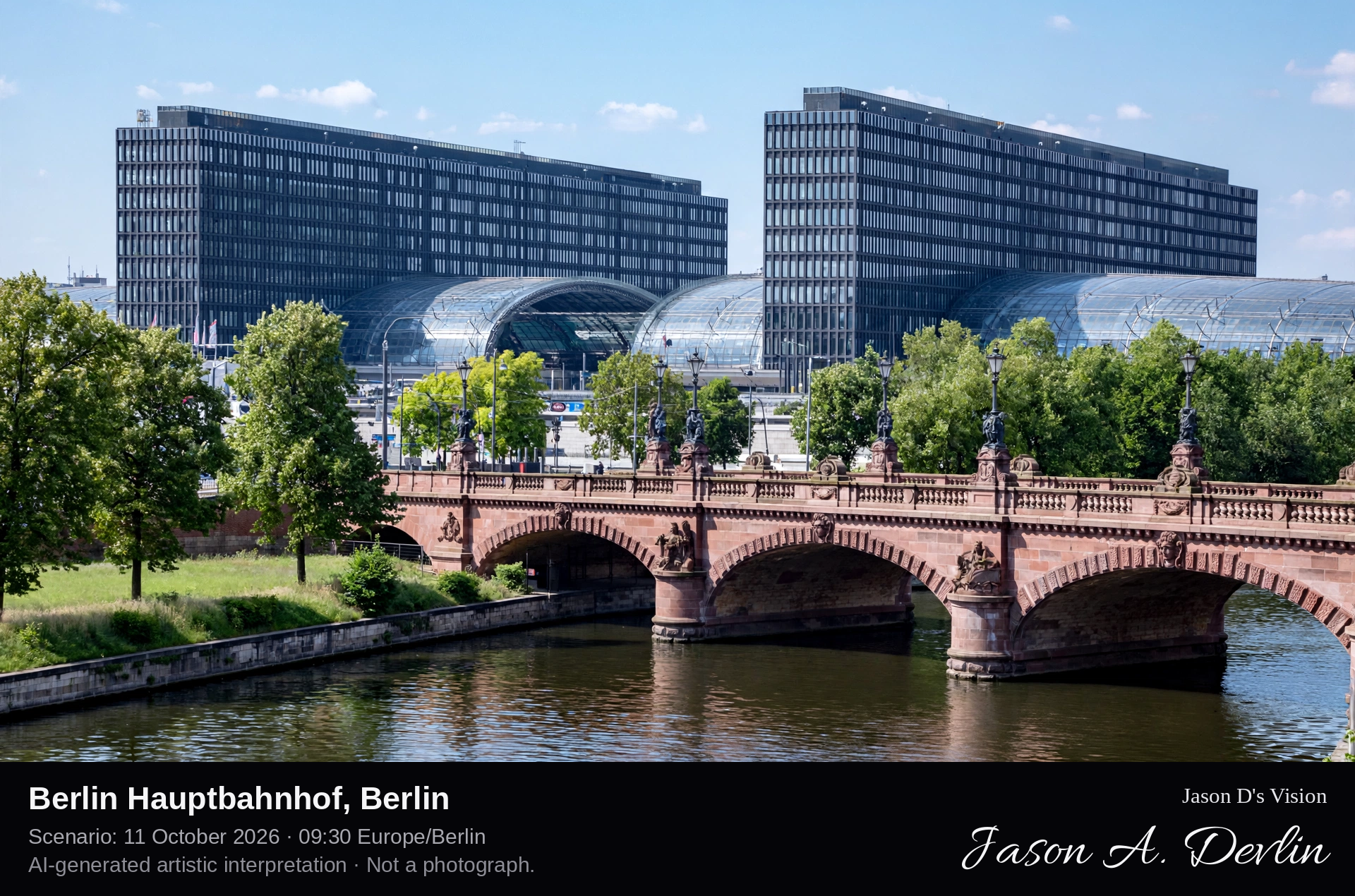
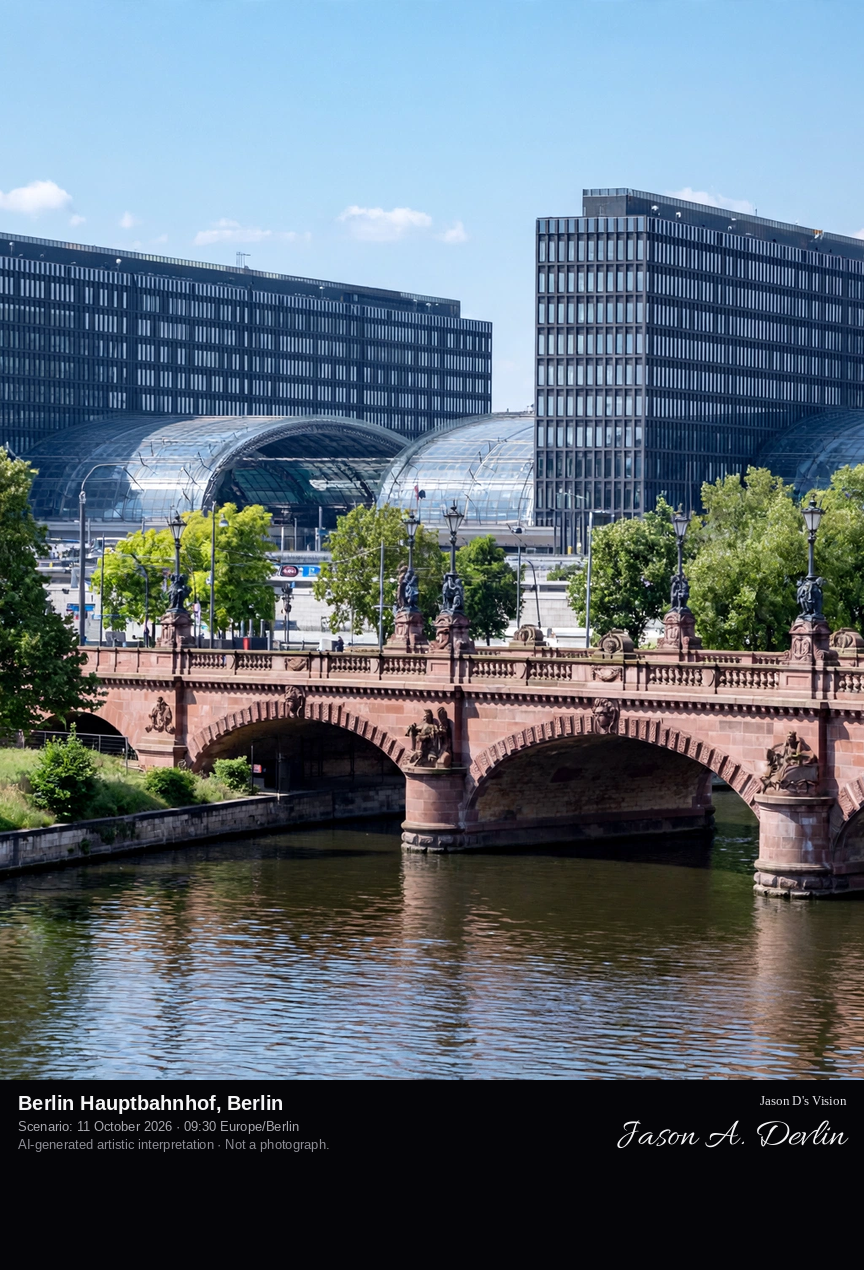
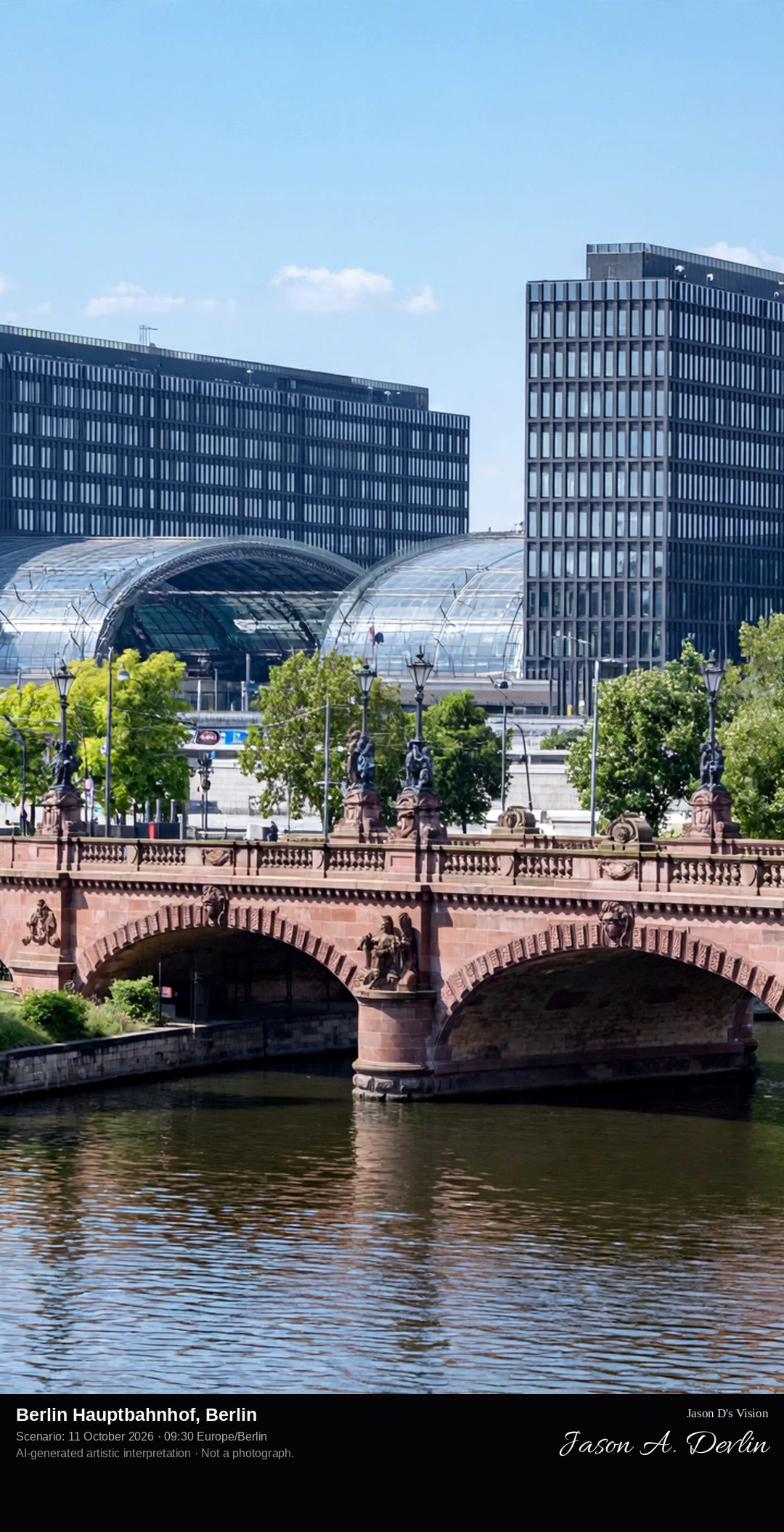
The twin curved slabs striding over the glass train hall · AI-generated artistic interpretation
Opened in 2006 on the site of the old Lehrter Bahnhof, Berlin's main station stacks several levels of tracks beneath a great curved glass hall. Two bent office slabs bridge the hall, and some 300,000 travellers pass through the station on a busy day.
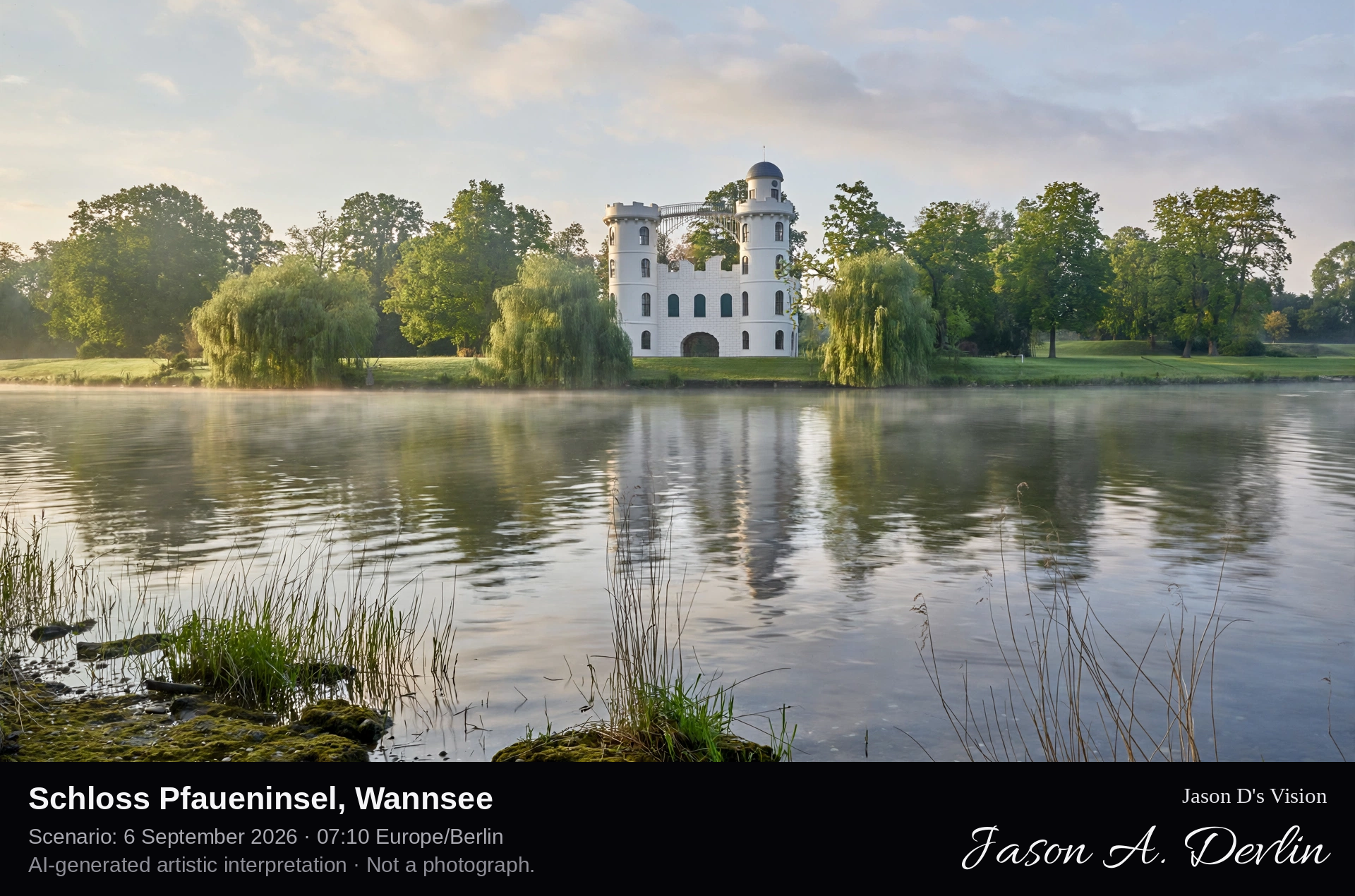
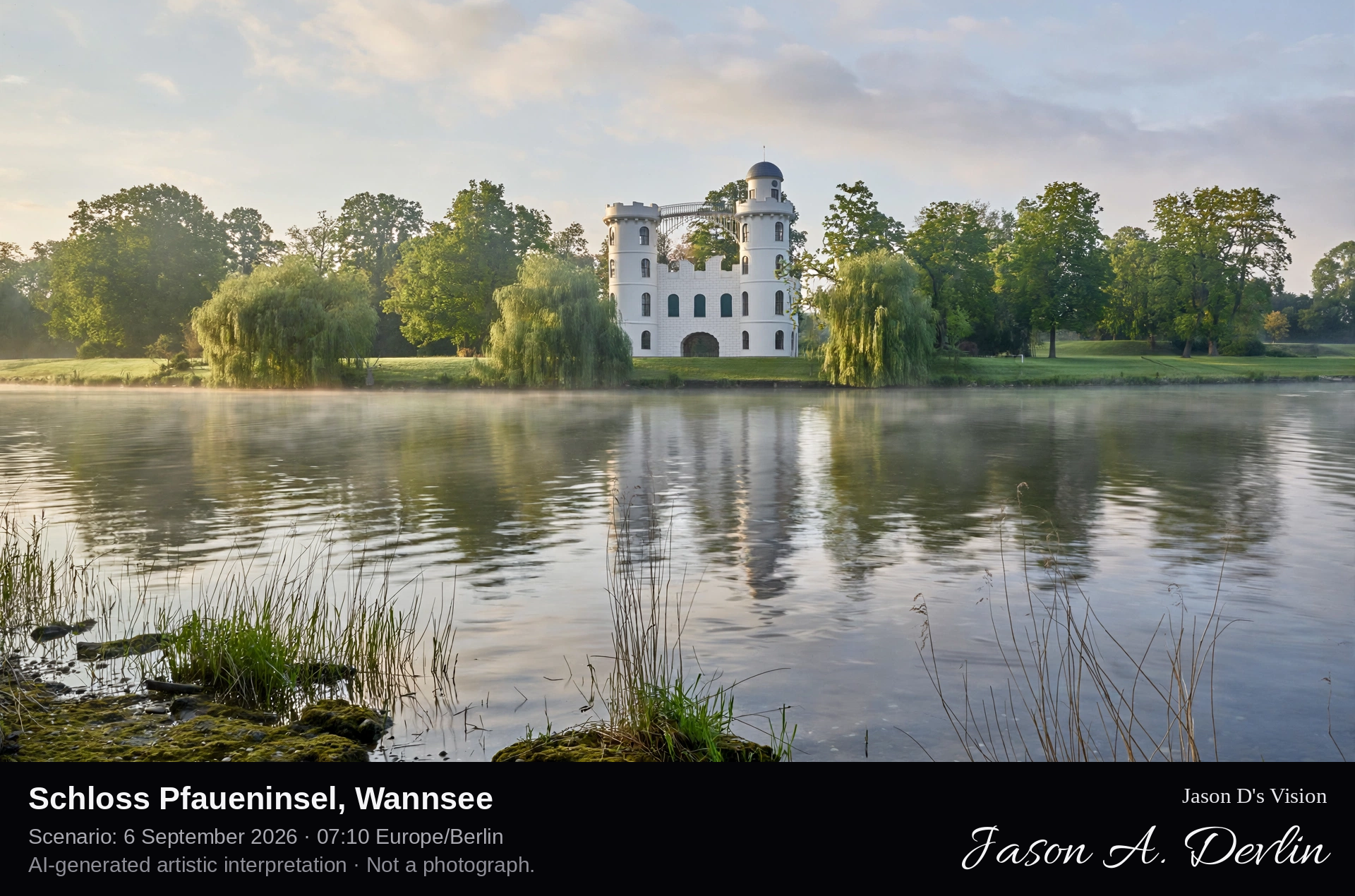
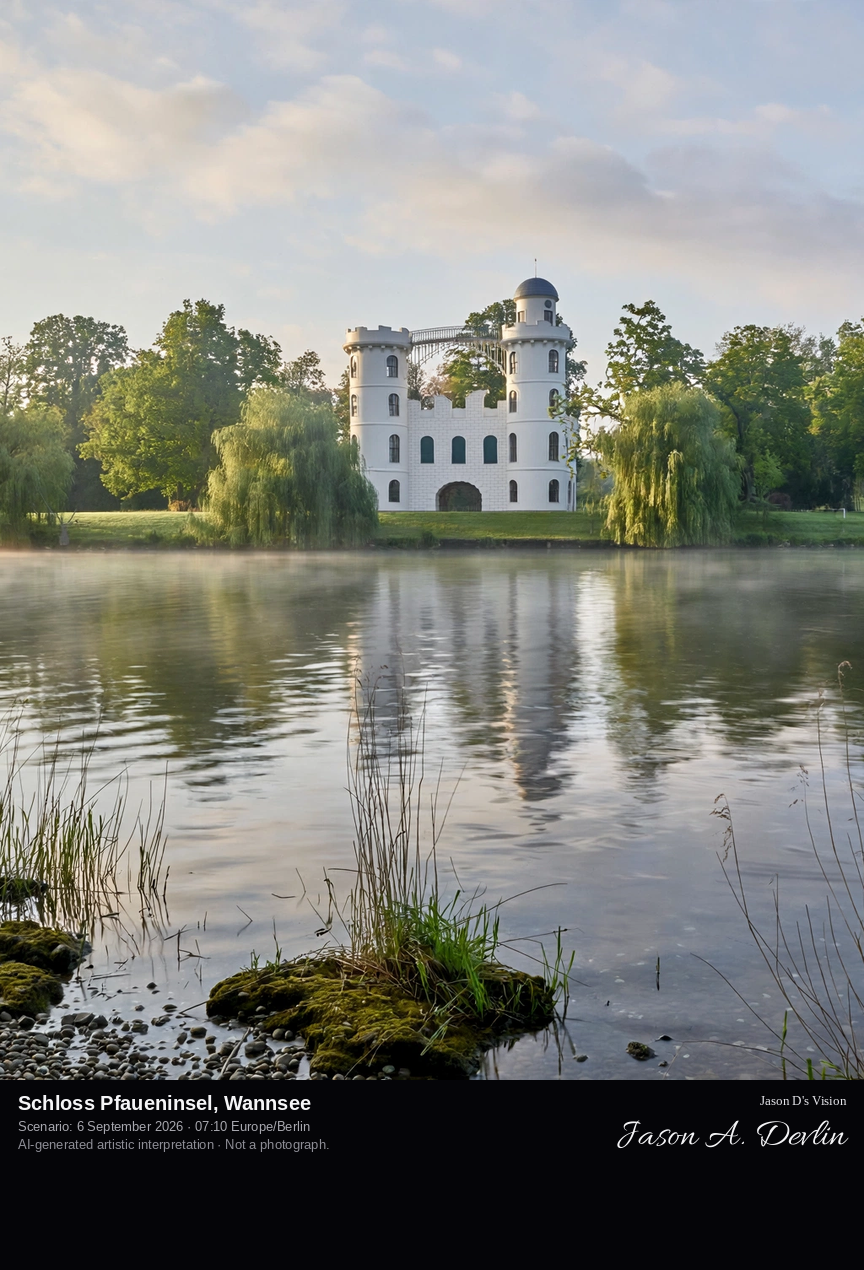
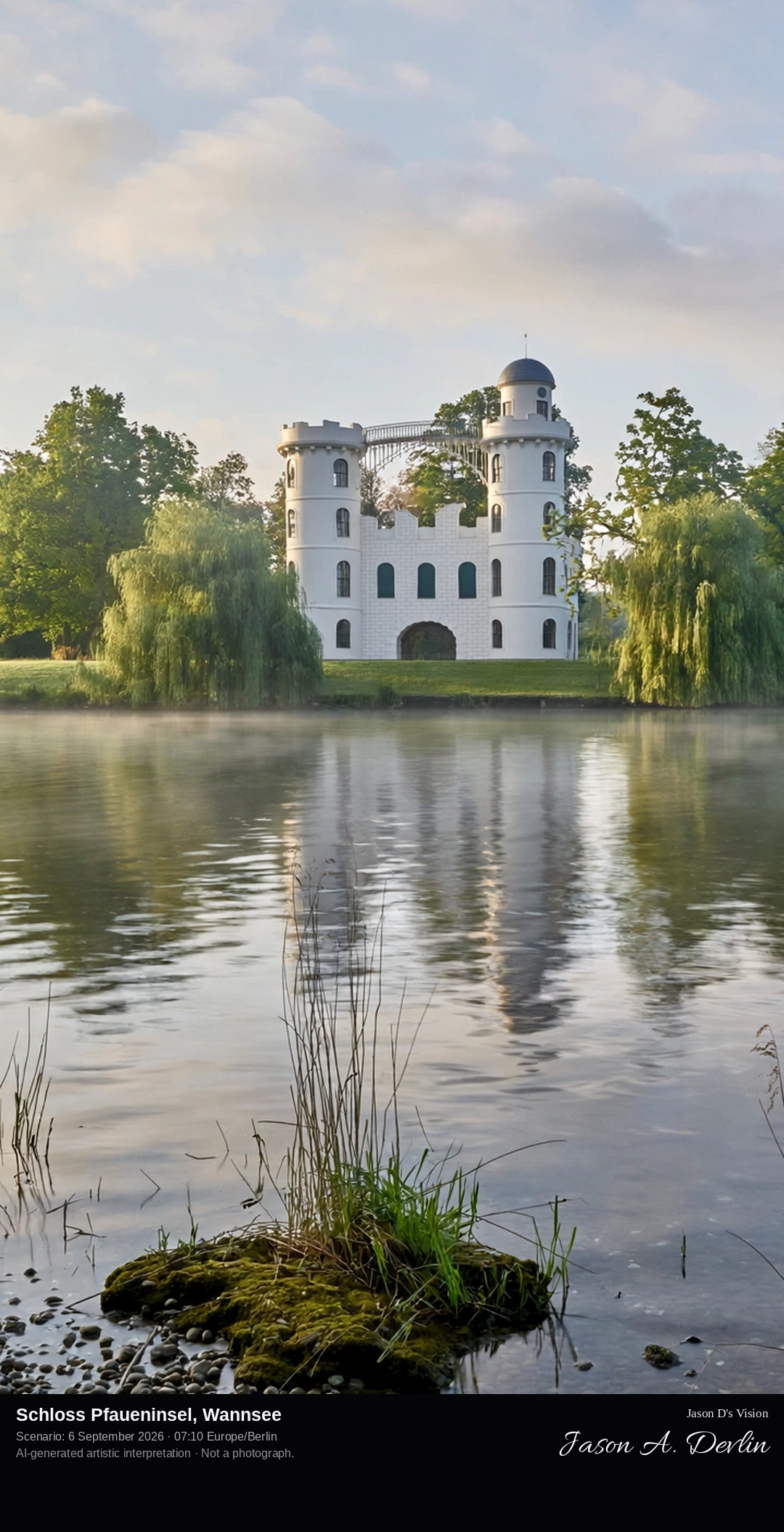
Island palace and parkland · AI-generated artistic interpretation
The little white palace stands on the shore of Peacock Island in the Havel, its two round towers joined high up by a slender bridge. Built in 1794–95 for Friedrich Wilhelm II as a romantic folly in the style of a ruined Roman villa, the timber castle was designed to be admired from the water. Willows and old park trees frame the lawns while the morning mist still lies on the river.
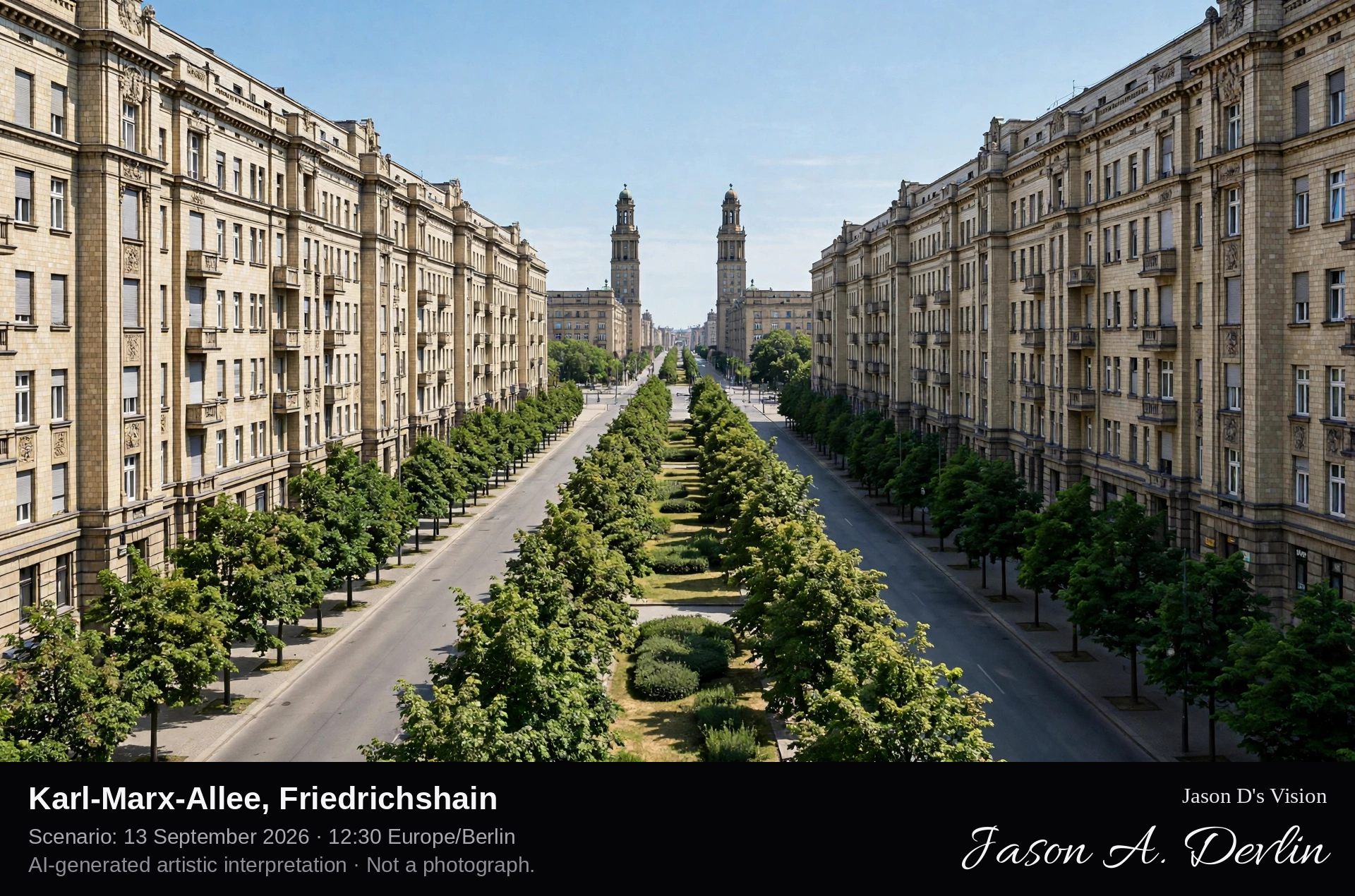
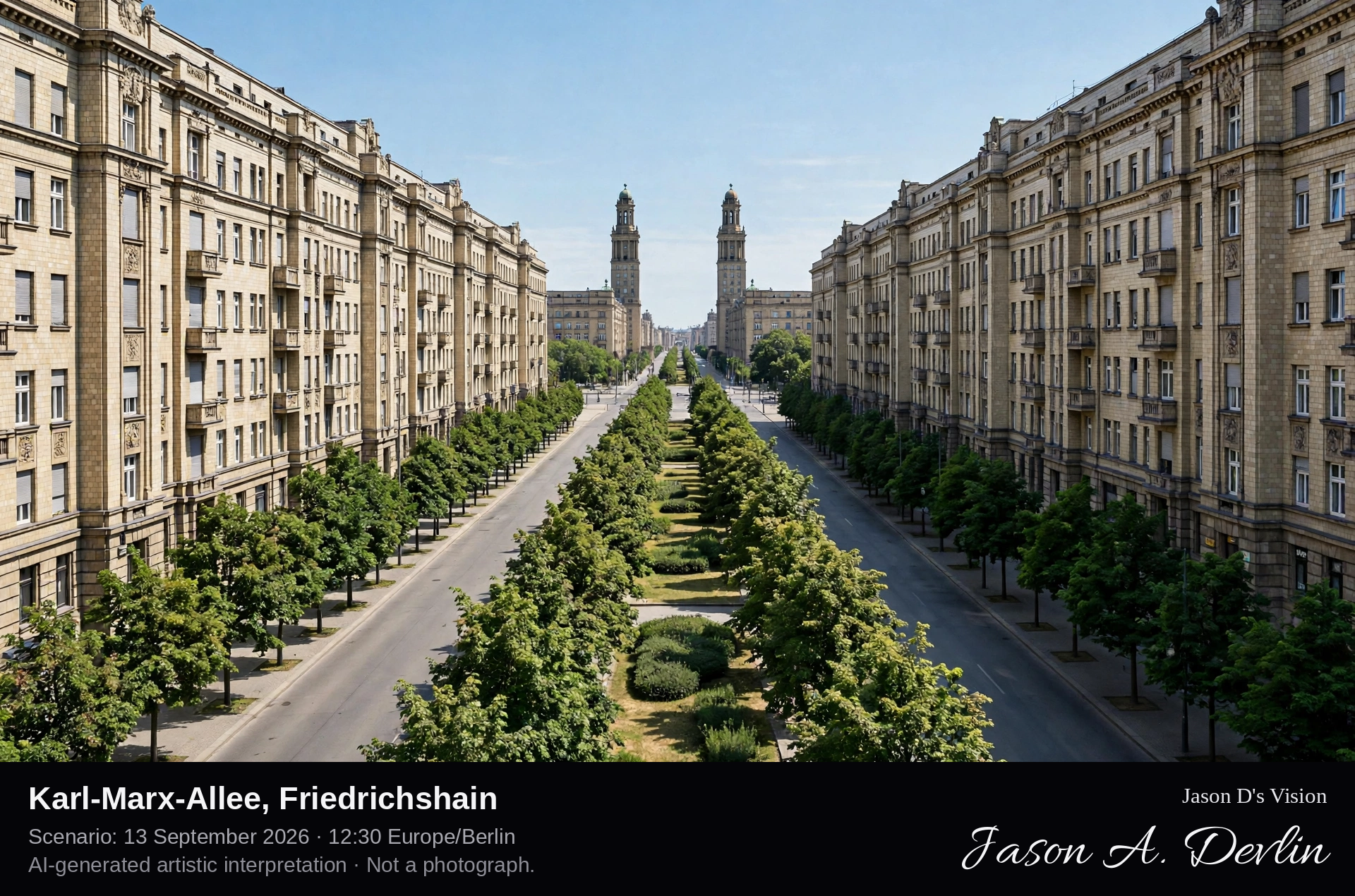
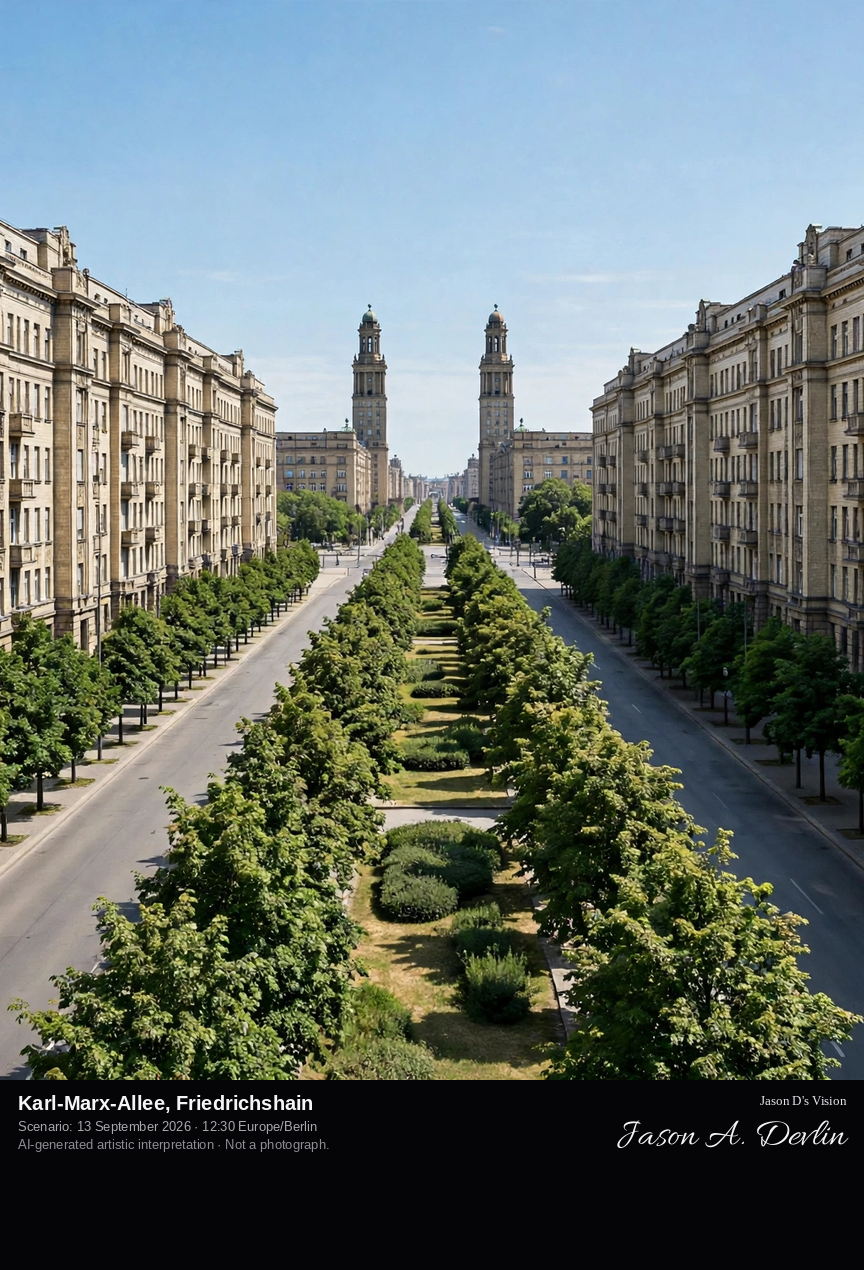
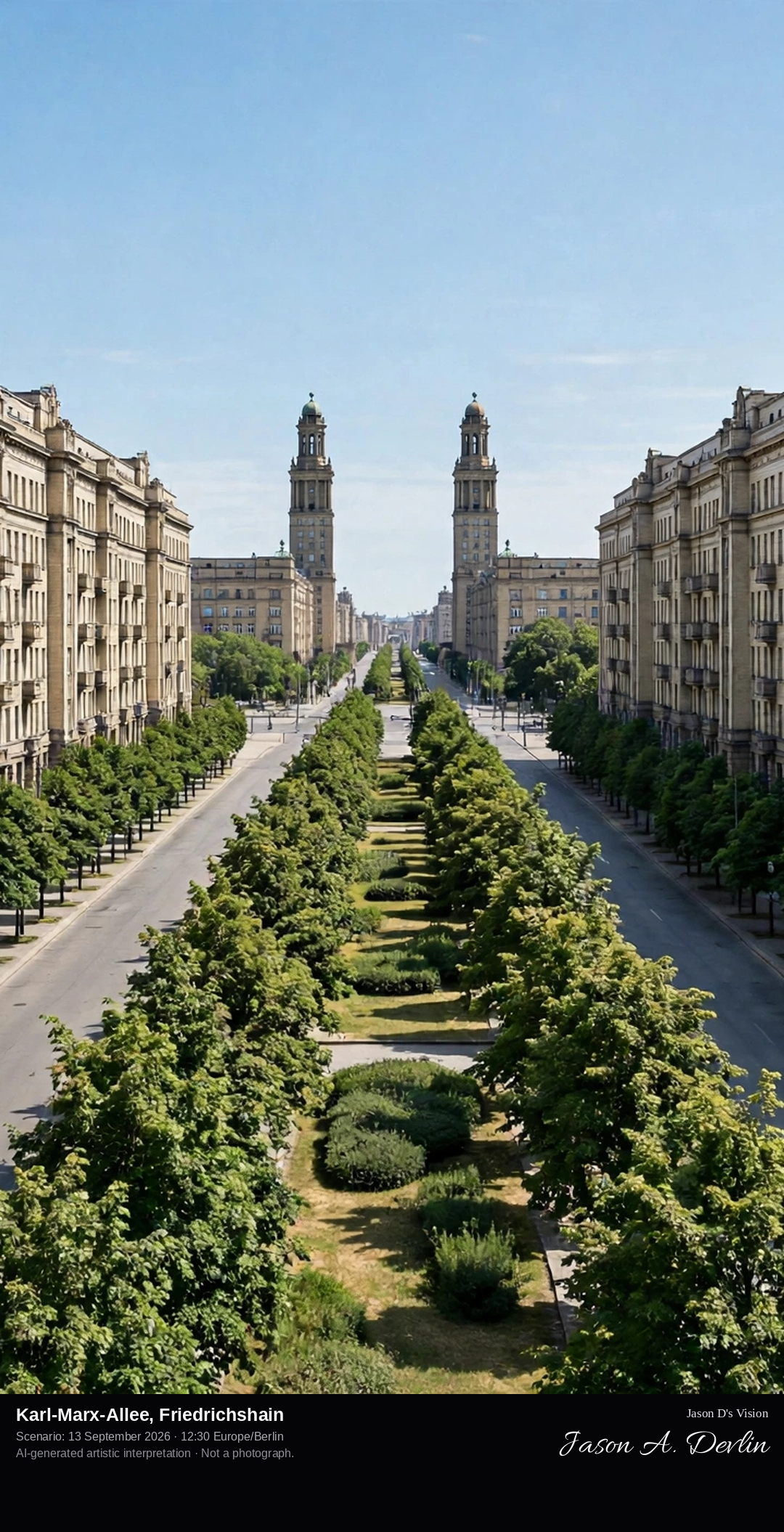
The great boulevard runs east between the tiled workers' palaces of the 1950s, its tree-planted central reservation drawing the eye to the twin domed towers of Frankfurter Tor. Built as Stalinallee in the socialist classicist style, the avenue's ceramic-tiled façades, balconies and relief panels were meant to give ordinary housing a palace front. Renamed for Karl Marx in 1961, it remains one of Europe's most imposing surviving monuments of that era's city building.
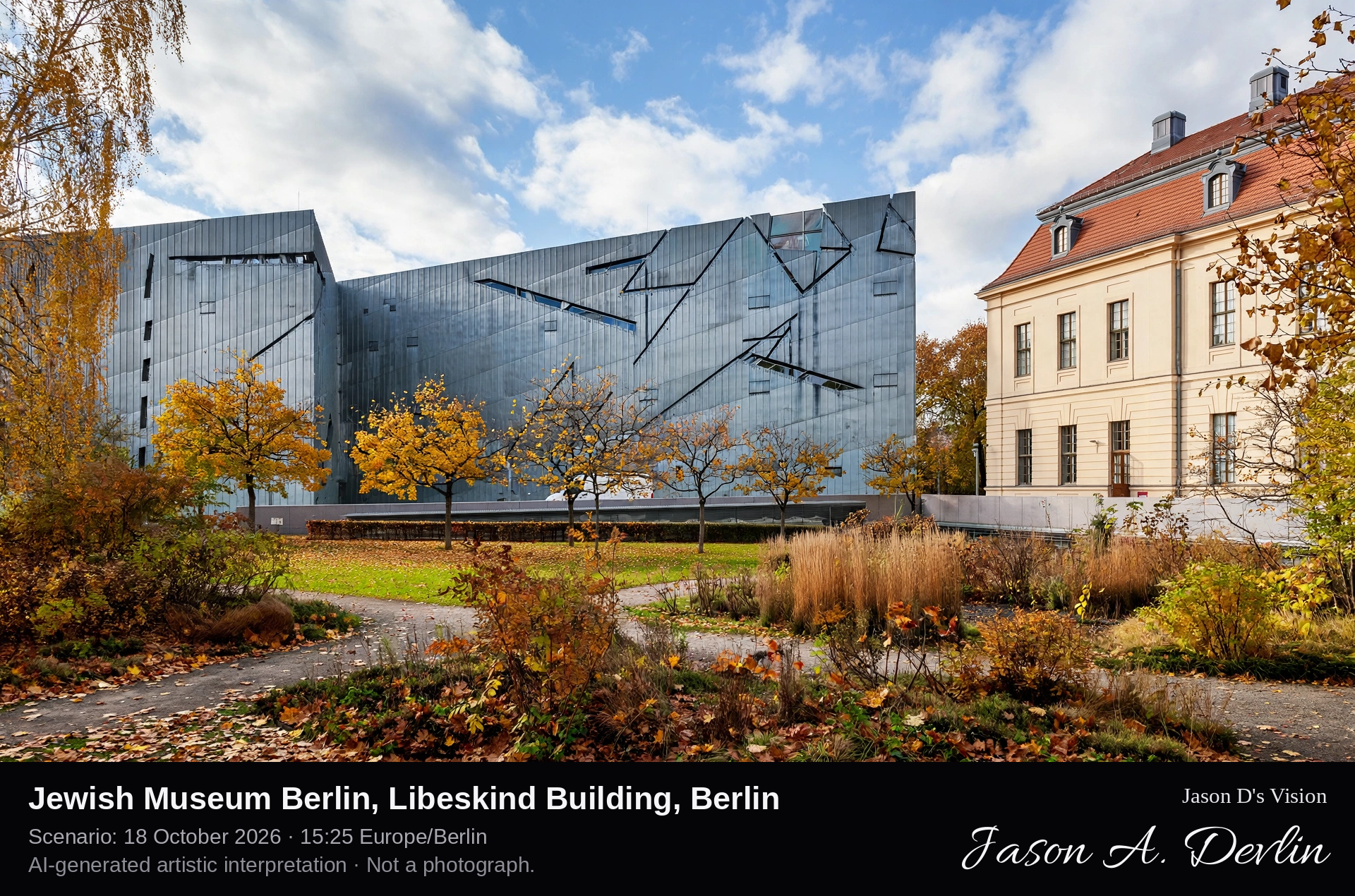
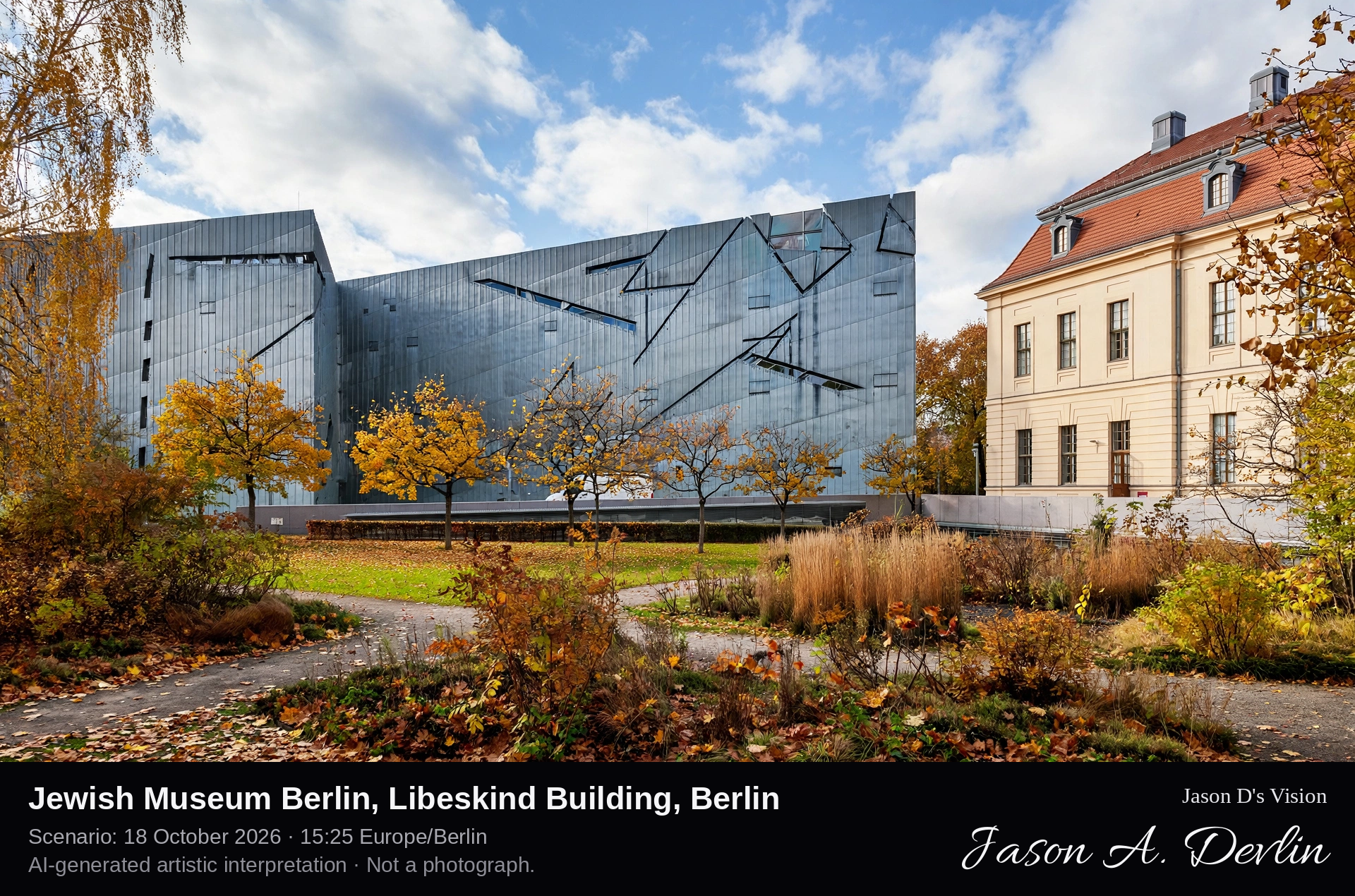
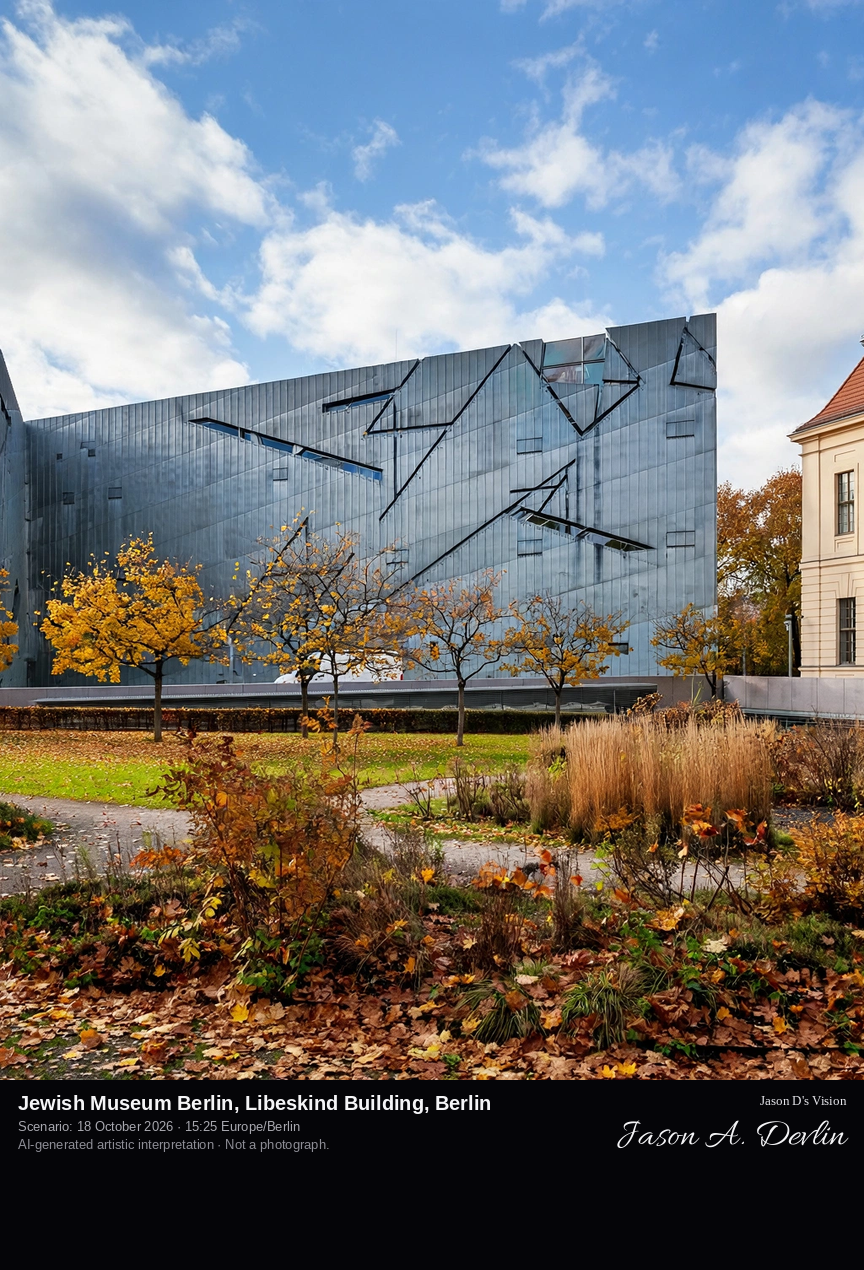
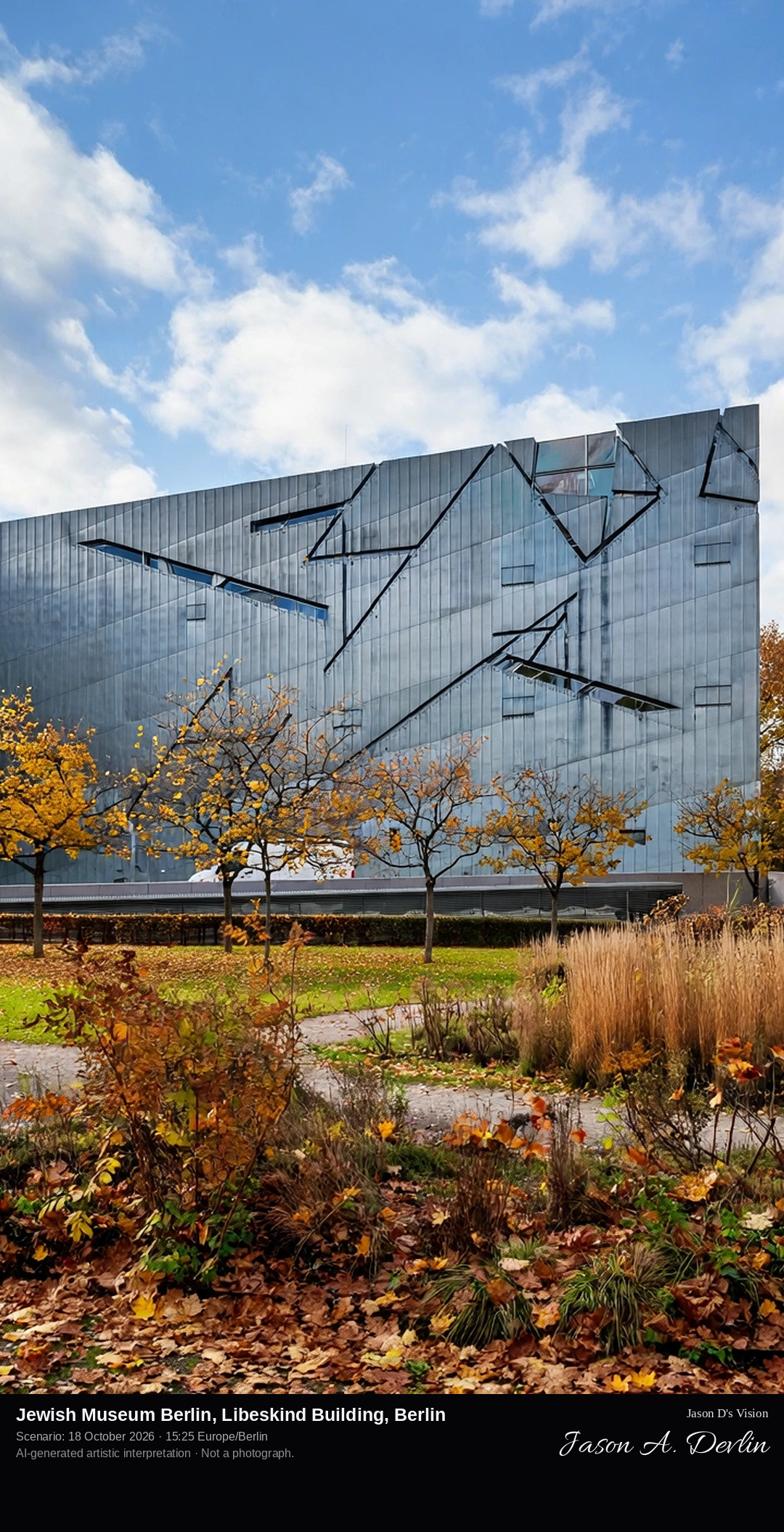
Zinc zigzag museum volume beside the Baroque Kollegienhaus · AI-generated artistic interpretation
Daniel Libeskind's building for the Jewish Museum Berlin, opened in 2001 beside the Baroque Kollegienhaus in Kreuzberg, zigzags across its garden in a silver-grey titanium-zinc skin cut by narrow diagonal window slits. His prize-winning design, Between the Lines, uses angled walls and empty voids to give architectural form to German-Jewish history.
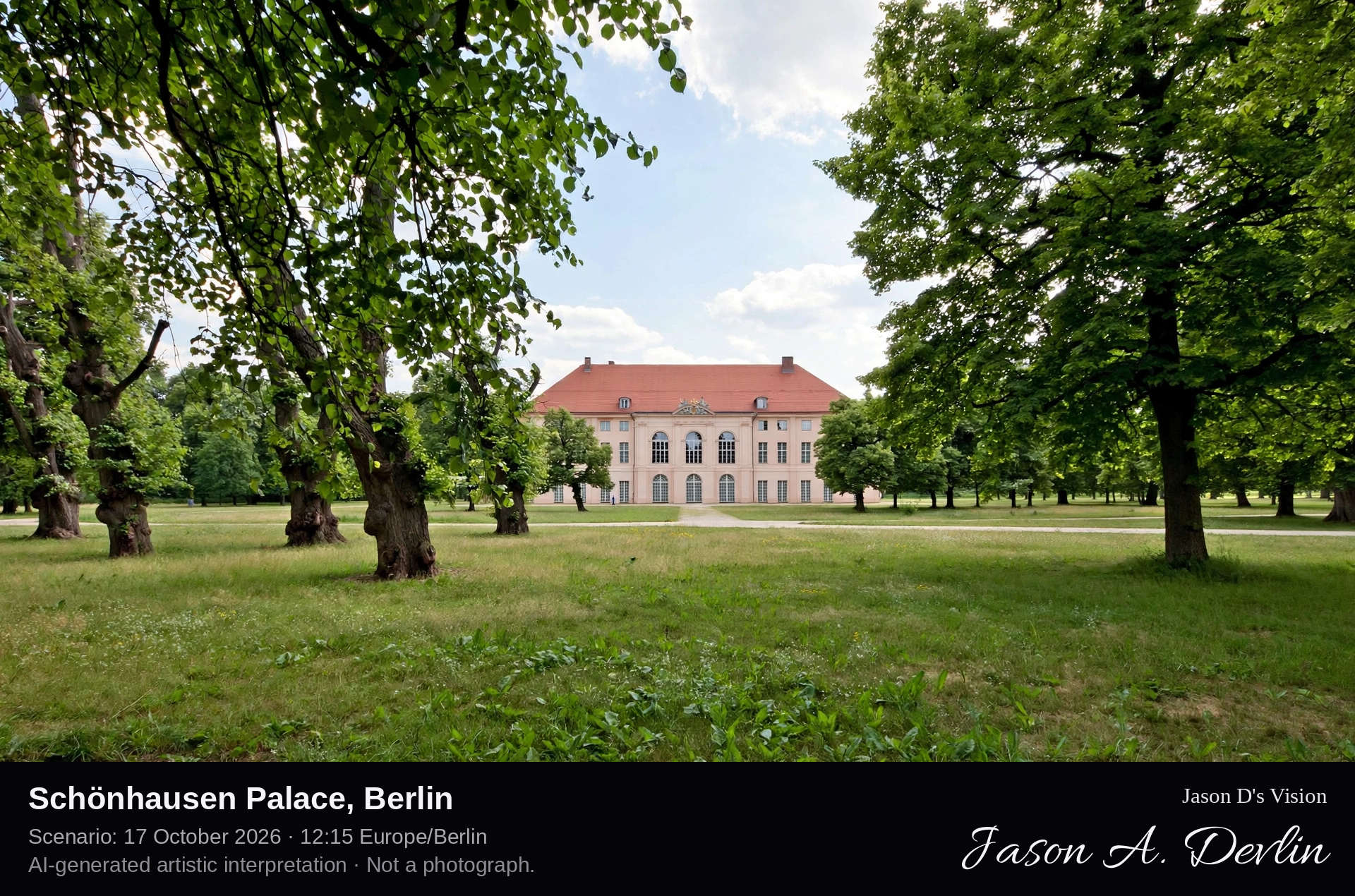
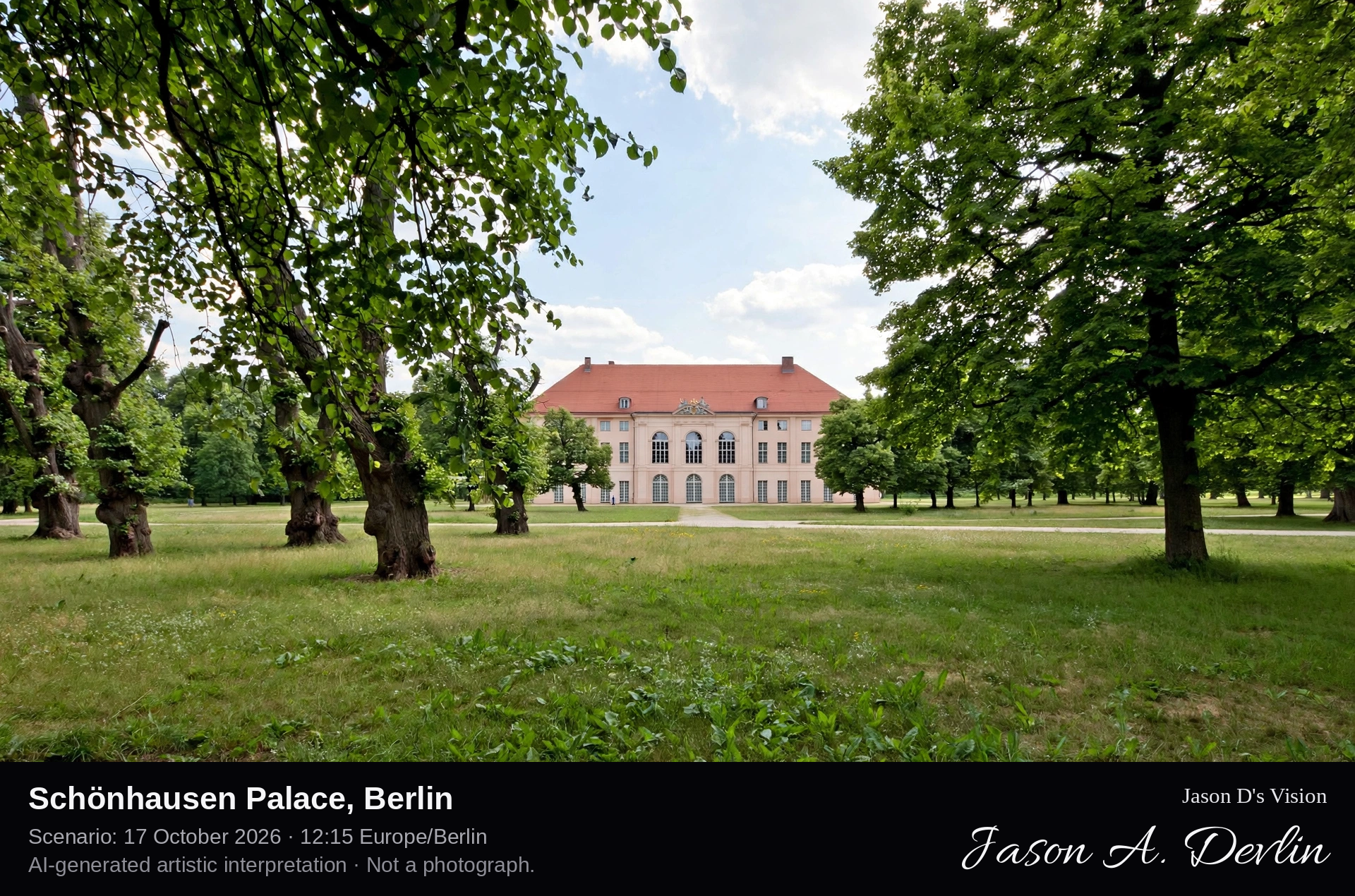
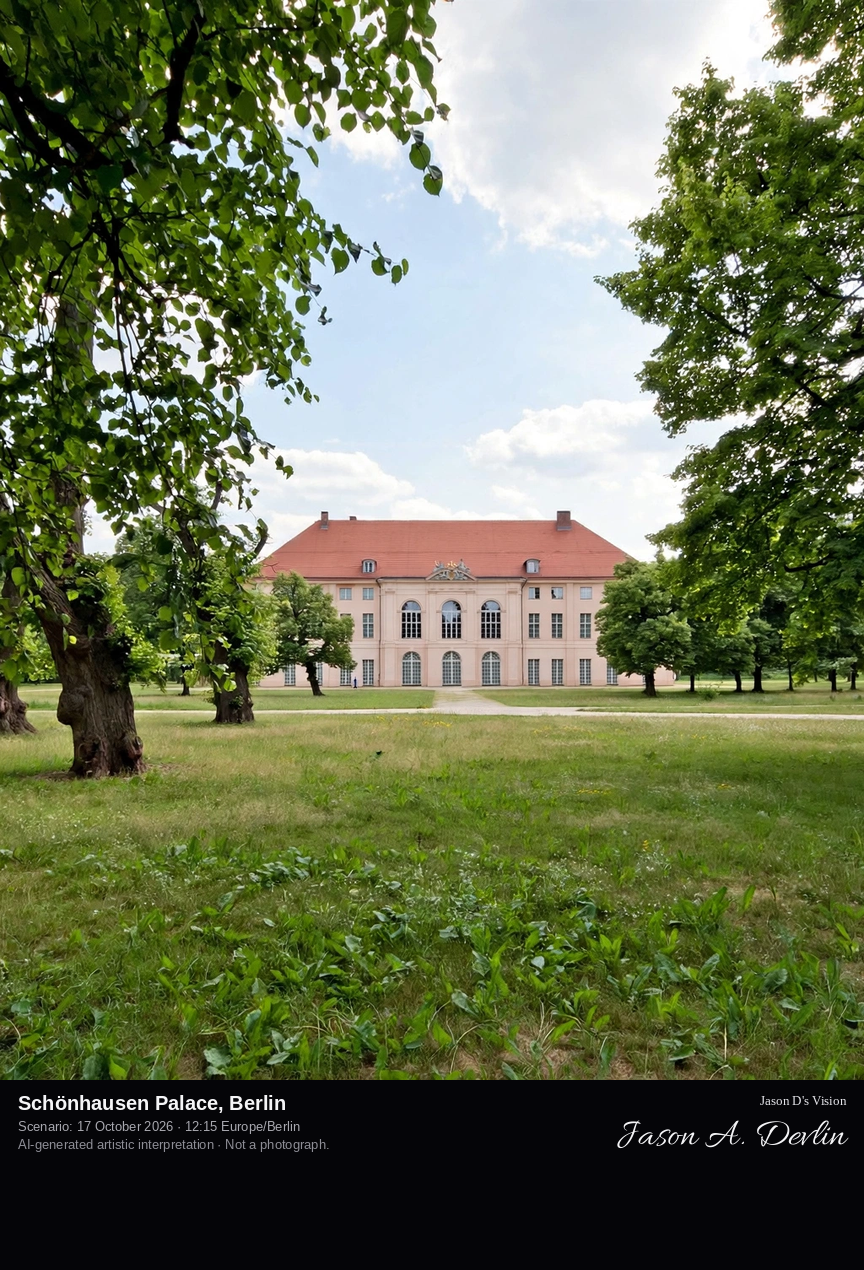
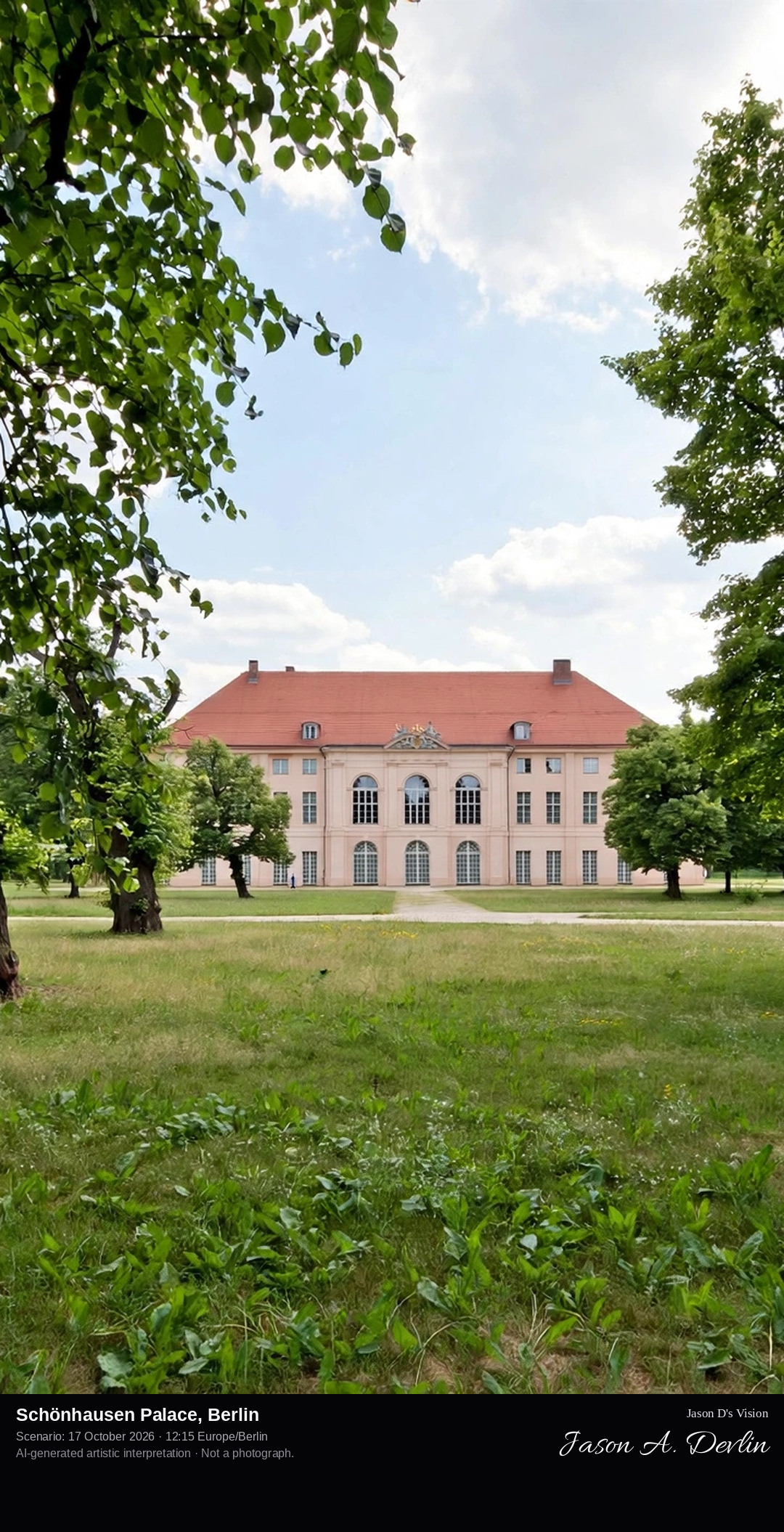
The Baroque palace front across the park lawn in Pankow · AI-generated artistic interpretation
Schönhausen Palace is a Baroque summer palace in Berlin-Pankow, later used as a summer residence by Queen Elisabeth Christine, wife of Frederick the Great, who spent her summers here apart from the court in Potsdam. Its Rococo ballroom survives intact, and the palace later served as the seat of East Germany's first president and as a state guest house.
AI-generated artistic interpretation · Not a photograph.
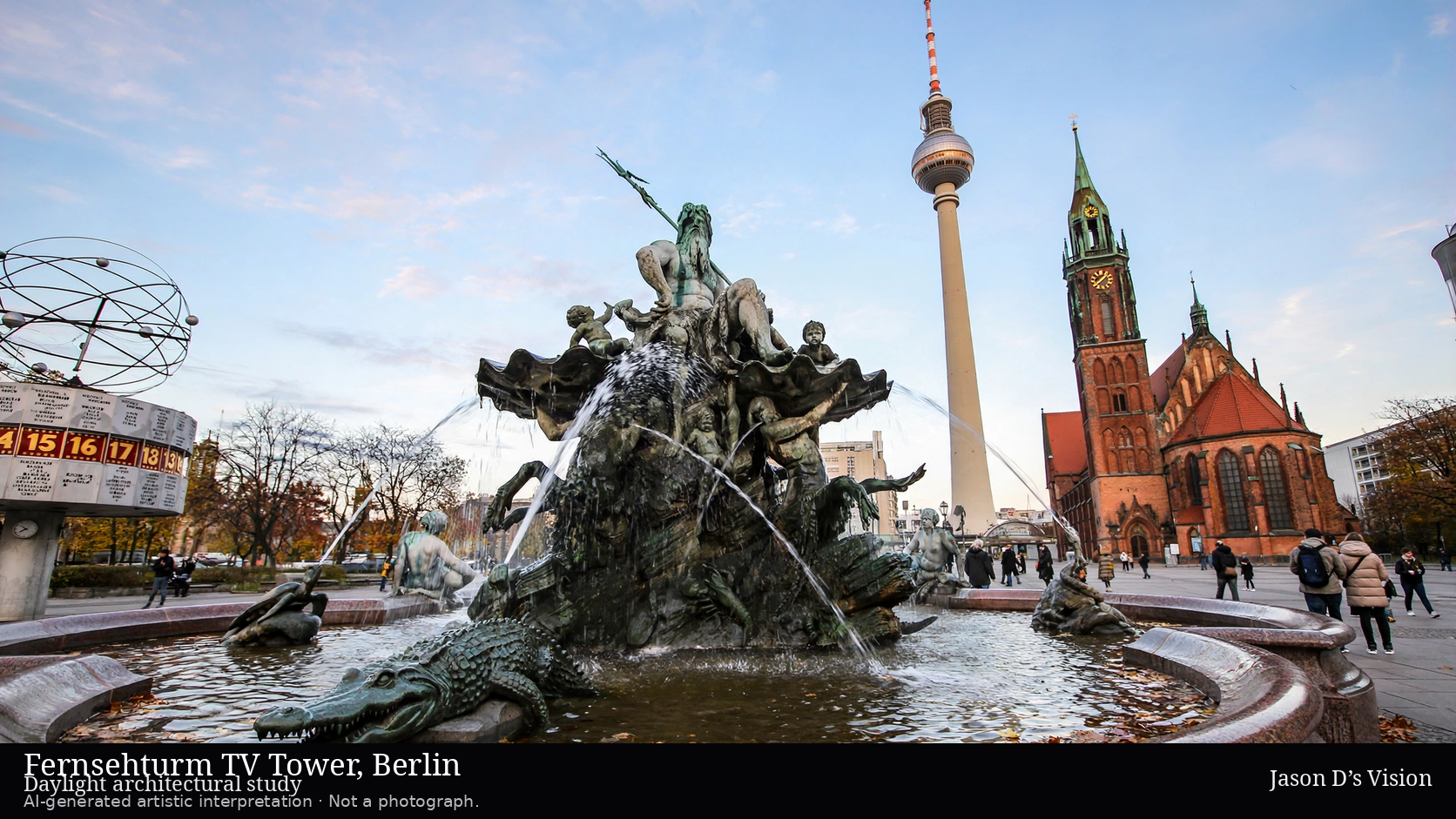
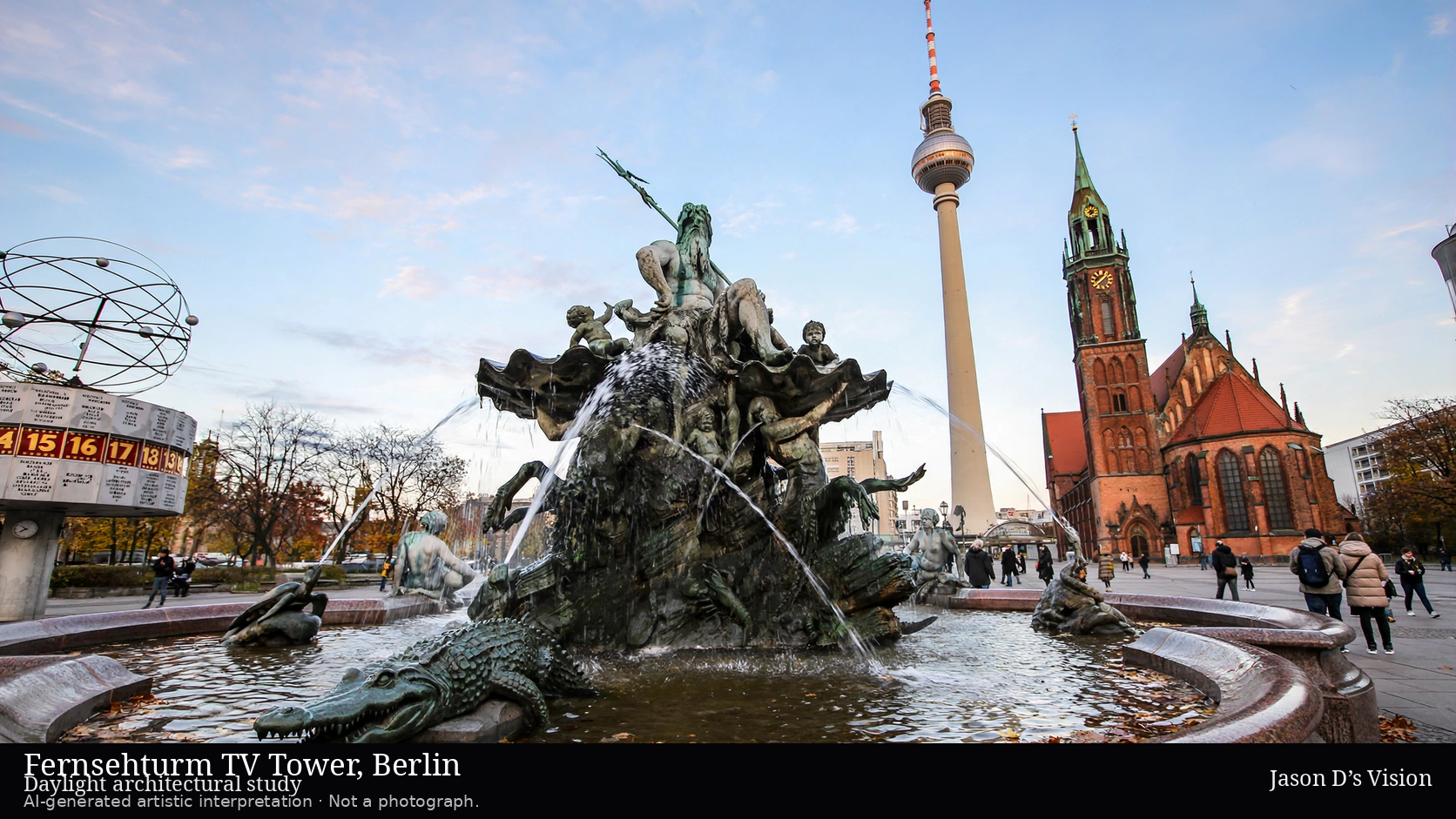
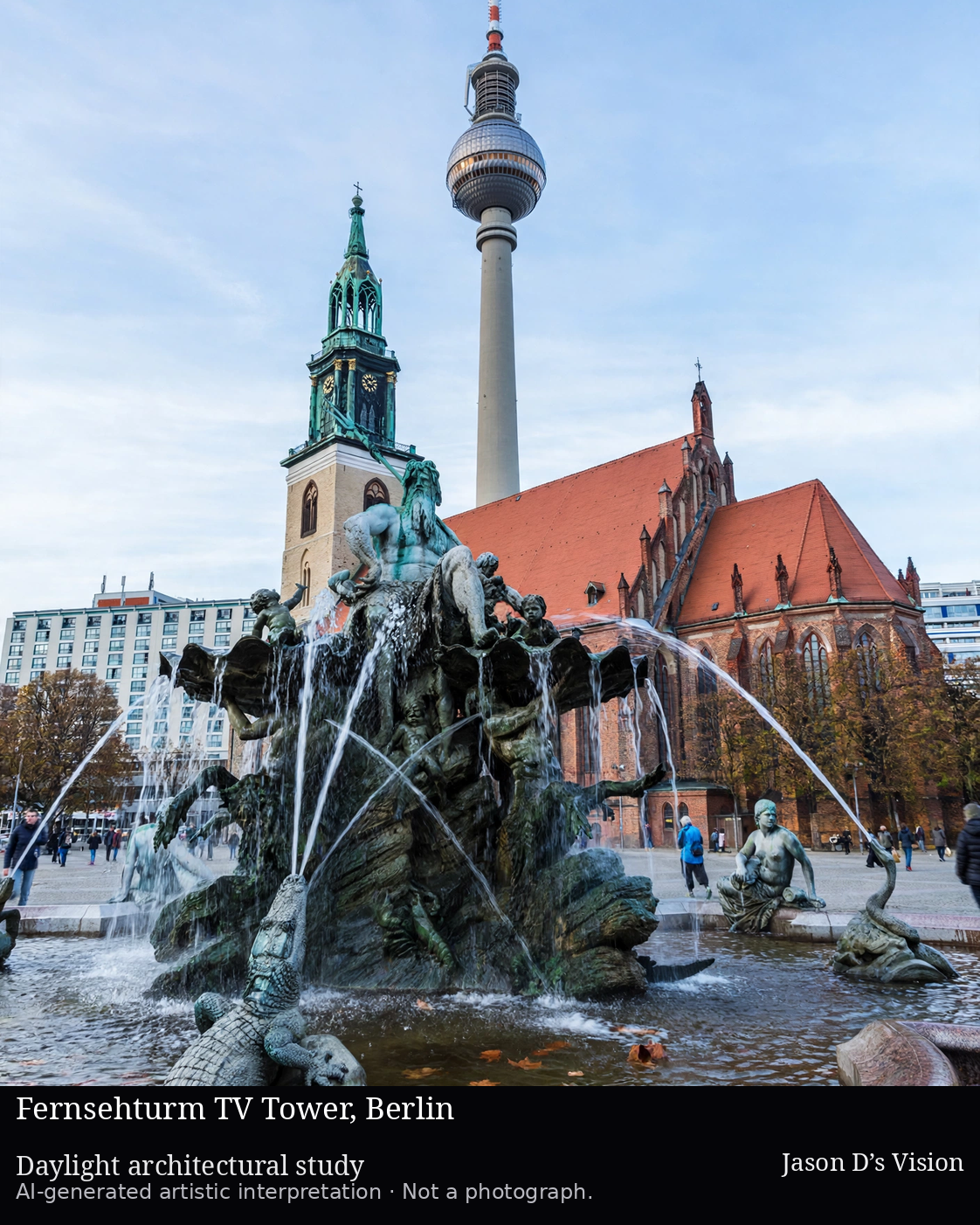
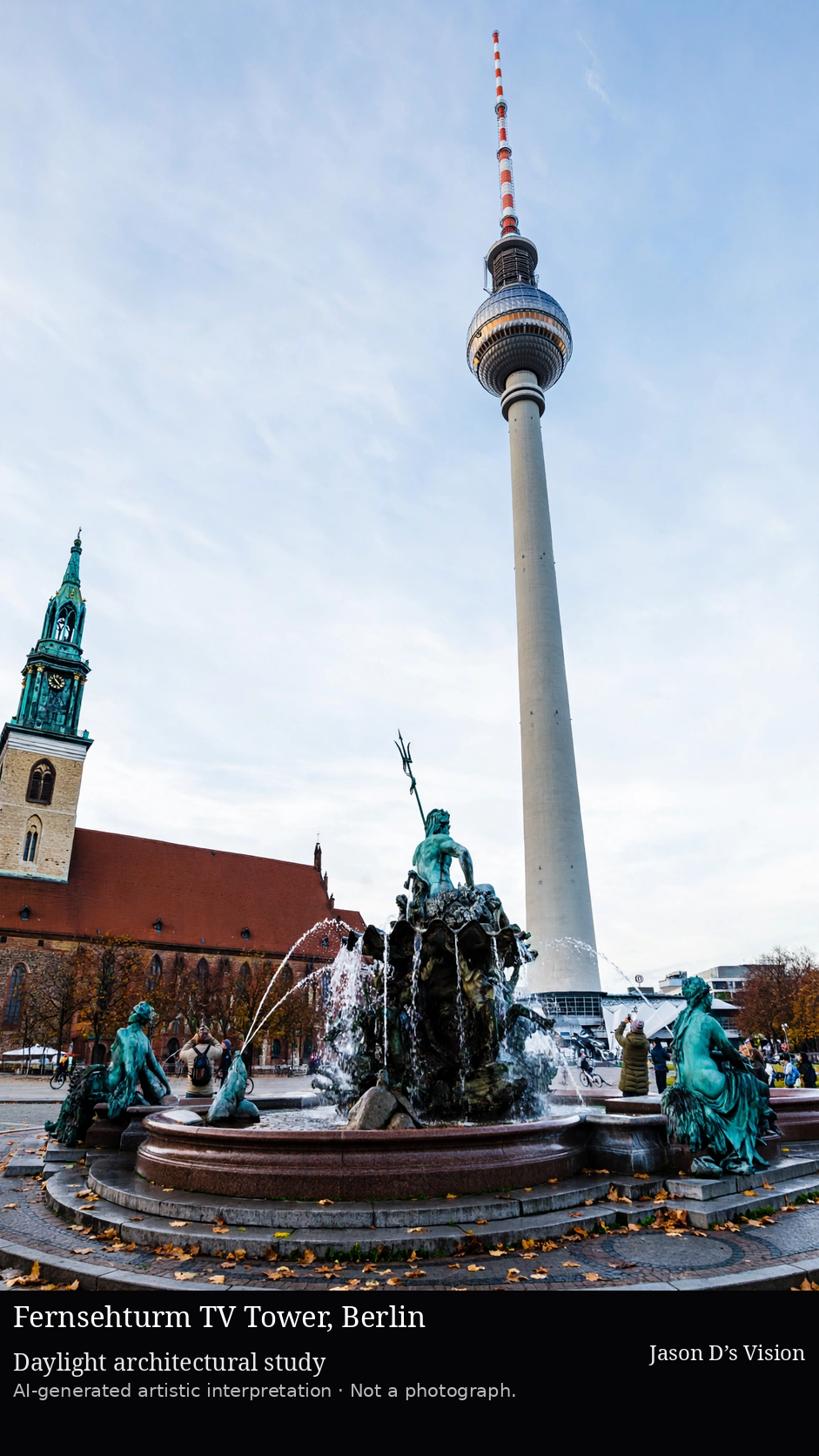
The Fernsehturm rises 368 metres over Alexanderplatz, the tallest structure in Germany, opened in 1969 as East Germany’s showcase tower. Its great sphere holds a panoramic deck and a revolving restaurant, floating above the Neptune Fountain and St Mary’s Church.
AI-generated artistic interpretation · Not a photograph.
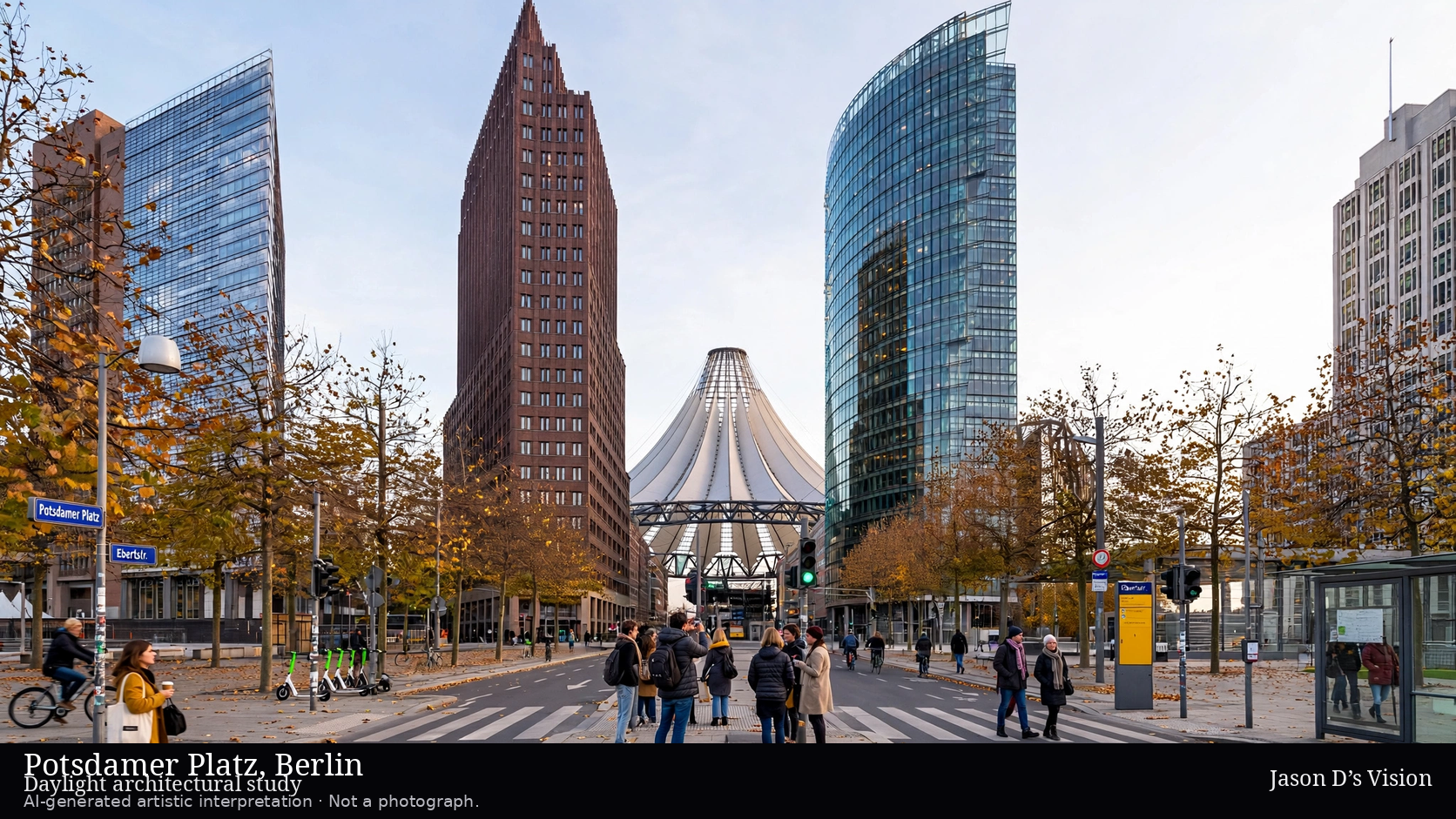
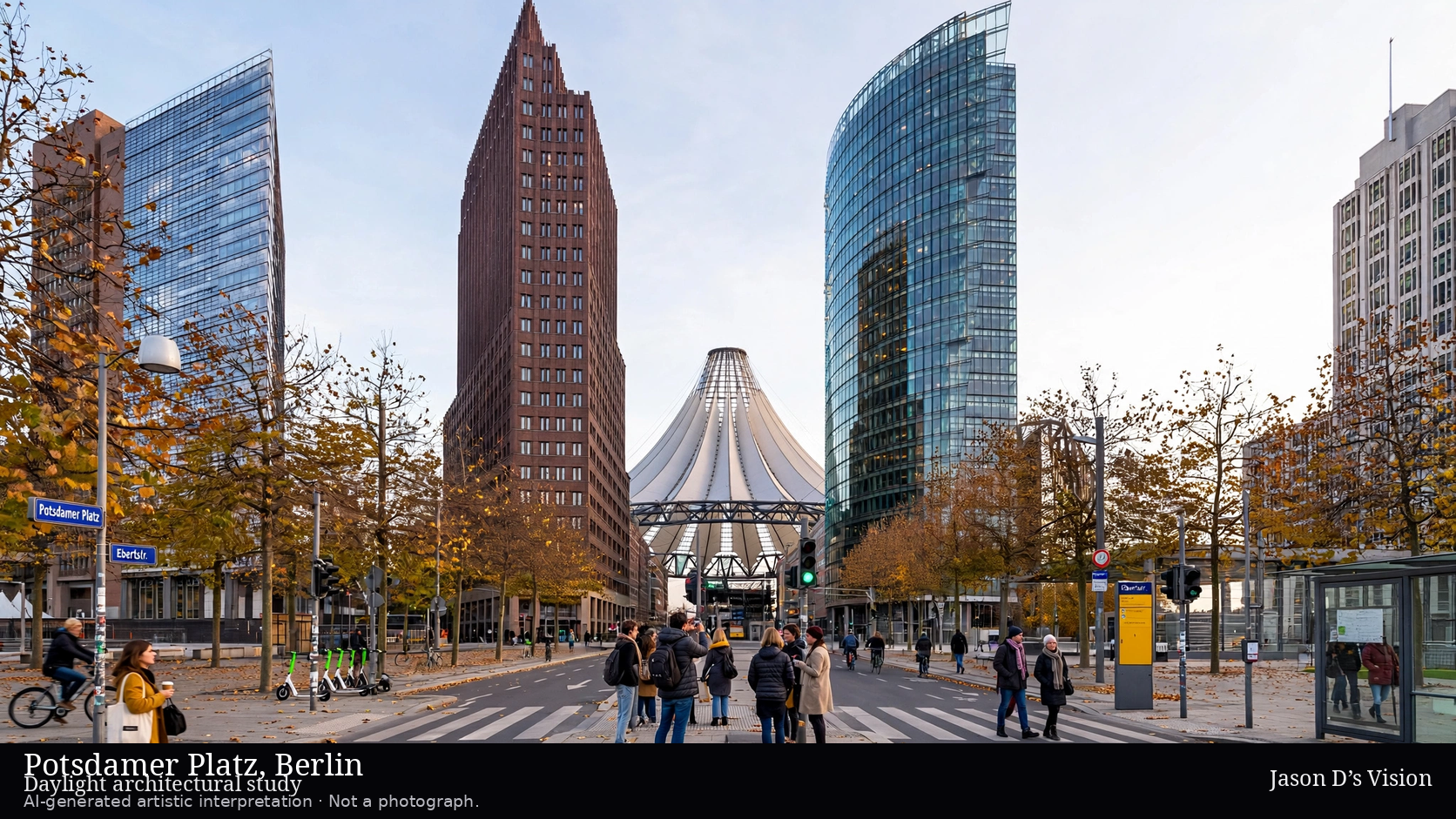
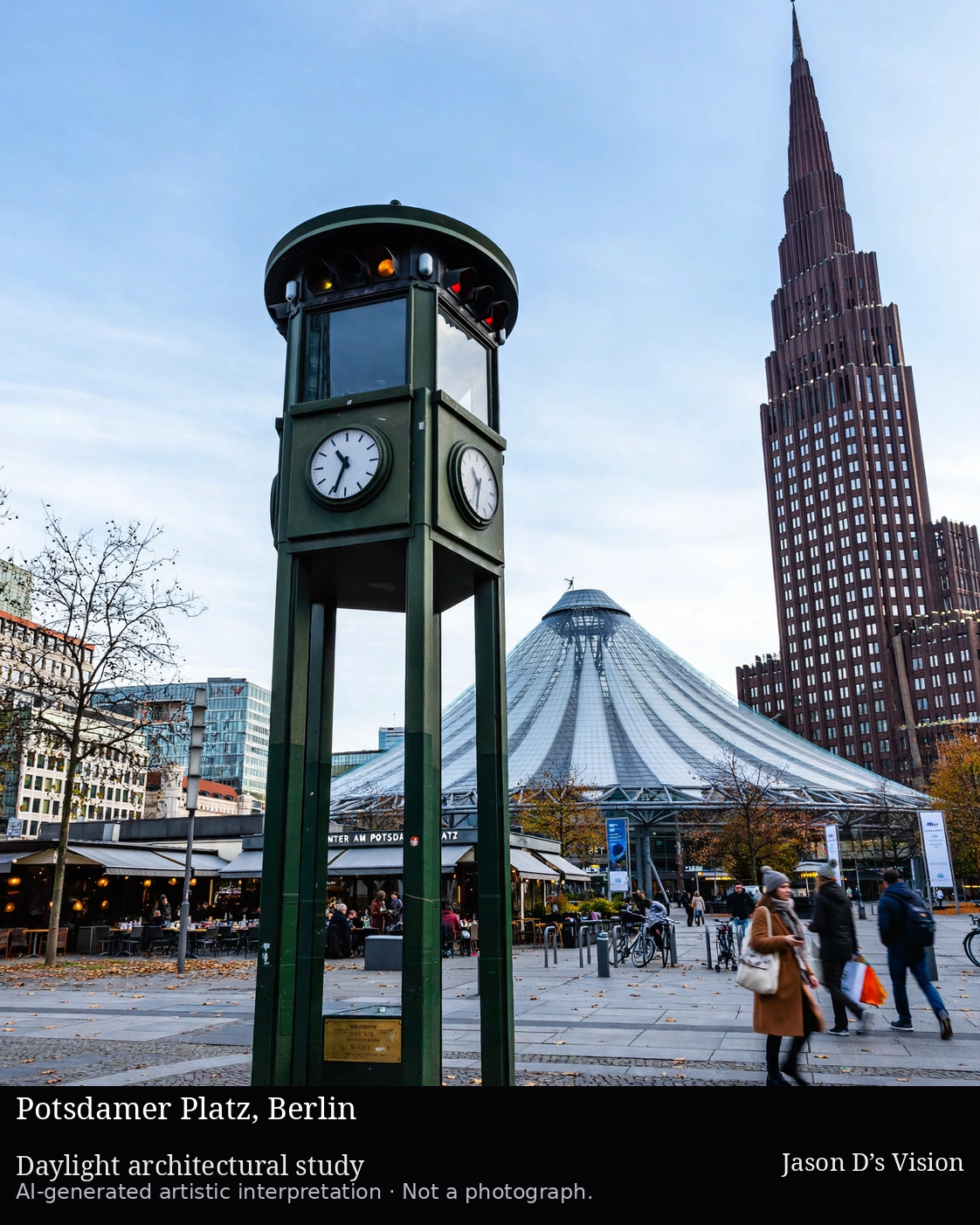
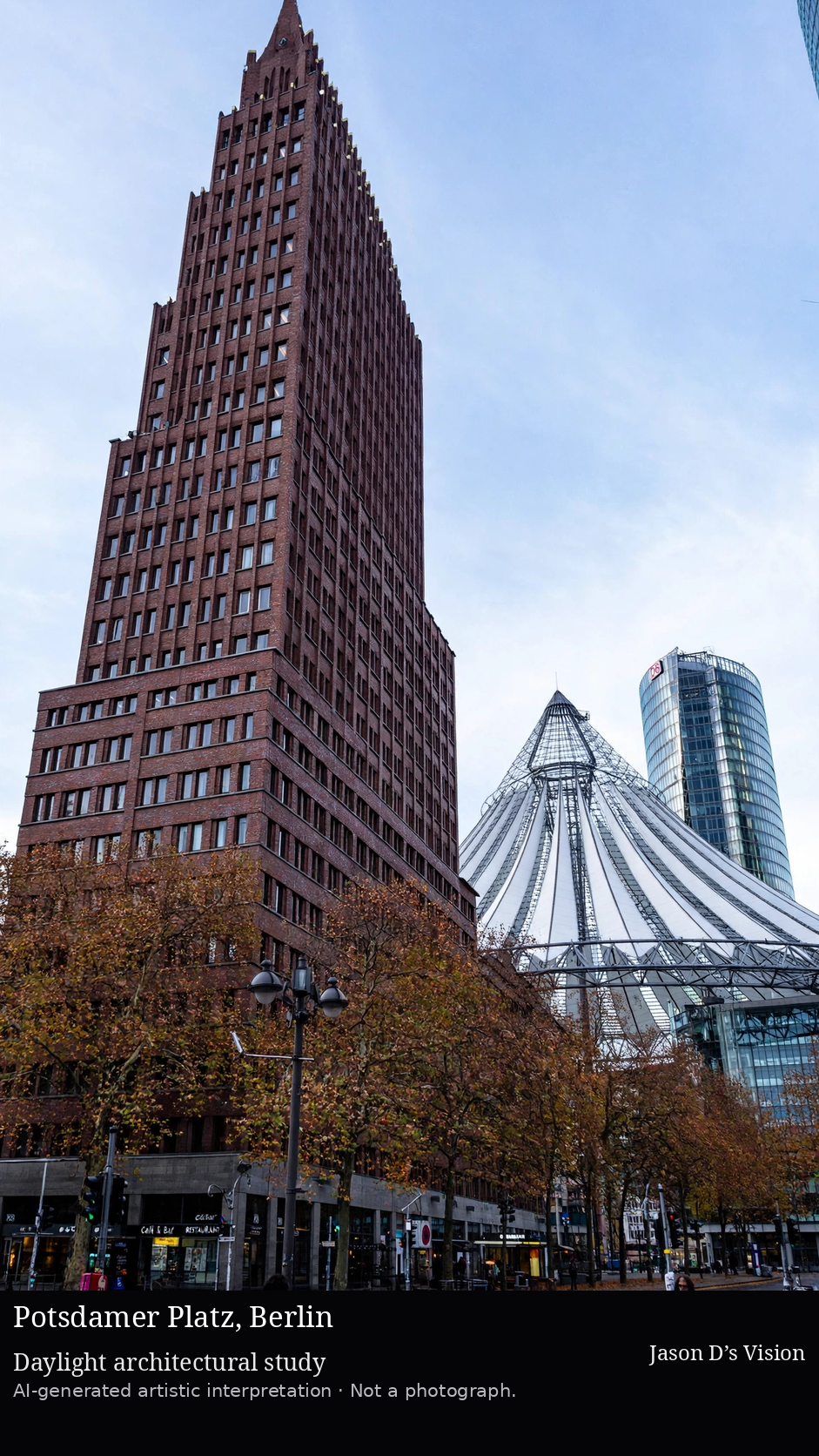
Potsdamer Platz was Europe’s busiest junction in the 1920s, where Germany’s first traffic-light tower began service in 1924, before the Berlin Wall left it a wasteland. Rebuilt in the 1990s, it now gathers Helmut Jahn’s tent-roofed centre, the brick Kollhoff Tower and the curved BahnTower.
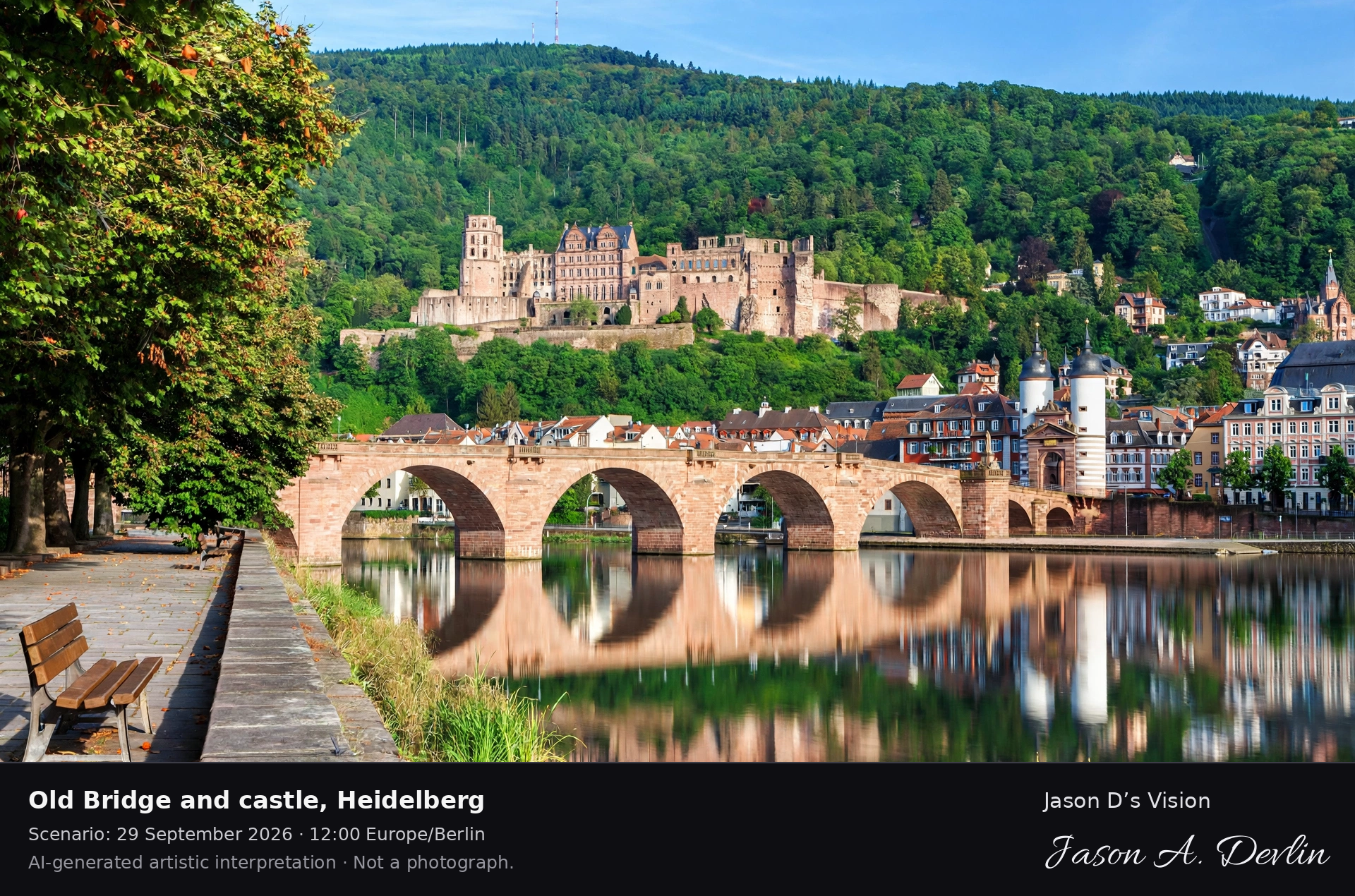
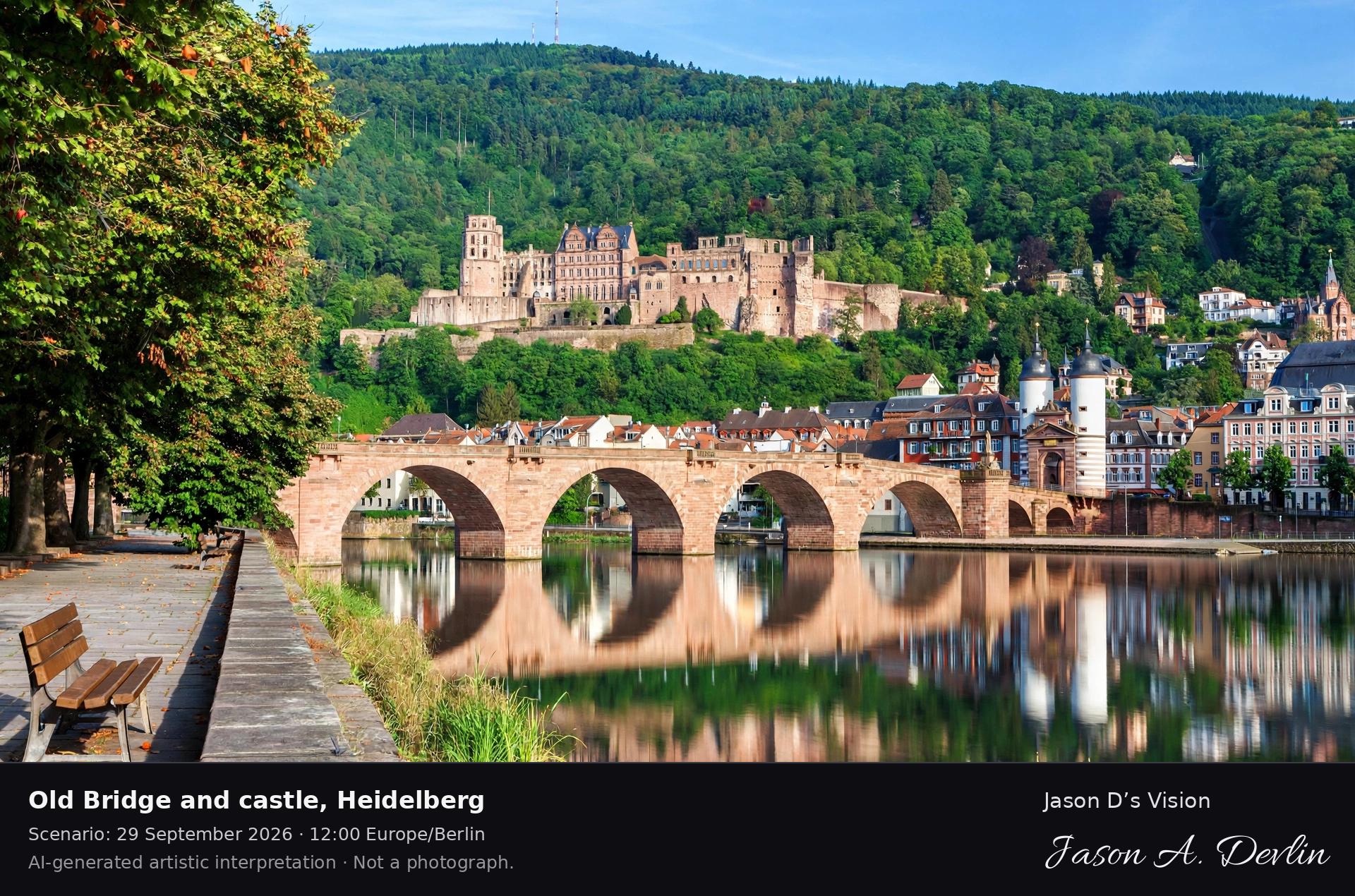
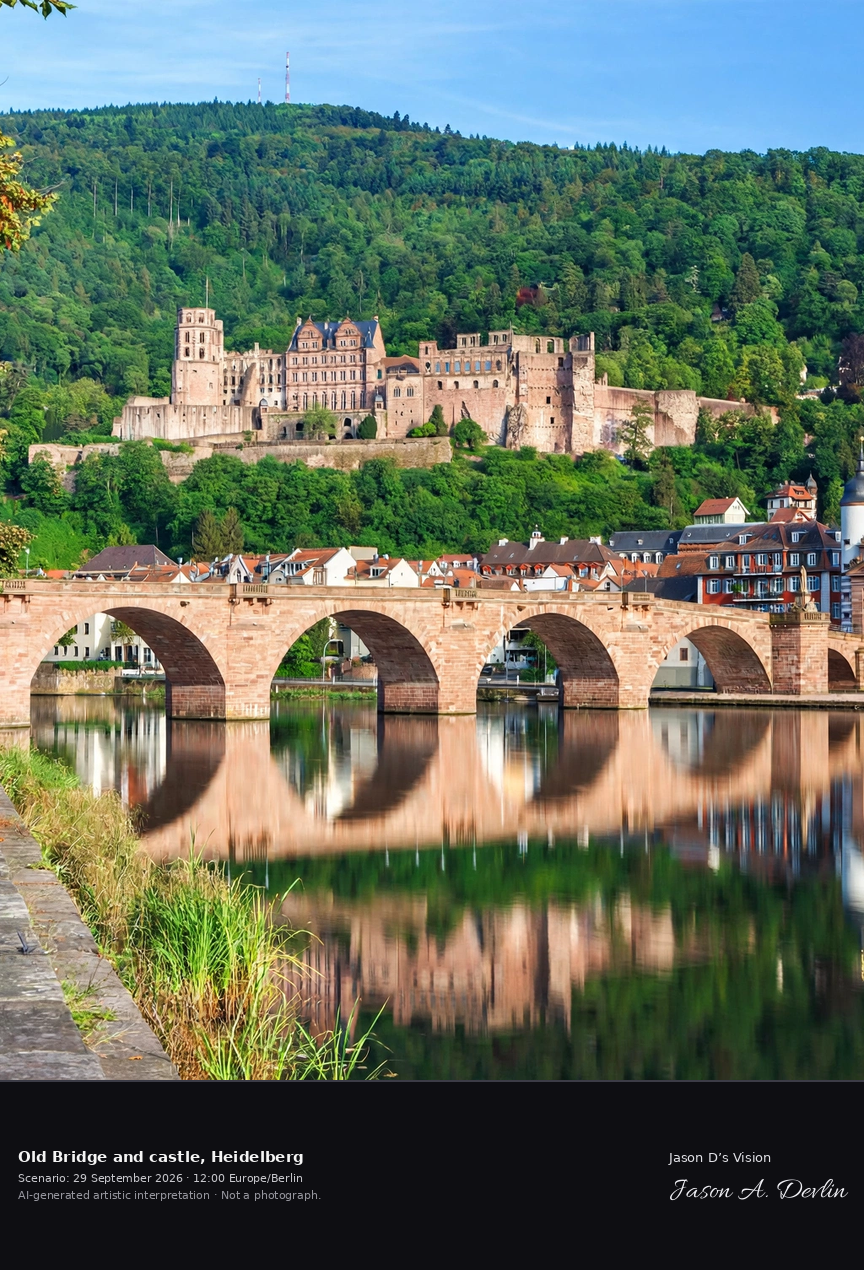
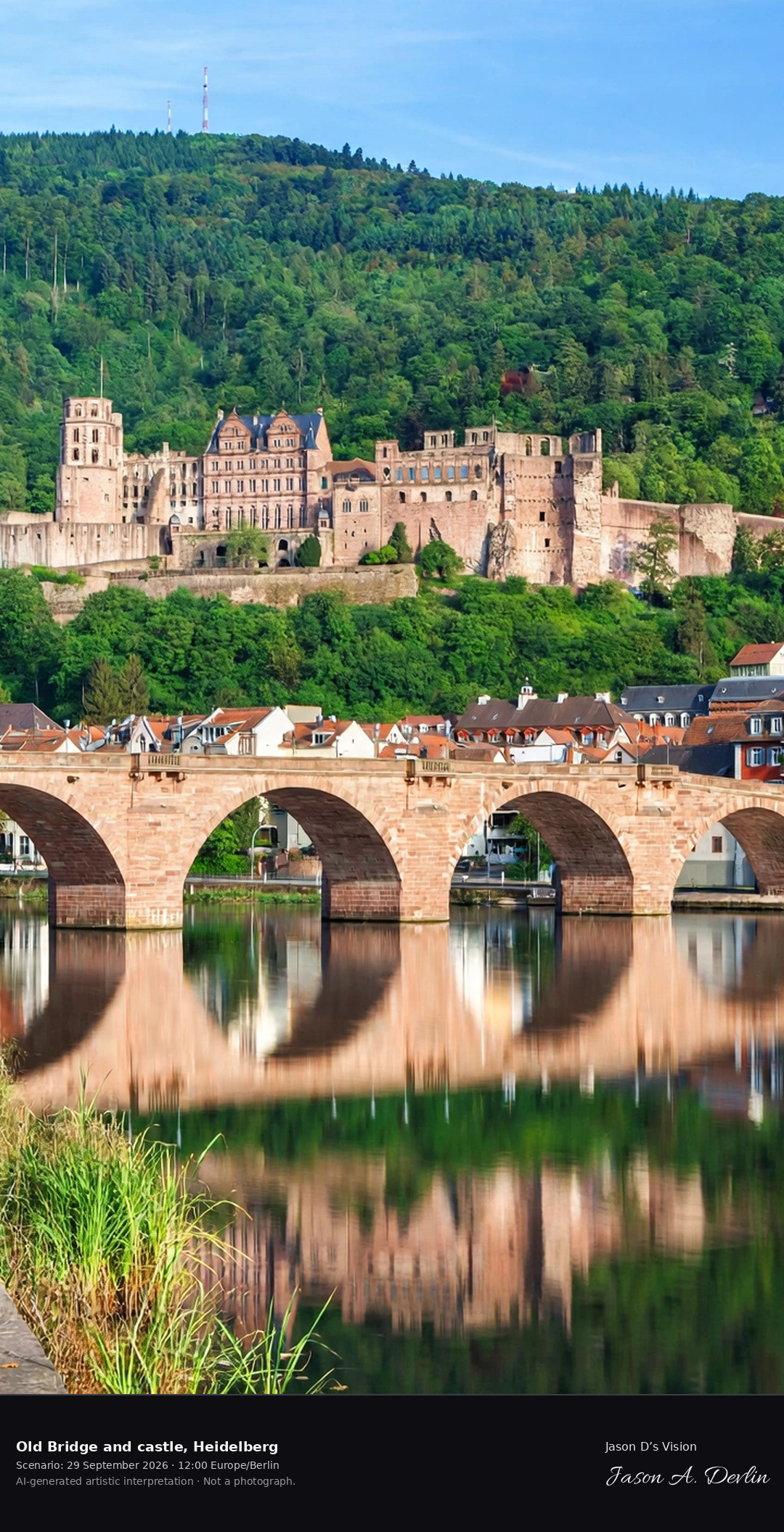
The stone arches of the Old Bridge cross the Neckar in the foreground, its parapet lamps and the castle's floodlit walls doubled in the dark water below. Heidelberg Castle stands on the wooded hill behind, its terraces and round towers glowing warm against the night. A thin crescent moon hangs in the upper right, and the old town's gabled houses are lit along the right bank in the 03:00 night scenario.
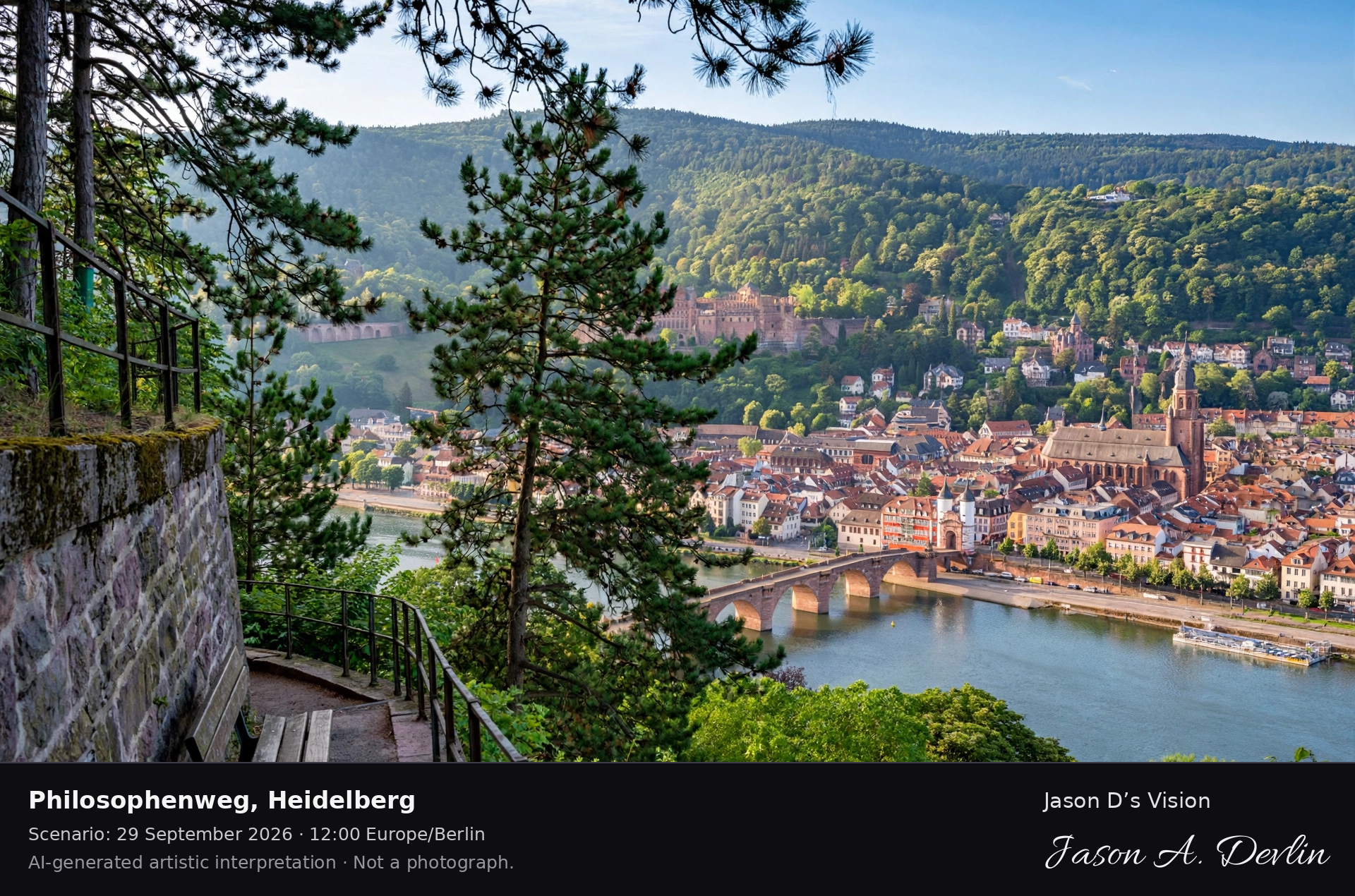
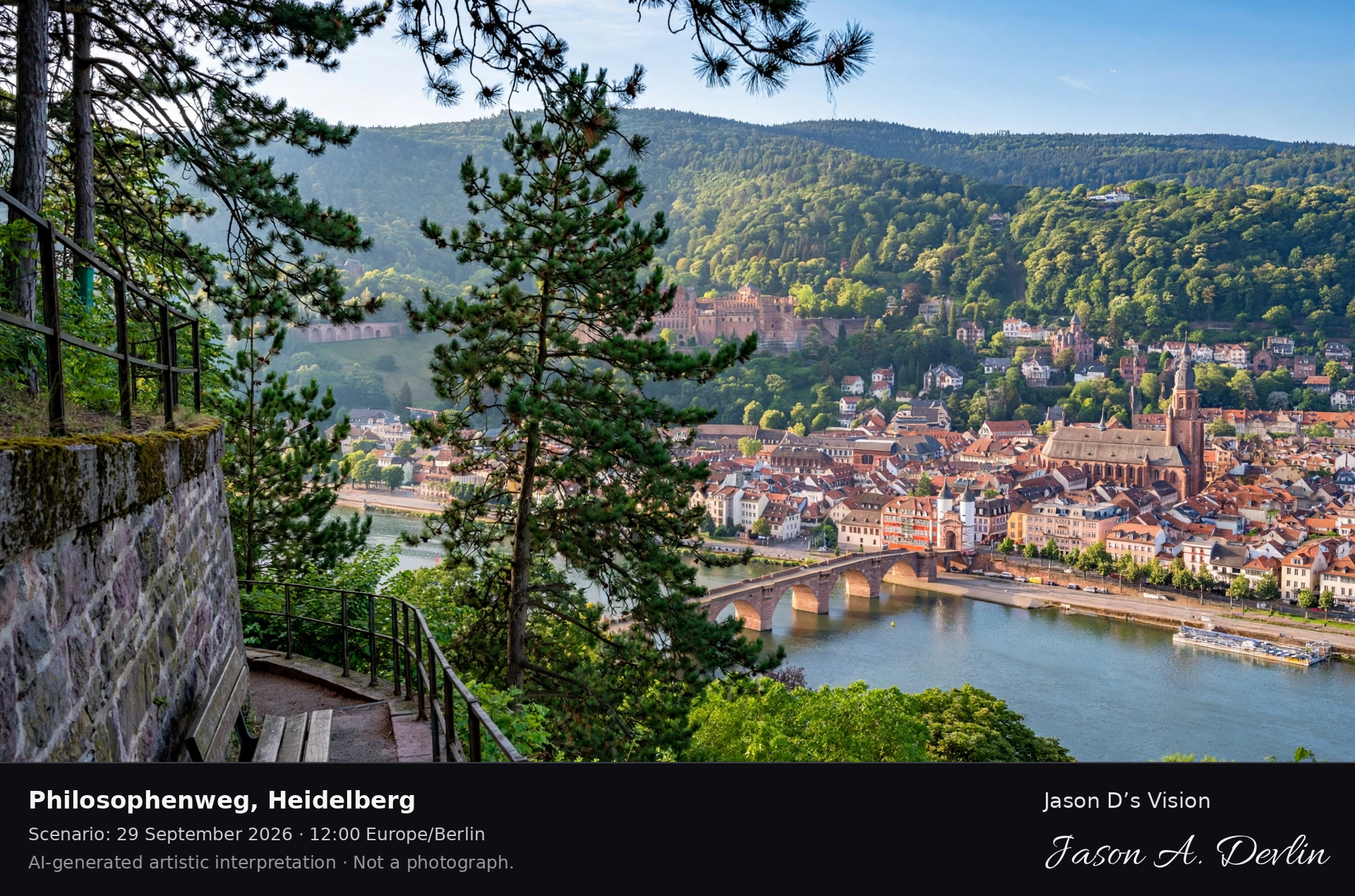
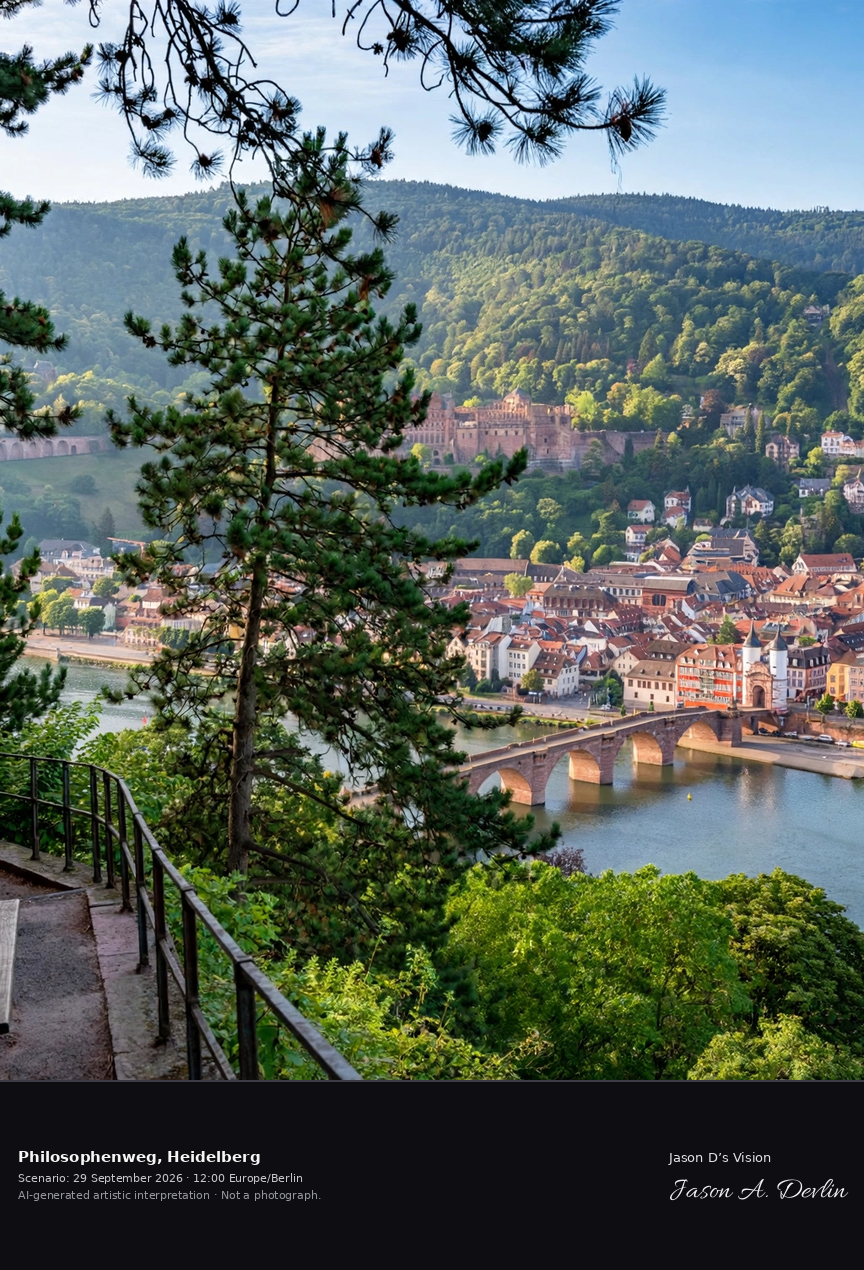
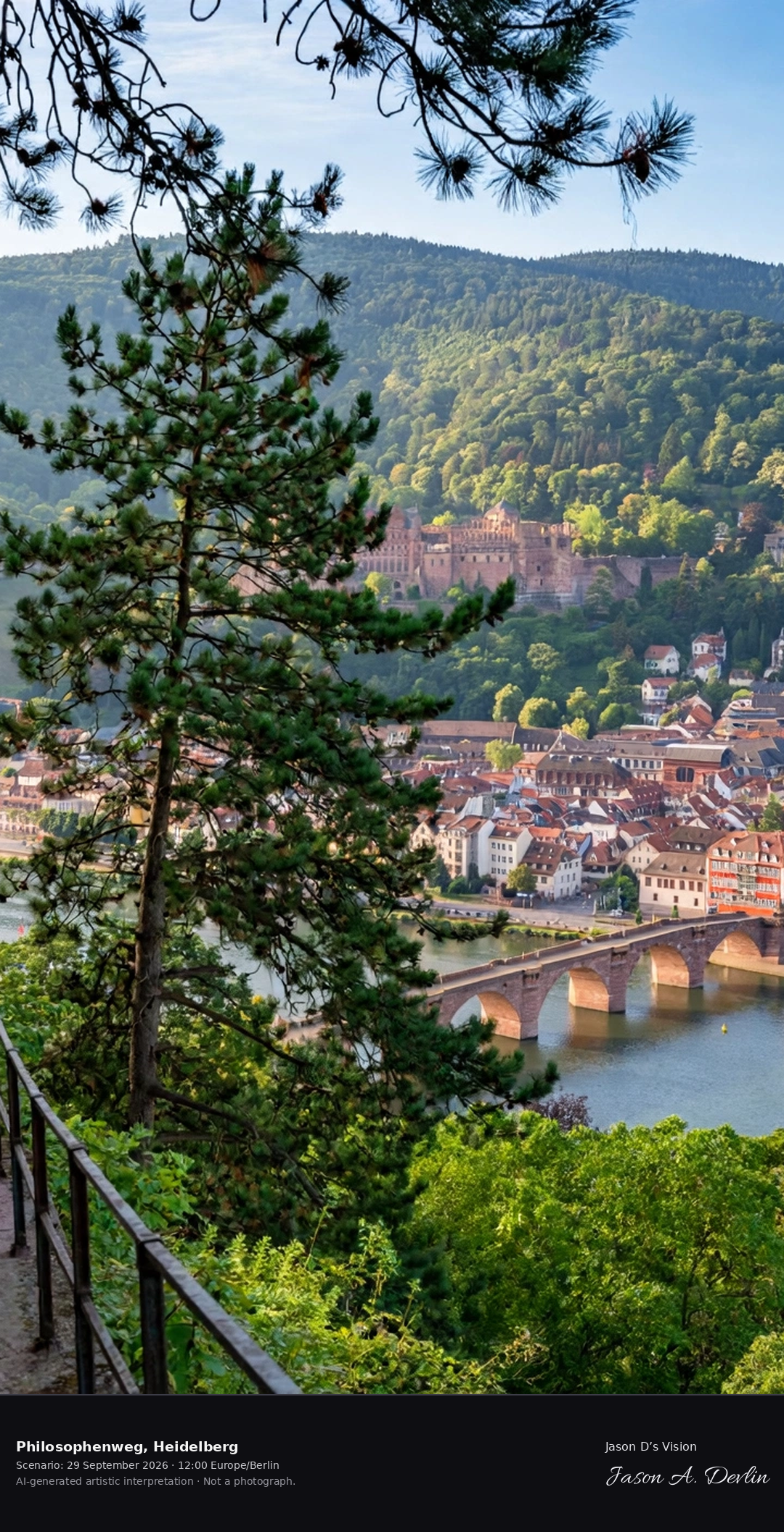
The viewpoint is the Philosophenweg itself, with pines and a metal railing at the left edge, looking down and across the whole old town. The illuminated castle glows on its hill at center-right, the lit Old Bridge arcs over the dark Neckar, and rooftops, church towers and streetlights fill the valley. The 04:15 night scenario reads as a full city-lights panorama under a deep blue pre-dawn sky.
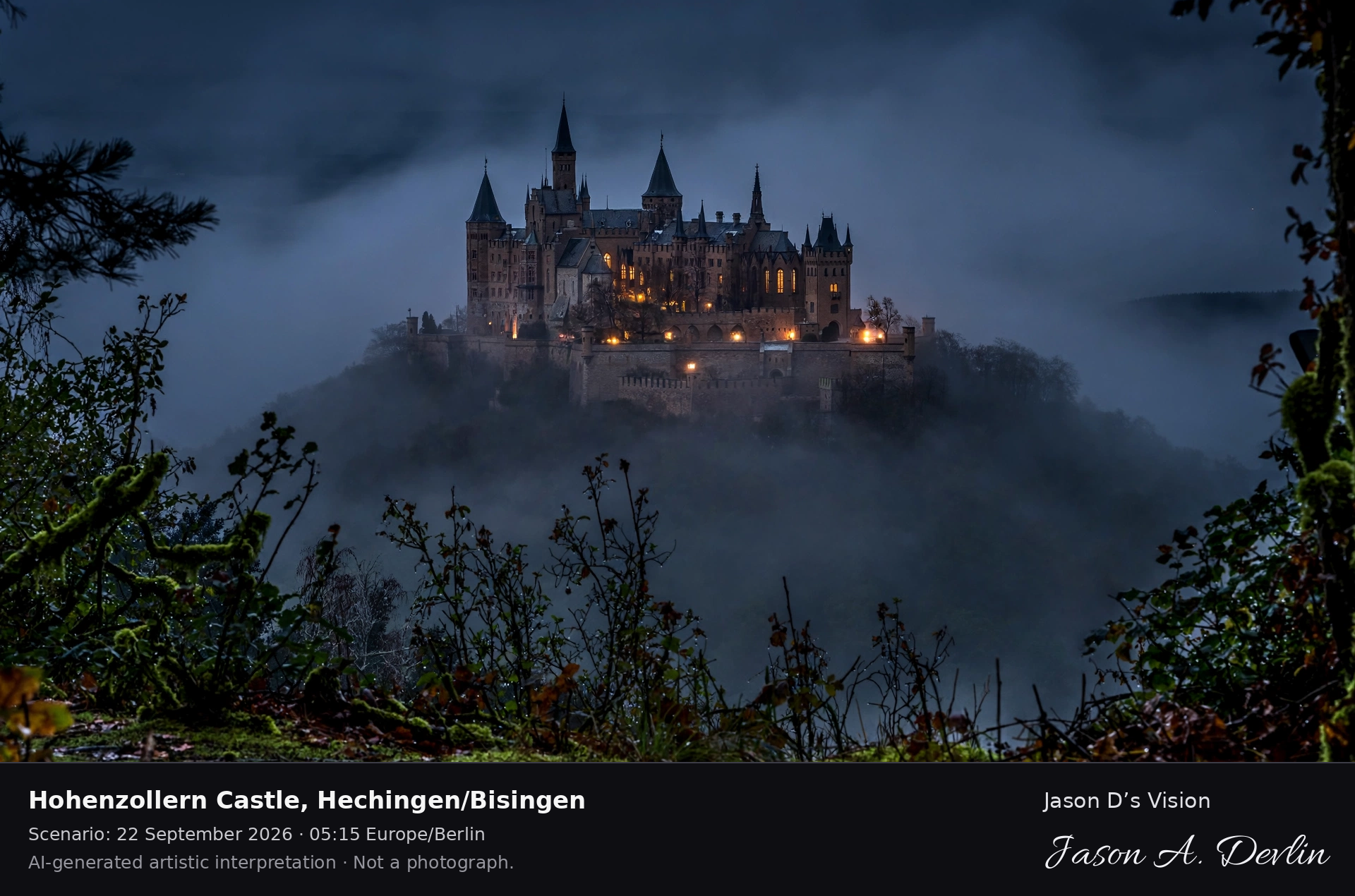
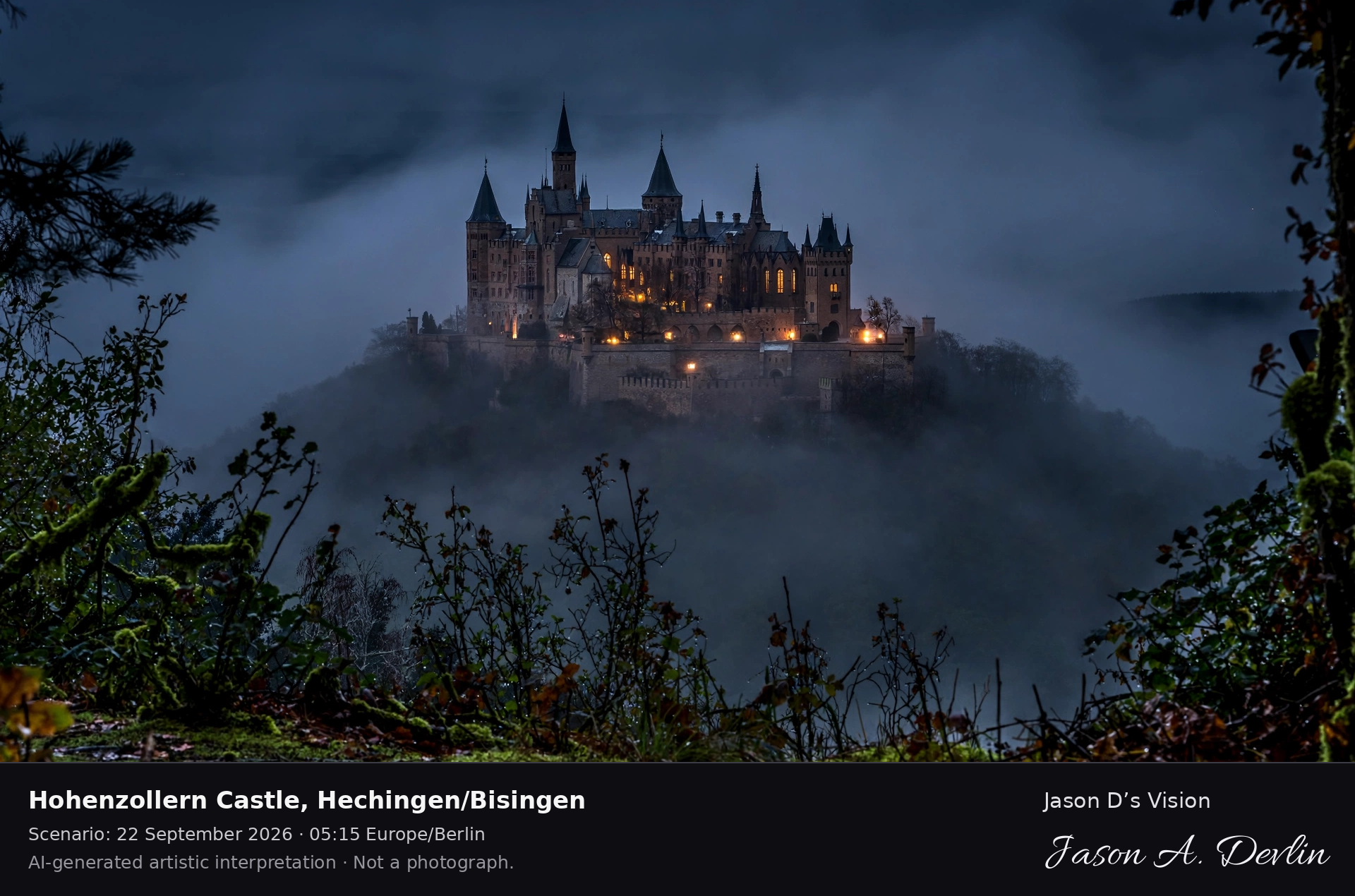
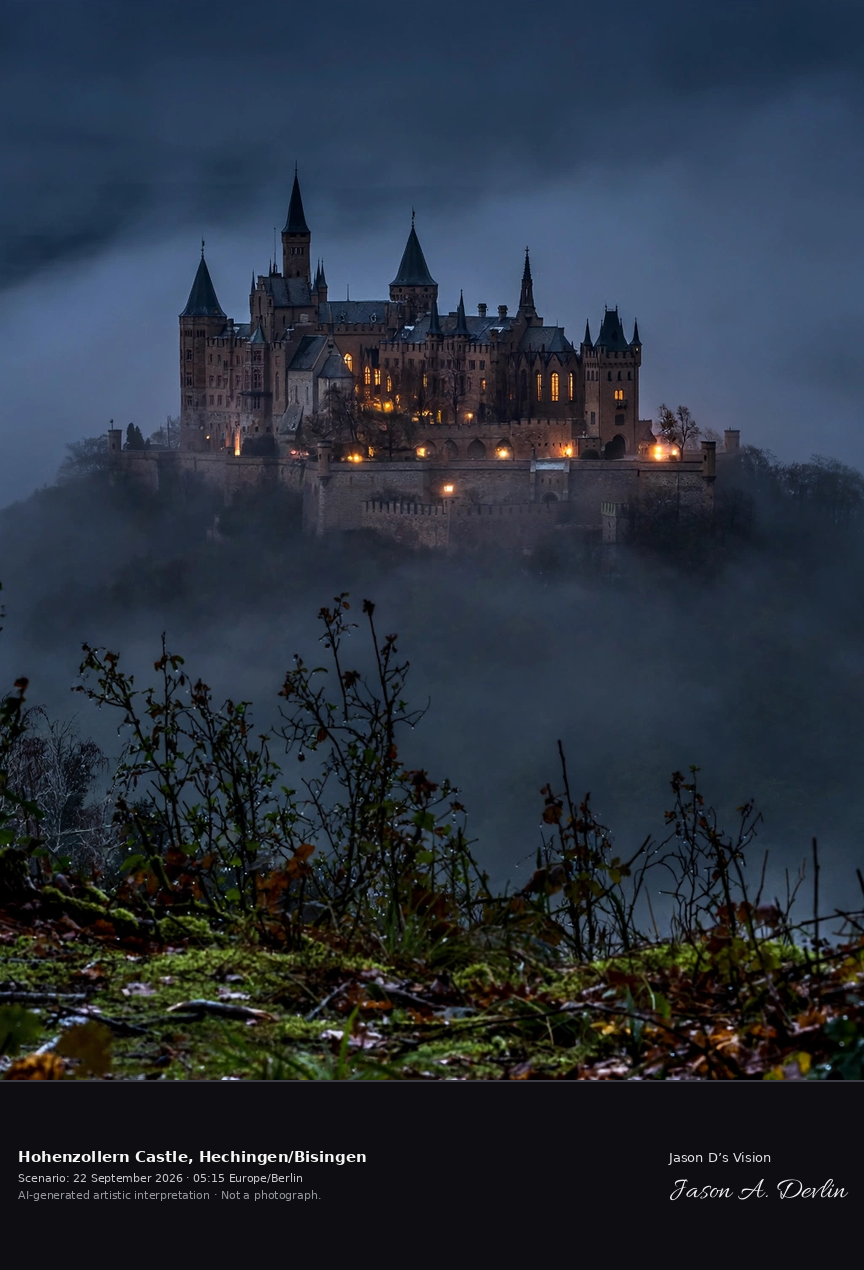
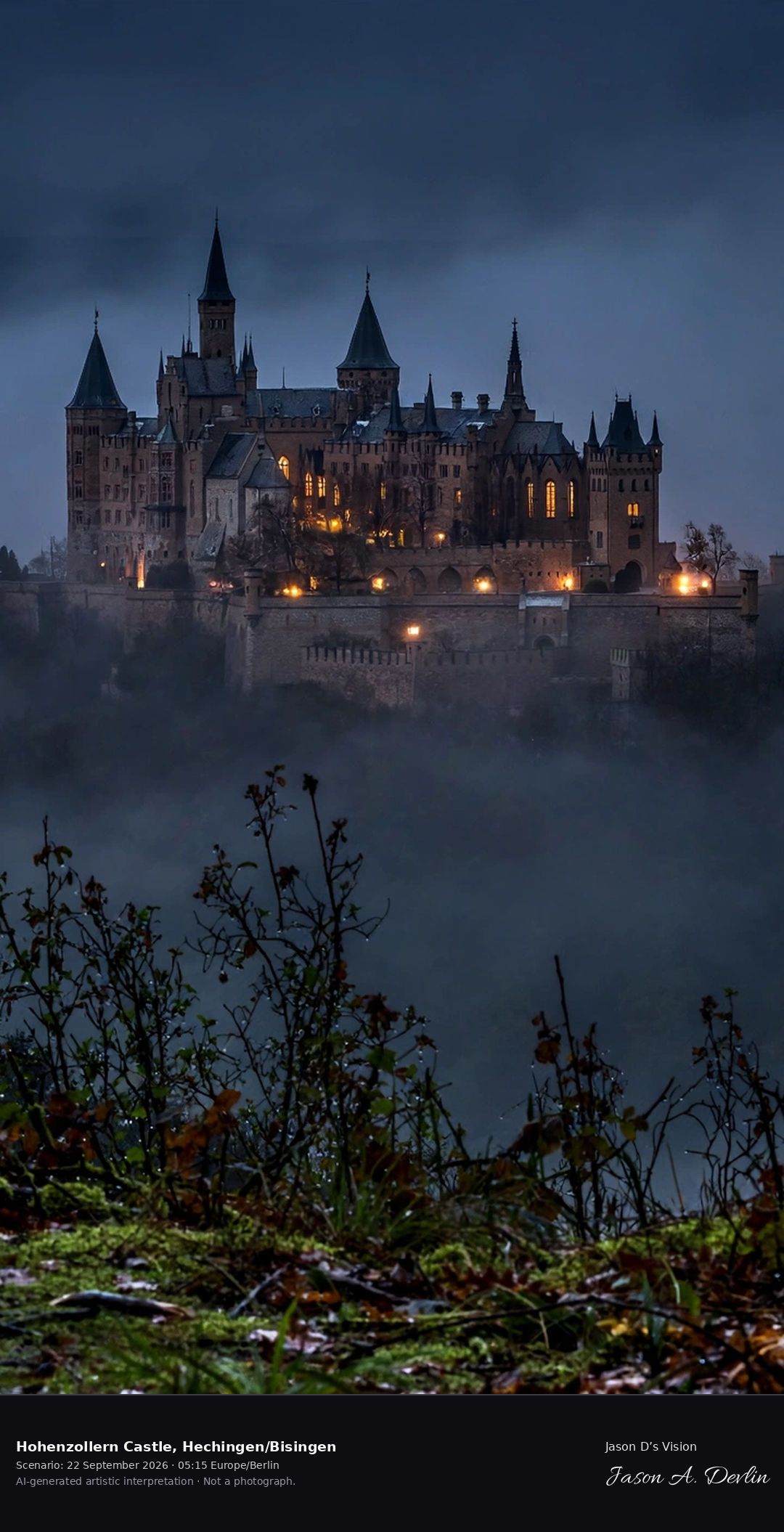
Hohenzollern Castle sits centered on its hilltop, a pre-dawn blue-grey silhouette with warm windows glowing through the mist. Its cluster of towers and spires rises above fog pooled in the valleys, framed by dark foreground branches and pines on either side. In the 05:15 scenario the castle is the single lit mass in an otherwise sleeping landscape.
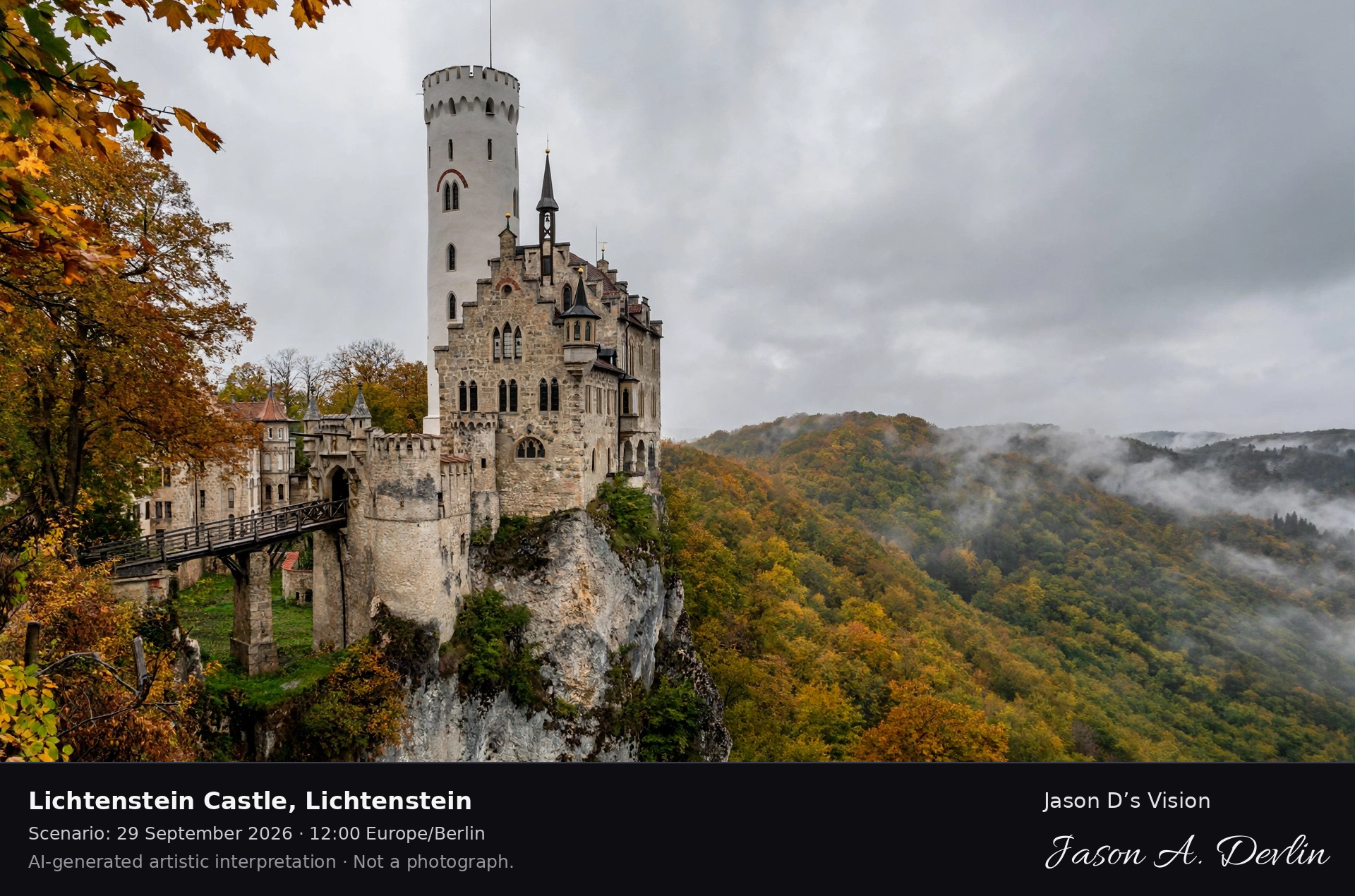
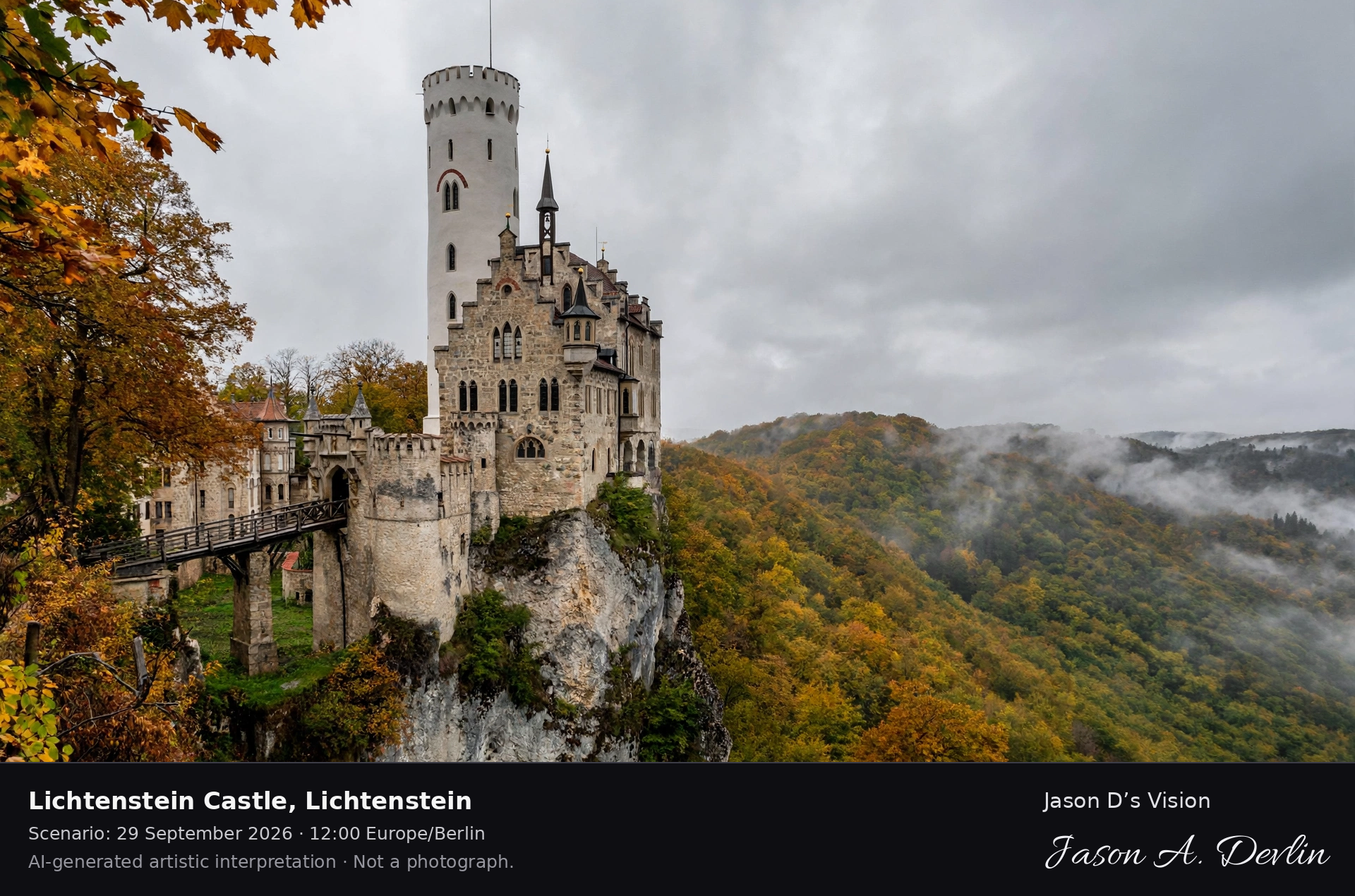
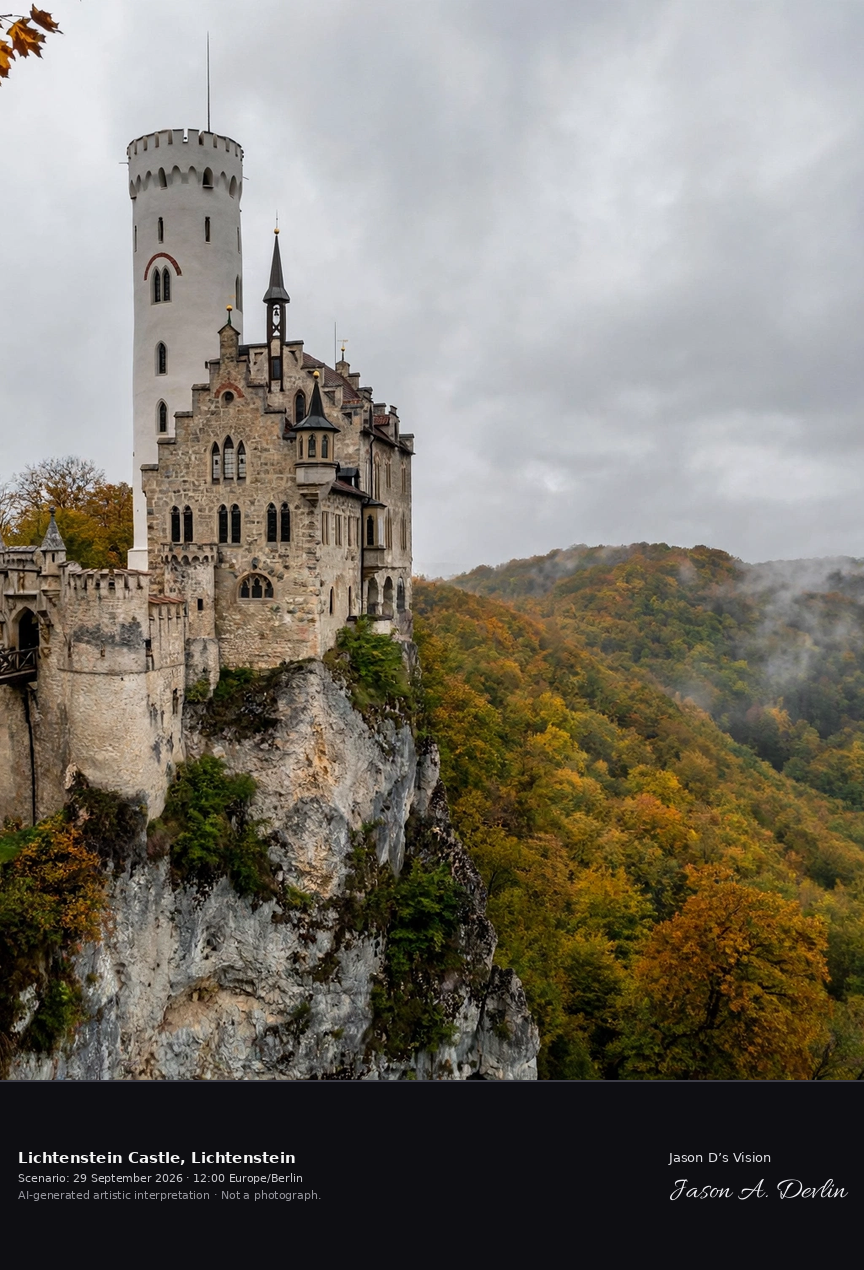
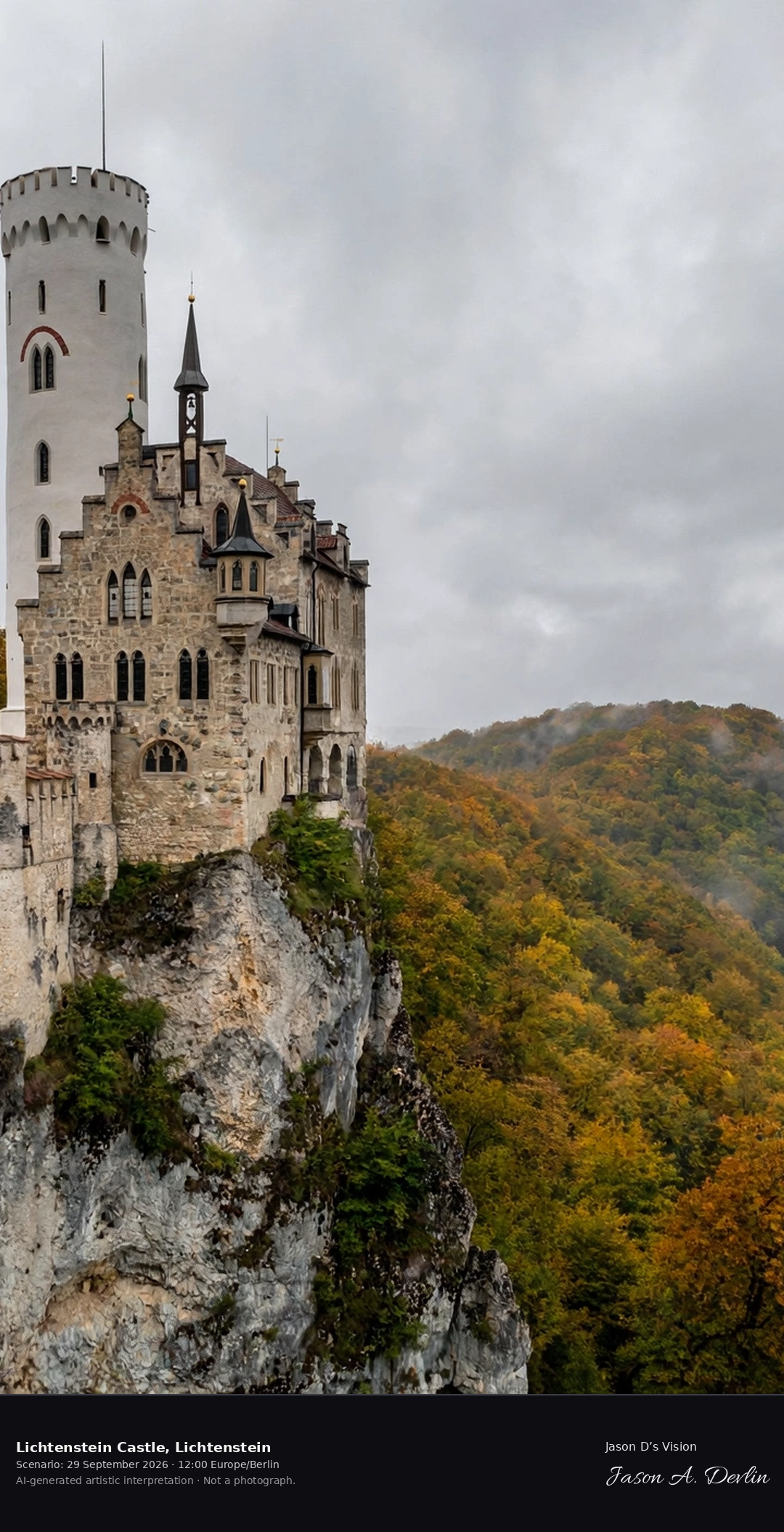
Lichtenstein Castle stands at the left of the frame on its cliff, the white round tower and warmly lit windows rising above the rocky drop. A stone access bridge crosses in from the far left, while the gorge and forested hills fall away to the right. In the 06:15 pre-dawn scene a moon breaks through cloud, pairing cold moonlight on the stone with the castle's interior glow.
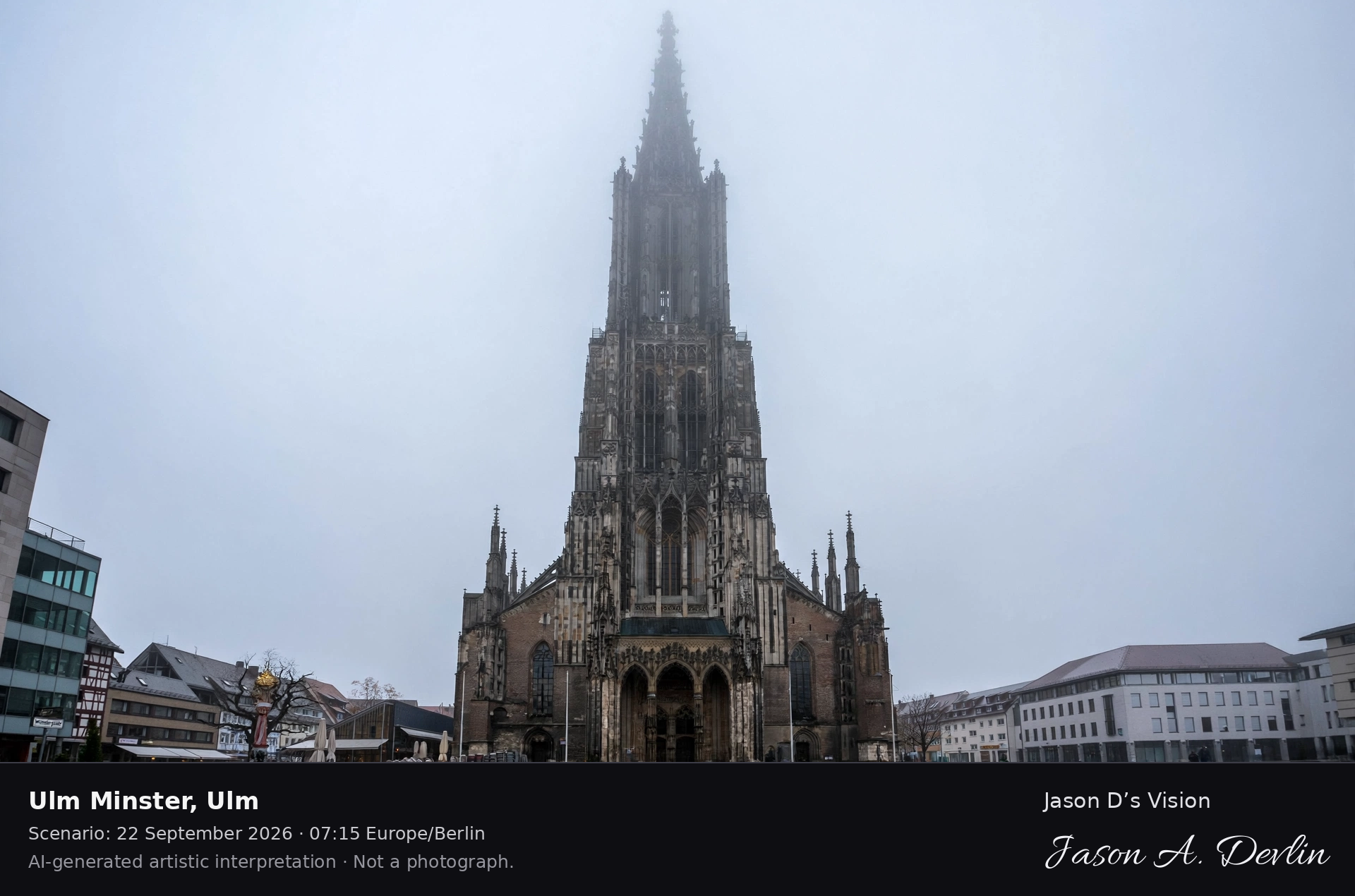
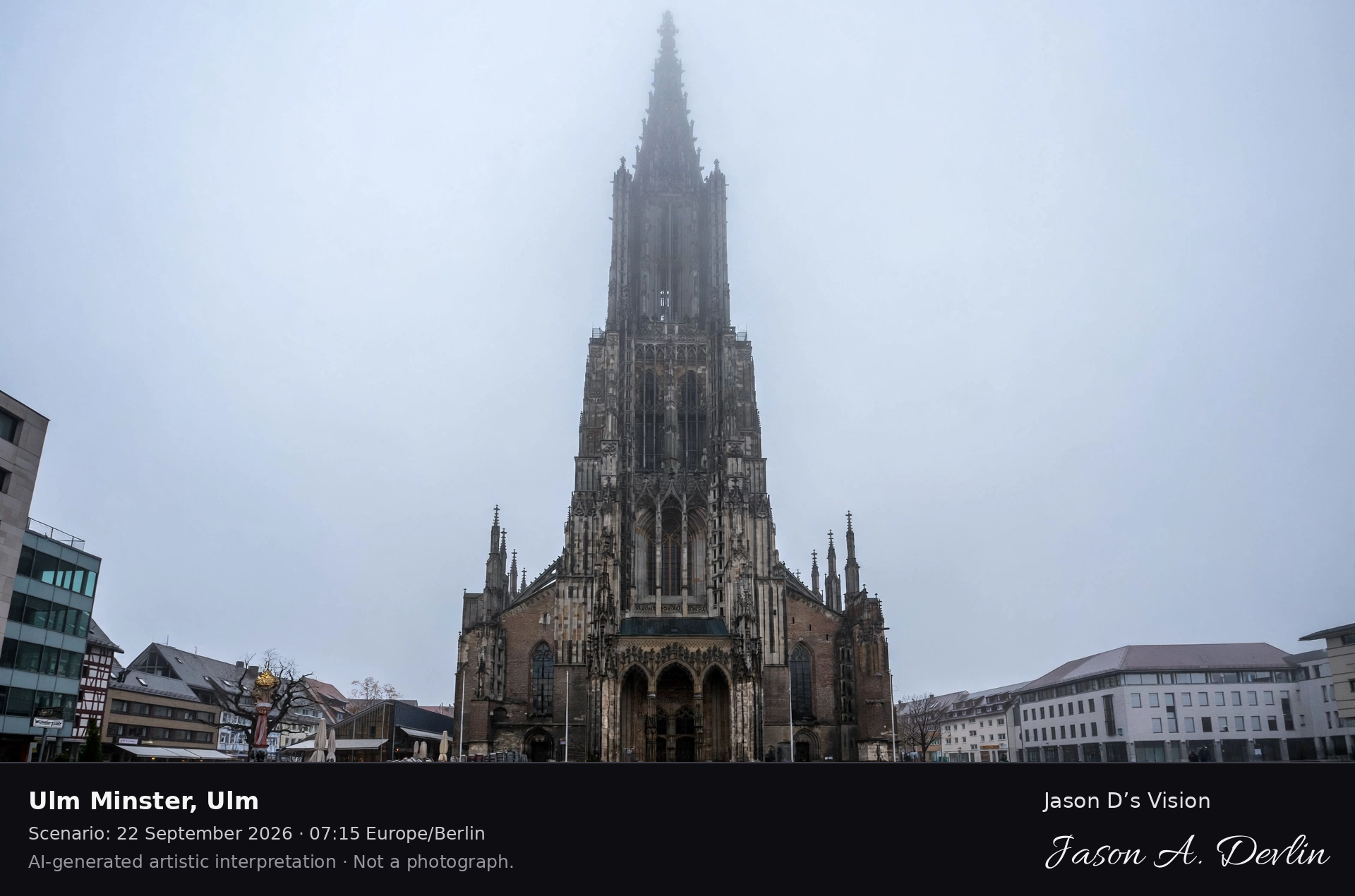
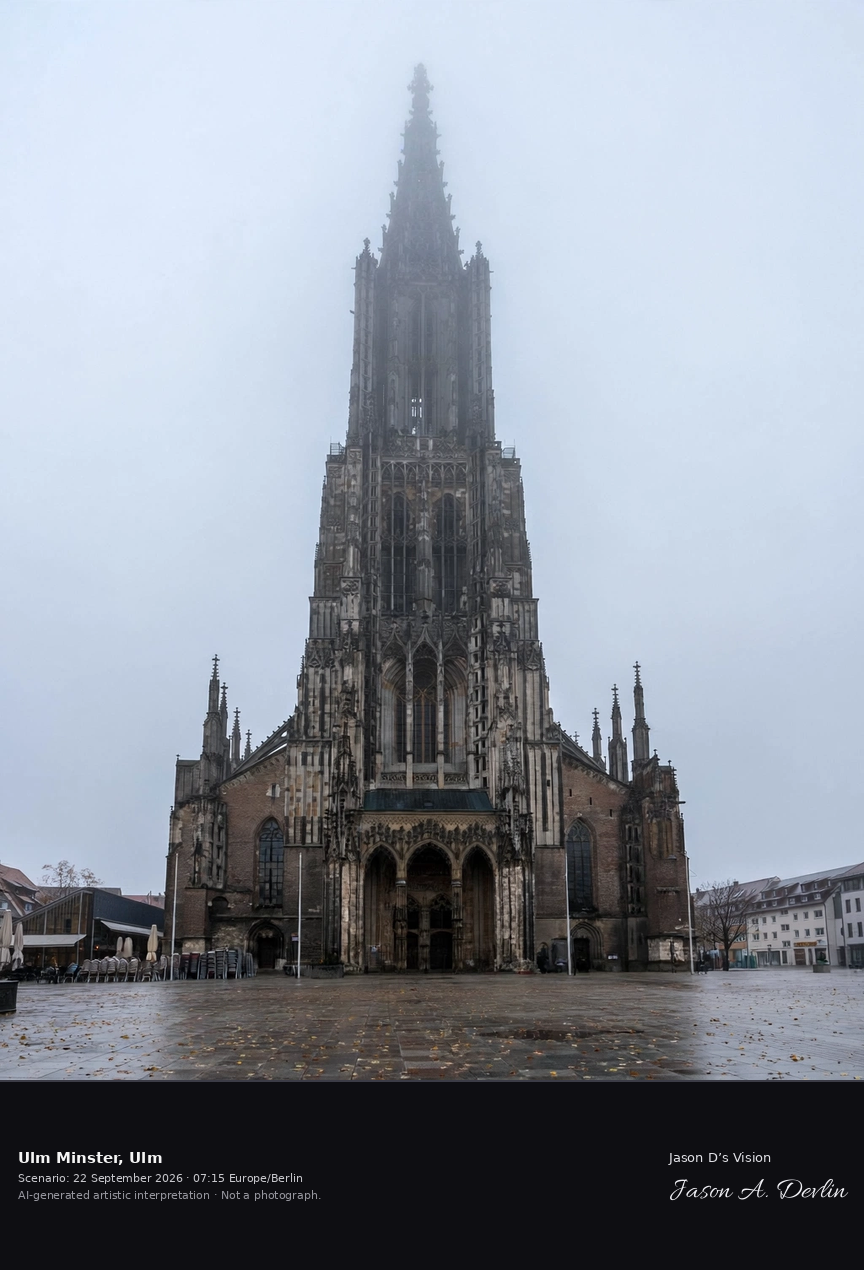
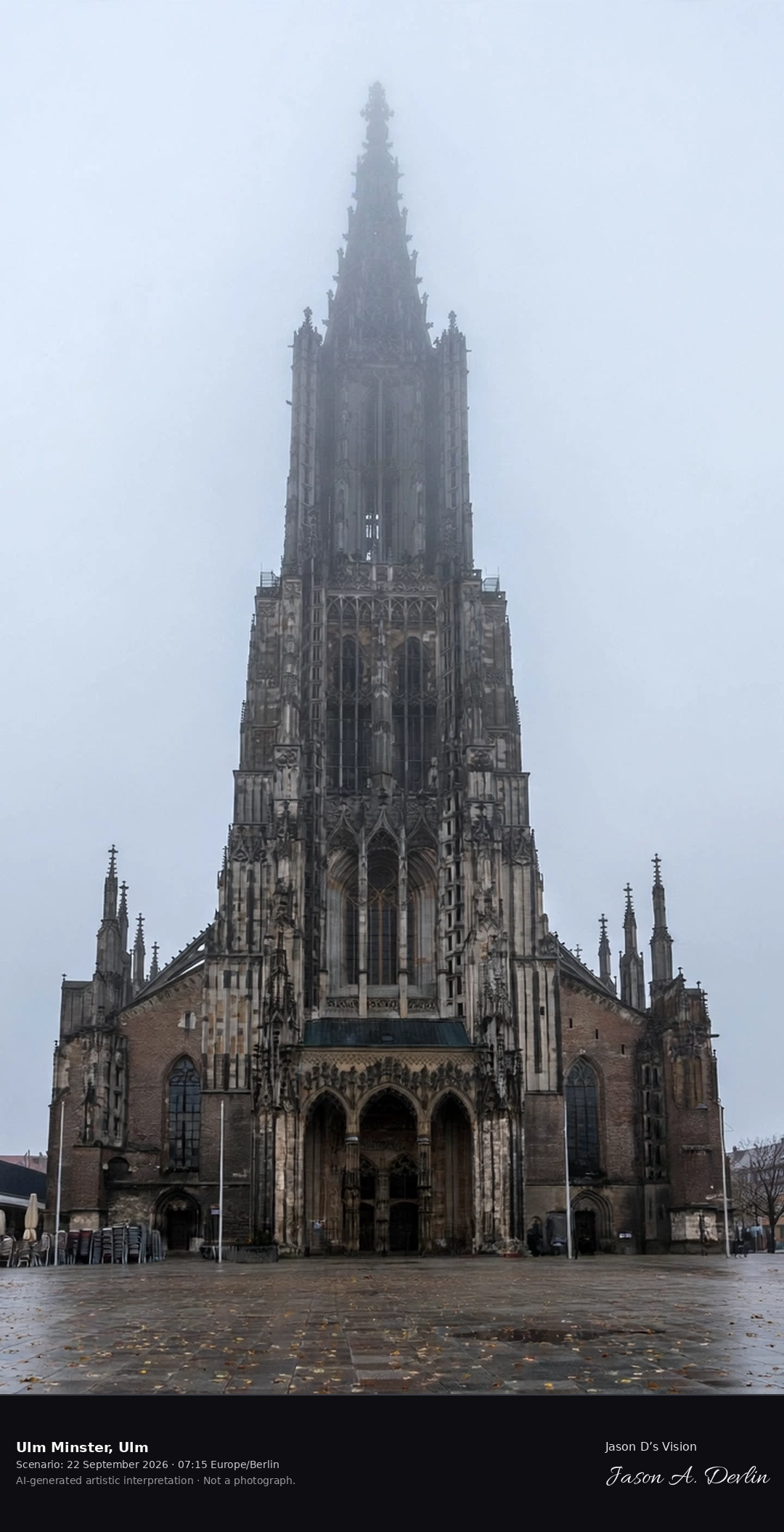
Ulm Minster's tall openwork spire fills the center of the frame, rising from the west facade with its great carved portal into low morning cloud. Market-side buildings flank the square at left and right, and the sky is a soft pale grey. The 07:15 shot is taken straight-on from the plaza, giving the tower its full vertical presence.
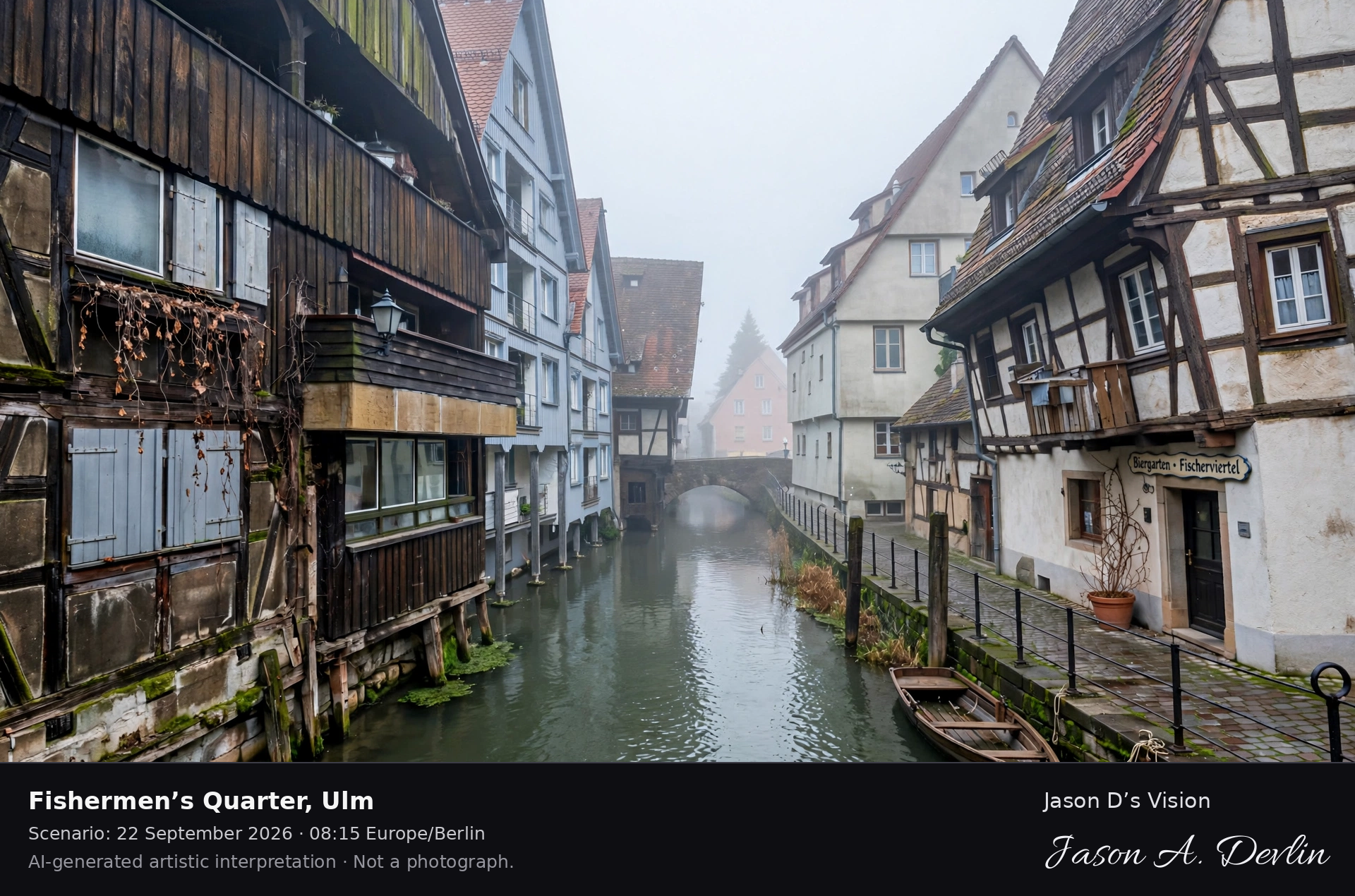
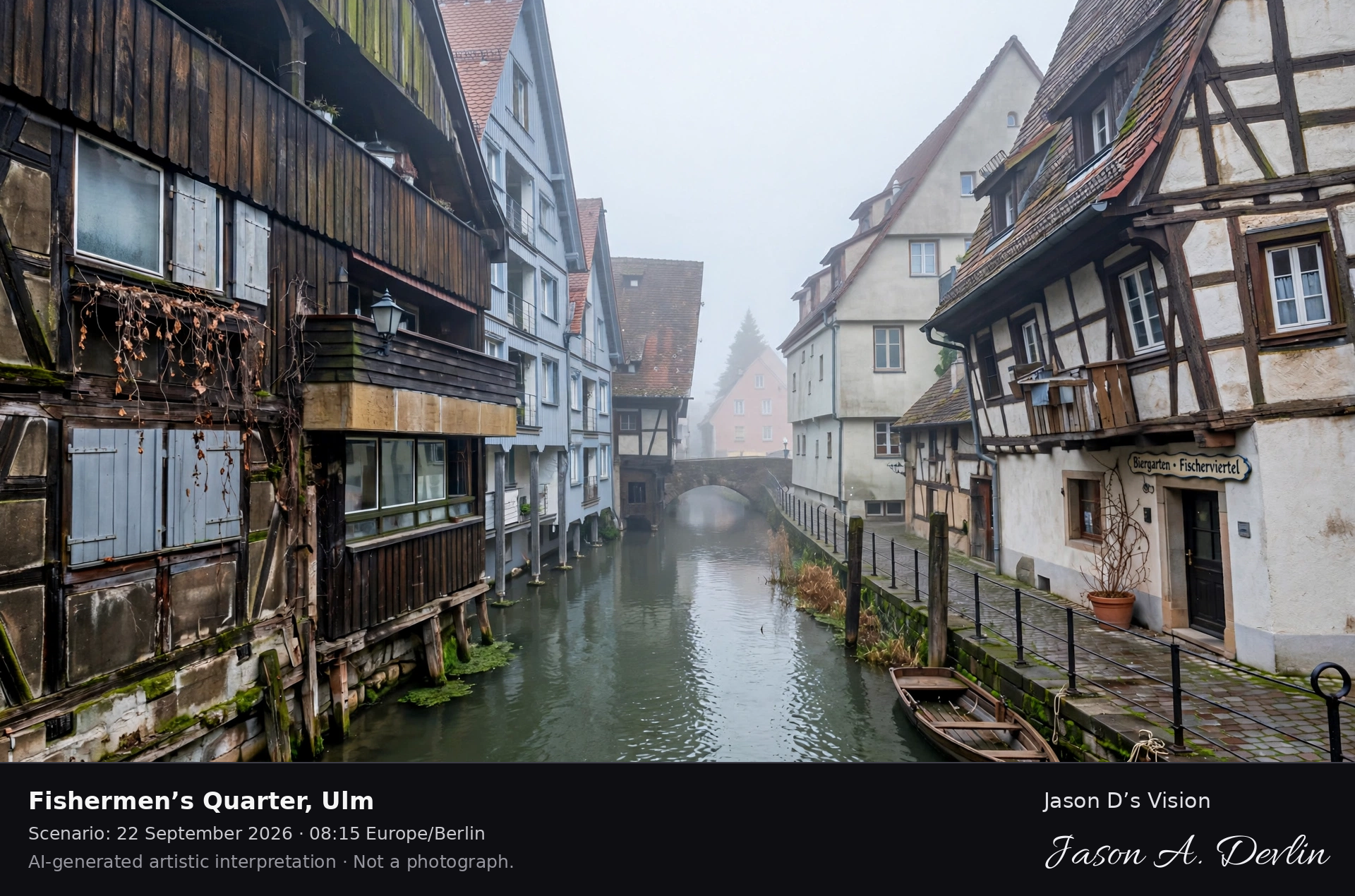
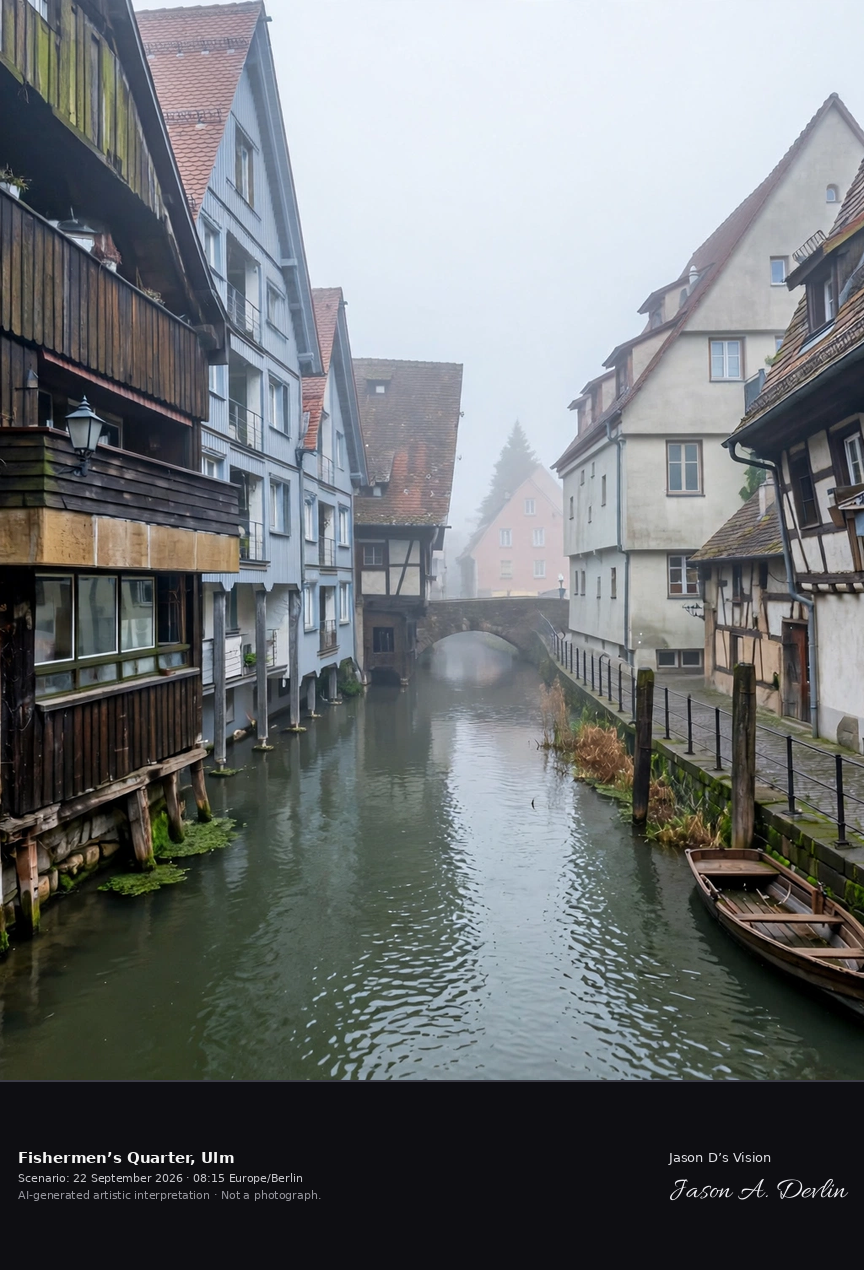
Canals and crooked houses · AI-generated artistic interpretation
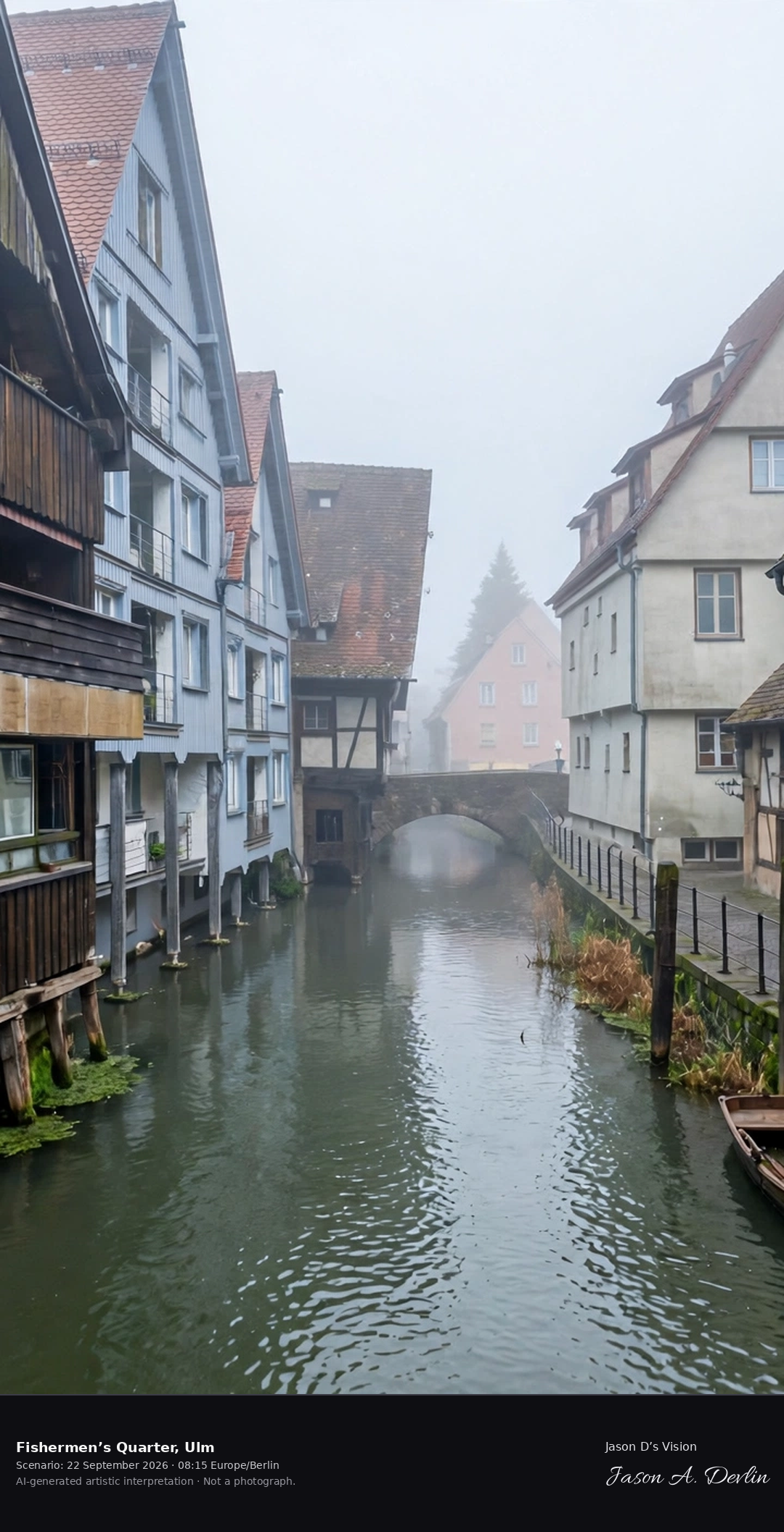
The canal runs between rows of crooked half-timbered houses, their weathered timber and shuttered windows leaning over the water. A small stone bridge crosses in the misty distance, a wooden boat is moored at the right bank, and a painted 'Biergarten · Fischerviertel' sign marks a doorway on the right. The 08:15 morning hangs damp and grey, true to the quarter's enclosed, overhanging character.
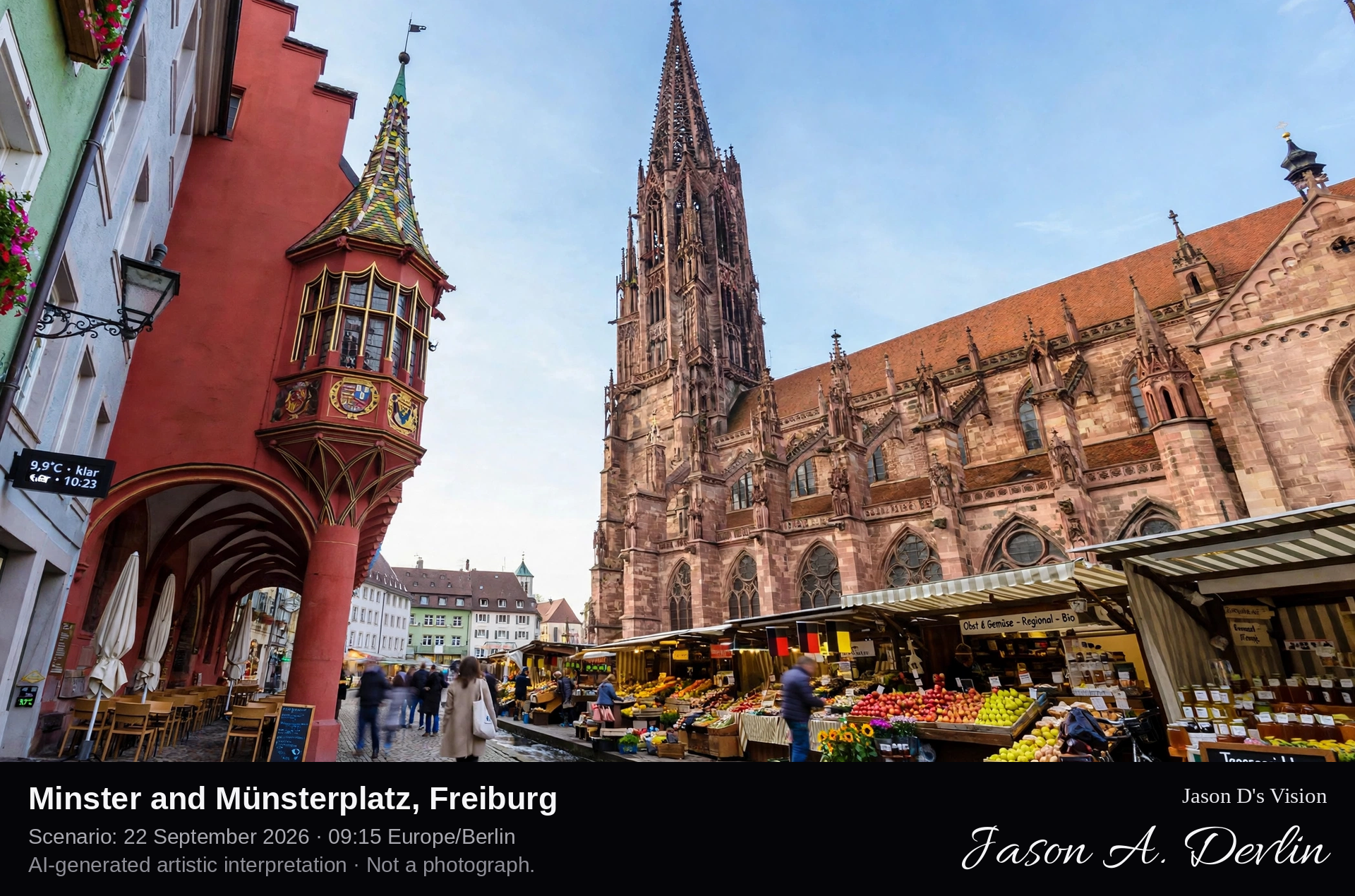
Cathedral and market square · AI-generated artistic interpretation
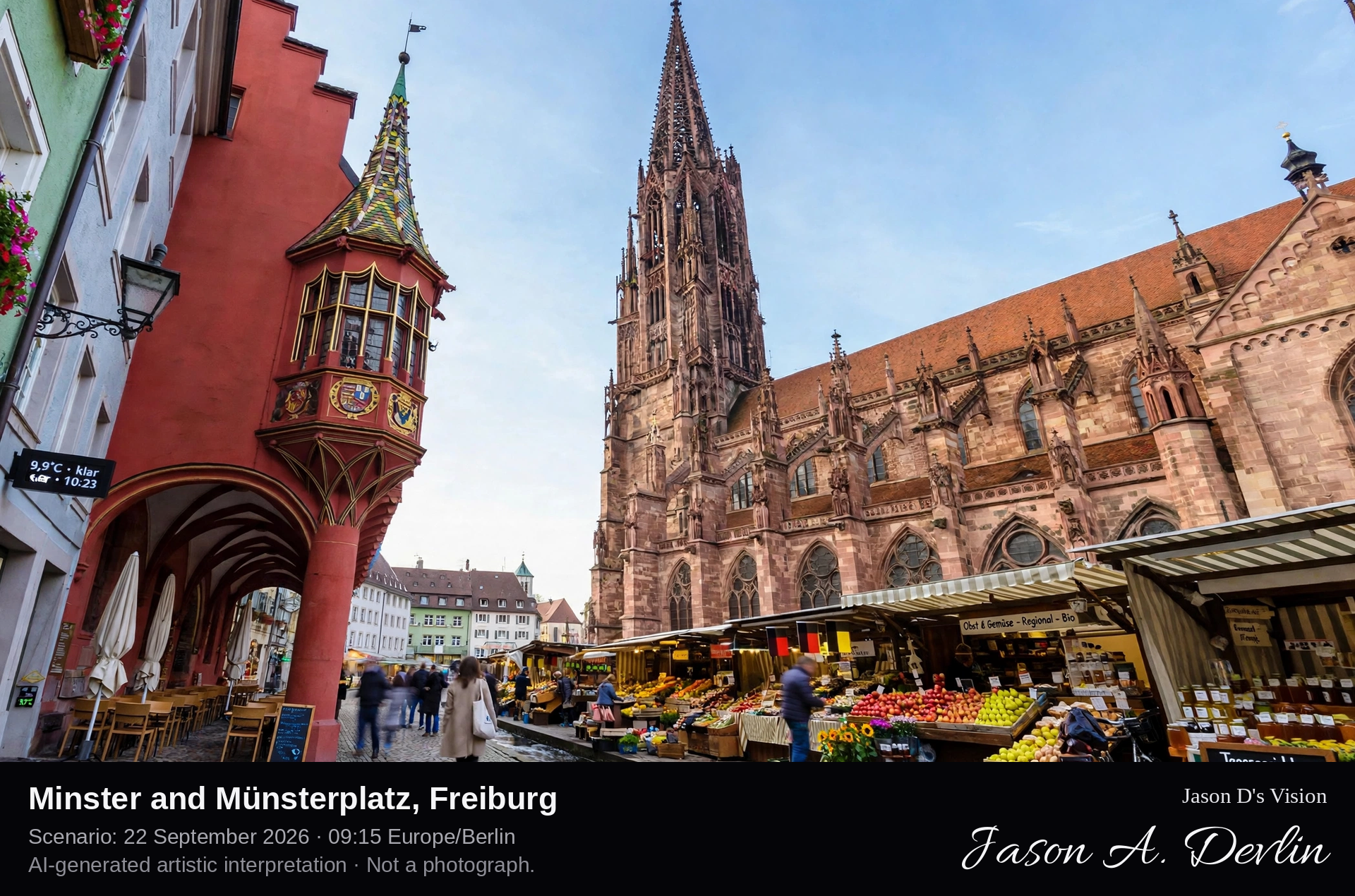
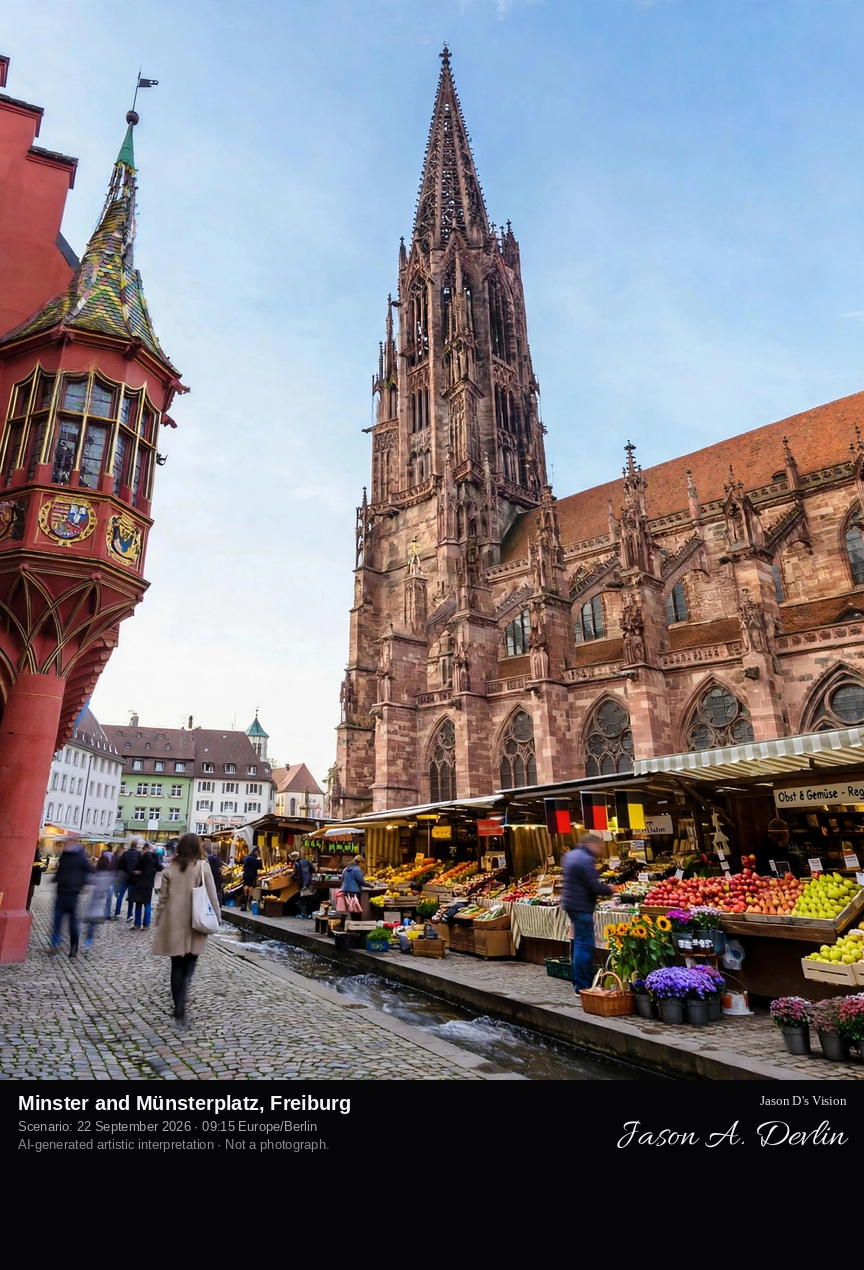
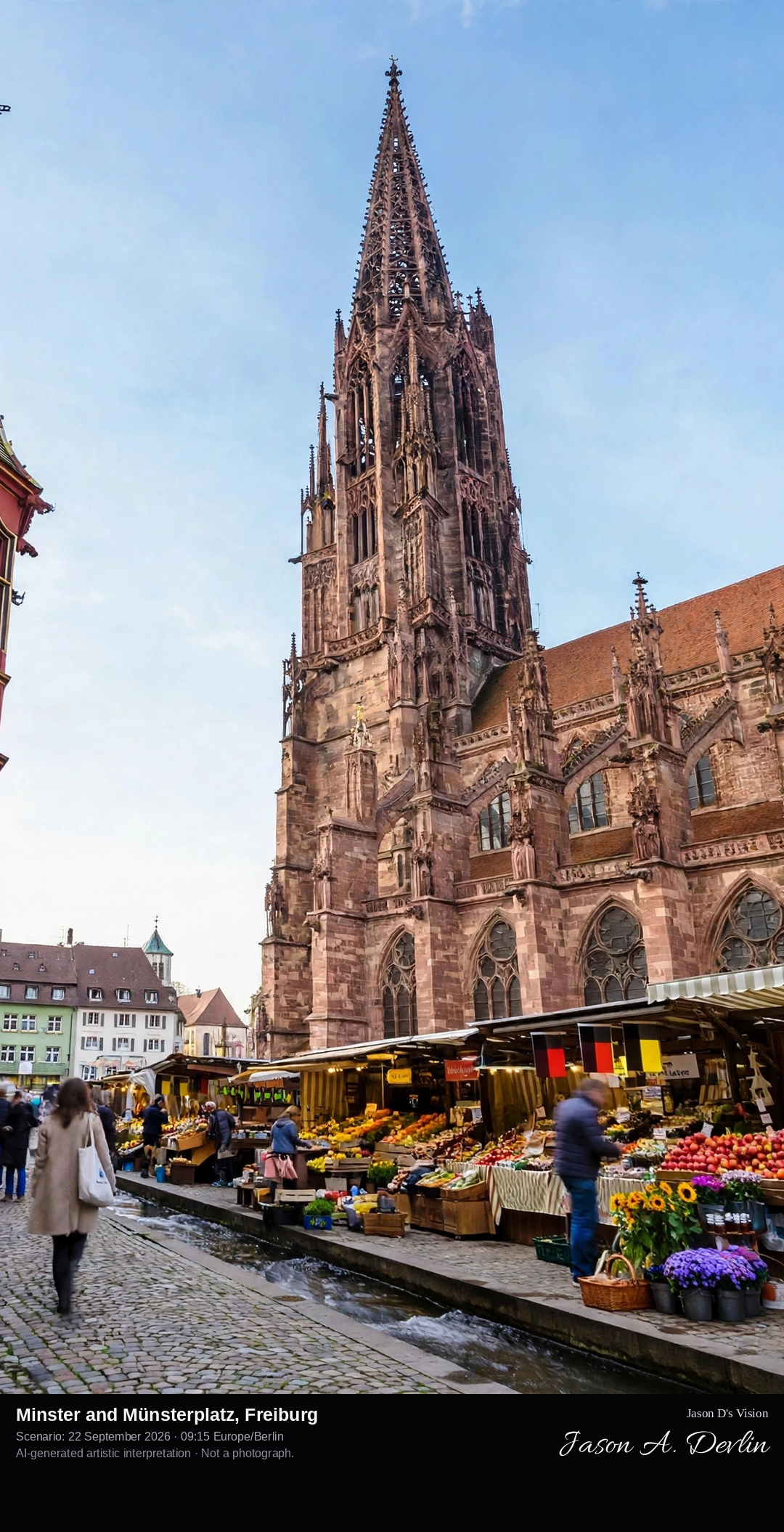
Freiburg Minster's openwork spire rises at center, with the cathedral's long red sandstone nave stretching to the right. The market square in front is full of produce stalls under striped awnings, with heaped apples and greens in the foreground. A red merchant house with an ornate painted oriel window frames the square at left, and the 09:15 morning is clear and bright. One honest artifact: a small in-scene digital sign reads 10:23 against the baked 09:15 scenario label, a documented generation quirk.
Historic gate and street · AI-generated artistic interpretation
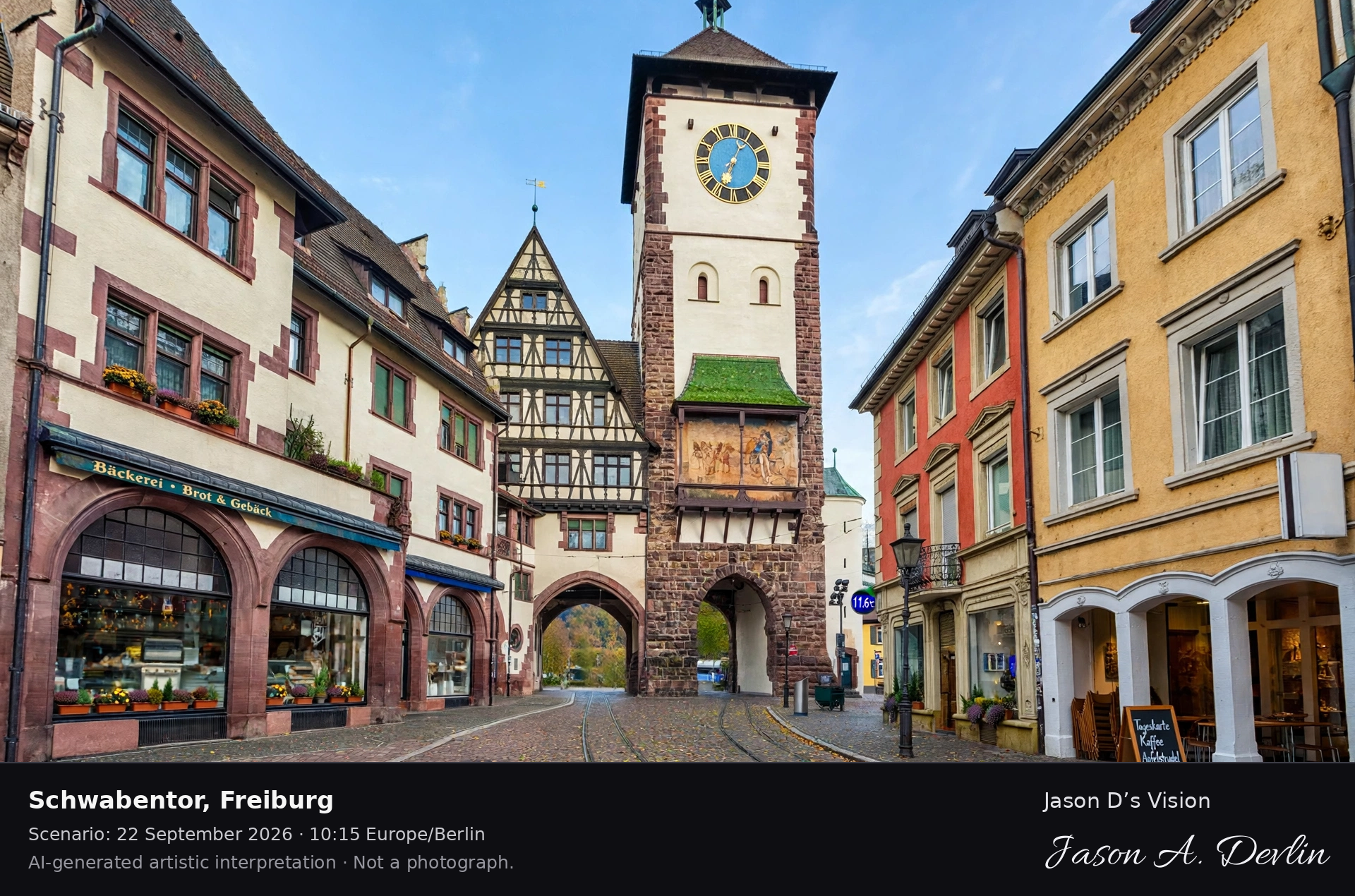
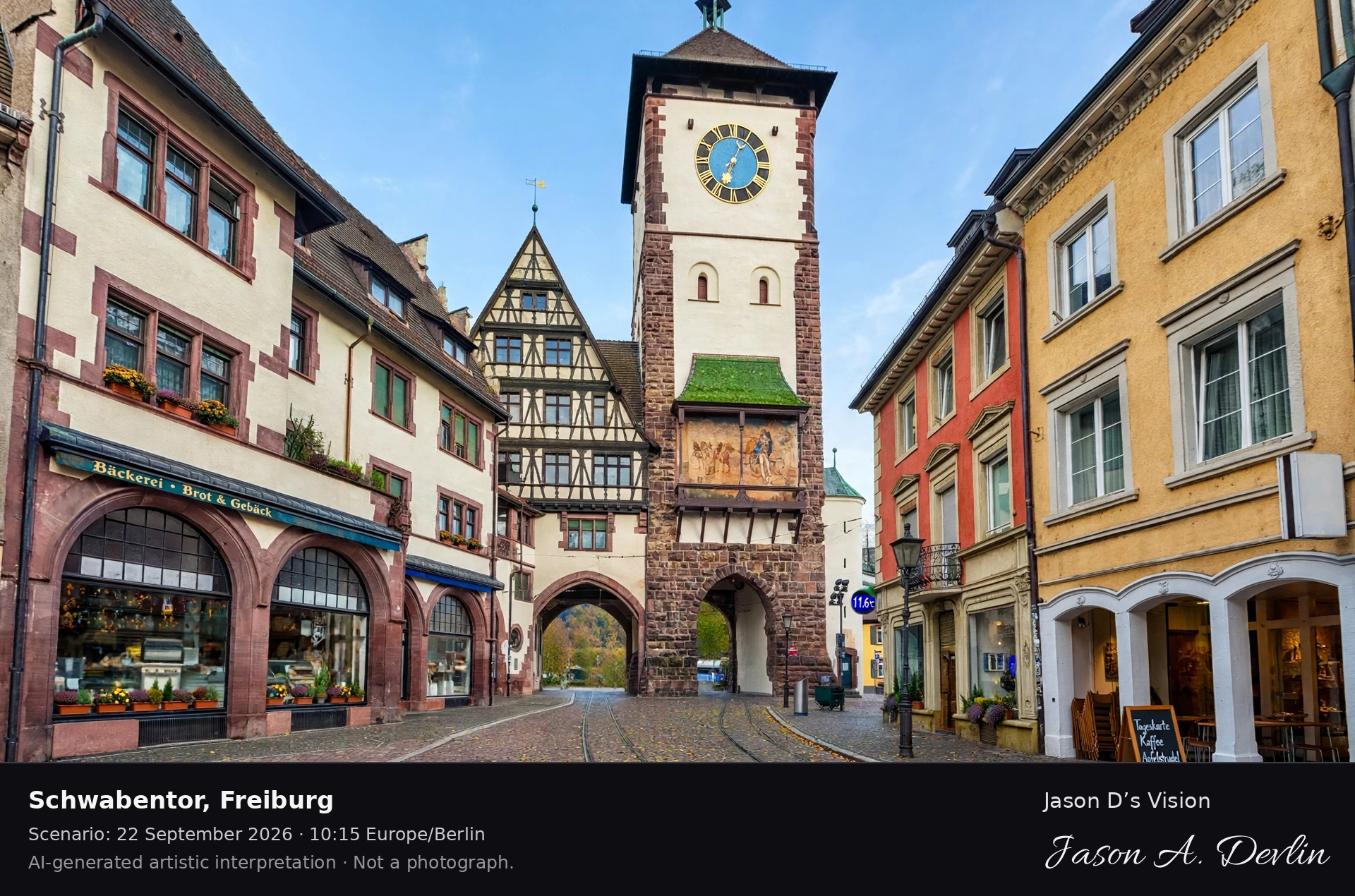
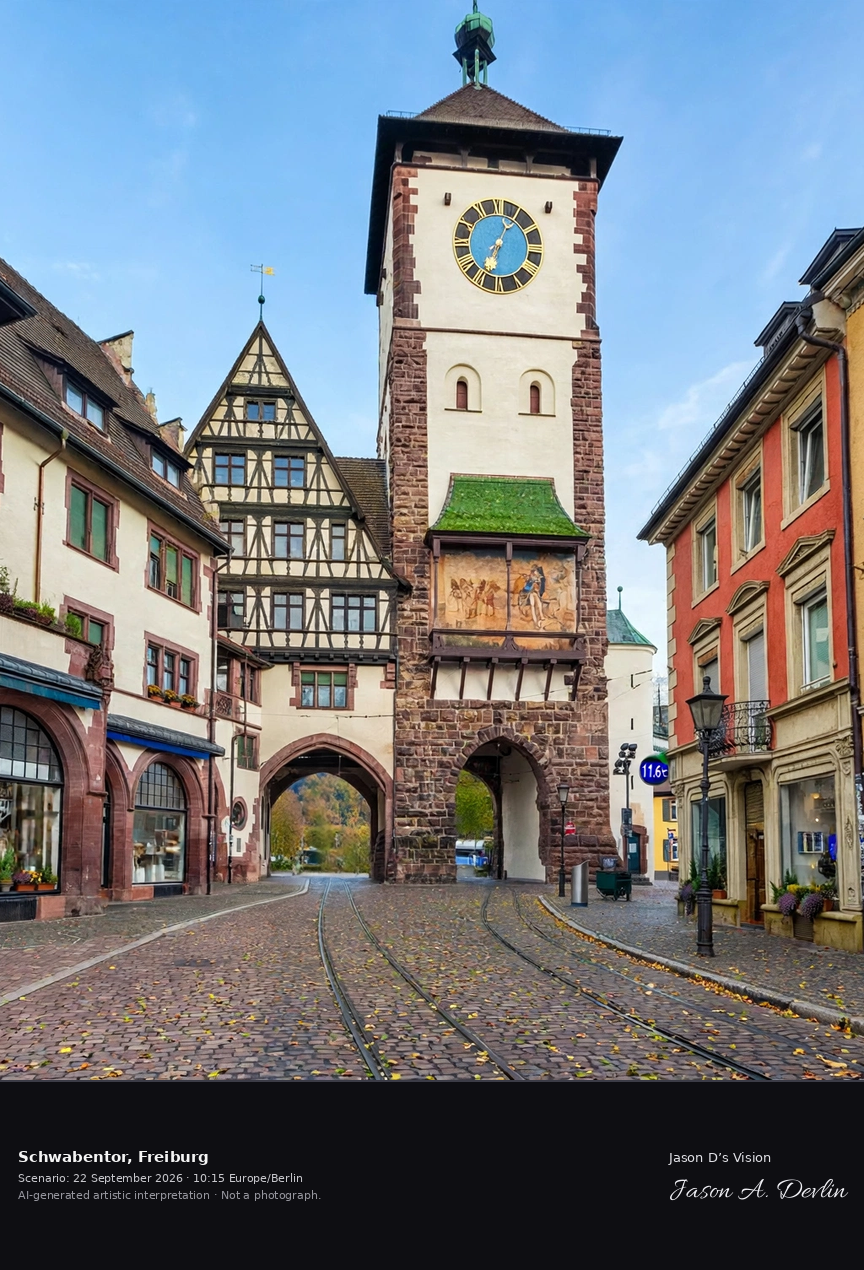
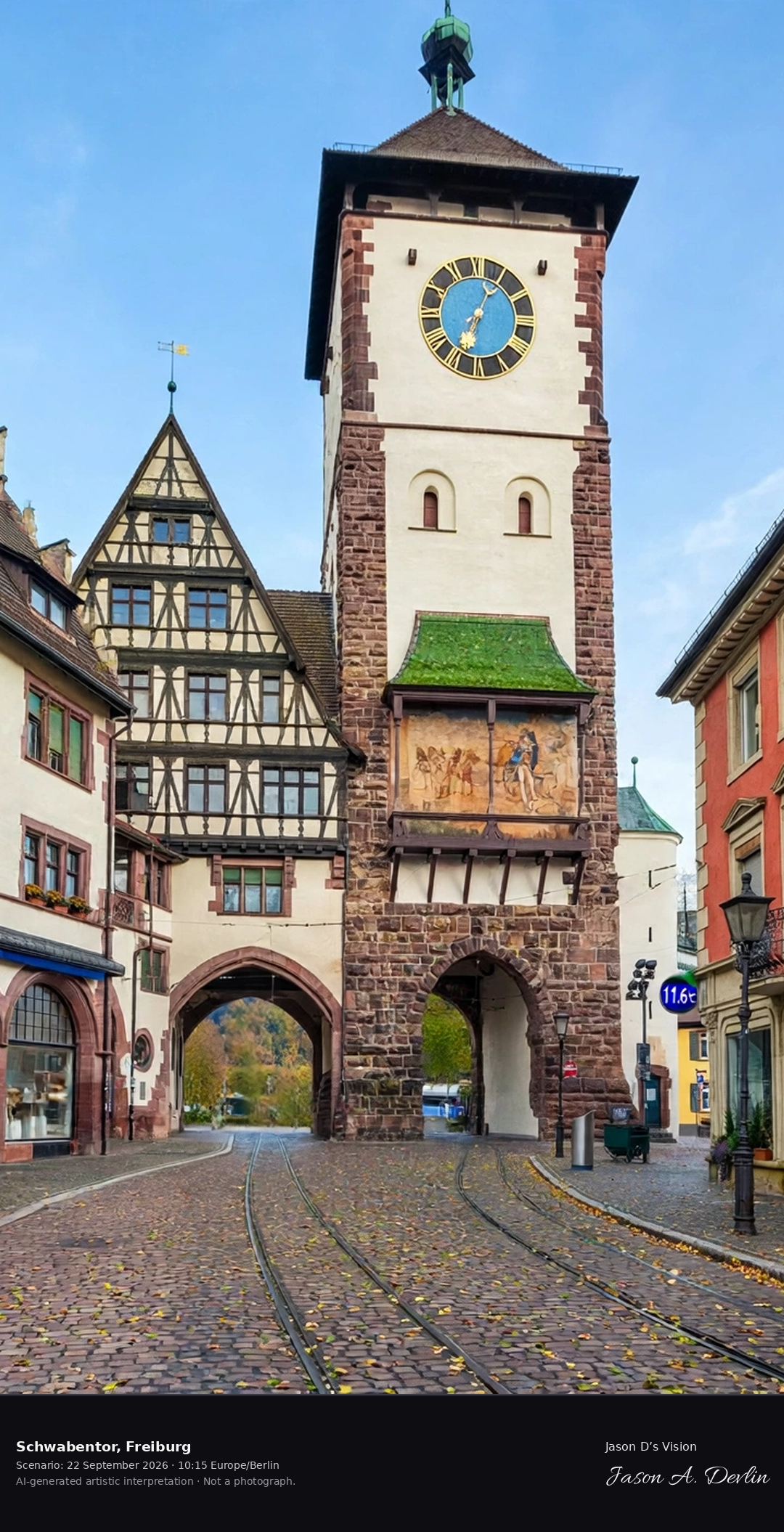
The Schwabentor gate tower stands center, its blue clock face and painted fresco panel set above twin passage arches, with half-timbered gables crowding in on either side. Cobbles run through the arches and curve away to the right, and a 'Bäckerei · Brot & Gebäck' shop front sits at the left edge. The 10:15 morning is clear and sunny, and the tower's stone quoins and timber framing read crisply in the light.
Formal frontage and gardens · AI-generated artistic interpretation
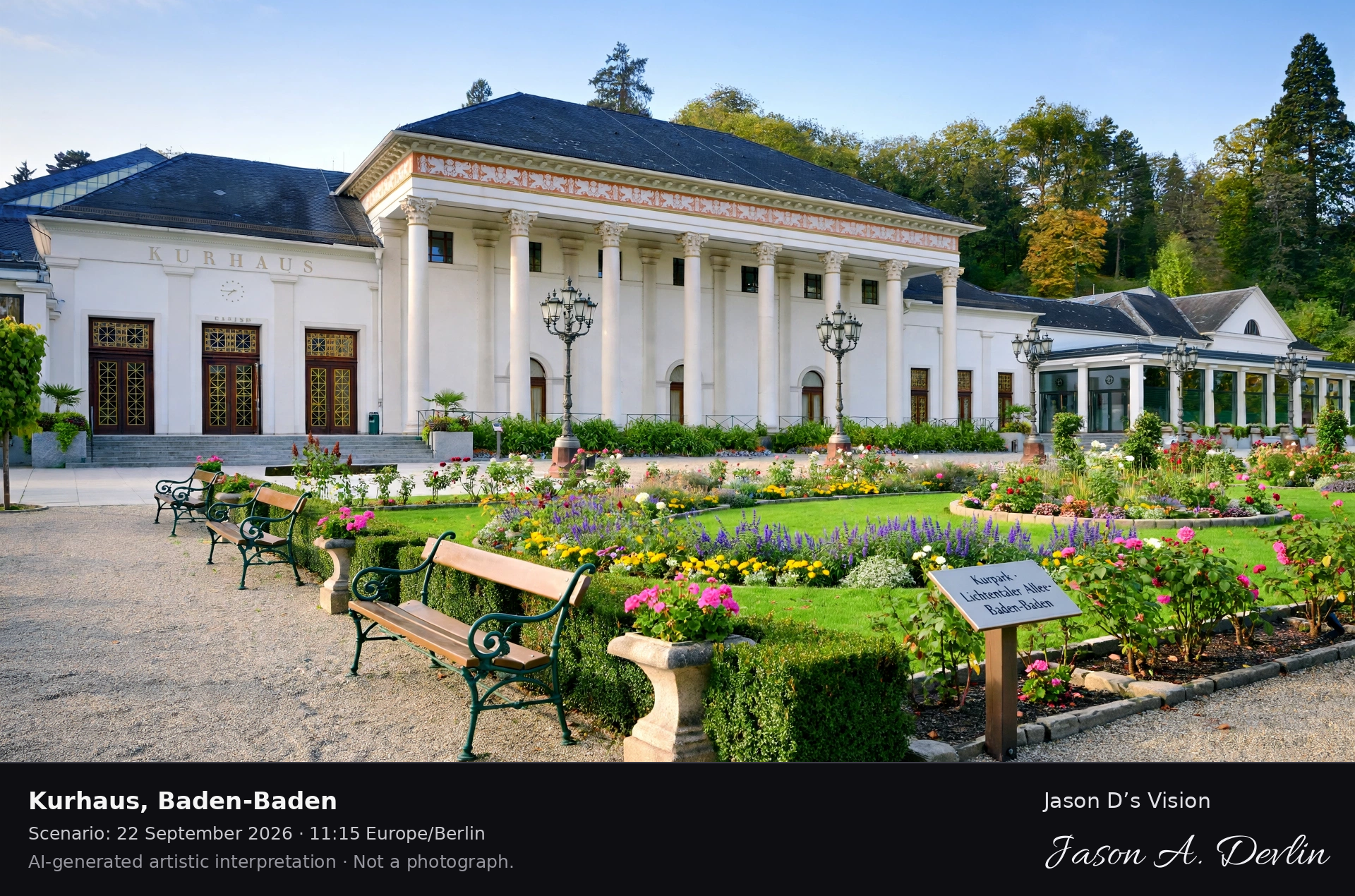
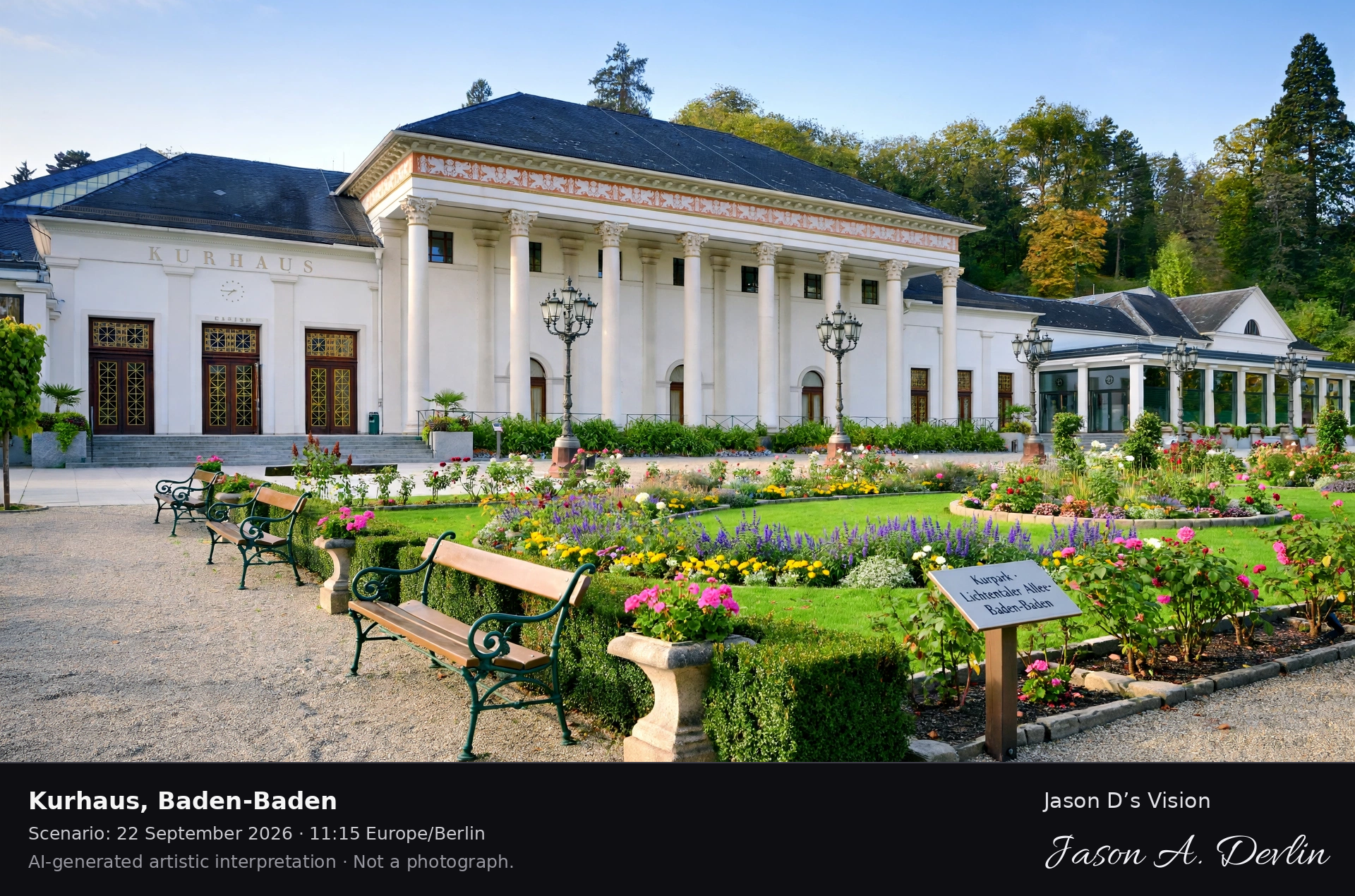
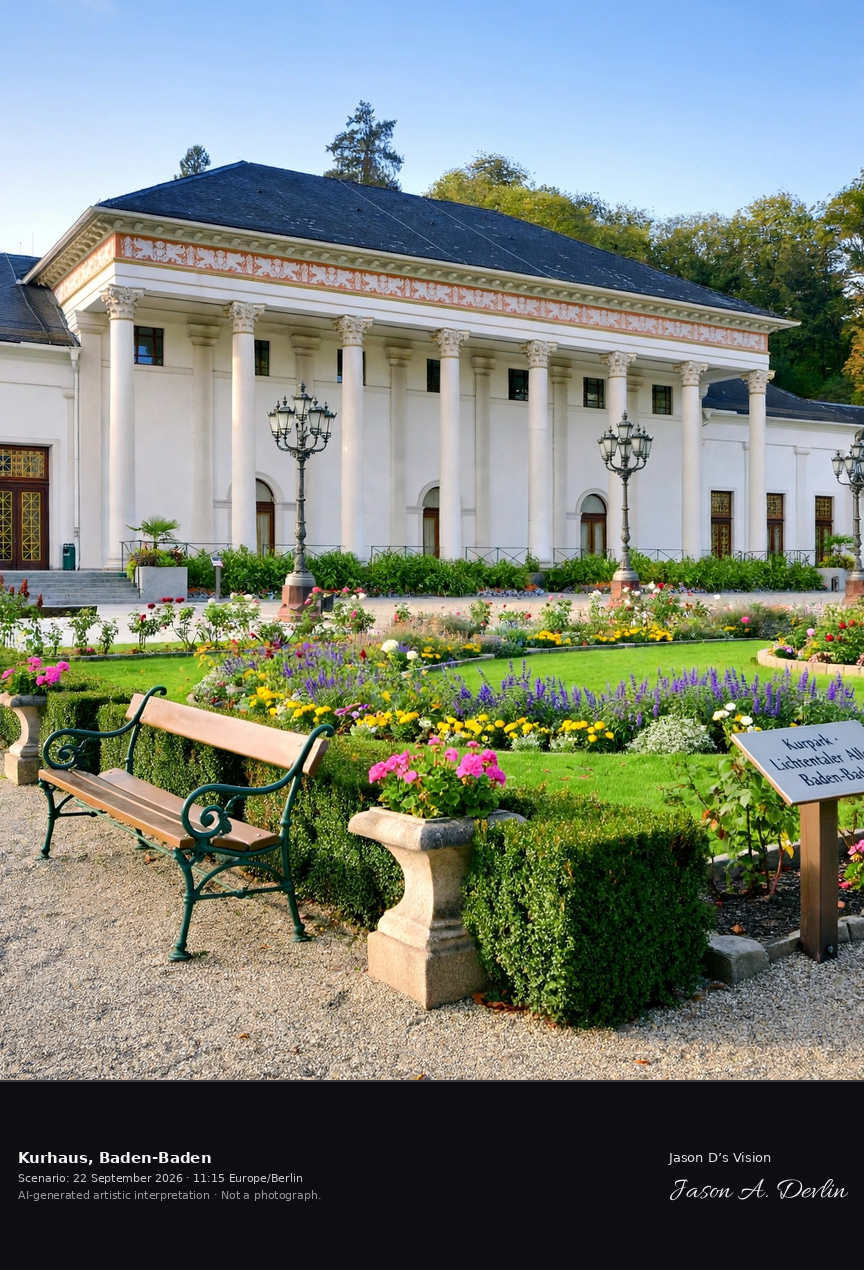
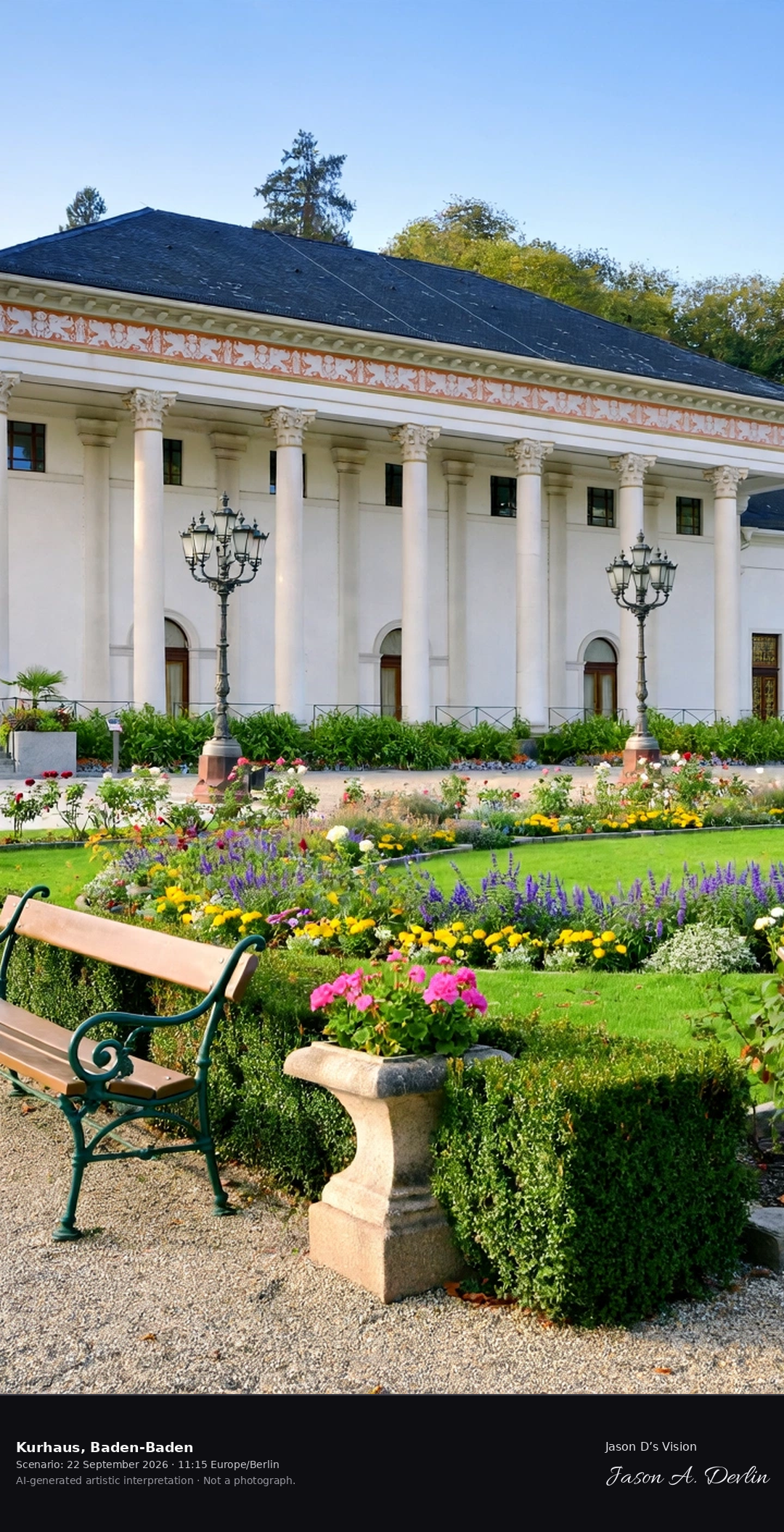
The Kurhaus presents its white neoclassical frontage across the center of the frame, a long colonnade of columns under a decorated frieze, with KURHAUS lettered on the left wing. Formal flower beds, clipped hedges and gravel walks with iron benches fill the foreground, backed by the wooded hillside. The 11:15 morning is bright and clear, and a small 'Kurpark · Lichtentaler Allee · Baden-Baden' sign stands in the right foreground.
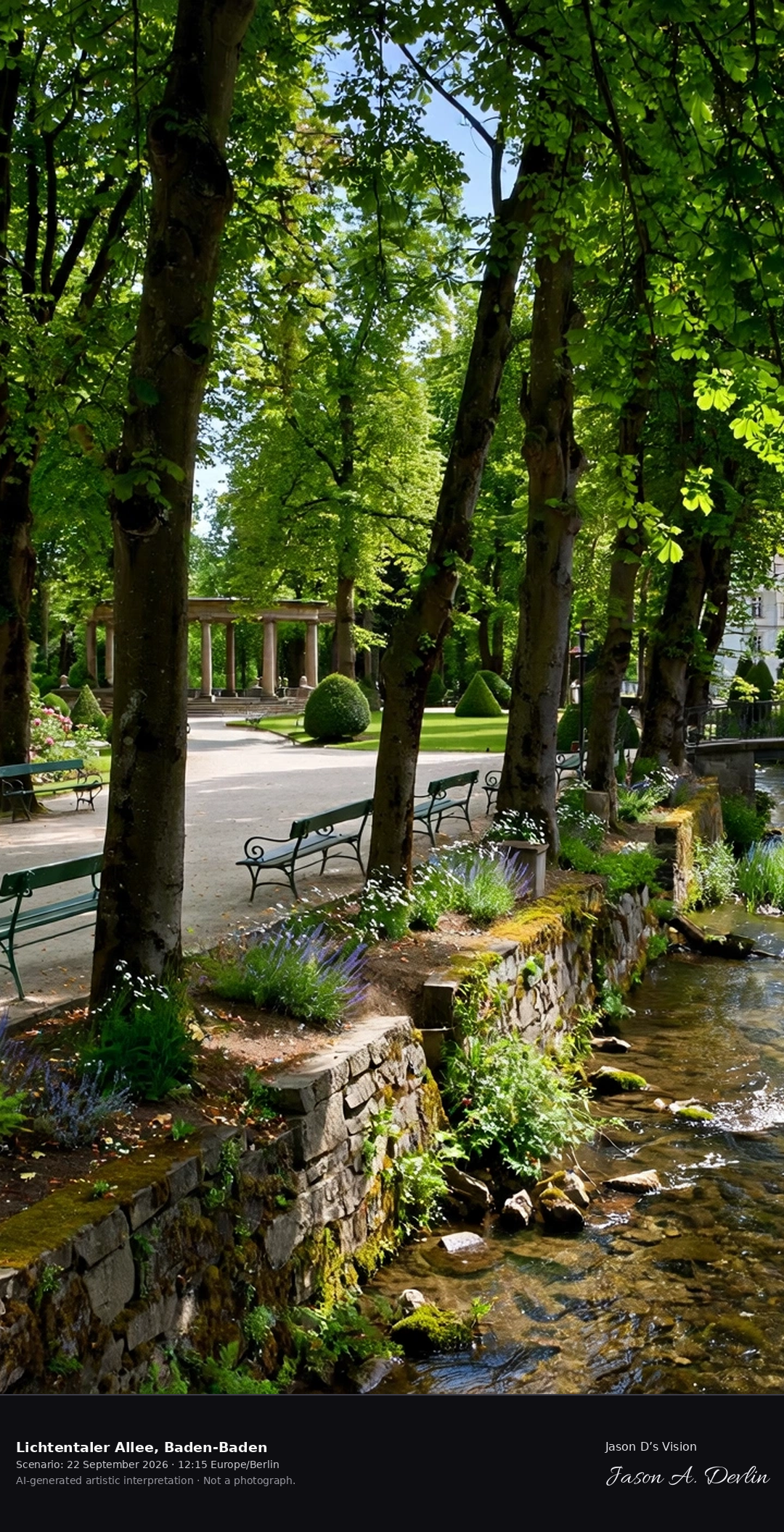
Riverside park · AI-generated artistic interpretation
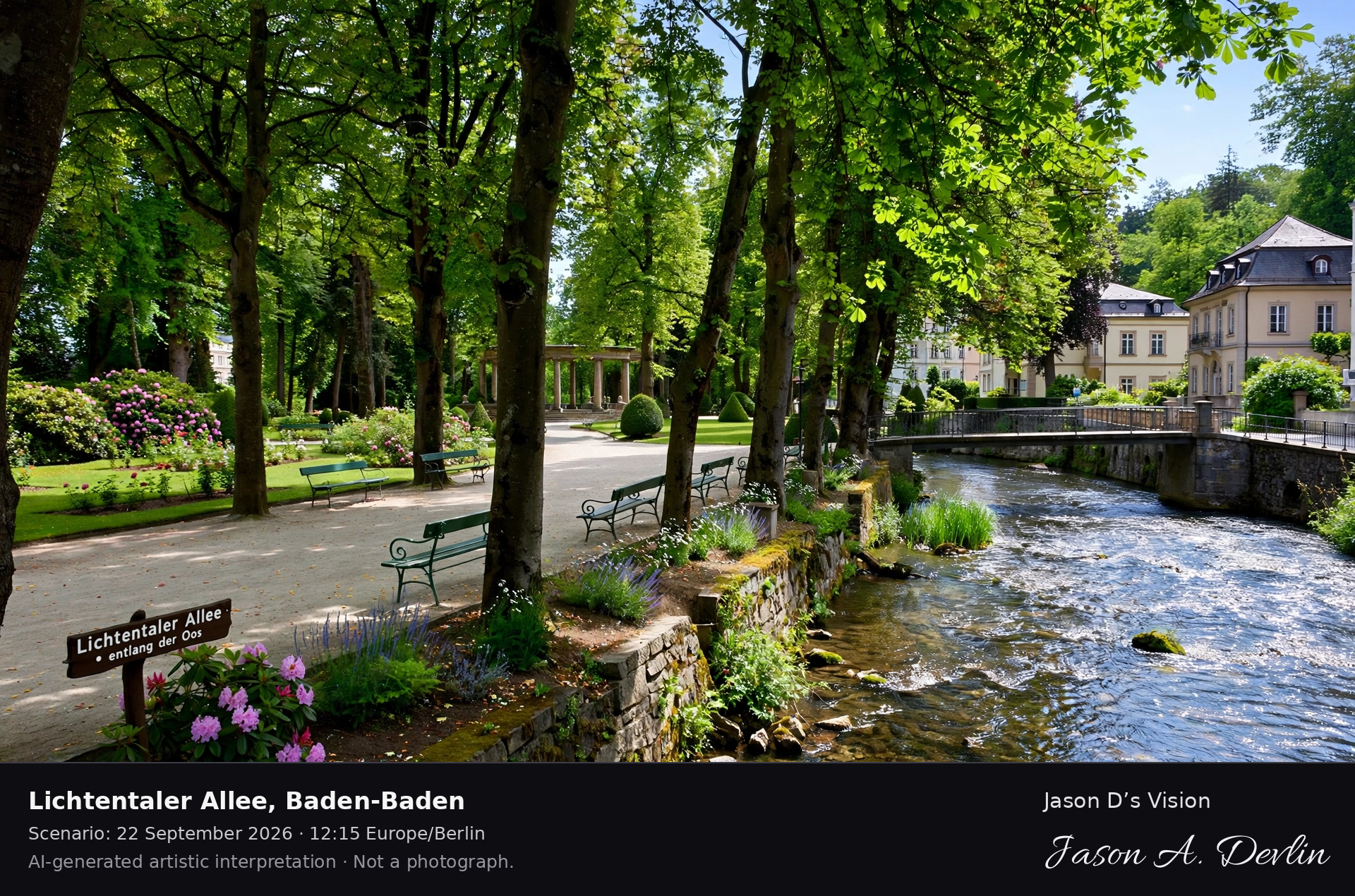
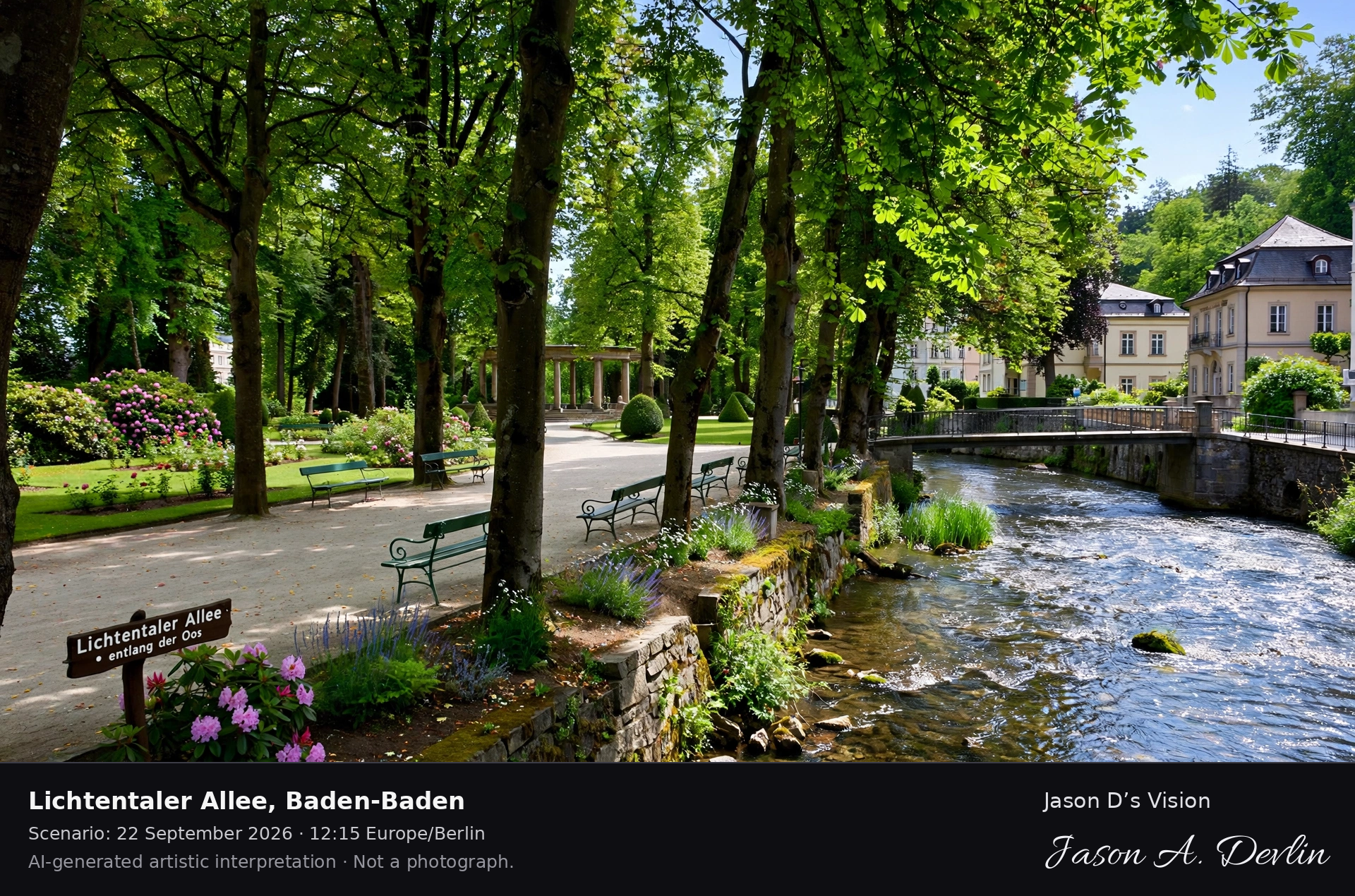
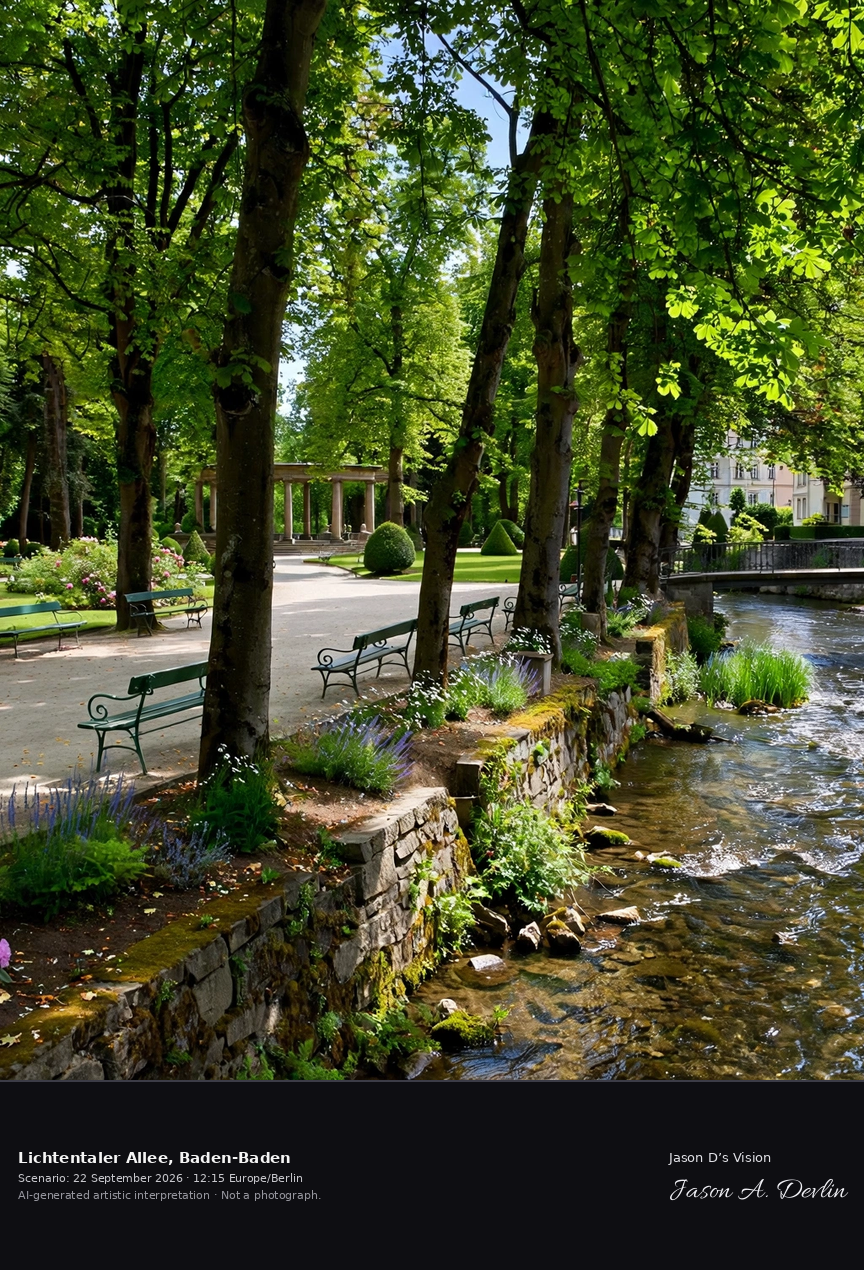
The Oos river flows along the right of the frame beneath a footbridge, its banks lined with mature trees, benches and low stone walls. The park path runs through the center past flower beds, with a colonnaded pavilion glimpsed in the distance and grand villas rising at the right edge. A wooden 'Lichtentaler Allee · entlang der Oos' sign anchors the left foreground in dappled 12:15 midday sun.
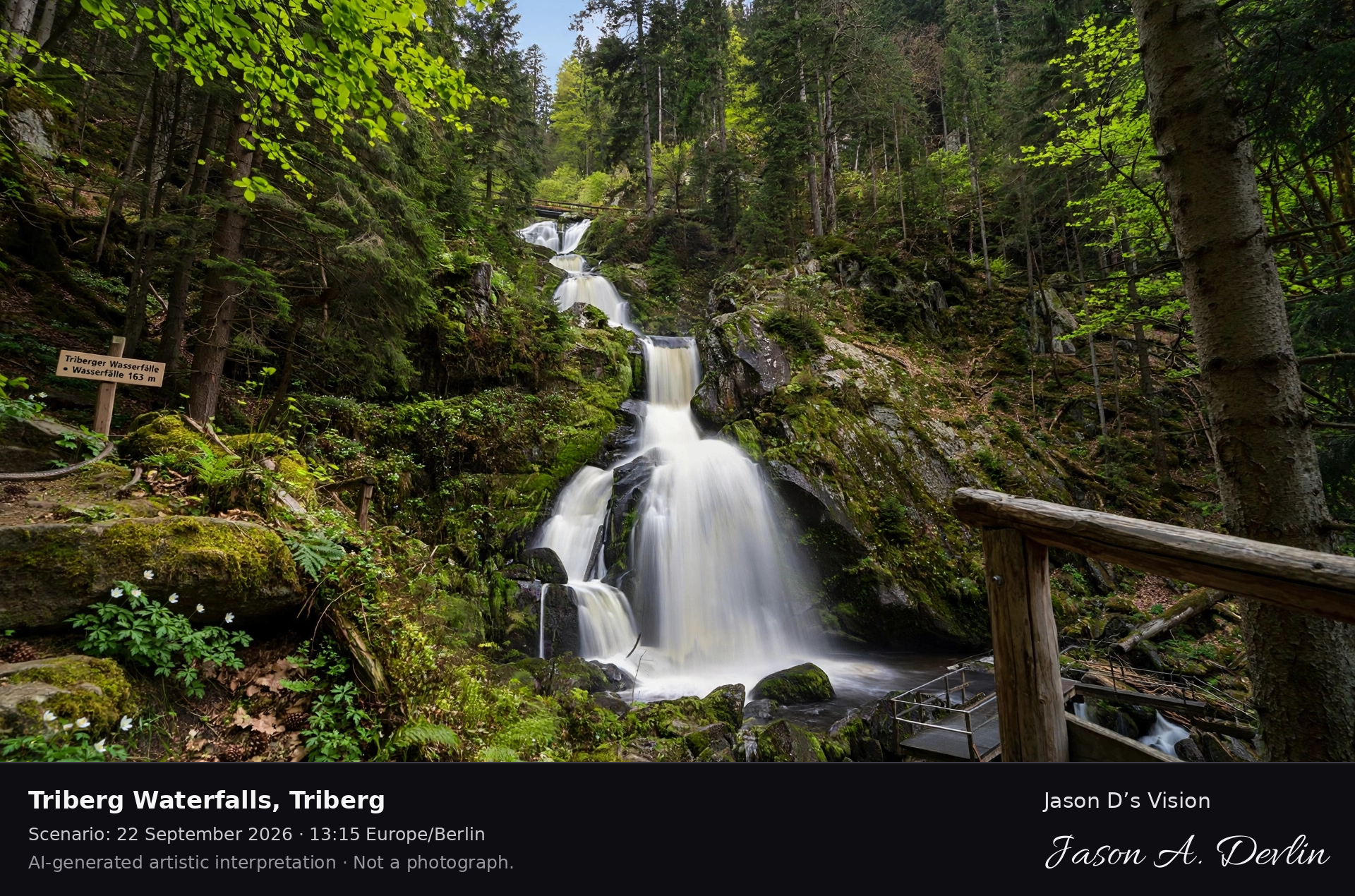
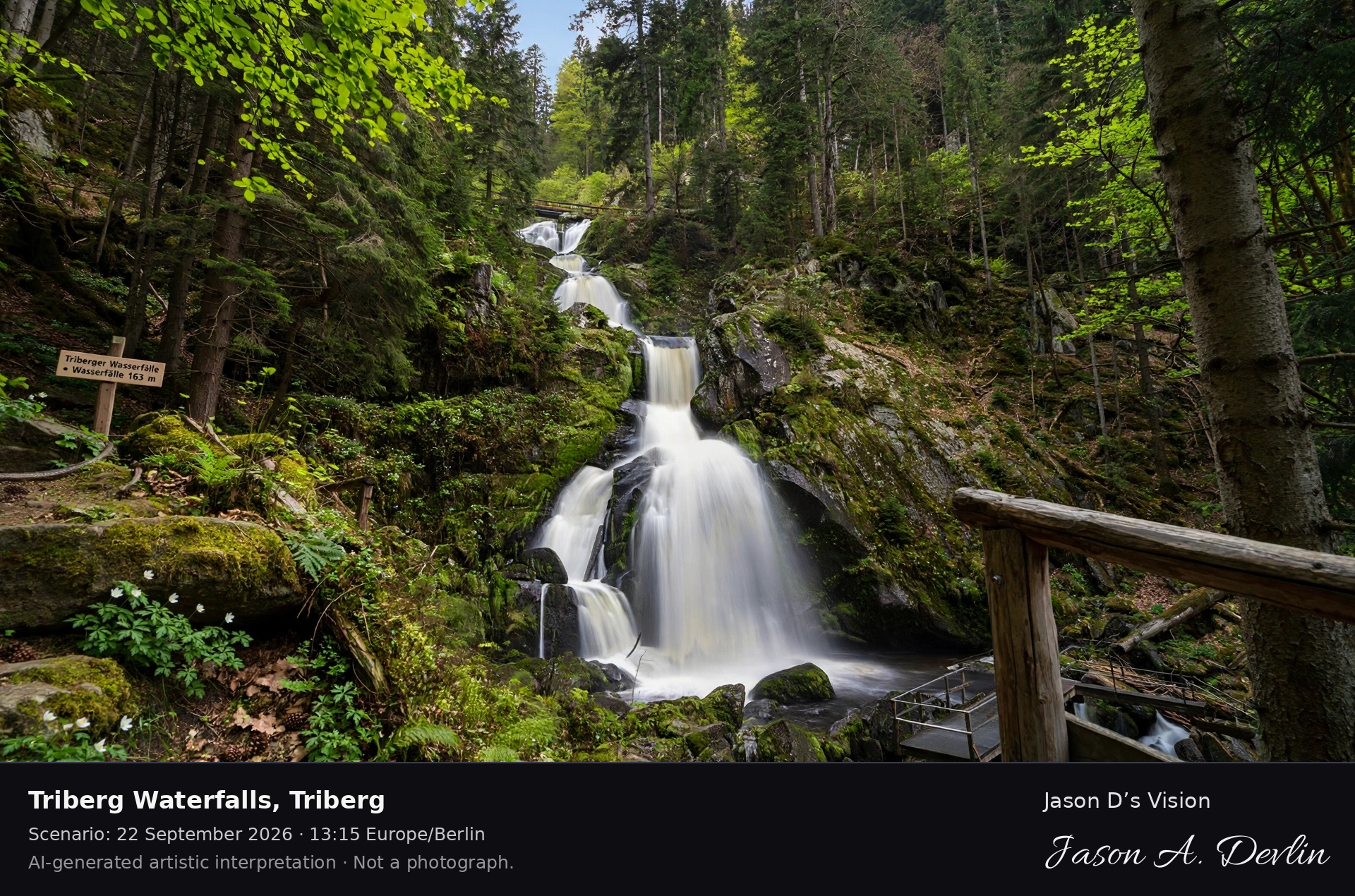
The waterfall drops in a multi-tiered cascade down the center of the frame, white water threading between moss-covered boulders and dark spruce. A trail sign at the left marks the Triberg falls and their 163 m height, and a wooden footbridge crosses near the top of the cascade. The 13:15 early-afternoon light filters green through the forest canopy over the viewing path.
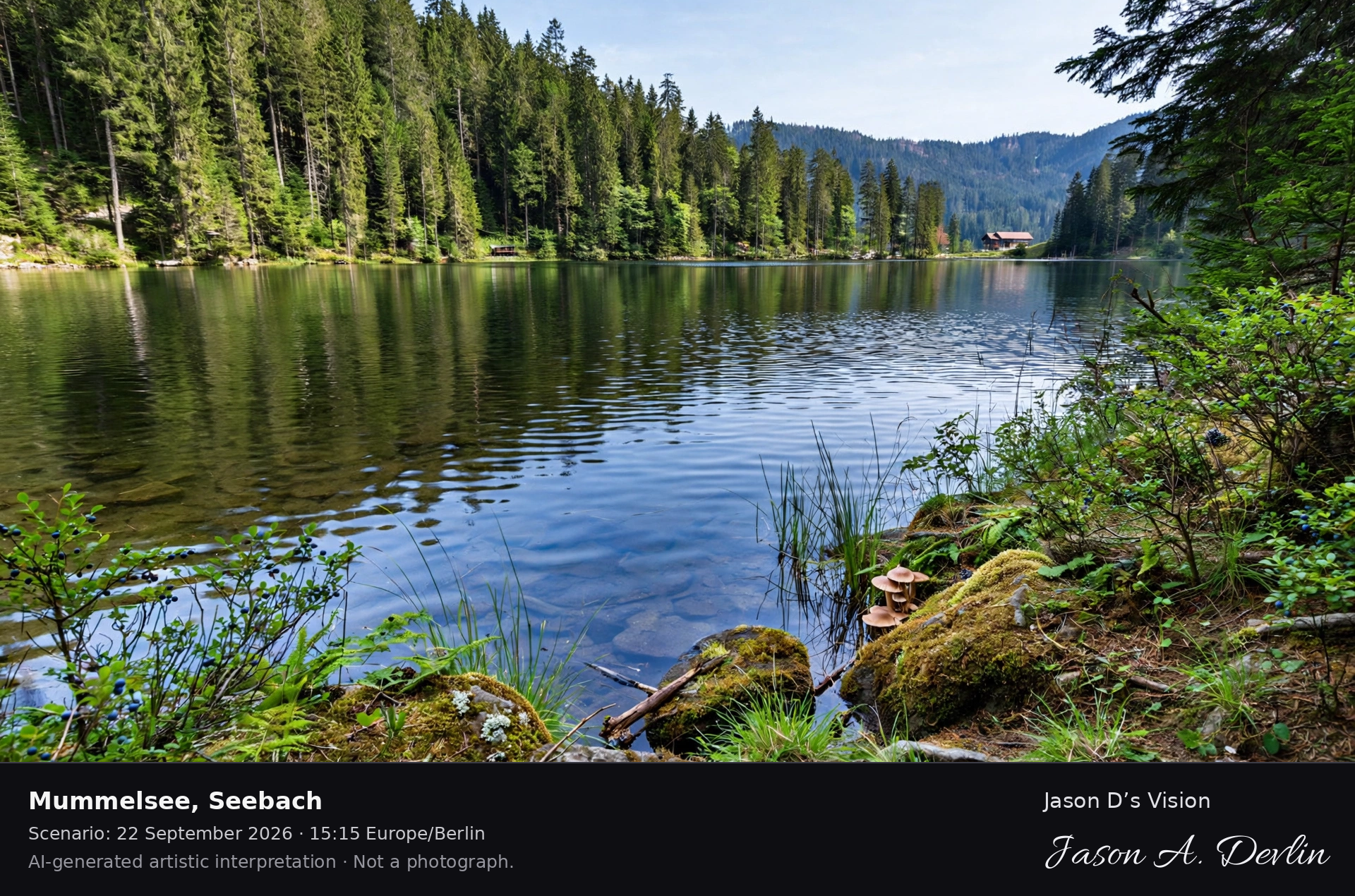
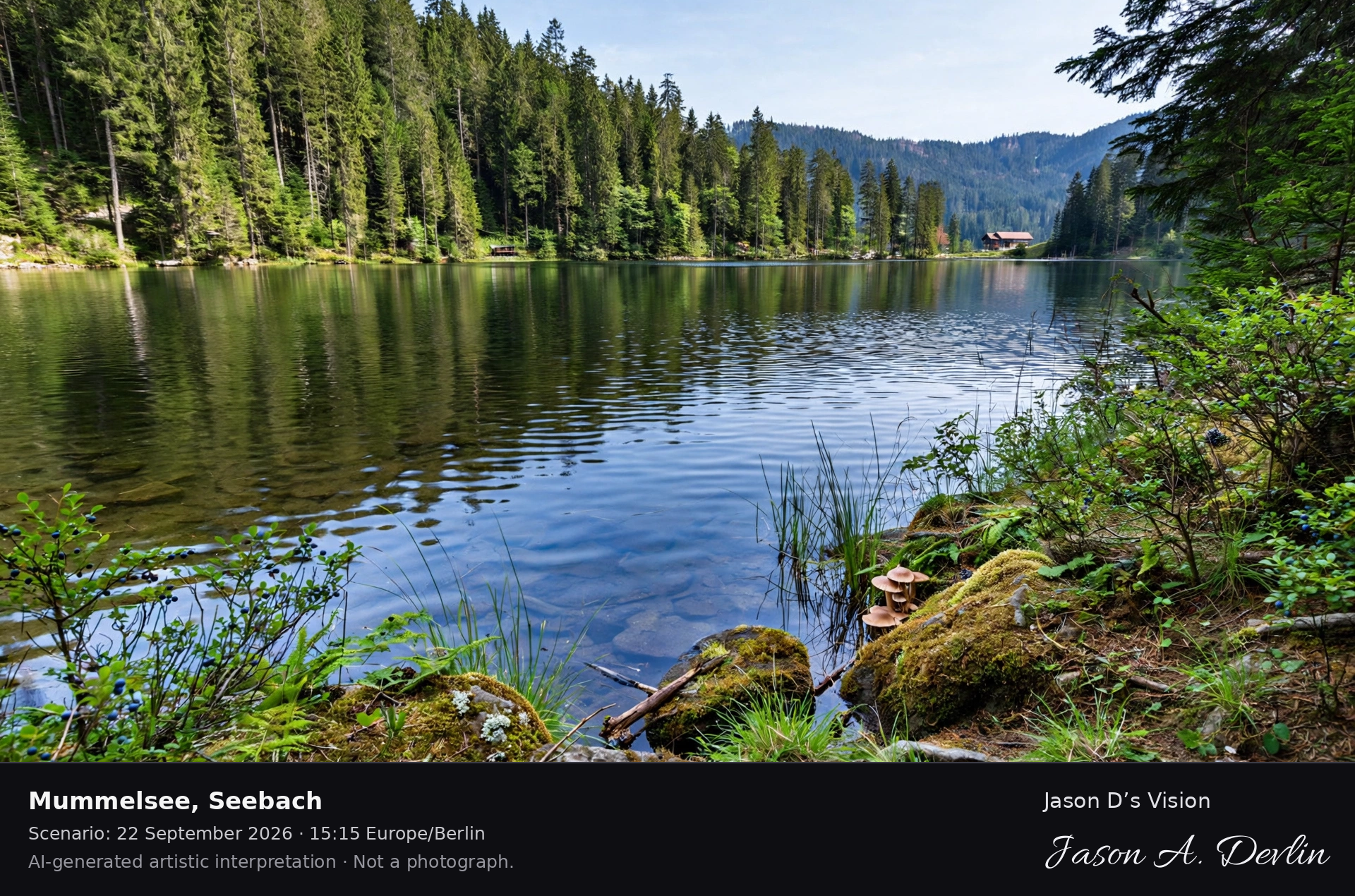
Forest lake and shoreline · AI-generated artistic interpretation
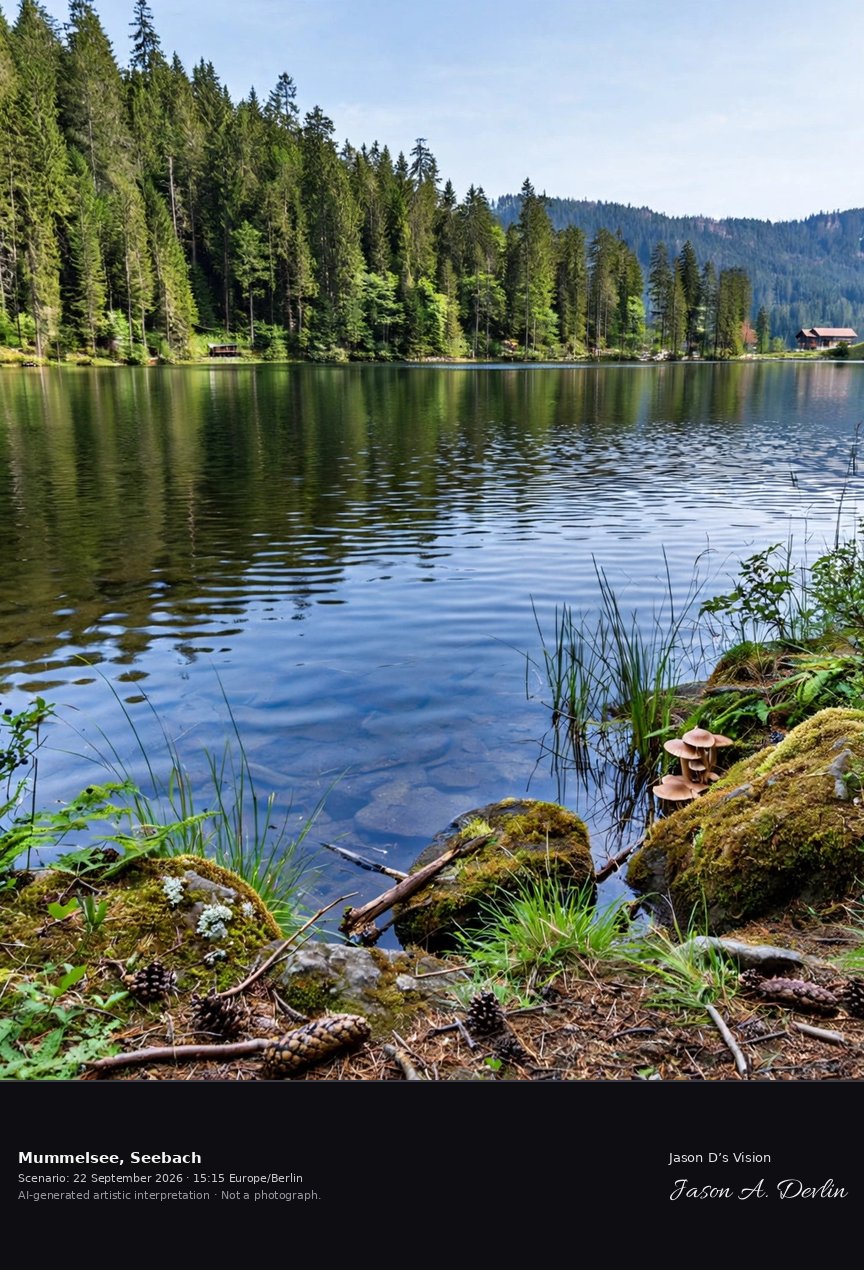
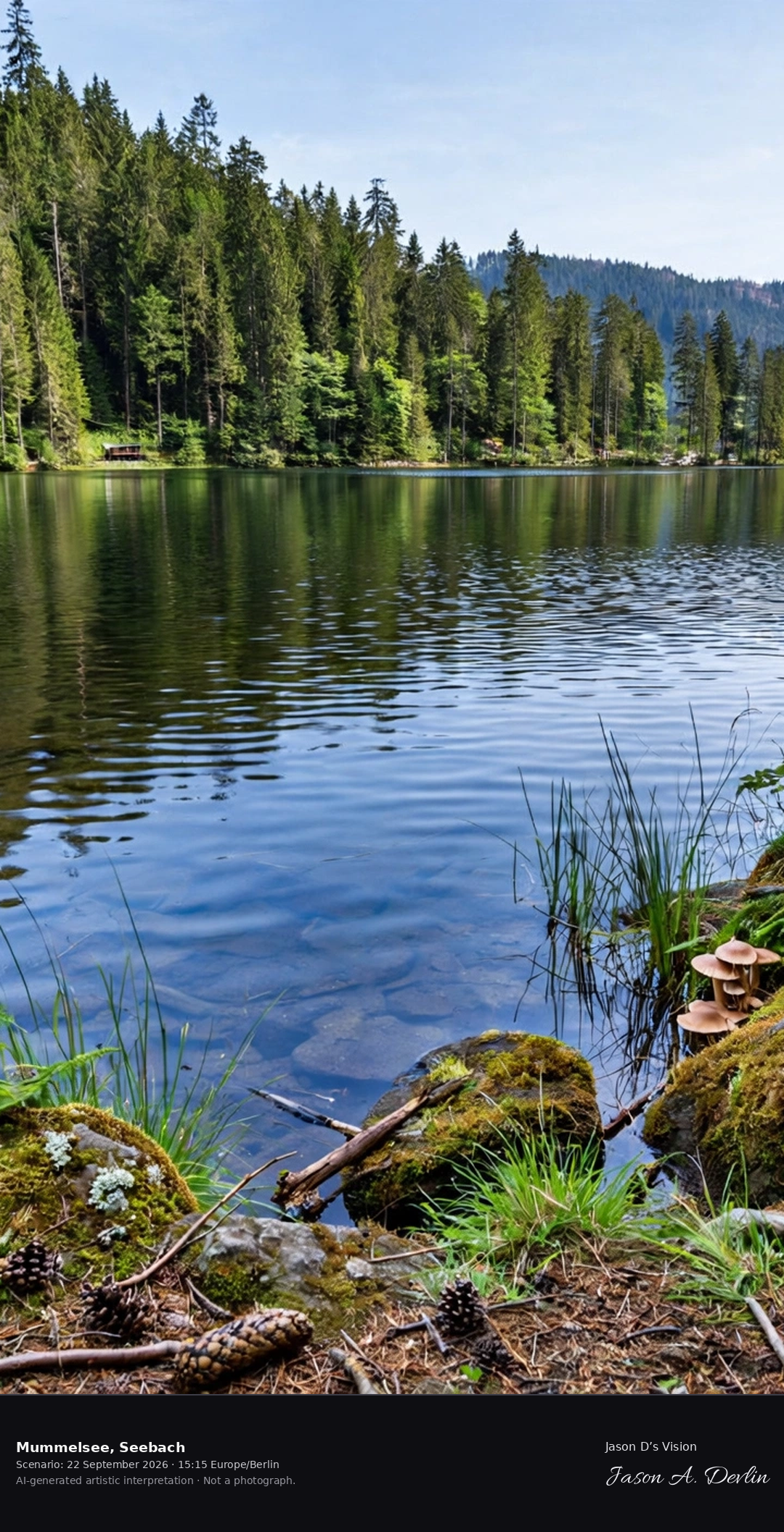
Mummelsee stretches calm across the frame, its surface mirroring the dense spruce shoreline that walls the lake on three sides. The near shore holds mossy rocks, reeds and wild mushrooms in the foreground, while a small wooden hut sits on the far shore at right. Forested mountains rise behind under the clear 15:15 afternoon sky.
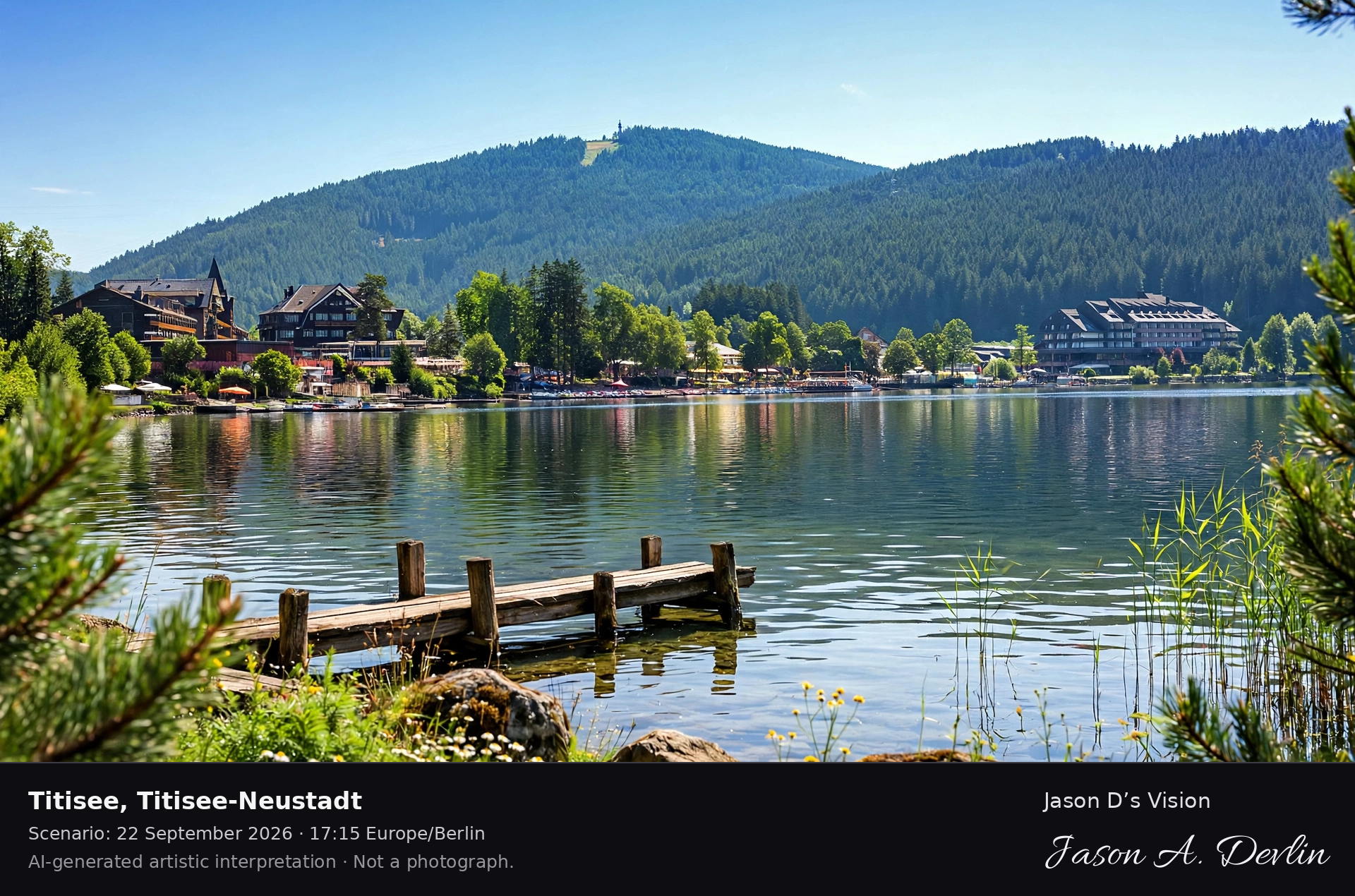
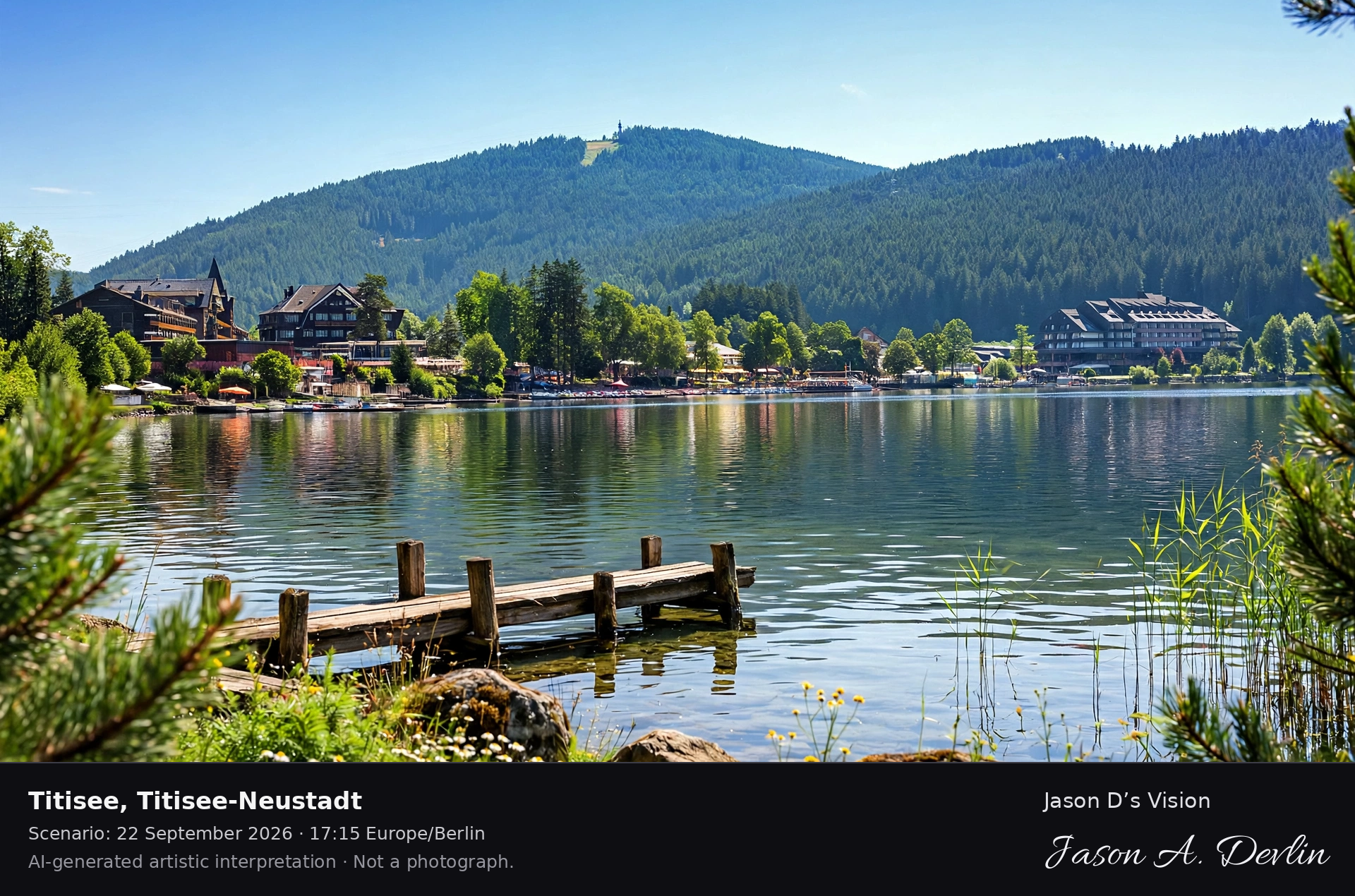
Lakefront and wooded hills · AI-generated artistic interpretation
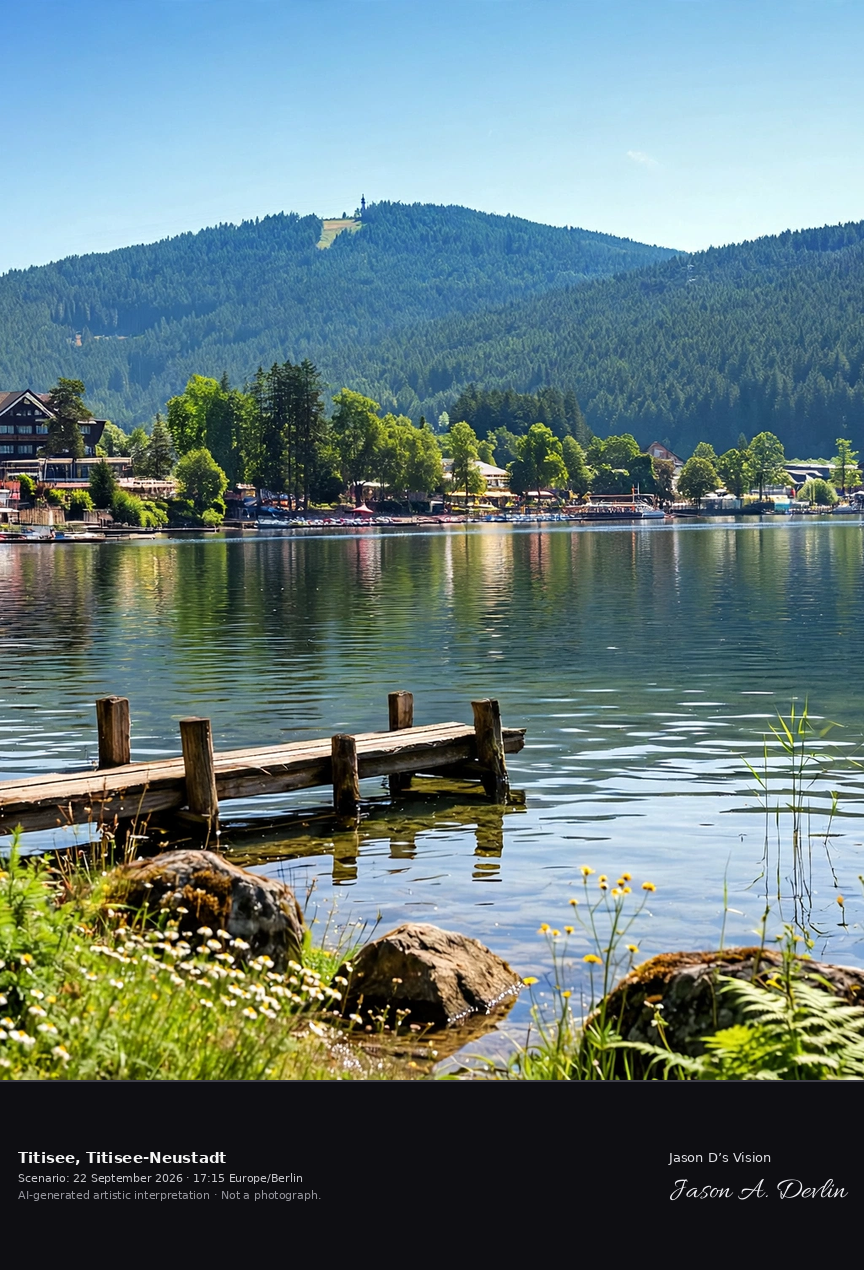
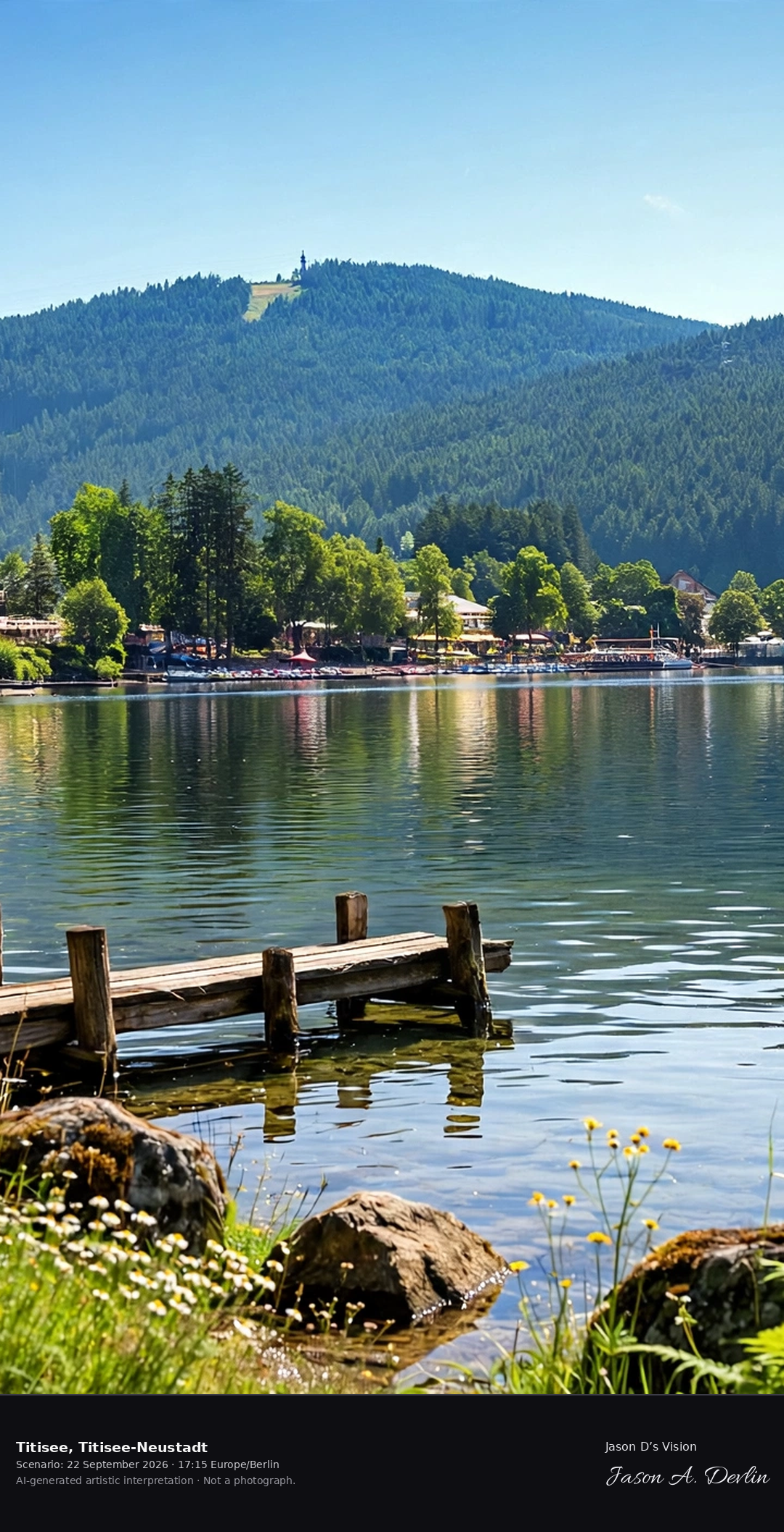
A wooden jetty juts from the reeds into the calm lake in the foreground, framed by pine branches at both edges. Across the water, shoreline hotels and chalets with boathouses line the far bank, backed by steep forested hills under a clear blue sky. The 17:15 late-afternoon sun sparkles on the water, at Titisee in Titisee-Neustadt.
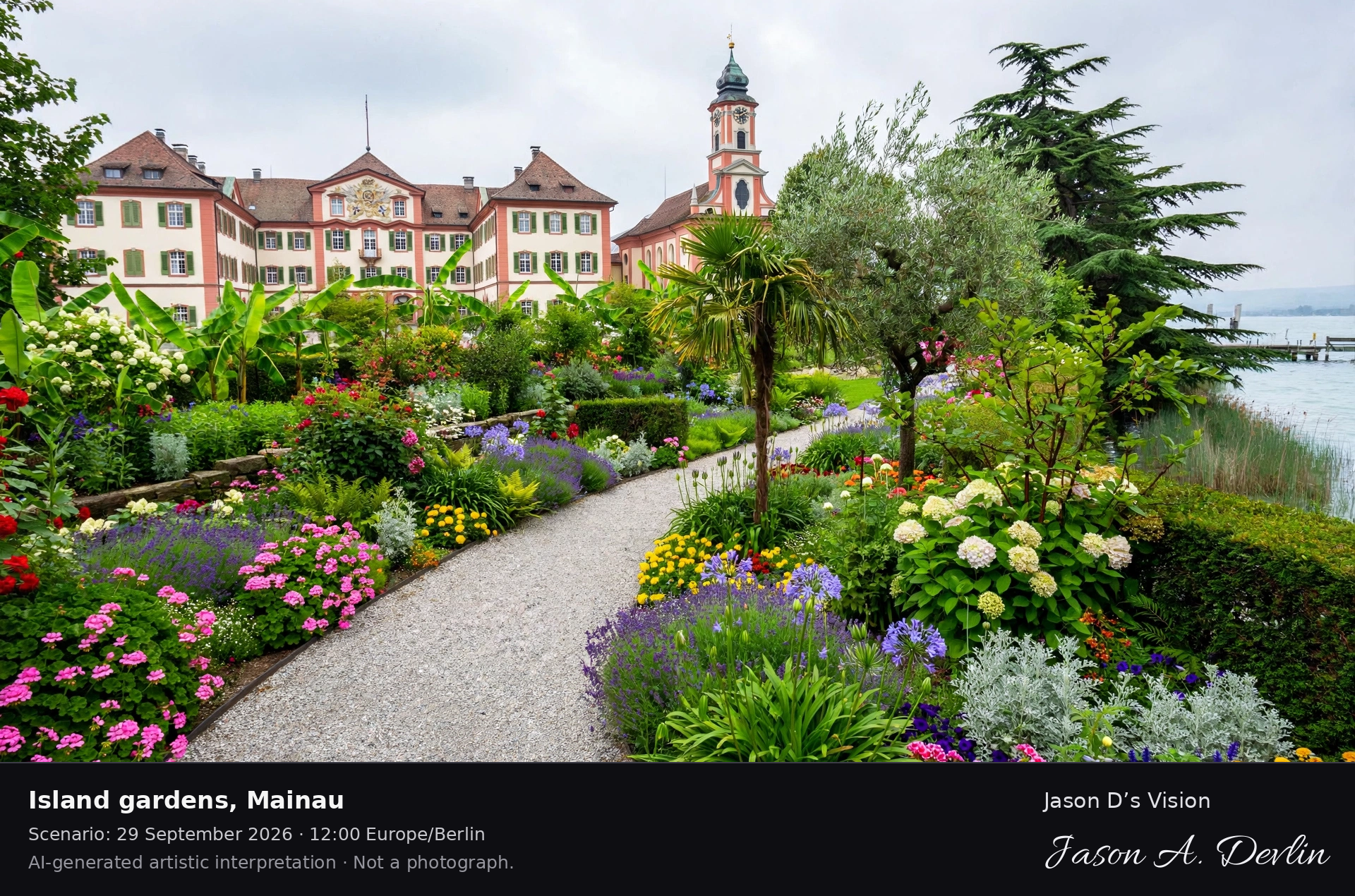
Floral beds and palace · AI-generated artistic interpretation
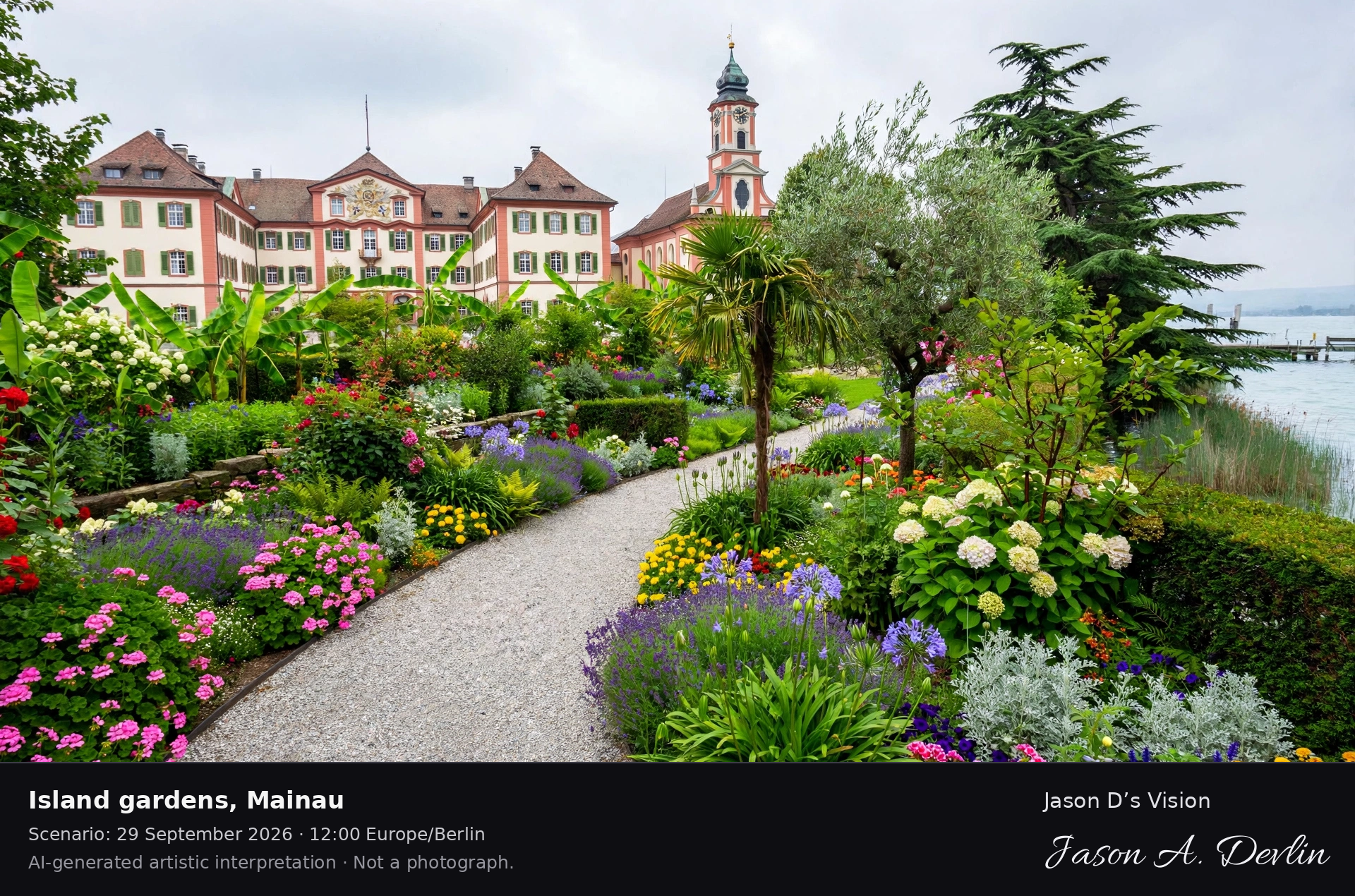
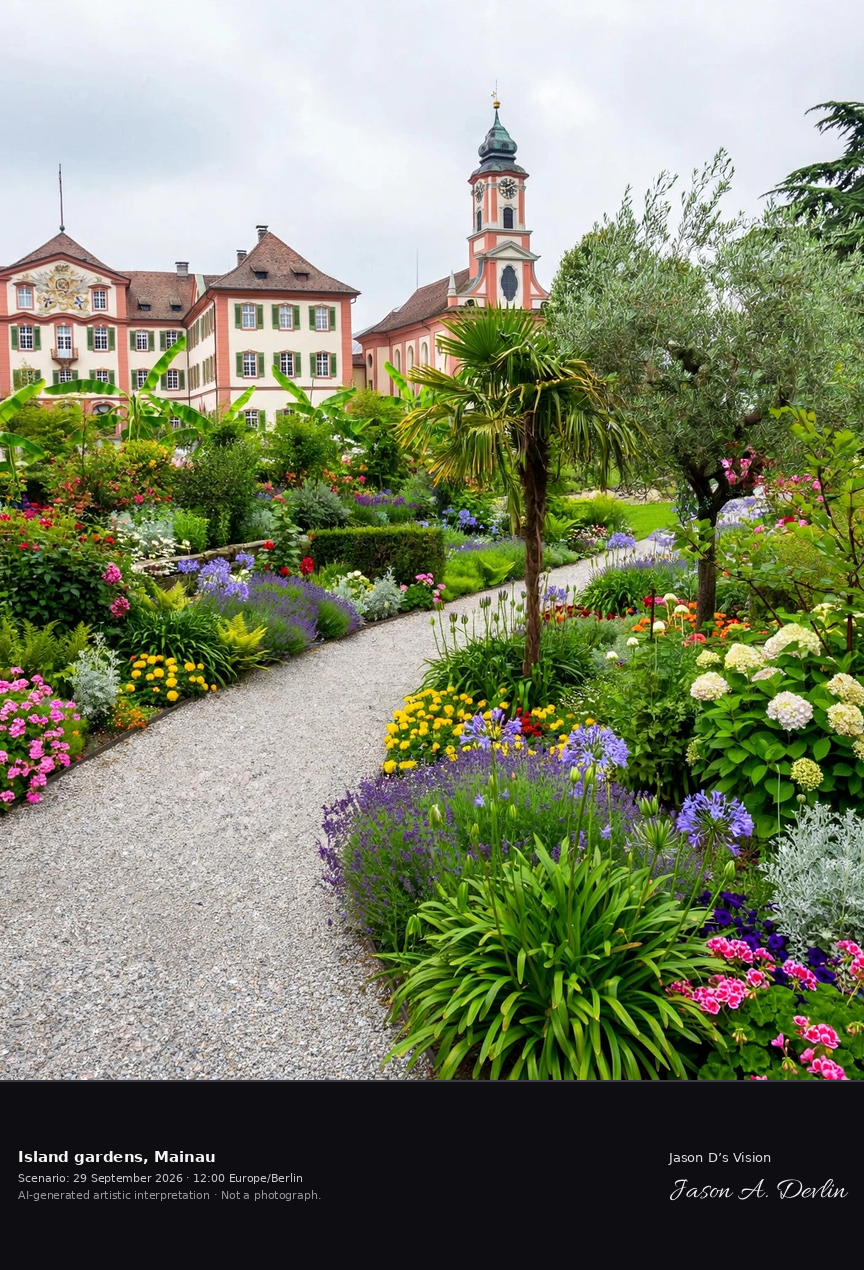
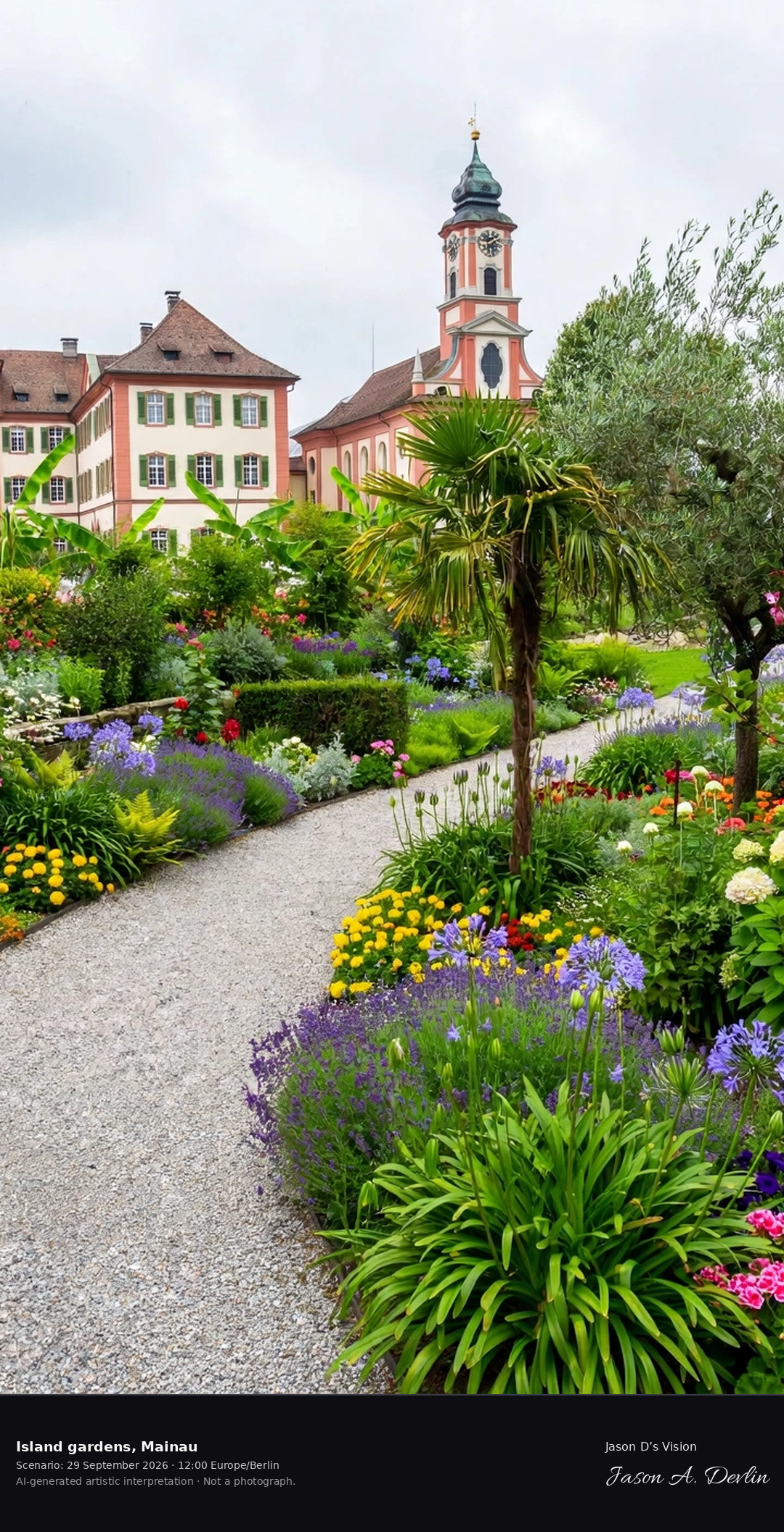
The camera stands on the curving gravel path of the garden parterre at night. In the center, the baroque Mainau palace glows with lit windows and a cupola tower at its right. Colorful flower beds and trimmed hedges fill the foreground on both sides, picked out by garden lamps, with a wooden sign reading Insel Mainau · Schlossgarten at the left. The lake glints at the right edge under a starry 21:15 sky.
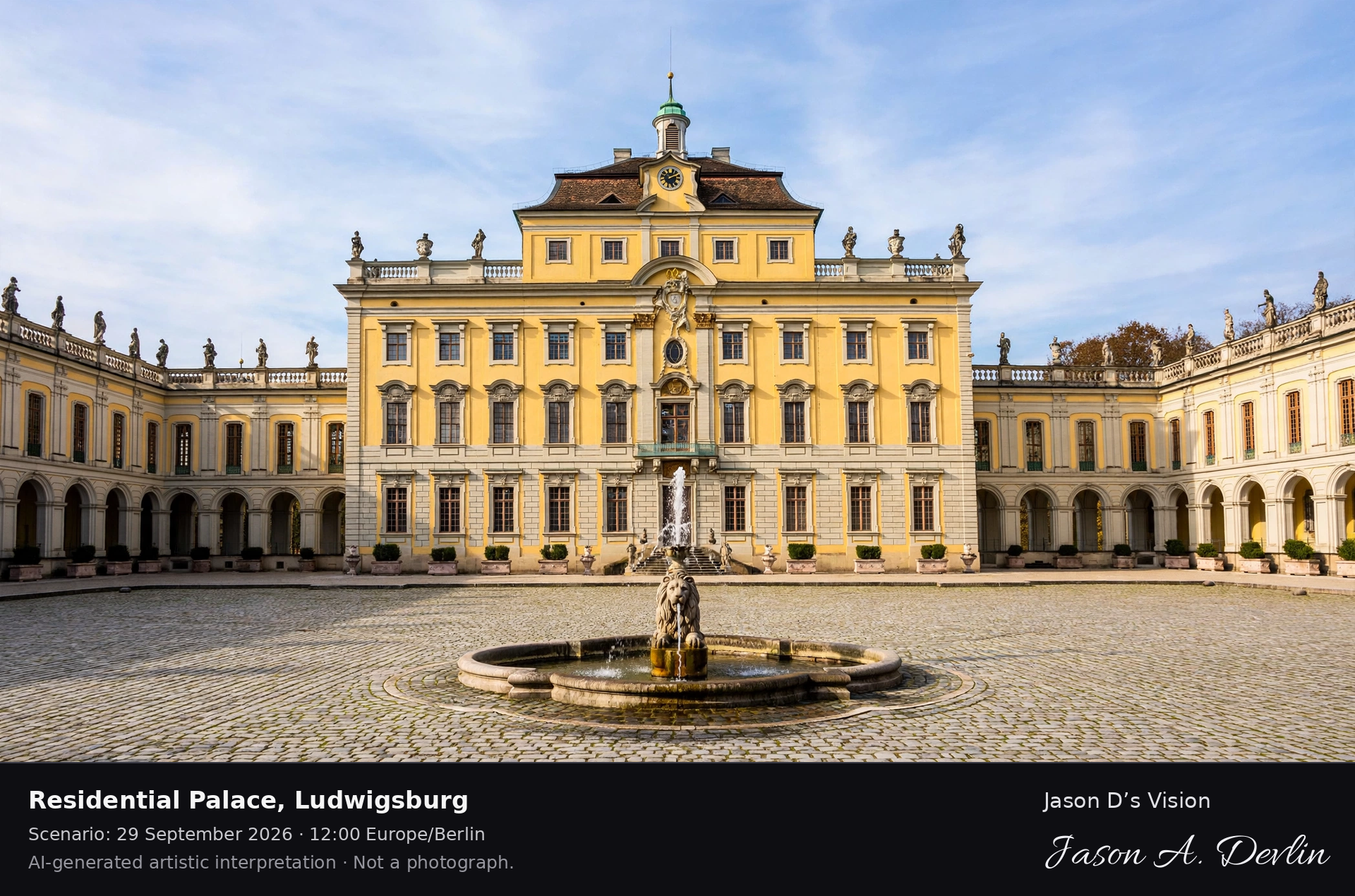
Palace courts and gardens · AI-generated artistic interpretation
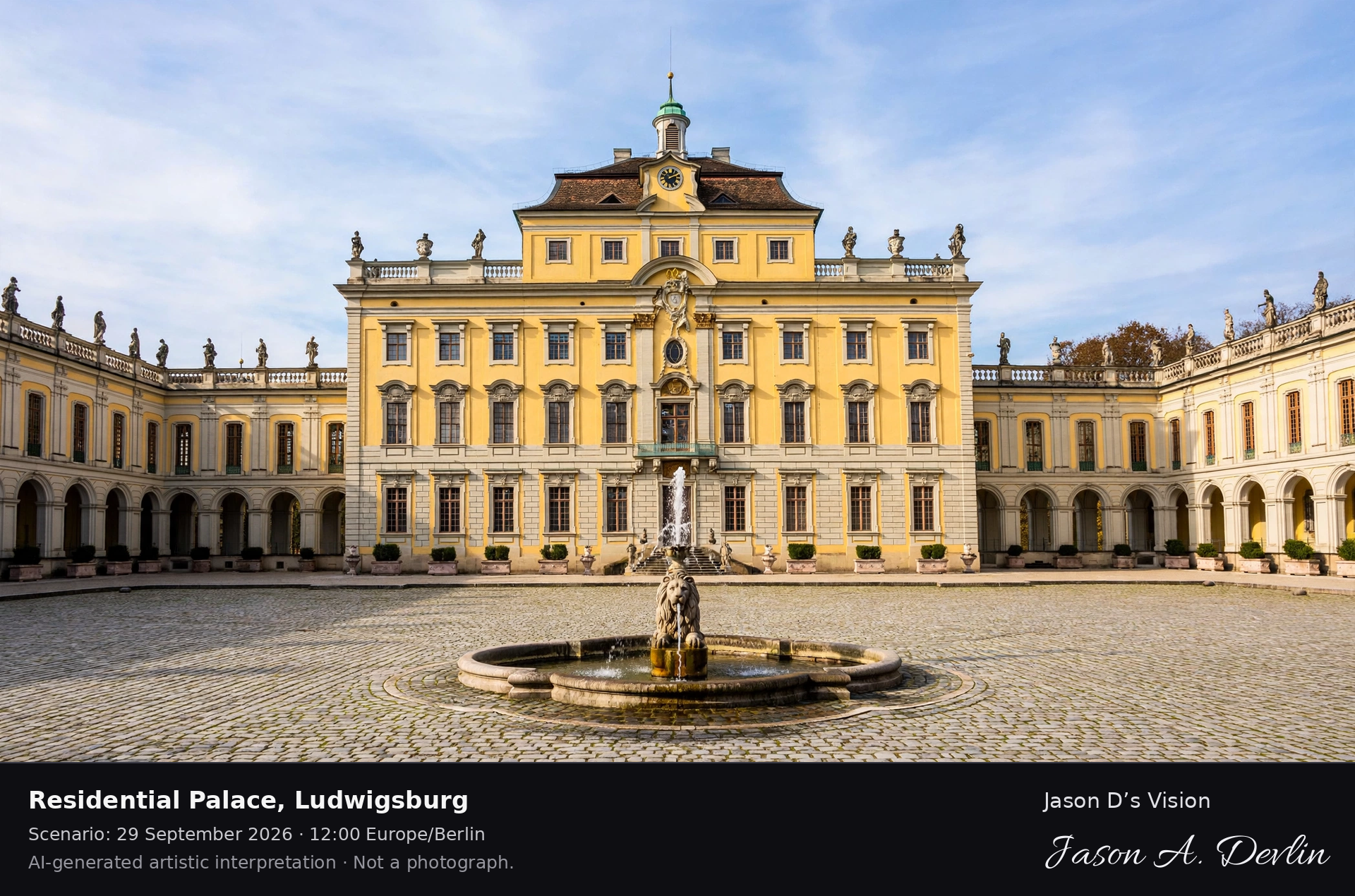
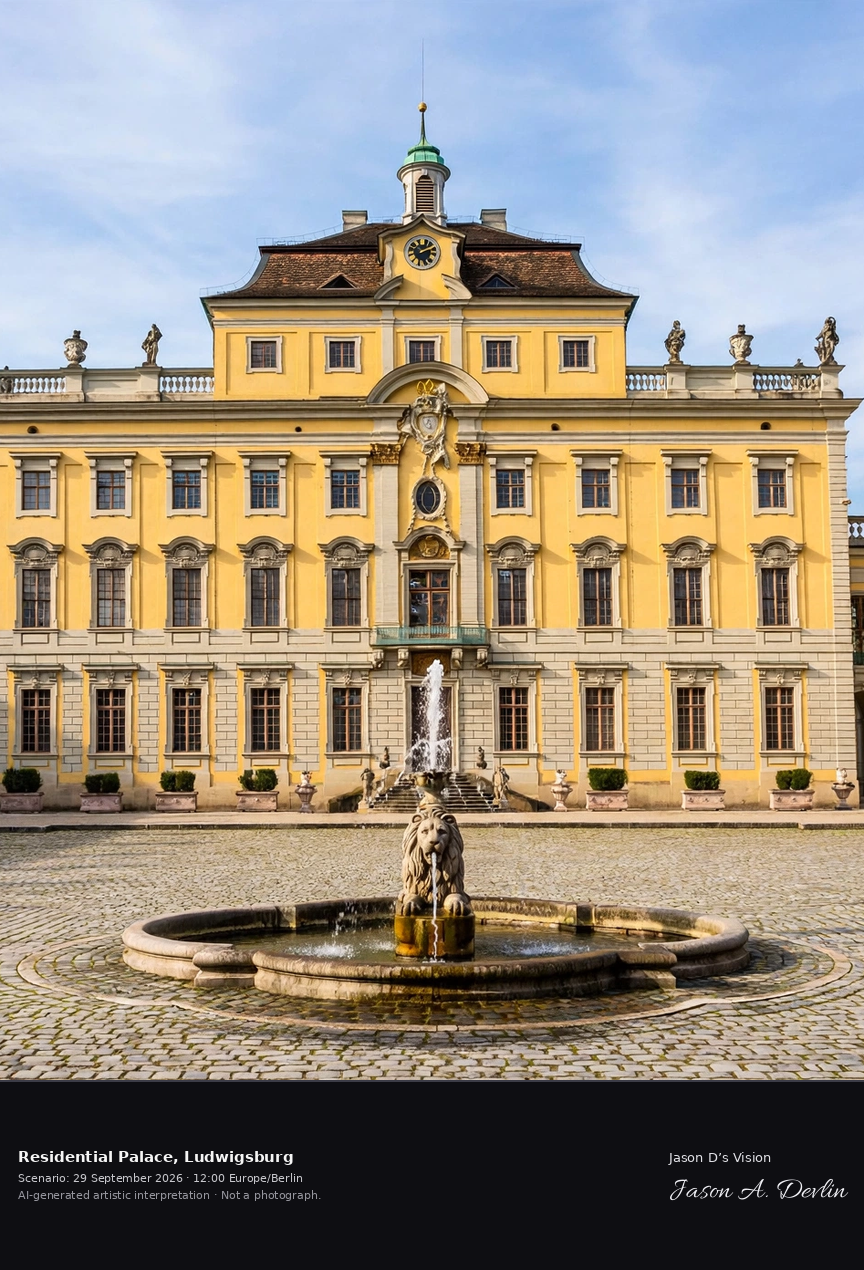
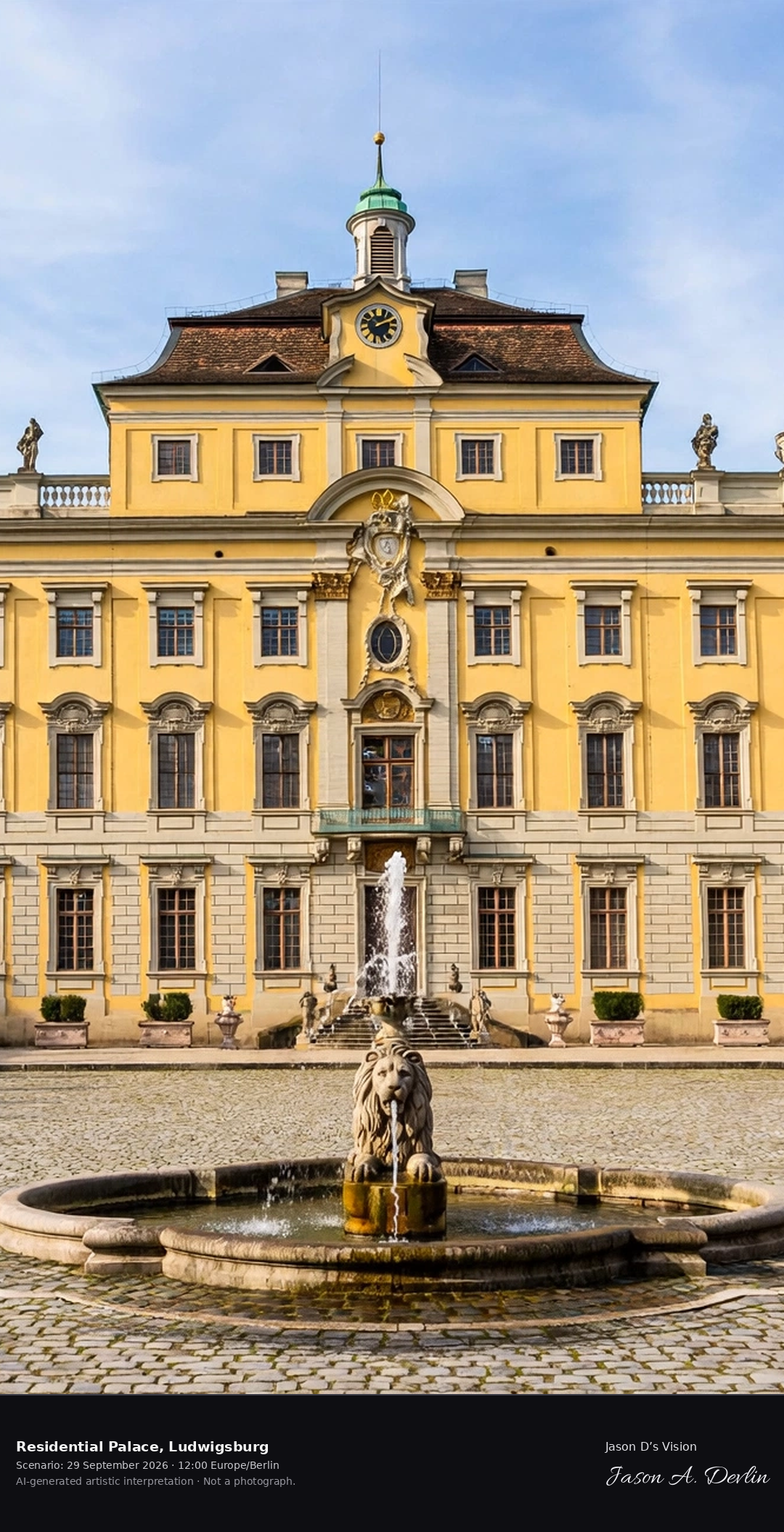
The symmetrical baroque Residential Palace façade fills the frame, viewed from the forecourt at night. The central block rises at center with its mansard roof, clock, green-domed cupola, and rooftop statuary, every window lit warm yellow. Matching wings extend to the left and right, their ground floors glowing under wall lanterns. In the foreground, the lion fountain with its dark sculpture anchors the courtyard under a 00:15 deep-night sky with stars overhead.
Town hall and colorful houses · AI-generated artistic interpretation
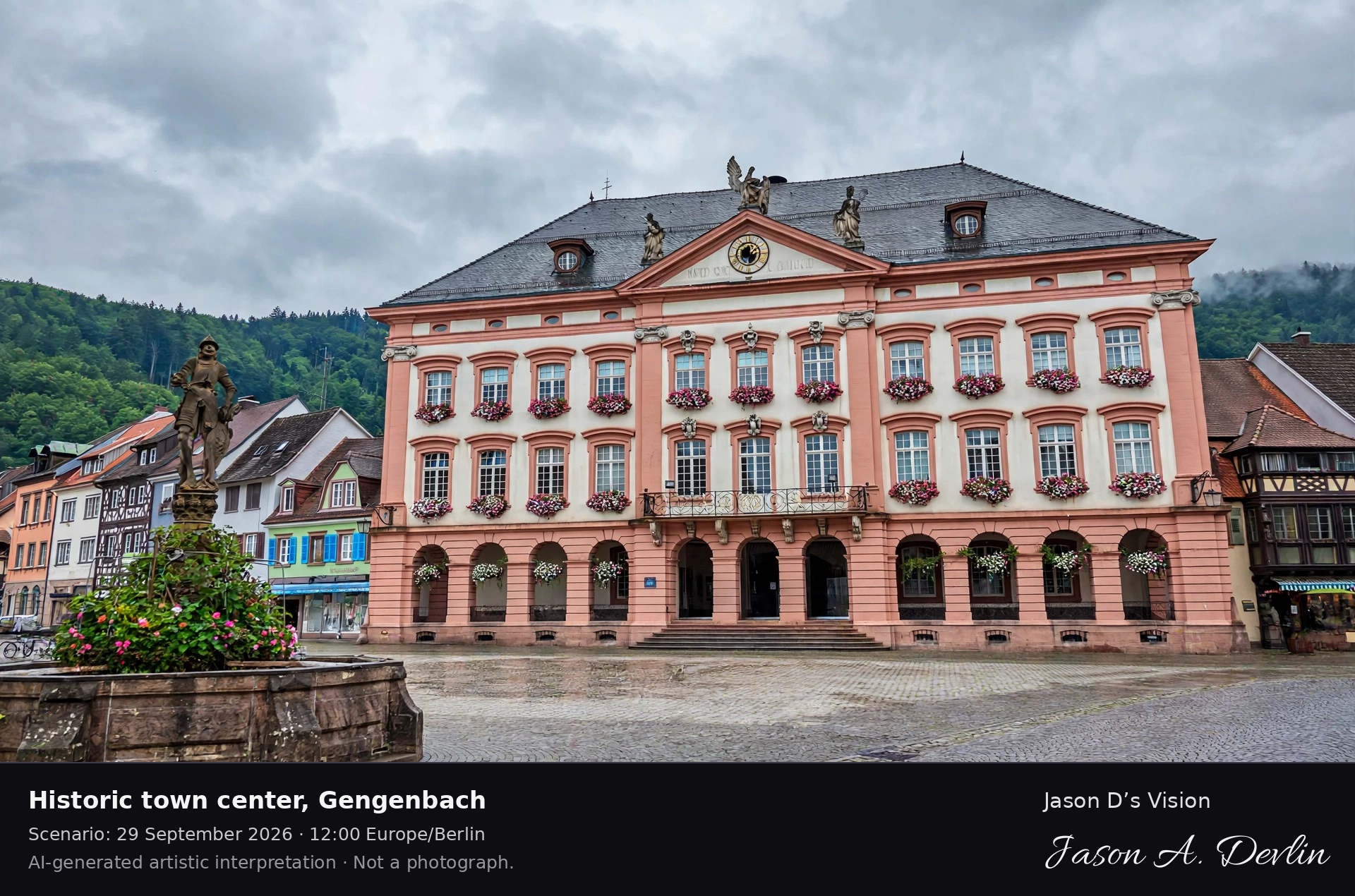
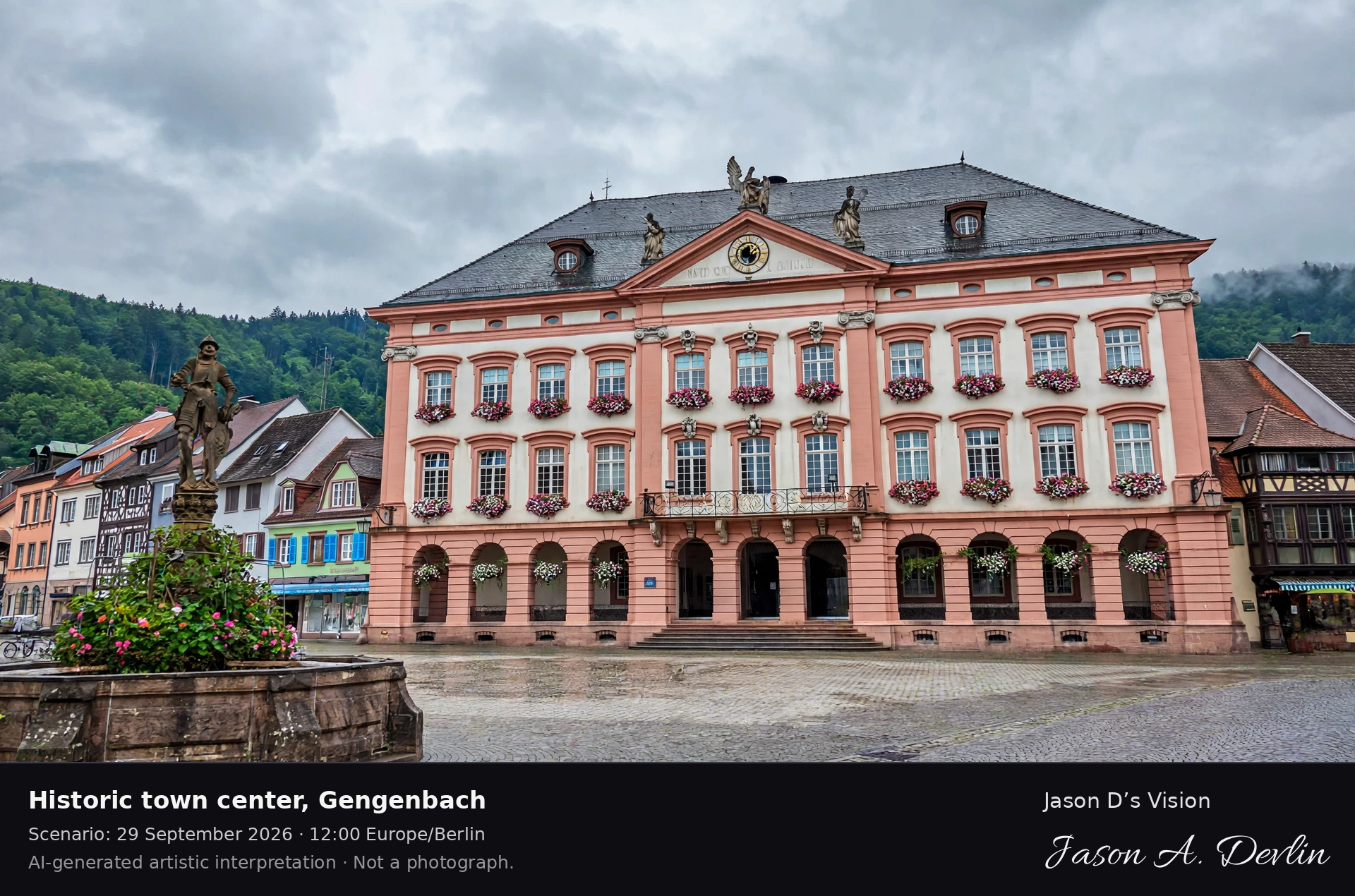
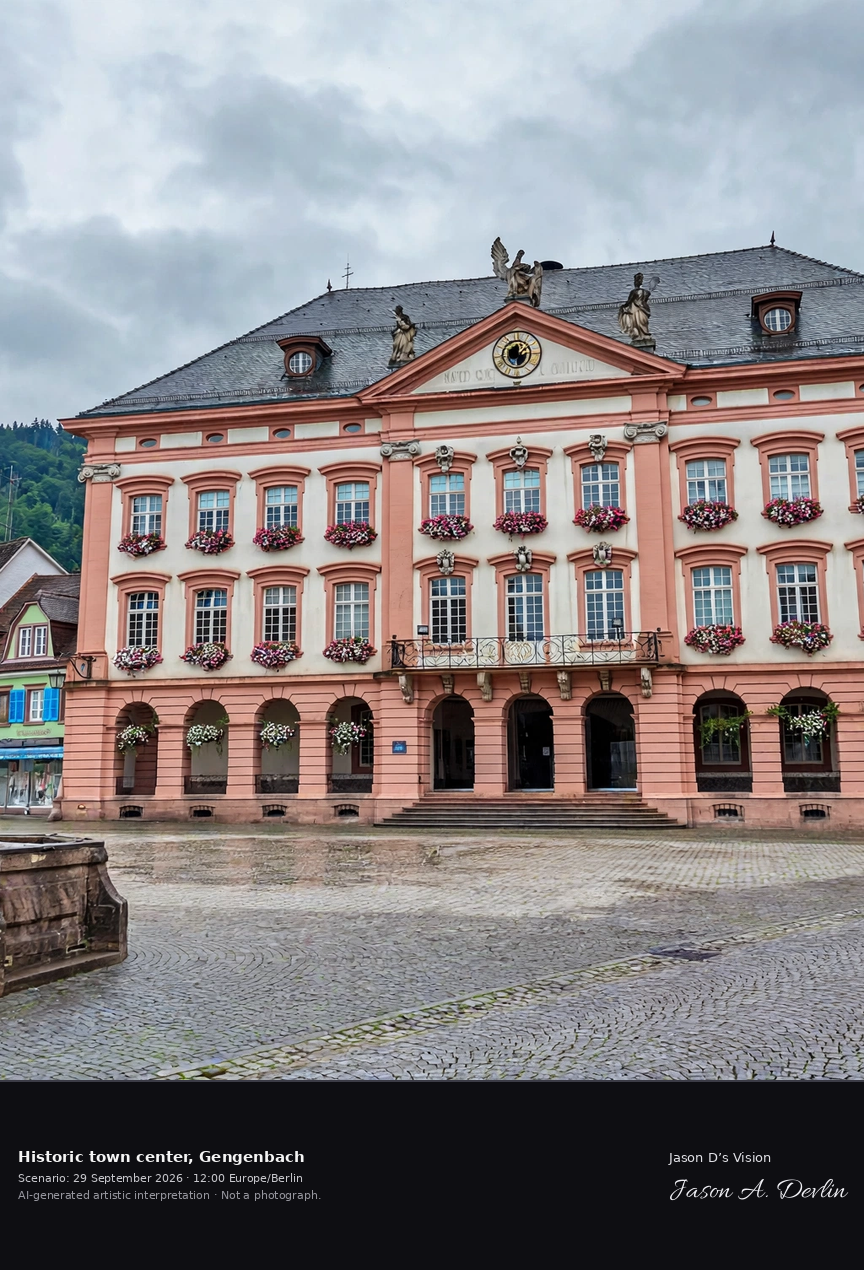
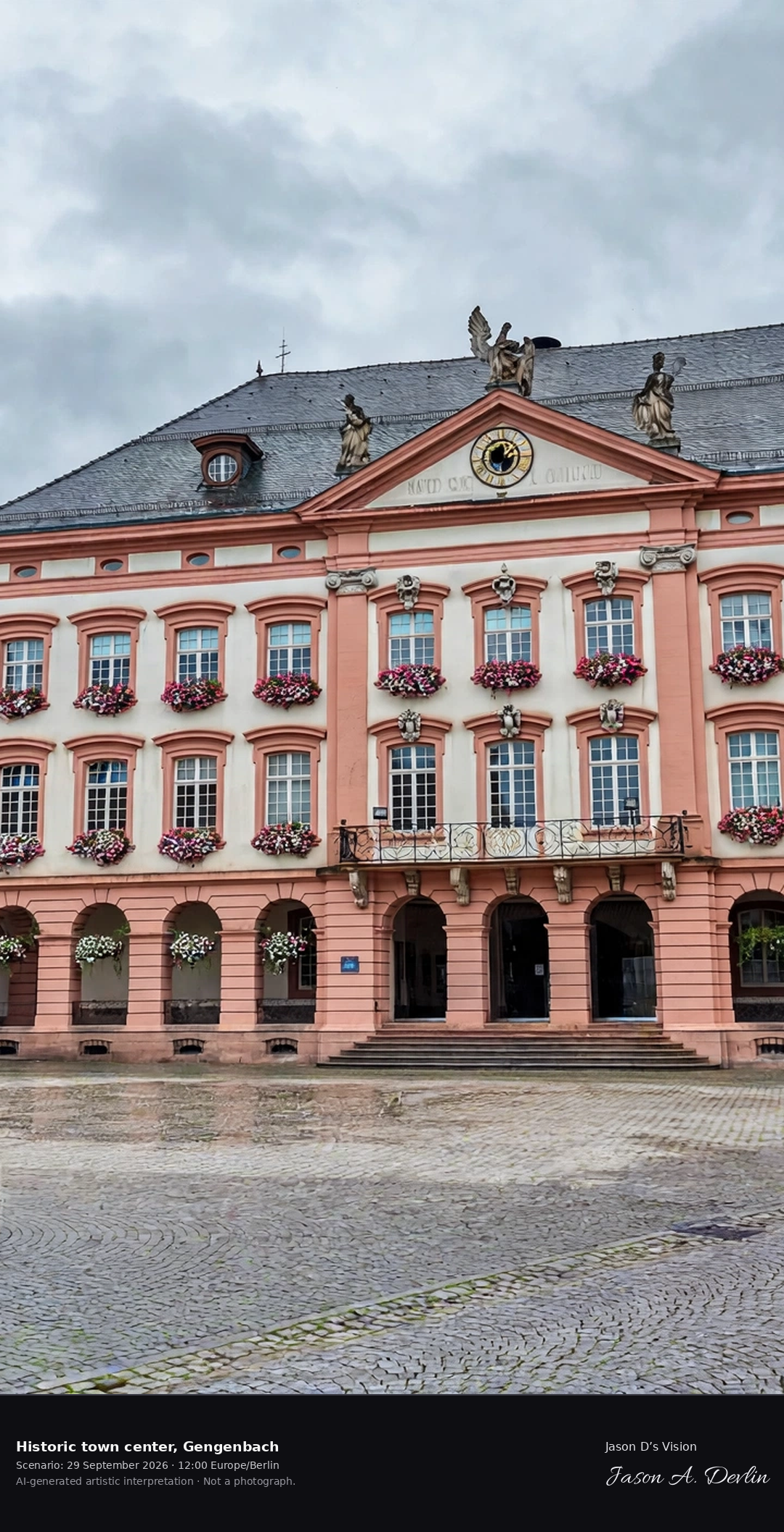
The pink-and-white baroque Rathaus fills the center of the frame, its clock gable, rooftop statues, and ground-floor arcade all floodlit. A fountain stands directly in front of it on the cobbled square. Colorful half-timbered houses flank the scene on both sides — a café sign hangs at the left — and wooded hills rise behind under a starry sky. The 04:15 scene is night, with the square empty and the town's windows still lit.
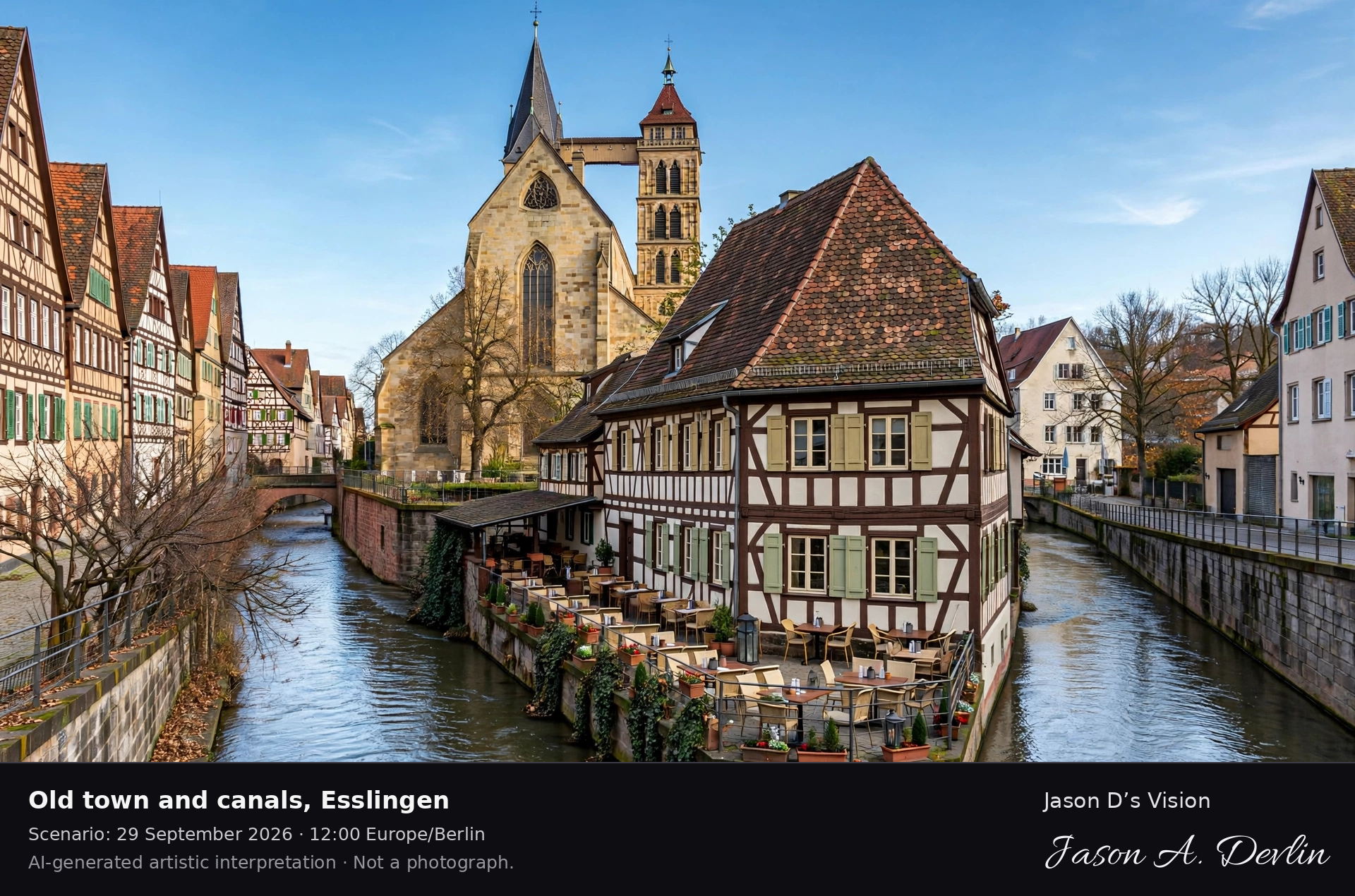
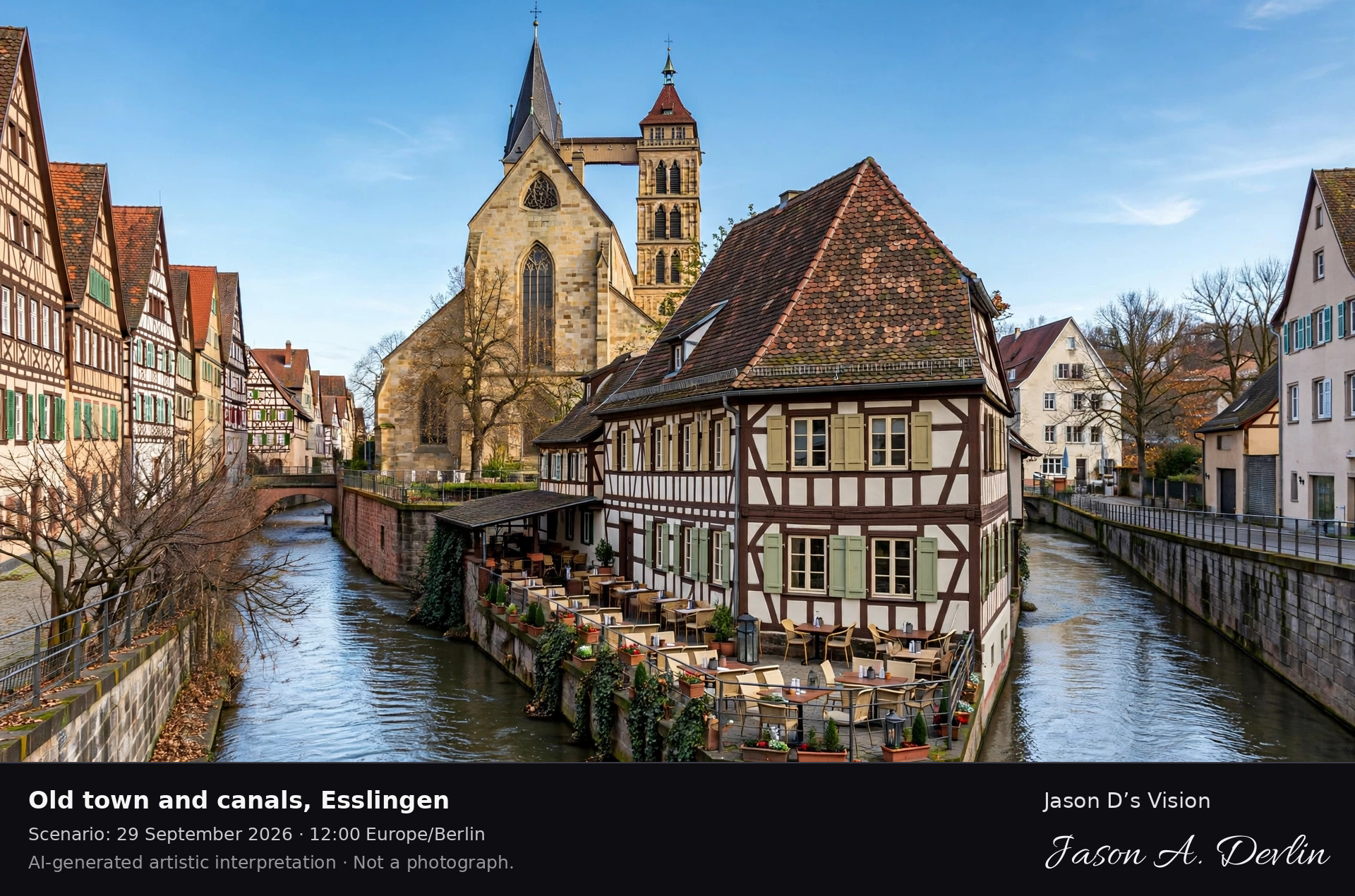
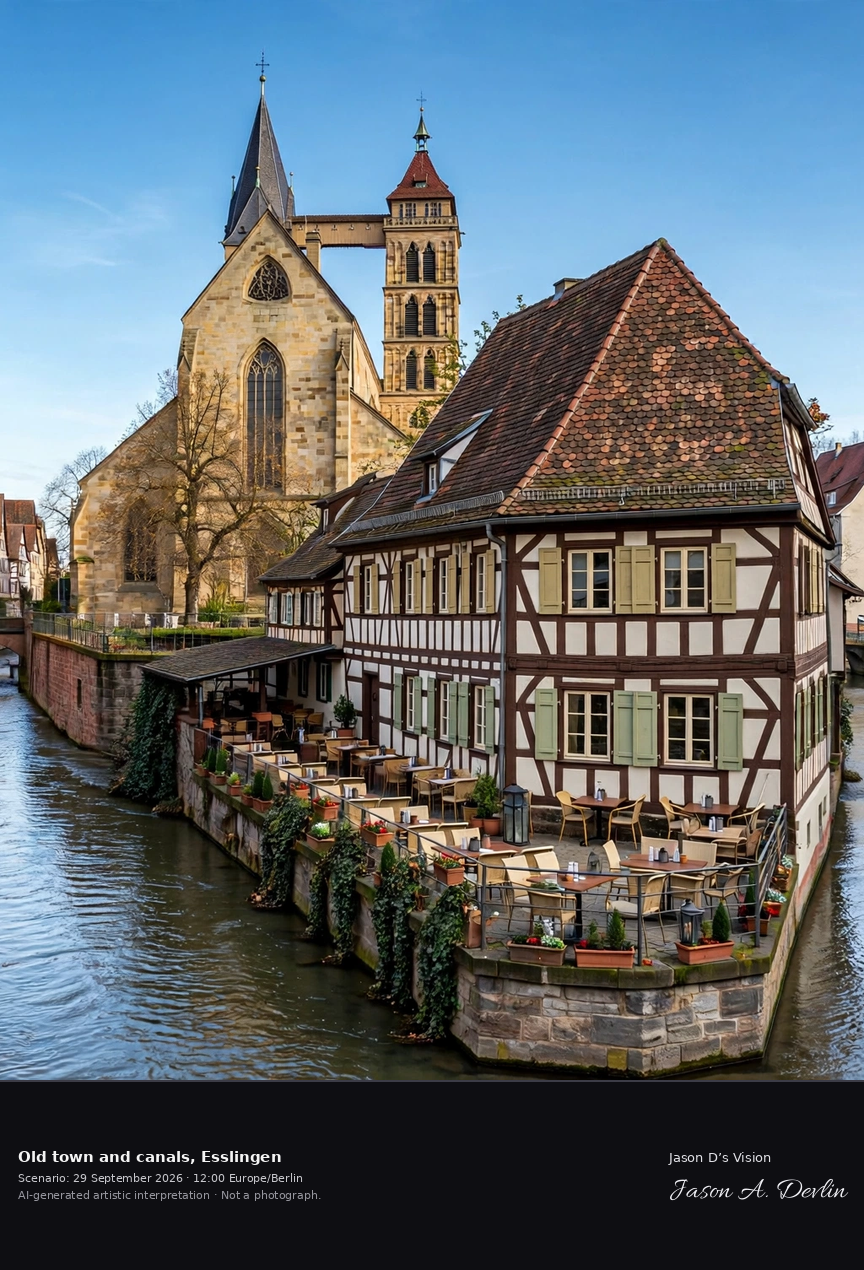
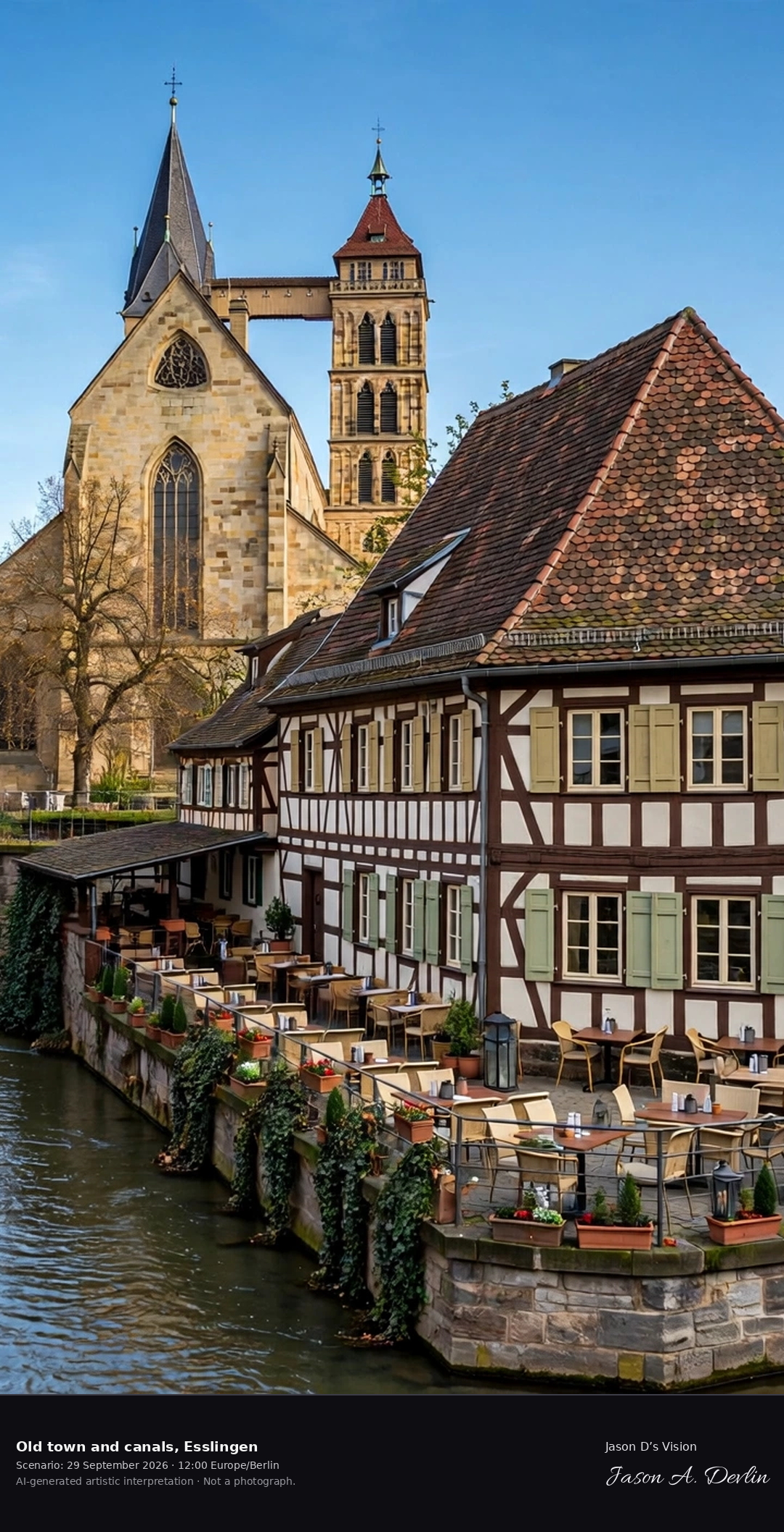
The view looks up the lamplit canal toward the Stadtkirche, whose two spires are joined by the distinctive flying bridge. A large timber-framed house with a glowing restaurant terrace occupies the right foreground at the water's edge, and gabled houses line the stone canal embankment on the left. Warm windows and streetlamps reflect on the dark water. The 05:15 sky is deep blue and starry — pre-dawn night rather than dawn light.
Houses and Hölderlin Tower · AI-generated artistic interpretation
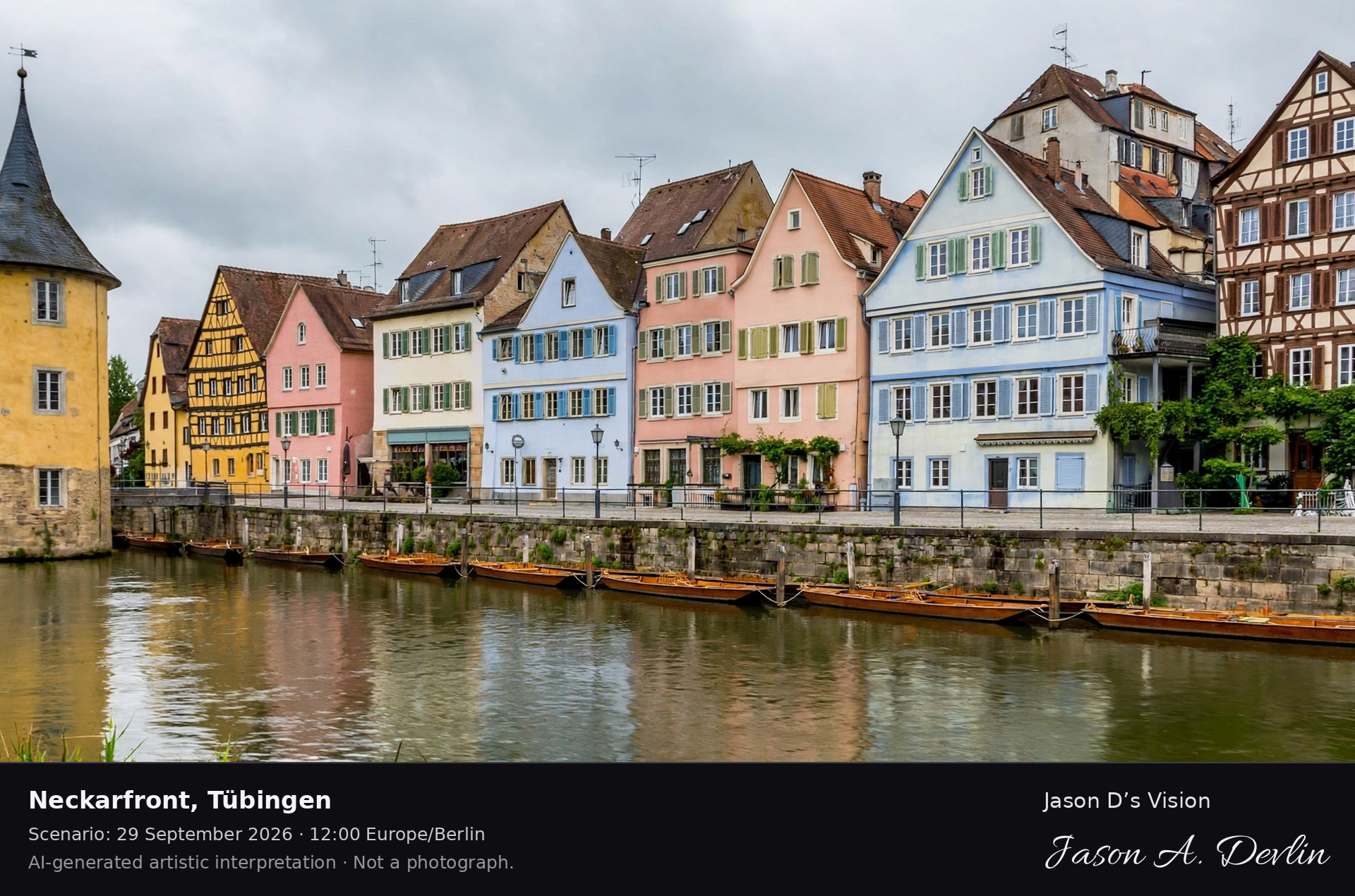
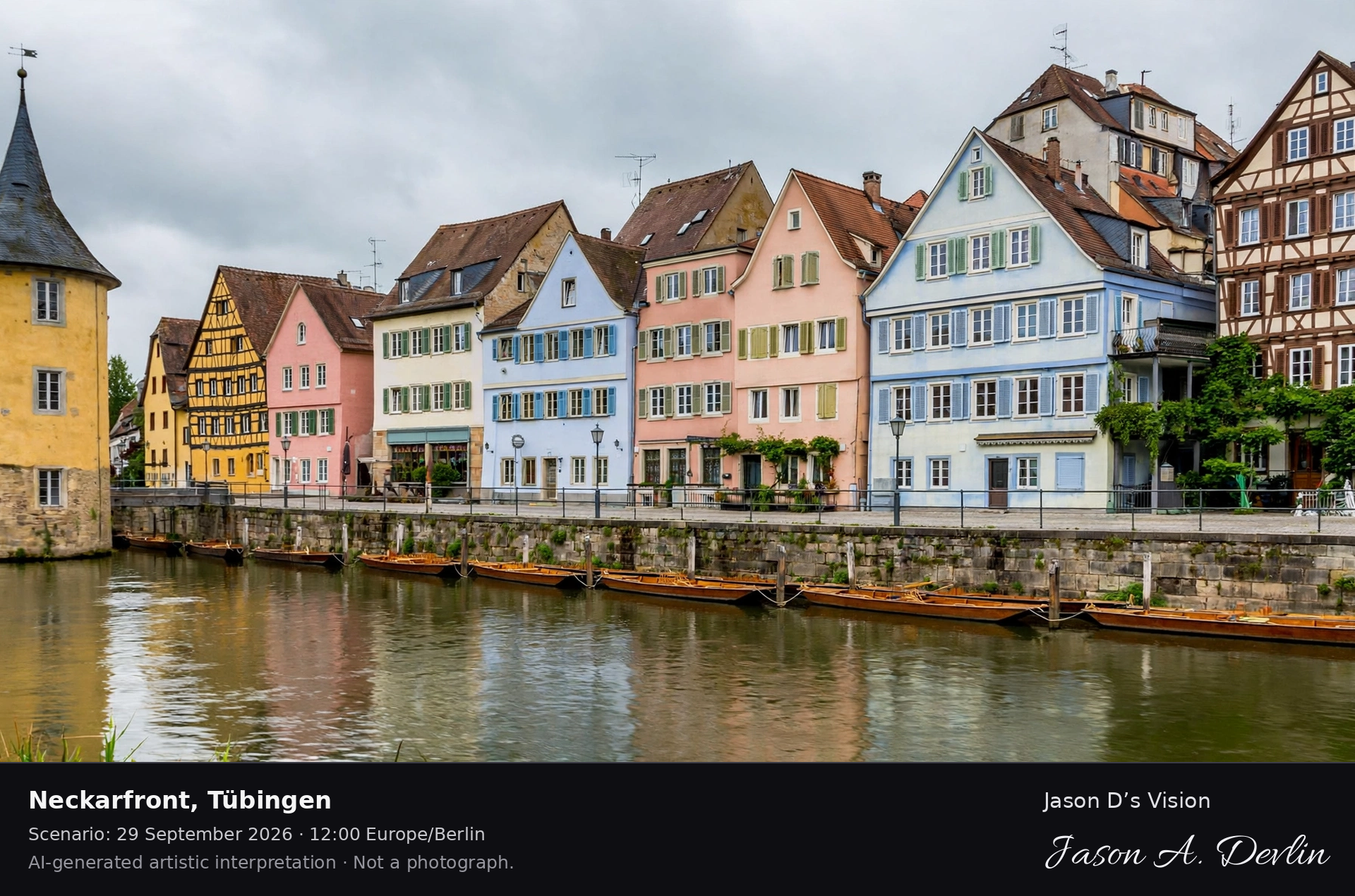
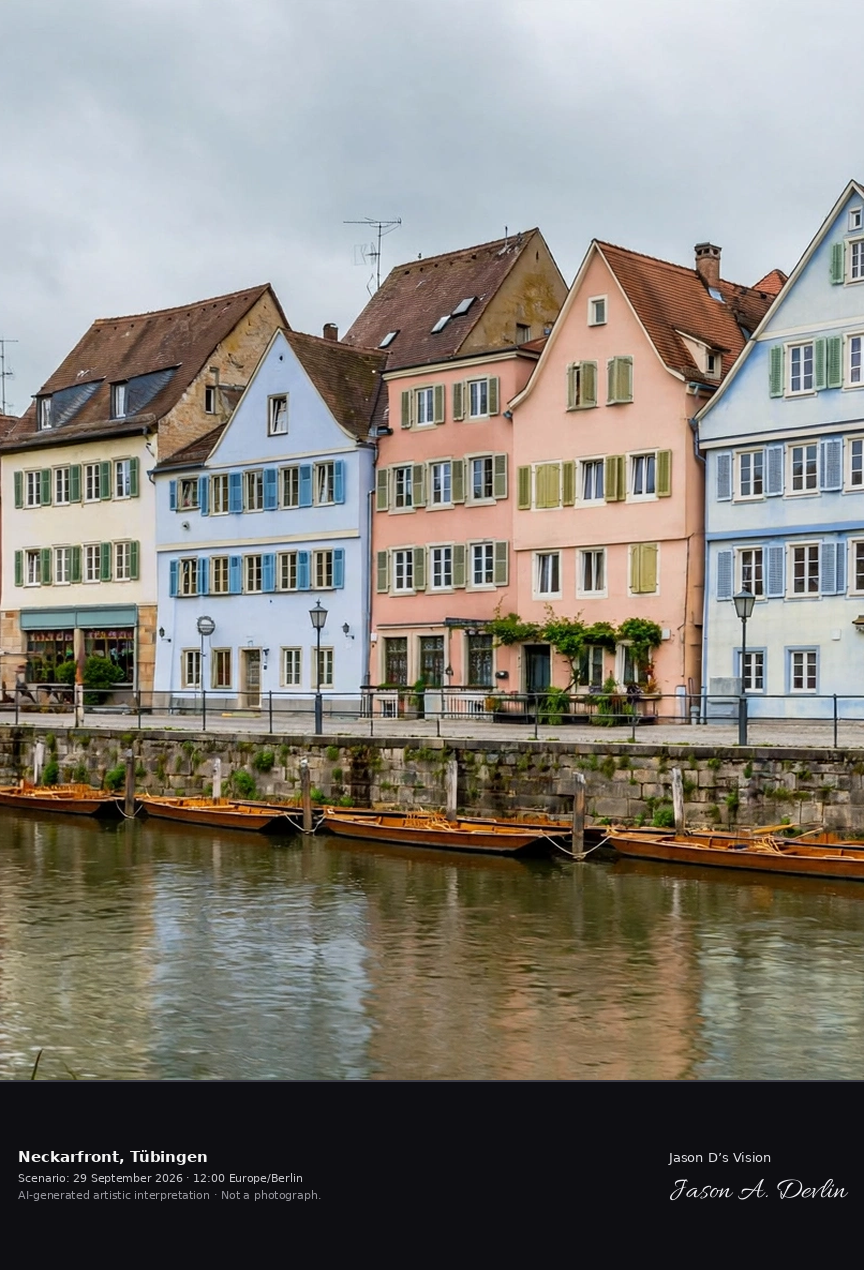
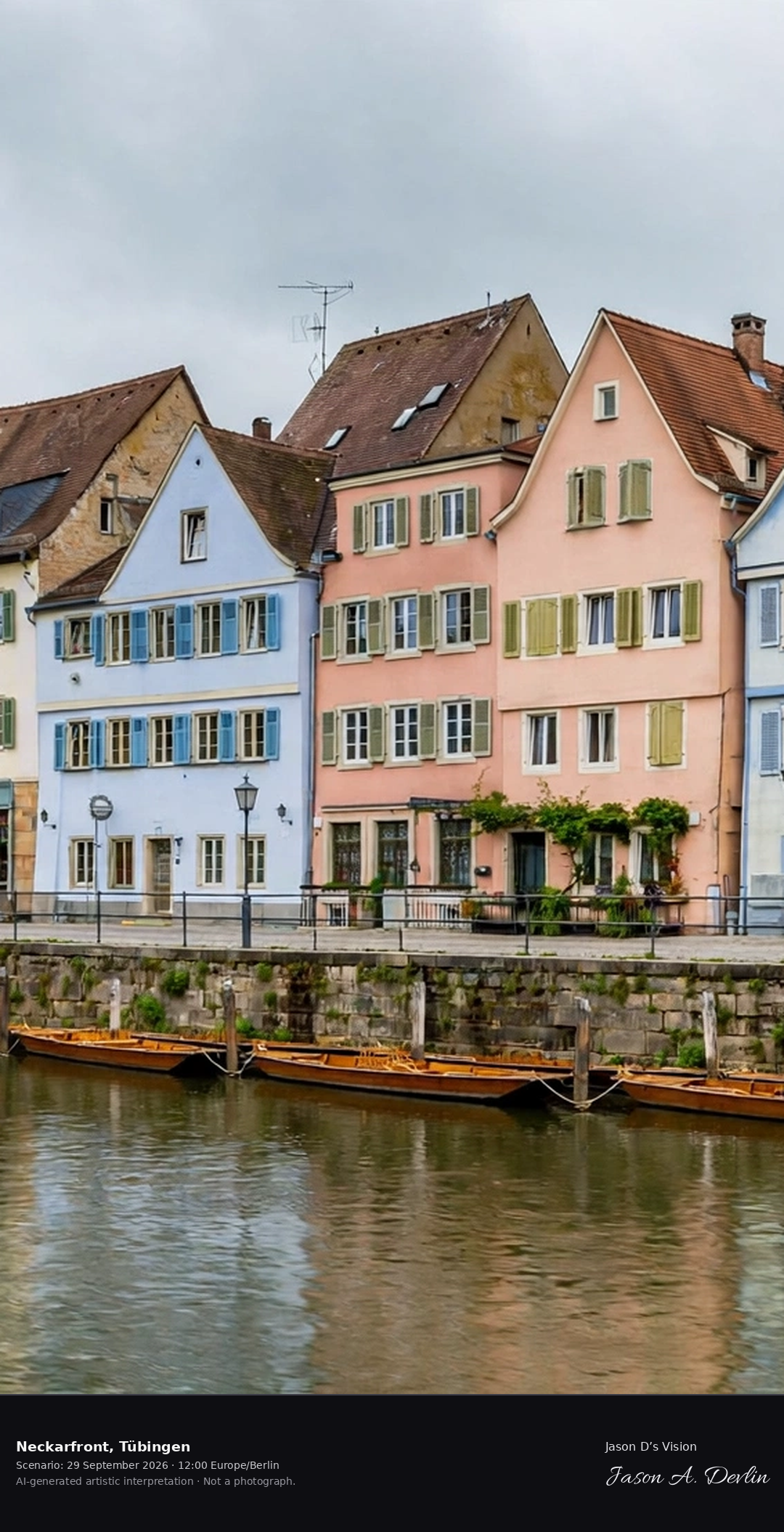
The camera sits low near the Neckar at night, looking along the famous riverfront row. The yellow Hölderlin Tower stands at the left beside the water, where wooden punts are moored. The row of tall, colorful gabled houses runs from center to the right, their windows glowing, with the riverside path and its lamplight reflections on the water in the foreground. The 06:15 sky still holds a crescent moon — the scene is rendered as night, honest to the hour before sunrise.
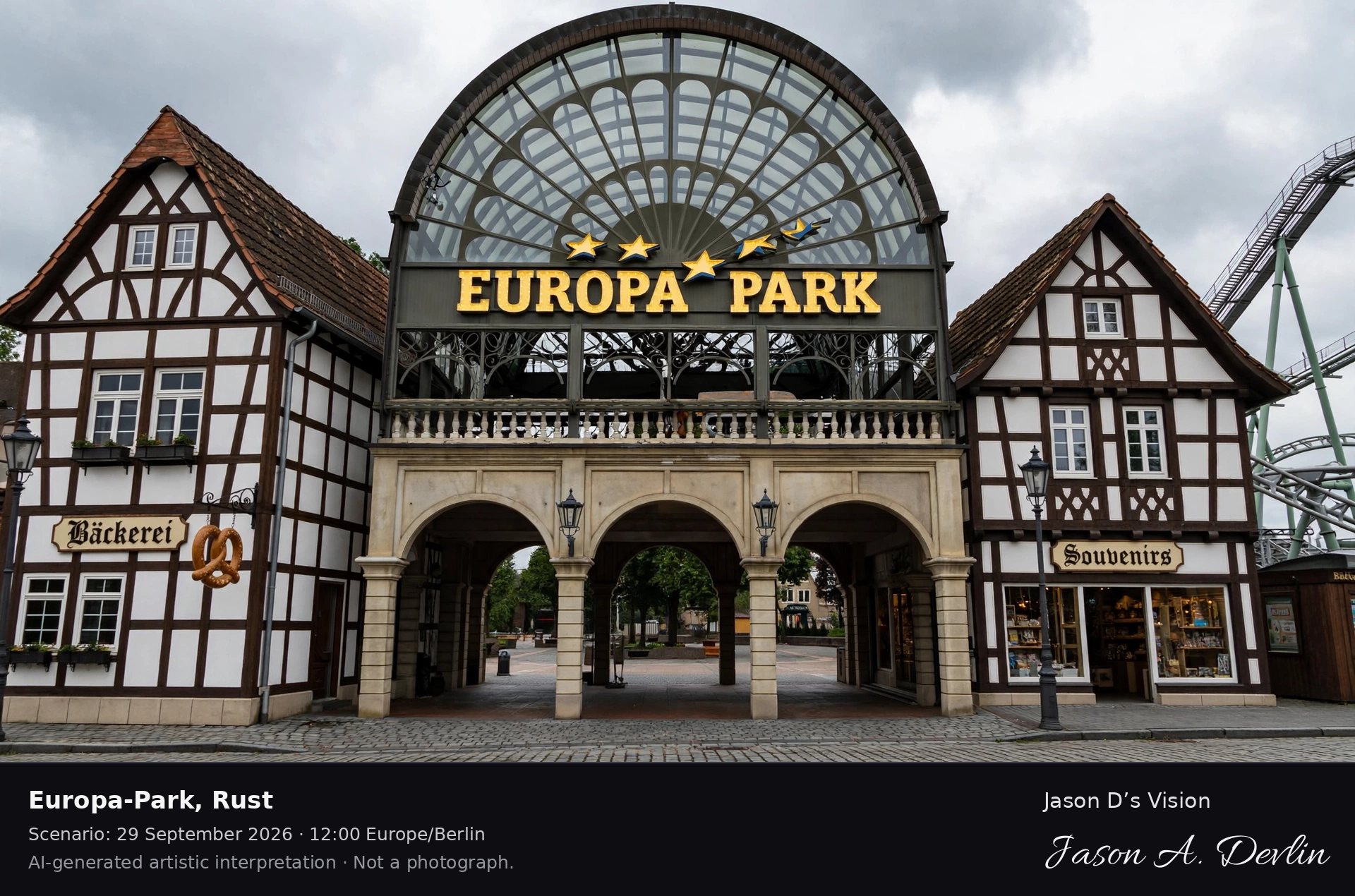
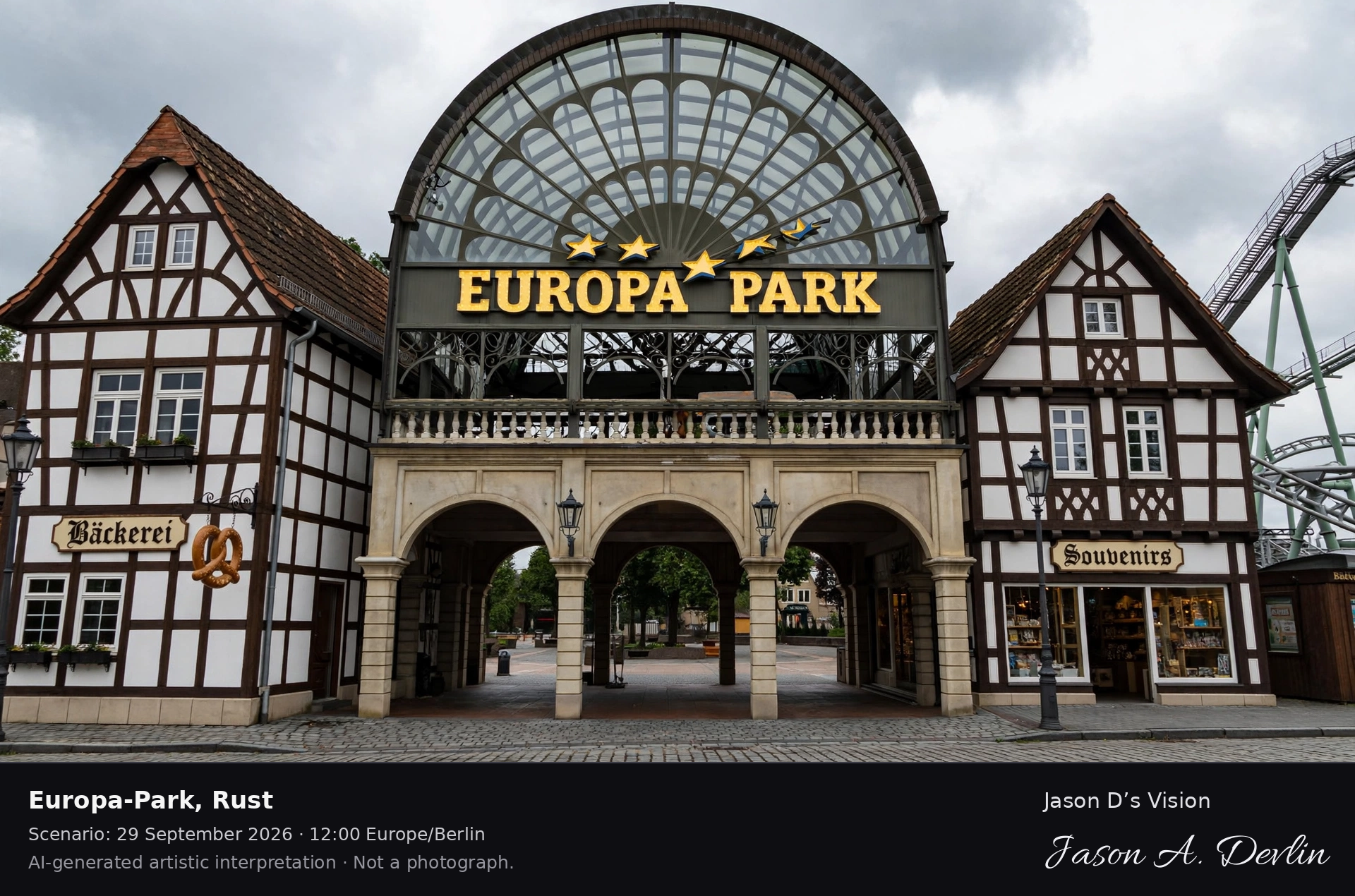
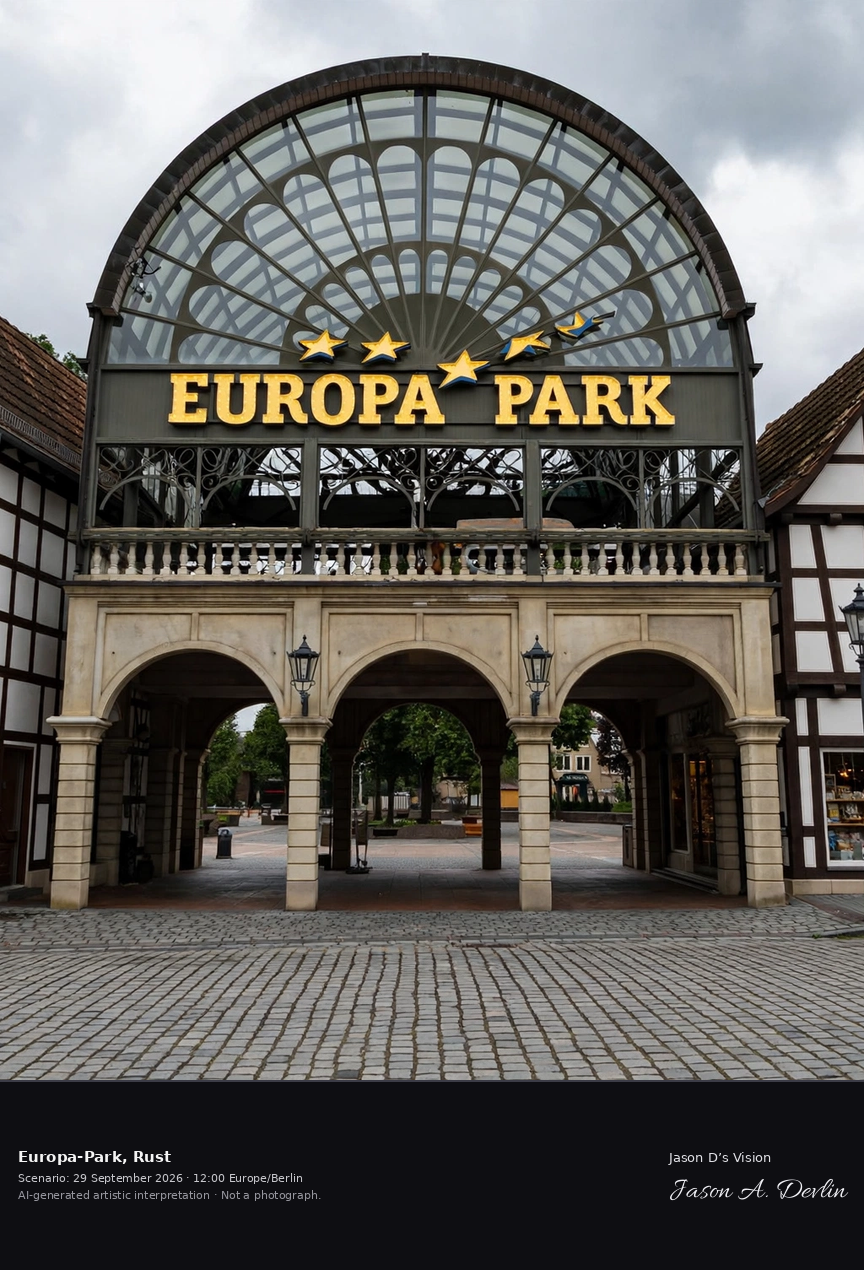
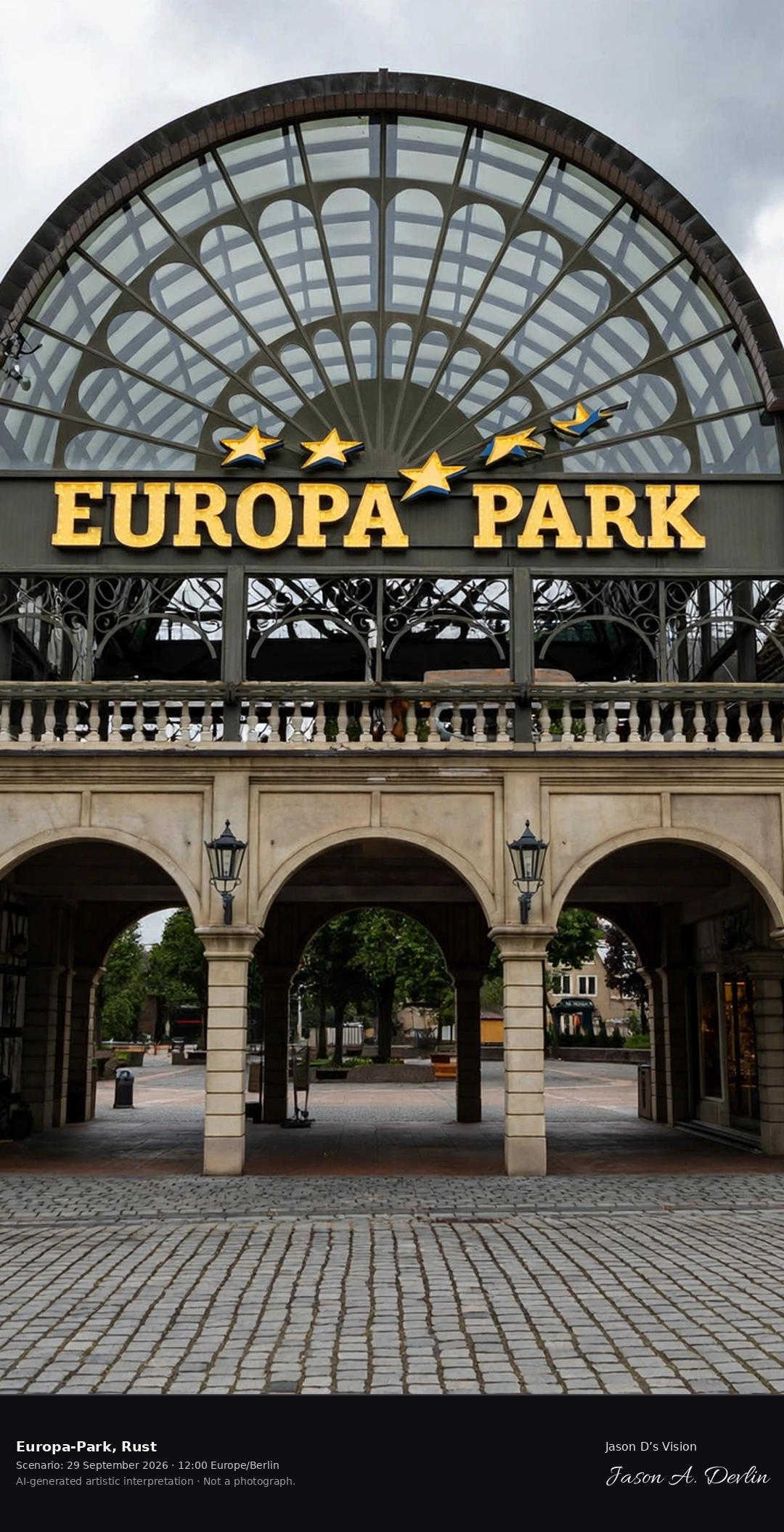
The view faces the Europa-Park entrance at dawn, the illuminated EUROPA PARK arch signage with its fanlight canopy centered in the frame. Half-timbered façades flank it: a bakery with a pretzel sign at the left and a souvenir shop at the right, both lamplit on the cobblestone plaza. A roller-coaster silhouette rises at the right edge. Warm pre-sunrise light glows through the entrance arches while the buildings sit in blue-hour shadow — an honest 07:15 twilight, not full daylight and not night.
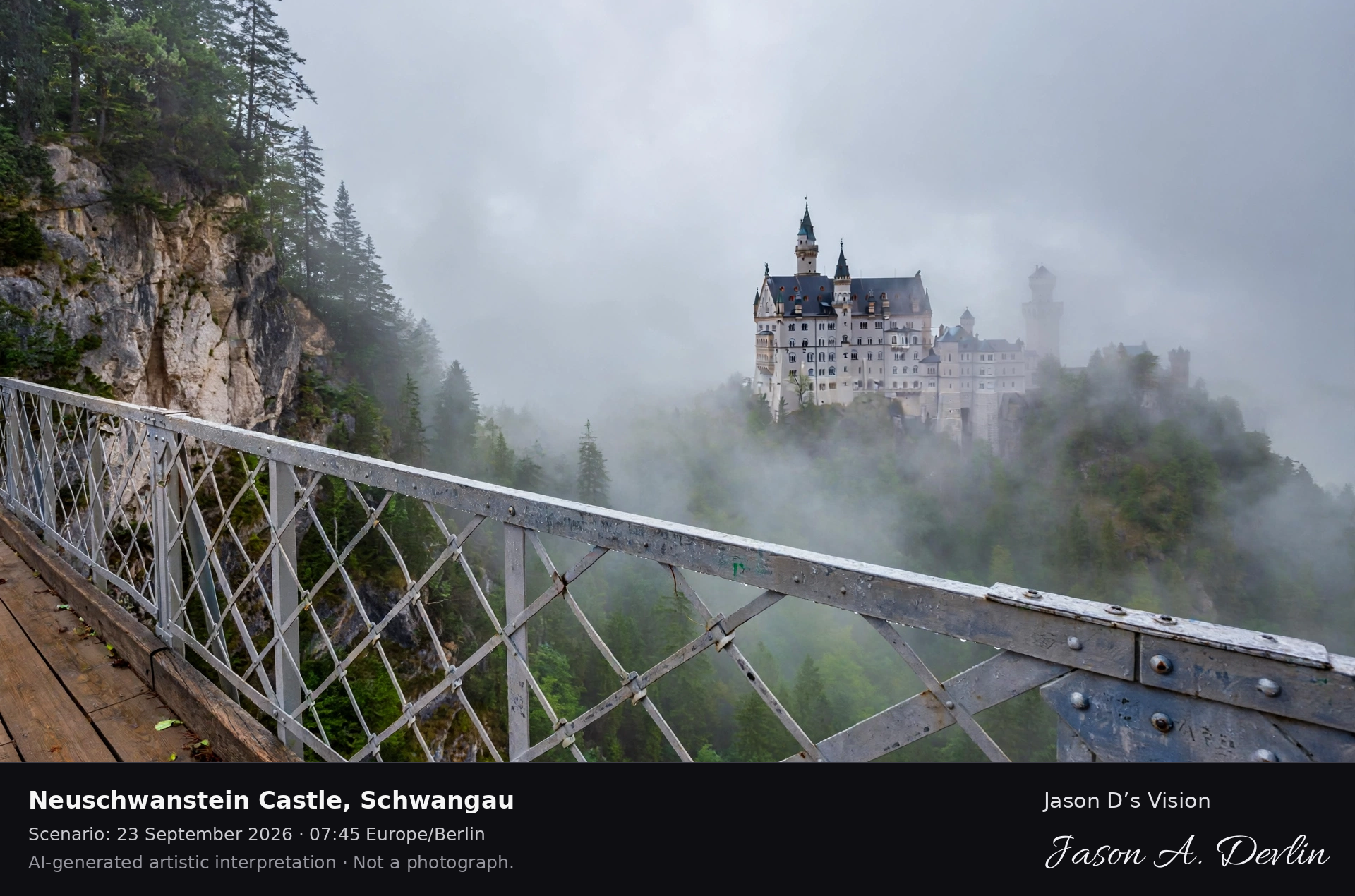
Castle from Marienbrücke area · AI-generated artistic interpretation
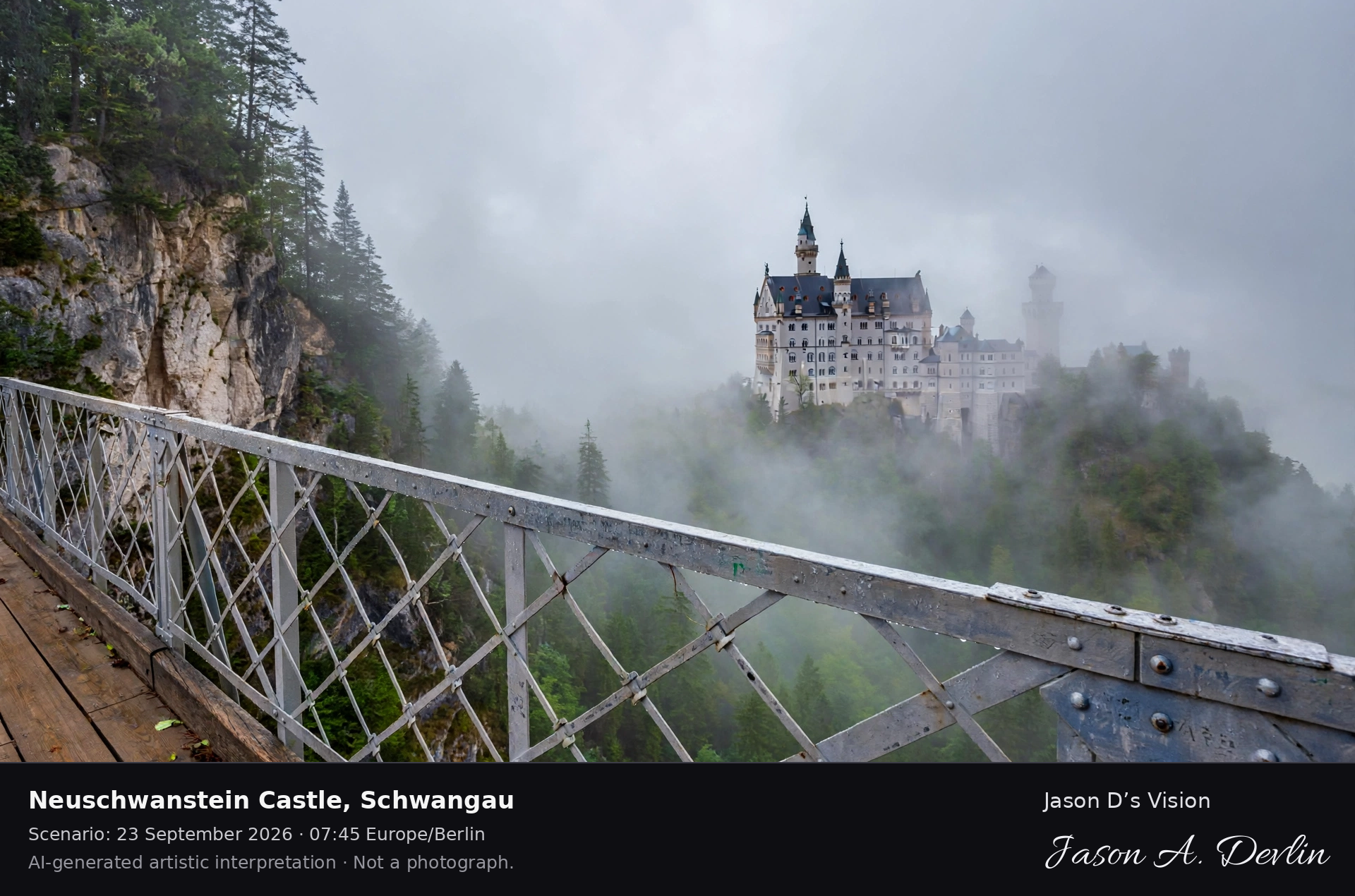
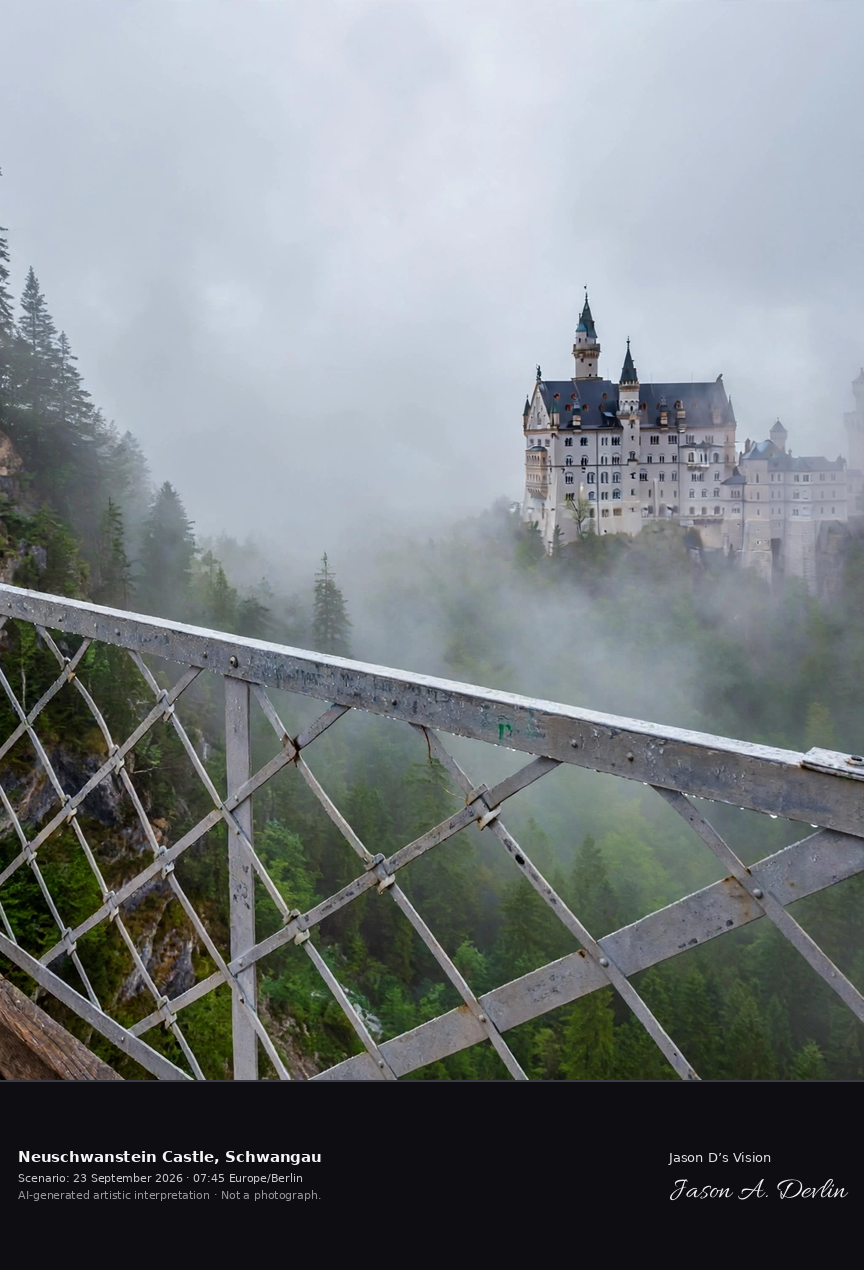
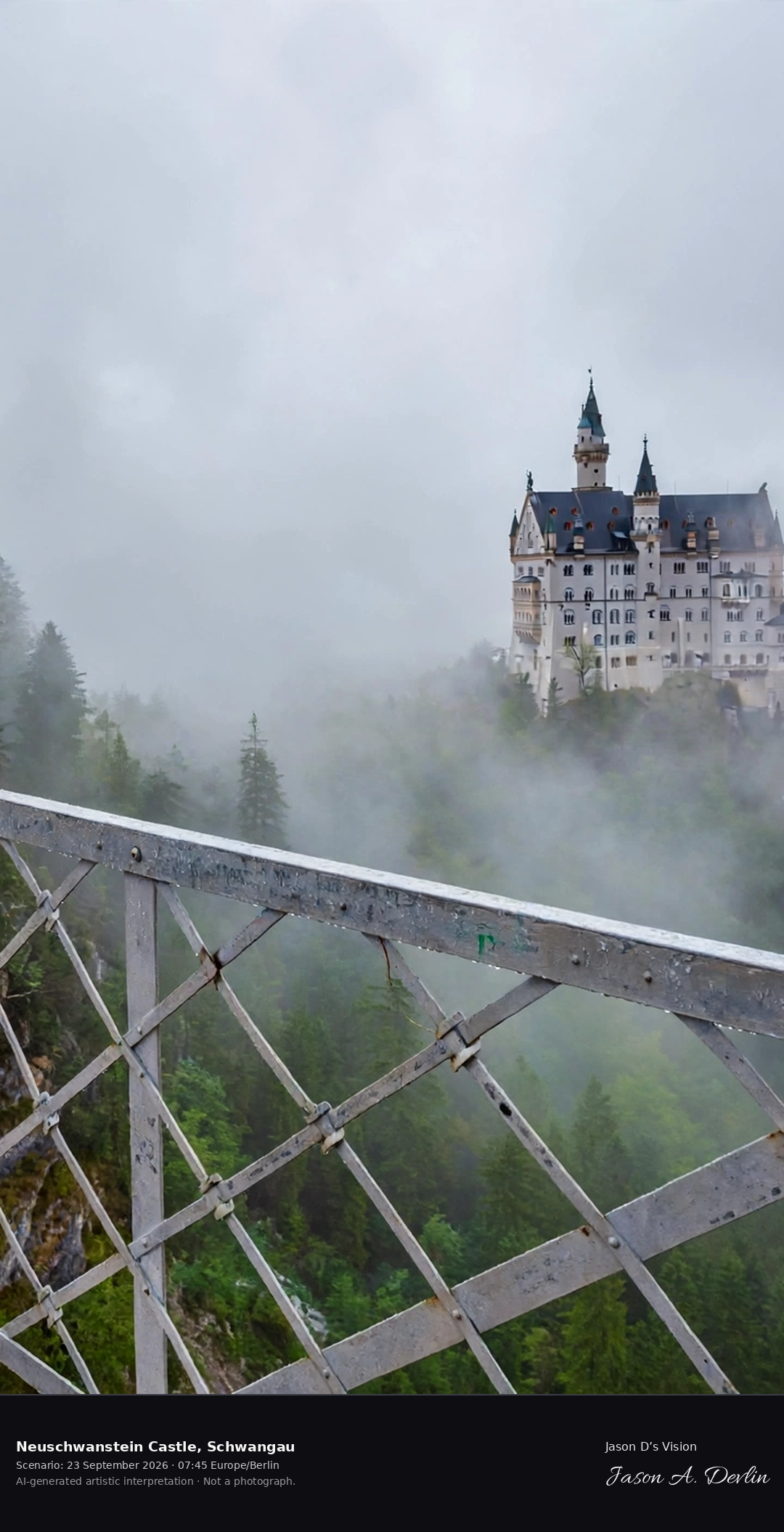
From the Marienbrücke, the bridge's metal lattice railing crosses the foreground while the white limestone castle rises through low cloud to the right, its towers and dark roofs half-veiled in mist. The rocky Pöllat gorge cliff with fir trees fills the left of the frame, and green forest fades into the fog below. It is a flat, fog-shrouded early morning — 07:45 — and the soft diffuse light matches the reported fog scenario exactly.
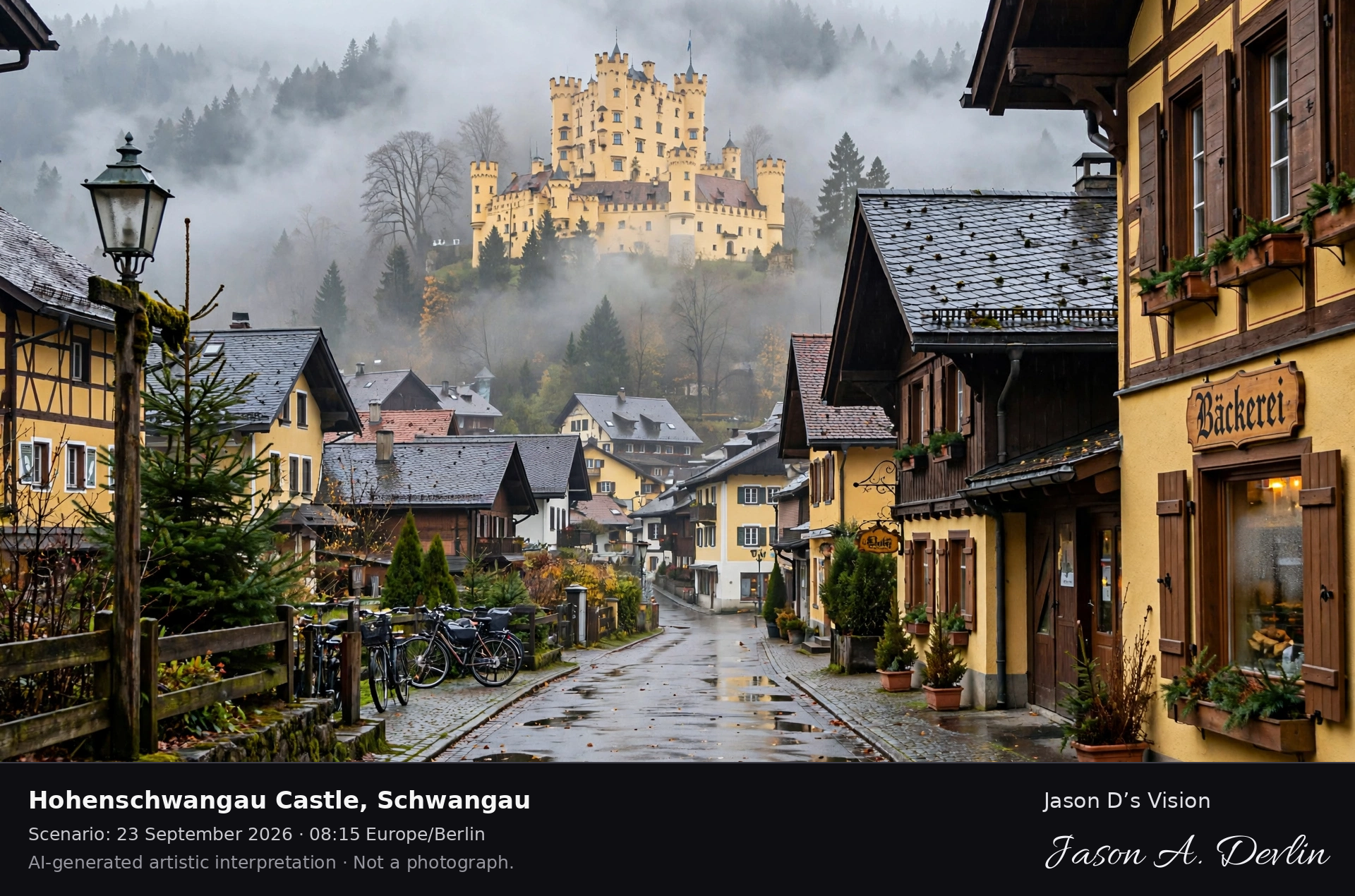
Yellow castle and village · AI-generated artistic interpretation
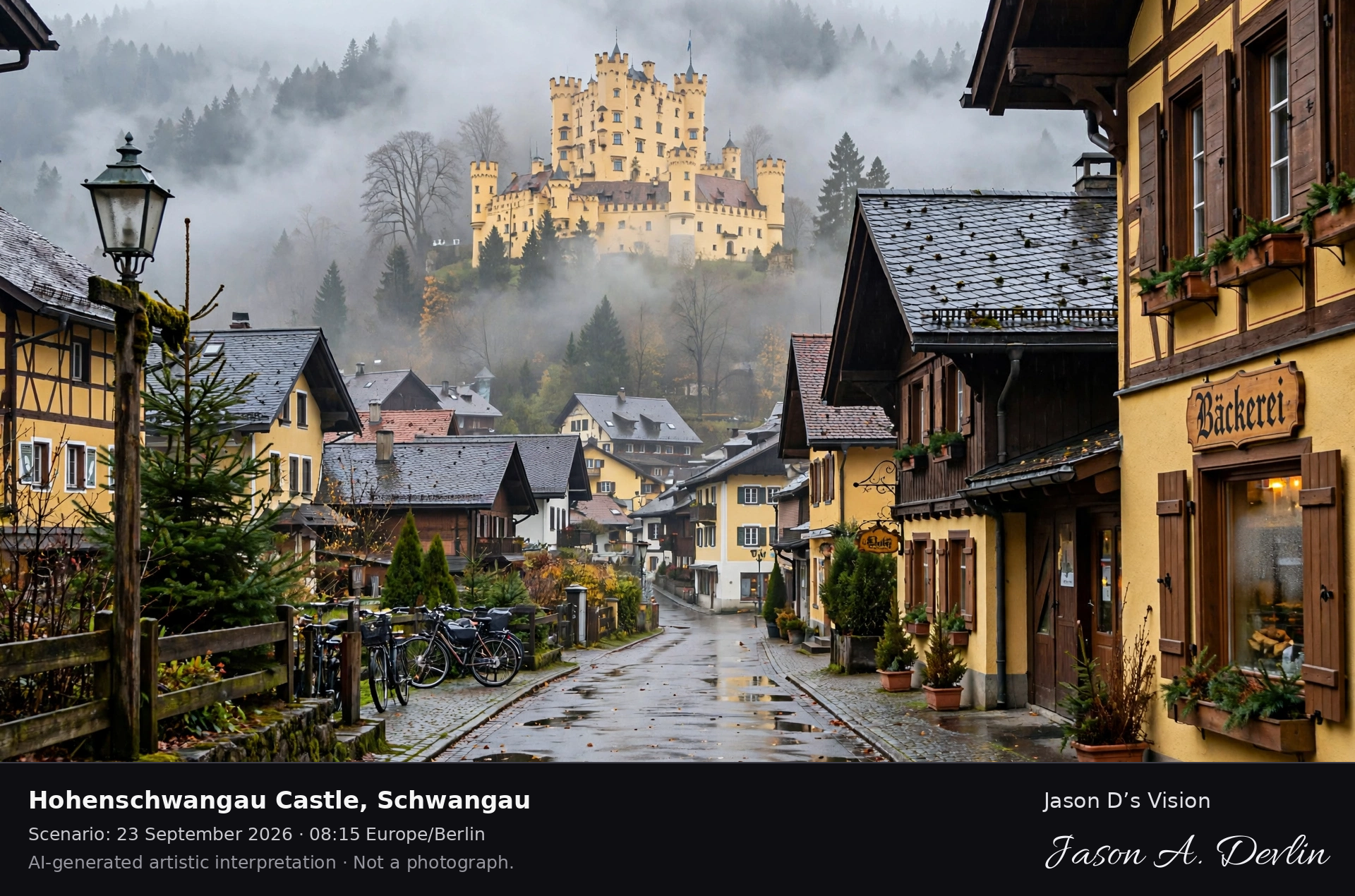
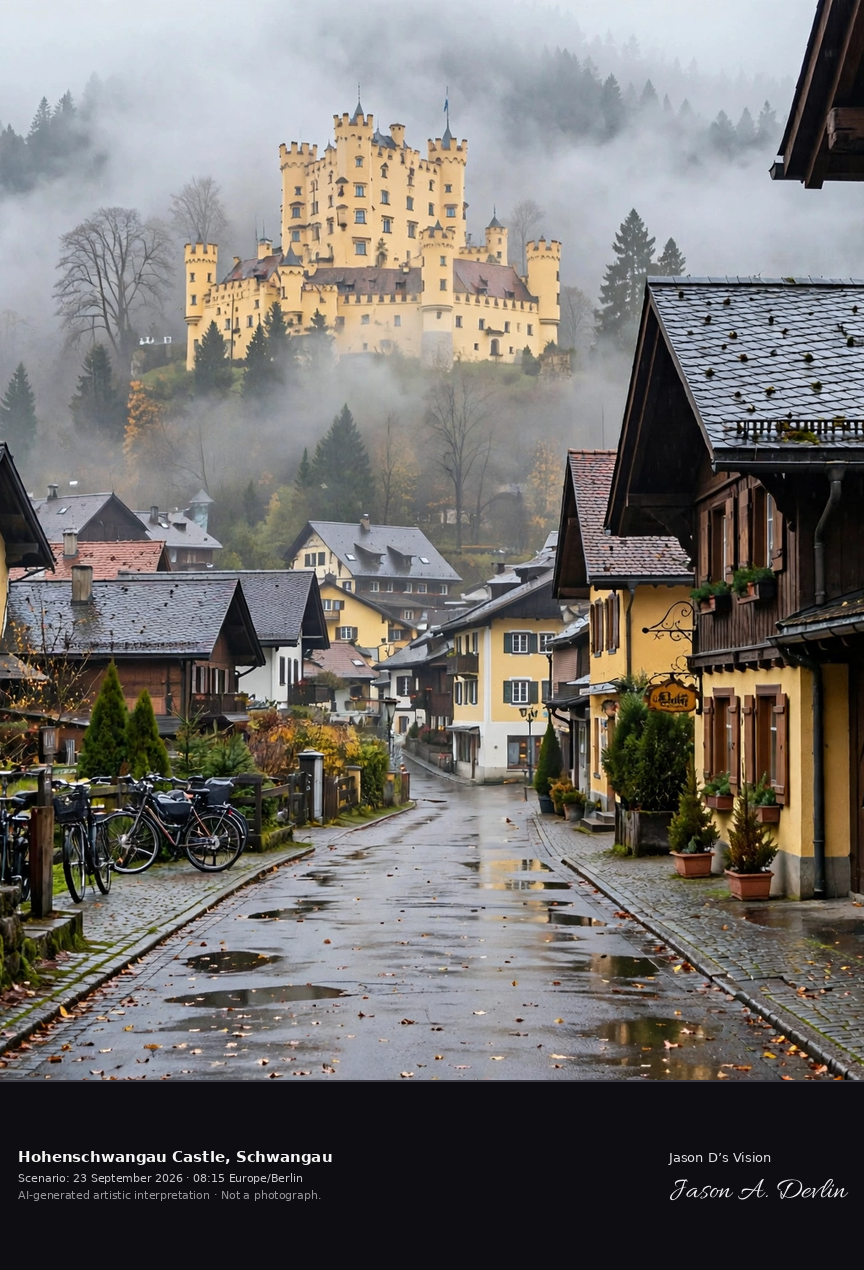
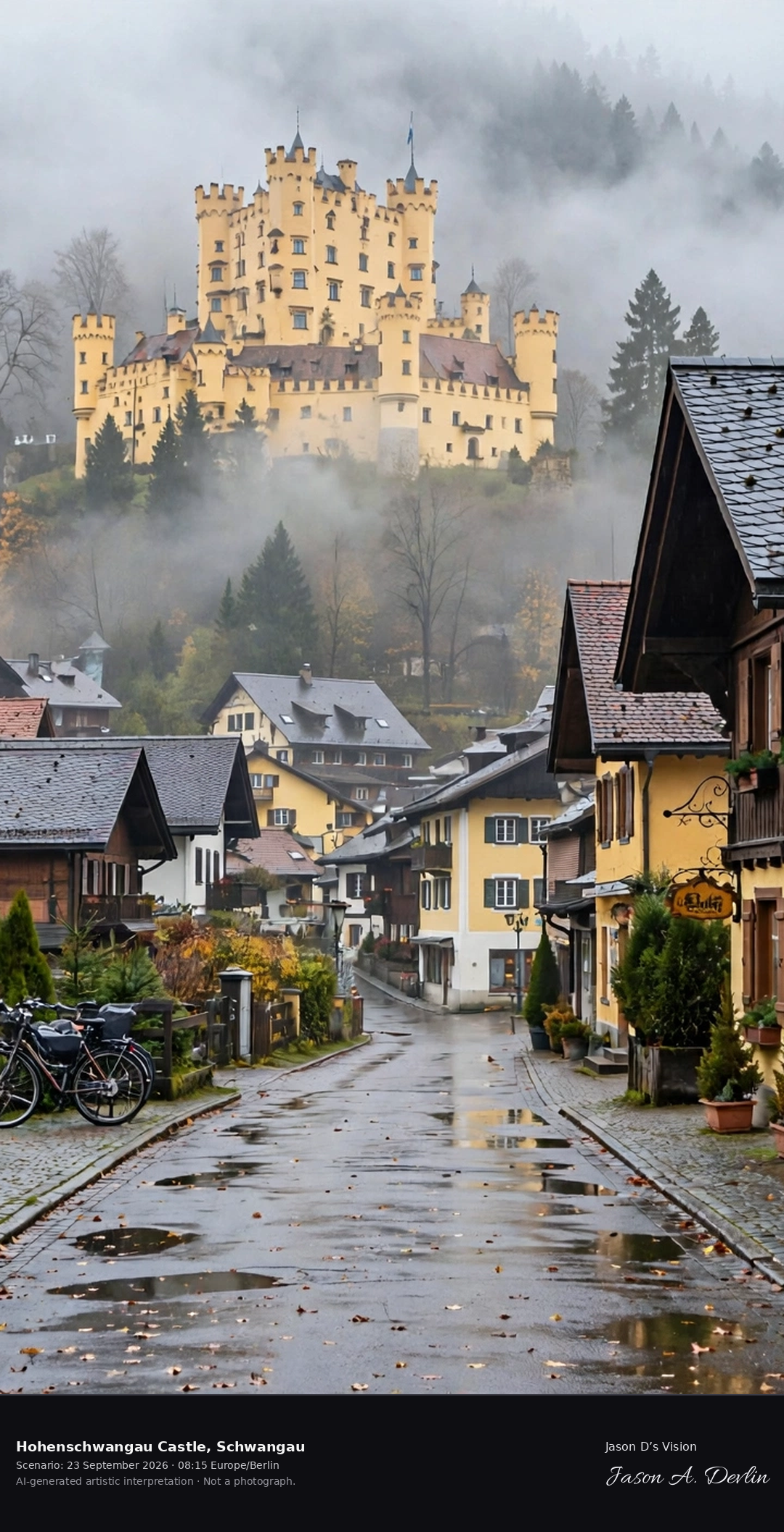
Standing in a wet cobbled village street, the yellow neo-Gothic castle with its towers and battlements rises through the mist at the head of the view, framed by fog-draped forested slopes. Timber-framed and chalet-style houses line the street on both sides, with an old lamppost on the left and a lit bakery shopfront on the right. It is a foggy 08:15 morning, and puddles on the cobbles reflect the pale light — the yellow-castle-over-village composition the scene is built around.
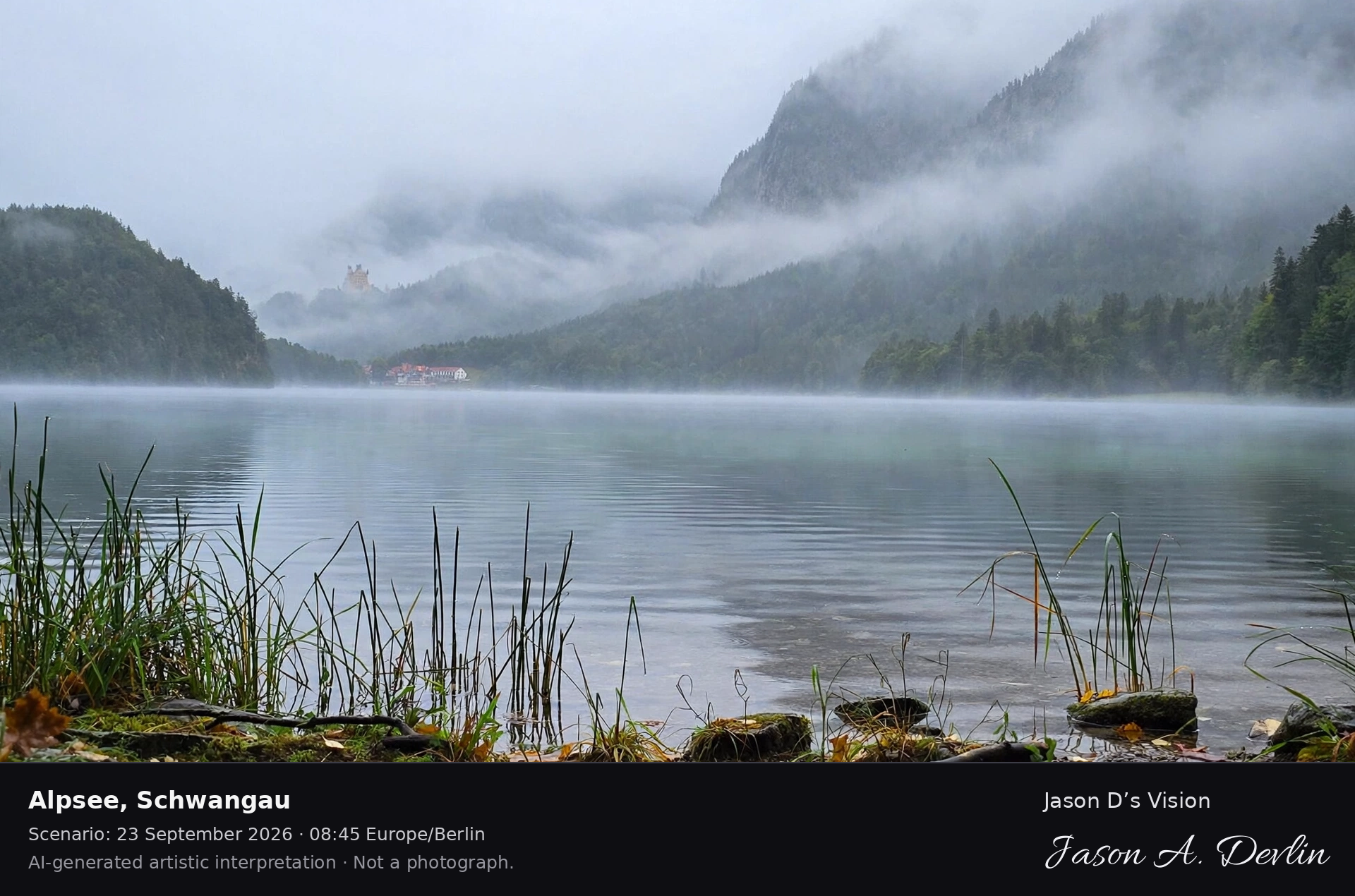
Lakeshore and mountain backdrop · AI-generated artistic interpretation
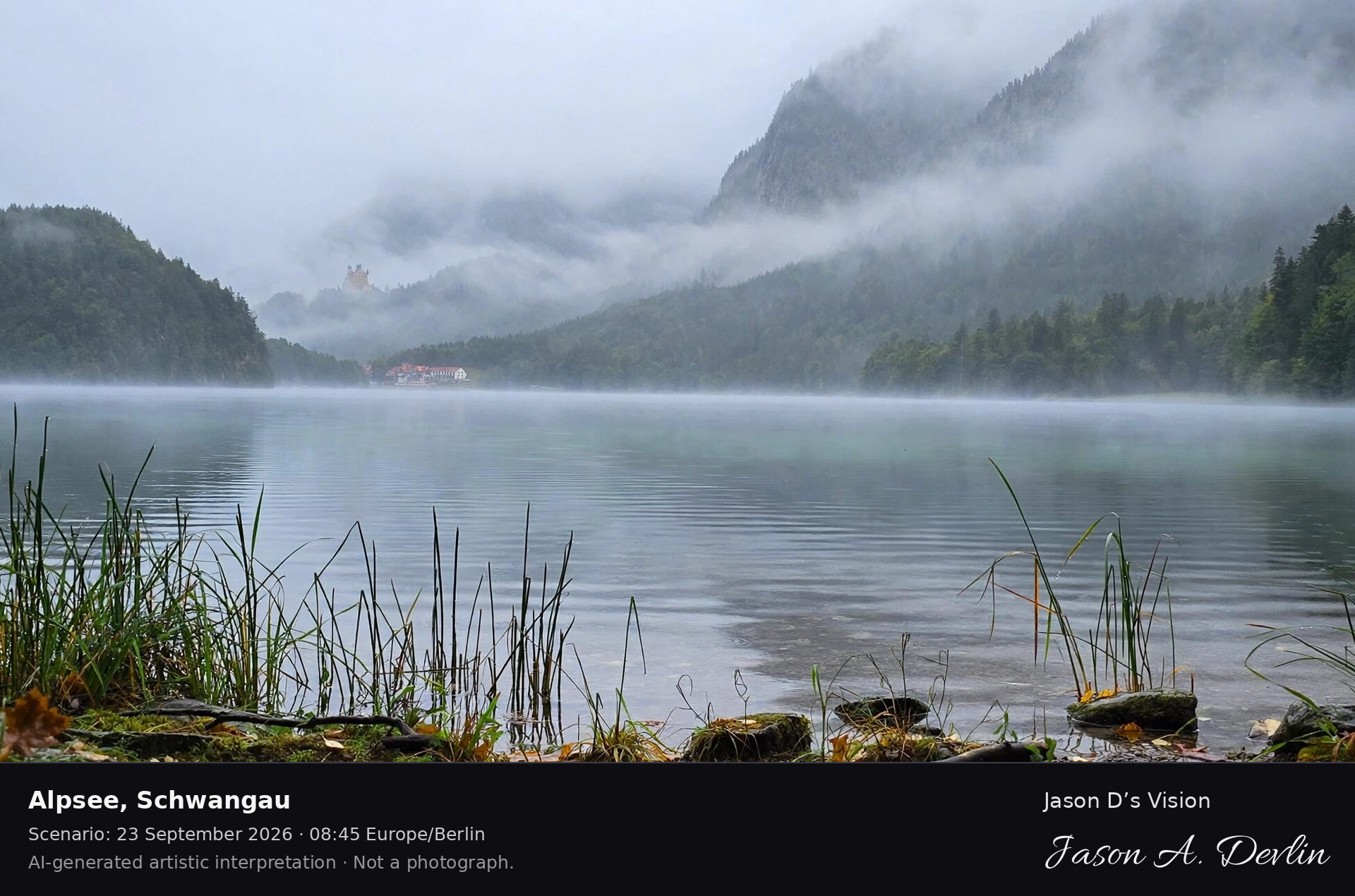
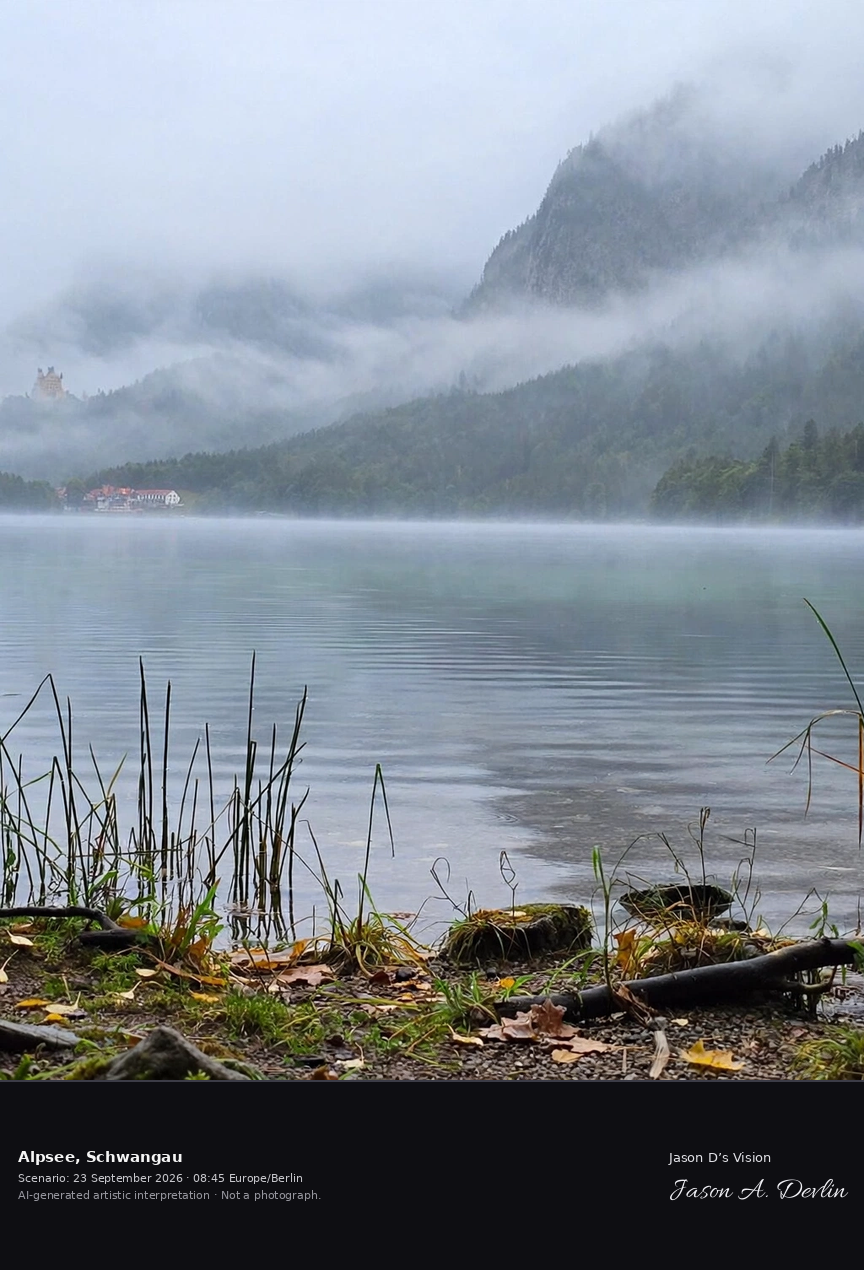
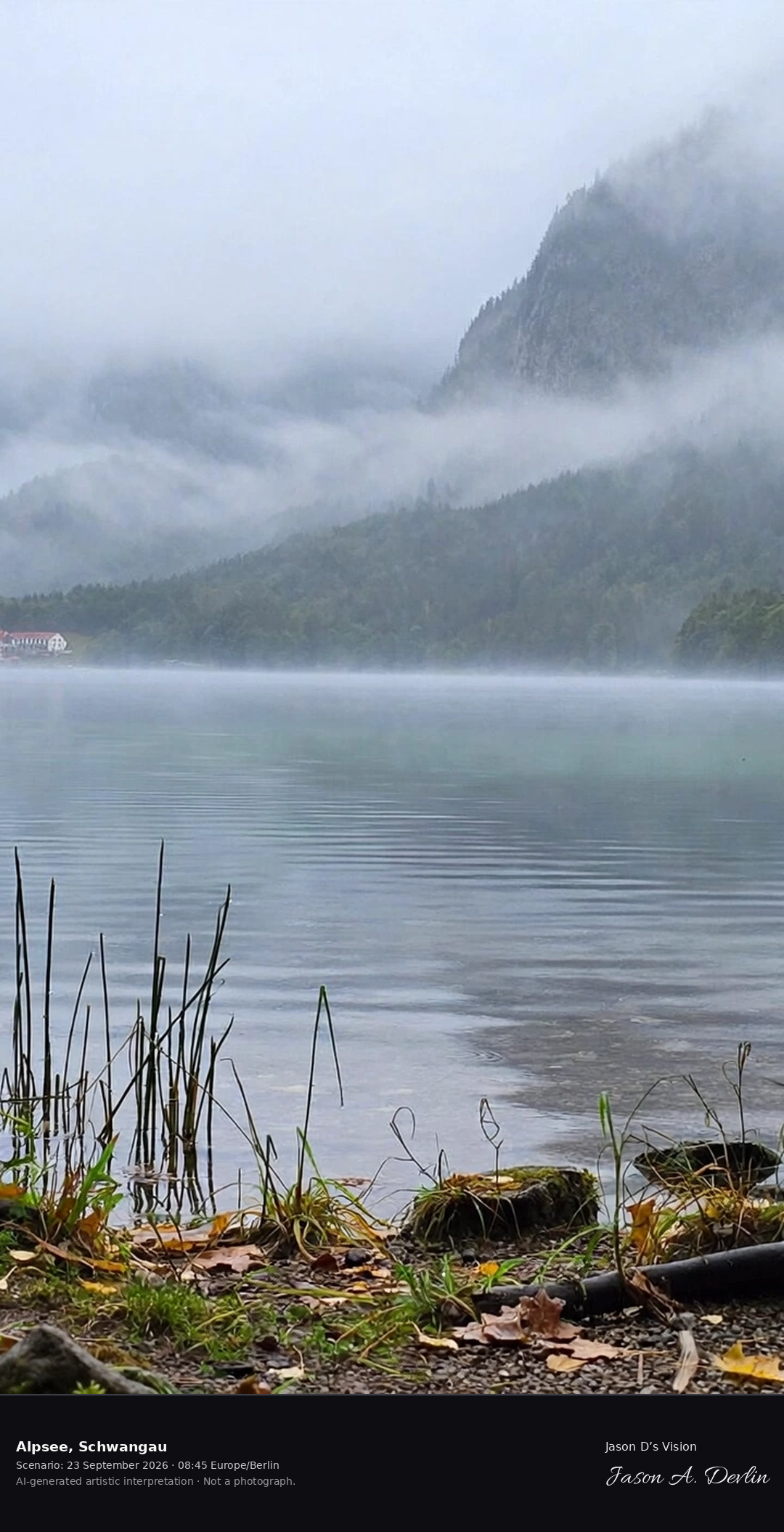
From the lakeshore at eye level, reeds and shallows fill the foreground while mist lies flat over the Alpsee and fog-draped mountains close in on both sides. A faint castle-like silhouette shows through the fog on the far left shore, near a small white-and-red building across the water. The still, grey, foggy morning air — 08:45, 5.5°C — leaves only the nearest shoreline in real detail.
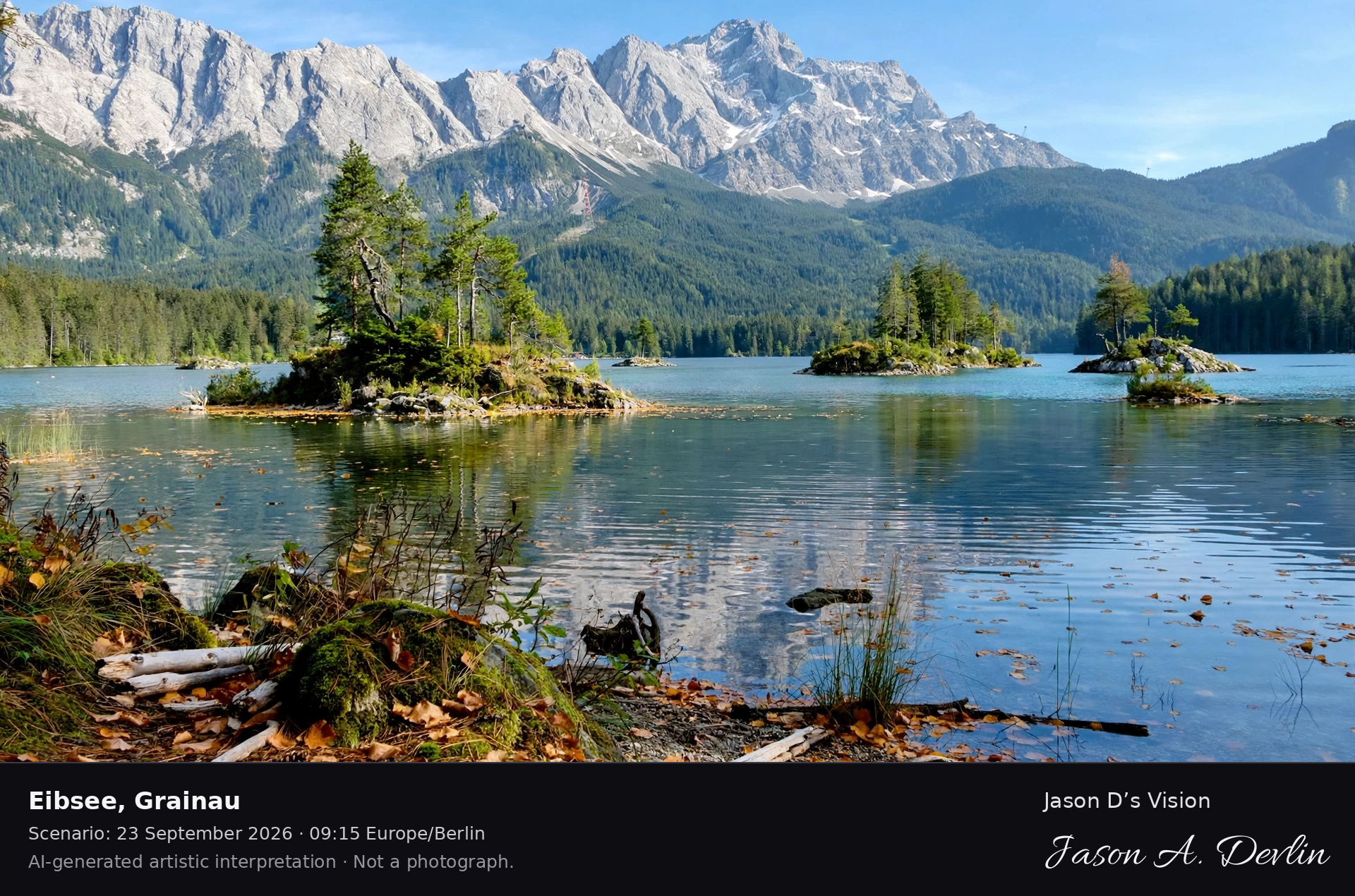
Lake islands and Zugspitze · AI-generated artistic interpretation
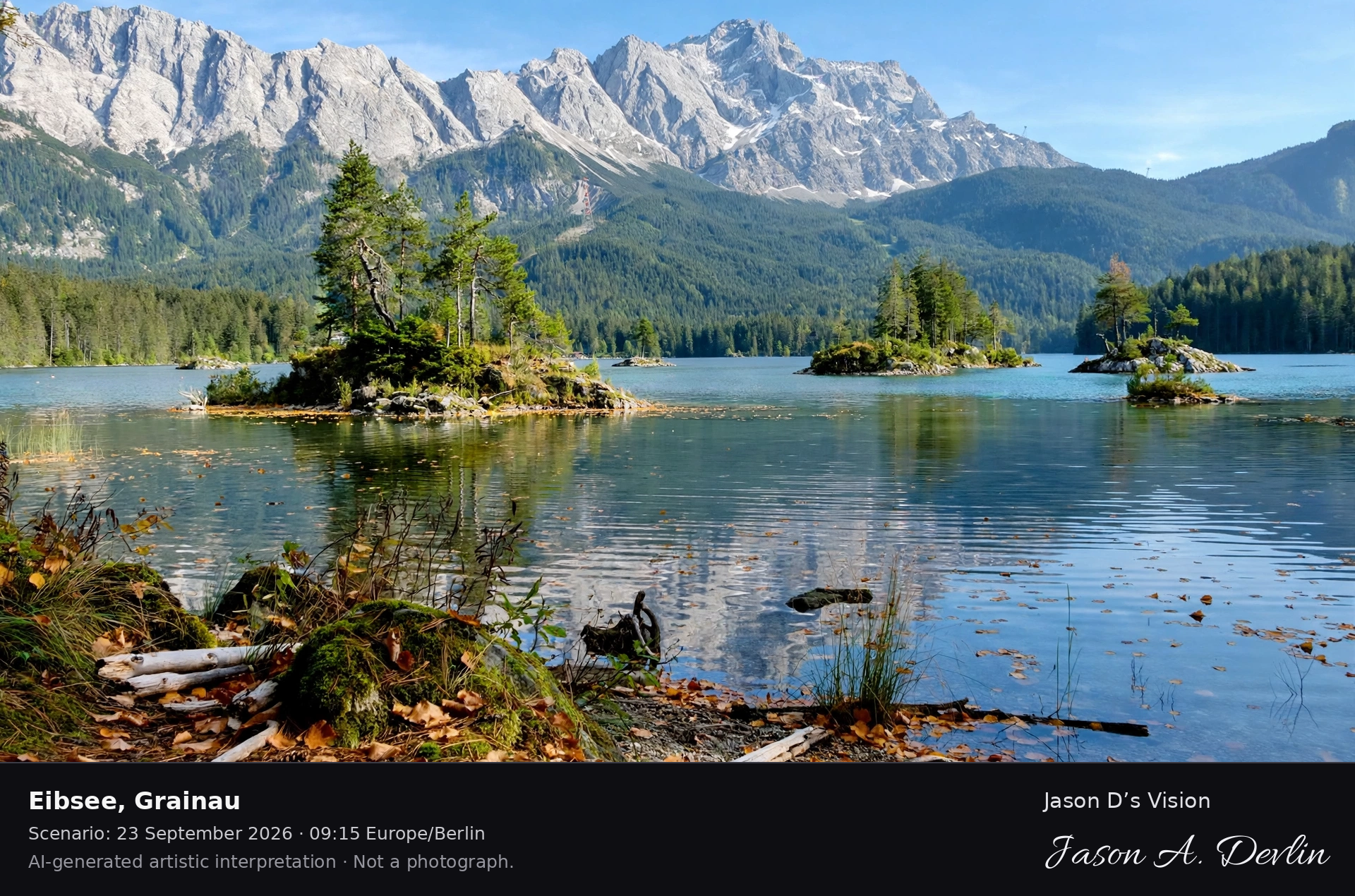
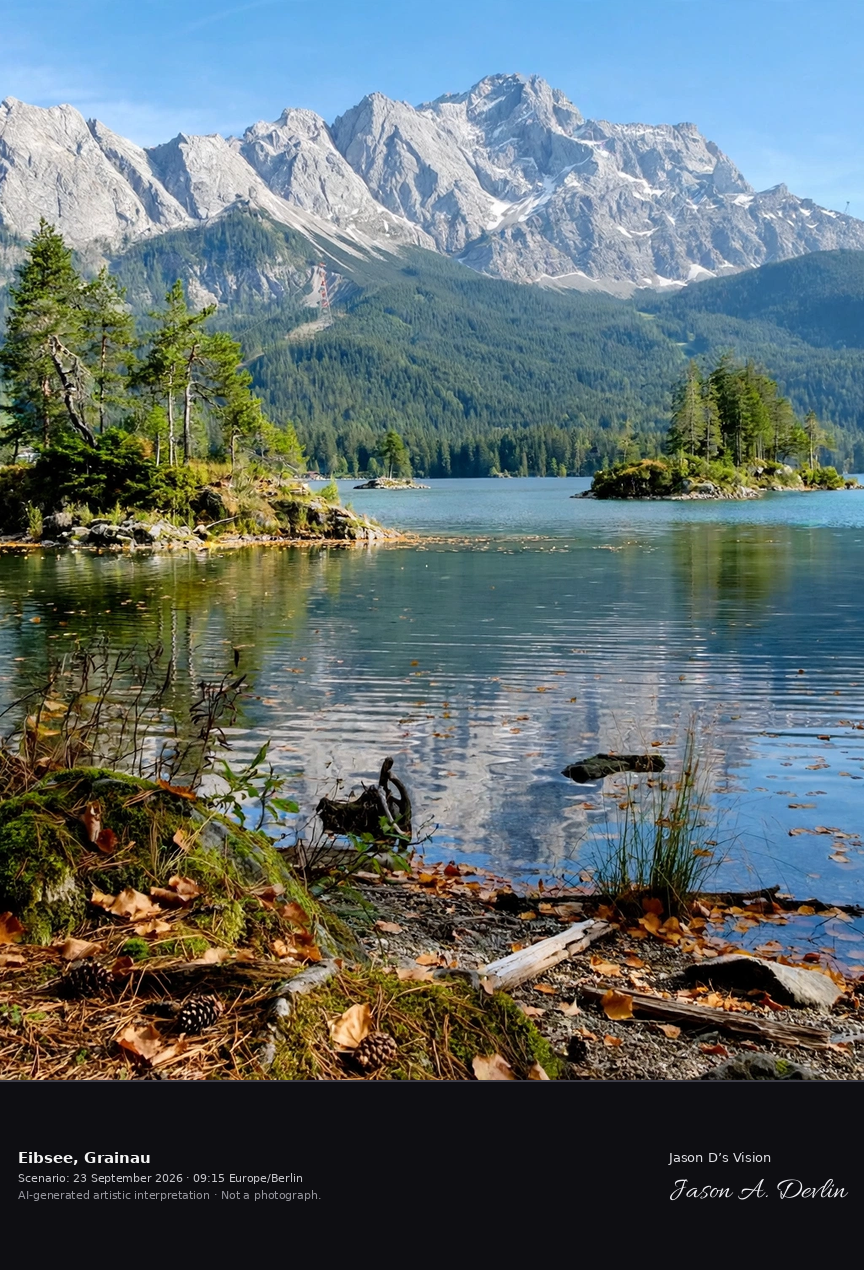
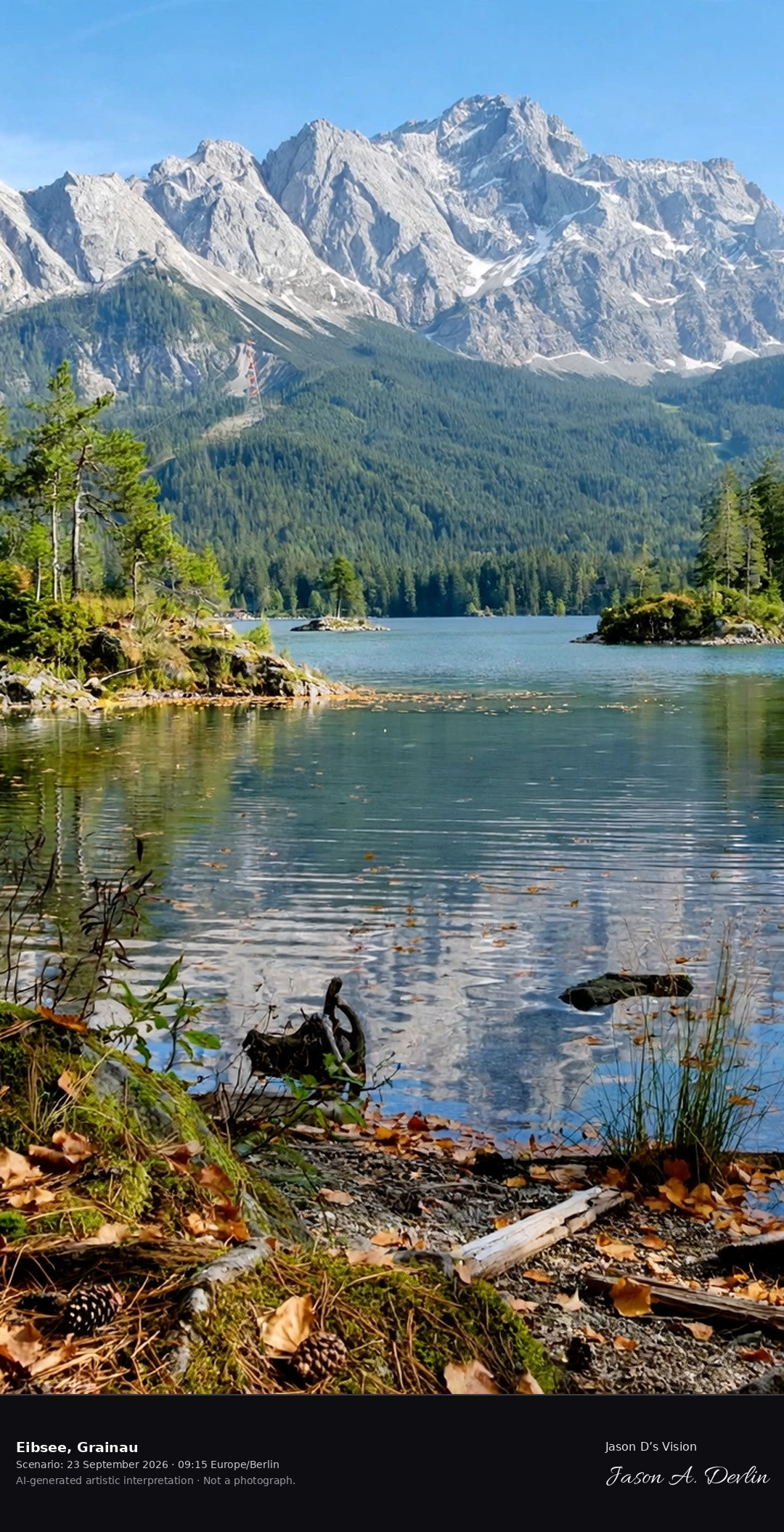
From the mossy lakeshore, the Eibsee spreads across the frame with its signature rocky islets: pines crowd the large islet on the left and smaller tree-topped rocks sit mid-frame and right. The Zugspitze massif fills the background under a clear blue sky, its grey limestone ridges carrying patches of snow, with a cable-car line visible on the slopes. Fallen leaves float on the glassy water in the foreground, and the bright 09:15 mid-morning light sharpens every reflection.
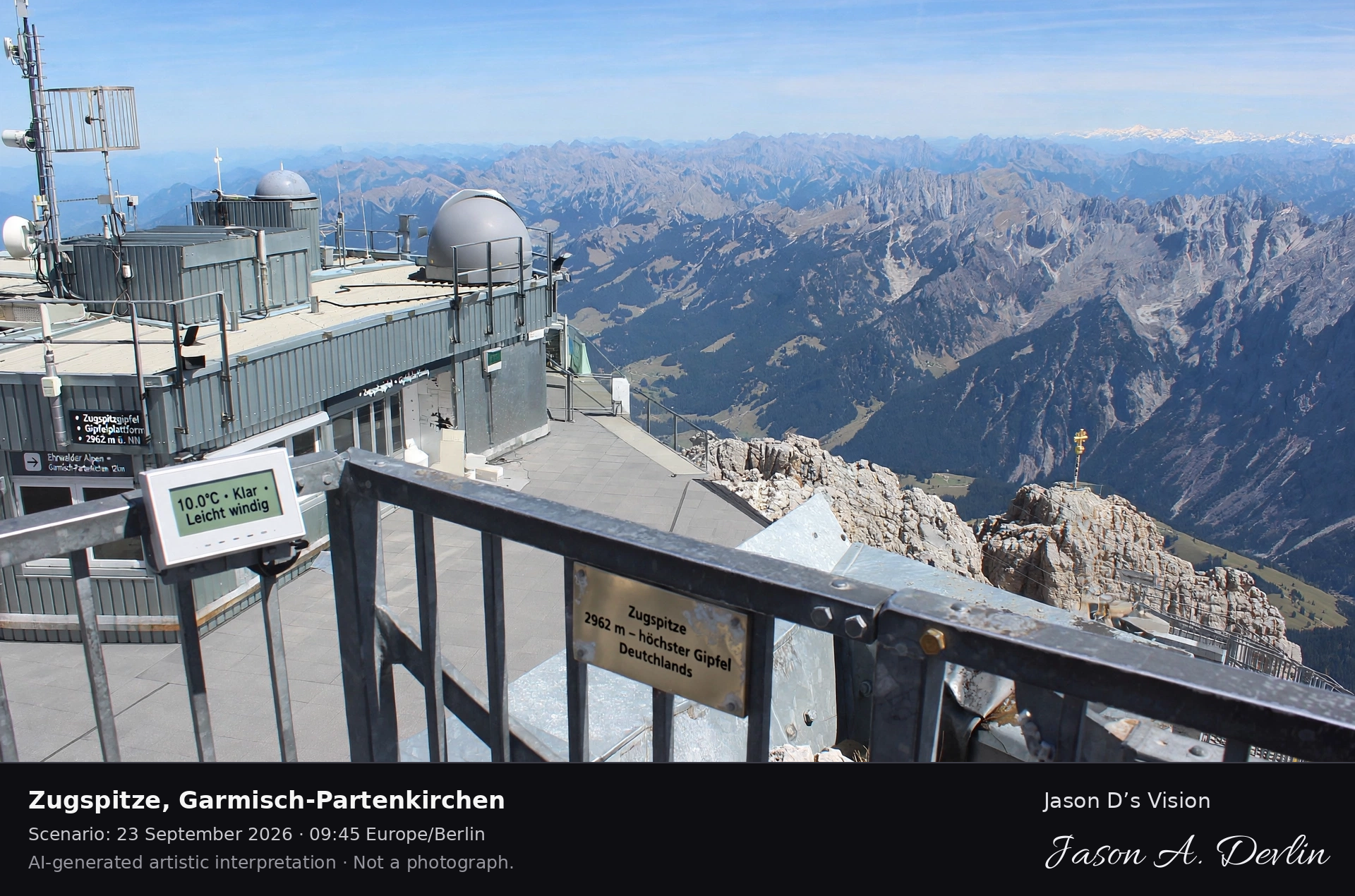
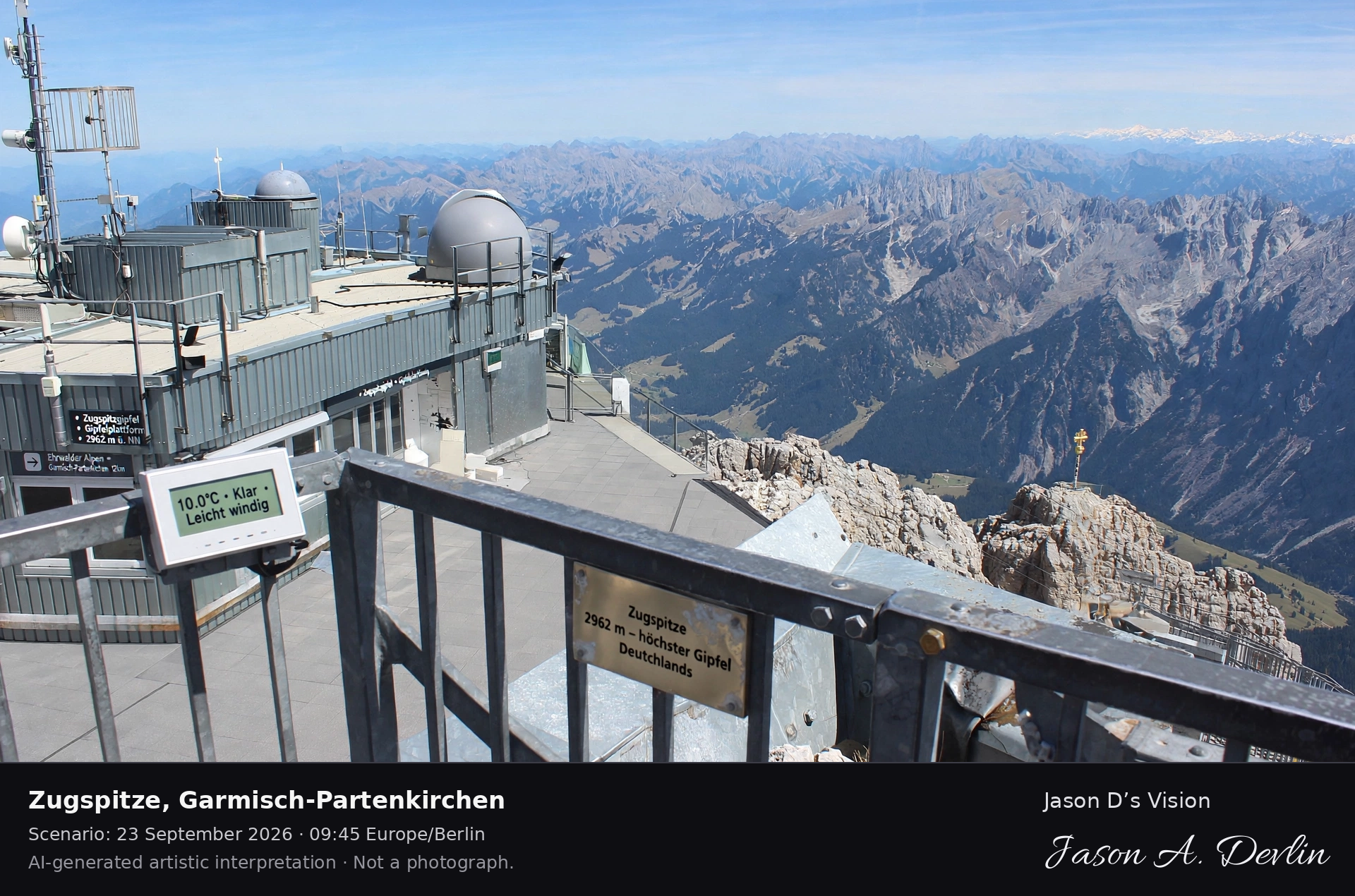
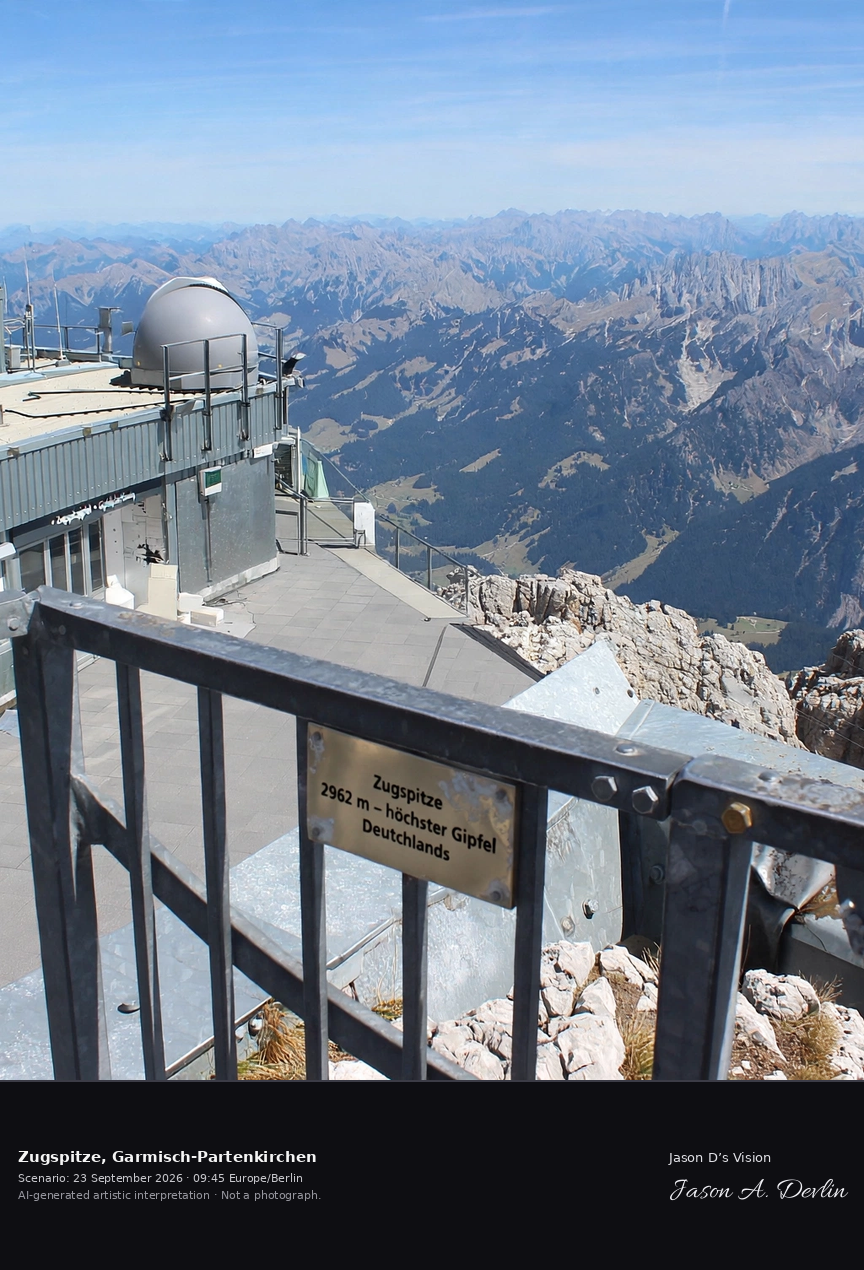
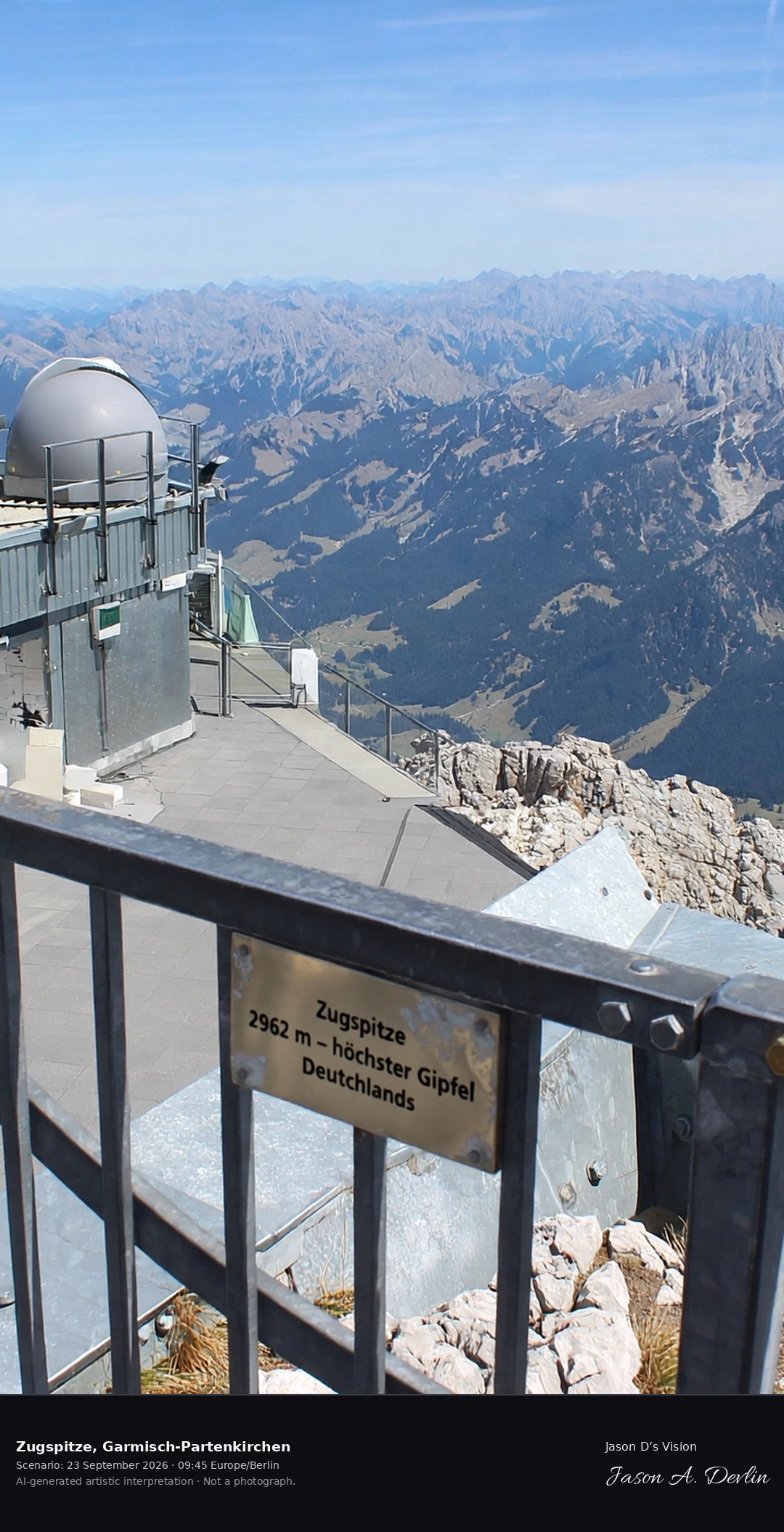
On the Zugspitze viewing terrace, the summit station and observatory building with its grey dome stand on the left, while the brass plaque "Zugspitze 2962 m – höchster Gipfel Deutschlands" is fixed to the railing in the foreground. A summit cross rises on the crag at the right edge, and the vast Alps panorama rolls away beyond under a clear blue sky. An on-terrace display panel reads 10.0°C with clear, lightly windy conditions — the bright 09:45 morning of the scenario.
Rock walls and river · AI-generated artistic interpretation
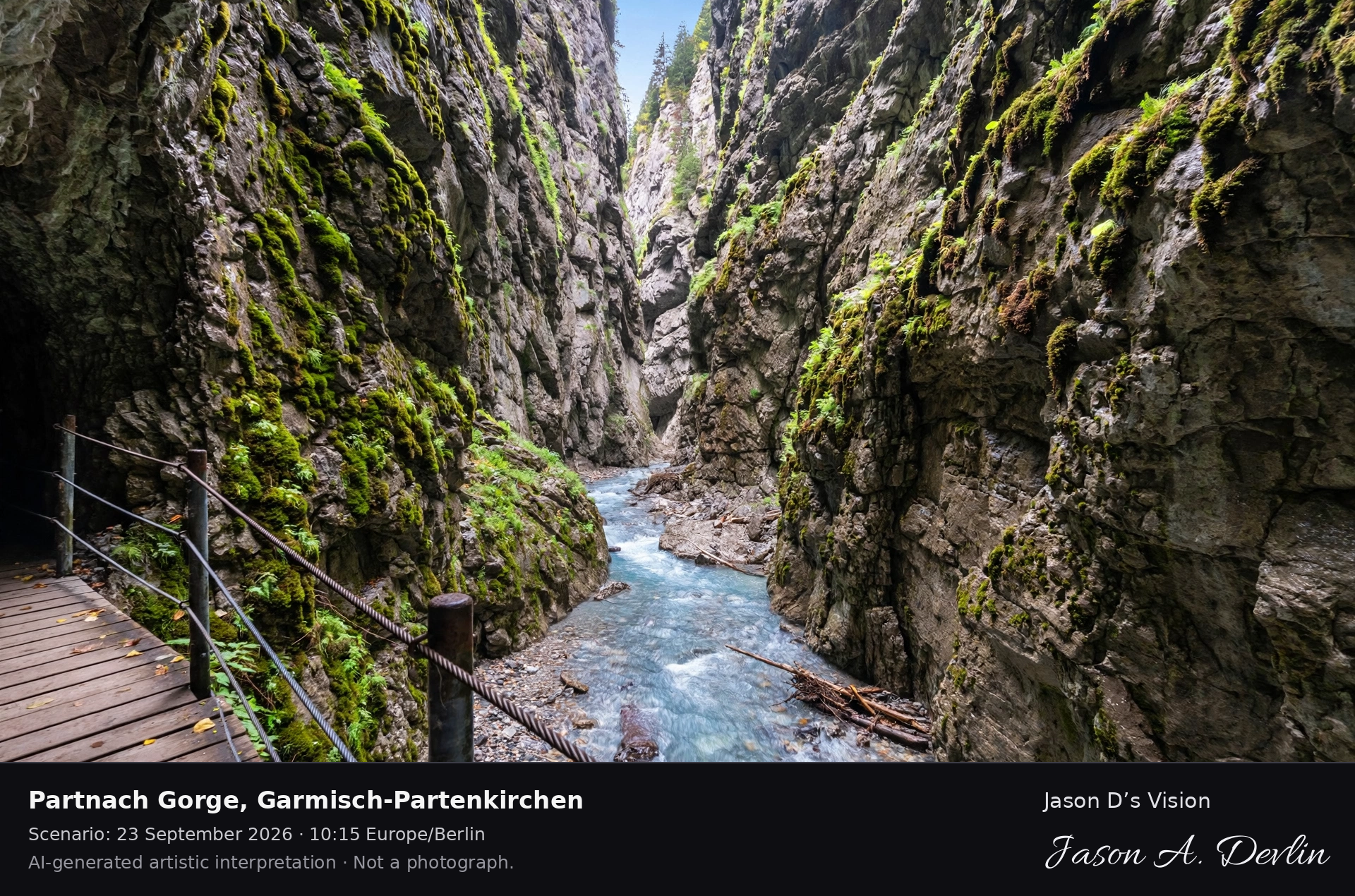
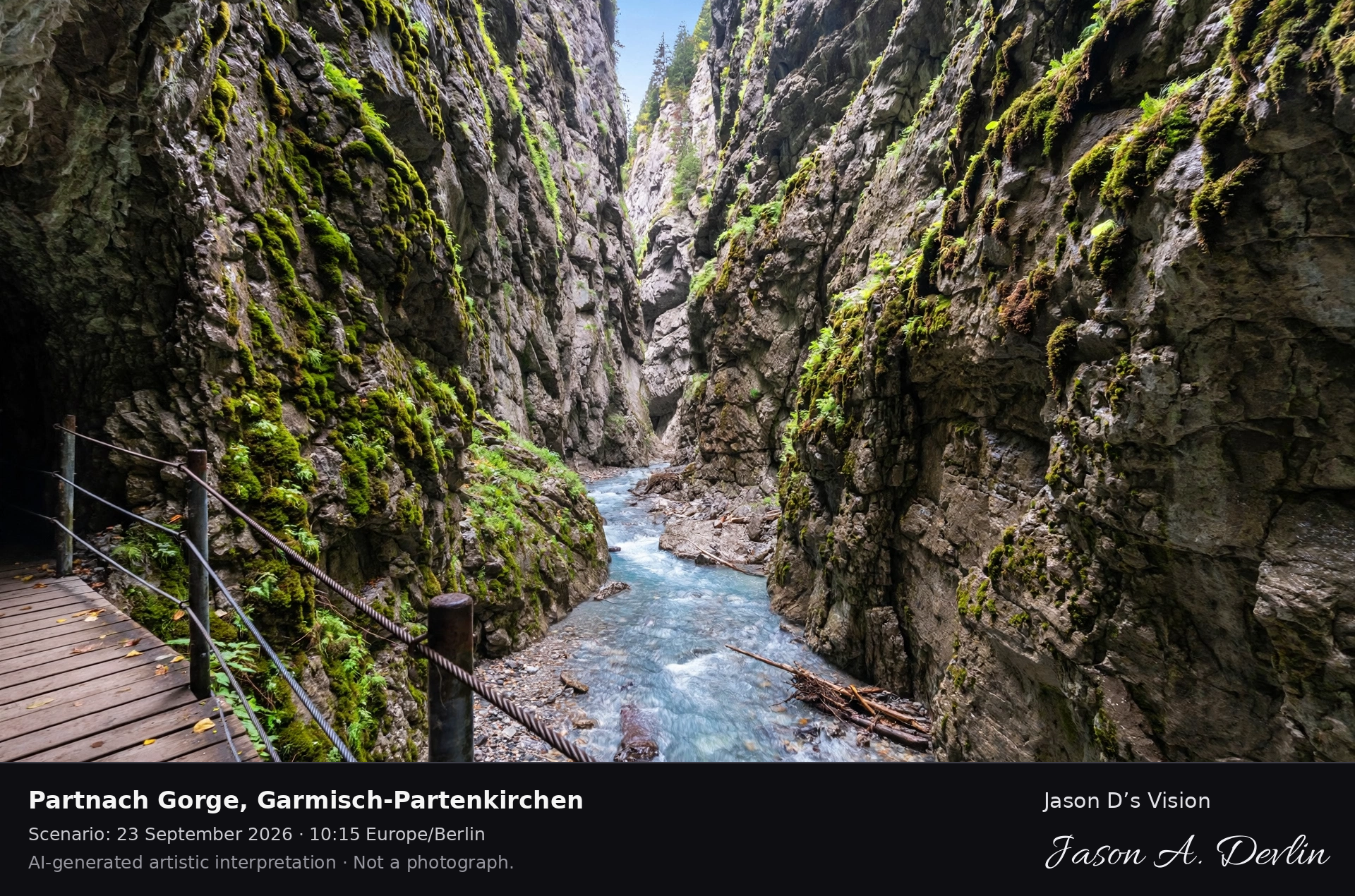
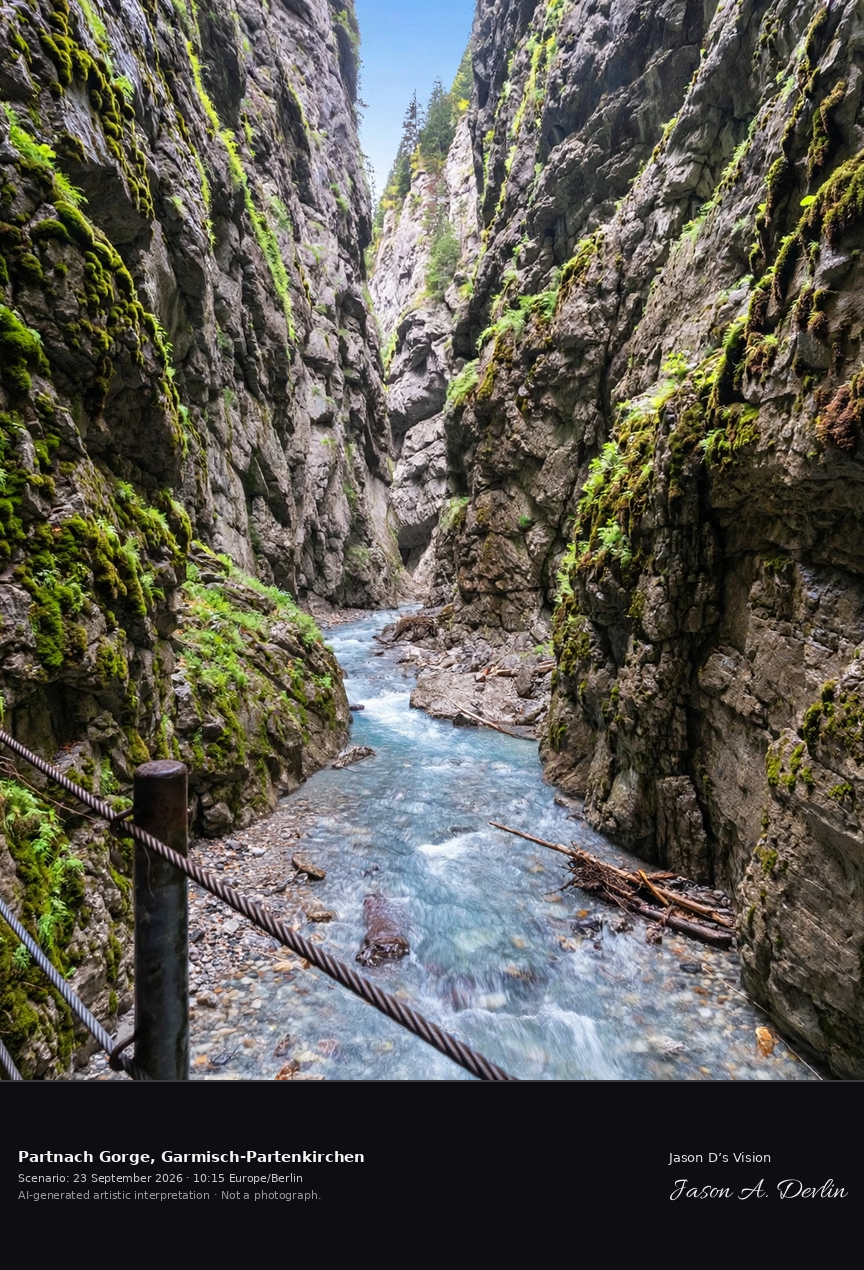
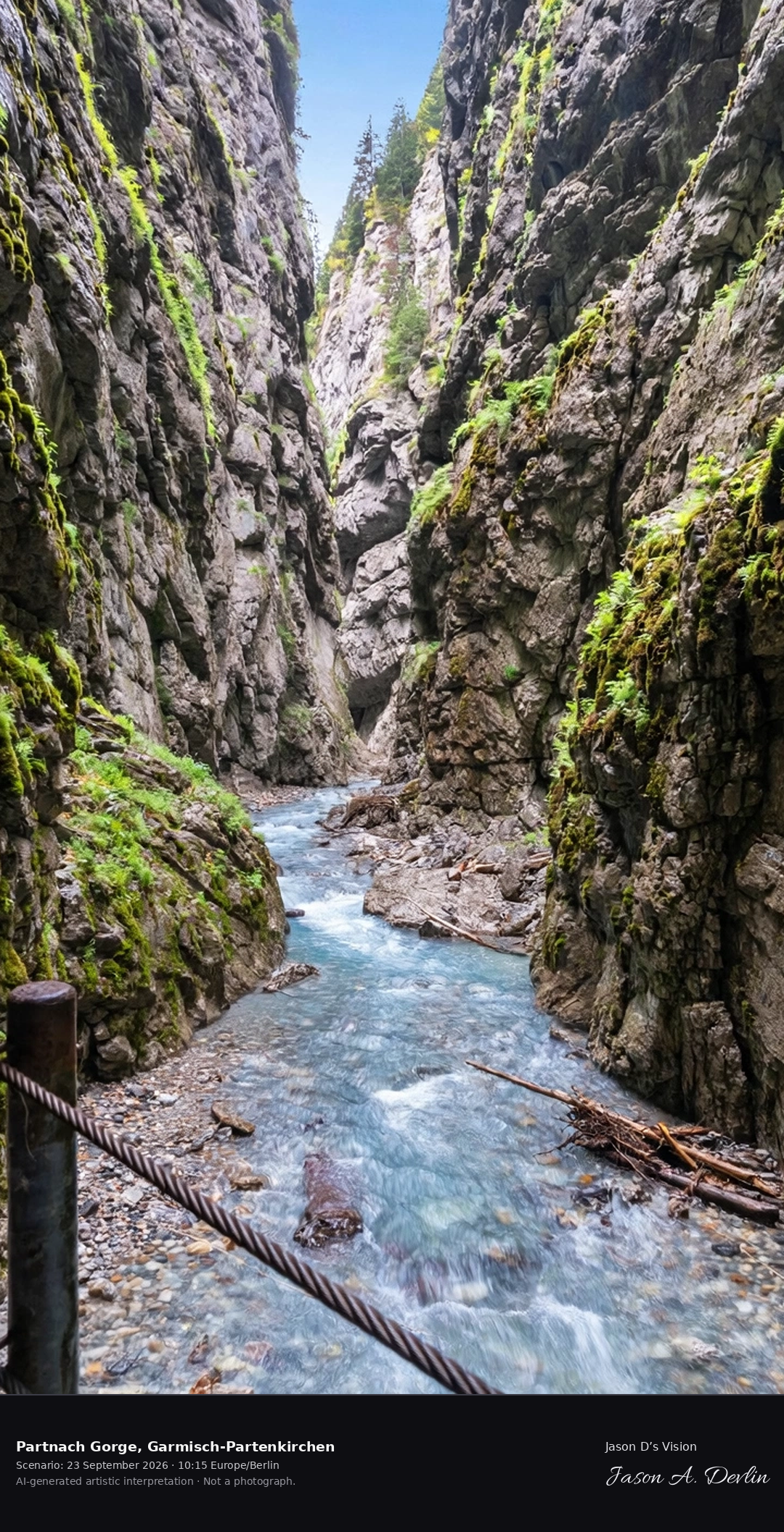
Inside the narrow Partnach Gorge, steep moss-covered limestone walls rise on both sides, framing the blue Partnach stream as it runs down the middle of the frame. The railed wooden boardwalk cuts along the left bank in the foreground, and a slot of blue sky shows far above between the cliffs. It is bright 10:15 daylight, with sun catching the green moss and white water against the deep shadow of the gorge.
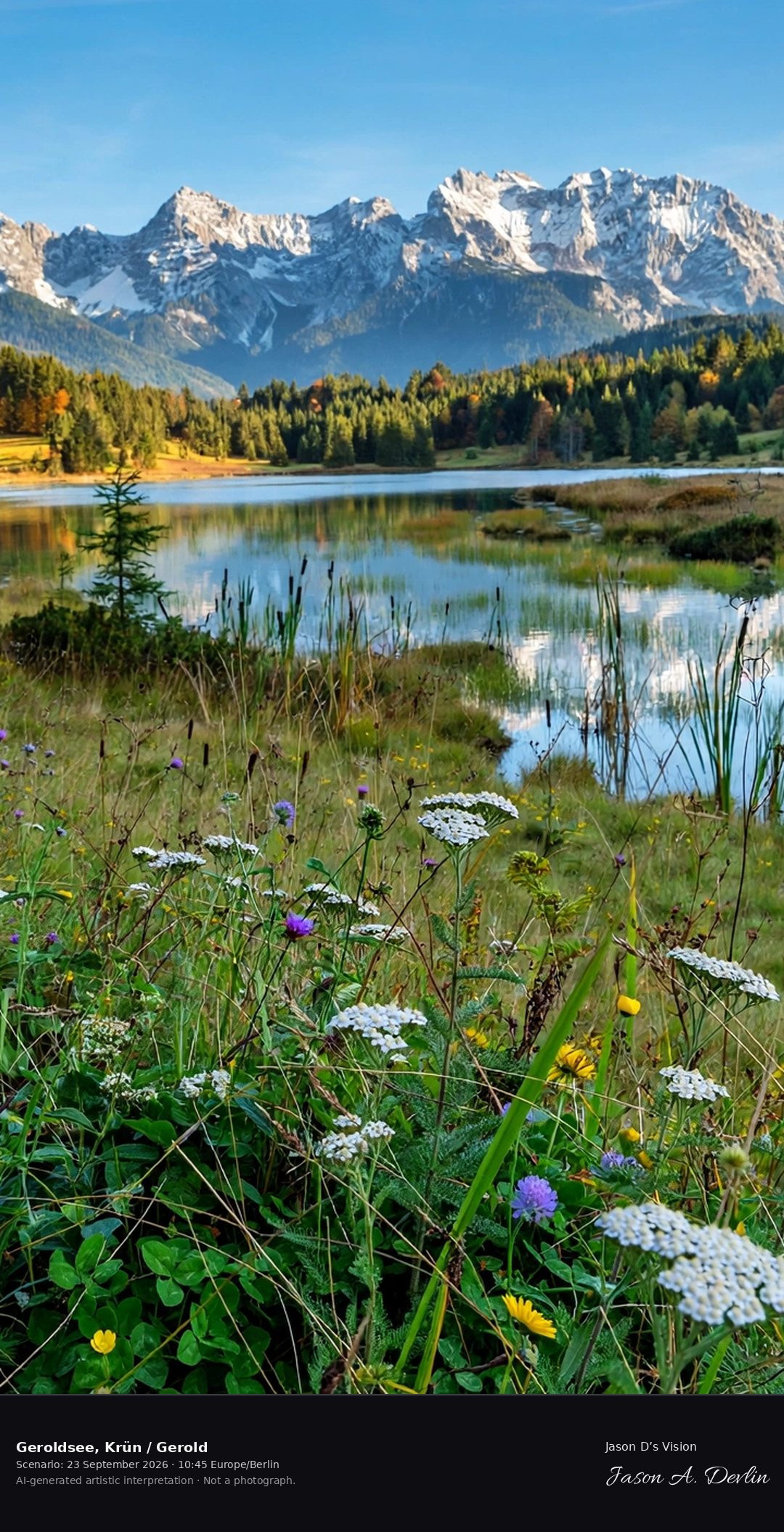
Meadow and mountain lake · AI-generated artistic interpretation
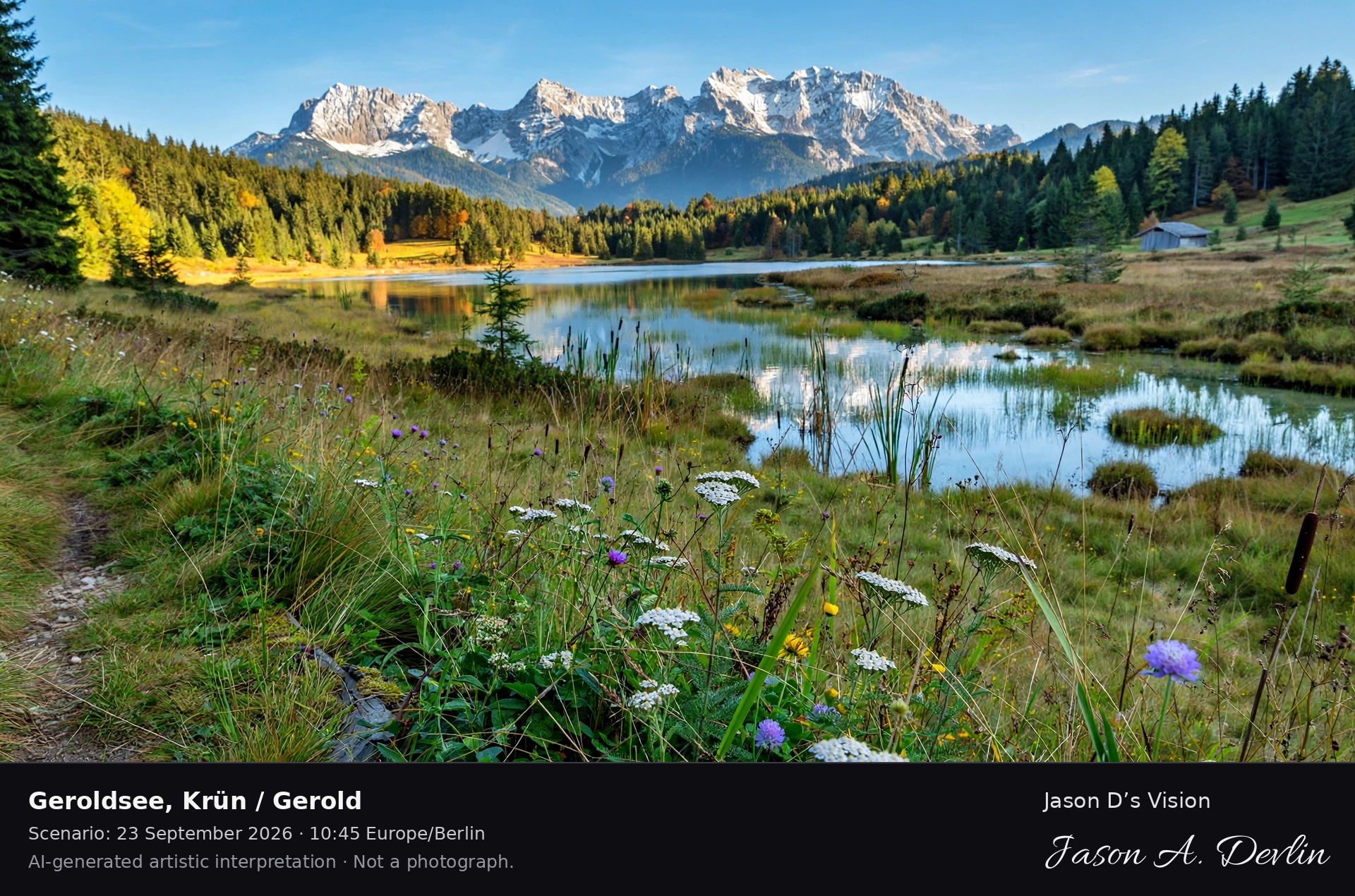
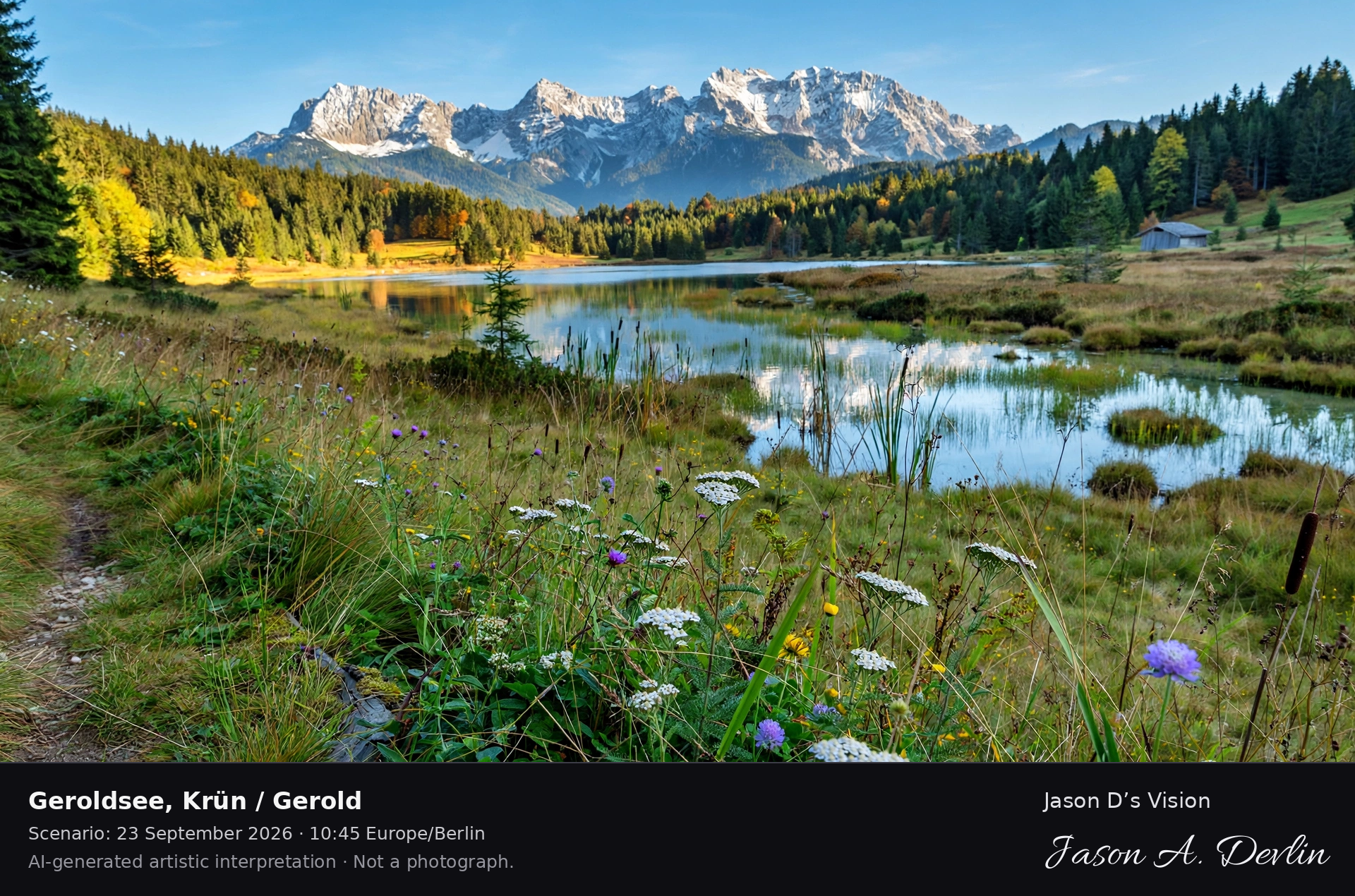
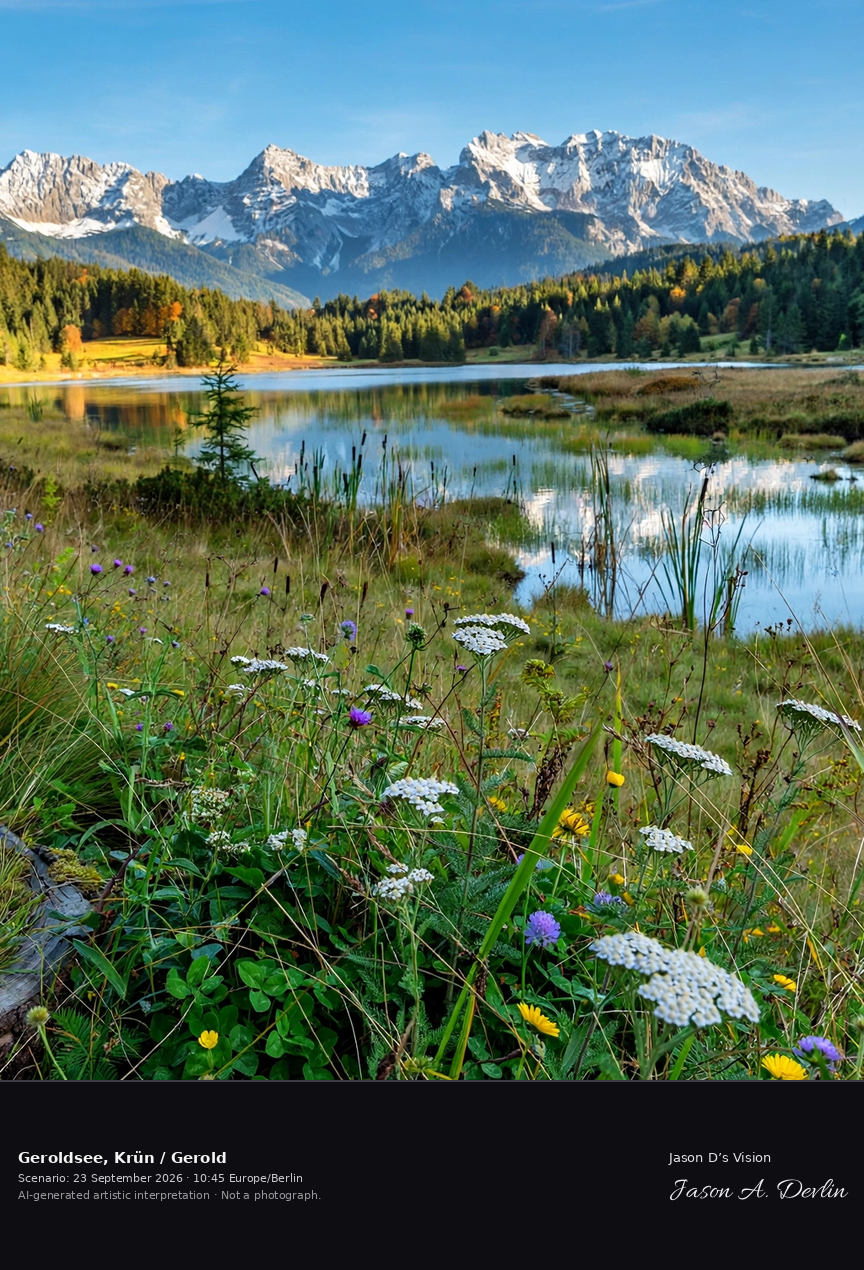
From the meadow edge at eye level, the calm Geroldsee lies across the middle of the frame, mirroring the snow-dusted Karwendel massif that rises behind it. A flower-filled meadow with reeds and grasses fills the foreground, a small wooden hut sits on the right shore, and dark conifer forest wraps the far bank. The clear 10:45 late-morning sun lights the meadow gold and doubles the mountains in the lake.
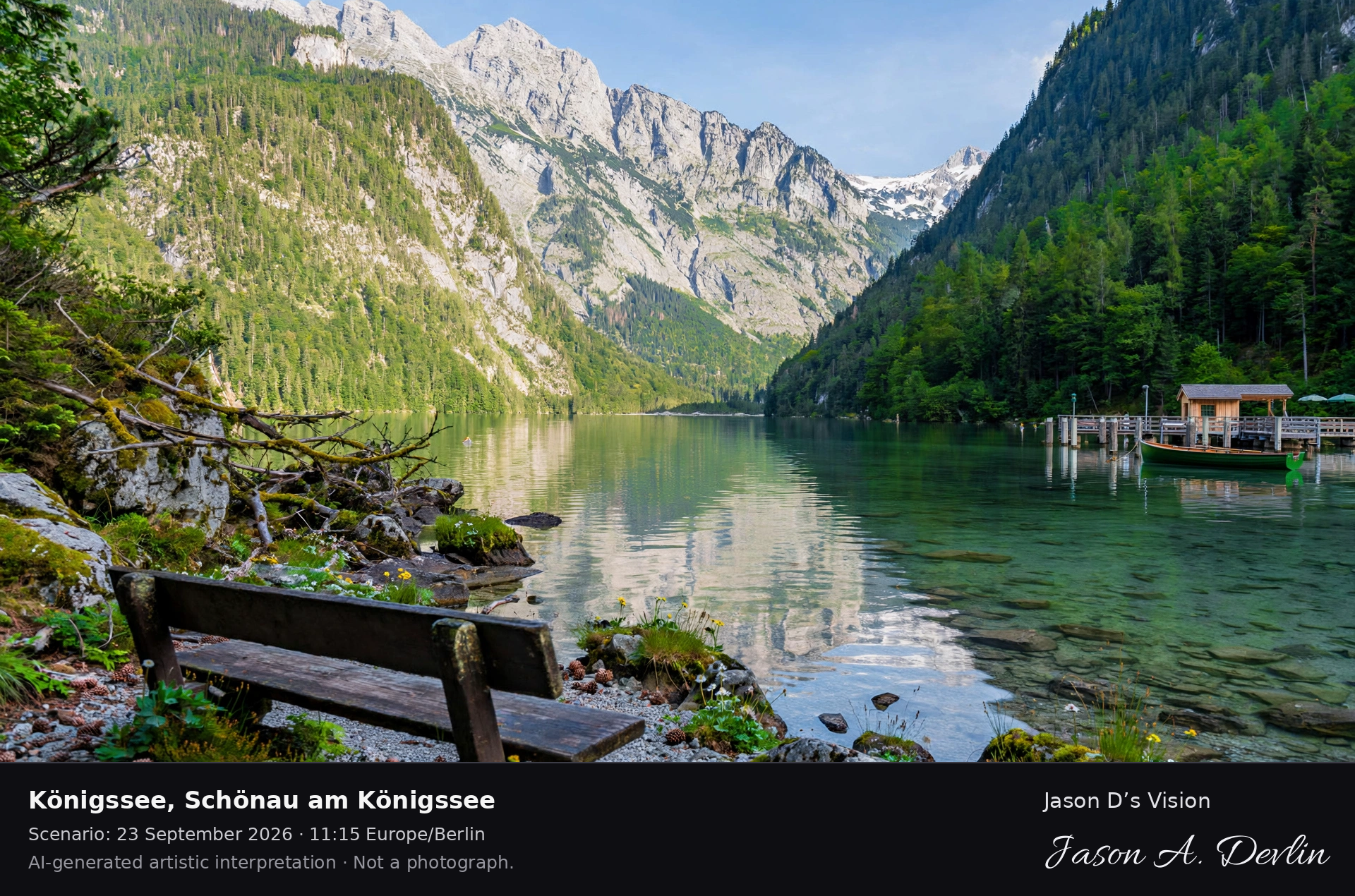
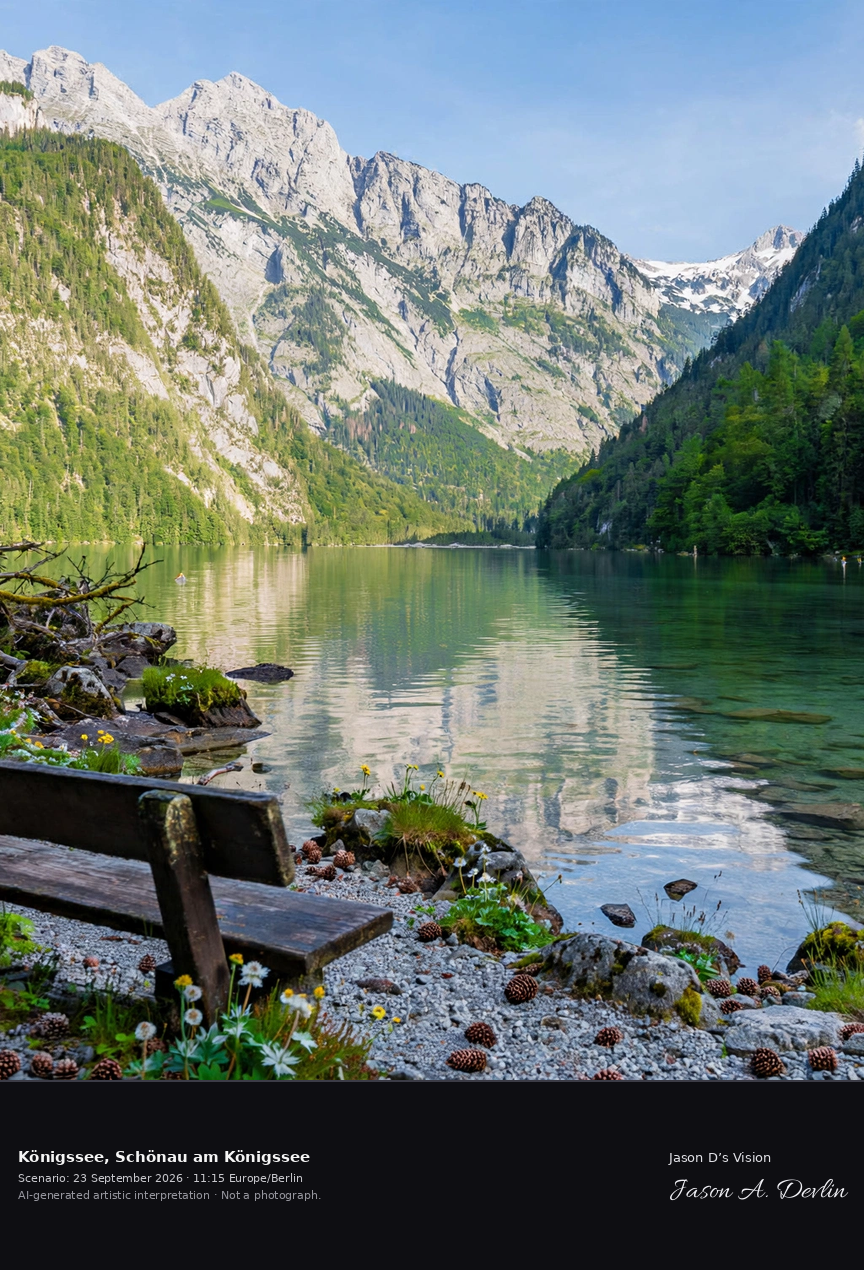
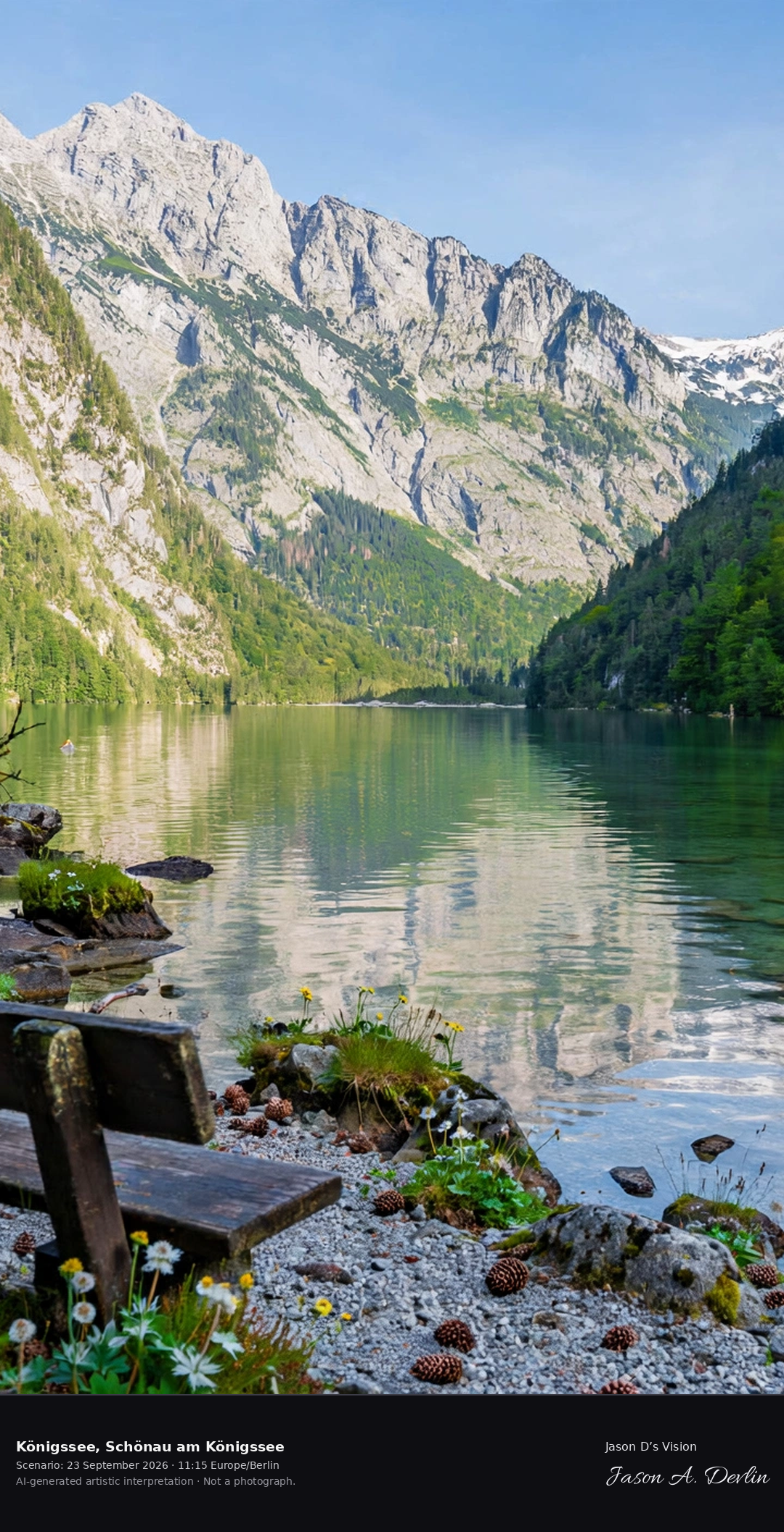
Lakeshore and mountain walls · AI-generated artistic interpretation
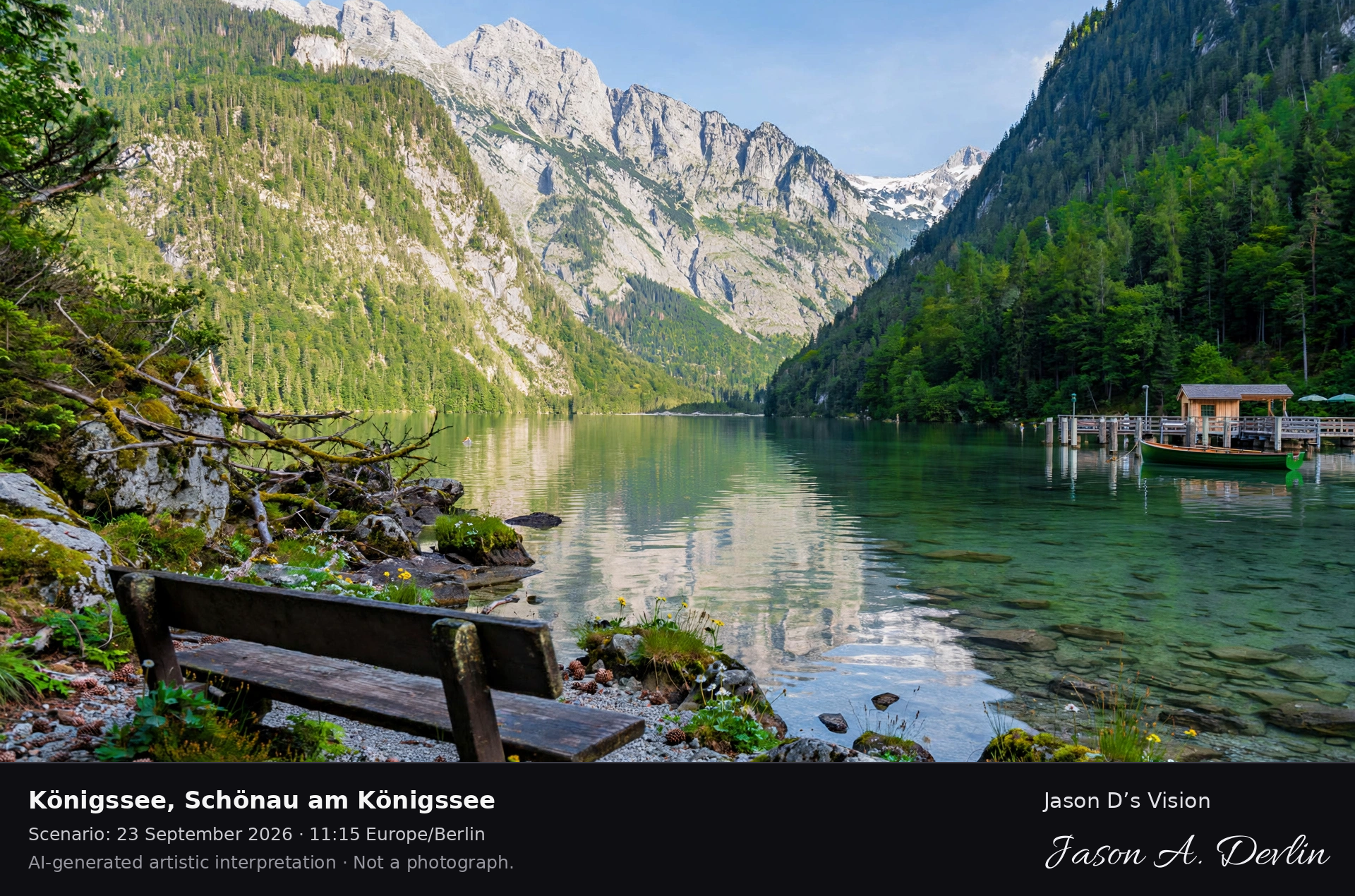
From the rocky lakeshore, the emerald Königssee fills the lower frame with mountain reflections, while a wooden bench and fallen timber sit in the left foreground. On the right, a small boathouse and jetty hold a wooden rowing boat, and steep forested mountain walls rise on both sides toward craggy grey peaks with patches of late-summer snow. The bright 11:15 mid-morning sun is on the water, and the fjord-like lake-between-walls geography reads clearly.
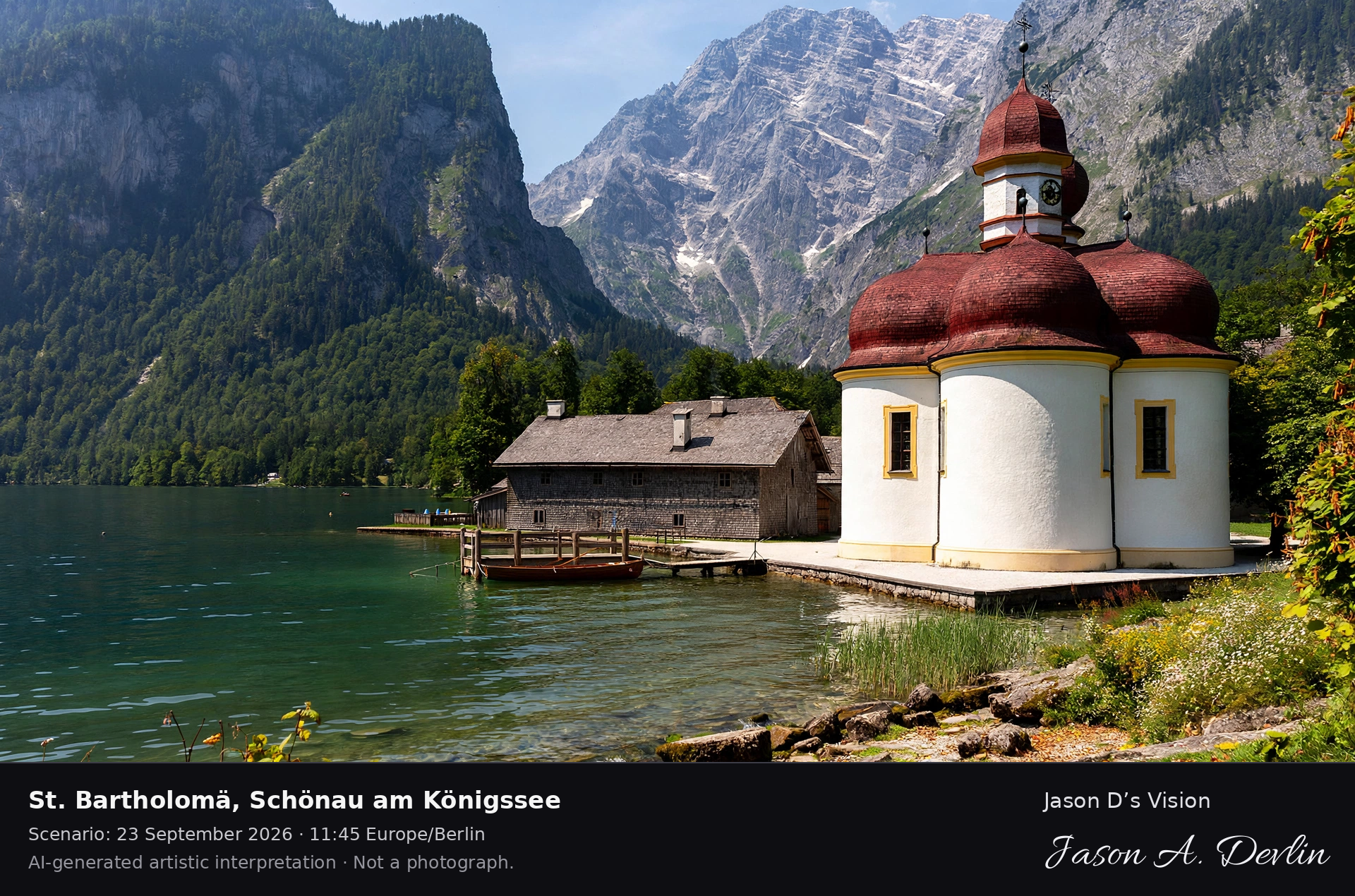
Chapel from accessible shore · AI-generated artistic interpretation
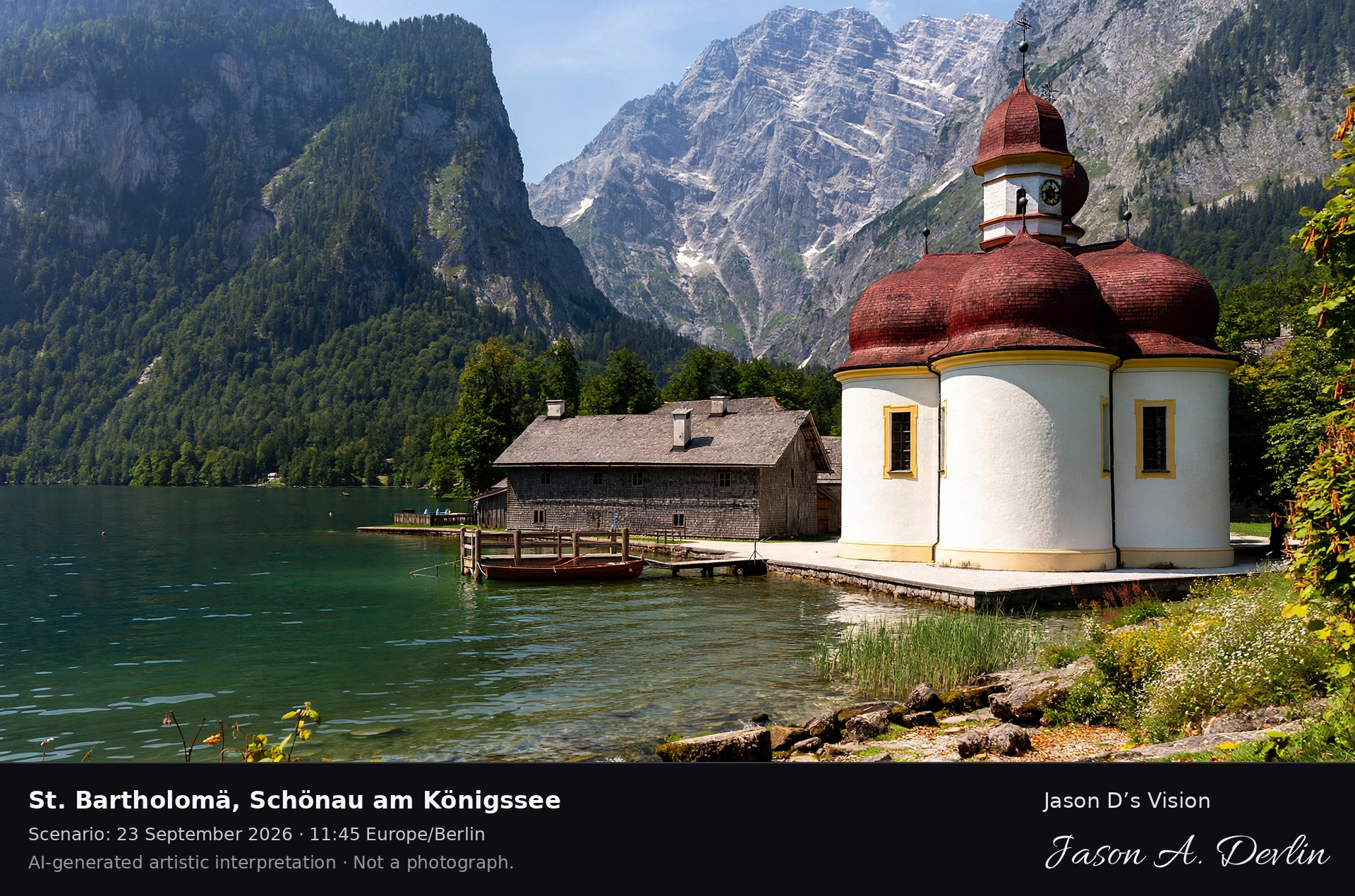
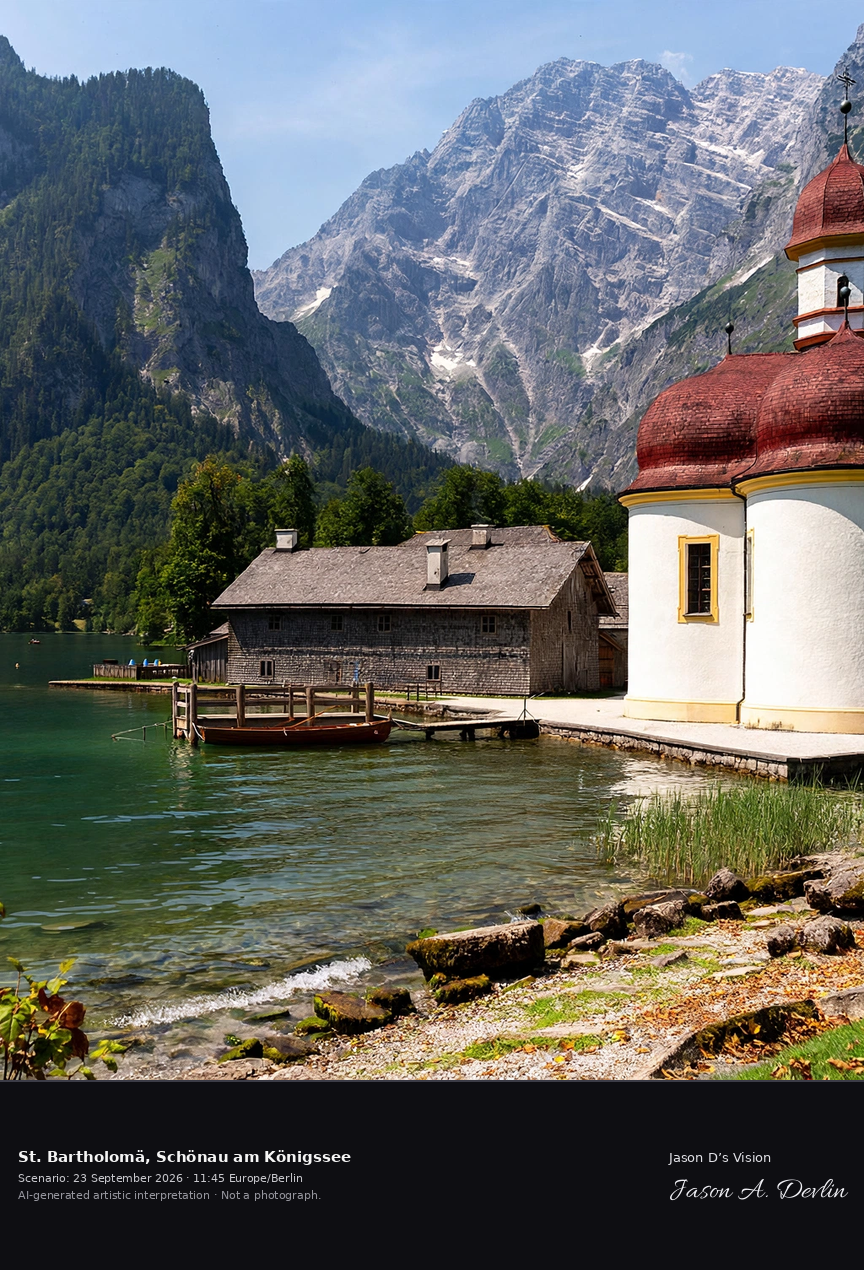
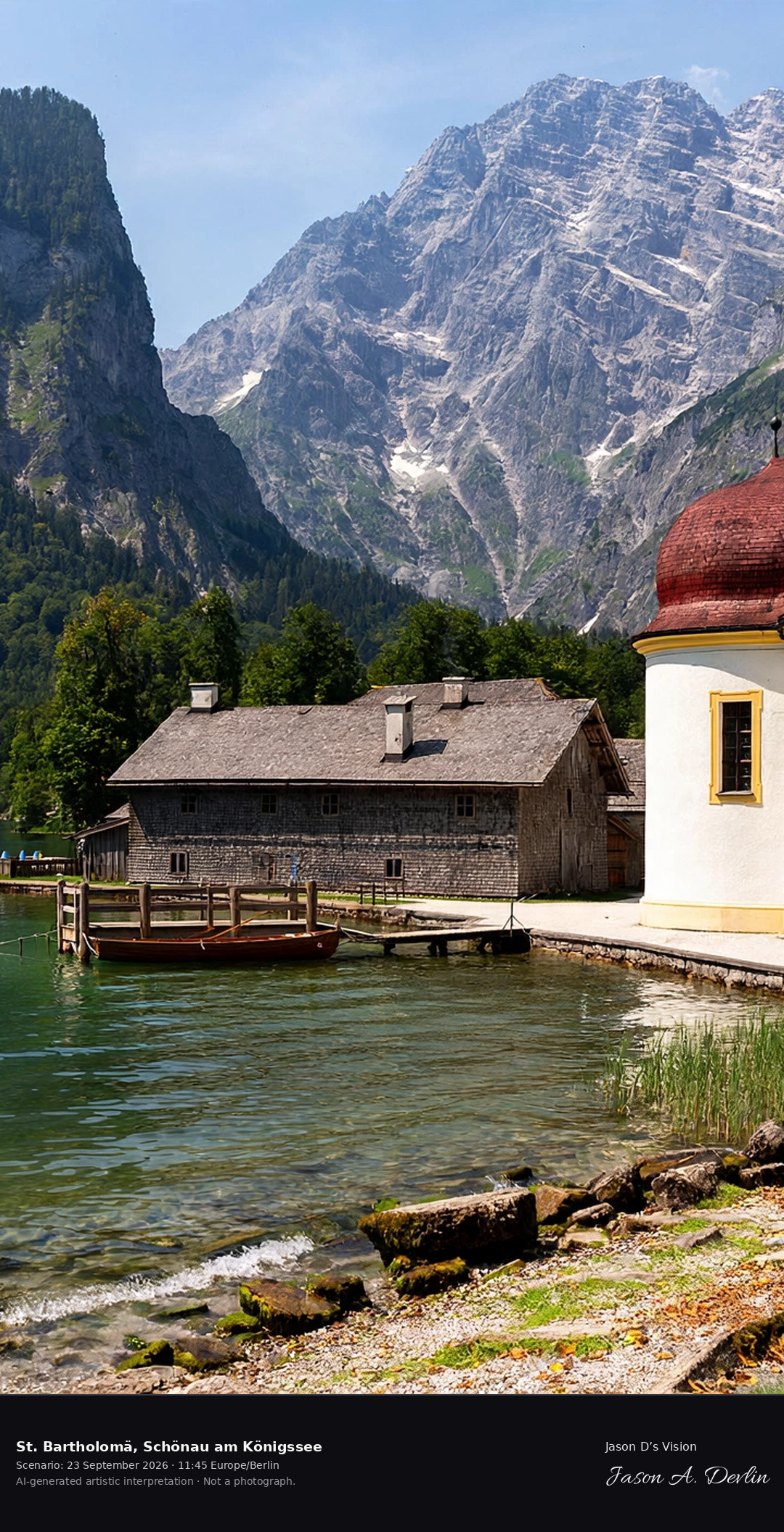
From the accessible shore, the white St. Bartholomä pilgrimage church with its signature red onion domes stands on the right, with a clock visible on the small tower. A dark timber boathouse and wooden jetty with a rowboat sit at the water's edge in the center, and the calm green lake stretches left toward the forested far shore. The Watzmann massif rises behind everything under clear blue sky — bright 11:45 midday light.
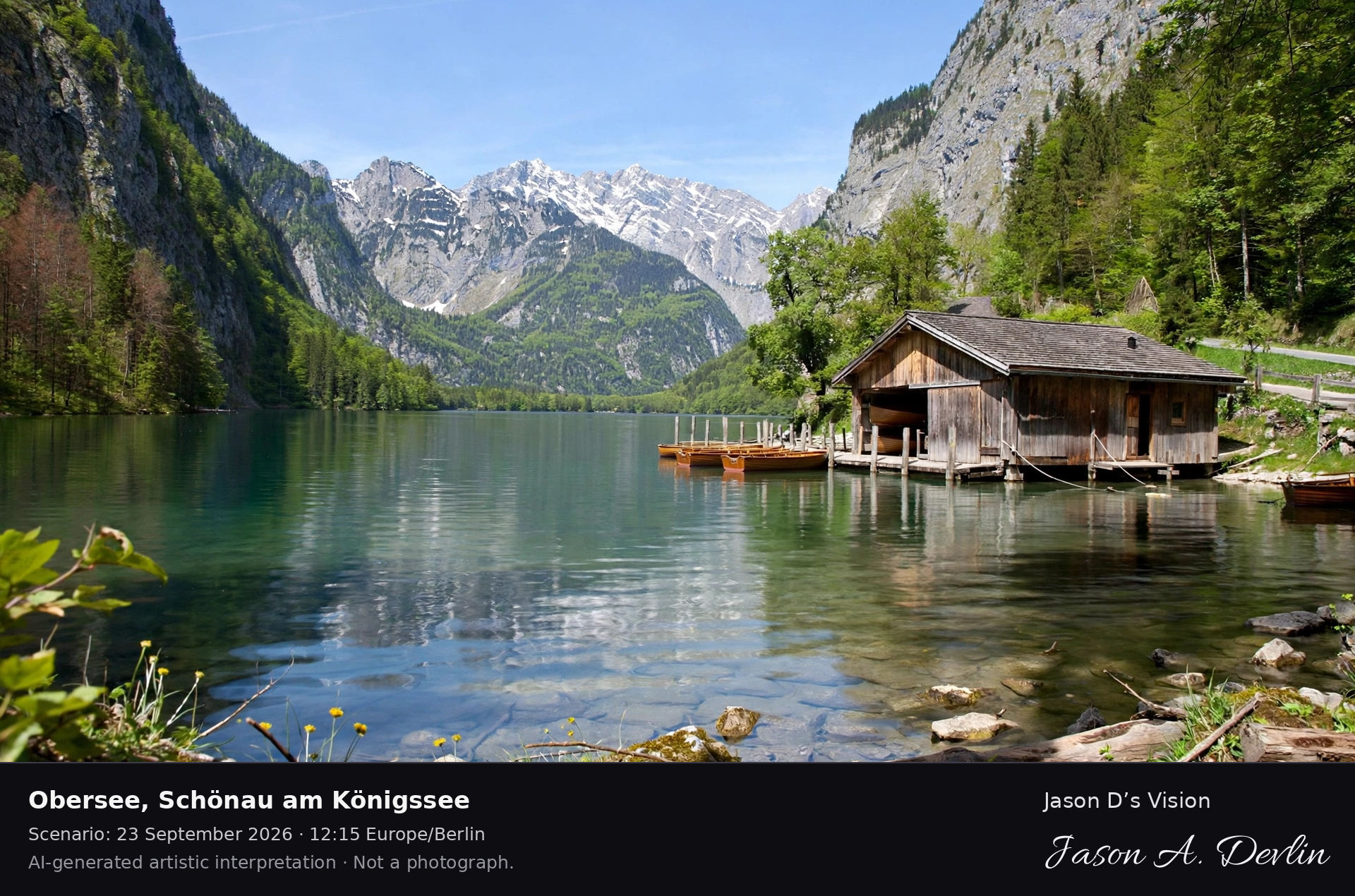
Lake and boathouse setting · AI-generated artistic interpretation
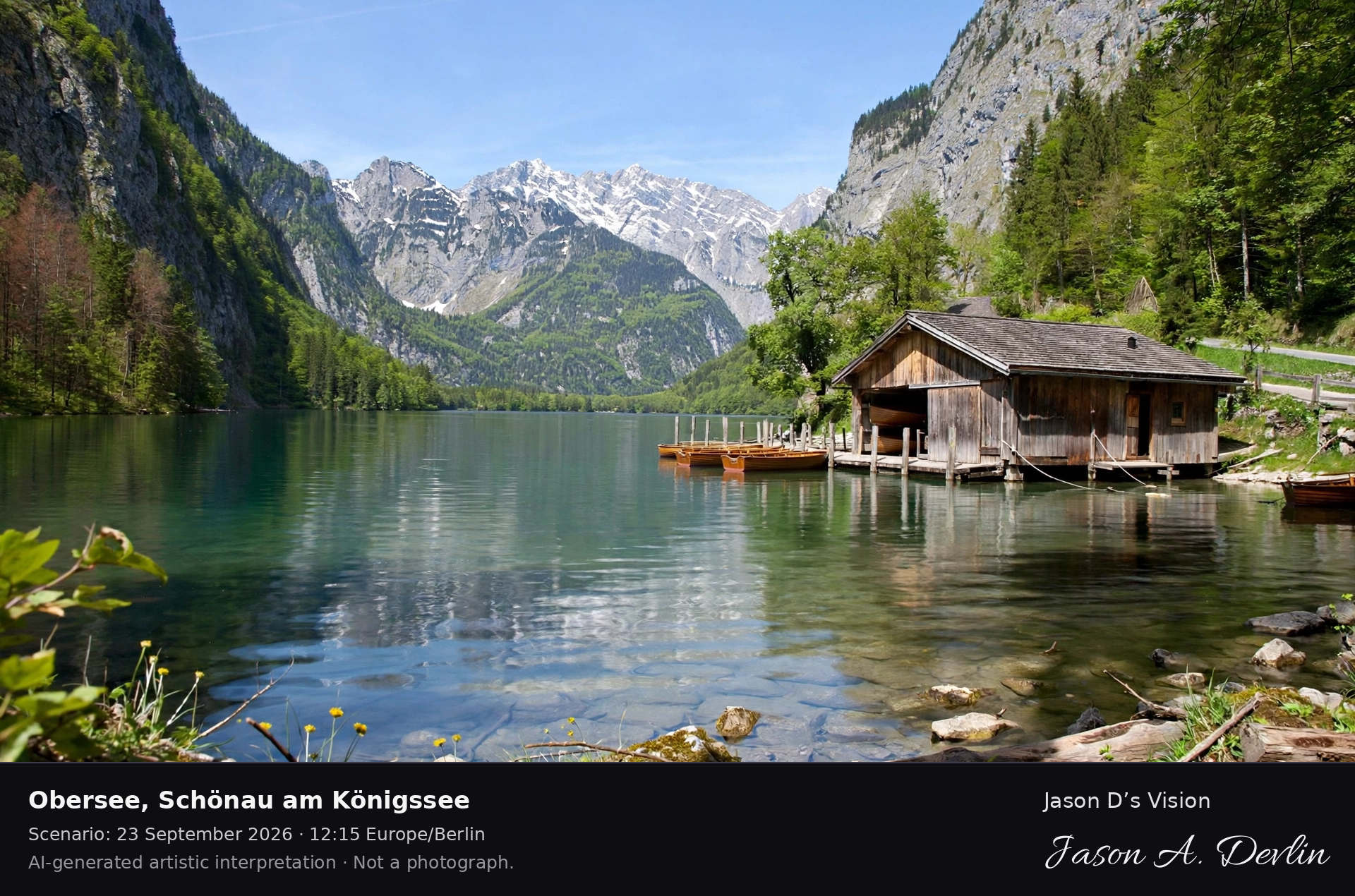
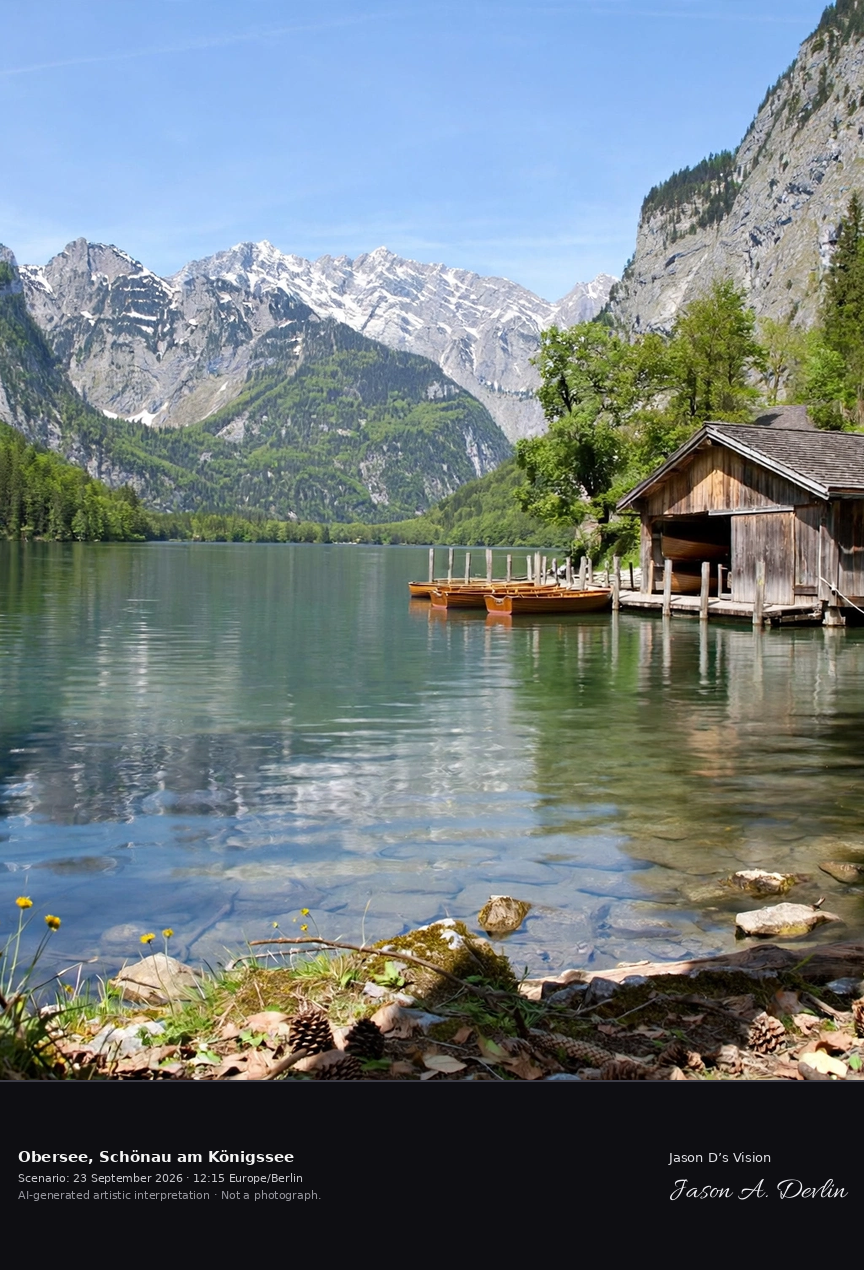
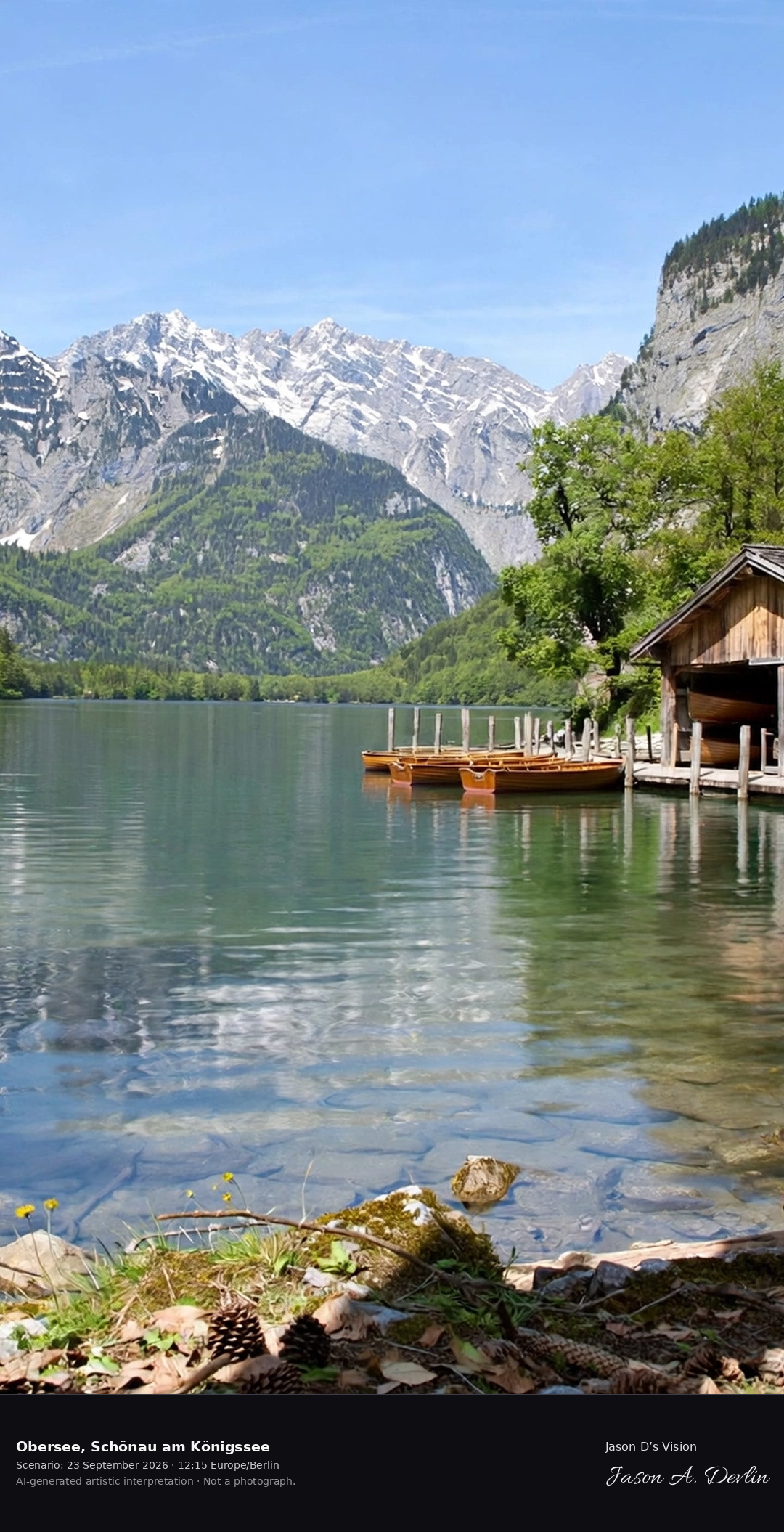
From the lakeshore, the Obersee's clear water fills the foreground and left, with the wooden boathouse standing at the right-hand shore and several wooden rowboats moored alongside it. Forested slopes close in on the left while the snow-capped Teufelshörner and Watzmann peaks rise behind, reflected in the calm surface. It is clear 12:15 midday under a blue sky, and the shallows in the foreground show stones through the glass-clear water.
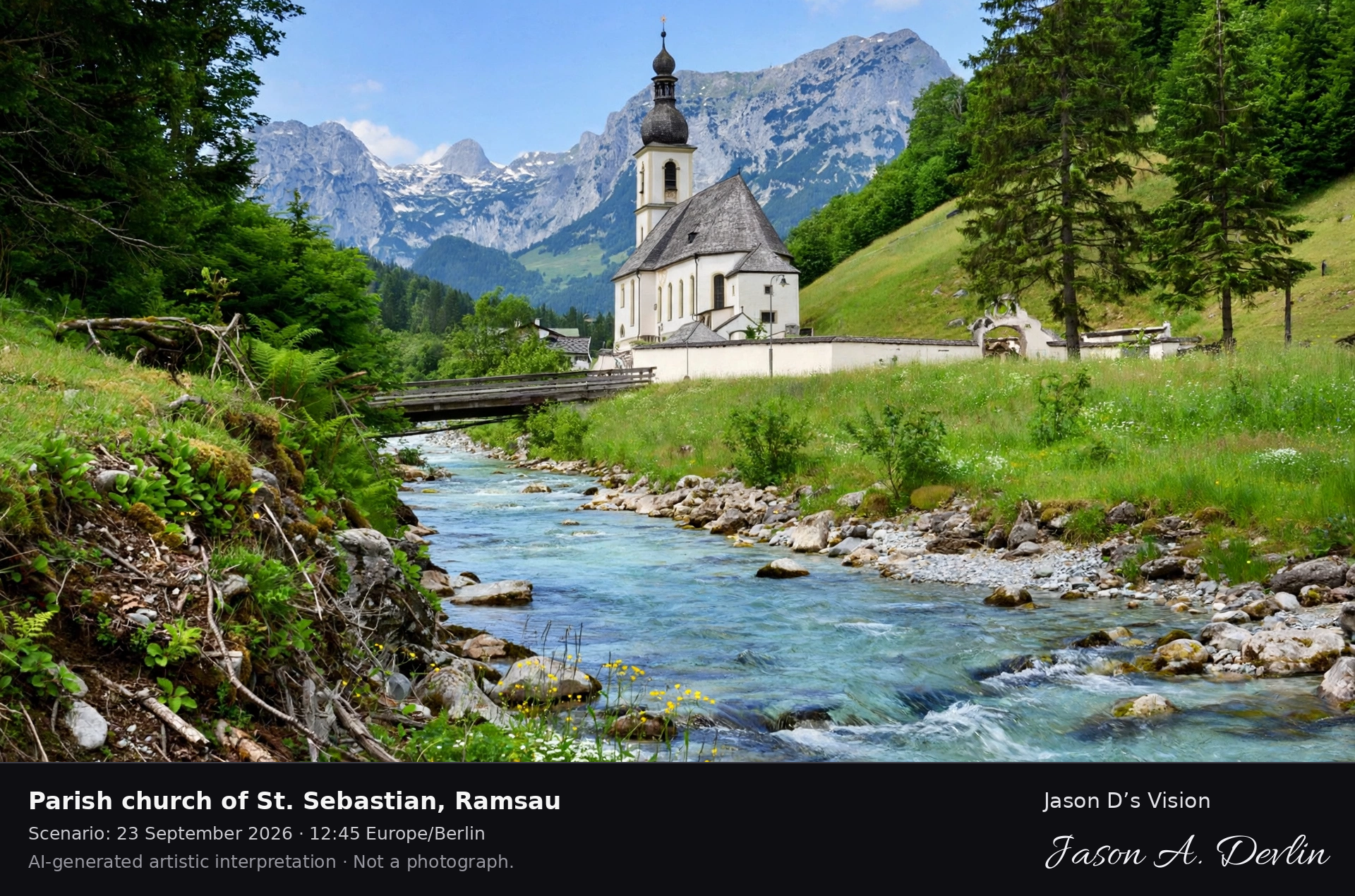
Church and stream · AI-generated artistic interpretation
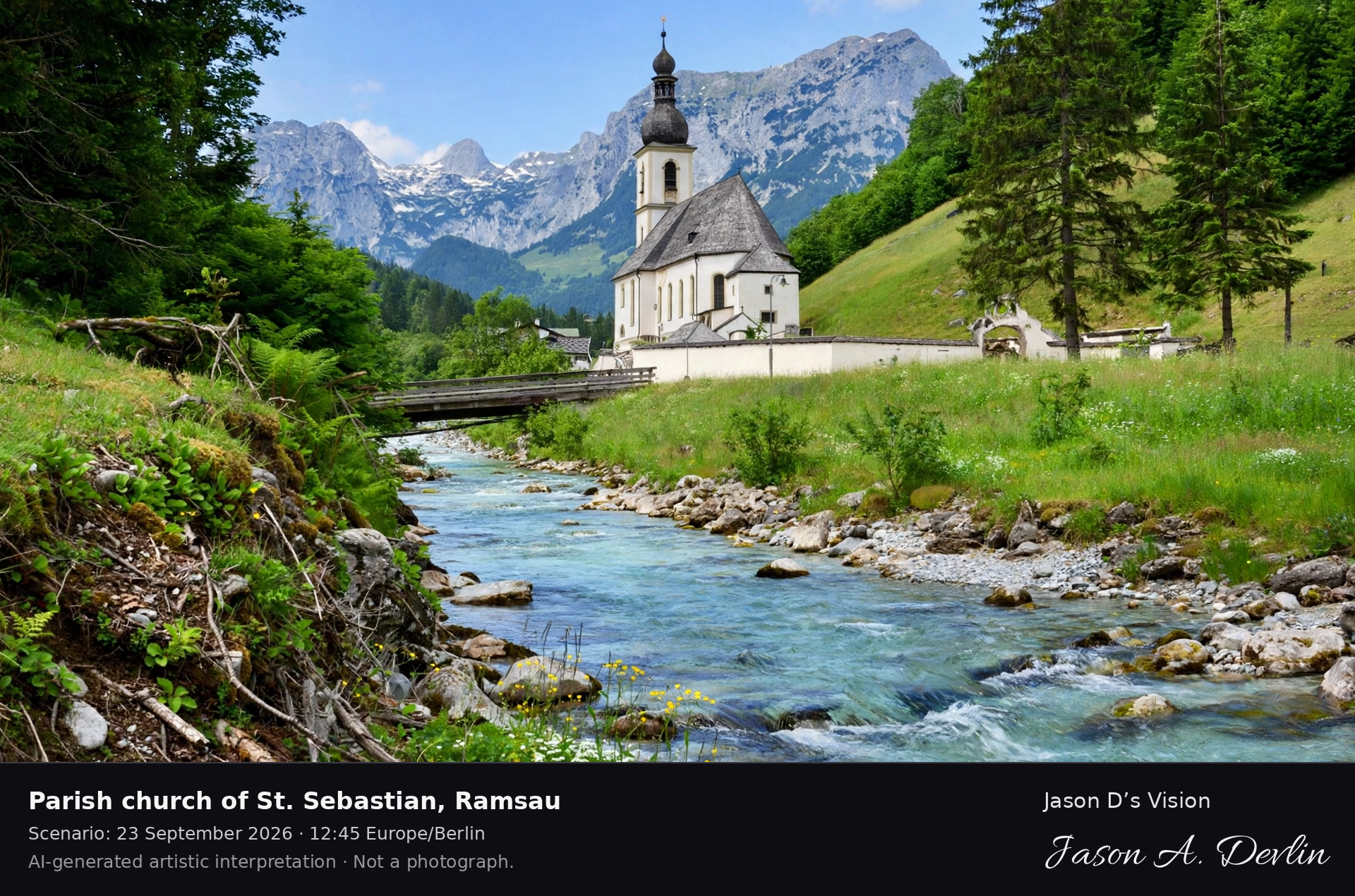
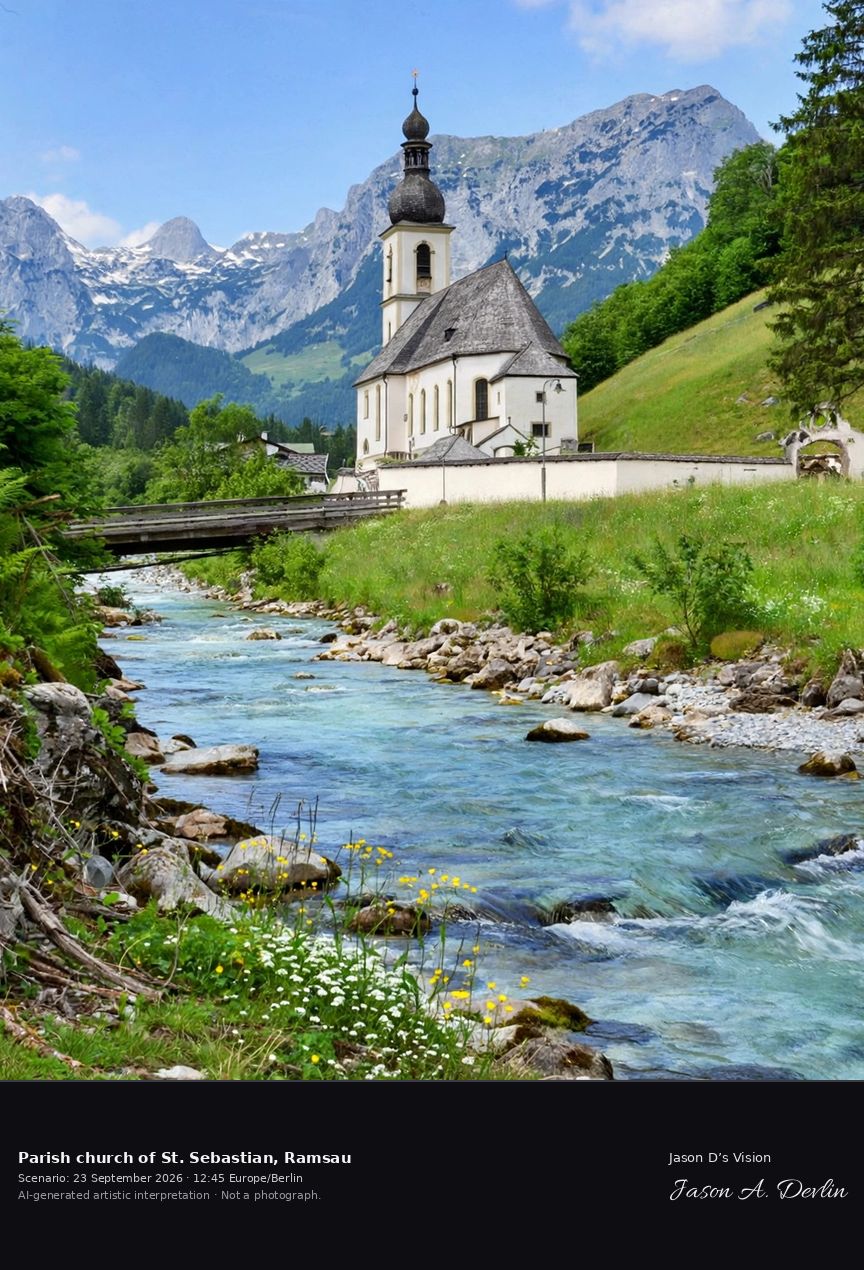
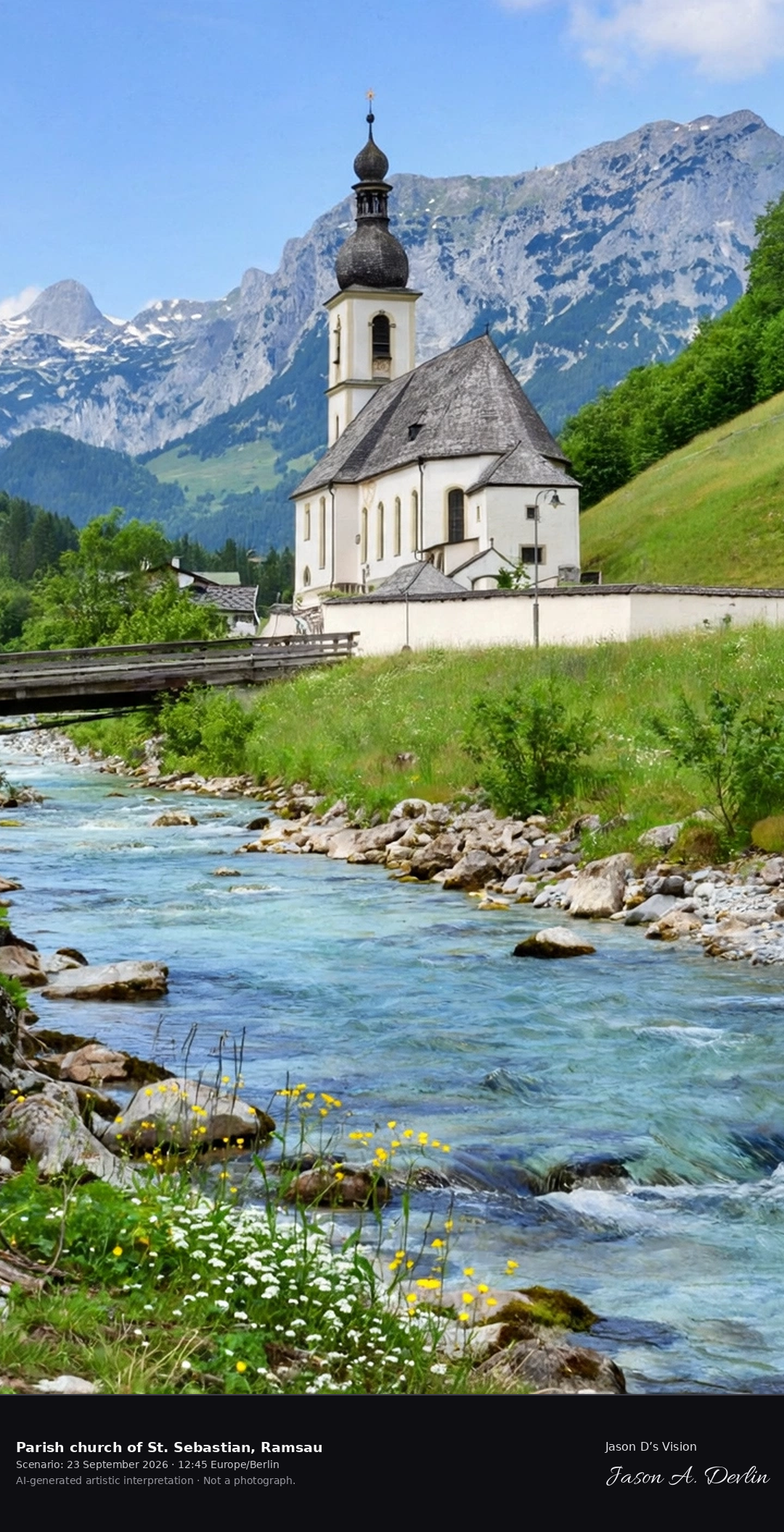
The white Baroque parish church of St. Sebastian stands at the center with its distinctive dark onion dome on the west tower, enclosed by the churchyard wall. The Ramsauer Ache stream runs through the foreground with a wooden footbridge crossing it at left, leading the eye to the church. The Reiteralpe massif rises behind under a blue midday sky — bright 12:45 light with lush green banks and meadows.
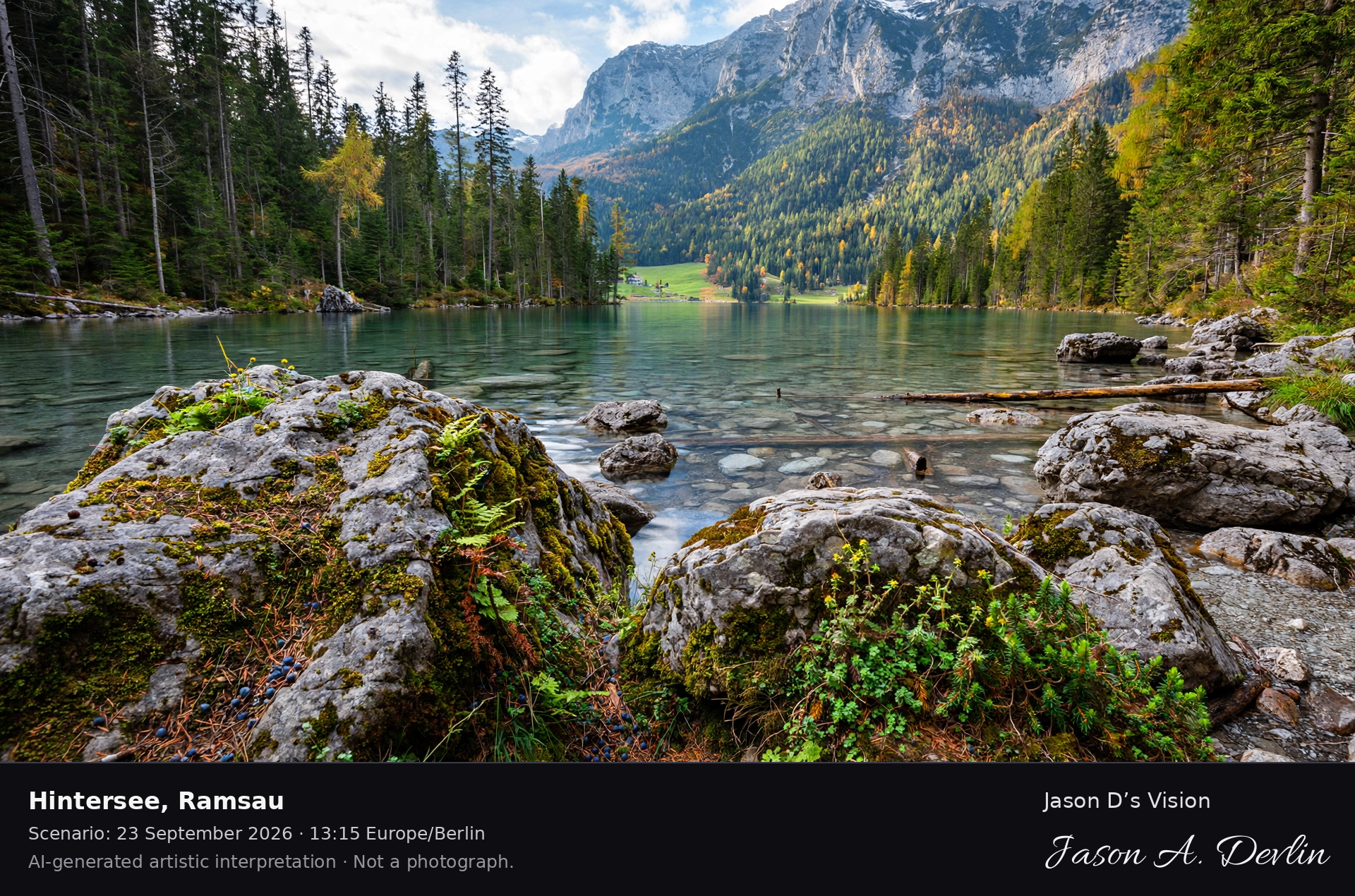
Boulders and alpine lake · AI-generated artistic interpretation
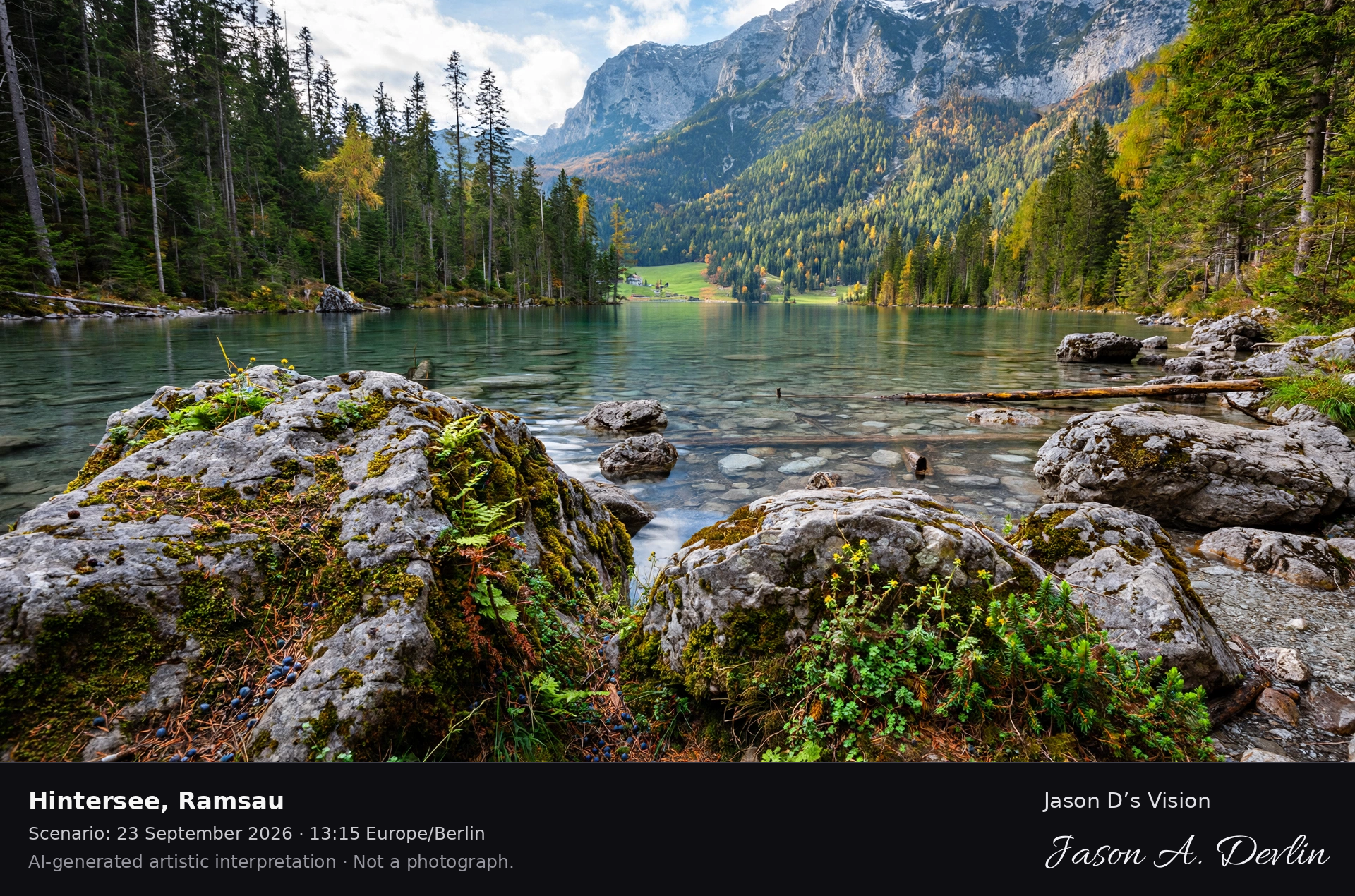
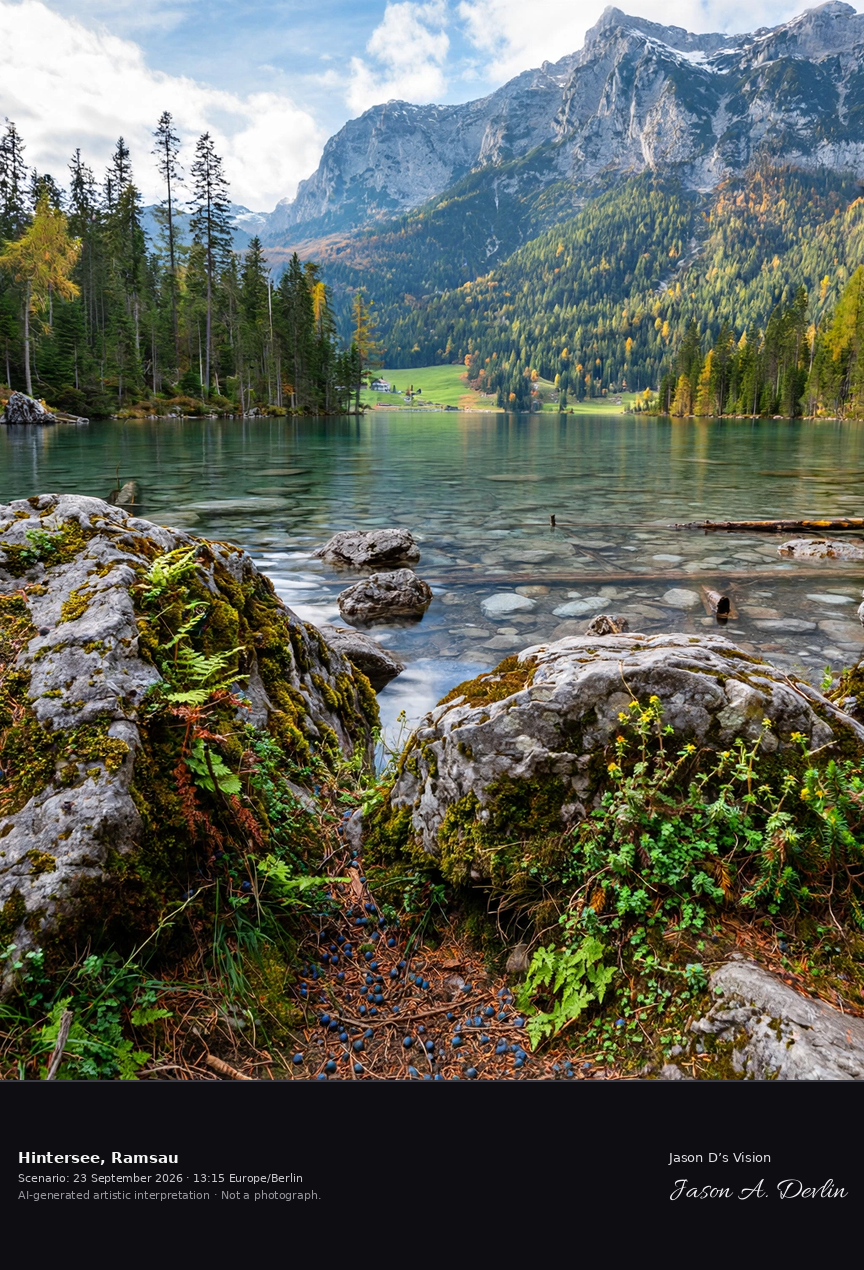
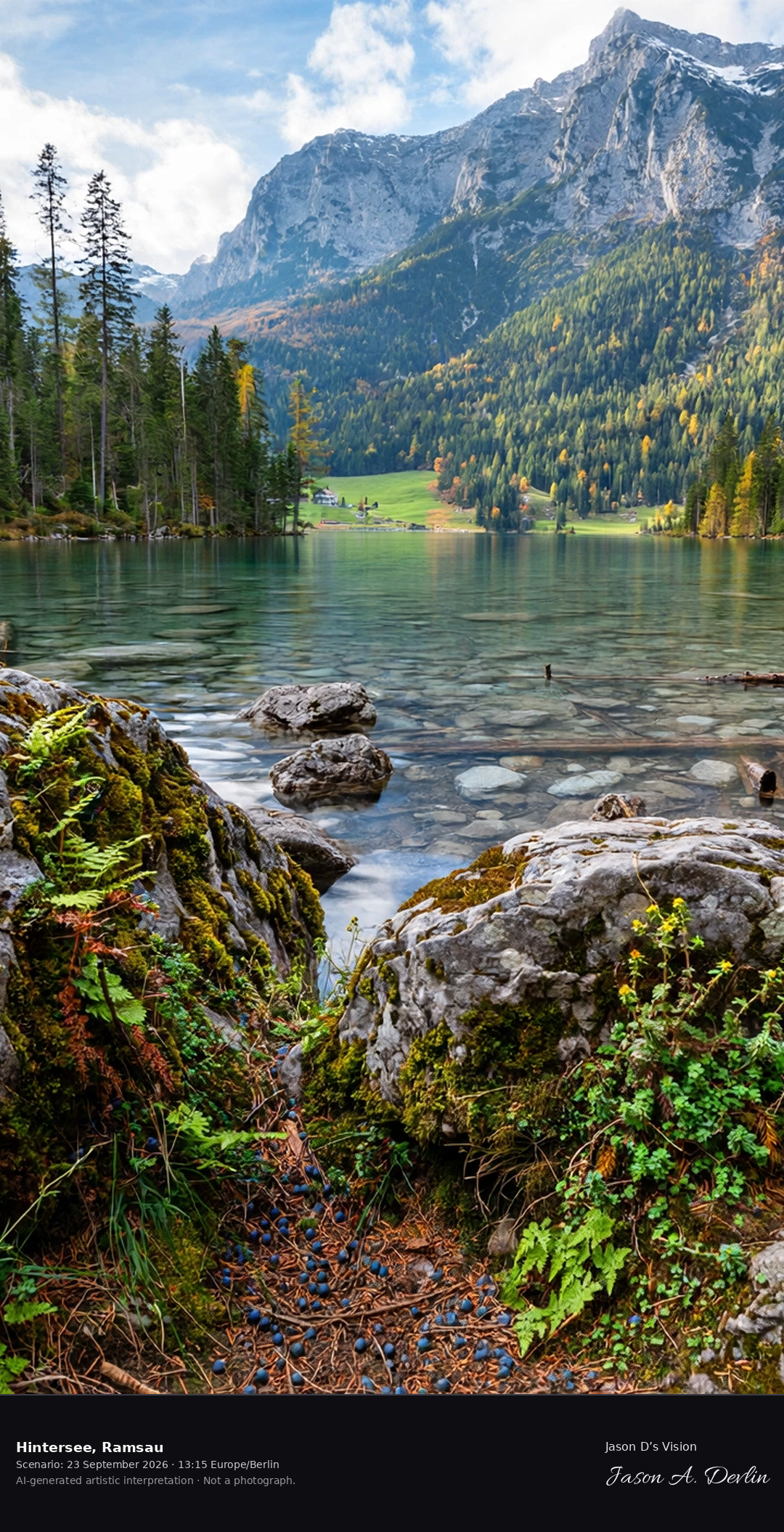
From the lakeshore at eye level, large moss-covered boulders fill the foreground while the clear shallow water of the Hintersee stretches toward a forested shoreline. Steep mountain walls rise behind, wooded at their feet and rocky above, with a small distant building visible across the lake near the center. It is a bright 13:15 afternoon under a mainly clear sky, with stones and fallen timber showing through the shallows in front.
Mountain building and outlook · AI-generated artistic interpretation
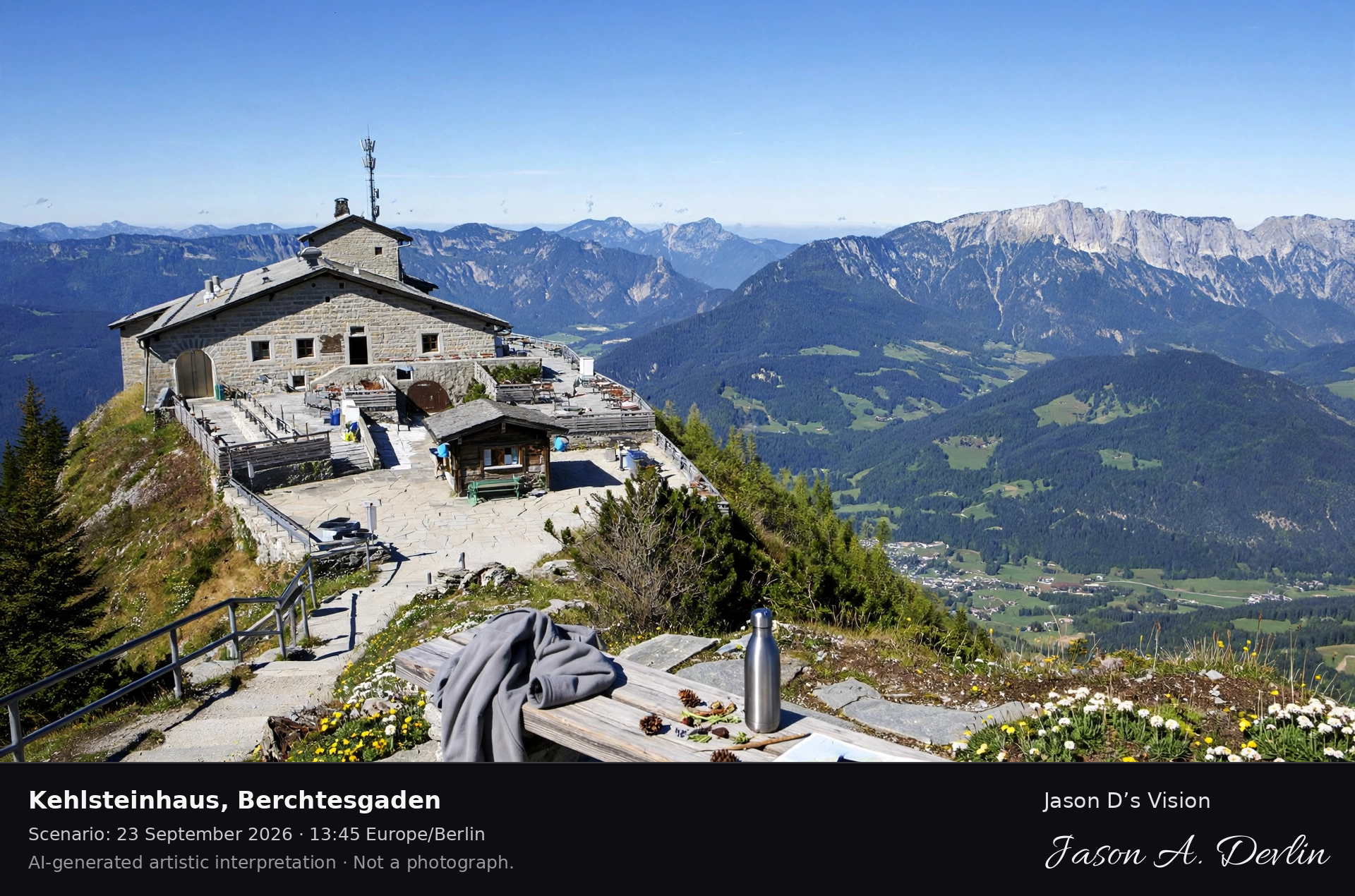
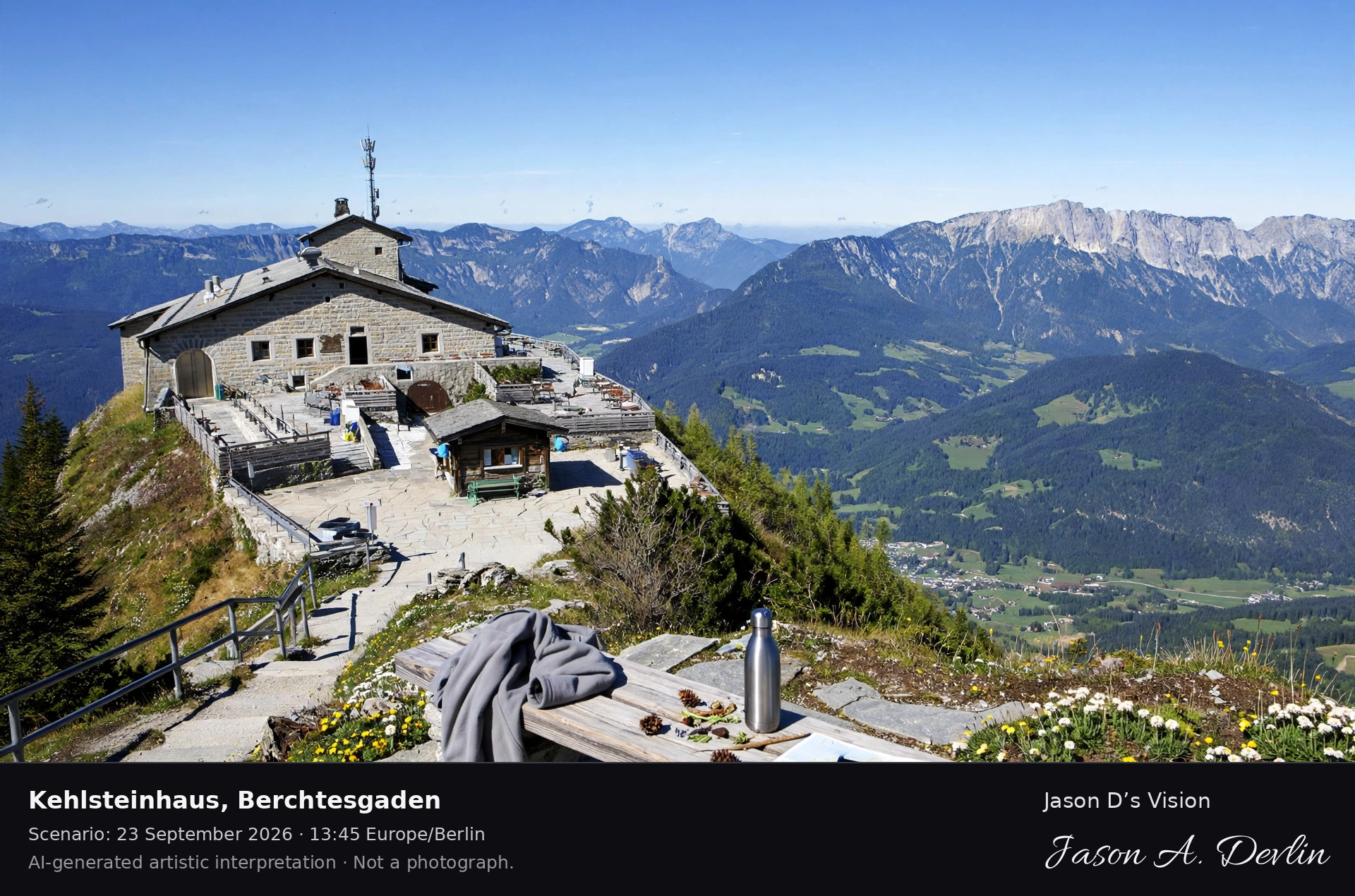
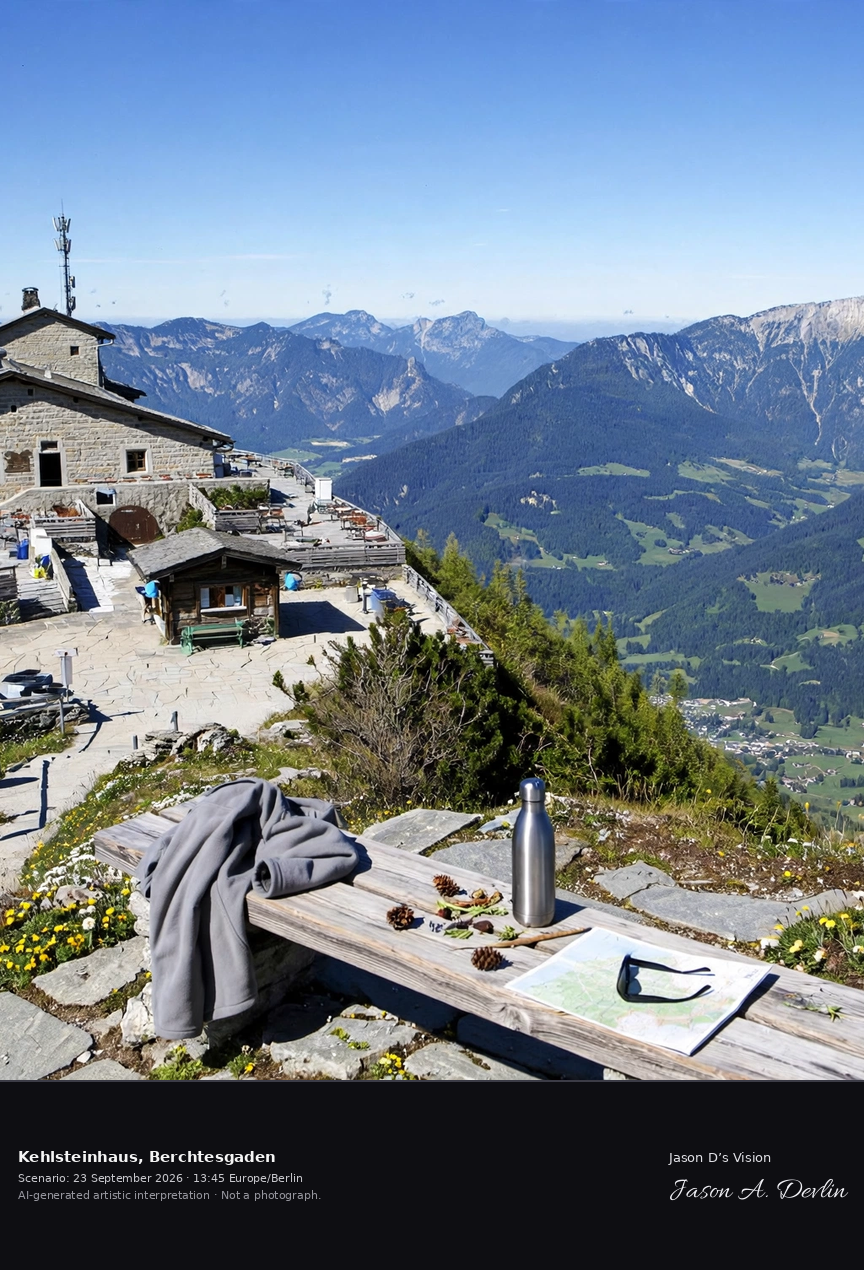
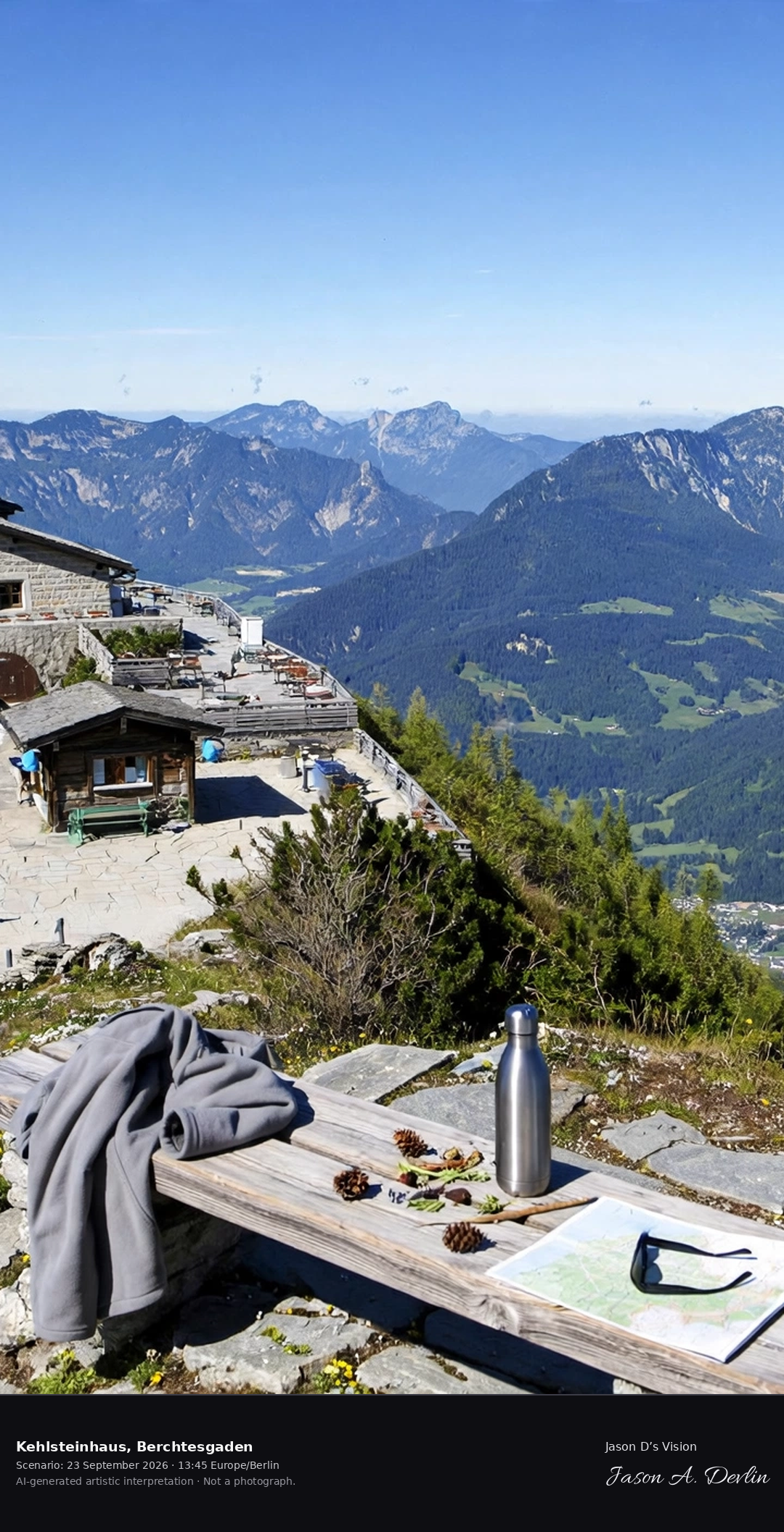
The stone chalet of the Kehlsteinhaus sits left of frame, its mountain terrace and railed overlook plaza spreading to the right, with a communications mast rising behind the roof. An alpine panorama fills the rest of the view: forested ridges and a pale limestone massif stretching across the horizon. In the near foreground a wooden bench carries a visitor's jacket, a metal water bottle, pine cones and a folded map, as if a hiker has just set things down. Bright midday sun and a clear sky complete the summit viewpoint.
Church and Watzmann backdrop · AI-generated artistic interpretation
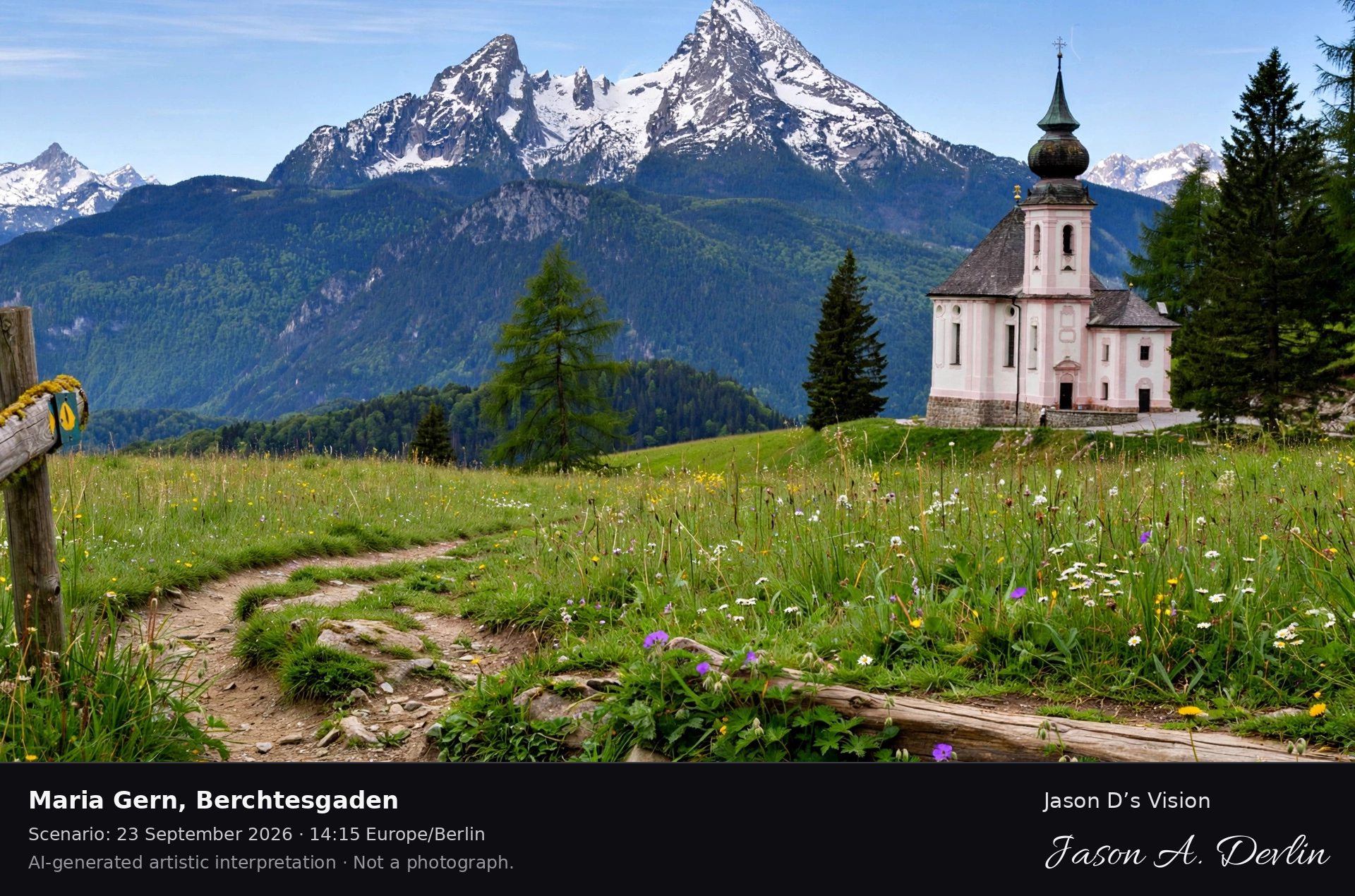
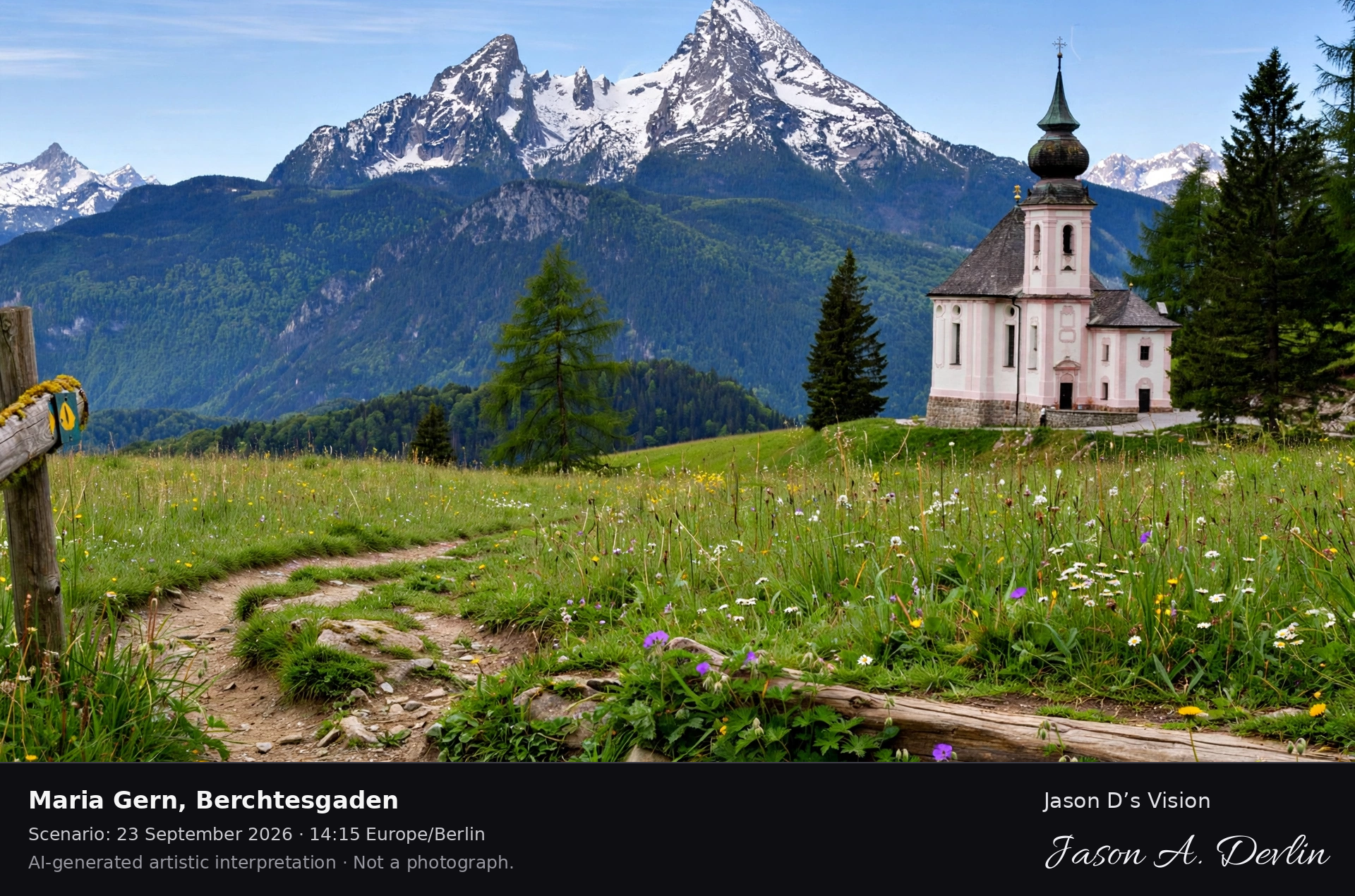
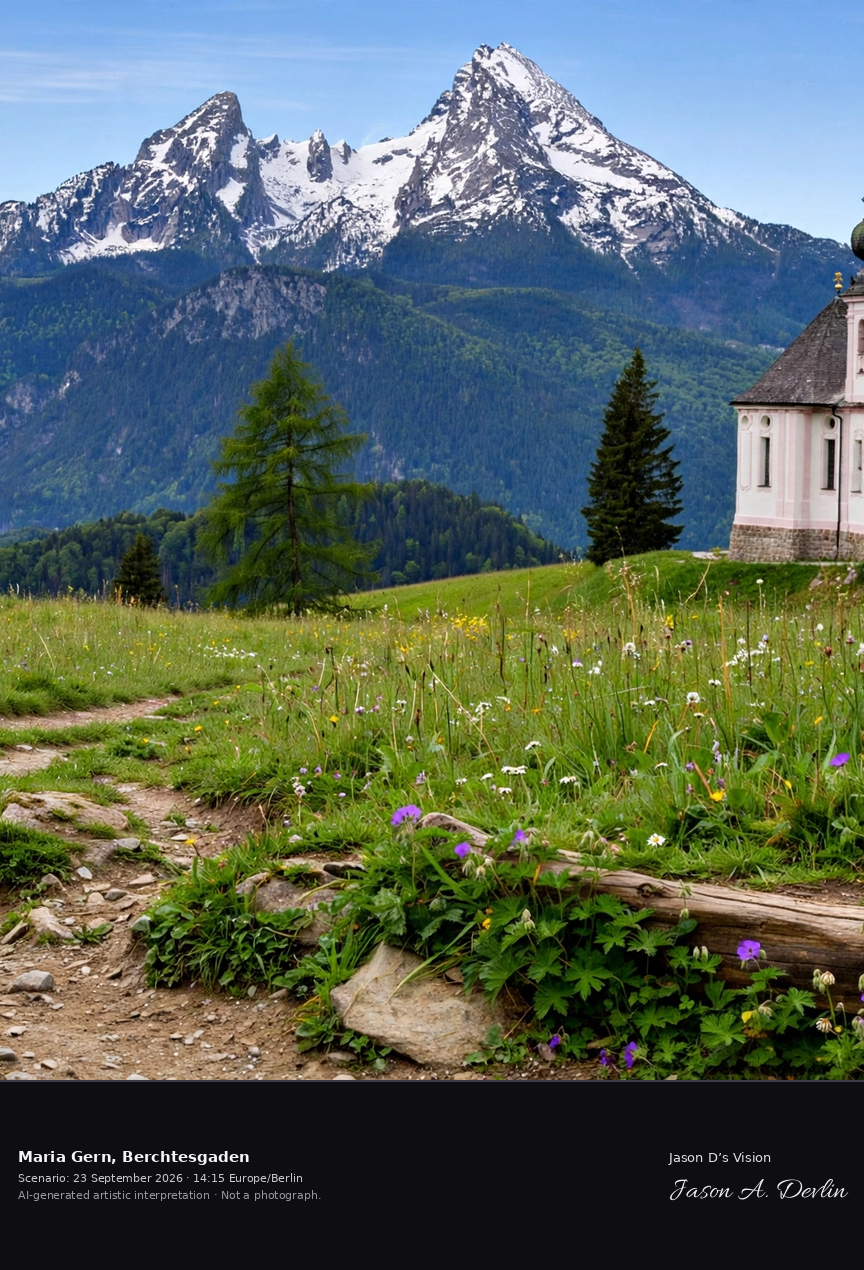
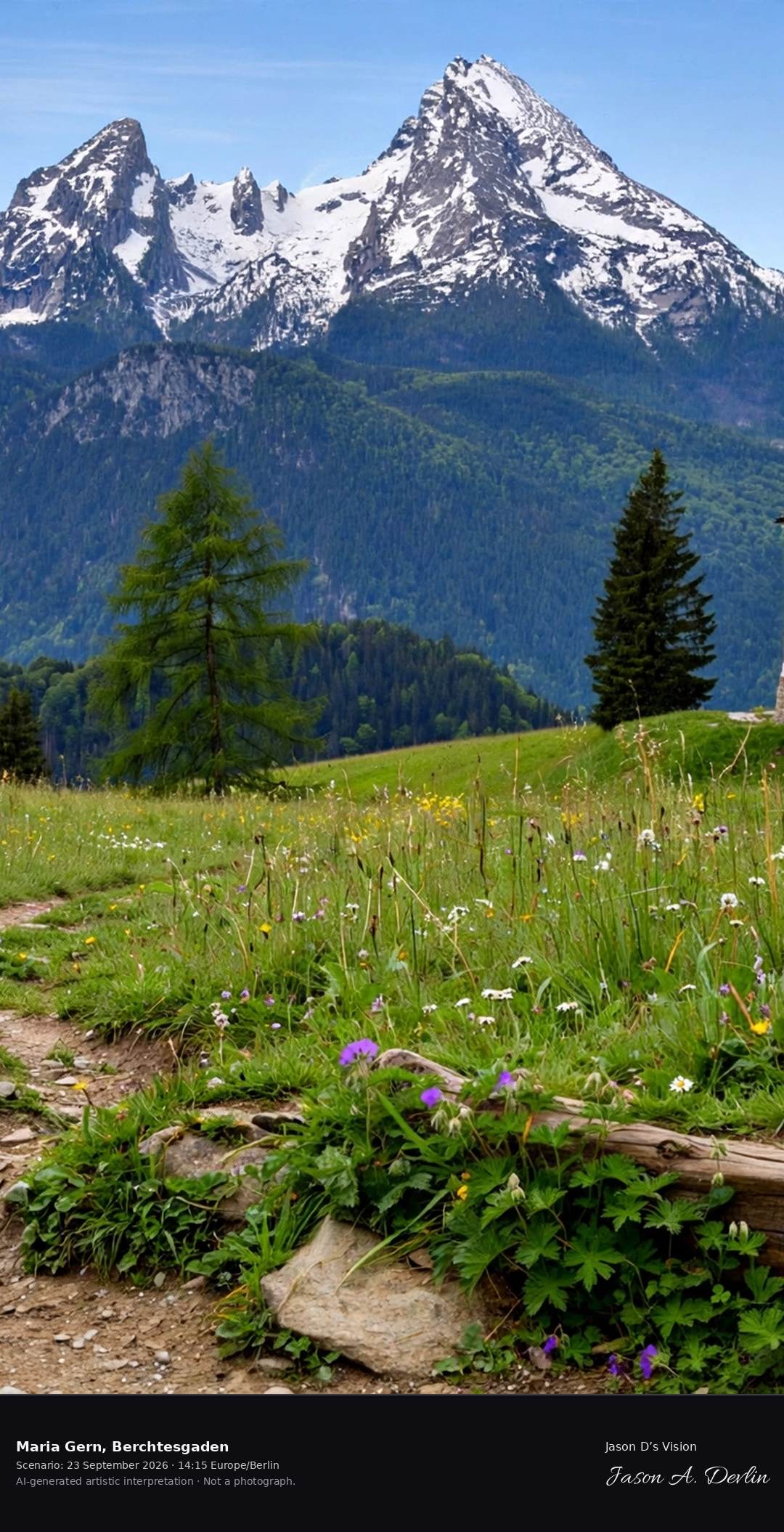
The pale-pink Maria Gern pilgrimage church stands at the right, its onion-domed tower rising against the snow-dusted Watzmann massif that dominates the centre and background. A wildflower meadow fills the foreground, with a narrow hiking trail curving in from the left and a wooden trail marker post at the left edge. Mid-afternoon daylight under a clear blue sky keeps the whole classic church-and-mountain composition crisp.
Waterfall and gorge · AI-generated artistic interpretation
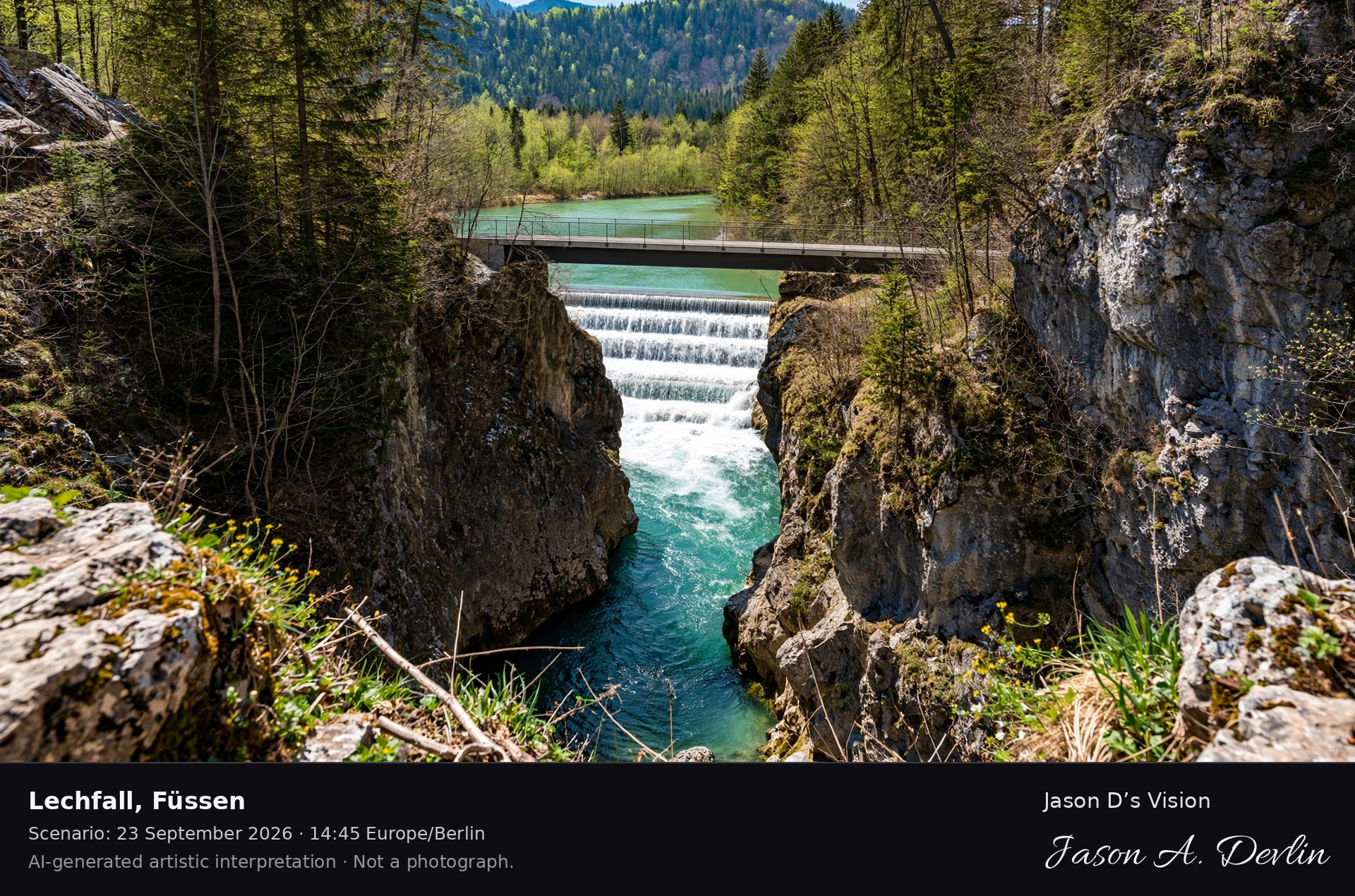
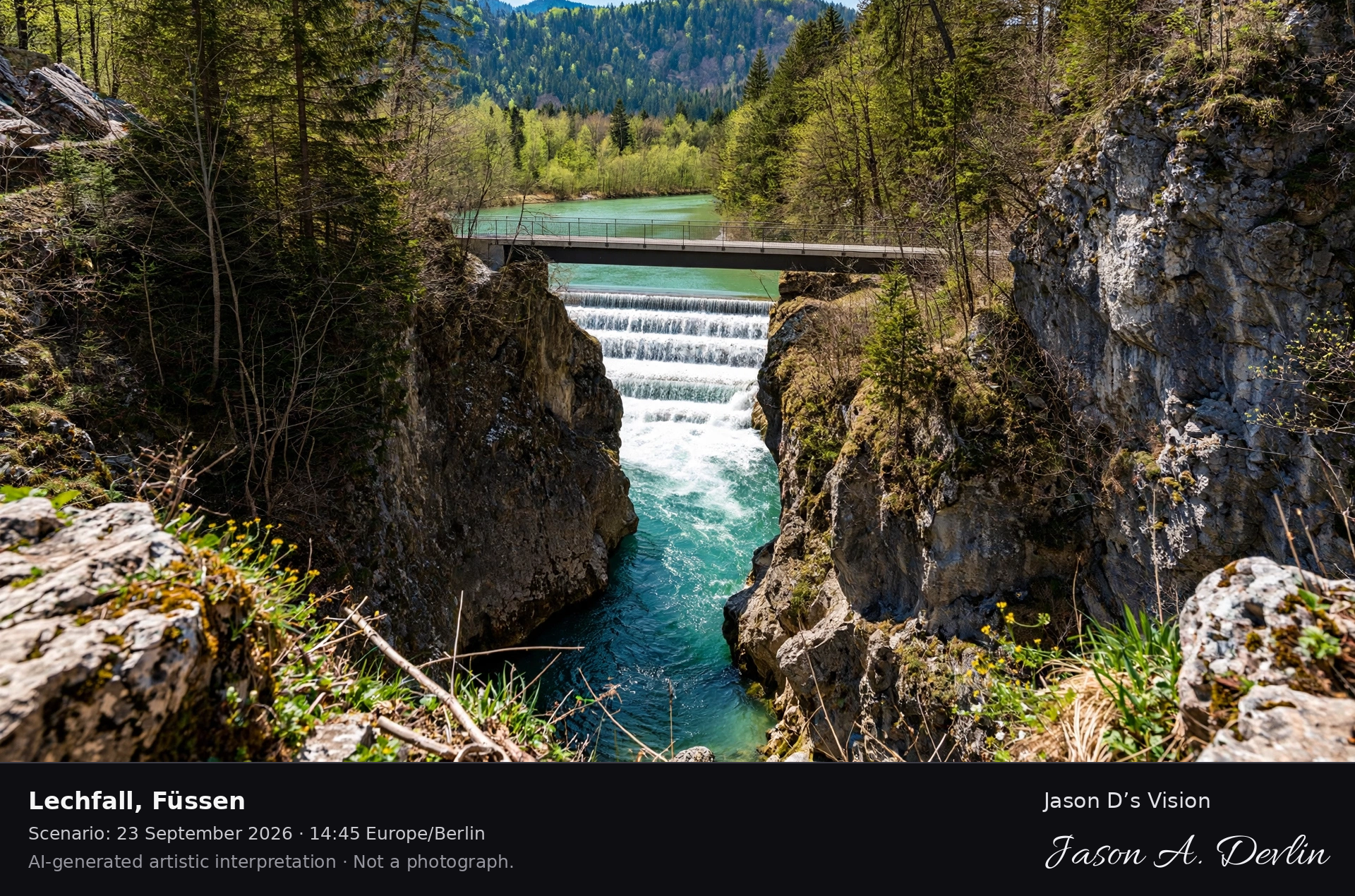
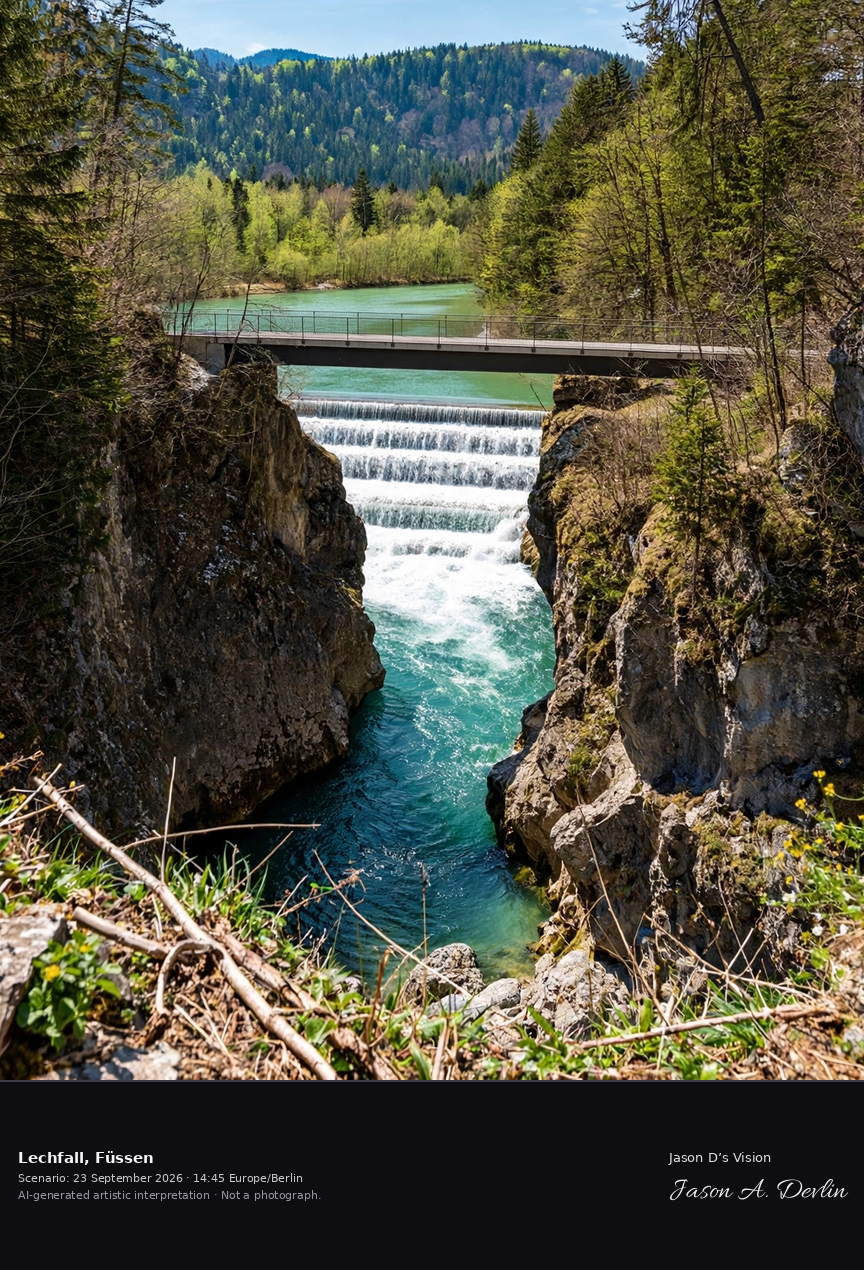
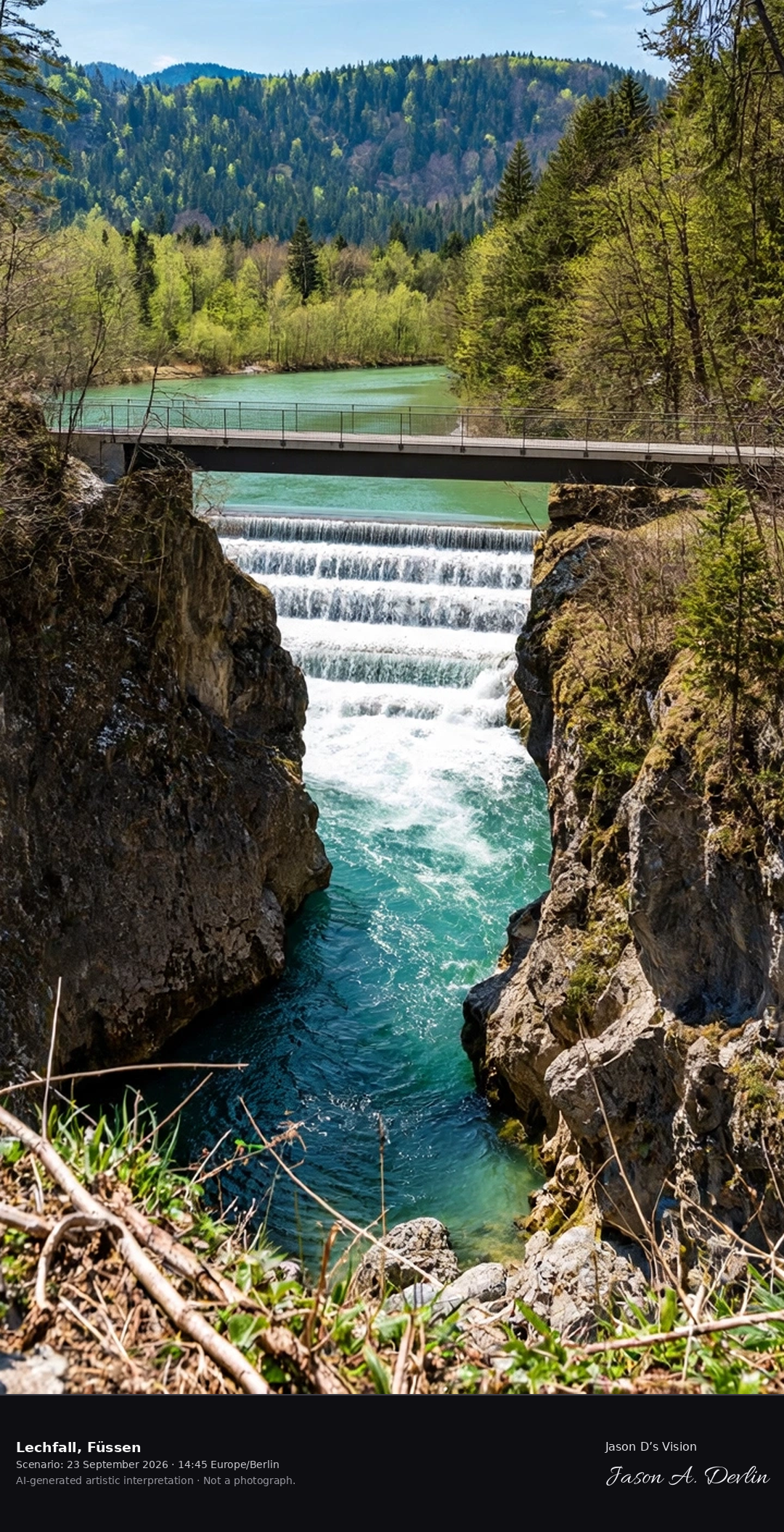
The Lechfall's stepped weir drops through the centre of the frame, white water tumbling down the terraces into the rocky gorge, with turquoise Lech water below. A slender pedestrian bridge spans the river above the falls, framed by steep mossy rock walls on both sides. Forested hillsides rise behind under a bright mid-afternoon sky, and green undergrowth lines the near foreground rocks.
Painted facades and mountains · AI-generated artistic interpretation
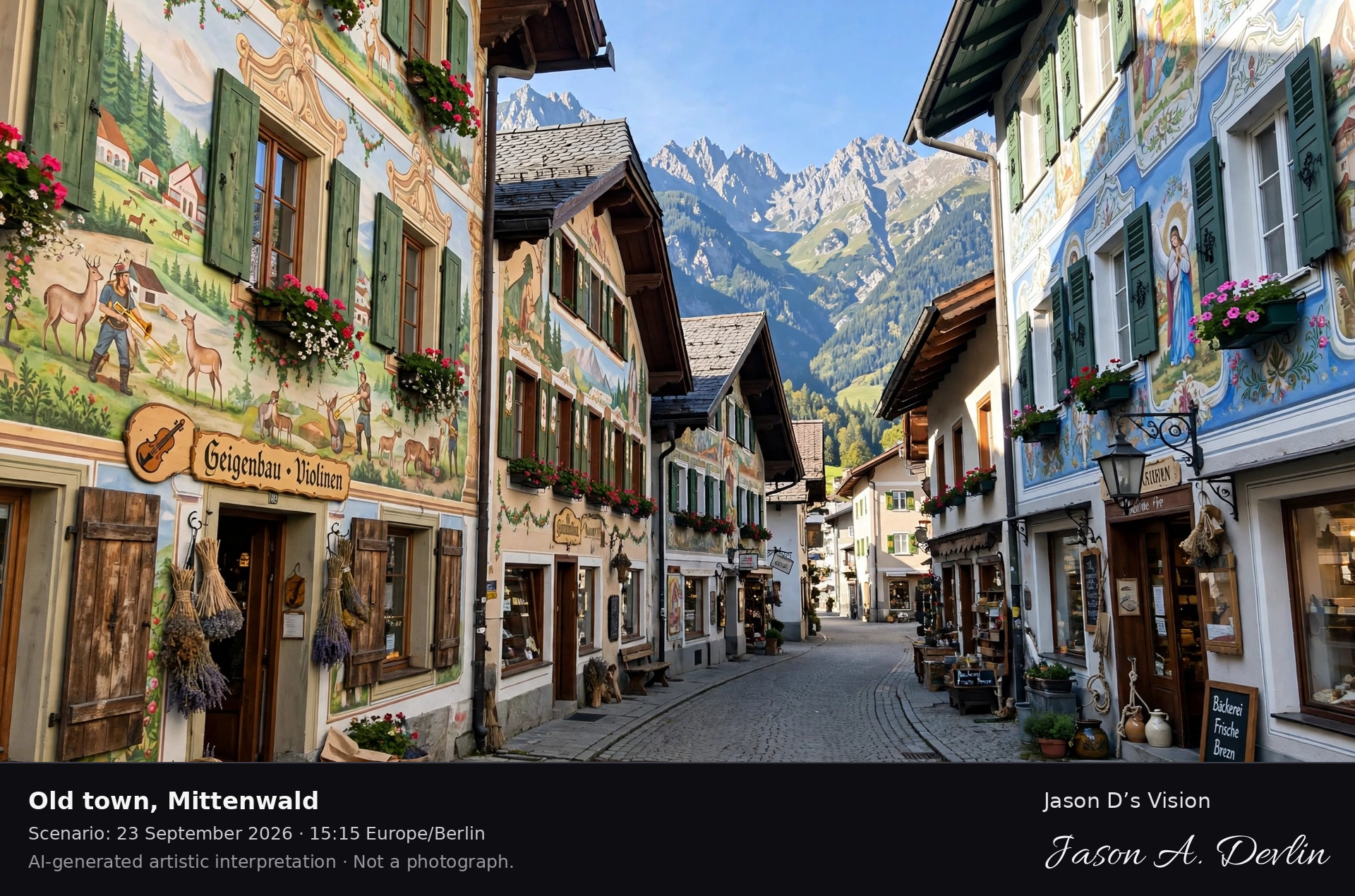
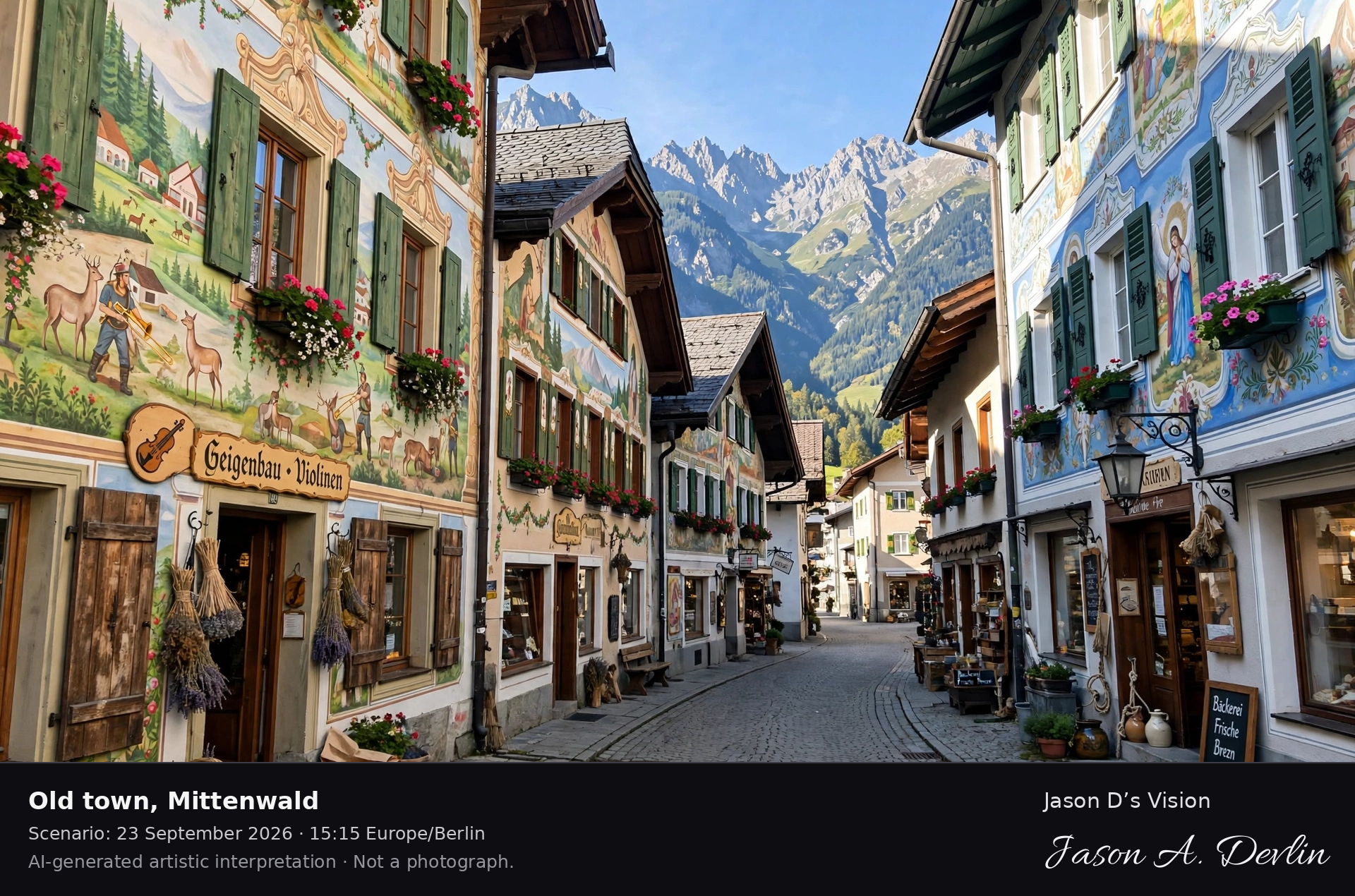
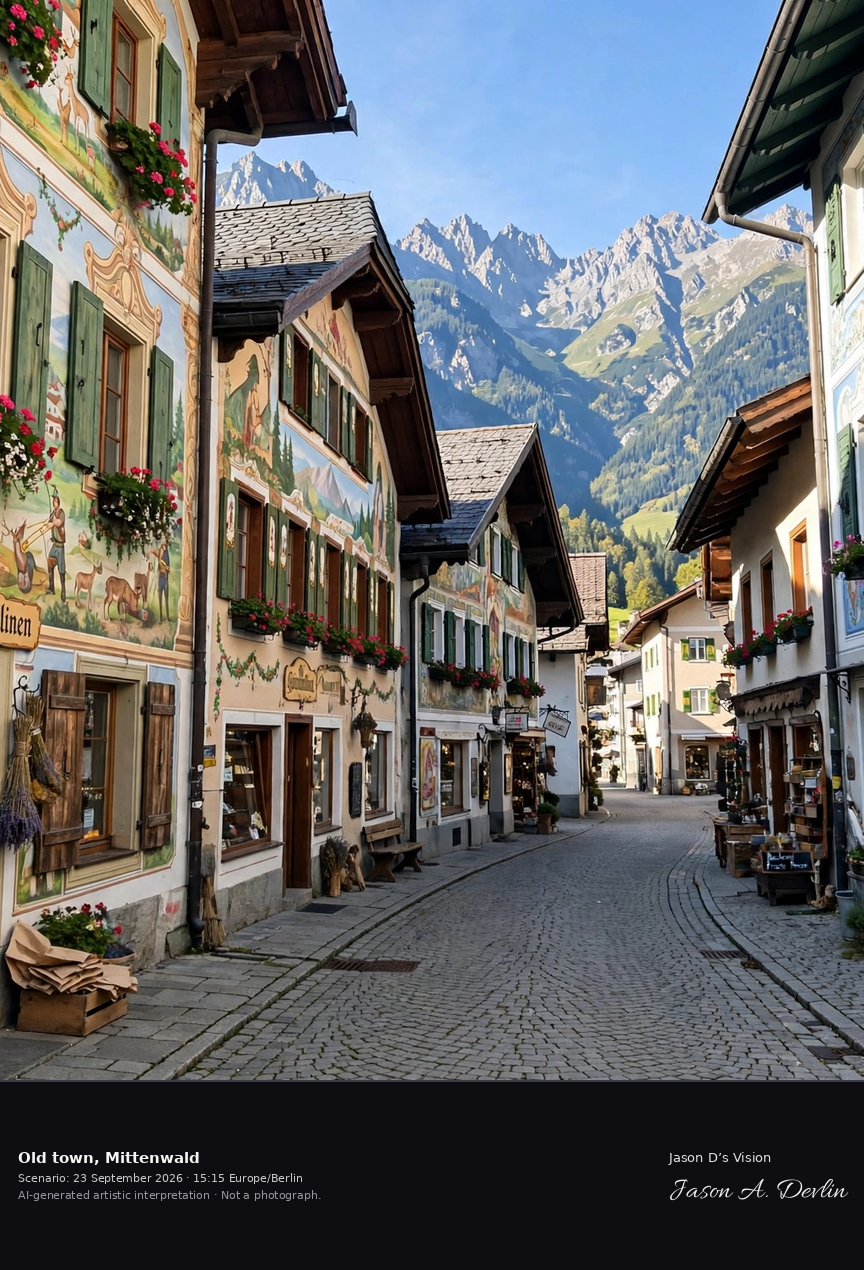
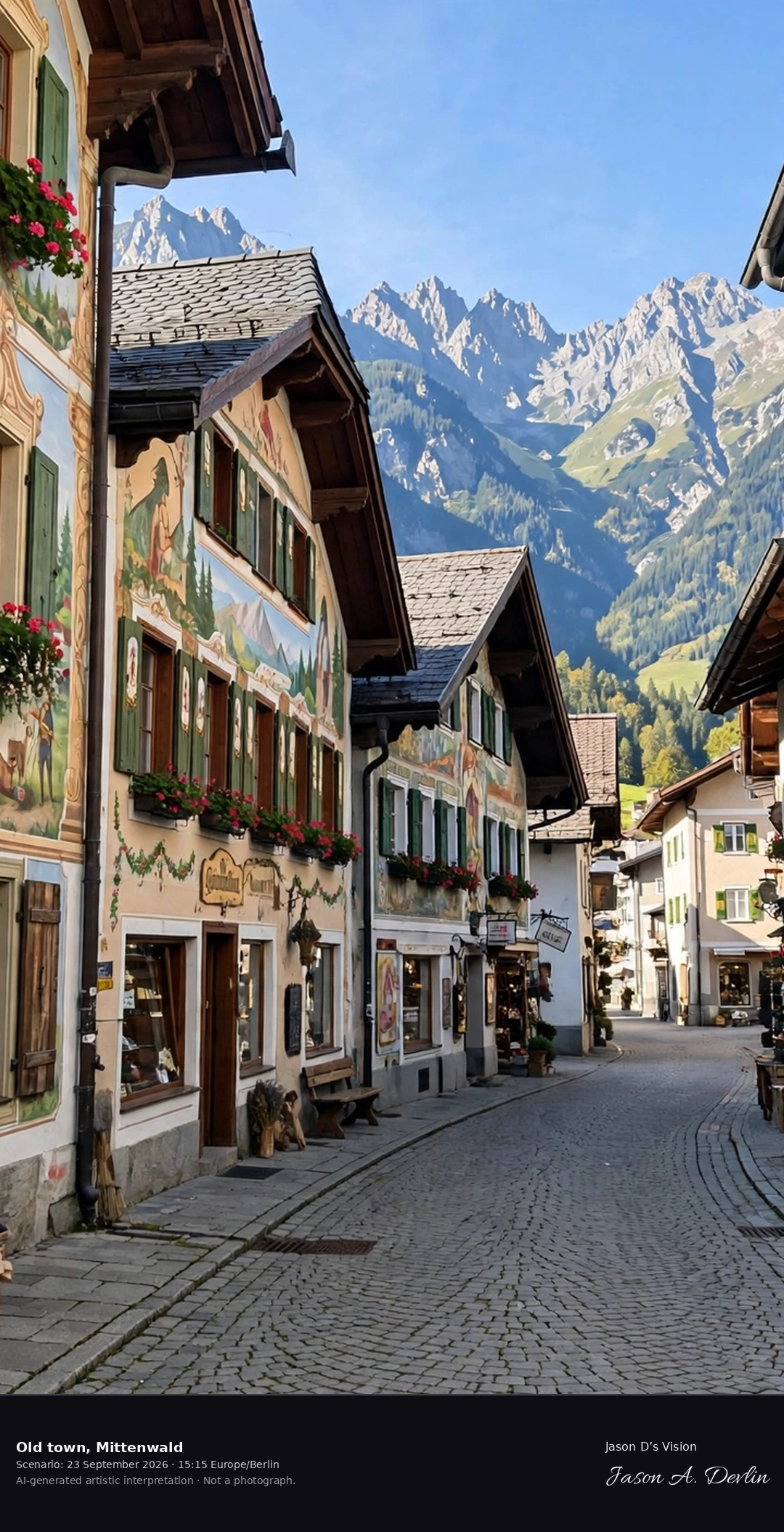
The view looks down a cobbled old-town street, with Lüftlmalerei-painted facades lining both sides: green shutters, flower boxes and large fresco scenes on the left building, which carries a violin-maker's shop sign at street level. The jagged Karwendel peaks rise dead ahead above the rooftops, closing the street in a wall of rock. Warm mid-afternoon light falls across the shopfronts, which are quiet and empty of crowds.
Palace and garden axis · AI-generated artistic interpretation
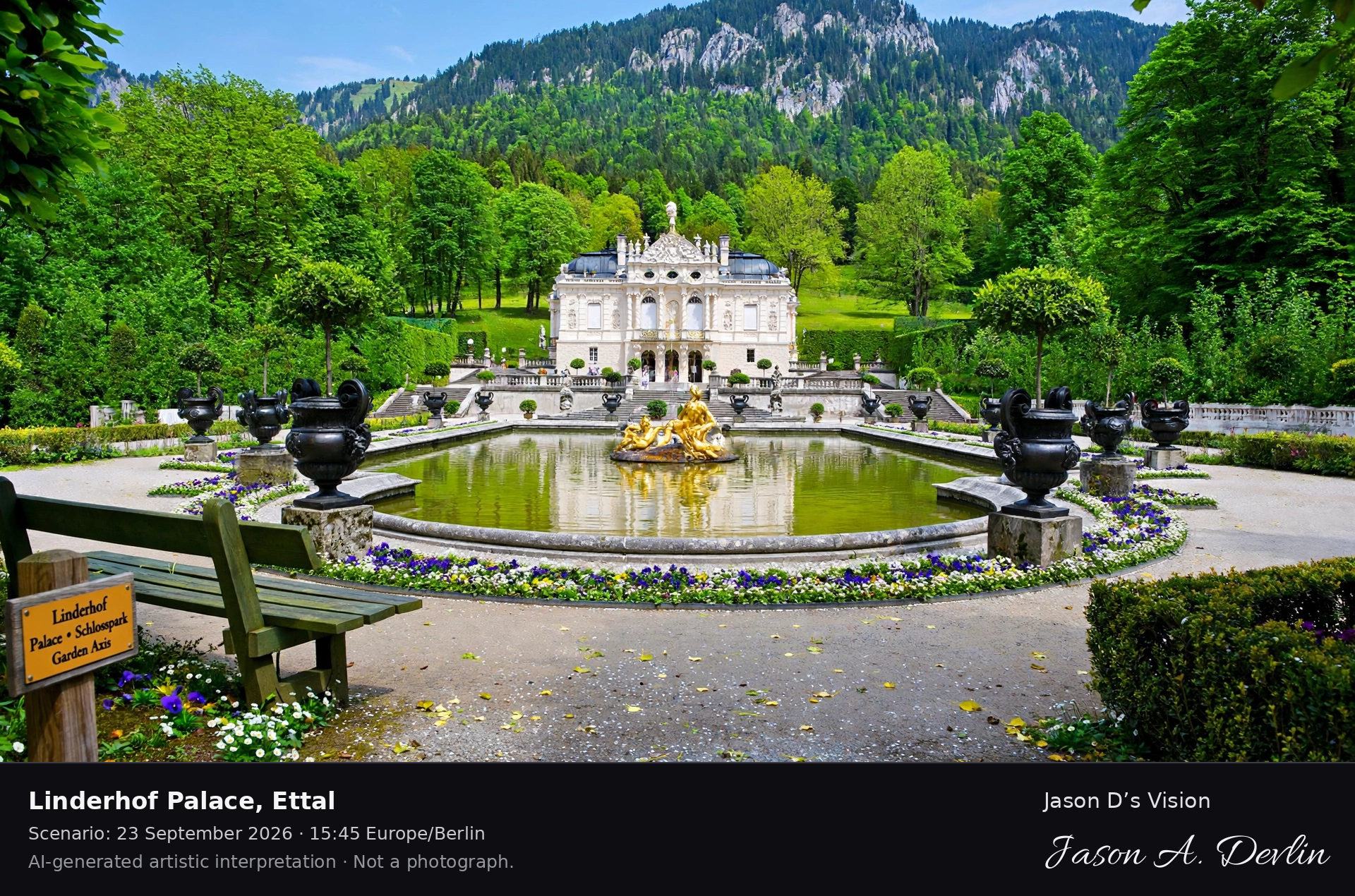
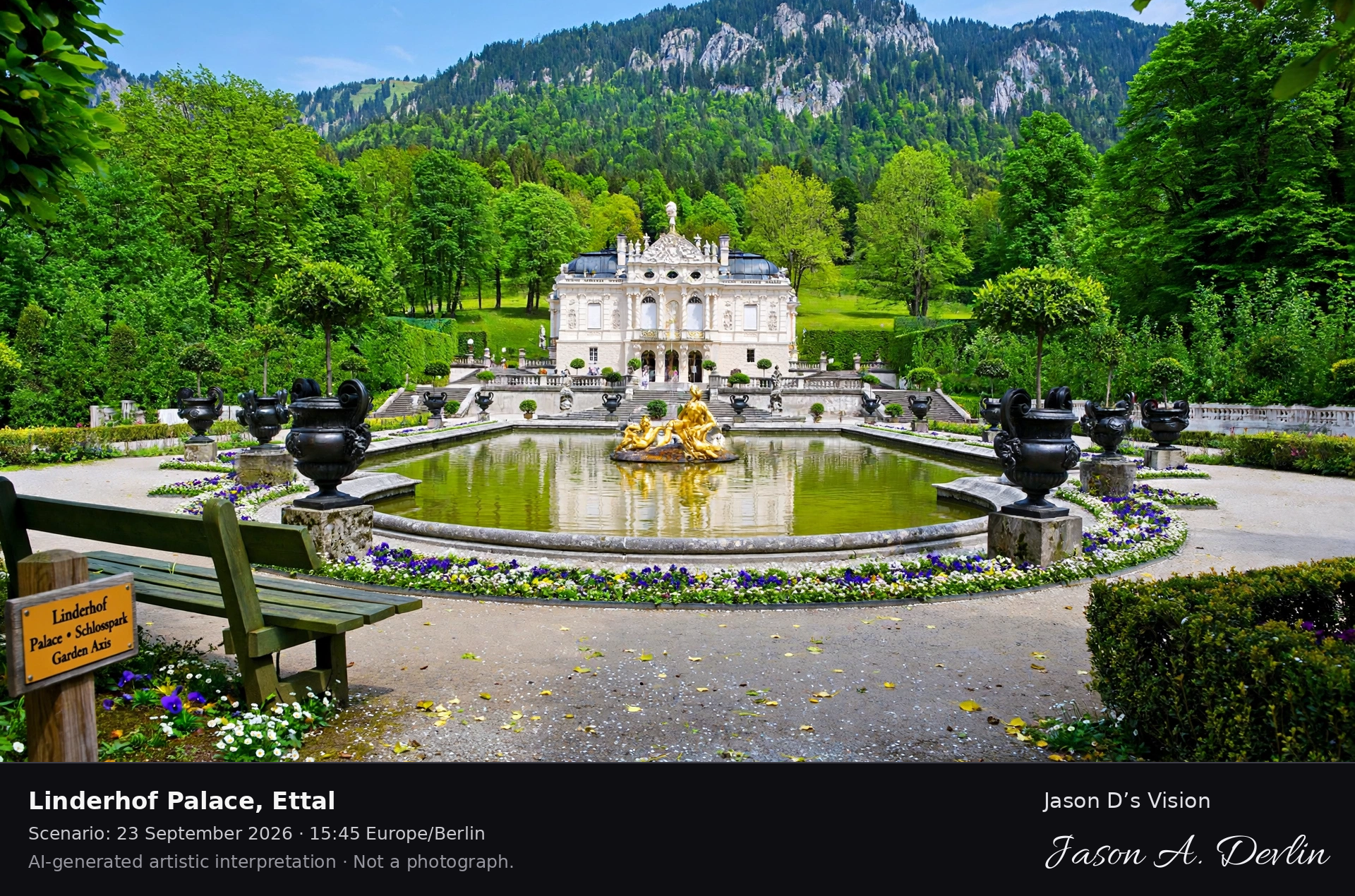
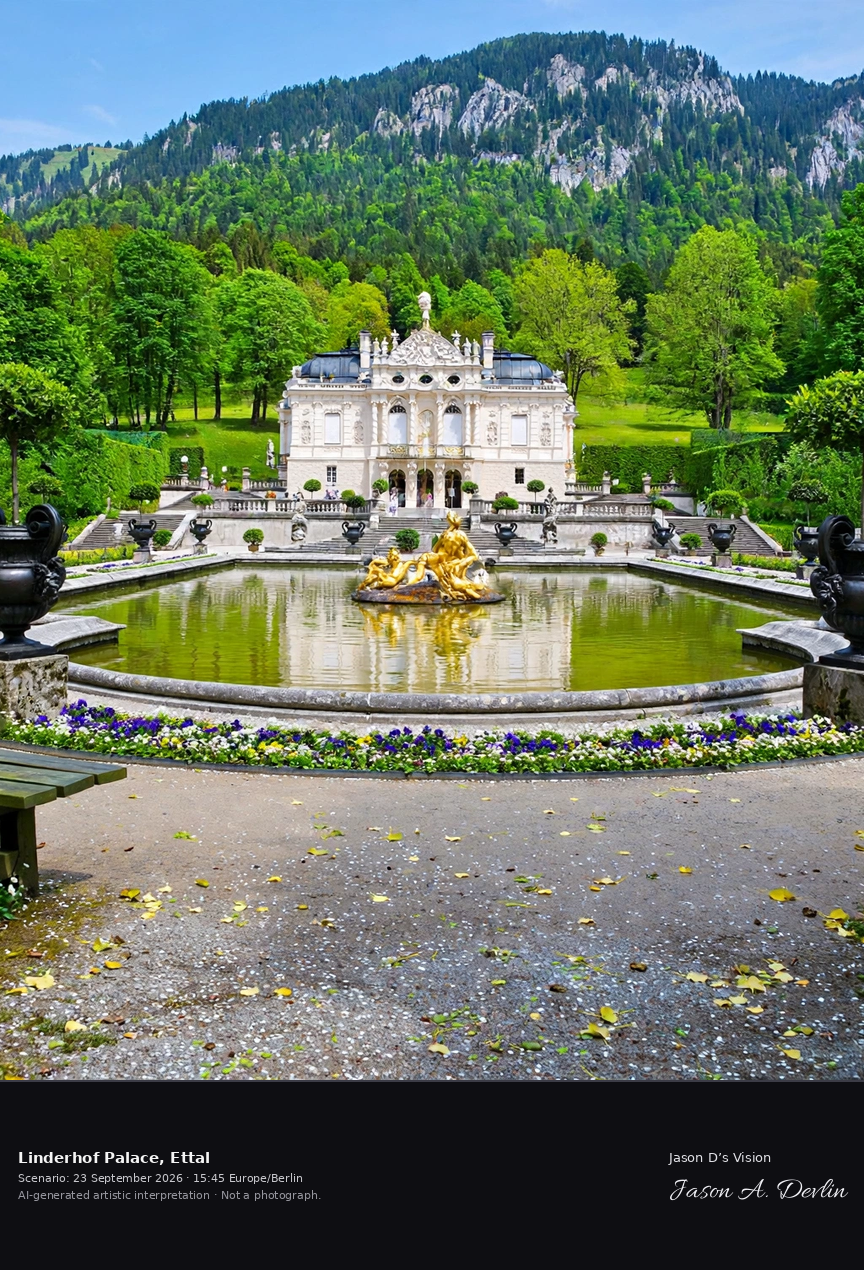
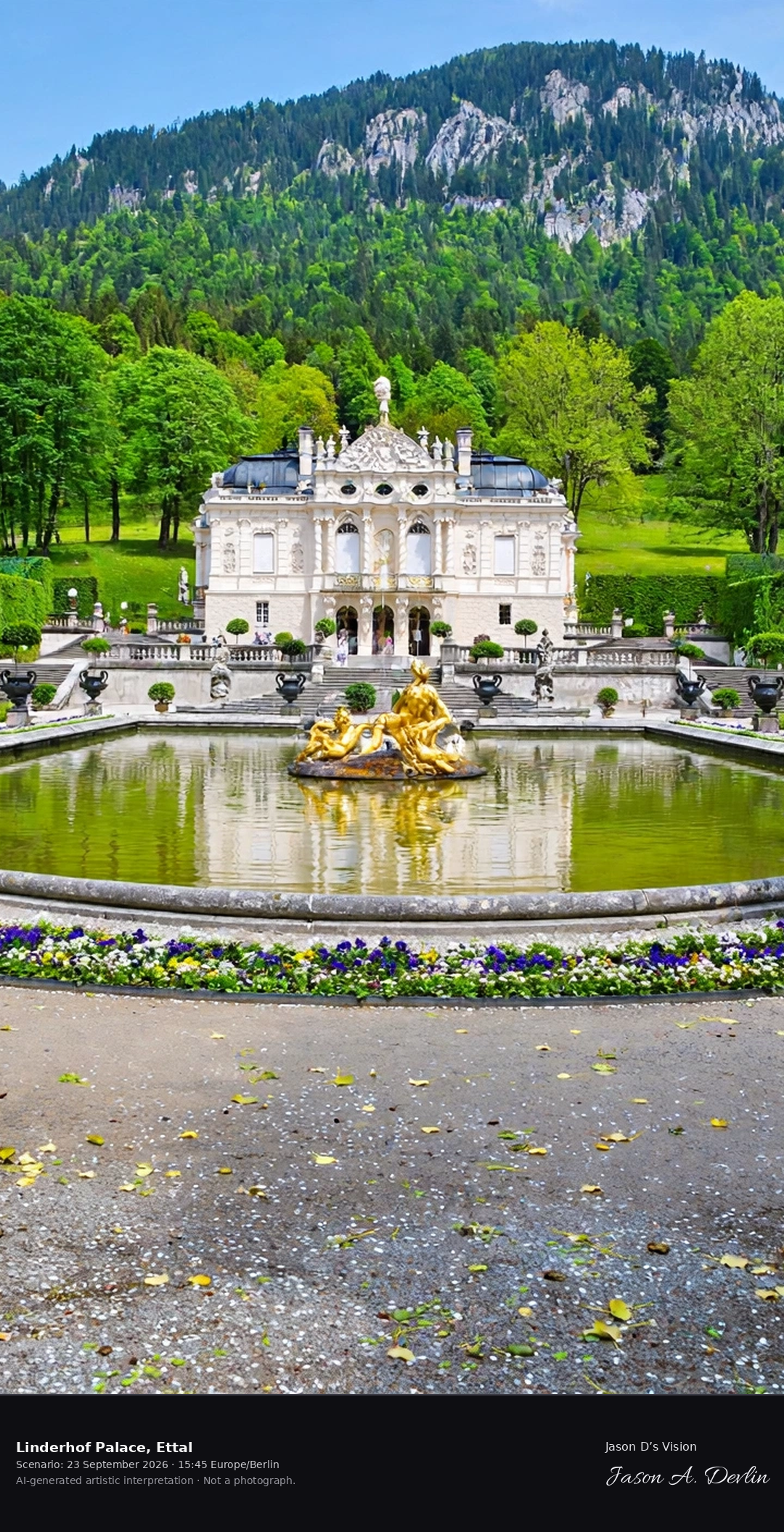
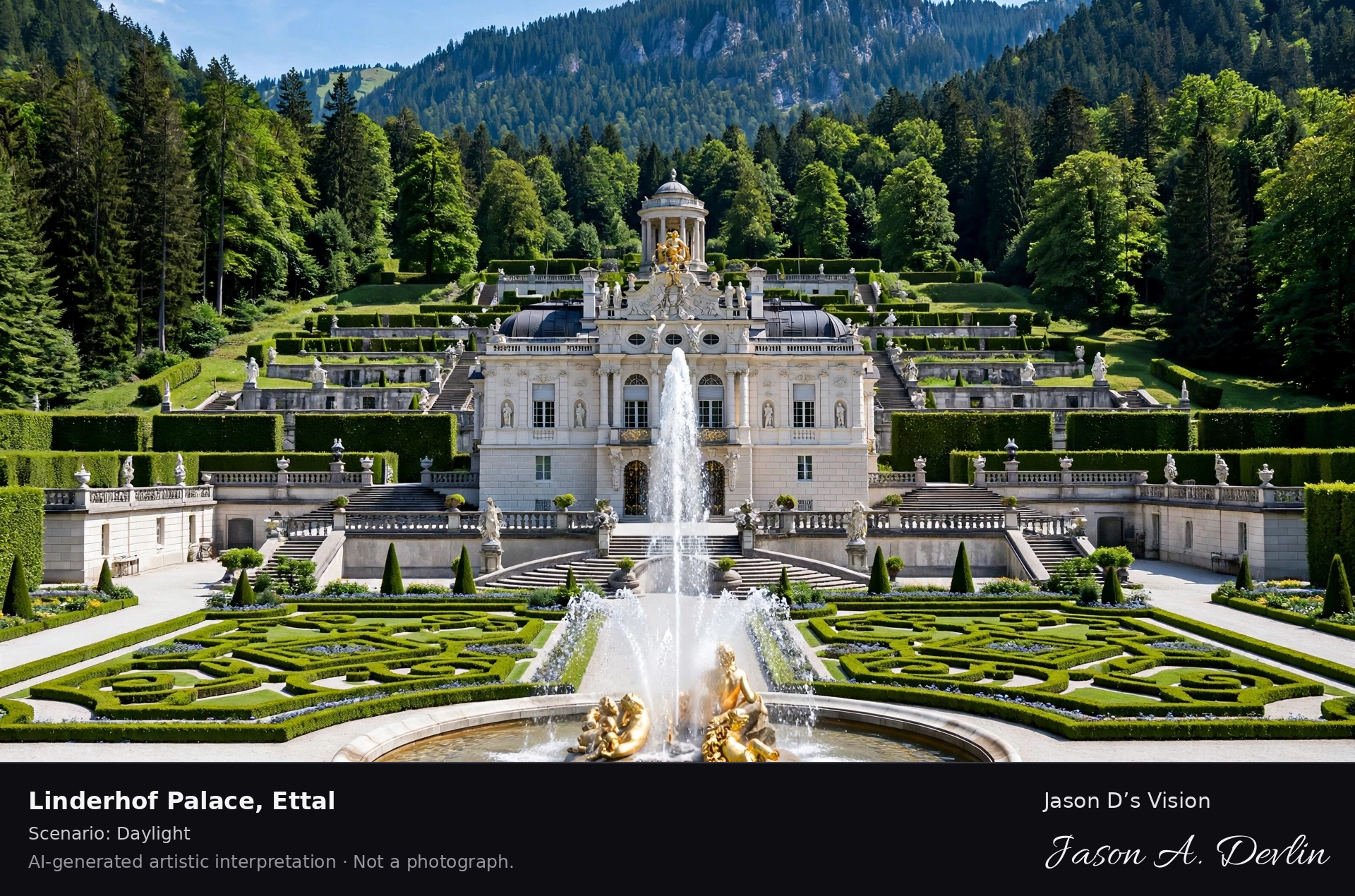
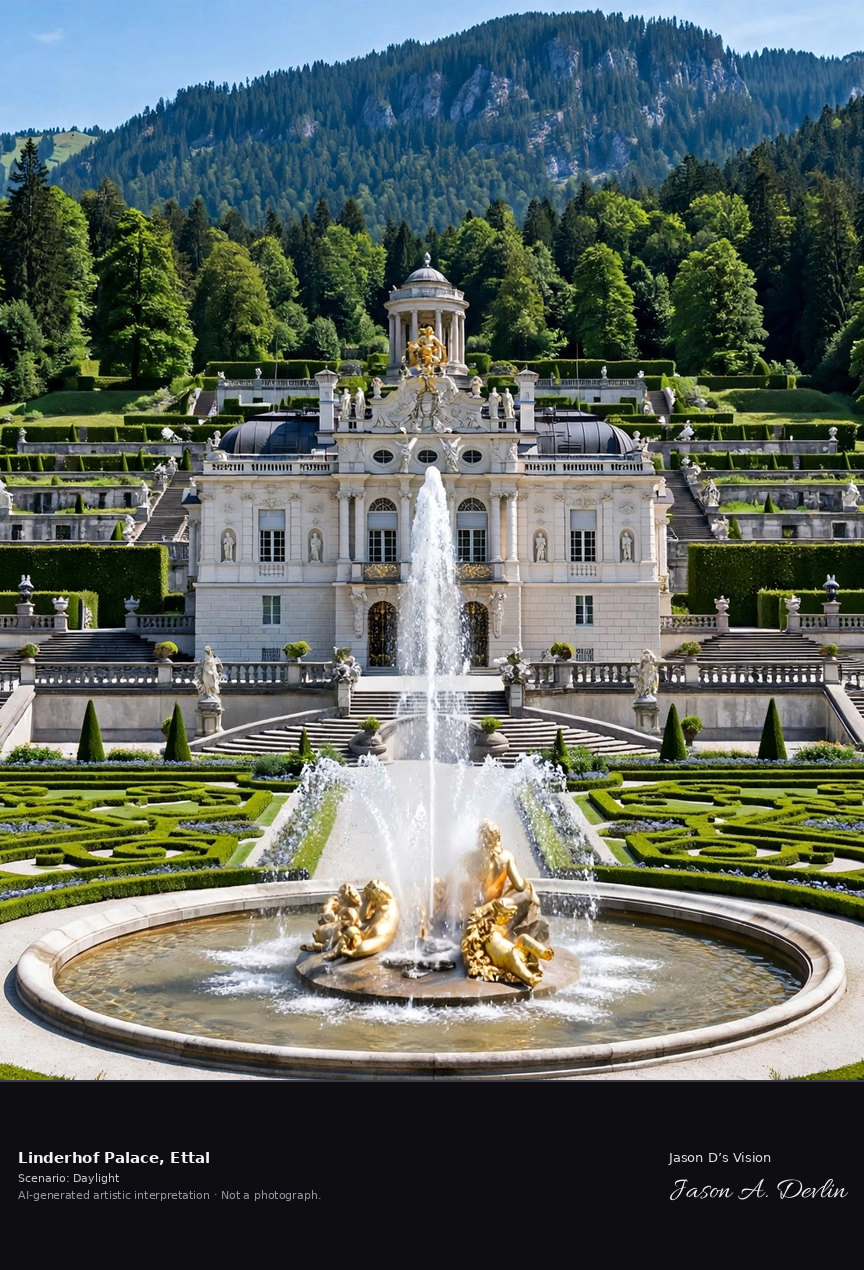
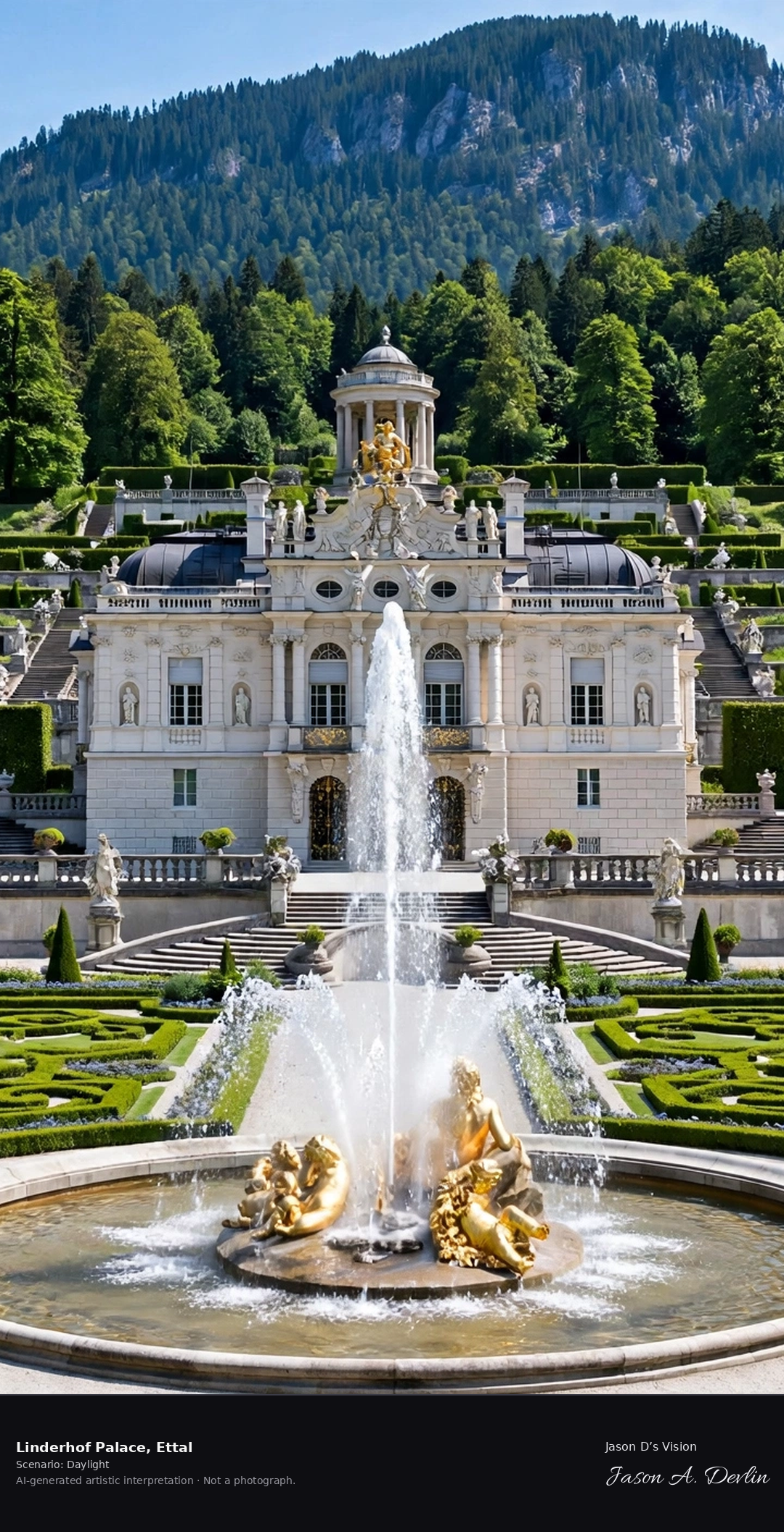
From the lower gardens the fountain pool fills the centre foreground, its golden sculpture group mirrored in the still water, with dark ornamental urns and trimmed hedges flanking the garden axis on both sides. The palace's ornate white façade stands at the end of the axis, framed by dense green woodland and a forested mountain rising behind. A wooden bench and a small sign reading 'Linderhof Palace • Schlosspark Garden Axis' sit in the left foreground, marking the tourist's vantage point. Bright afternoon sun bathes the whole parterre.
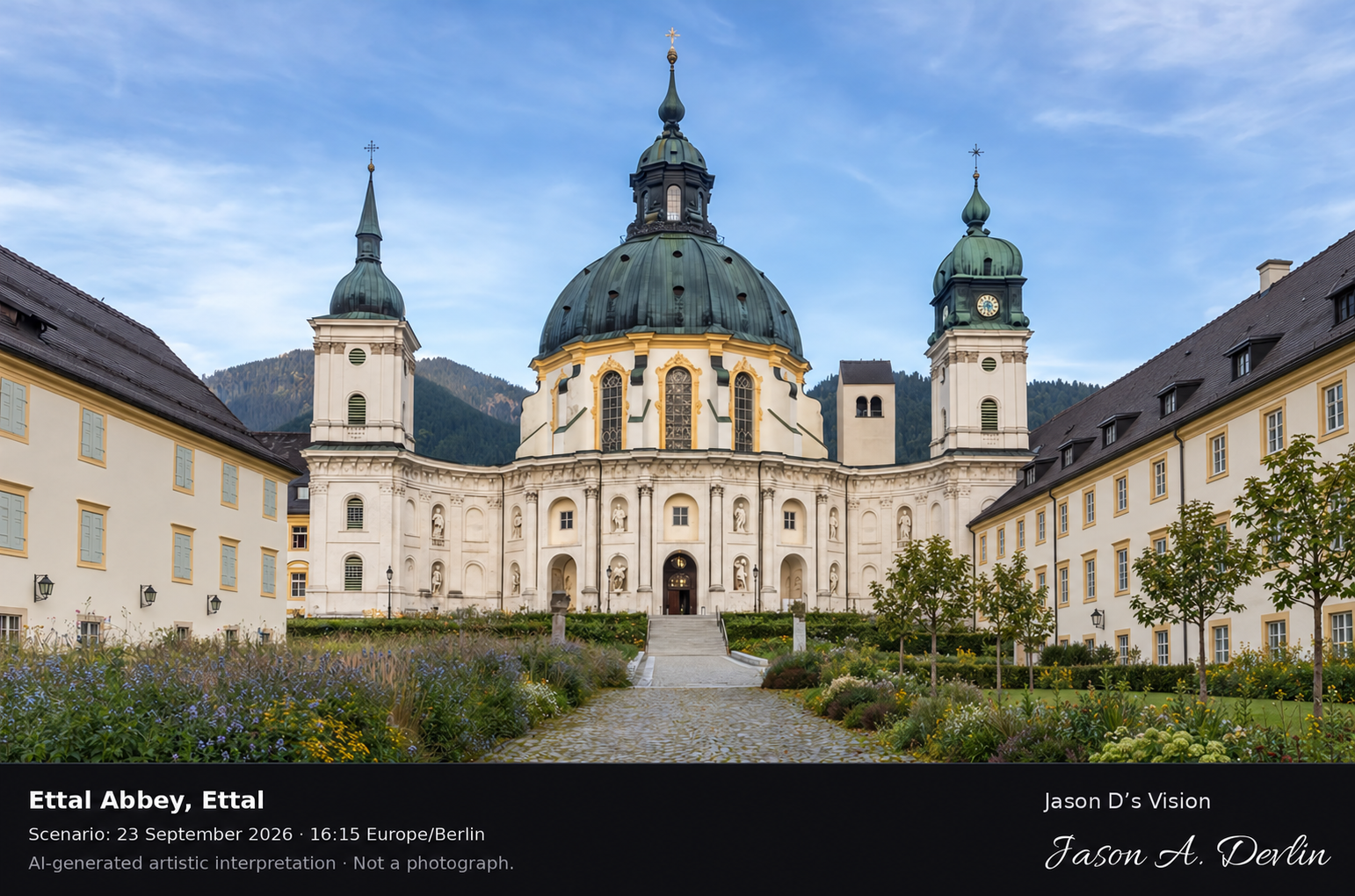
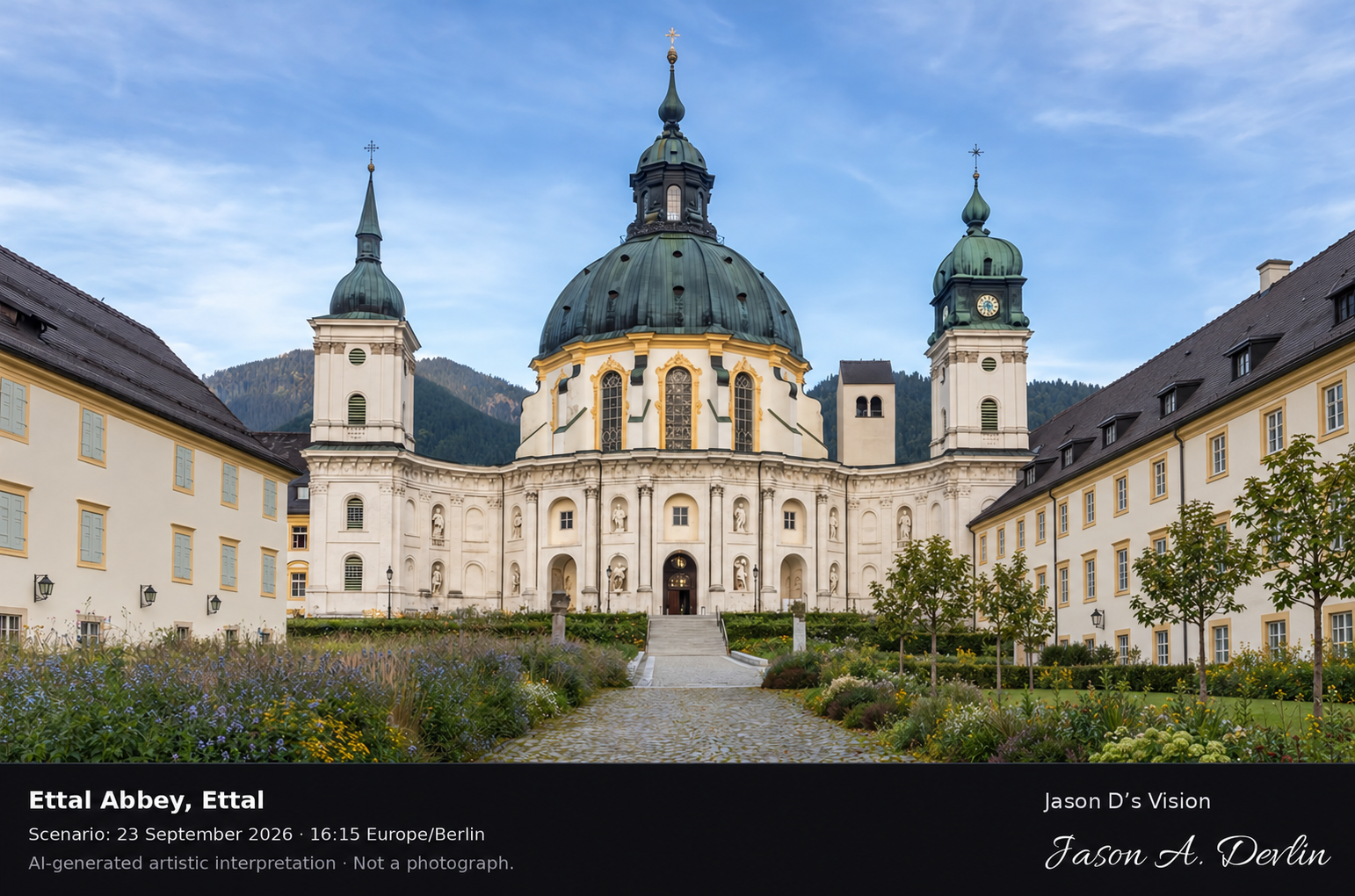
The abbey church’s copper-green dome rises above its ornate façade and two differently shaped towers, viewed from the garden courtyard. Connected monastery wings enclose the left and right sides, with forested mountain slopes behind. AI-generated artistic interpretation.
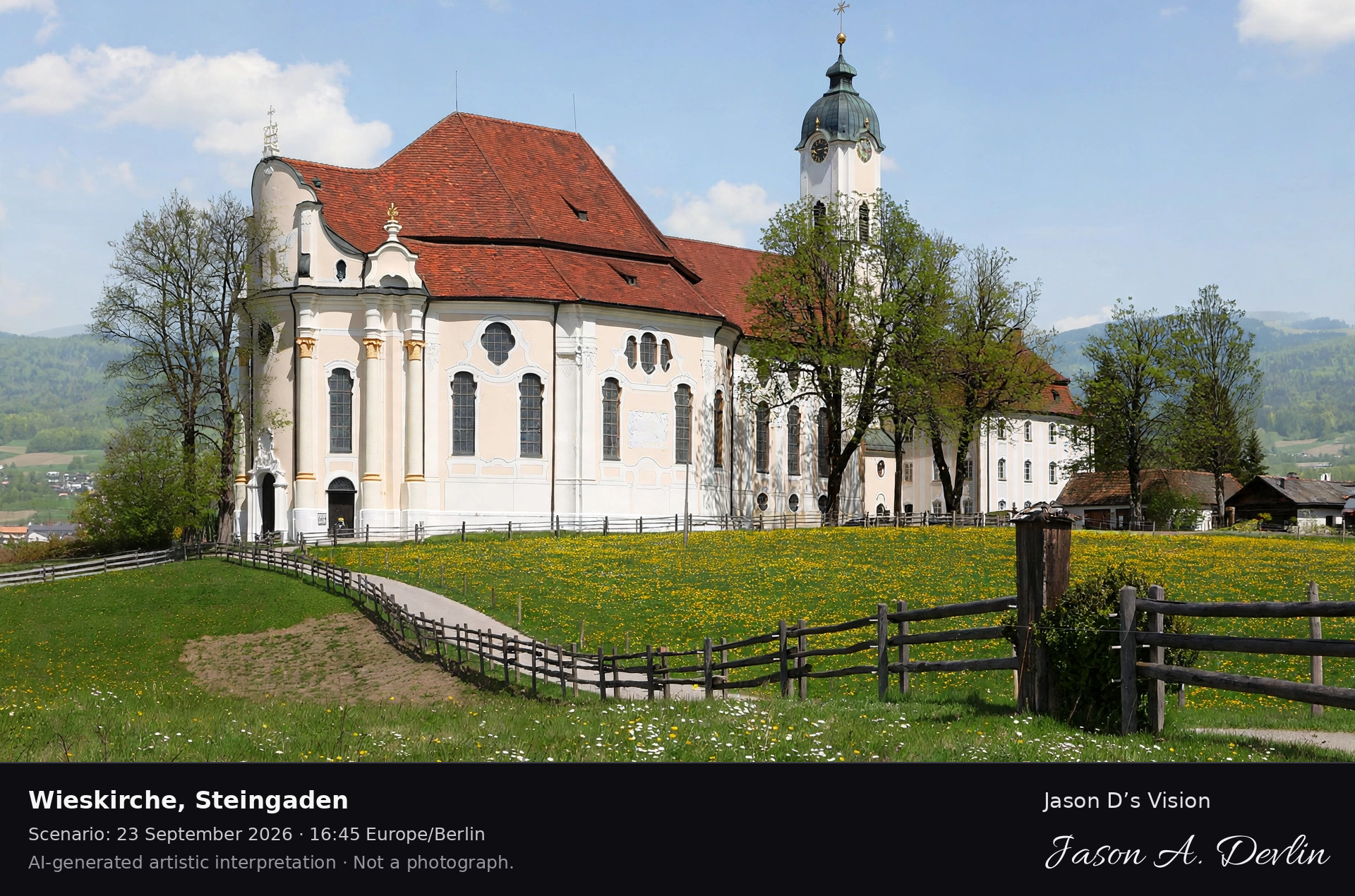
Pilgrimage church and meadow · AI-generated artistic interpretation
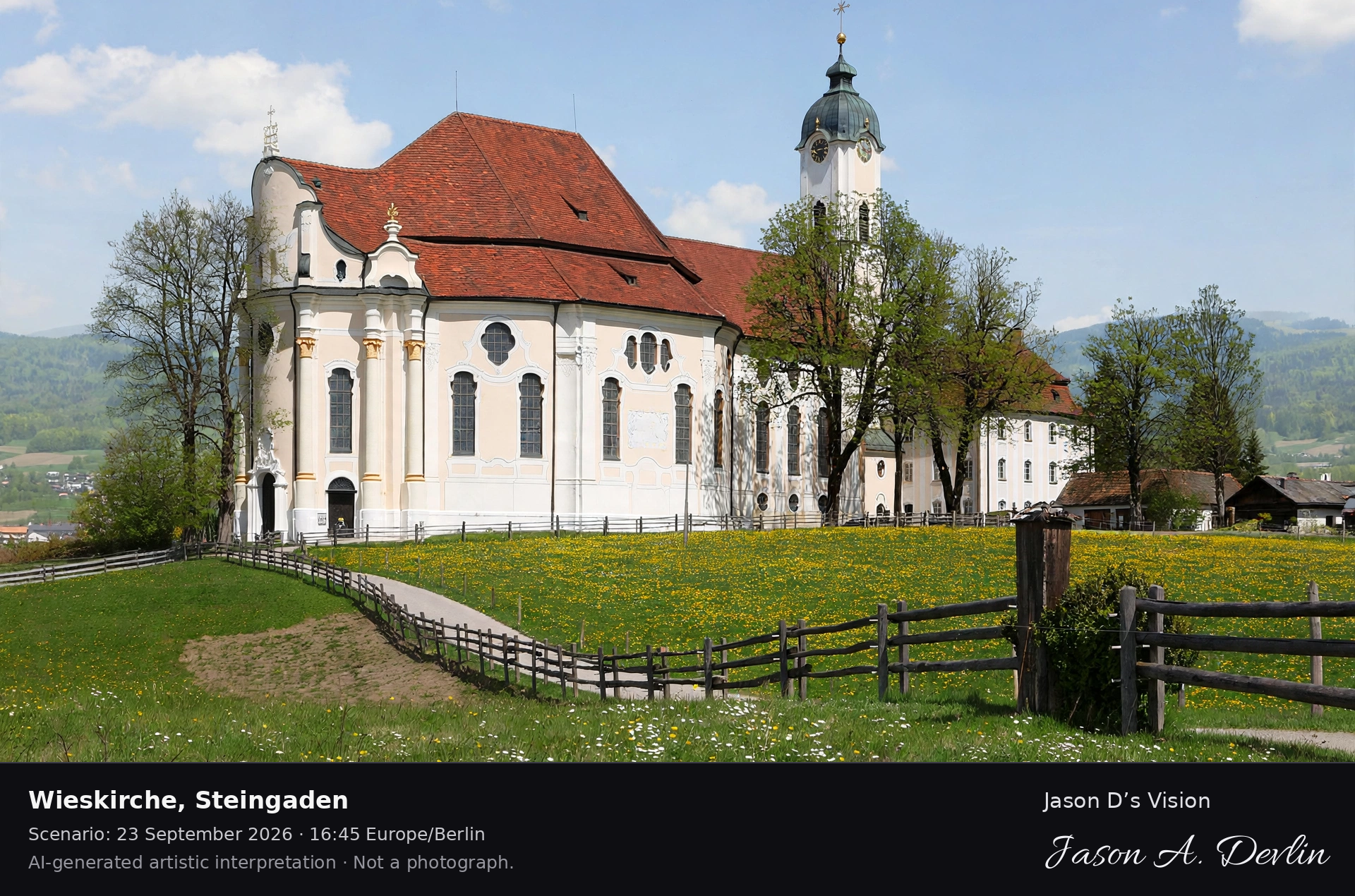
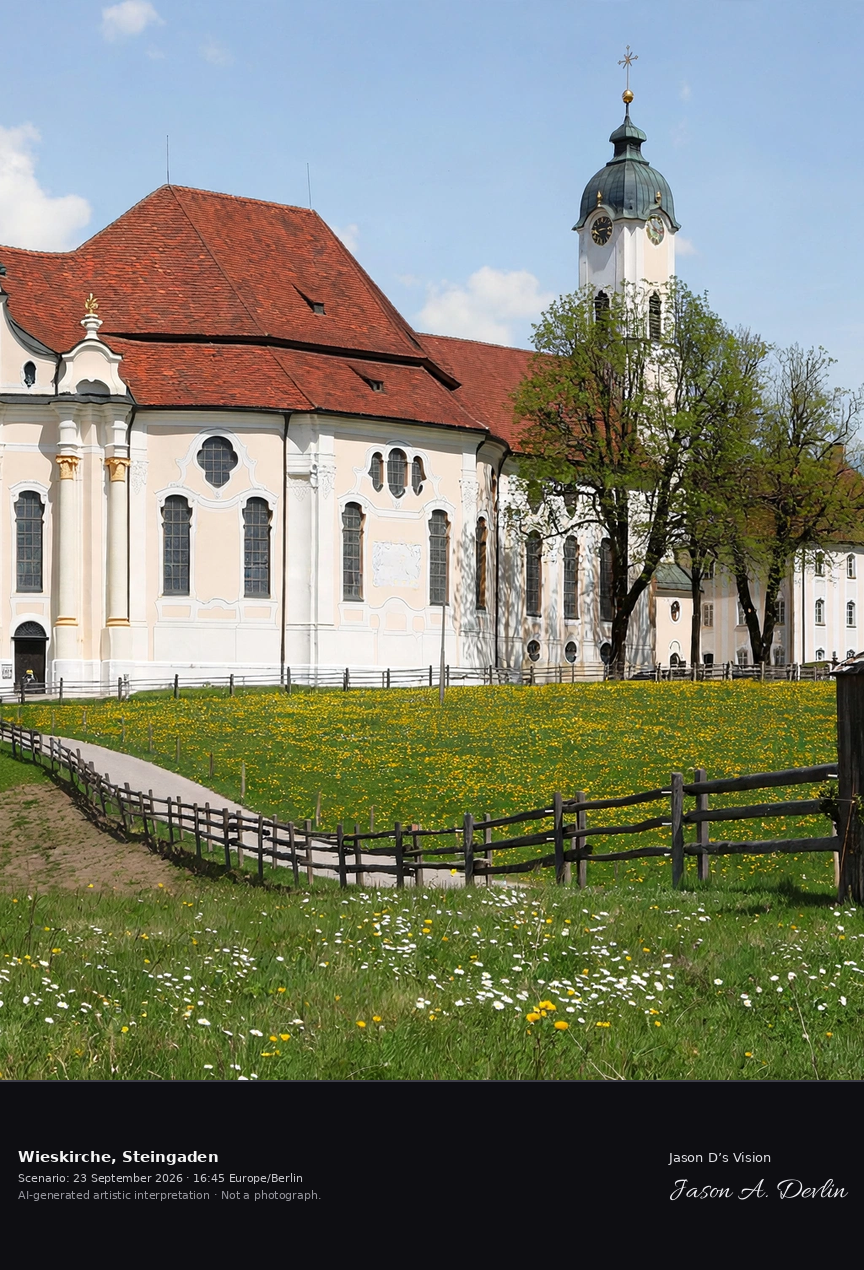
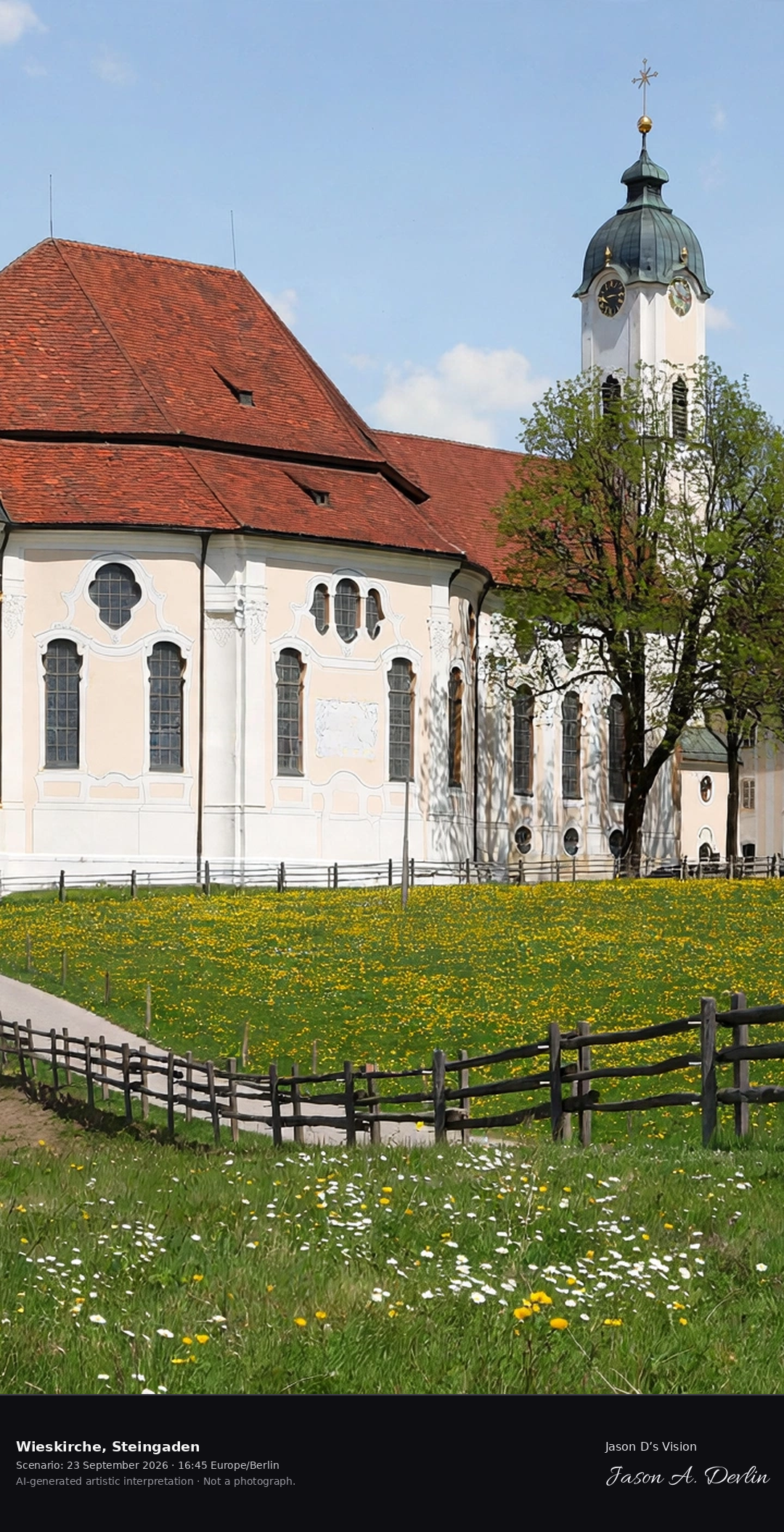
The white rococo church body with its red-tiled roof stretches across the left and centre, while the tall east tower with its dark dome and clock face rises to the right, framed by two leafy trees. A wooden fence and a dirt path curve through the yellow-flowered meadow in the foreground toward the church. Forested foothills sit behind under a lightly cloudy late-afternoon sky.
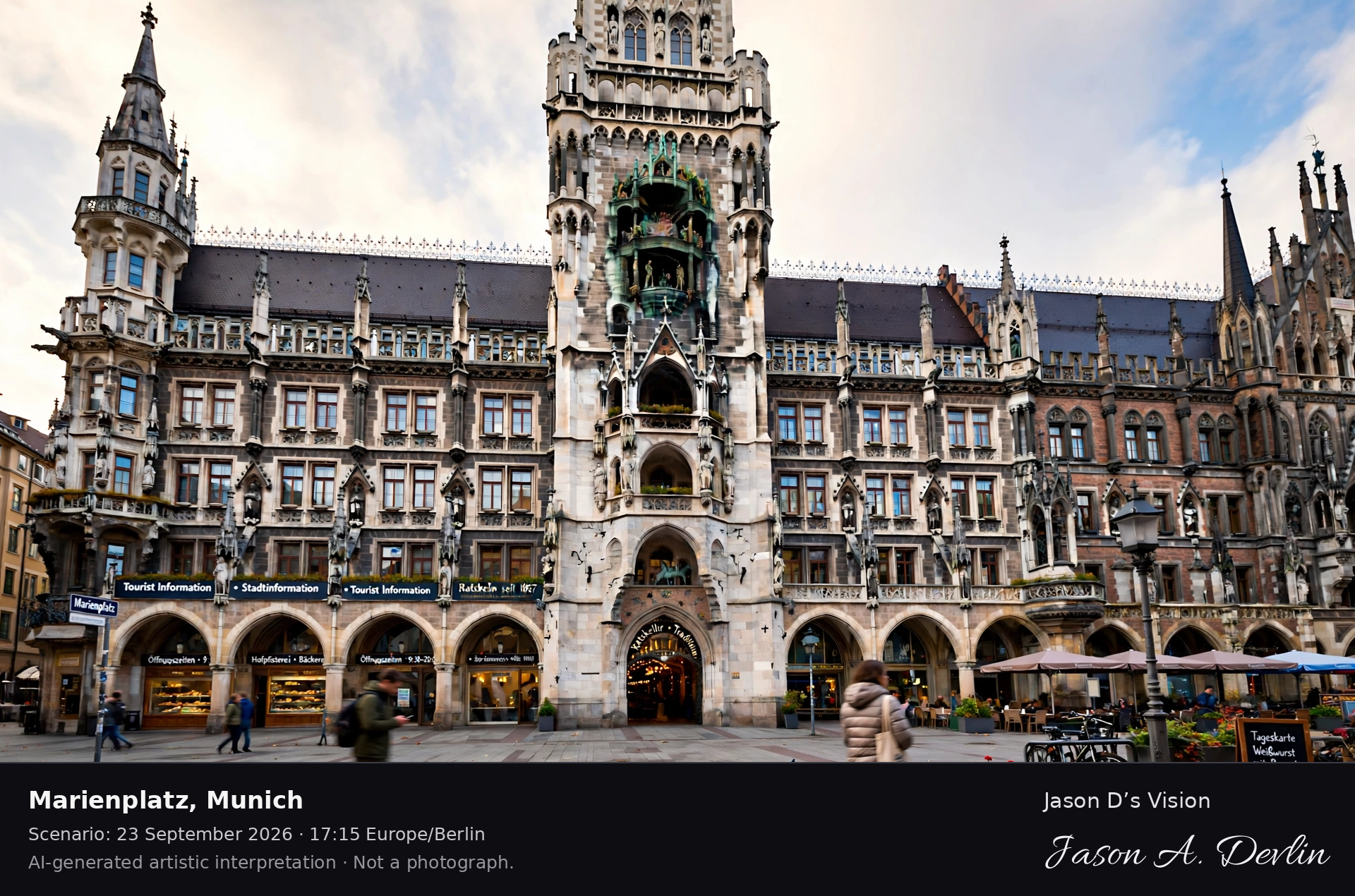
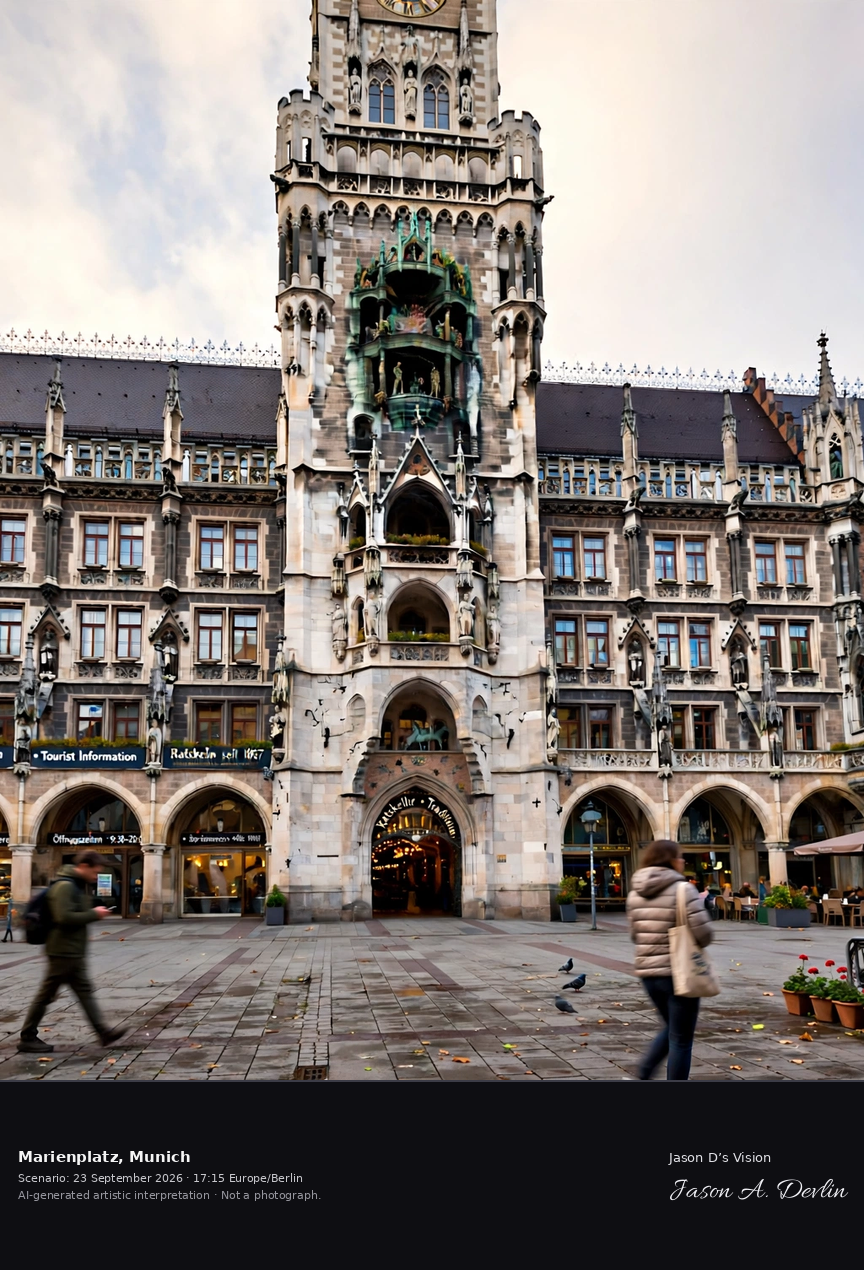
New Town Hall facade · AI-generated artistic interpretation
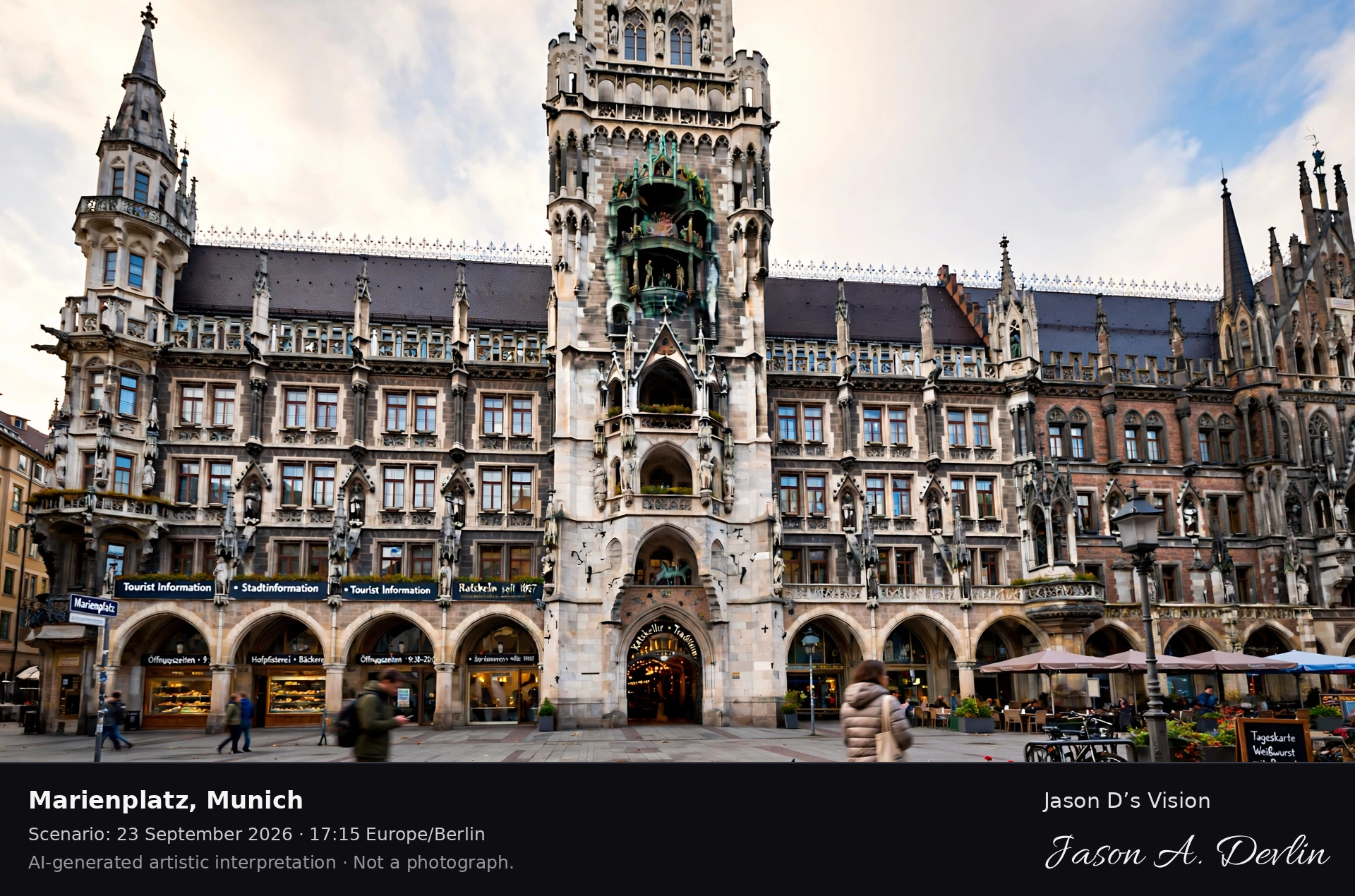
The neo-Gothic New Town Hall fills the frame at eye level: the central Glockenspiel bay and clock tower rise in the middle, flanked by gabled bays with pointed spires left and right. Ground-floor arcades carry Tourist Information signage, and café umbrellas and blurred pedestrians move across the plaza paving below. A partly cloudy late-afternoon sky hangs above the façade; some shop-sign lettering renders as AI-style gibberish, a legibility nit rather than a location defect.
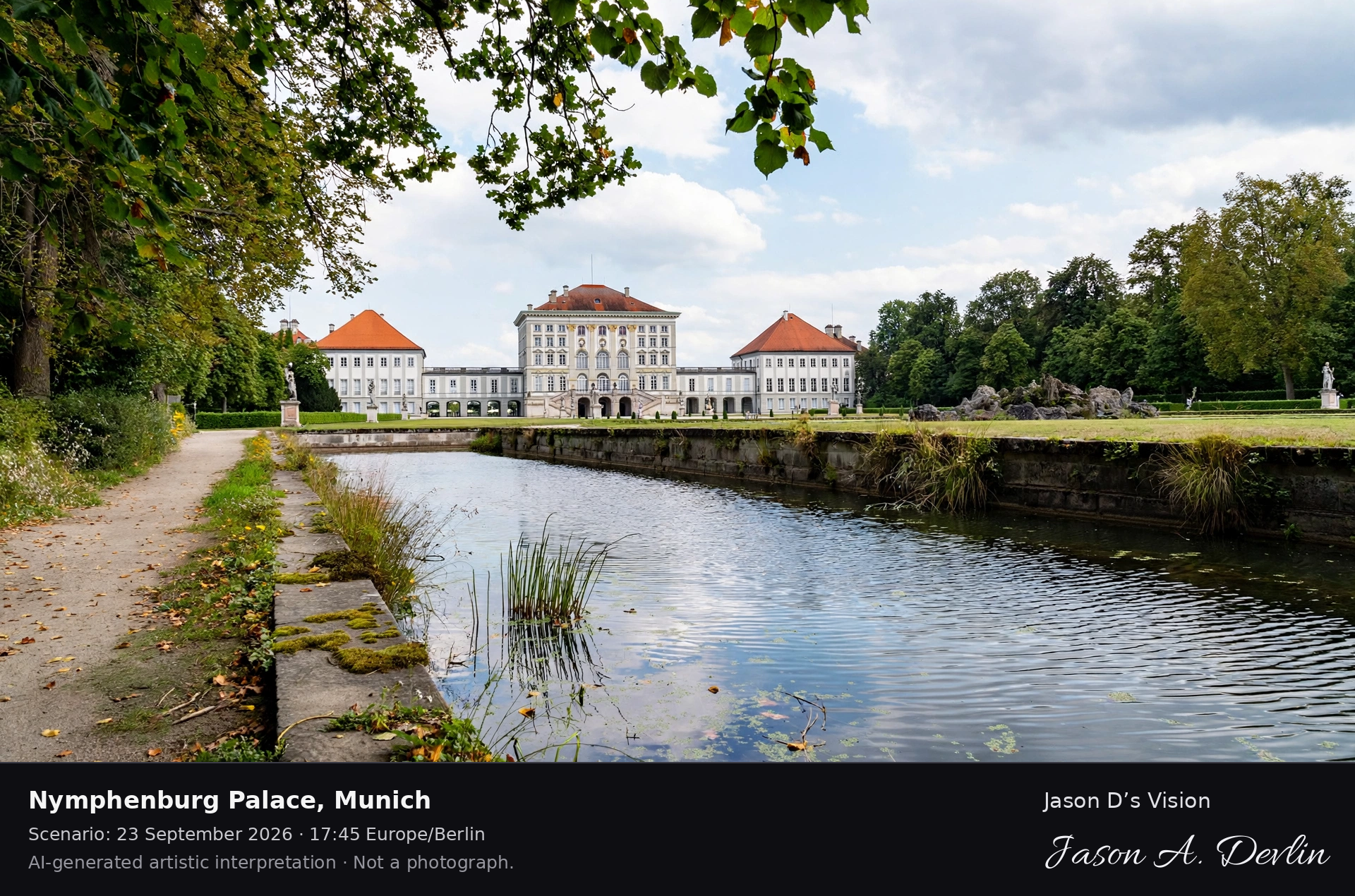
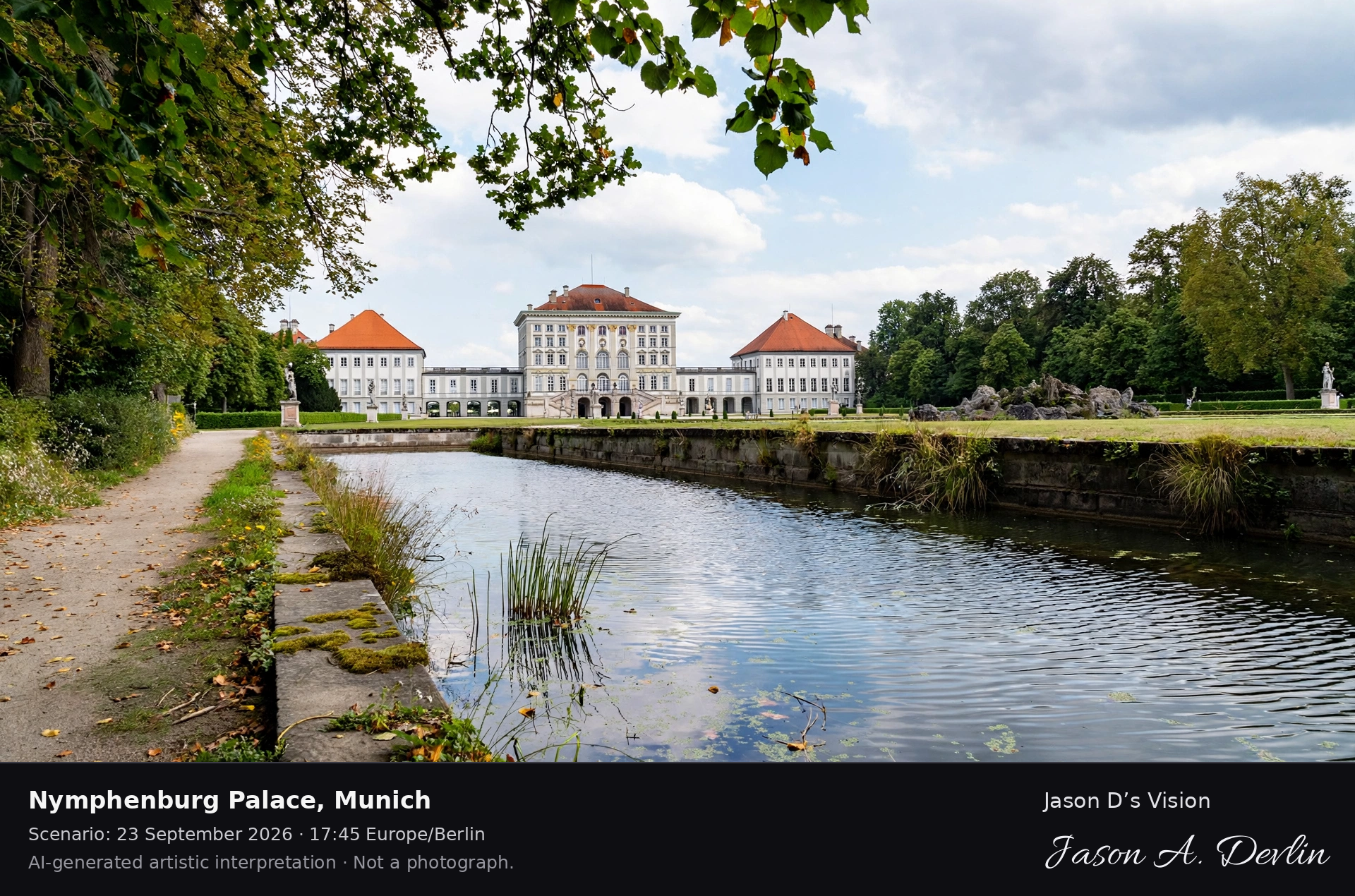
Canal and palace axis · AI-generated artistic interpretation
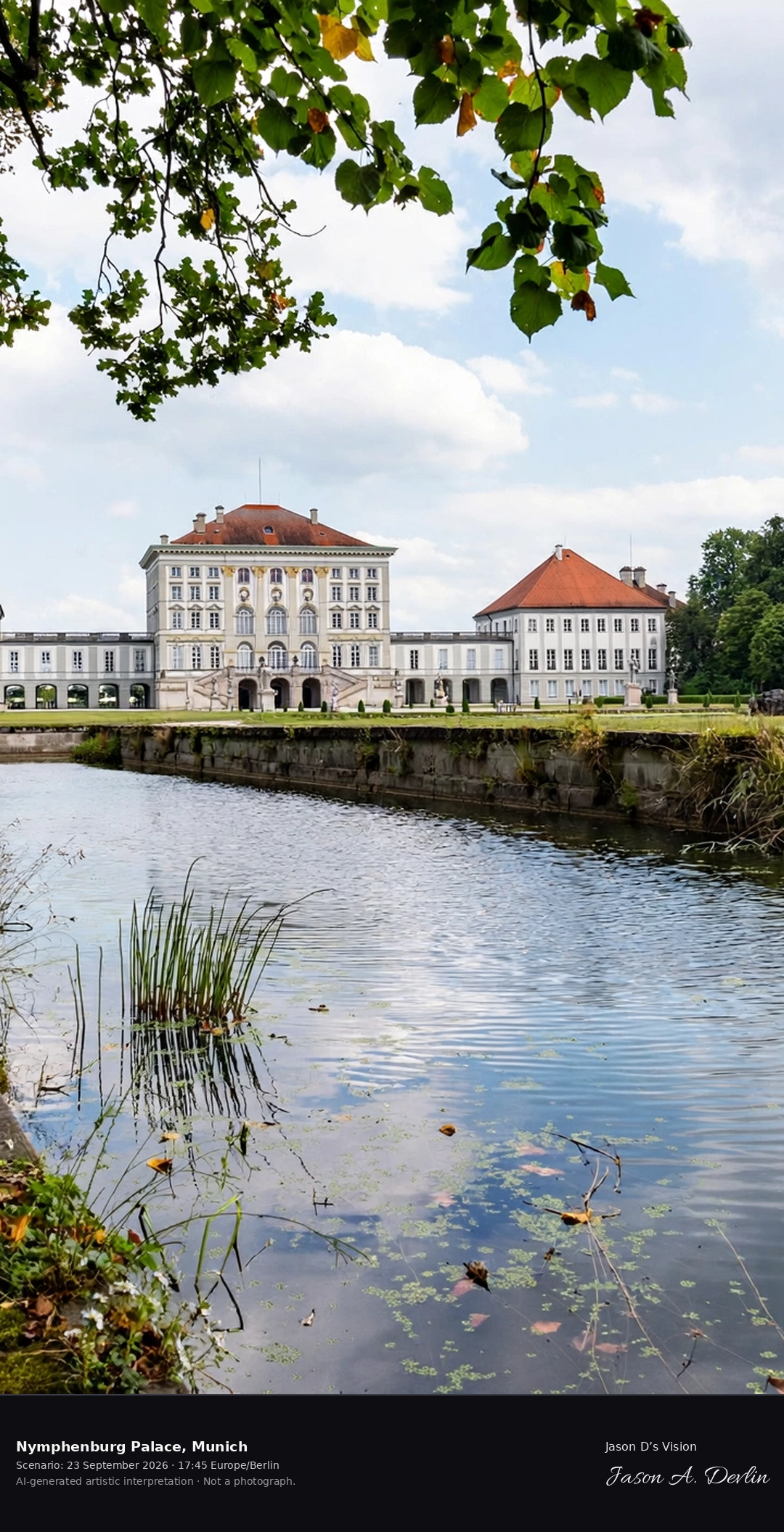
The long rectangular canal leads the eye from the foreground straight to the palace, its water framed by mossy stone edges, reeds and a gravel path on the left. The white baroque main pavilion stands at the centre with its mansard roof, flanked by low gallery wings and red-tiled side pavilions; statues dot the lawns on either side. Mature trees overhang the top of the frame and fill the right, and a partly cloudy late-afternoon sky reflects softly in the water.
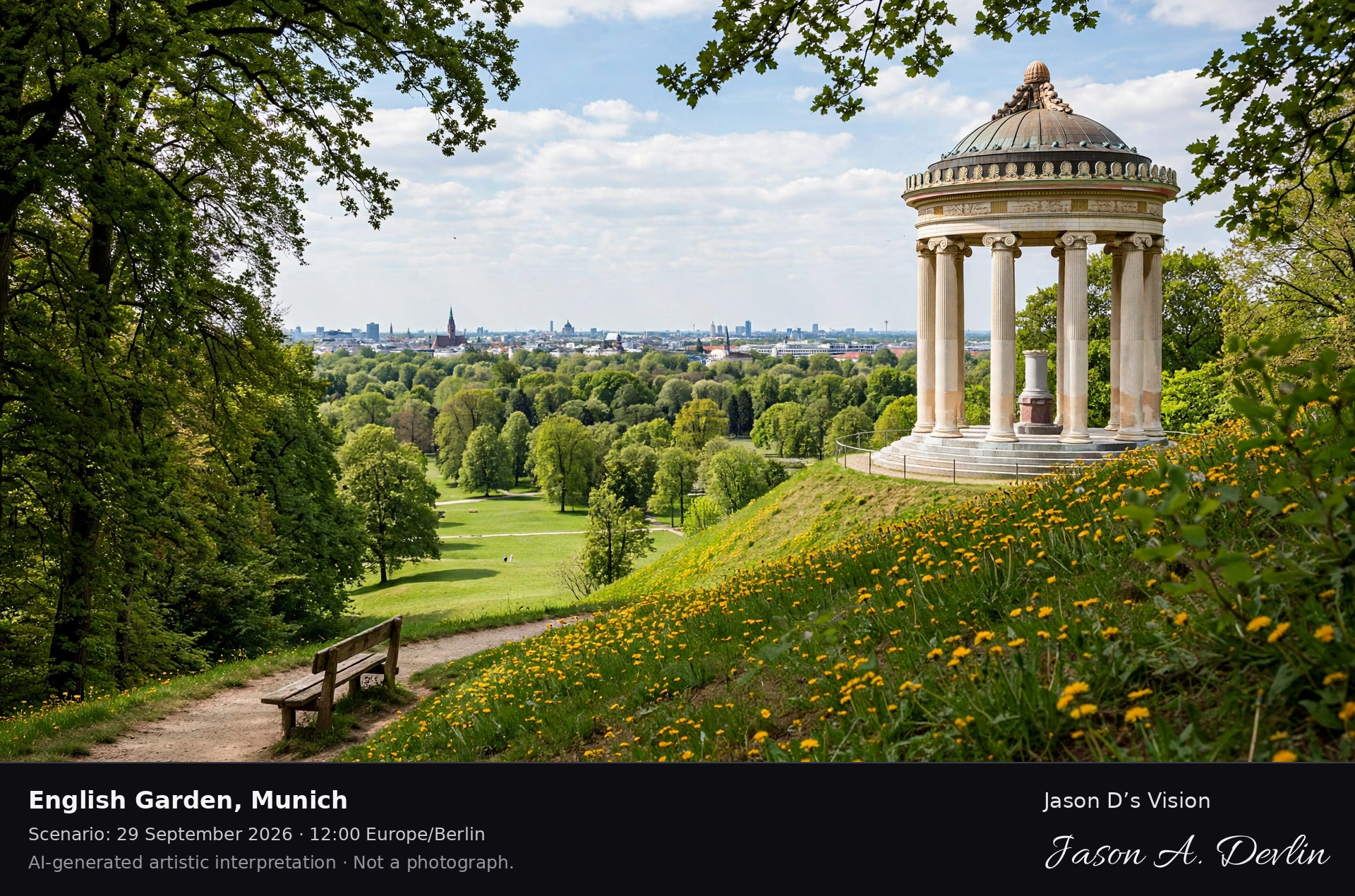
Monopteros and park · AI-generated artistic interpretation
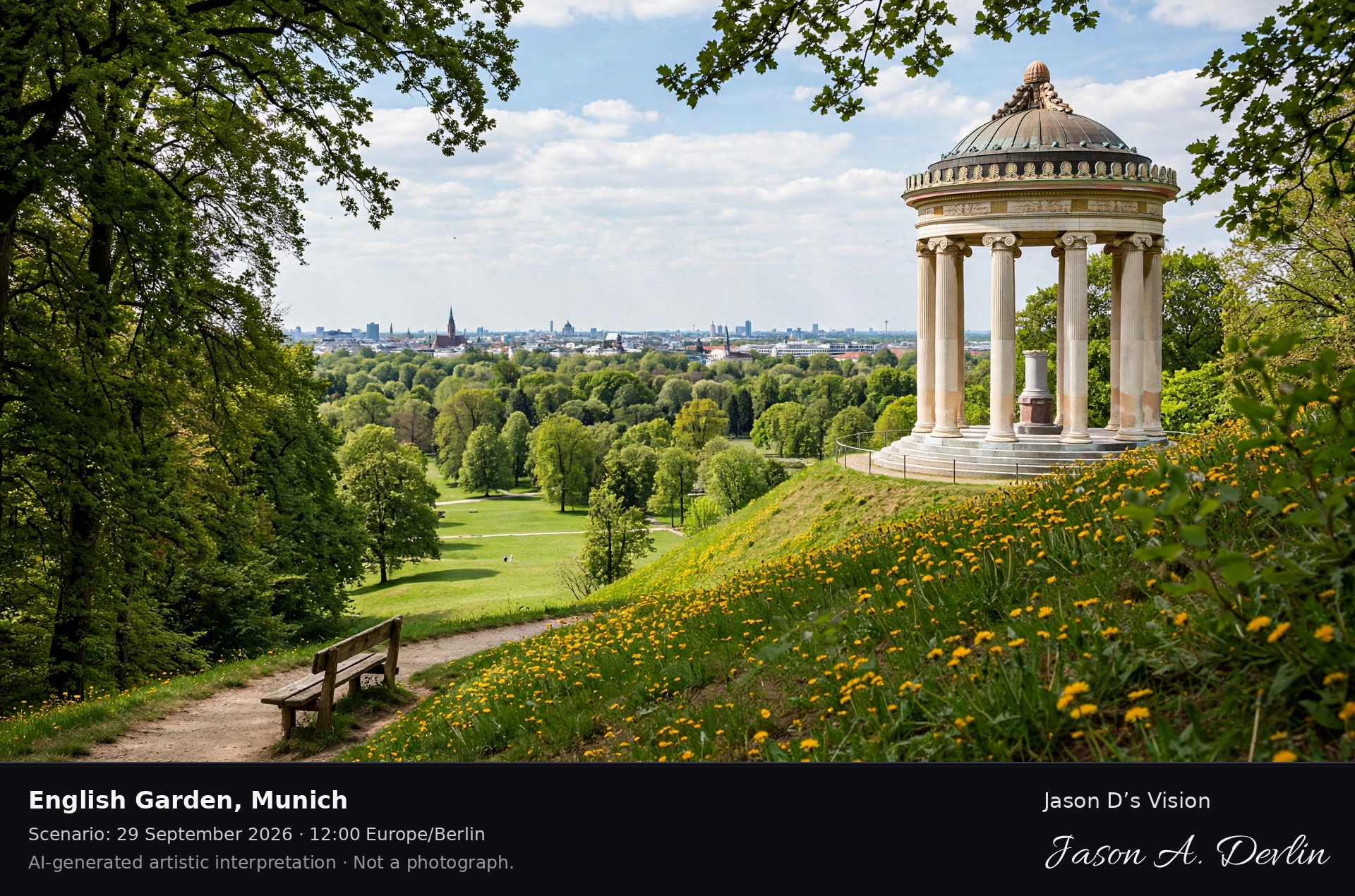
The domed Monopteros temple stands right of centre atop its grassy hill, its ring of columns open to the sky, reached by a curving dirt footpath from the lower left with a bench beside it. Wildflower meadows and mature trees surround the mound, with Munich's rooftops and a distant skyline along the left horizon. Broken cloud drifts overhead in the early-evening daylight.
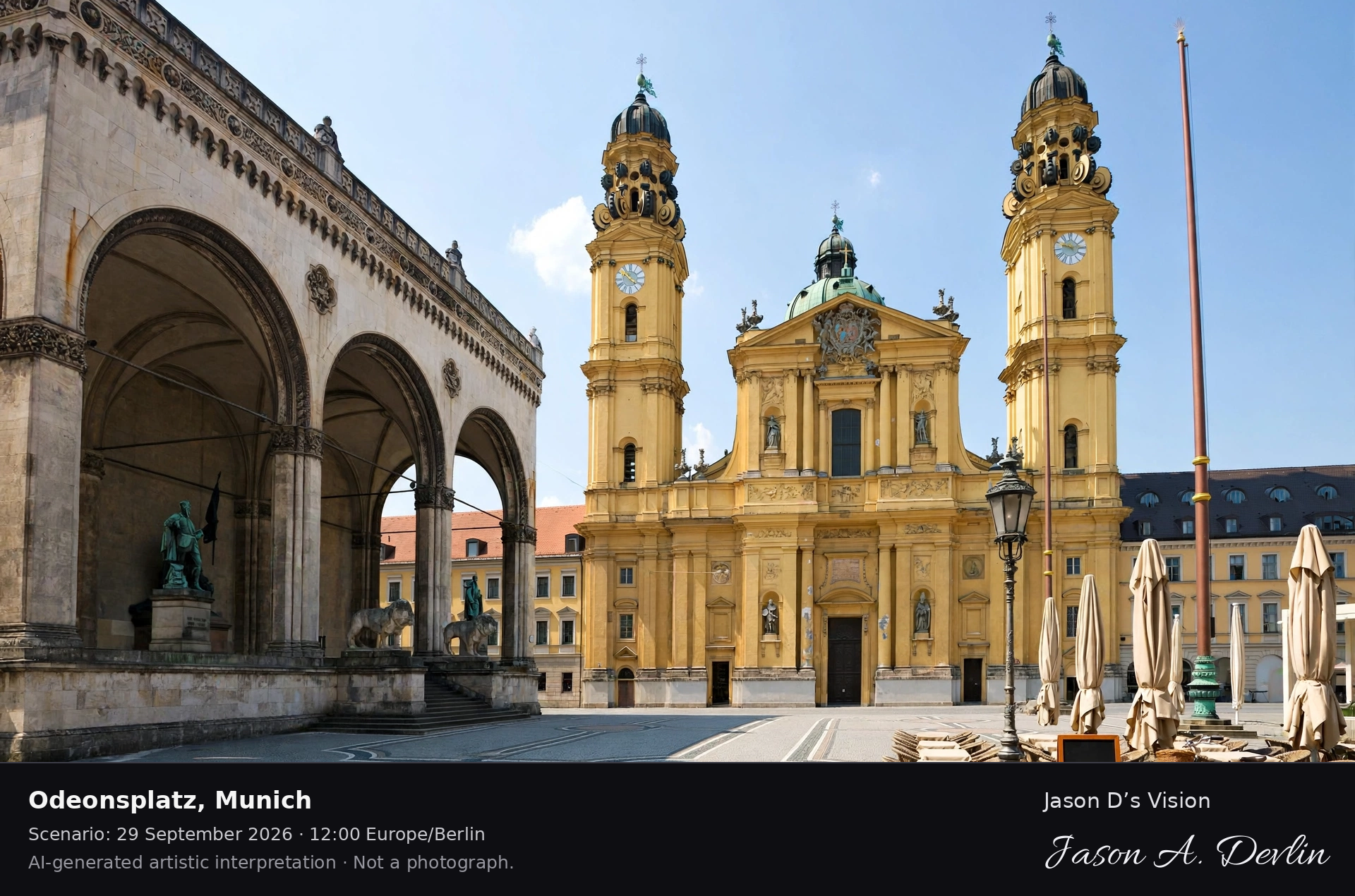
Feldherrnhalle and Theatinerkirche · AI-generated artistic interpretation
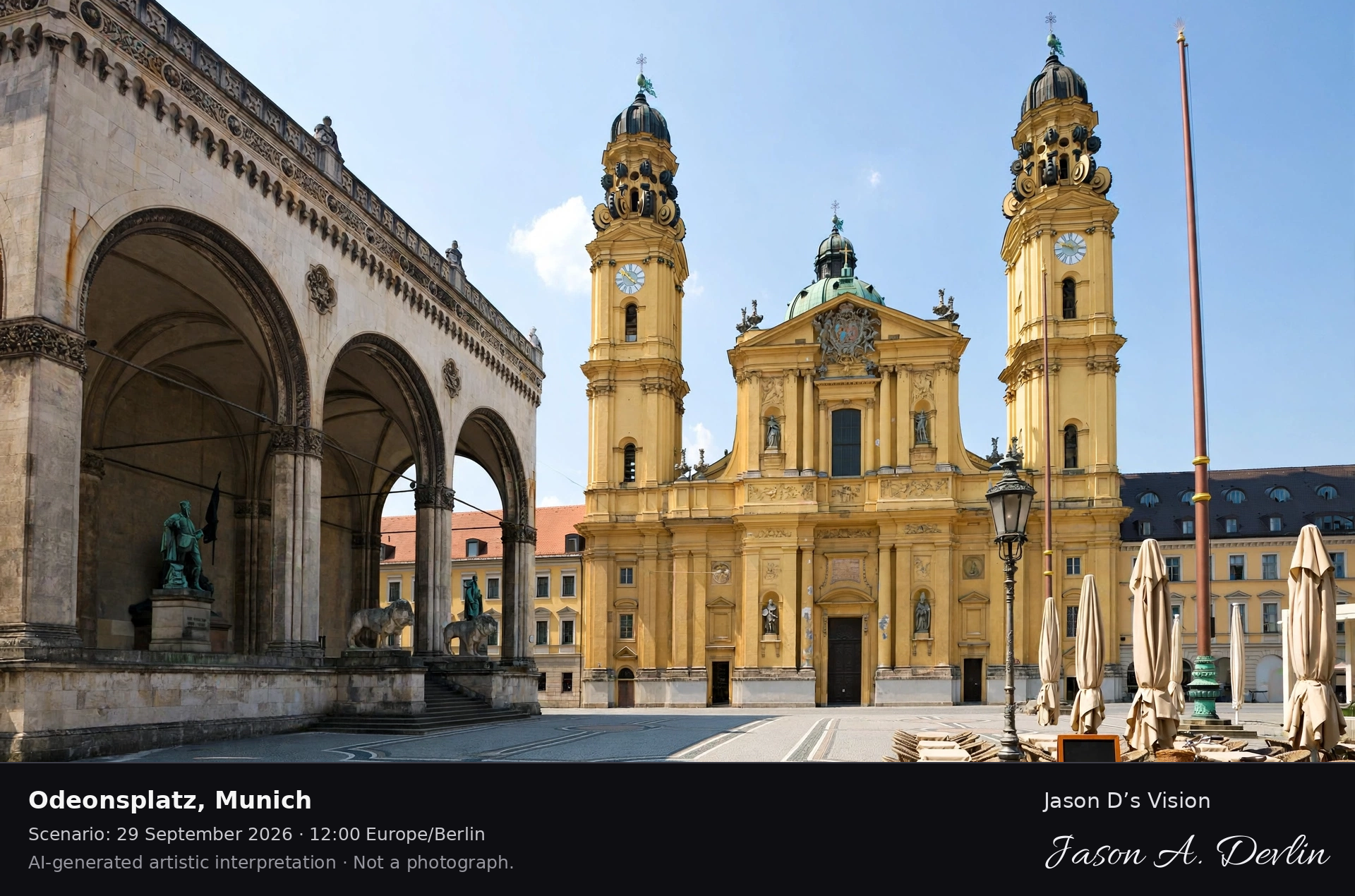
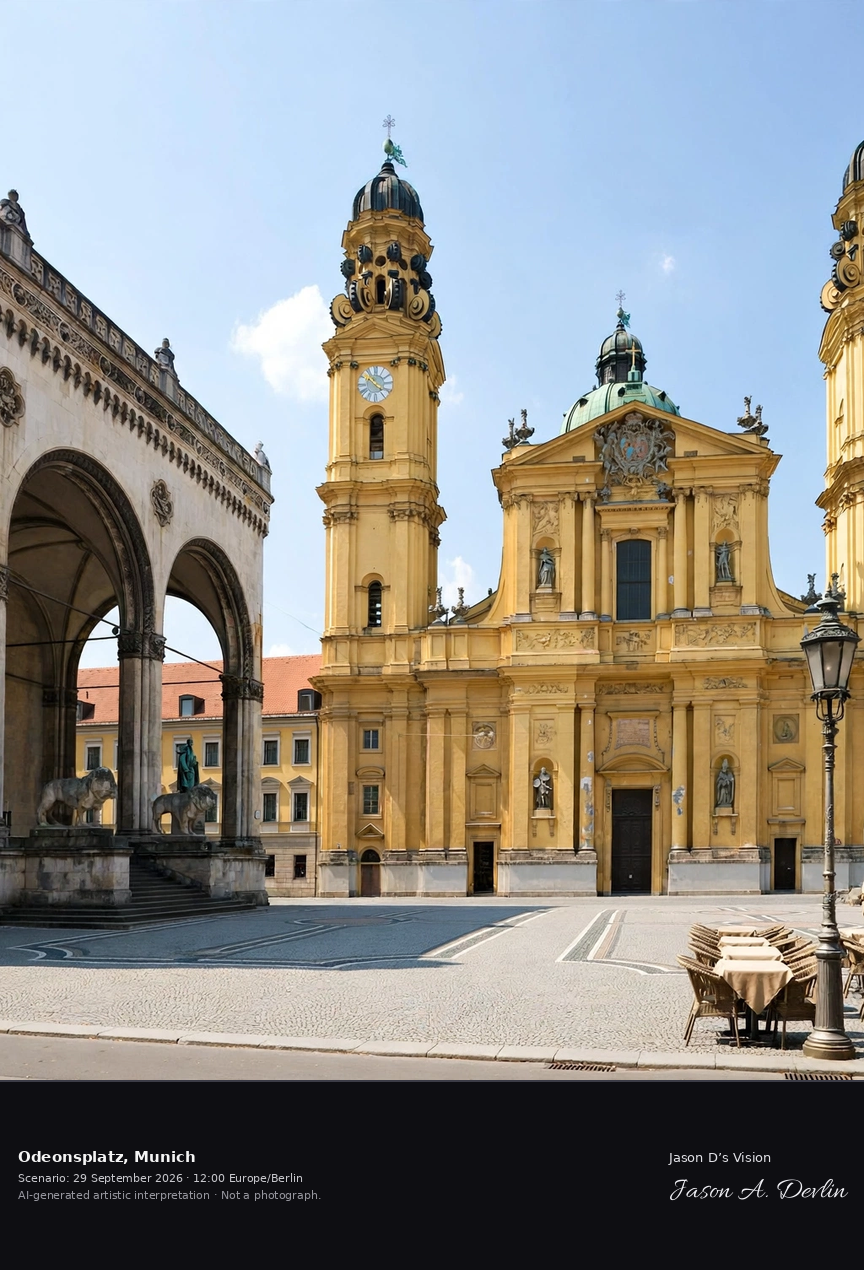
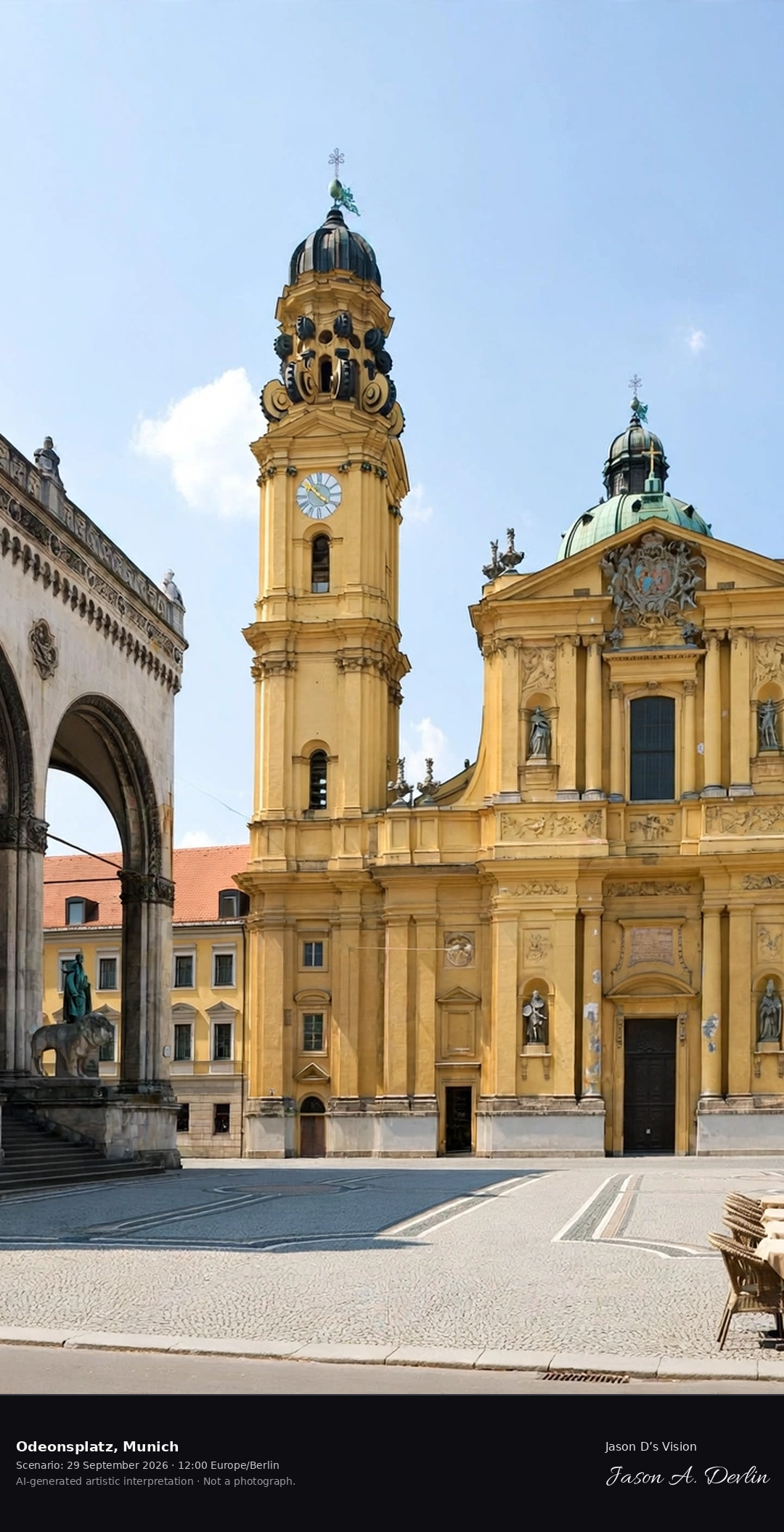
At blue hour the floodlit yellow façade of the Theatinerkirche fills the centre, its twin towers with clock faces flanking the central gable and dome. The Feldherrnhalle loggia stands to the left, its arched bays and the statue and lions on the plinth picked out by warm lamplight. A tall street lamp glows in the right foreground beside café tables, a bicycle and a chalkboard reading 'Biergarten offen', all under a deep-blue evening sky.
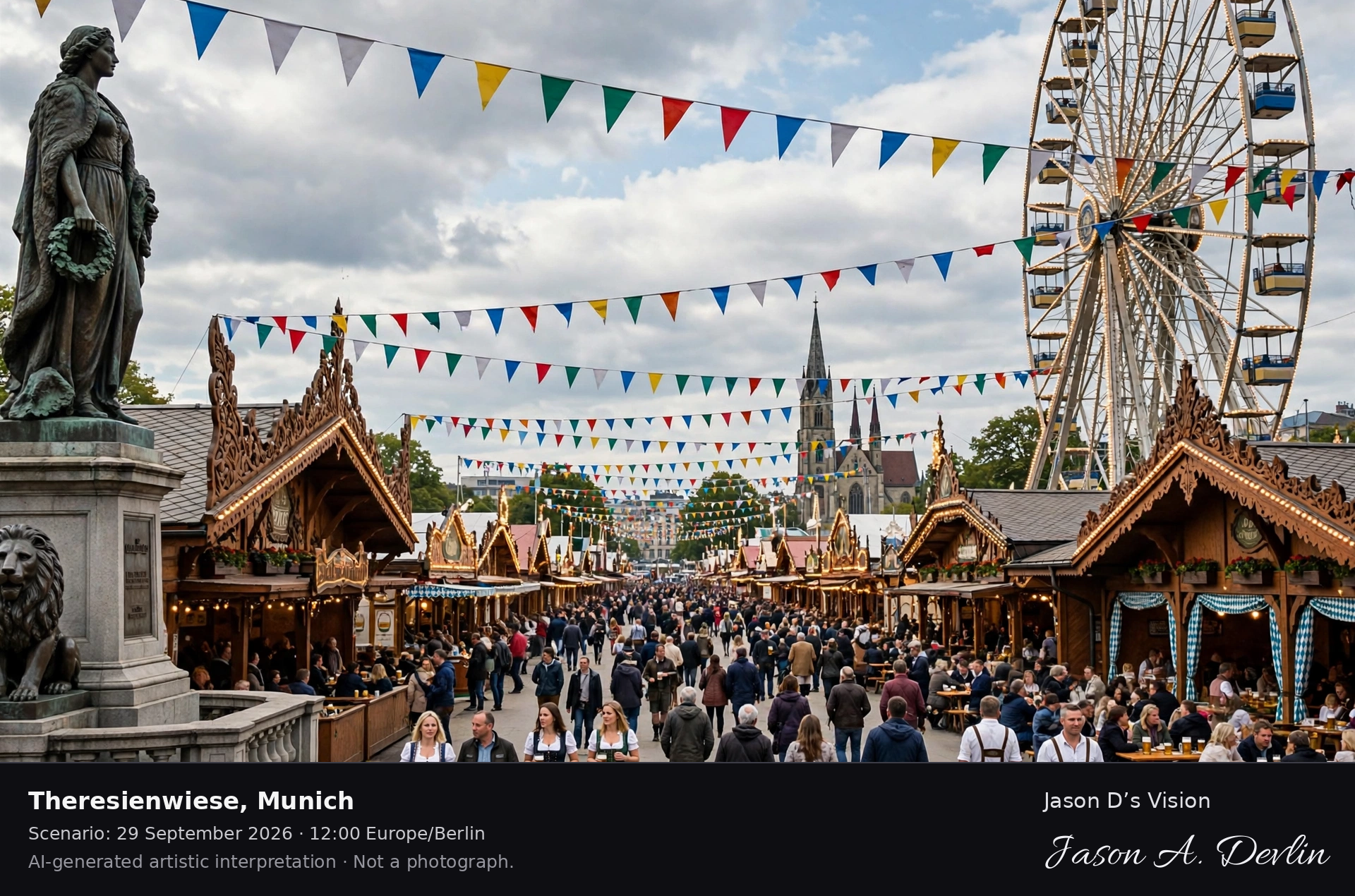
Oktoberfest scene only when verified · AI-generated artistic interpretation
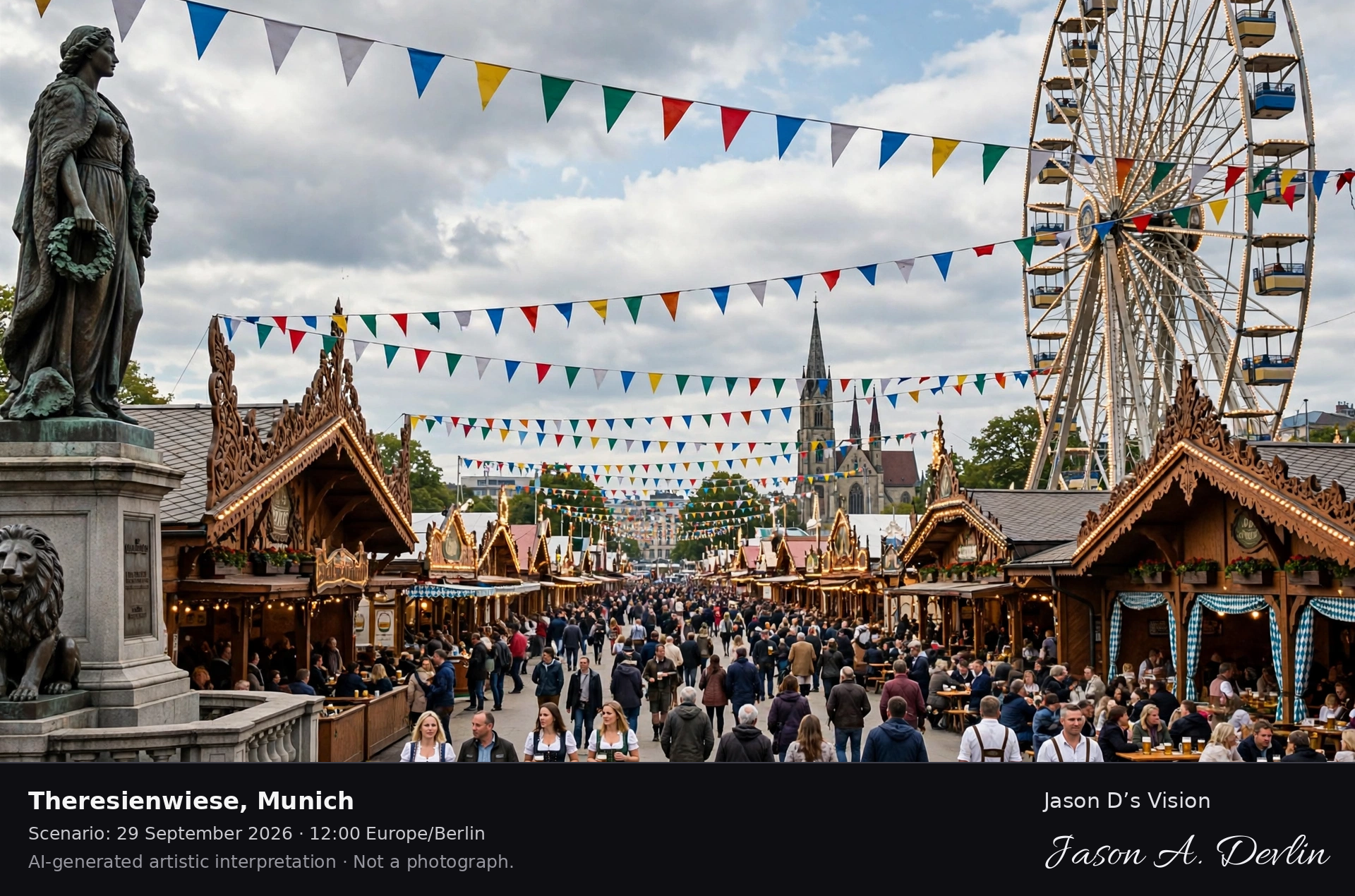
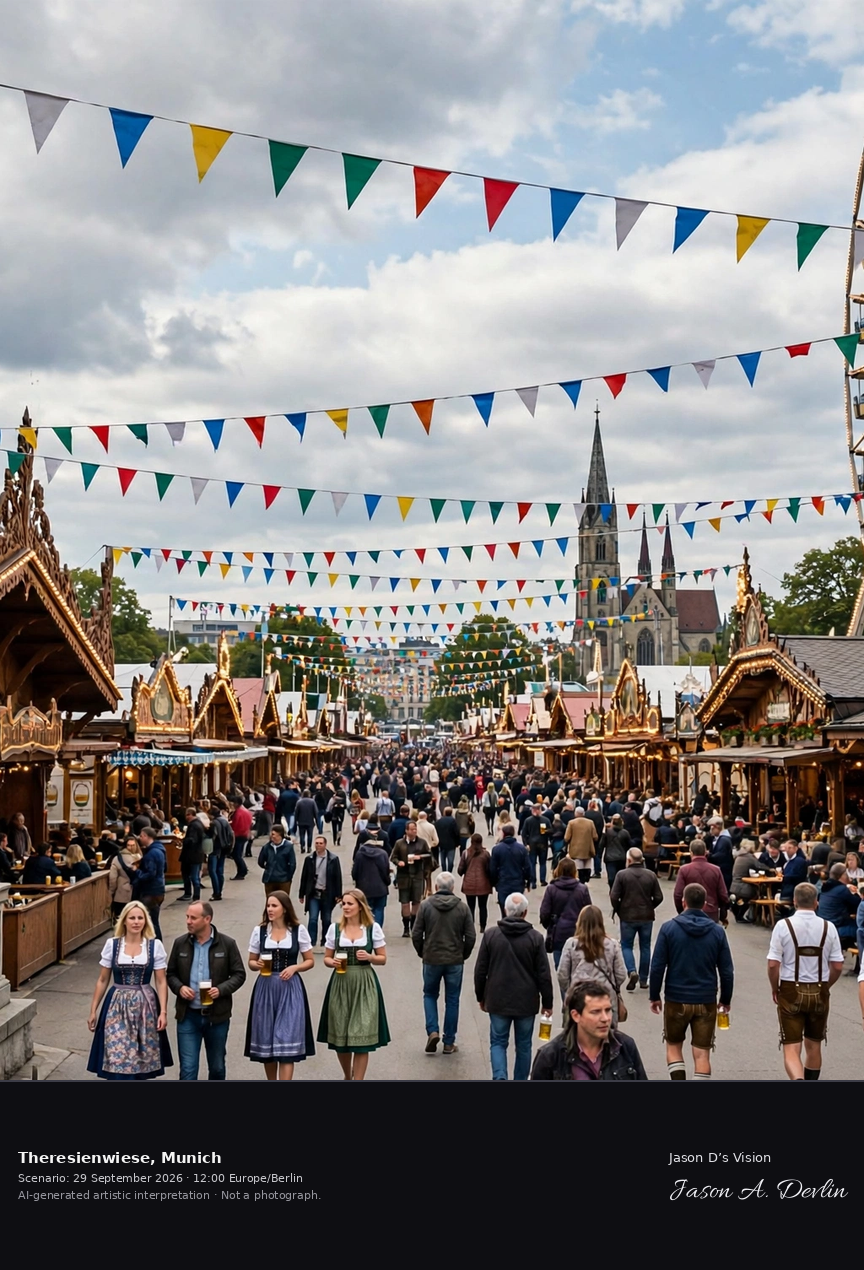
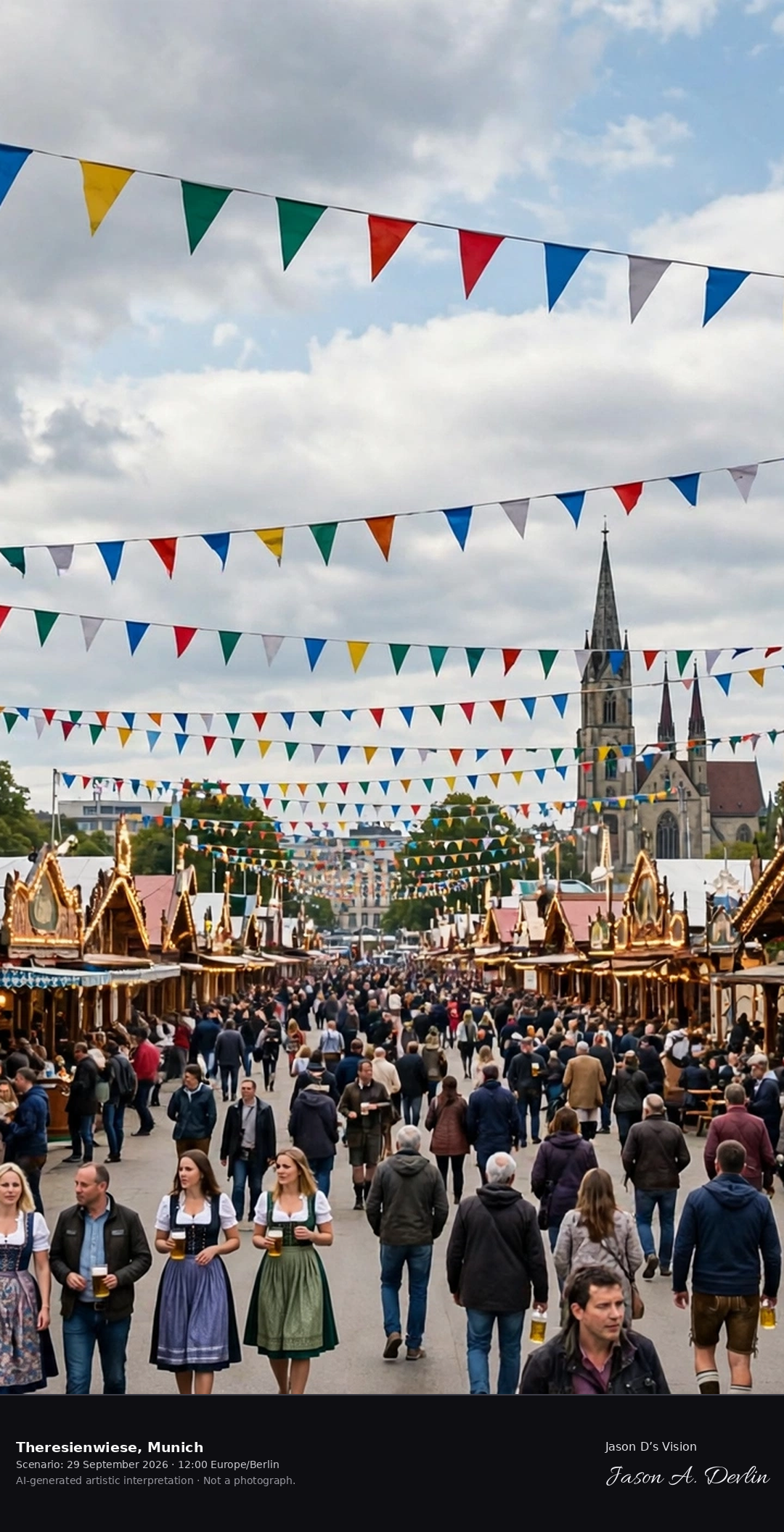
The lit Riesenrad Ferris wheel glows at the right with its carousel below, while the Hofbräu and Paulaner Festzelt fronts stand left and right of a rain-wet lane, Bavarian bunting strung overhead and the Bavaria statue on the skyline to the upper left. Visitors walk away from the camera down the reflective pavement under heavy overcast night skies, the 20:15 festival hour catching the tents, rides and food stalls in warm light against the dark, damp evening.
Forked street and towers · AI-generated artistic interpretation
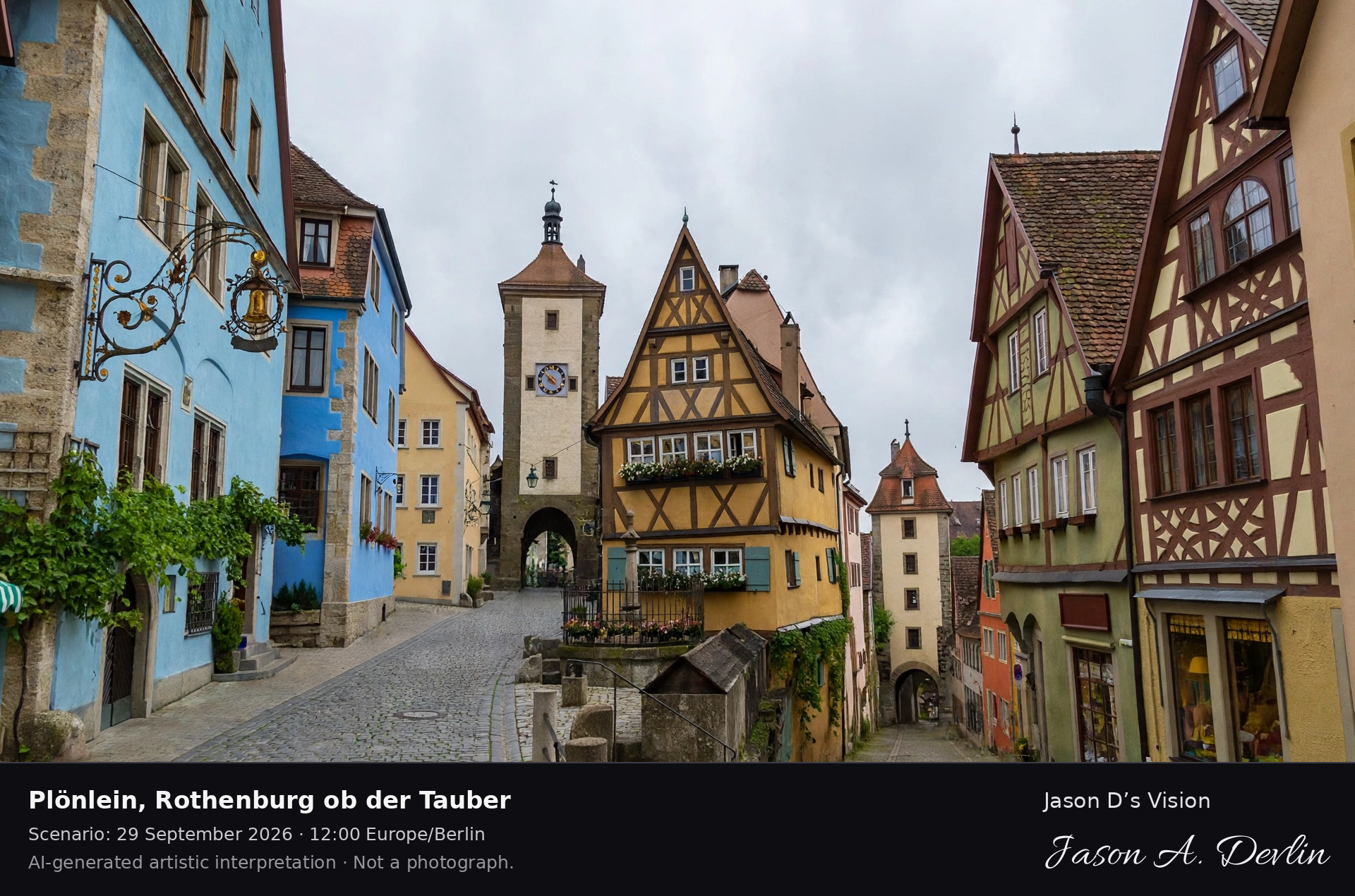
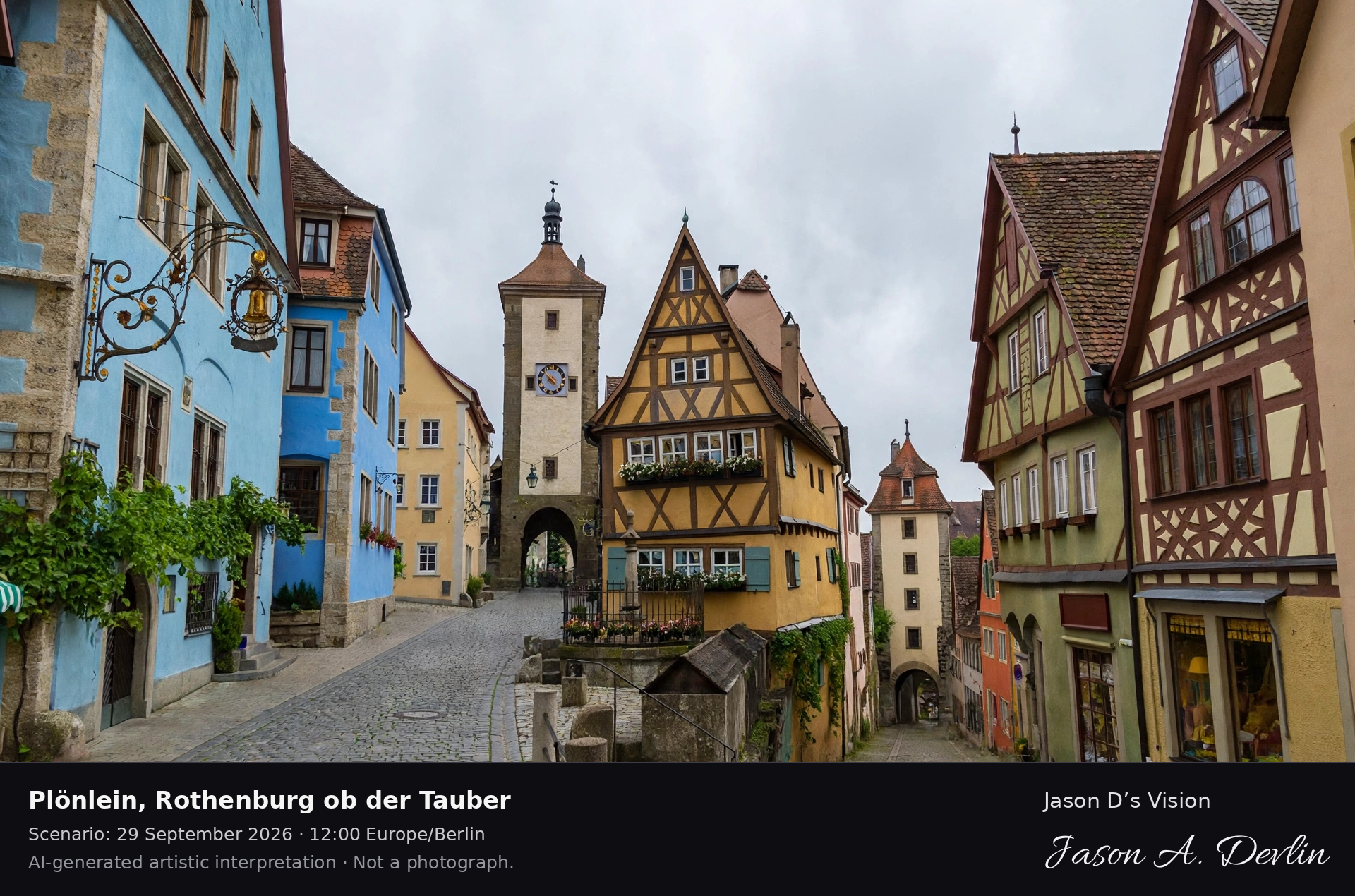
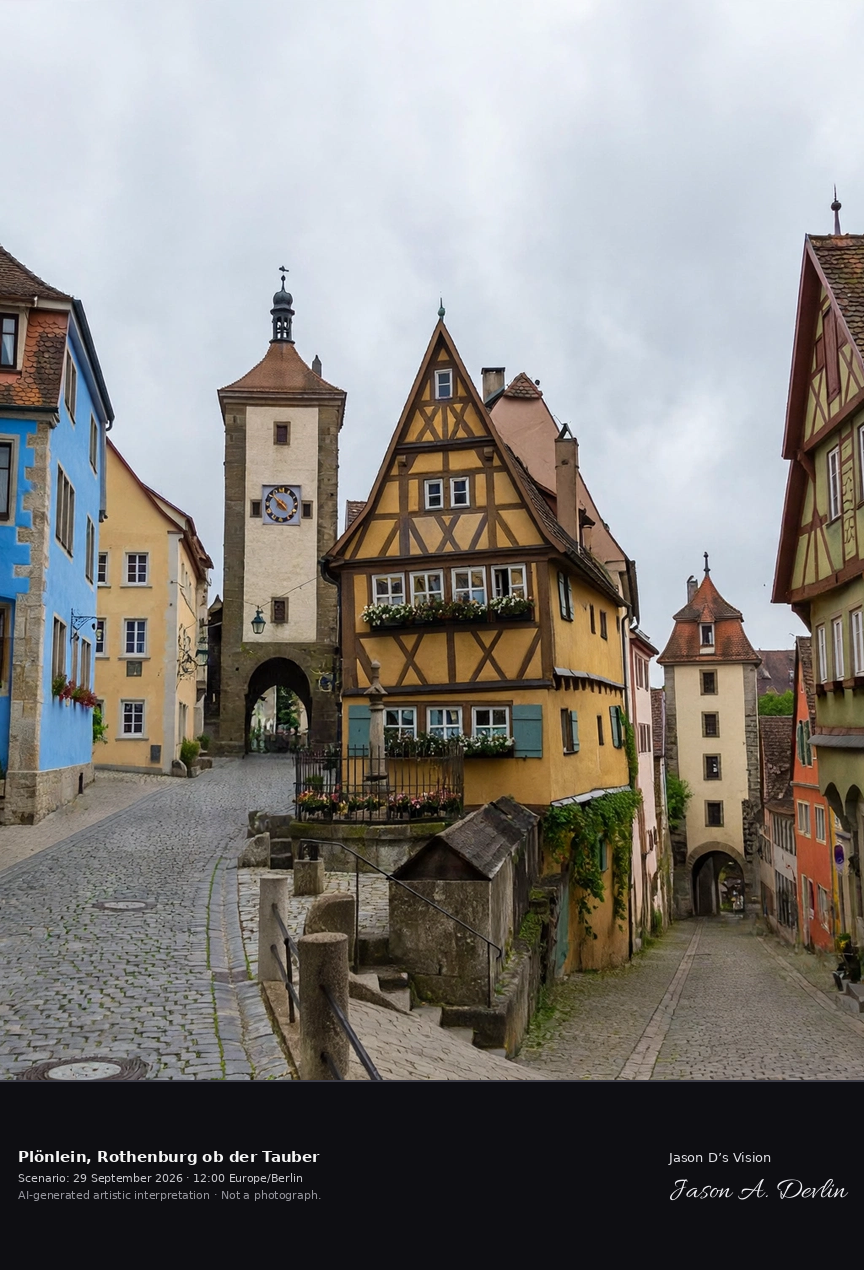
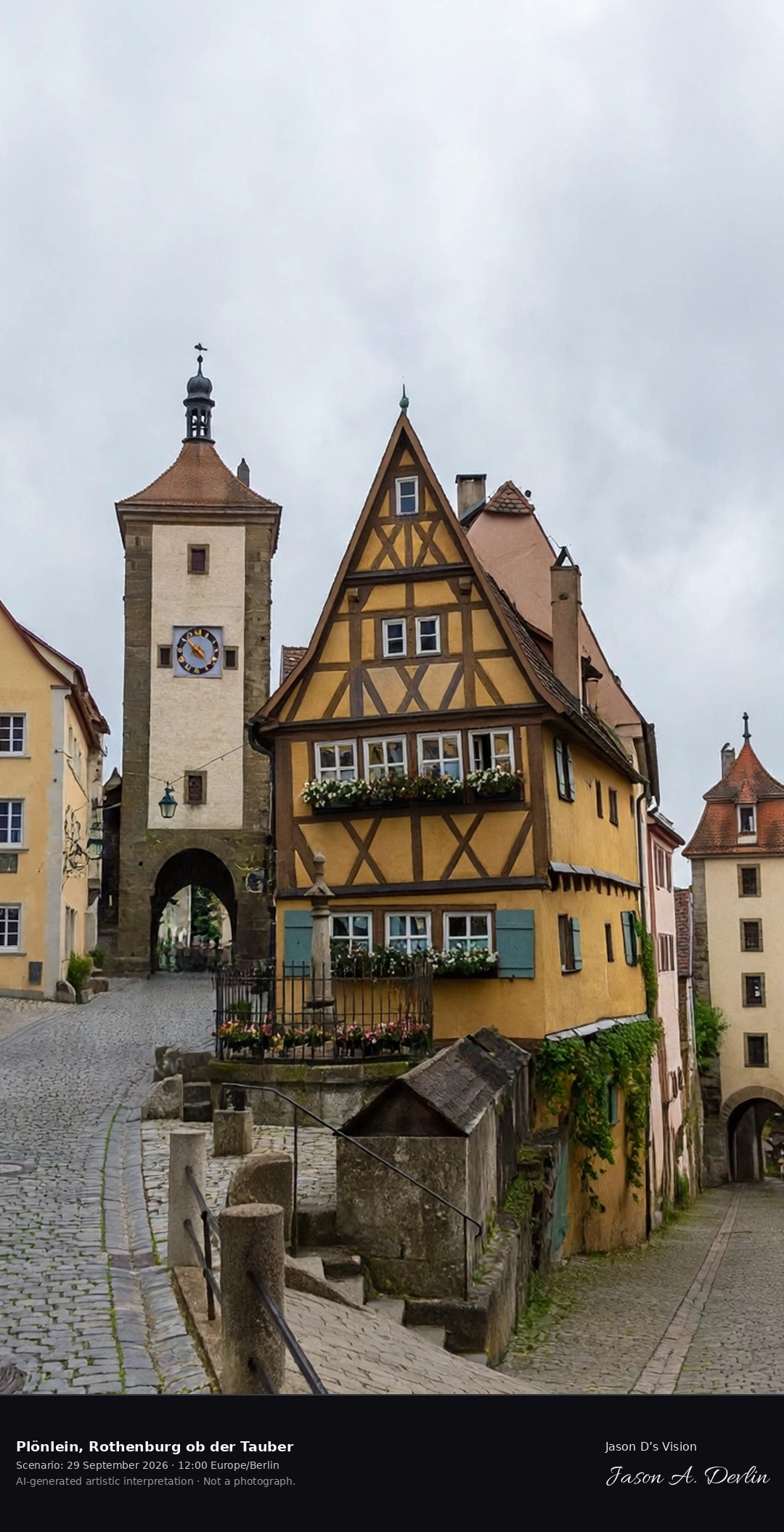
The Plönlein's forked cobbled street opens toward the lantern-lit tower archway with its clock face on the left, while the crooked yellow half-timbered house stands at the center of the frame and a row of gabled houses with glowing shopfronts rises on the right. Warm lamplight pools on the cobbles under a clear starry night sky, with a red lantern sign and wrought-iron brackets hanging from the left-hand façades. The scene reads as the quiet Rothenburg old town at 20:45 on a clear 12.8°C September evening.
Ramparts and rooftops · AI-generated artistic interpretation
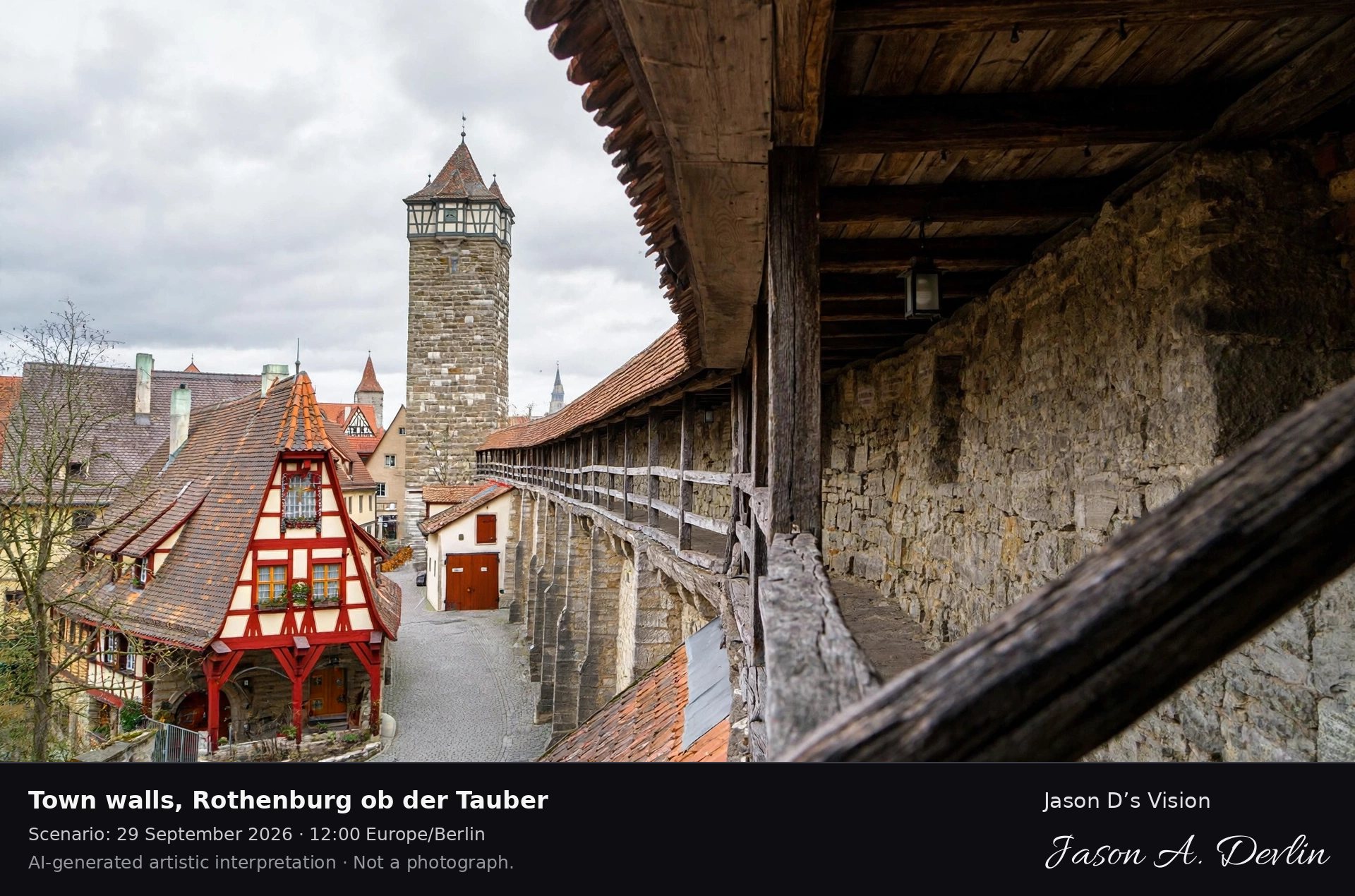
A night walk along the covered wall gallery of Rothenburg ob der Tauber: the timber-roofed rampart walkway stretches ahead with glowing wall lamps under dark beams, the mossy stone parapet running the right edge of the frame. To the left, a red half-timbered gabled house with lit windows stands among lamplit rooftops and wet cobblestones, while a tall stone watchtower rises in the middle distance beneath a moonlit, partly cloudy sky — no people, just the lamps and the moon on the ancient walls.
River and bridge ensemble · AI-generated artistic interpretation
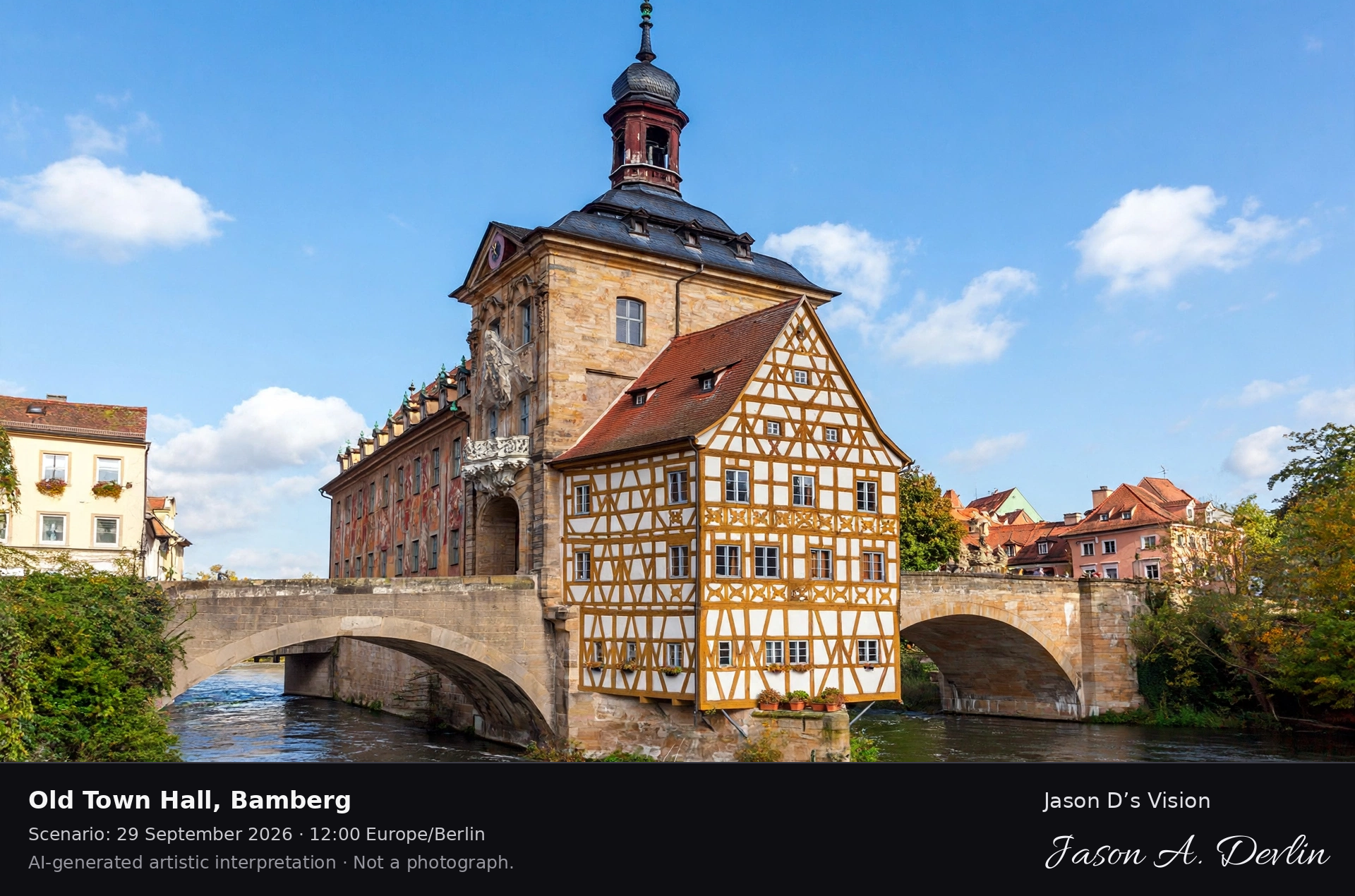
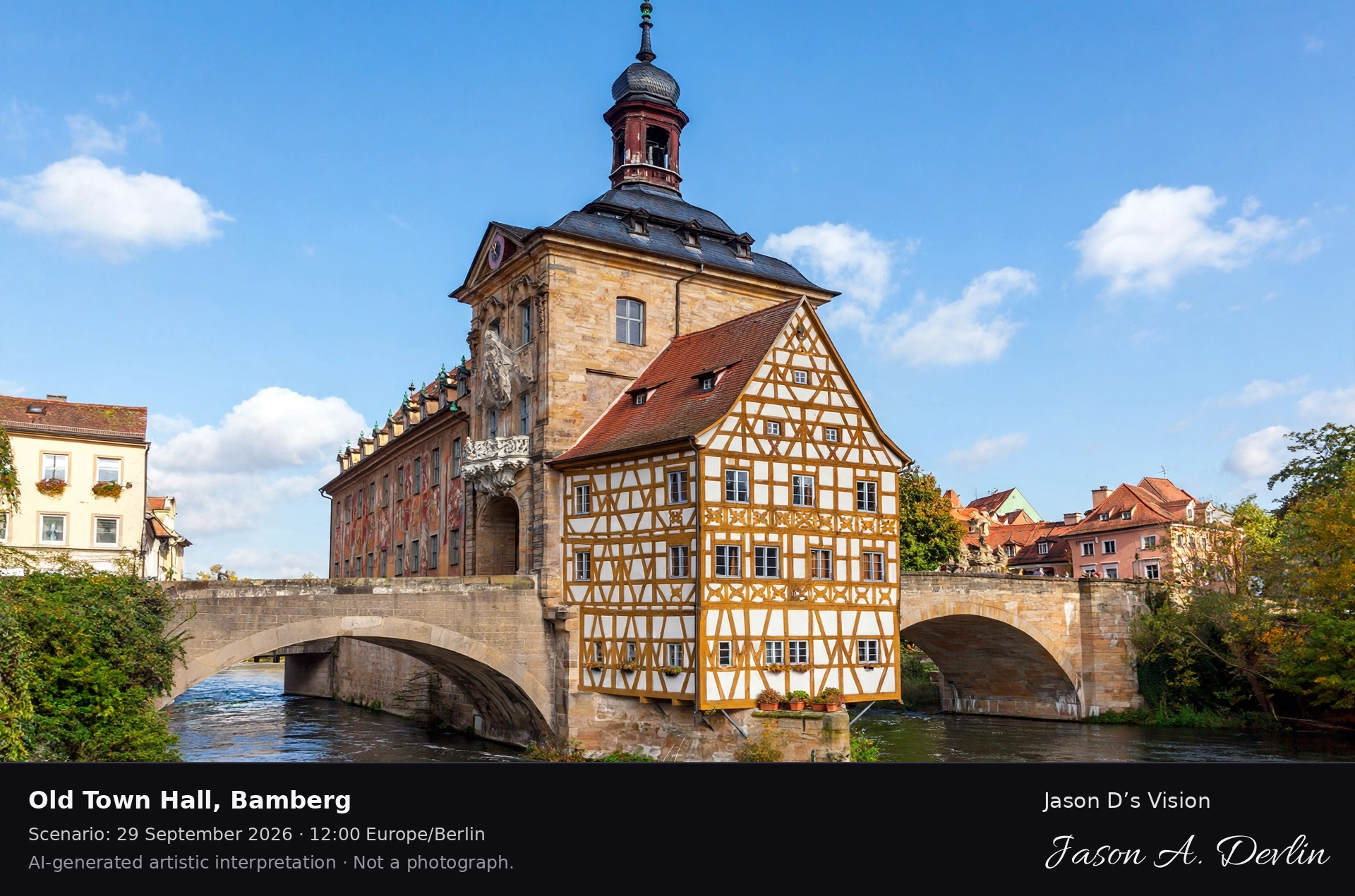
From the river bank at night, the Old Town Hall glows against a deep blue starry sky — the tall gabled stone building and its cupola tower stand center, with the half-timbered annex filling the right of the frame, its windows lit warm yellow. A stone bridge arch crosses beneath the island to the left, river reflections shimmering below, while old town houses with lit windows crowd the right bank under the clear 12°C sky.
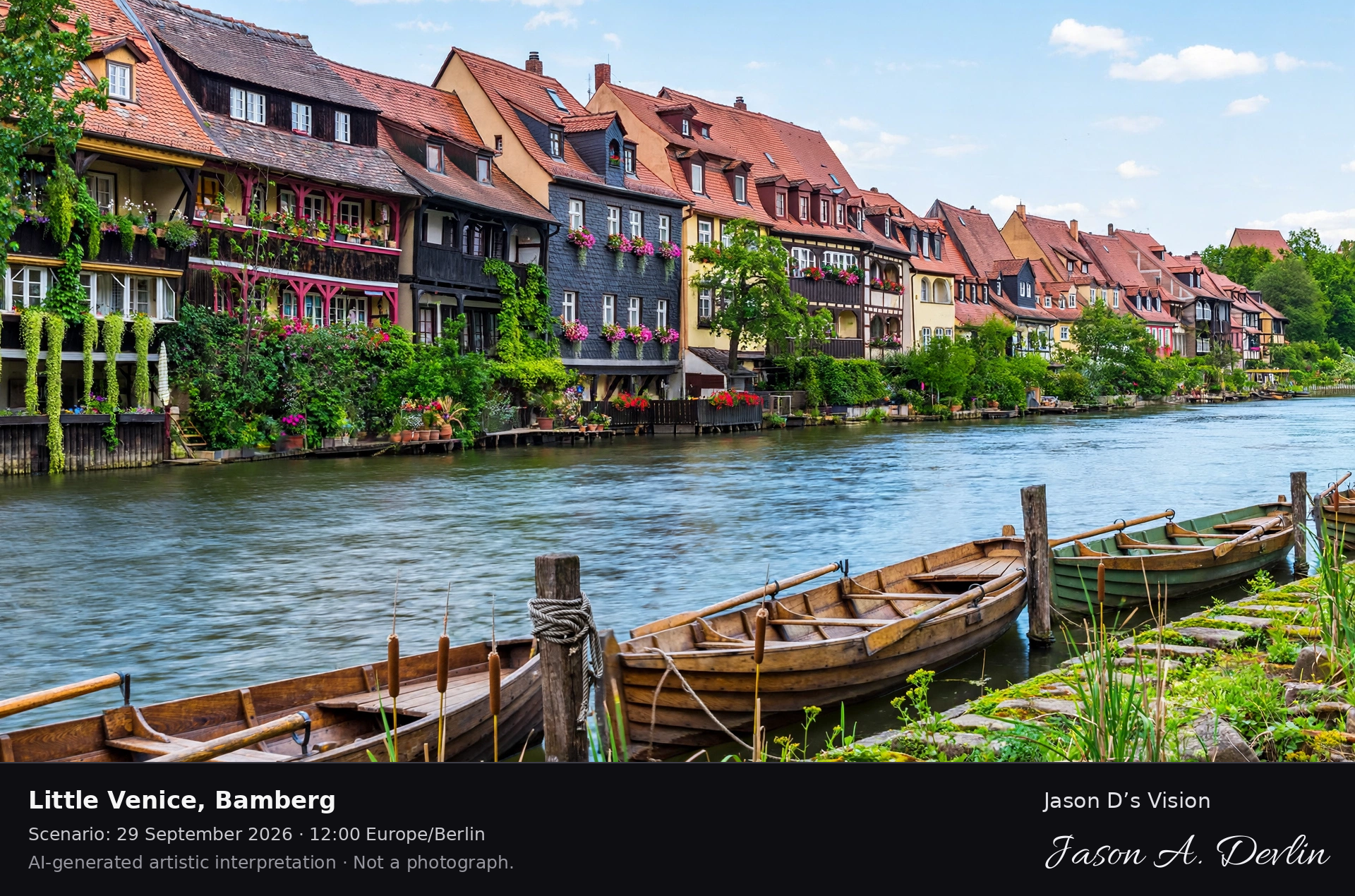
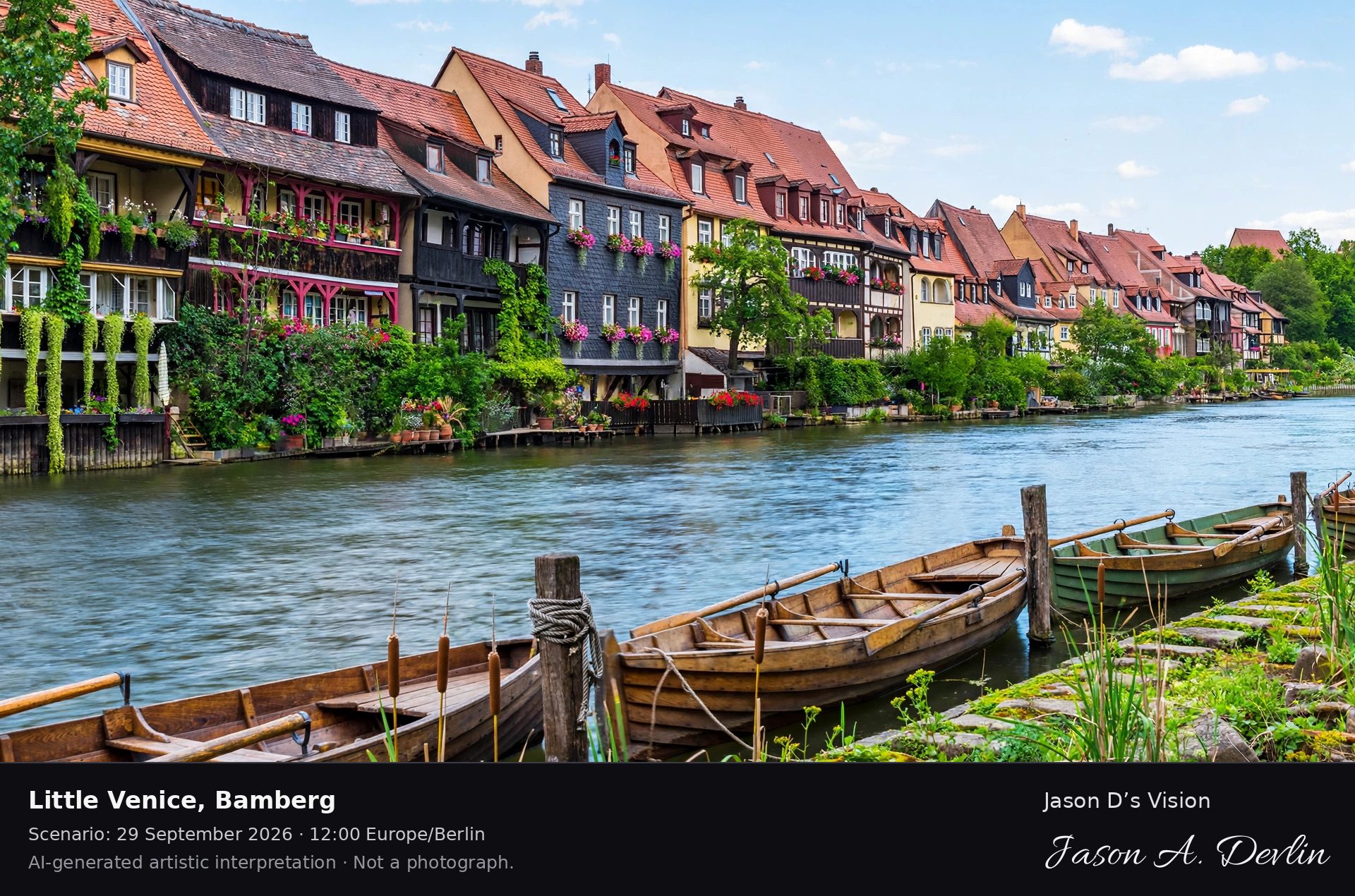
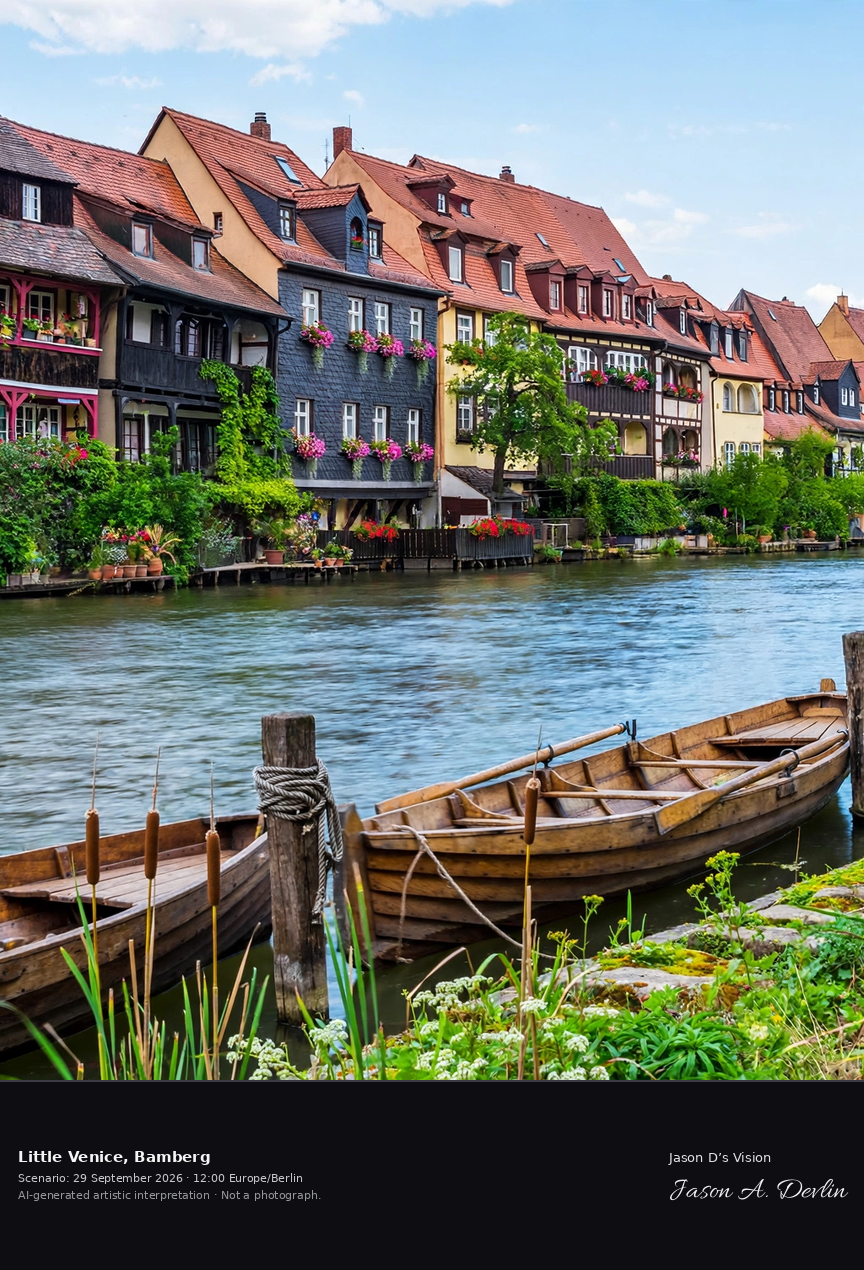
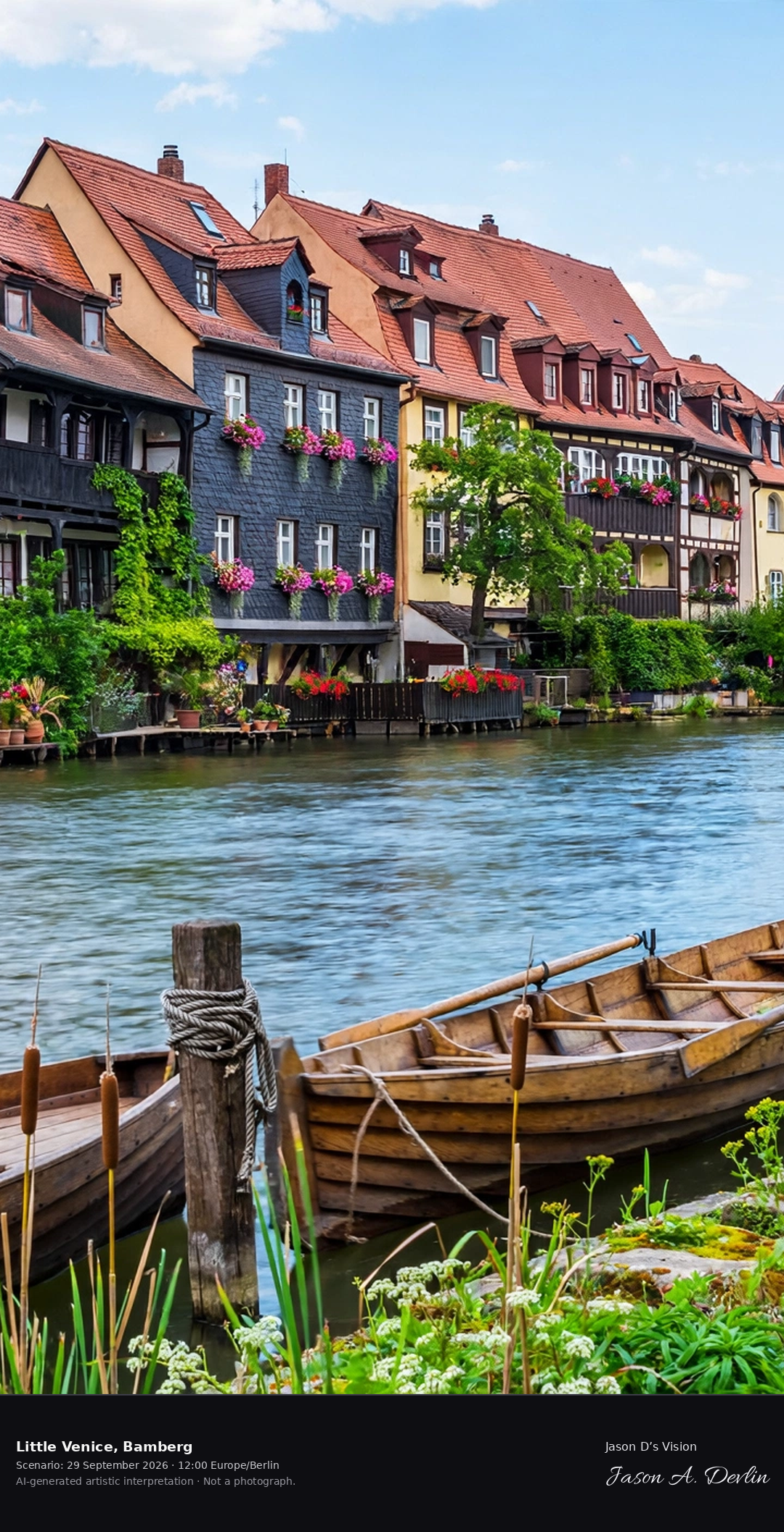
From the river at night, Bamberg's Little Venice spreads across the frame — a row of historic fishermen's houses with half-timbered facades, red tile roofs and flower-box windows fills left to right, lit warm from streetlamps and glowing windows. Two wooden boats lie moored at the dark water in the foreground, and a bright moon hangs in the starry clear sky above the quiet 12°C scene.
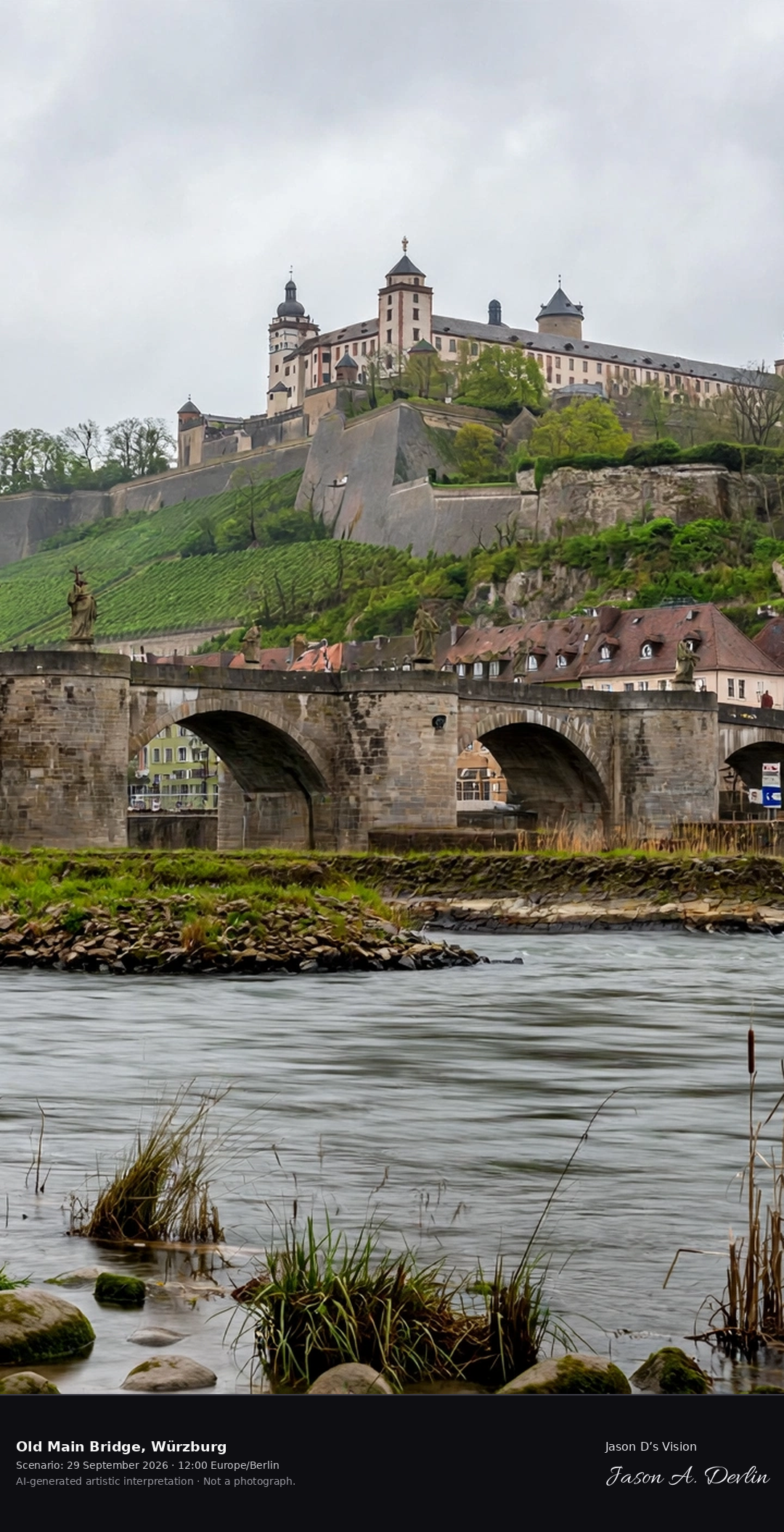
Bridge and Marienberg Fortress · AI-generated artistic interpretation
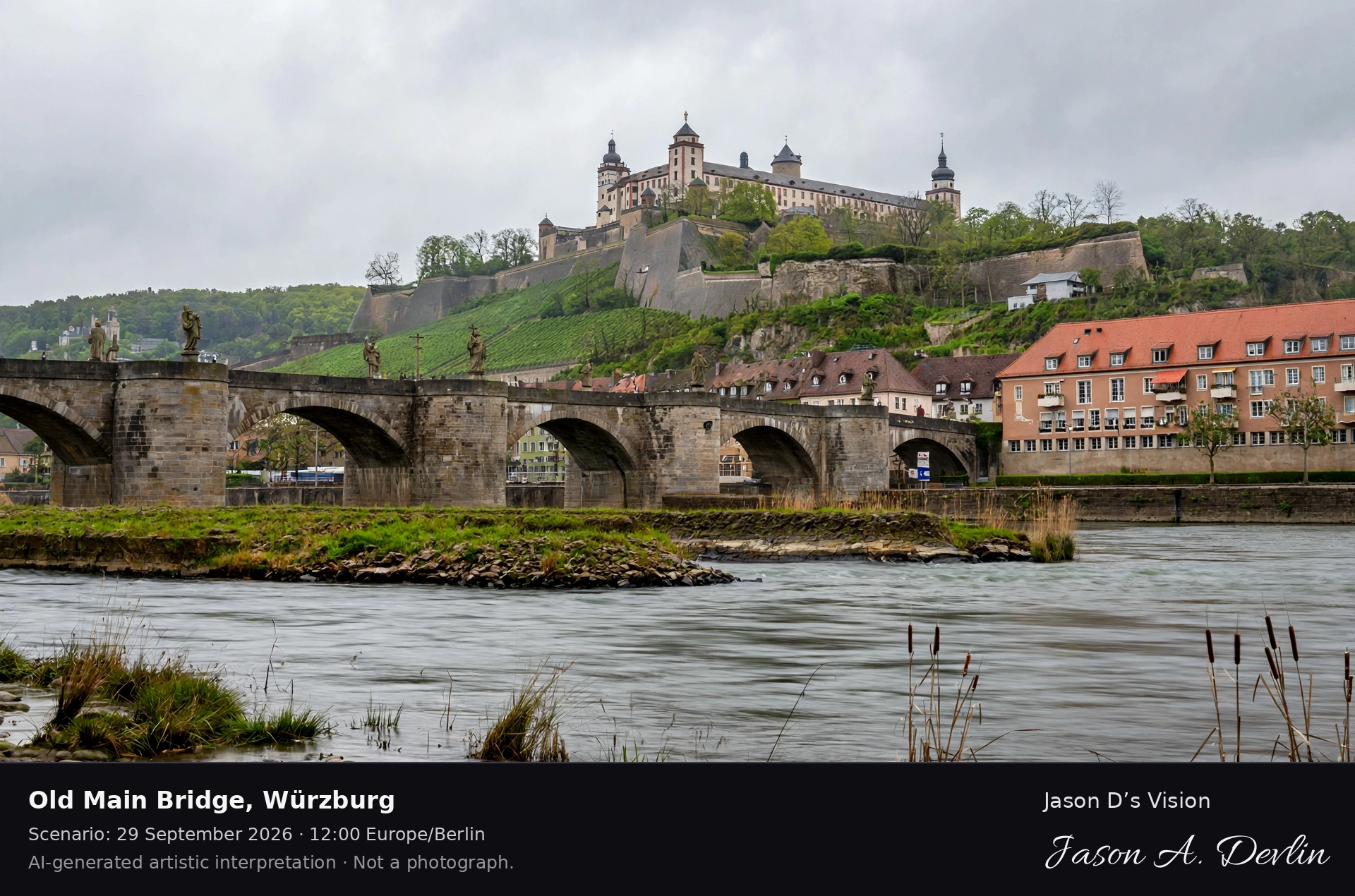
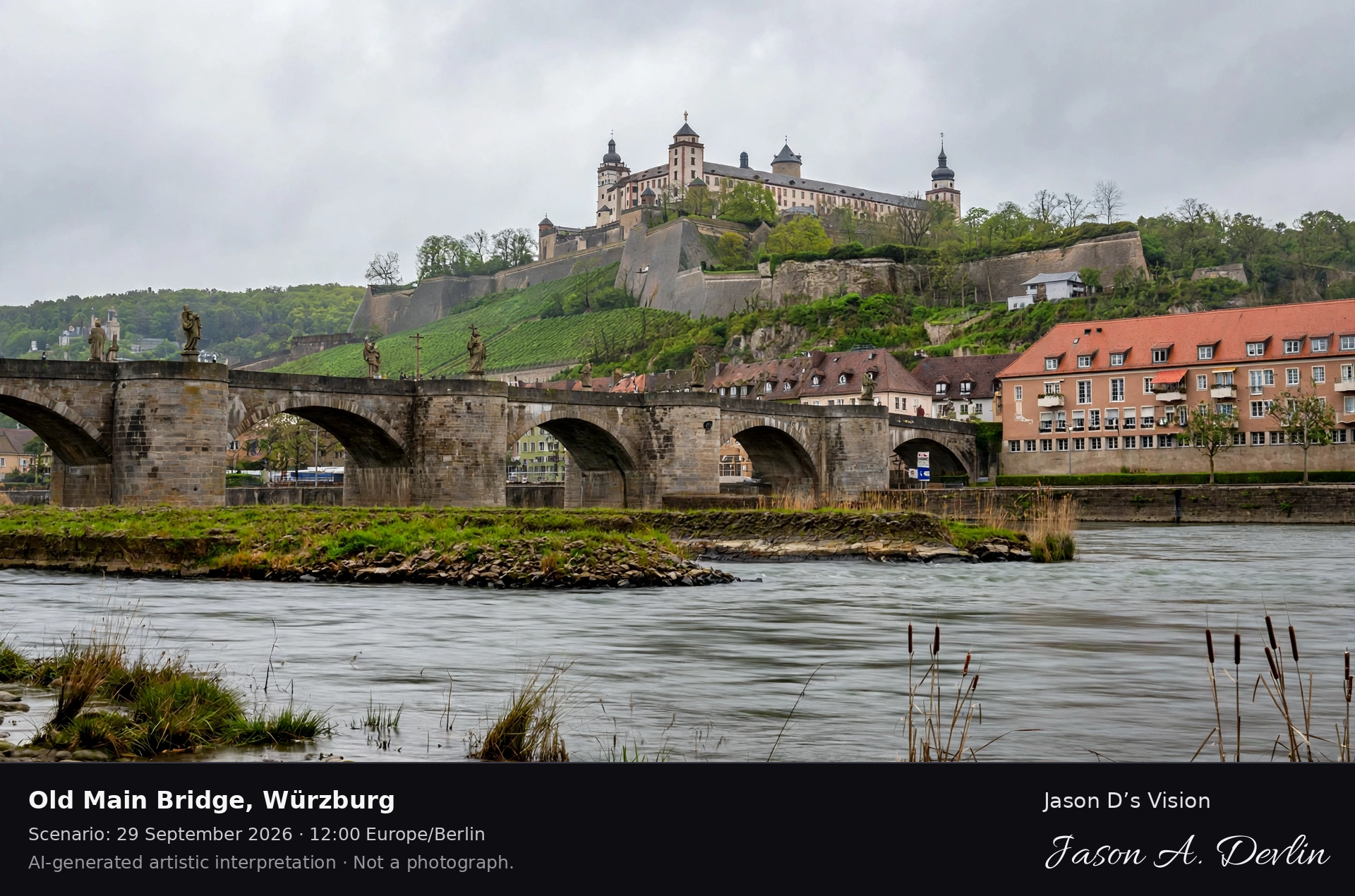
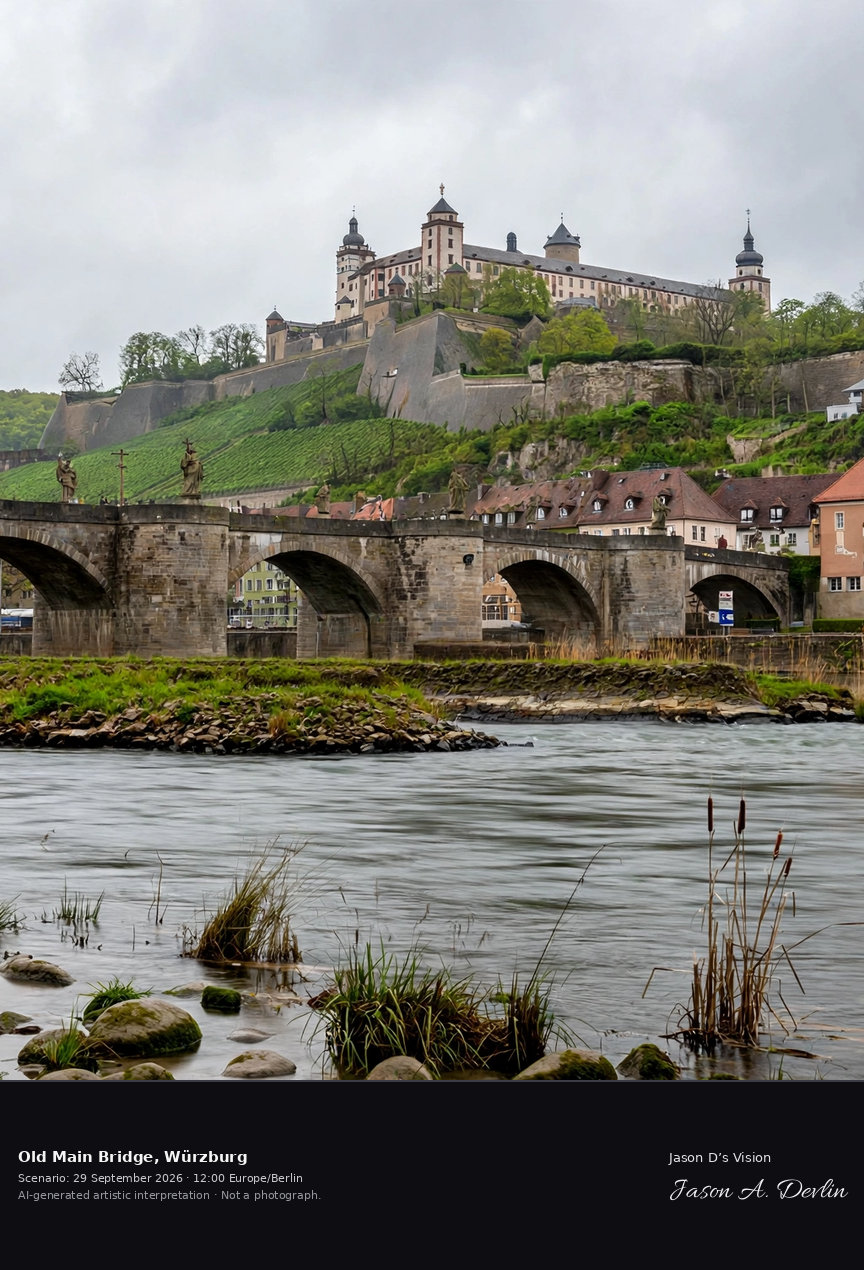
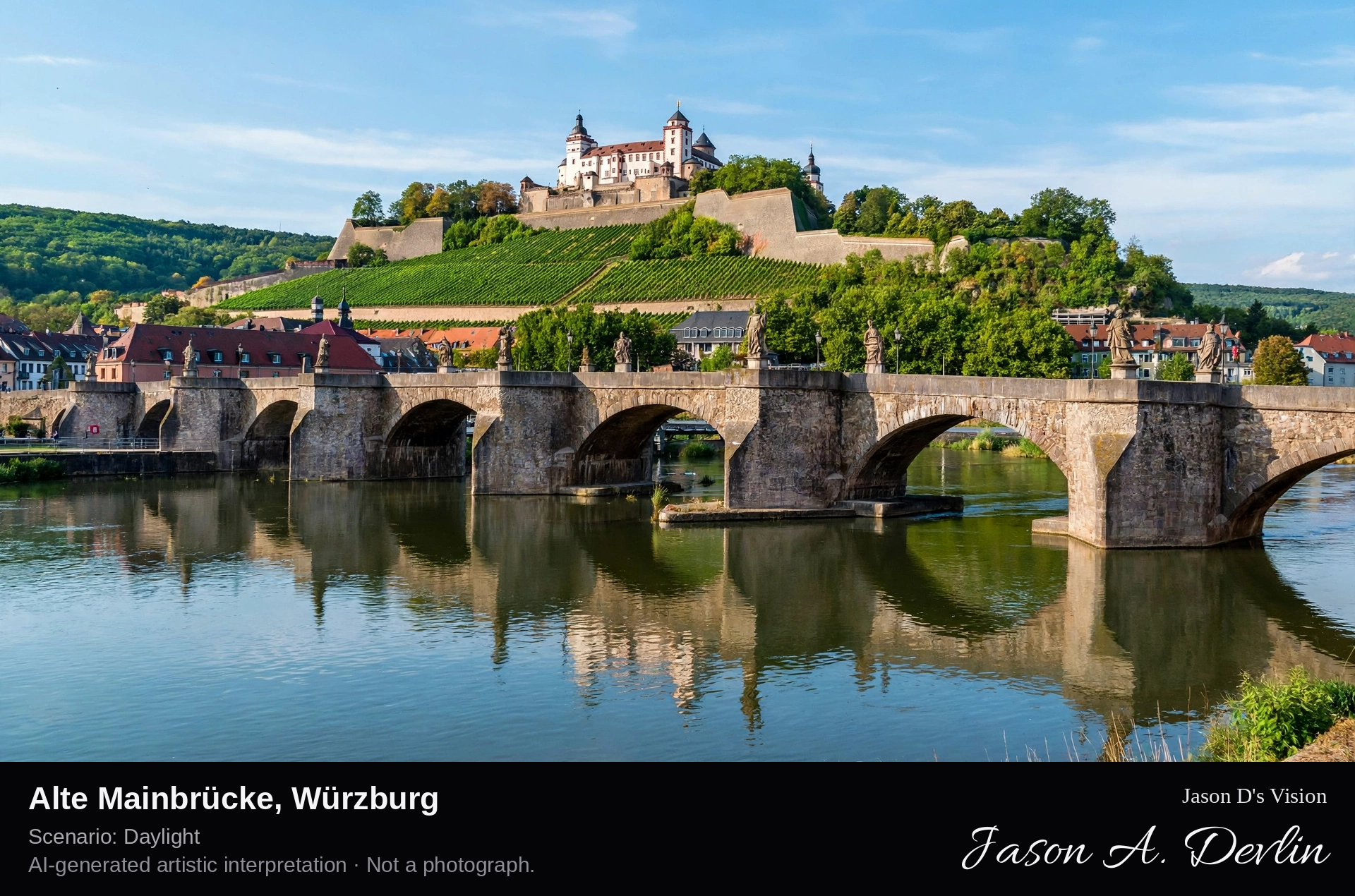
Under a heavy overcast night sky, the Old Main Bridge spans the Main with its weathered stone arches and gilded saint statues along the parapet, streetlamps glowing amber. The Marienberg Fortress dominates the center background above dark vineyard terraces, while lit old-town houses line the right bank and lamplight shimmers on the river in the cool 12°C air.
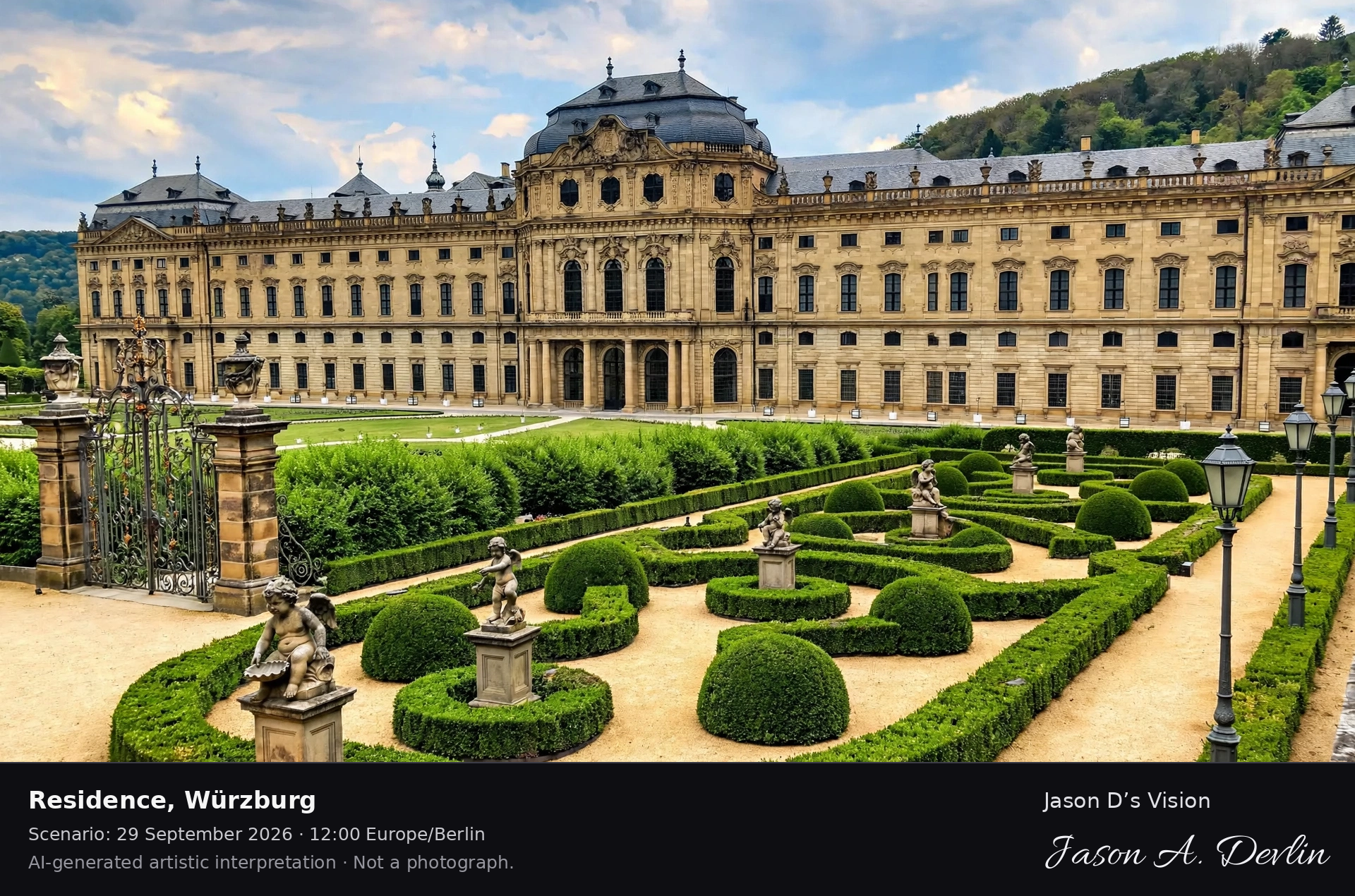
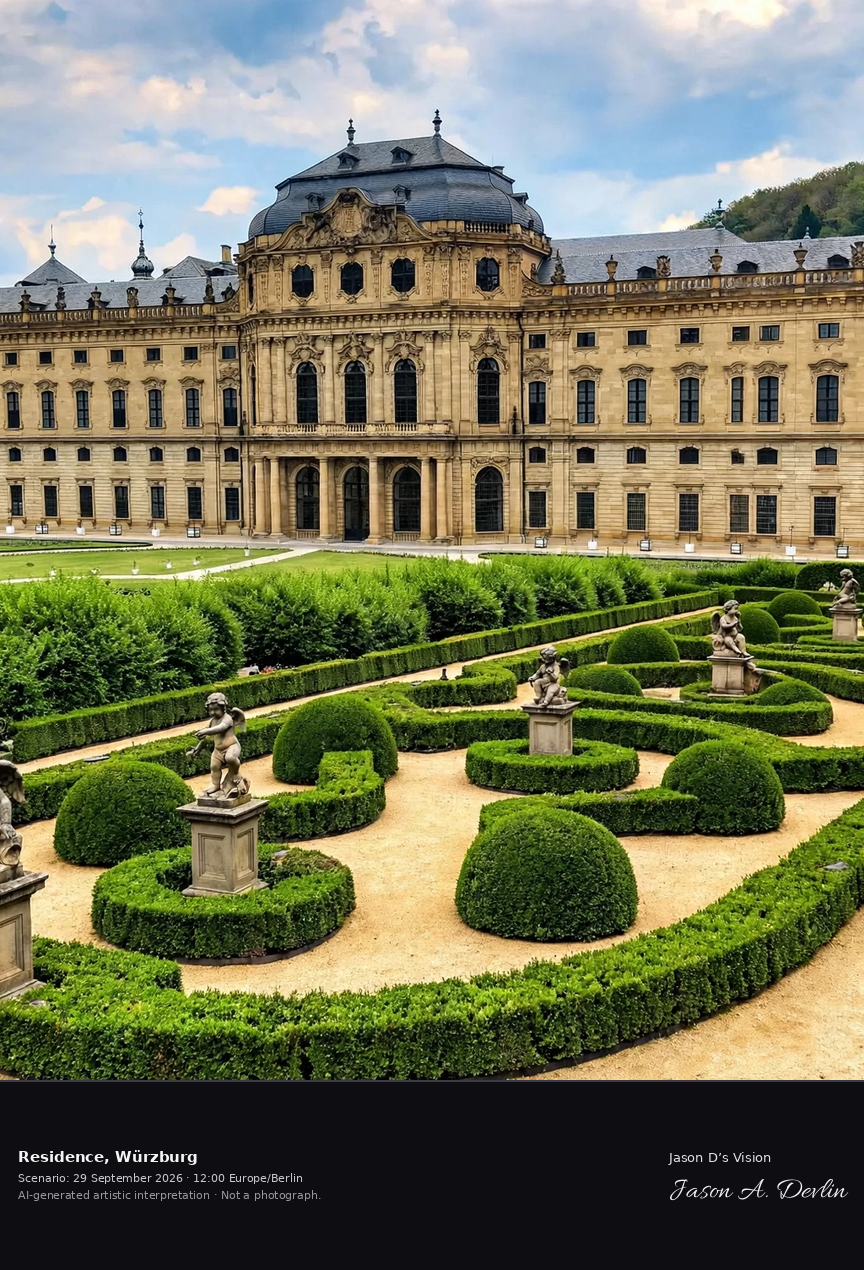
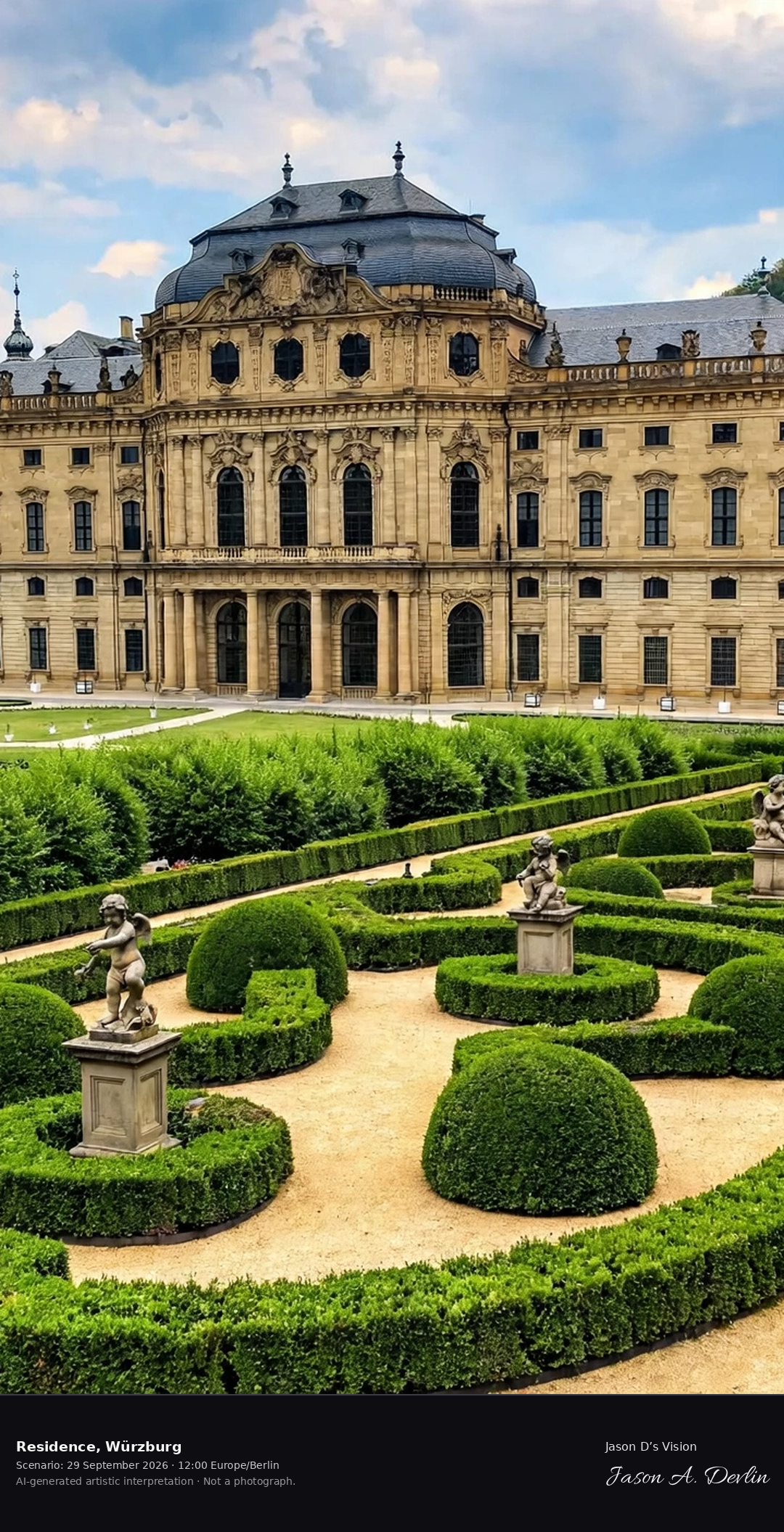
Palace frontage and gardens · AI-generated artistic interpretation
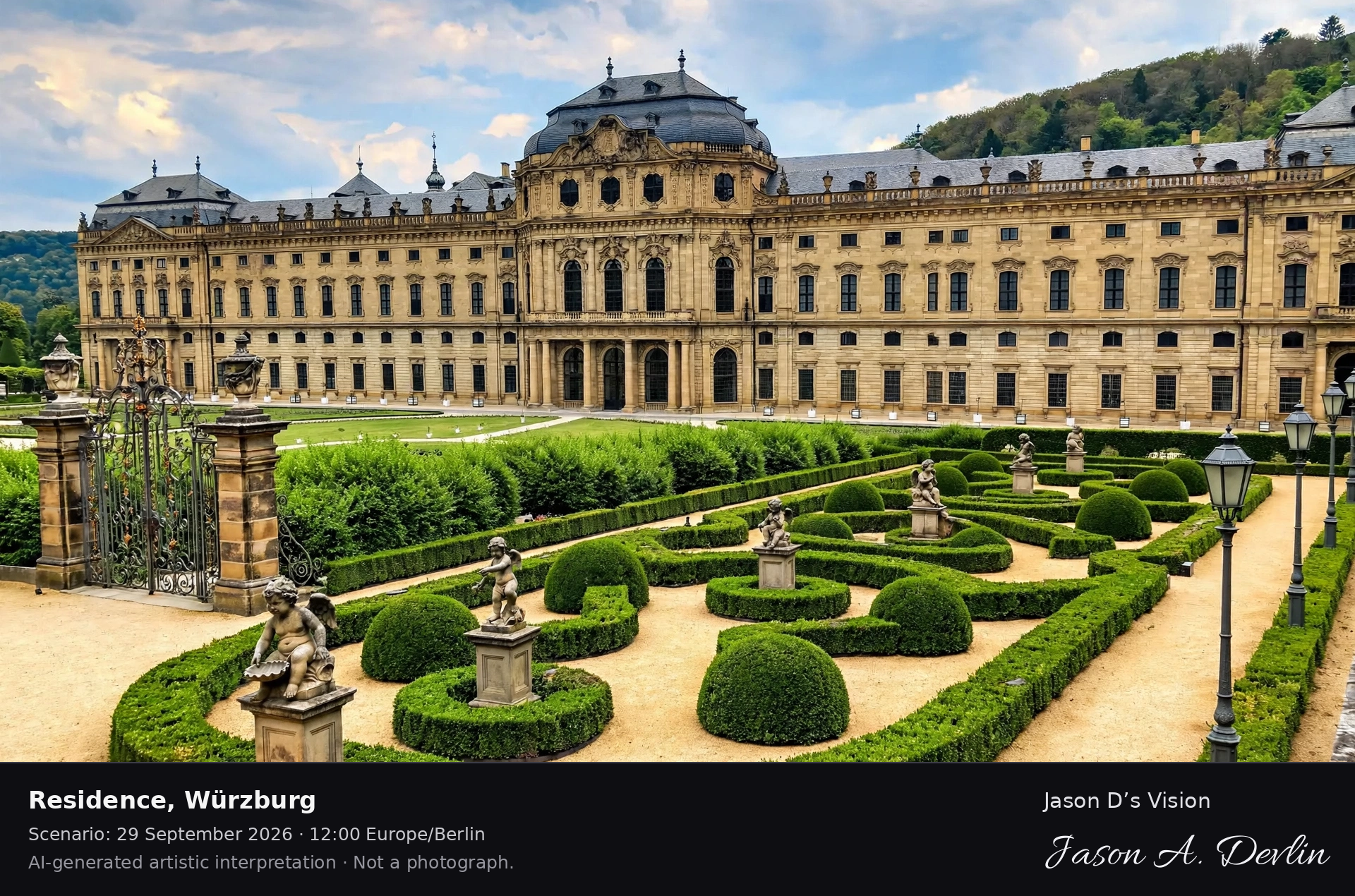
The Residence's long Baroque frontage glows from within across the Court Gardens, its ornate central pavilion rising above manicured parterres. Stone statues and lit garden lamps line the gravel paths left and right in the foreground, while the mansard roofs and sculpted pediments stand against a clear deep-blue night sky. A calm moonlit view of Würzburg's grandest palace from a tourist's eye-level stroll through the Hofgarten.
Castle approach and city outlook · AI-generated artistic interpretation
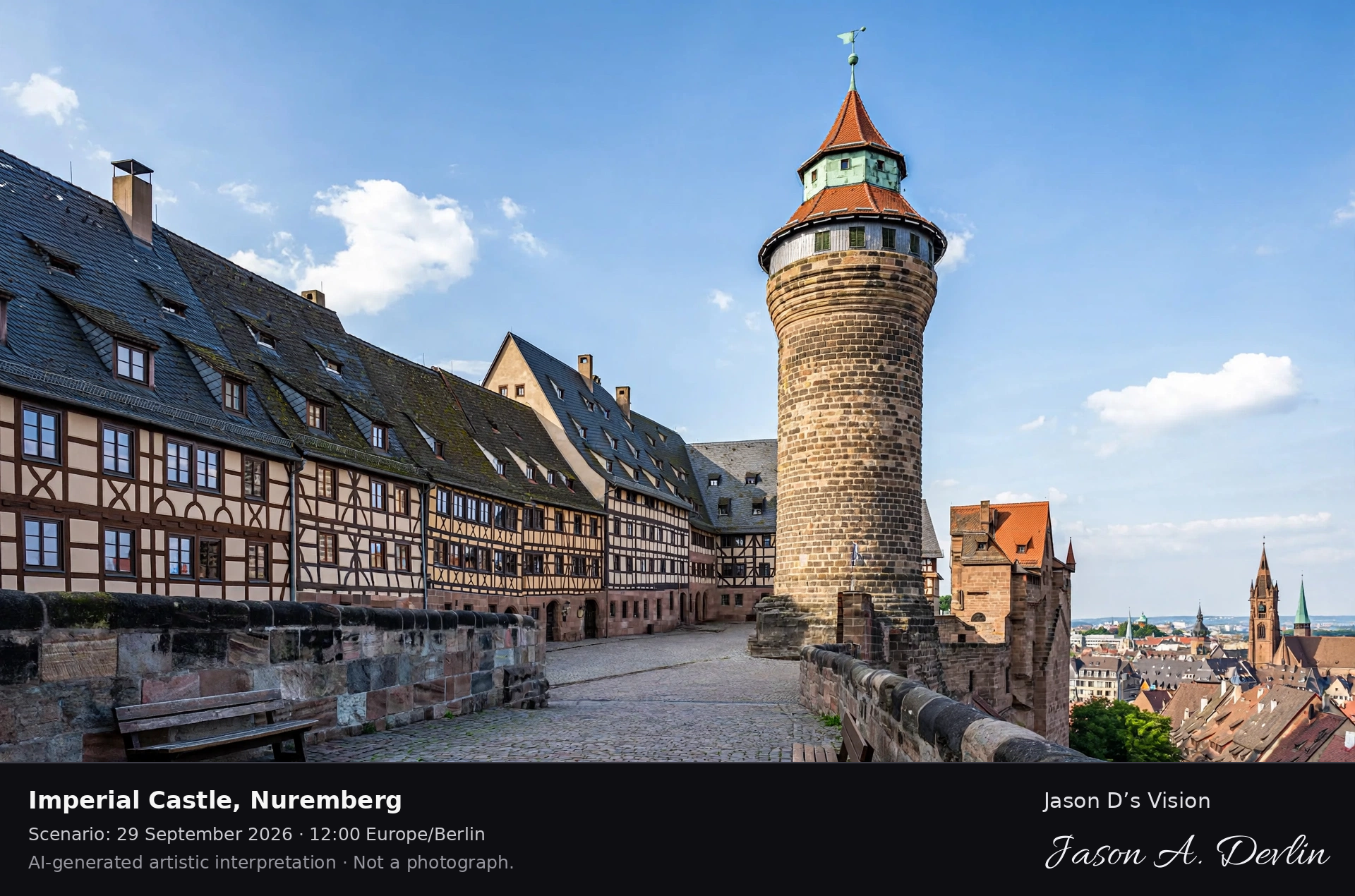
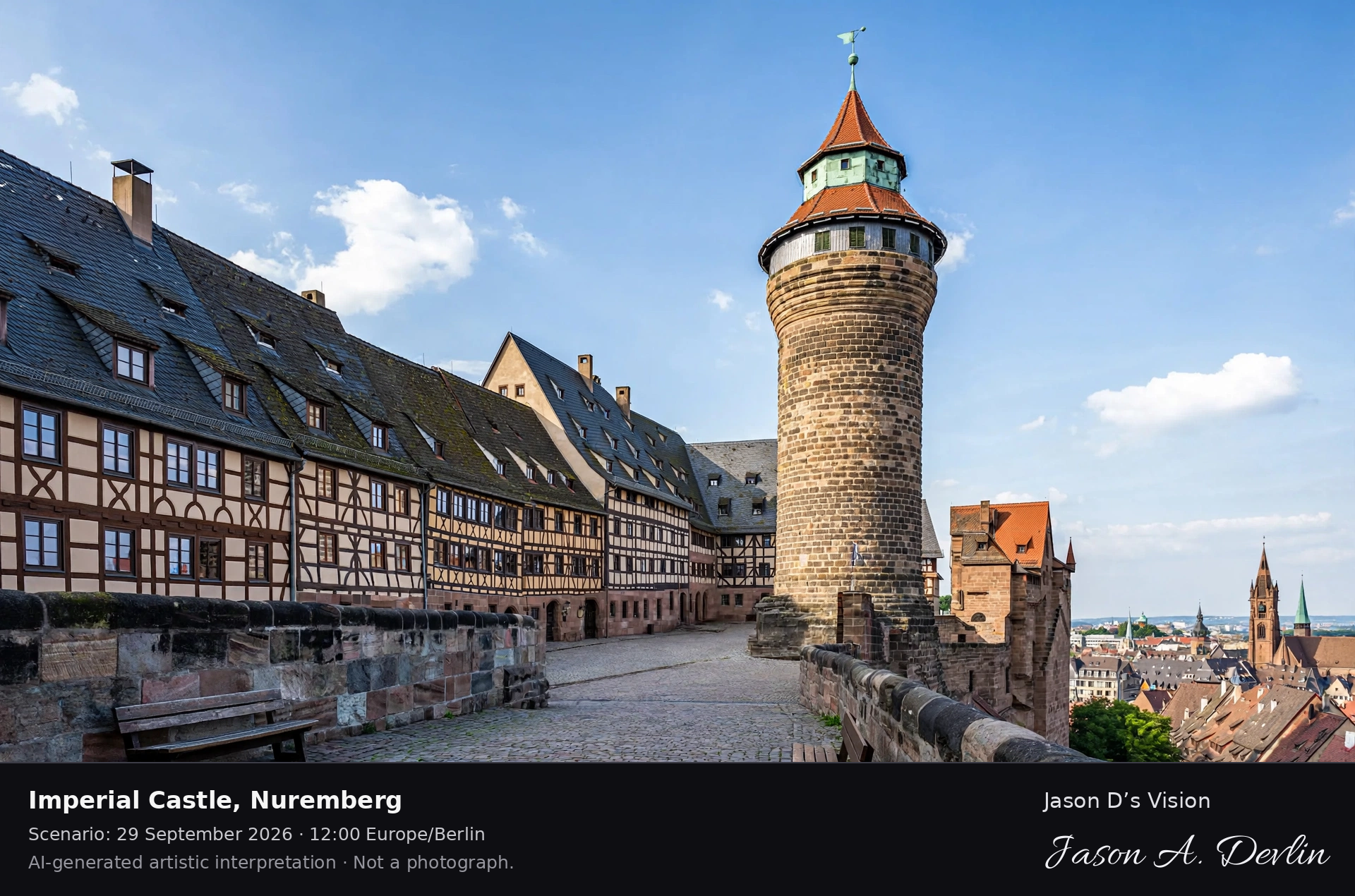
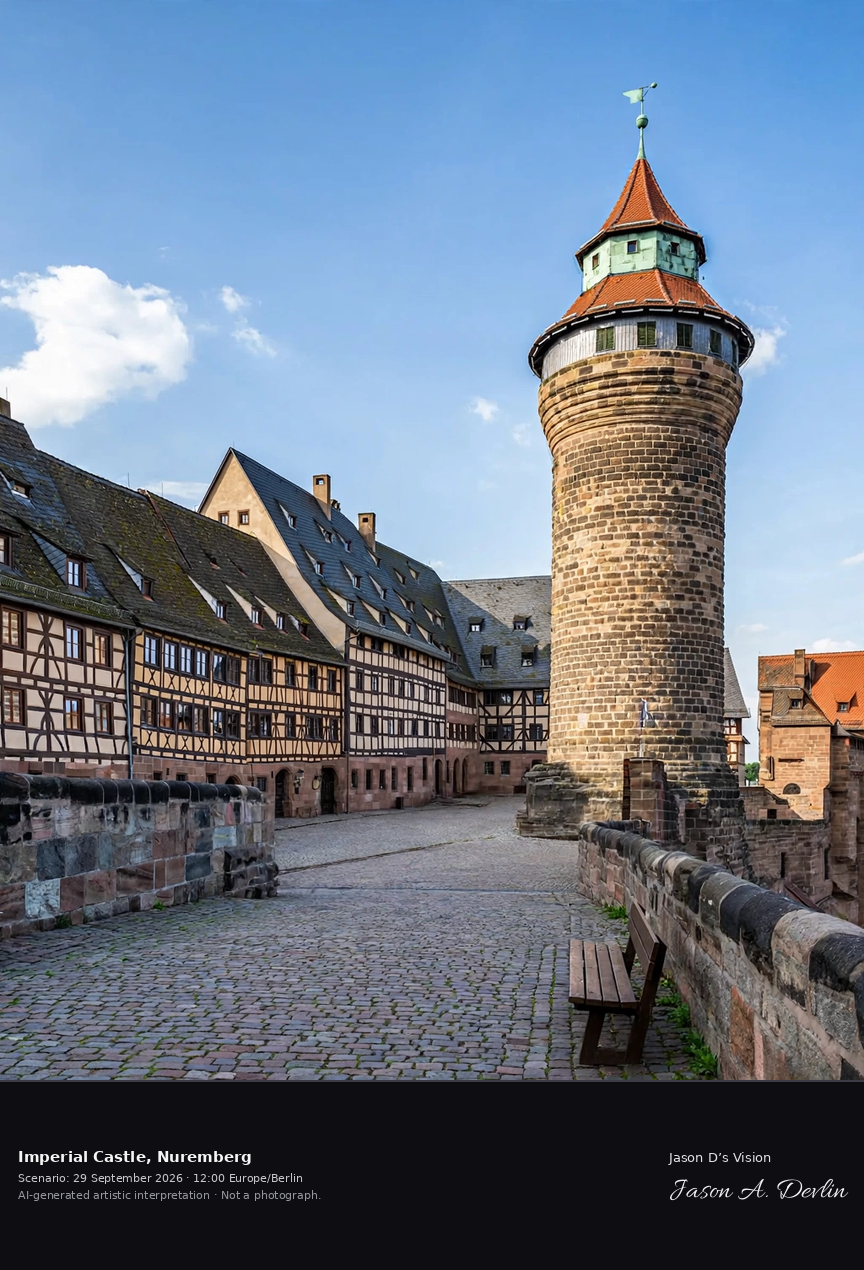
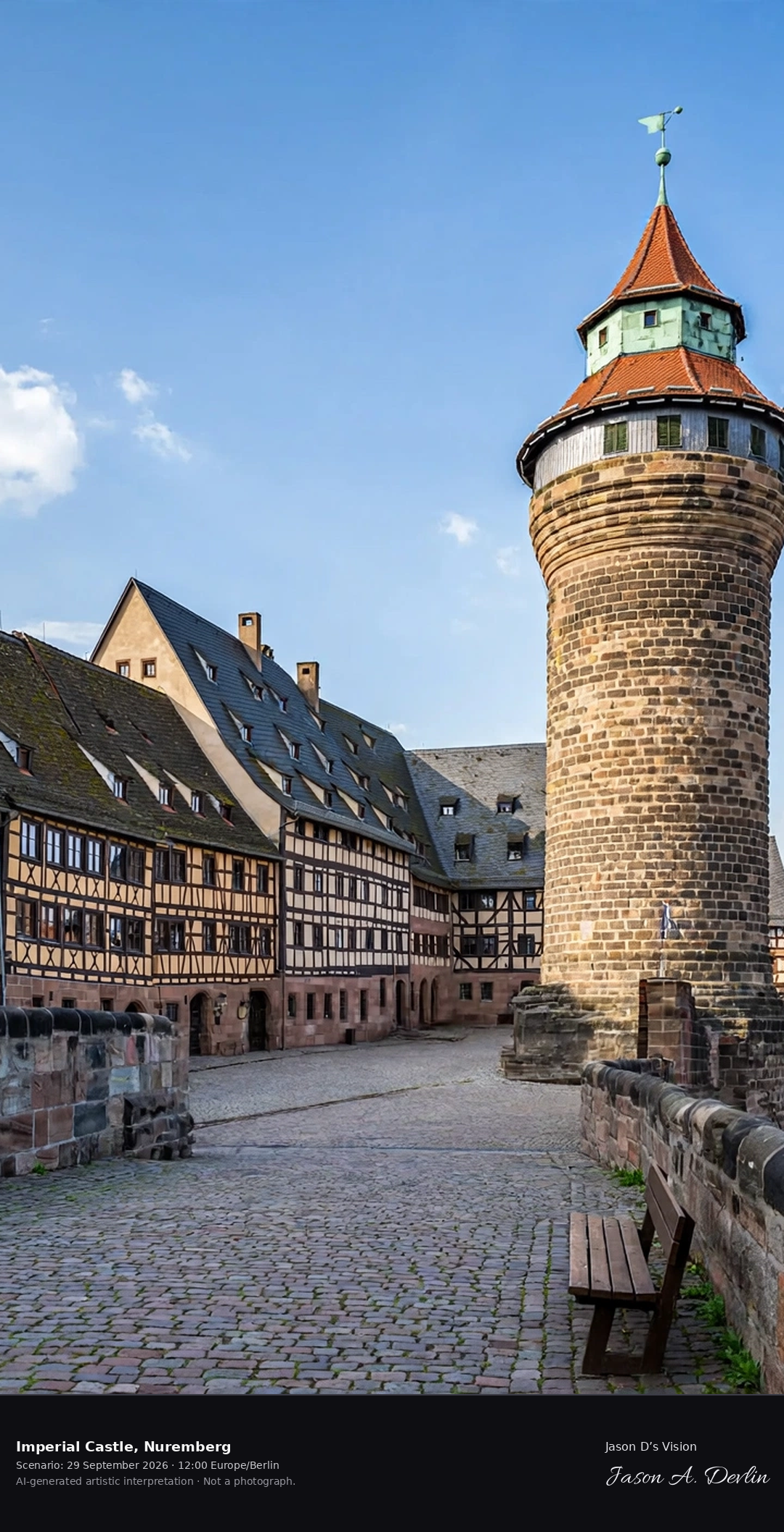
The floodlit round Sinwell Tower rises center above the castle ramparts, half-timbered buildings with warm windows crowding to its left. A cobbled path curves through the foreground beside a mossy stone wall, and at the right edge the lit rooftops and church spires of the old town spread into the distance. The moon hangs behind scattered clouds over Nuremberg's medieval stronghold.
Timber bridge over Pegnitz · AI-generated artistic interpretation
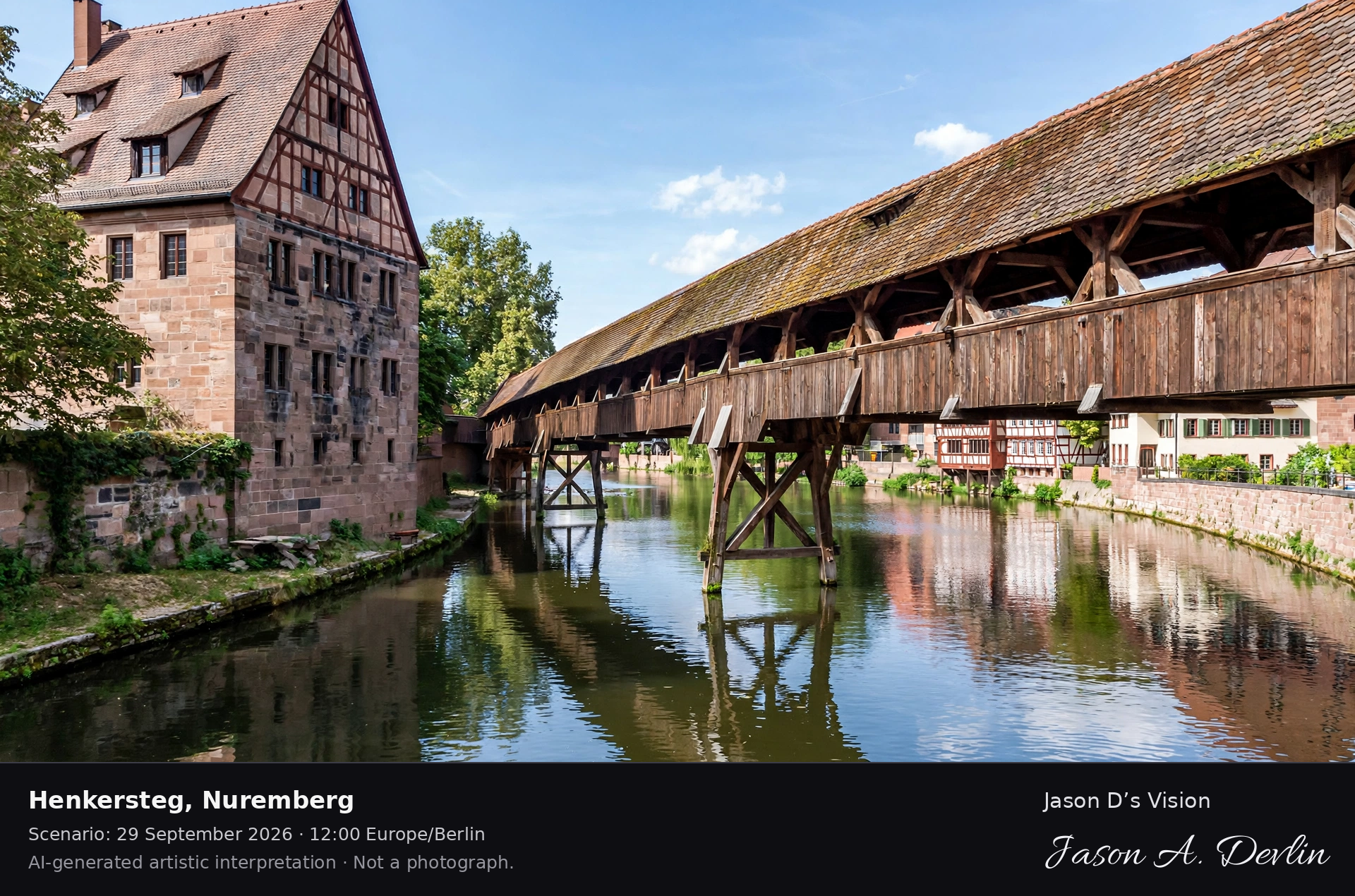
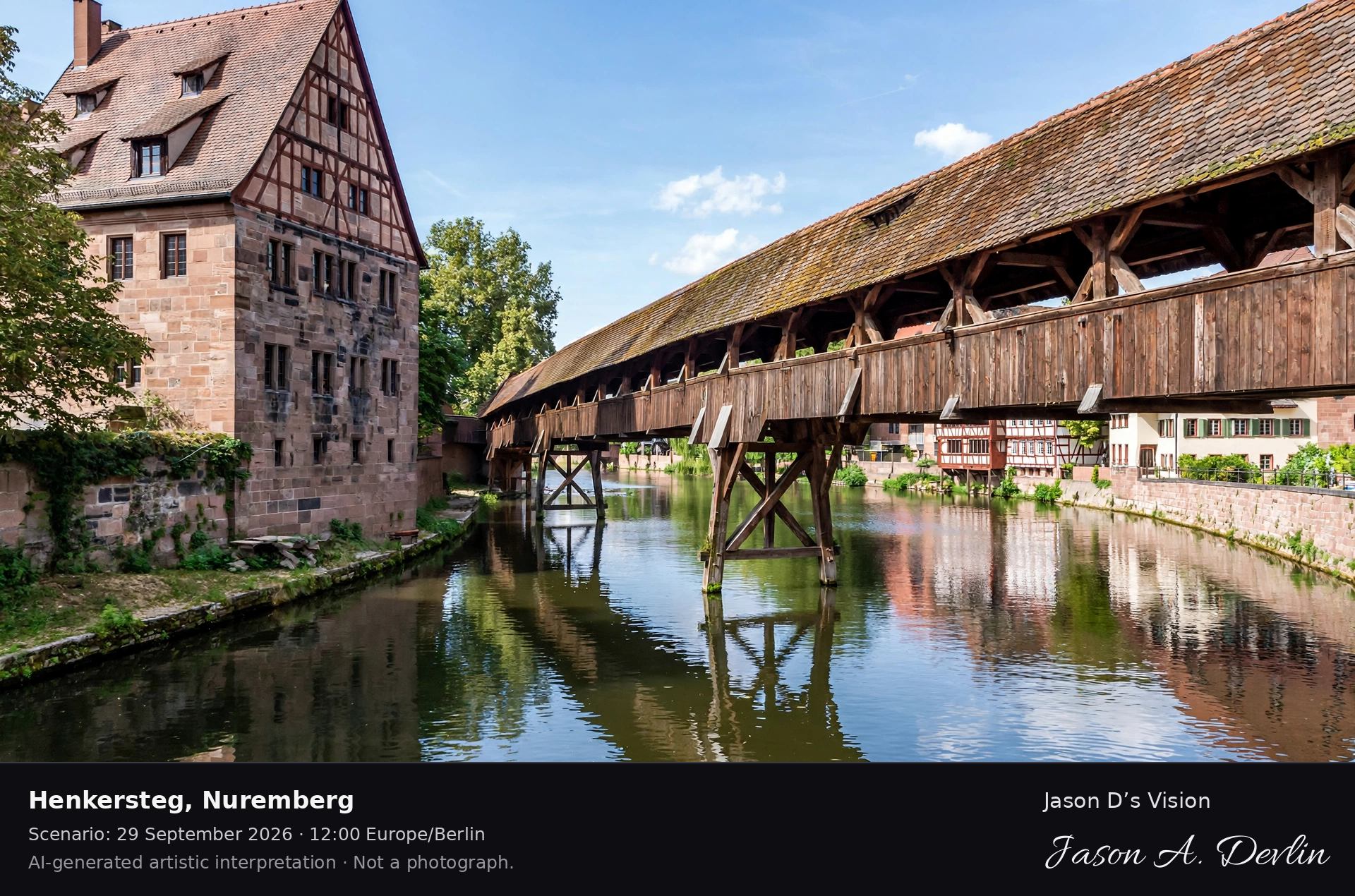
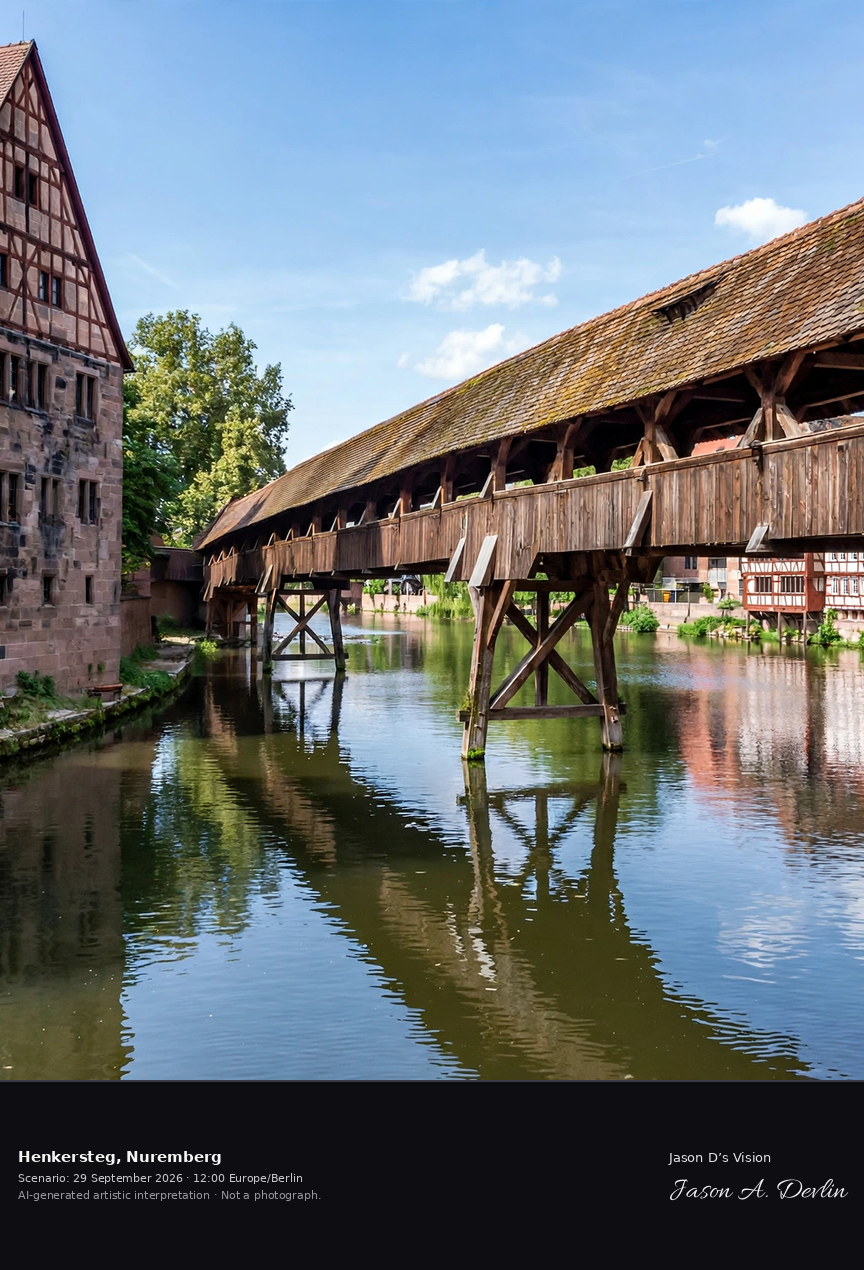
The covered wooden Henkersteg runs diagonally from the foreground toward the right, its open timber trusses and warm lamps glowing over the dark Pegnitz. The massive stone Henkerhaus with its tall pointed gable anchors the left, and lit old-town houses line the far bank. Moonlight breaks through scattered clouds, doubling the lights on the water.
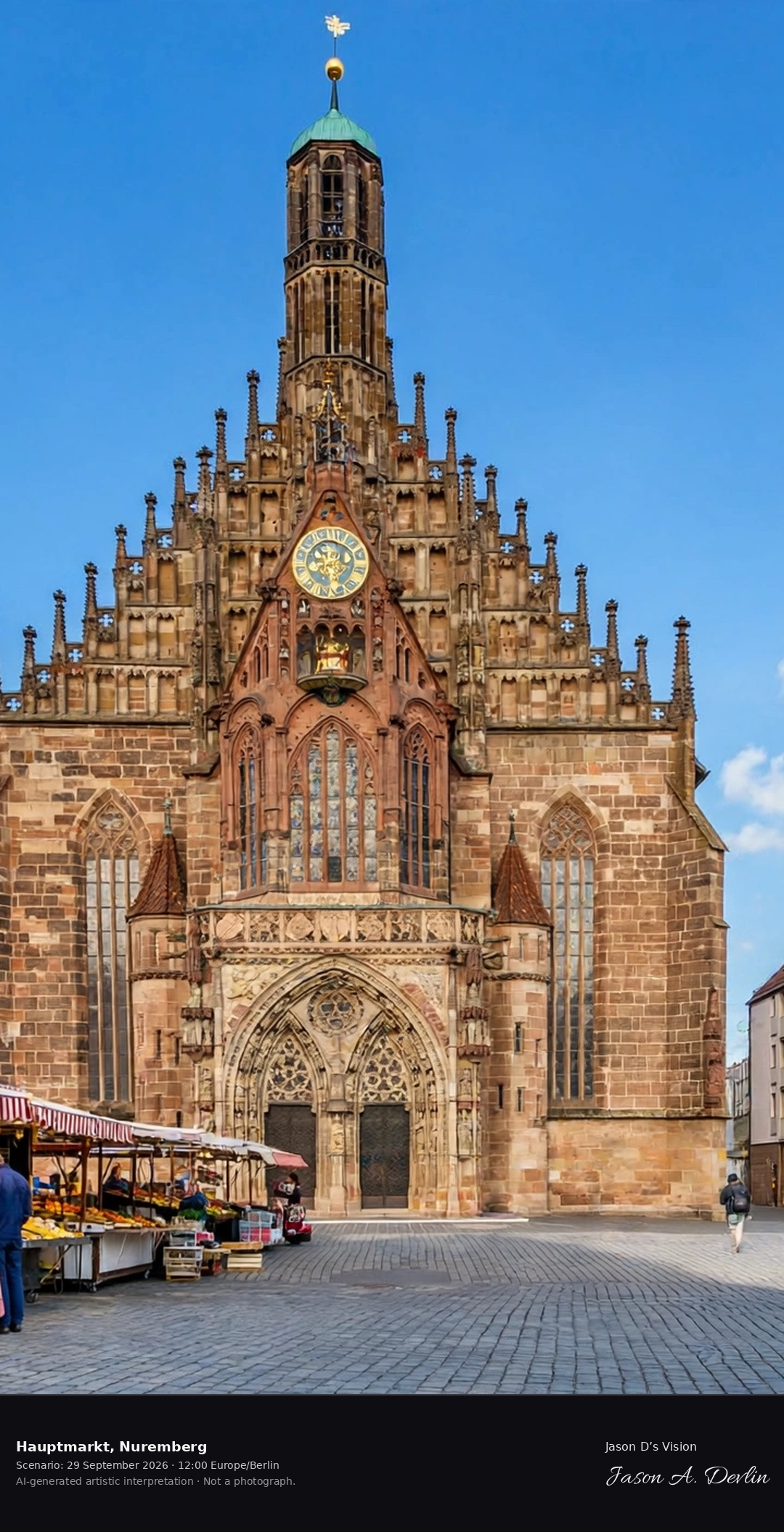
Frauenkirche and square · AI-generated artistic interpretation
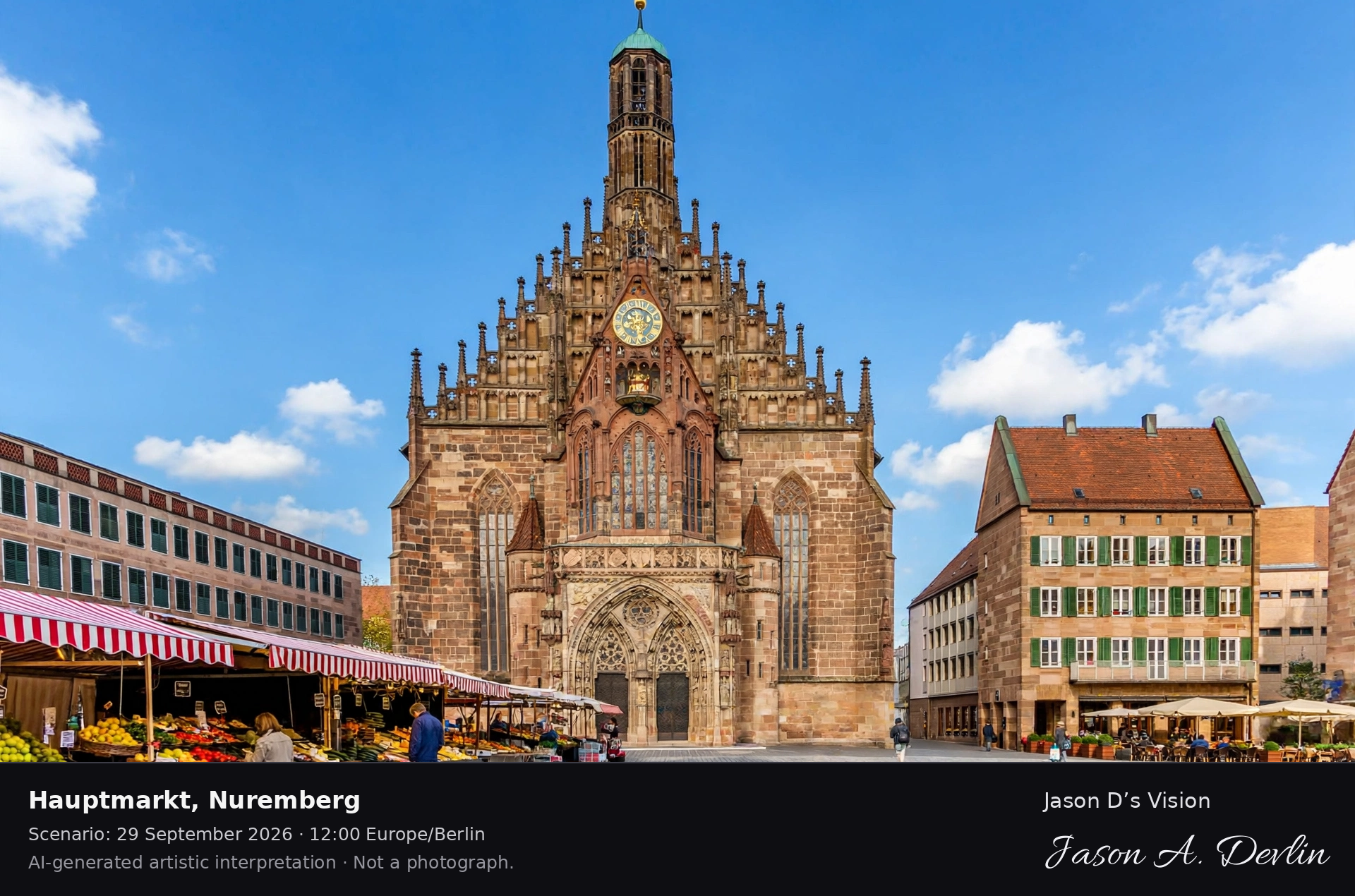
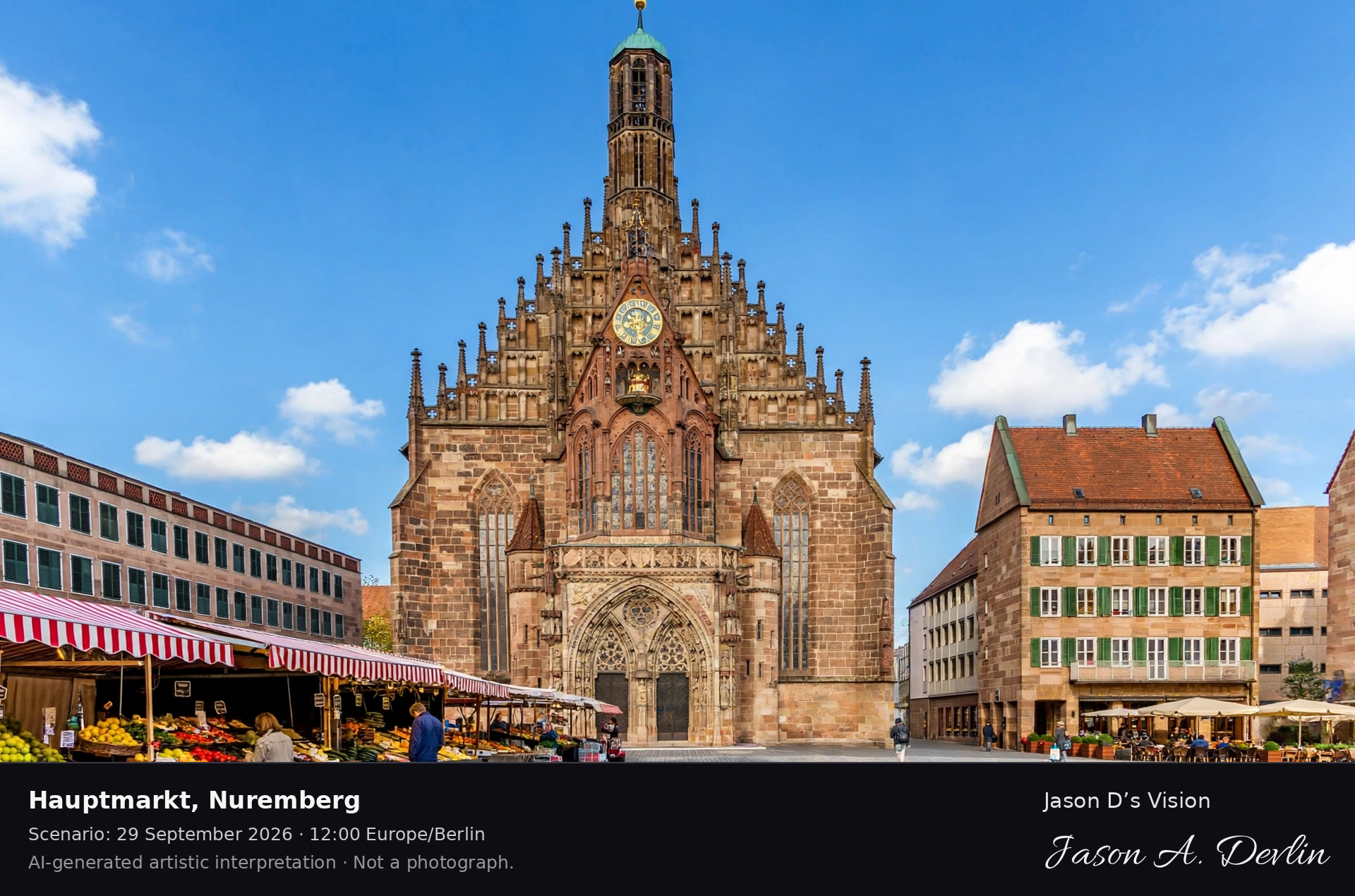
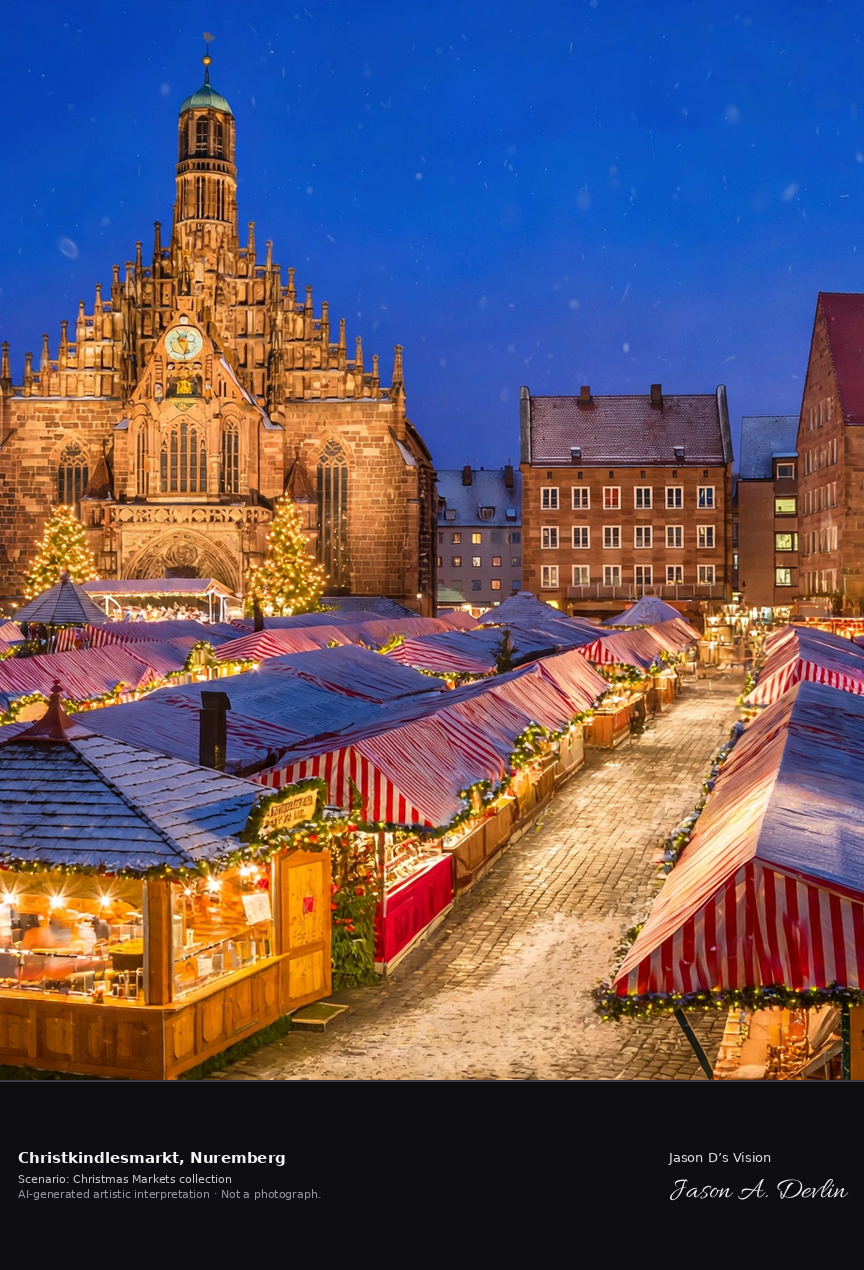
The Frauenkirche rises at the center of the Hauptmarkt, its brick Gothic westwork glowing against the night — the traceried clock gable and tall tower with its verdigris cupola lit from within by the church windows. Period buildings with lit windows frame the square at left and right, market stalls and café umbrellas closed up along the edges. Partly cloudy night skies drift above the tower, with the 22:45 floodlit warmth playing across the church’s west front.
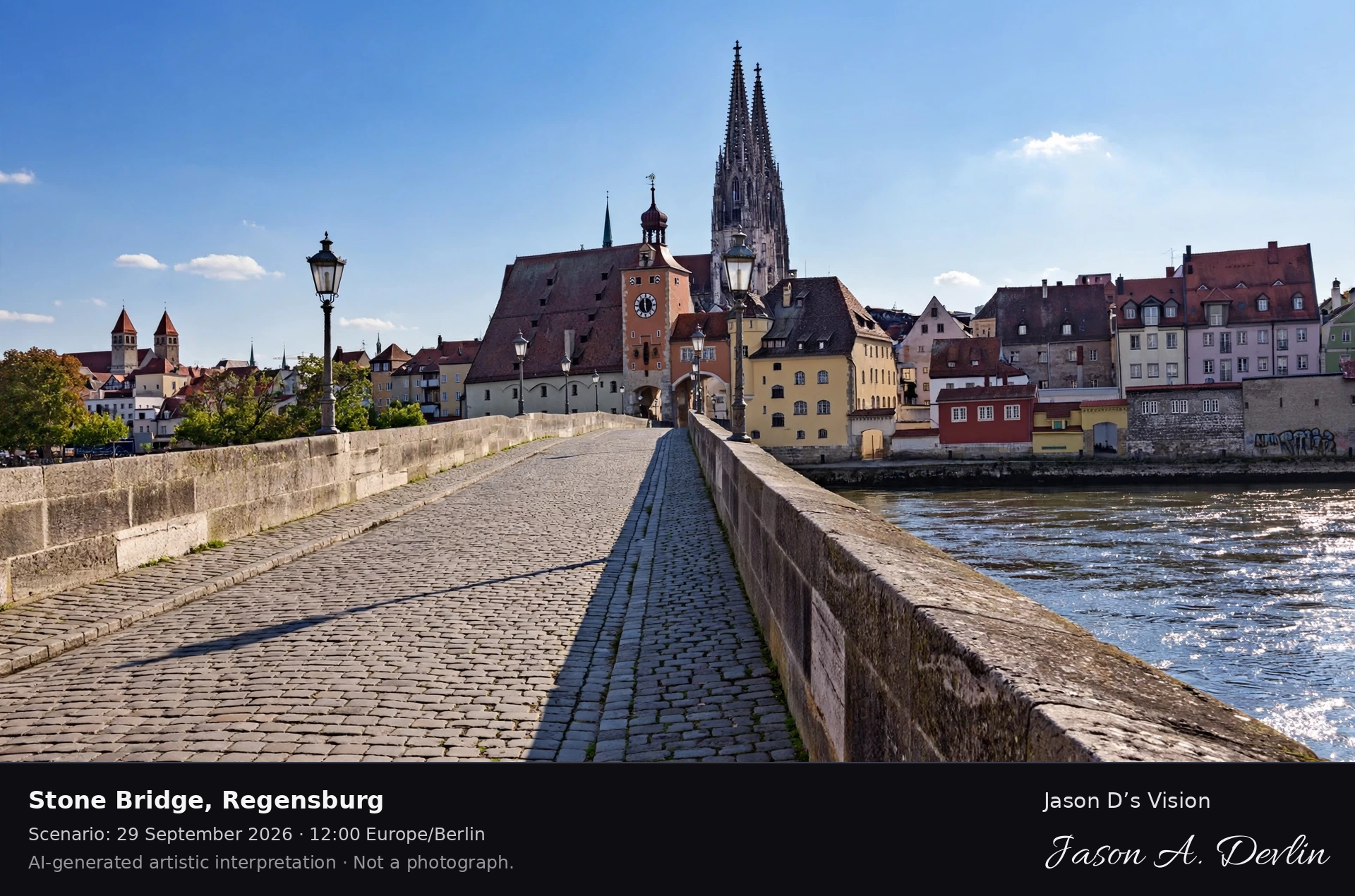
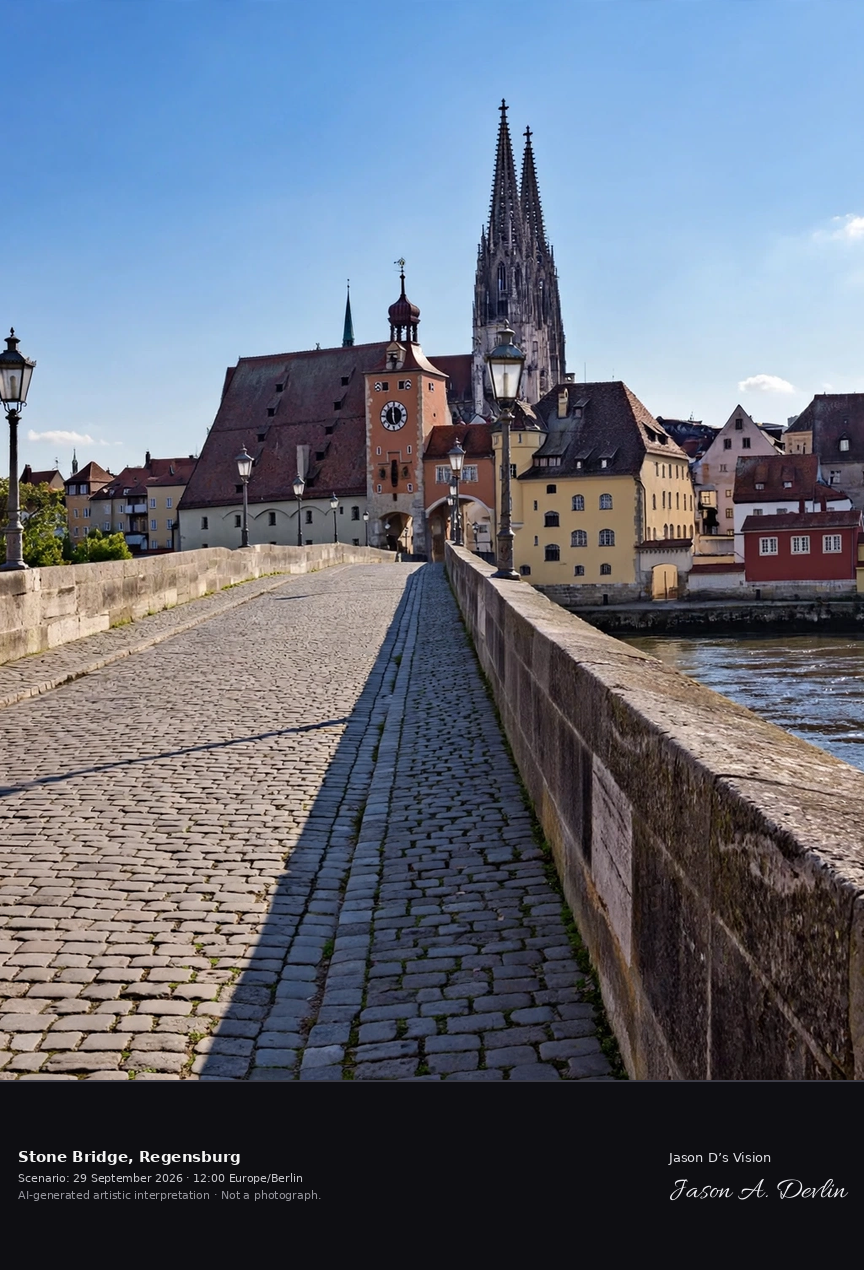
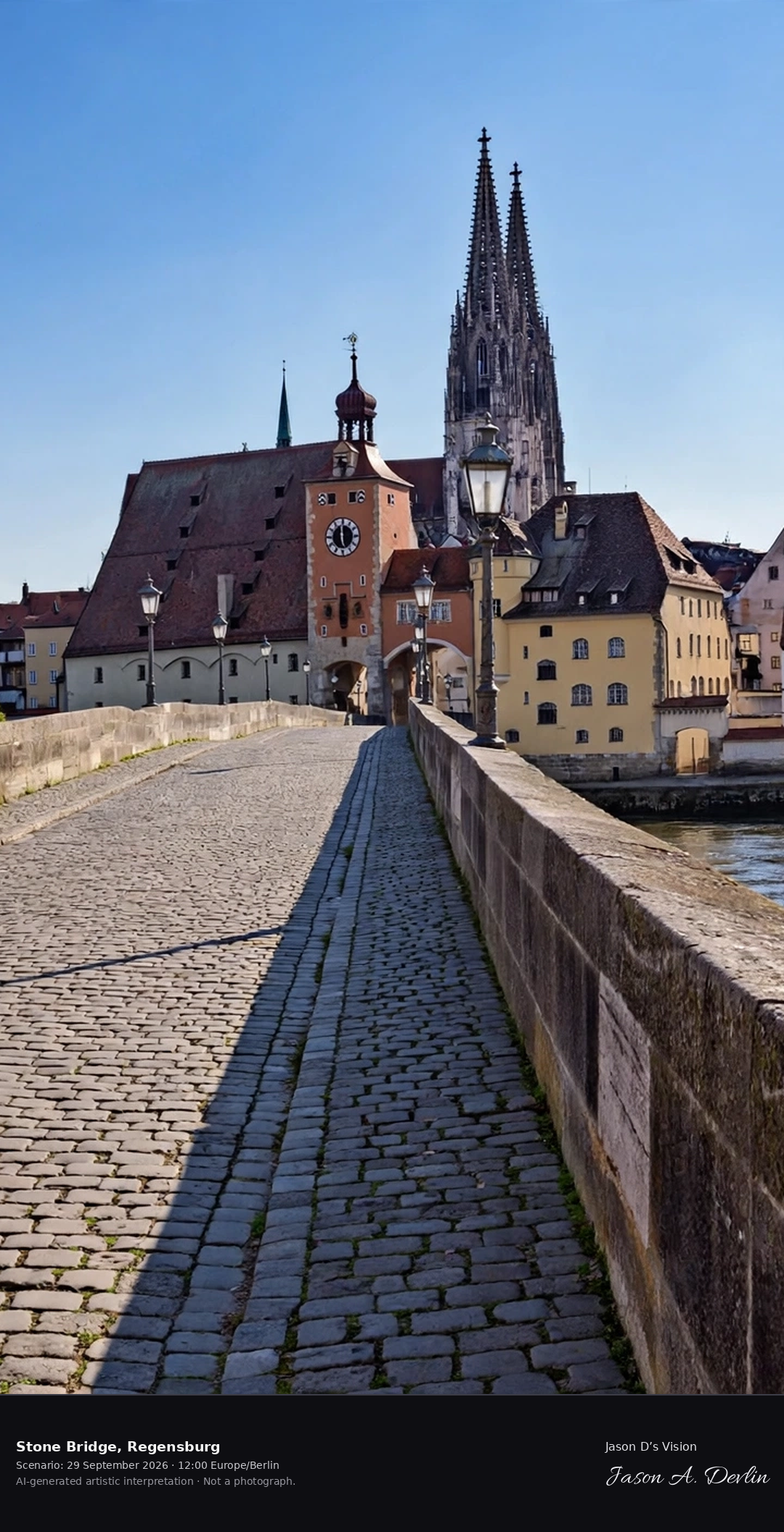
Bridge and cathedral skyline · AI-generated artistic interpretation
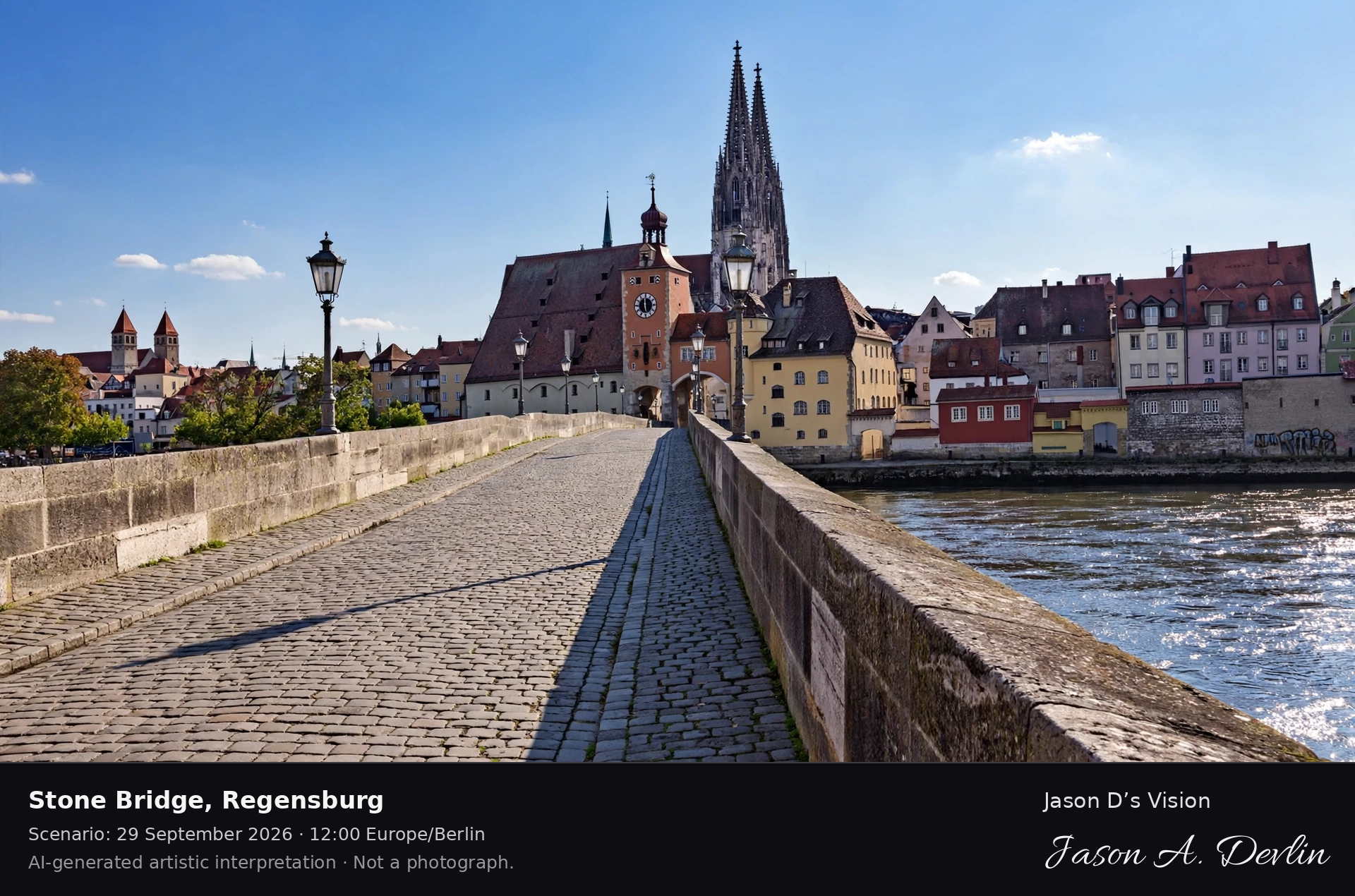
The medieval Stone Bridge stretches away from the viewer, its lantern-lit cobblestones glistening with rain past the low stone parapet. At center, the cathedral’s twin spires blaze floodlit gold above the dark gabled roofs of the old town, while the Danube at right doubles every light in long watery reflections. The mainly clear 22:45 sky is deep blue, and the lit waterfront houses crowd the right bank behind the bridge’s end arch.
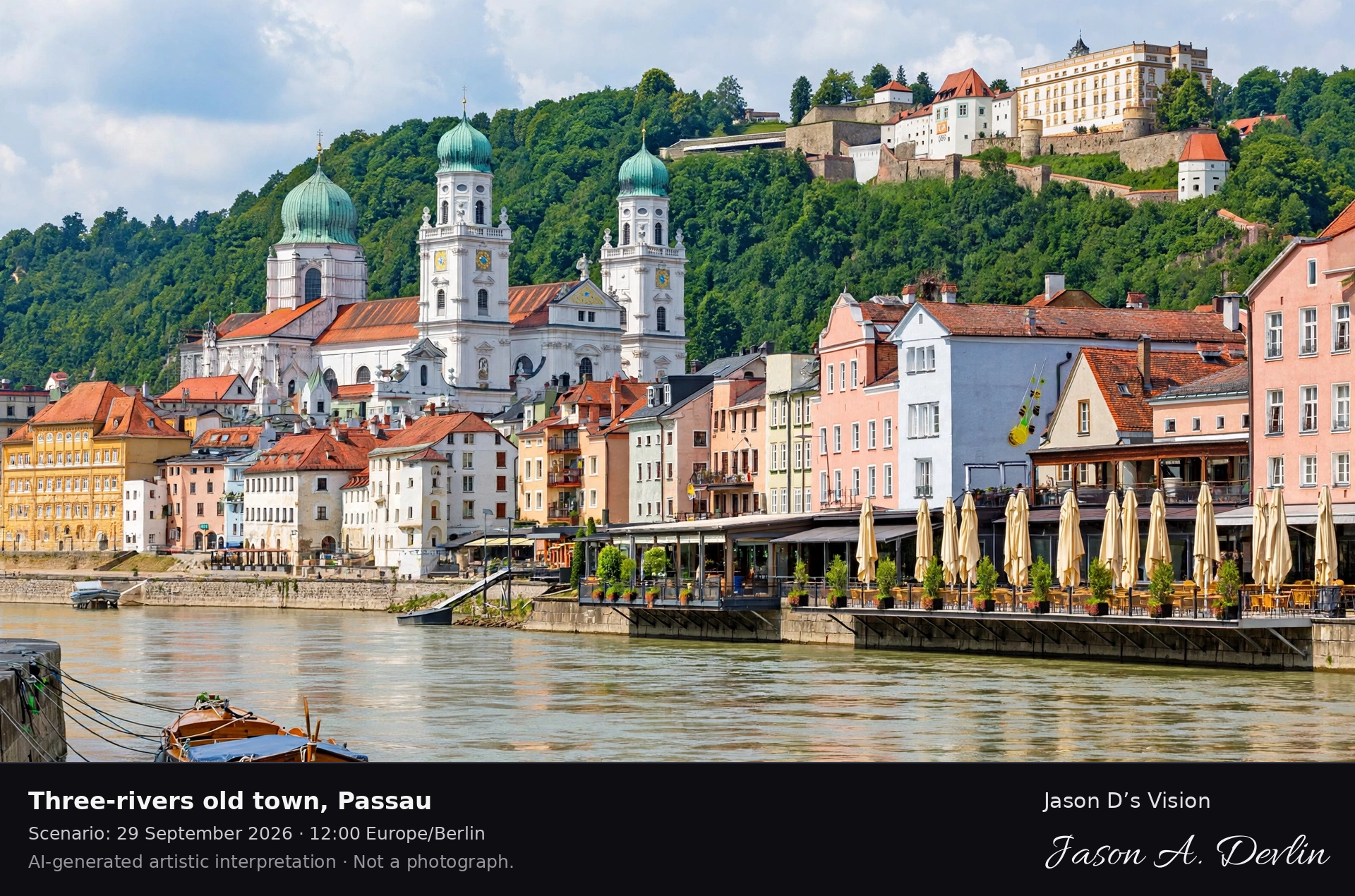
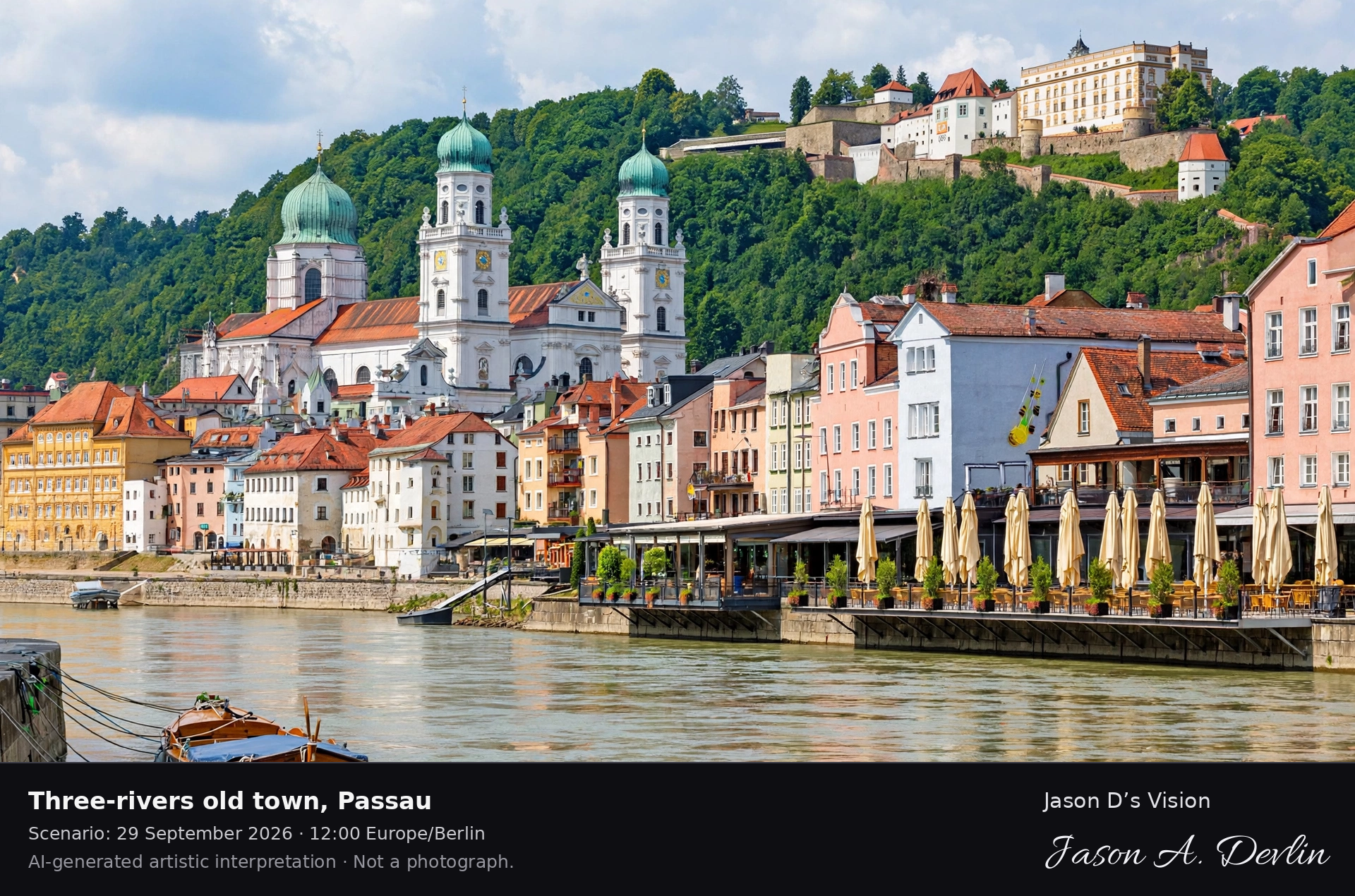
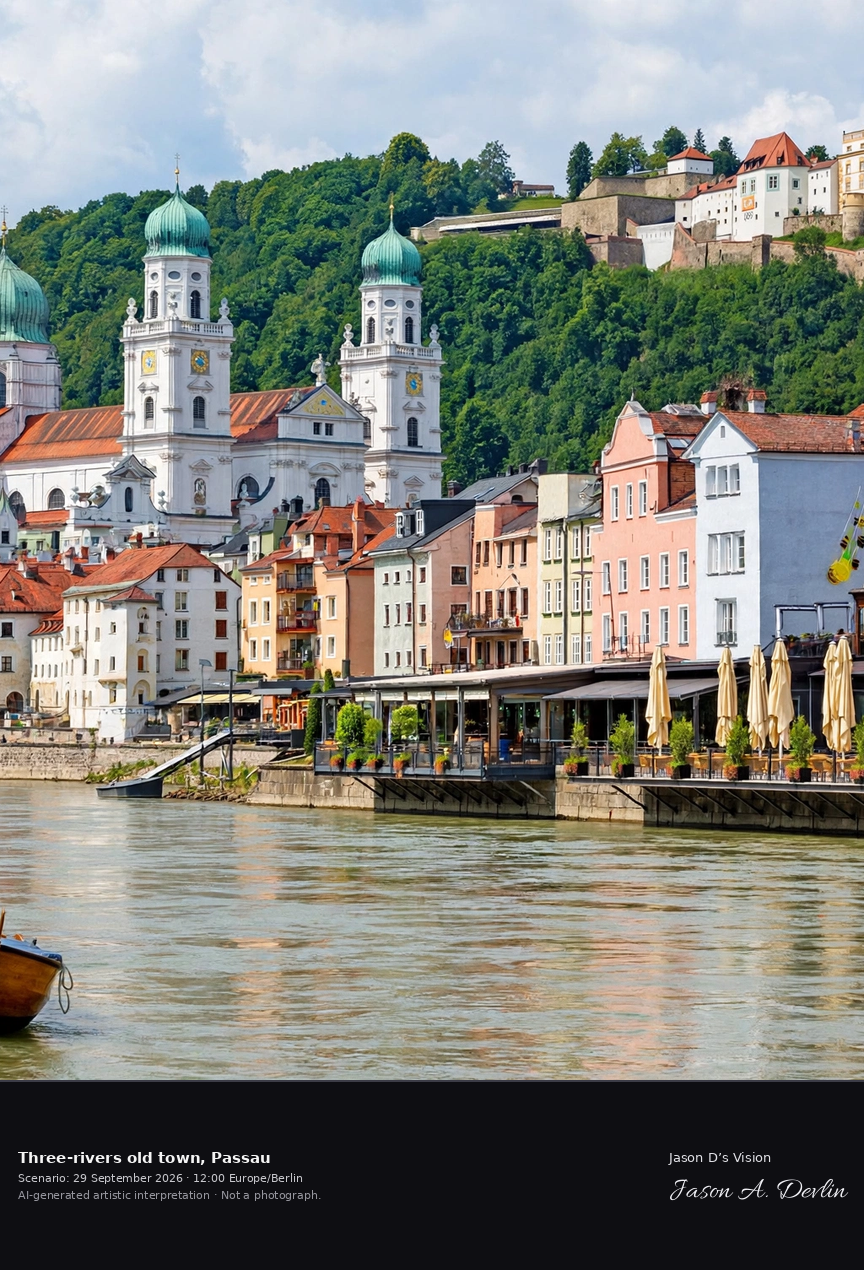
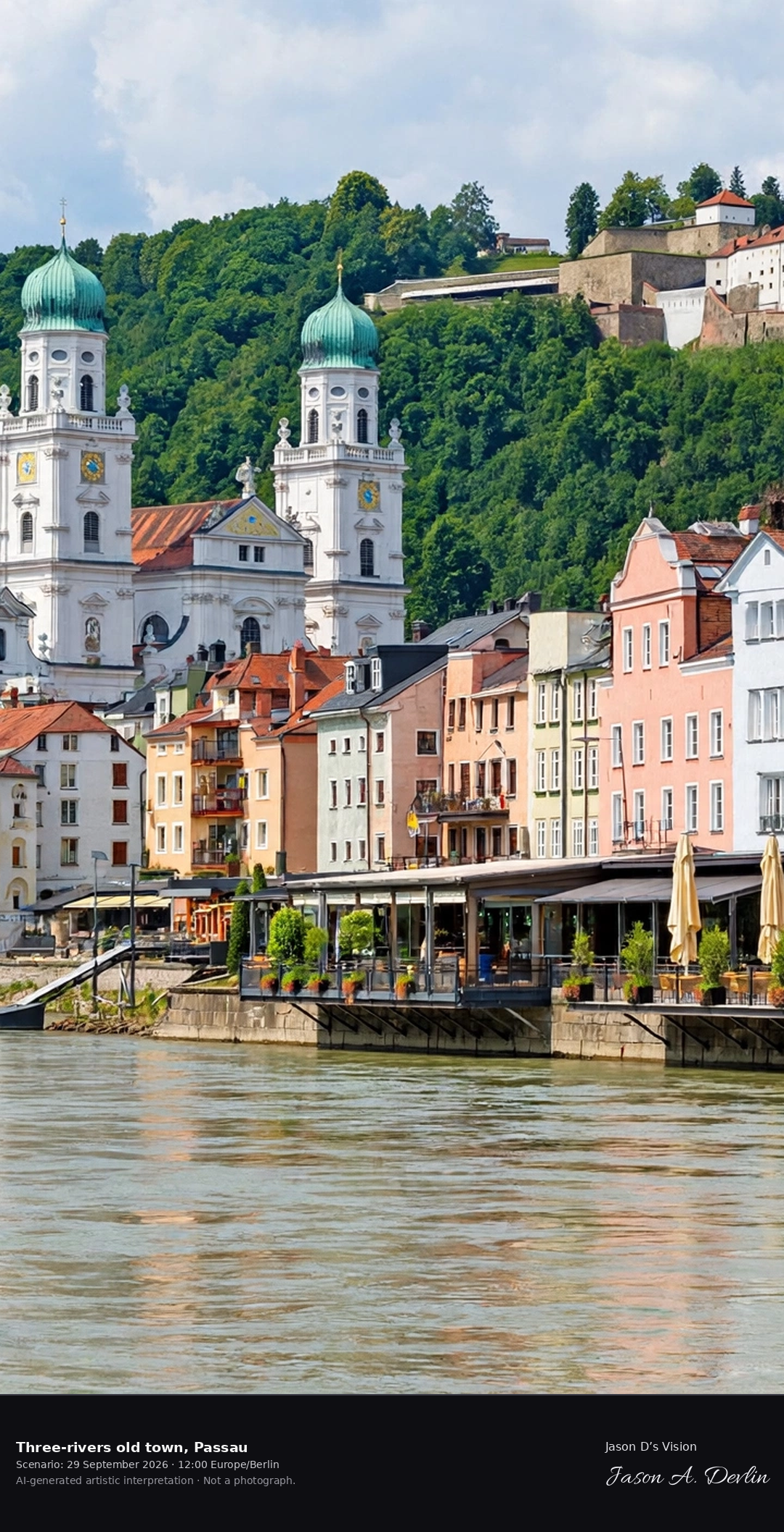
Passau’s old town glows under a heavy overcast night sky, with St. Stephen’s Cathedral — its tower and green onion domes — lit at the center behind the quay’s row of pastel gabled houses. The Veste Oberhaus fortress glimmers from the wooded hill at the right edge, while at left the river carries long reflections of the quay lamps. Riverboats moor at the promenade in the foreground, and the 23:00 warmth of the lit town plays against the cold grey clouds overhead.
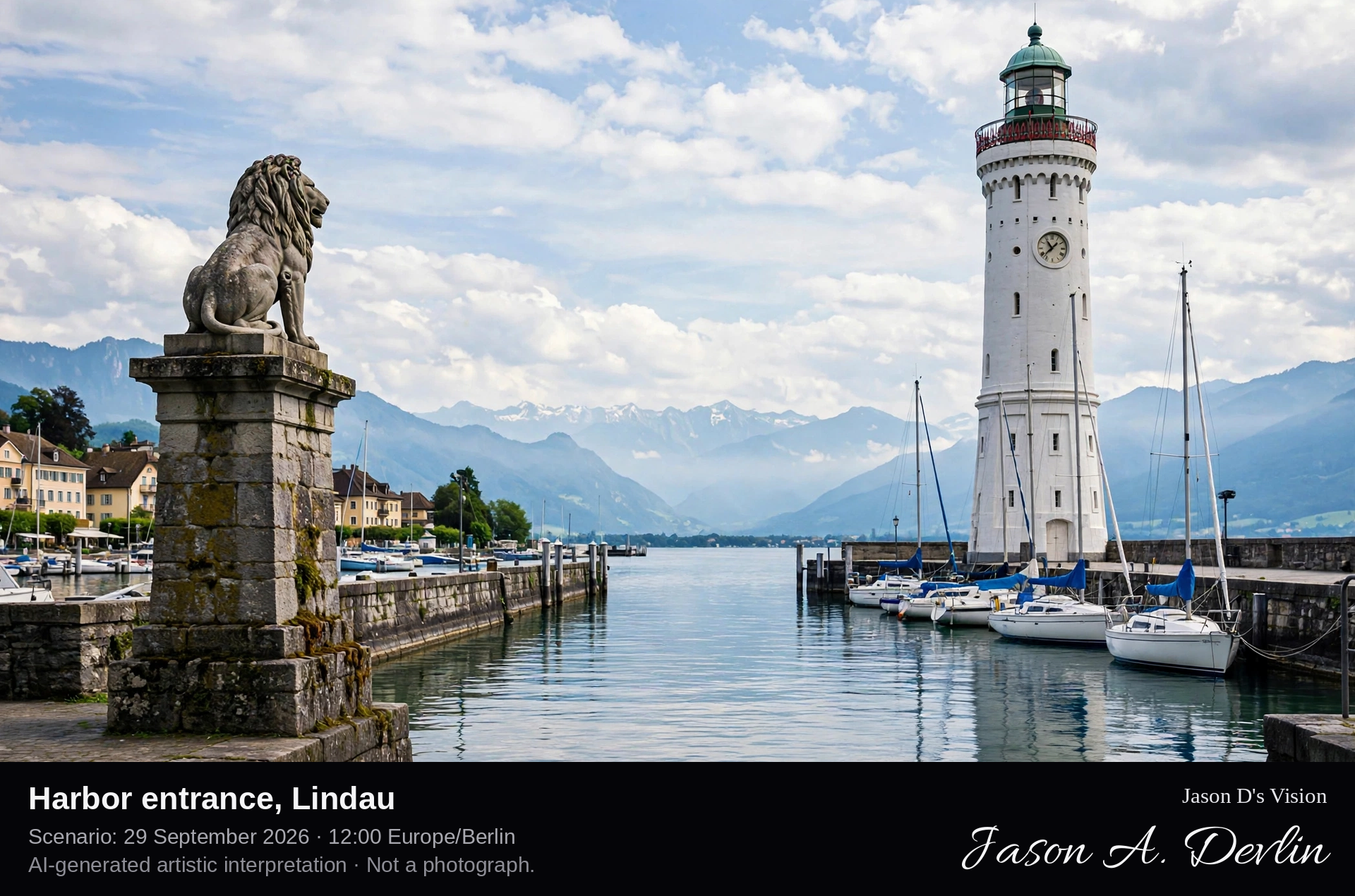
Lighthouse and Bavarian lion · AI-generated artistic interpretation
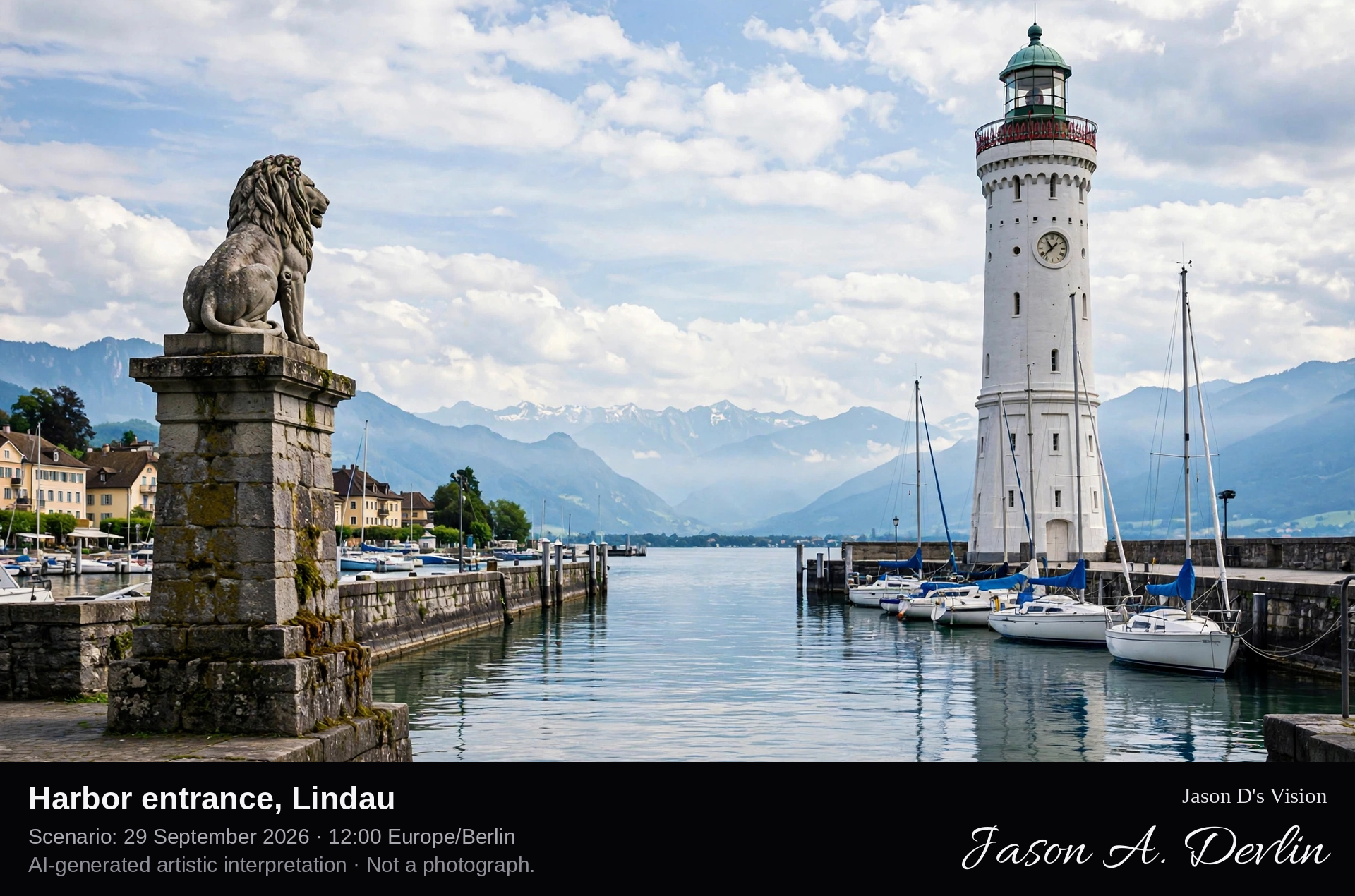
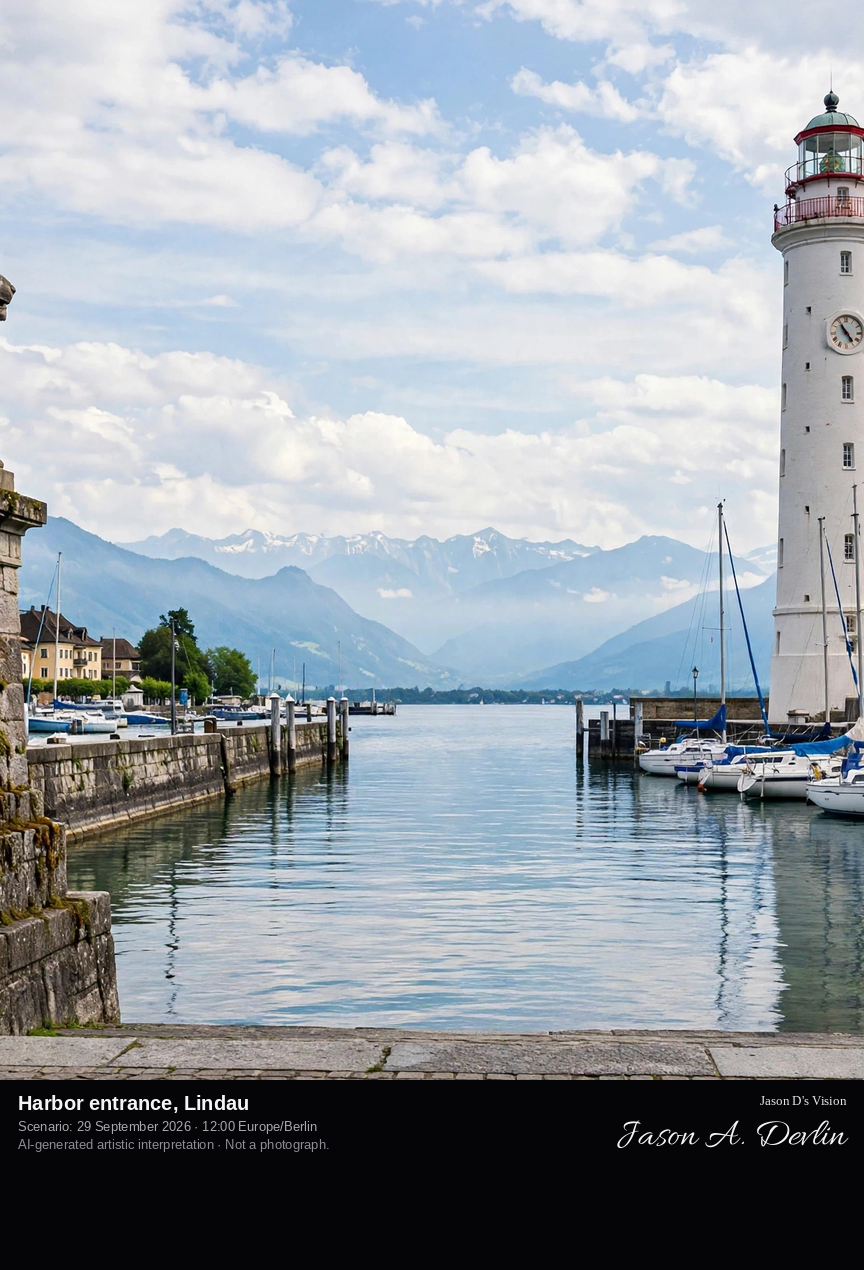
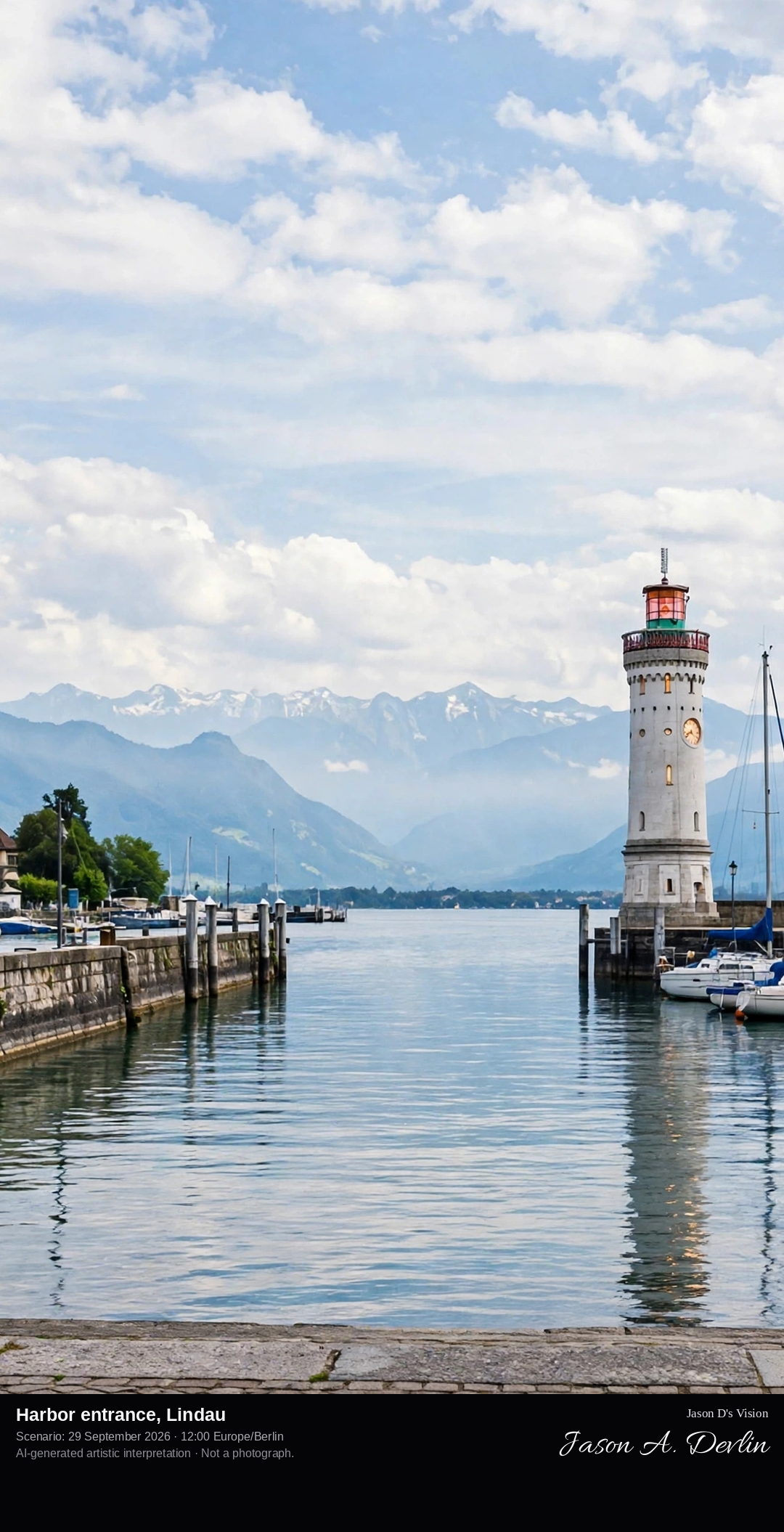
From the harbor mole at night, the stone Bavarian lion stands sentinel on its tall pedestal at the left, the floodlit round lighthouse rising at the right with its clock face and glowing lantern room. Moored boats line the lit promenade and its warm-windowed buildings at the right edge, mountain silhouettes lie across the calm lake under a starry clear sky, and golden reflections shimmer on the dark water beneath the harbor entrance.
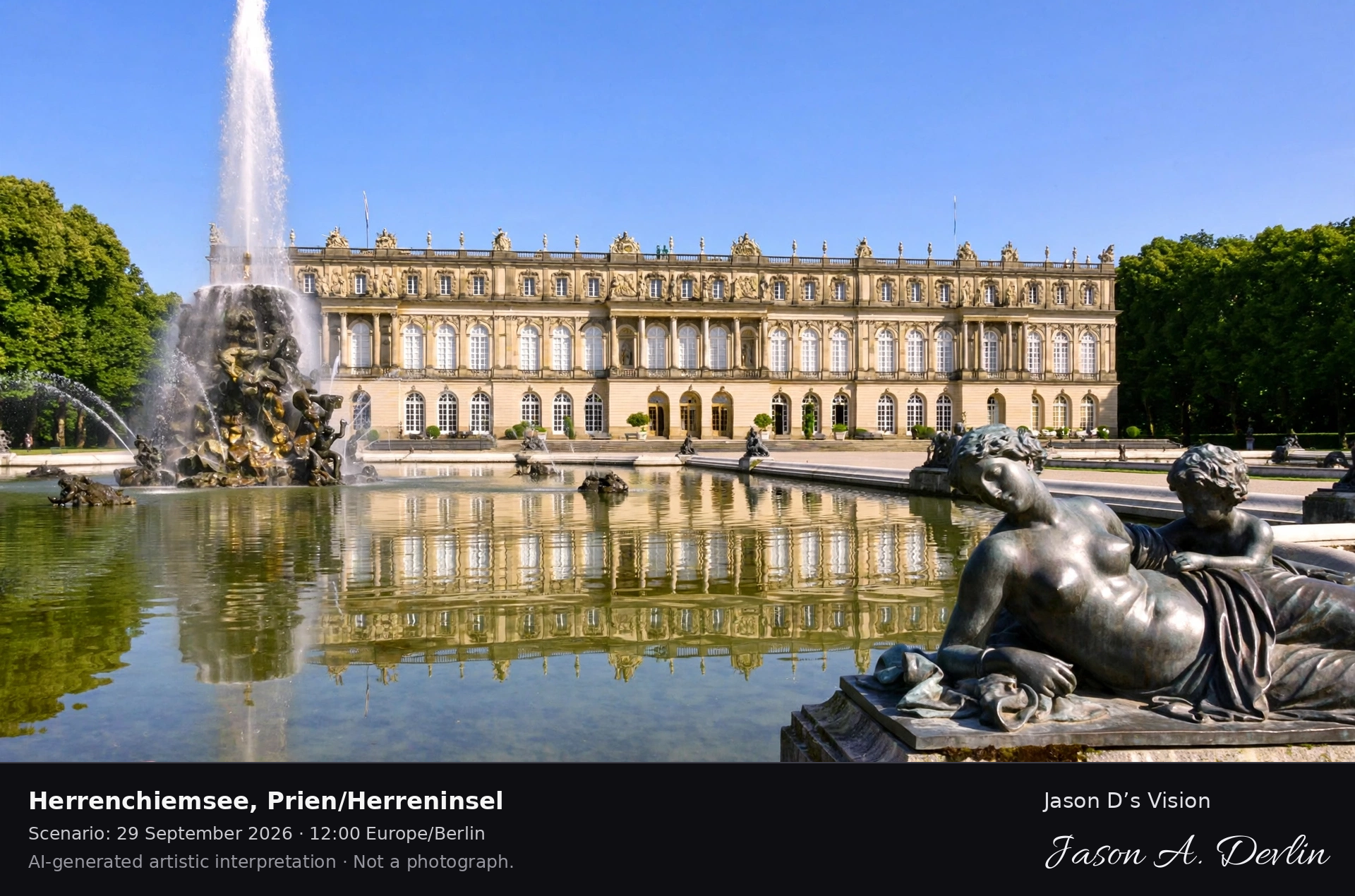
Palace facade and fountains · AI-generated artistic interpretation
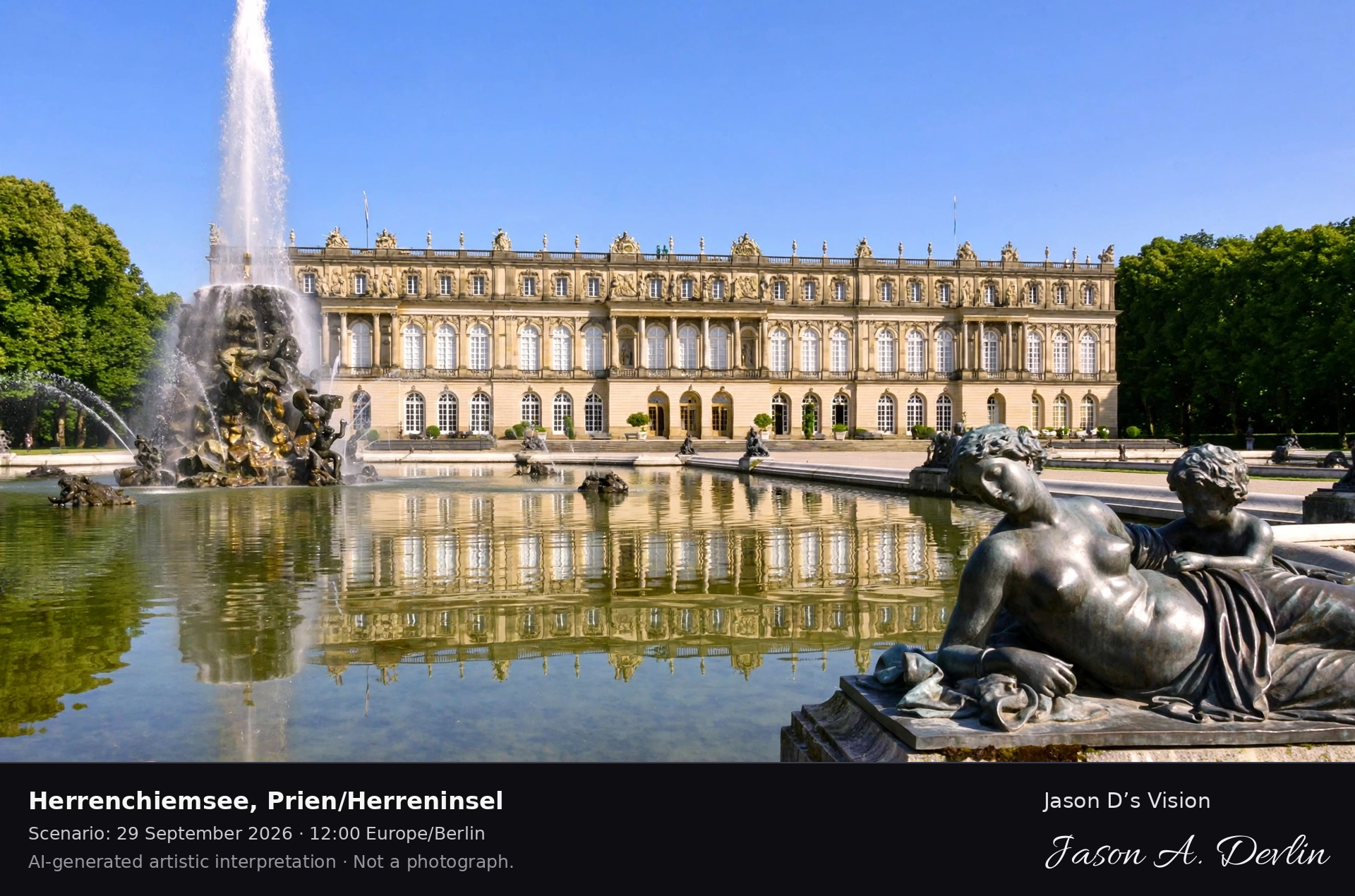
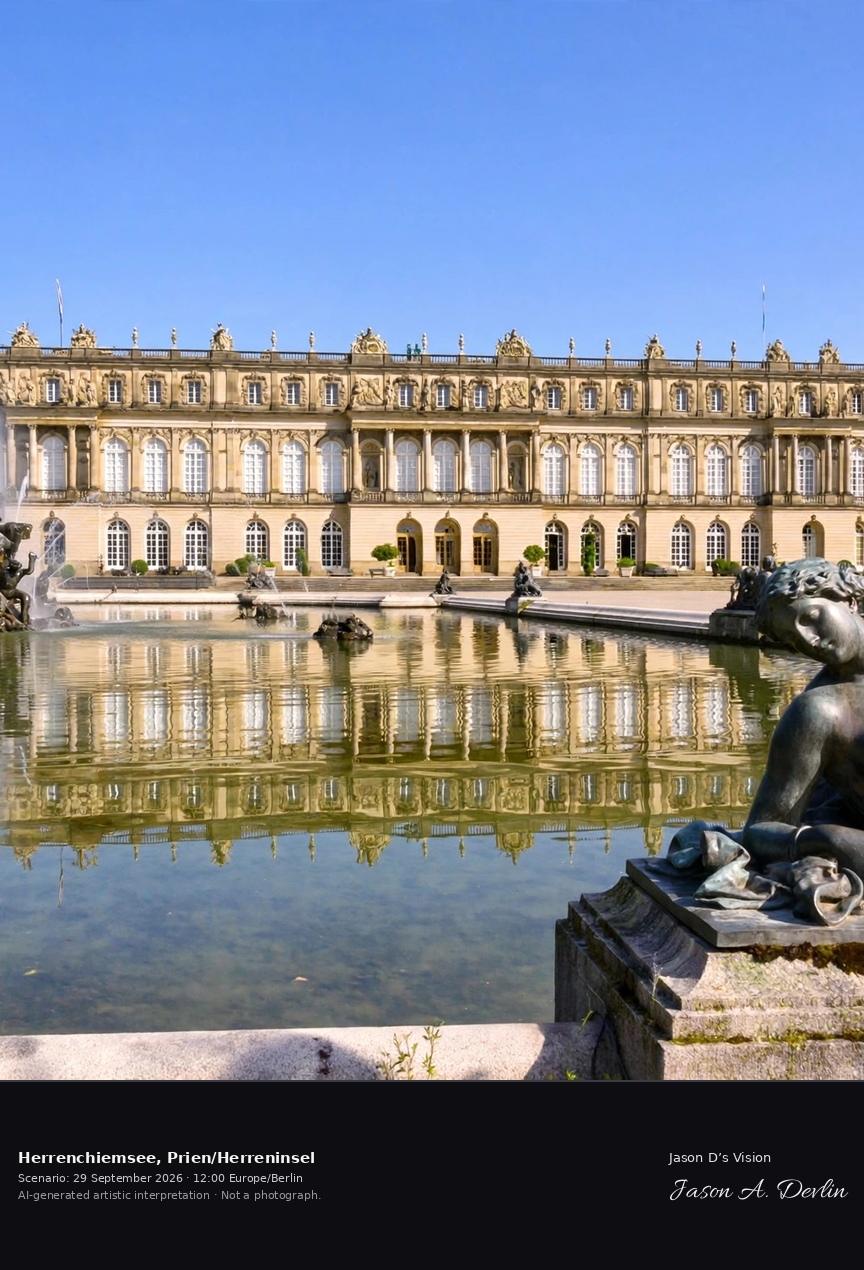
From the garden basin at night, the New Palace's long floodlit façade stretches across the frame, its warm windows reflected in the calm water below. The reclining Latona-style statue group anchors the right foreground, a tall illuminated water jet rises at the left among fountain sculptures, and the palace glow carries across the dark park under a mainly clear sky.
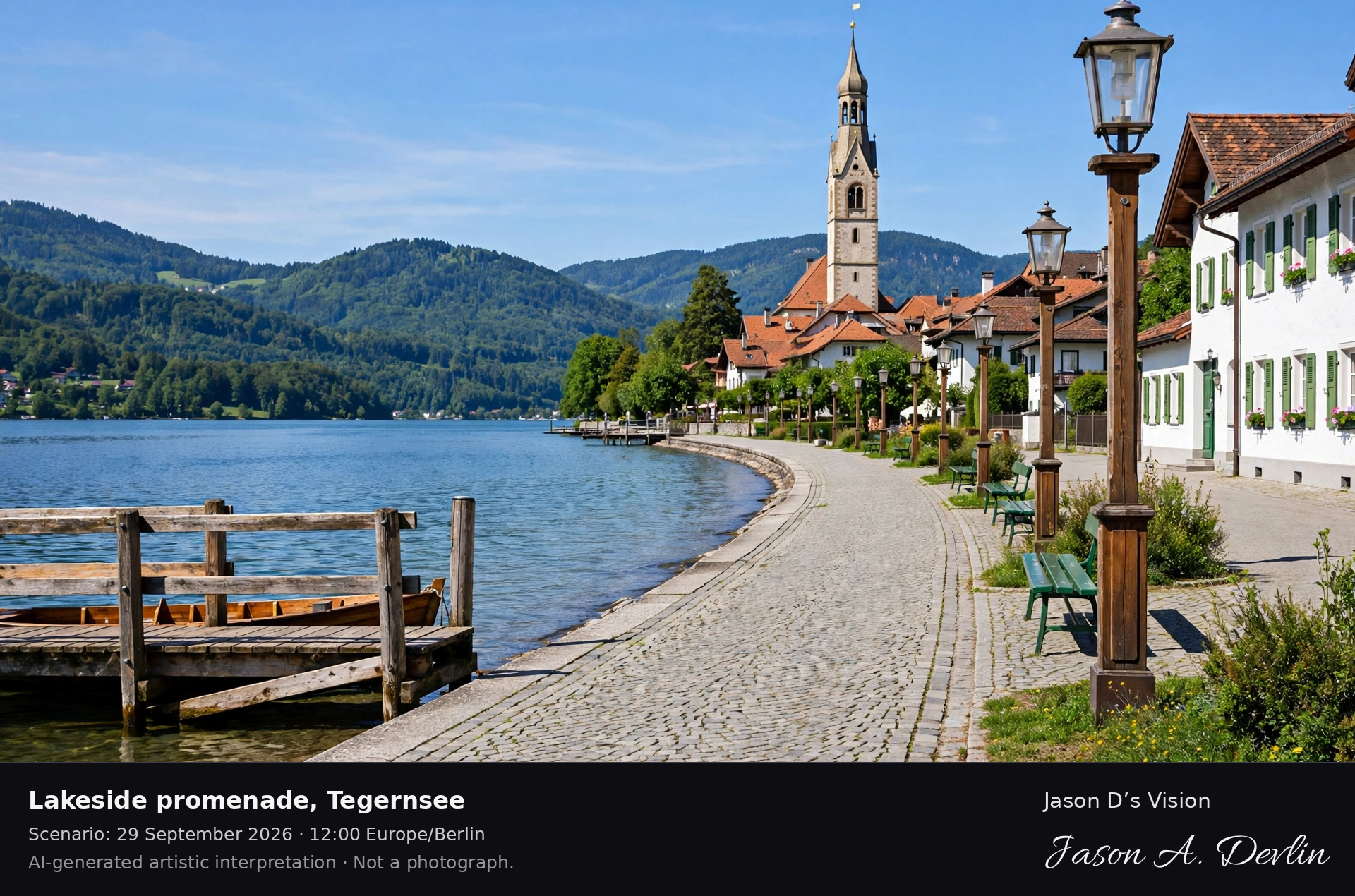
Lake and alpine foothills · AI-generated artistic interpretation
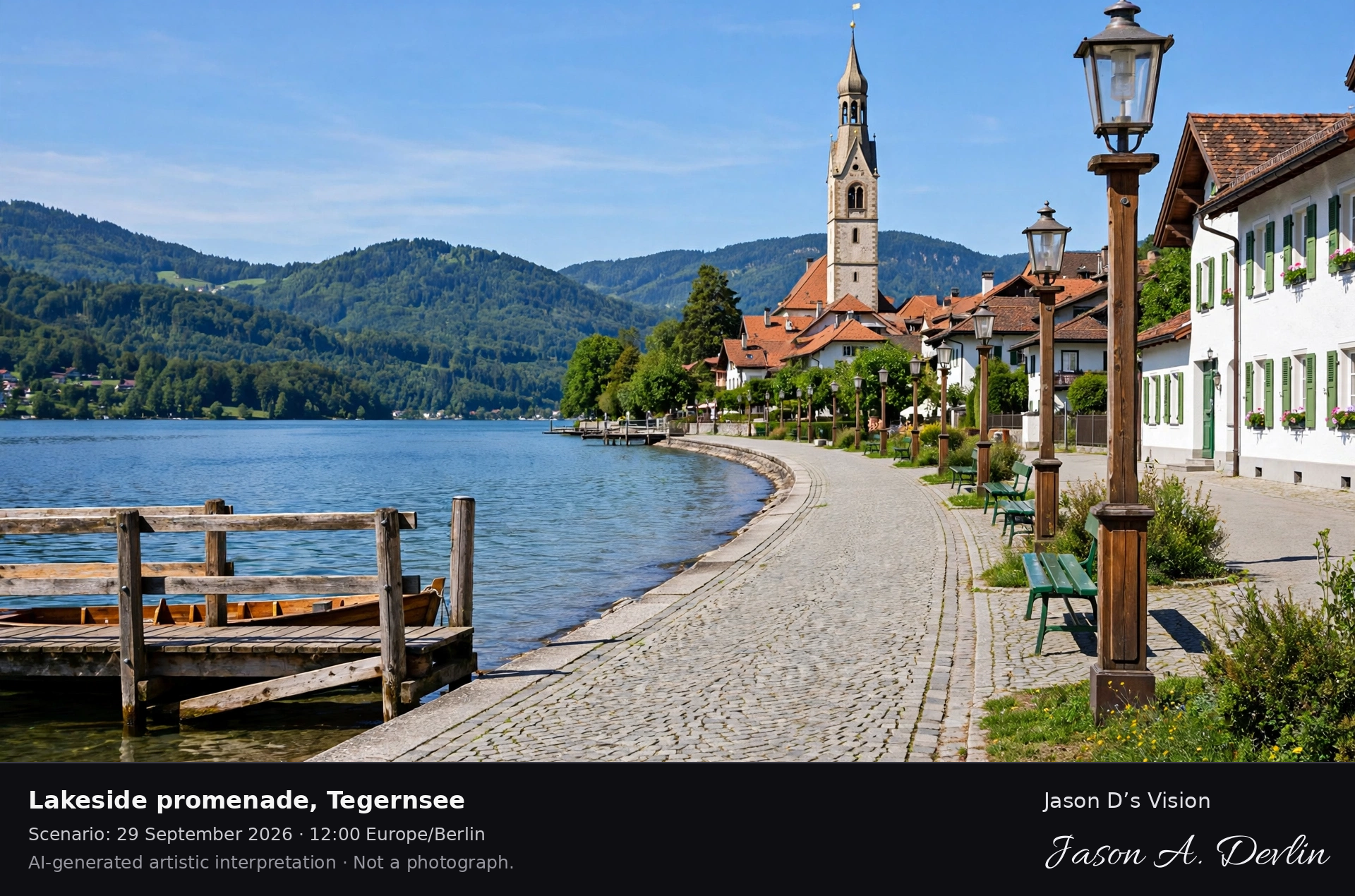
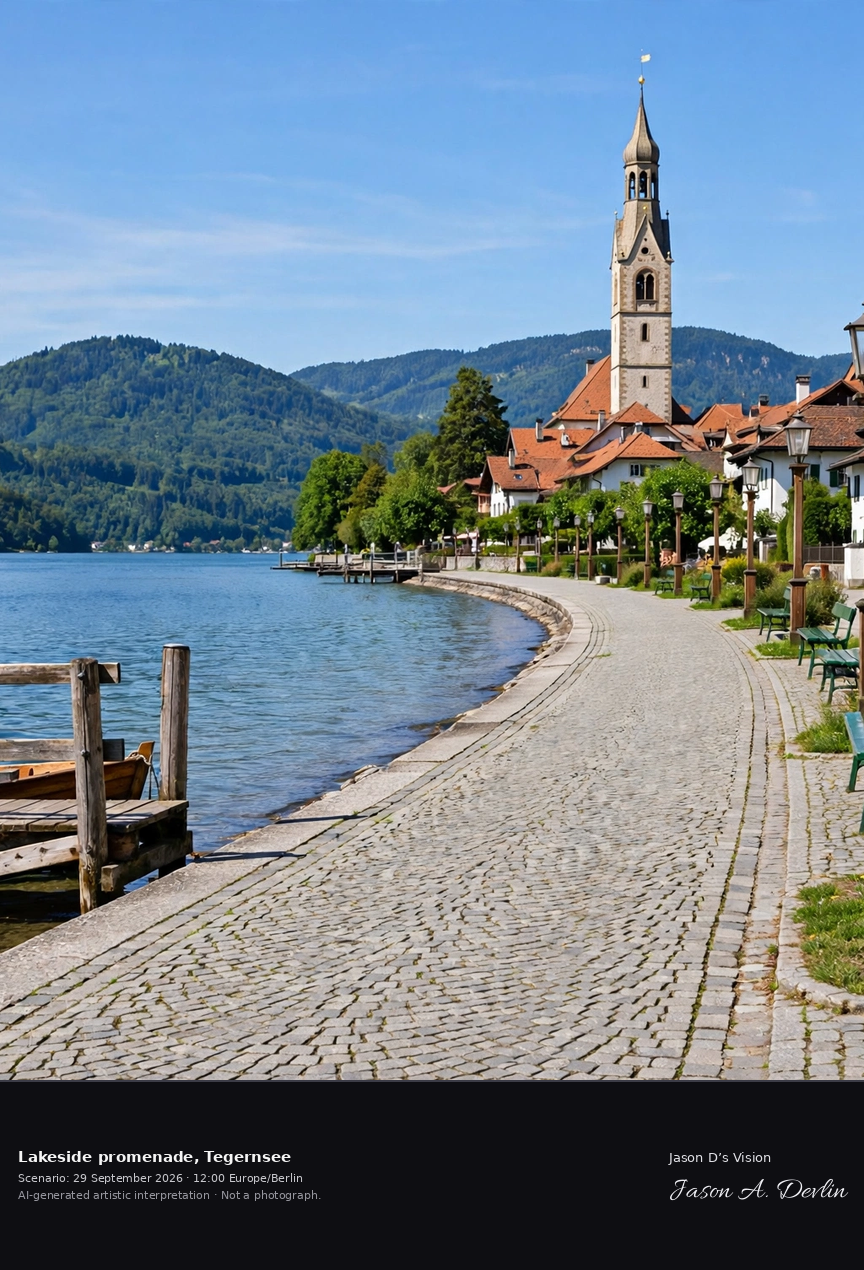
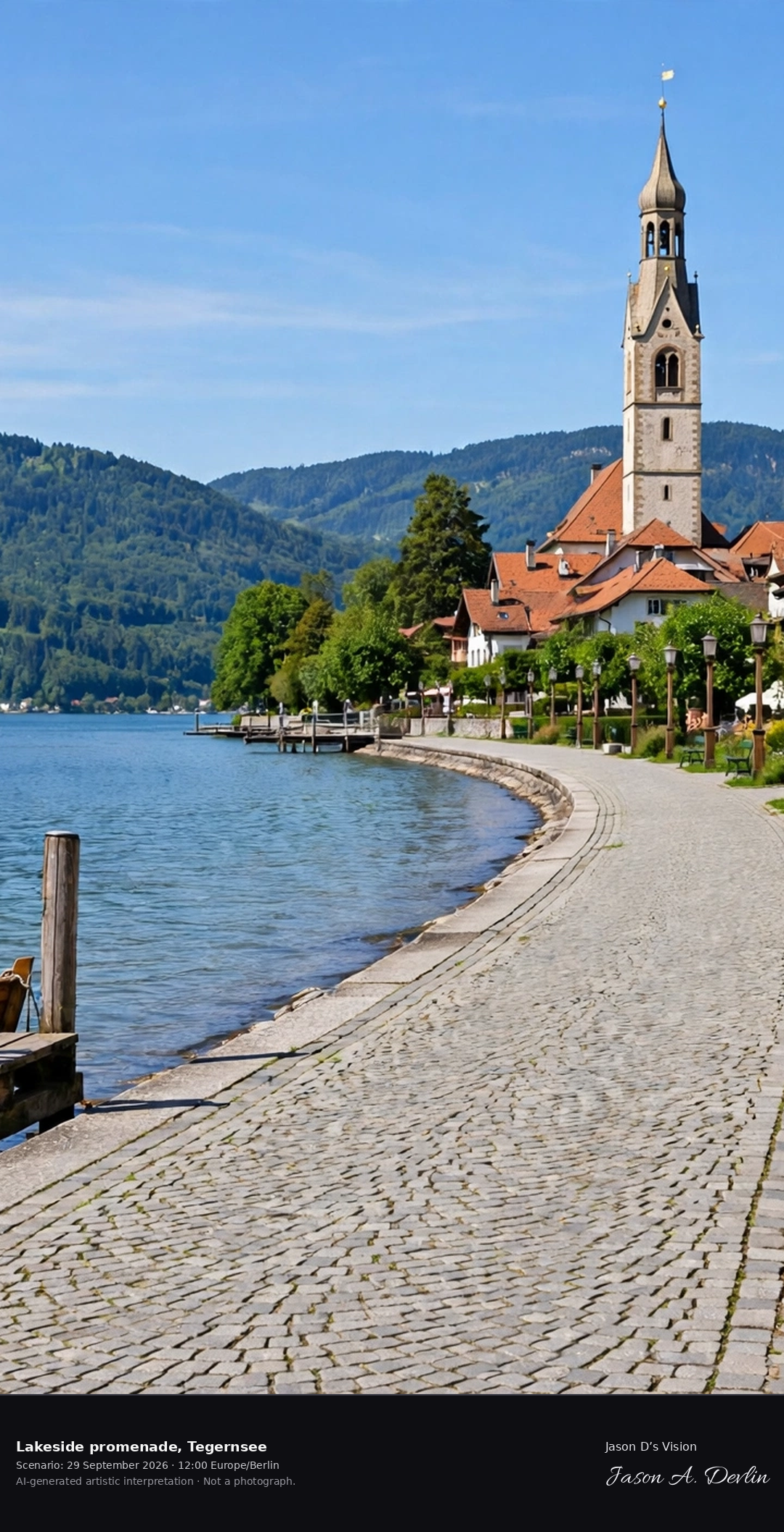
From the boardwalk at night, lit lamps and empty benches line the right while traditional Bavarian houses with green shutters edge the promenade. The tall church steeple rises mid-frame over moored boats, the calm lake spreads to the left mirroring the lamplight, and dark alpine foothills close the far shore beneath a partly cloudy sky with the moon breaking through.
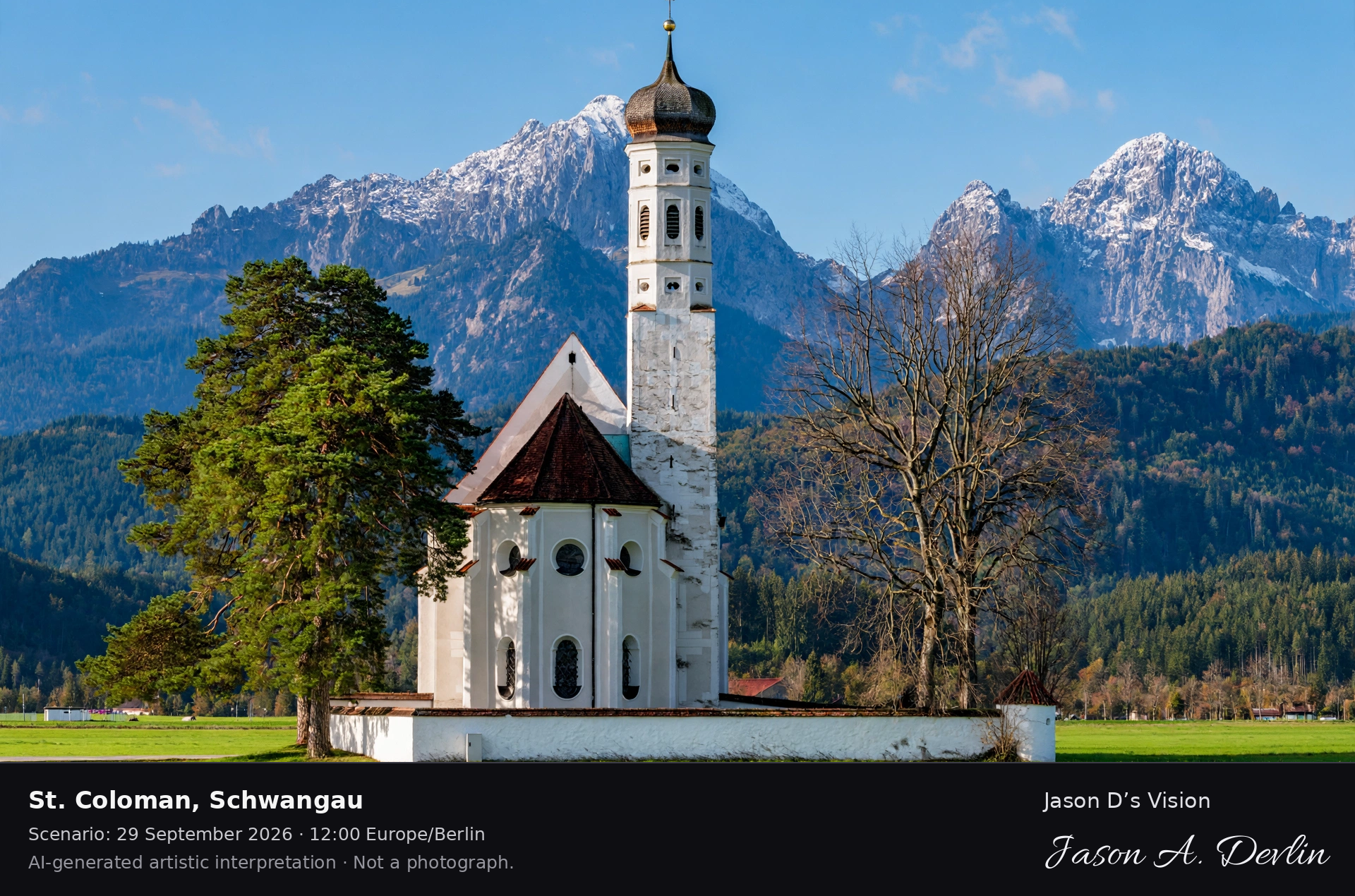
Church in open meadow · AI-generated artistic interpretation
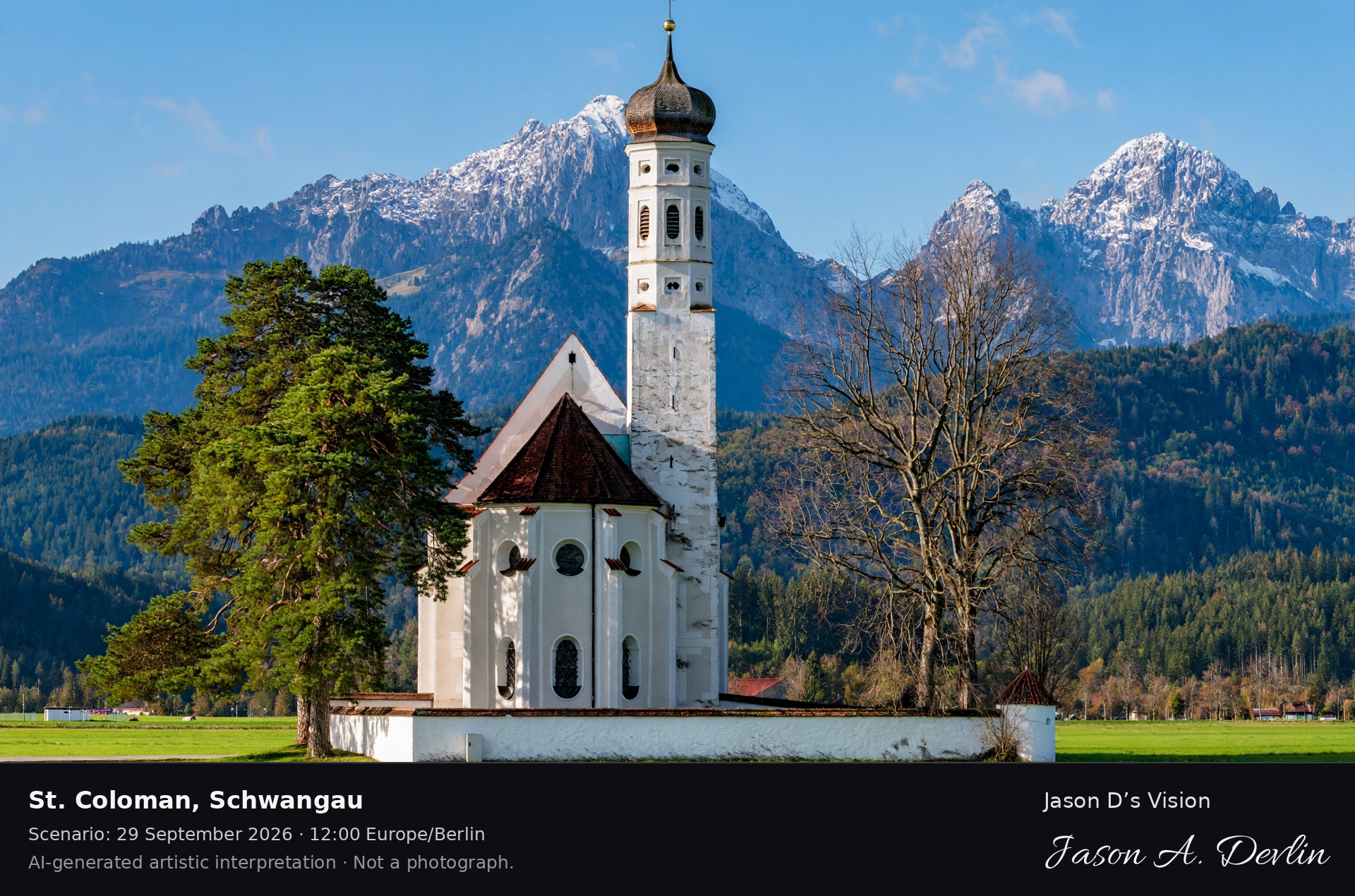
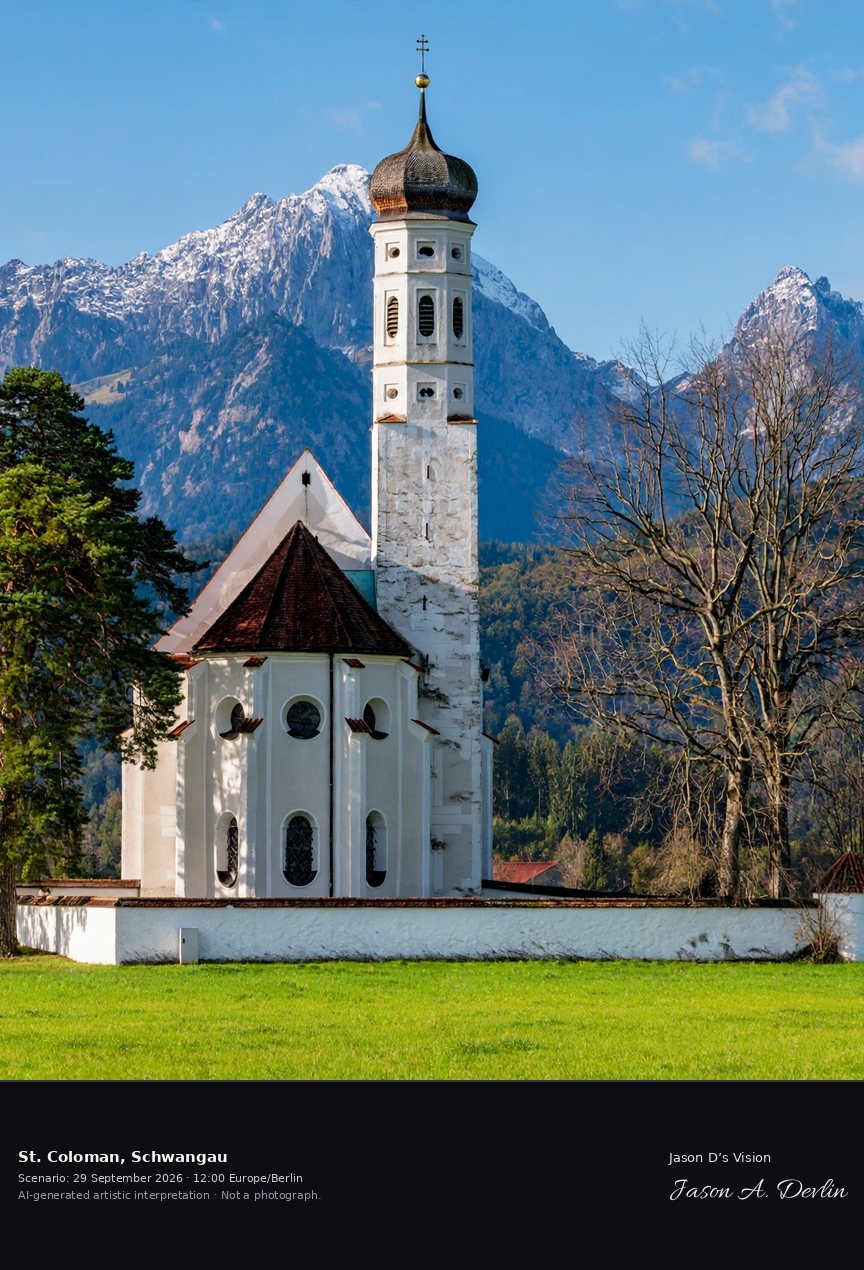
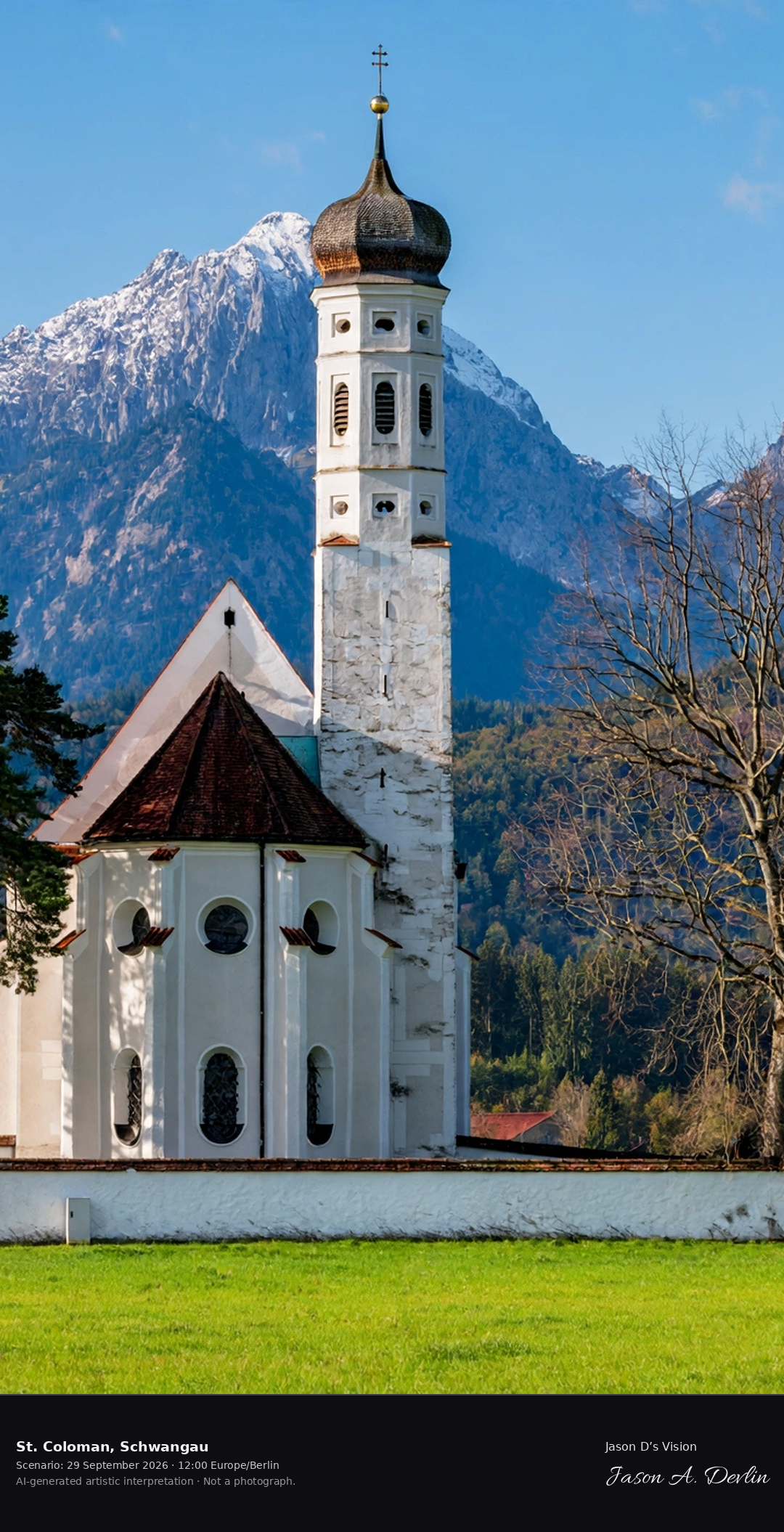
St. Coloman glows in the middle of an open meadow at night, its white Baroque nave and tall onion-domed tower lit from within while a cluster of trees stands to the right and the silhouetted Alpine ridgelines fade behind. Moonlight breaks through the partly cloudy sky overhead, softening the meadow grass in the foreground and leaving the mountains as dark layered shapes.
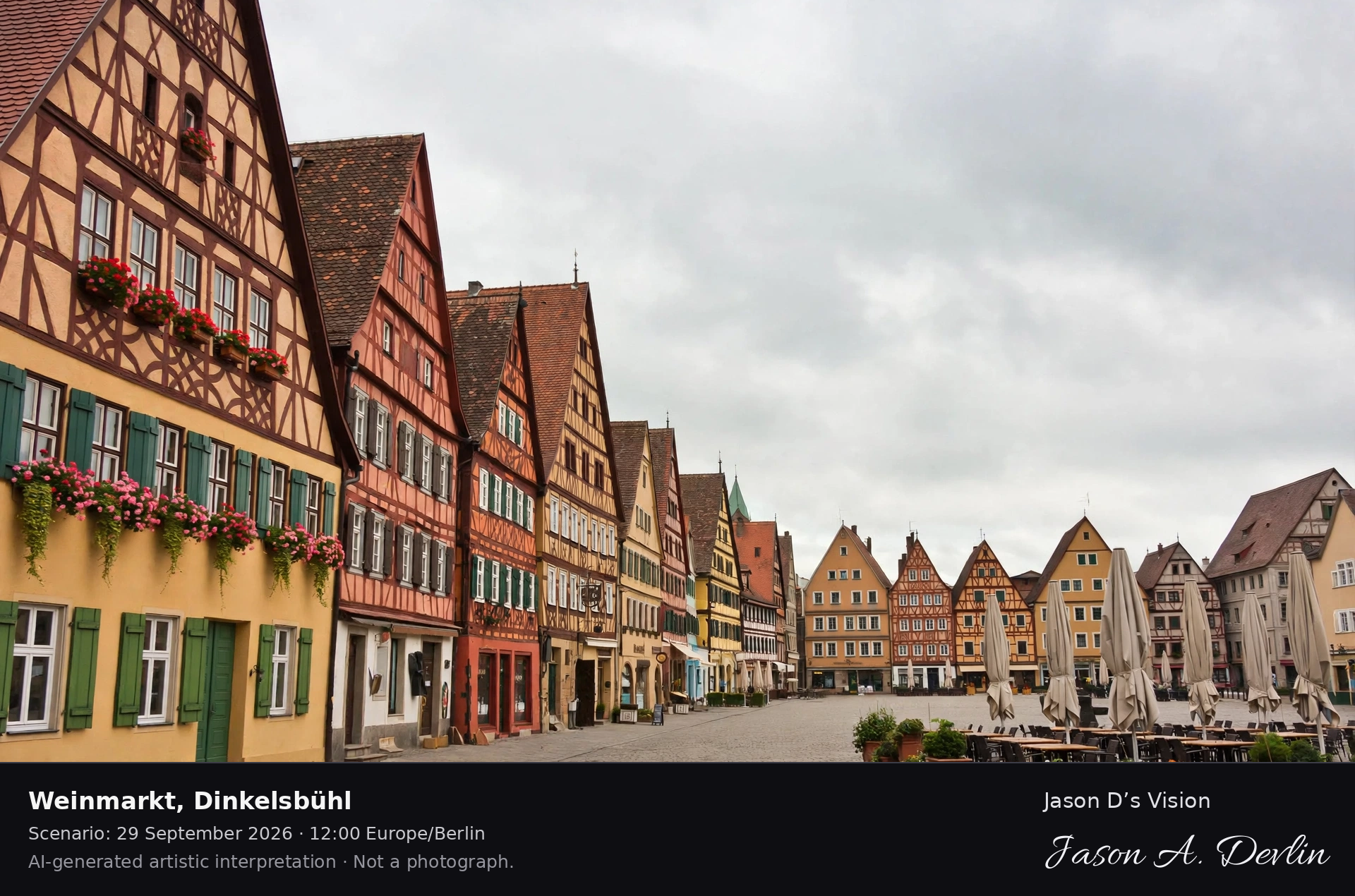
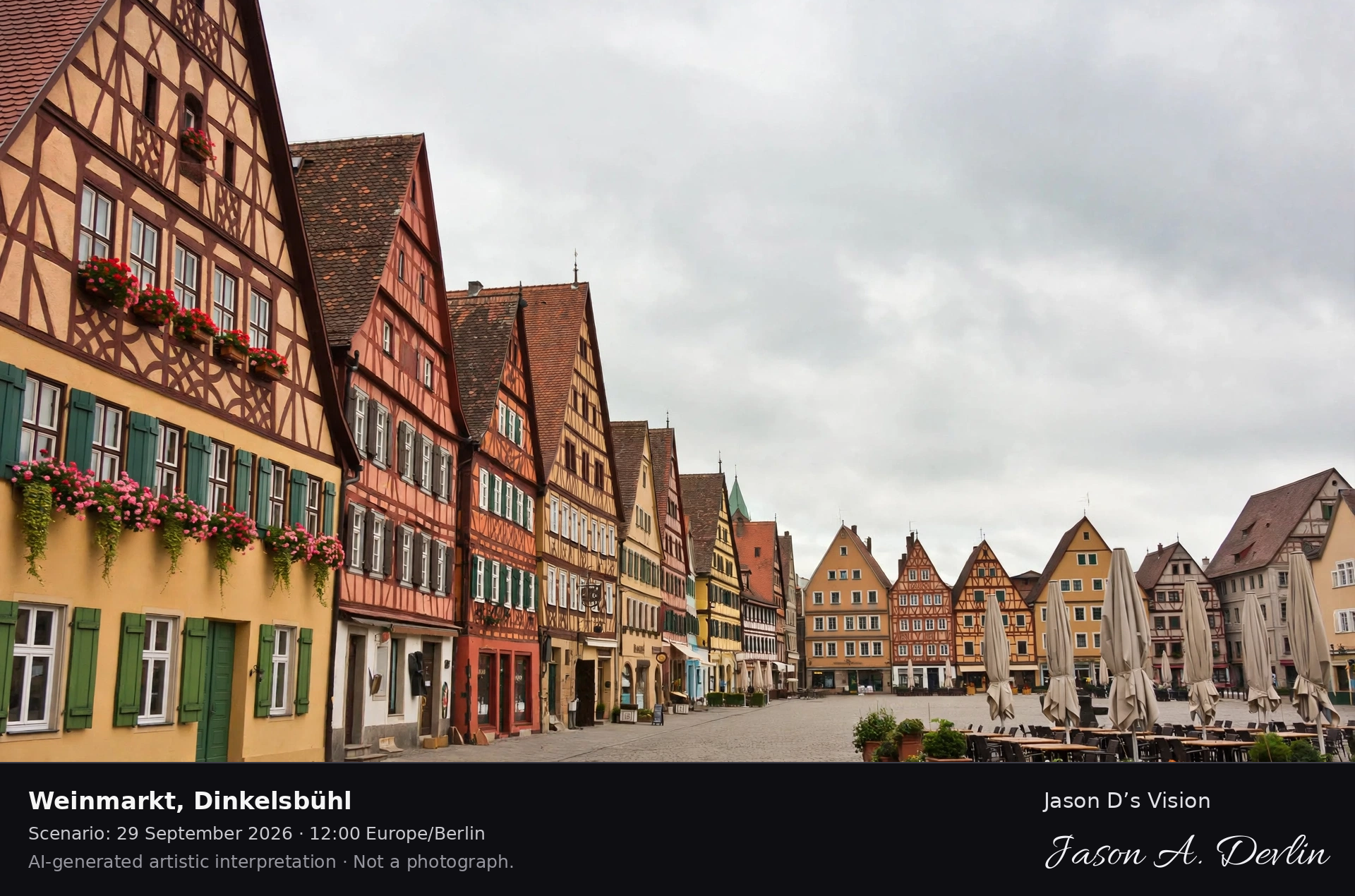
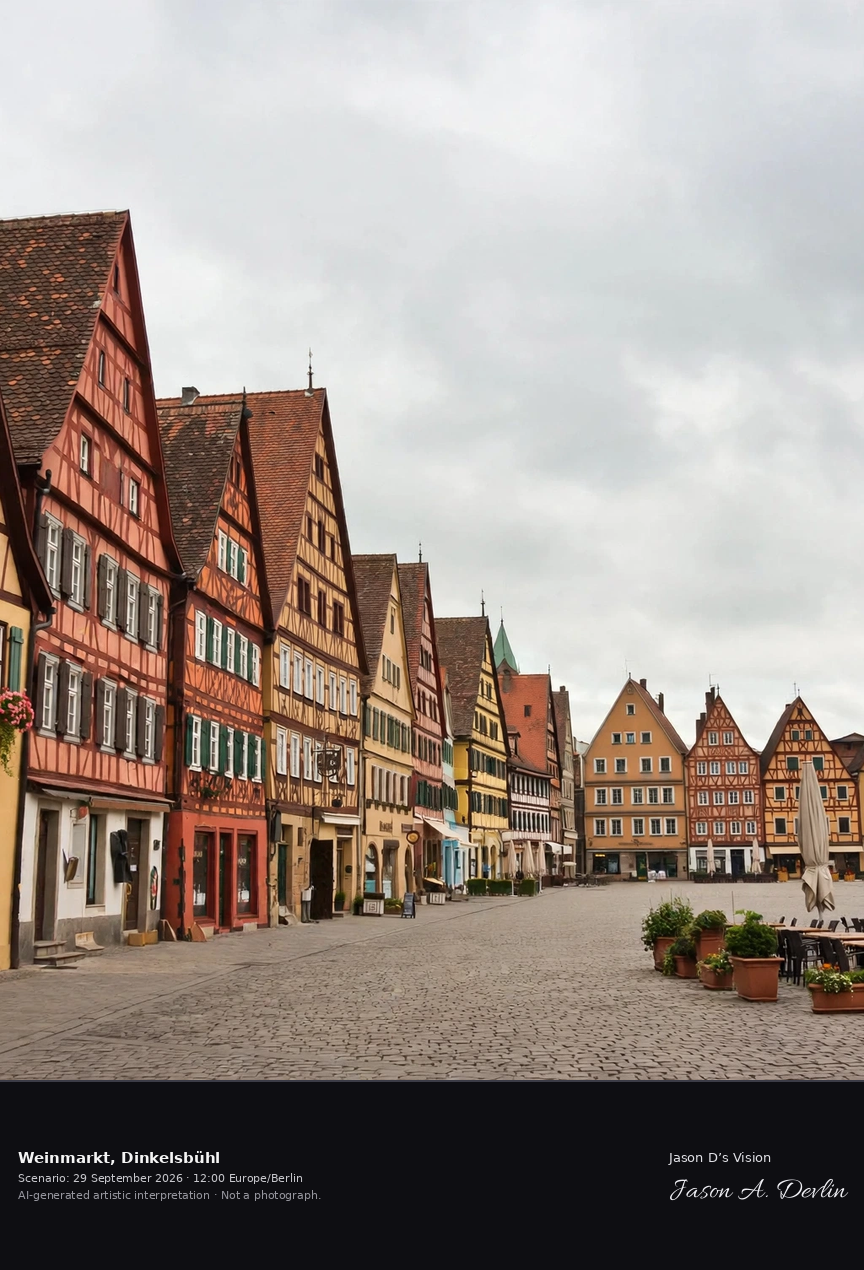
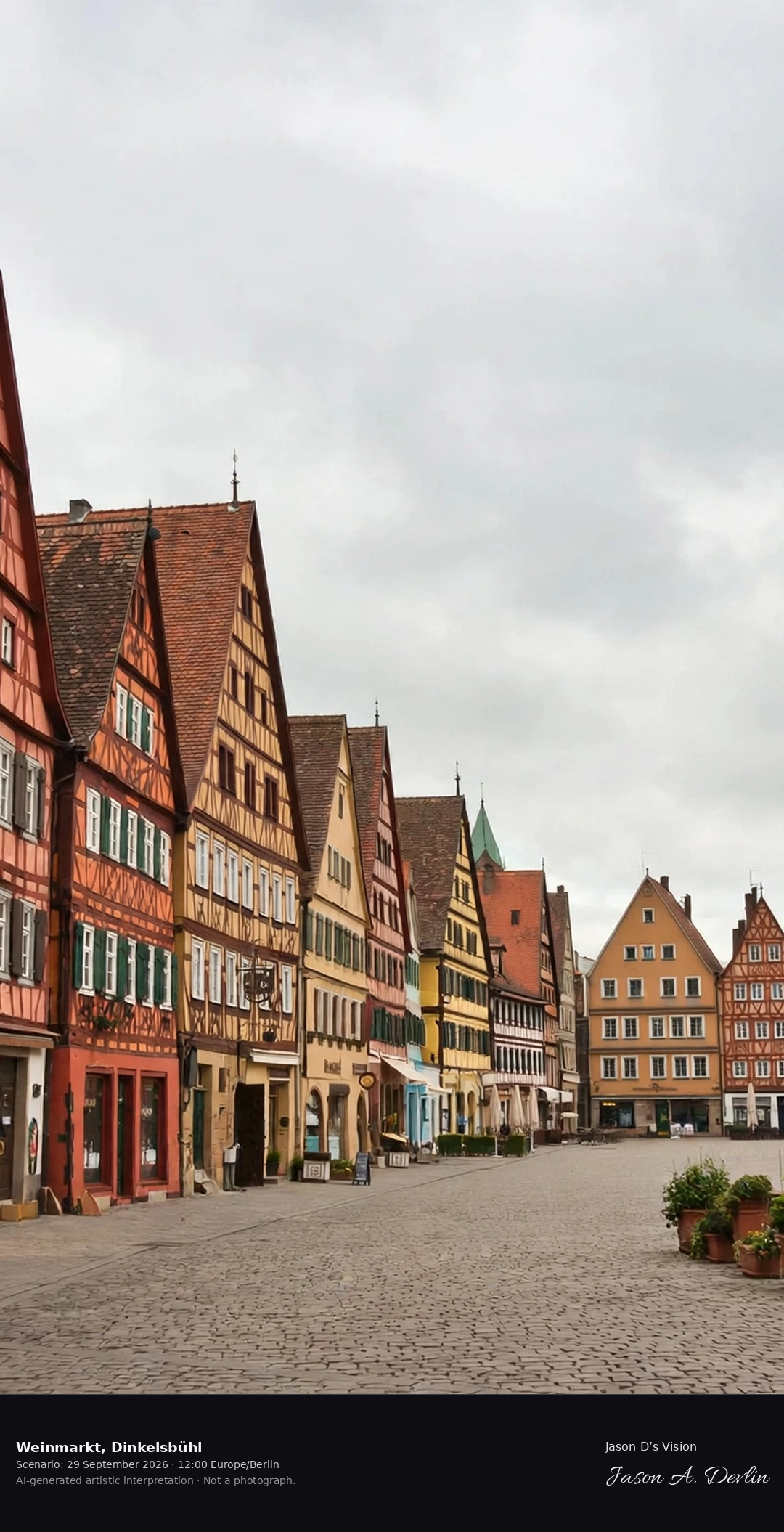
The Weinmarkt glows at midnight beneath a partly cloudy moonlit sky, a row of tall colorful gabled houses lining the cobbled square with warm light spilling from their windows. The Gasthaus Zur Glocke stands at the left with its inn sign over the doorway, next to a richly carved half-timbered facade hung with flower boxes, while the yellow ochre gables march right toward the far end of the square. Closed restaurant parasols and terracotta planters cluster along the right side, and the lamplit cobbles carry the reflection of every window.
St. Martin and historic facades · AI-generated artistic interpretation
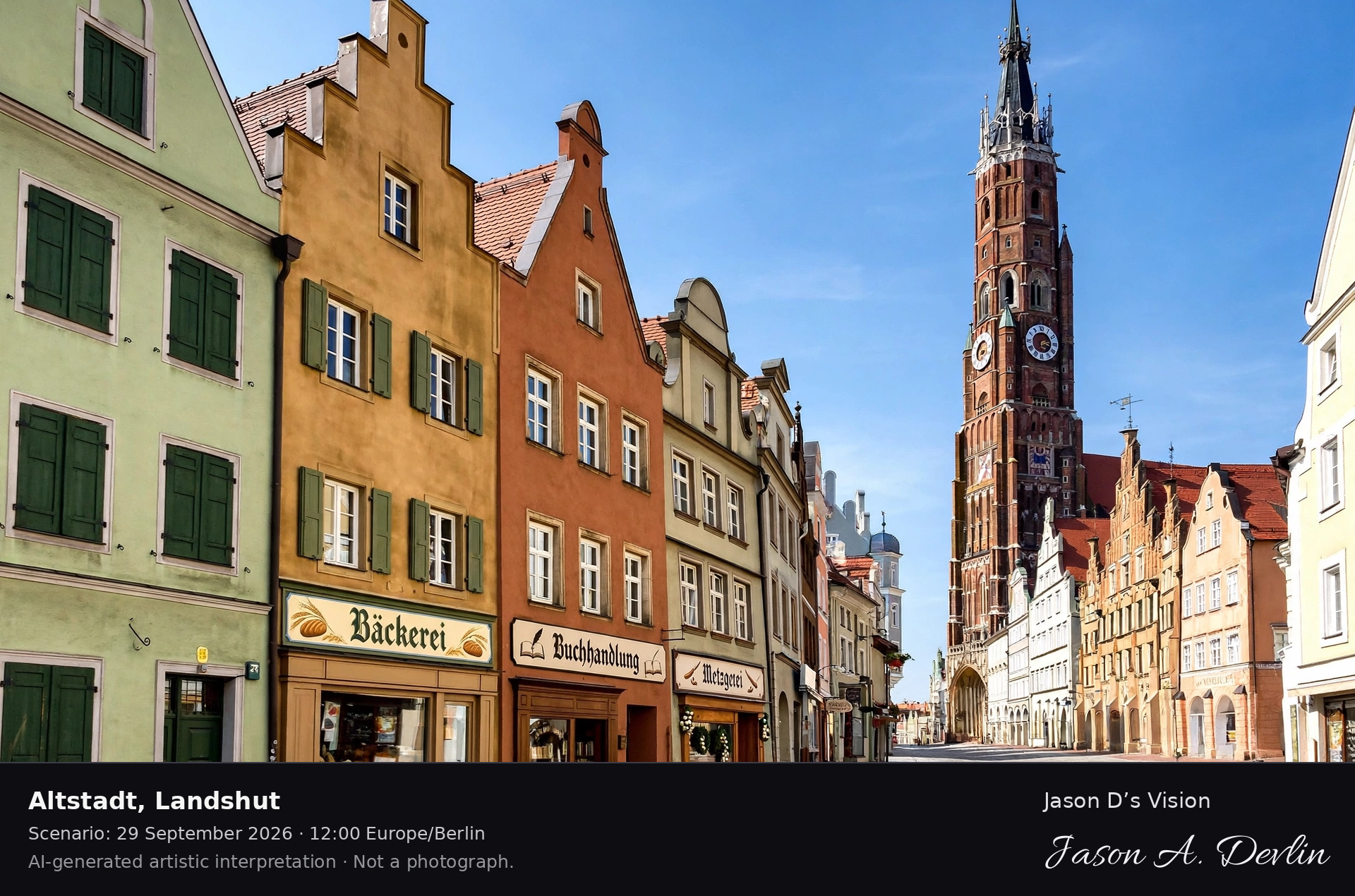
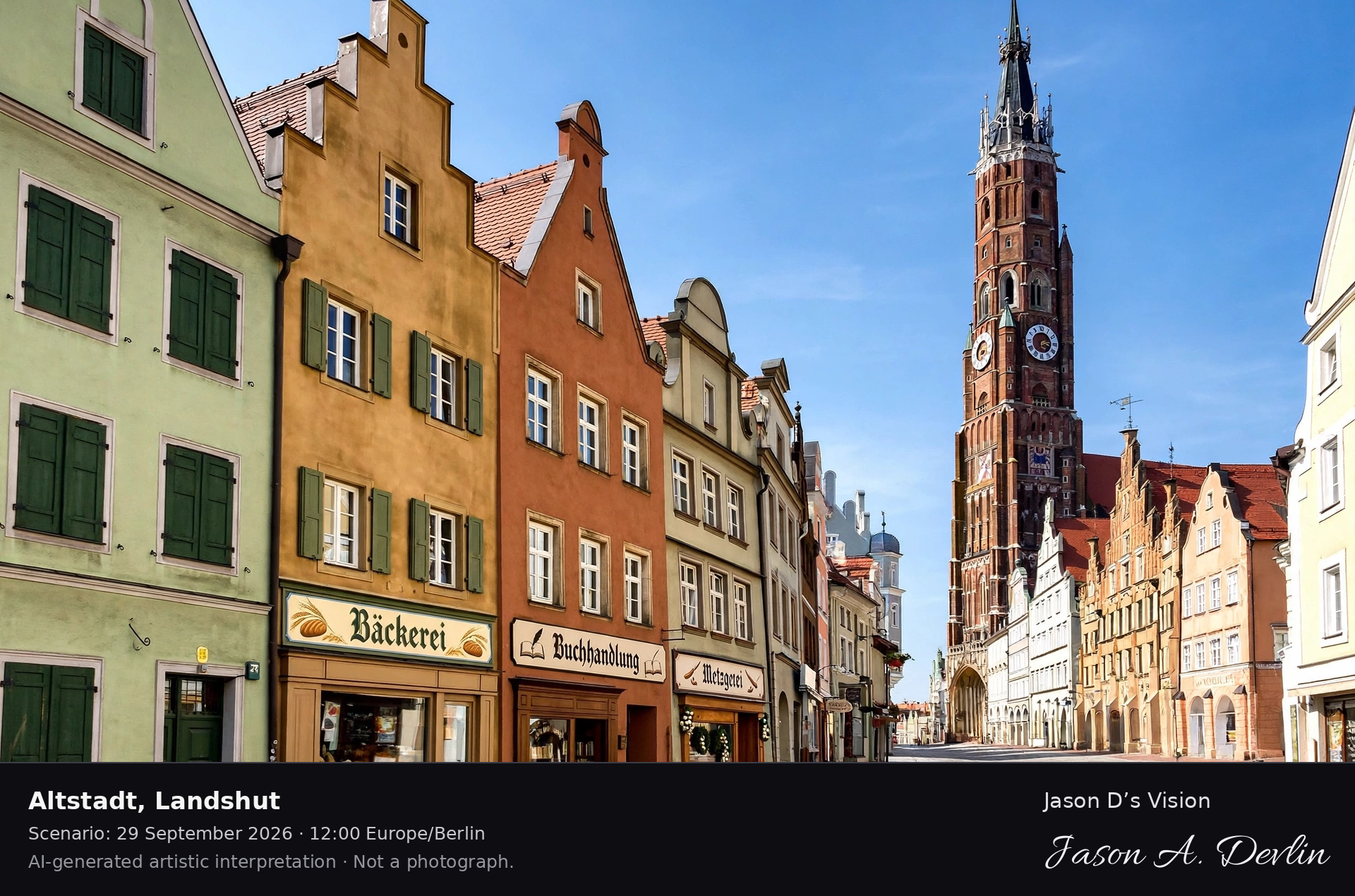
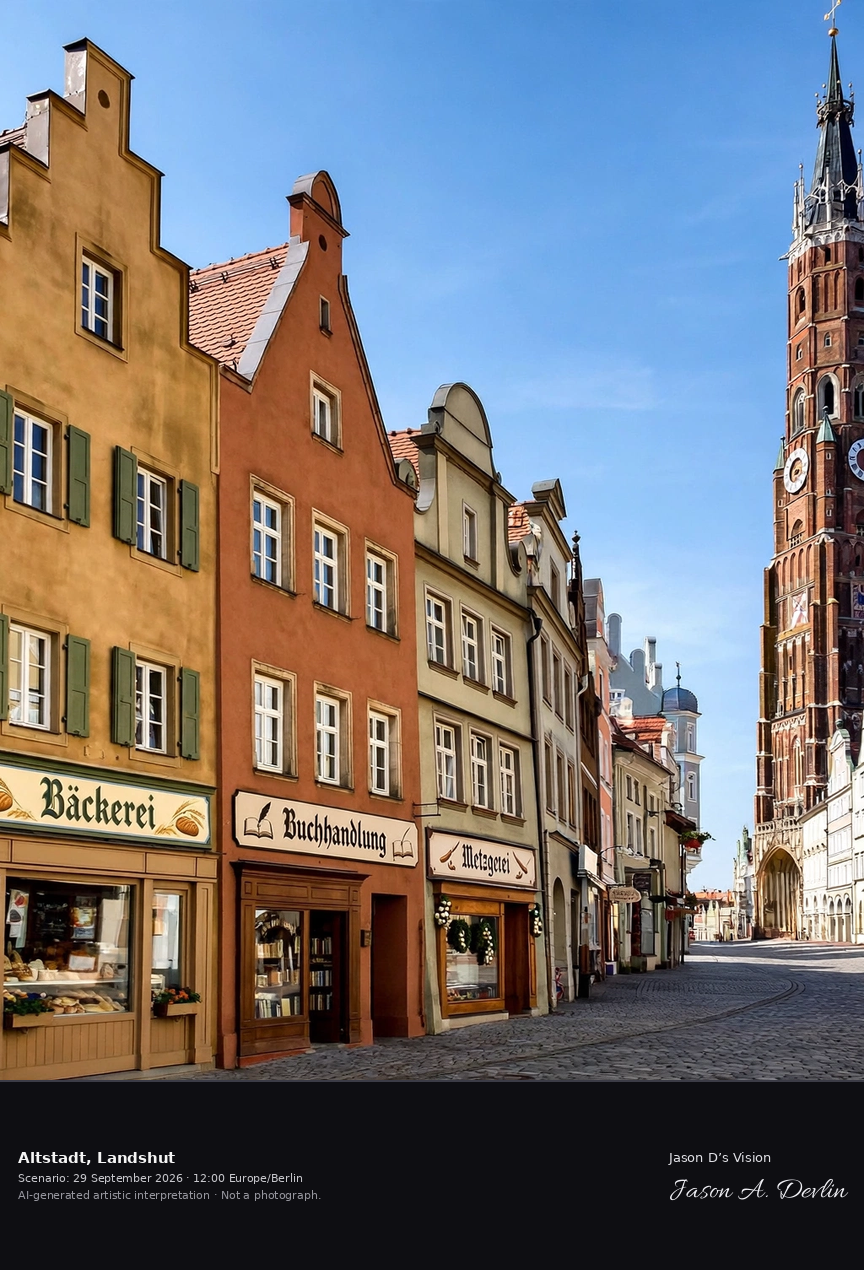
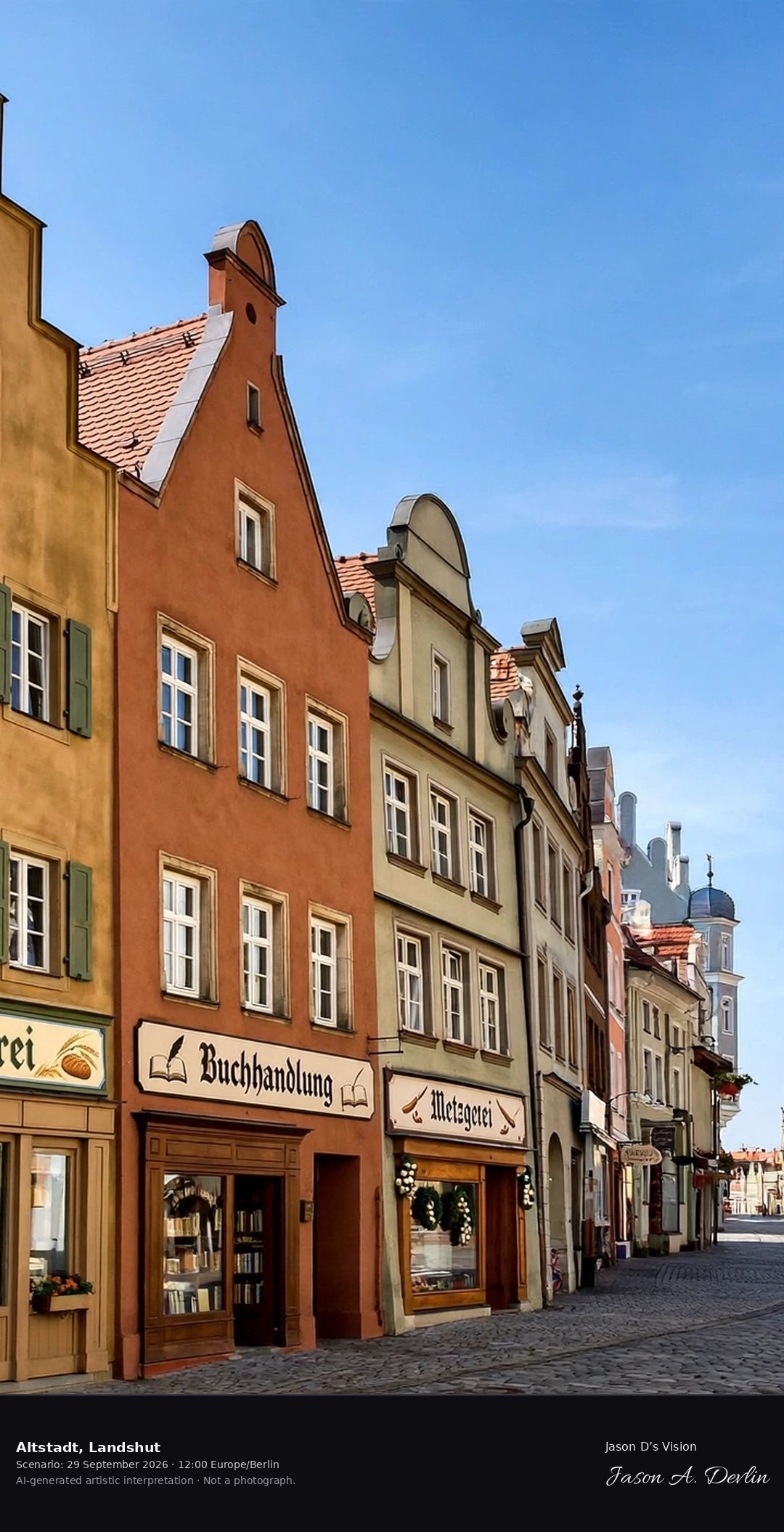
The Altstadt lies quiet after midnight under a clear, star-speckled sky, the cobbled street empty and warm shopfront light glowing from a bakery and bookshop along the row of tall pastel gabled houses at the left. St. Martin's soaring brick Gothic tower rises at center-right, its clock face lit against the dark sky and the grand arched west portal warmly floodlit at its base. At the right, a ochre facade with an arched colonnade frames a late-night café, and the whole scene carries the hush of a Bavarian old town at 8.6°C.
Abbey and limestone river gorge · AI-generated artistic interpretation
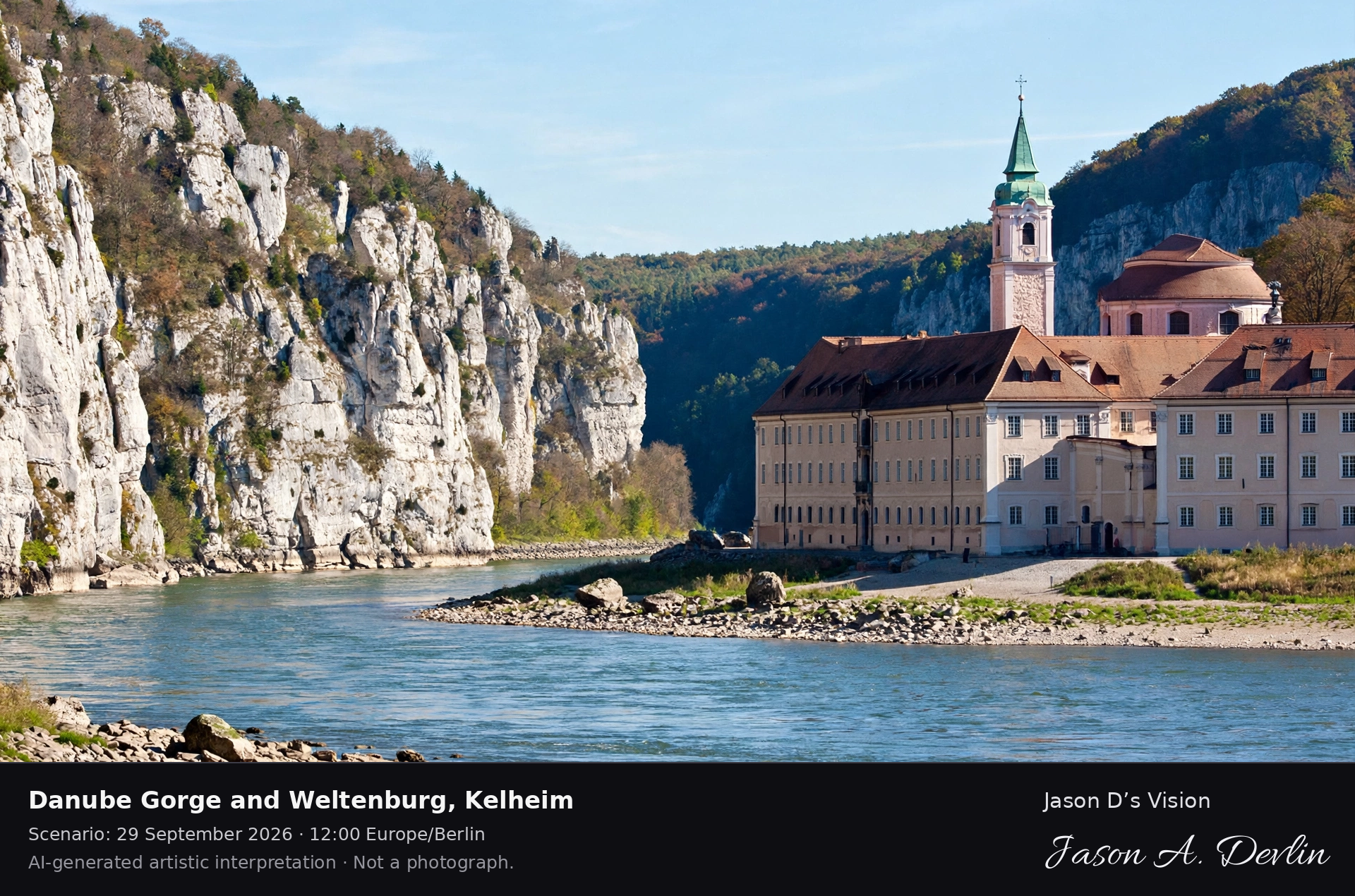
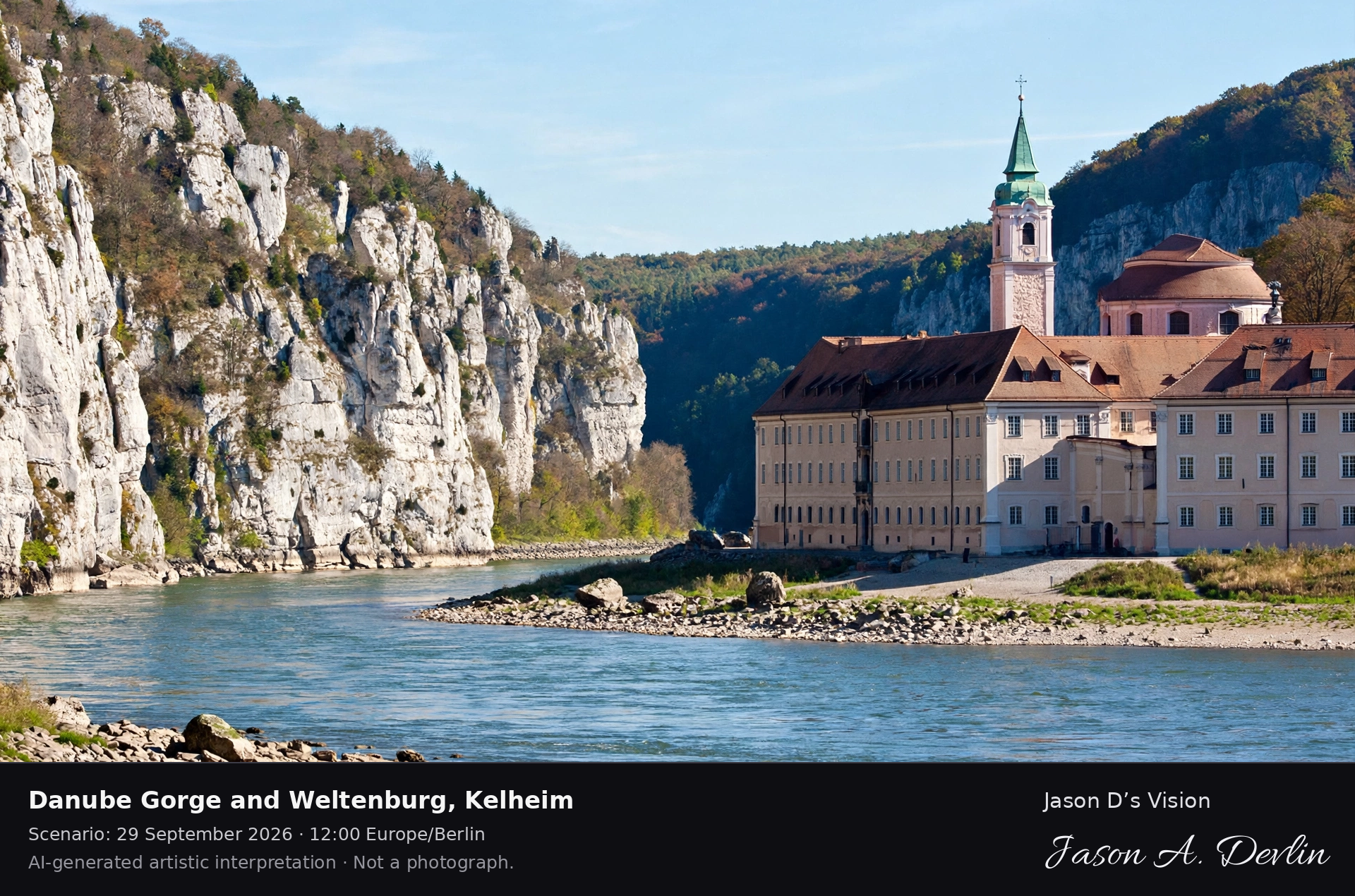
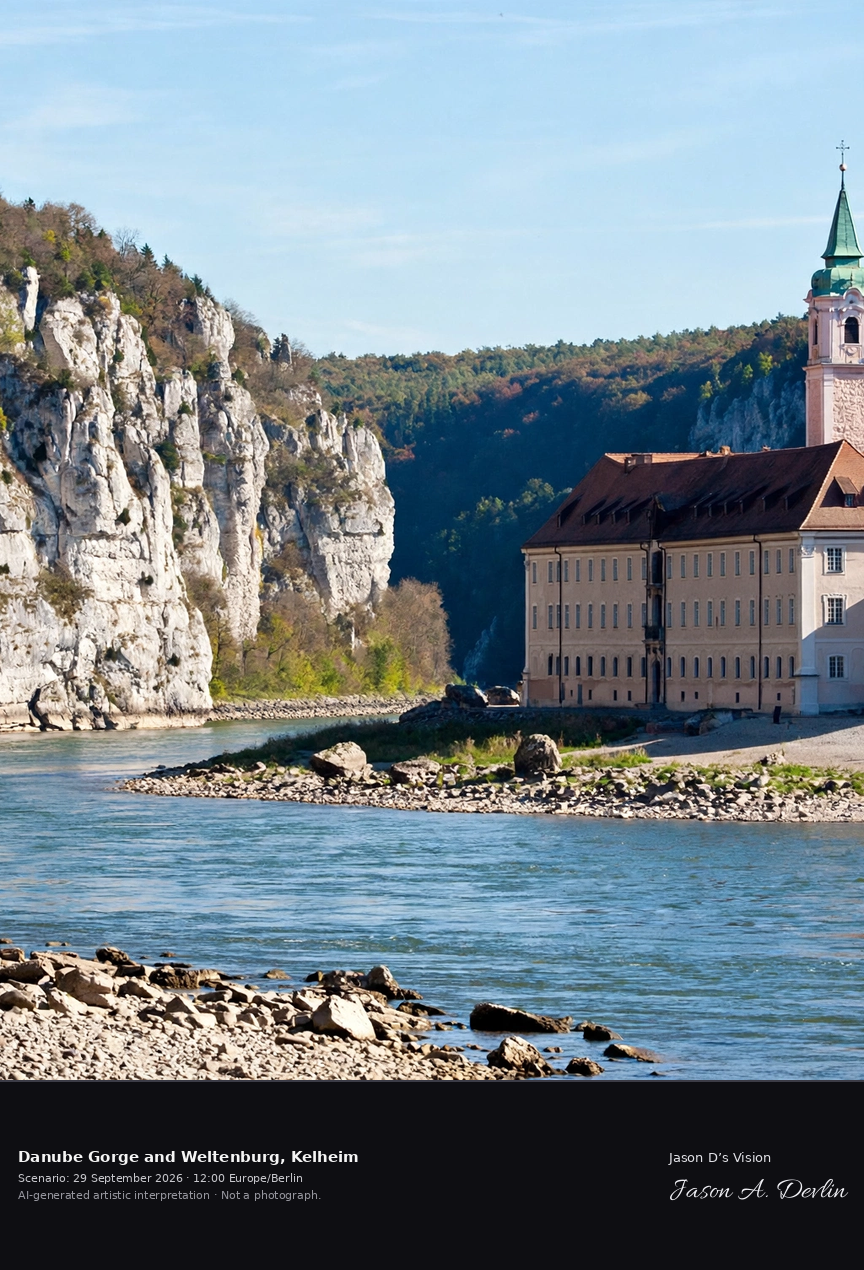
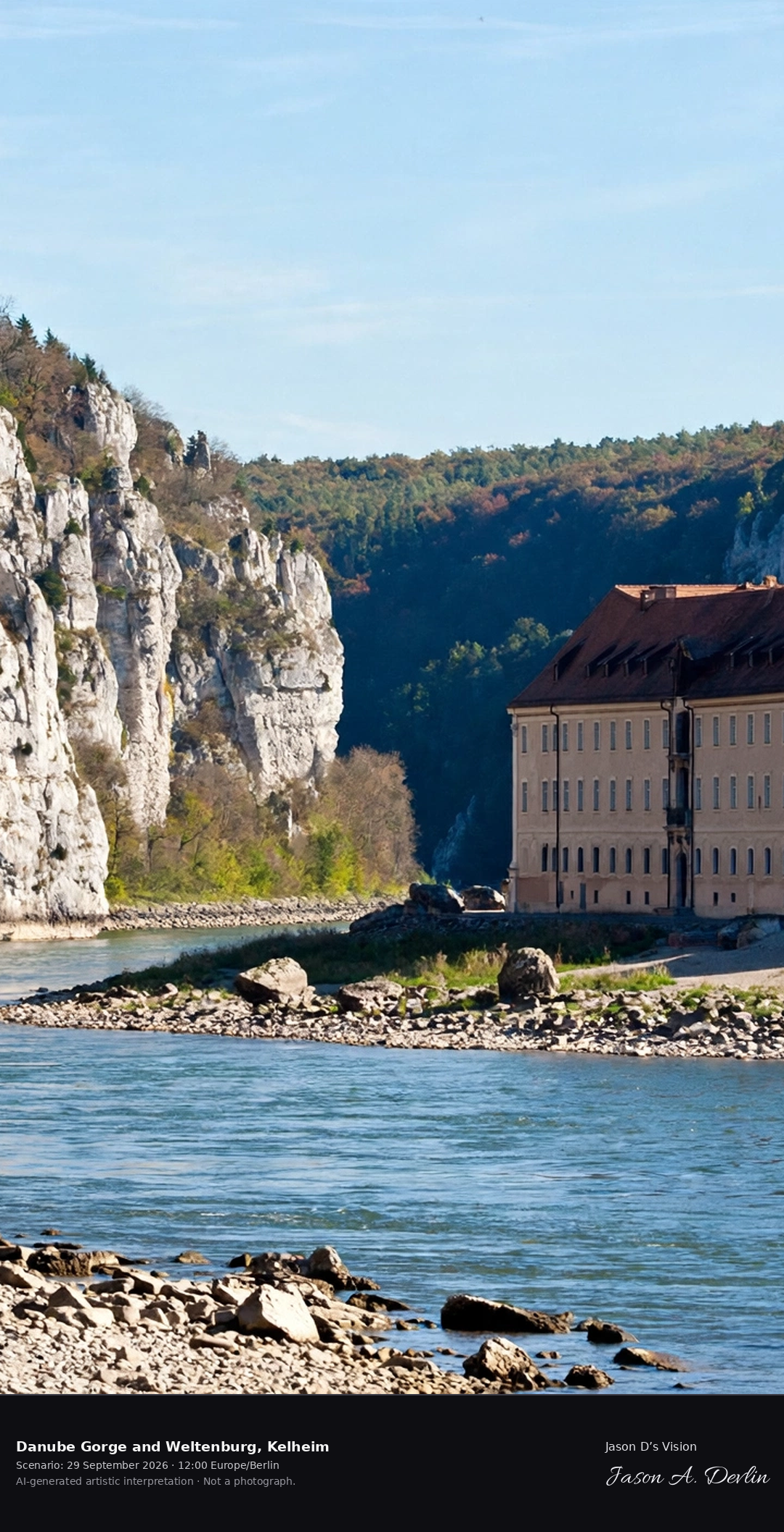
Past midnight, Weltenburg Abbey glows warmly against a brooding overcast sky, its red roofs, domed church and green spire mirrored in the dark, still Danube in the foreground. Mist drifts over the steep limestone cliffs of the gorge at the left, fading into the gloom, while a rocky riverbank with moss and a gravel bar frames the near shore. The 9.5°C night air feels heavy and still, the abbey's lit windows the only signs of life along the black river.
Village beneath castle rock · AI-generated artistic interpretation
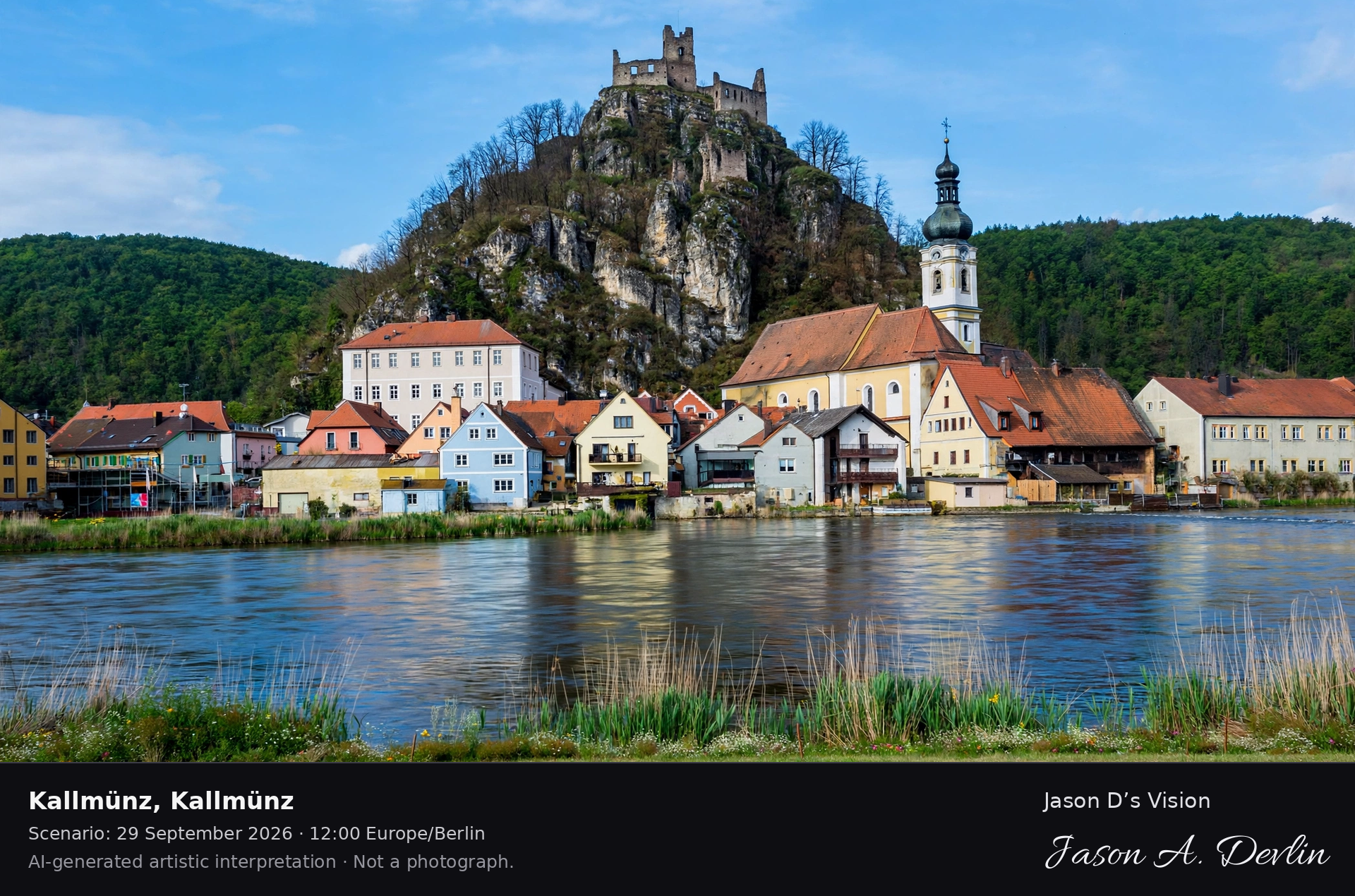
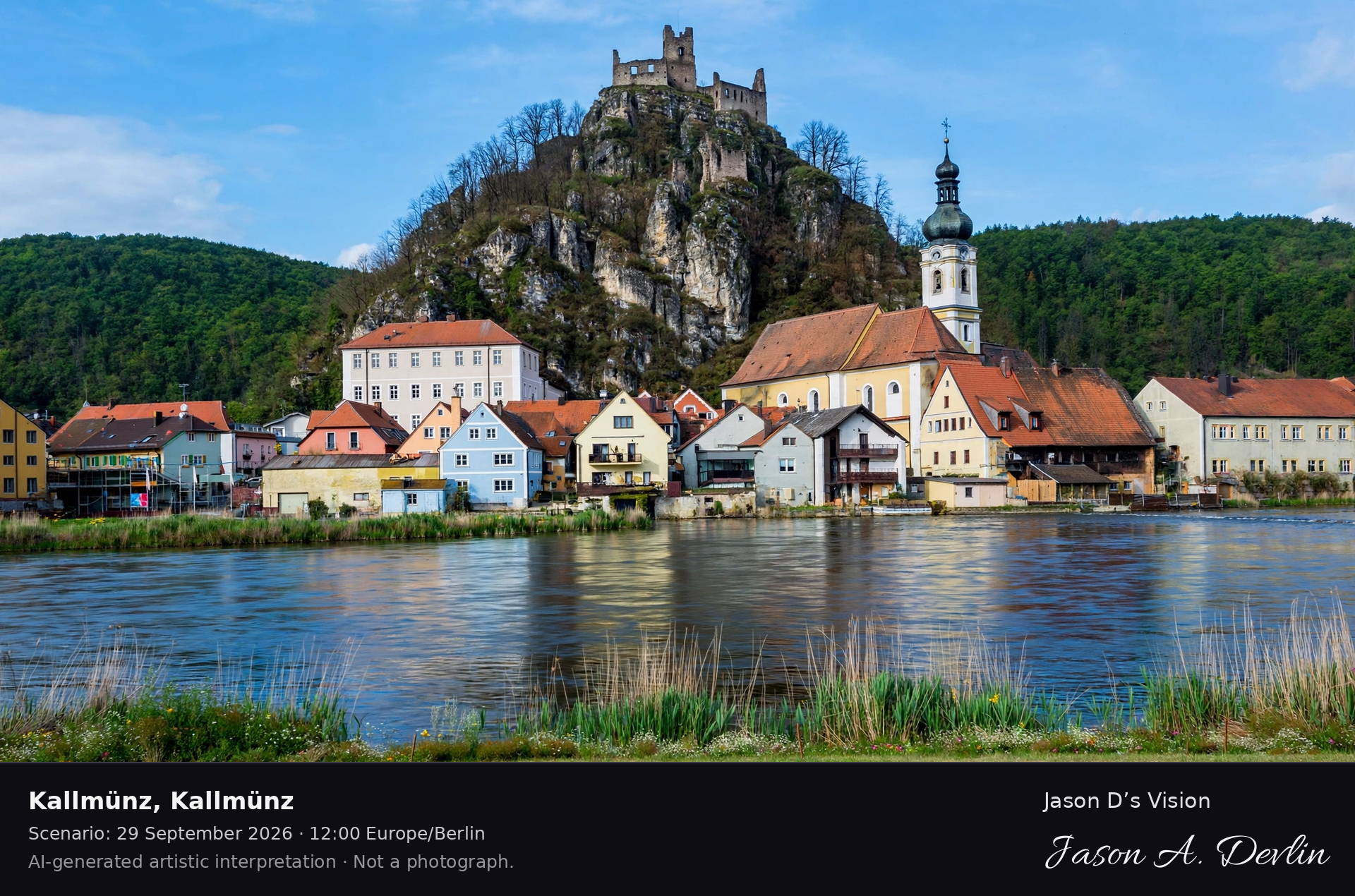
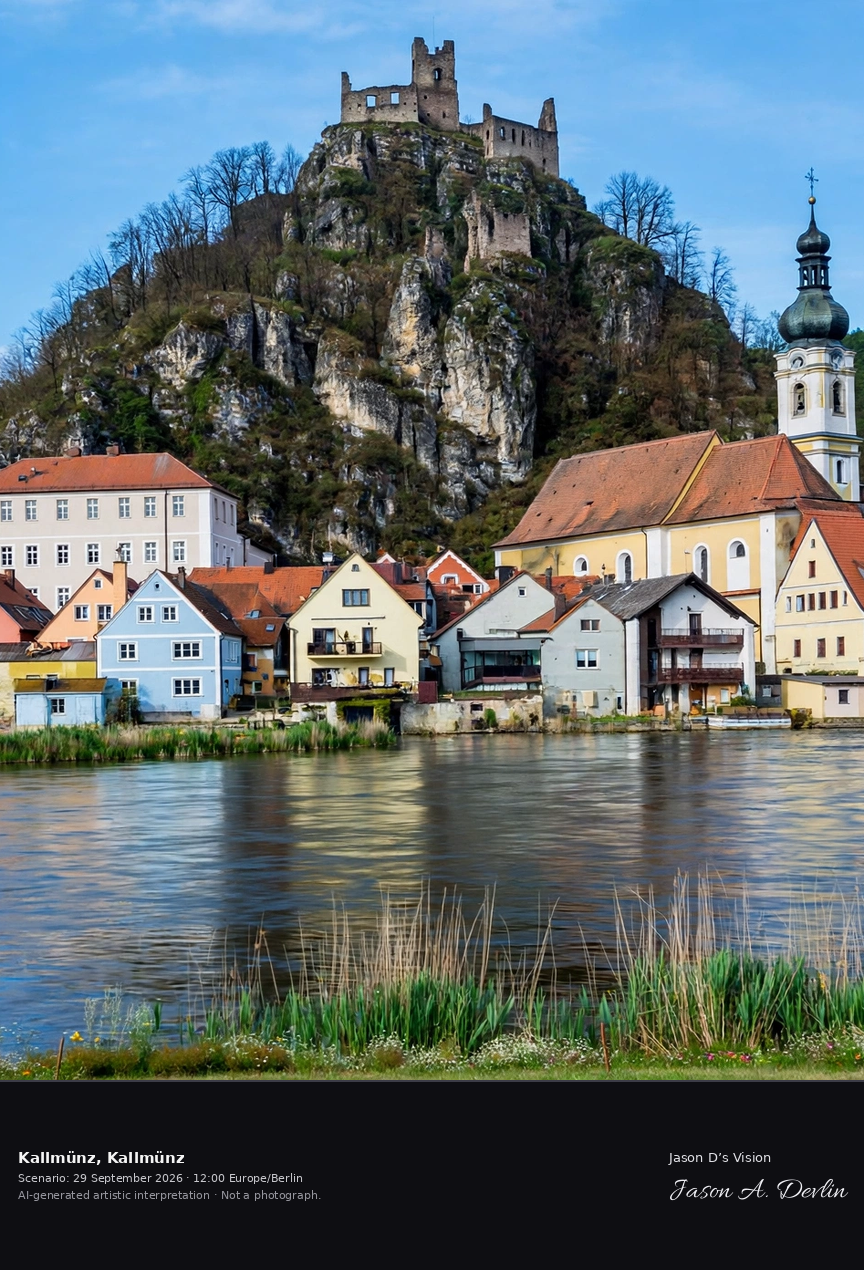
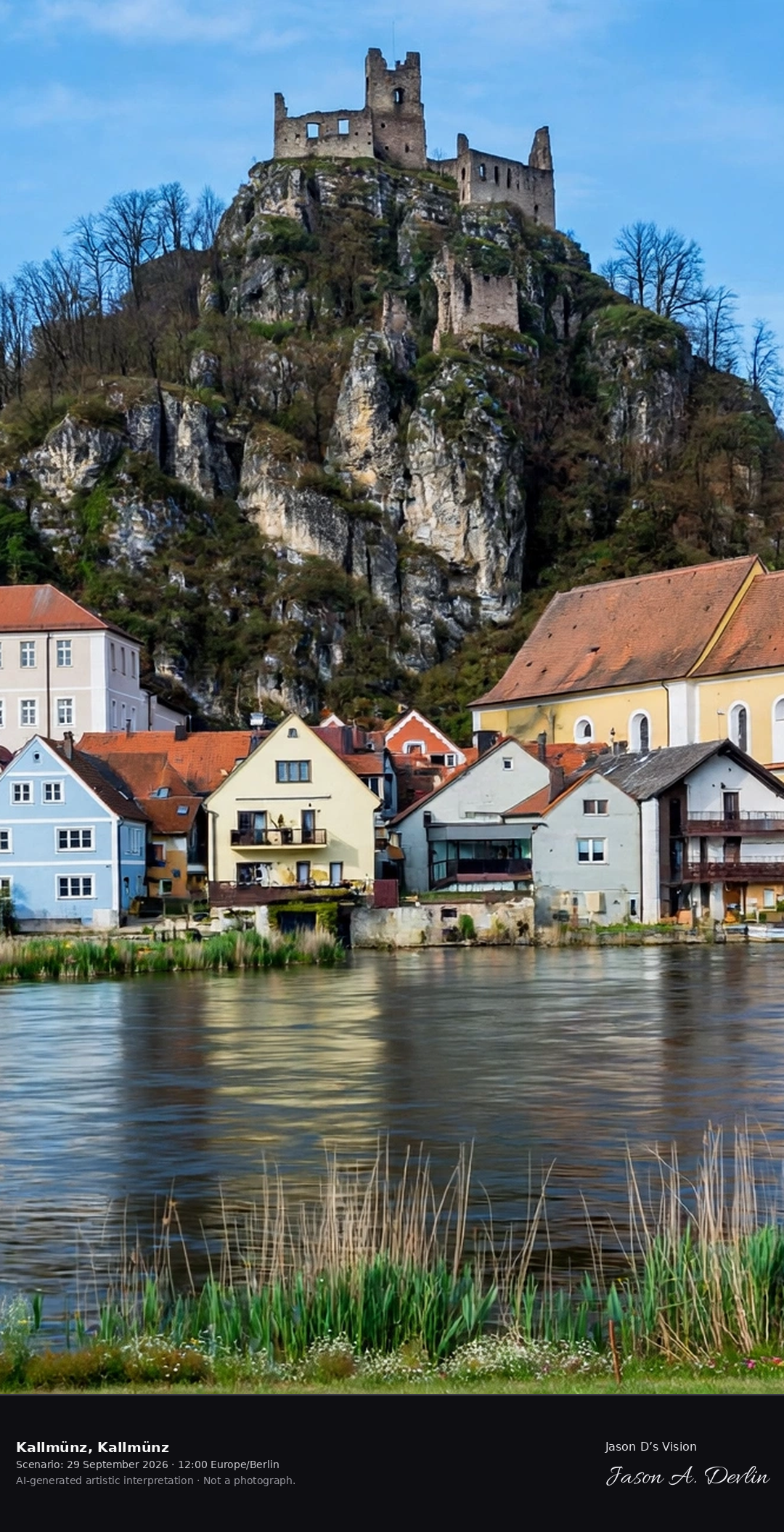
Under an overcast night sky, the Burgruine Kallmünz crowns the sheer Schlossberg rock directly above the village, its ruined towers silhouetted against the clouds. Below, a wet cobbled lane glints with street-lamp reflections, lined left and right by gabled houses with red tile roofs and green shutters; the village church with its onion-dome tower rises at the right. Fallen leaves drift across the stones in the 9.9°C damp, warm window light from a Gasthaus the only glow in the sleeping lane.
Summit and forest outlook · AI-generated artistic interpretation
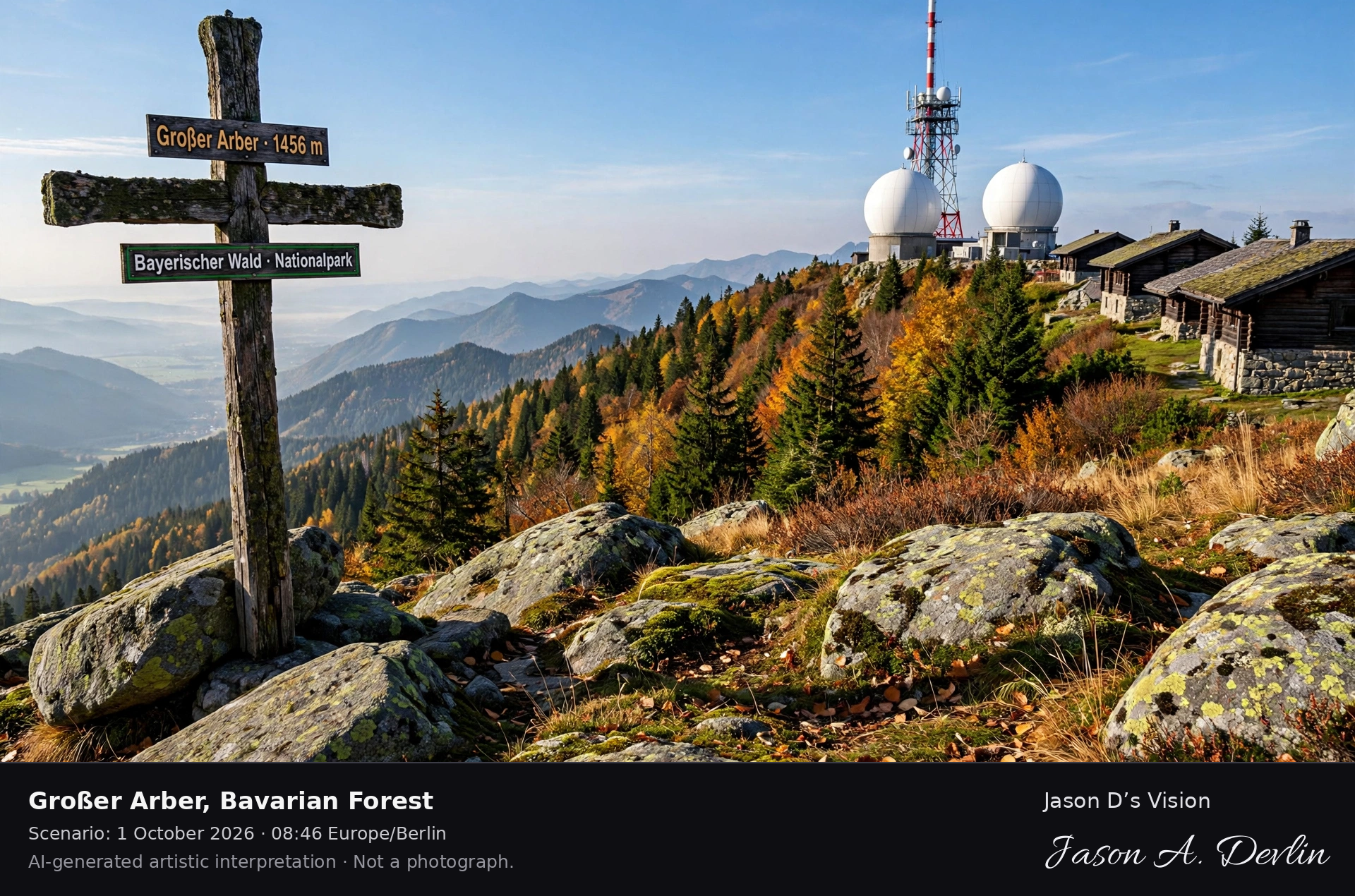
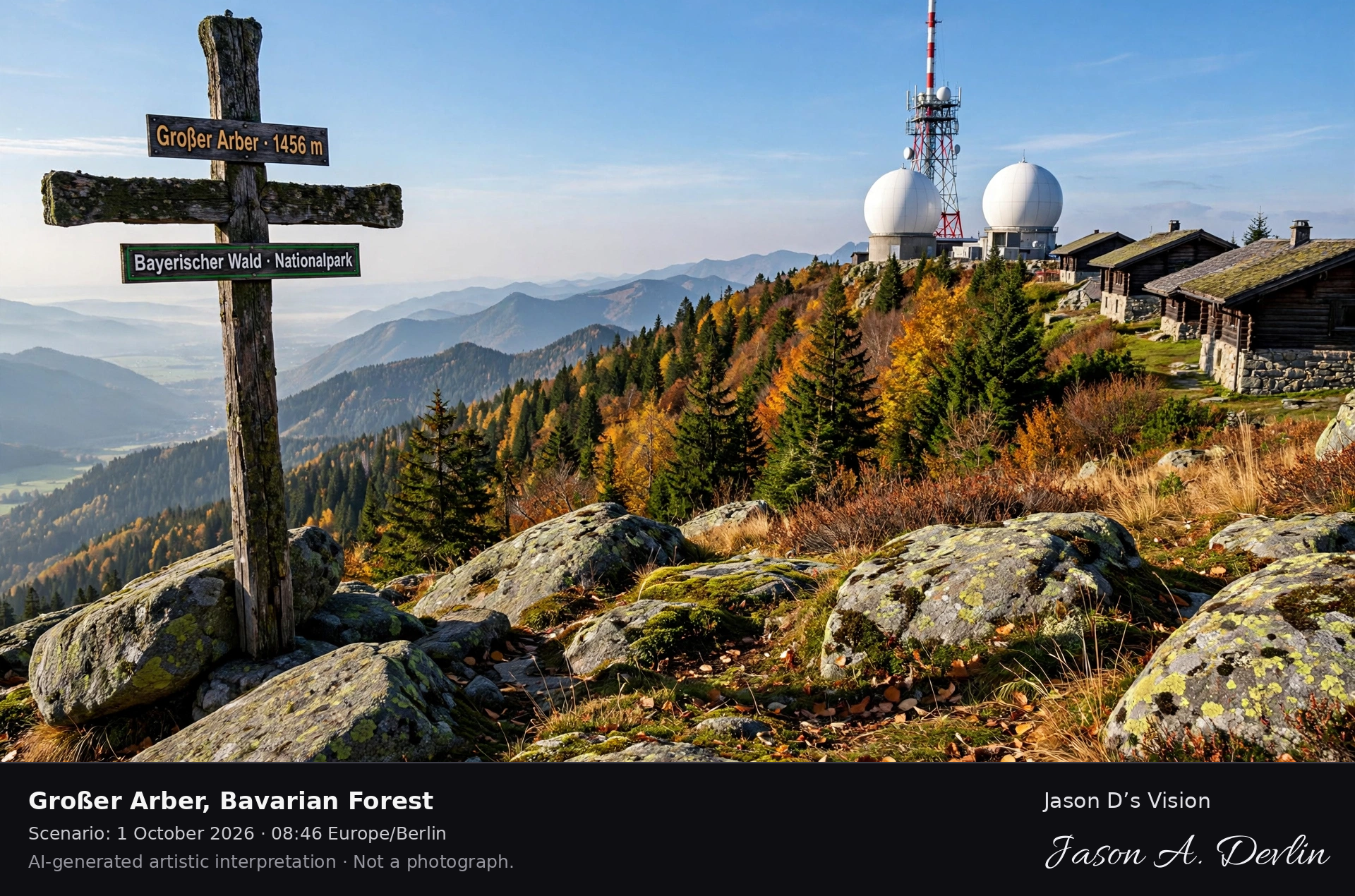
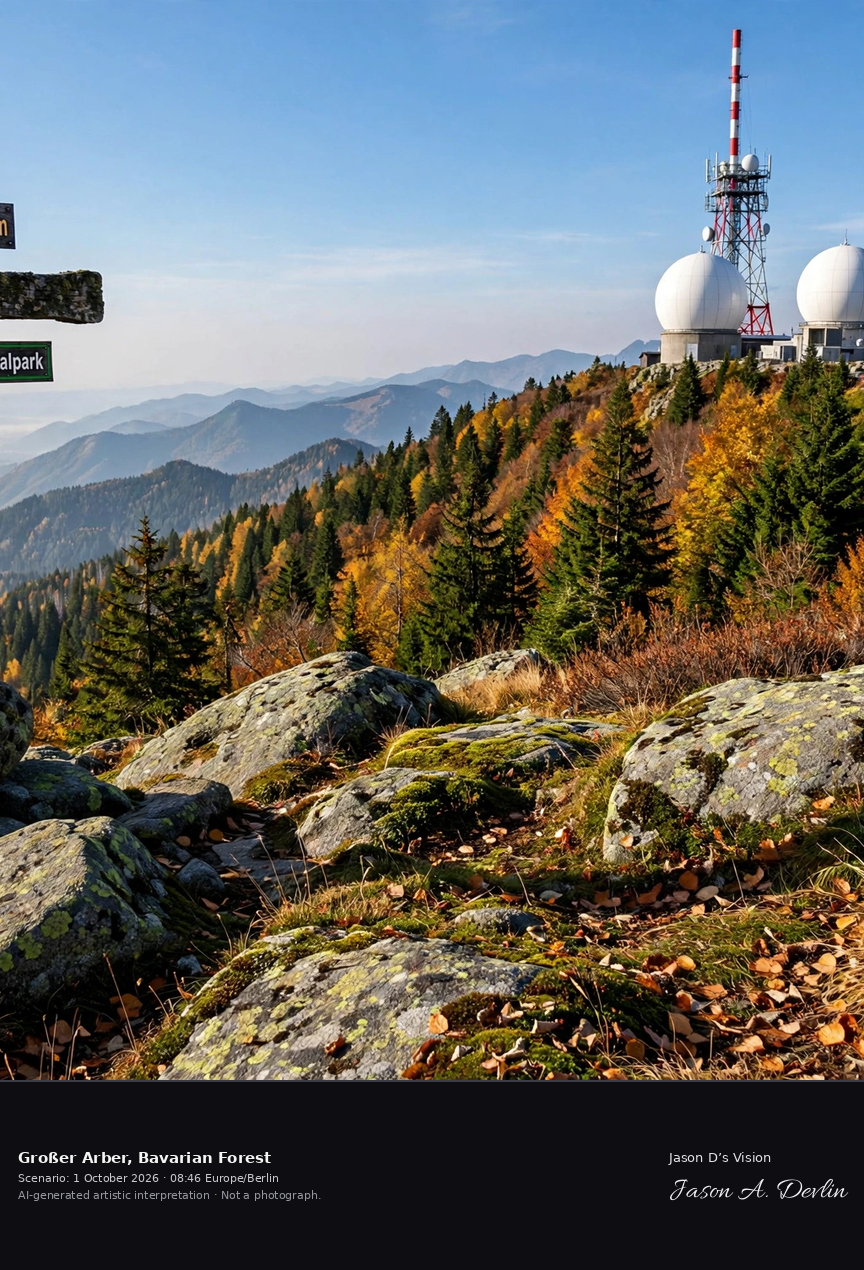
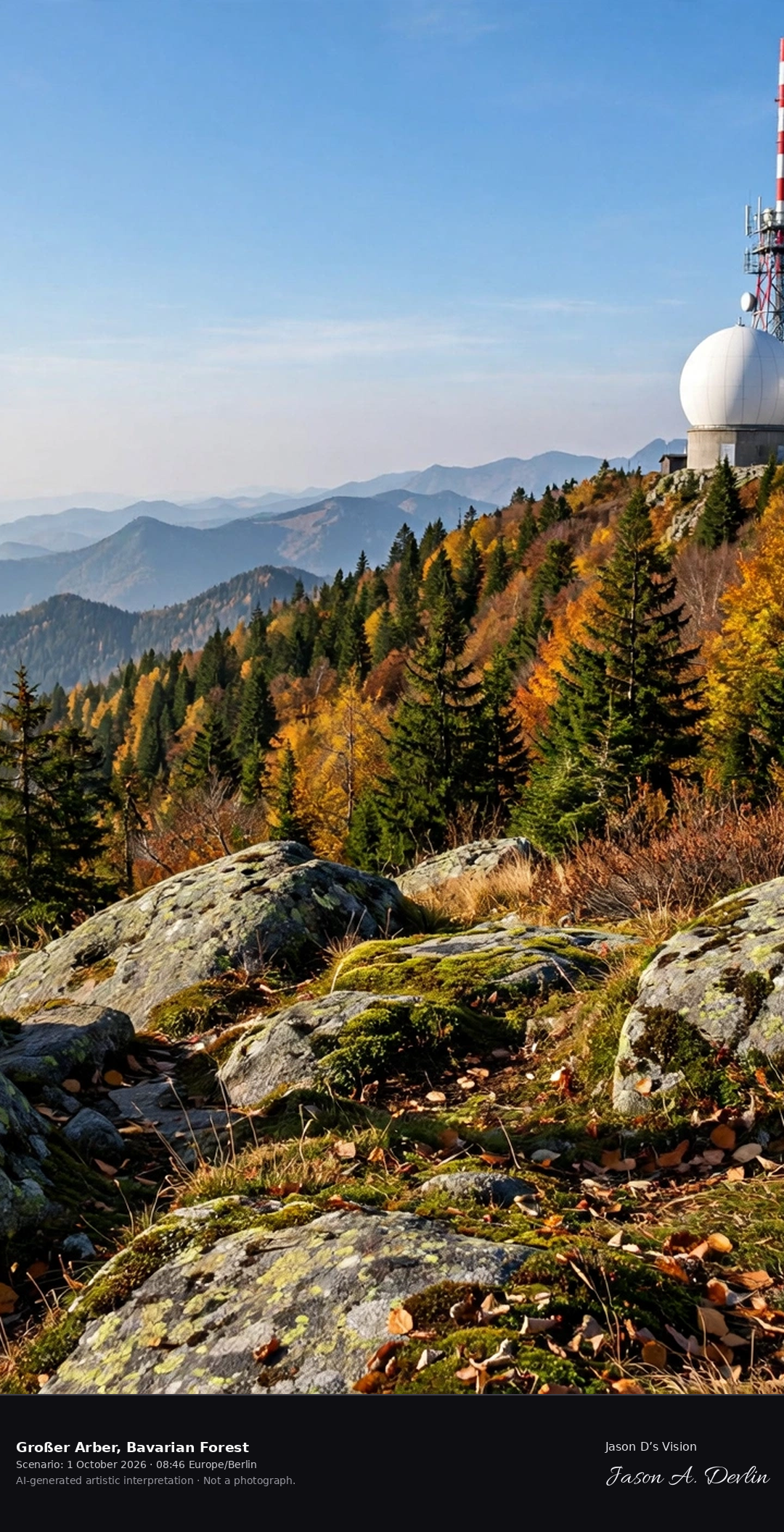
The weathered summit cross stands at the left of the frame with its "Großer Arber · 1456 m" plaque, lichen-covered boulders underfoot in the foreground. The summit's two white radar radomes and the red-lit transmitter tower cluster center-right, with the lit mountain hut at the right edge, while dark forested slopes fall away toward scattered town lights in the valley below. A clear starry sky hangs over the late-night scene, the mountain-top air crisp under the mainly-clear night.
Forest and observation tower · AI-generated artistic interpretation
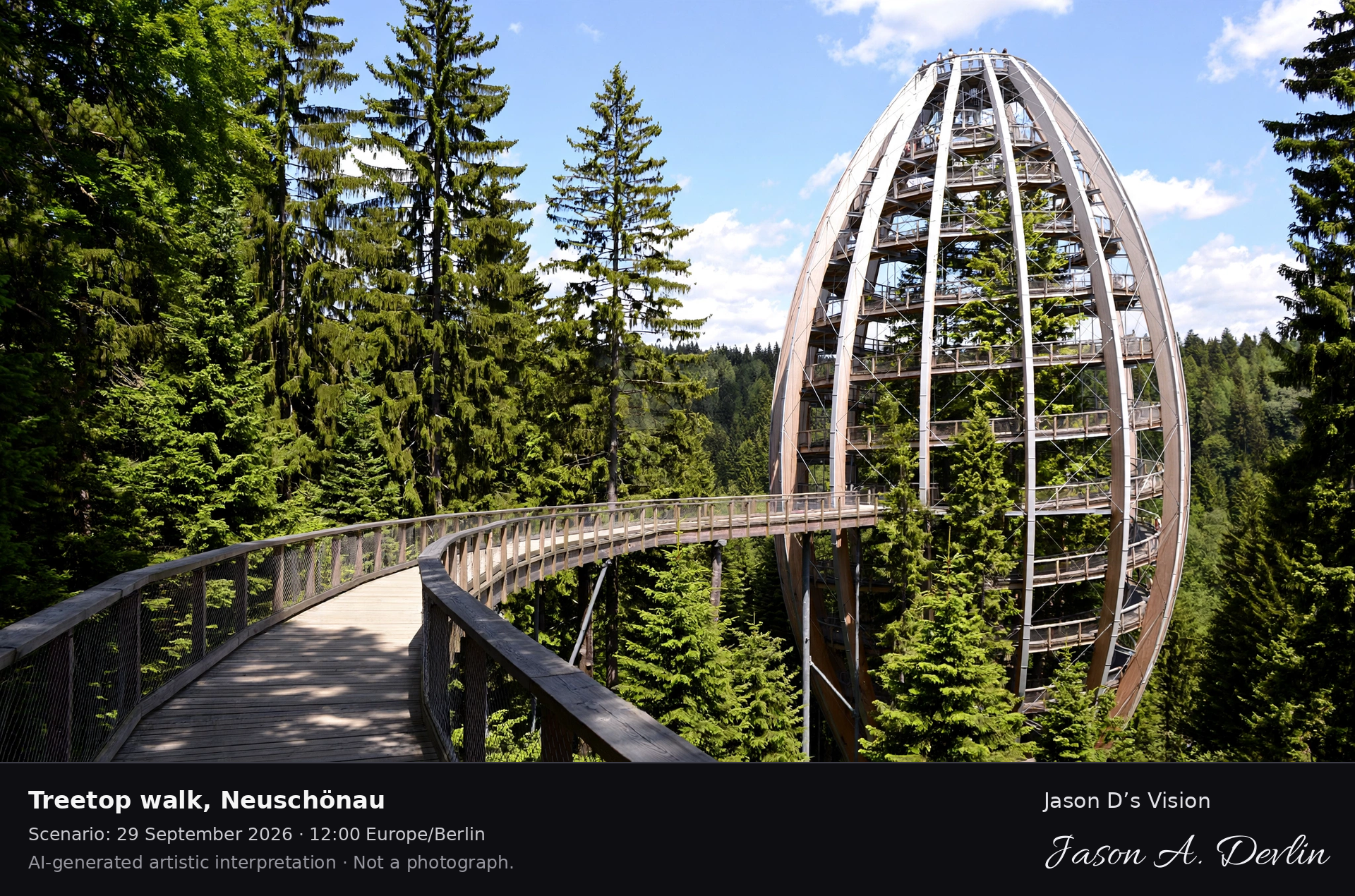
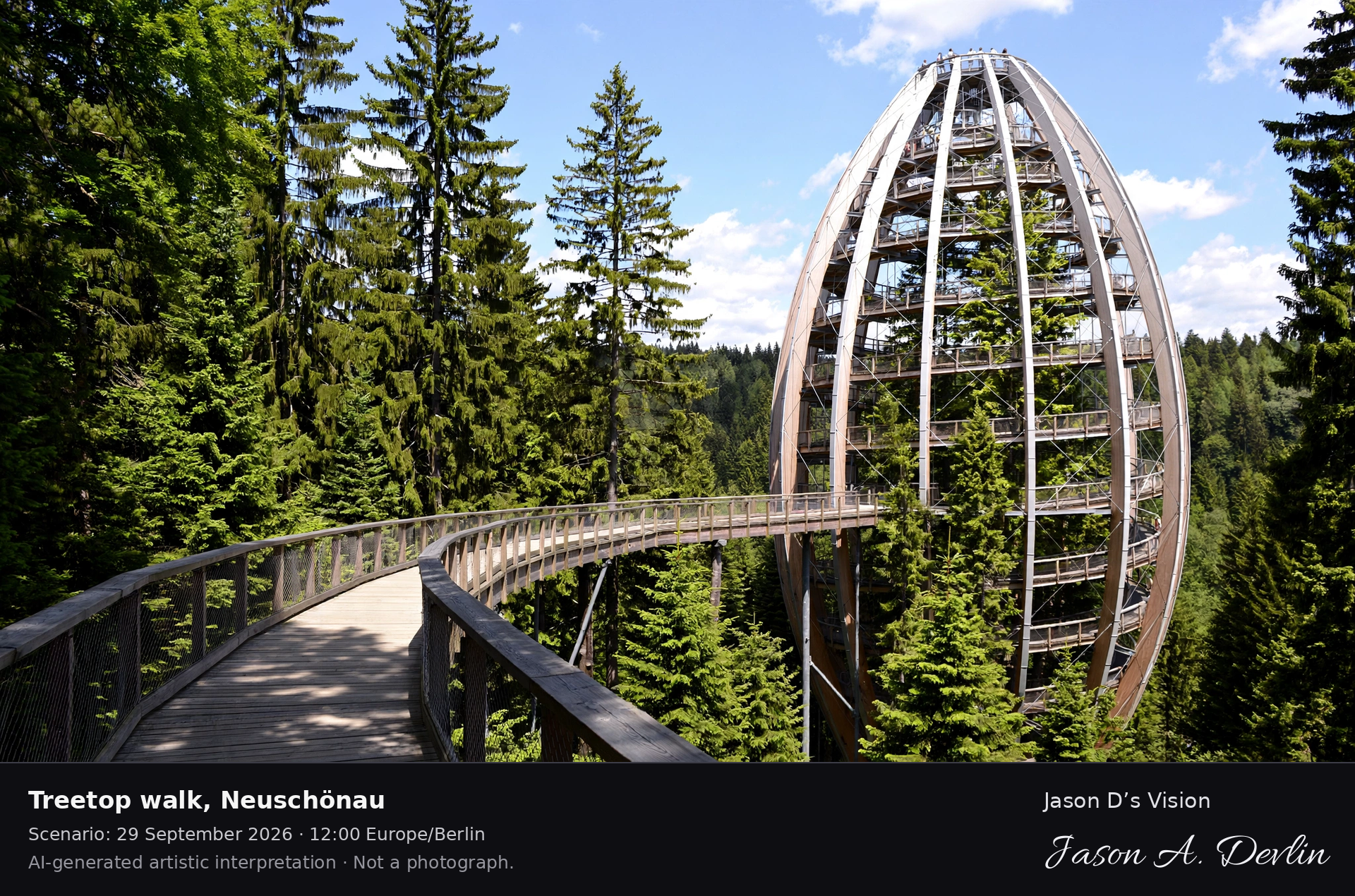
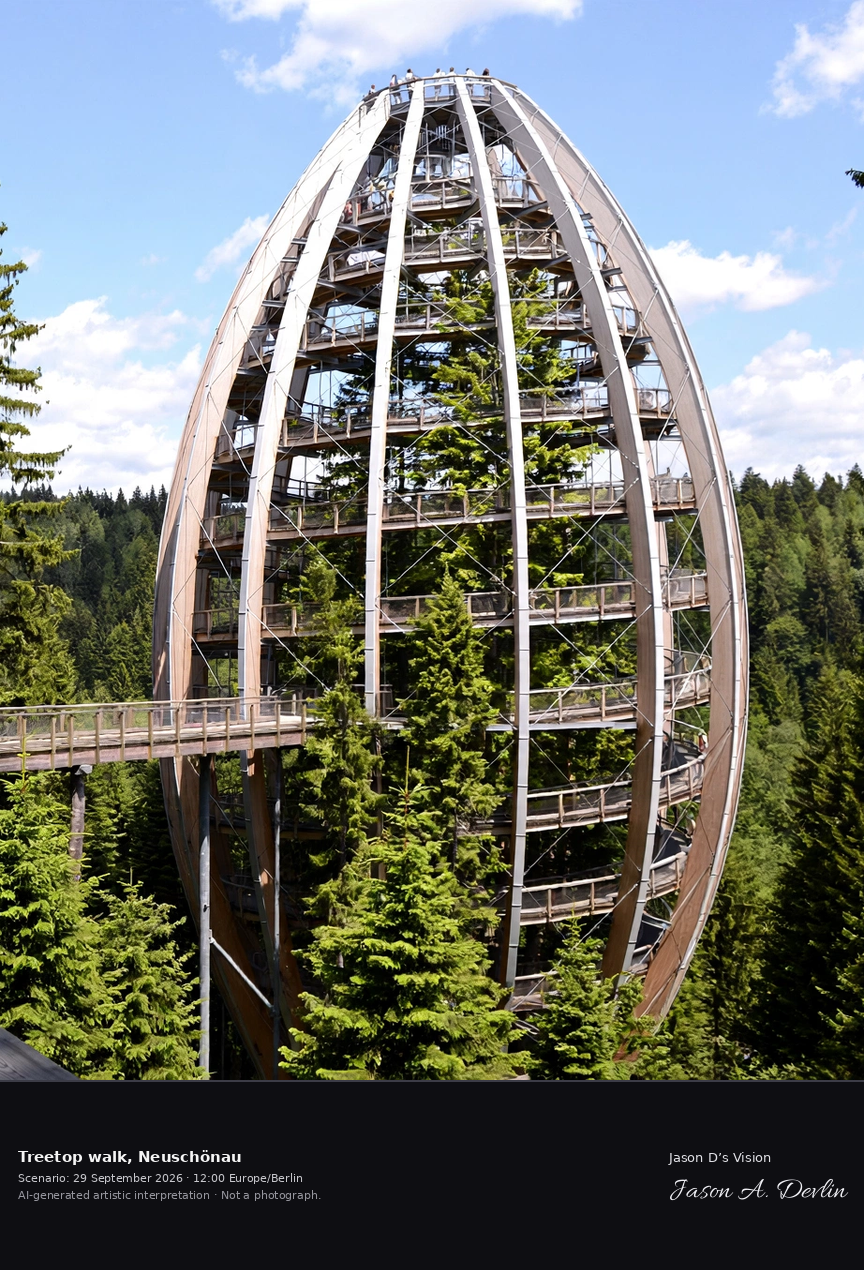
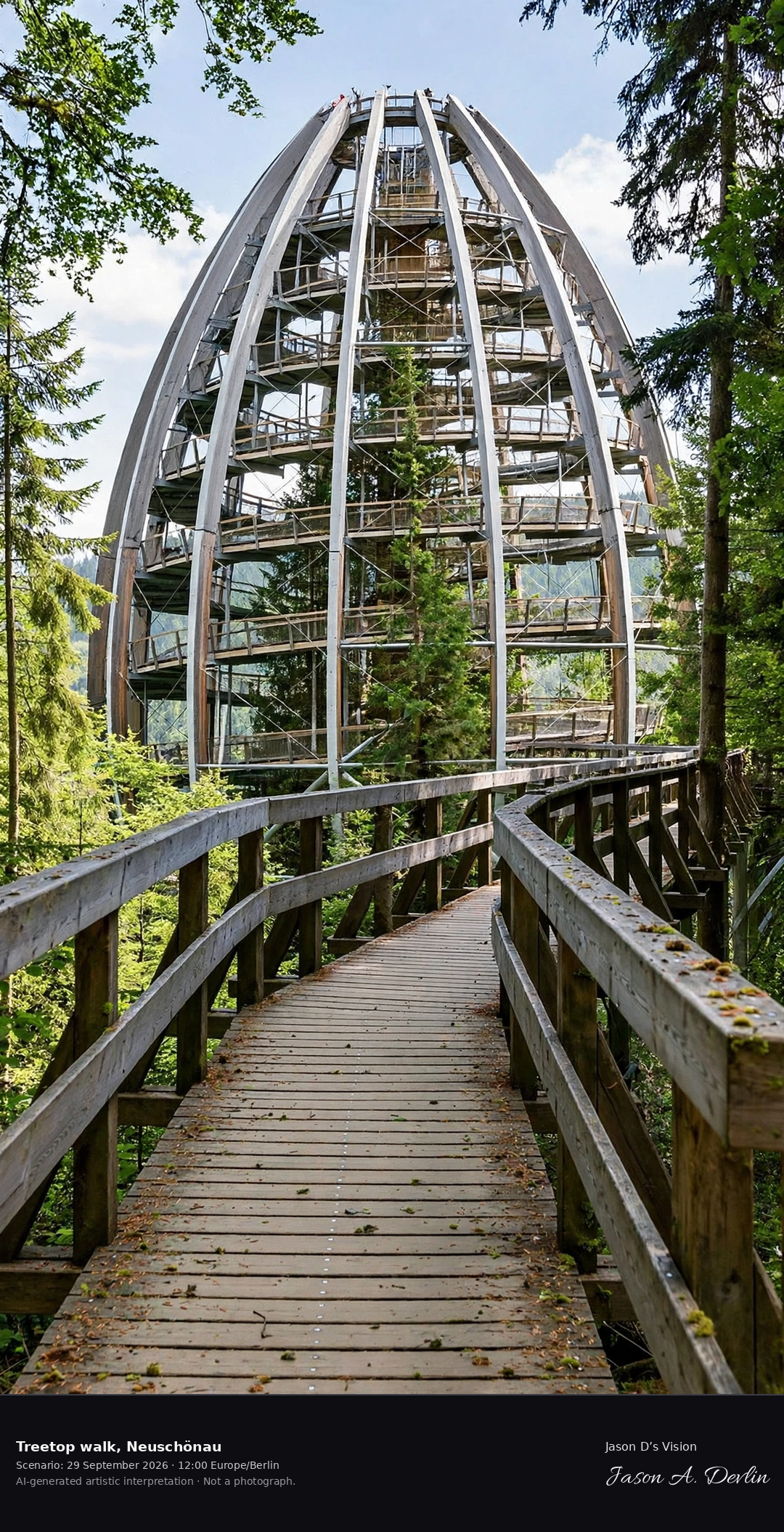
The wooden treetop walkway curves through dark spruce forest from the foreground, its railing lights drawing a warm line toward the illuminated observation tower at the right — the tower's spiral ramp glowing amber against a starry, mainly-clear night sky. Tall firs crowd the left and center of the frame, their silhouettes fading into blue-black mist, and the whole path glows as if lit for a rare after-hours visitor.
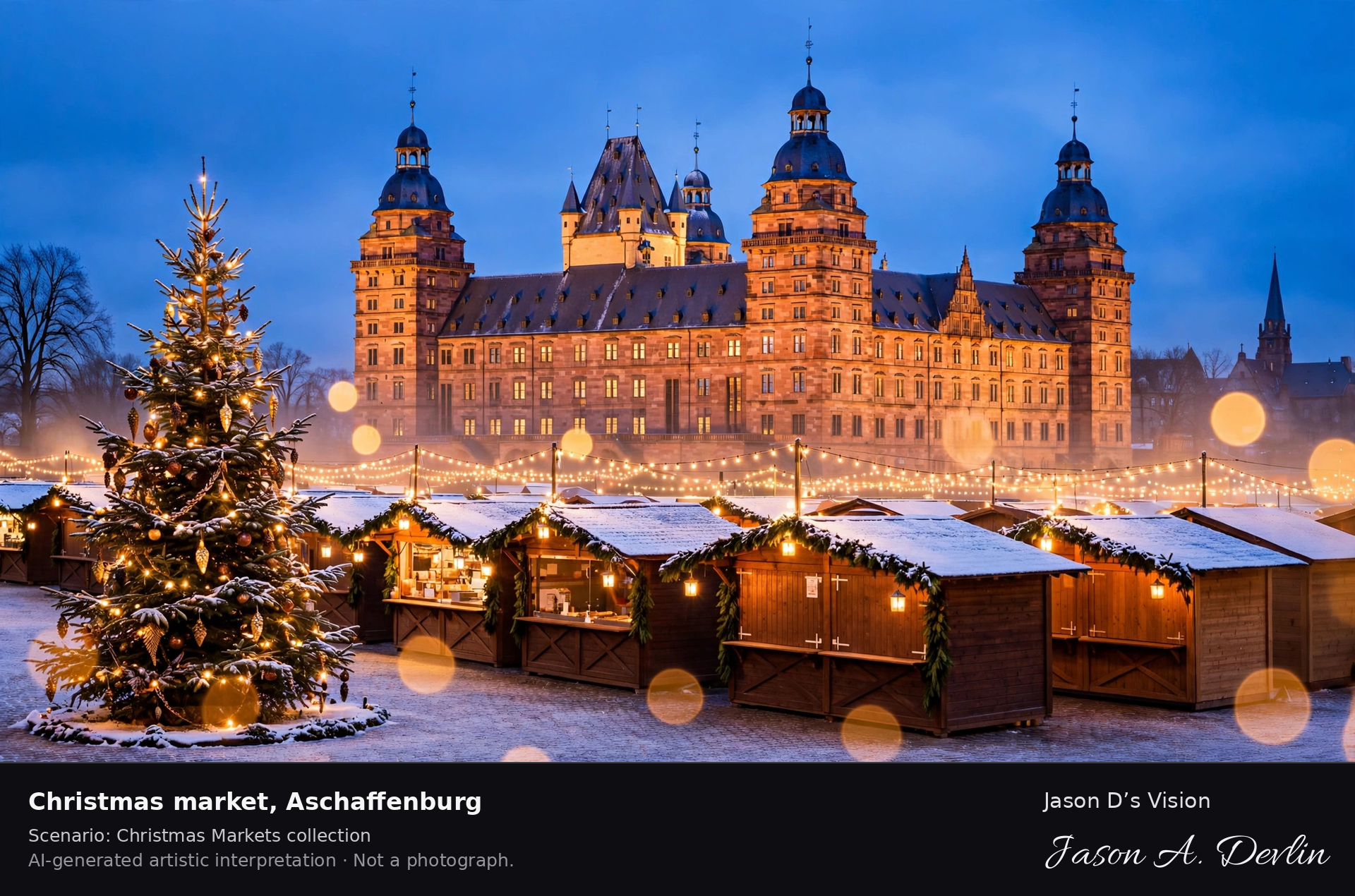
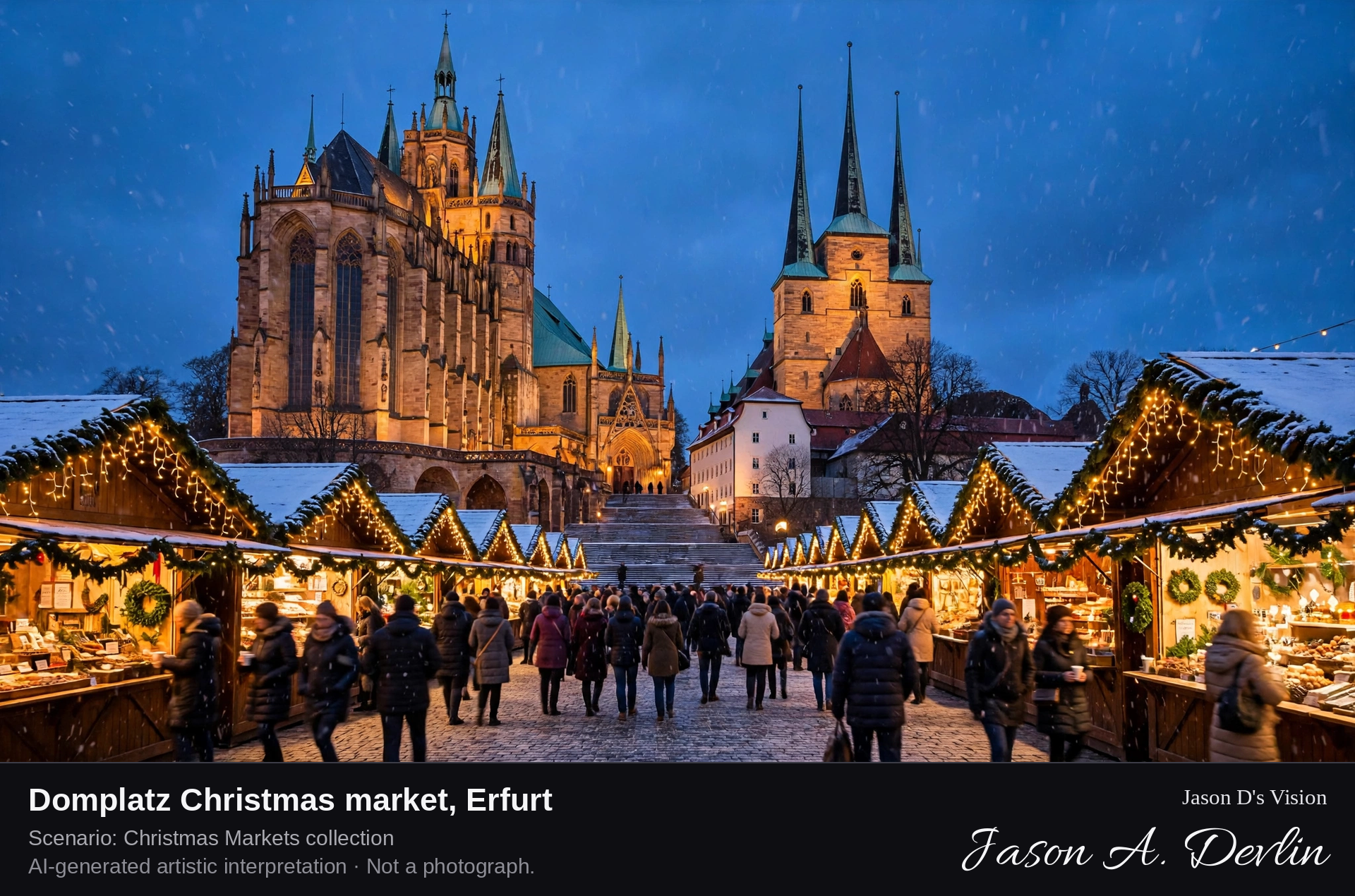
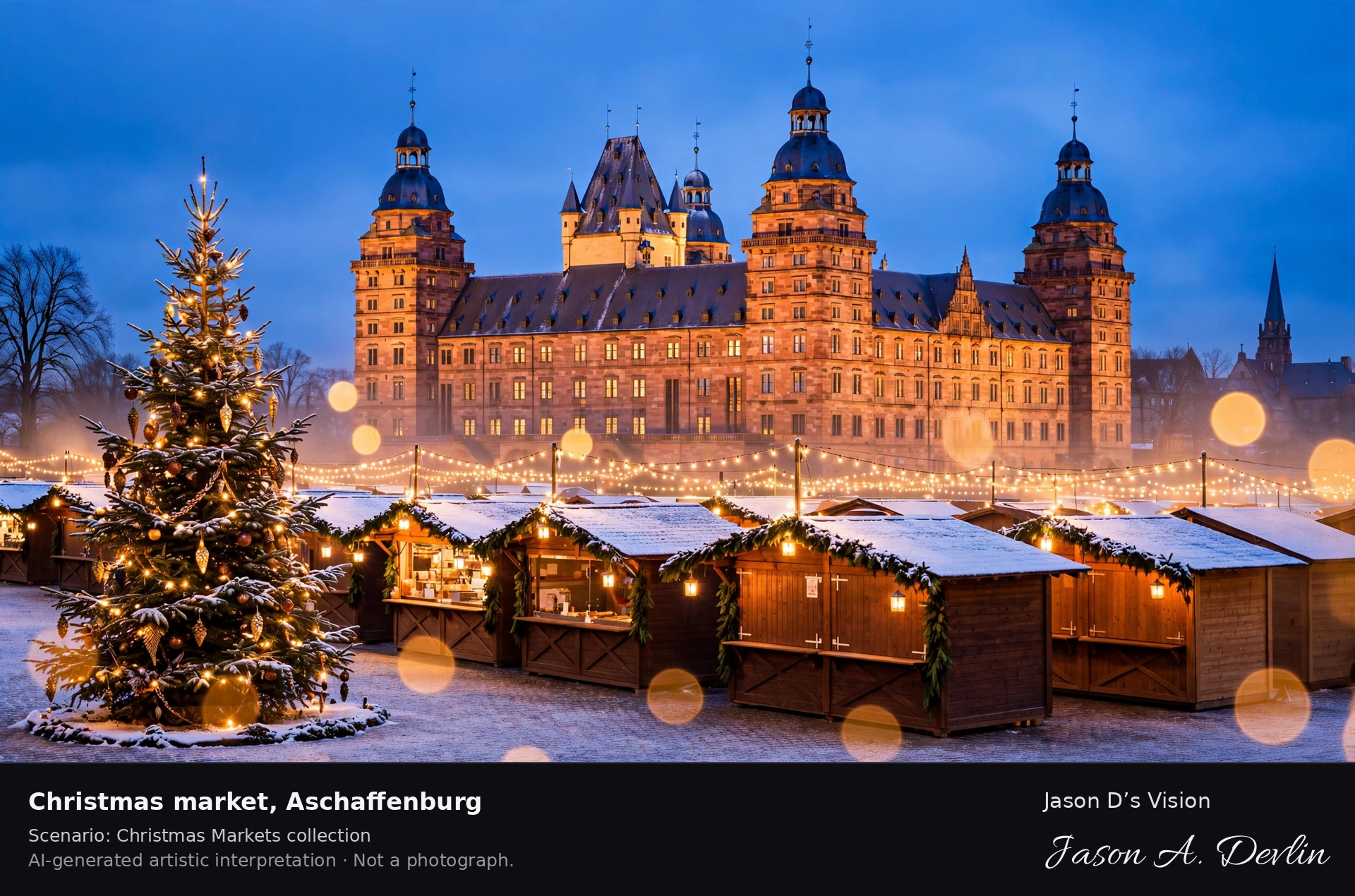
On the Schlossplatz, festively lit market stalls crowd before the floodlit Johannisburg Palace, whose four corner towers rise above the rooftops. Strings of lights and the scent of mulled wine fill the scene, while the Renaissance building glows in warm light.
Reiterlesmarkt stalls on the medieval market square beneath the town hall tower · AI-generated artistic interpretation
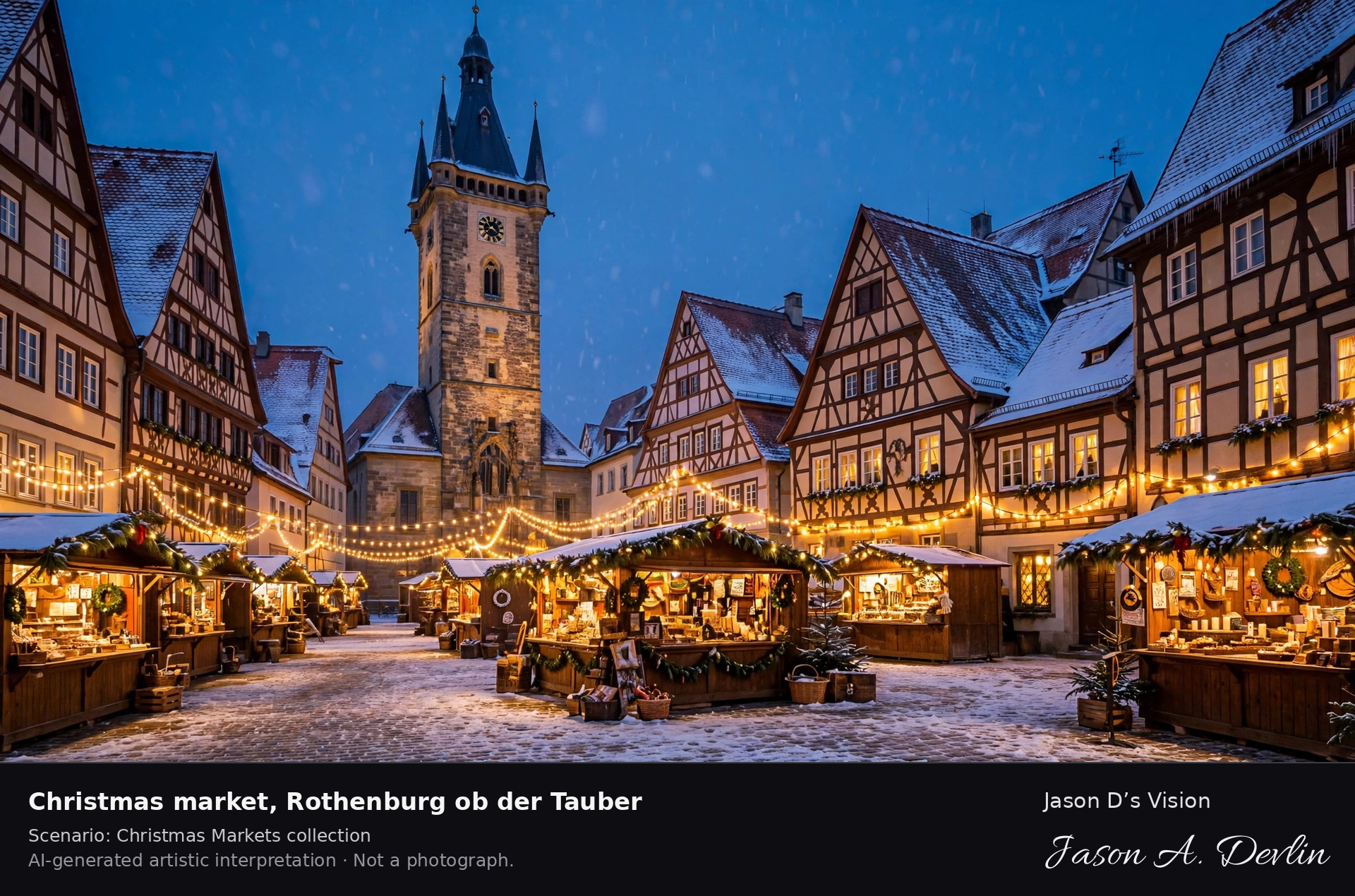
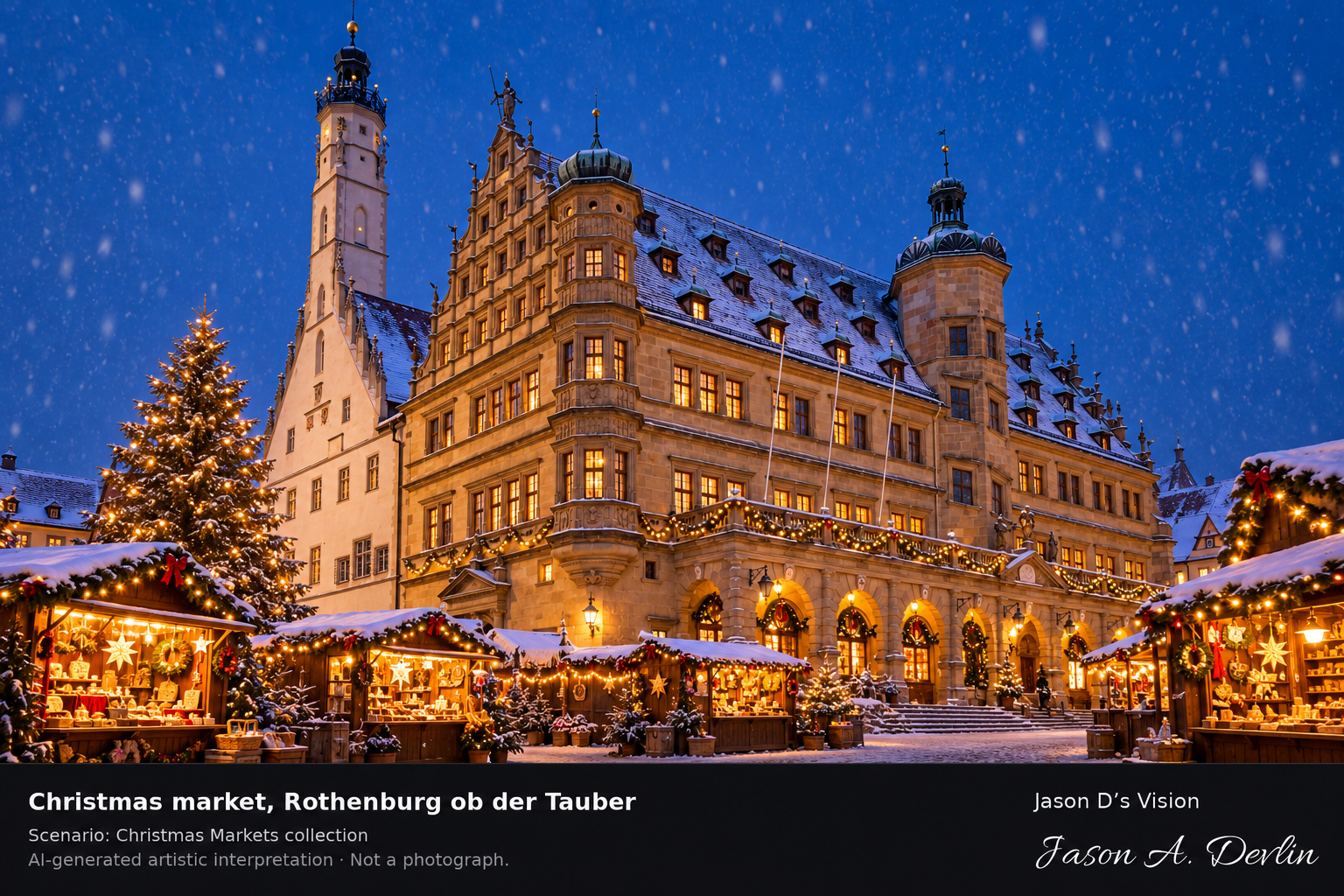
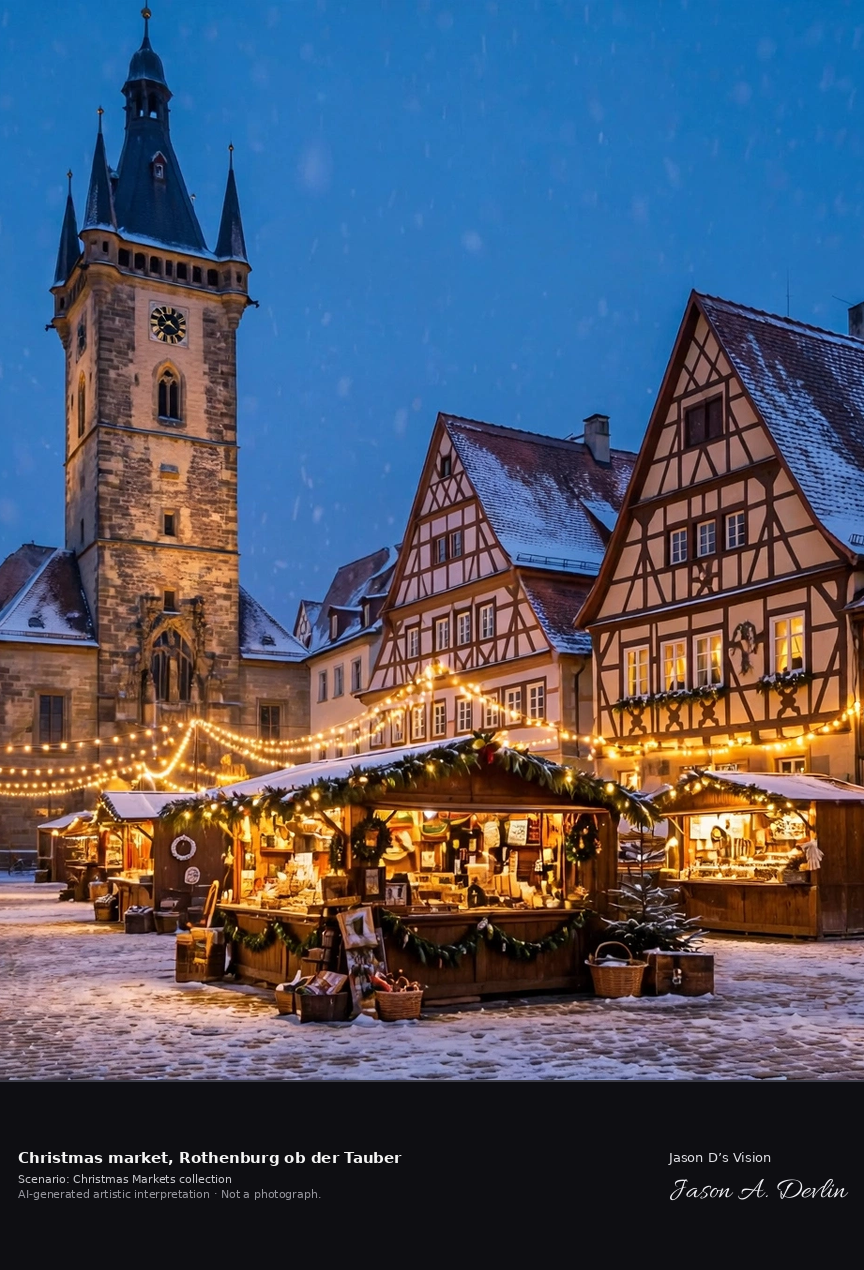
The Reiterlesmarkt spreads its stalls across the medieval market square, framed by the town hall's ornate facade and tower. Lights glitter between half-timbered houses, and the Reiterle, the traditional figure who opens the market, gives it its name.
Striped market stalls on Hauptmarkt before the Frauenkirche · AI-generated artistic interpretation
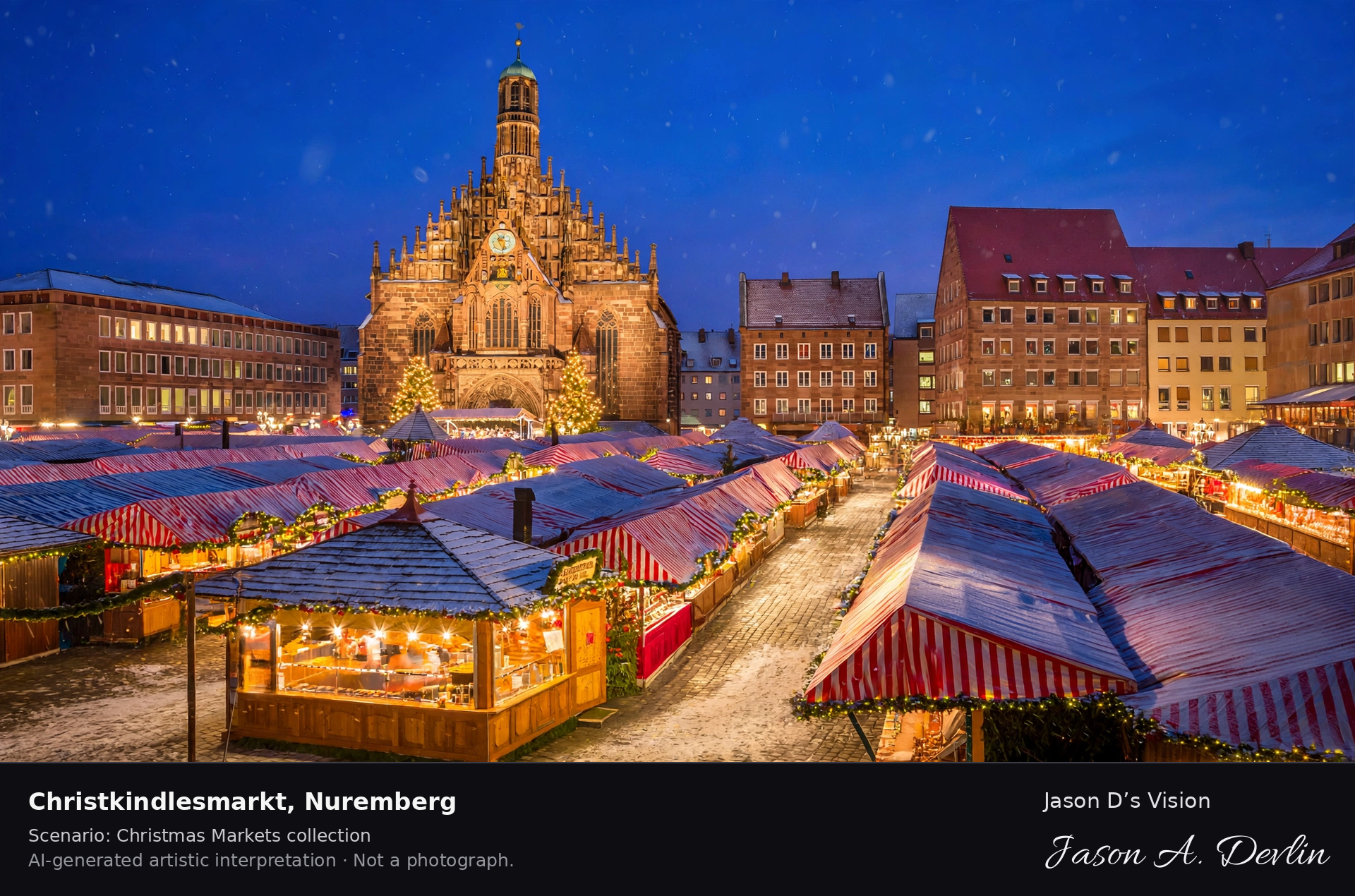
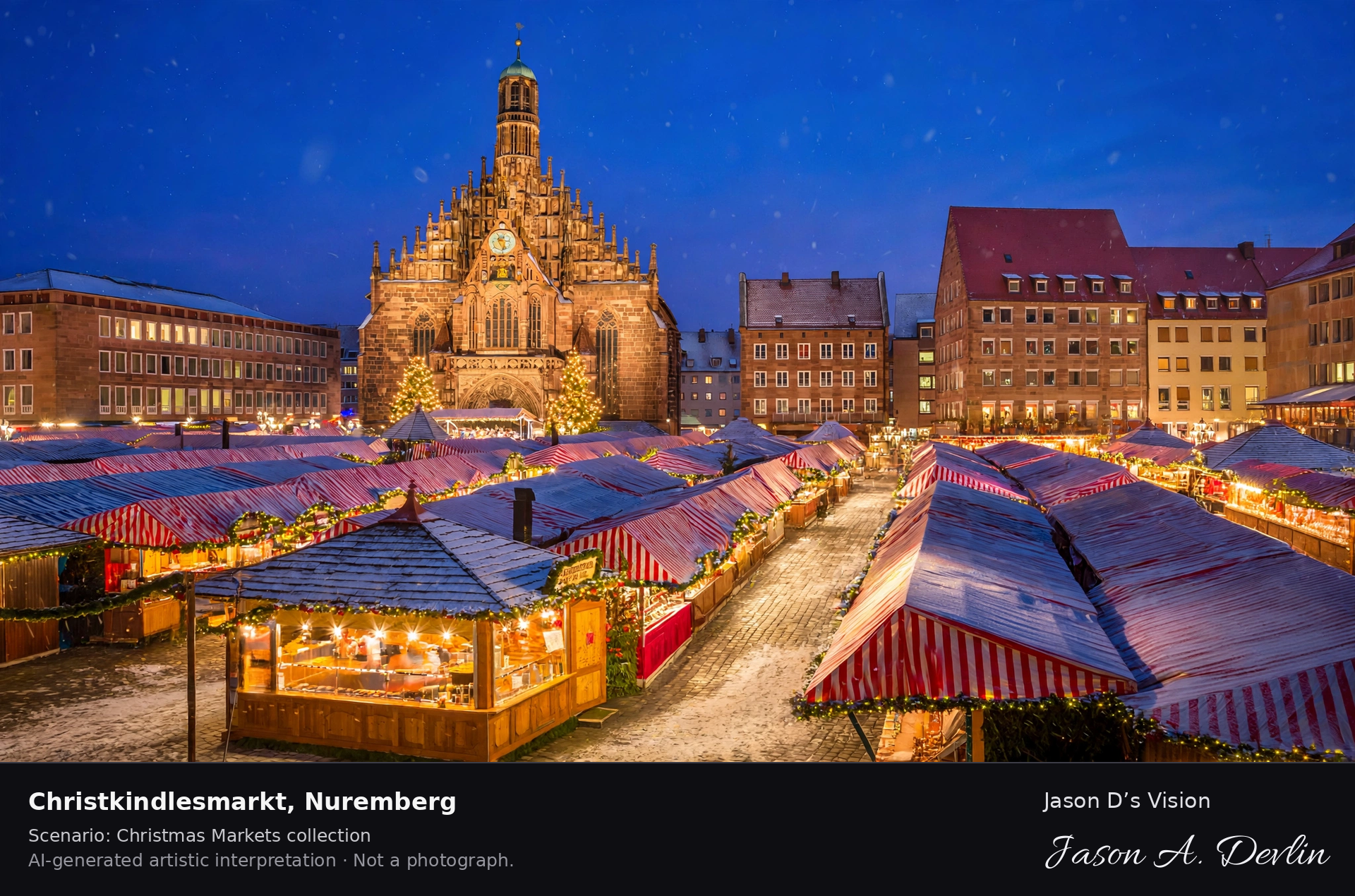
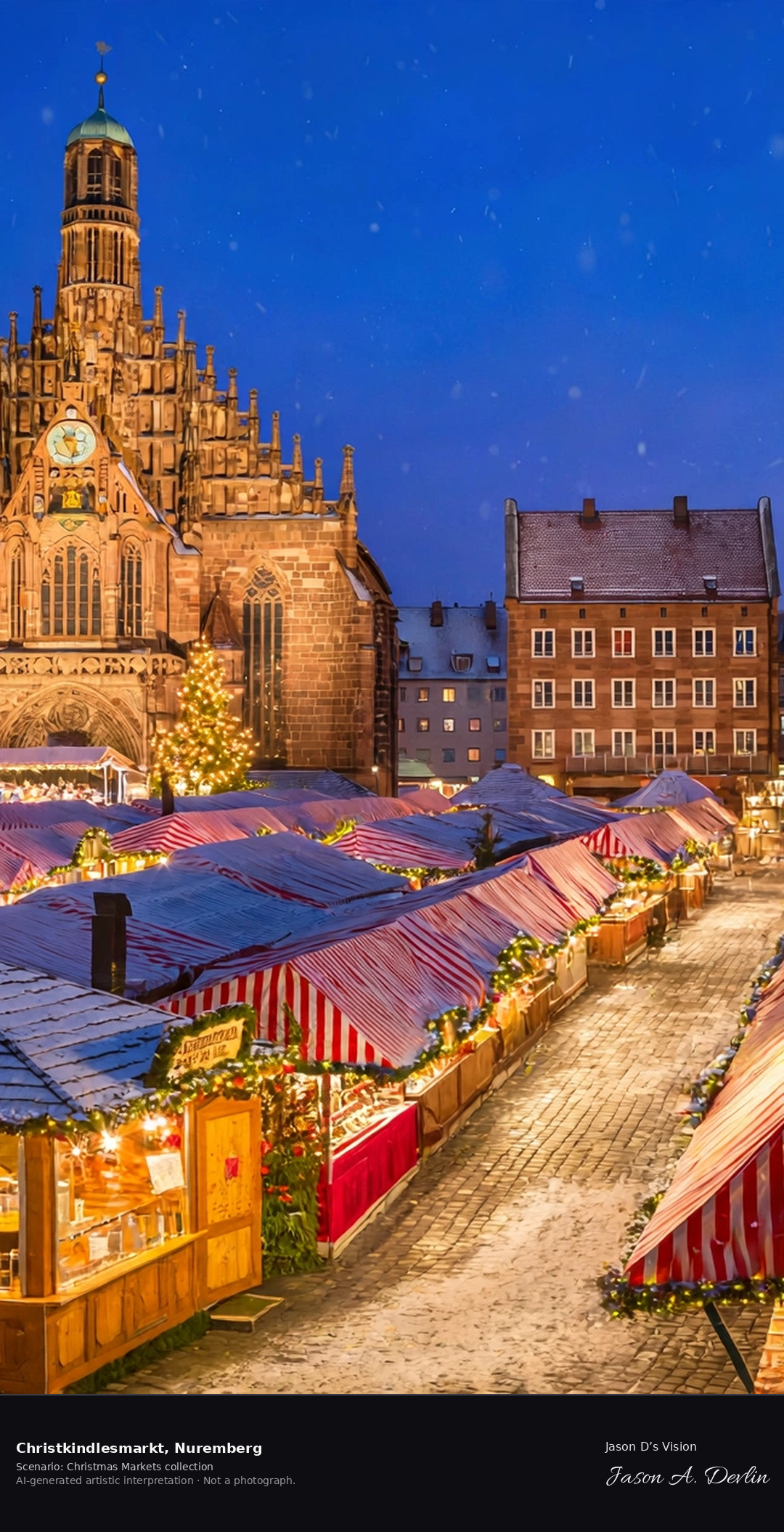
On the Hauptmarkt, the red and white striped booths of the Christkindlesmarkt line up before the floodlit Frauenkirche. The church's Gothic facade, with the Männleinlaufen clock in its gable, forms the backdrop for the bustle between gingerbread and mulled wine stalls.
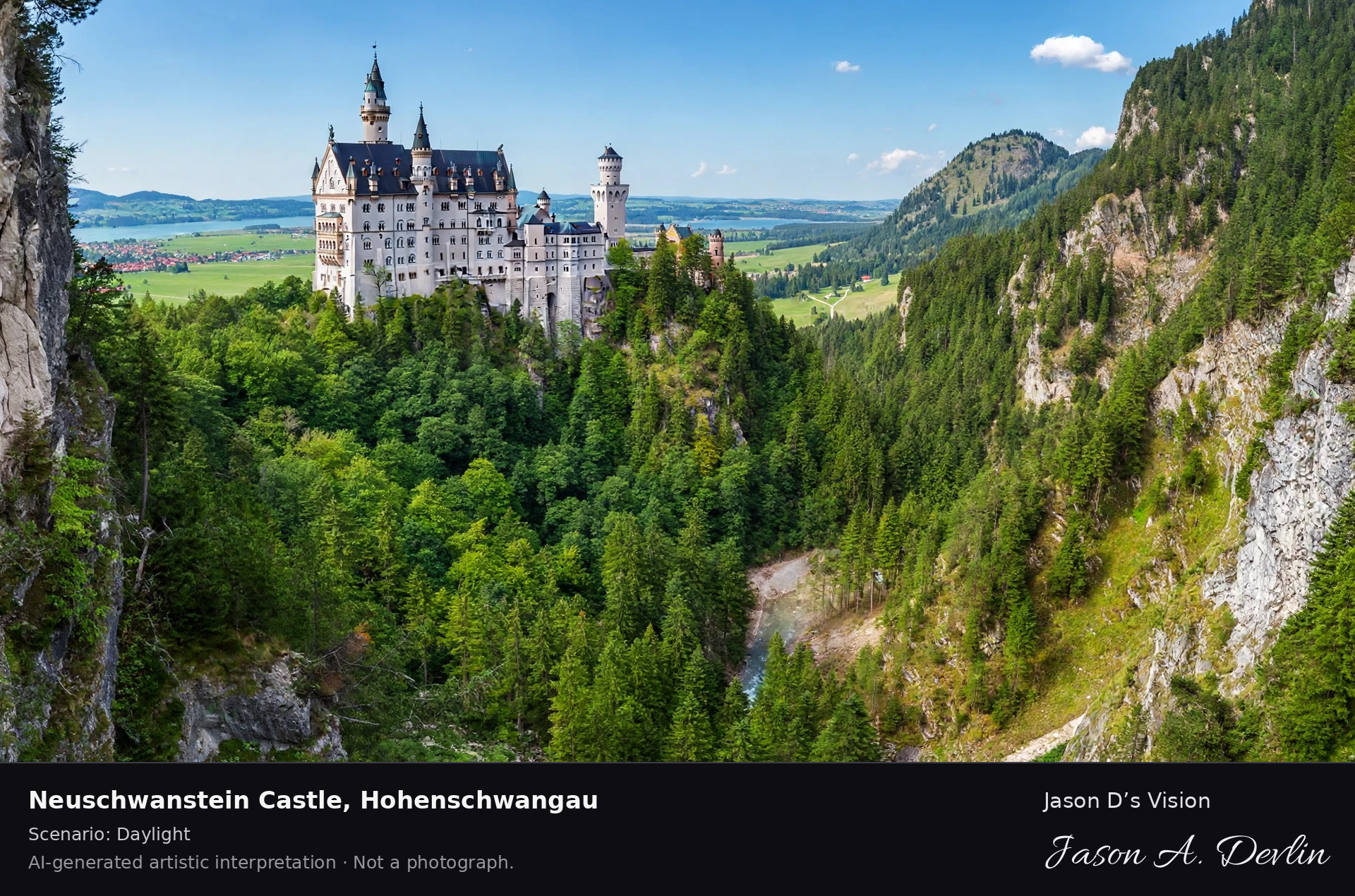
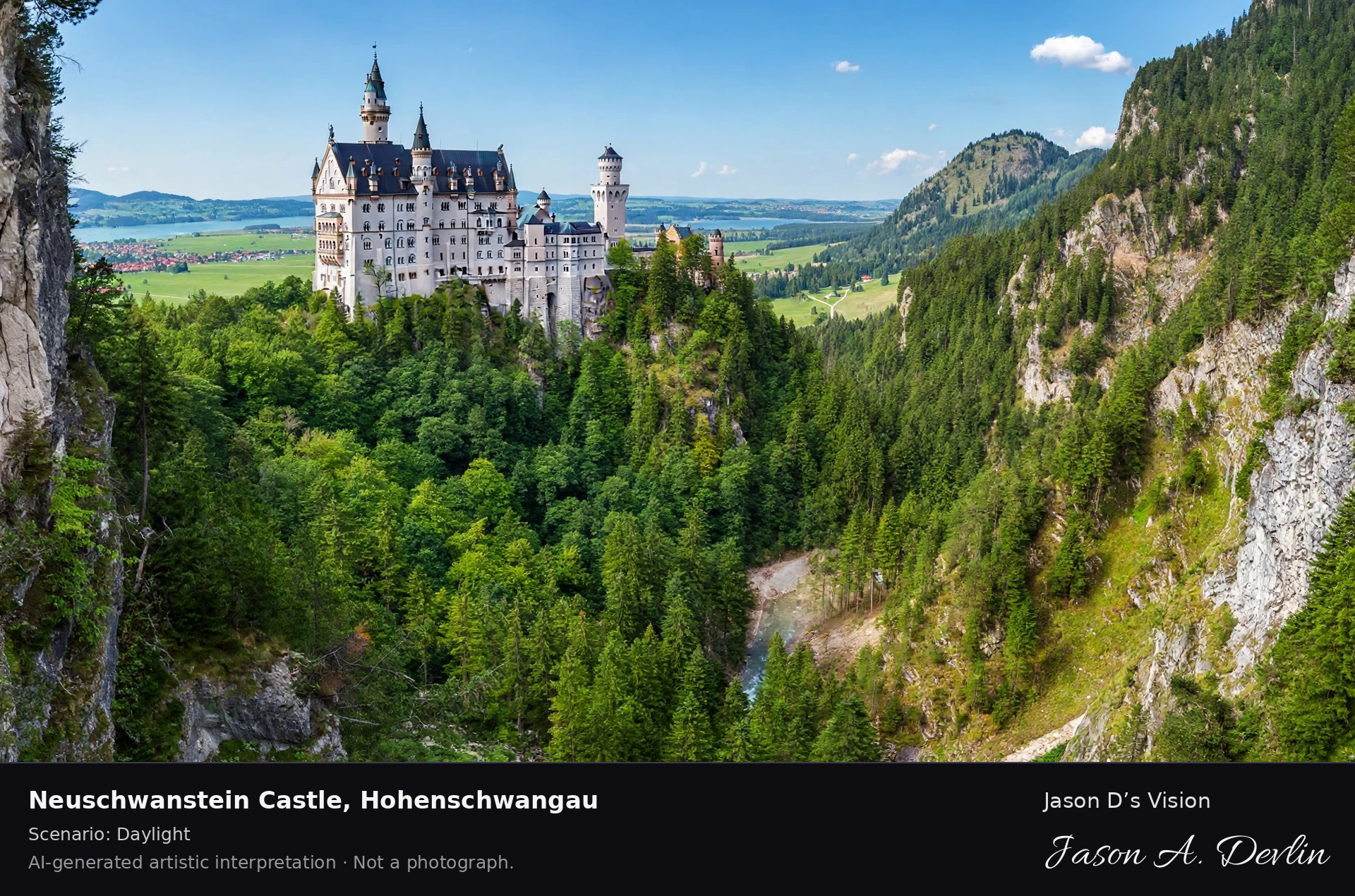
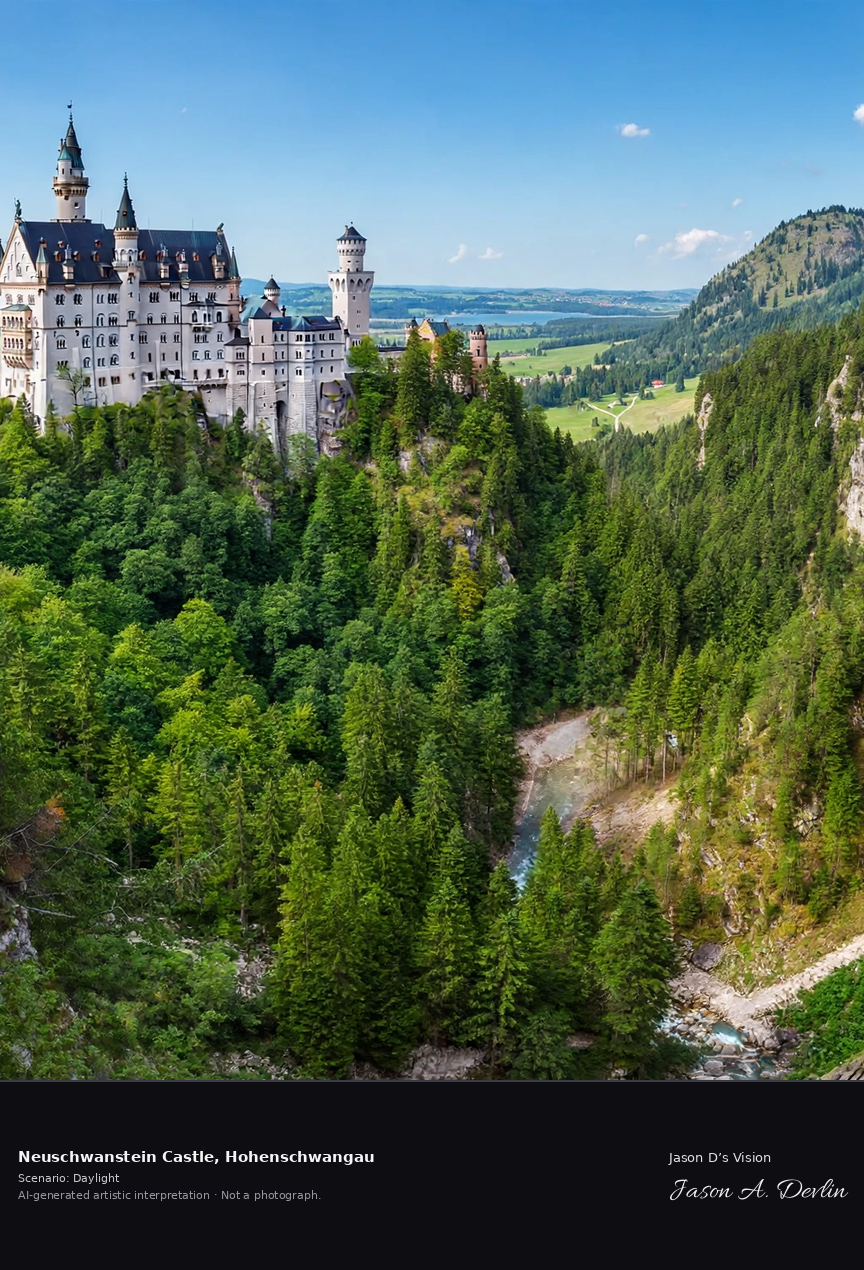
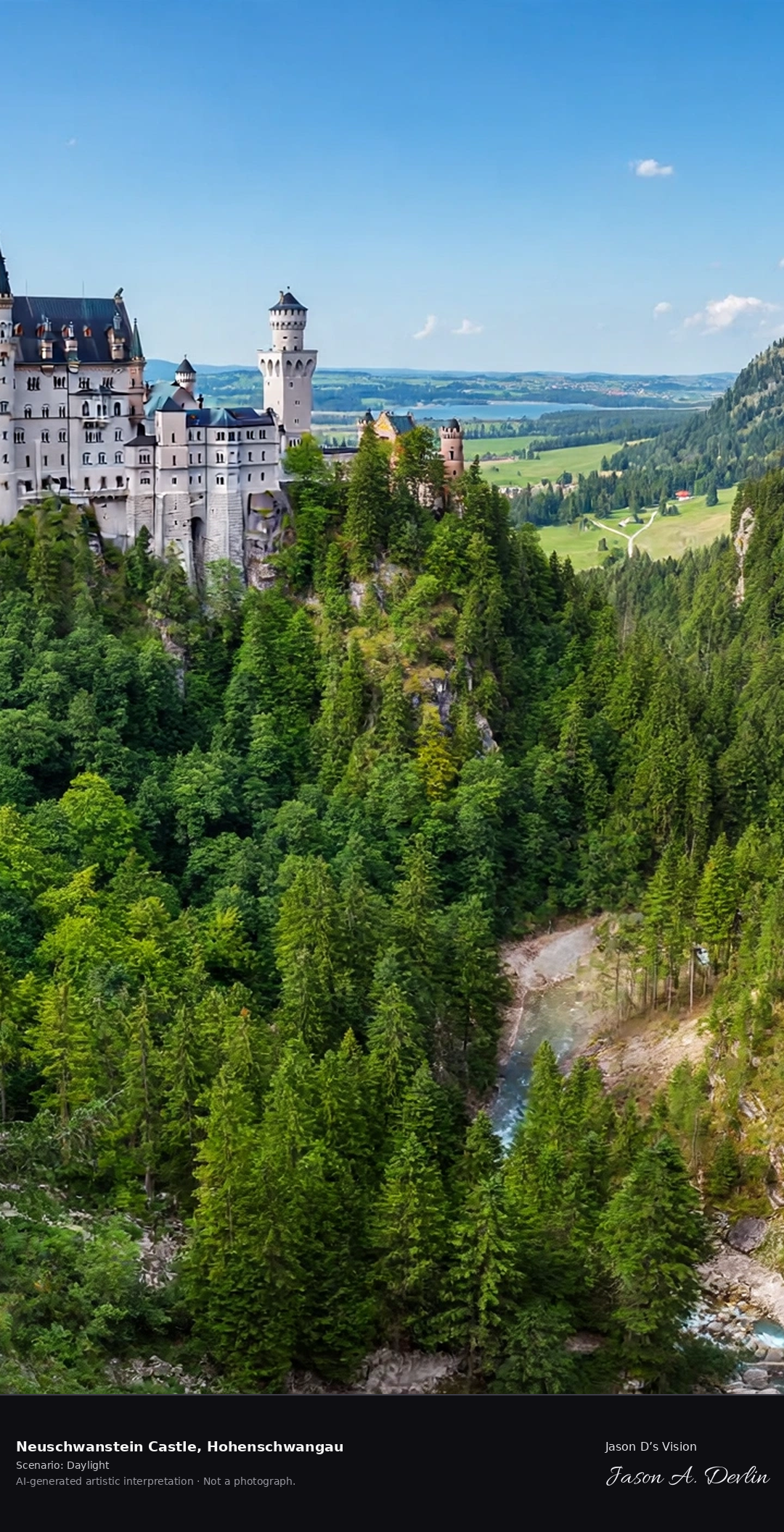
Ludwig II's fairy-tale castle sits on its rock above the Pöllat Gorge, its pale towers and battlements reaching into the Bavarian sky. The palace and its surrounding towers form a romantic silhouette against the mountain landscape.
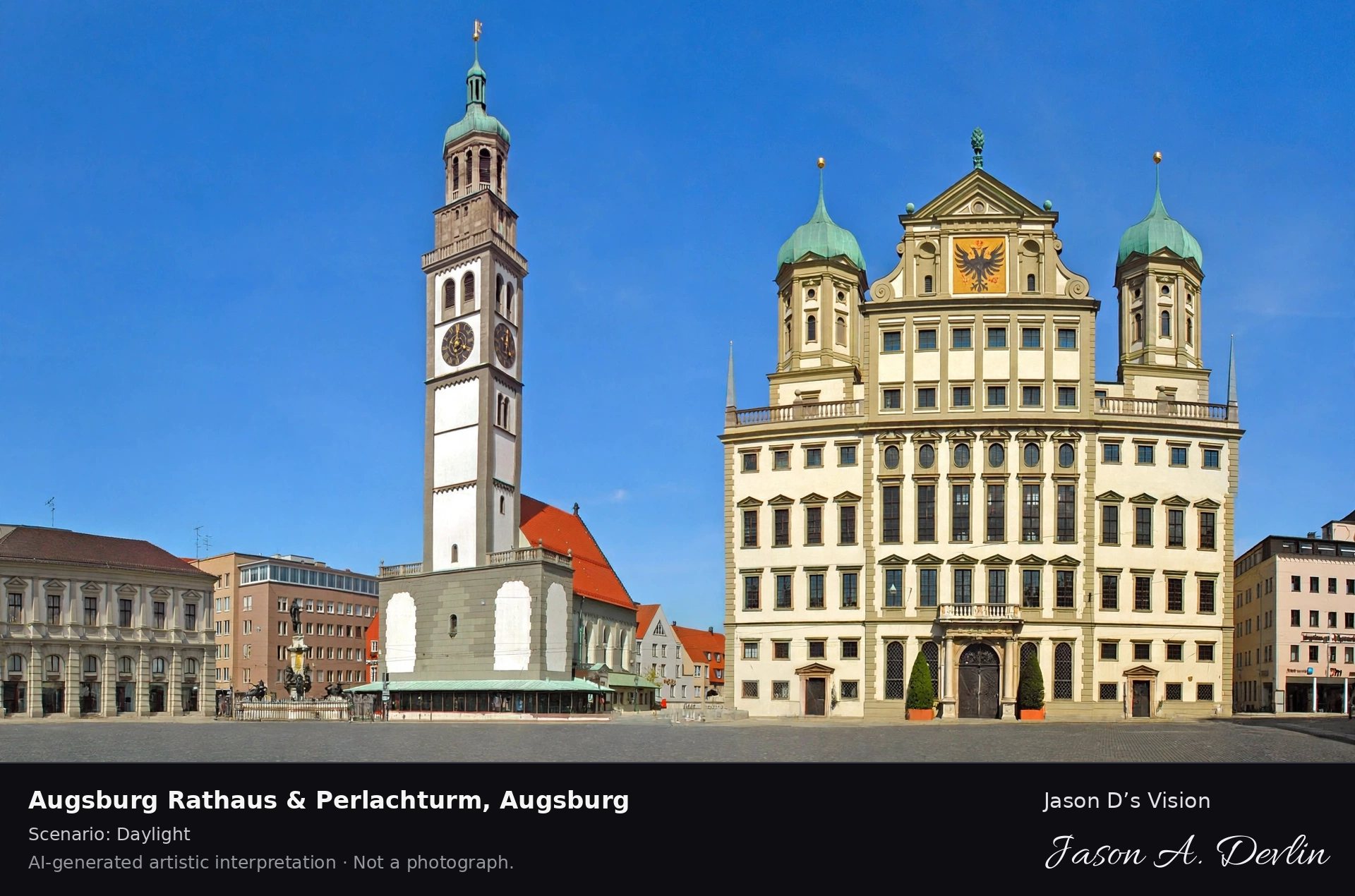
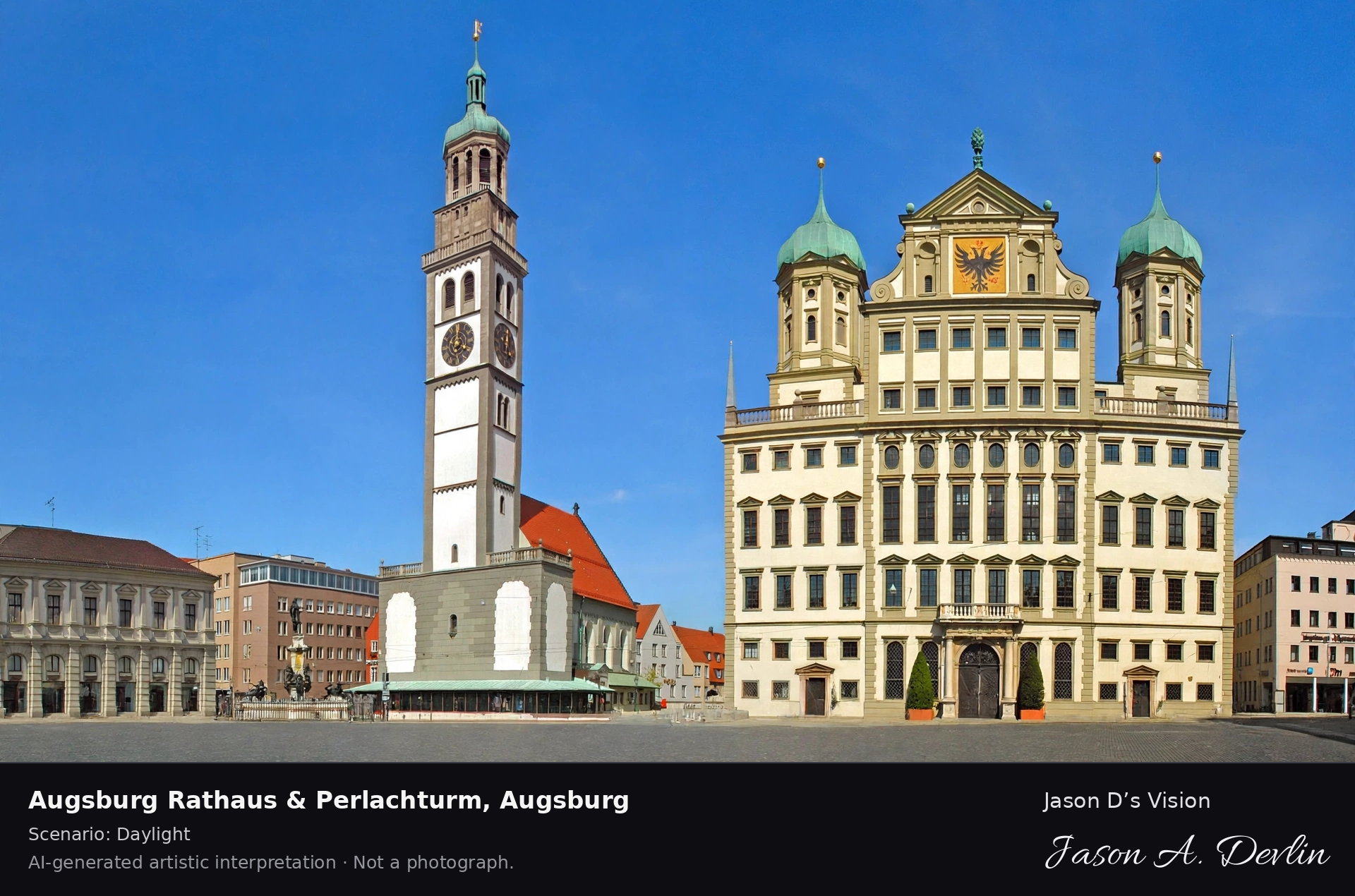
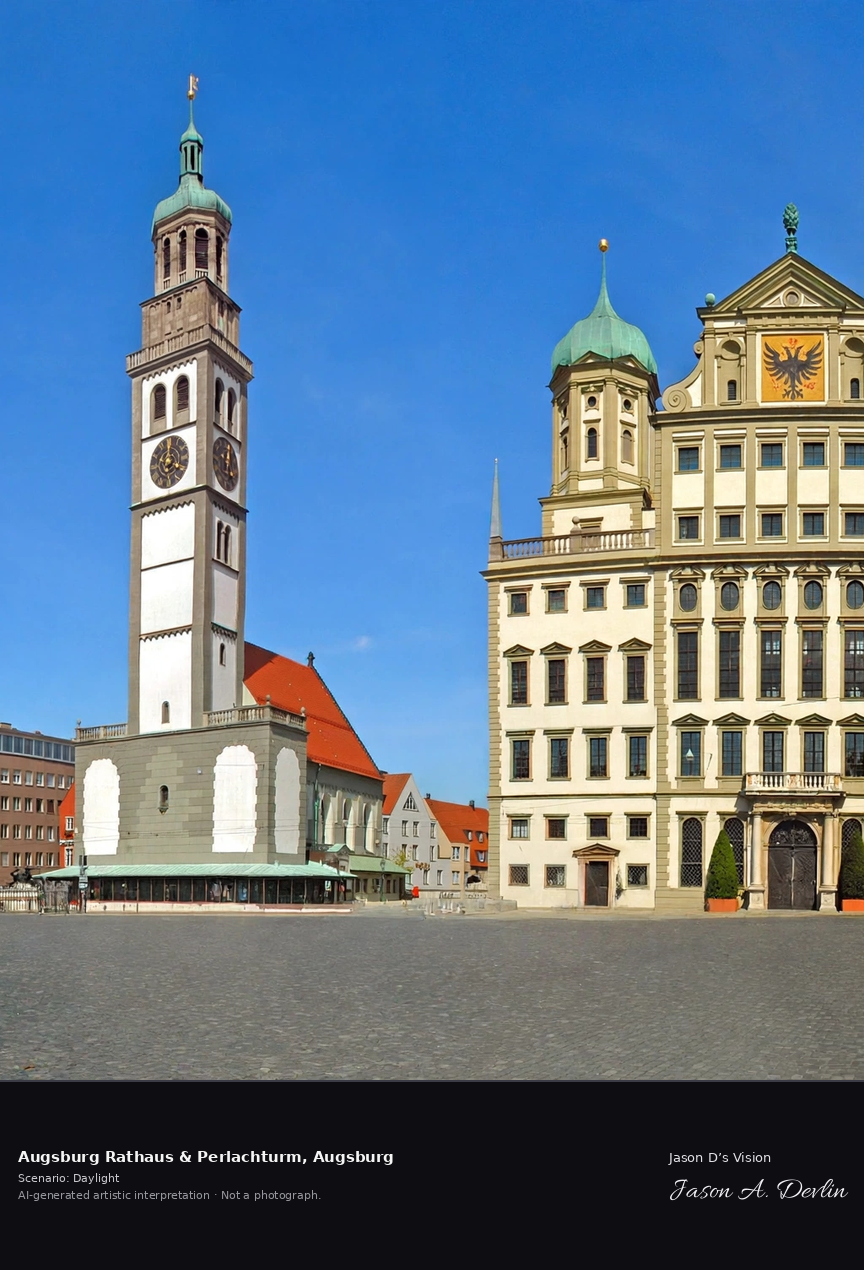
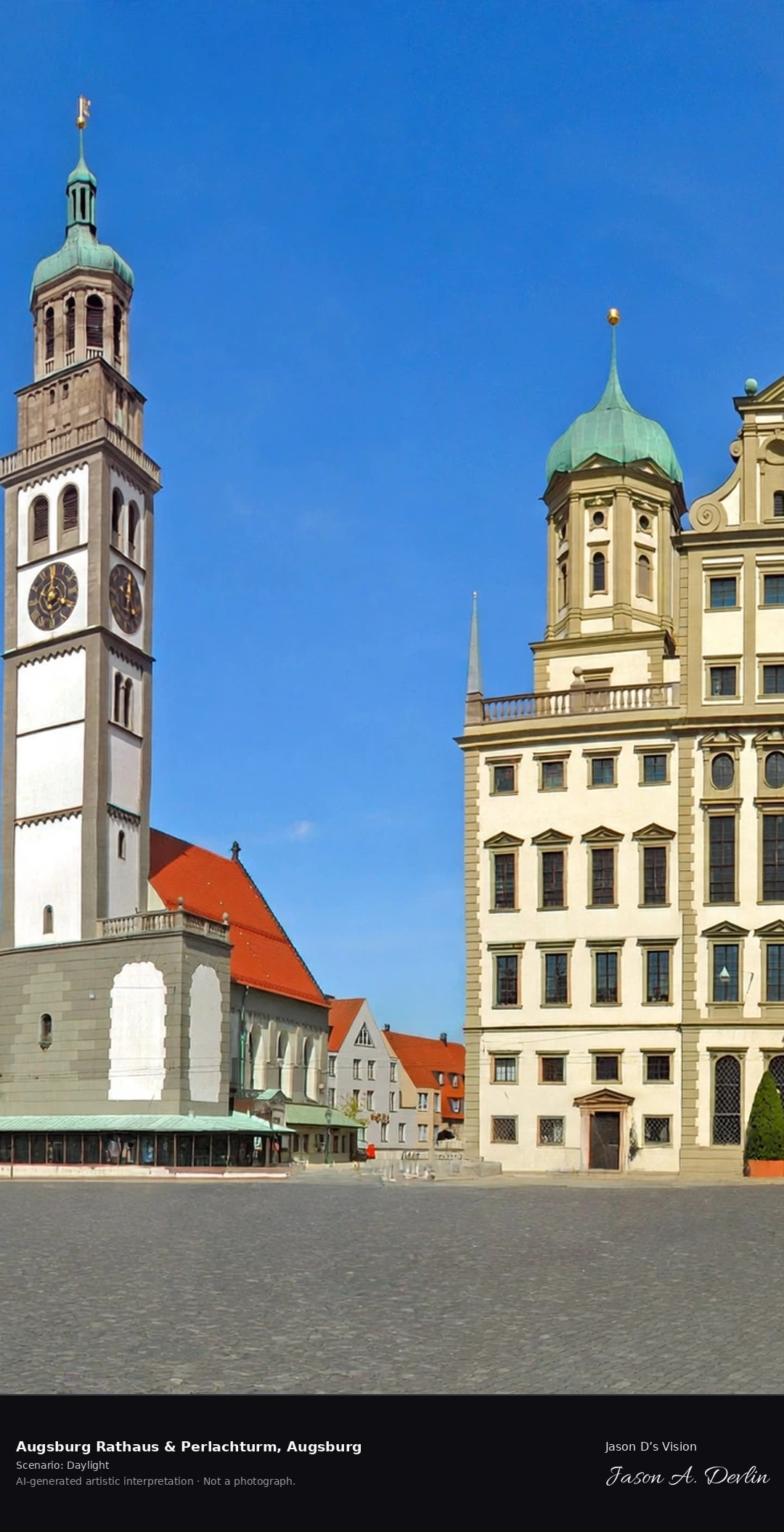
Augsburg's Town Hall and the Perlachturm beside it shape the Rathausplatz. Elias Holl's Renaissance town hall displays its imposing façade, while the 70-metre Perlachturm rises as a city landmark. The square recalls Augsburg's history as an imperial city.
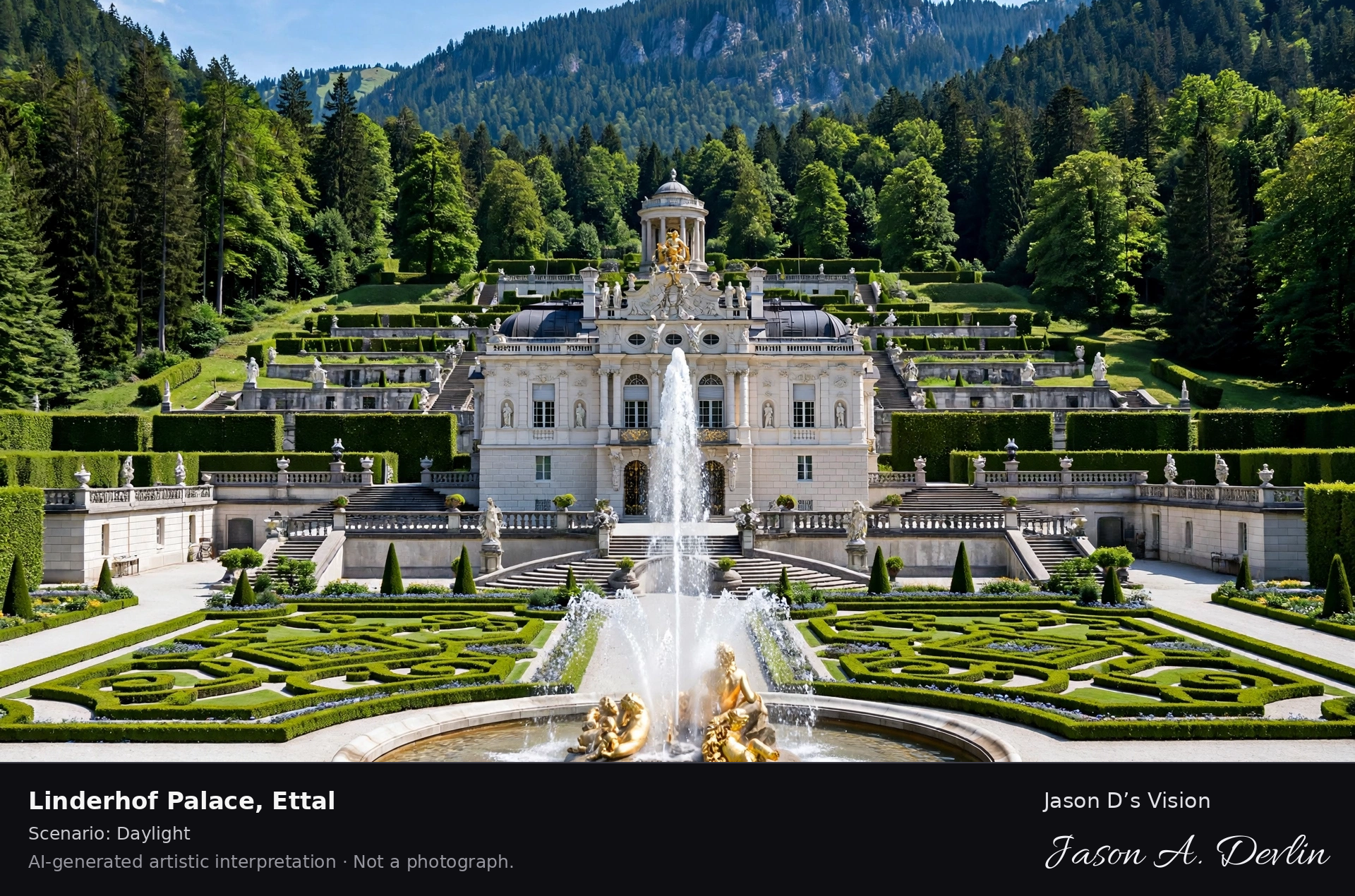
Ludwig II's Linderhof Palace nestles in the Ammergau Alps, its pale facade reflected in the palace pond. The opulent rooms, terraced gardens and Venus Grotto in the surrounding park evoke the fairy-tale king's dreams, an intimate counterworld to the grand residences.
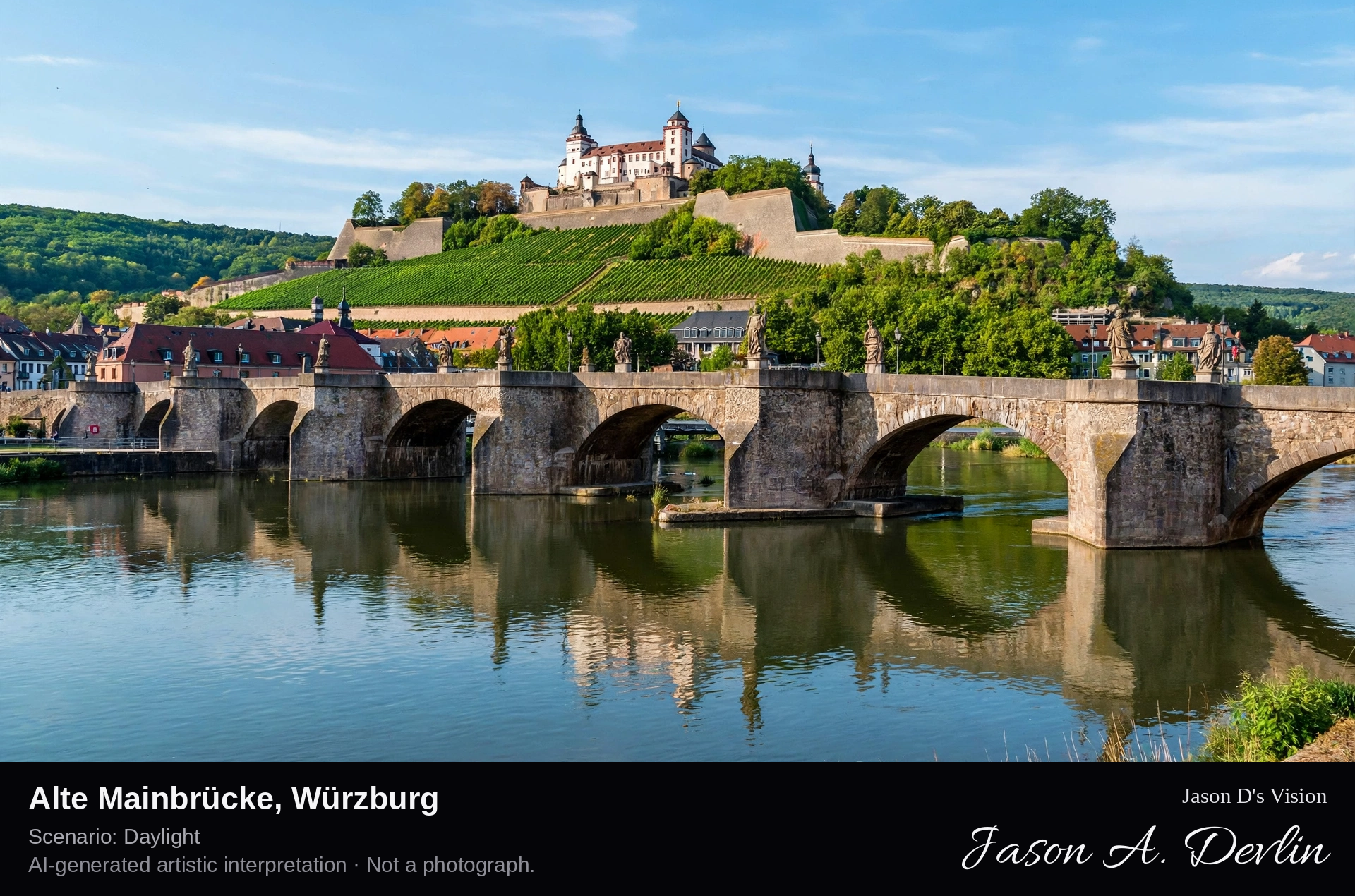
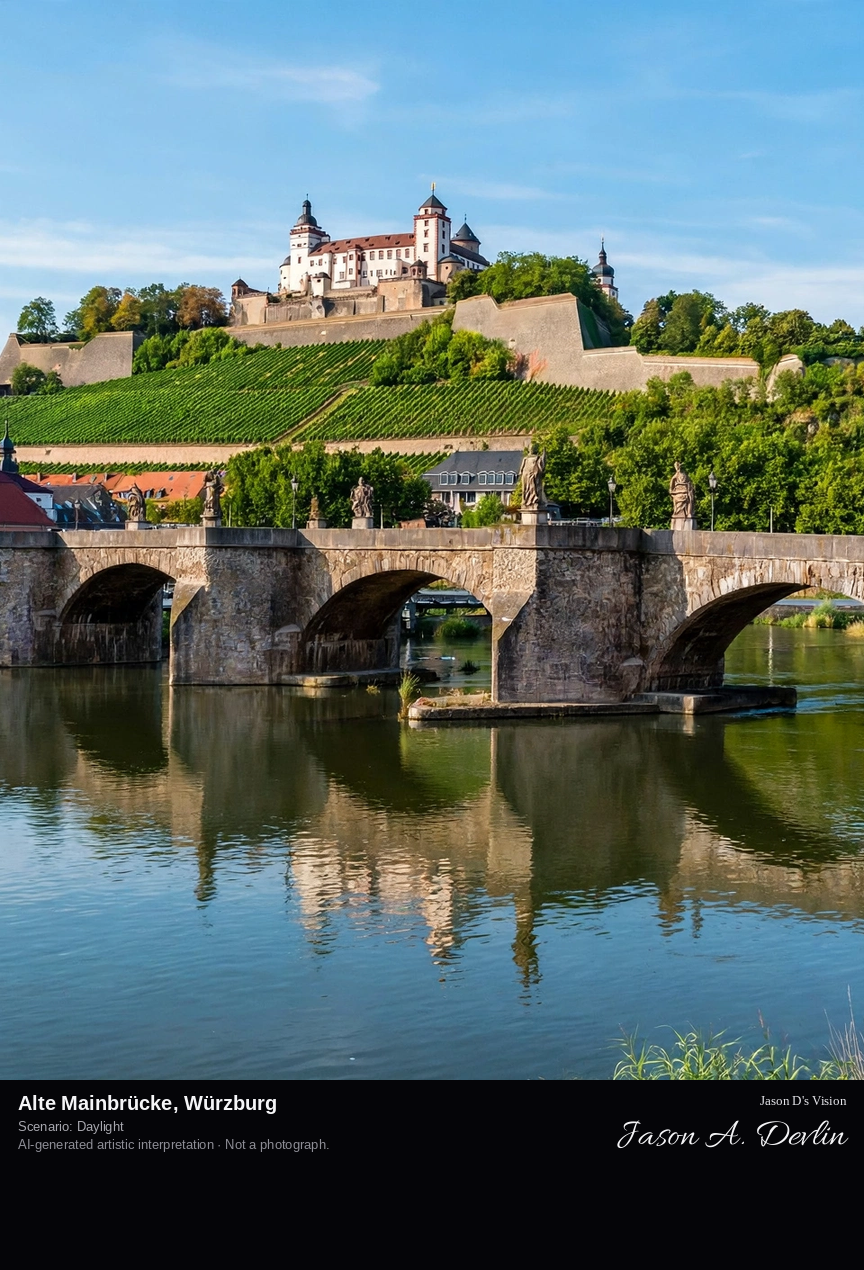
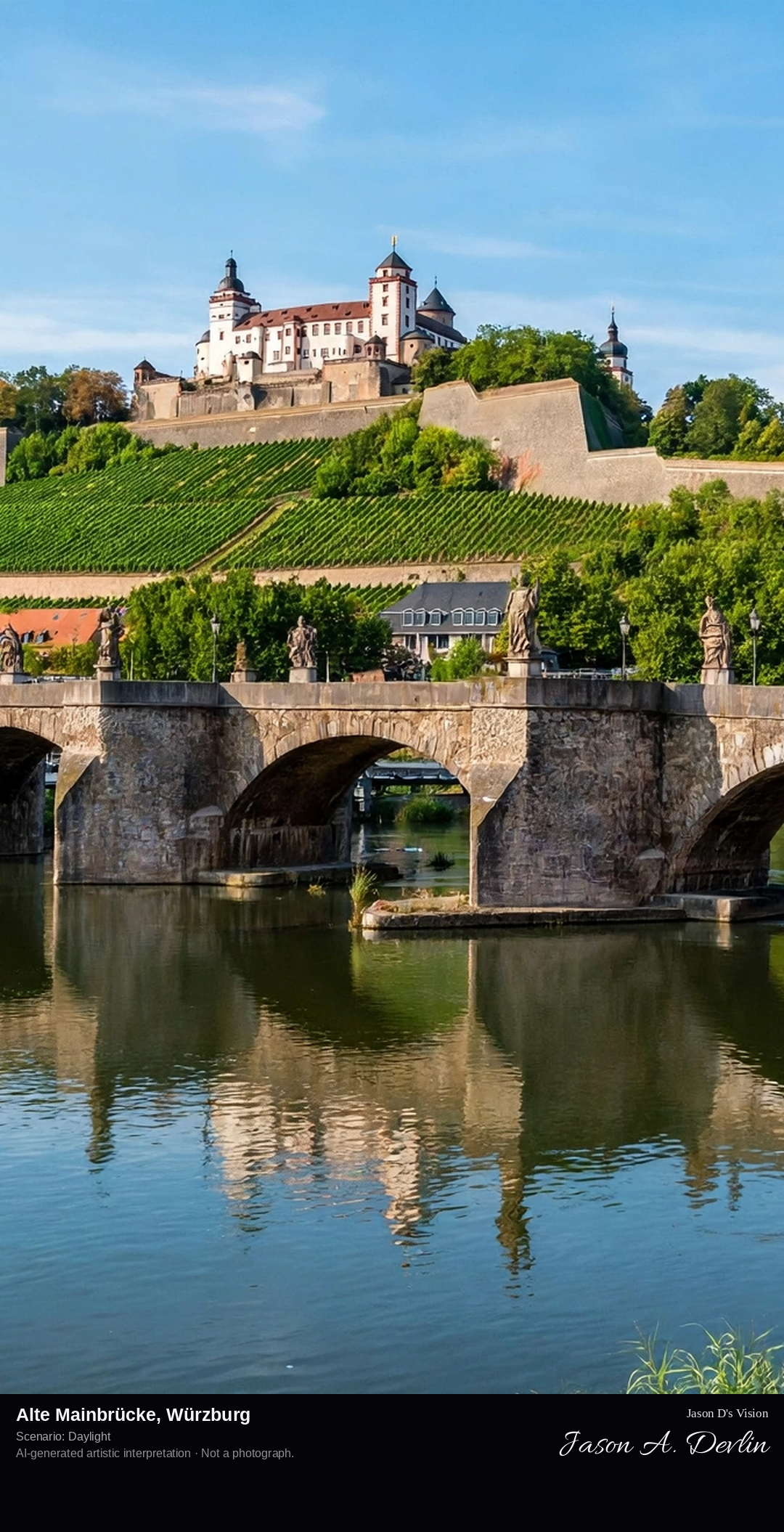
The Old Main Bridge spans the Main with its stone arches, lined with twelve baroque figures. From the bridge, the gaze sweeps over the vineyards up to Marienberg Fortress. Locals and visitors gather here for the traditional Brückenschoppen, a glass of Franconian wine.
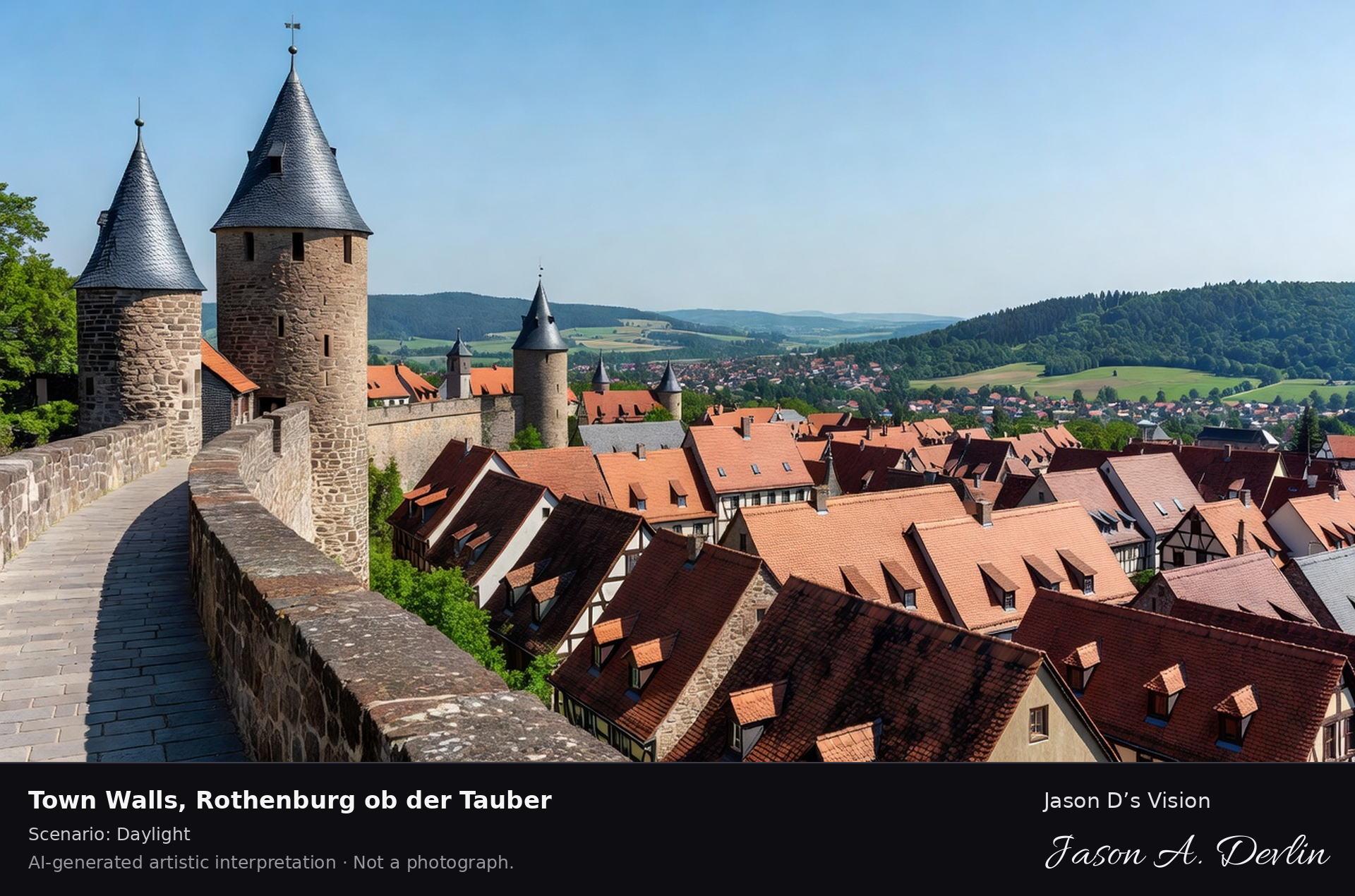
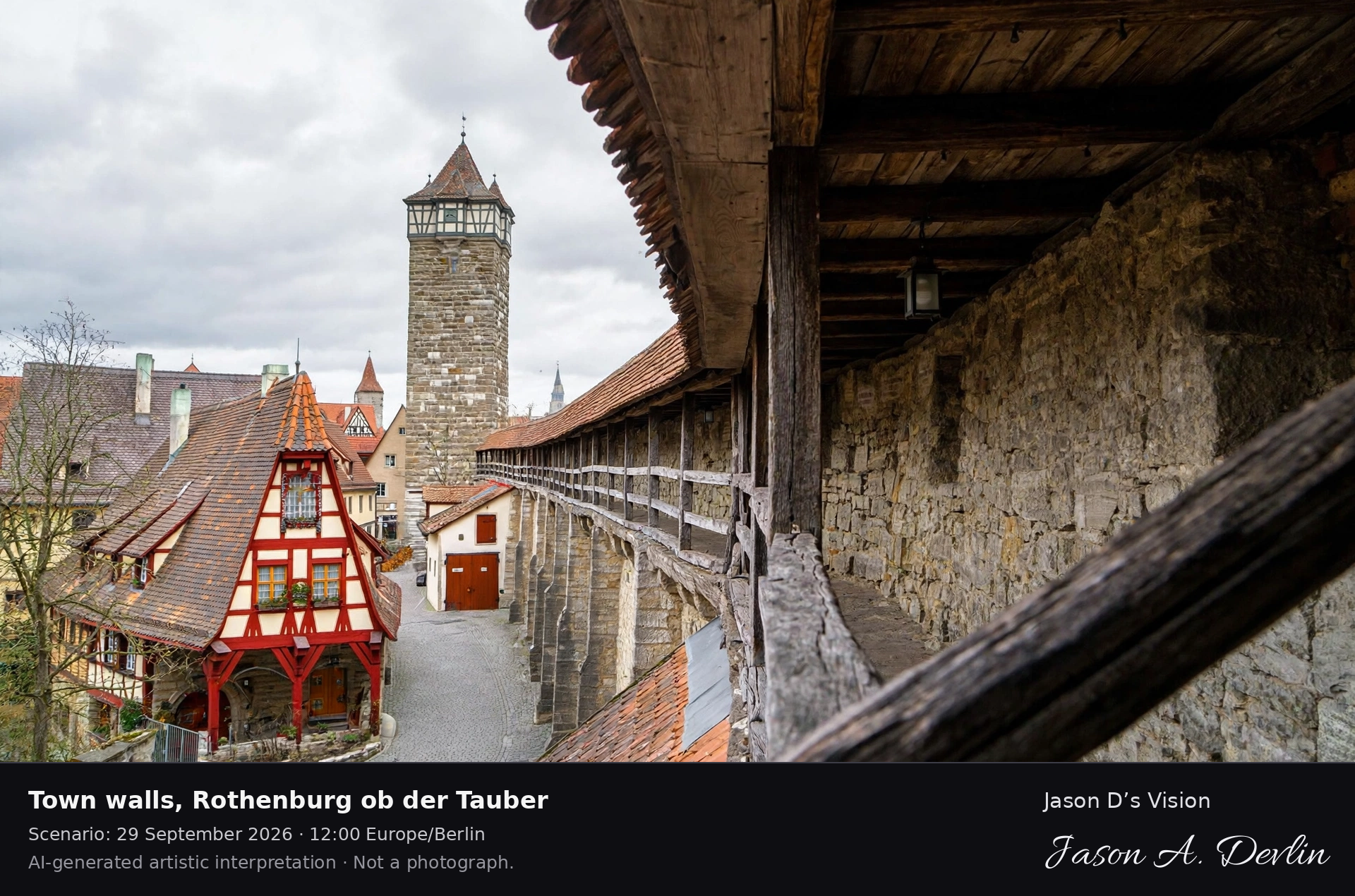
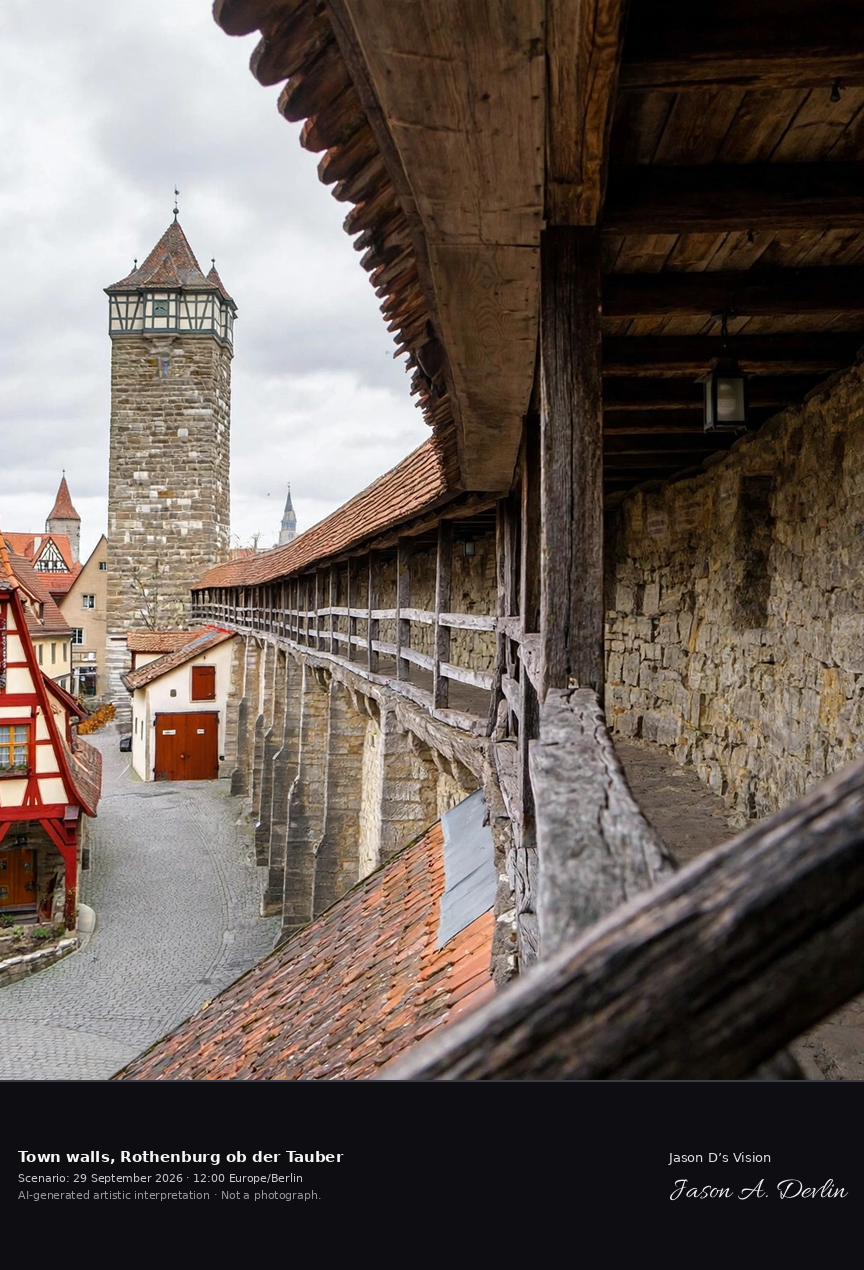
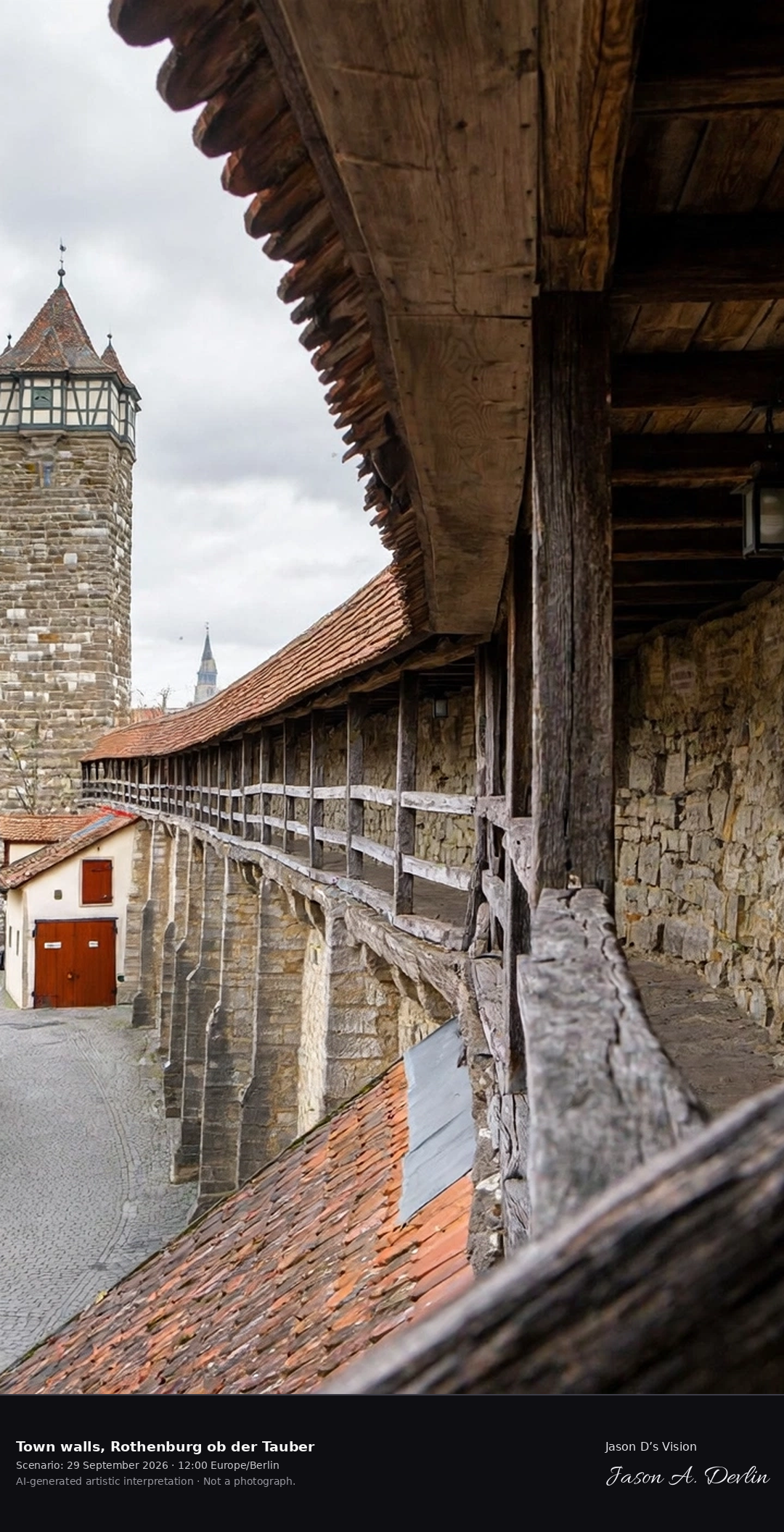
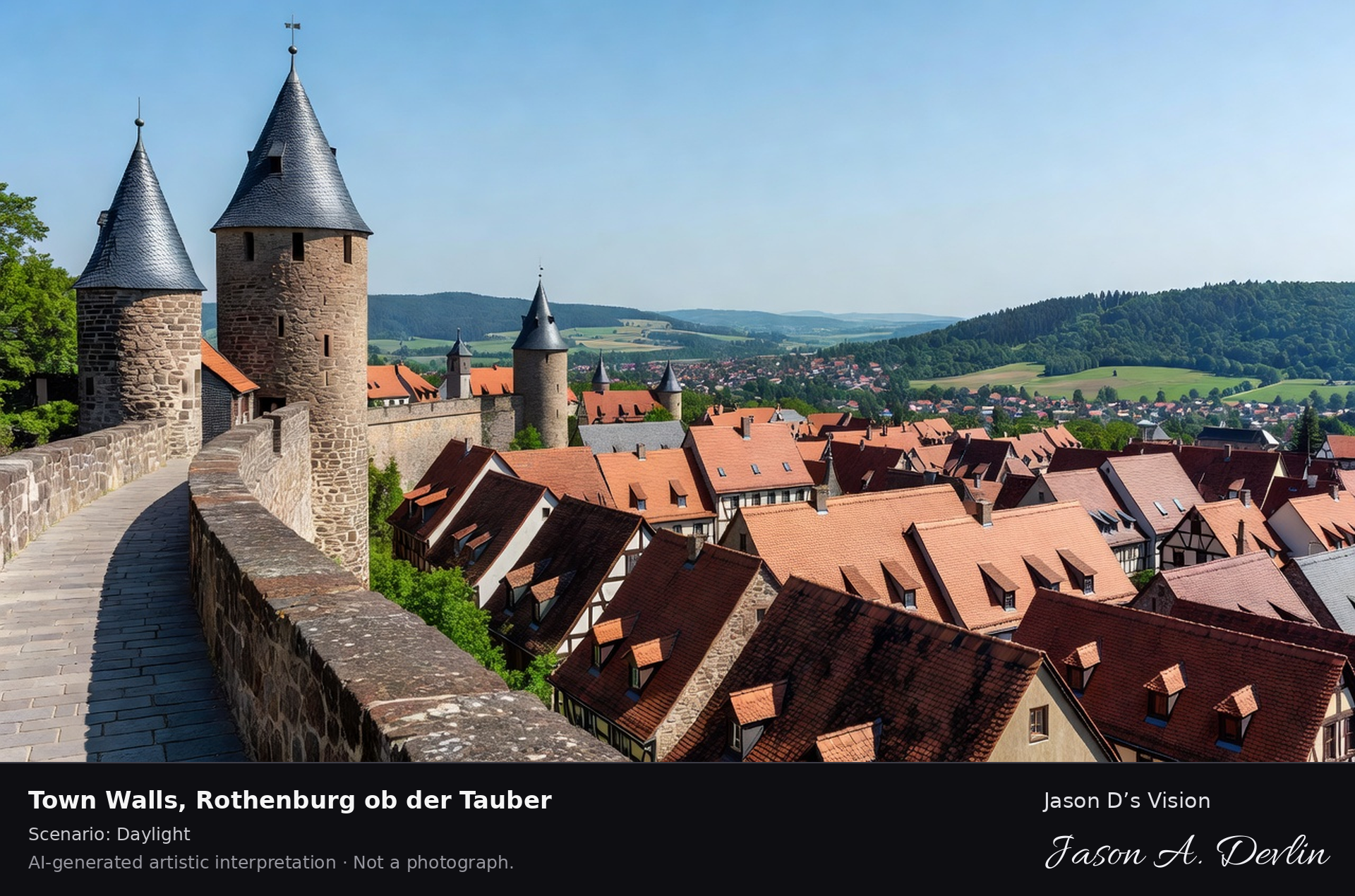
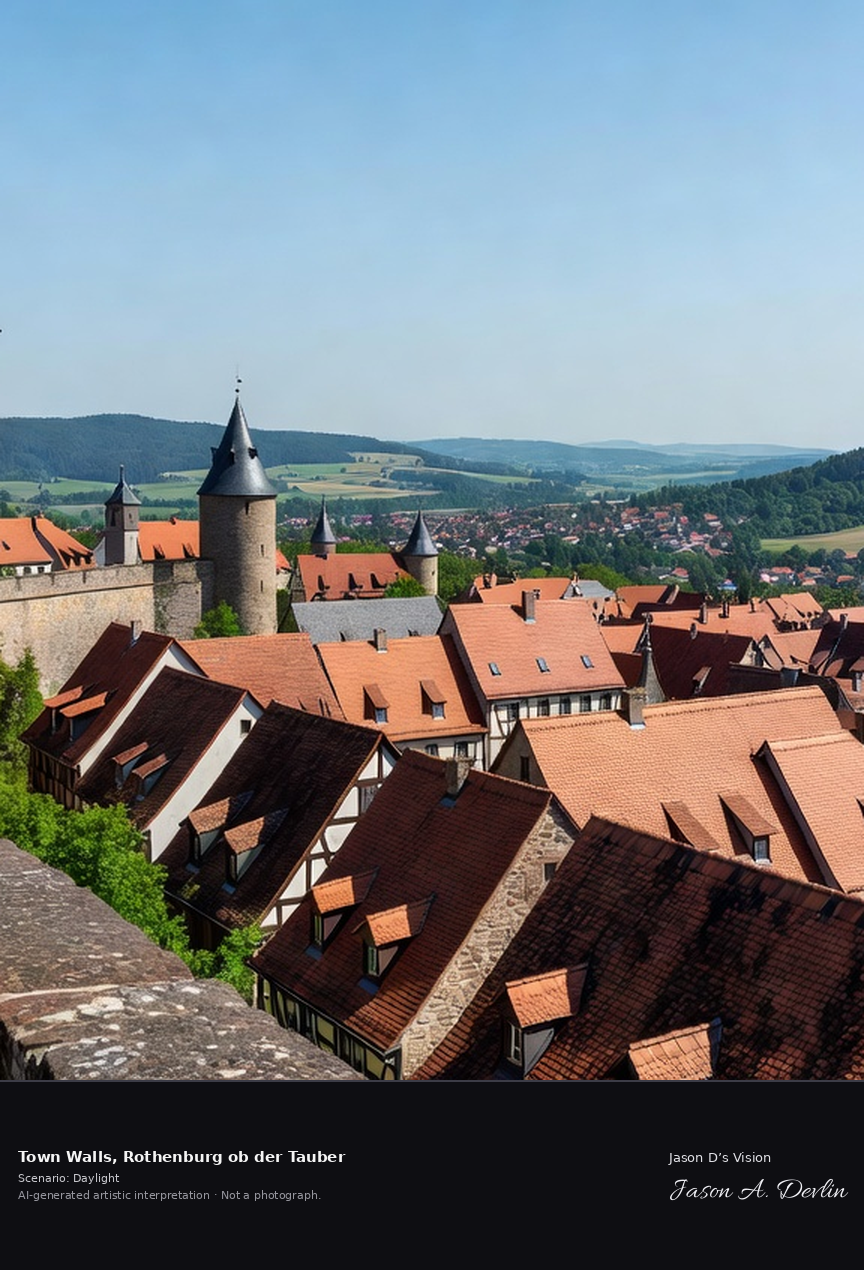
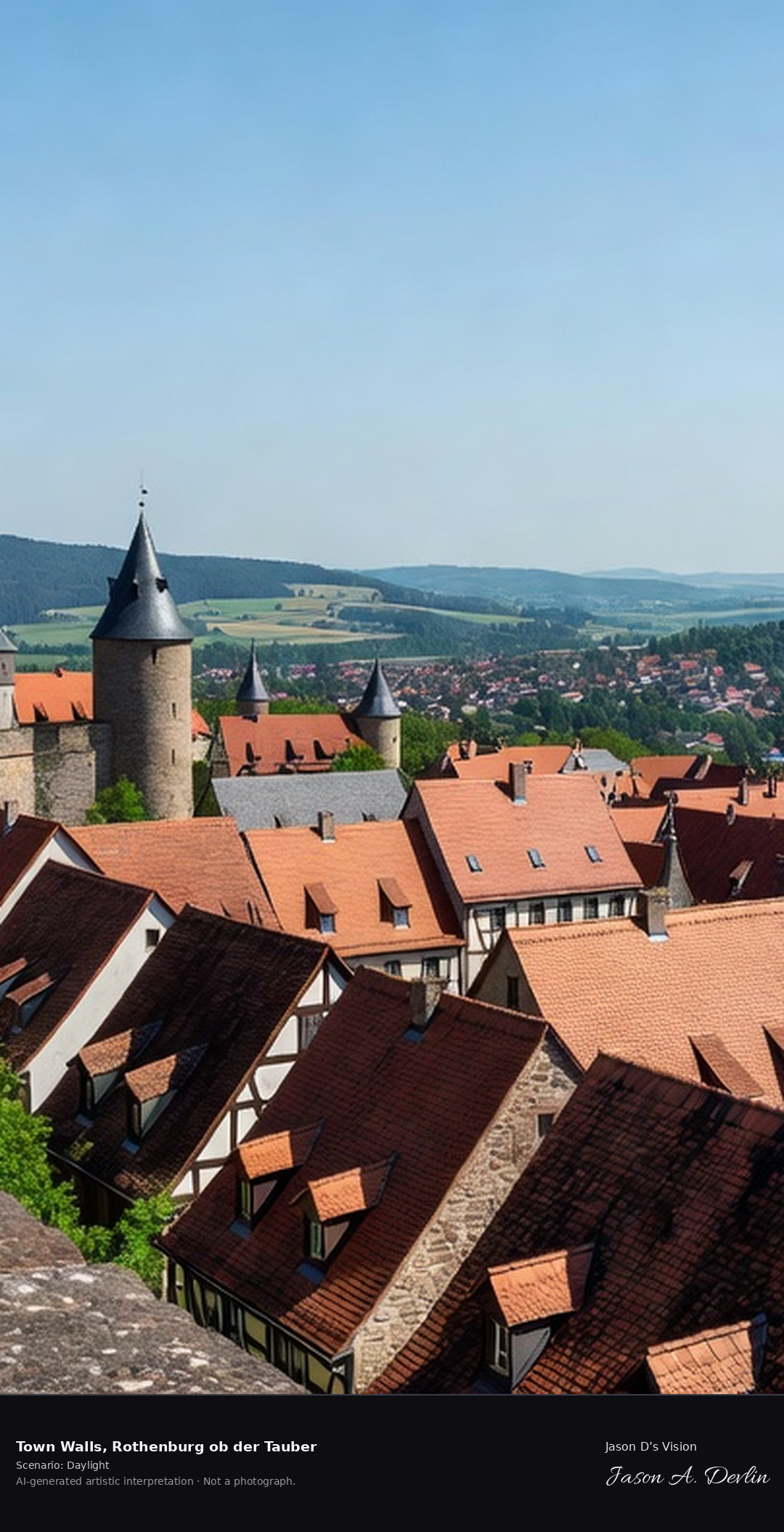
Rothenburg's town wall encloses the old town for about four kilometres, with towers and long sections of covered wall walk. From the parapet, the view opens over the red roofs and half-timbered gables of the medieval city. A walk along the fortifications is like a journey through time.
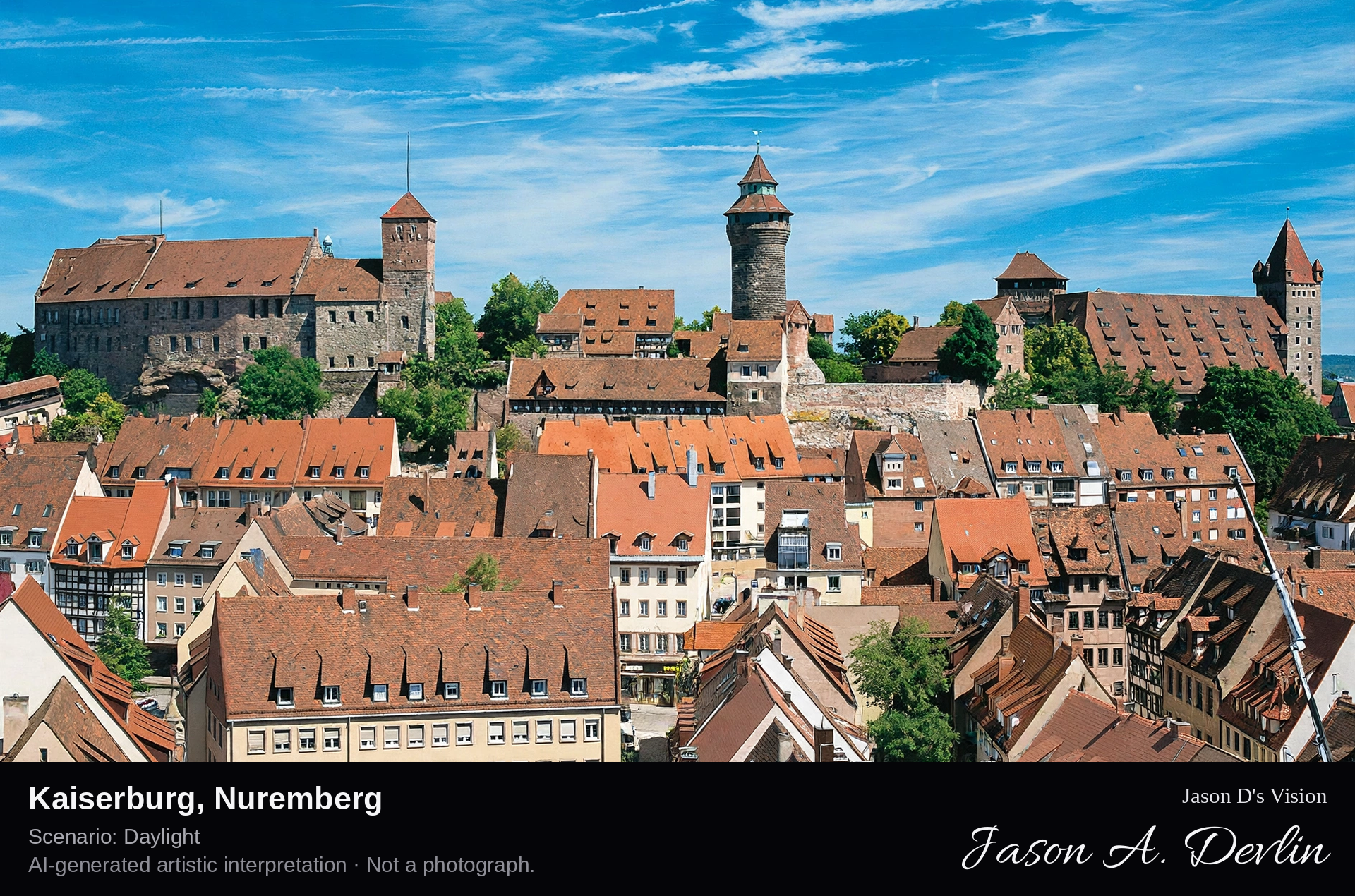
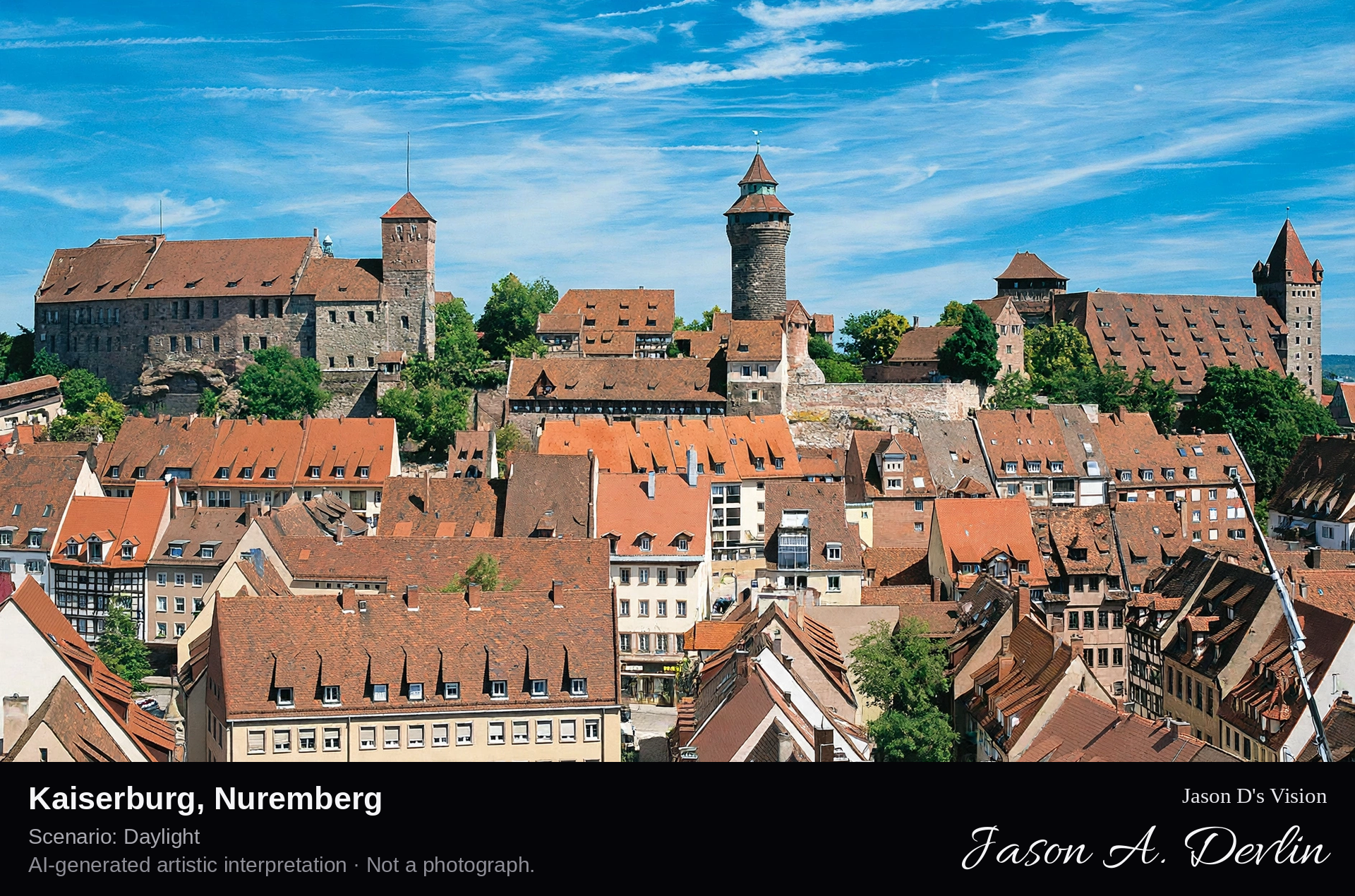
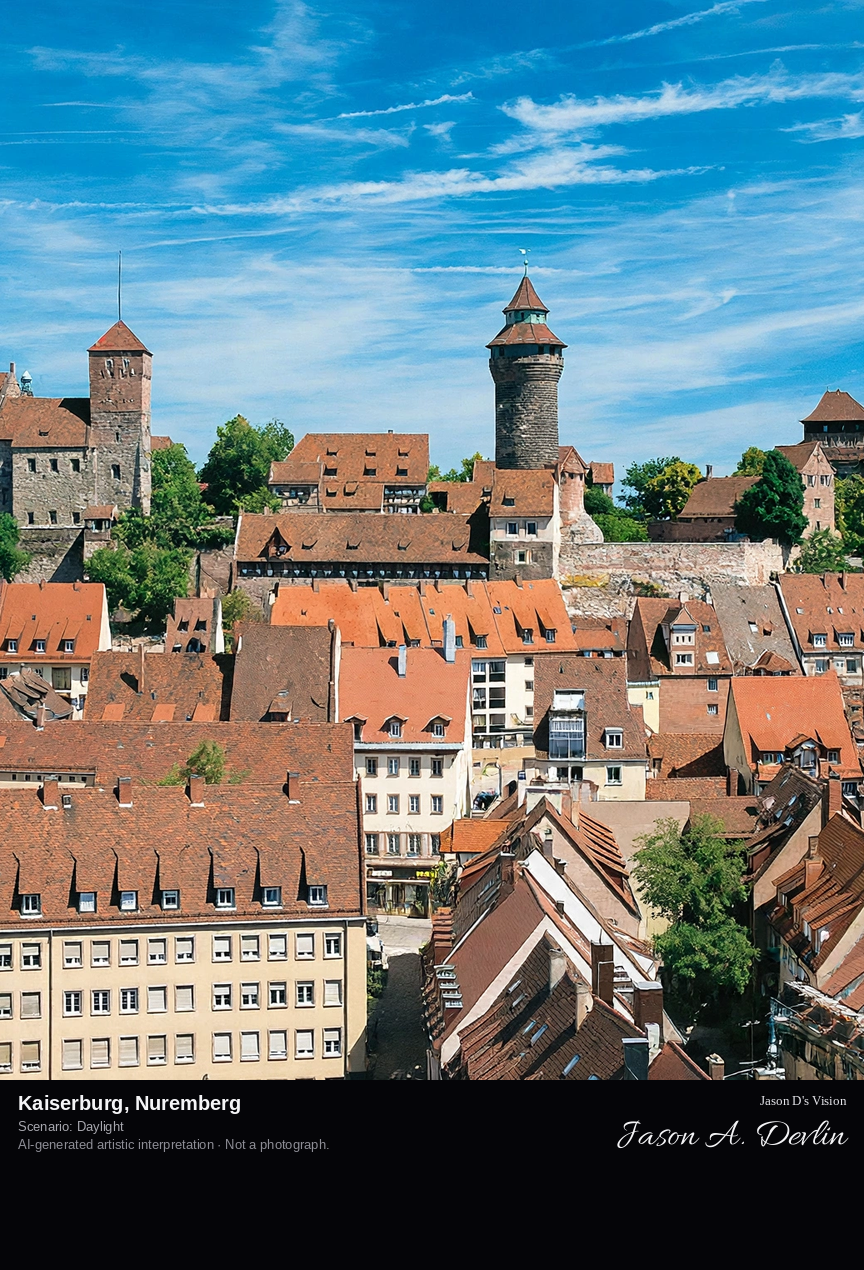
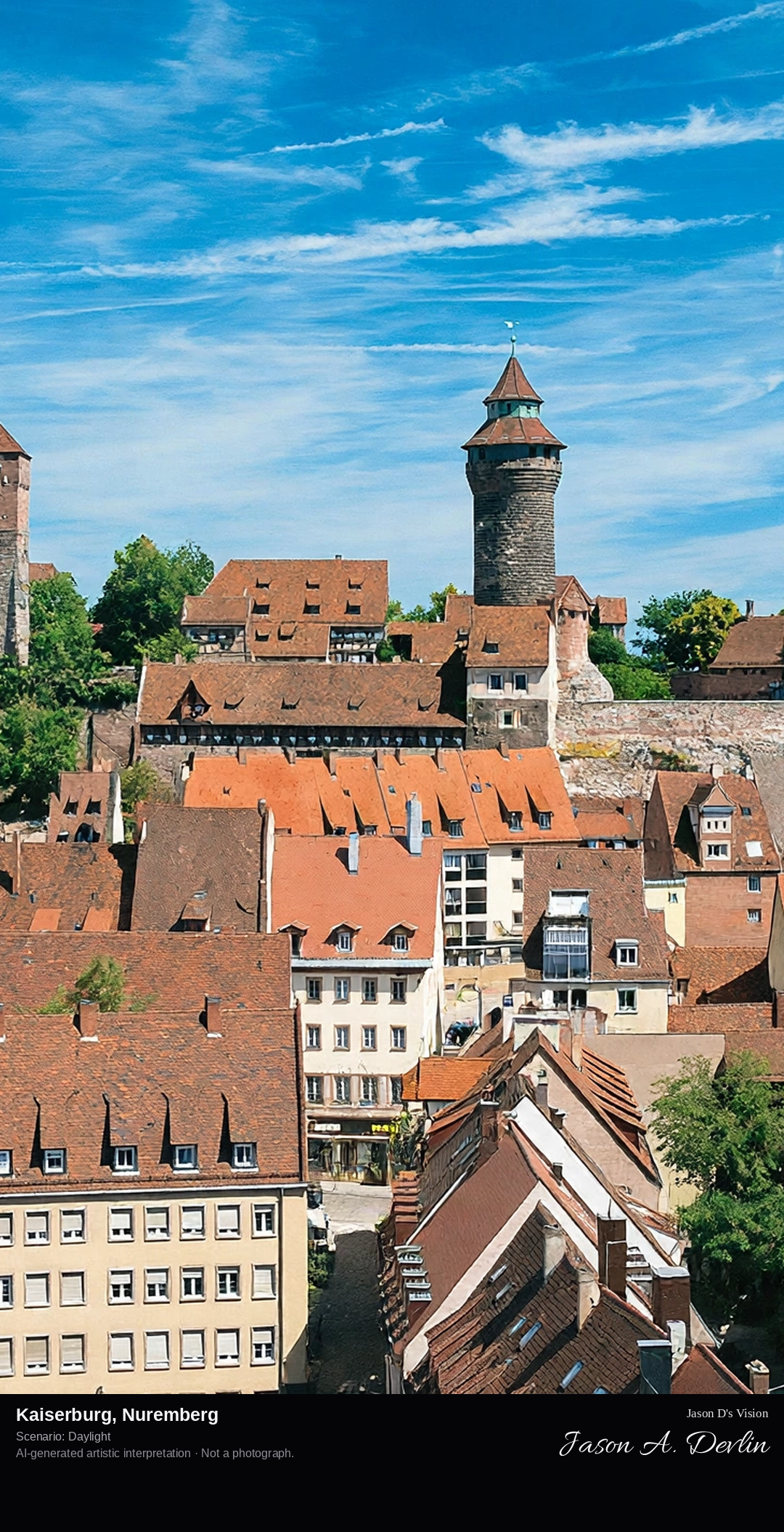
The Imperial Castle rises on the sandstone rock above Nuremberg's Old Town. The palace, chapel and round Sinwell Tower form a distinctive city landmark. From the castle grounds, the gaze sweeps over the Old Town's roofs, linking the hilltop stronghold with the city below.
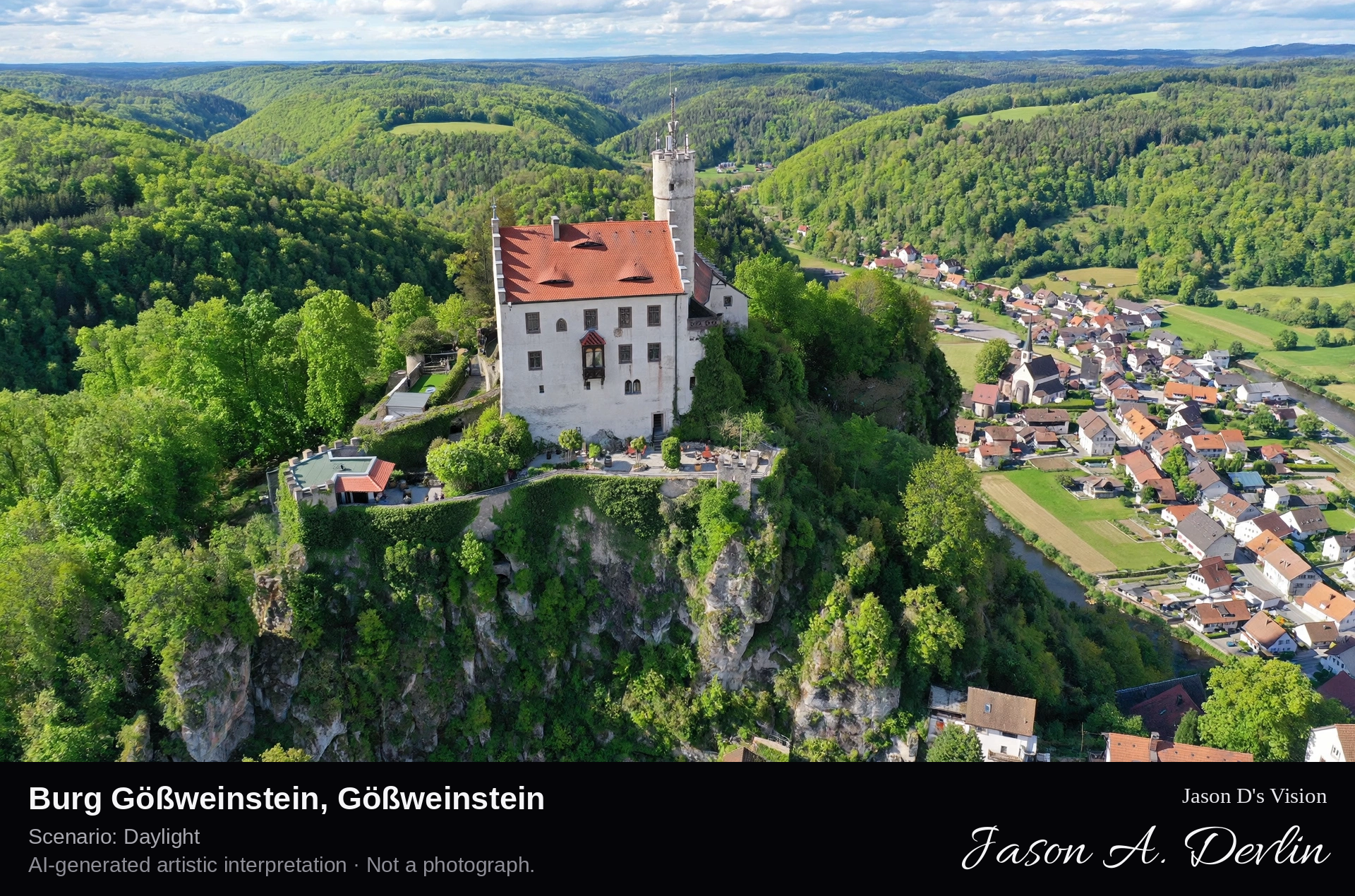
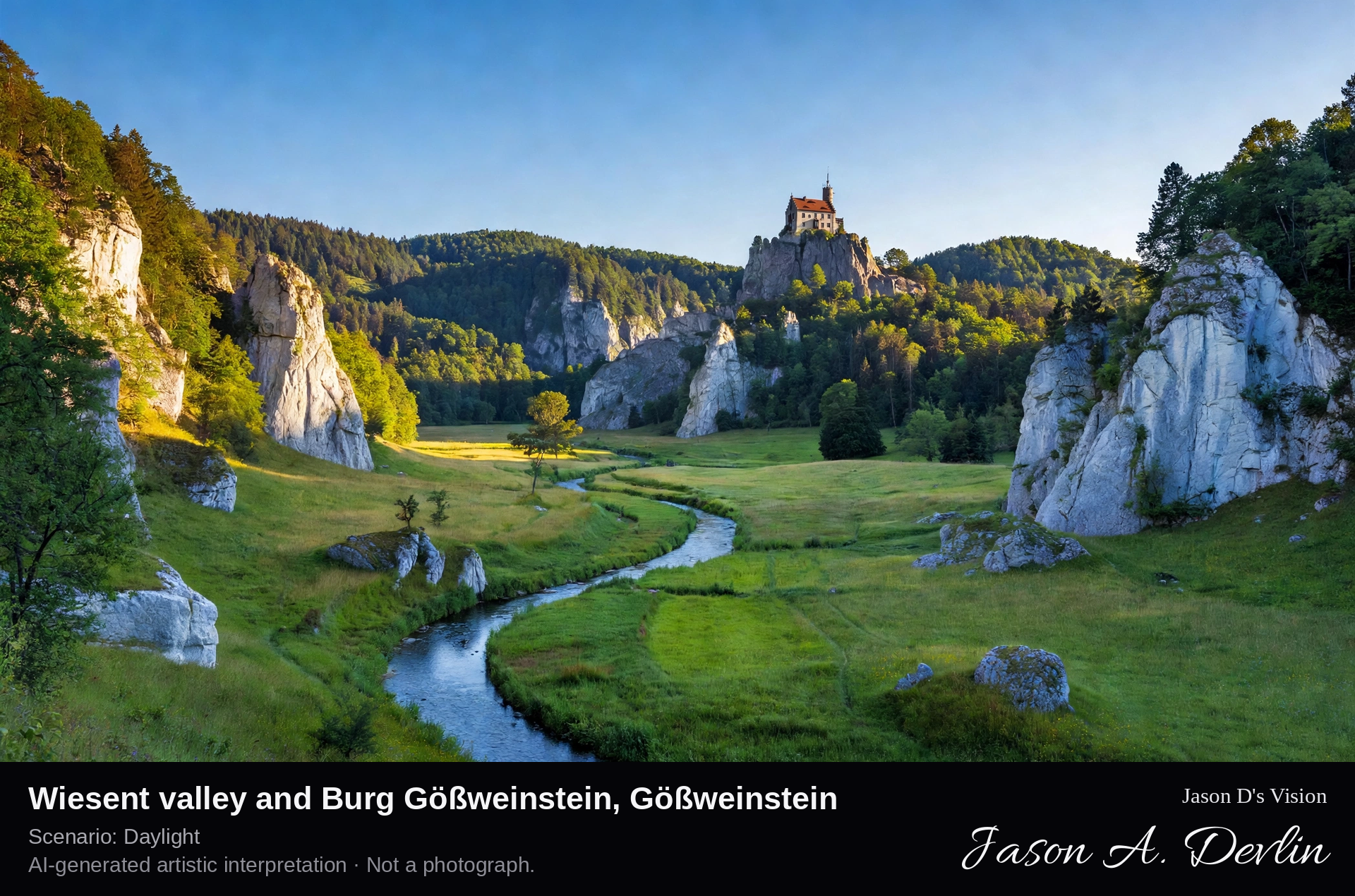
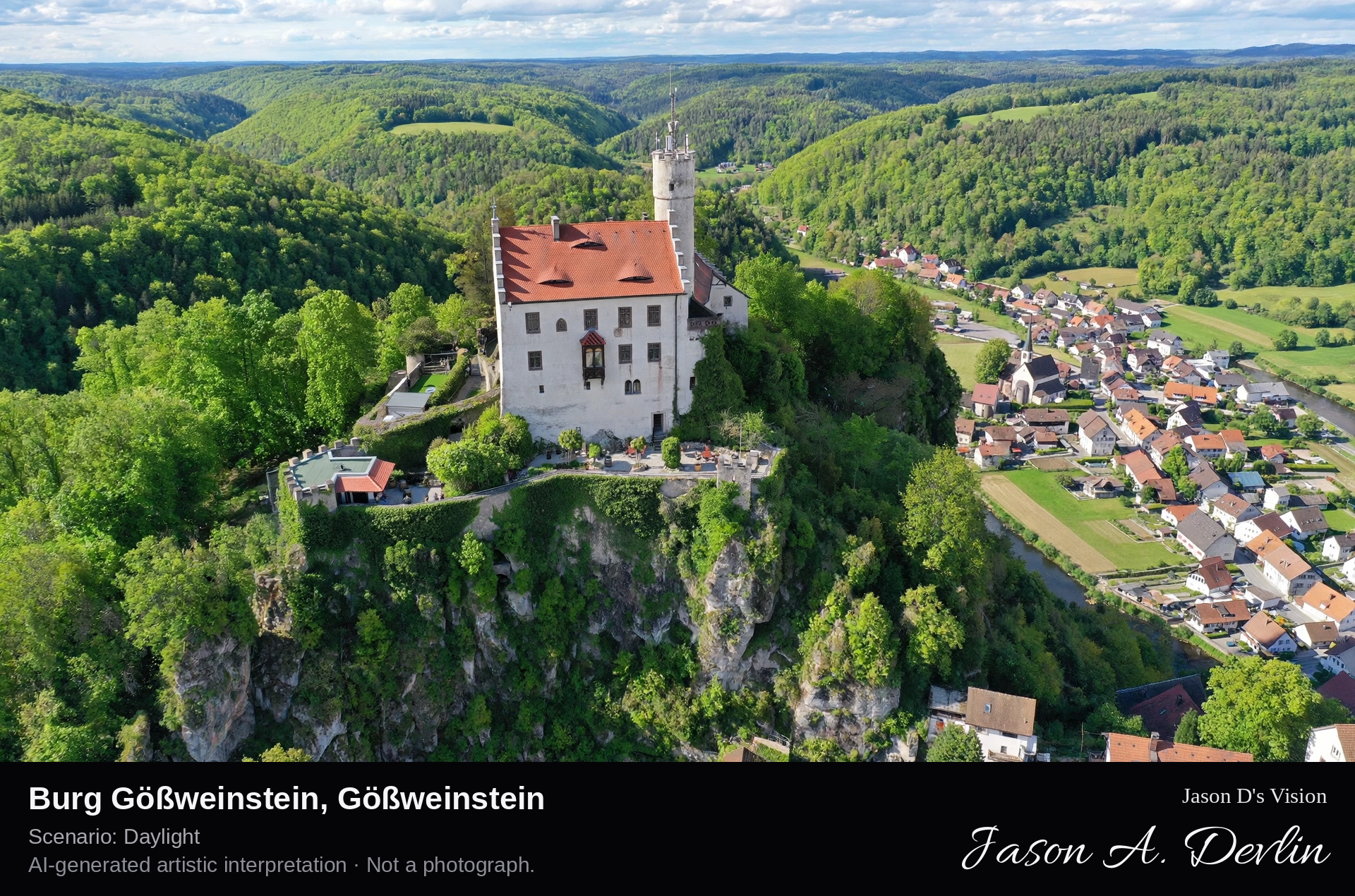
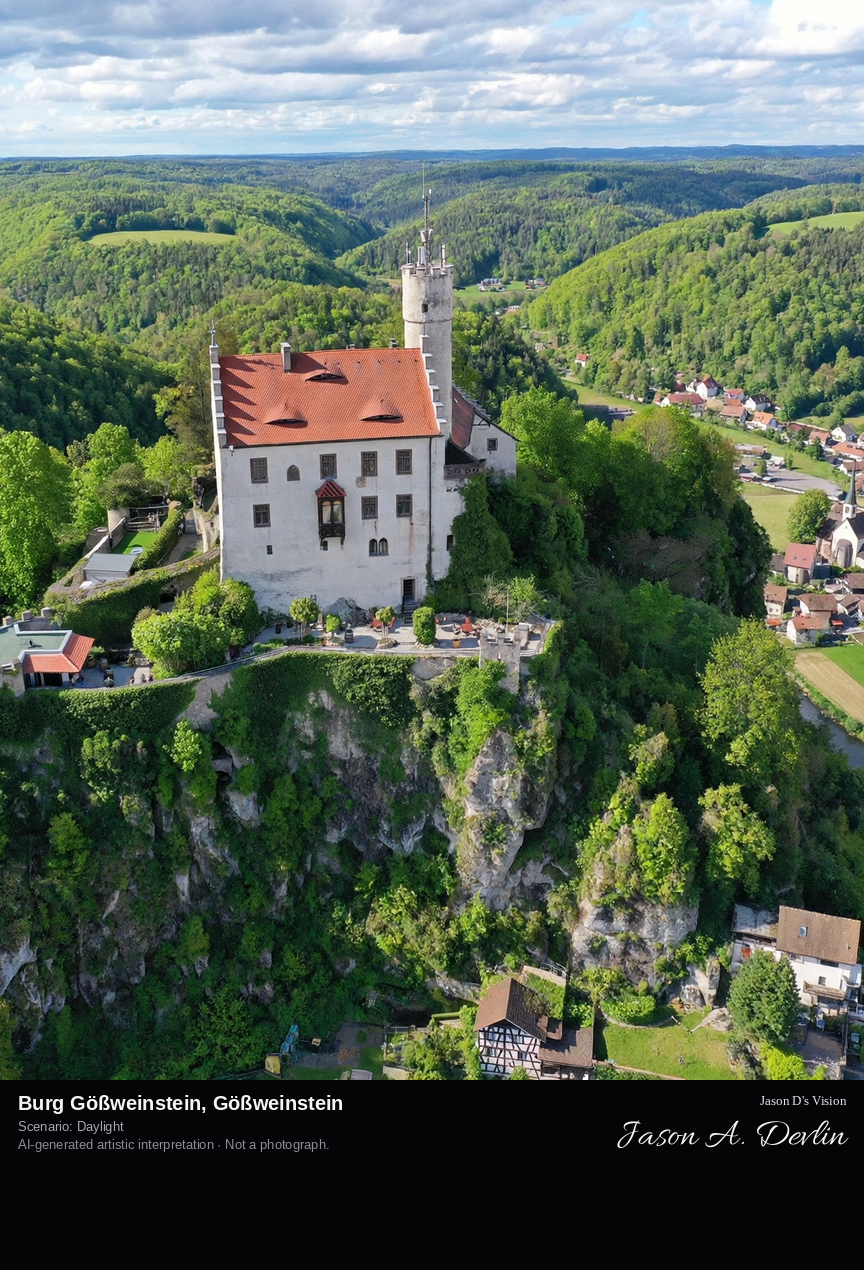
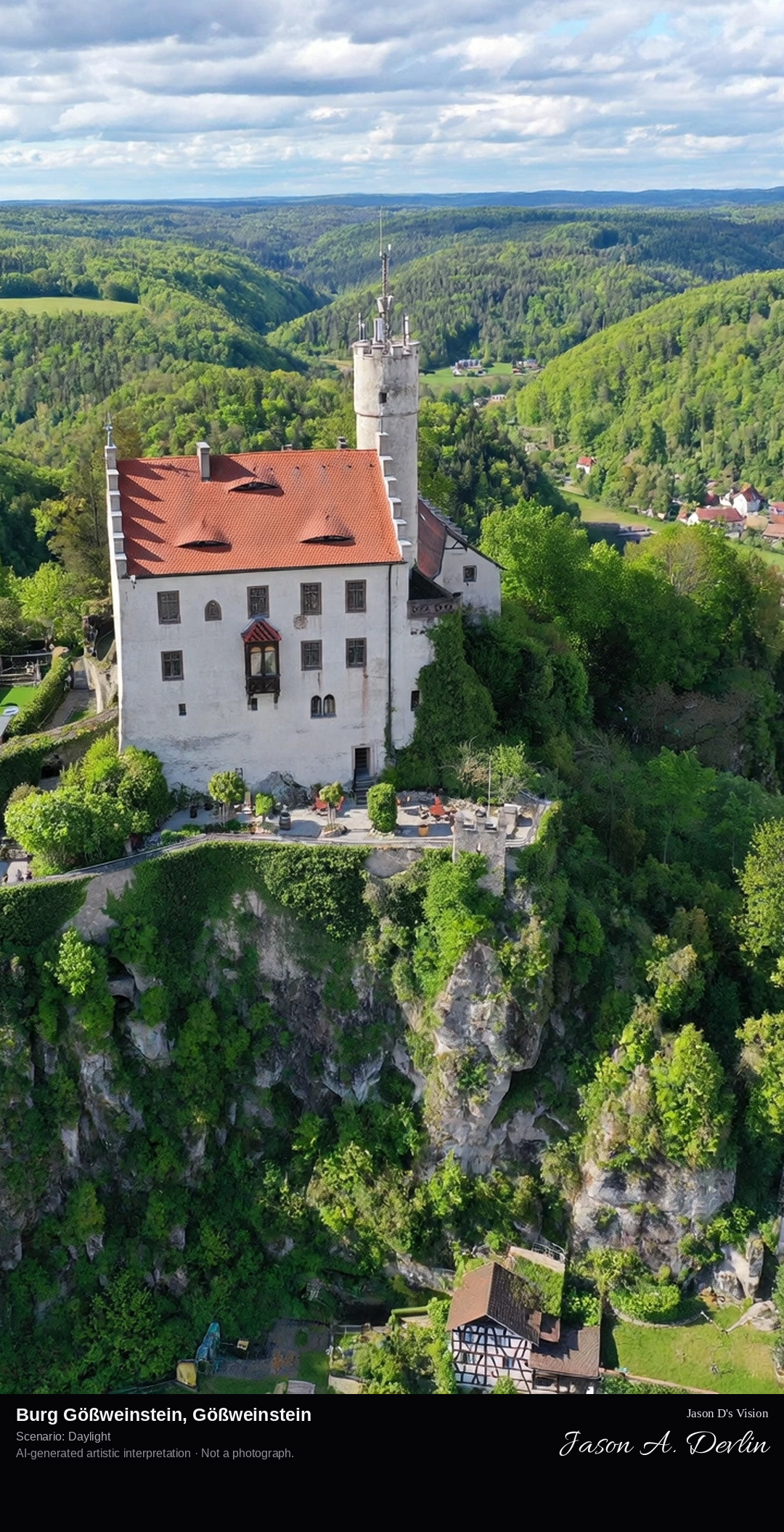
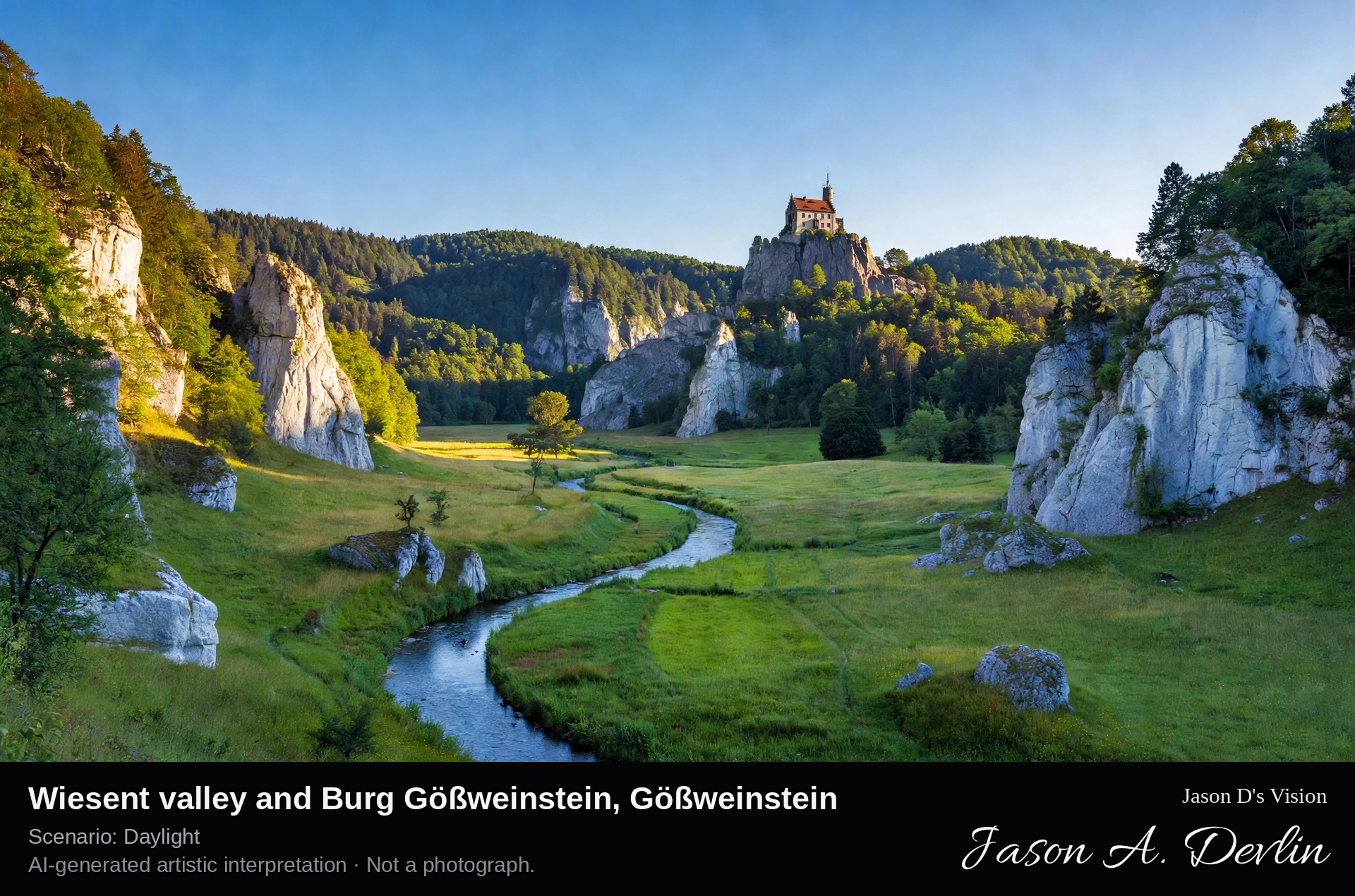
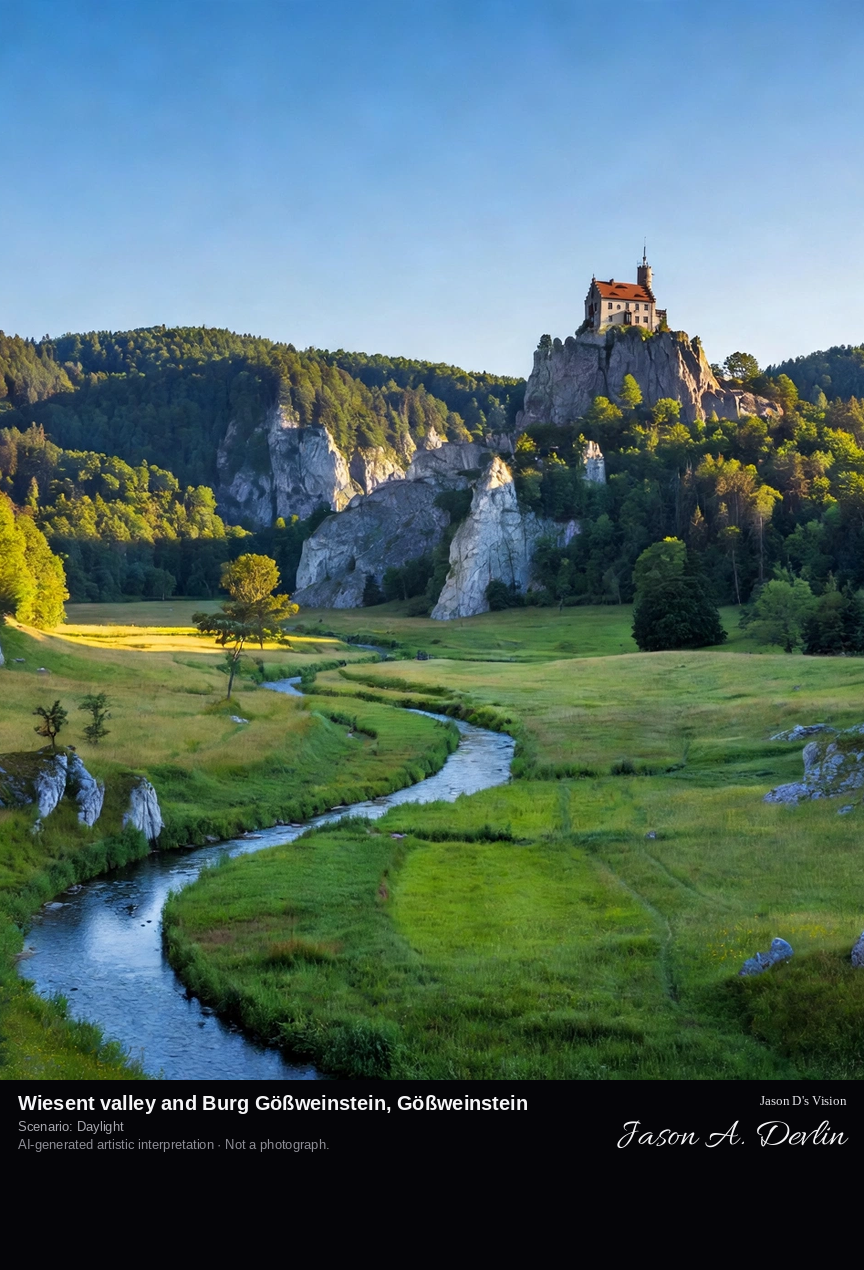
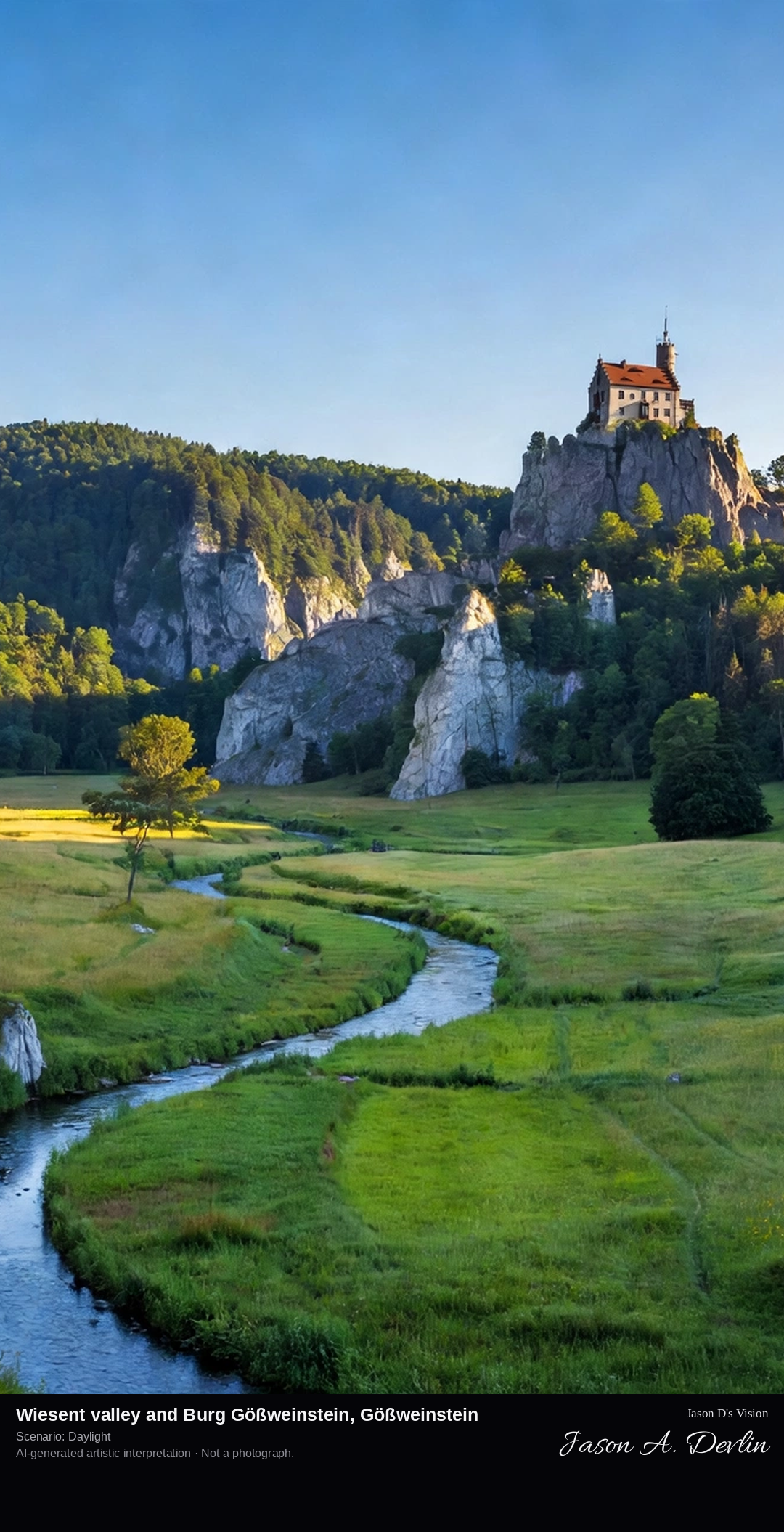
Gößweinstein Castle sits enthroned on a rock above the market town, its towers and walls towering over the roofs of Franconian Switzerland. From the castle wall, the view opens over the Wiesent Valley and the wooded hills. For centuries, the castle has been the region's landmark.
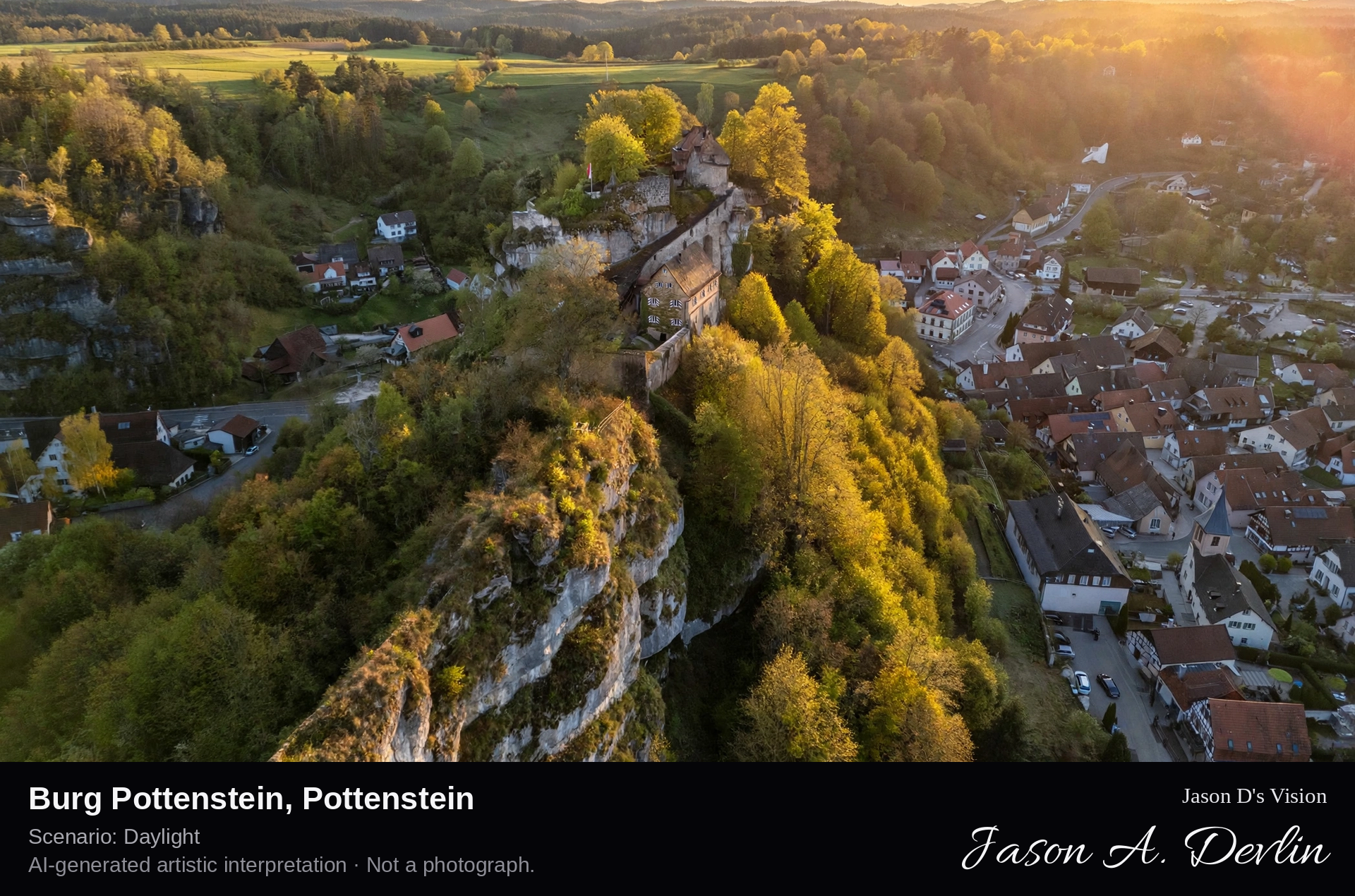
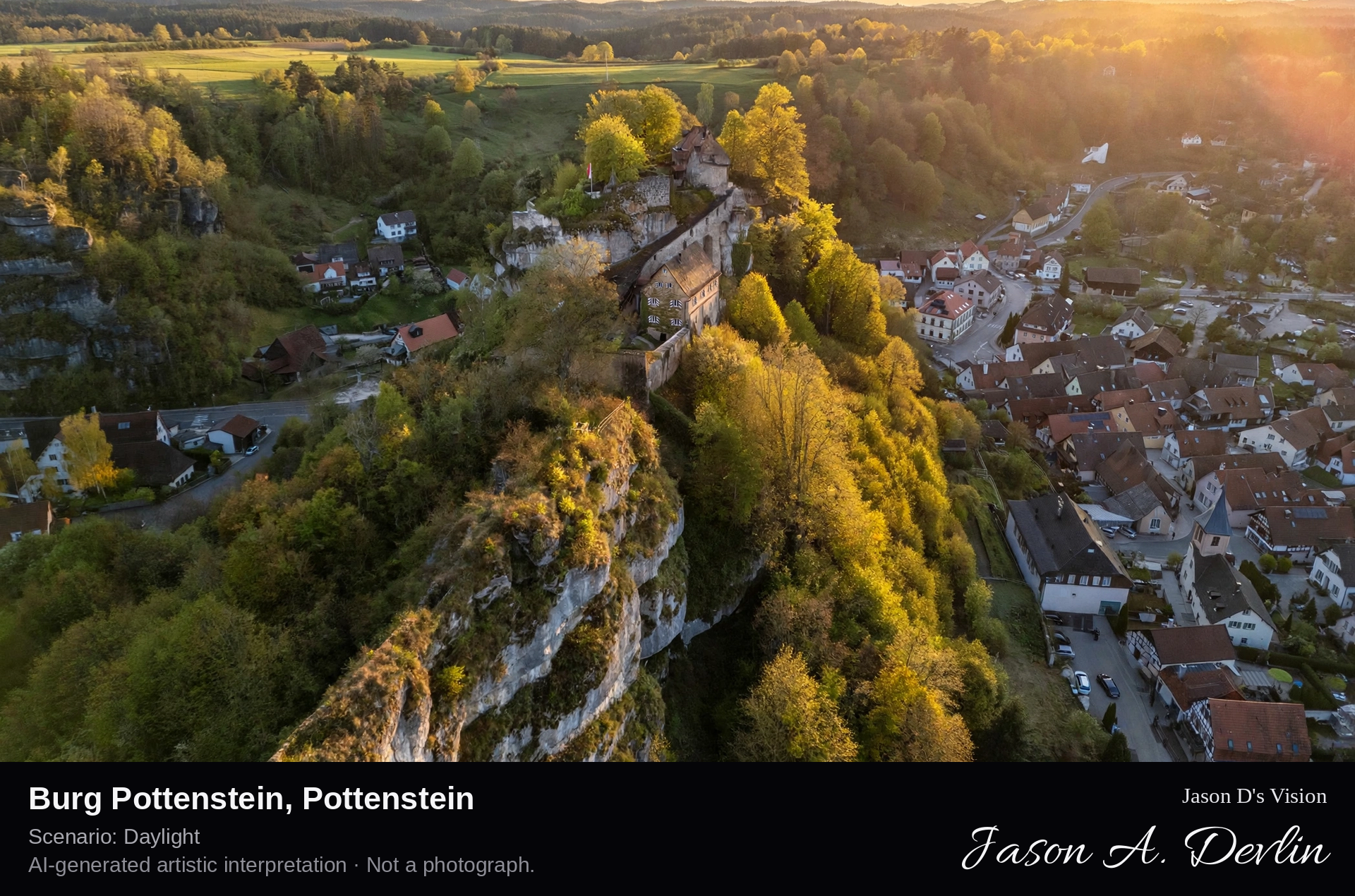
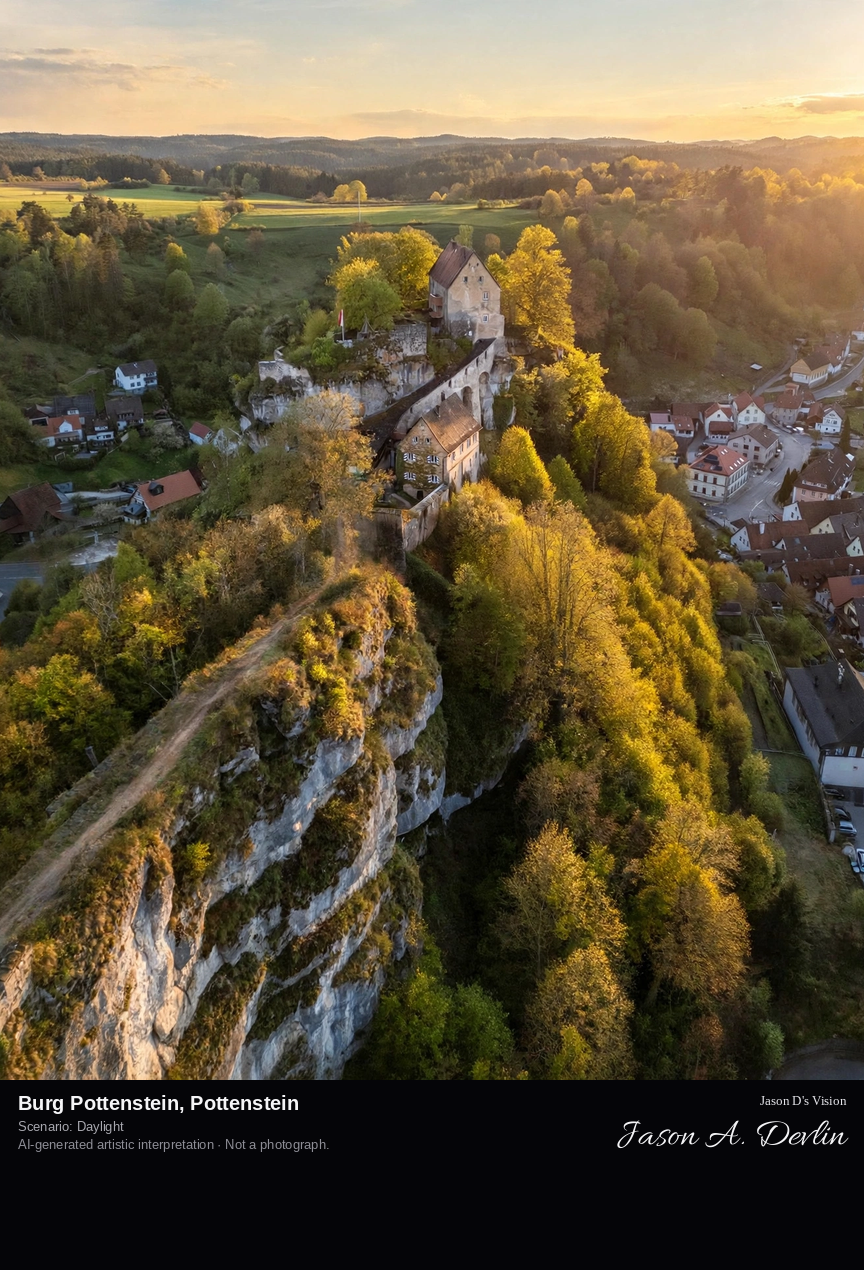
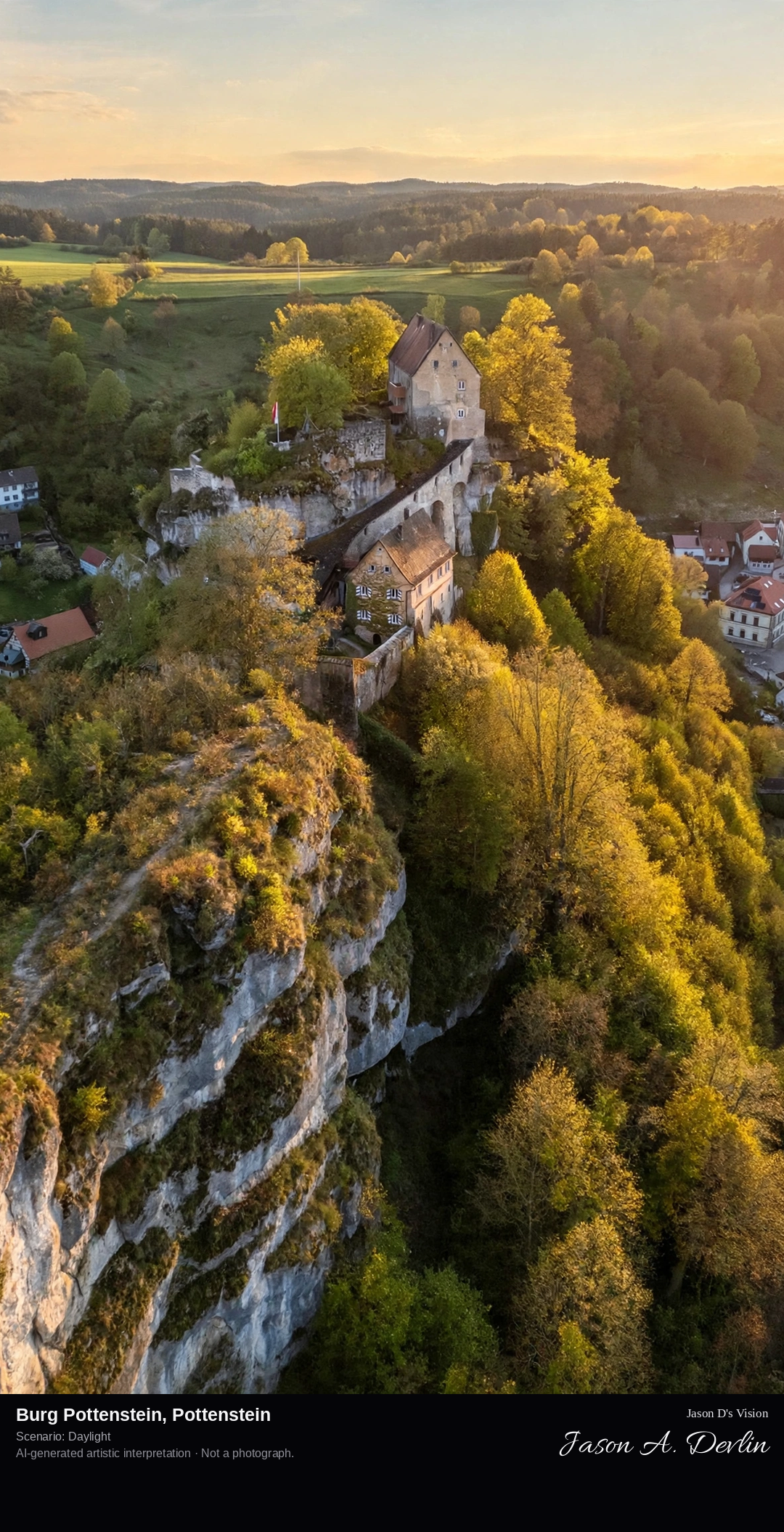
Pottenstein Castle rises on a rock above the town of the same name, its walls and towers recalling the Middle Ages. From the castle, the view opens over the town and surrounding valley landscape. Part of the castle houses a museum.
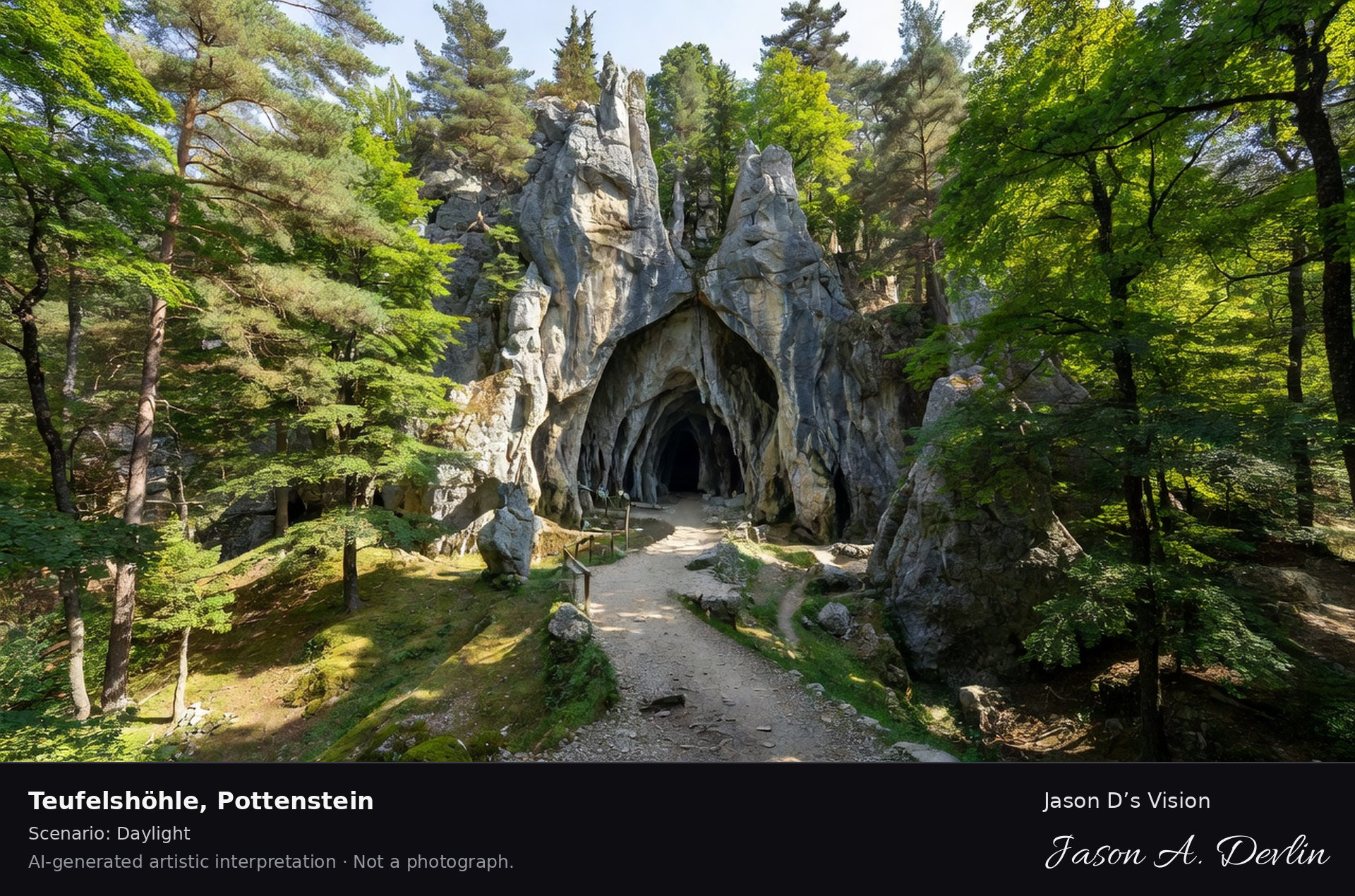
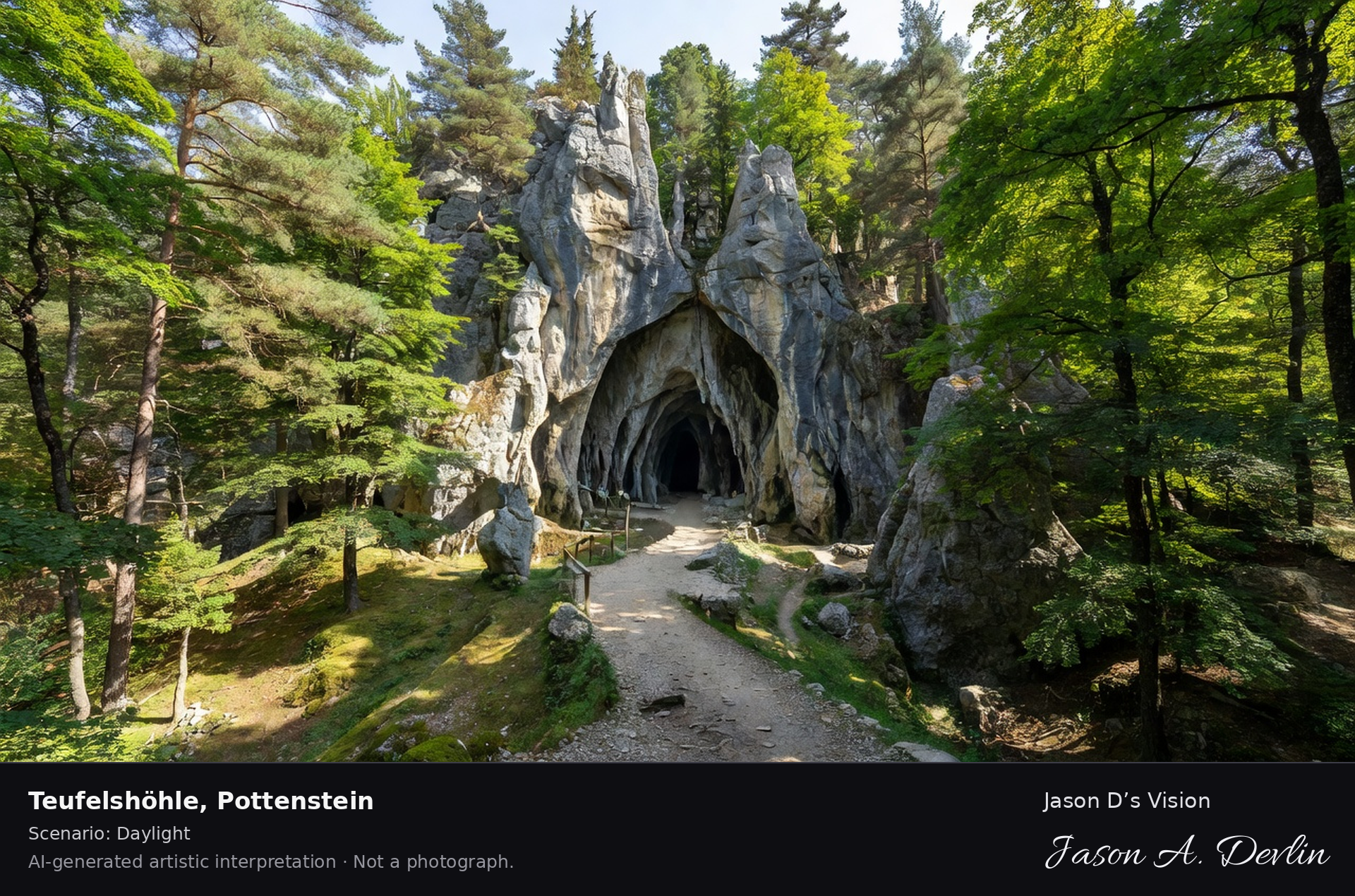
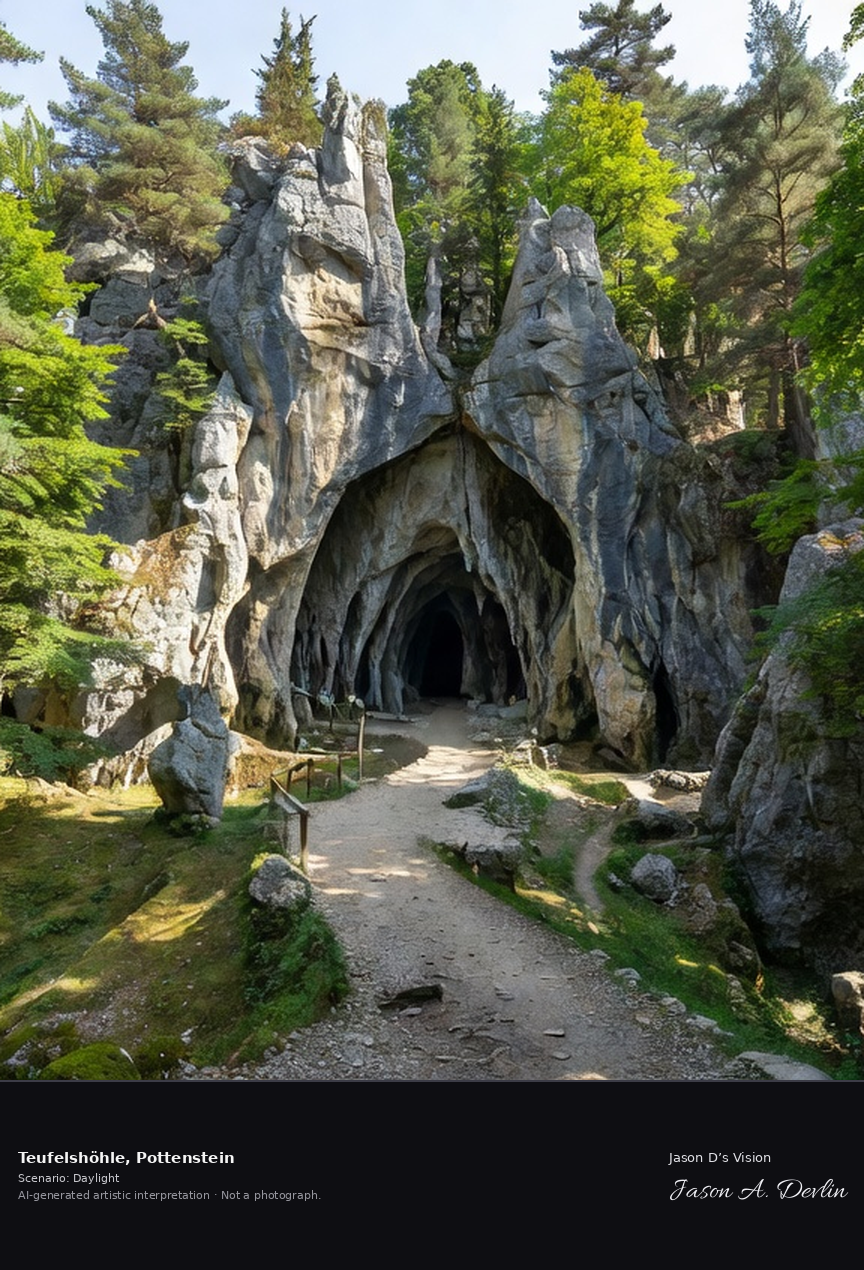
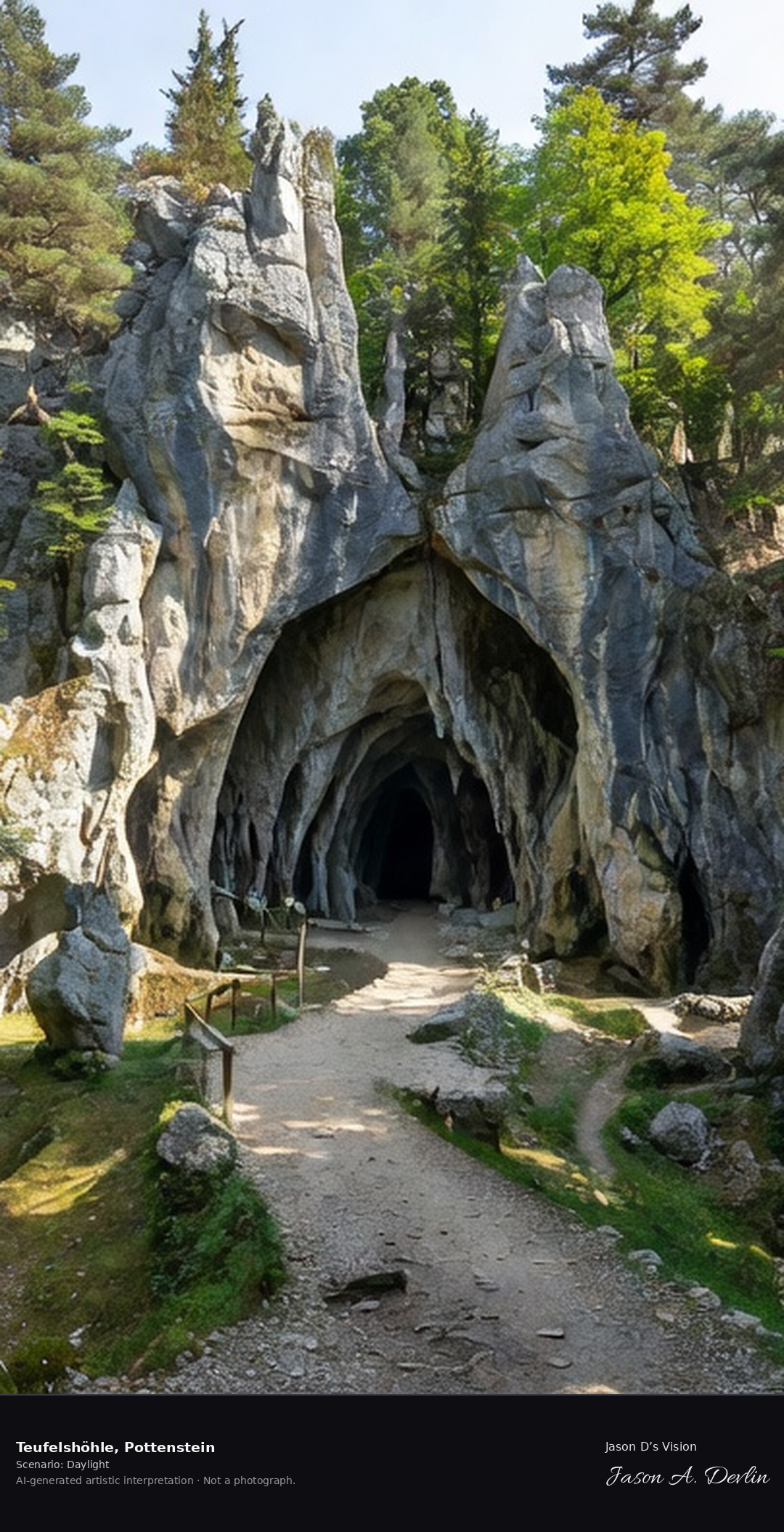
Near Pottenstein, the Teufelshöhle — the Devil's Cave — opens into the underground world of Franconian Switzerland. Stalactites and stalagmites fill its chambers along the illuminated visitor route, and a cave-bear skeleton recalls the animals that once sheltered here.
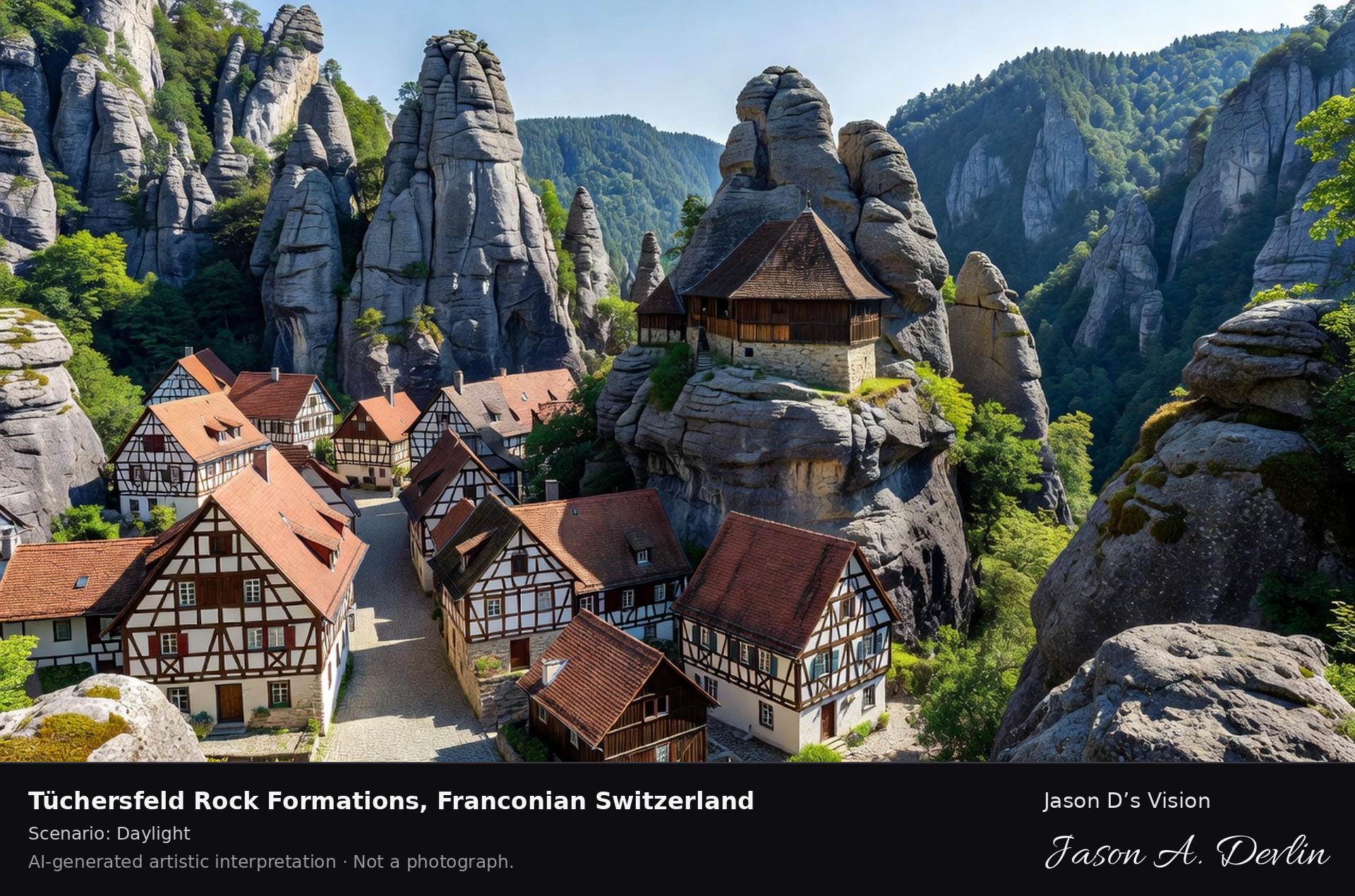
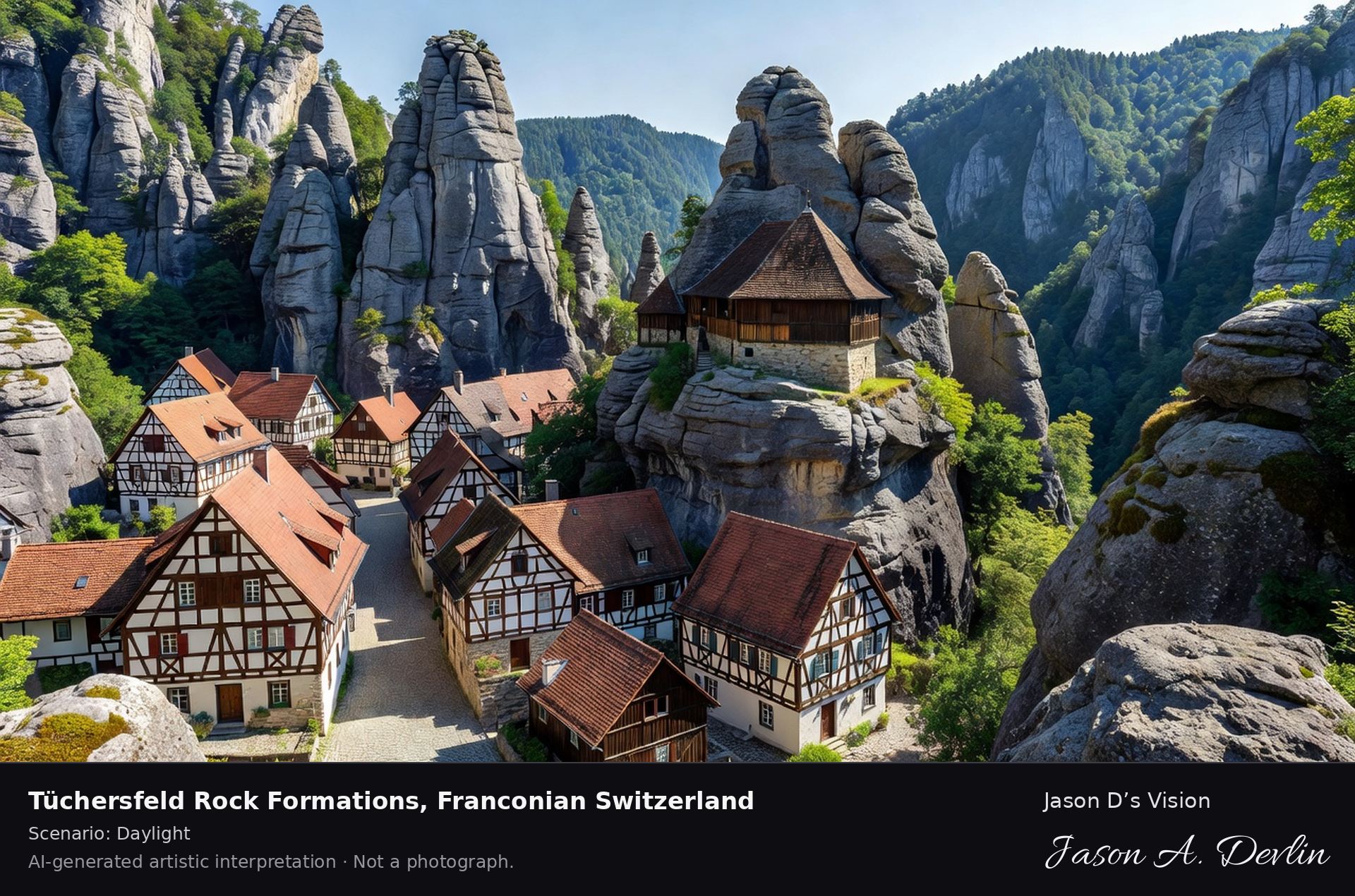
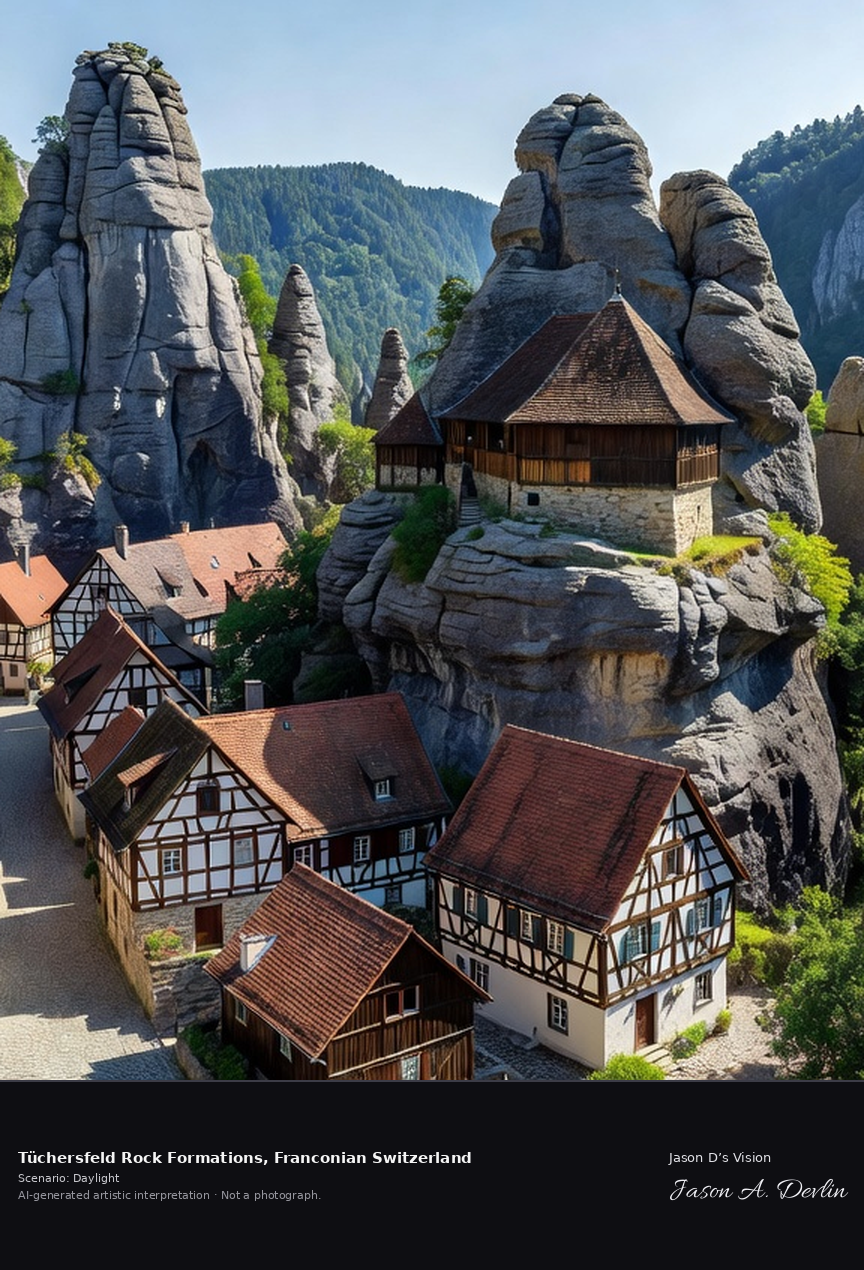
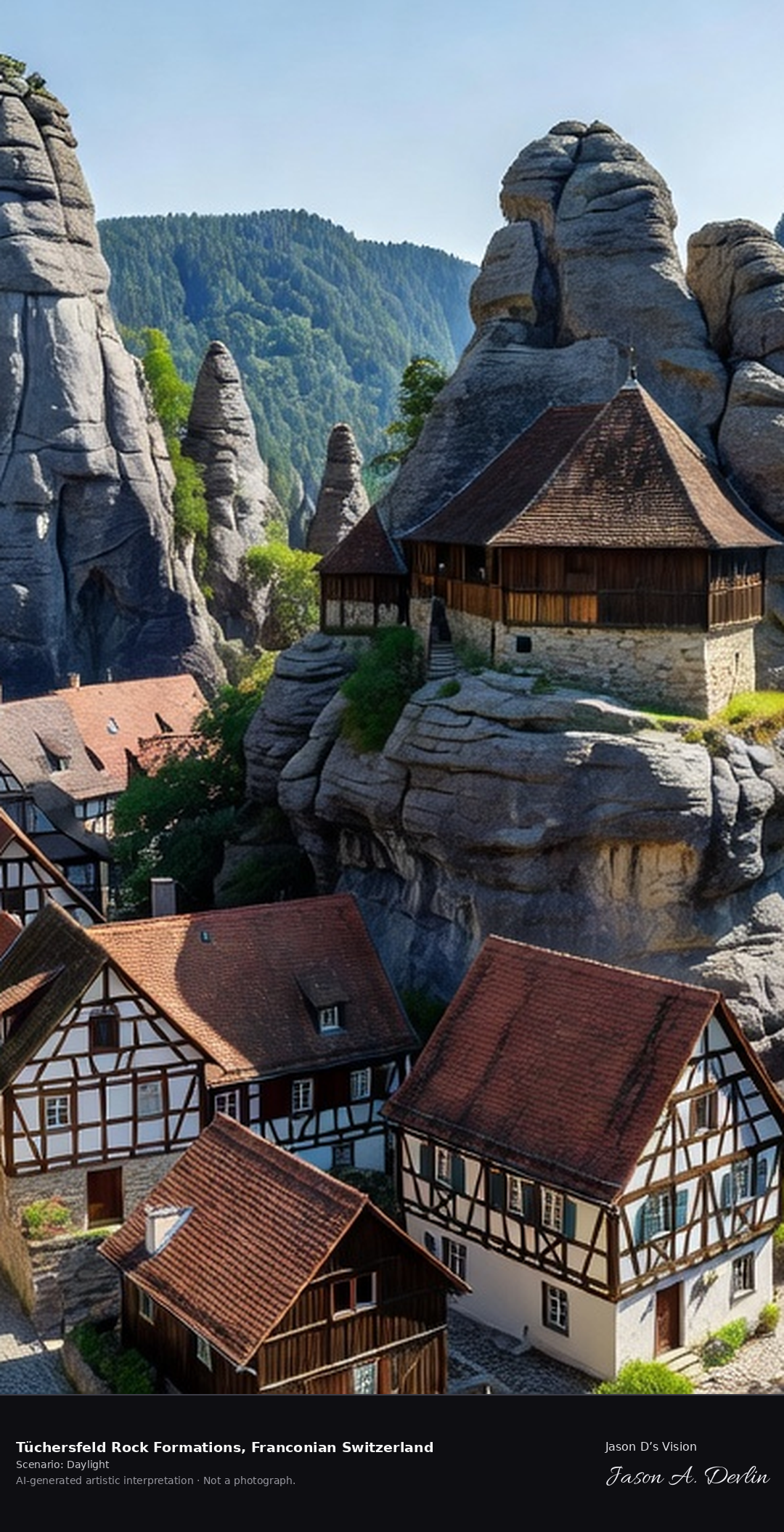
In Tüchersfeld, steep rock pinnacles rise beside half-timbered houses, creating one of Franconian Switzerland's distinctive village scenes. The old Judenhof houses the Fränkische Schweiz Museum, where the region's history and Jewish heritage are explored.
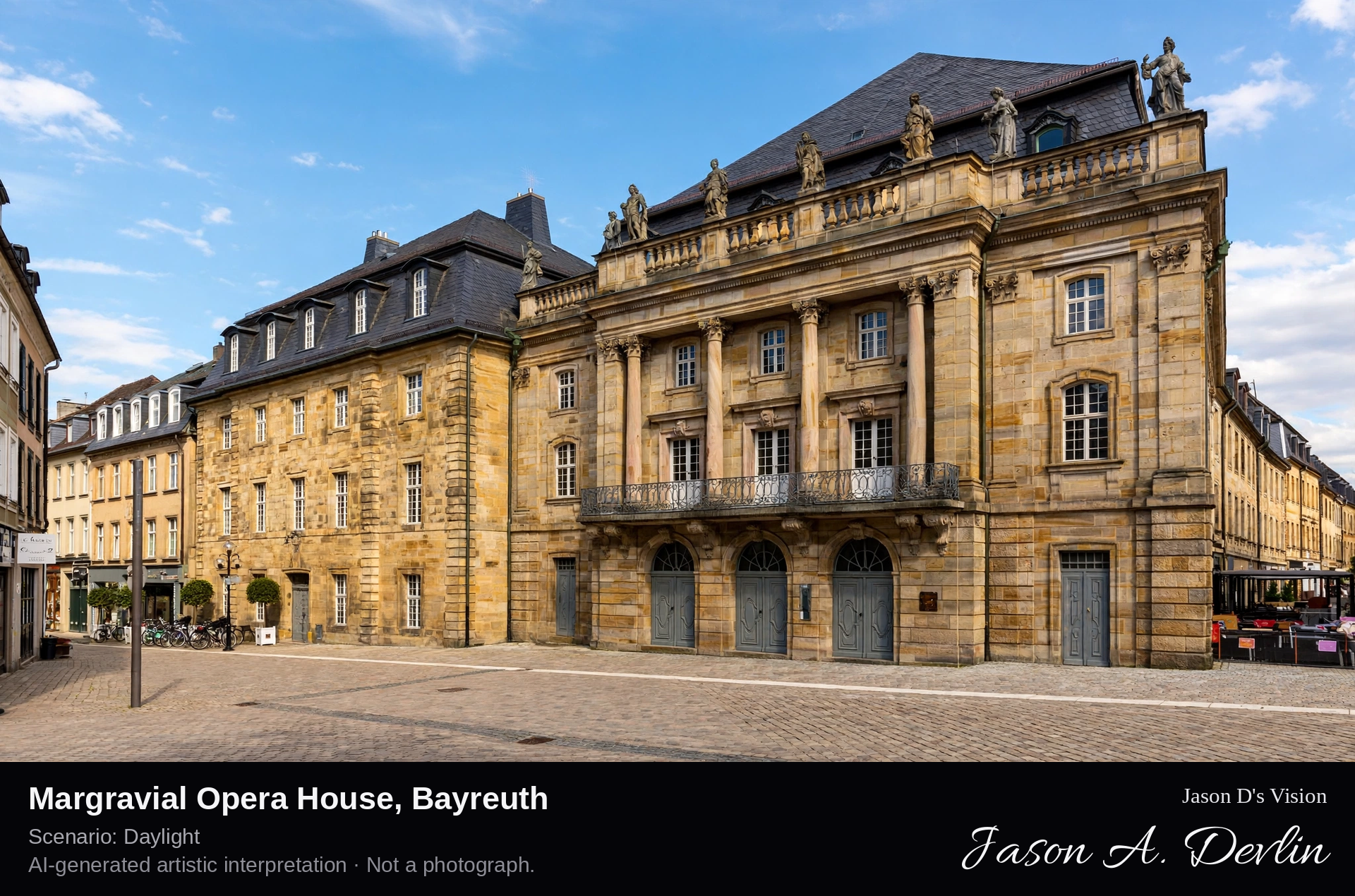
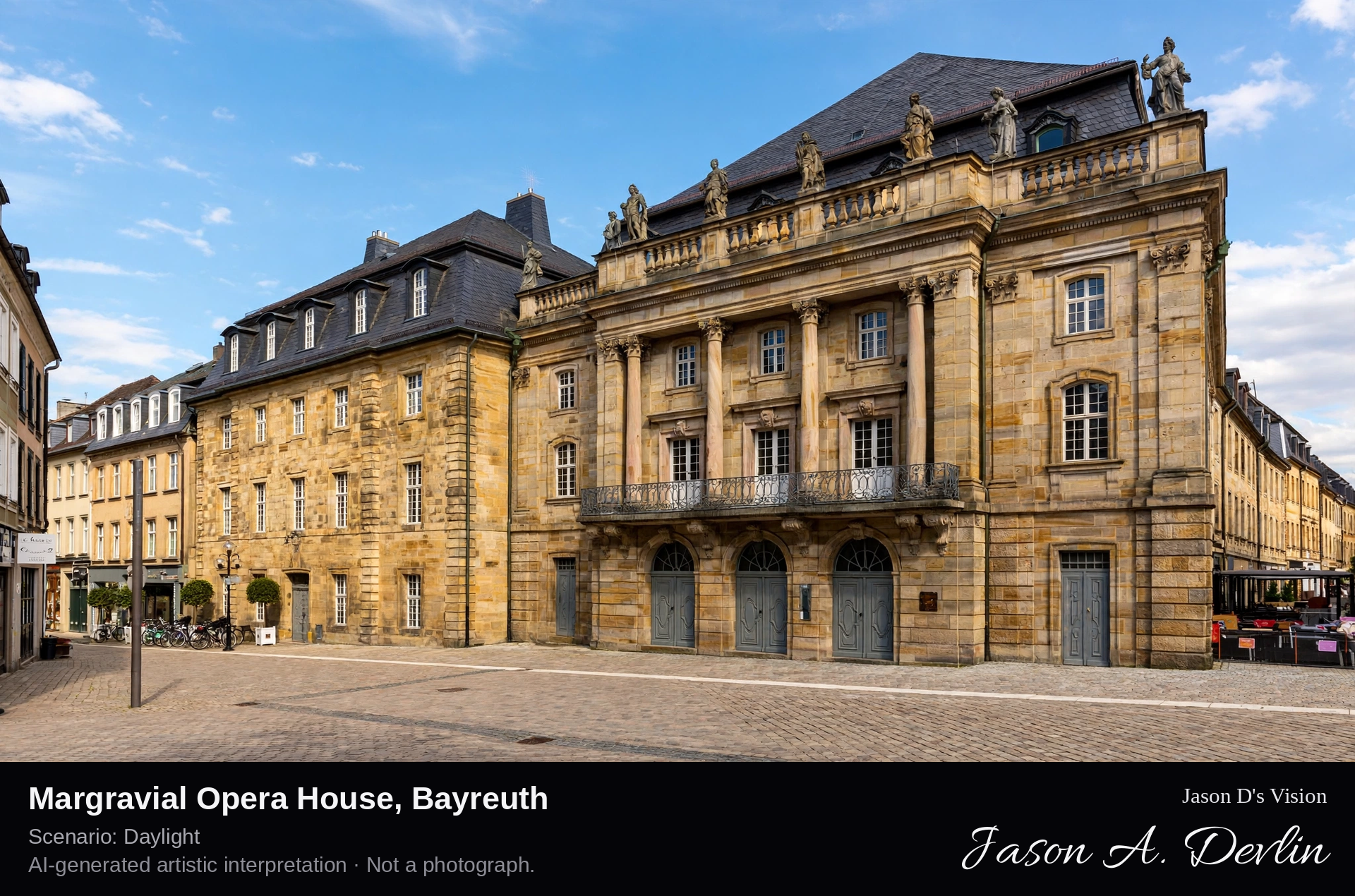
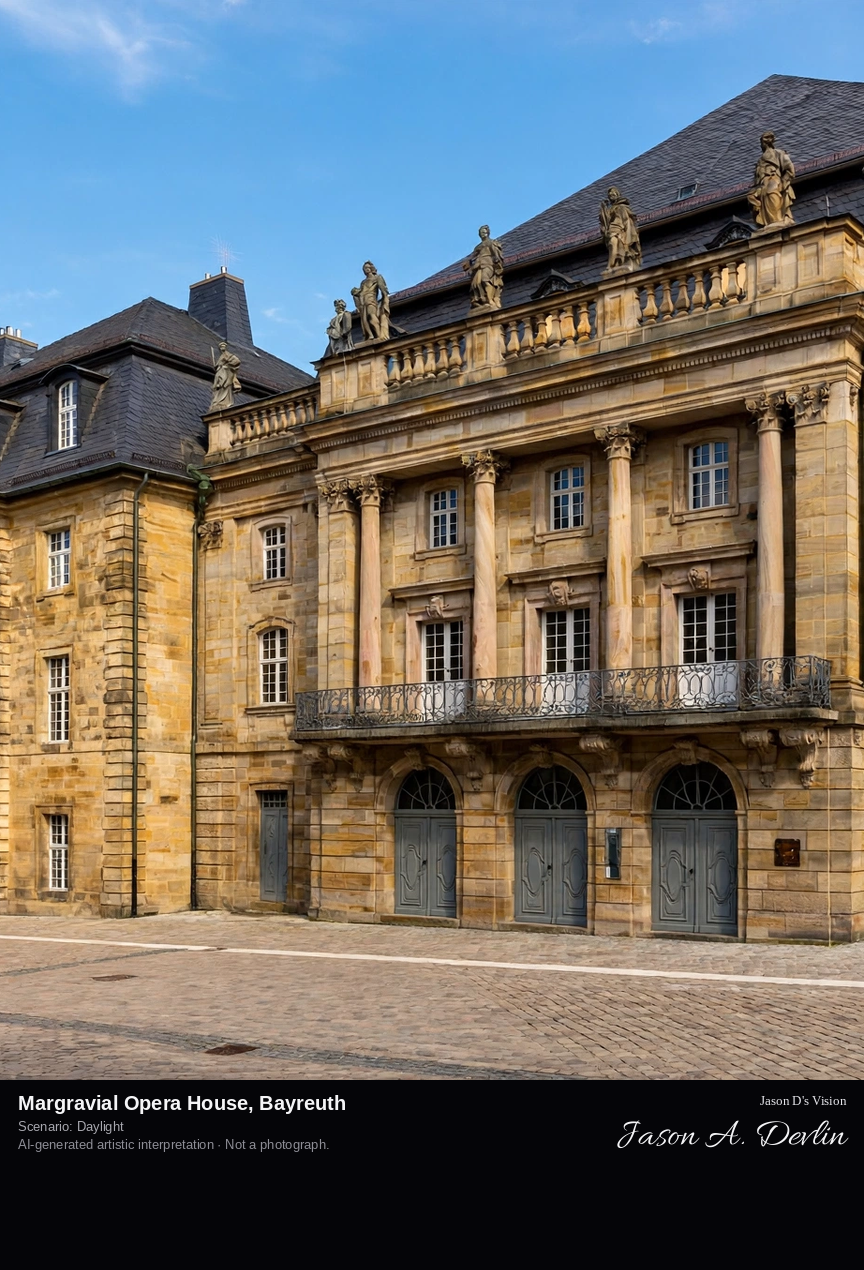
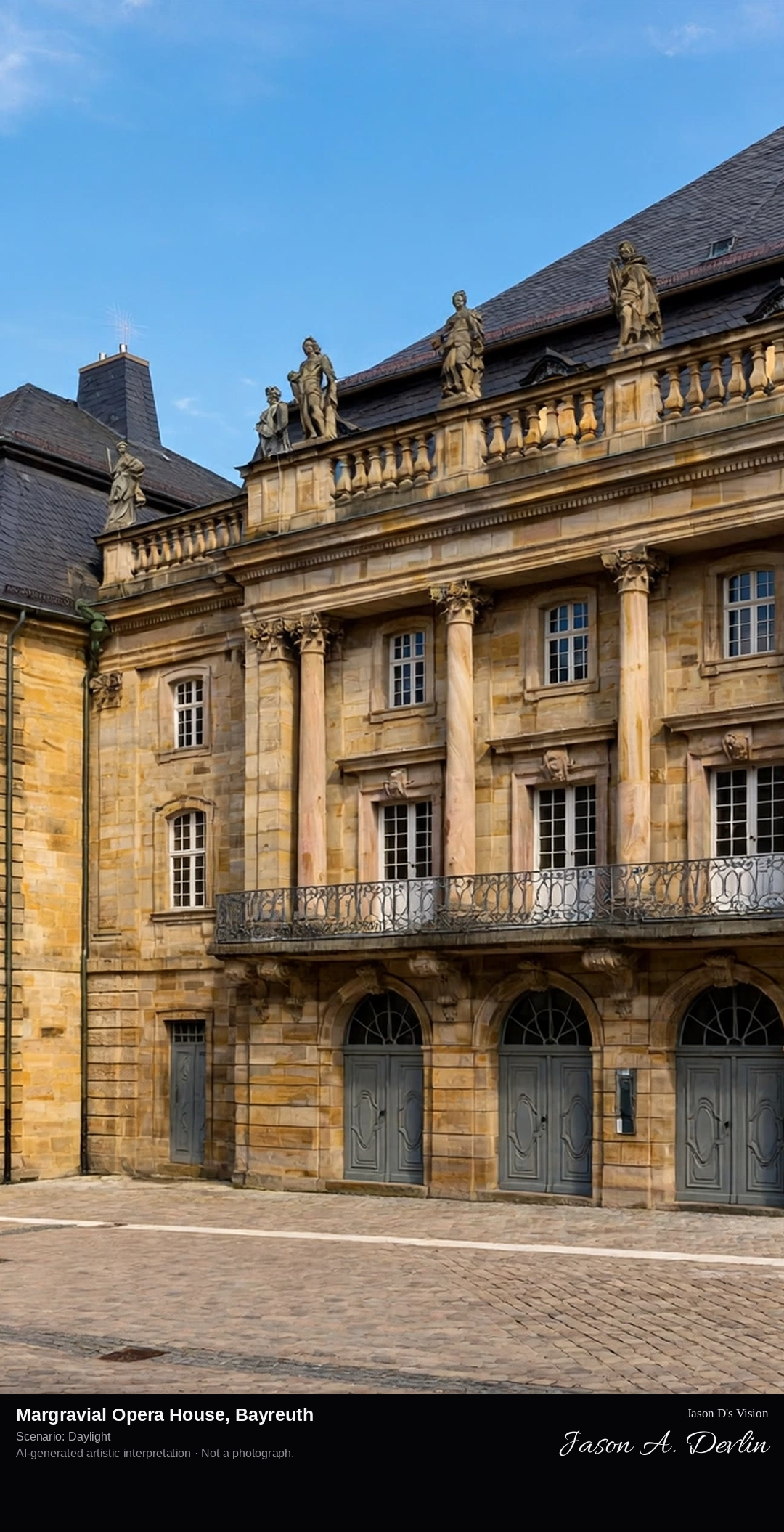
The Margravial Opera House in Bayreuth is a remarkably preserved baroque court theatre, commissioned by Margravine Wilhelmine. Inside, its wooden auditorium, designed by Giuseppe Galli Bibiena, glows with gilded tiers and painted ornament. UNESCO added the house to its World Heritage list in 2012.
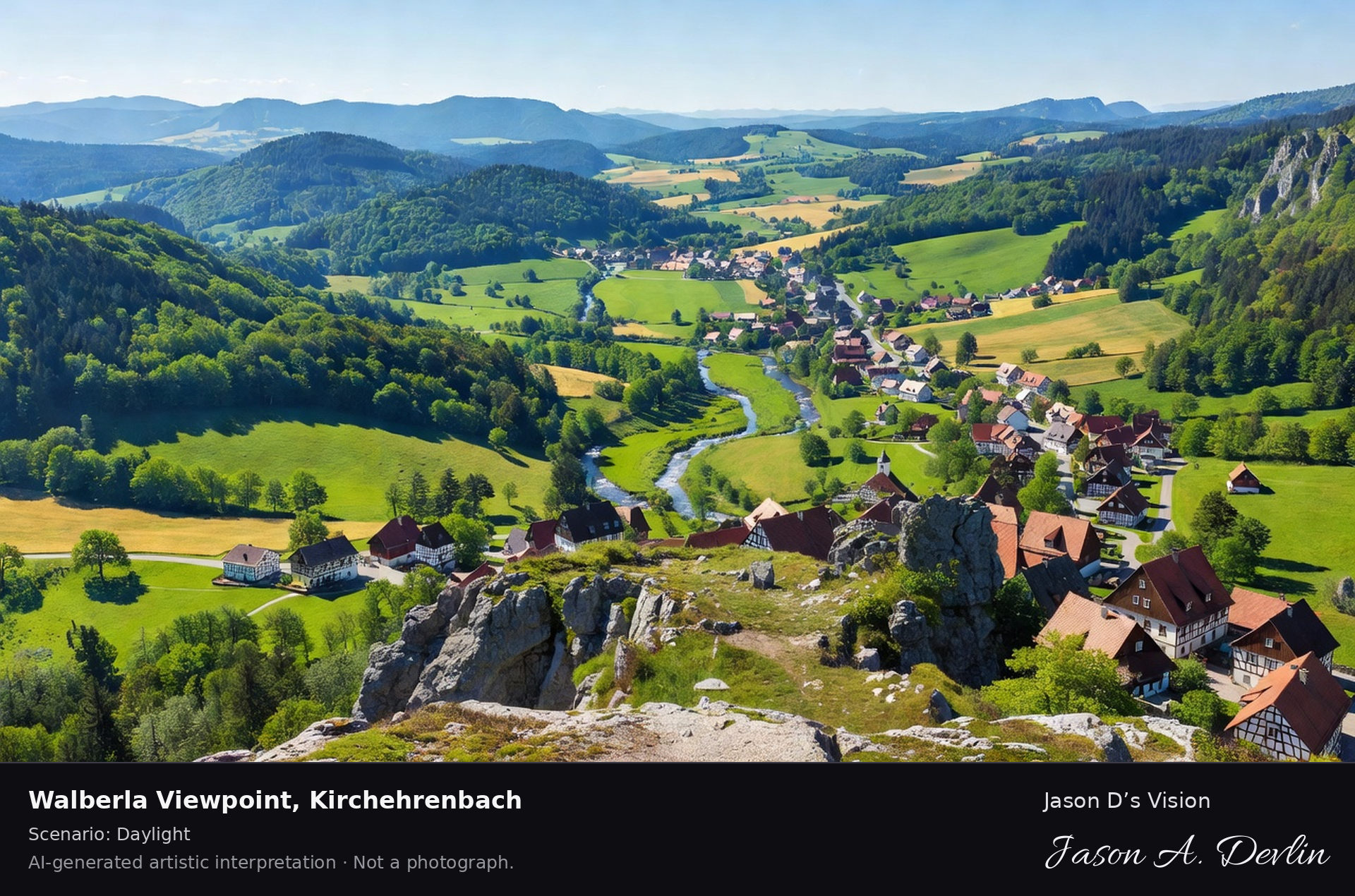
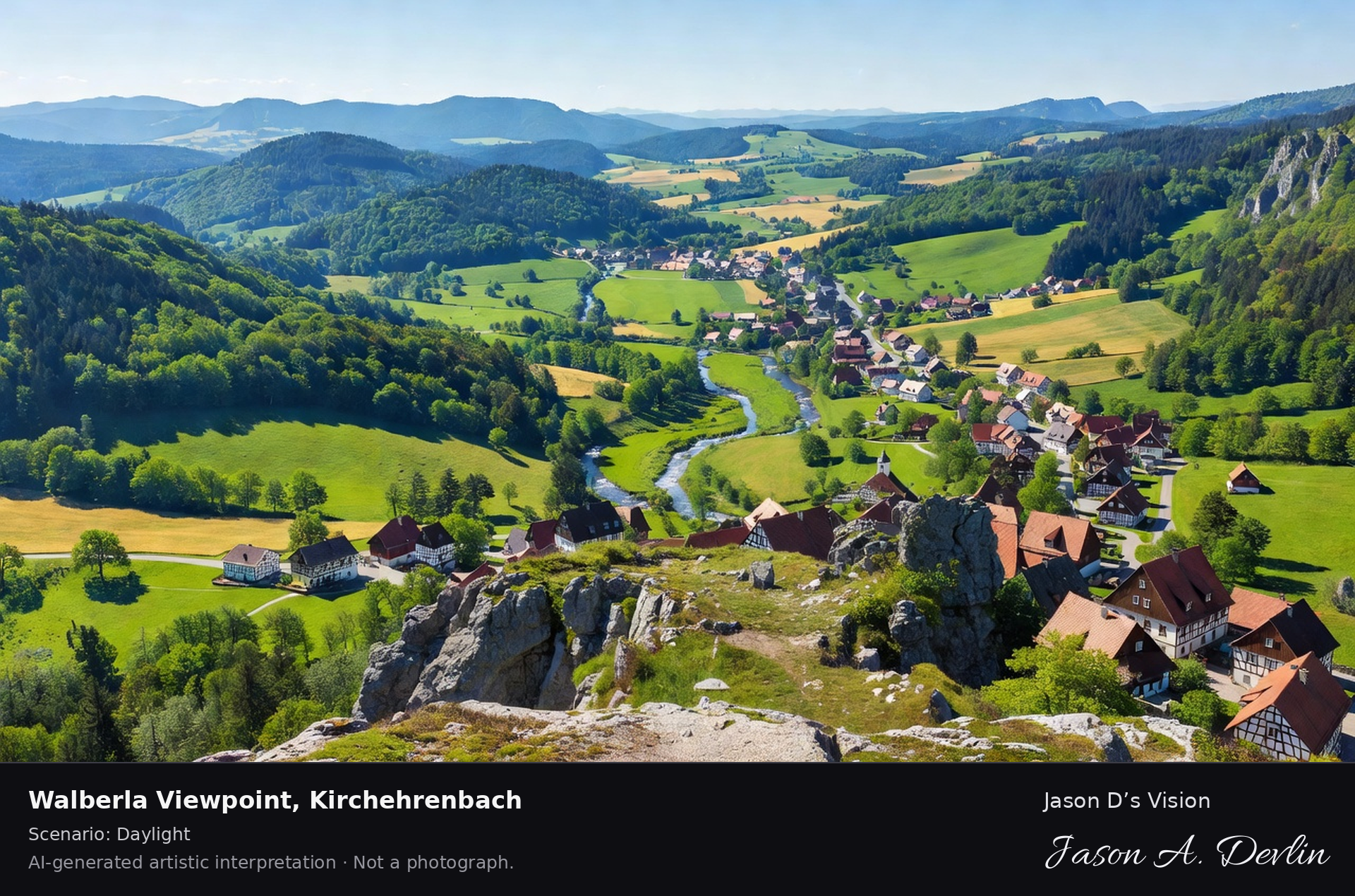
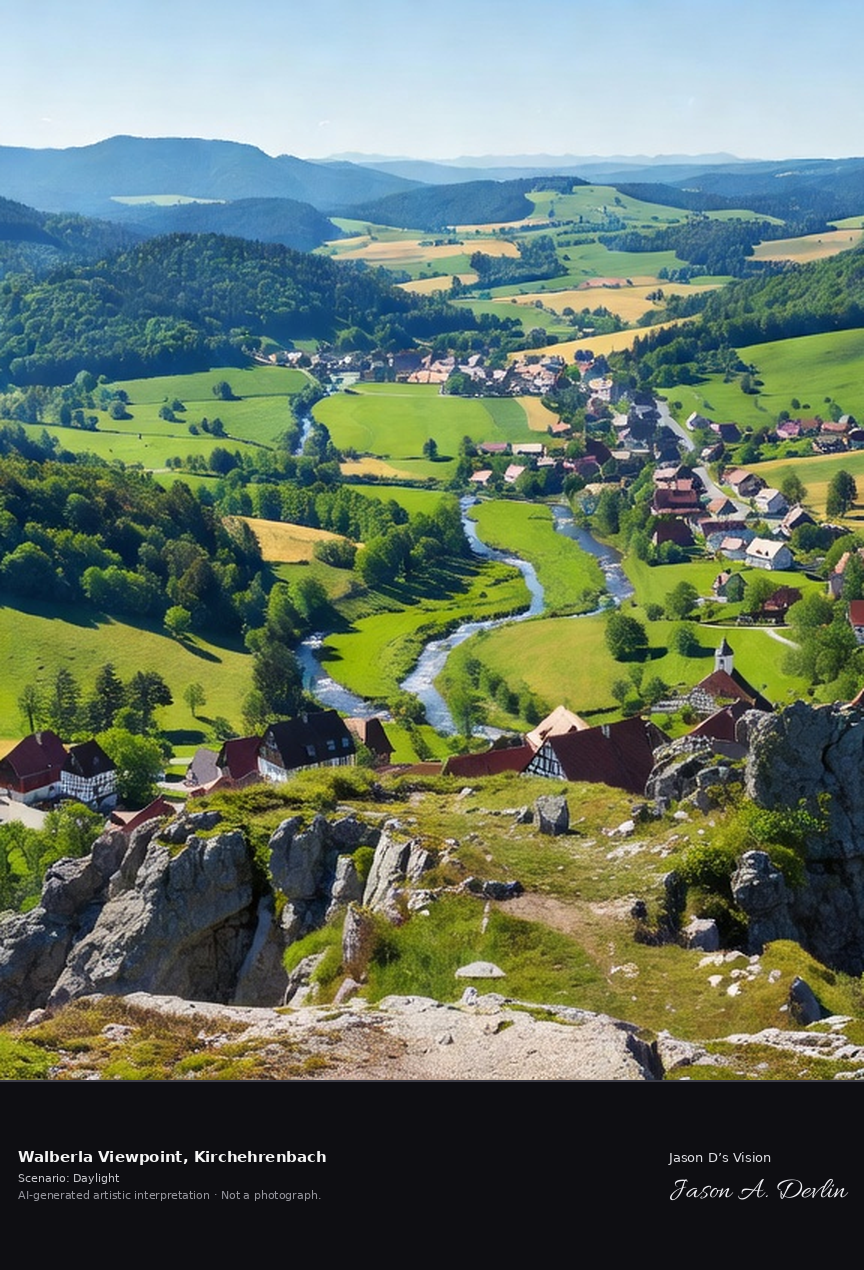
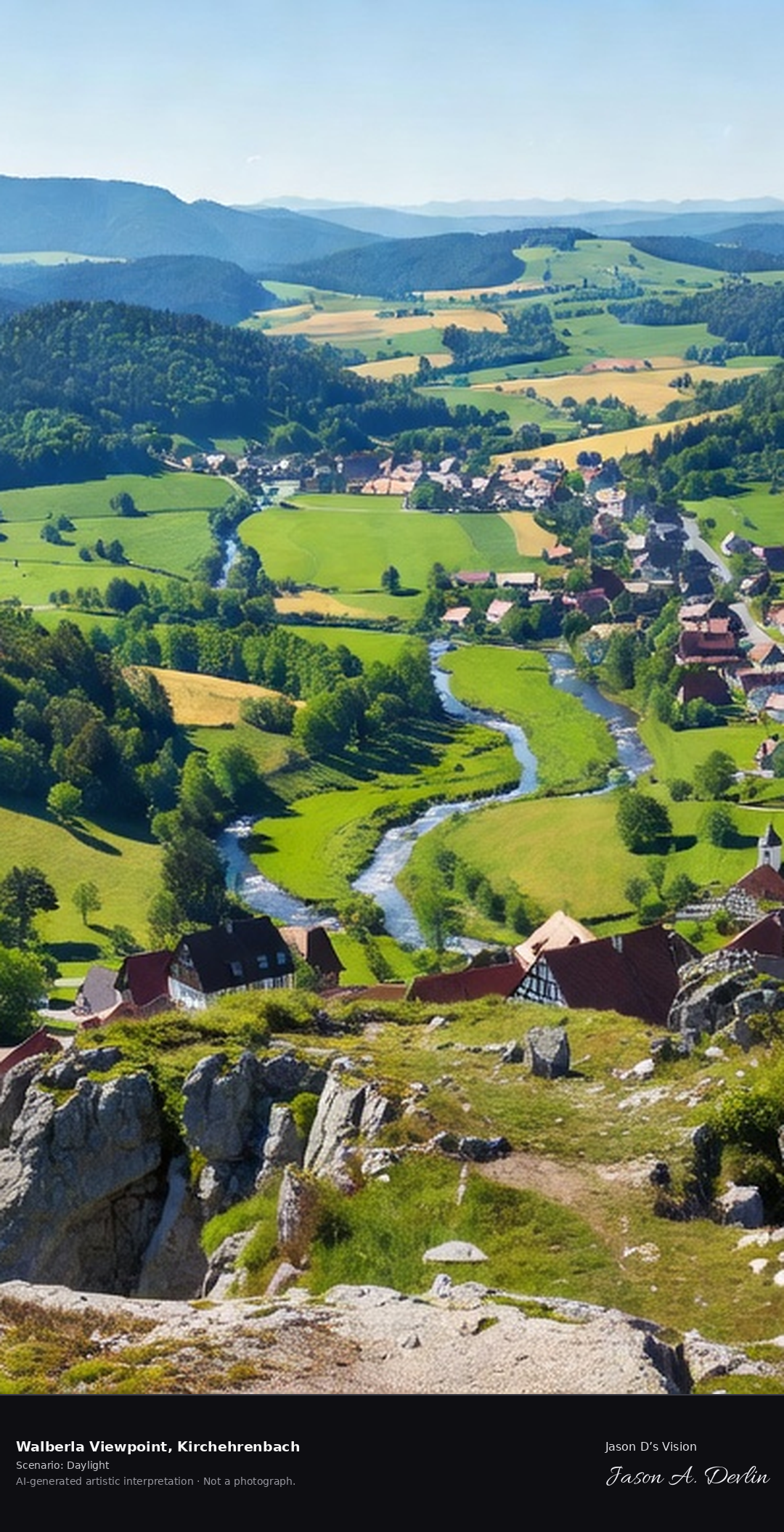
The Walberla, the northern summit of the twin-peaked Ehrenbürg, rises near Kirchehrenbach at the edge of Franconian Switzerland. The little Walburgis Chapel stands on its rocky plateau, and walkers climb for the wide panorama over the surrounding hills.
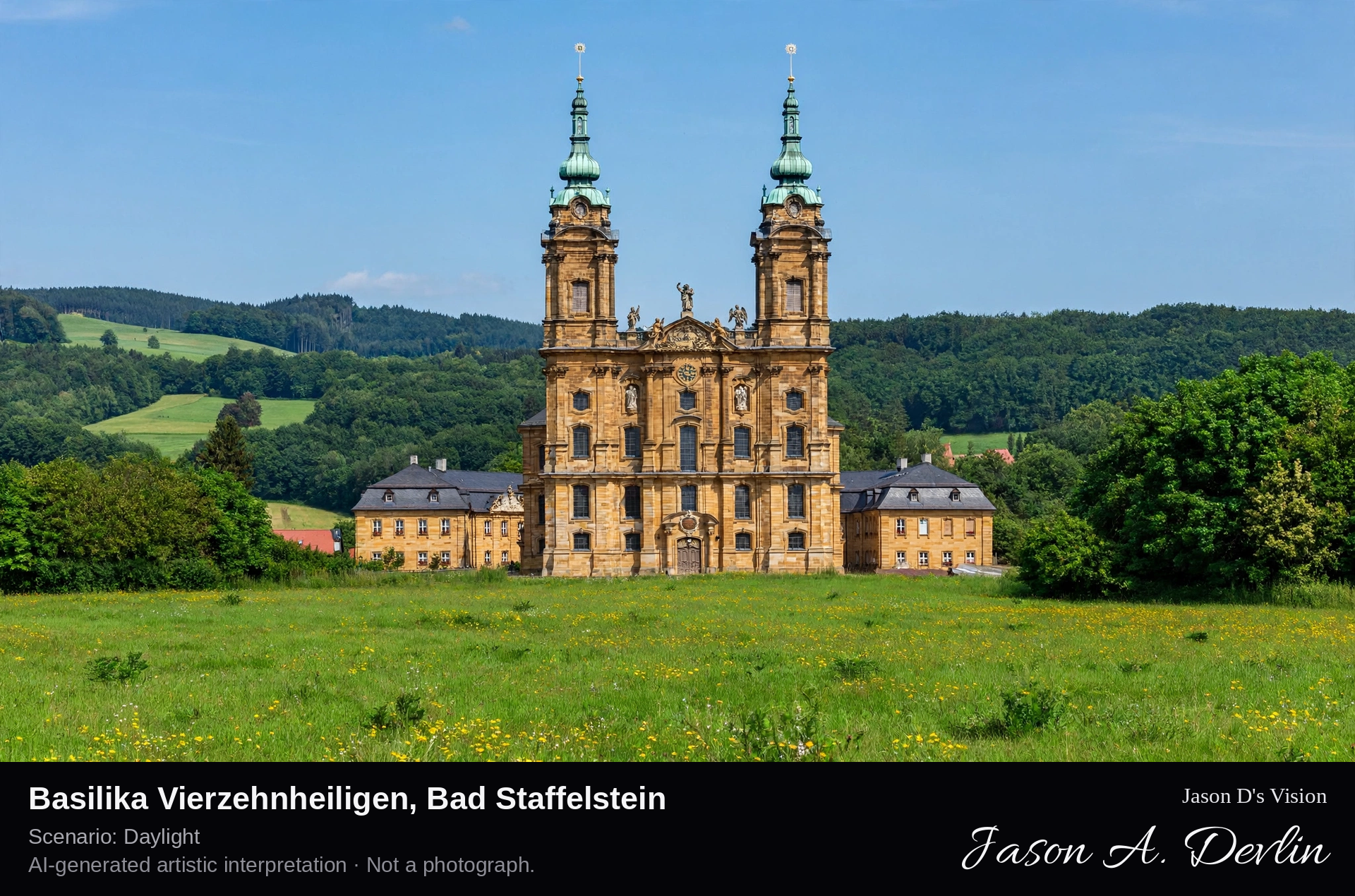
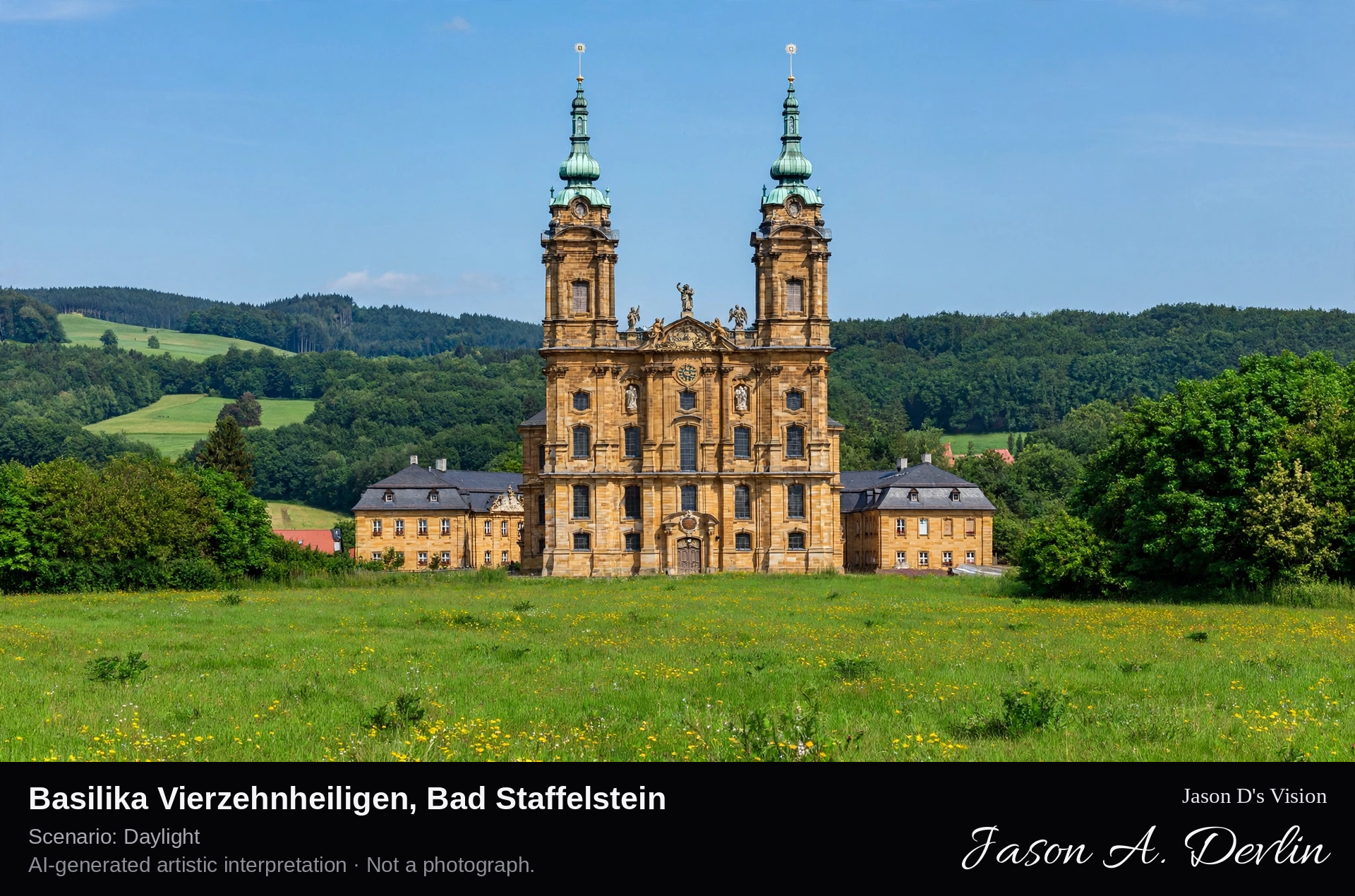
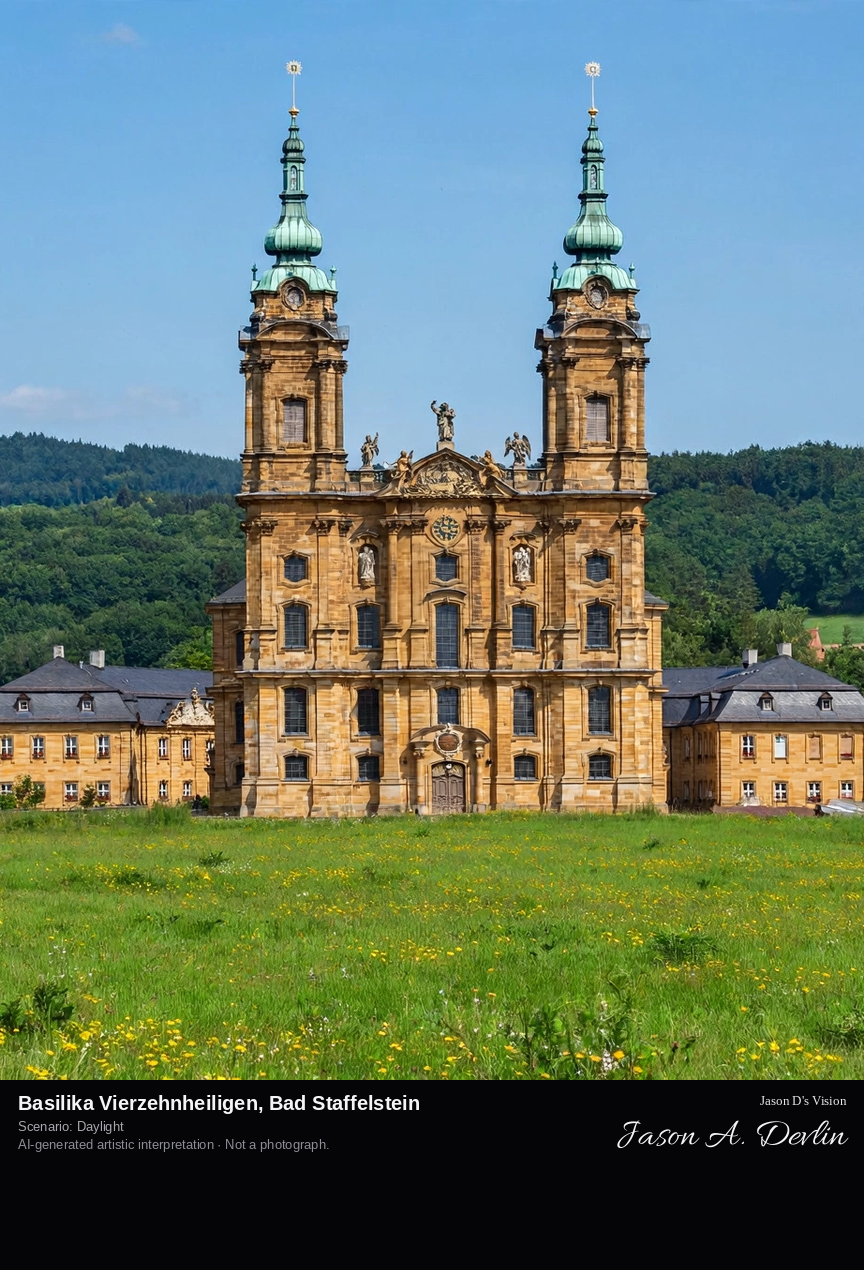
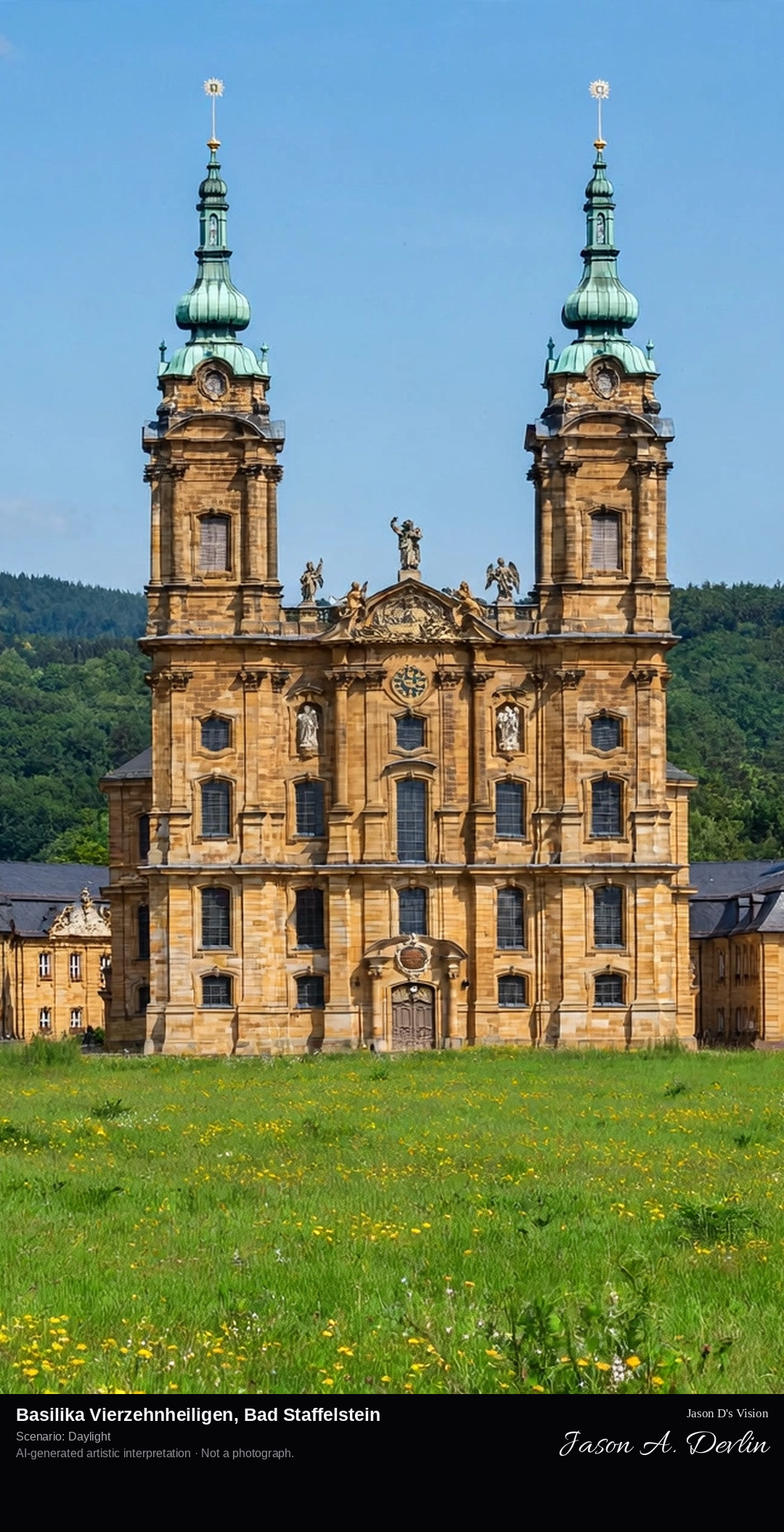
The Basilica of the Fourteen Holy Helpers rises over the Main valley near Bad Staffelstein — Balthasar Neumann's late-baroque pilgrimage church, built between 1743 and 1772. Twin towers flank its curved facade, and at the centre of its soaring oval nave stands the Gnadenaltar, the altar of graces. Pilgrims have climbed to Vierzehnheiligen for more than two hundred and fifty years.
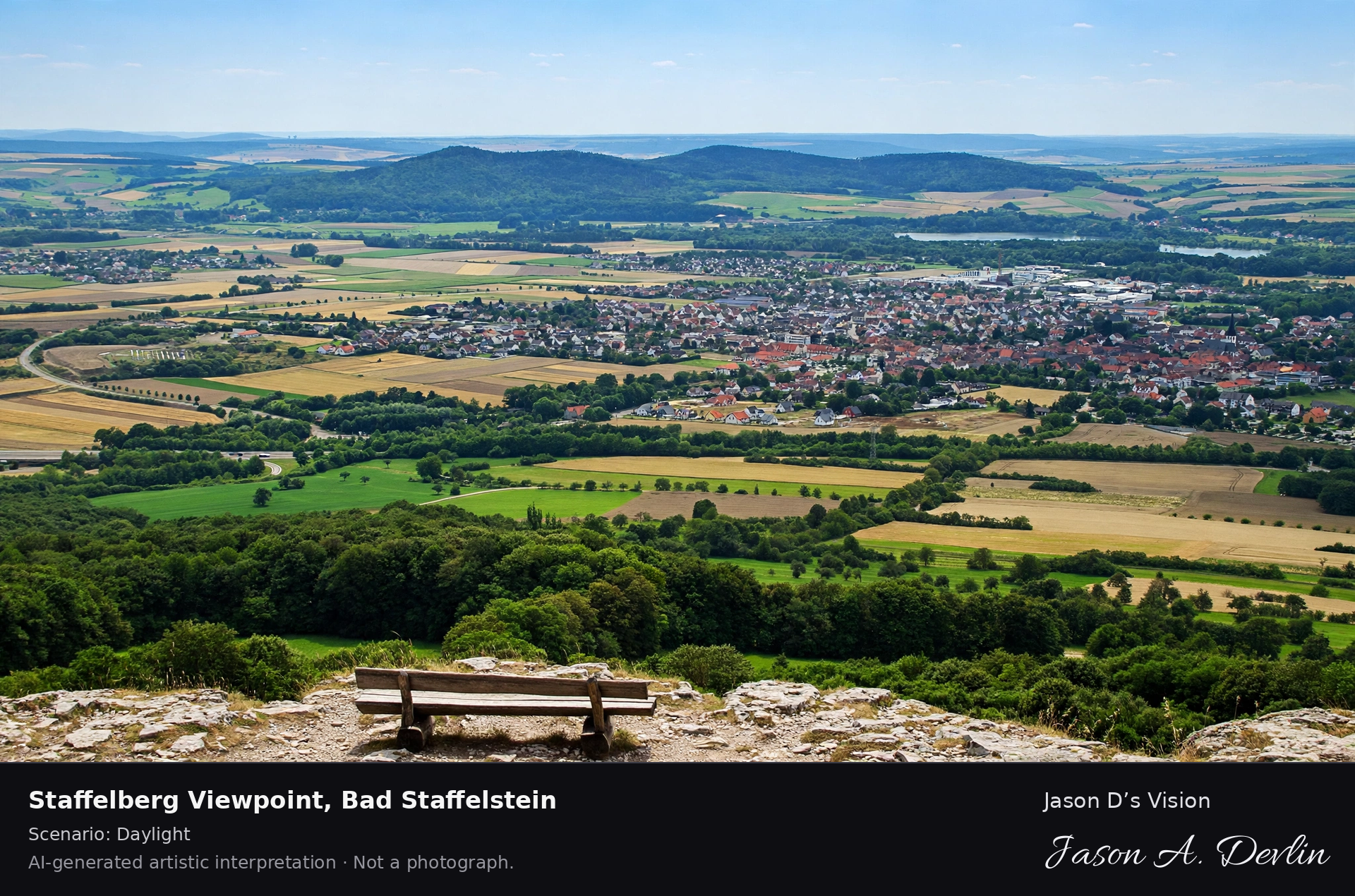
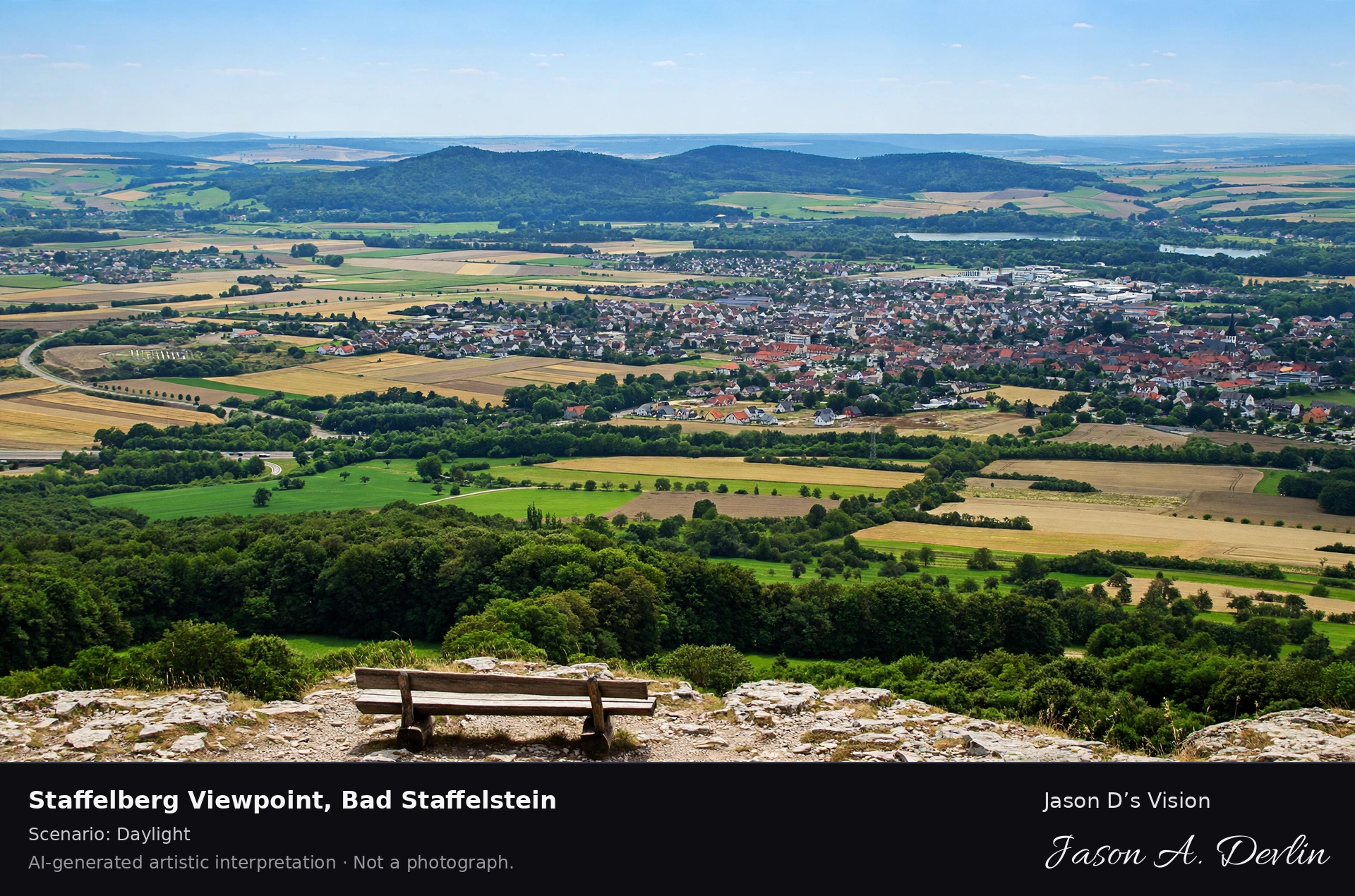
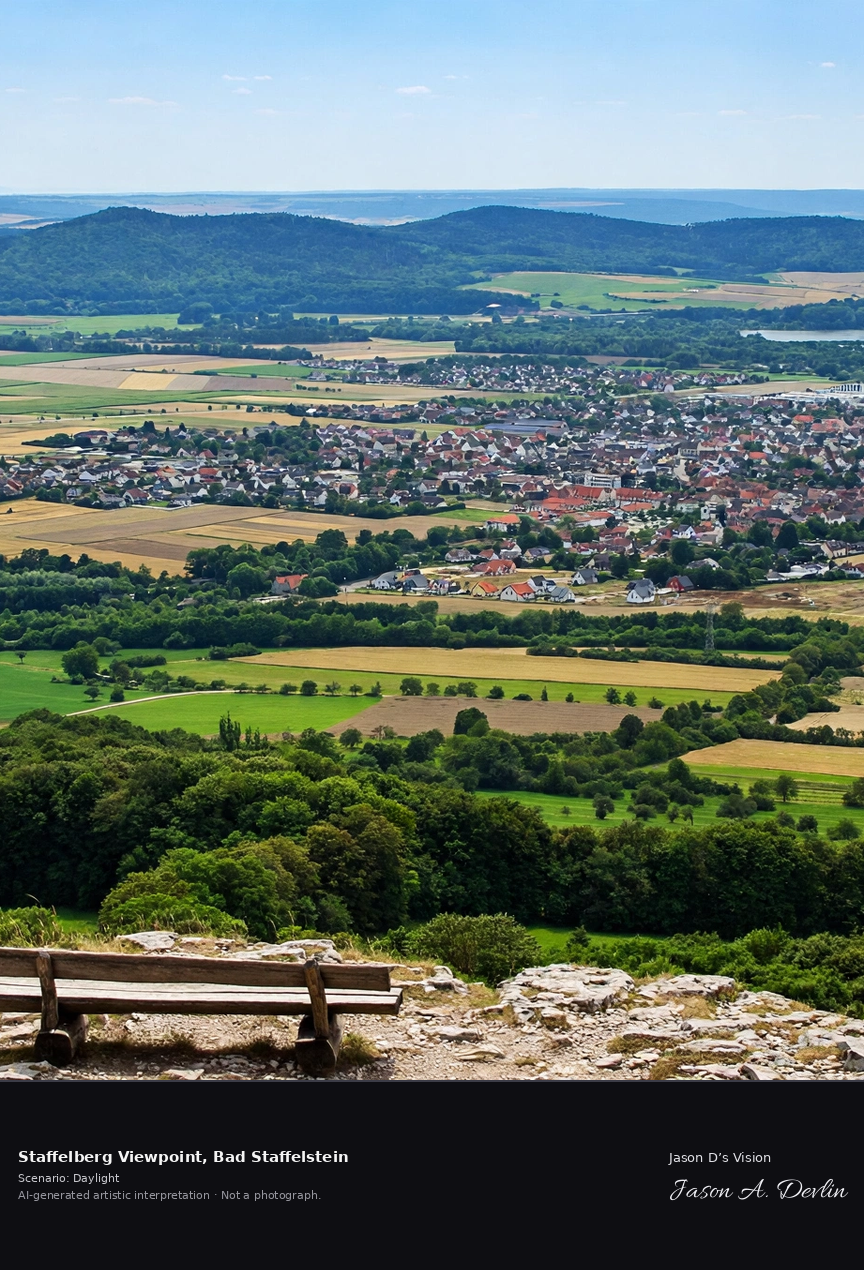
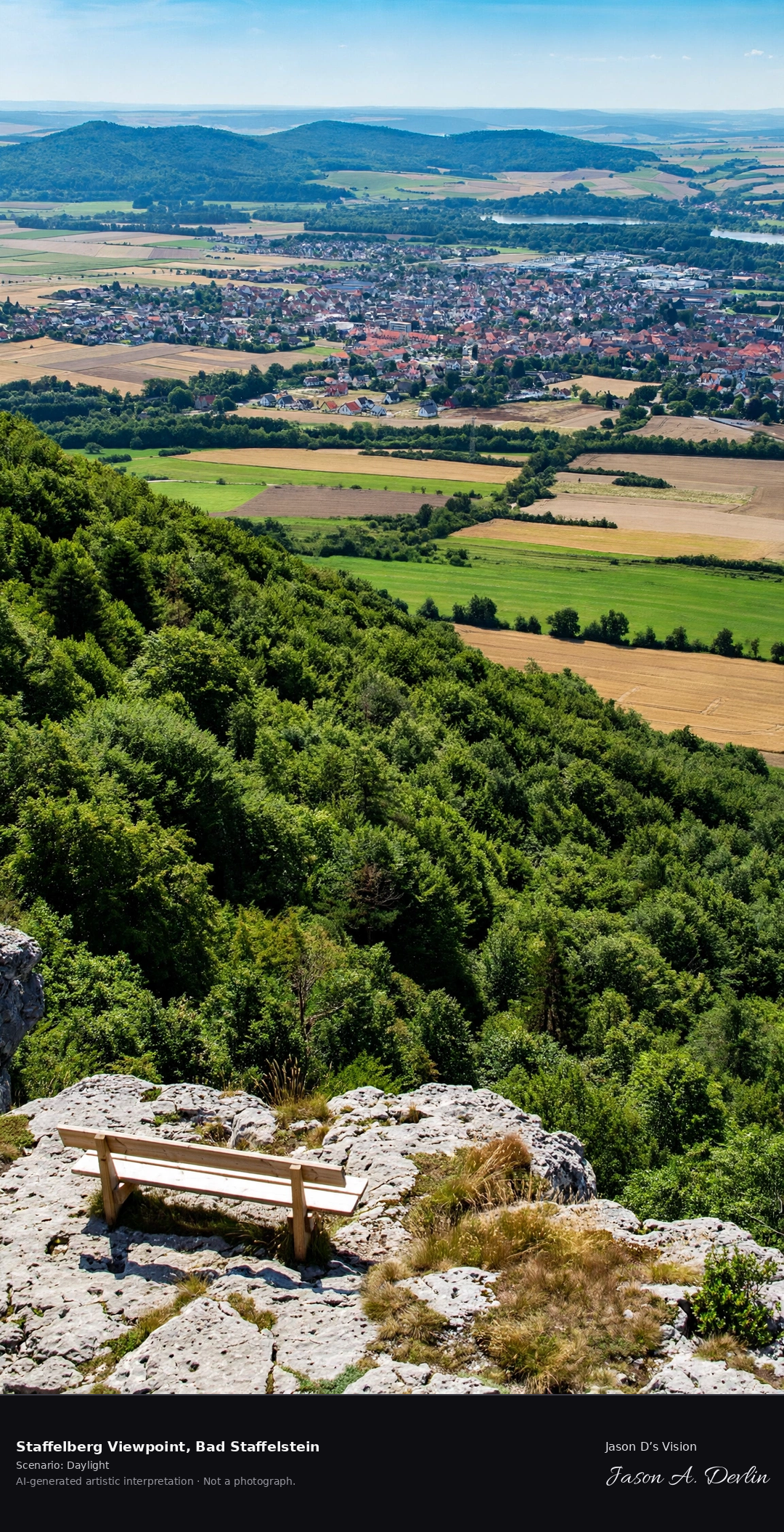
The Staffelberg is the flat-topped landmark hill of the upper Main valley, reaching 539 metres above sea level near Bad Staffelstein. Its plateau once held a Celtic oppidum, and the little Adelgundis Chapel stands there today. From the rim, the view opens across the Main valley and surrounding hills.
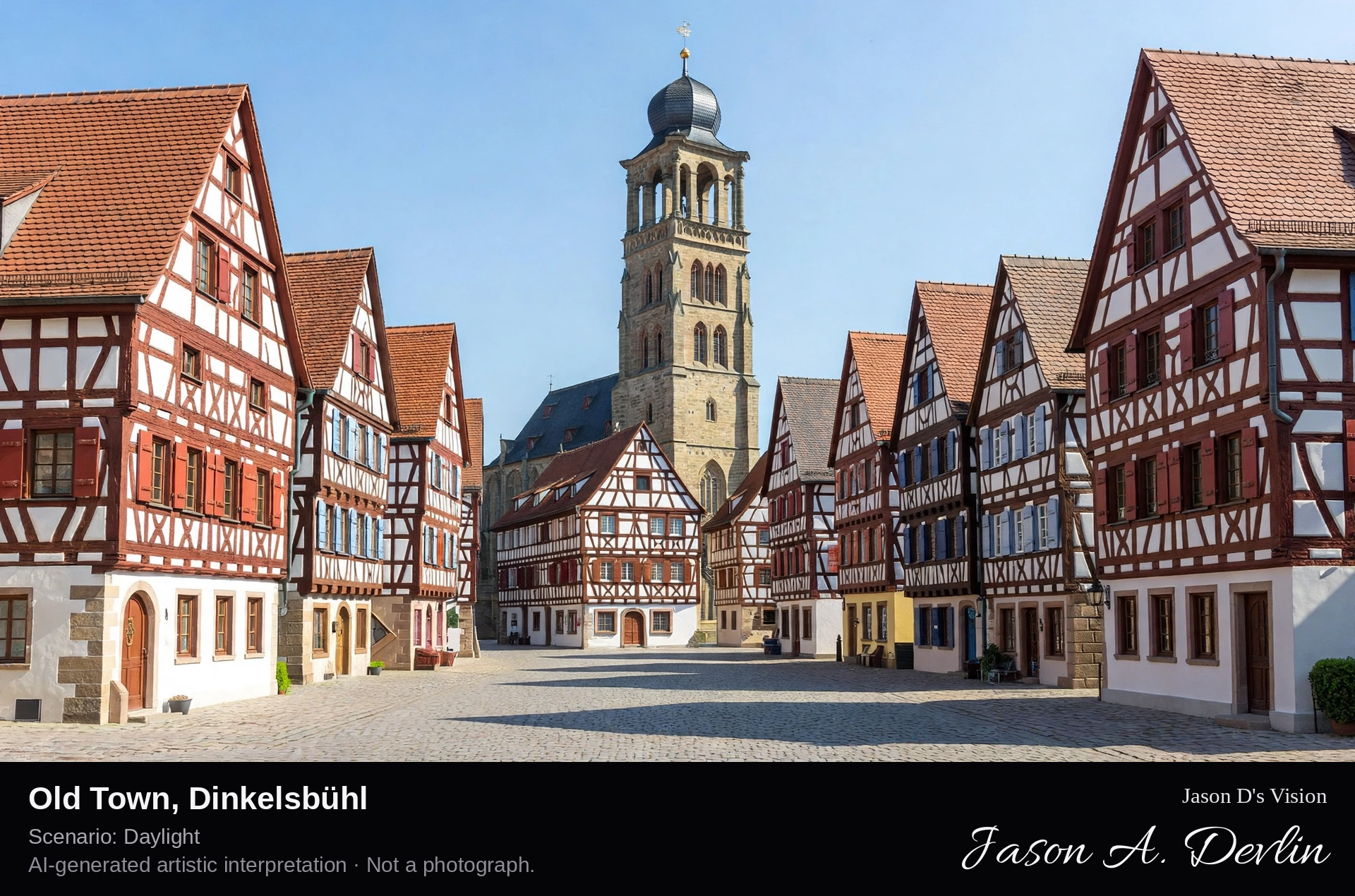
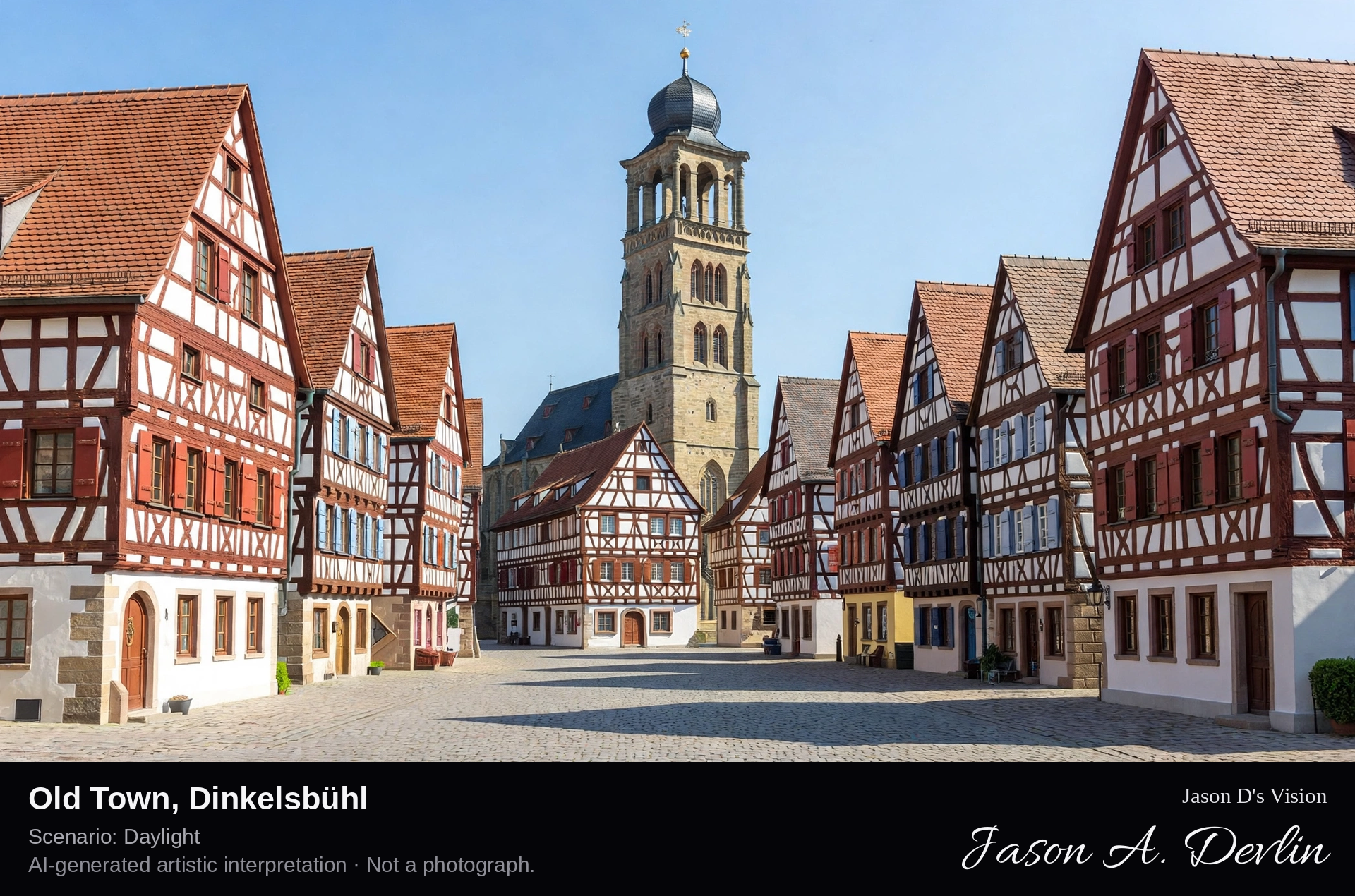
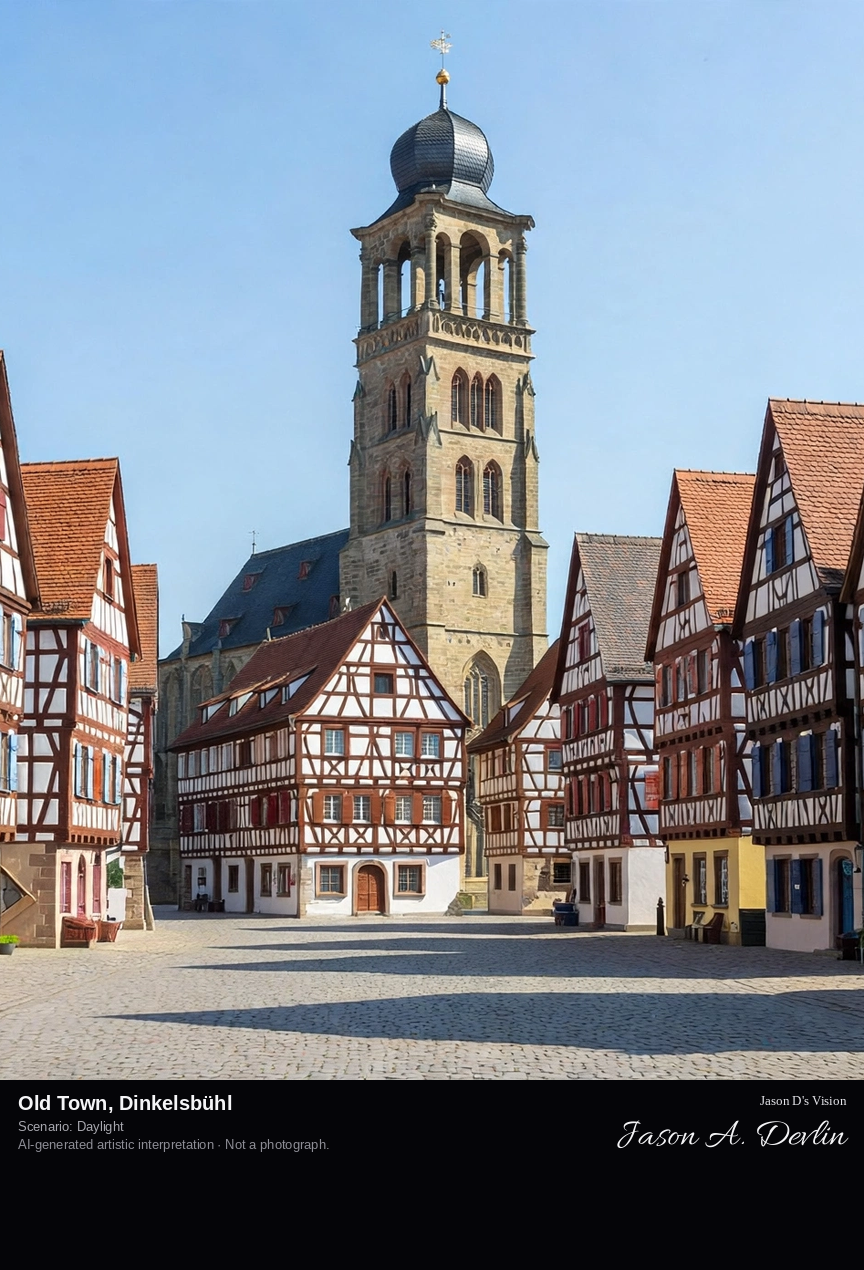
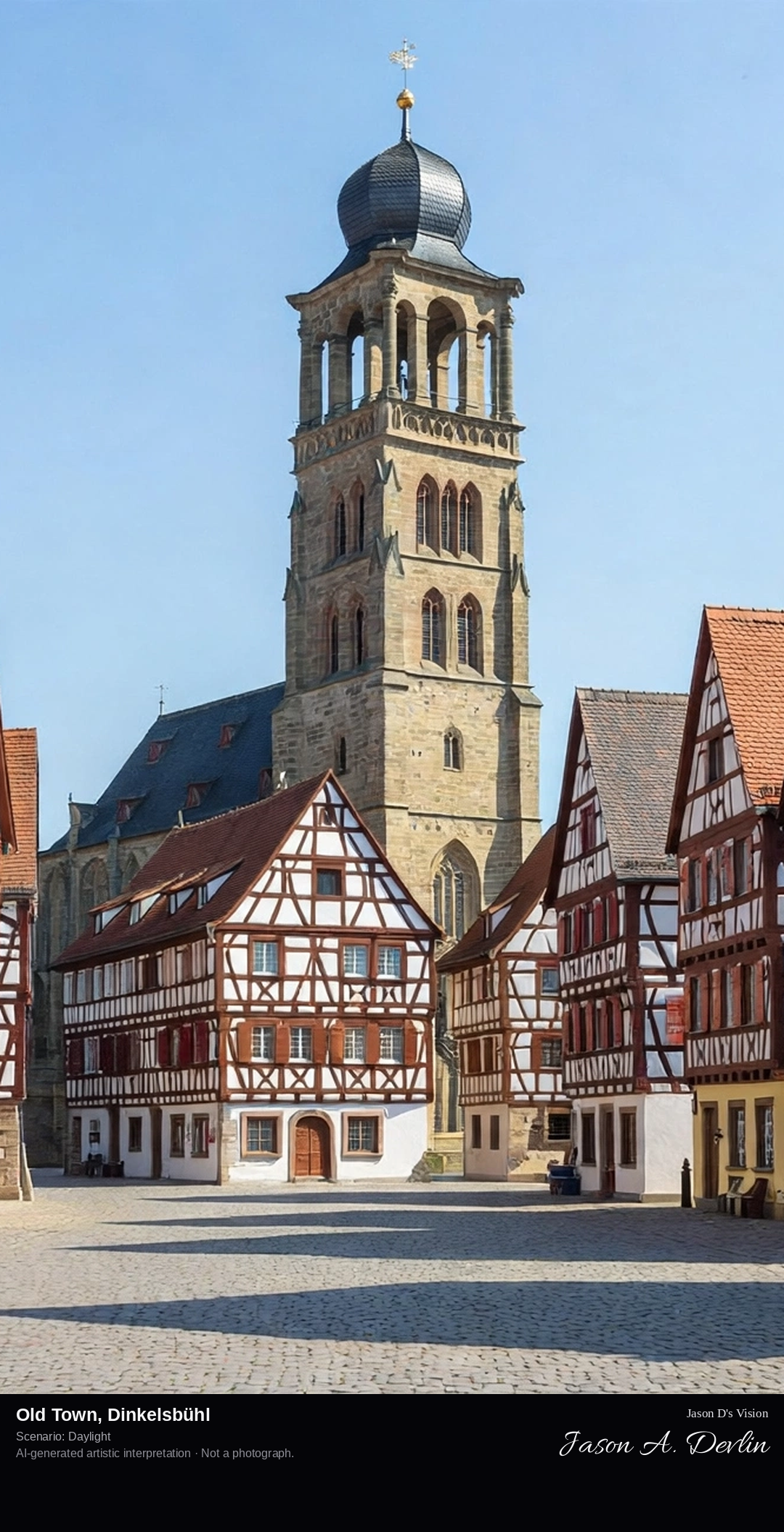
Dinkelsbühl's old town stands behind its ring of walls and towers, with half-timbered houses lining the streets around the Gothic minster of St George. The summer Kinderzeche festival retells the local legend of children saving the town from destruction during the Thirty Years' War.
The Wiesent valley unfolds beneath Burg Gößweinstein in this daylight scene from Franconia. The castle sits atop its rocky crag at frame right, its towers and walls catching the sun above the green valley floor. The river winds through meadows at center-left, with the rolling hills of Franconian Switzerland stretching to the horizon under a bright sky.
Town Hall and Roland · AI-generated artistic interpretation
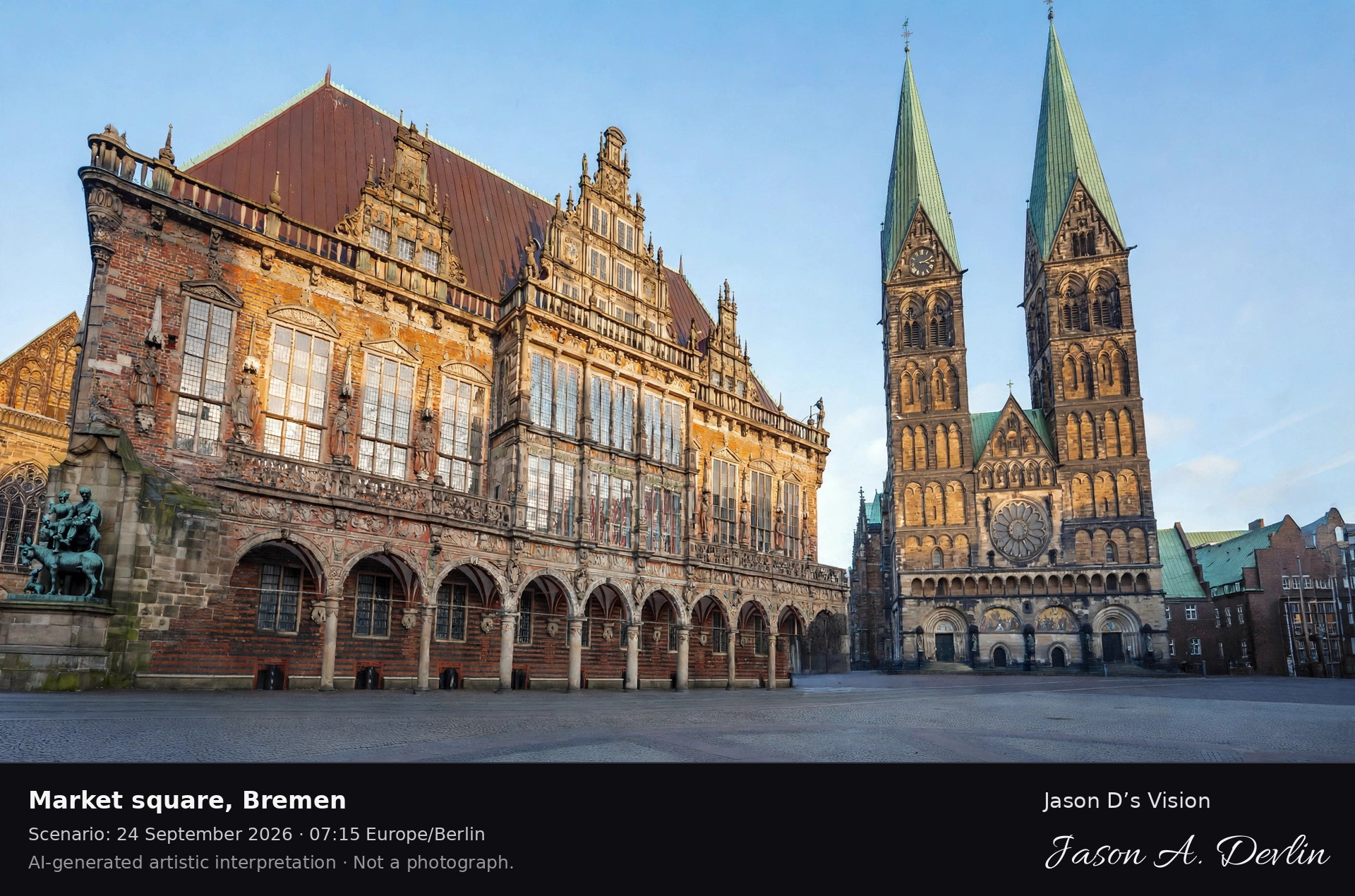
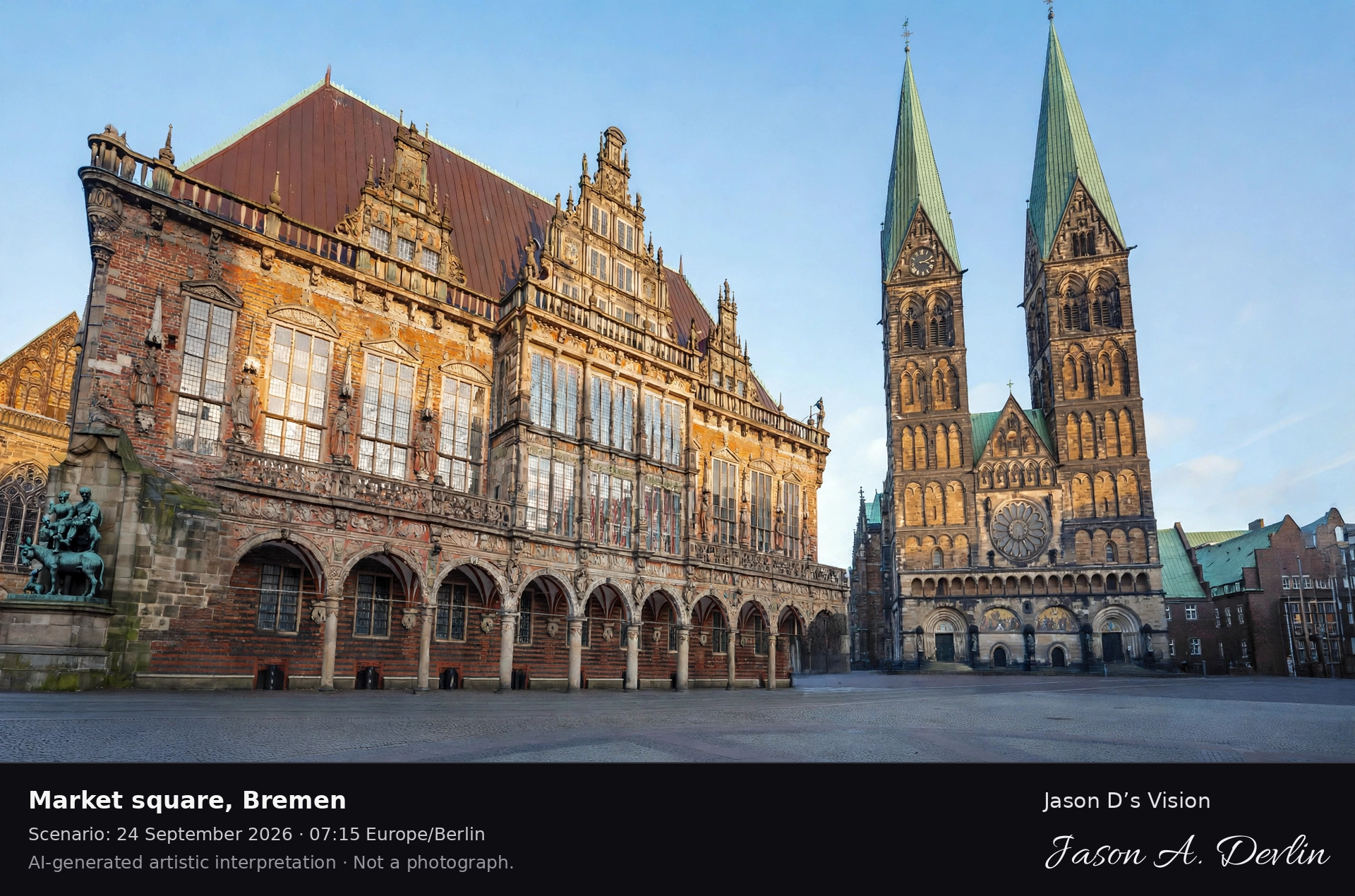
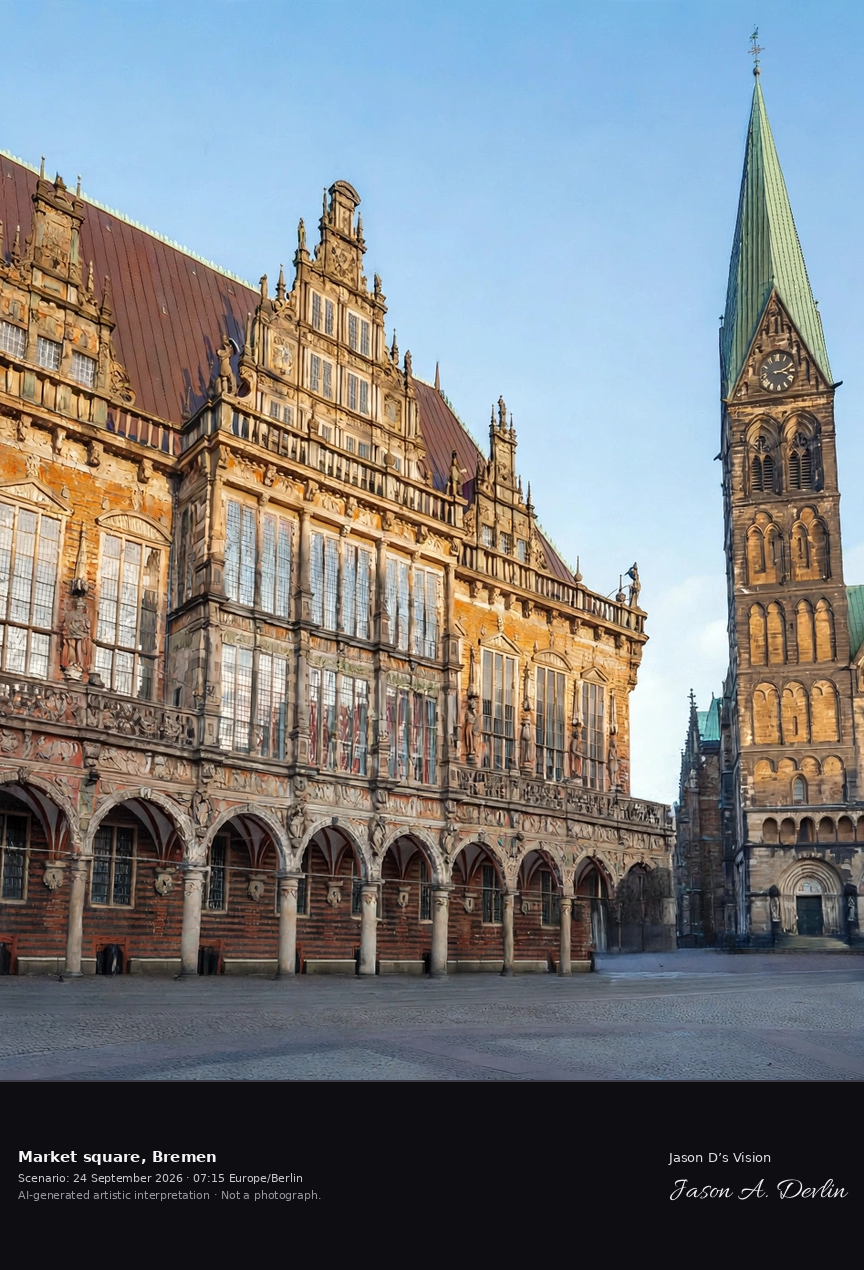
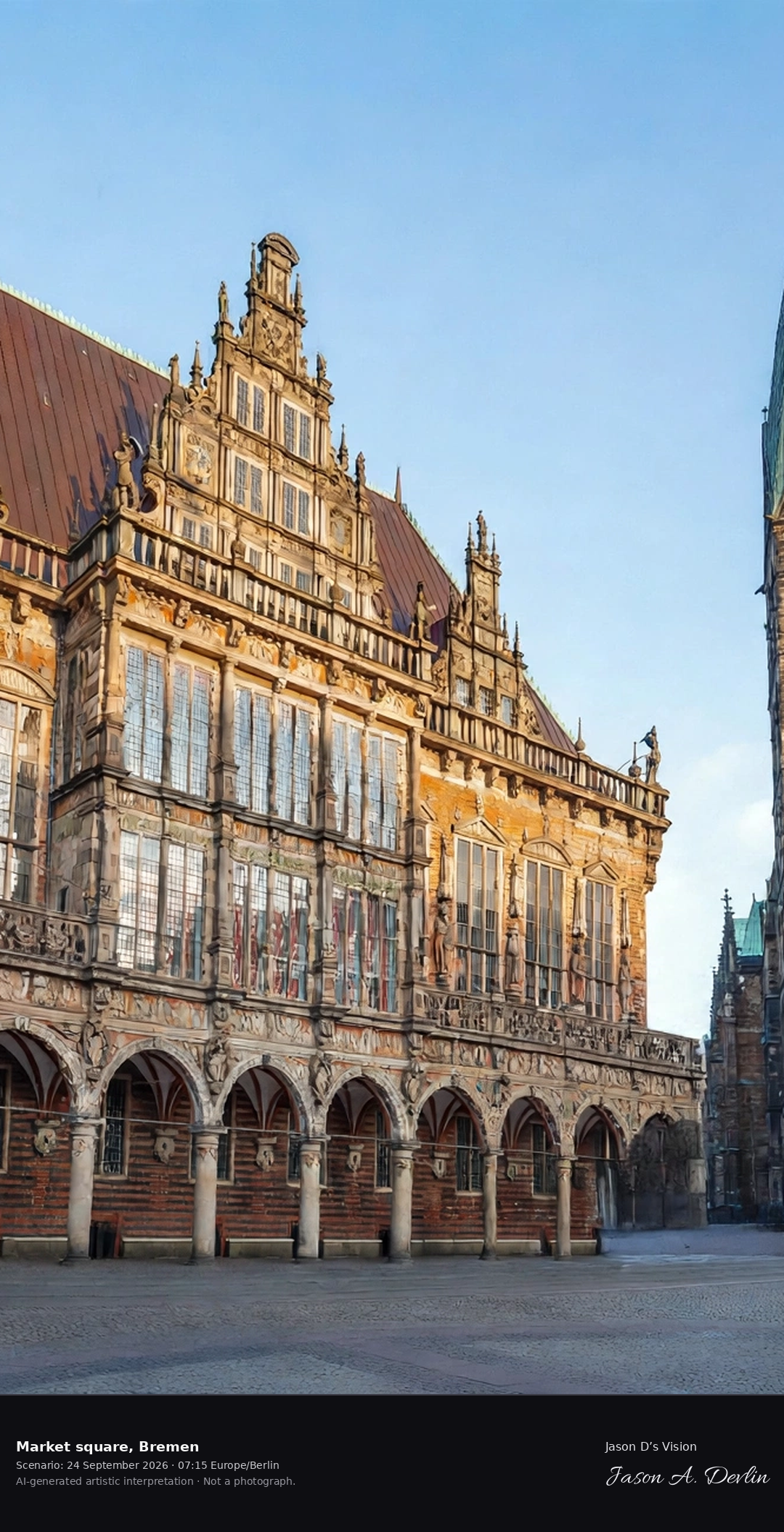
A quiet morning on Bremen's Marktplatz under a flat overcast sky. The Roland statue stands at the right edge of frame with his heraldic shield, while the ornate Weser-Renaissance Town Hall fills the center with its gabled roofline and ground-floor arcades. The twin green-copper spires of St. Petri Dom rise behind the hall to the left, and wet cobblestones scattered with fallen leaves catch the grey early-morning light.
Sculpture beside Town Hall · AI-generated artistic interpretation
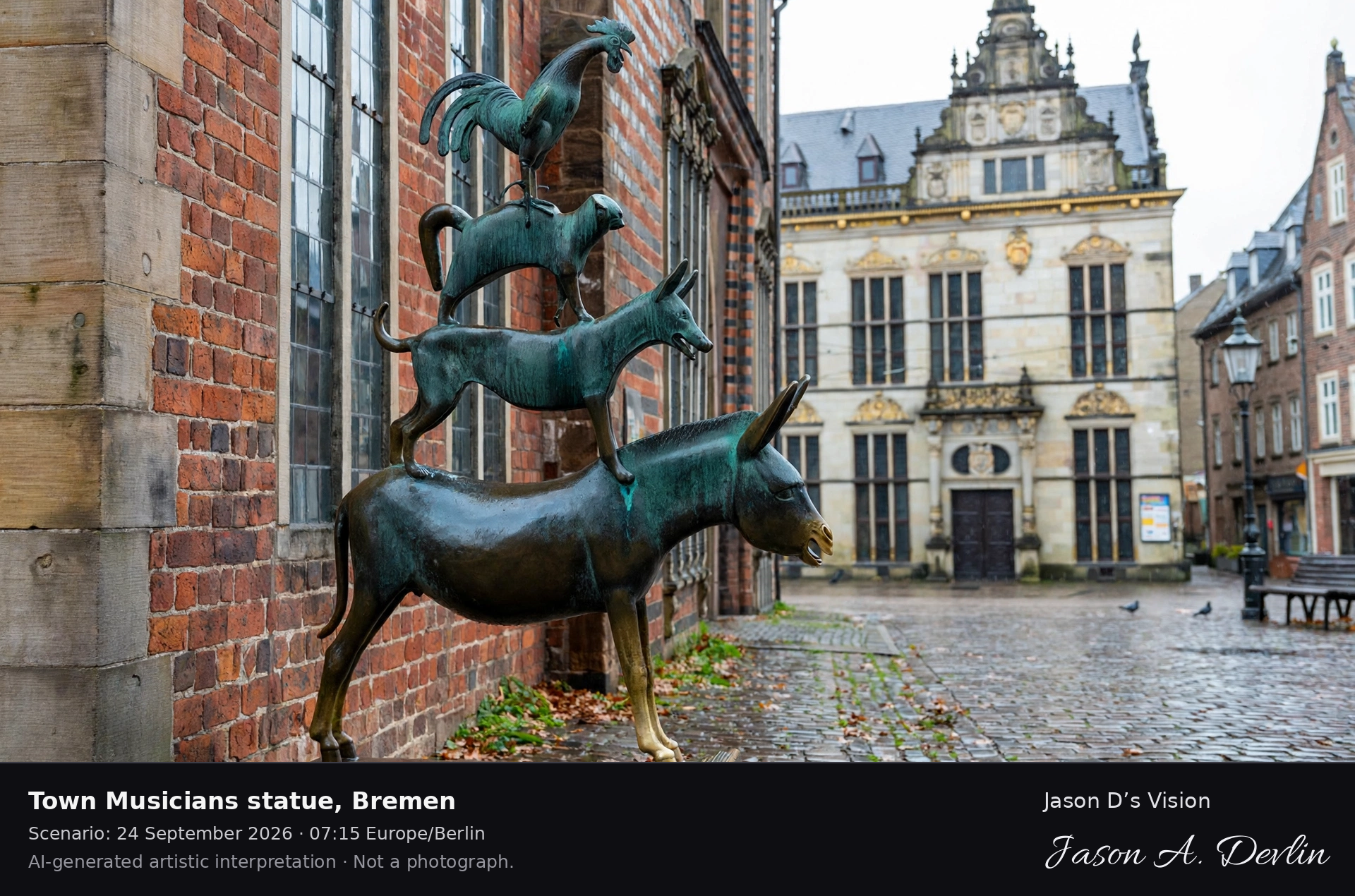
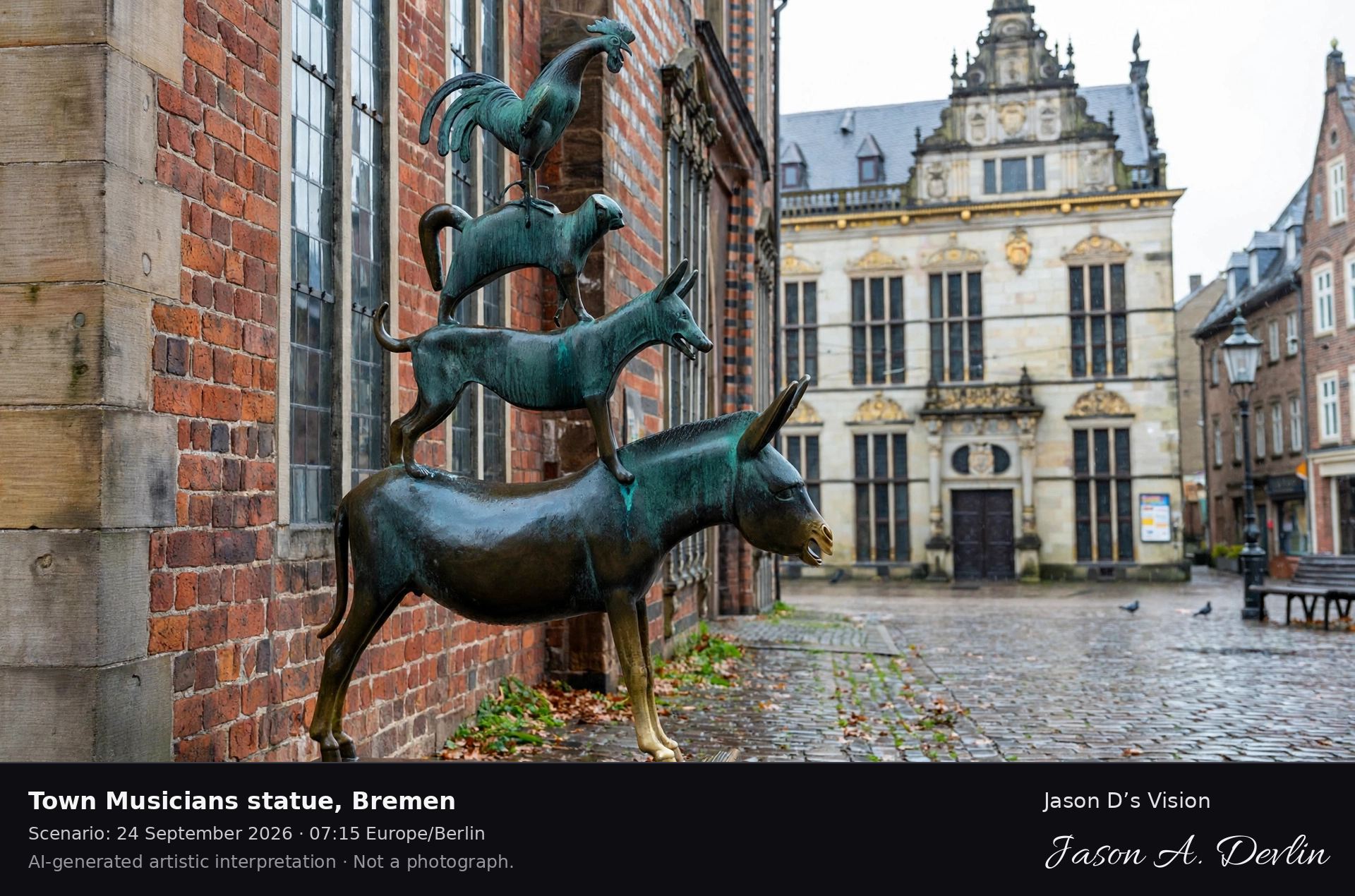
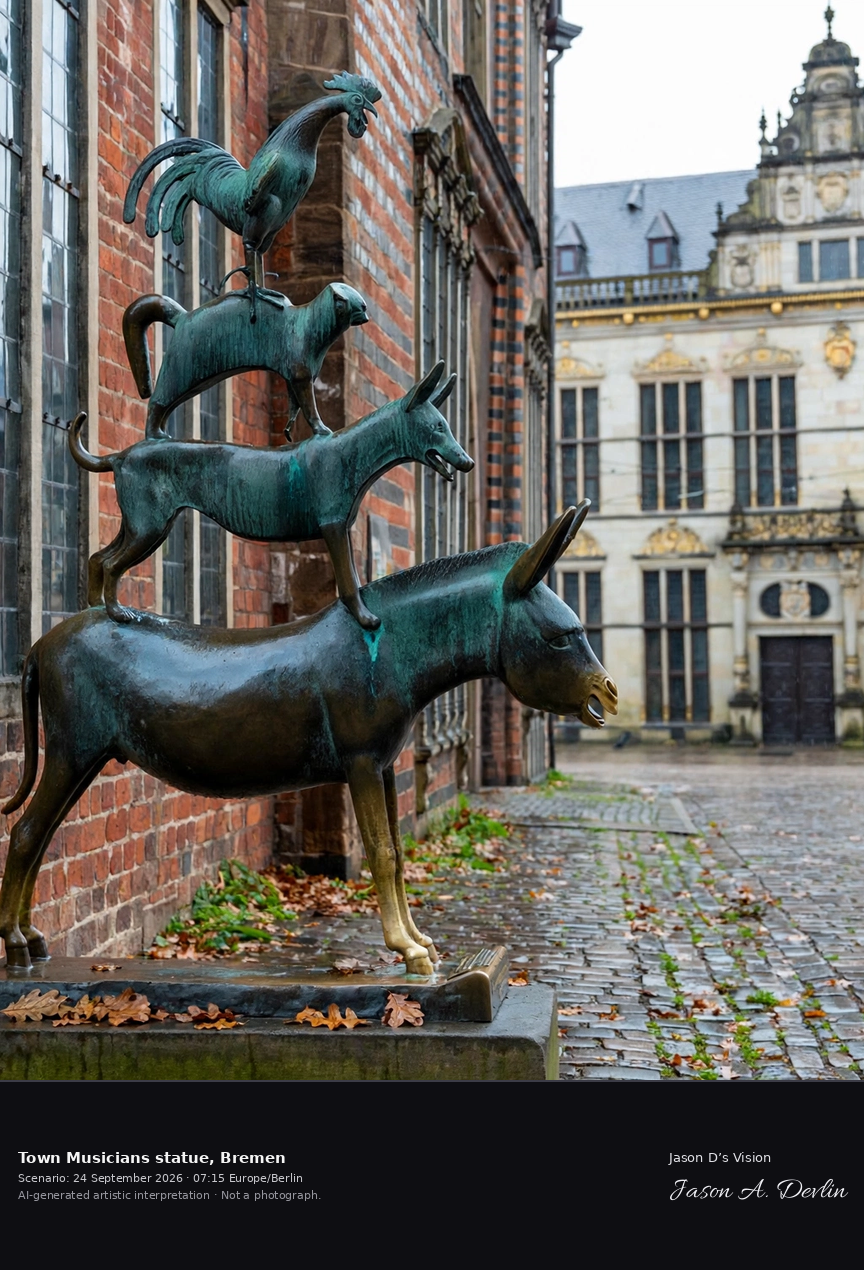
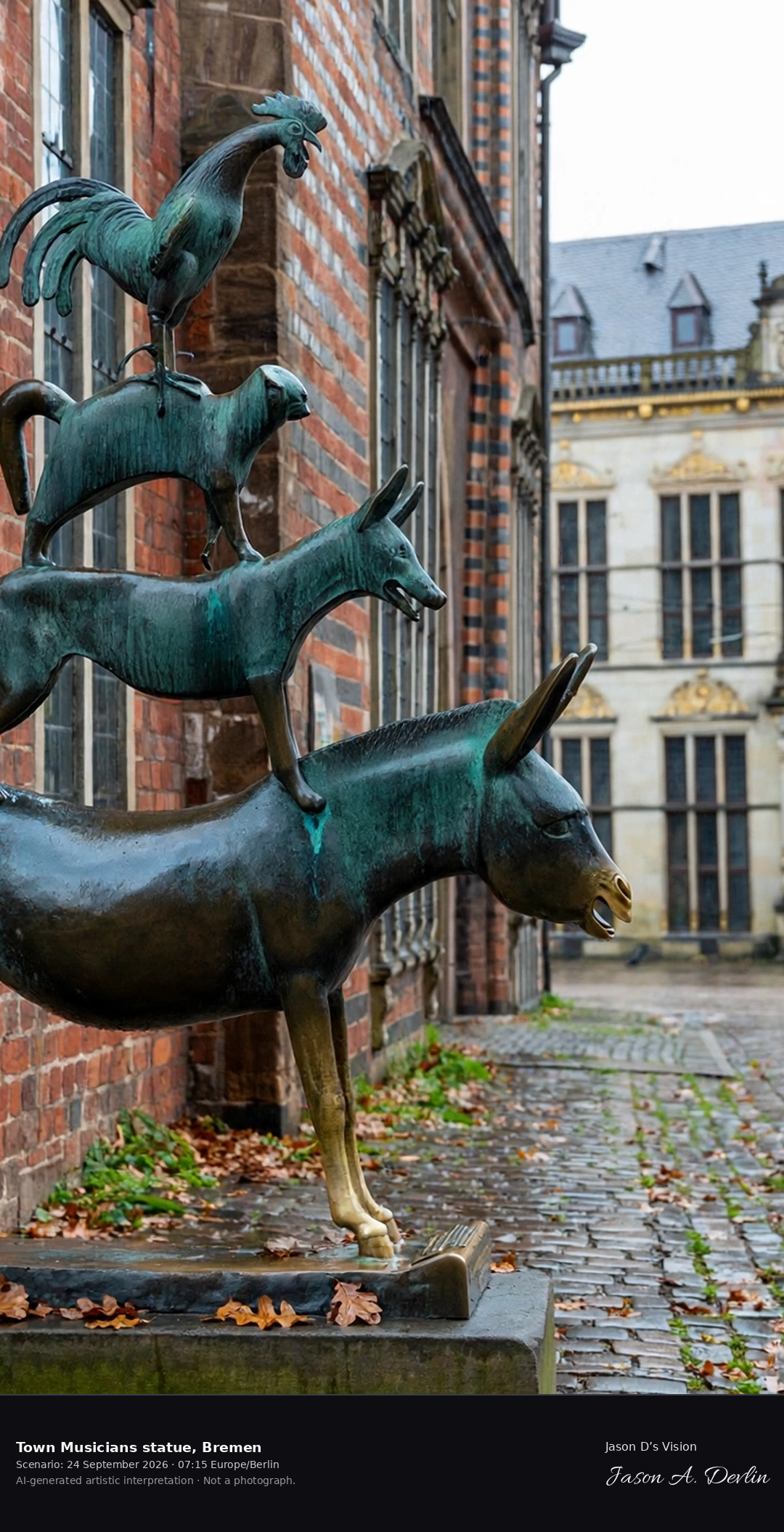
The famous bronze Town Musicians of Bremen stand stacked four high — donkey, dog, cat and rooster — against the red brick wall of the Town Hall on the left. Across the empty morning square, a pale gabled Hanseatic façade with gold ornament faces the viewer at the right, with a lamppost and bench at the far edge. Wet cobblestones and fallen leaves catch the soft grey light of the overcast morning.
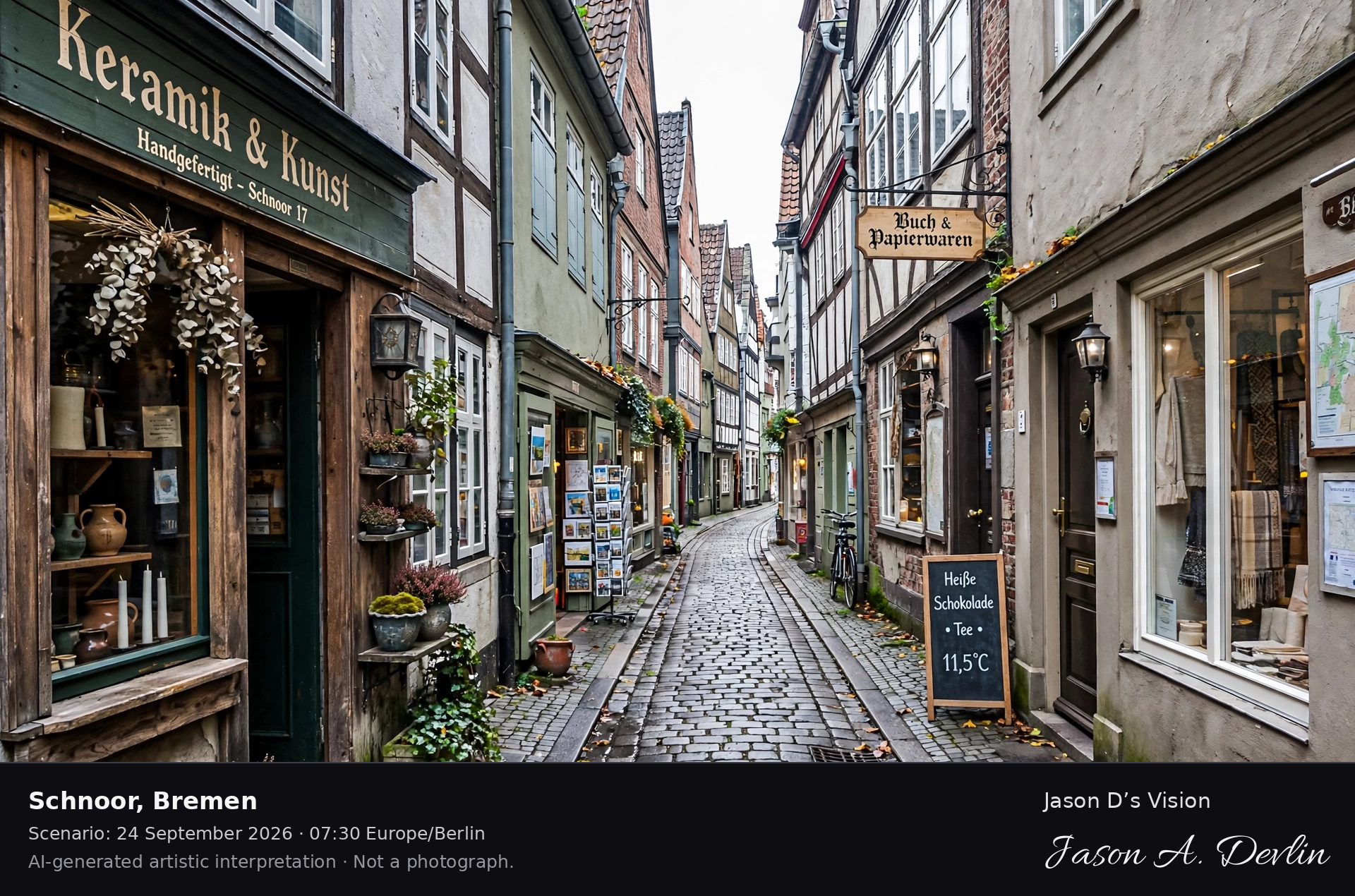
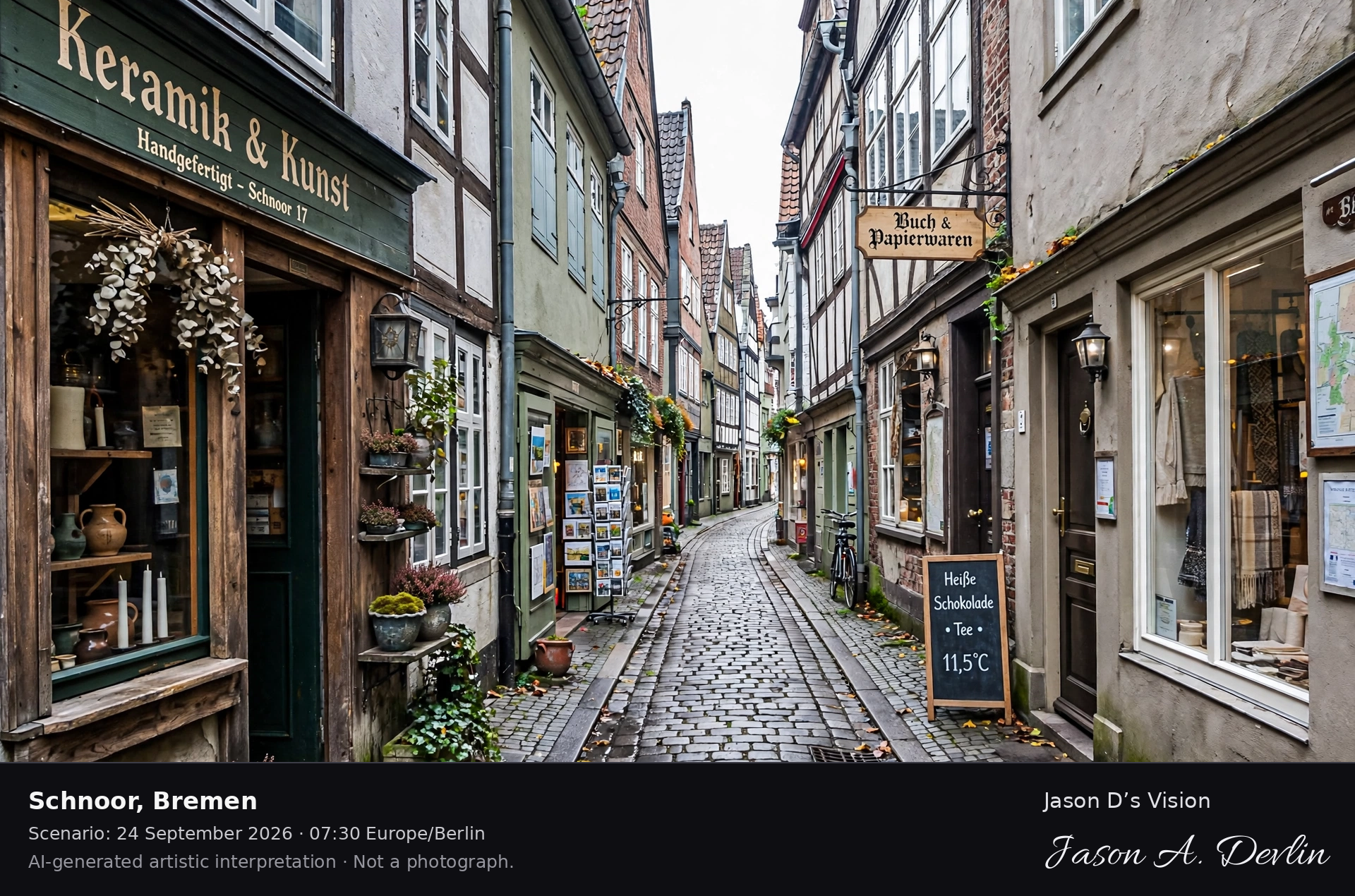
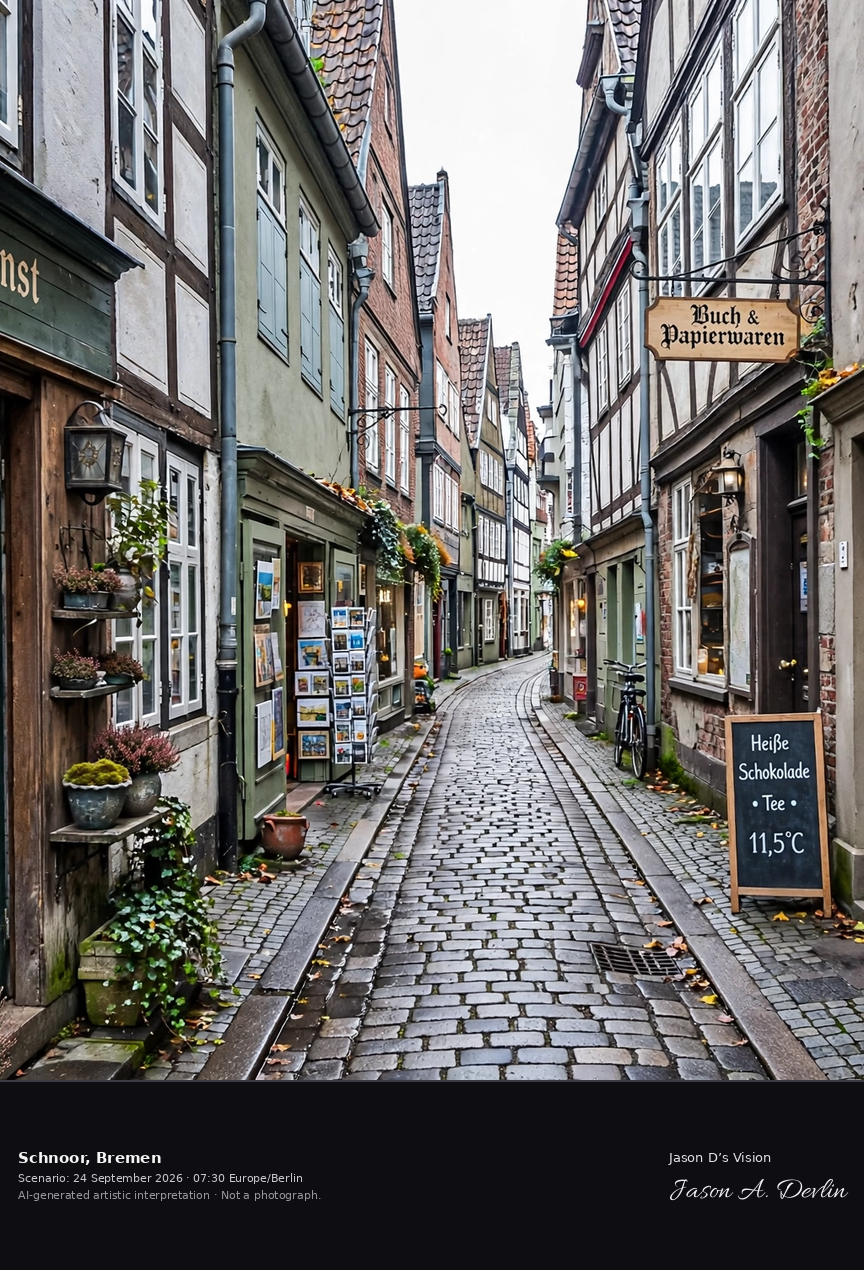
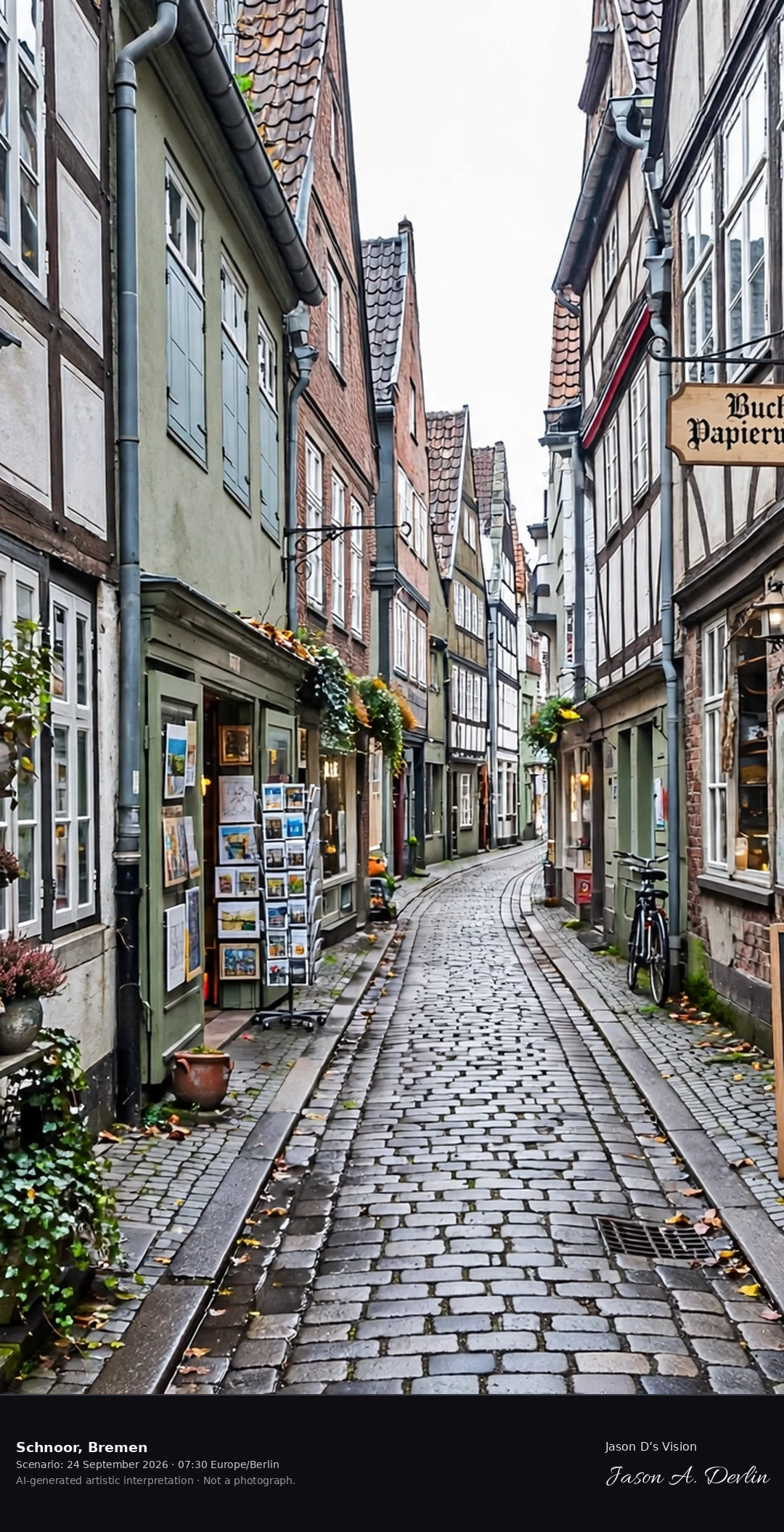
A narrow cobbled lane winds through Bremen's Schnoor quarter in the early morning. A ceramics shop with hanging dried flowers occupies the left foreground, while tilted half-timbered and gabled houses crowd both sides, their shopfronts — a bookshop sign, postcard racks, a chalkboard for hot chocolate and tea — just opening for the day. Wet cobblestones and grey overcast light complete the quiet scene.
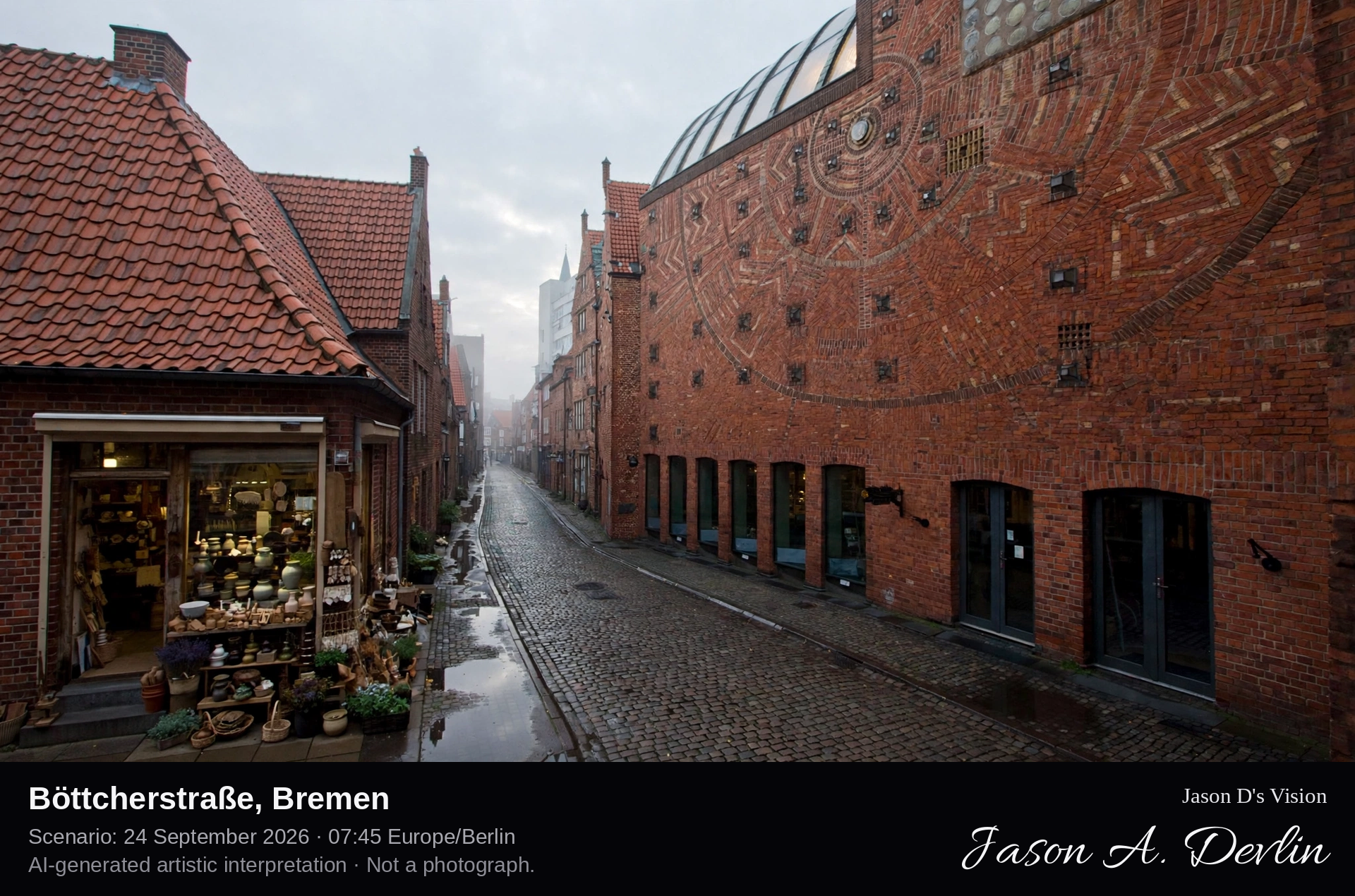
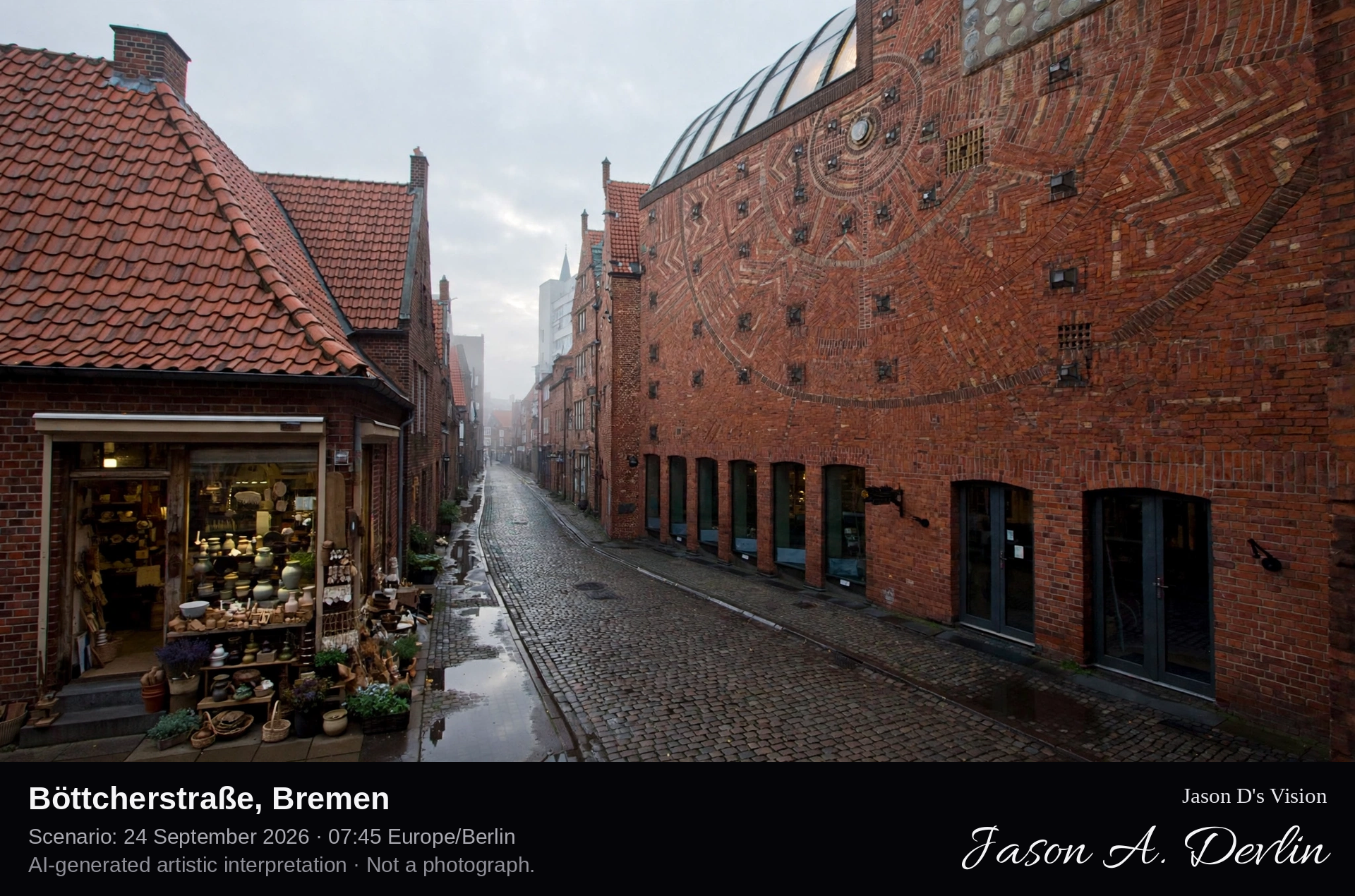
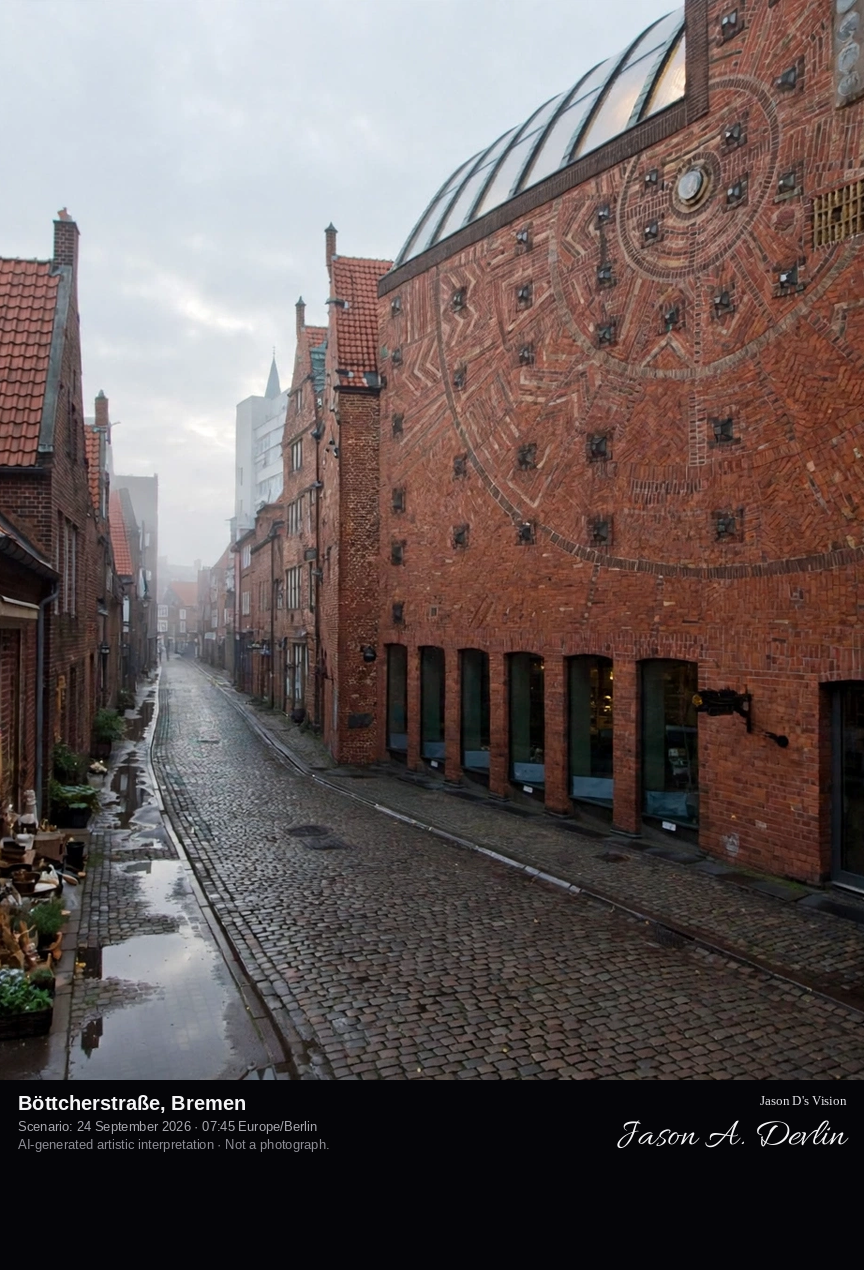
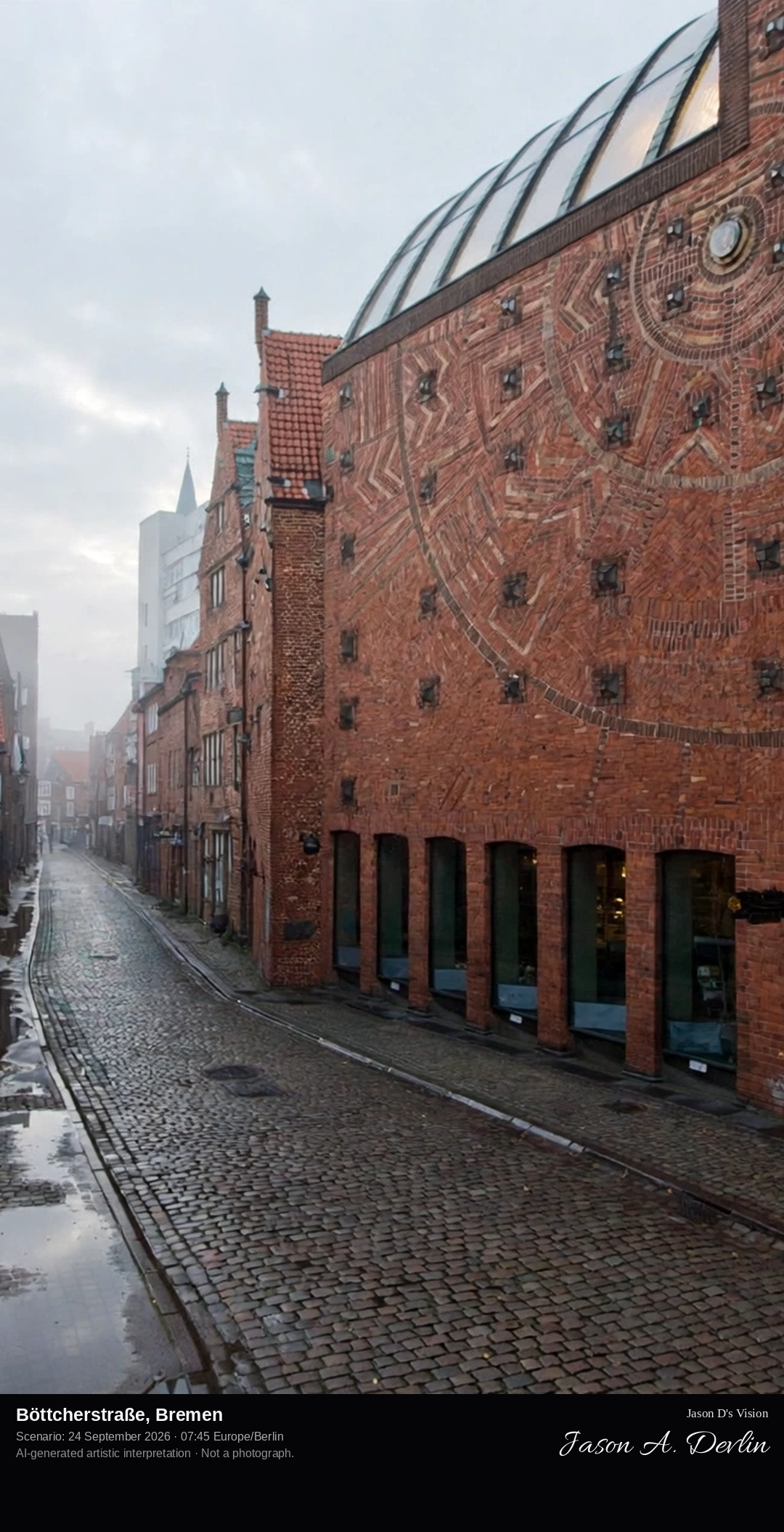
A quiet morning on Böttcherstraße, the gabled brick-expressionist facades of the old lane rising on both sides — the tall stepped-gable house at right with its dark 'Haus Atlantis' doorway, and the smaller red-tile-roofed houses at left where a 'Kunst & Handwerk' shop window glows beneath an awning. Wet cobblestones reflect the flat grey light of an overcast September morning, and the lane sits empty, as if the tourist hour hasn't quite begun.
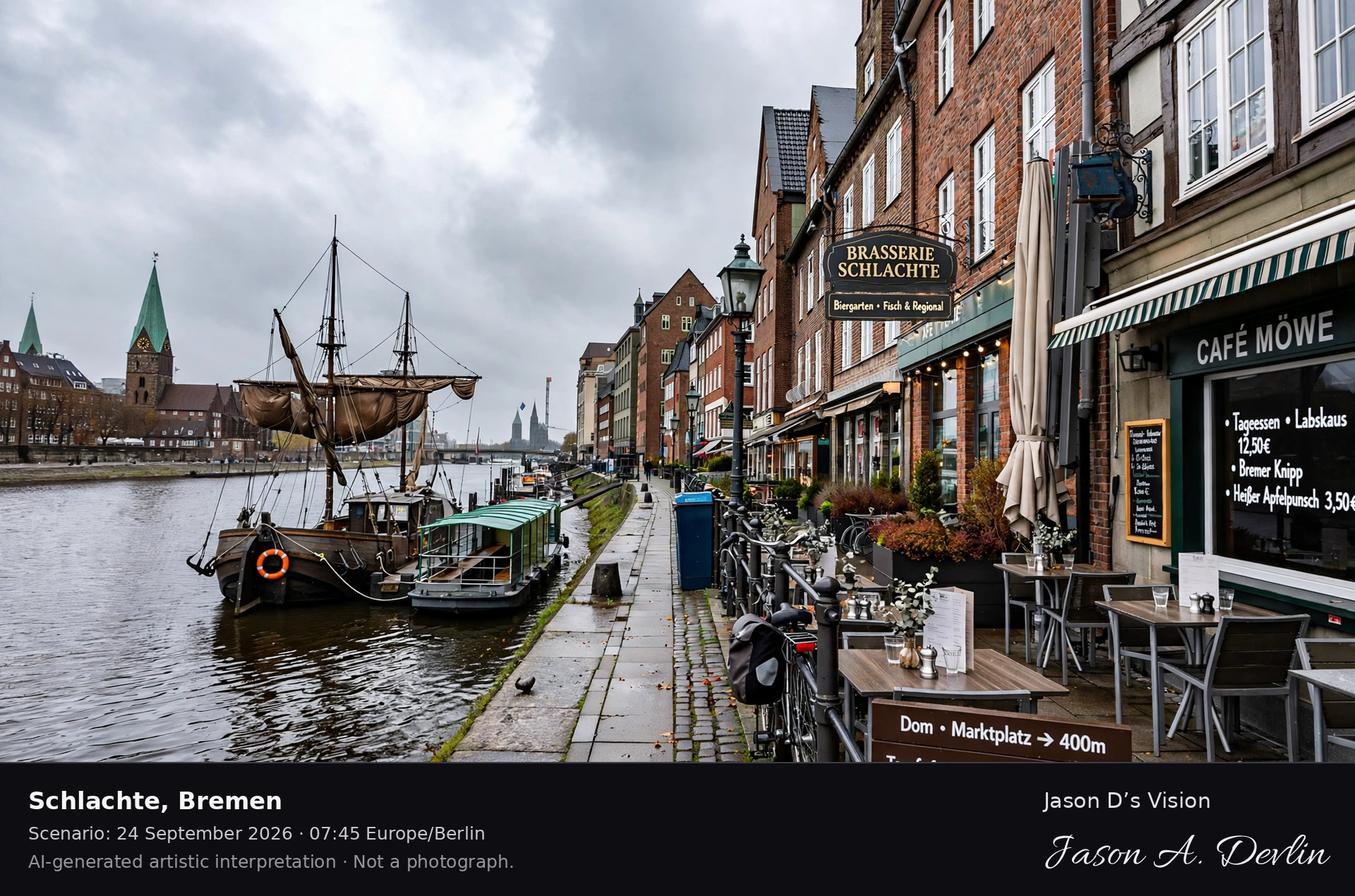
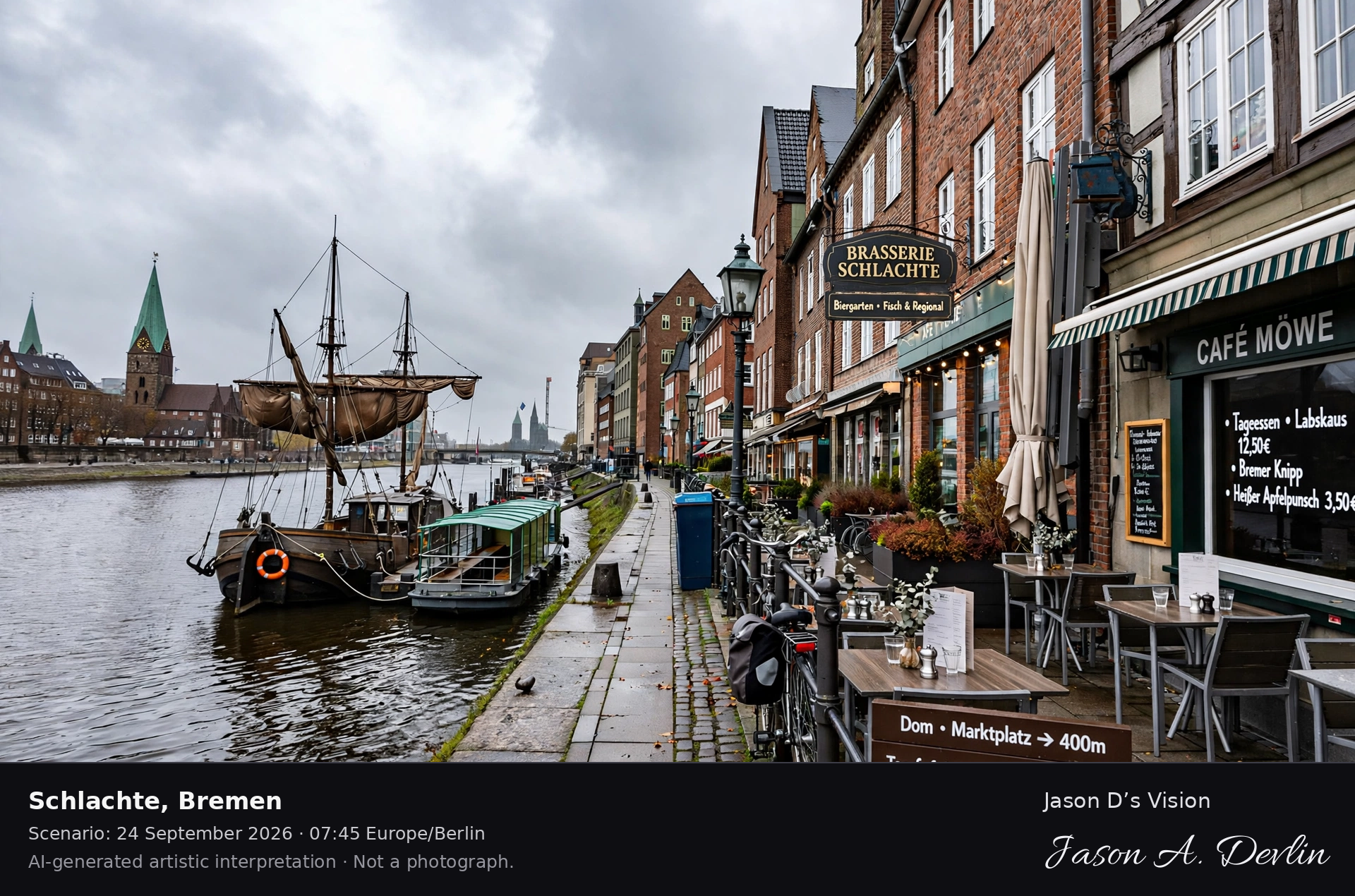
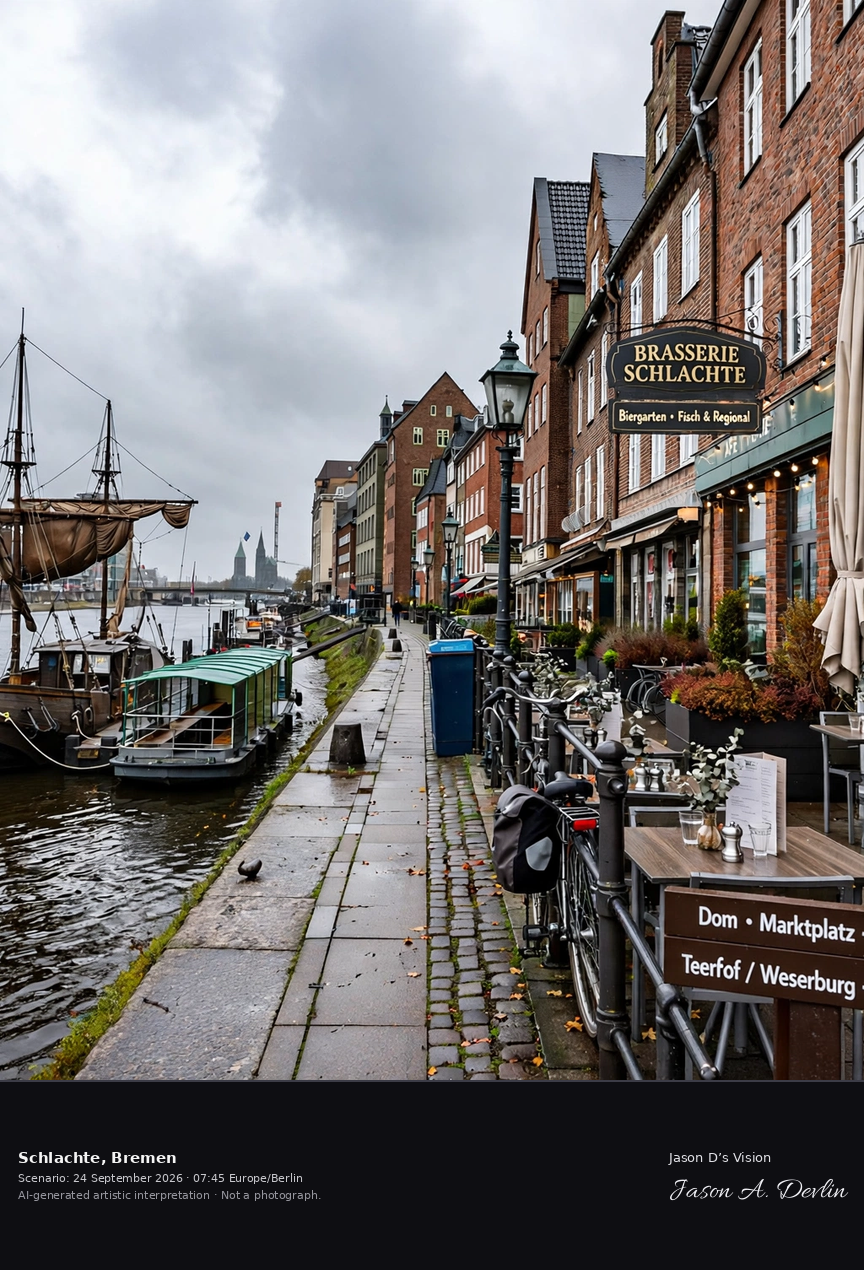
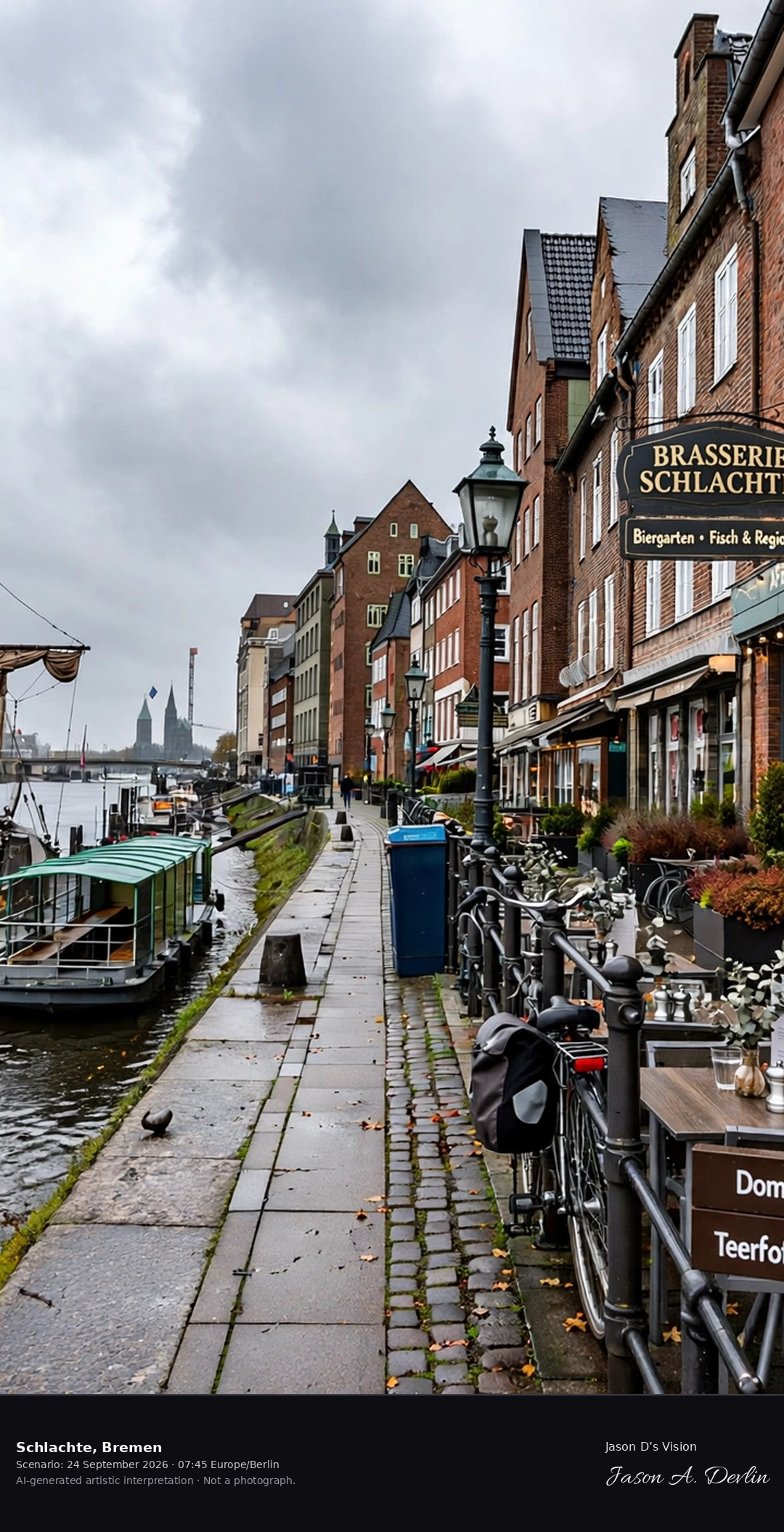
Early morning on the Schlachte, Bremen's riverside promenade: historic sailing ships with furled sails lie moored at left along the grey Weser, while the brick restaurant row at right — Brasserie Schlachte, Café Möwe — stands quiet under folded parasols and empty tables. Across the river, the green spires of St. Martini and the cathedral towers rise into a low overcast sky, and wet paving stones glisten in the flat morning light before the crowds arrive.
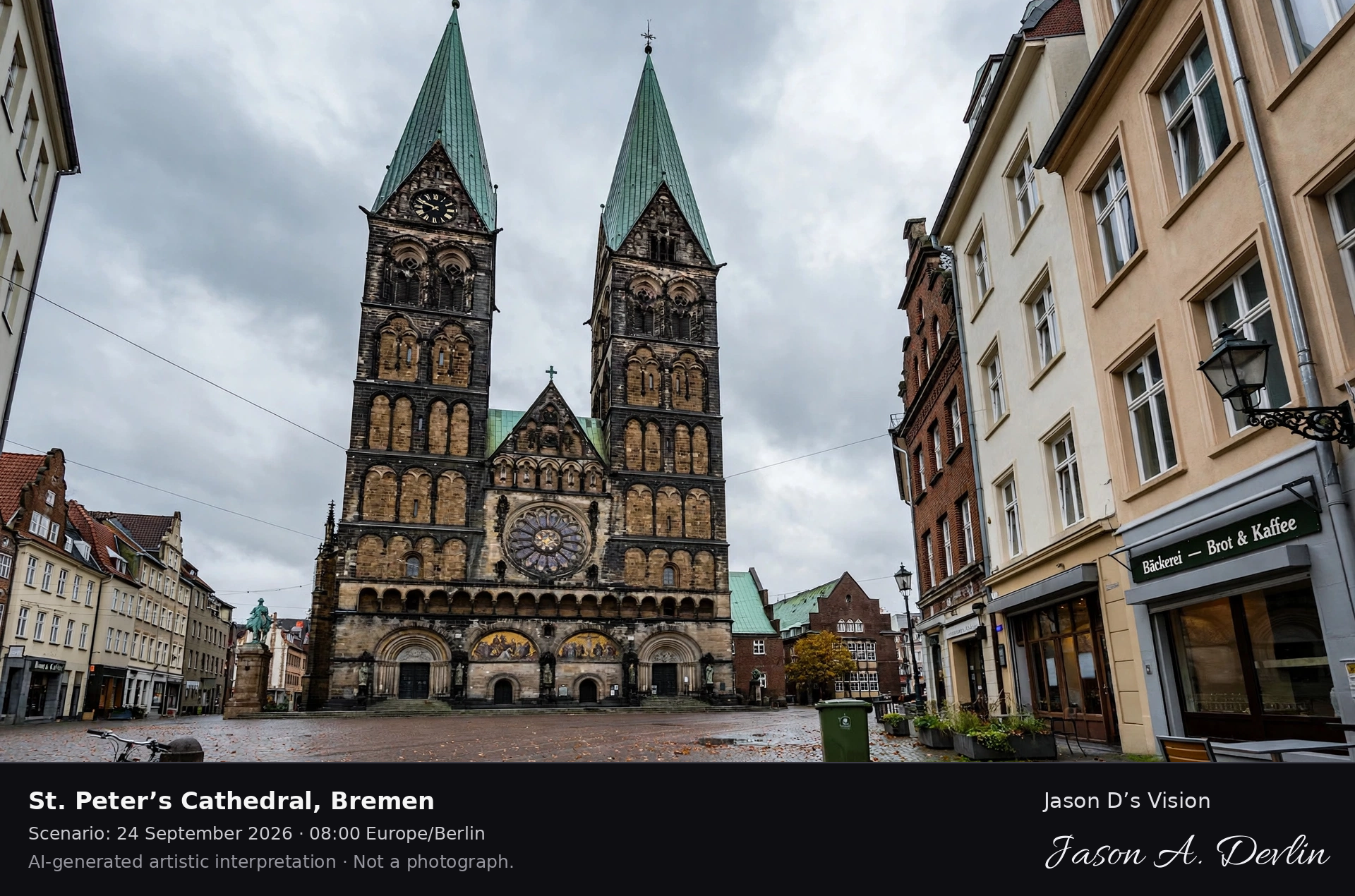
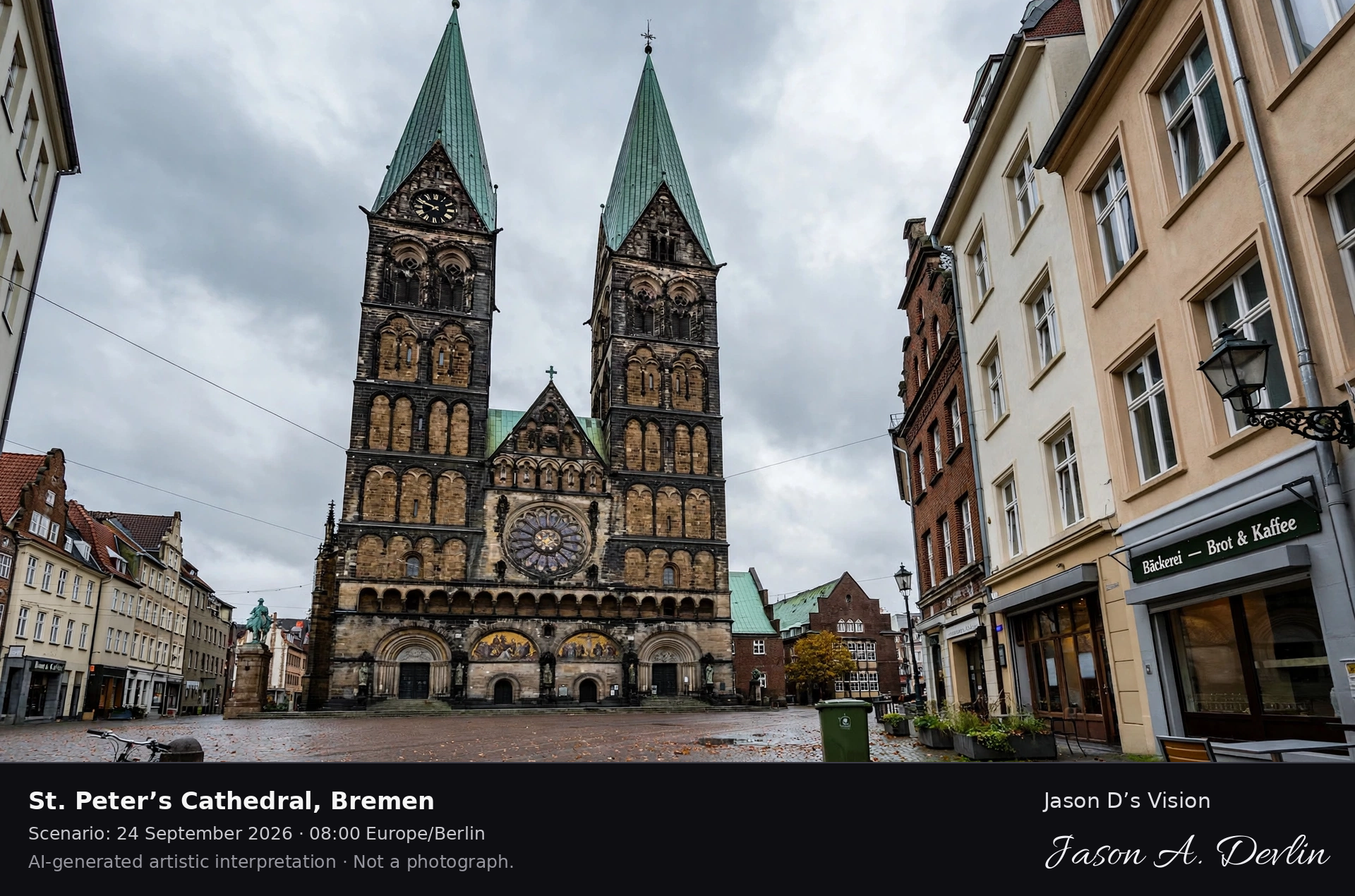
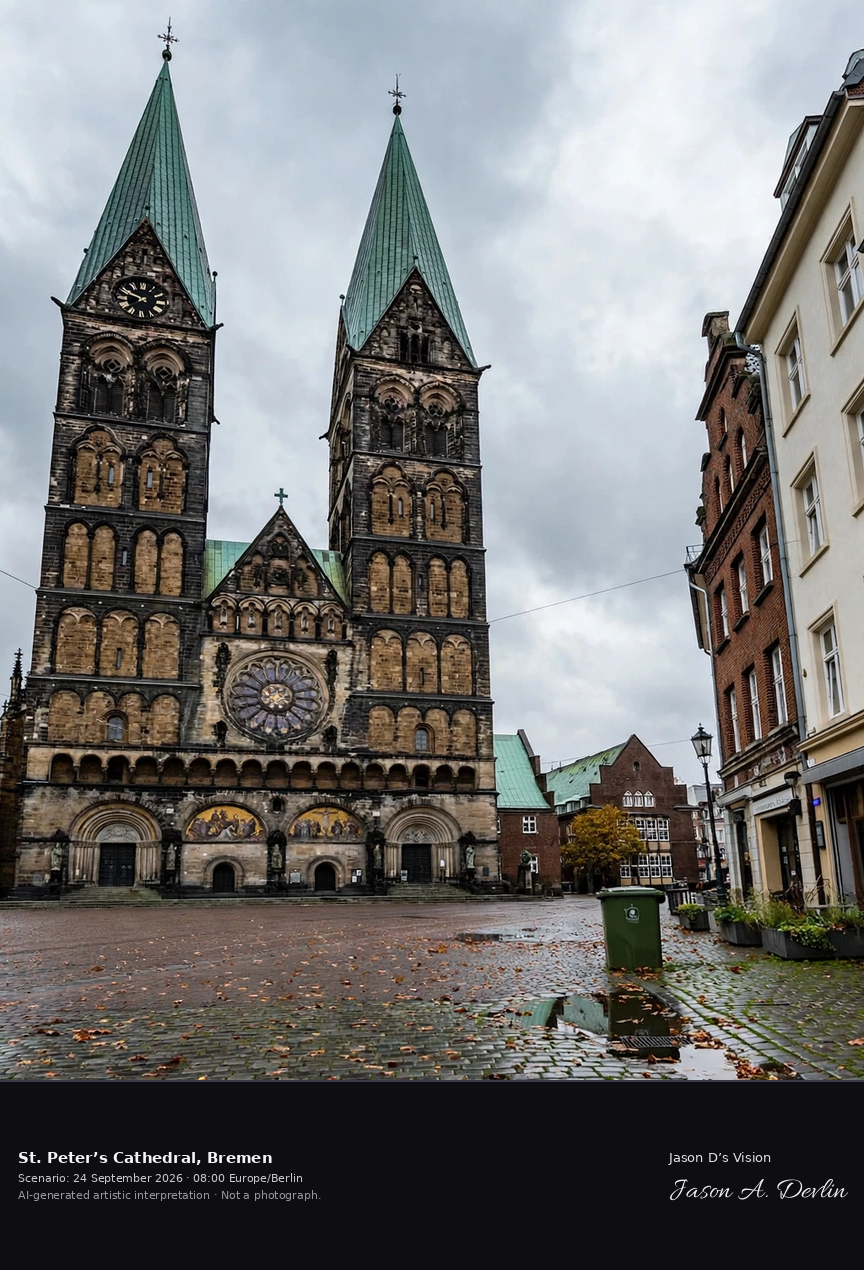
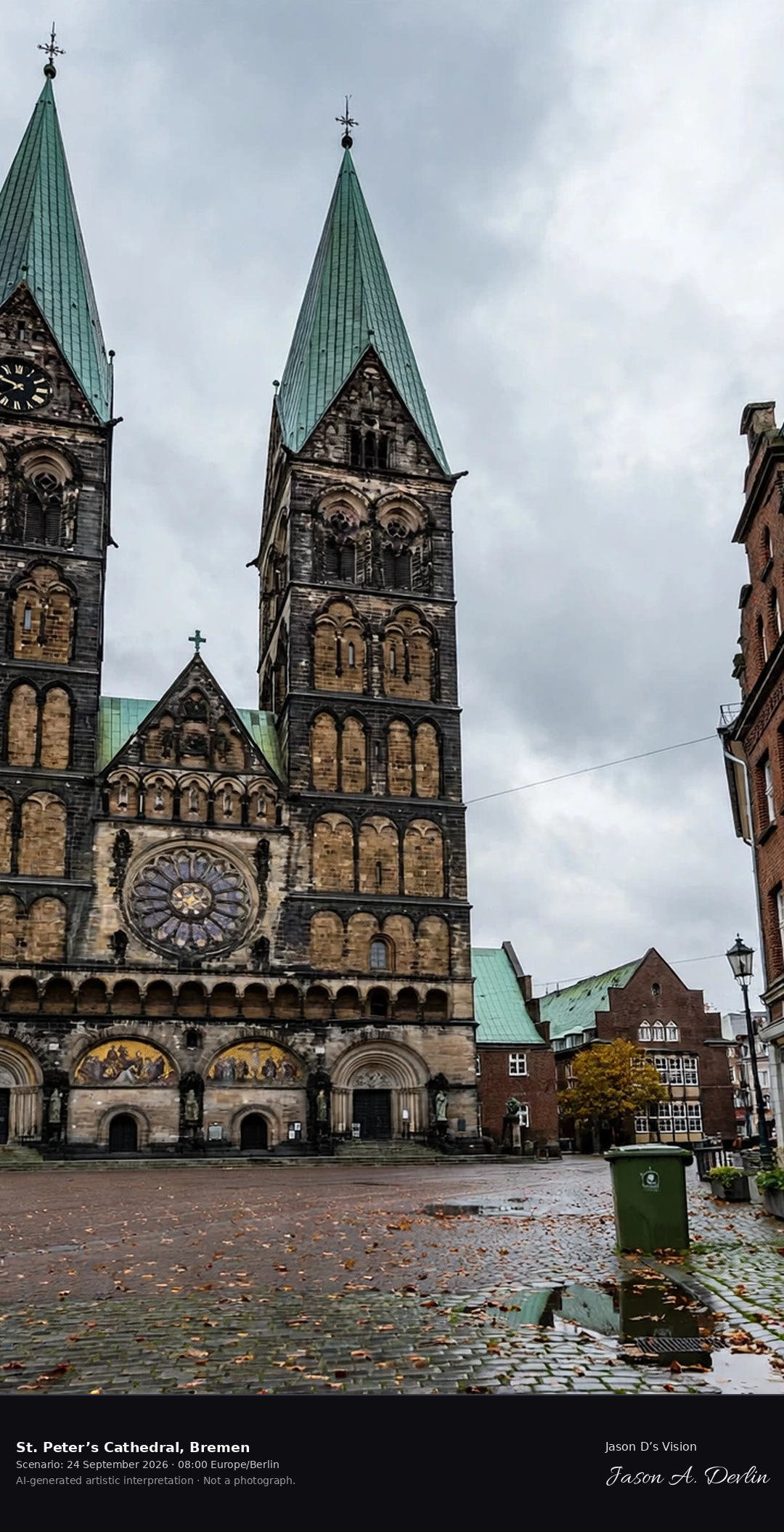
St. Peter's Cathedral rises at the end of the Domshof, its twin green-copper spires and arcaded Romanesque towers filling the frame, the rose window set between them and a clock on the north tower. At left the Roland statue watches over the market square; gabled townhouses and a bakery café crowd the right side. Wet cobbles, scattered autumn leaves and a low grey sky complete the quiet early-morning mood.
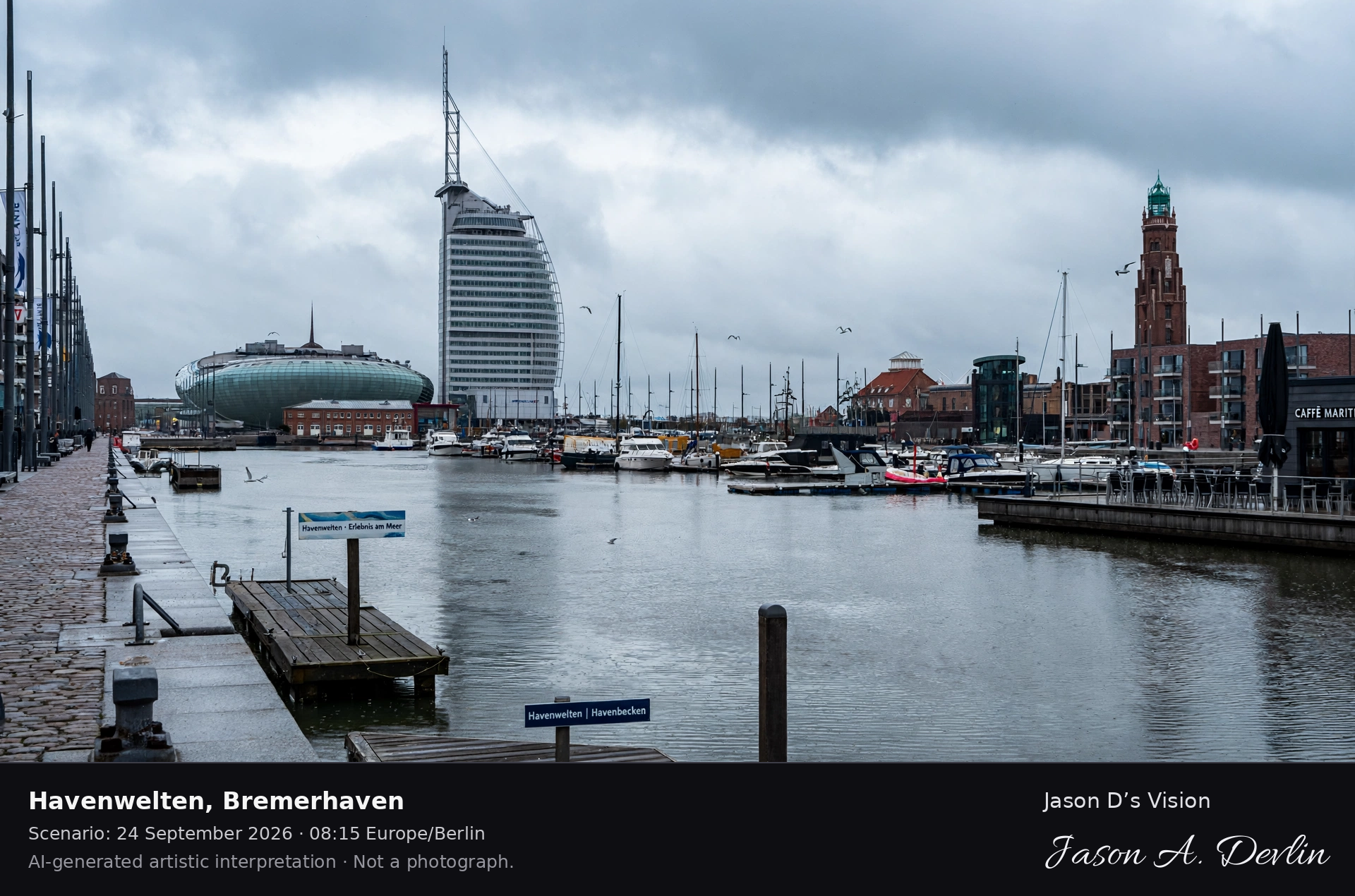
Waterfront and modern architecture · AI-generated artistic interpretation
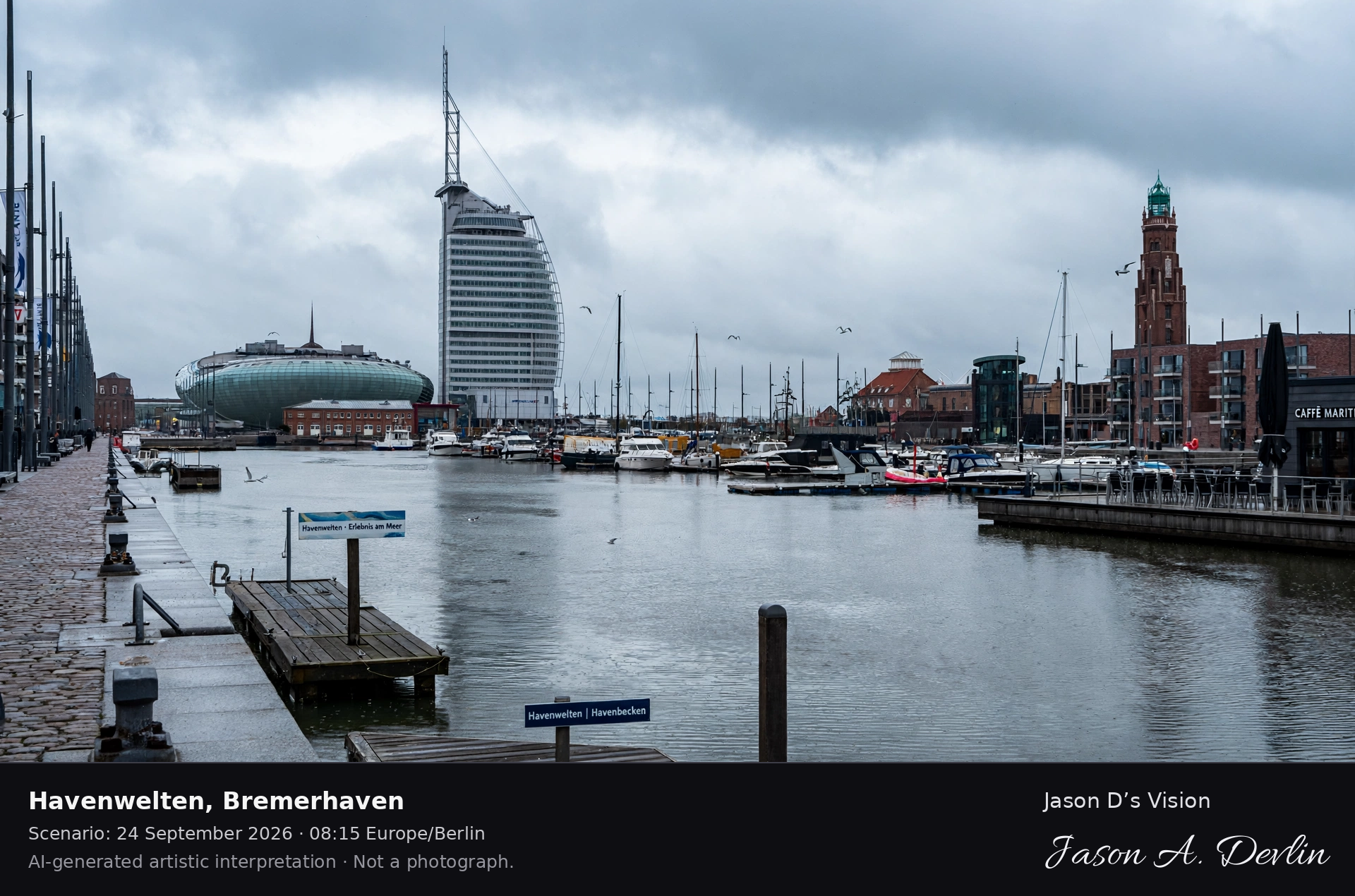
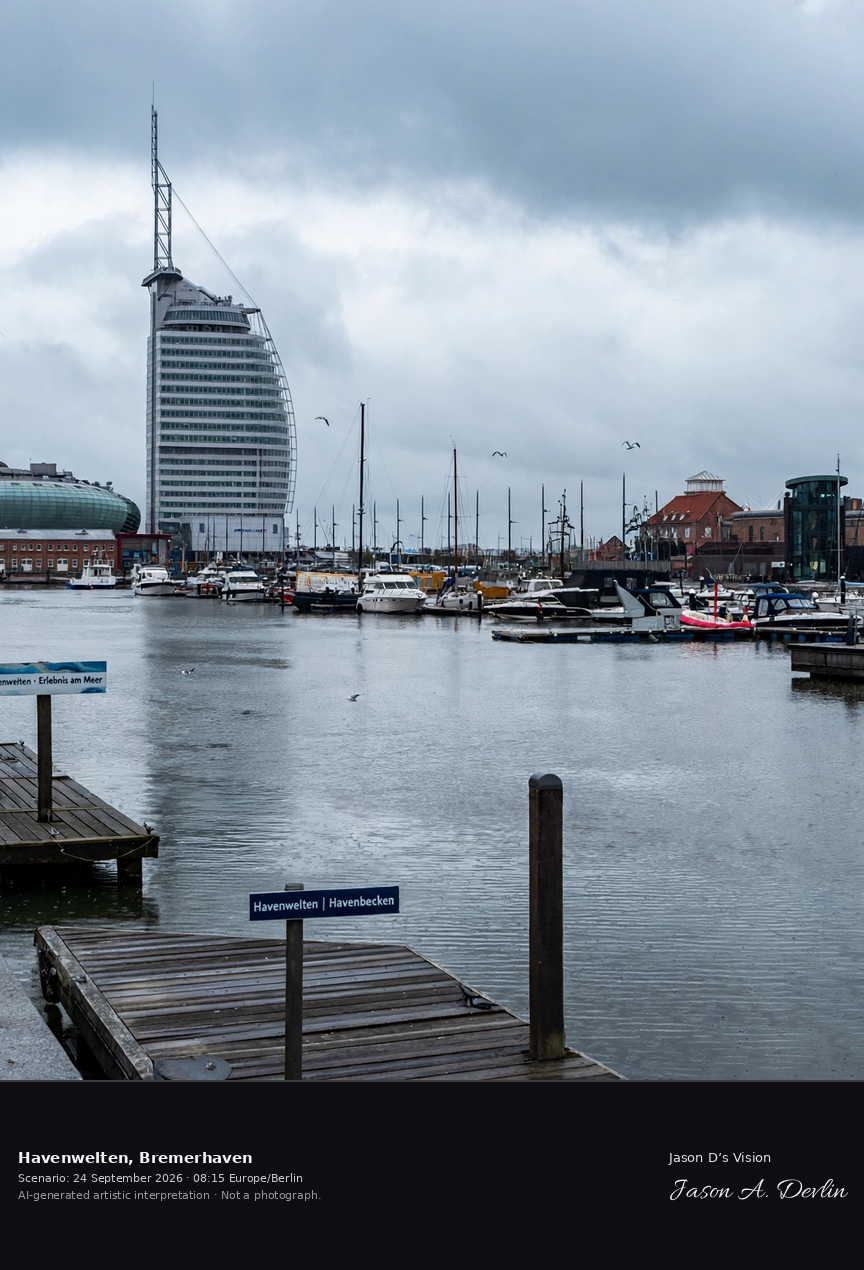
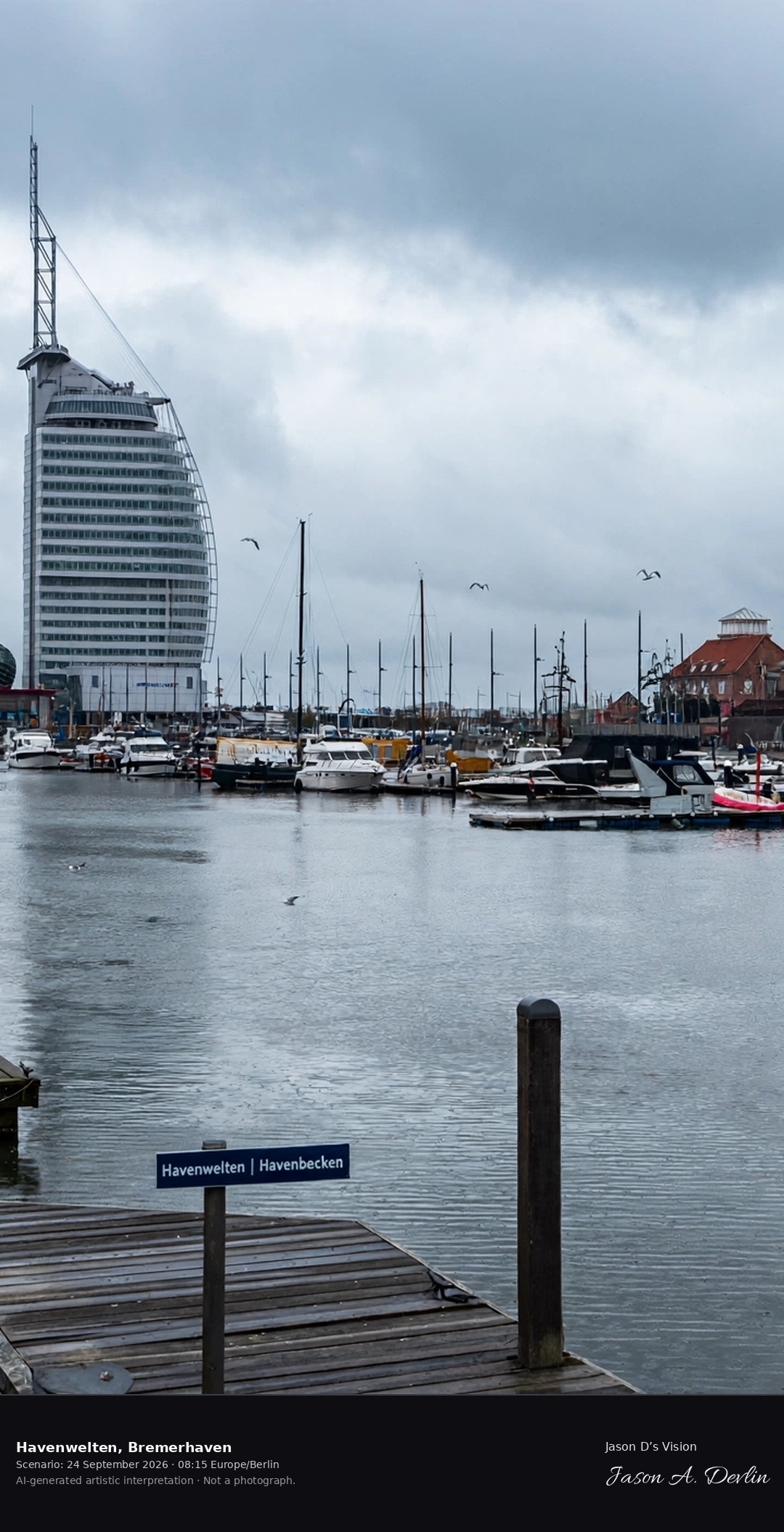
Overcast morning over the Havenwelten waterfront: the sail-shaped Sail City tower rises center-left of the frame with the Klimahaus's glass dome gleaming beside it, while moored boats crowd the marina between the promenade walkways at left and right. Flat grey light softens the harbour water and a dockside sign reads 'Havenwelten | Havenbecken', with seagulls wheeling over the masts in the middle distance.
Every image in Jason D’s Vision is free to use for any purpose — personal or commercial. No credit is required. If you’d like to credit, ‘Jason D’s Vision’ is appreciated, but it’s entirely your choice.
Jason D’s Vision waives its own rights in these images. This doesn’t waive anyone else’s rights: if an image happens to include a trademark, logo, or other third-party material, those rights still belong to their owners. All images are AI-generated artistic interpretations, not photographs, and use of an image doesn’t imply endorsement by Jason D’s Vision.
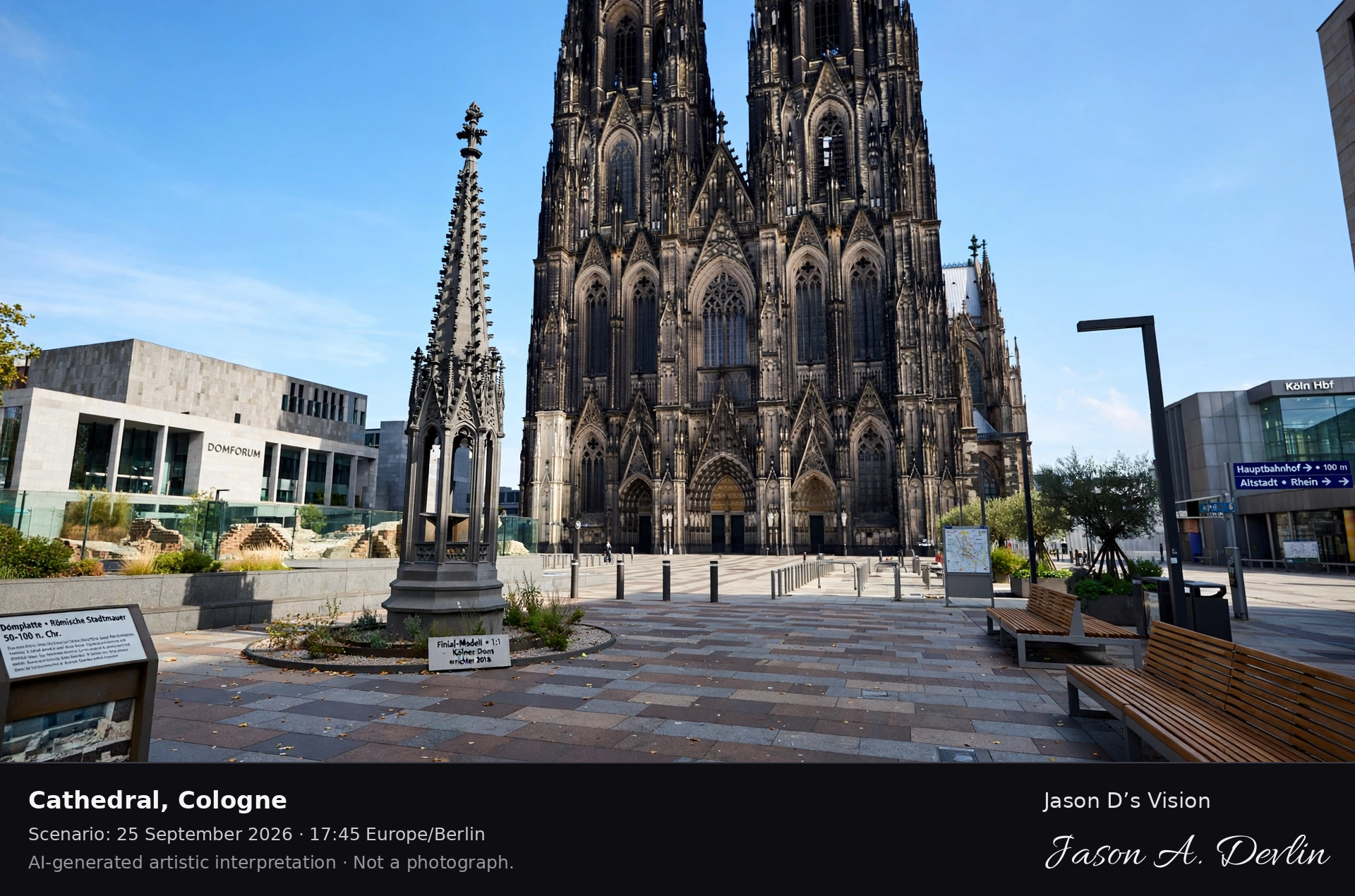
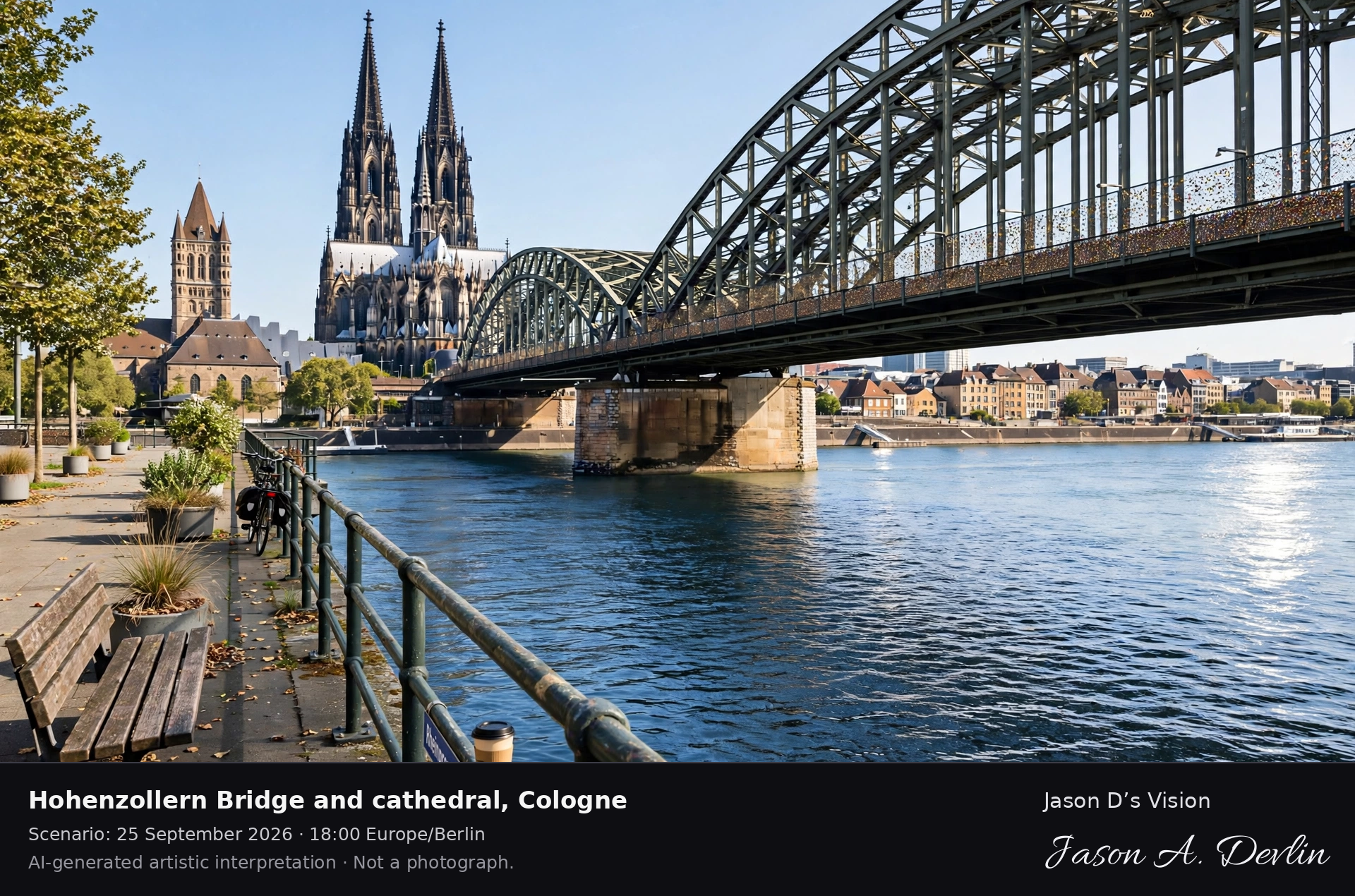
From 4 to 9 February, Cologne's street carnival builds to the Rose Monday parade past the cathedral. The whole winter, date by date, is in Special Events.