Gallery split across 5 pages — search & filters apply to this page only (scenes 451–600 of 822).
No scenes match your search.
DE-SN-027
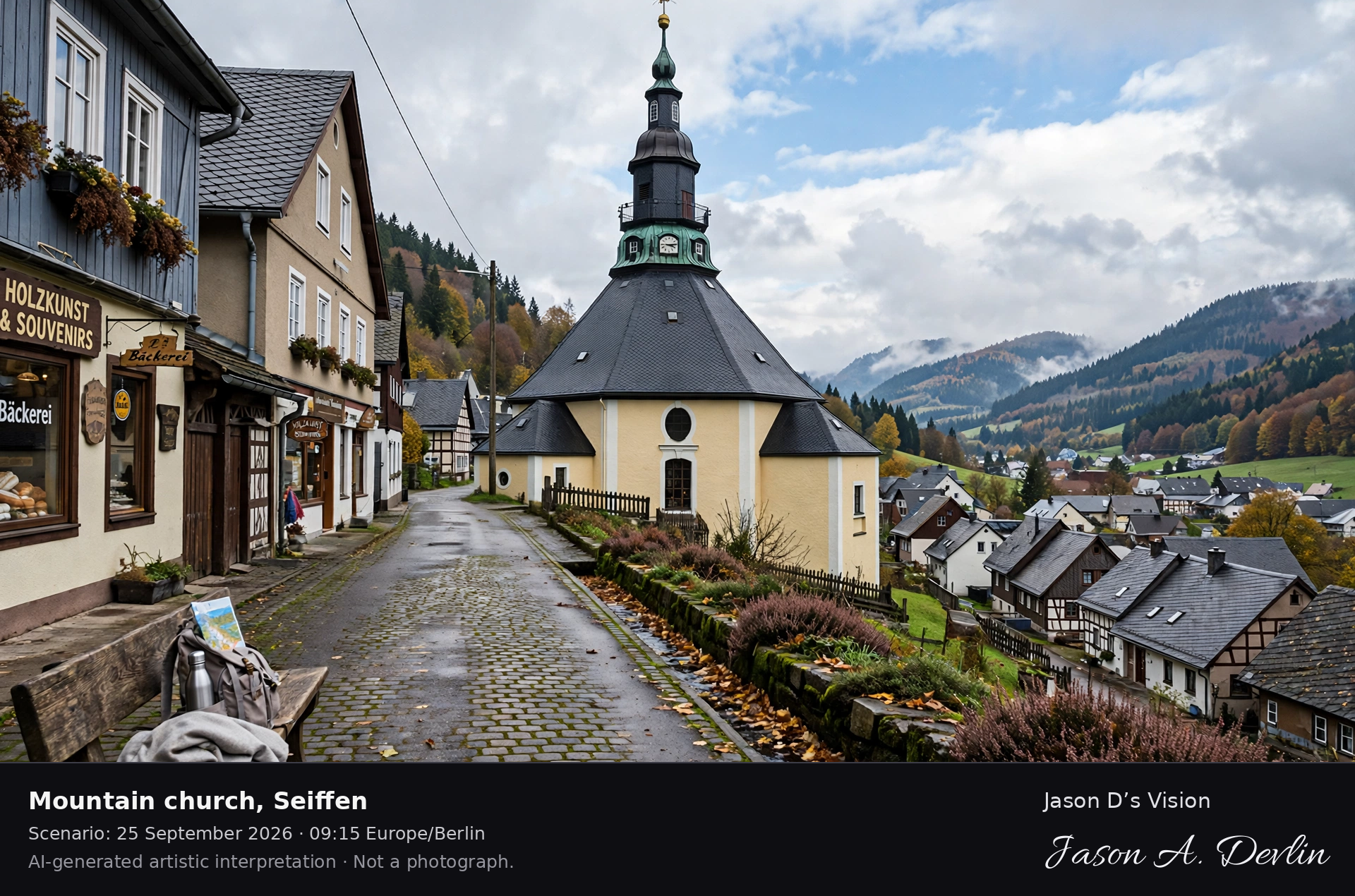
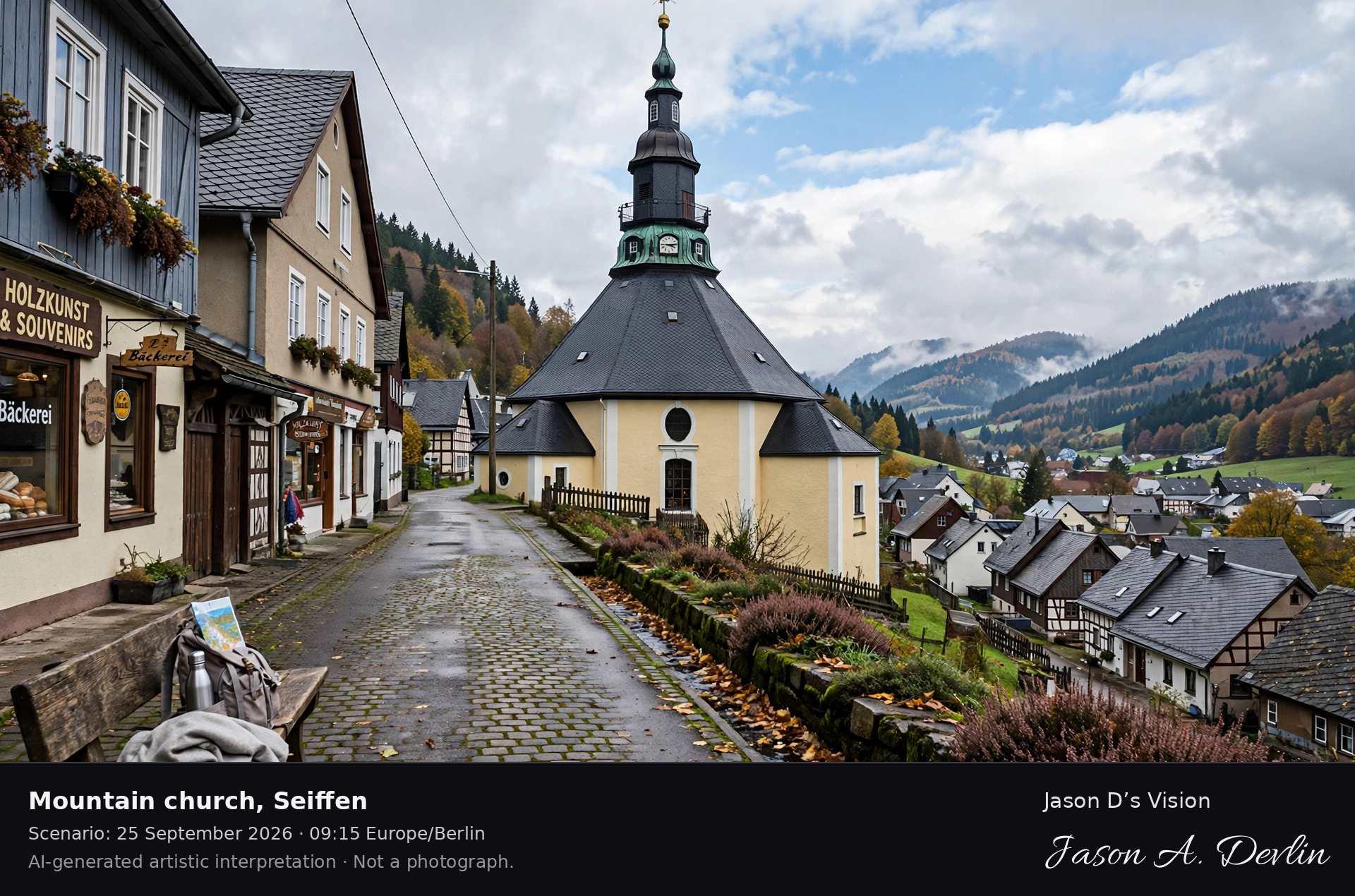
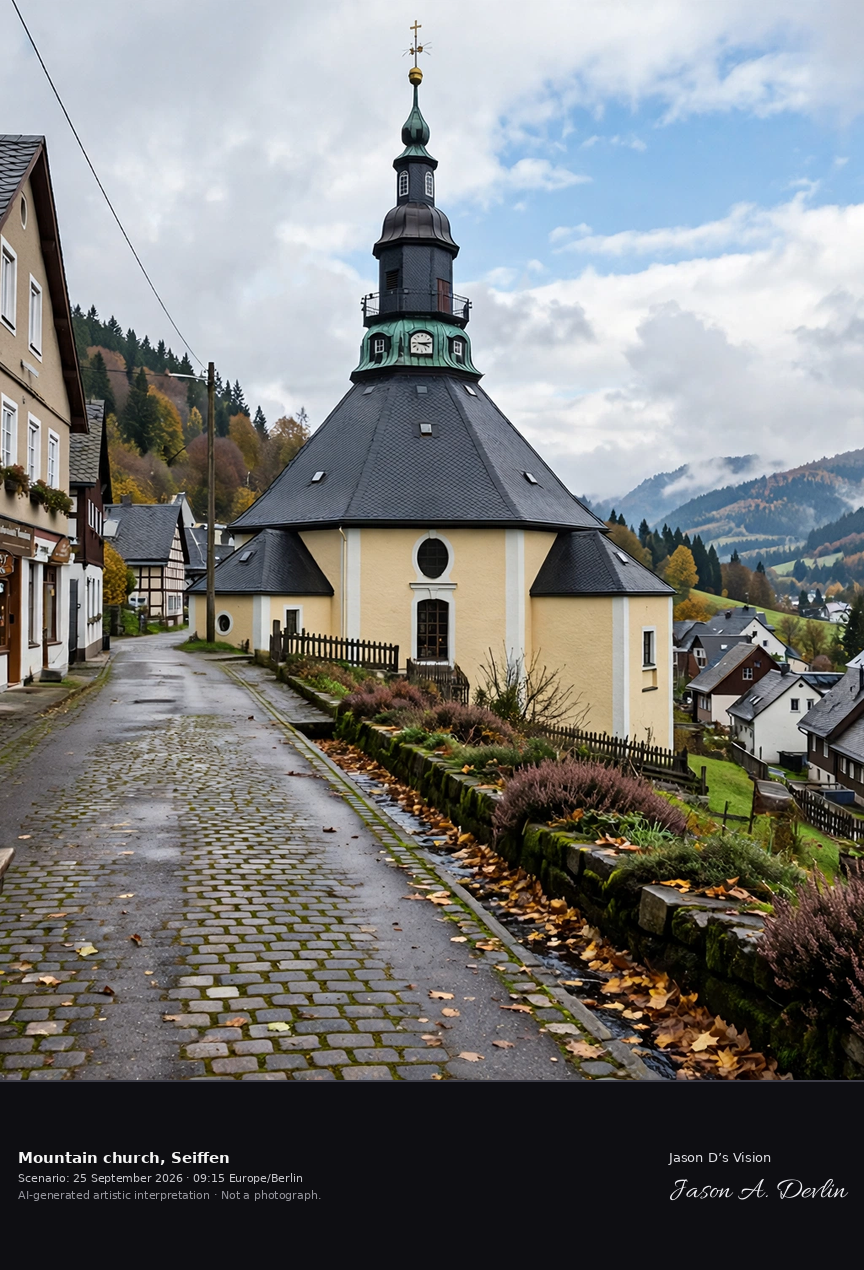
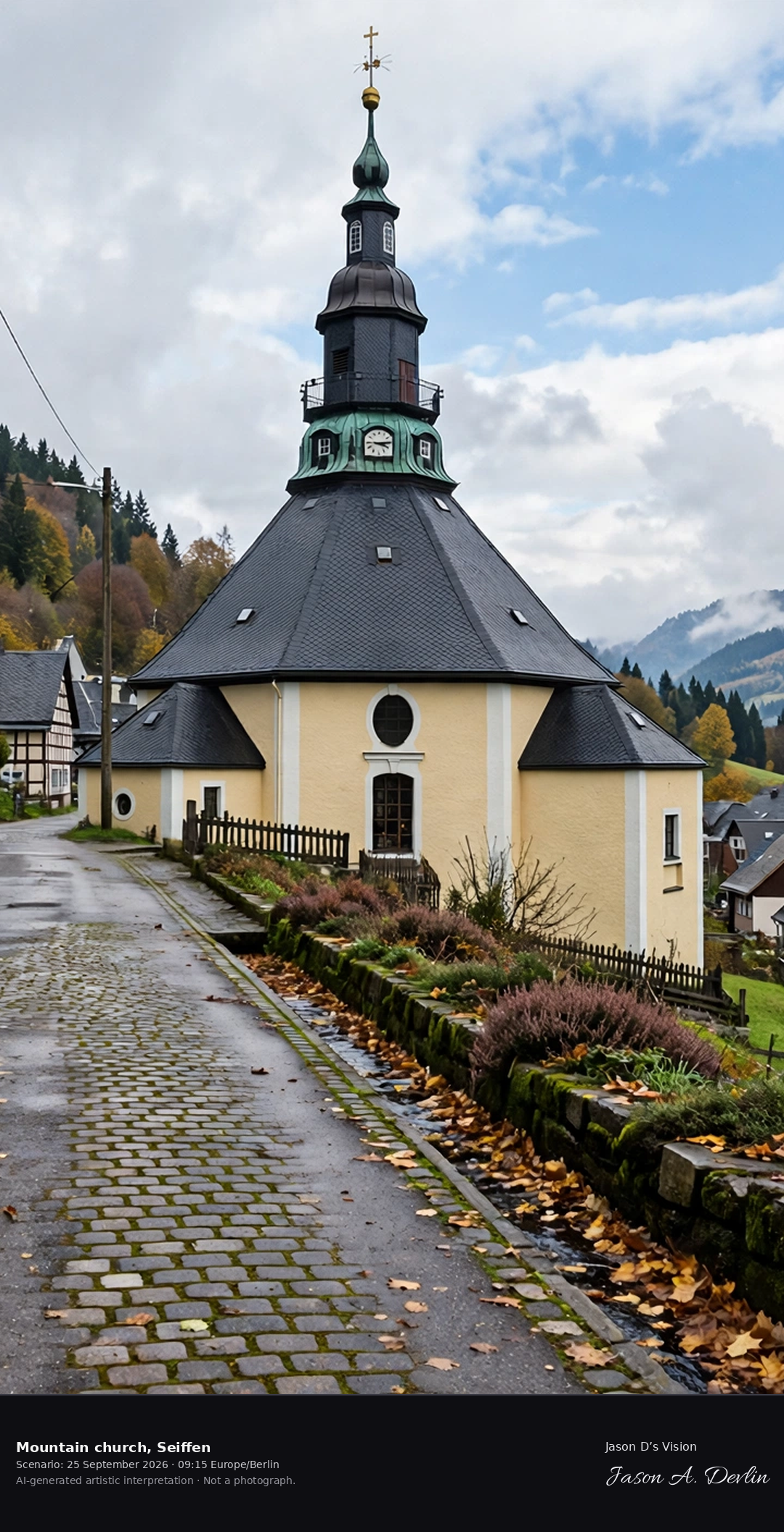
Mountain church, Seiffen
Scenario: 25 September 2026 · 09:15 Europe/Berlin
Village and church · AI-generated artistic interpretation
The octagonal Bergkirche stands center-frame with its stepped tower and clock rising over a wet cobbled village street, a bakery and woodcraft shop with flower boxes lining the left side. Half-timbered Erzgebirge houses spill right and down the slope, with misted, autumn-colored hills folding behind them. Soft mid-morning light breaks through the part-cloud sky, glinting off the damp cobblestones while fallen leaves edge the church terrace.
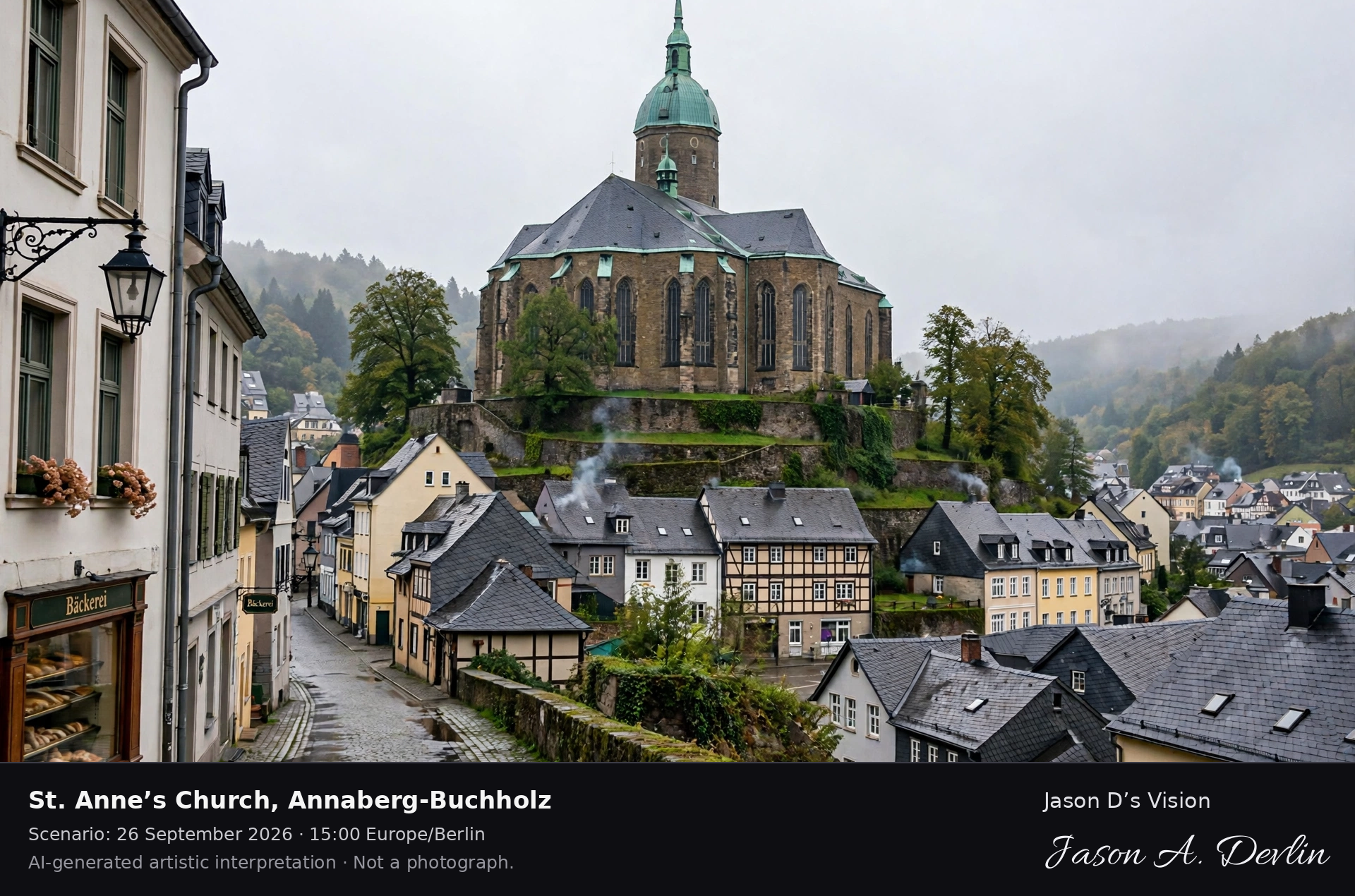
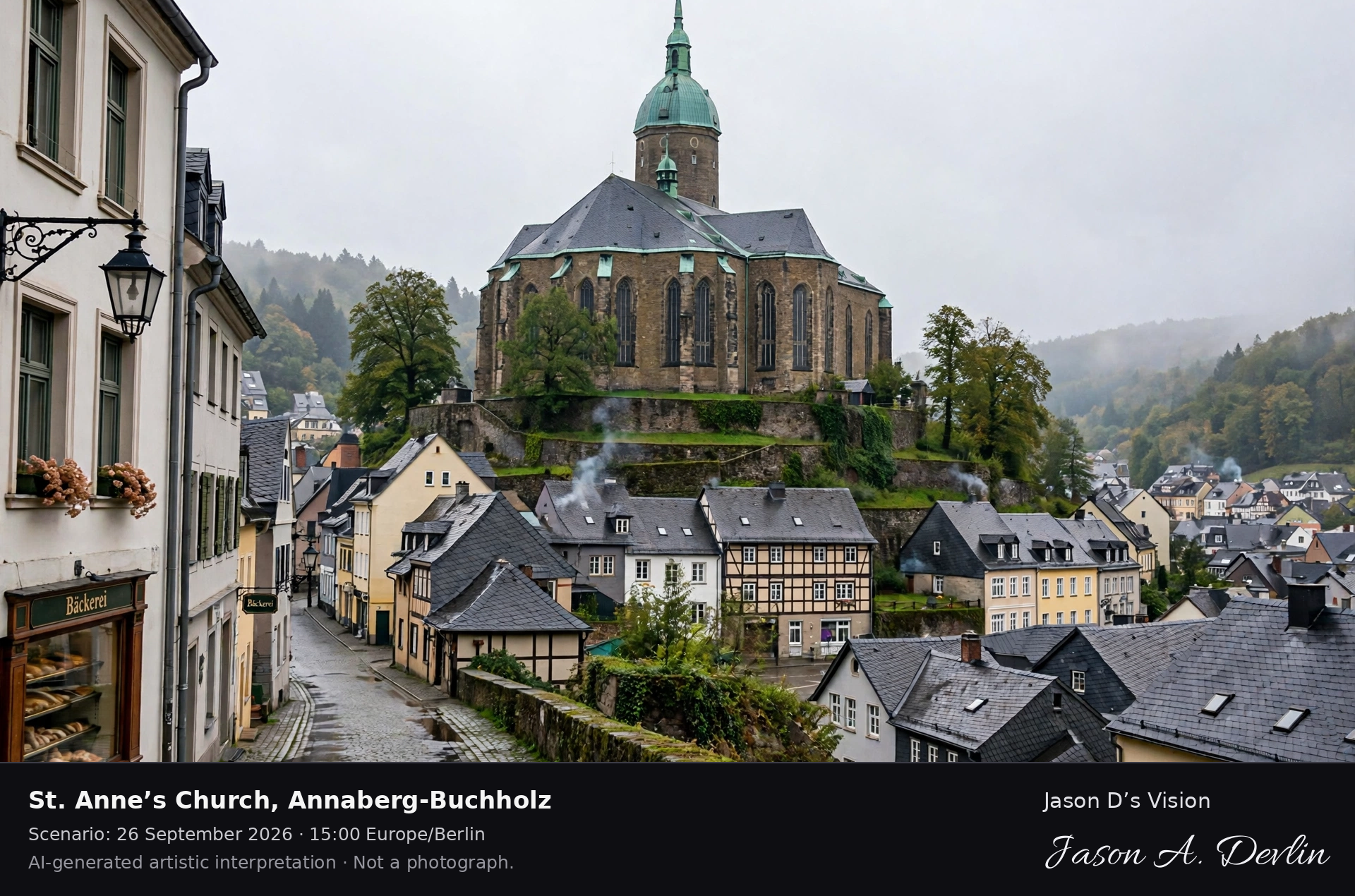
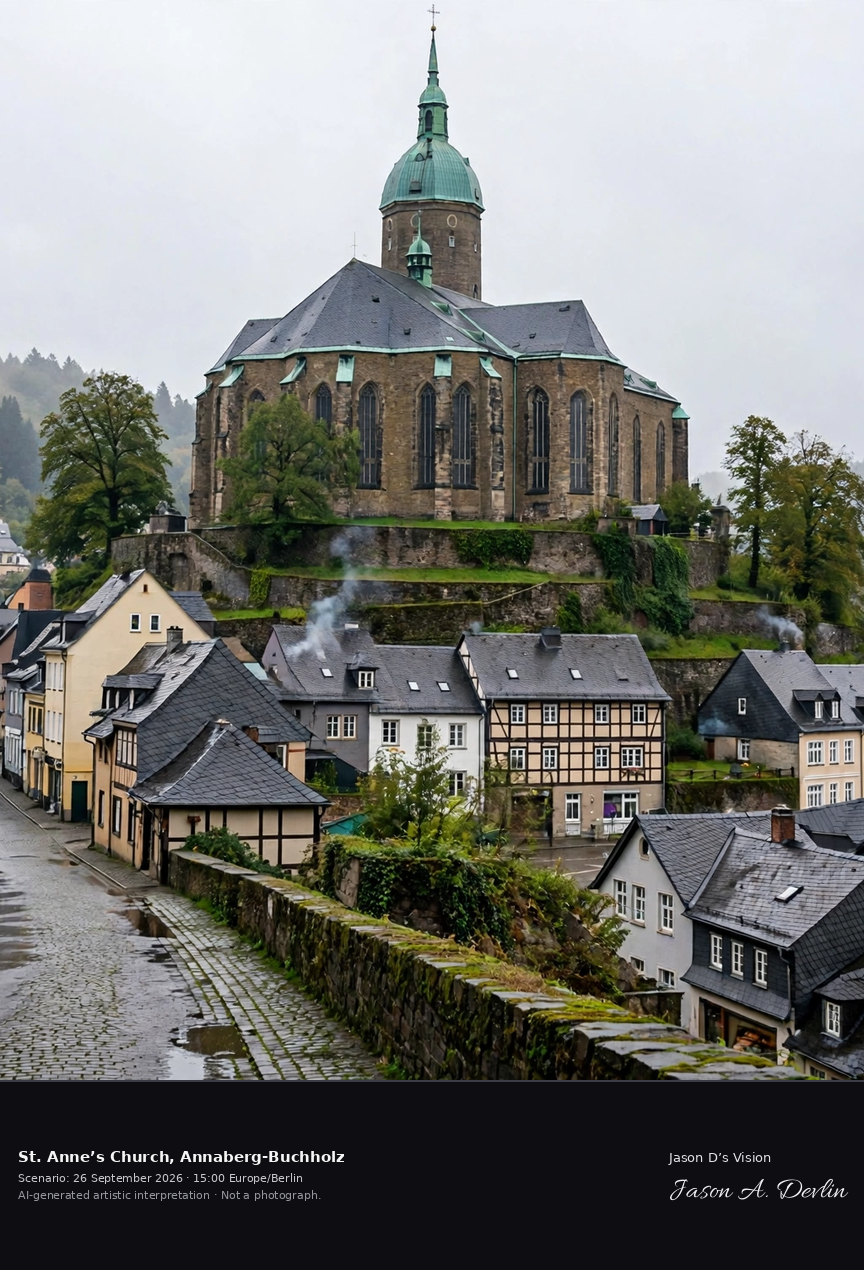
Church above town · AI-generated artistic interpretation
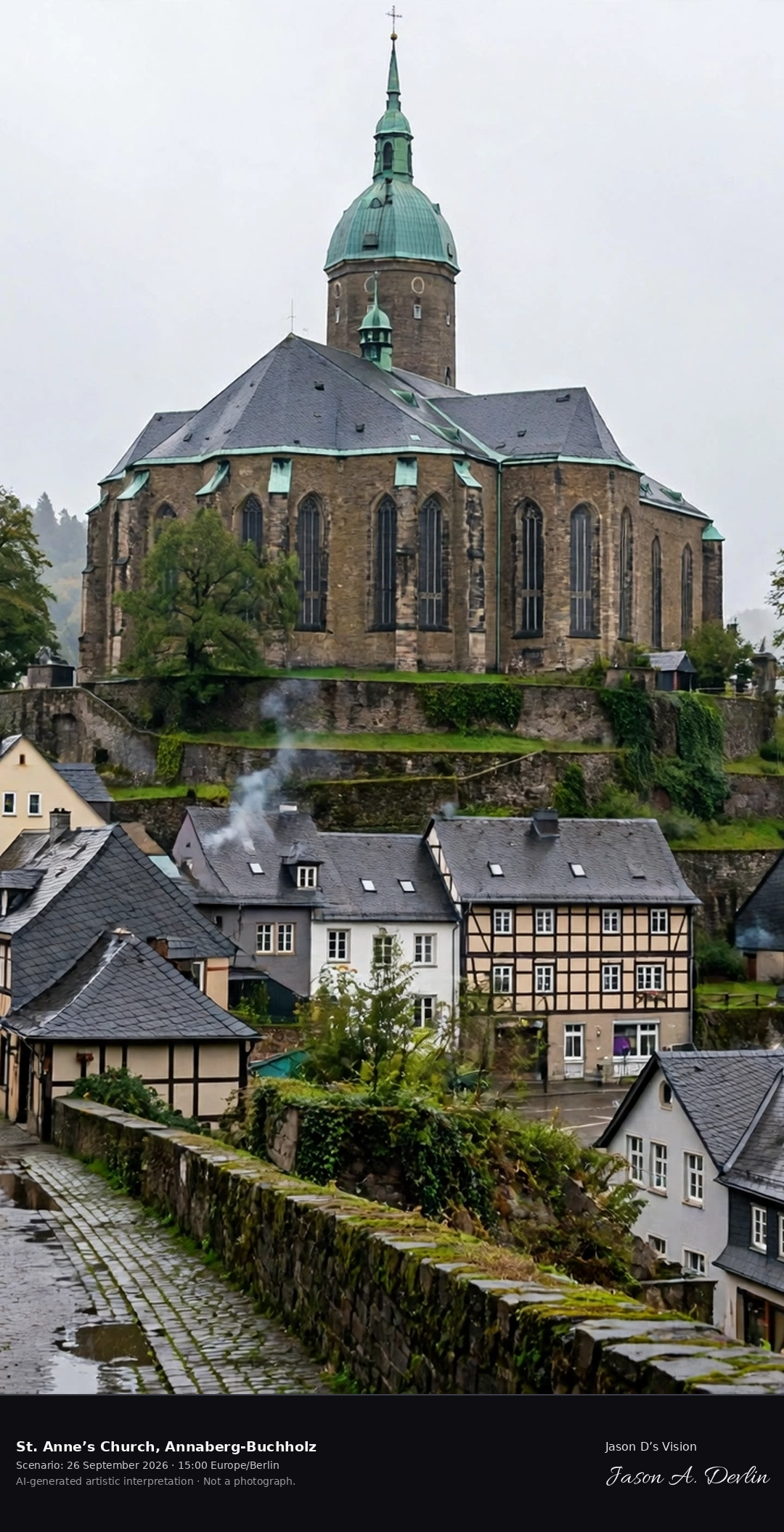
St. Anne's Church crowns its walled terrace above the old town — the great hall church's slate roofs and verdigris-domed tower fill the center, while half-timbered and slate-roofed houses tumble down the slope in the foreground and a cobbled street with a bakery drops away at the left. Chimney smoke drifts in the damp air, and the misty Ore Mountains rise behind the town. Flat overcast daylight at 15:00 keeps the whole scene soft and cool.
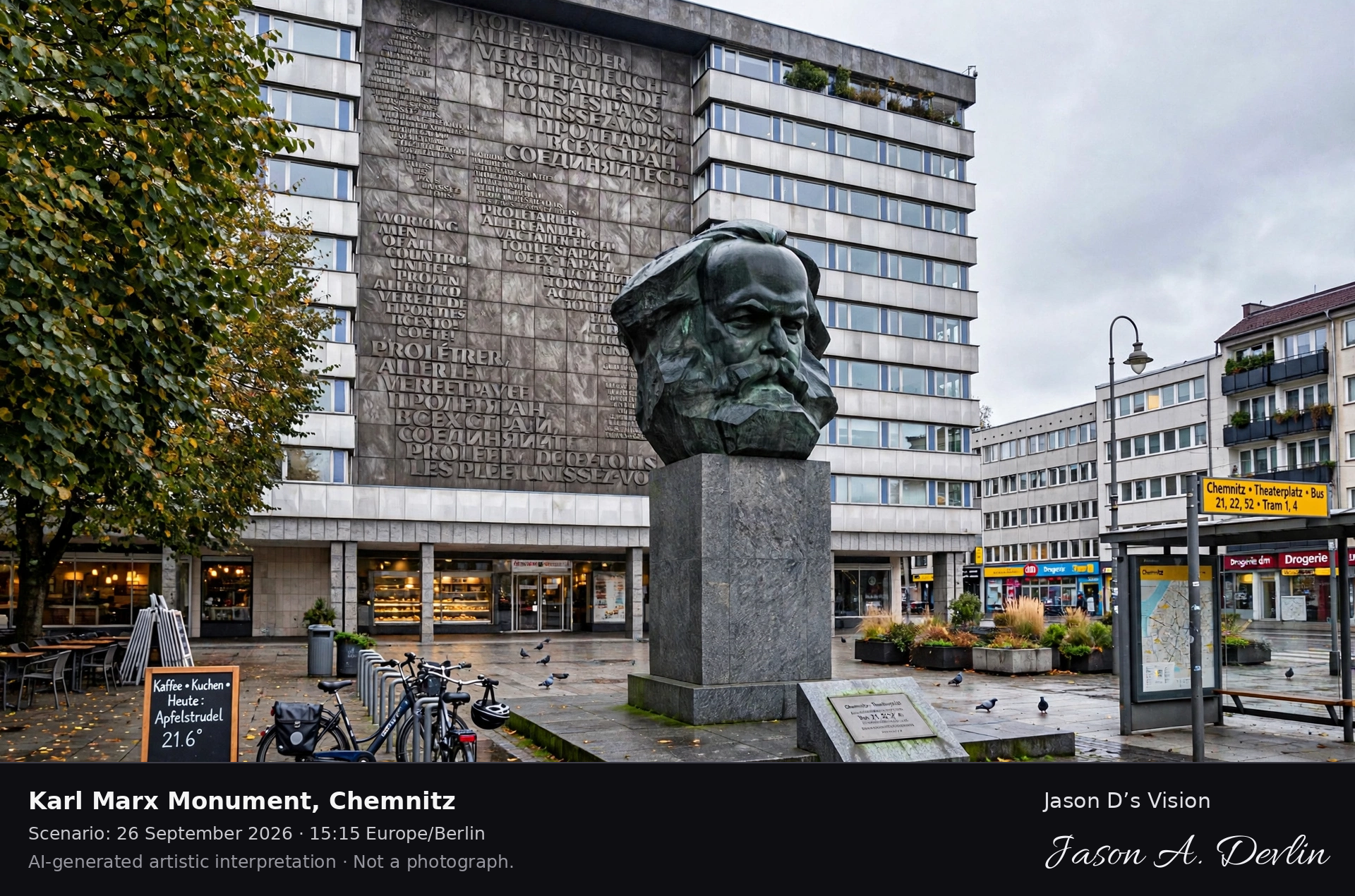
Monument and urban setting · AI-generated artistic interpretation
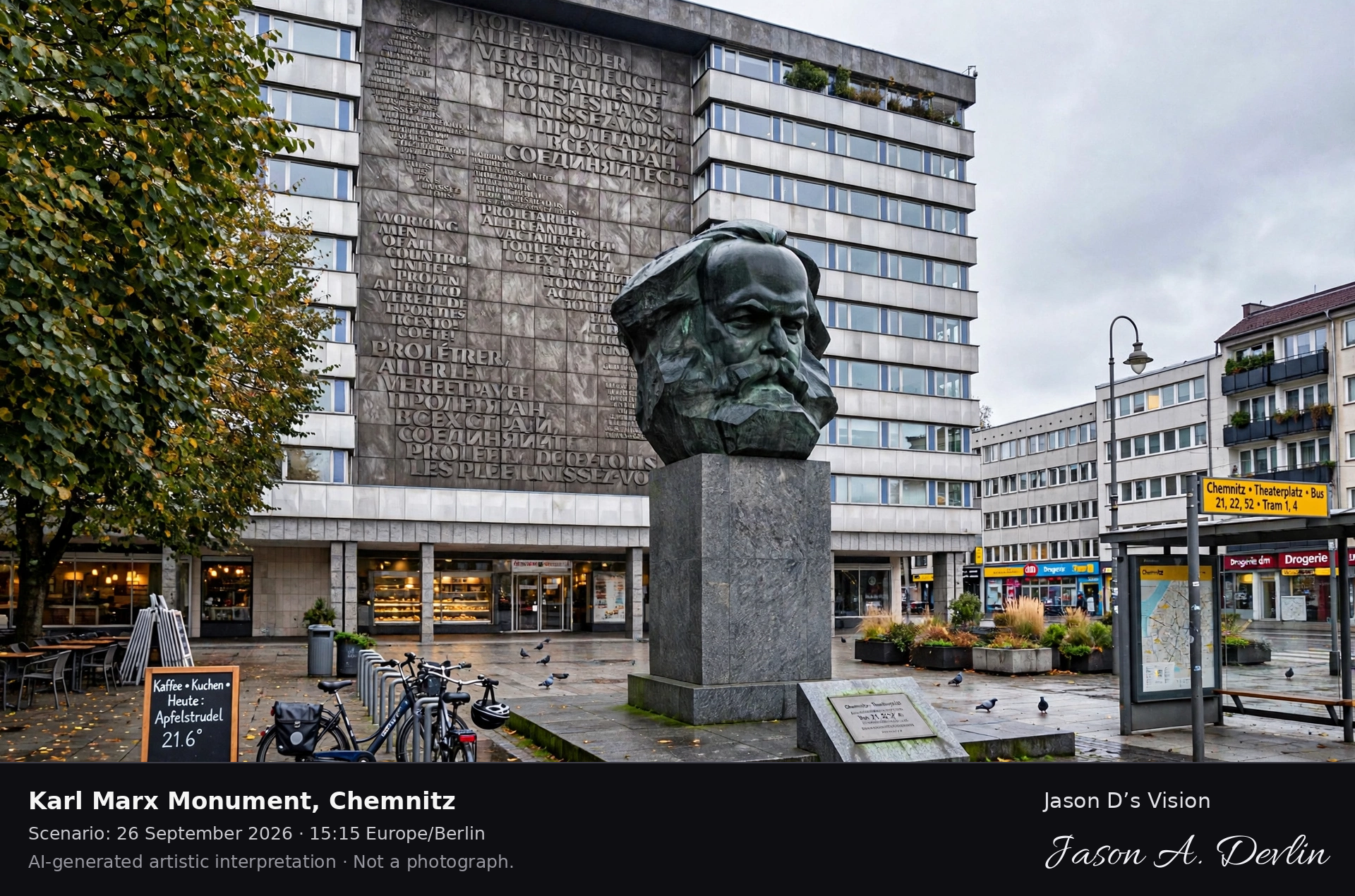
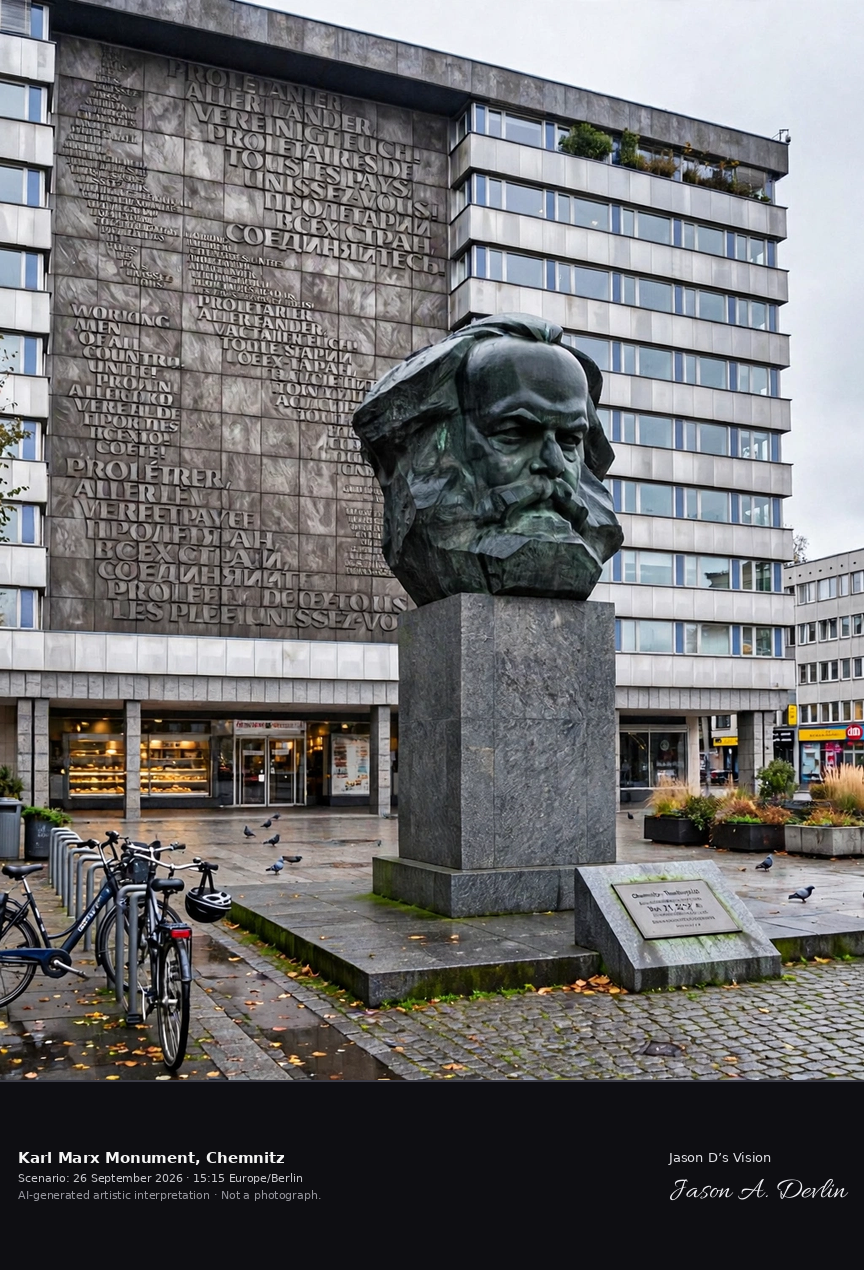
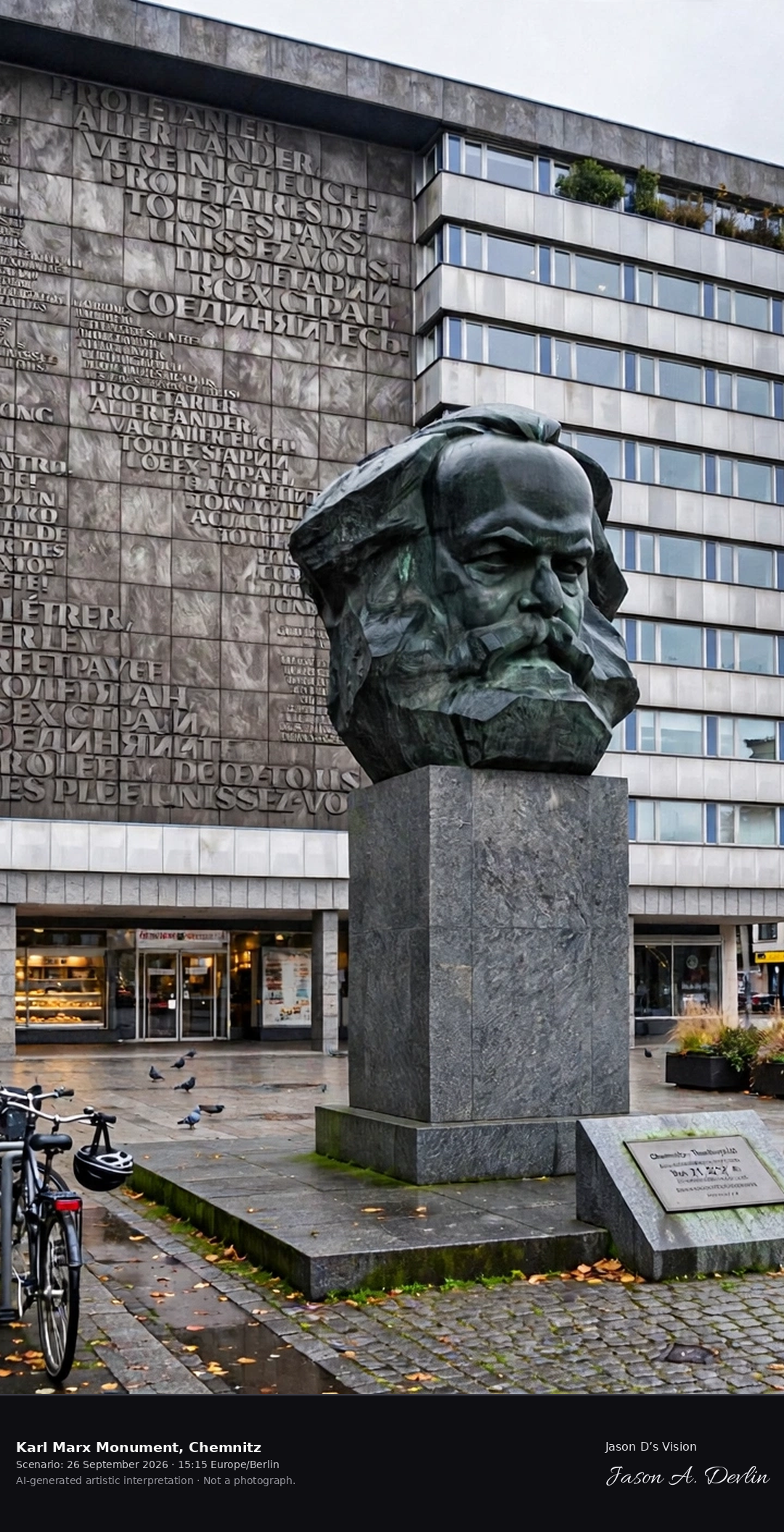
The bronze Karl Marx head rises on its stone plinth at center, backed by the tower wall carrying the Workers' cry in many languages. A leafy tree frames the left edge while the plaza stretches right past a bus shelter and shopfronts toward the apartment blocks. Flat overcast light on wet cobblestones, scattered early autumn leaves and a few pigeons complete the late-September afternoon.
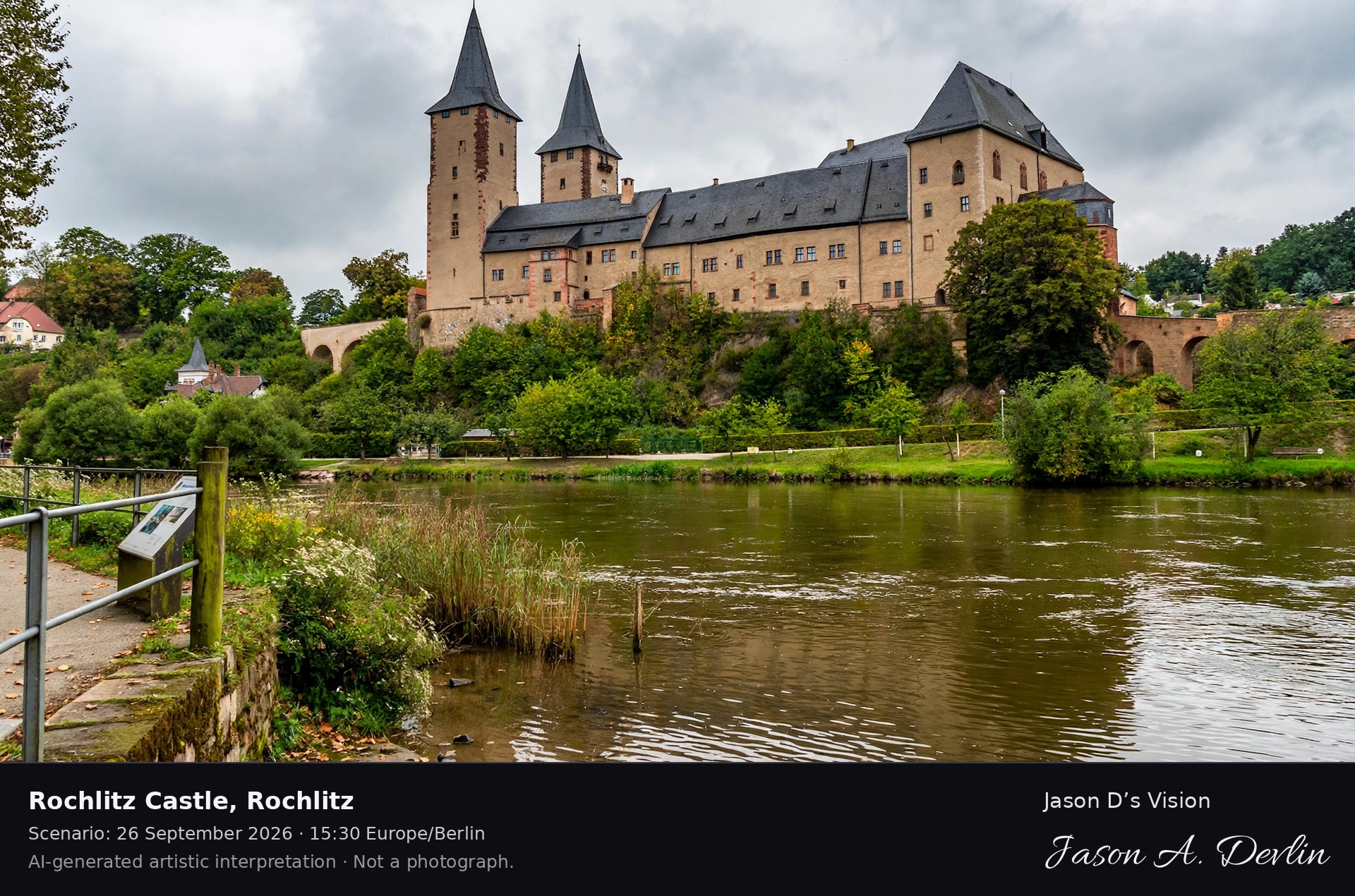
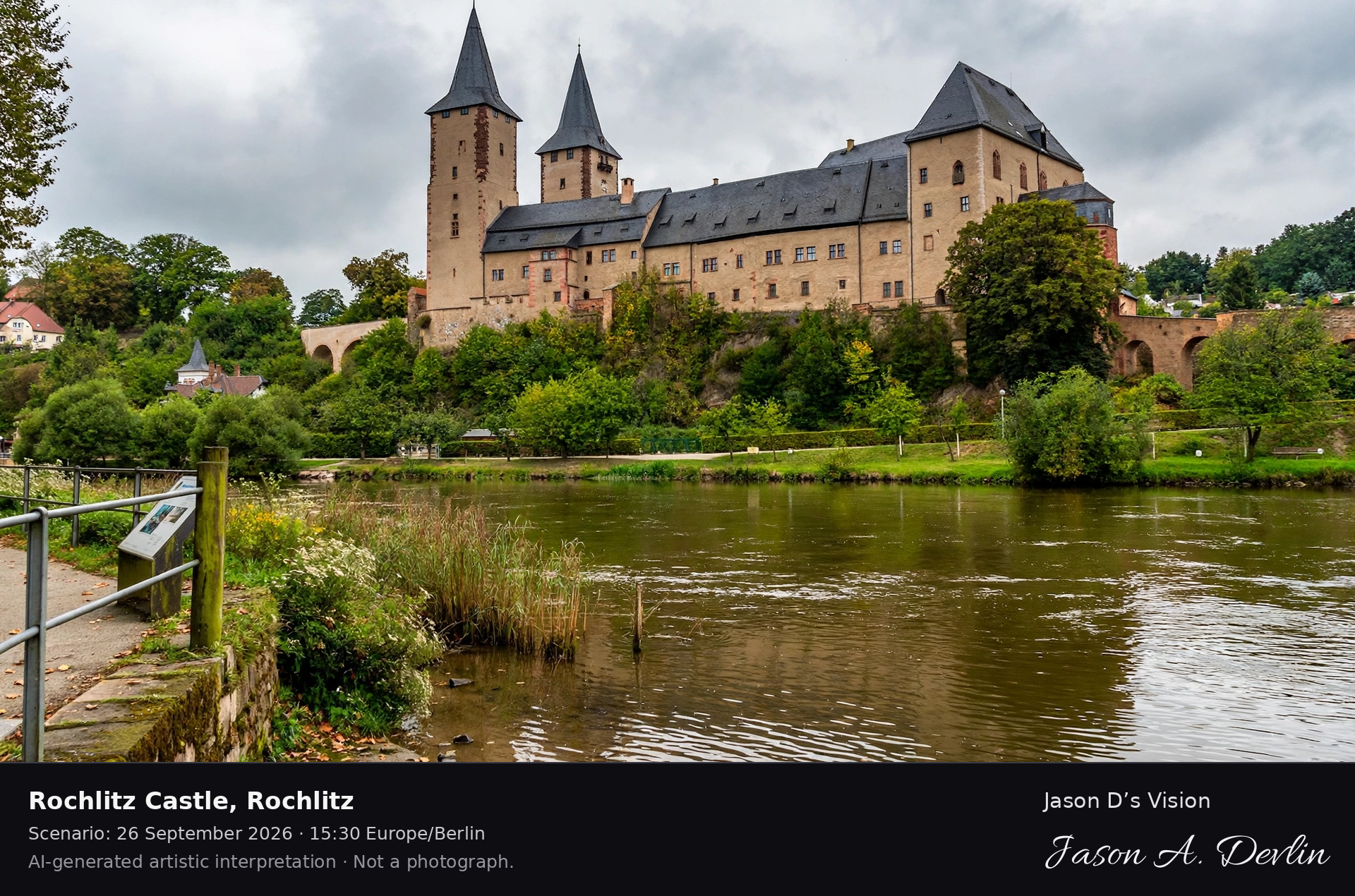
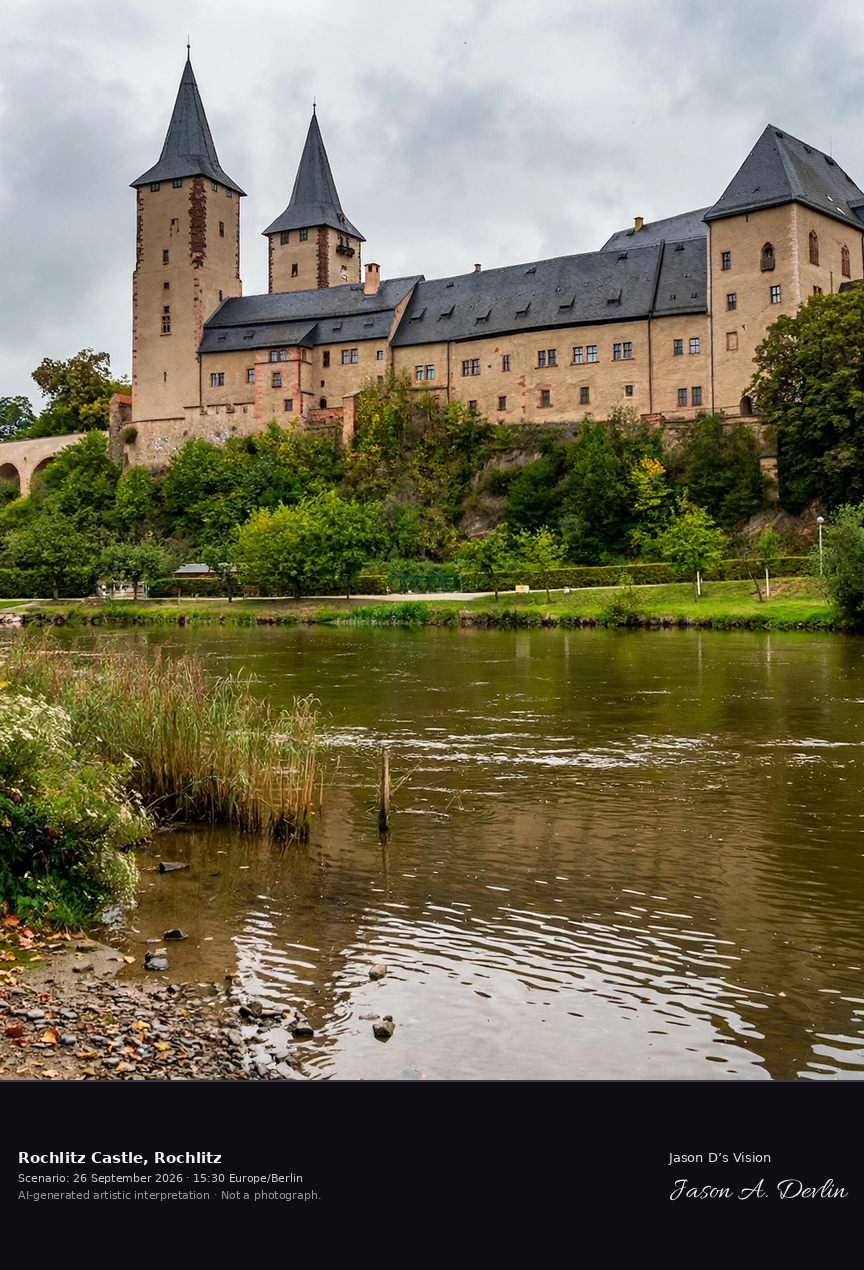
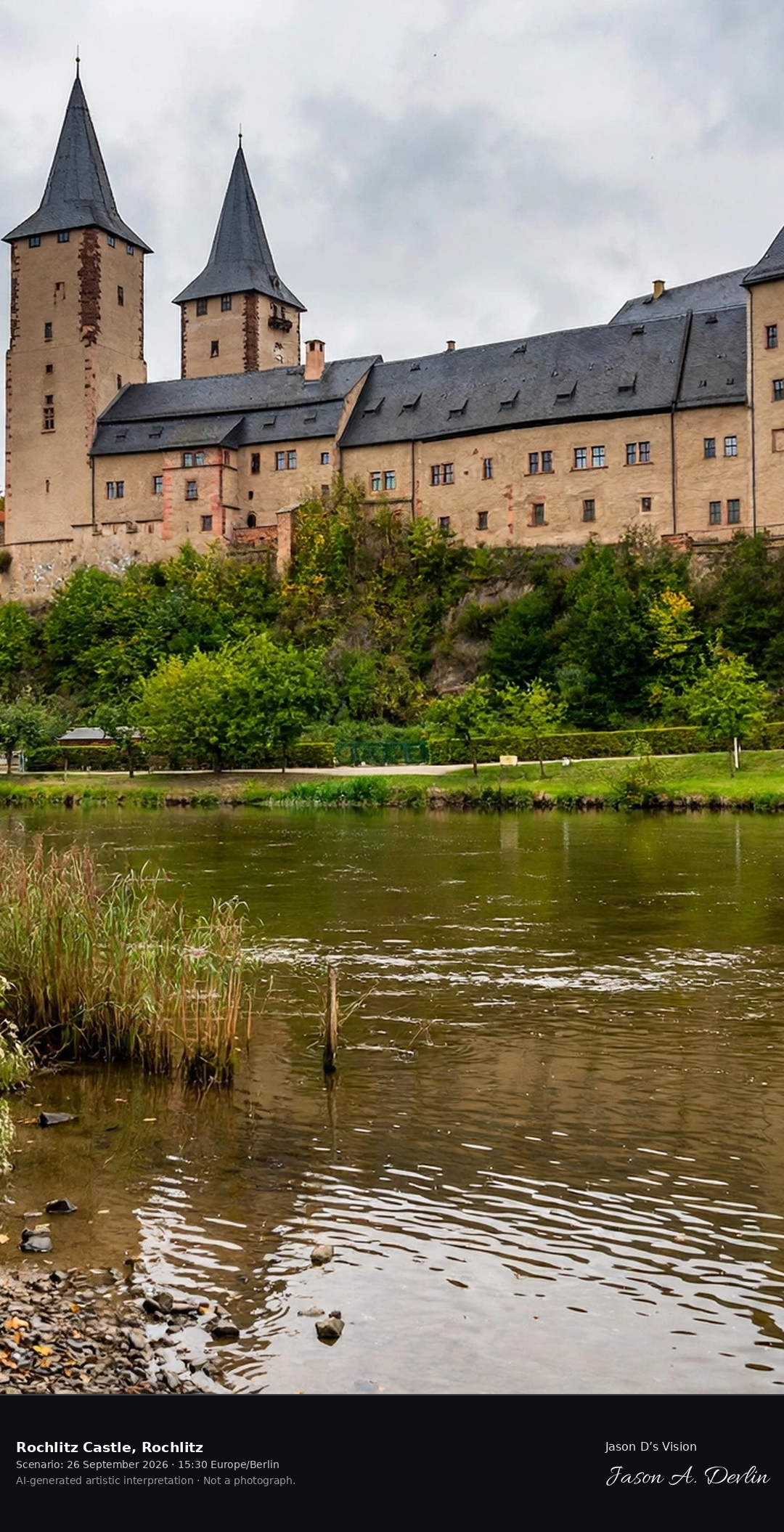
Rochlitz Castle crowns the wooded bluff across the Mulde, its twin towers and slate roofs rising above the rock face. Reeds and a riverside information board frame the left foreground, with the water stretching to the castle-side bank. Flat overcast light keeps every stone detail soft and readable on this late-September afternoon.
Half-timbered houses and Town Hall · AI-generated artistic interpretation
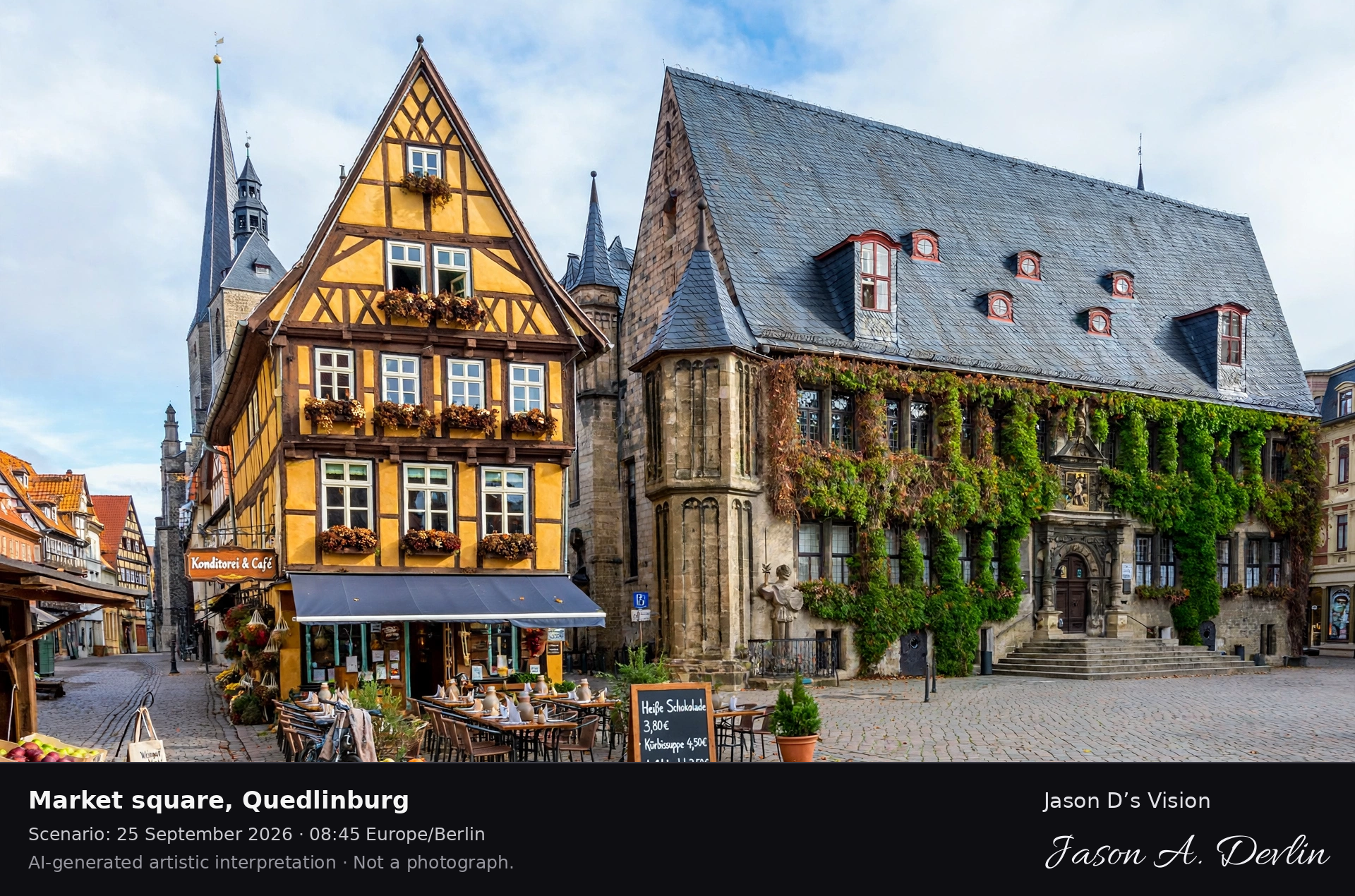
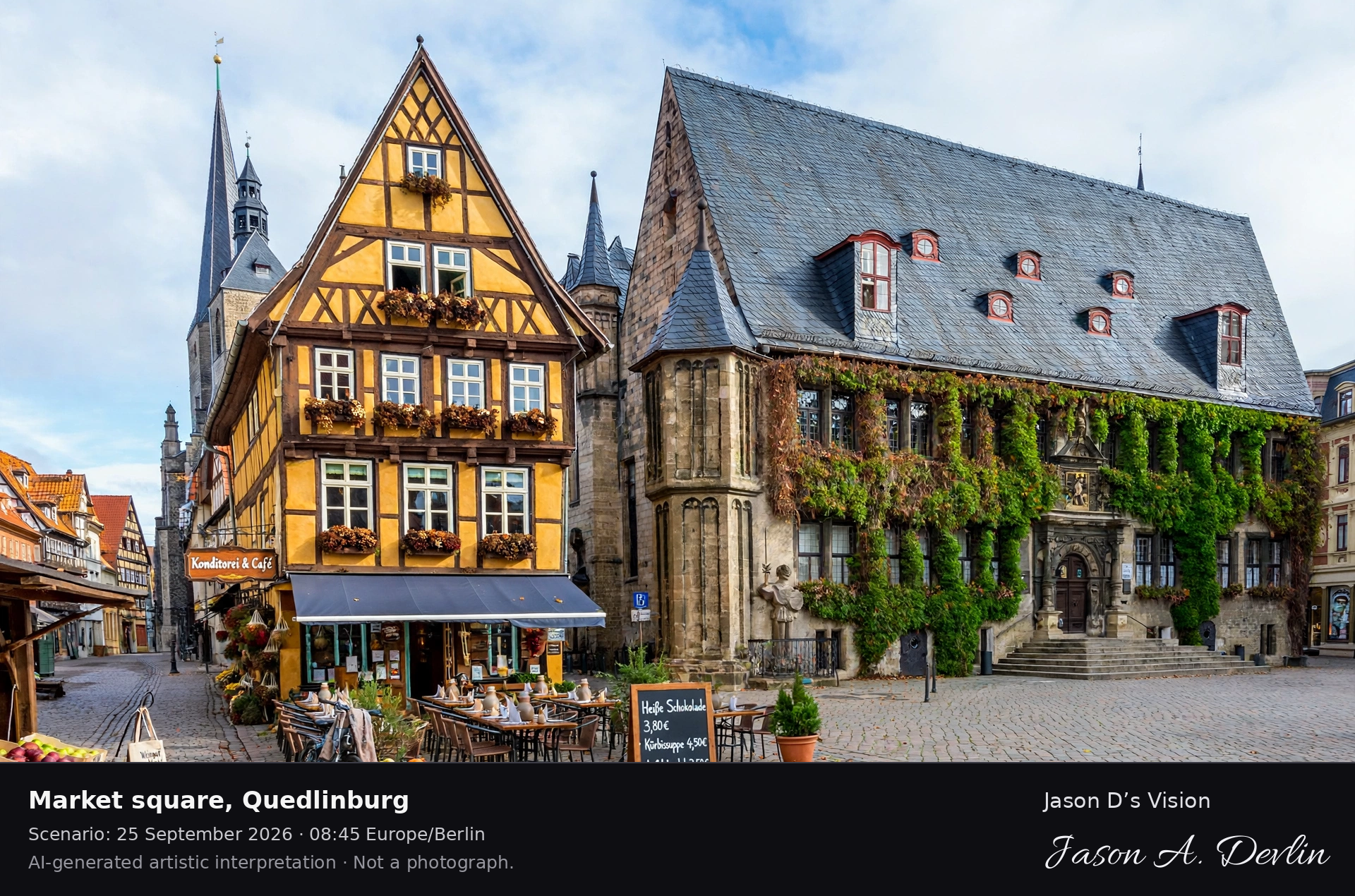
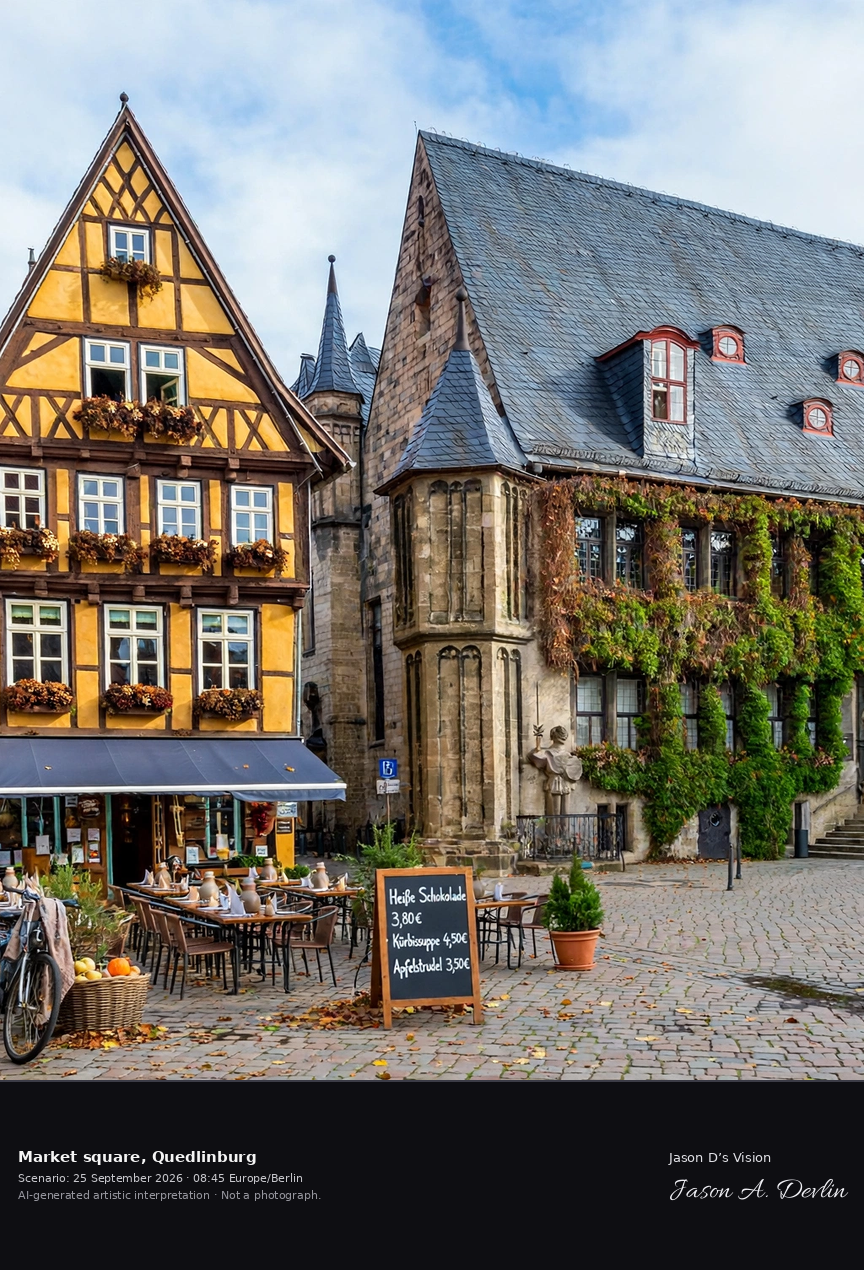
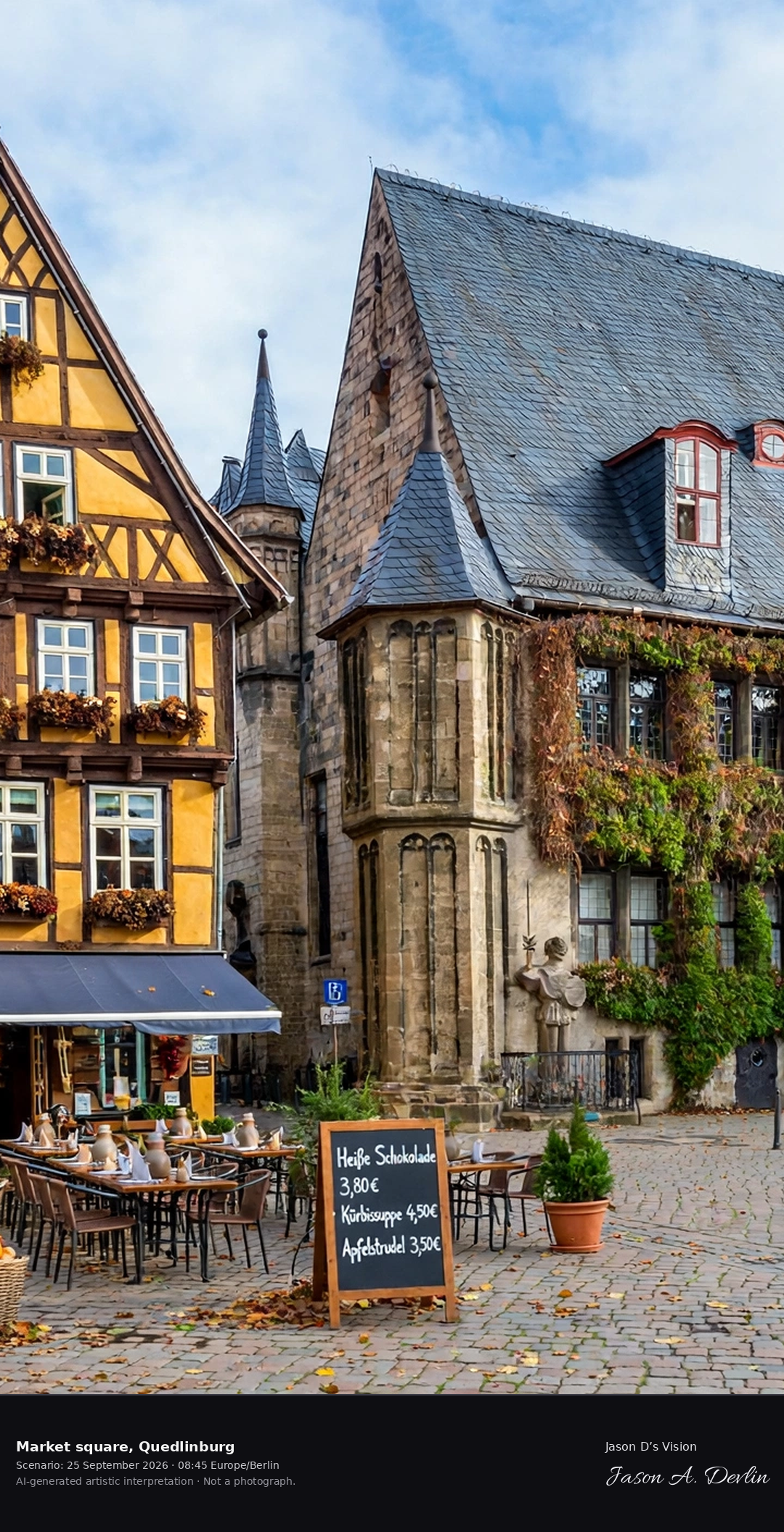
A half-timbered merchant house in ochre and dark timber stands left of frame, its window boxes still full of flowers, while the ivy-draped stone Town Hall with its steep slate roof fills the right. Between them a slender church spire rises over the rooftops and café tables sit in the cobbled foreground under bright, mainly clear morning light.
Abbey church and rooftops · AI-generated artistic interpretation
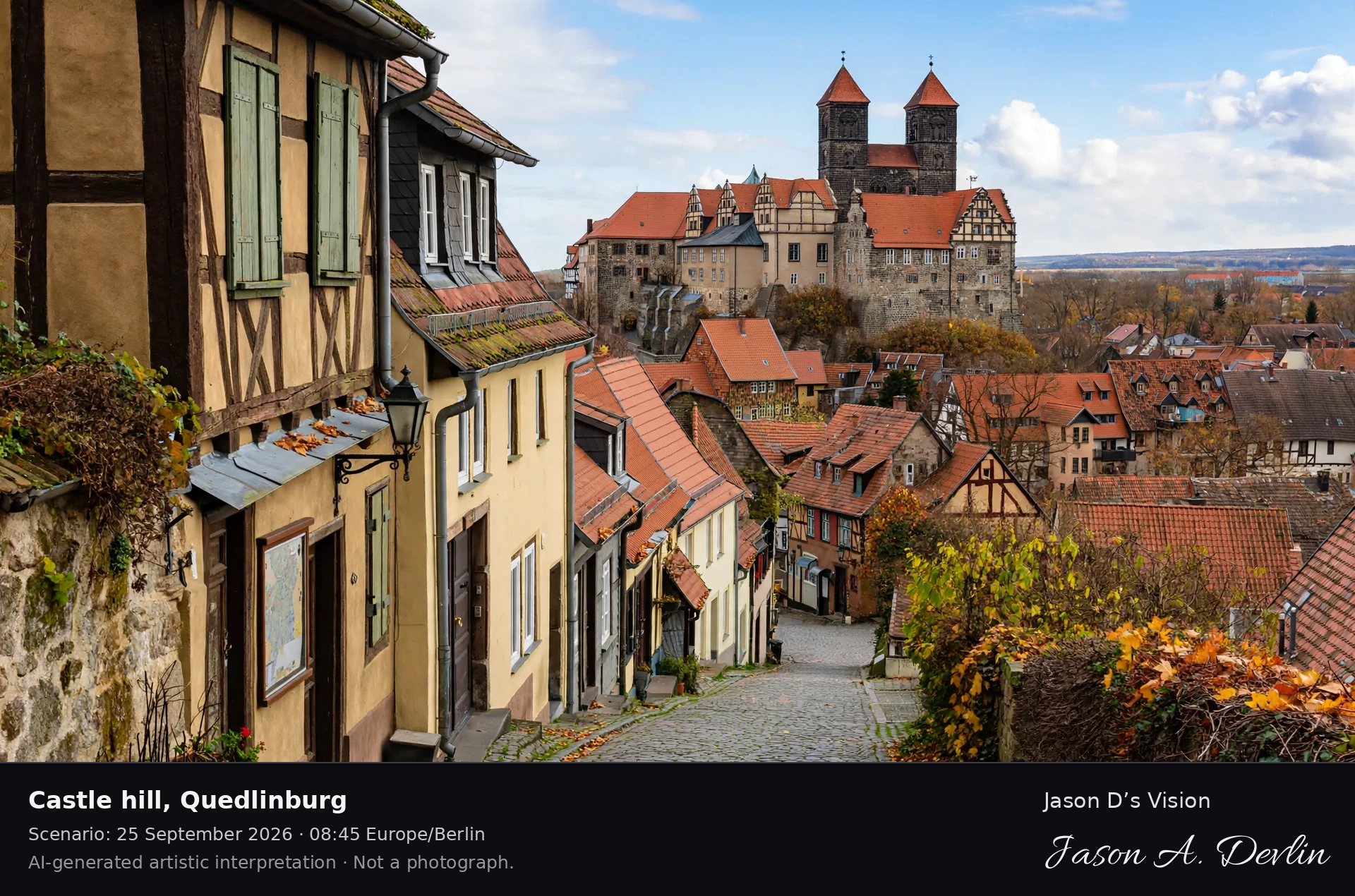
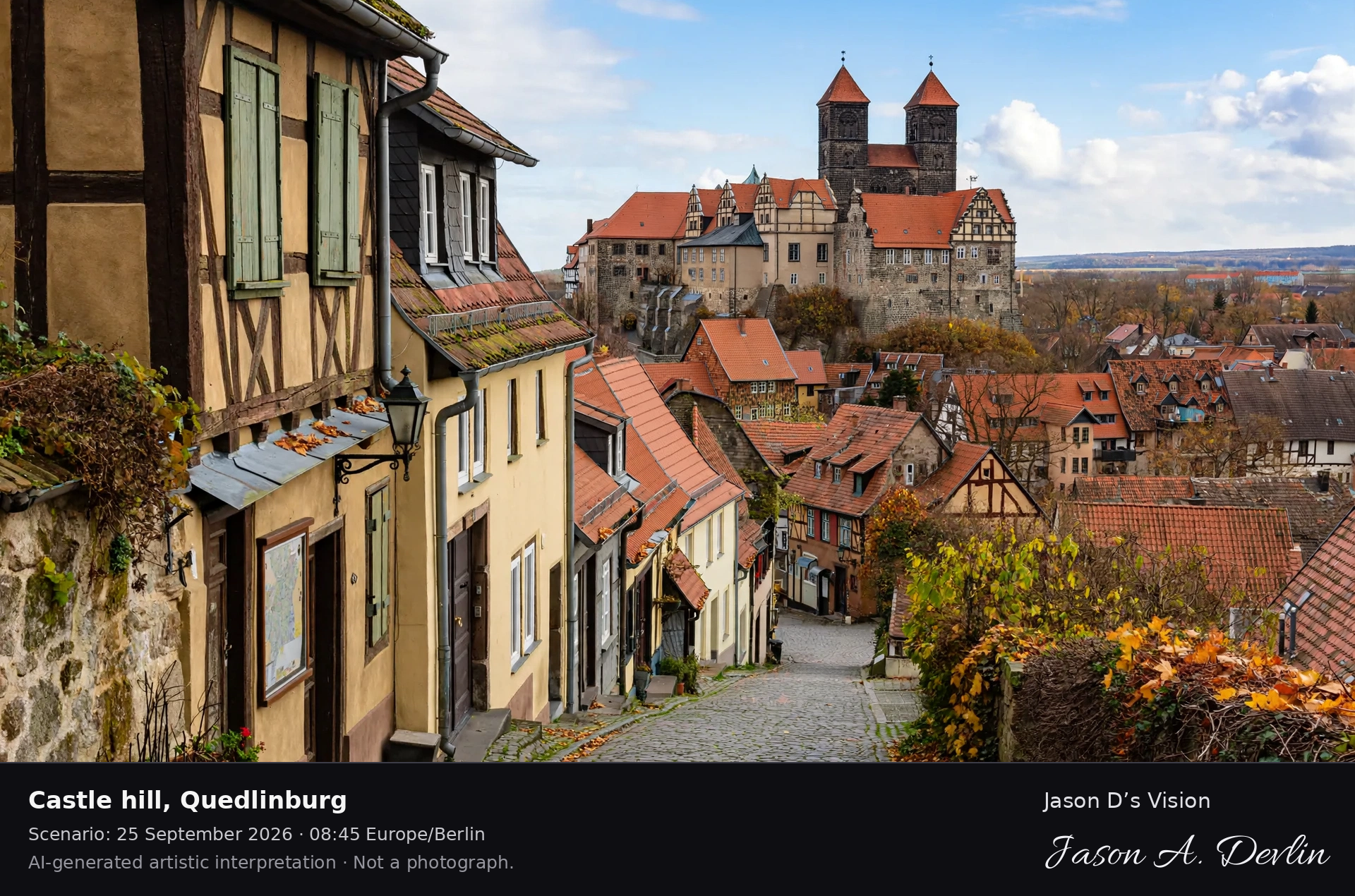
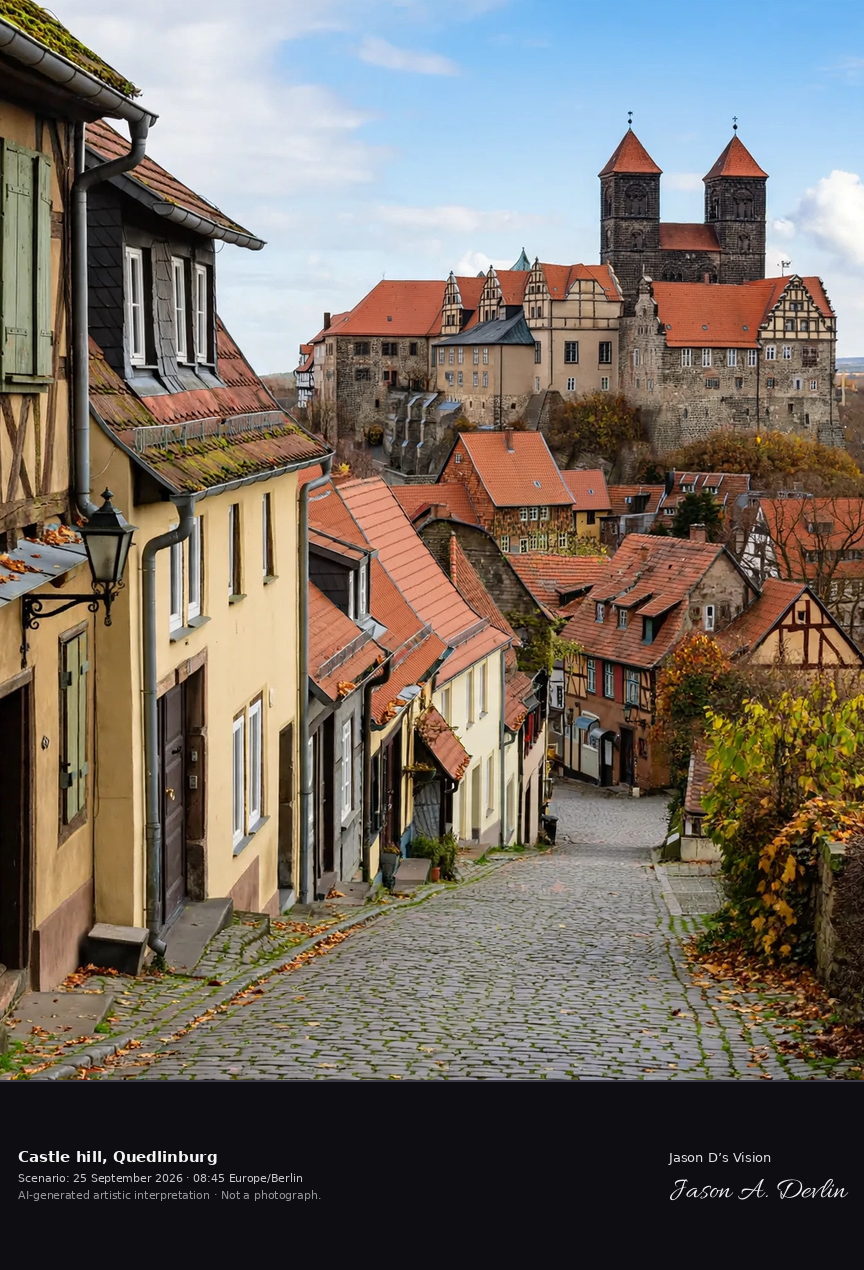
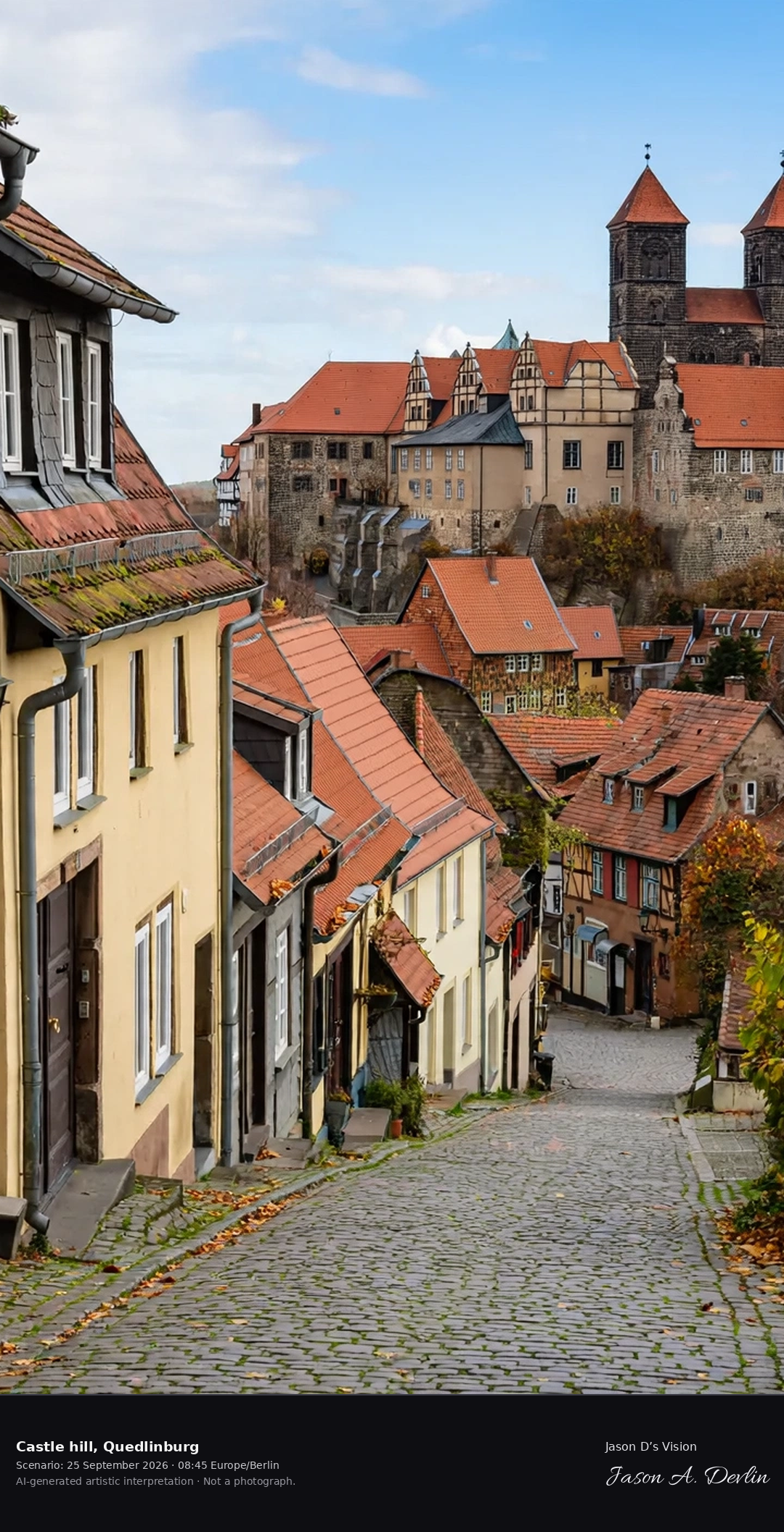
A cobbled lane lined with half-timbered houses on the left climbs toward the castle hill, where the twin towers of the abbey church rise above a sea of red rooftops at center-right. Red-tiled and gabled roofs fill the middle ground, early-autumn foliage brushes the right edge, and bright morning light under a mainly clear sky lights the scene.
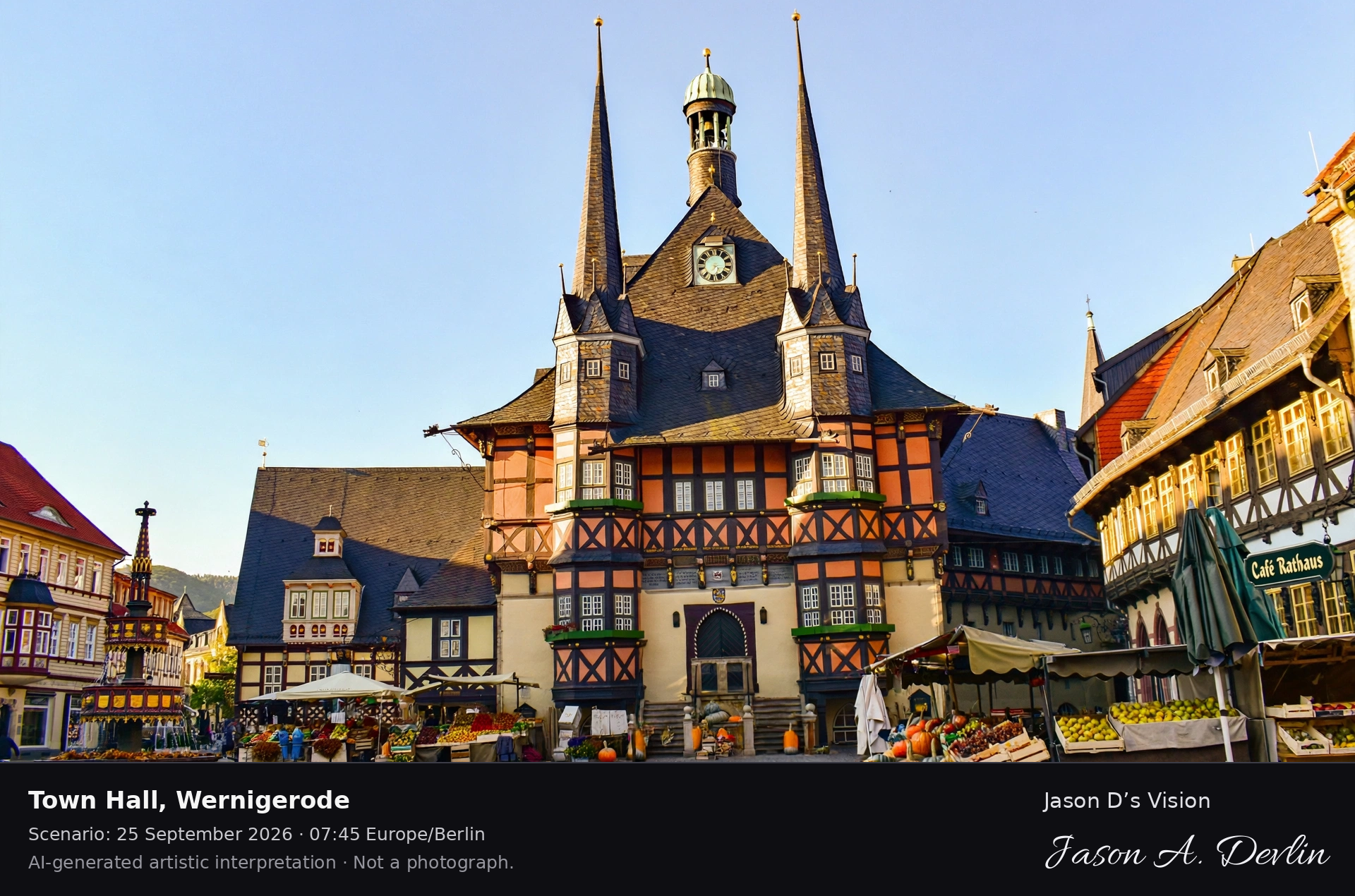
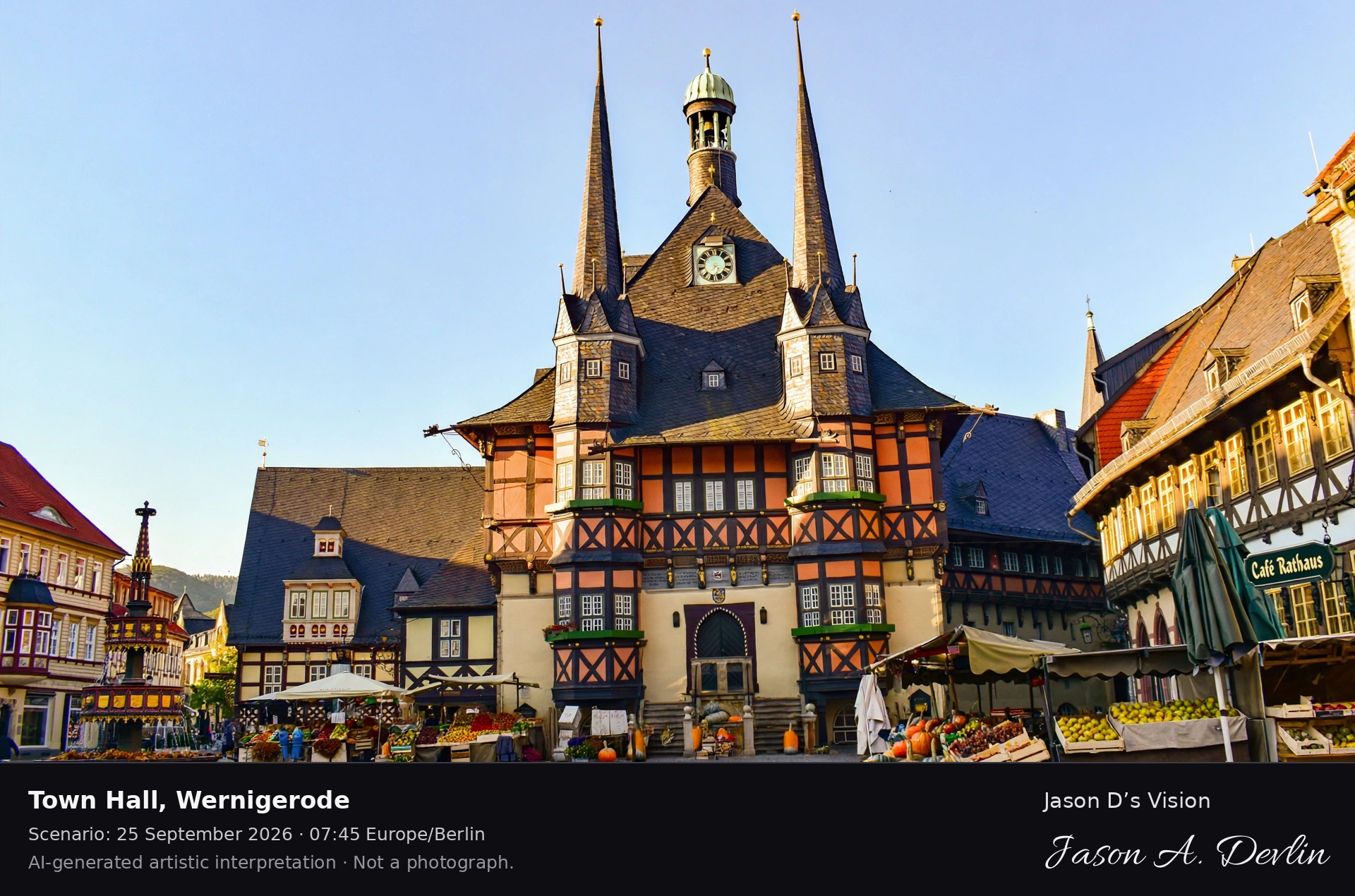
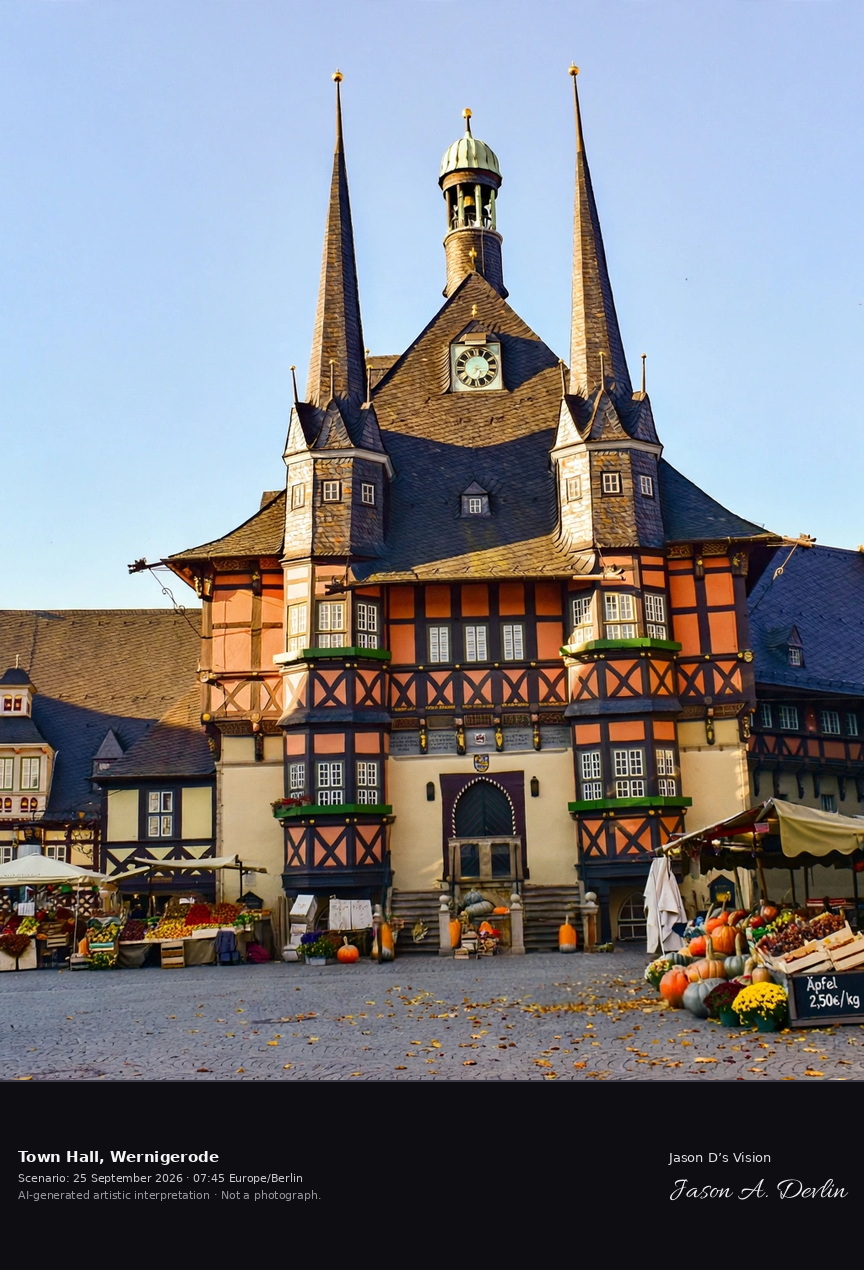
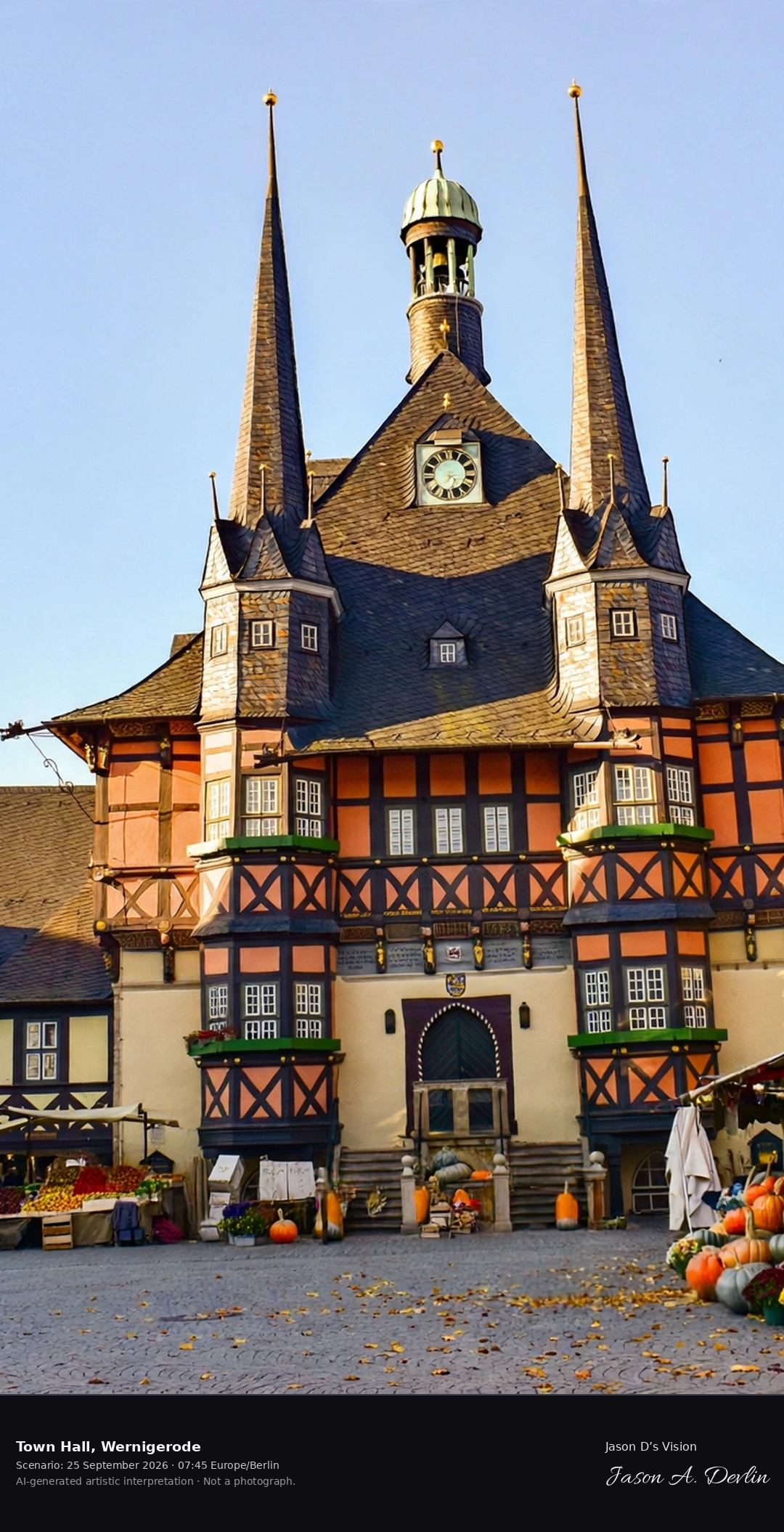
Eye-level on the colorful market square, the orange-red half-timbered Town Hall stands center-frame with its twin slender slate spires, clock gable and open bell lantern, green ledges below the windows. Market stalls crowd the cobbled foreground — crates of apples and grapes, a pyramid of pumpkins — with neighboring half-timbered houses and a "Café Rathaus" sign at the right edge. Crisp clear 7.2°C morning light under a pale blue sky.
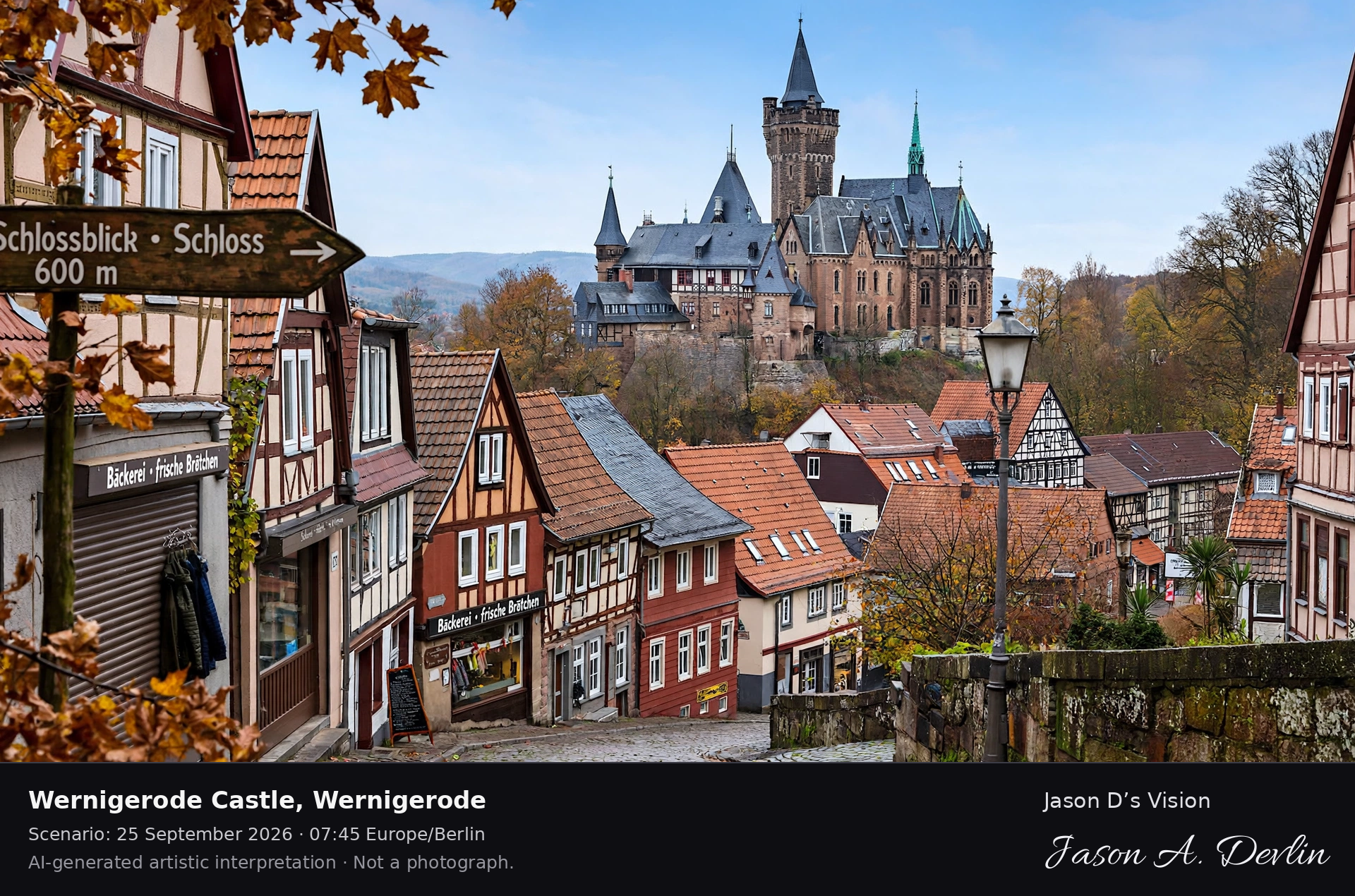
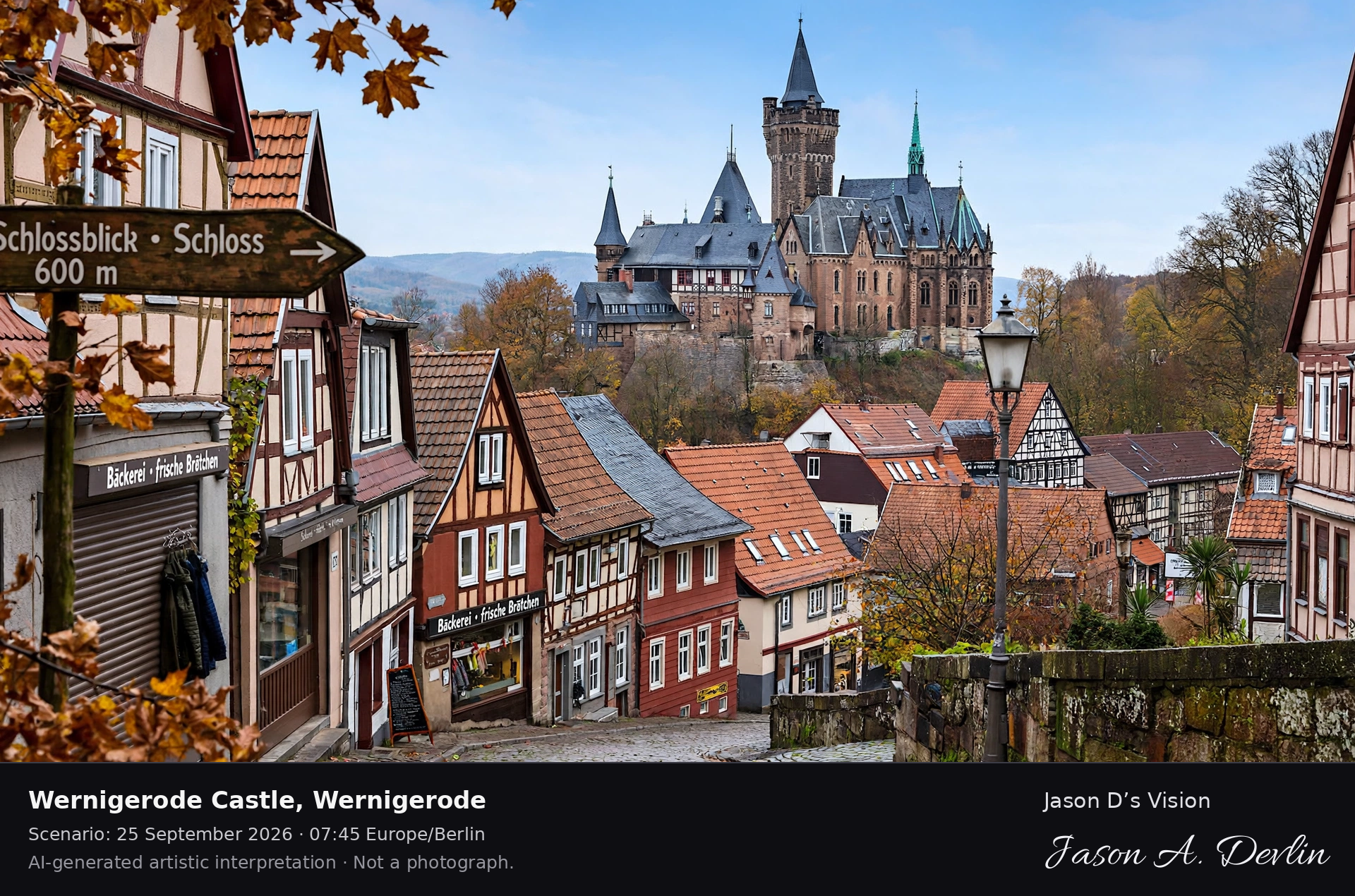
Castle above town · AI-generated artistic interpretation
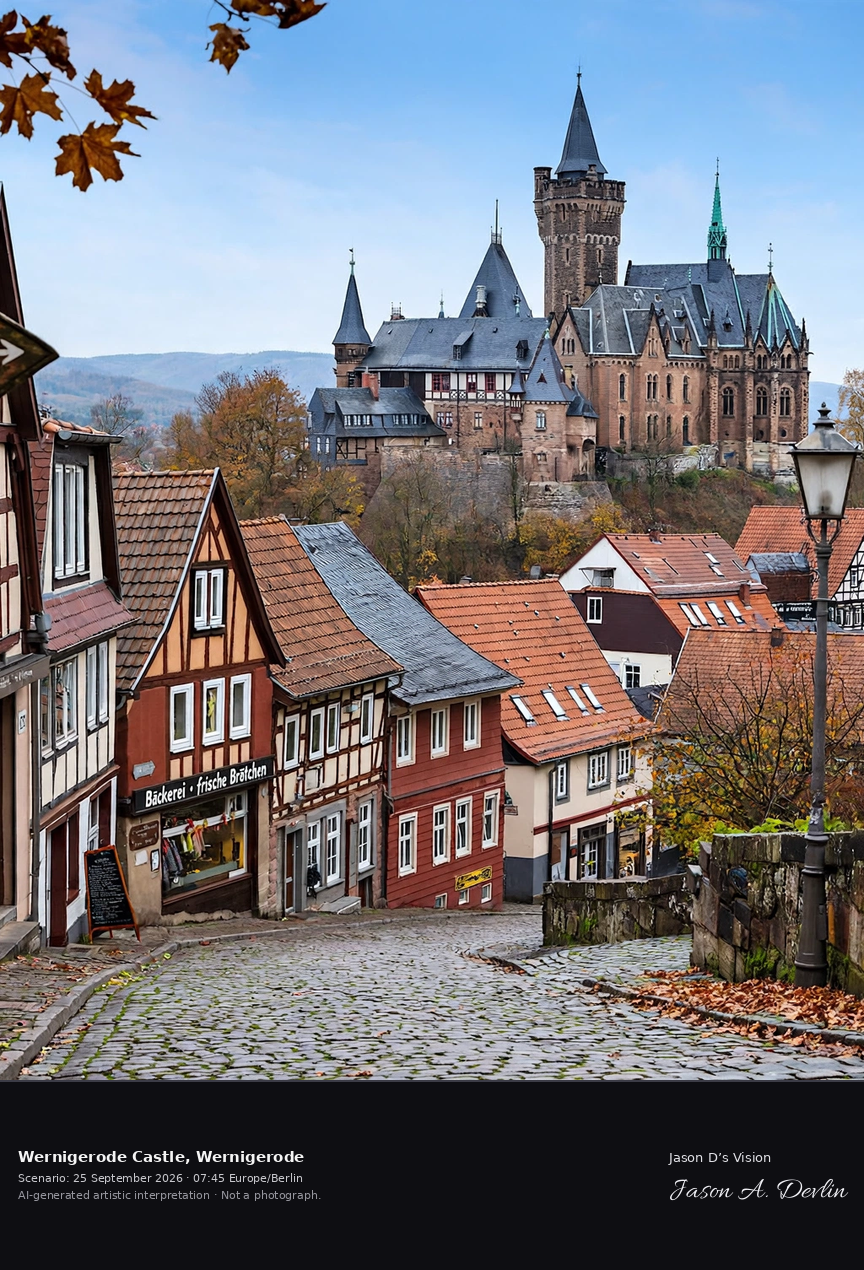
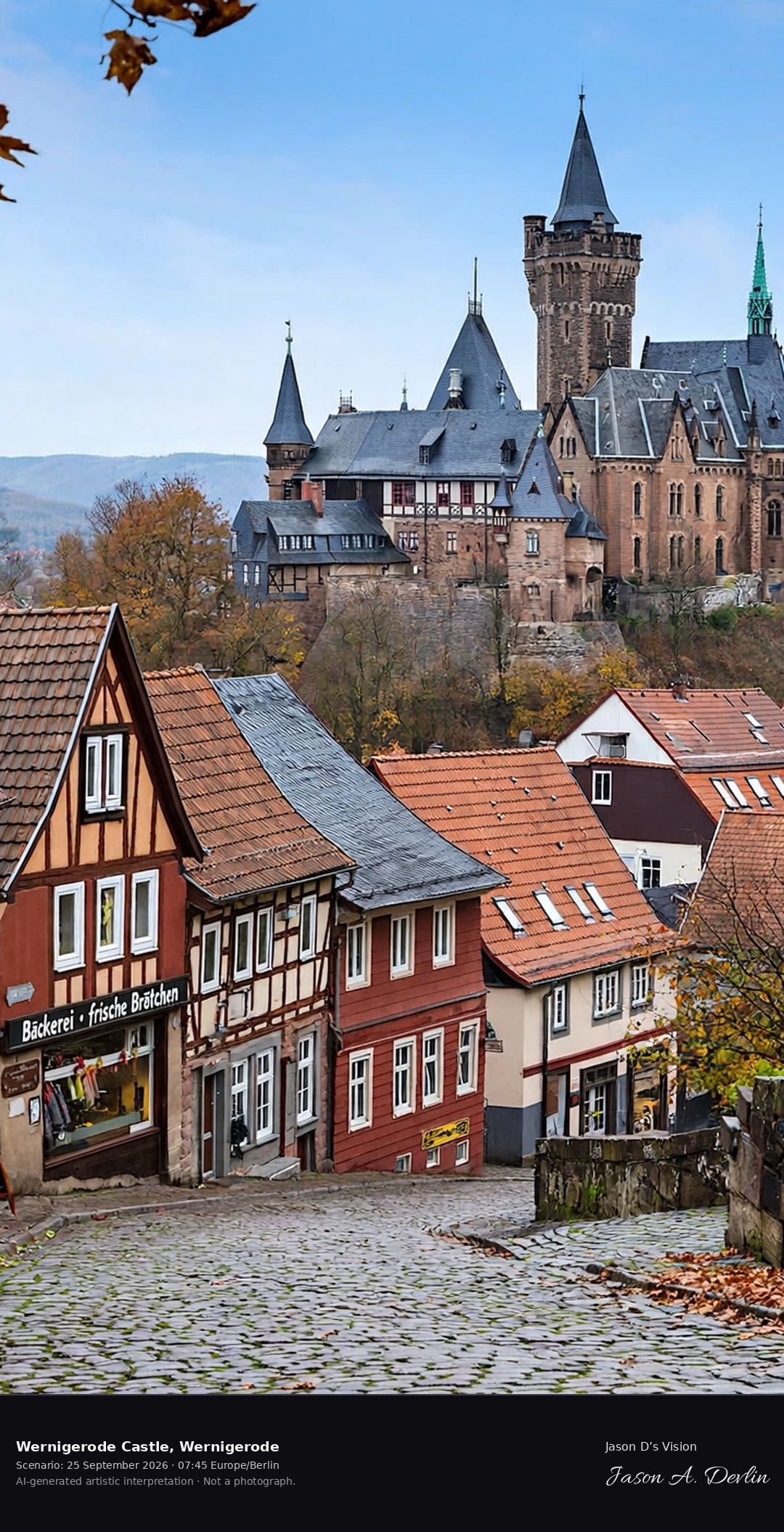
From a cobbled lane above the old town, the neo-Gothic Wernigerode Castle crowns the hill center-frame — its tall stone keep, steep slate roofs and green-copper spire rising over autumn-tinted woods. Half-timbered houses with red tile roofs slope away left and right in the foreground, where a shop-front bakery and a wooden signpost reading "Schlossblick · Schloss 600 m" point the way uphill. Clear 7.2°C morning light under a pale sky, with golden foliage framing the top-left of the view.
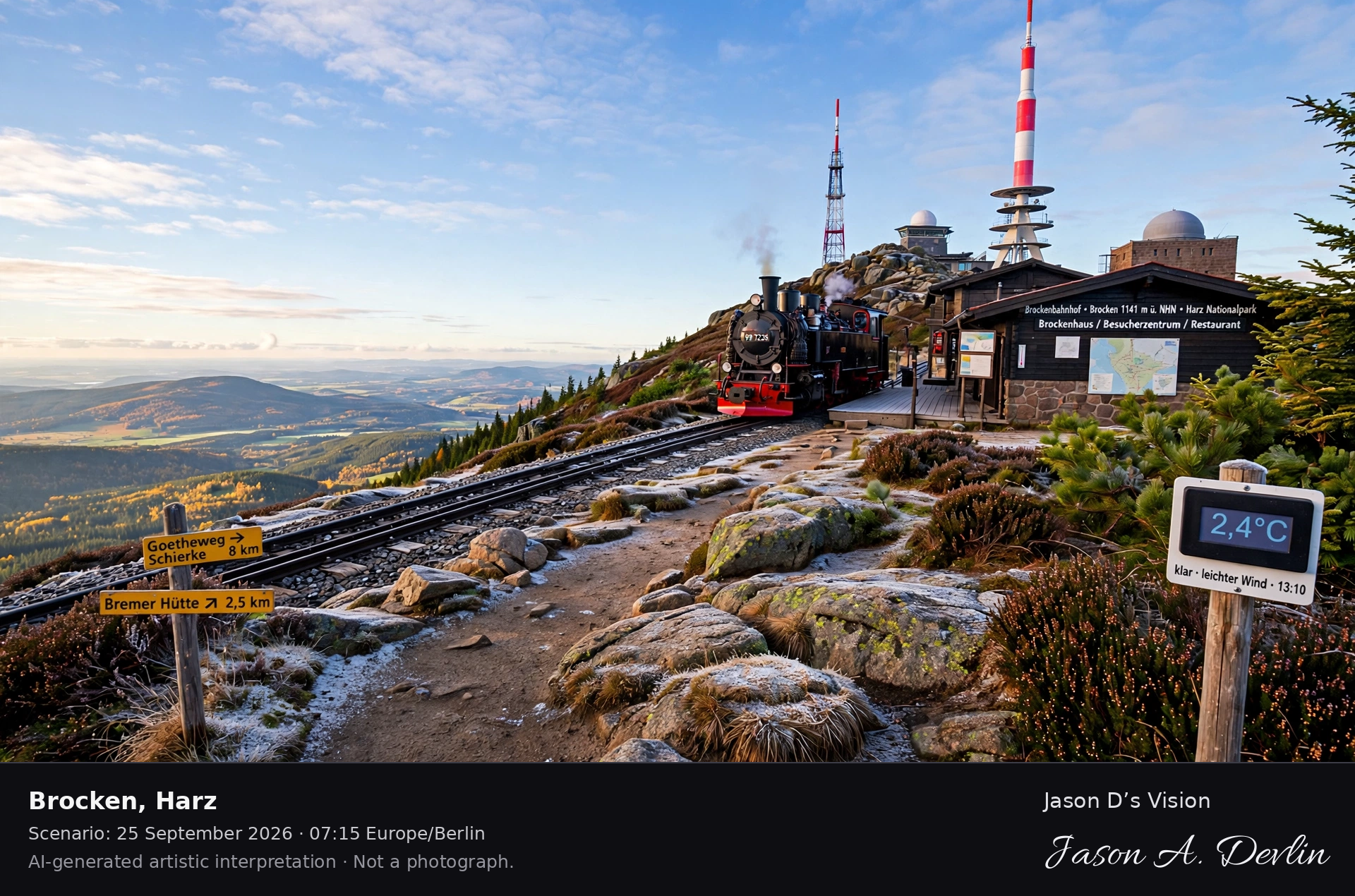
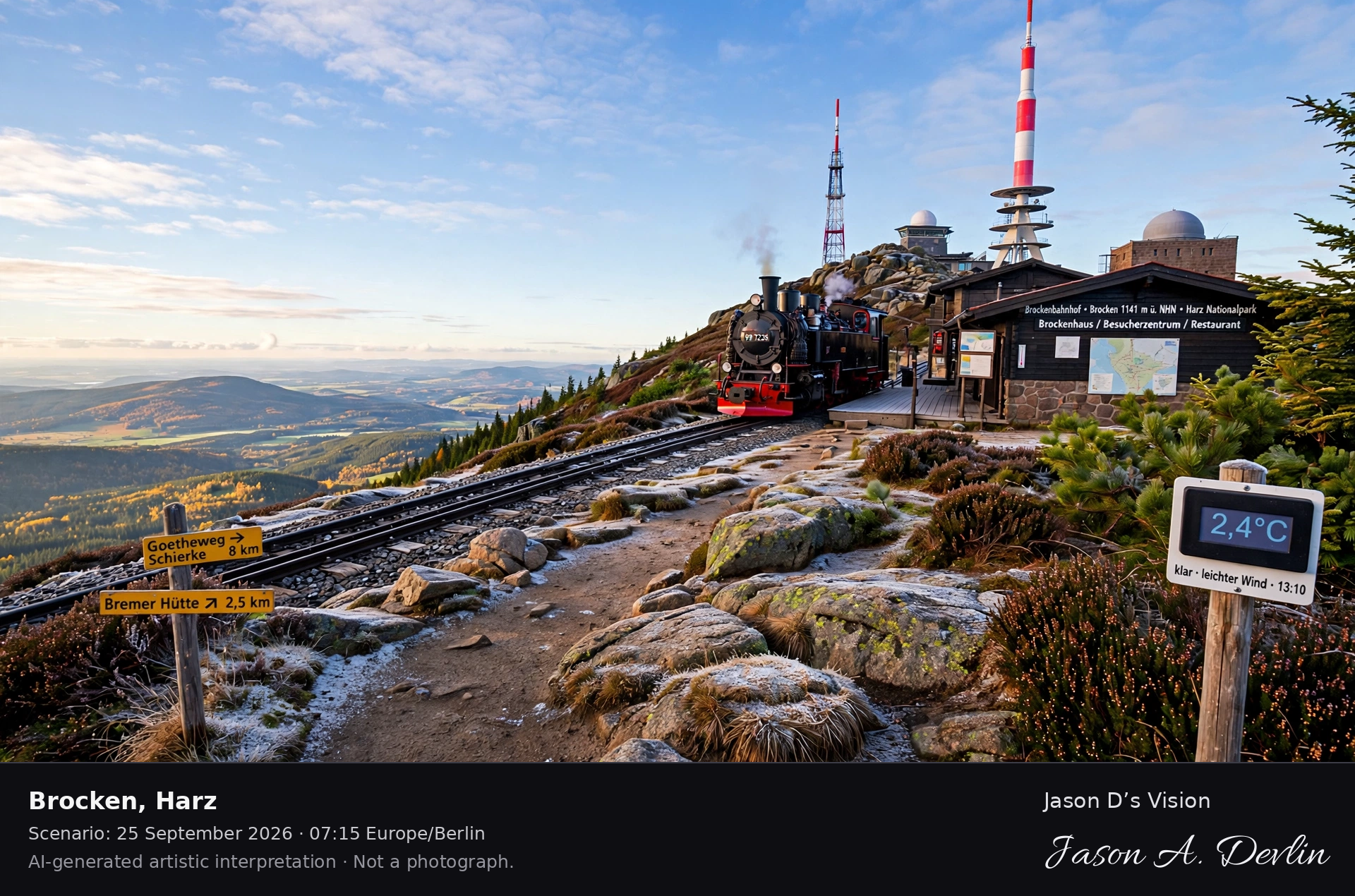
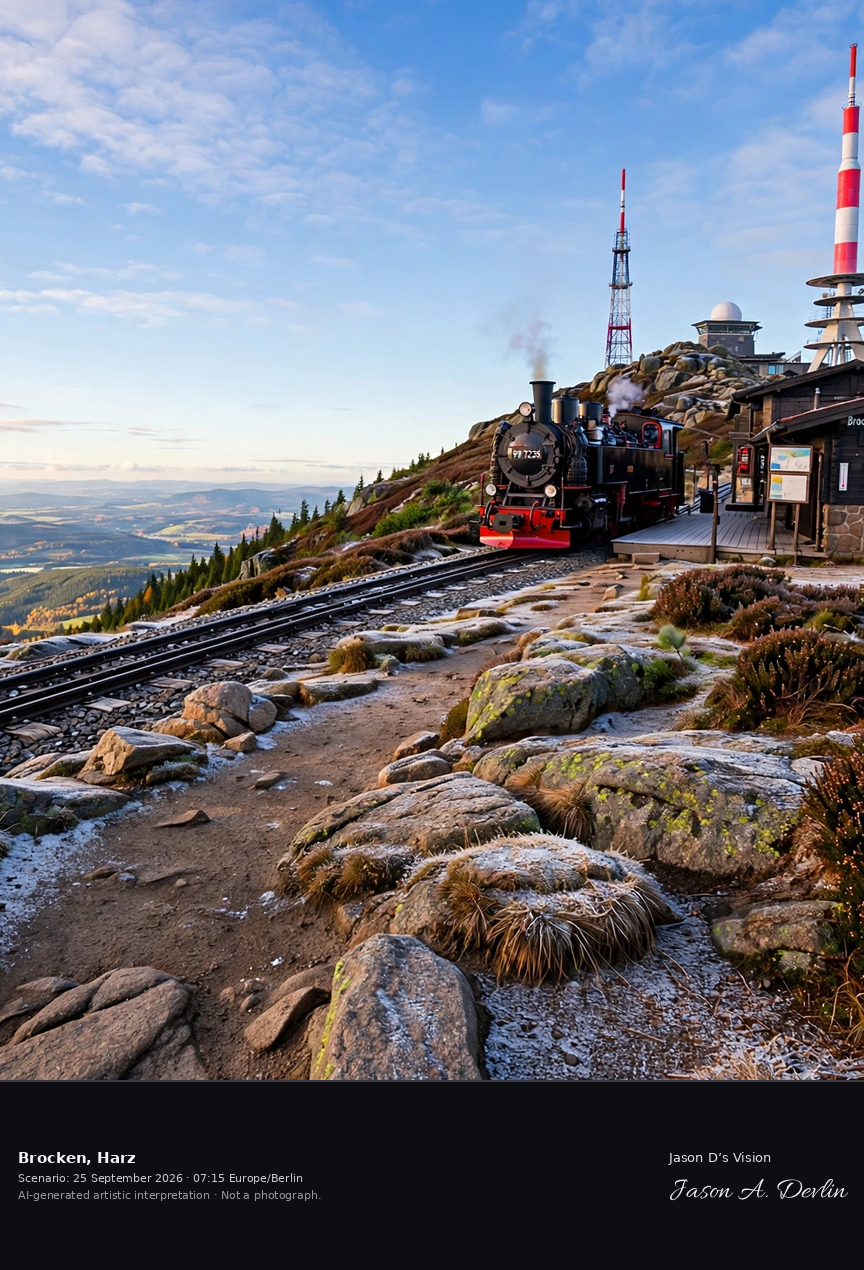
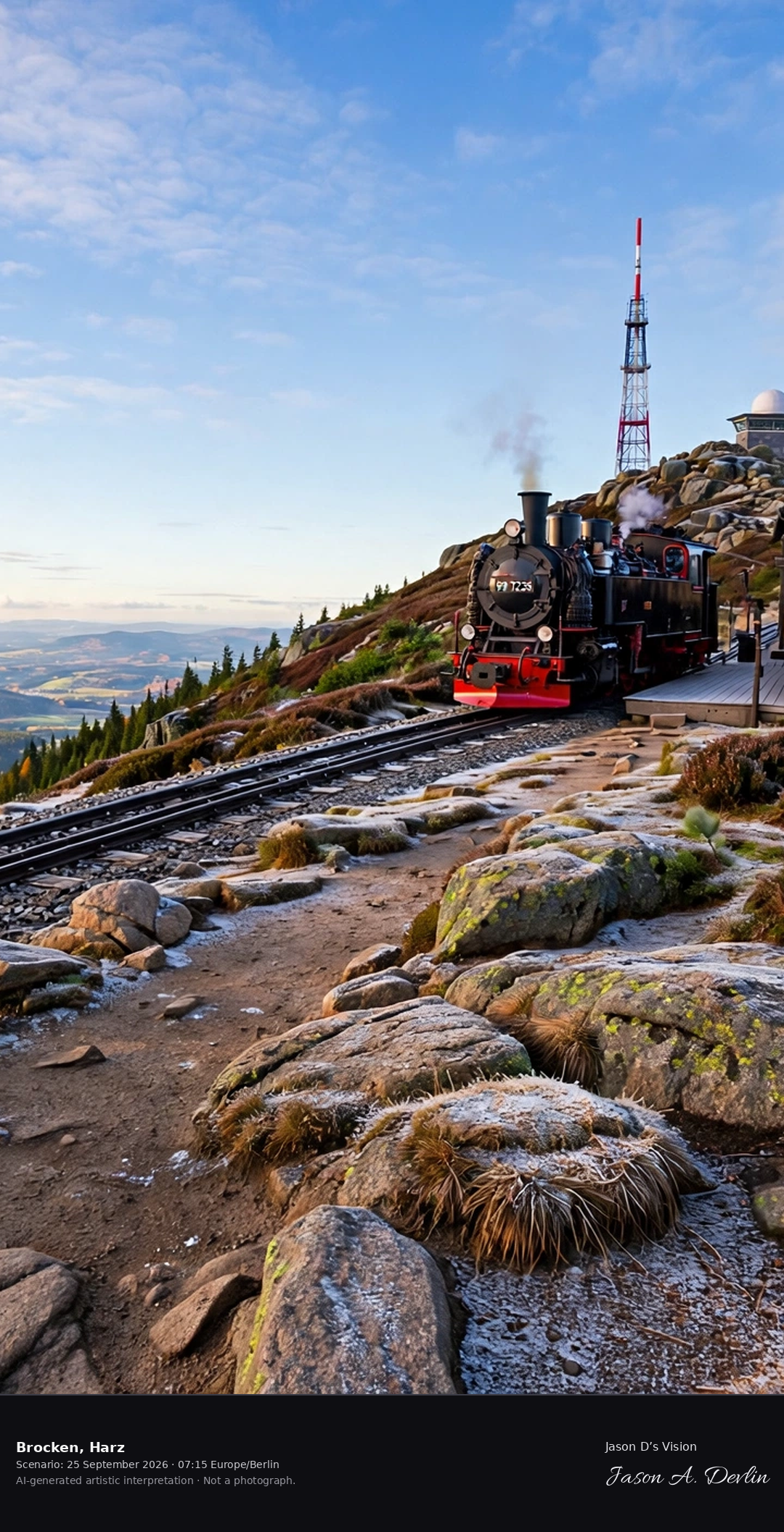
Summit and mountain railway · AI-generated artistic interpretation
A black Brockenbahn steam locomotive stands at the summit platform in the center of the frame, with the station and visitor-center building at right and the red-and-white transmission towers rising behind it. The tracks curve down toward the left, opening onto rolling autumn-colored ridges fading into morning haze. Frost-dusted rocky outcrops fill the foreground, where yellow trail signs point toward Schierke and the Bremer Hütte, all under a crisp, mainly clear early-morning sky.
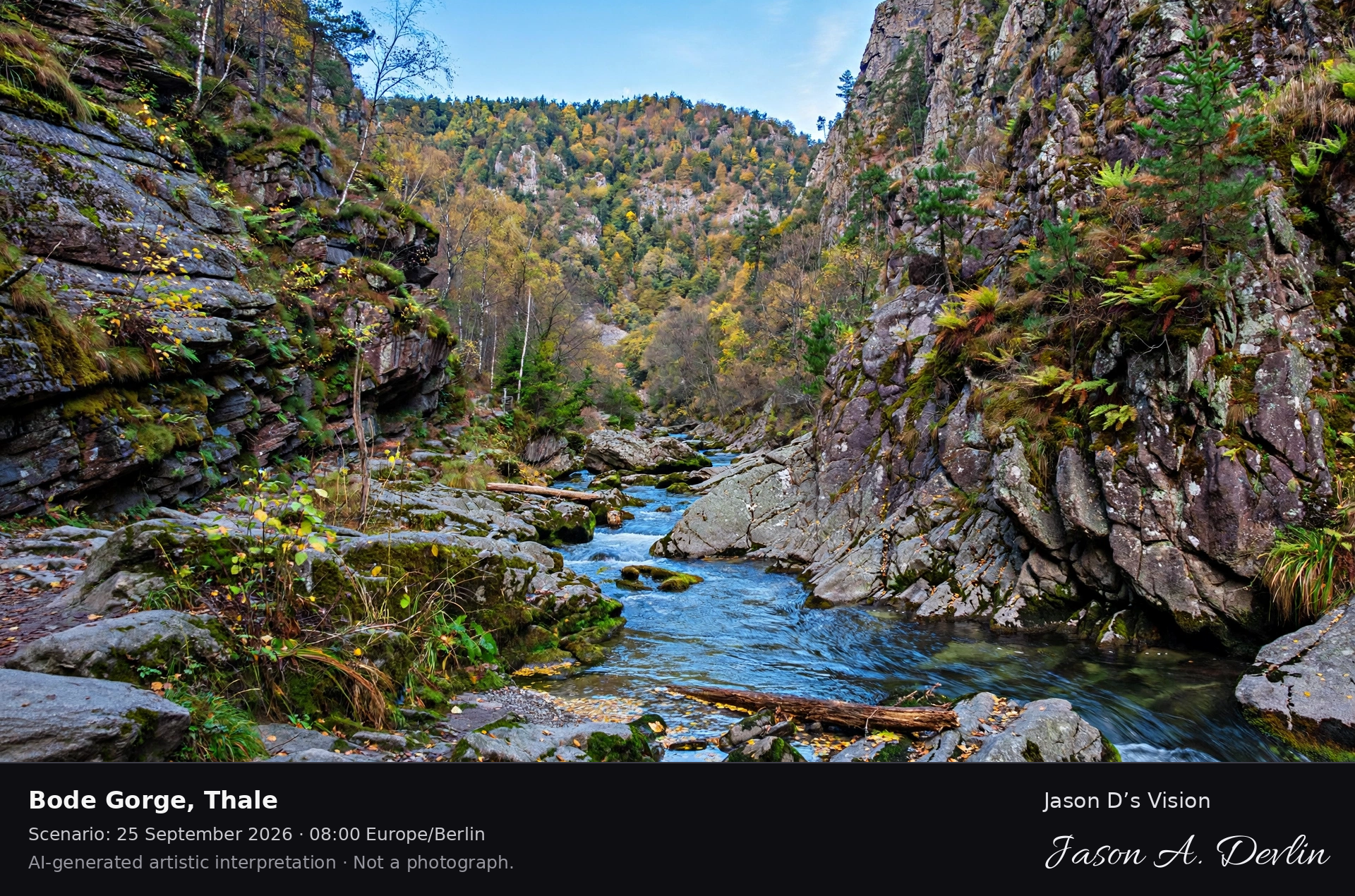
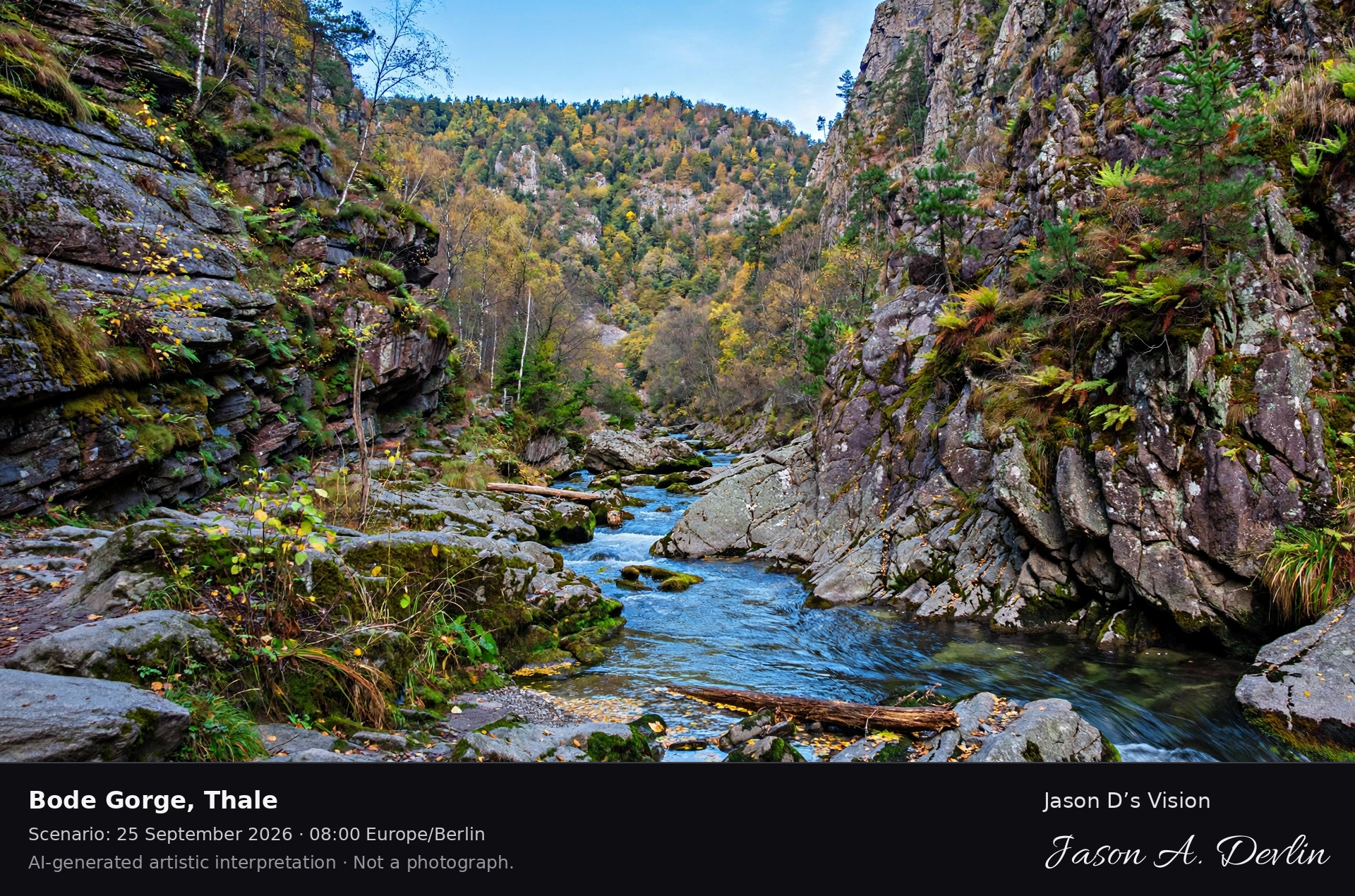
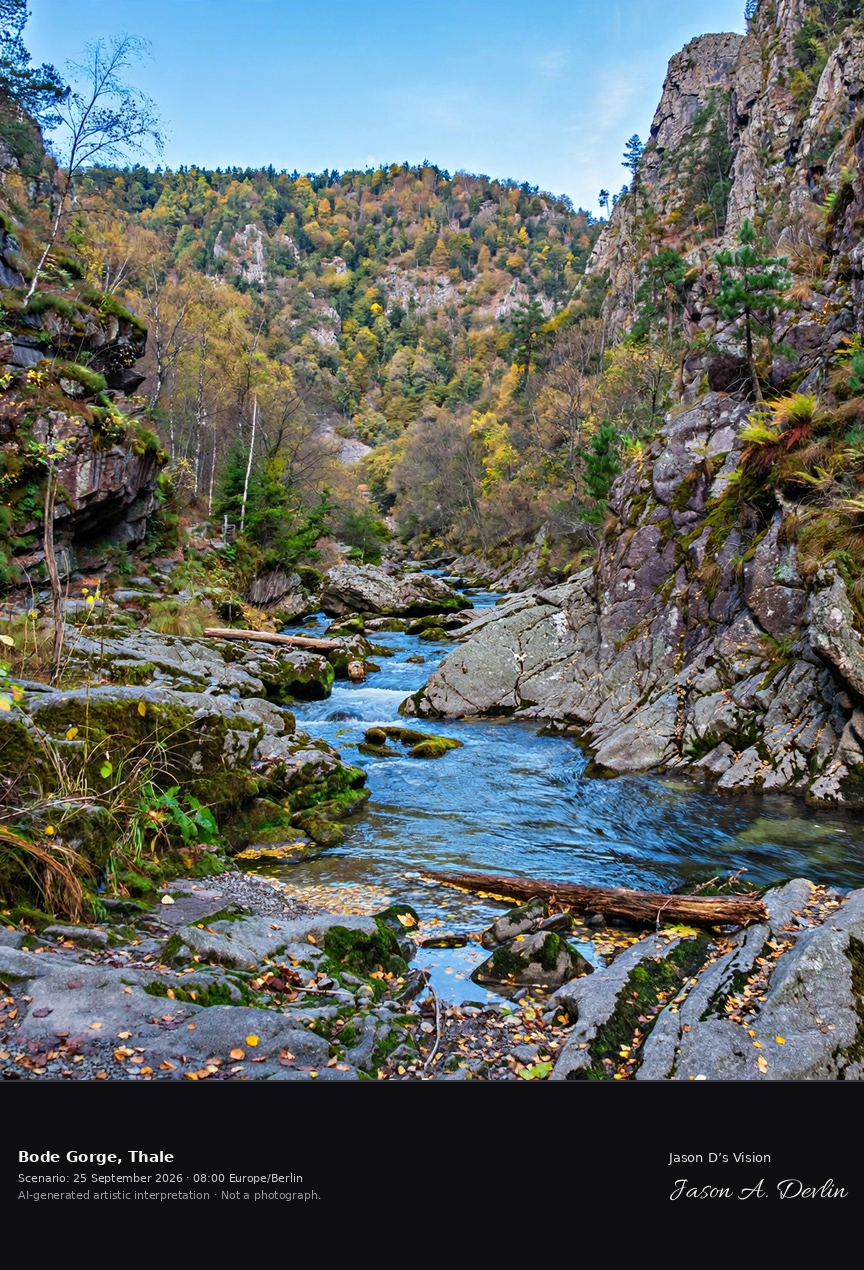
River and rocky valley · AI-generated artistic interpretation
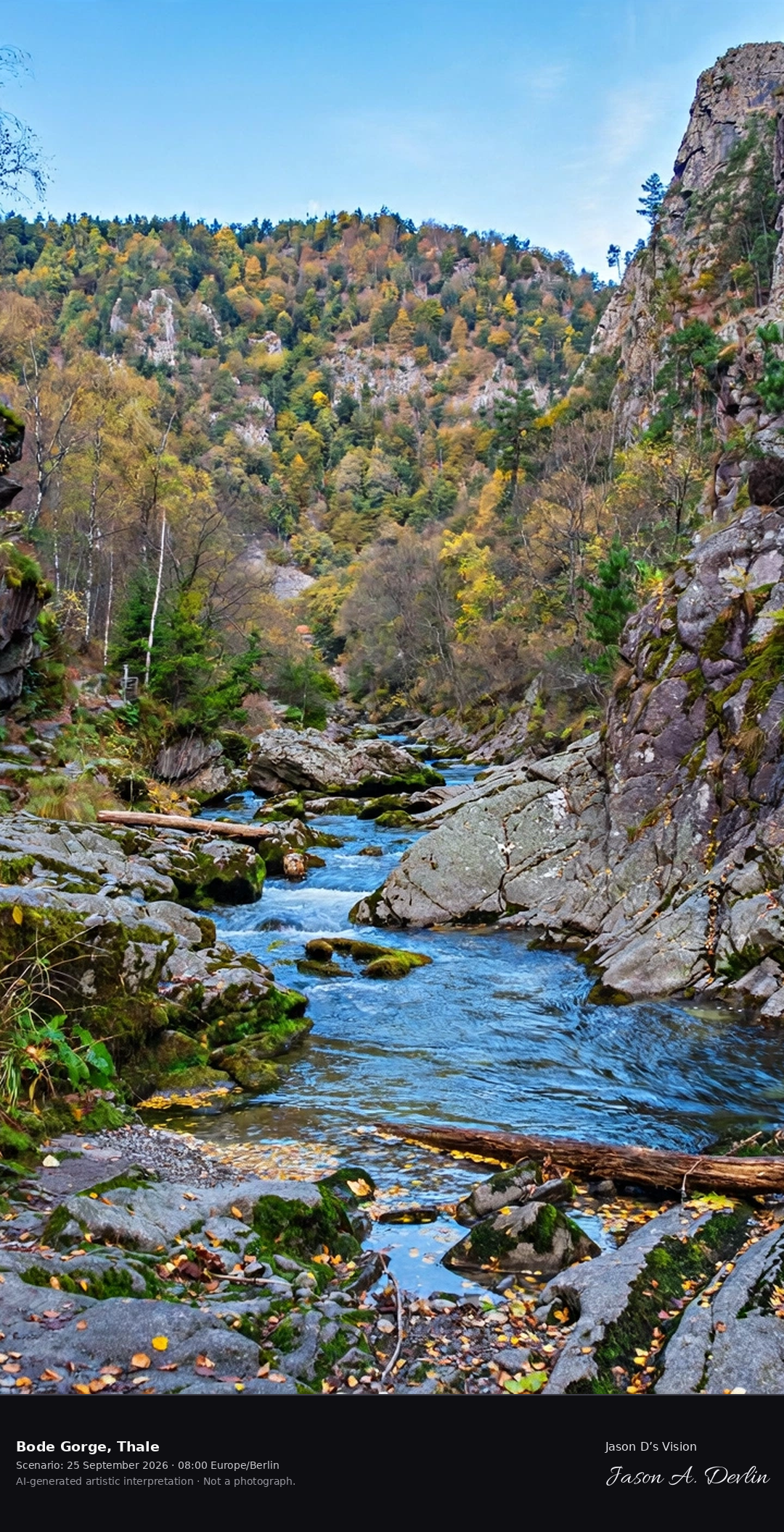
Eye-level along the gorge, the Bode river winds center-frame between moss-covered boulders and steep granite walls left and right, a fallen trunk lying across the water in the foreground. Forested slopes rise in the distance in early autumn golds and greens beneath a clear blue sky. Crisp 8.6°C morning light with no wind on the water.
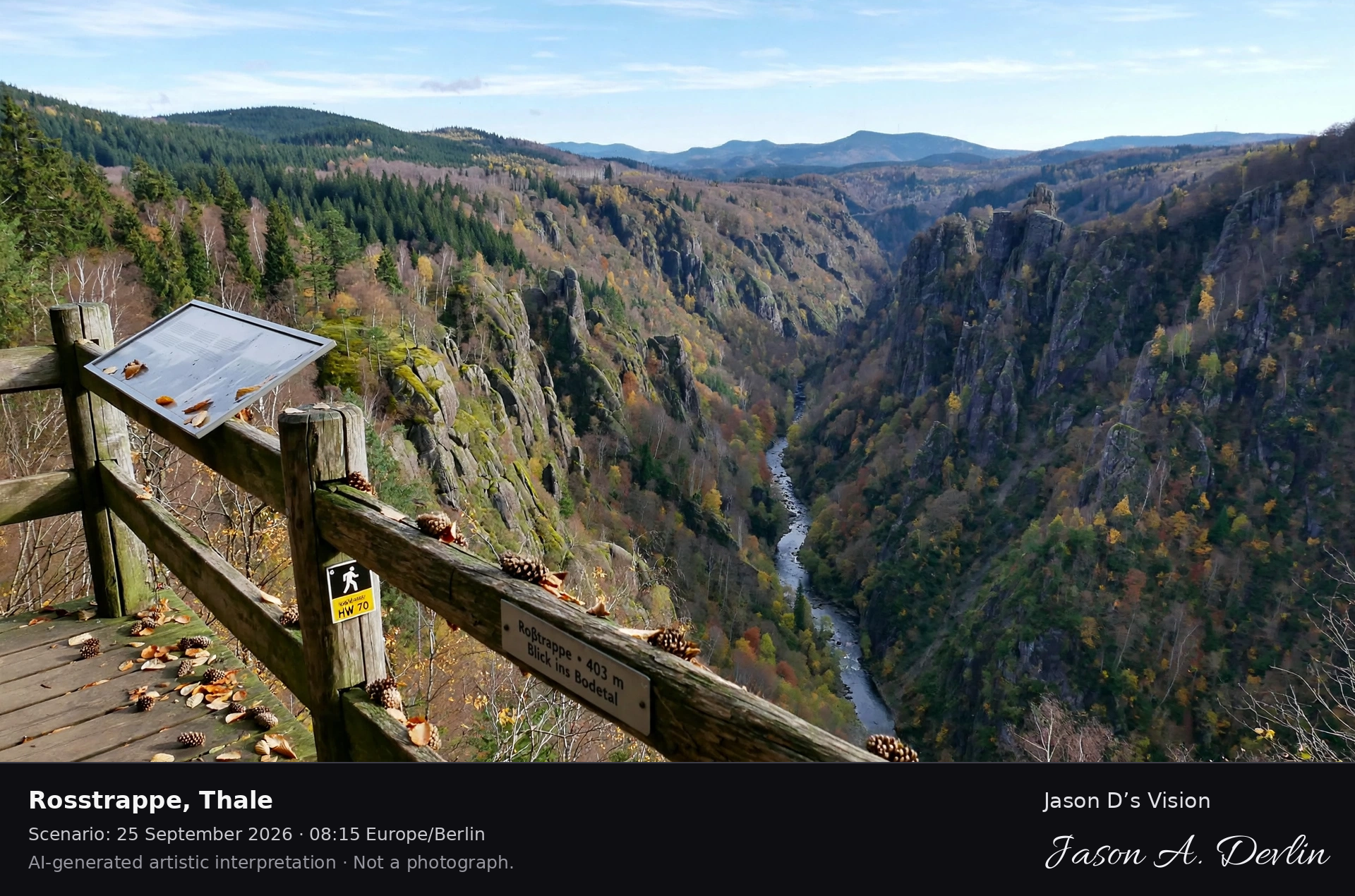
Gorge outlook · AI-generated artistic interpretation
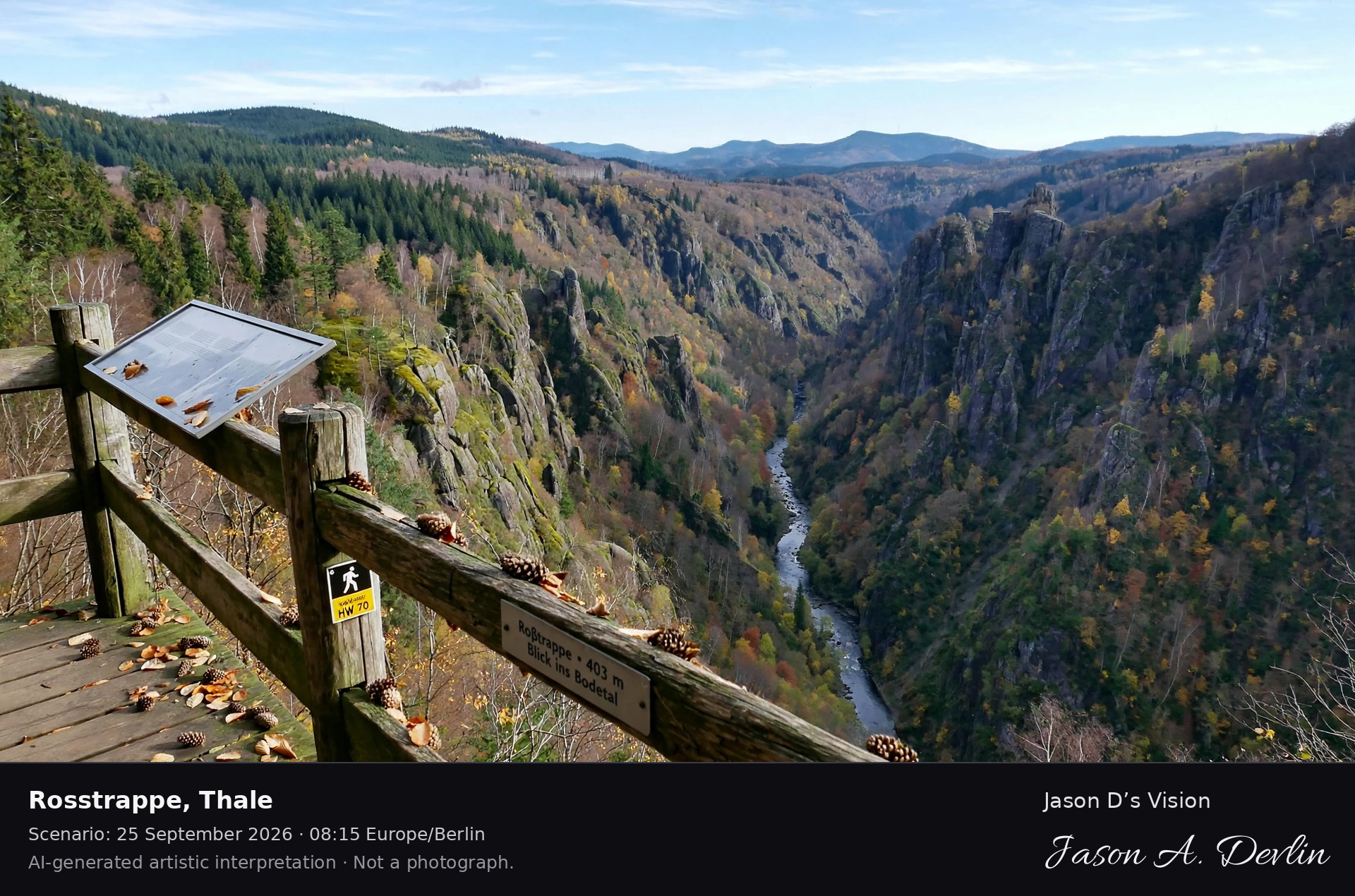
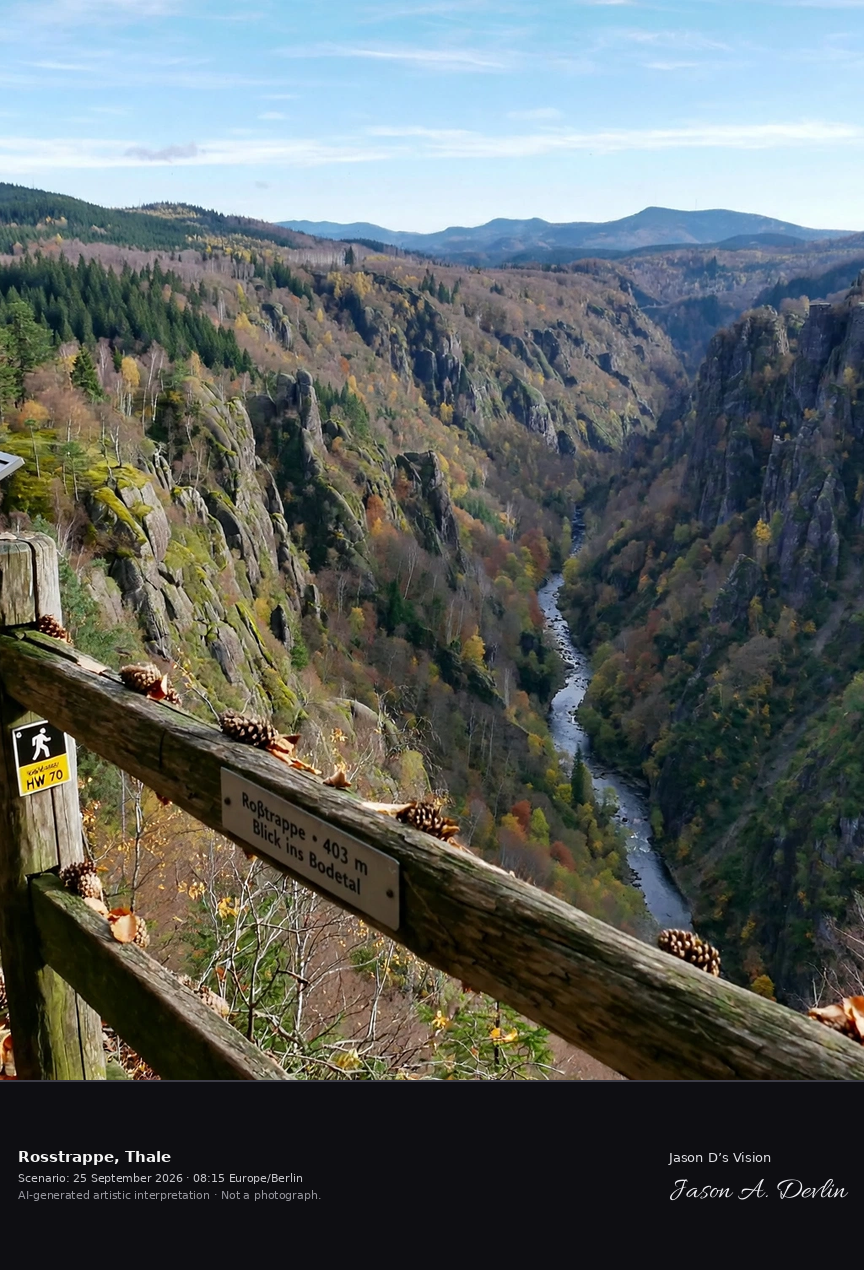
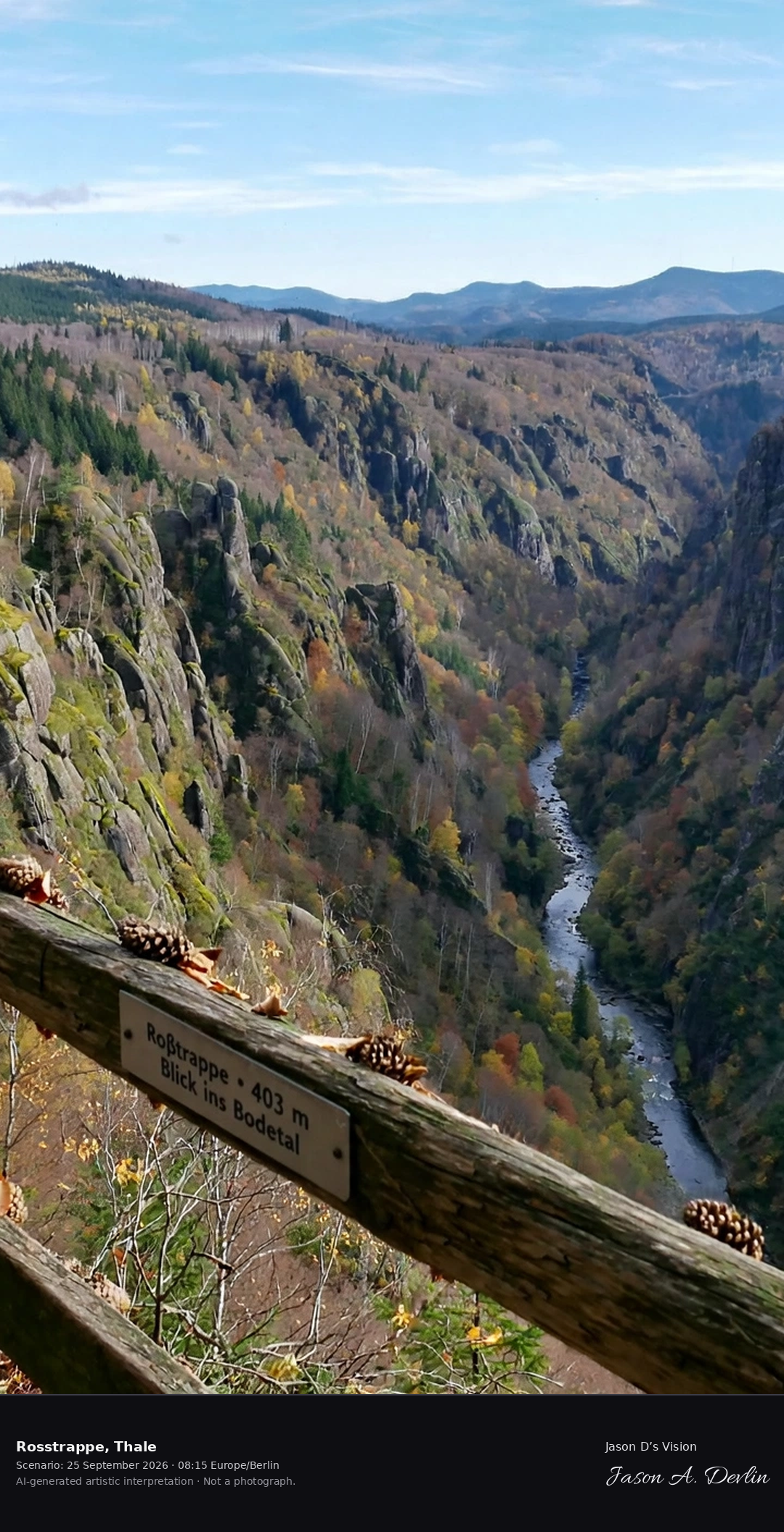
From the Rosstrappe viewing platform, the weathered wooden railing and its "Blick ins Bodetal" plaque frame the left foreground, while the deep Bodetal gorge falls away to the right — sheer grey crags dropping to the silver thread of the Bode river below. Autumn color touches the gorge walls in yellows and russets among the dark conifers, with layered Harz ridges fading blue into the distance. The 08:15 morning light is clear and crisp, leaves and pinecones scattered across the platform boards.
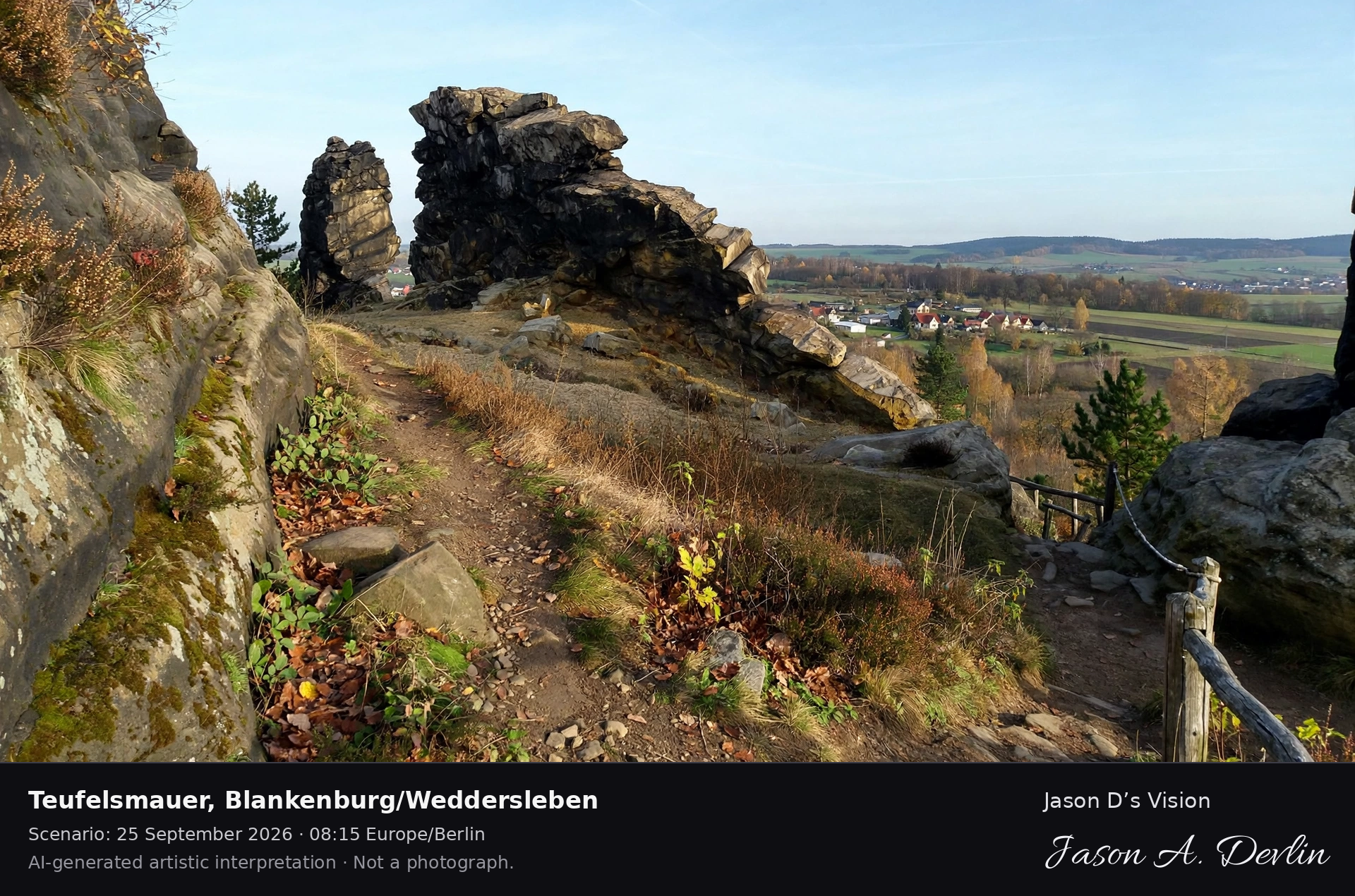
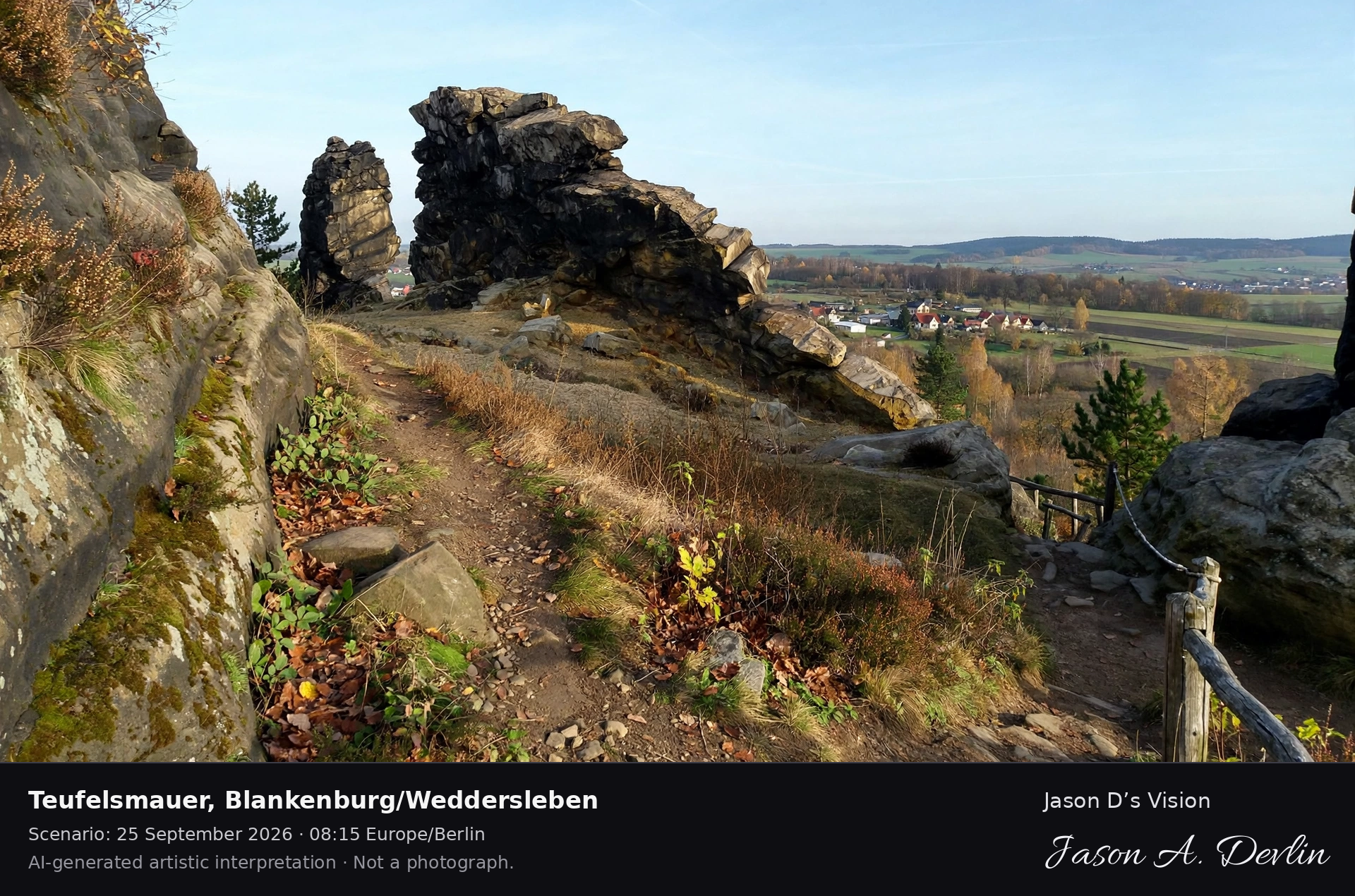
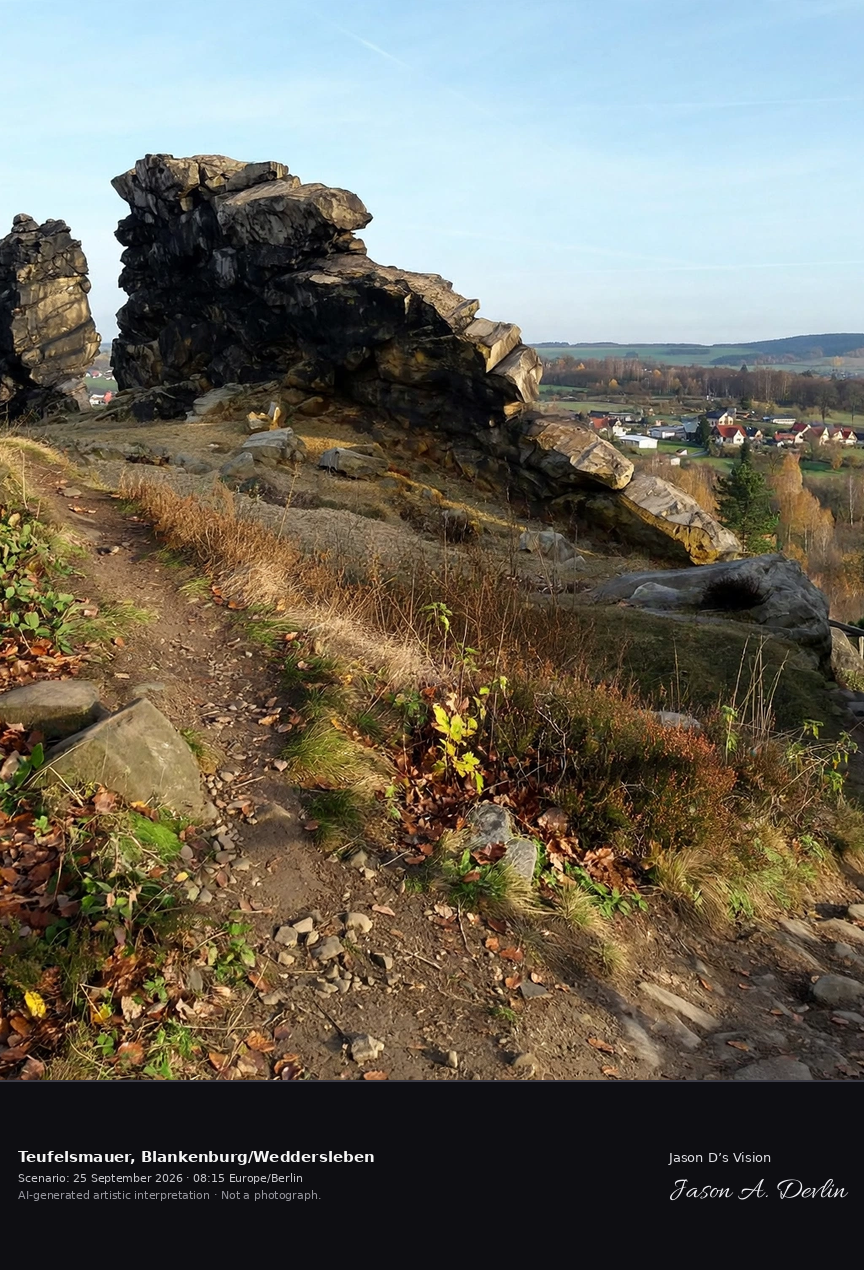
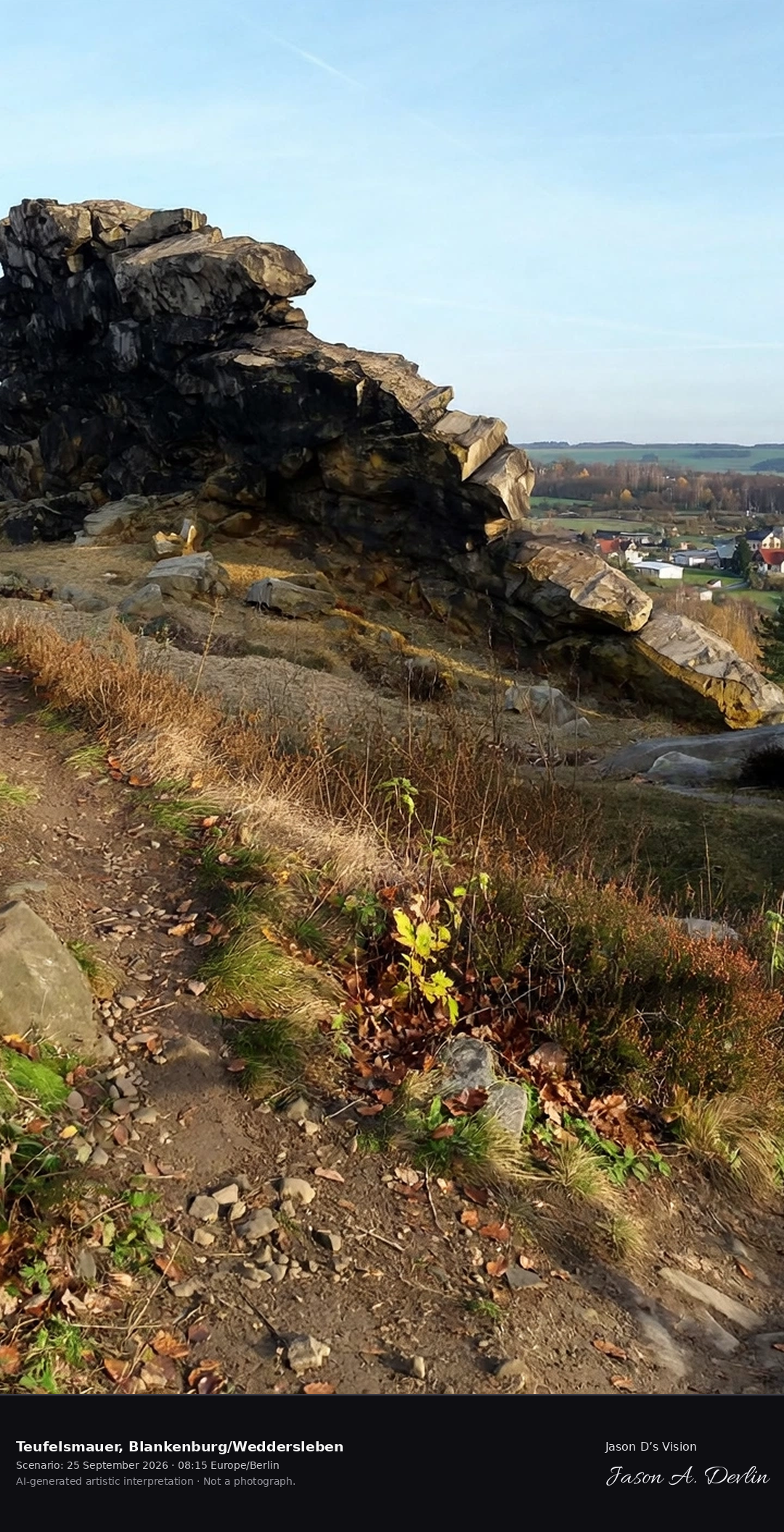
The dark, weathered sandstone towers of the Teufelsmauer rise left and center, a narrow hiking path winding between the rock fins past mossy ledges and fallen leaves. To the right the land drops to the village of Weddersleben, its red roofs set among autumn fields and hedgerows. The 08:15 morning light is clear and low, warming the rock faces while the distance holds a pale haze.
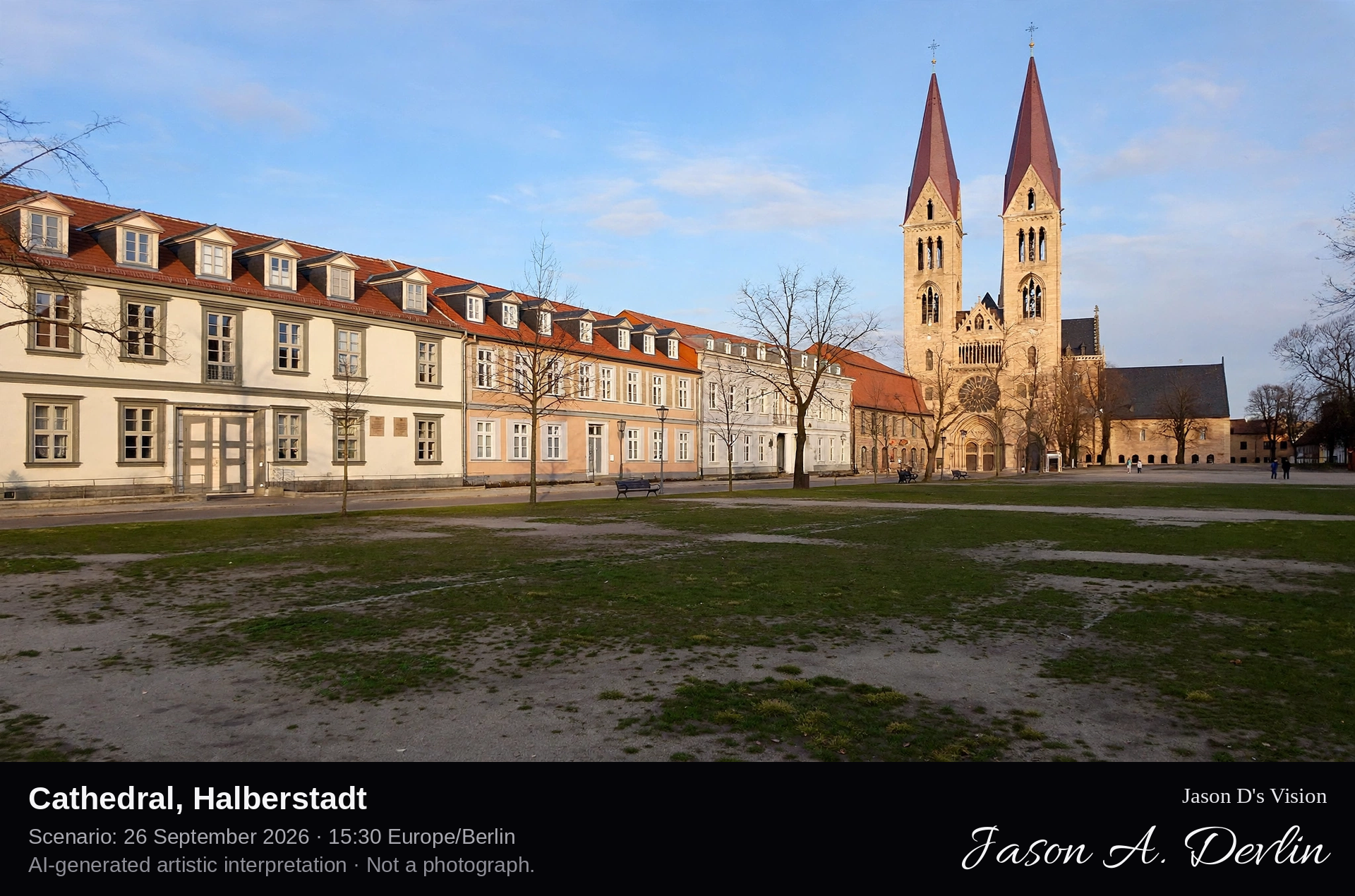
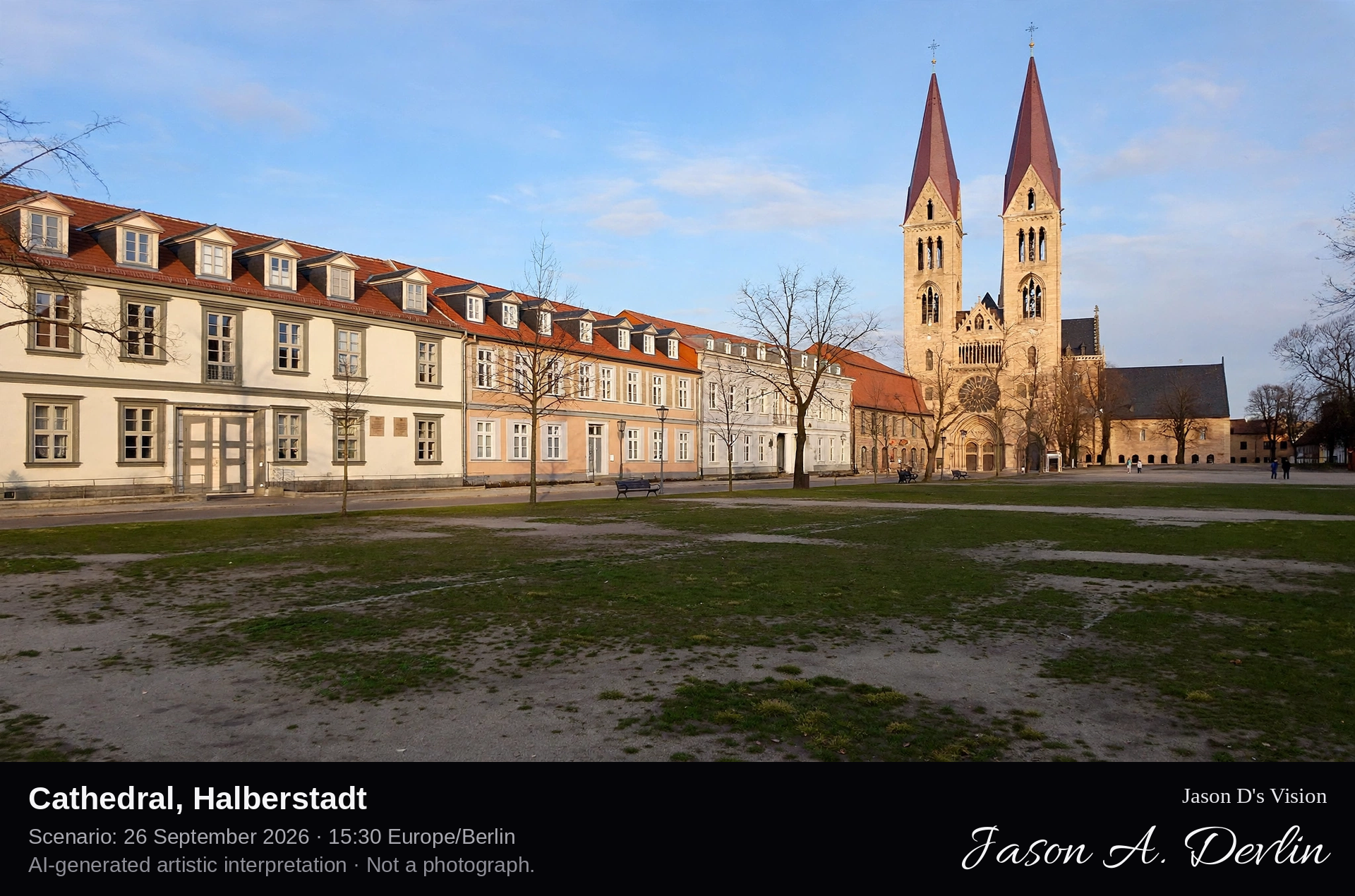
The cathedral's twin-towered westwork fills the frame, red spires over arched portals and a rose window. Half-timbered houses line Domplatz on both sides, a stone fountain in the foreground, and the blue Domplatz sign at right. Wet cobblestones under flat overcast light, with a few fallen leaves on this mid-September afternoon.
Cathedral and Elbe · AI-generated artistic interpretation
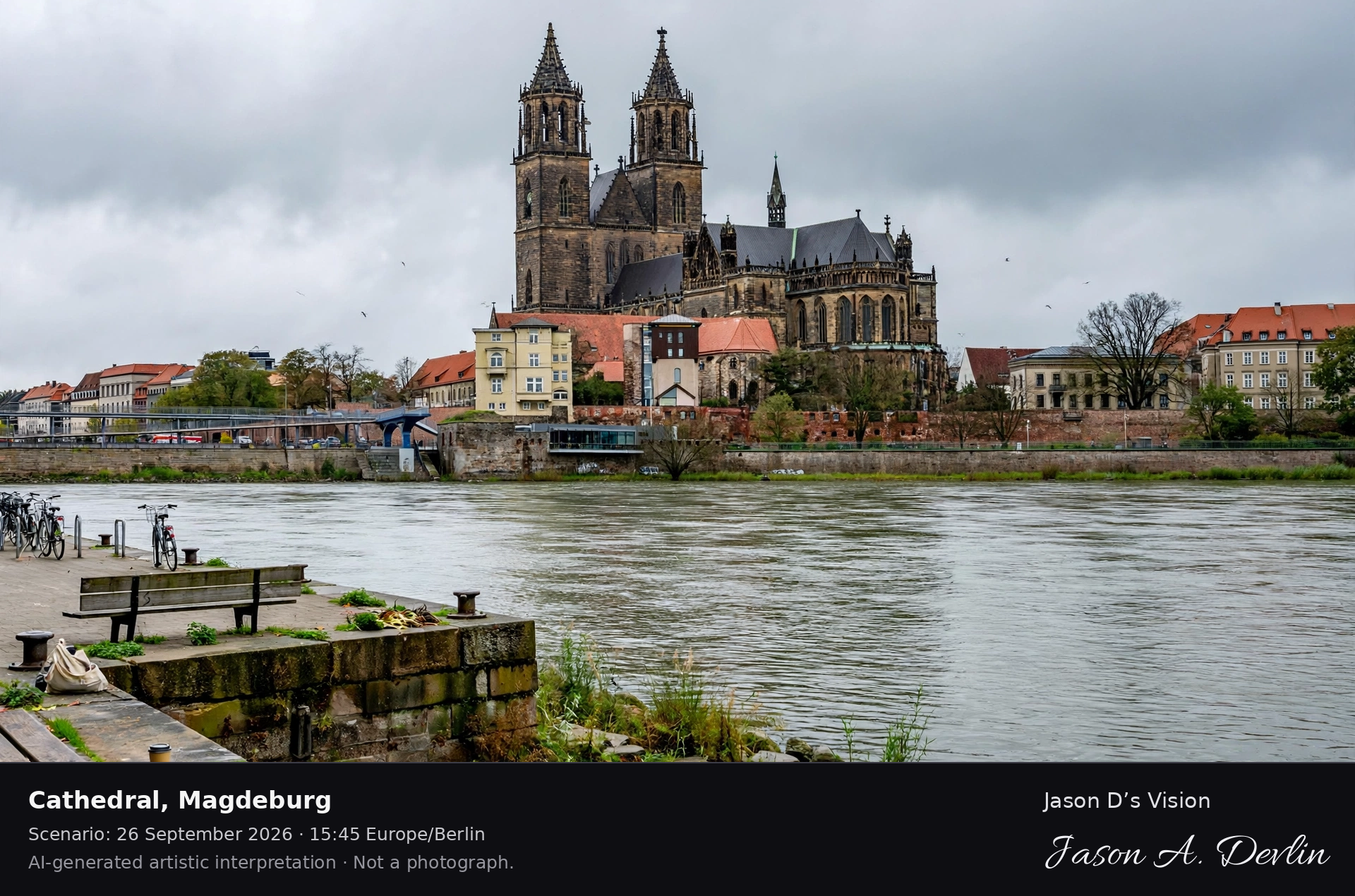
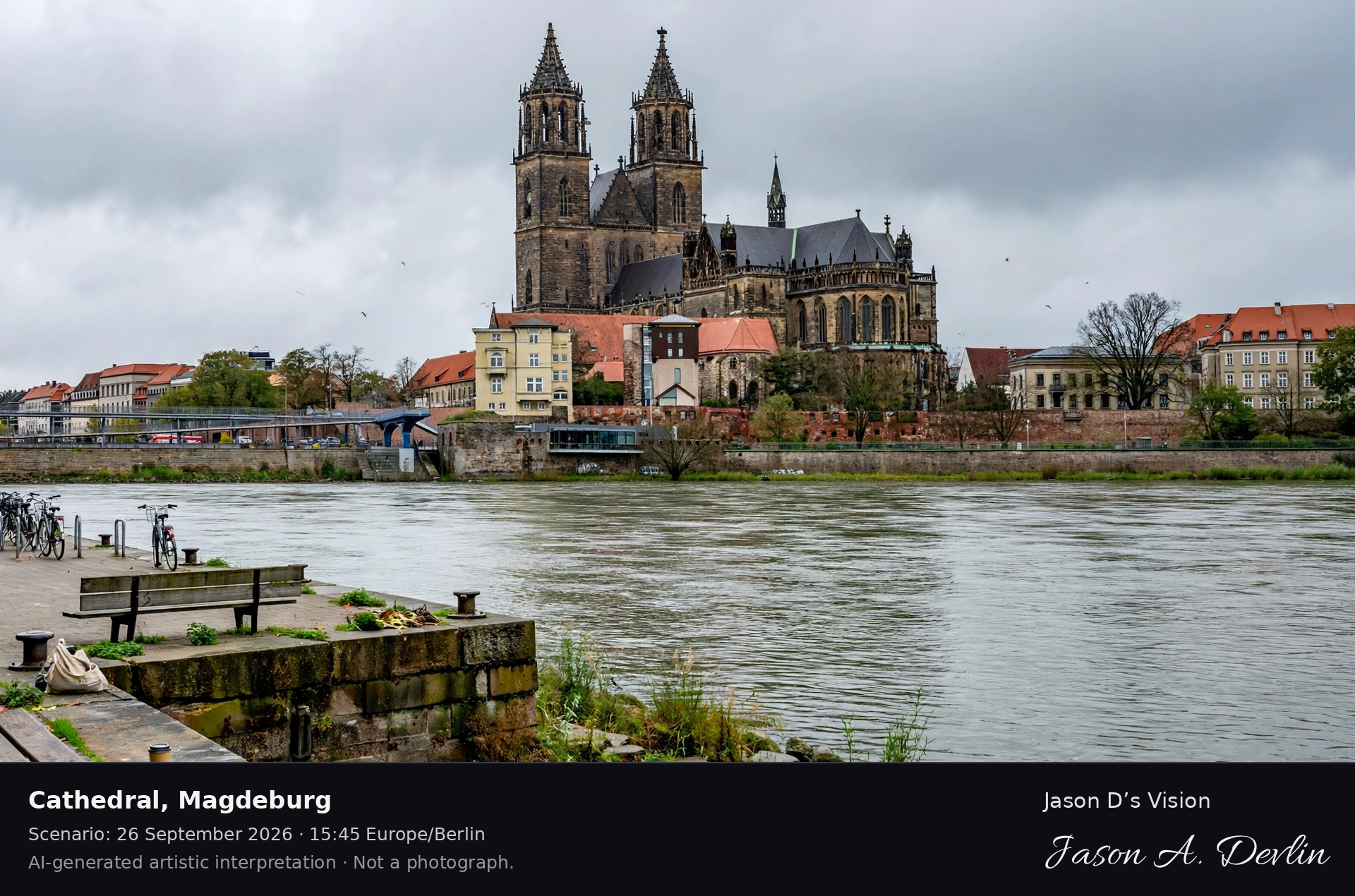
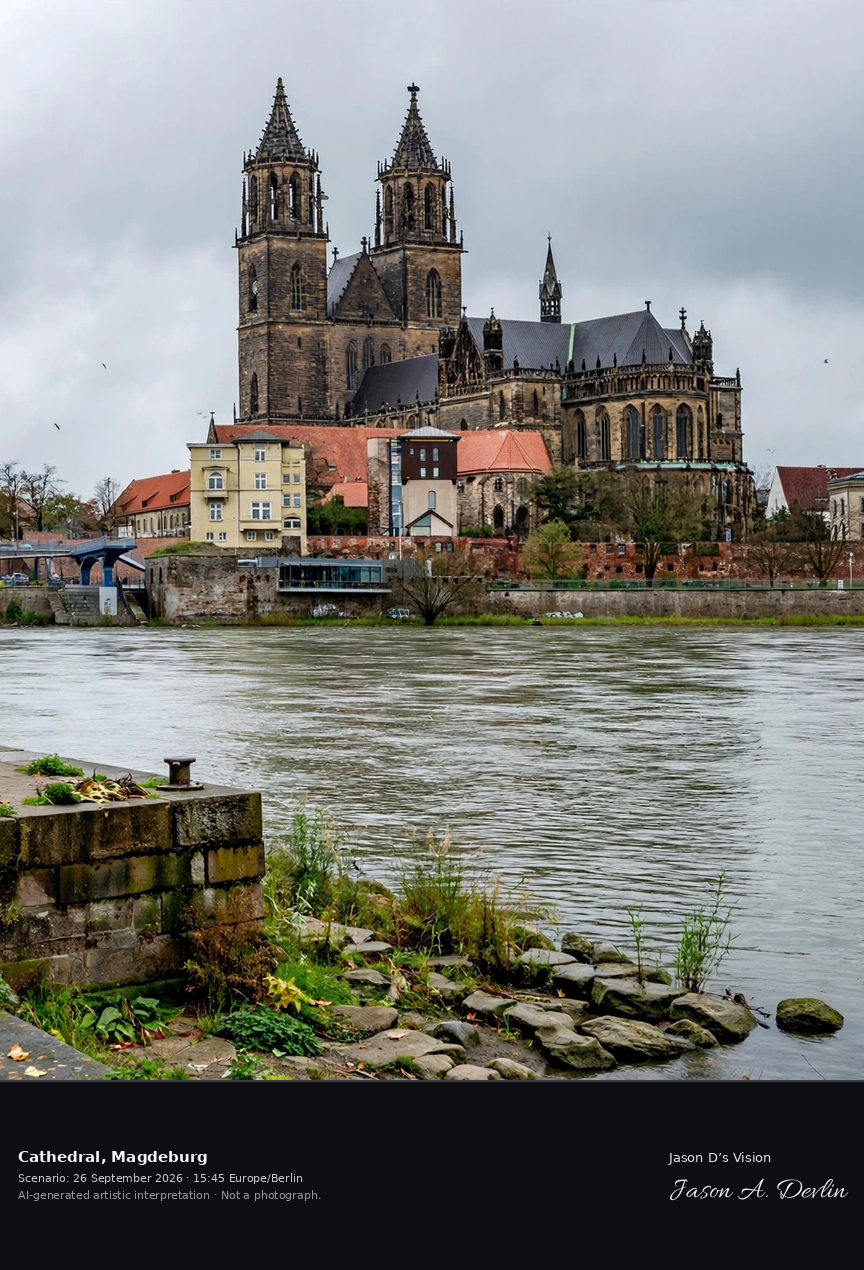
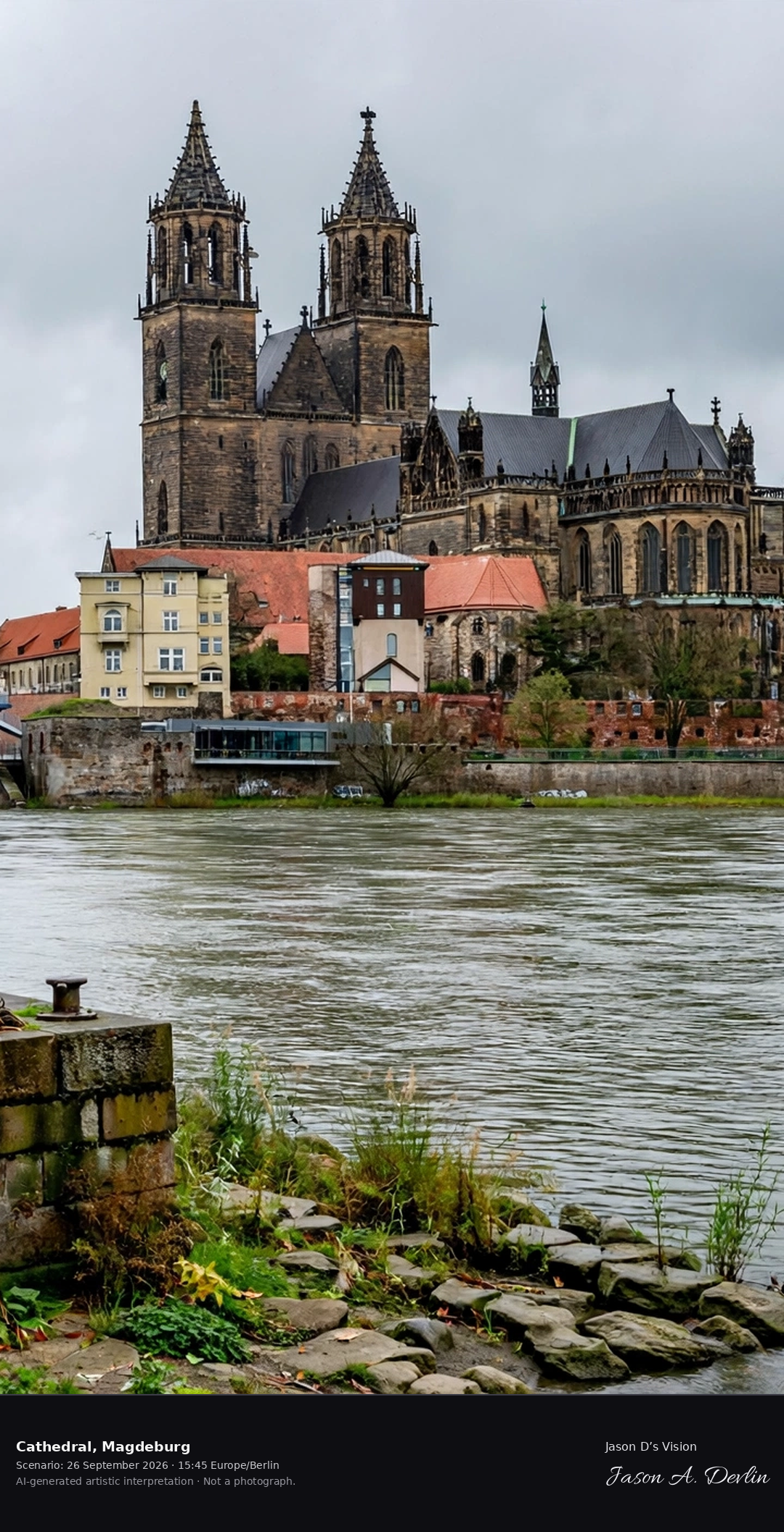
The twin spires of Magdeburg Cathedral rise at center, seen from the riverside promenade across the Elbe. Bicycles lean by a weathered bench on the left foreground embankment while the broad river stretches right; the stone quay wall runs under flat, grey overcast light. The choir and east end fill out the right half of the frame above red rooftops — a soft, rain-grey late-September afternoon.
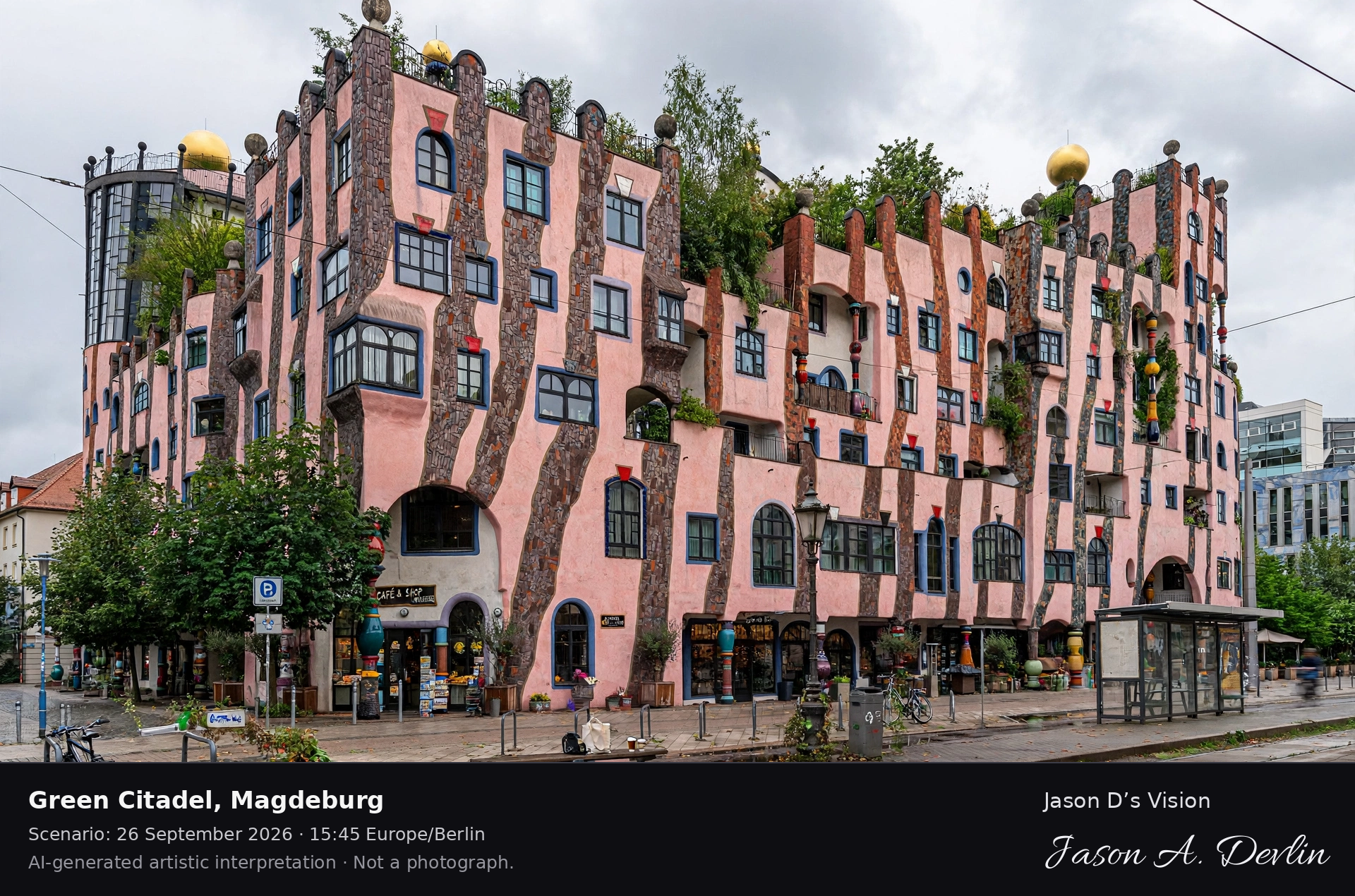
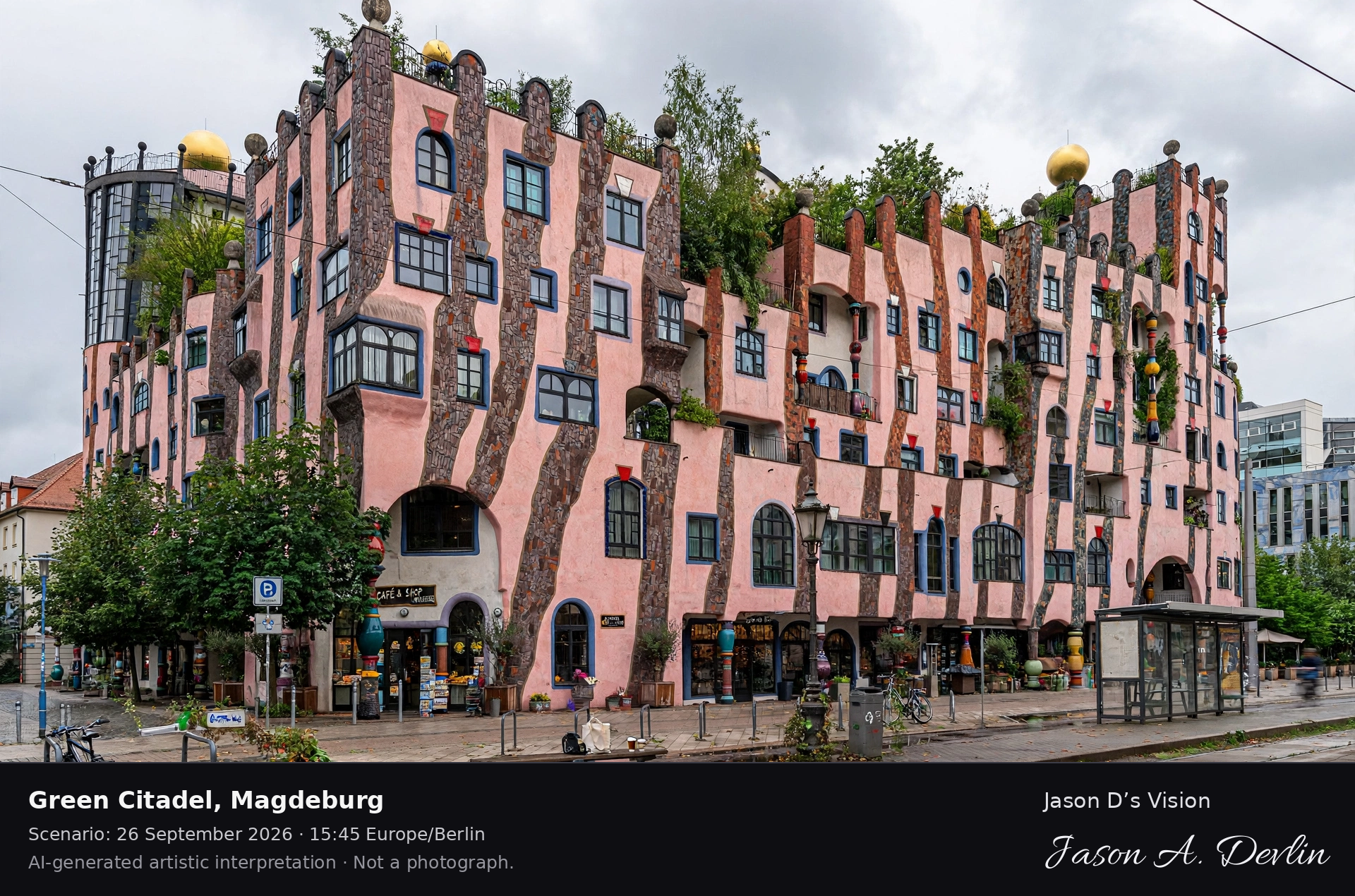
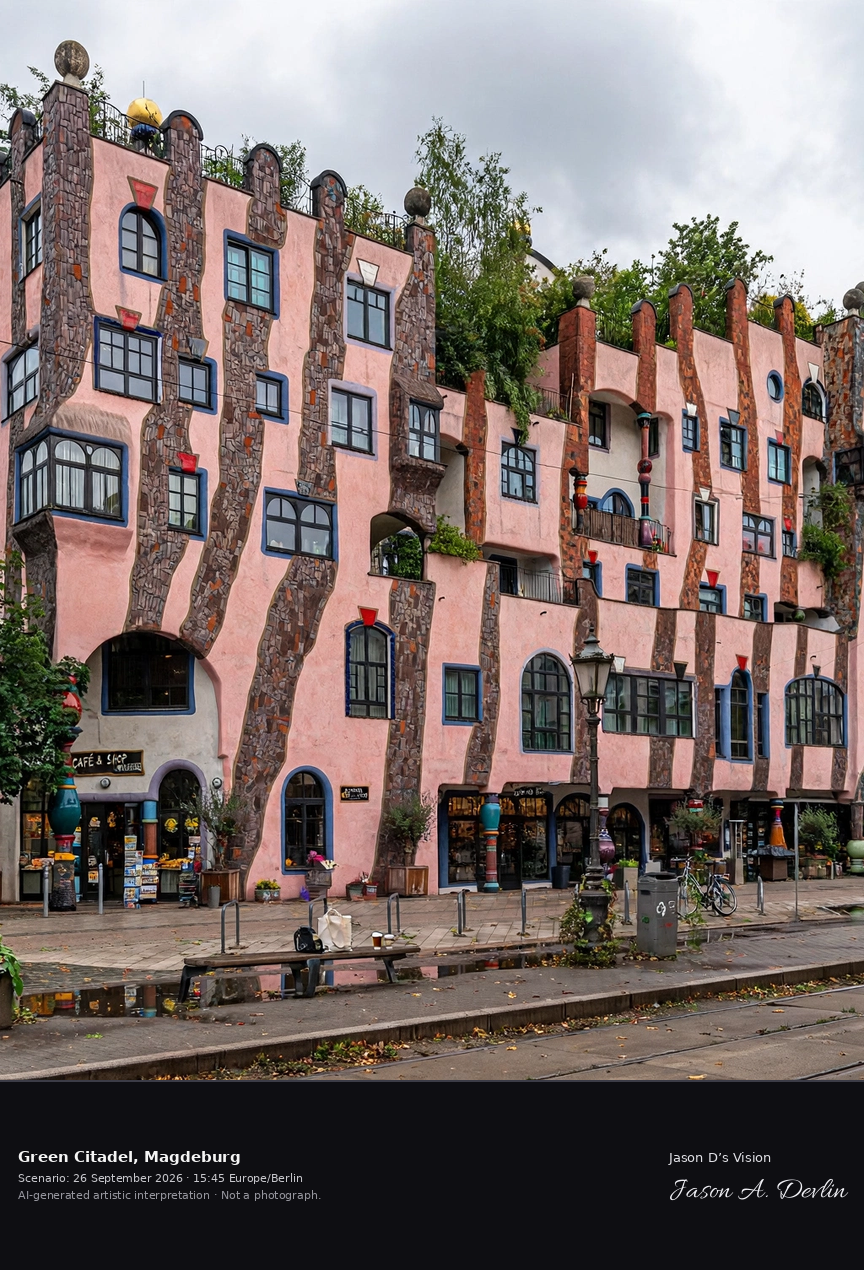
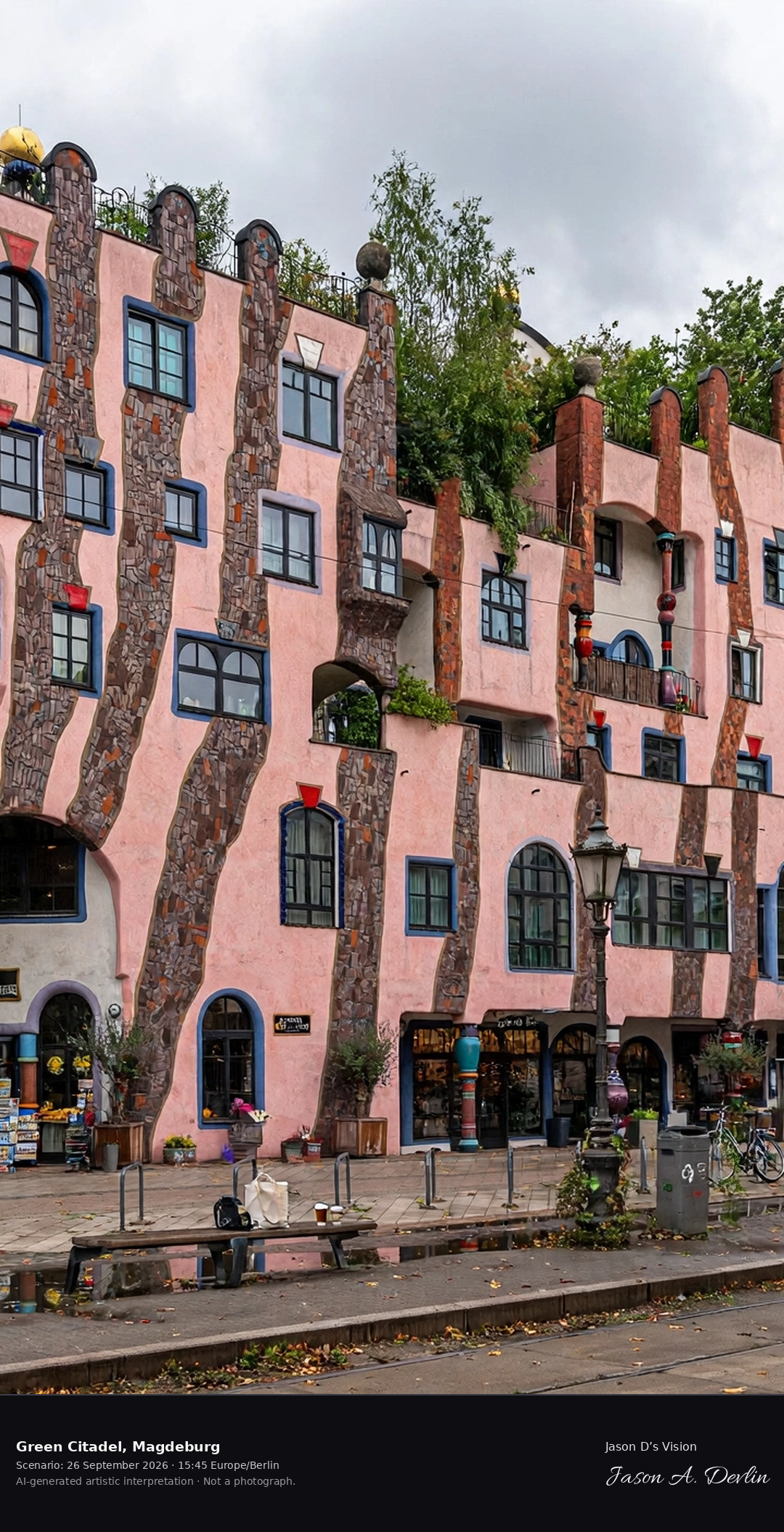
The Green Citadel's undulating pink walls fill the frame, with tree-column mosaics rising at left and golden domes crowning the roofline, tree tenants sprouting above the parapets. The glass corner tower stands at the left edge; at street level a café sign, ornate lamp post, parked bicycles and a bus shelter line the foreground. Flat overcast light softens the façade's colors on this grey late-September afternoon.
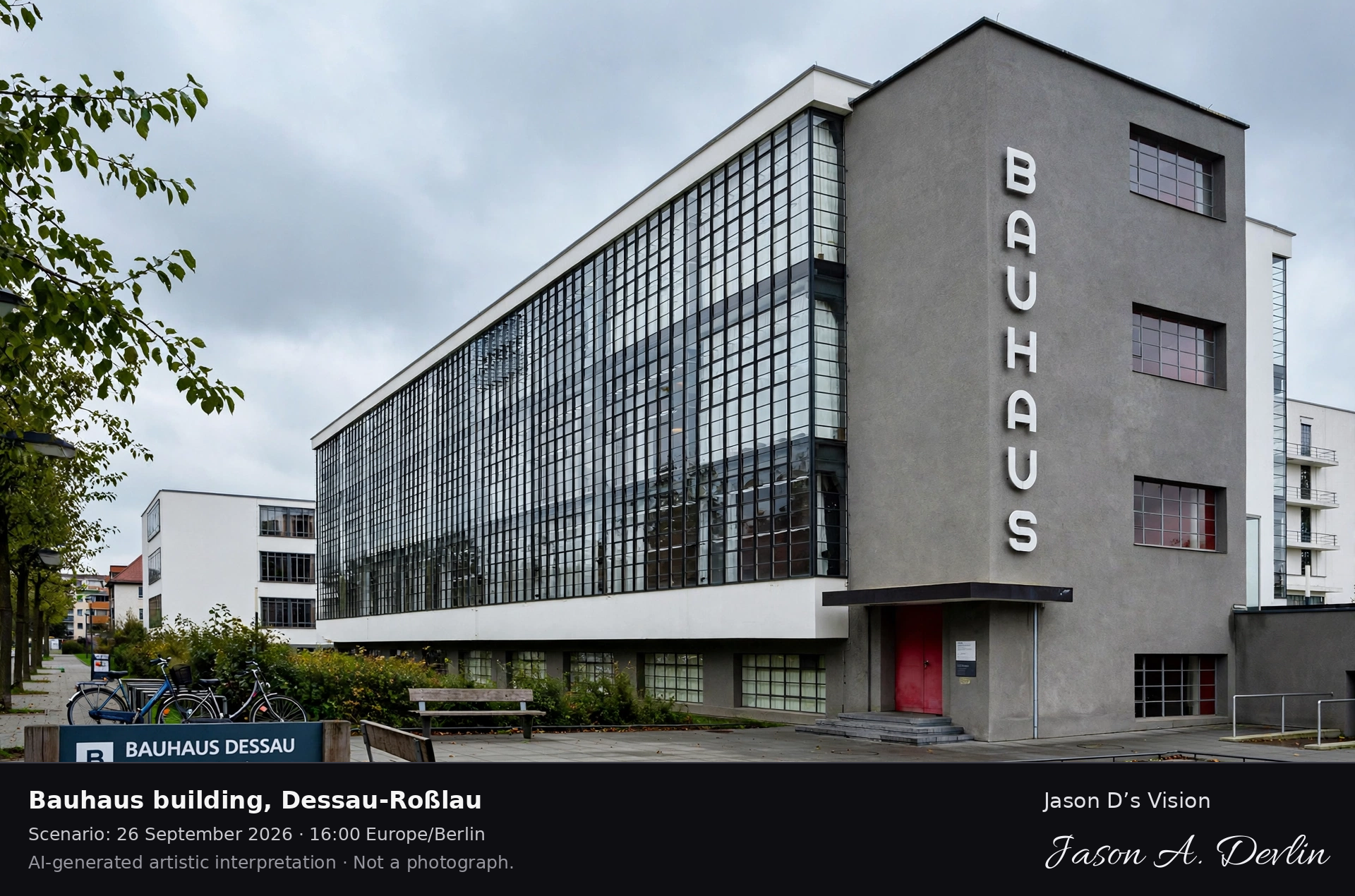
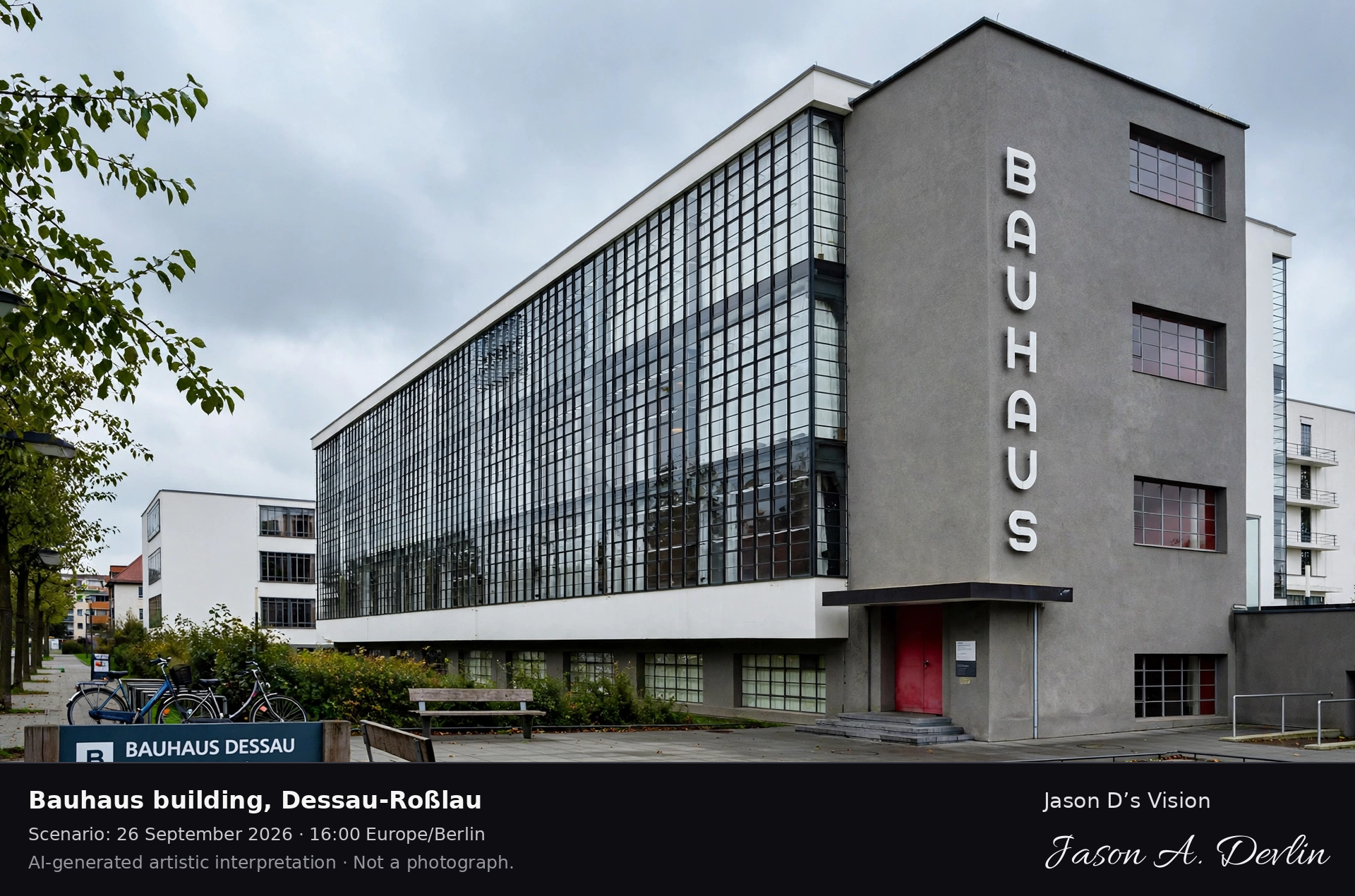
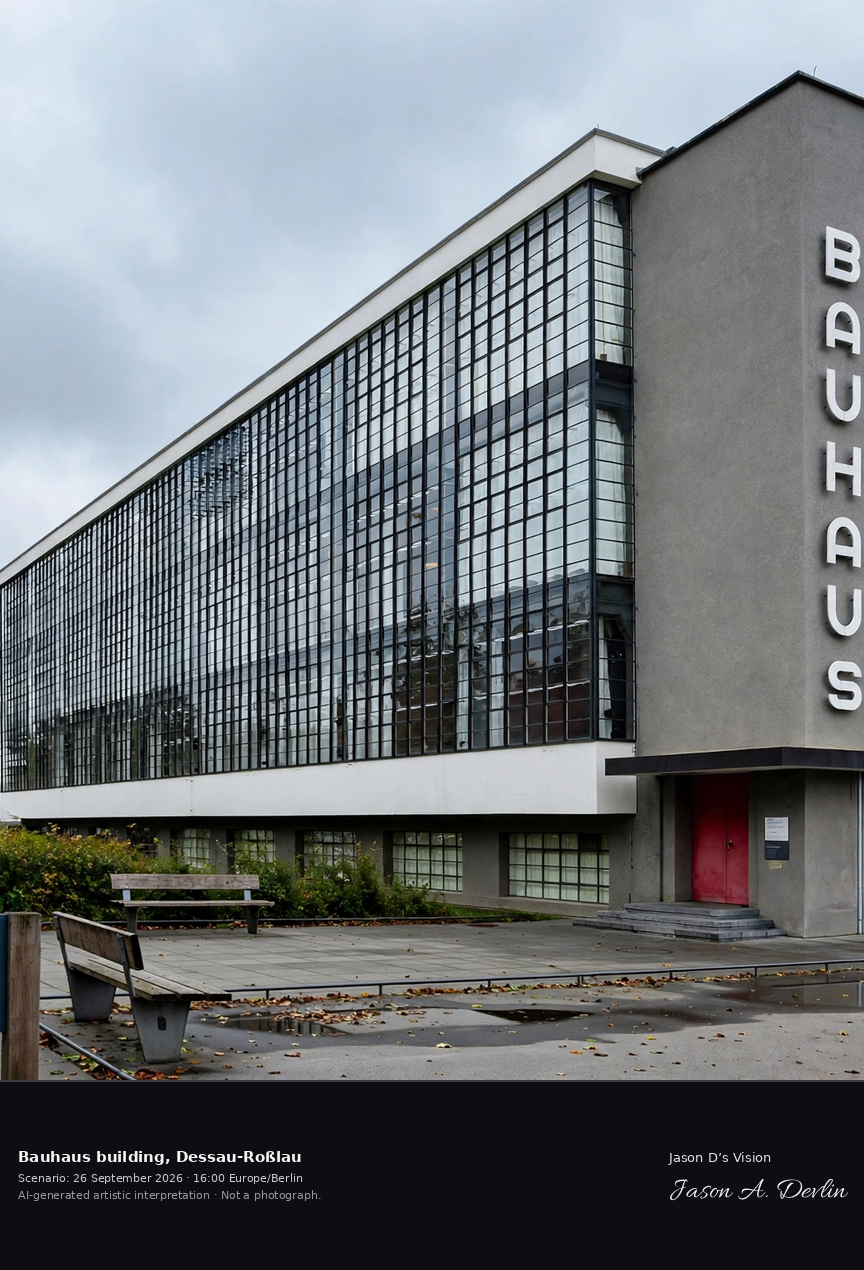
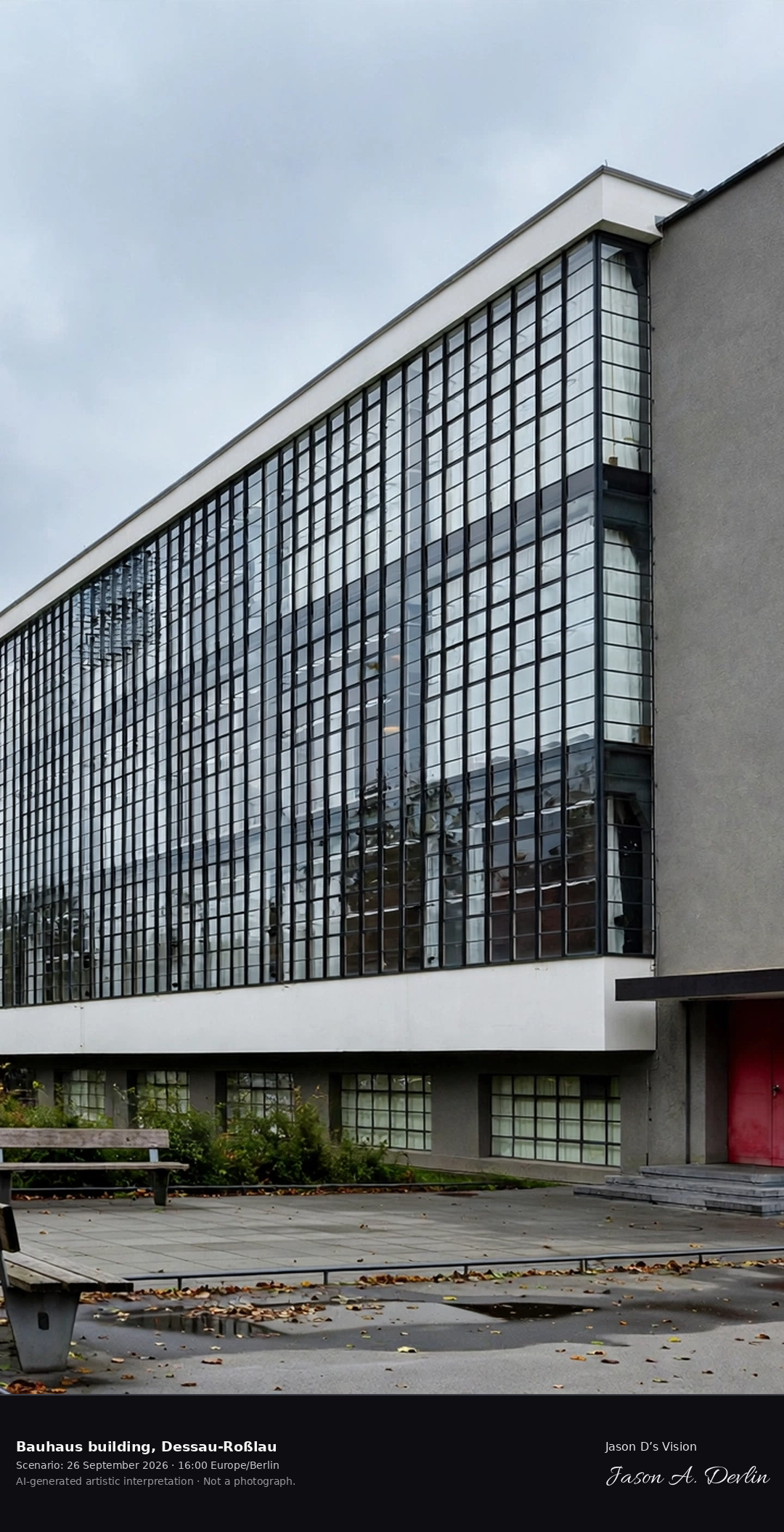
The Bauhaus Dessau building's glass workshop wing sweeps from center to right, its gridded curtain wall wrapping the corner under the vertical BAUHAUS letters on the grey masonry end. A red door marks the entrance at right; the white studio wing rises at the left edge beyond a leafy tree, with bicycles and a bench on the foreground plaza. Soft overcast light flattens the afternoon shadows on this grey September day.
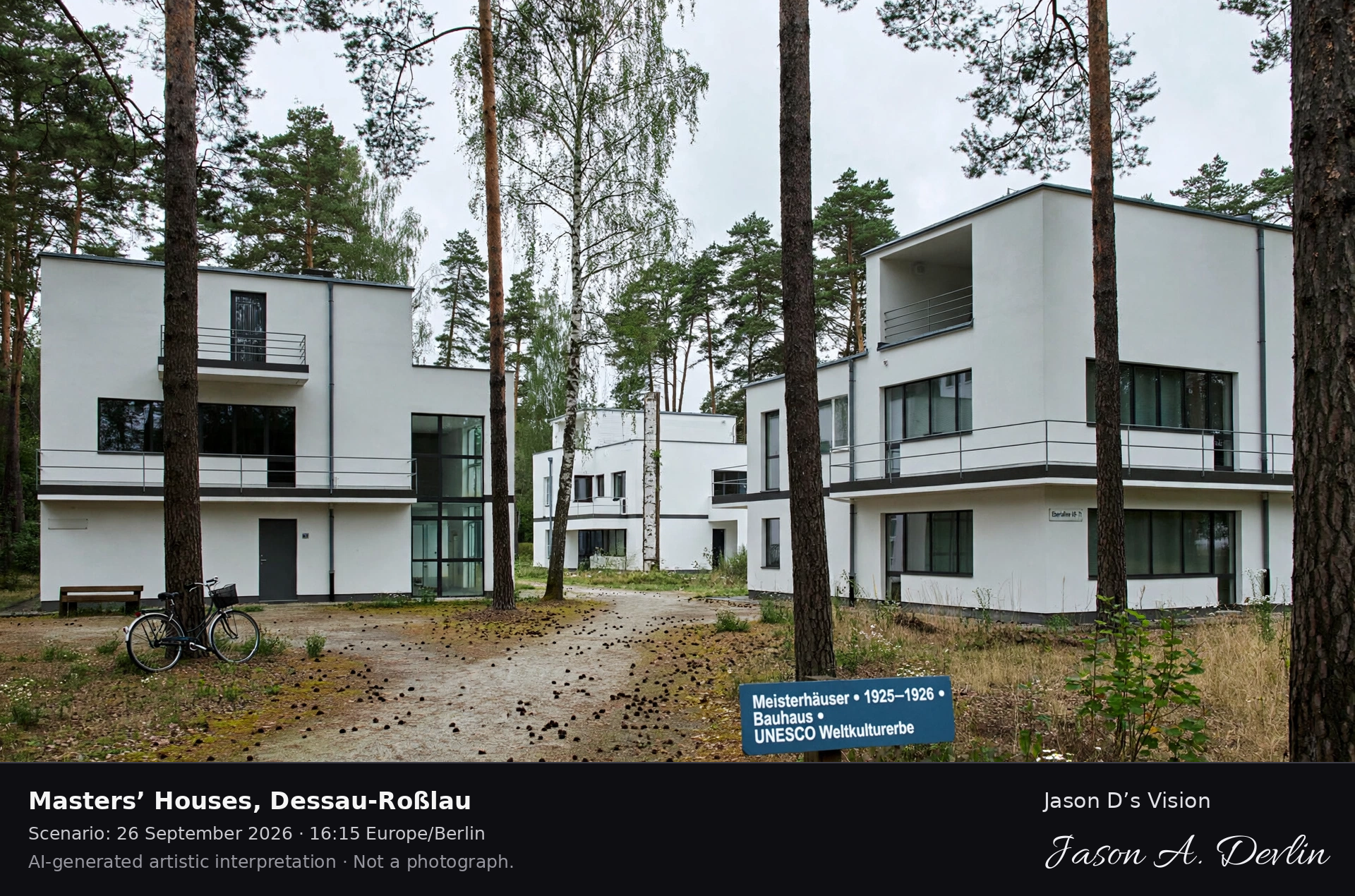
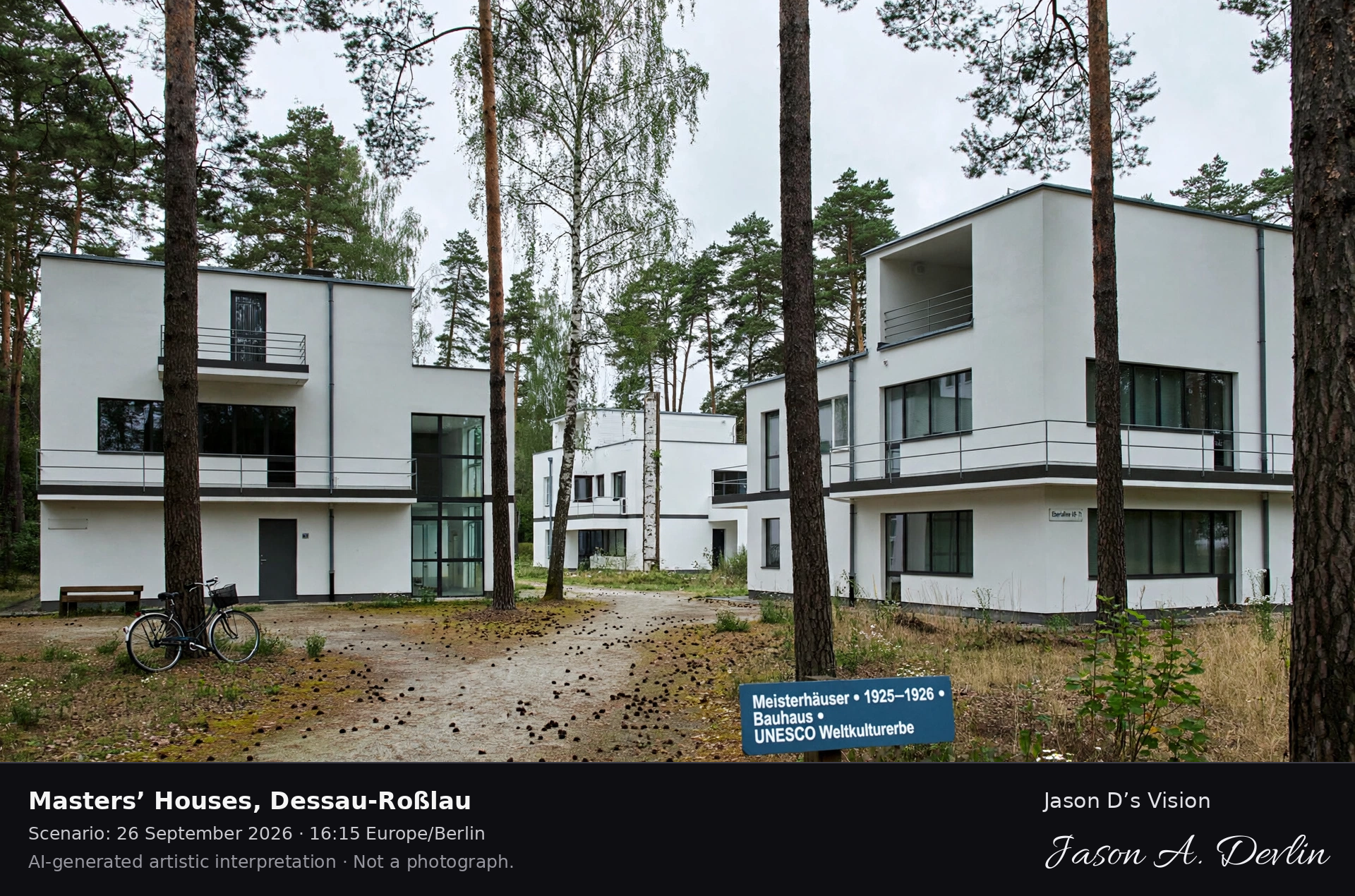
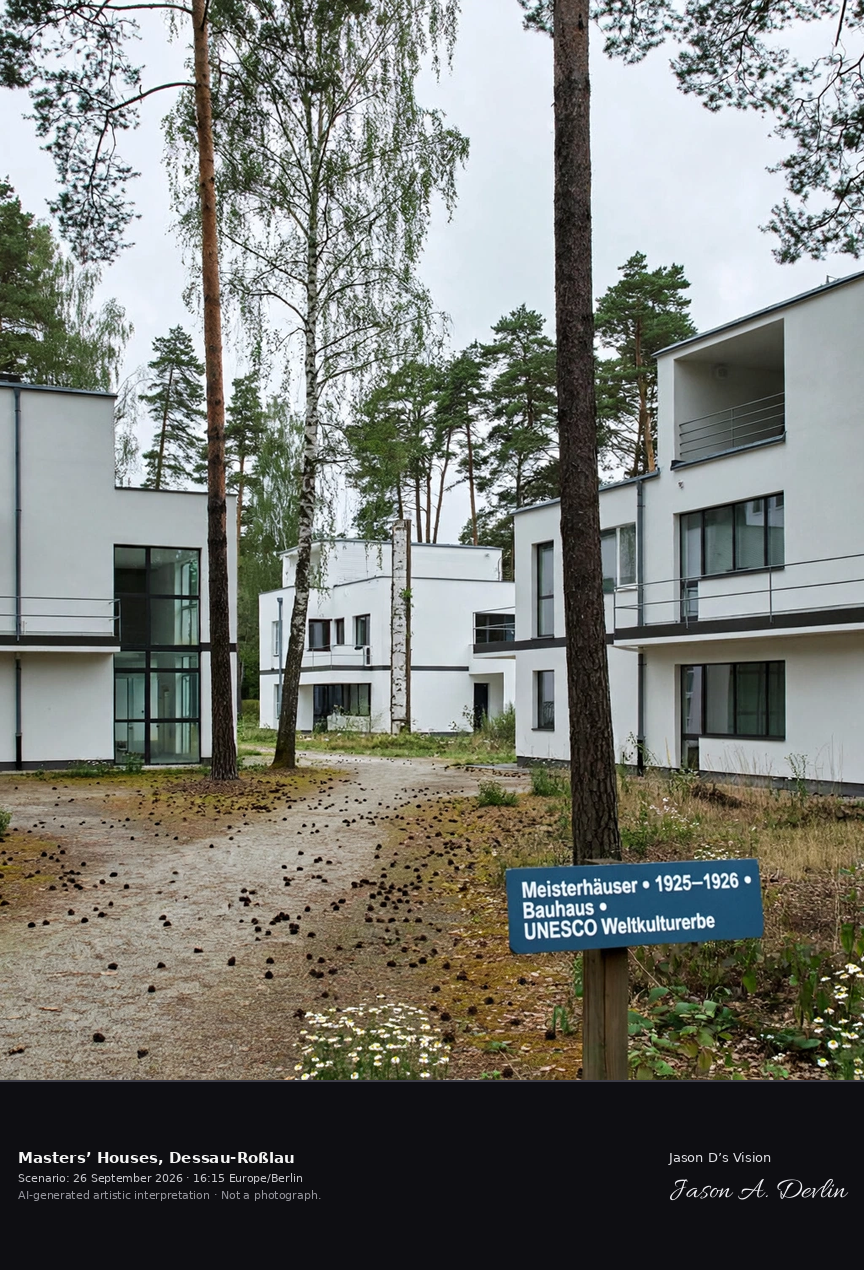
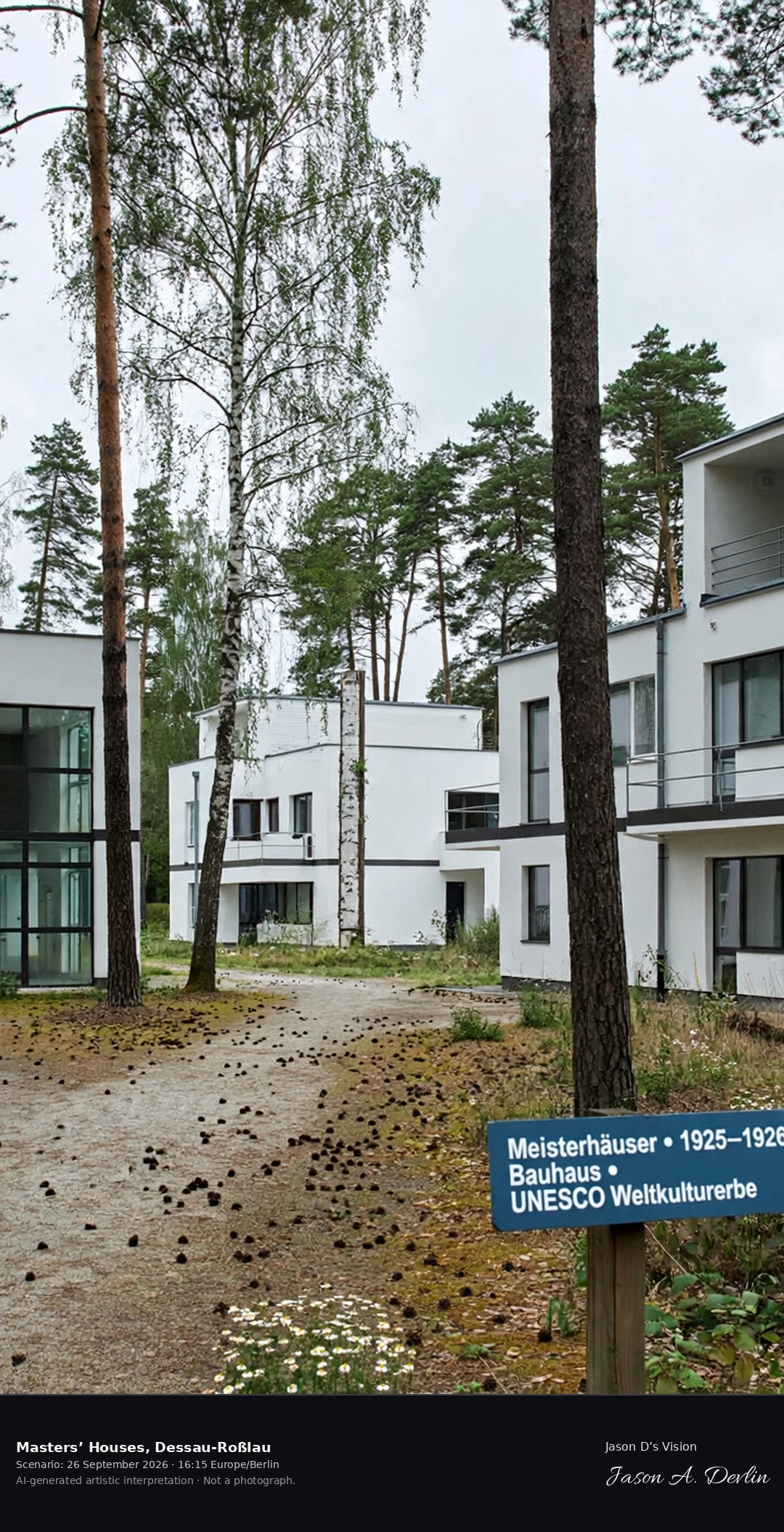
The white Bauhaus Masters' Houses stand among tall pines, their cubic flat-roof volumes with band windows and balconies framing a sandy path through the foreground. A bicycle leans against a pine trunk at the left edge, while a blue site sign naming the 1925–1926 Masters' Houses and their UNESCO listing rises out of the needle-strewn grass at center-right. Under flat overcast daylight the pale façades glow softly against the dark trunks, and white wildflowers dot the dry grass around the path.
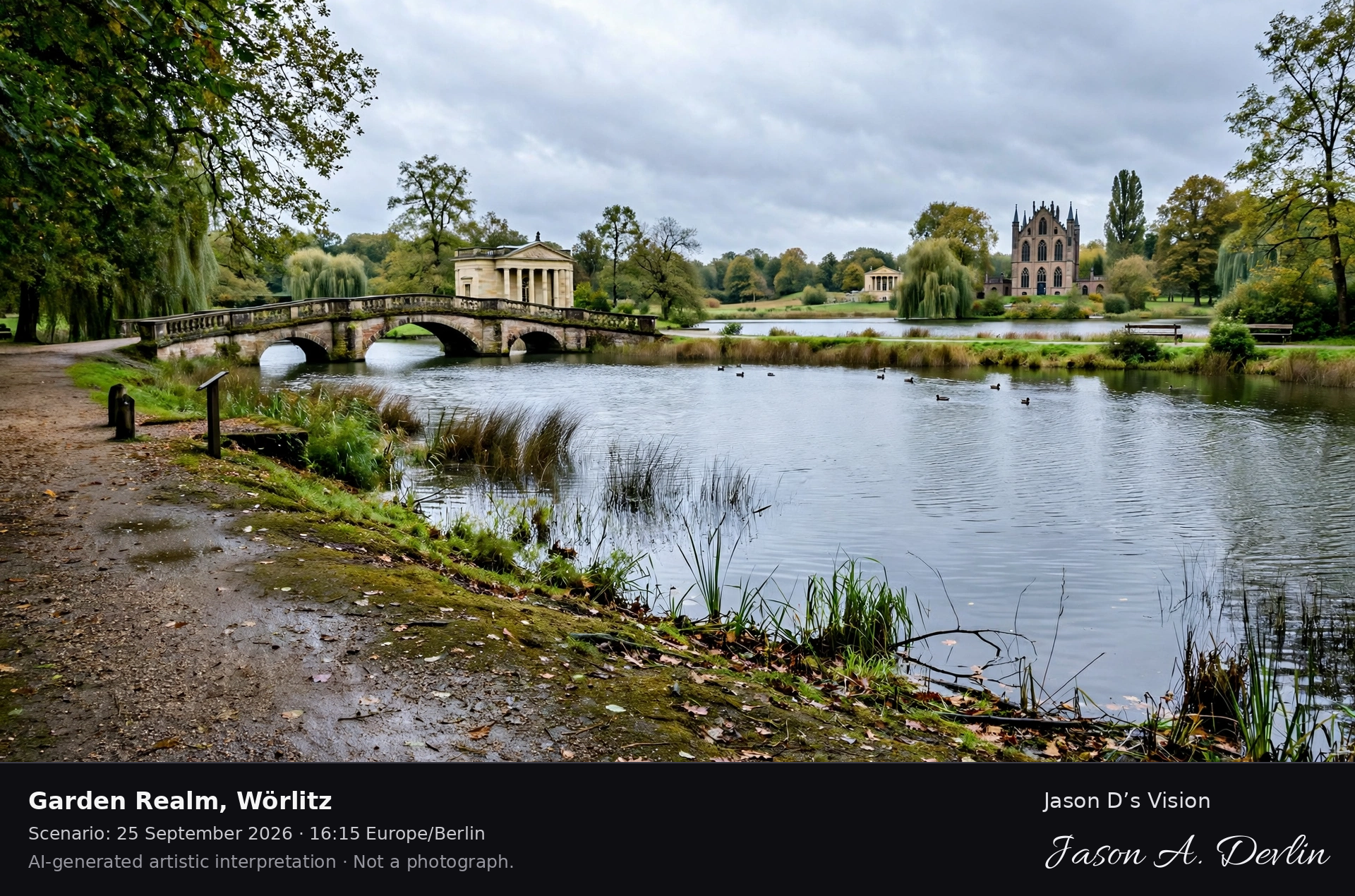
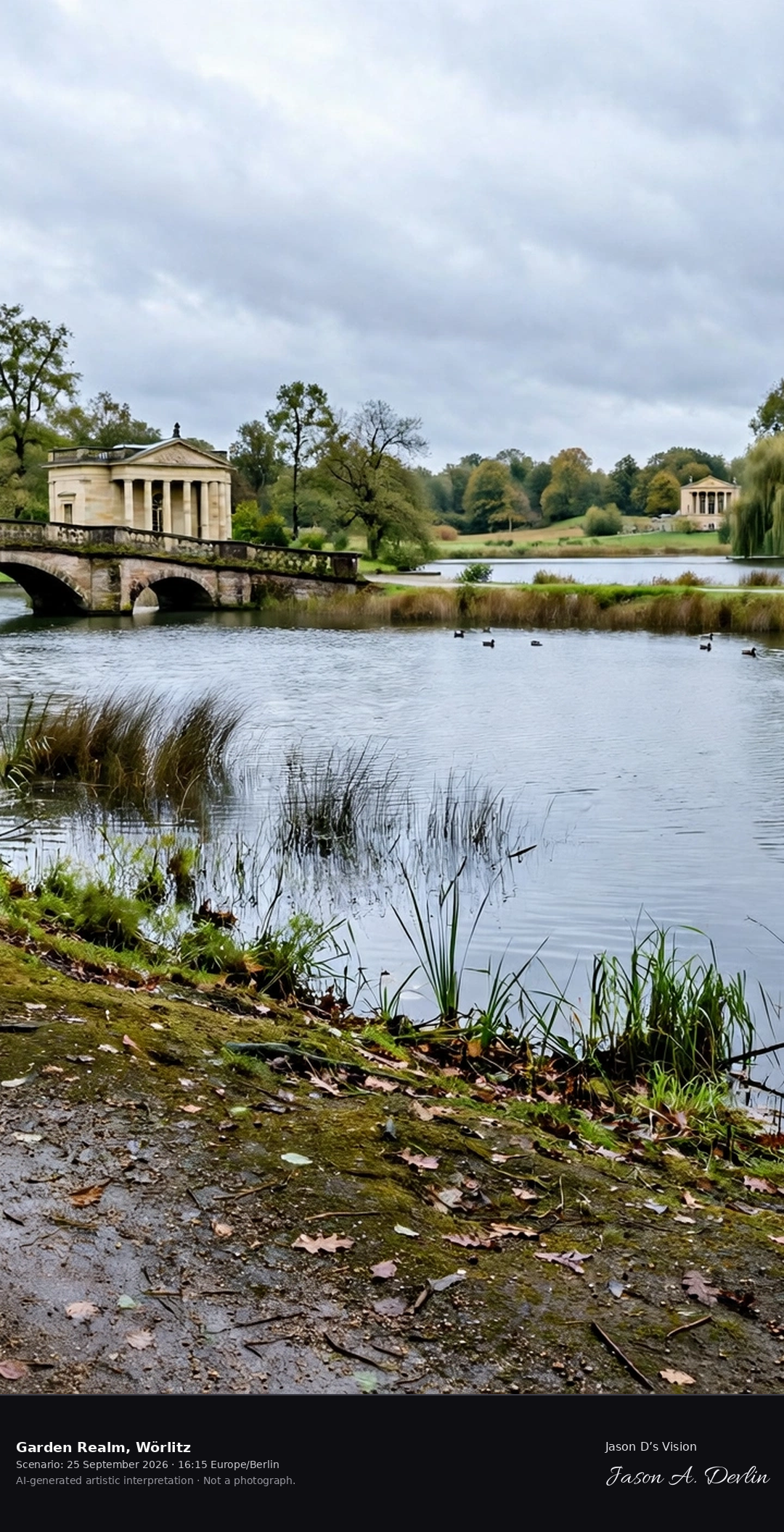
Lakes, bridges and garden buildings · AI-generated artistic interpretation
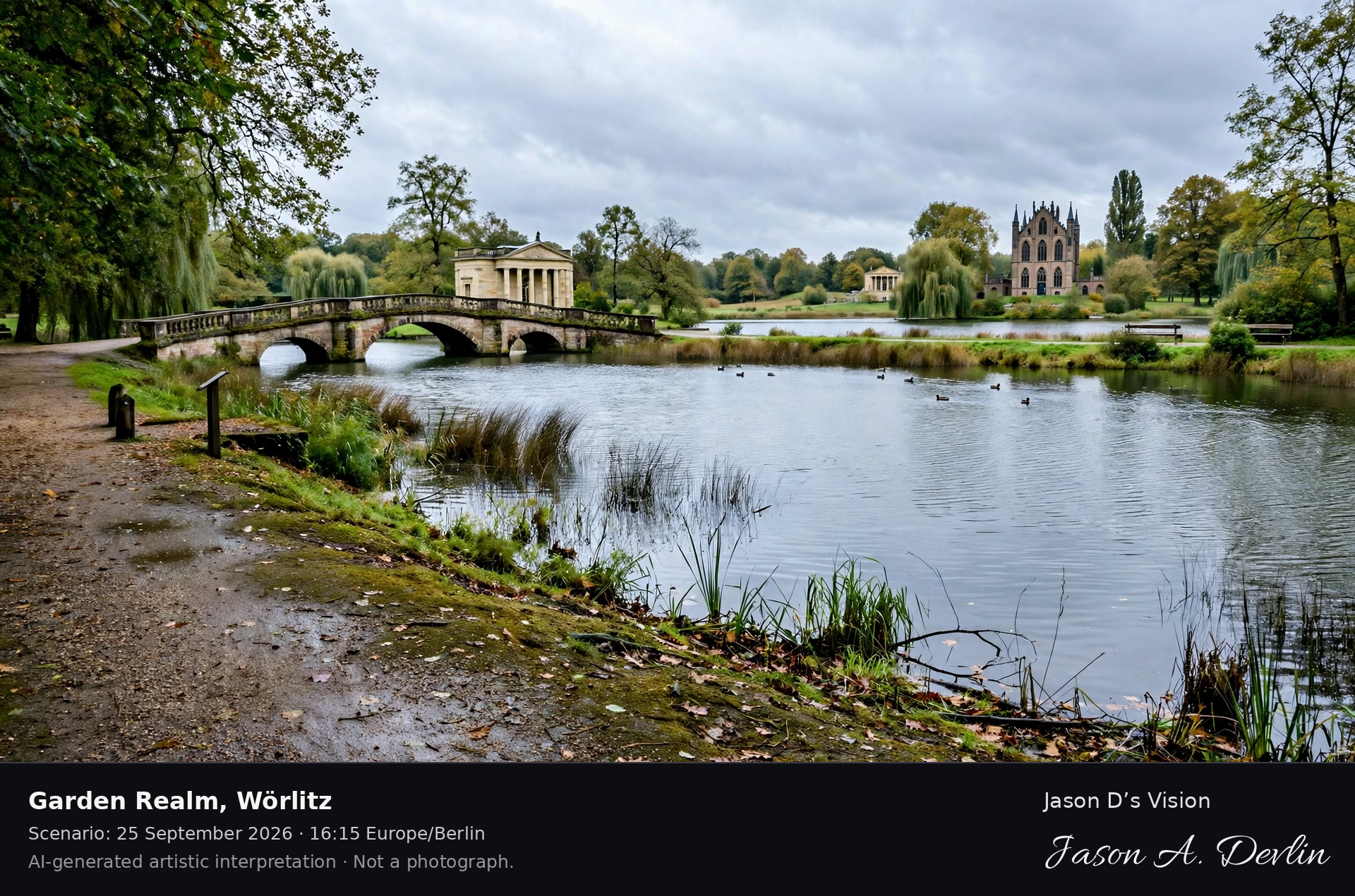
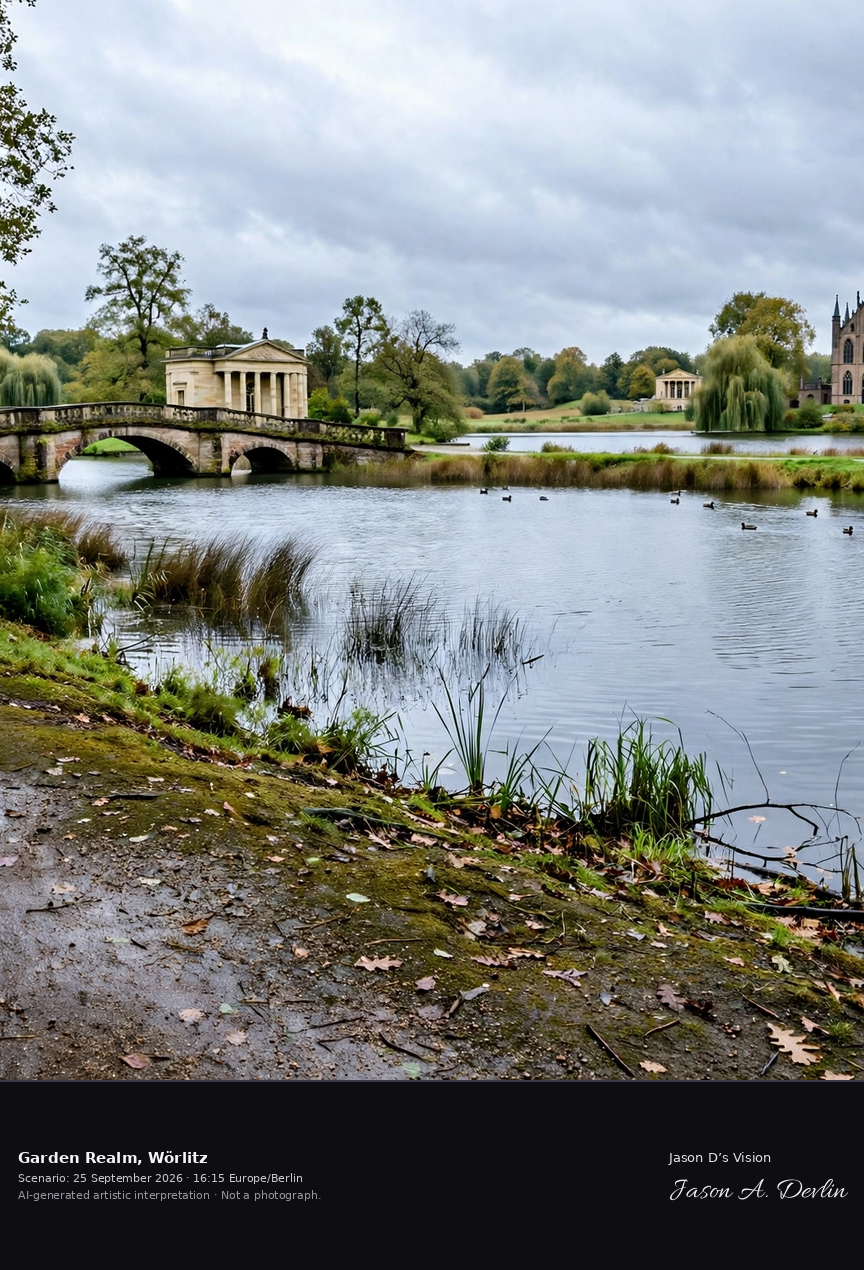
The viewpoint is at the lakeshore, a gravel path and mossy bank in the foreground with reeds at the water's edge. The arched stone bridge crosses left of center to the classical temple pavilion, while the Gothic House rises at the right above willows and park benches, ducks drifting on the lake. Overcast autumn daylight at 17°C flattens the shadows, the grey sky reflected softly in the still water.
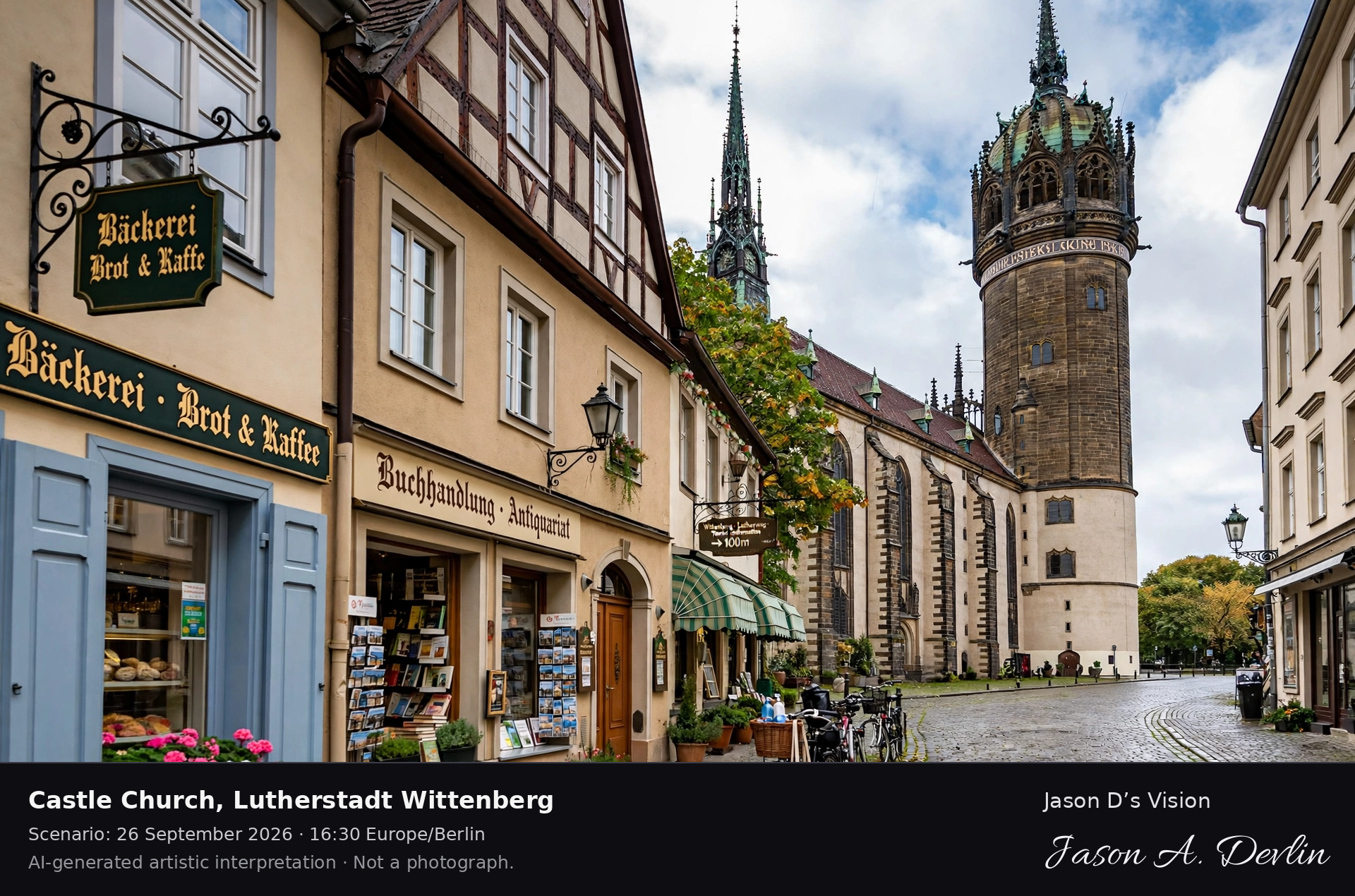
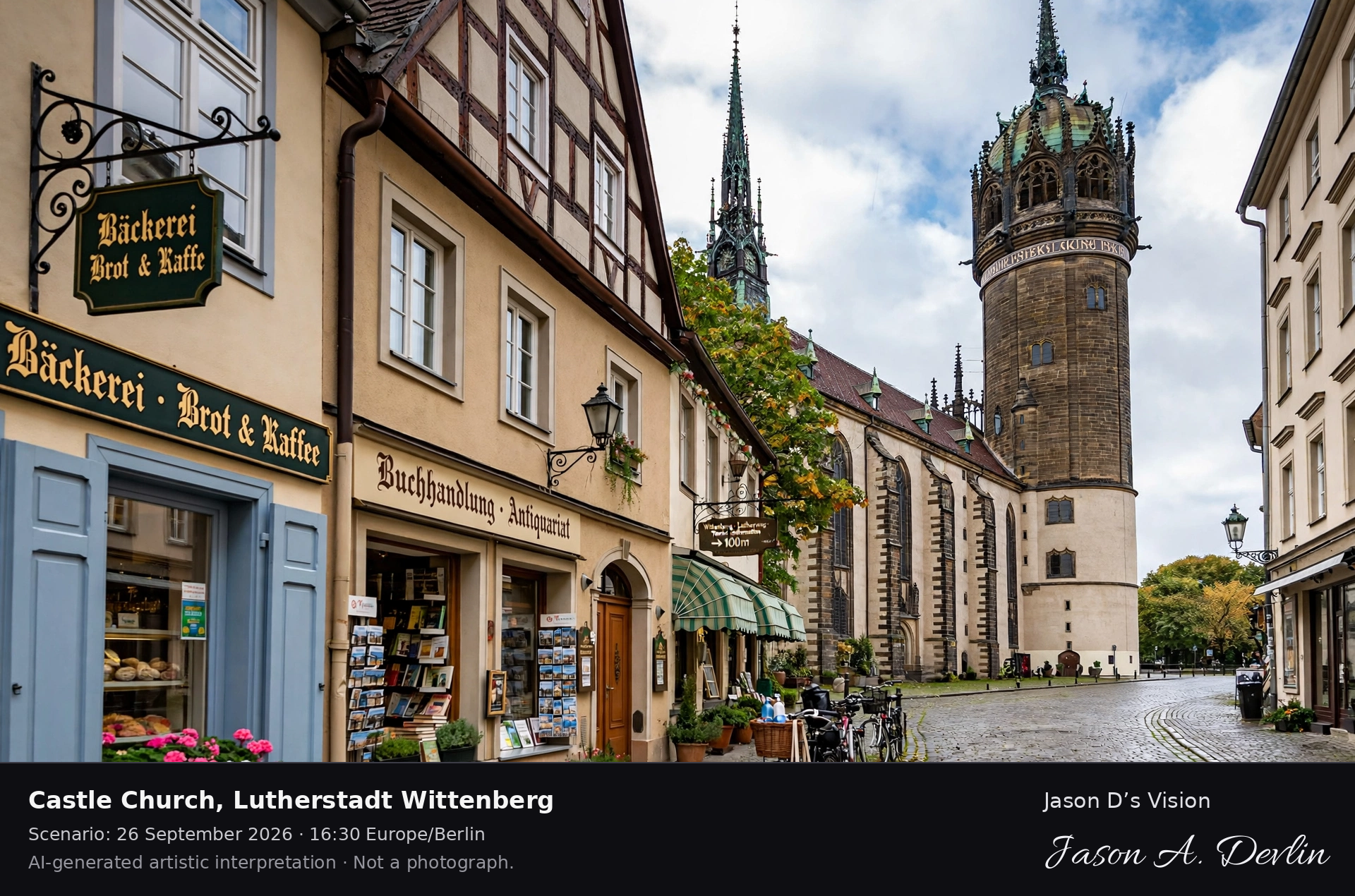
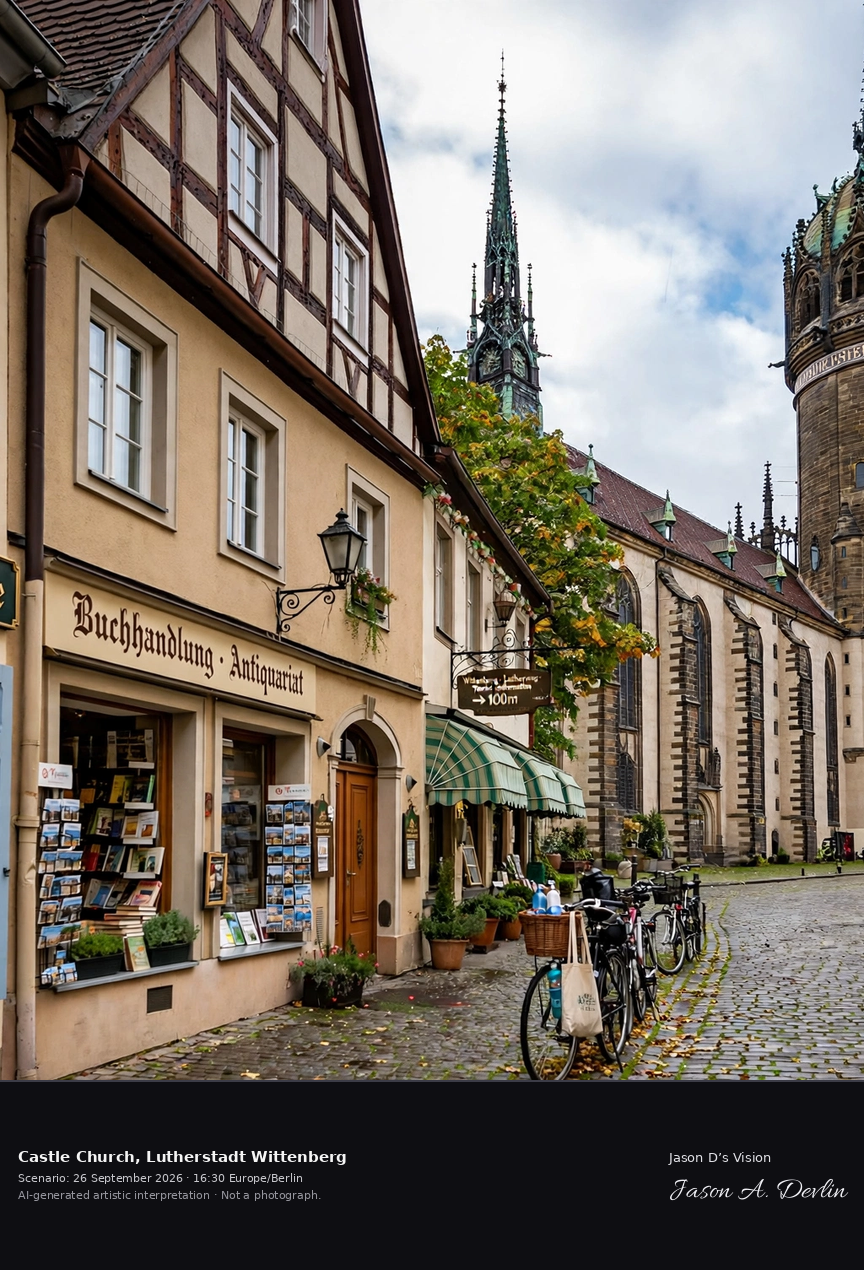
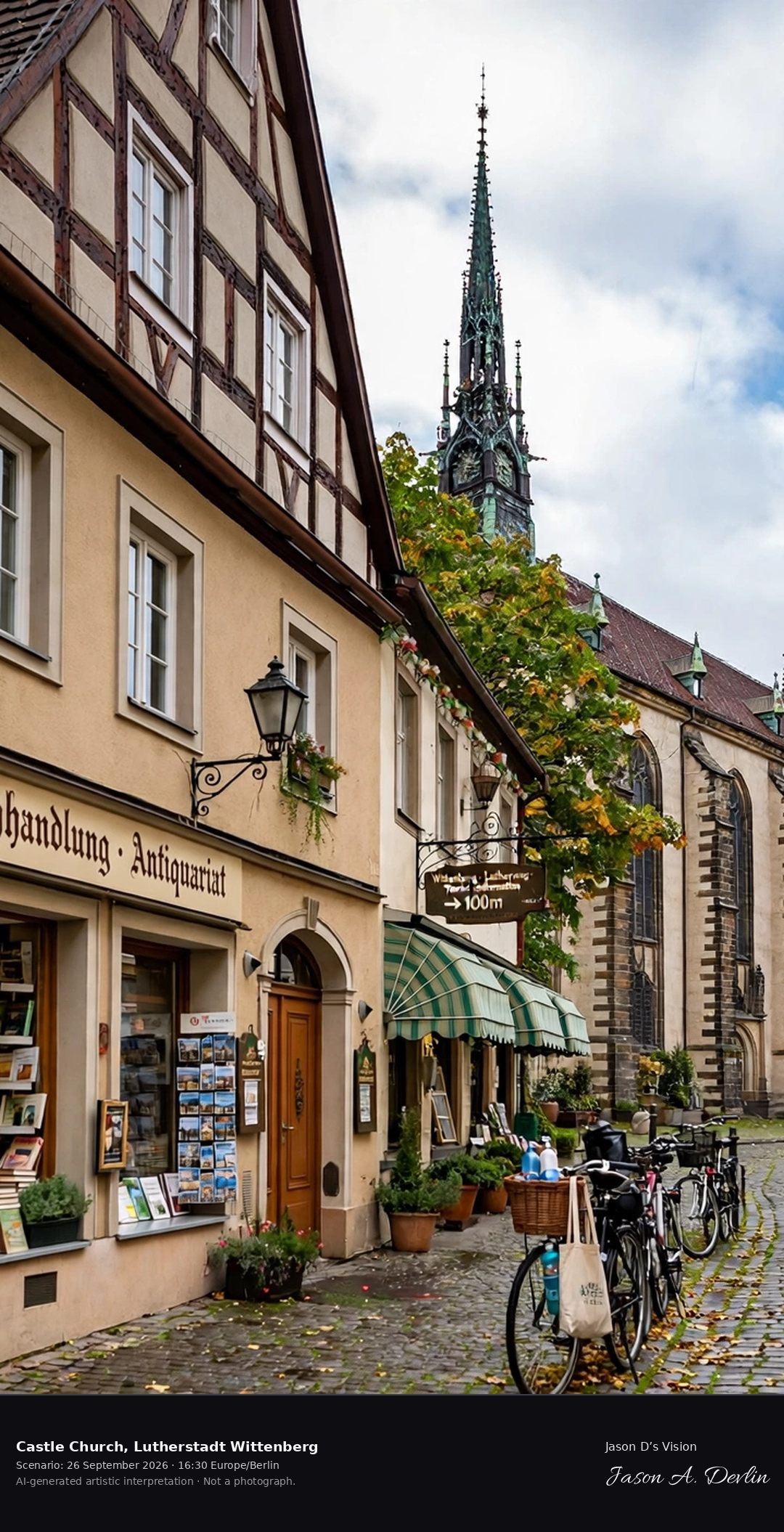
Church and historic street · AI-generated artistic interpretation
The Castle Church's round tower with its openwork crown rises at center-right, its dark stonework banded by the inscribed ring below the crown. A cobbled street of half-timbered houses fills the foreground, a bakery and bookshop-antiquariat with hanging signs at the left, bicycles parked along the curb and fallen leaves scattered on the wet cobbles. Partly cloudy afternoon light breaks across the church nave, with a slender needle spire rising behind the rooftops and a tourist wayfinding sign pointing toward the Lutherweg information.
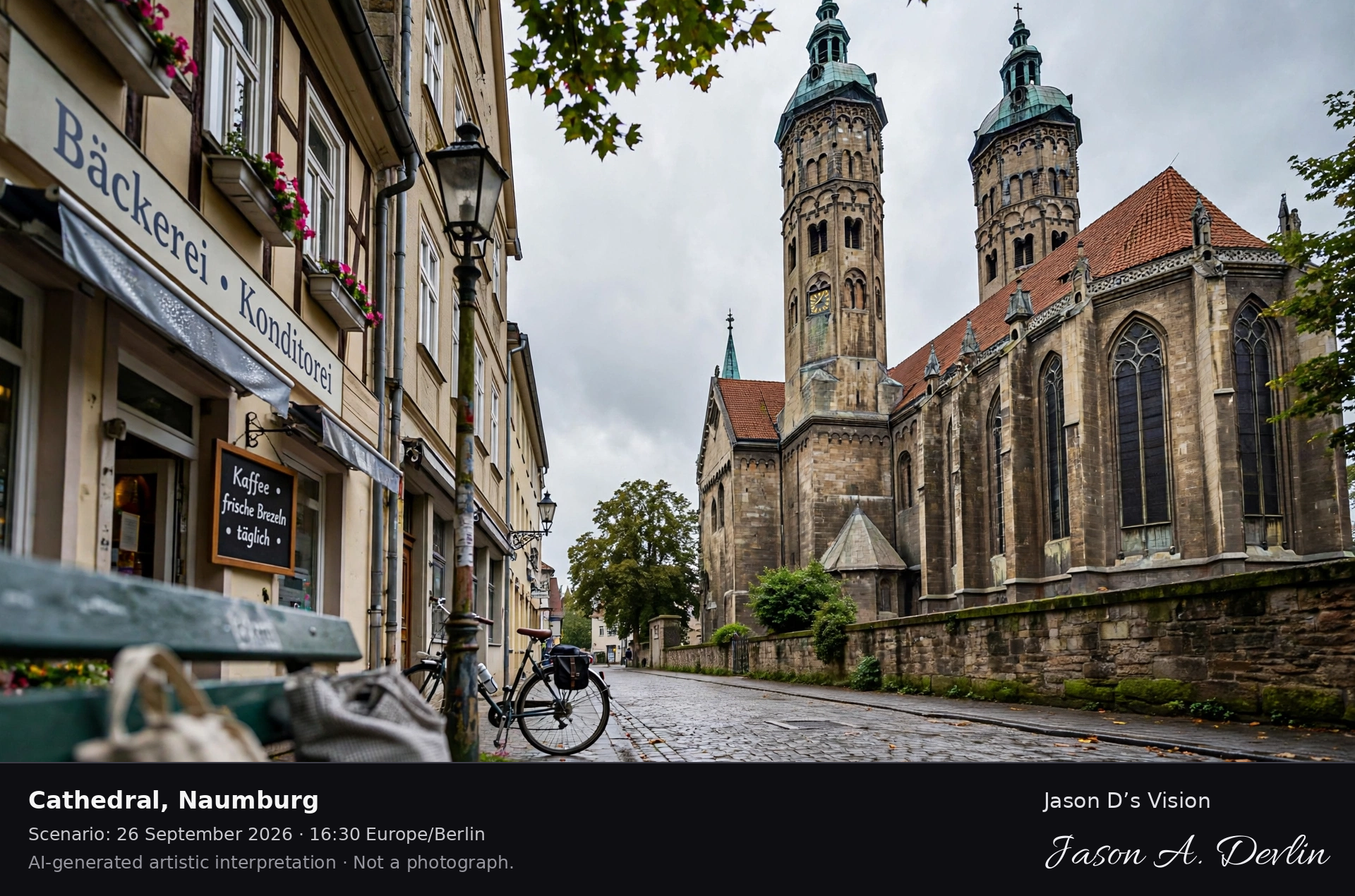
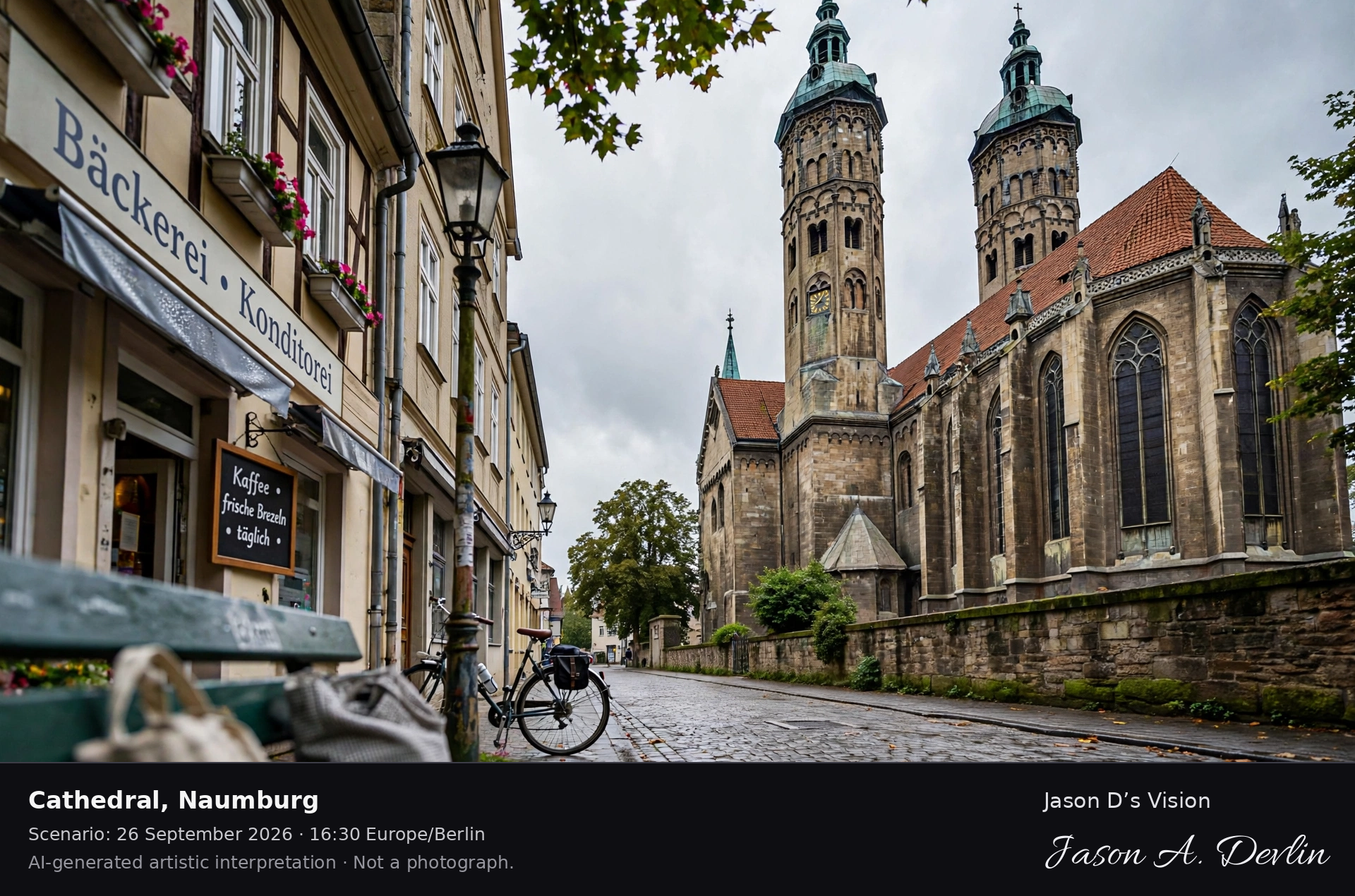
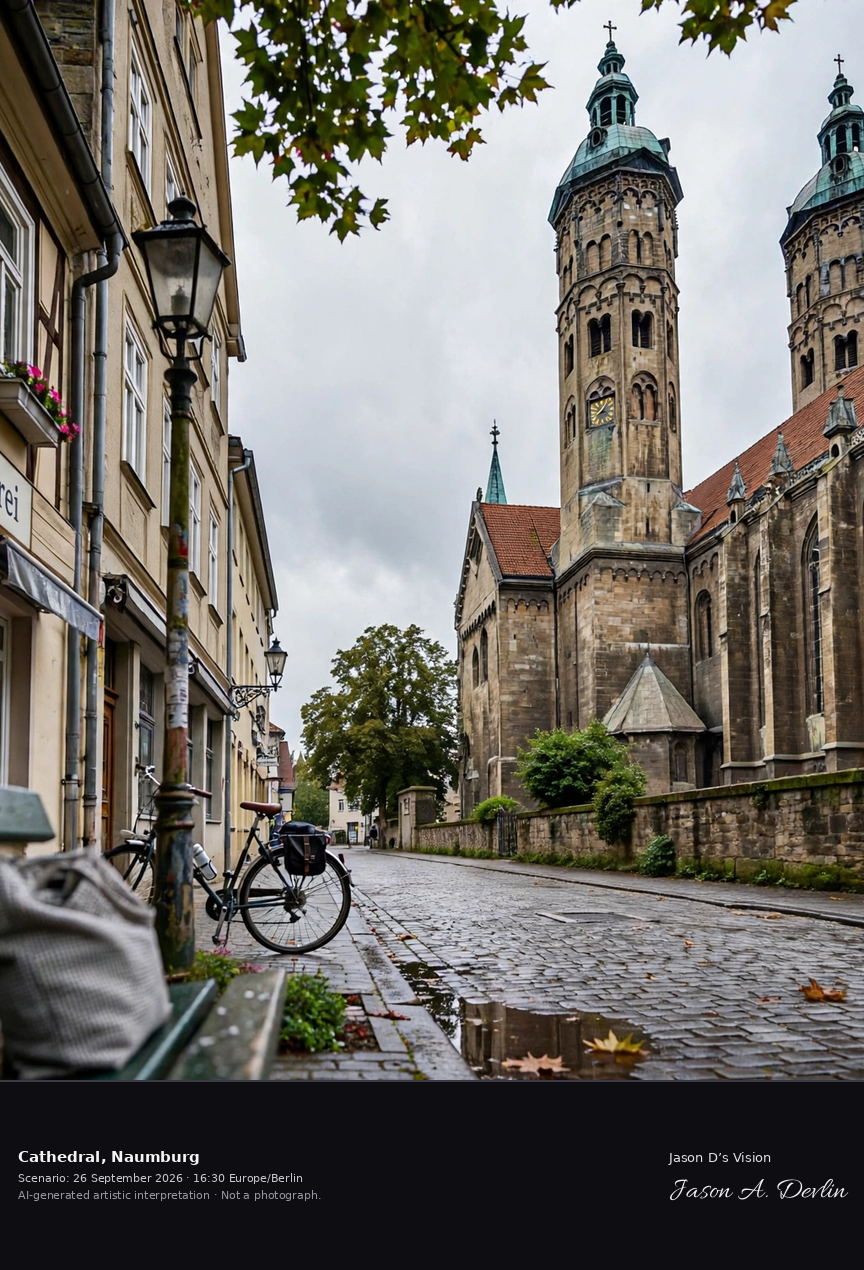
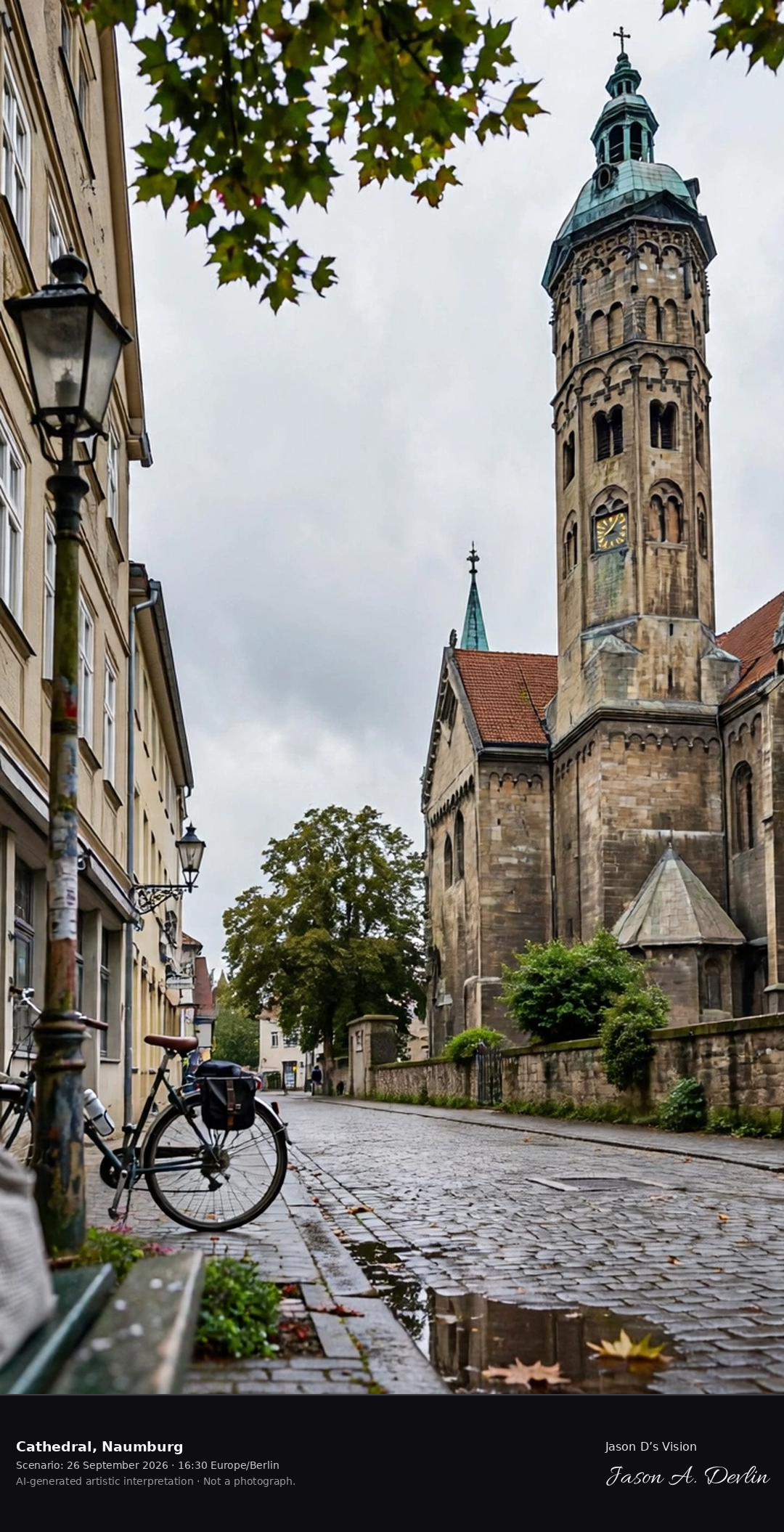
The cathedral's twin Romanesque towers with their green cupola crowns rise at center-right, the nave's red tile roof and pointed Gothic windows spreading along a moss-capped churchyard wall. A wet cobbled street curves past half-timbered houses at the left, where a bakery sign hangs beside flower boxes and a bicycle leans against a lamp post in the foreground. Overcast autumn light softens the stonework, with fallen leaves scattered on the damp cobbles and puddles reflecting the gray sky.
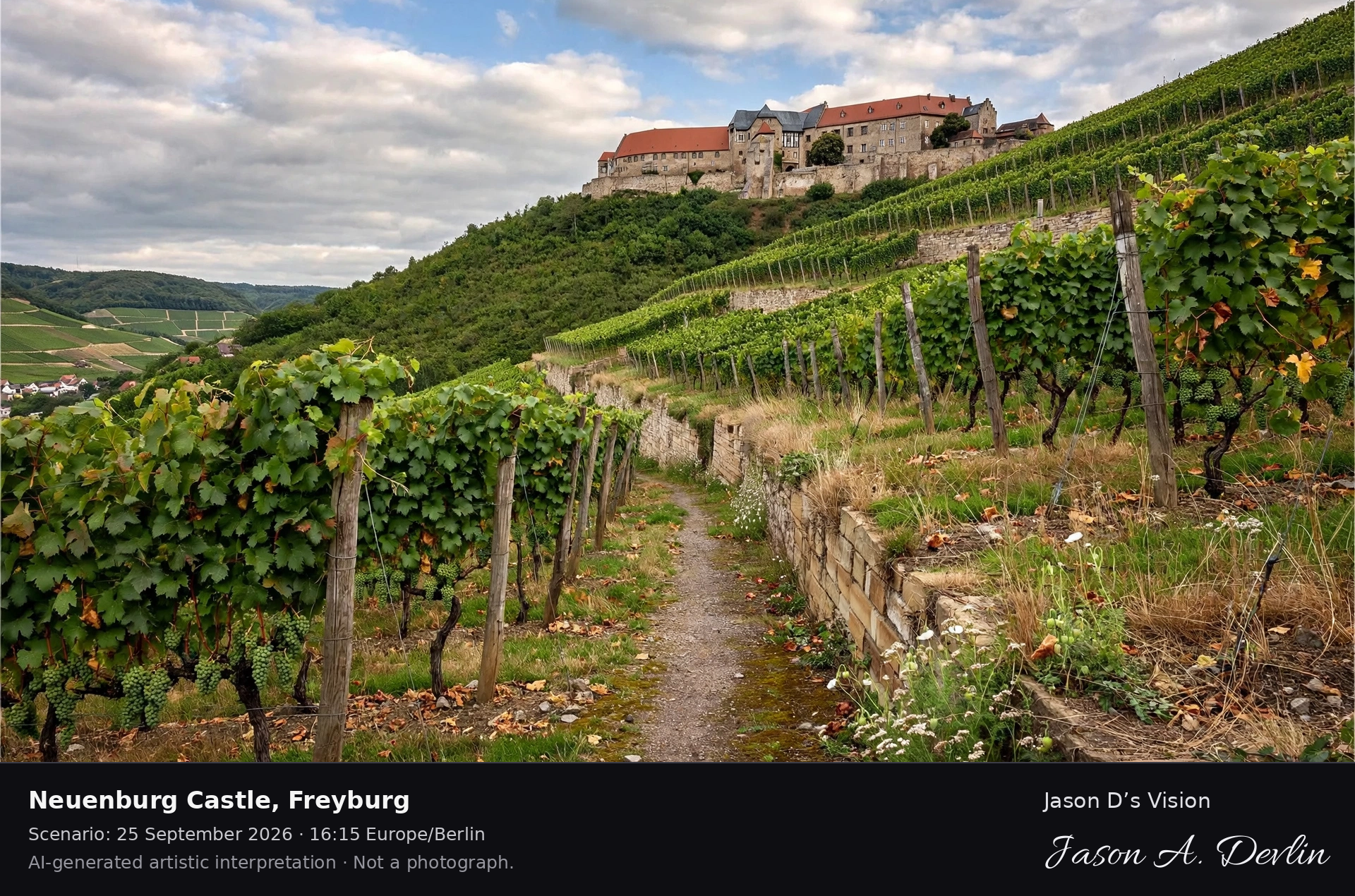
Castle and vineyards · AI-generated artistic interpretation
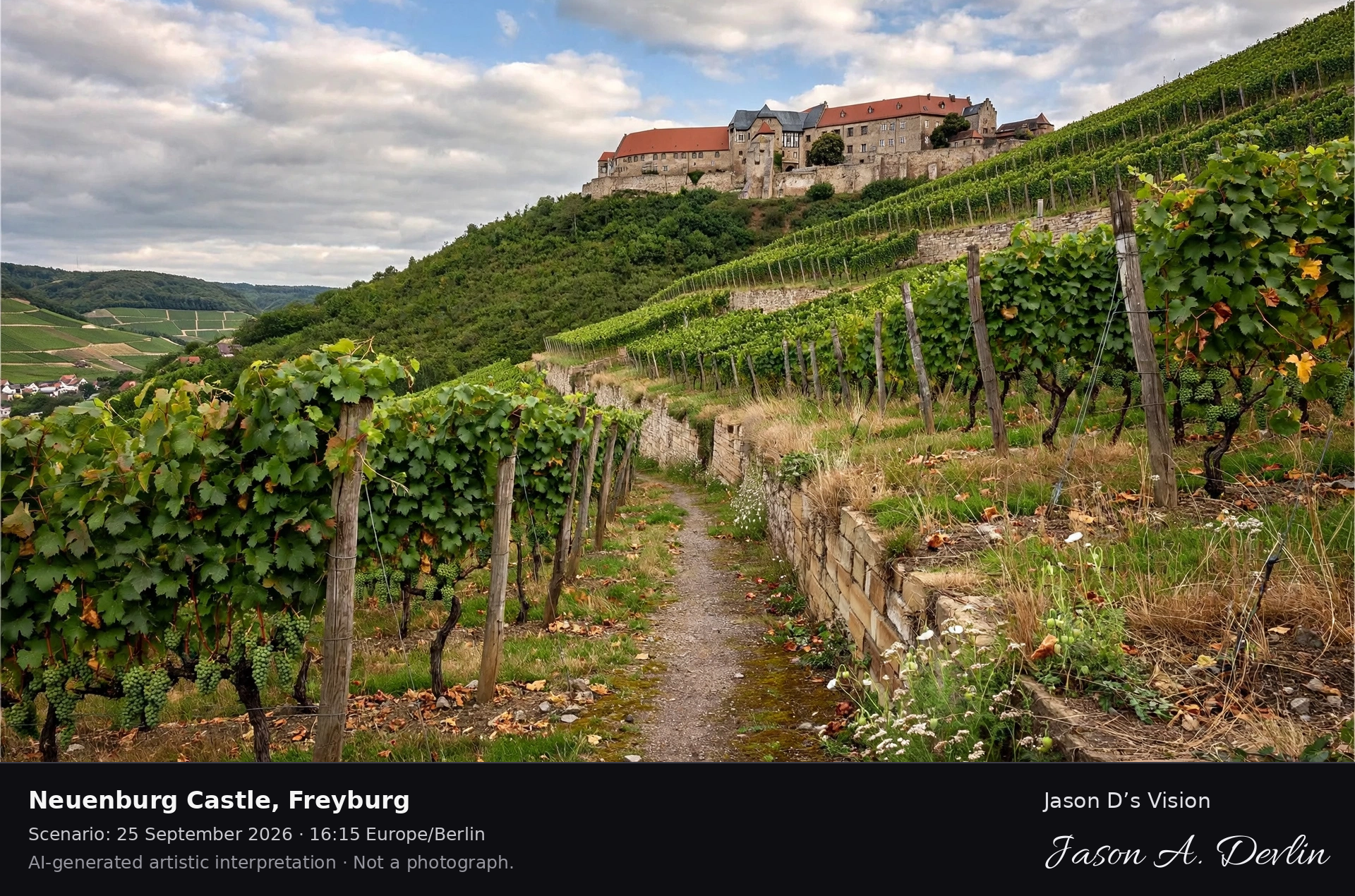
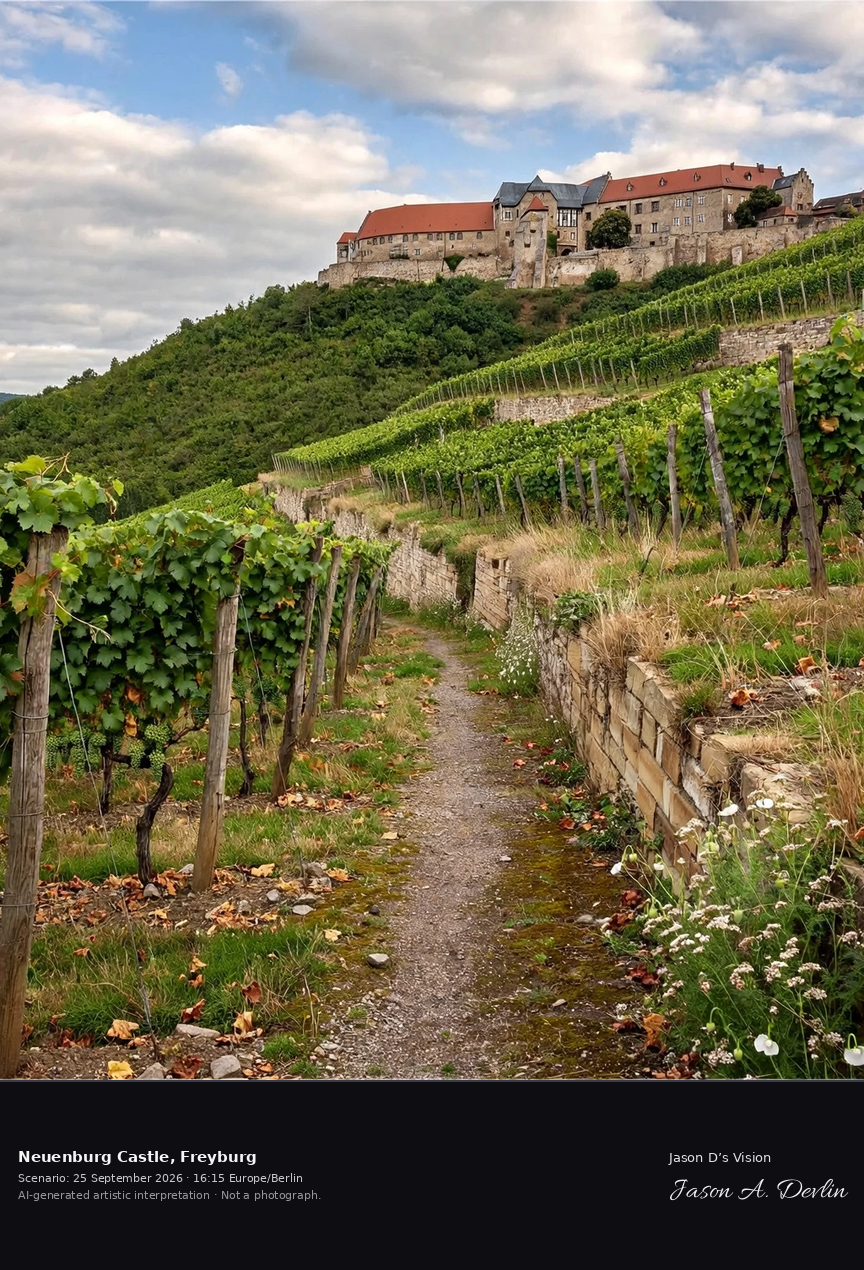
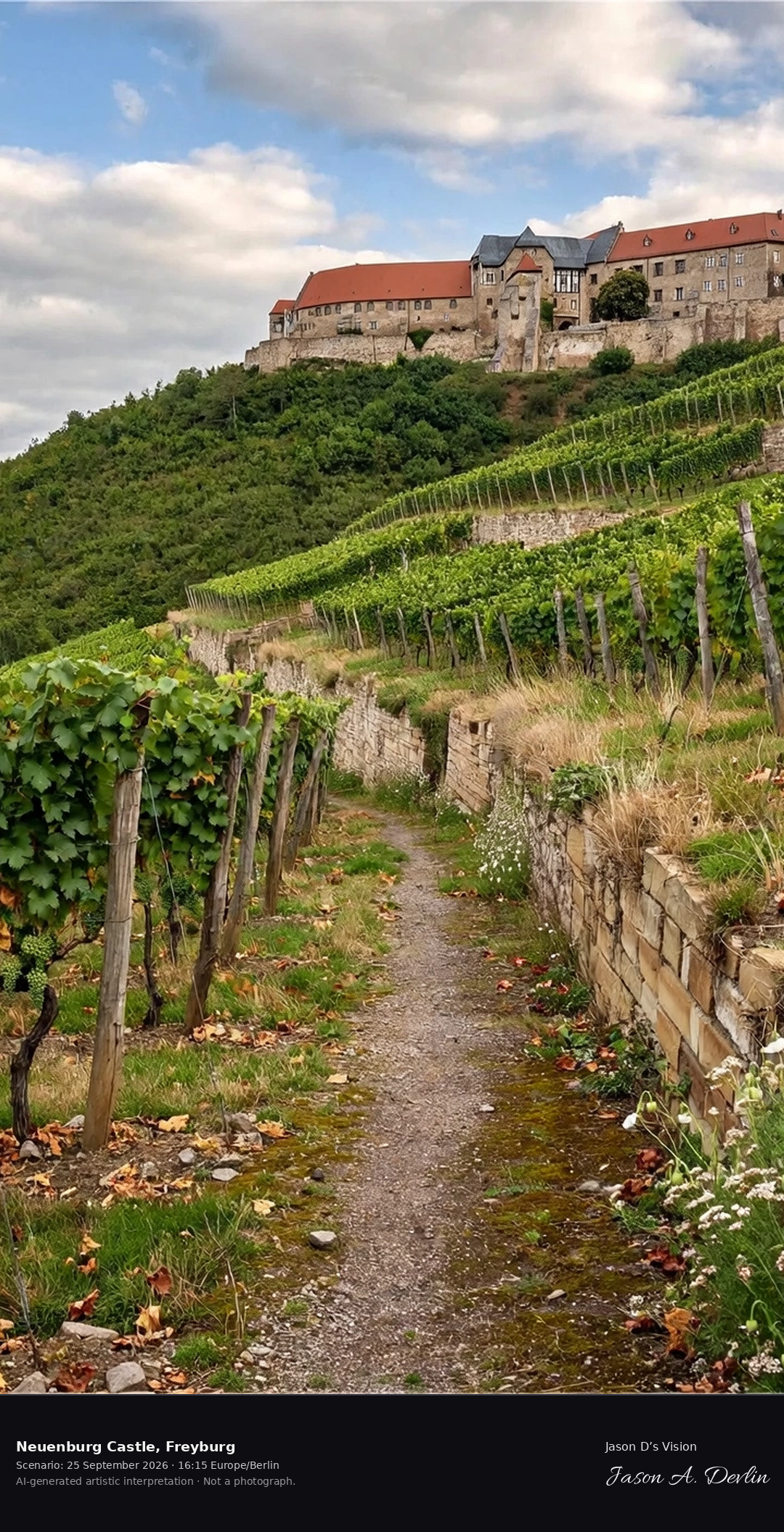
The viewpoint is among the vineyard rows, a gravel path leading between vine-covered stakes in the foreground while the Neuenburg Castle complex crowns the hilltop above. Red-tiled roofs and stone walls stand center-top against a broken cloud sky, terraced vines sweeping across the mid-frame and the valley town glimpsed at the far left. Partly cloudy daylight at 18°C keeps the greens vivid, with early autumn tints touching some vine leaves.
Market Church and Red Tower · AI-generated artistic interpretation
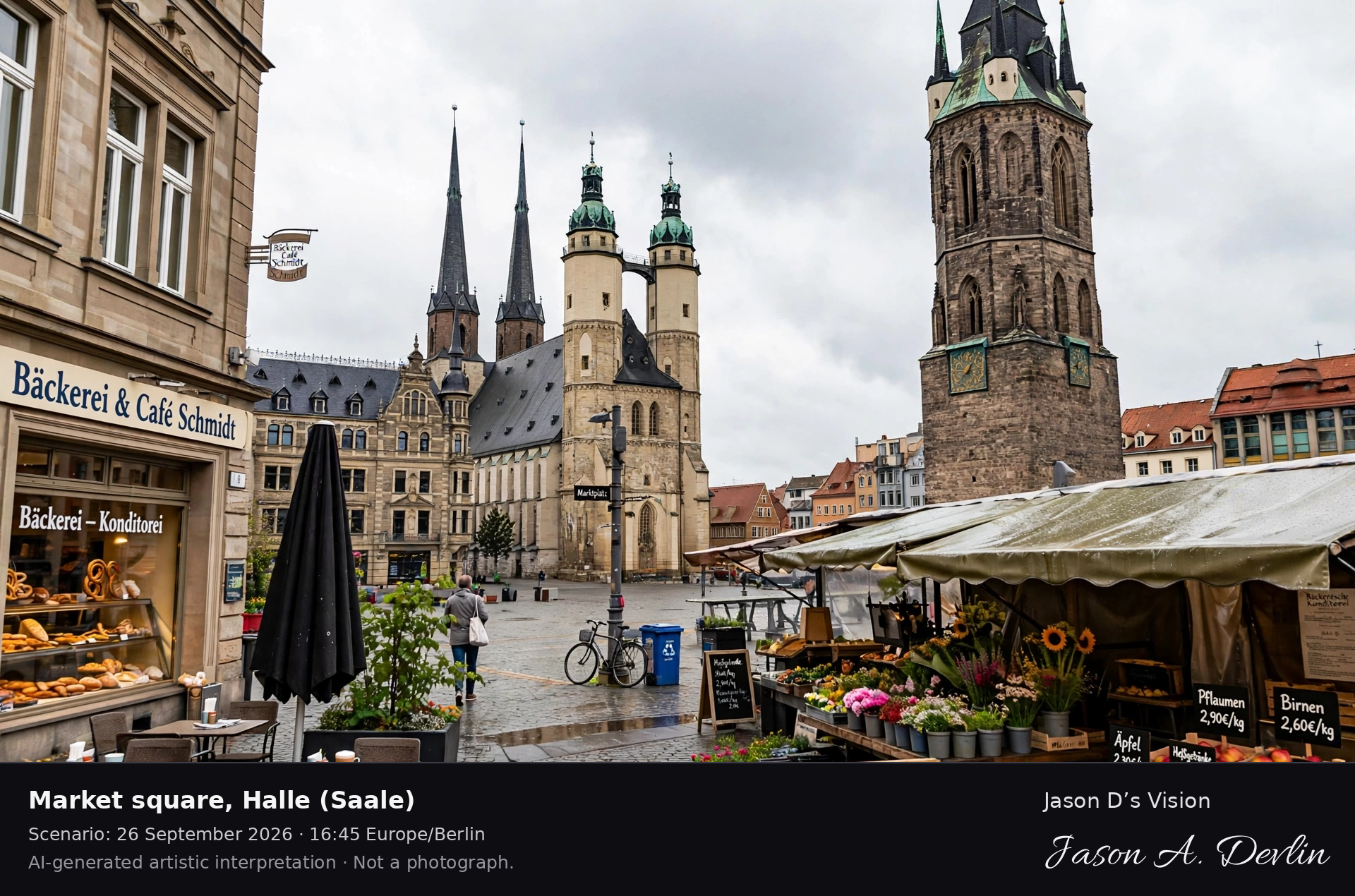
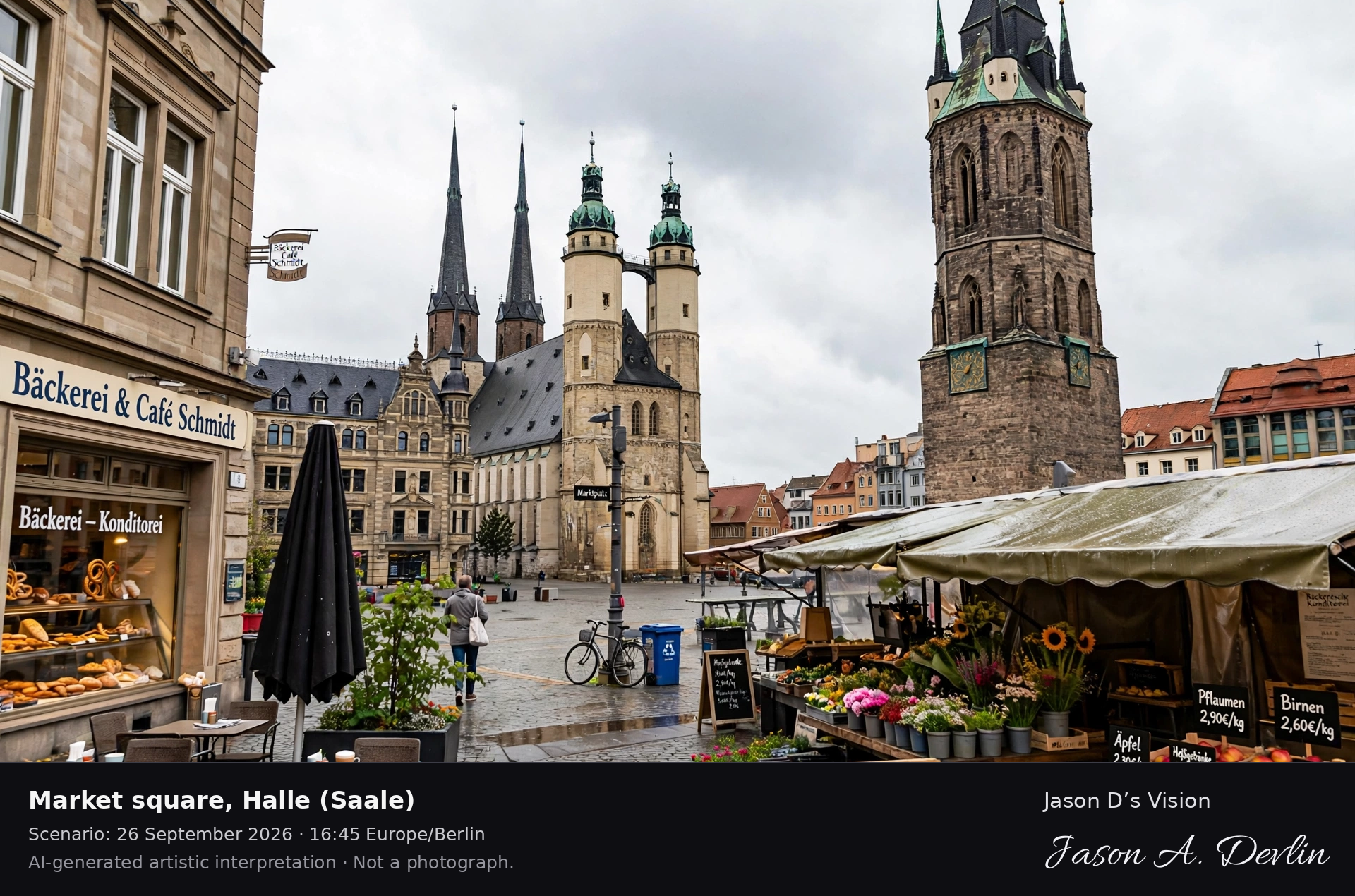
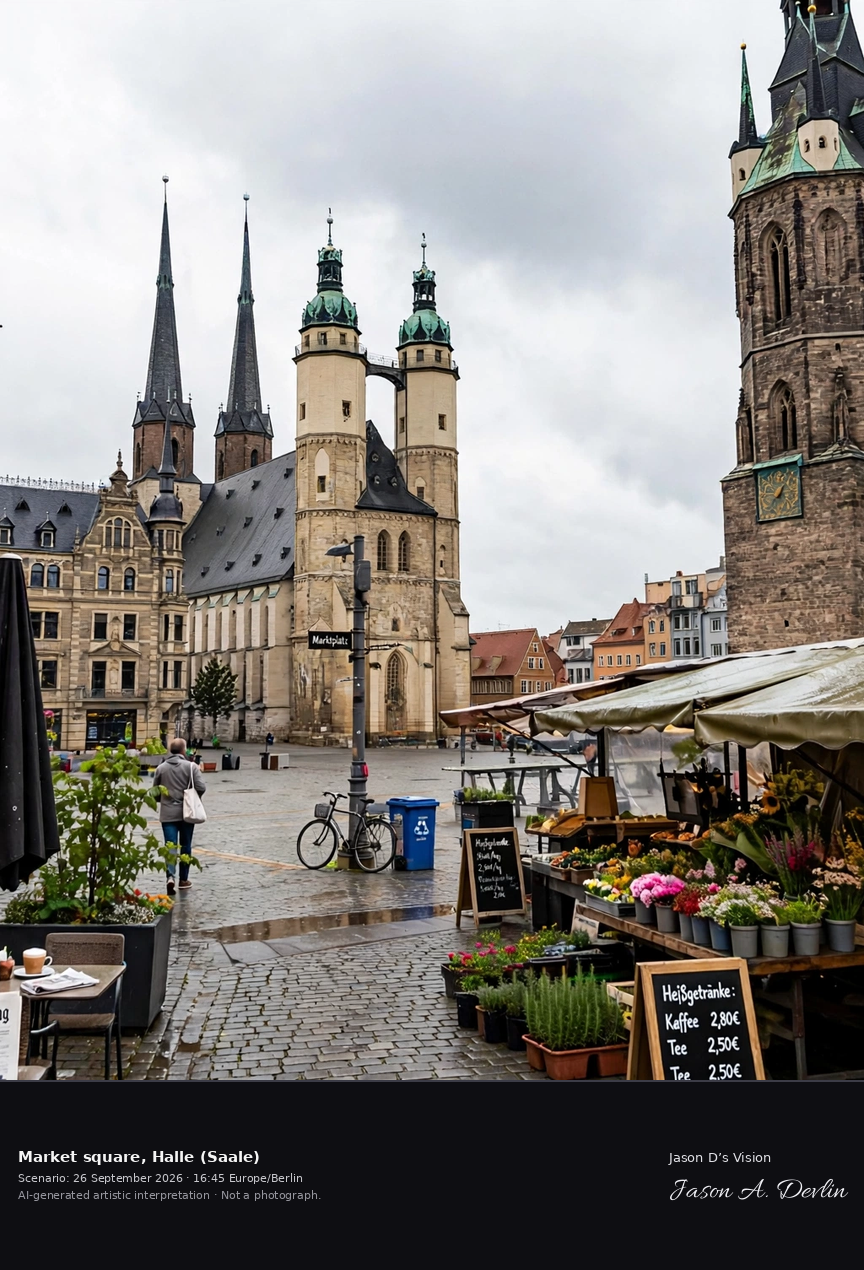
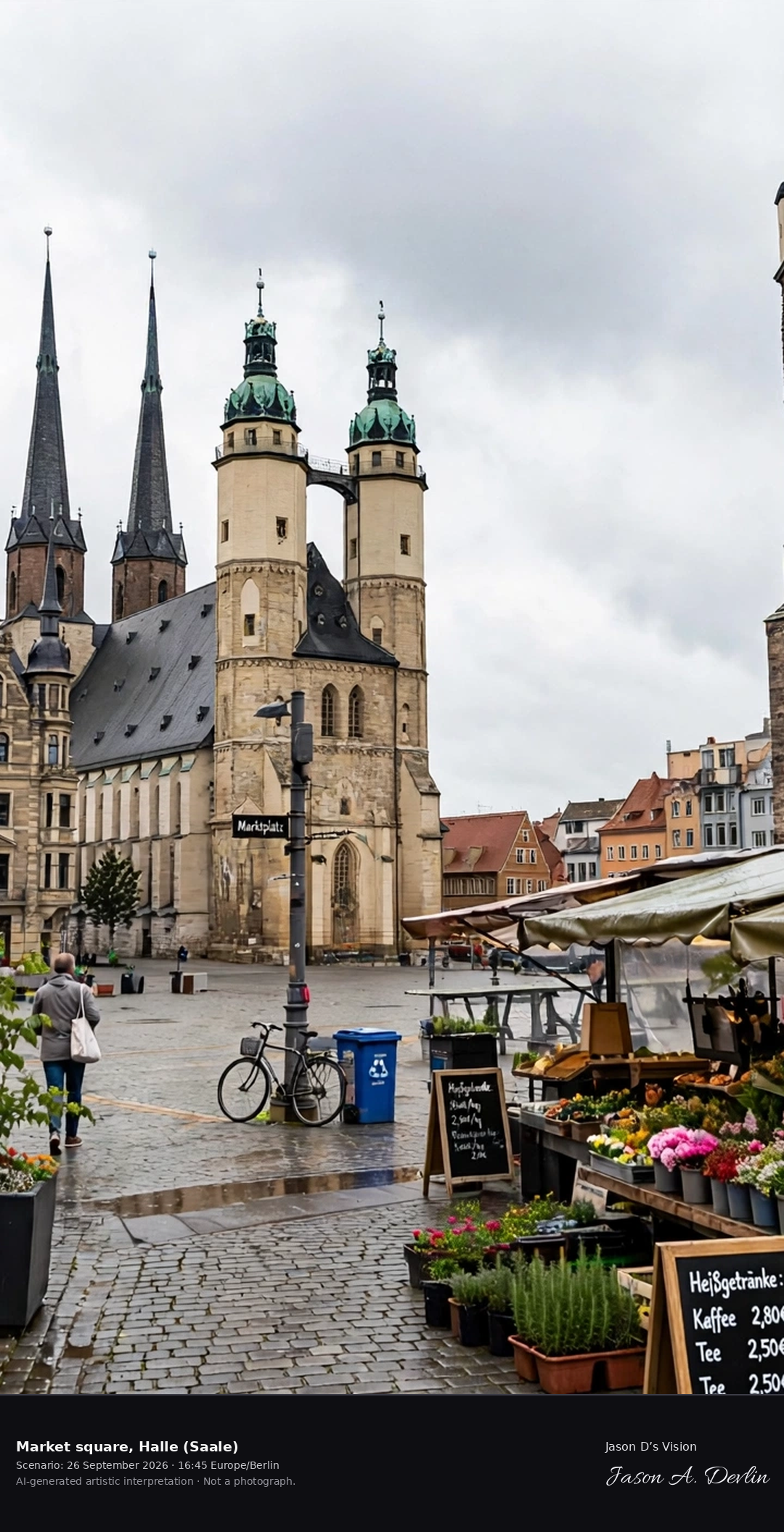
The Red Tower rises over Halle's market square on the right, its green copper cap and clock face standing against the grey afternoon sky. Center frame, the Market Church holds the square with its four distinctive towers, while cobbled paving leads the eye past market stalls of flowers and autumn fruit. To the left, a bakery's windows glow warm beneath overcast light, and a lone cyclist crosses the open square. A calm, everyday market-day scene under soft, rain-fresh overcast light.
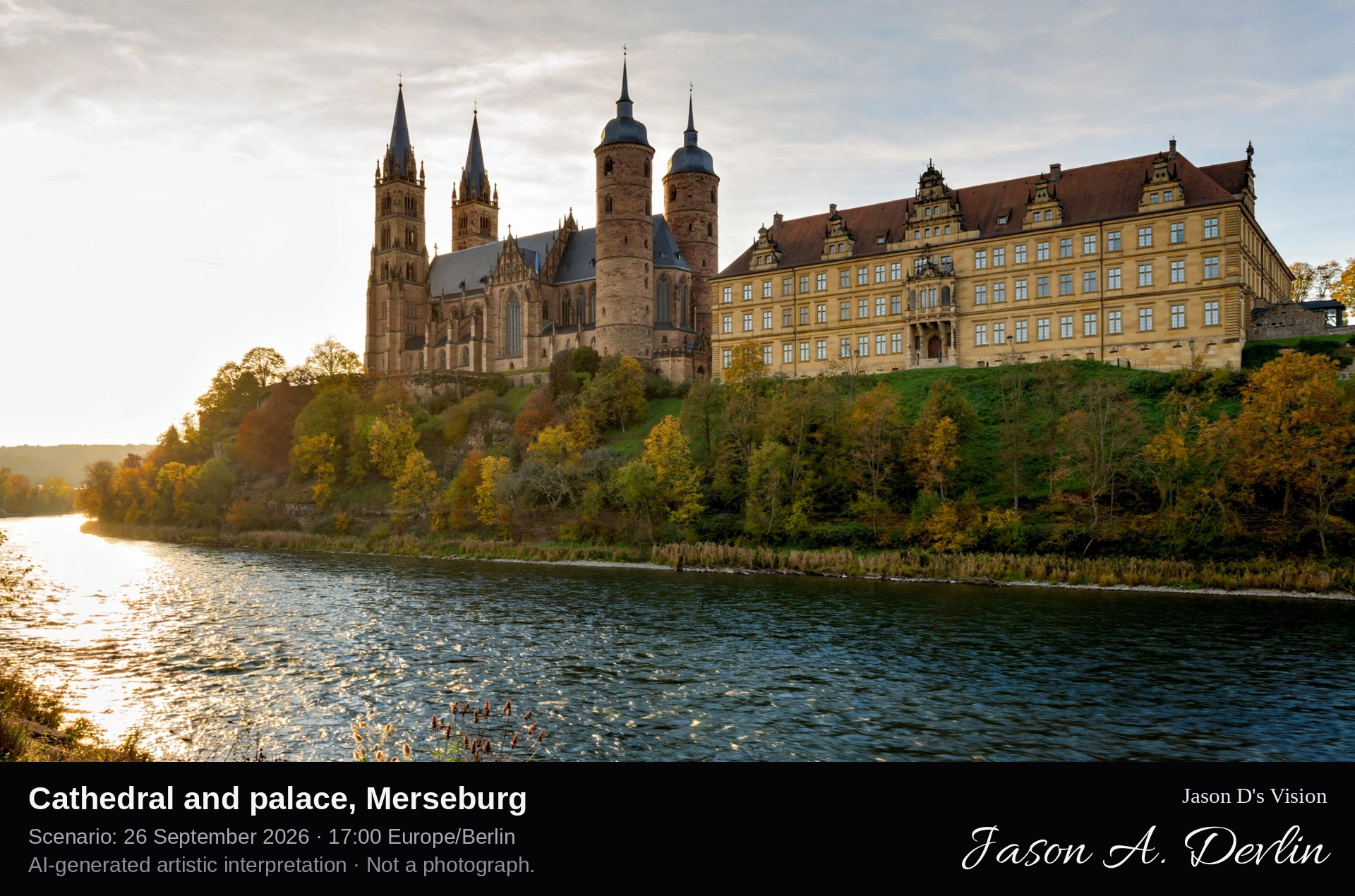
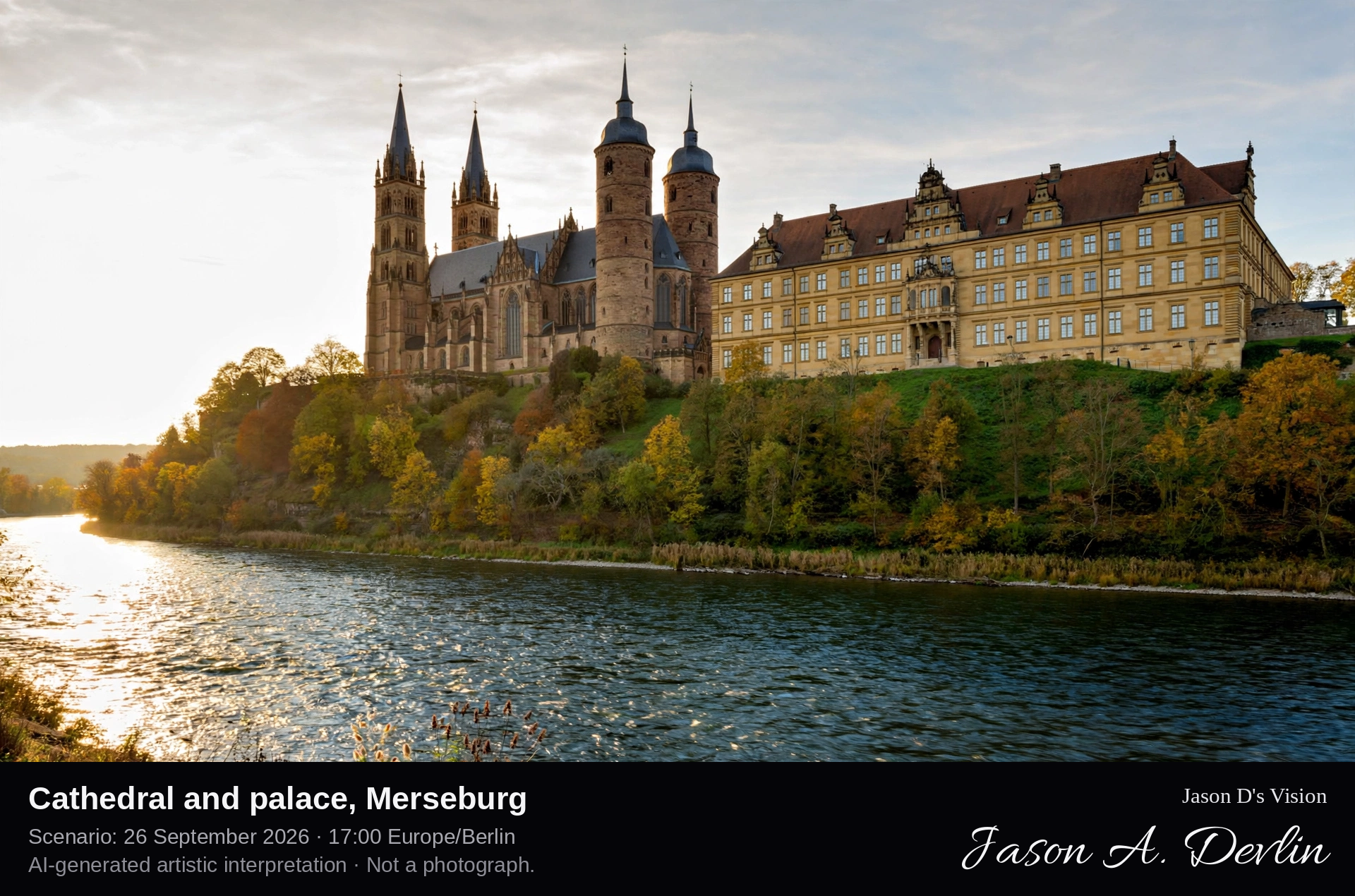
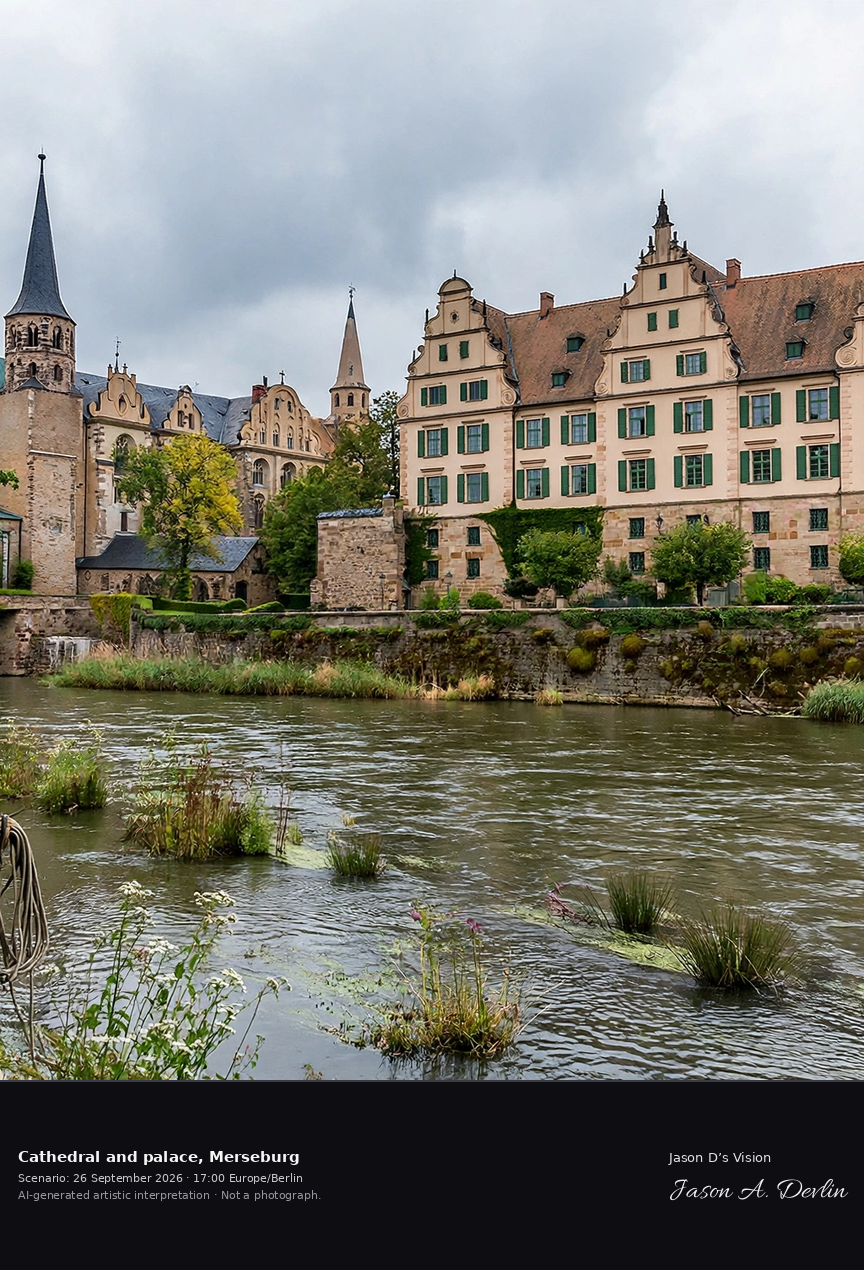
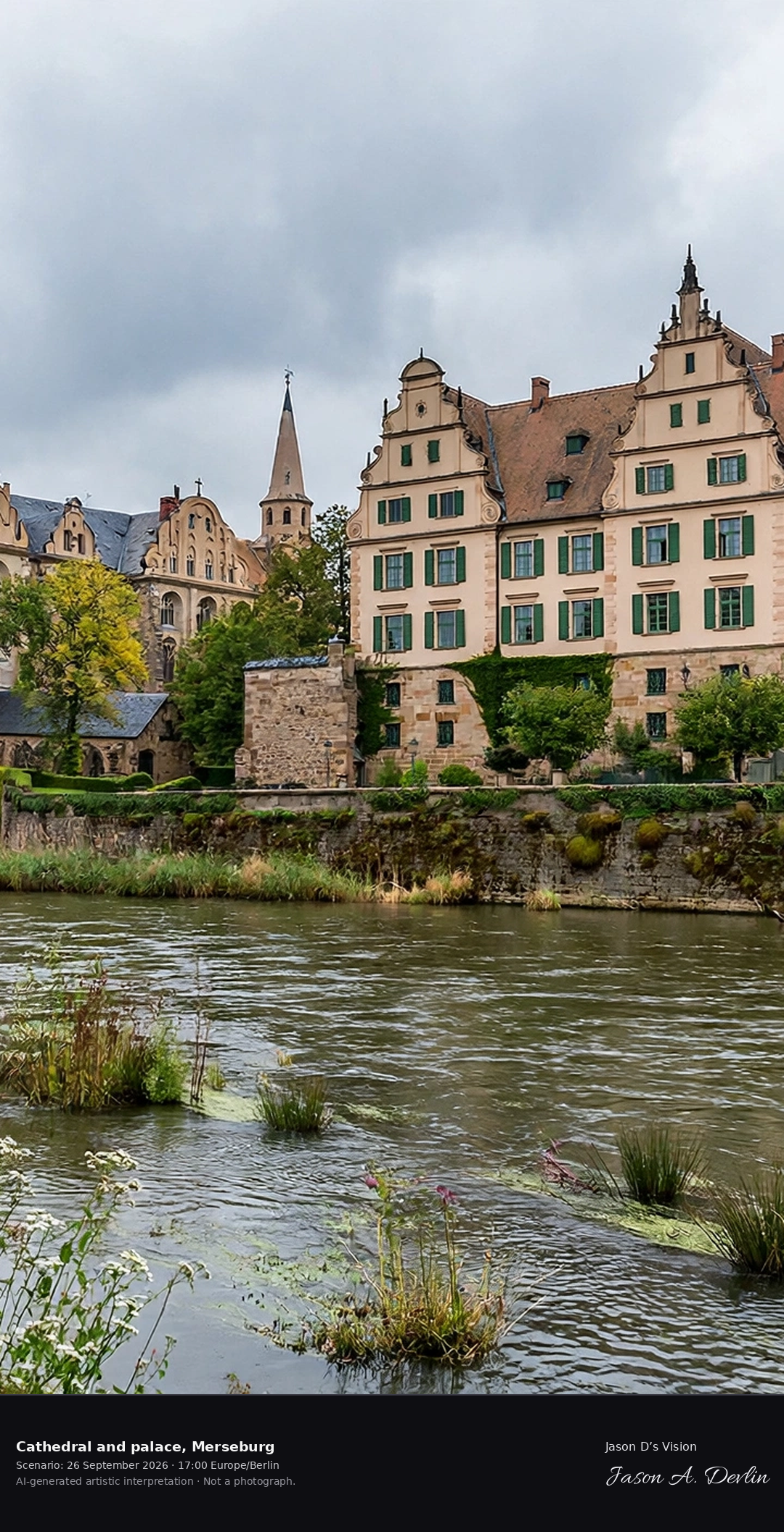
Merseburg's cathedral and castle rise together above the Saale, the cathedral's twin spires and green copper roofs standing left while the palace's cream façade with green shutters anchors the right. Below, the river slides past reed beds and a weathered riverside path, the whole ensemble reflected in soft overcast light. A quiet riverside viewpoint — no crowds, just stone, water, and late-September greenery under a clouded afternoon sky.
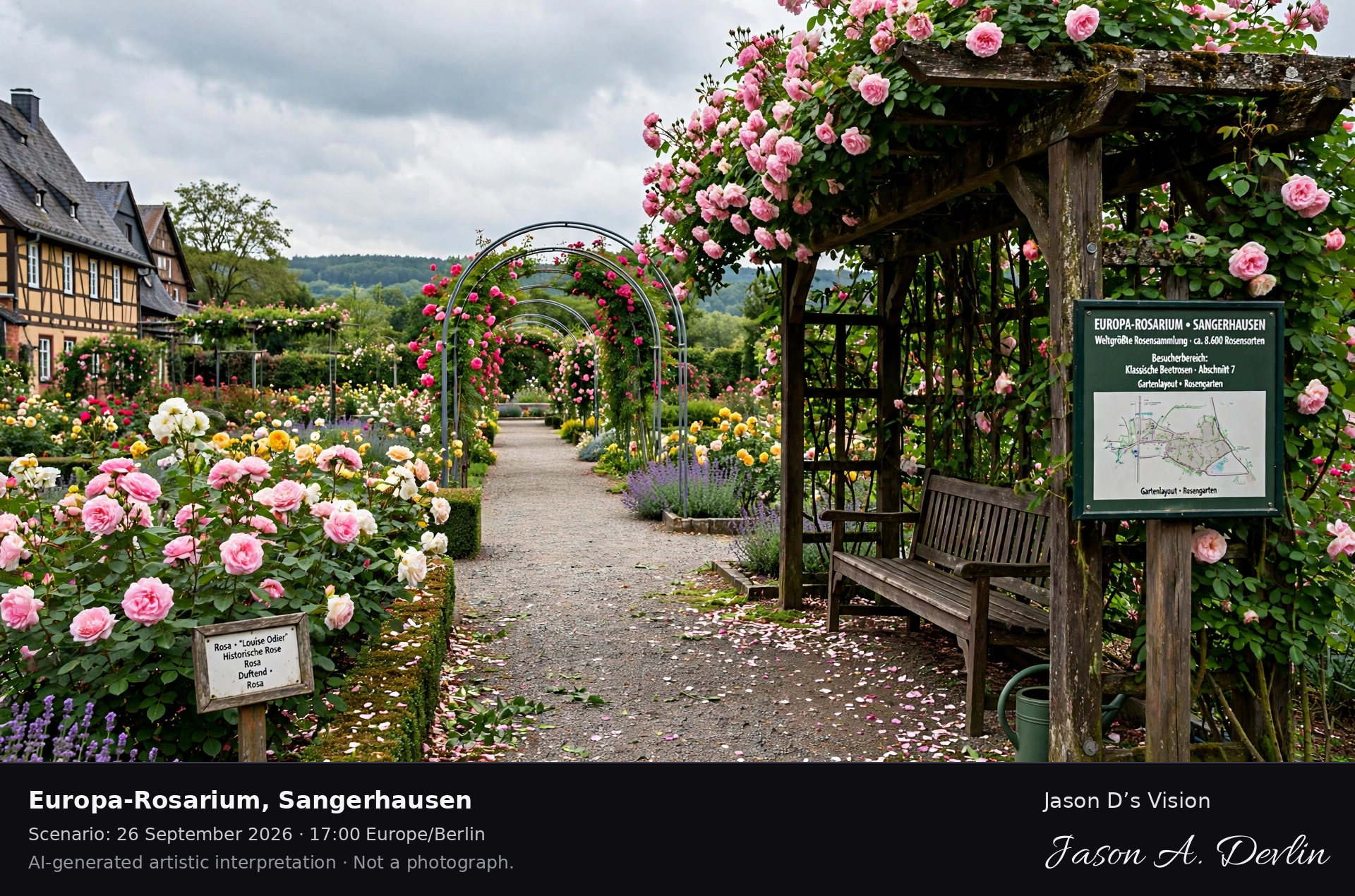
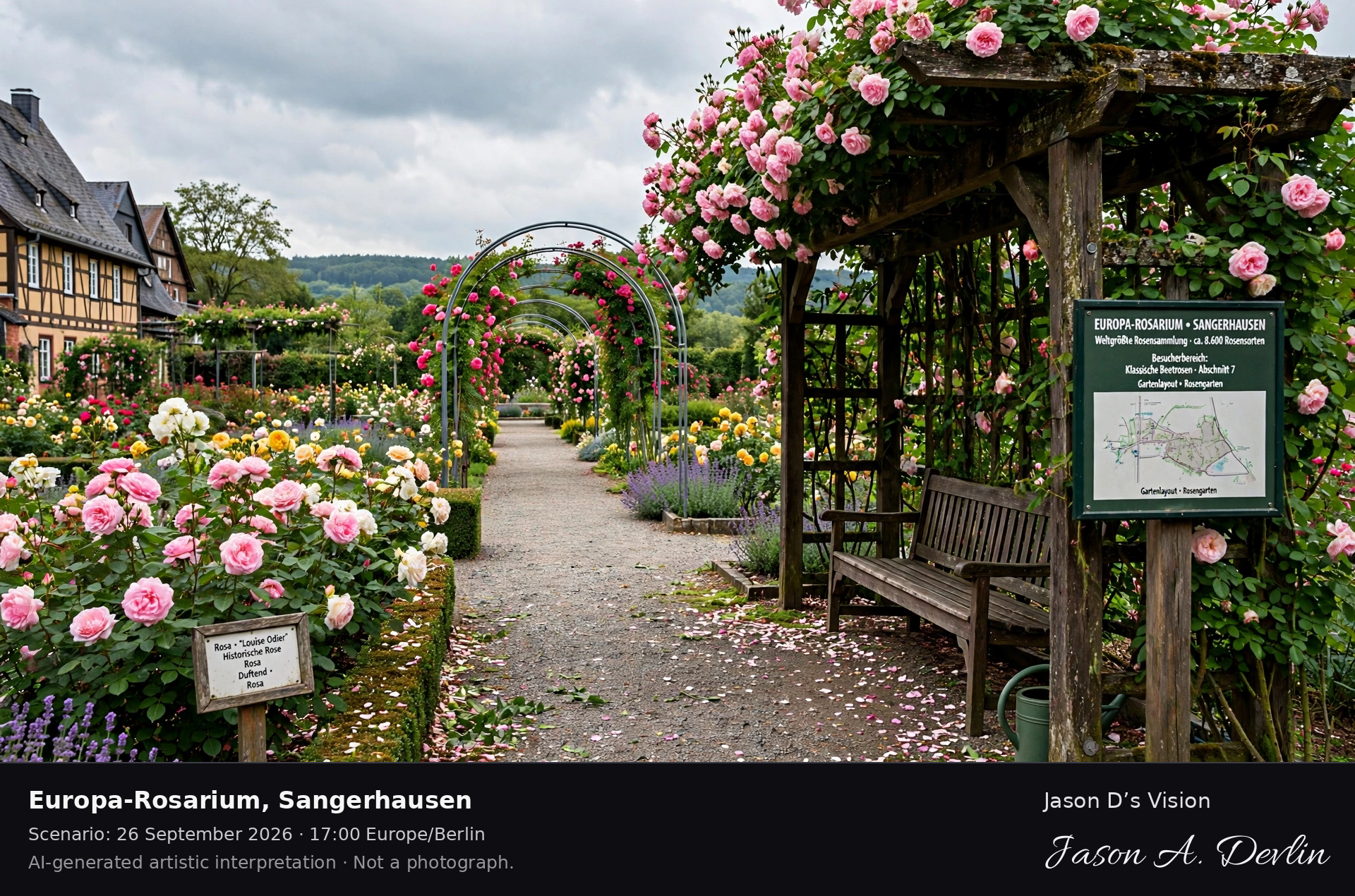
Rose gardens · AI-generated artistic interpretation
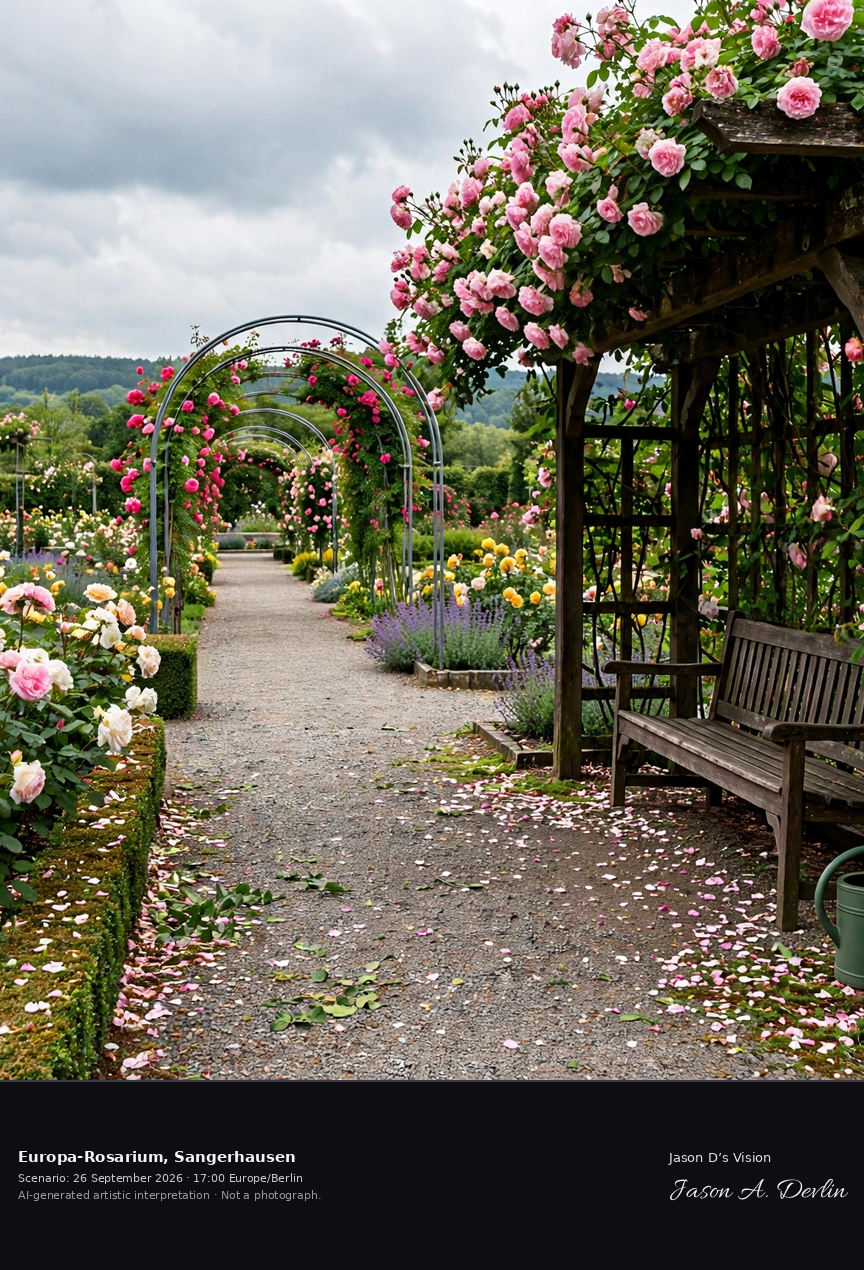
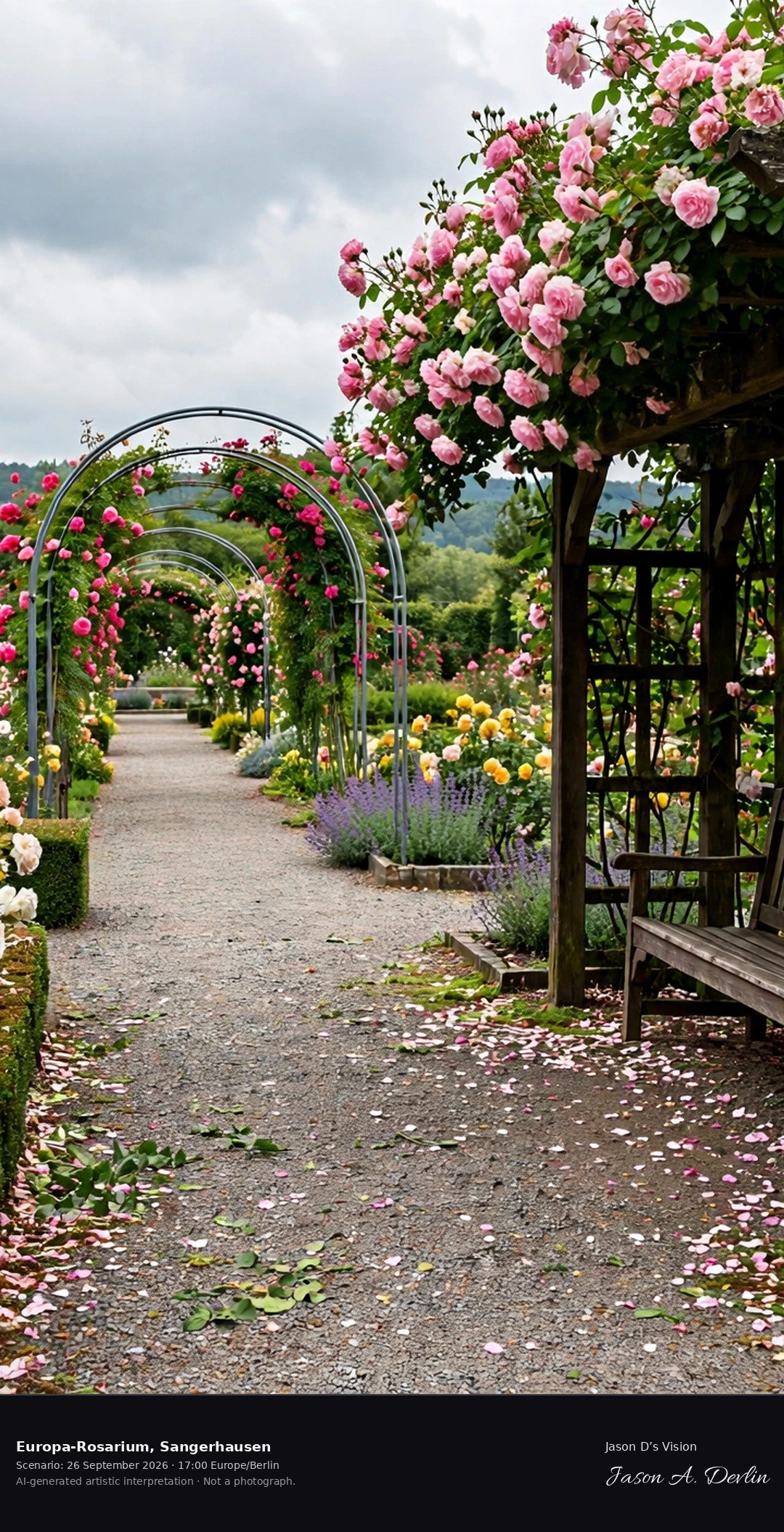
Rose arches draw the eye down the gravel path at the heart of the Europa-Rosarium, the world's largest rose collection. To the right, climbing pink roses spill over a weathered wooden pergola above a garden bench, while a labeled rose bed stands left beside purple lavender rows. Half-timbered buildings frame the scene at the left edge, and petals drift across the path under the soft, even light of an overcast September afternoon.
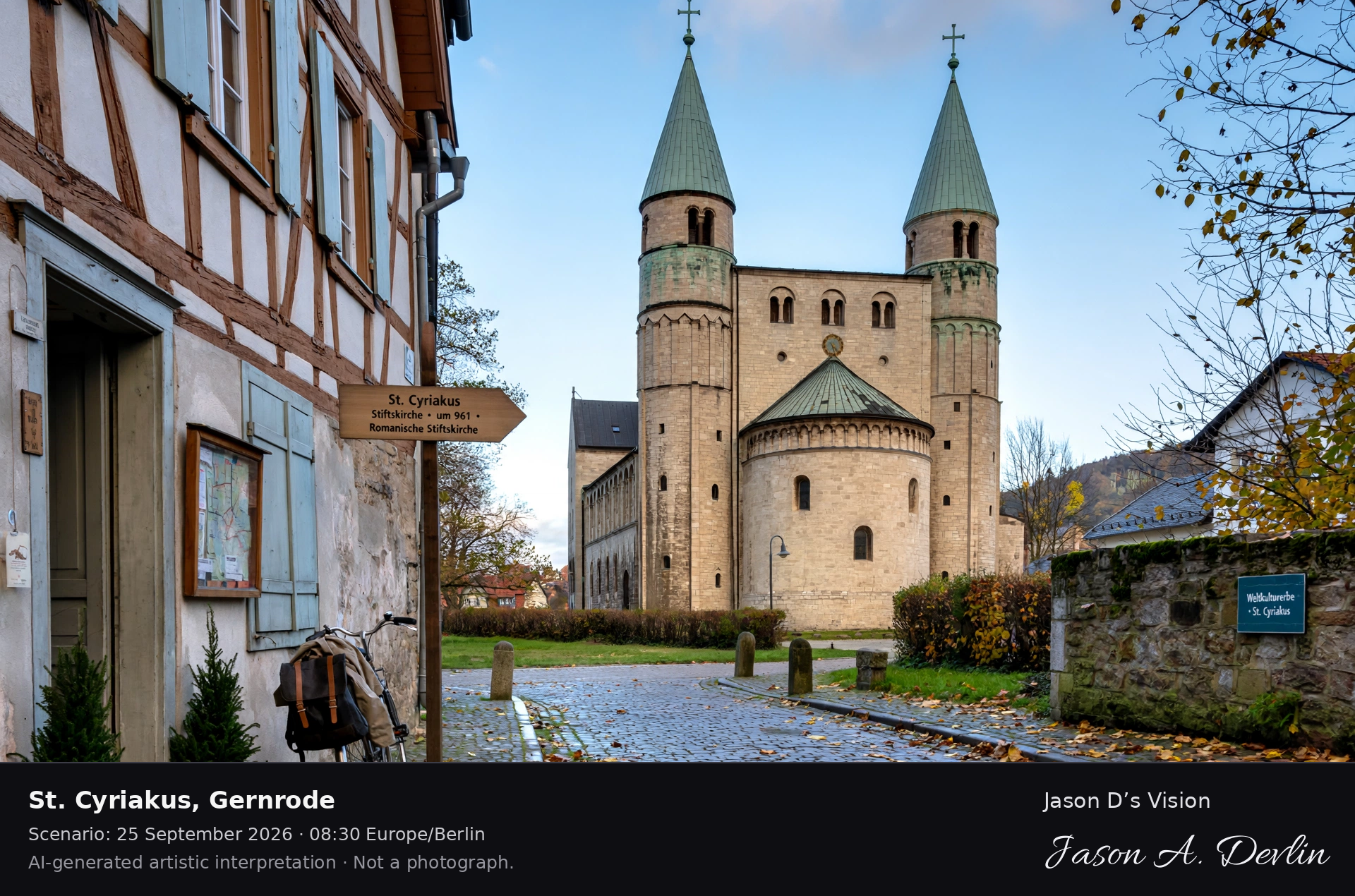
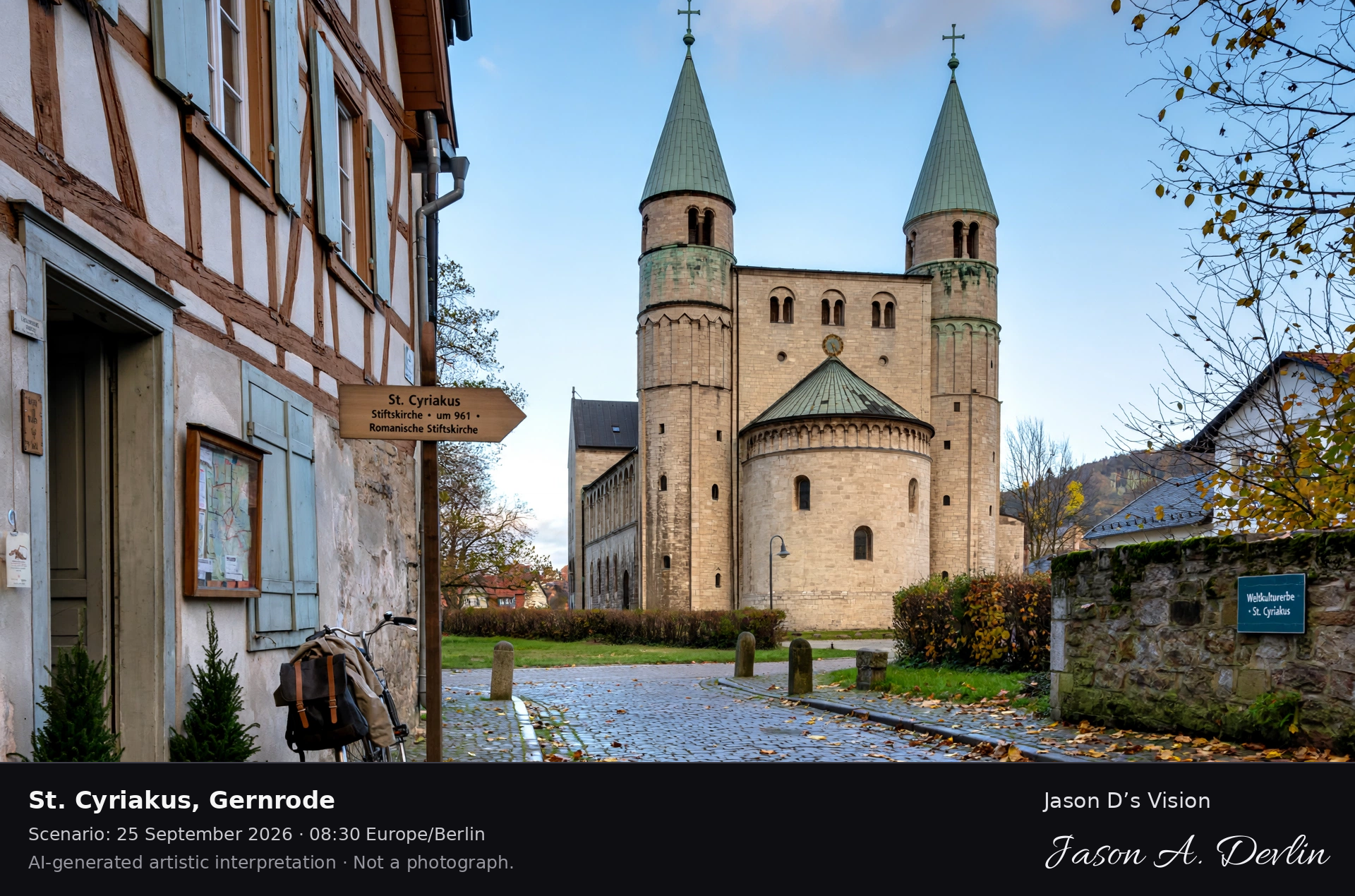
Romanesque church · AI-generated artistic interpretation
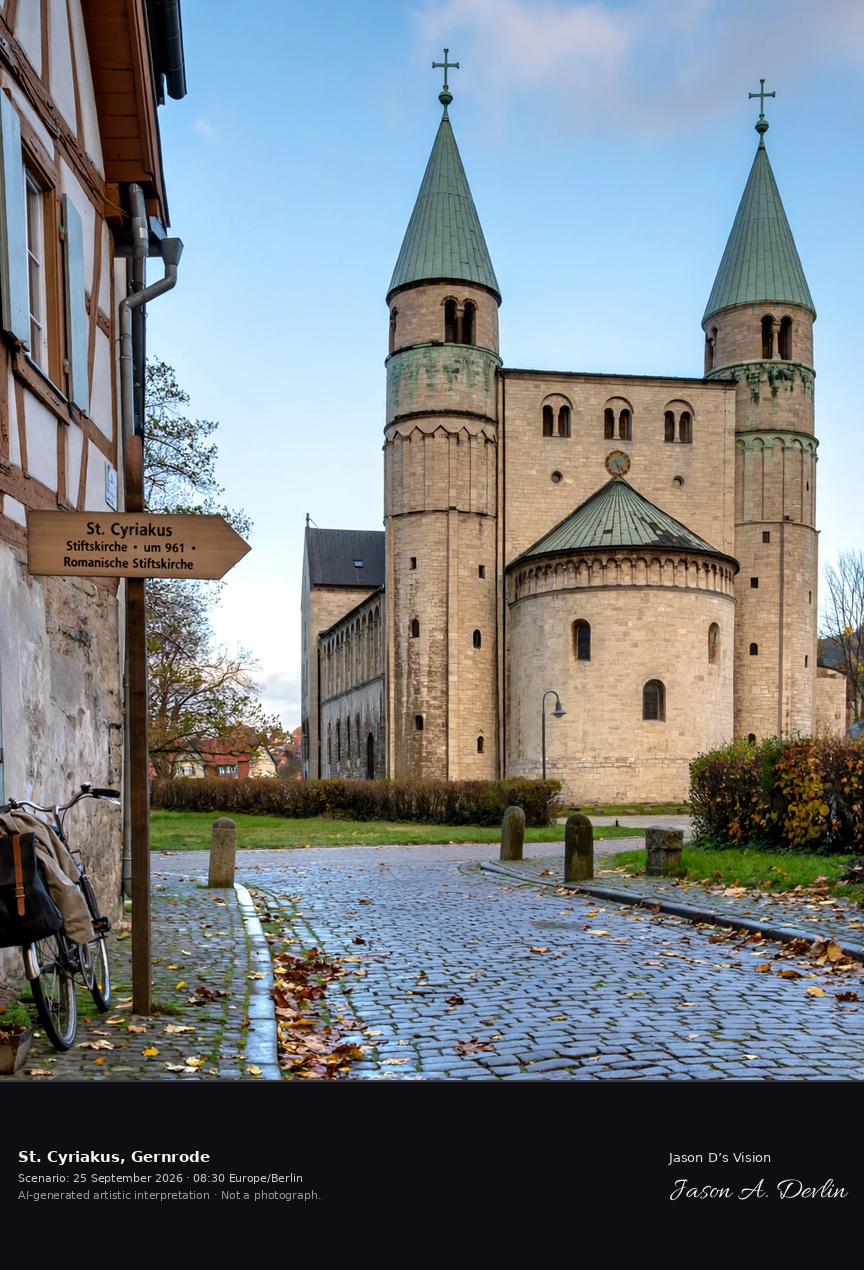
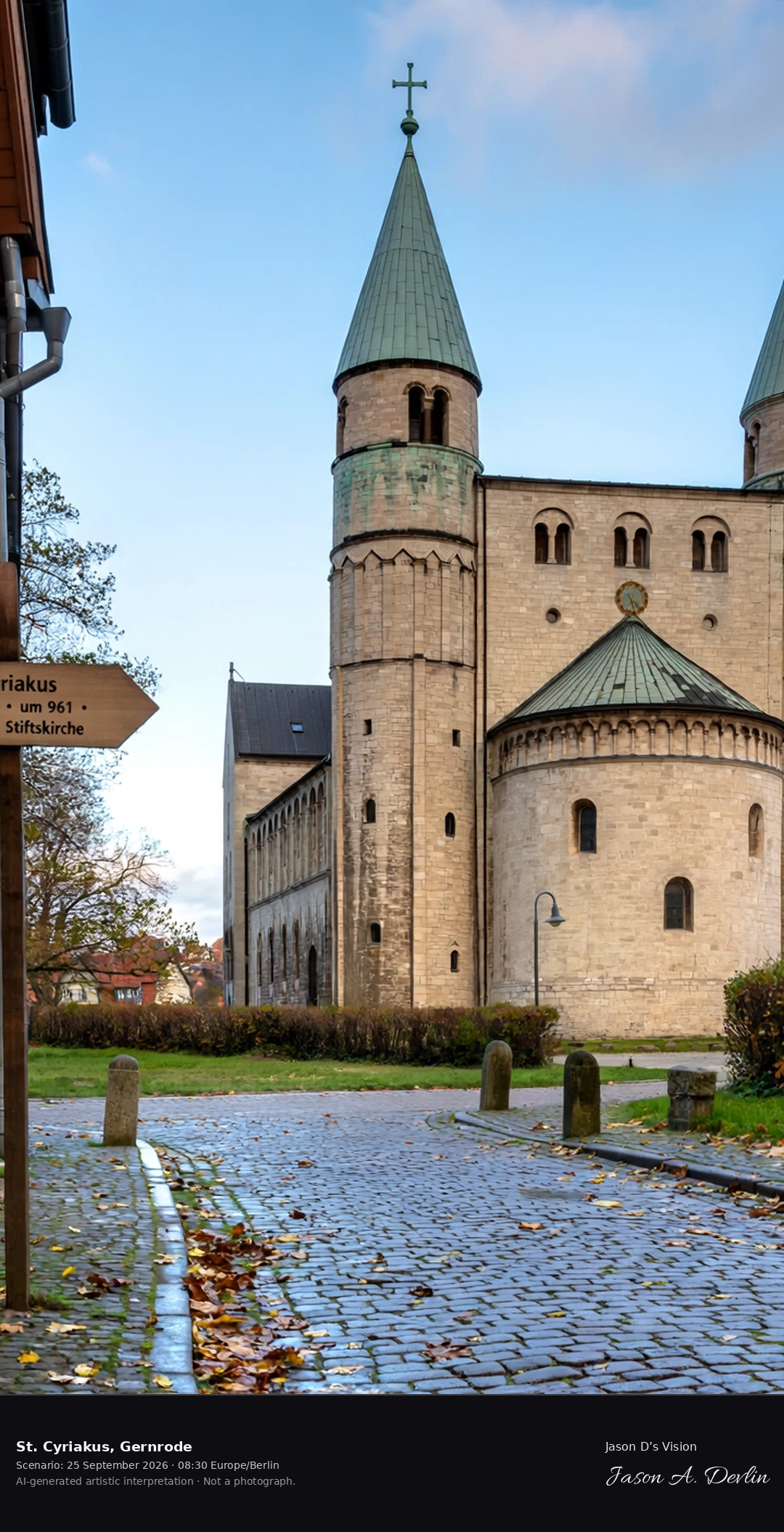
The twin green-spired towers of St. Cyriakus stand at center, flanking the rounded east apse with its arched gallery beneath a copper-green conical roof. A half-timbered house with shuttered windows fills the left foreground, a wooden "St. Cyriakus · um 961" signpost pointing toward the church, while a mossy stone wall and a "Weltkulturerbe" plaque sit at the right. The cobbled square is scattered with autumn leaves in the 08:30 morning light, and a parked bicycle leans against the house.
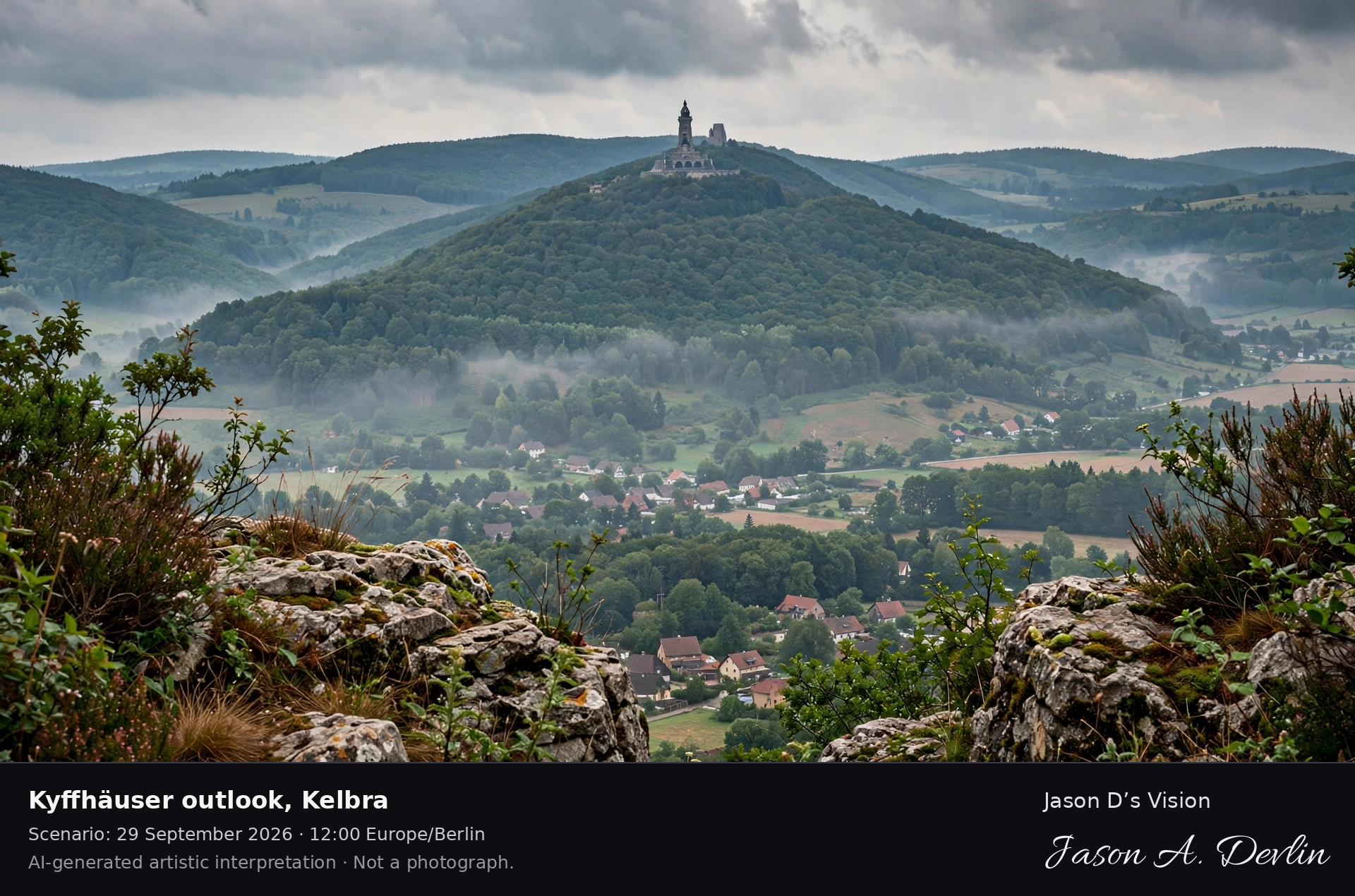
Landscape; monument lies in neighboring Thuringia · AI-generated artistic interpretation
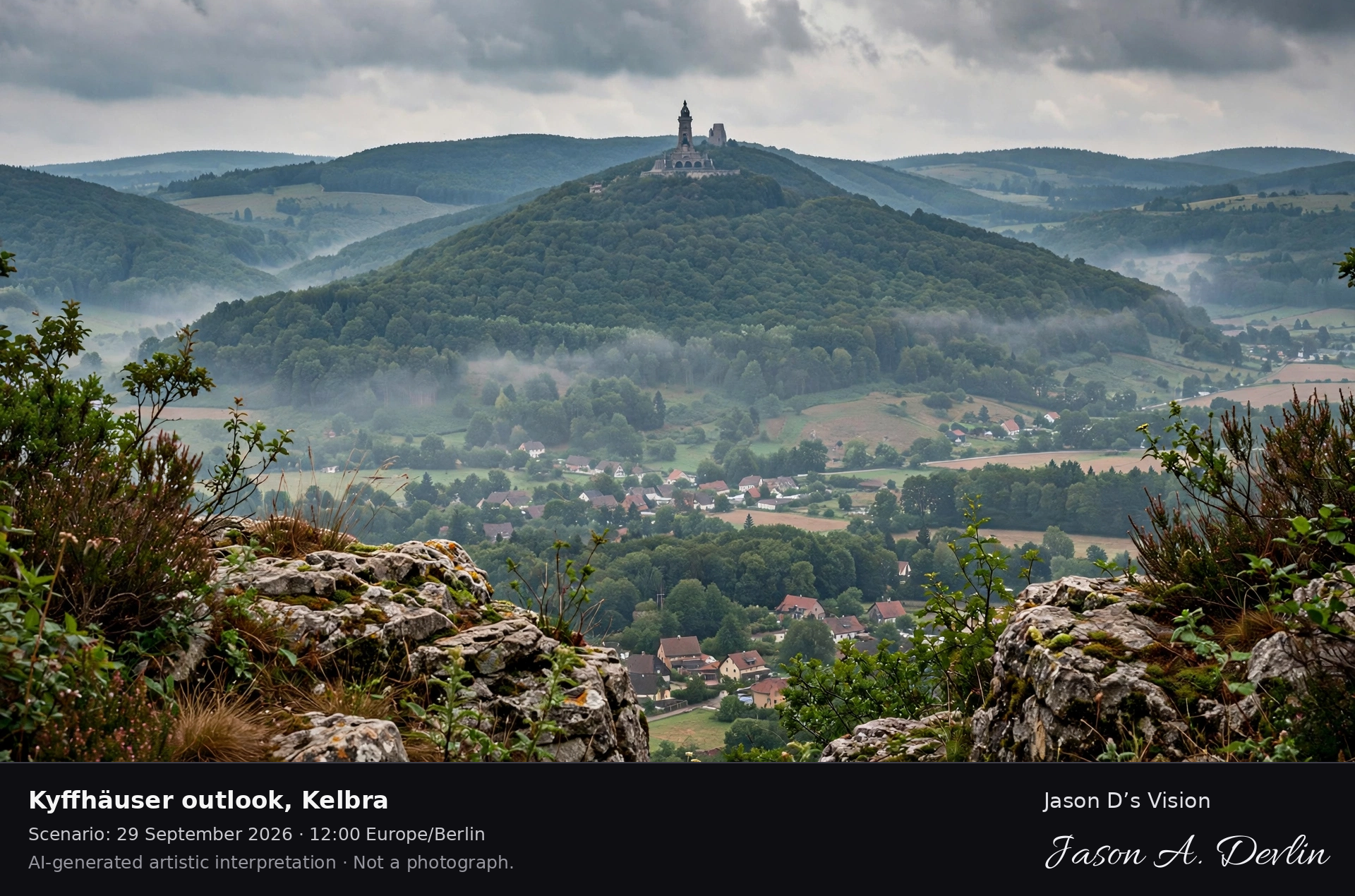
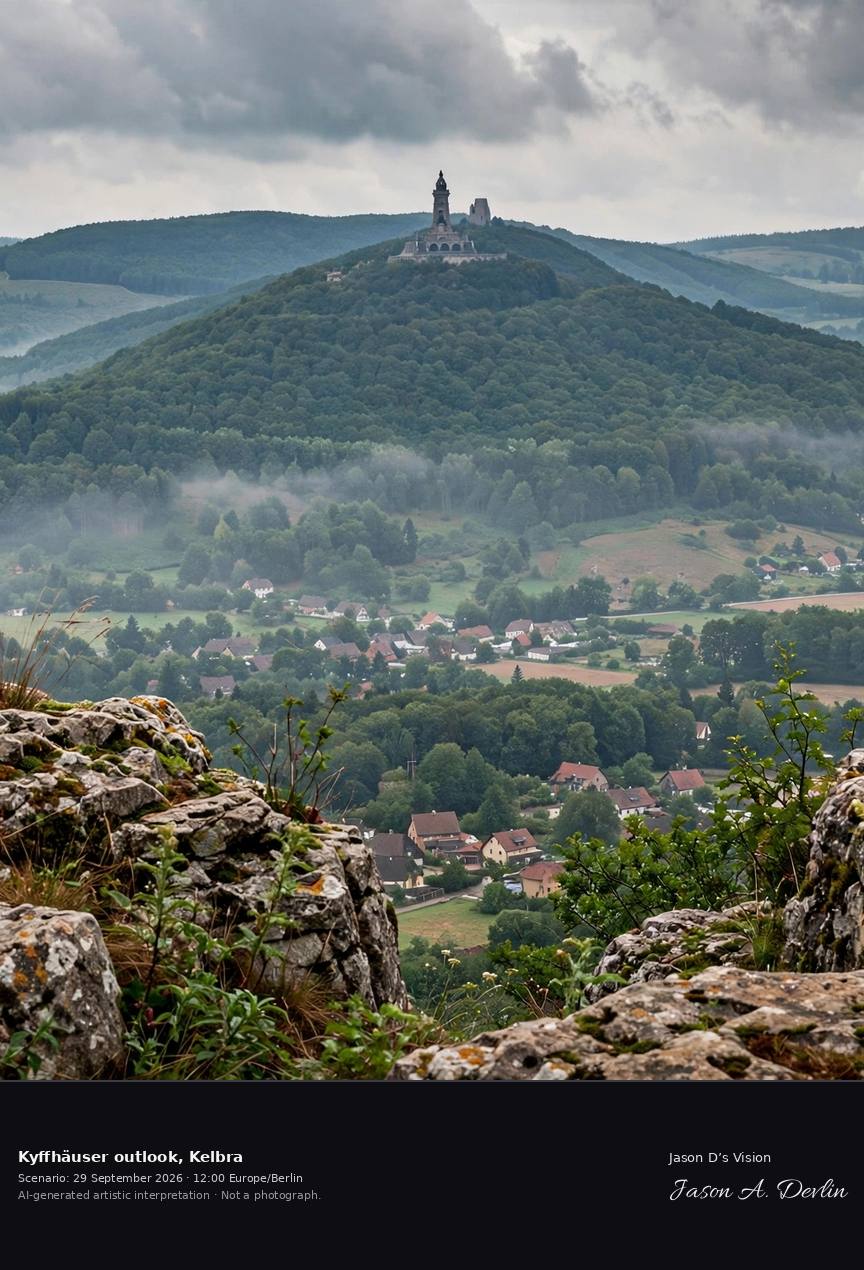
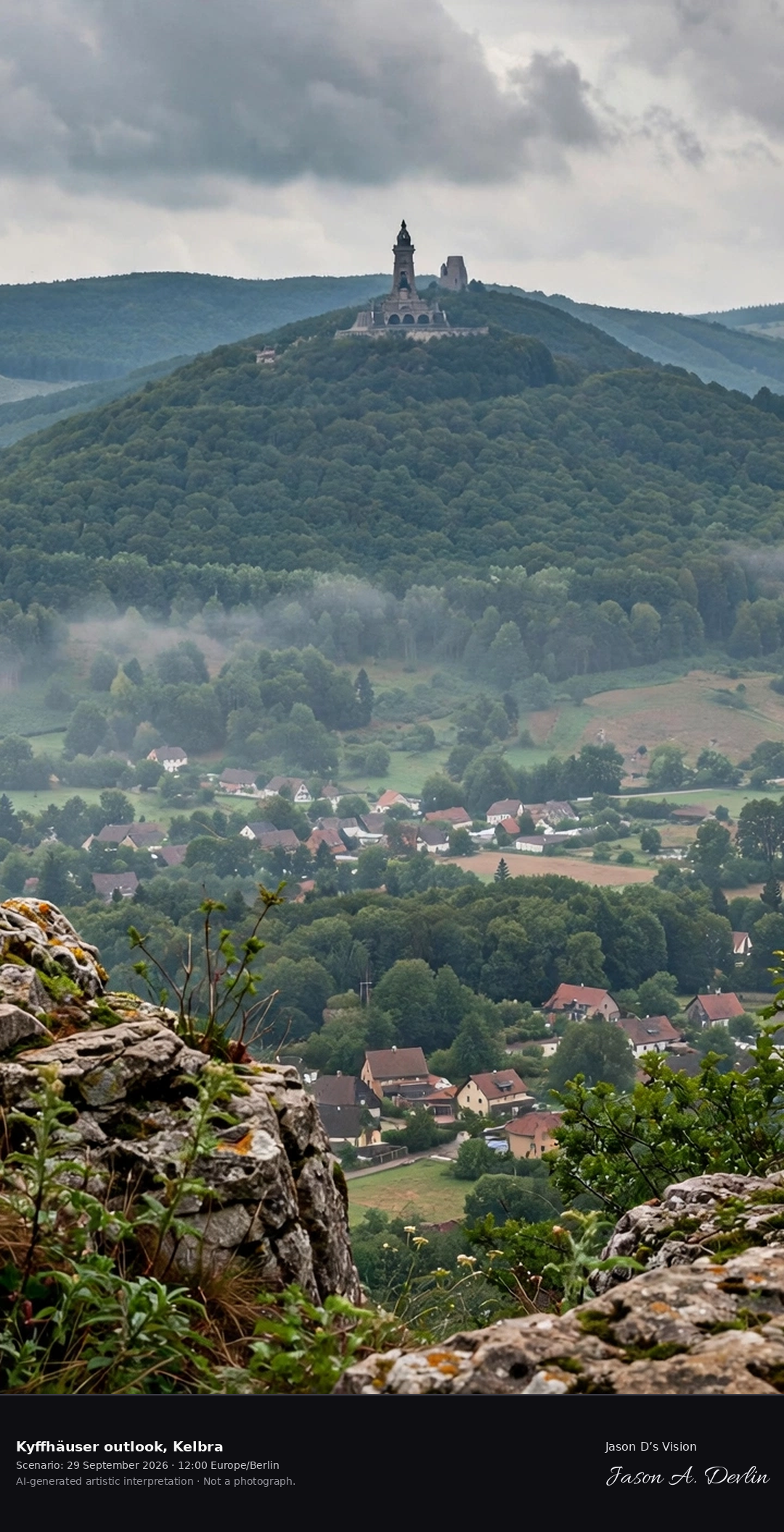
From the Kyffhäuser outlook at night, the forested ridge stretches across the middle distance with the monument tower standing dimly on the skyline in neighboring Thuringia, the warm scattered lights of Kelbra and far-off farms glowing in the valley below; dark hills fade toward the Harz and Thuringian Forest under the heavy overcast 10.5°C night sky.
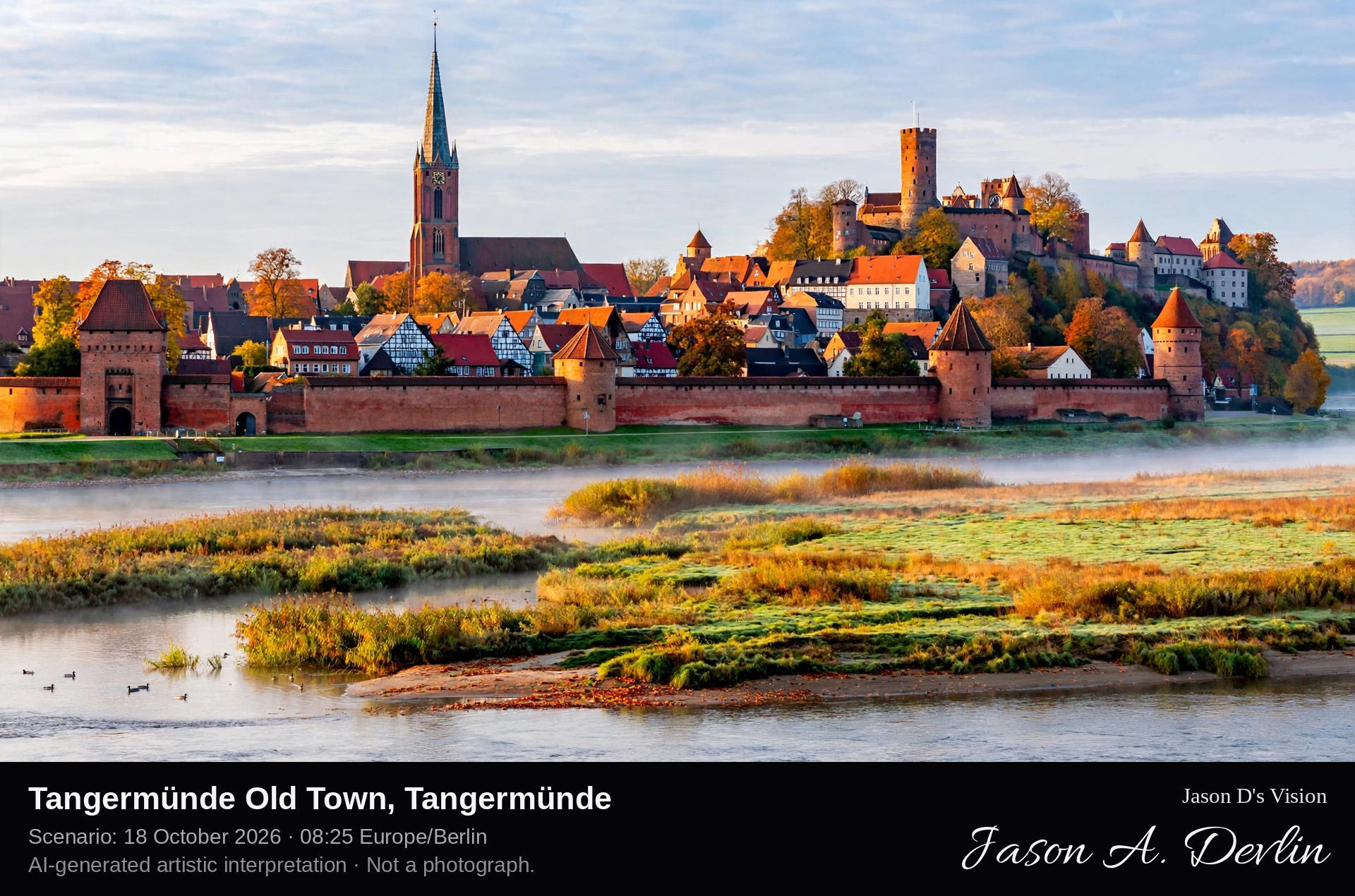
Walled Elbe panorama with castle hill and church spire · AI-generated artistic interpretation
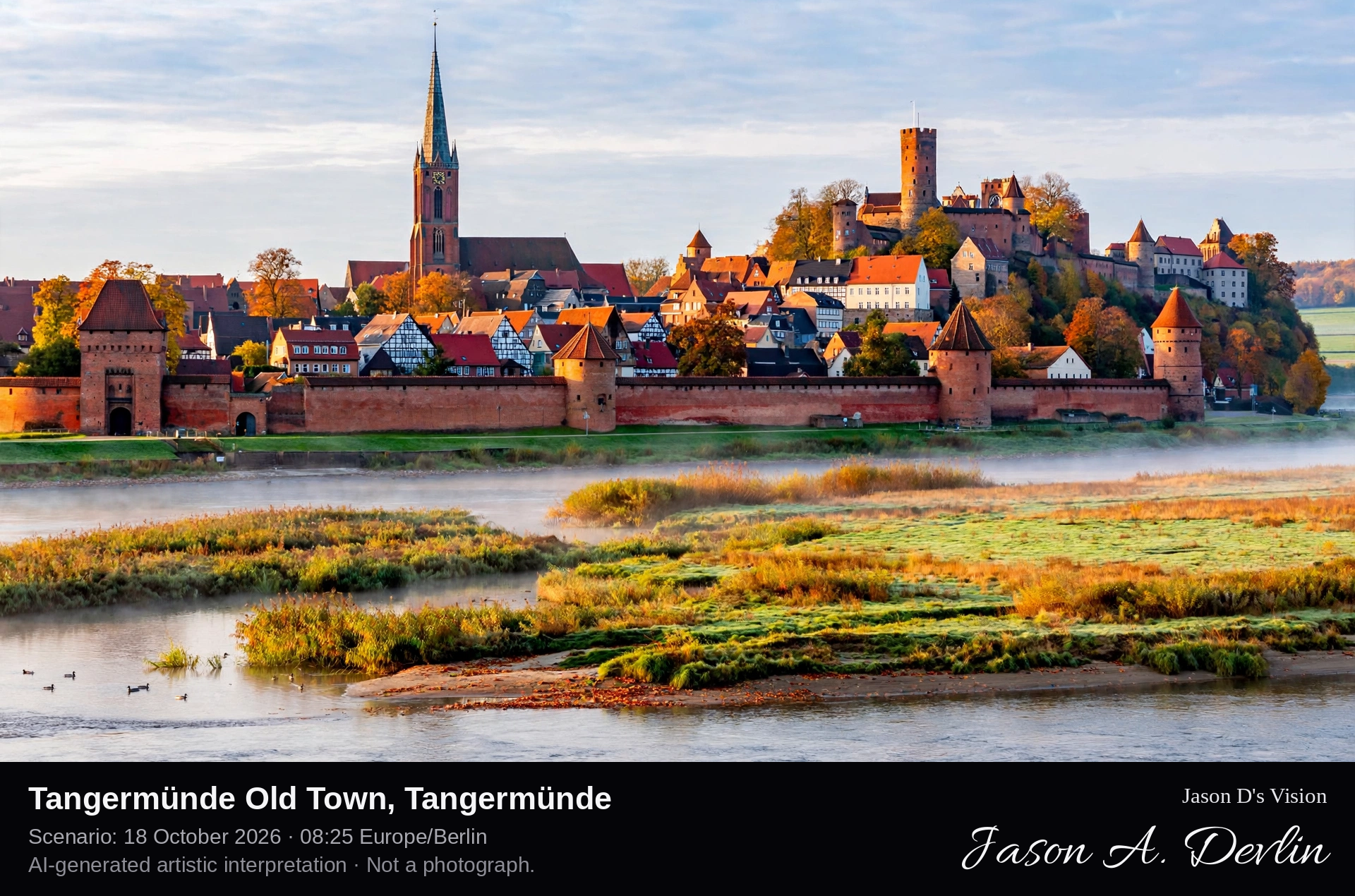
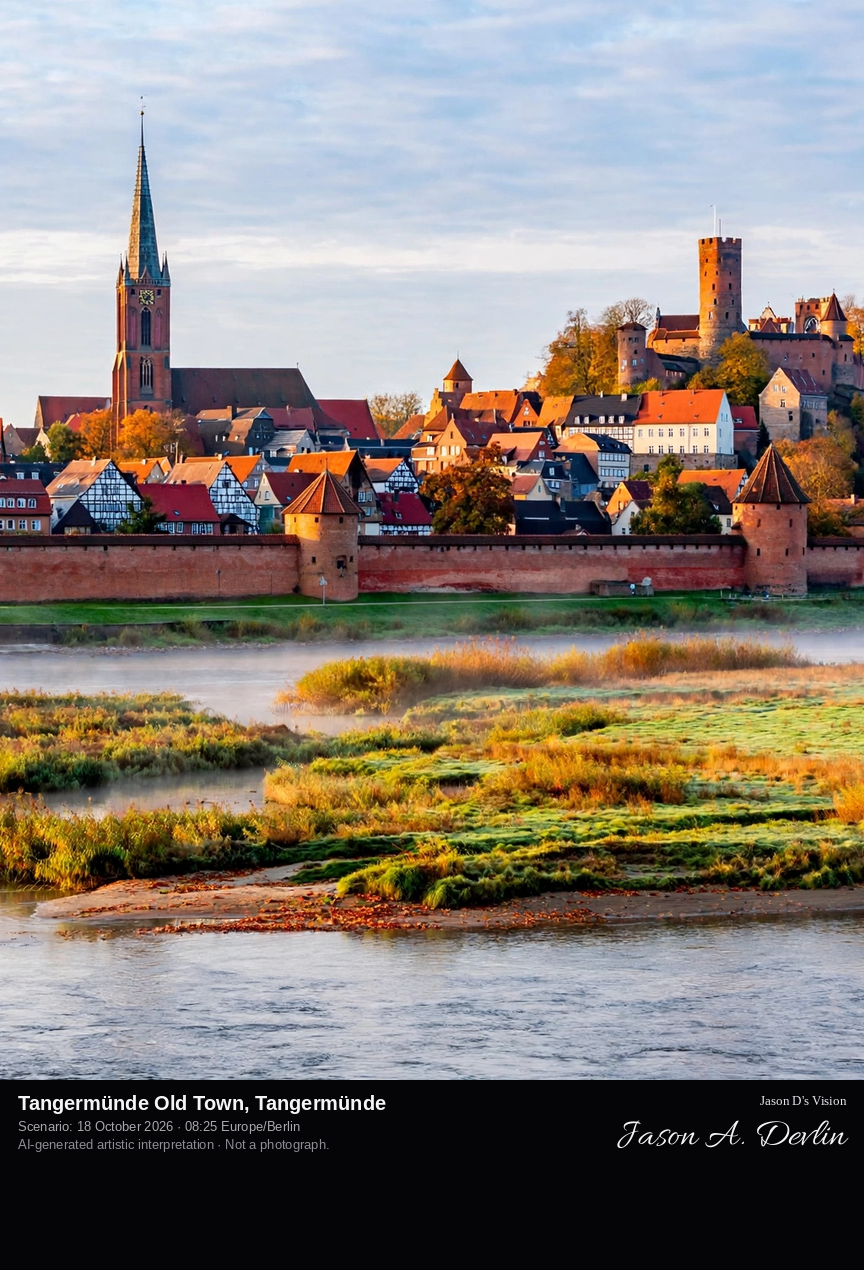
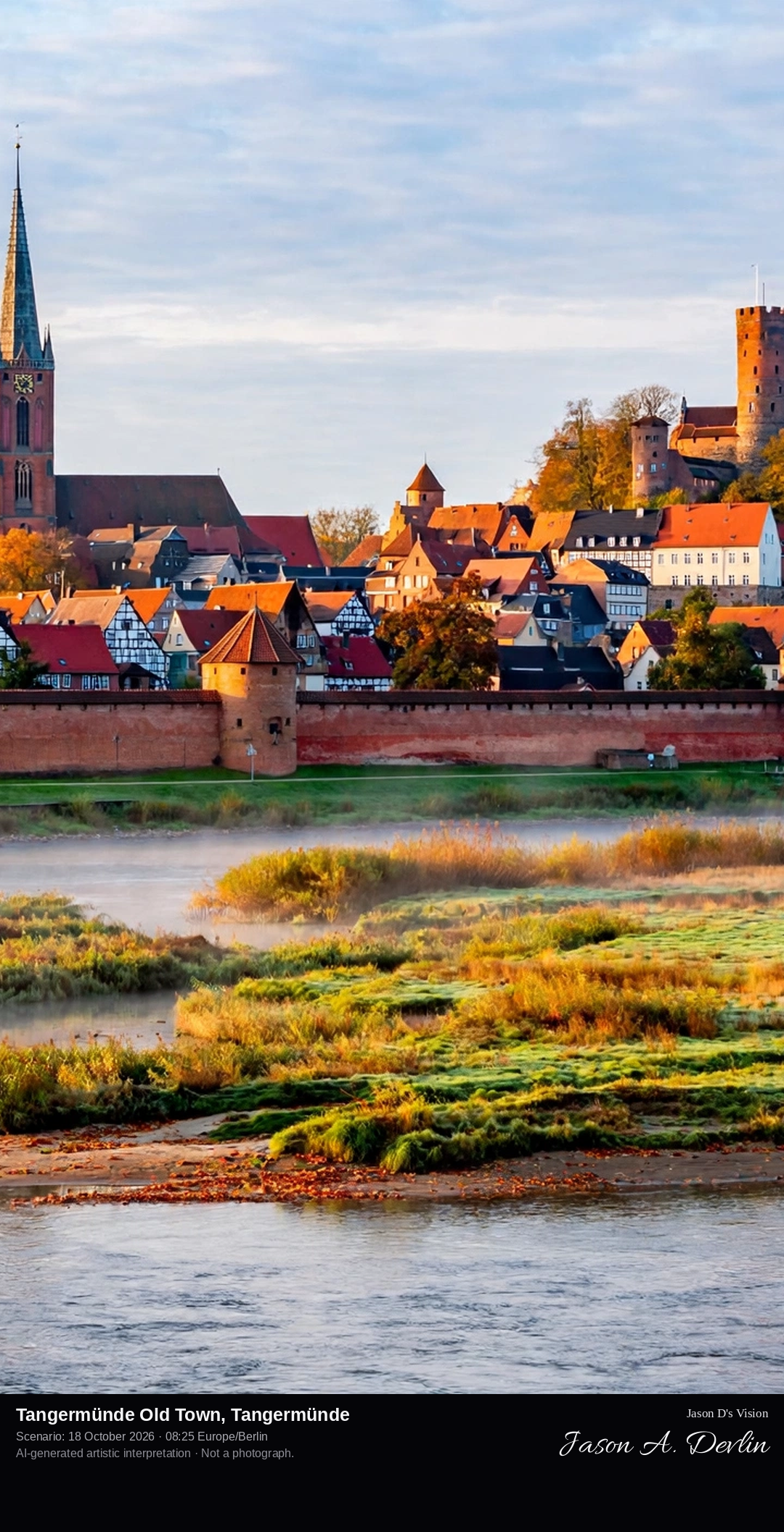
Tangermünde is a Hanseatic town on a high bank above the Elbe, its old town still ringed by a long red brick medieval wall with gate towers and round turrets. Inside the walls stand half-timbered houses, the late Gothic St Stephen's Church with its tall spire, and the castle that once served as a residence of Emperor Charles IV. From the river the walled silhouette rises above the flat Elbe floodplain.
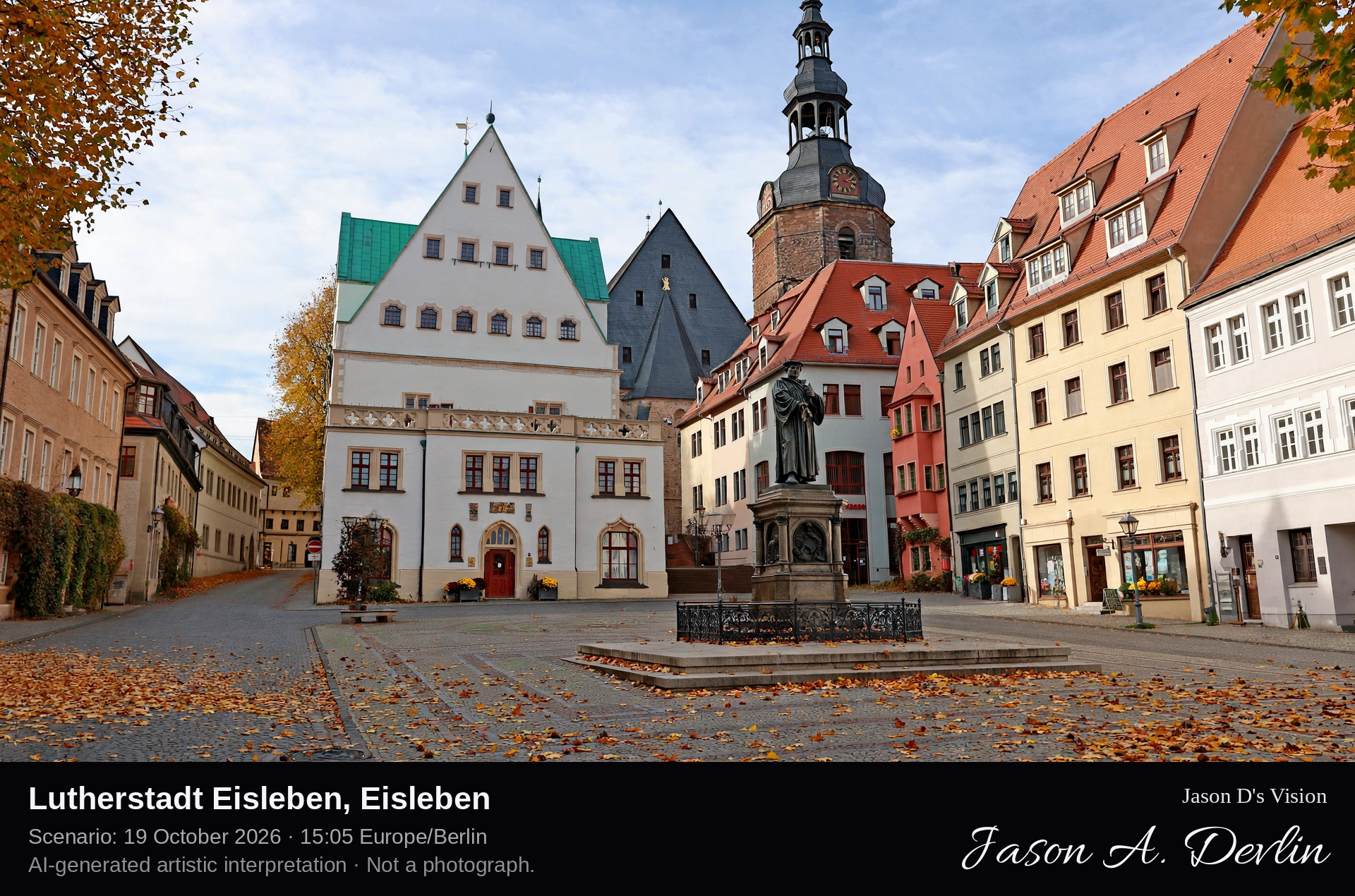
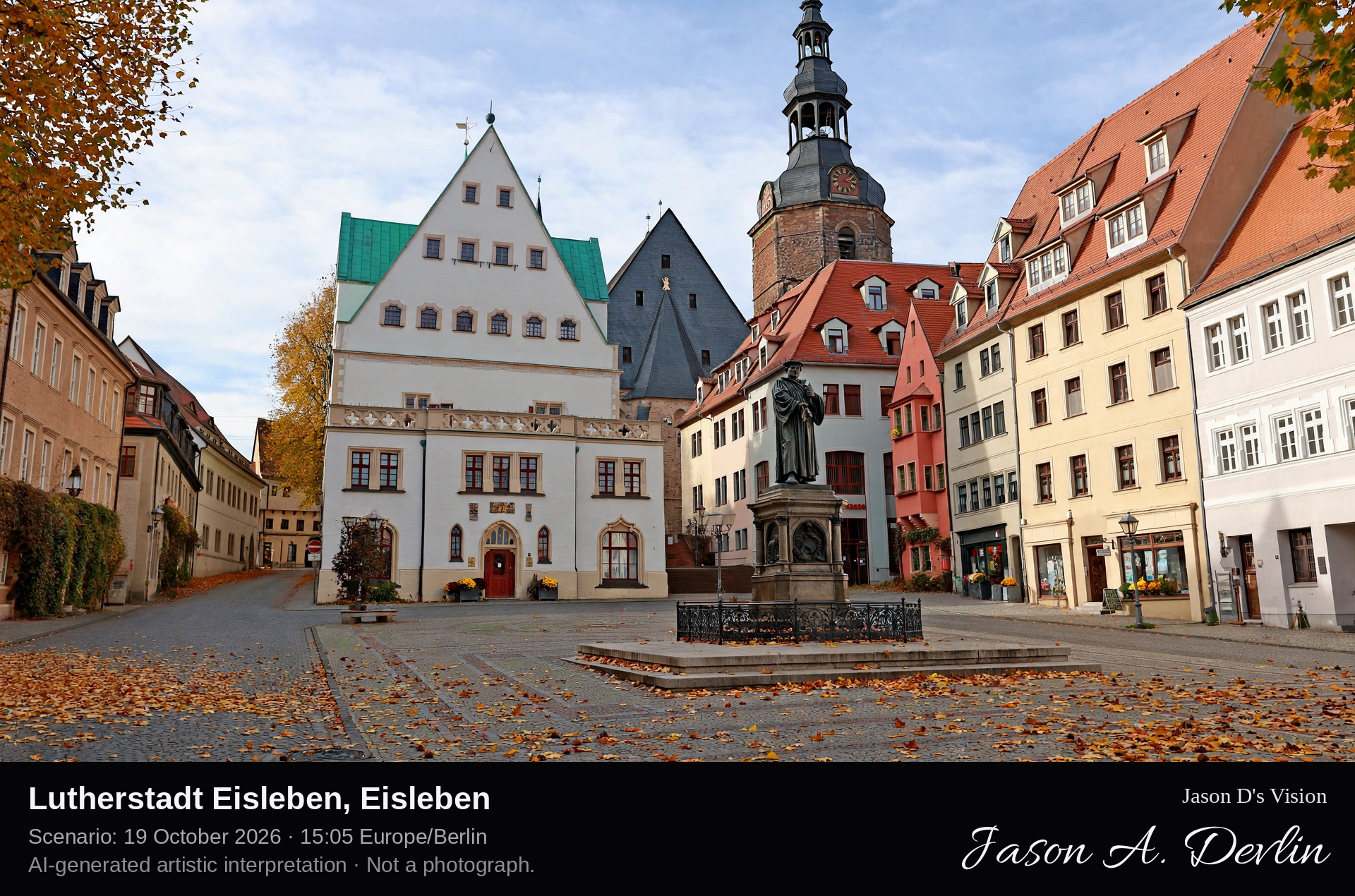
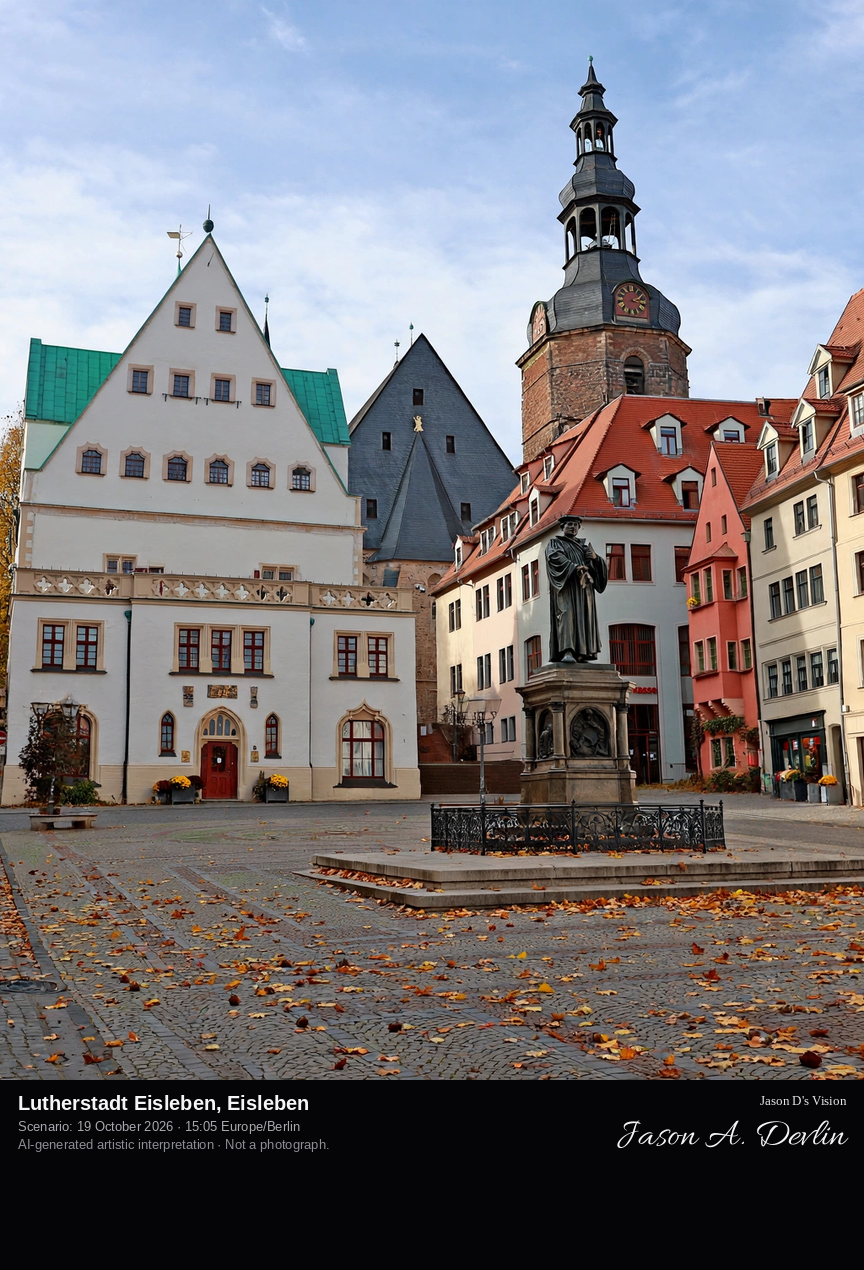
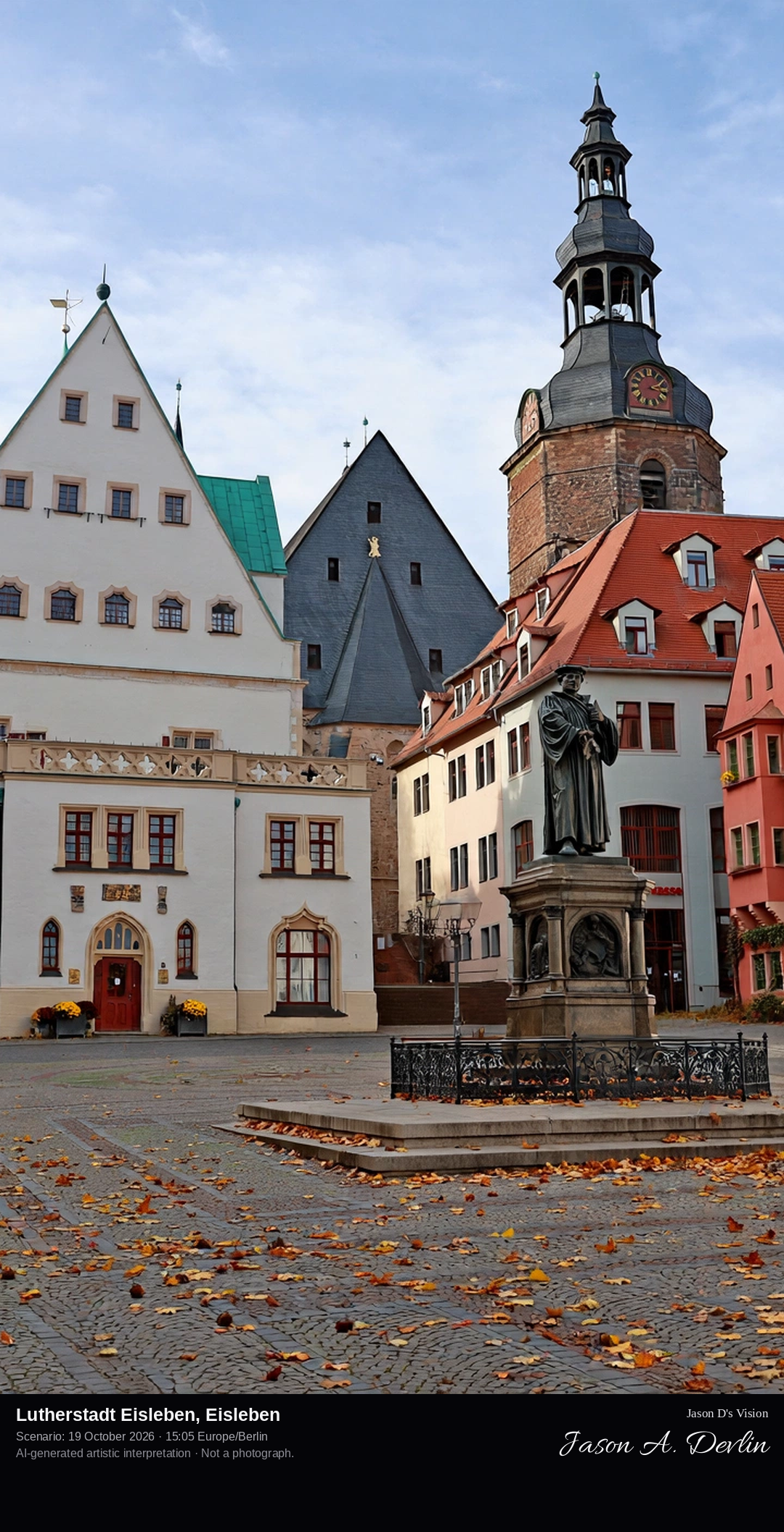
Luther monument on the cobbled market square below the St Andreas tower · AI-generated artistic interpretation
Eisleben is the town where Martin Luther was born in 1483 and where he died in 1546, and its market square is the historic heart of the old town. The Luther monument of 1883 stands on the cobbles before the gabled town hall, while the tower of St Andreas, the late Gothic church where Luther preached his last sermons, rises behind the rooftops. His birth house and death house nearby are among the oldest Luther memorial sites.
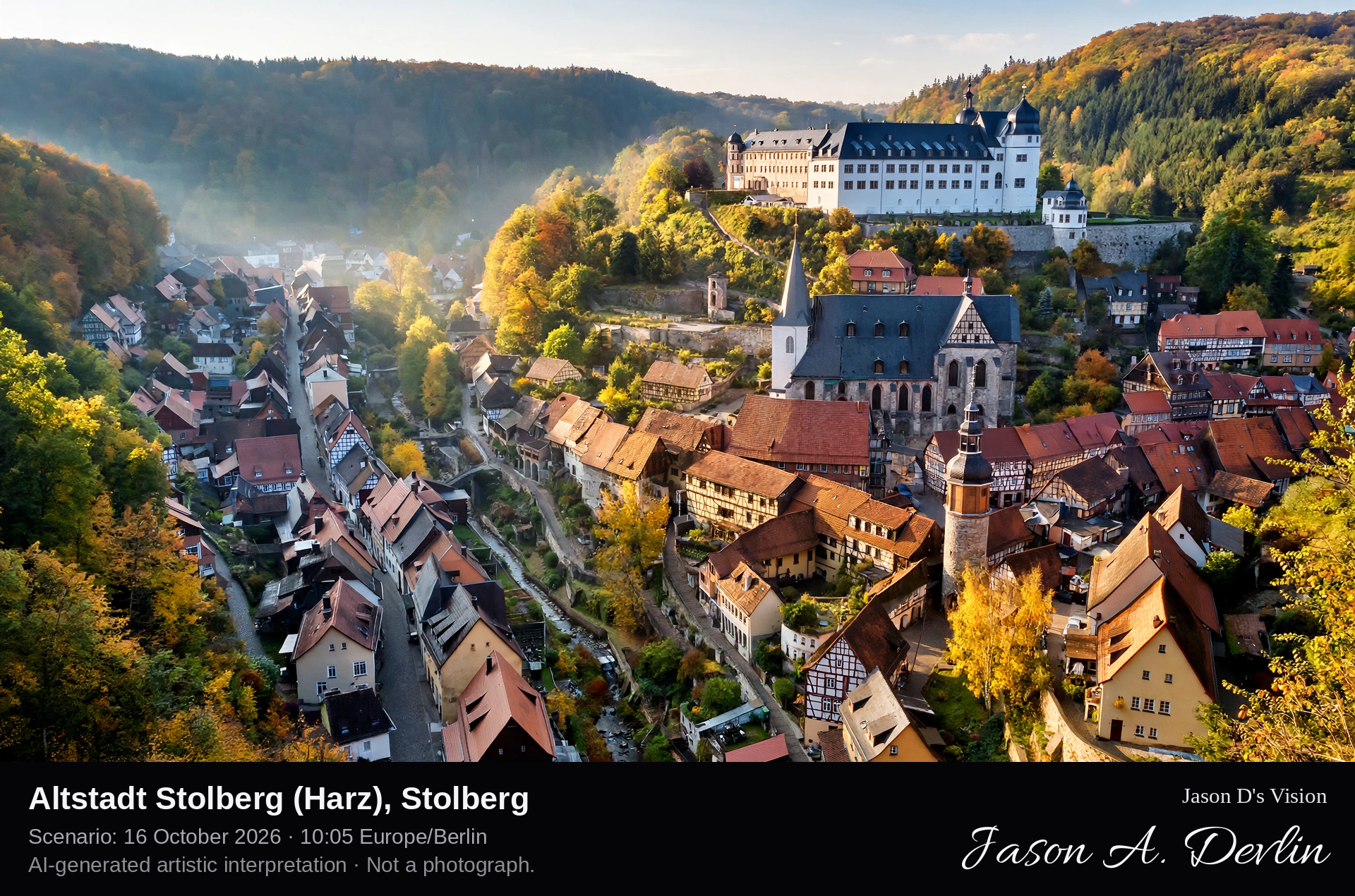
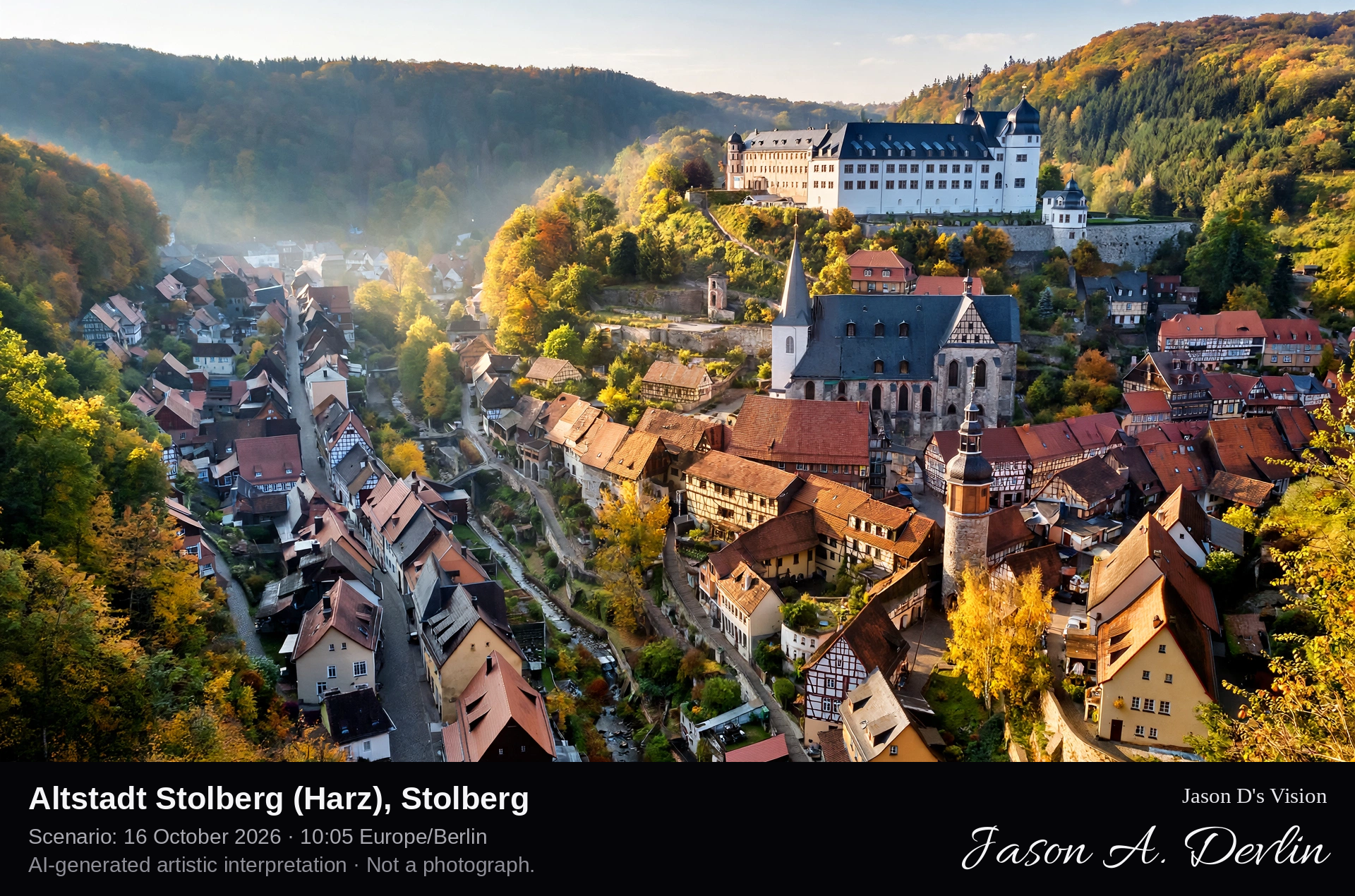
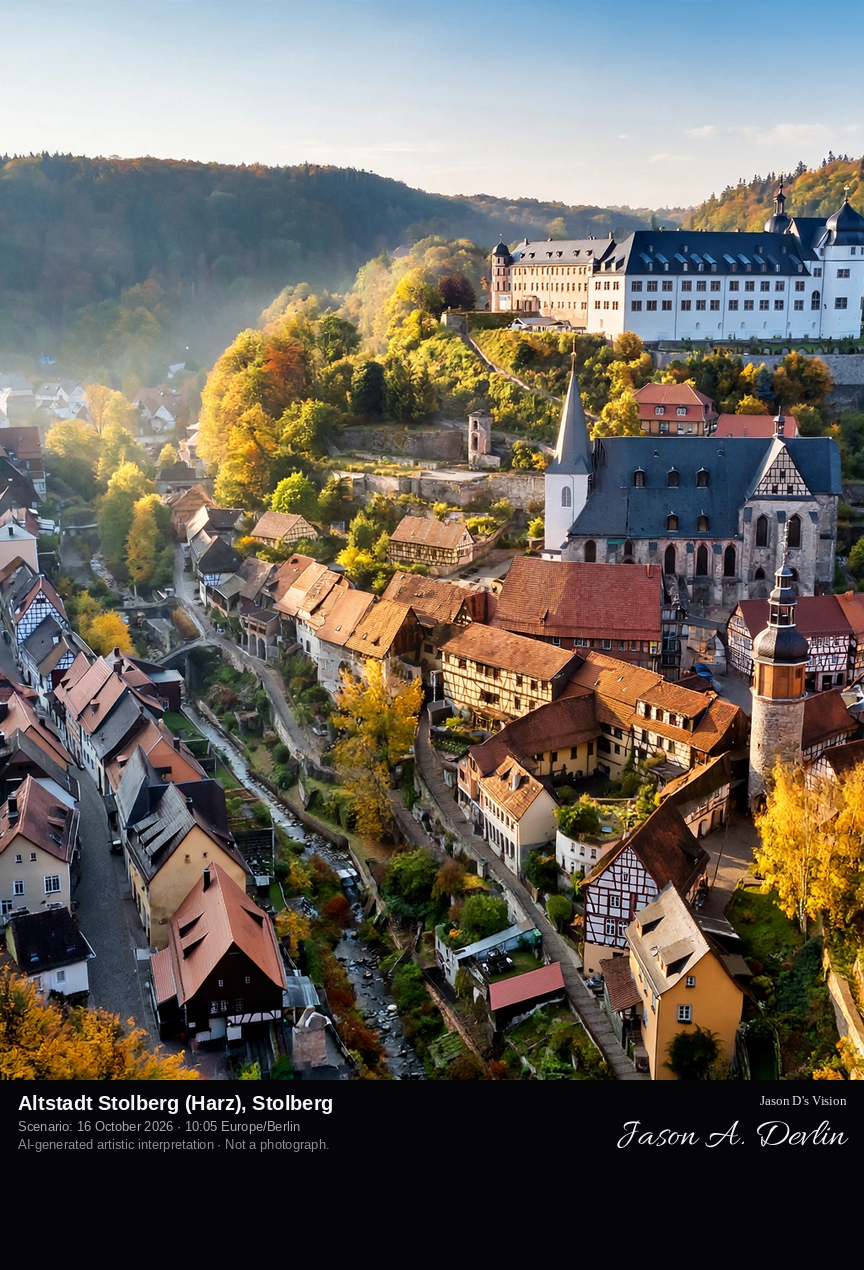
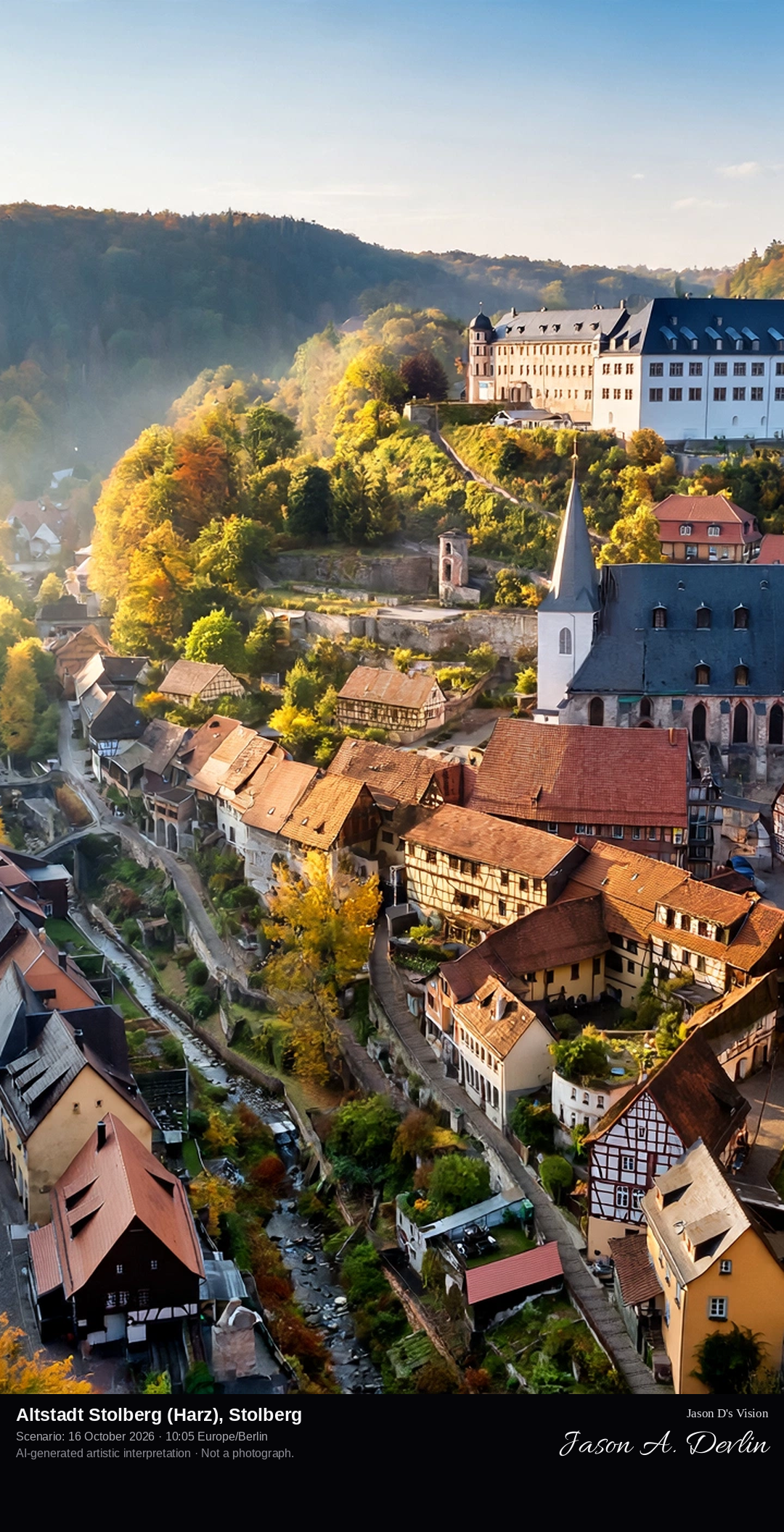
Half-timbered valley lanes below the palace hill · AI-generated artistic interpretation
Stolberg spreads its half-timbered lanes along a narrow Harz valley, the houses terraced below the wooded palace hill. The town is the birthplace of Thomas Müntzer, and its palace castle looks down over the old streets and church from above the rooftops.
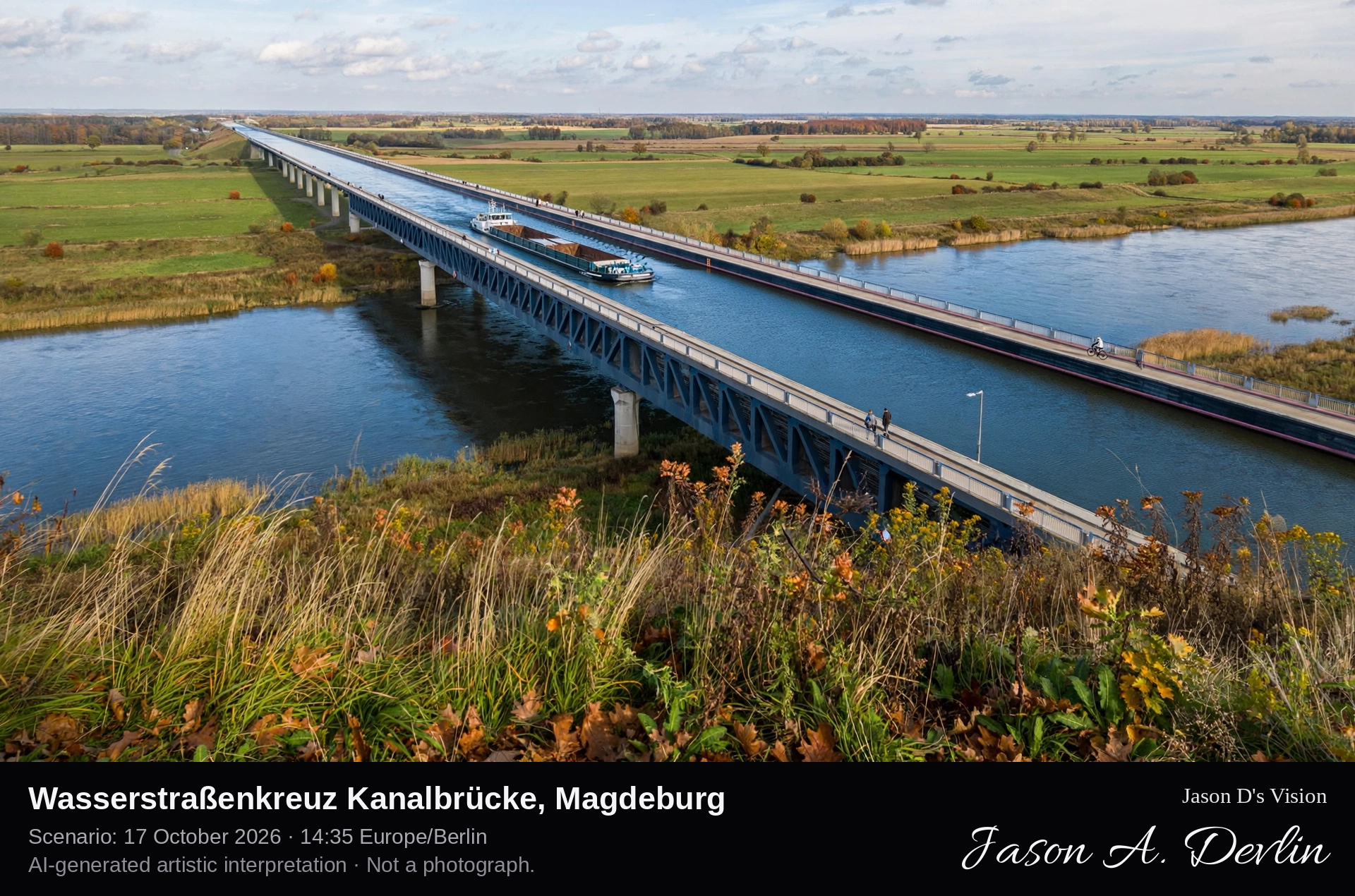
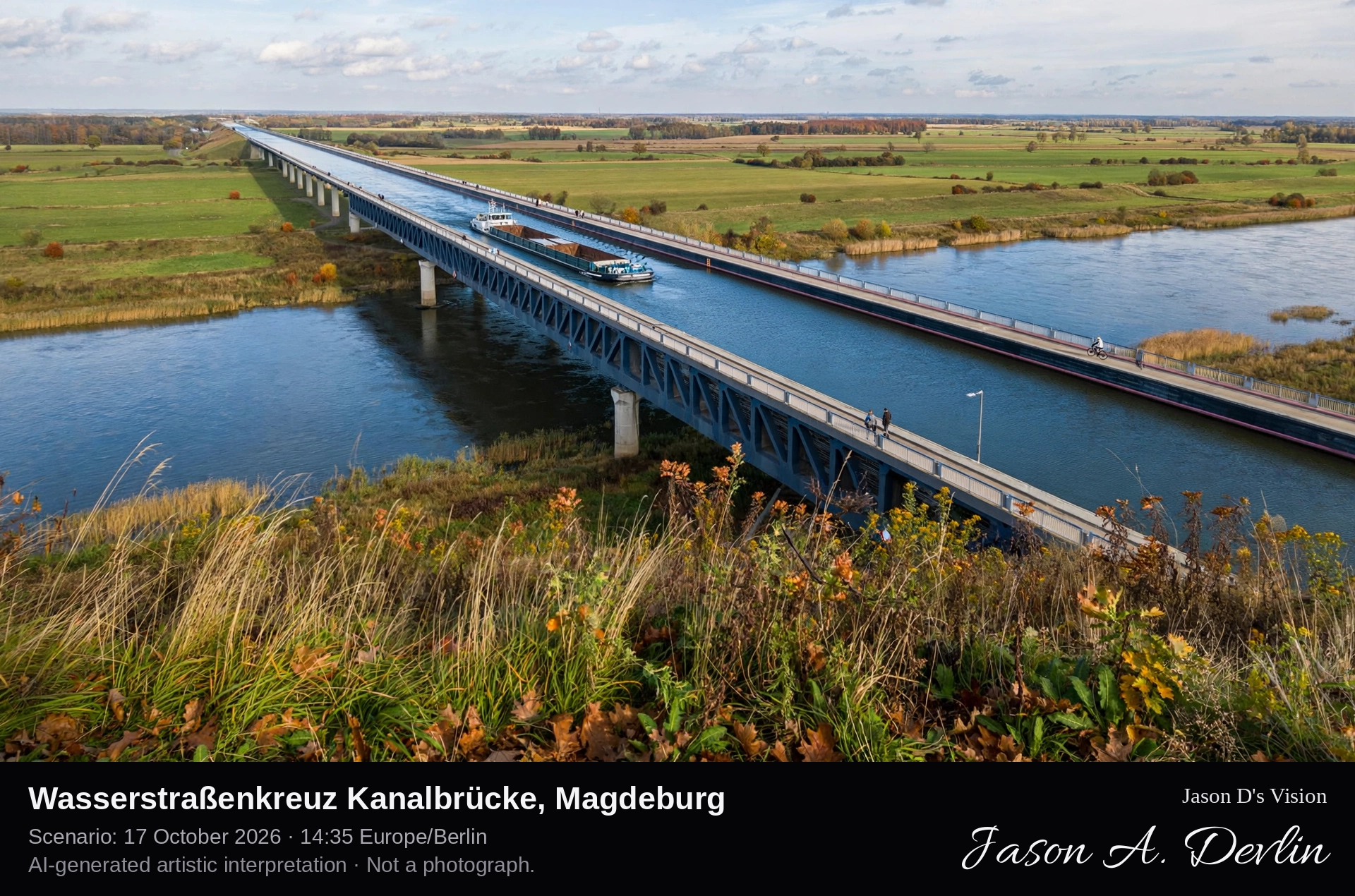
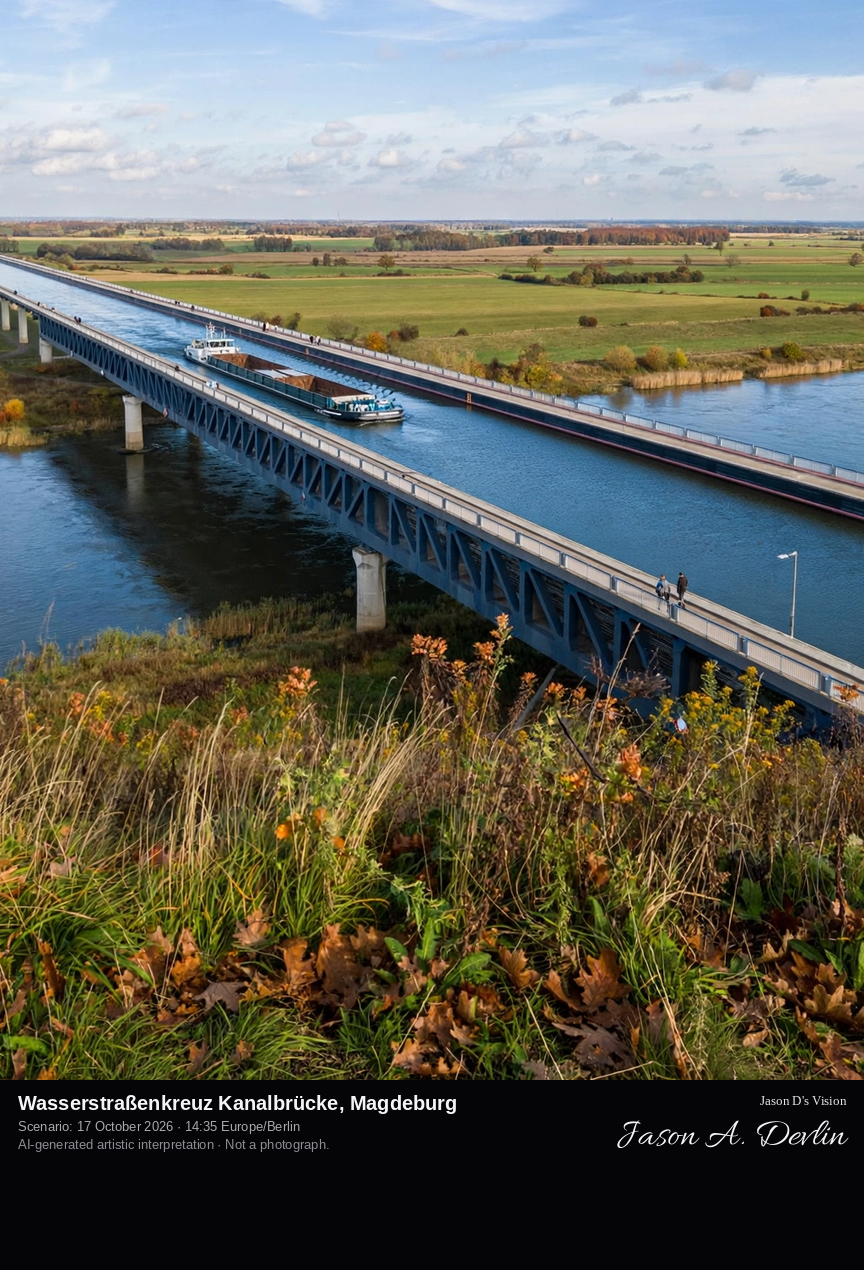
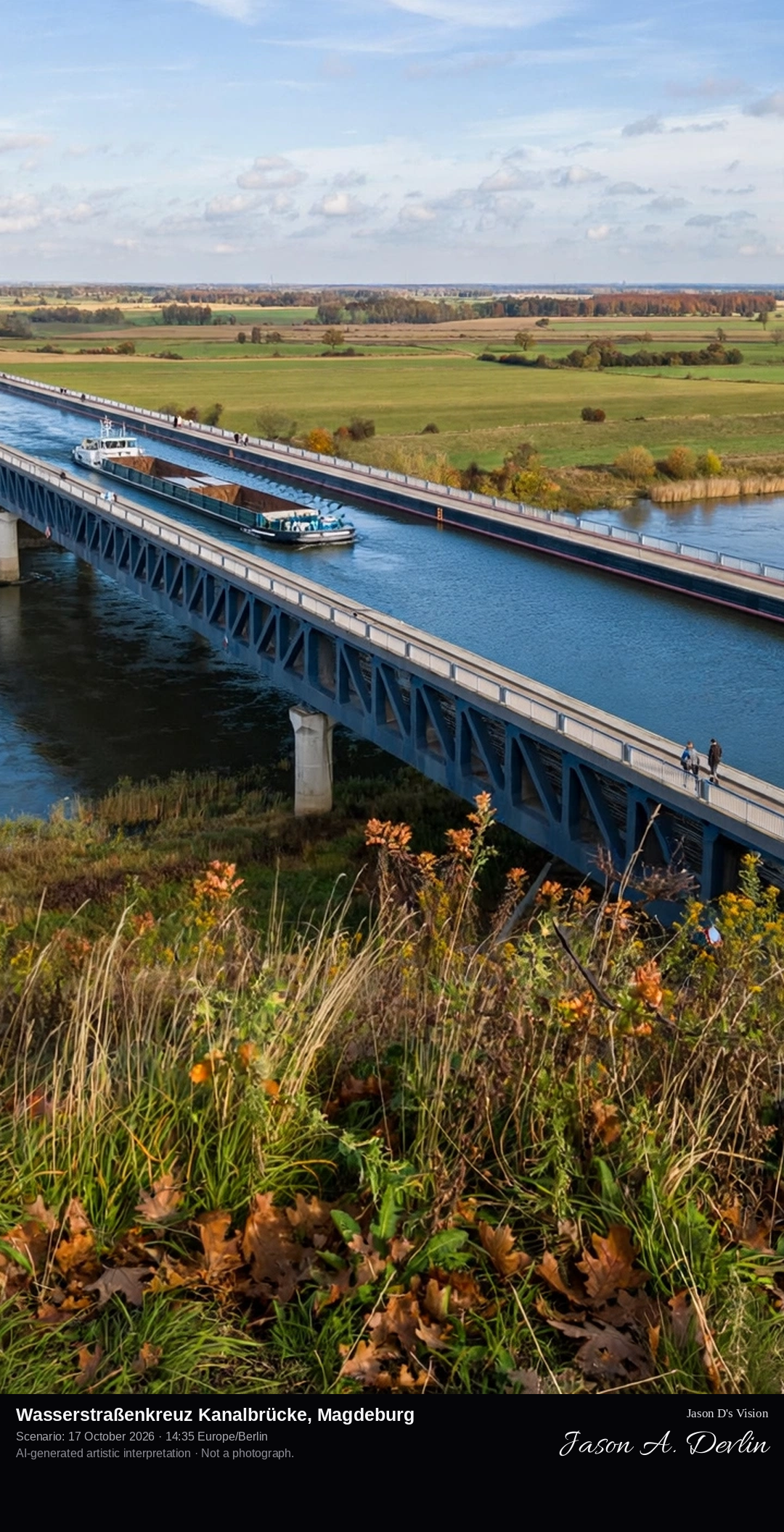
A canal carried over the Elbe on a steel trough · AI-generated artistic interpretation
The Magdeburg canal bridge, opened in 2003, carries the Mittelland Canal across the Elbe in a steel trough 918 metres long, the longest canal bridge of its kind in the world. Ships cross high above the river while foot and cycle paths run alongside the trough over the flat floodplain.
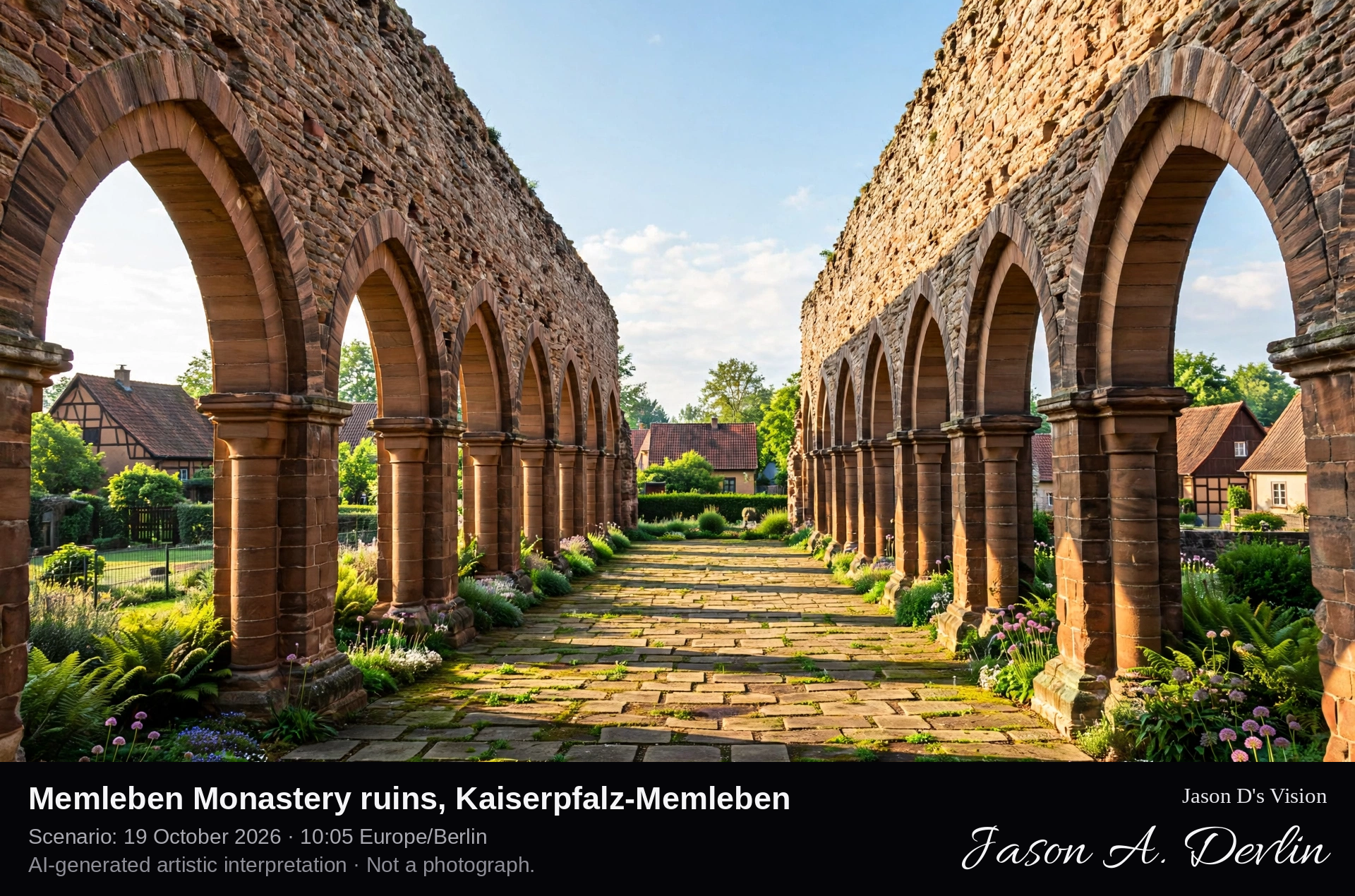
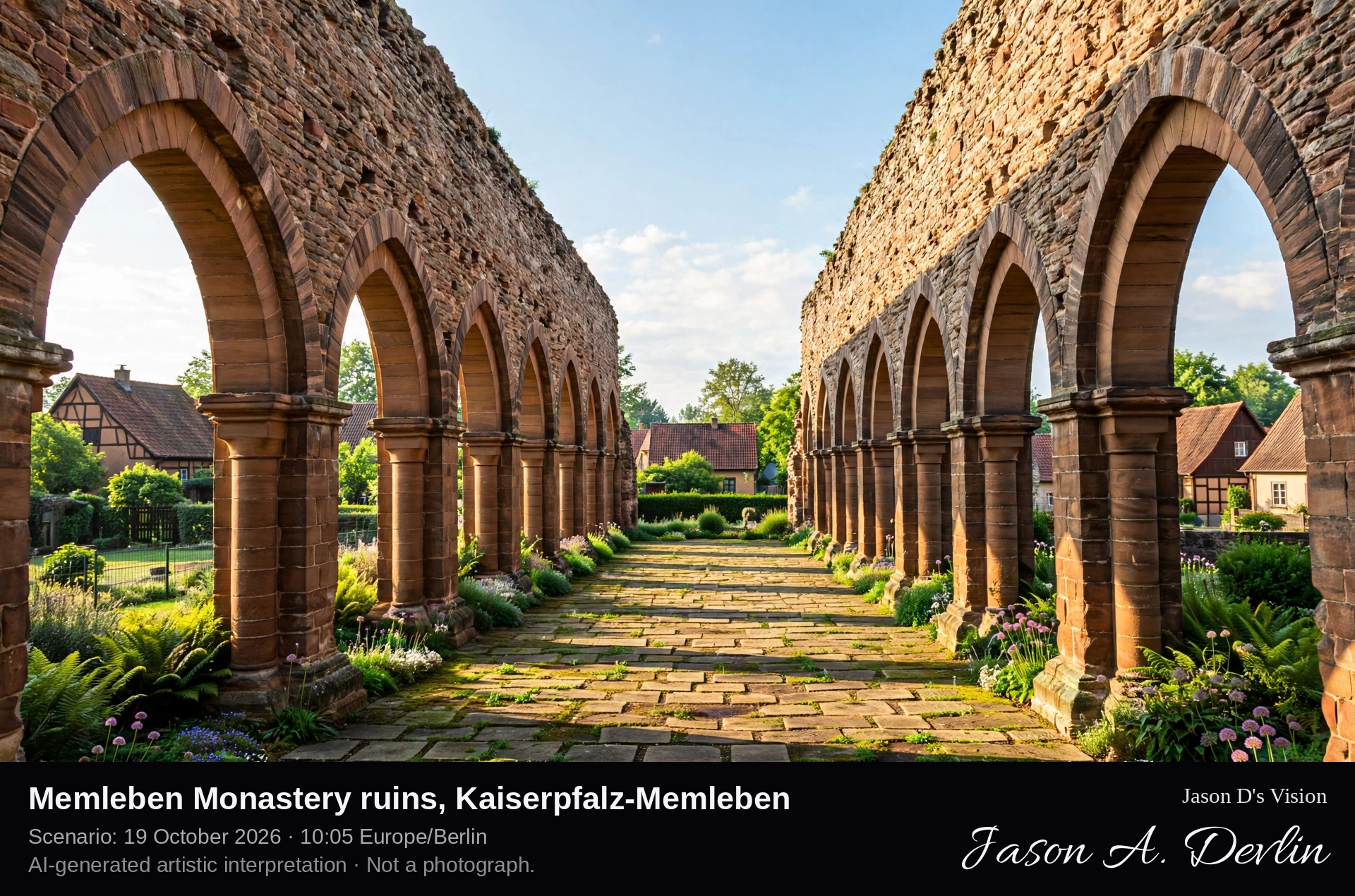
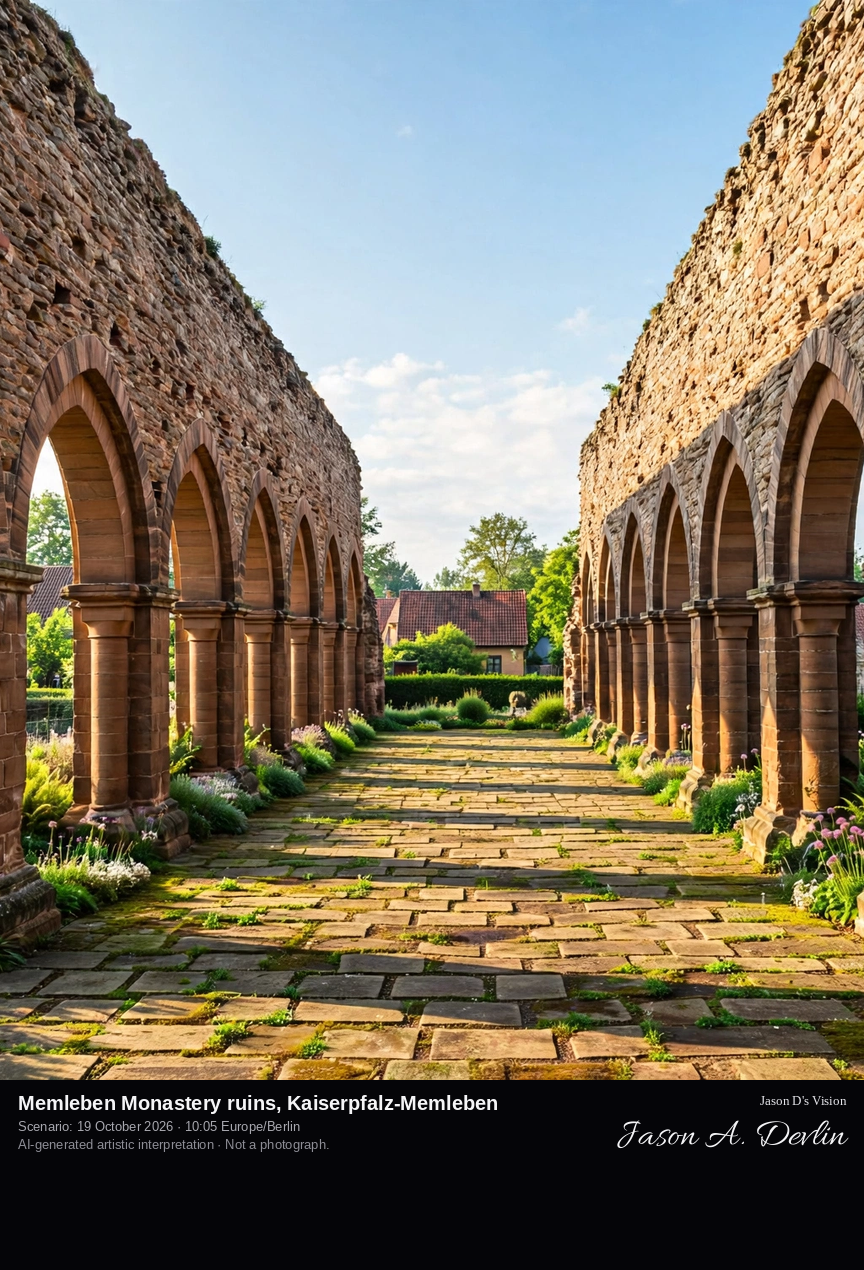
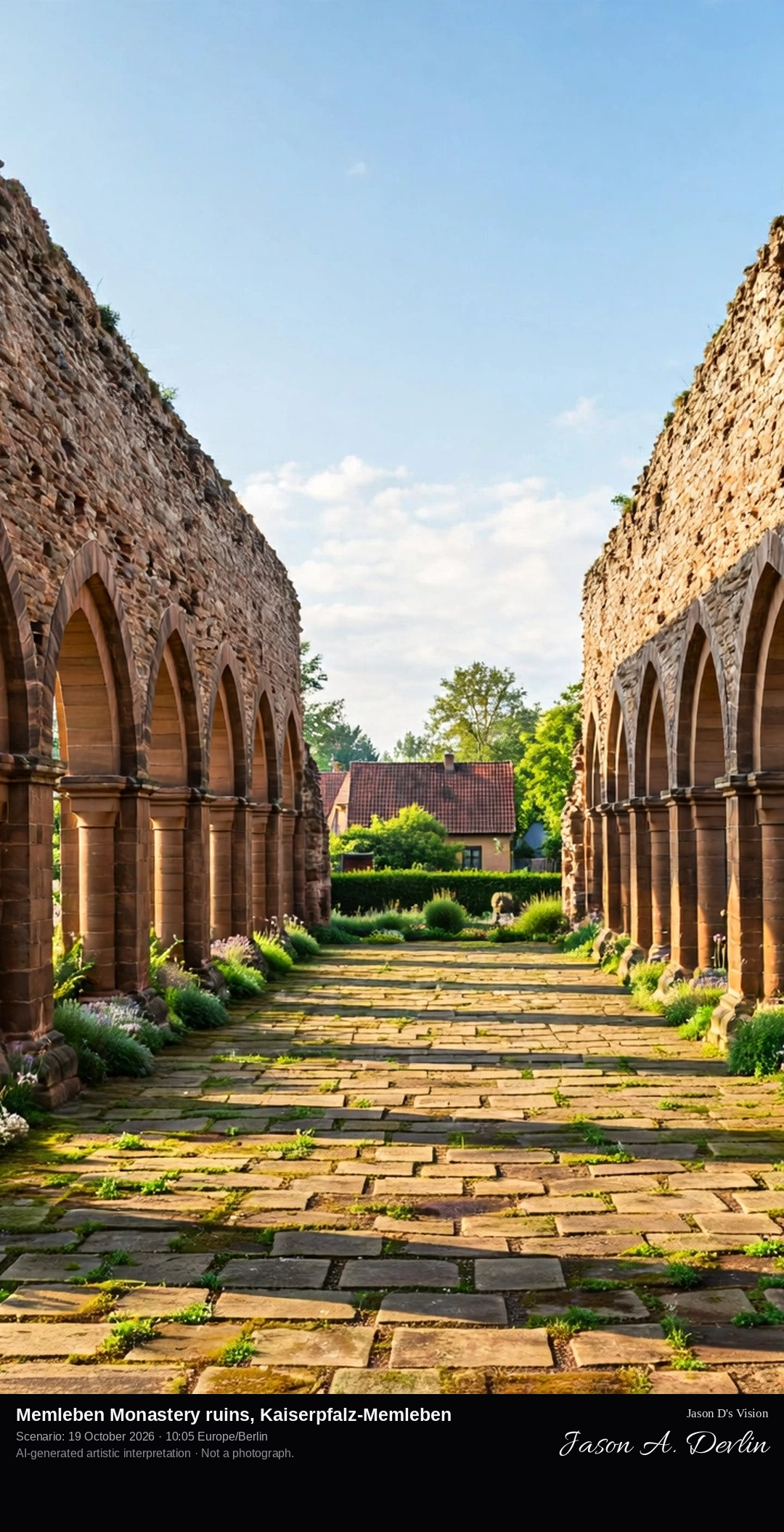
The roofless abbey church ruin standing in open grassland · AI-generated artistic interpretation
Memleben was an Ottonian imperial site where King Henry I and Emperor Otto I both died, and its monastery became one of the great abbeys of the early medieval empire. The roofless walls of its monumental monastery church still stand in the Unstrut valley grass, their round arches open to the sky. A preserved late Romanesque crypt survives beneath the ruined choir.
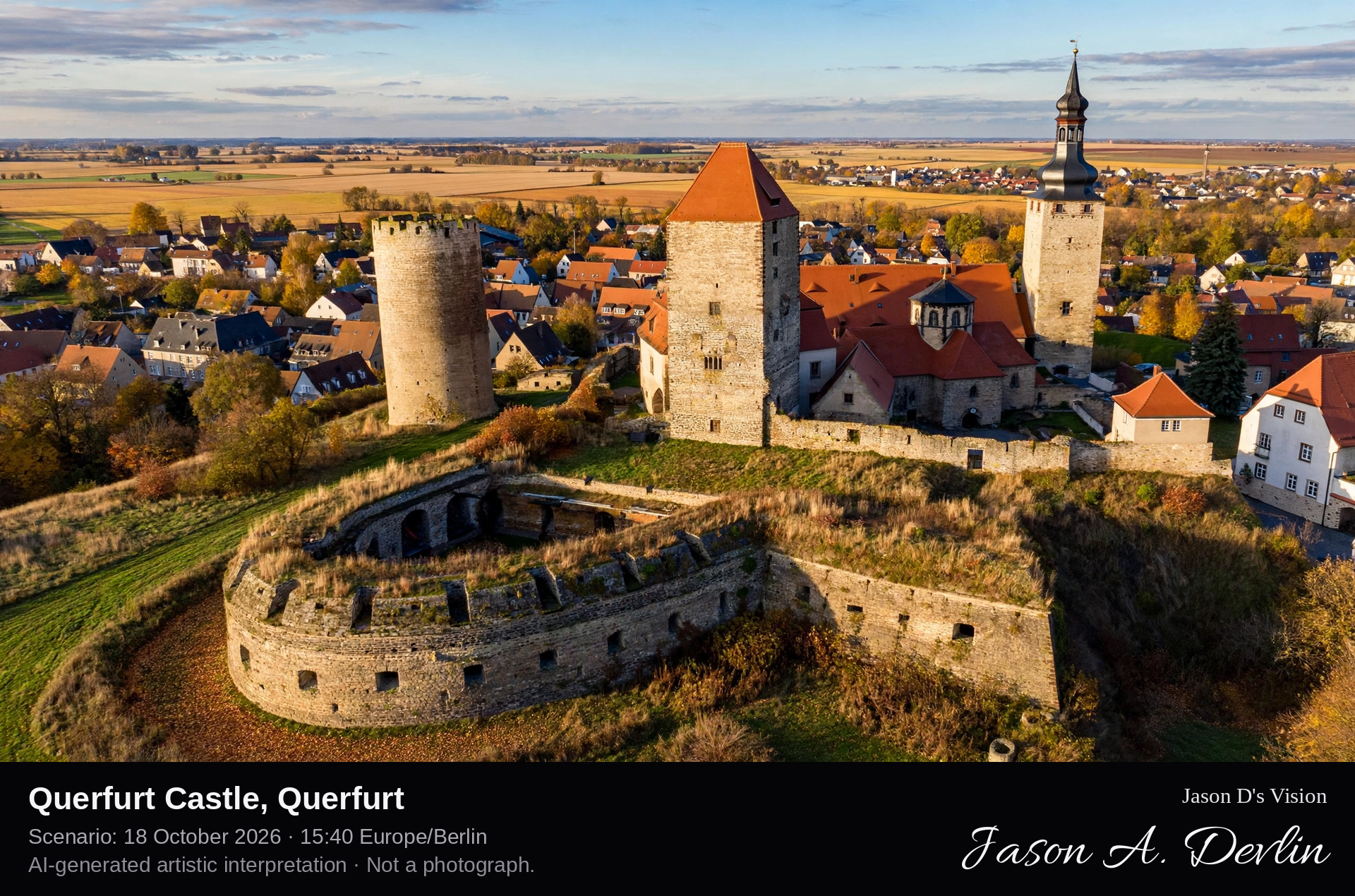
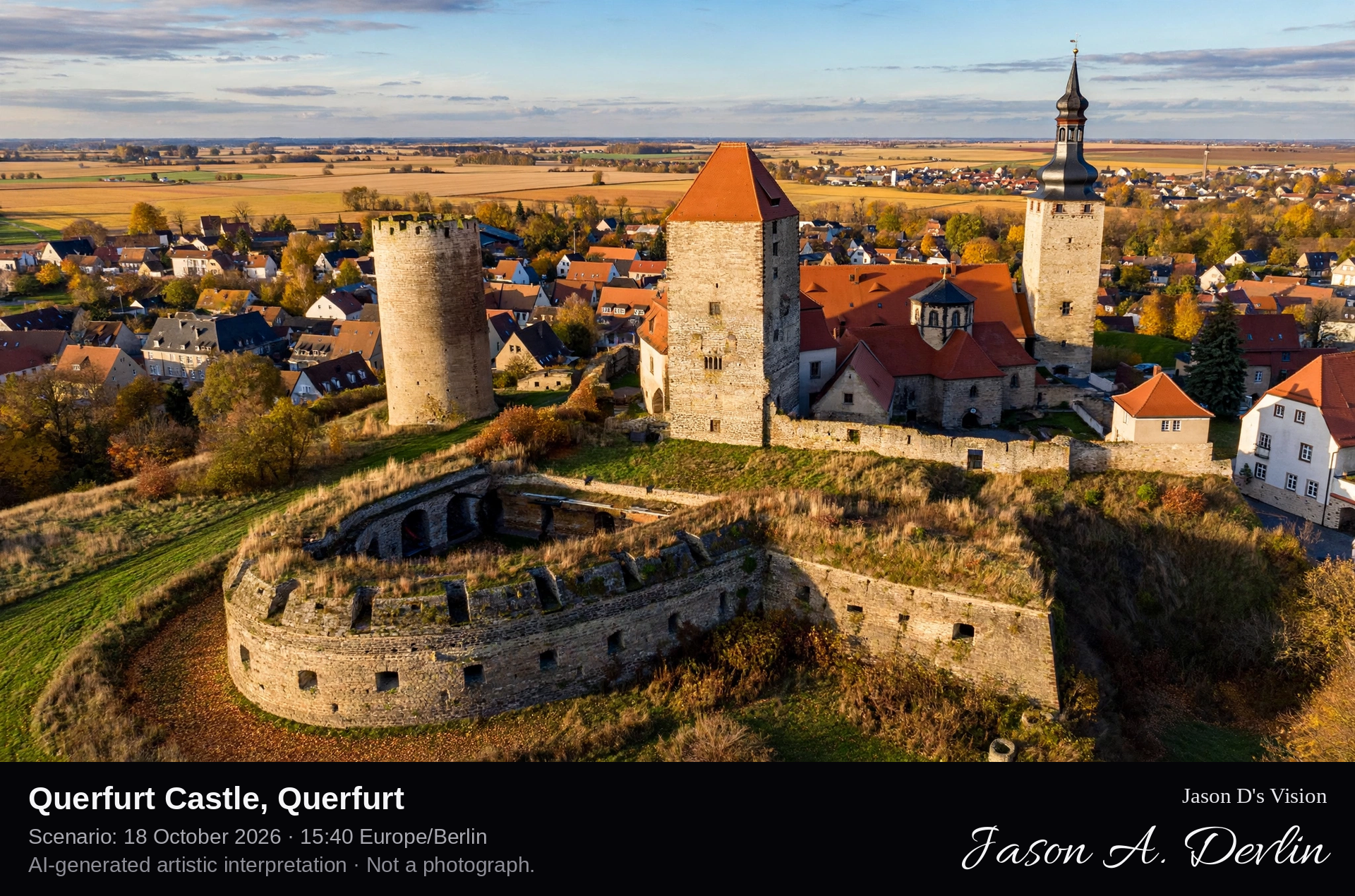
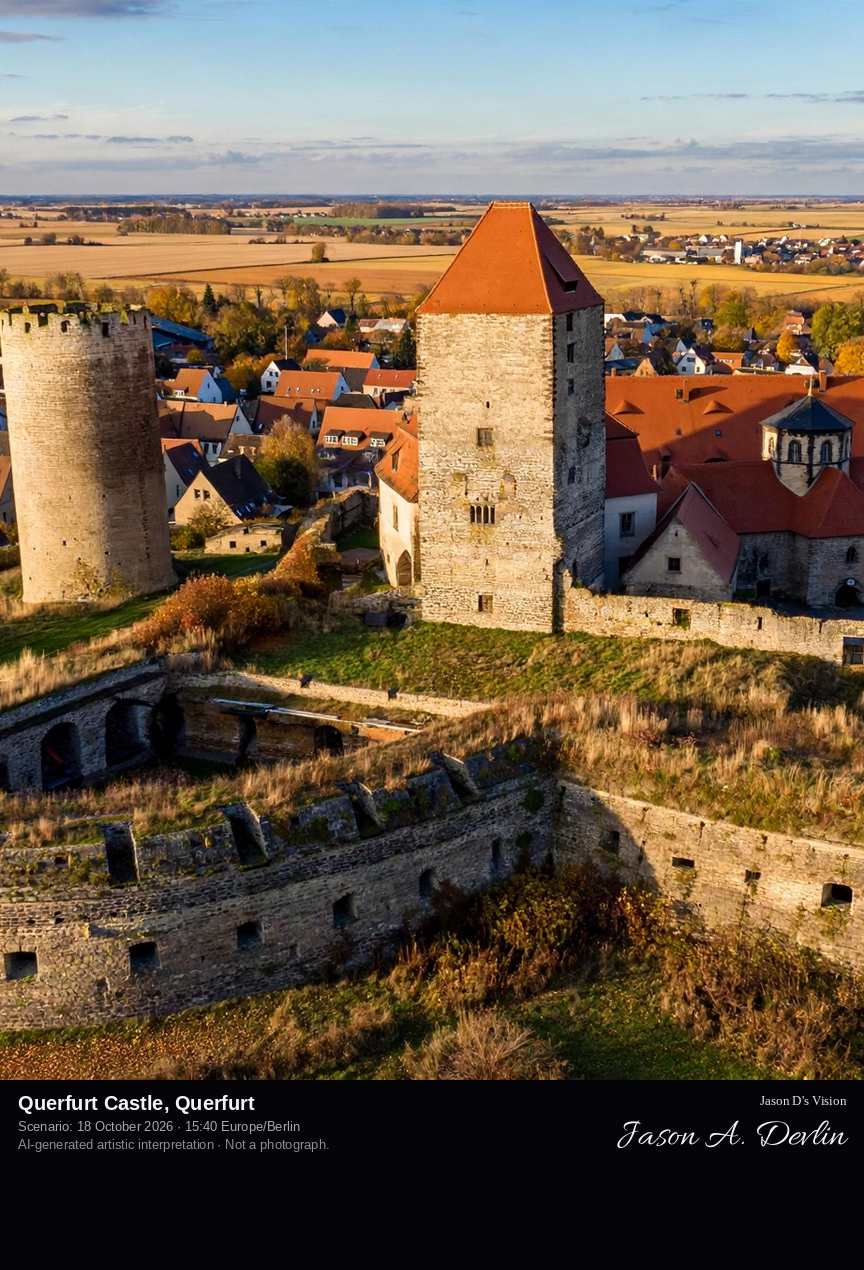
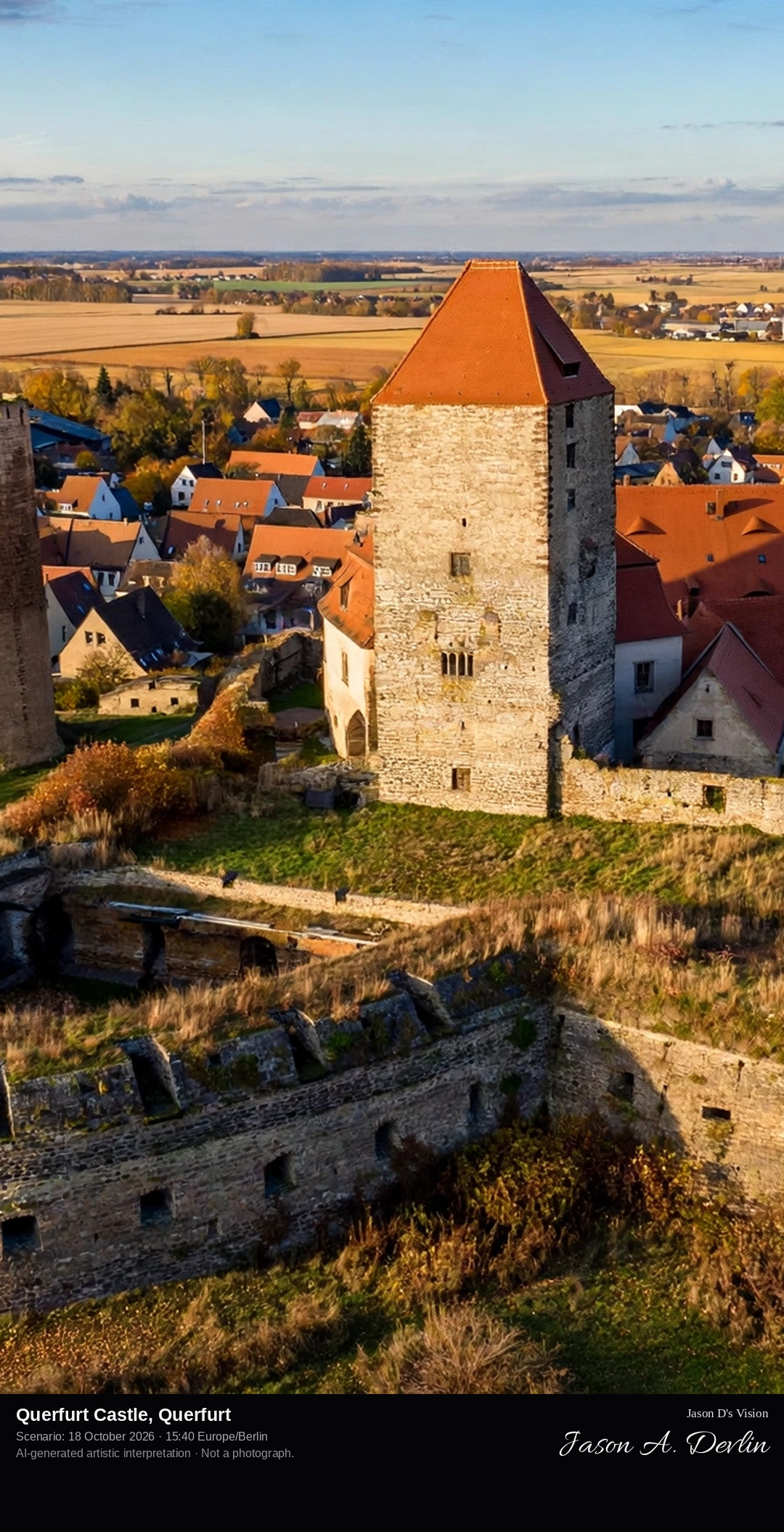
The three towers of the great fortress above its dry moat · AI-generated artistic interpretation
Querfurt Castle is among the largest medieval fortresses in central Germany, its mighty curtain walls ringed by a deep dry moat. Three towers of very different forms rise over the roofs inside the walls, including the thick round keep known as Dicker Heinrich. The castle was the seat of the noble Querfurt family and preserves a Romanesque chapel within its walls.
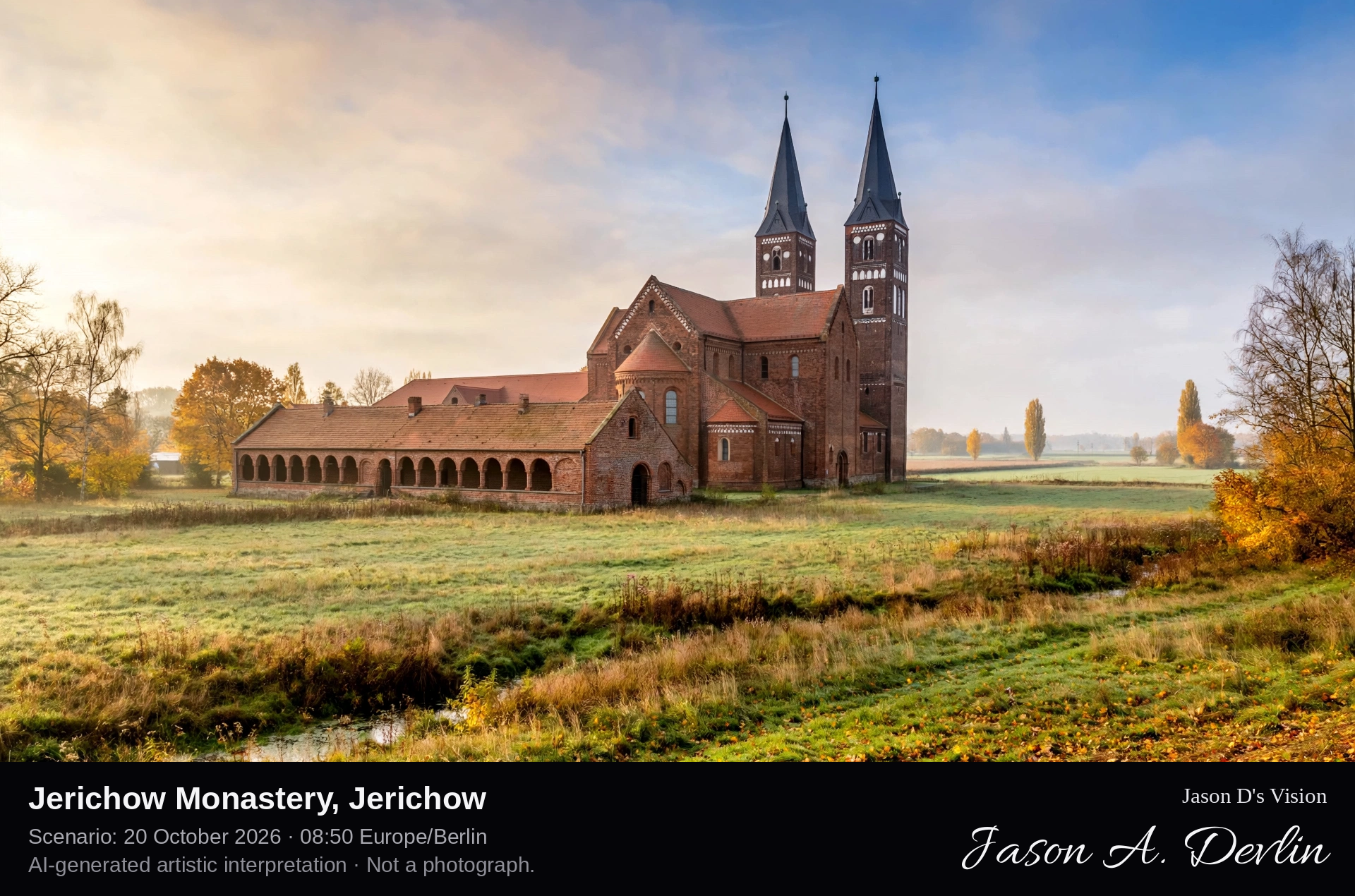
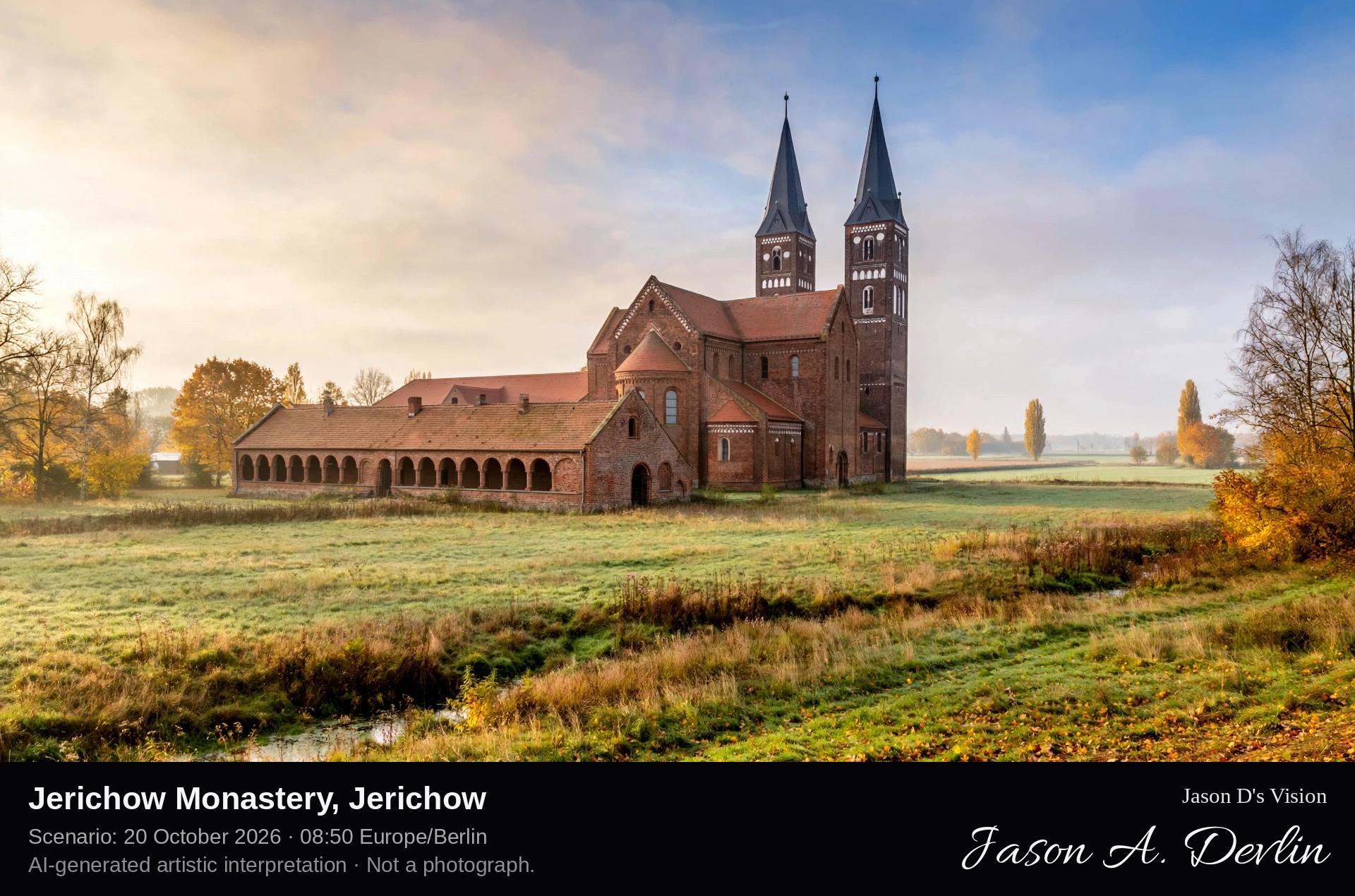
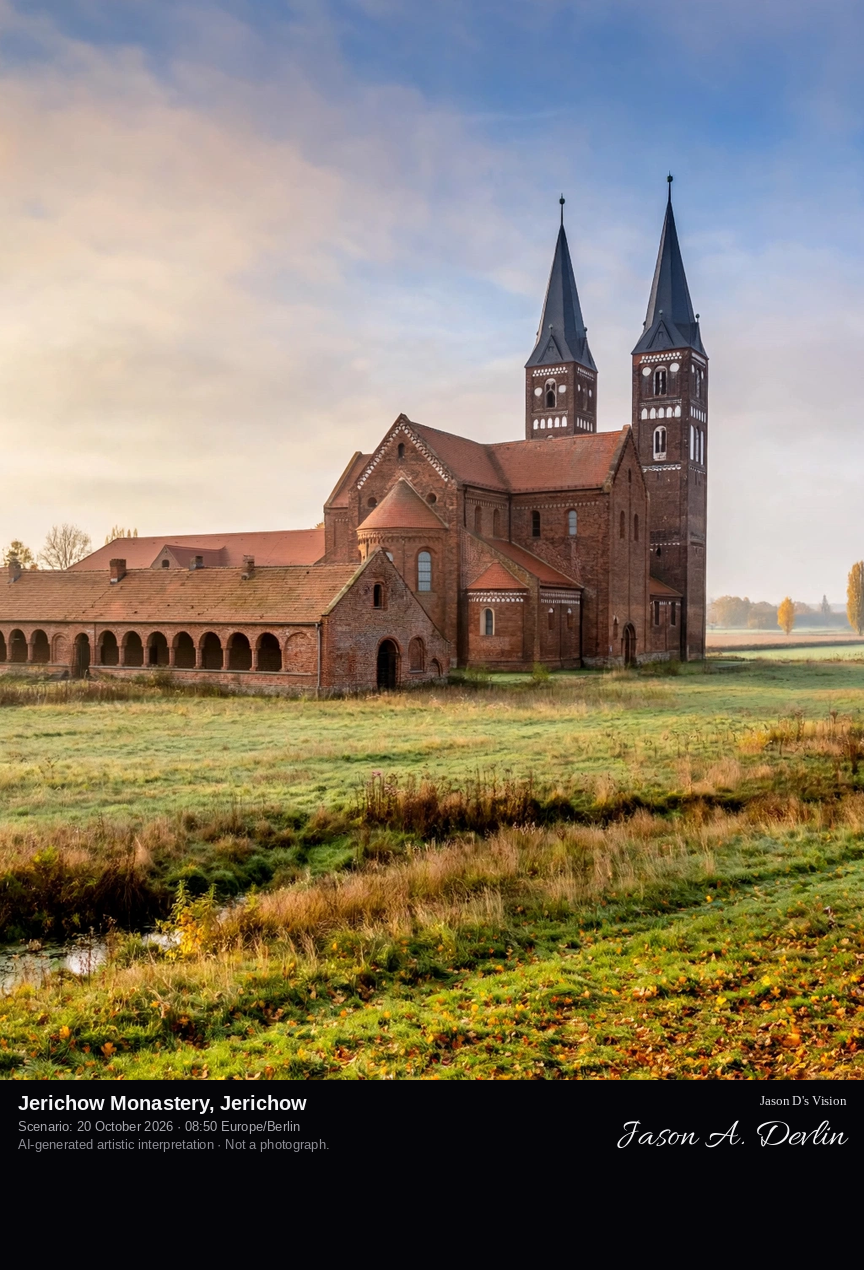
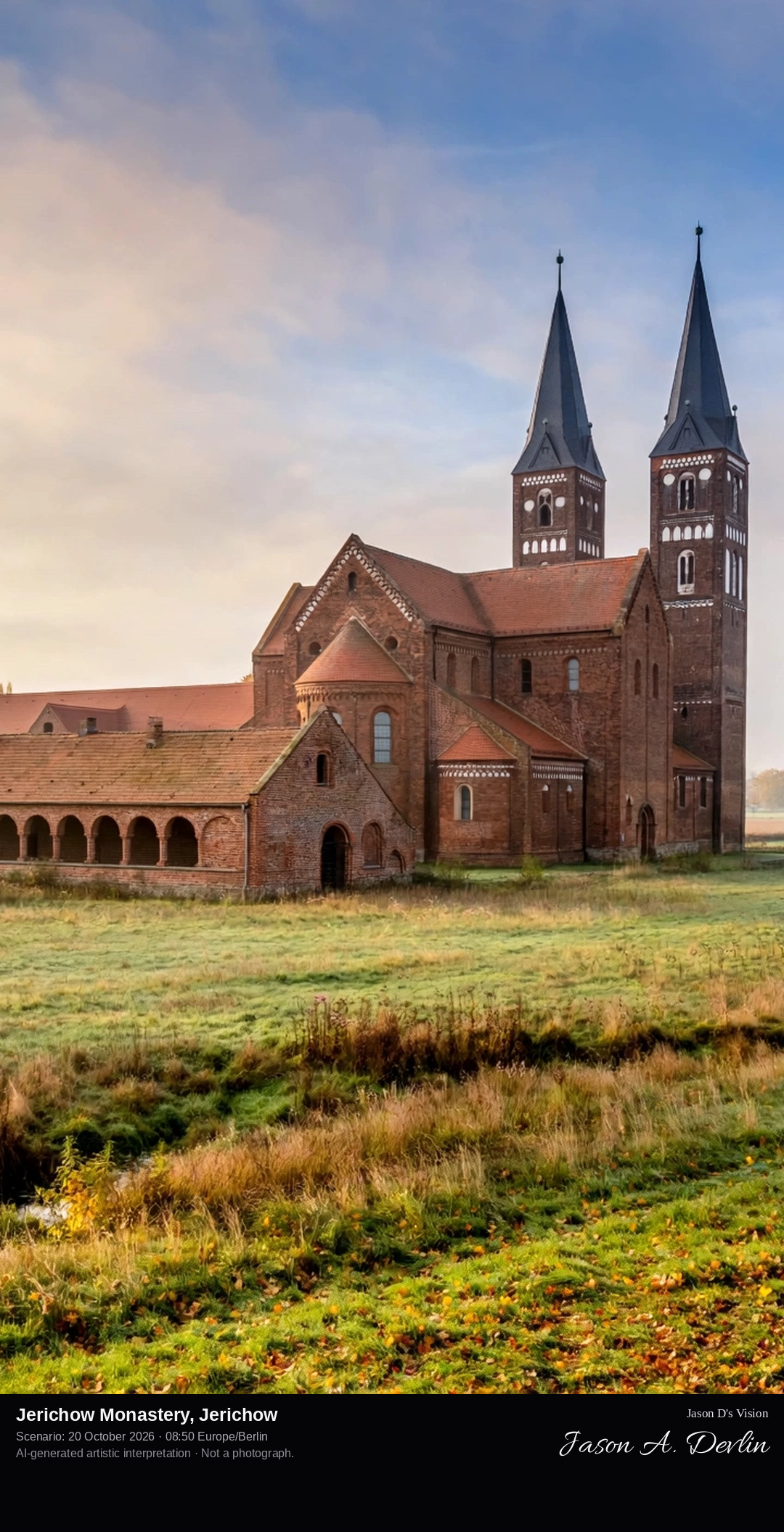
The twin-towered brick basilica over the Elbe meadows · AI-generated artistic interpretation
Jerichow Monastery church is one of the oldest brick buildings in northern Germany, a Romanesque basilica raised by Premonstratensian canons in the twelfth century. Its twin-towered west front of warm red brick stands over the flat Elbe meadows east of the river. The church set the pattern for brick Romanesque building across the region.
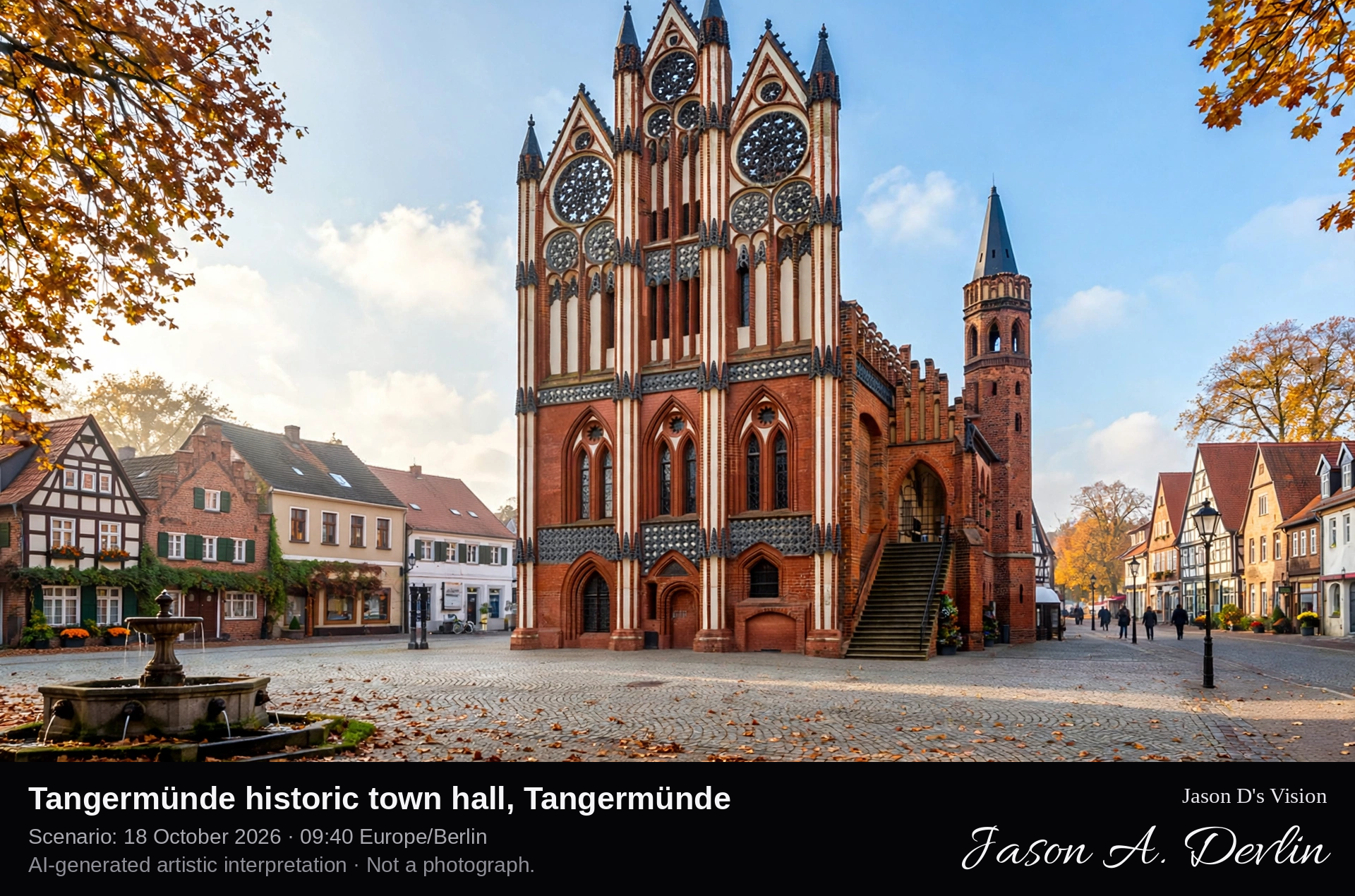
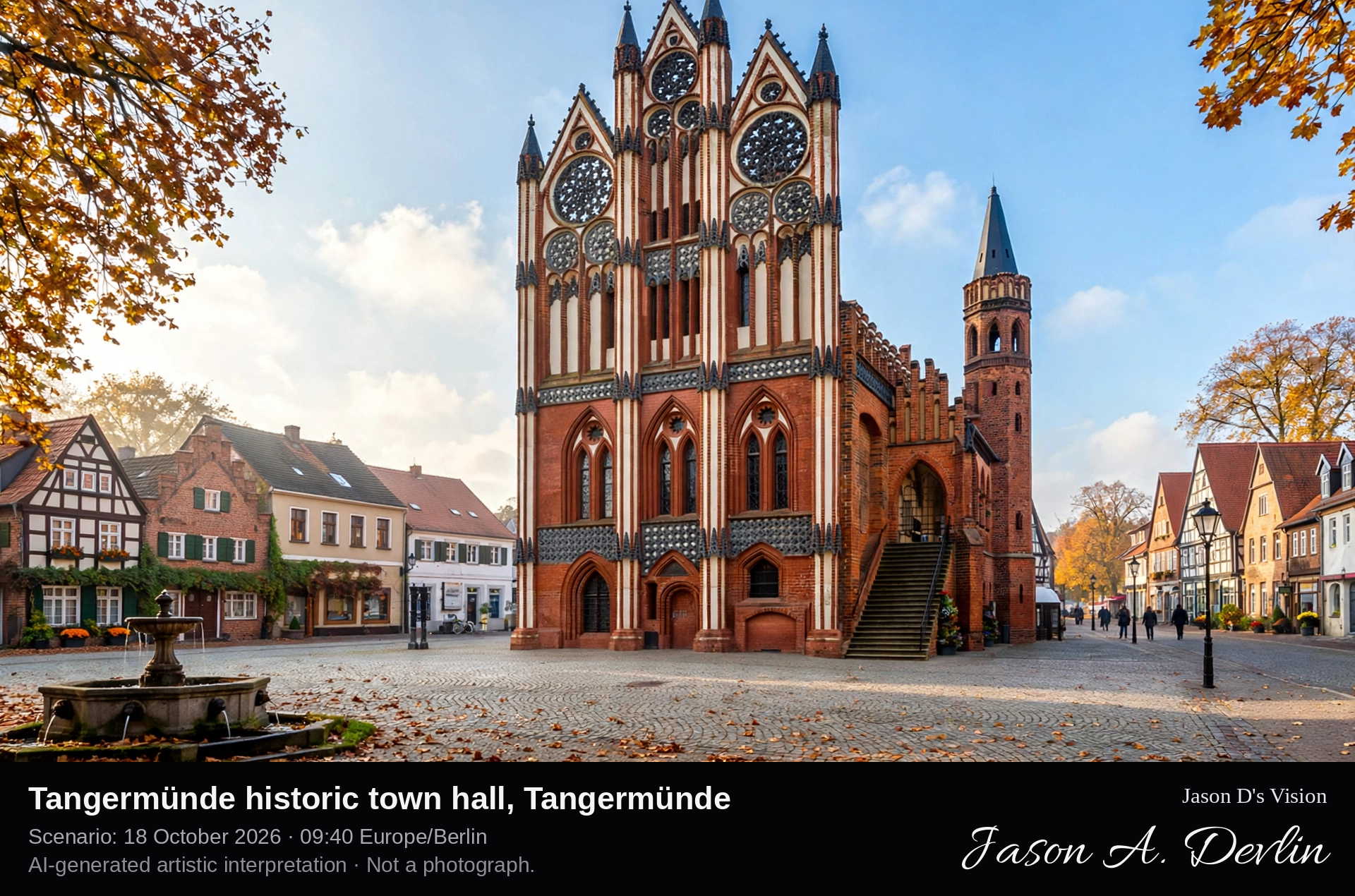
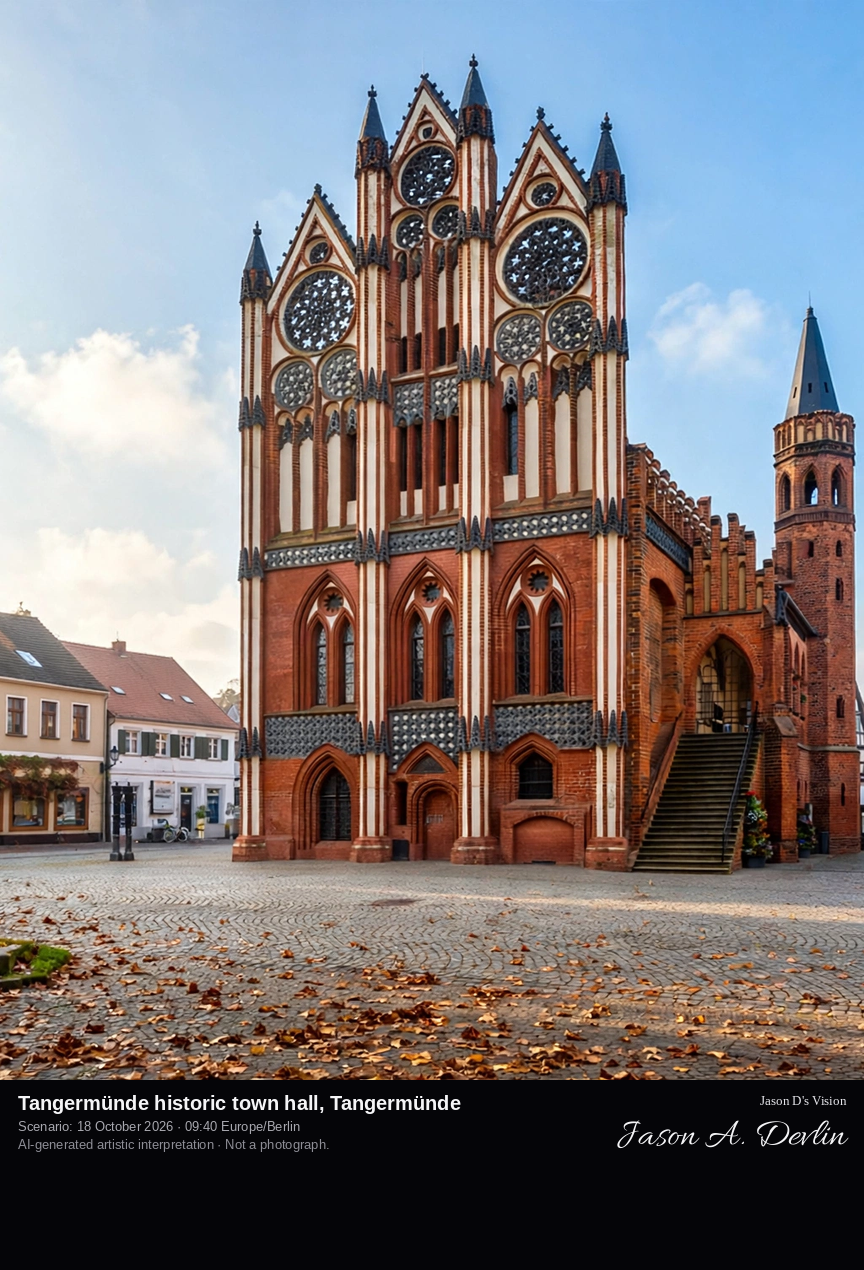
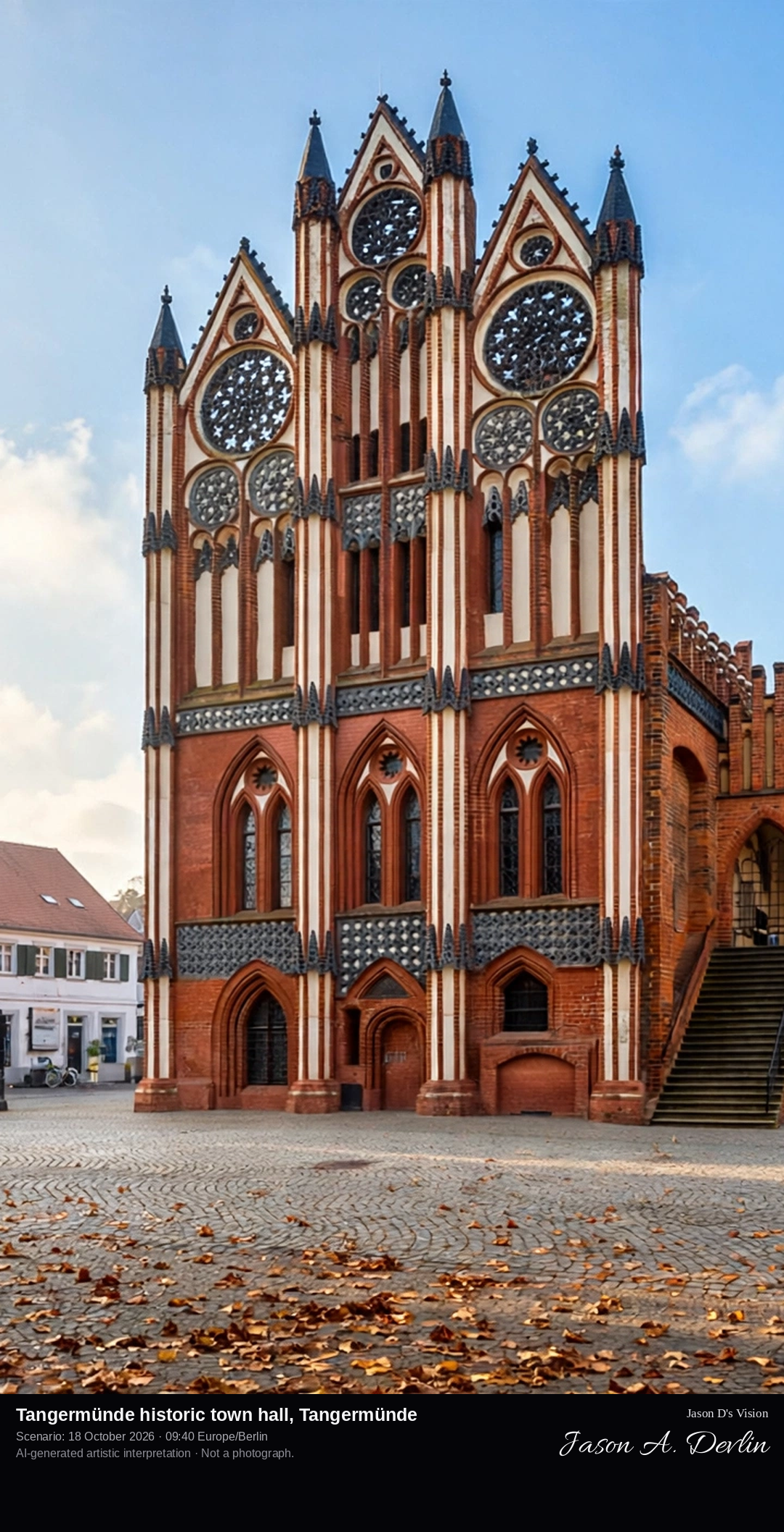
Ornate brick Gothic show facade over the market square · AI-generated artistic interpretation
Tangermünde's town hall, built in the 1430s, is one of the finest brick Gothic town halls in northern Germany, its show facade rich with tracery, pinnacles and rose windows in patterned brick. It stands on the cobbled market square of the old Elbe town, among half-timbered and gabled burgher houses.
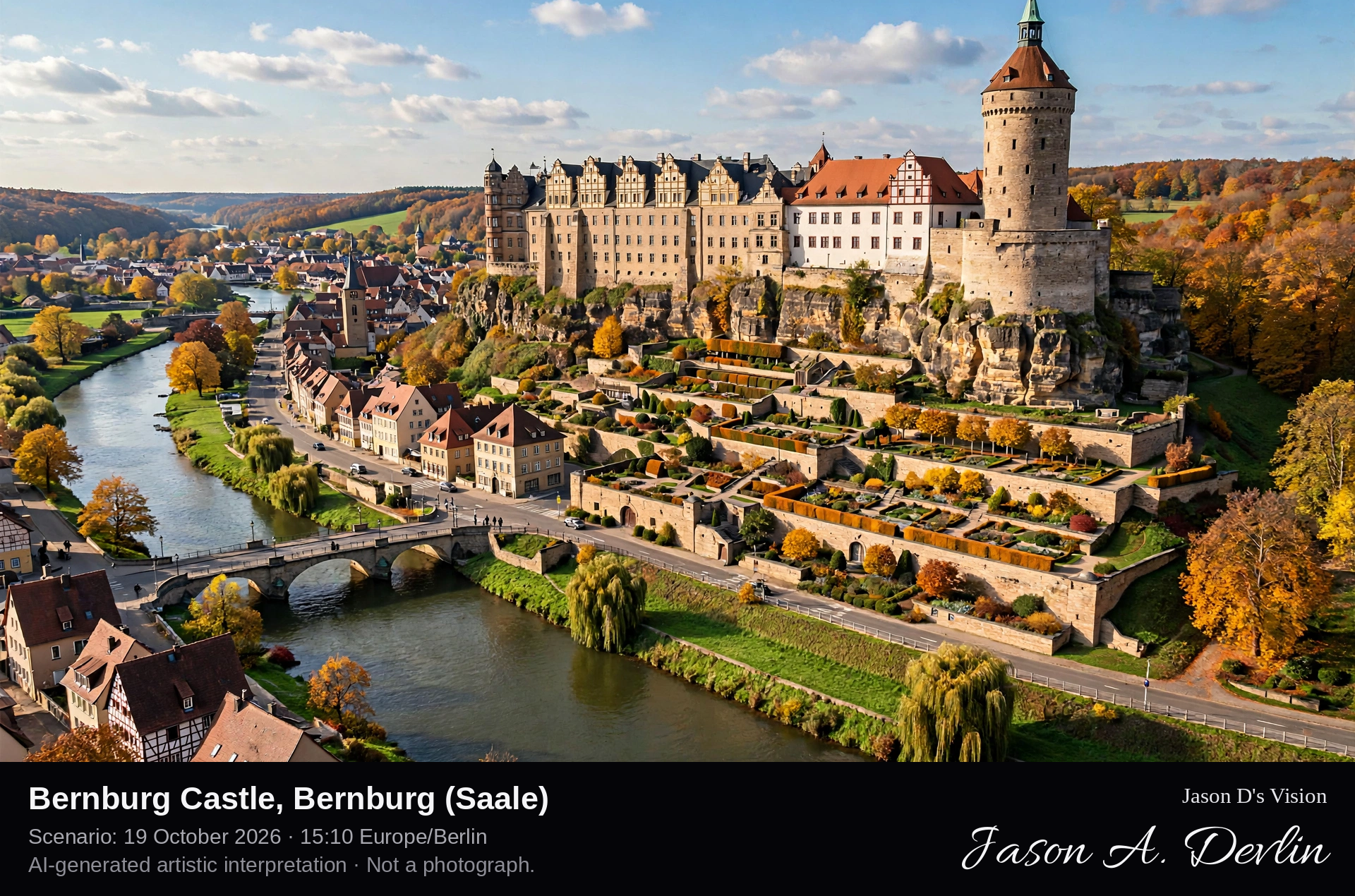
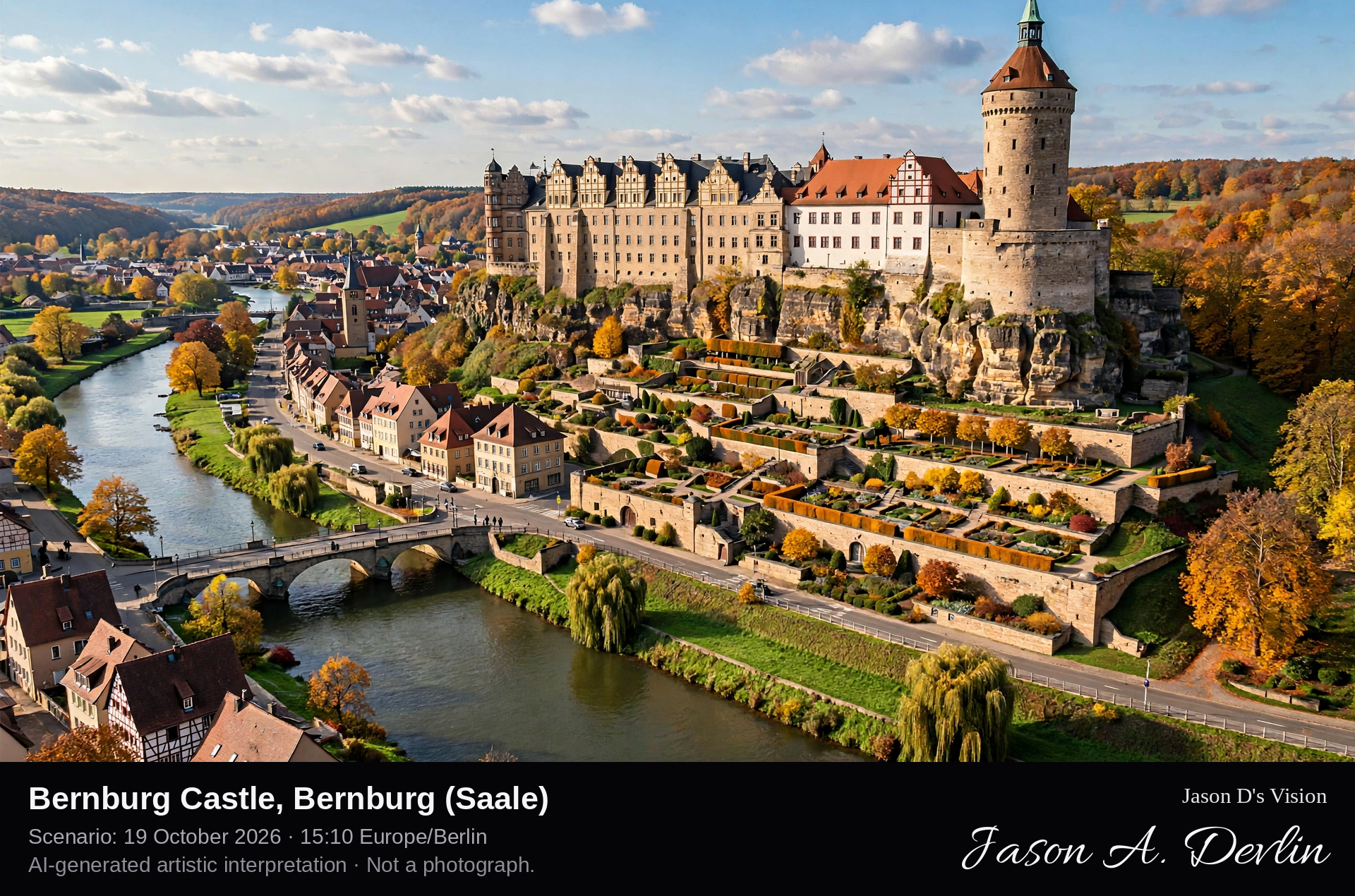
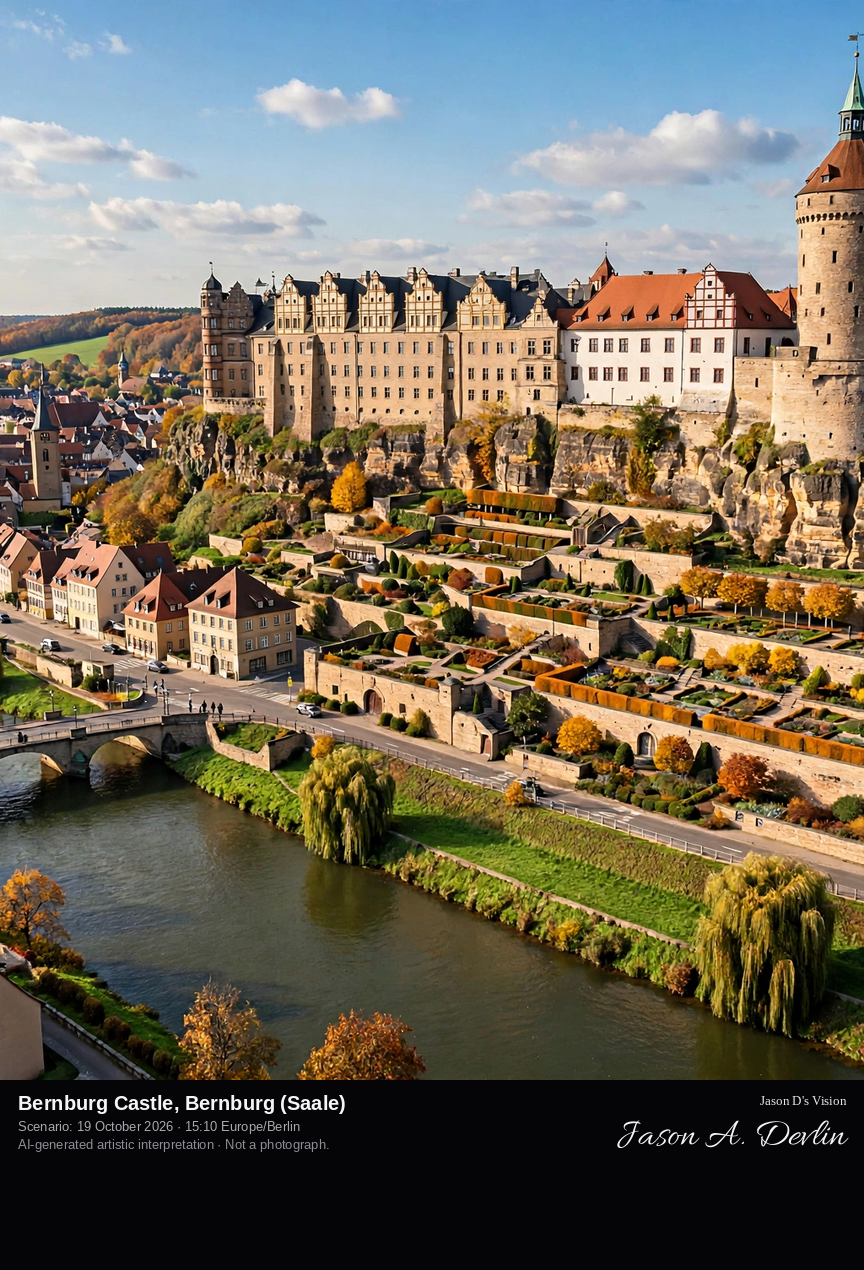
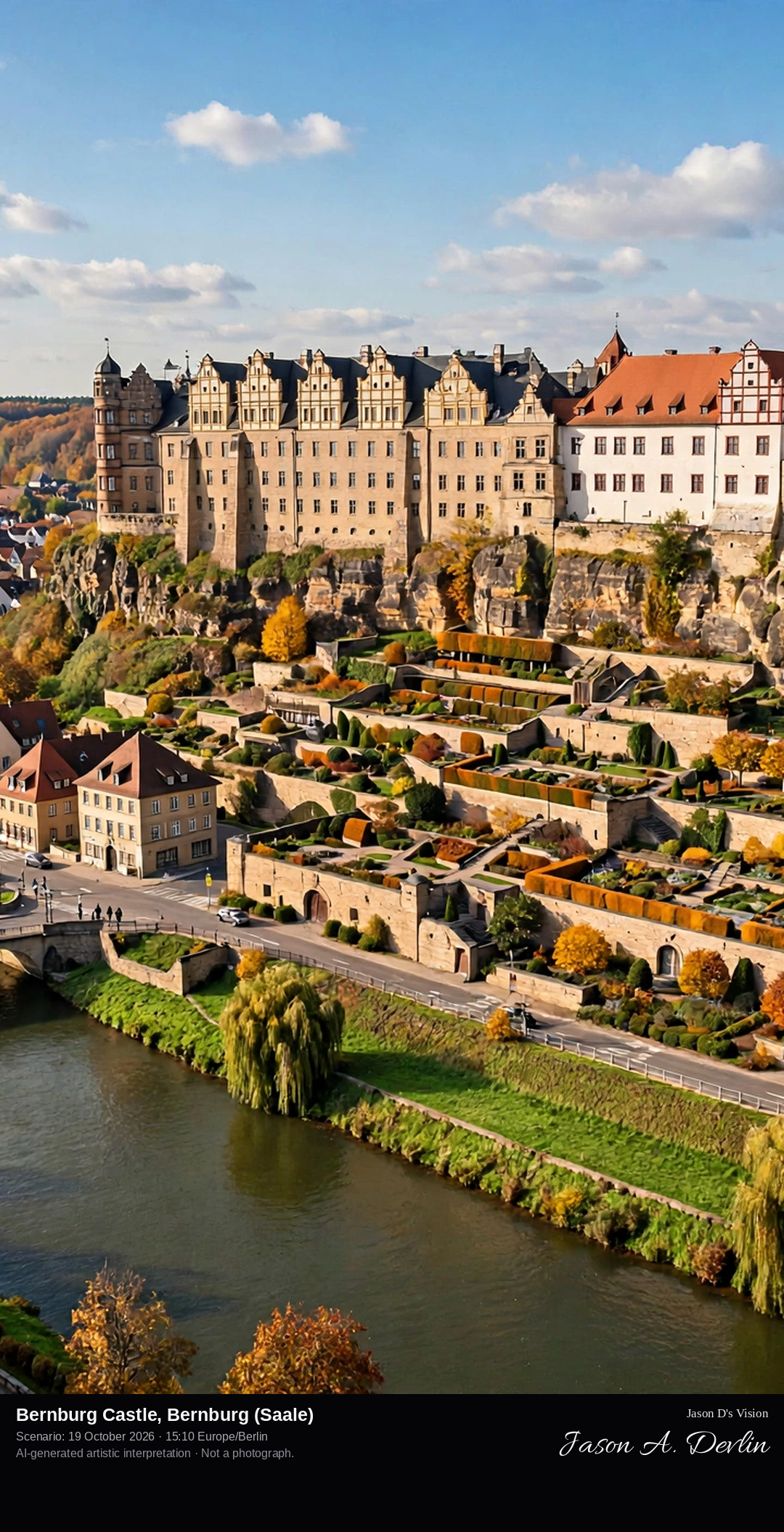
Palace-castle and round tower on the rock above the Saale · AI-generated artistic interpretation
Bernburg Castle, often called the crown of Anhalt, stands on a high rock above the Saale as a great Renaissance palace built around an older medieval stronghold. Its prominent round Eulenturm watches over long gabled palace wings, terraced slopes, the old town and the river bridge below.
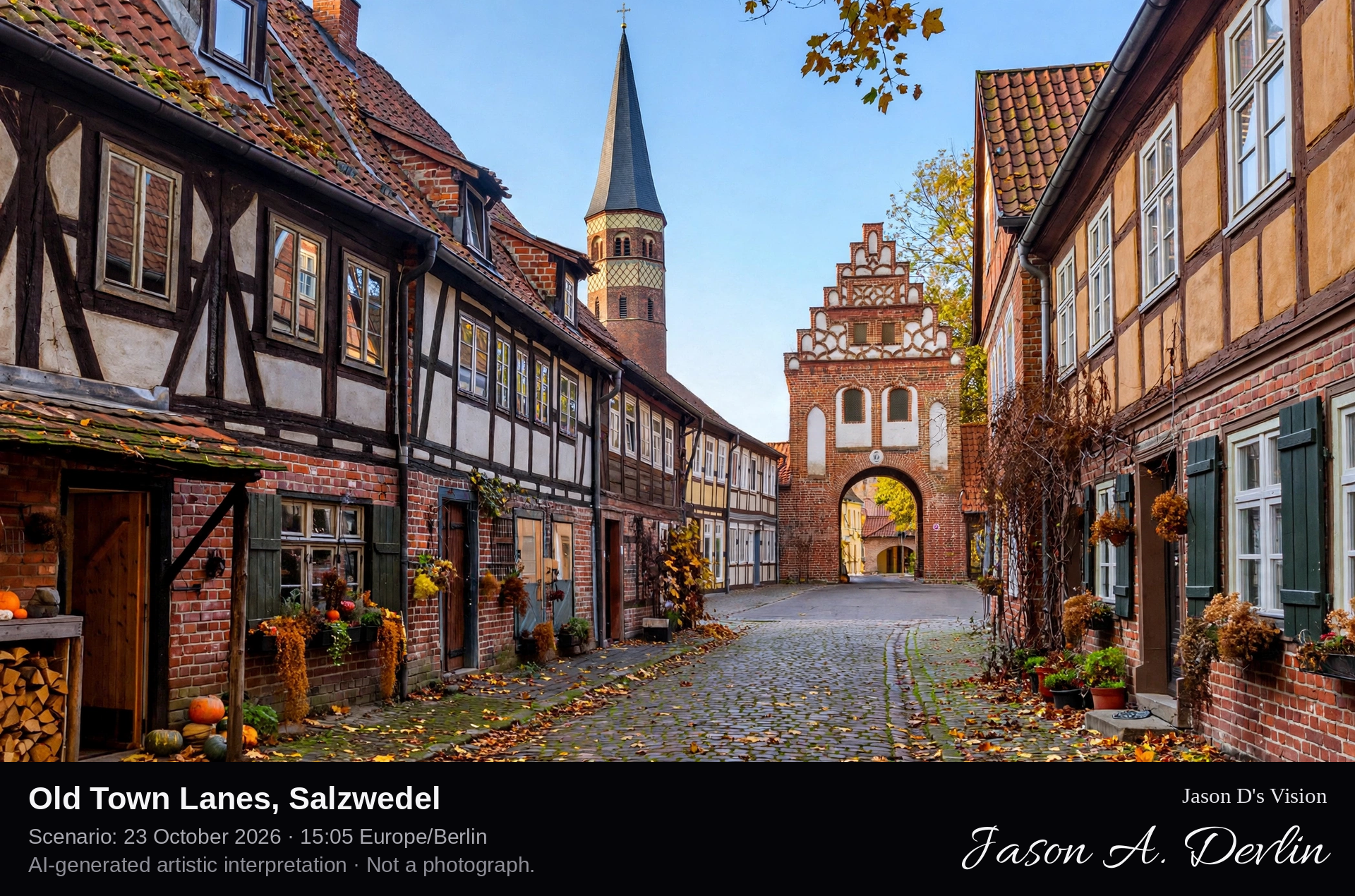
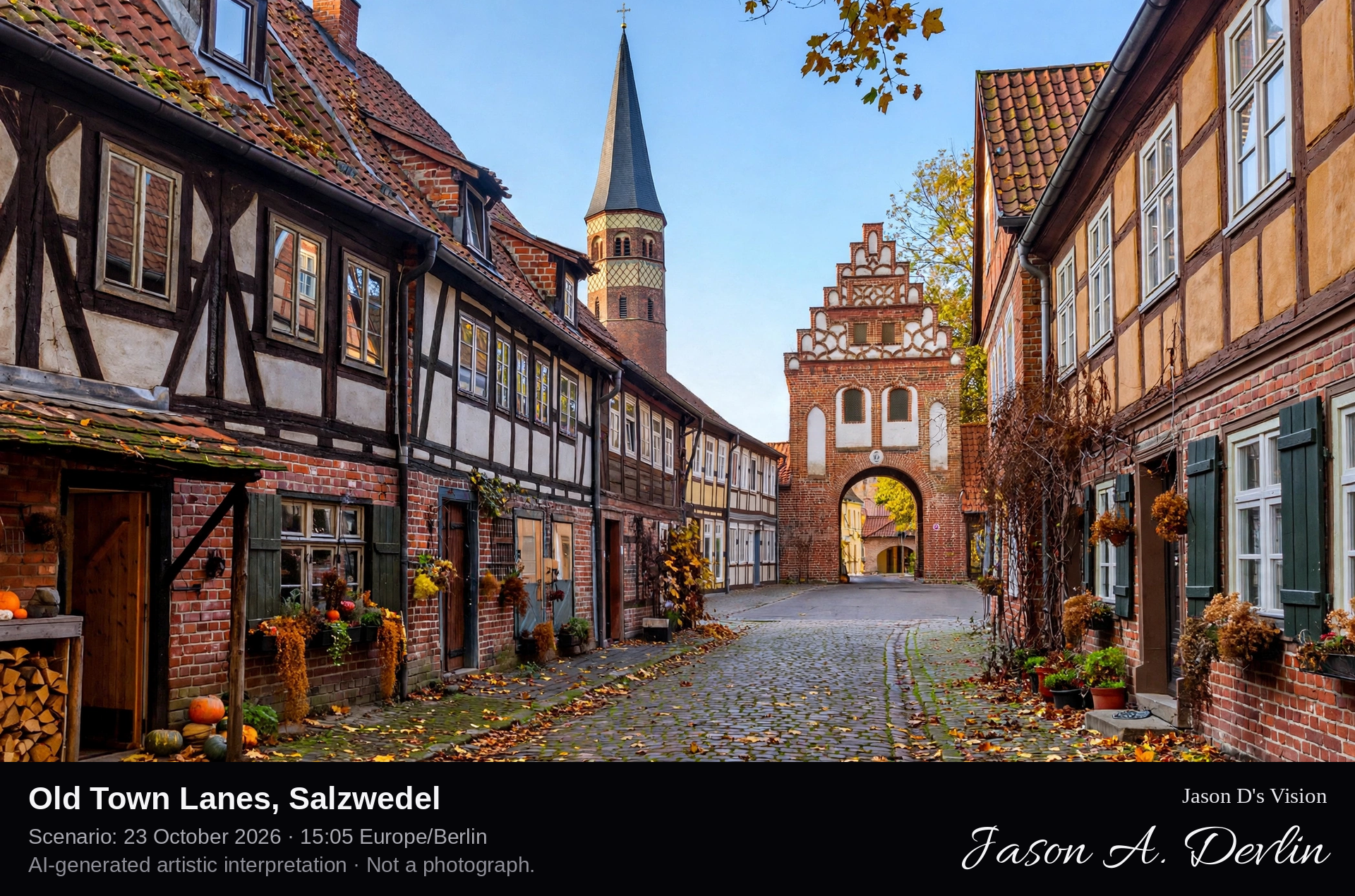
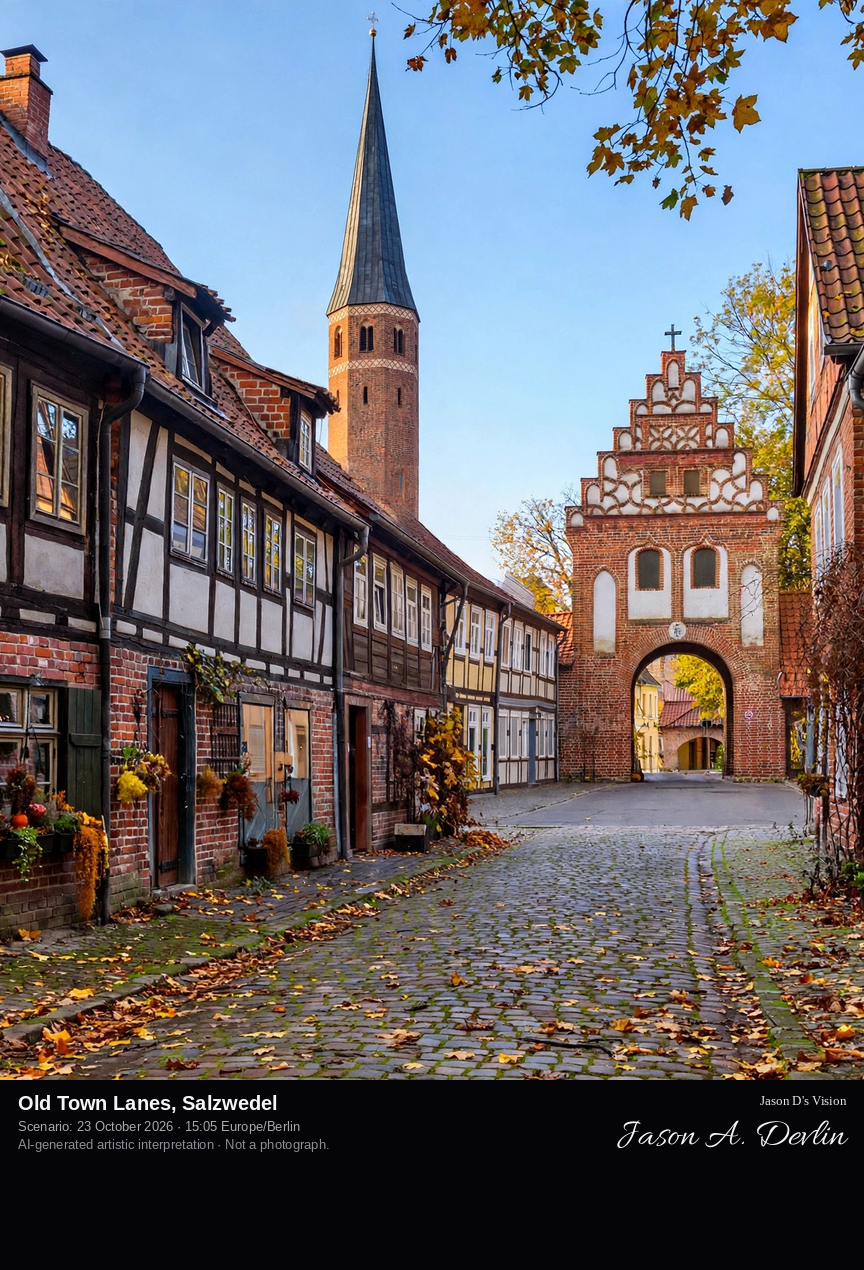
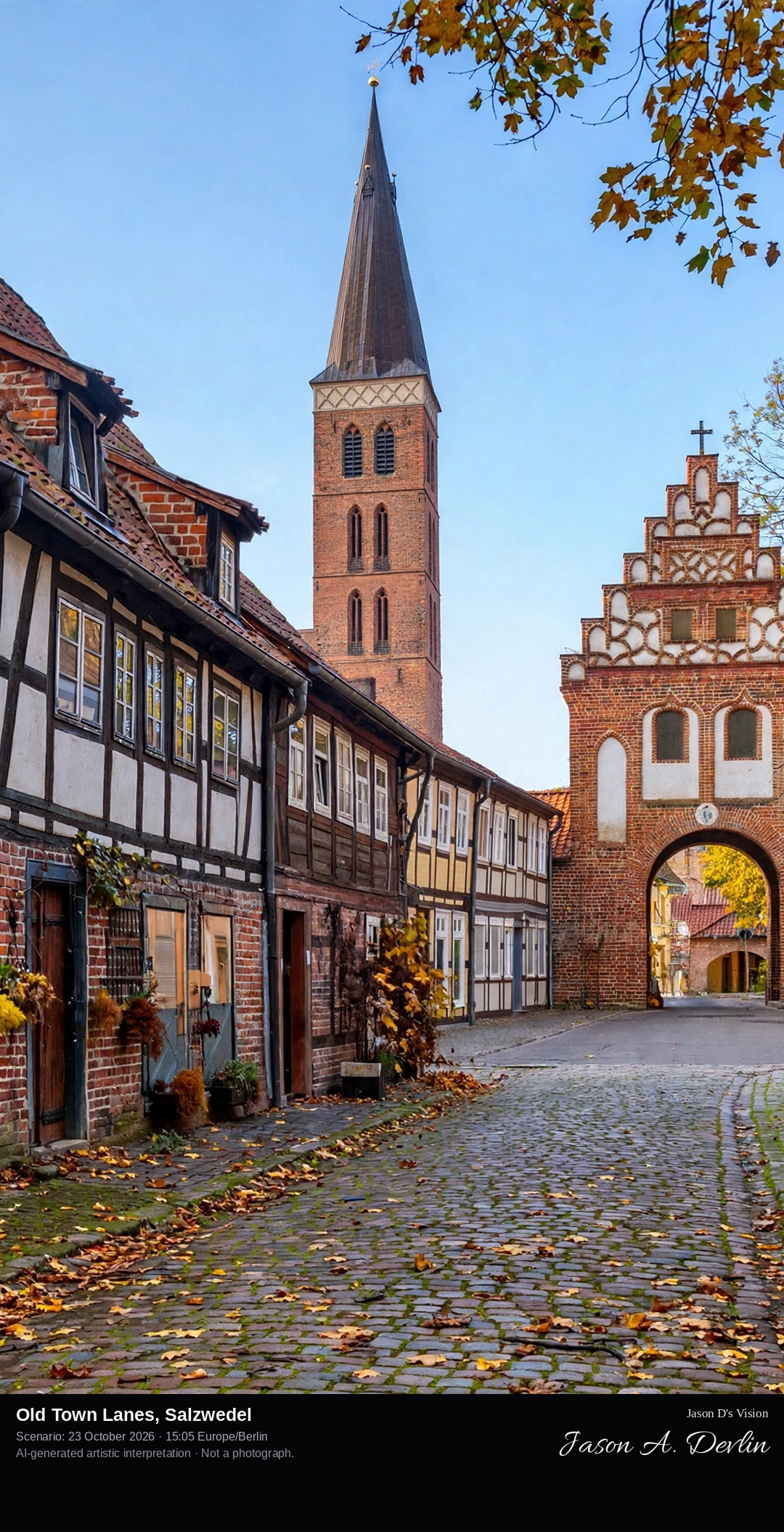
Brick and half-timbered lane beneath the leaning tower of St. Marien · AI-generated artistic interpretation
Salzwedel is a Hanseatic town in the Altmark whose medieval core preserves some 600 half-timbered houses along narrow brick and timber lanes. Above the rooftops rises the 81-metre tower of St. Marien, famous for its pronounced lean, and the brick Steintor of 1530 survives as a town gate.
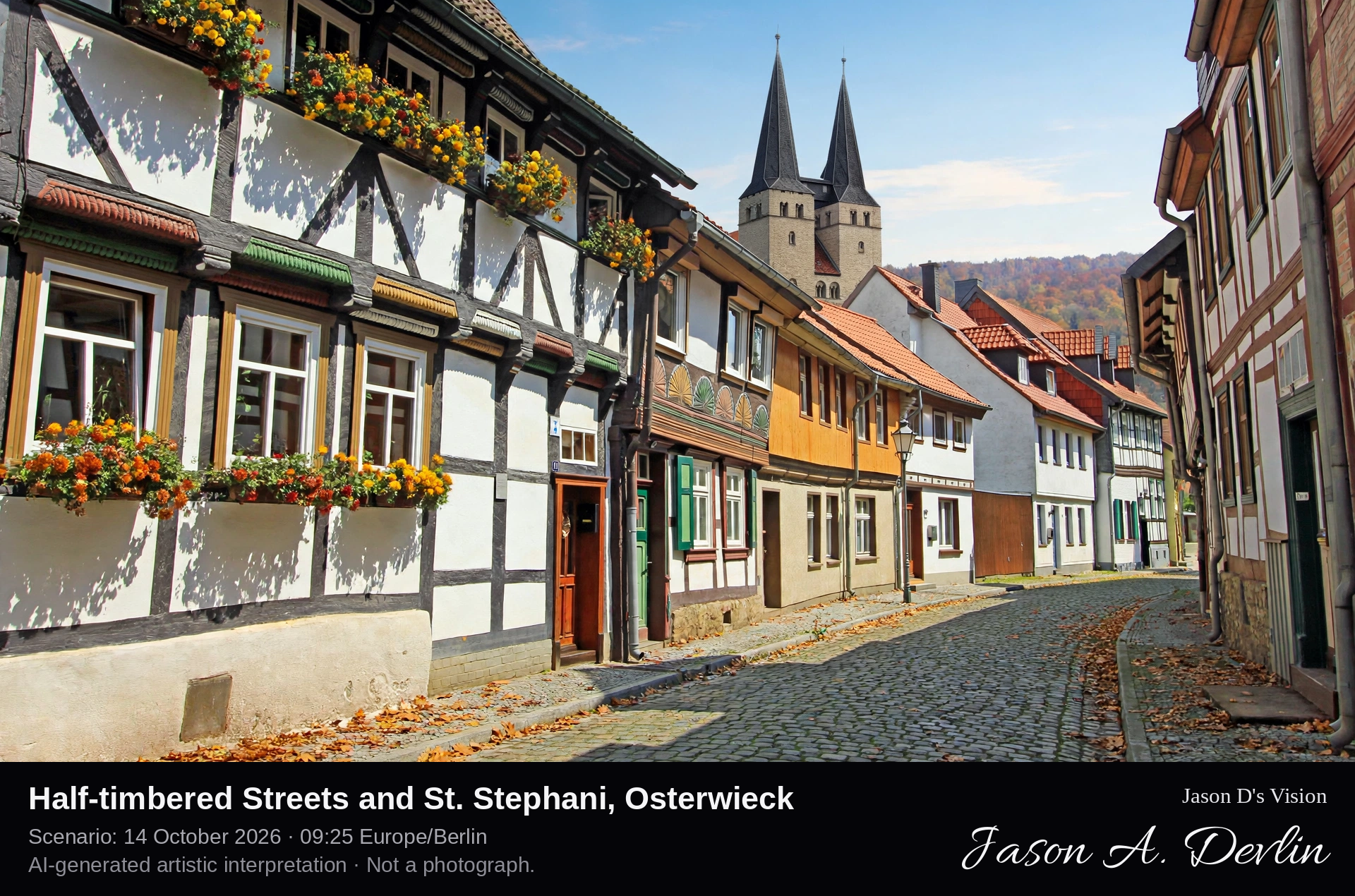
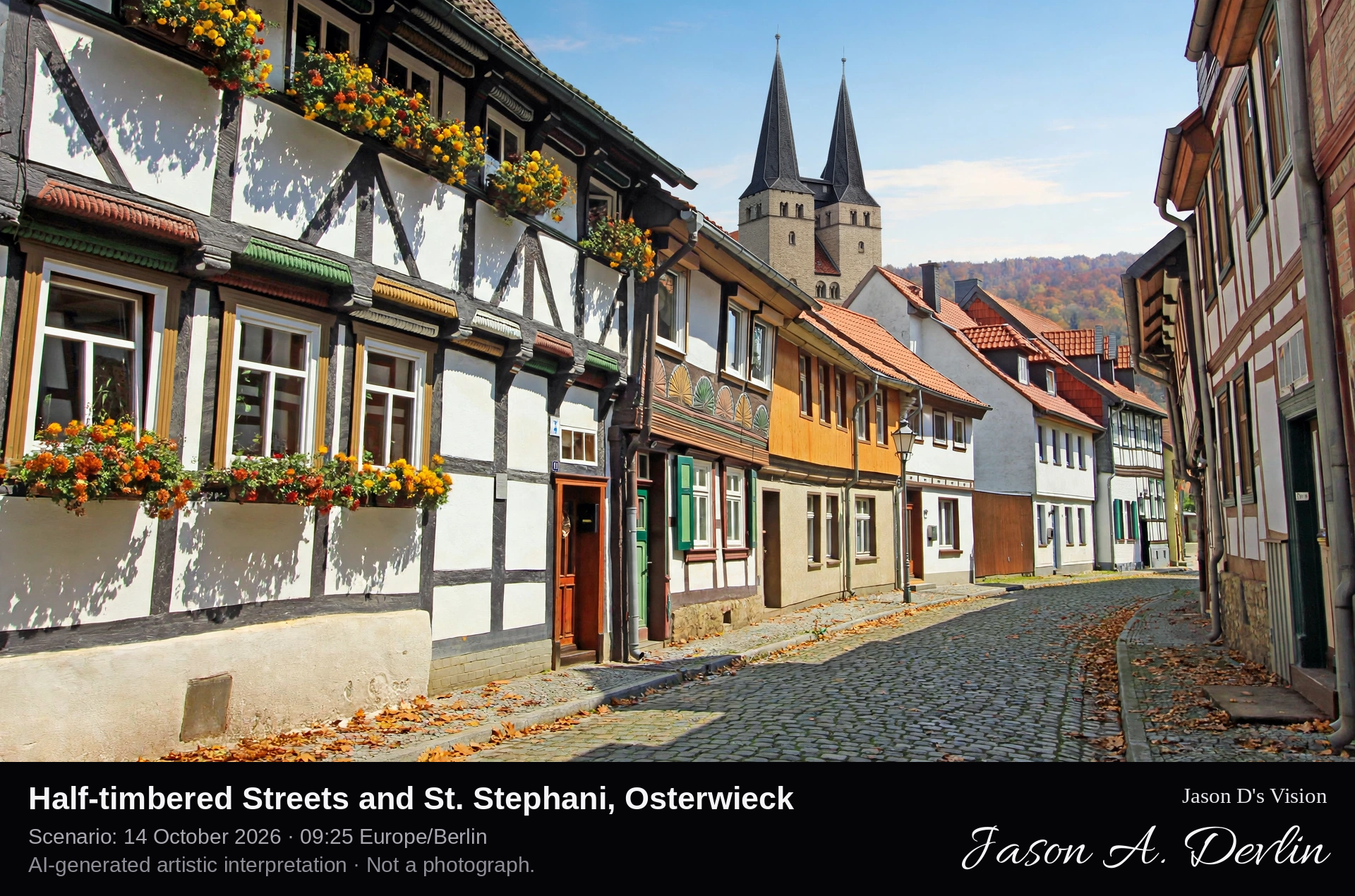
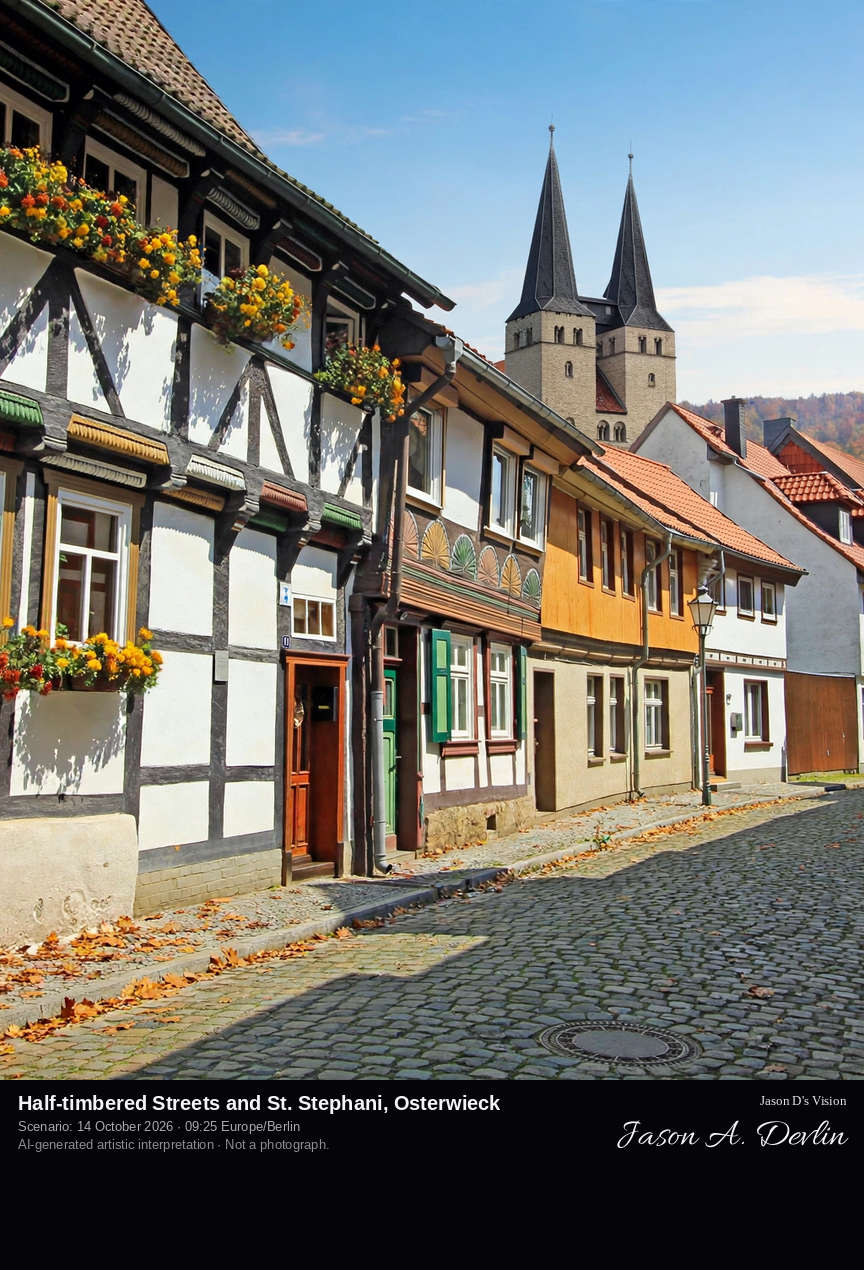
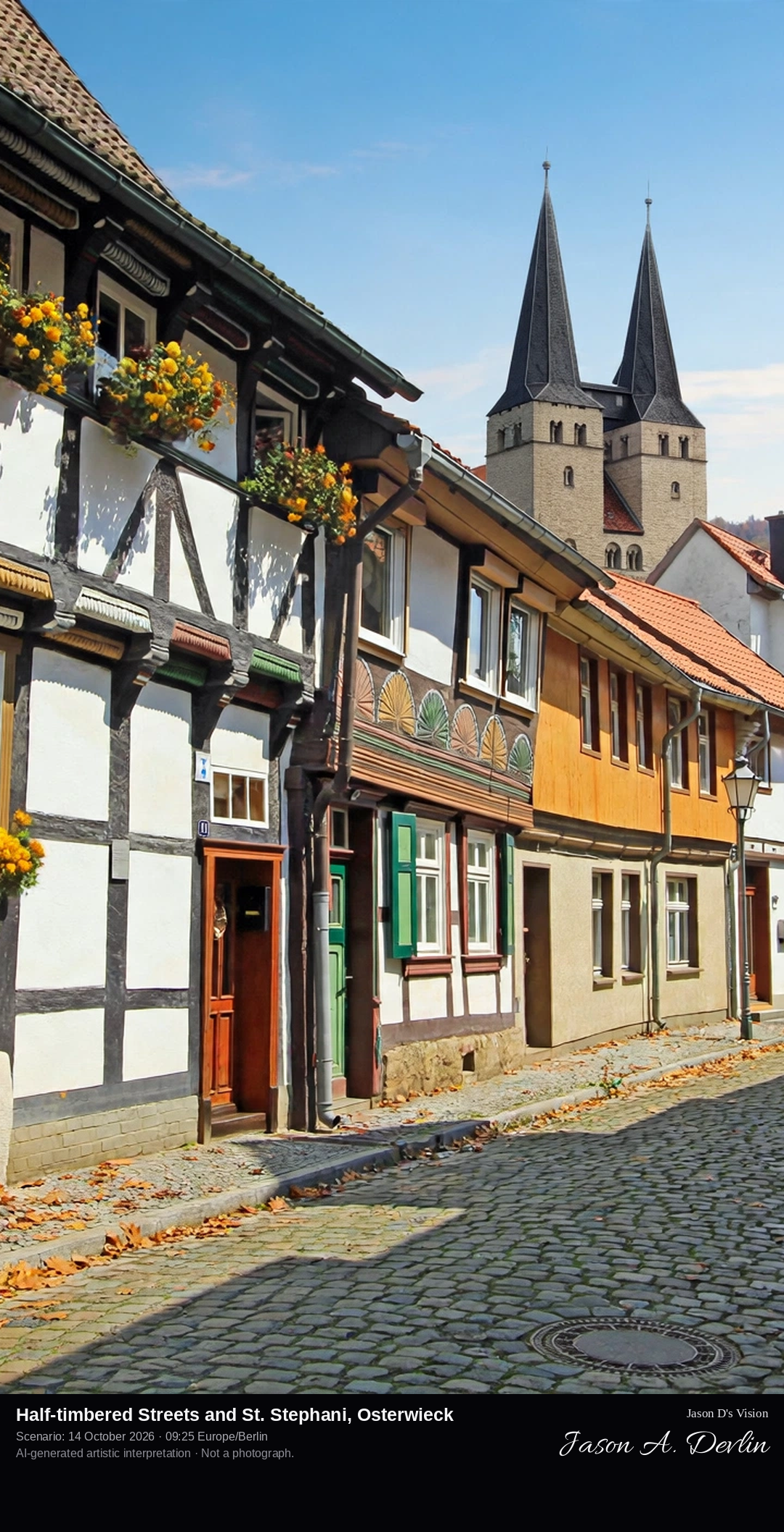
Half-timbered Streets and St. Stephani, Osterwieck
Scenario: 14 October 2026 · 09:25 Europe/Berlin
Carved timber houses along a cobbled street below the twin spires · AI-generated artistic interpretation
Osterwieck in the Harz foreland preserves street after street of carved half-timbered houses, some 400 listed buildings ranging from Gothic to Renaissance forms. The dense old town gathers around its market and the church of St. Stephani, whose twin spires rise above the rooftops.
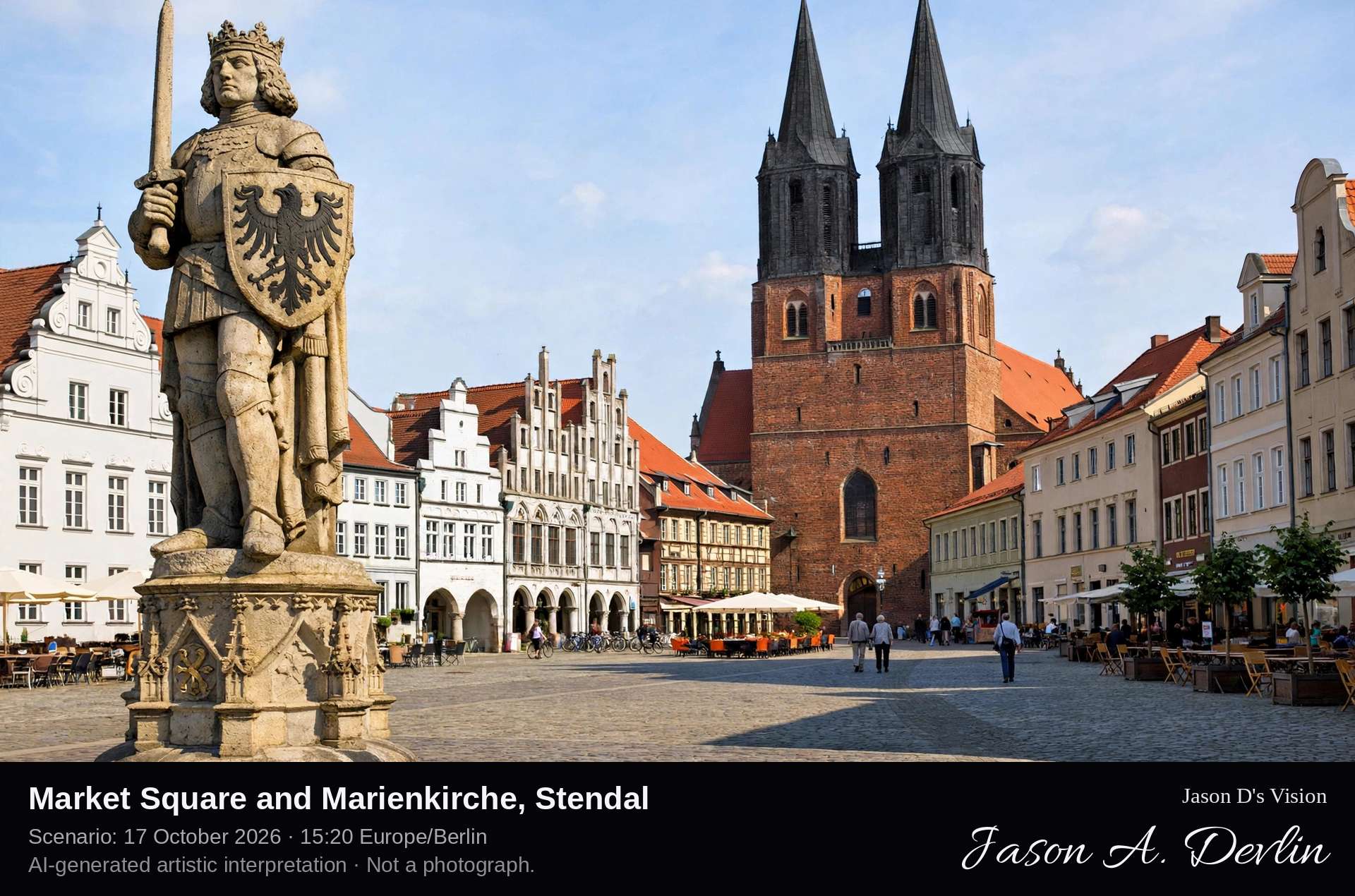
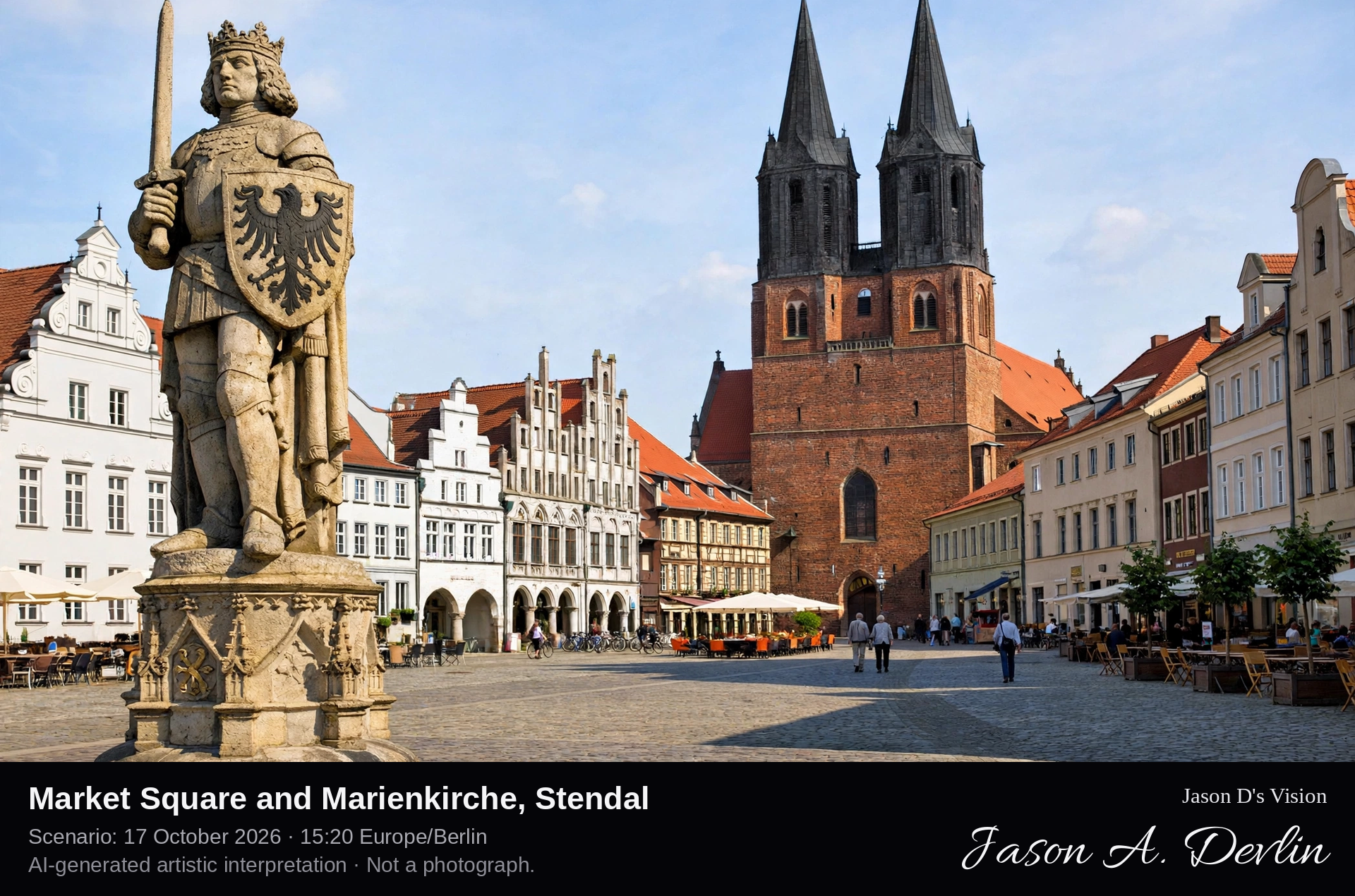
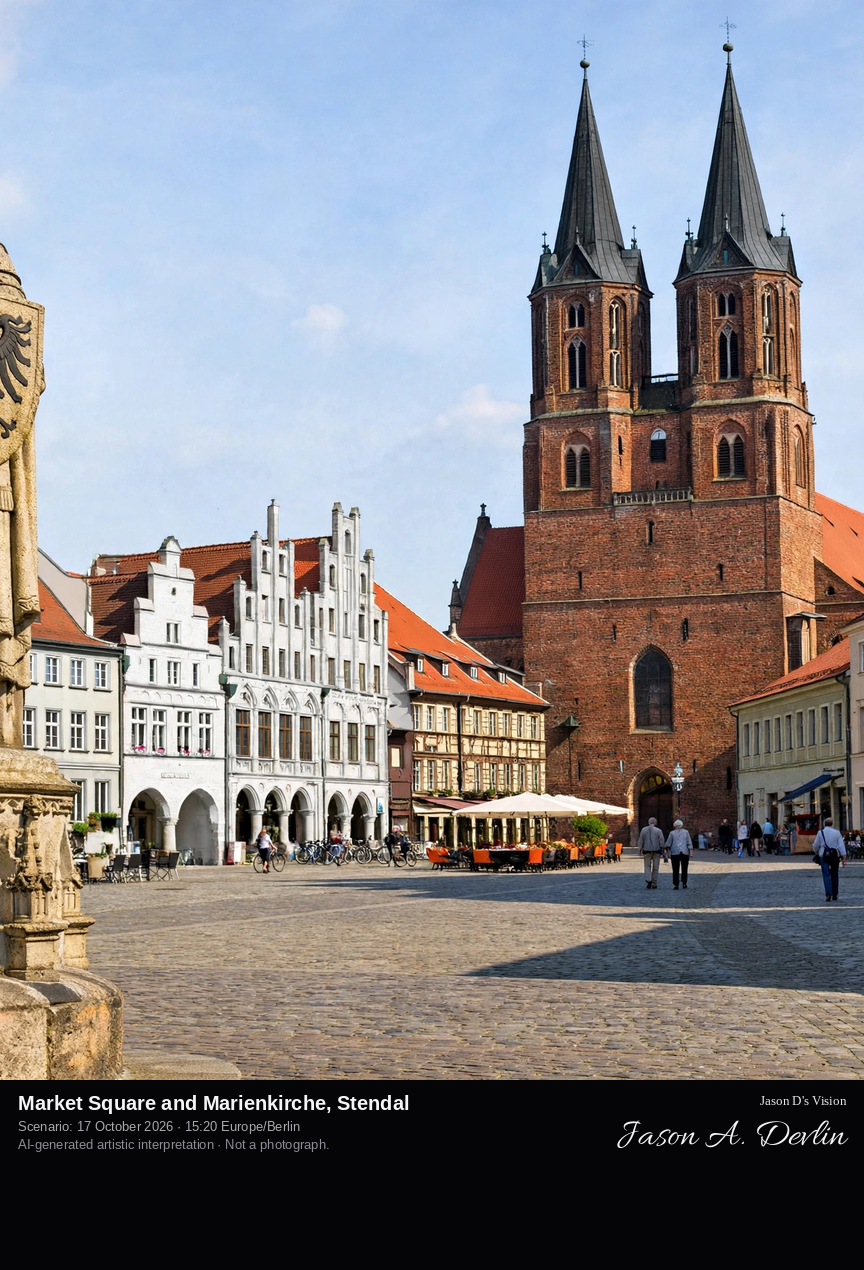
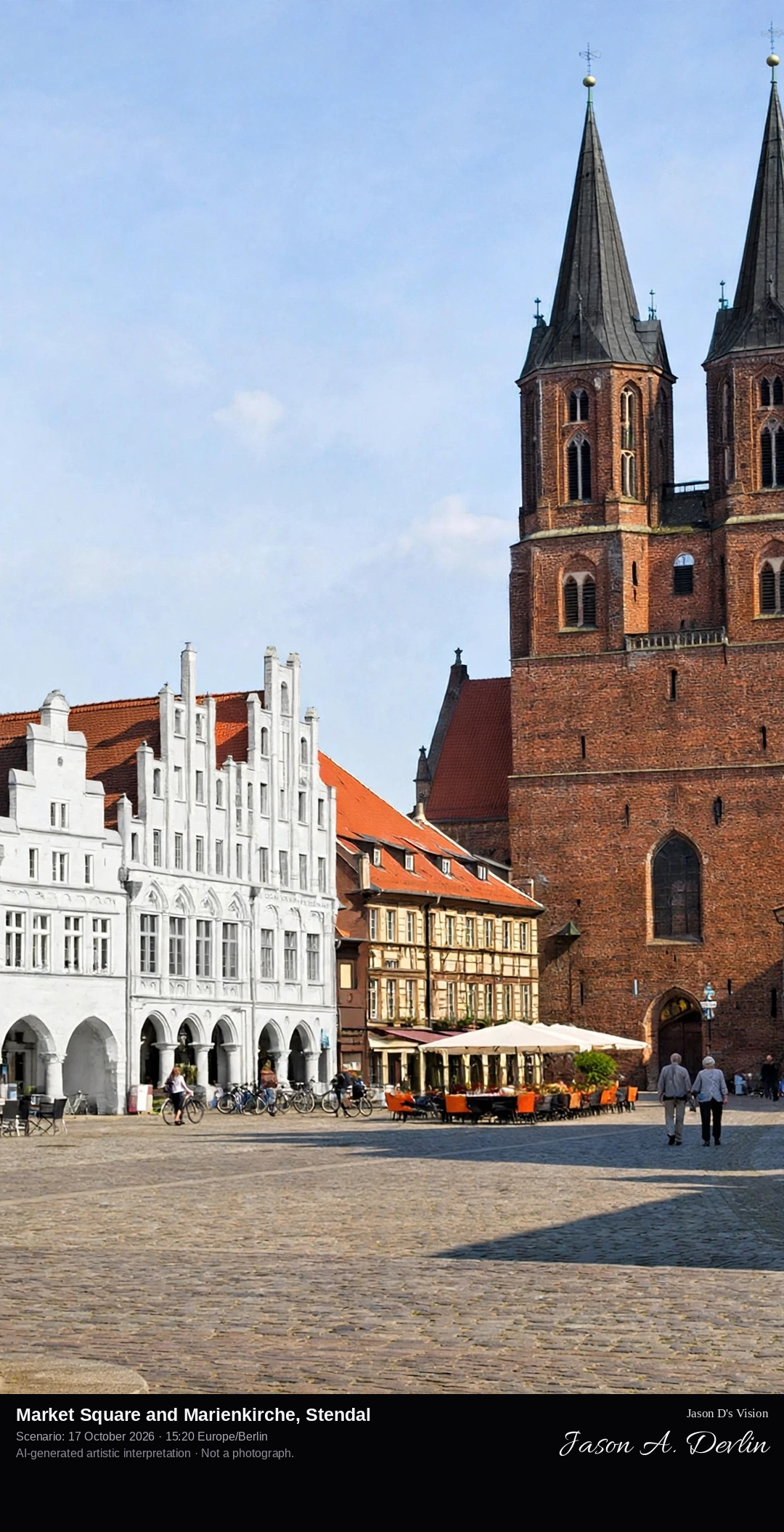
The Hanseatic market square with the Roland and the twin church towers · AI-generated artistic interpretation
Stendal is the great Hanseatic town of the Altmark, its market square holding a Roland statue and town hall below the vast brick towers of St Marien. Rich on cloth and trade in the Middle Ages, it still keeps its cathedral, its gates and streets of gabled burgher houses in red Altmark brick.
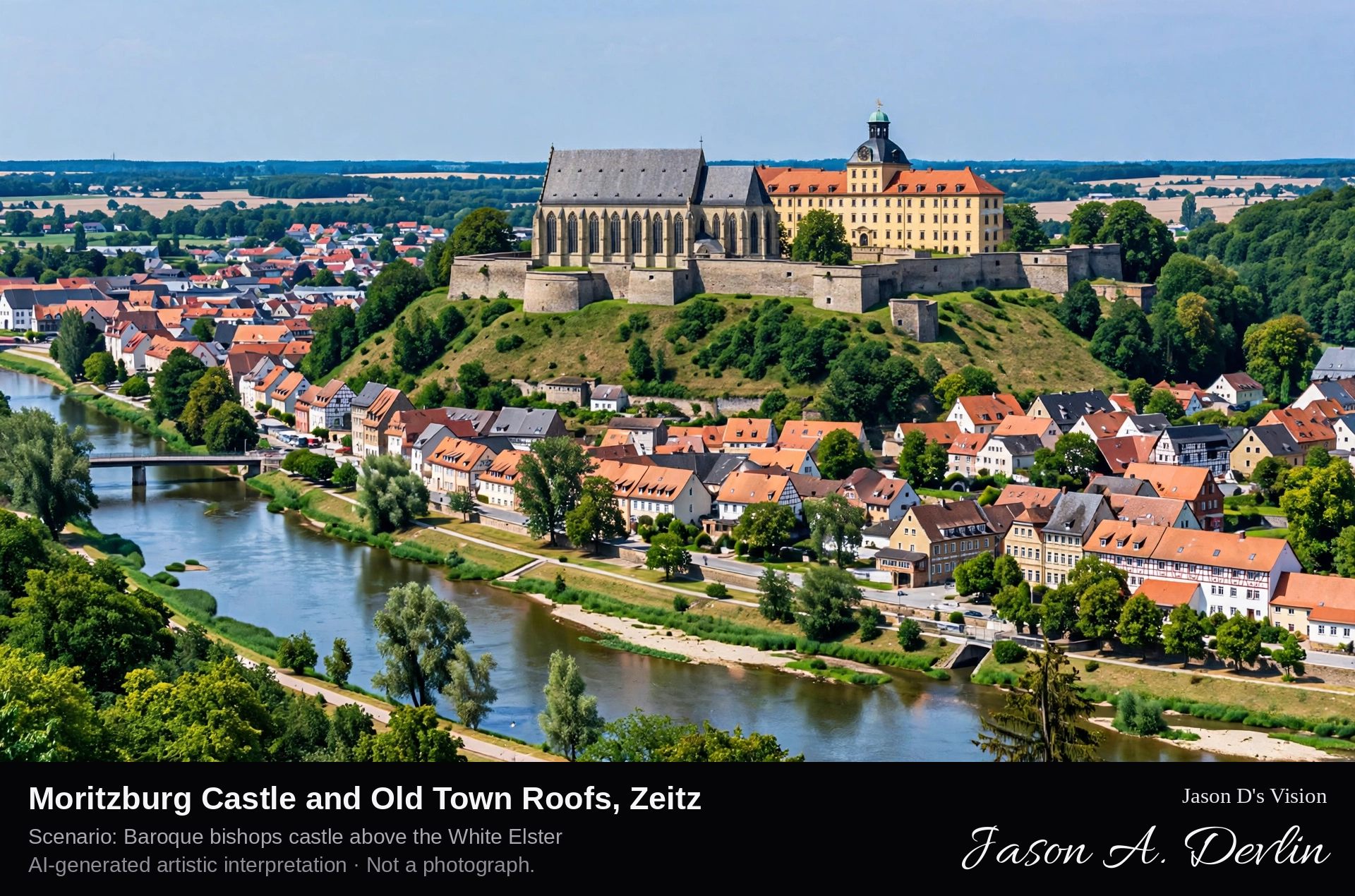
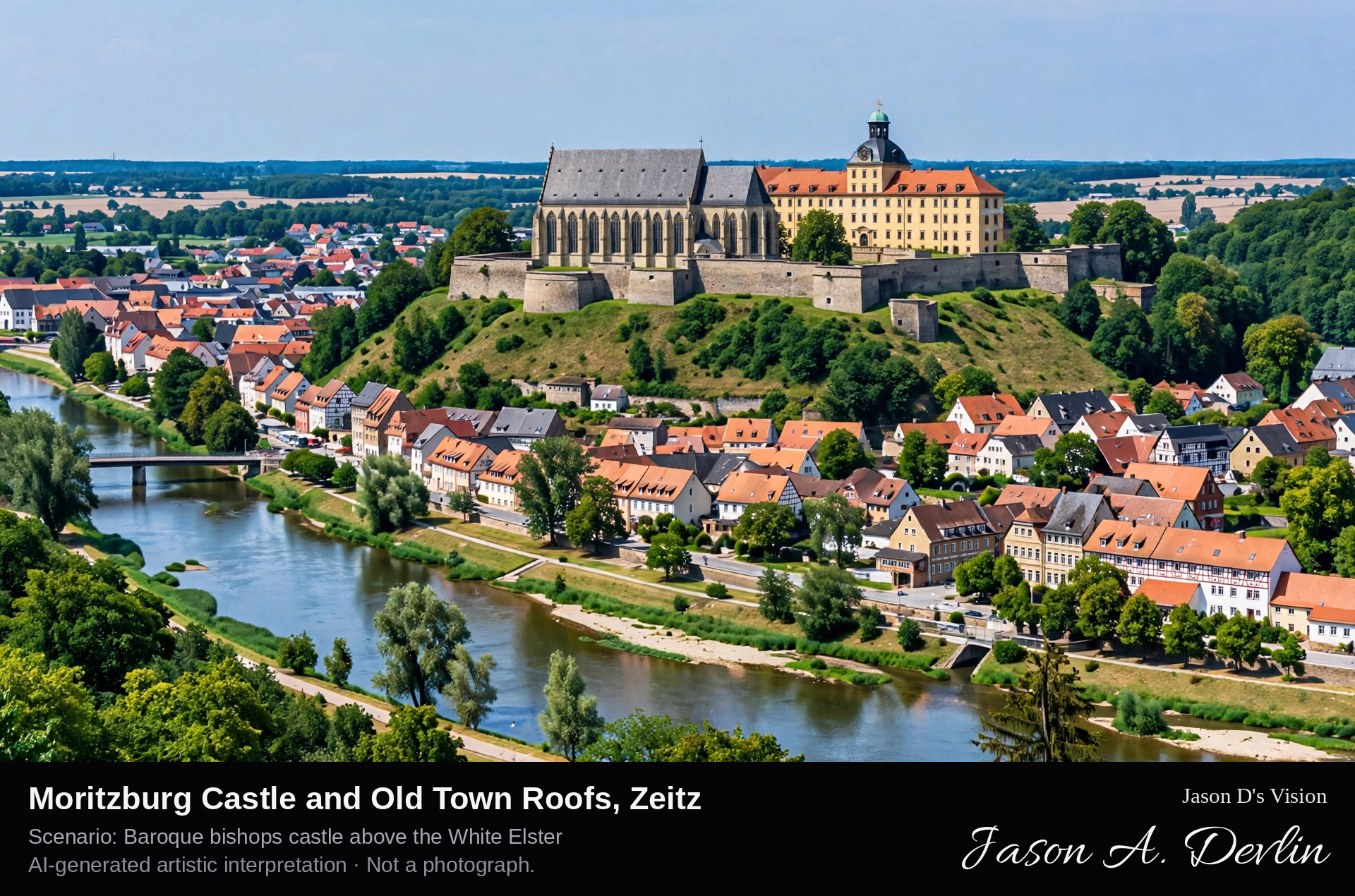
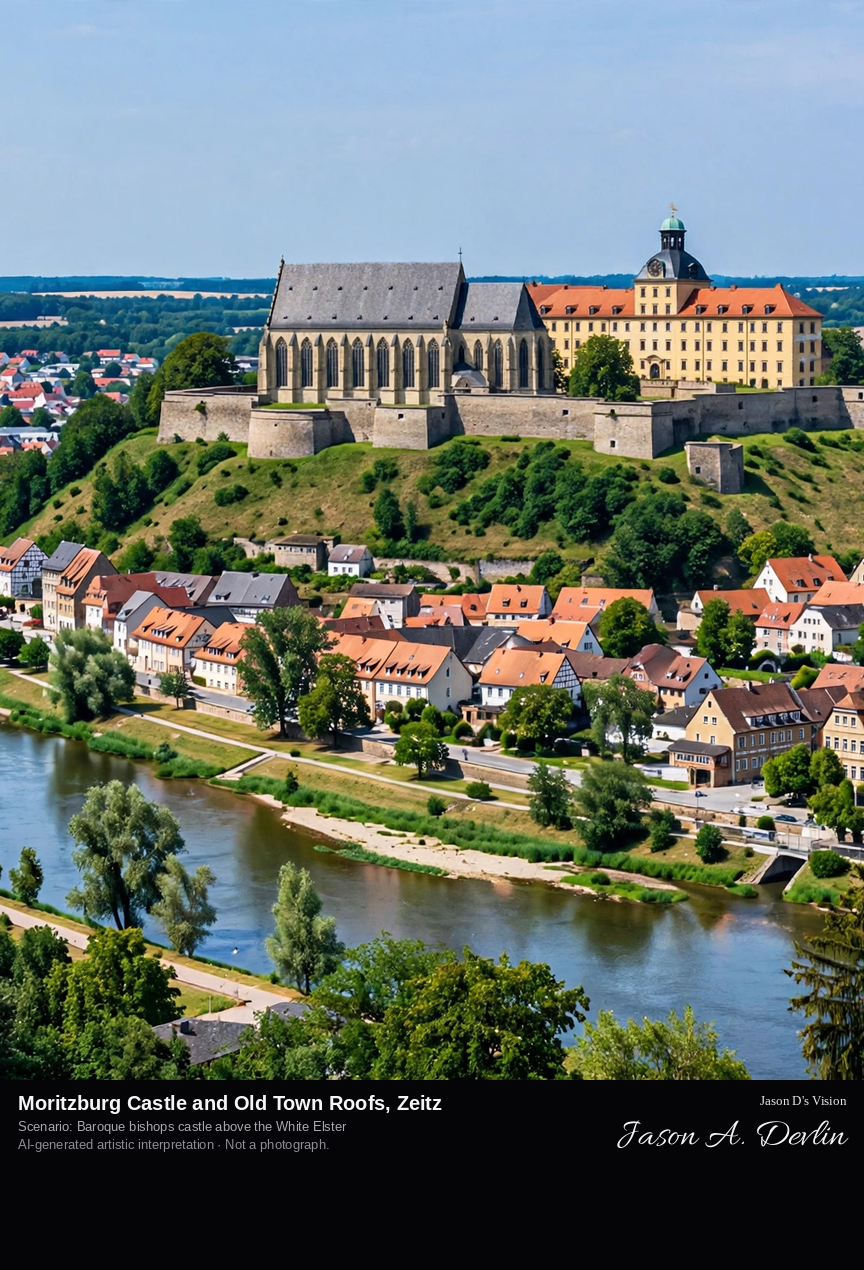
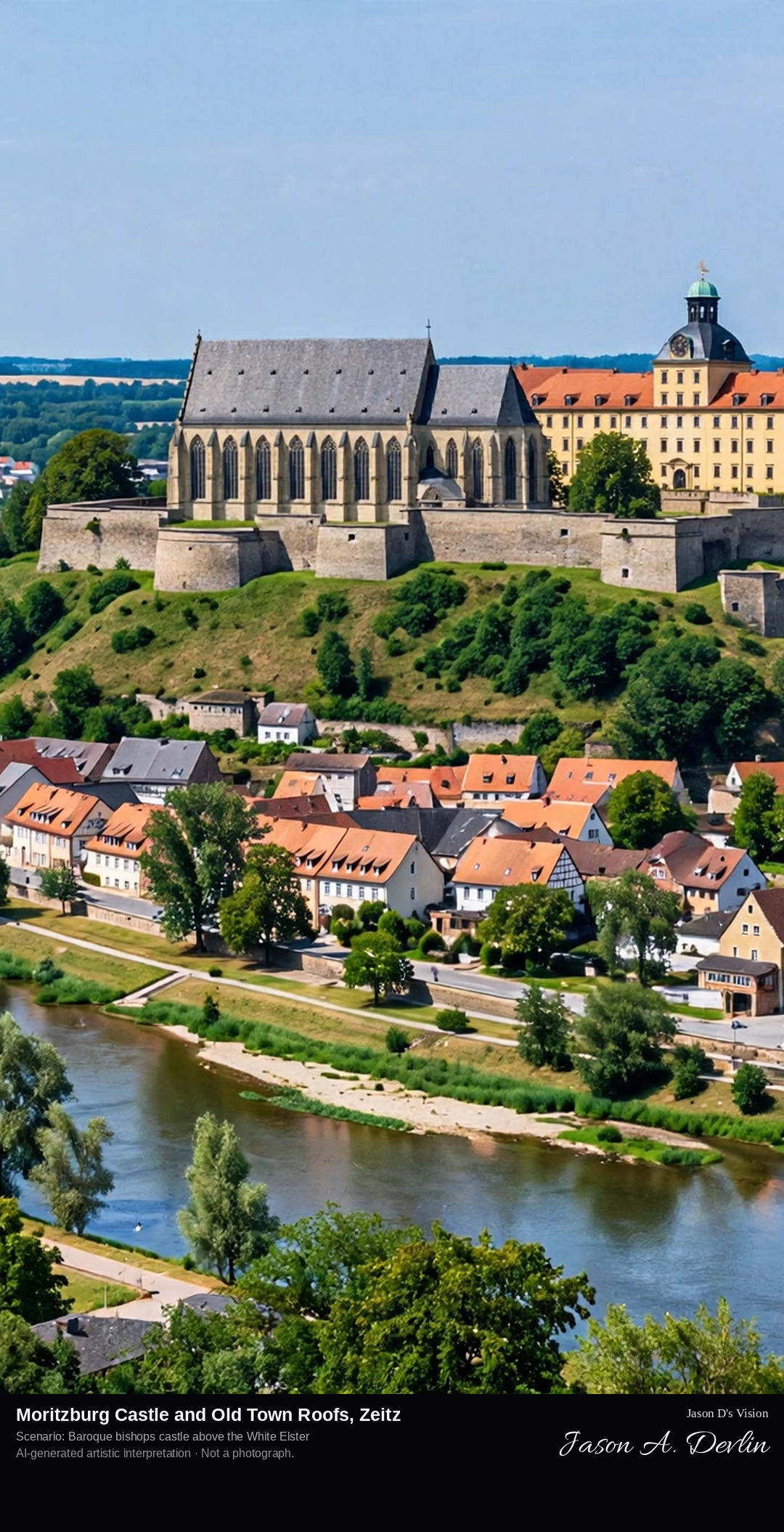
Scenario: Baroque bishops castle above the White Elster
The Baroque Moritzburg castle with its cathedral stands walled above the old town rooftops, the White Elster curving below.
Moritzburg castle stands walled above the rooftops of Zeitz, its Baroque palace front and the cathedral of Saints Peter and Paul sharing one fortified hill above the White Elster.
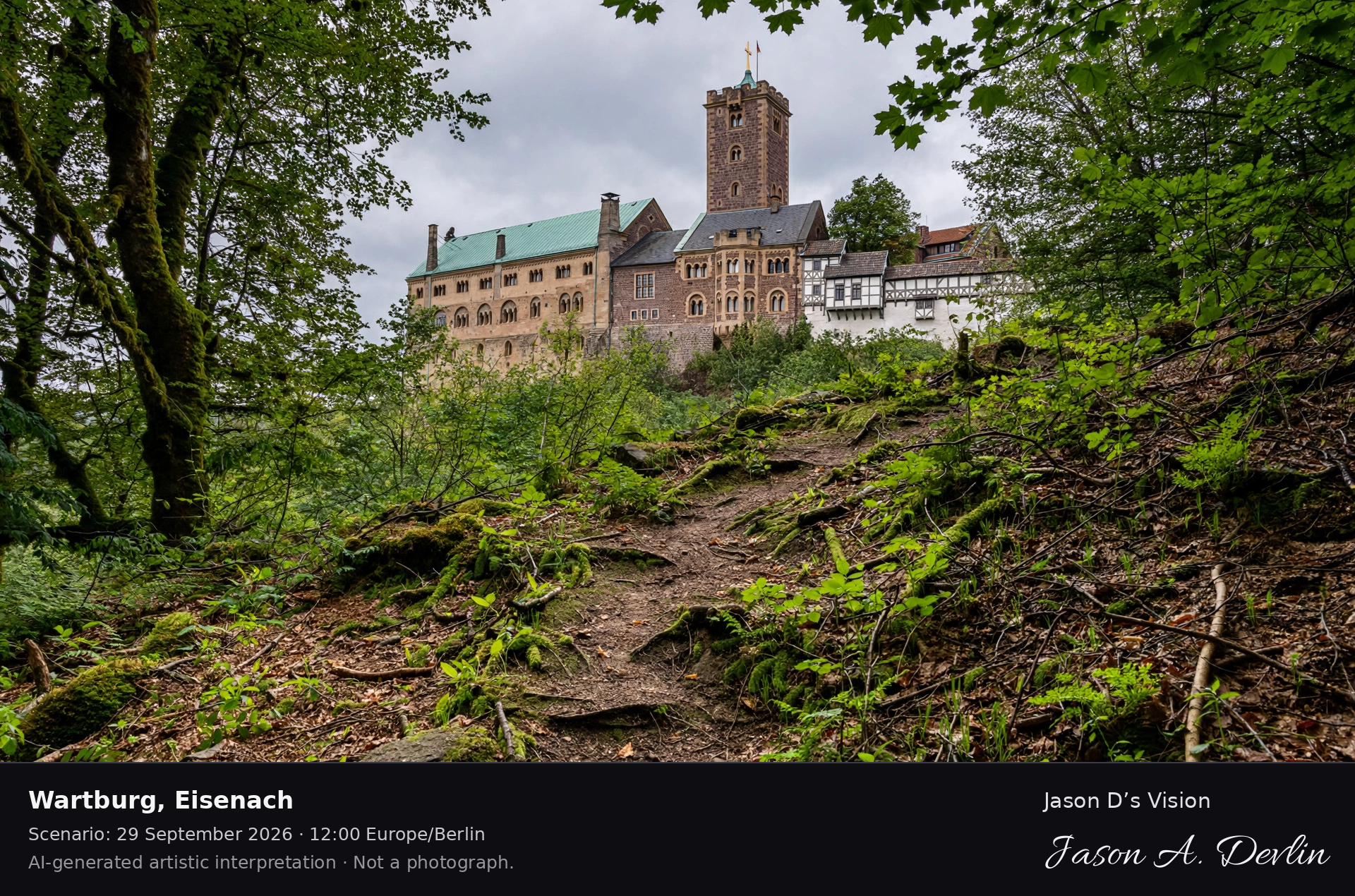
Castle on wooded hill · AI-generated artistic interpretation
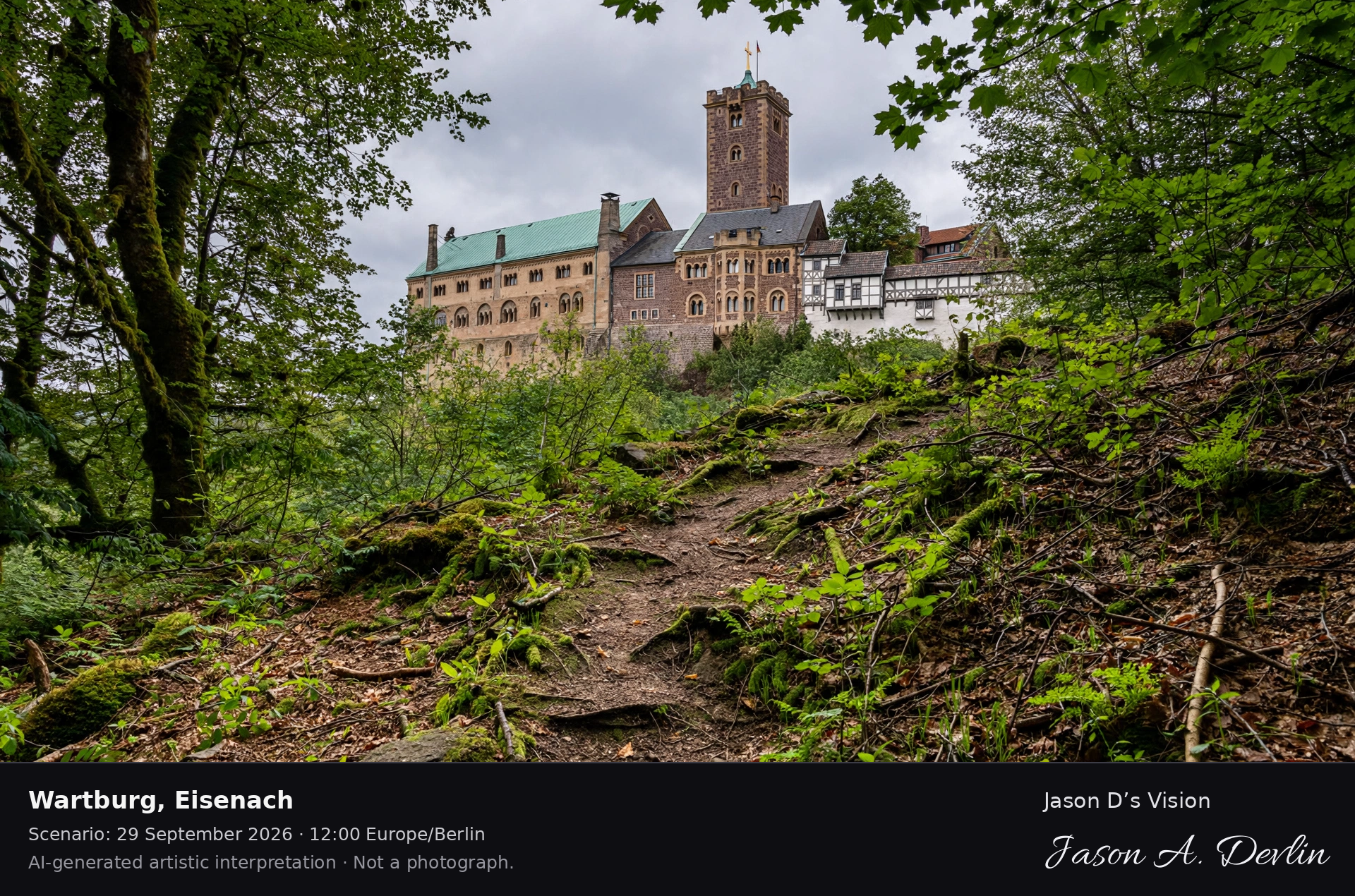
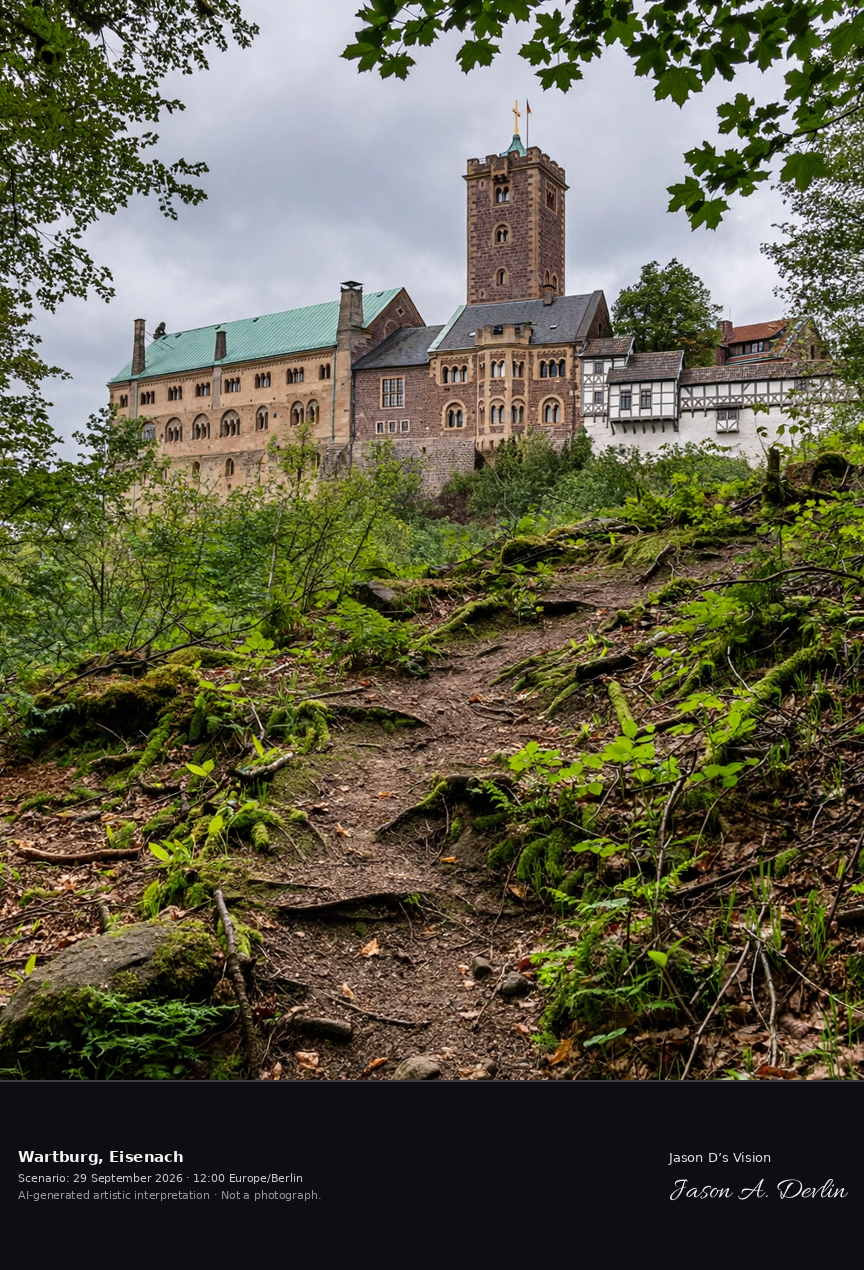
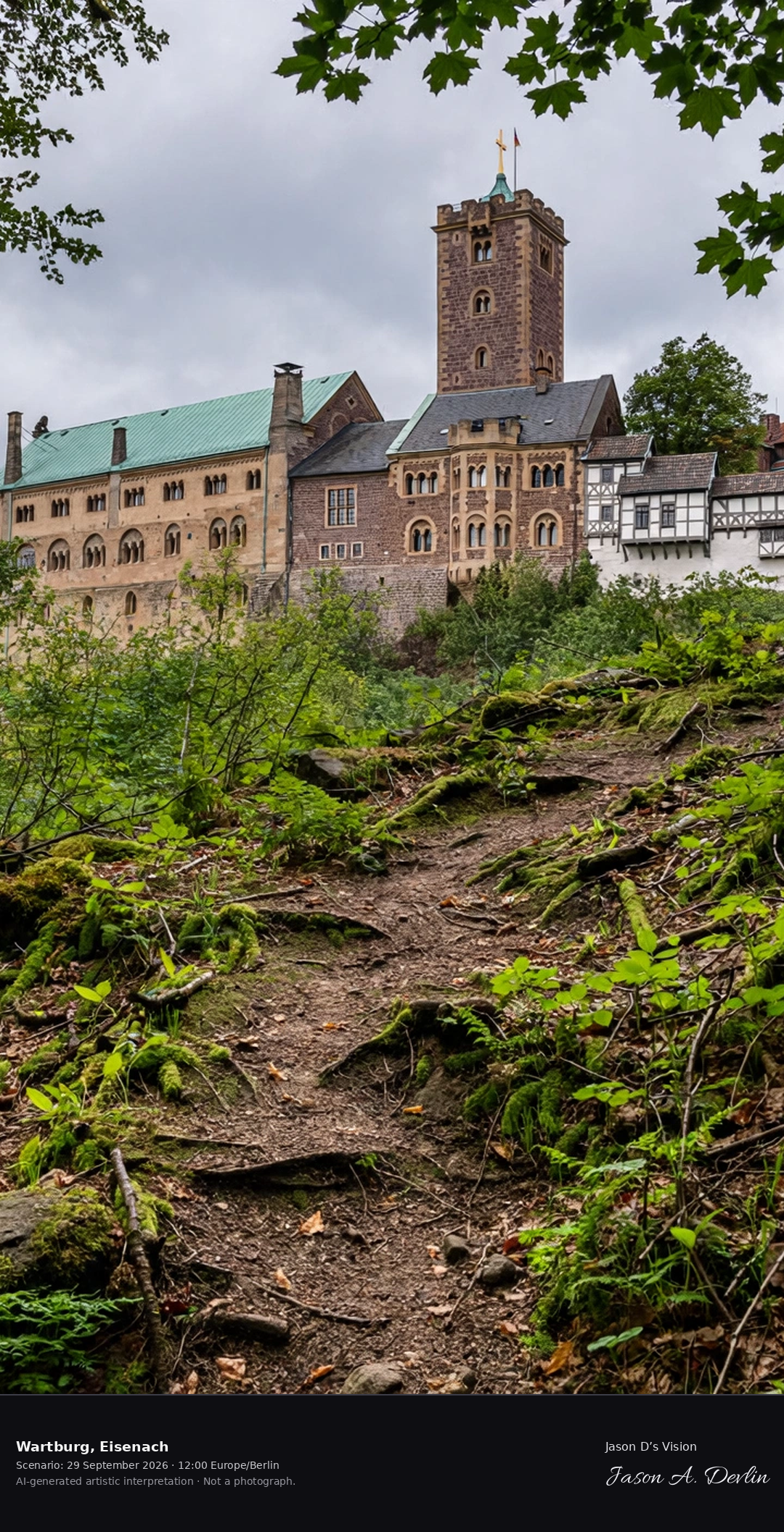
From a forest path on the hill at night, the camera frames the Wartburg fortress — the tall stone keep rises center-right, the long Romanesque palas stretches left with lit windows, and a half-timbered wing sits at right, all above dark forest slopes with distant town lights glimmering to the left. The 01:00 overcast night holds the castle in soft moonless gloom. Notable: the castle's hilltop silhouette over the Thuringian forest reads unmistakably as the Wartburg, with the keep-and-palas configuration of the medieval fortress.
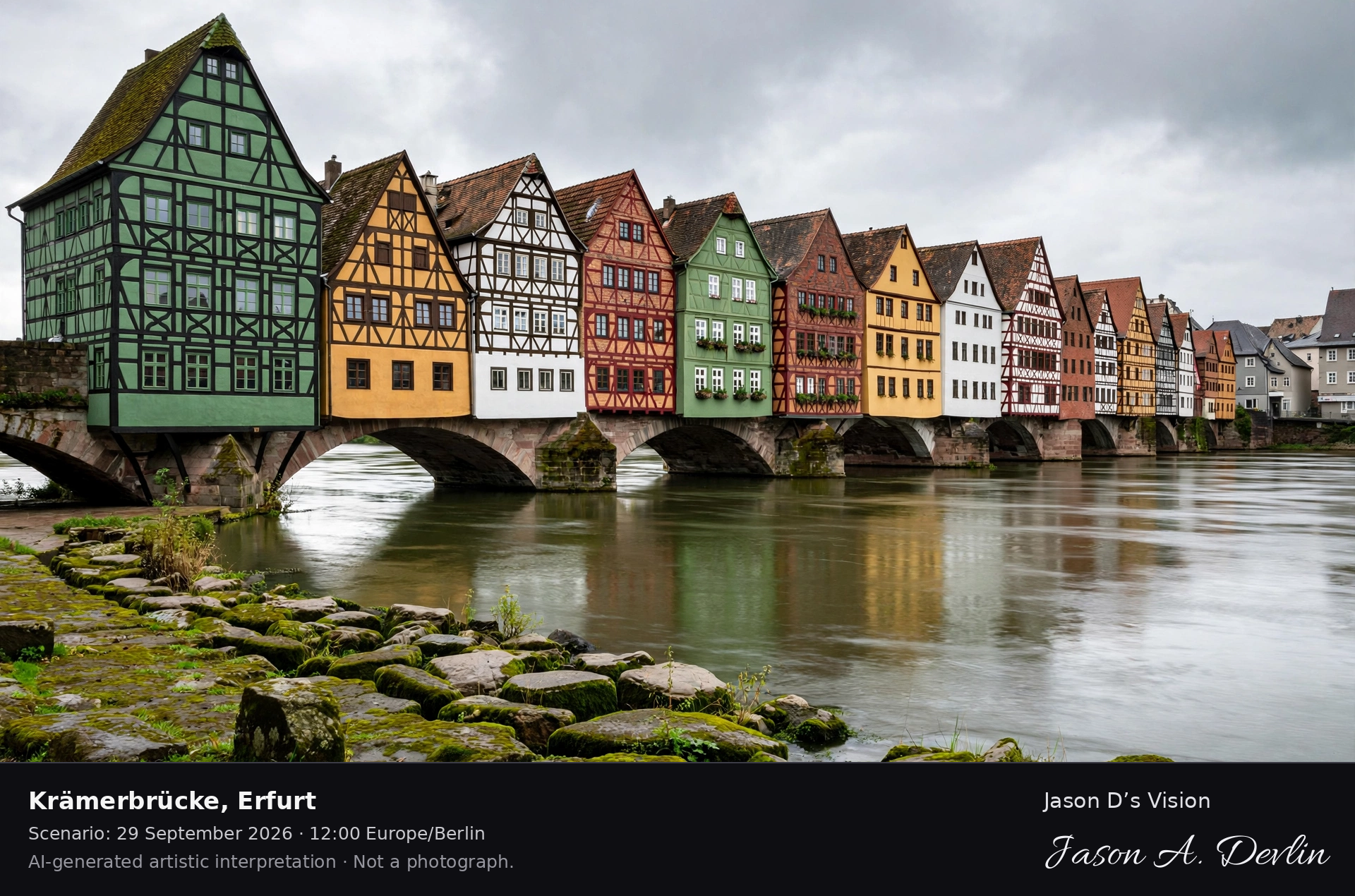
Inhabited bridge from riverbank · AI-generated artistic interpretation
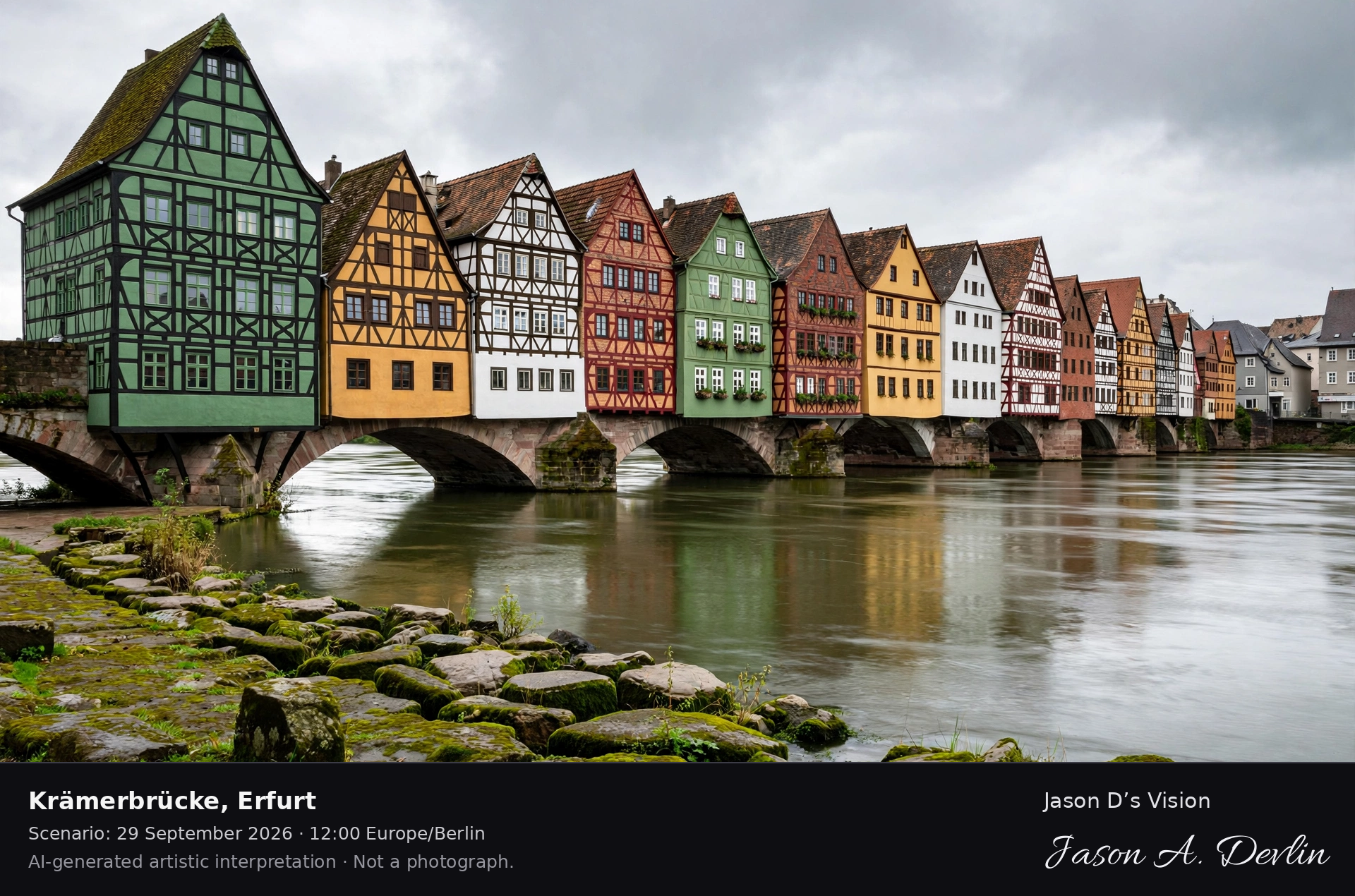
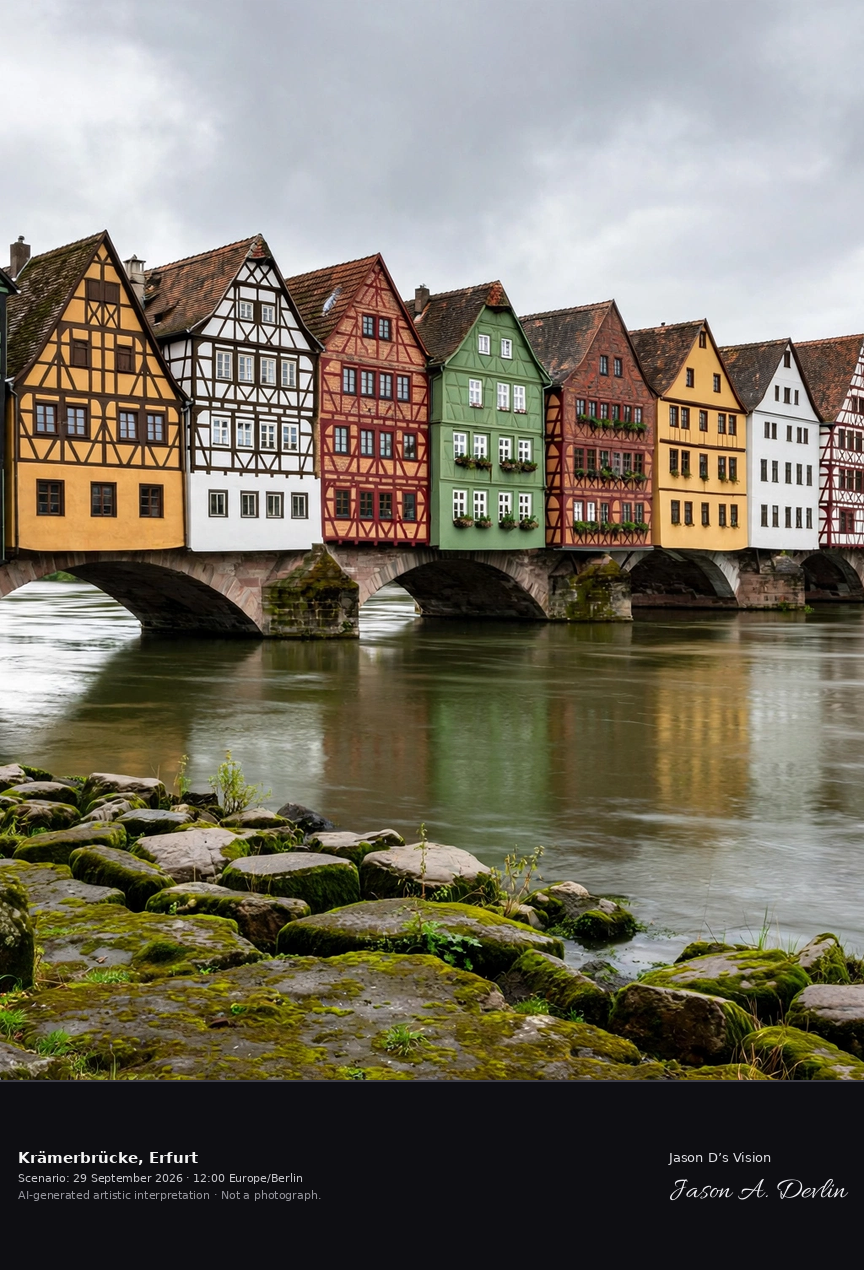
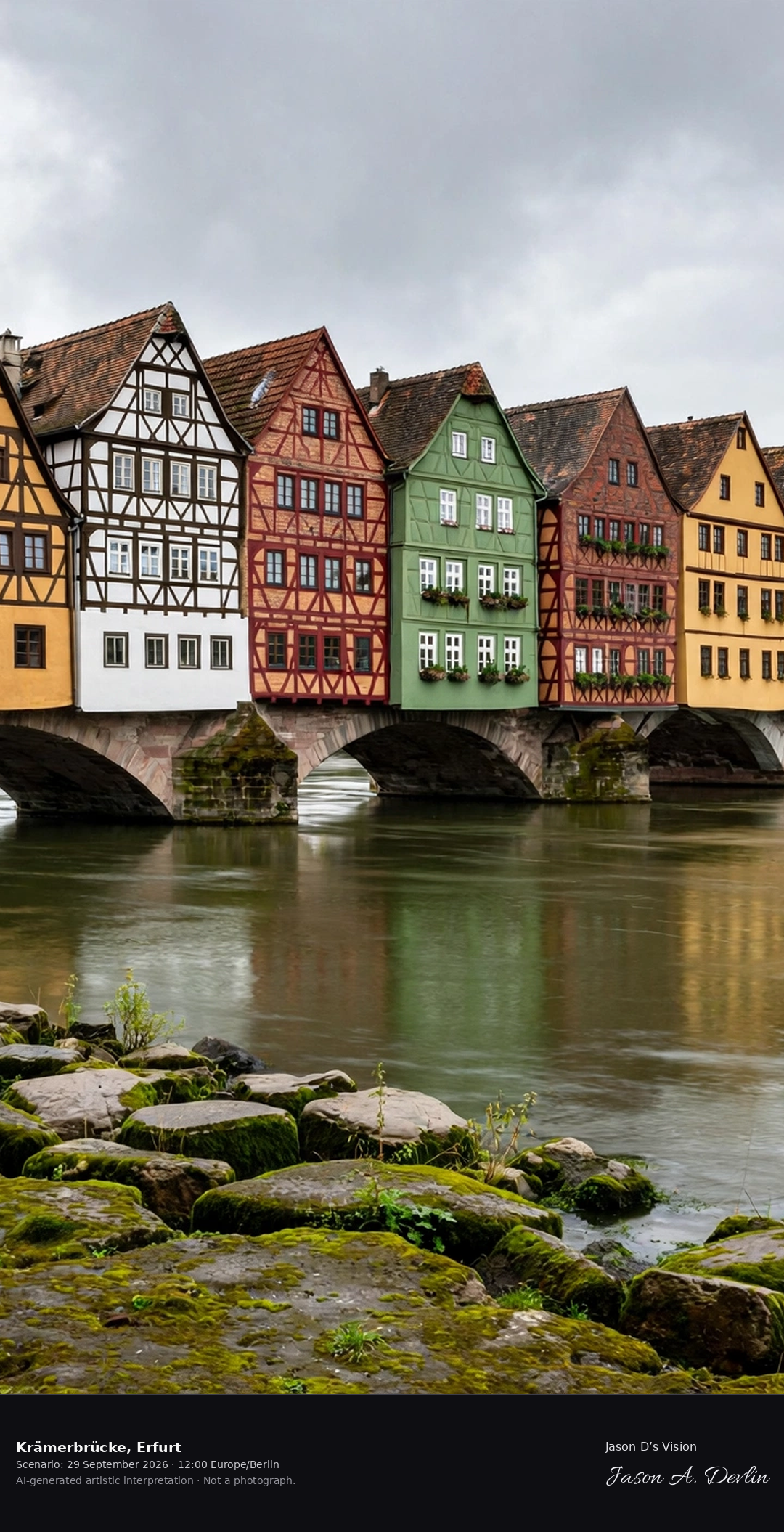
From the dark riverbank below, the camera looks along the Krämerbrücke at night — warm-lit half-timbered houses line both sides of the bridge street across the frame, stone arches below them, and window reflections trembling on the river in the foreground. The 01:00 overcast scenario shows glowing windows against a dark sky, with no invented illumination. Notable: the inhabited bridge reads as a street of houses first and a bridge second — the defining Krämerbrücke characteristic.
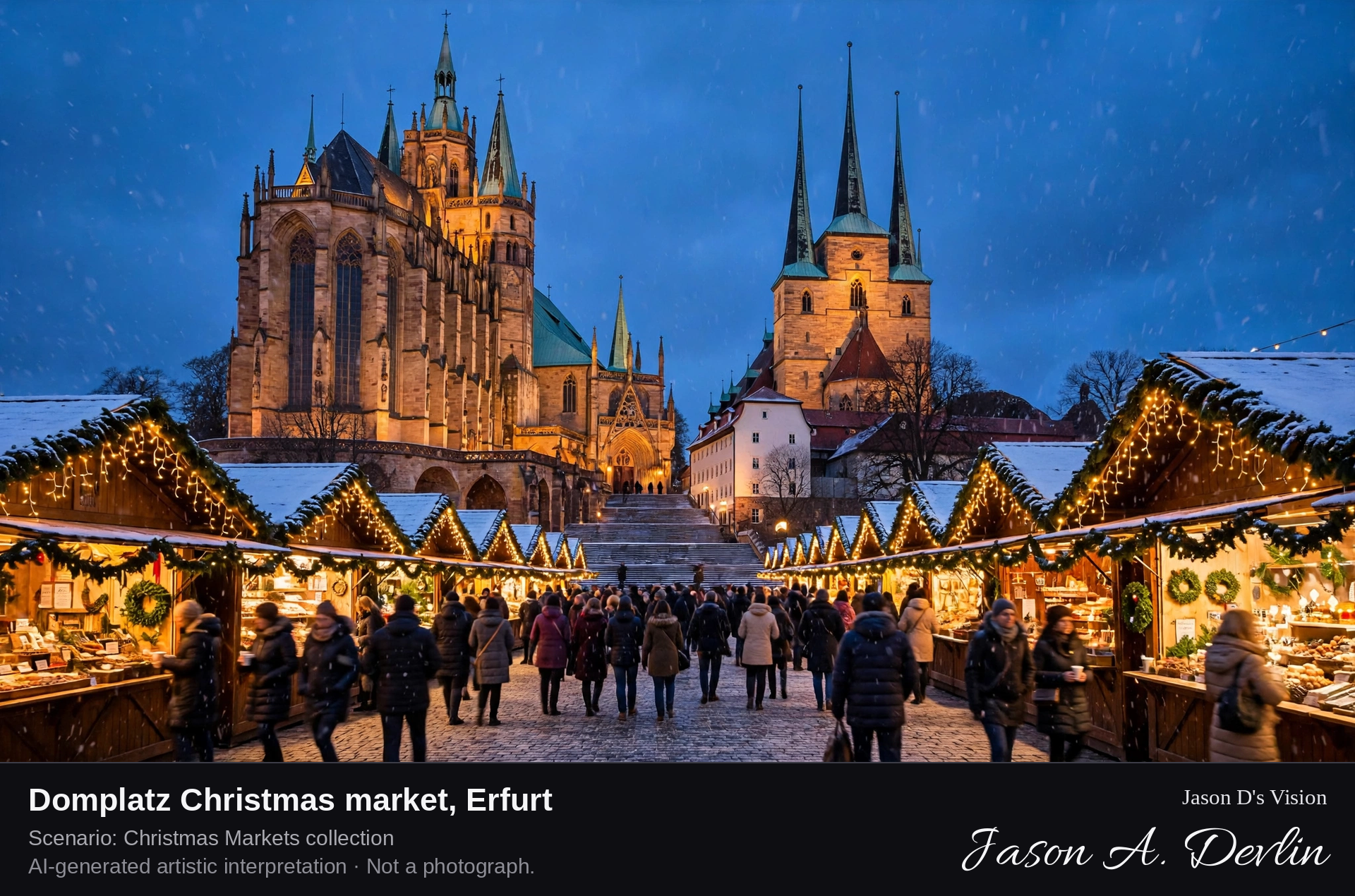
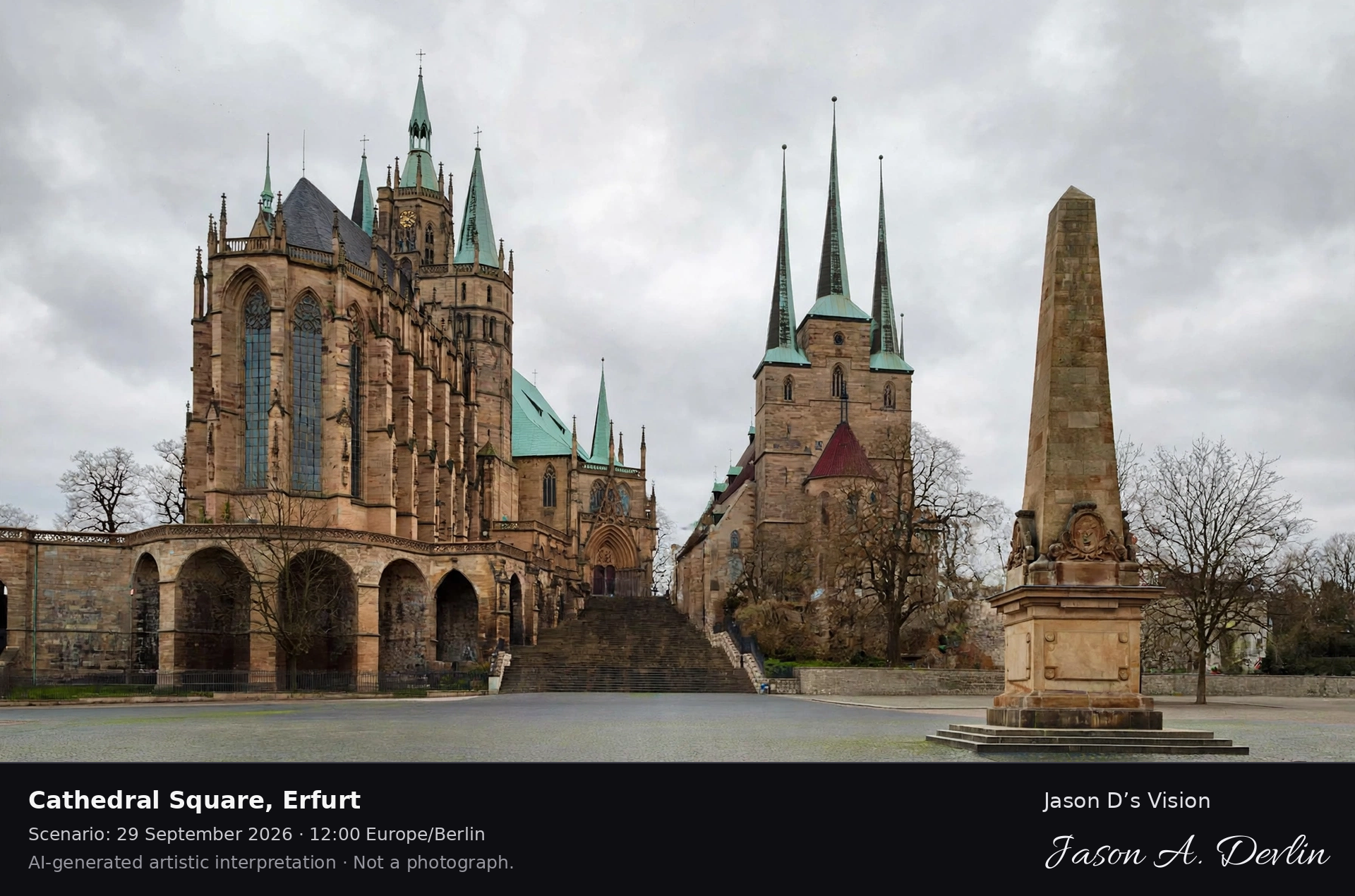
Cathedral and St. Severus · AI-generated artistic interpretation
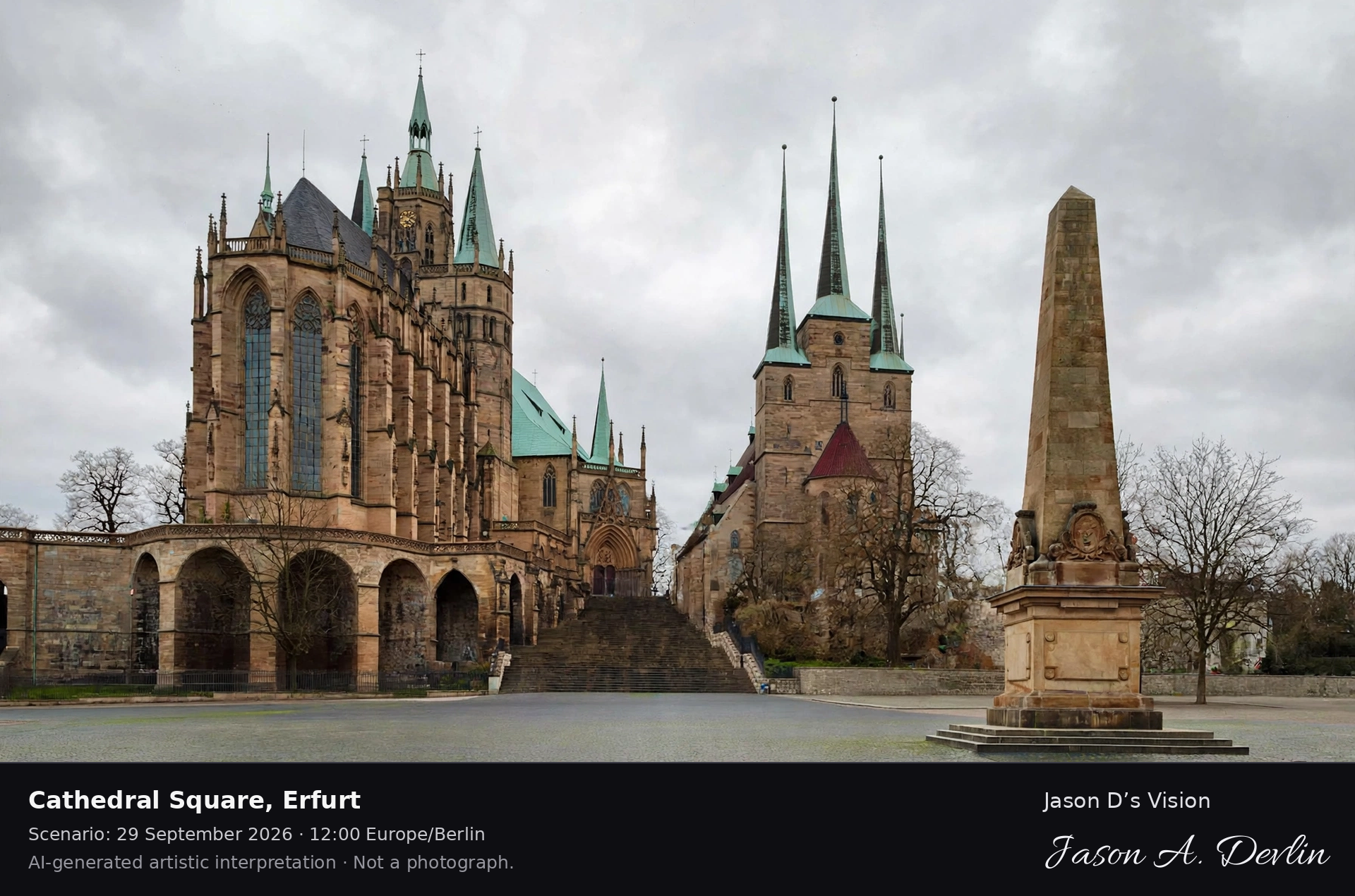
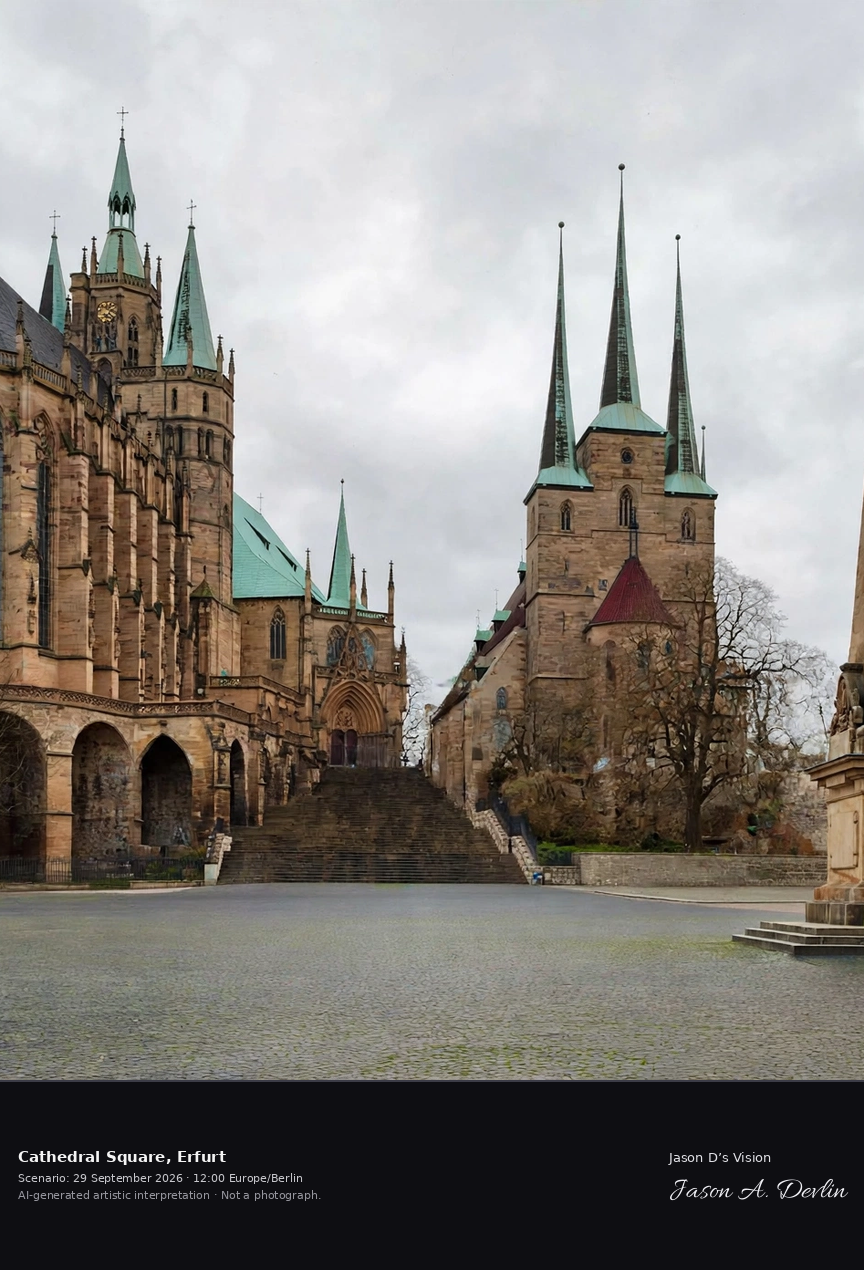
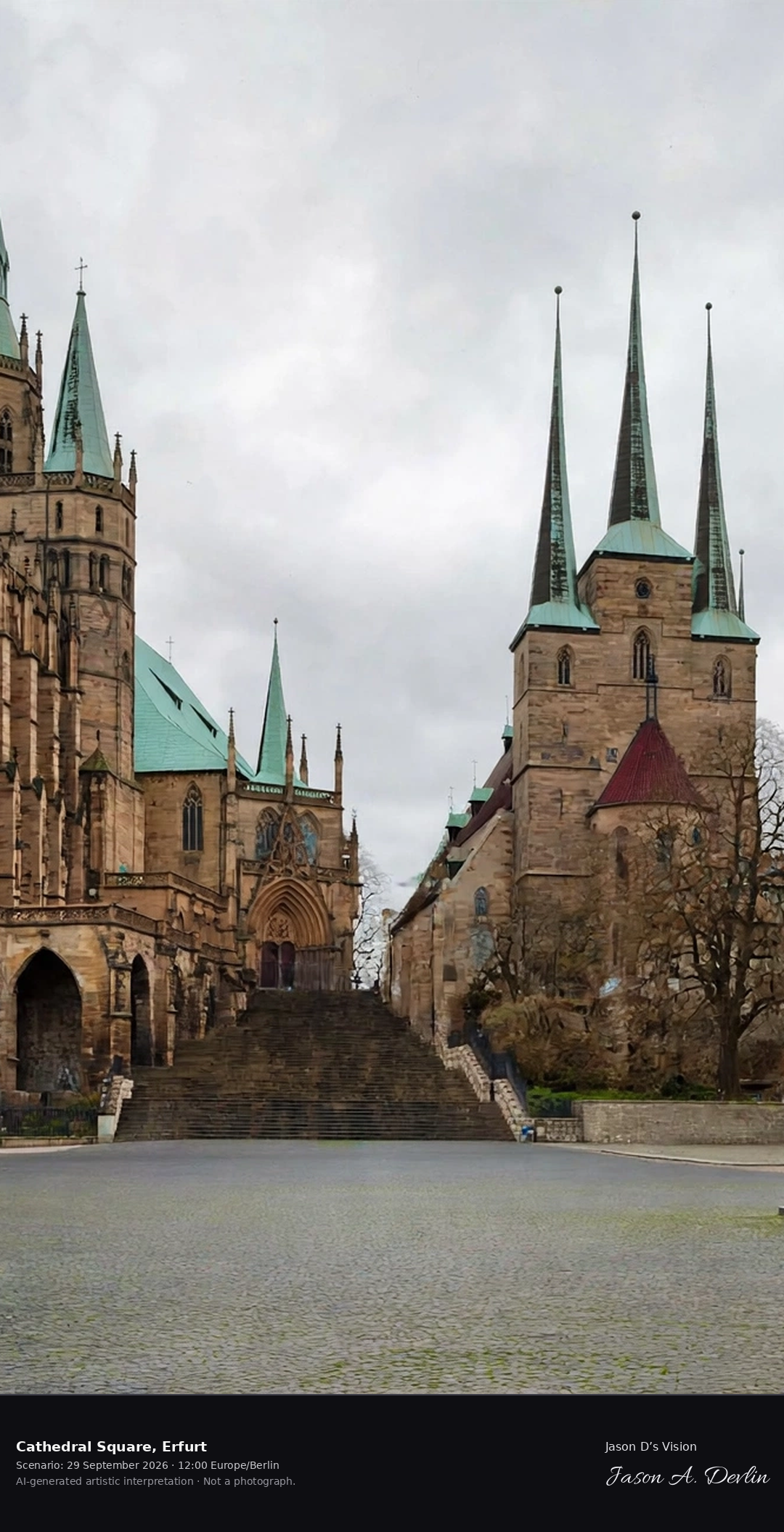
Standing on Domplatz at night, the camera faces the twin Gothic churches on the hill — Erfurt Cathedral's tall spires and green copper roofs on the left, the three-spired St. Severus Church on the right, with the broad staircase rising between them under dark overcast clouds. The 01:00 scenario leaves the stone facades softly visible against the night sky, lit only plausibly. Notable: the famous twin-church ensemble stands side by side above the square, one of Germany's finest Gothic pairings.
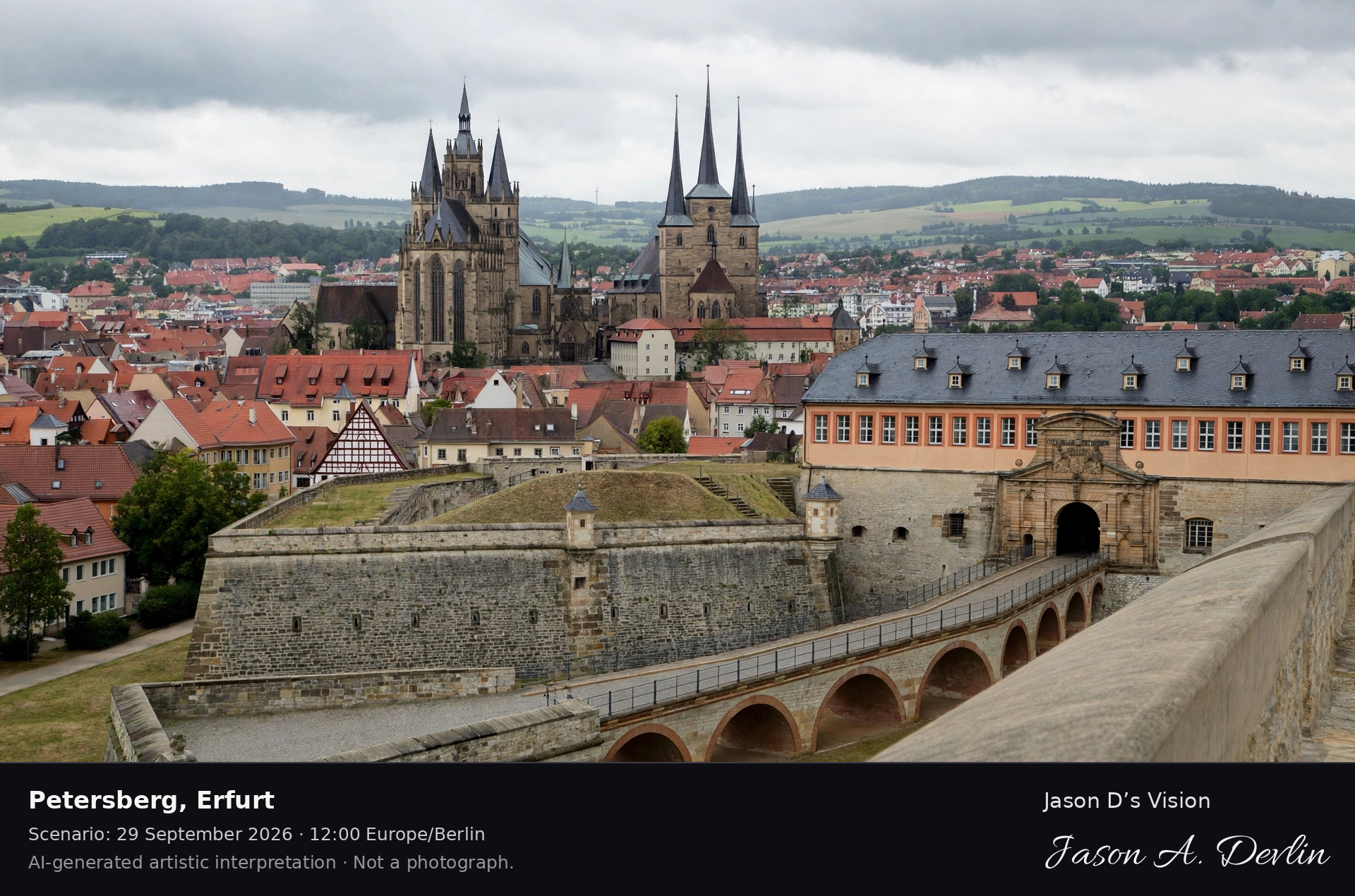
Citadel and city outlook · AI-generated artistic interpretation
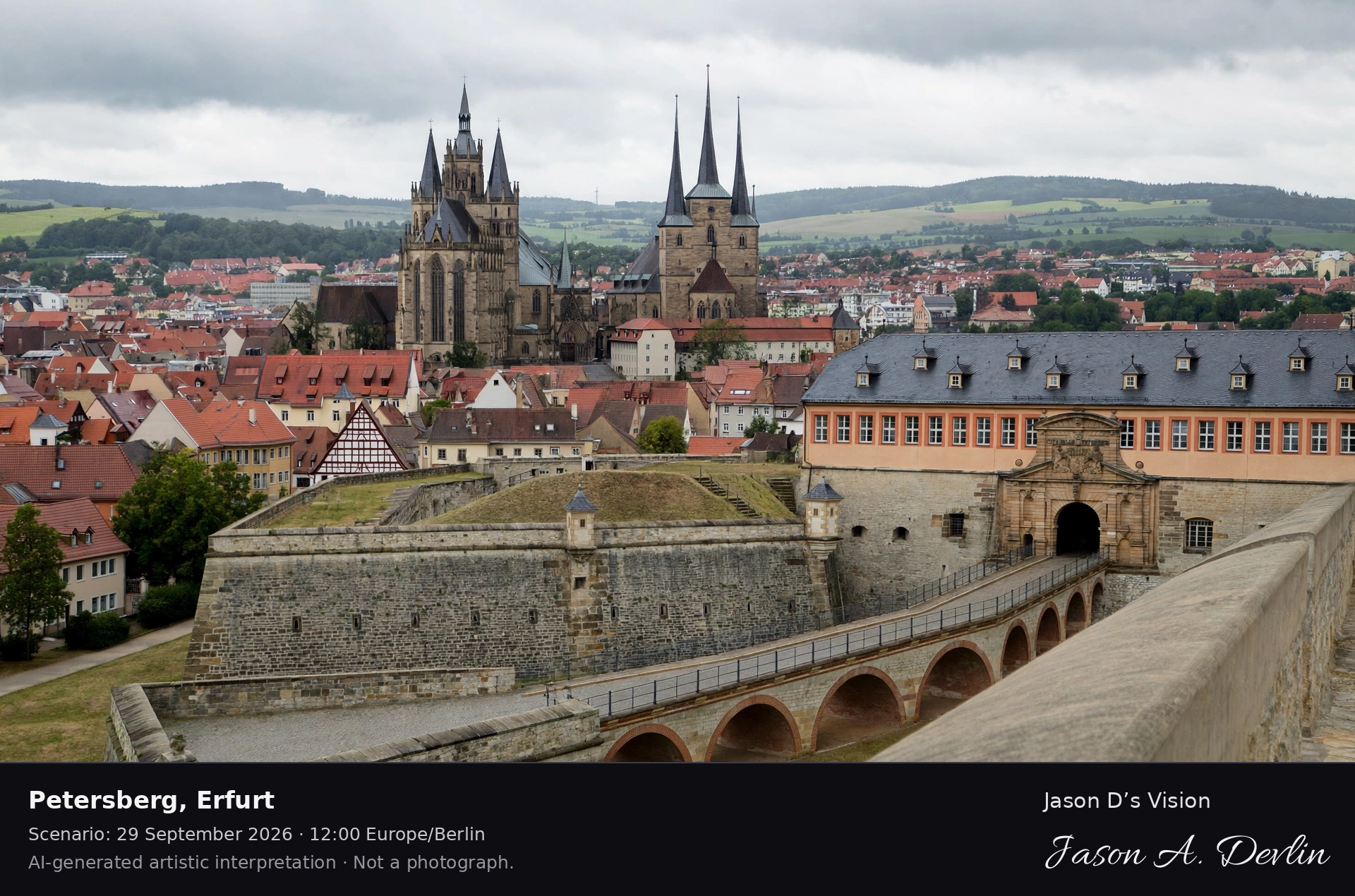
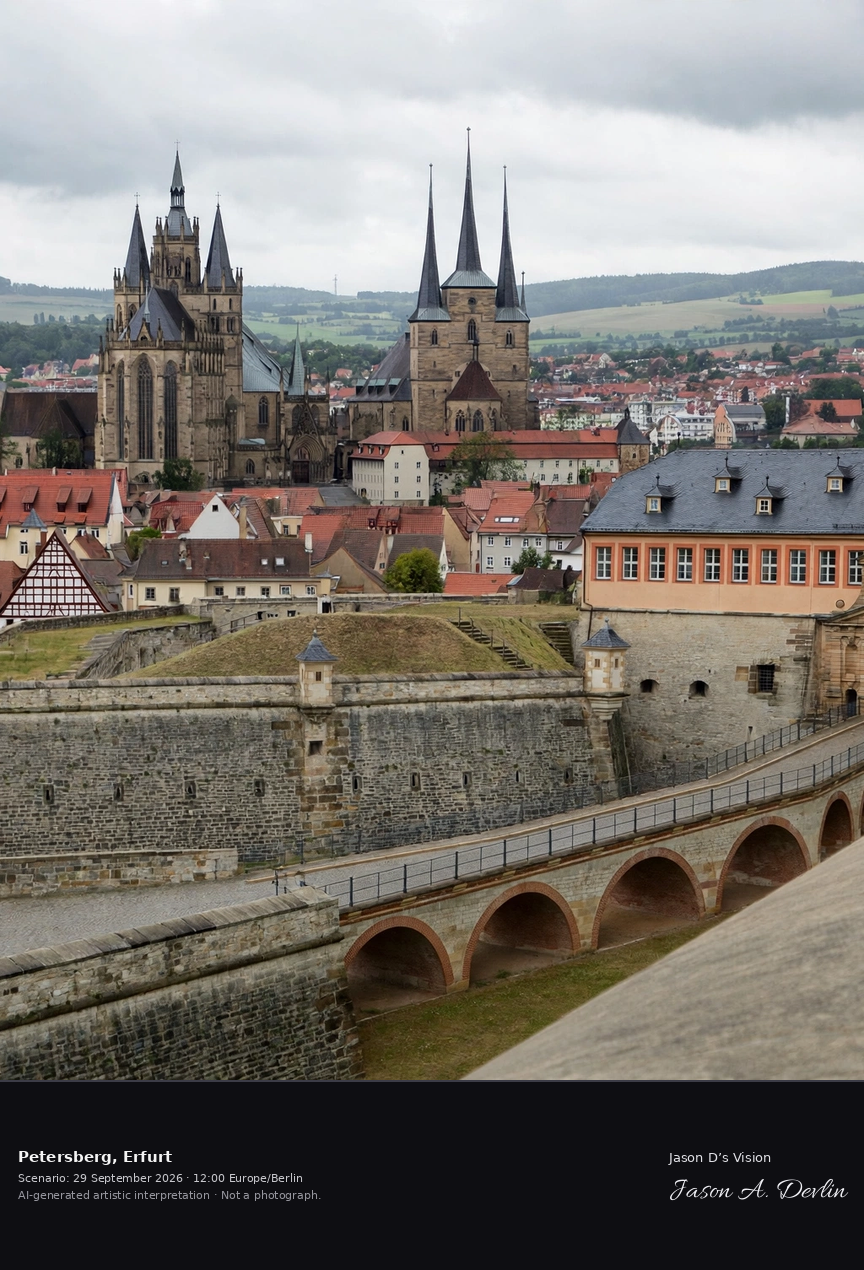
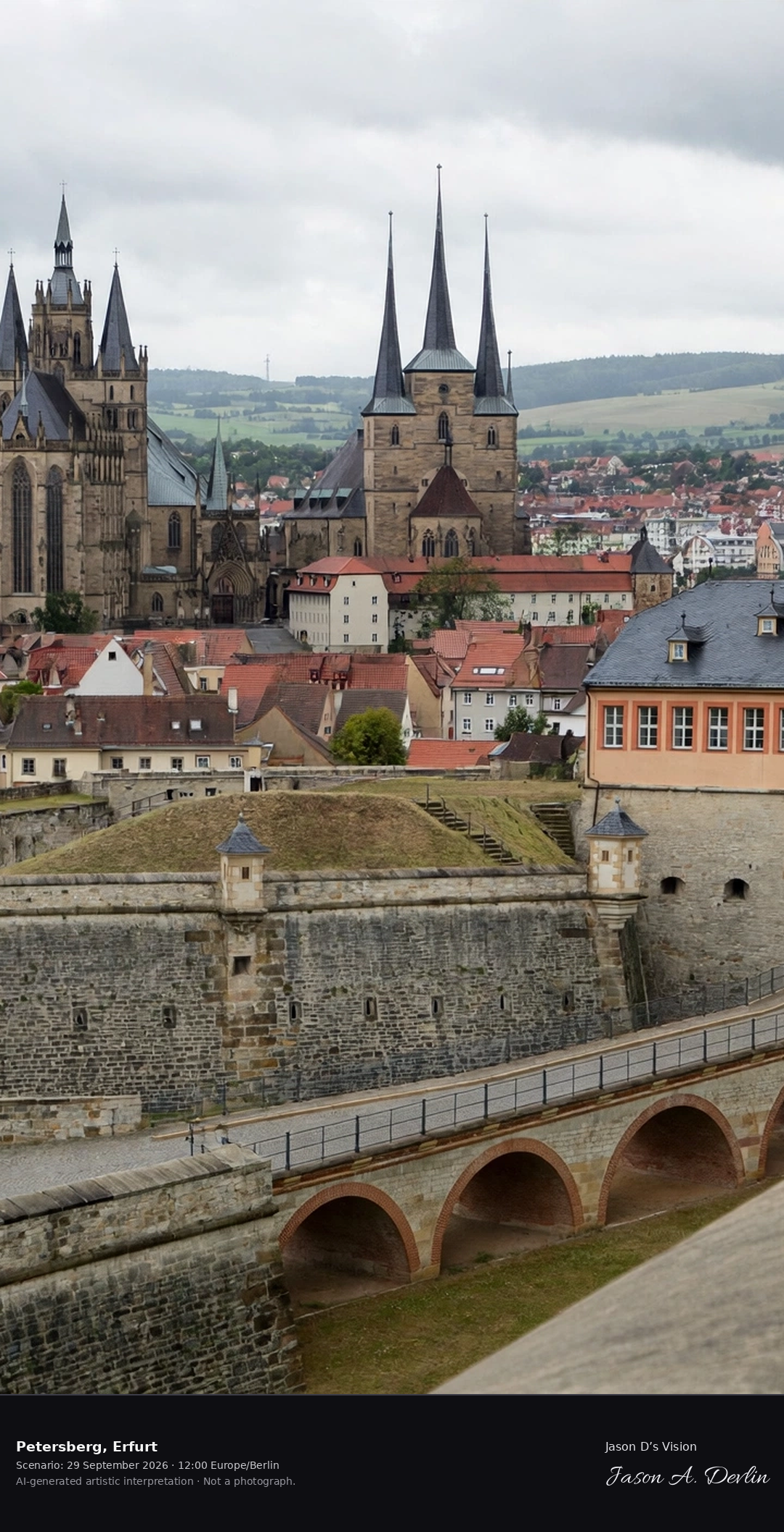
From the grass-topped stone ramparts of the Petersberg fortress at night, the camera looks out over Erfurt's old town under a heavy overcast sky — wet bastion walls and parapets fill the left foreground, the glowing city with its twin church spires stretches through the center distance, and rooftops press along the right. The 01:00 night scene is lit only by the city lights below and a low sky glow; the citadel itself stays dark, illumination honestly artistic. Notable: the angled bastion walls frame the classic citadel outlook over the cathedral quarter.
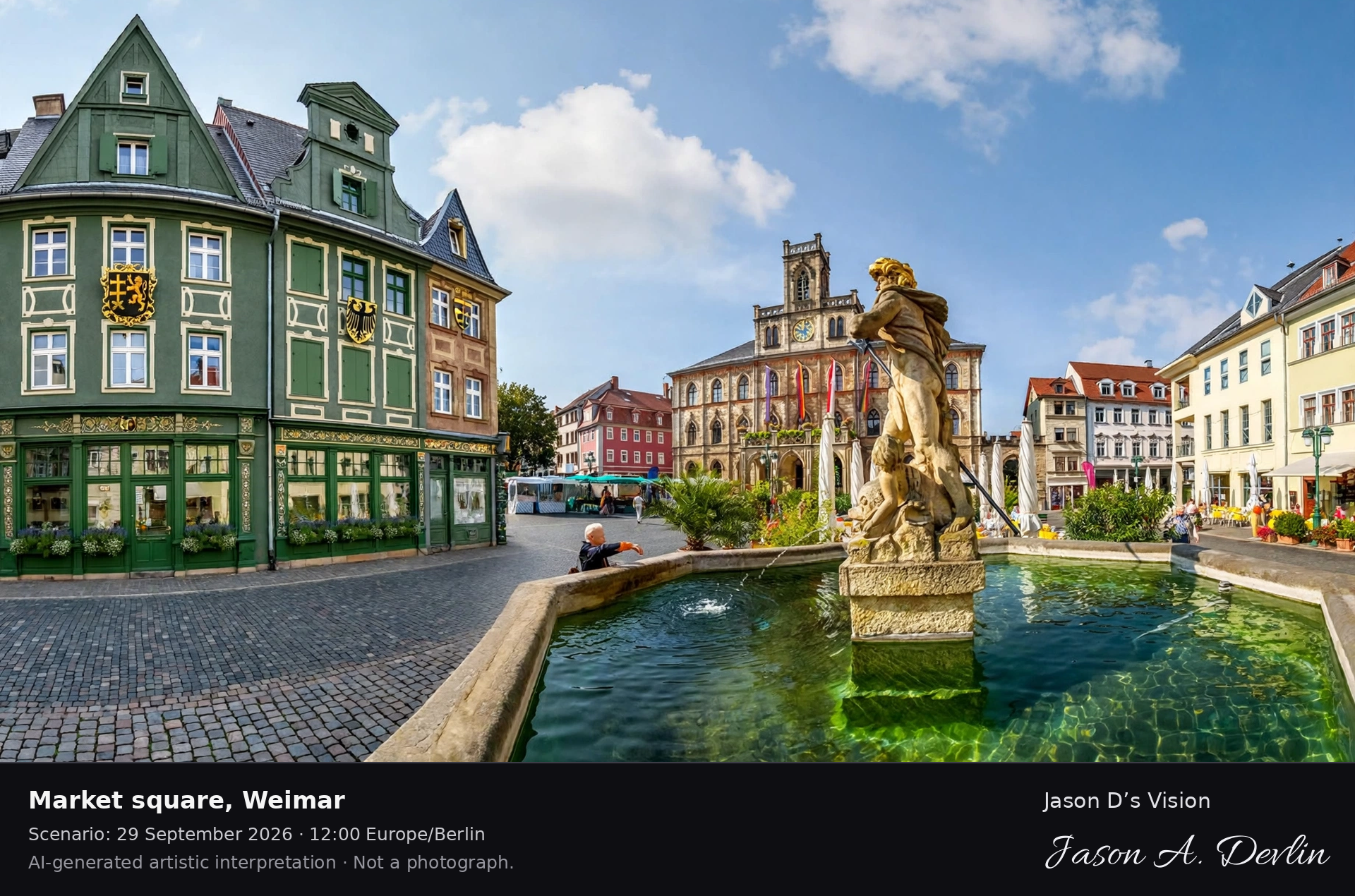
Town Hall and historic houses · AI-generated artistic interpretation
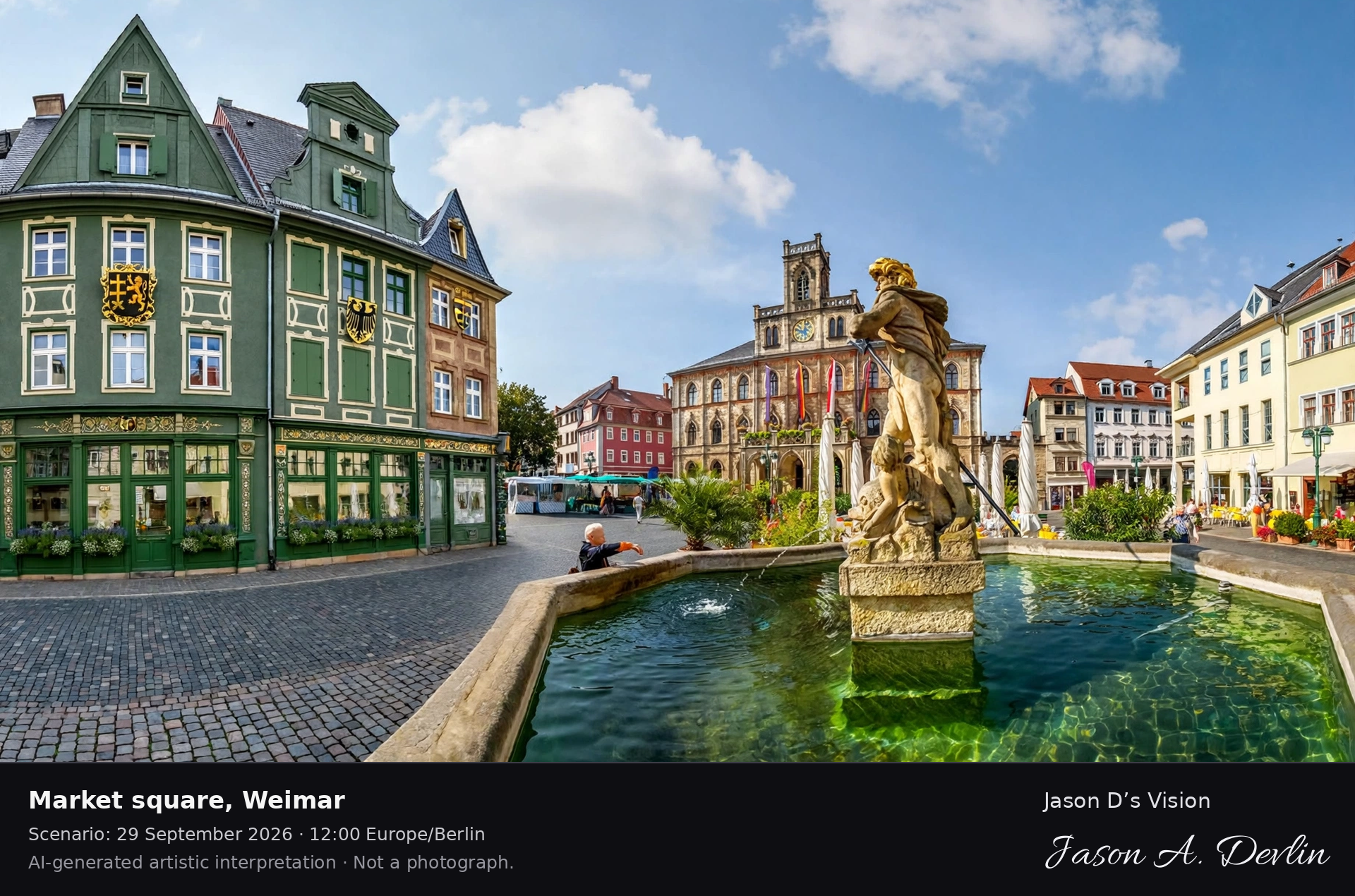
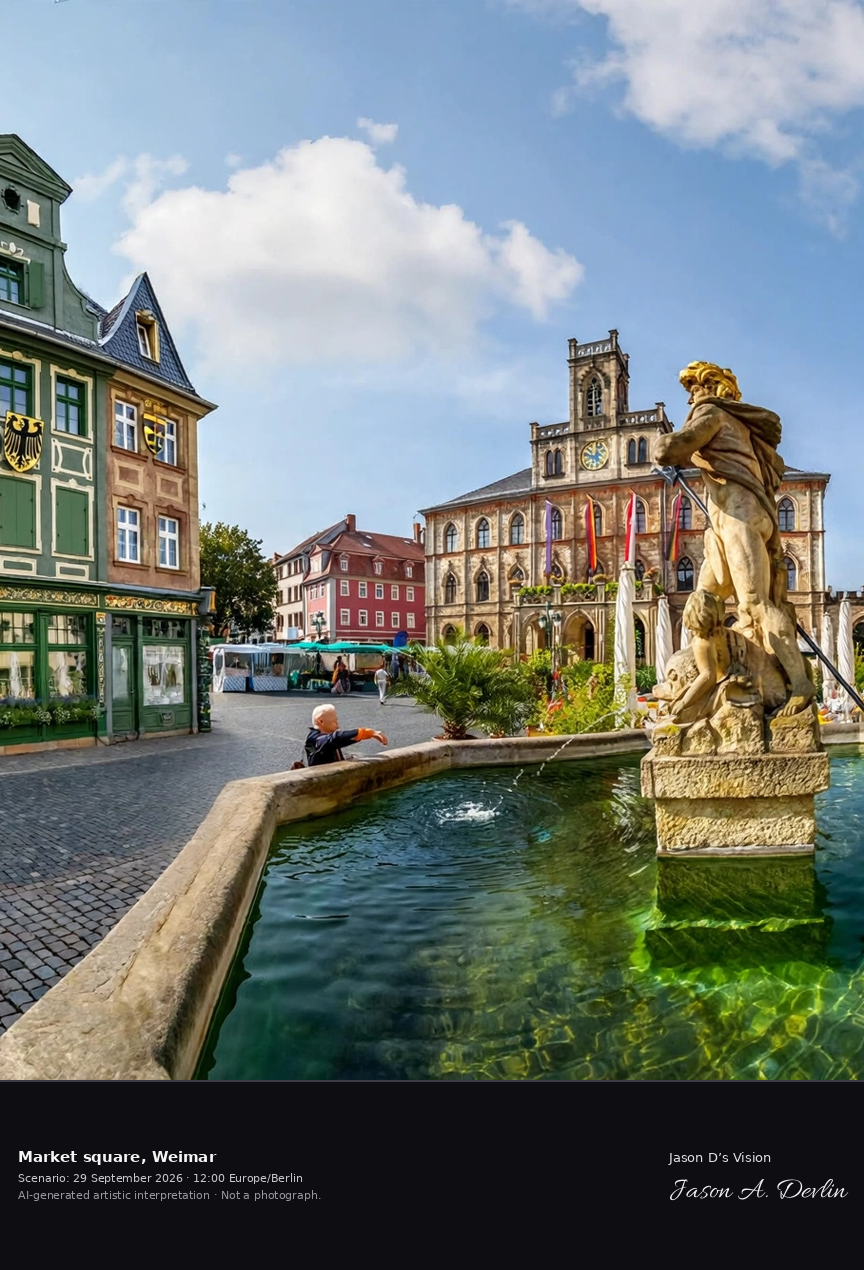
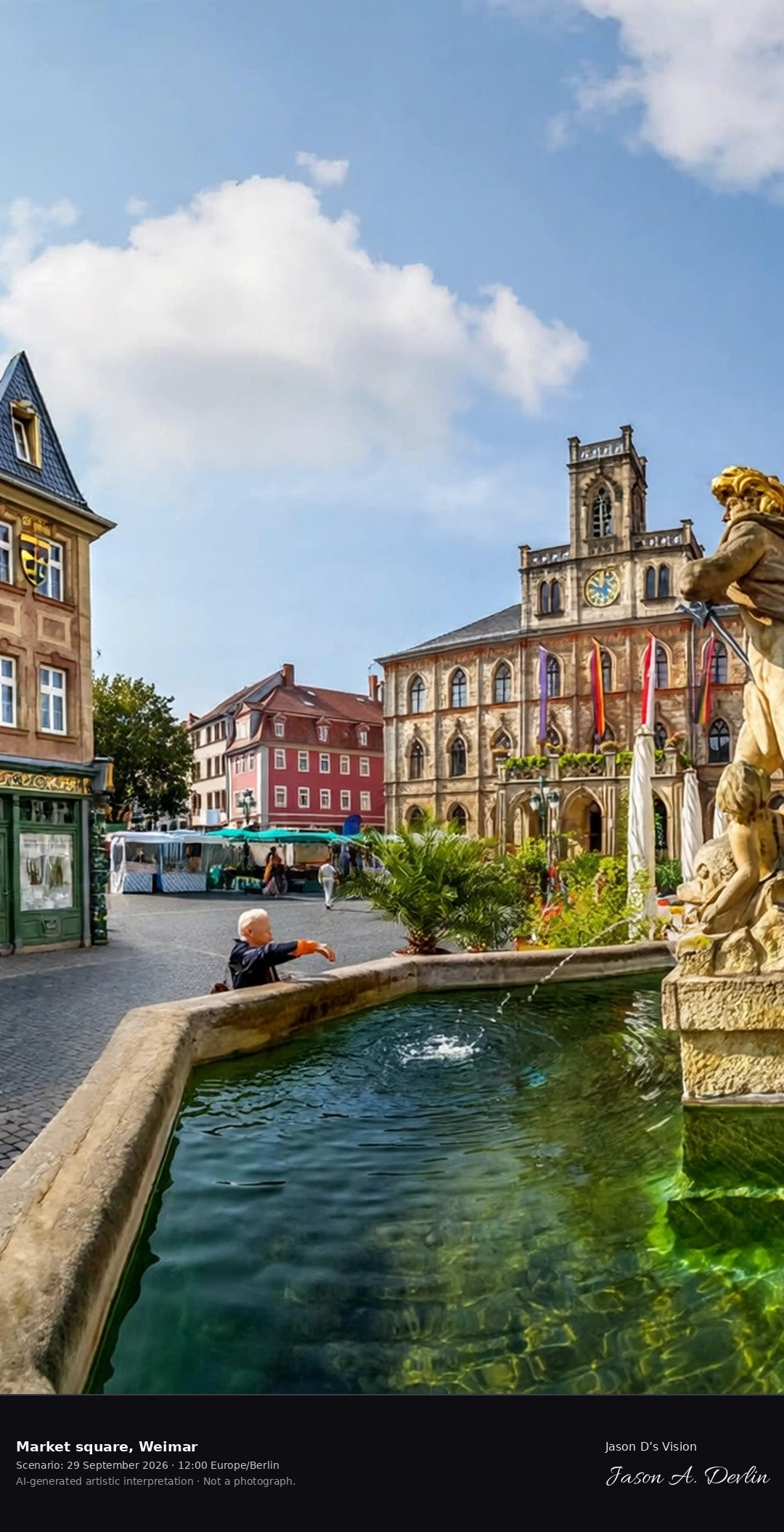
A tourist standing in the empty Markt at 1 a.m. faces the neo-Gothic Town Hall, its stone facade and tall bell tower centered with the clock glowing under thin moonlight. Left of frame stand the painted coats of arms of Cranach House beside the lit sign of the Hofapotheke, while the Neptune fountain fills the right foreground, its figure dark against the cloudy sky. Covered market stalls and lit shop windows speckle the square with warmth, and the wet cobbles mirror the natural nighttime scene.
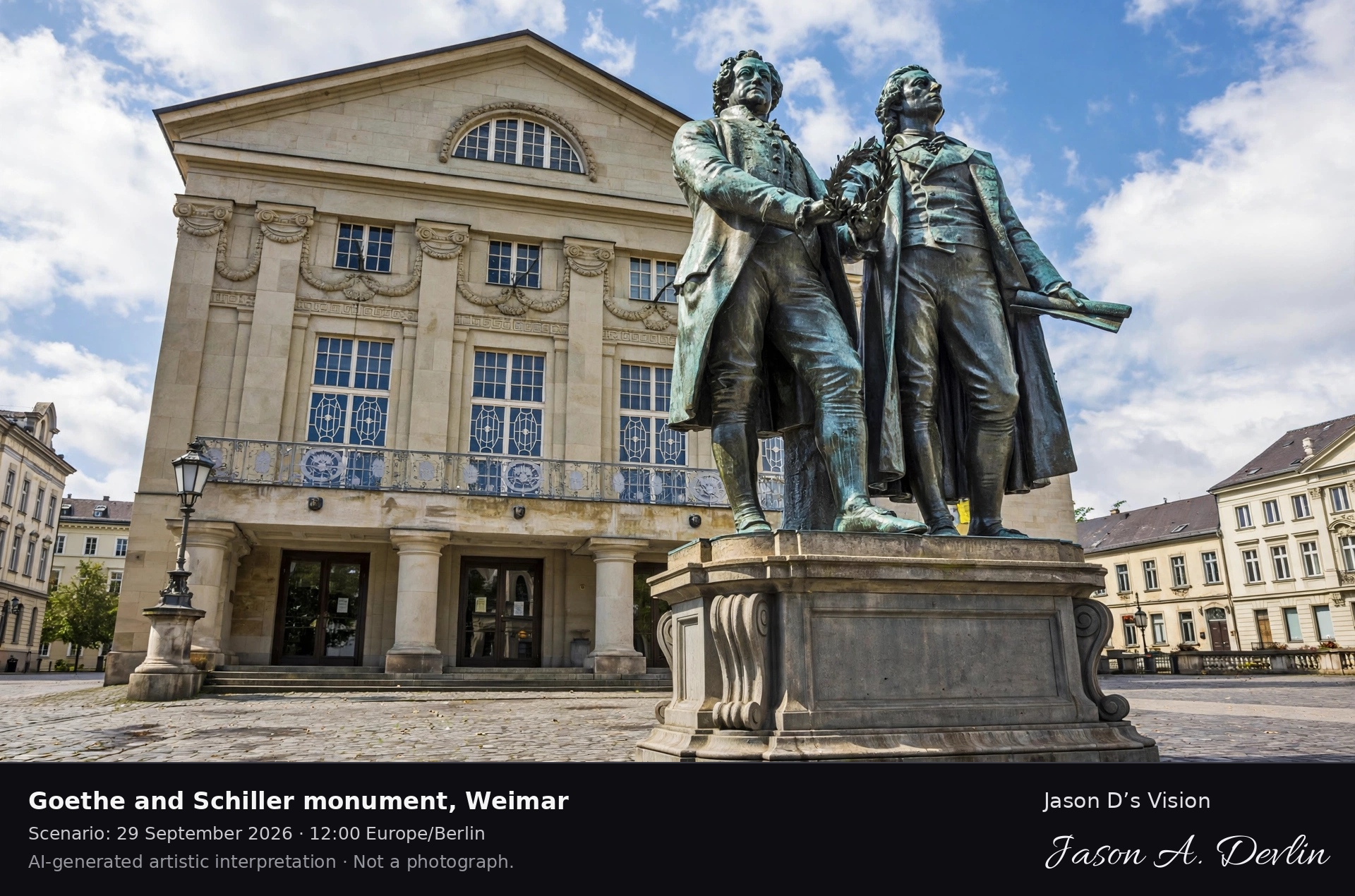
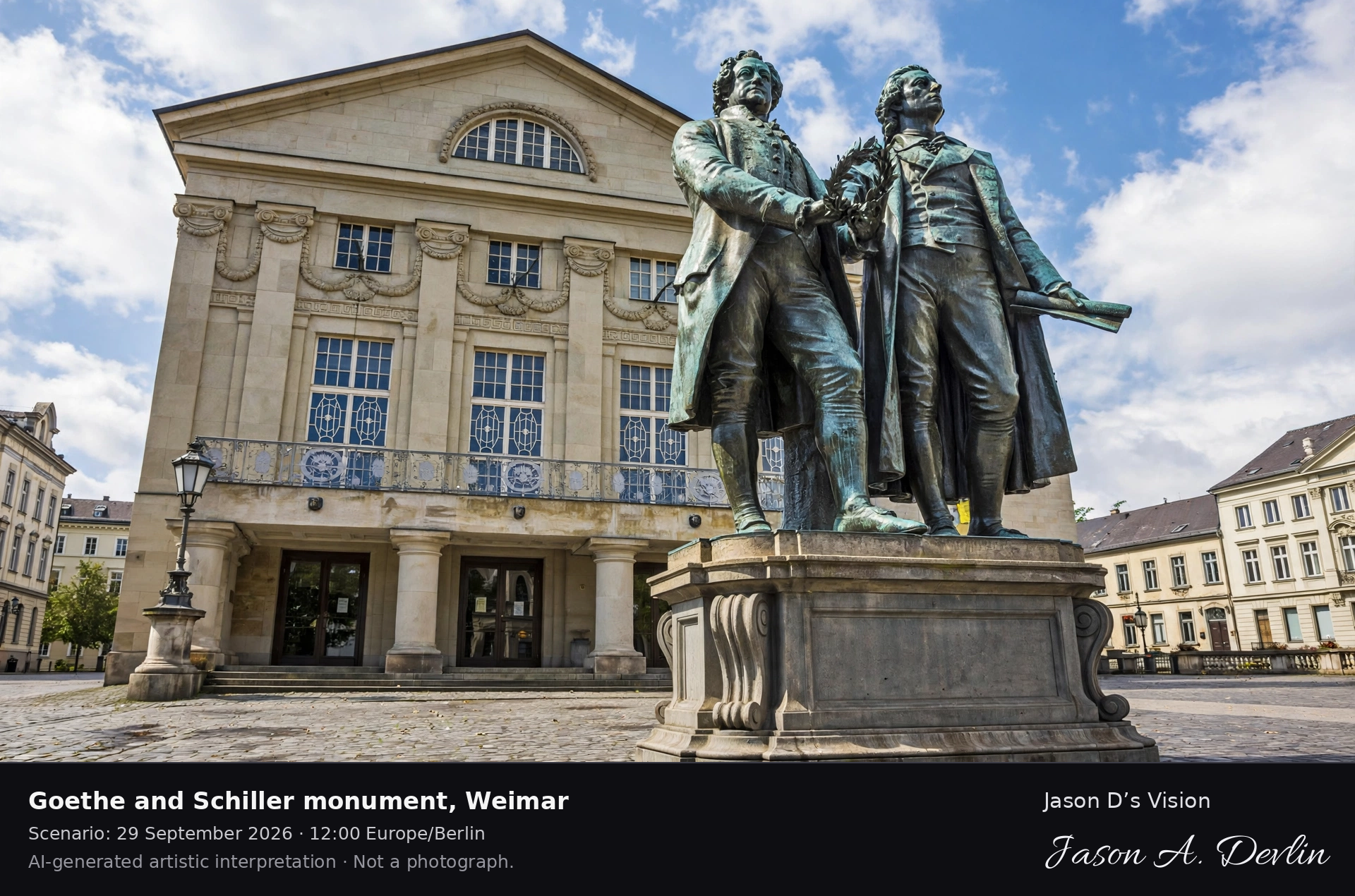
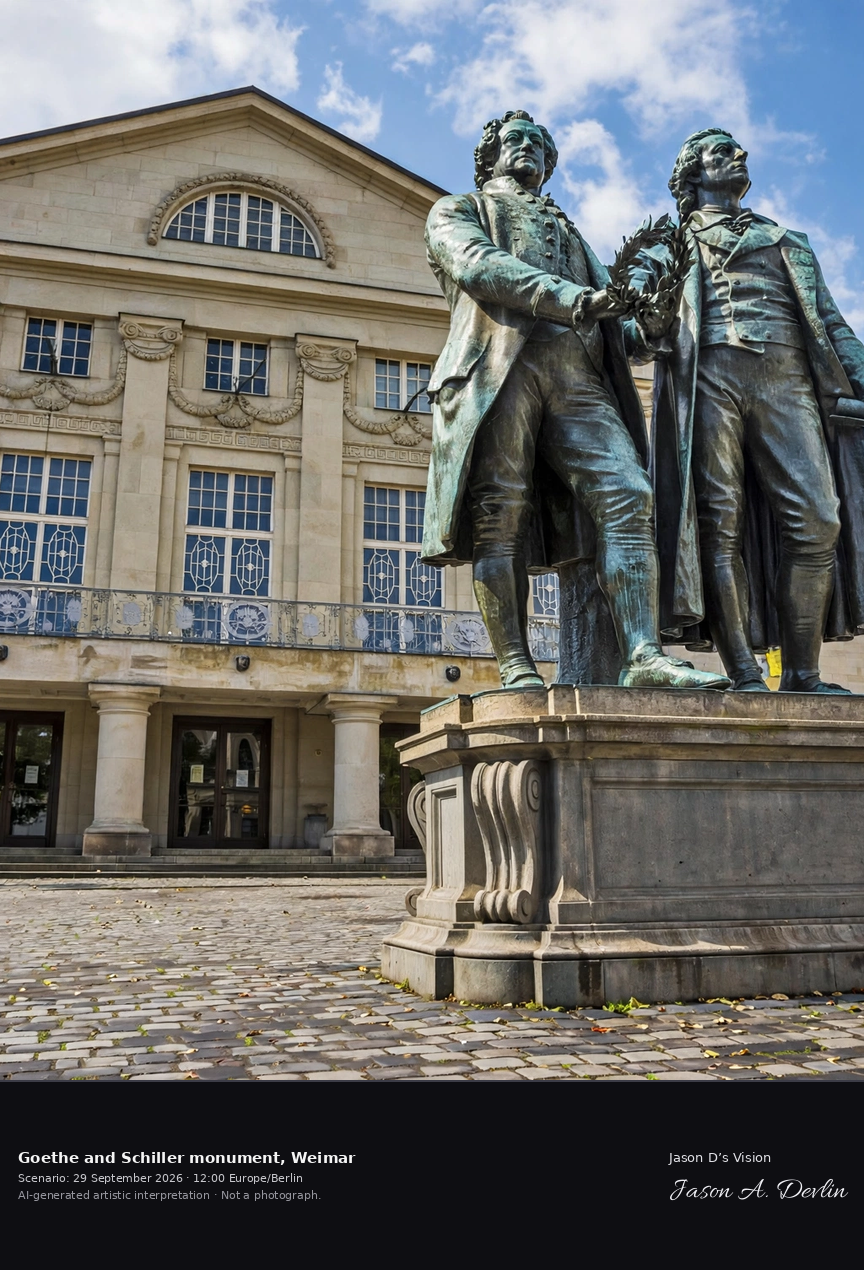
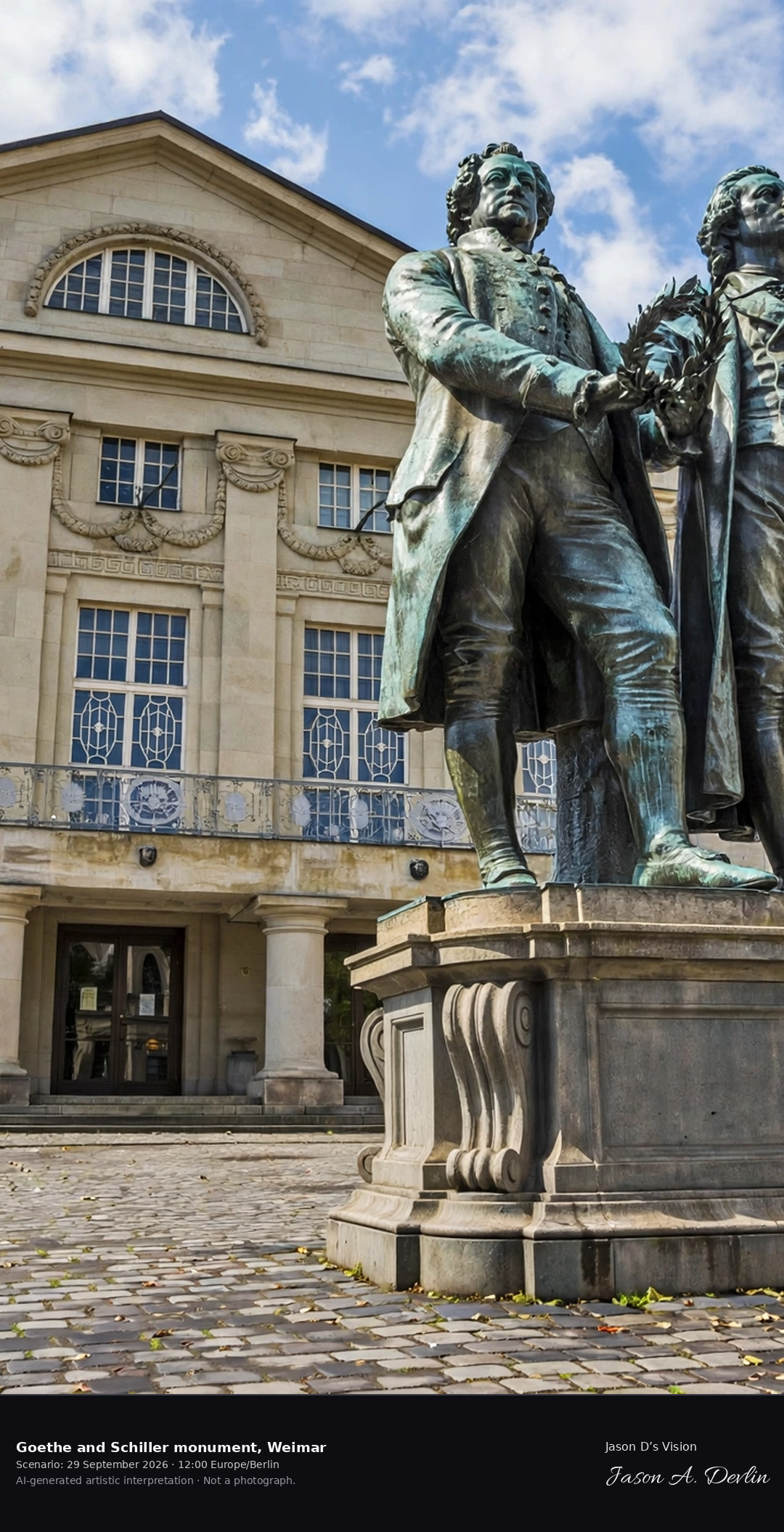
A tourist on the empty Theaterplatz at 1 a.m. faces the bronze double statue of Goethe and Schiller centered on its tall stone pedestal, the two figures standing side by side with one offering the laurel wreath. Behind them rises the columned classical portico of the German National Theatre, a few warmly lit doors the only sign of life, with side buildings framing the square left and right. A partly cloudy night sky and thin moonlight play across the cobbles, and the monument stands unlit by any floodlights in the quiet square.
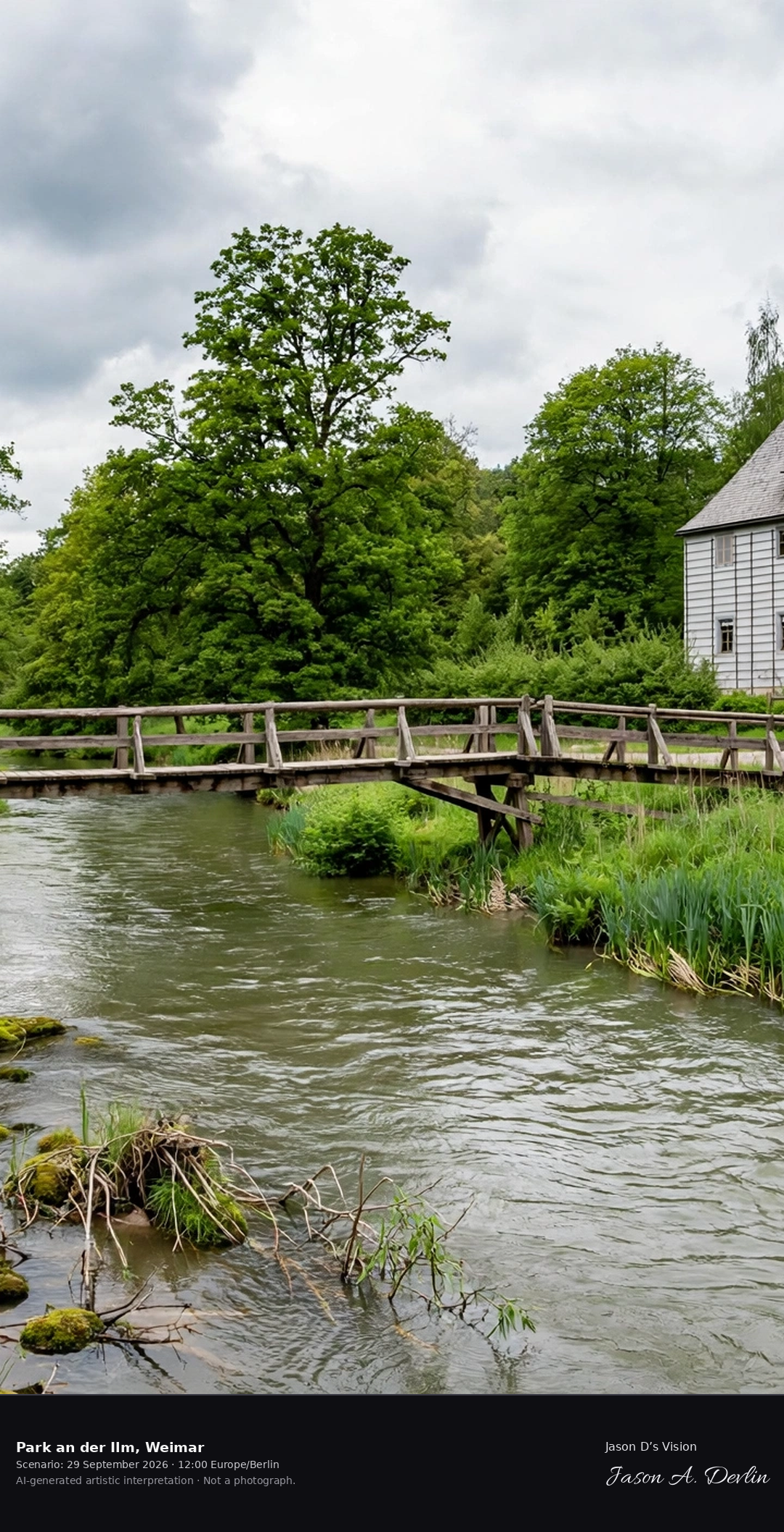
River landscape and Goethe garden house · AI-generated artistic interpretation
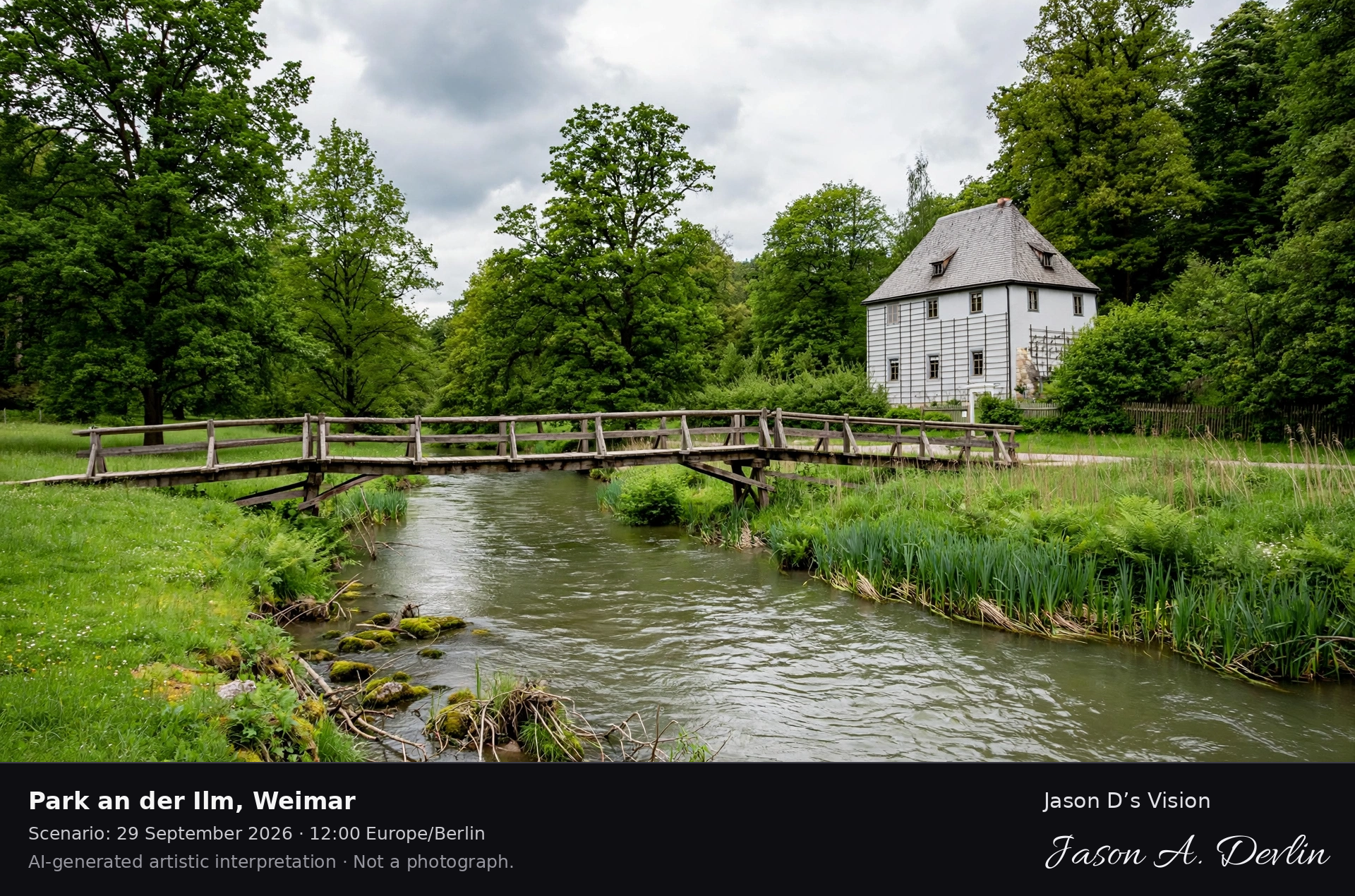
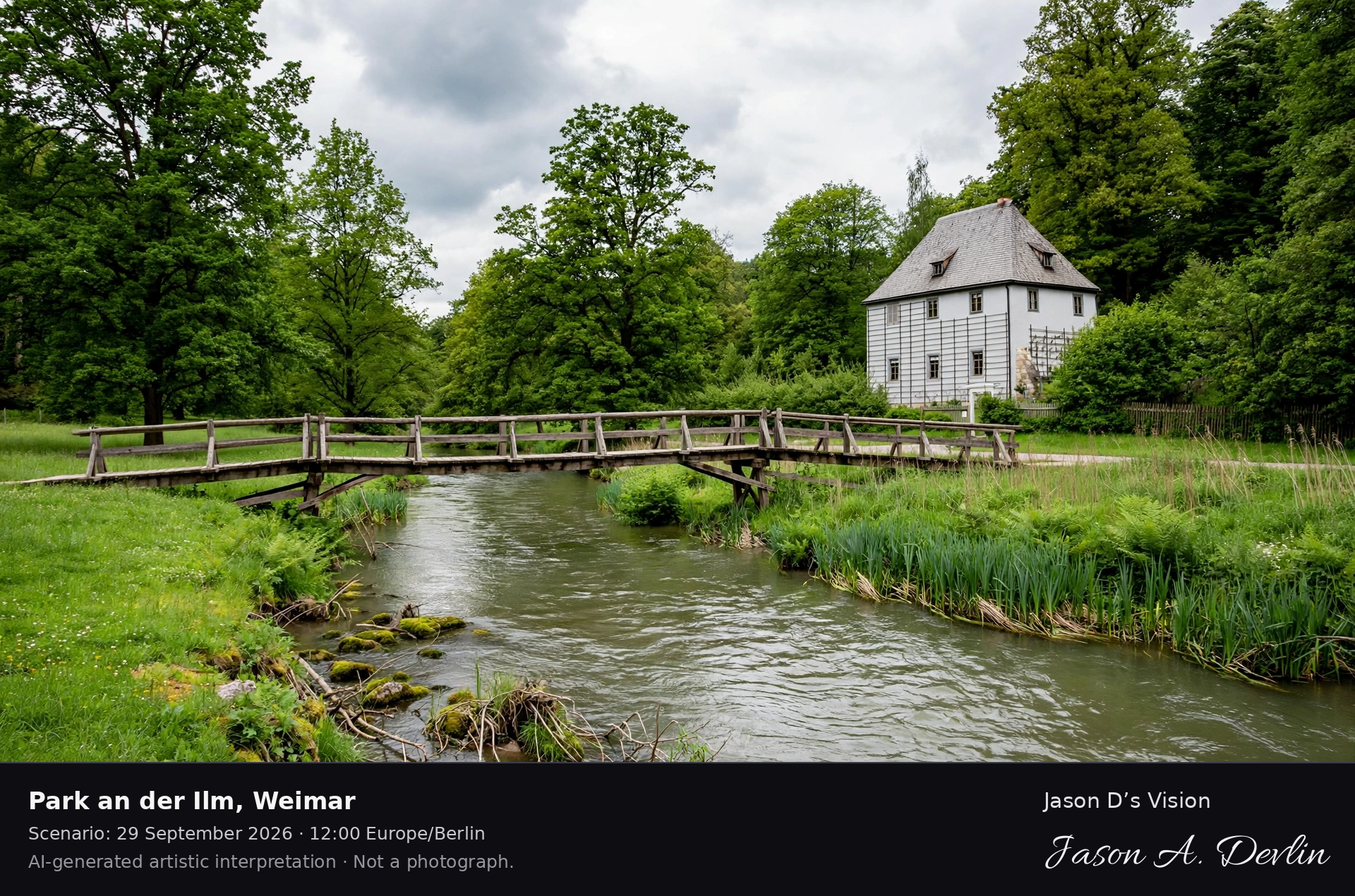
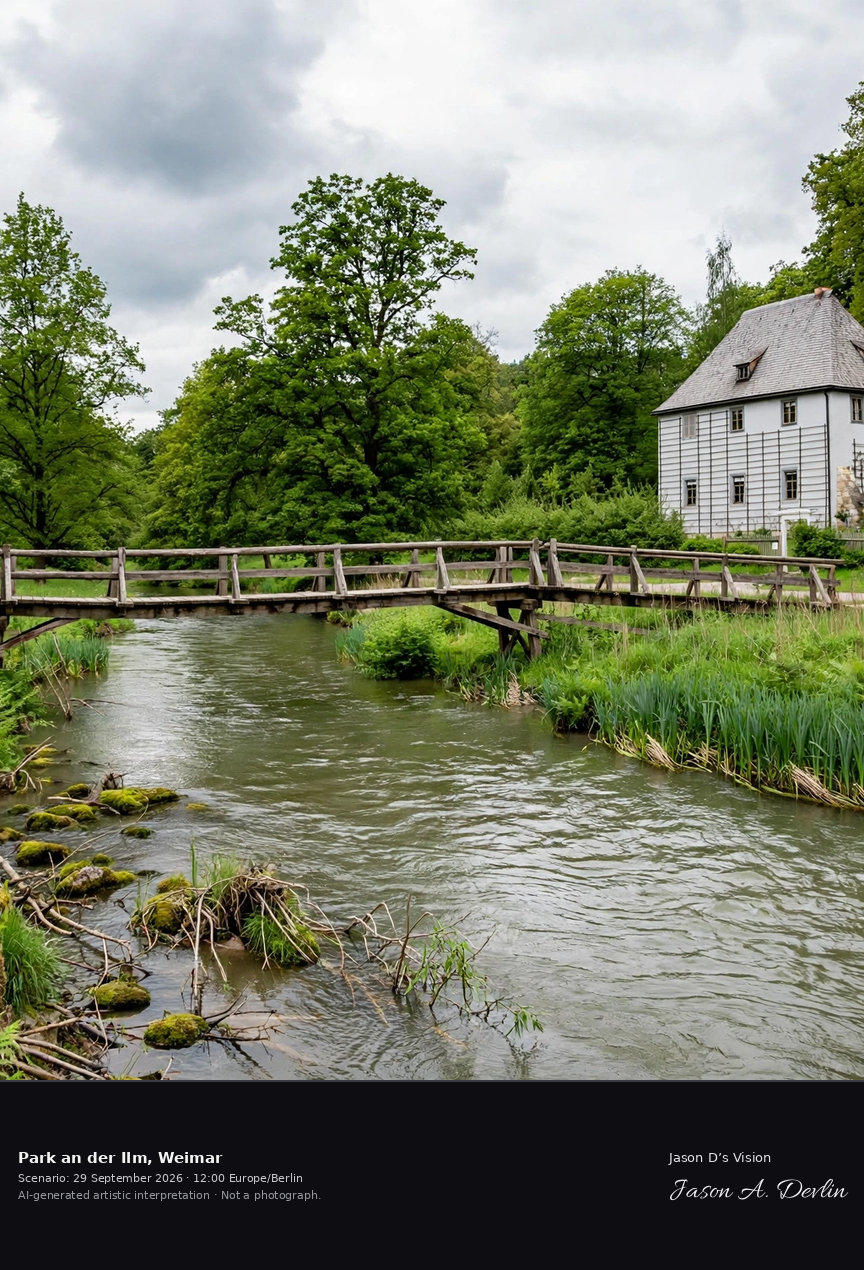
A tourist on the riverbank at 1 a.m. looks along the Ilm as it winds left through dark meadows, a wooden footbridge crossing the water in the middle distance. Right of frame, Goethe’s Garden House — a modest white two-story house — stands among tall trees and hedged beds on the far bank, while mature parkland fills the left. A partly cloudy night sky and moonlight breaking through the clouds light the water’s surface, and the whole park lies empty and still in natural nighttime shadow.
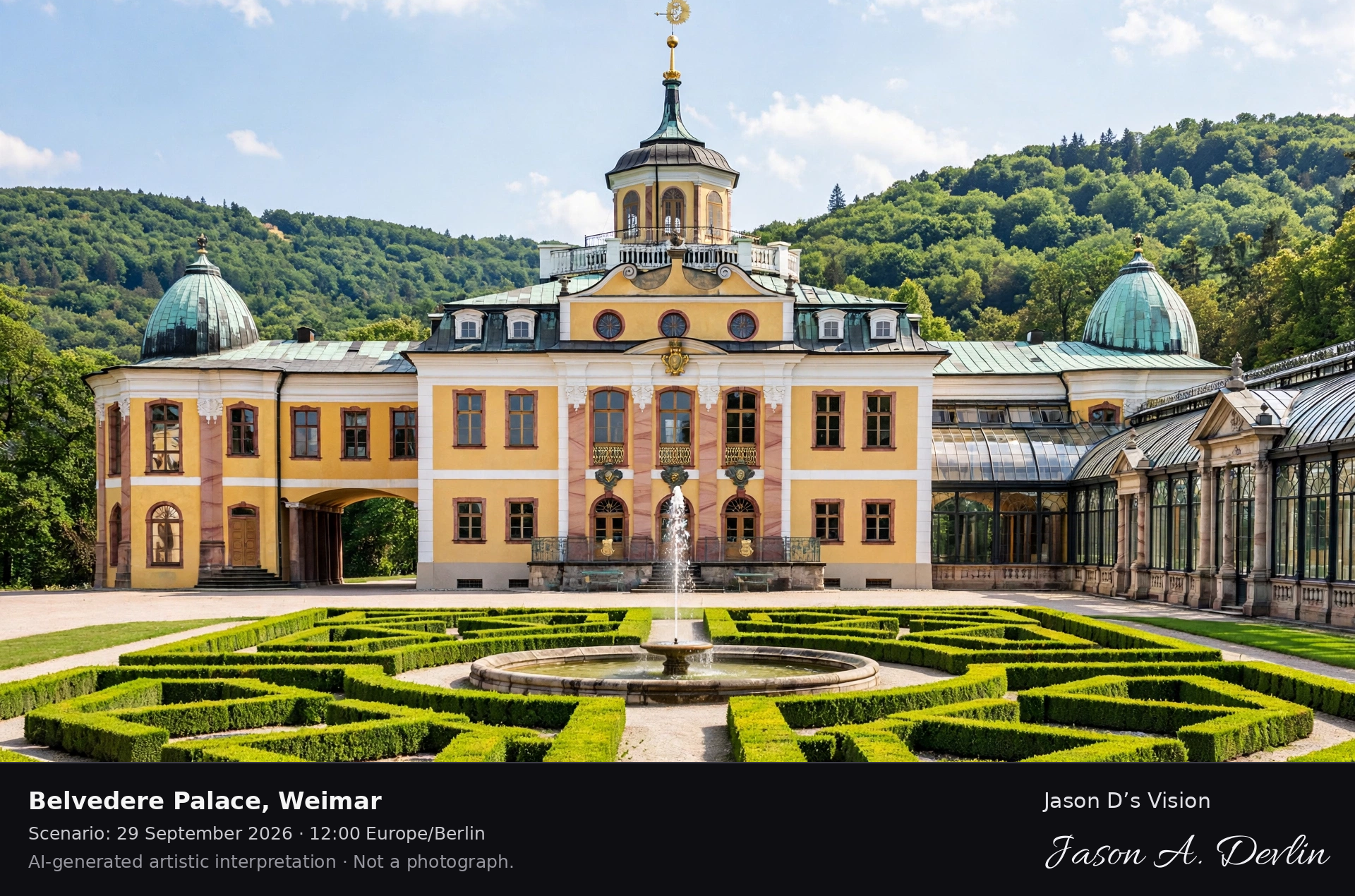
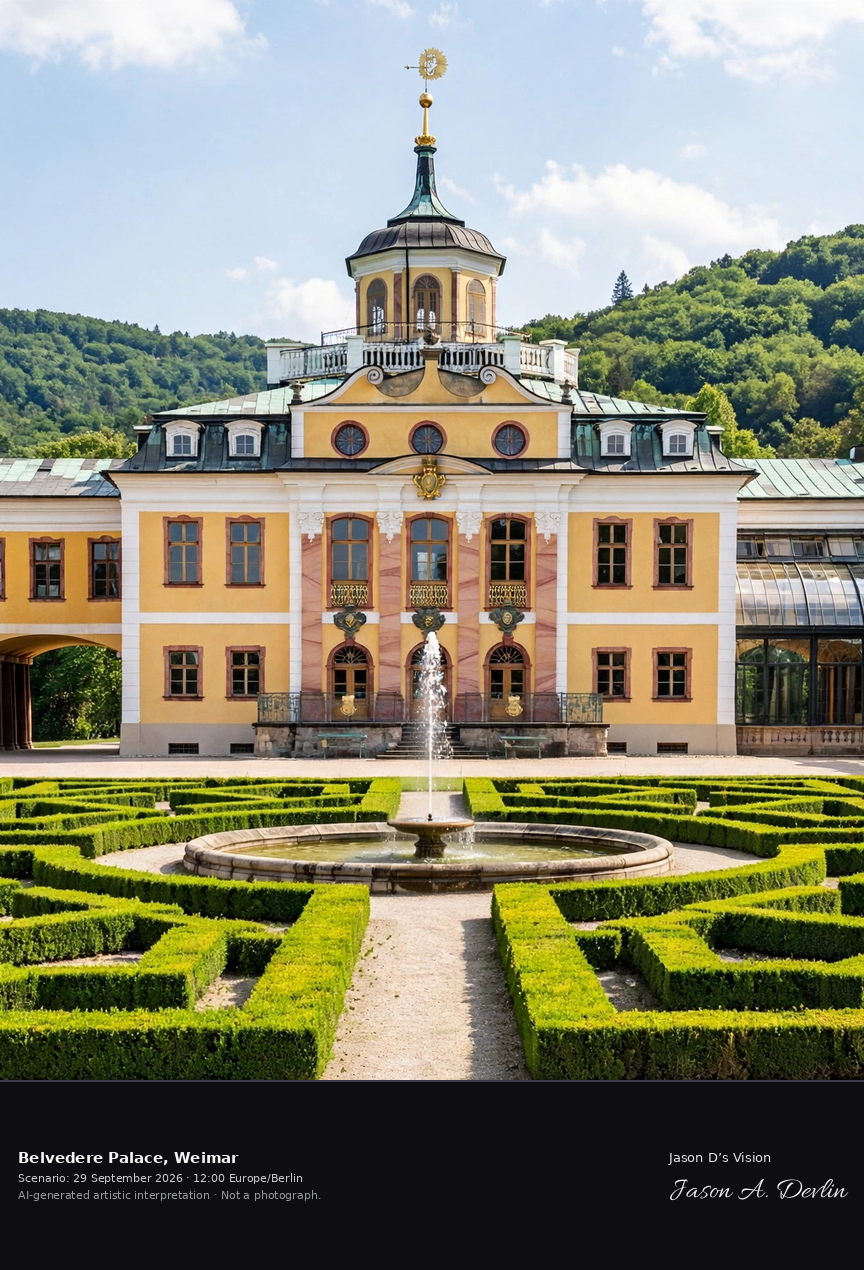
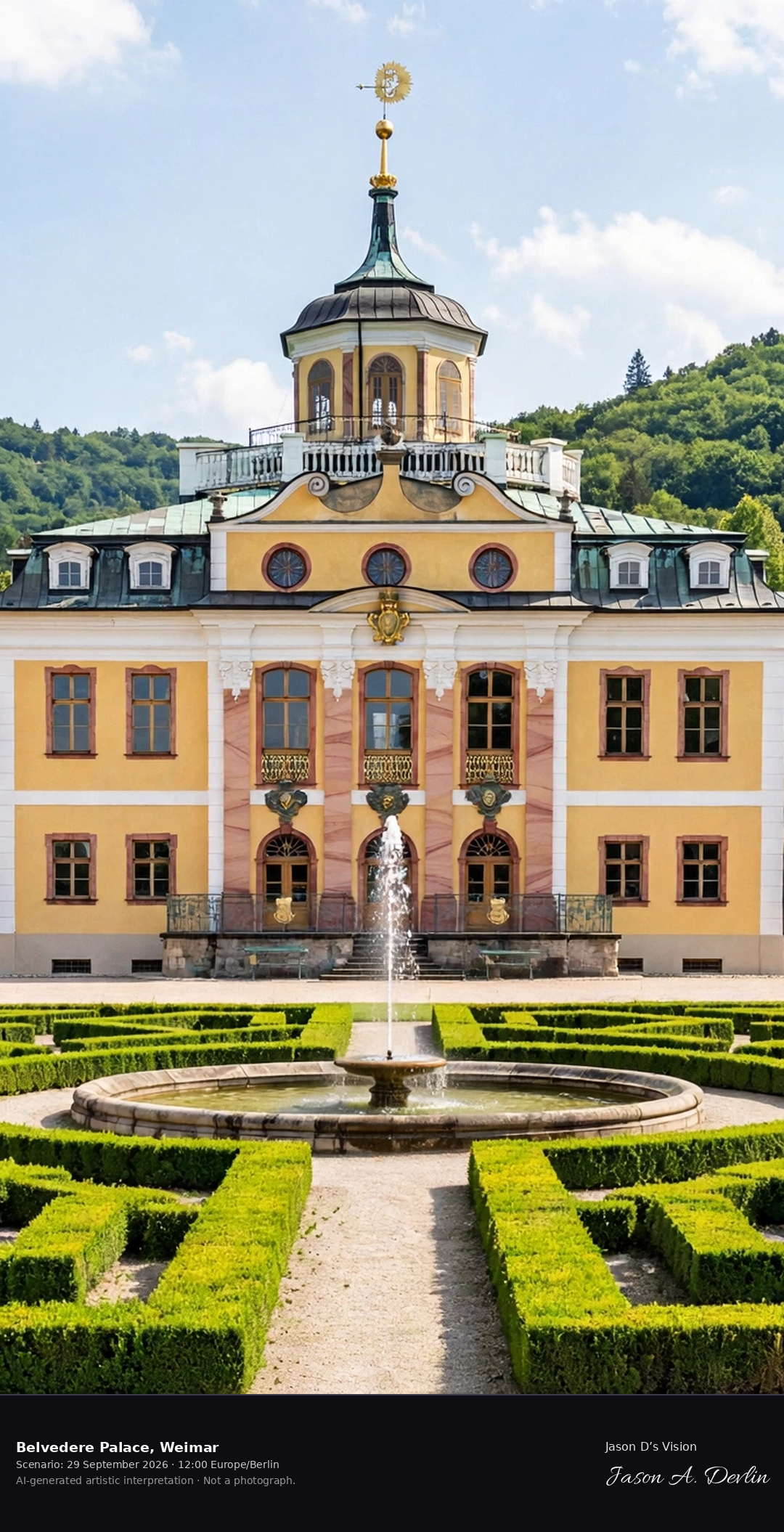
Palace and gardens · AI-generated artistic interpretation
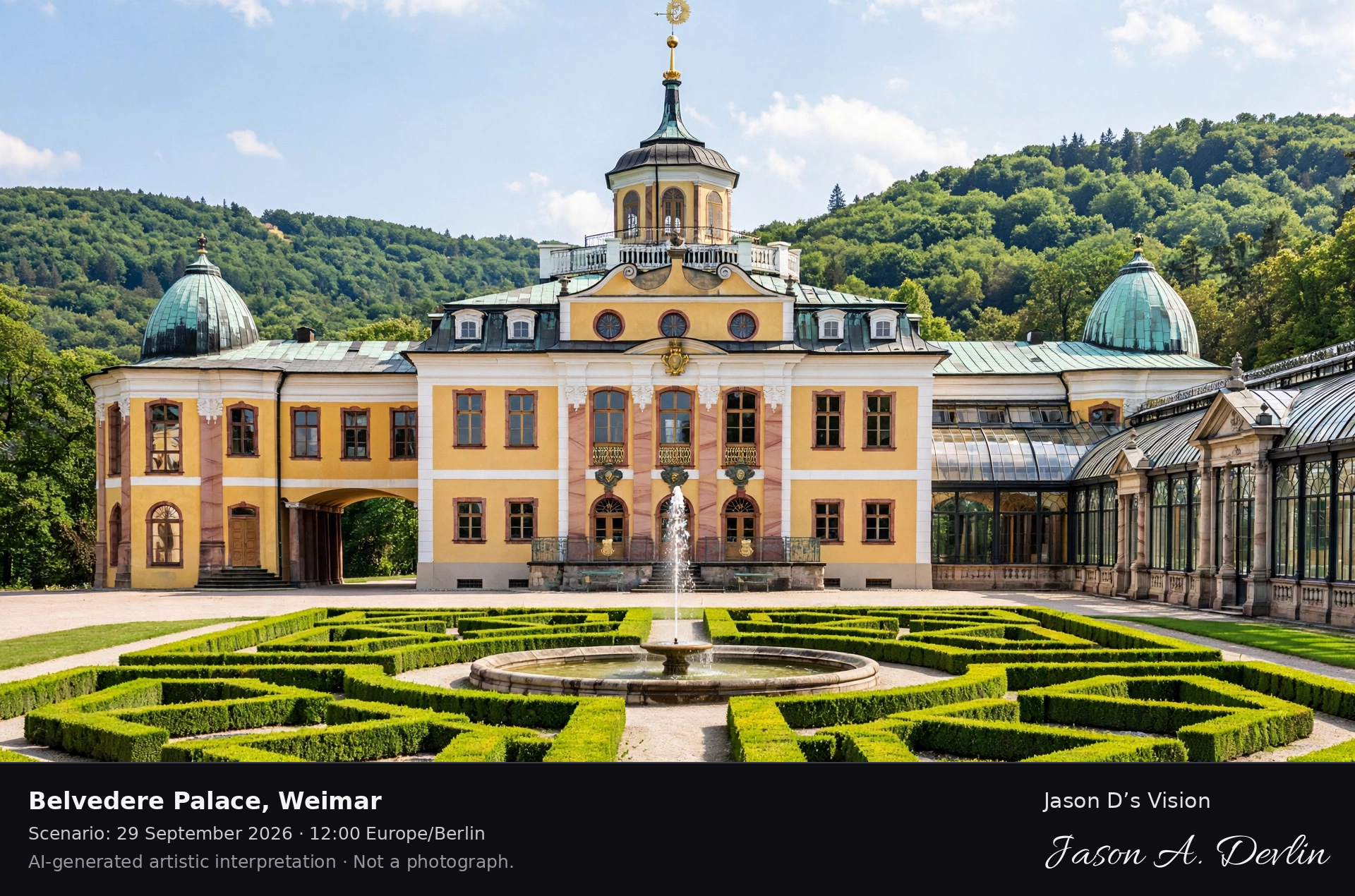
A tourist crossing the formal gardens at 1 a.m. sees the yellow Baroque corps de logis of Belvedere centered between its two domed pavilions, the central tower rising against a partly cloudy night sky. A lit fountain plays in the parterre hedges in the foreground while the glass-fronted orangery wing stretches off to the right, unlit in the dark. A few warm windows glow in the palace while drifting clouds soften the moonlight, leaving the gardens in natural nighttime shadow.
Palace and formal approach · AI-generated artistic interpretation
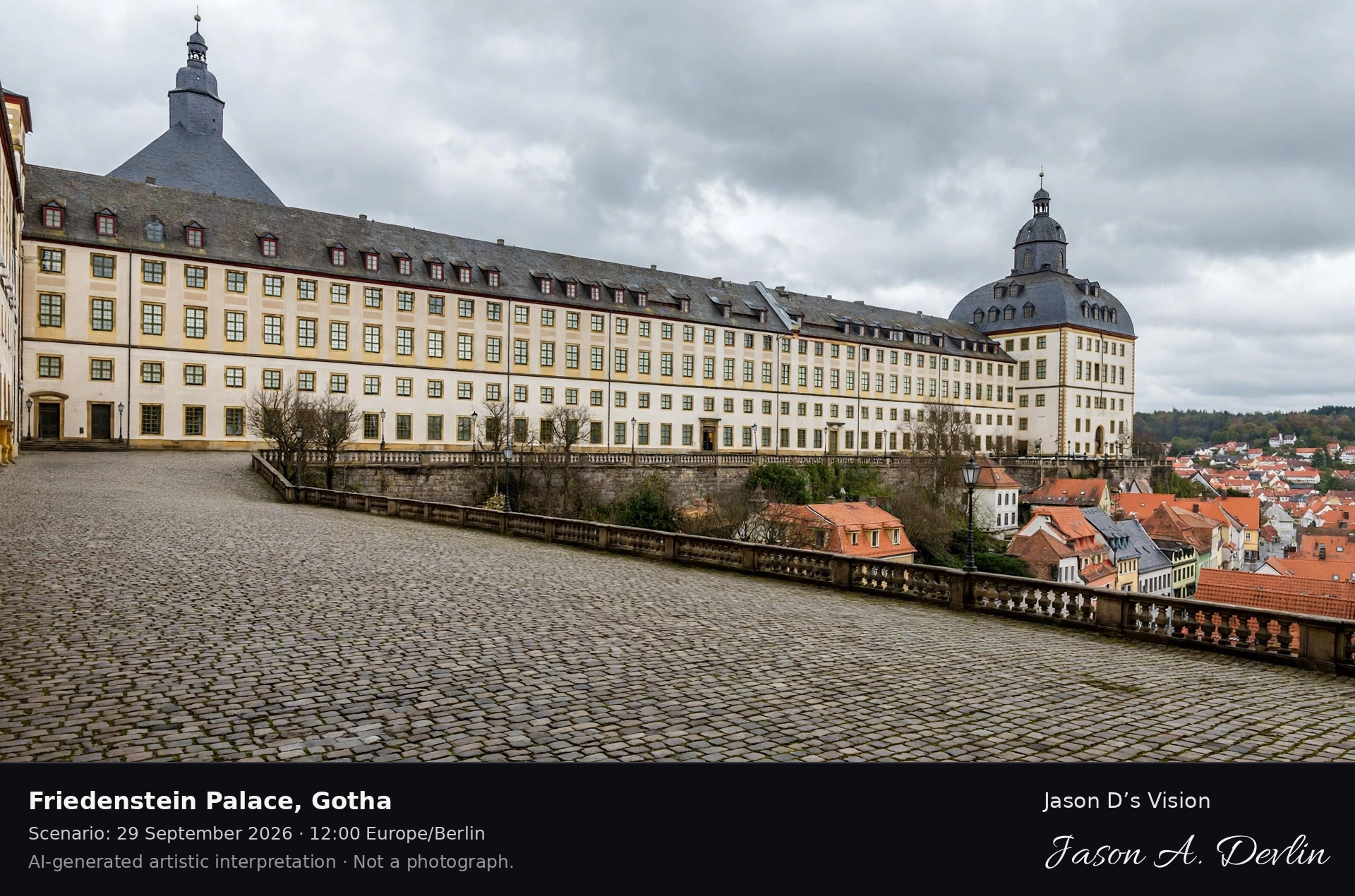
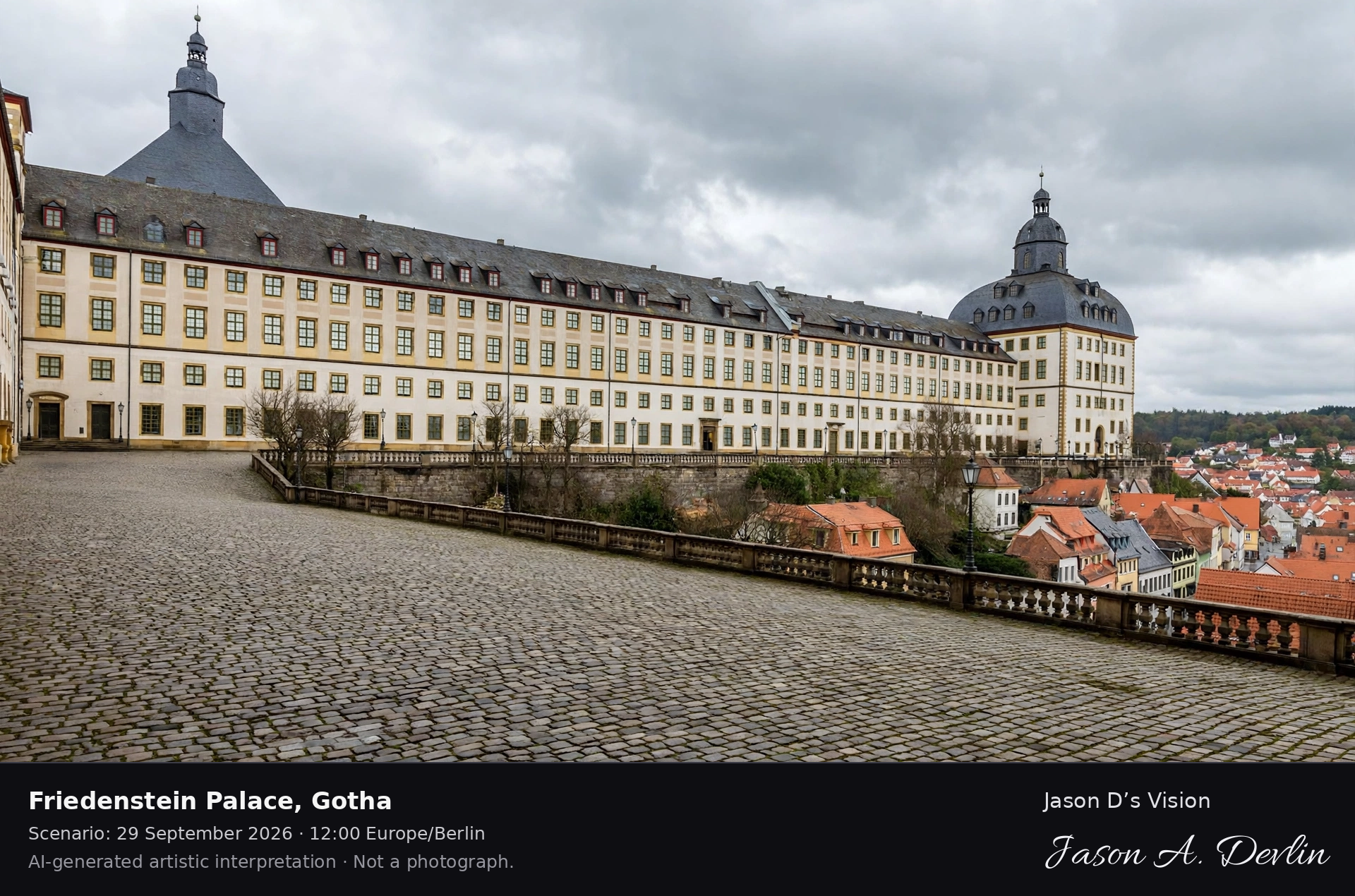
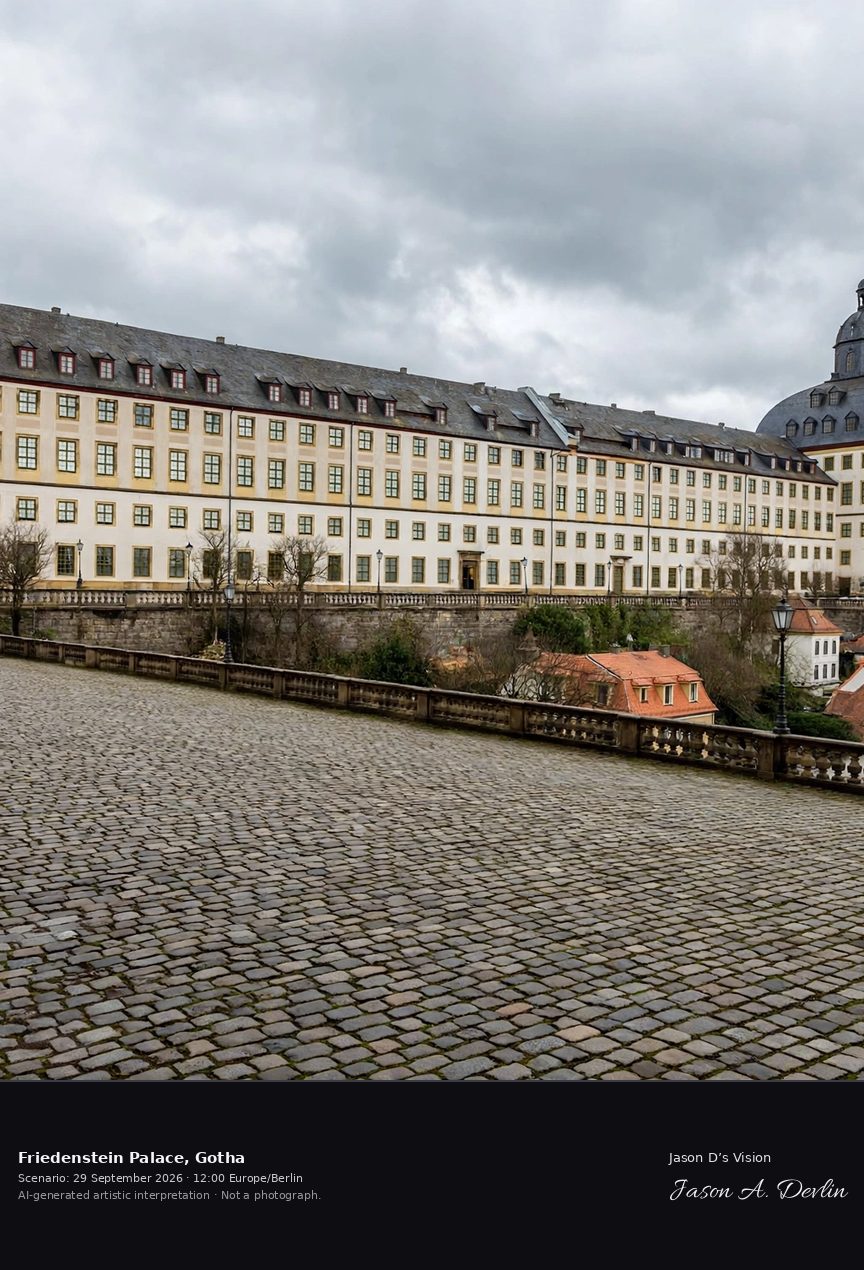
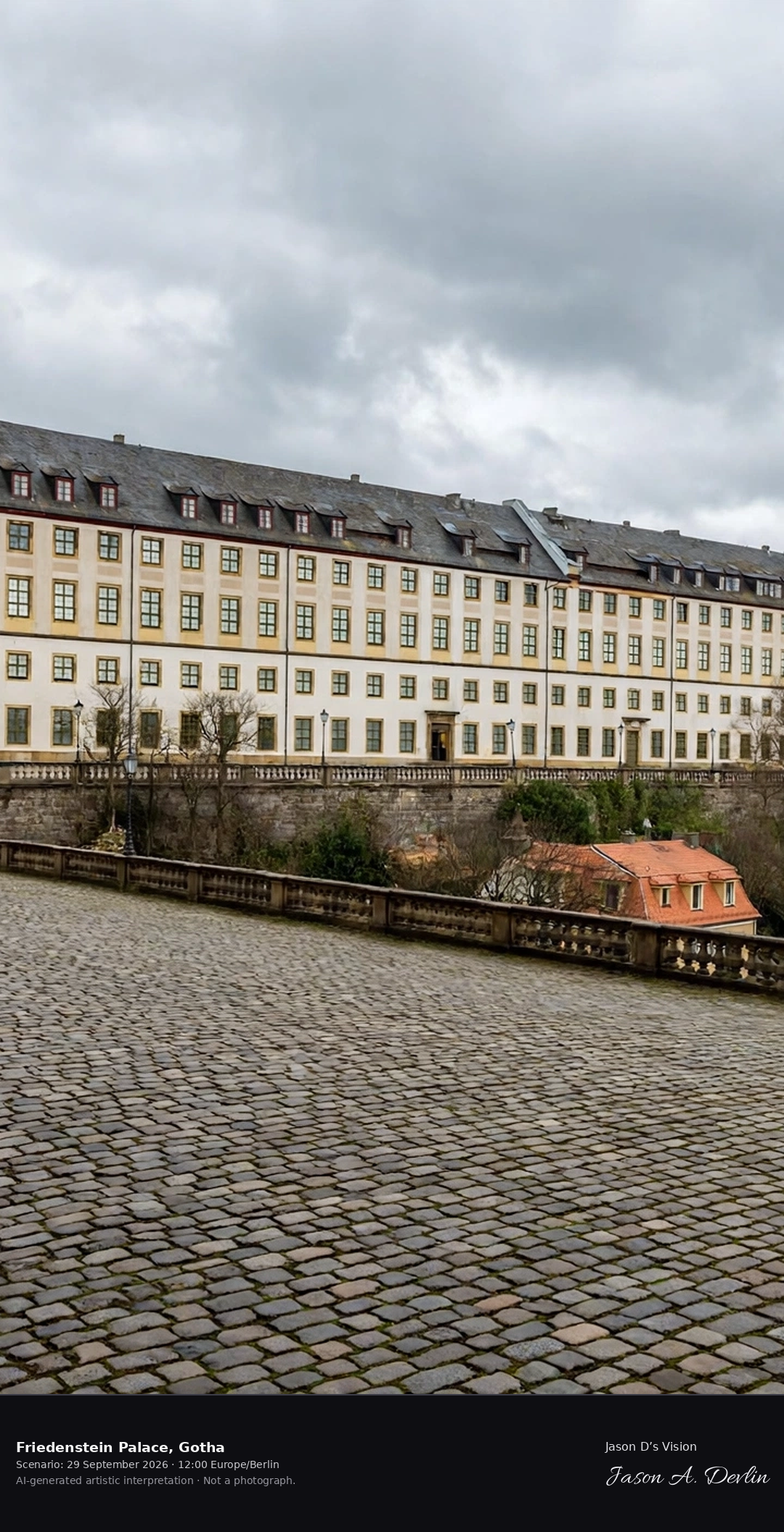
A tourist standing on the formal cobbled approach at 1 a.m. faces the full monumental width of Friedenstein Palace, its unadorned early-Baroque wings stretching left and right with only symmetrical rows of windows breaking the facades. A few lit windows glow faintly in the center block while the town of Gotha spreads below in scattered lamplight, dissolving into the dark. The overcast night sky and empty wet cobbles hold the palace in its famously austere, unlit stillness.
Castle and town skyline · AI-generated artistic interpretation
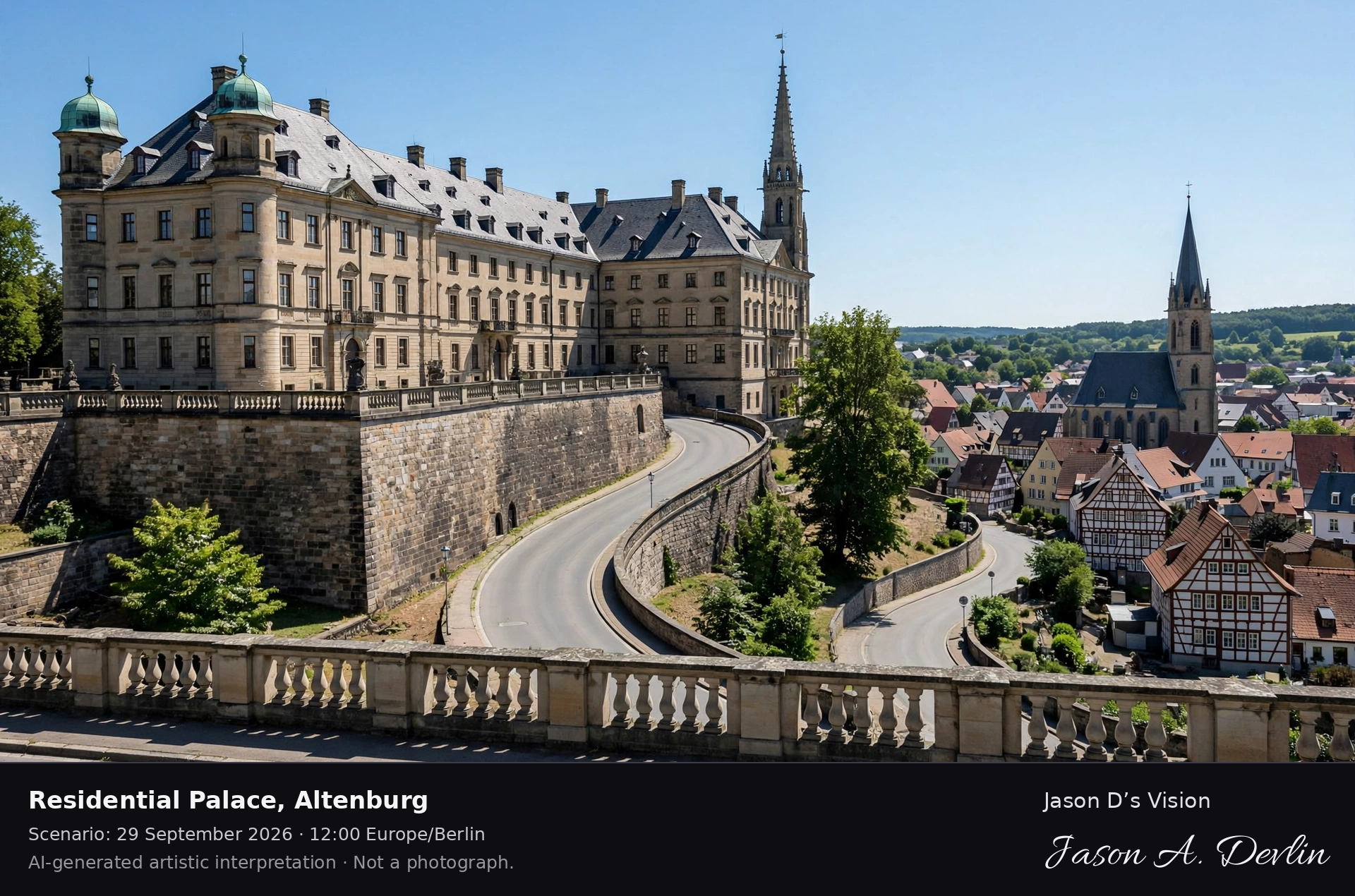
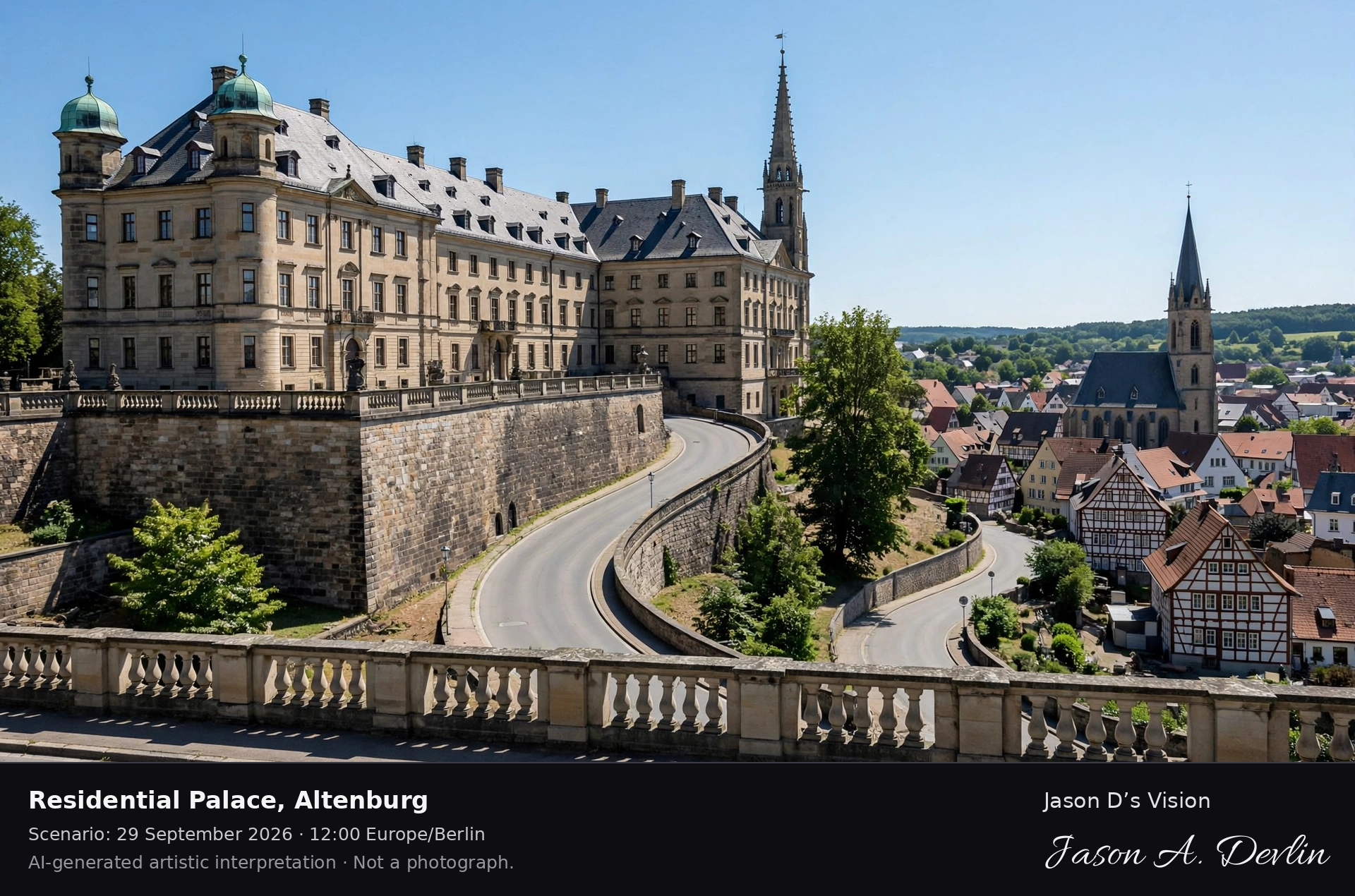
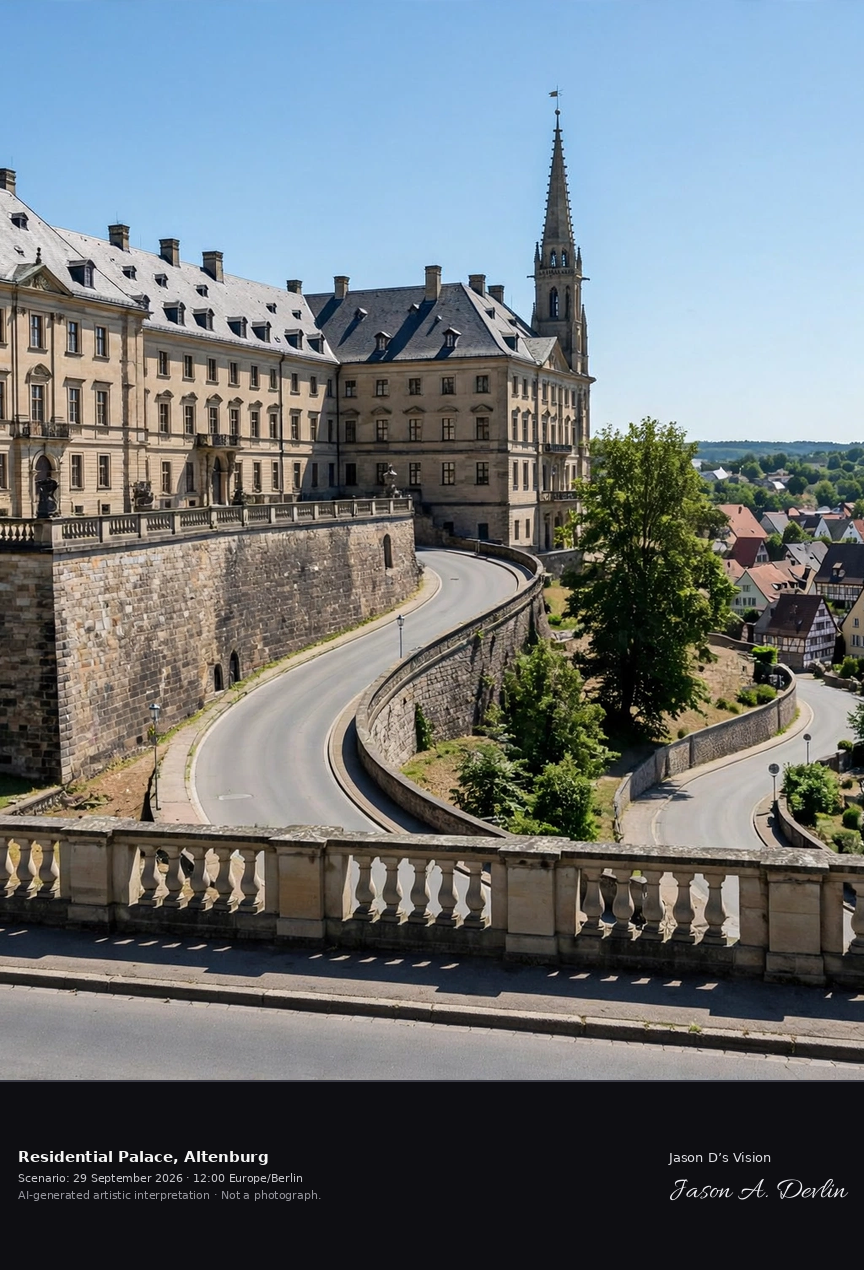
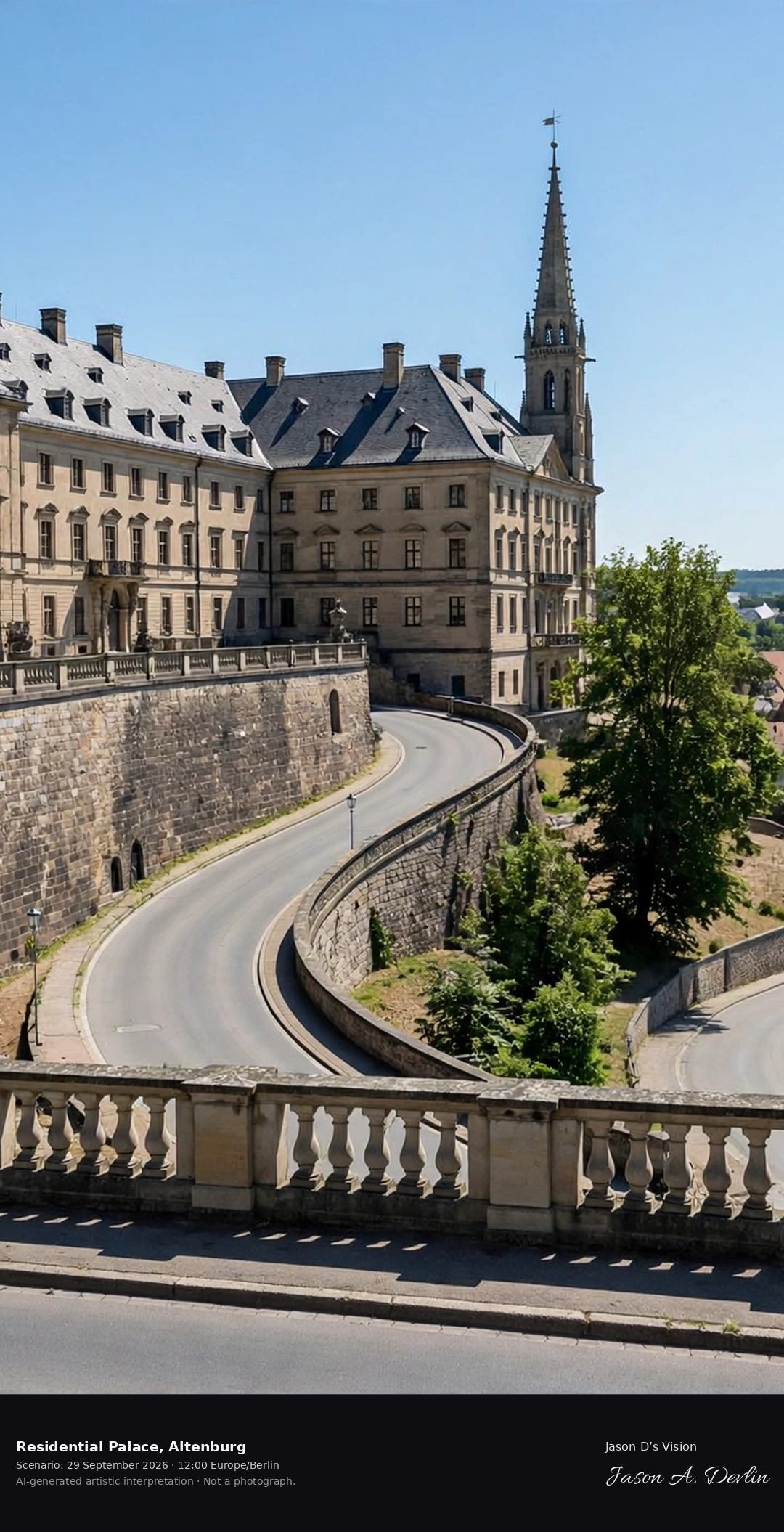
A tourist standing by the road below the Schlossberg at 1 a.m. sees the Residential Palace's long Baroque wings and cupola-crowned towers rising left and center against an overcast night sky, a few lit windows the only warm notes. The dark Gothic choir of the castle church cuts a sharp silhouette beside them, while right of frame the half-timbered roofs and church spires of Altenburg's old town drop away into scattered lamplight. The overcast clouds hold the whole scene in a deep blue-grey stillness, with no floodlighting to break the natural nighttime mood.
City and limestone slopes · AI-generated artistic interpretation
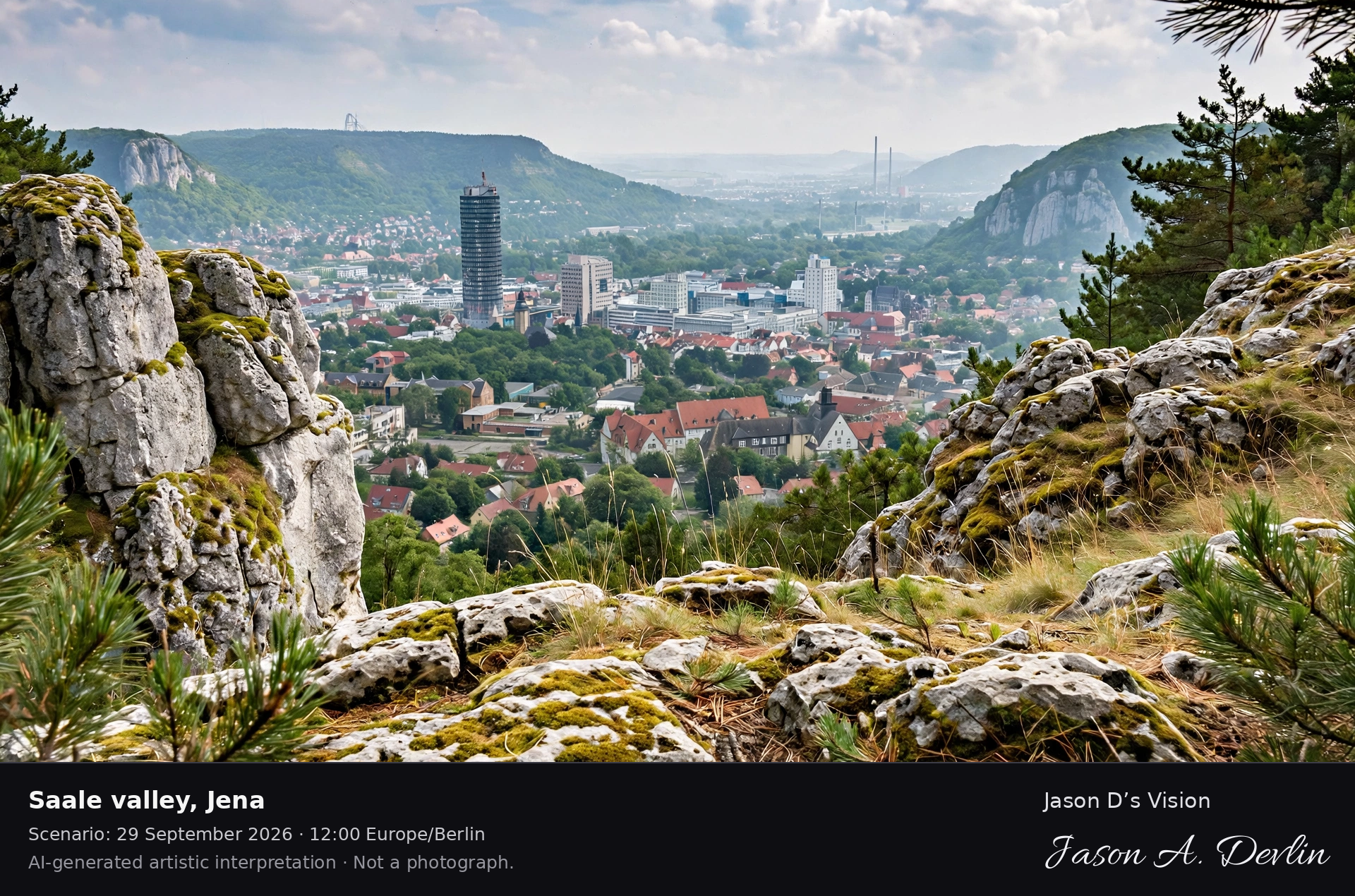
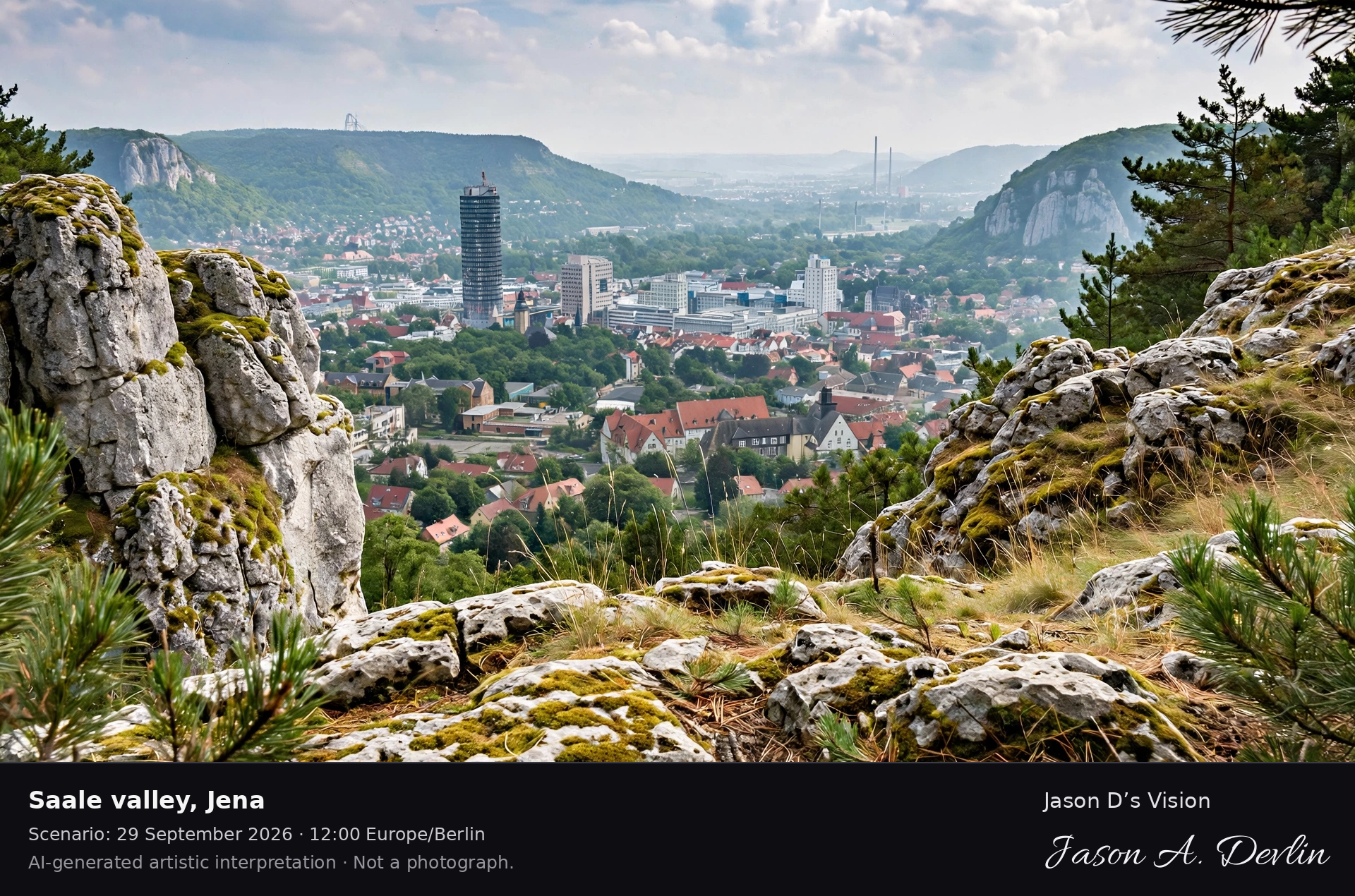
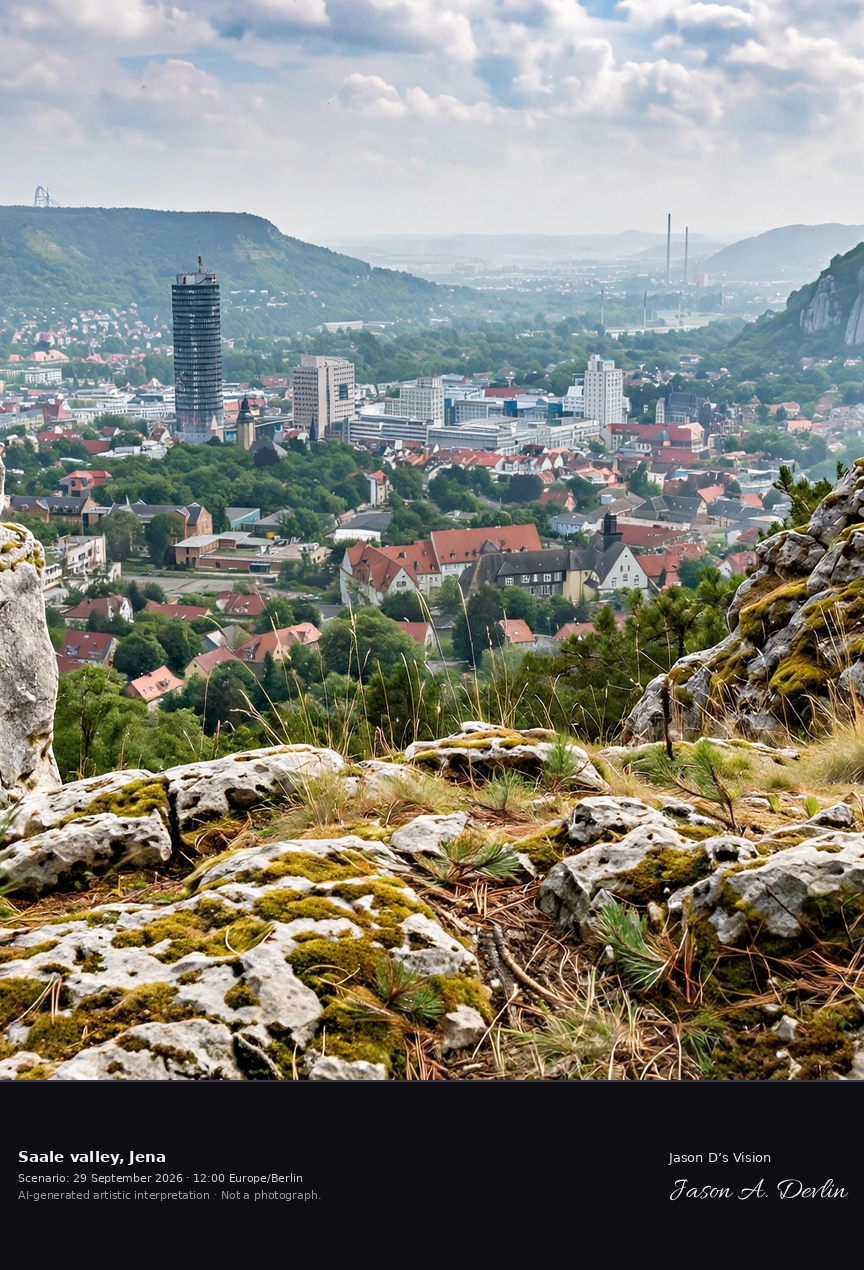
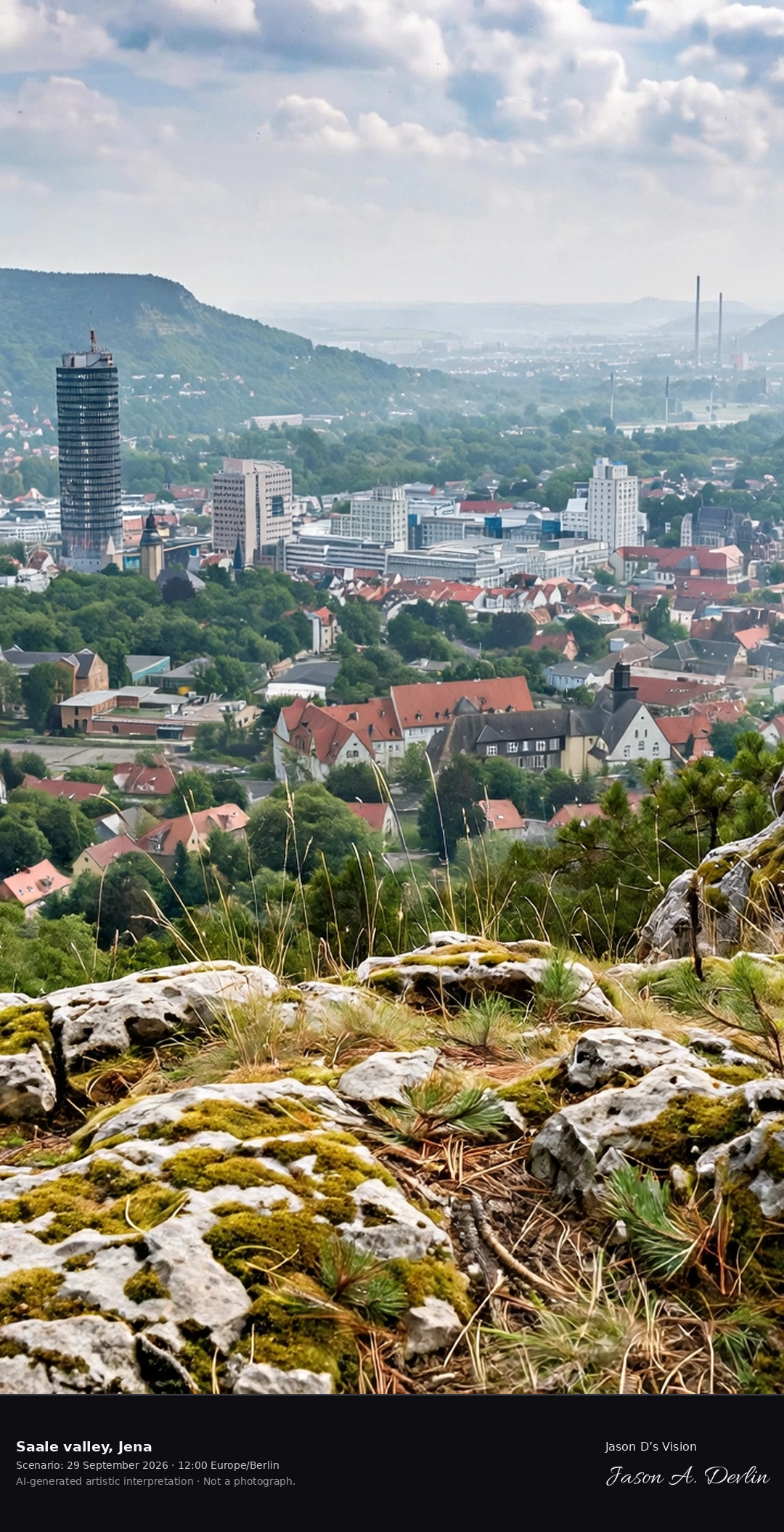
From a limestone-slope viewpoint above the city, Jena's lights spread warmly through the Saale valley below while dark rocky cliffs frame the scene on both sides. The tall JenTower rises among the glowing rooftops in the center, a winding river glints to one side, and a field of stars fills the mostly clear night sky overhead. The Muschelkalk slopes fade into darkness at the edges, making the illuminated valley feel like a bowl of light under the open sky.
Monument and outlook · AI-generated artistic interpretation
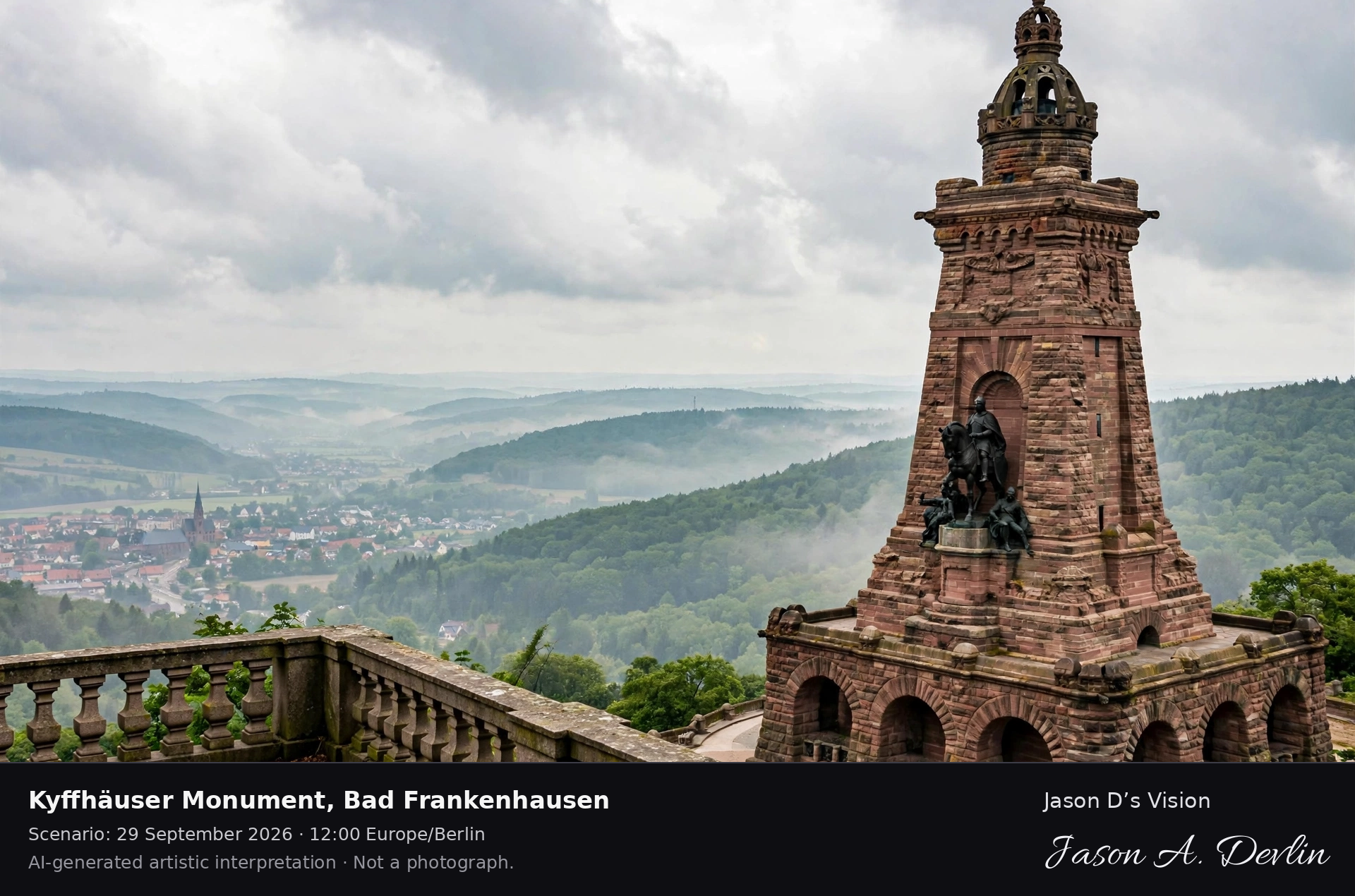
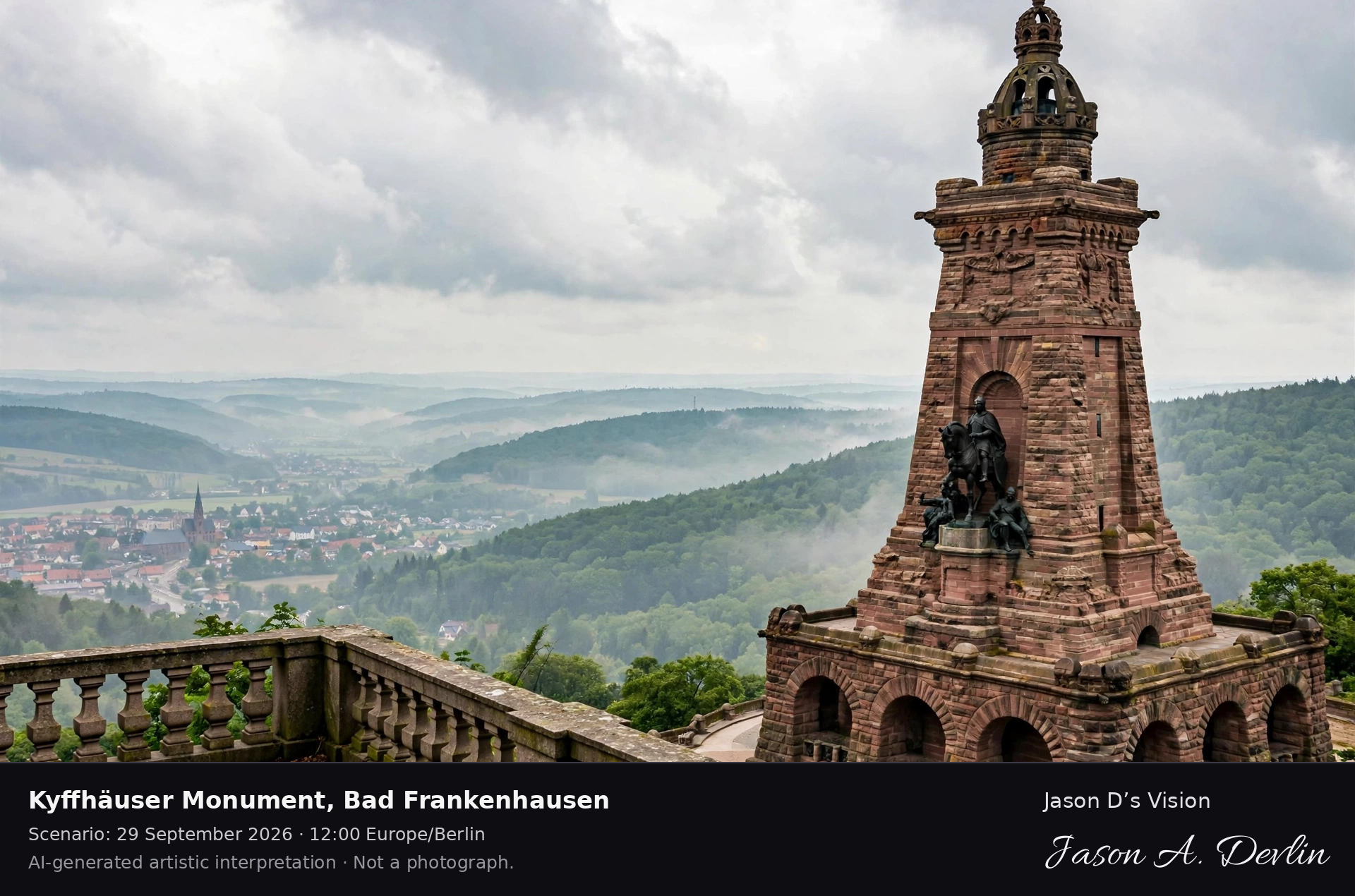
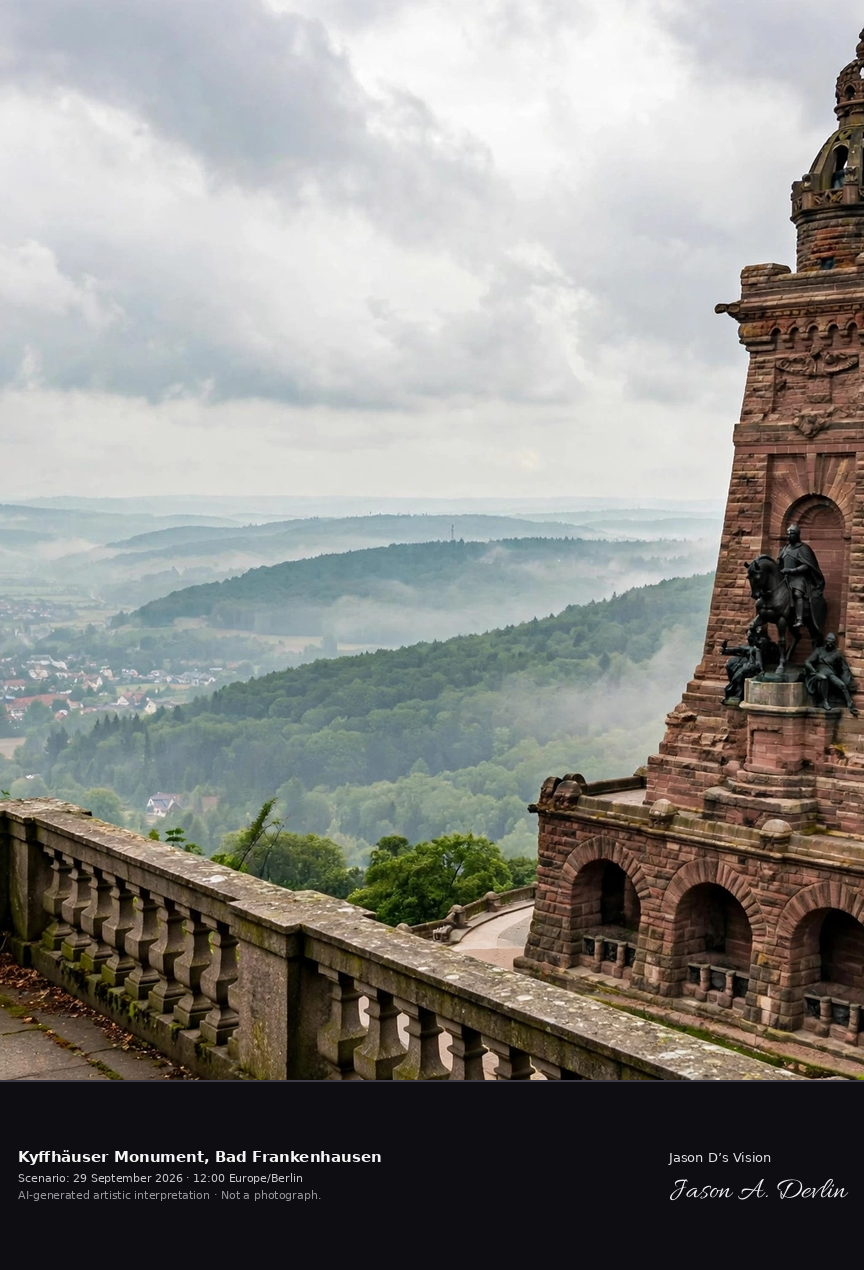
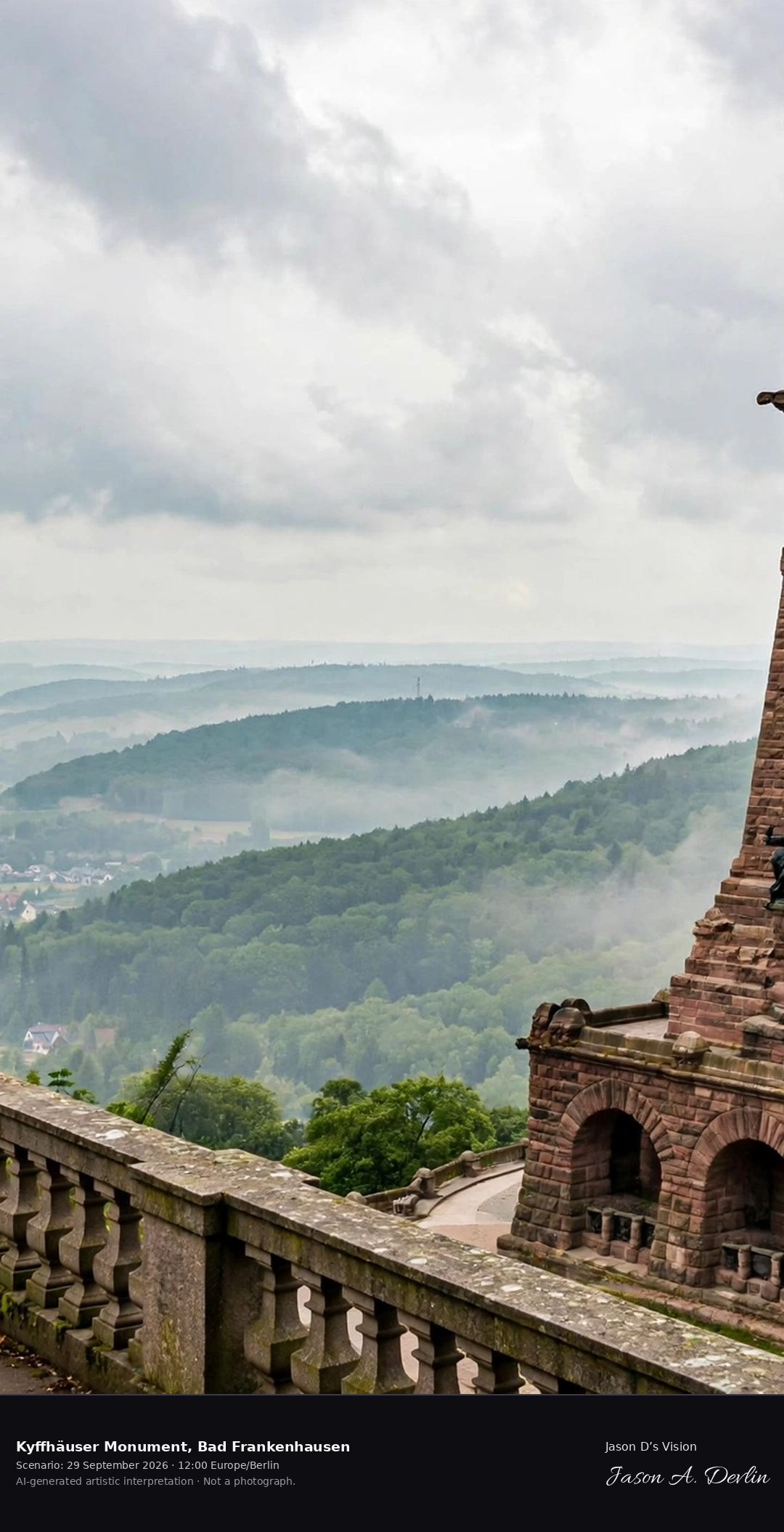
The Kyffhäuser Monument looms dark and unlit on its summit under a heavy overcast night sky, the 57-metre stone tower crowned by the imperial-crown lantern silhouetted against the clouds. The equestrian statue of Kaiser Wilhelm I stands in its niche above the tower shaft, the arcaded terrace base spreading wide, and mist drifting through the forested ridge and valley behind. The composition holds the monument on one side with the layered night landscape falling away beside it — monumental, silent, and honestly dark at 01:00.
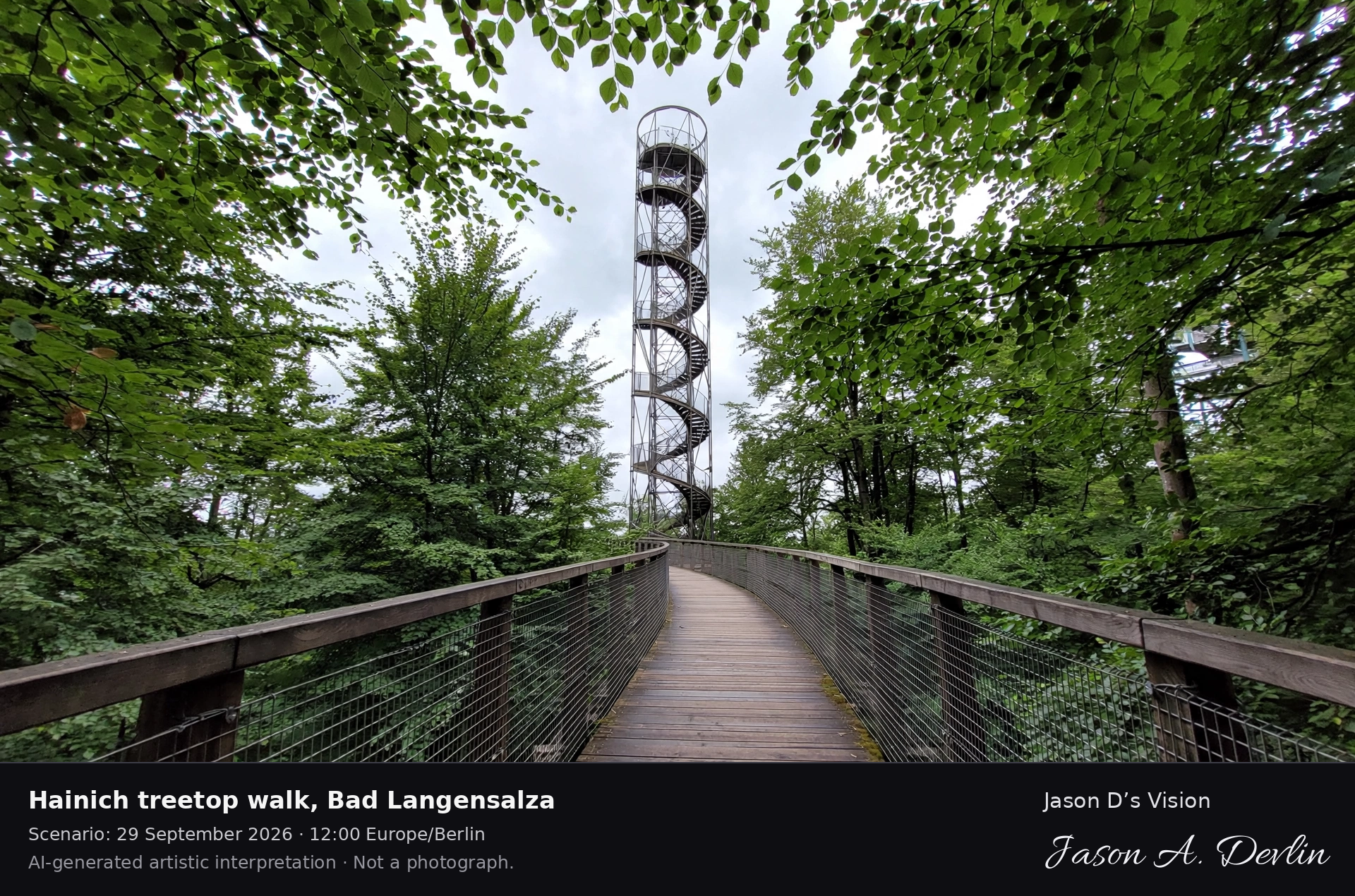
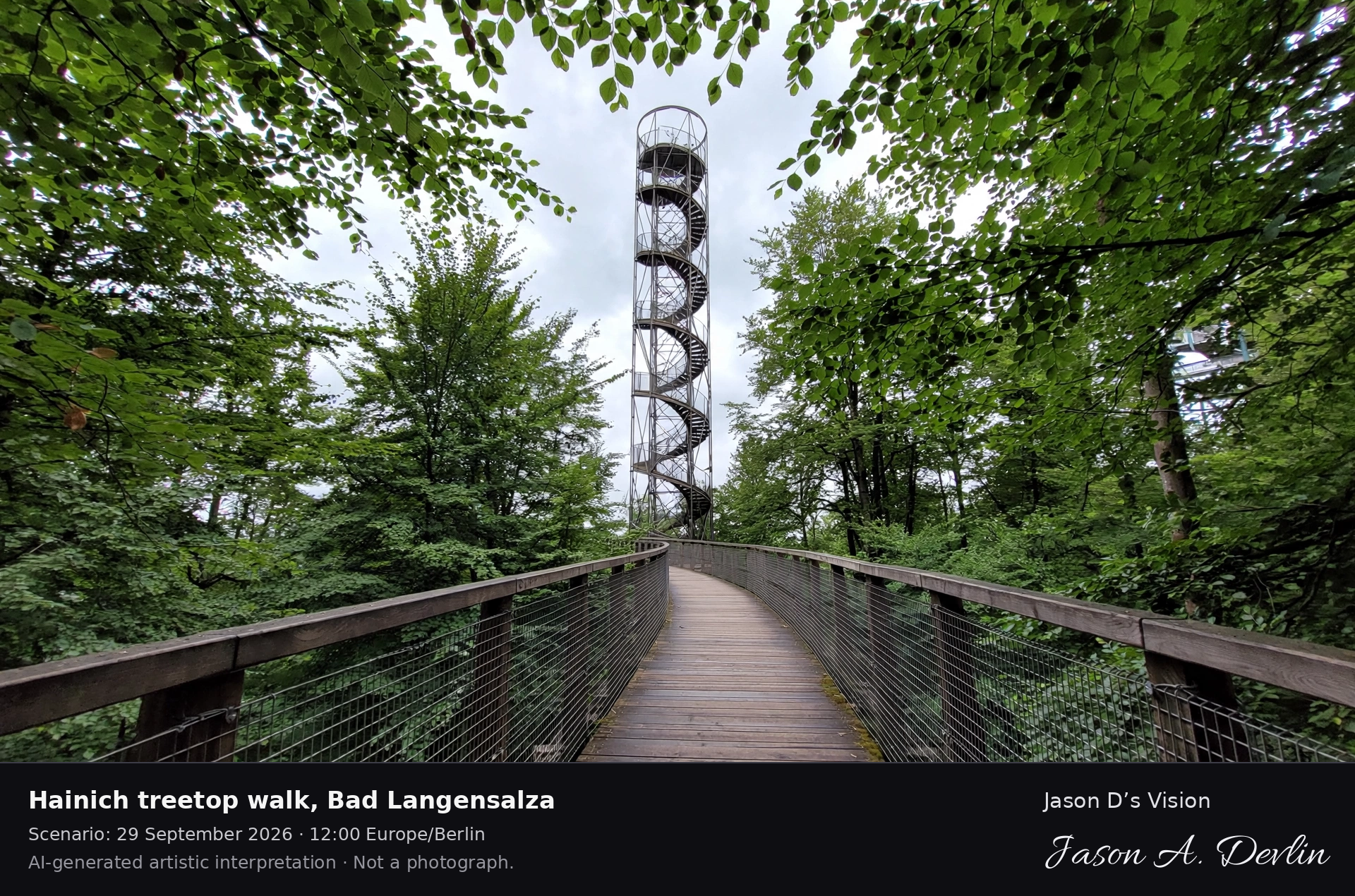
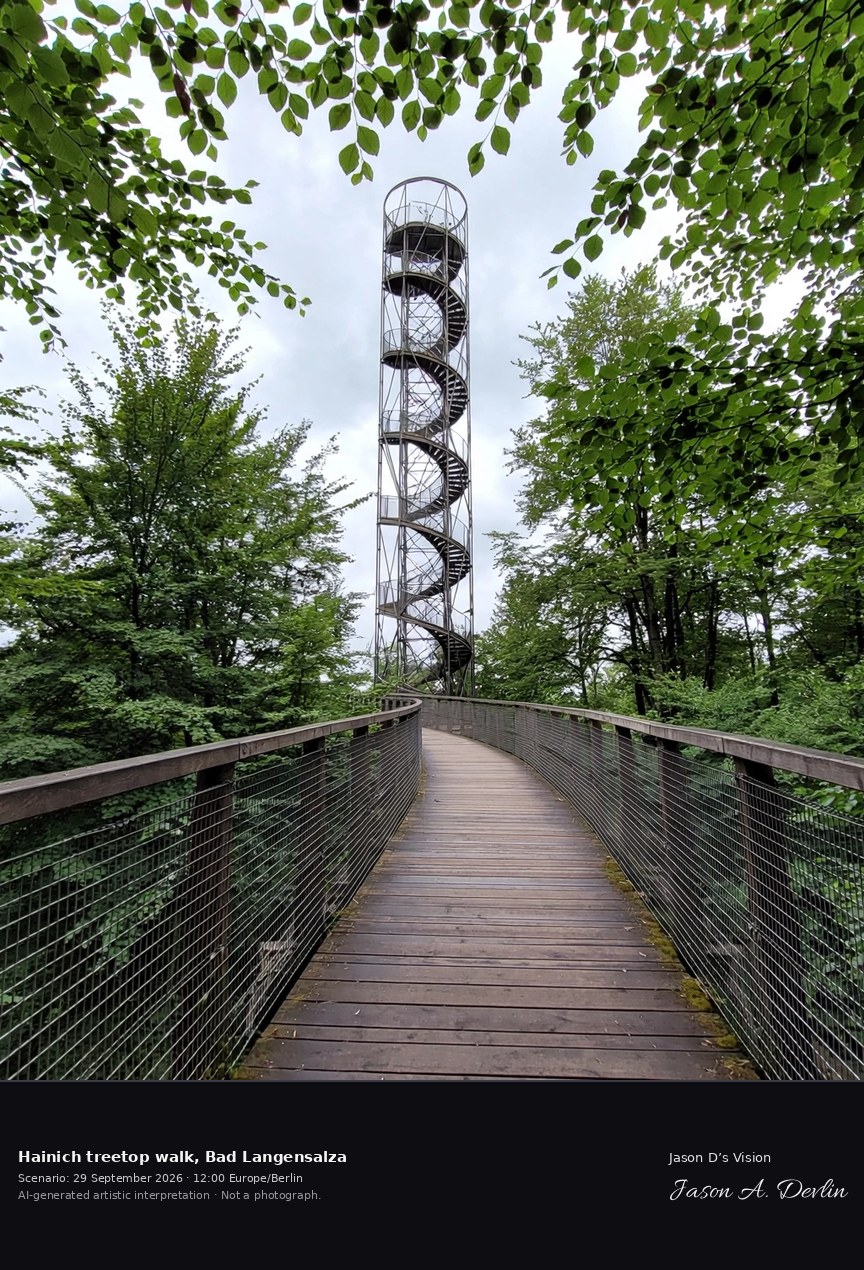
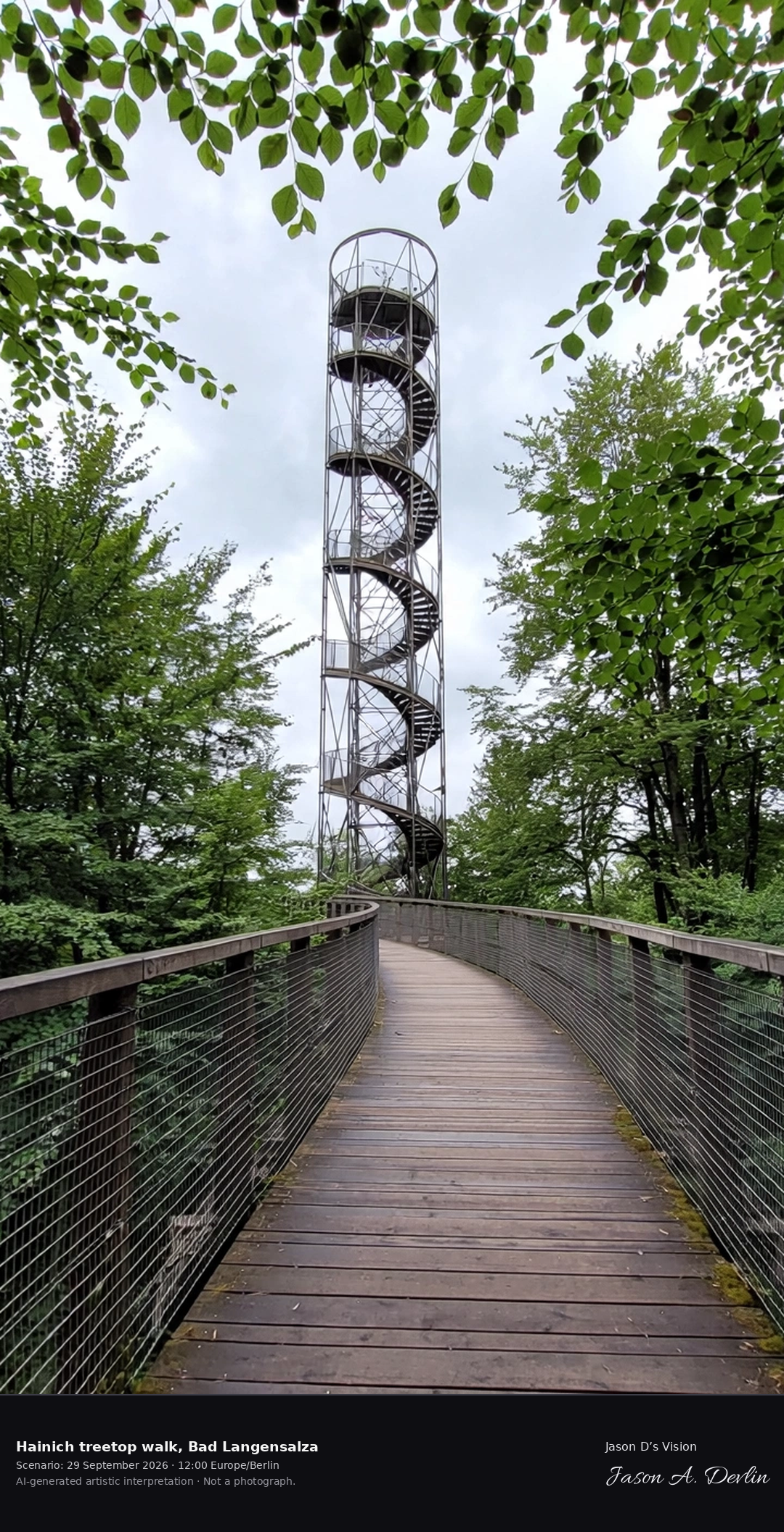
Standing on the Hainich treetop walk itself, the wooden boardwalk with its cable railings curves ahead through the dark beech canopy toward the tall observation tower rising above the treetops. Beech crowns press in on both sides of the frame, leaves catching faint ambient light under the overcast night sky, while the unlit walkway stretches on, quiet and empty. The path pulls the eye upward along the tower — the only vertical accent in a horizontal world of treetops.
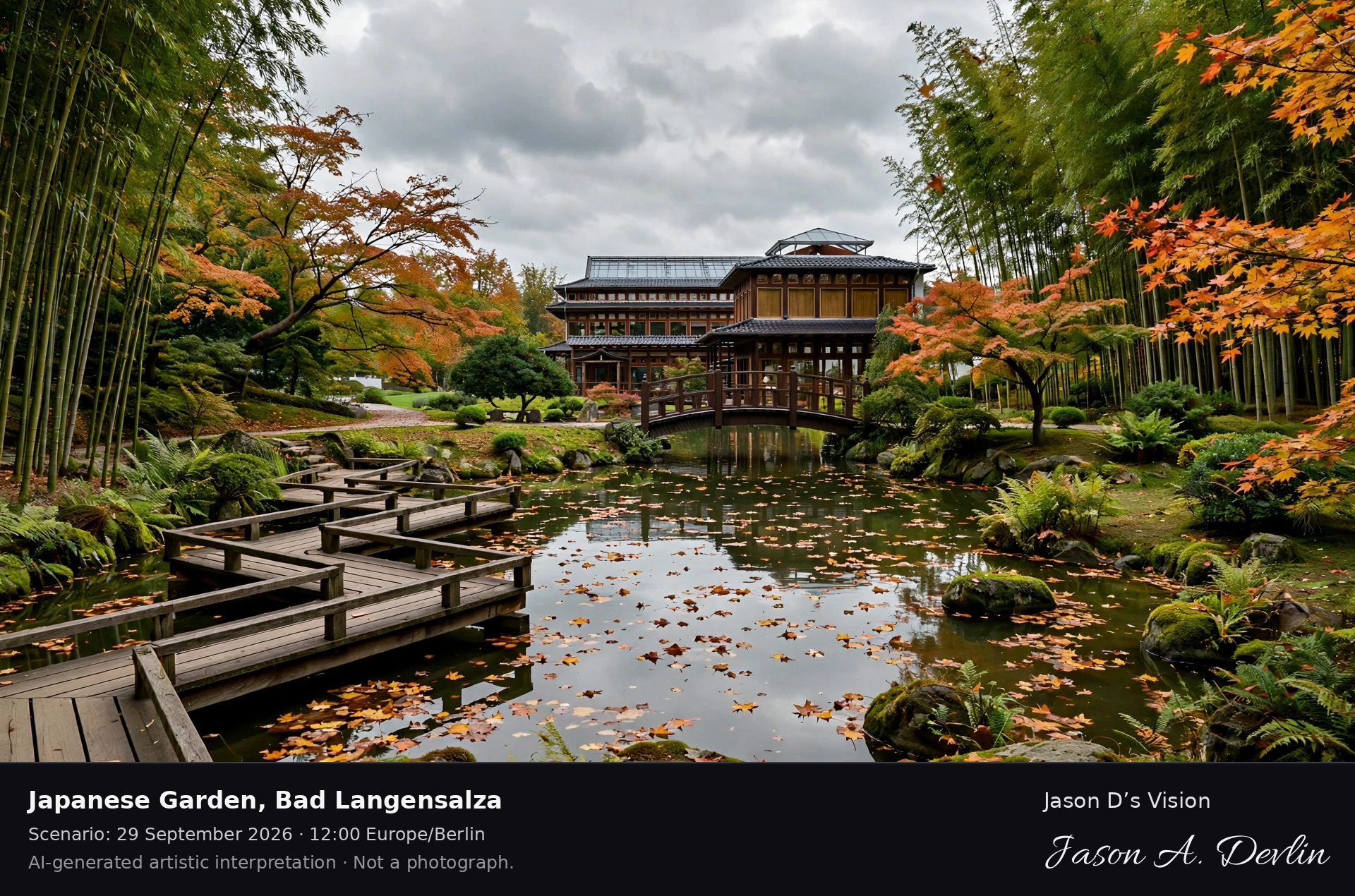
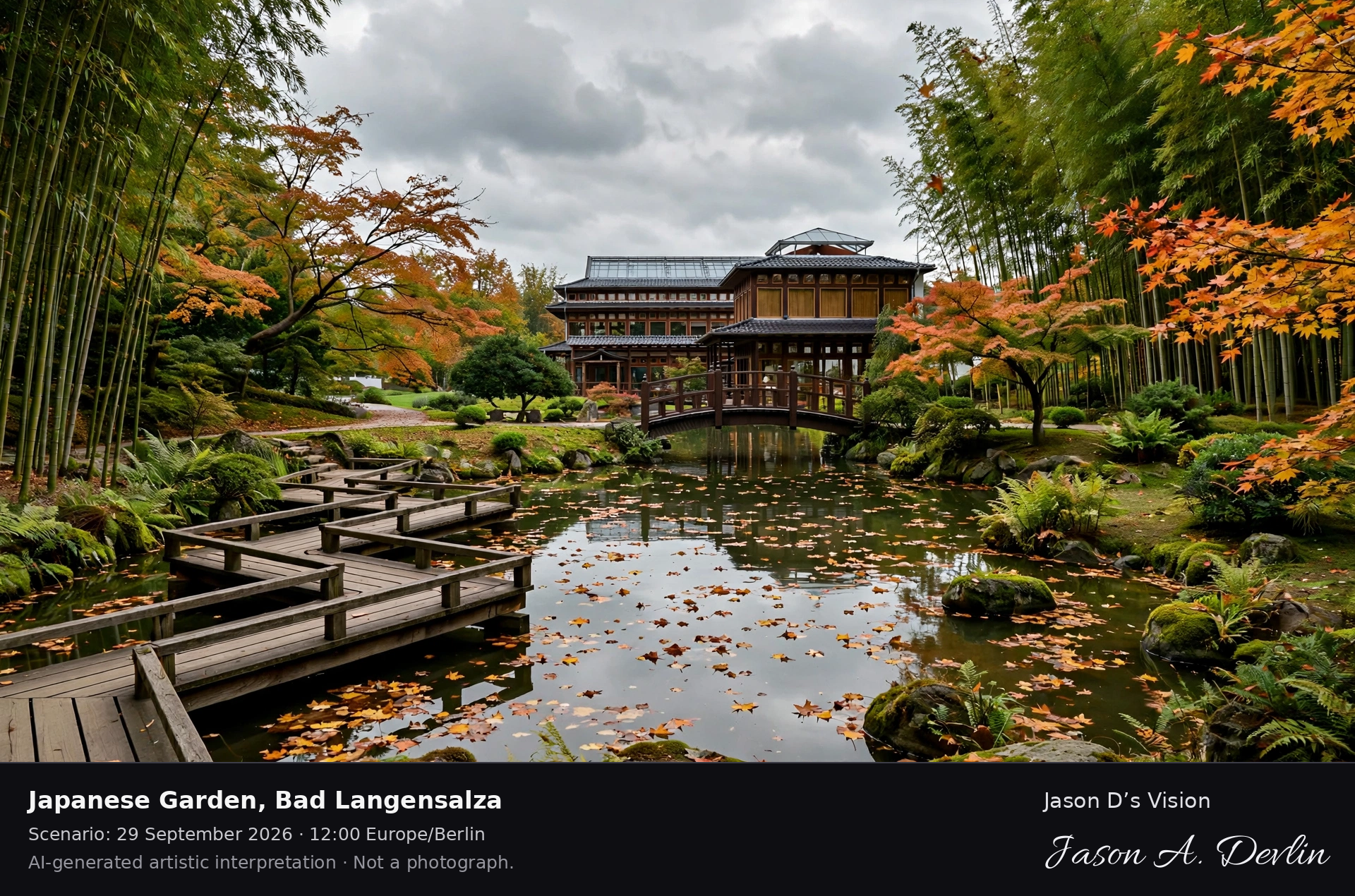
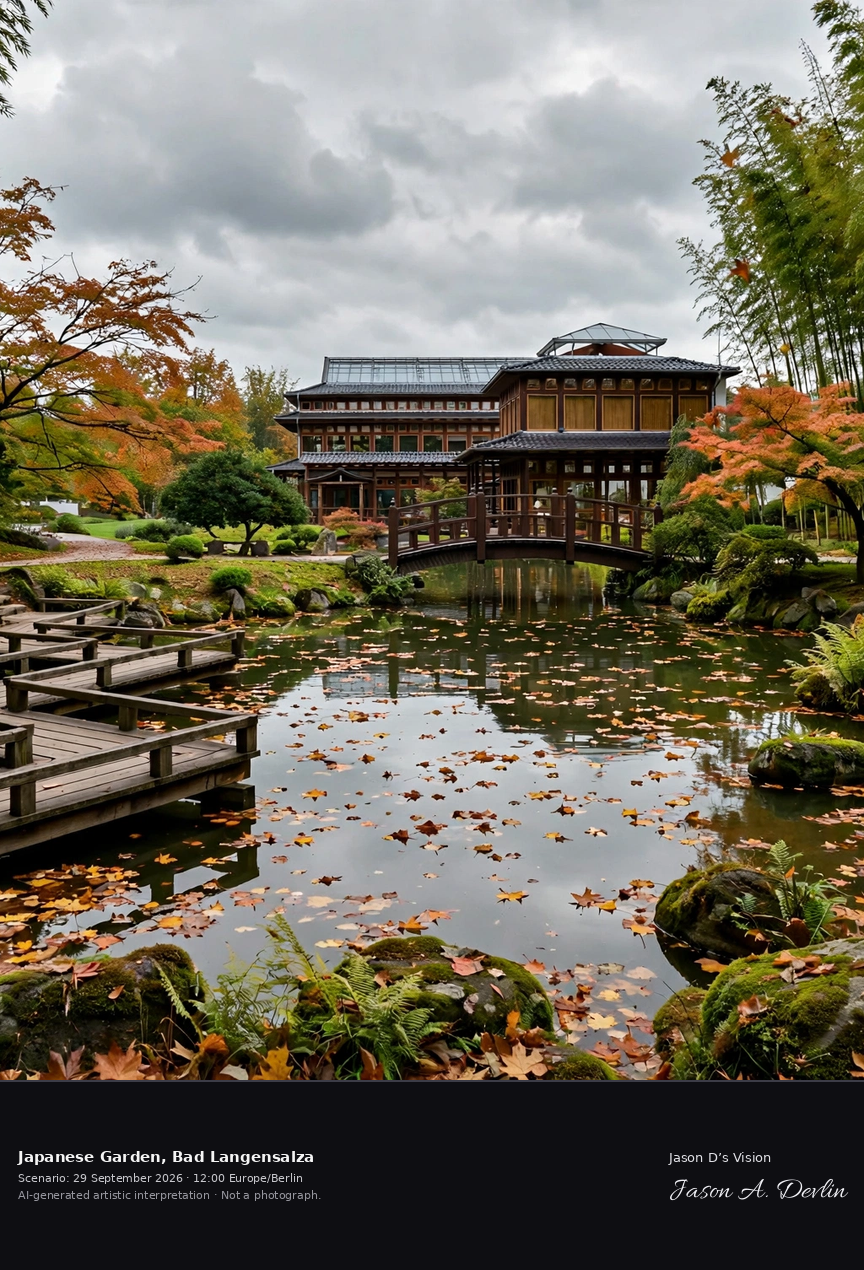
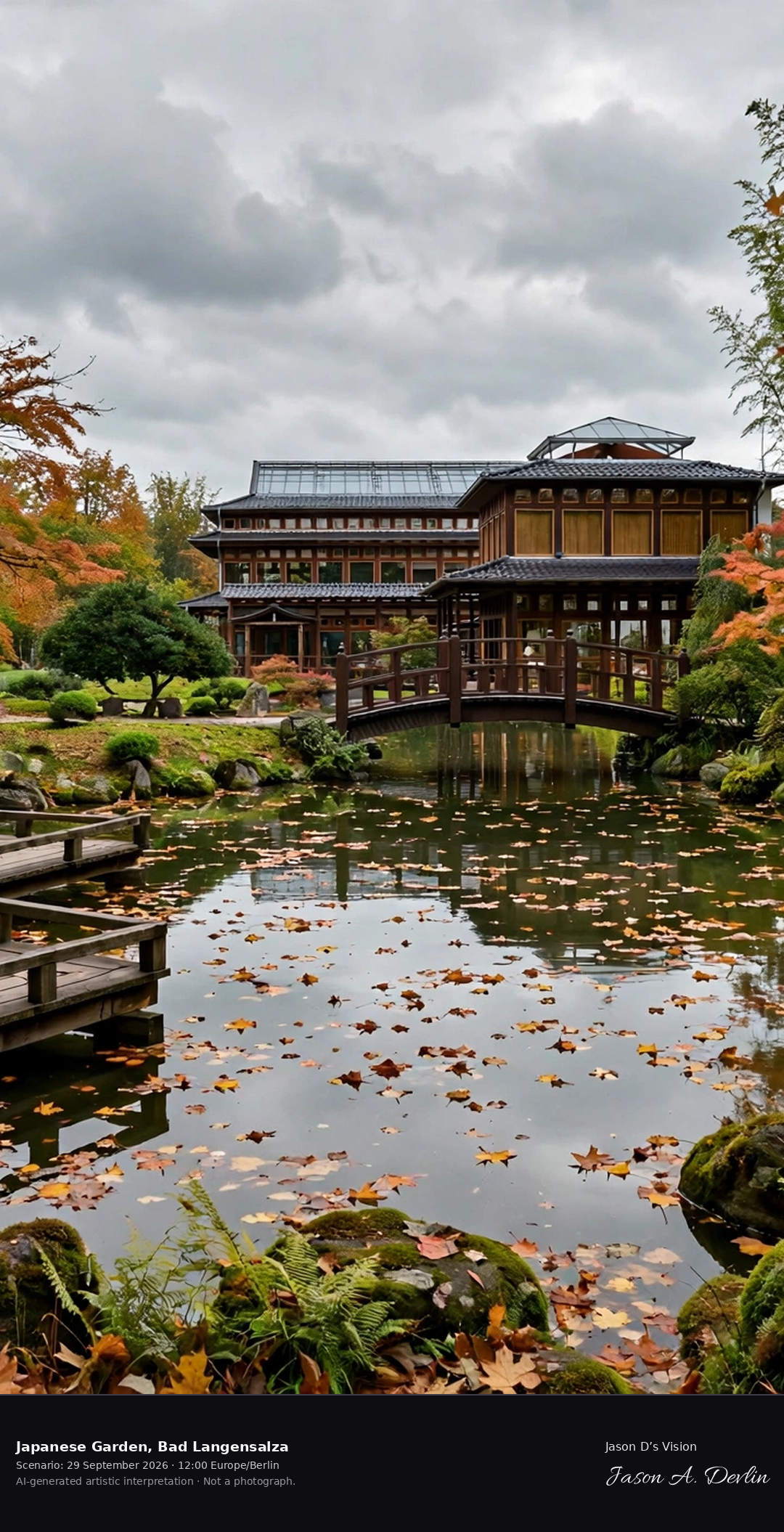
In Bad Langensalza's Japanese Garden of Bliss after hours, a stone bridge arches over the dark pond in the foreground while the tea house with its traditional tiled roof sits among maples and bamboo behind. Moss-covered rocks and clipped shrubs ring the water's edge, fallen leaves drifting on its surface, the whole garden resting in deep overcast night stillness. Only faint ambient light shapes the scene — the garden is quiet, closed for the night, exactly as a 01:00 visit would find it.
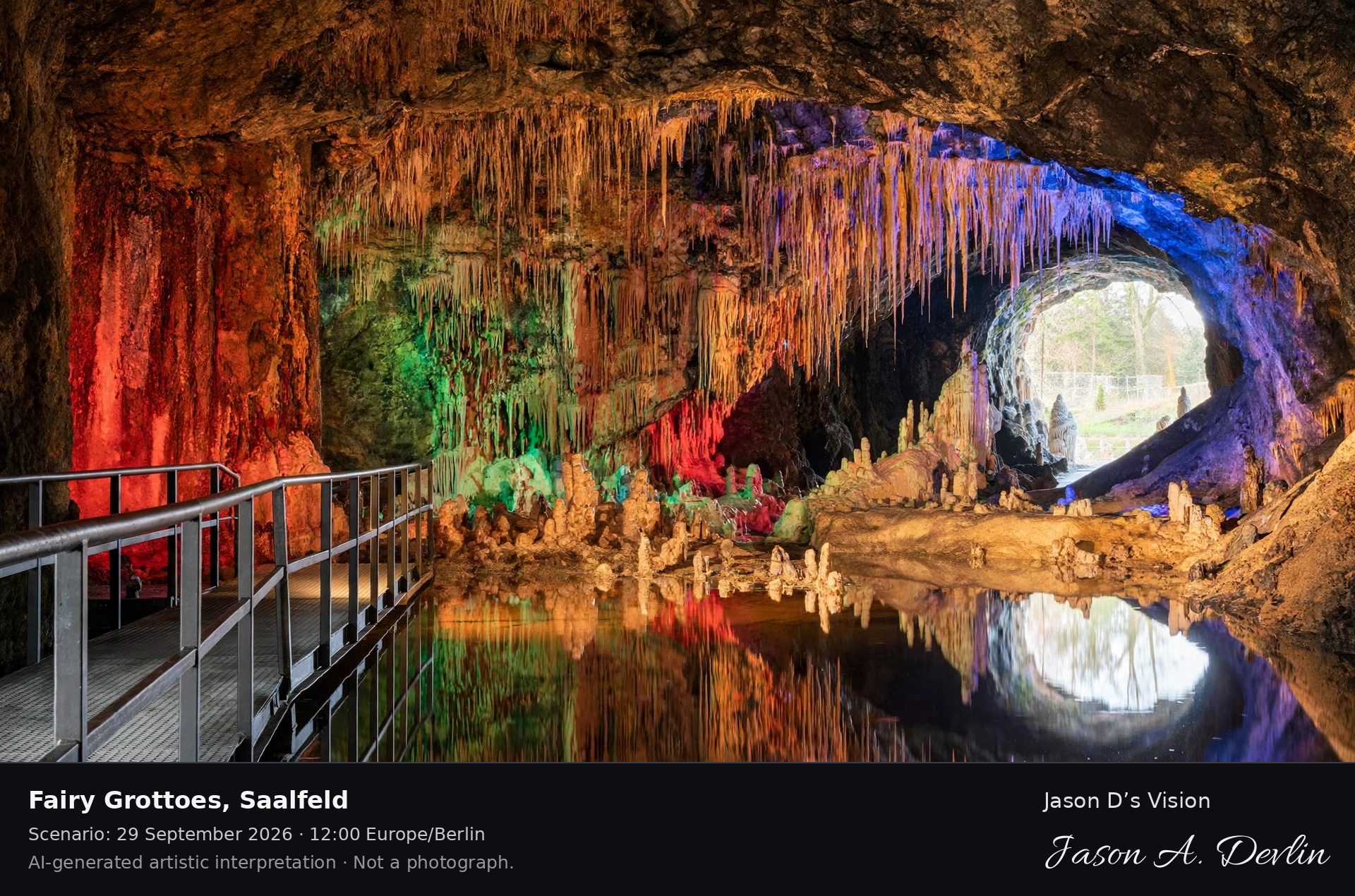
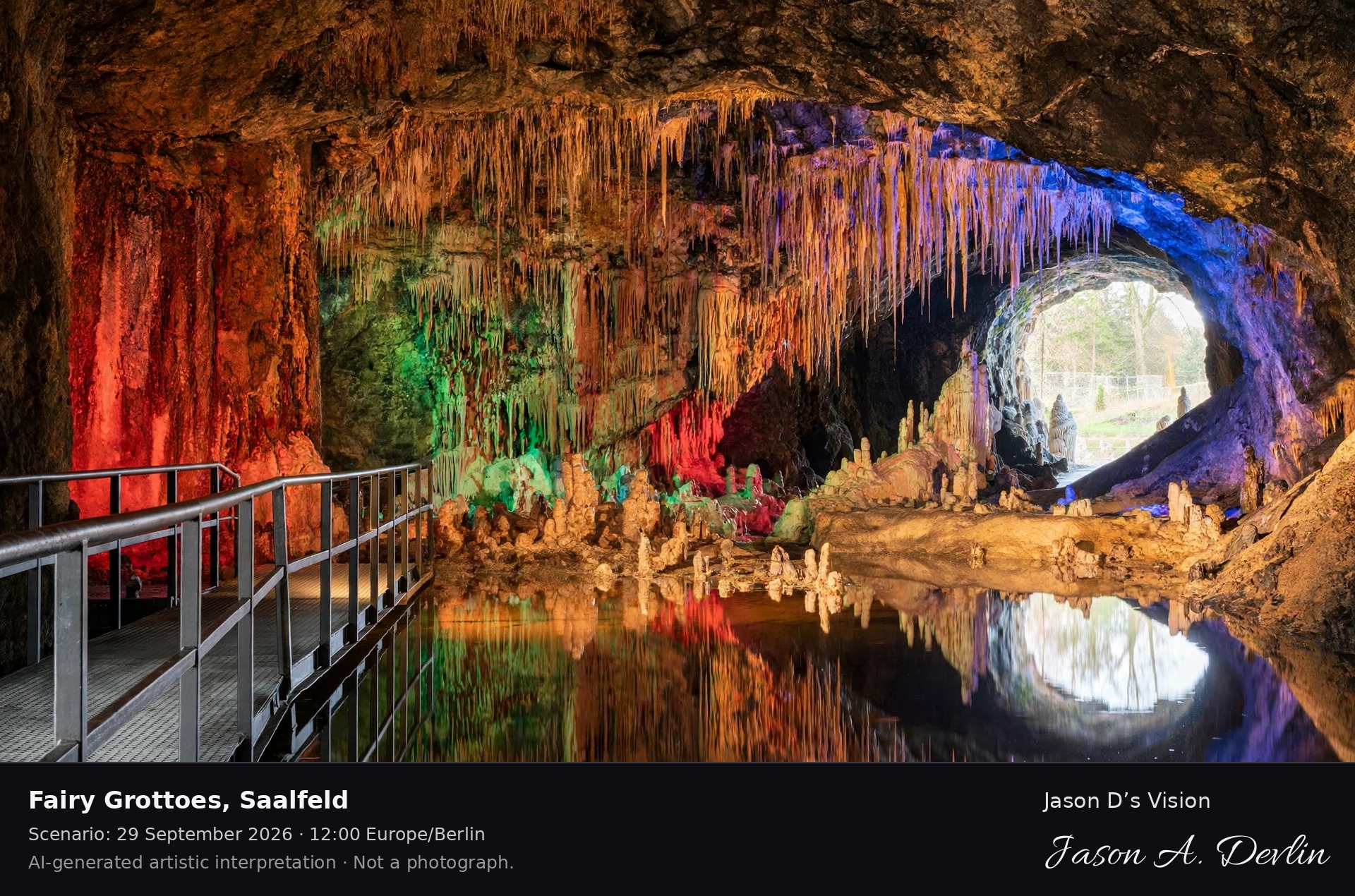
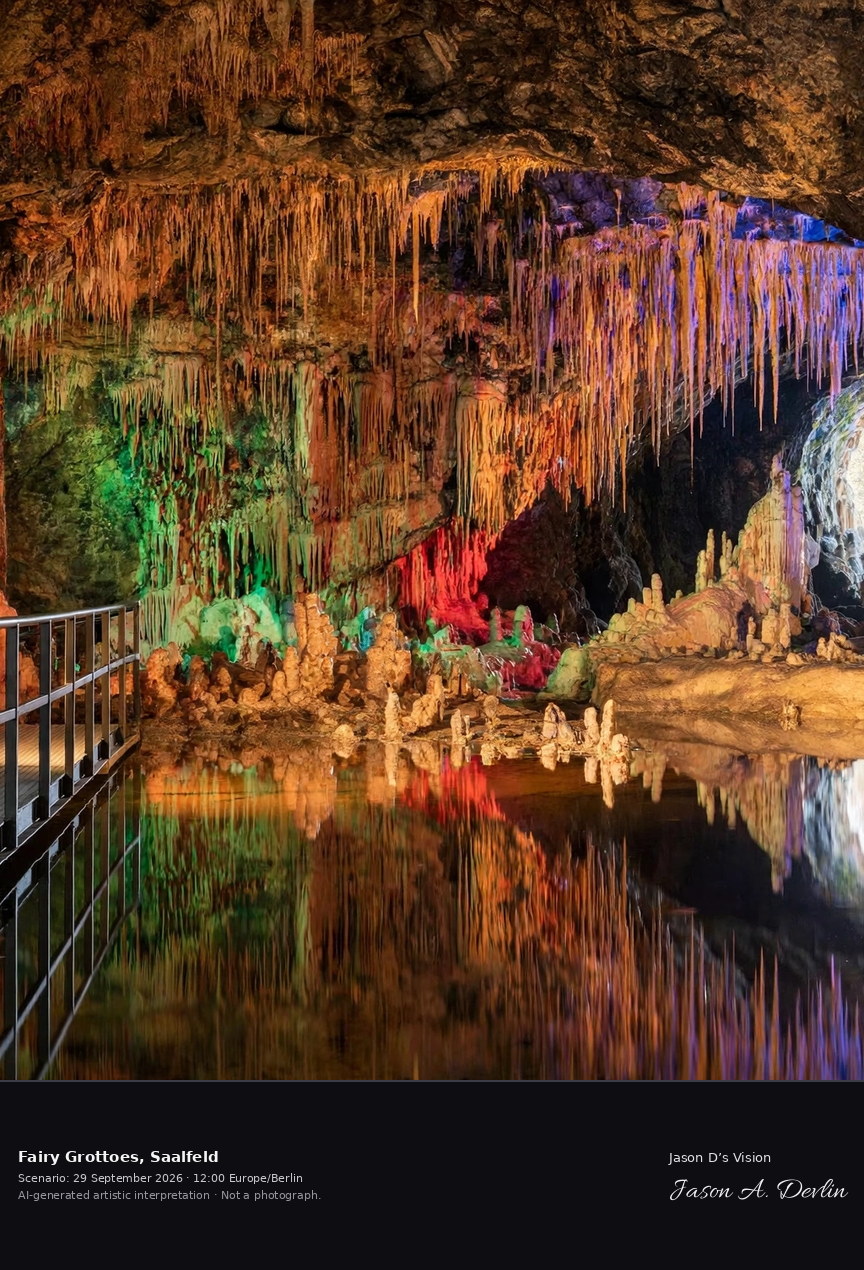
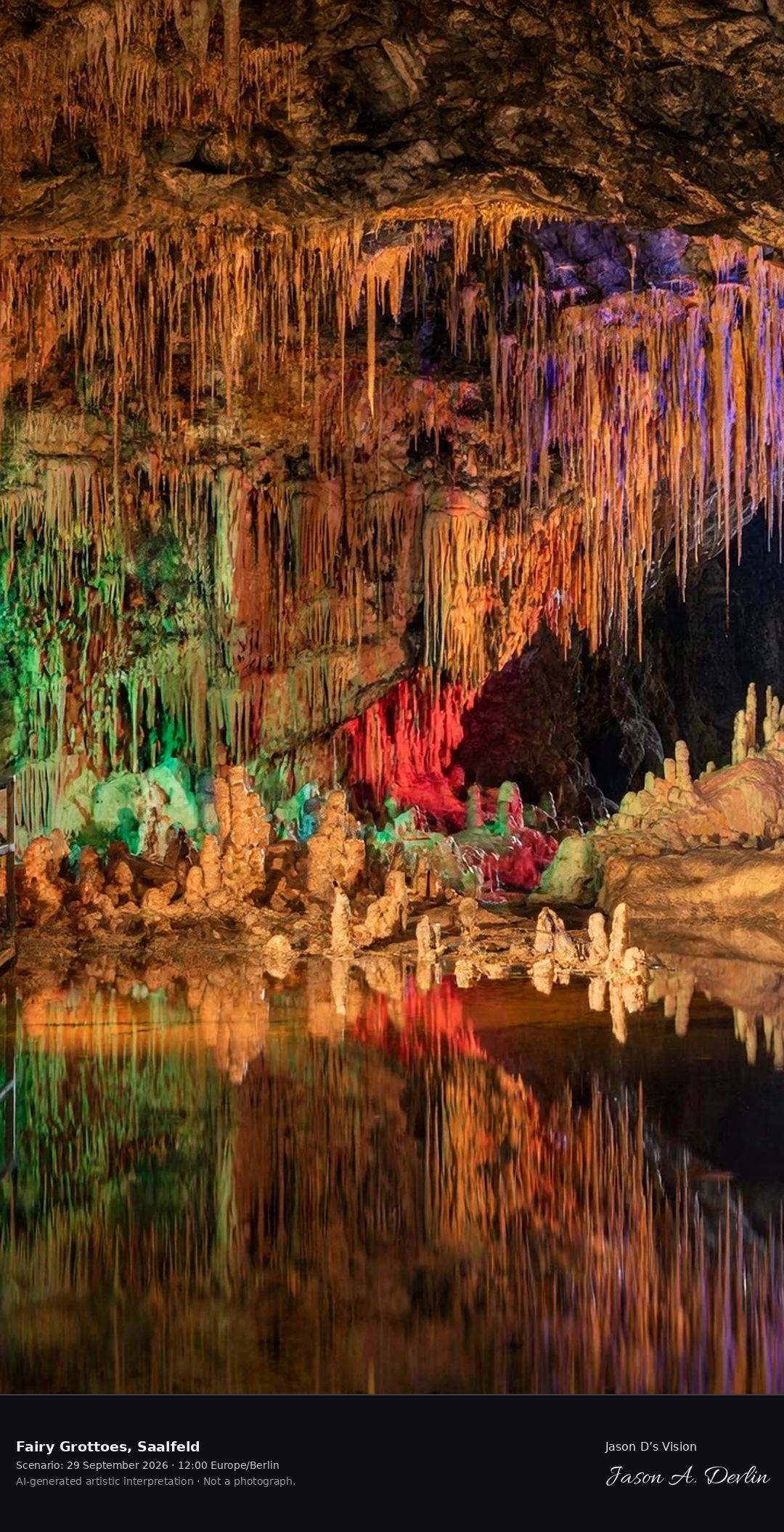
Inside the Saalfeld Fairy Grottoes, the Märchendom chamber glows with theatrical light: tall columns of stalactites and stalagmites in ochre, red, green and blue rise on every side, mirrored perfectly in the still pool of water below. A tour walkway with railings runs along the left edge, and the deposits reflected in the water suggest miniature castles and spires. The controlled show-cave lighting is the real illumination of the site — this is what the grottoes genuinely look like, color for color.
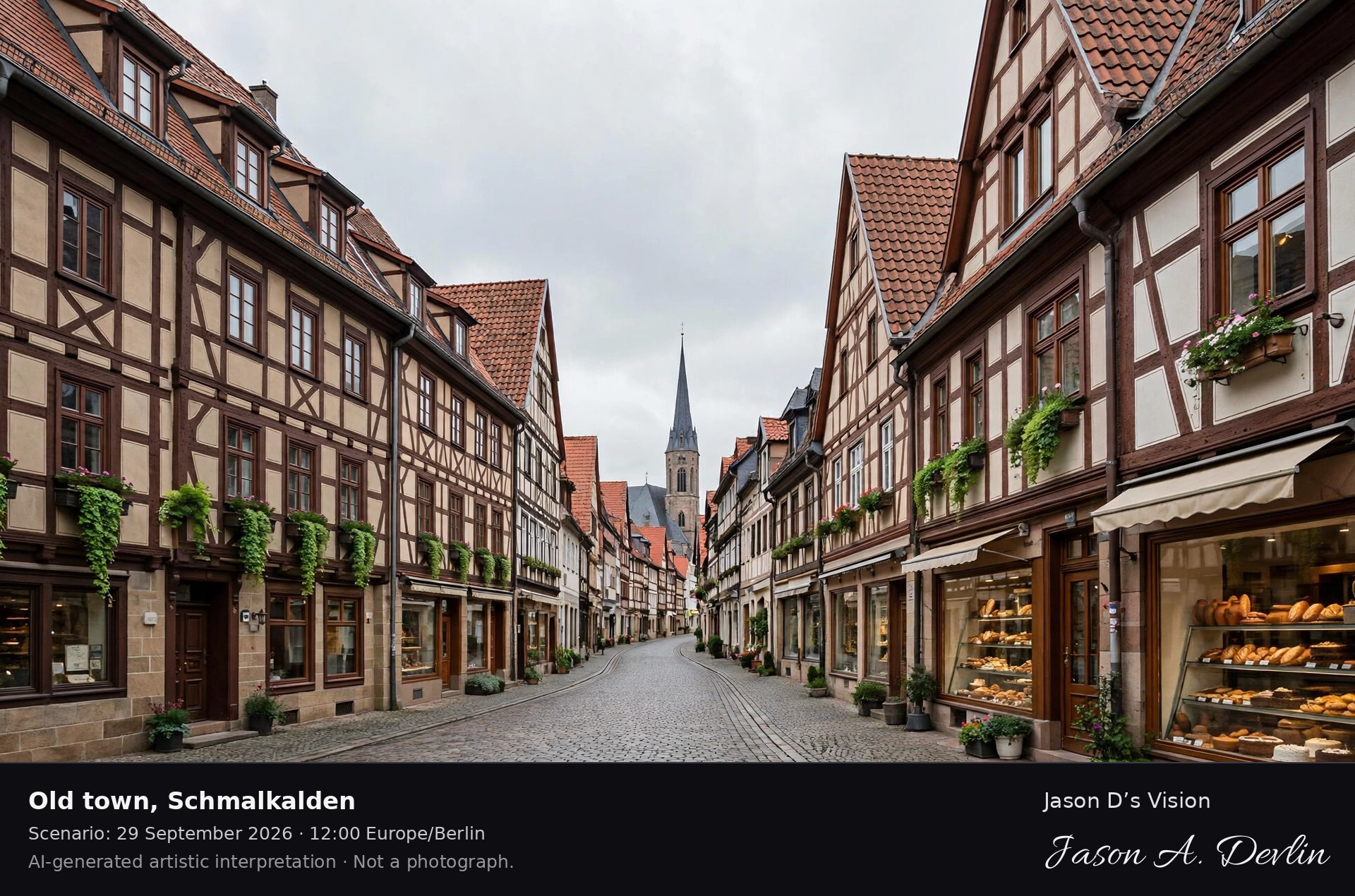
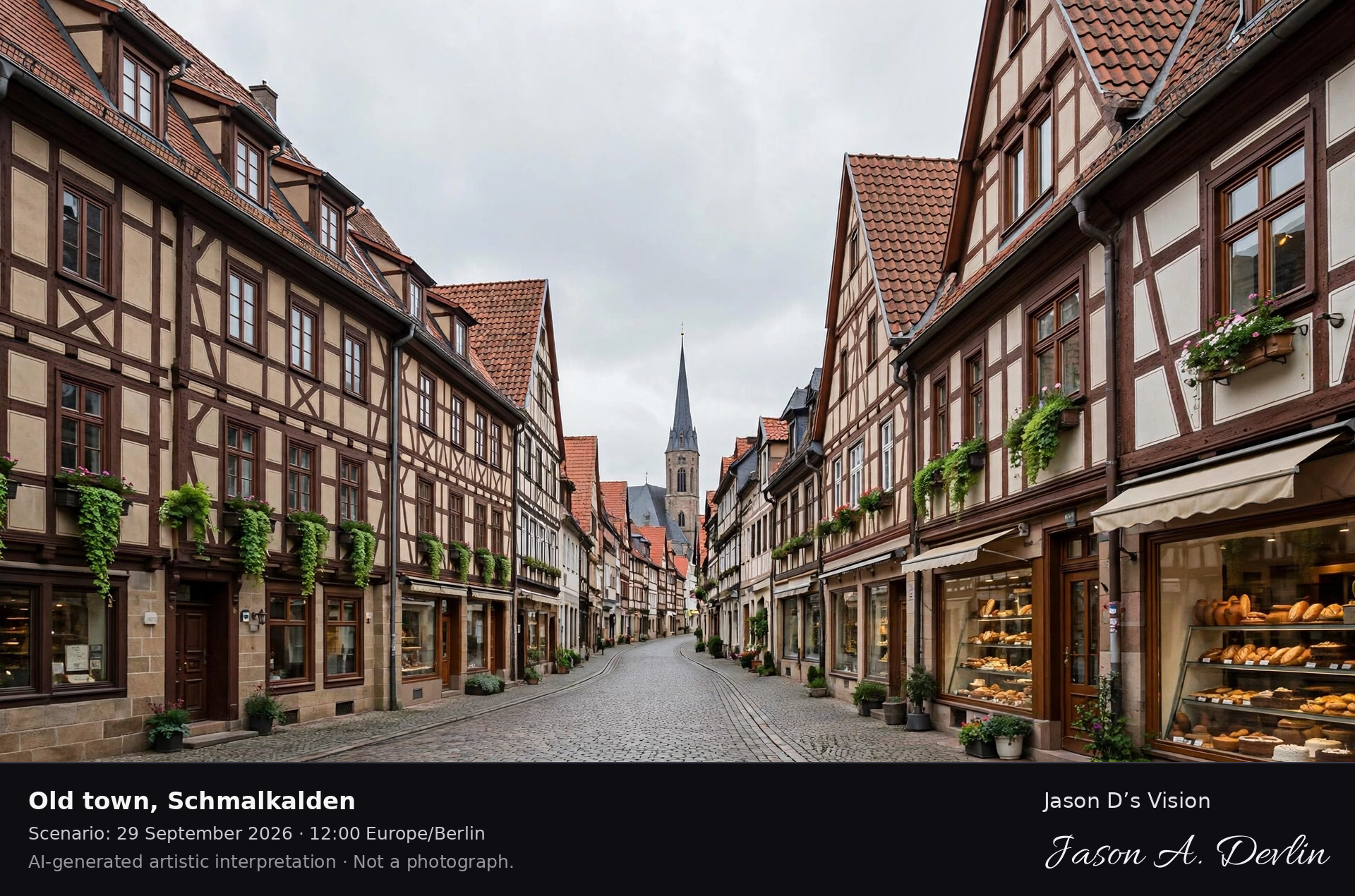
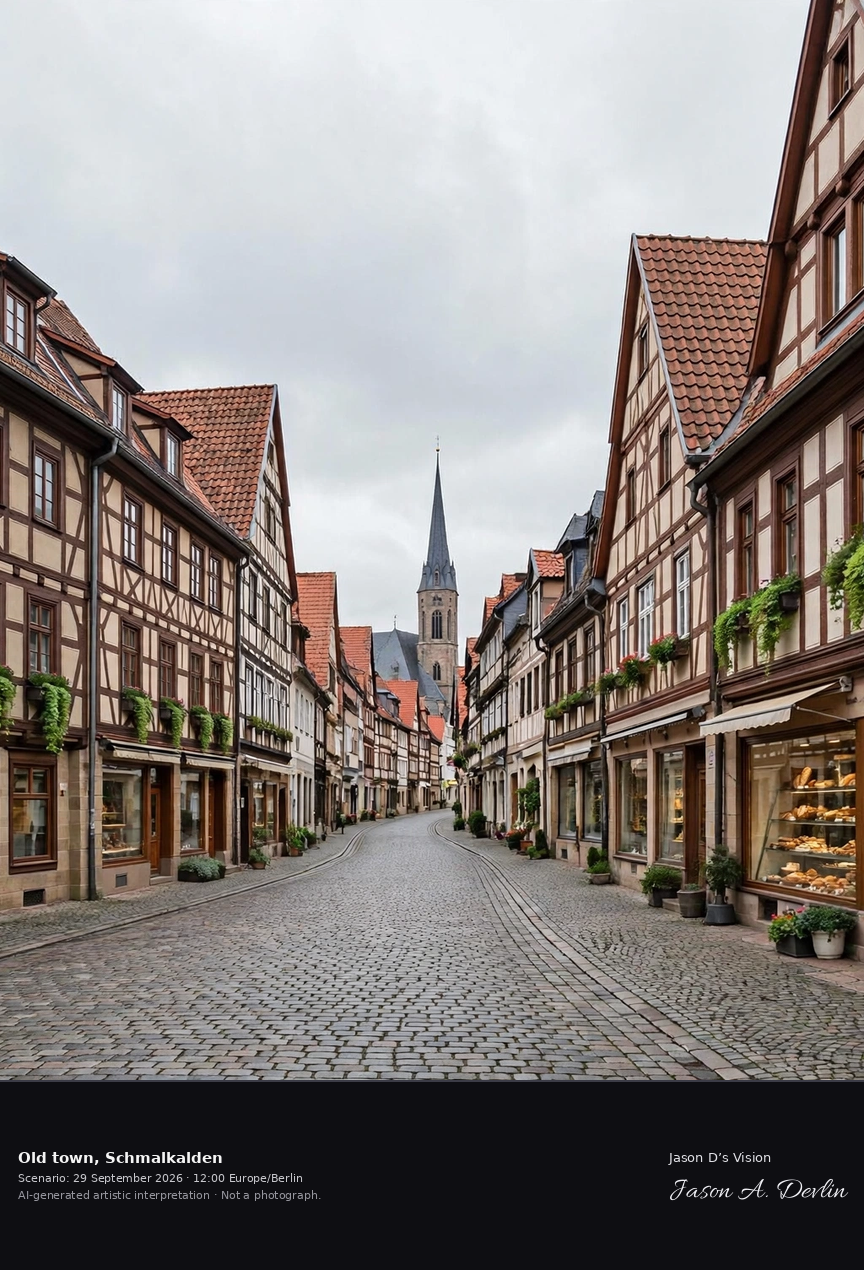
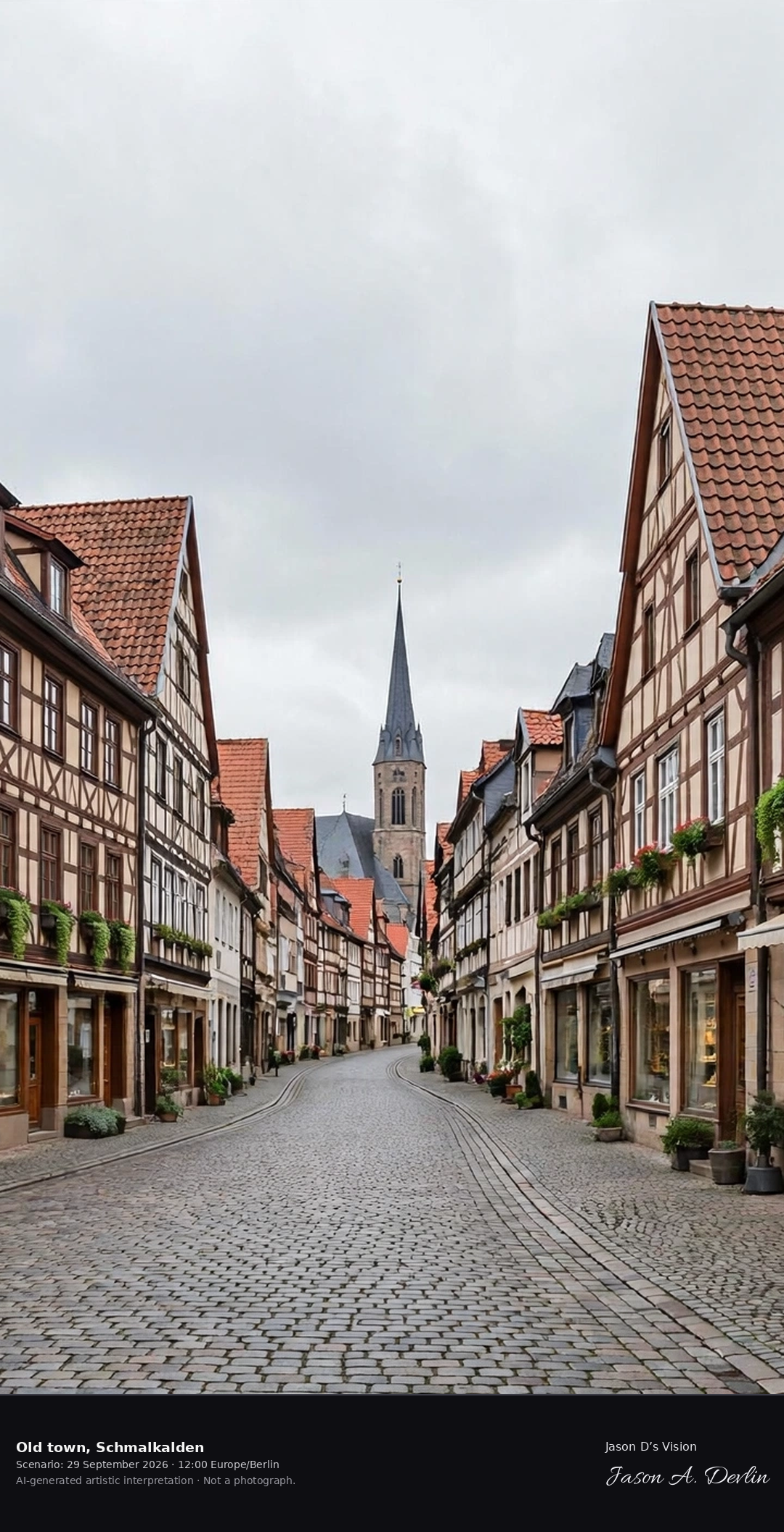
A cobbled old-town street in Schmalkalden curves between rows of half-timbered houses, their dark beams and pale infill glowing warm where windows and street lamps spill light onto the wet stones. The church spire rises at the street's end under a dark overcast sky, shutters and flower boxes dotting the facades on both sides. The scene is quiet and empty at 01:00 — a candid night view of one of Thuringia's best-preserved medieval timber-frame streets.
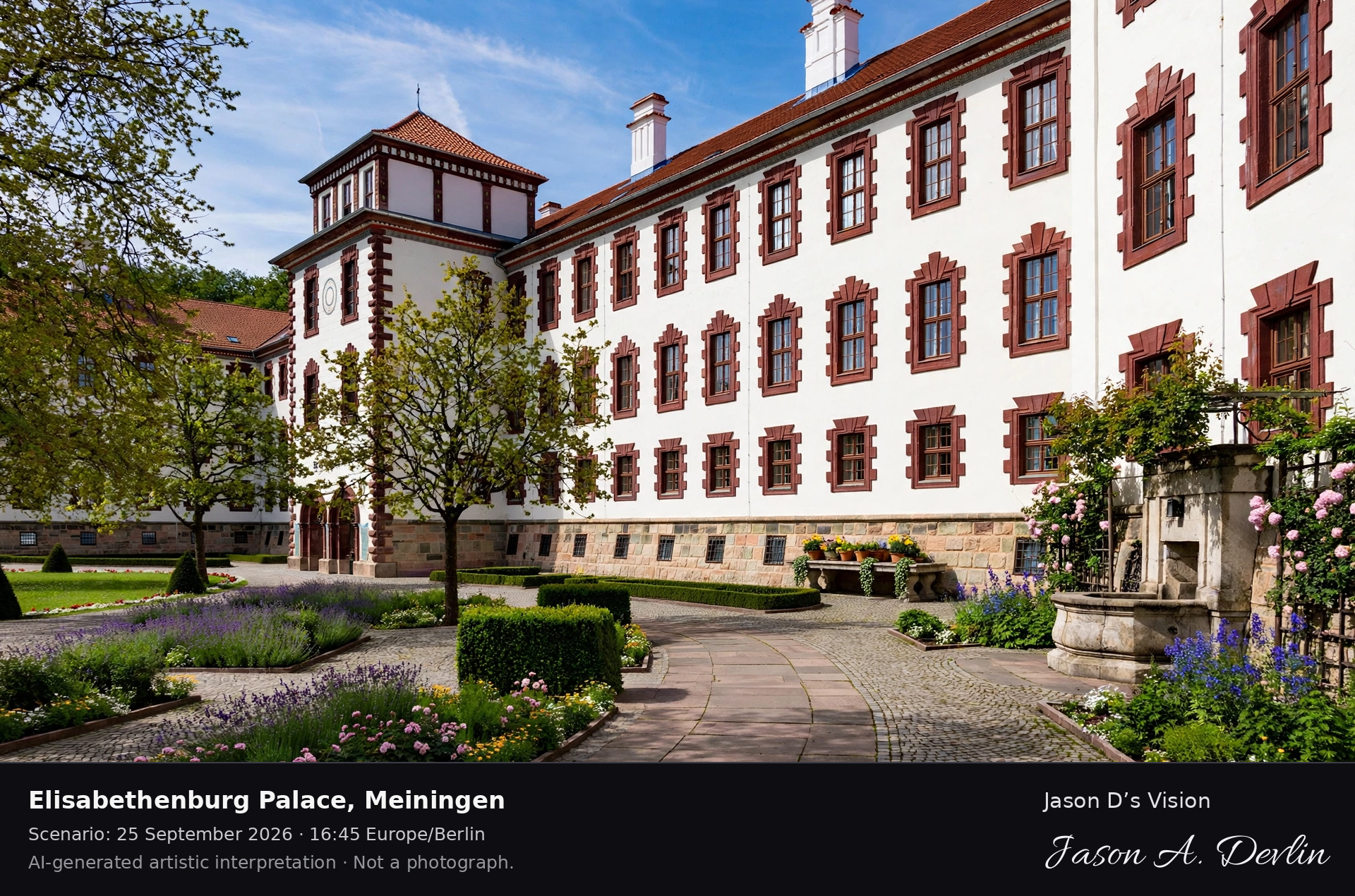
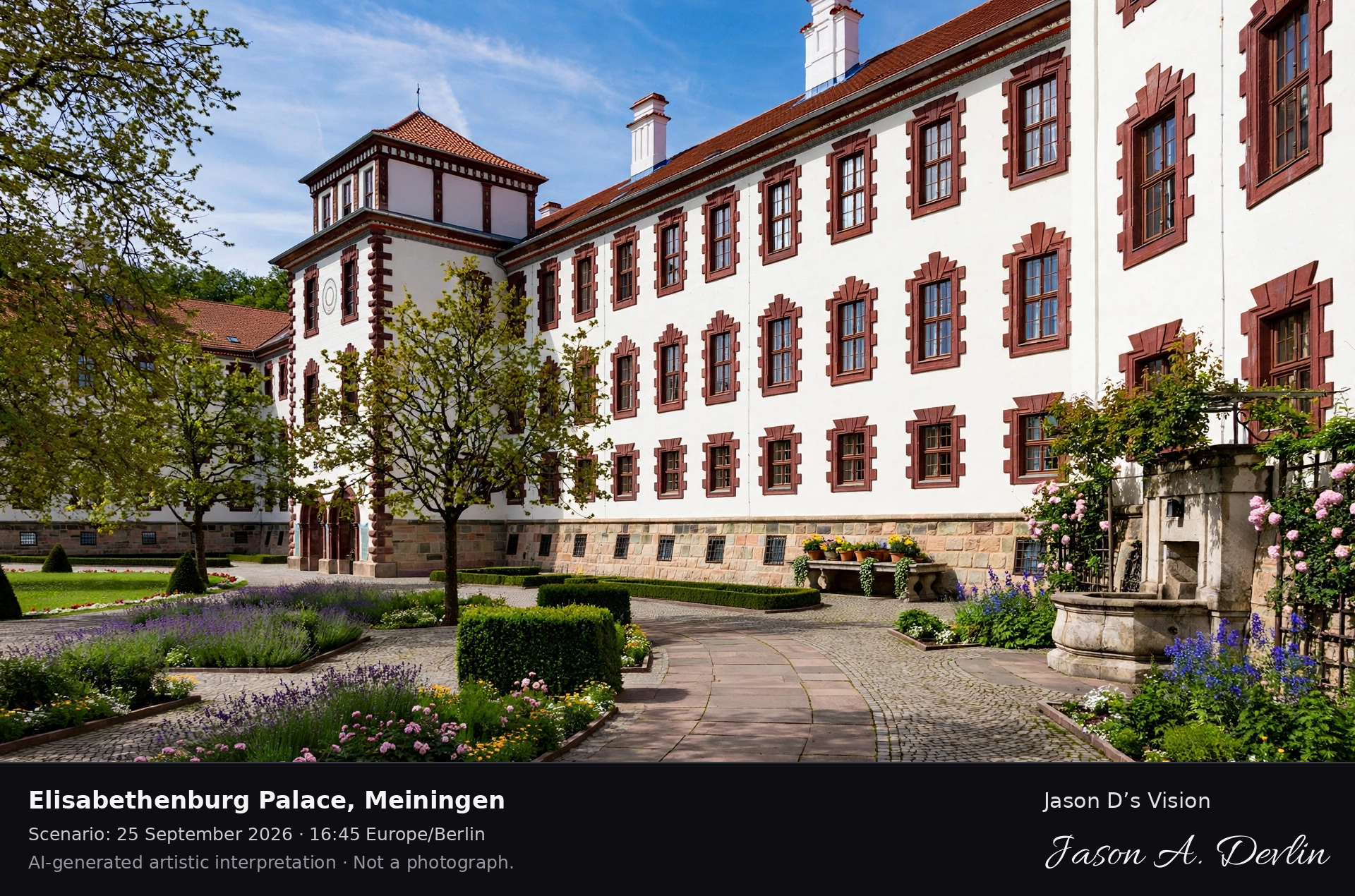
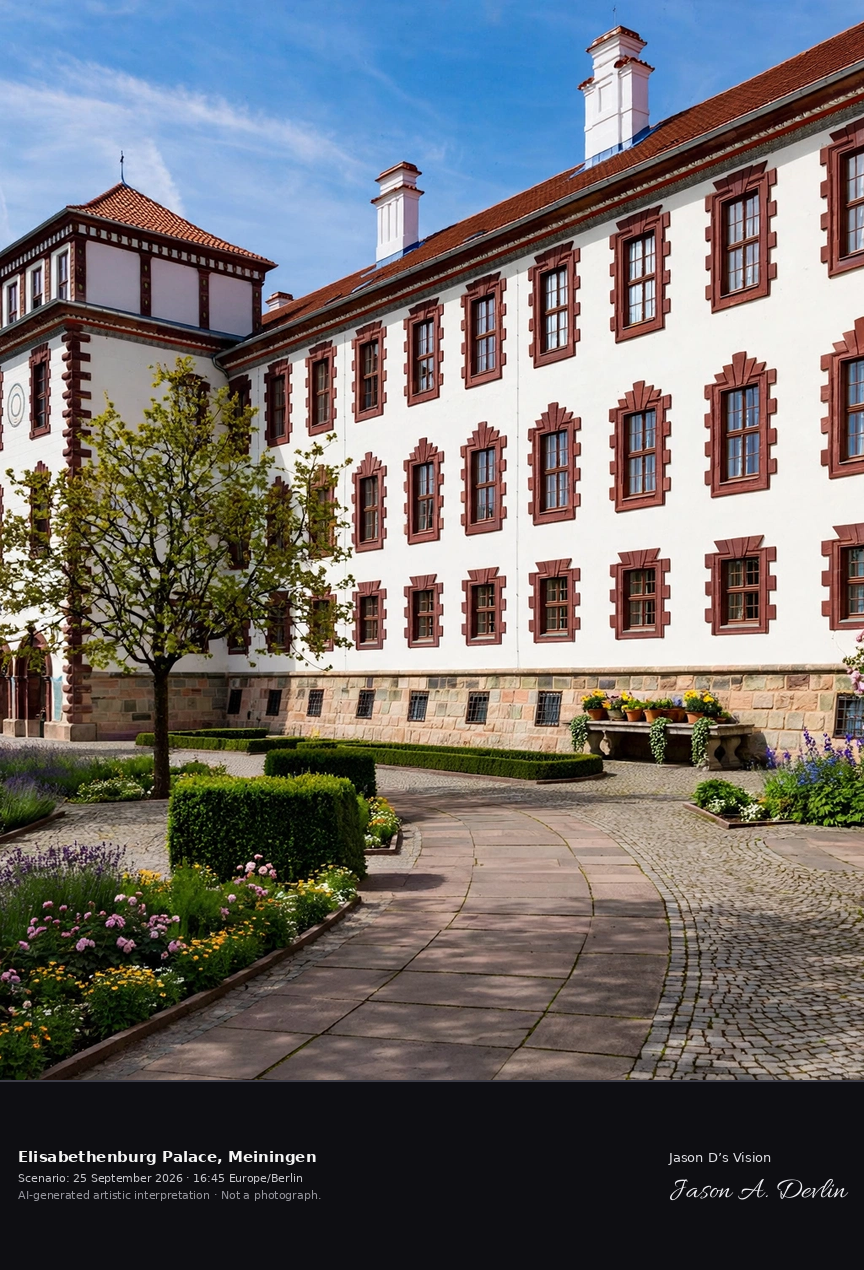
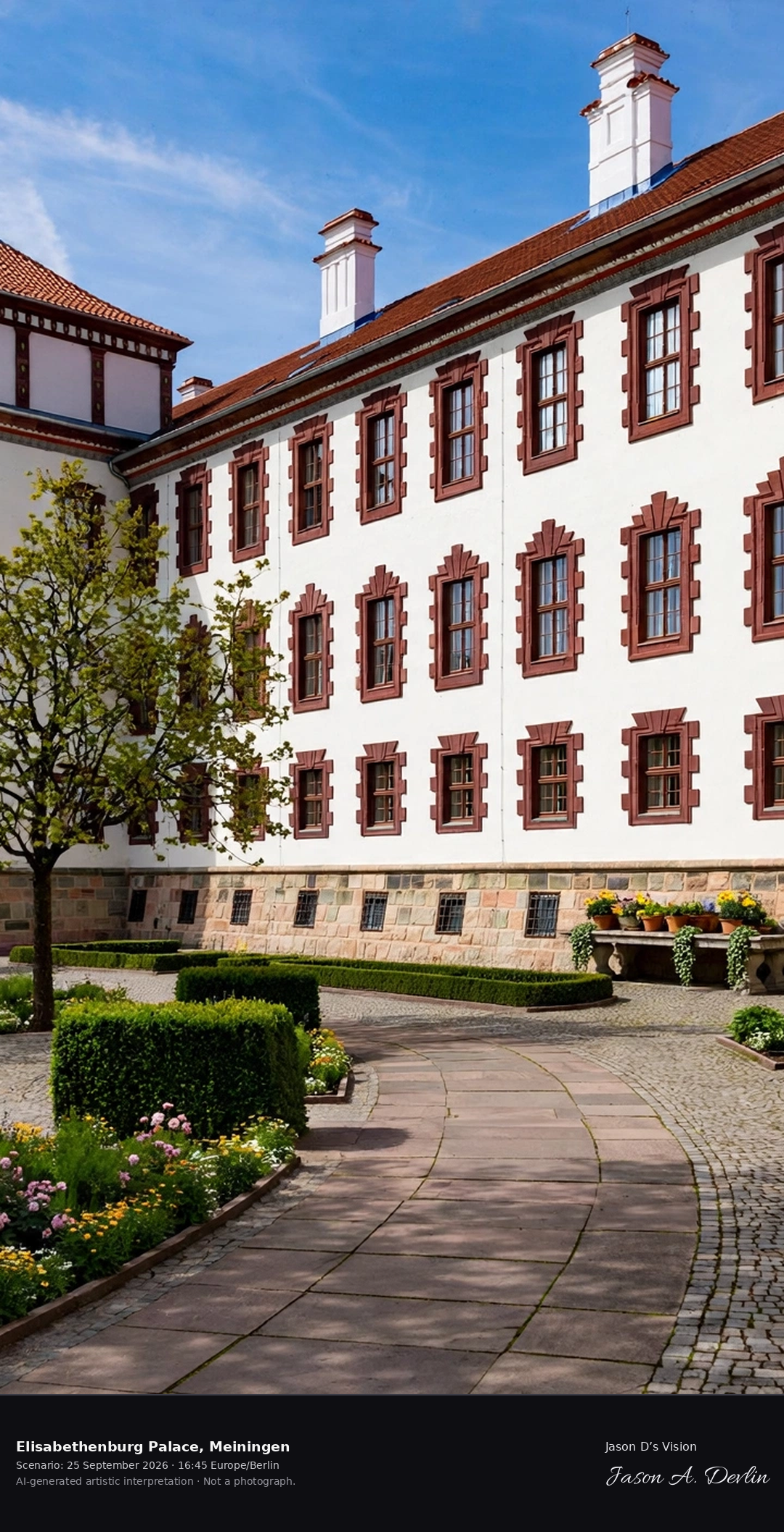
From the courtyard viewpoint, the palace's white three-storey facade fills the right of the frame, its rows of windows trimmed in red-brown above a stone ground floor, while the tower block rises at the left. Manicured garden beds of lavender and roses curve through the courtyard foreground, and a stone fountain draped in climbing pink roses stands at the right. Bright afternoon sunshine and a mainly clear sky light the scene, with garden paths curving between trimmed hedges.
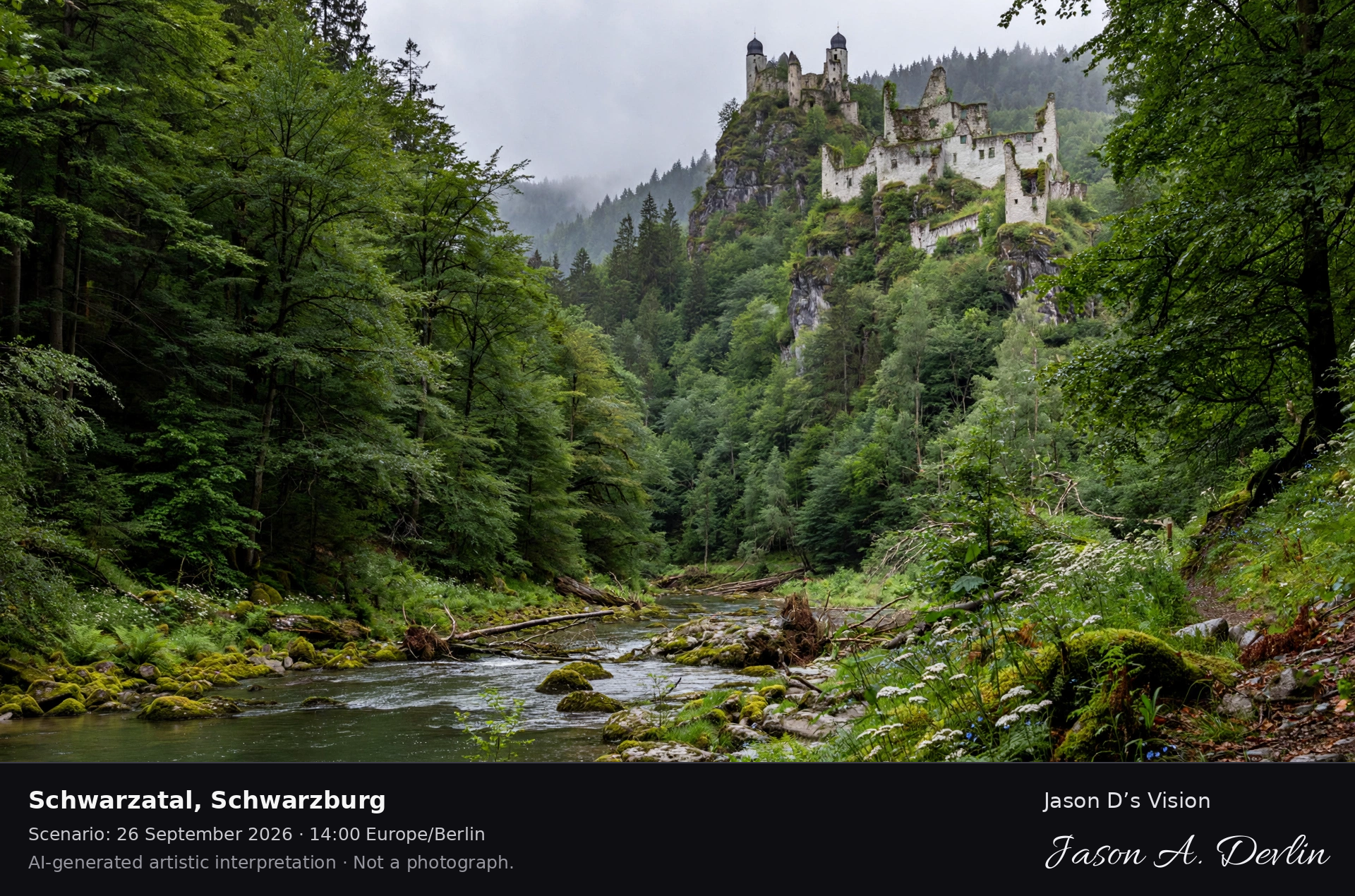
Forested valley and castle setting · AI-generated artistic interpretation
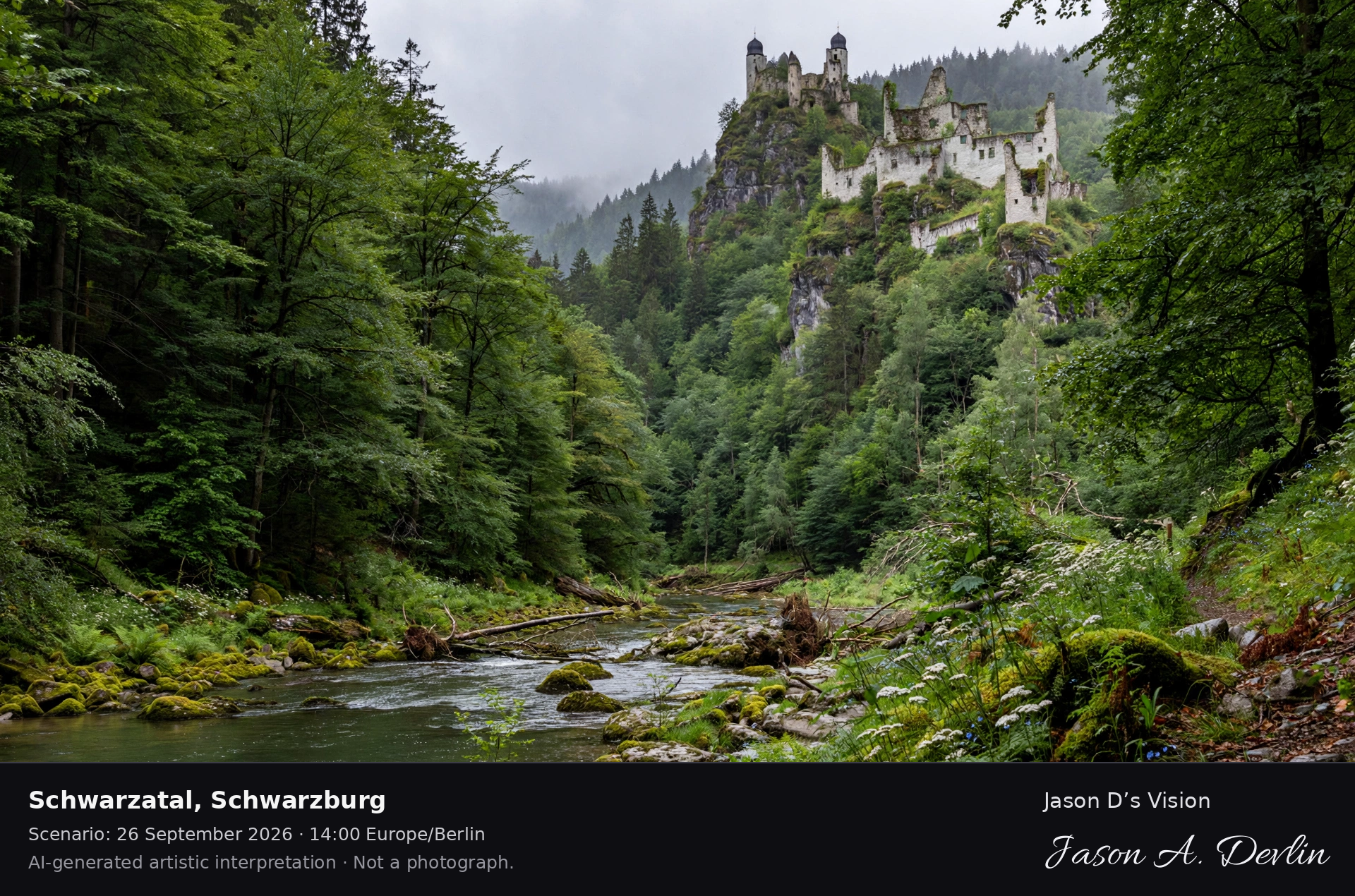
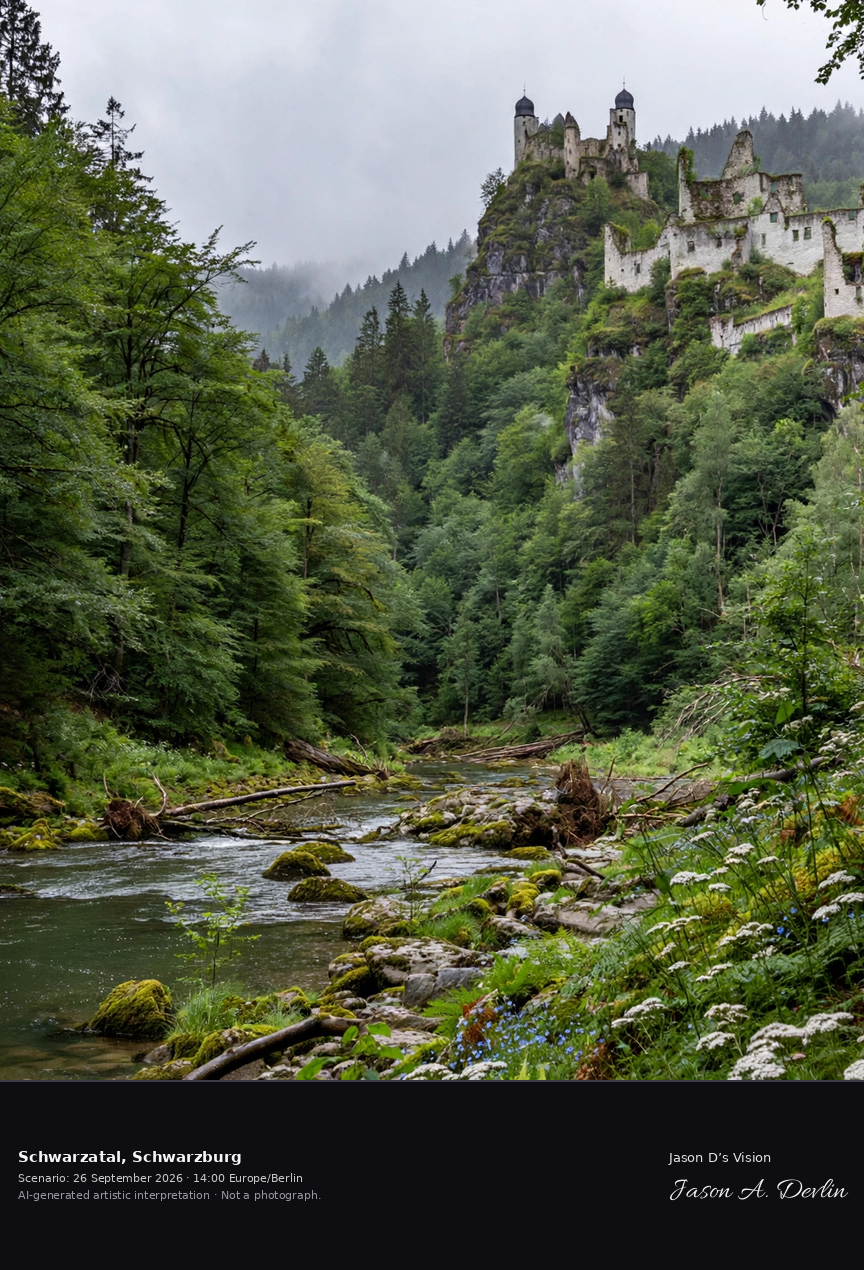
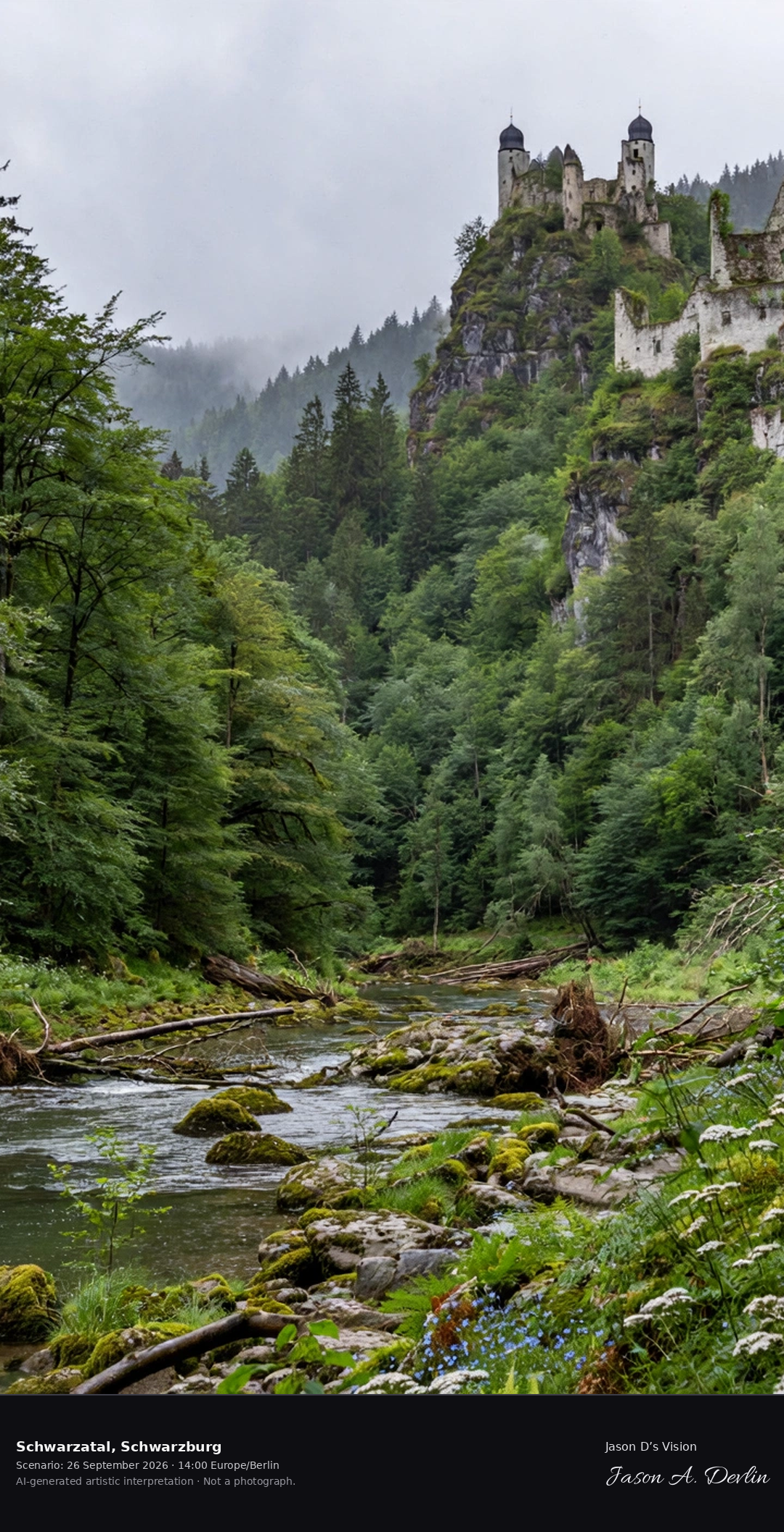
The Schwarza river winds through the deeply forested Schwarzatal below, mossy stones and ferns lining its banks under a grey overcast sky. Above the valley, the partly-ruined walls of Schloss Schwarzburg crown the rocky, wooded ridge, mist clinging to the slopes. A quiet, atmospheric forest-valley view from a natural riverside viewpoint.
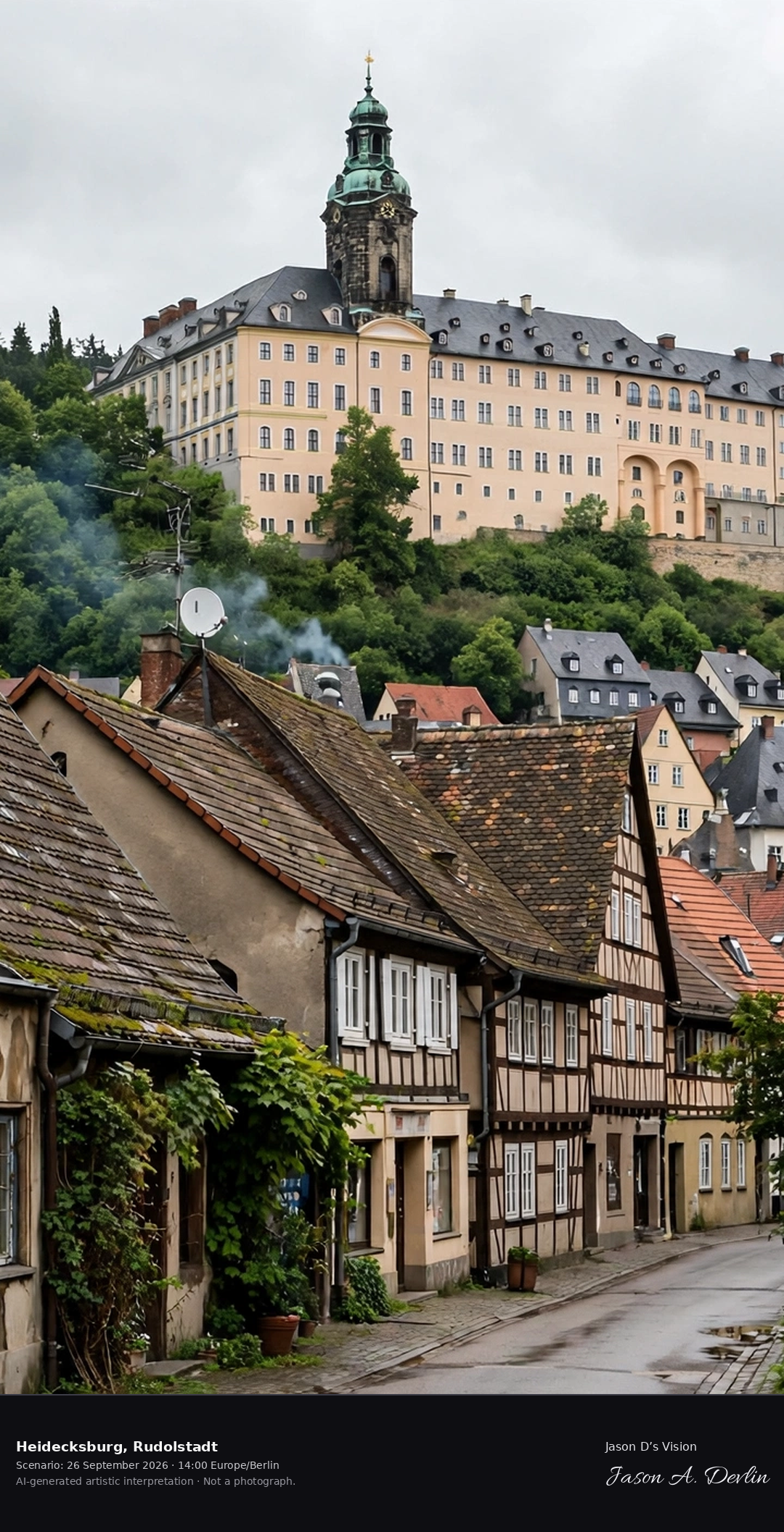
Palace above town · AI-generated artistic interpretation
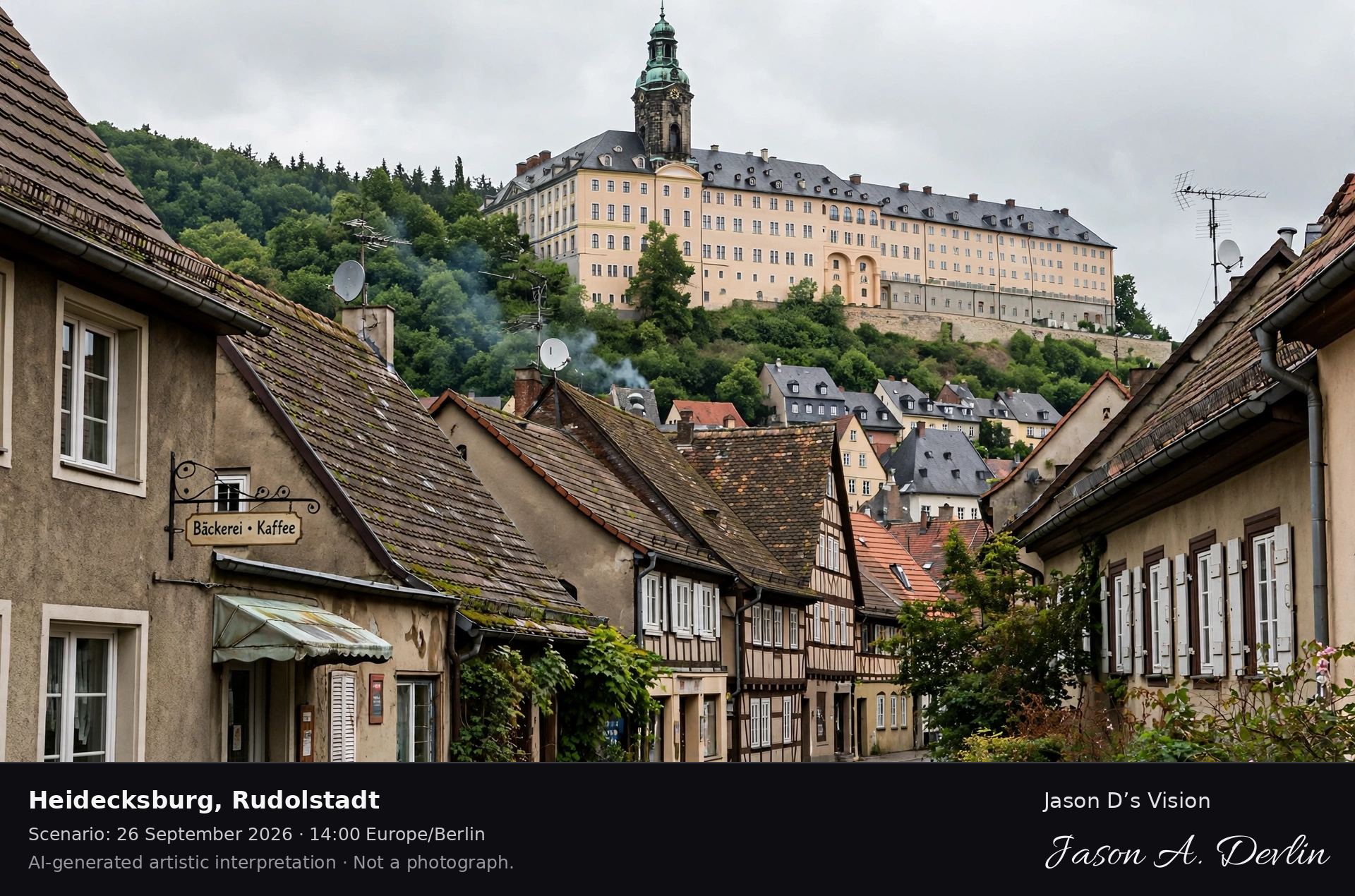
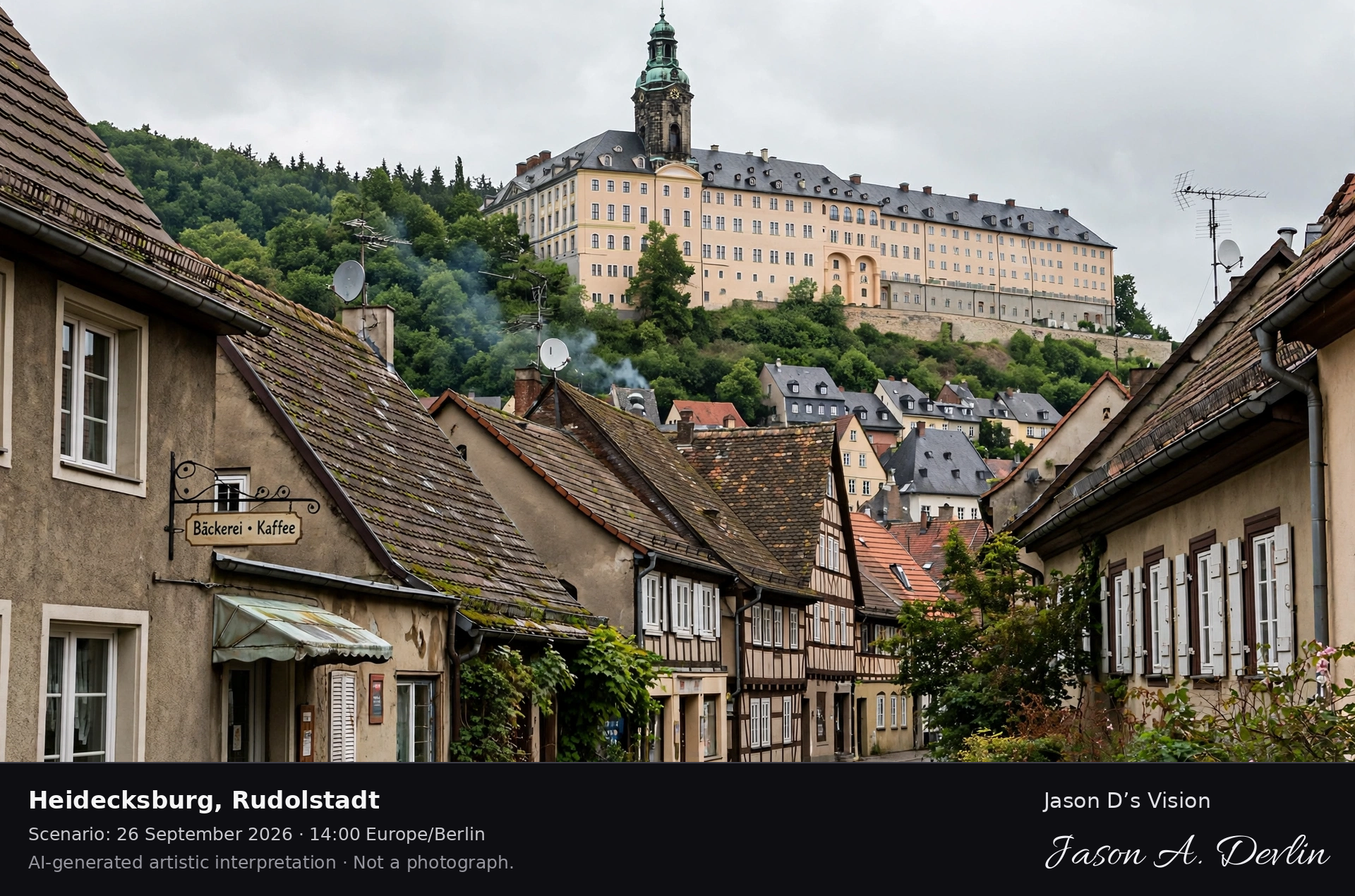
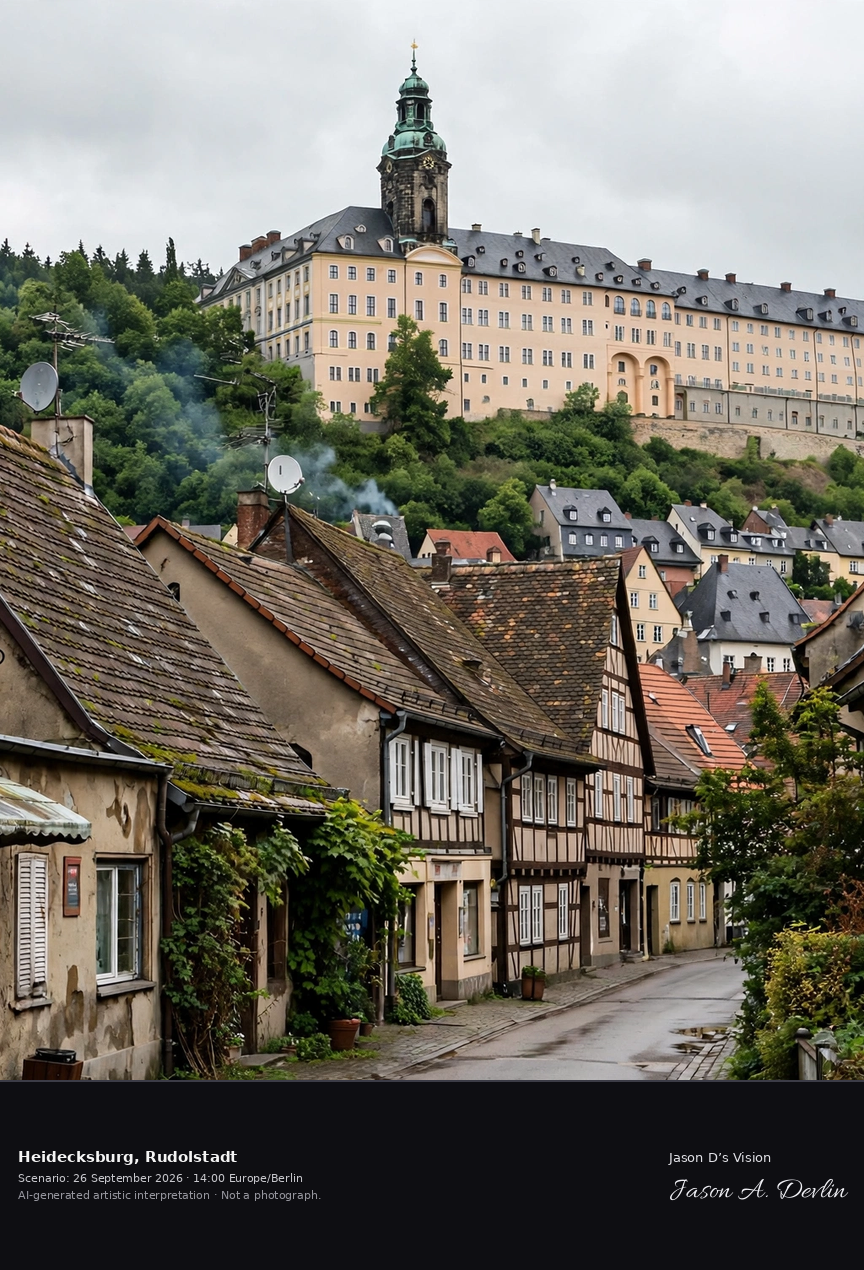
The Heidecksburg rises above Rudolstadt's old town at center, its broad three-winged Baroque form with pale façades, mansard roofs and central clock tower set against the overcast sky. Half-timbered town rooftops crowd the foreground slopes below it. A quiet street with a small bakery sign leads the eye toward the palace — a classic residence-above-town view.
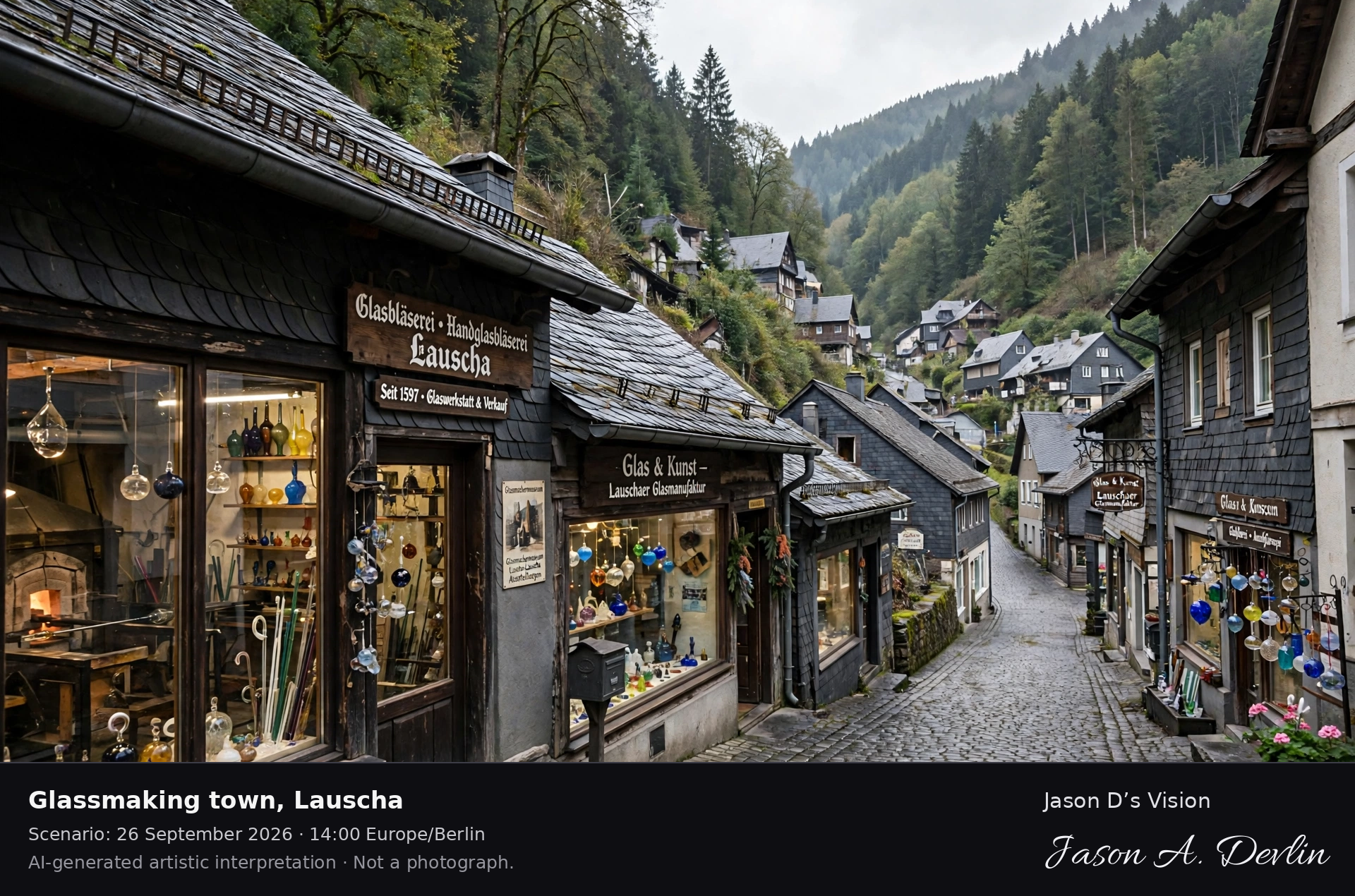
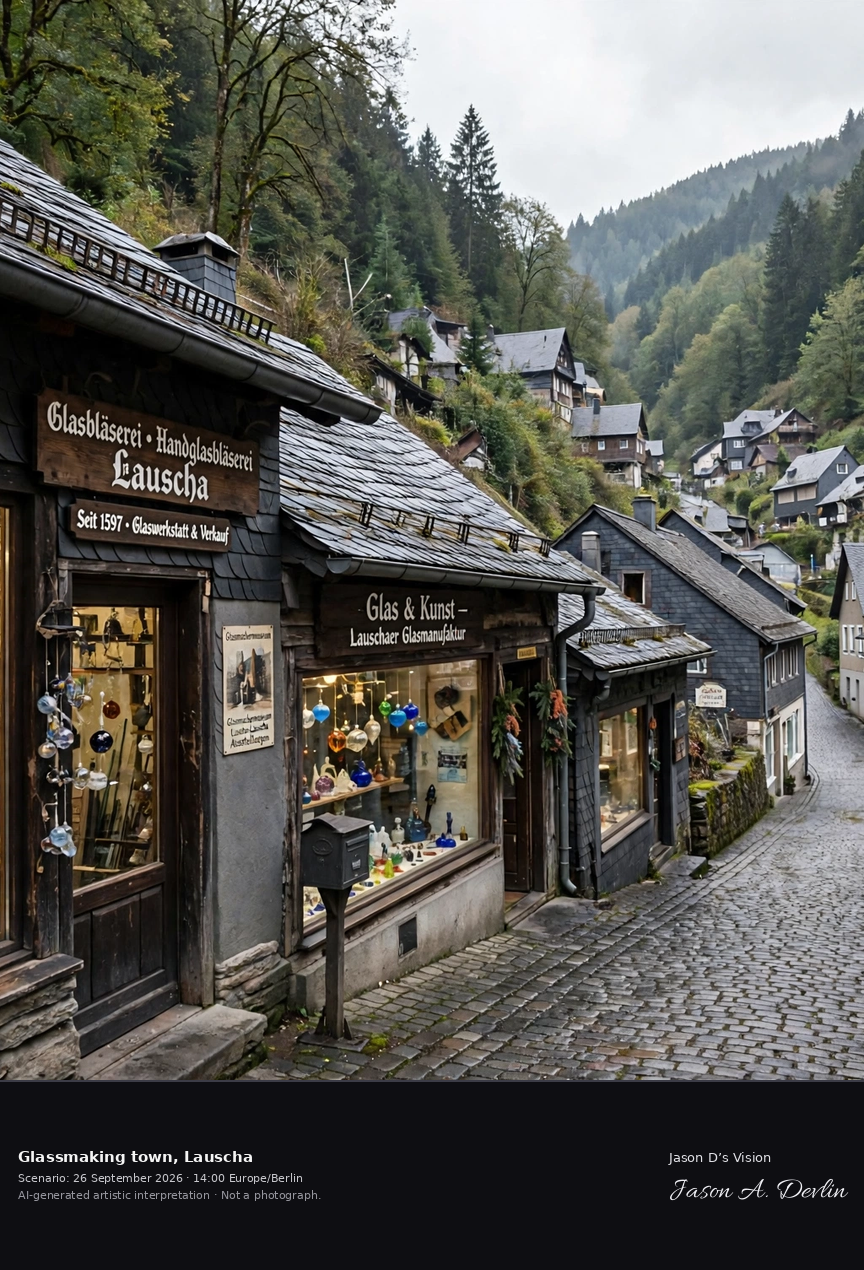
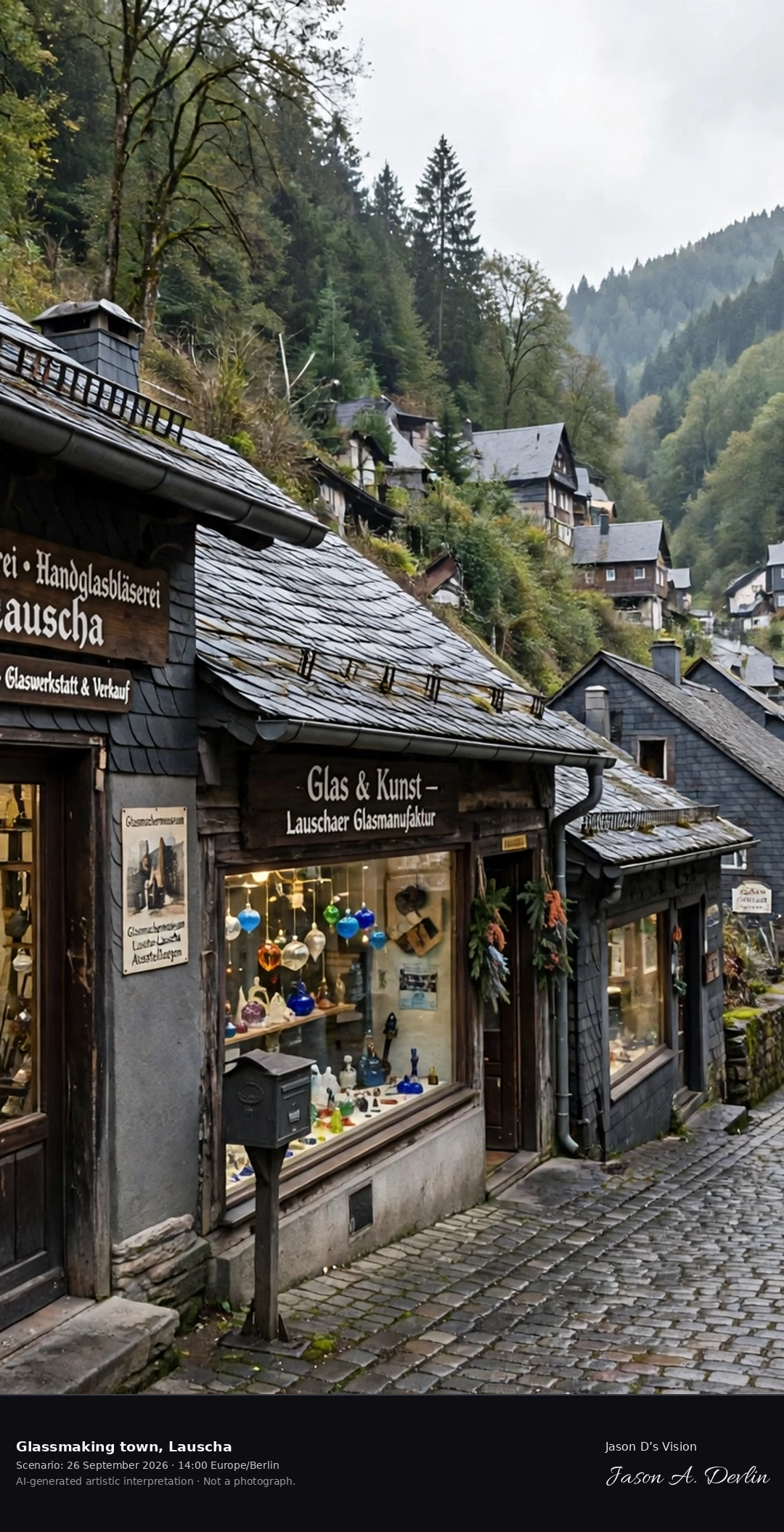
Hillside streets and workshops · AI-generated artistic interpretation
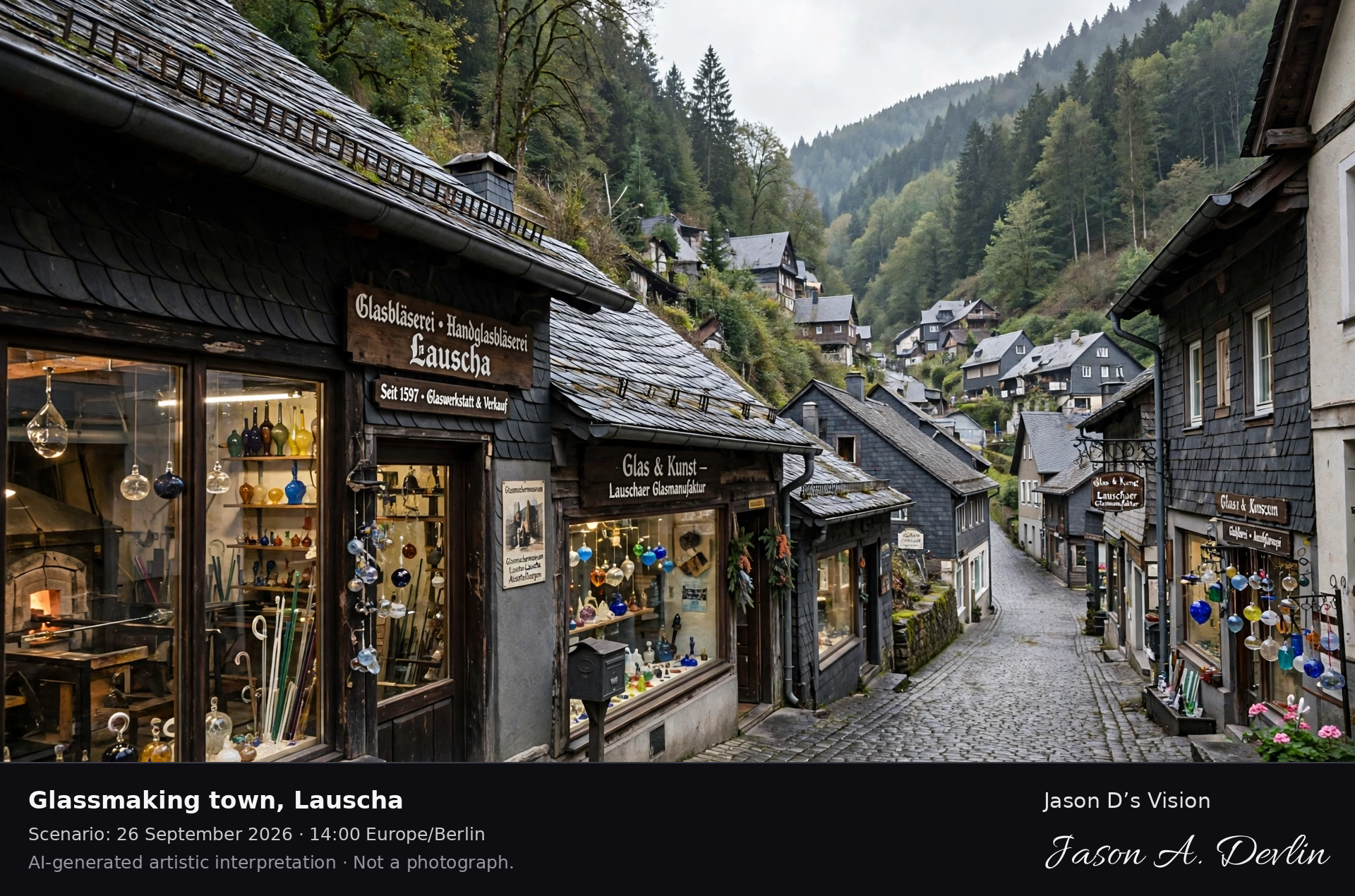
A cobbled hillside street climbs through Lauscha's glassmaking quarter, dark slate-clad houses rising on both sides toward the forested slope. Workshop storefronts display colorful glass baubles in their windows, with signs for the town's glassblowers over the doors. A working crafts town's everyday character from a natural street-level viewpoint under the overcast afternoon sky.
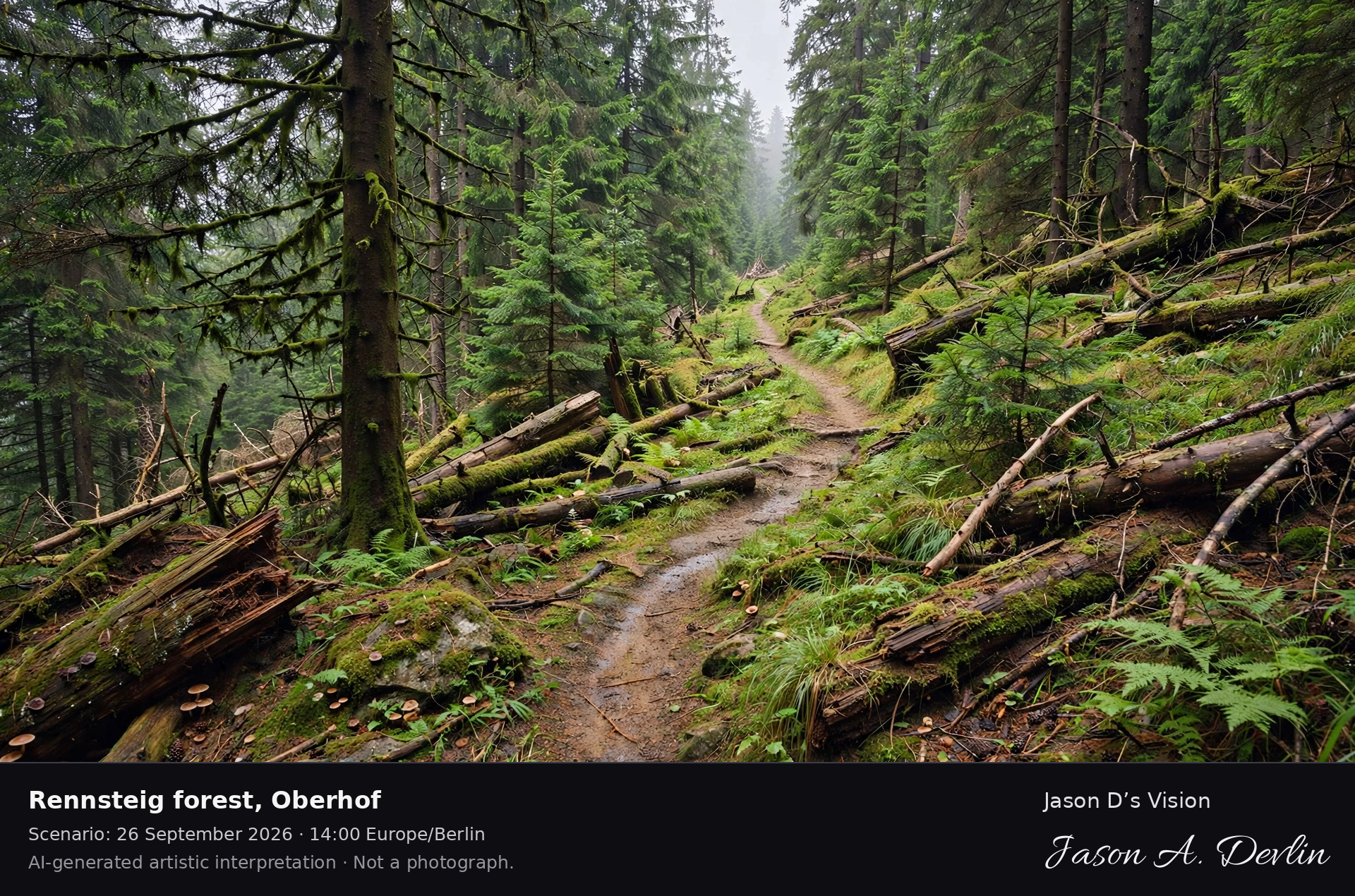
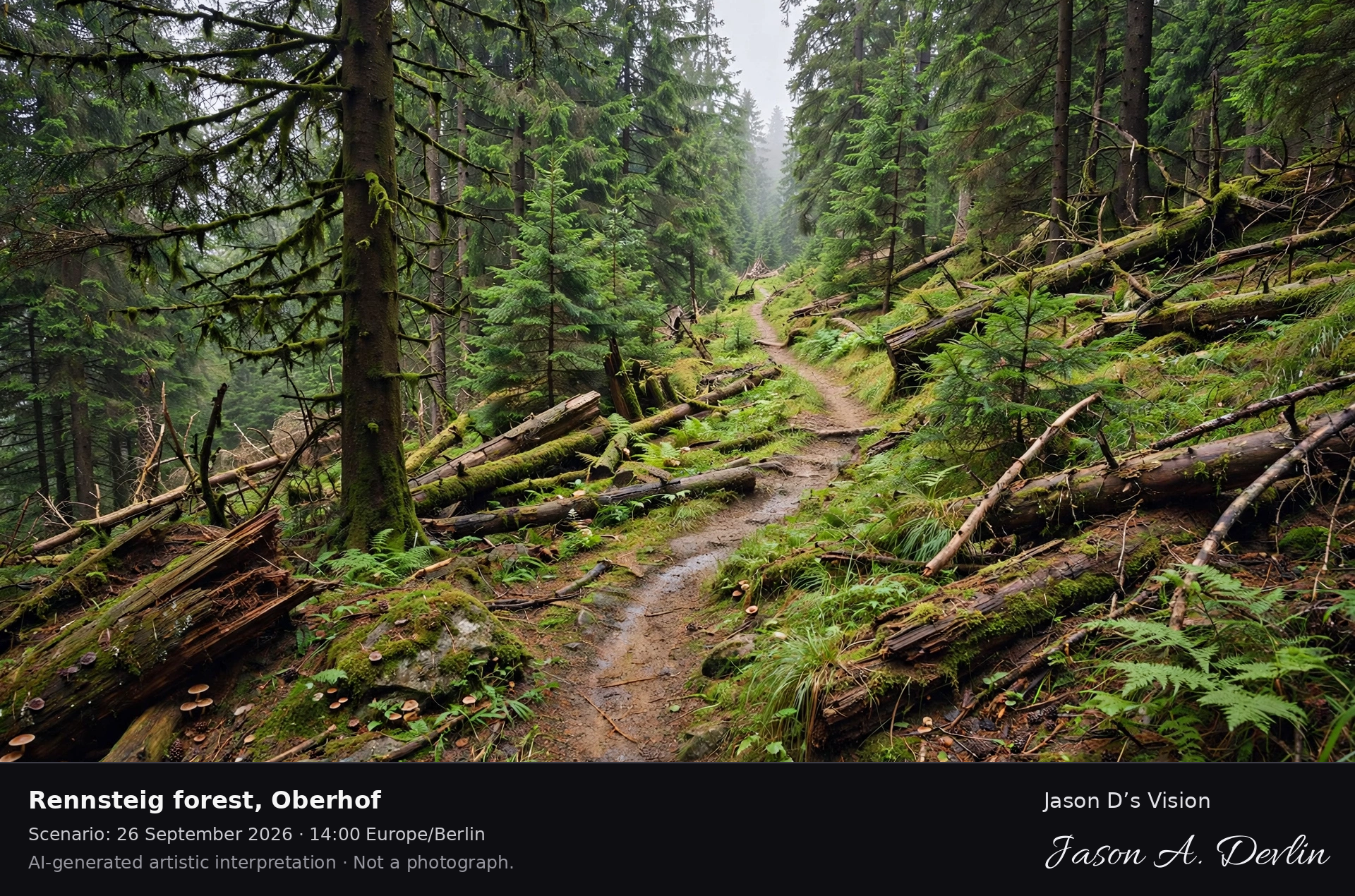
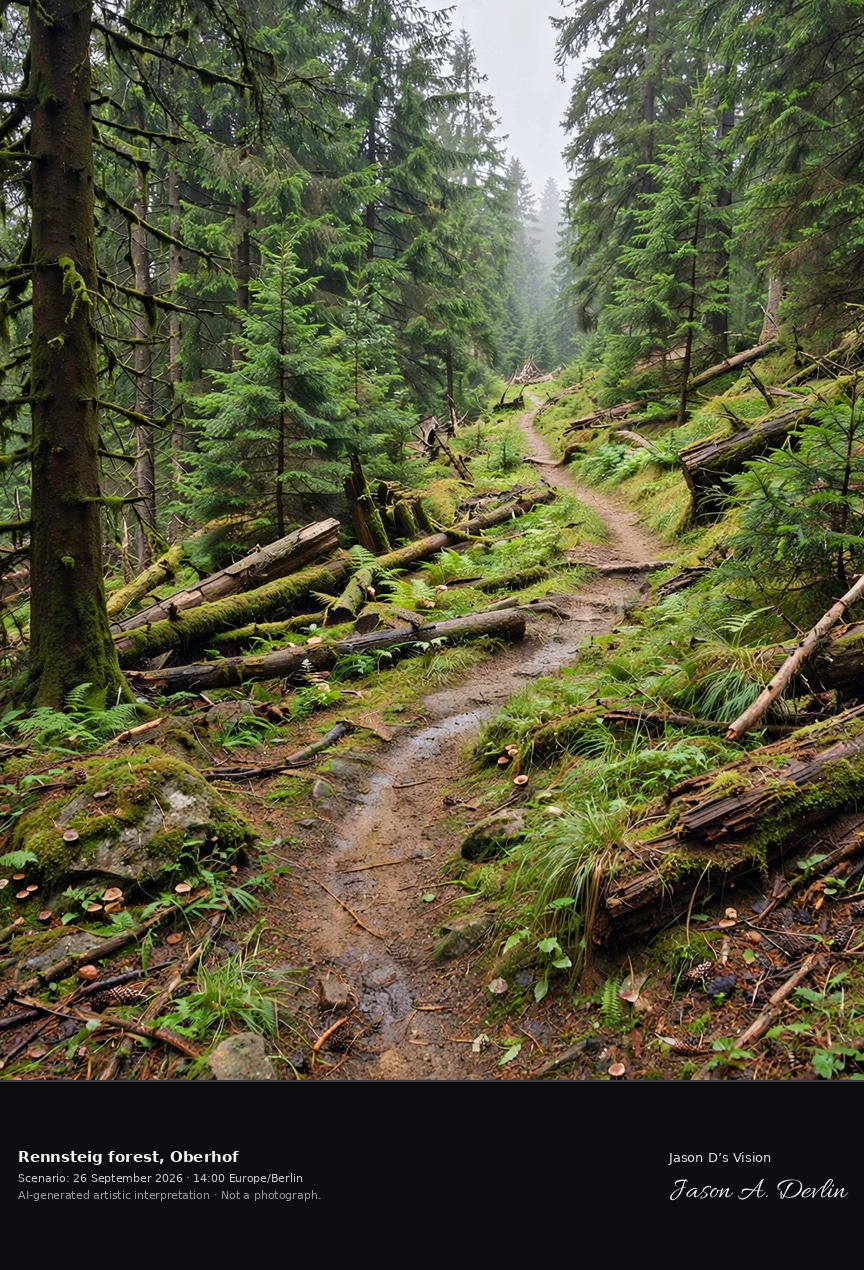
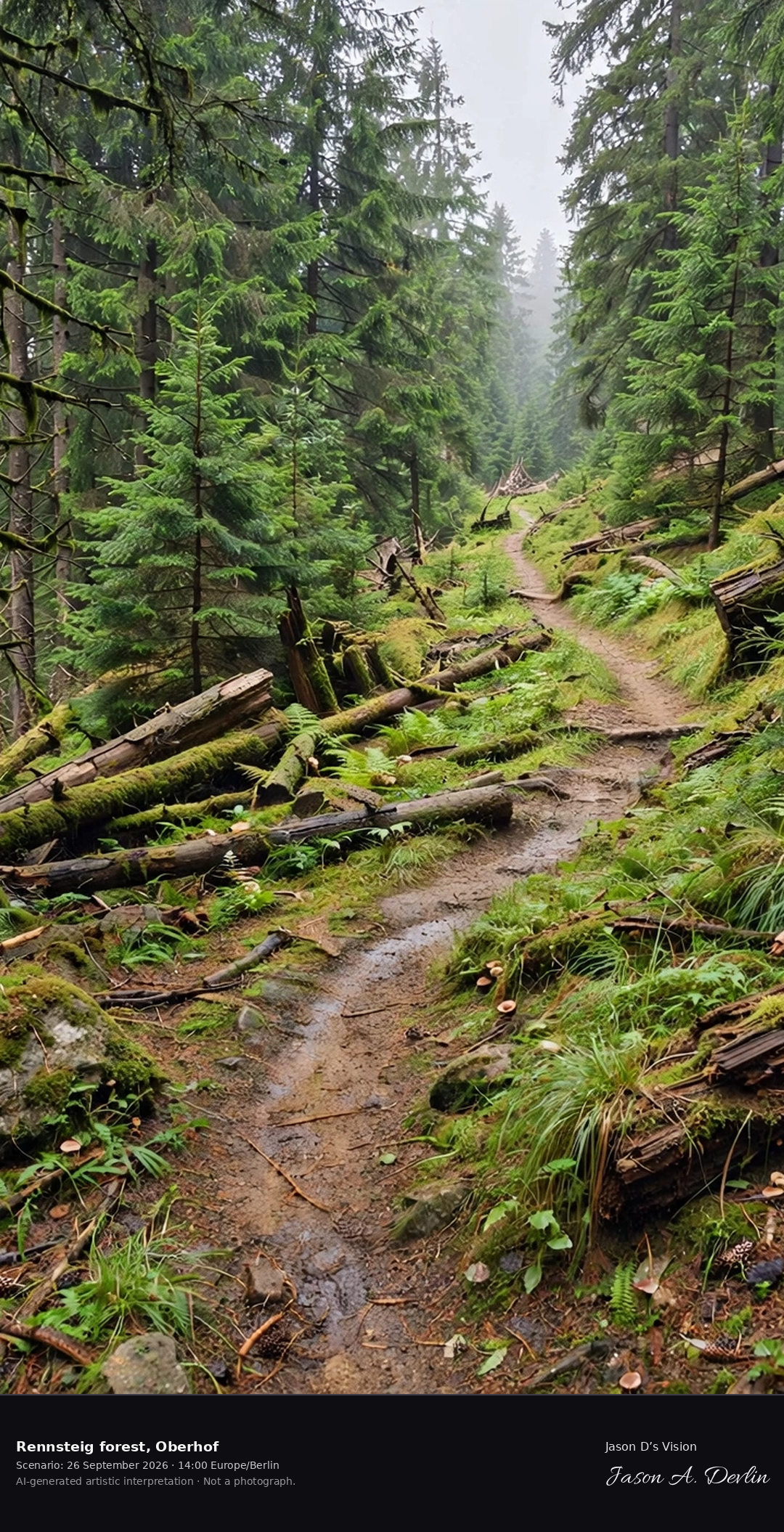
A narrow trail winds through the dense spruce forest of the Rennsteig near Oberhof, moss and ferns carpeting the ground between fallen timber. The overcast light filters softly through the tall trees, with mist hanging in the forest depths ahead. A quiet, immersive trail view from a natural hiker's viewpoint.
Castle on hill · AI-generated artistic interpretation
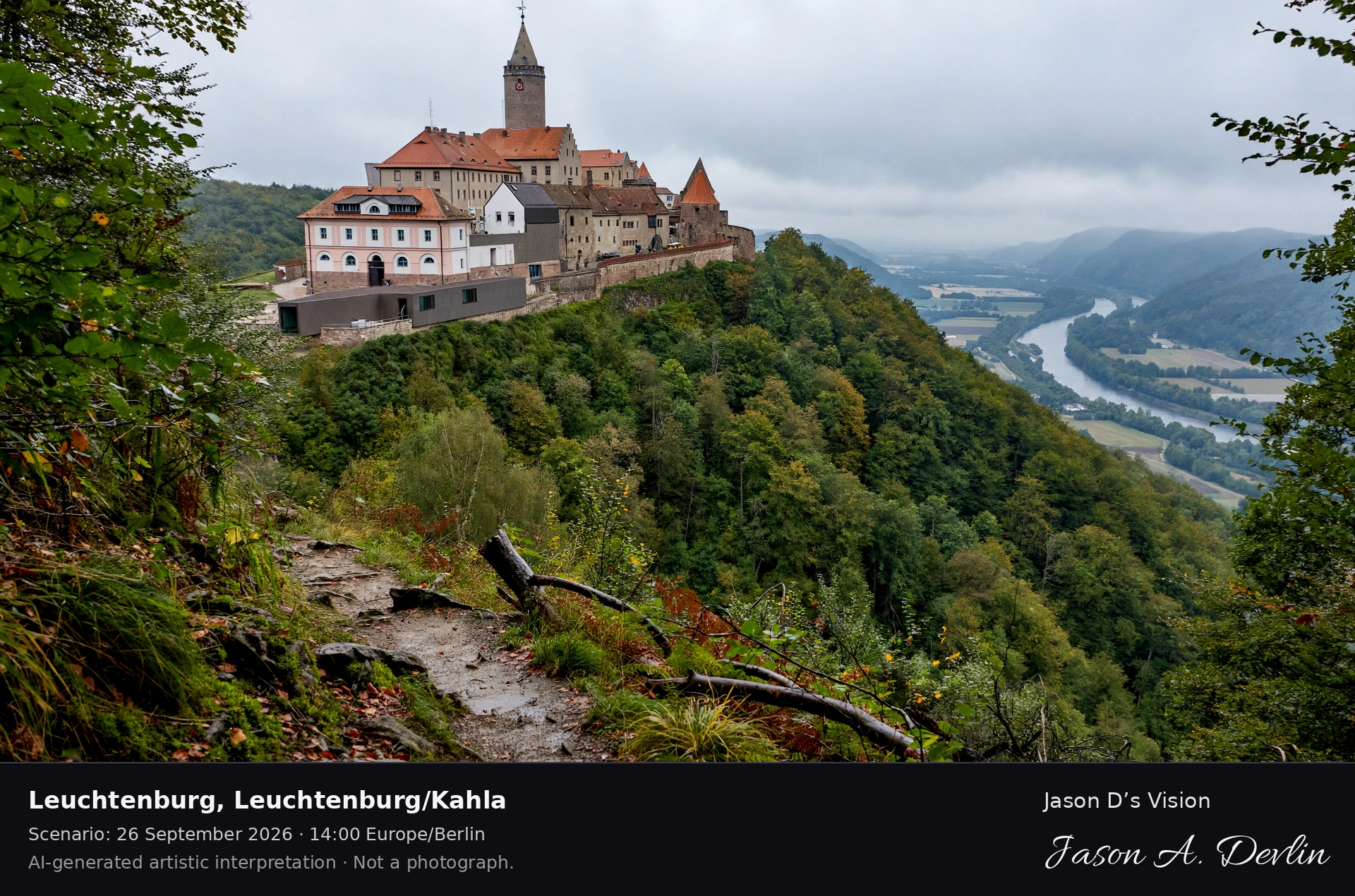
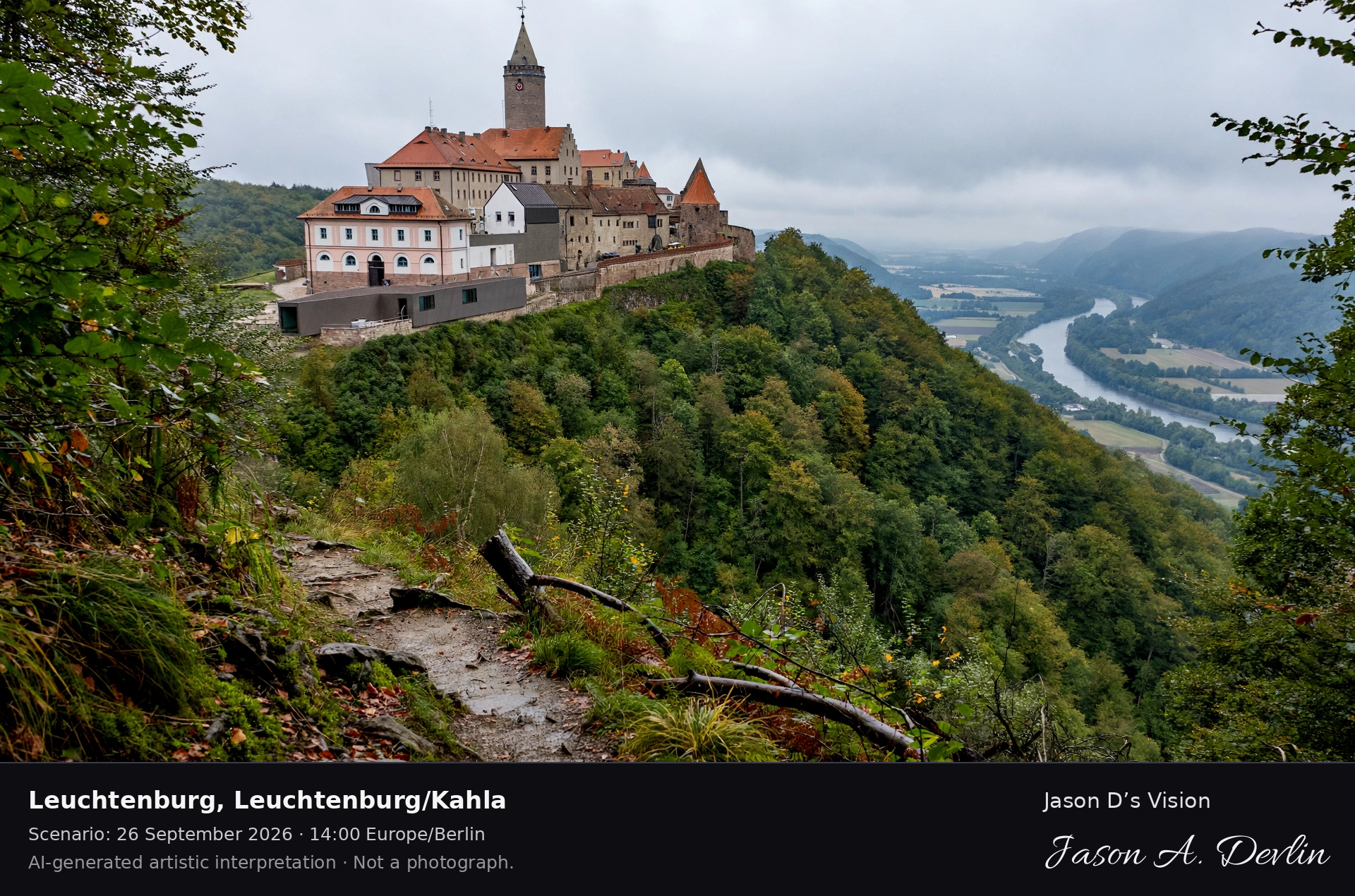
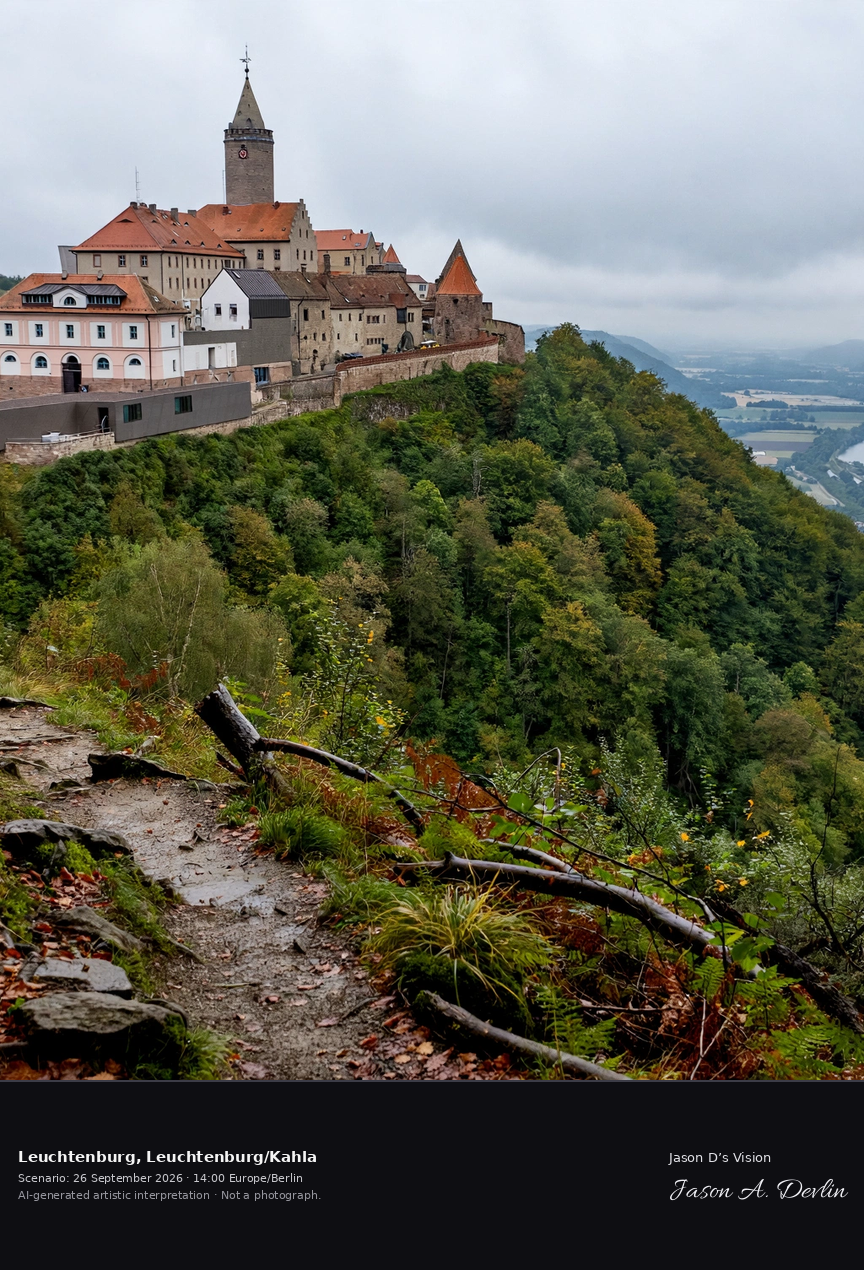
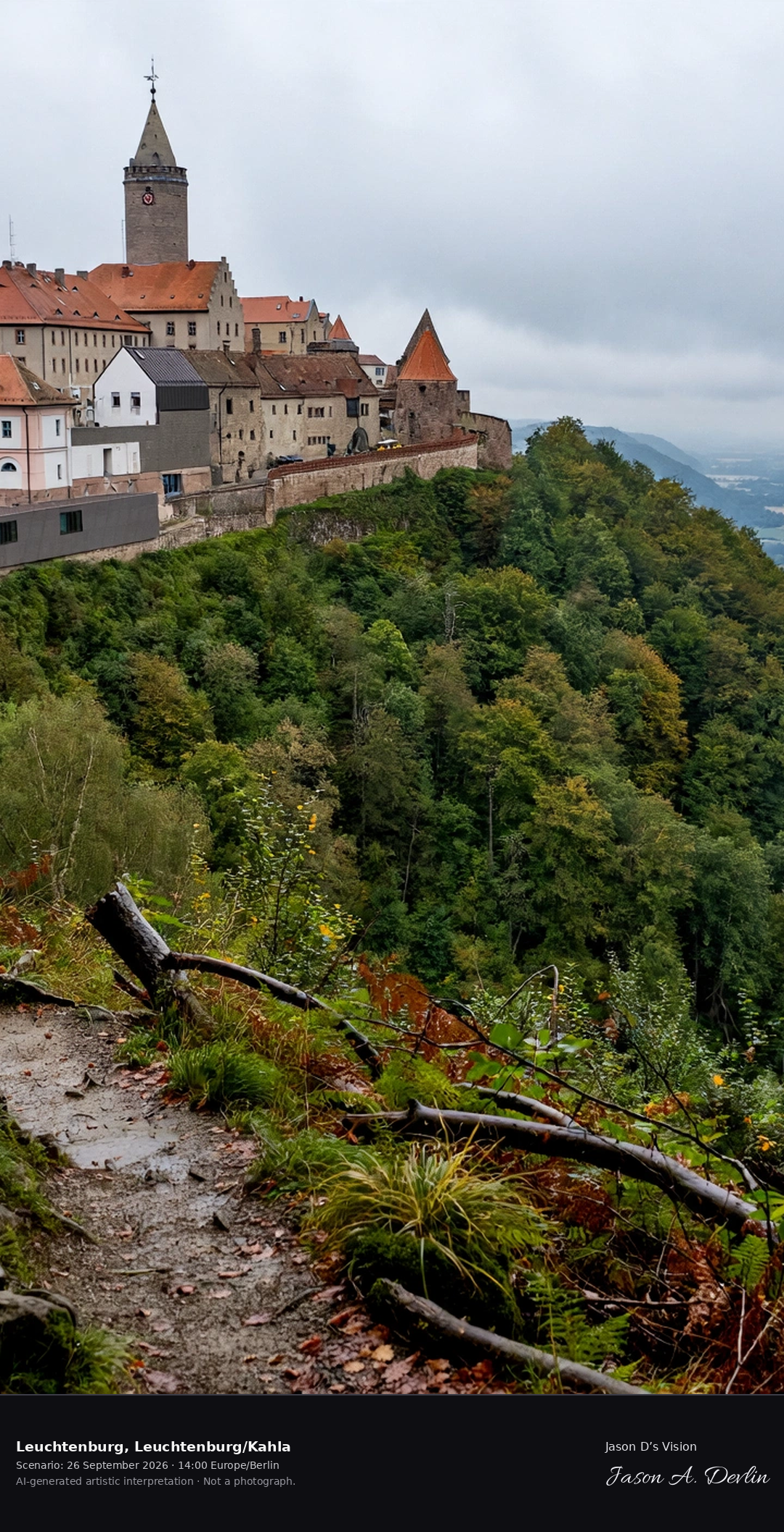
The Leuchtenburg complex crowns the forested hill above the Saale Valley, its keep with spire rising over the ward ranges and stone curtain walls. Below, the river winds through the valley floor between green slopes under the overcast sky. A classic "Queen of the Saale Valley" view from a natural trail viewpoint on the wooded slope.
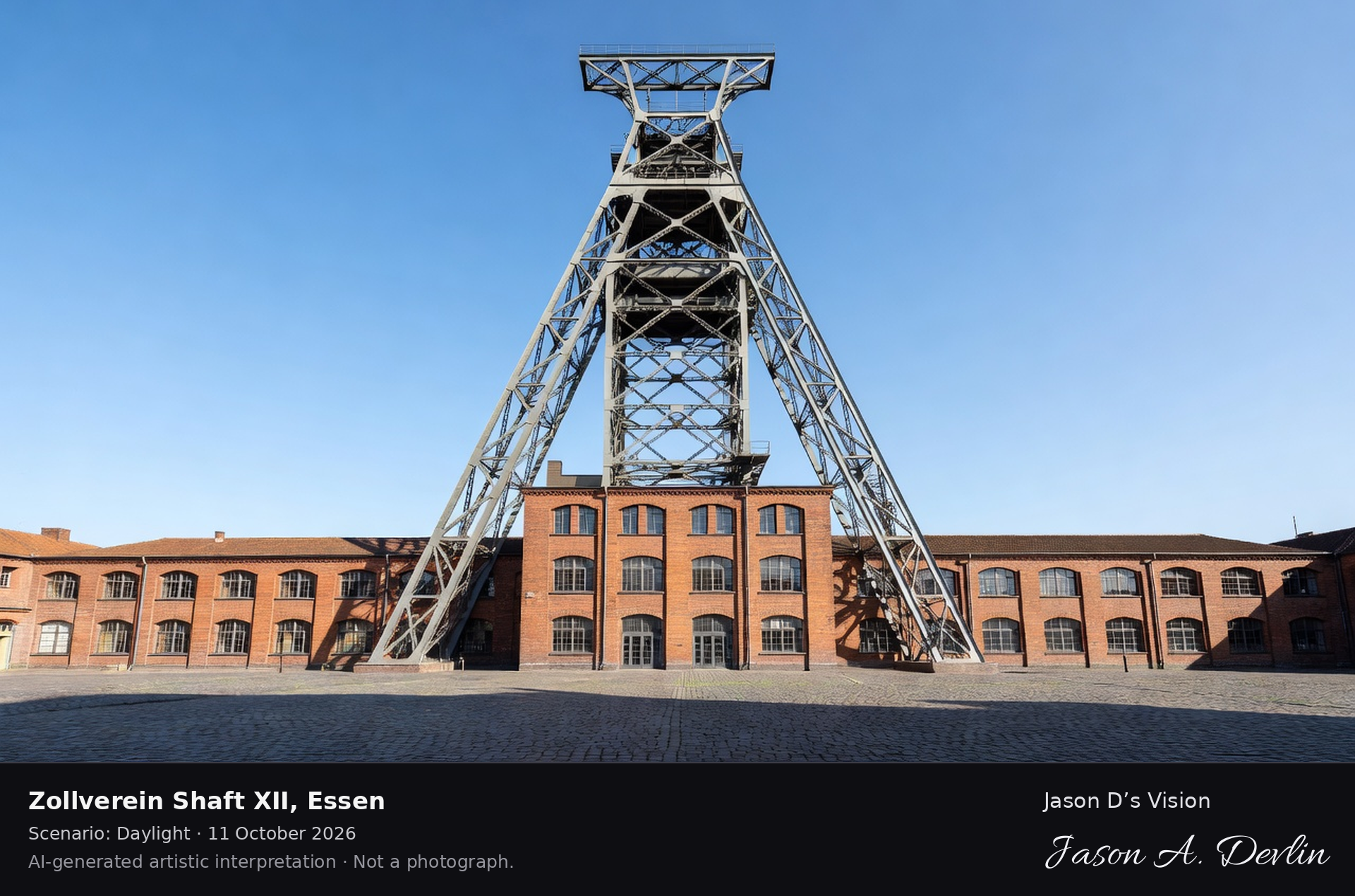
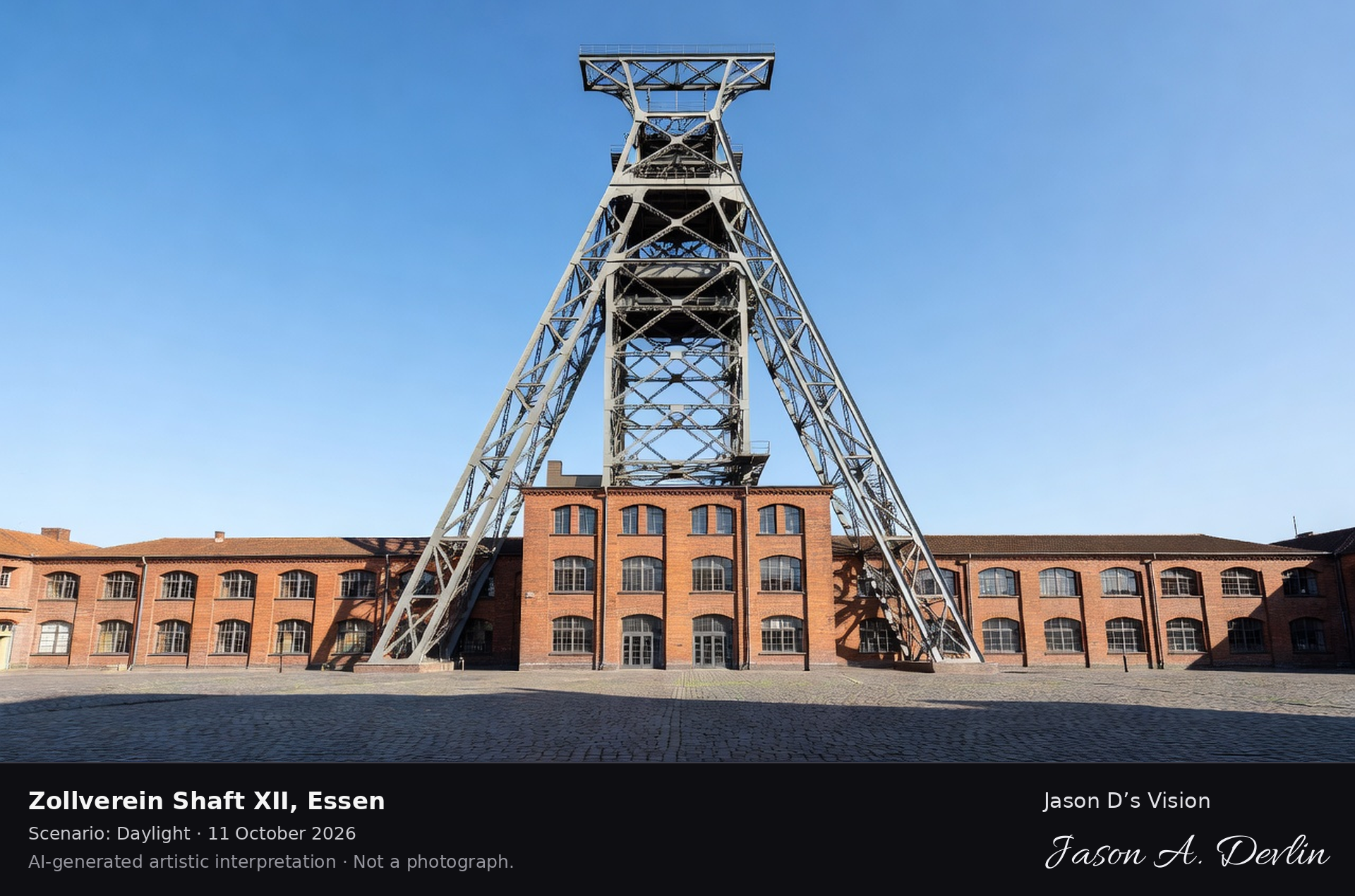
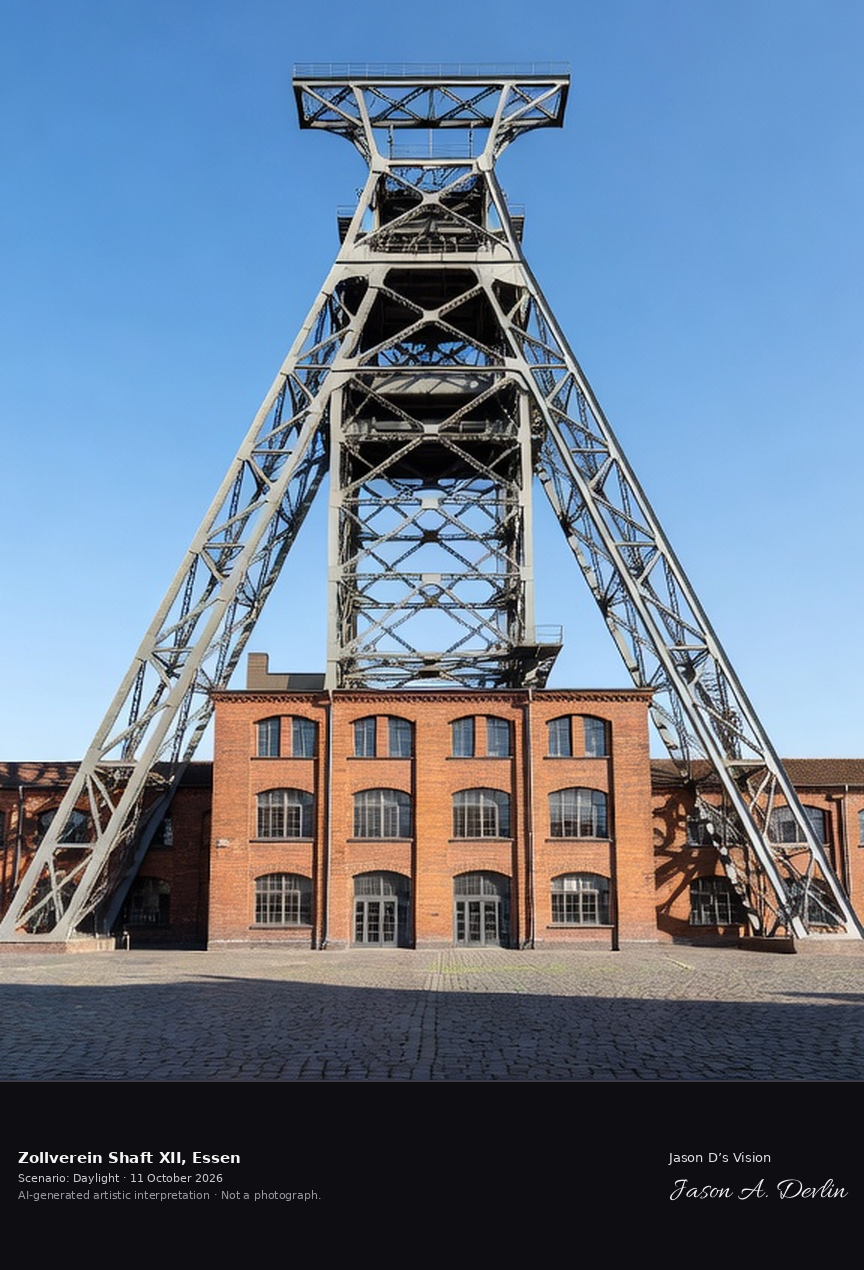
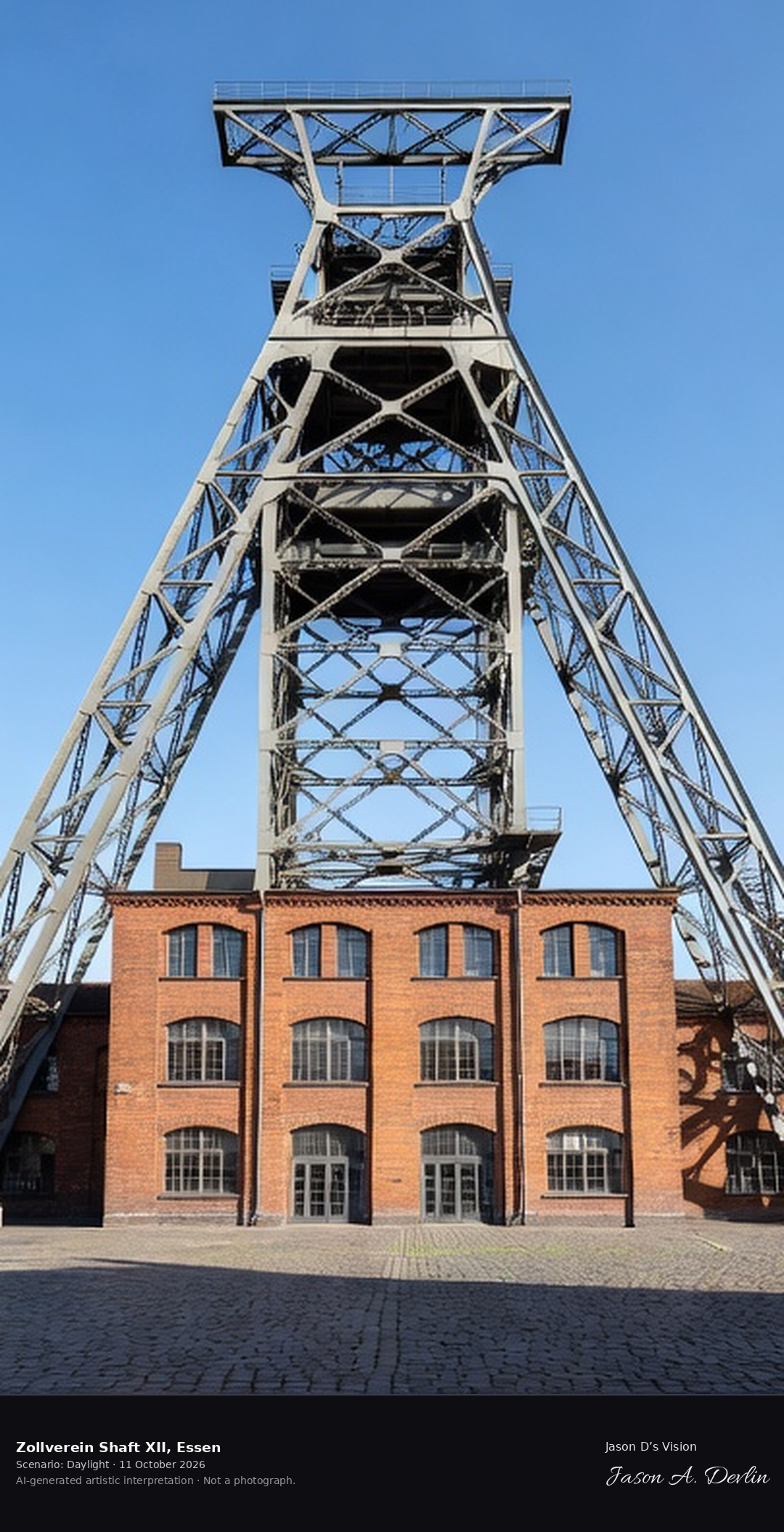
The famous double steel headframe of Zollverein Shaft XII rises in the center of the frame, its dark lattice towers mirrored in the symmetric red-brick Bauhaus machine hall below. Arched steel windows line the hall's facade, and the cobbled forecourt stretches toward the viewer under bright October daylight. This is the landmark of the Ruhr's coal-mining heritage, preserved as a UNESCO World Heritage site.
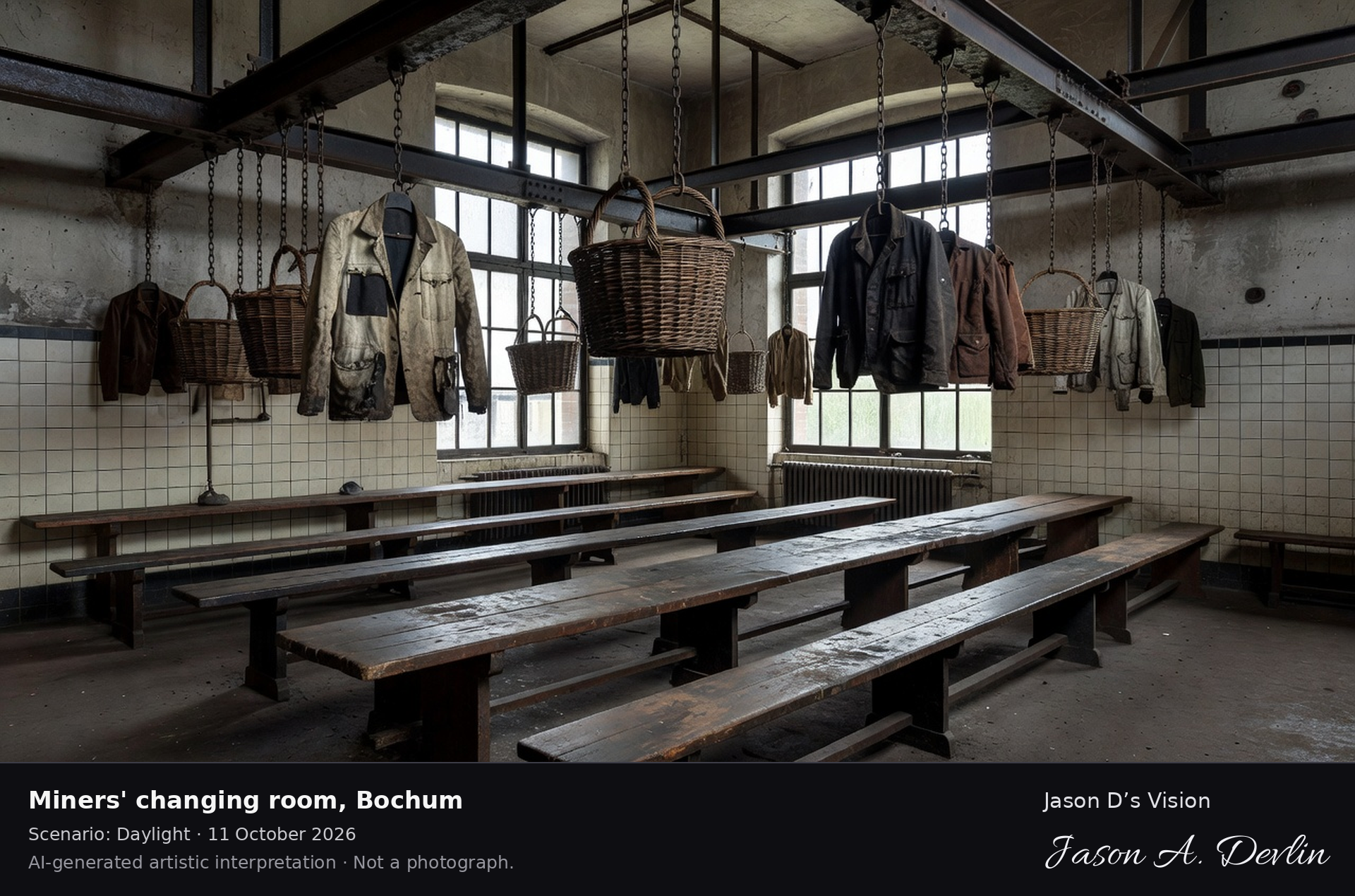
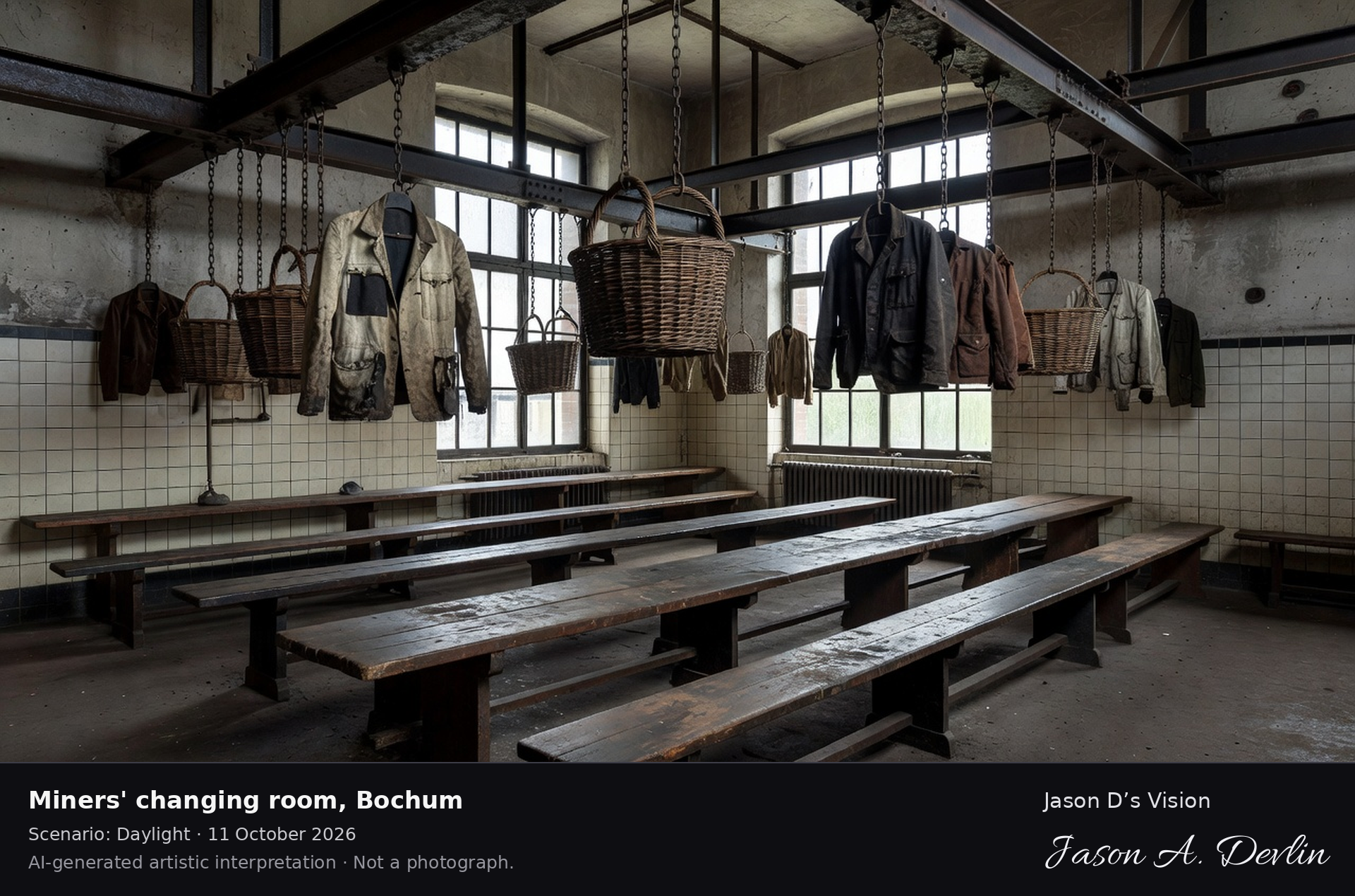
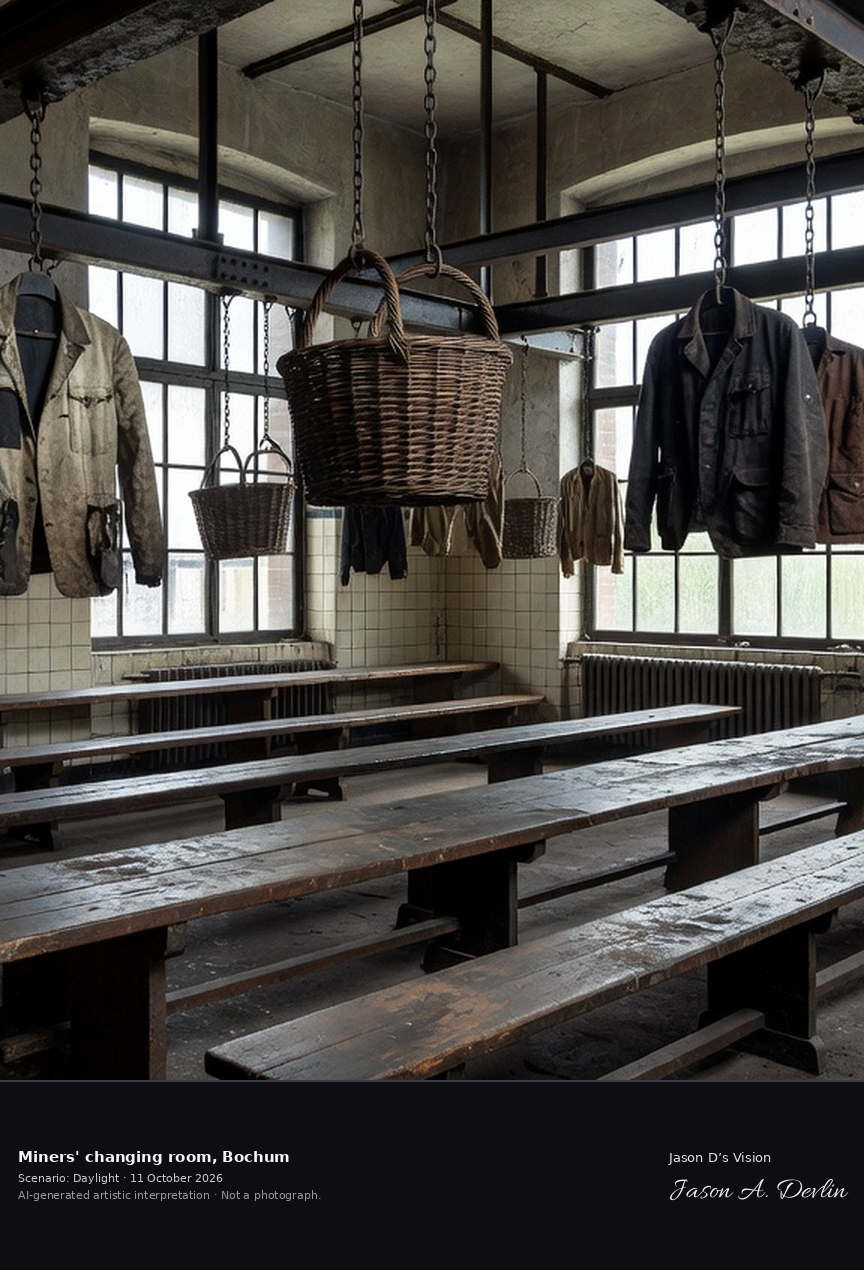
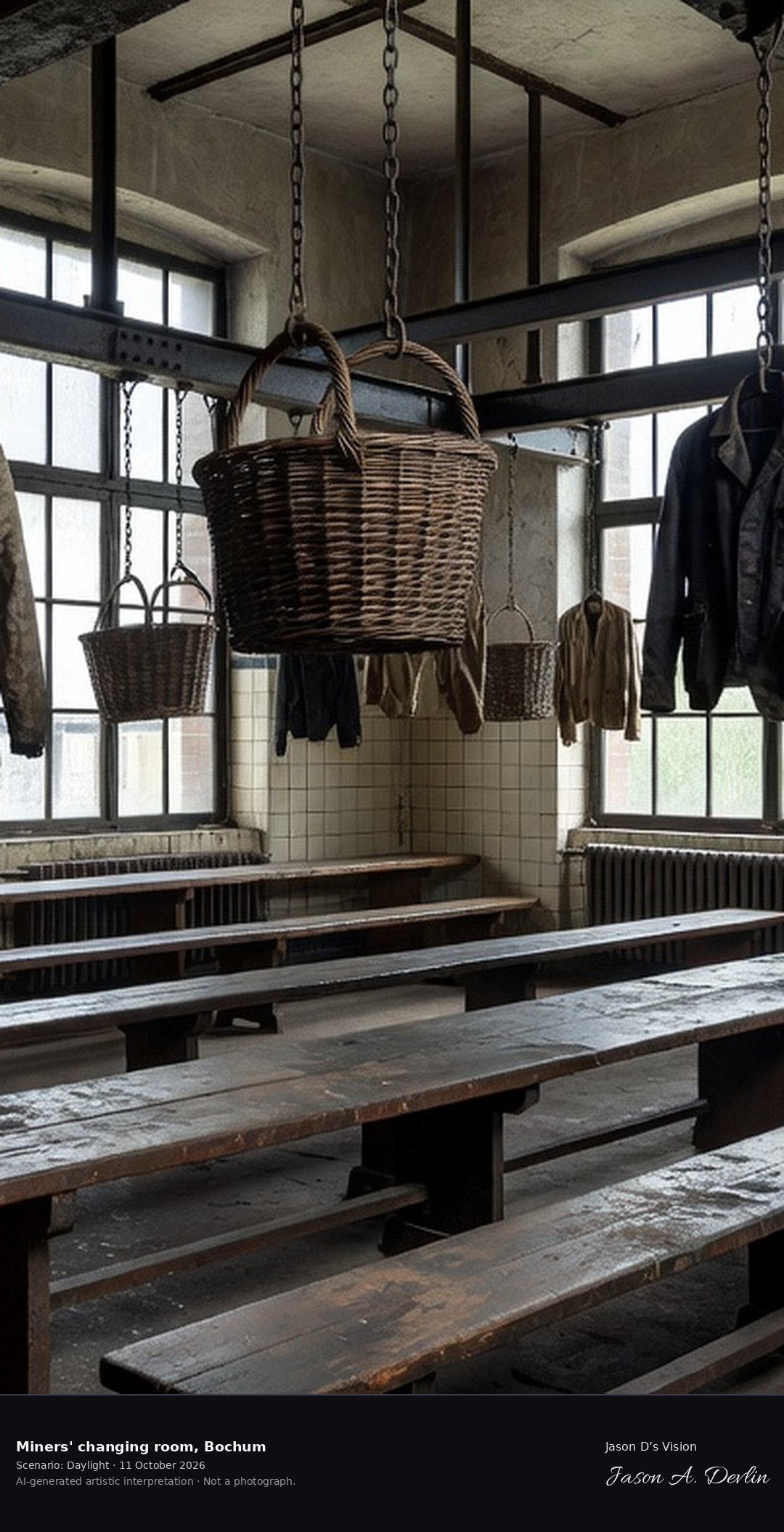
In the historic Waschkaue, miners' jackets and clothes baskets hang from long chains suspended from the high ceiling, swaying slightly above rows of worn wooden benches. Tall industrial windows wash the tiled hall in soft daylight. After each shift the miners hoisted their work clothes up here, out of reach of the coal dust below.
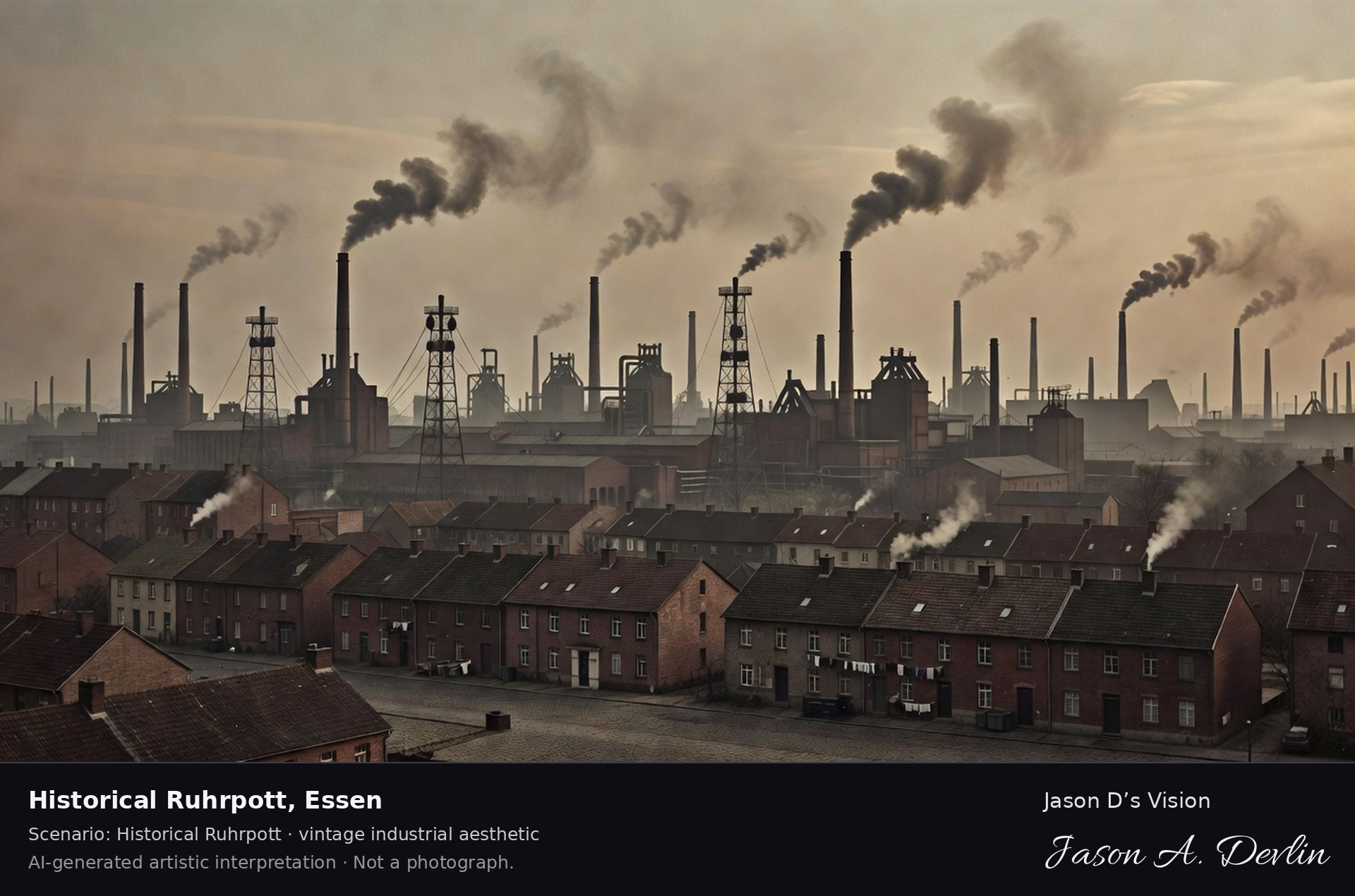
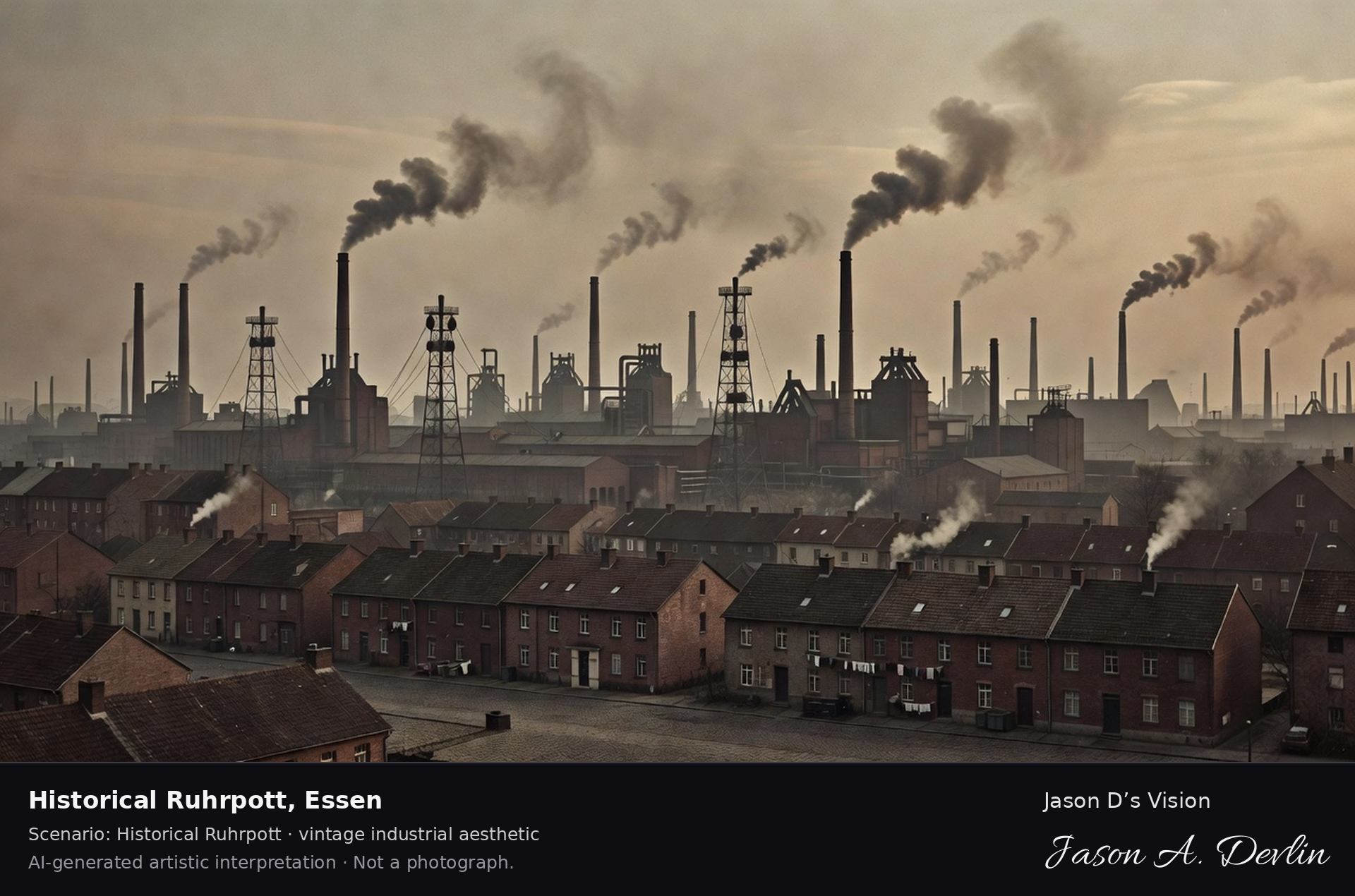
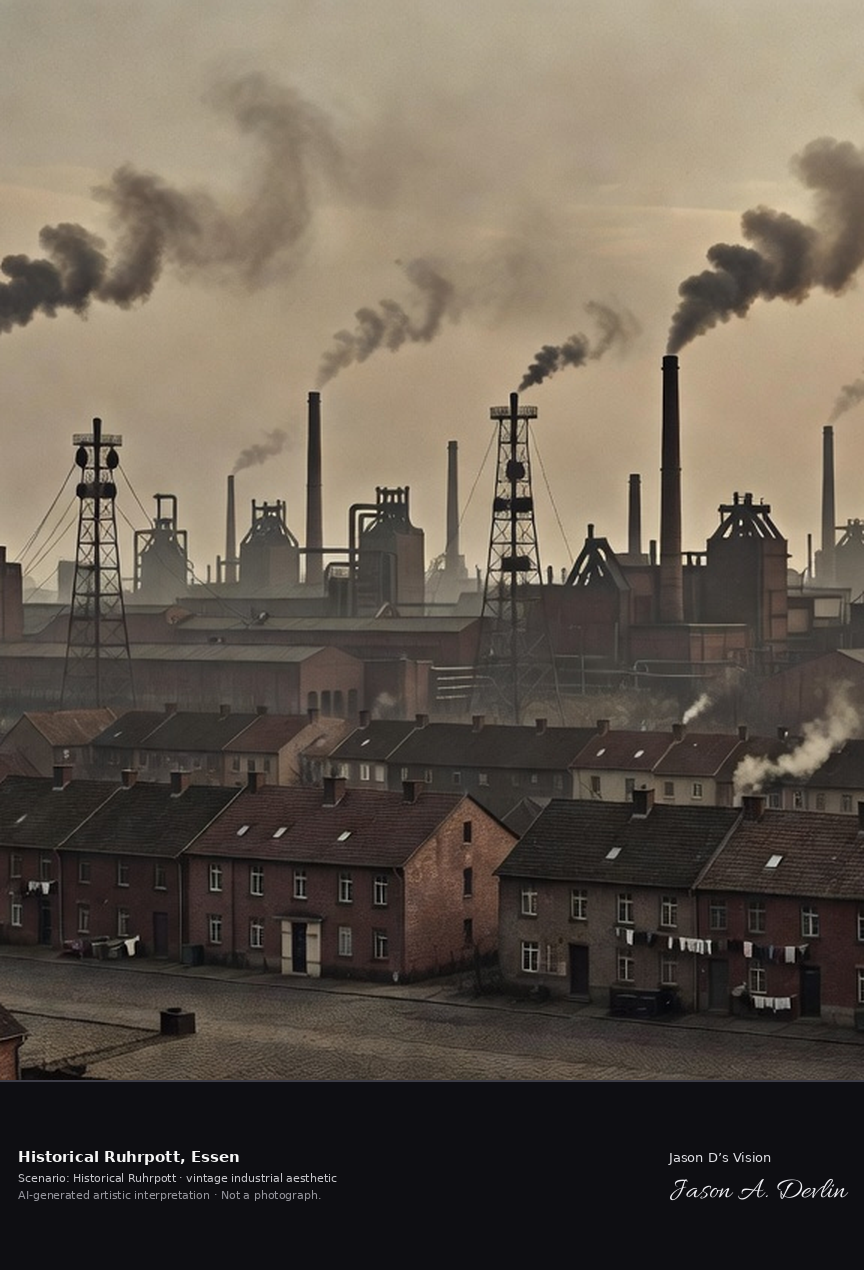
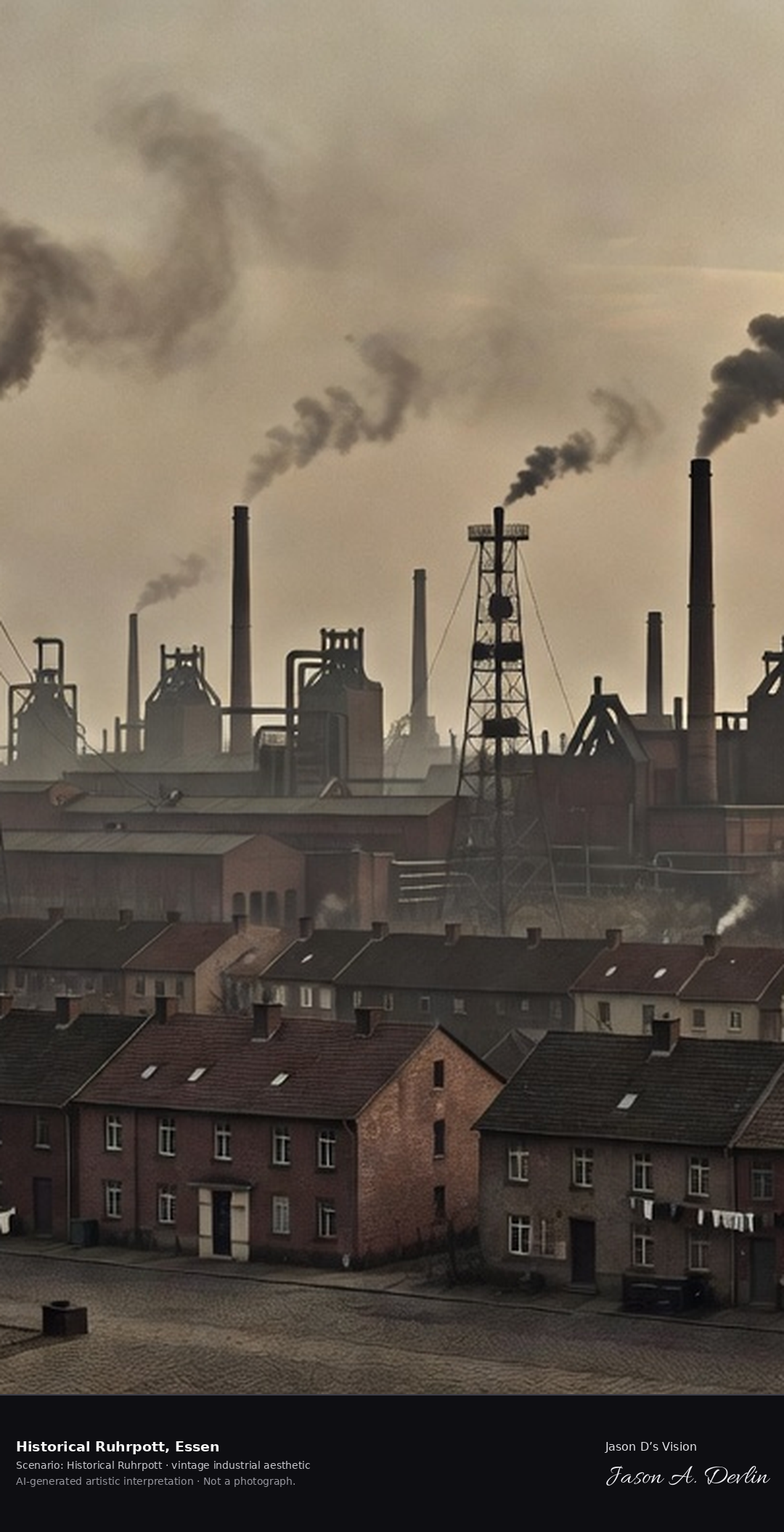
A vintage-toned panorama of the Ruhrpott in its heyday: smoking chimneys, winding towers and coking plants crowd the horizon, while terraced miners' houses step down the slope in the foreground. Rendered in the soft sepia grain of an old photograph, this is the landscape that powered Germany's industrial century.
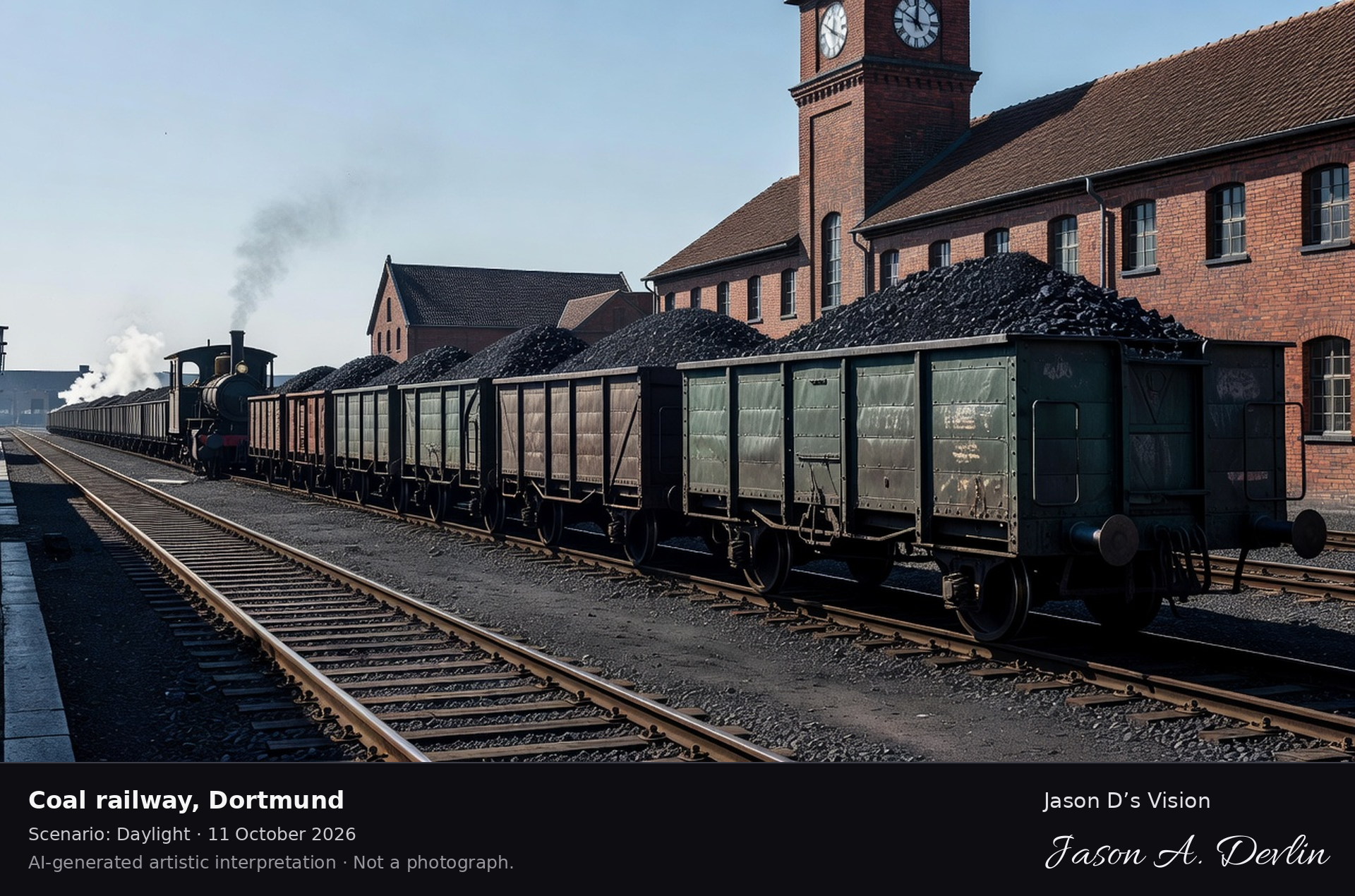
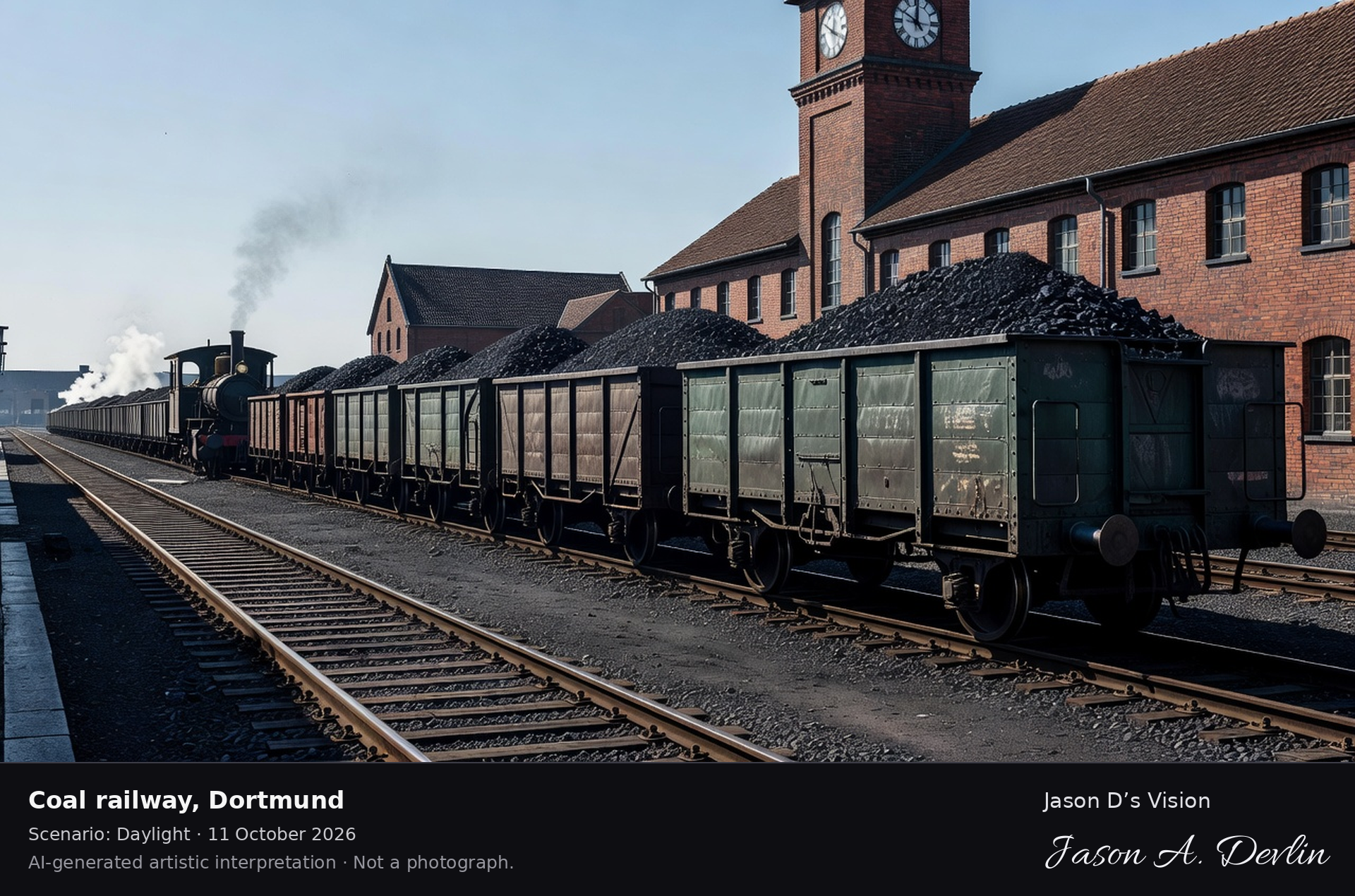
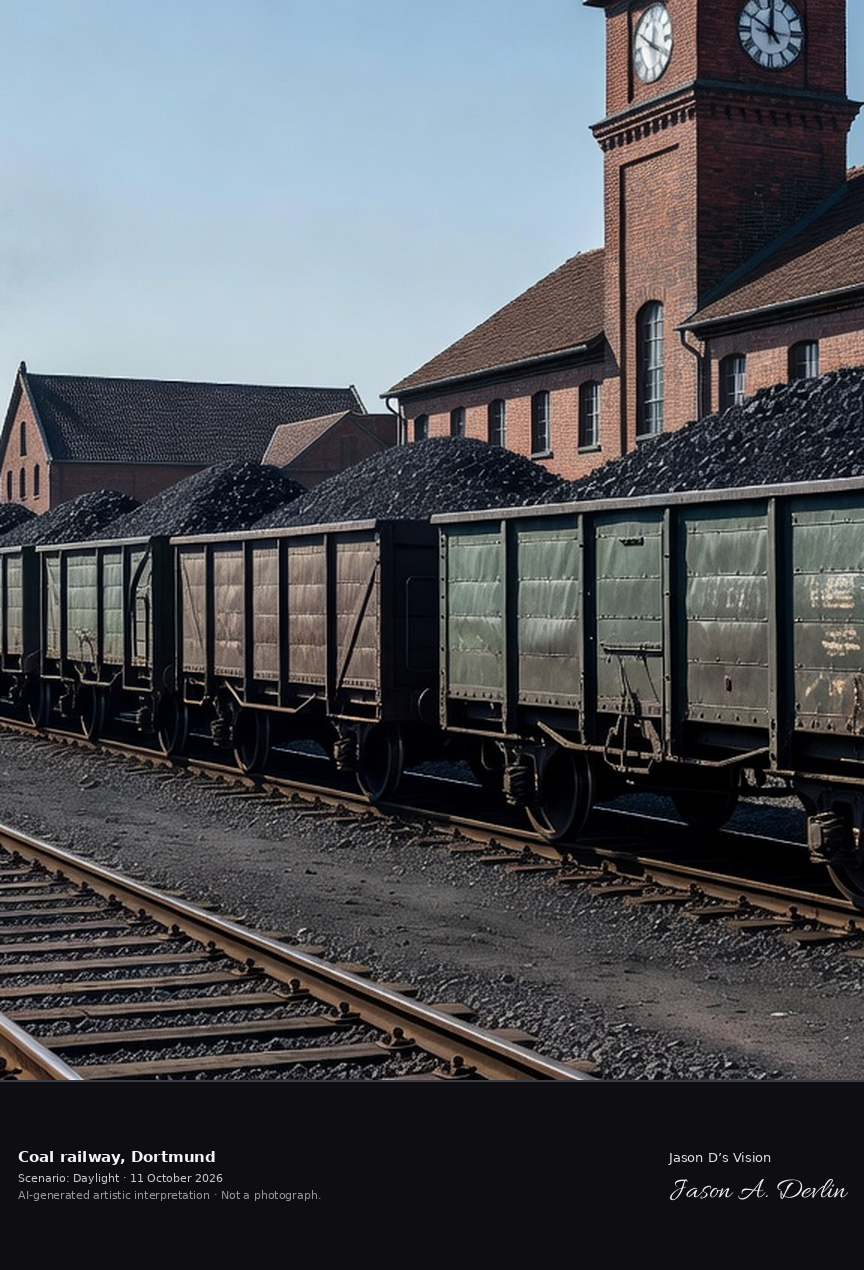
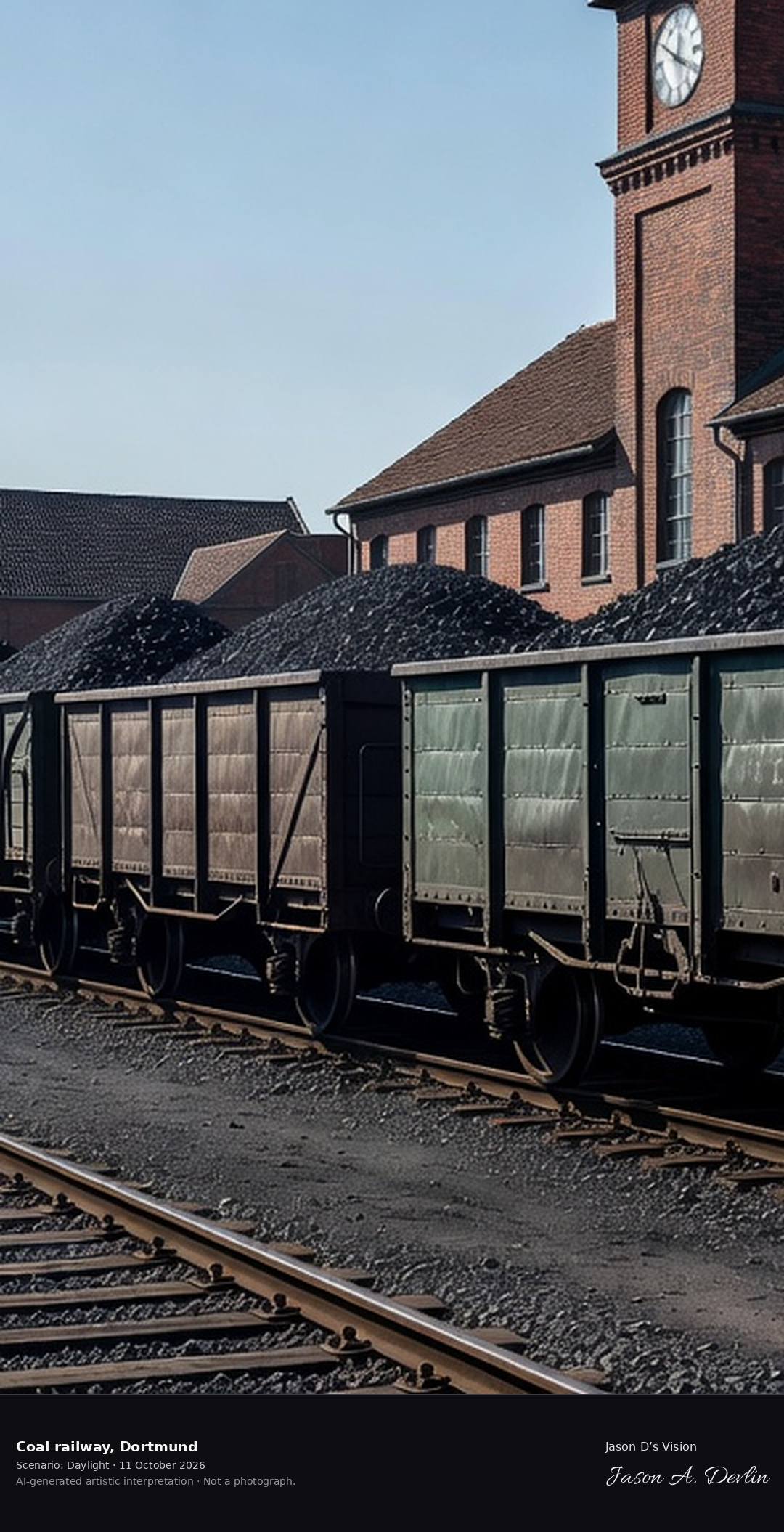
A rake of vintage open wagons heaped with black coal stands on the sidings at Zeche Zollern, a small steam shunter coupled at the head. Behind them rise the colliery's historic red-brick buildings under bright daylight. Railways like this one carried the Ruhr's coal to the steelworks and ports of Europe.
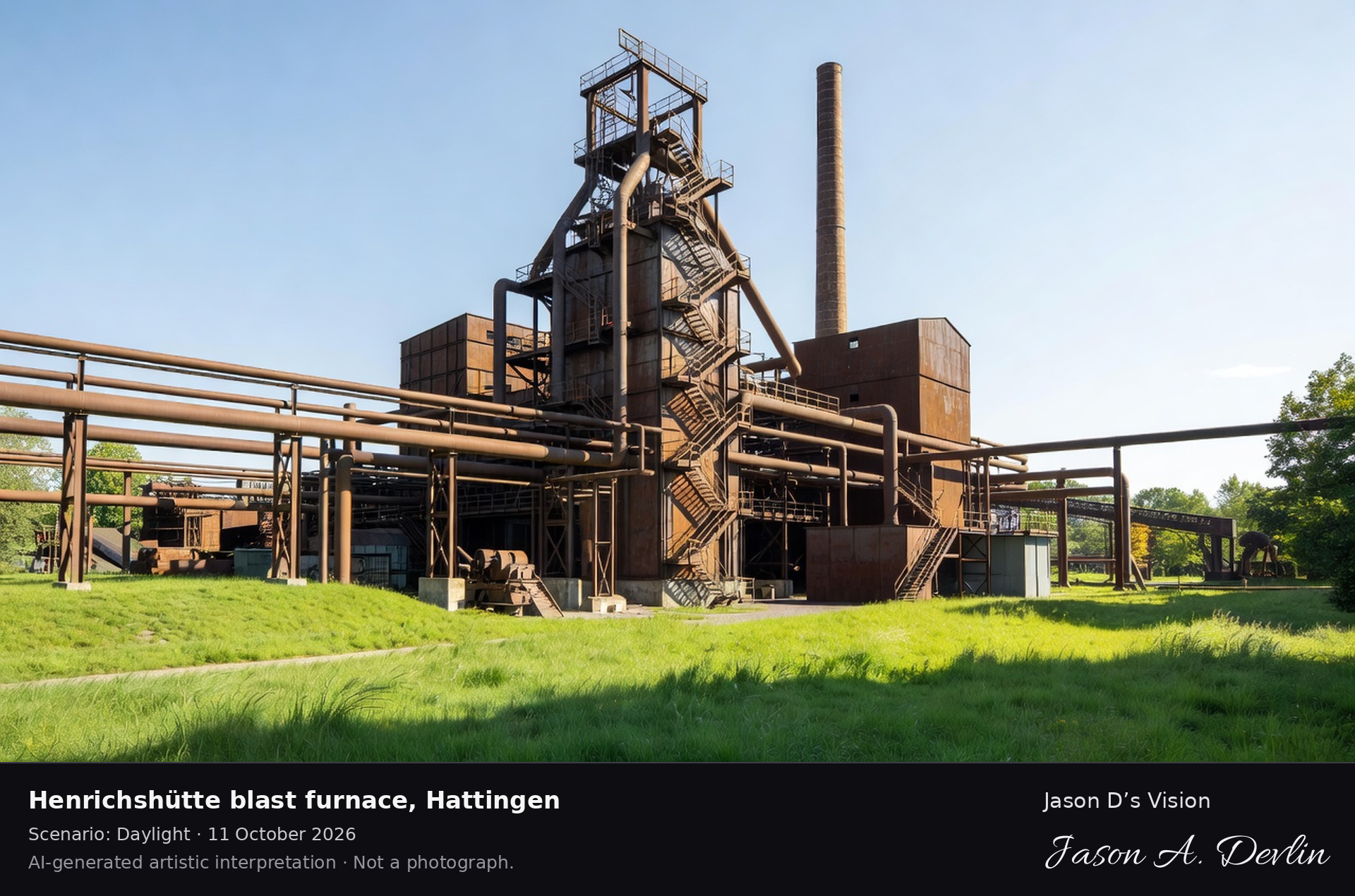
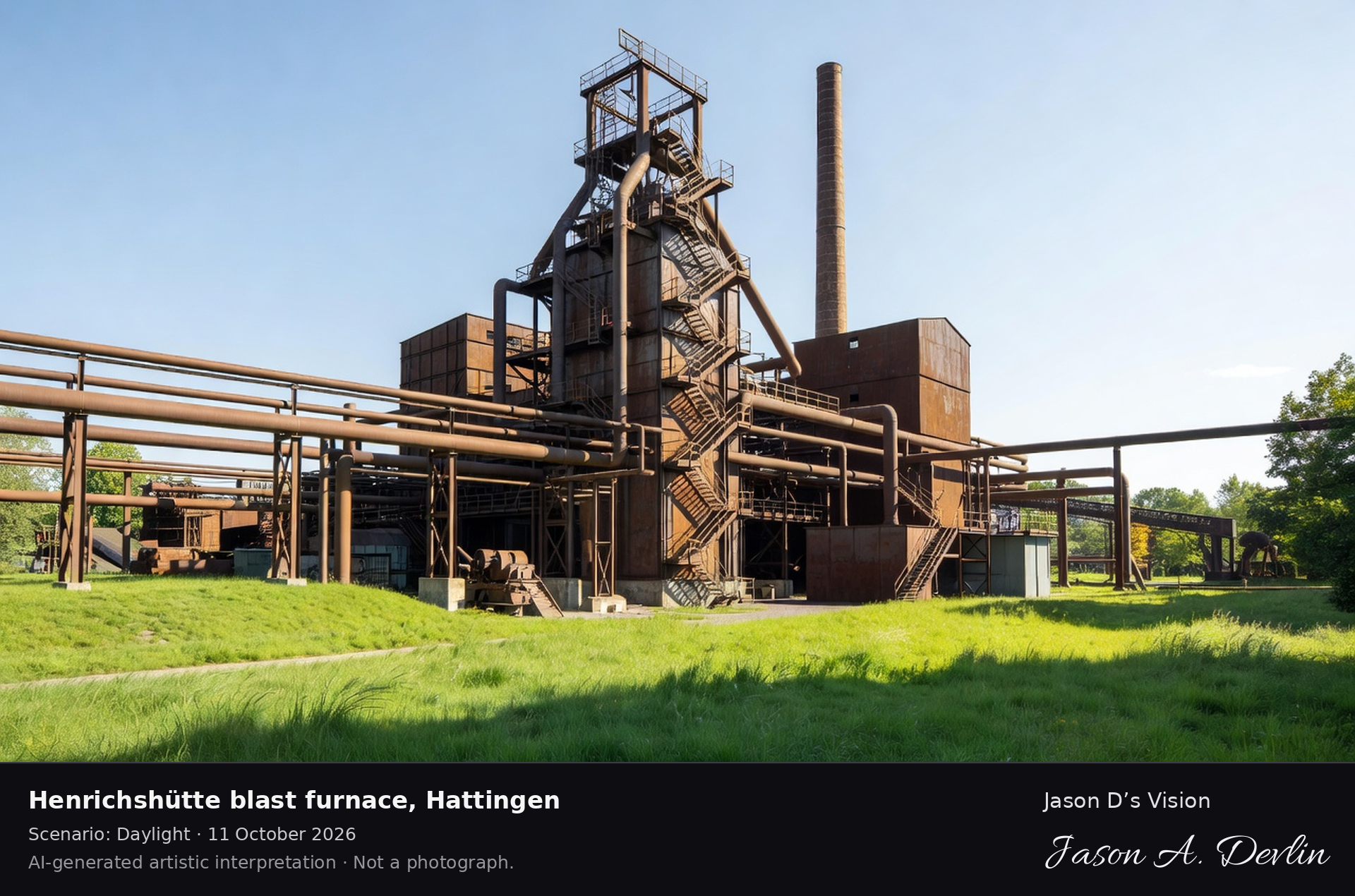
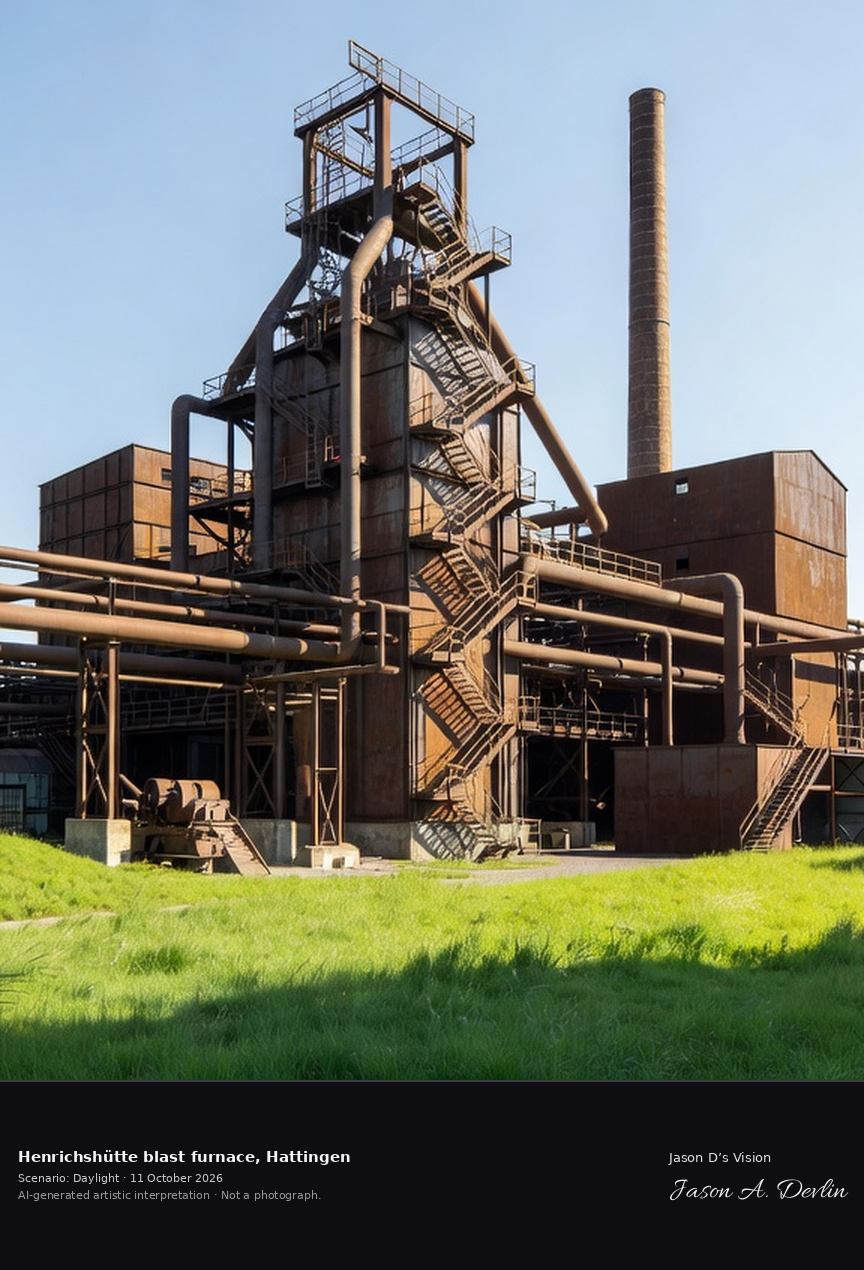
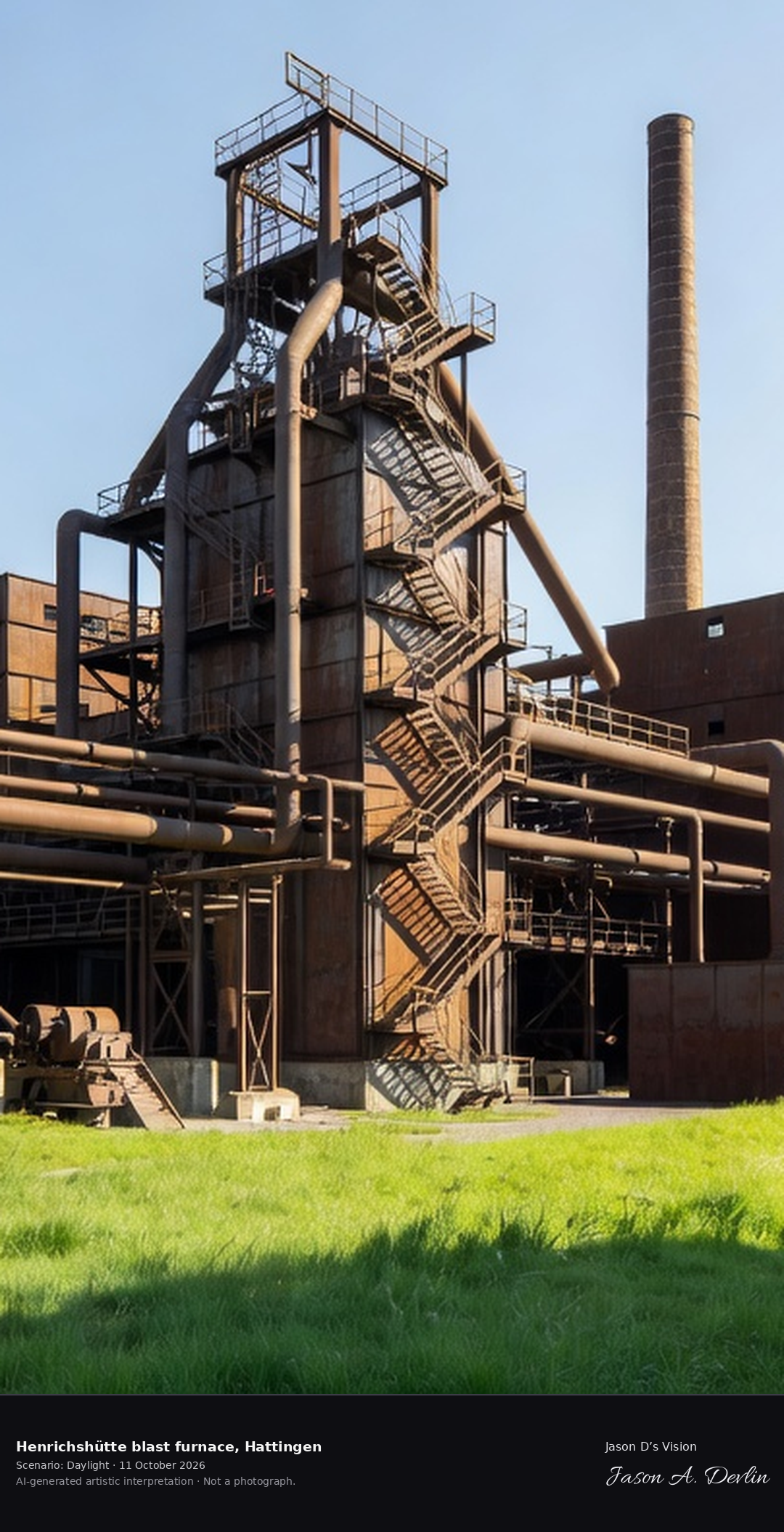
The rust-red blast furnace of the Henrichshütte dominates the frame, its tangle of pipes, stairways and the tall chimney rising over the preserved ironworks. Green lawns now soften the foreground where molten iron once flowed. Hattingen's furnace is one of the last of its kind in the Ruhr, kept as a monument to steel.
Industrial park exterior · AI-generated artistic interpretation
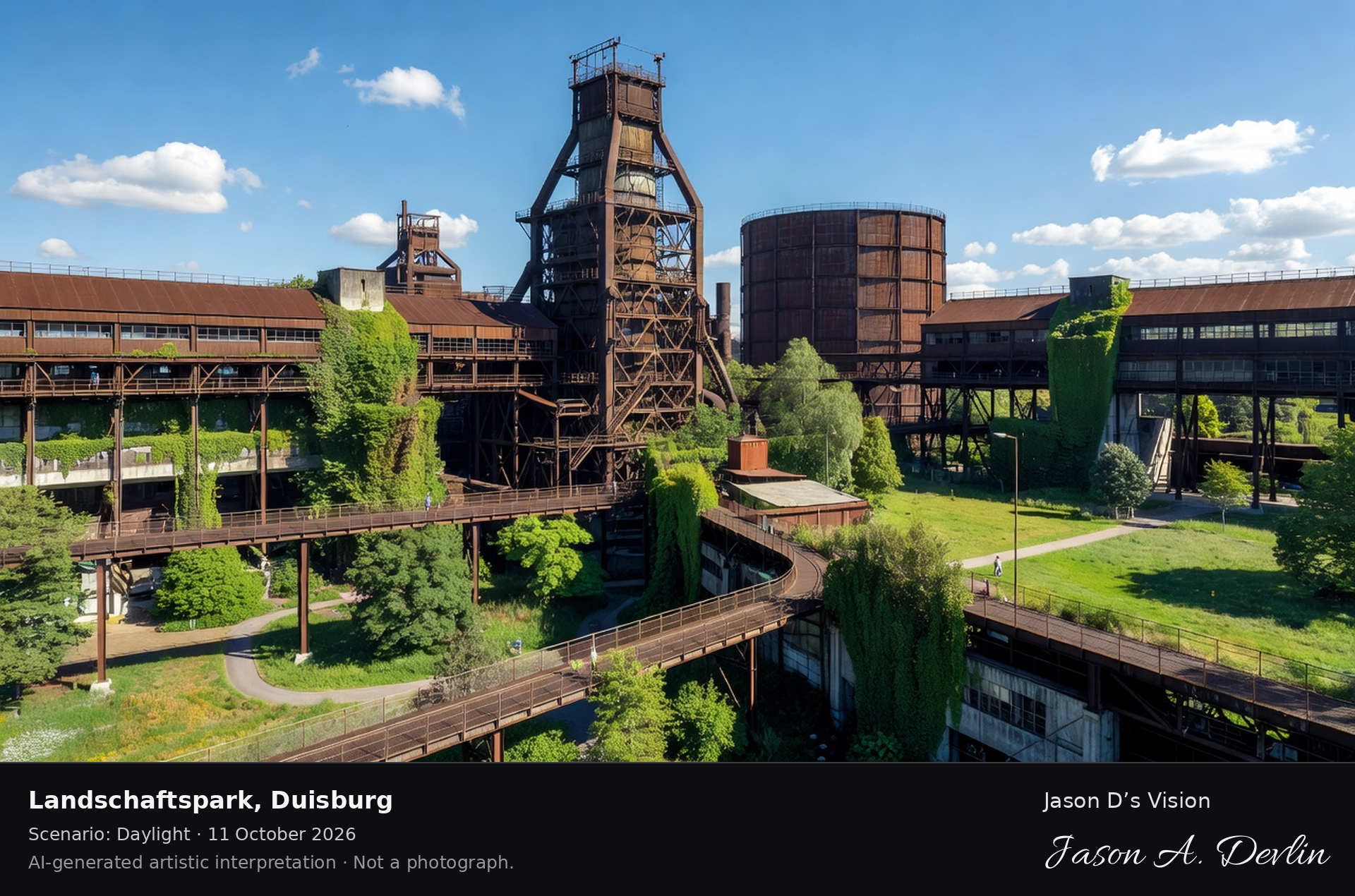
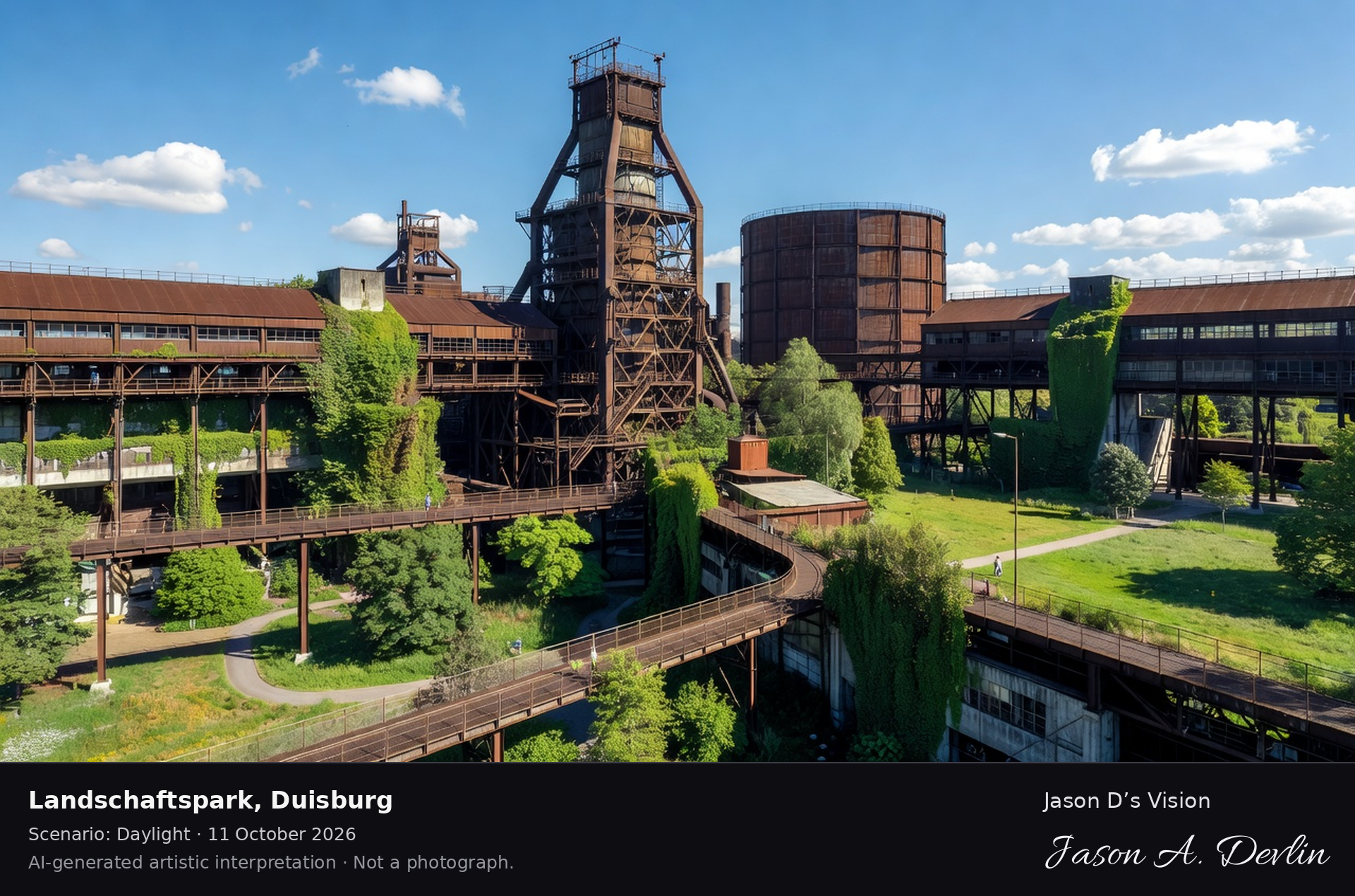
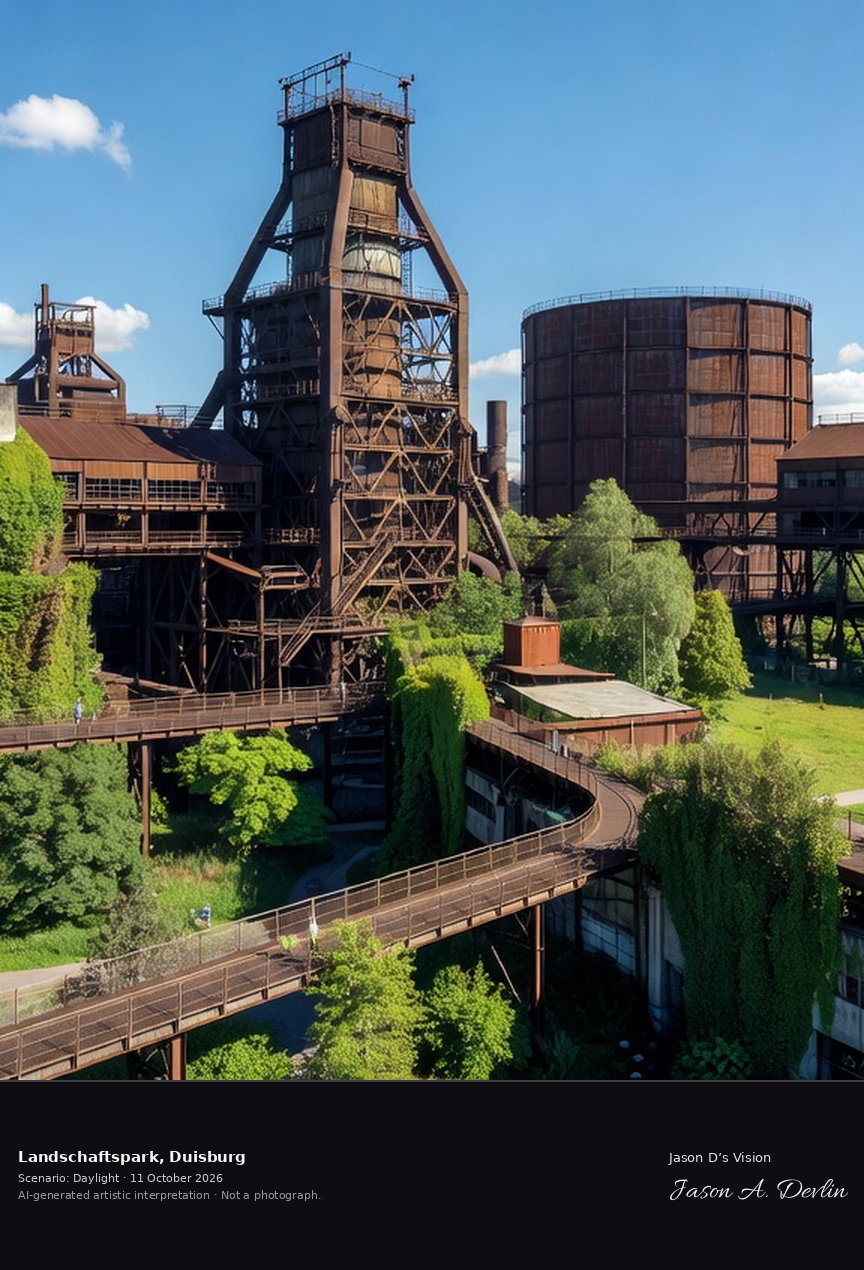
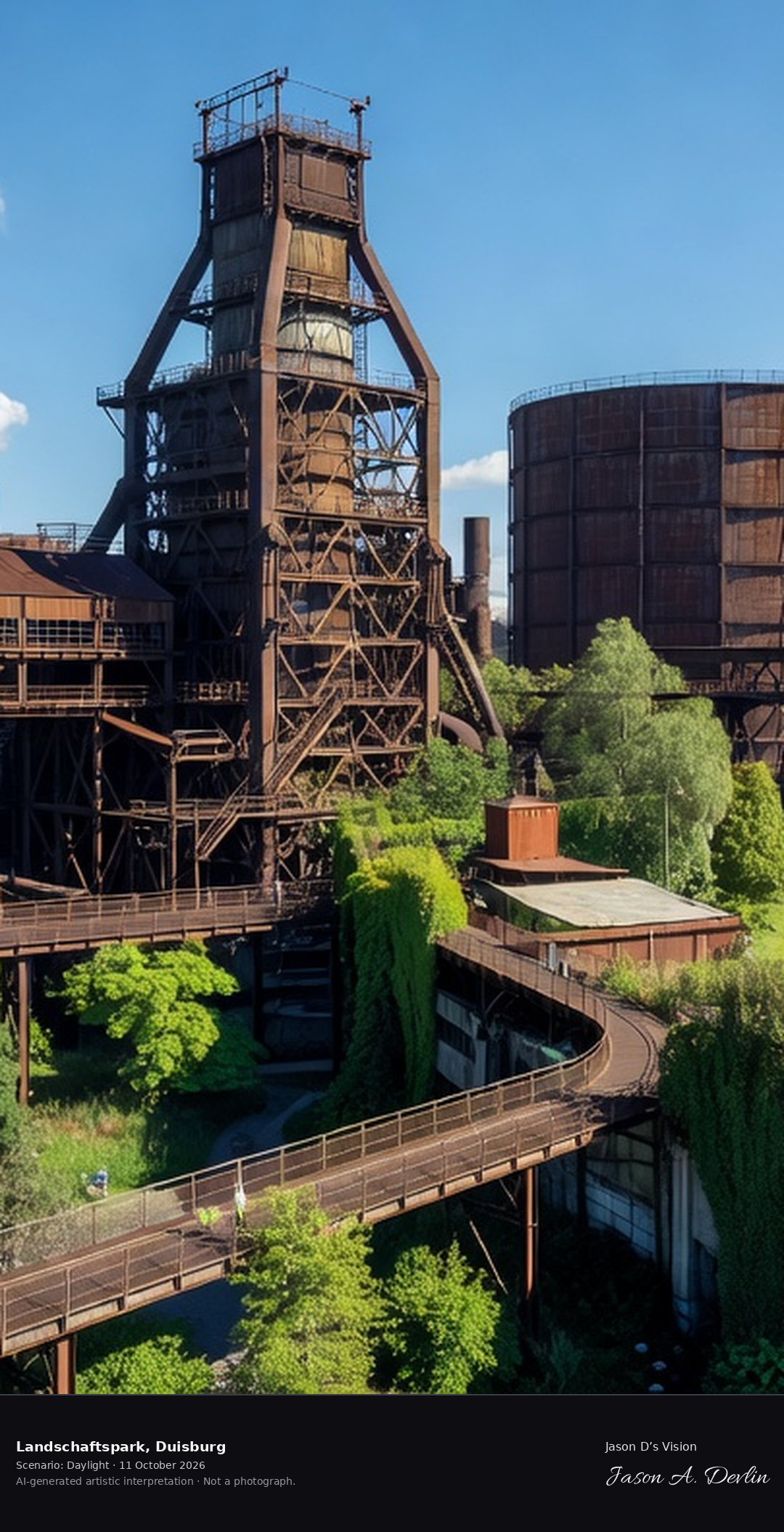
At Landschaftspark Duisburg-Nord, the rust-colored blast furnace and gasometer of a dead steelworks rise over green parkland and winding walkways. Nature and leisure have reclaimed the iron giant. The park is the Ruhr's most famous symbol of transformation — from coal and steel to culture and recreation.
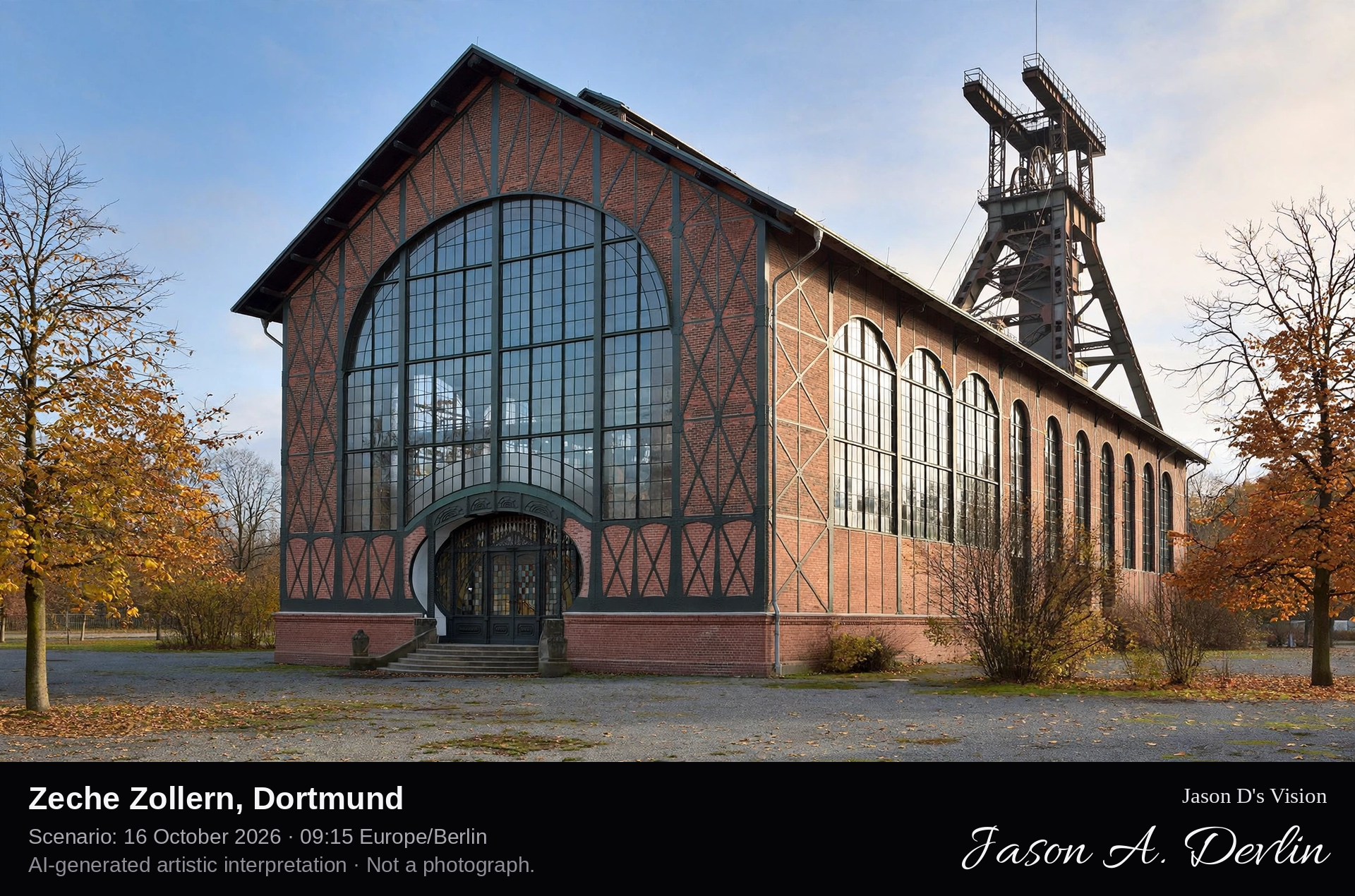
Jugendstil machine hall and headframe above formal grounds · AI-generated artistic interpretation
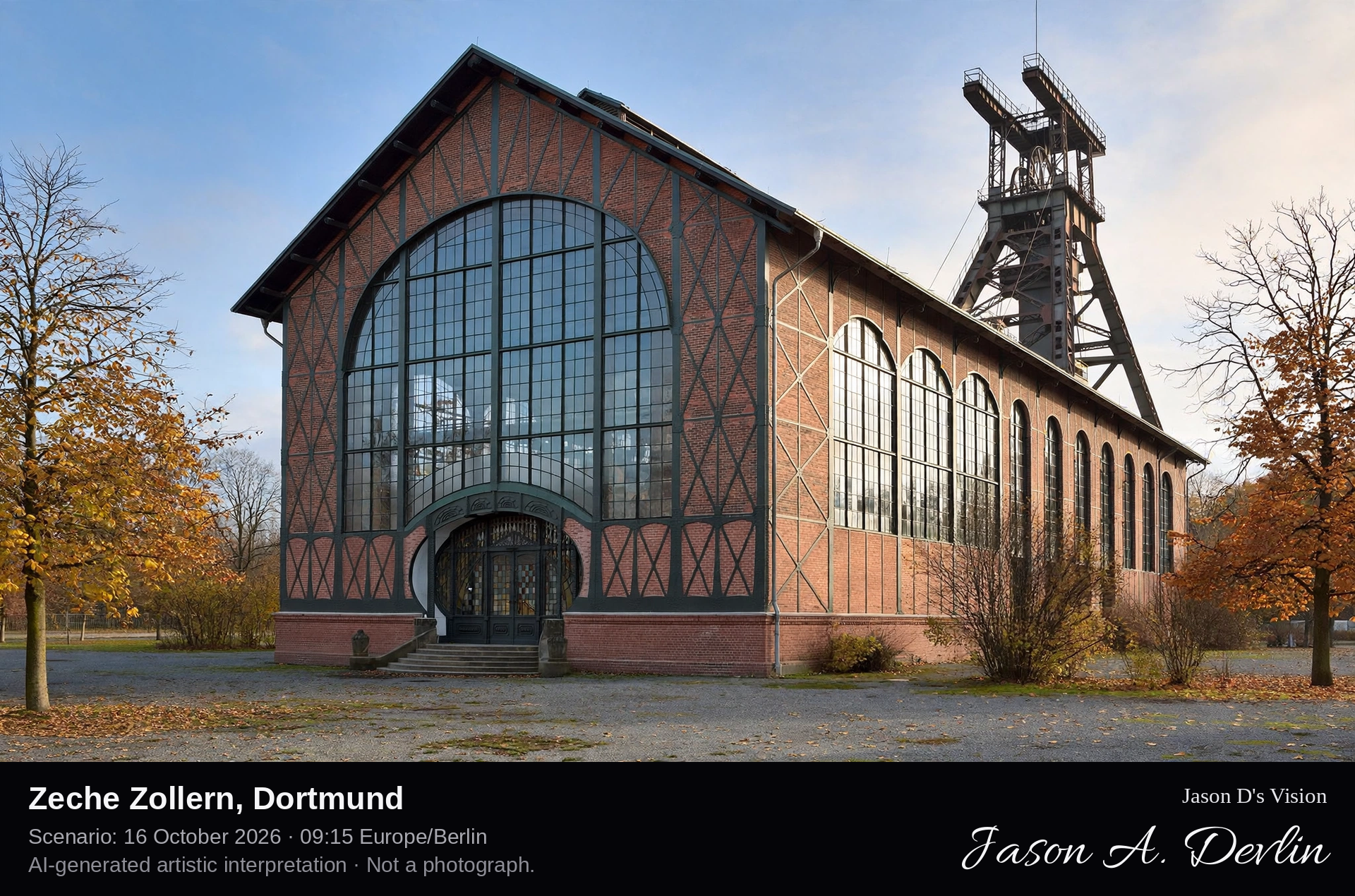
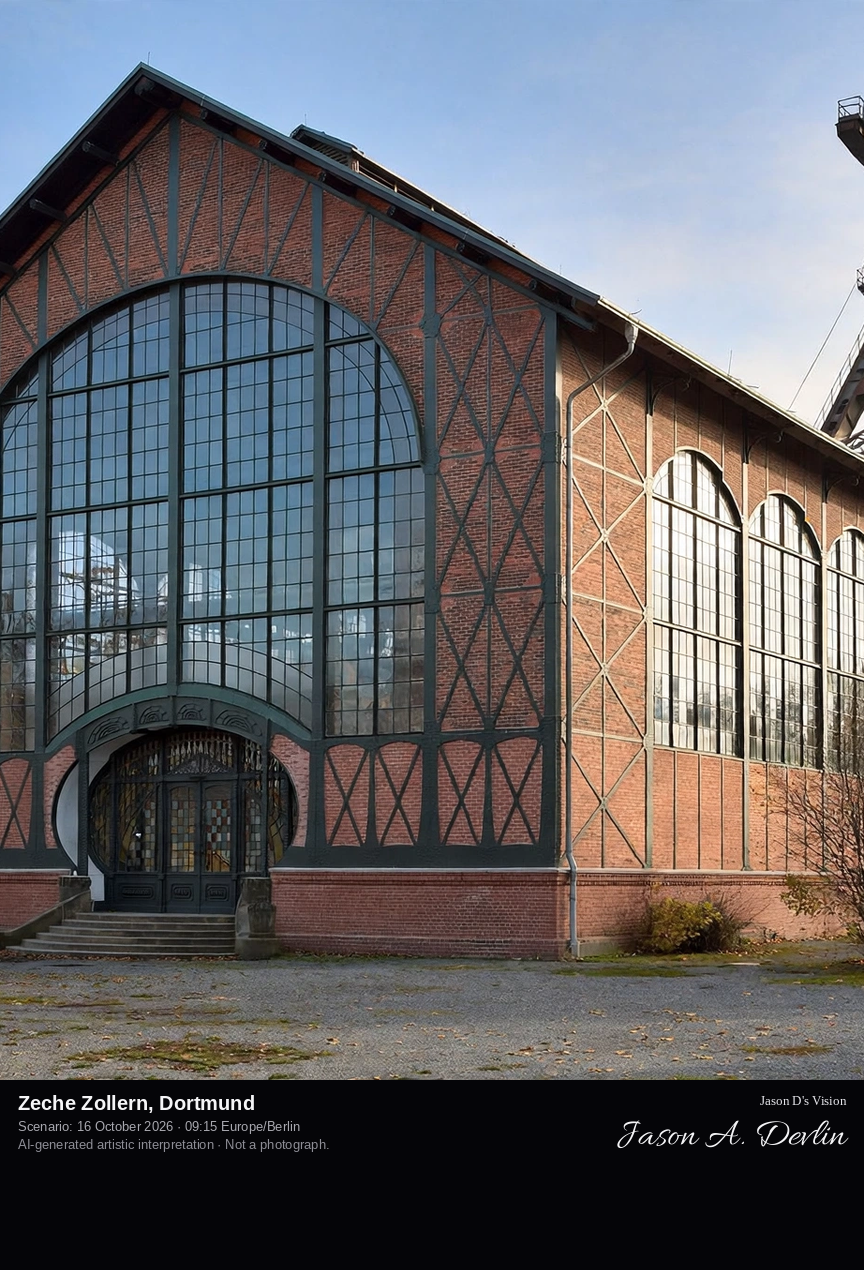
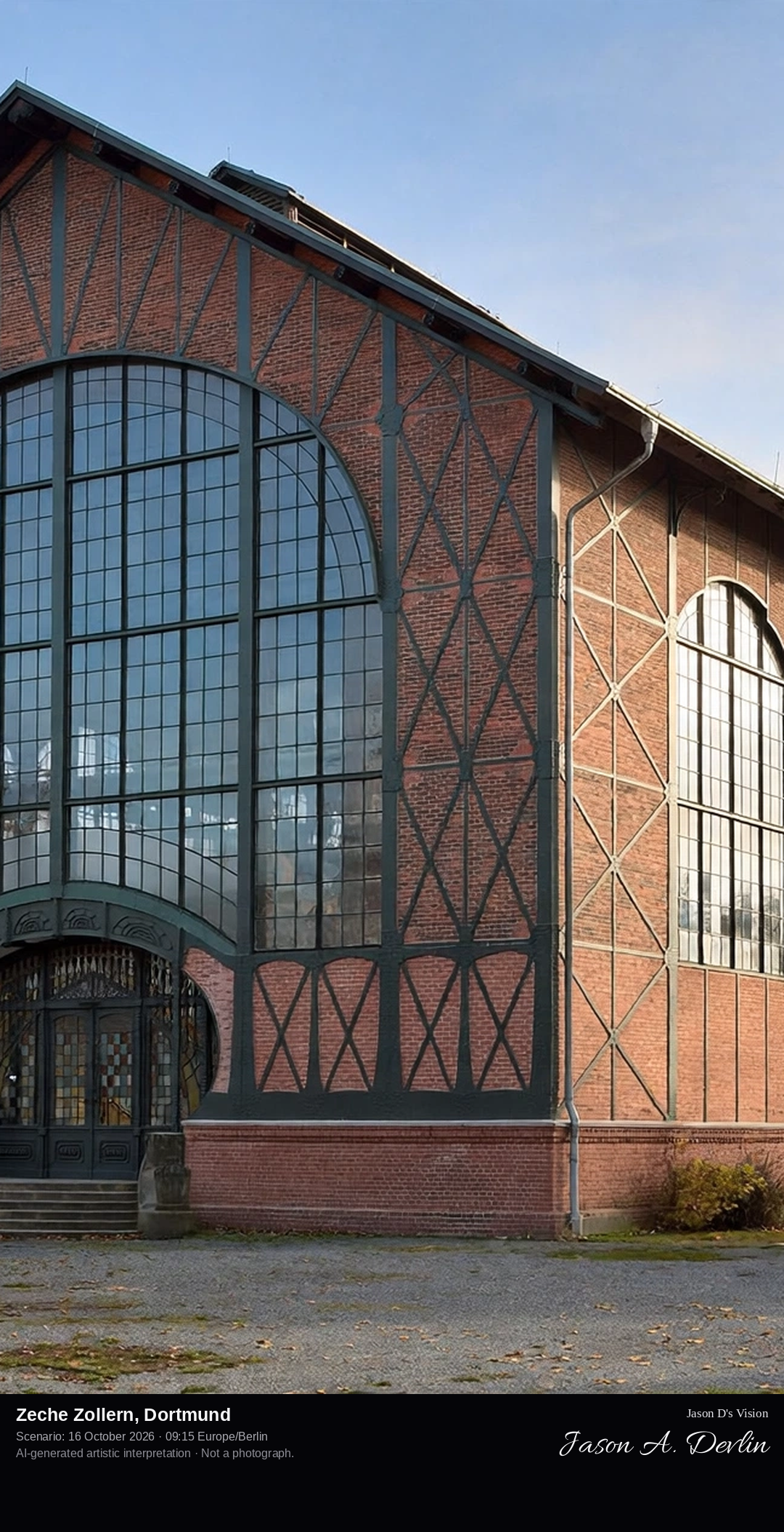
Zeche Zollern in Dortmund is a former coal mine built like a palace, often called a castle of labour for its ornate red-brick architecture. Its machine hall is famed for a sculpted Jugendstil entrance portal and large arched windows that are unusual for an industrial building. A steel winding headframe rises behind the hall, and the complex is now an industrial museum.
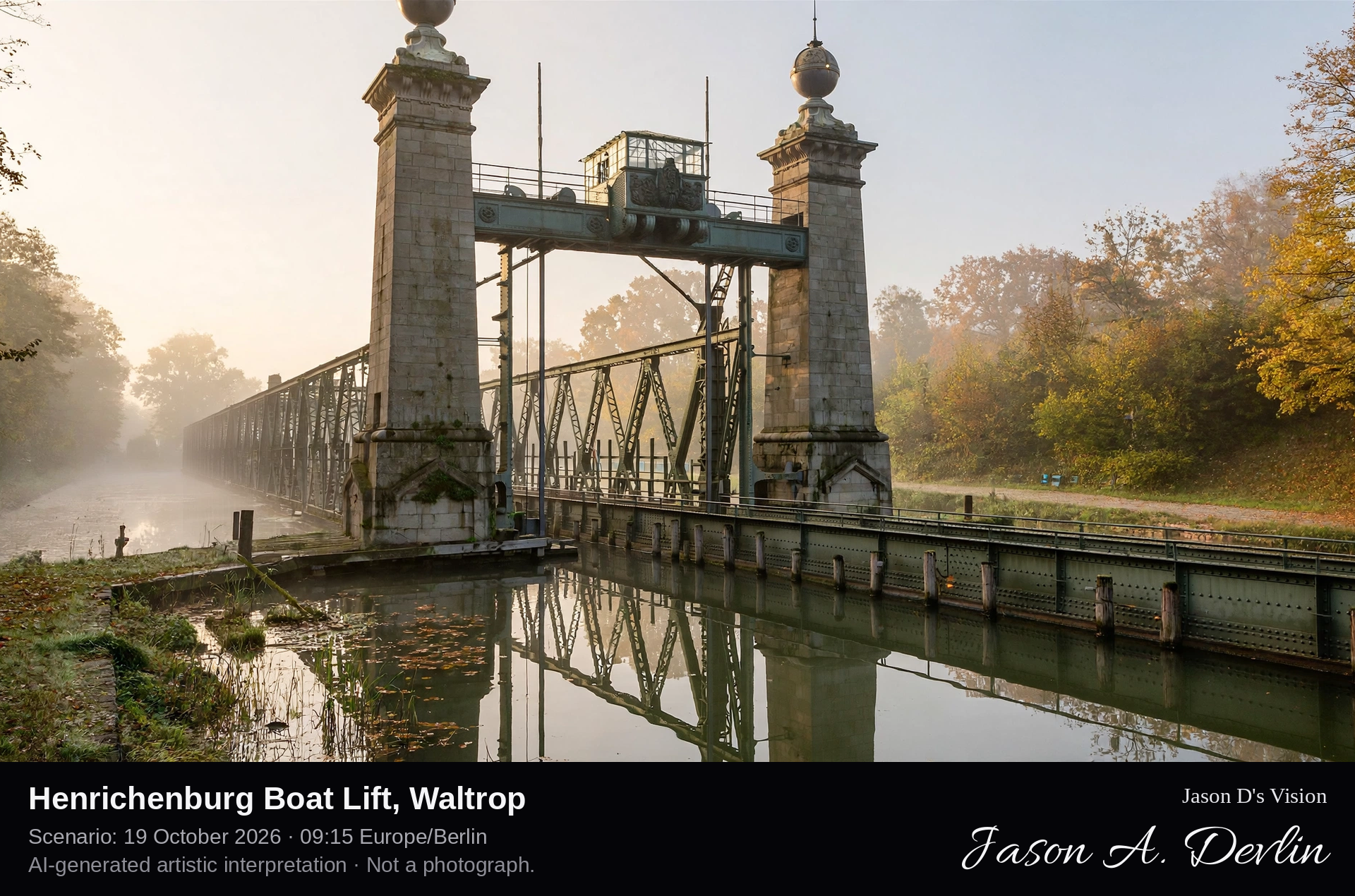
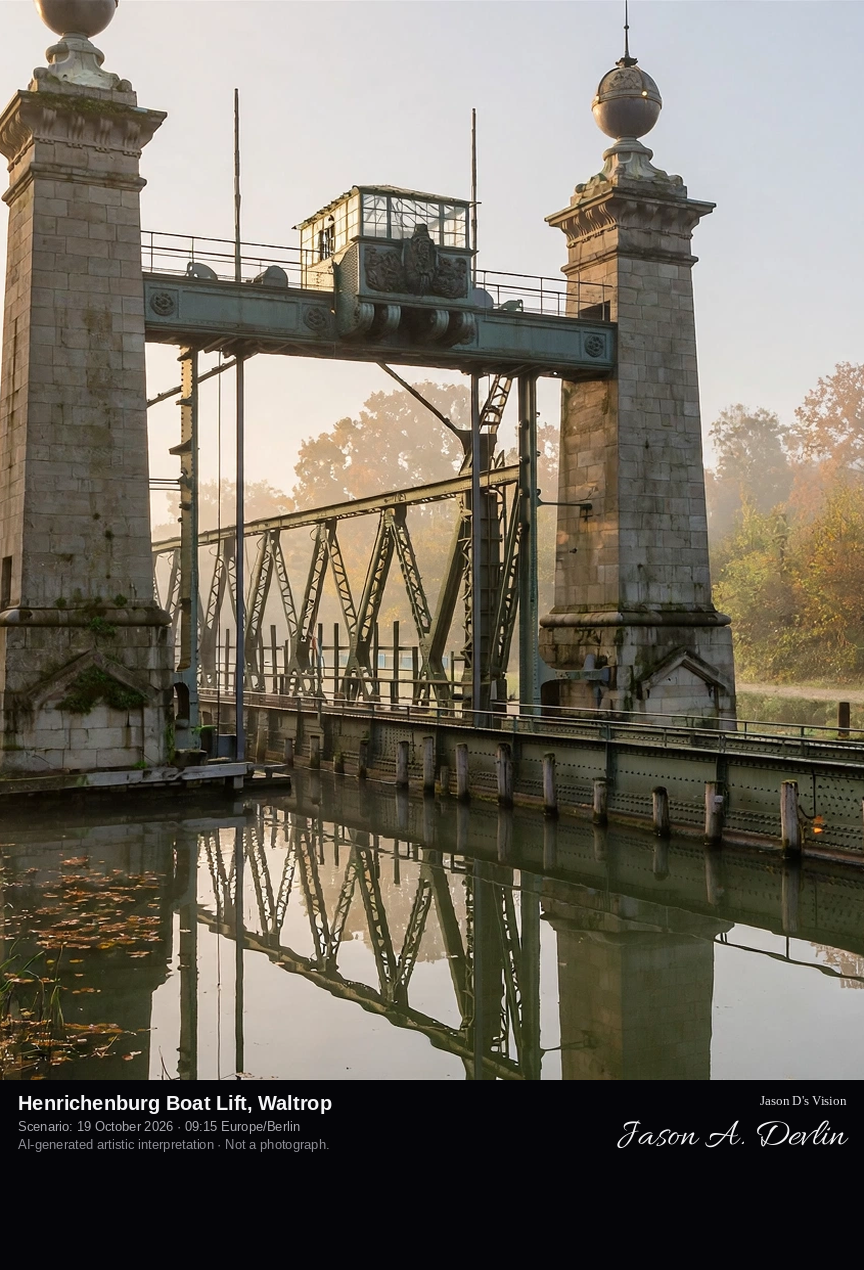
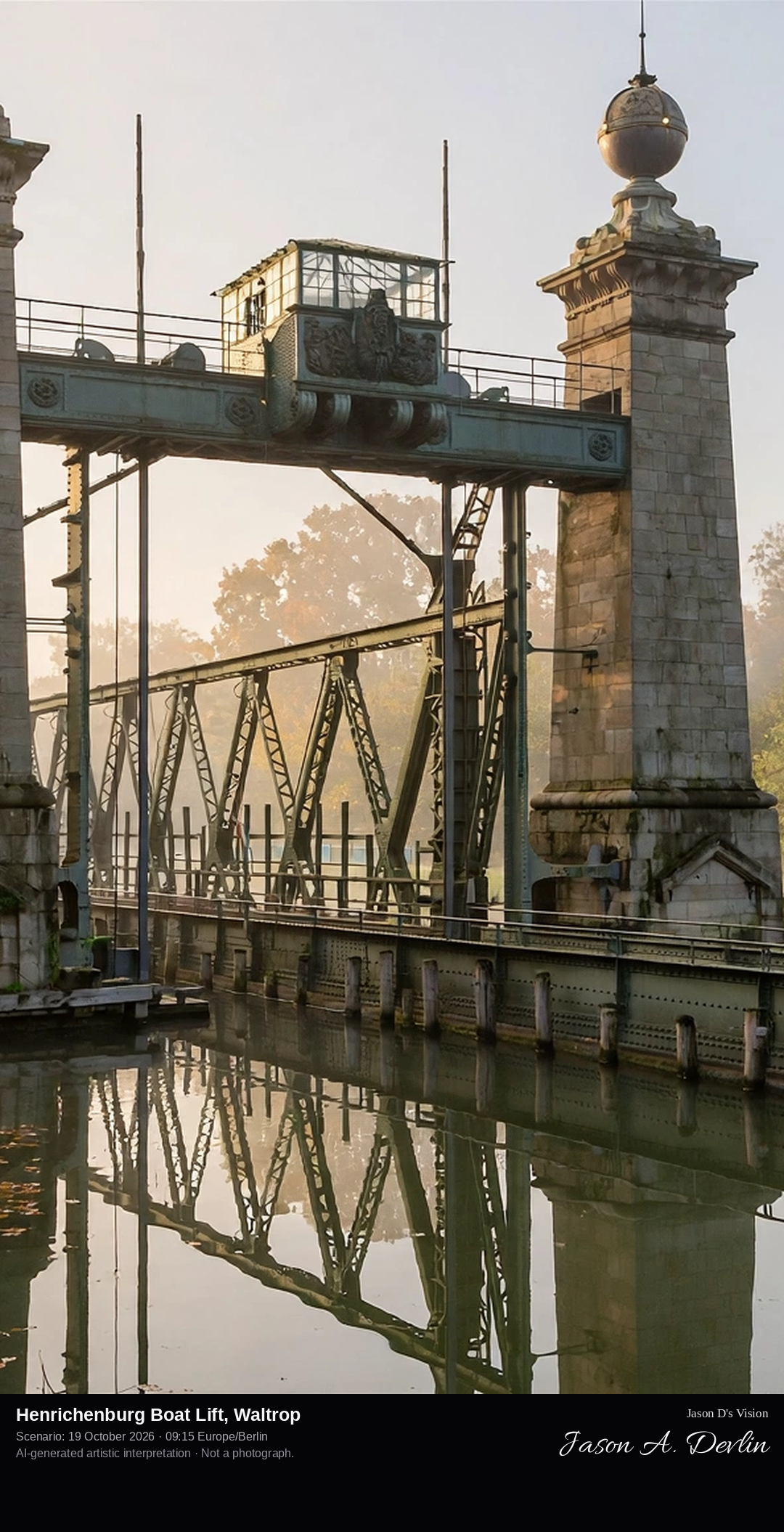
Riveted steel boat lift over the canal trough · AI-generated artistic interpretation
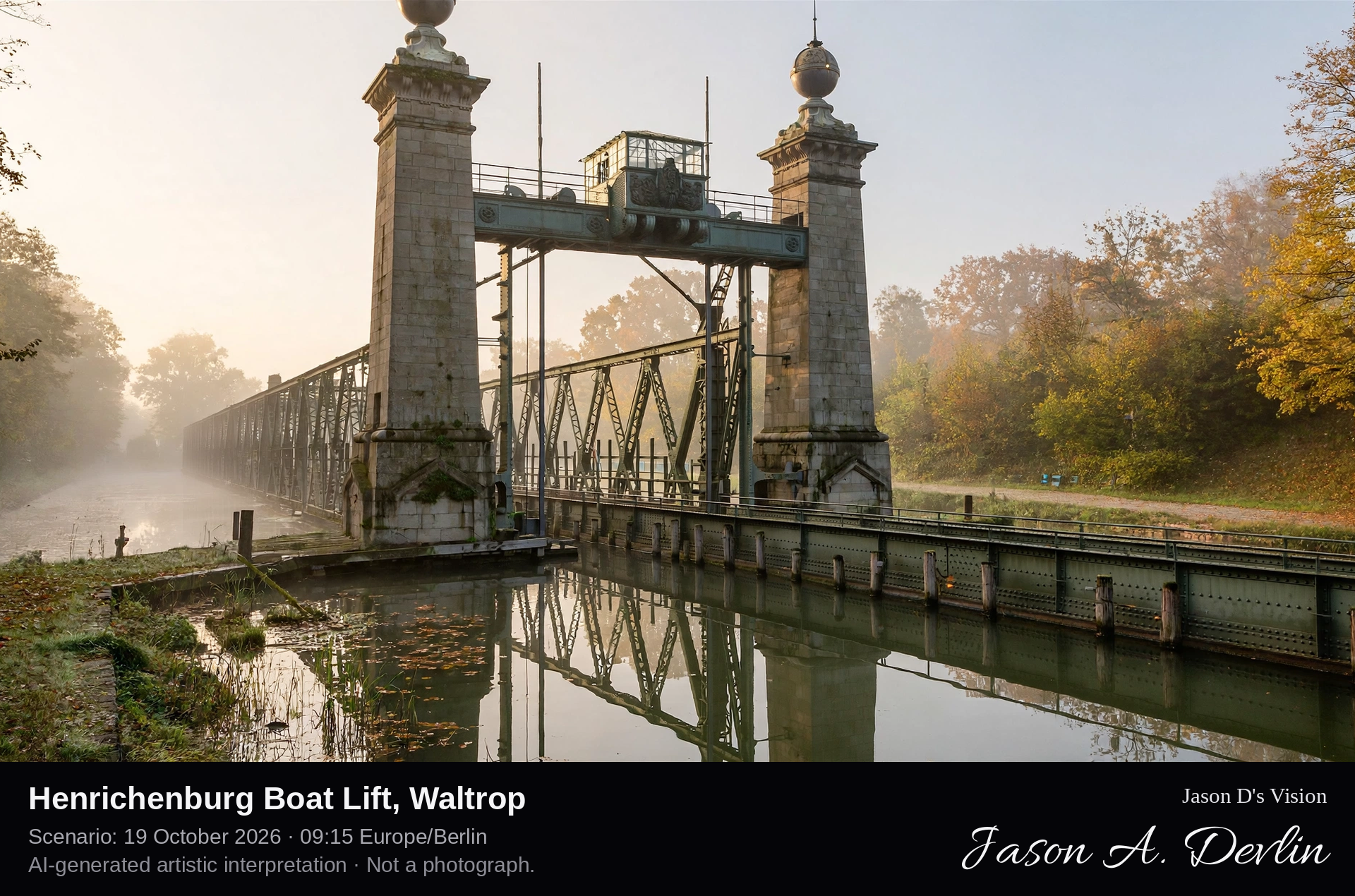
The Henrichenburg Boat Lift at Waltrop, opened in 1899 on the Dortmund-Ems Canal, raised ships 14 metres in its great water-filled trough. Its vast riveted steel framework of lattice pylons and cross-braced portals is now the centrepiece of an industrial museum. The old lift stands beside its modern successor on the flat Westphalian canal landscape.
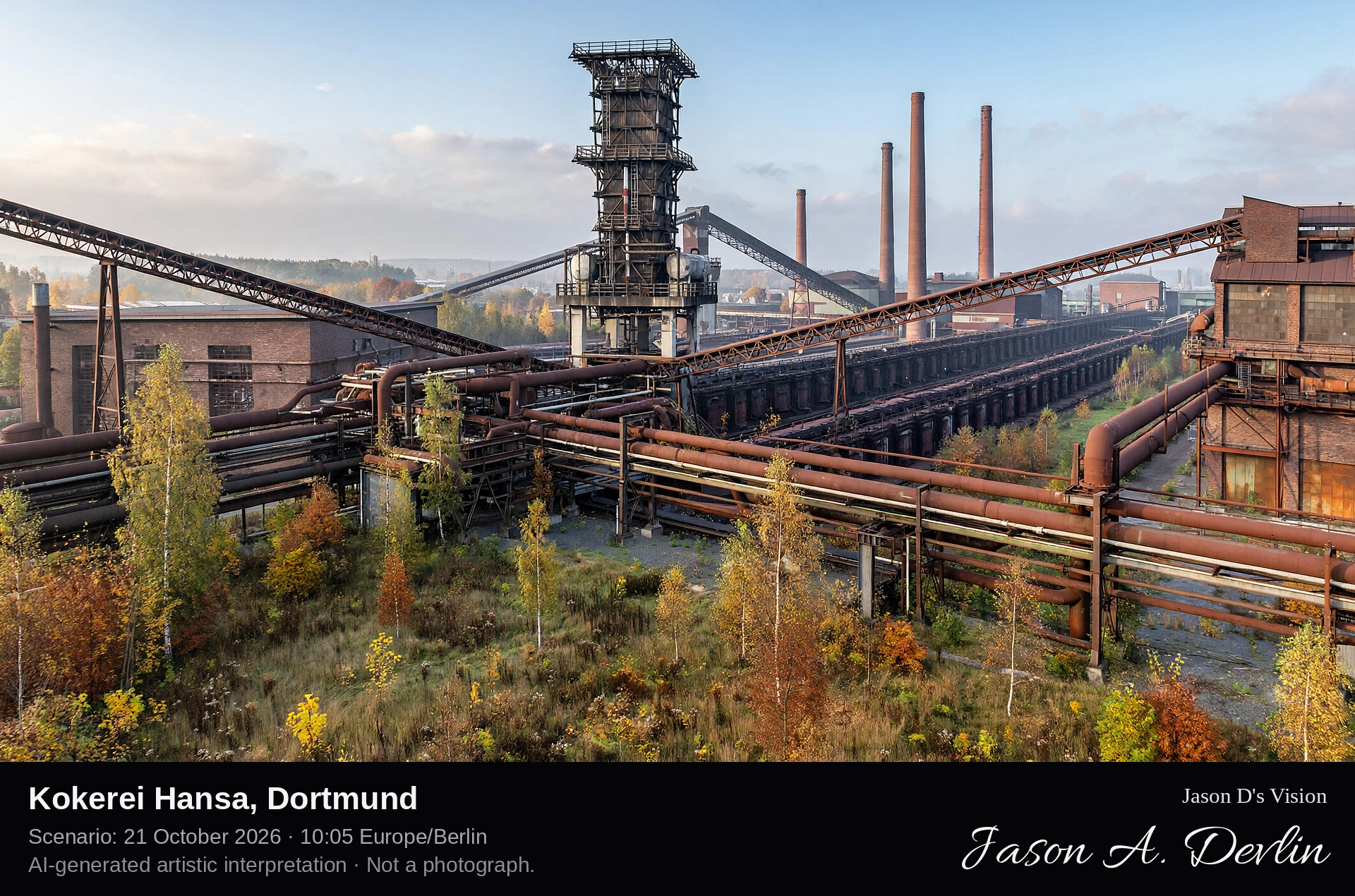
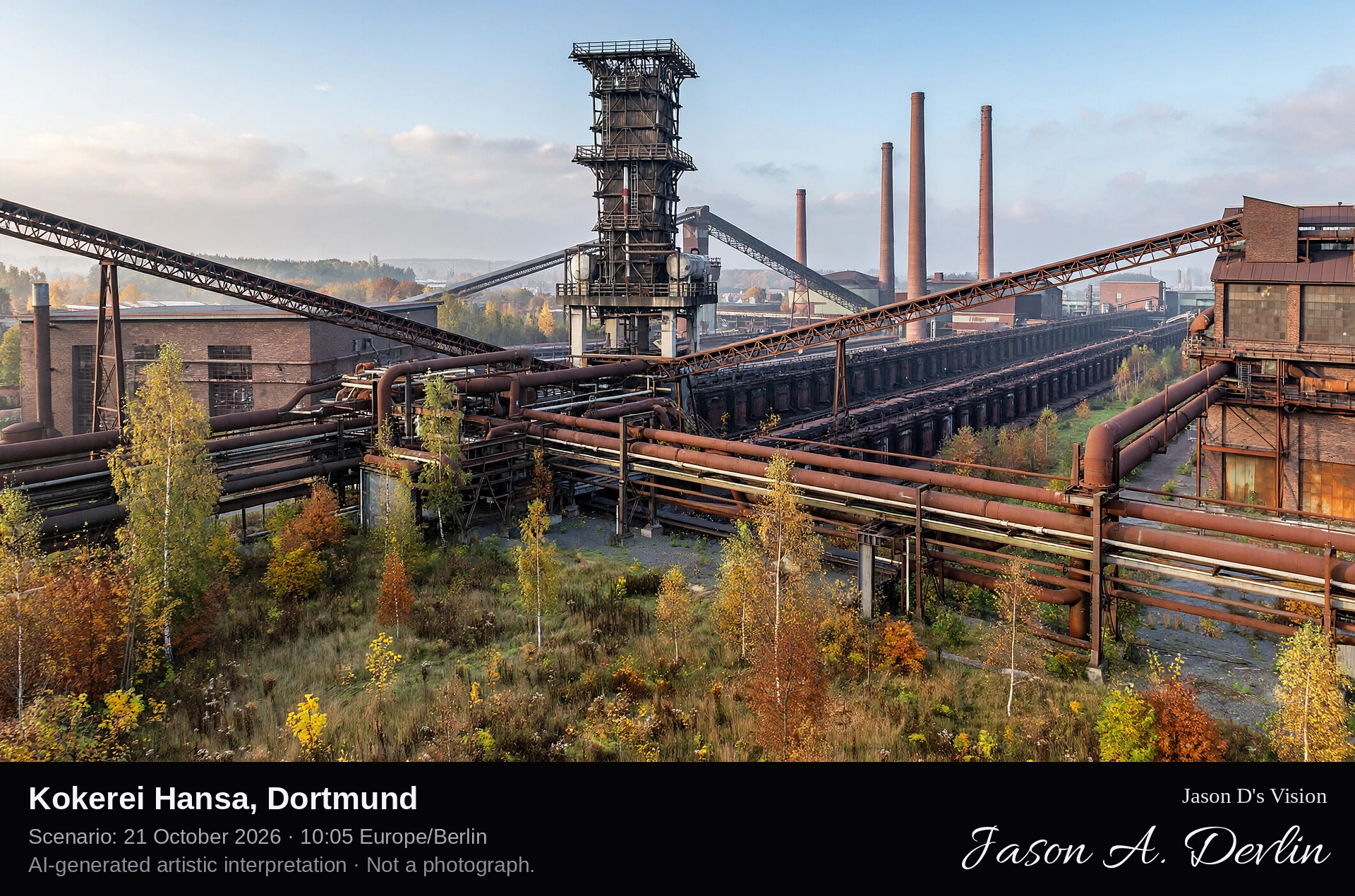
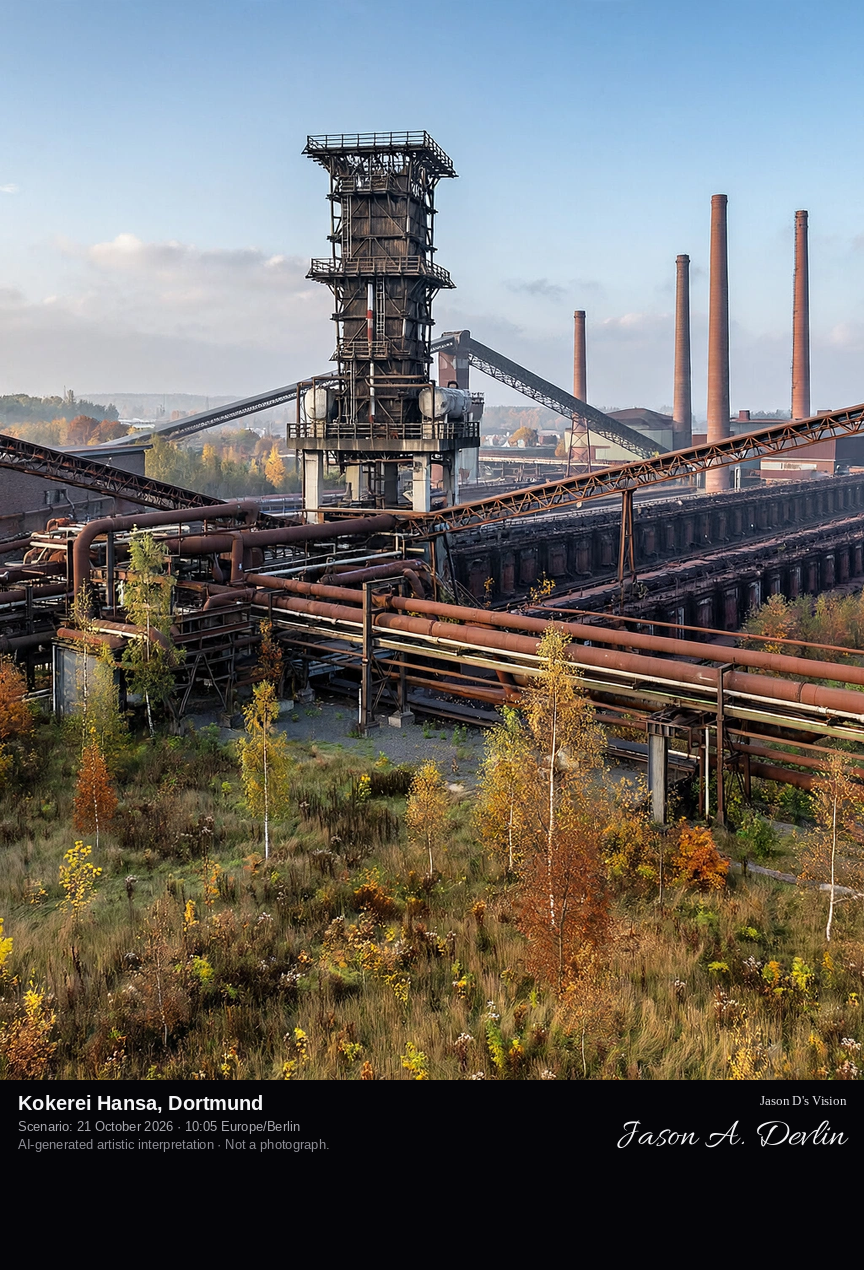
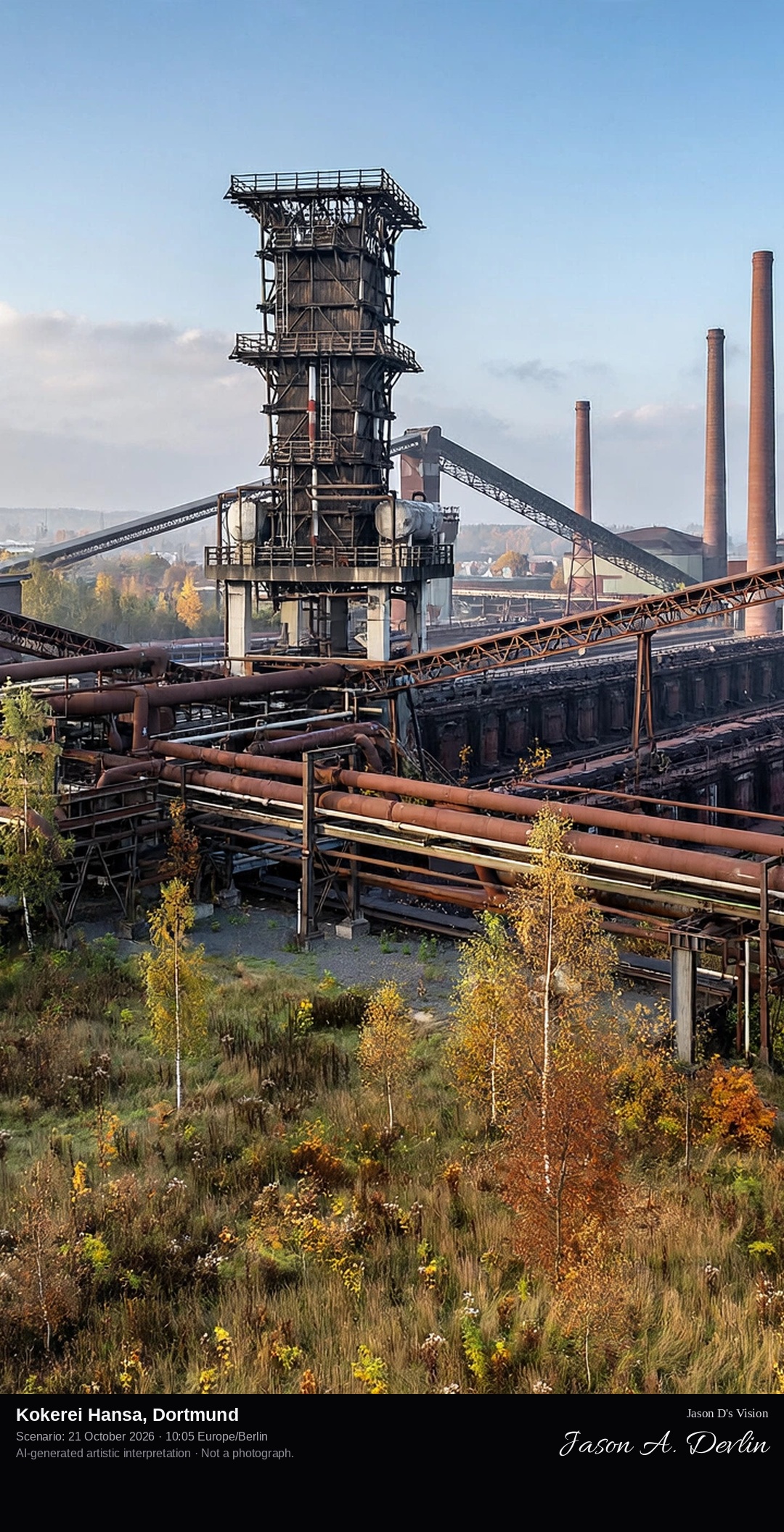
Coke oven batteries, chimneys and pipes in rust-brown steel · AI-generated artistic interpretation
Kokerei Hansa in Dortmund was built in the late 1920s as a large central coking plant, turning Ruhr coal into coke for the steelworks. Its long oven batteries, coal tower, chimneys and maze of gas pipes survive as an industrial monument. Nature is slowly reclaiming the grounds between the rust-brown steel structures.
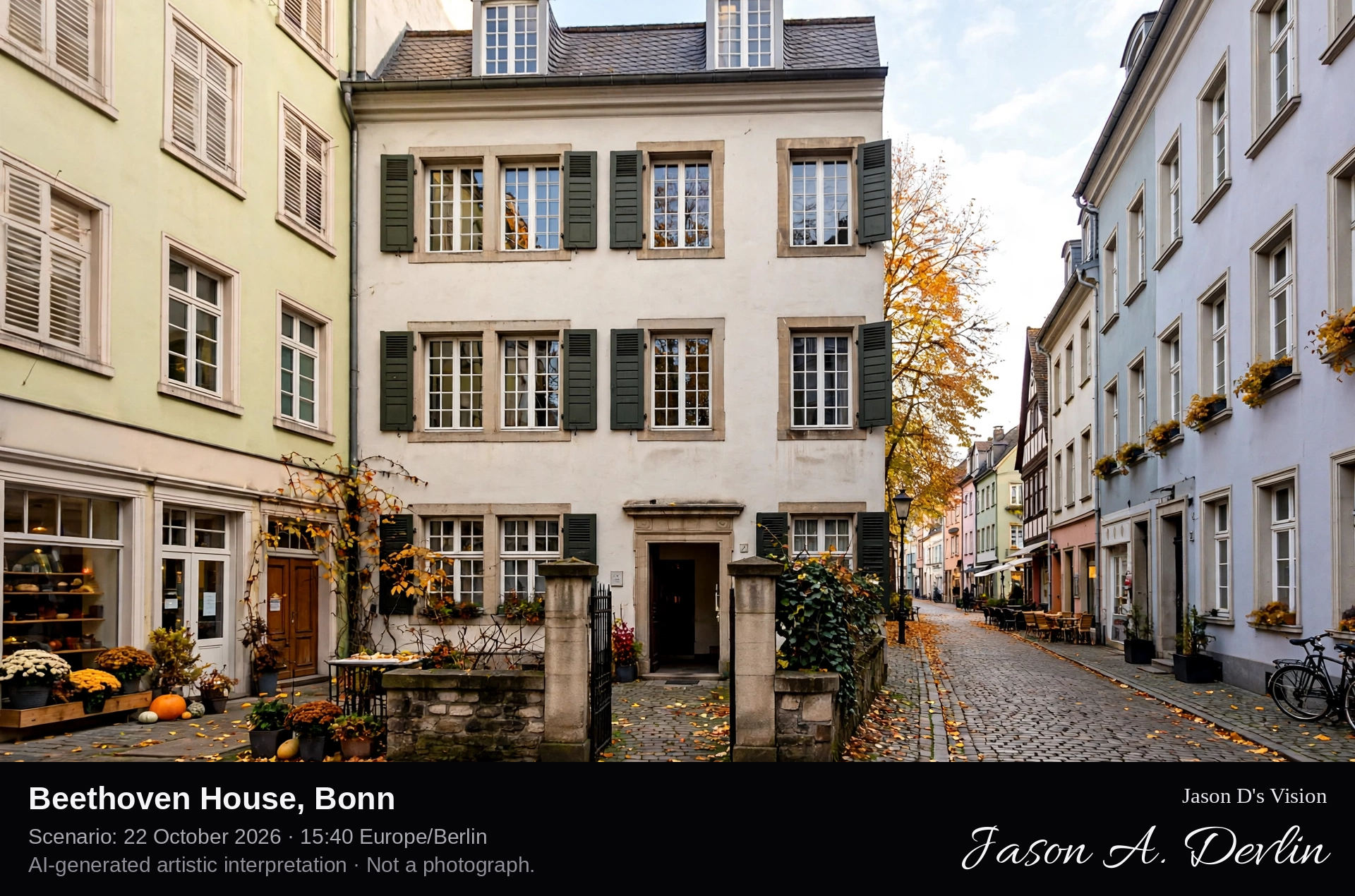
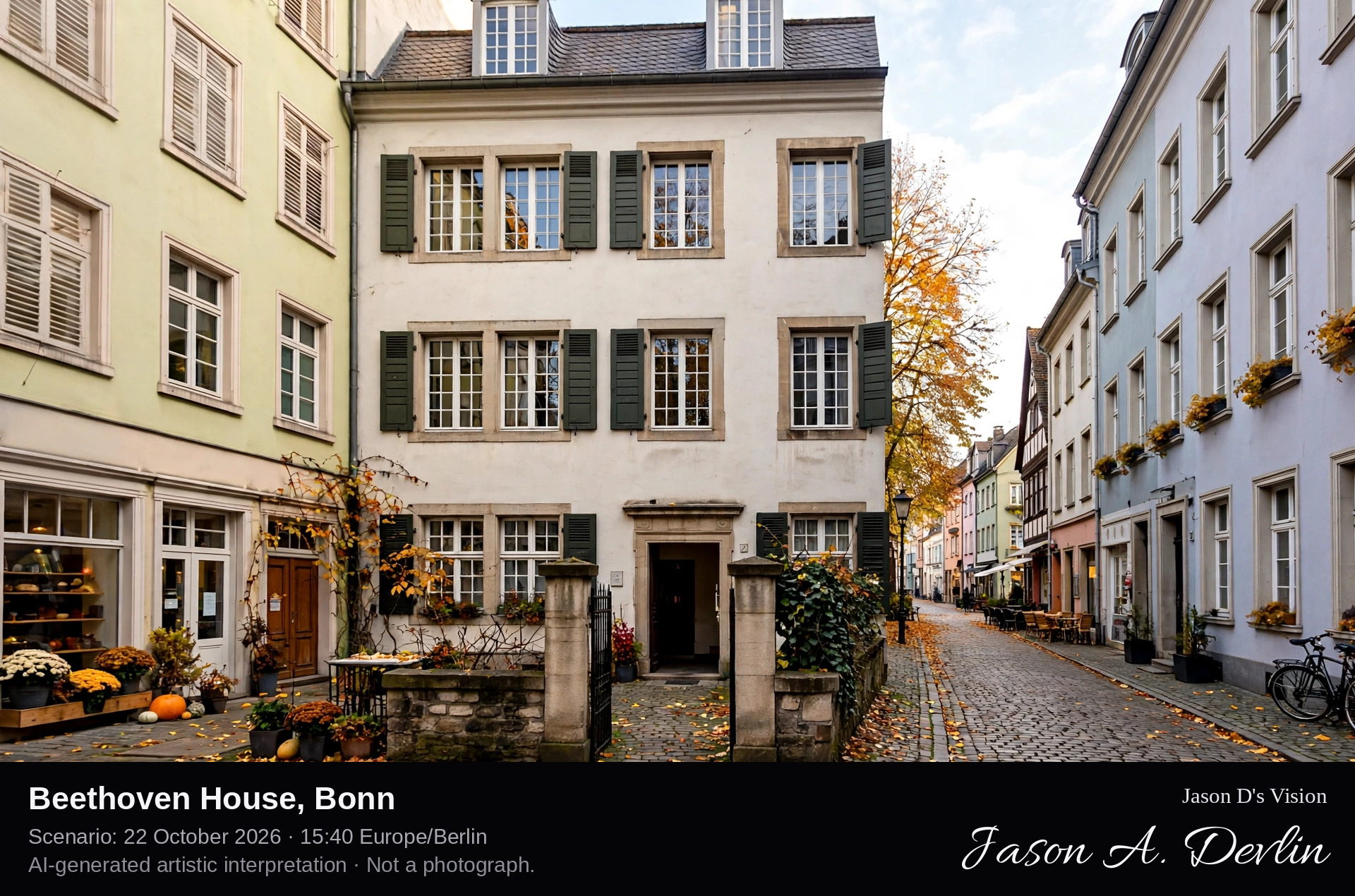
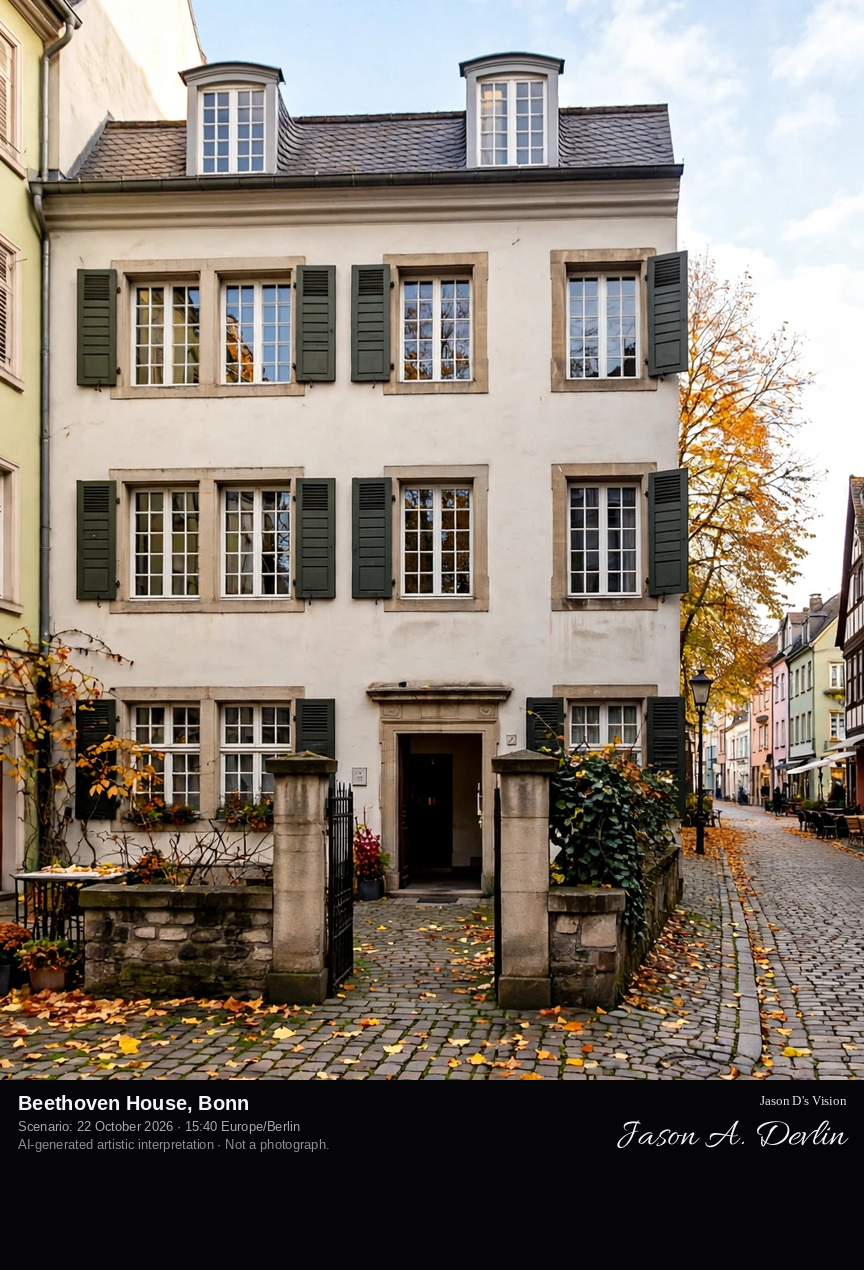
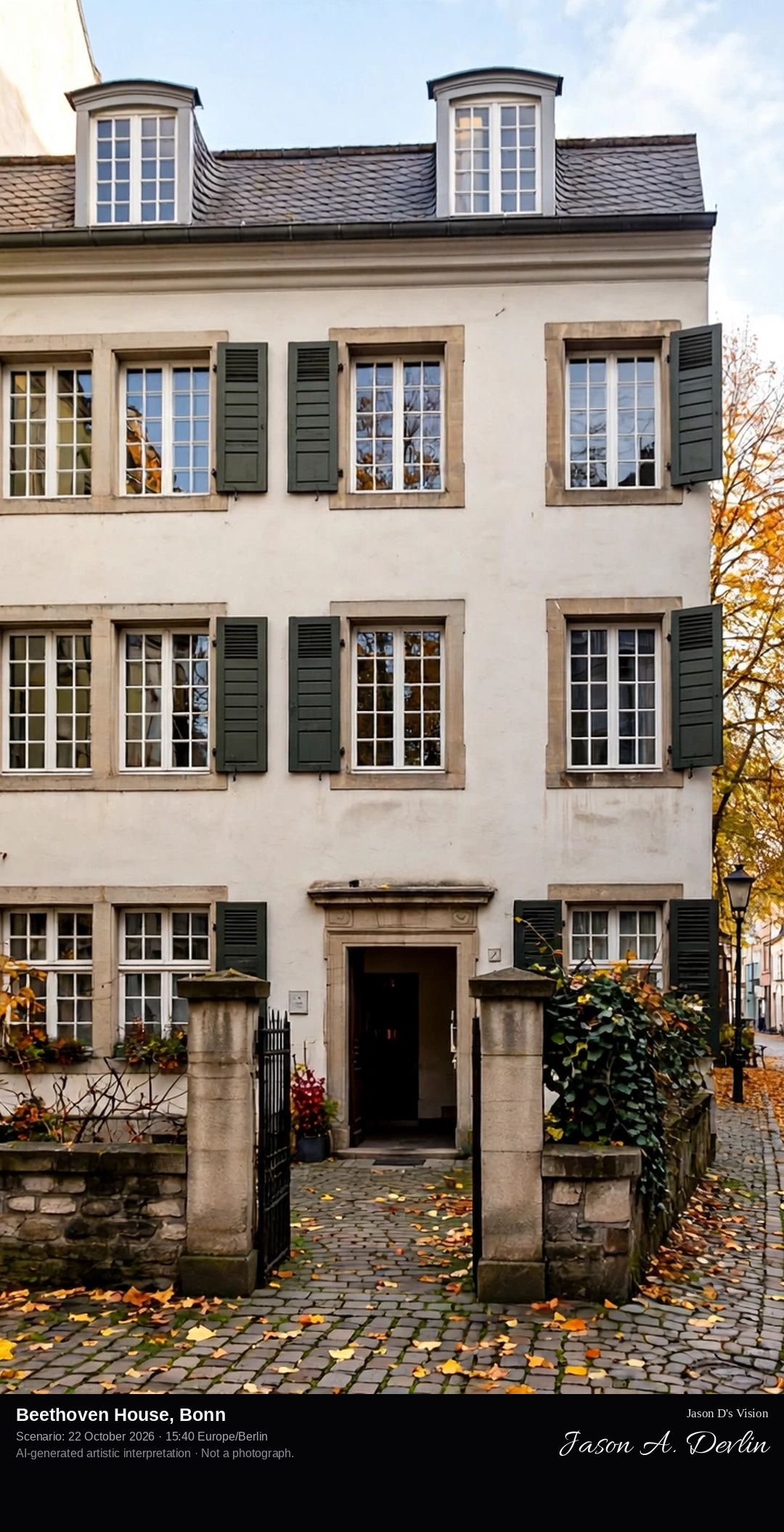
Modest birthplace house on the cobbled Bonngasse · AI-generated artistic interpretation
The Beethoven House at Bonngasse 20 in Bonn is the birthplace of Ludwig van Beethoven, who was born here in 1770. The modest baroque town house, with its plain plastered facade and small courtyard, is now a museum and memorial. It stands ungrand among neighbouring houses in the narrow old-town street.
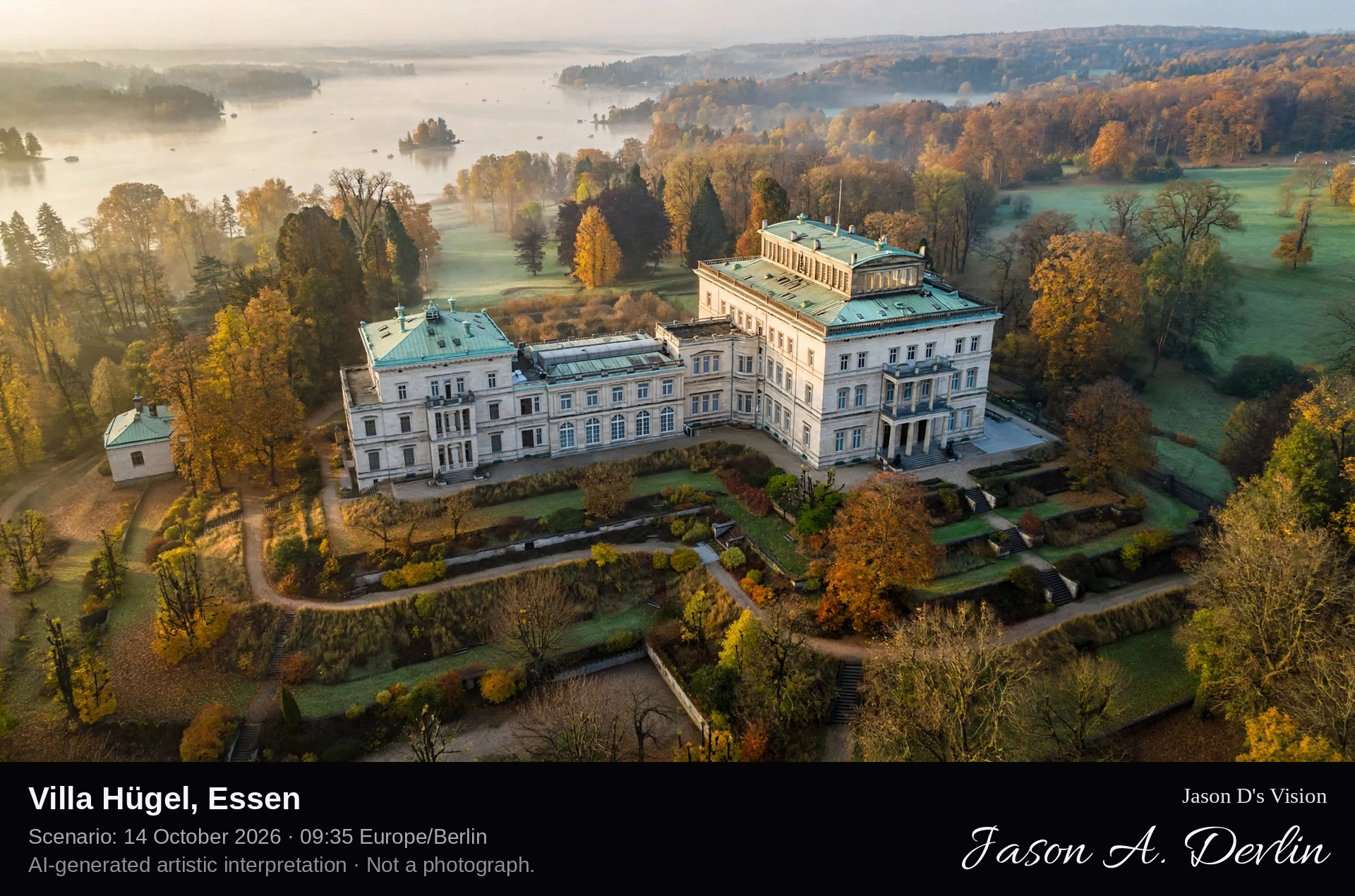
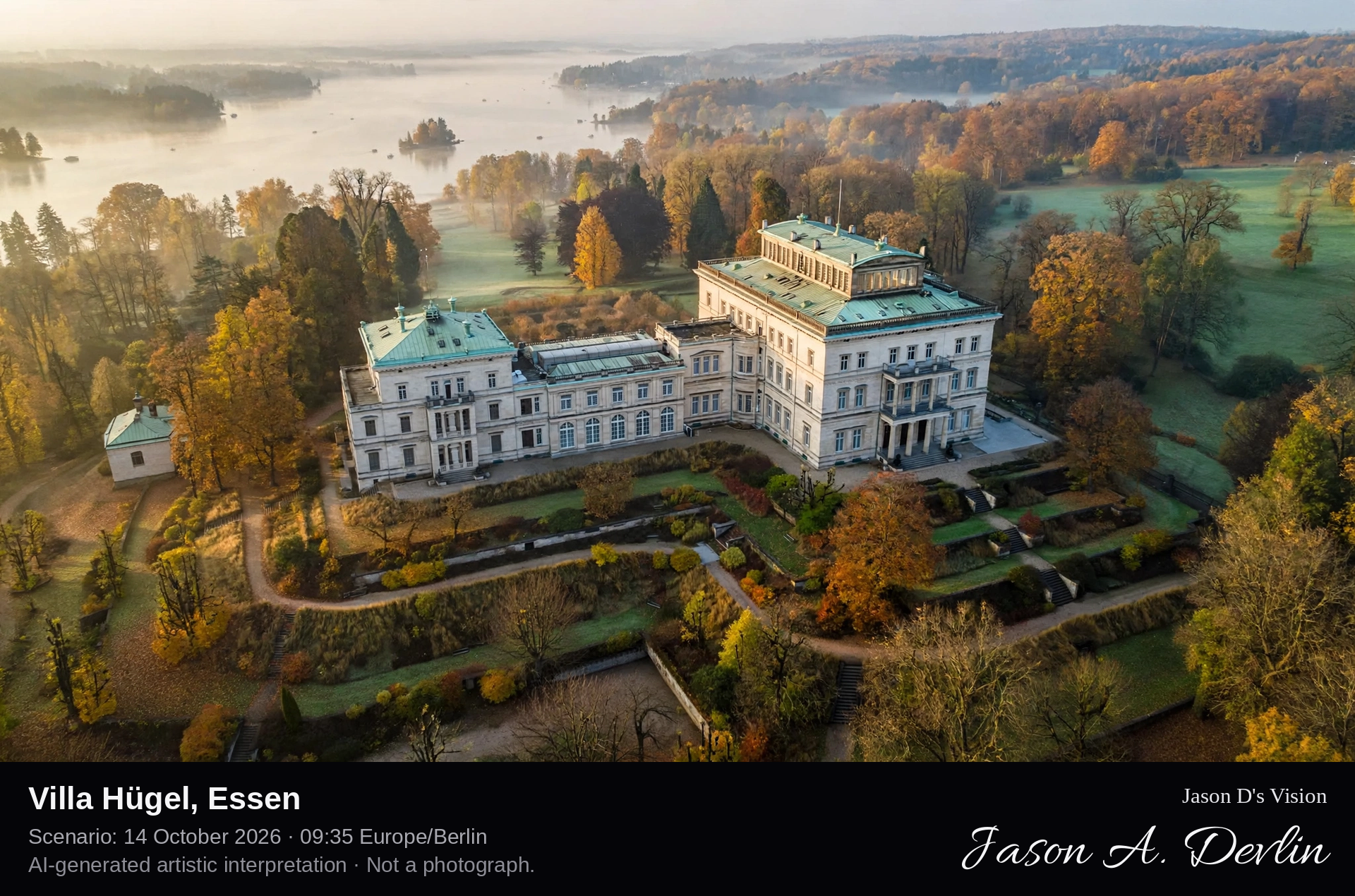
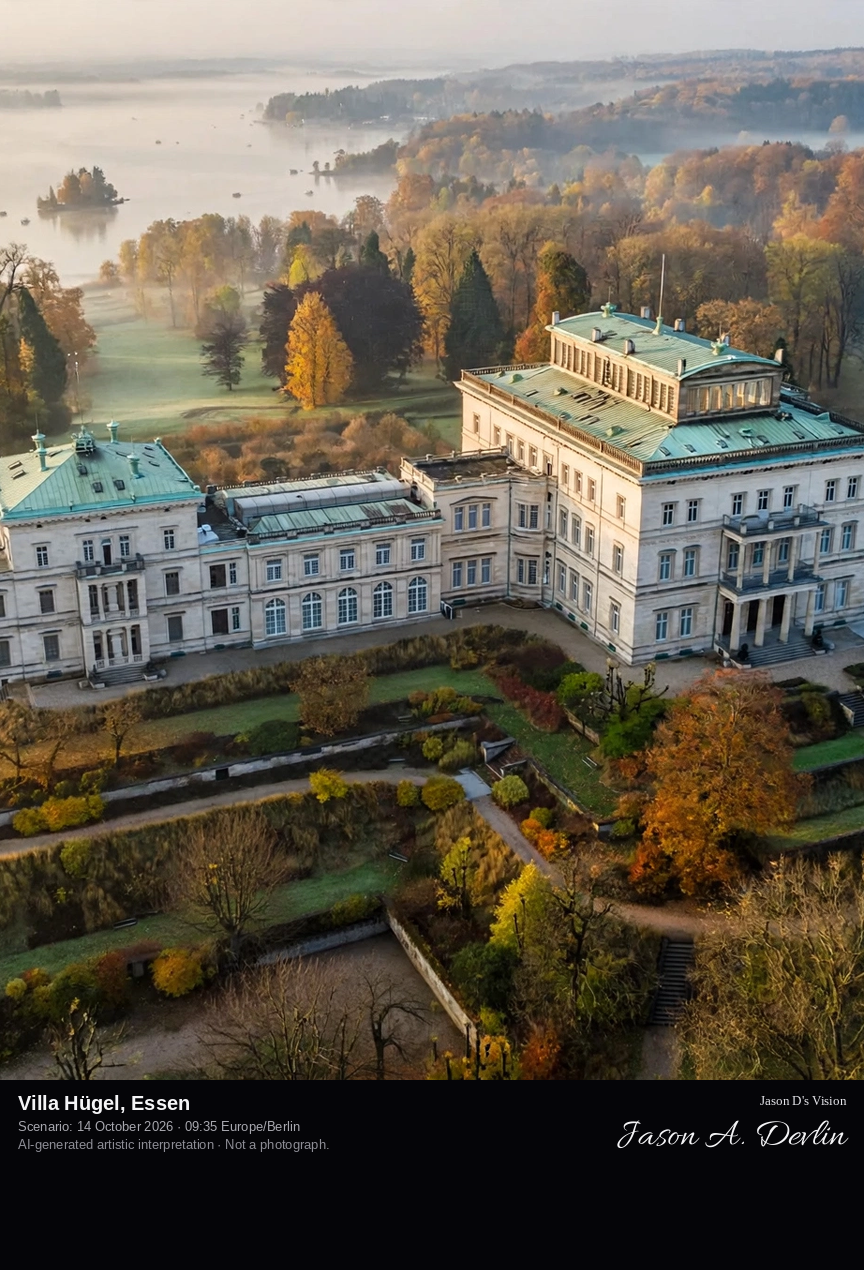
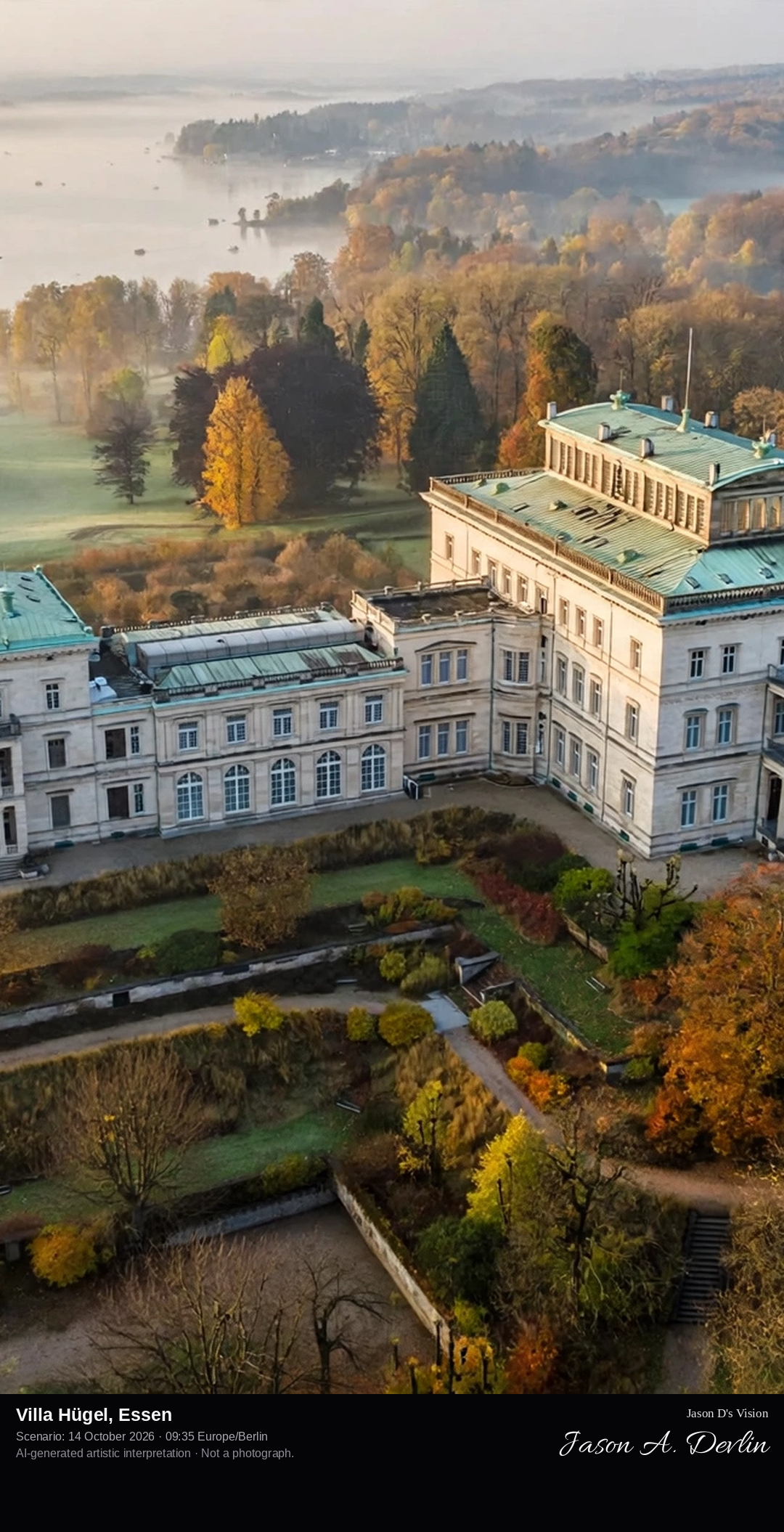
Palatial Krupp mansion above the Baldeneysee · AI-generated artistic interpretation
Villa Hügel in Essen was built in the early 1870s as the home of industrialist Alfred Krupp, a palatial mansion of more than 260 rooms above the Ruhr valley. It stands in the broad Hügelpark, its long symmetrical stone front looking out over lawns and mature trees toward the Baldeneysee reservoir below. Today the villa serves as a museum and cultural venue telling the Krupp story.
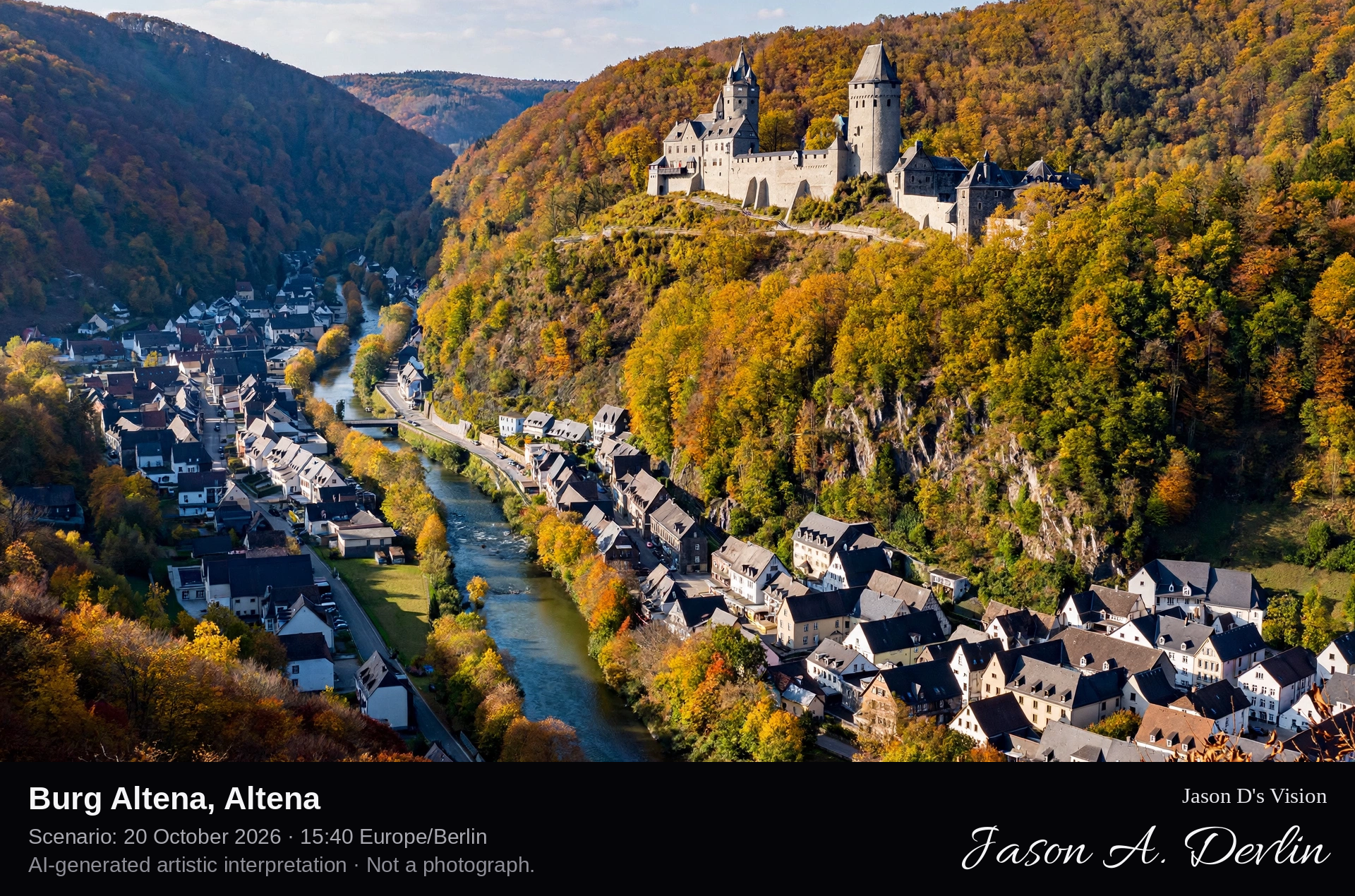
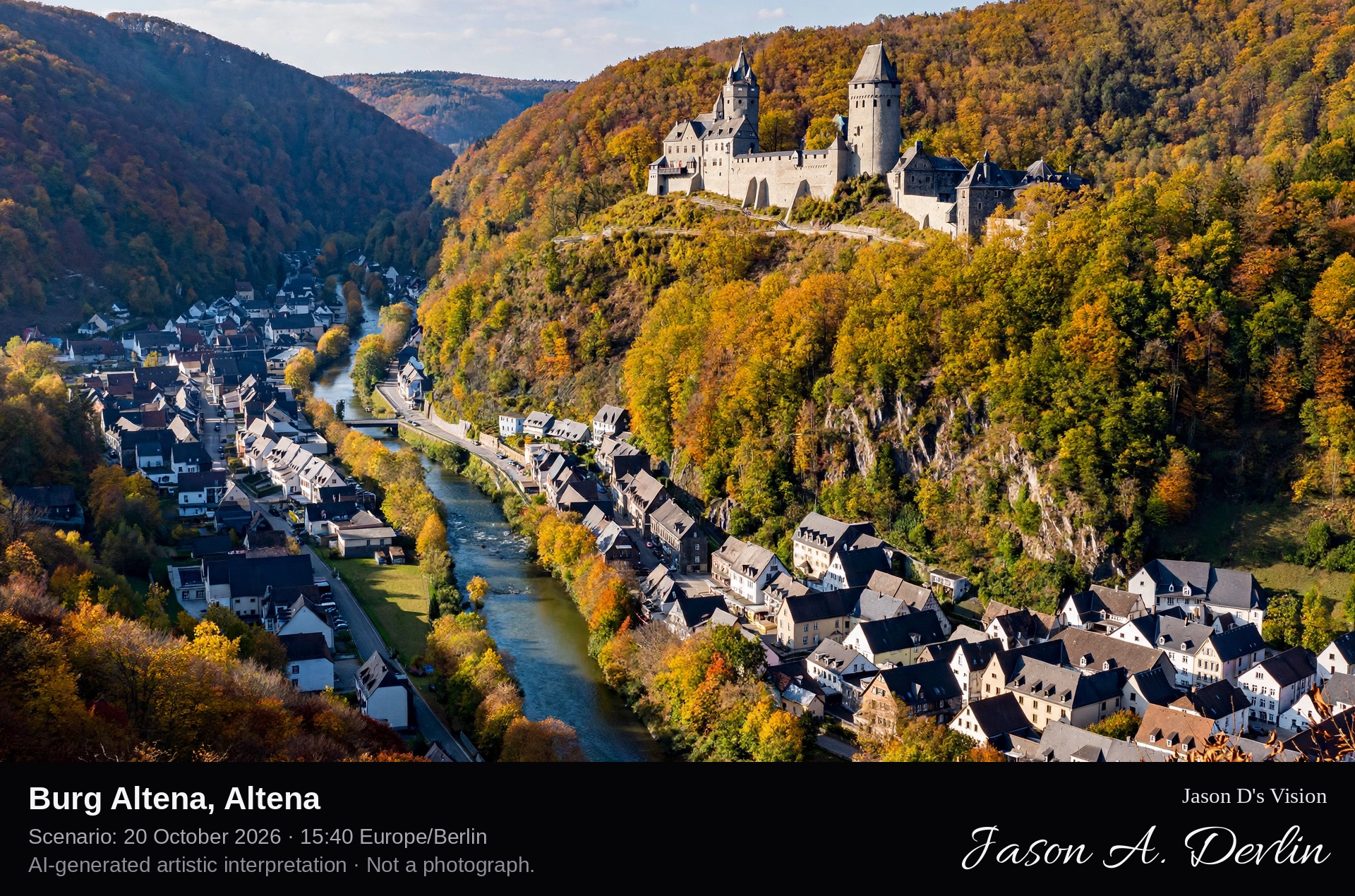
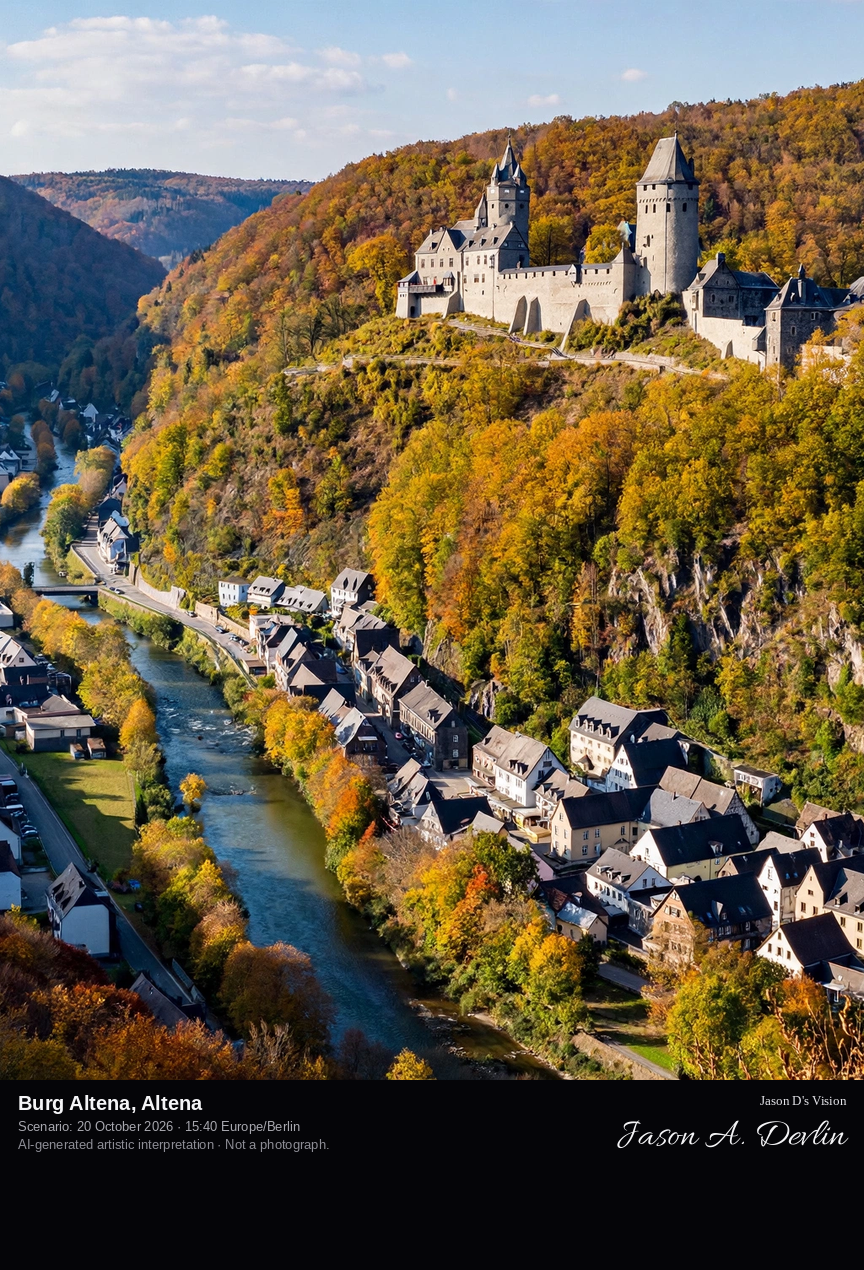
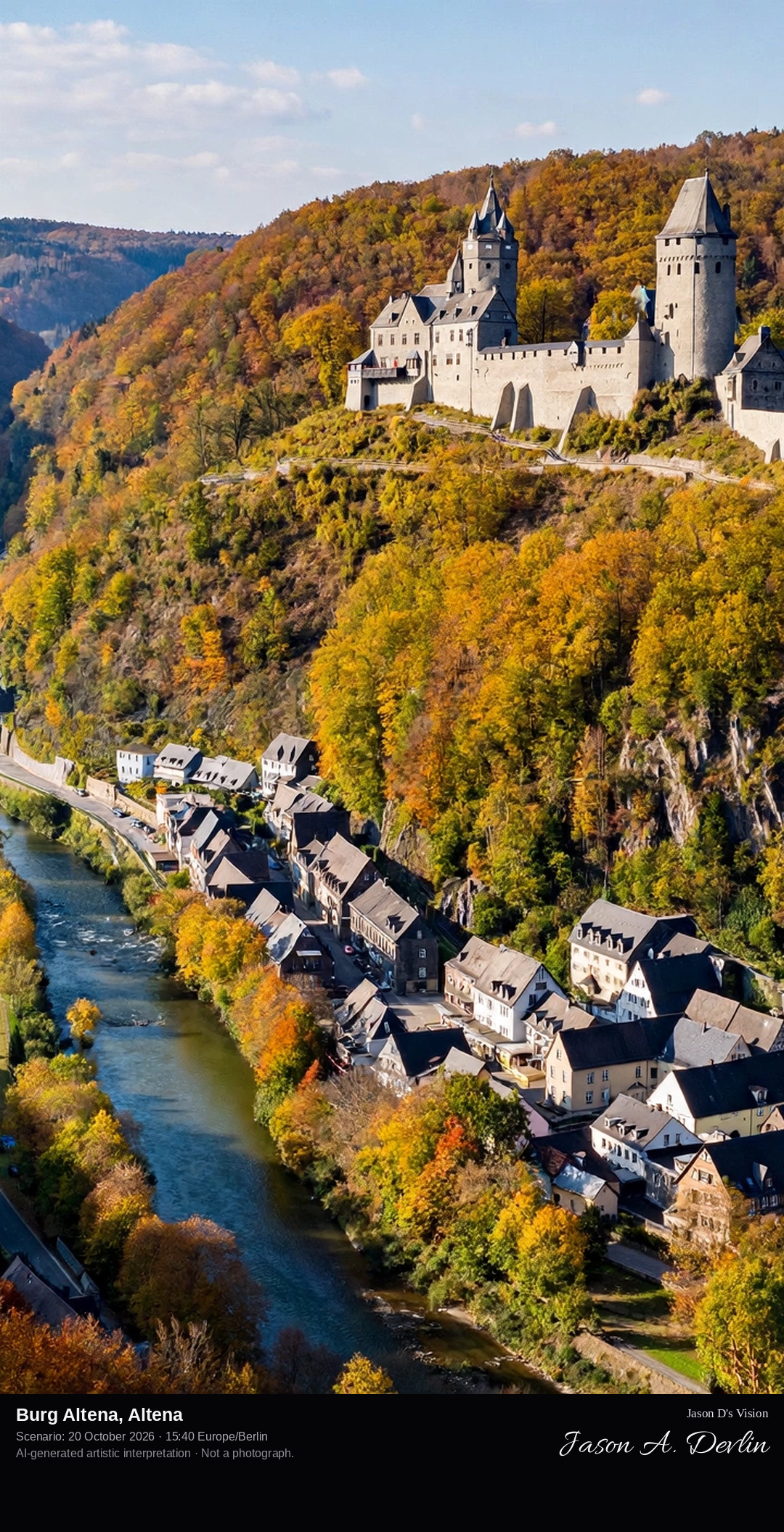
Hill castle above the Lenne valley town · AI-generated artistic interpretation
Burg Altena is a medieval hill castle above the Lenne at Altena, where Richard Schirrmann established the world's first permanent youth hostel, housed in the castle since 1914 and still in use today. Its stone walls, towers and steep roofs crown a wooded slope high over the narrow river valley and the rooftops below.
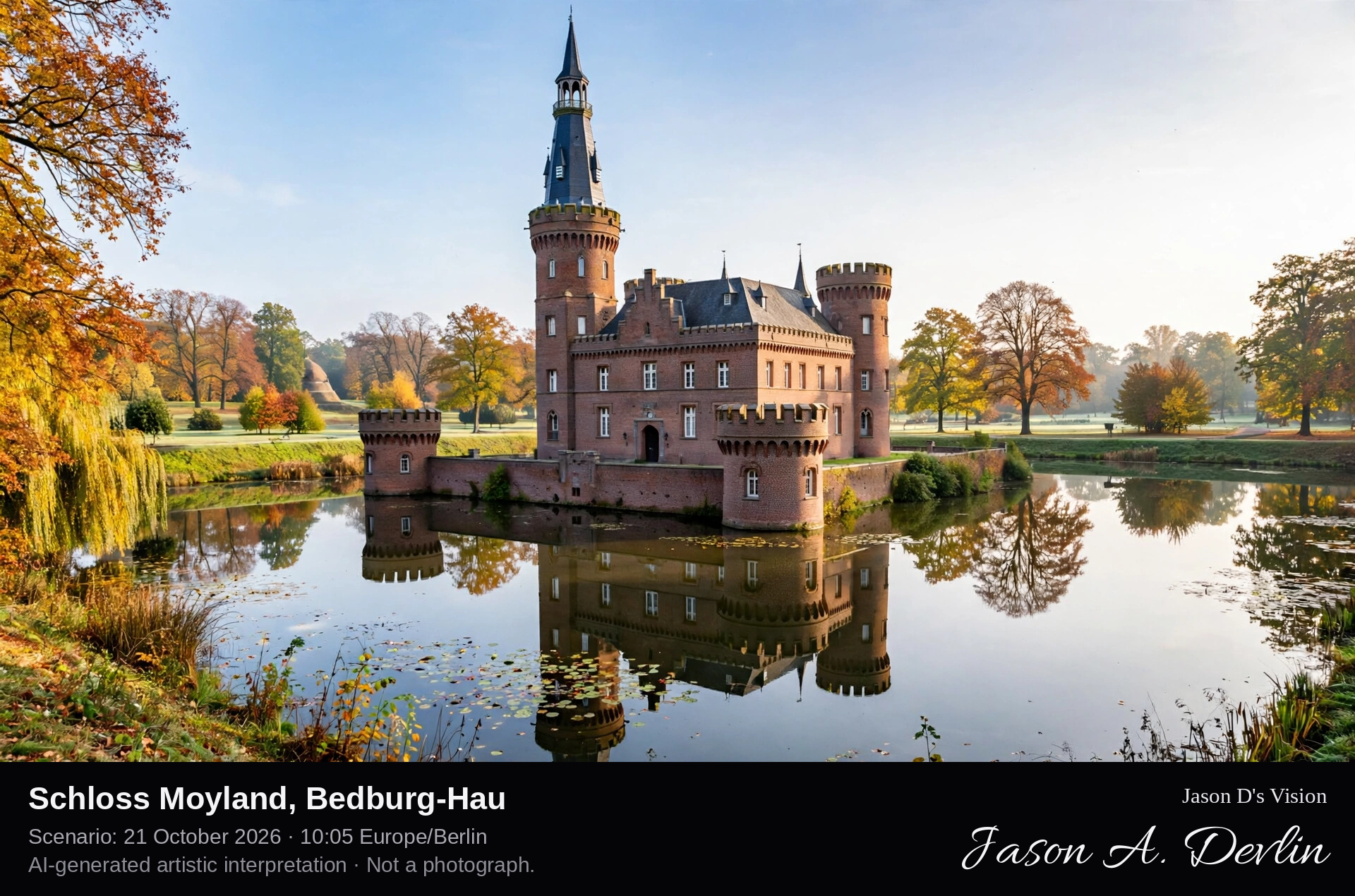
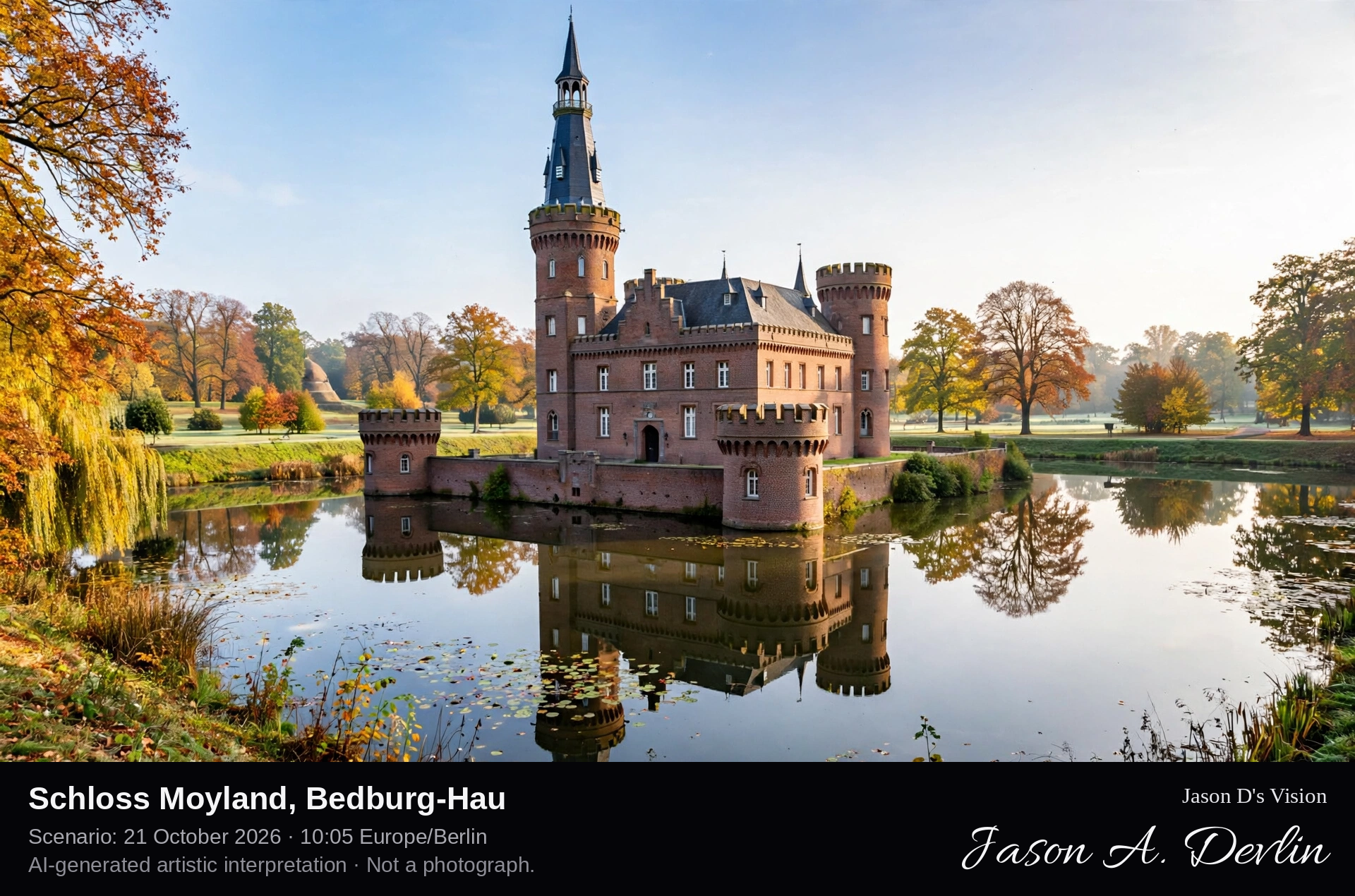
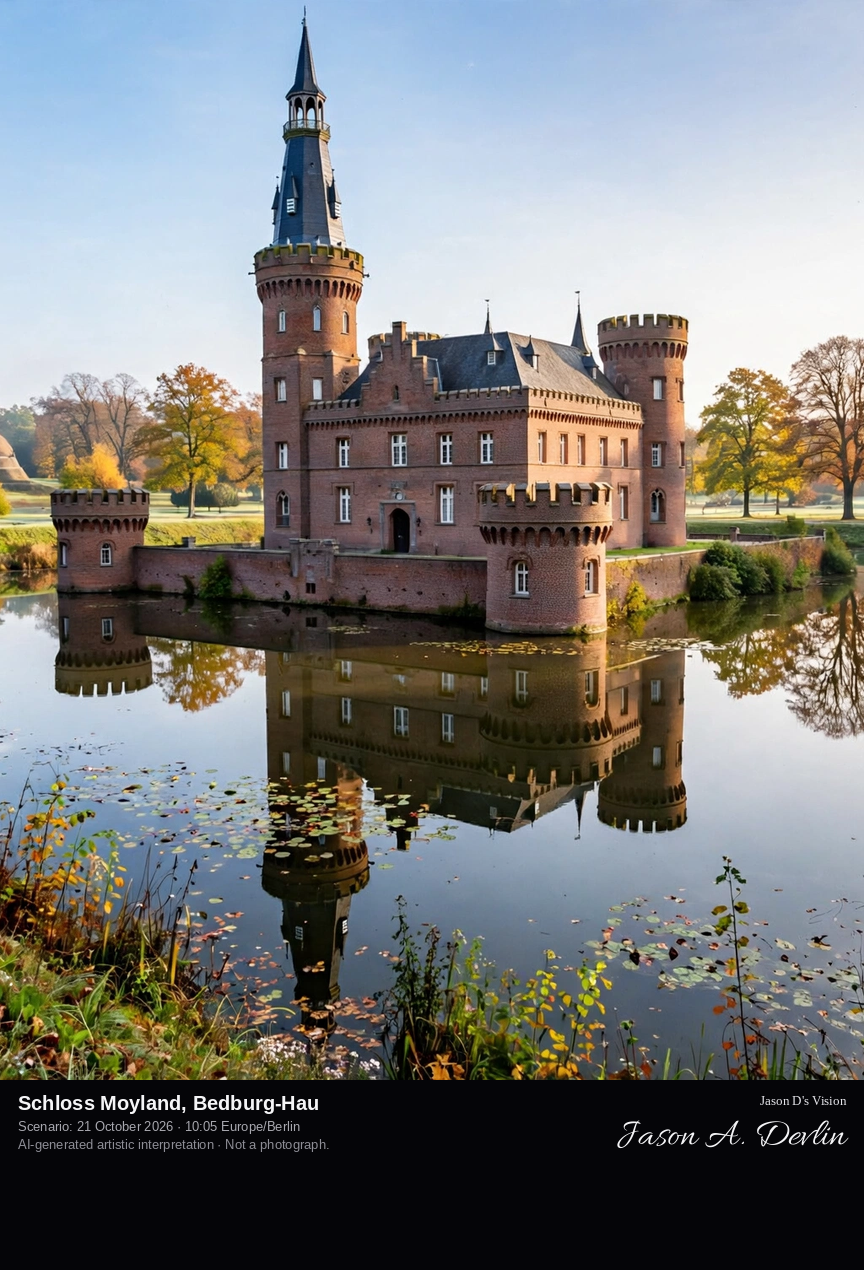
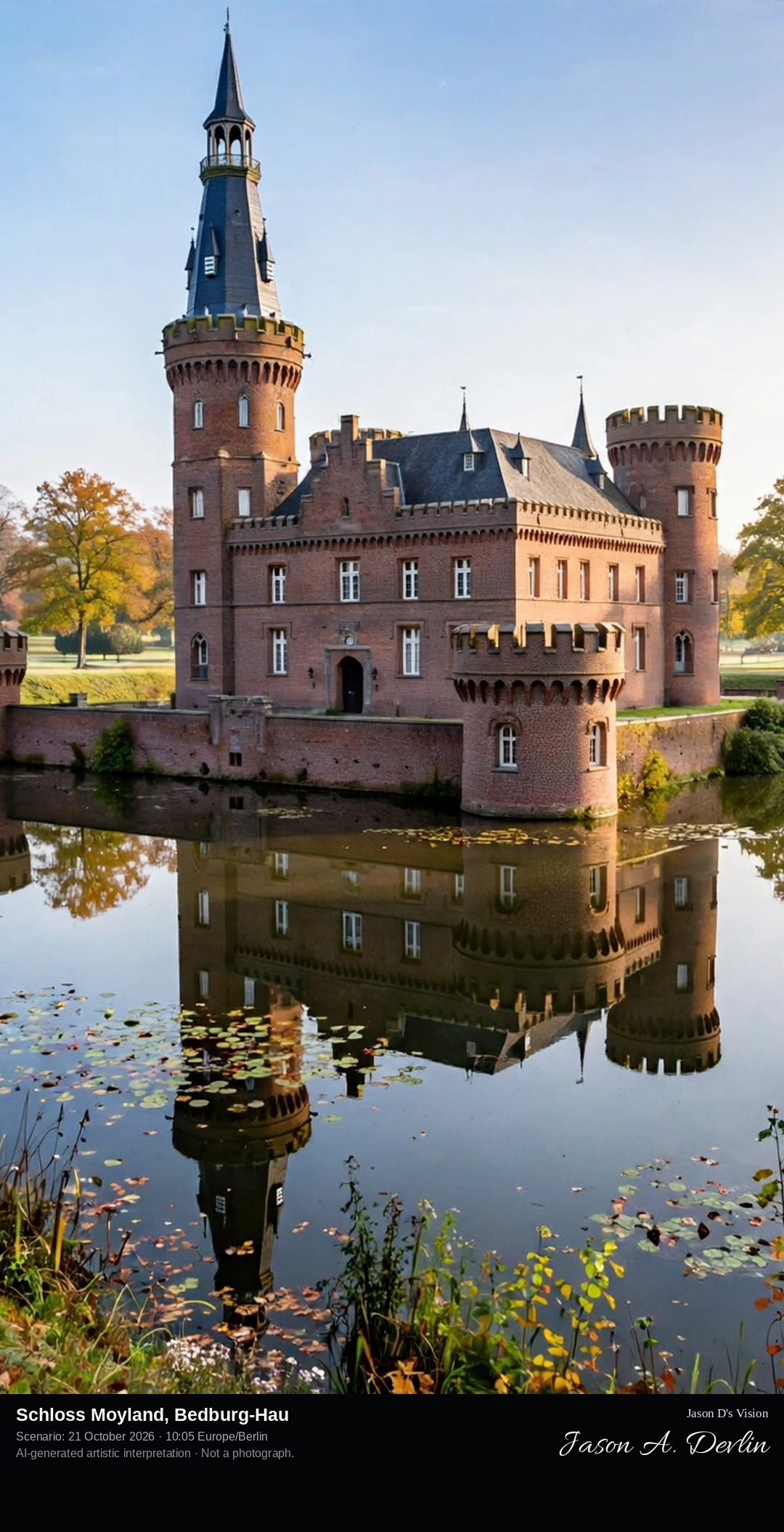
Neo-Gothic brick palace reflected in its moat · AI-generated artistic interpretation
Schloss Moyland is a neo-Gothic moated palace on the Lower Rhine at Bedburg-Hau, its warm brick silhouette of three low crenellated corner towers and the tall north tower's long spire reflected in the still moat water. Today it houses the Museum Schloss Moyland, home to the world's largest collection of works by Joseph Beuys, amid gardens and parkland.
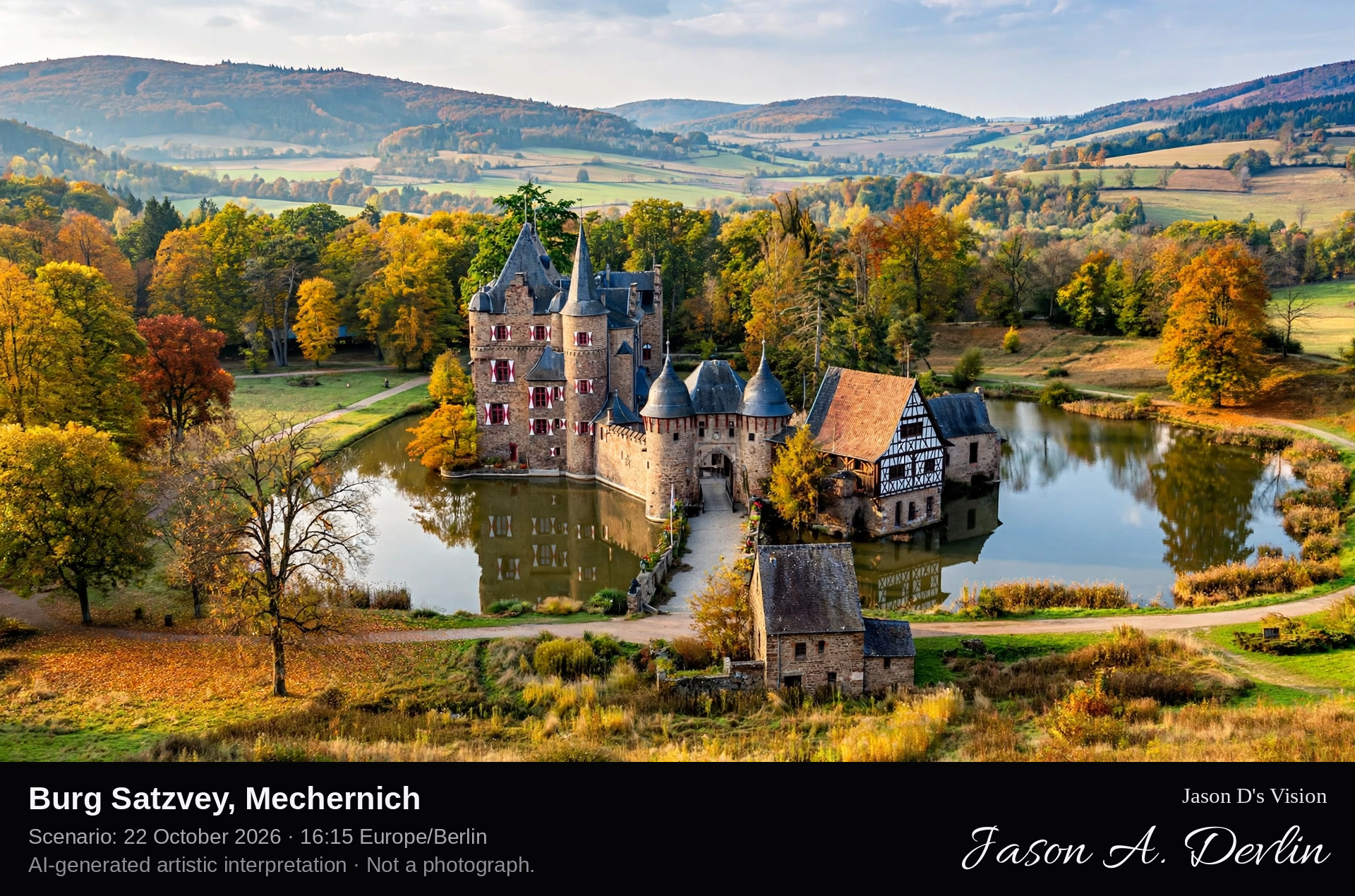
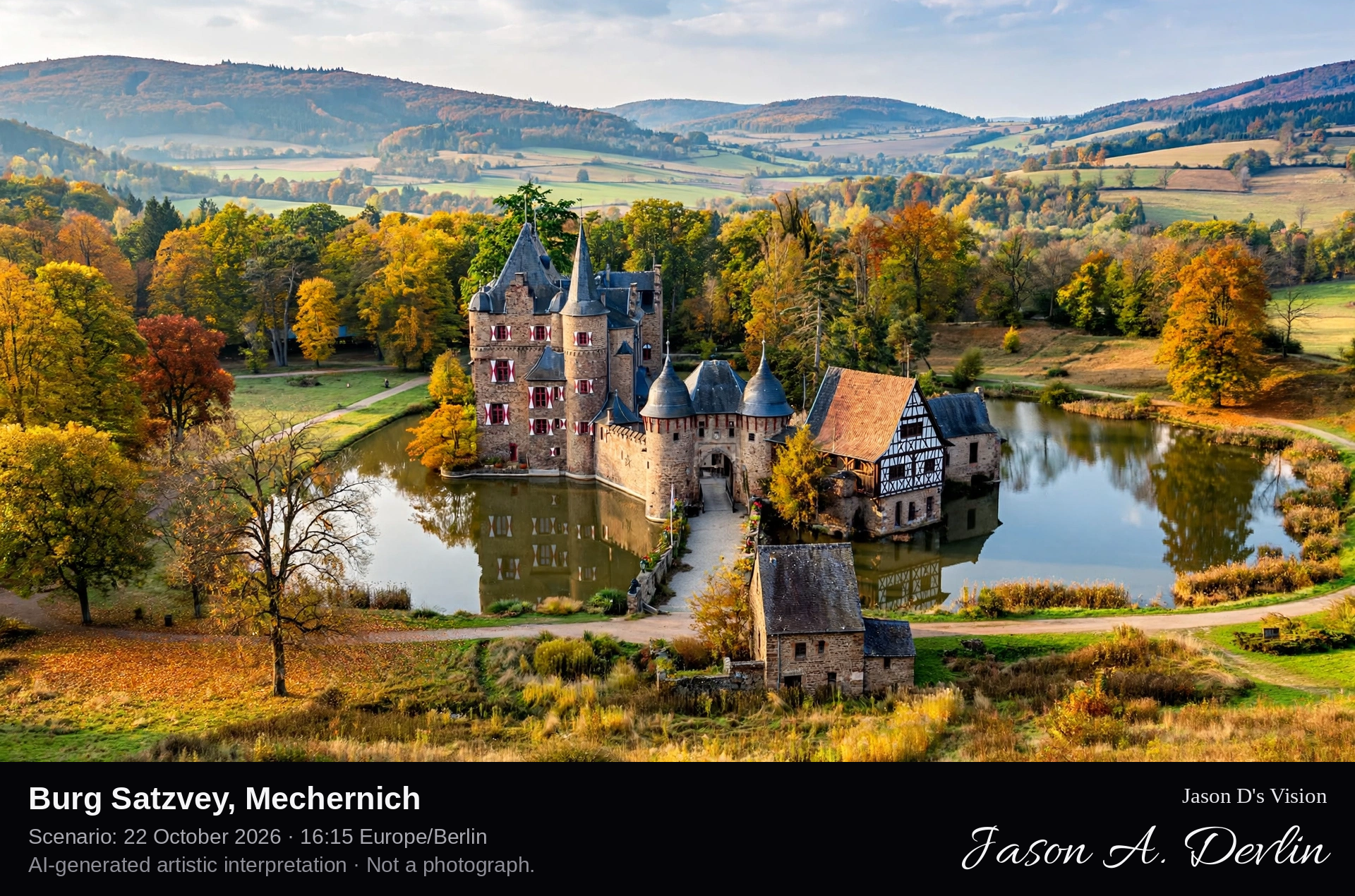
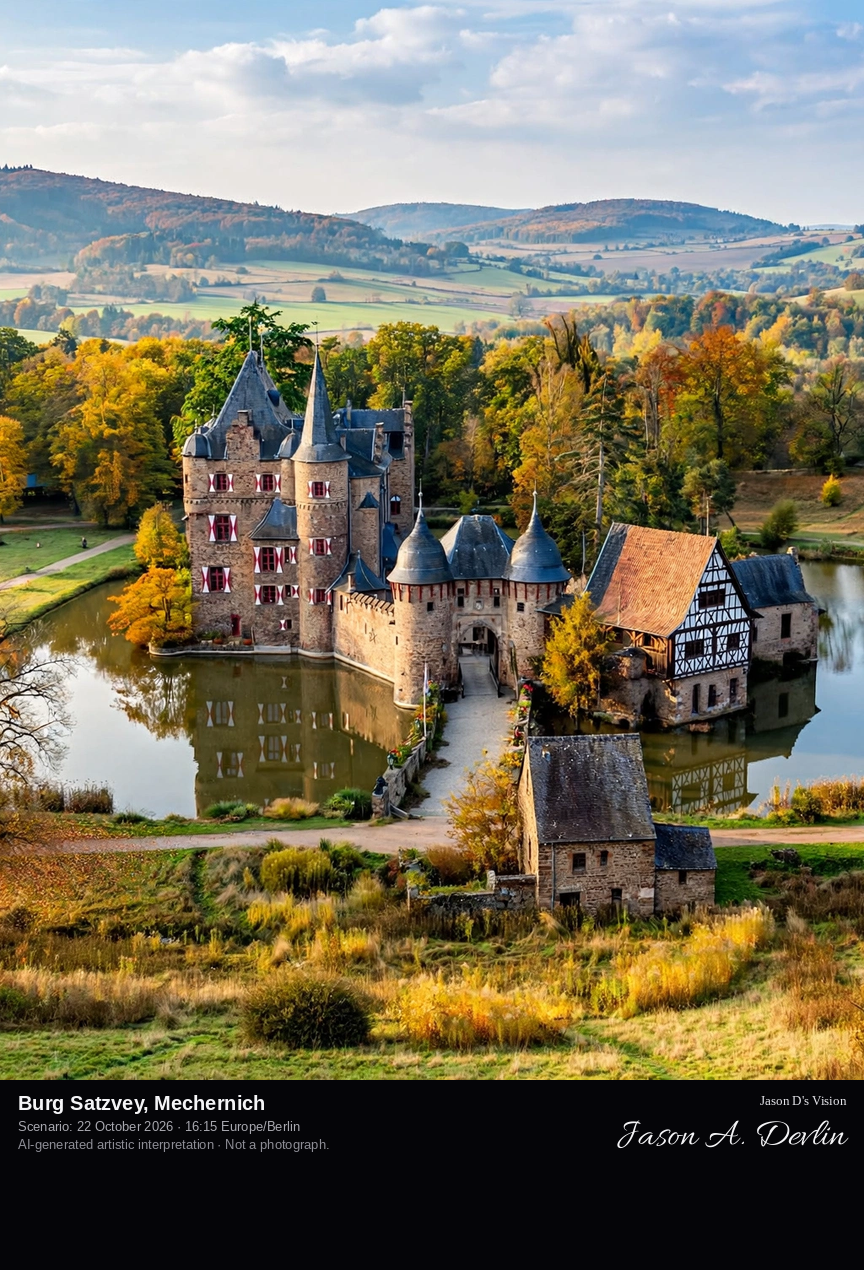
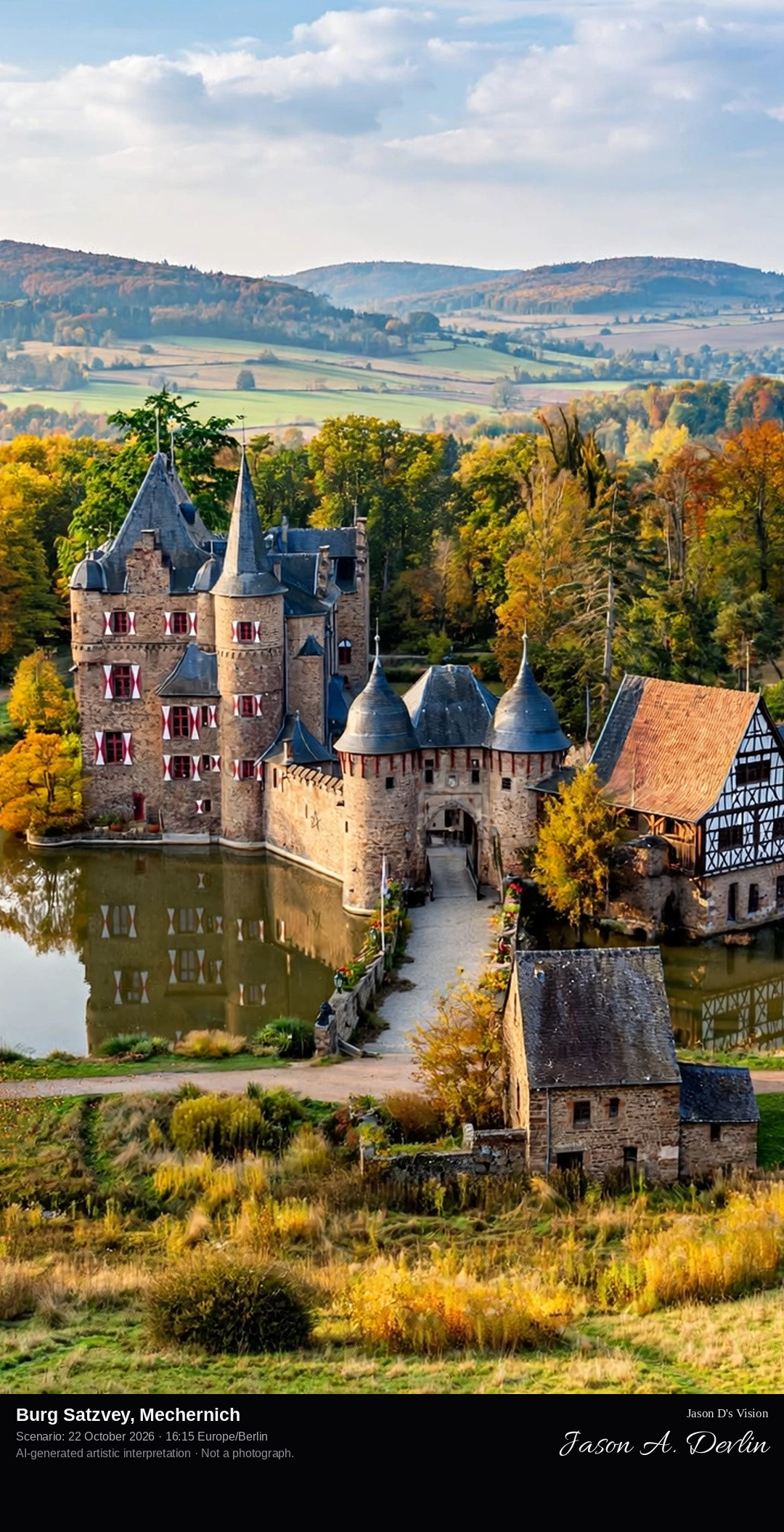
Moated castle in its pond in the Eifel foothills · AI-generated artistic interpretation
Burg Satzvey is a medieval moated castle in the Eifel foothills at Mechernich, ringed by its castle pond. One of the Rhineland's best-known event castles, its twin-towered gatehouse and stone ranges rise directly from the water amid park trees.
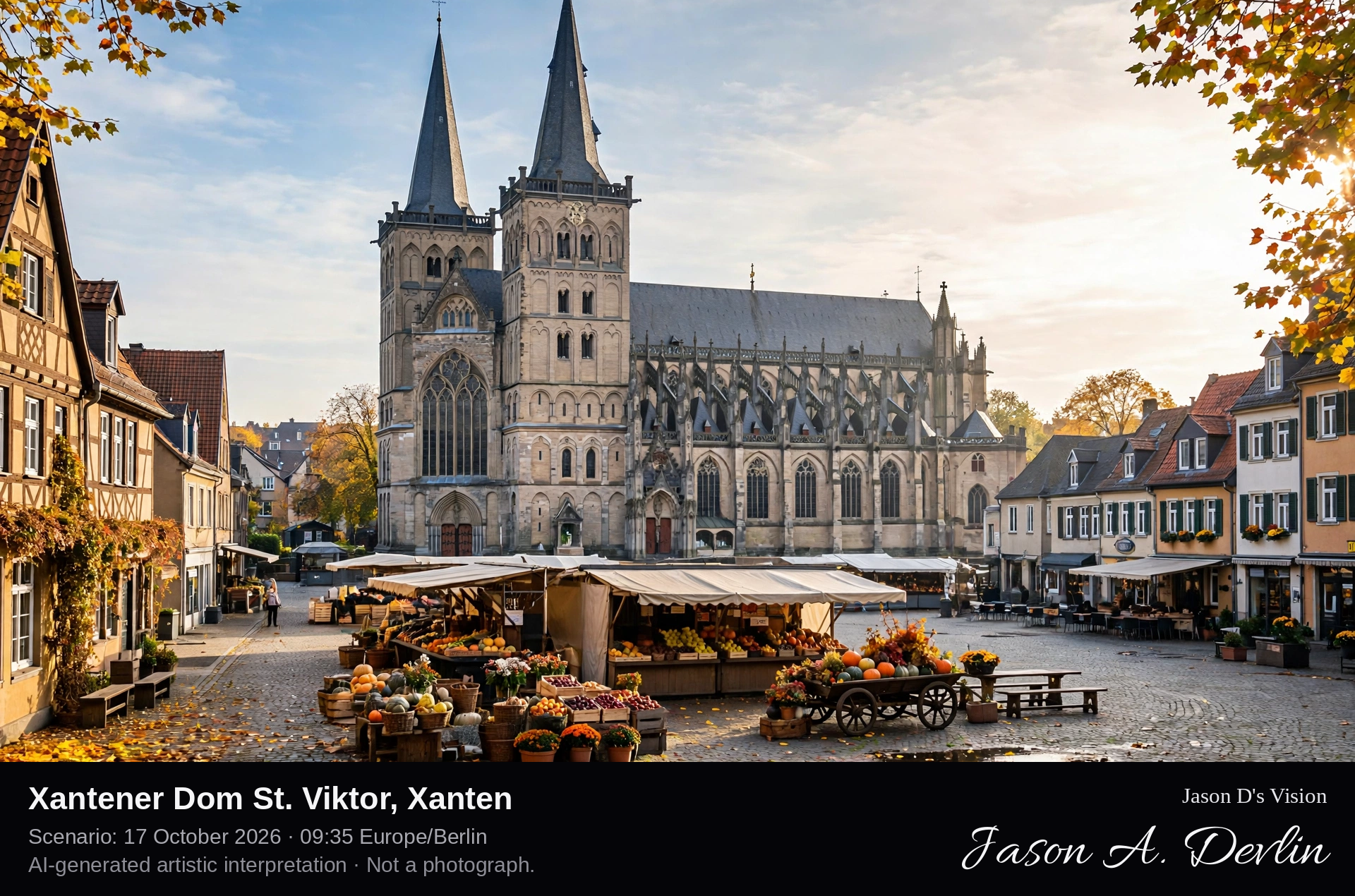
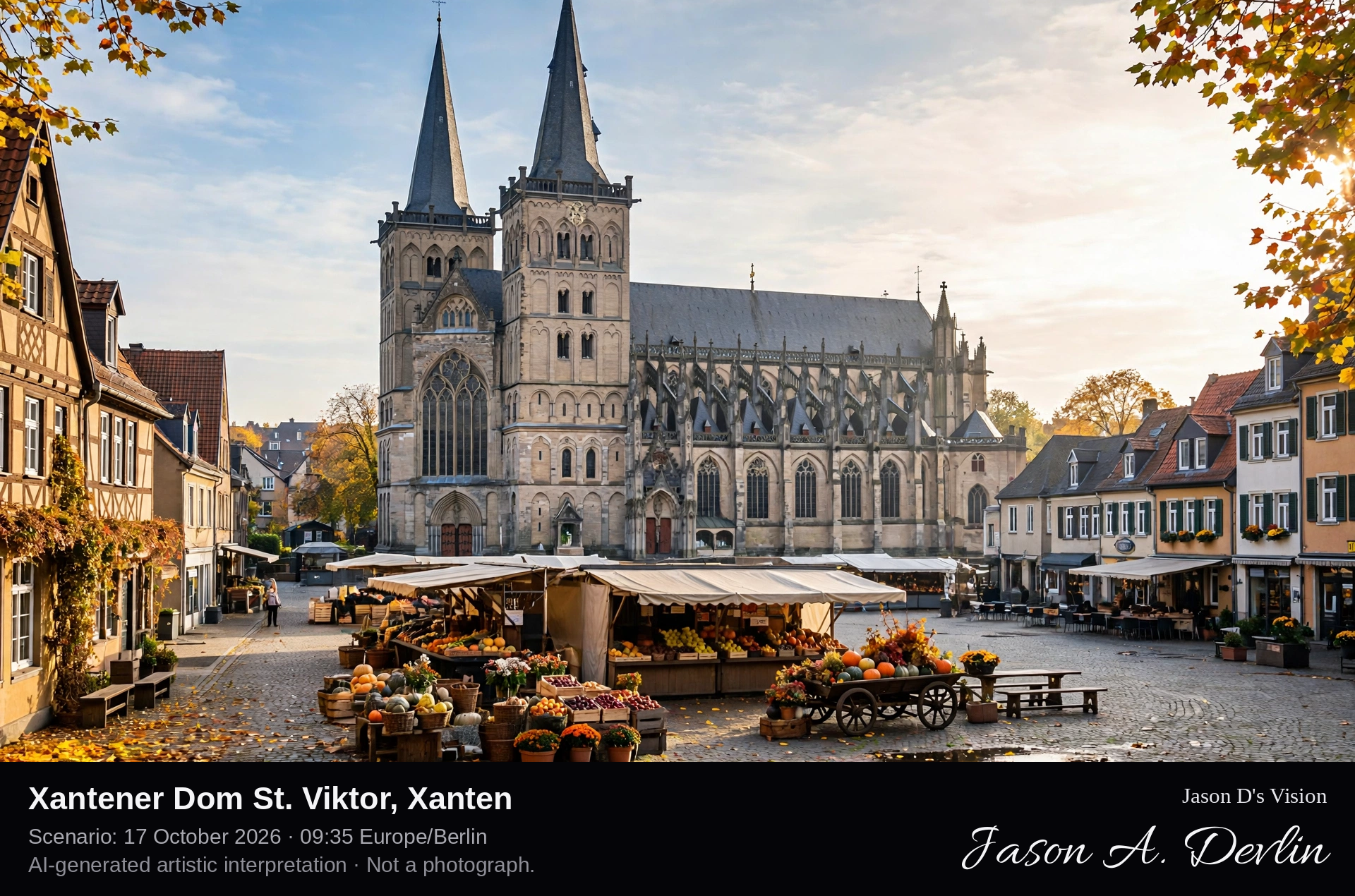
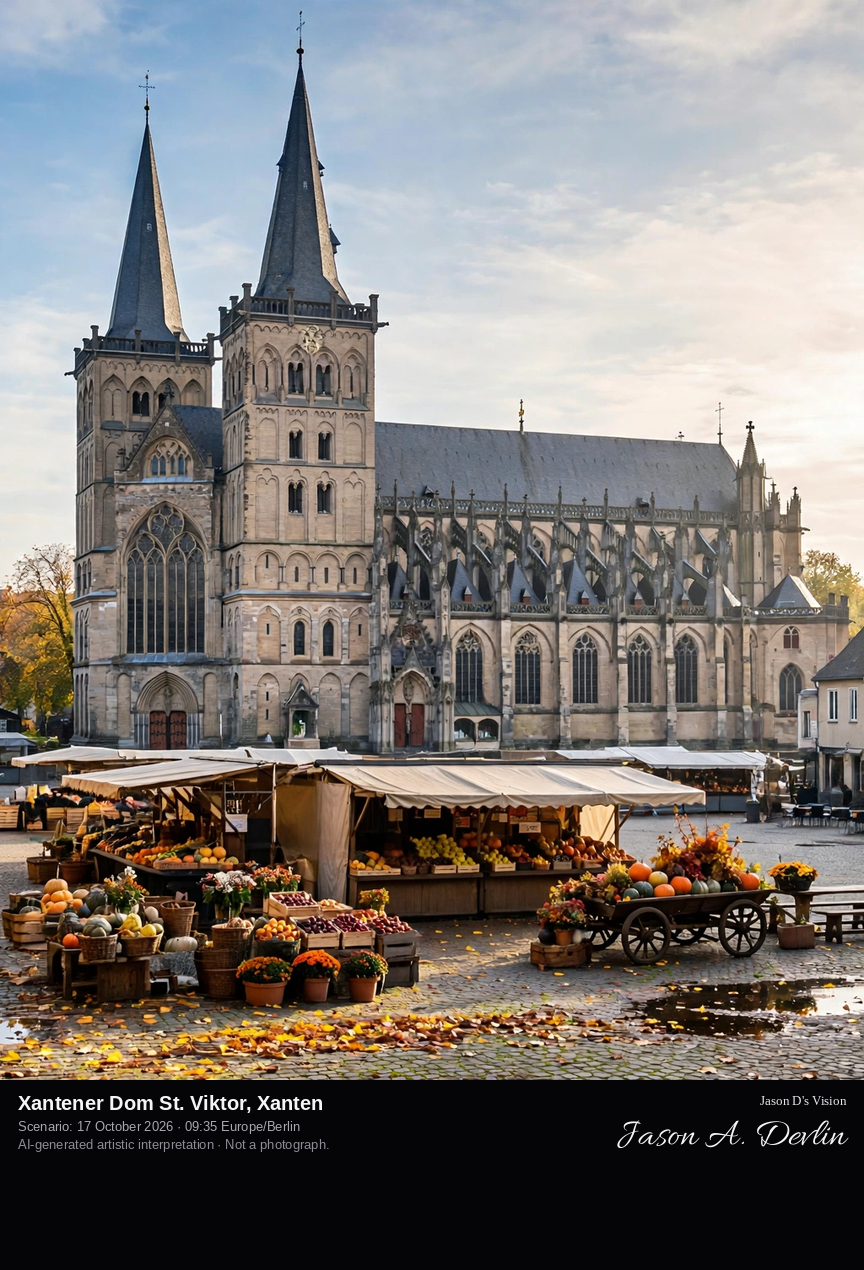
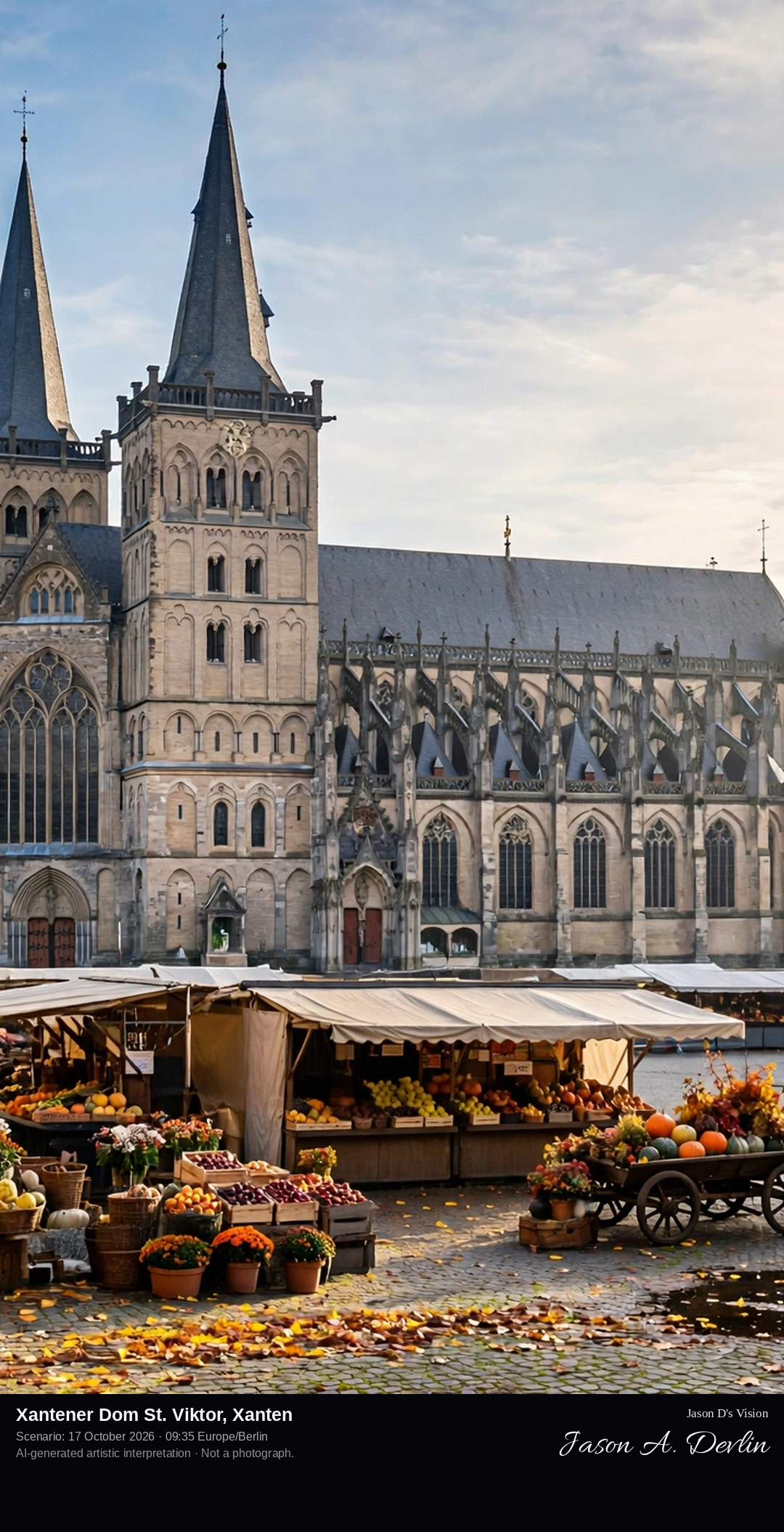
Twin spires and flying buttresses over the market square · AI-generated artistic interpretation
Xanten's cathedral of St Viktor is a great Gothic collegiate church on the Lower Rhine, built between 1263 and 1544 over a Roman cemetery at the heart of the town. Its twin west towers rise about 72 and 74 metres above the market square, and the church is famed for its high altar and chapter library.
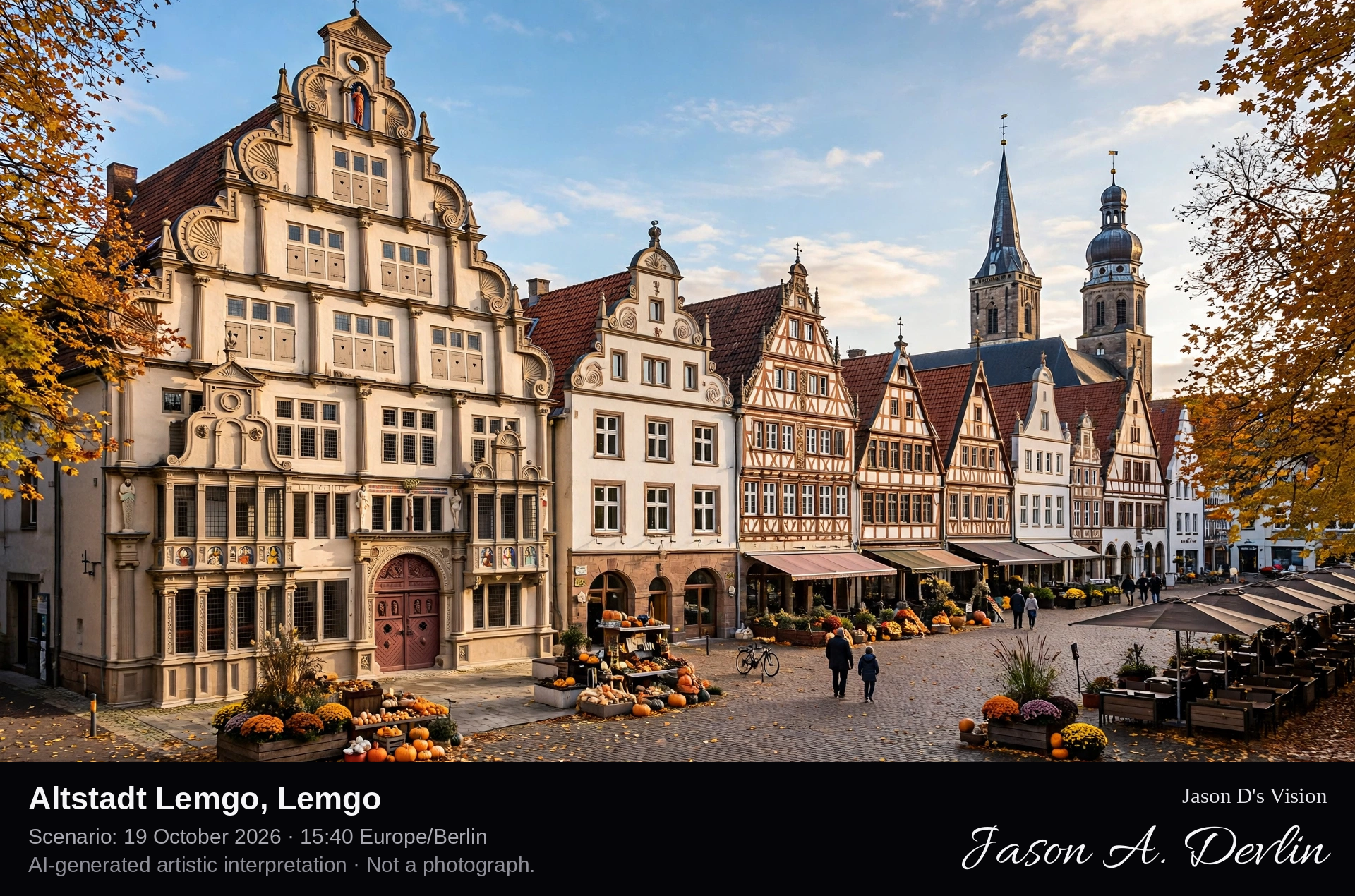
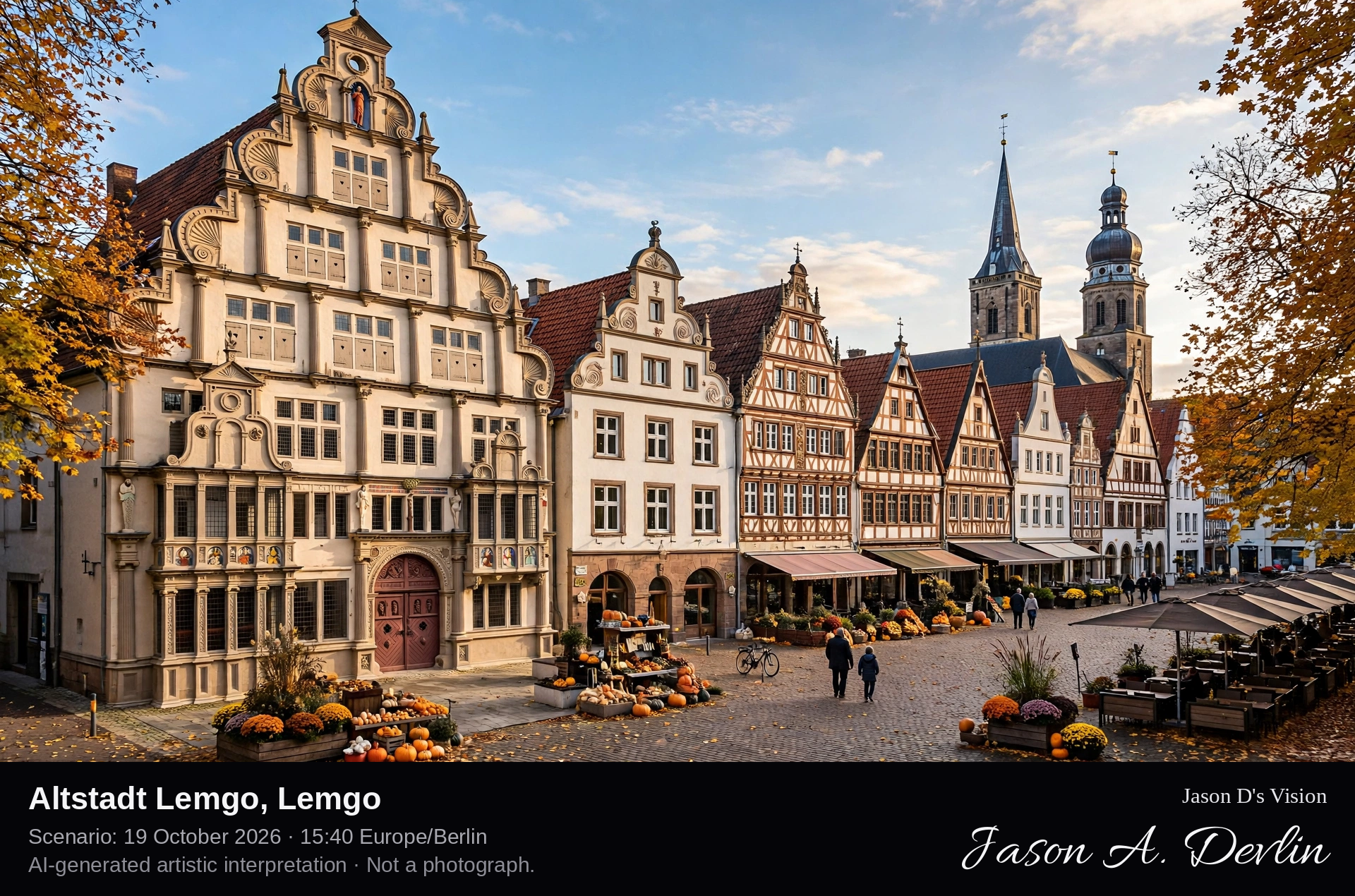
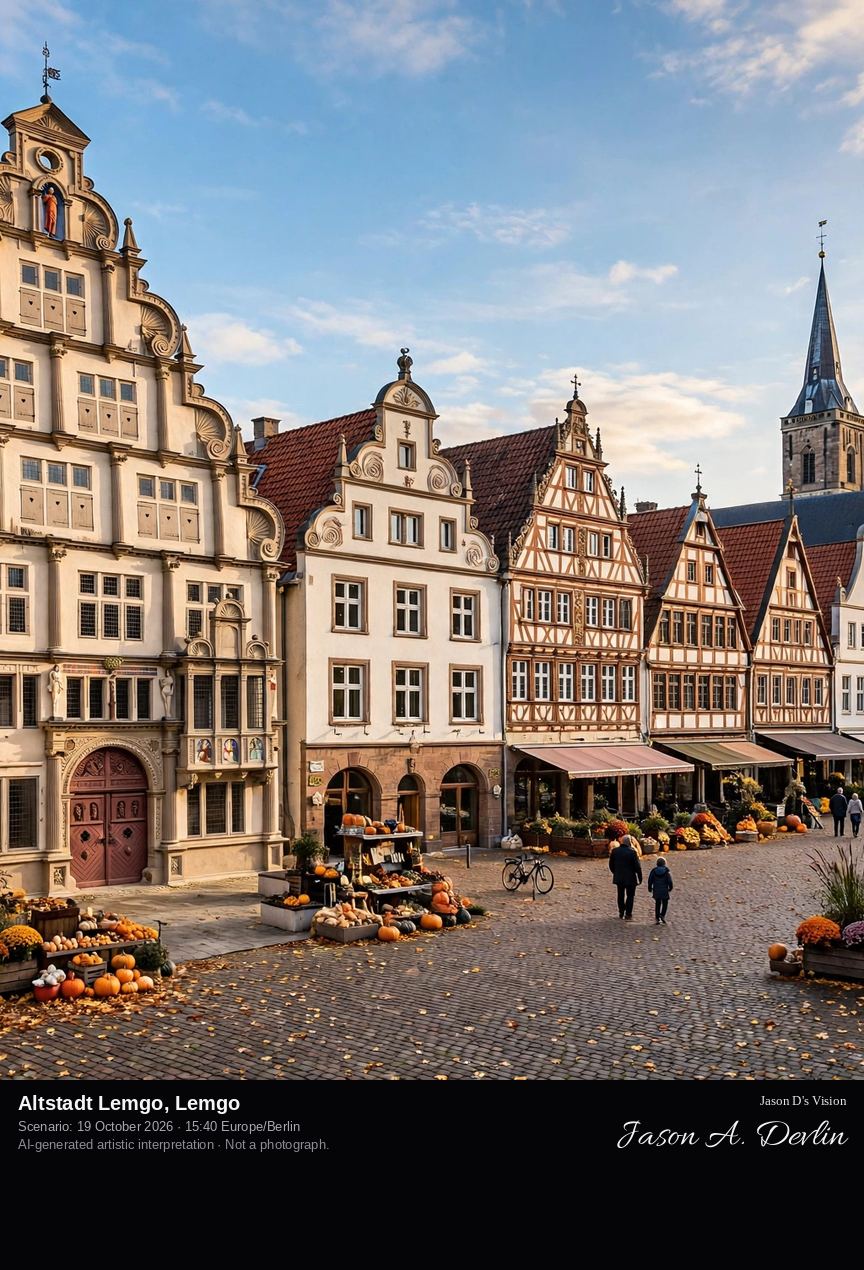
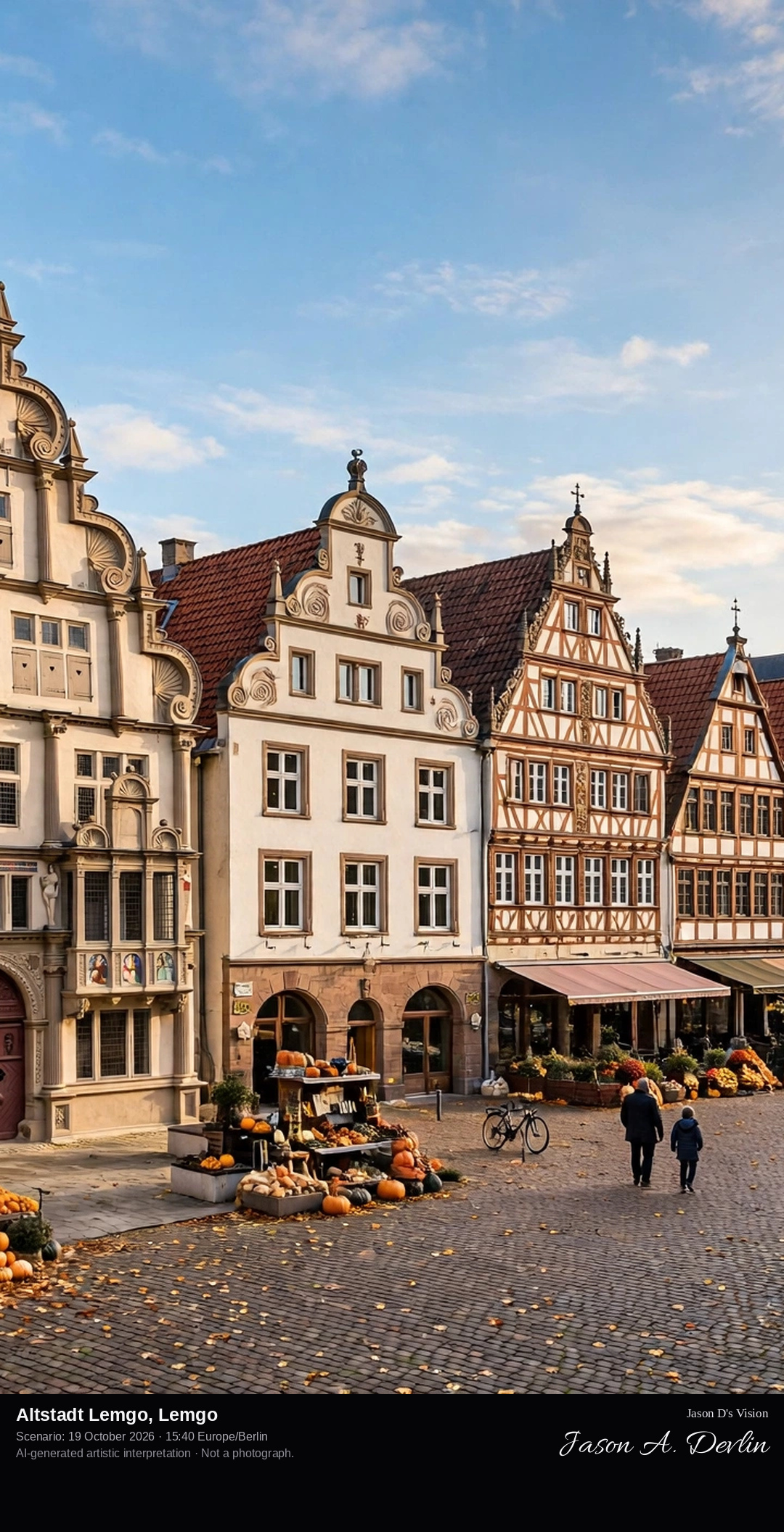
Weser Renaissance gables around the market square · AI-generated artistic interpretation
Lemgo is a Hanseatic town whose old centre survived the war almost untouched, its market square framed by a fine Weser Renaissance ensemble of ornate gabled houses. The Hexenbürgermeisterhaus of 1571 is the best known of them, and Schloss Brake stands at the edge of the old town.
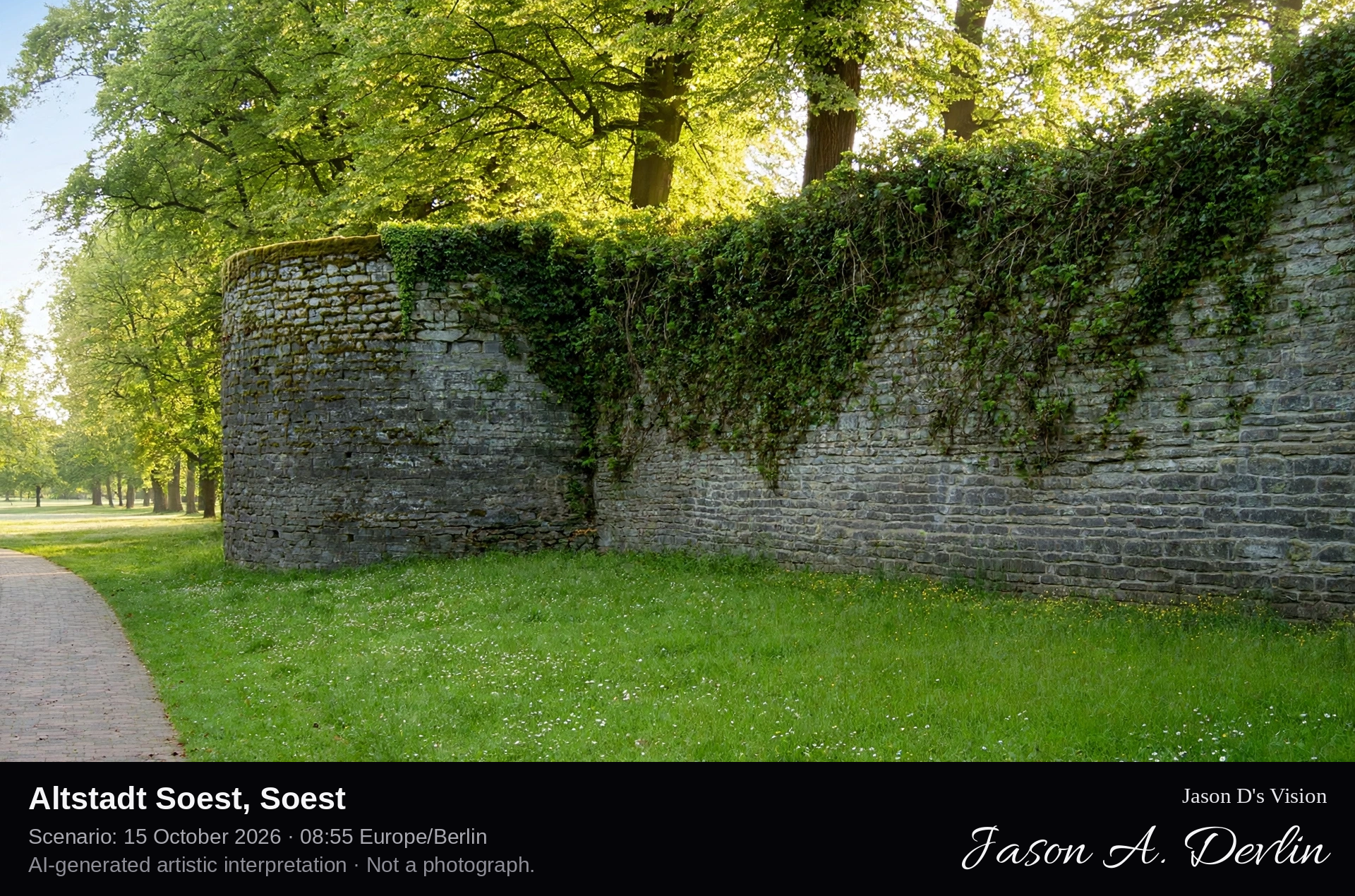
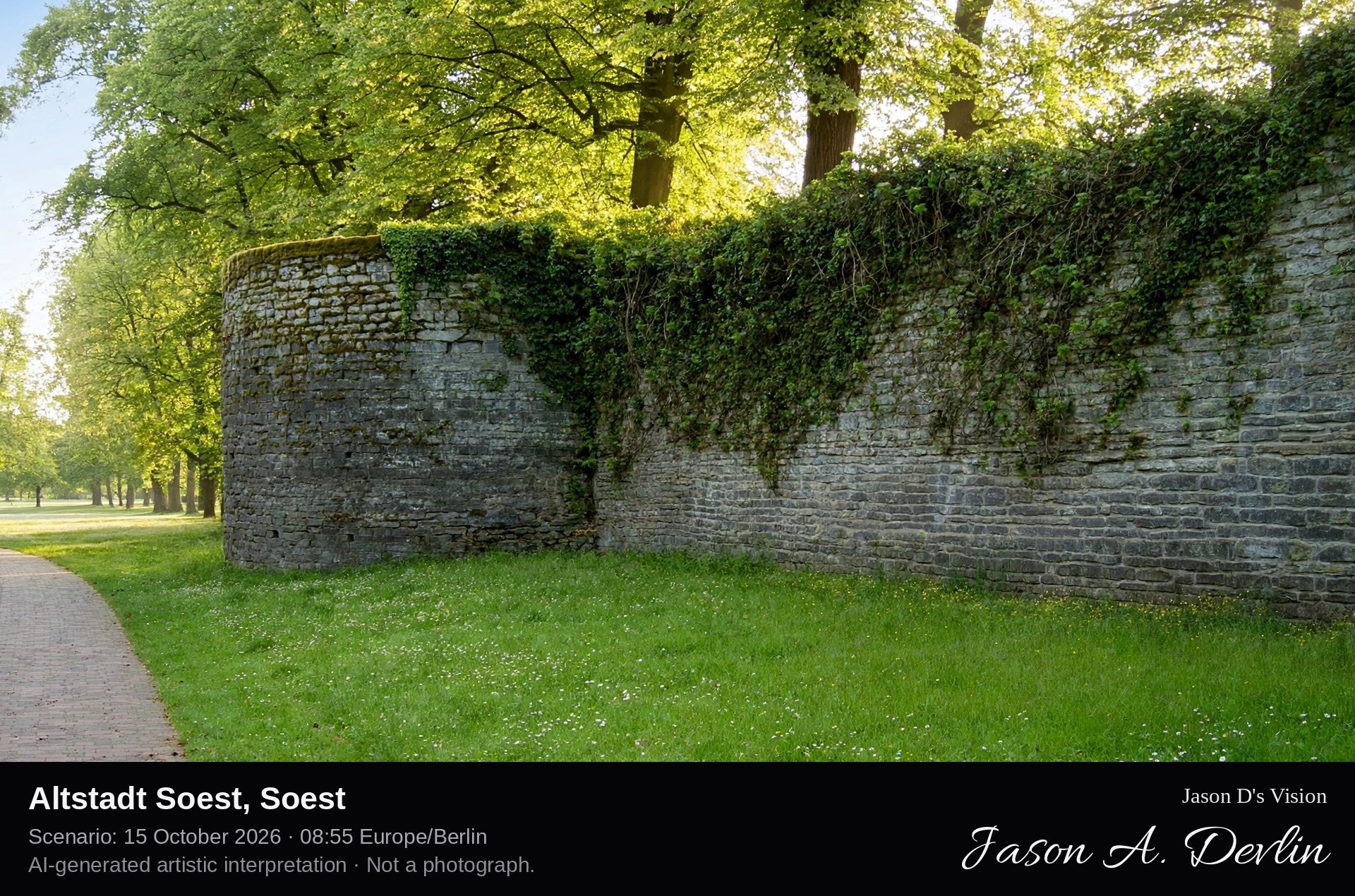
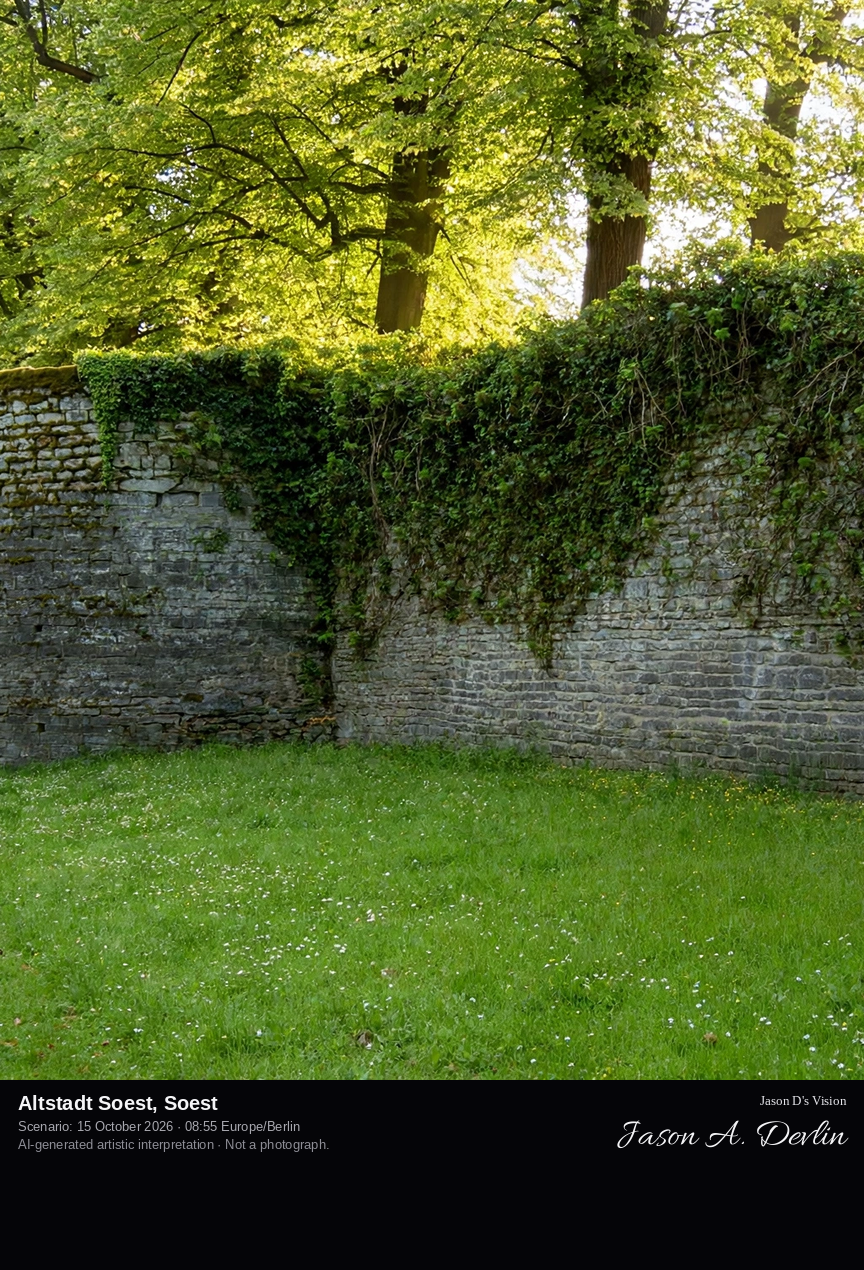
Green sandstone rampart walk above the old town · AI-generated artistic interpretation
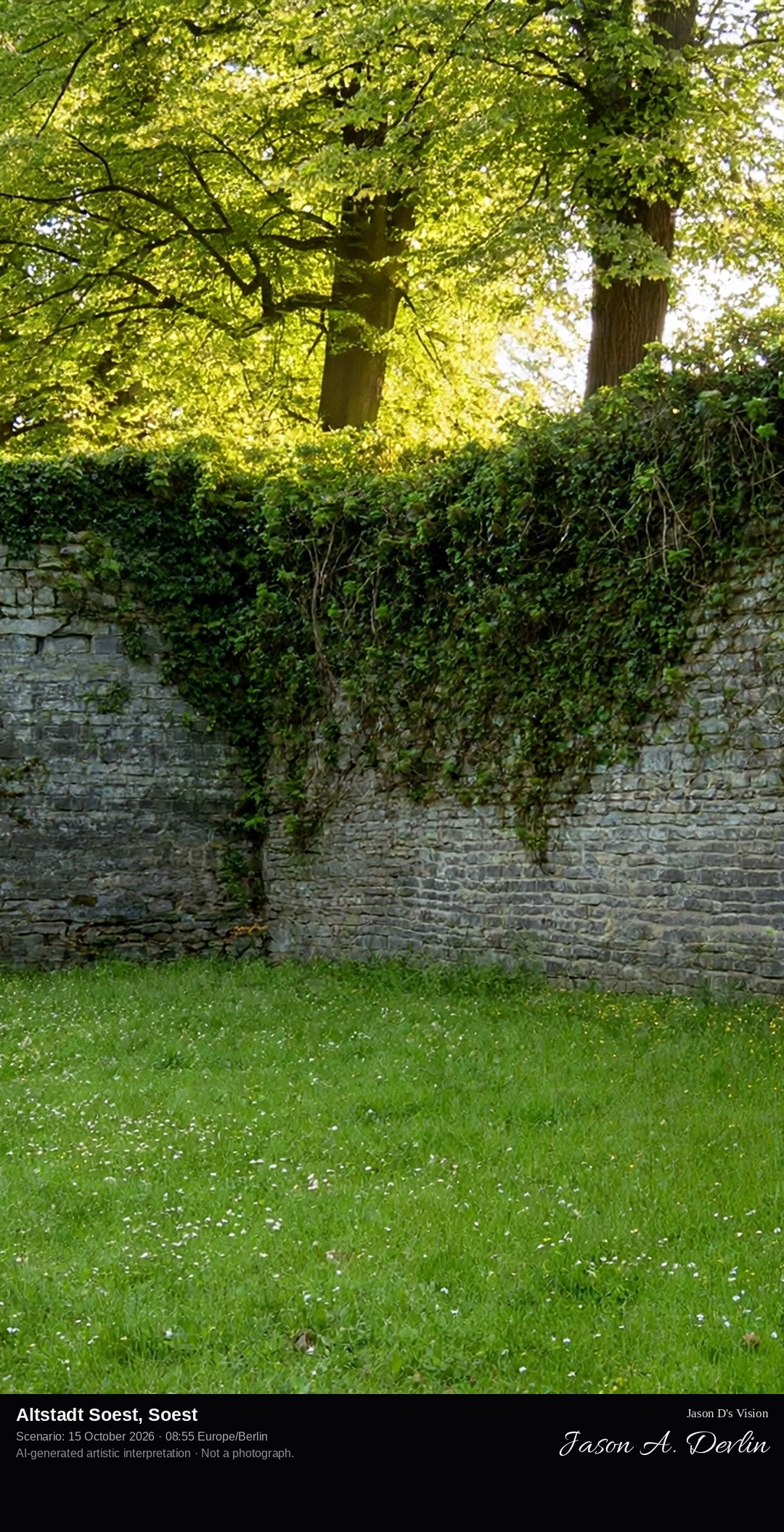
Soest is a Hanseatic old town built largely of distinctive green sandstone, with some 600 listed buildings inside its medieval circuit. Its surviving rampart walk runs along the old town wall, described as the longest of its kind in Germany, past green sandstone churches and gates.
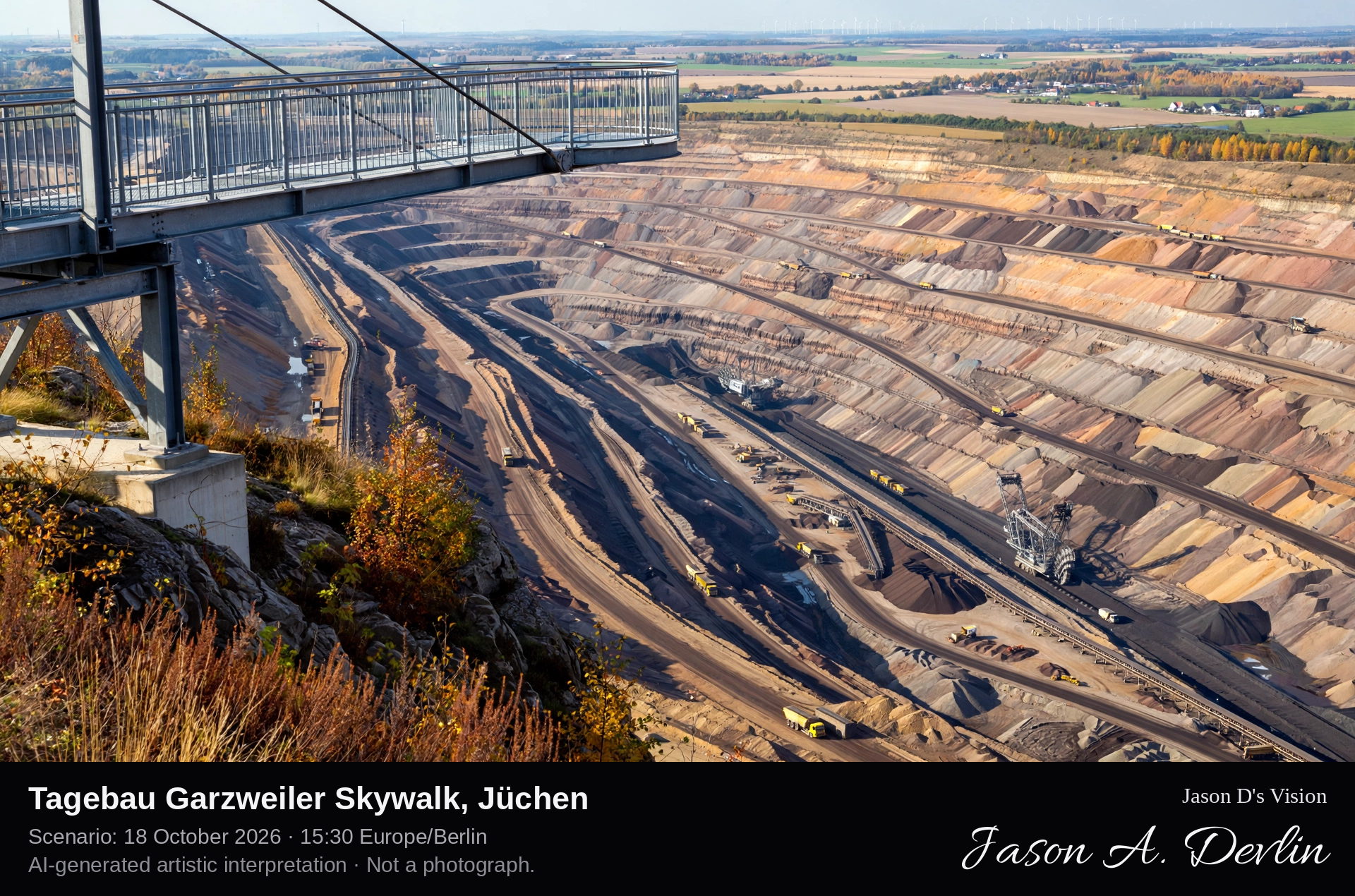
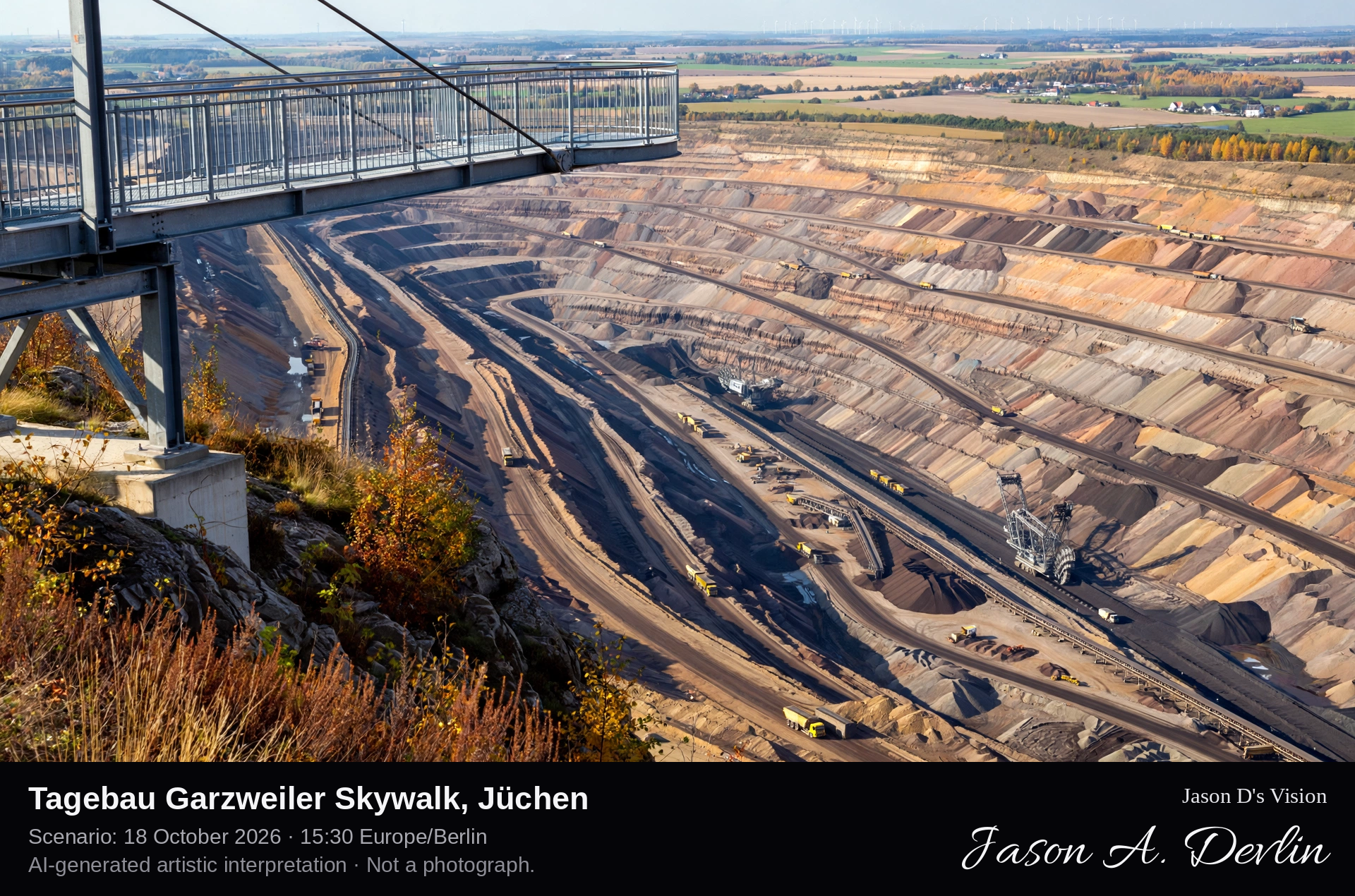
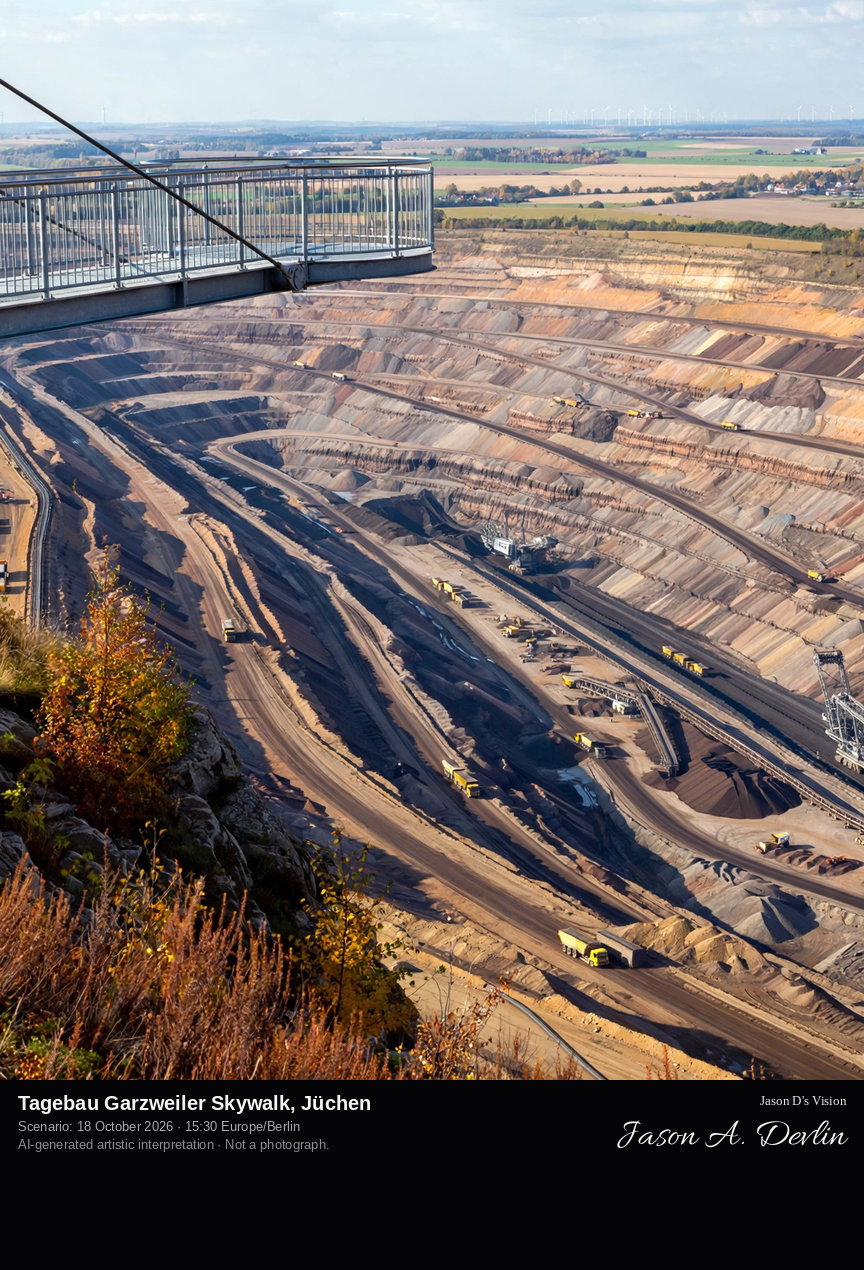
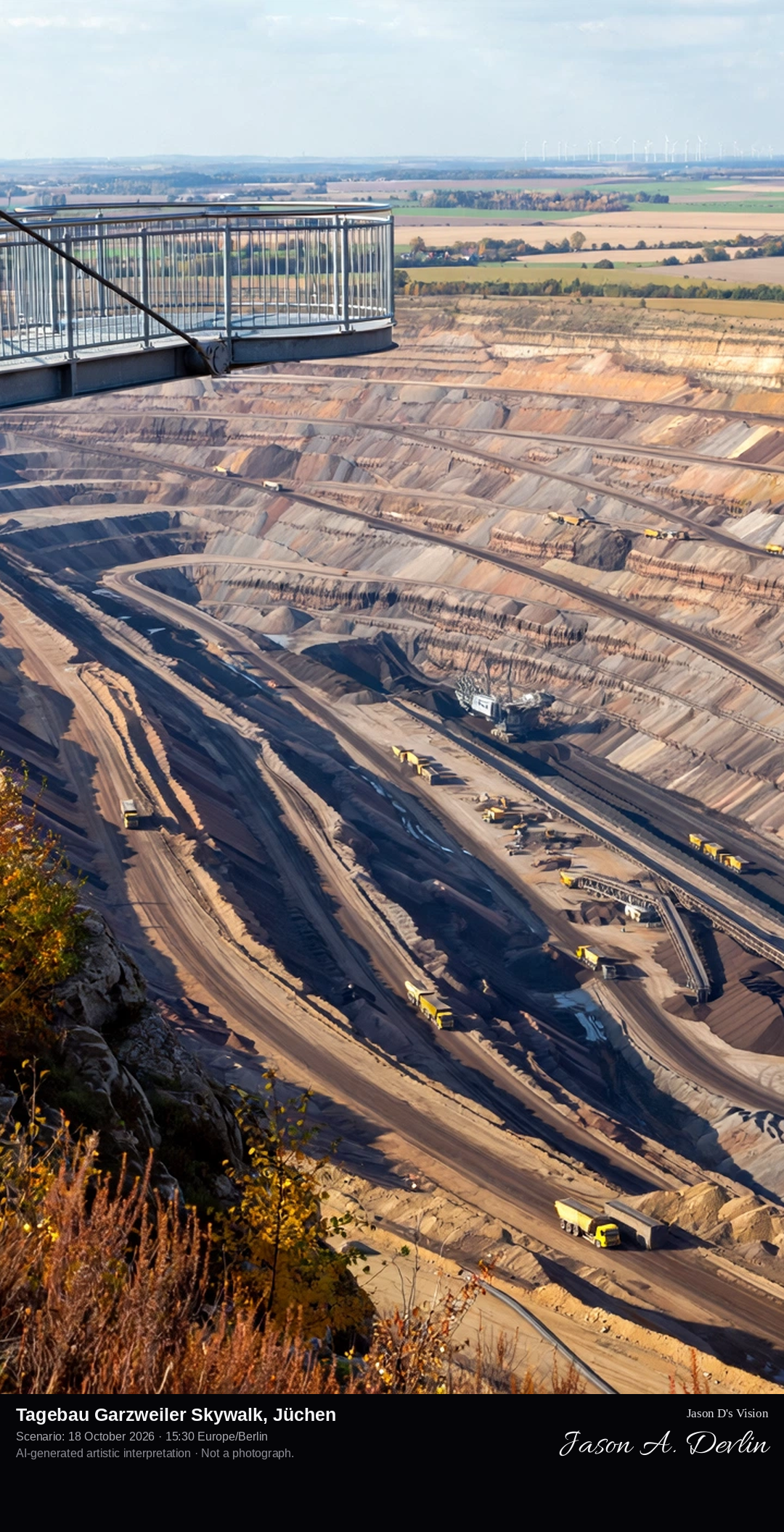
Steel Skywalk cantilevered over the terraced Garzweiler pit · AI-generated artistic interpretation
The Skywalk near Jüchen is a public viewing platform cantilevered 14 metres over the Garzweiler open-pit lignite mine. From the steel deck the terraced benches of the vast pit drop away toward giant bucket-wheel excavators, while flat farmland stretches to the horizon beyond the rim.
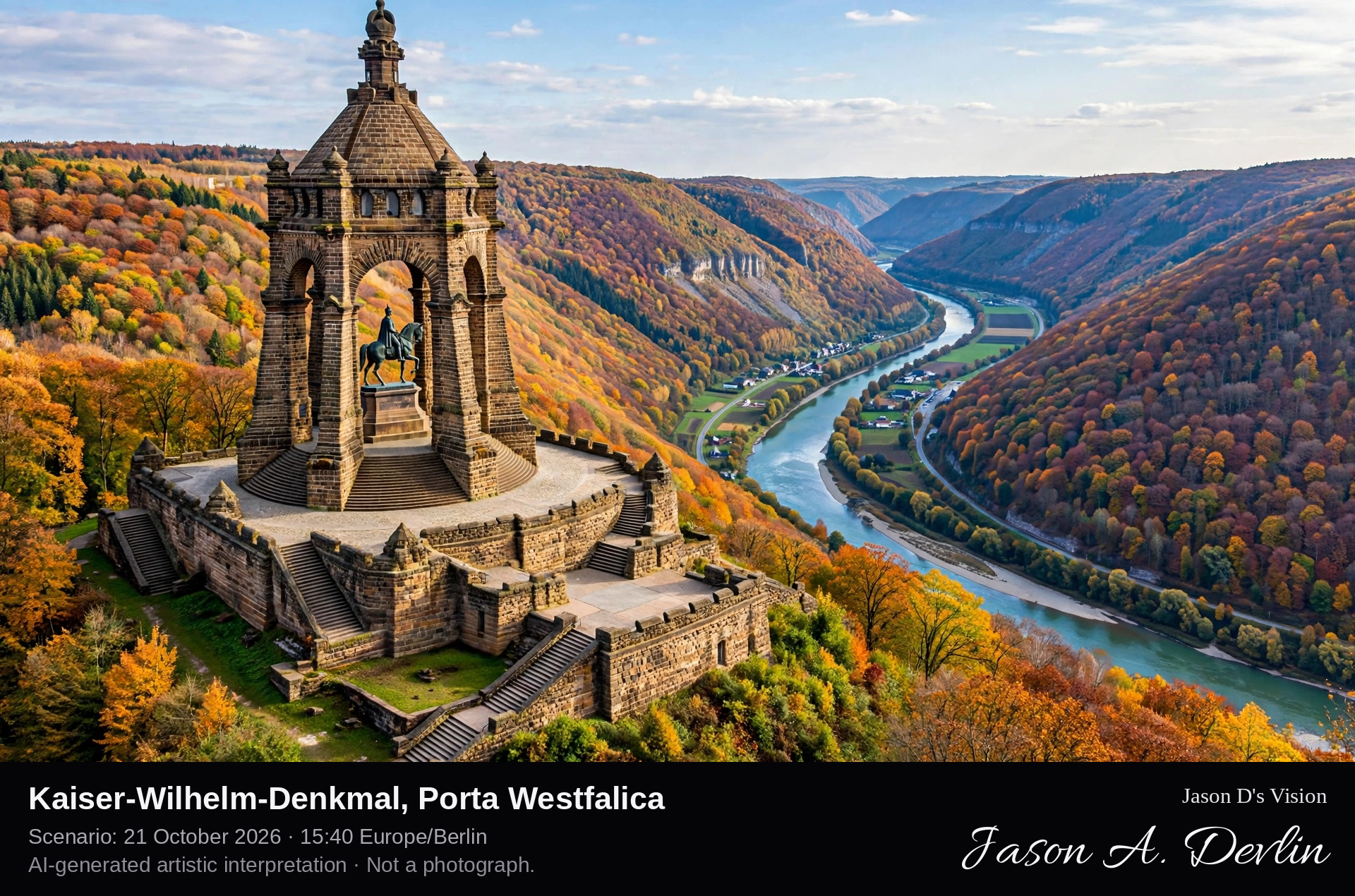
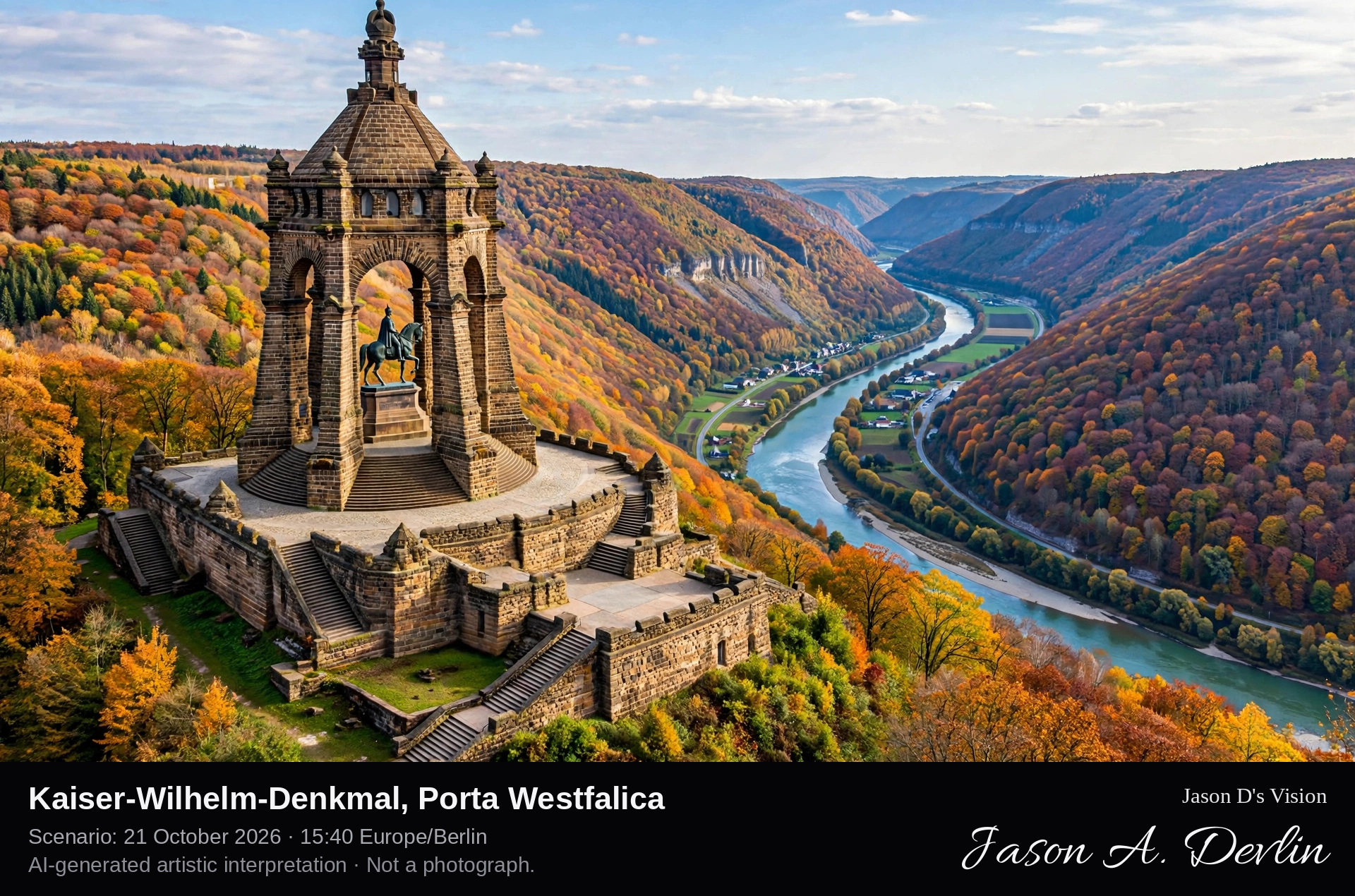
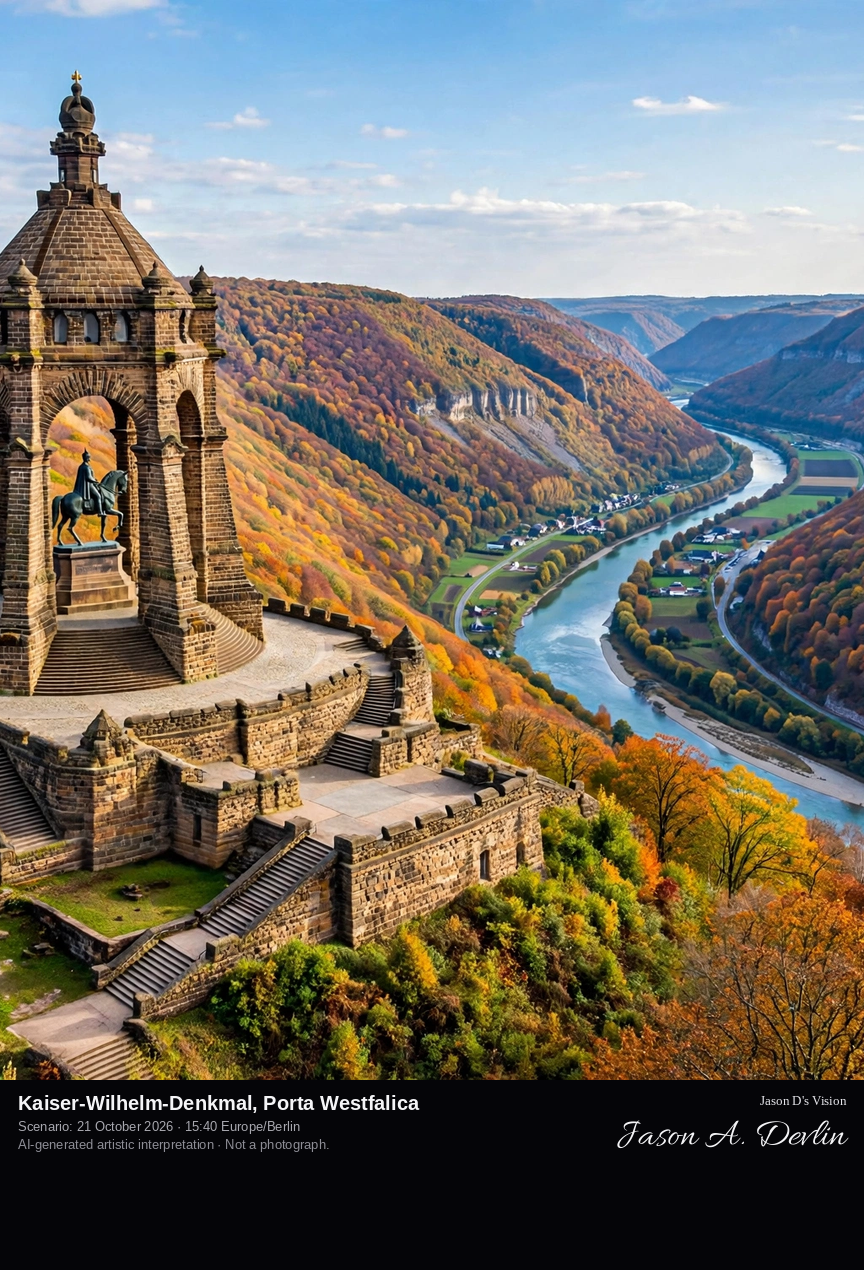
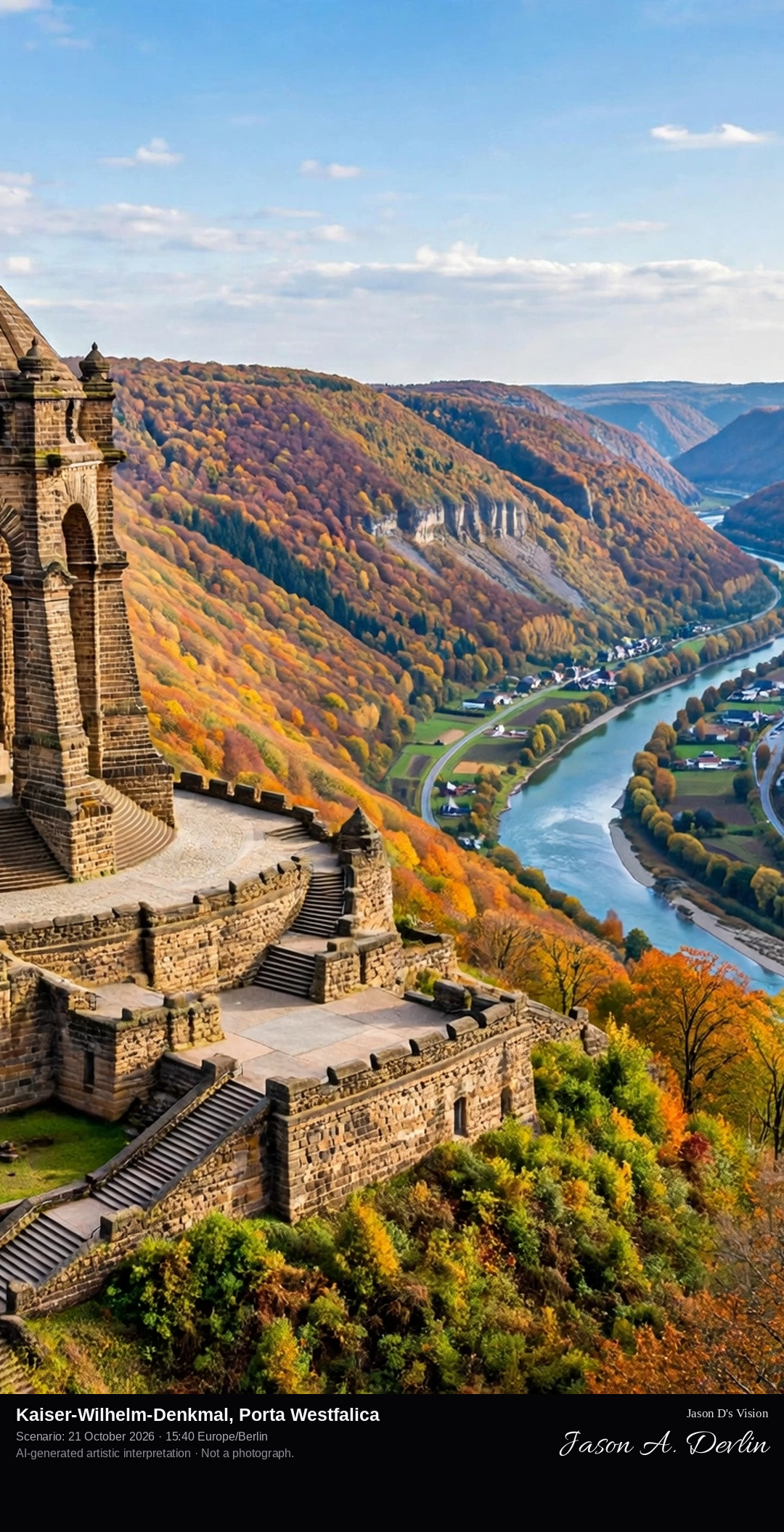
The Kaiser-Wilhelm-Denkmal crowns the Wittekindsberg above Porta Westfalica, the gorge where the Weser breaks between the Wiehen Hills and the Weser Hills. Raised in 1892-1896, the 88-metre sandstone monument shelters a colossal equestrian statue of Emperor Wilhelm I beneath its pillared canopy, standing on broad terraces high above the river.
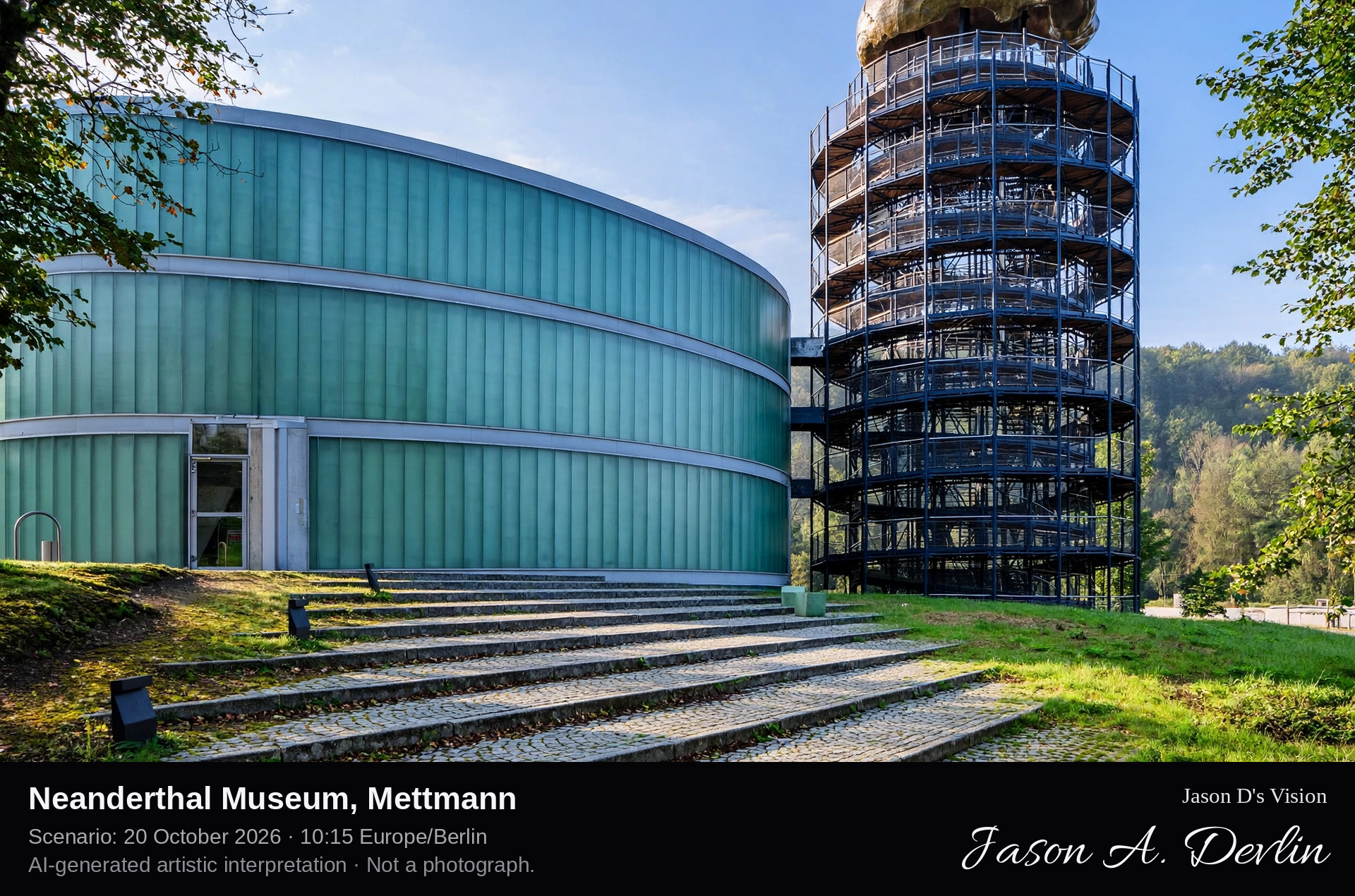
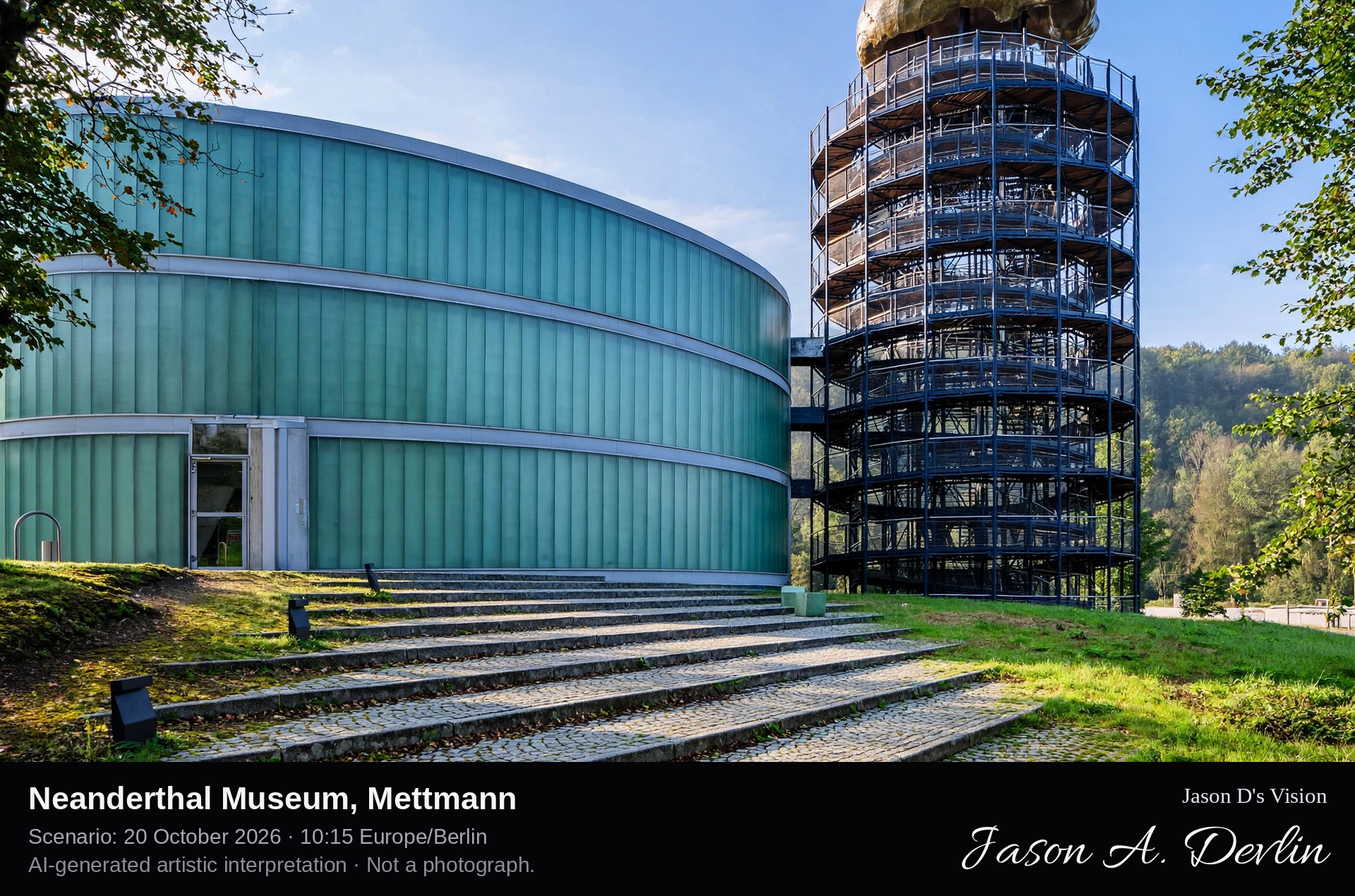
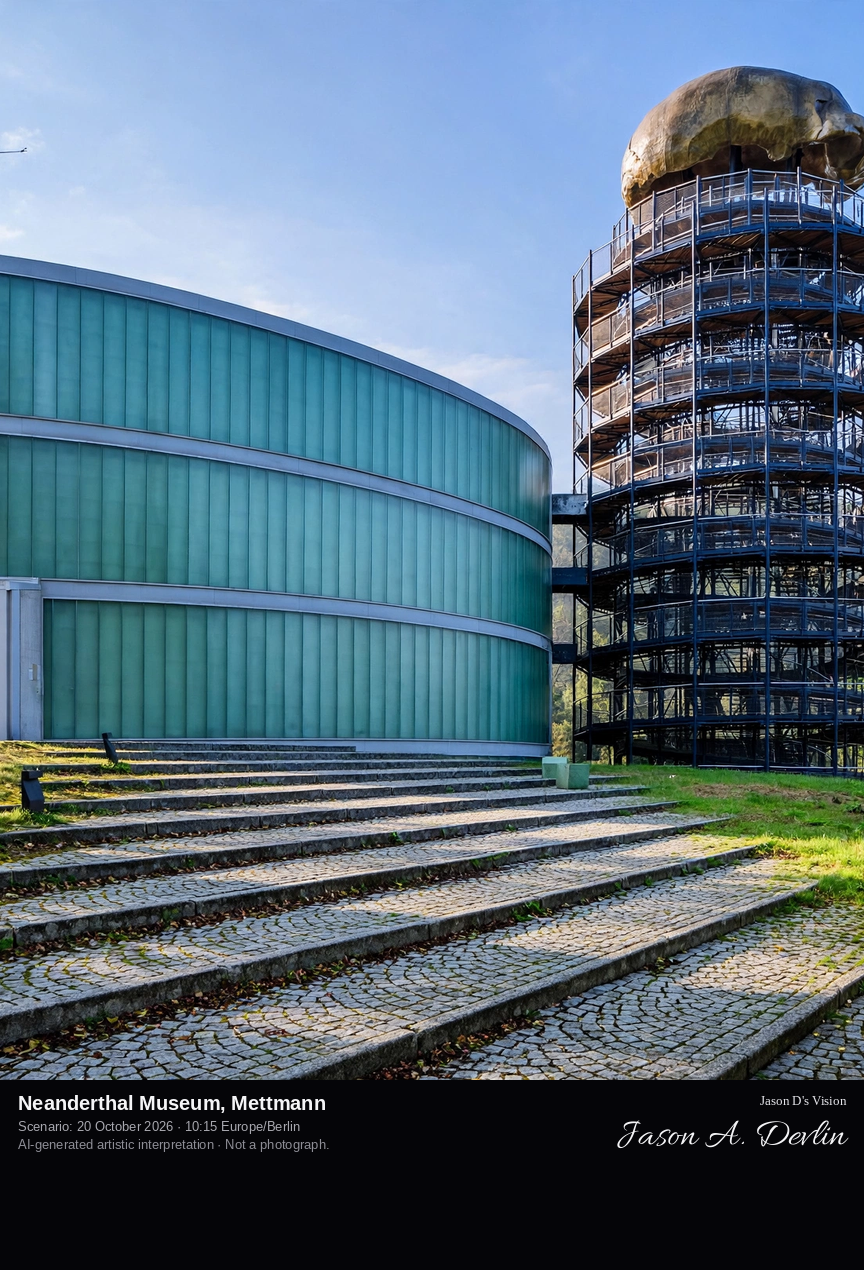
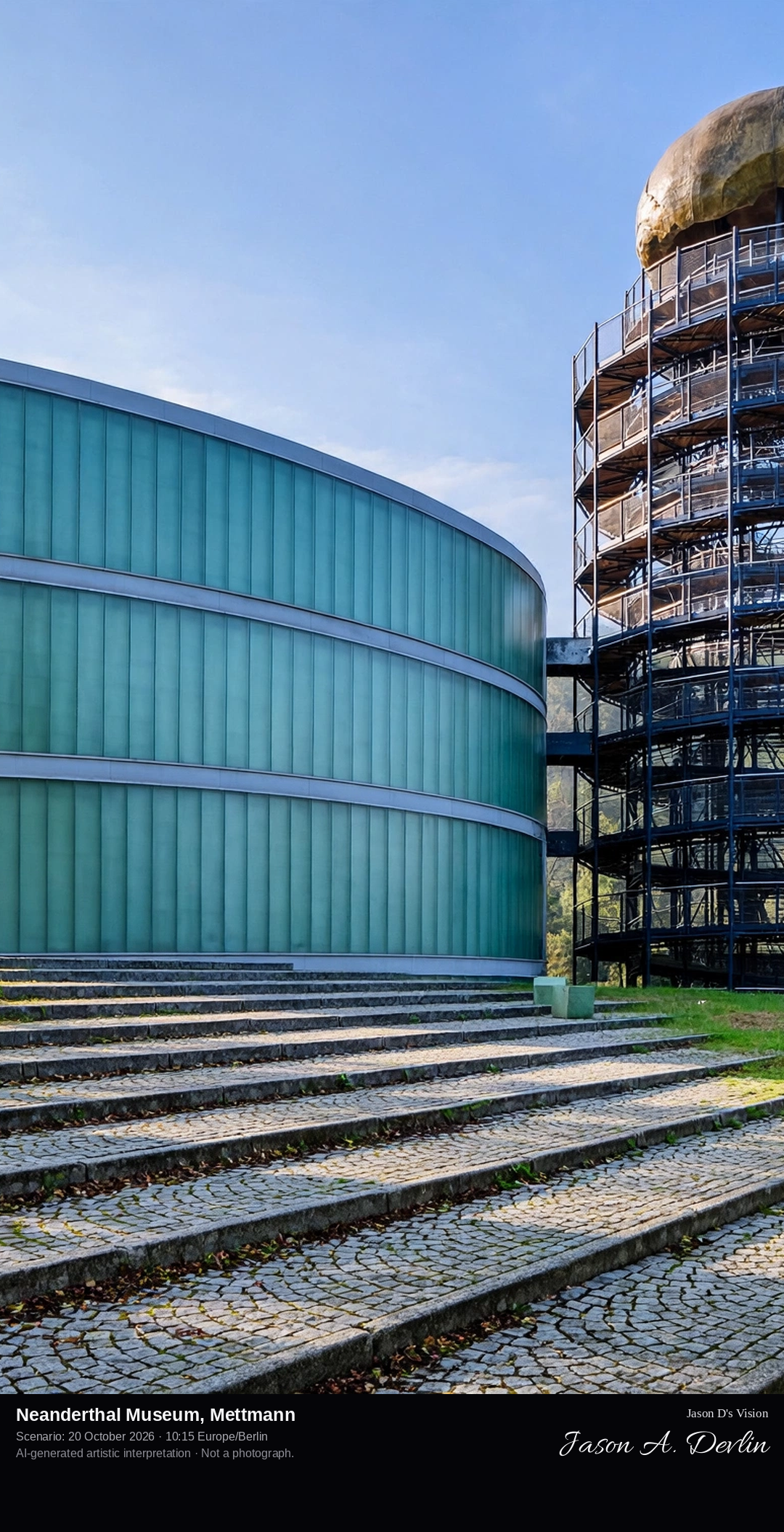
Curved museum and discovery-site tower in the wooded valley · AI-generated artistic interpretation
The Neandertal is the small valley near Mettmann where quarry workers in 1856 found the fossil bones that gave Neanderthal man his name. The modern Neanderthal Museum stands in the green Dussel valley near the discovery site, which is now marked by the 22-metre Hoehlenblick tower opened in 2022.
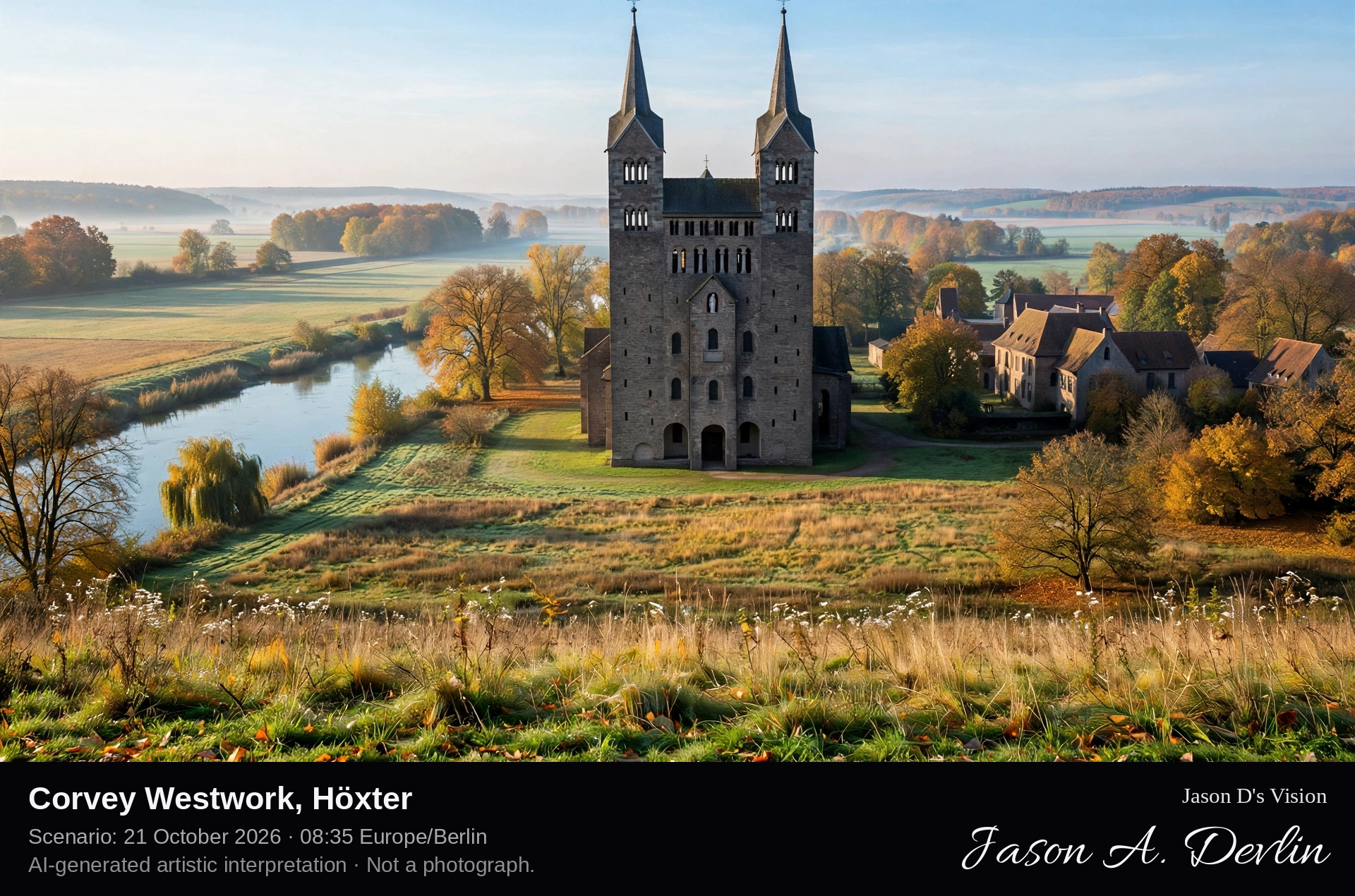
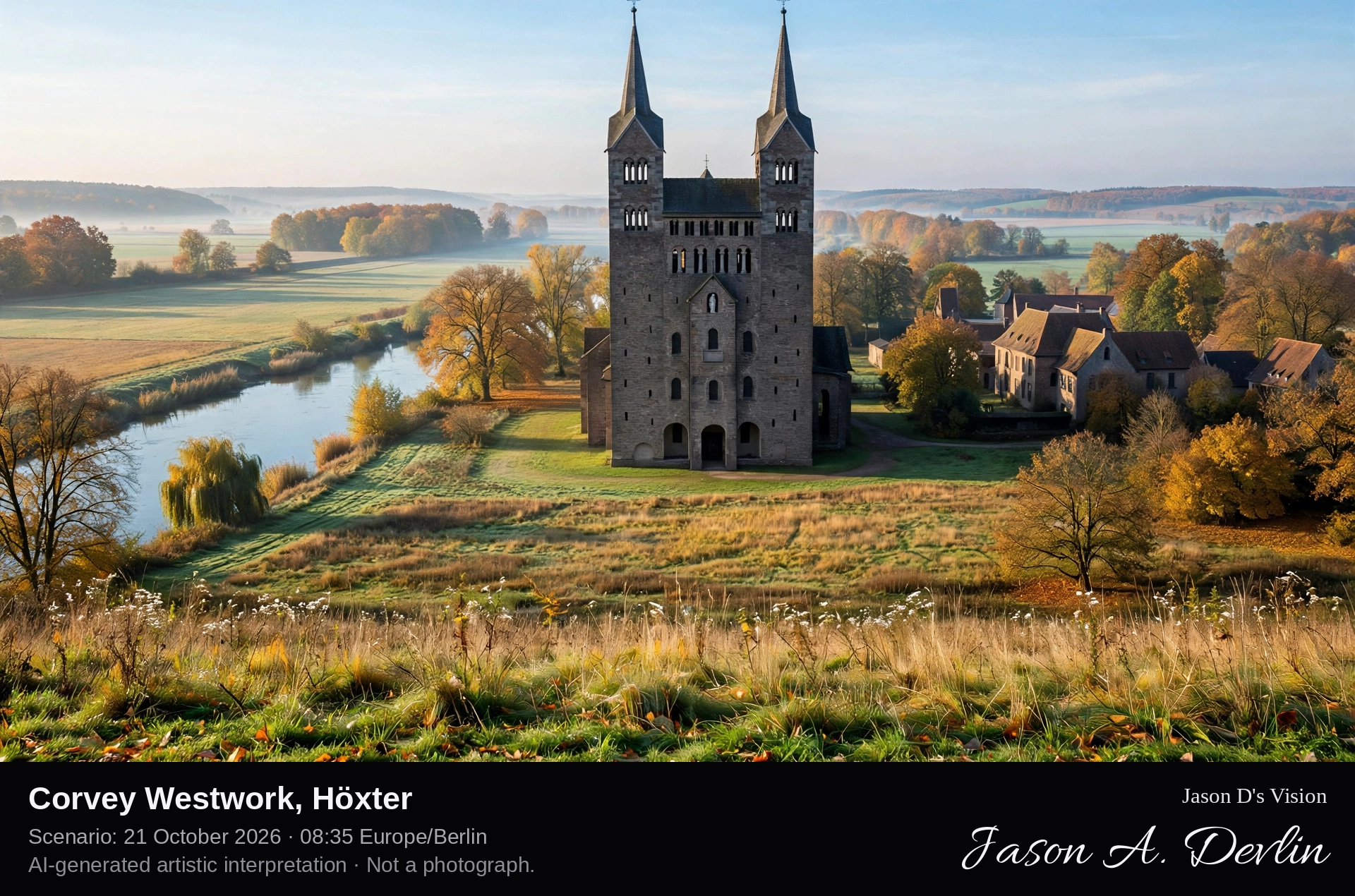
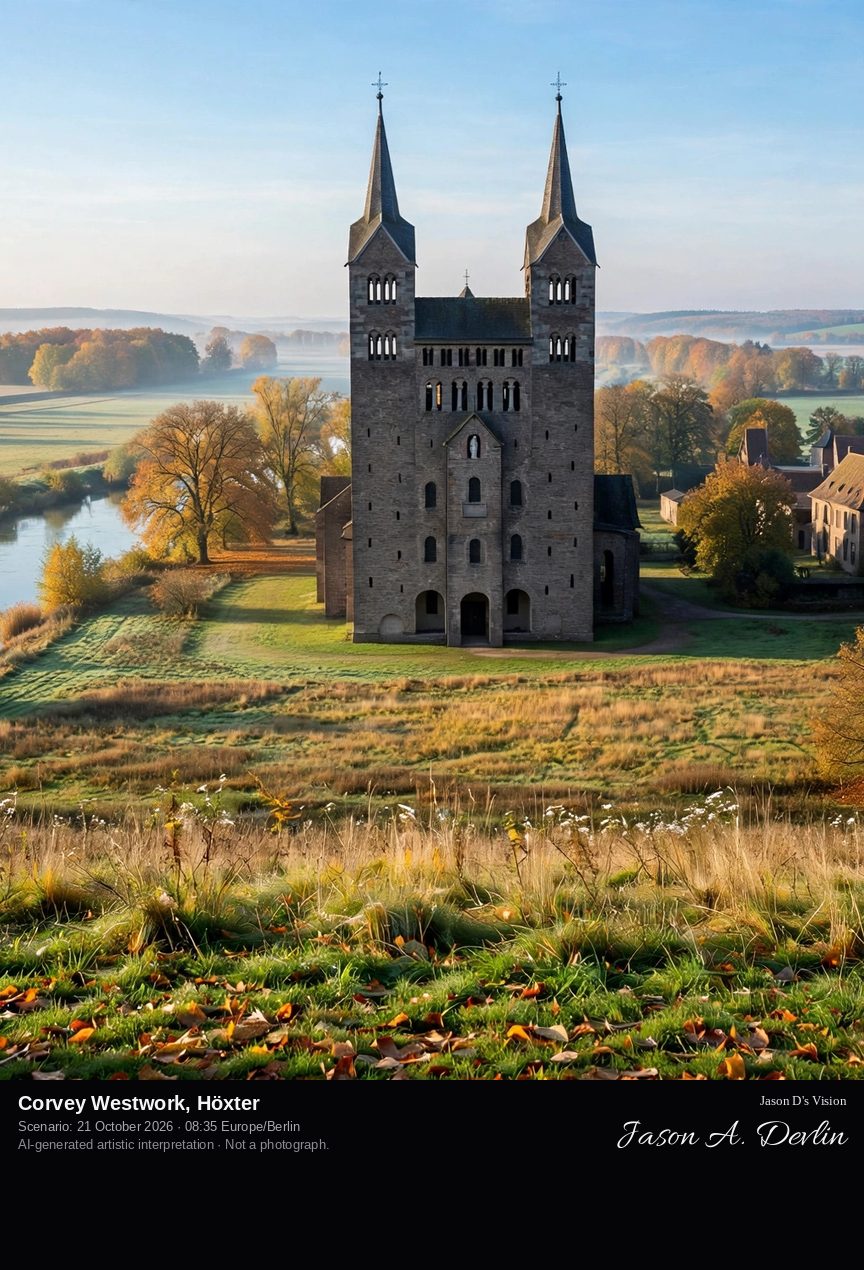
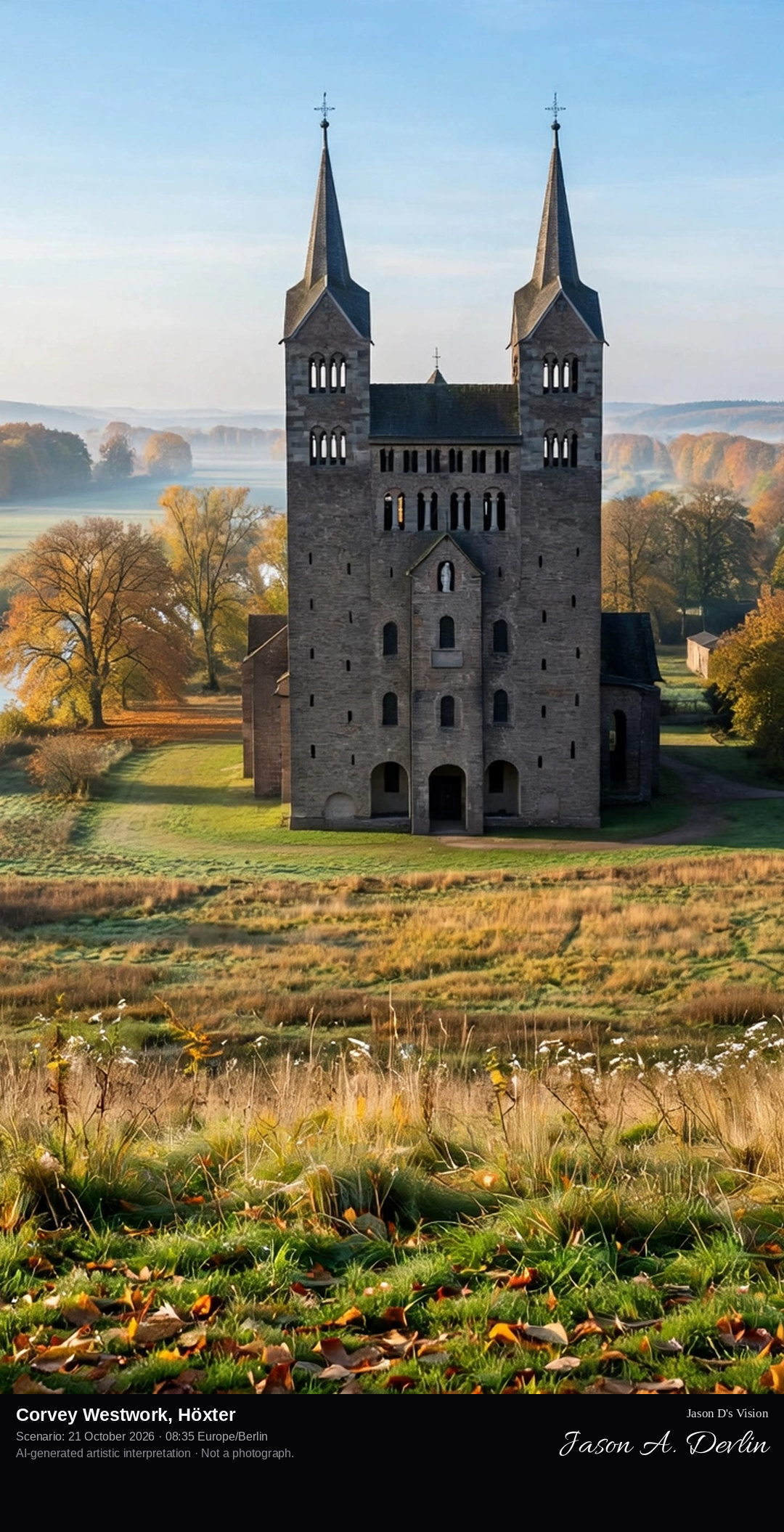
Carolingian twin-towered westwork over the Weser meadows · AI-generated artistic interpretation
The westwork of Corvey Abbey, built between 873 and 885, is the oldest largely preserved Carolingian westwork in the world and a UNESCO World Heritage Site since 2014. Its massive twin-towered stone front rises over the Weser meadows west of Höxter, at the head of the abbey church.
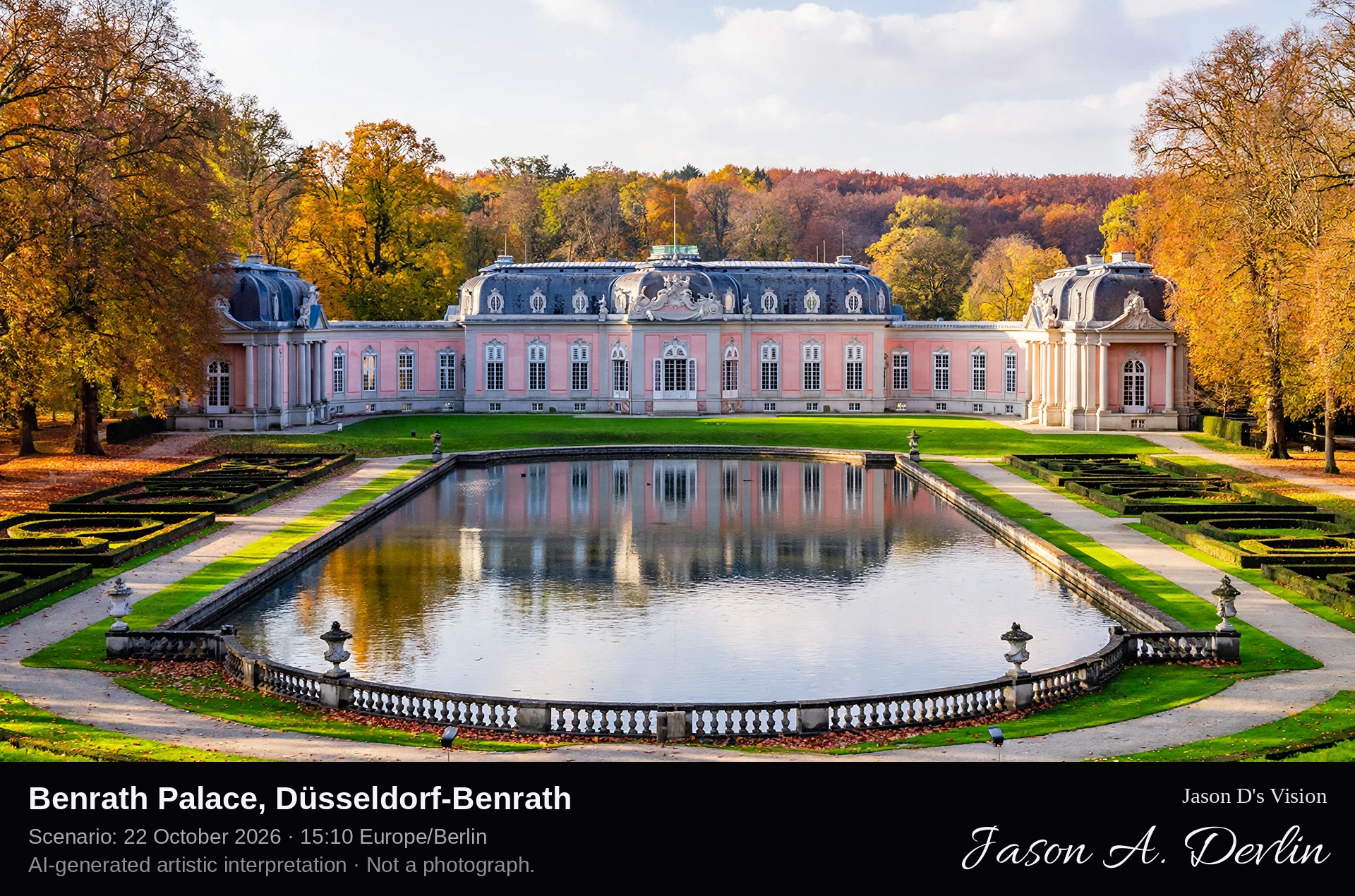
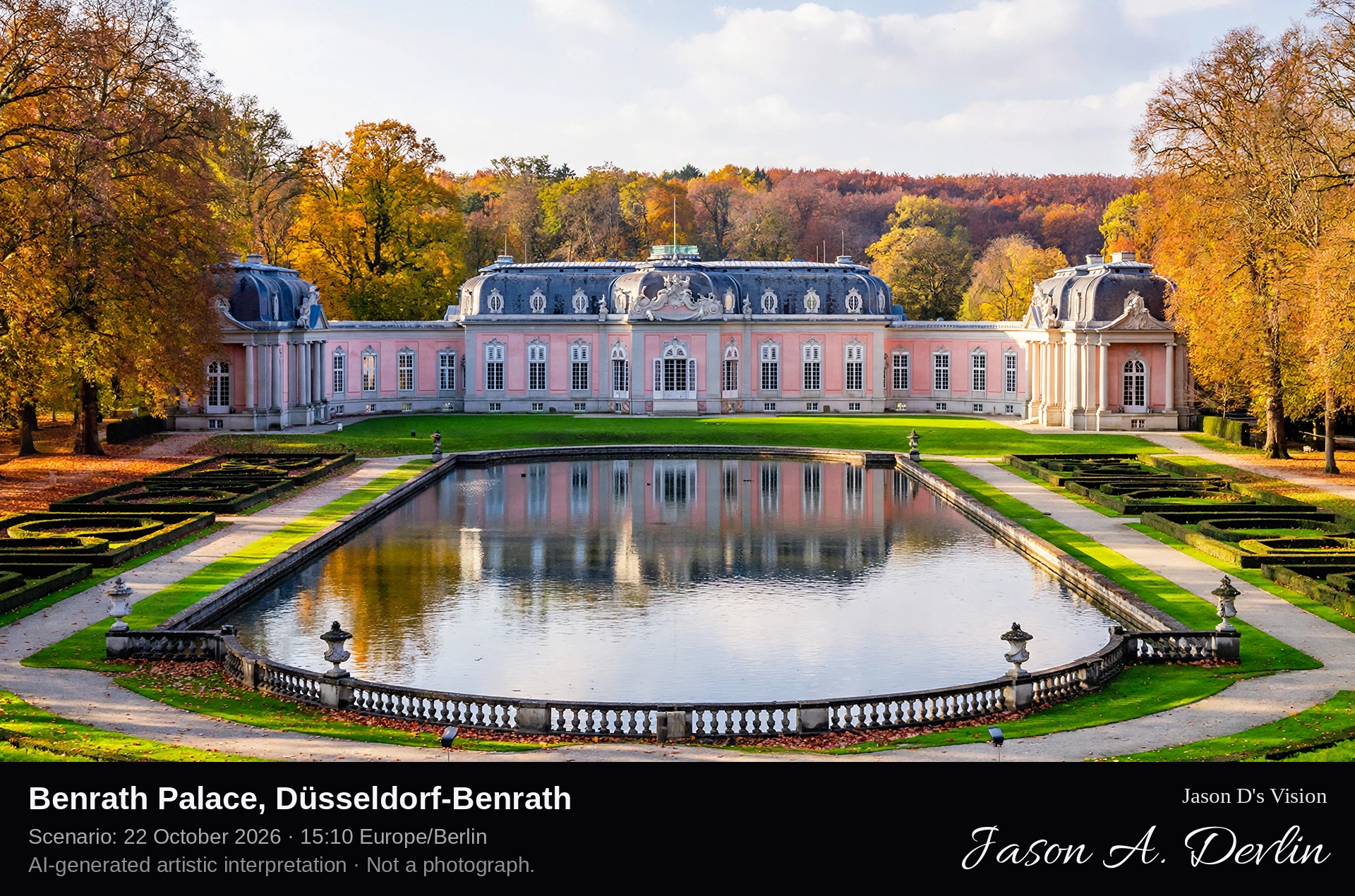
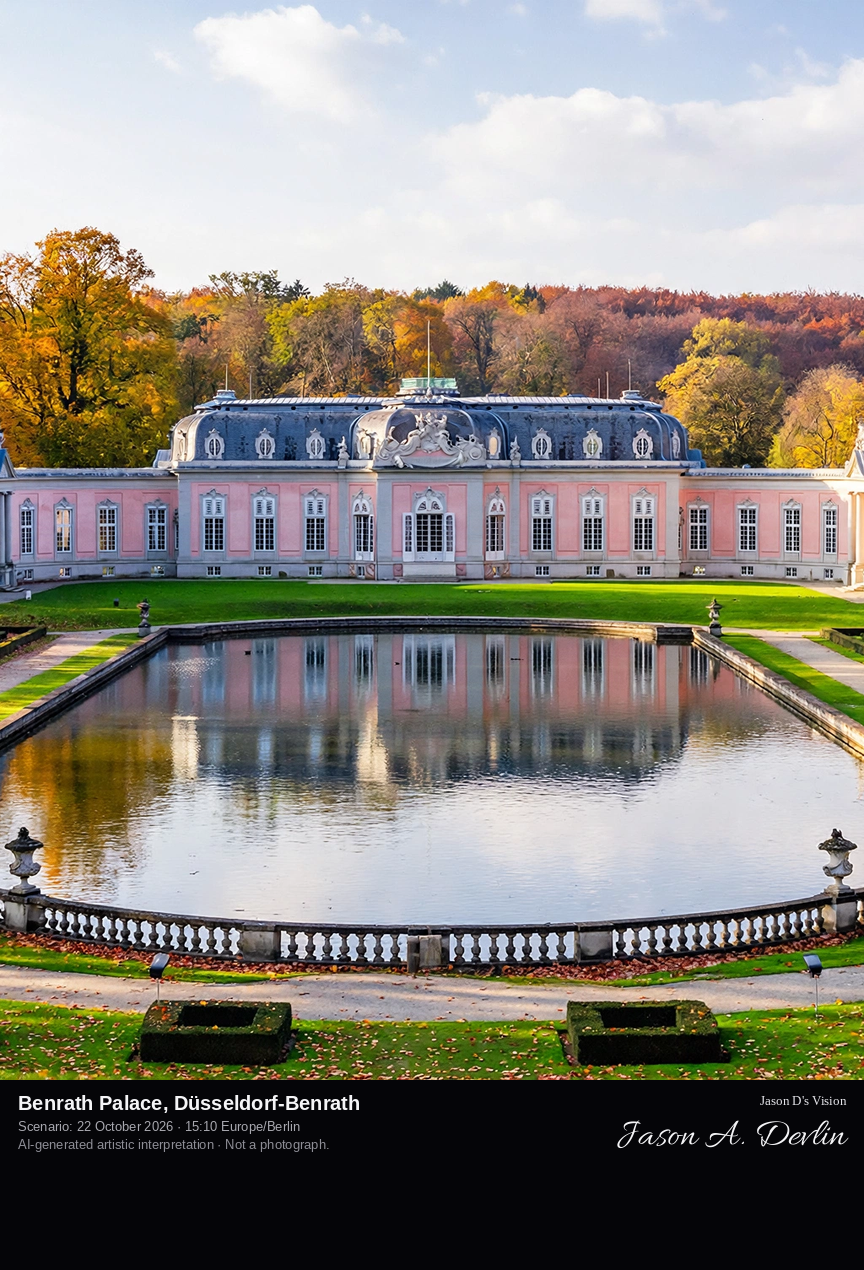
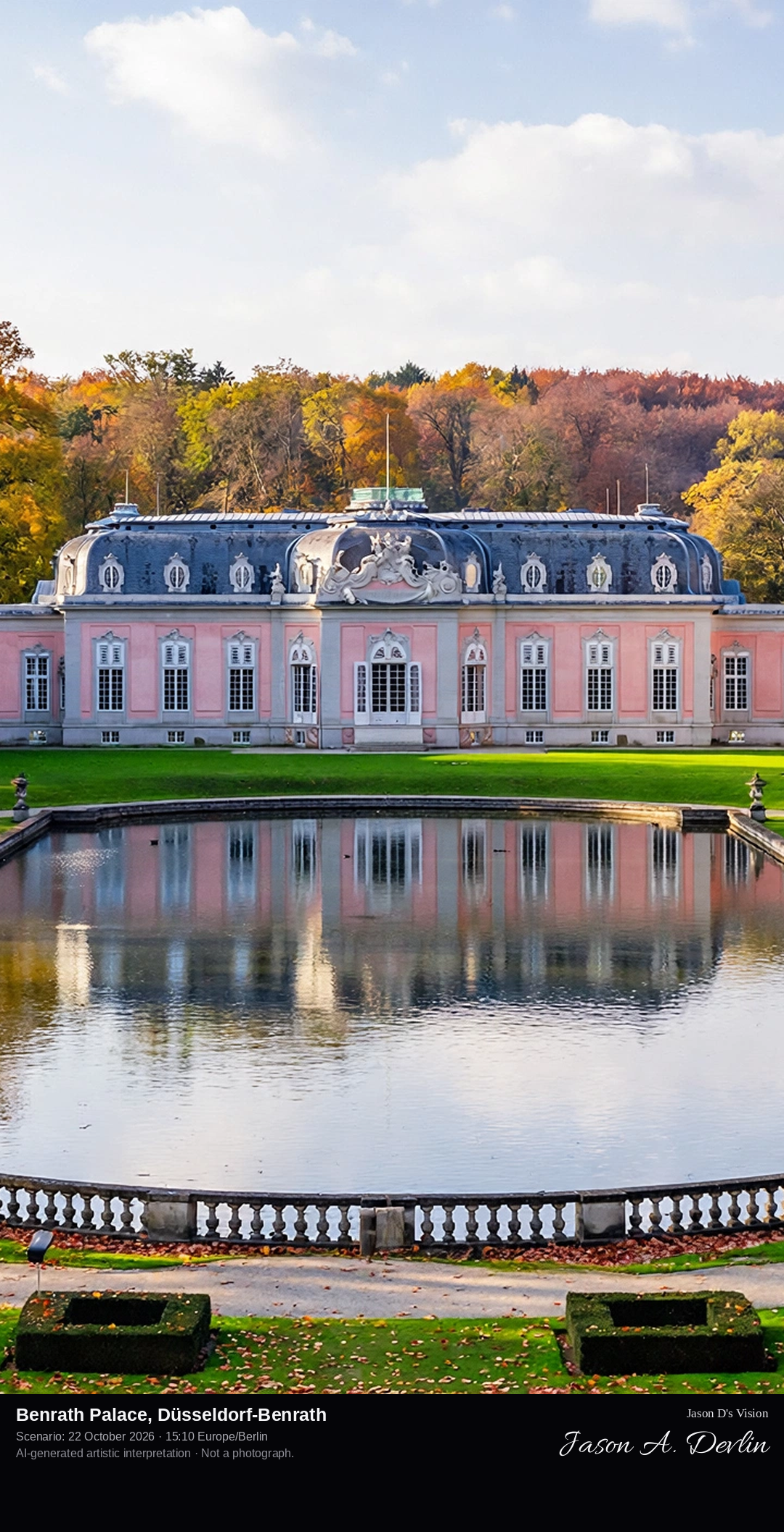
Pink rococo palace across its long reflecting pond · AI-generated artistic interpretation
Benrath Palace is the pink rococo maison de plaisance that Elector Carl Theodor had built to designs by Nicolas de Pigage between 1755 and 1773 in the south of Düsseldorf. Its corps de logis and curved wings face a long rectangular pond in a great landscape park that runs down toward the Rhine.
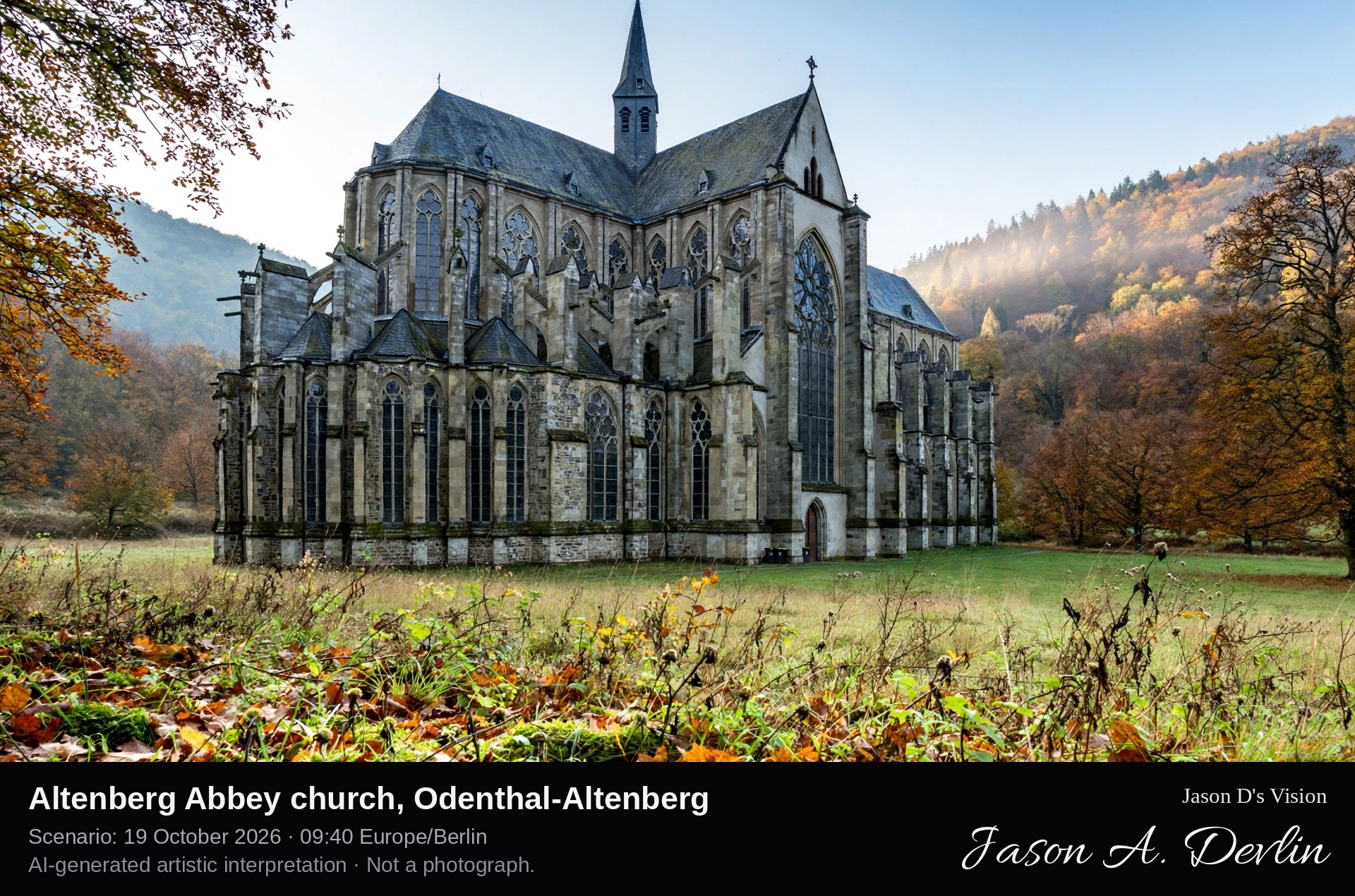
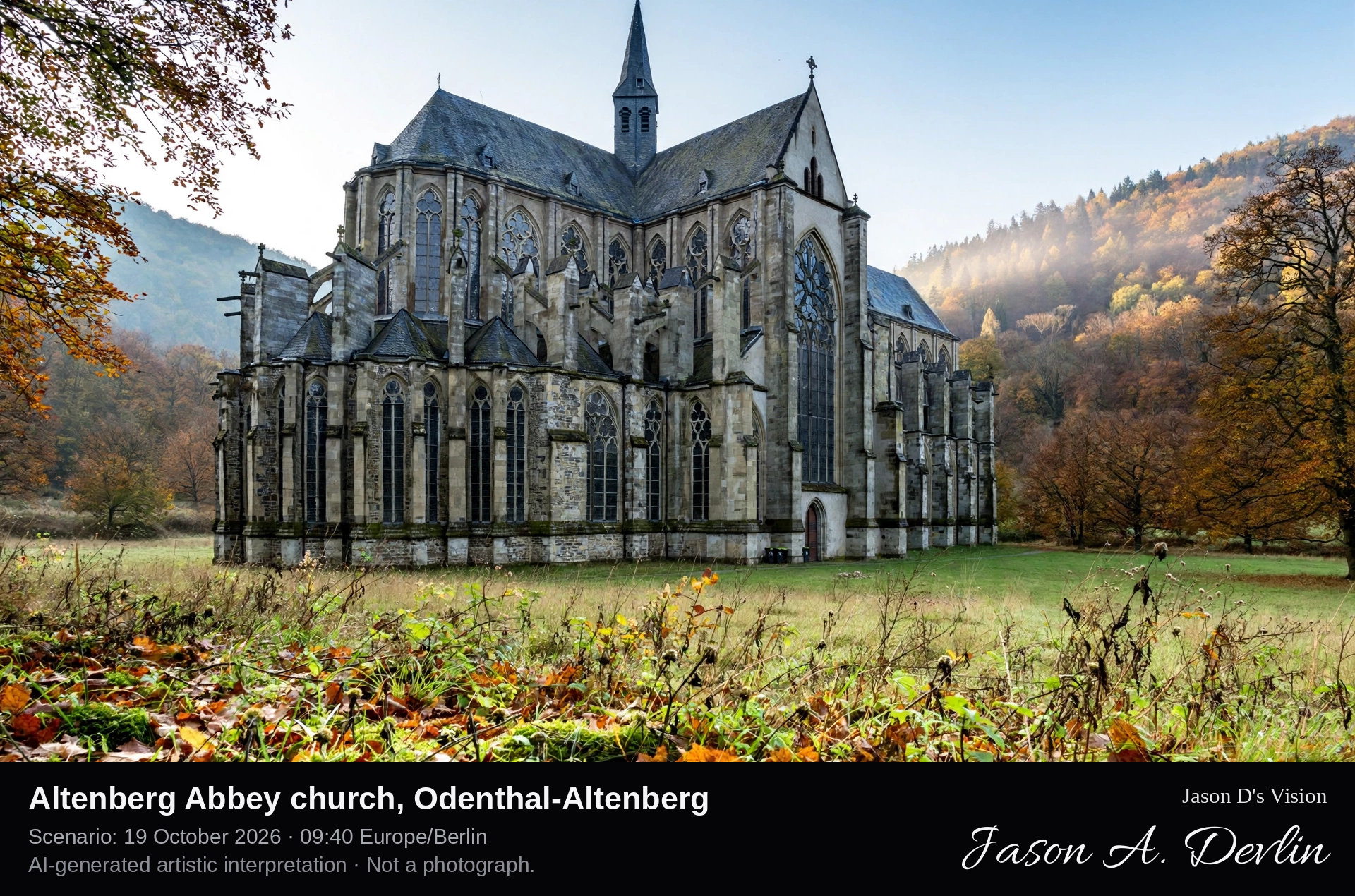
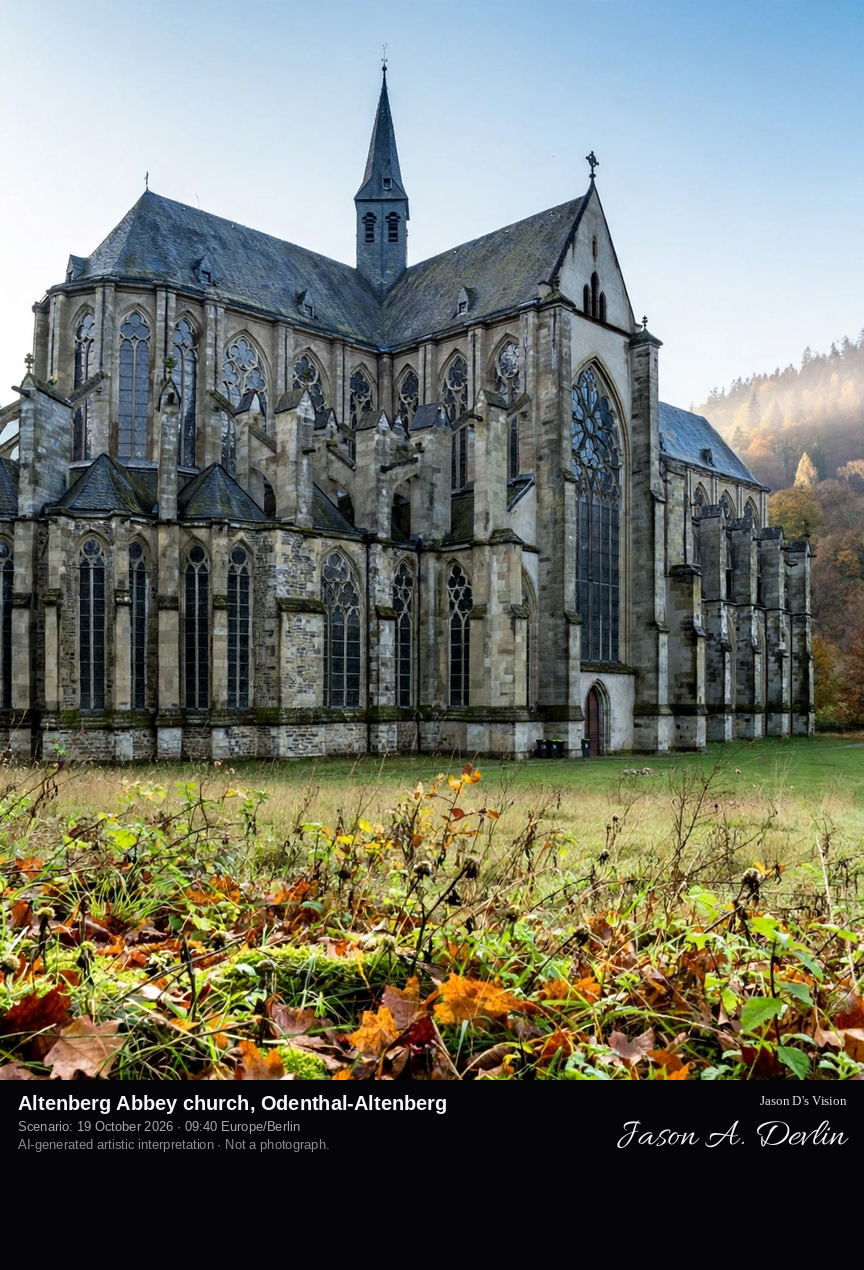
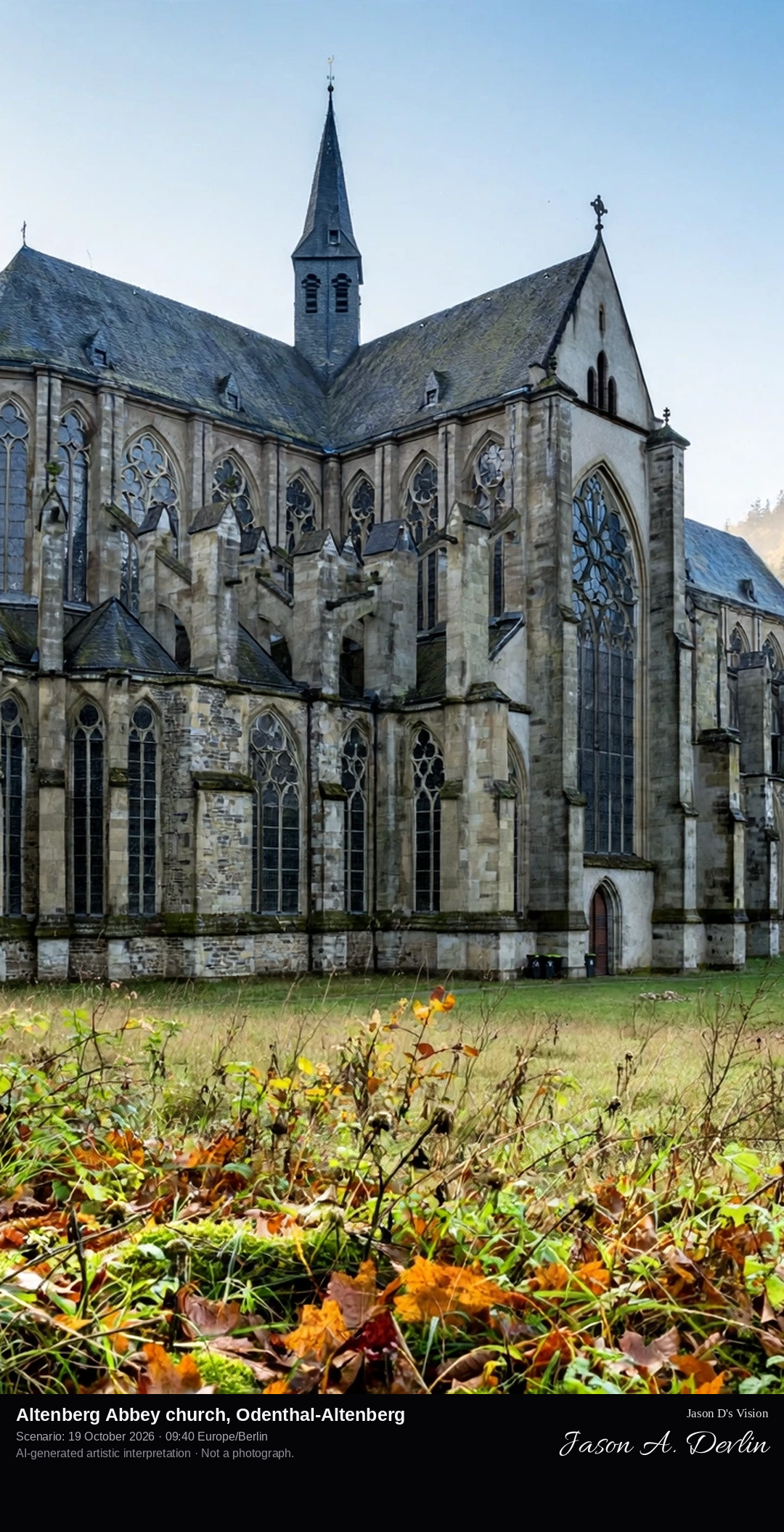
Gothic abbey church in the wooded Dhunn valley · AI-generated artistic interpretation
The Altenberger Dom is the church of the former Cistercian abbey of Altenberg, founded in 1133 in the Dhunn valley. Begun in 1259, the tall Gothic church was built without towers, as Cistercian custom required, and is famed for its great traceried west window and the stained glass of its choir. It has served as a shared Protestant and Catholic church since the 19th century.
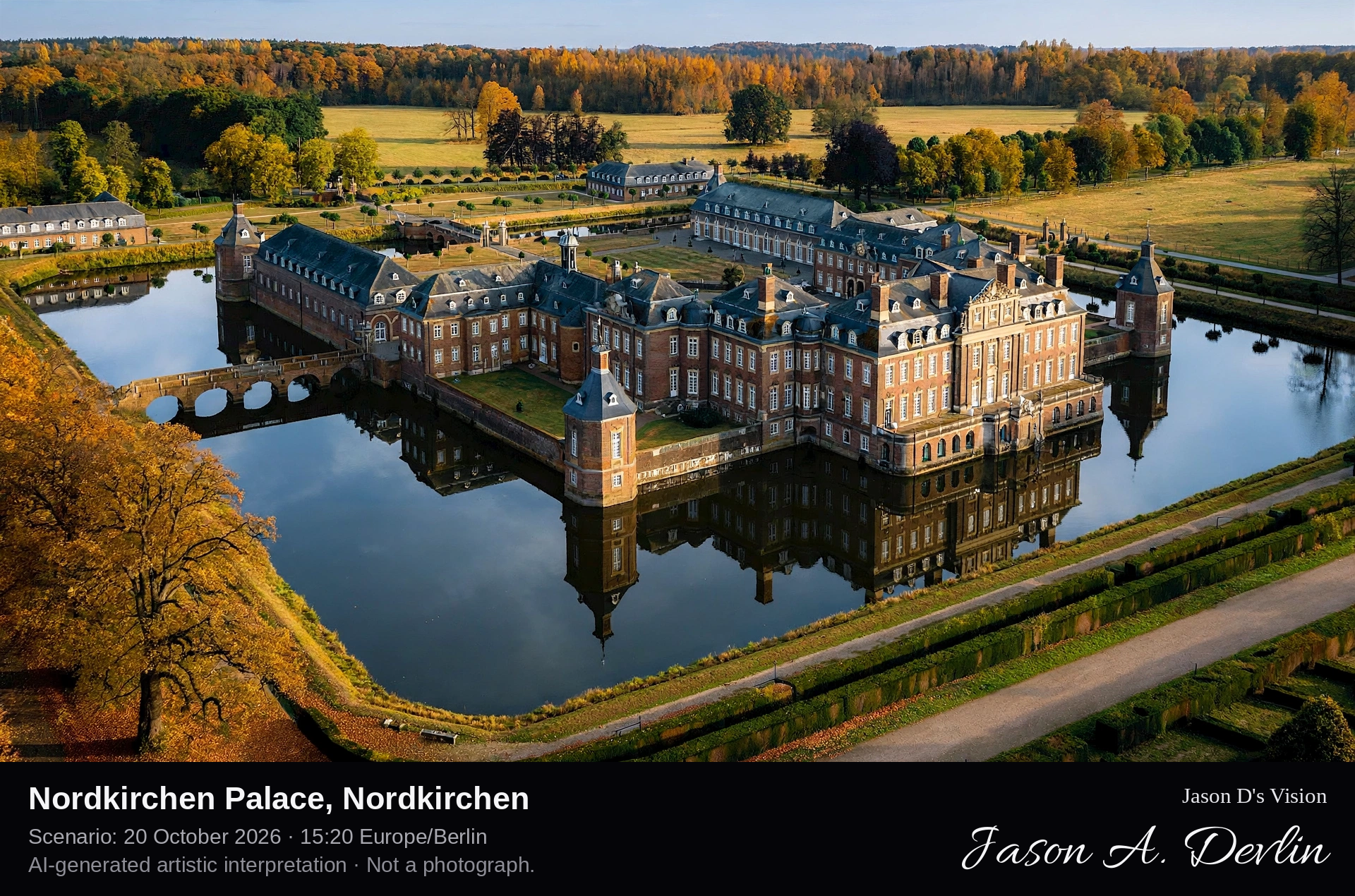
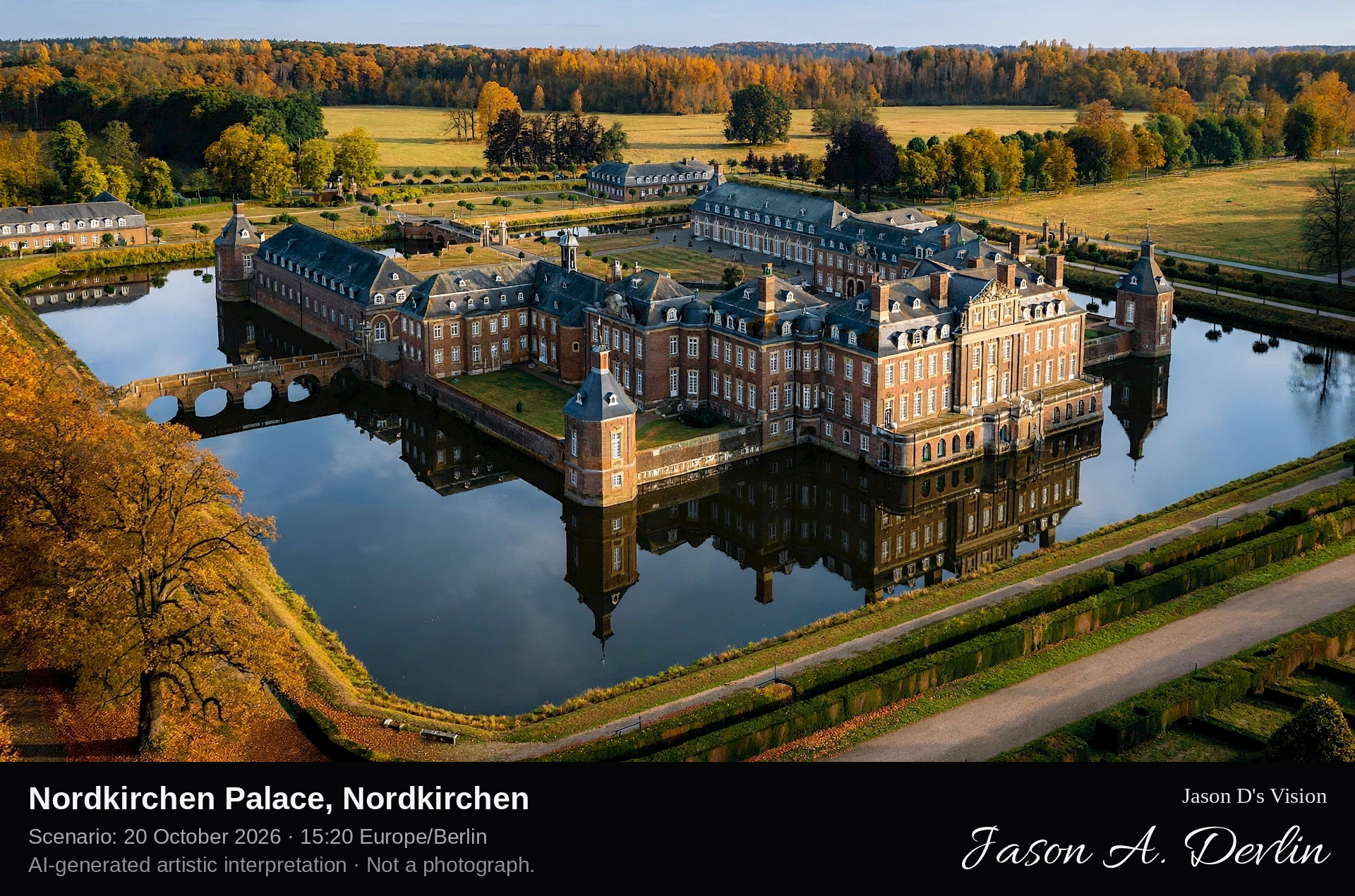
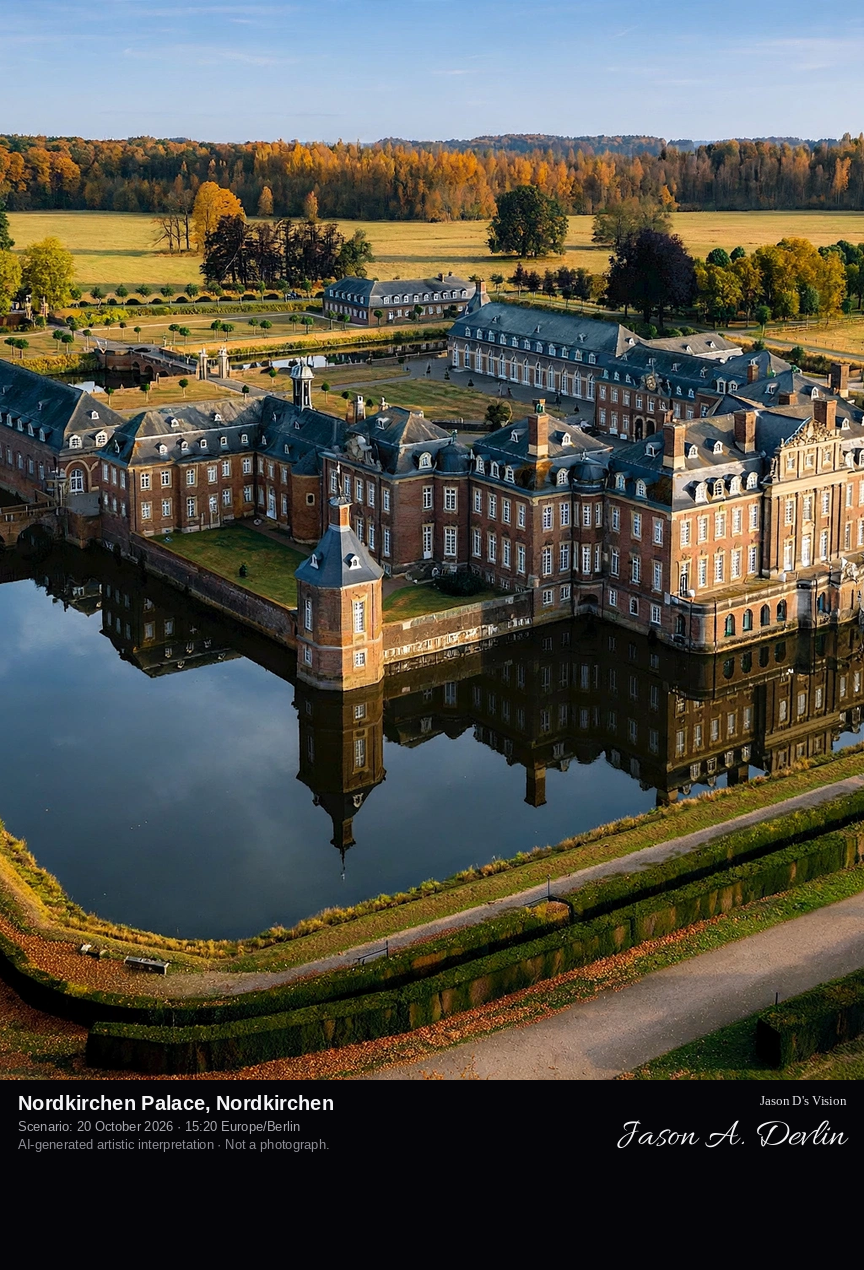
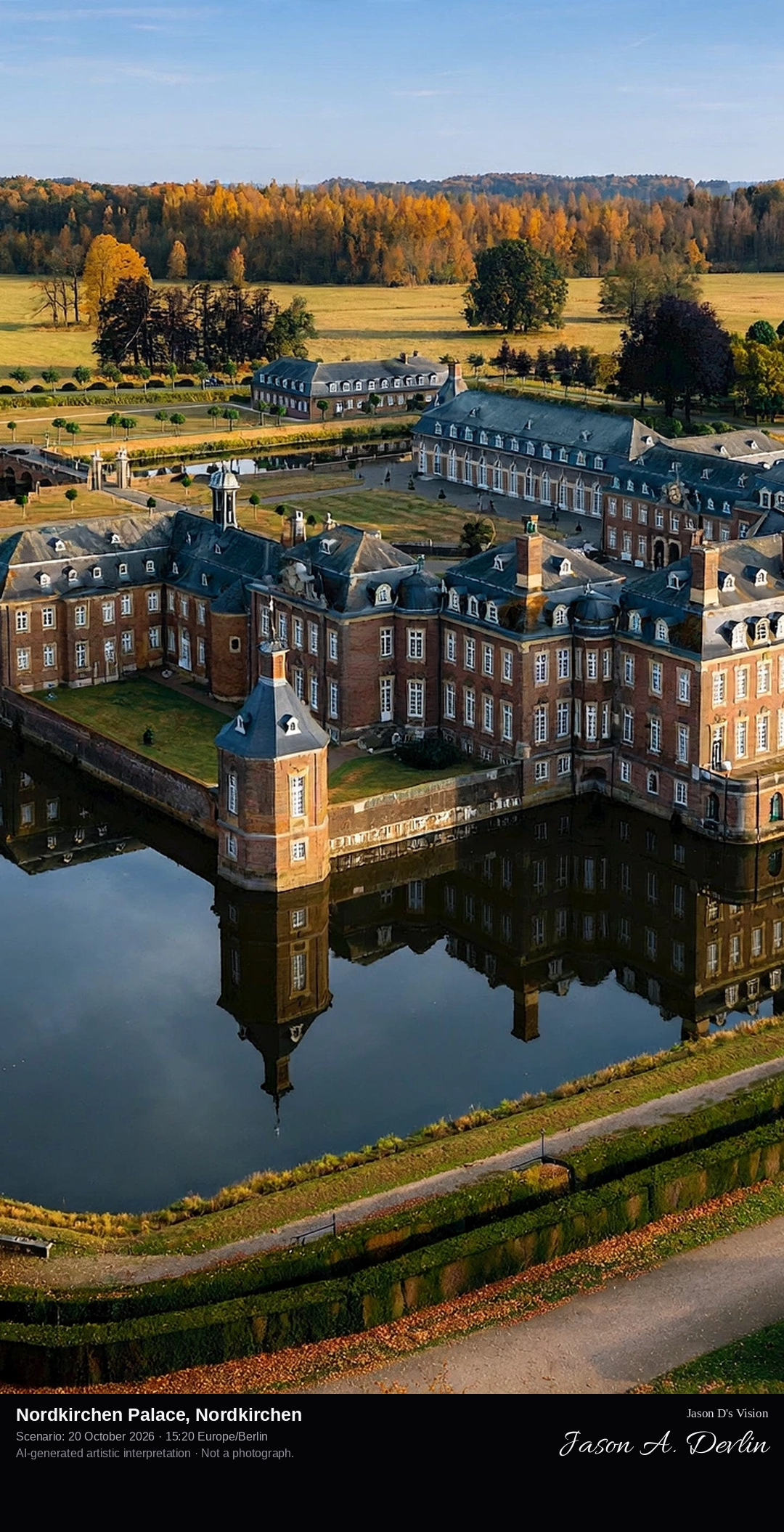
Moated Baroque palace reflected in its surrounding water · AI-generated artistic interpretation
Nordkirchen Palace, often called the Westphalian Versailles, is the largest moated palace in Westphalia, built in 1703-1734 for Prince-Bishop Friedrich Christian von Plettenberg. The red-brick Baroque palace, dressed with pale sandstone, stands on an island in a wide rectangular moat amid formal gardens and avenues. It now houses the North Rhine-Westphalia university of finance.
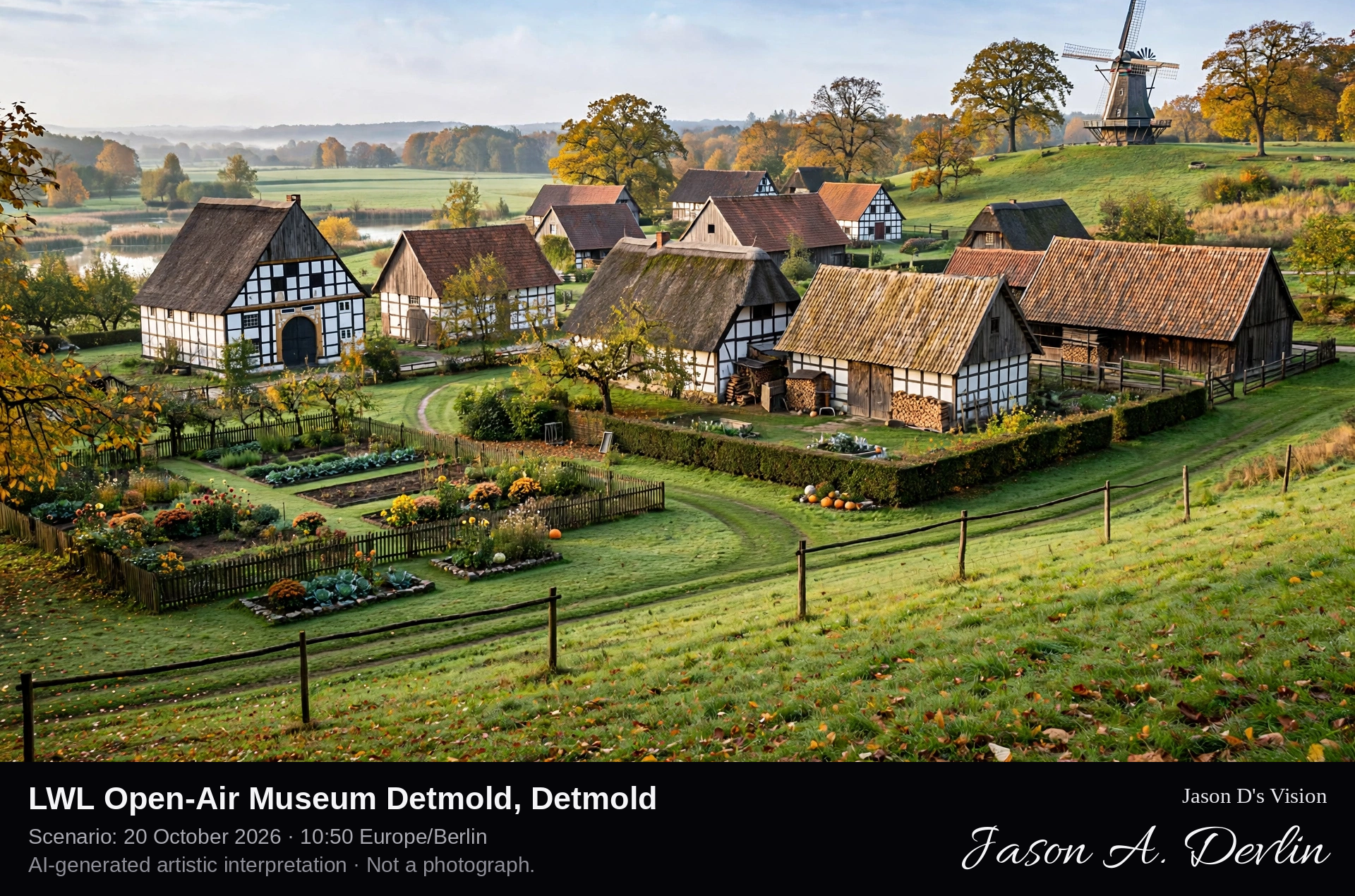
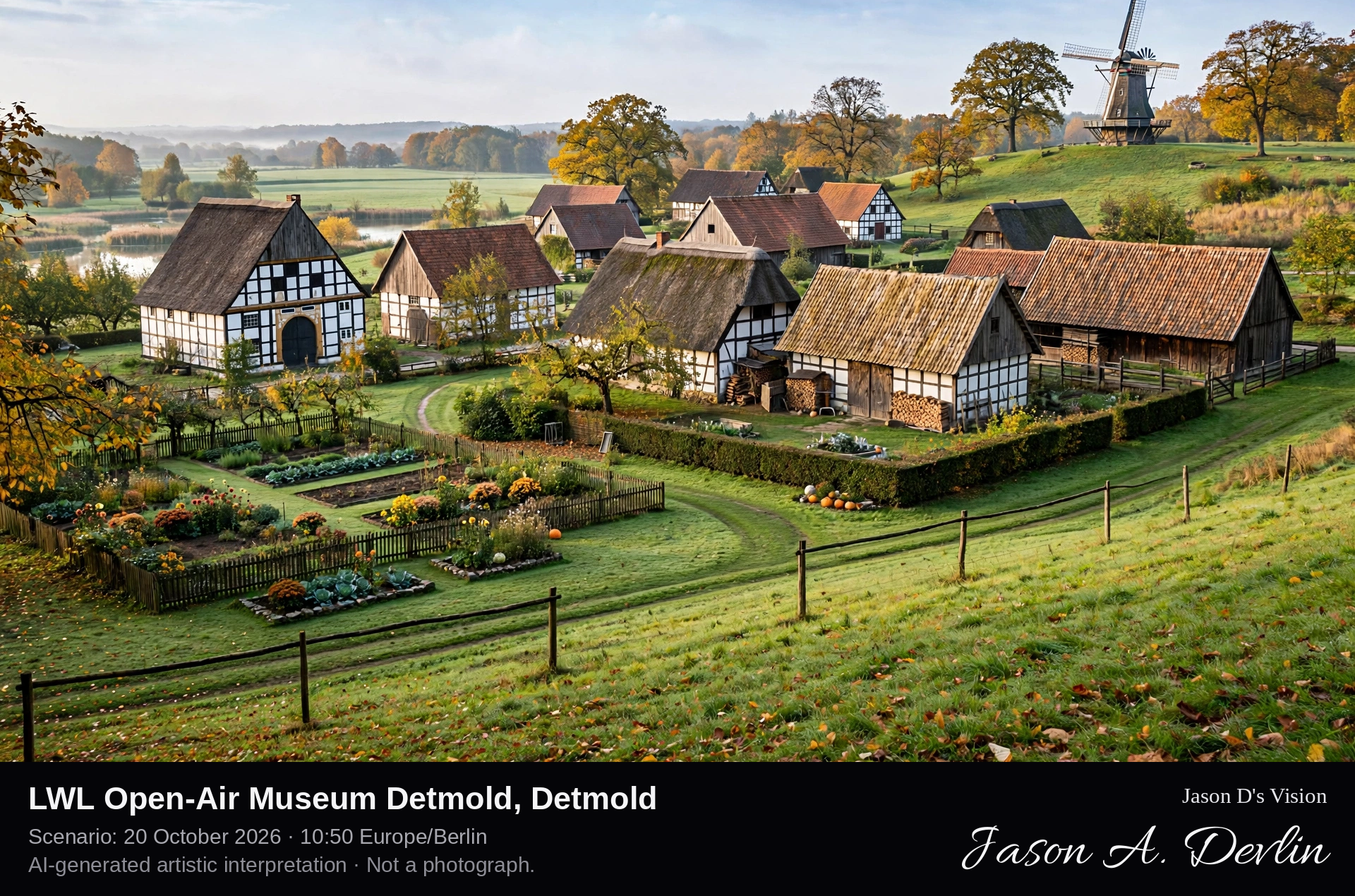
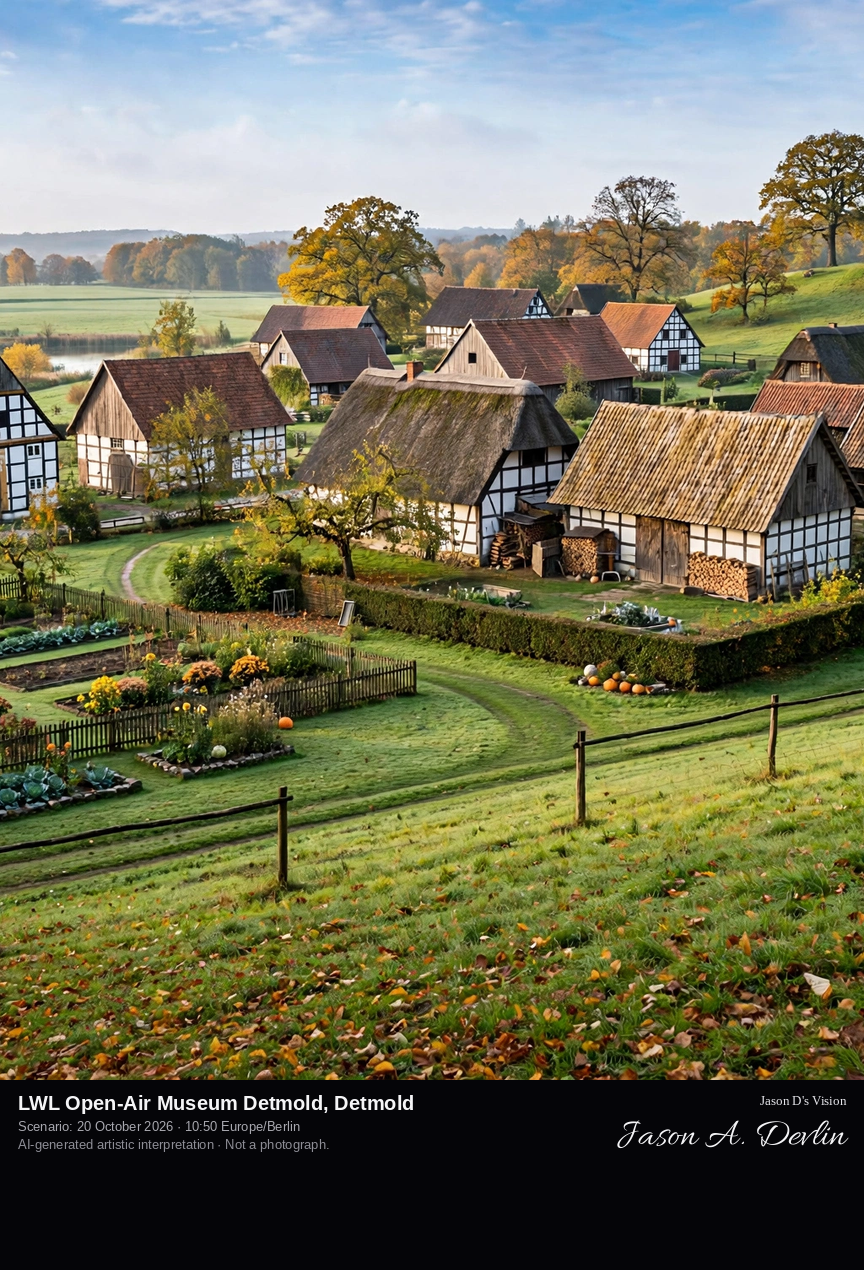
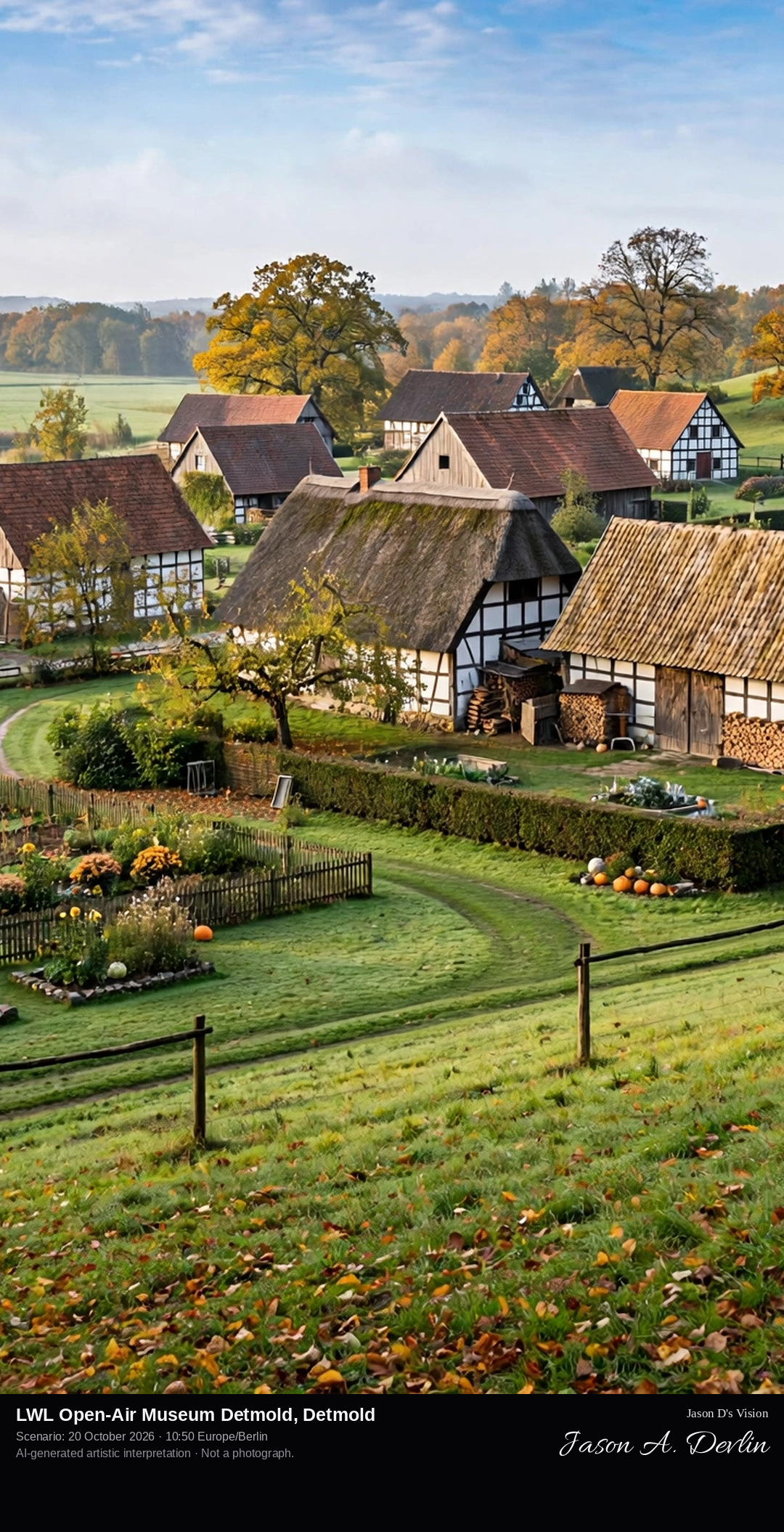
Historic farmhouses and gardens in rolling museum parkland · AI-generated artistic interpretation
The LWL Open-Air Museum in Detmold is one of Europe's largest open-air museums, where more than a hundred historic rural buildings from across Westphalia and Lippe have been rebuilt in a wide park landscape of meadows, gardens and old trees. Half-timbered farmhouses, barns, mills and cottages show how people in the region lived and worked over the past five centuries.
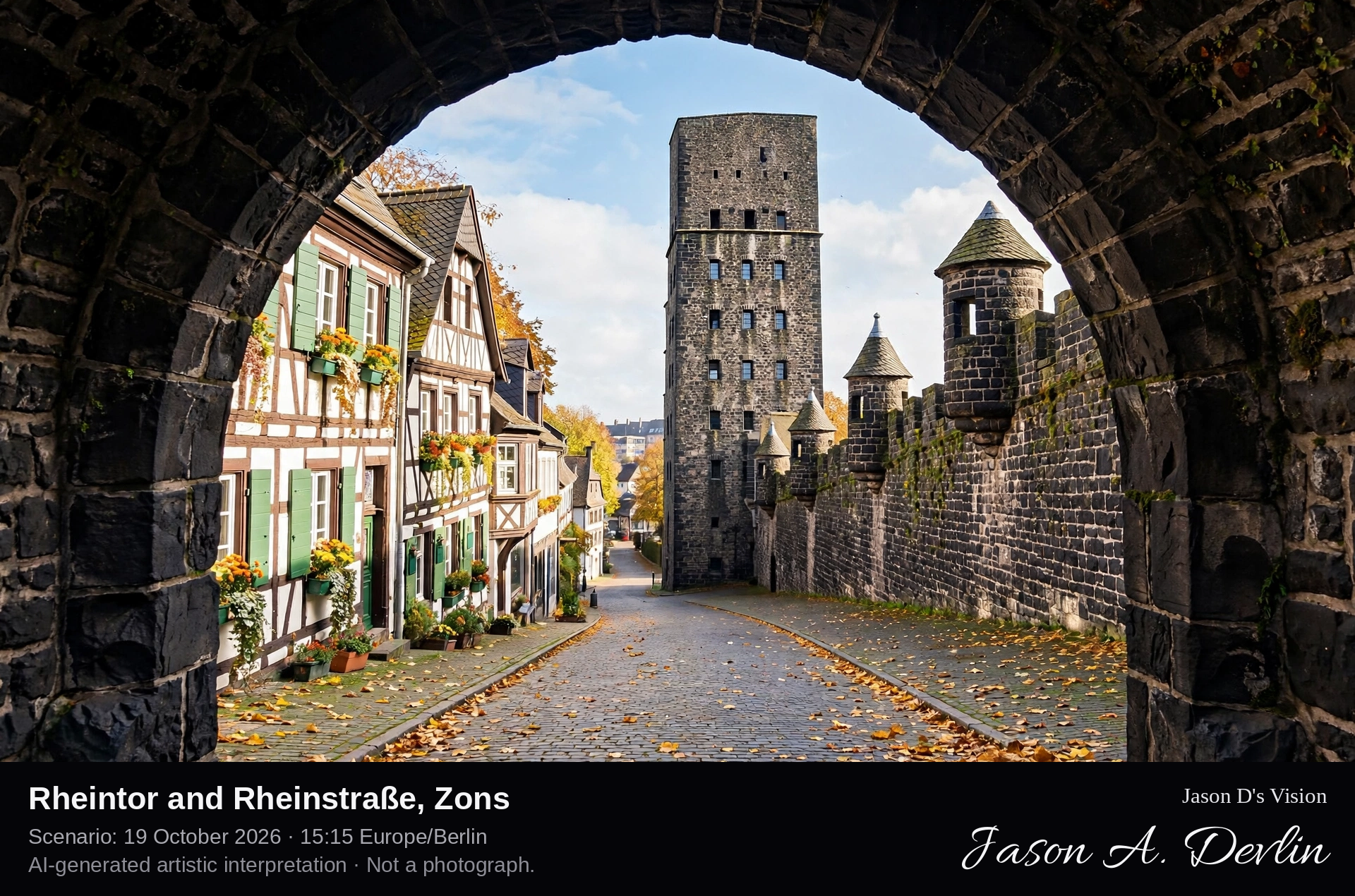
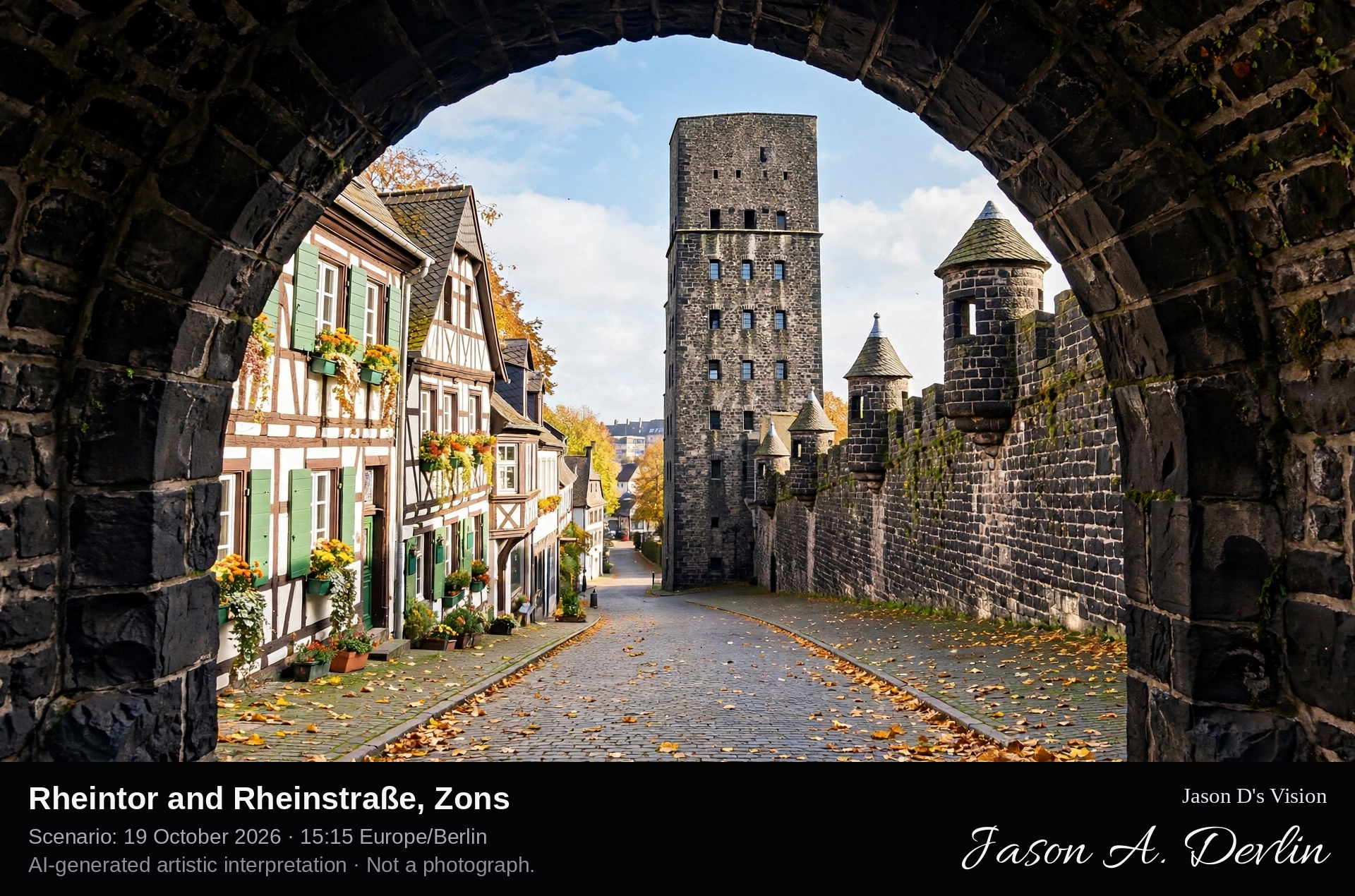
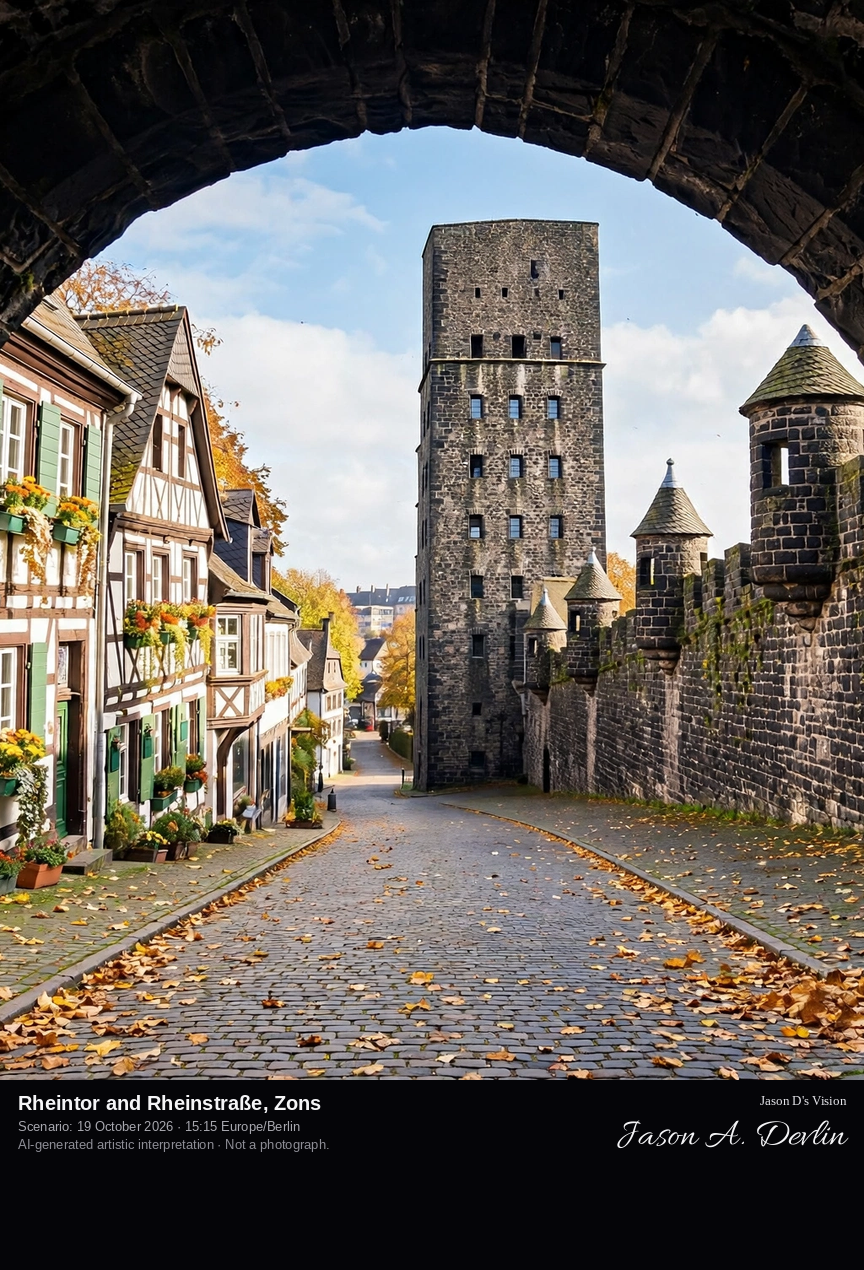
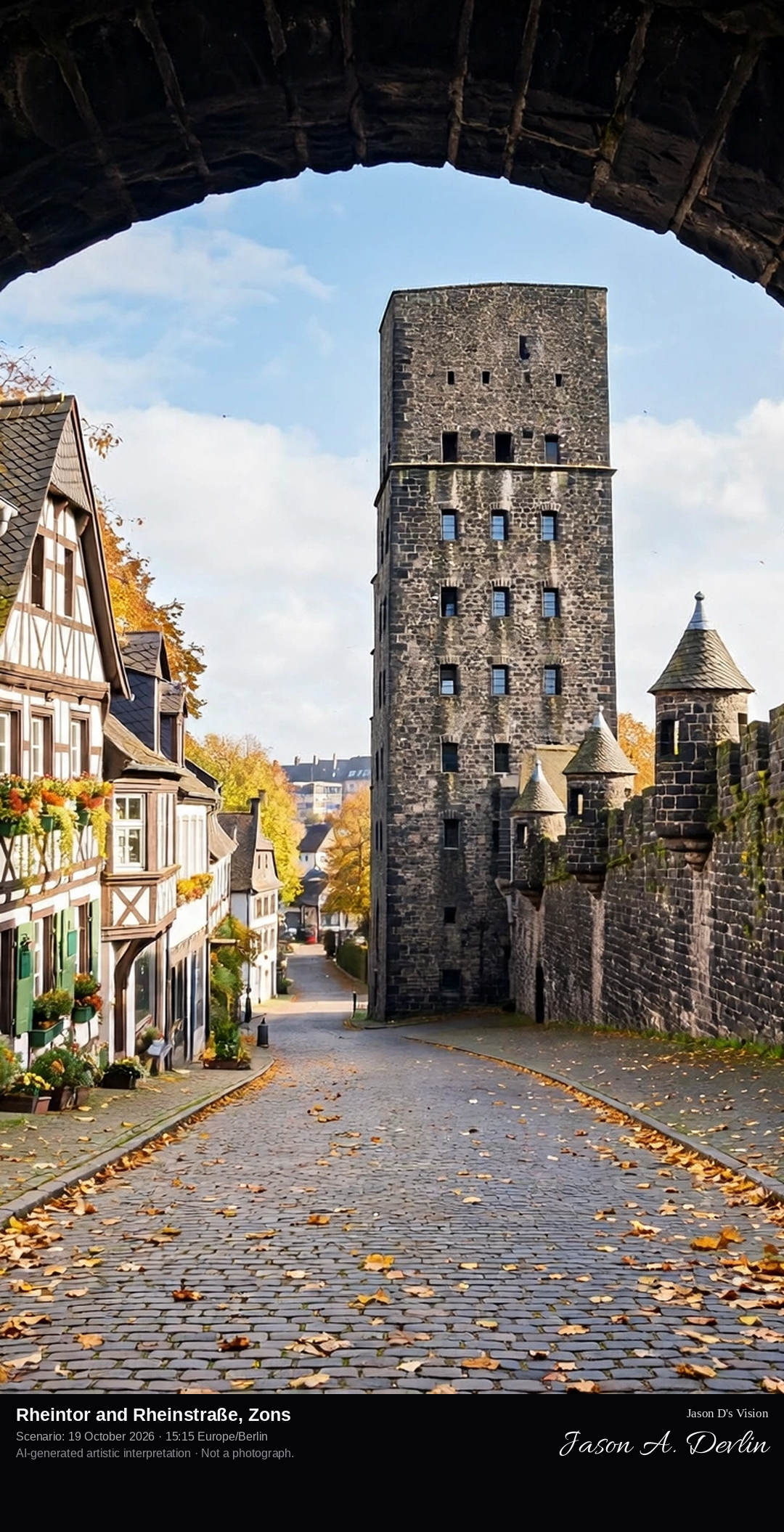
Through the Rheintor arch to the toll tower and half-timbered Rheinstraße · AI-generated artistic interpretation
Zons, a district of Dormagen on the Rhine, is a 14th-century toll fortress with largely preserved fortifications, its town wall, gates and towers surviving in large part. Through the Rheintor, the Rheinstraße runs between half-timbered houses toward the broad, rectangular, flat-topped Rheinturm, the toll tower at the gate complex. The well-preserved medieval town is often called the Rothenburg of the Rhineland.
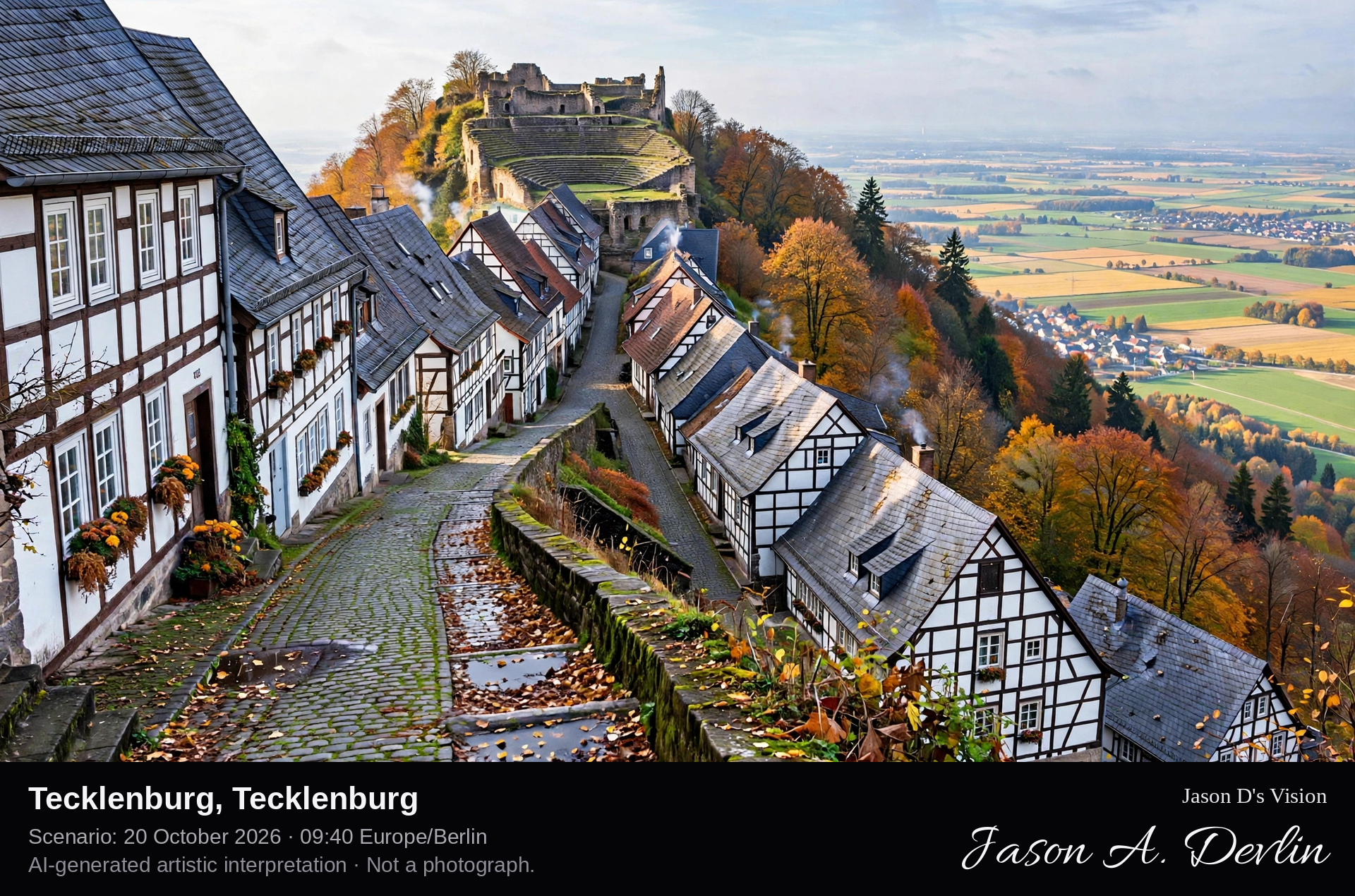
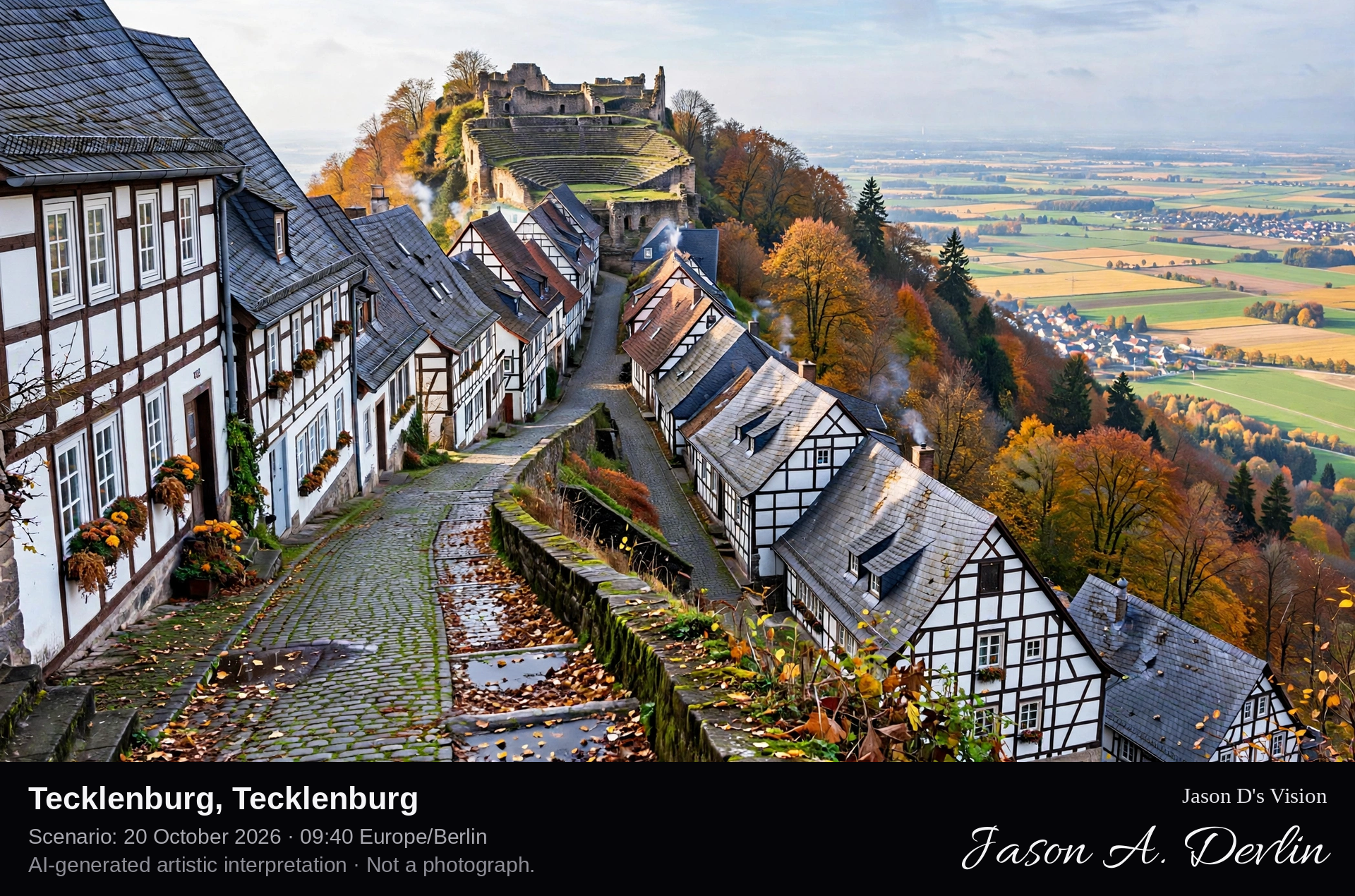
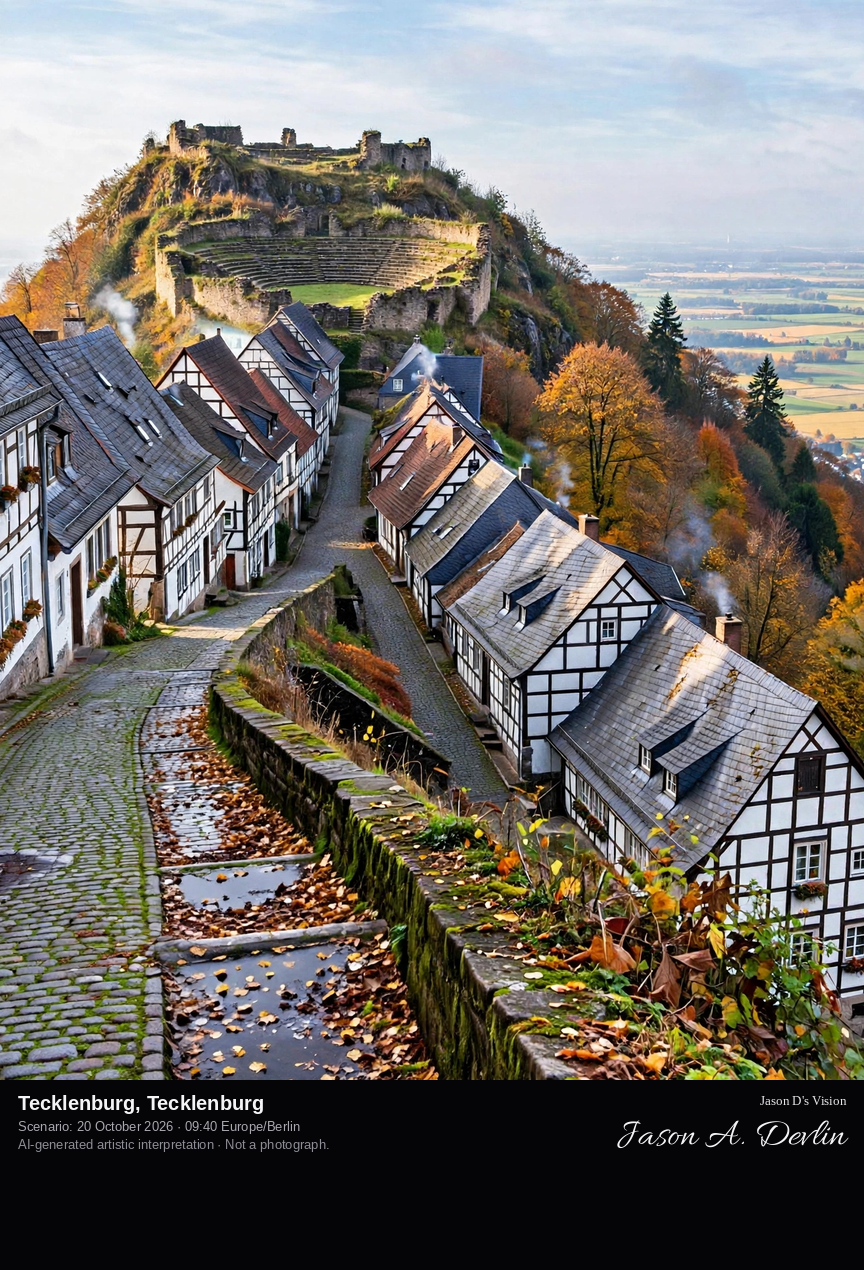
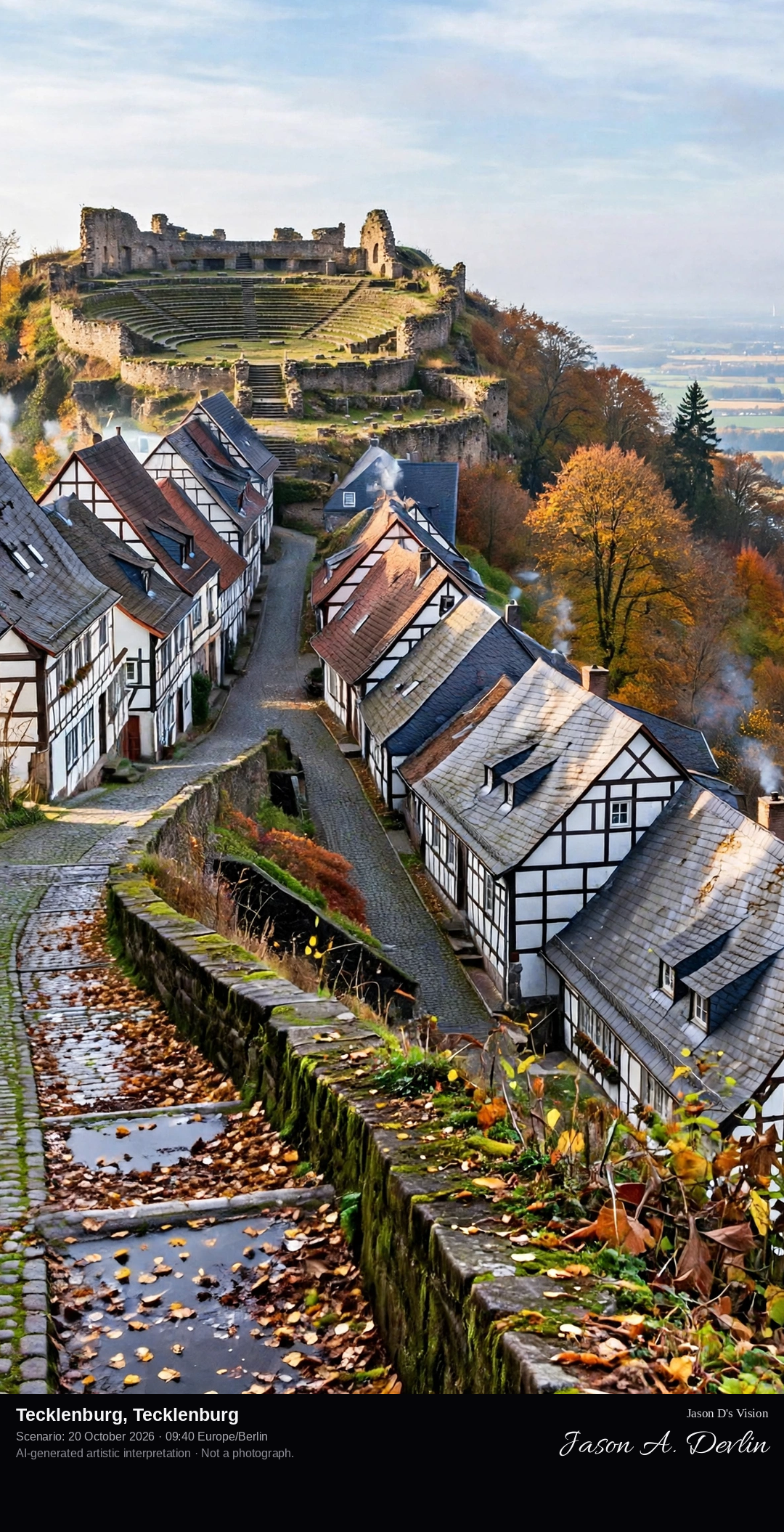
Half-timbered lanes climbing the ridge to the castle ruin above the plain · AI-generated artistic interpretation
Tecklenburg is a hilltop old town on a ridge of the Teutoburg Forest, its steep cobbled lanes lined with white-plastered half-timbered houses climbing to the ruin of the medieval castle. From the ridge the land falls away to the flat Muensterland plain, which has earned the town its nickname as the balcony of the Muensterland.
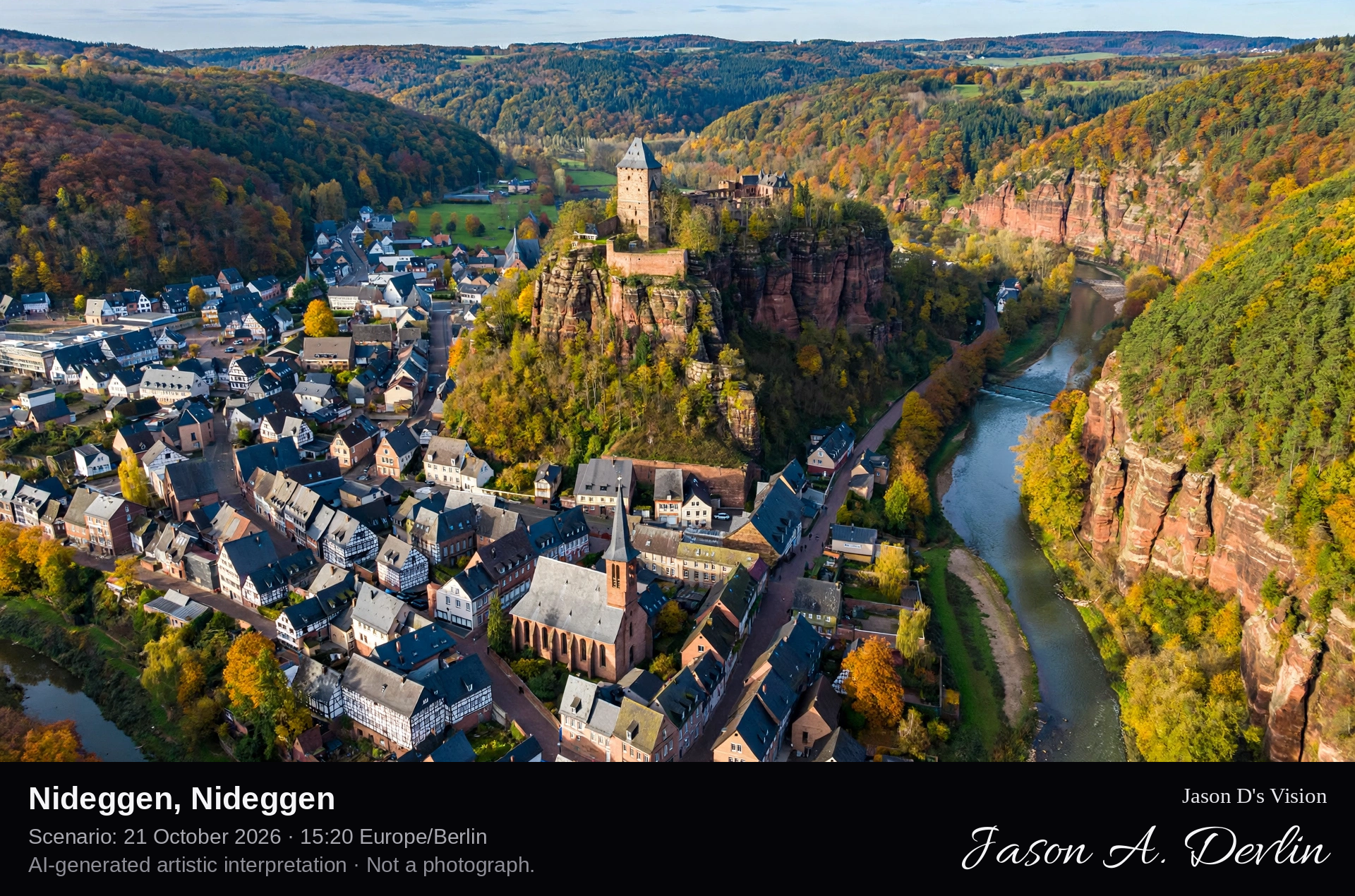
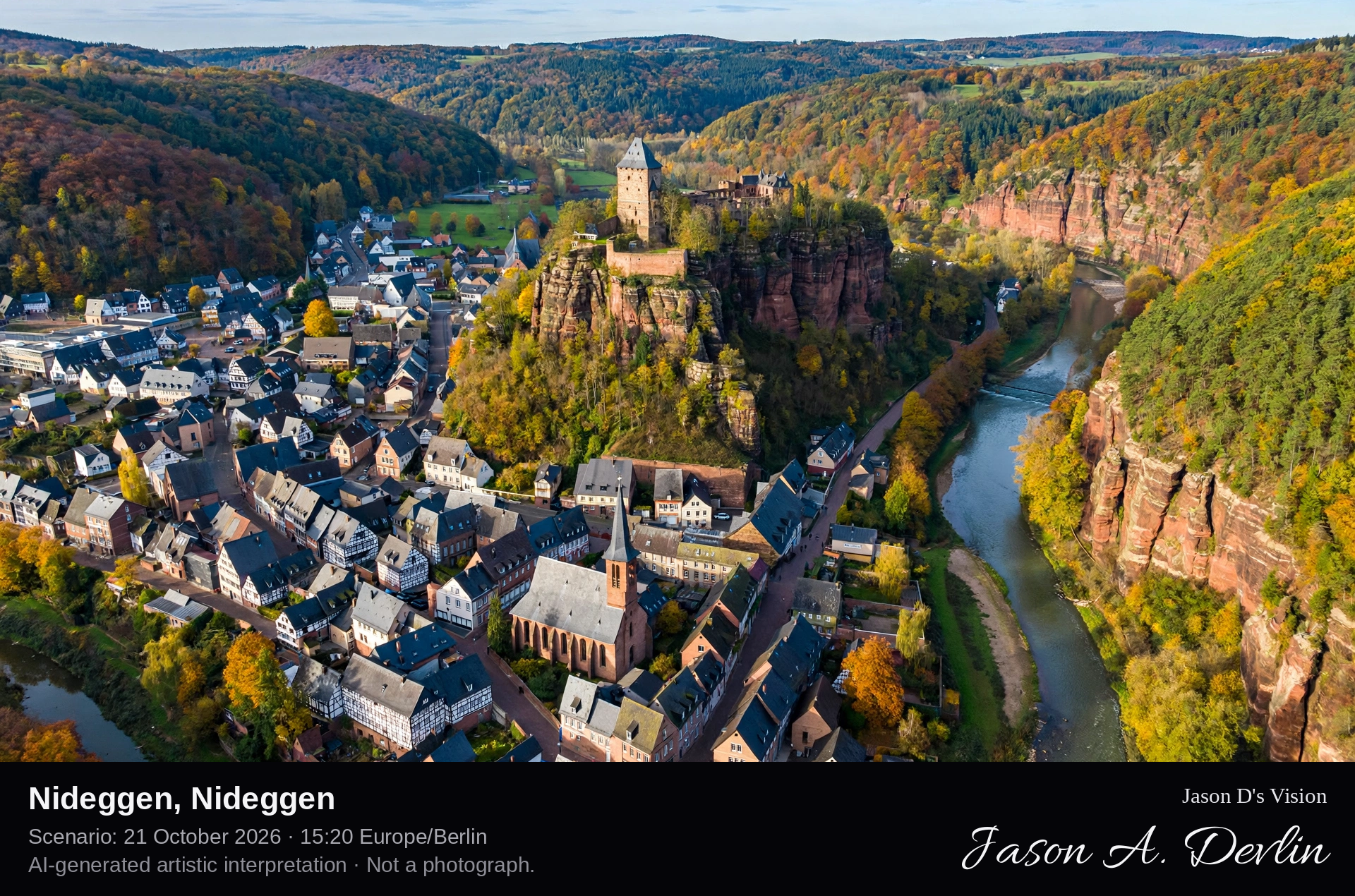
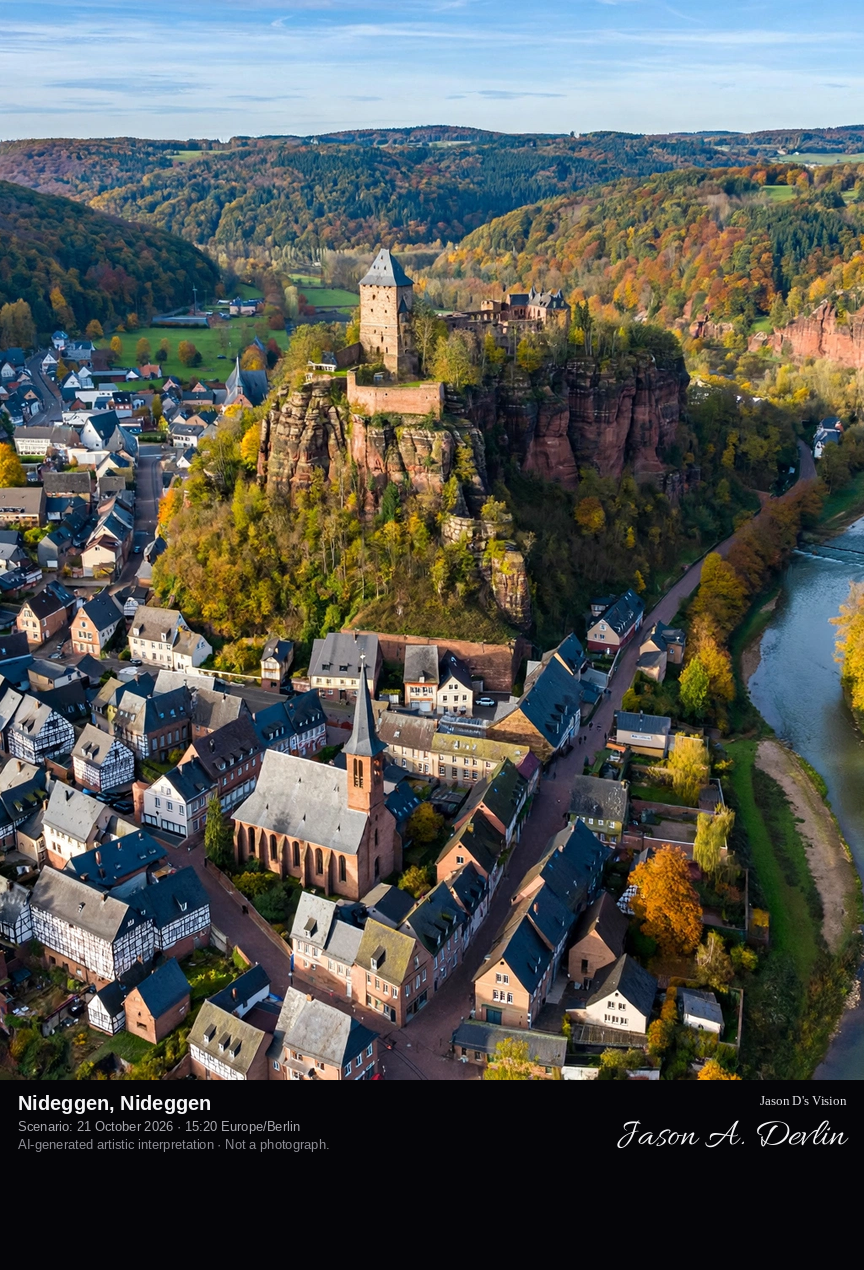
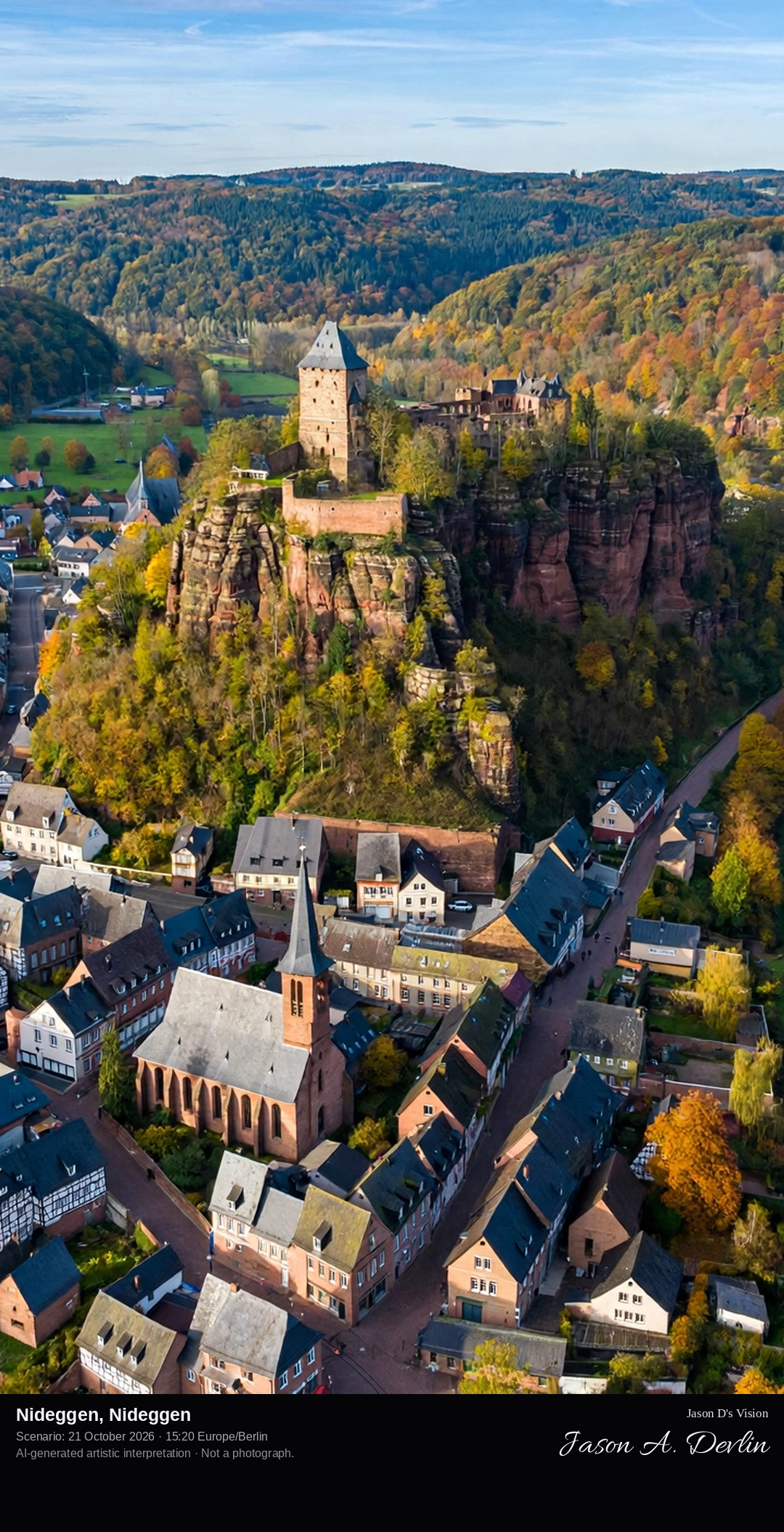
Red-sandstone castle above the rooftops and the Rur valley cliffs · AI-generated artistic interpretation
Burg Nideggen is a medieval castle of red Buntsandstein standing on a rocky outcrop high above the small town of Nideggen, its tall keep rising over the slate roofs of the old town. Below, the Rur winds through a deep valley flanked by reddish sandstone cliffs at the edge of the Eifel National Park.
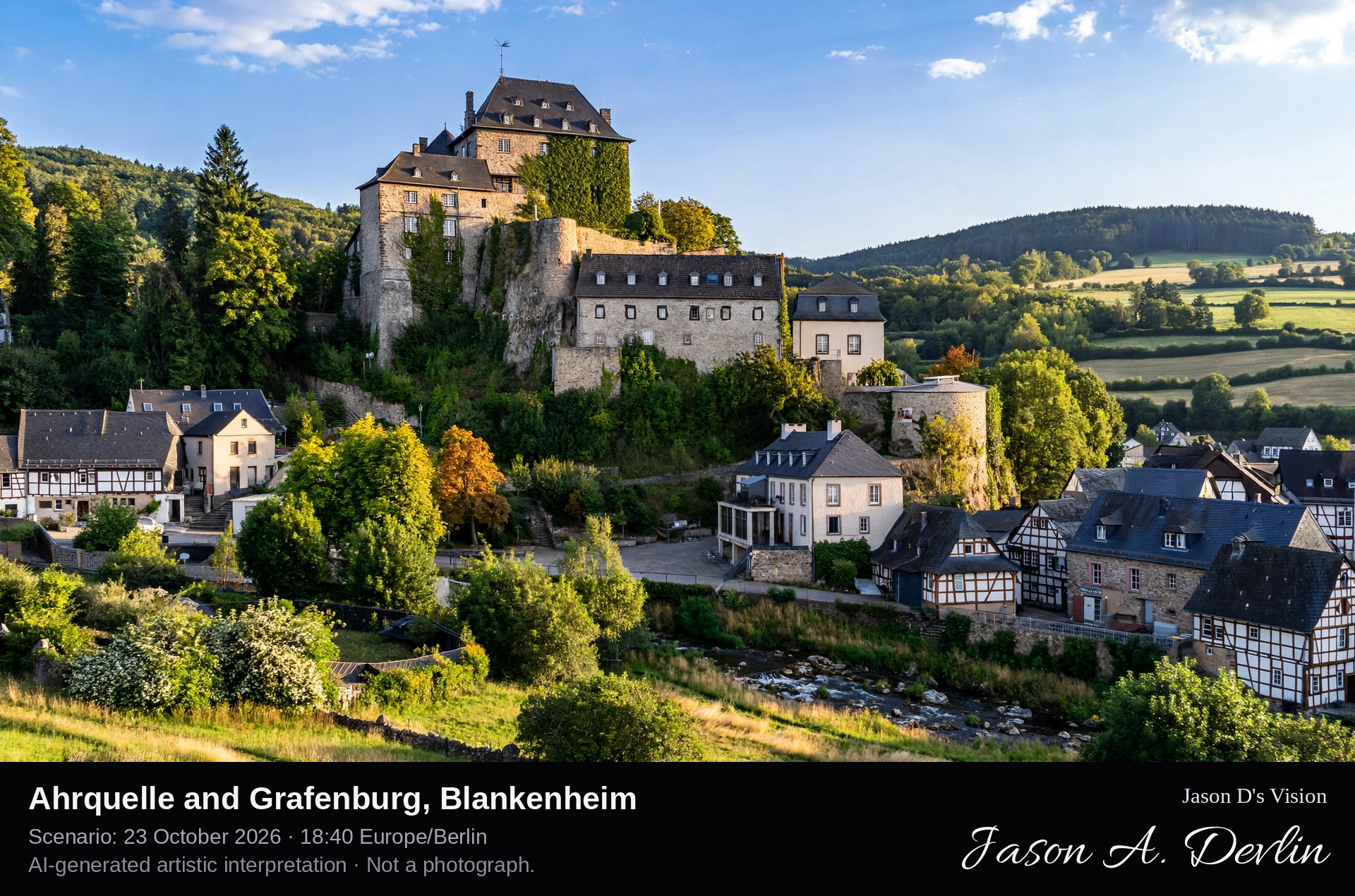
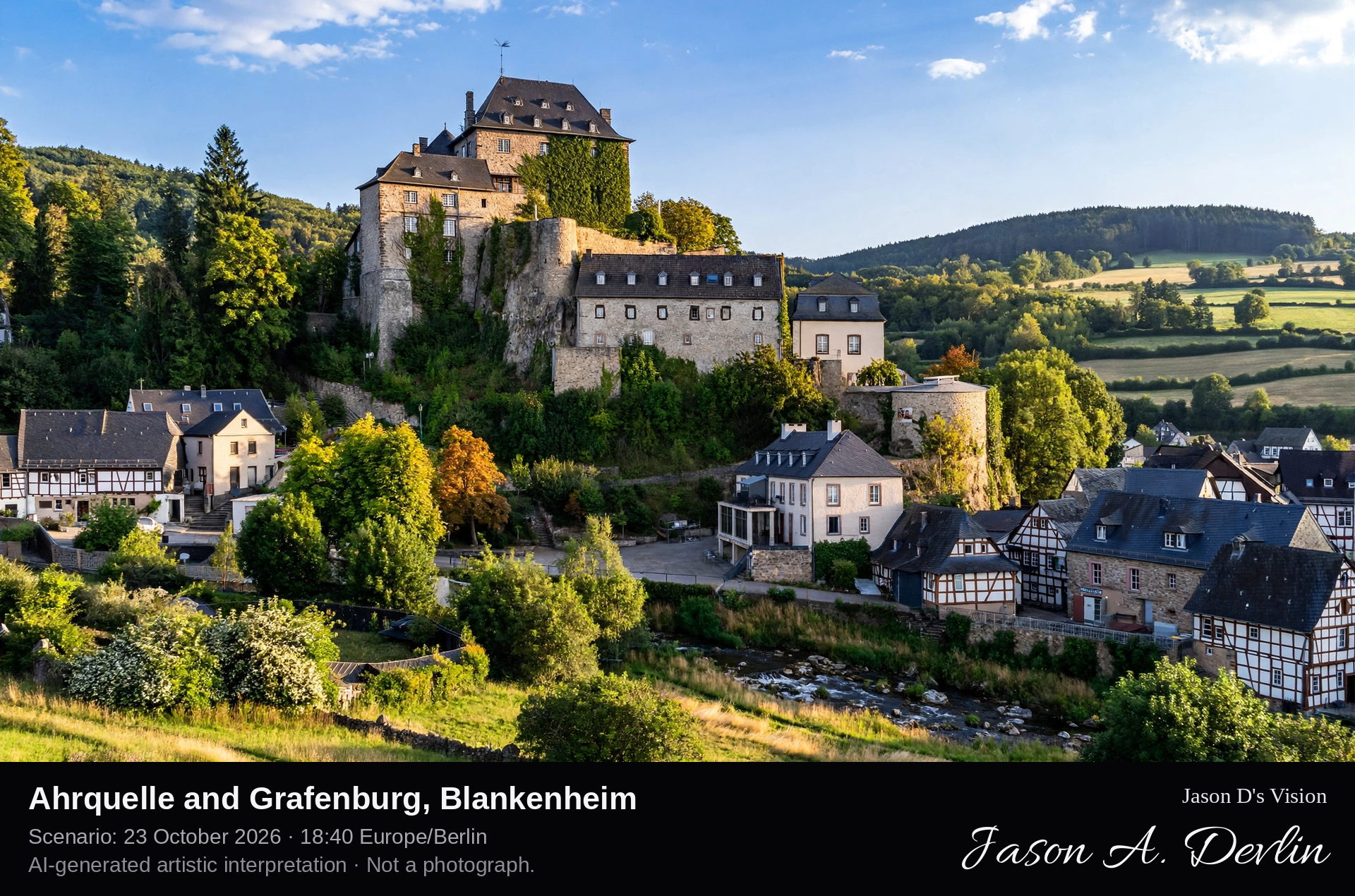
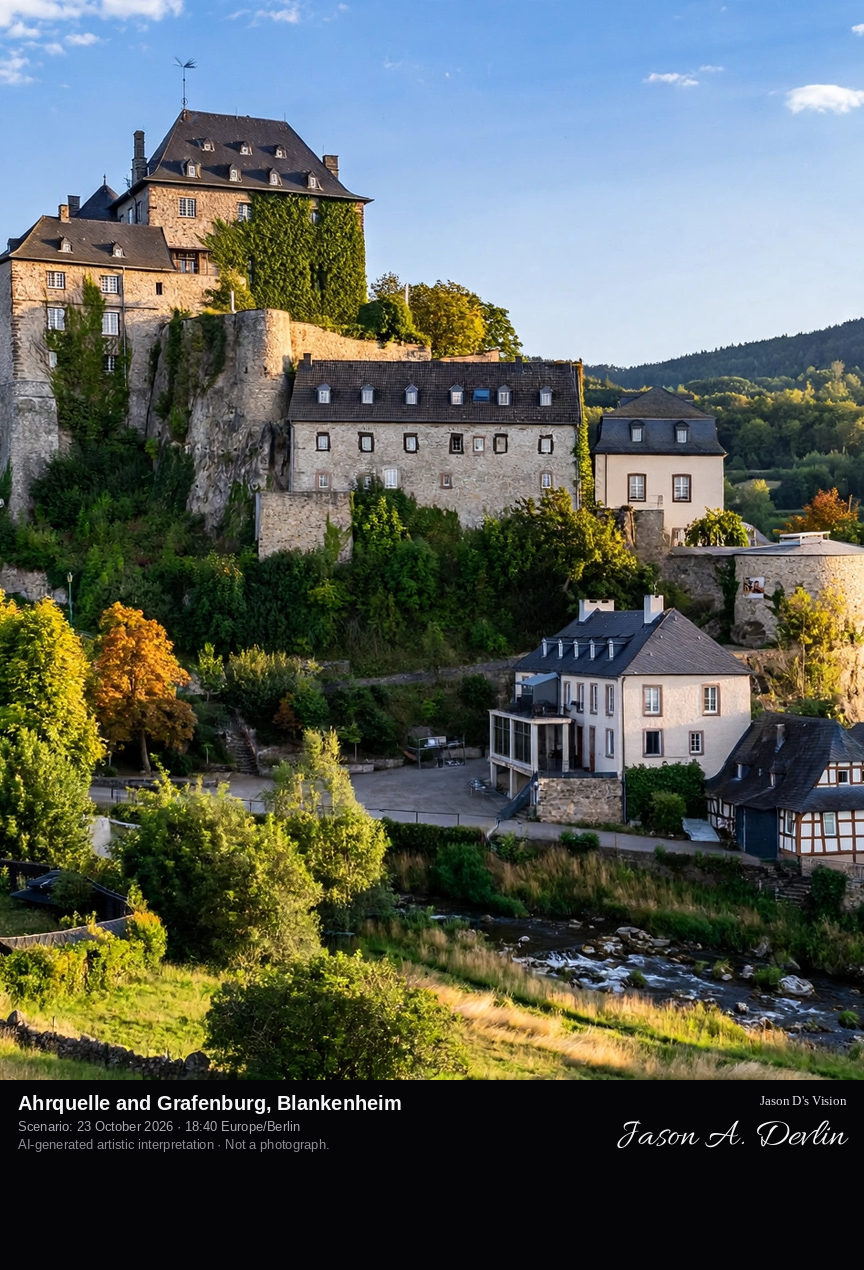
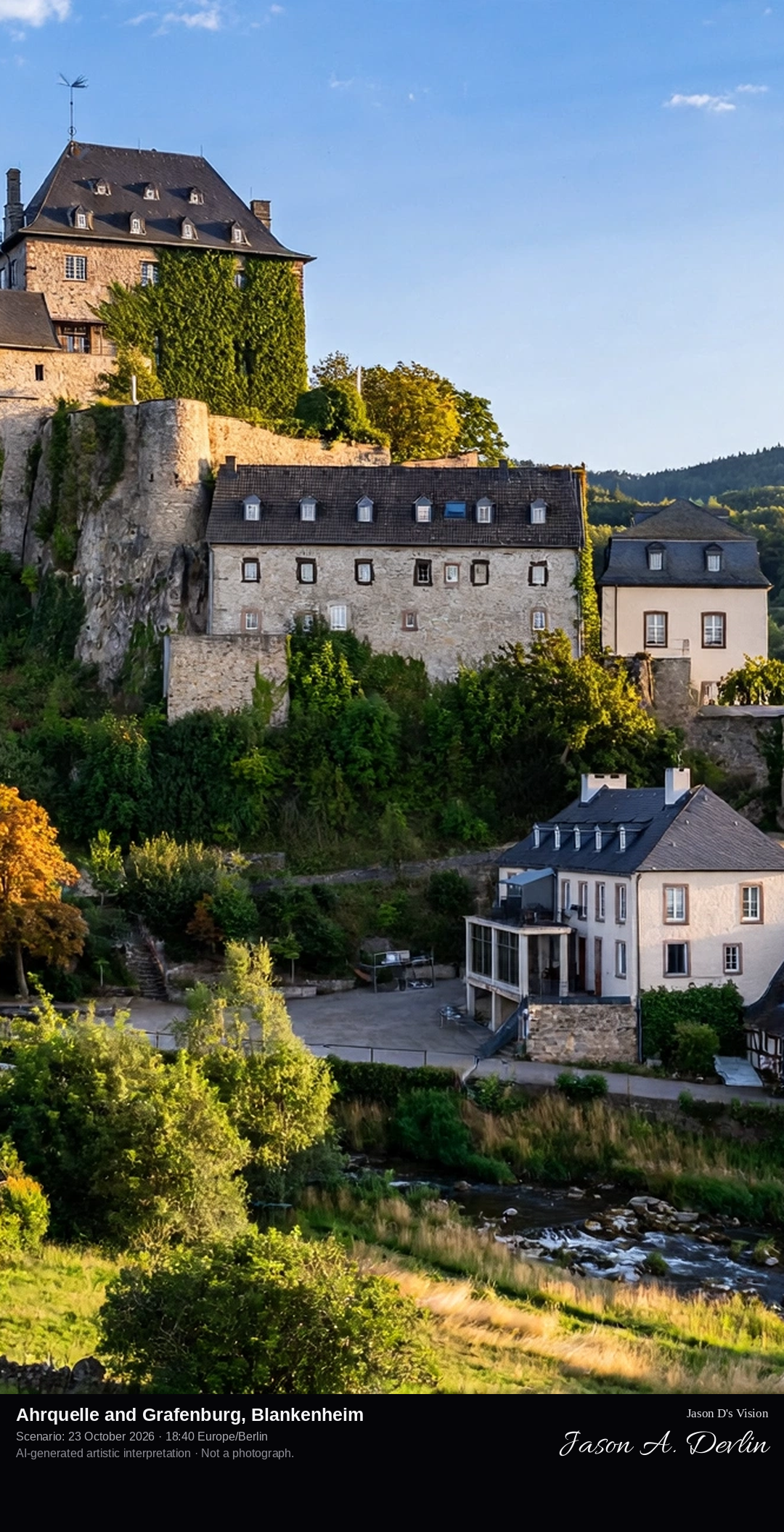
The half-timbered house of 1726 whose cellar holds the Ahrquelle stands at street level in the old town, the young Ahr beside it and the baroque Grafenburg above the rooftops.
The Ahr begins in the centre of Blankenheim, welling up in the cellar of a half-timbered house built in 1726; from the old town the stream runs on through the Ahr valley to the Rhine. Above the rooftops stands the Grafenburg, the town's hill castle remodelled in baroque form and now a youth hostel.
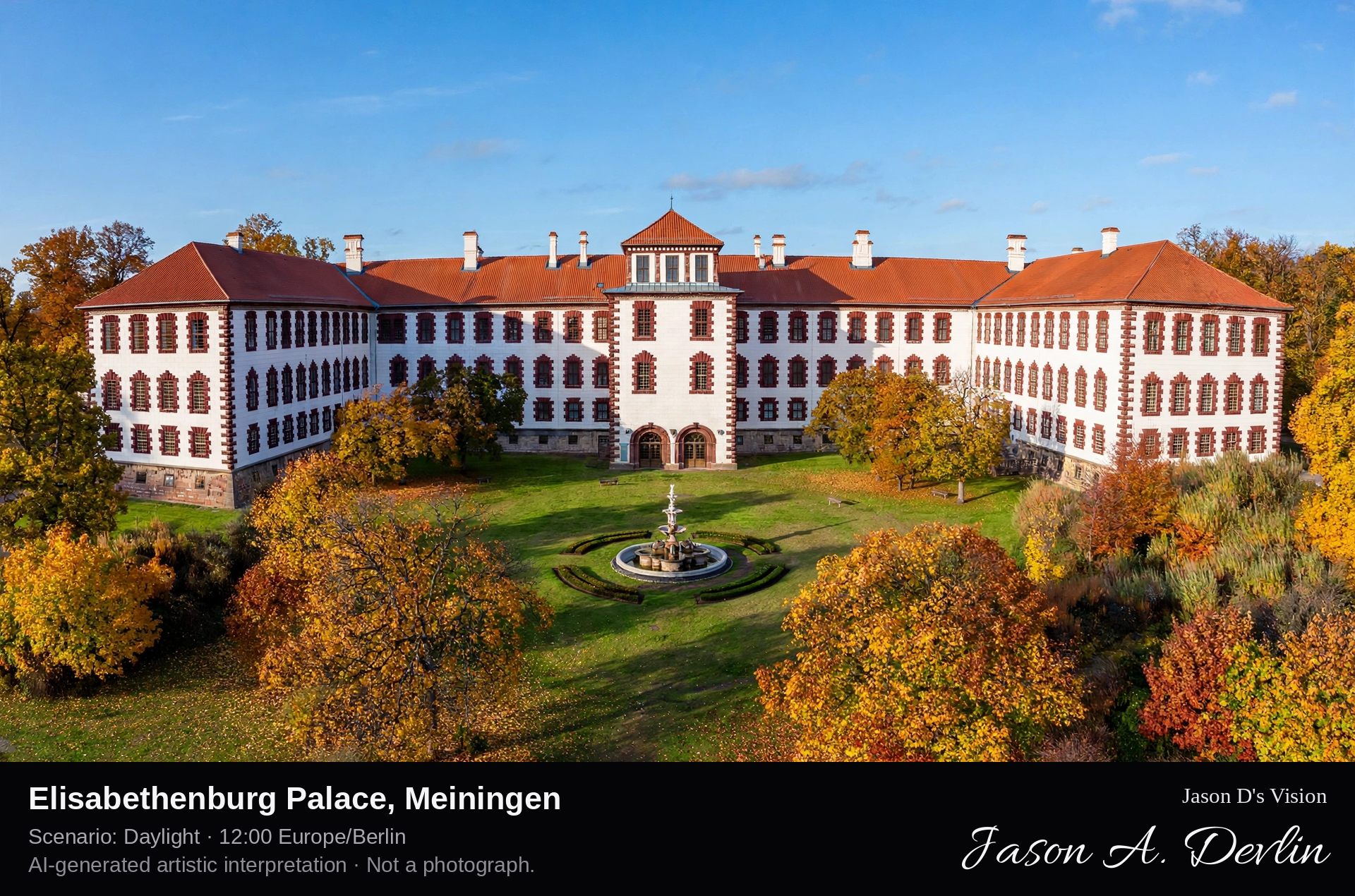
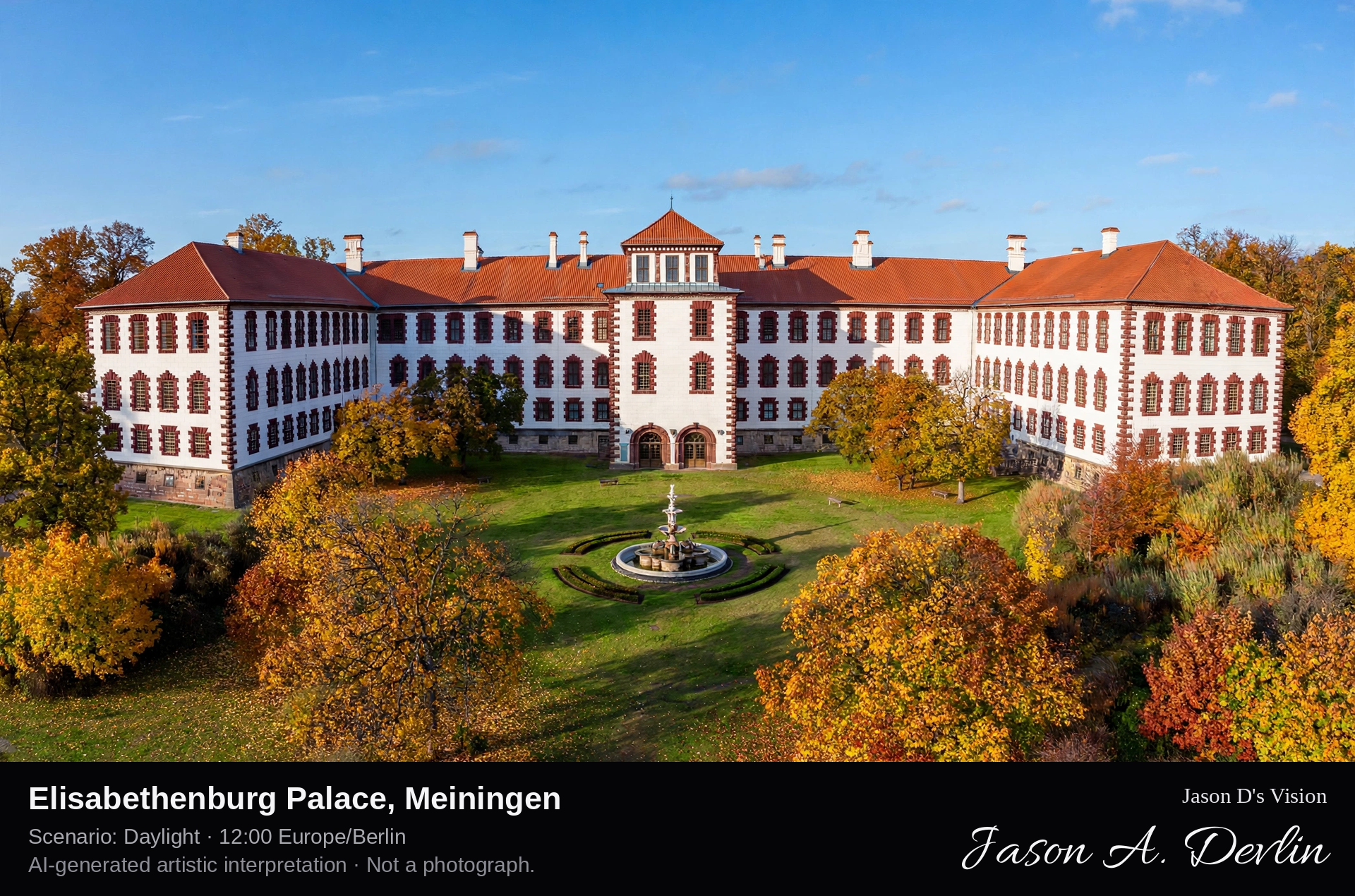
From the palace park, the curved white front of Elisabethenburg rises behind the lawns, its central tower over rows of windows trimmed in red-brown stone.
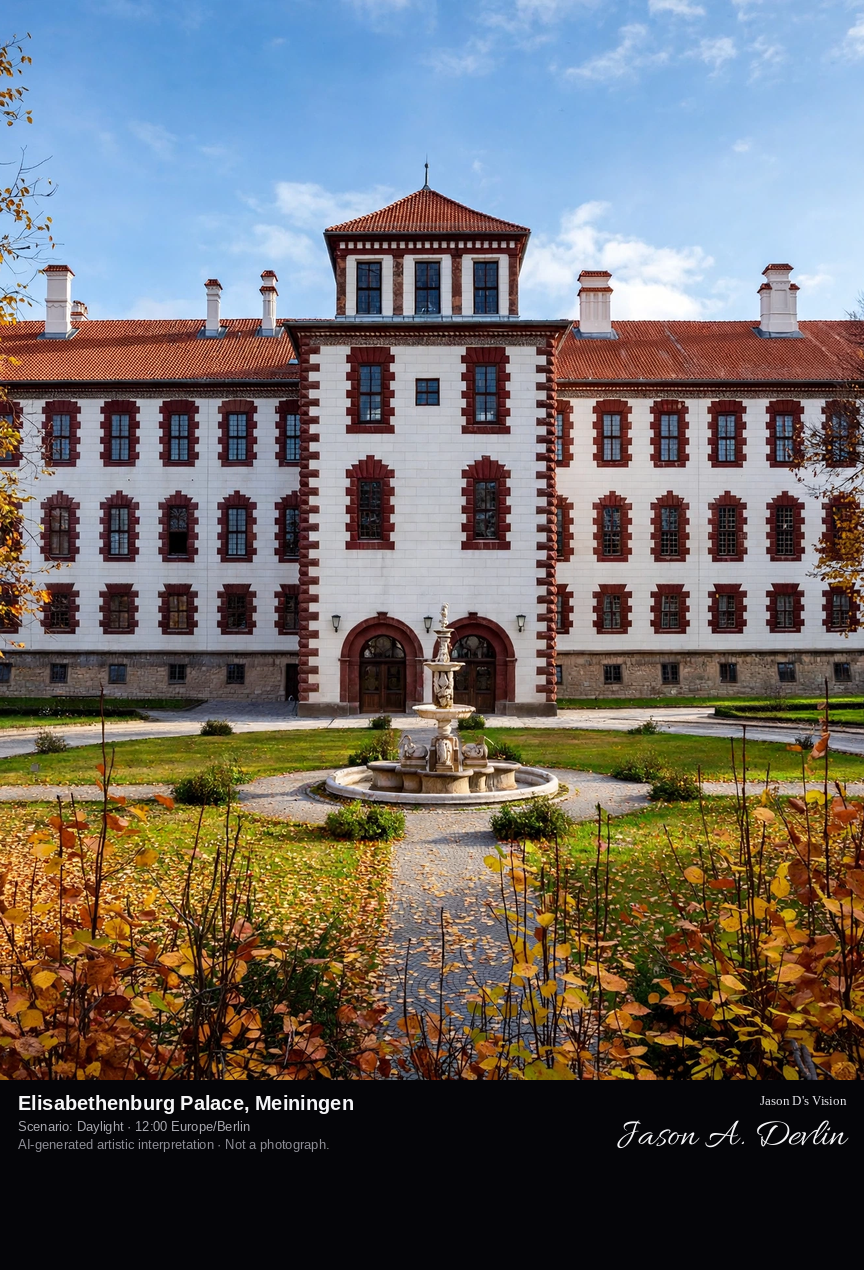
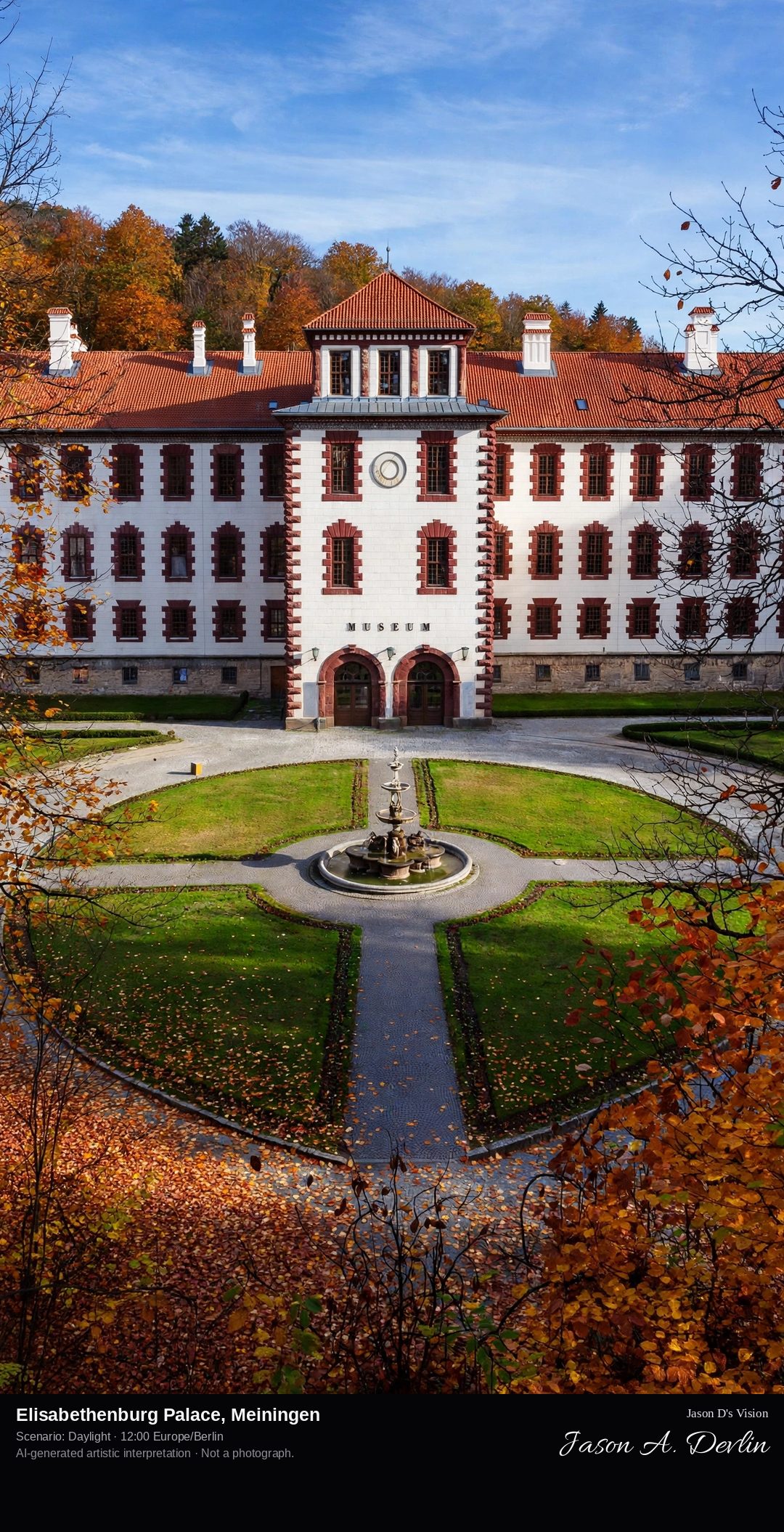
Elisabethenburg Palace is the three-winged baroque residence built for the Dukes of Saxe-Meiningen between 1682 and 1692, its white facades set with heavily rusticated red-brown window surrounds. It stands at the northwestern edge of Meiningen beside the Werra and now houses the Meiningen museums and the Johannes Brahms concert hall.
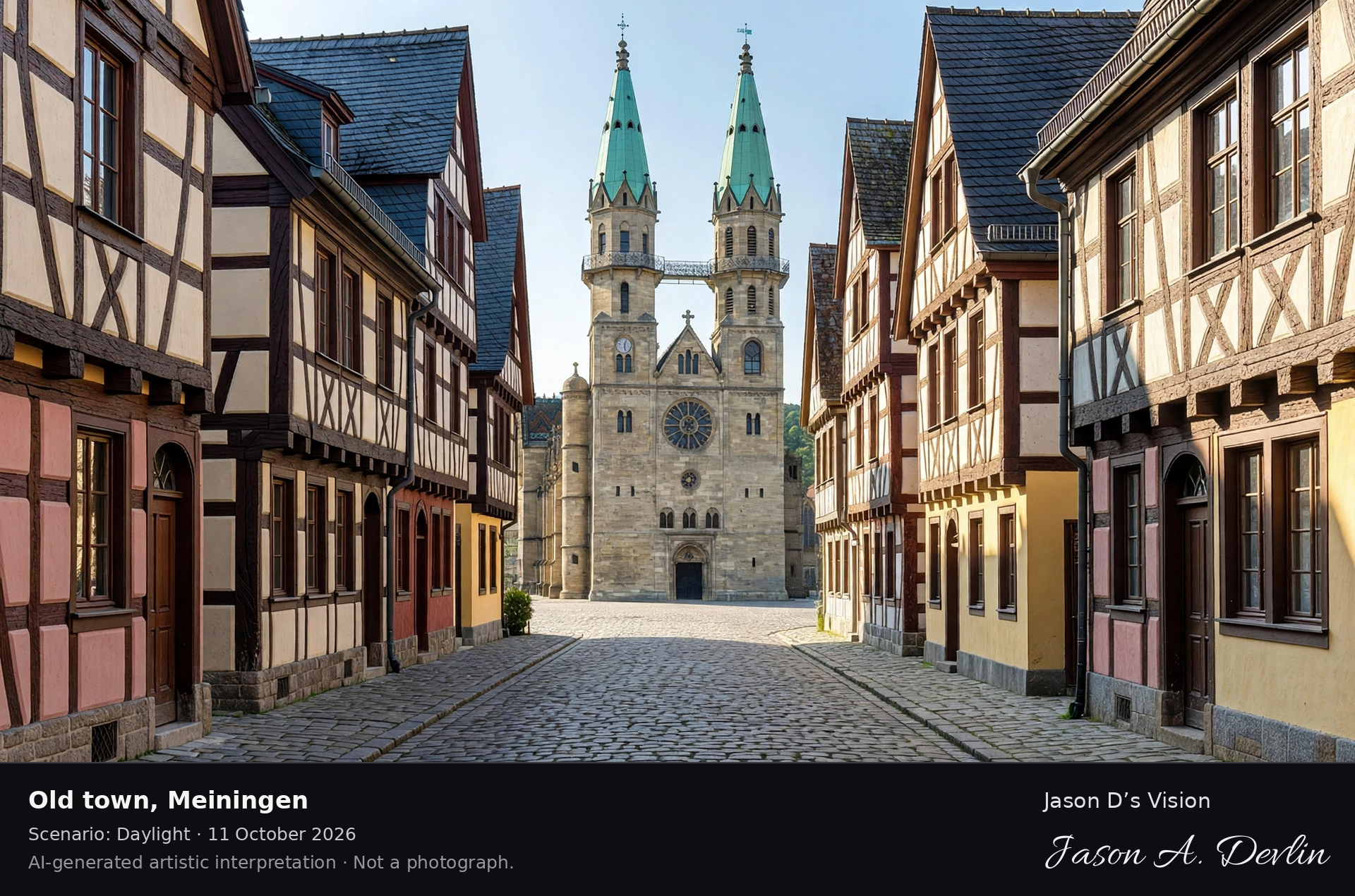
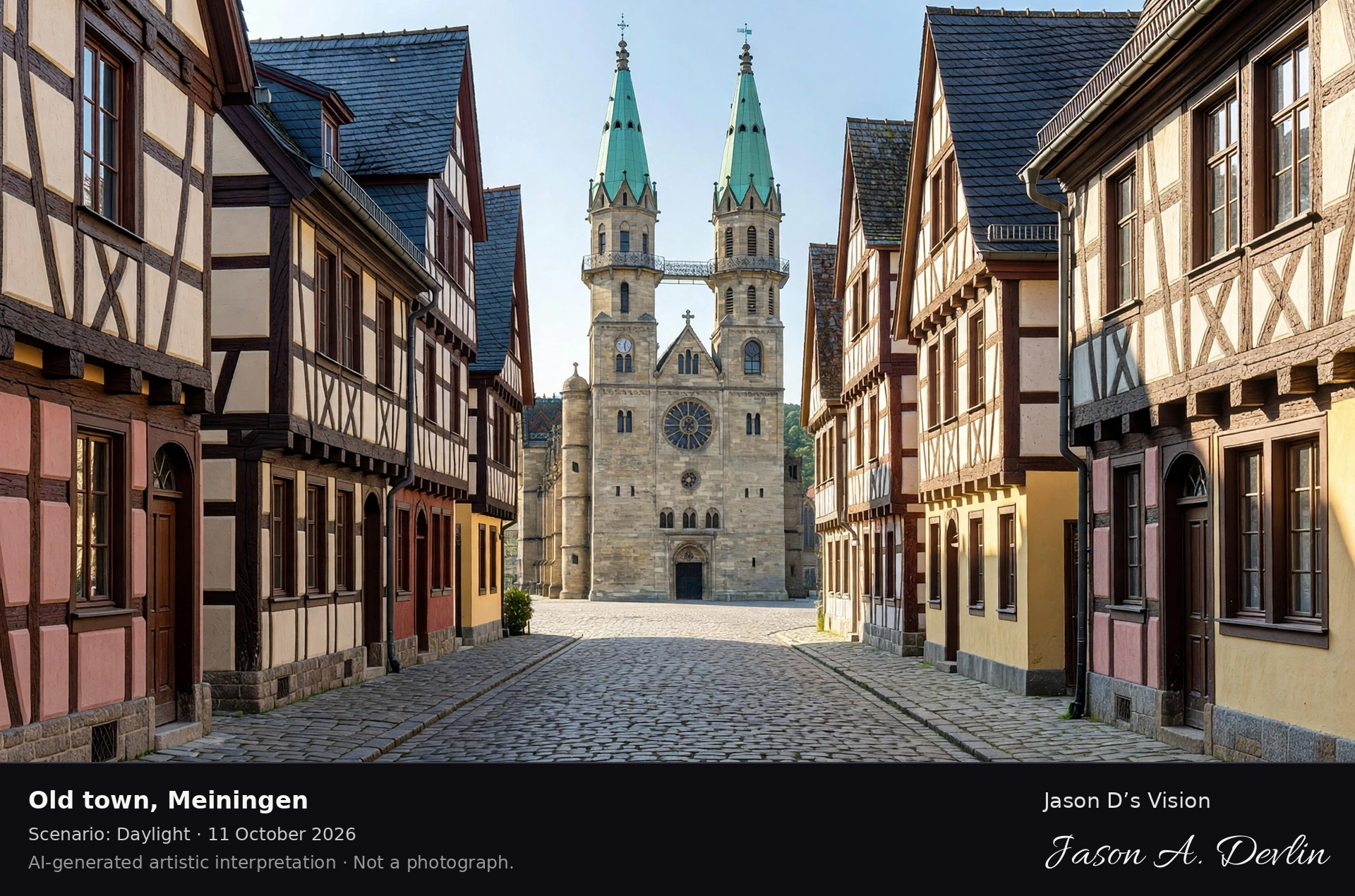
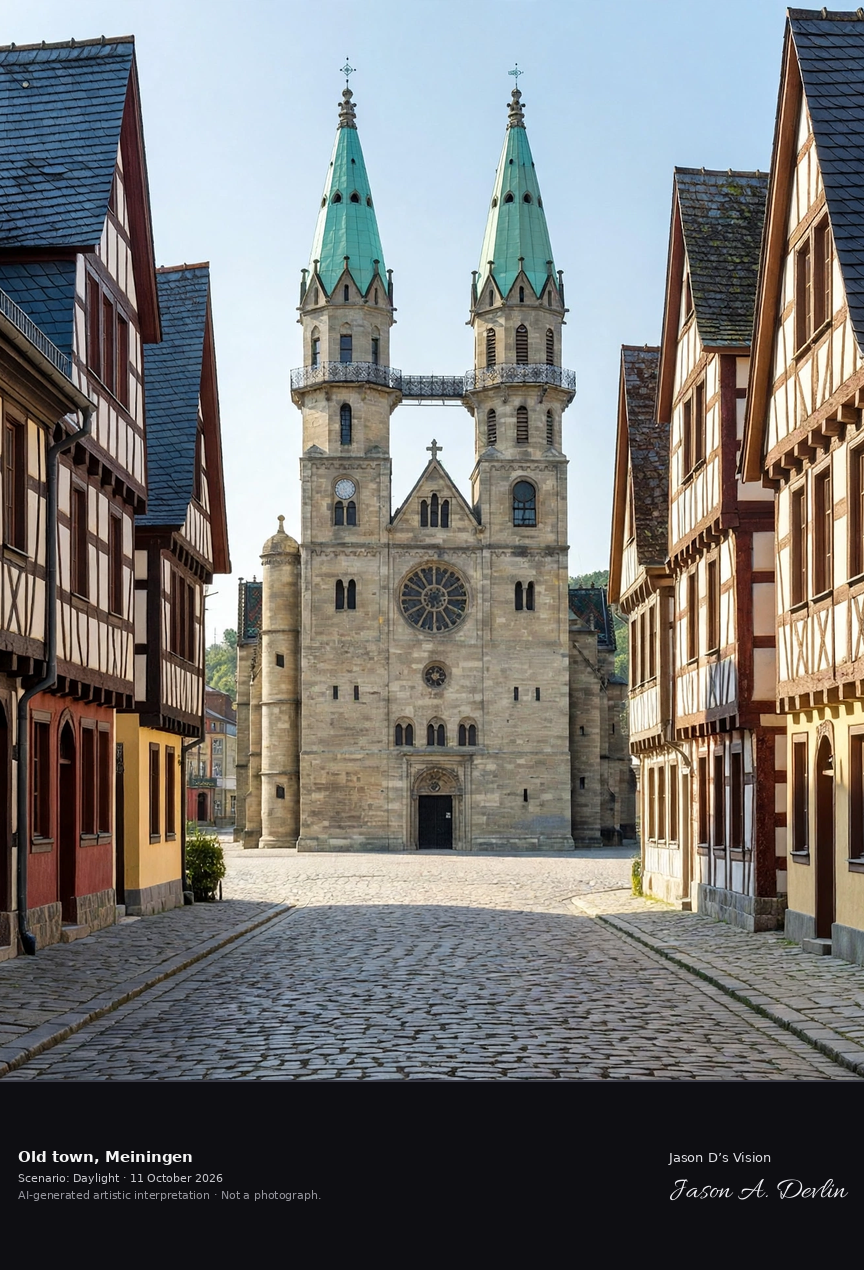
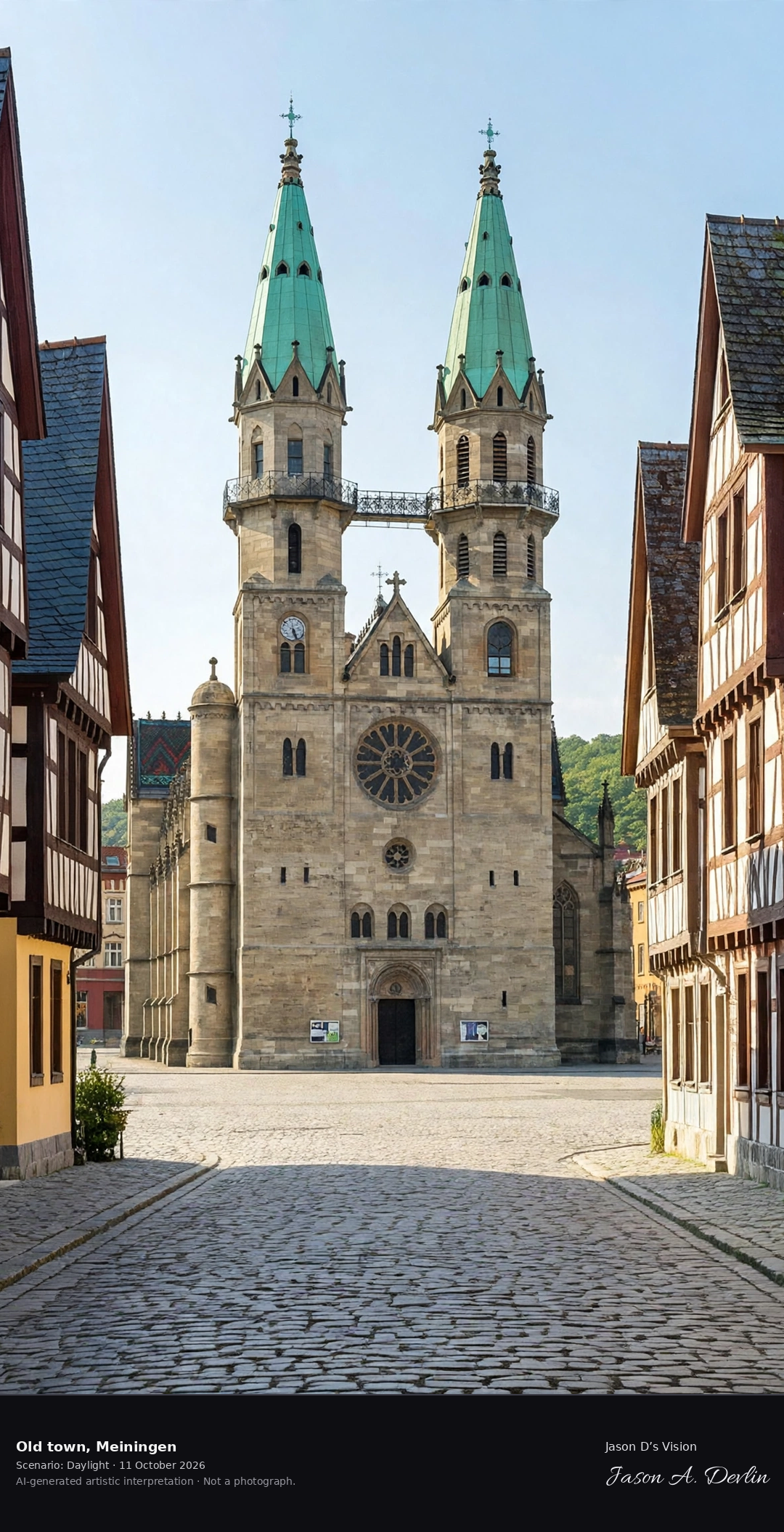
Timbered lanes and theatre · AI-generated artistic interpretation
Meiningen's old town pairs Franconian half-timbering with something rarer: a genuine theatre town. Restored timber-framed lanes lead past the classical facade of the Meininger Staatstheater, whose company once set the standard for realistic stagecraft across Europe. The town wears its cultural heritage the way other towns wear a castle — as the center of daily life.
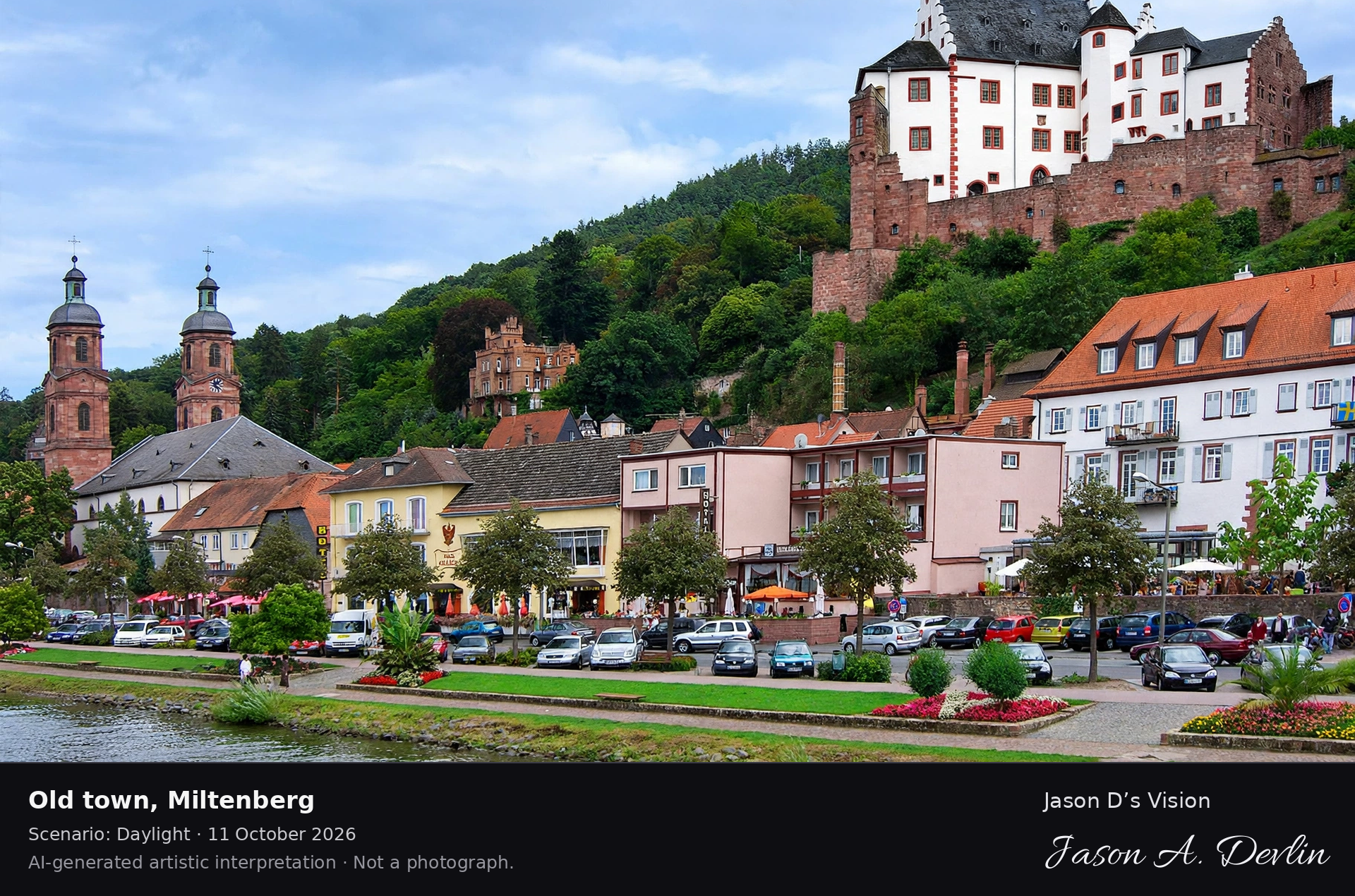
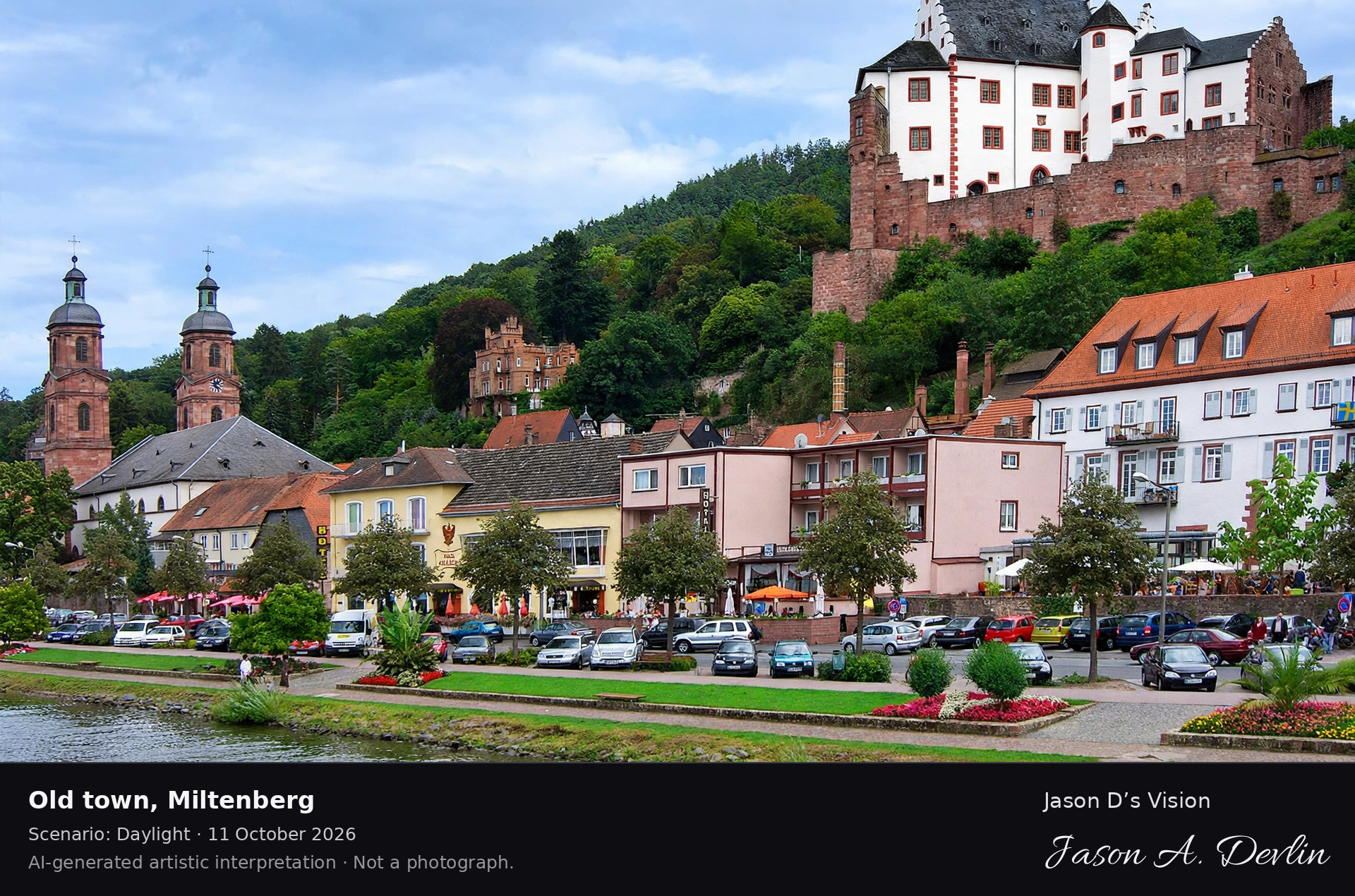
Riverside timbered street · AI-generated artistic interpretation
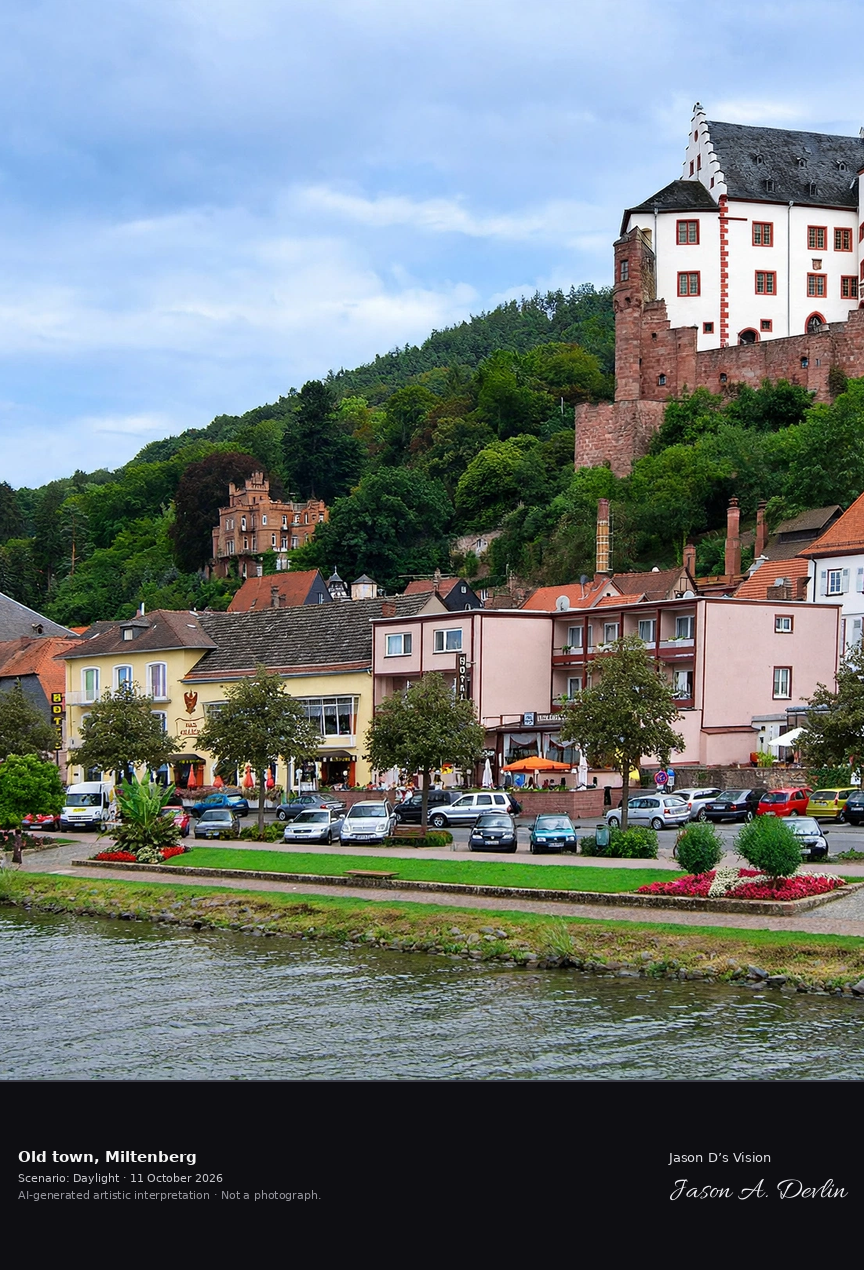
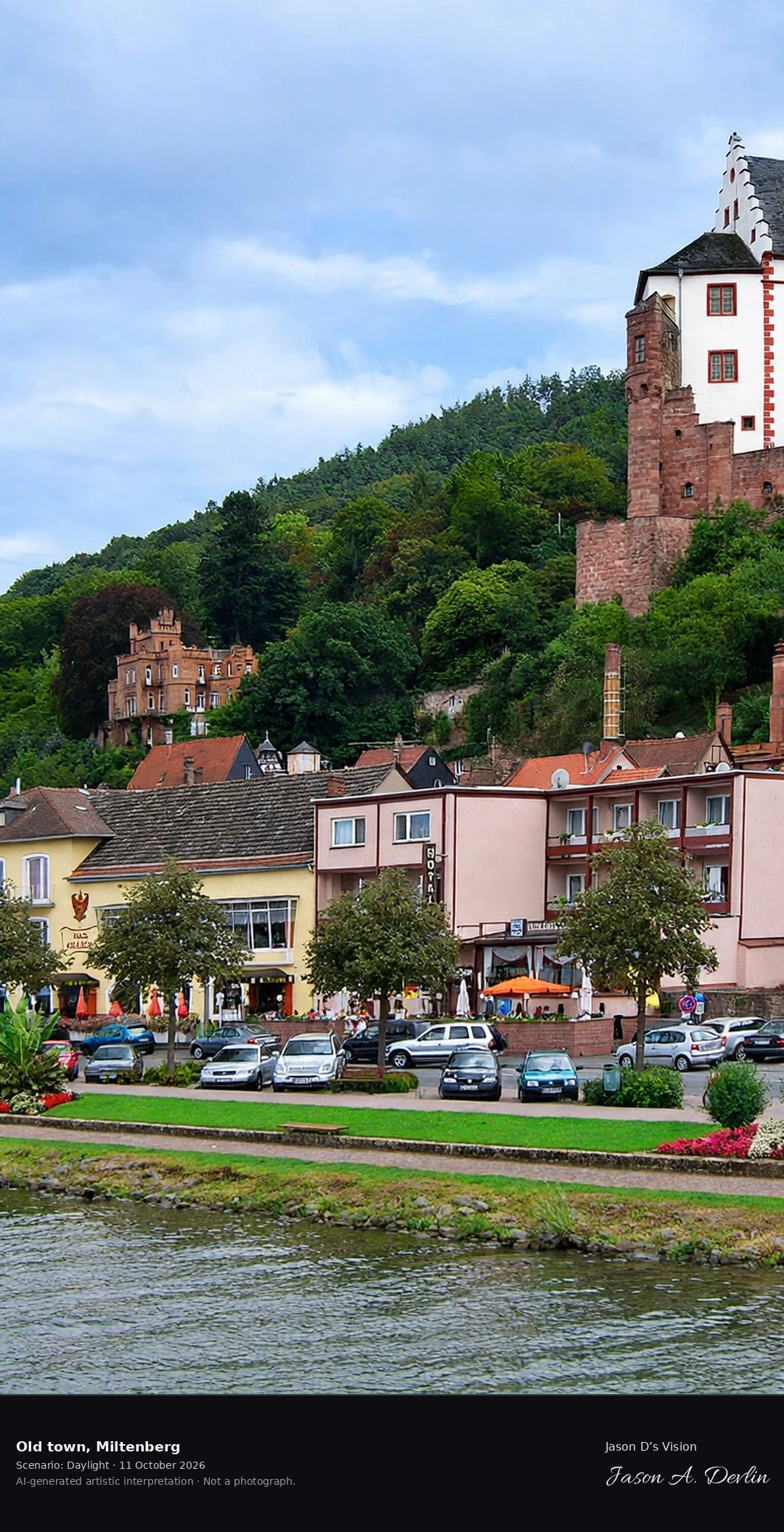
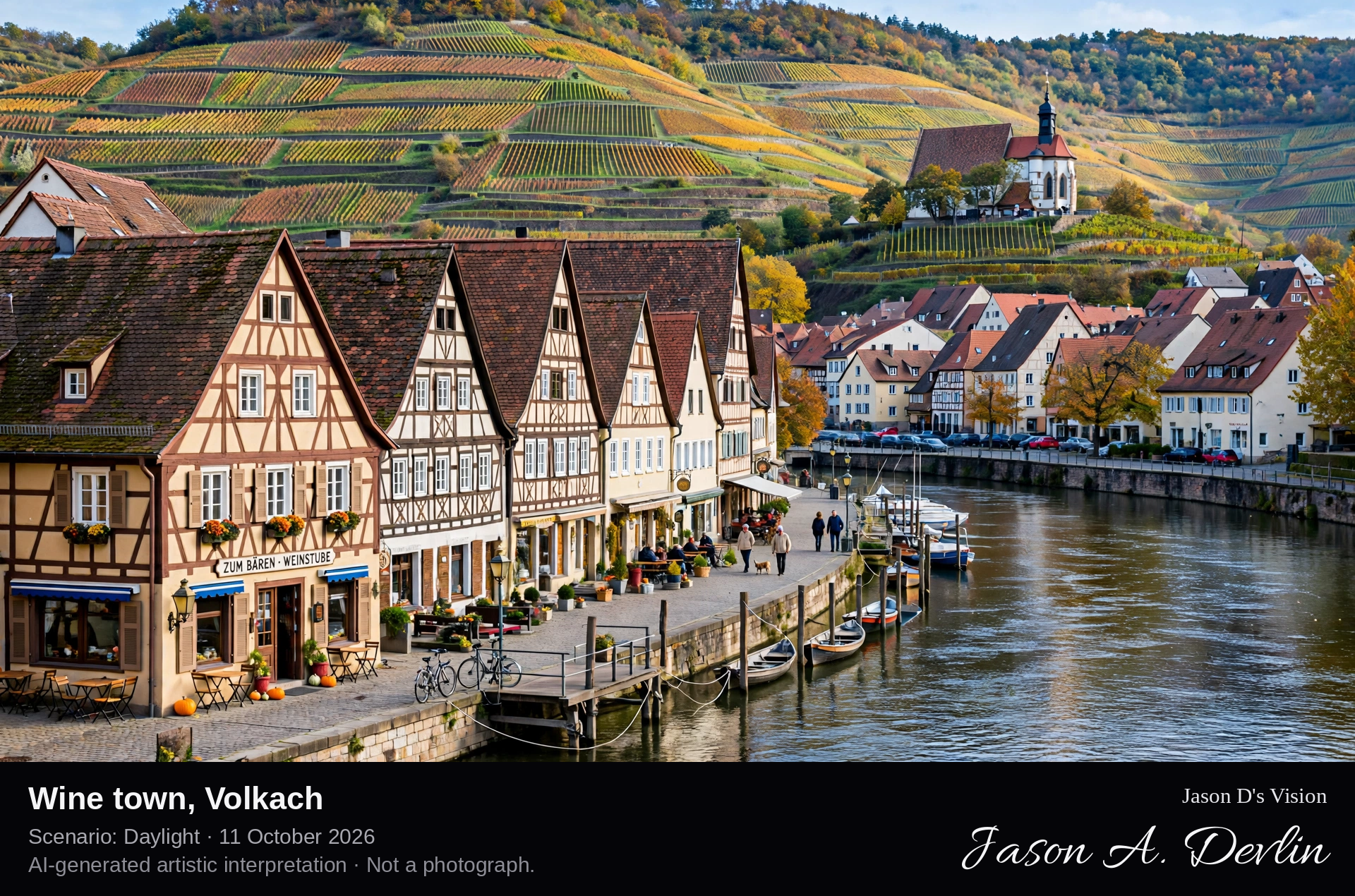
Miltenberg's Schnatterloch is one of Franconia's most photographed streets: a row of tall half-timbered houses with richly carved woodwork, leaning companionably over the cobbles on the banks of the Main. Above the roofs, the Mildenburg castle keeps watch from its wooded hill. Wine taverns and craftsmen's shops fill the ground floors, keeping the medieval street a working part of town.
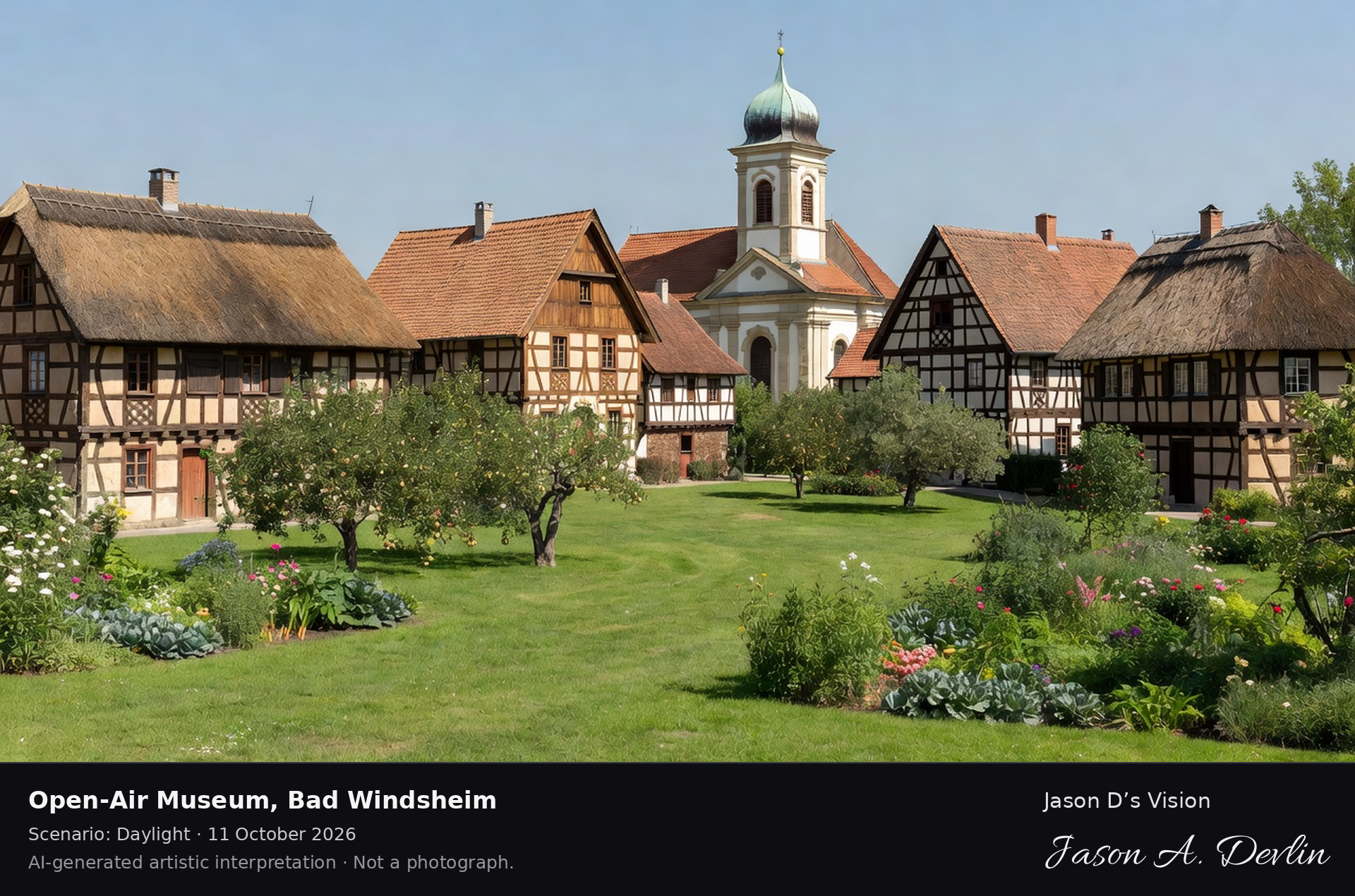
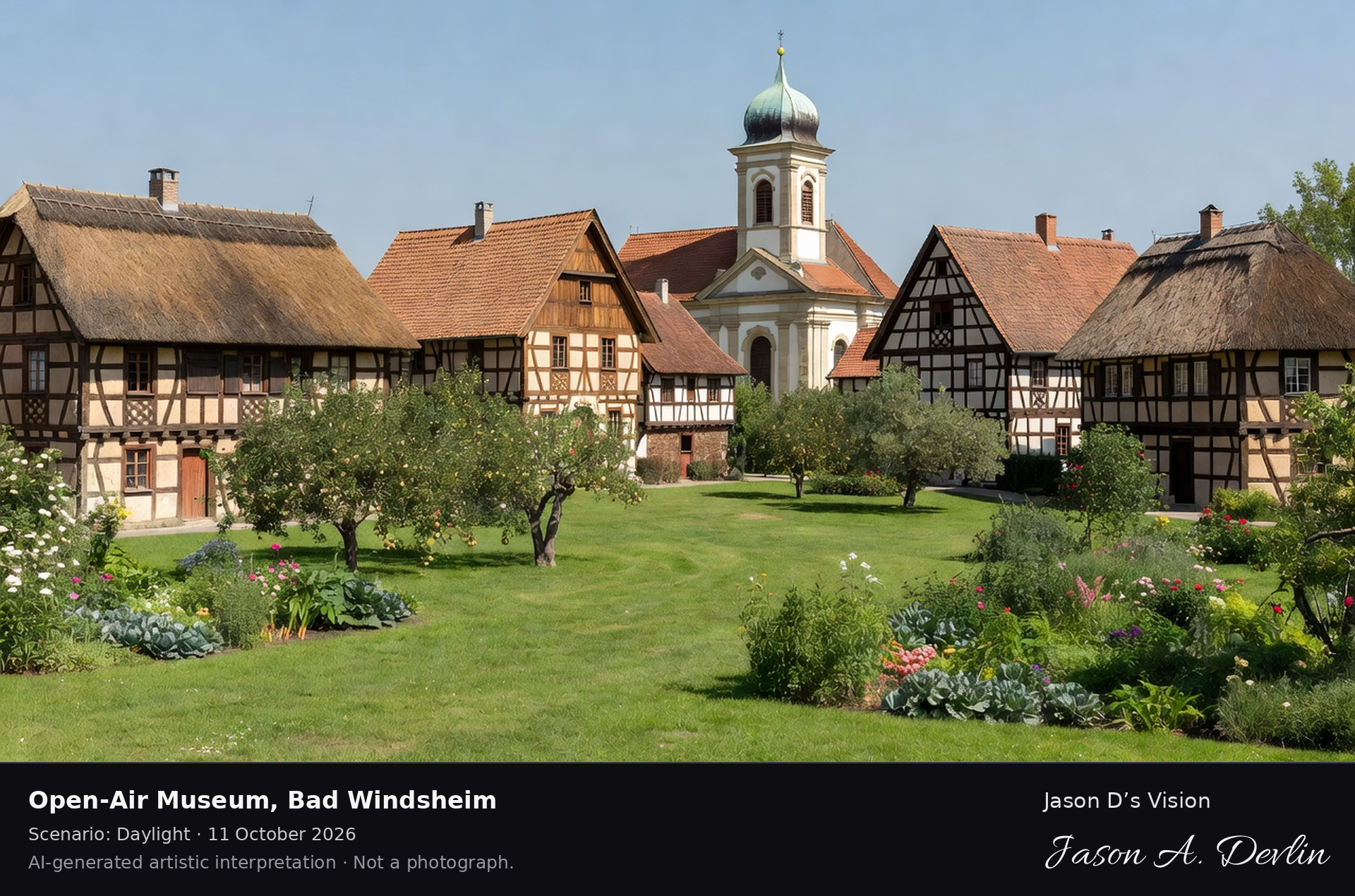
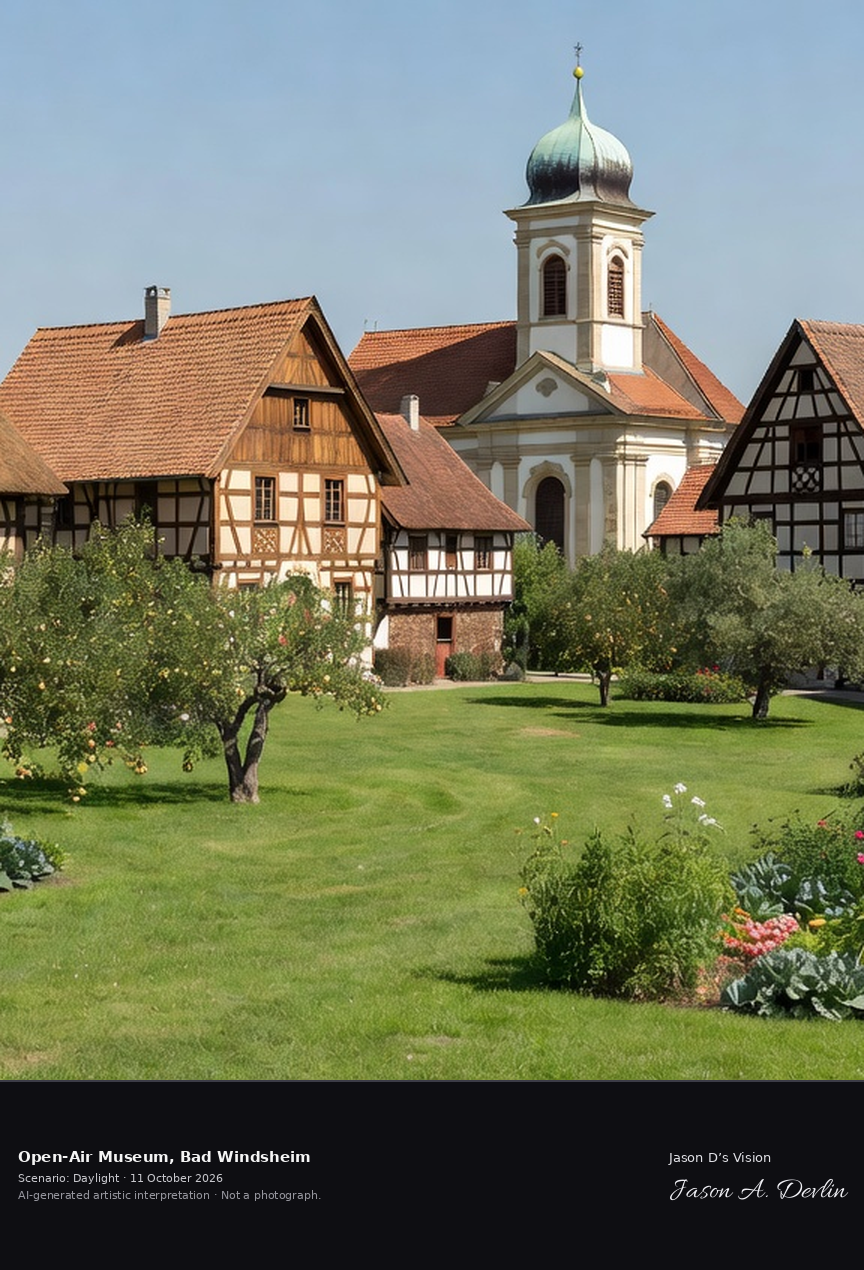
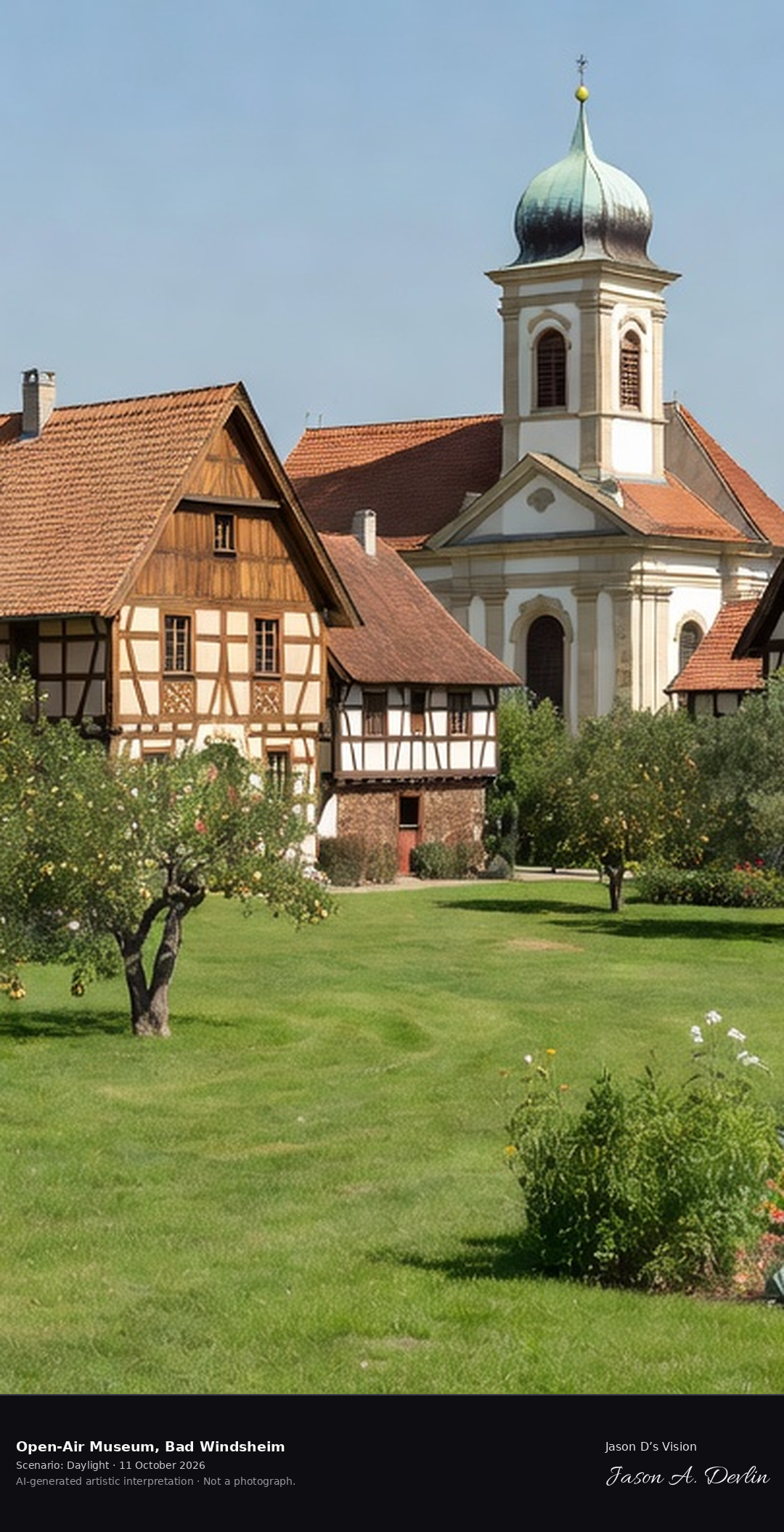
The Franconian Open-Air Museum at Bad Windsheim preserves rural Franconian culture building by building: half-timbered farmhouses, barns, mills and workshops rescued from across the region and rebuilt around village greens. Orchards, kitchen gardens and grazing sheep complete the picture of Franconian country life as it was lived for centuries. It is the countryside counterpart to the region's famous old towns.
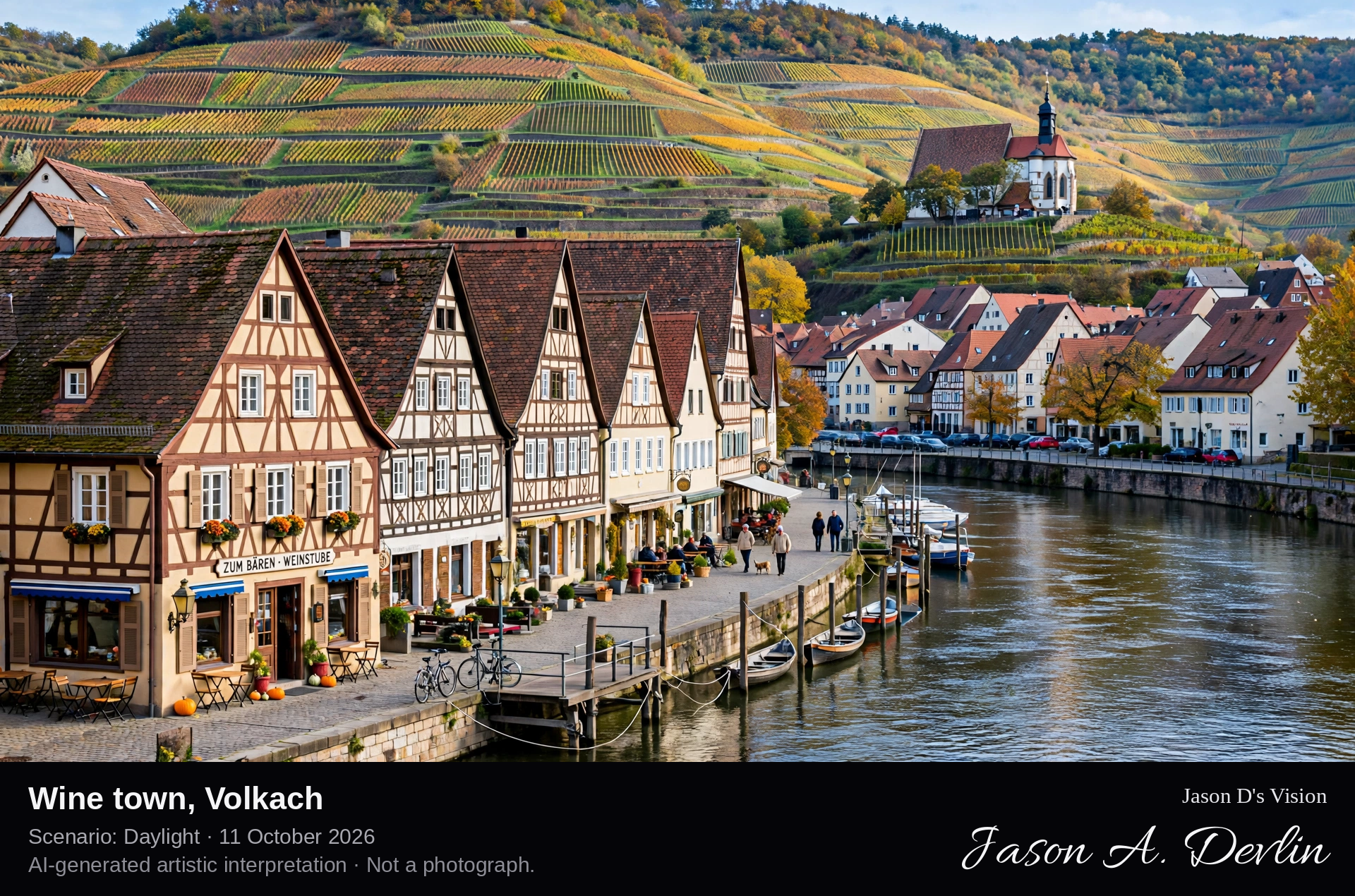
Vineyards and pilgrimage church · AI-generated artistic interpretation
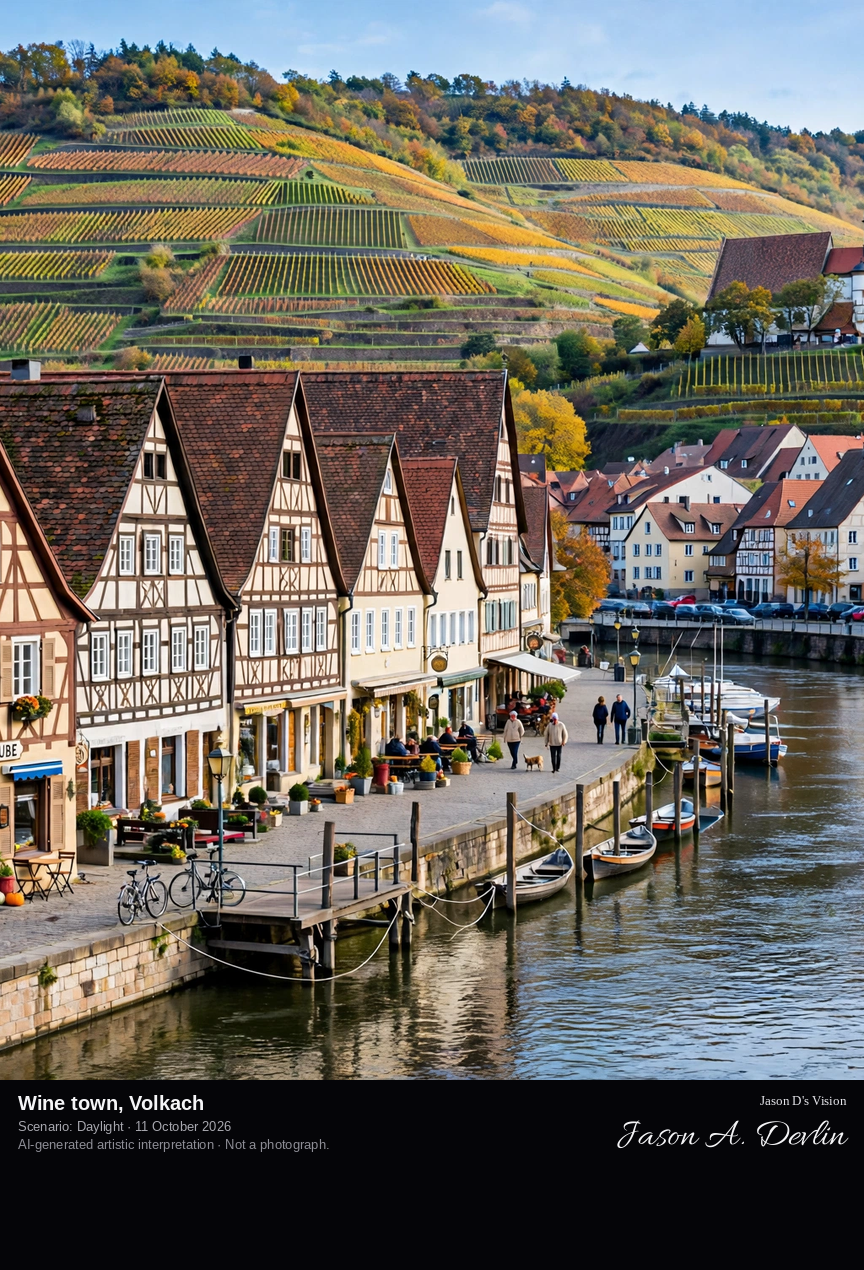
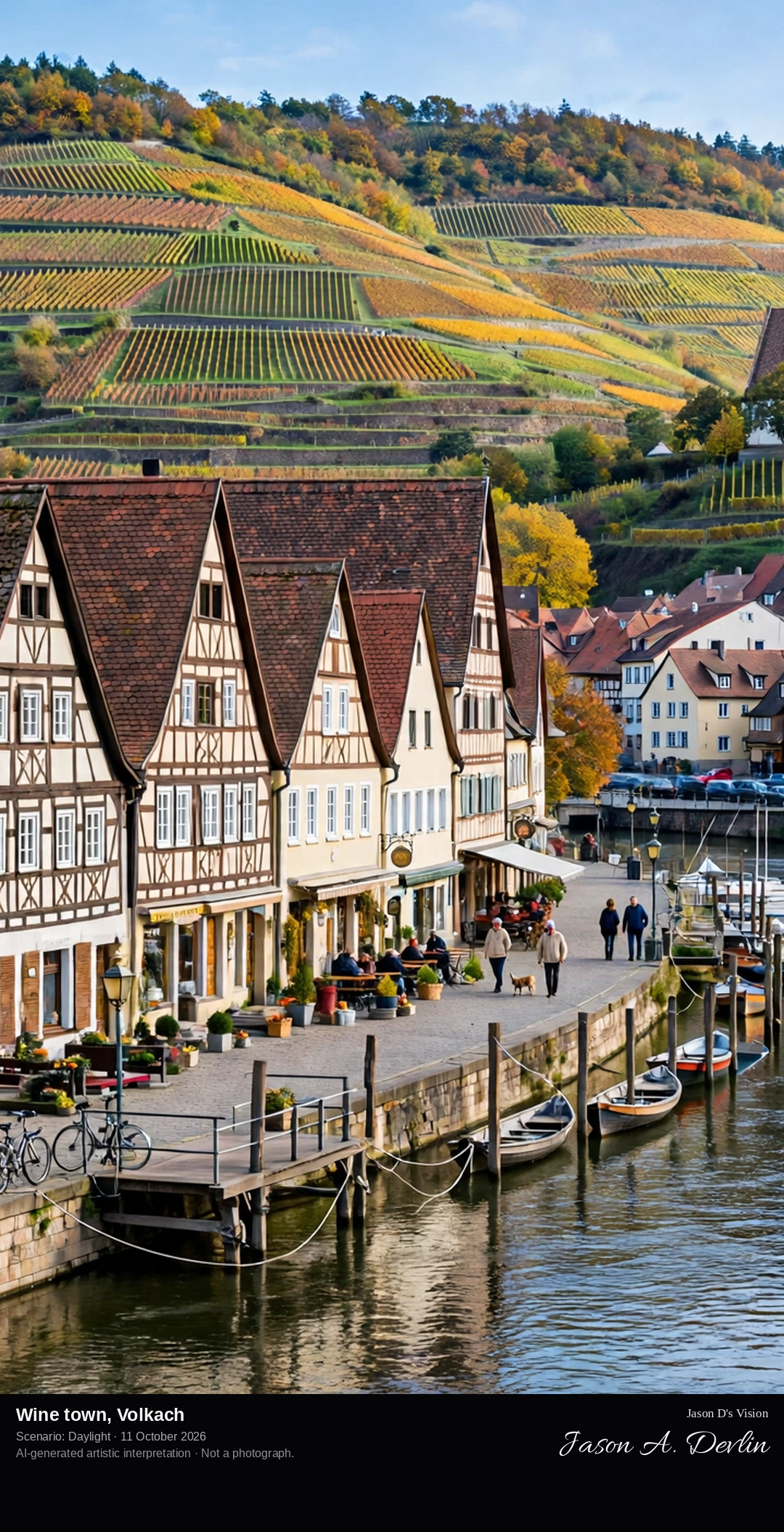
Volkach sits in the heart of Franconian wine country, where the Main loops in a great bend beneath vineyard slopes farmed since the Romans. Above the vines stands Maria im Weingarten, the pilgrimage church of St. Mary in the Vineyard, its twin towers a landmark for winegrowers for centuries. In autumn the slopes turn gold and the town's wine taverns pour the new Silvaner.
Castle ridge and old town · AI-generated artistic interpretation
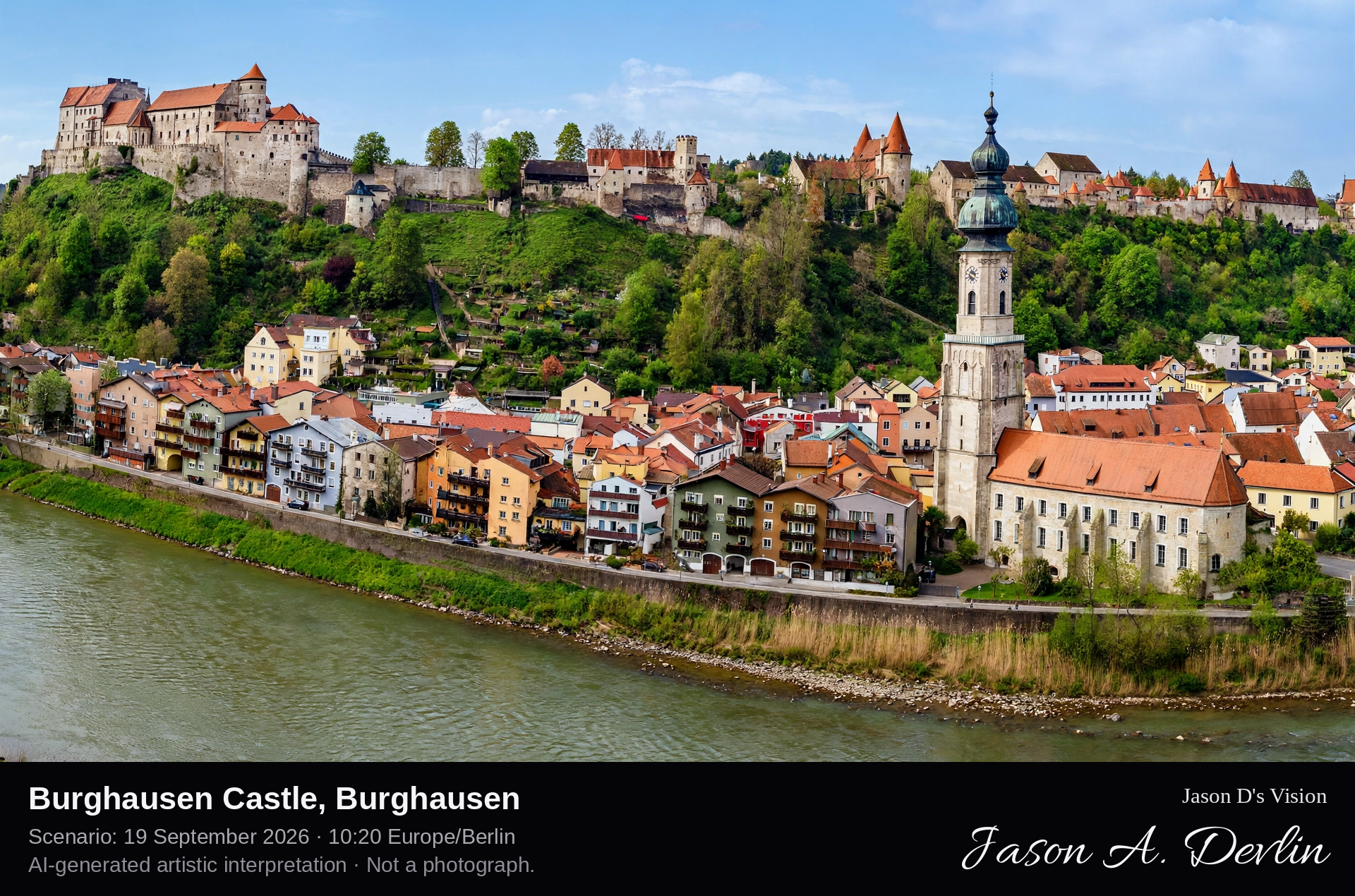
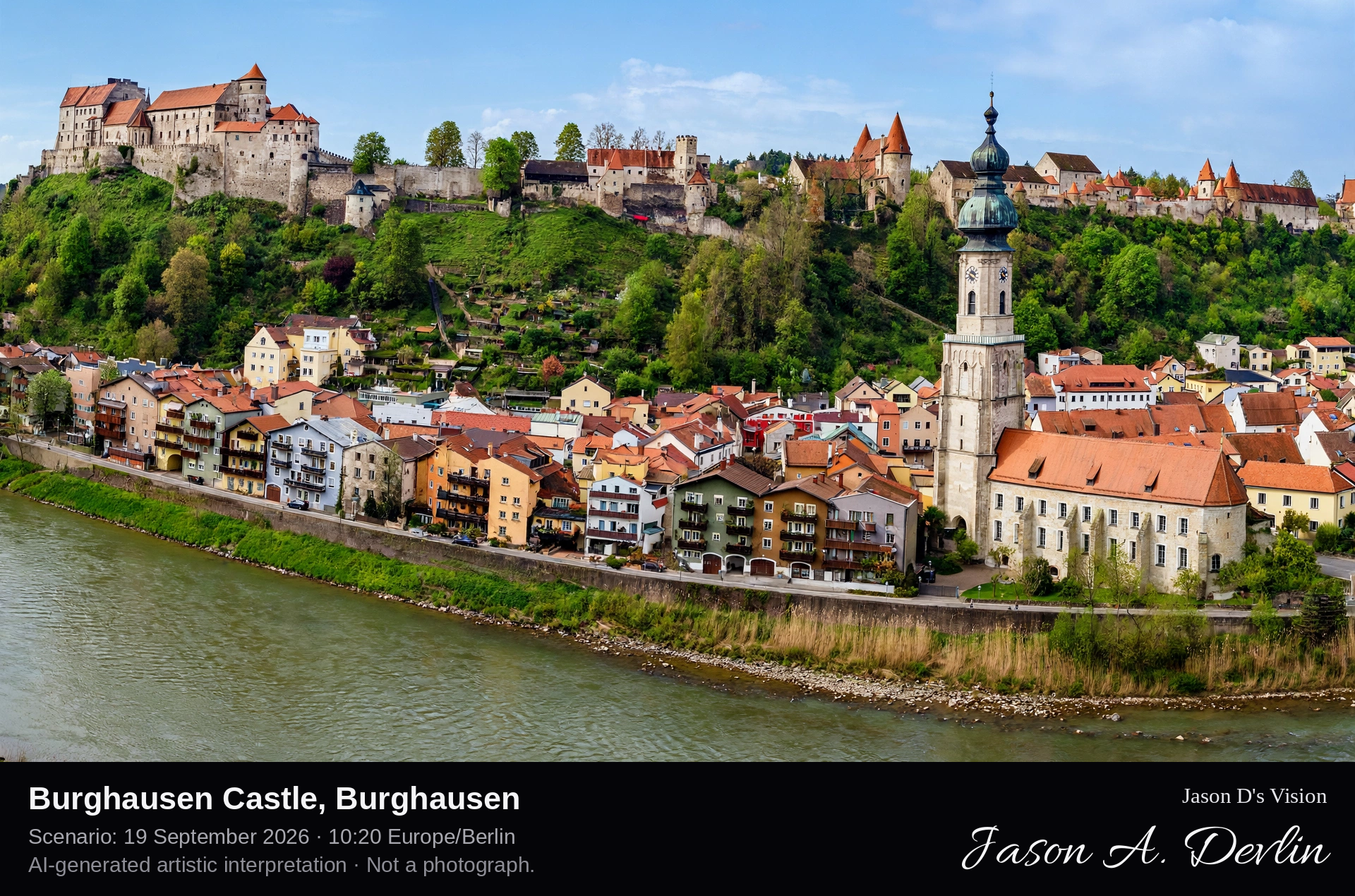
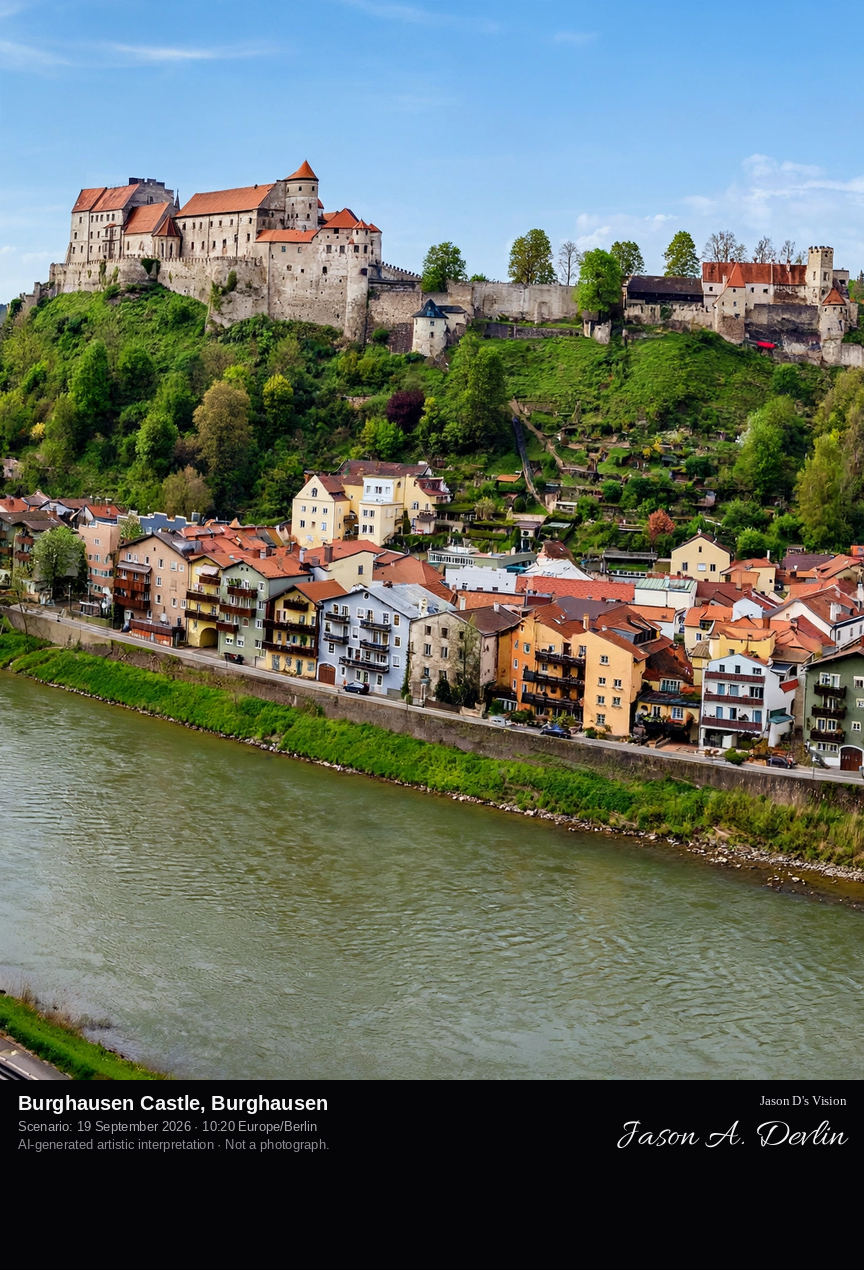
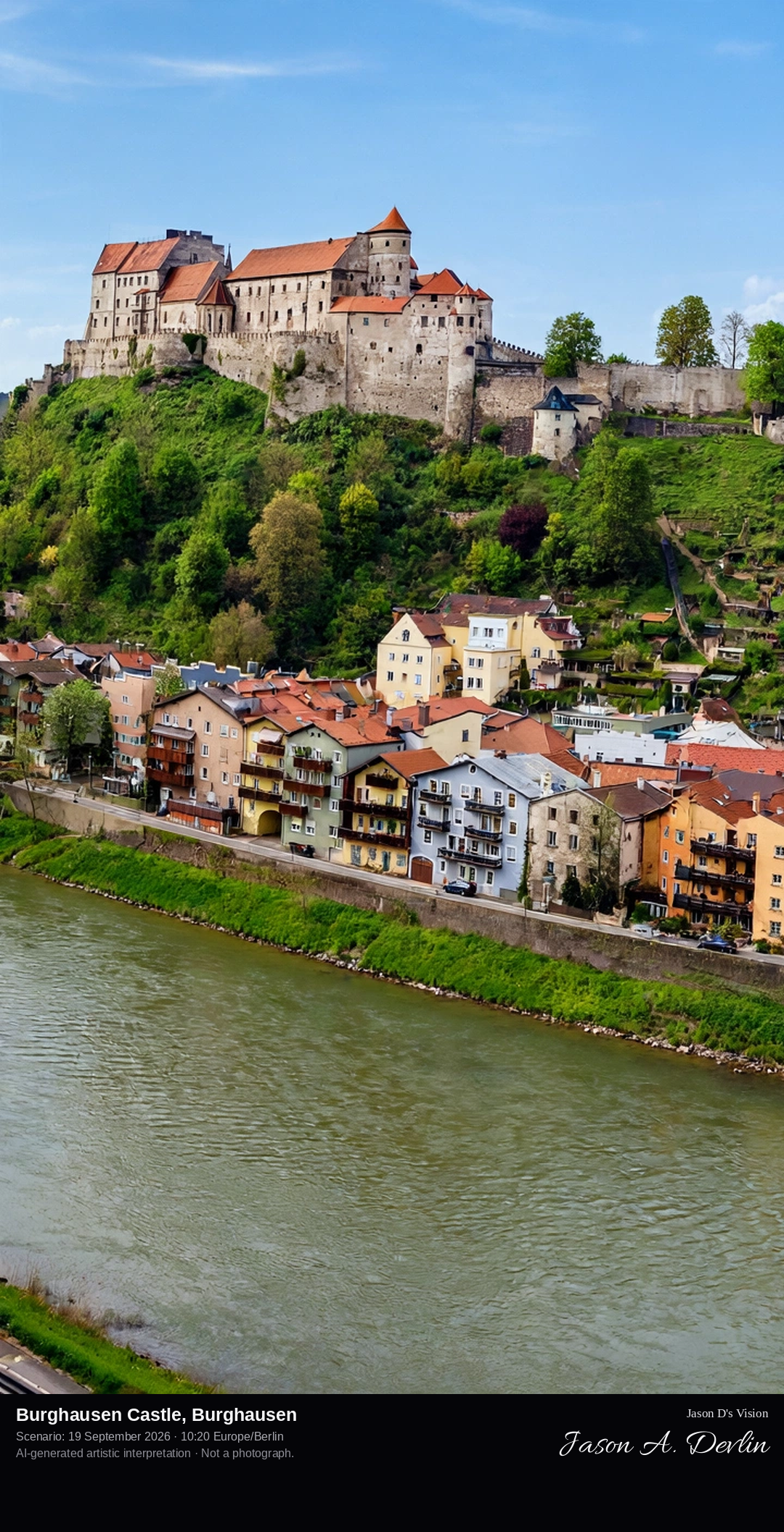
The longest castle in the world stretches for over a kilometre along the ridge above the Salzach, its six courtyards running from the main keep to the far turrets. Below the walls, the old town's coloured houses line the riverbank, watched over by the onion-domed tower of St Jakob's church. The Wittelsbach dukes made Burghausen their second residence, and the fortress was never taken.
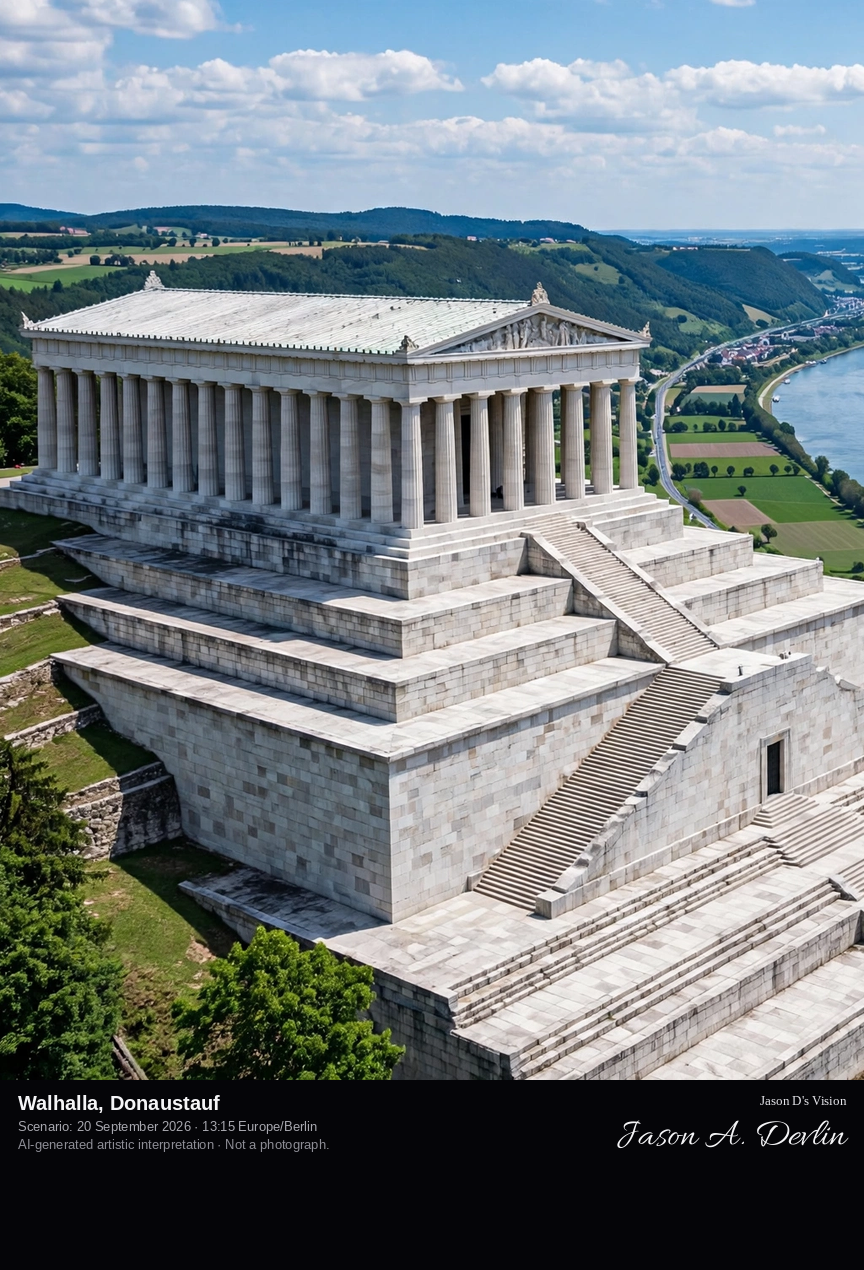
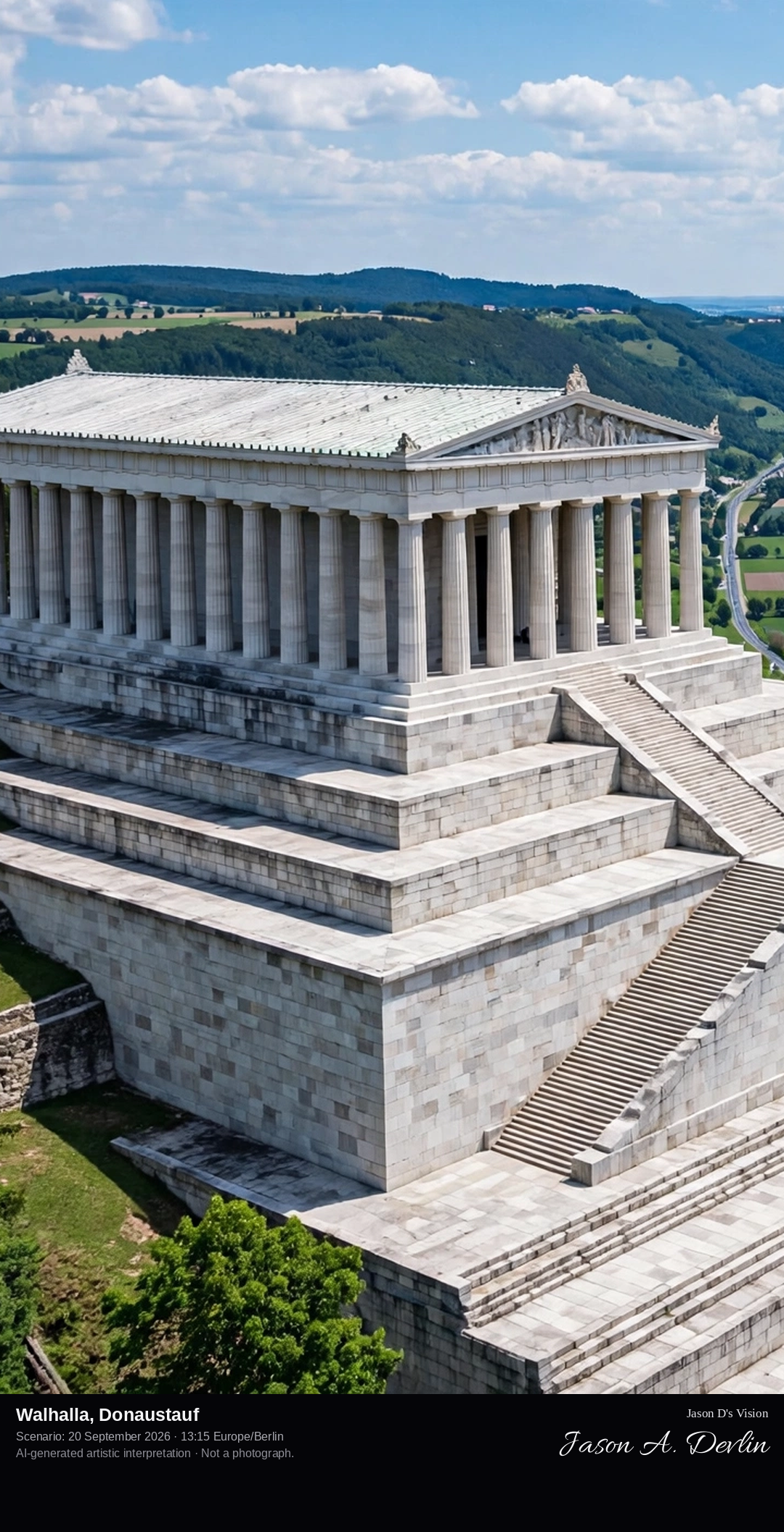
Marble temple above the Danube · AI-generated artistic interpretation
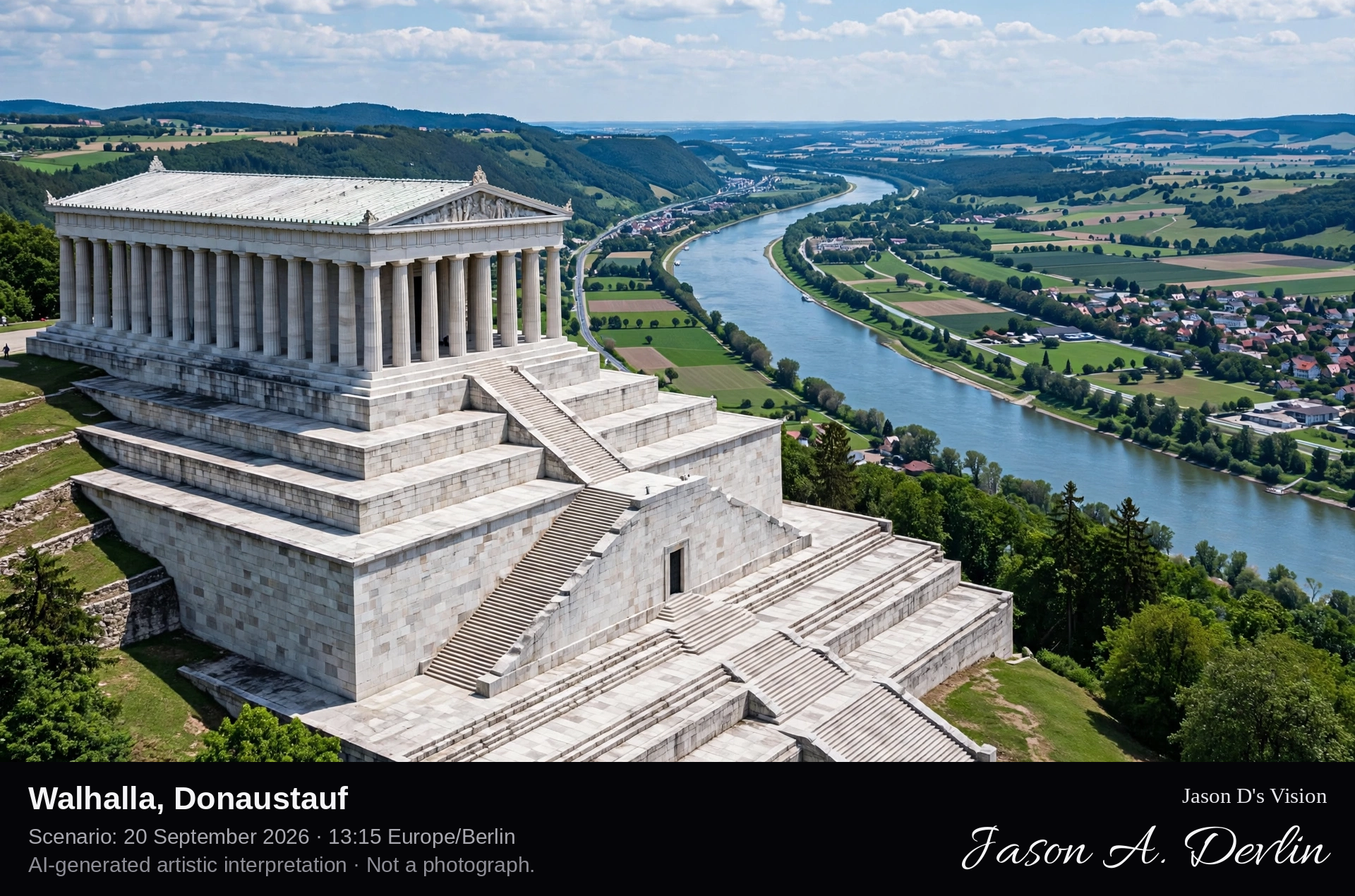
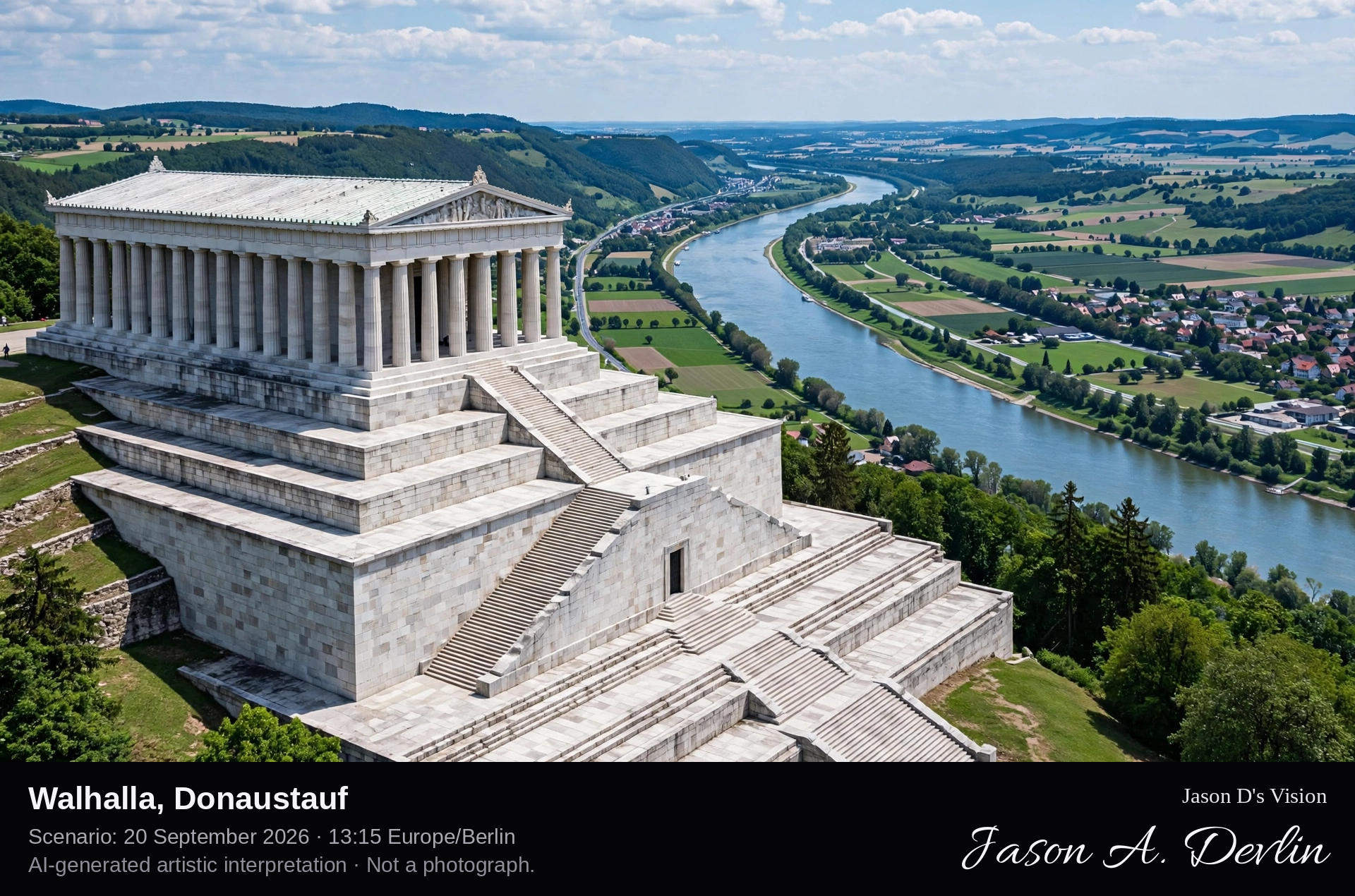
The white marble temple rises on monumental stepped terraces above a bend of the Danube near Donaustauf, its full Doric colonnade modelled on the Parthenon. Commissioned by Ludwig I of Bavaria and built by Leo von Klenze between 1830 and 1842, the hall honours illustrious figures of German-speaking history with busts and memorial plaques inside. The great stair climbs from the river meadow through the terraced substructure to the temple platform.
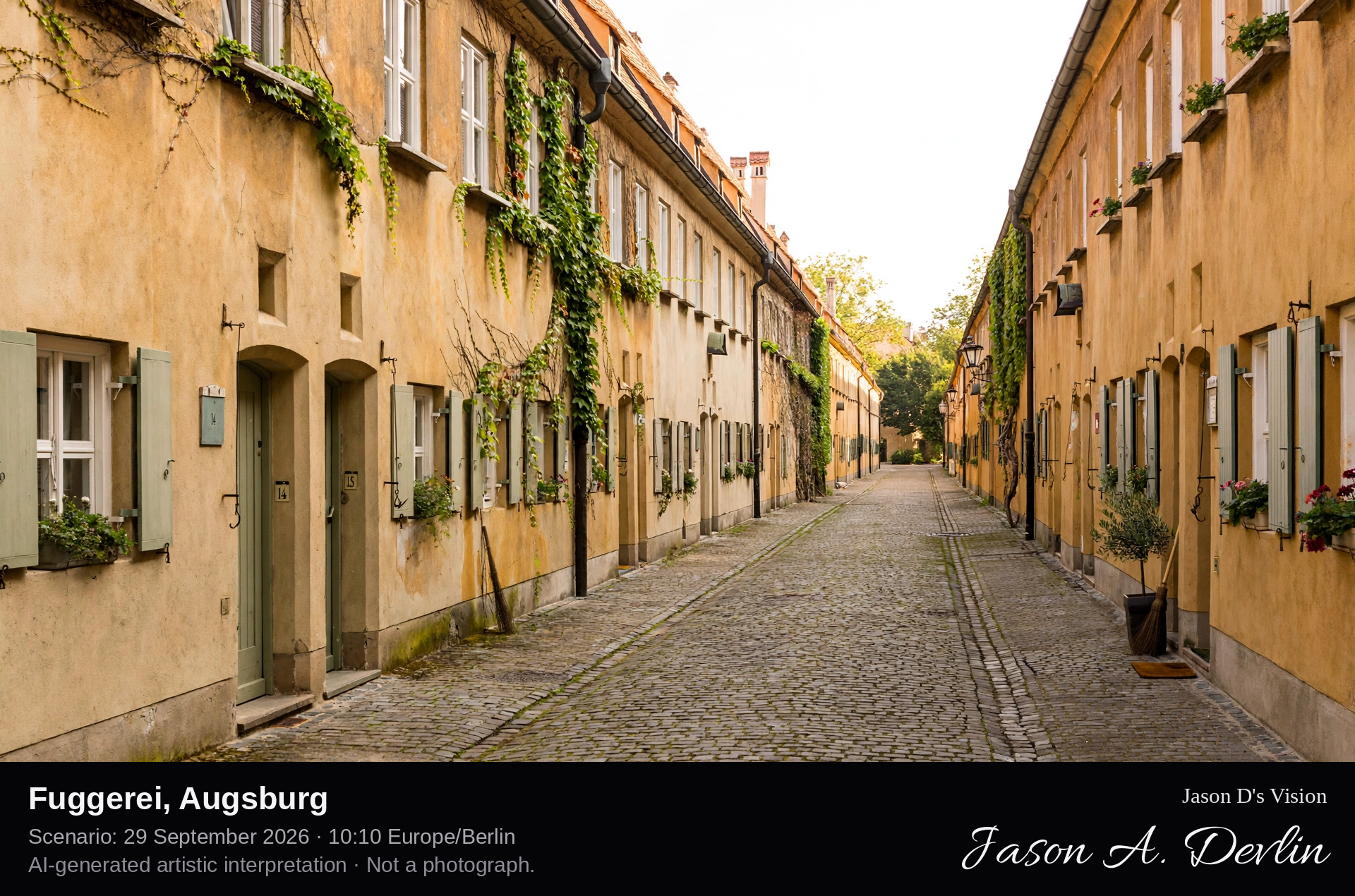
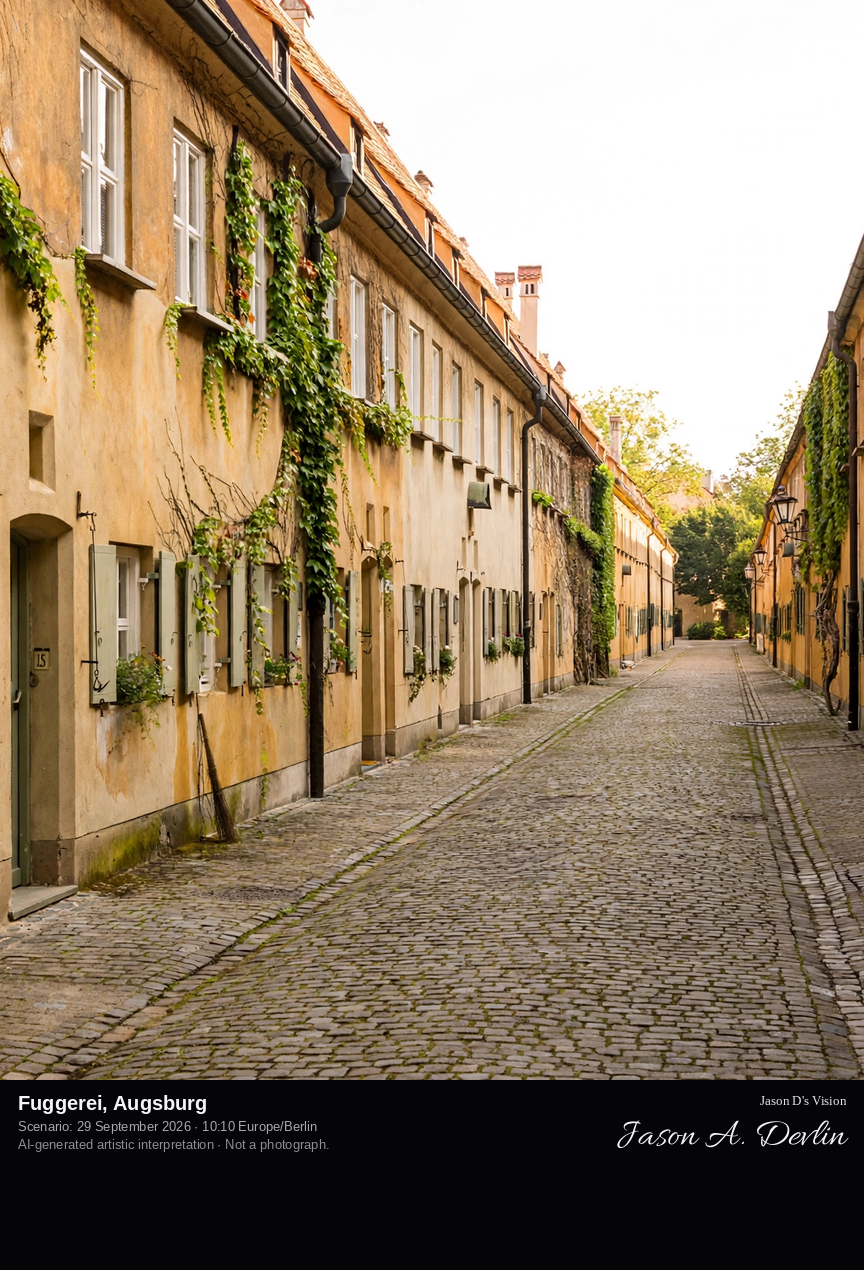
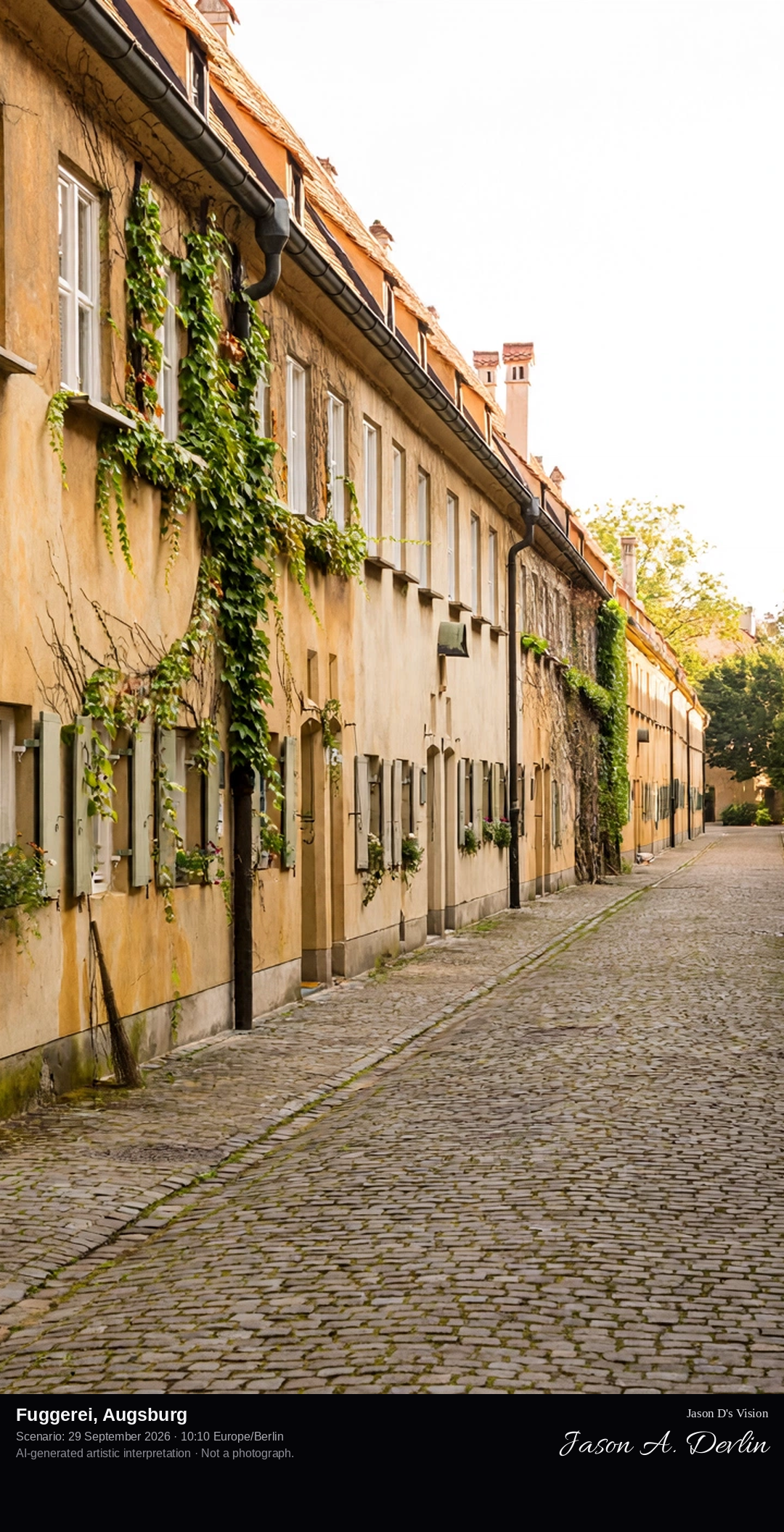
A quiet lane between the long terraced rows of the walled settlement · AI-generated artistic interpretation
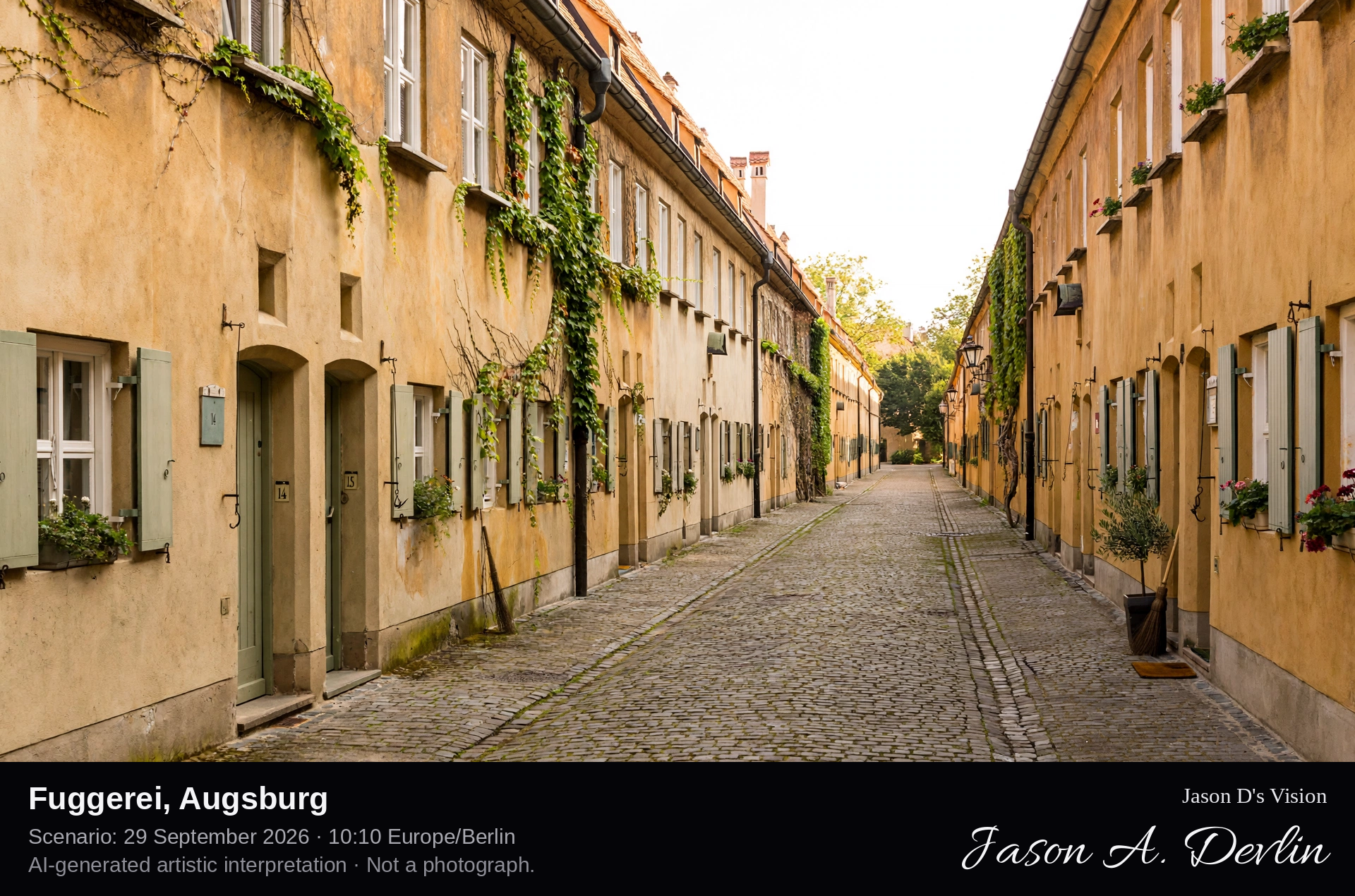
The Fuggerei in Augsburg is the world's oldest social housing settlement still in use, founded in 1521 by the banker Jakob Fugger for the city's respectable poor. Behind its gates, rows of small terraced houses line peaceful lanes, and residents still pay the historic yearly rent set down in the founding charter, the value of one Rhenish guilder. No lane or house here is identified; the scene stands for the settlement as a whole.
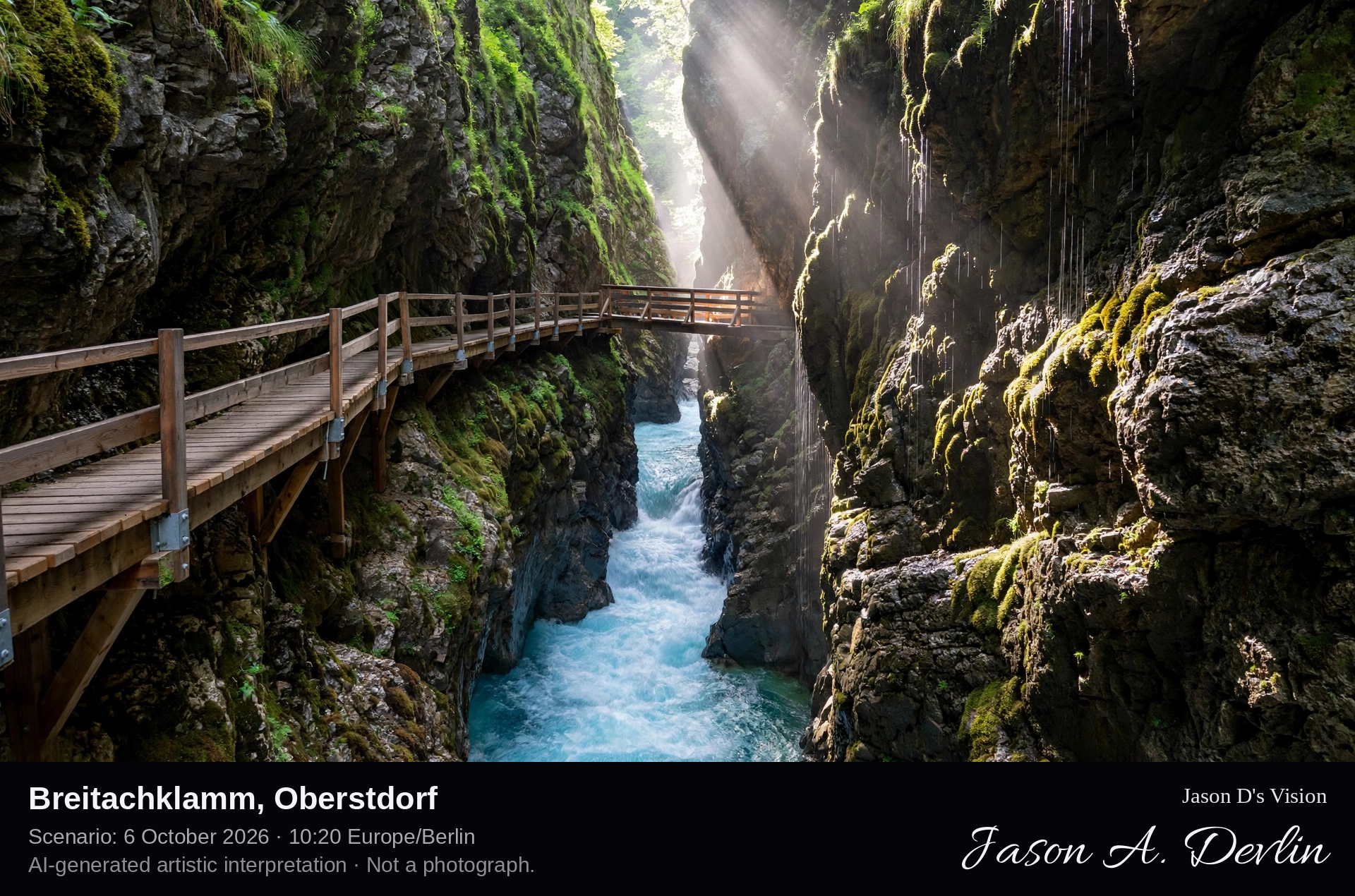
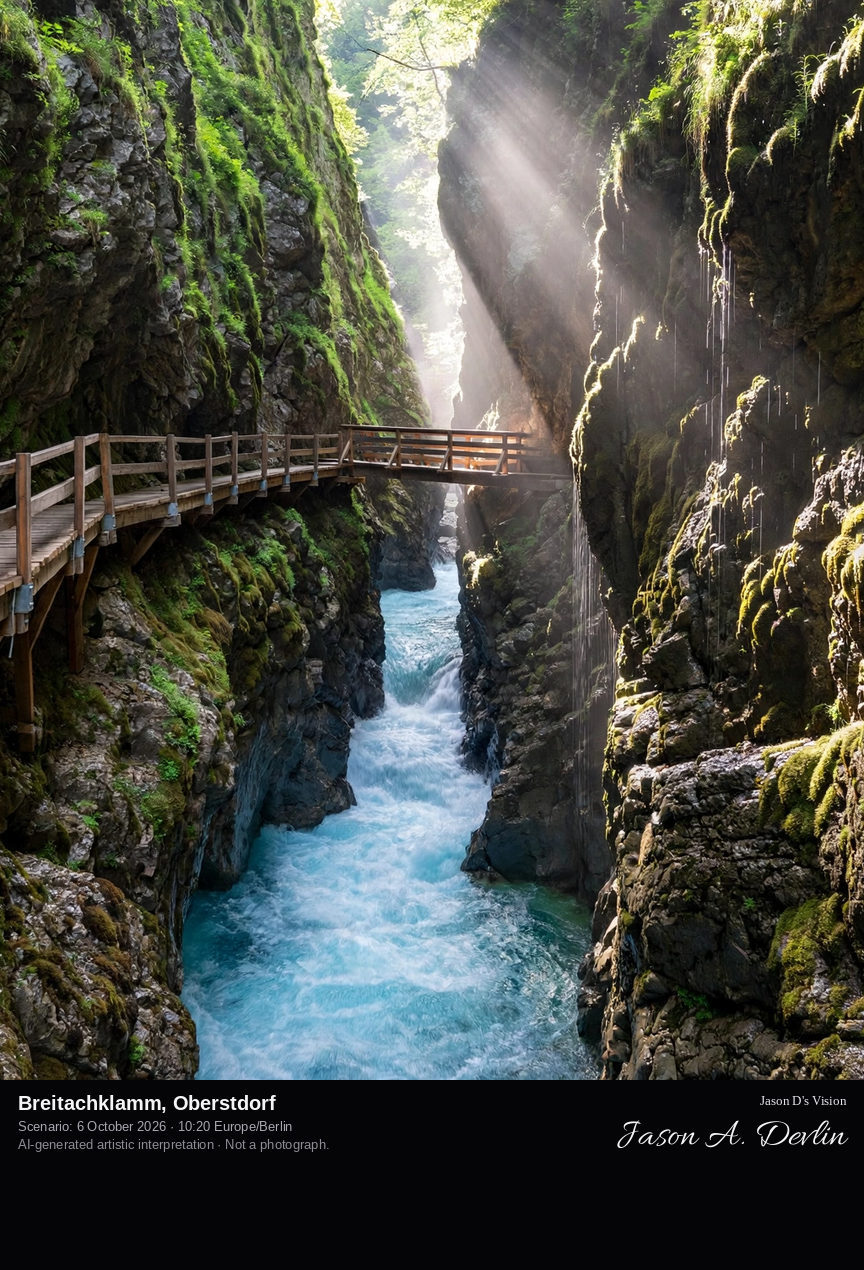
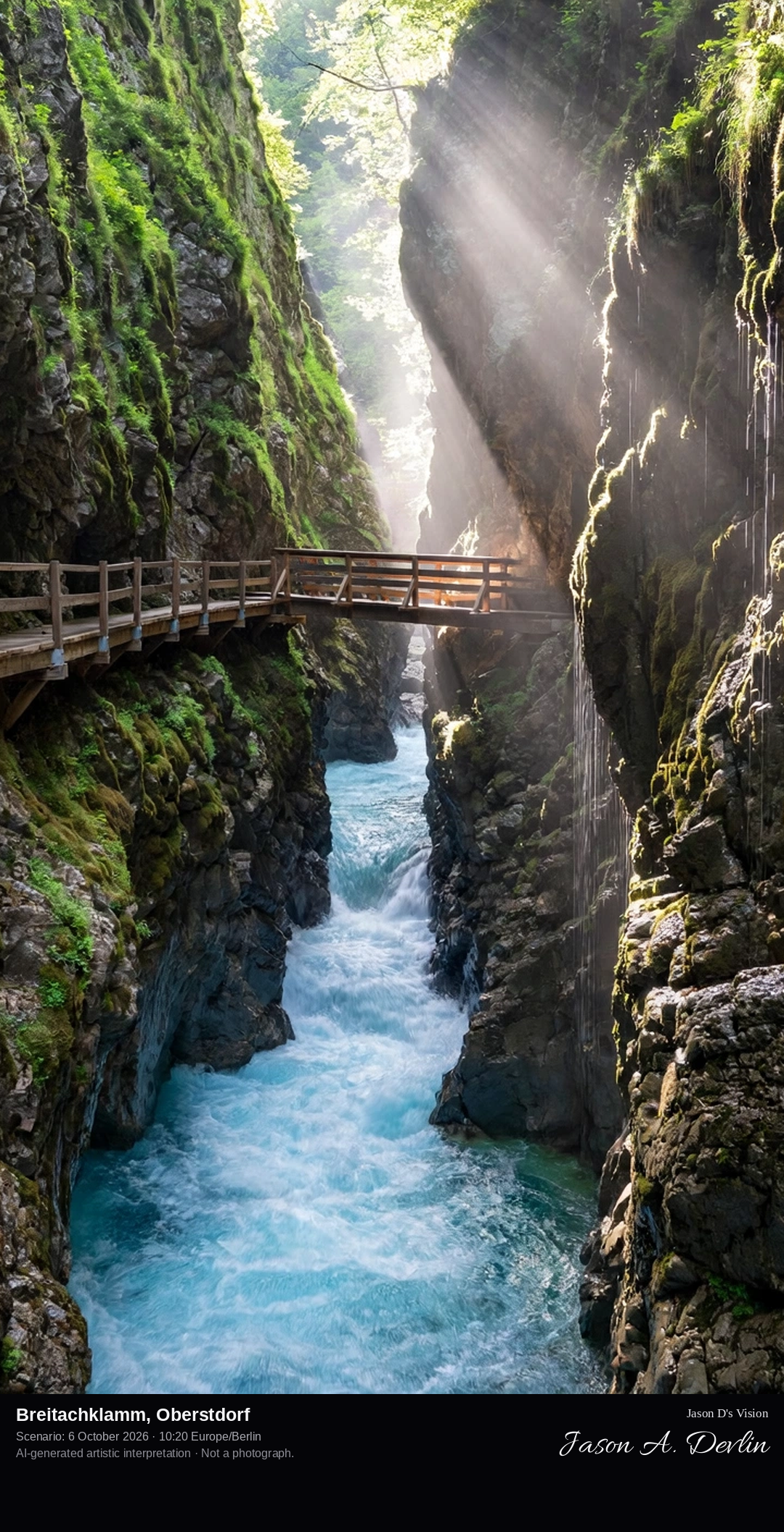
The narrow gorge walkway above the rushing Breitach · AI-generated artistic interpretation
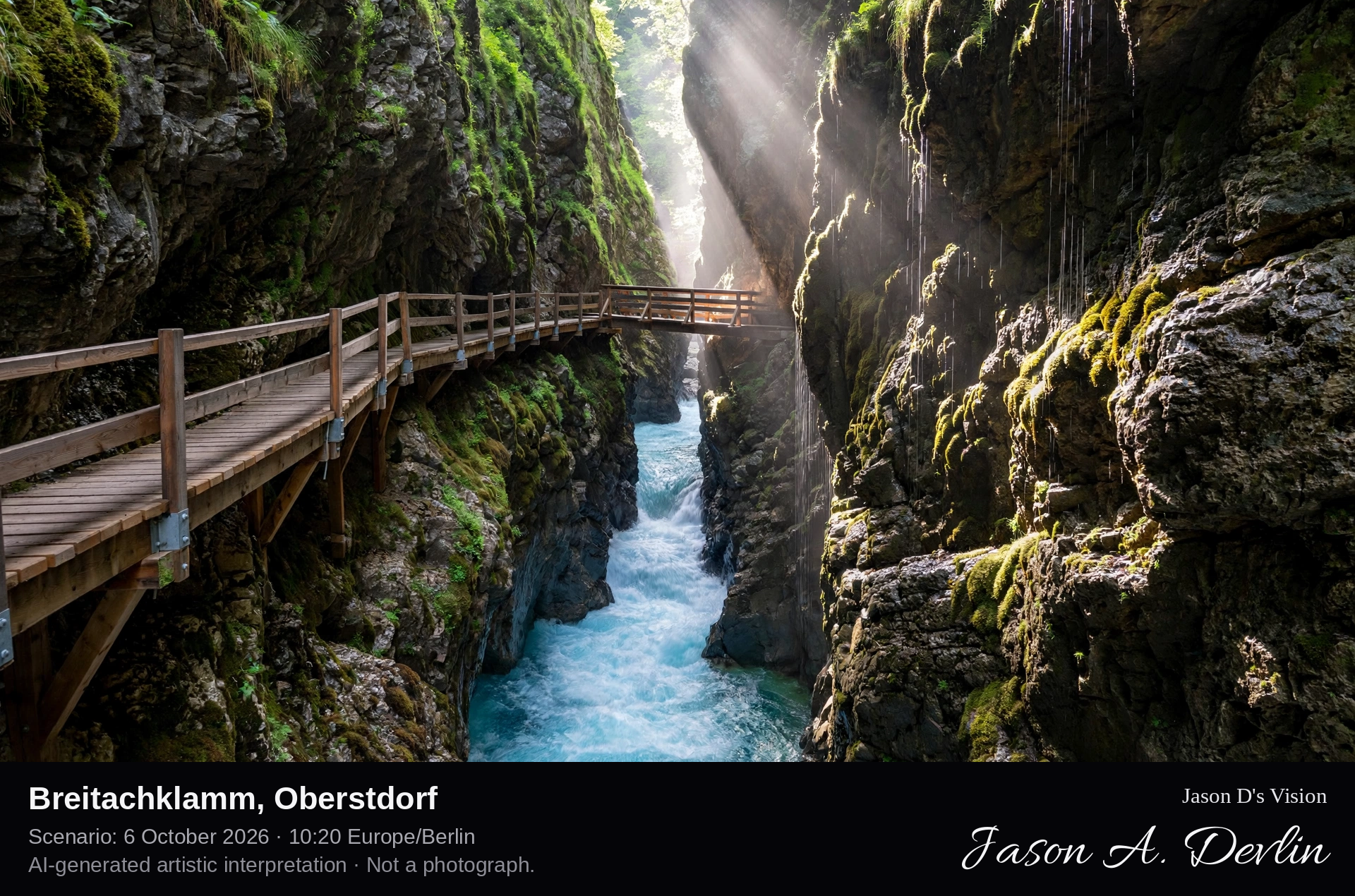
Carved by meltwater at the end of the last Ice Age, the Breitachklamm near Oberstdorf is among the deepest gorges in Central Europe, its walls rising in places some 150 metres above the torrent. A path with bridges and galleries has threaded the ravine since 1905, when the gorge was opened to visitors.
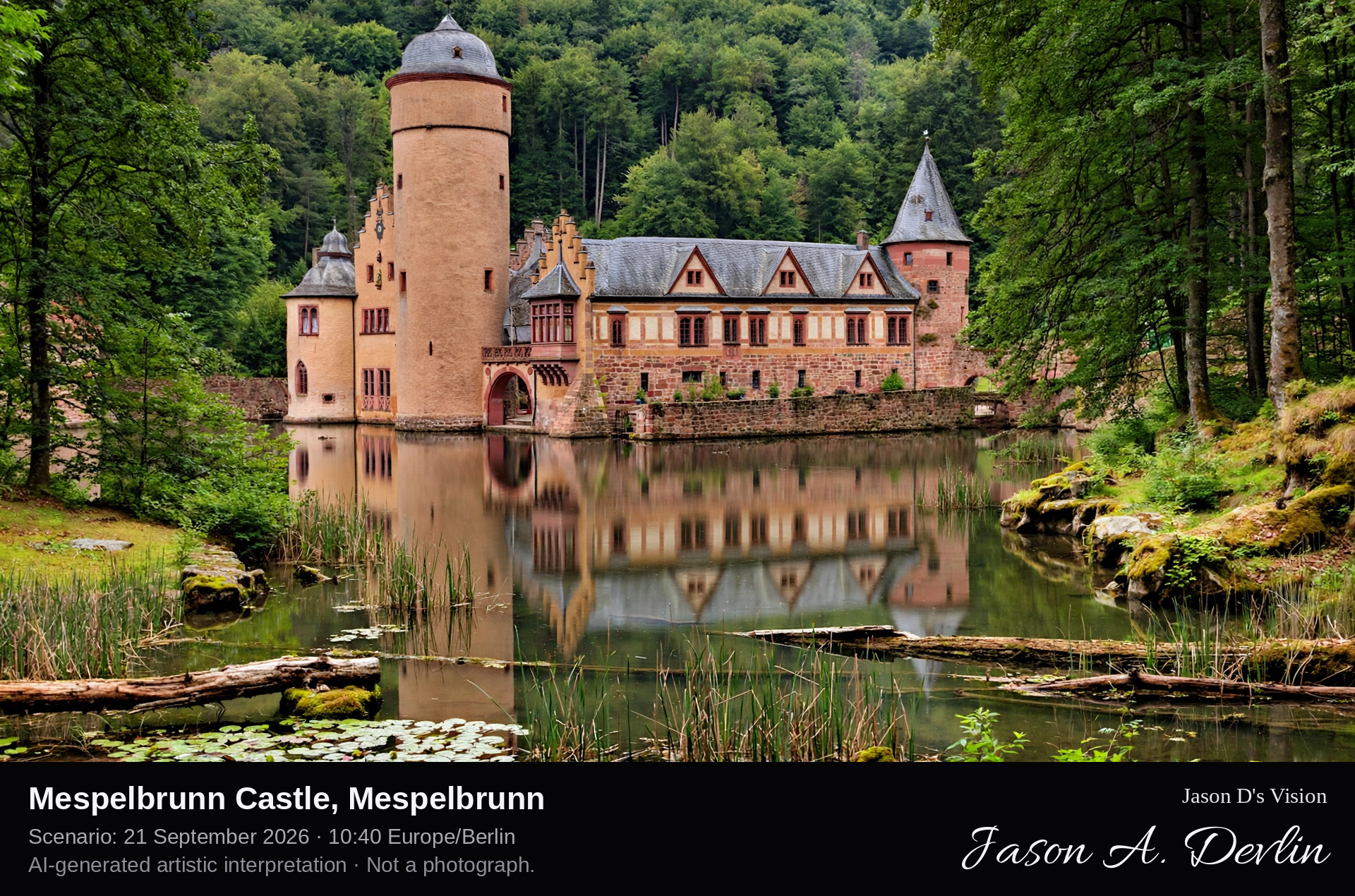
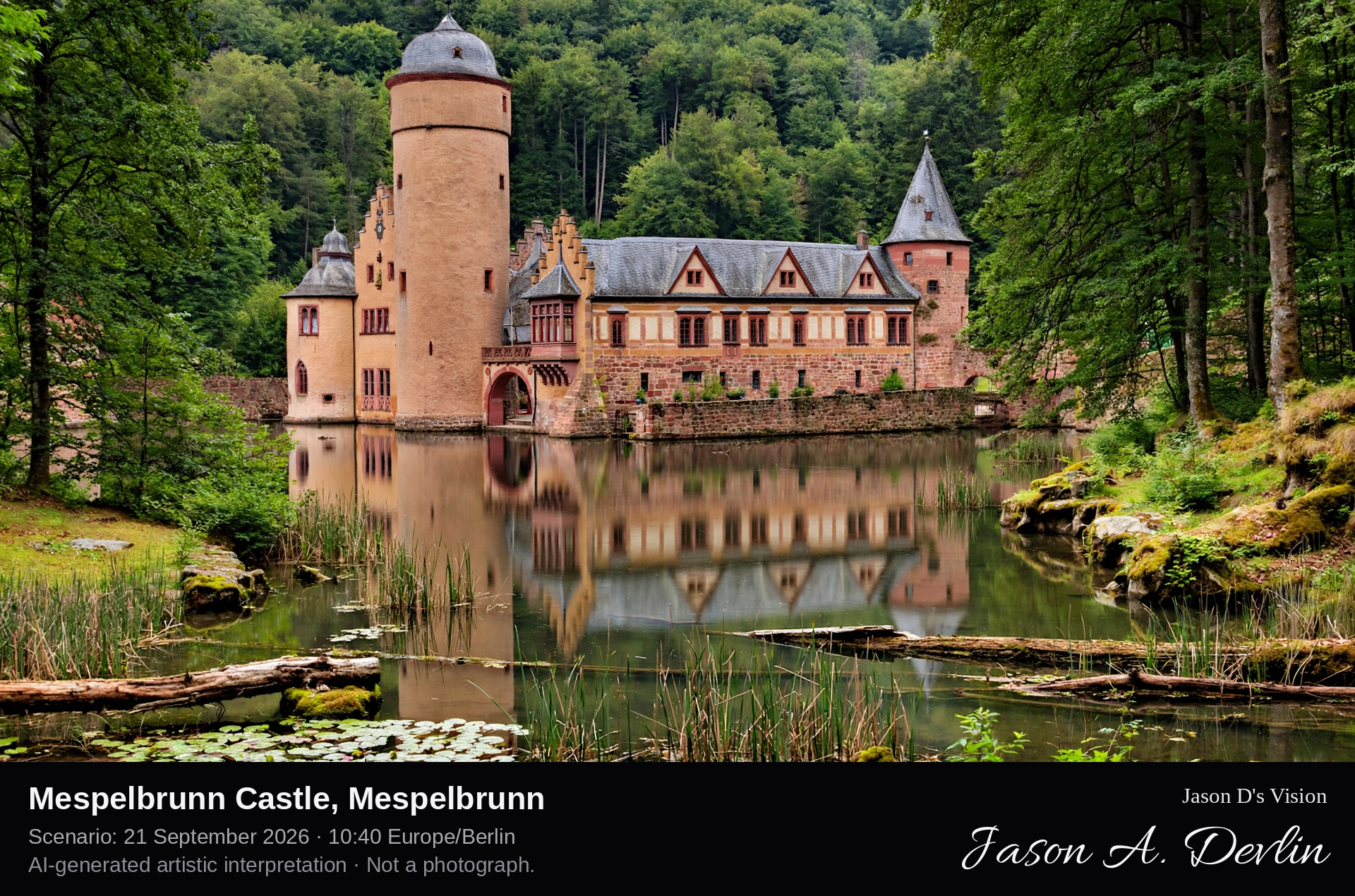
Moated castle in the Spessart forest · AI-generated artistic interpretation
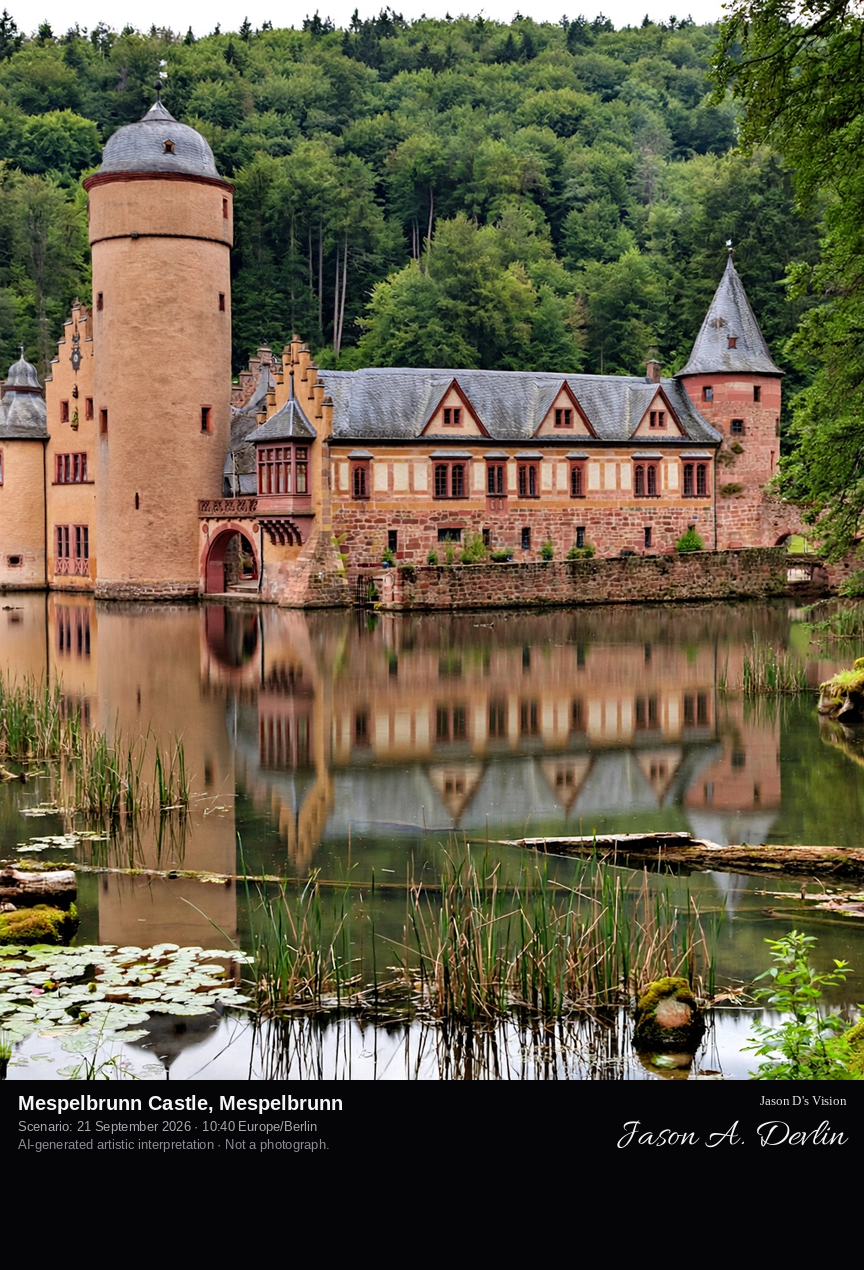
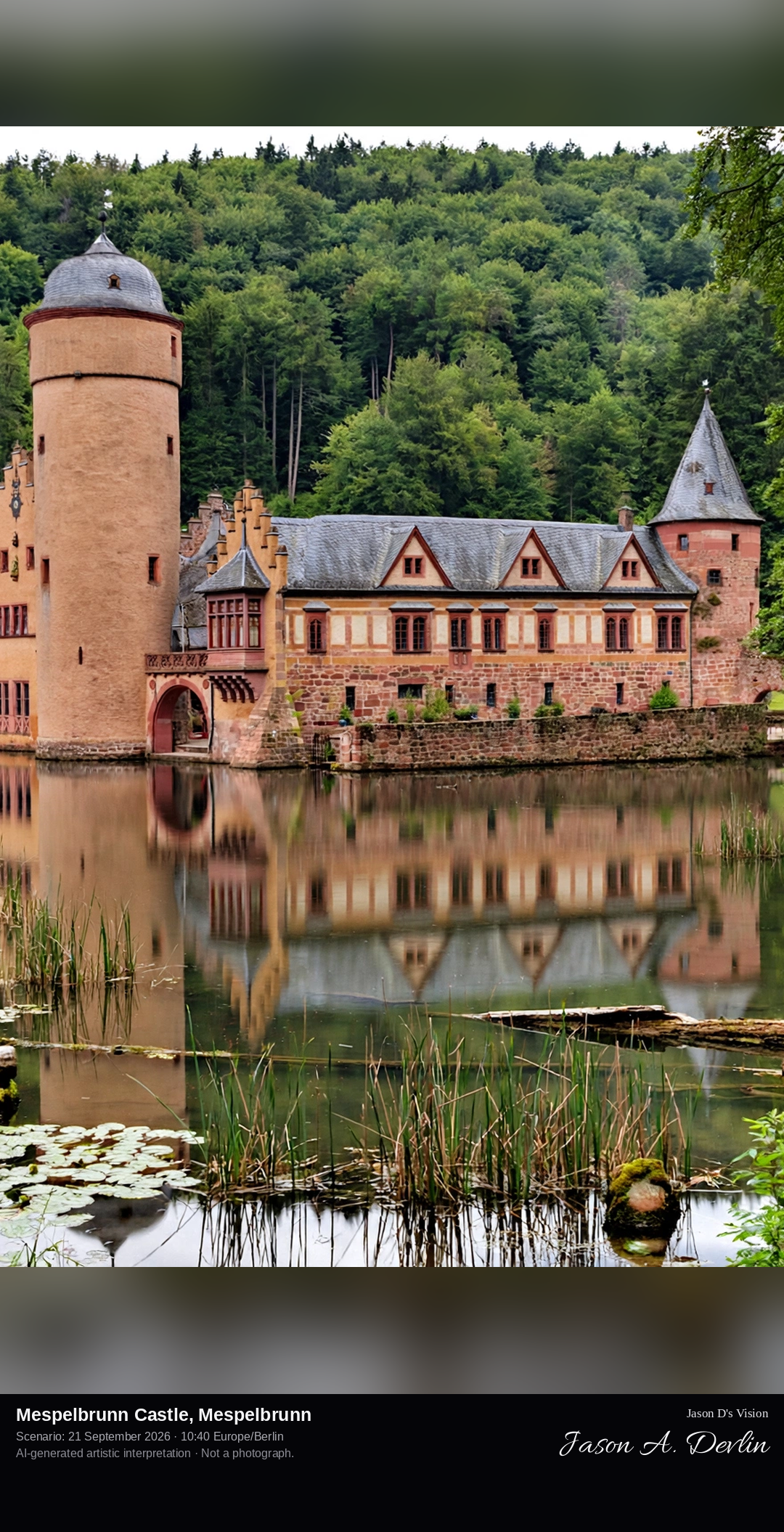
A romantic moated castle rises straight from its still pond in a clearing of the Spessart forest, its tall keep and stepped-gable main house mirrored in the water. Built up by the Echter family from the fifteenth century, Mespelbrunn survived the wars of its age untouched in its secluded valley and remains a family home today, beloved as the inn from the classic film The Inn in the Spessart.
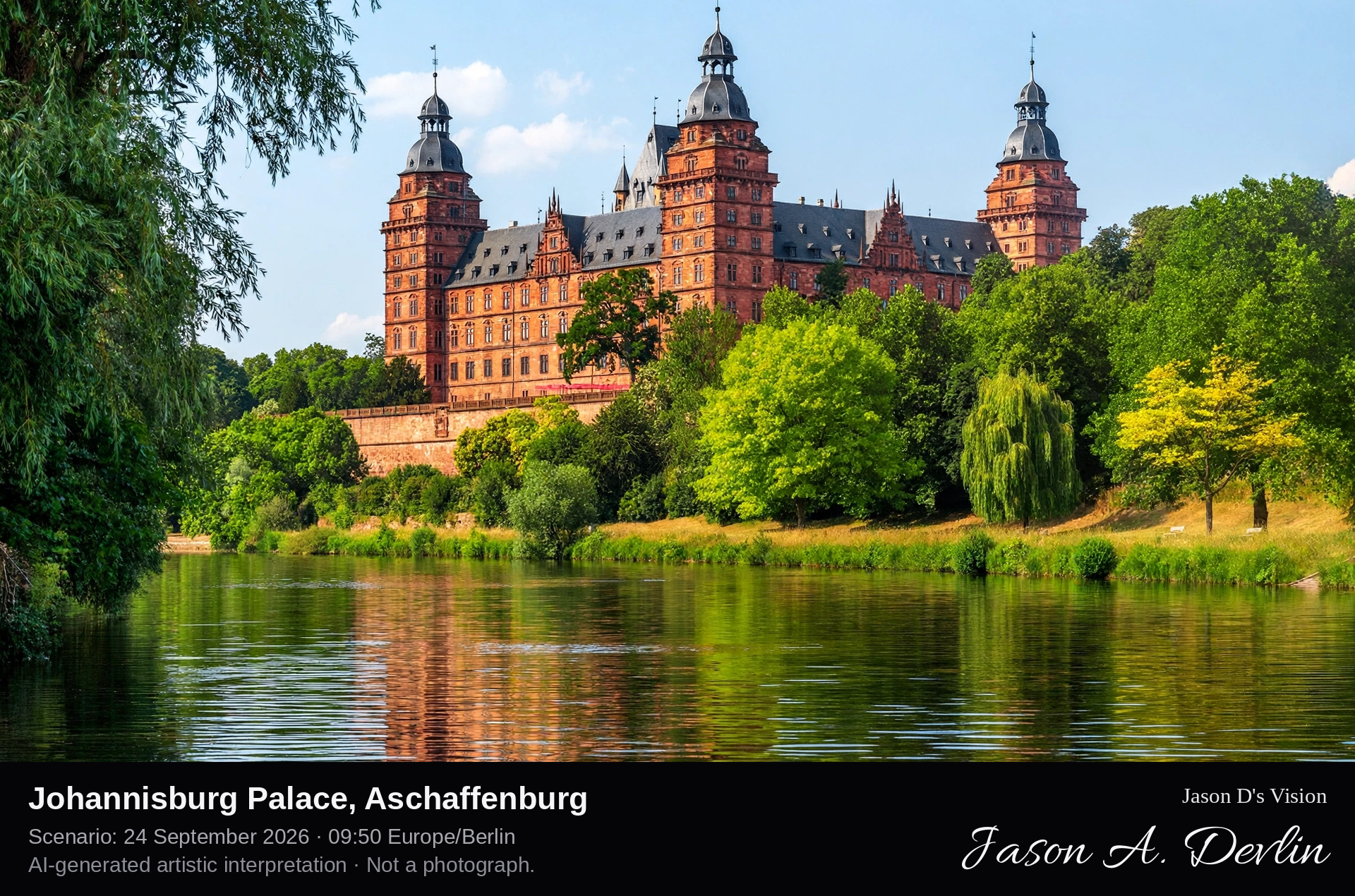
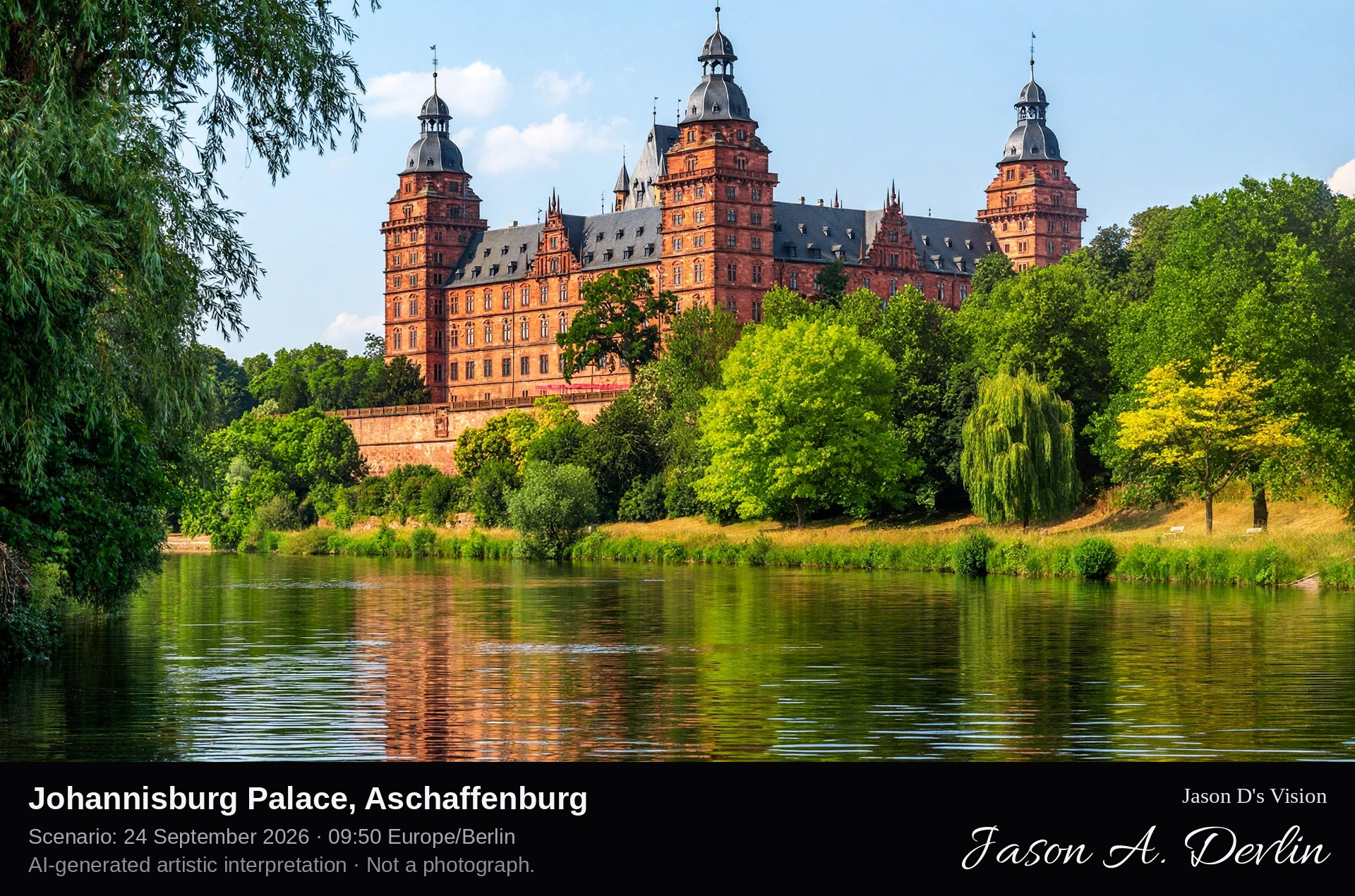
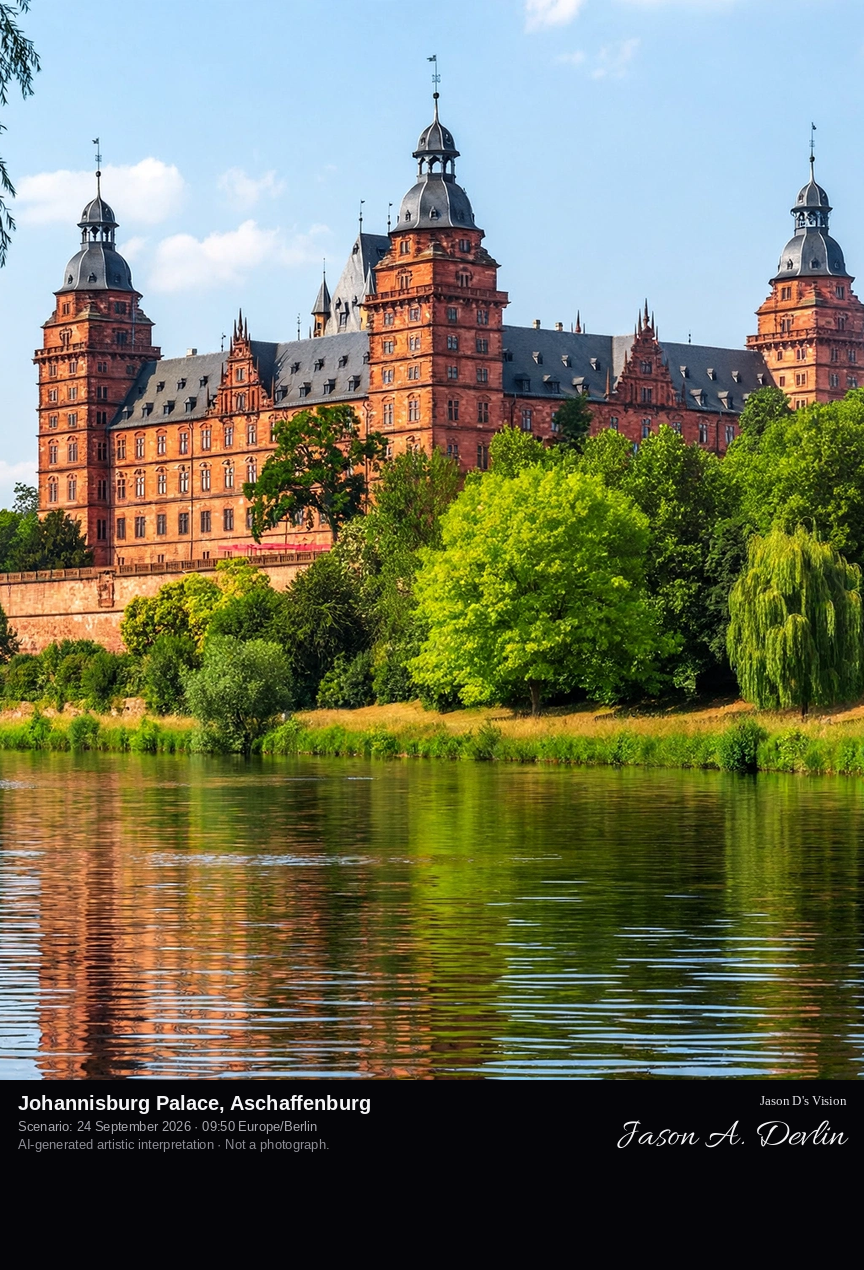
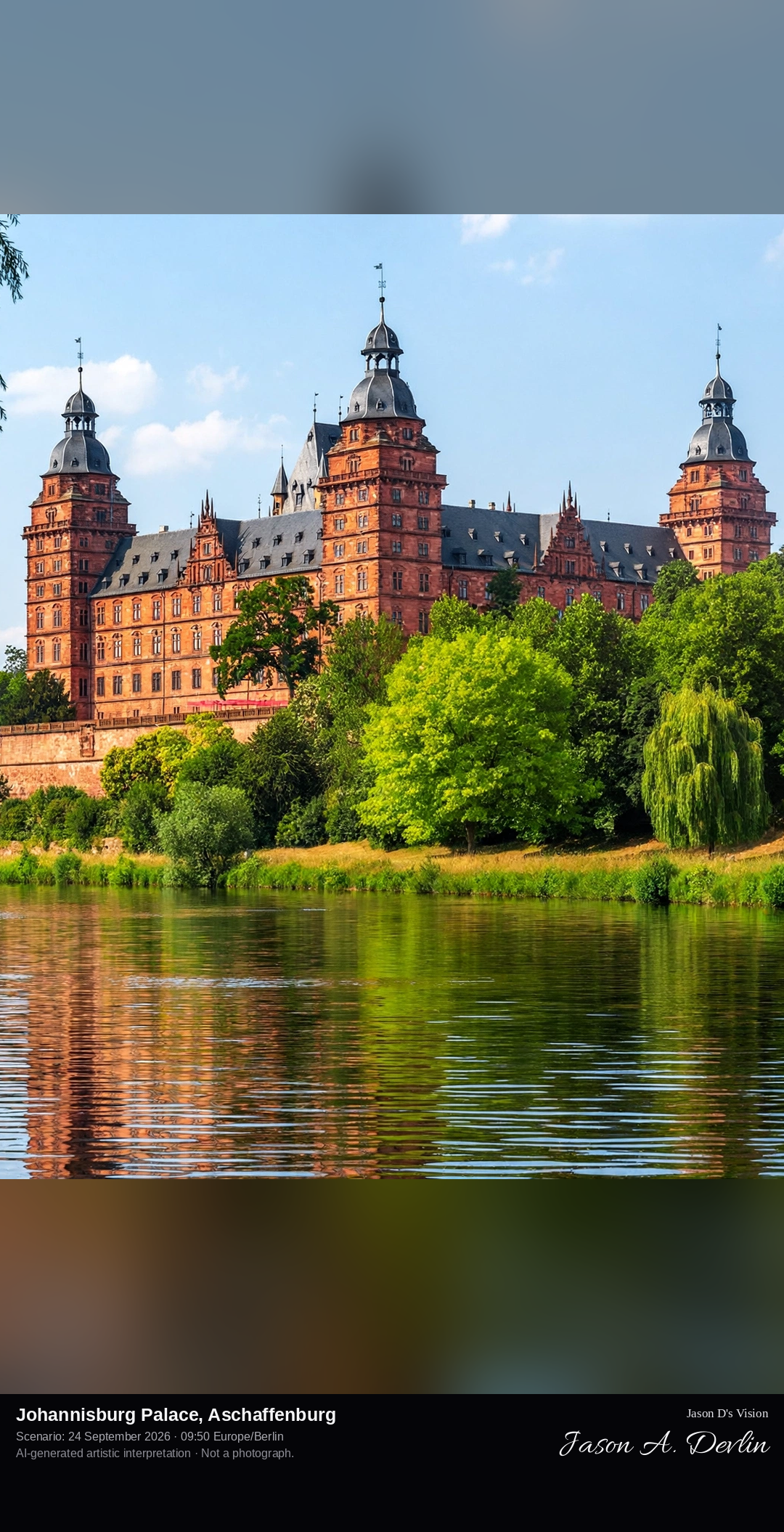
Red-sandstone Renaissance palace above the Main · AI-generated artistic interpretation
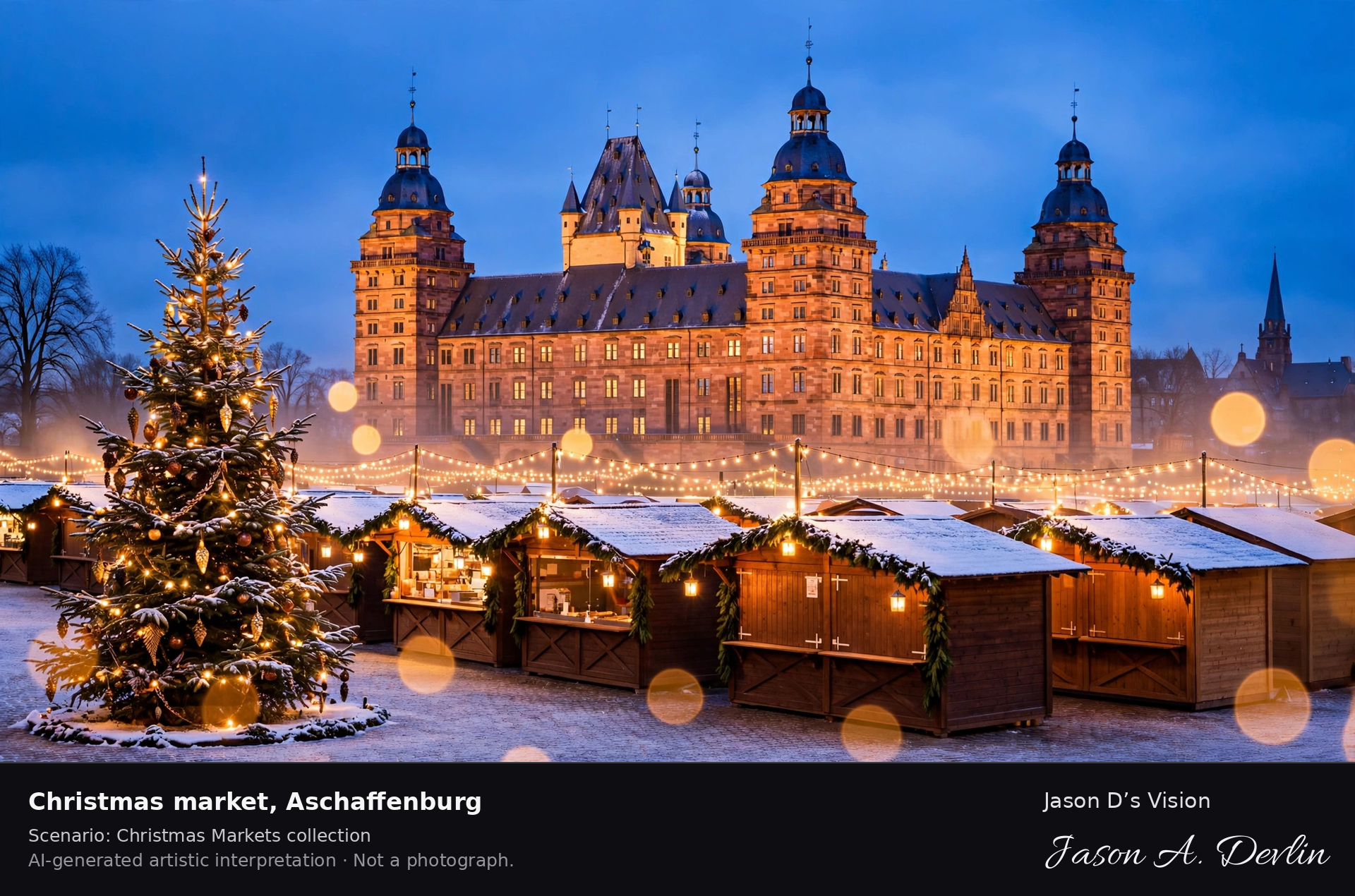
A vast red-sandstone palace stands above the Main at Aschaffenburg, its quadrangular Renaissance block rising to steep roofs with three capped corner towers prominent from this side. Built between 1605 and 1614 for the prince-electors of Mainz to designs by Georg Ridinger, Schloss Johannisburg ranked among the most important palace buildings of the German Renaissance and still dominates the river front.
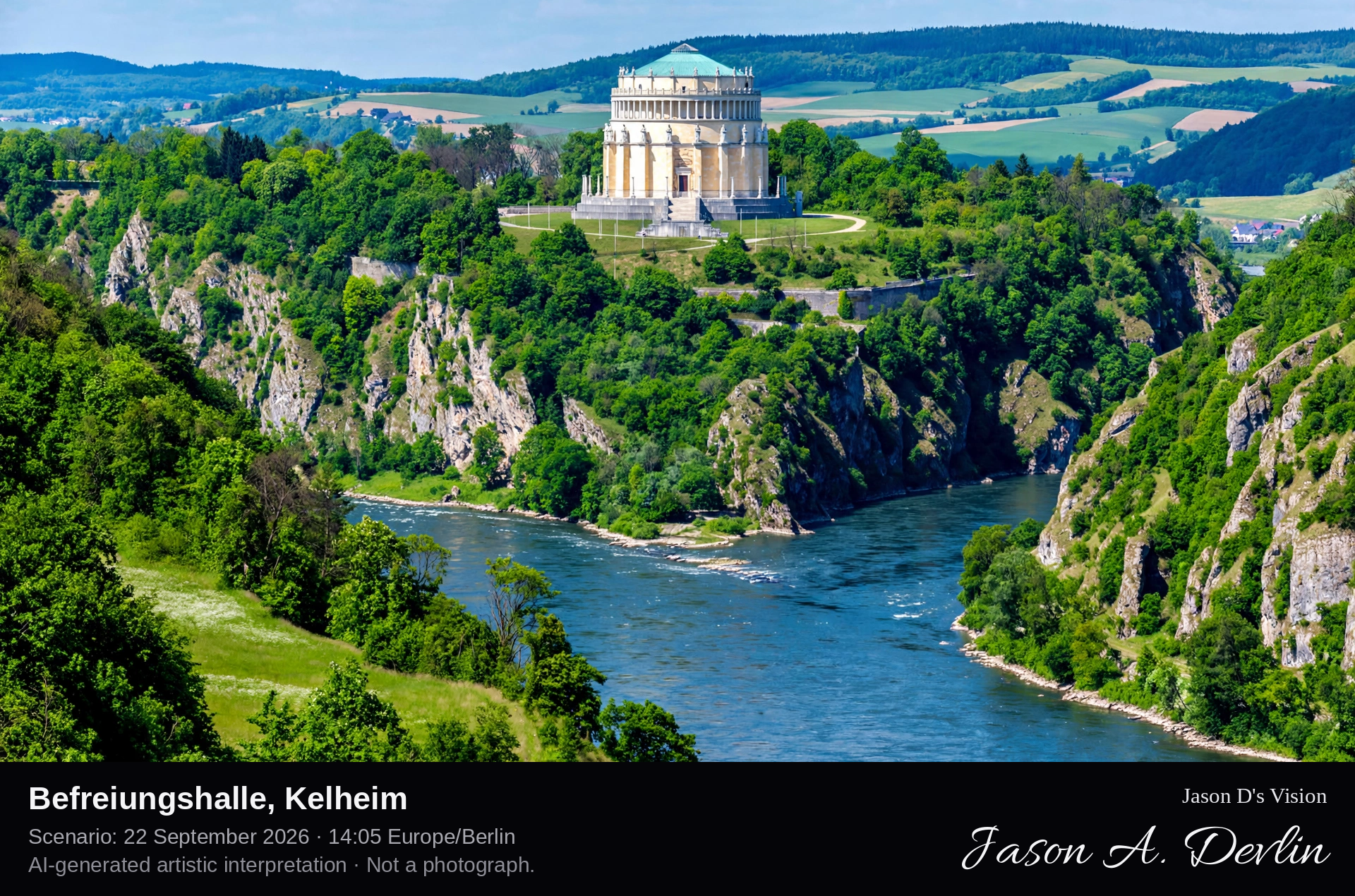
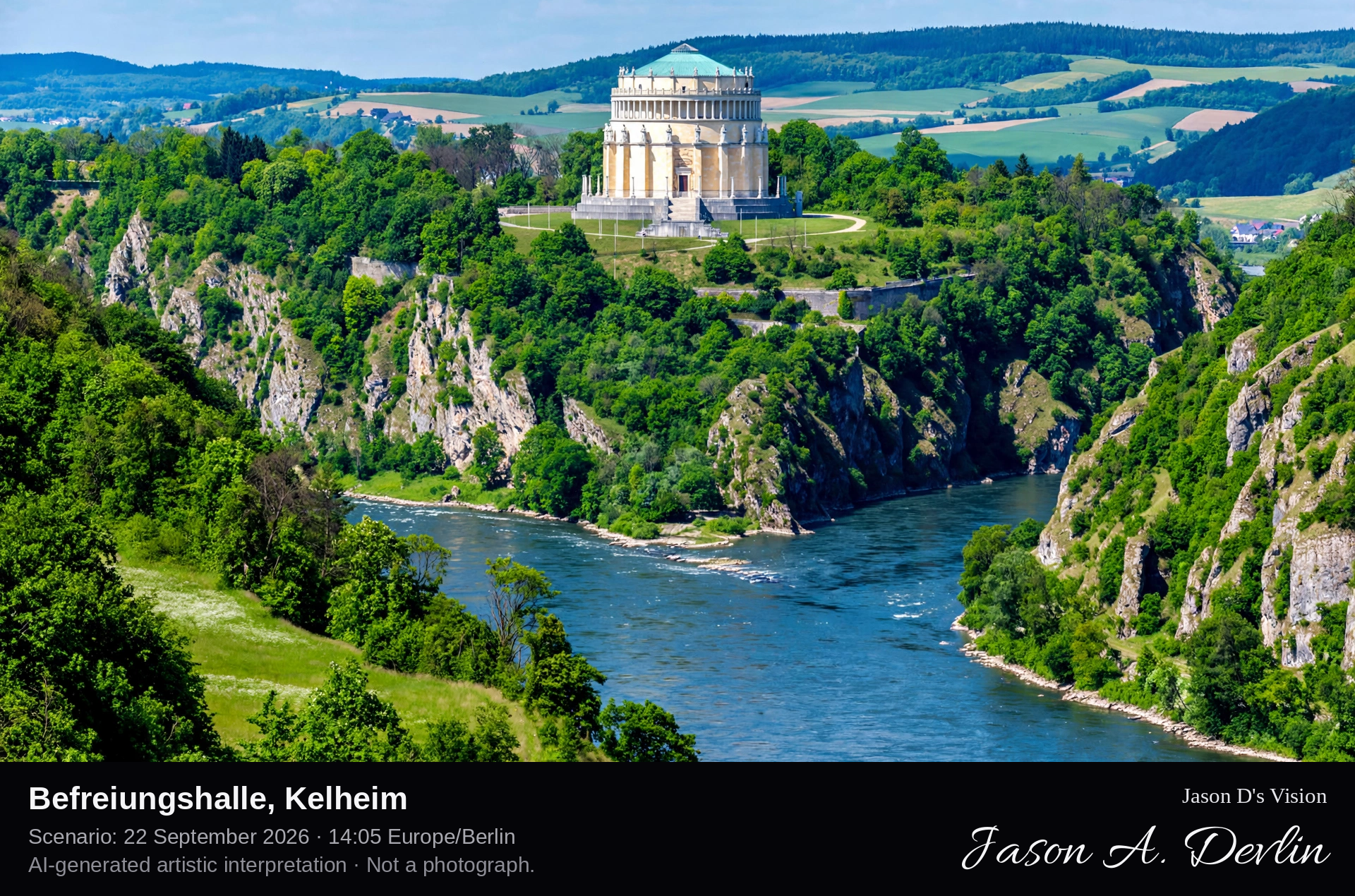
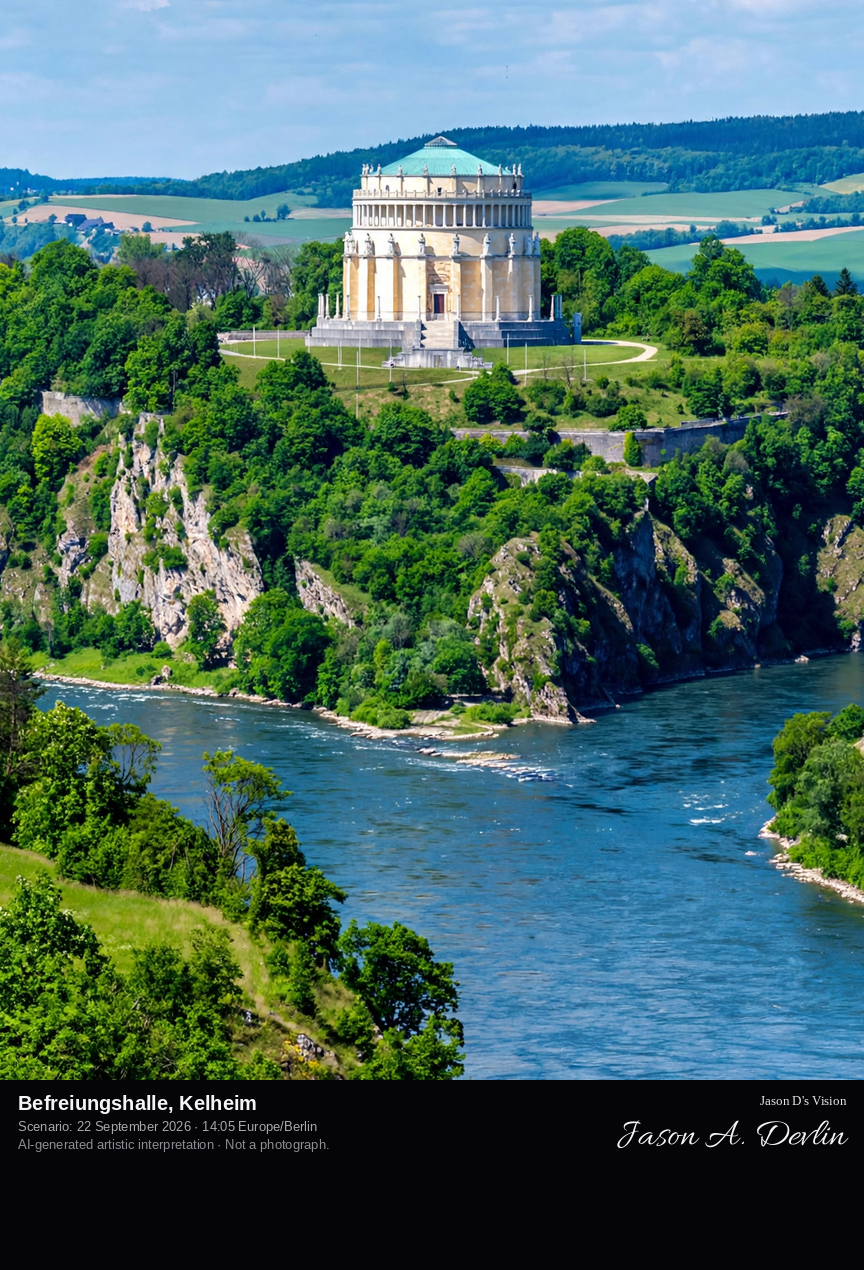
Monumental rotunda above the Danube · AI-generated artistic interpretation
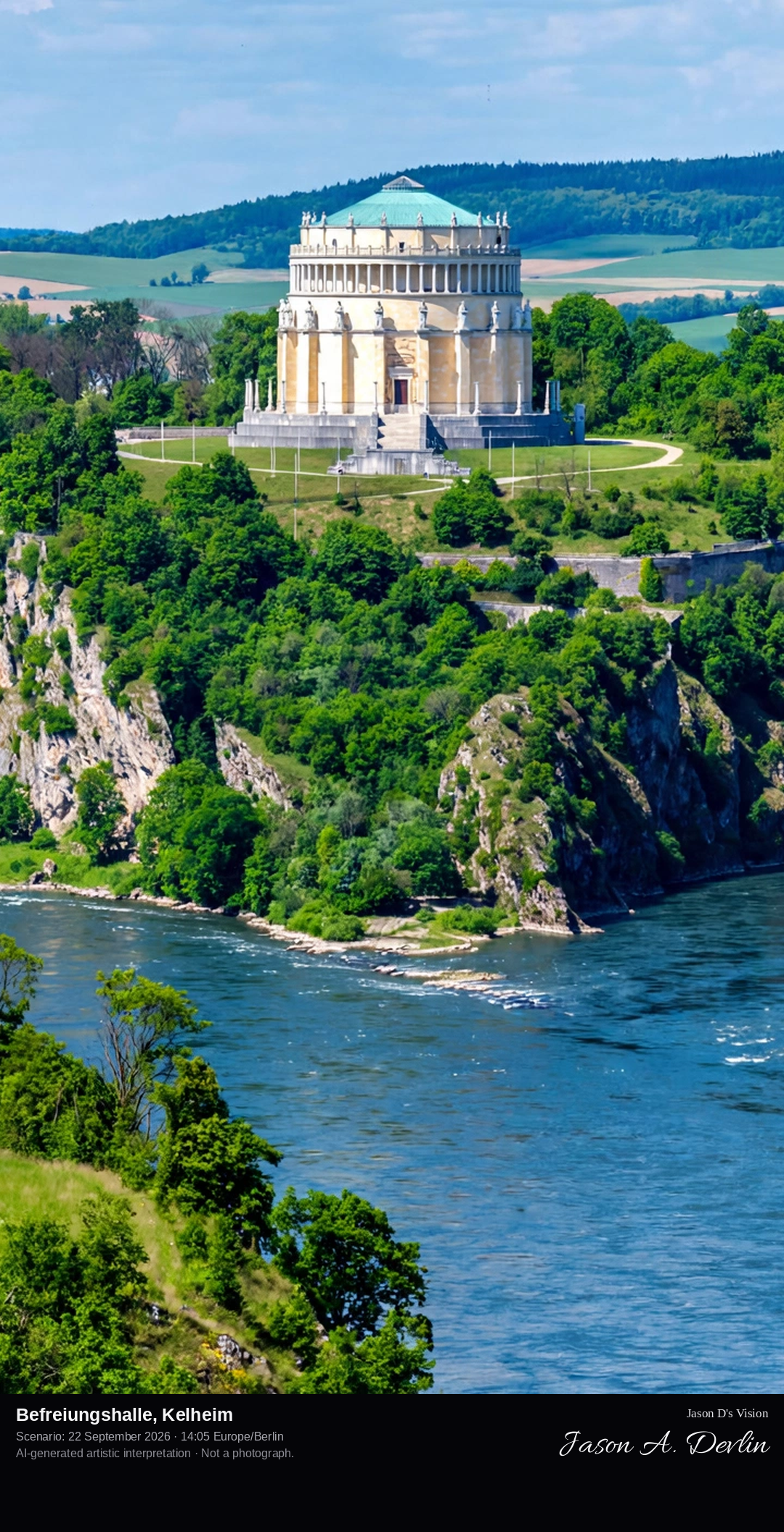
A monumental pale rotunda crowns the Michelsberg above Kelheim, its drum ringed by colossal allegorical statues beneath an upper gallery of columns. Commissioned by Ludwig I of Bavaria to honour the German soldiers of the Wars of Liberation against Napoleon, the hall was begun by Friedrich von Gärtner and completed by Leo von Klenze in 1863, standing high over the Danube near its gorge.
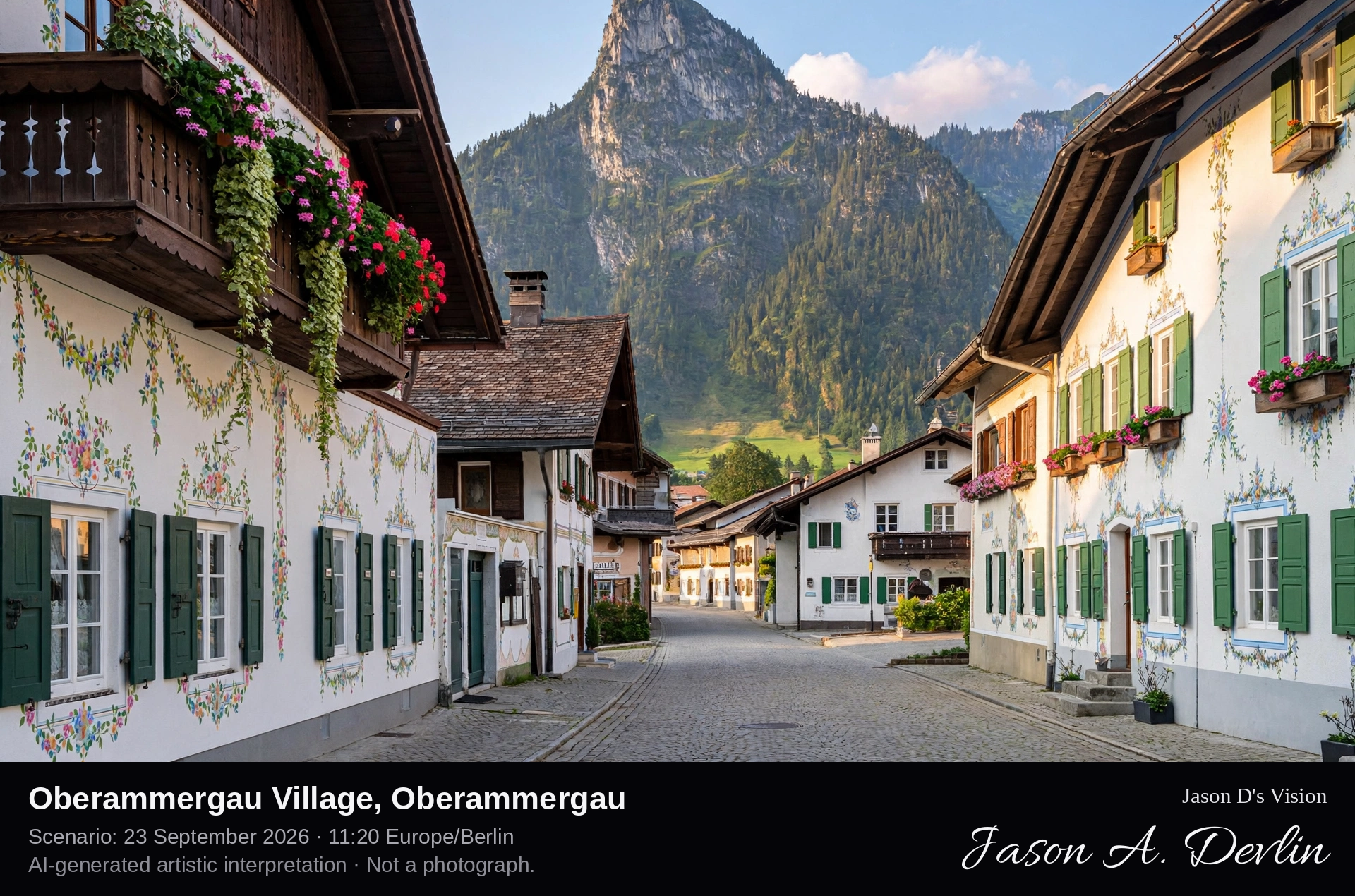
Painted Alpine village beneath the Kofel · AI-generated artistic interpretation
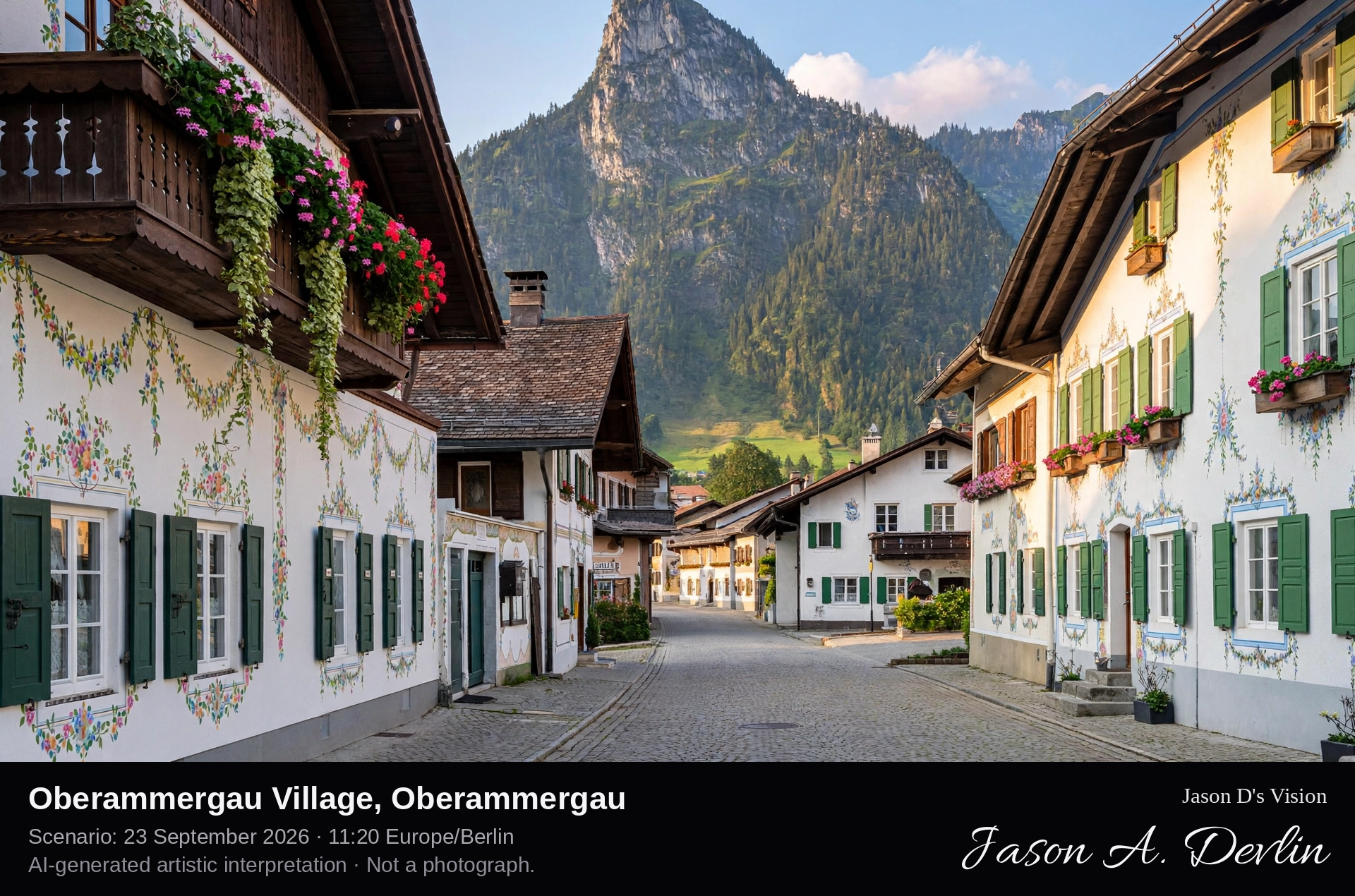
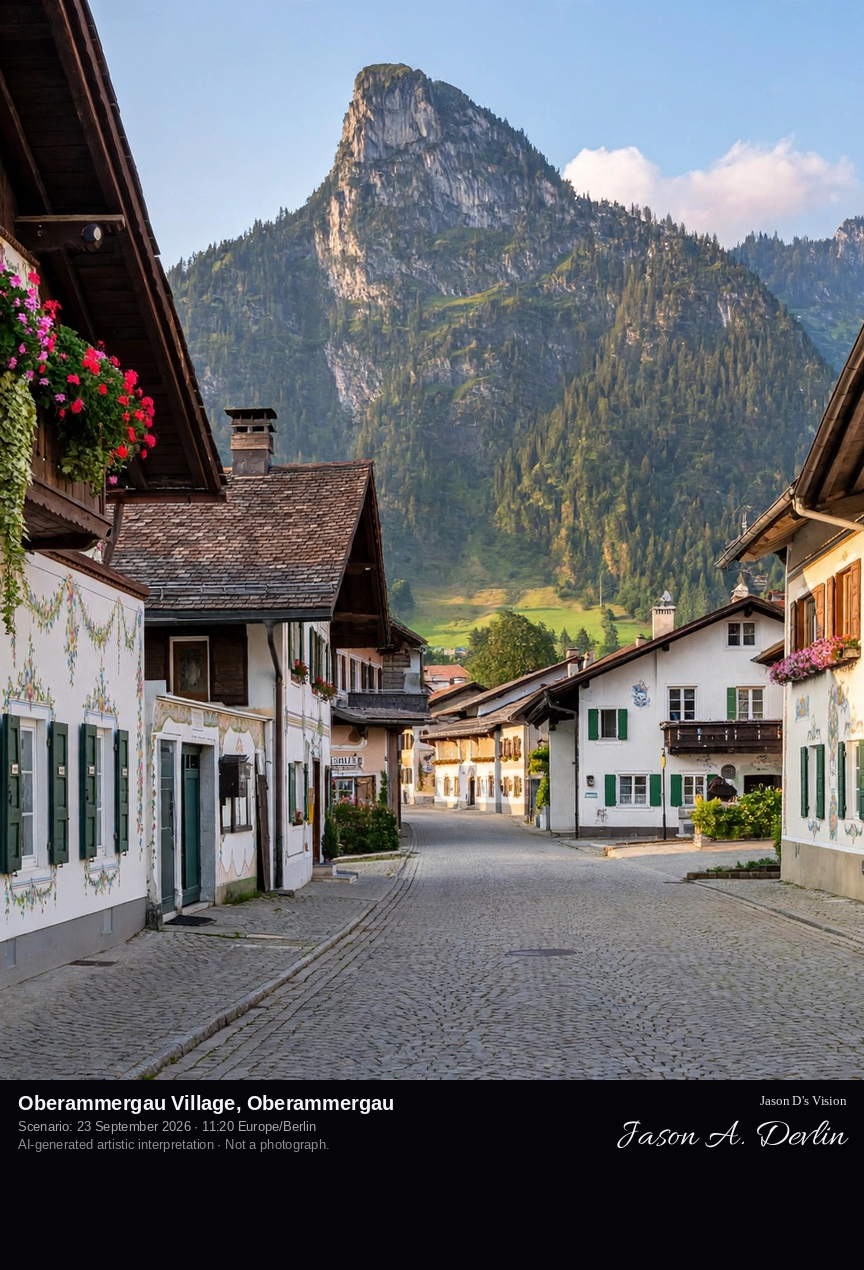
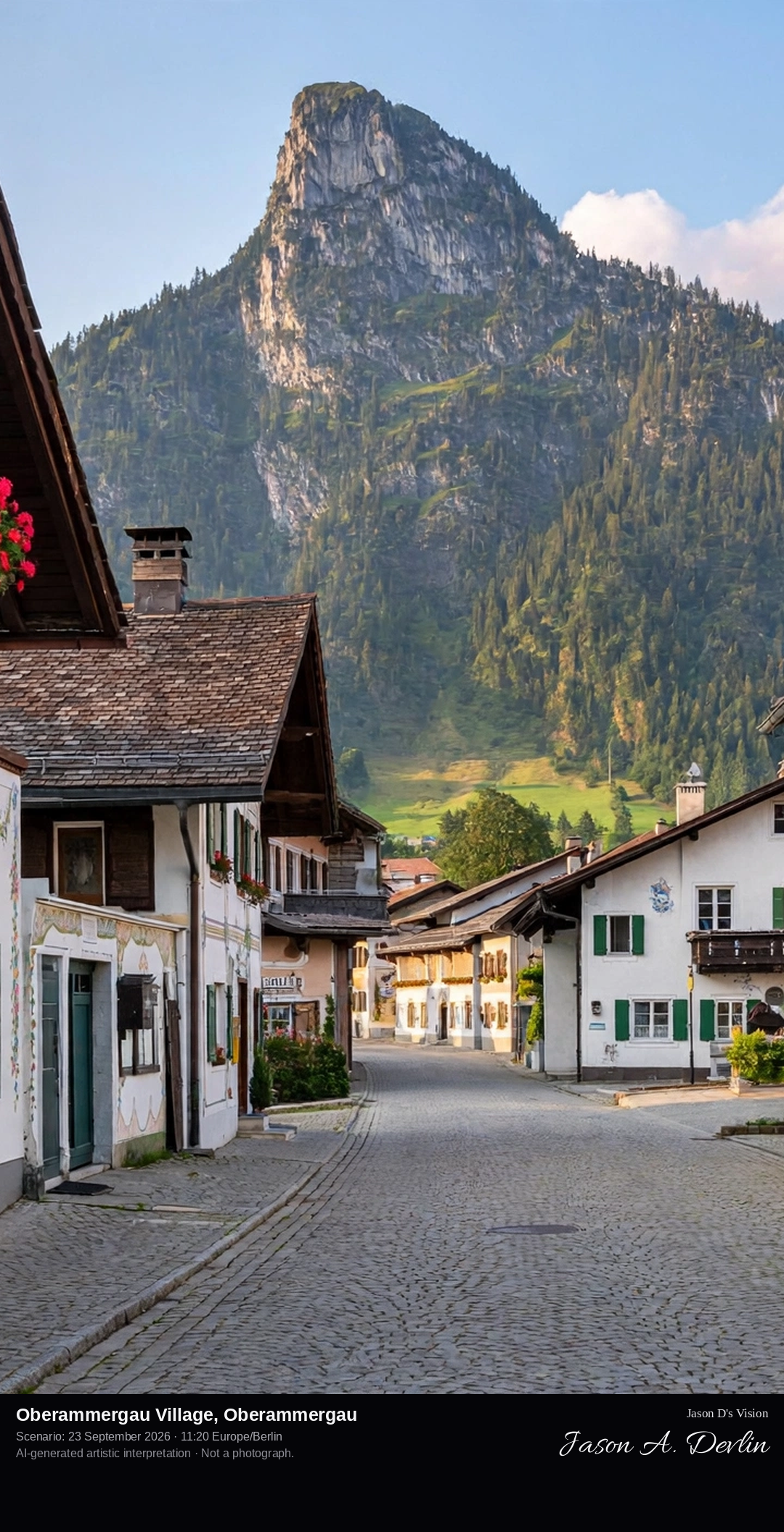
Painted house fronts line a quiet street in the Ammer valley beneath the steep cone of the Kofel, their walls carrying the frescoes known as Lüftlmalerei — biblical scenes, fairy tales and traditional crafts in bright colour. The village is world-famous for its Passion Play, performed by its own residents roughly every ten years since 1634 in fulfilment of a plague vow.
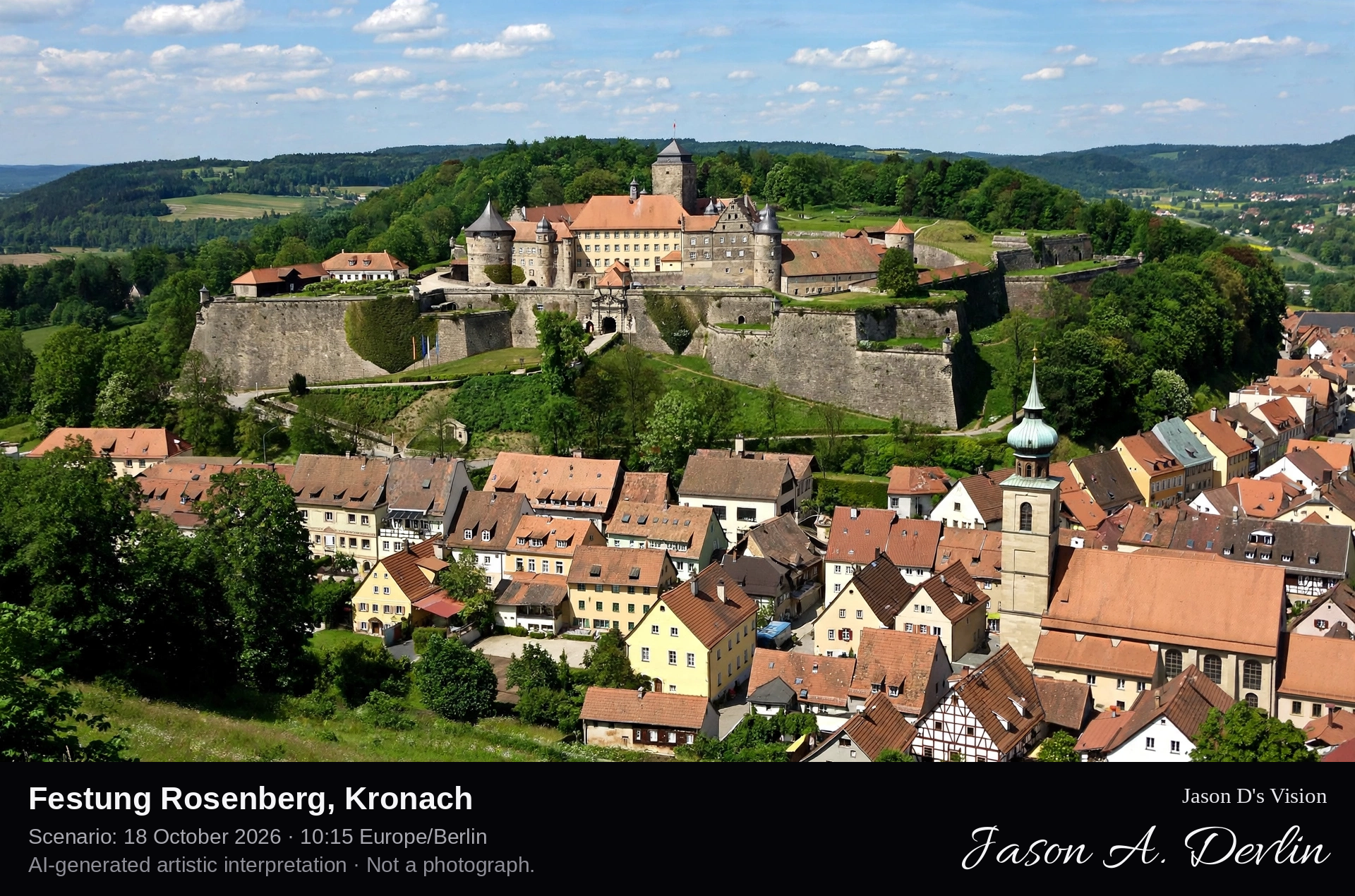
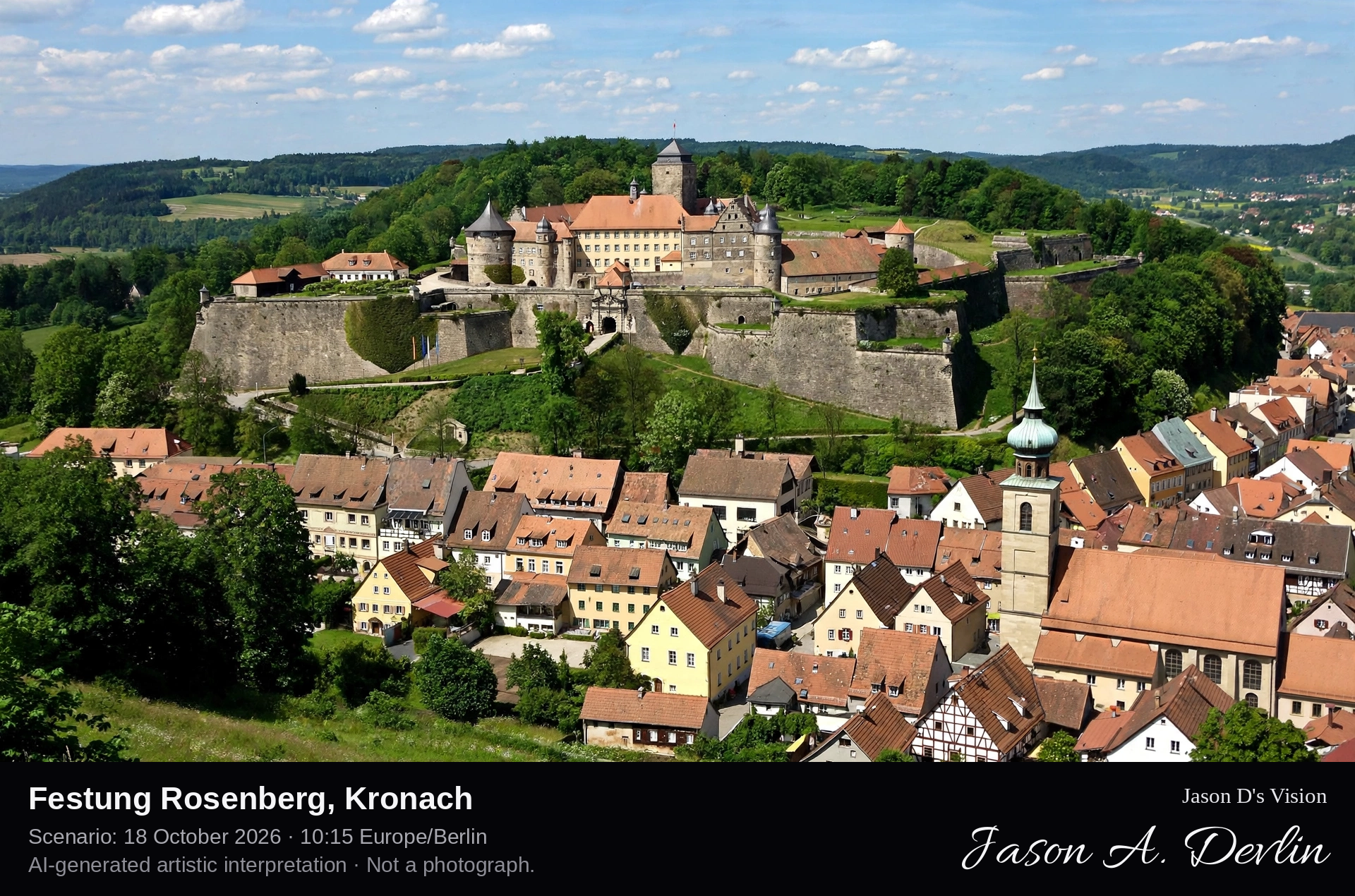
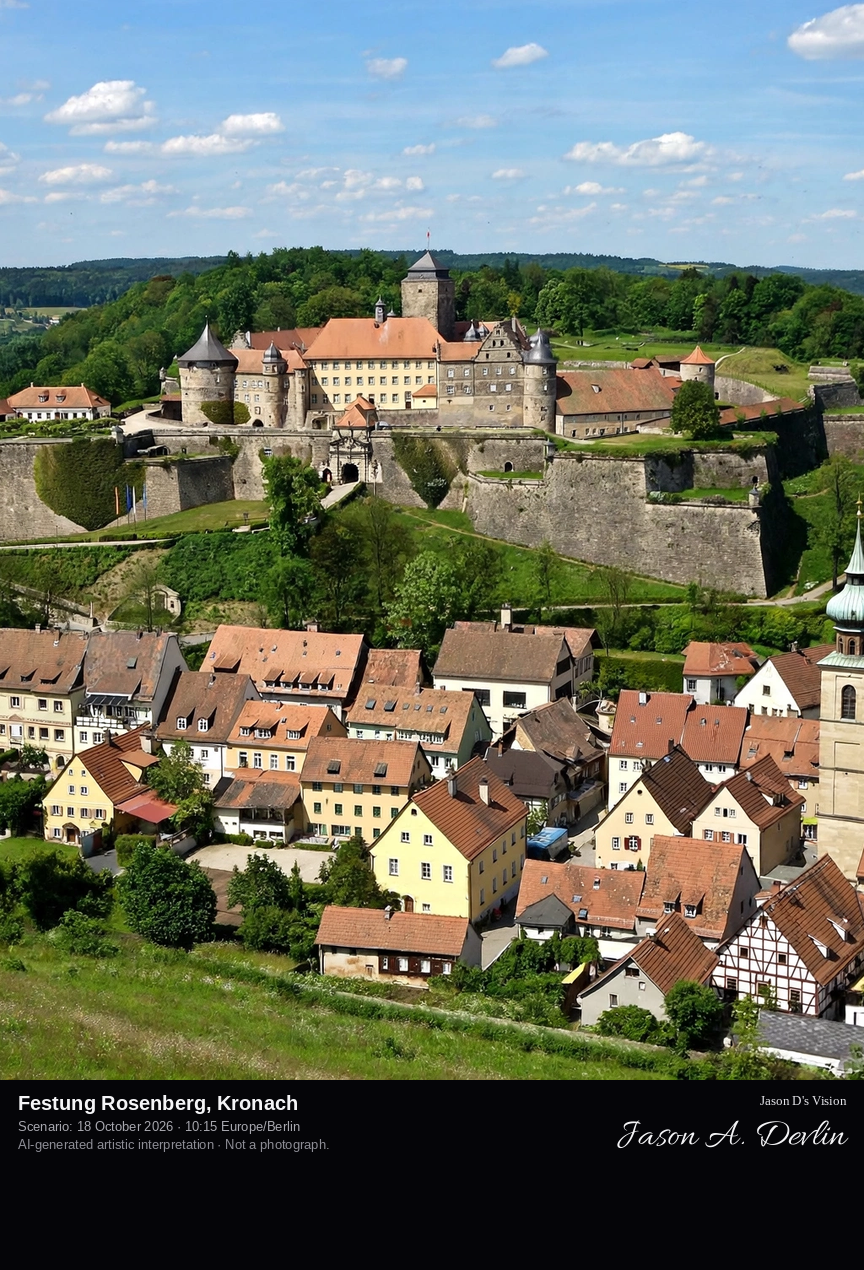
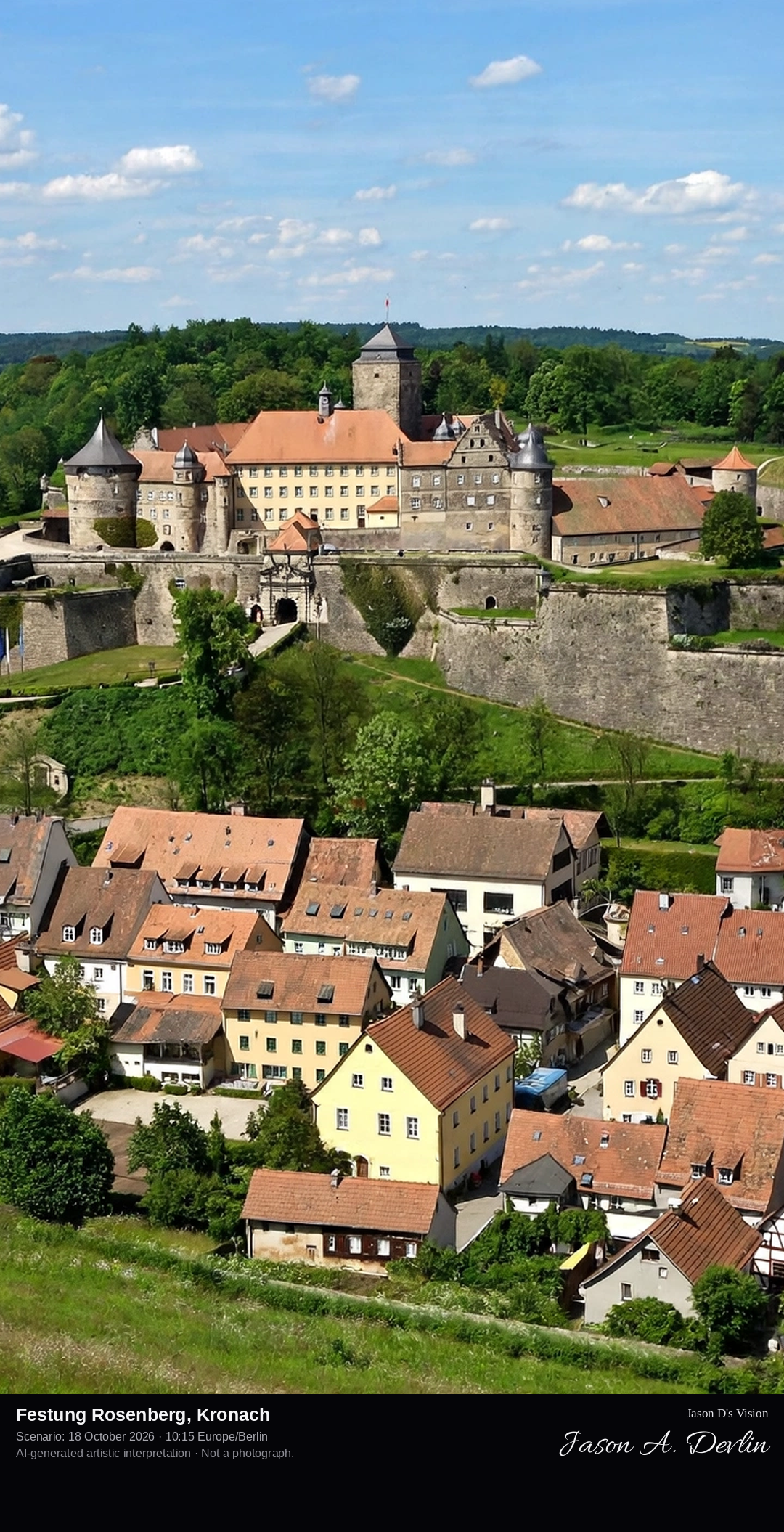
The great fortress walls and bastions above the rooftops of Kronach · AI-generated artistic interpretation
Rosenberg Fortress above Kronach, birthplace of Lucas Cranach the Elder, grew from a medieval castle into one of the largest and best-preserved fortifications in the country. Its bastioned walls guarded the Bamberg bishops' northern frontier for centuries, and the fortress now houses the Franconian Gallery.
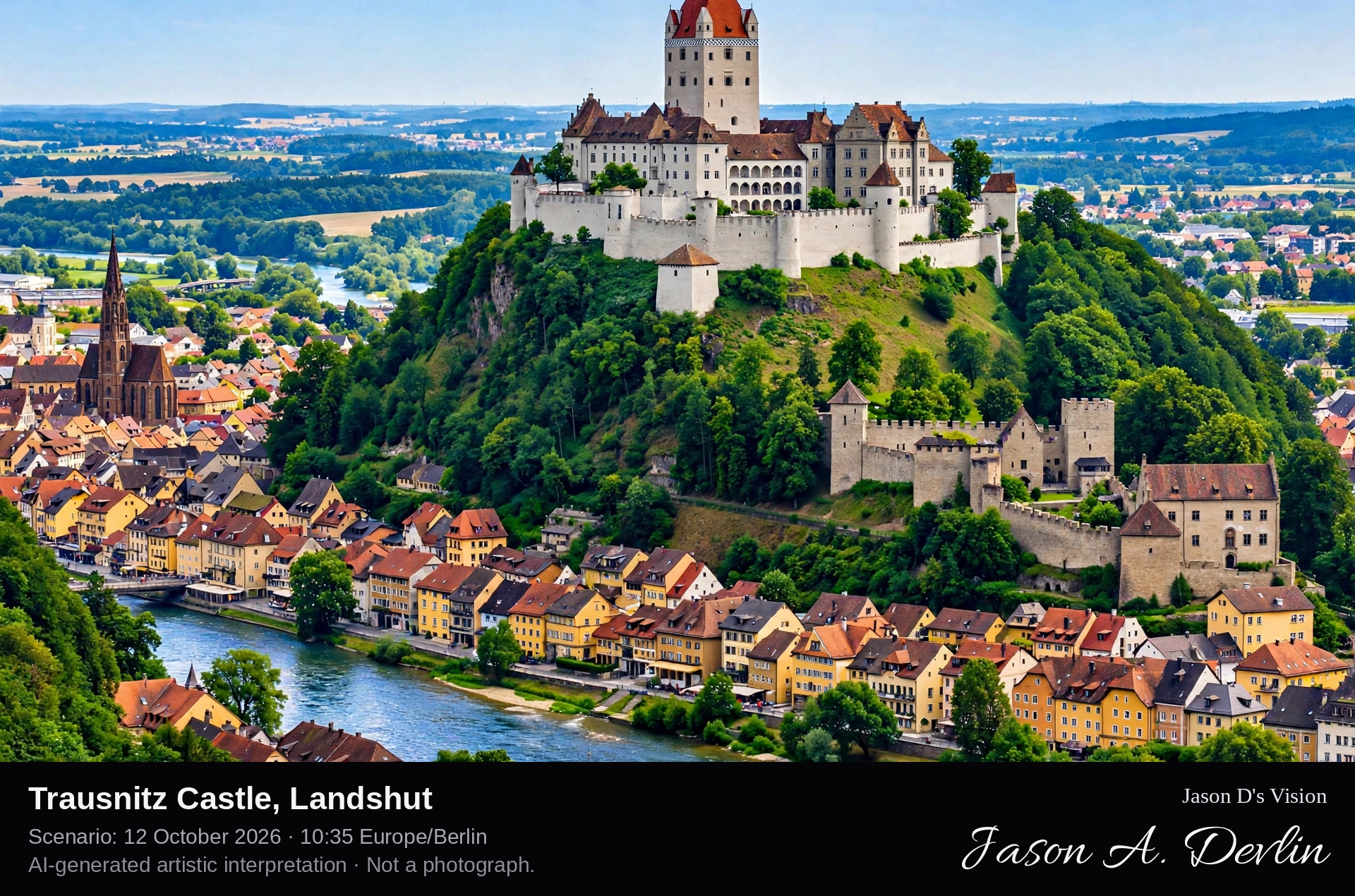
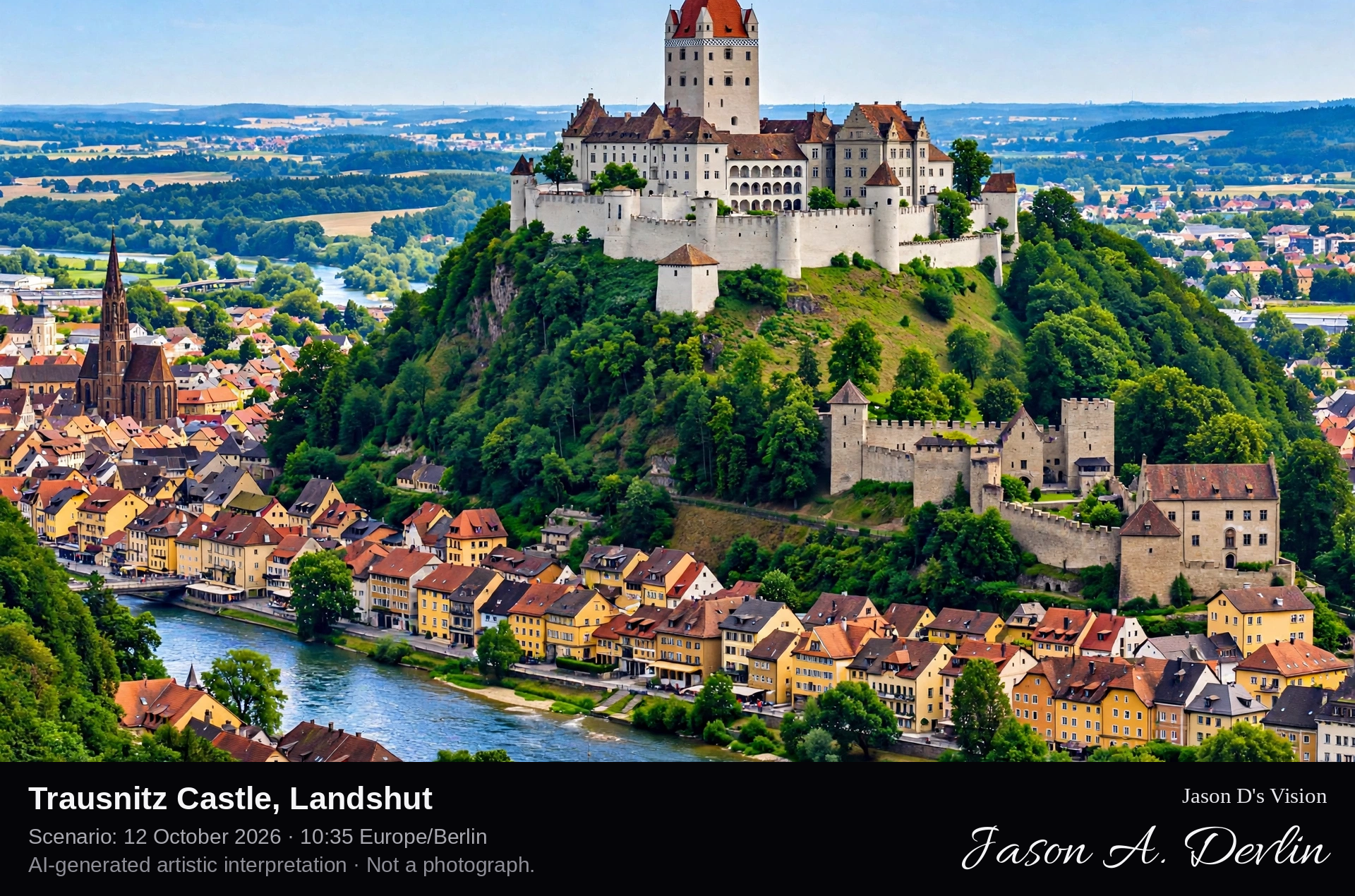
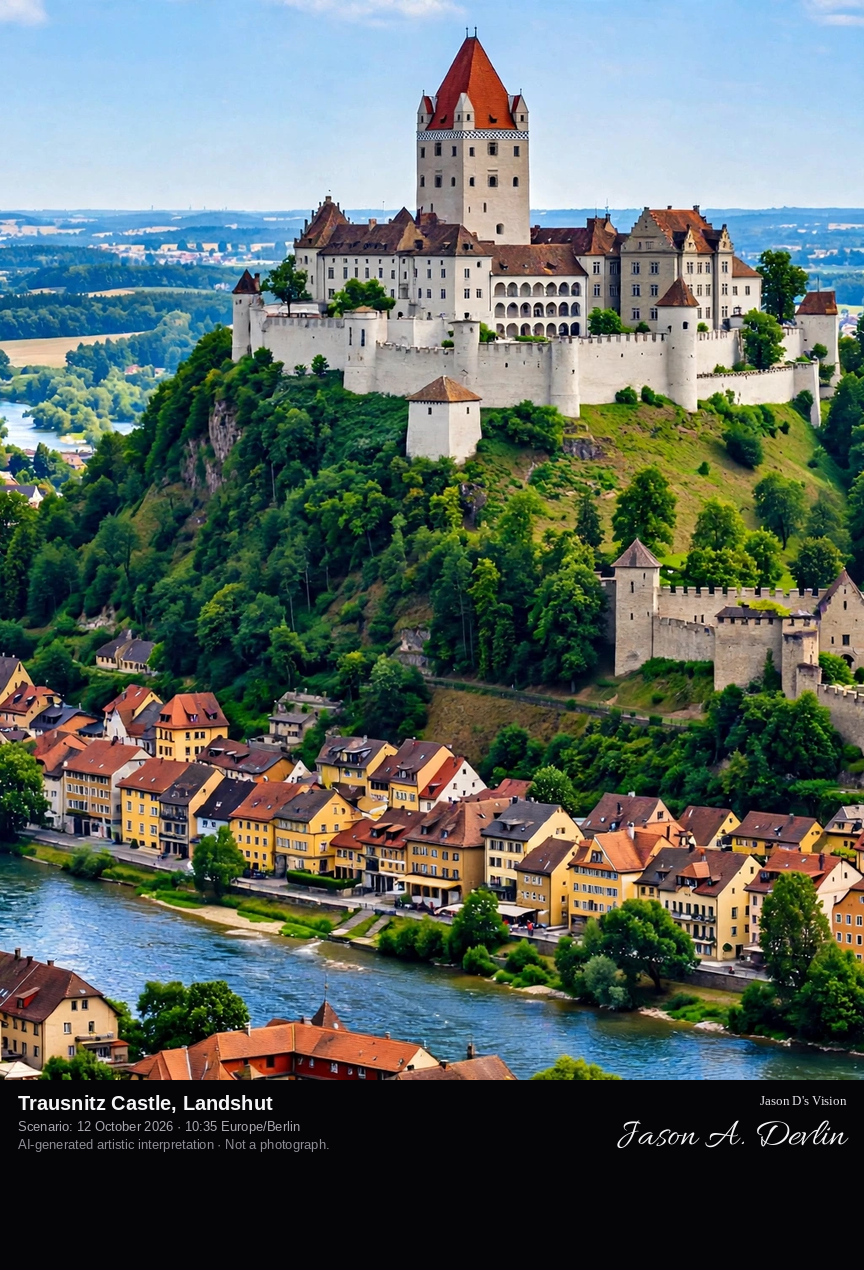
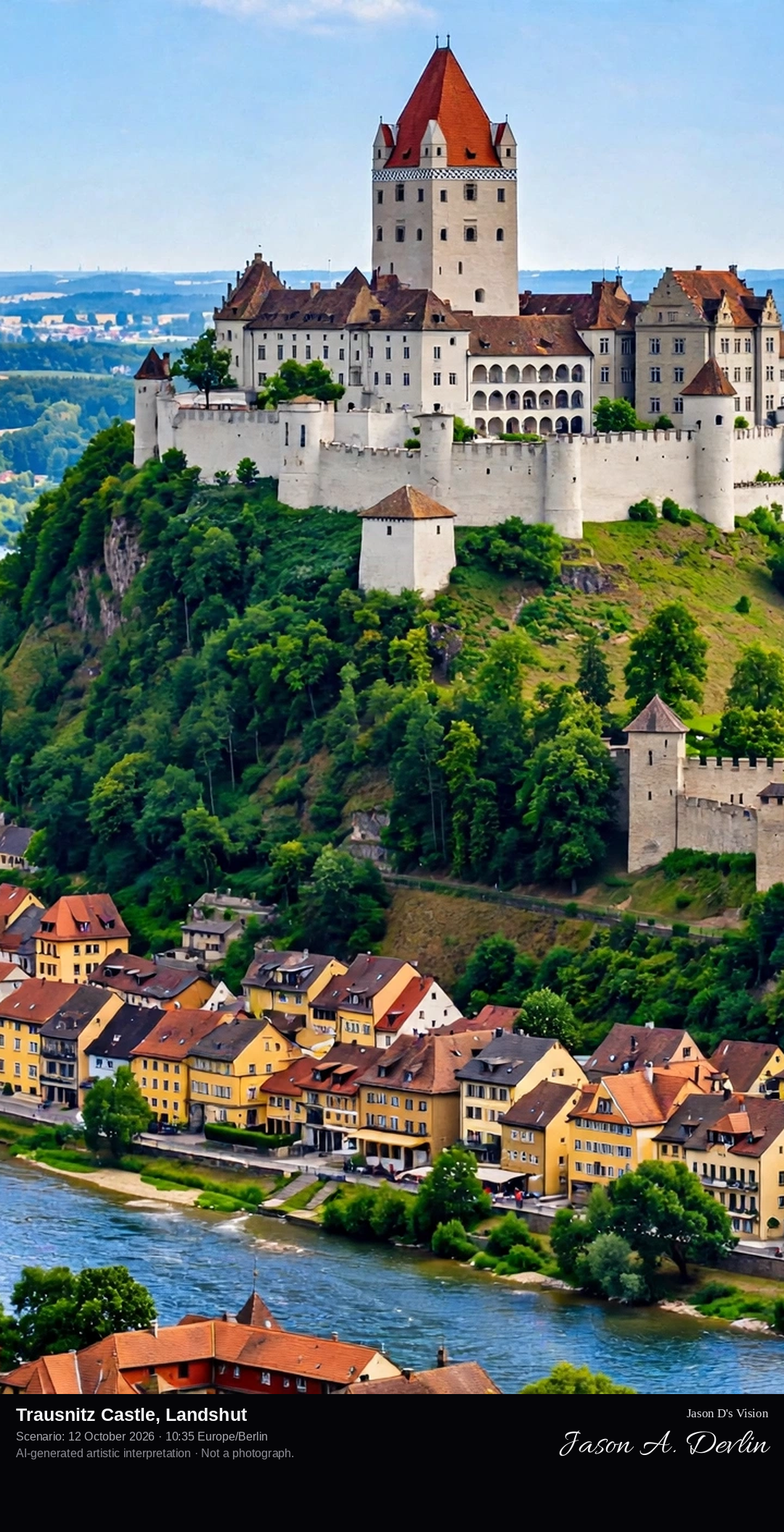
The Wittelsbach castle walls and towers above the Isar town · AI-generated artistic interpretation
Burg Trausnitz has guarded Landshut since 1204 as the ancestral seat of the Lower Bavarian Wittelsbach dukes. Inside, the painted Fools' Staircase, alive with commedia dell'arte figures, is a jewel of the German Renaissance.
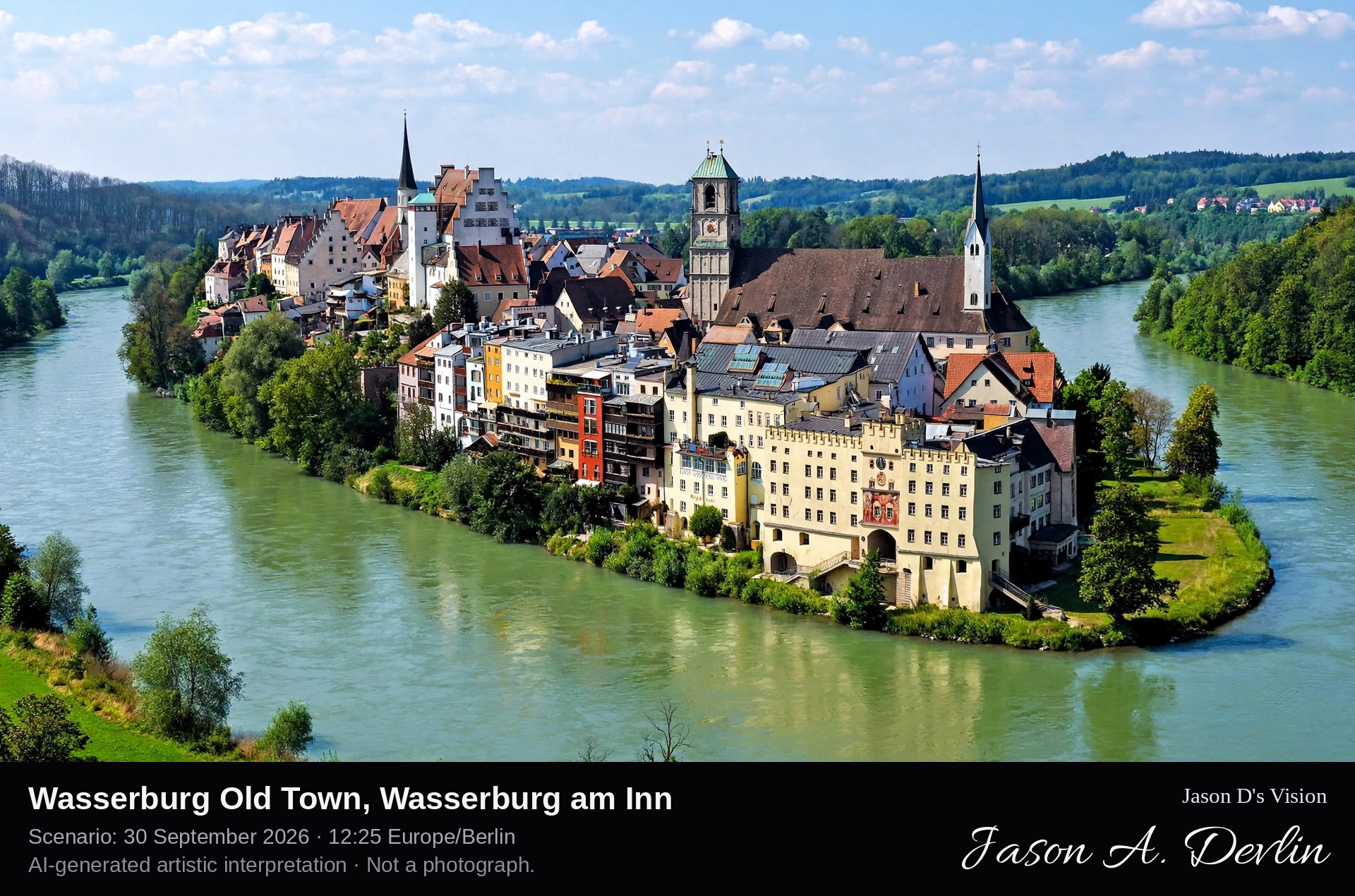
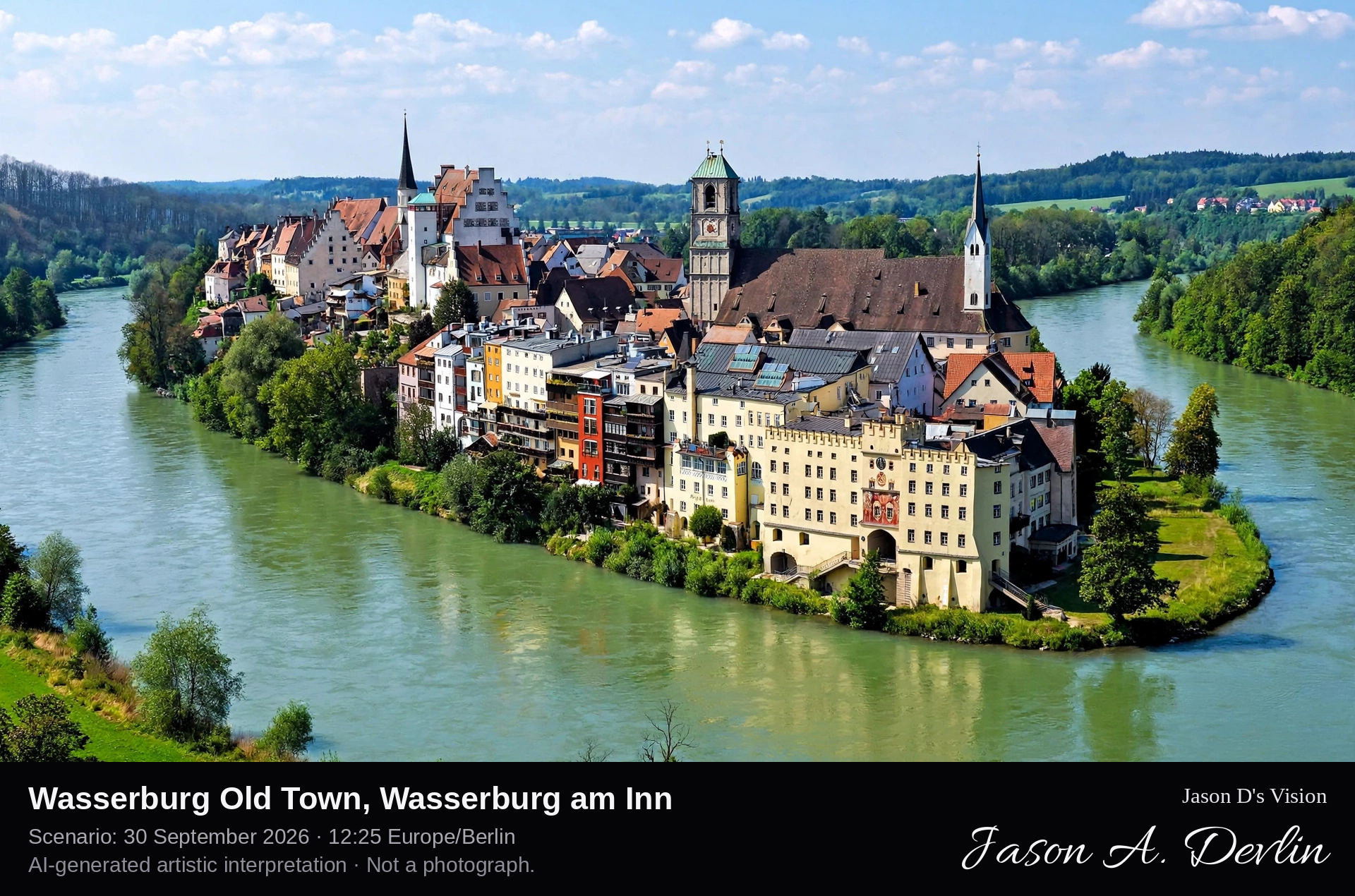
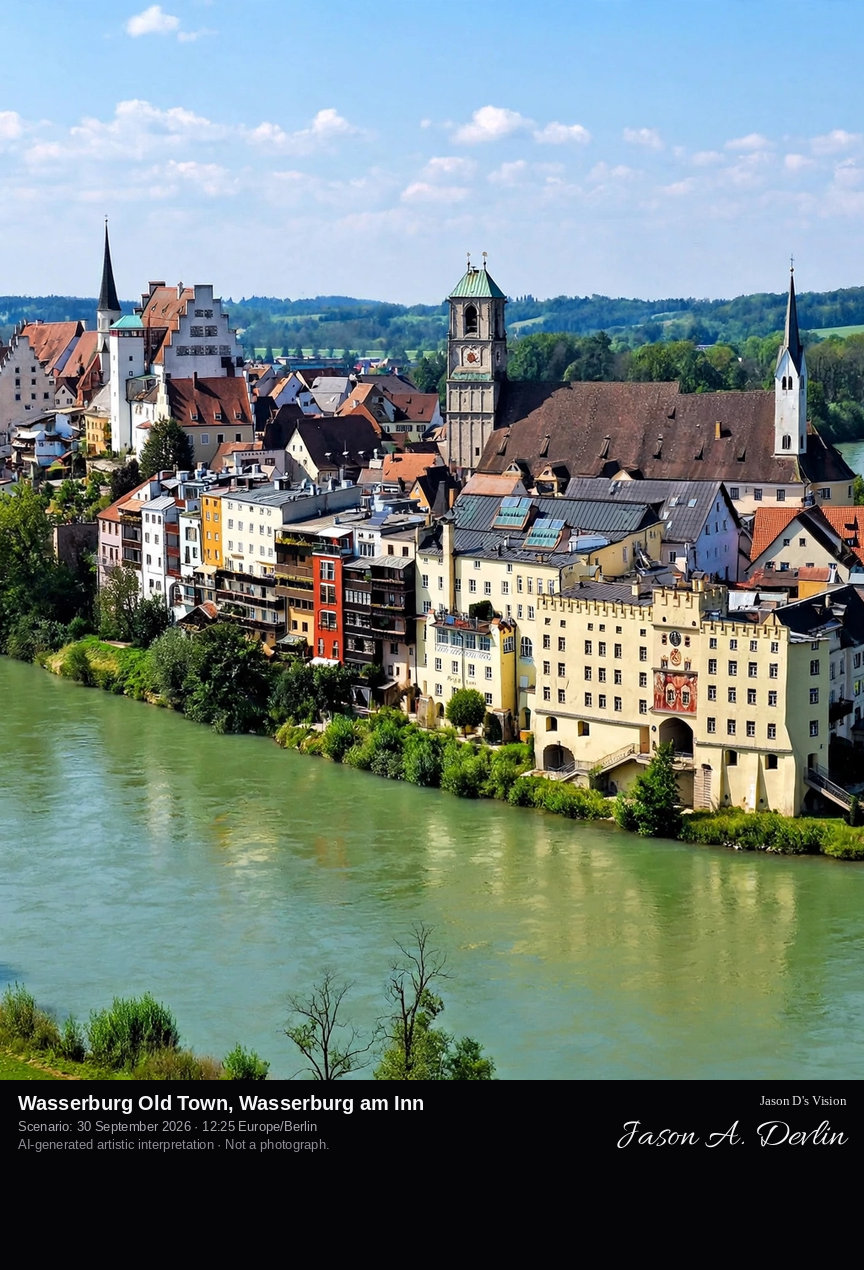
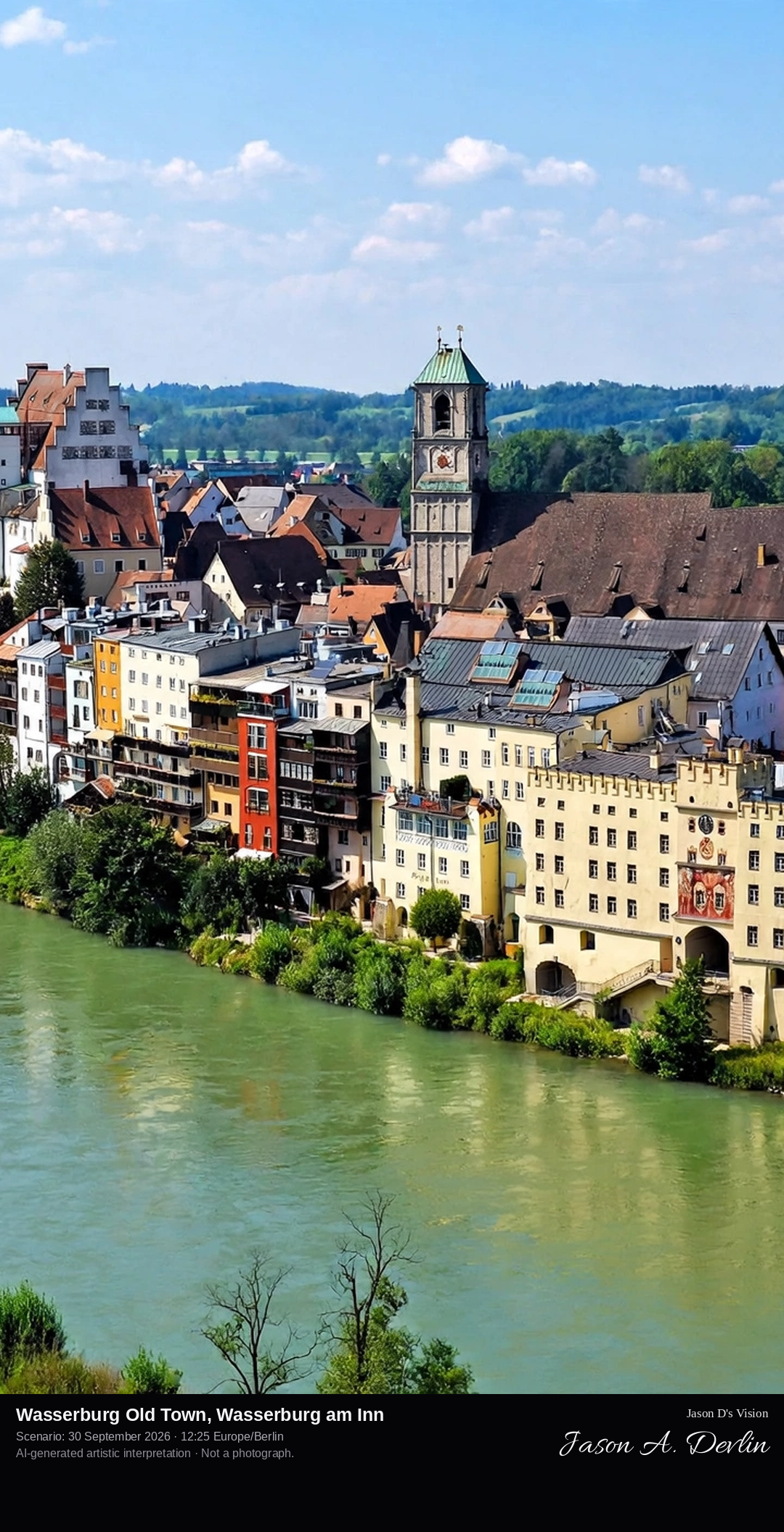
The old-town peninsula within its loop of the Inn, an artistic scenic composition · AI-generated artistic interpretation
Wasserburg's old town sits on a peninsula almost encircled by the Inn, a trading place grown rich on the salt route between the Alpine mines and the north. Stepped gables, painted fronts and church towers crowd the narrow ground above the river. This view is a scenic artistic composition of that landmass, not a faithful aerial survey of its streets.
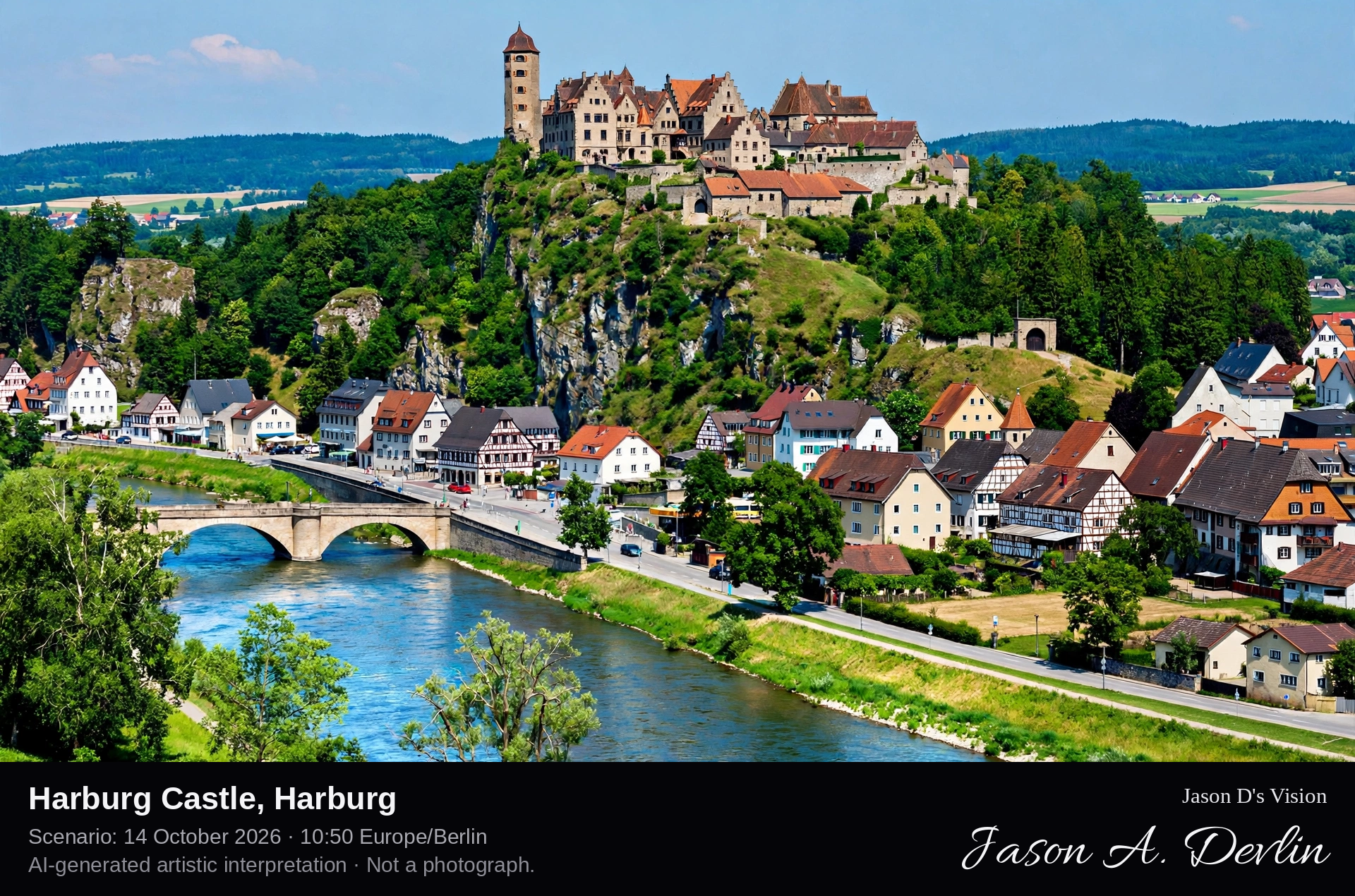
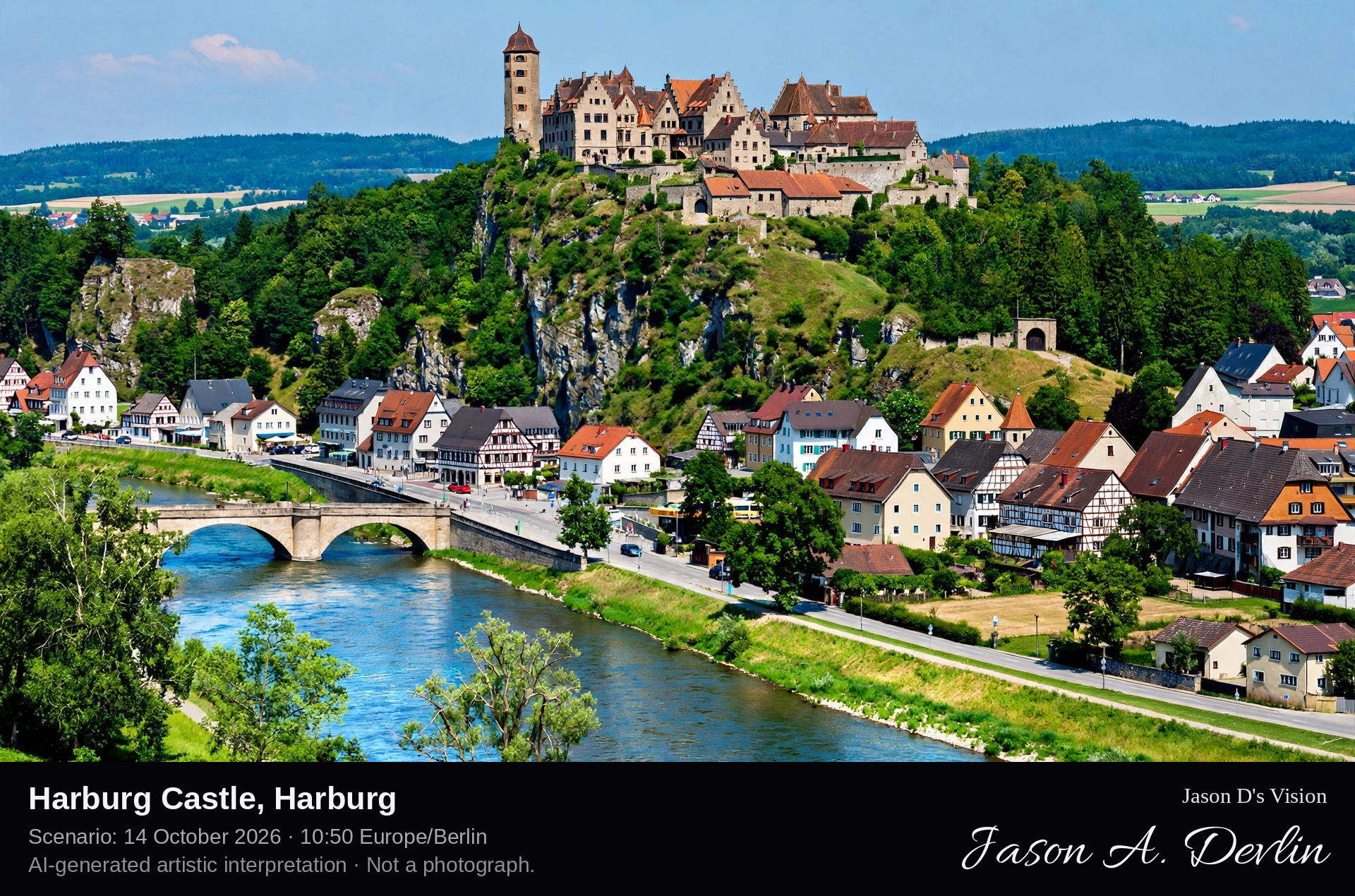
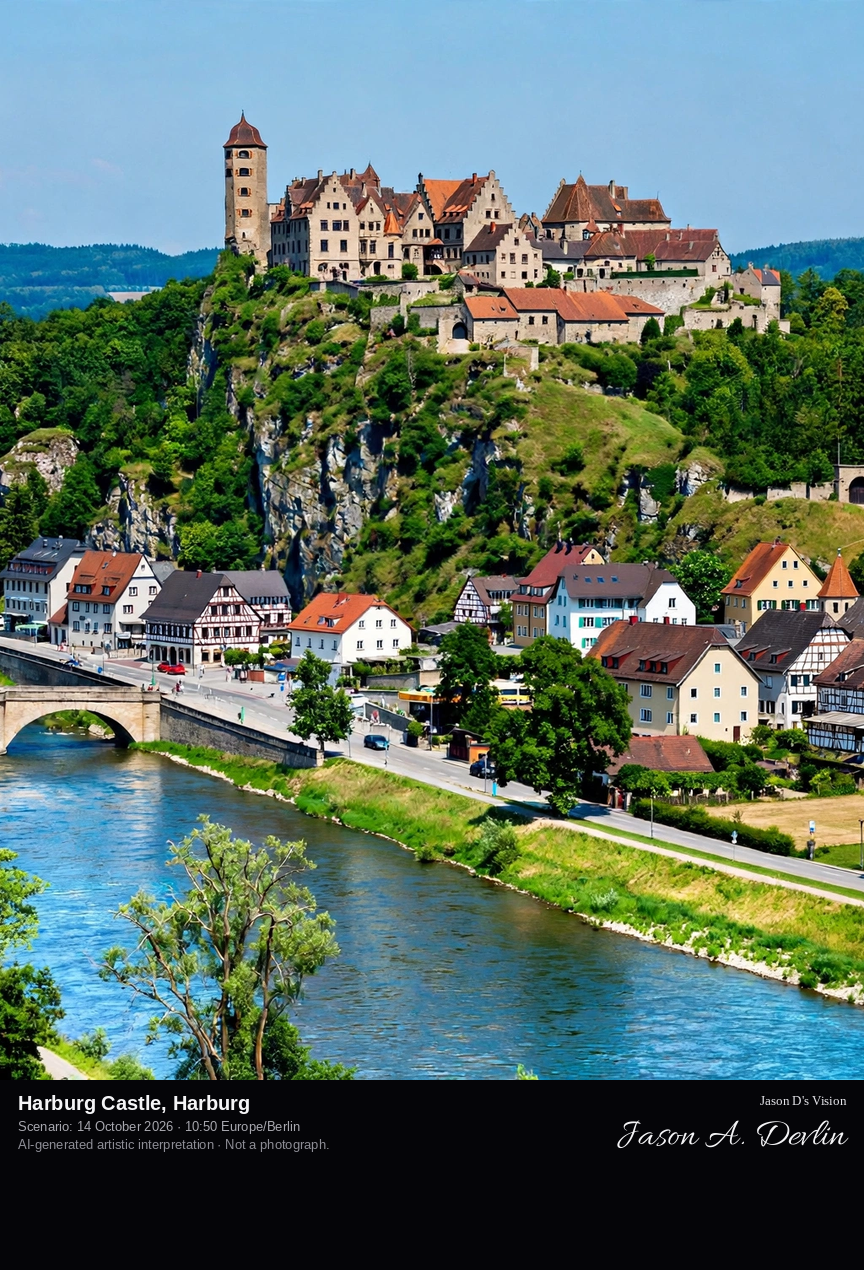
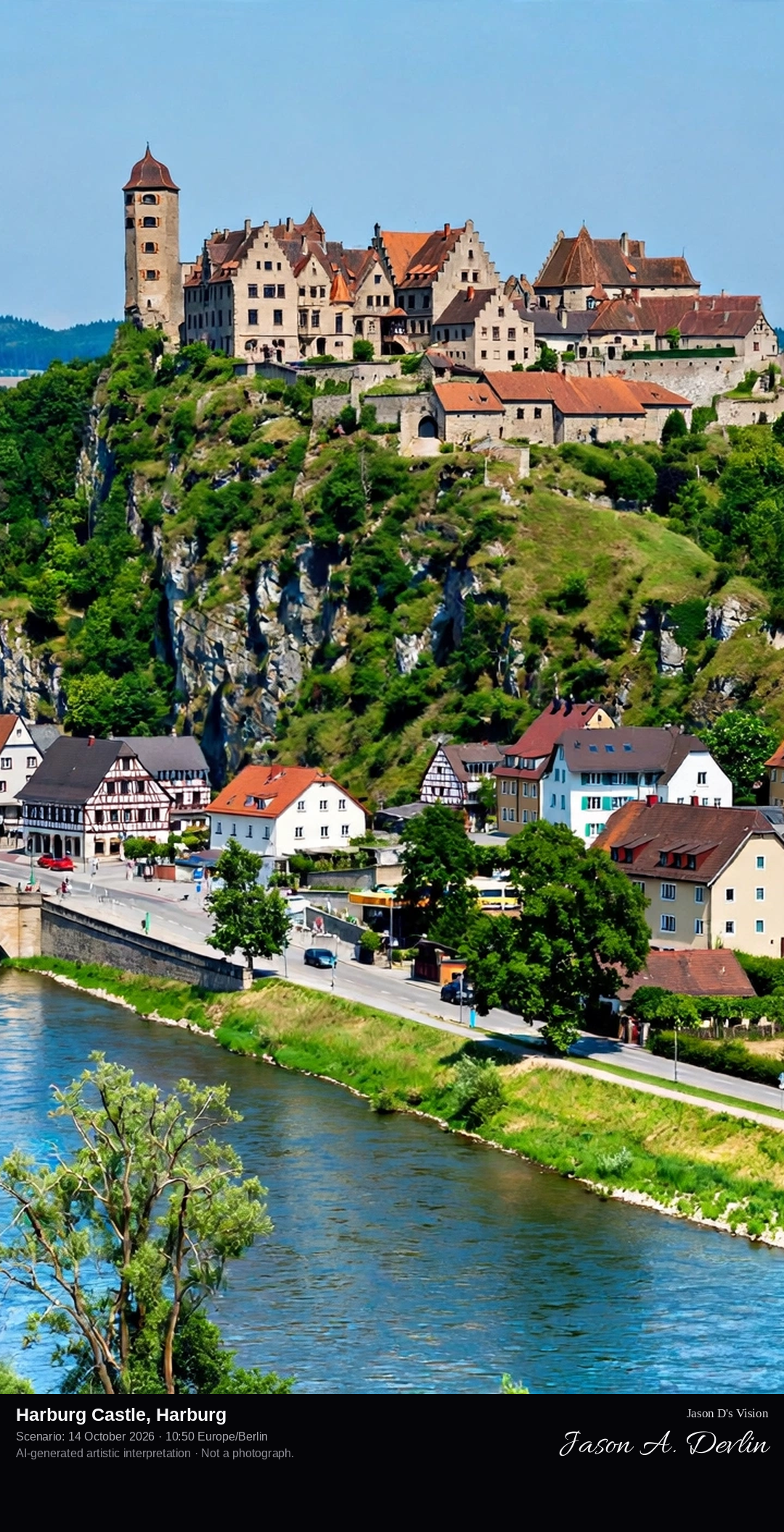
The irregular courtyard castle crowning its crag above the river town · AI-generated artistic interpretation
Harburg Castle spreads across its crag above the Wörnitz as one of the largest and best-preserved castle complexes in southern Germany. Church, keep and princely halls of the Oettingen princes crowd inside its ring of walls.
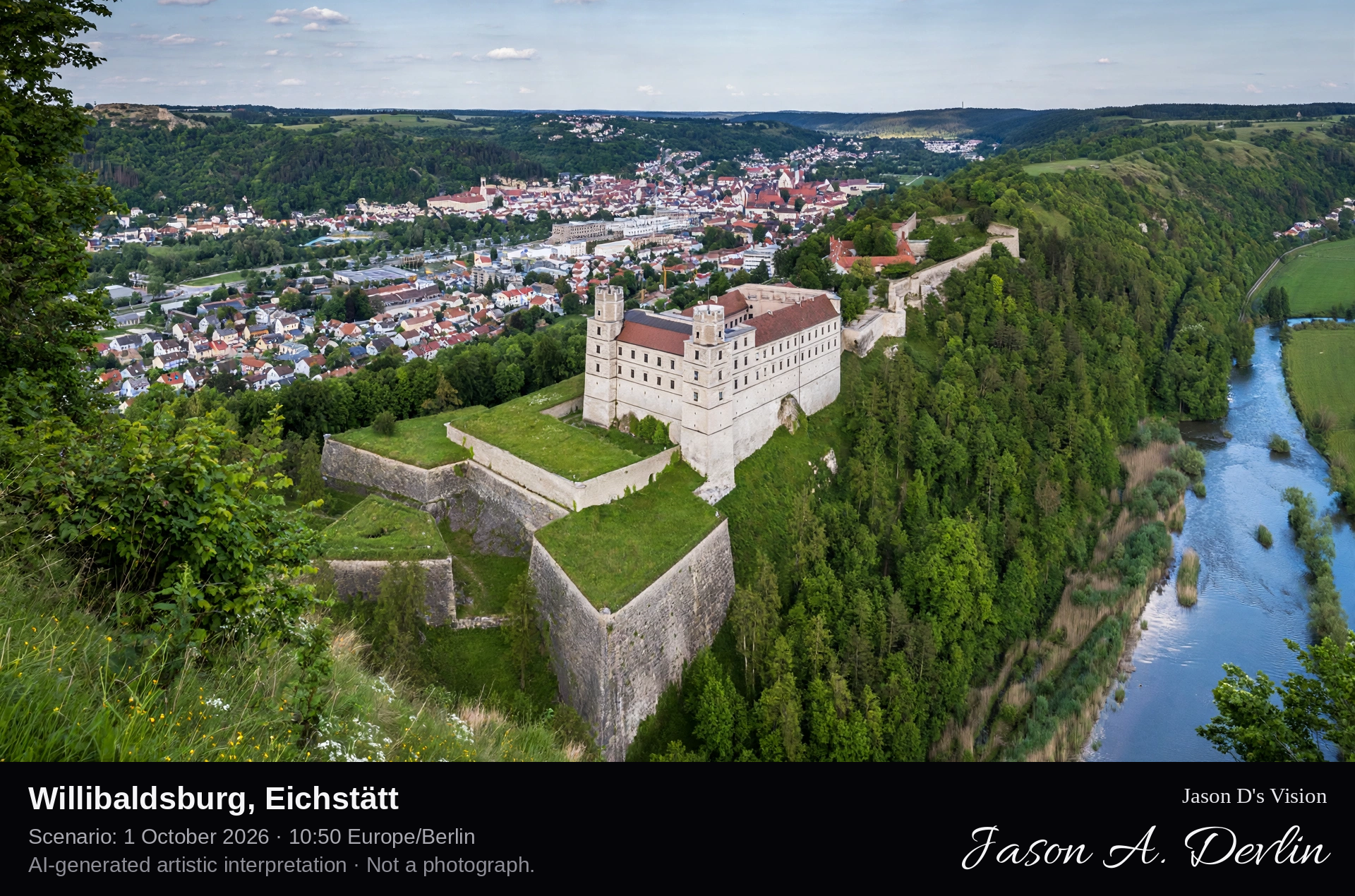
The pale Renaissance palace ranges above the Altmühl valley · AI-generated artistic interpretation
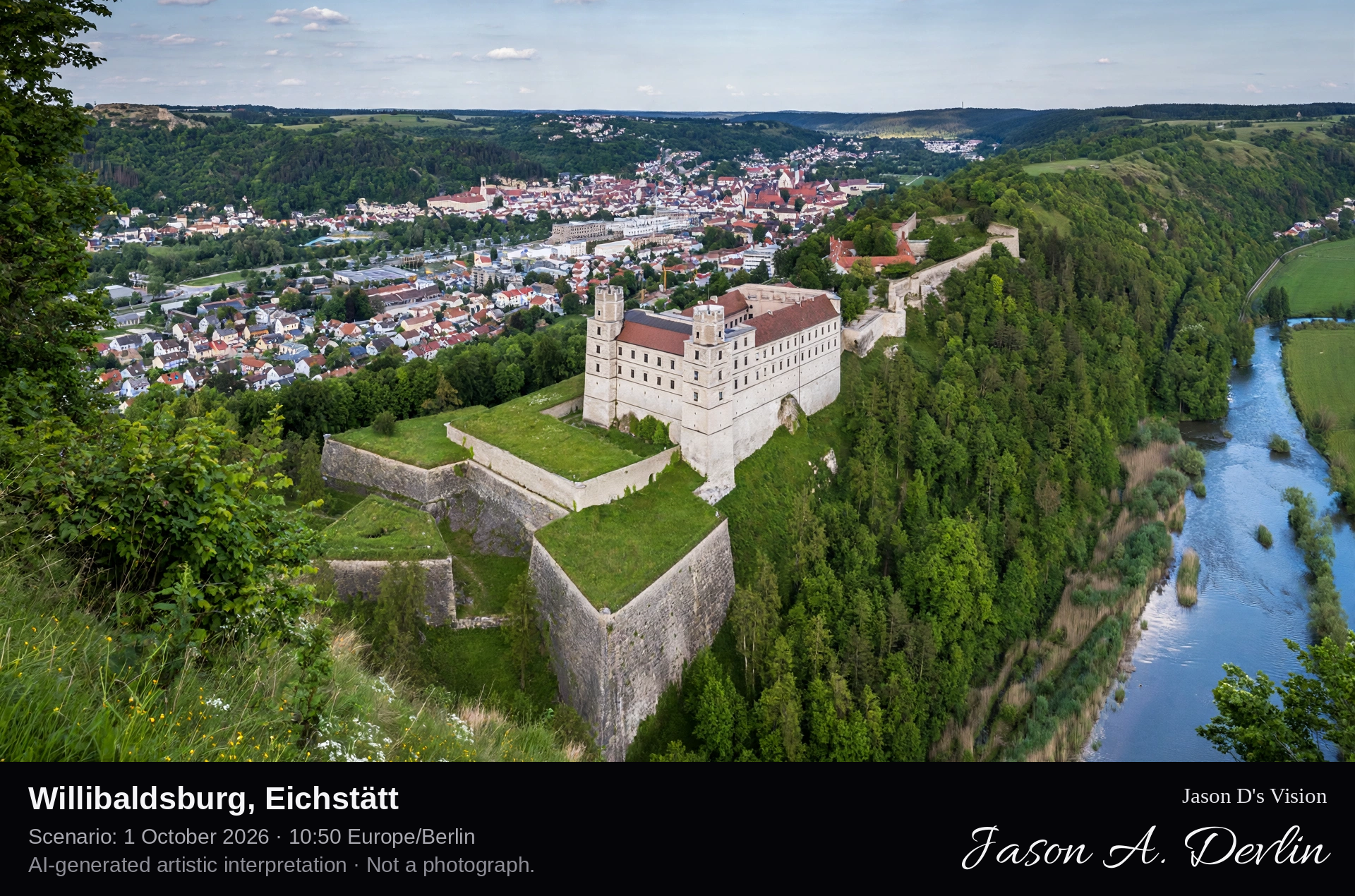
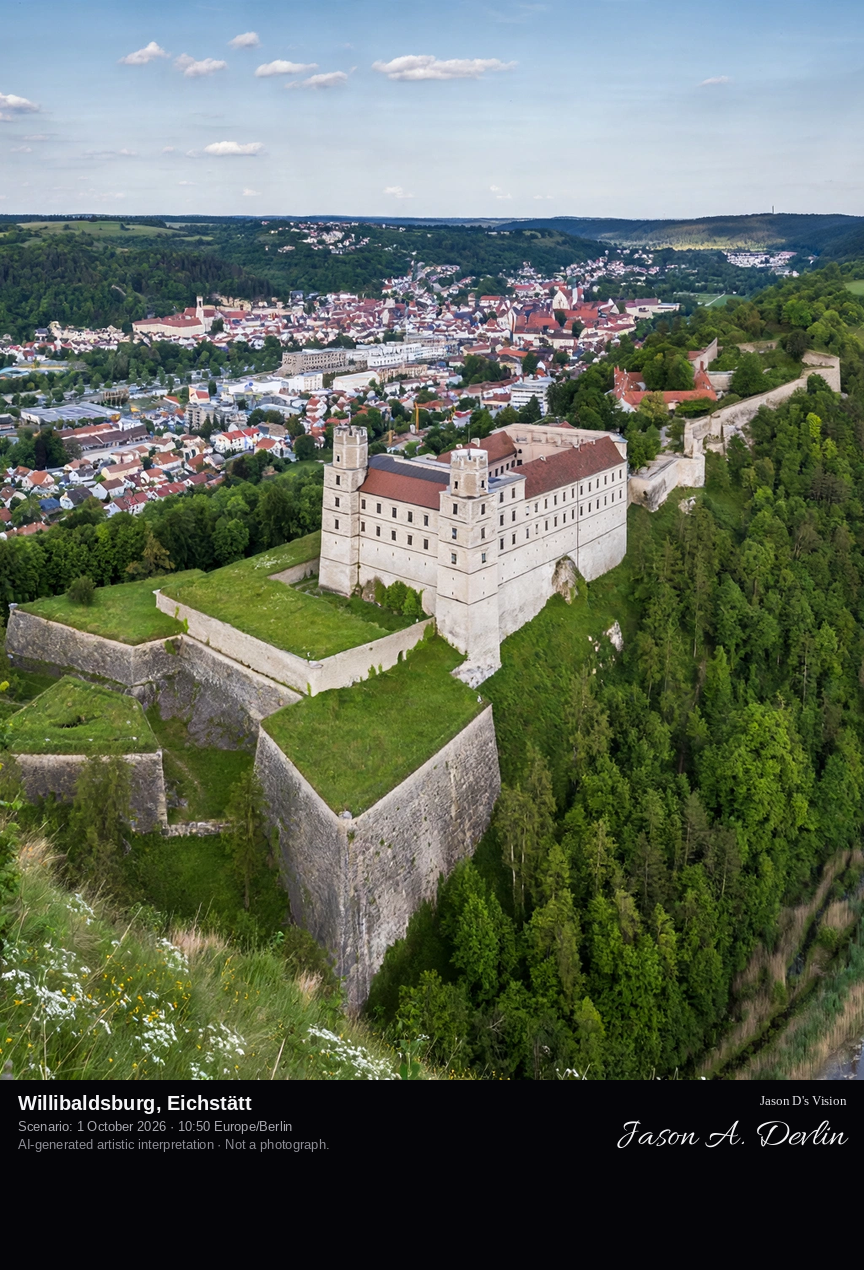
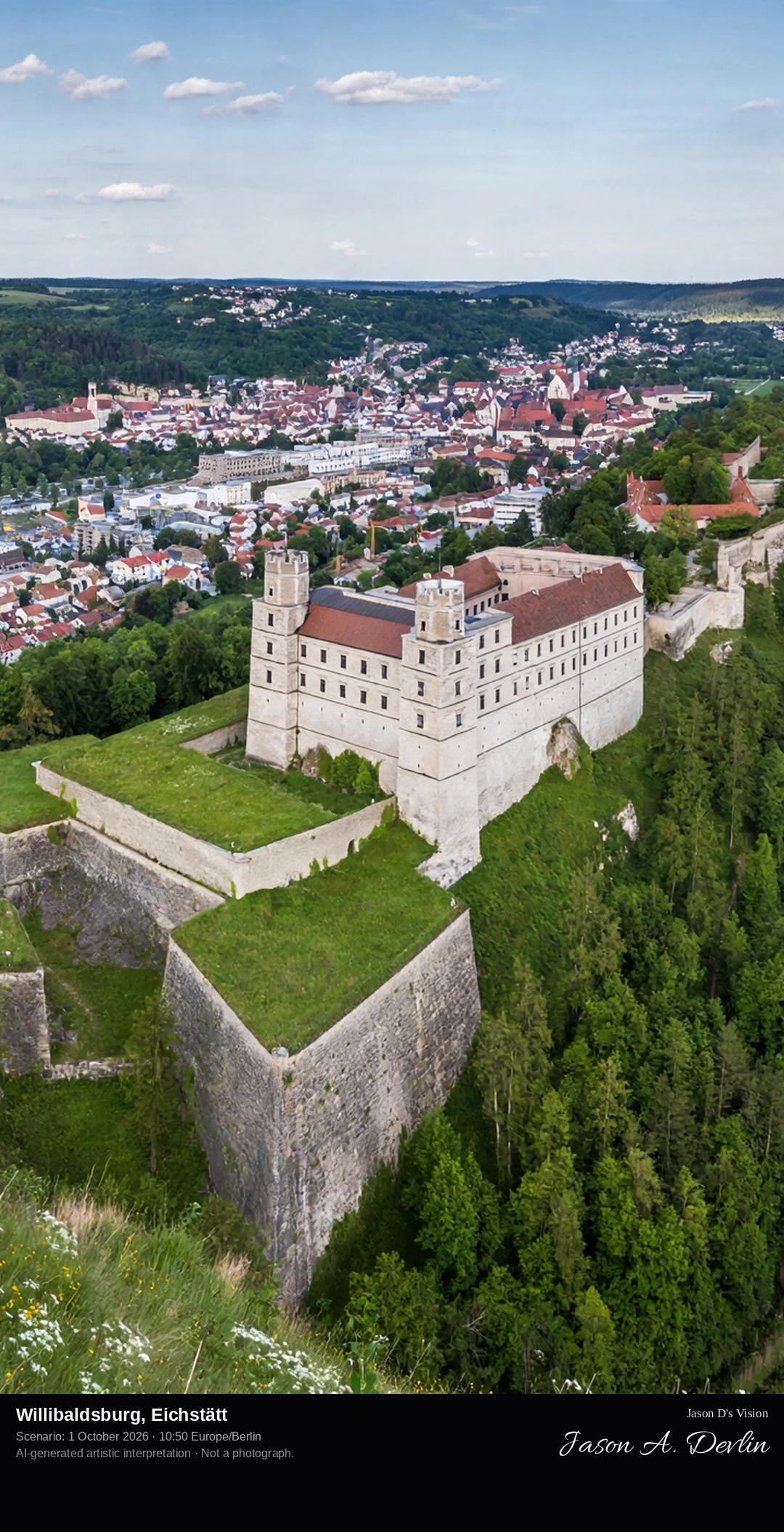
The Willibaldsburg above Eichstätt was for centuries a seat of the town's prince-bishops, its pale Gemmingenbau wing raised in the early seventeenth century. The castle also guards a botanical fame: the bishop's garden here inspired Basilius Besler's Hortus Eystettensis of 1613, one of the great flower books of its age. The elevated composition is artistic rather than surveyed.
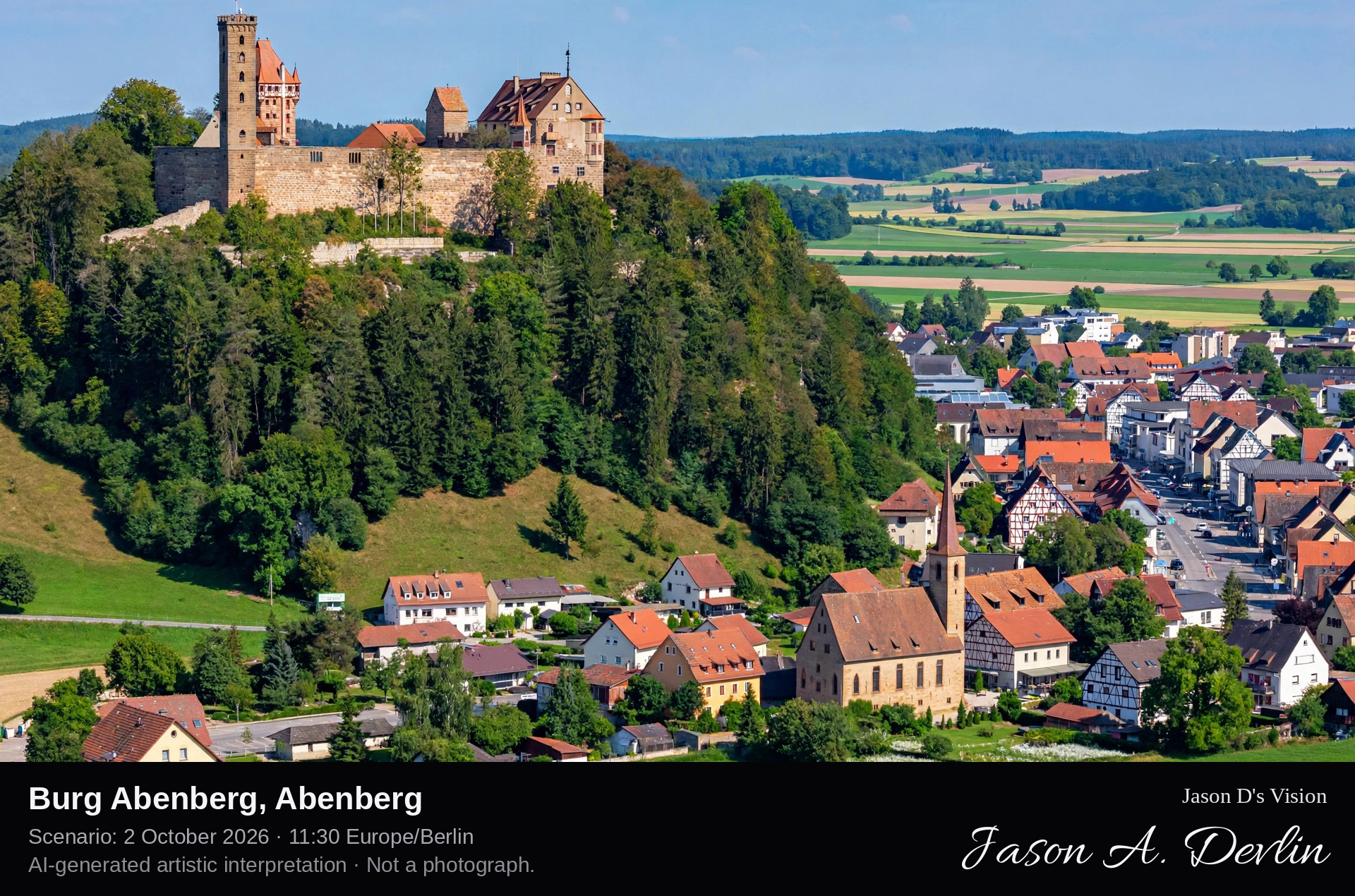
The castle ensemble on its wooded hill above the town · AI-generated artistic interpretation
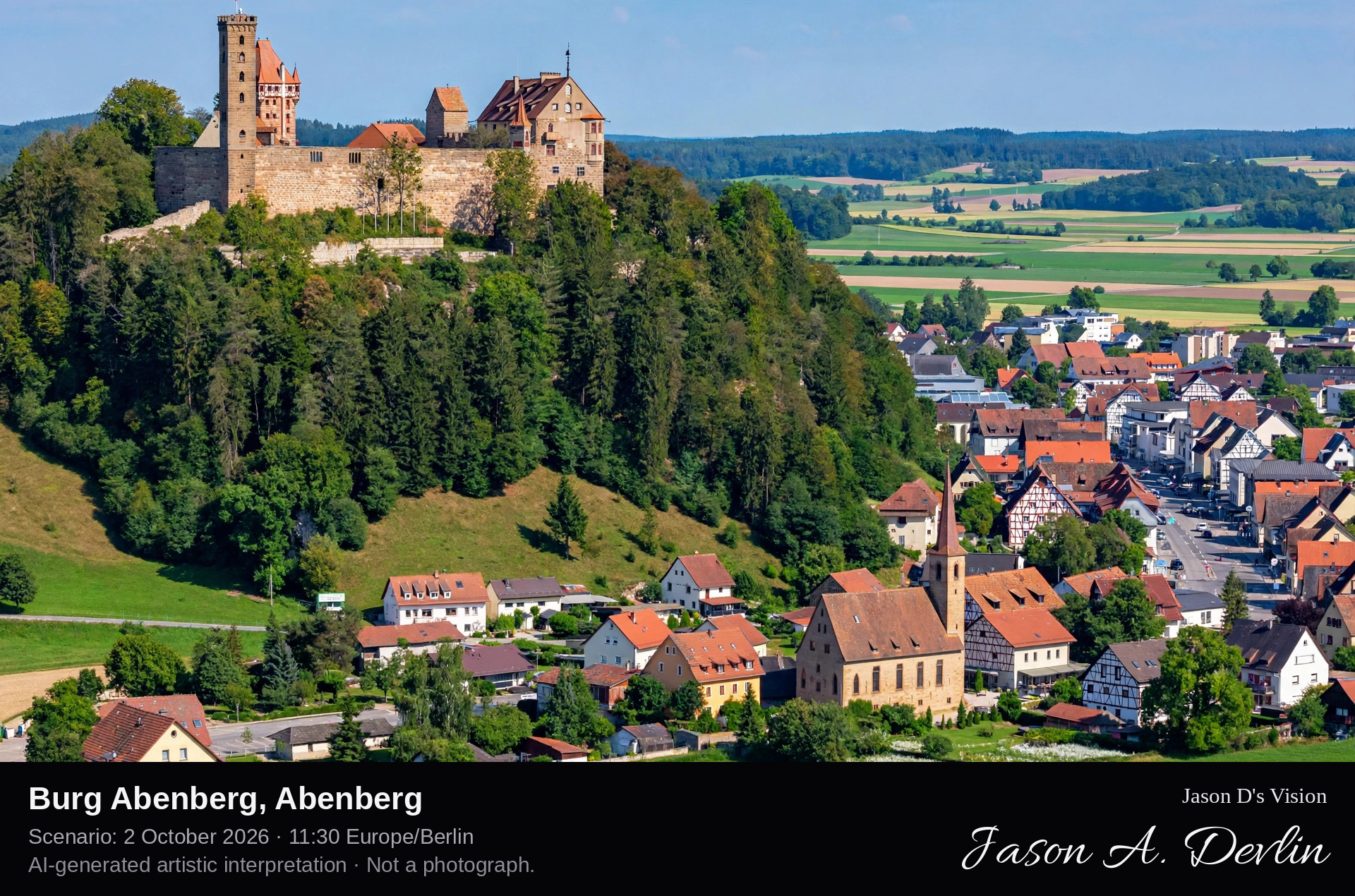
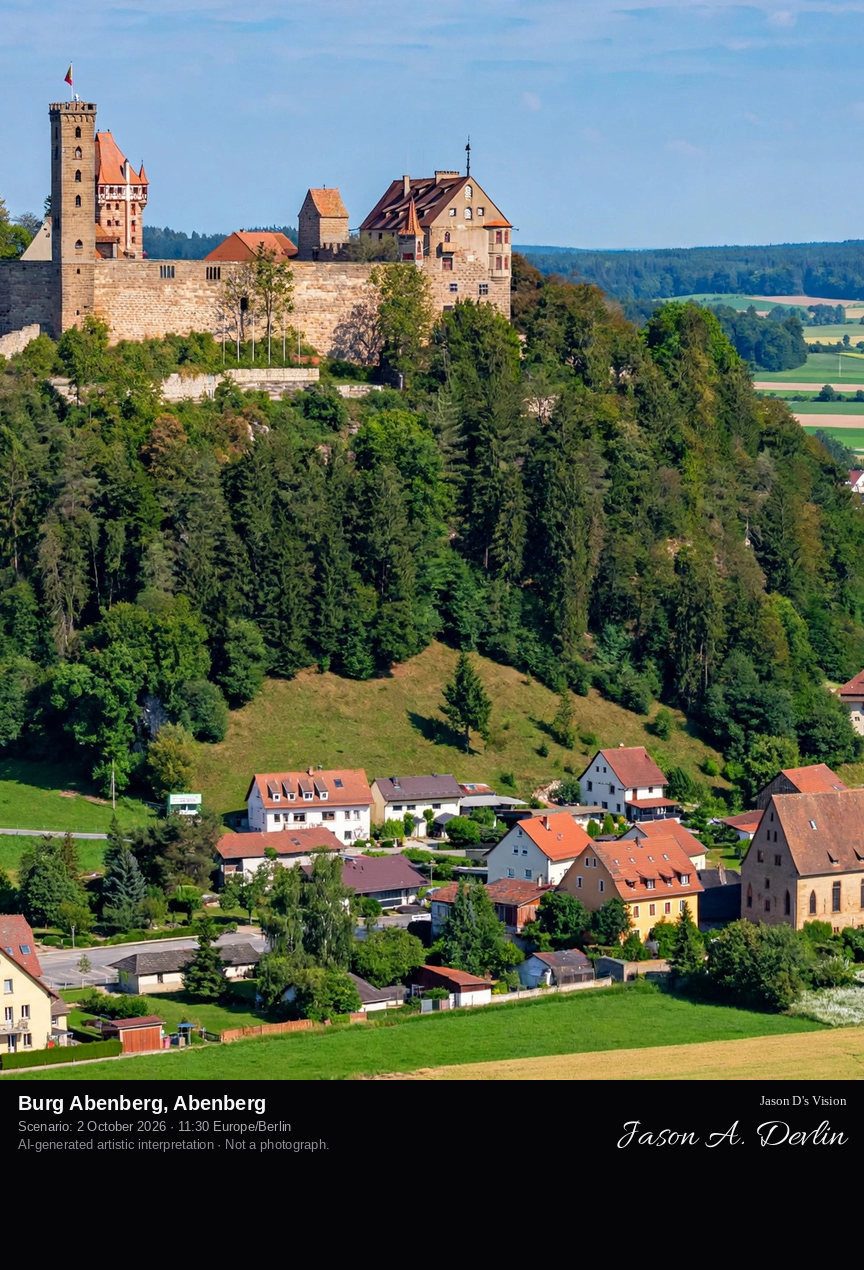
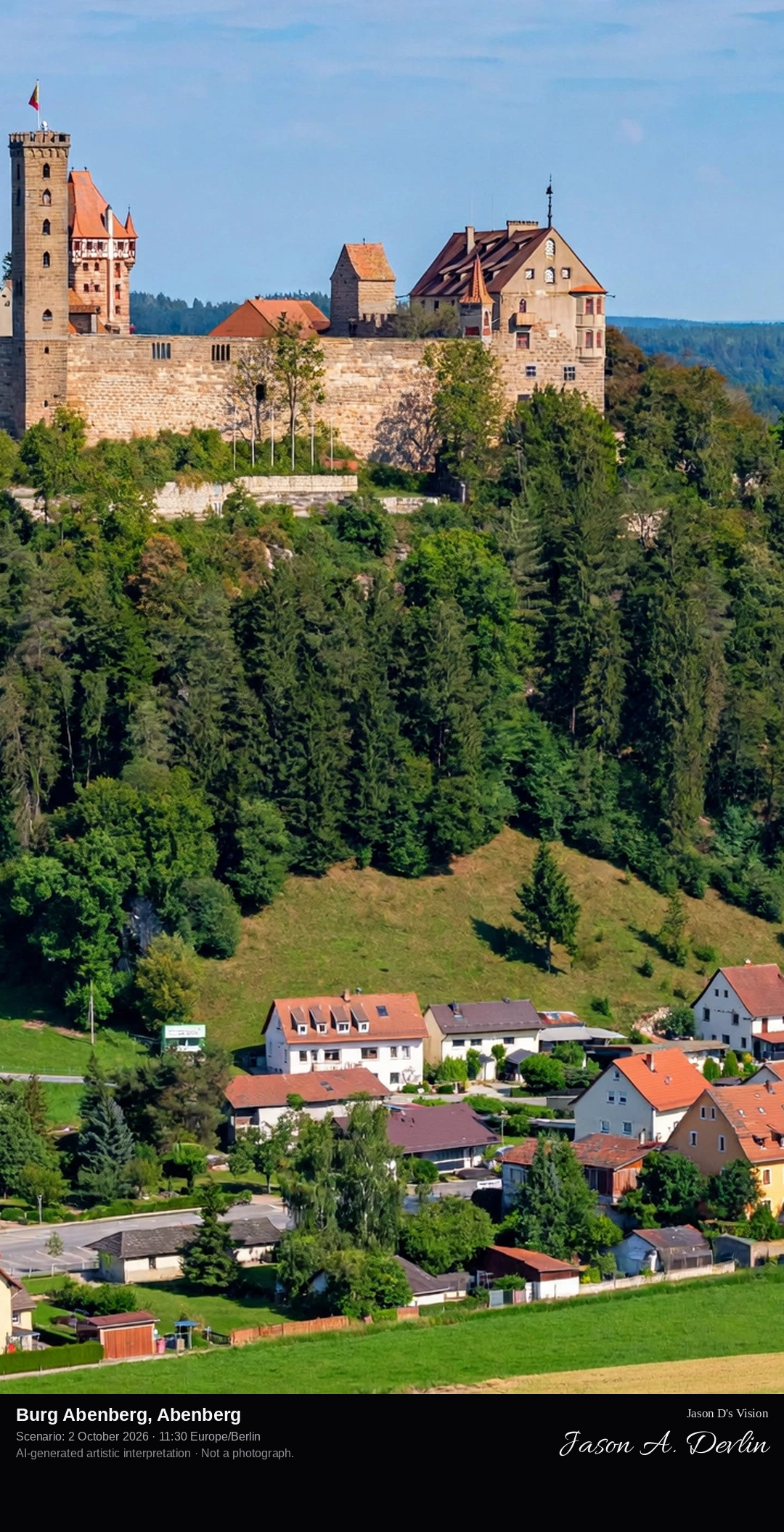
Burg Abenberg crowns a wooded hill above the Franconian town of the same name, its tall Luginsland watchtower and the roofed Schottenturm rising over a high curtain wall. The castle now houses a castle museum and a museum of bobbin lace-making. Tower spacing and hill form in this view are the artist's arrangement, not a measured record.
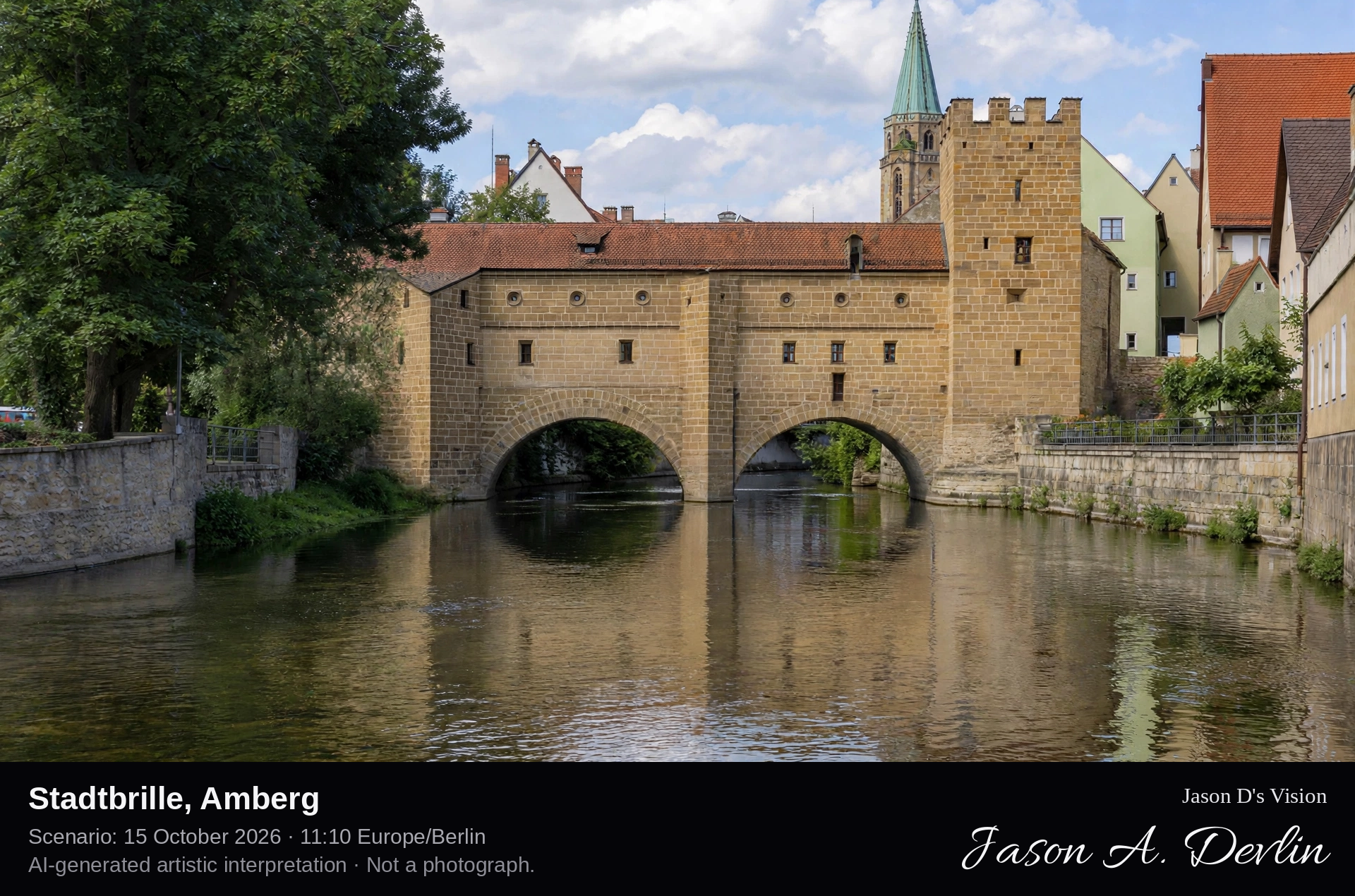
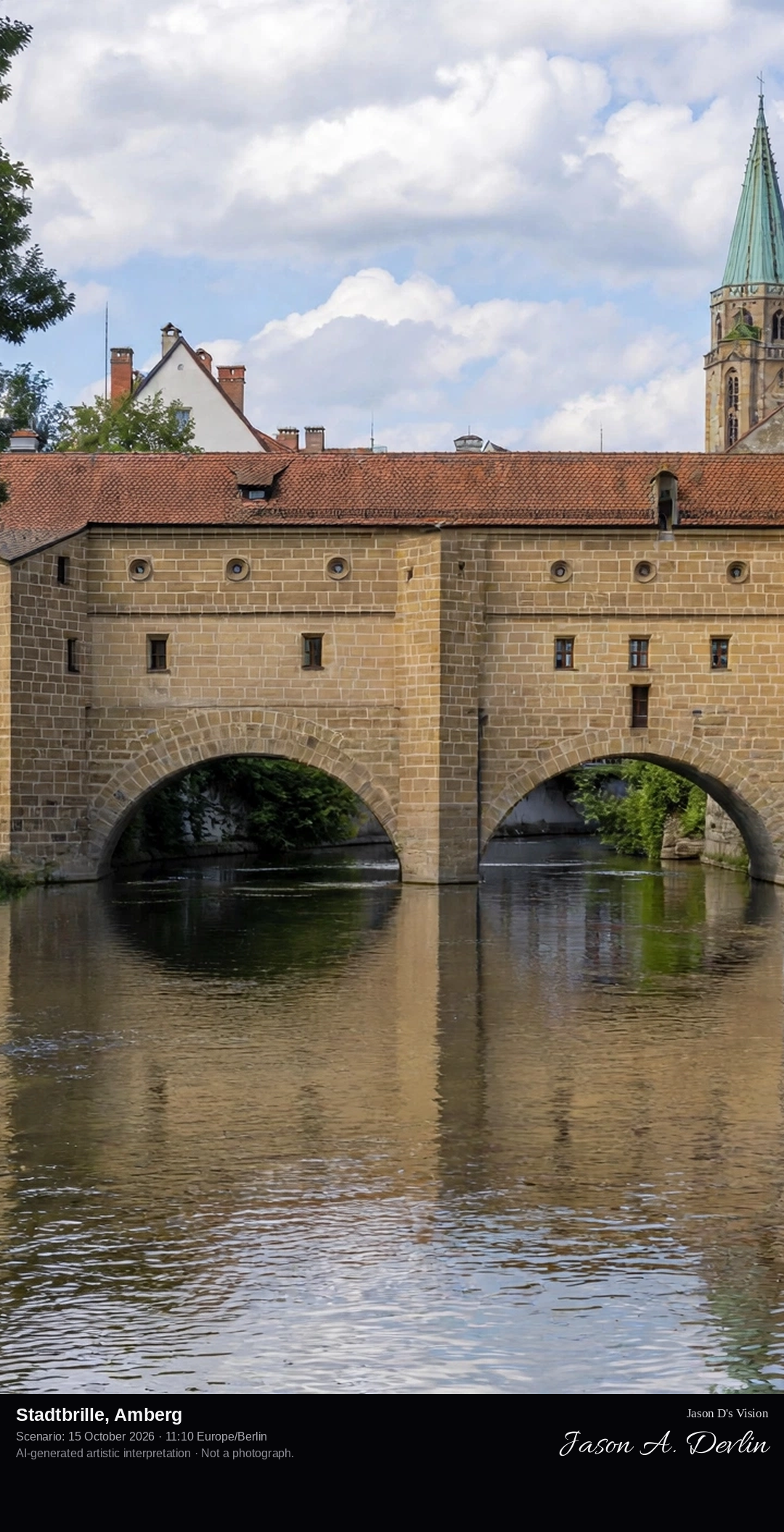
The fortified water gate striding across the Vils on two broad arches · AI-generated artistic interpretation
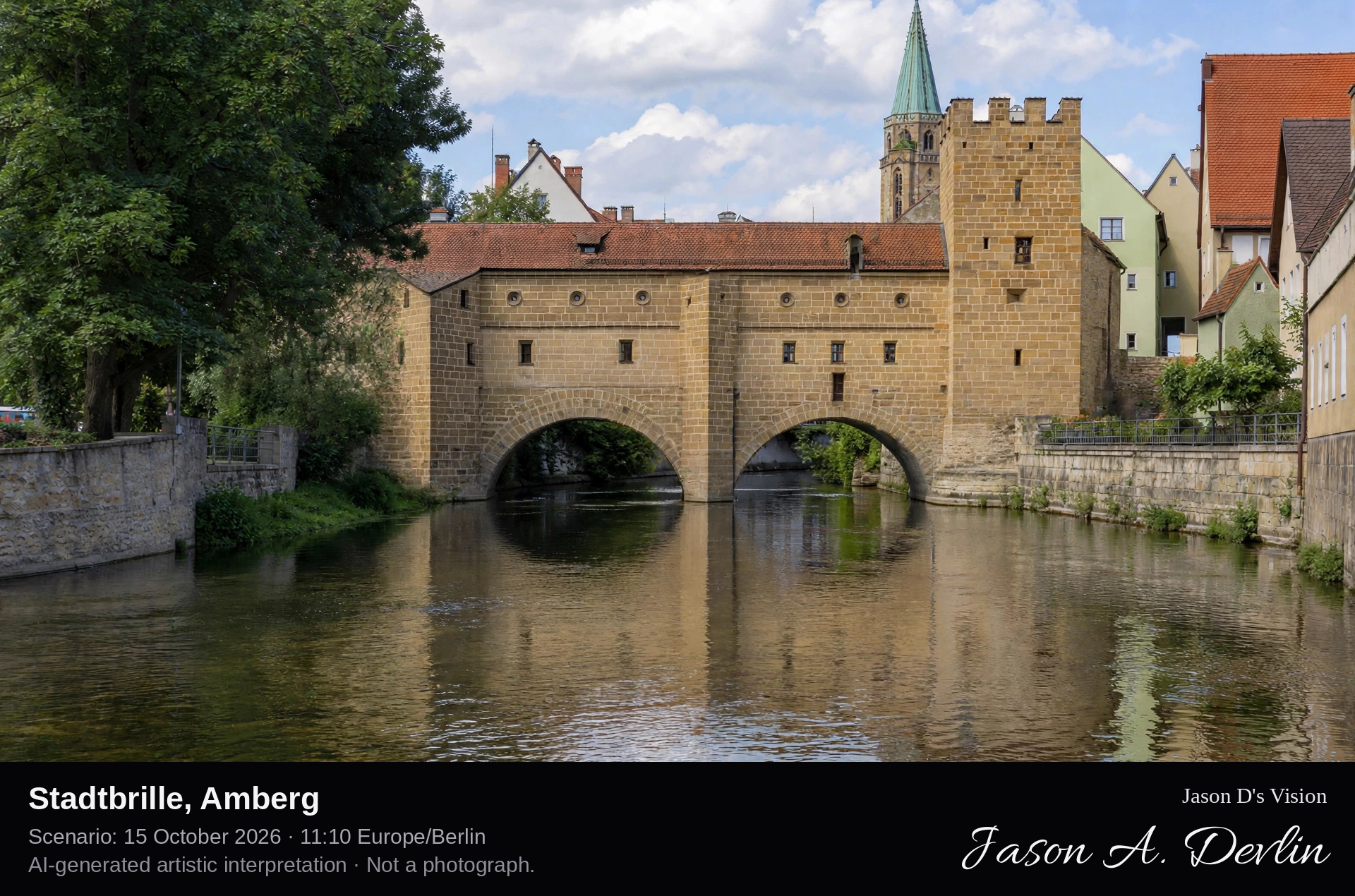
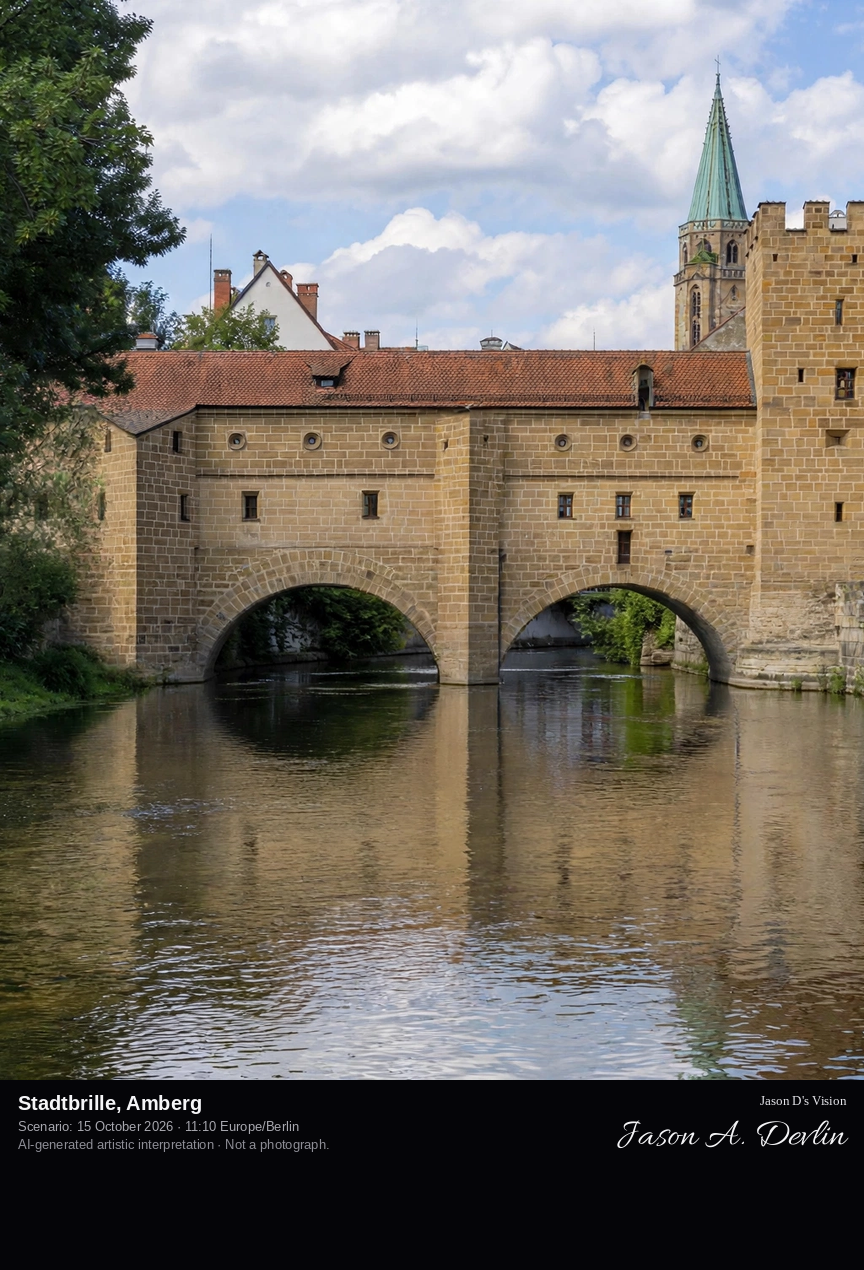
Amberg's Stadtbrille, the 'town spectacles', is a late-Gothic water gate whose two arches stride across the Vils carrying a fortified gate house and a square crenellated tower. In calm water the reflections round the arches into the lenses that gave the landmark its name.
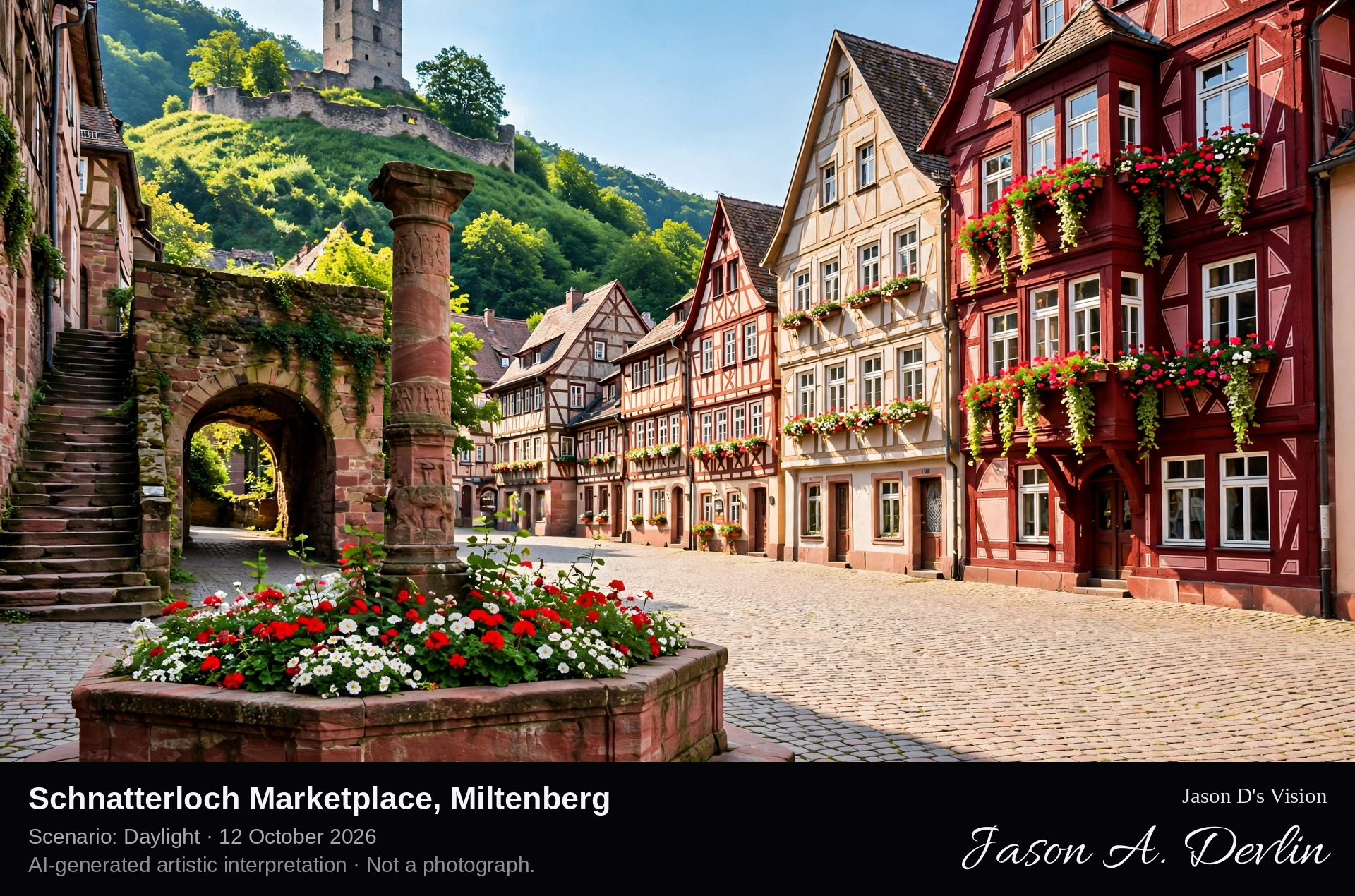
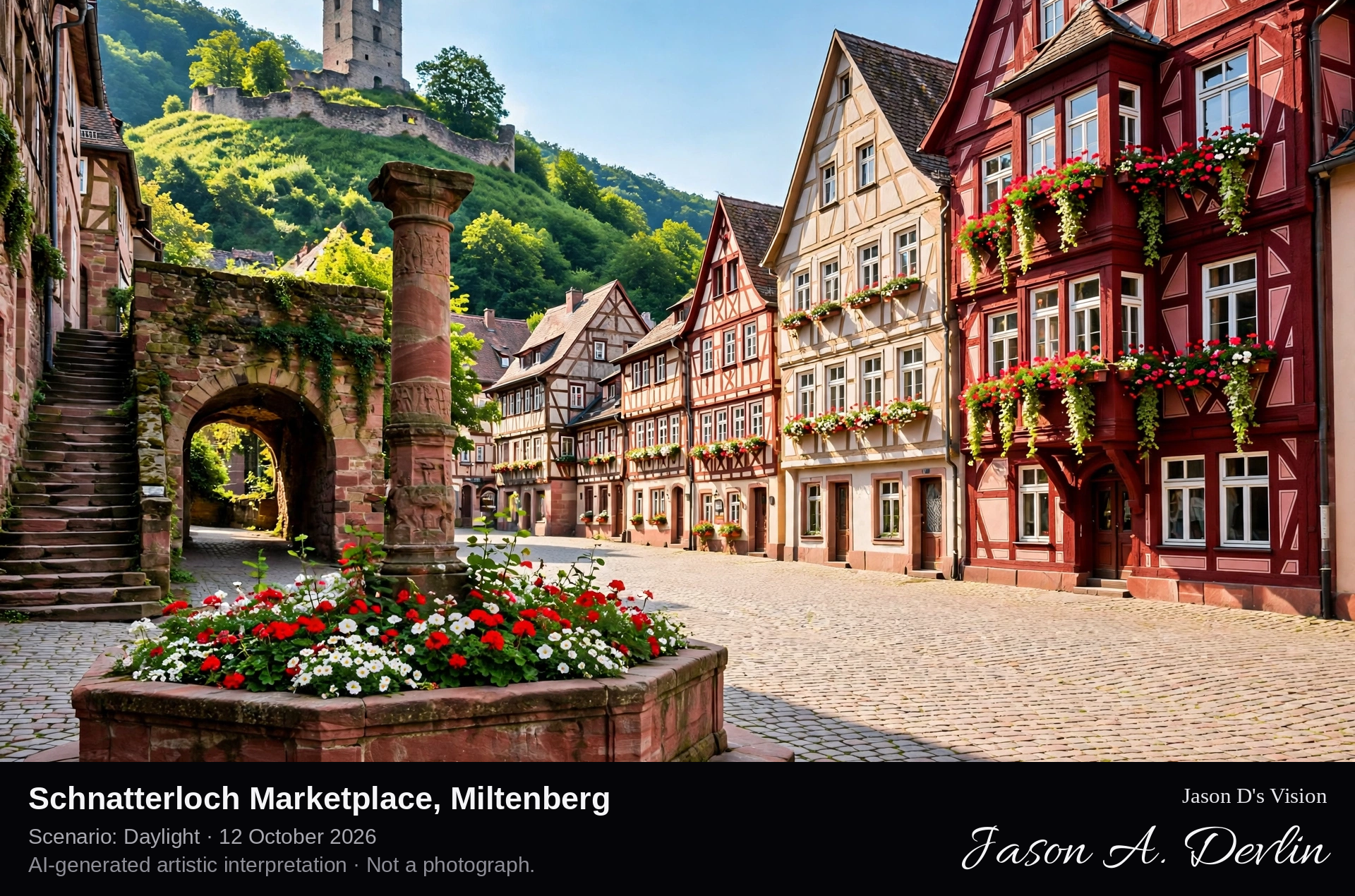
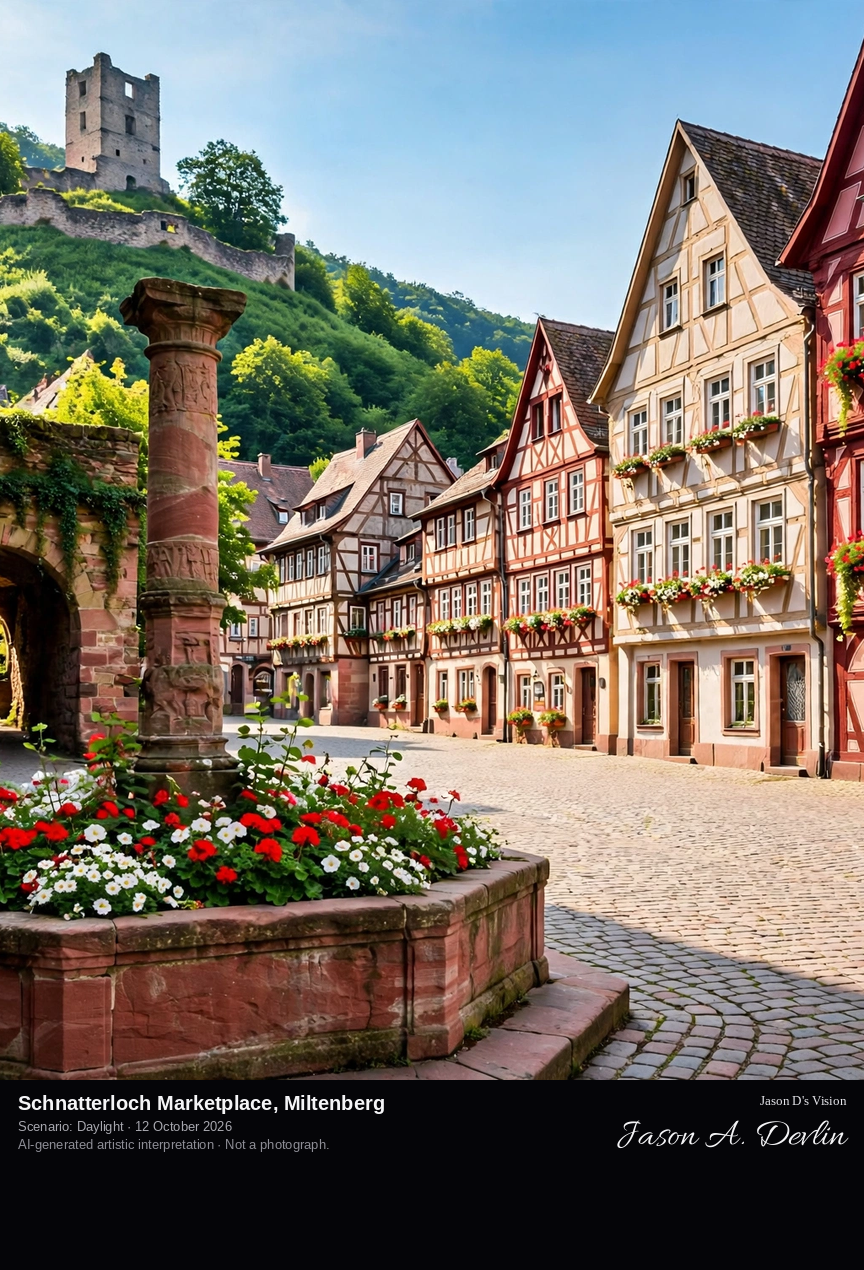
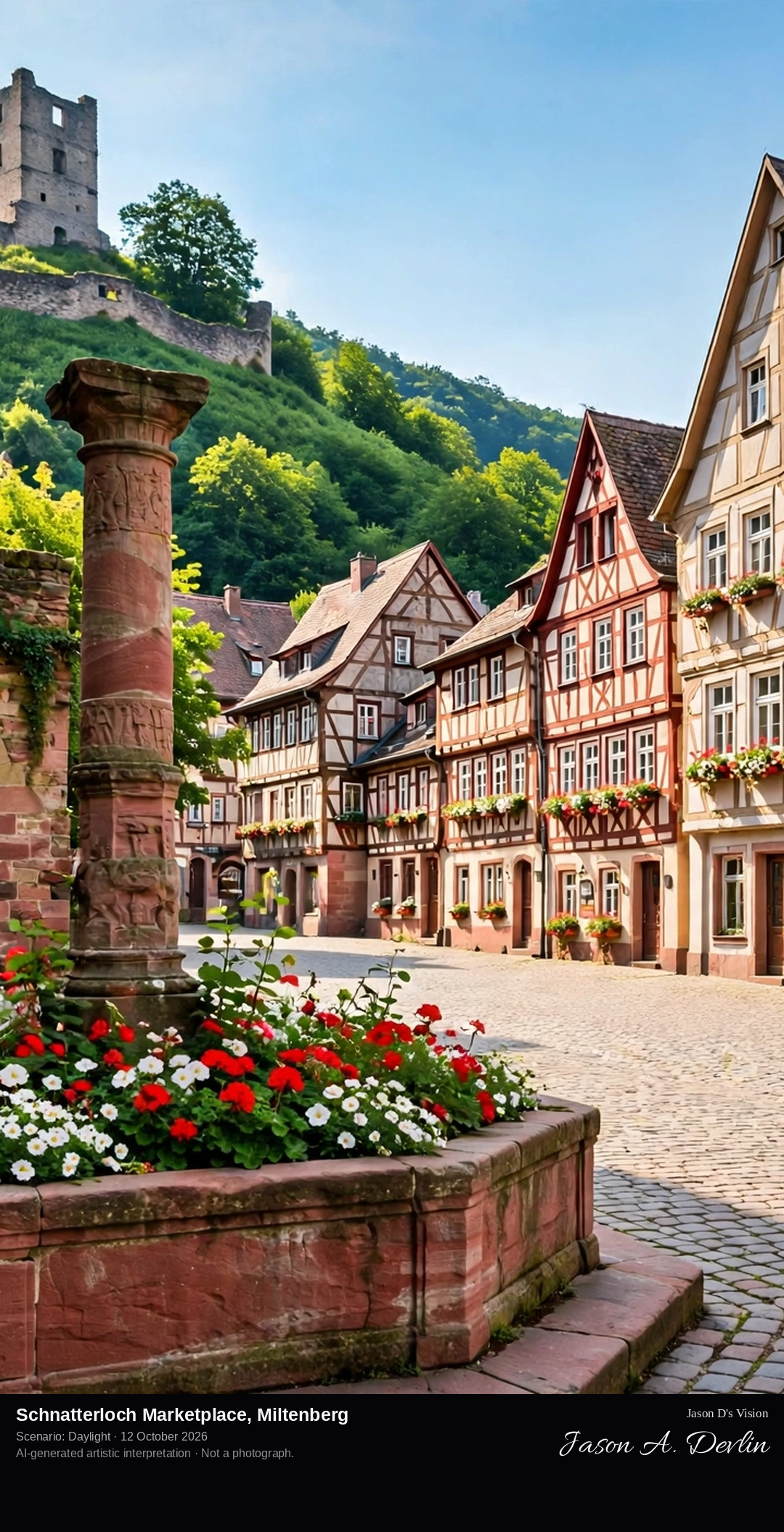
Marketplace and fountain · AI-generated artistic interpretation
The Schnatterloch is Miltenberg's beloved little market square, watched over by a tall deep-red half-timbered house whose carved panels, steep gable and flower-hung corner bay have faced the cobbles for centuries. A carved sandstone fountain of 1583 stands in the foreground, and stone steps climb past an old archway toward the Mildenburg on its wooded hill.
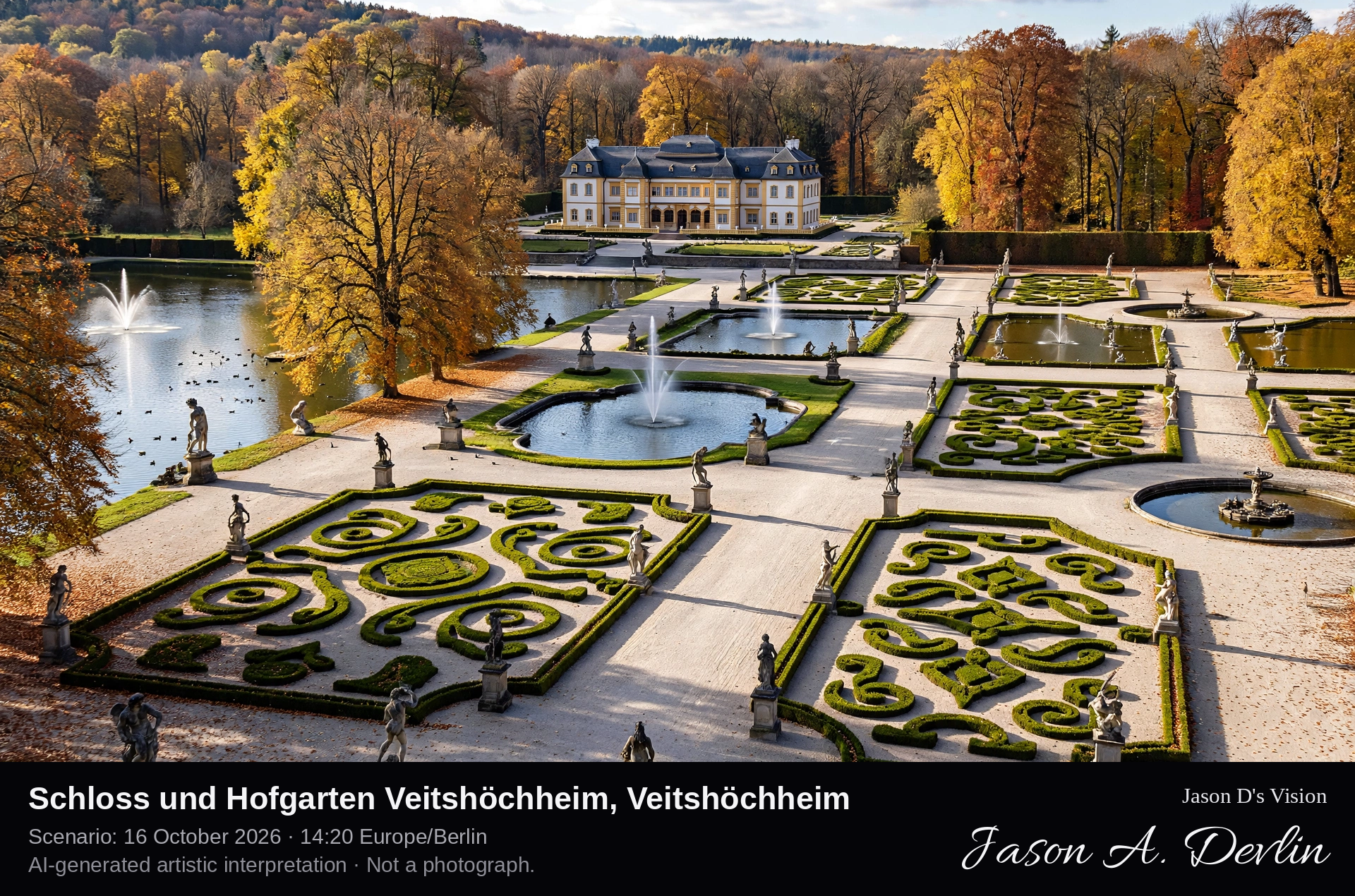
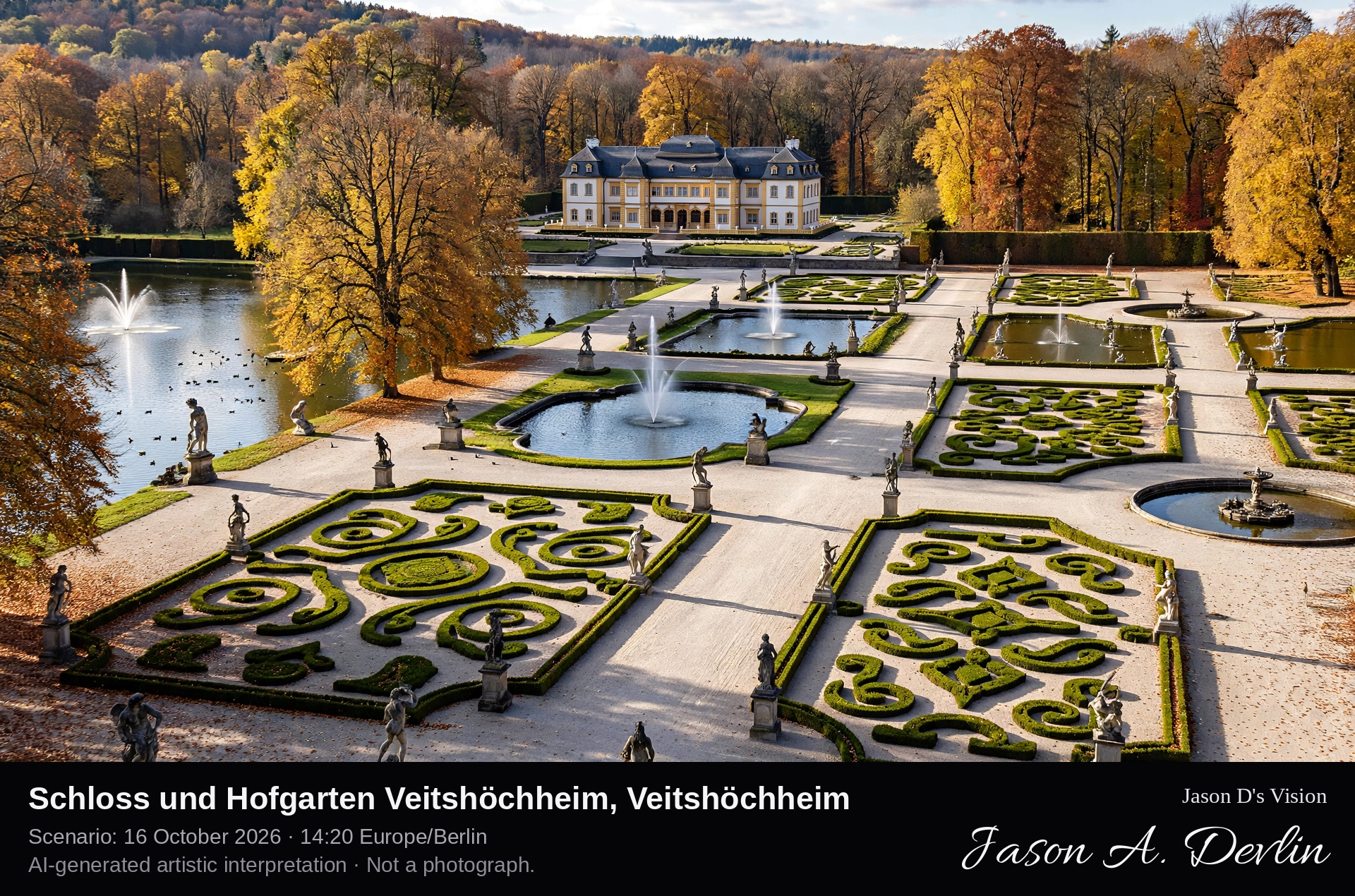
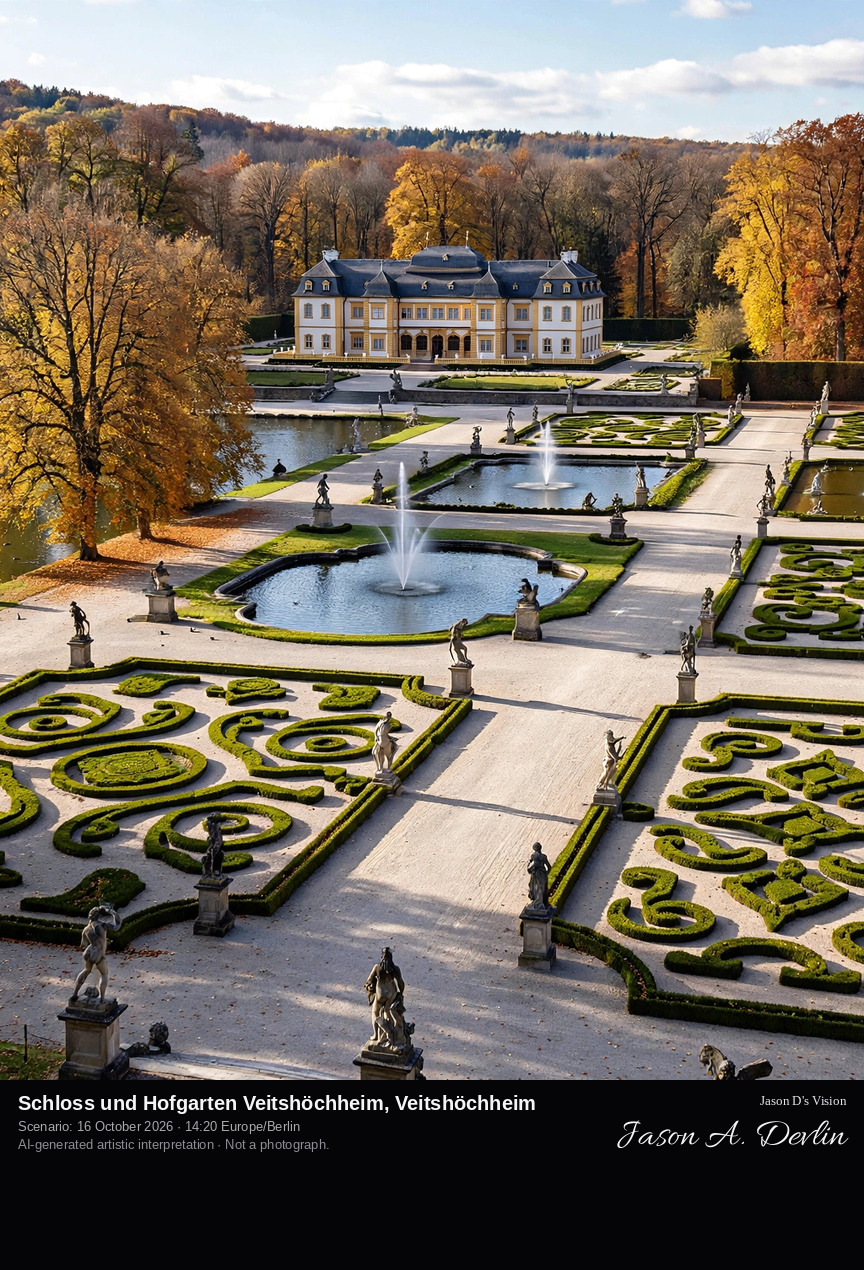
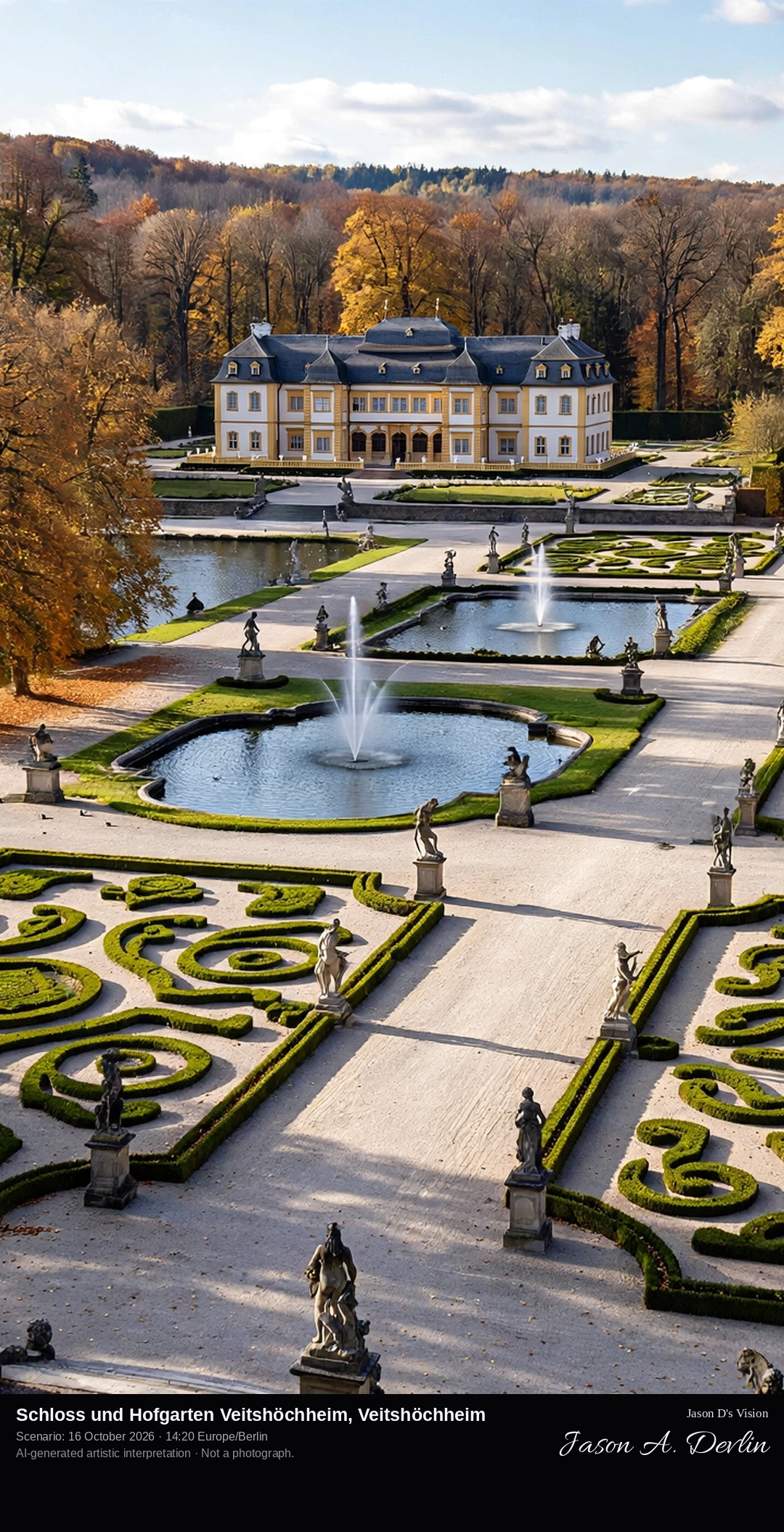
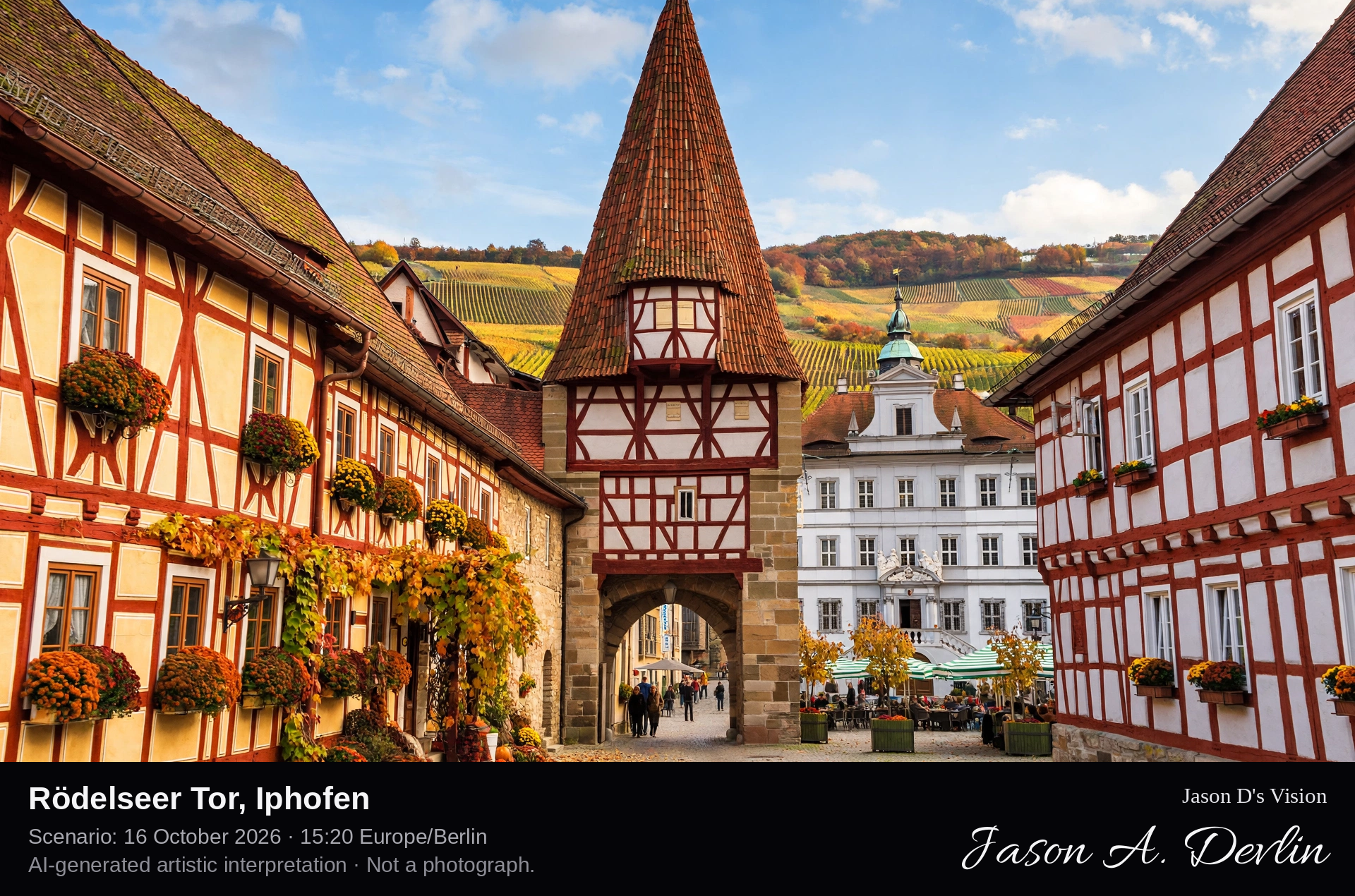
Schloss und Hofgarten Veitshöchheim, Veitshöchheim
Scenario: 16 October 2026 · 14:20 Europe/Berlin
Rococo parterres, fountains and sculptures below the summer palace · AI-generated artistic interpretation
The palace at Veitshoechheim was the summer residence of the Wuerzburg prince-bishops, set in one of the most important Rococo gardens in the country. Clipped parterres, fountain basins, a large lake and some 200 sculptures fill the grounds below the palace. The garden layout in this view is the artist’s interpretation rather than a faithful plan of the actual grounds.
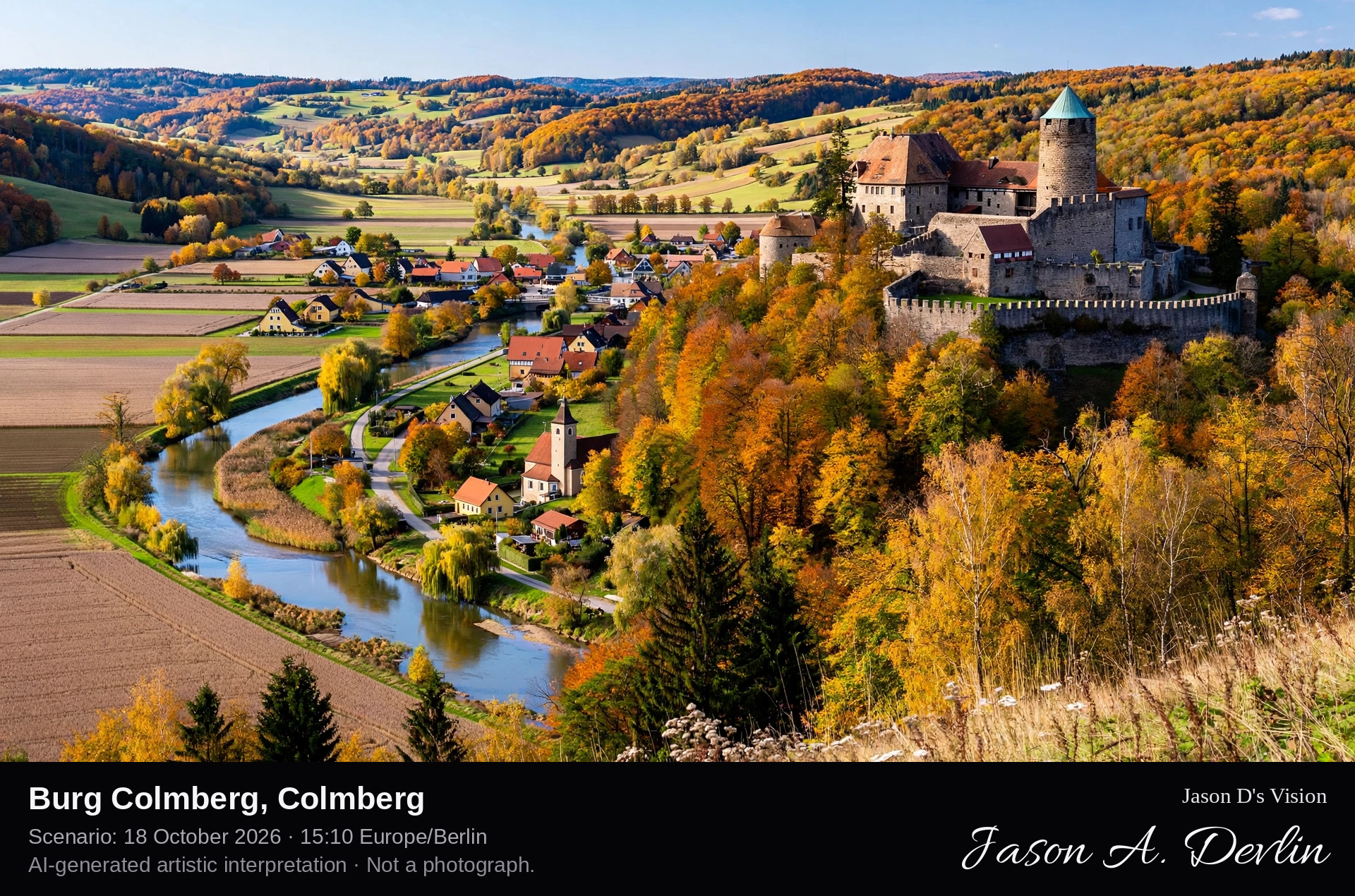
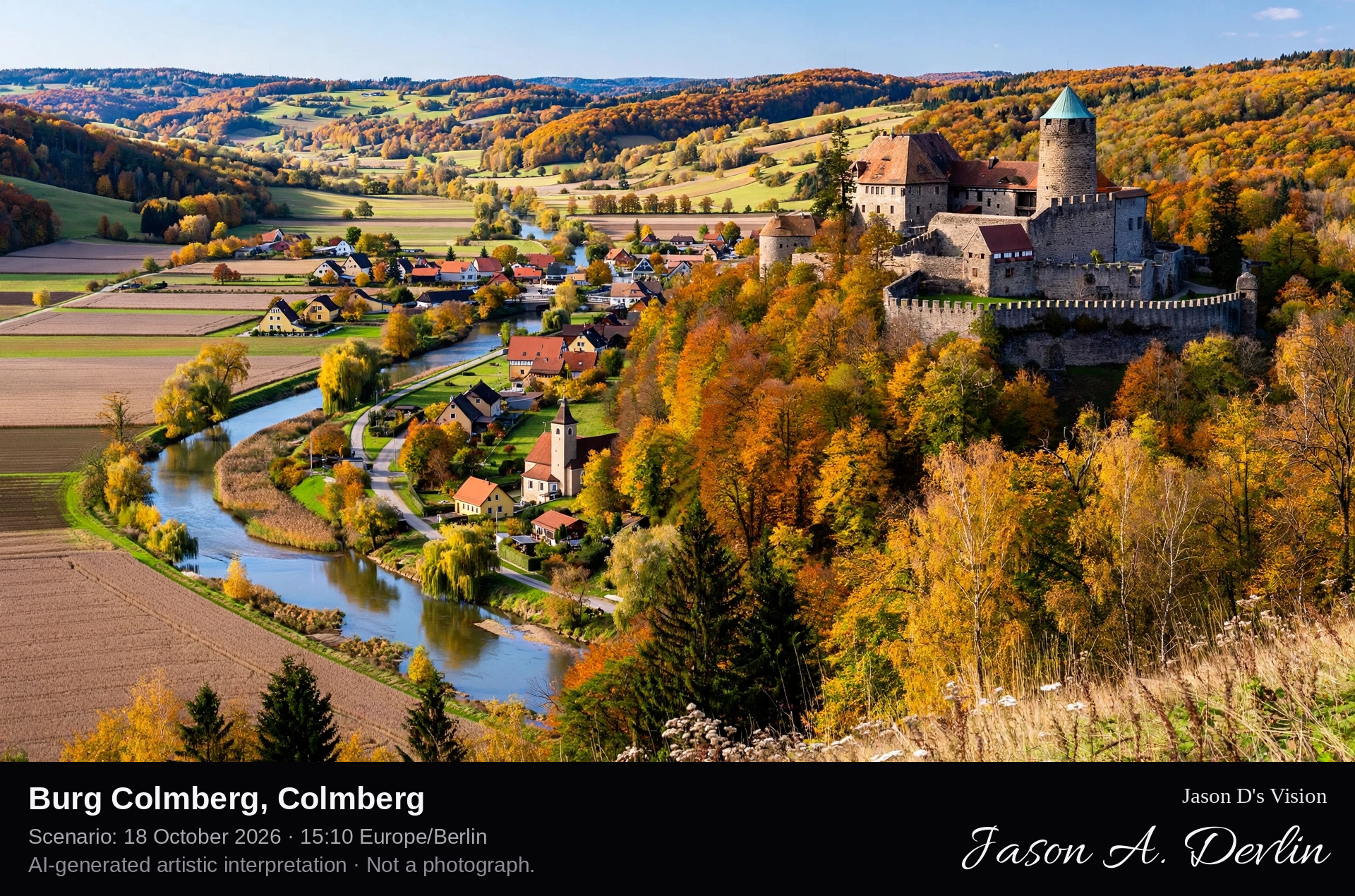
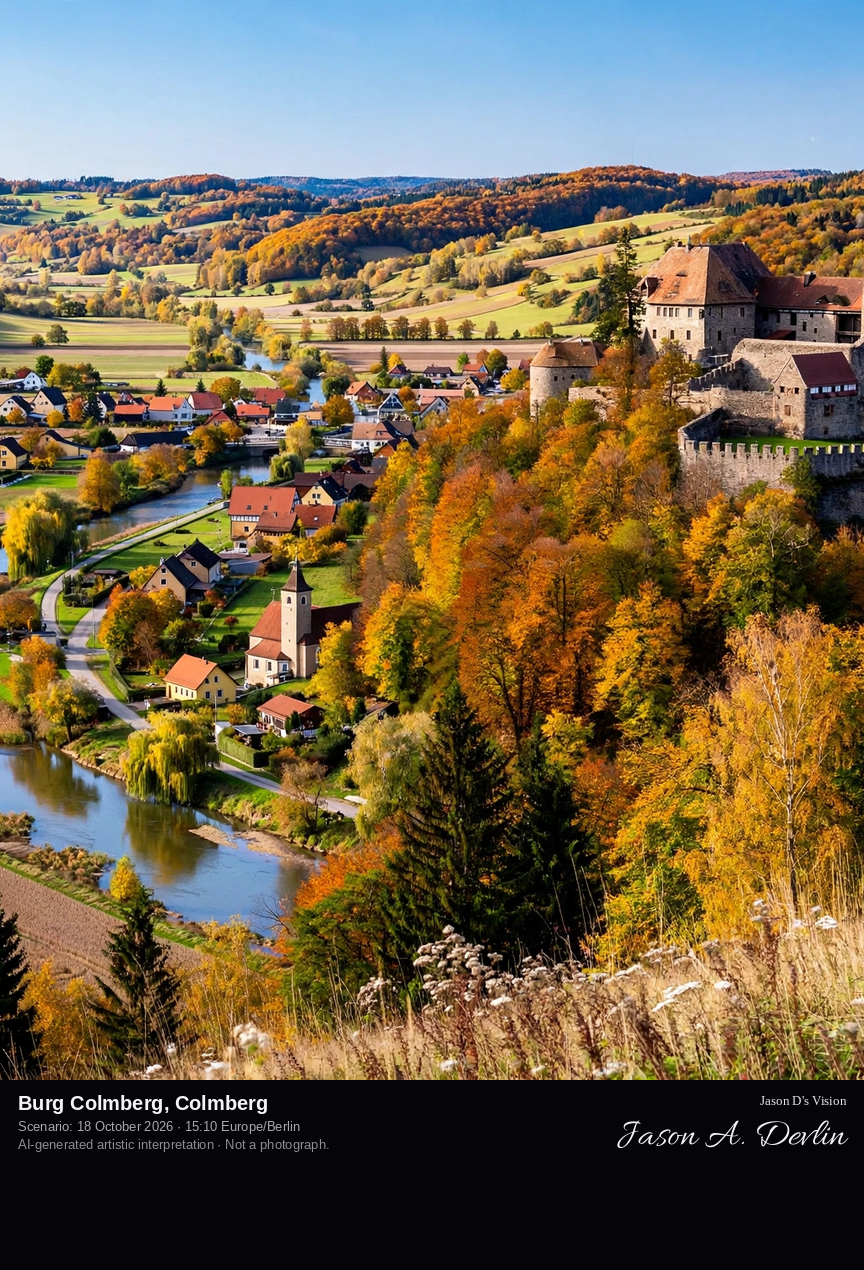
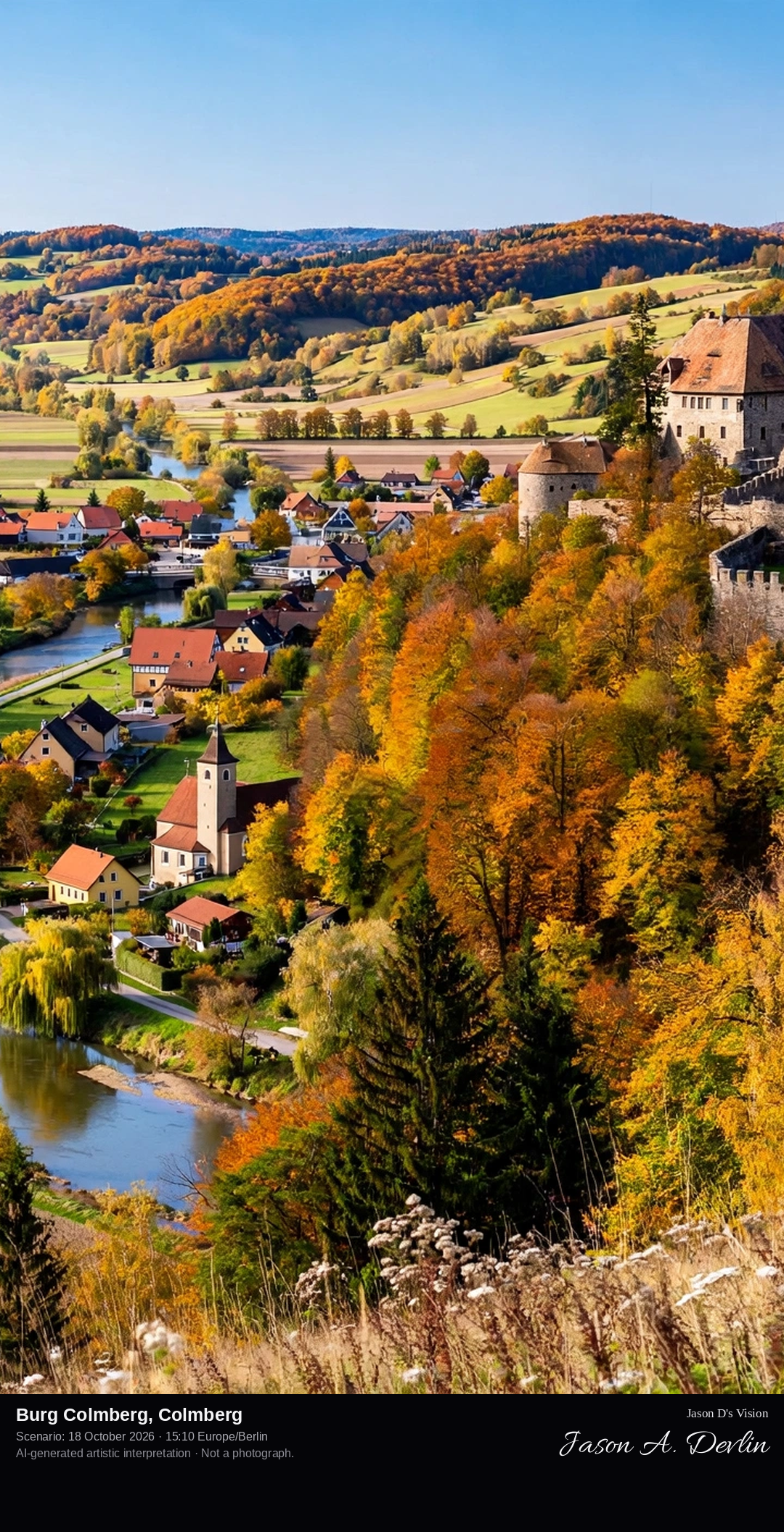
The stone keep and walls above the Altmuehl bend · AI-generated artistic interpretation
Burg Colmberg is a hill castle above the upper Altmuehl valley, long a Hohenzollern administrative seat on the Castle Road. Stone walls, a tall round keep and red-tiled roofs rise over the village, fields and wooded hills of Franconia.
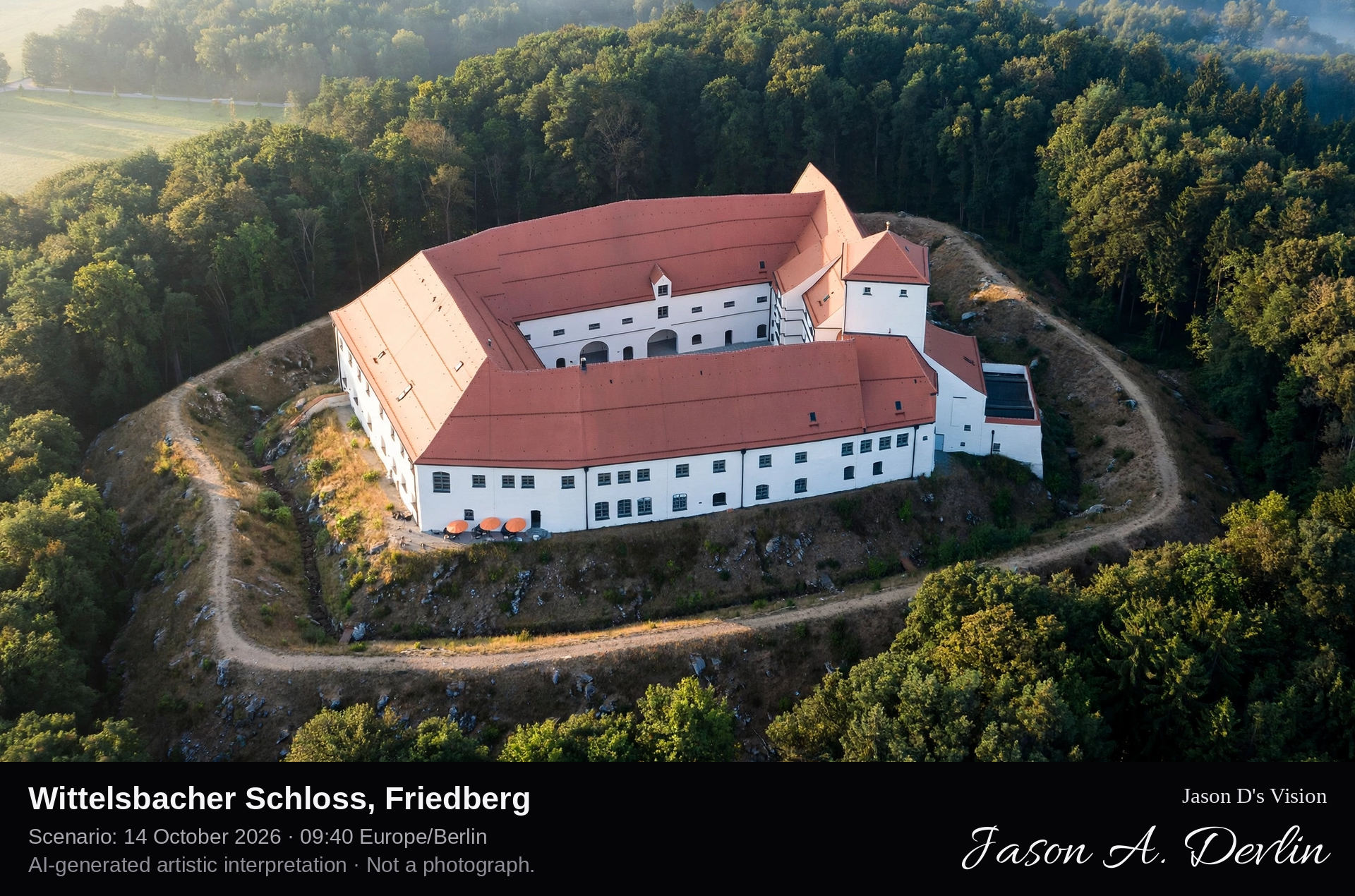
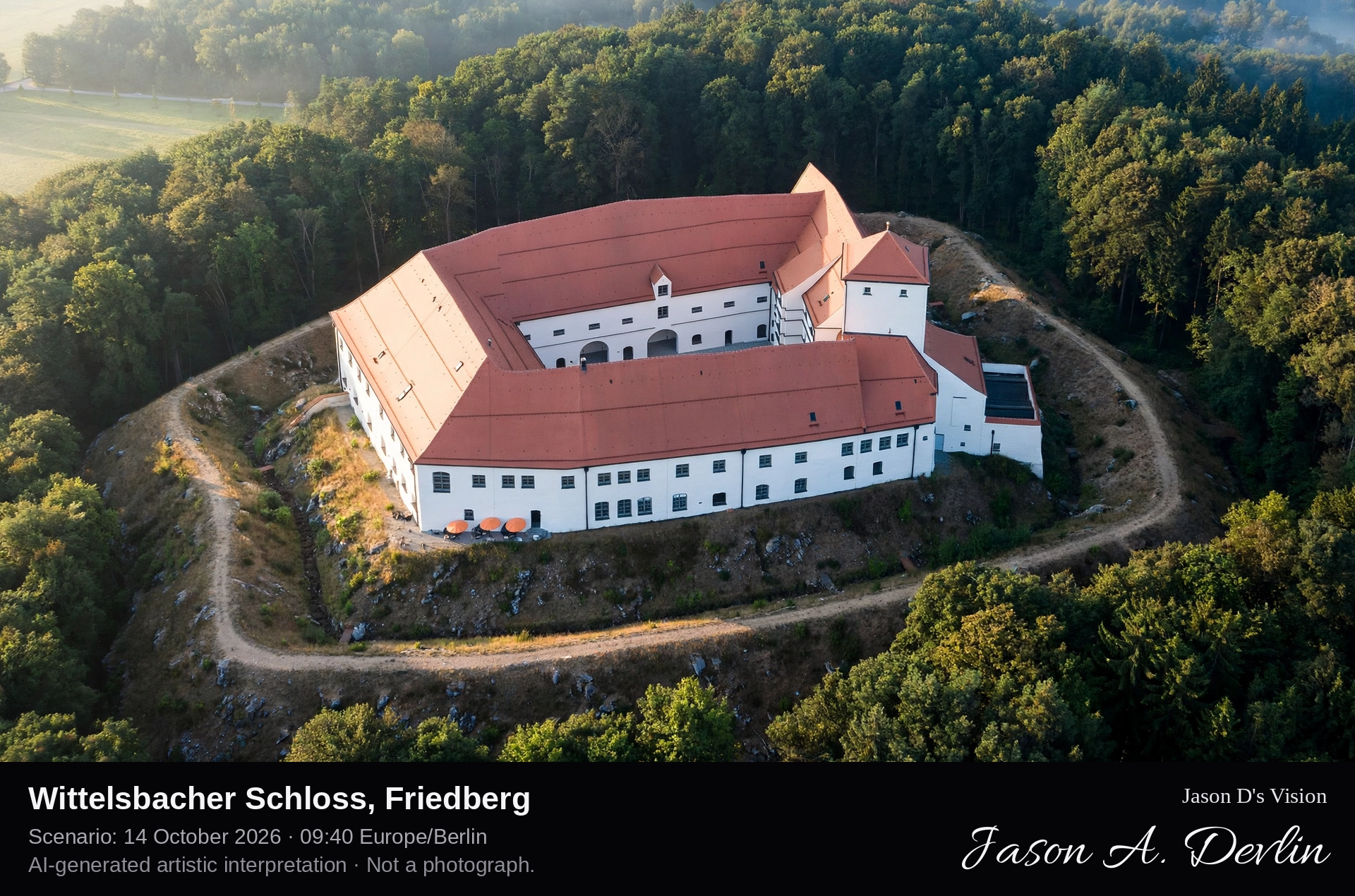
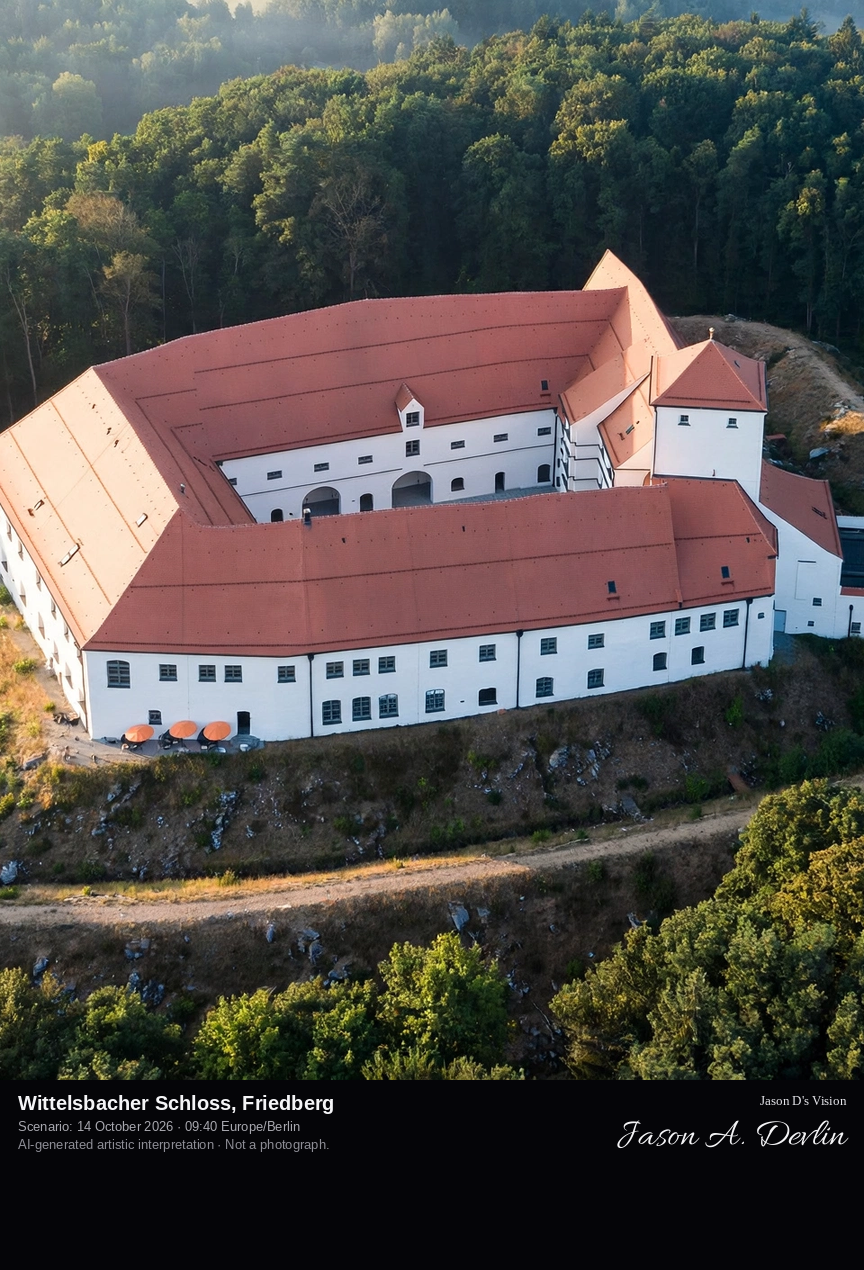
White Renaissance palace above its moat and park · AI-generated artistic interpretation
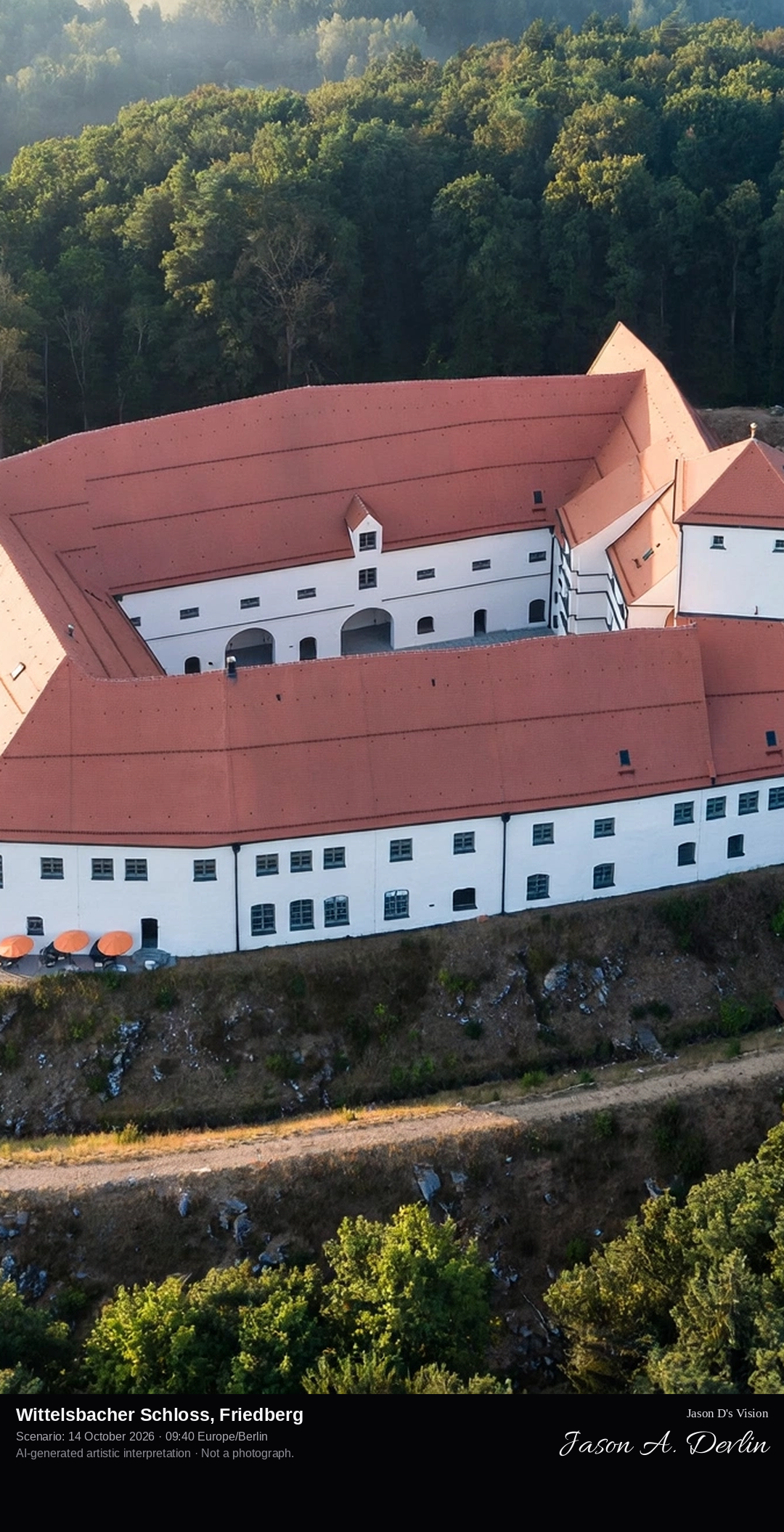
The Wittelsbacher Schloss is a Renaissance palace at the northern edge of Friedberg's old town, rebuilt in the 1550s on a much older castle site. Its white-rendered ranges and steep roofs overlook a deep moat and parkland above the town. Today the palace houses the town museum and serves as a venue for concerts and events.
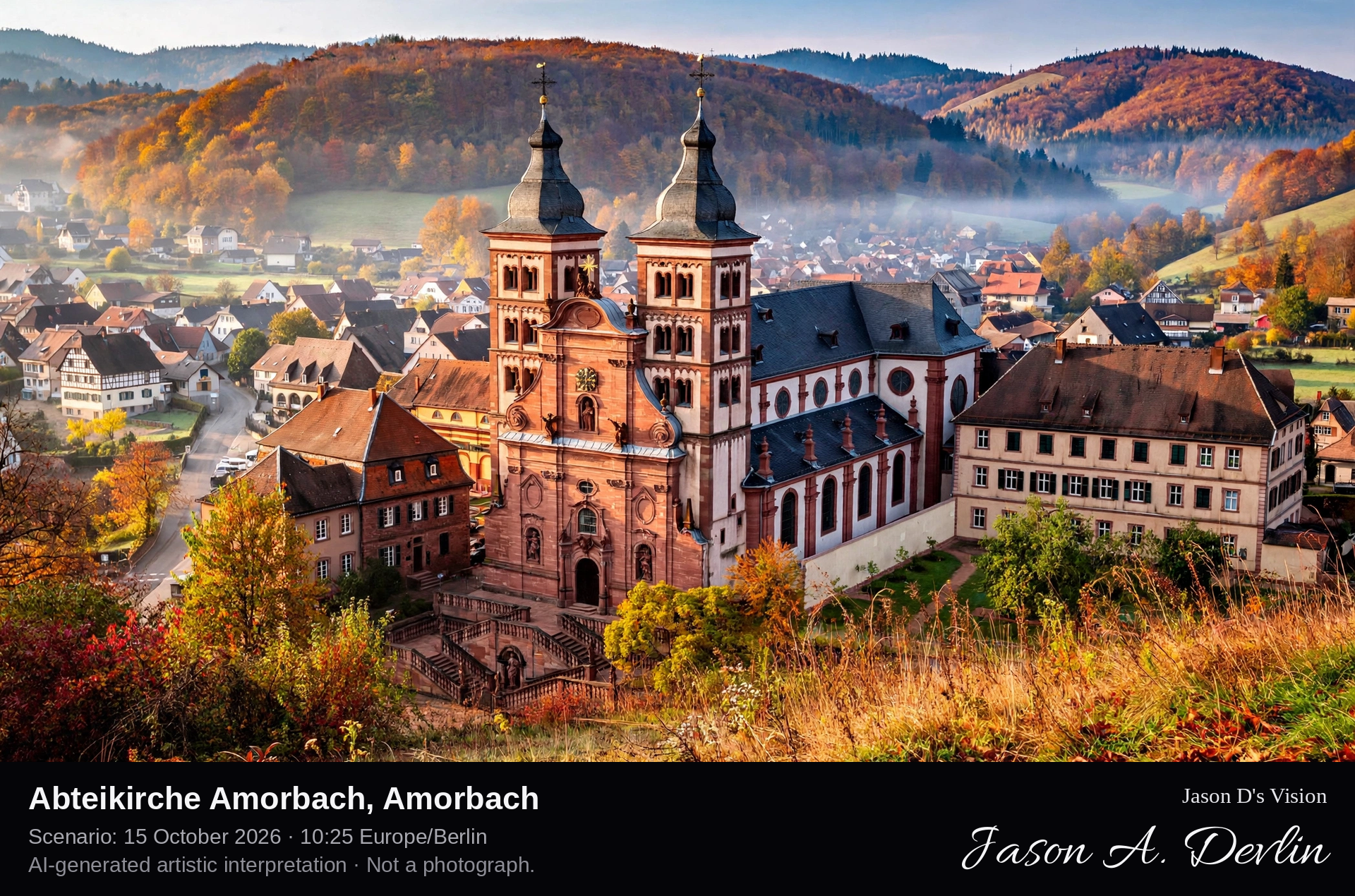
The red-sandstone twin towers and abbey front above the Odenwald town · AI-generated artistic interpretation
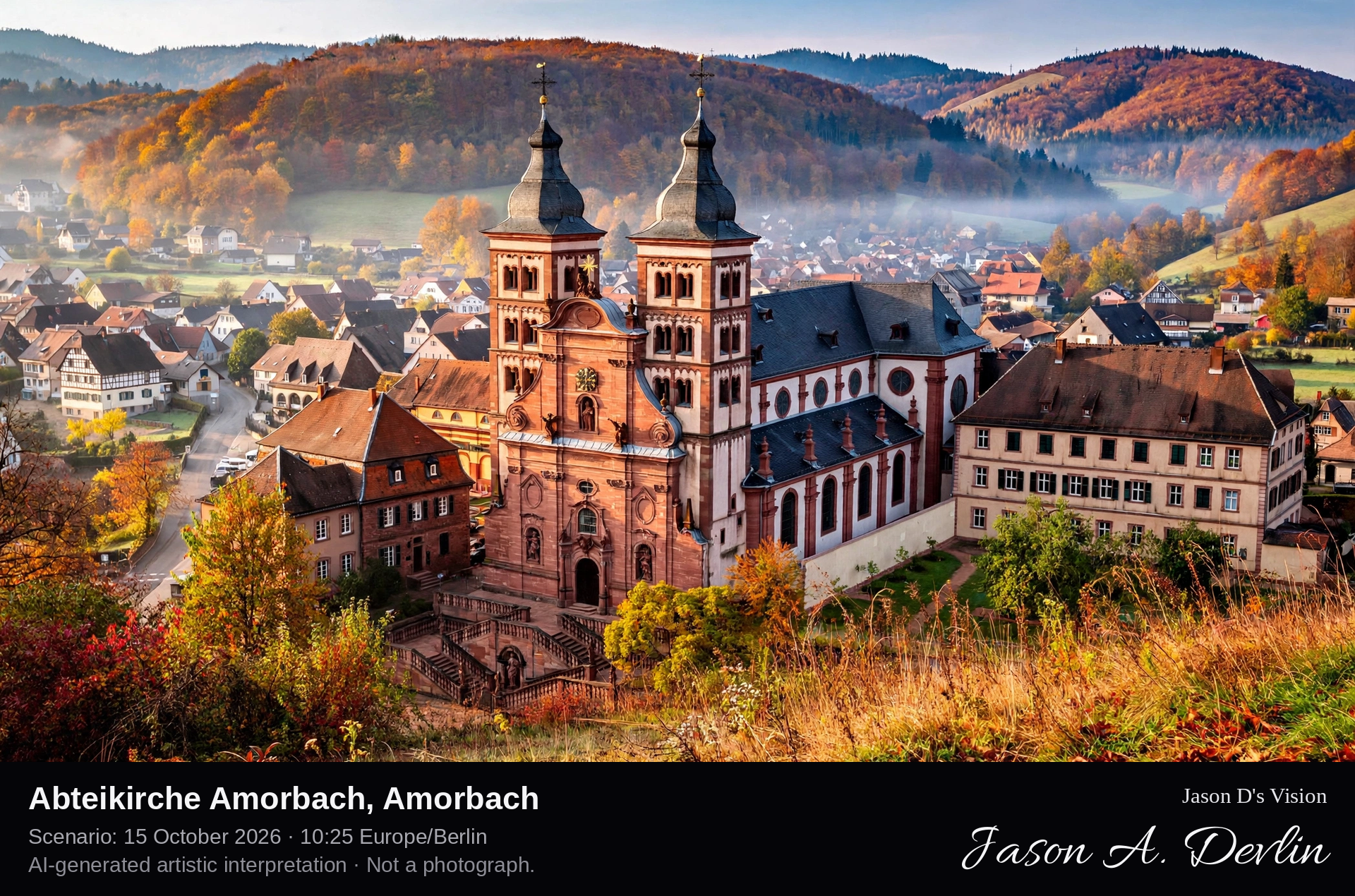
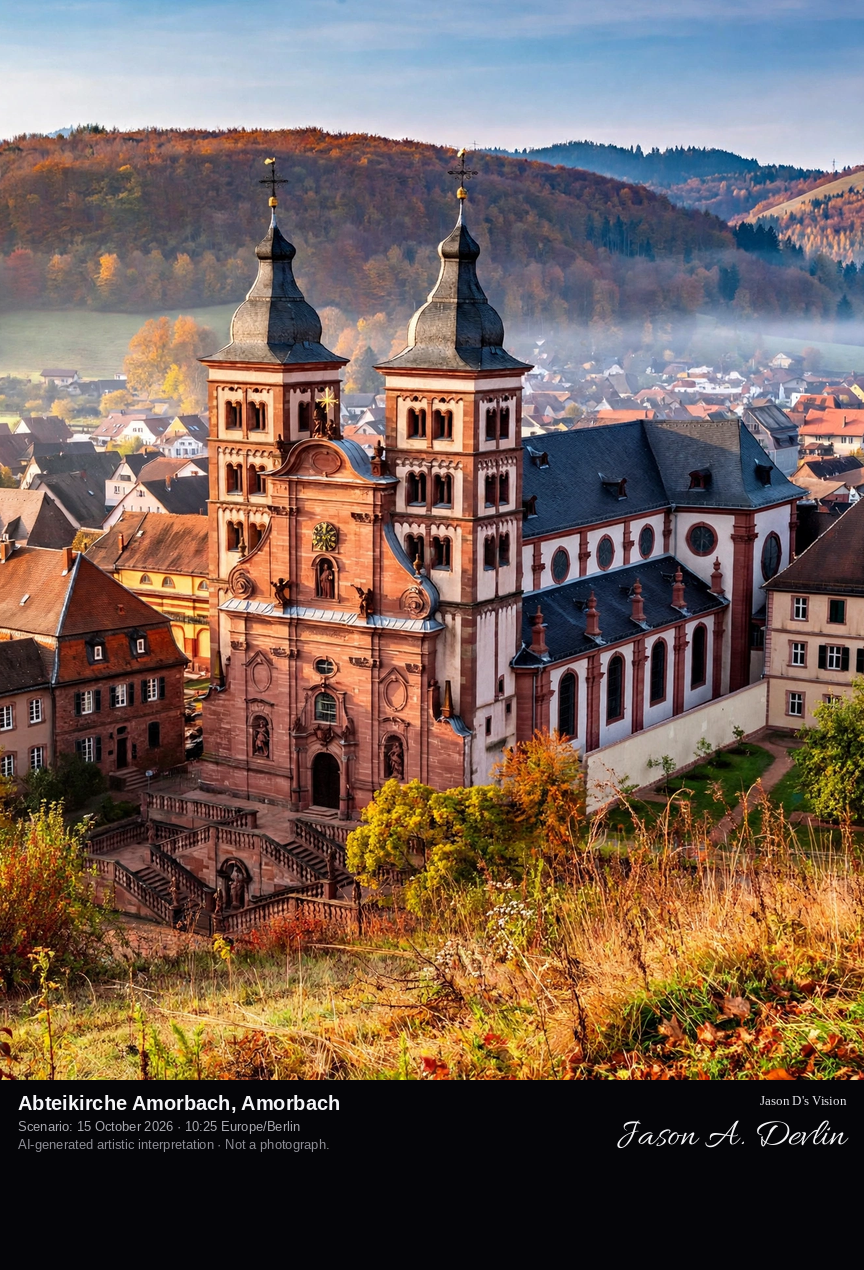
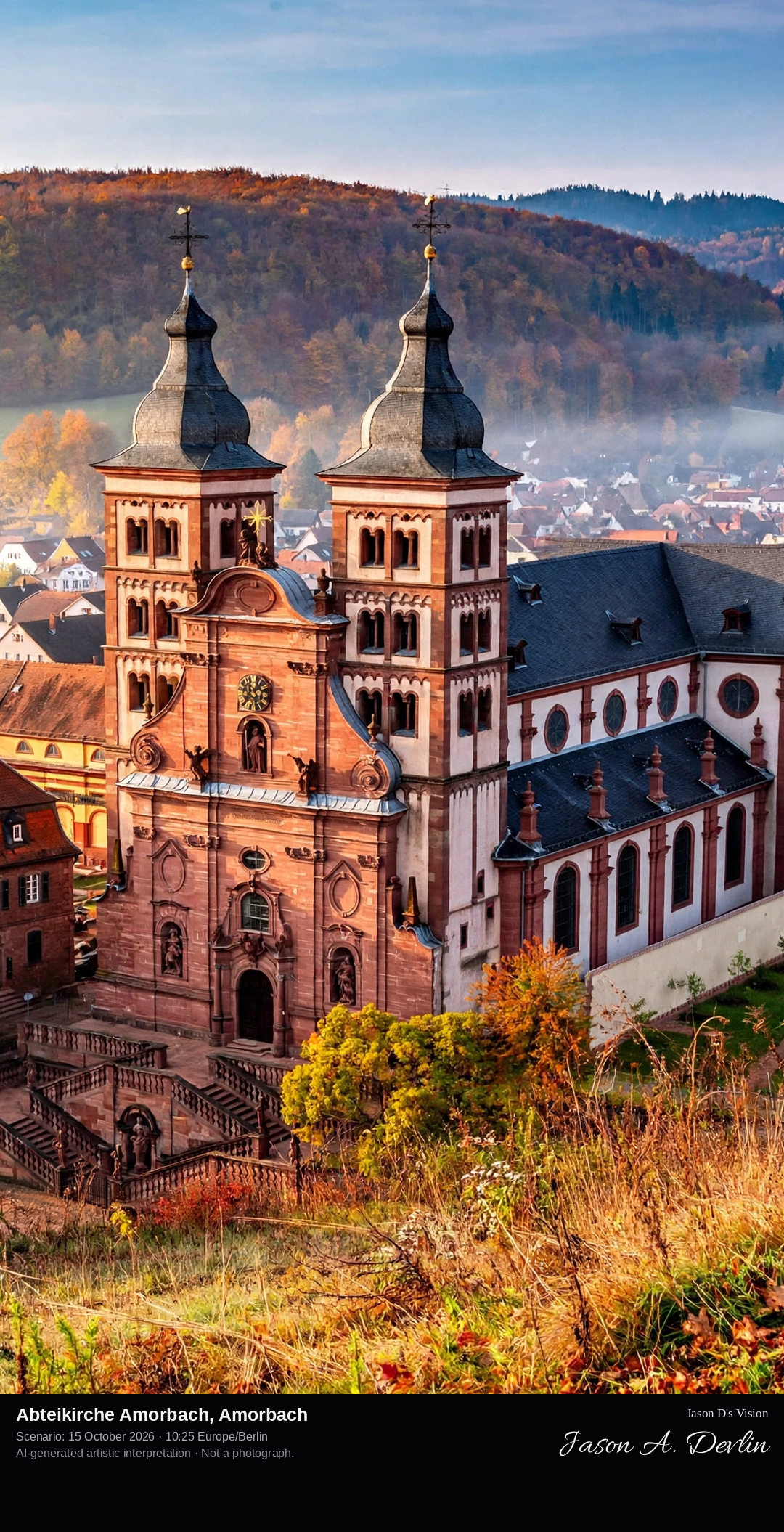
The abbey church at Amorbach belongs to a Benedictine abbey founded some 1,250 years ago in the Odenwald, its two six-storey Romanesque west towers kept when the church was rebuilt in late Baroque form in the 1740s. Inside, Rococo stucco and frescoes by Matthäus Günther surround the great Stumm organ built between 1776 and 1782.
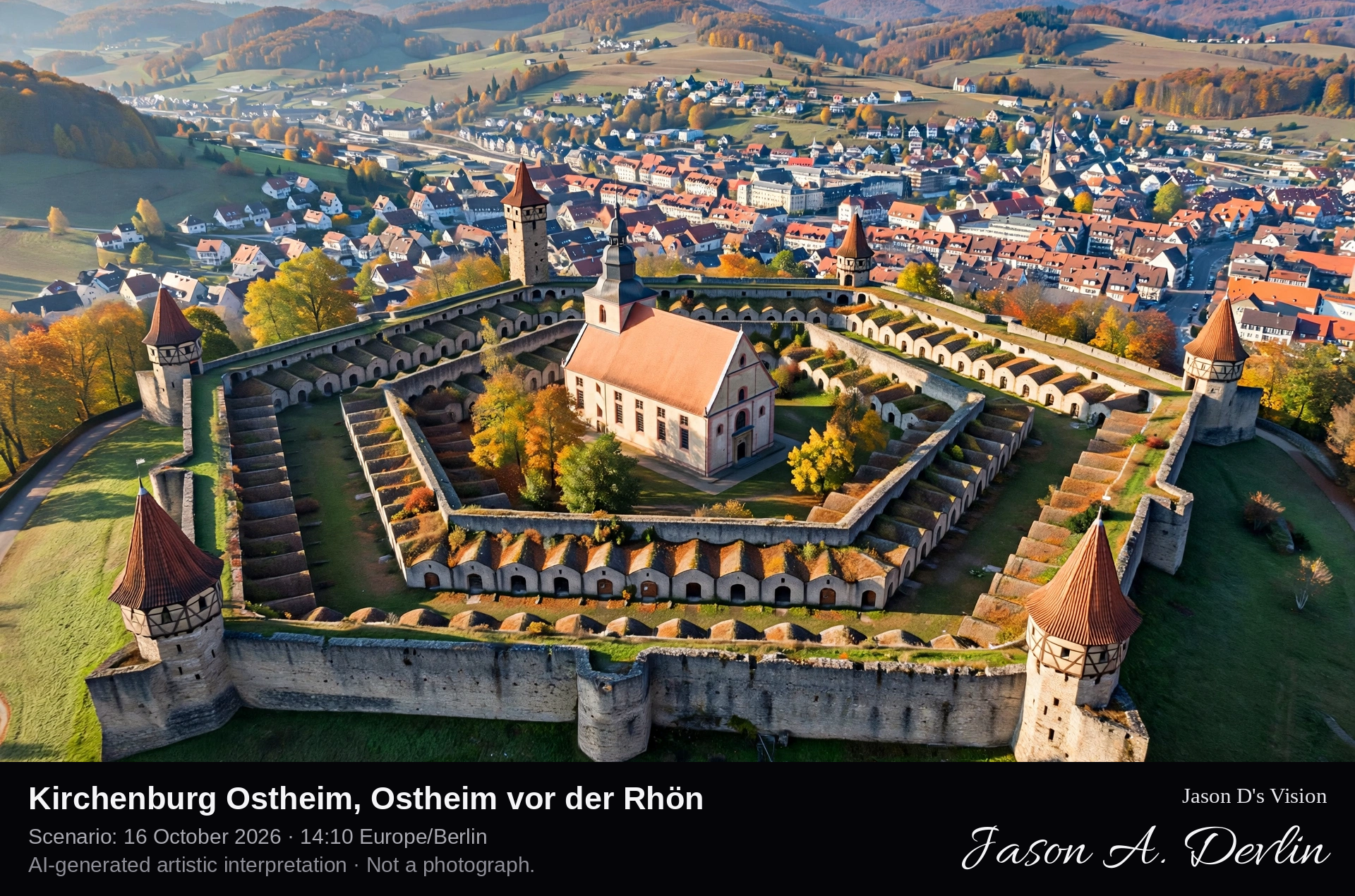
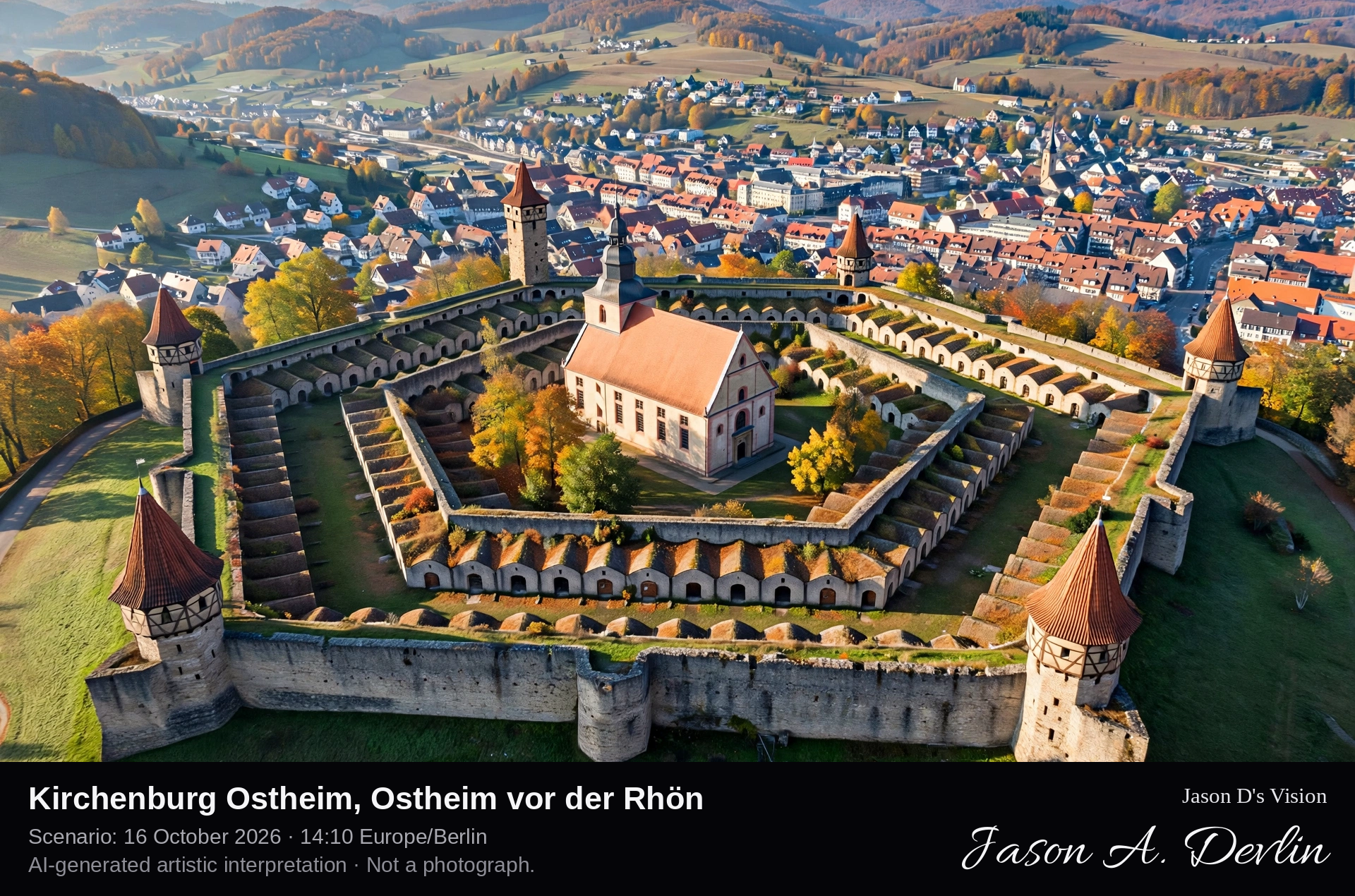
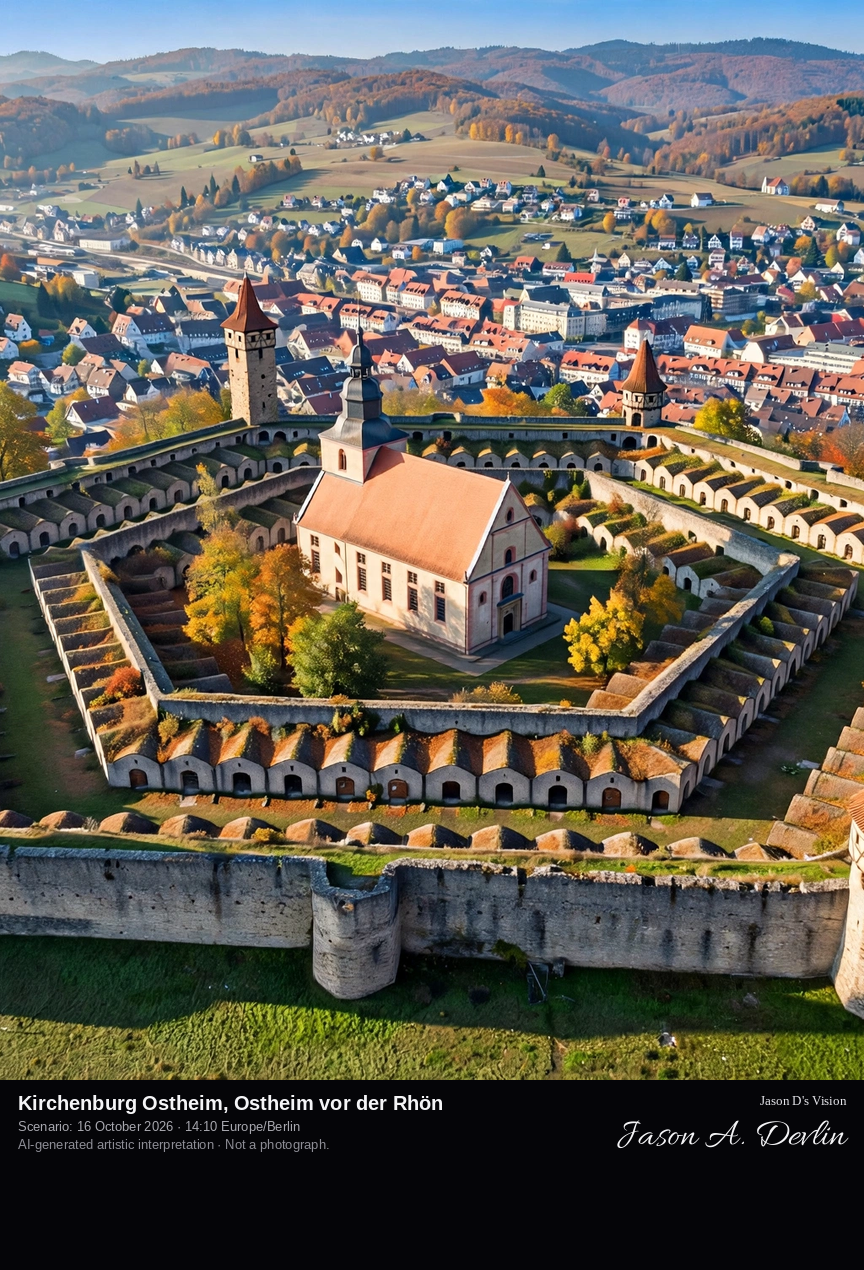
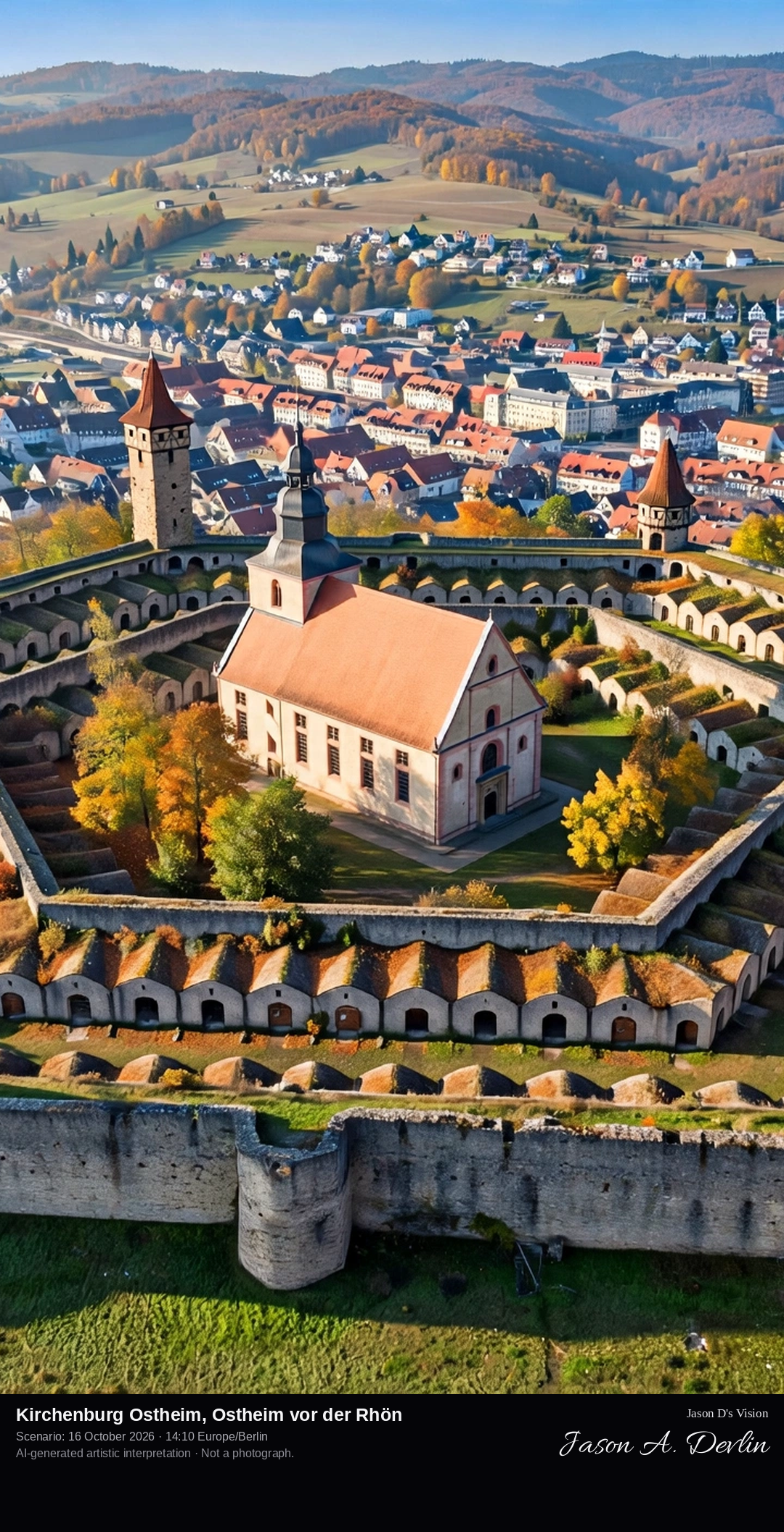
The double-walled fortress church and its ring of cellar houses above the town · AI-generated artistic interpretation
The Kirchenburg at Ostheim vor der Rhön is the largest and best-preserved fortified church in Germany, its church of St Michael enclosed by a double ring wall built between 1400 and 1450. Inside the walls, 66 vaulted cellars and 72 storage chambers once kept the townspeople and their goods safe in times of danger.
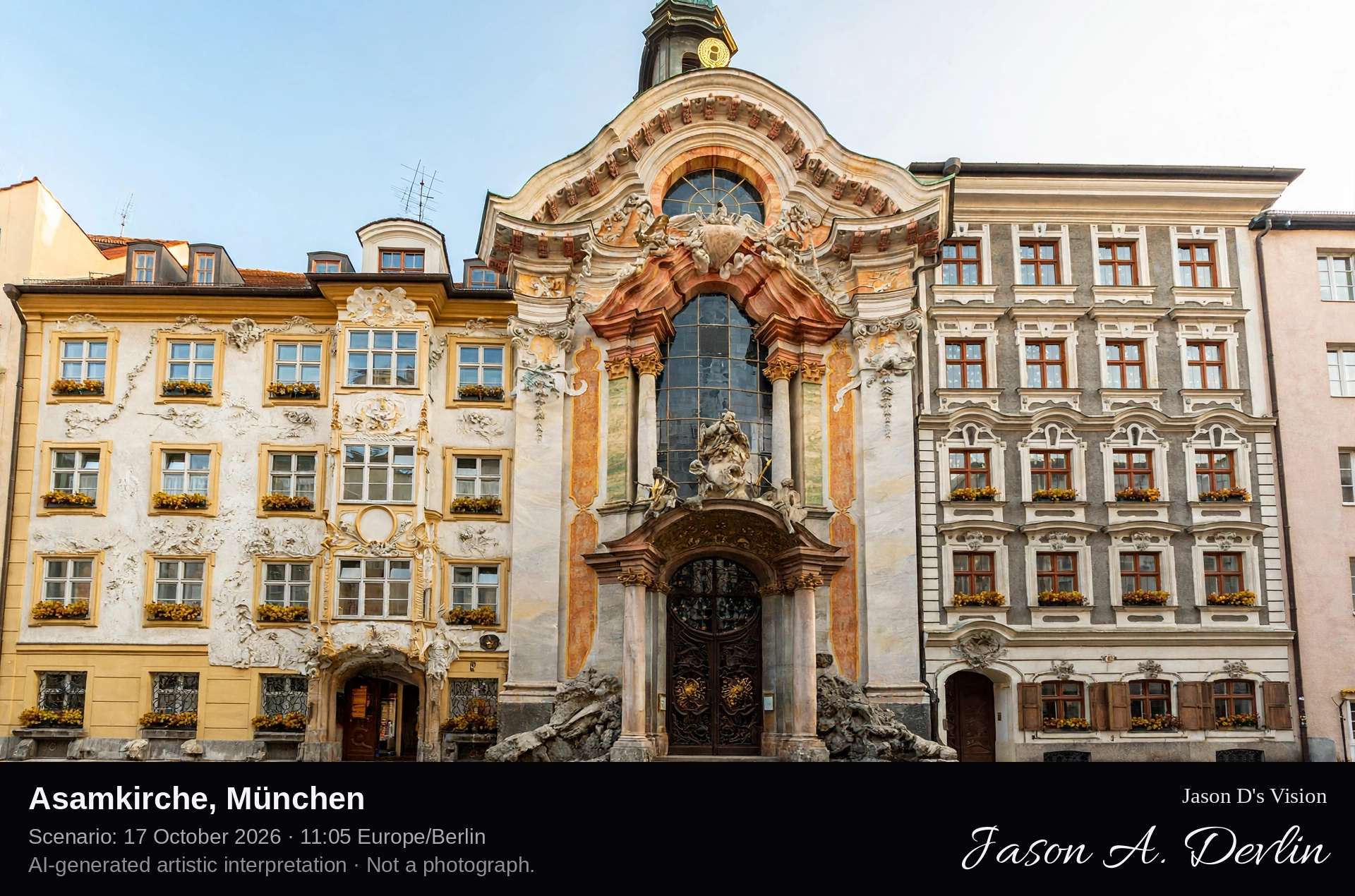
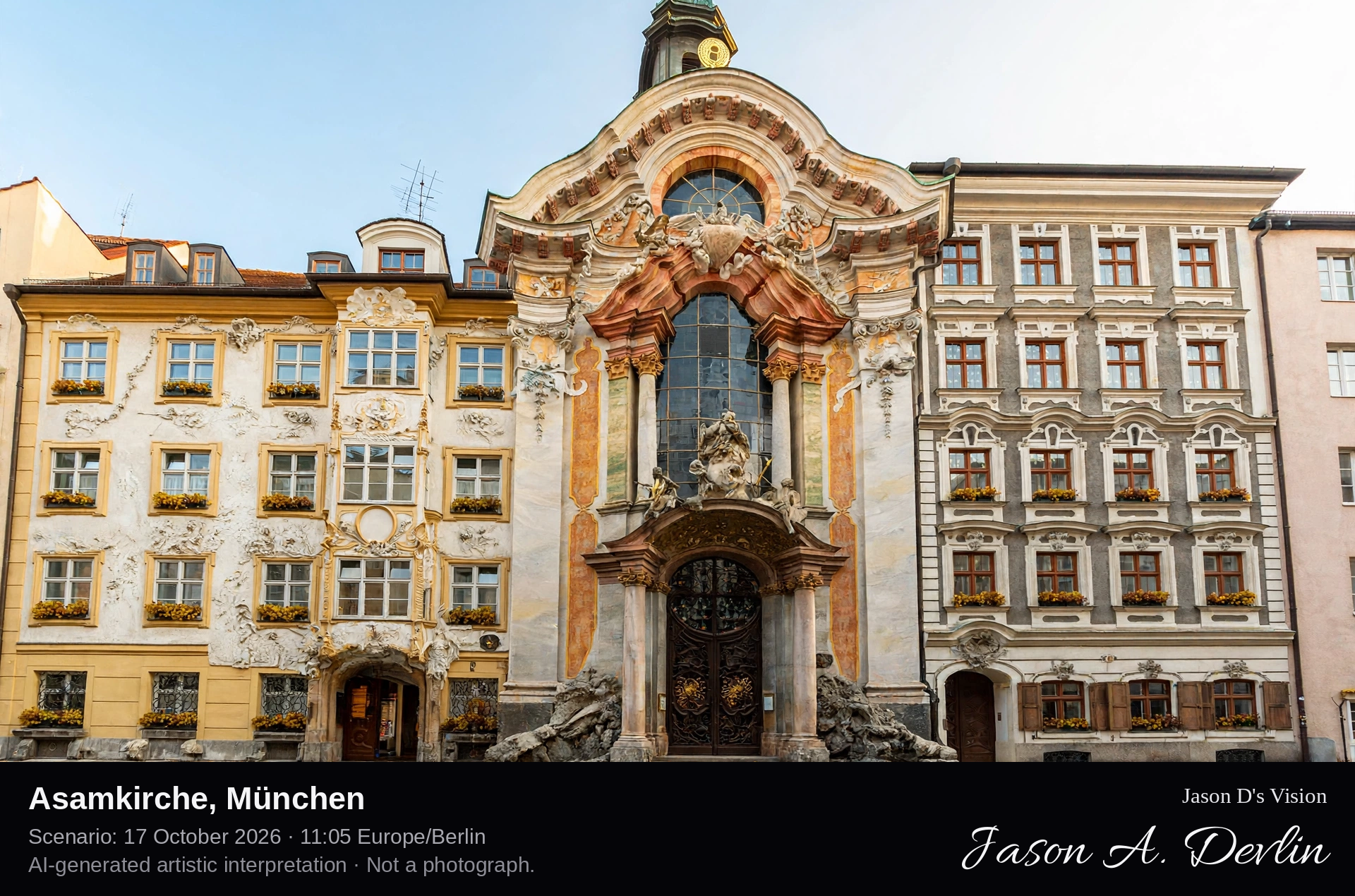
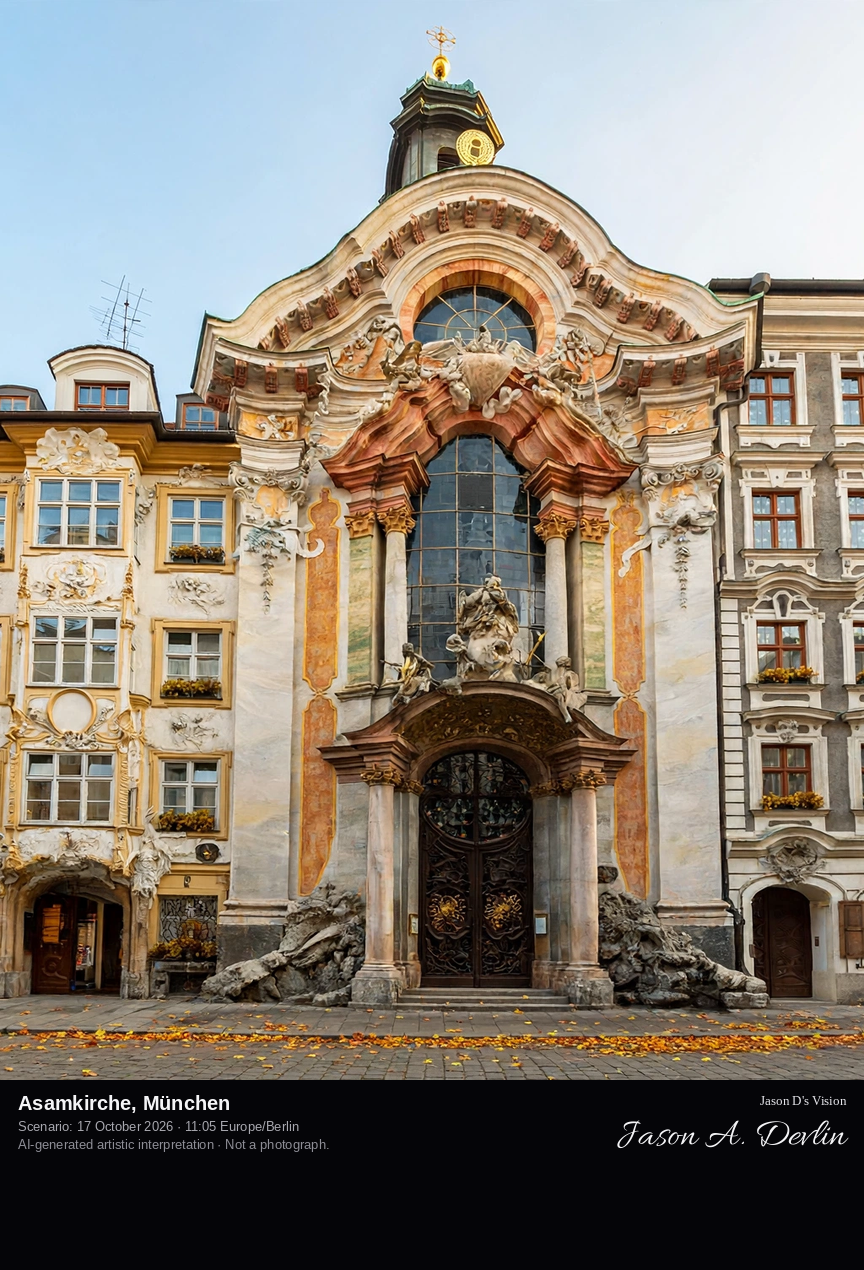
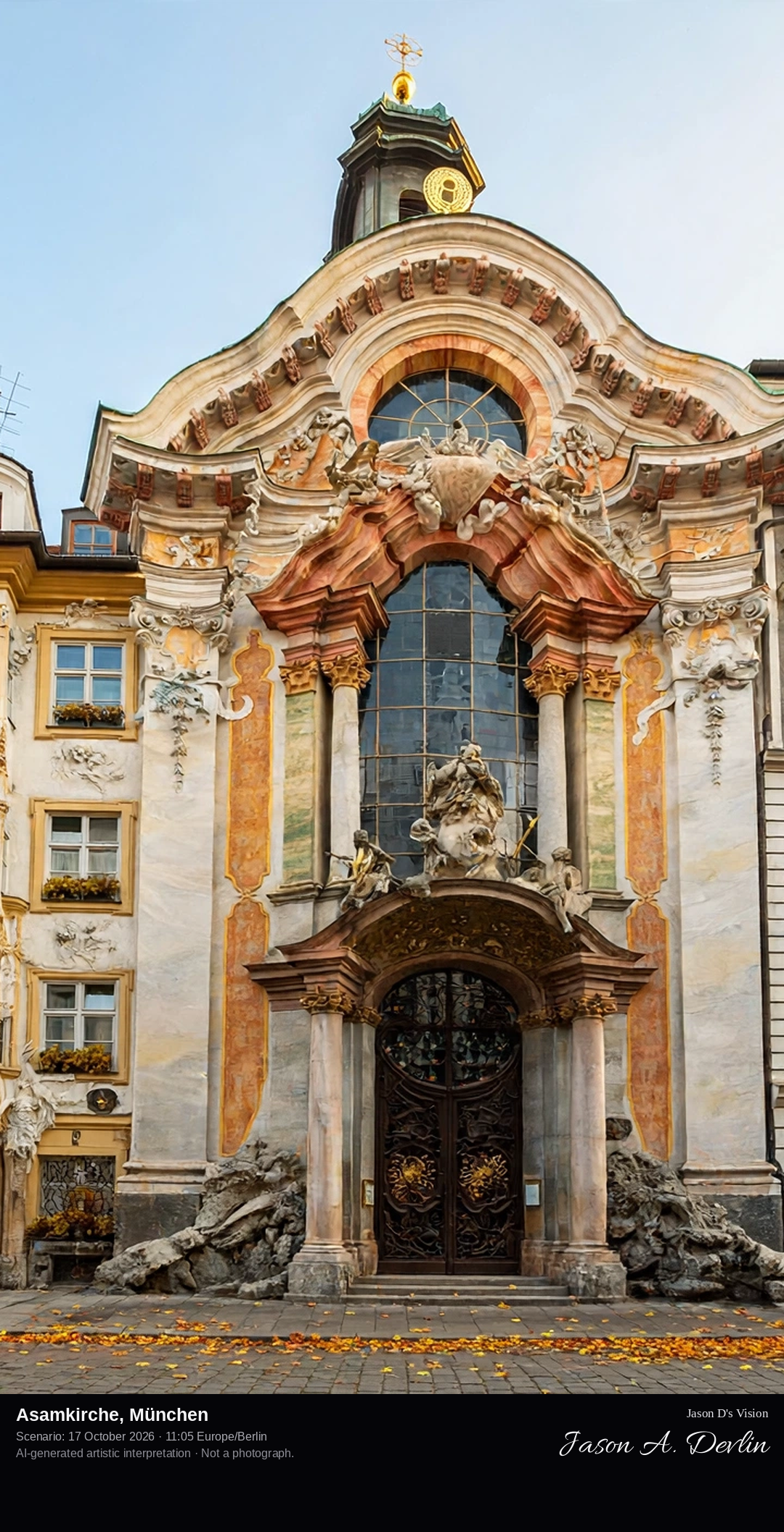
The ornate convex facade held in the Sendlinger Straße street row · AI-generated artistic interpretation
The Asamkirche on Munich's Sendlinger Straße was built between 1733 and 1746 by the brothers Egid Quirin and Cosmas Damian Asam as their own church, squeezed into a plot barely 22 metres long. Behind its ornate convex facade, gilt, stucco and fresco fuse into a pocket-sized late-Baroque Gesamtkunstwerk dedicated to St John Nepomuk.
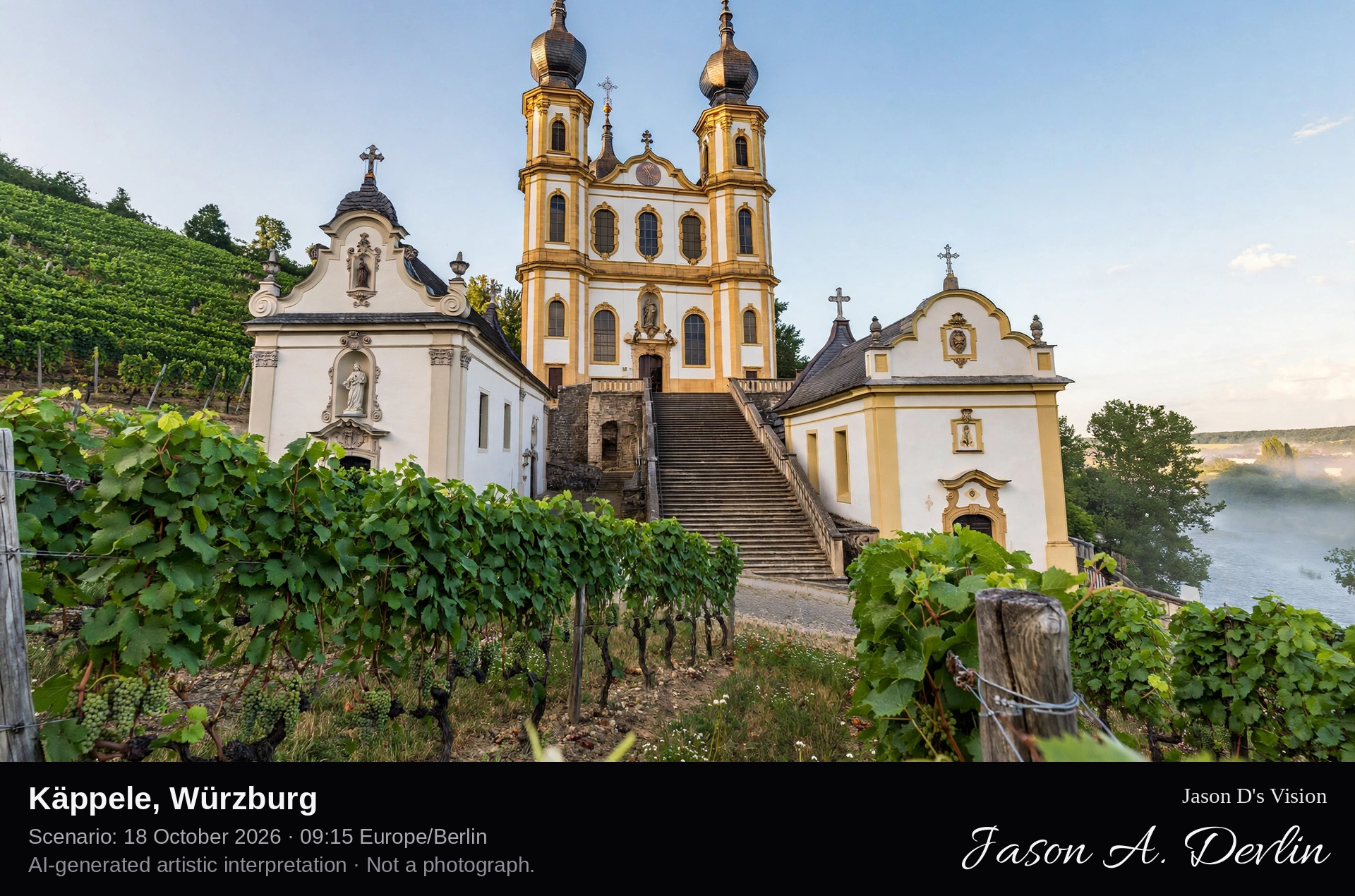
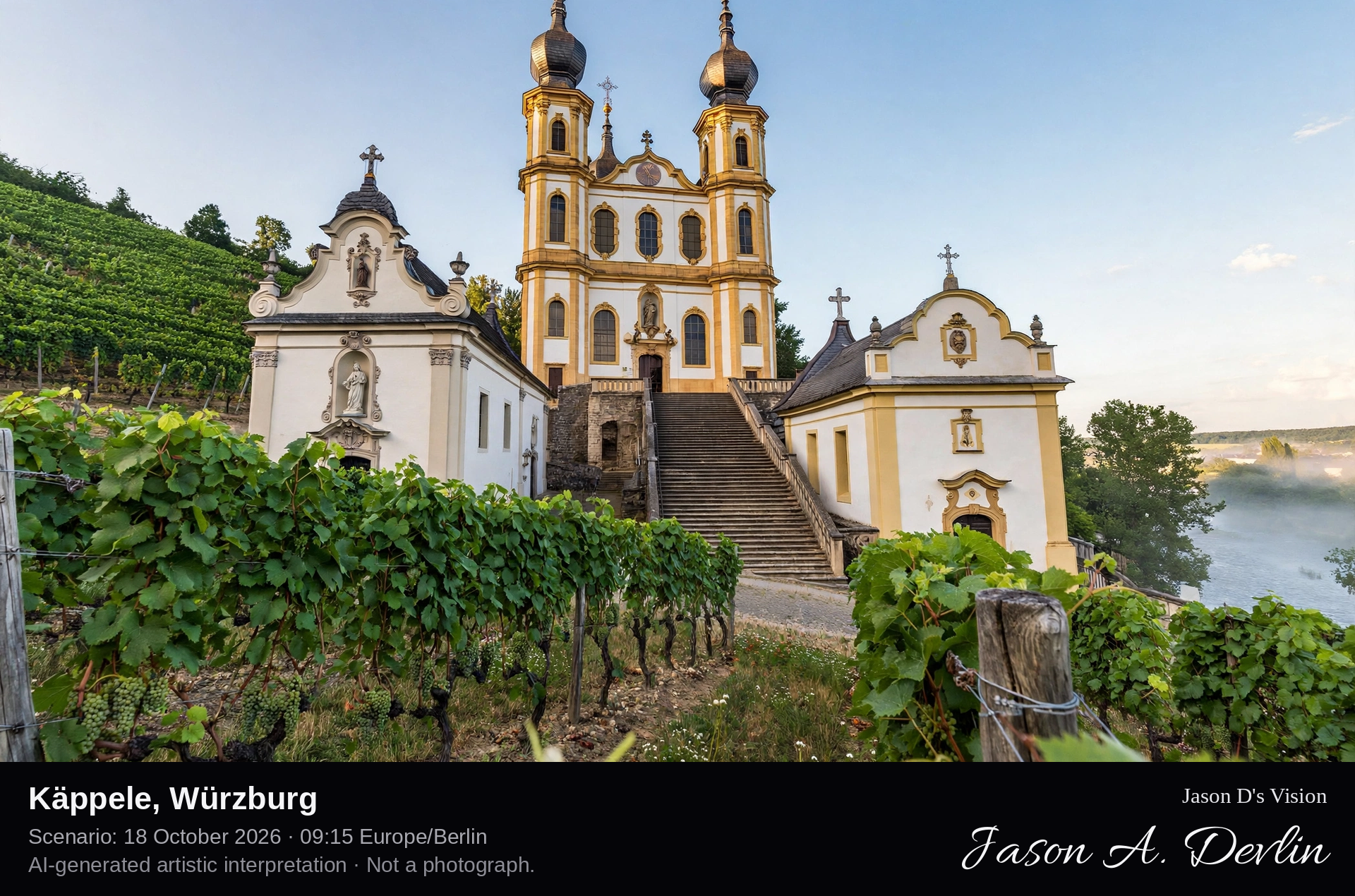
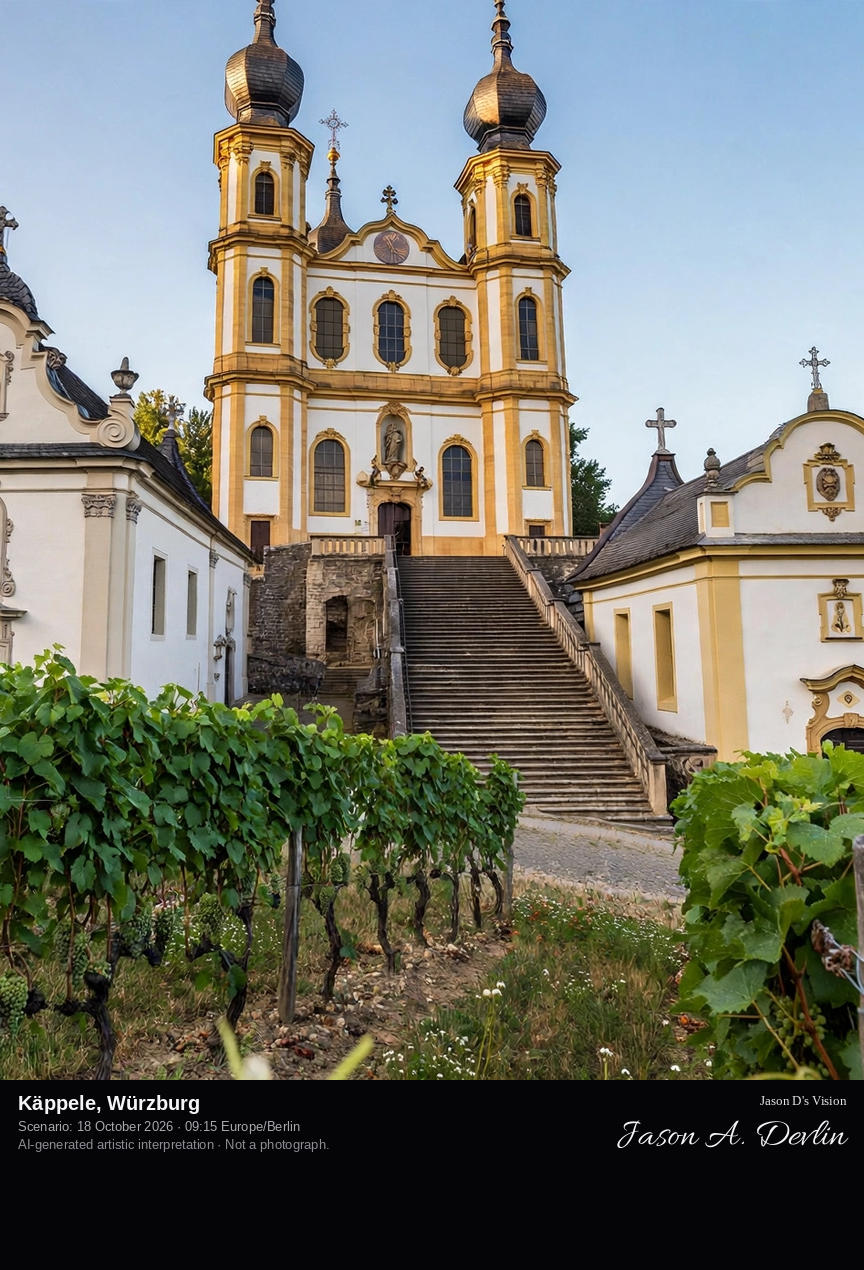
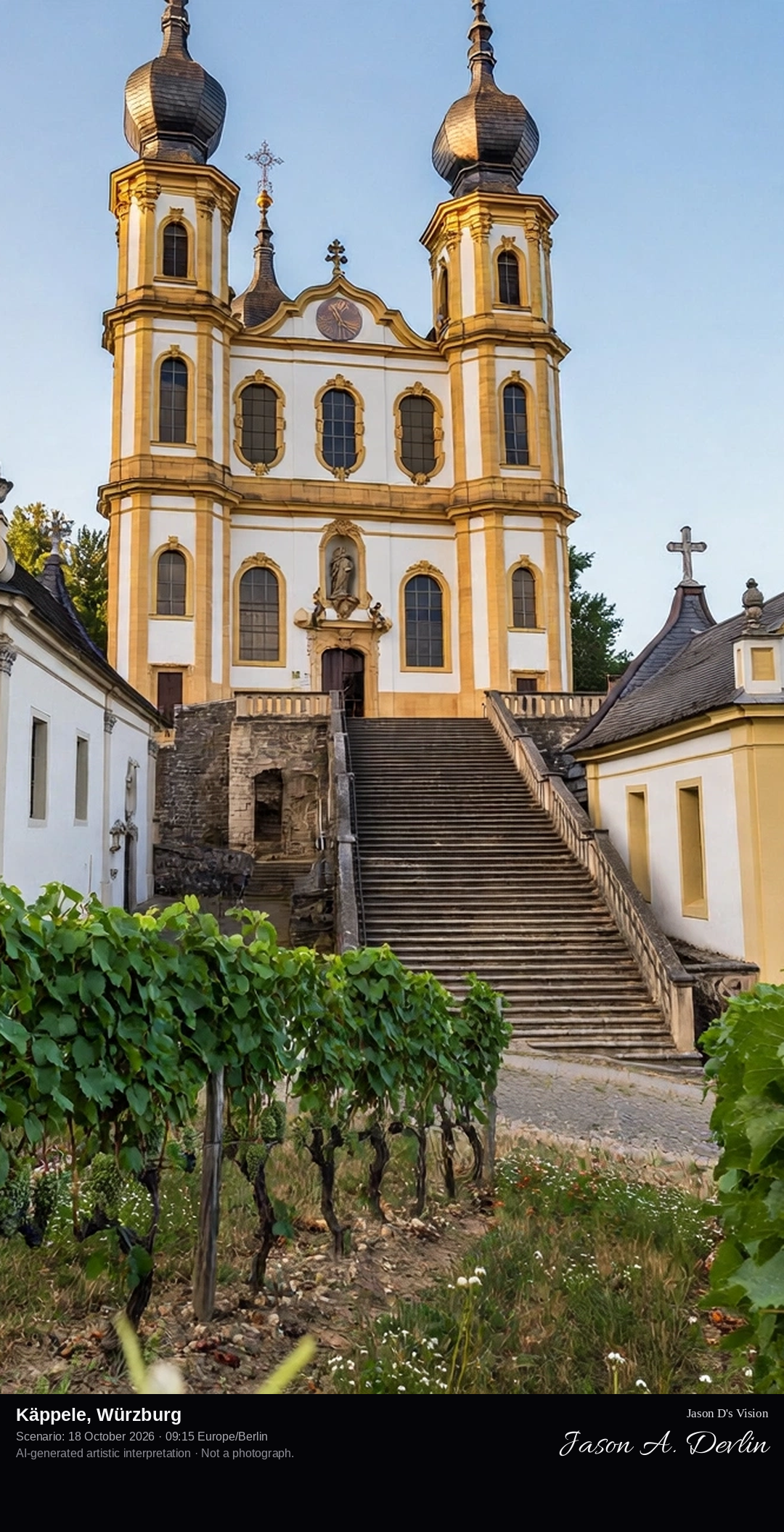
Twin towers above the terraced vineyard hill · AI-generated artistic interpretation
The Käppele, the pilgrimage church of Mariä Heimsuchung designed by Balthasar Neumann, crowns the vineyard hill above Würzburg. A broad stations-of-the-cross staircase climbs the terraced slopes to its twin-towered facade, and inside are ceiling frescoes by Matthäus Günther around the original 1640s Pietà.
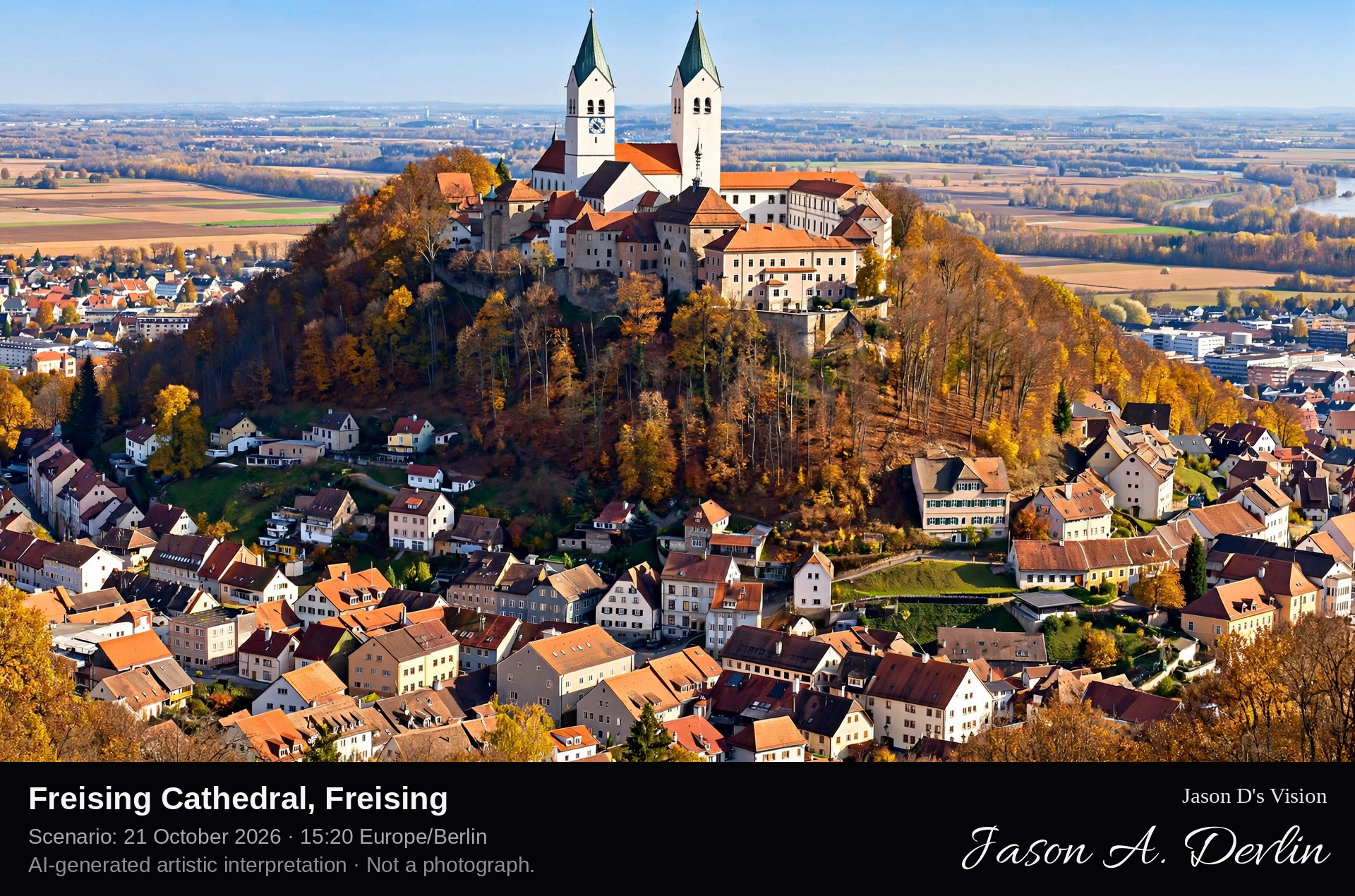
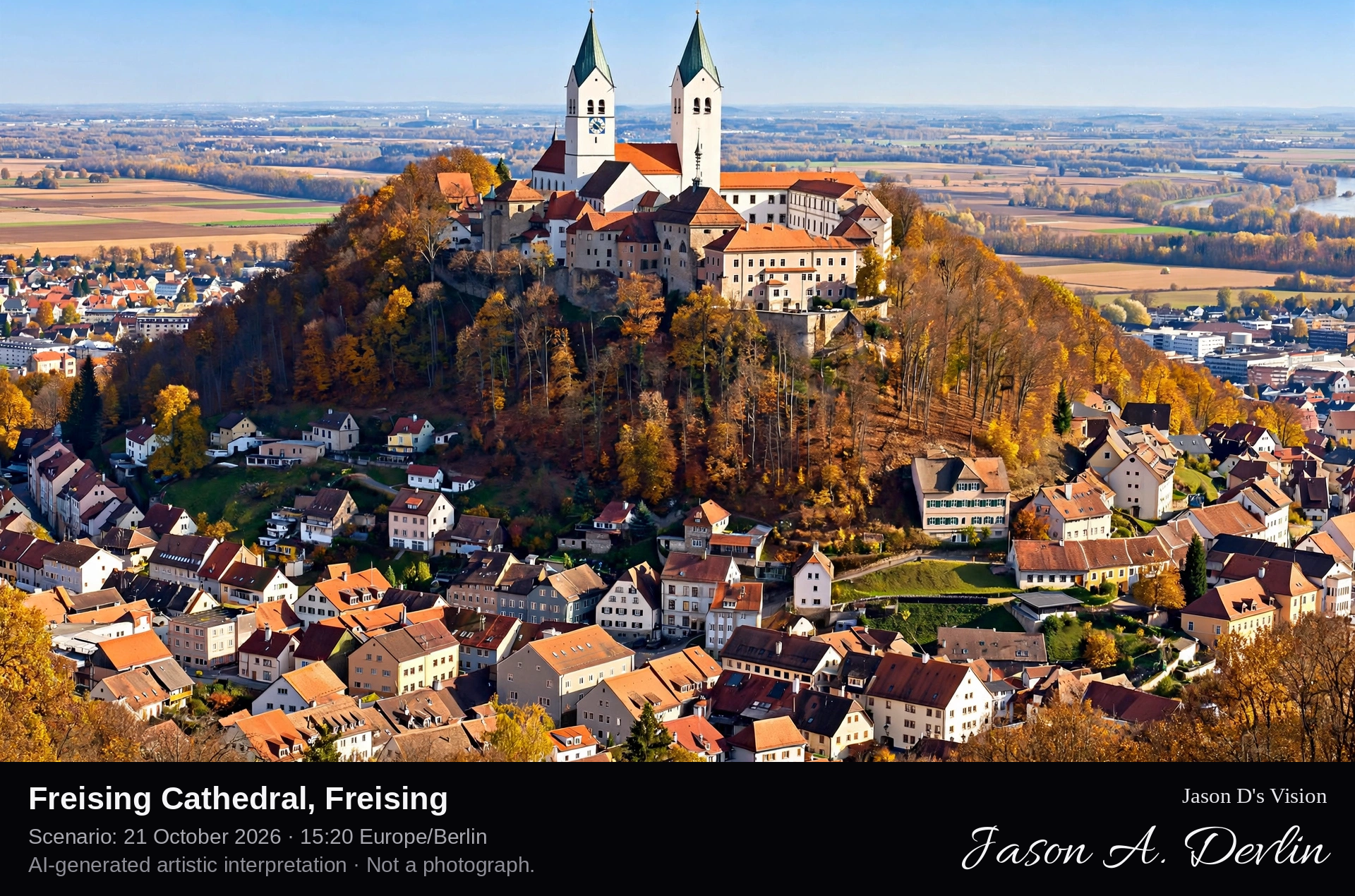
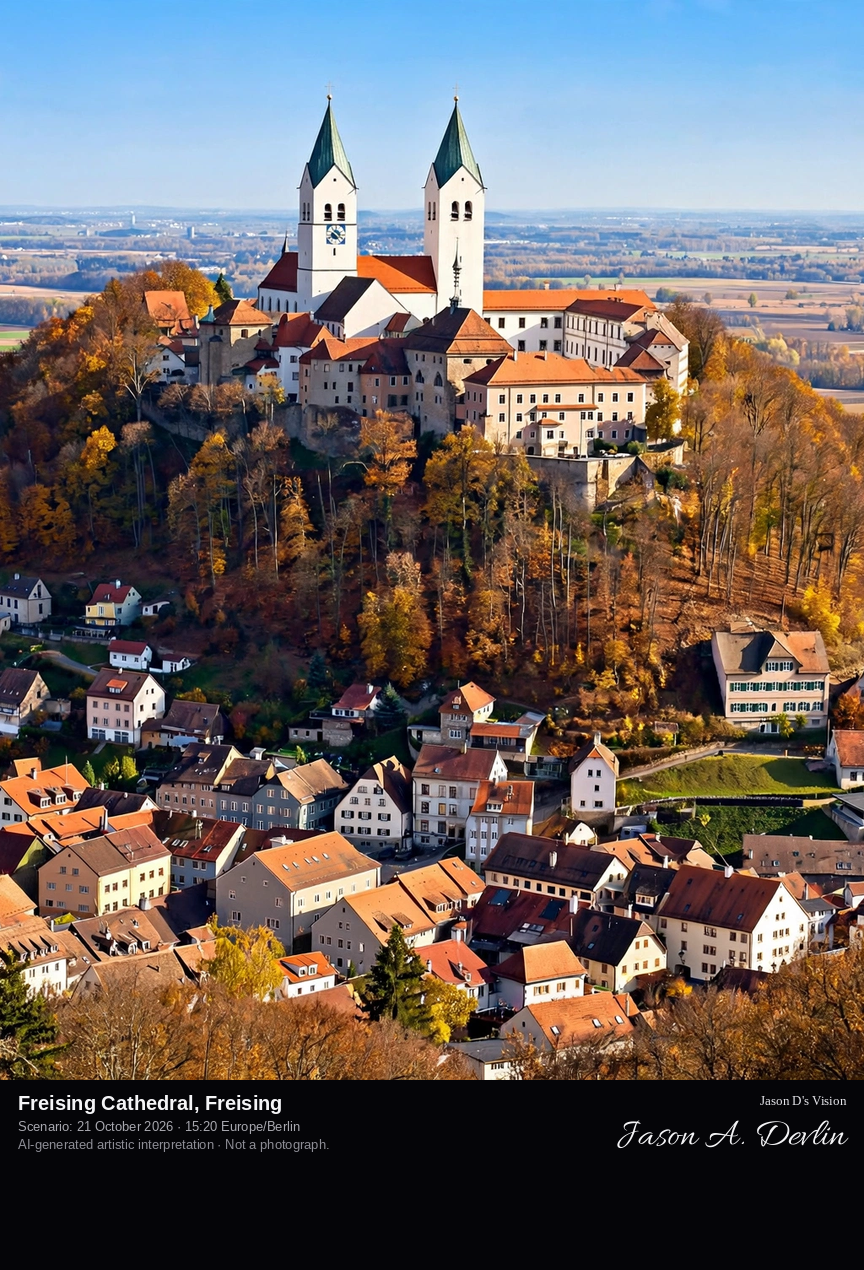
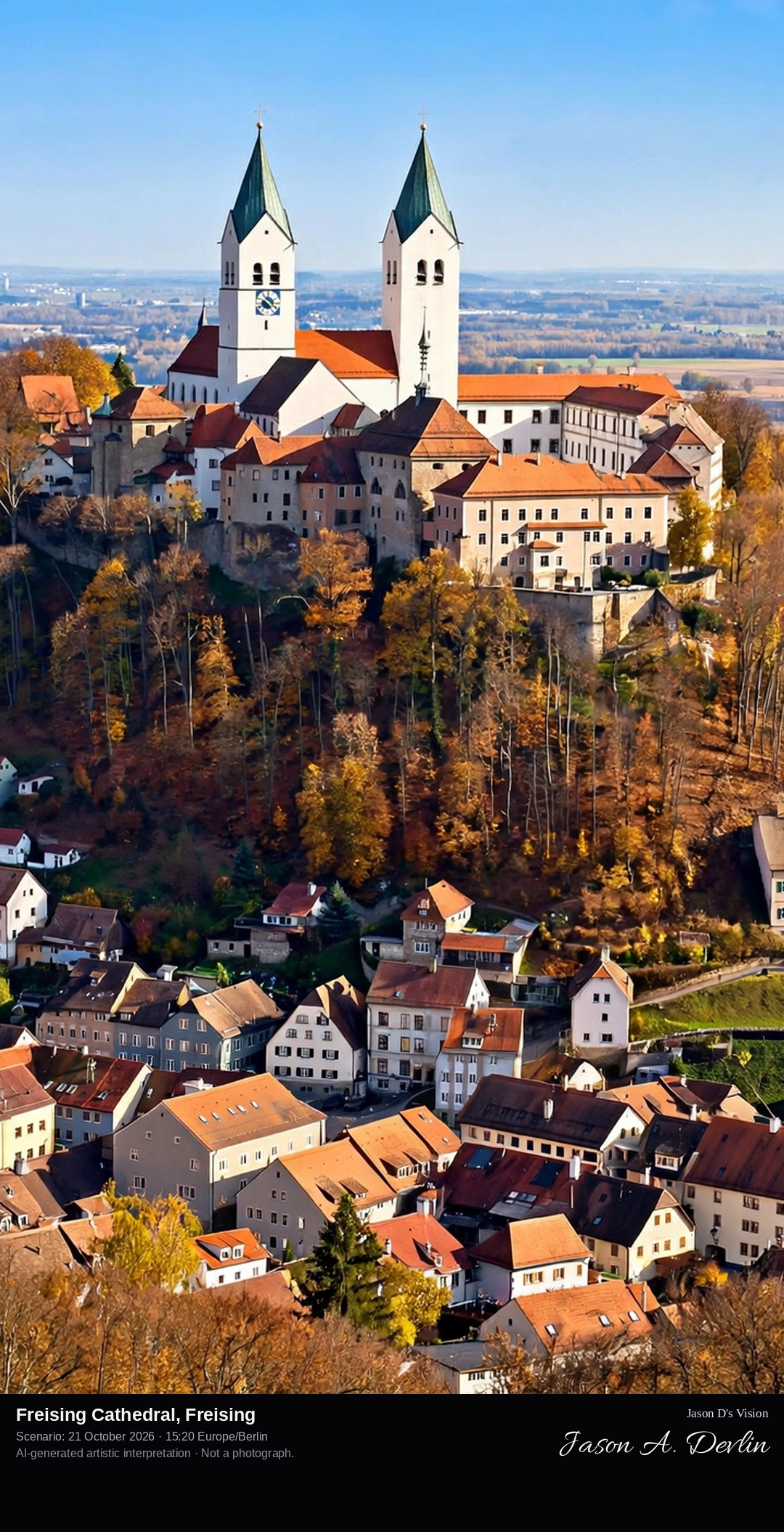
Twin towers crowning the wooded Domberg · AI-generated artistic interpretation
Freising Cathedral, dedicated to St. Maria and St. Korbinian, is the co-cathedral of the Munich-Freising archdiocese and crowns the Domberg above the old town. It was the seat of the prince-bishops for centuries, holds a Baroque interior by the Asam brothers and keeps the shrine of St. Corbinian, the diocese's founder.
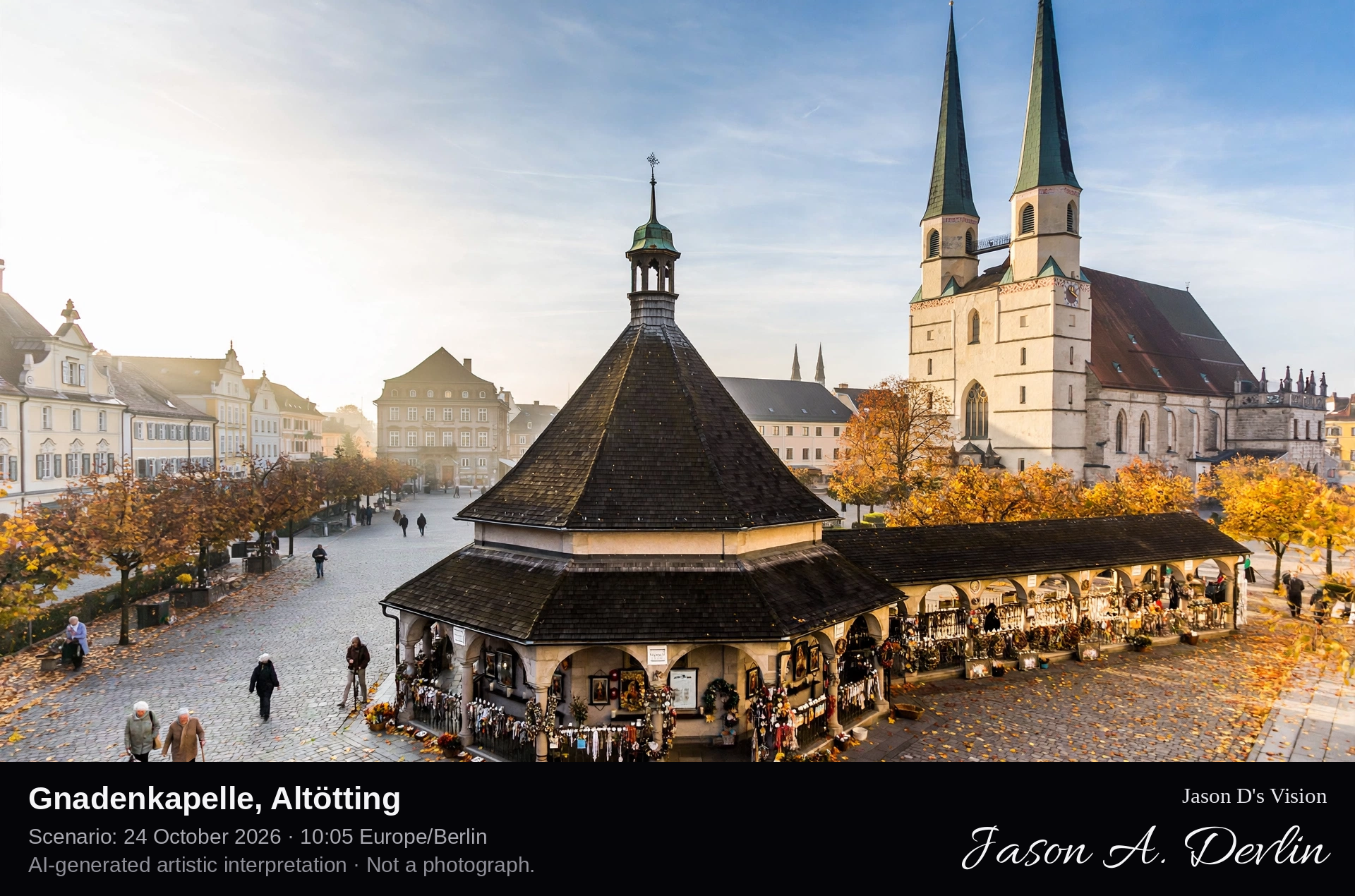
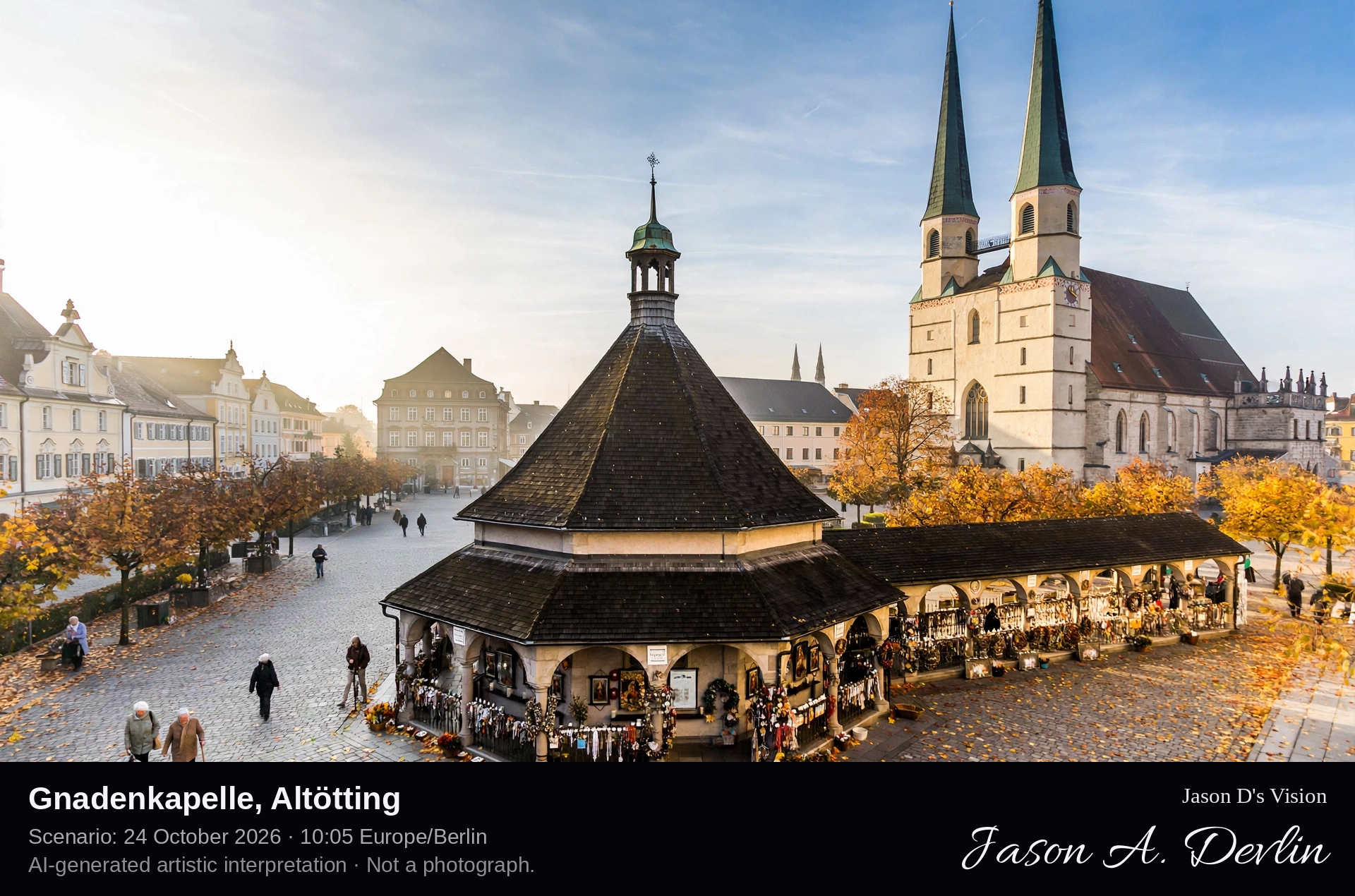
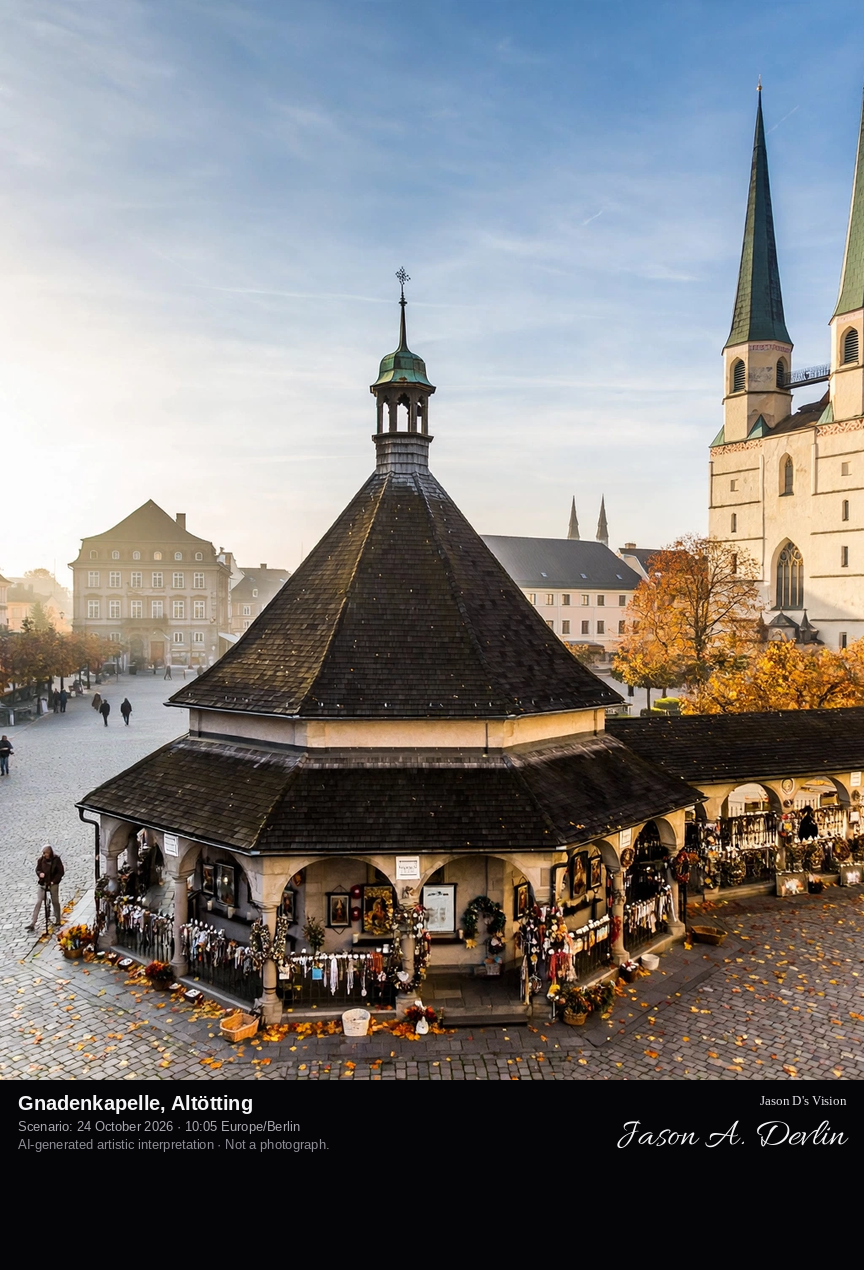
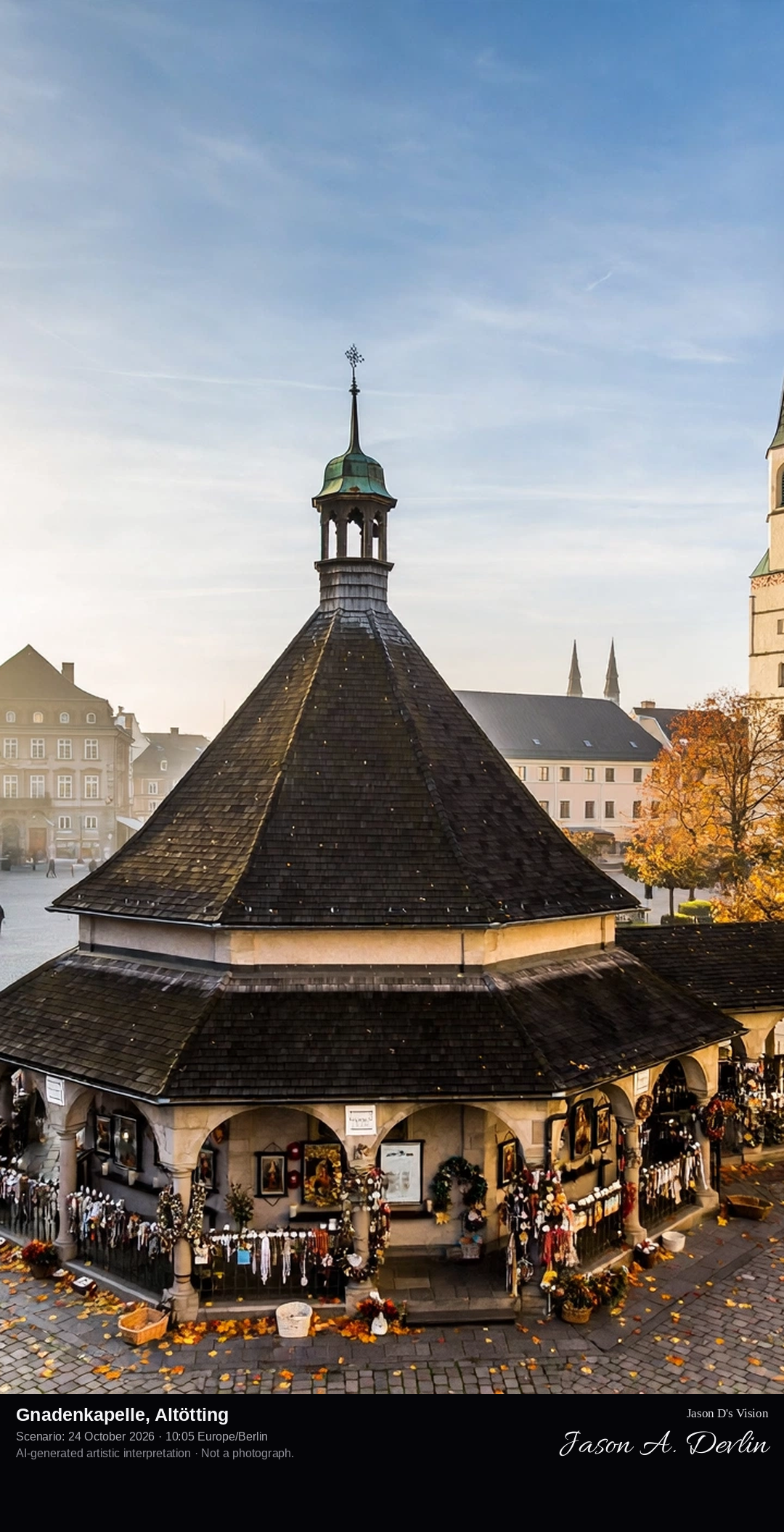
The octagonal chapel at the heart of Kapellplatz · AI-generated artistic interpretation
The Gnadenkapelle, the Chapel of Grace, stands on Kapellplatz in Altötting and has drawn Germany's greatest Marian pilgrimage since 1489. Inside the small octagonal chapel is the revered Black Madonna, and its walls hold the heart urns of 28 Bavarian rulers.
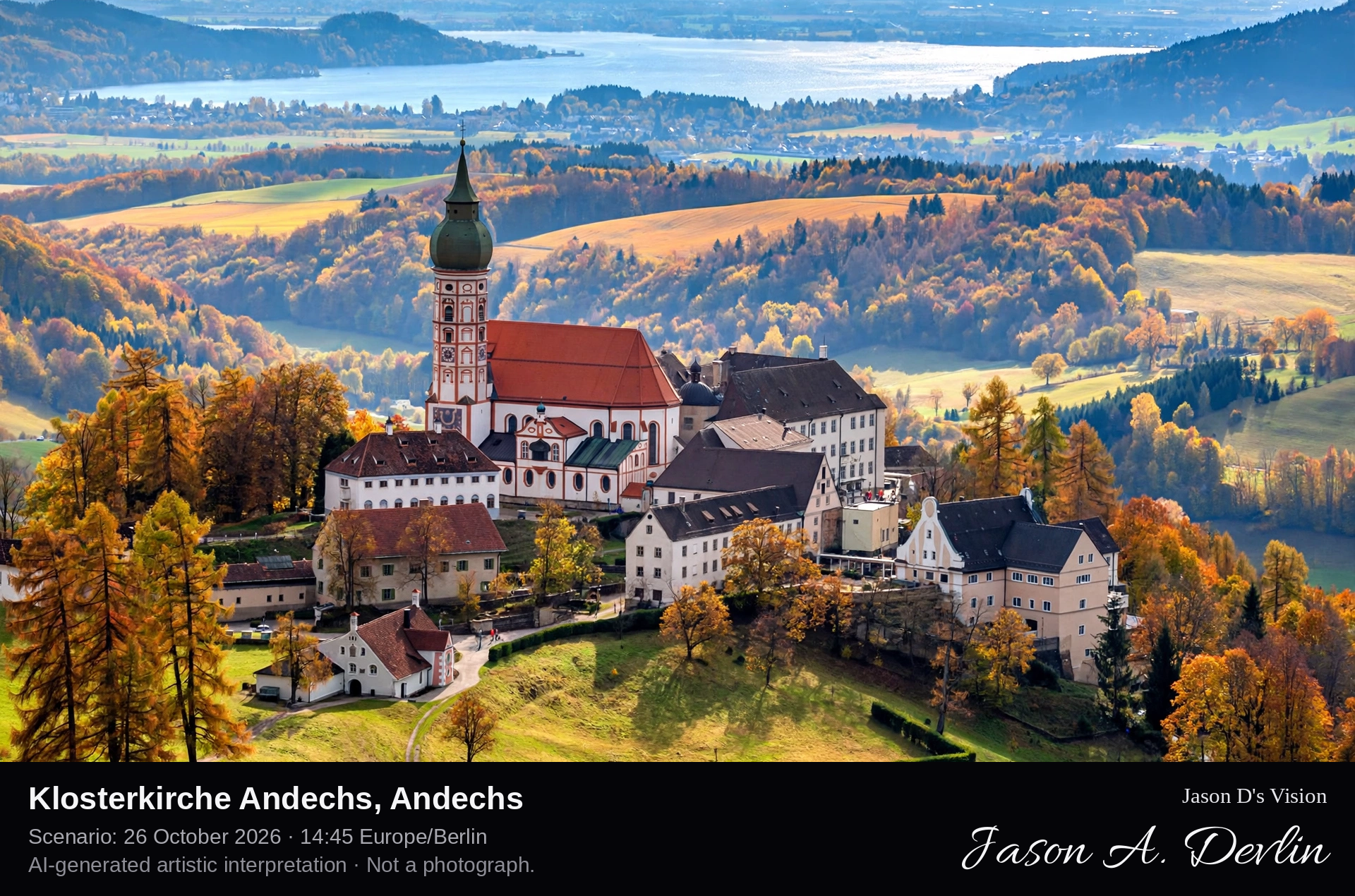
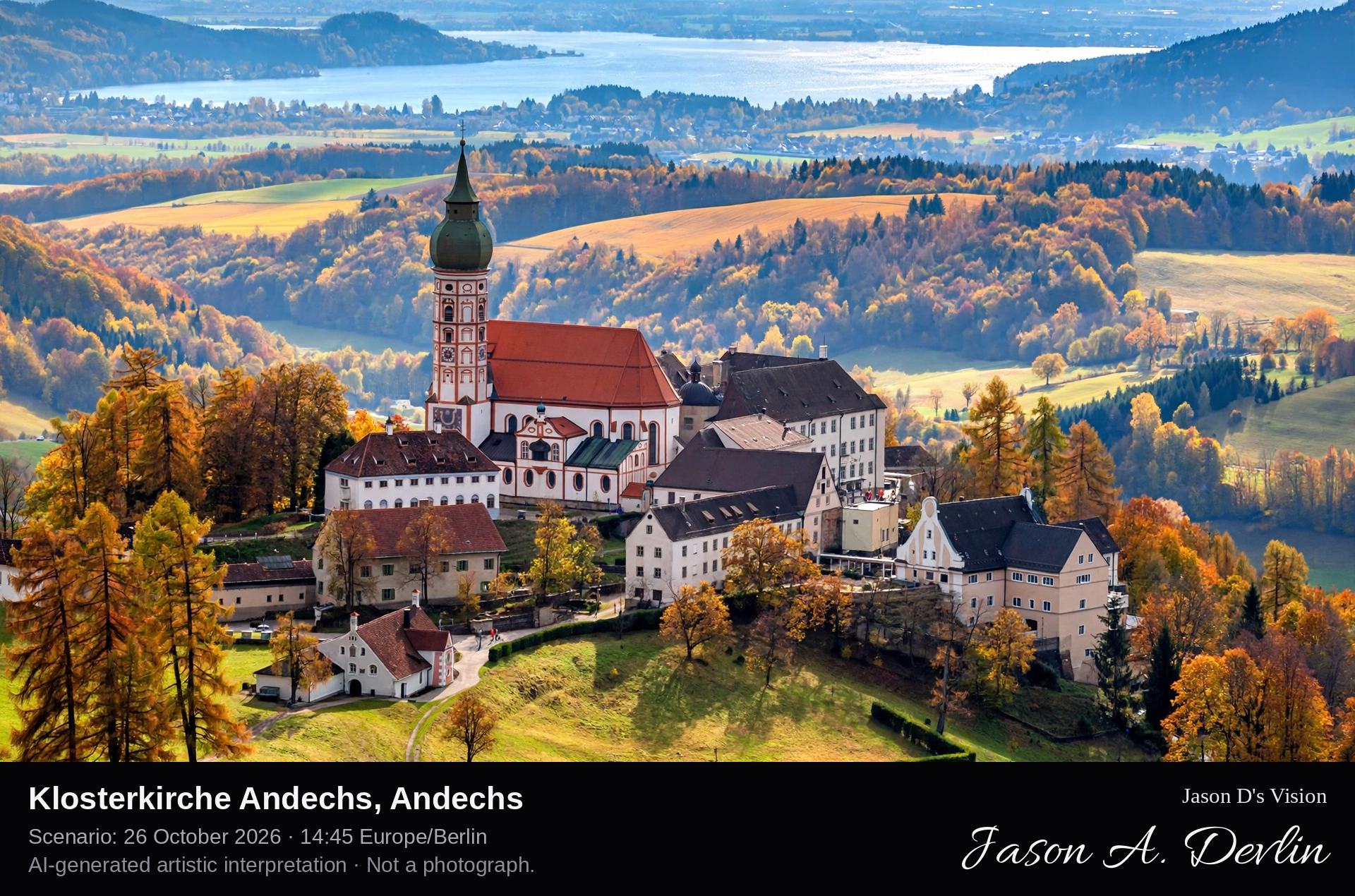
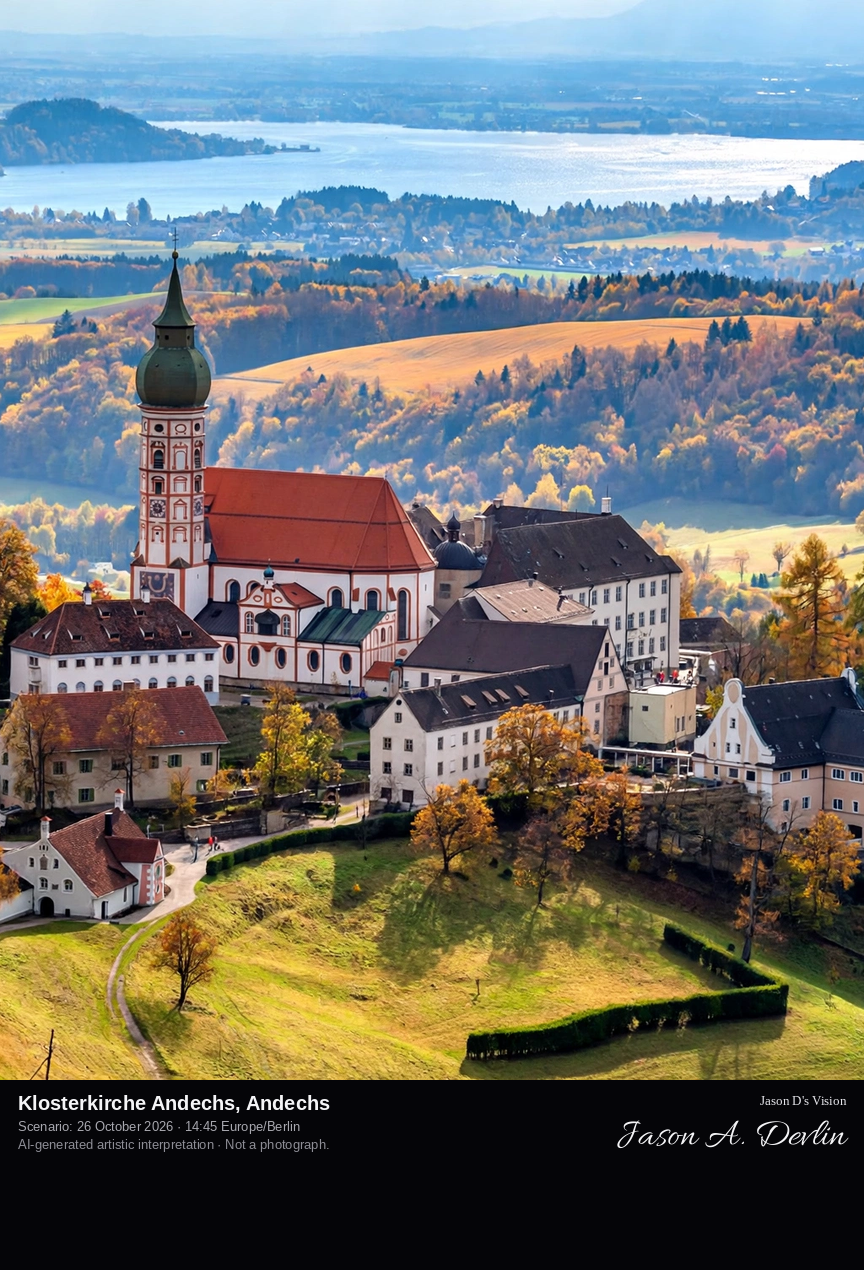
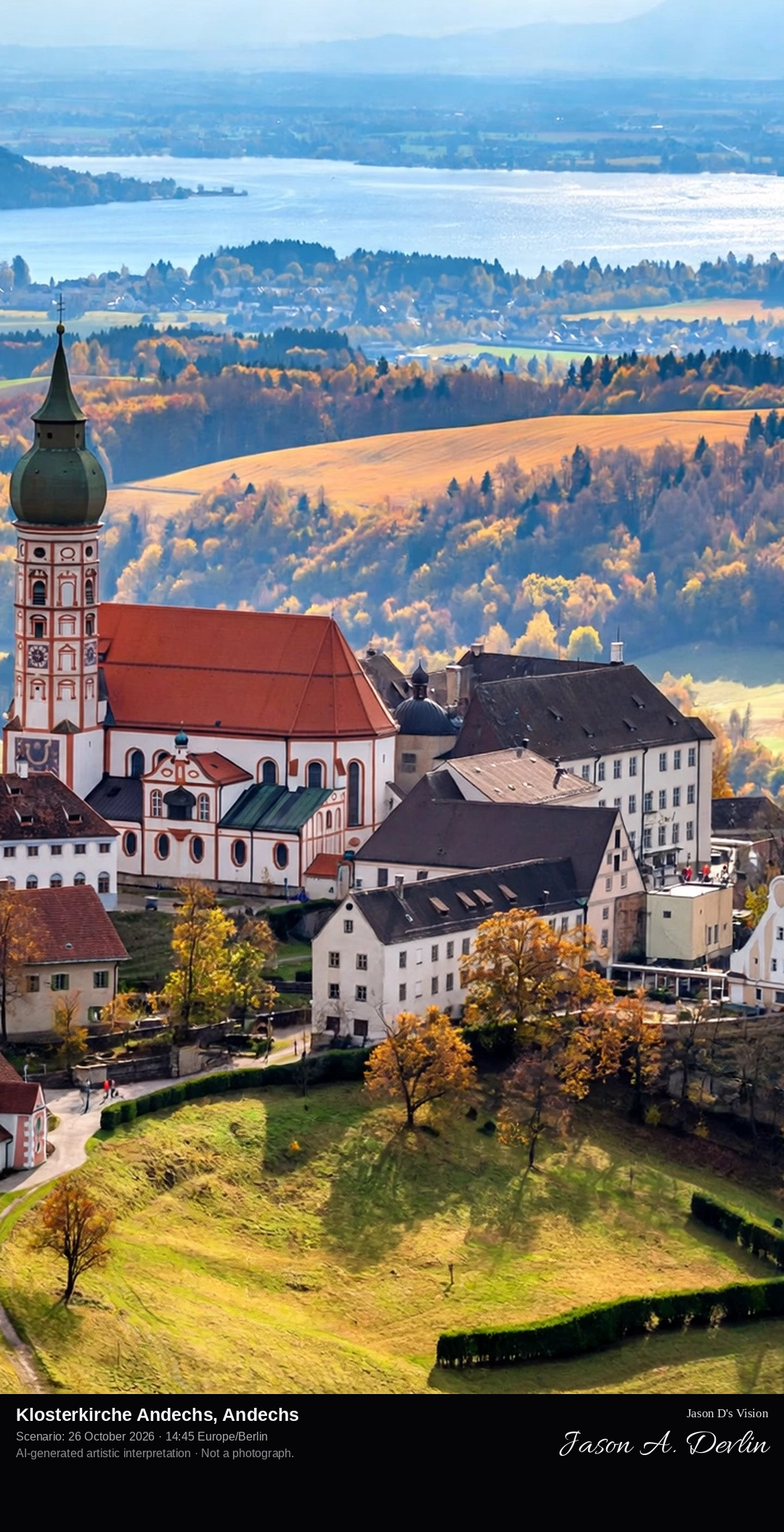
The onion-domed church on the Holy Mountain · AI-generated artistic interpretation
The pilgrimage church of Andechs Abbey stands on the Holy Mountain above the Ammersee, the second-largest pilgrimage destination in Bavaria. Pilgrims climb to its Rococo interior, and the Benedictine abbey beside the church is equally famed for its monastery brewery.
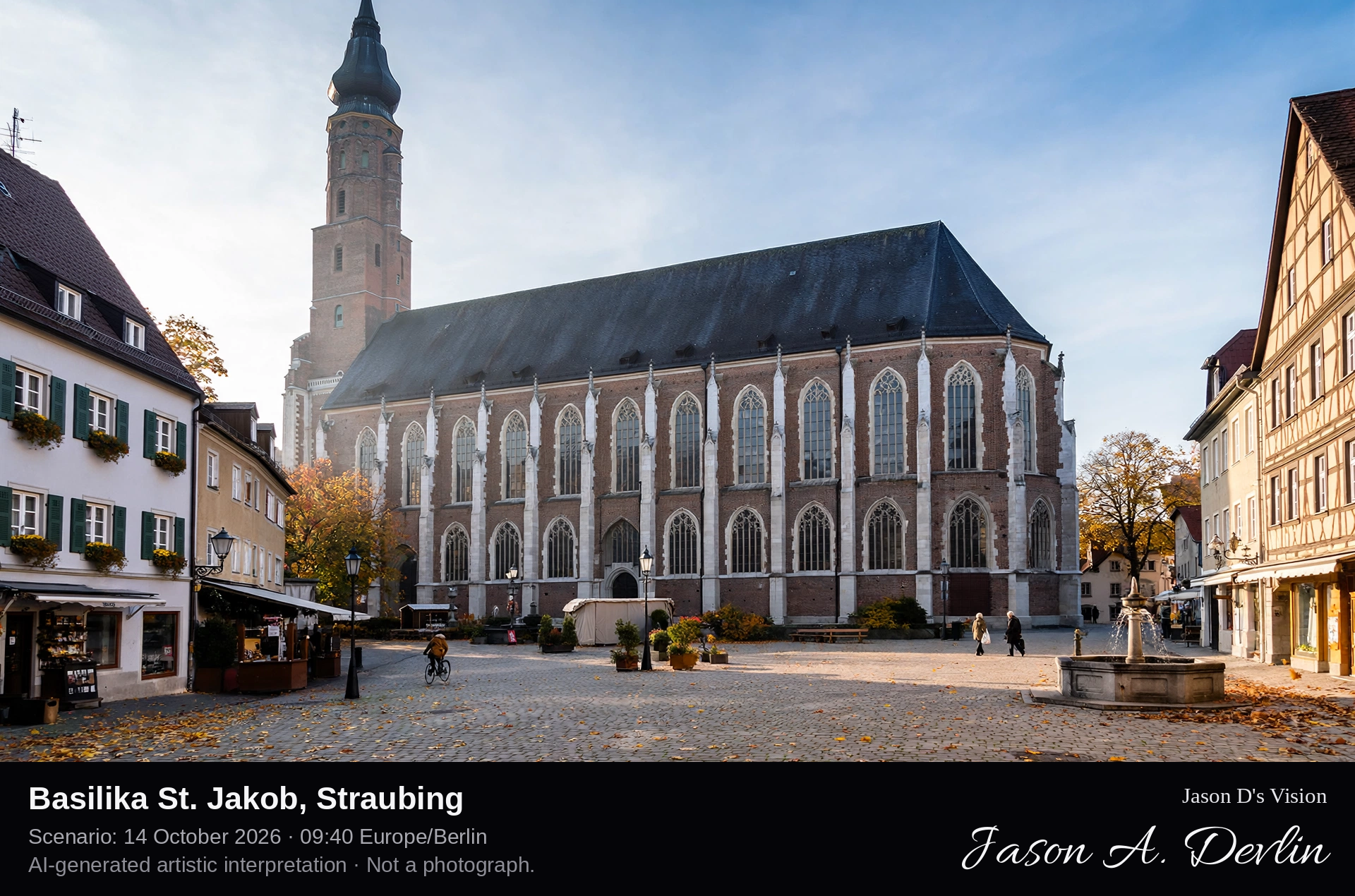
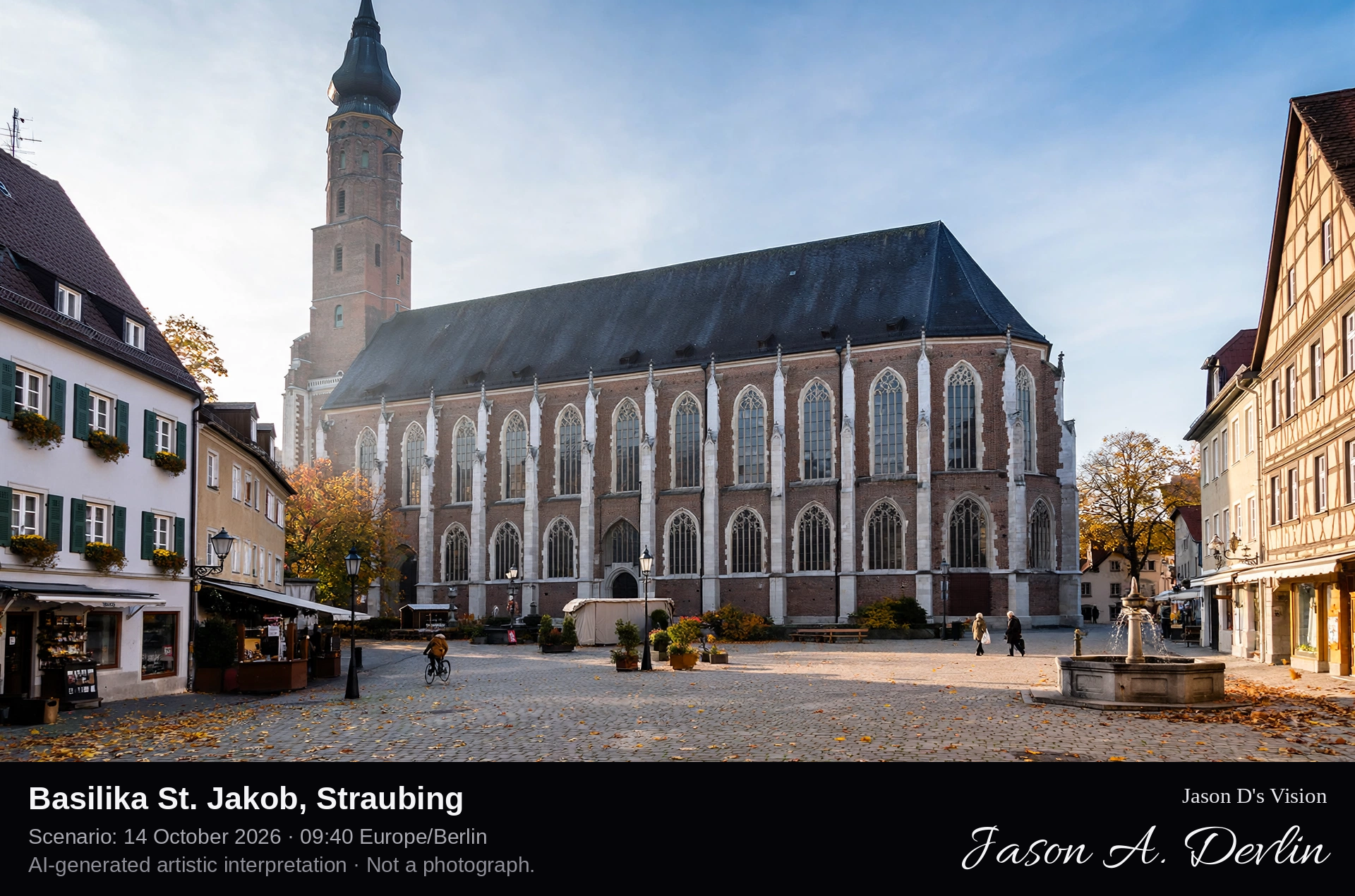
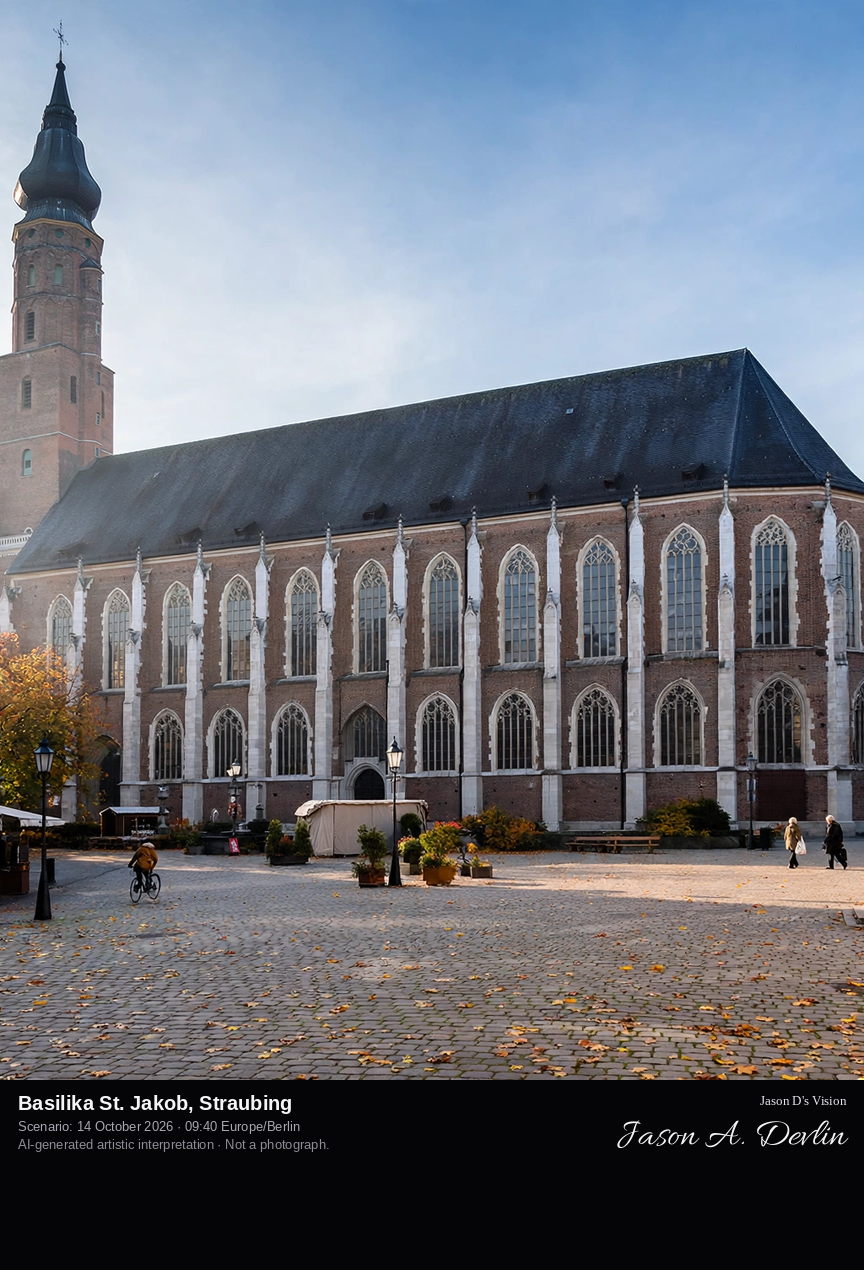
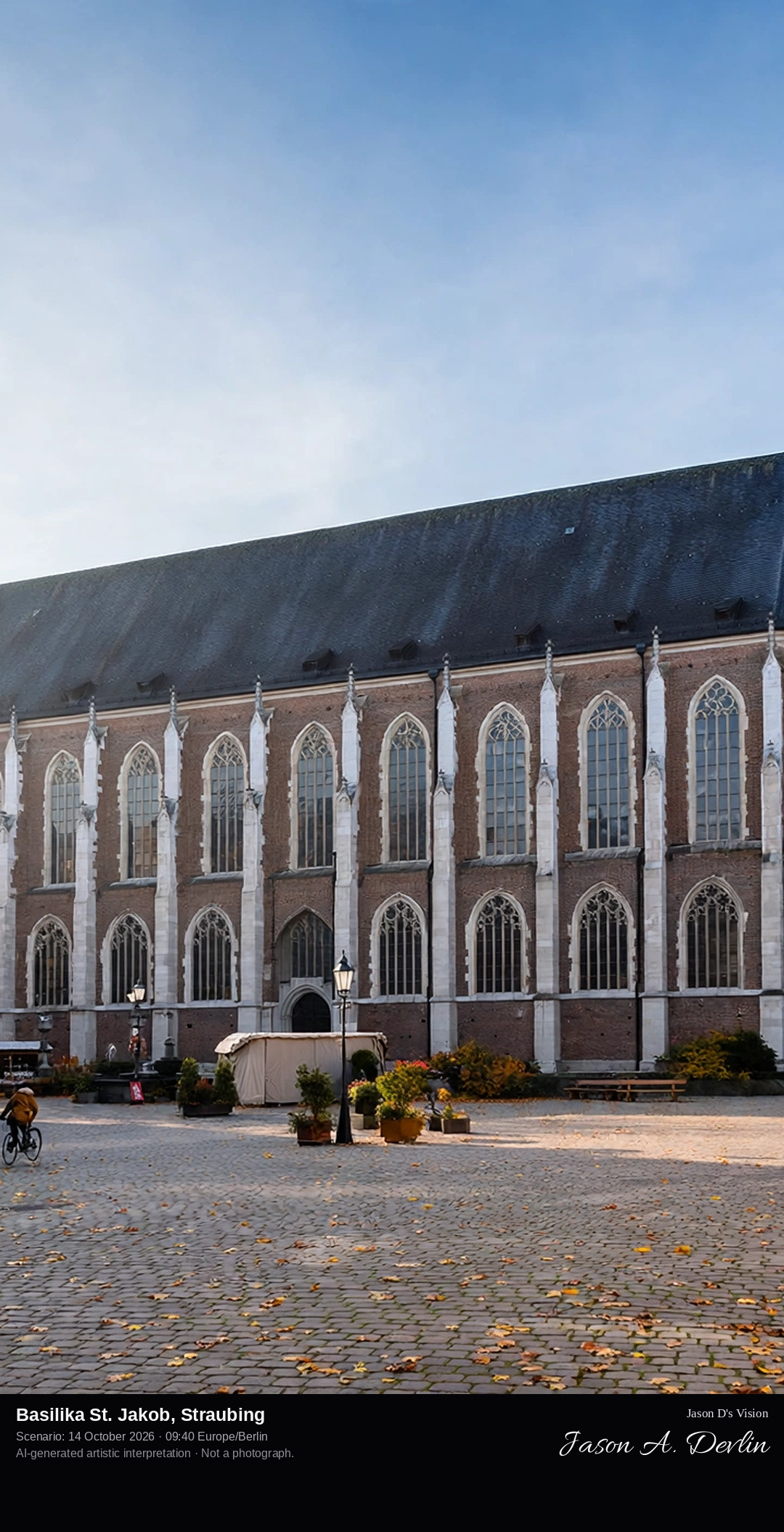
The great hall church over the cobbled old-town square · AI-generated artistic interpretation
Begun in 1395, St. Jakob in Straubing is the largest hall church in Bavaria, raised a basilica minor for its scale and age. Its very long nave, tall Gothic windows and slender buttresses fill the old-town skyline, watched over by a single tall west tower above the market square.
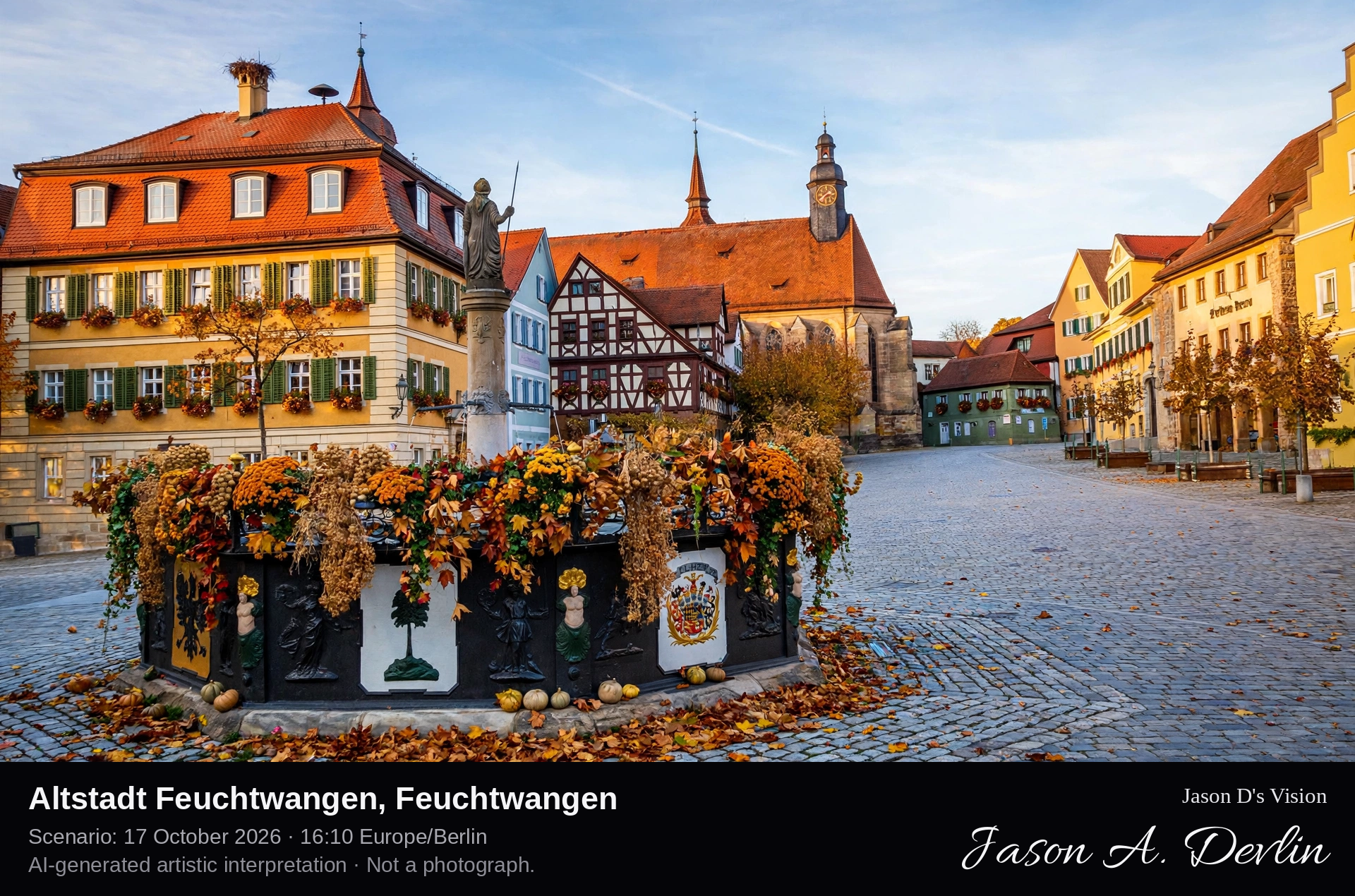
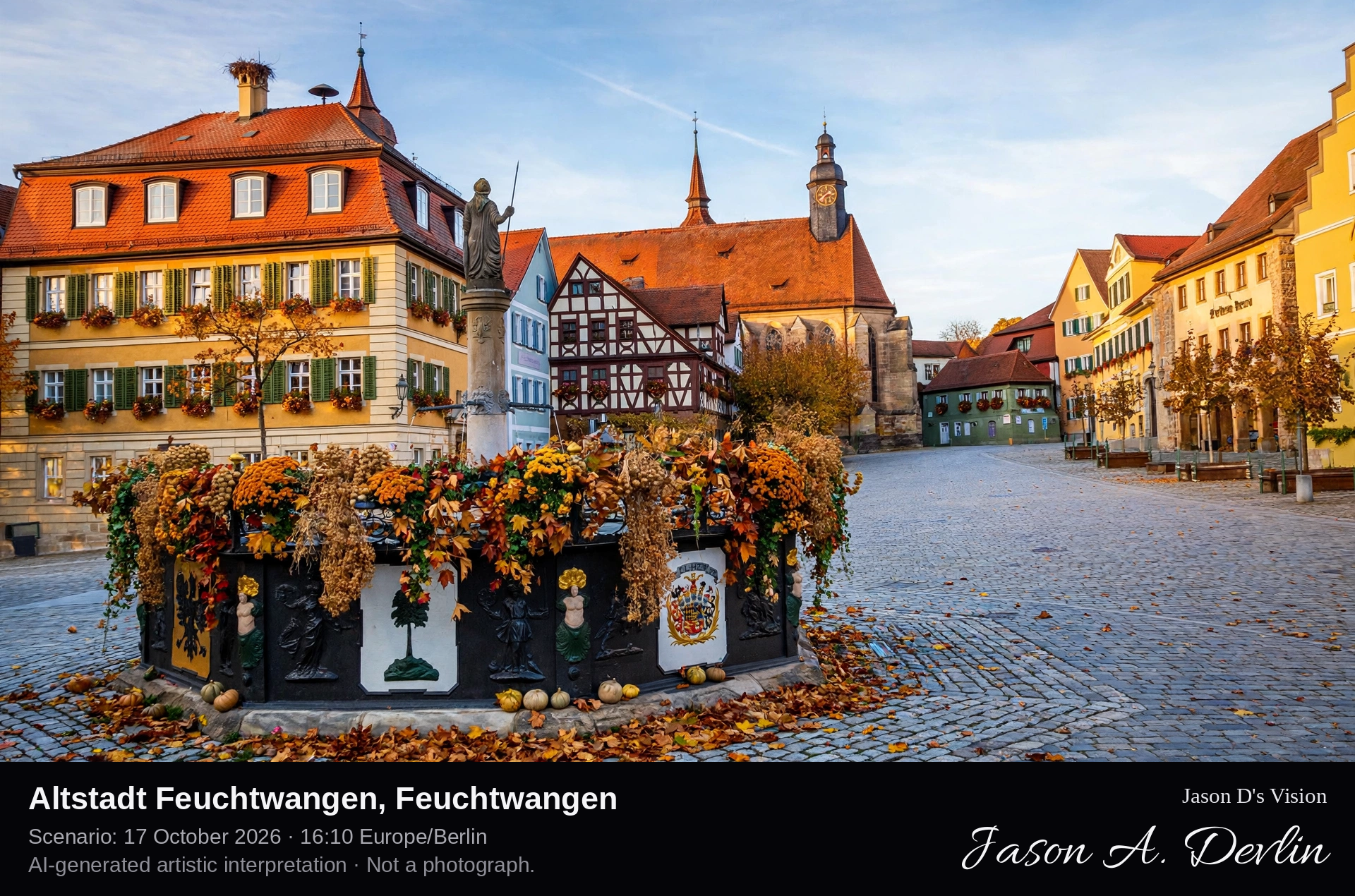
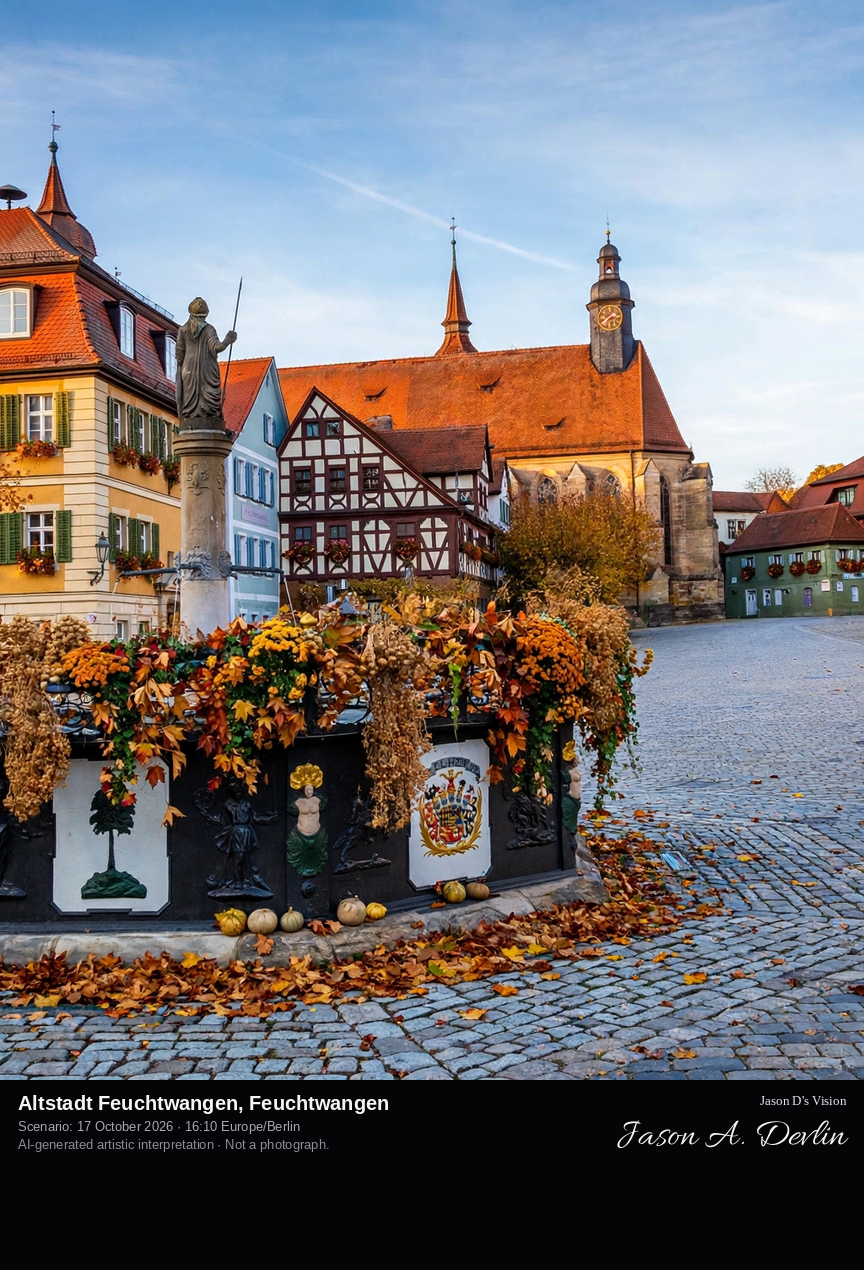
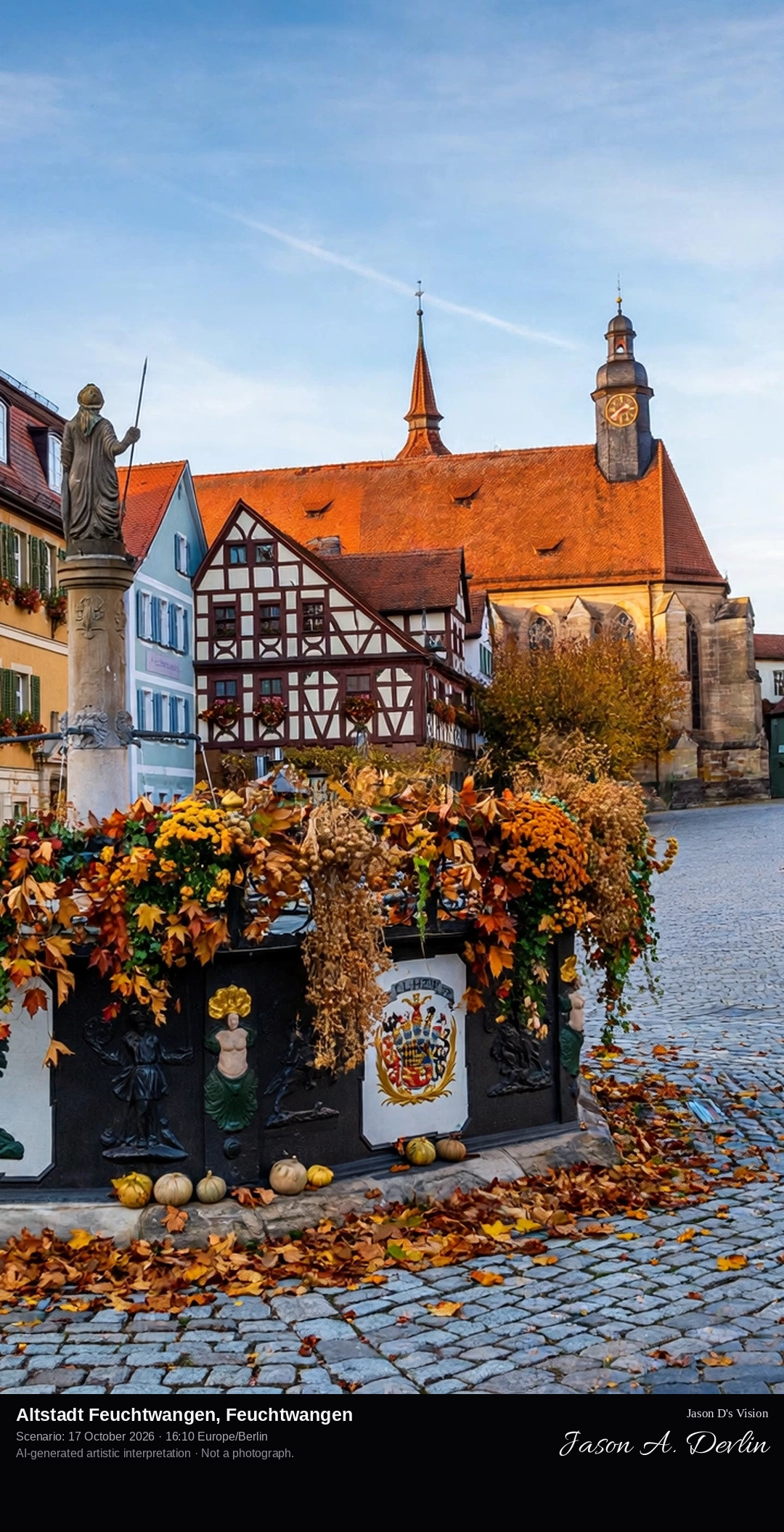
Market fountain and gabled houses on the cobbled square · AI-generated artistic interpretation
Feuchtwangen is a Romantic Road market town in Franconia whose broad Marktplatz is counted among the finest market squares in the region. Gabled burgher houses and a decorated market fountain frame the square, close to the former collegiate church with its Romanesque cloister. The old town preserves the compact street plan of a medieval Franconian trading town.
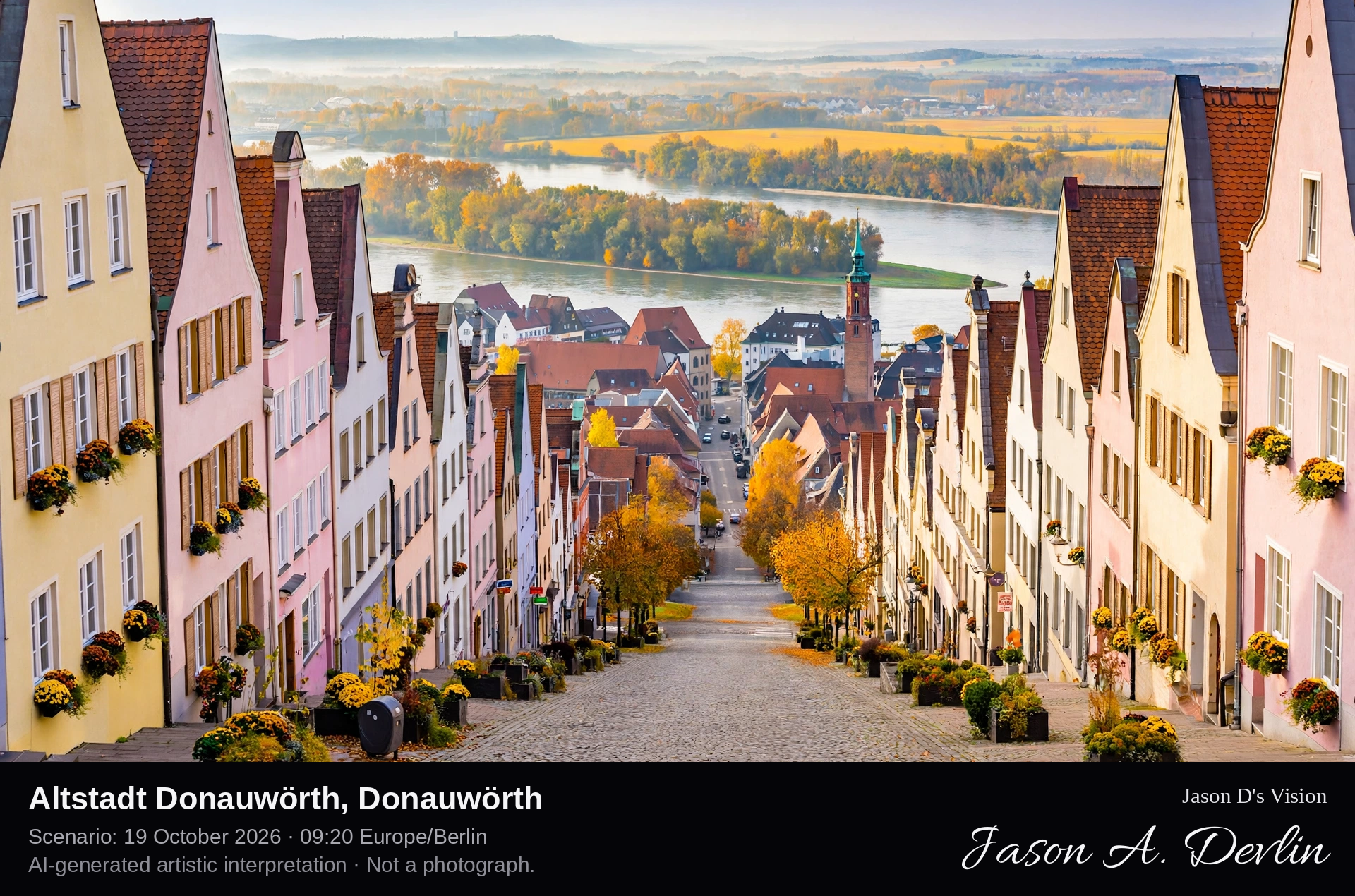
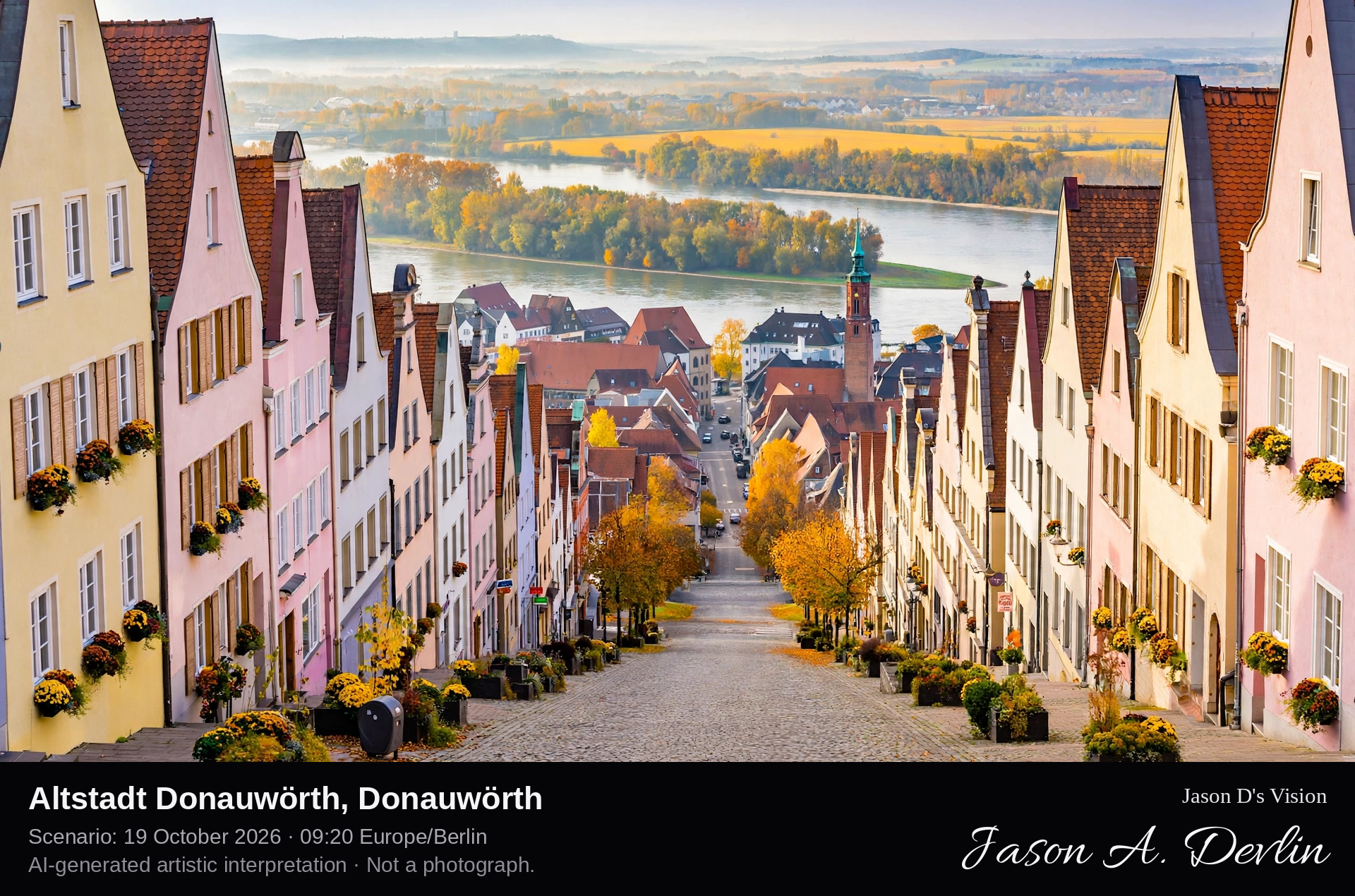
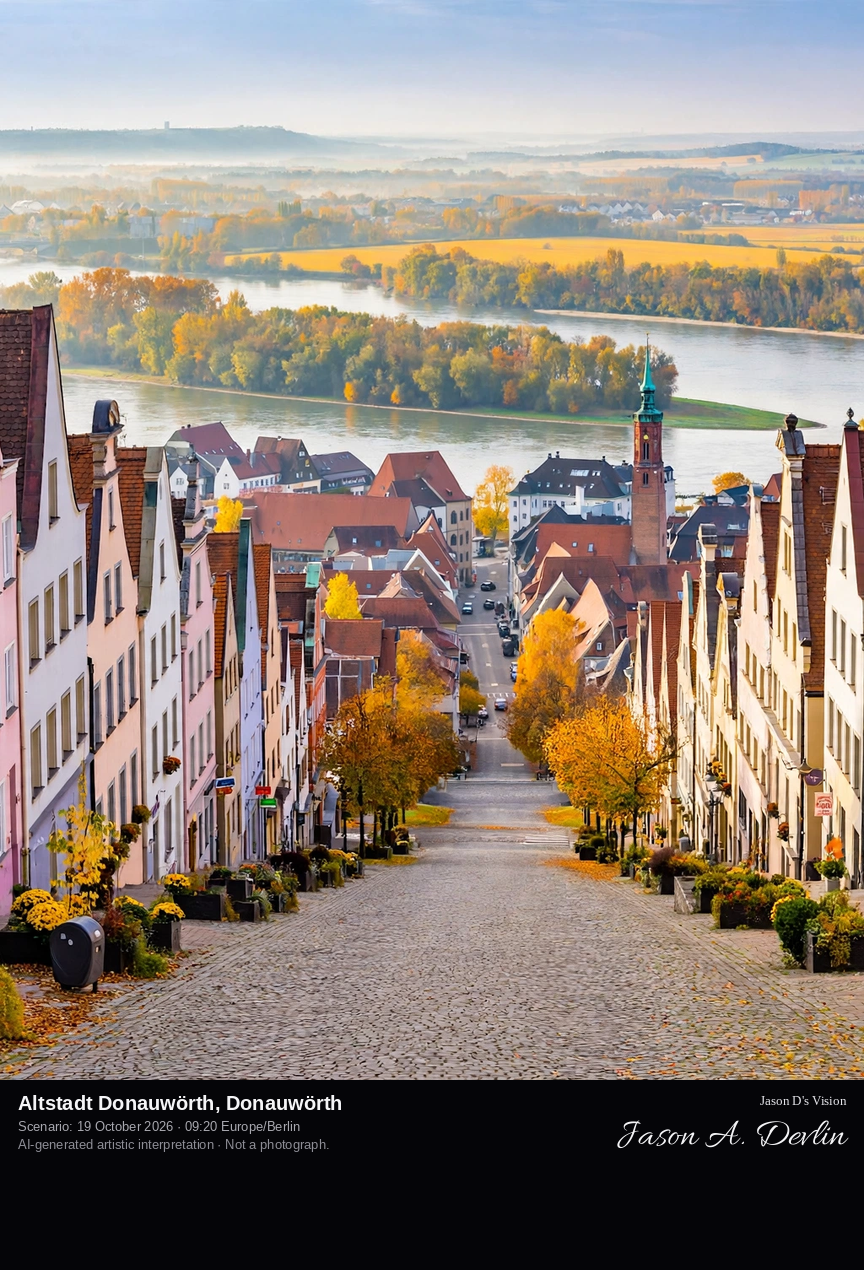
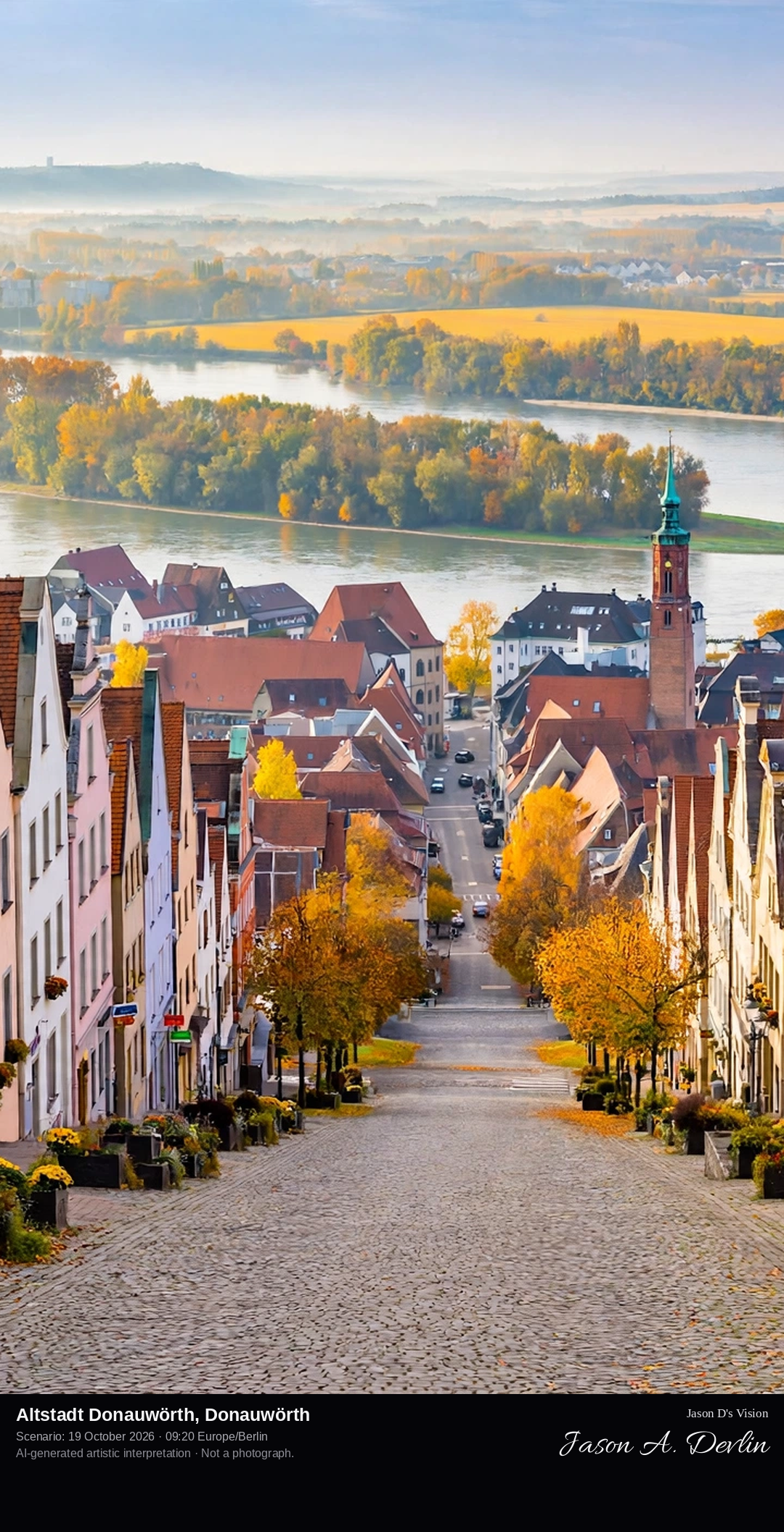
Gabled houses lining the sloping Reichsstrasse above the river island · AI-generated artistic interpretation
Donauwörth is a Romantic Road town where the Wörnitz flows into the Danube, and its broad Reichsstrasse runs downhill between tall gabled burgher houses toward the river island. The colourful stucco facades and steep roofs of this former free imperial city line one of the finest old-town streets in southern Germany.
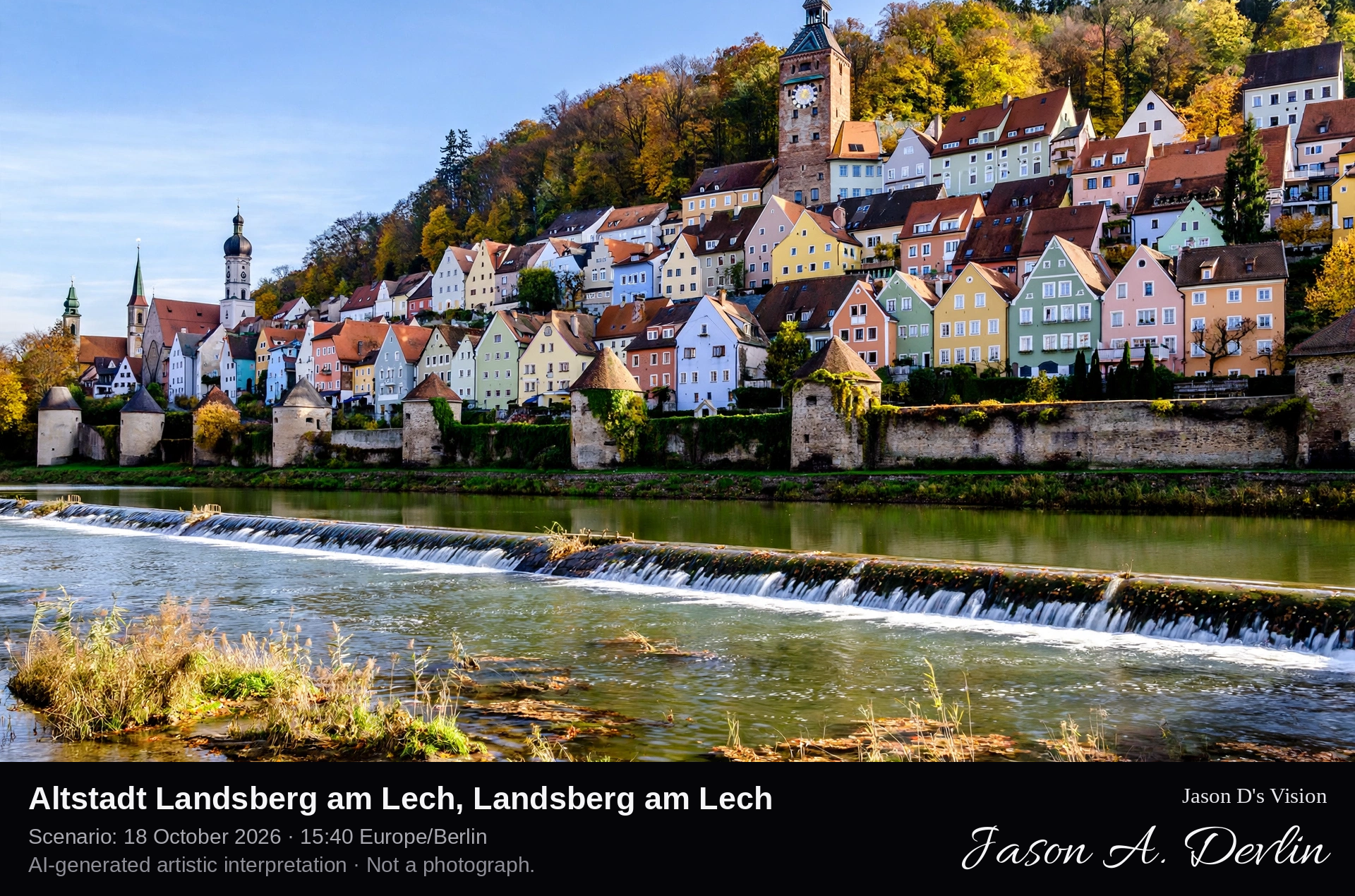
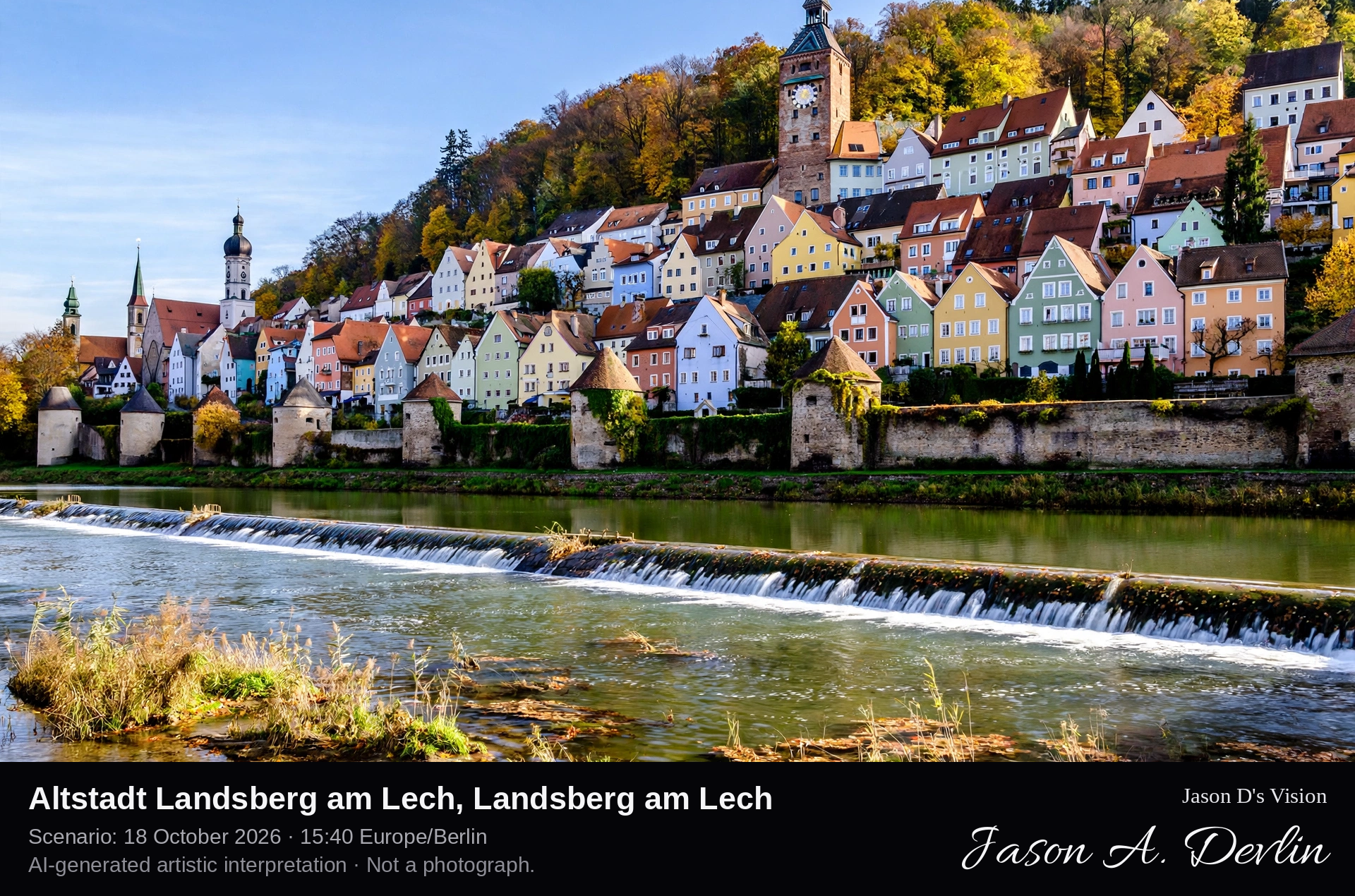
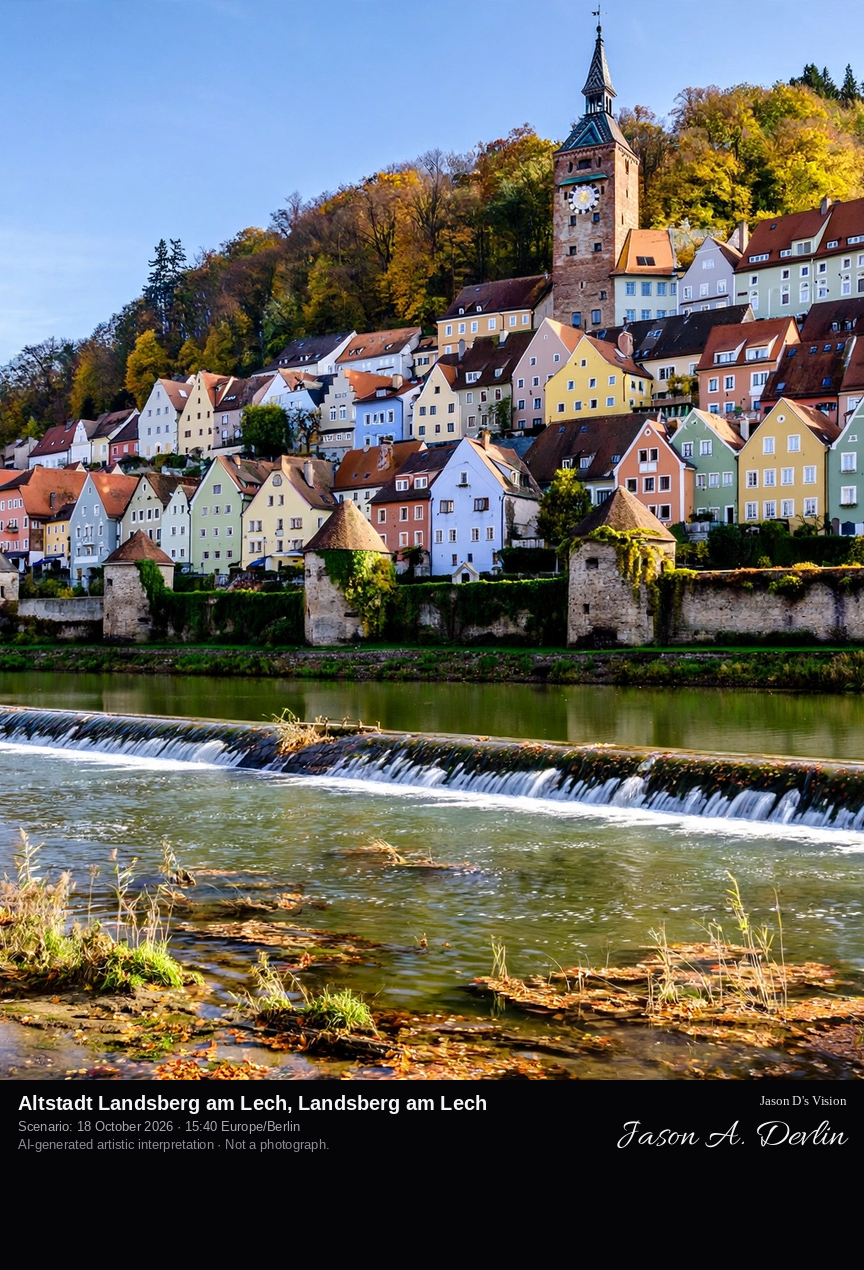
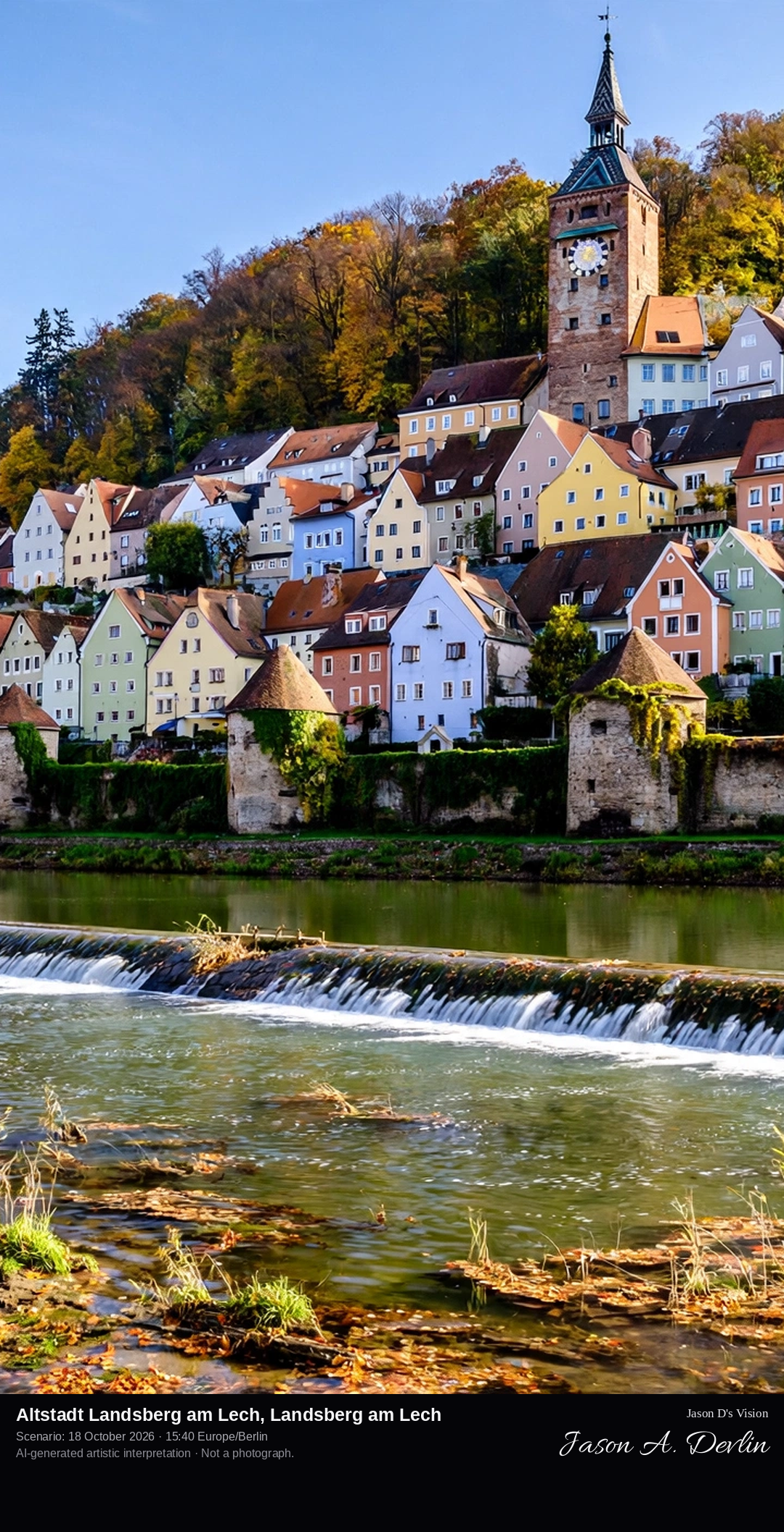
Terraced old town and the Schmalzturm across the Lech weir · AI-generated artistic interpretation
Landsberg am Lech grew rich on the salt trade along the Romantic Road, and its old town climbs in terraces above the river behind a preserved medieval wall ring. The tall Schmalzturm gate tower watches over colourful gabled houses that step up the steep wooded hillside from the Lech weir.
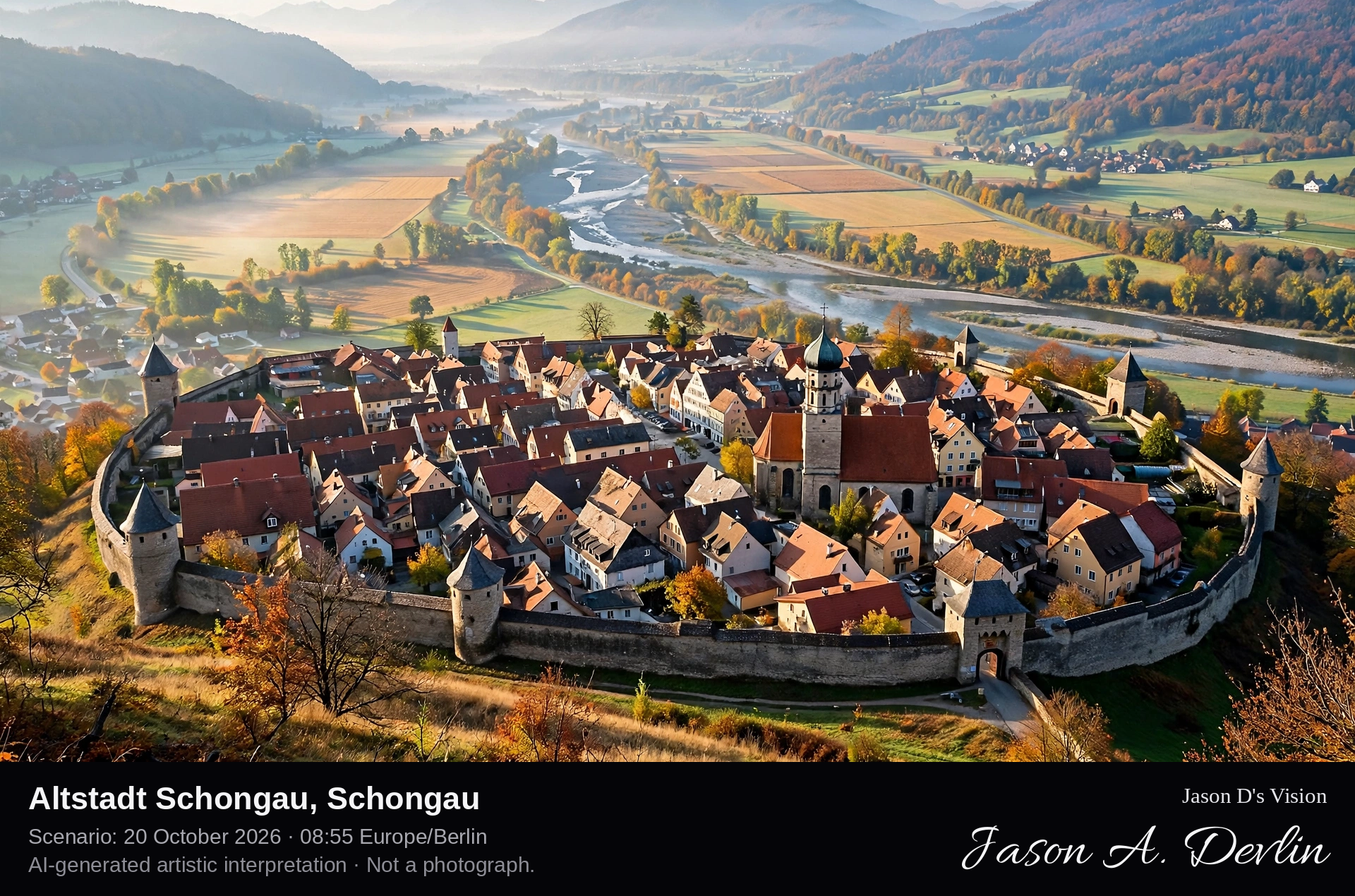
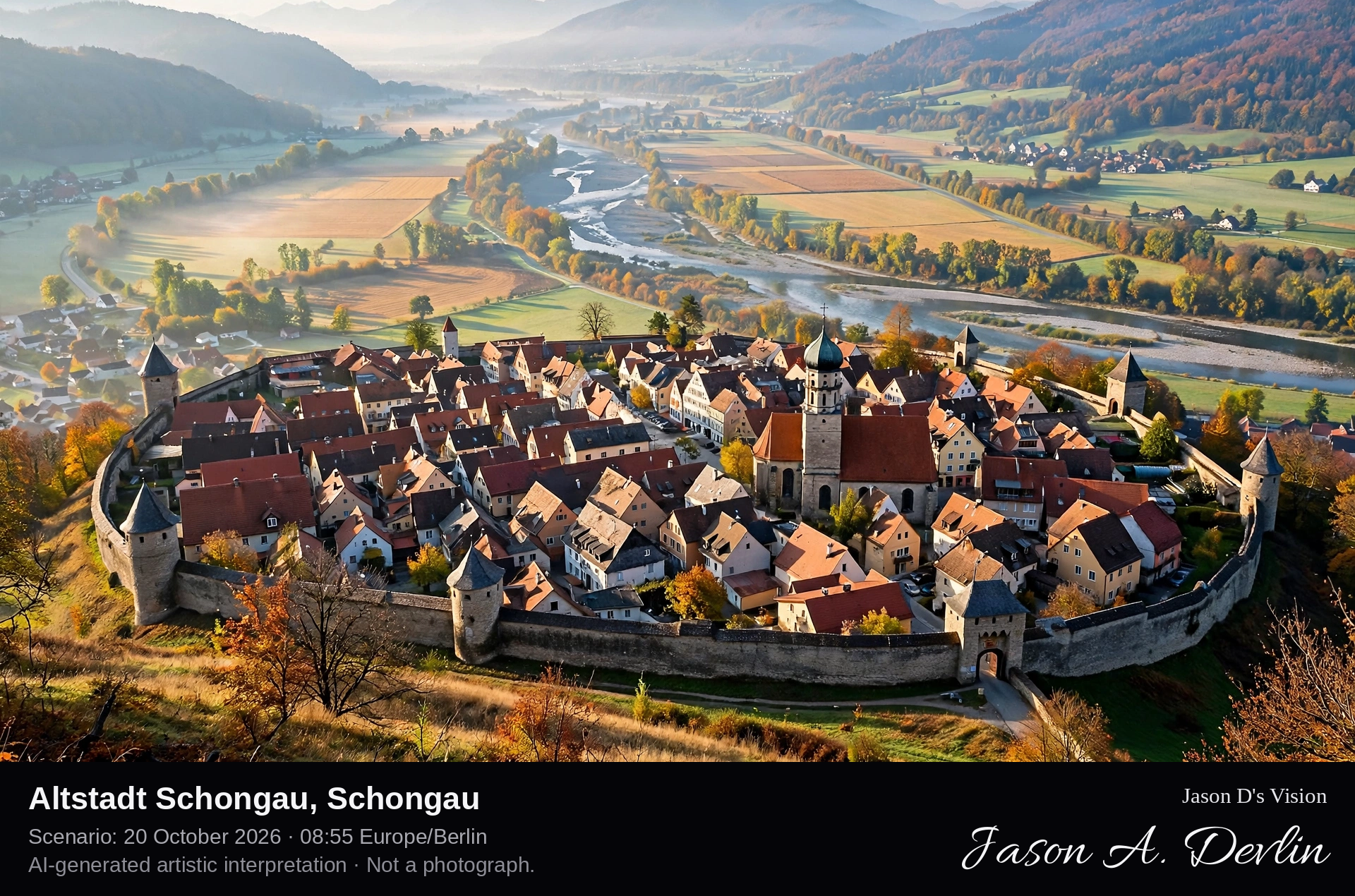
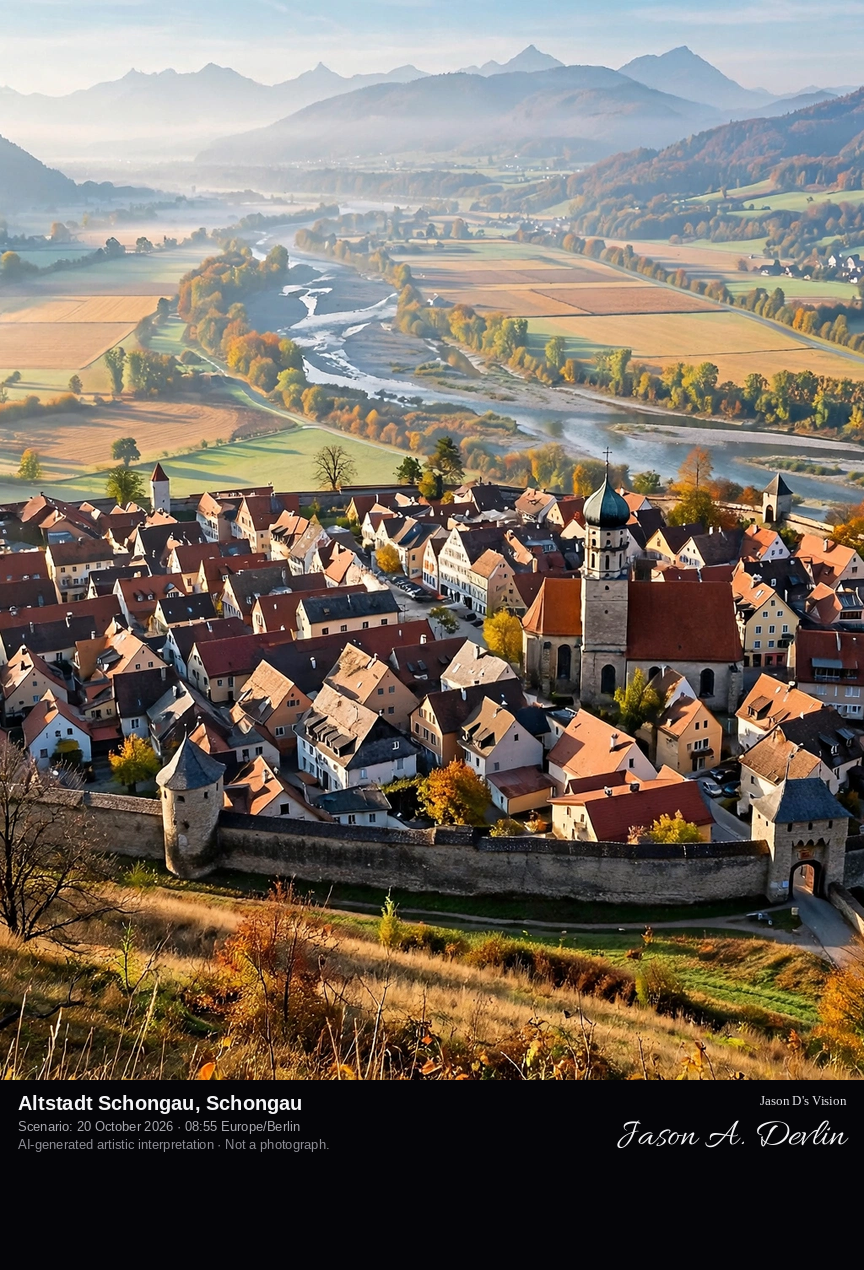
Complete medieval wall ring around the hilltop old town above the Lech · AI-generated artistic interpretation
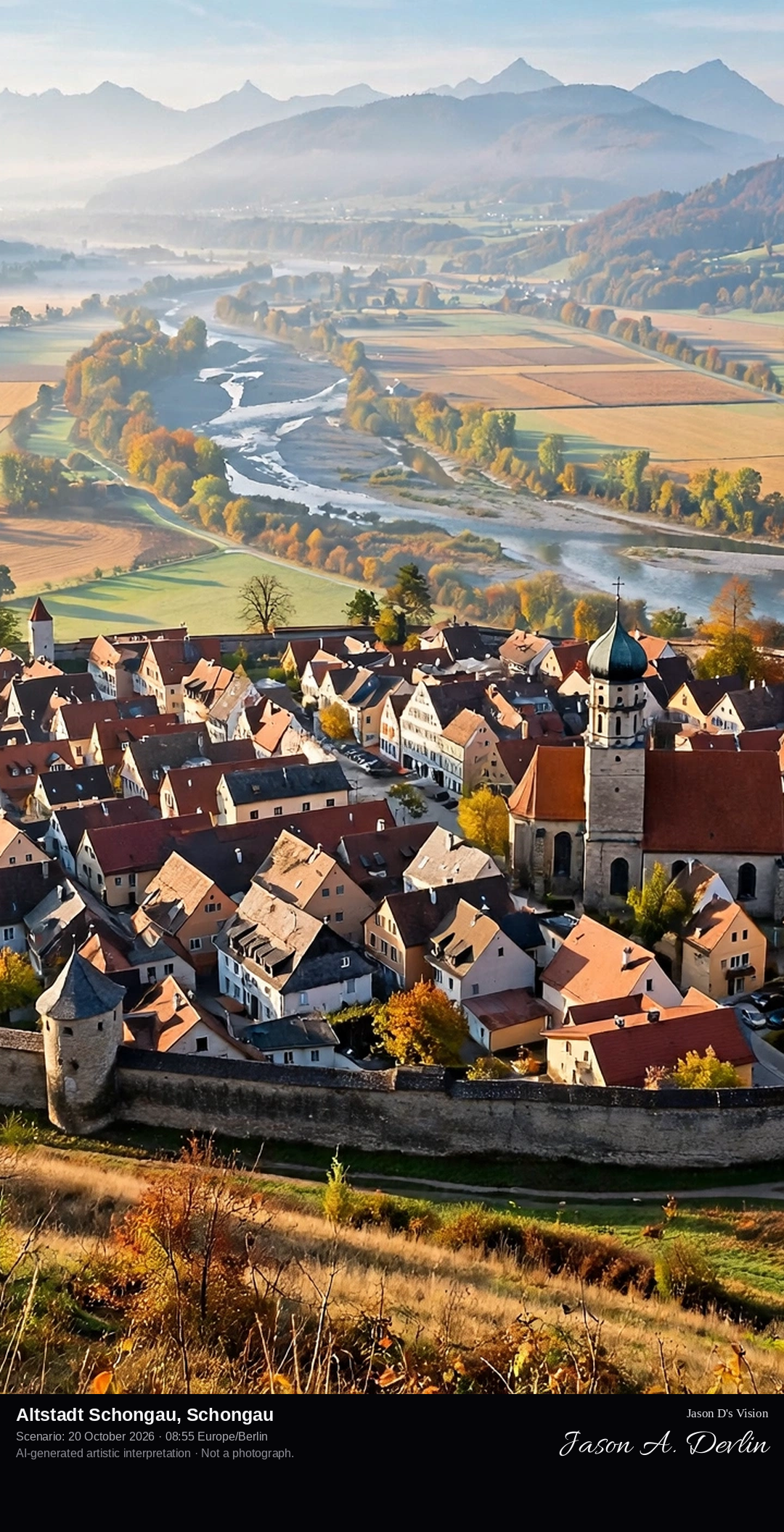
Schongau is a Romantic Road town whose medieval wall ring, with its towers and gates, survives almost complete around the compact hilltop old town above the Lech. Inside the stone circuit, tightly packed gabled houses gather around the parish church, high over the wide green river valley.
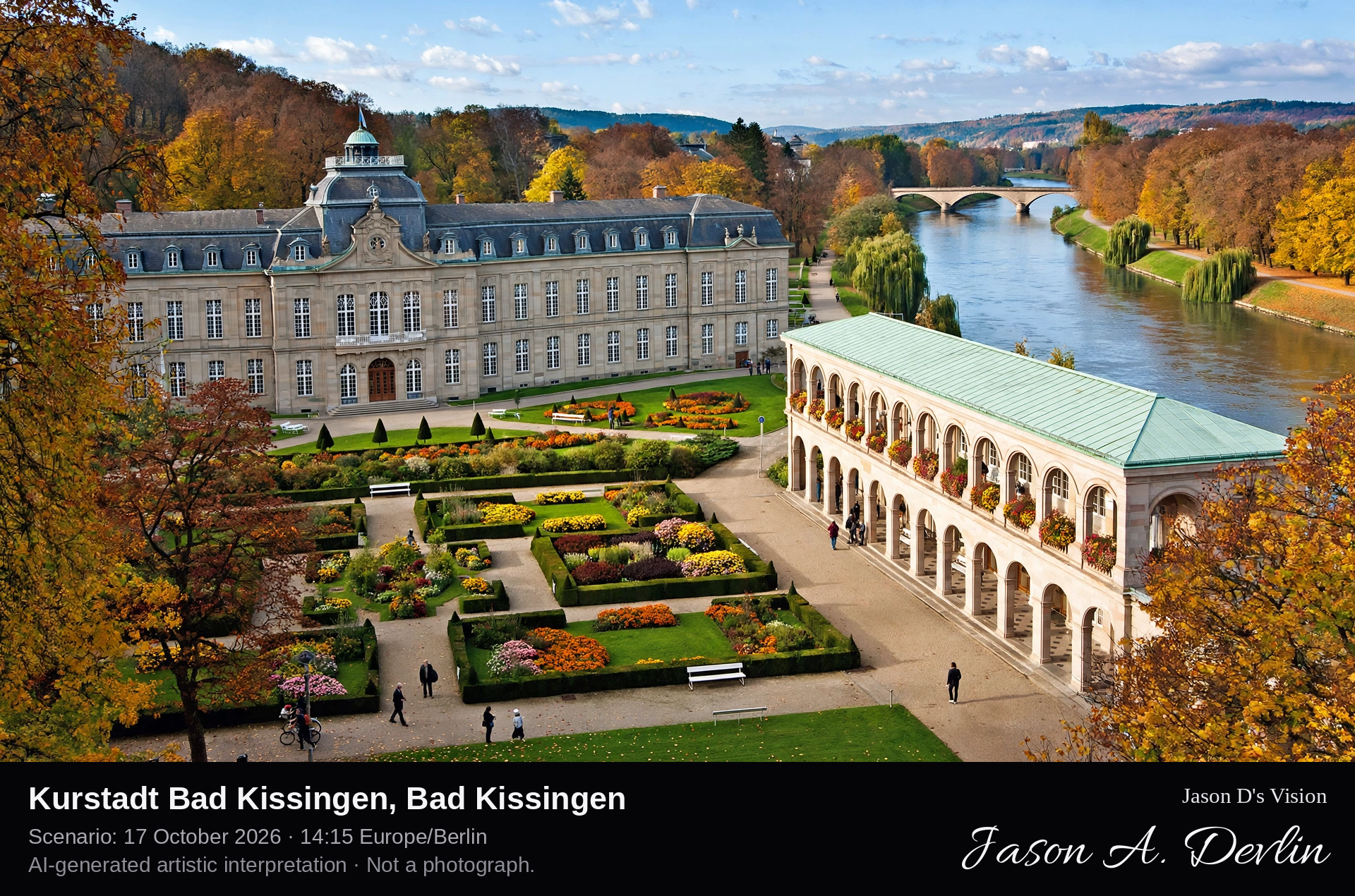
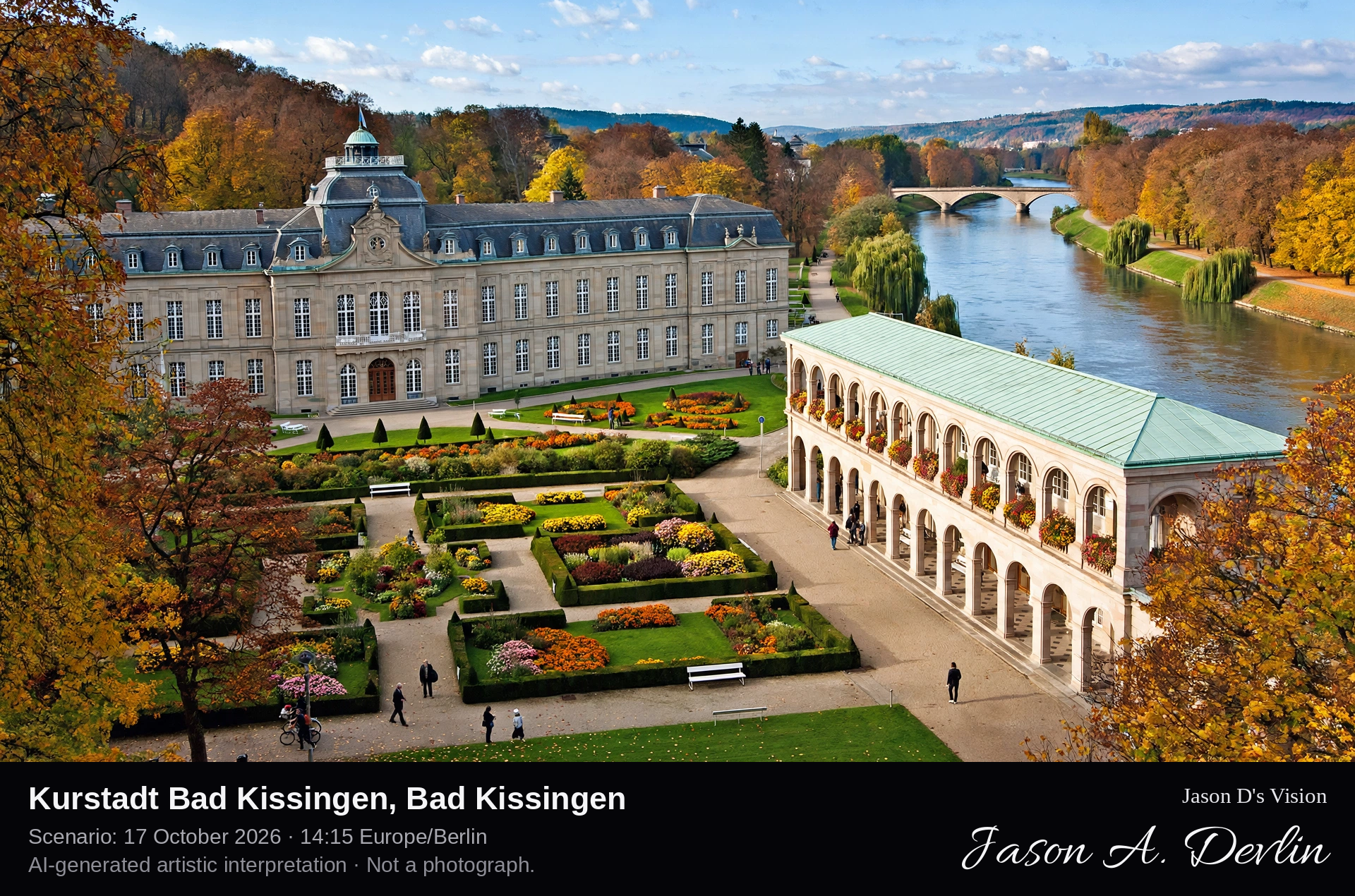
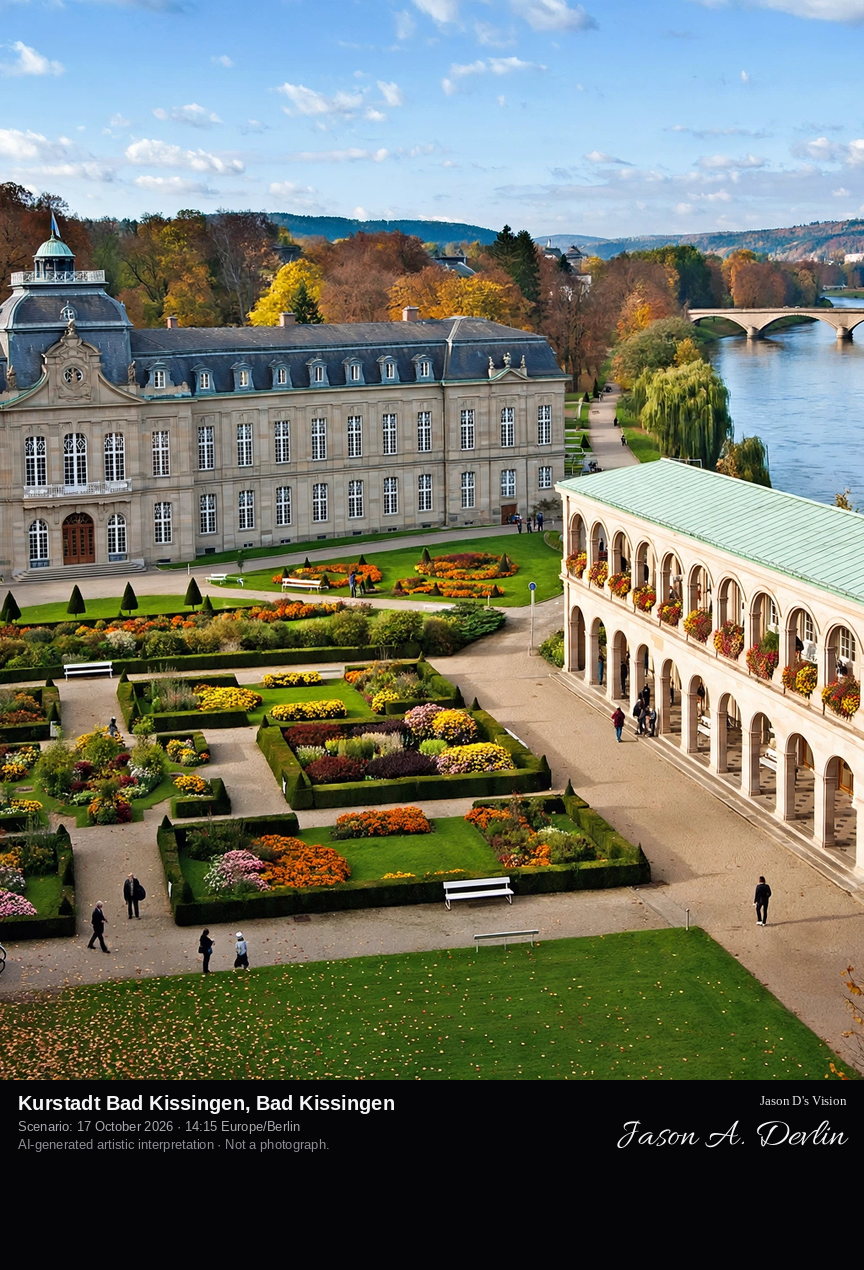
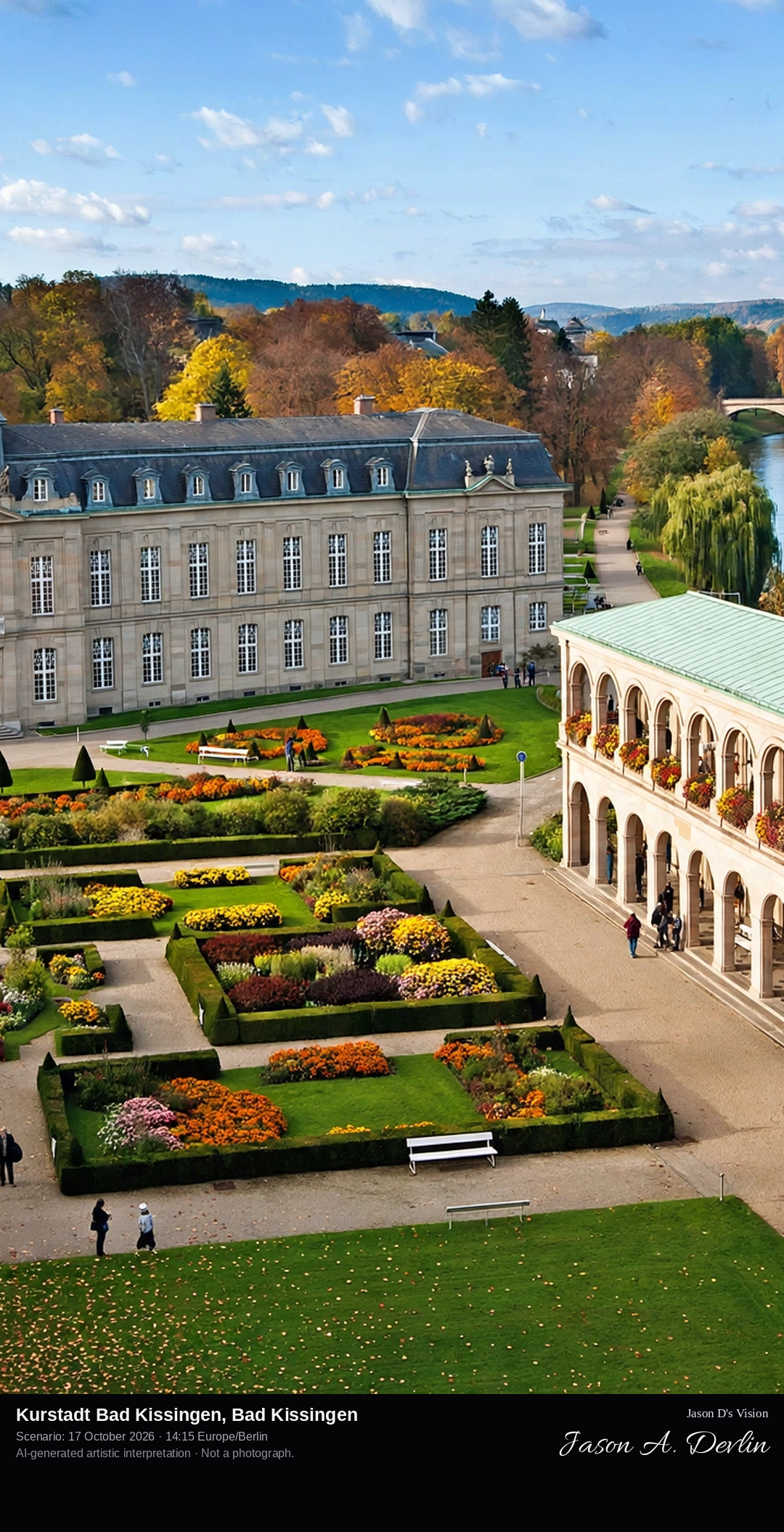
Regentenbau and Arkadenbau across the Kurgarten by the Saale · AI-generated artistic interpretation
Bad Kissingen, on the Franconian Saale, was inscribed in 2021 among UNESCO's Great Spa Towns of Europe, famed for its grand nineteenth-century cure architecture. The Regentenbau and the arcaded Arkadenbau face the Kurgarten lawns, with the Wandelhalle, Europe's largest pump room, completing the ensemble nearby.
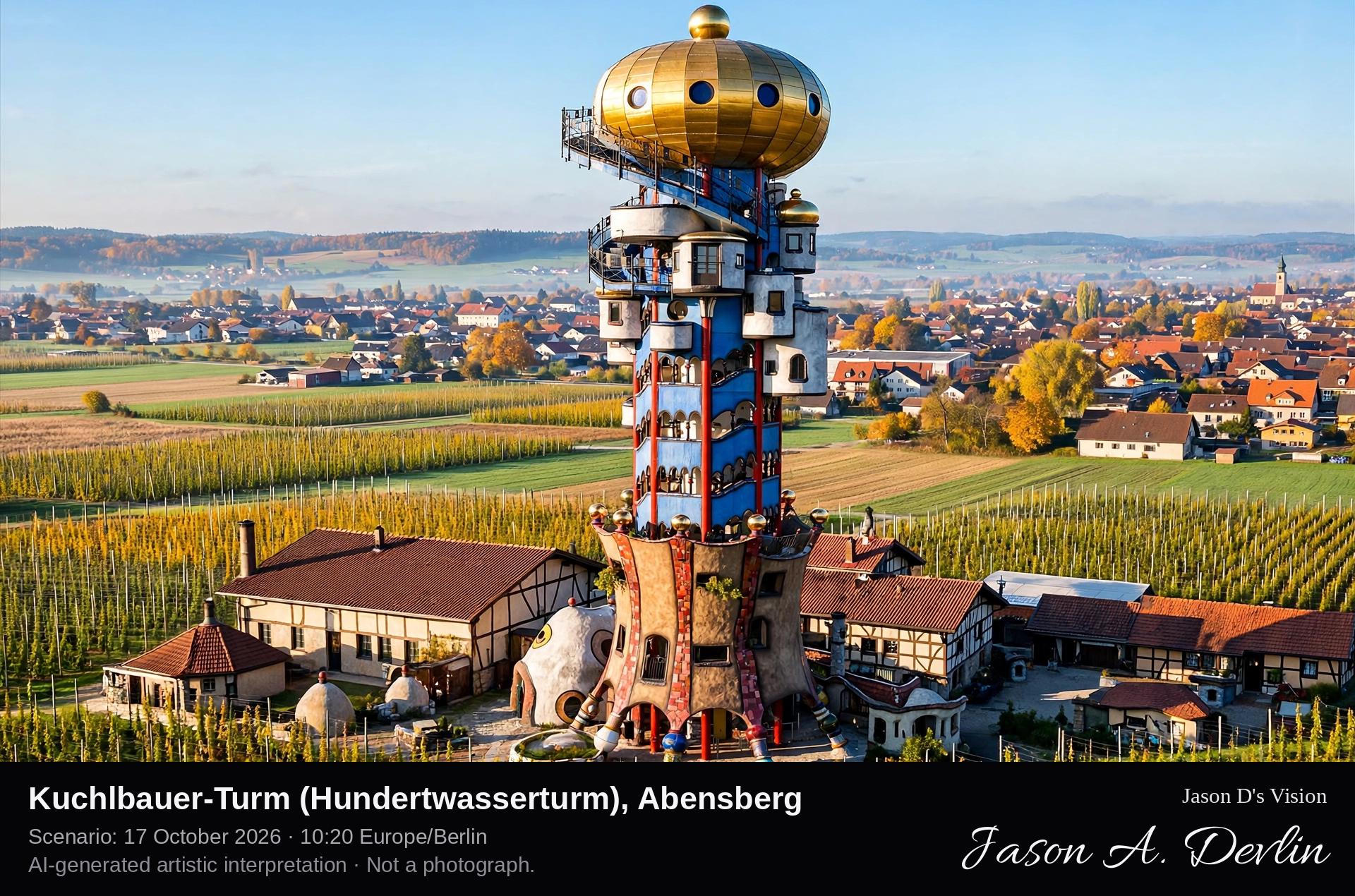
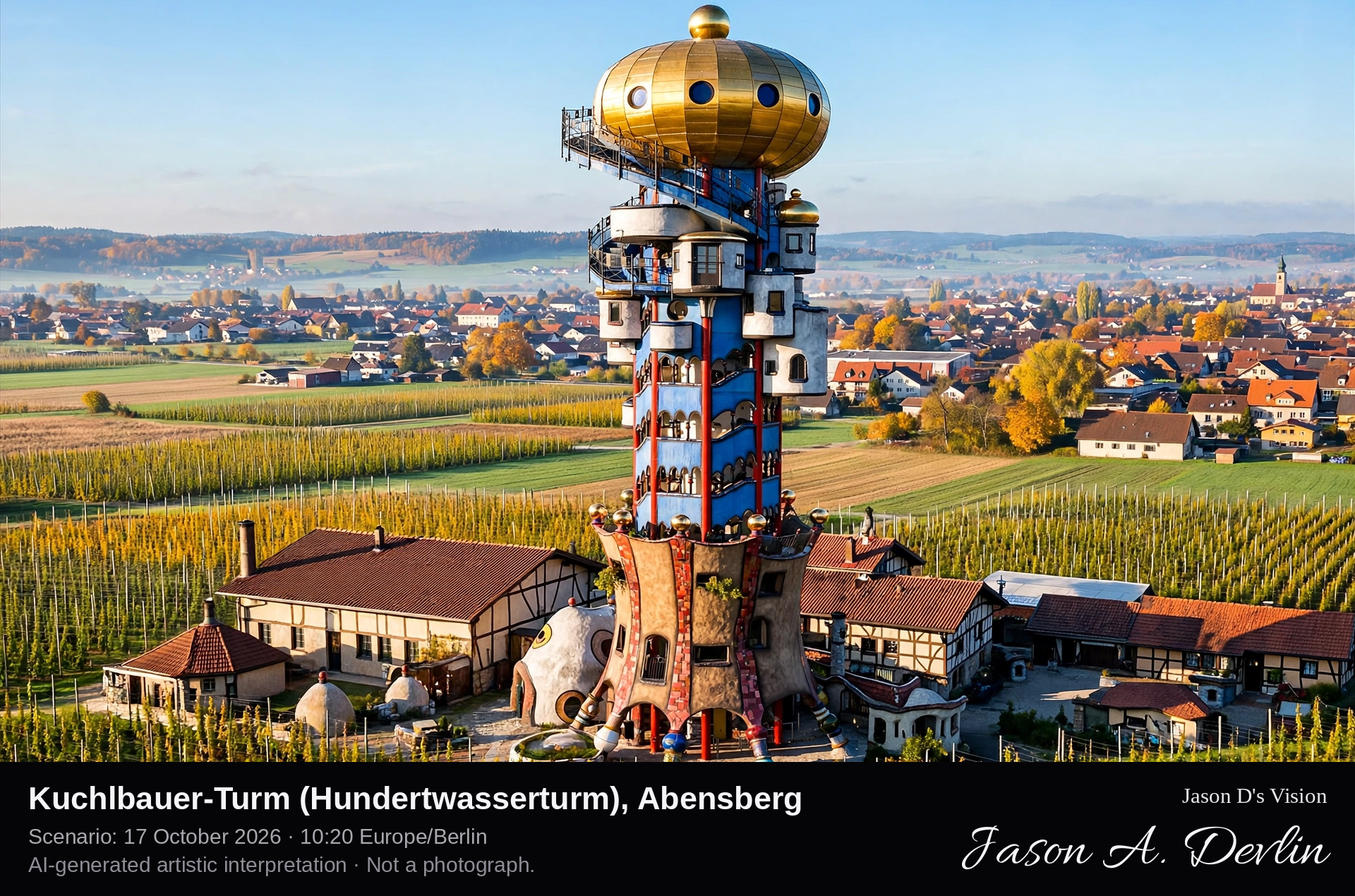
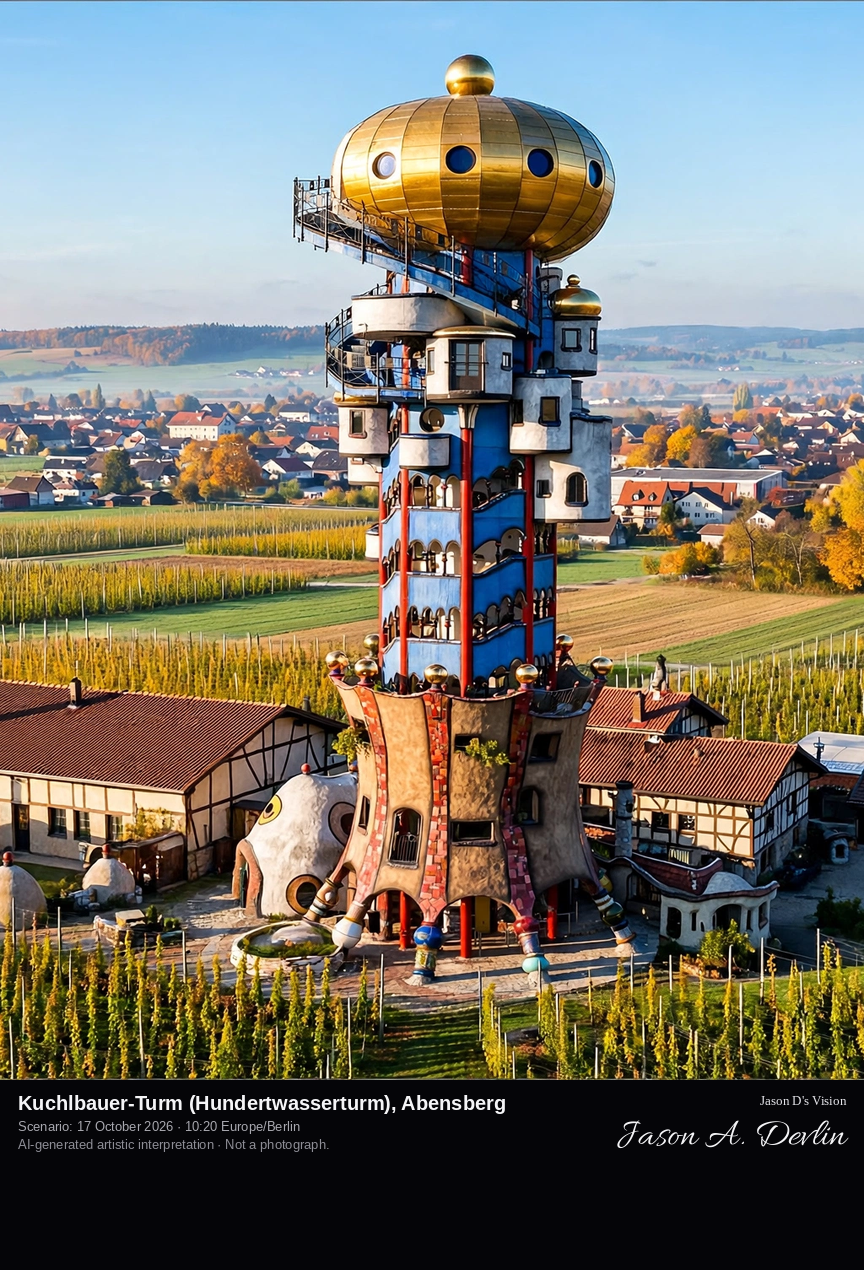
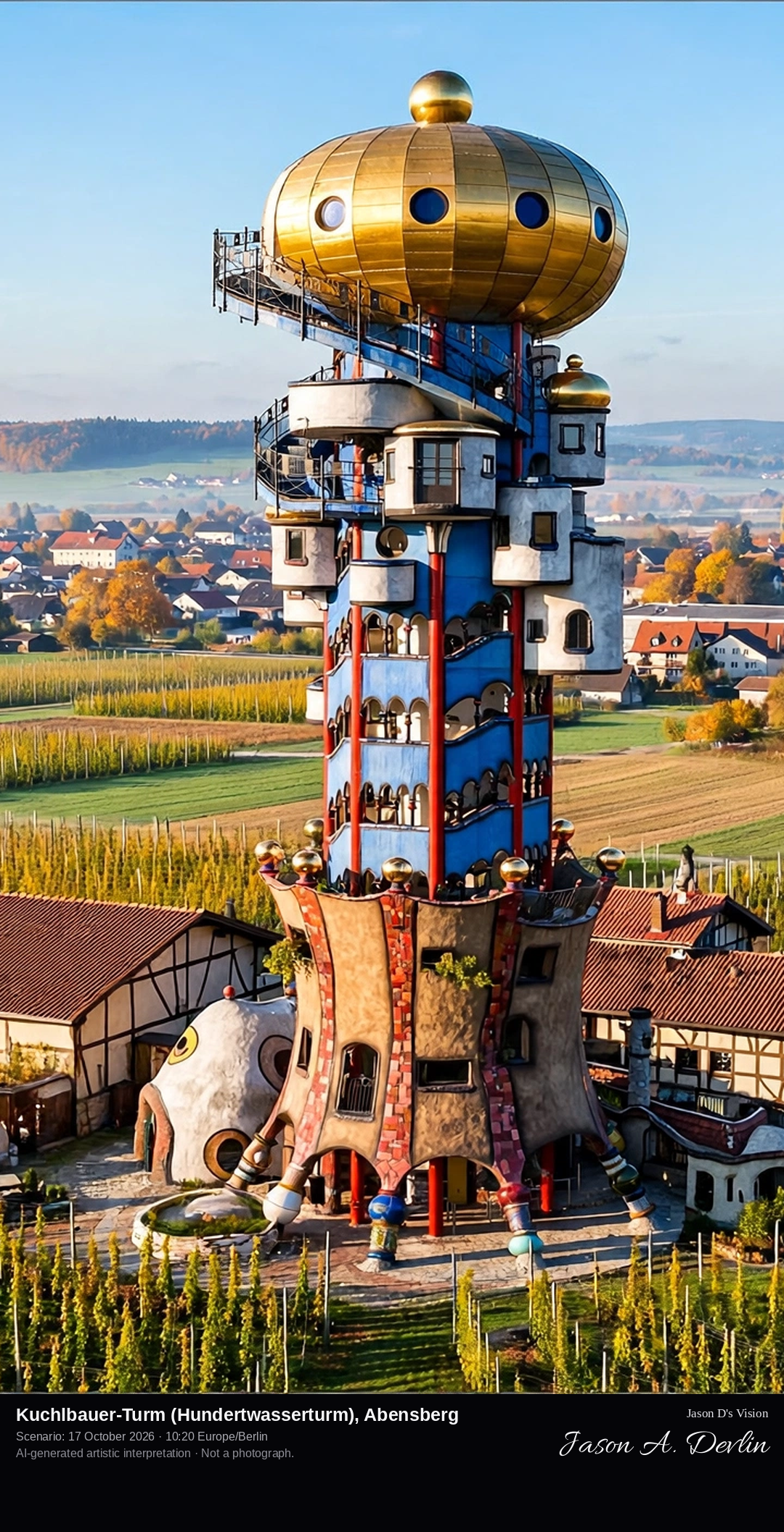
Twisted mosaic brewery tower with its gold ball over the hop fields · AI-generated artistic interpretation
The Kuchlbauer Tower in Abensberg is a brewery landmark inspired by Friedensreich Hundertwasser and planned and revised by architect Peter Pelikan after Hundertwasser’s death.
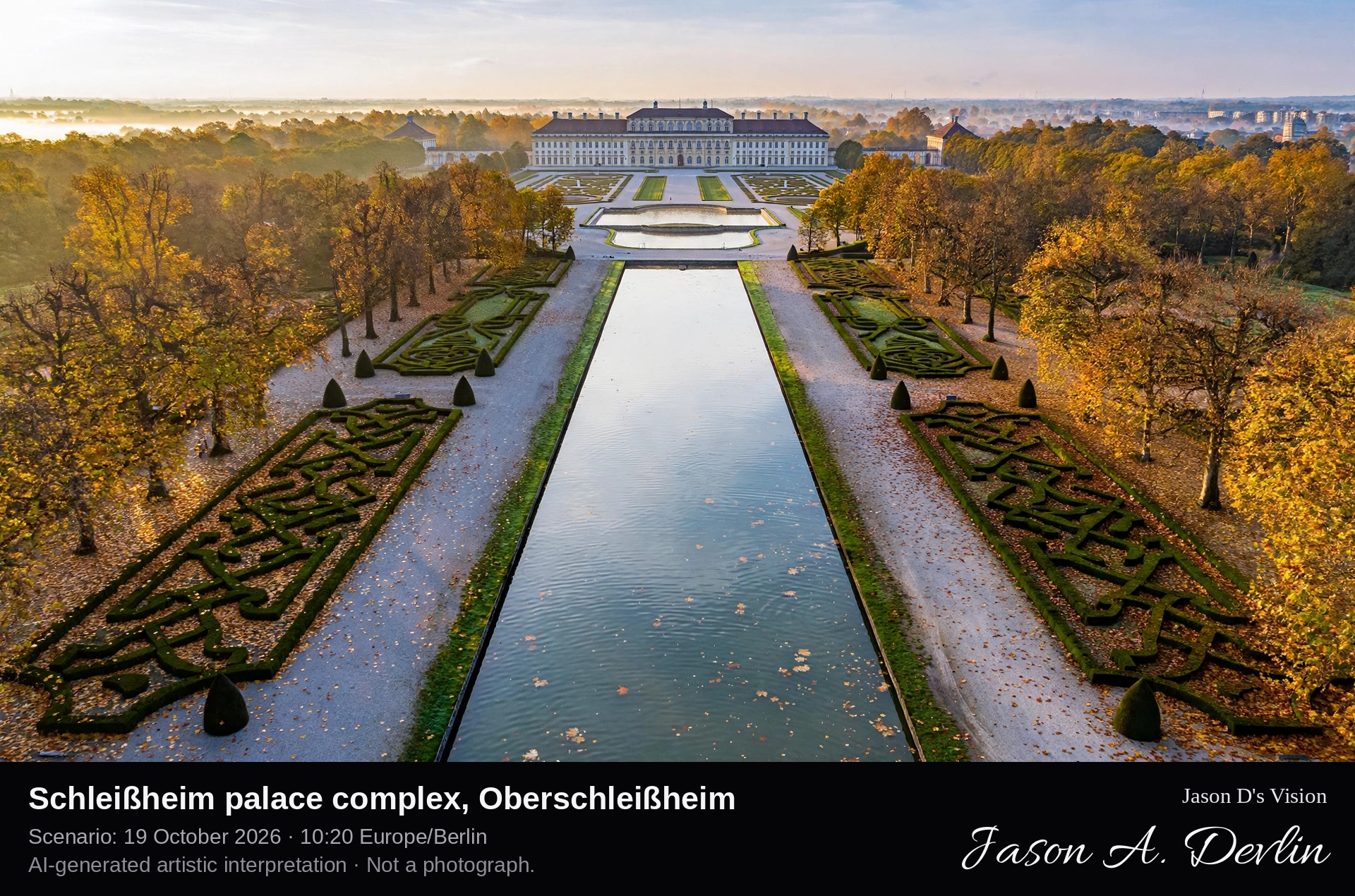
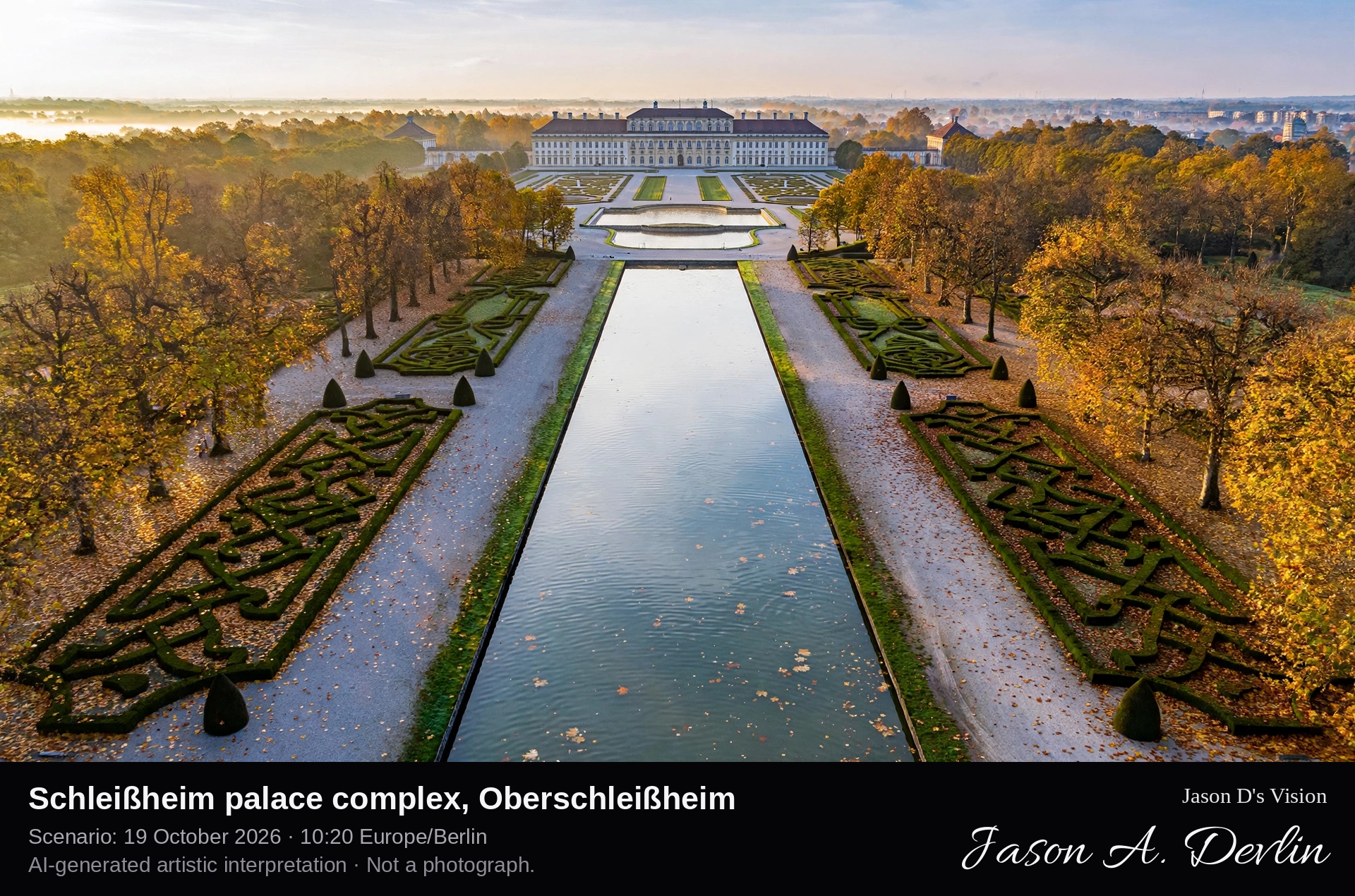
Baroque palace at the end of the garden canal axis · AI-generated artistic interpretation
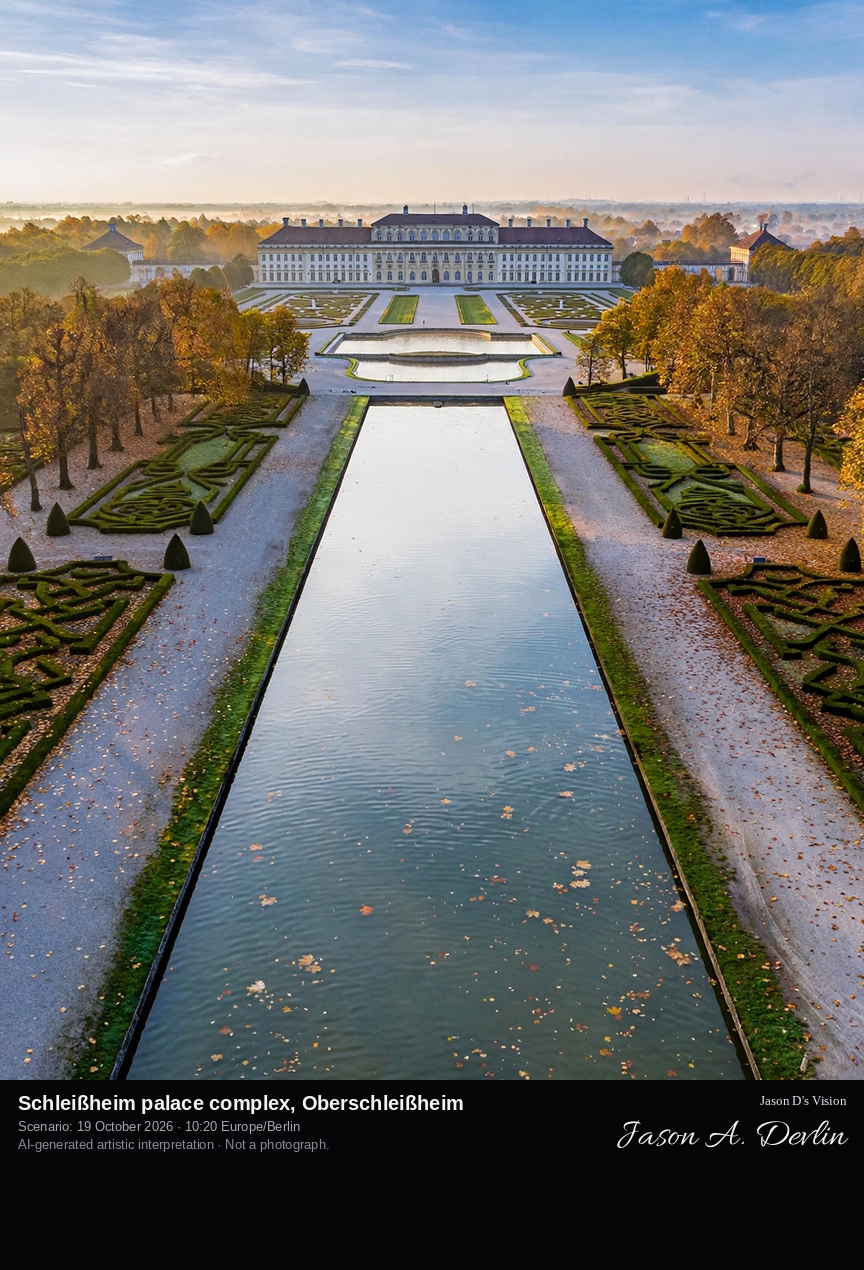
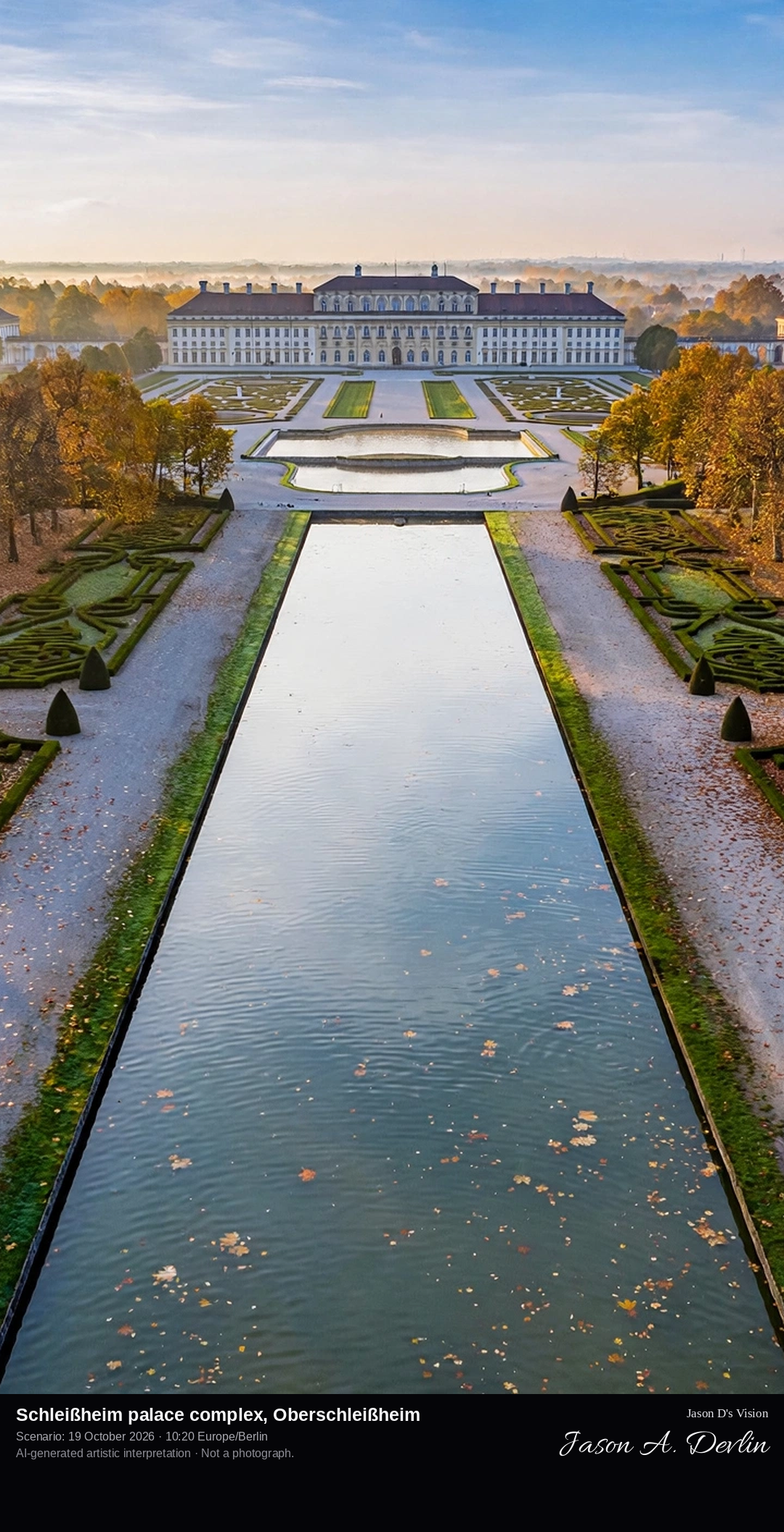
The Schleissheim palace complex was built for Elector Max Emanuel of Bavaria, its long white New Palace rising at the head of one of the great Baroque gardens of the region. Formal parterres and a long central canal stretch across the flat plain north of Munich, linking the New Palace with the Lustheim pavilion at the far end of the axis.
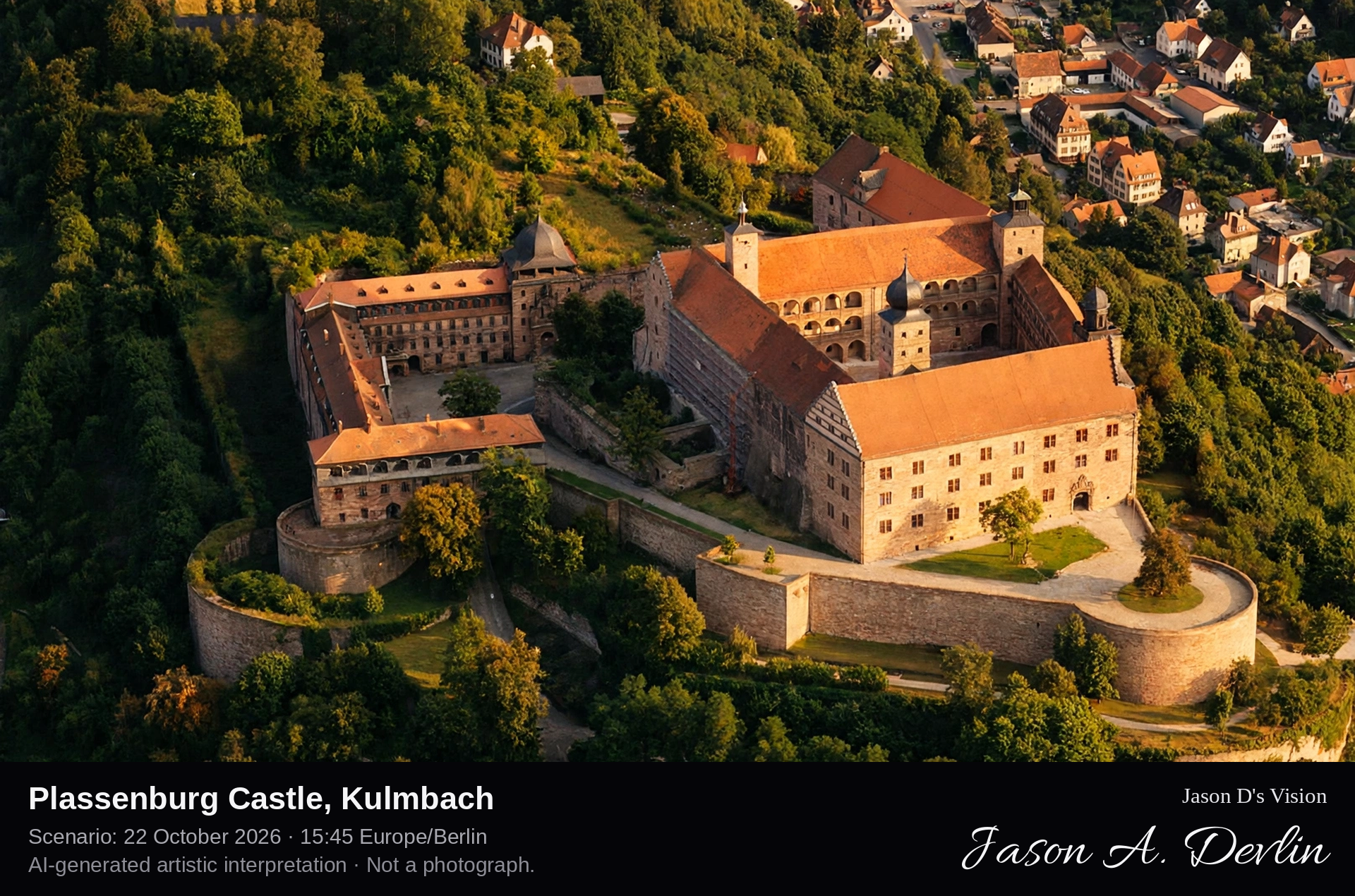
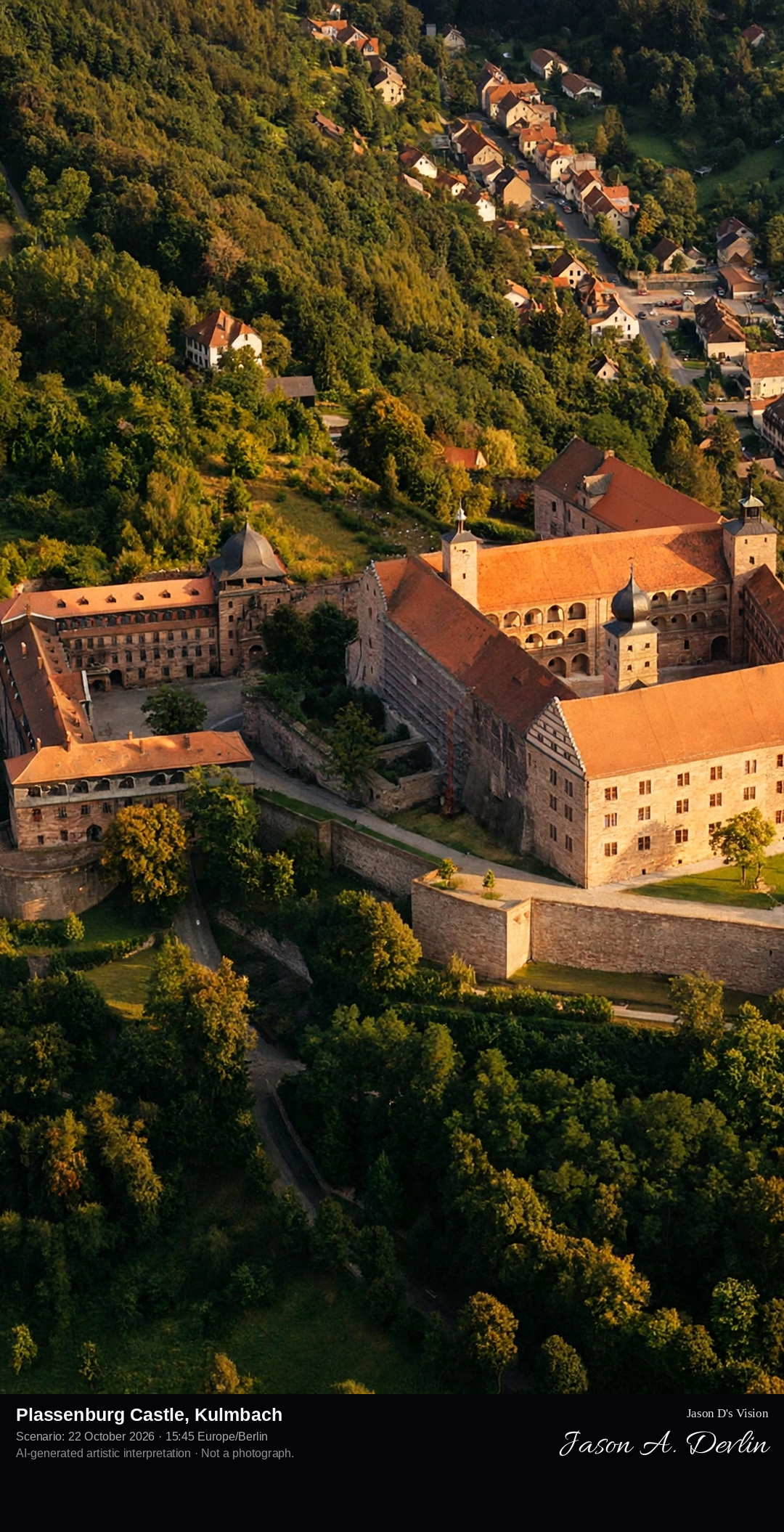
Hilltop Renaissance fortress above the rooftops of Kulmbach · AI-generated artistic interpretation
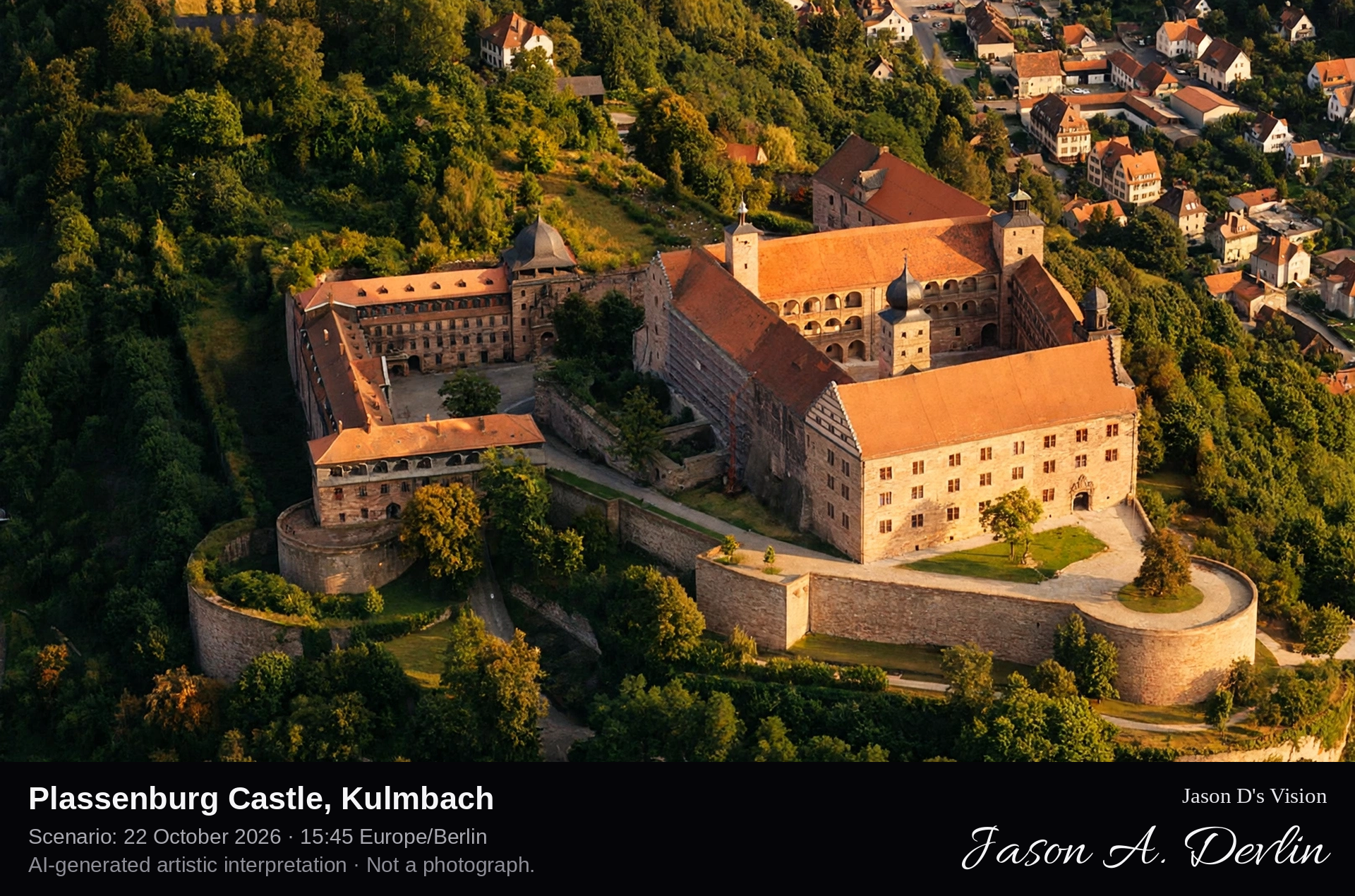
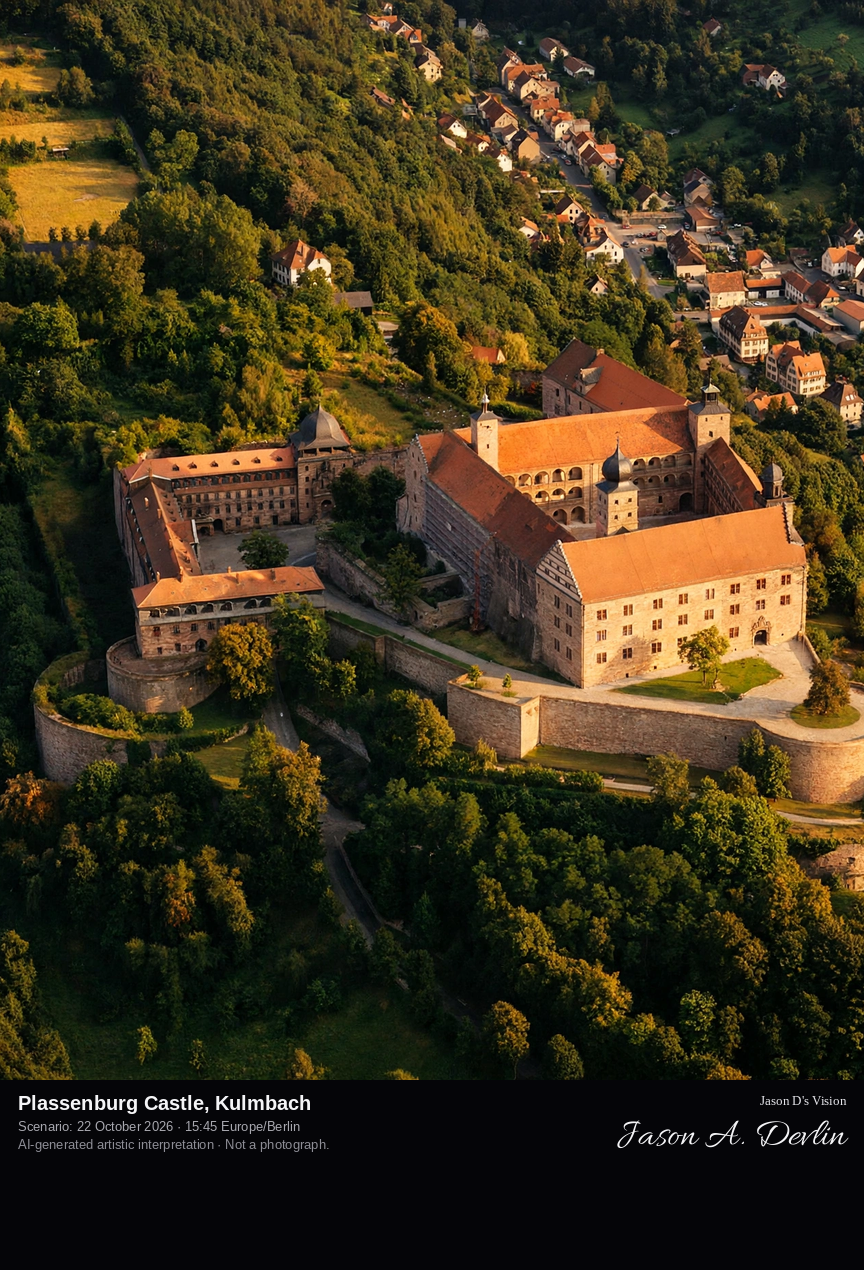
The Plassenburg is a mighty Renaissance fortress crowning a wooded hill above Kulmbach, long a residence of the Hohenzollern margraves. Behind its massive bastions lies the Schoener Hof, a richly decorated Renaissance courtyard, and the castle today houses the German Tin Figure Museum, the largest collection of its kind in the world.
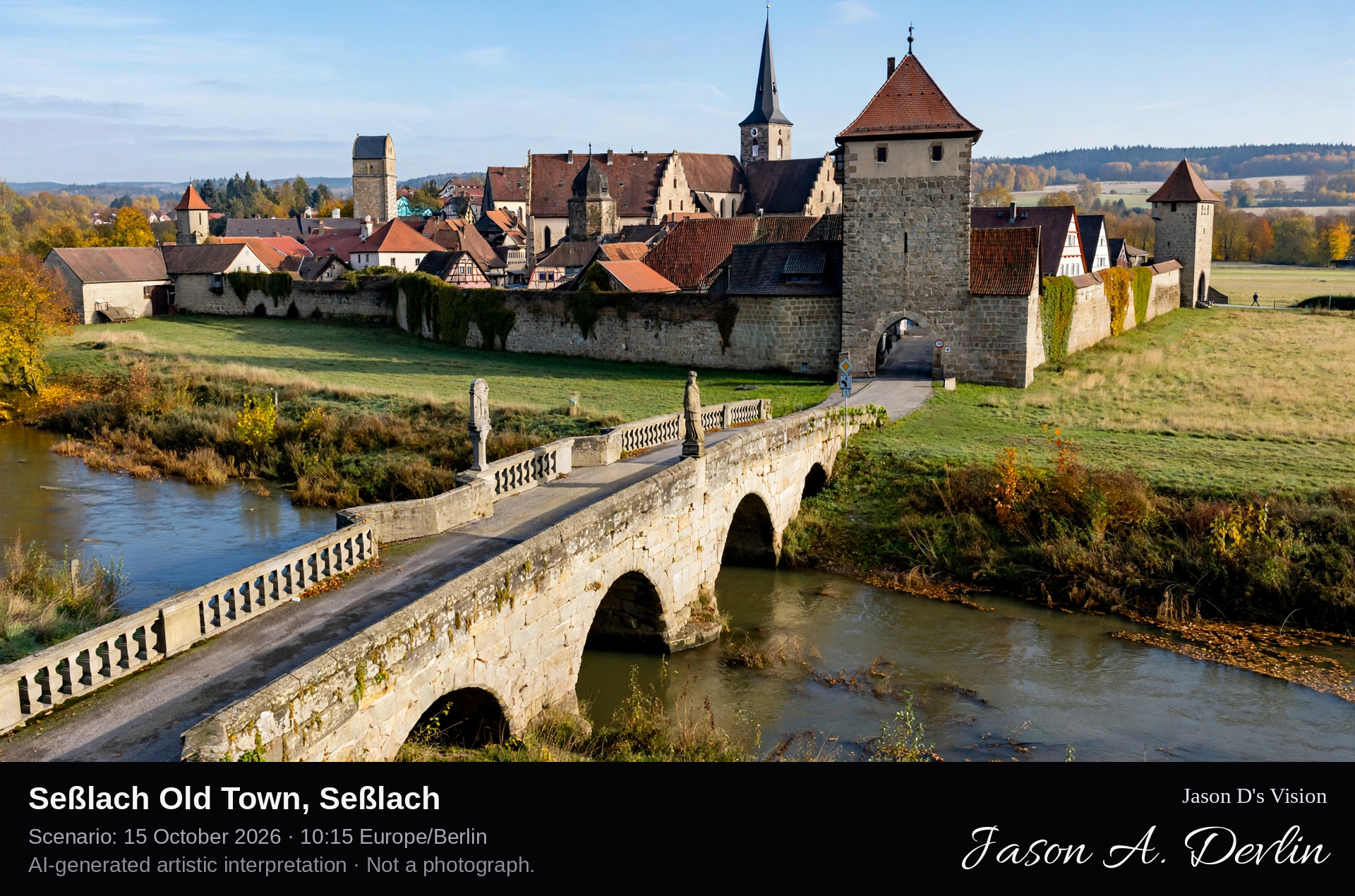
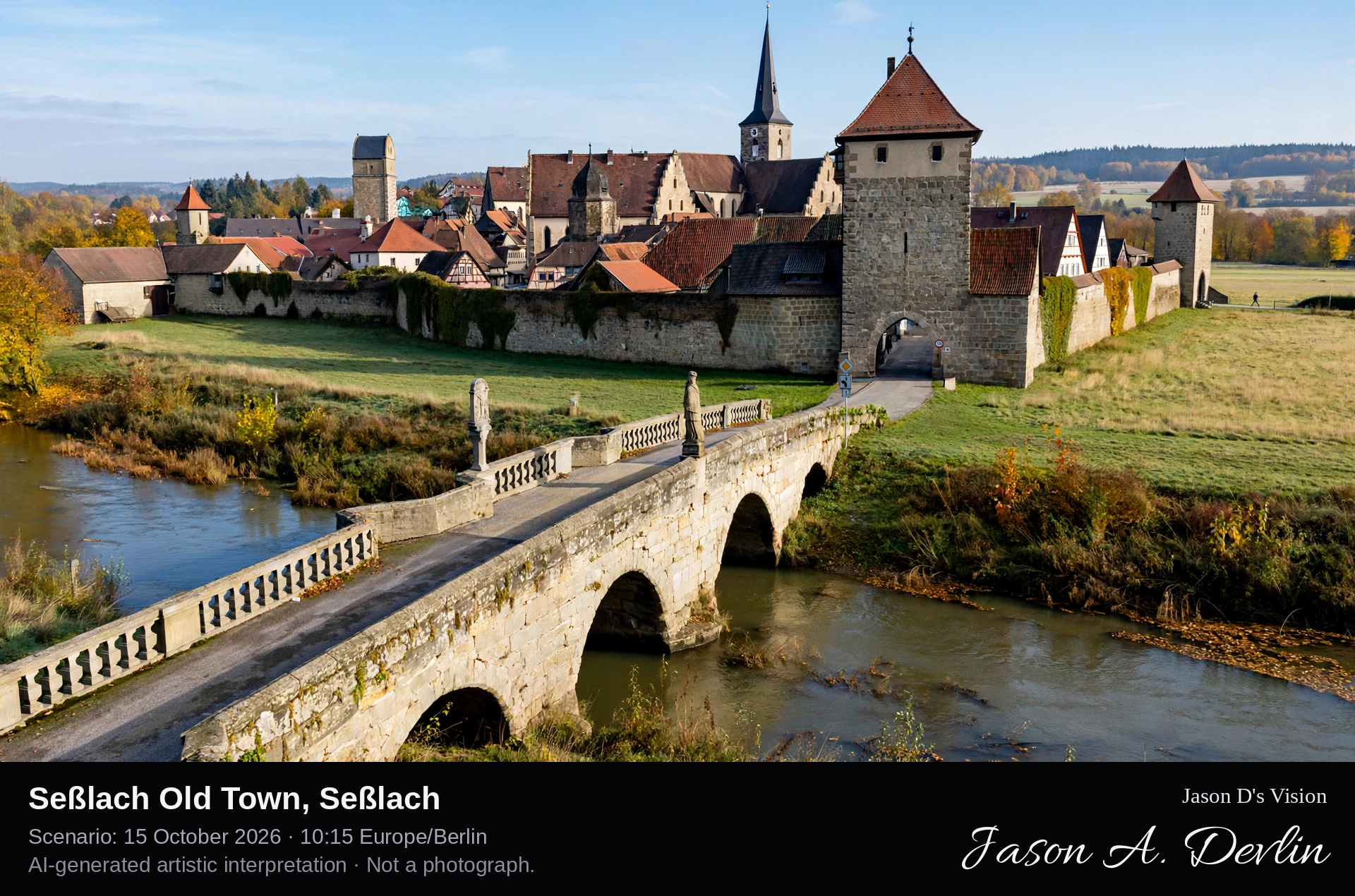
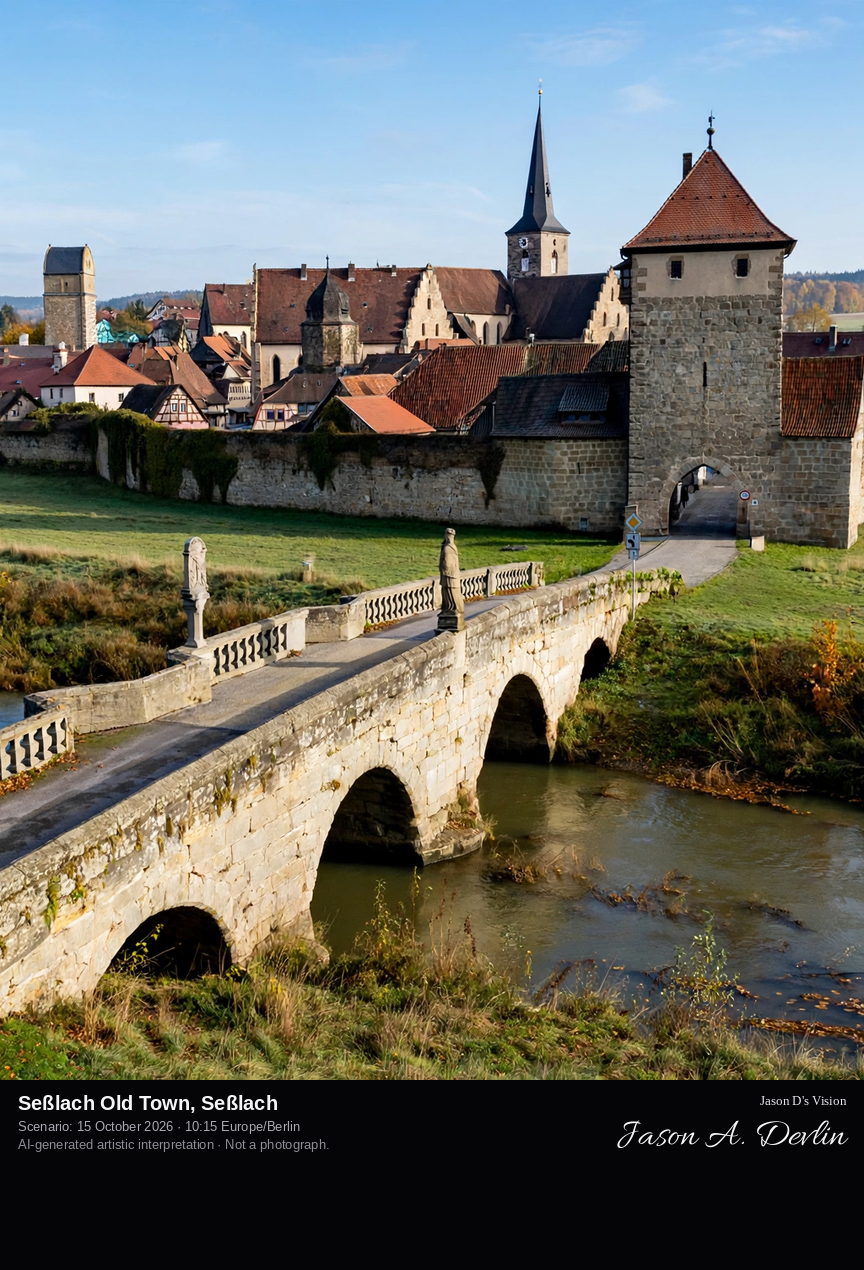
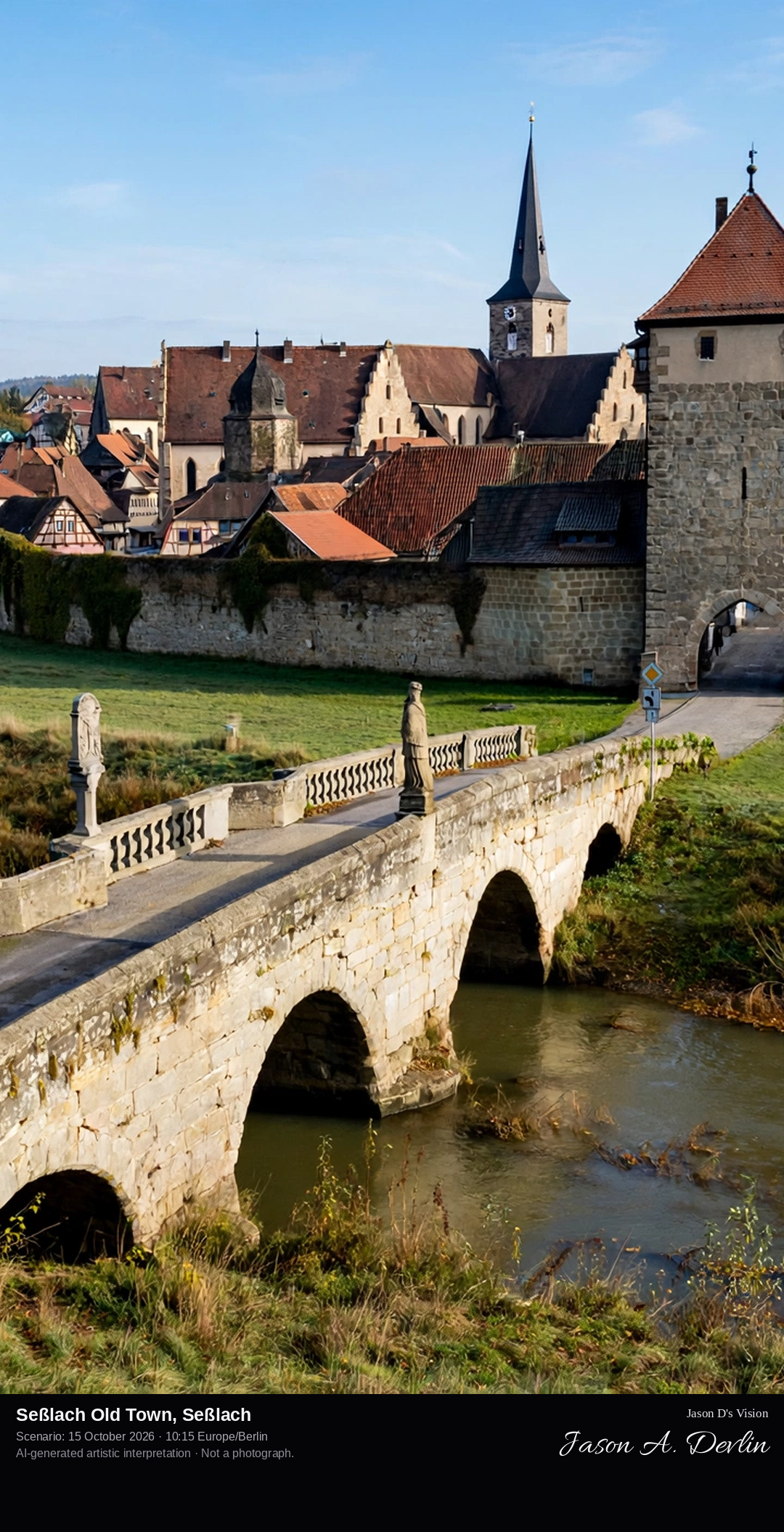
Rodach bridge and Rothenberger Tor in the complete town wall · AI-generated artistic interpretation
Seßlach is a small walled town in Upper Franconia, its medieval circuit still complete with three surviving gates. The stone bridge over the Rodach, ornamented with baroque statues, leads directly to the Rothenberger Tor and the rooftops of the old town behind it.
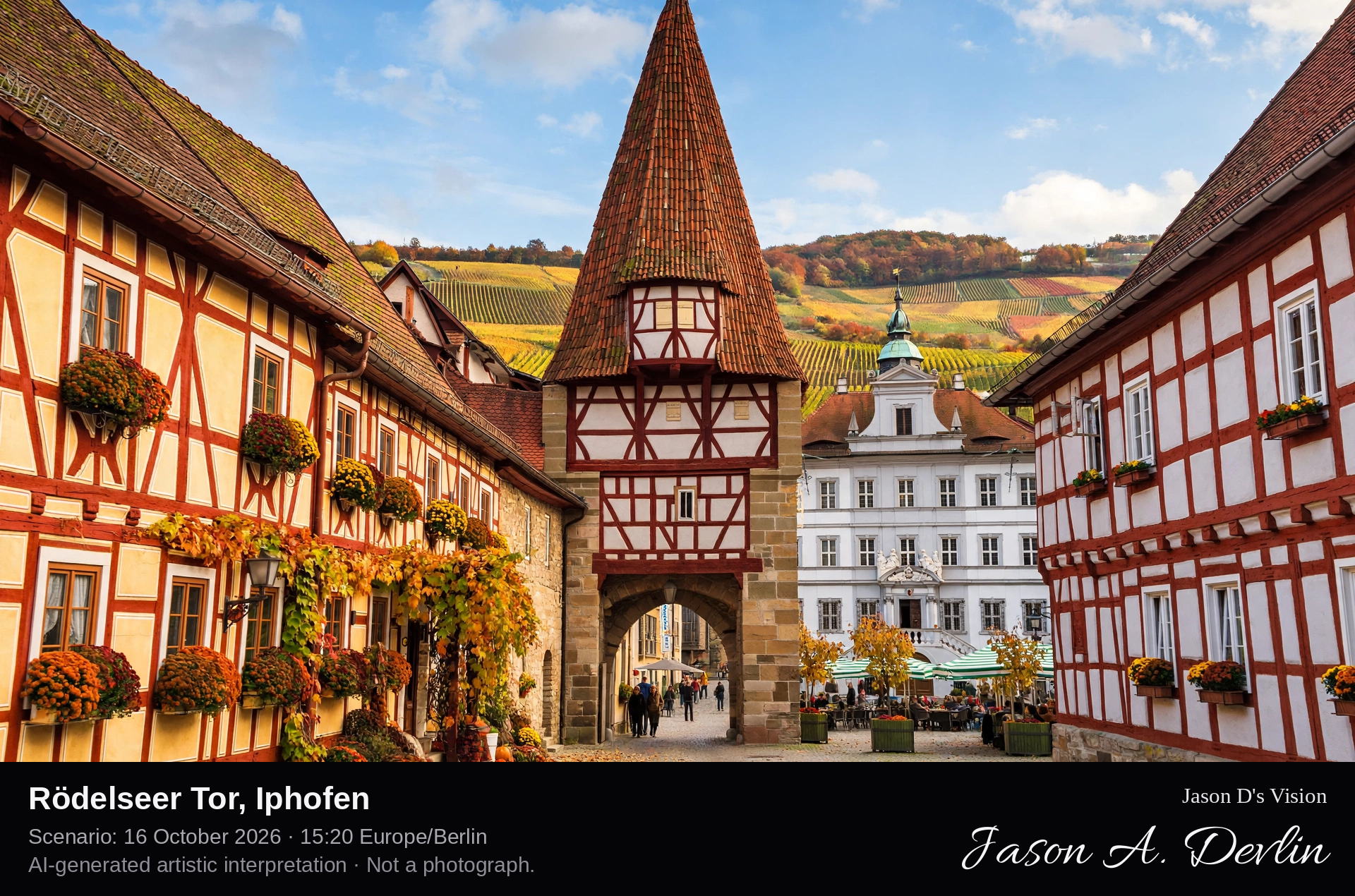
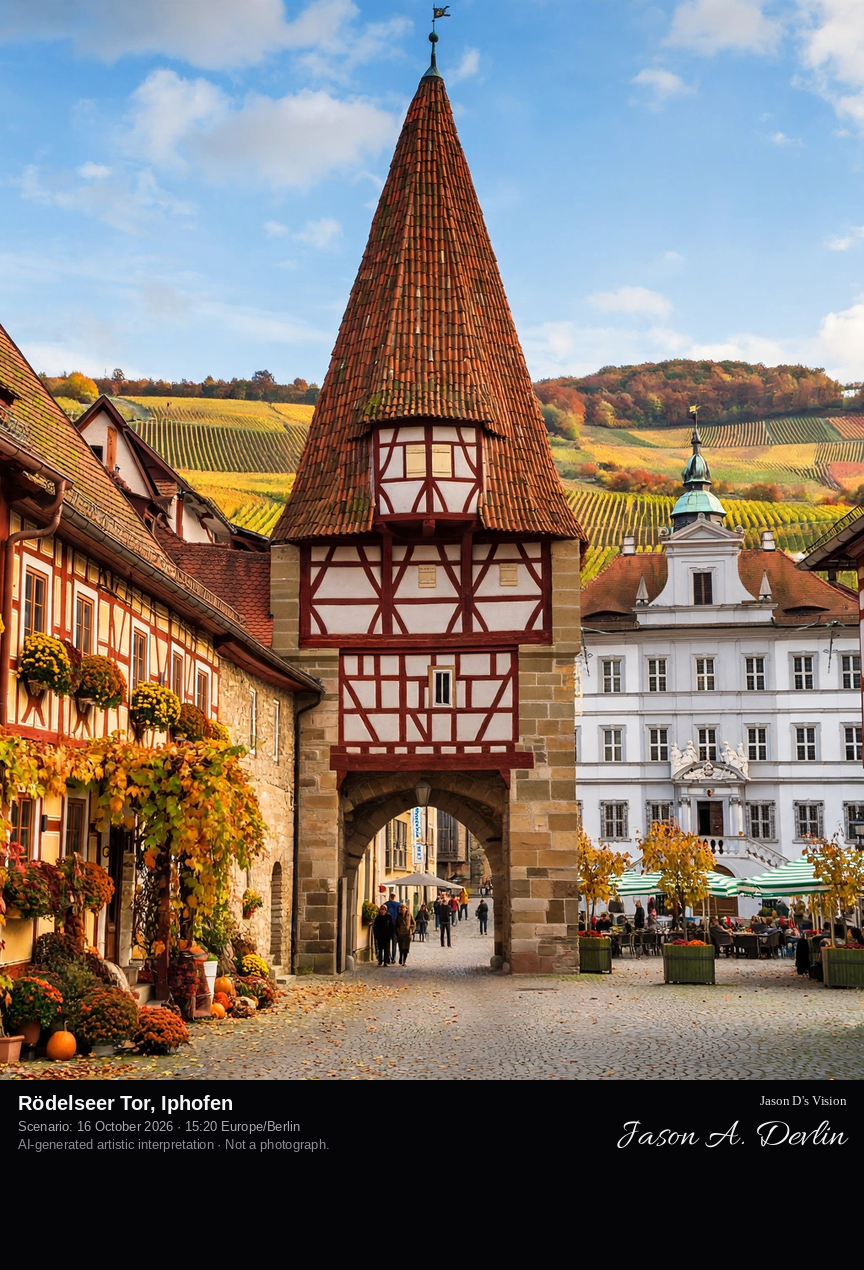
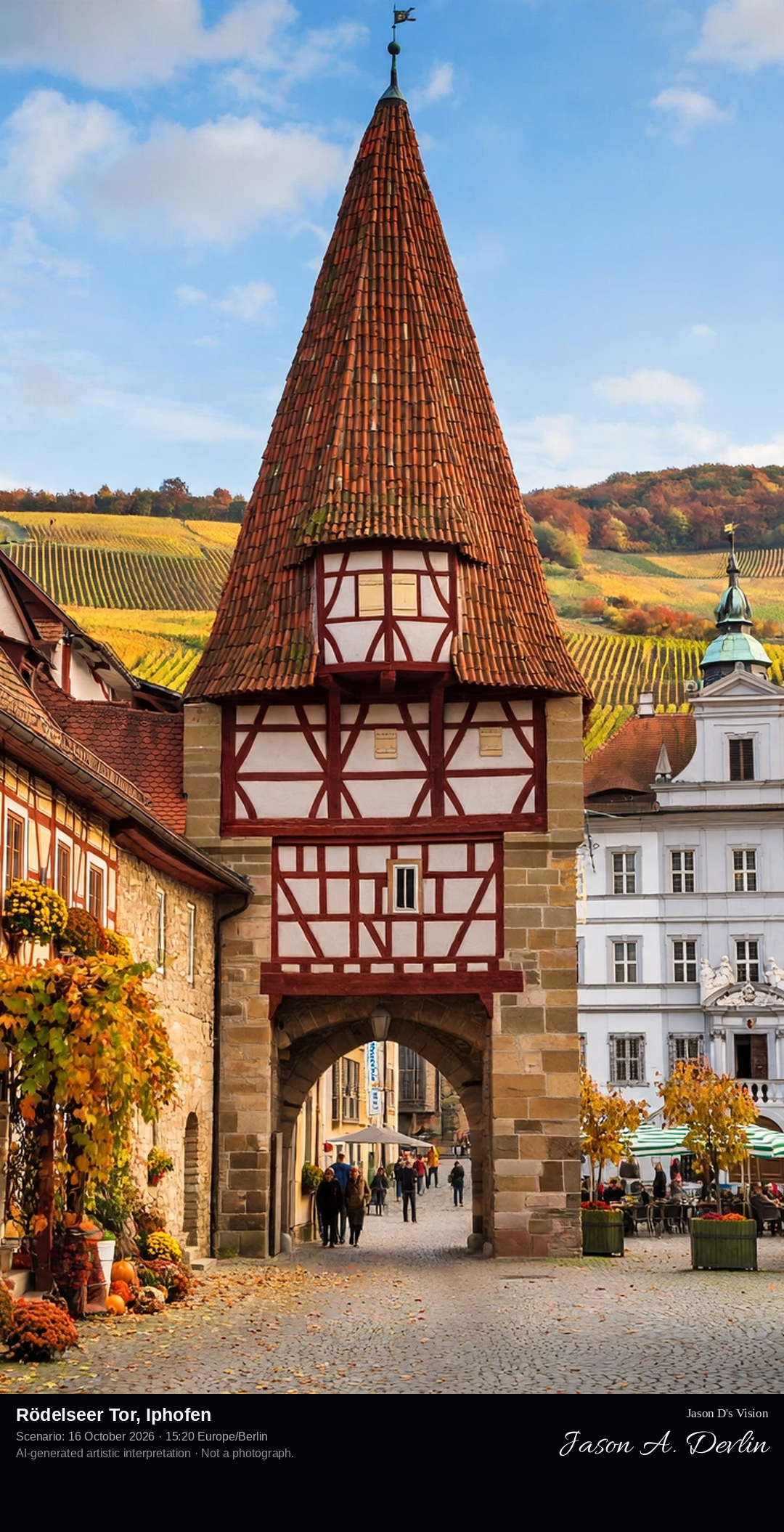
Rödelseer Tor gate tower between painted half-timbered houses · AI-generated artistic interpretation
Iphofen is a celebrated Franconian wine town, fully ringed by its town wall with four gates. The Rödelseer Tor, its tall colourful gate tower, stands among painted half-timbered houses just outside the baroque Rathaus and market square, with vineyard hills rising behind.
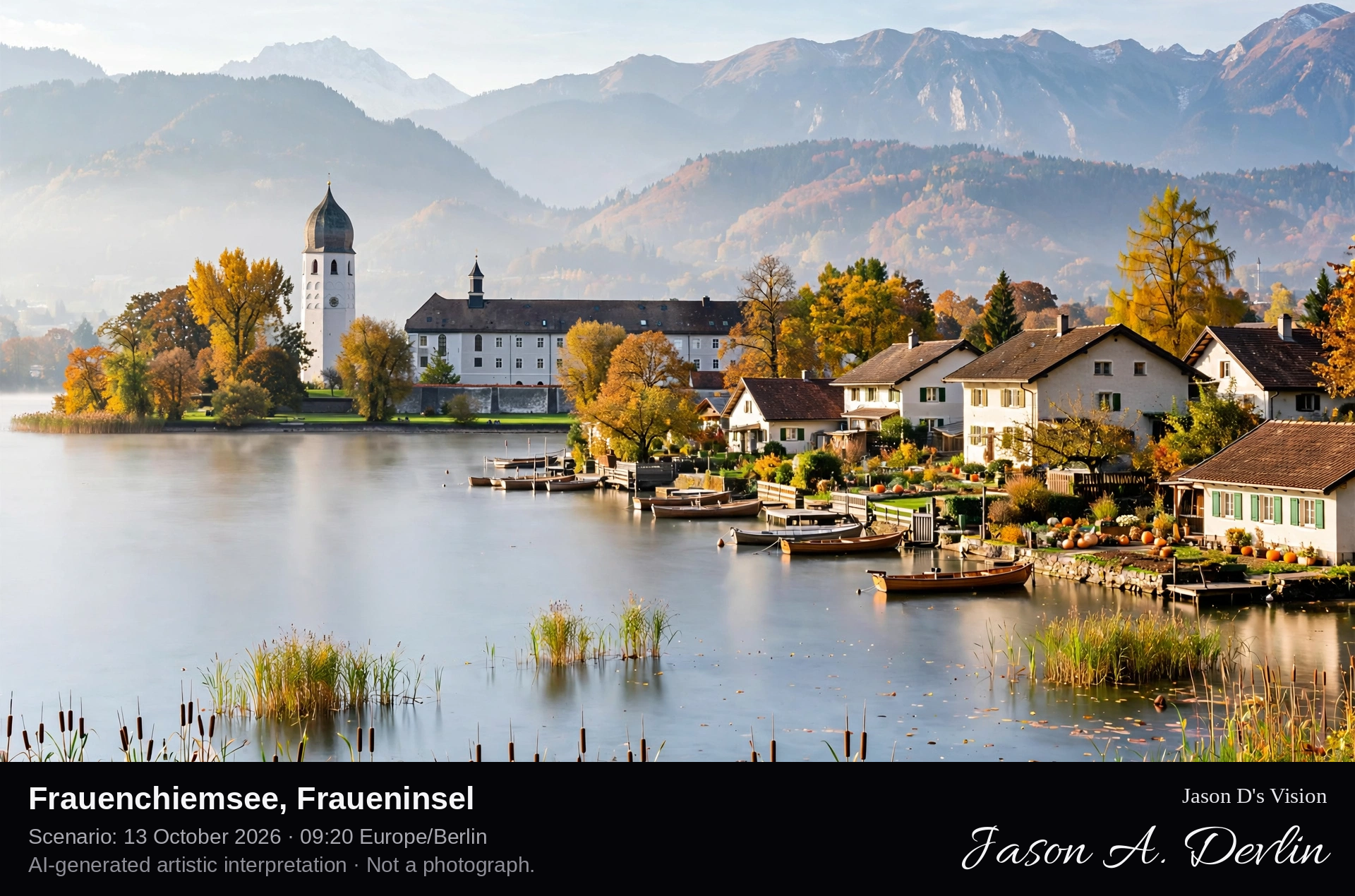
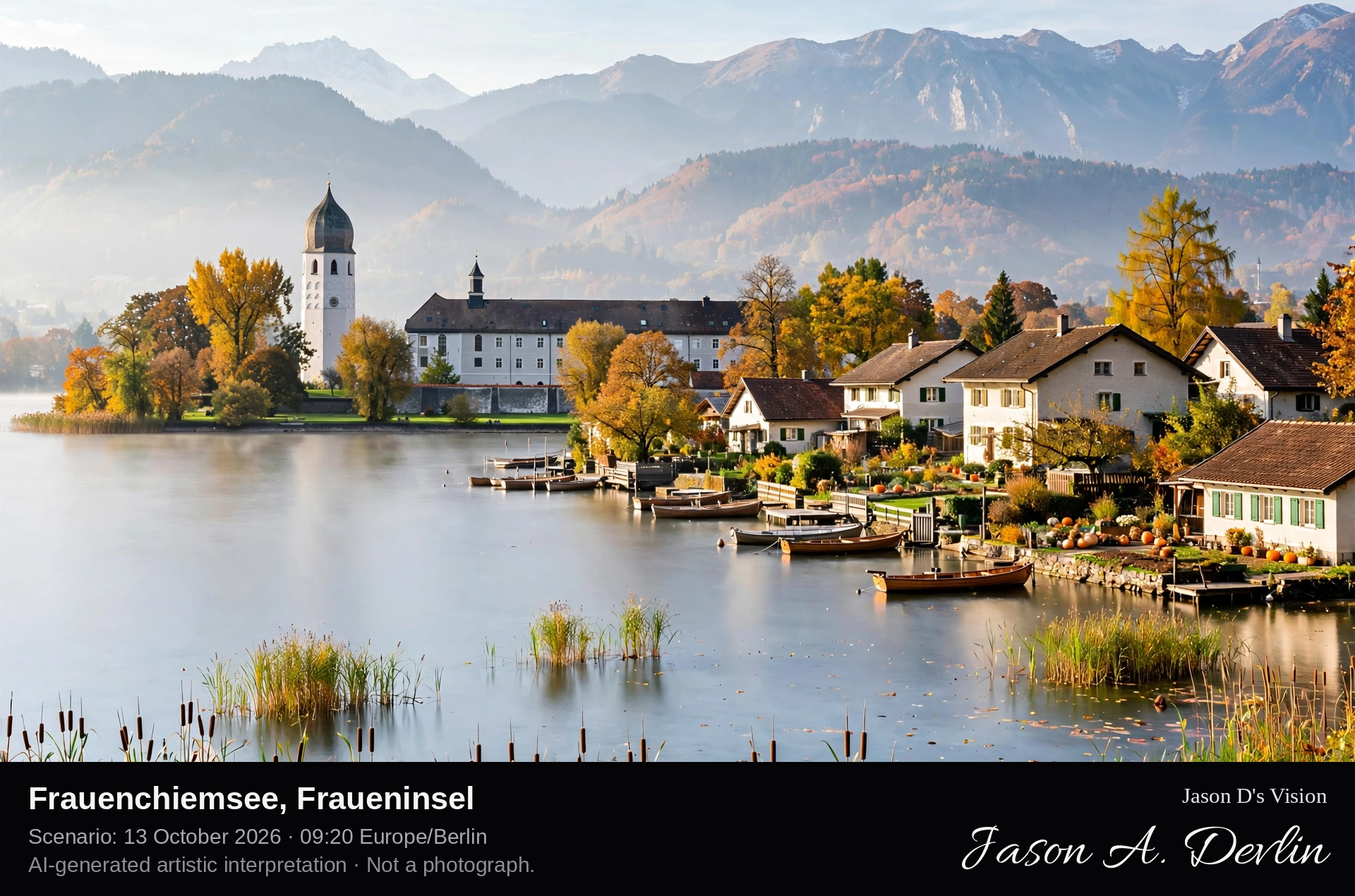
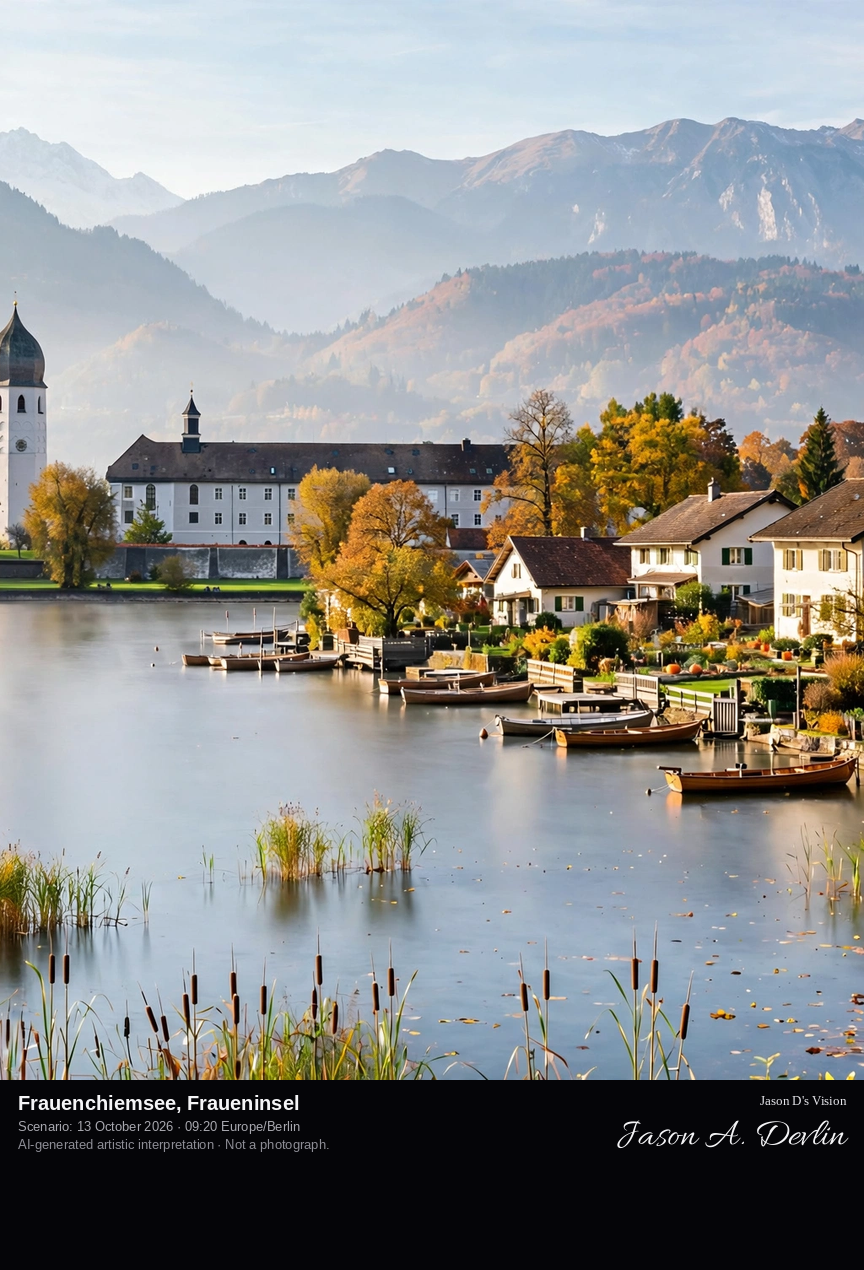
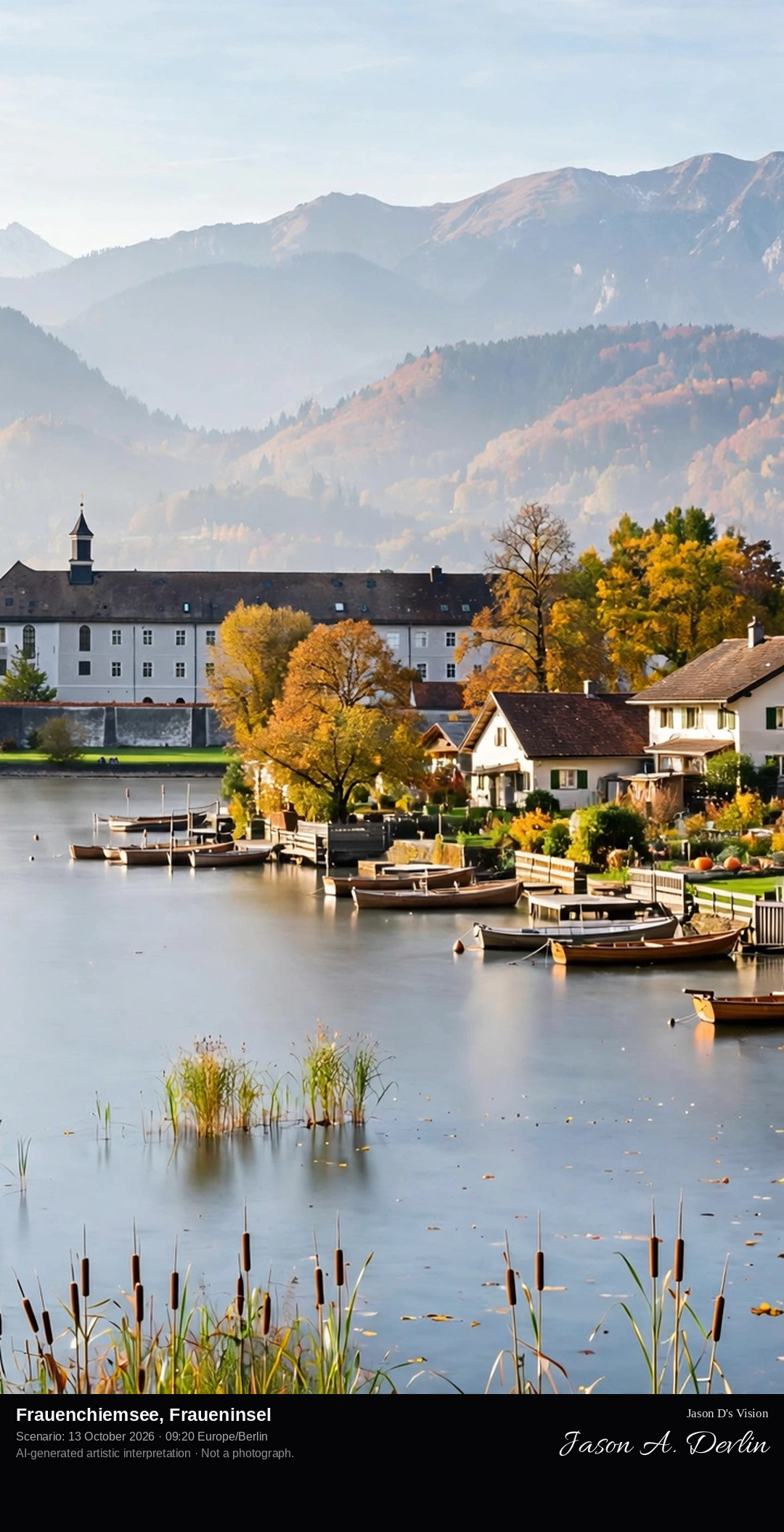
The island campanile over fishermen's houses on the Chiemsee shore · AI-generated artistic interpretation
Fraueninsel is a small car-free island in the Chiemsee, home to the Benedictine convent of Frauenwörth, founded in the eighth century and still a living religious community. Its freestanding campanile with an onion dome is the island's landmark, rising over fishermen's houses, gardens and boat jetties, with the Chiemgau Alps across the water.
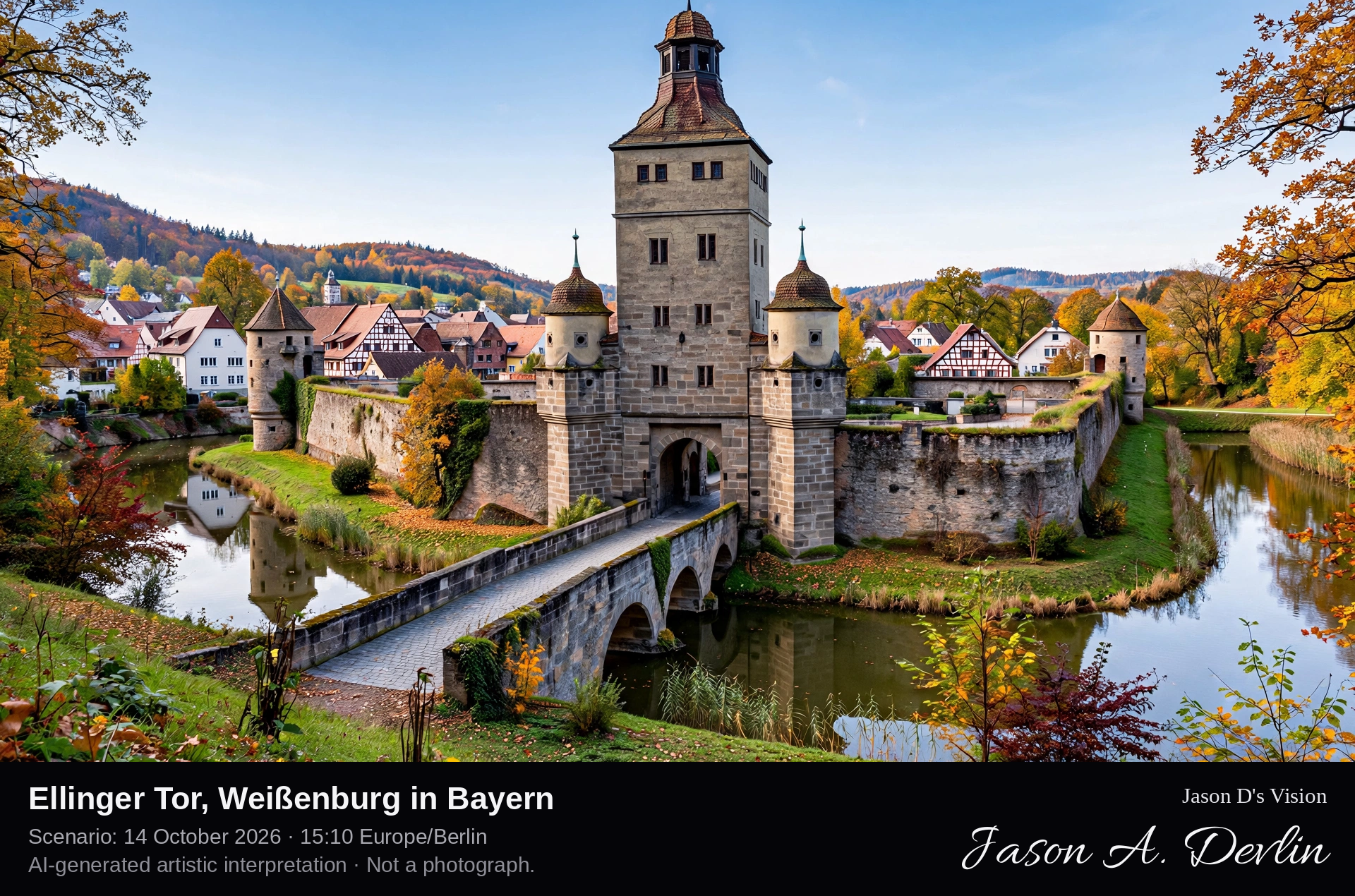
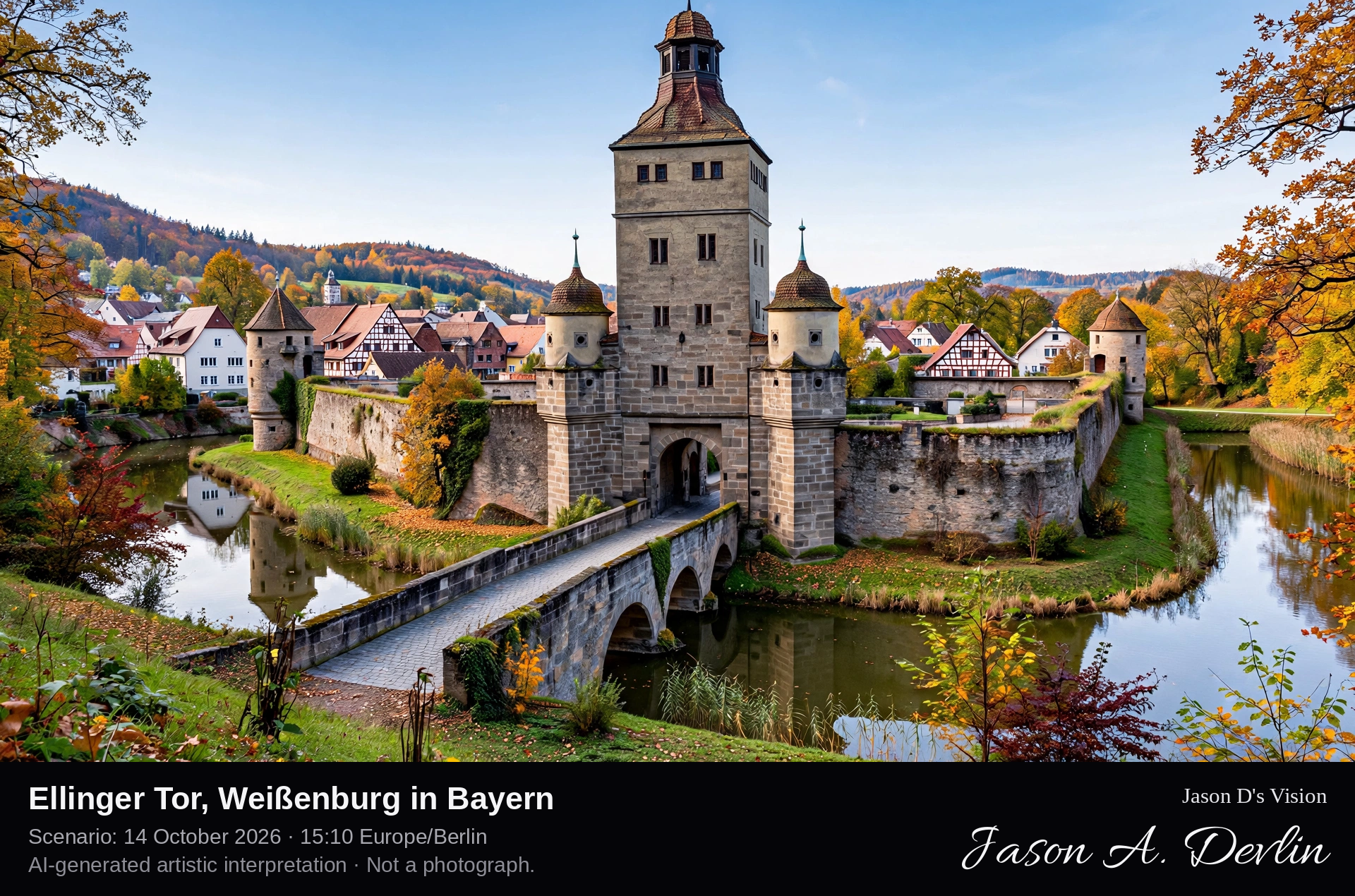
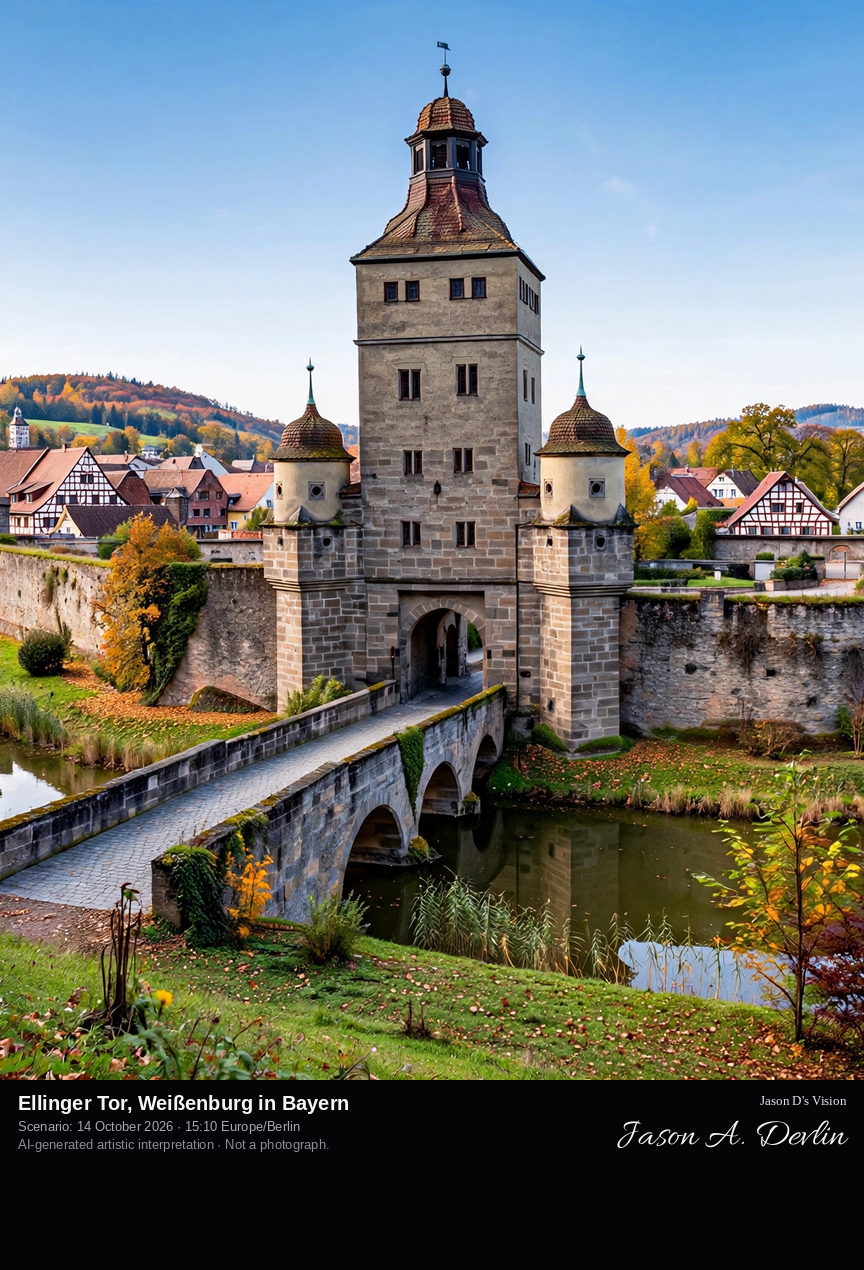
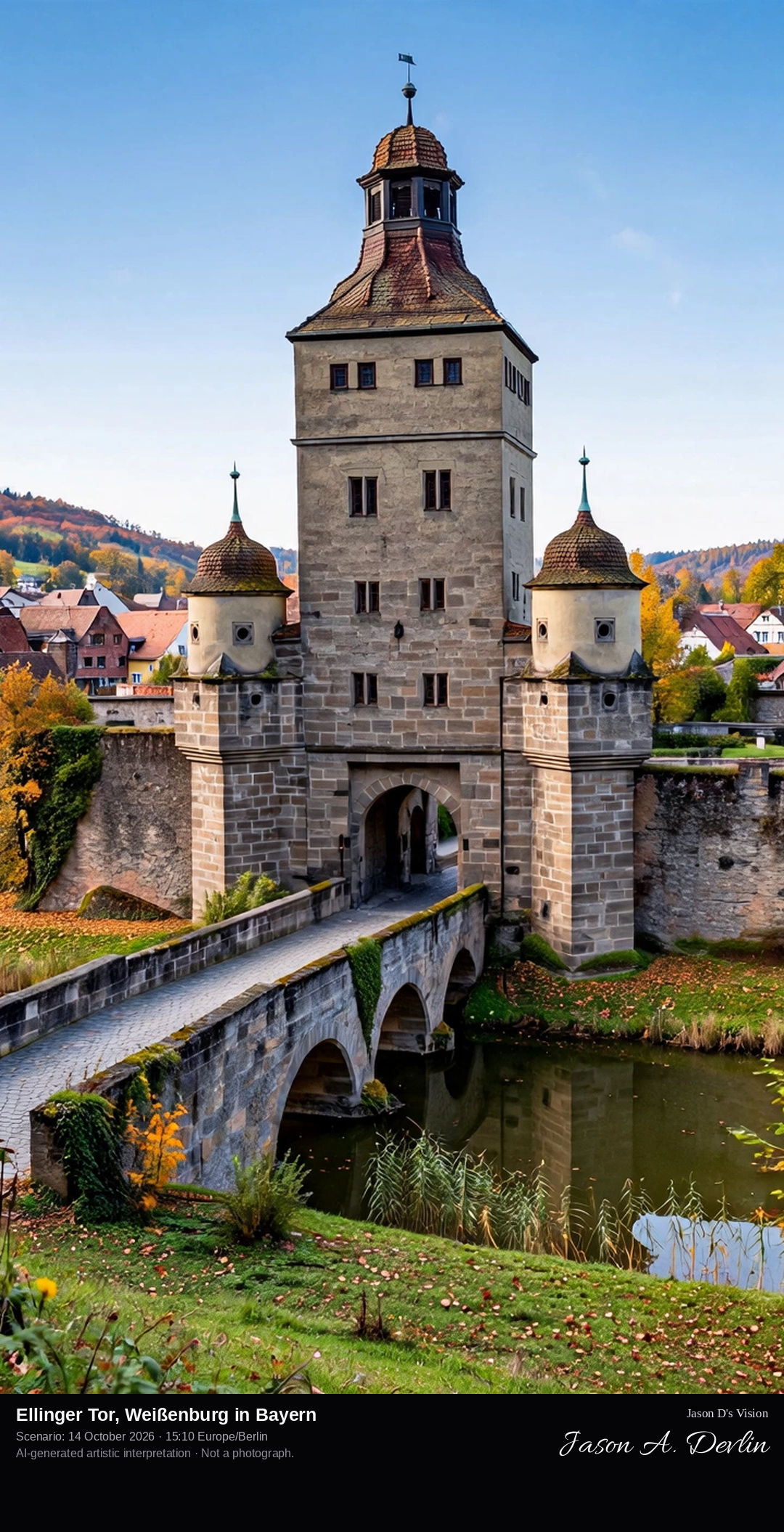
The Ellinger Tor over the moat bridge · AI-generated artistic interpretation
The Ellinger Tor is the showpiece of Weißenburg's medieval defences, a five-storey gate tower flanked by twin turrets with domed caps, once well known enough to appear on a German postage stamp. The town wall ring, with its many watchtowers, survives largely intact around the old town.
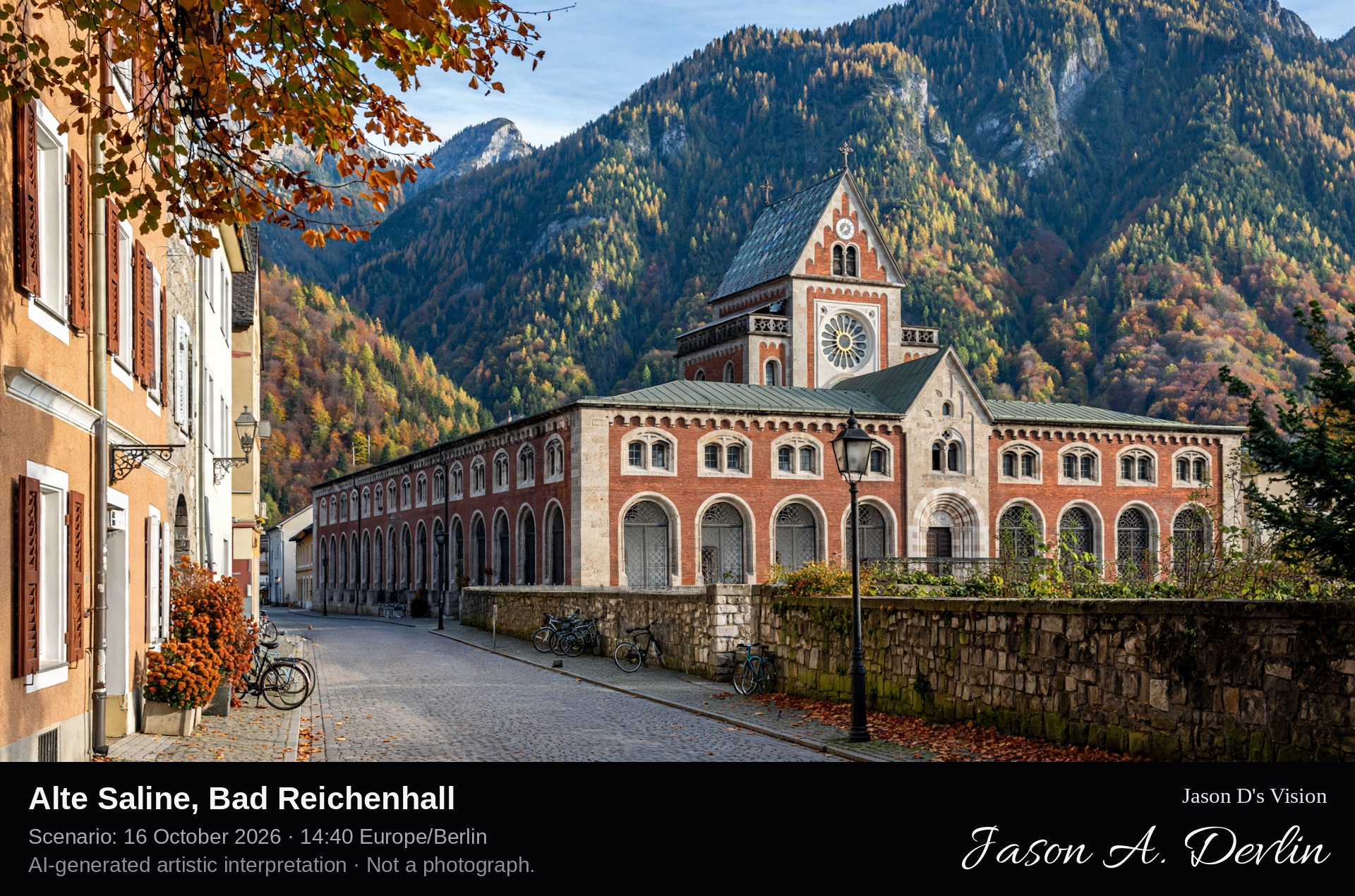
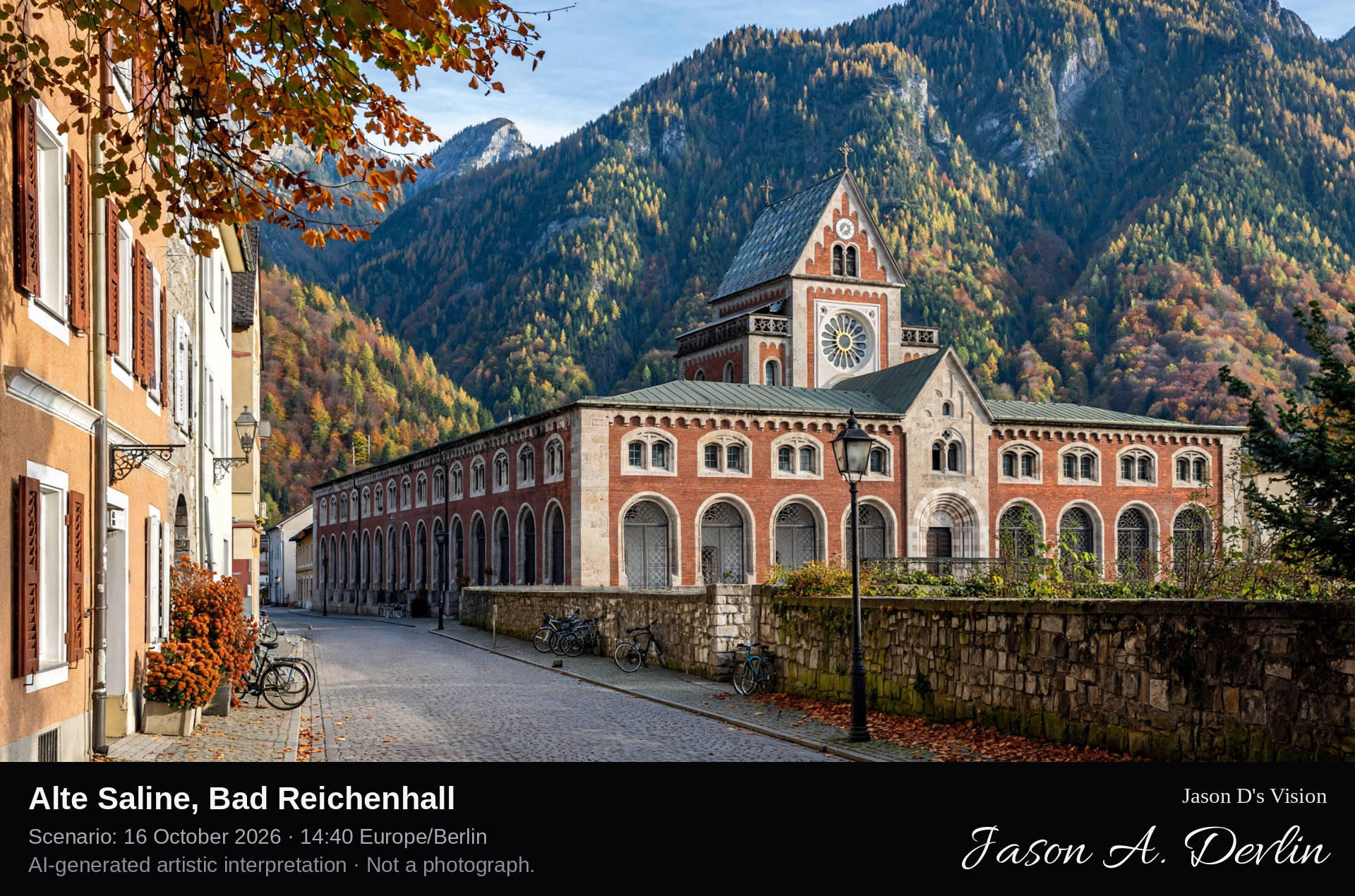
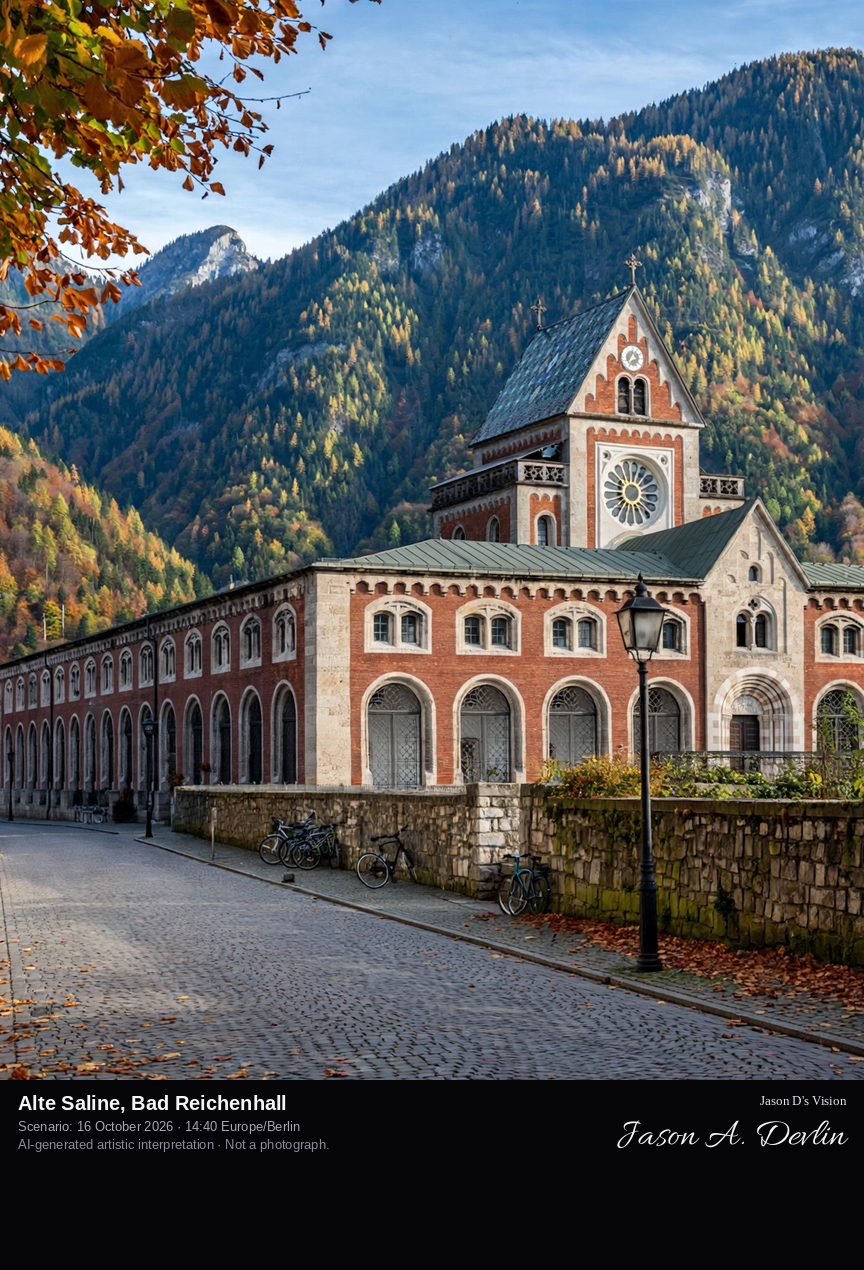
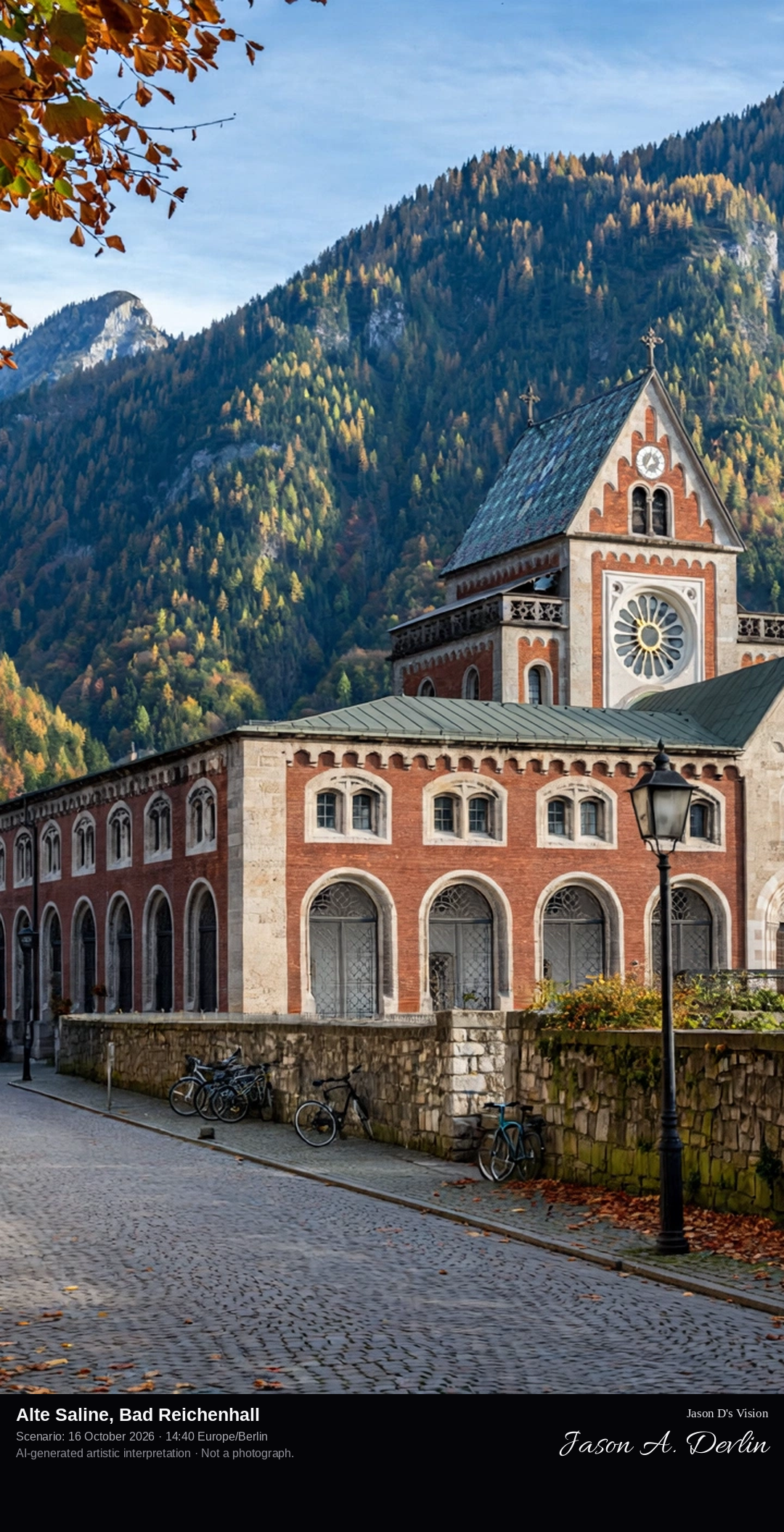
The brick salt works and Brunnhaus chapel beneath the Alps · AI-generated artistic interpretation
Bad Reichenhall's Alte Saline, raised in the 1840s and 1850s under King Ludwig I of Bavaria, is often called the most beautiful salt works in the world. Its neo-Romanesque brick facades and central Brunnhaus chapel face the town beneath the Berchtesgaden Alps, and brine is still drawn from the springs below the ensemble.
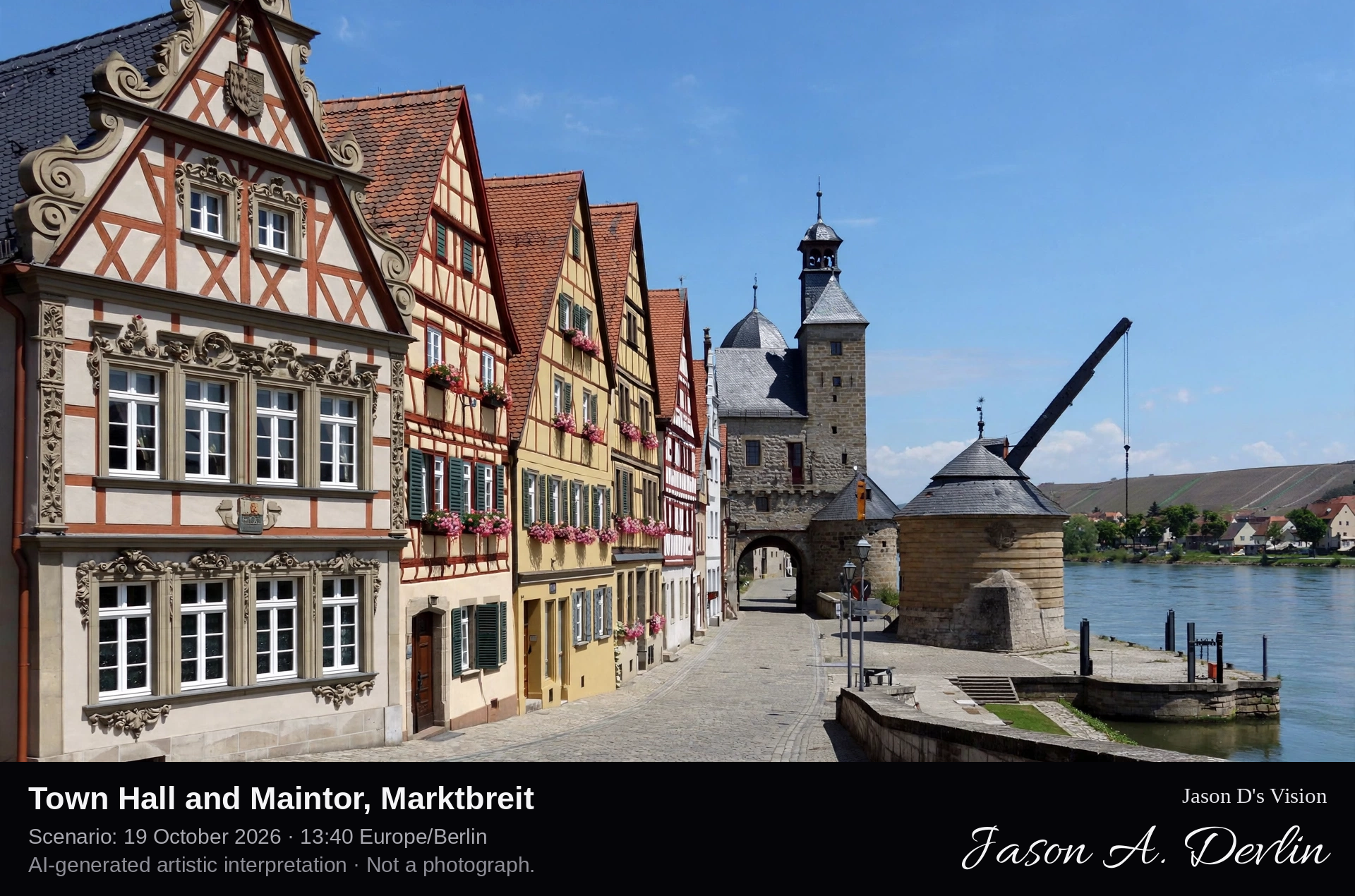
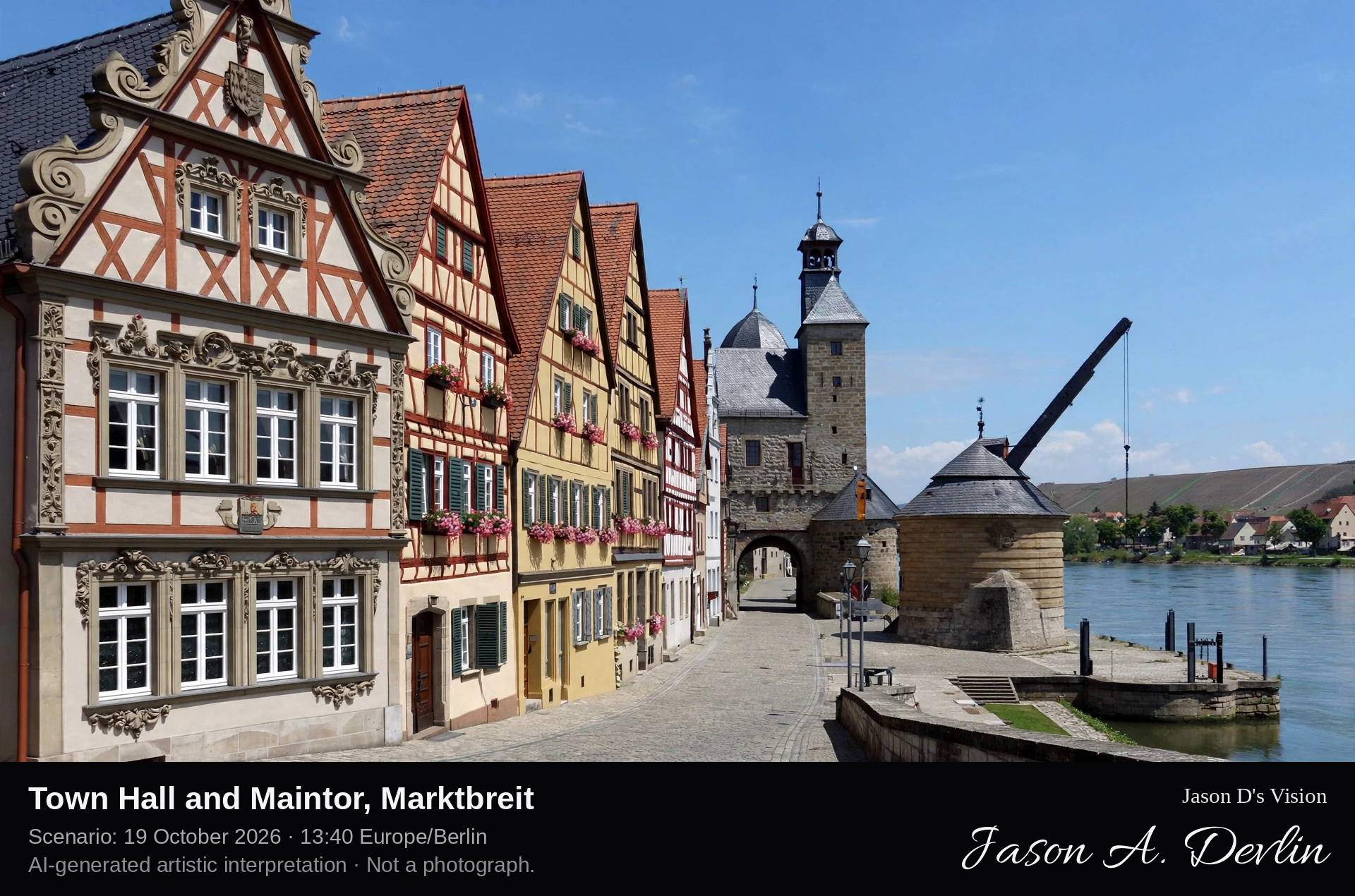
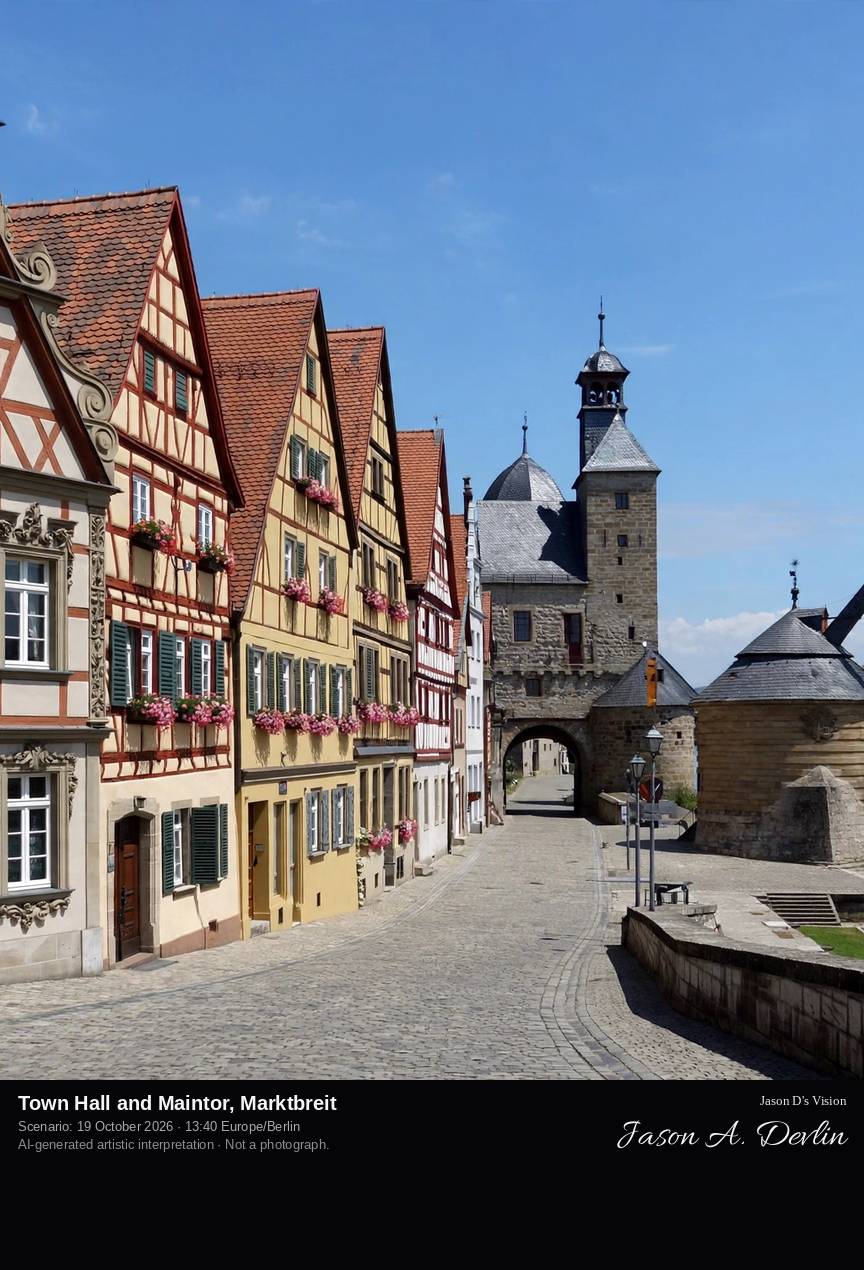
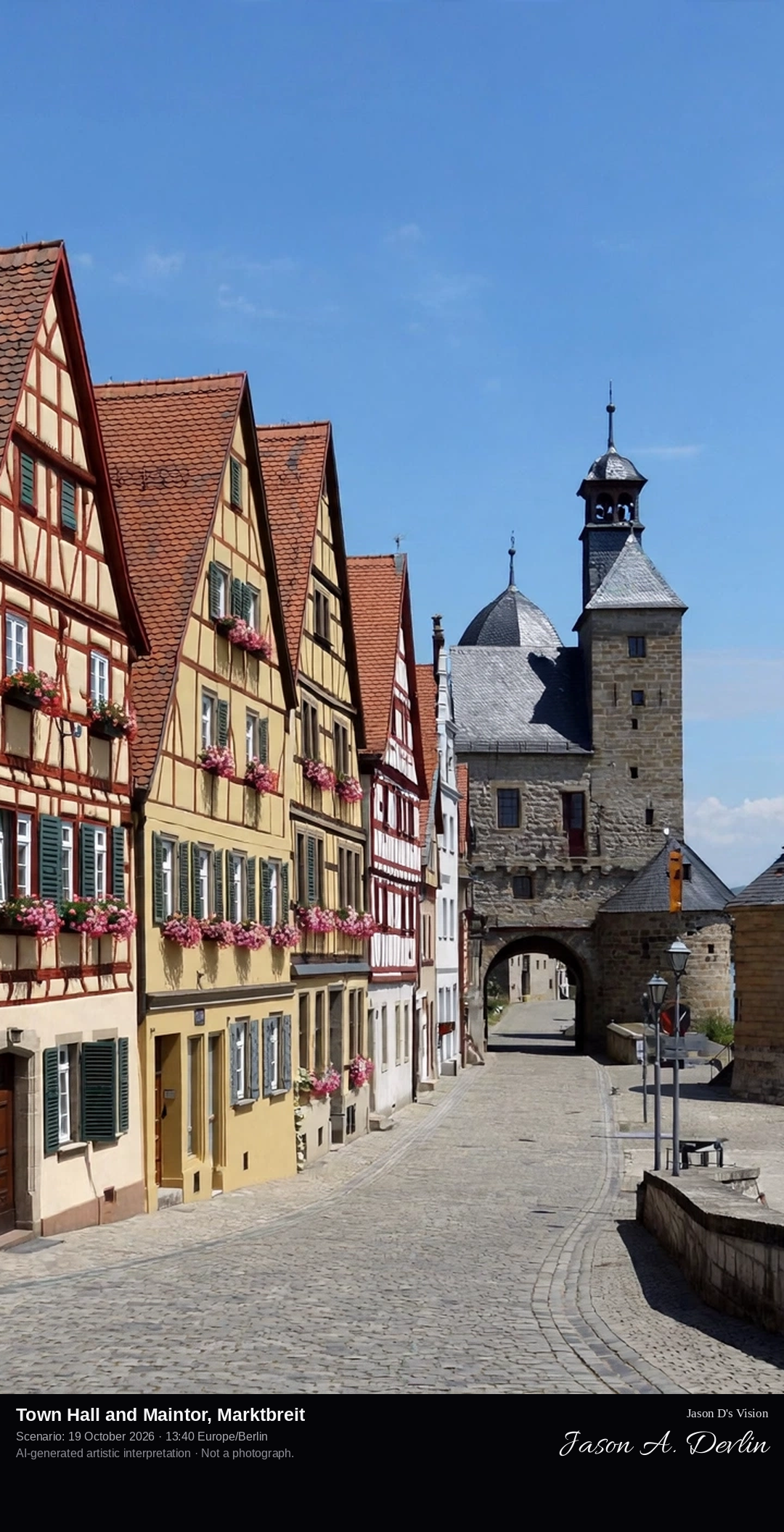
The Renaissance town hall and gate tower on the Main river street · AI-generated artistic interpretation
Marktbreit is a small town on the Main in Franconia, its Renaissance town hall and the Maintor gate standing over a street of proud trading houses. Wine merchants grew rich here where the river bends, and the town crane and warehouses along the bank still tell of the Main trade.
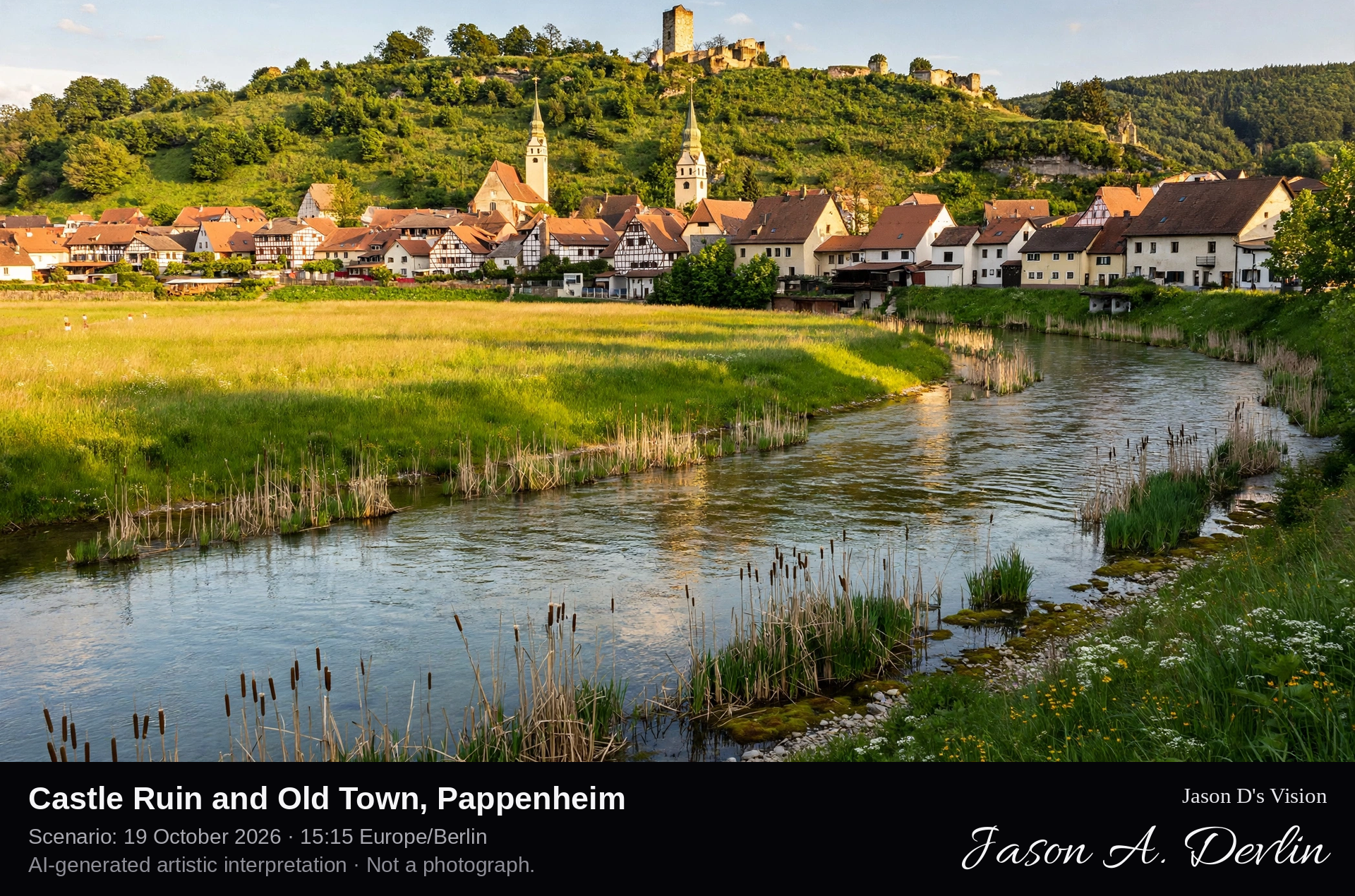
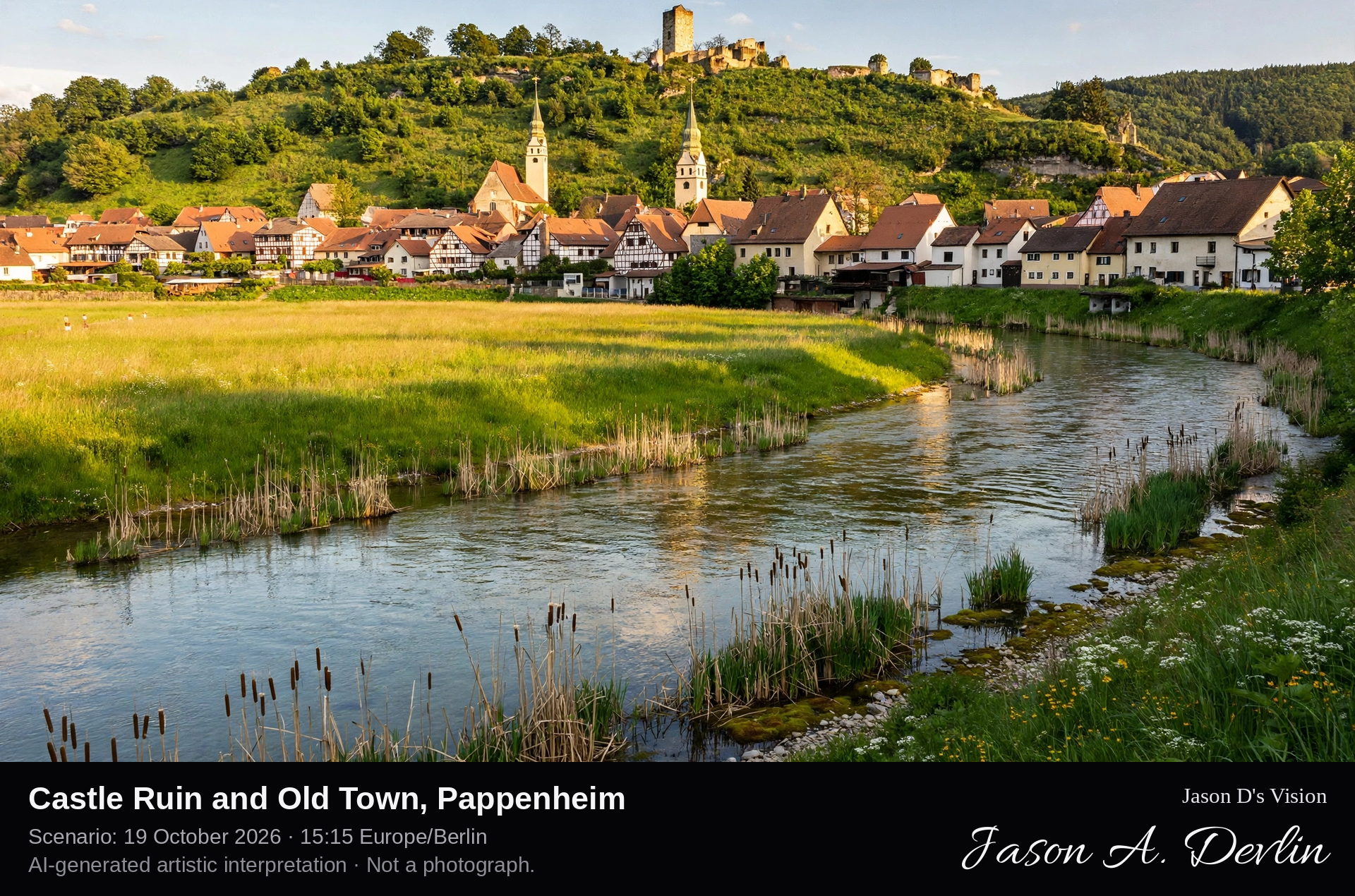
The castle ruin on its crag above the Altmühl valley town · AI-generated artistic interpretation
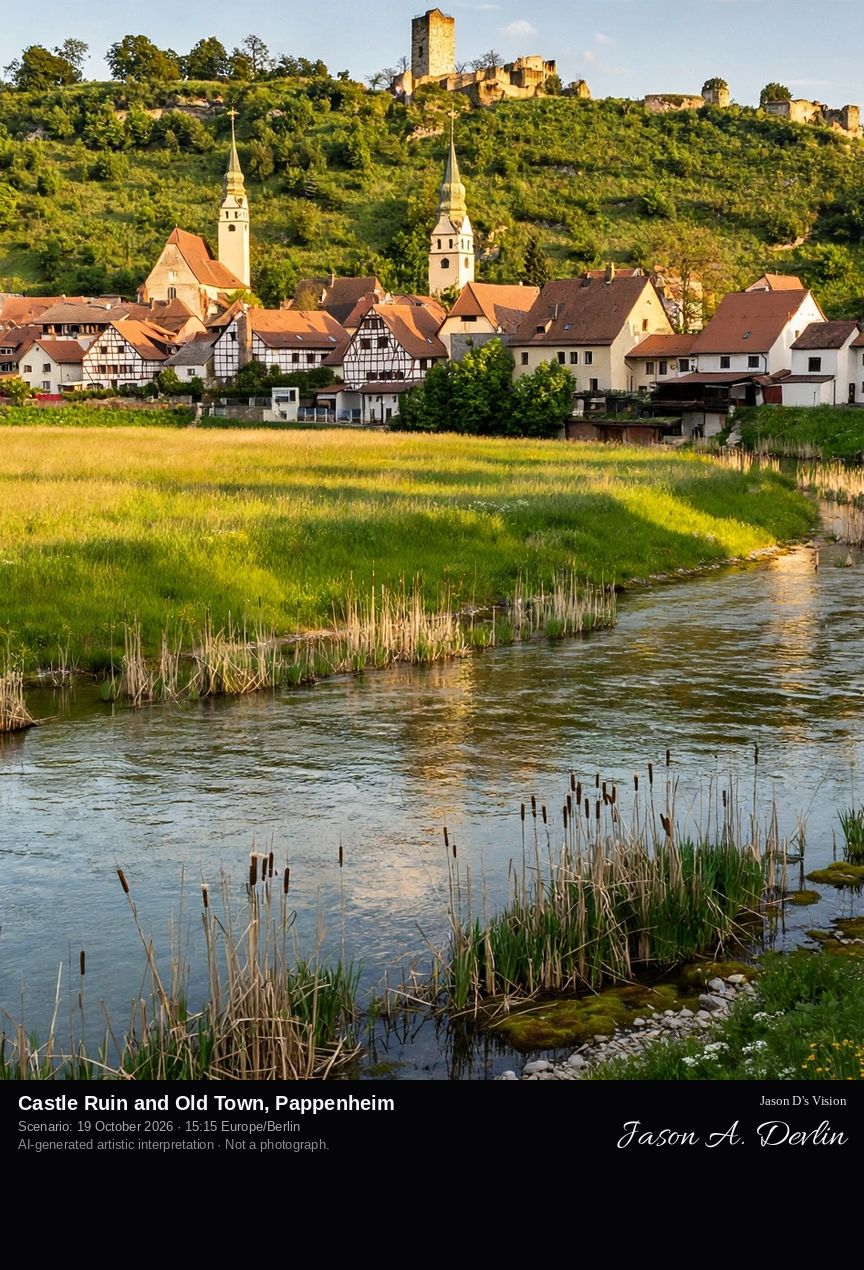
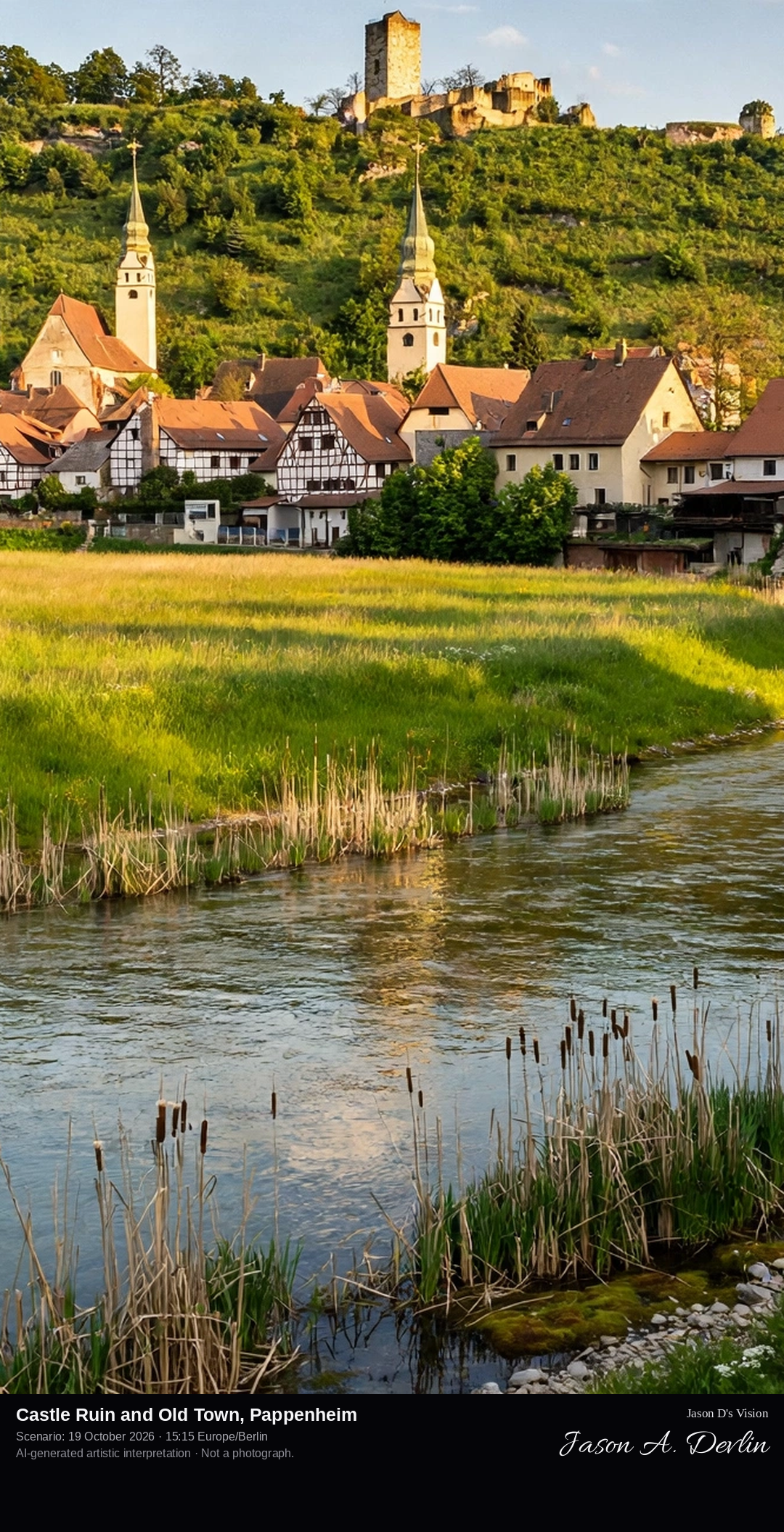
Pappenheim spreads along the Altmühl below the long ruin of its castle, seat of the marshals of Pappenheim, whose name Schiller made immortal with the line about knowing one's Pappenheimers. The old town inside its walls keeps gate towers, a Gothic church and the counts' later palace by the river meadows.
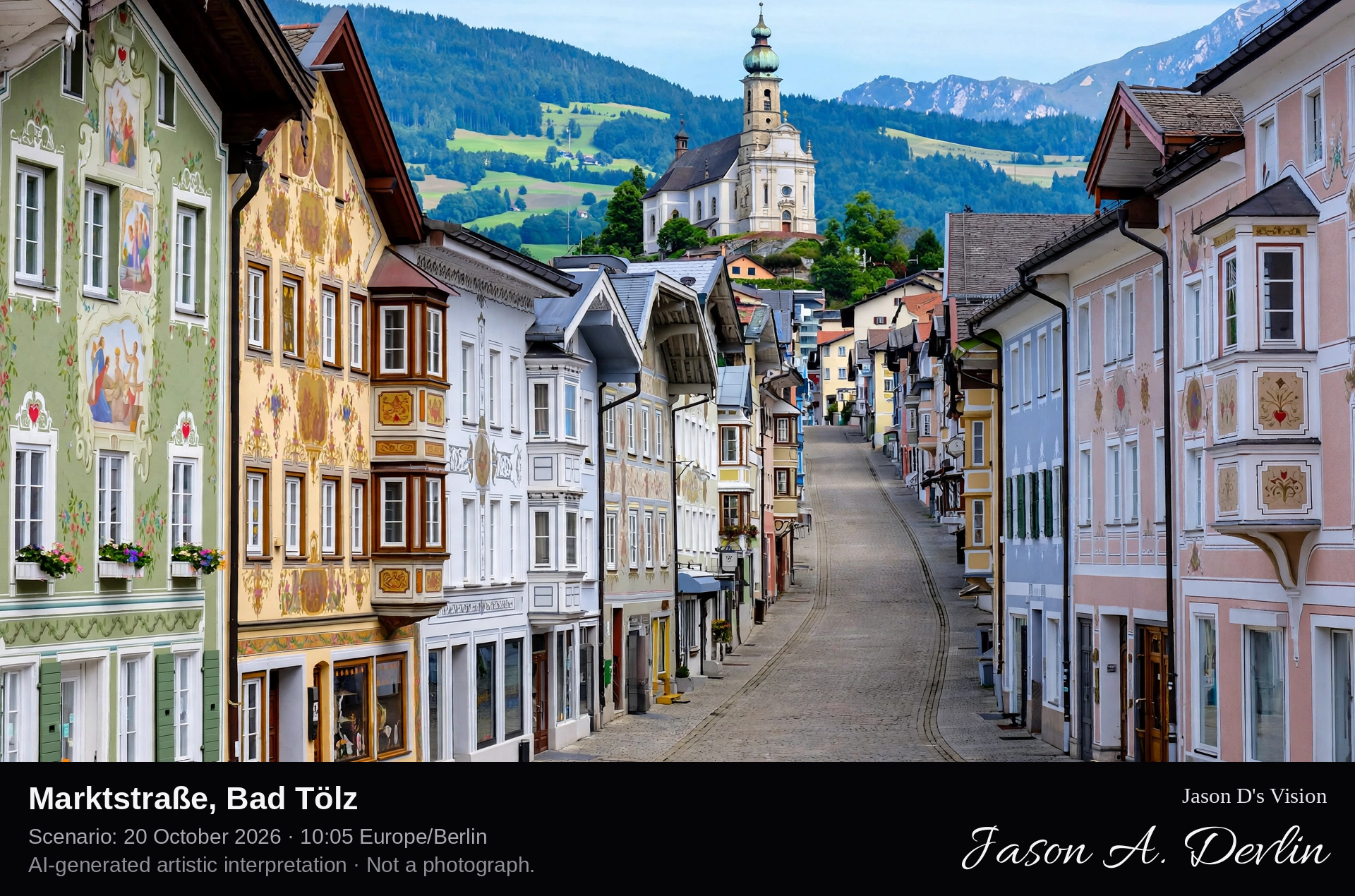
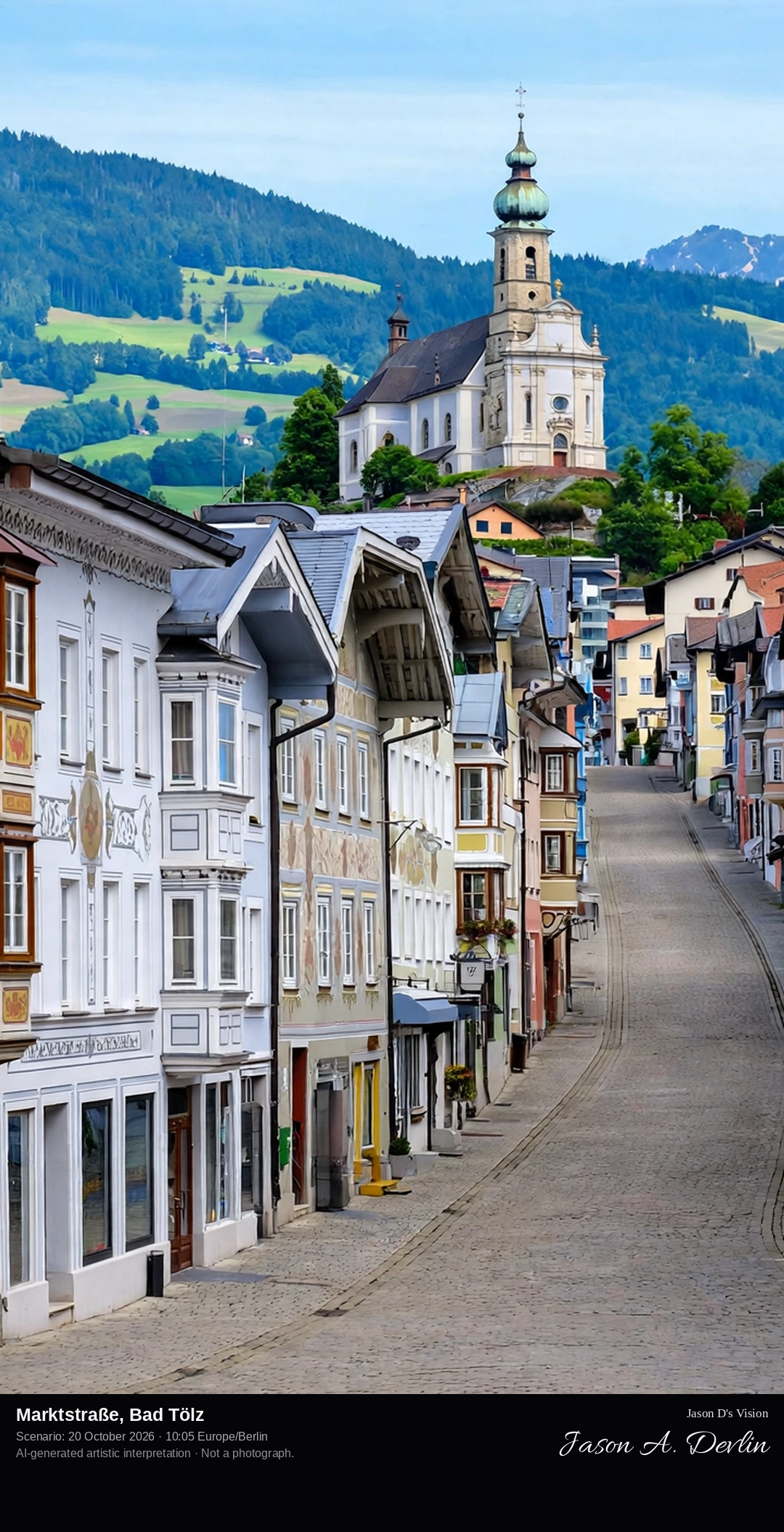
The painted facades of the Marktstraße climbing toward the church hill · AI-generated artistic interpretation
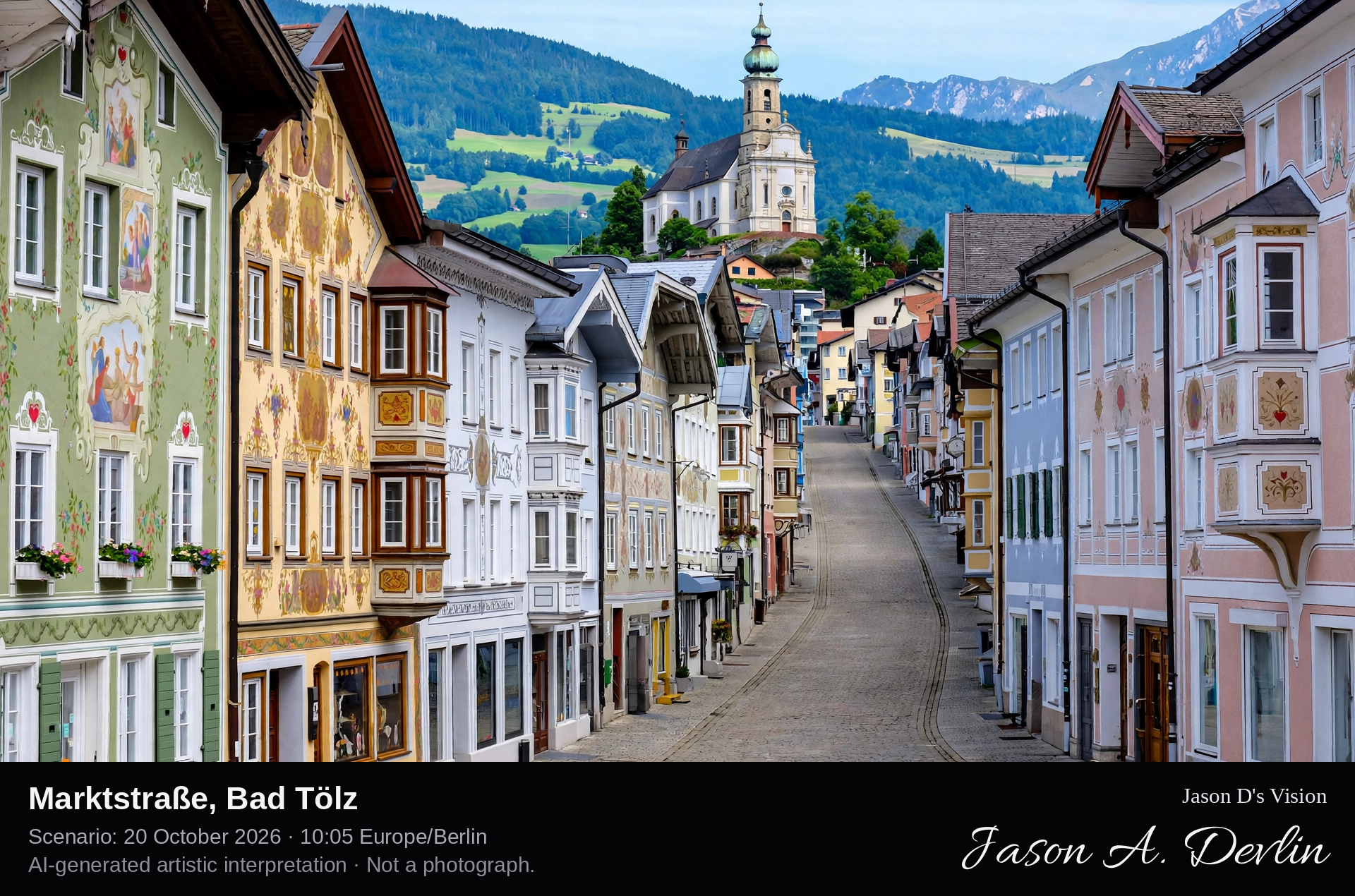
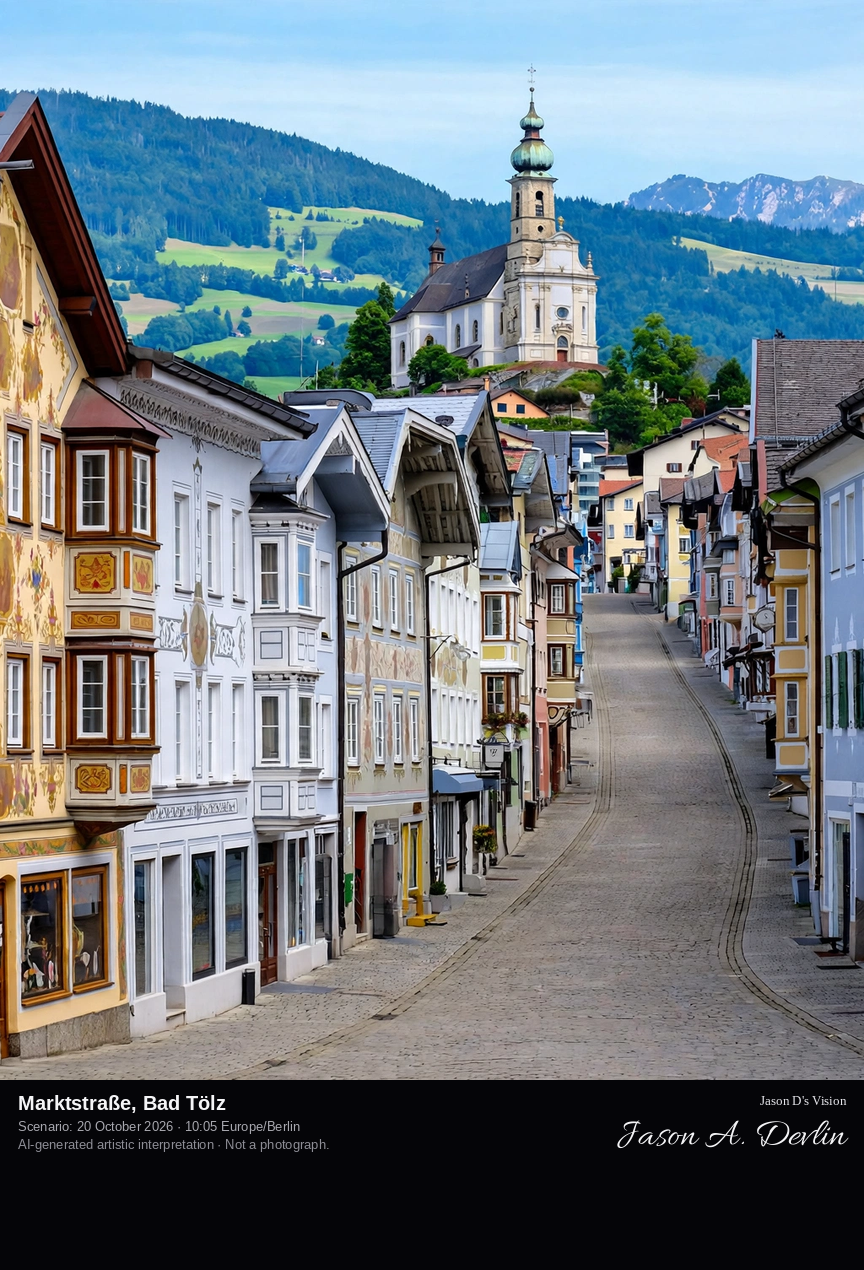
Bad Tölz spreads its Marktstraße up a slope above the Isar, a wide market street of gabled burgher houses with painted facades in the Upper Bavarian manner. The Kalvarienberg church crowns the hill above the street, and the young green Isar rushes past the old town toward the Alpine foothills.
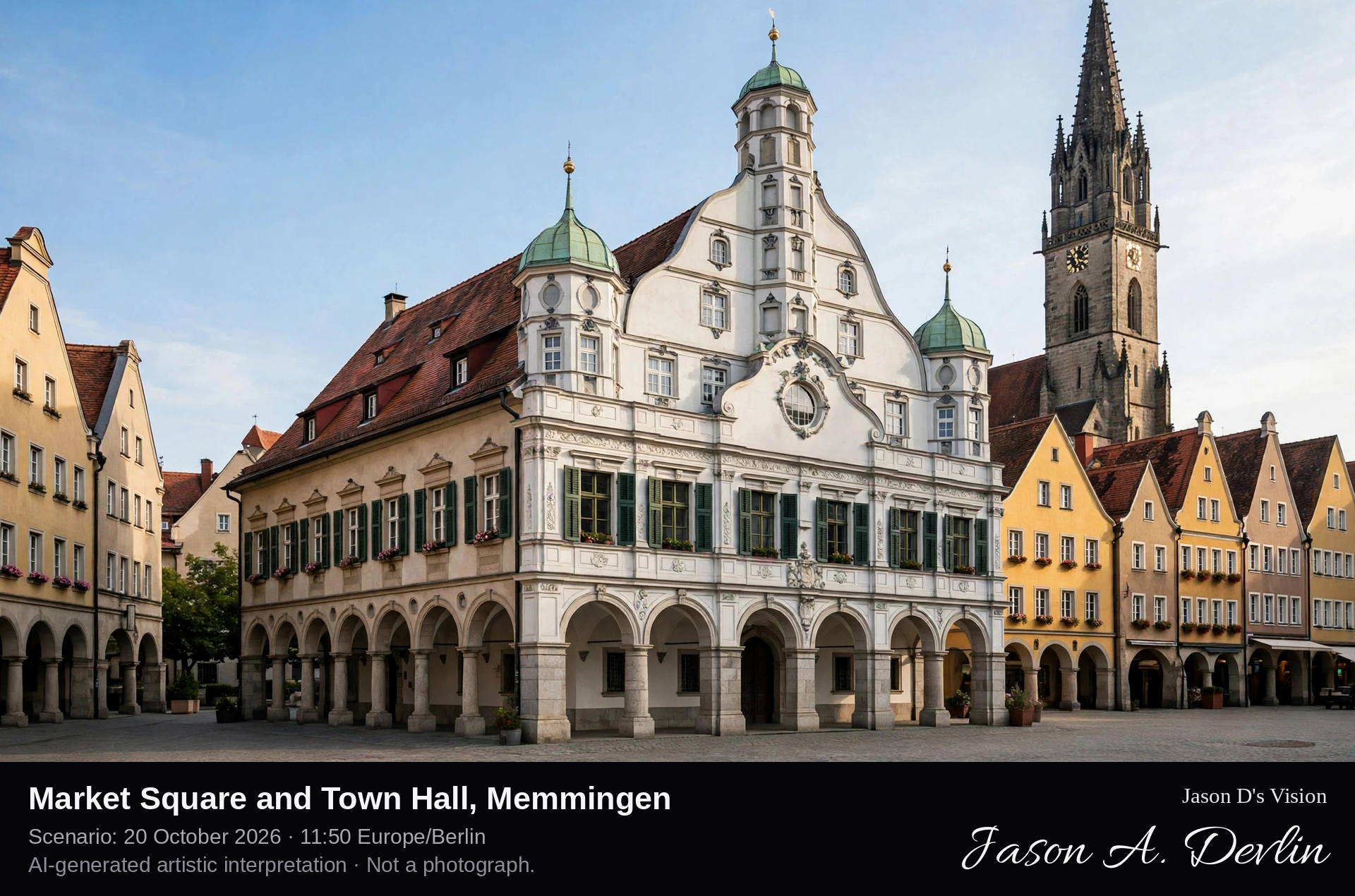
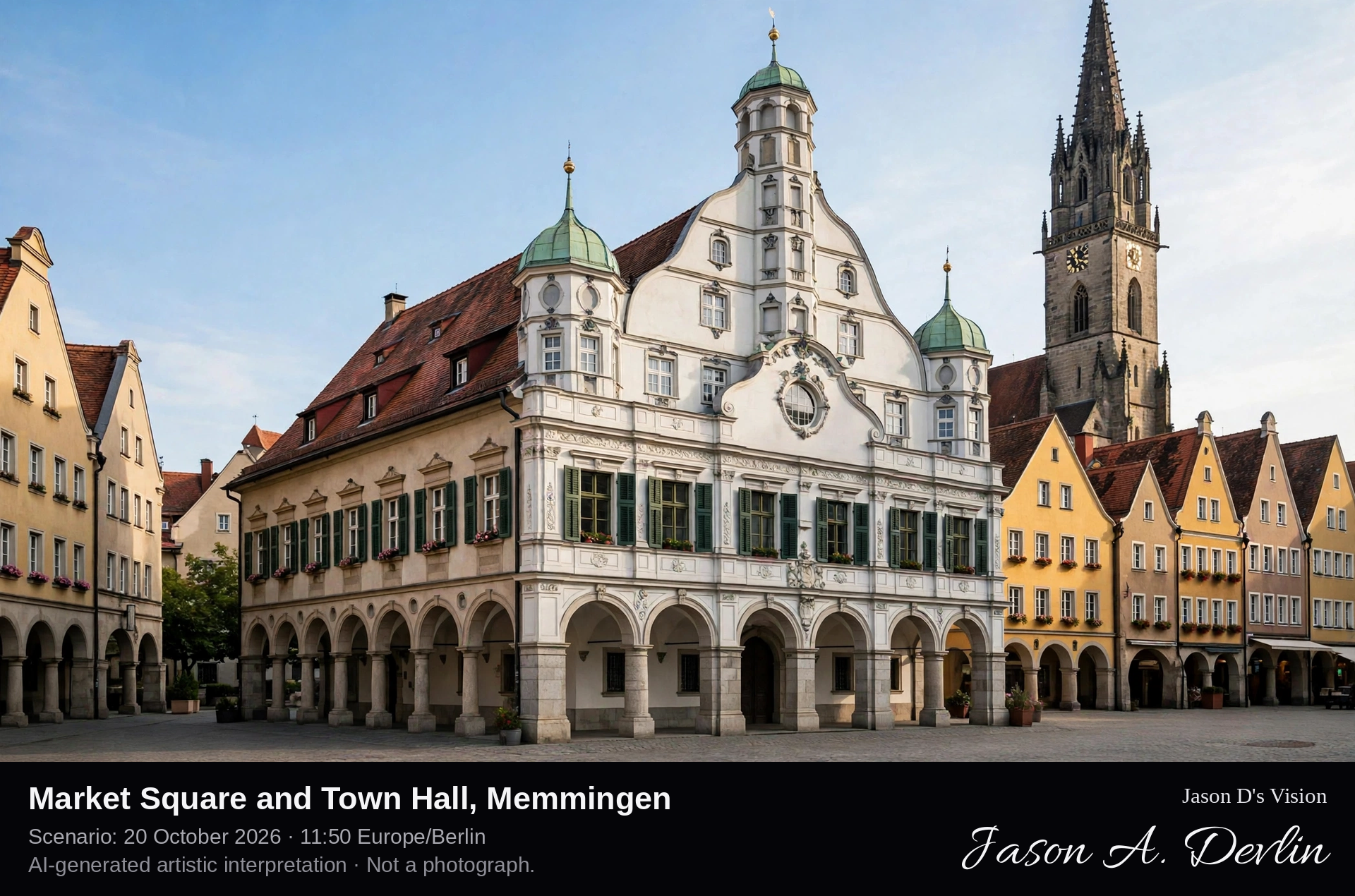
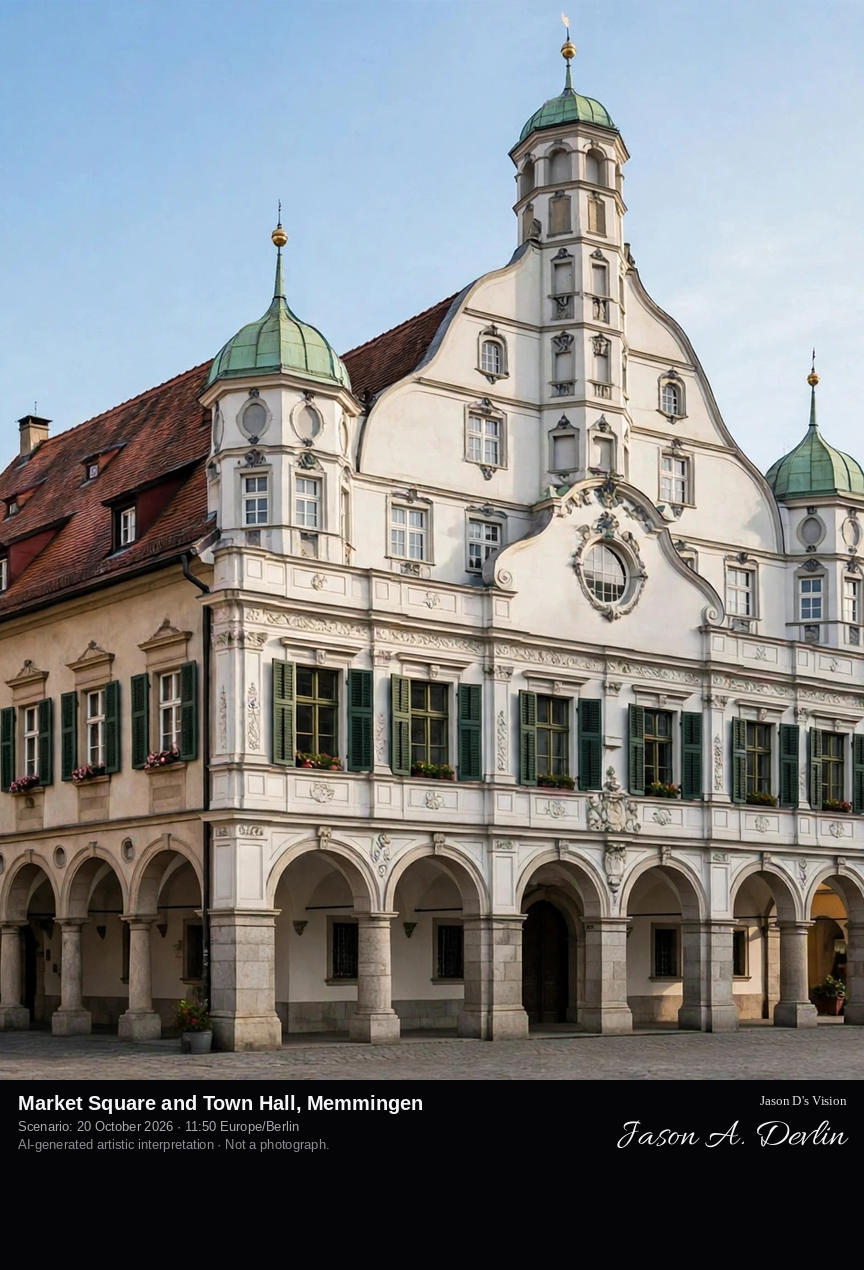
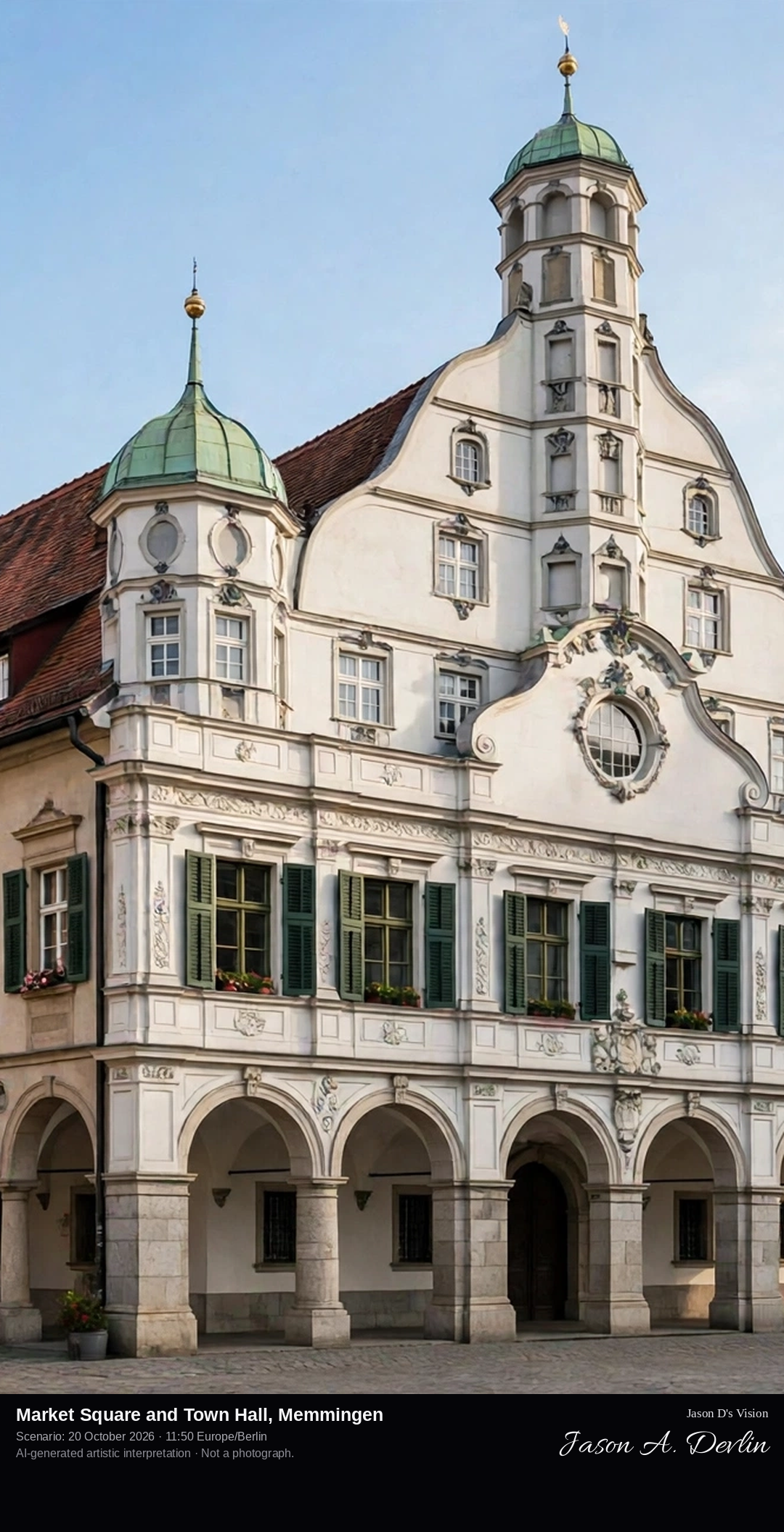
The Renaissance town hall and Steuerhaus around the market square · AI-generated artistic interpretation
Memmingen is an old imperial city in the Allgäu foothills, its market square framed by the Renaissance town hall, the arcaded Steuerhaus and the great church of St Martin. In the year 1525 the peasants' Twelve Articles, an early charter of human rights, were drawn up in this town of weavers and merchants.
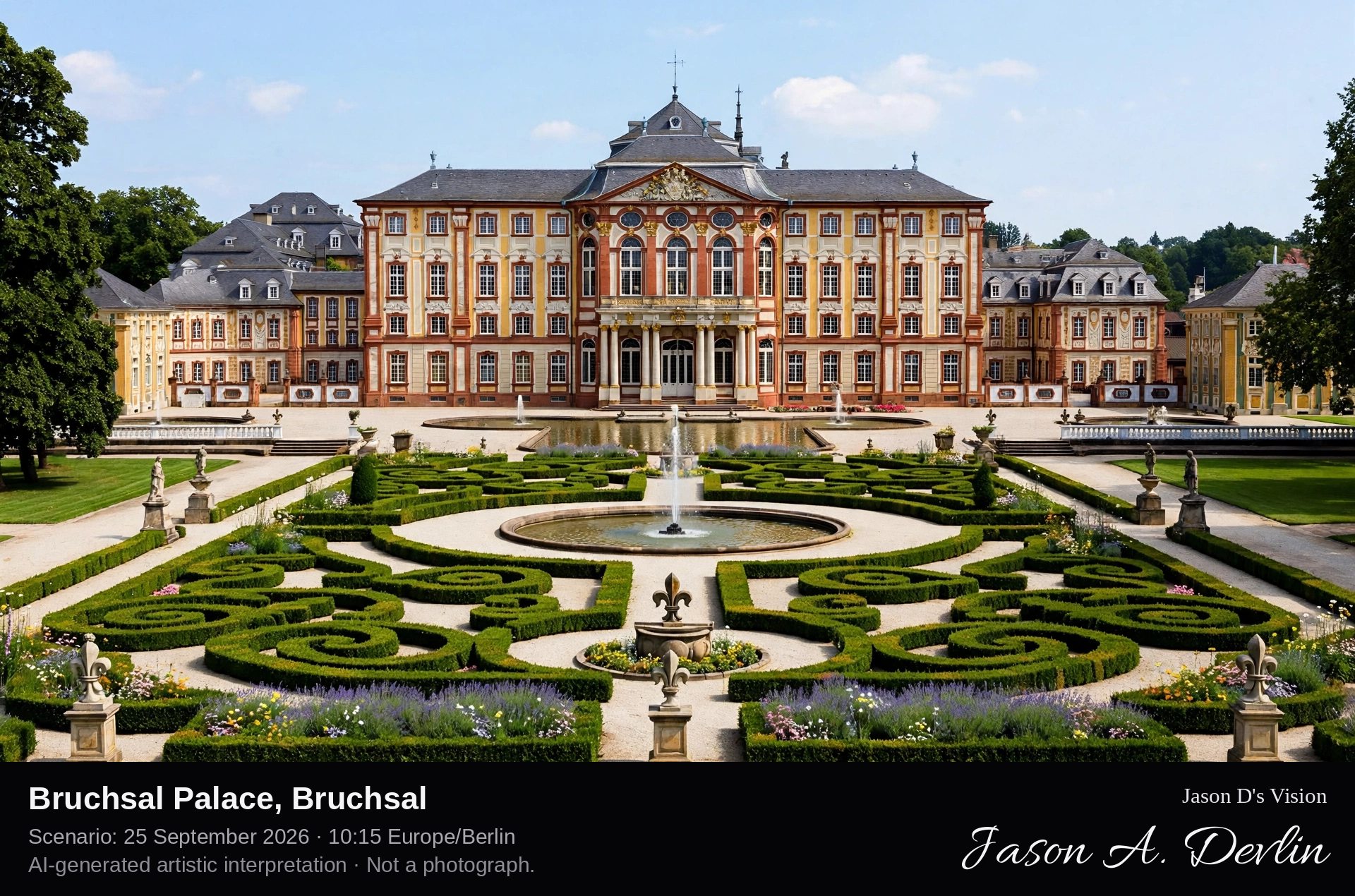
The palace corps de logis and its flanking wings across the terraced gardens · AI-generated artistic interpretation
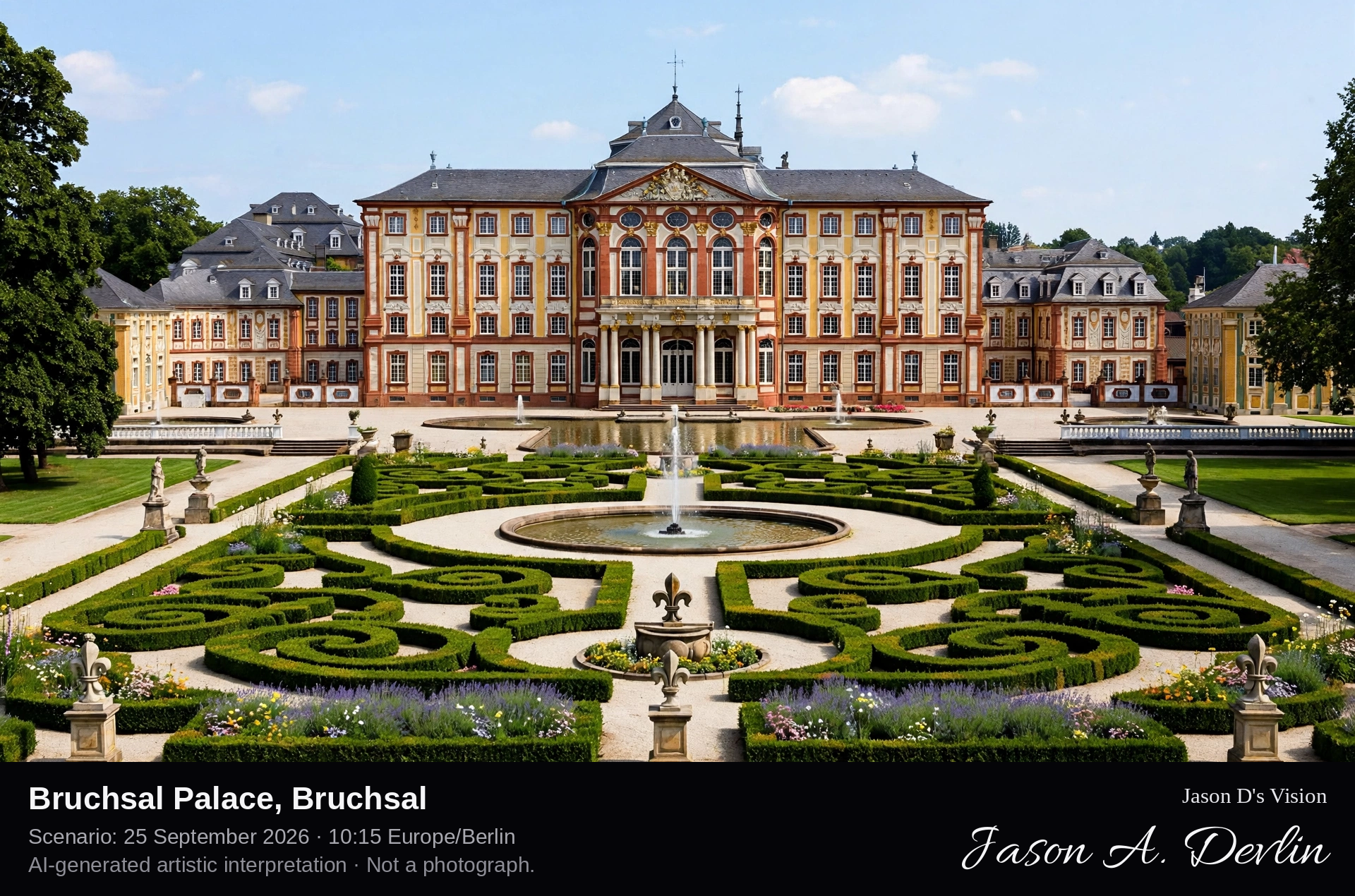
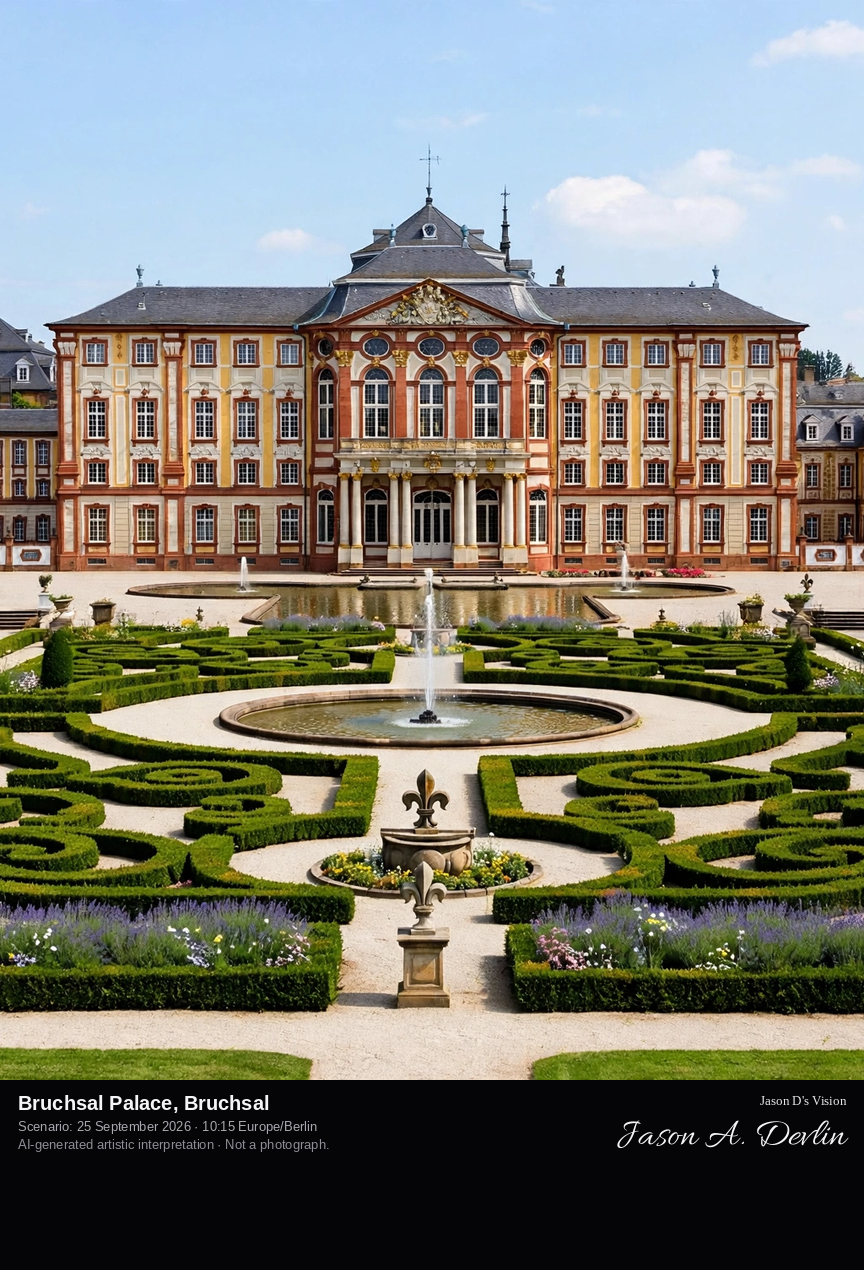
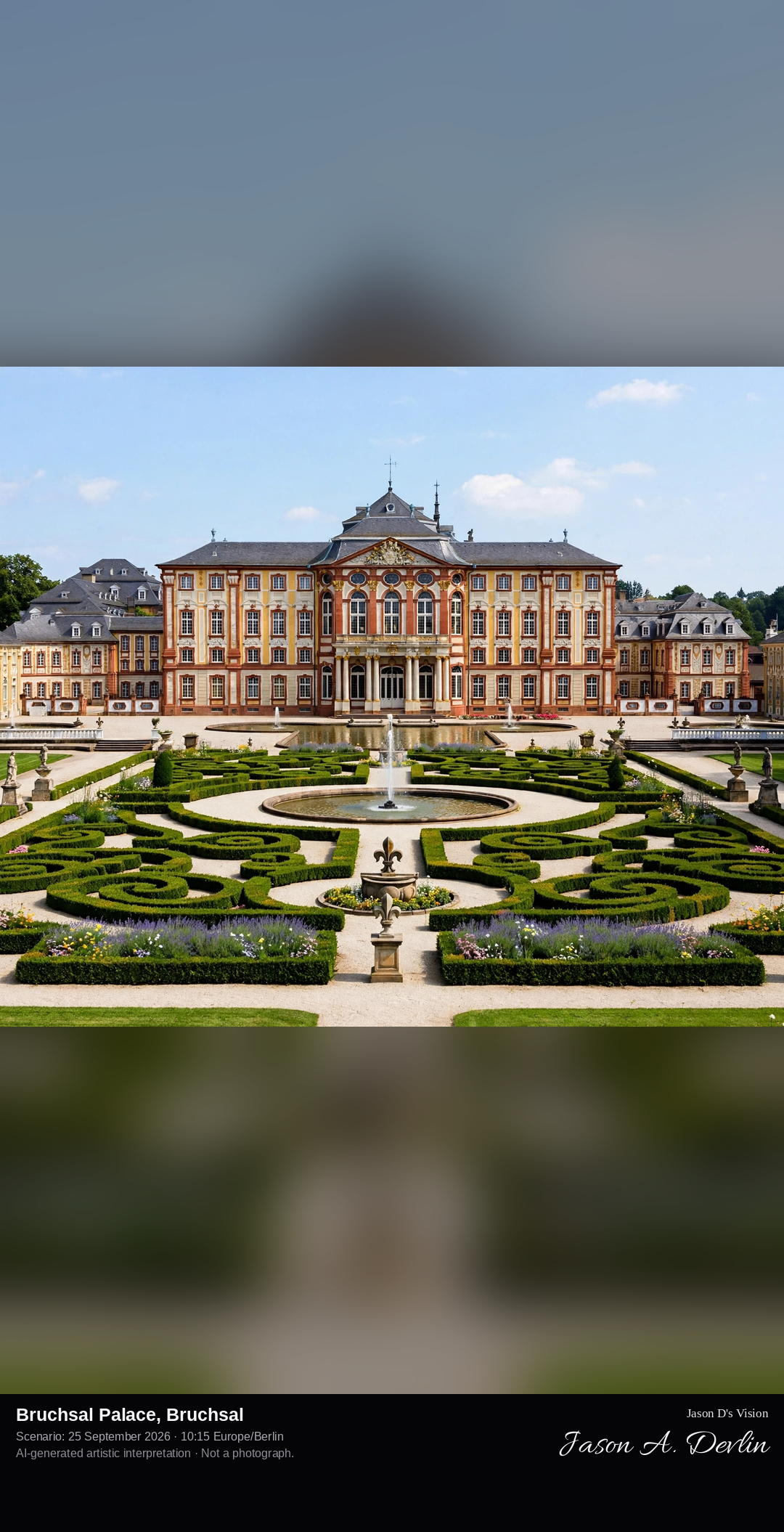
The Baroque palace at Bruchsal was built from 1722 for Damian Hugo von Schönborn, Prince-Bishop of Speyer, its corps de logis and flanking wings forming one of the great court ensembles of the Upper Rhine. Inside, Balthasar Neumann's ceremonial staircase of the 1730s is counted among the most celebrated in Europe, its frescoed dome rising over a plan of rare spatial invention. The gardens in this view are the artist's interpretation, not a survey of the present grounds.
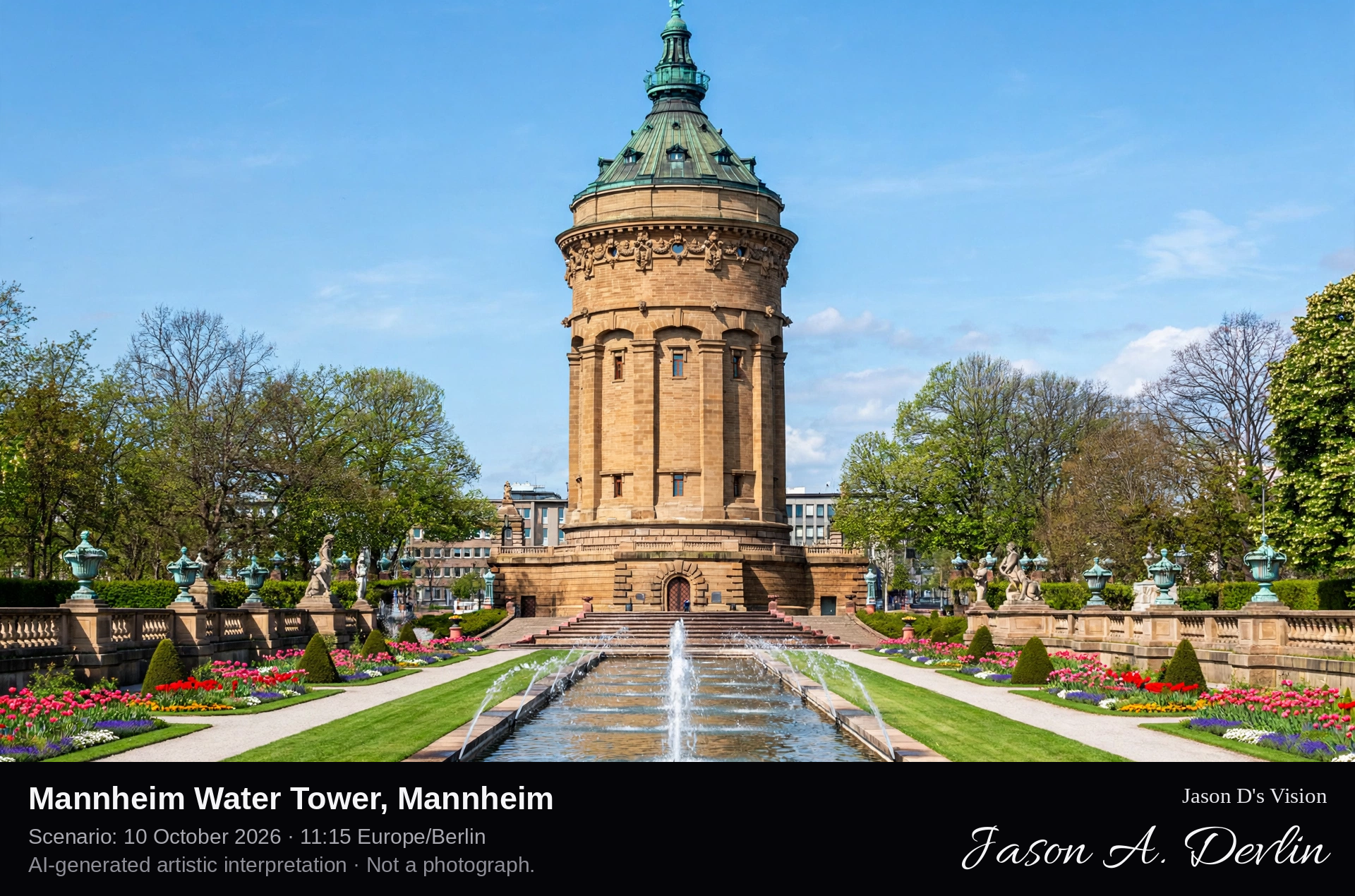
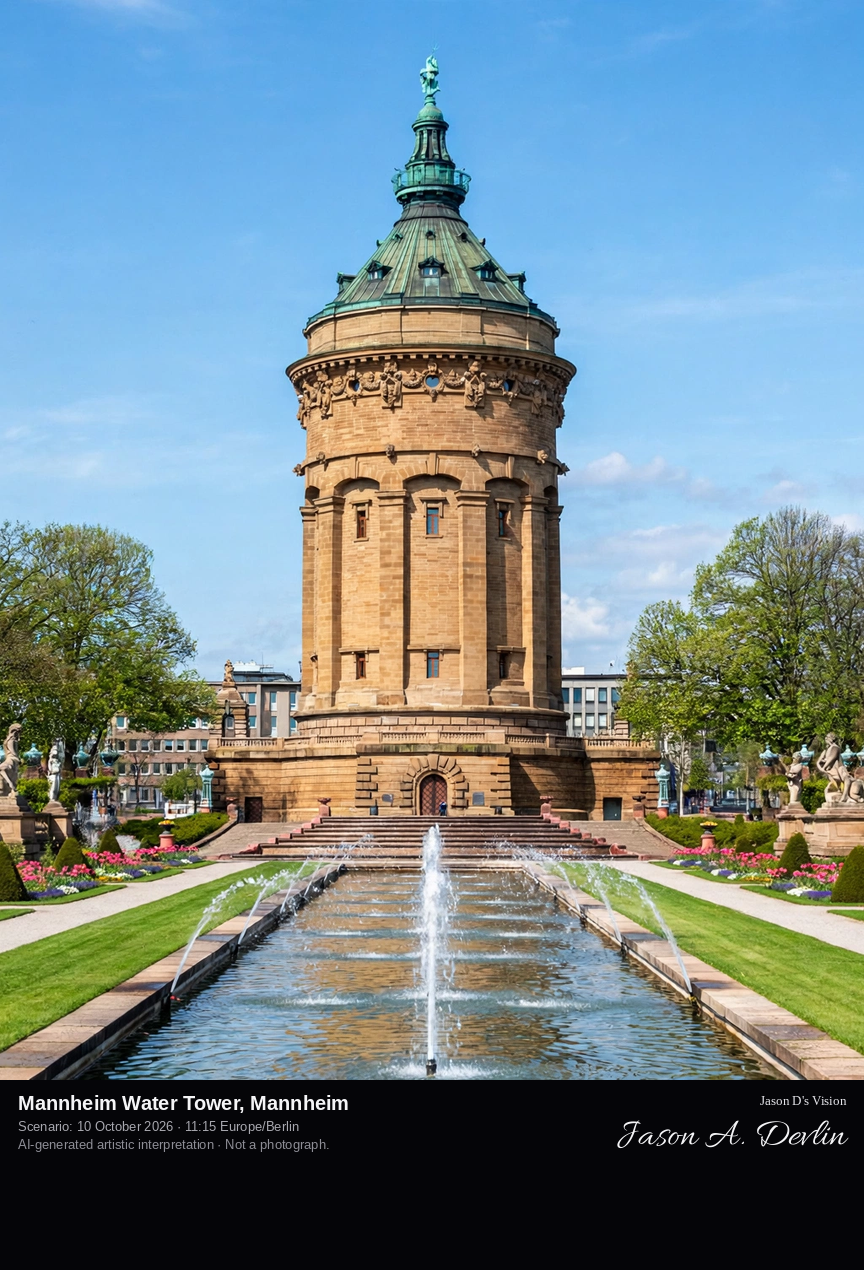
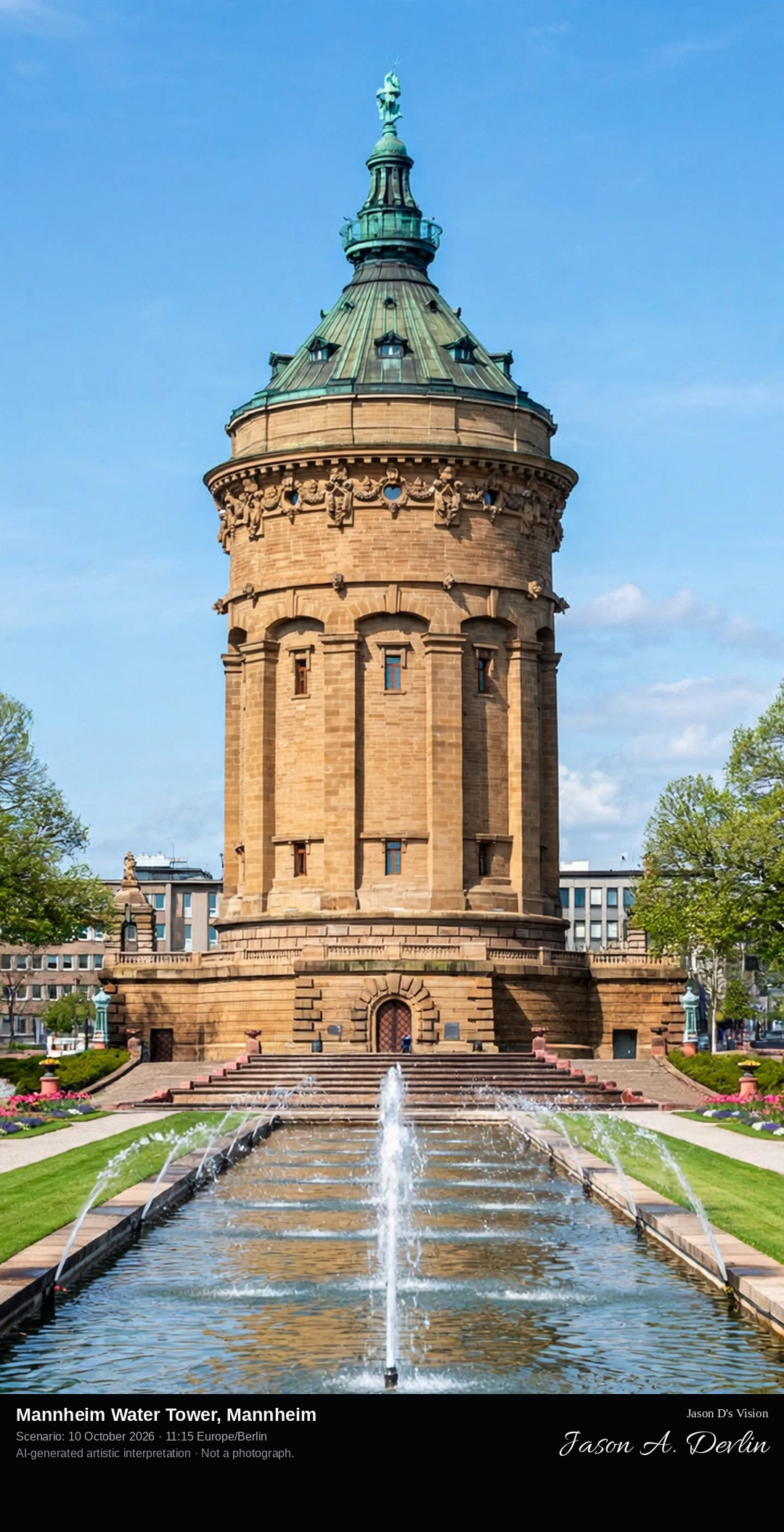
The Baroque Revival water tower with its tiered cupola at Friedrichsplatz · AI-generated artistic interpretation
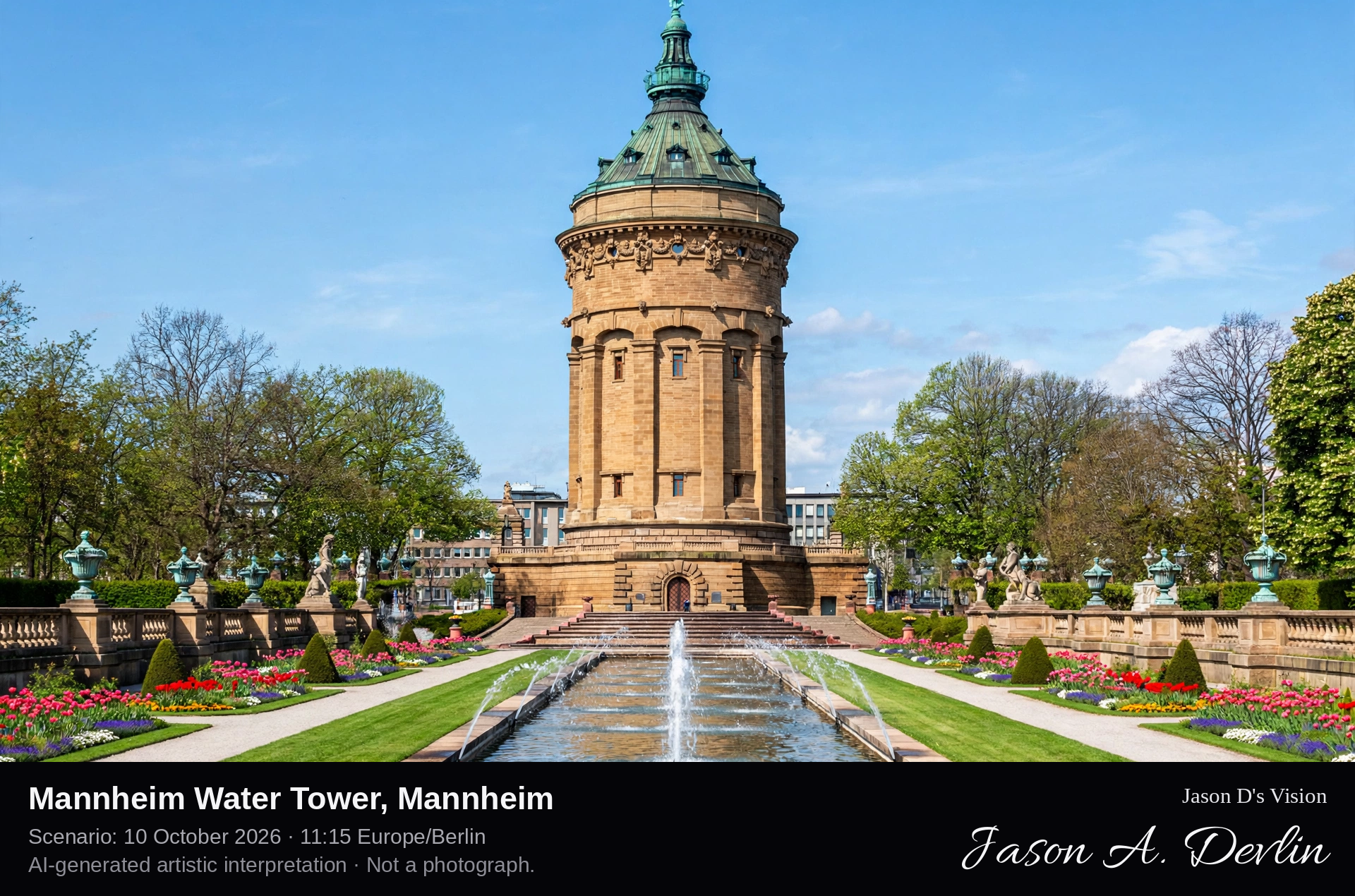
Built between 1886 and 1889, Mannheim's water tower is the city's beloved landmark, a sandstone tower crowned by a steep tiered roof and the figure of Amphitrite. It supplied the city with drinking water until 2000 and anchors the fountains and rose gardens of Friedrichsplatz.
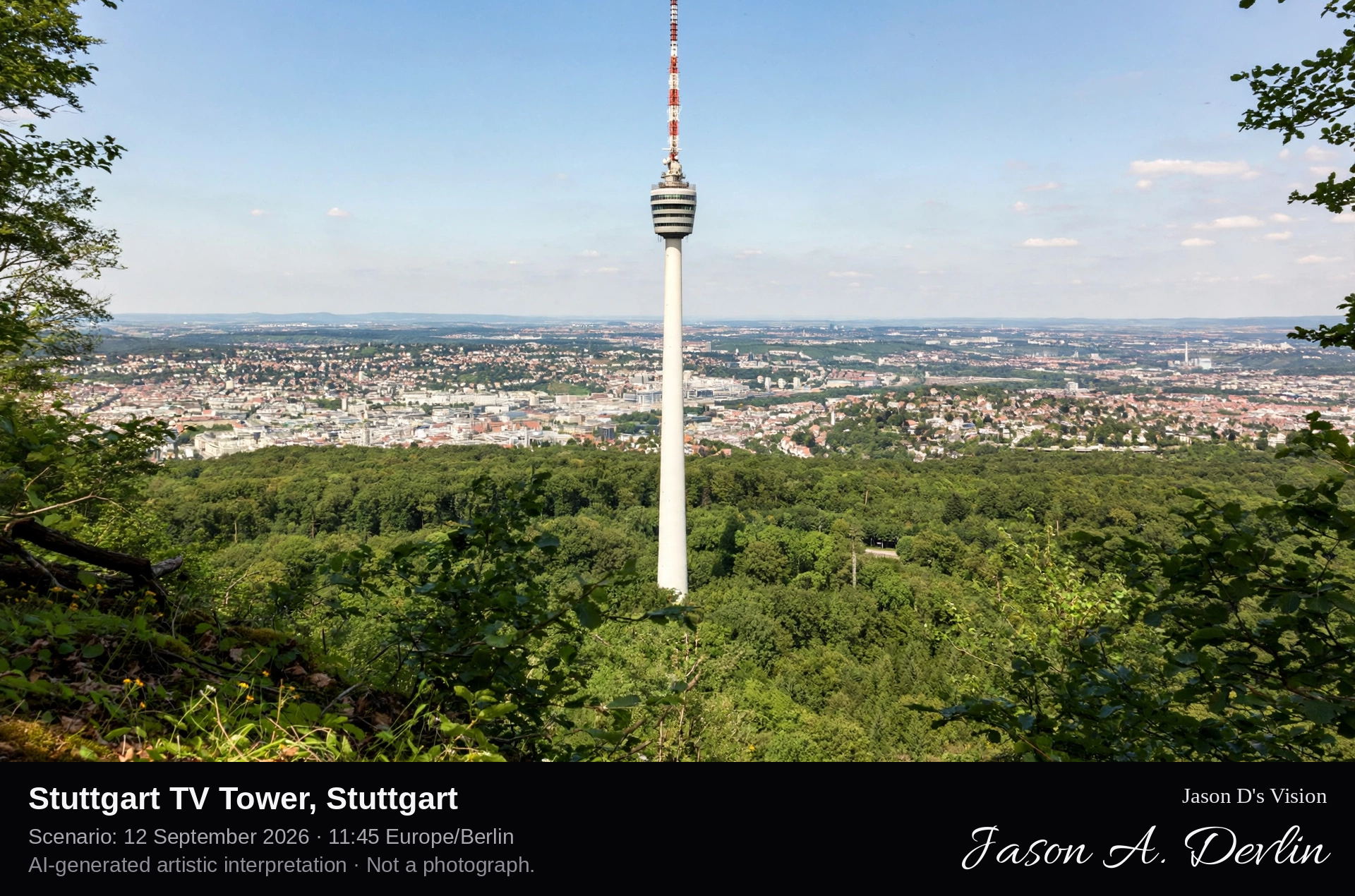
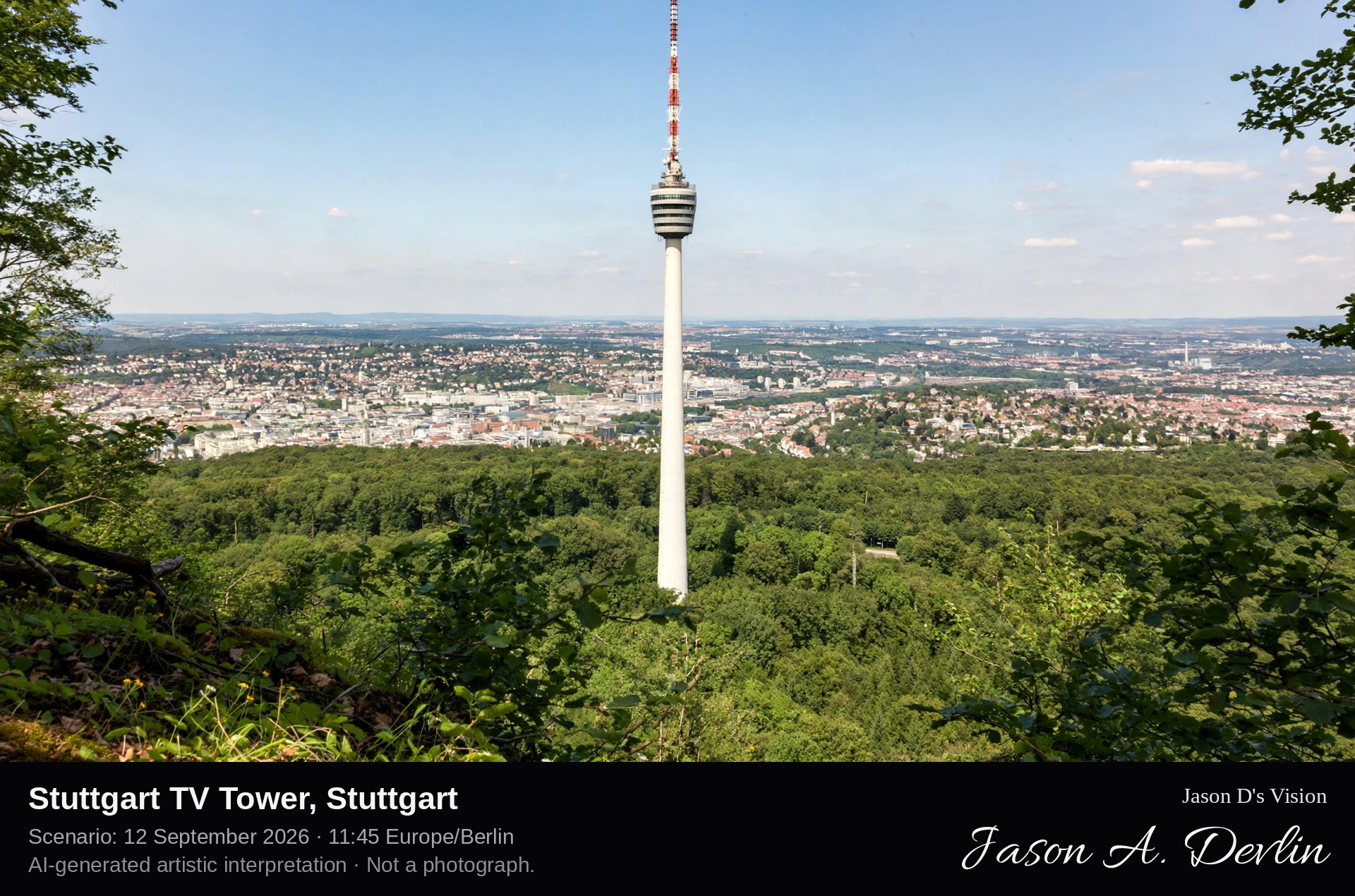
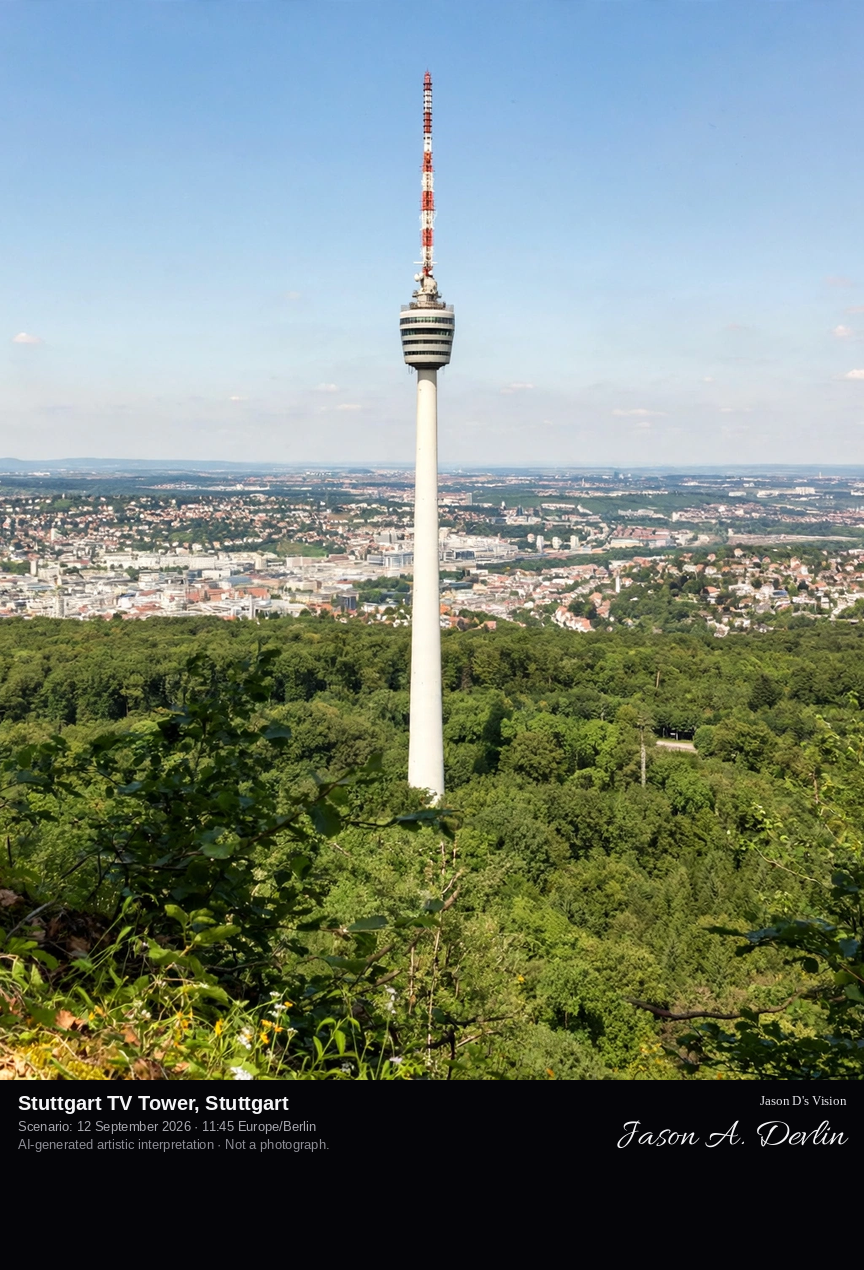
TV tower above the city · AI-generated artistic interpretation
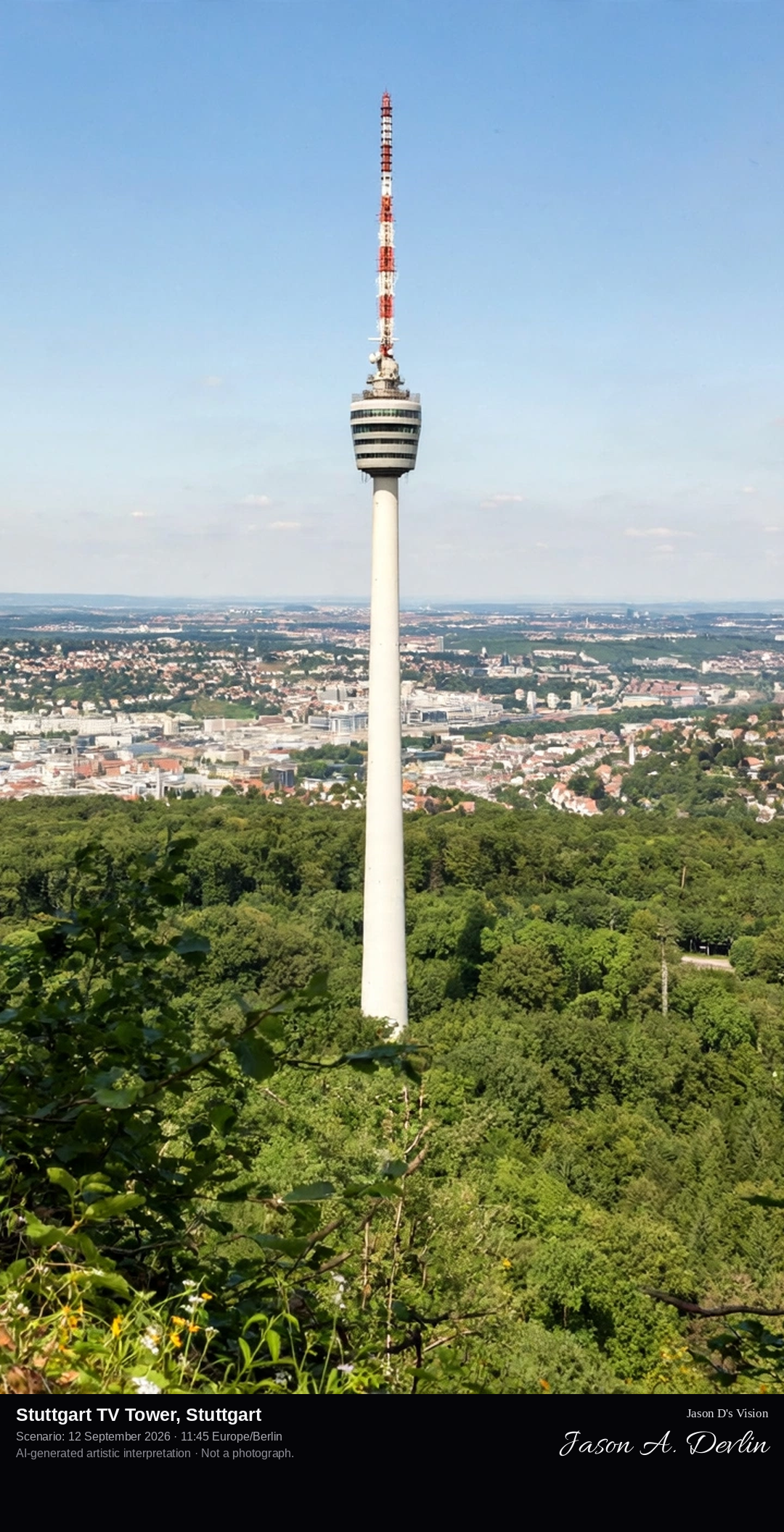
The slender concrete tower rises from the wooded Hoher Bopser hill above the city, its glazed basket carrying viewing platforms and a café beneath the red-and-white antenna. Completed in 1956, Stuttgart's Fernsehturm was the first television tower in the world built of reinforced concrete, and its elegant shaft became the model for television towers around the world. The city spreads out in its basin far below.
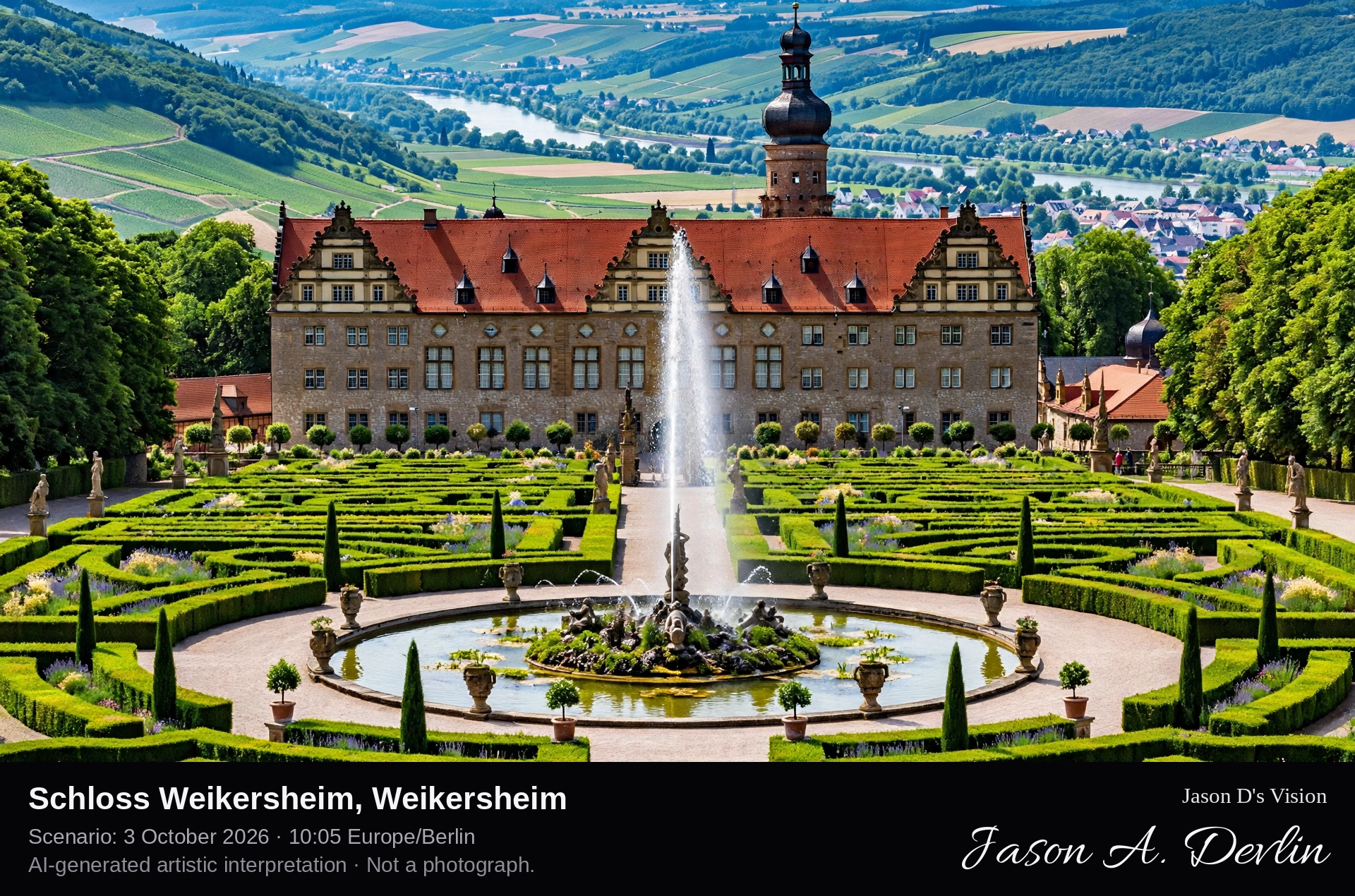
The Renaissance garden front with its three gables across the formal gardens · AI-generated artistic interpretation
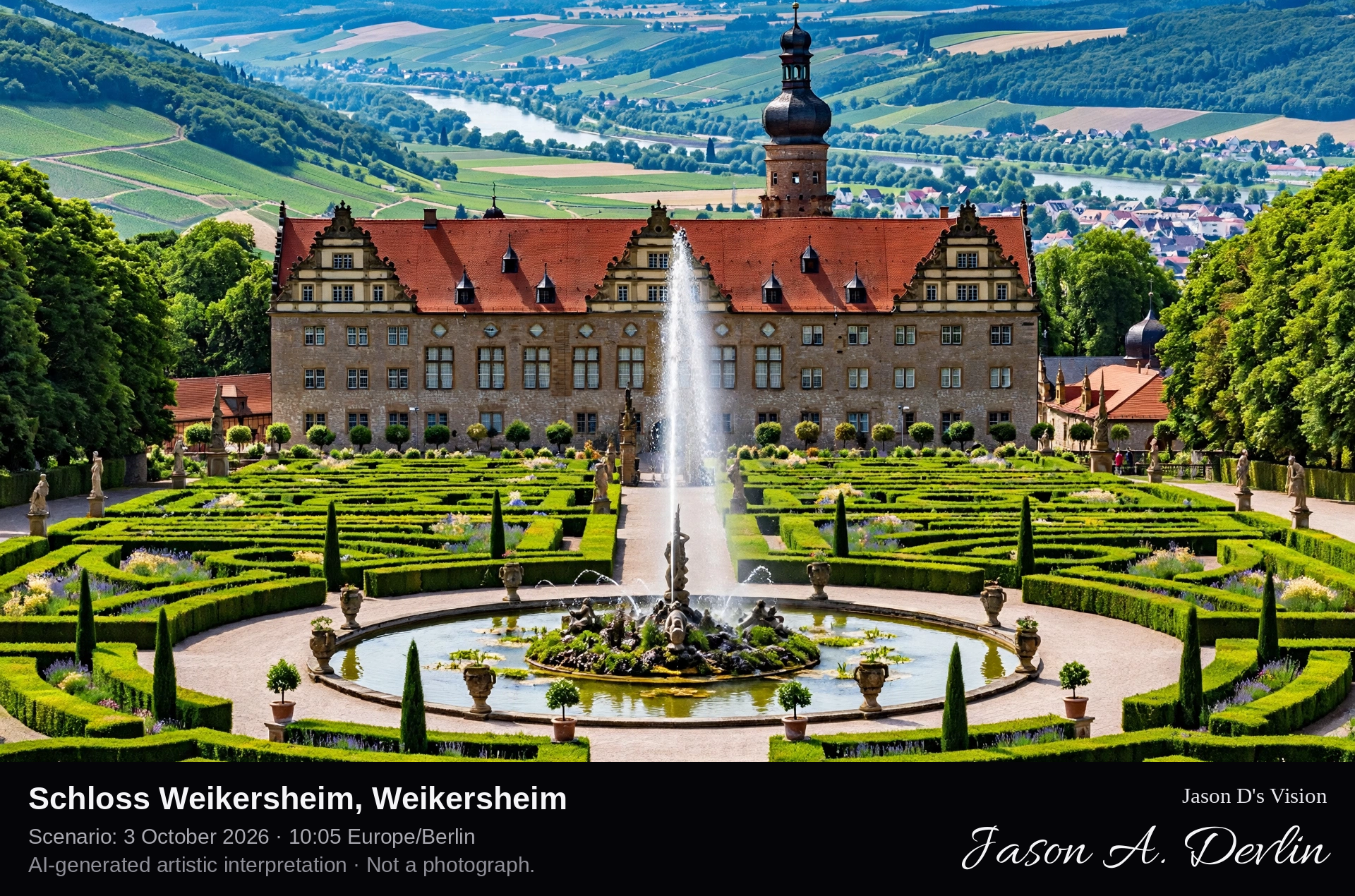
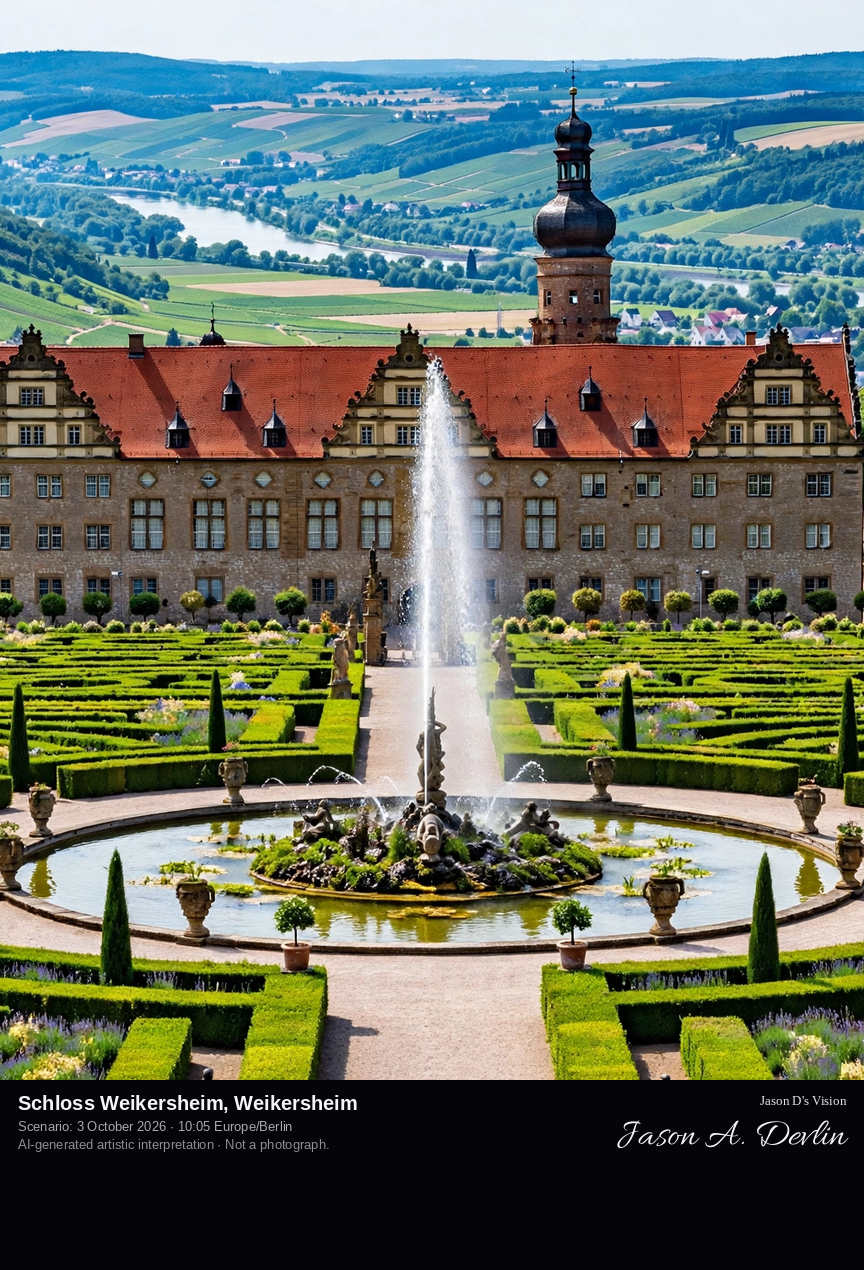
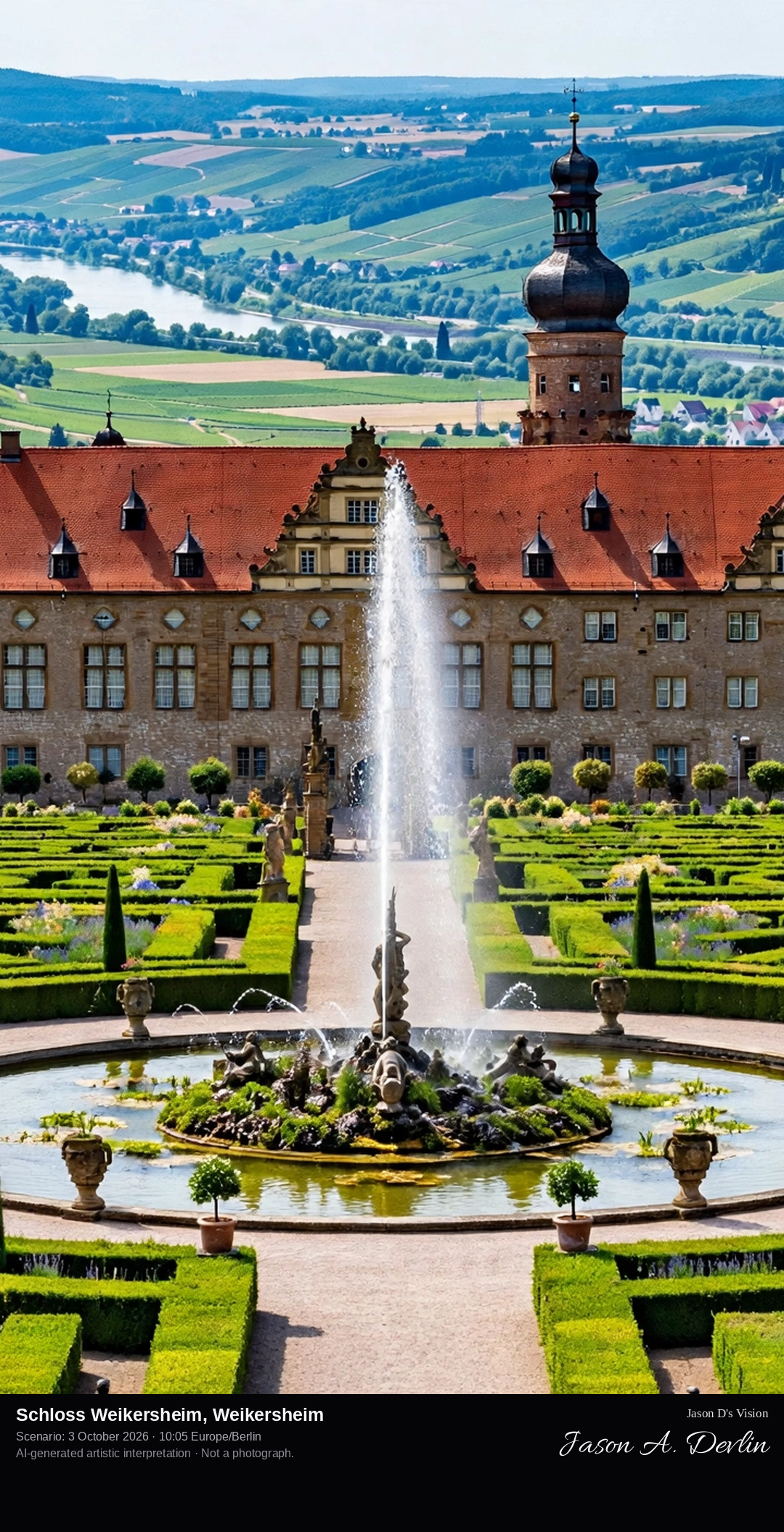
Weikersheim Palace in the Tauber valley was a seat of the Hohenlohe counts, its Renaissance front and great Knights' Hall among the glories of the region. Before it stretches one of Germany's oldest Baroque gardens, laid out with an orangery, fountains and rows of statues. Hedge and fountain scale here follow the artist rather than the gardener's plan.
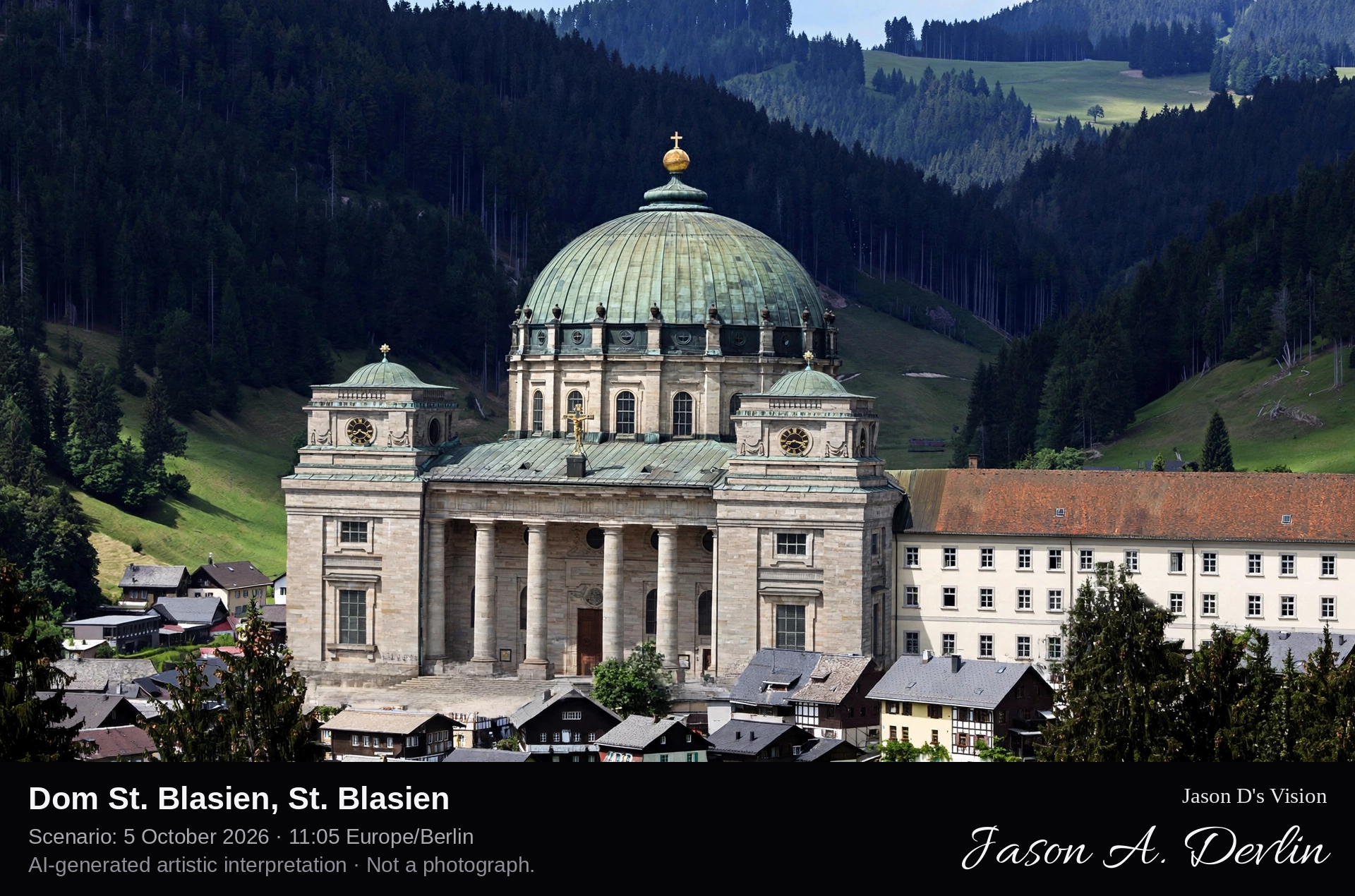
The great domed rotunda of the former abbey church above the little town · AI-generated artistic interpretation
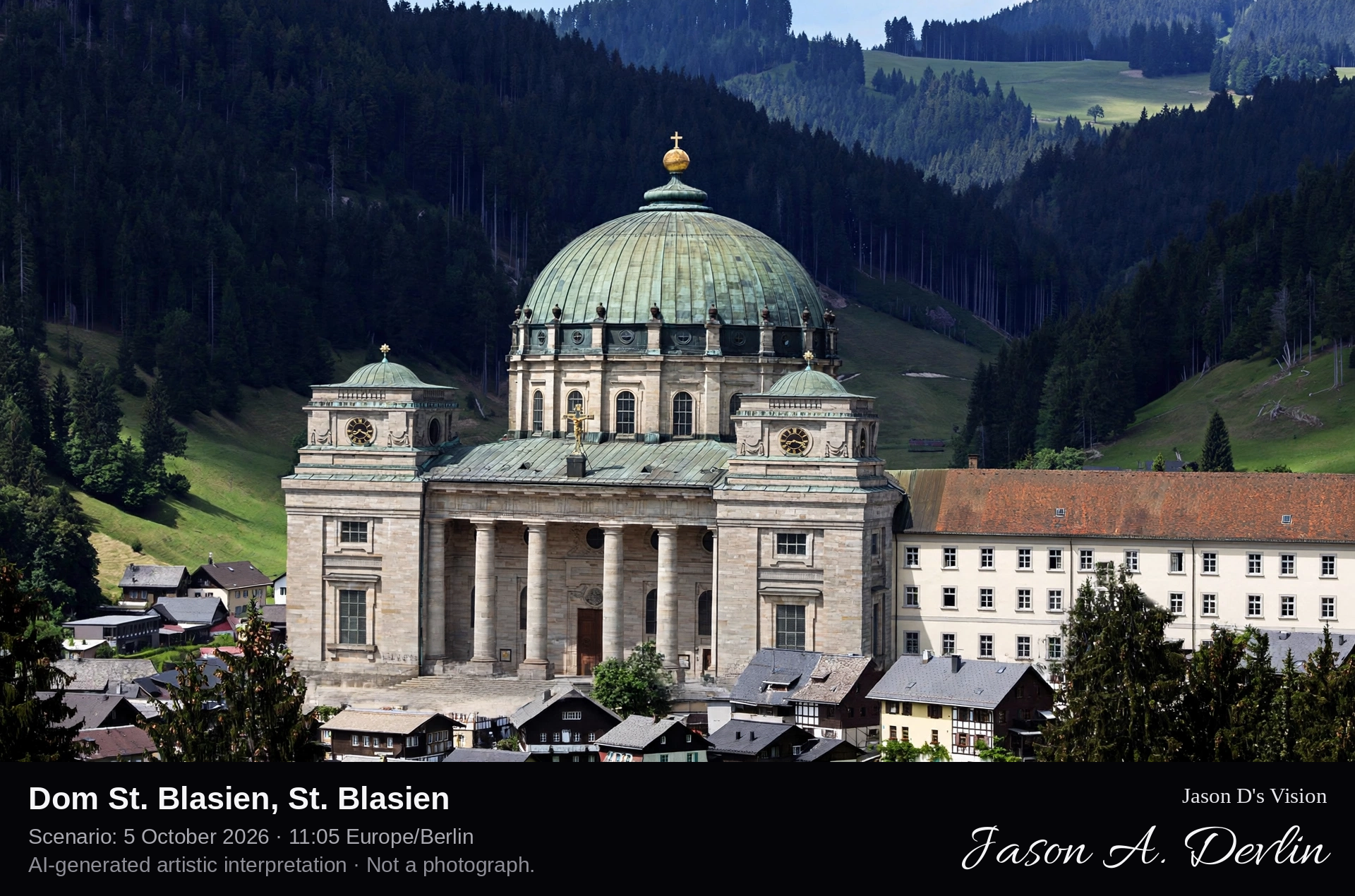
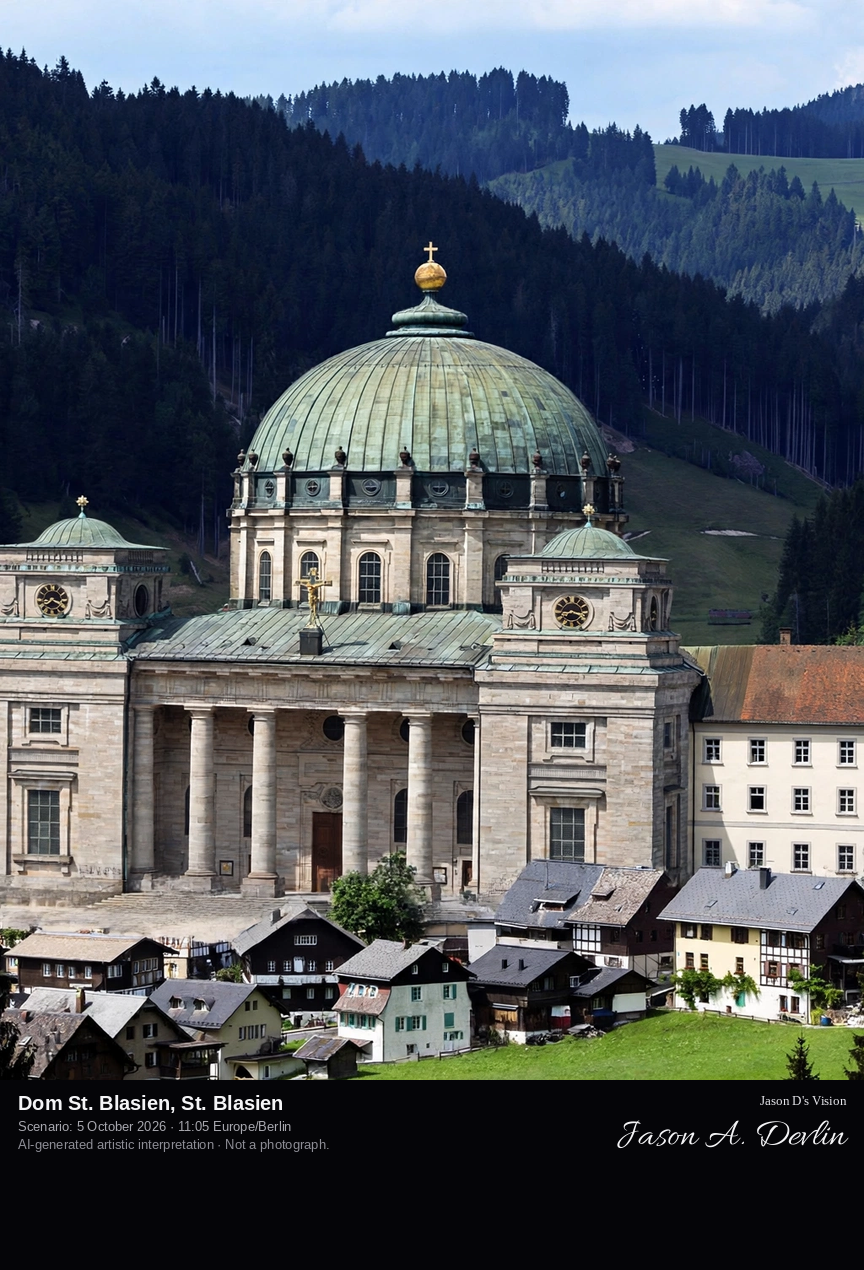
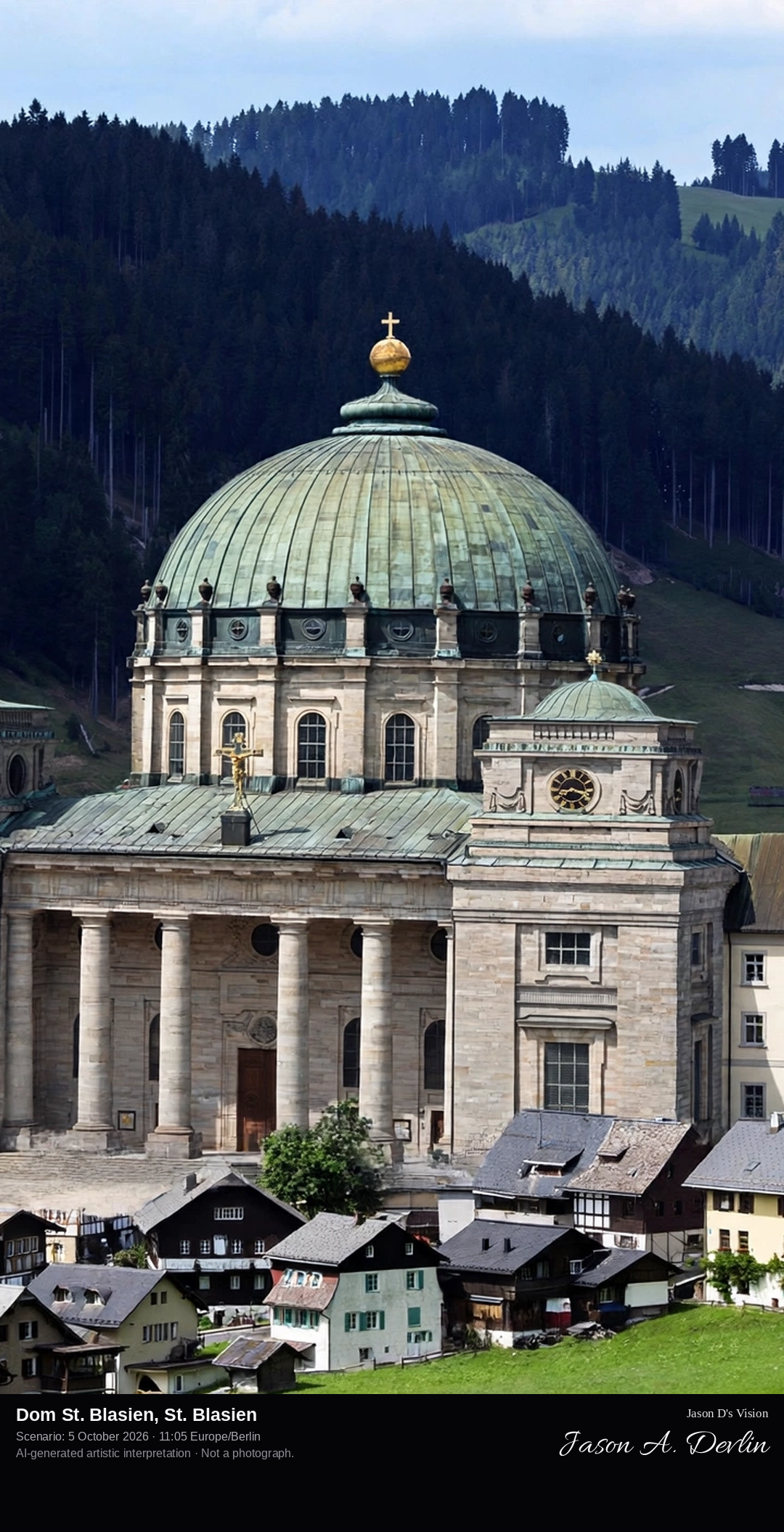
The former Benedictine abbey church at St. Blasien rises as a vast neoclassical rotunda, its dome spanning 36 metres — among the largest church domes in Europe. Consecrated in 1783, it anchors the little Black Forest town beneath wooded slopes.
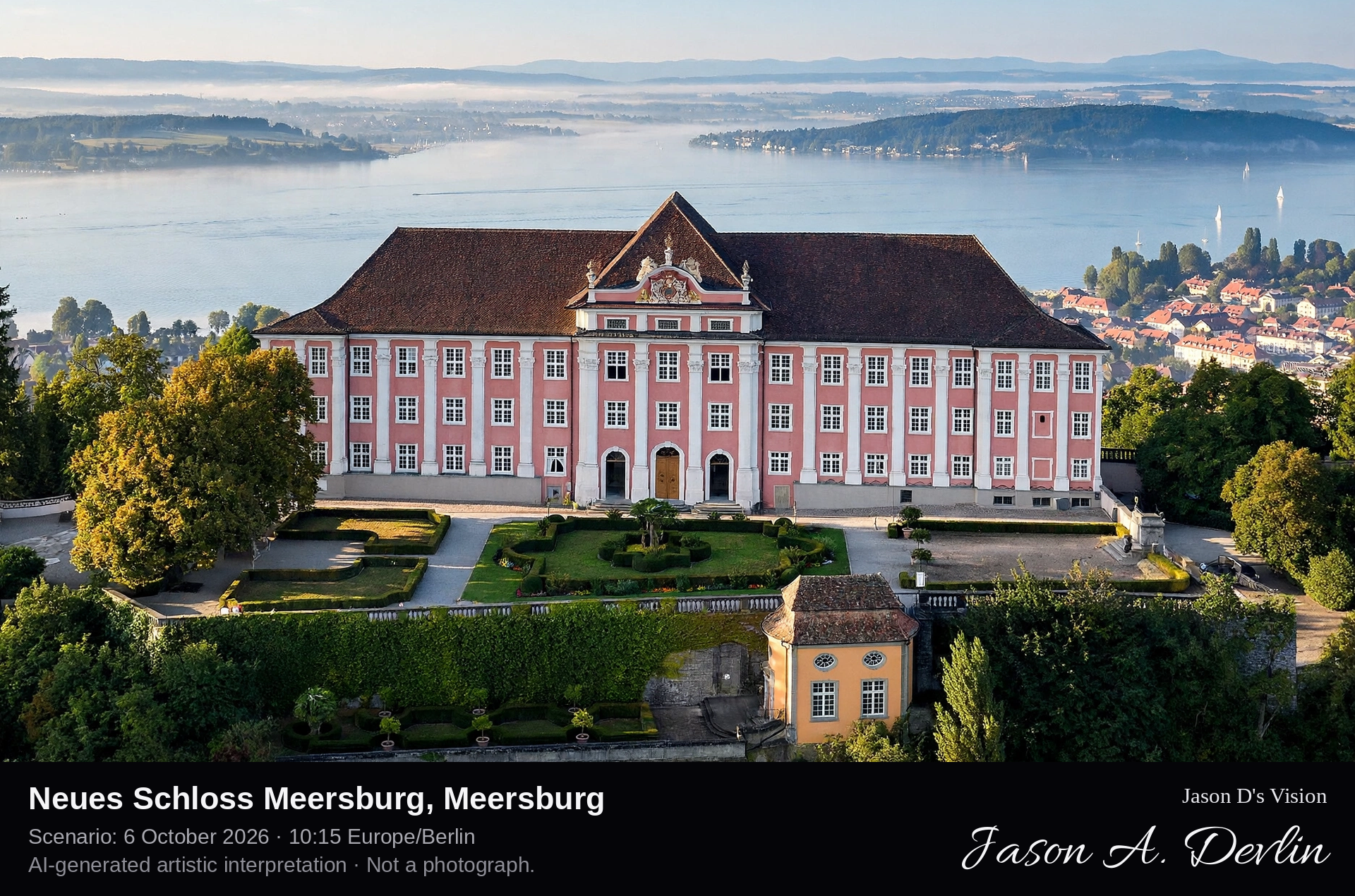
The broad rose-pink Baroque block above its lake-side terrace · AI-generated artistic interpretation
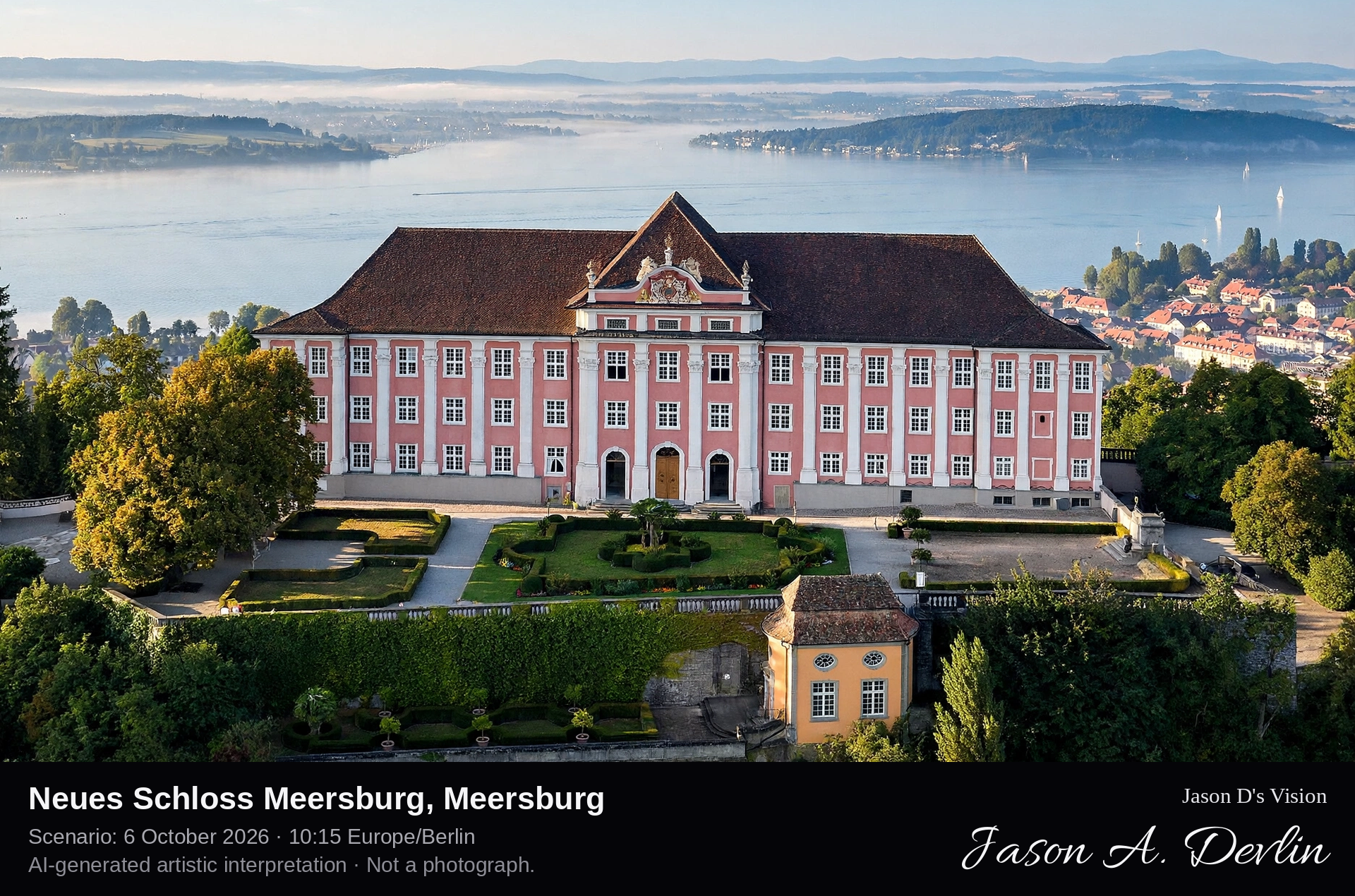
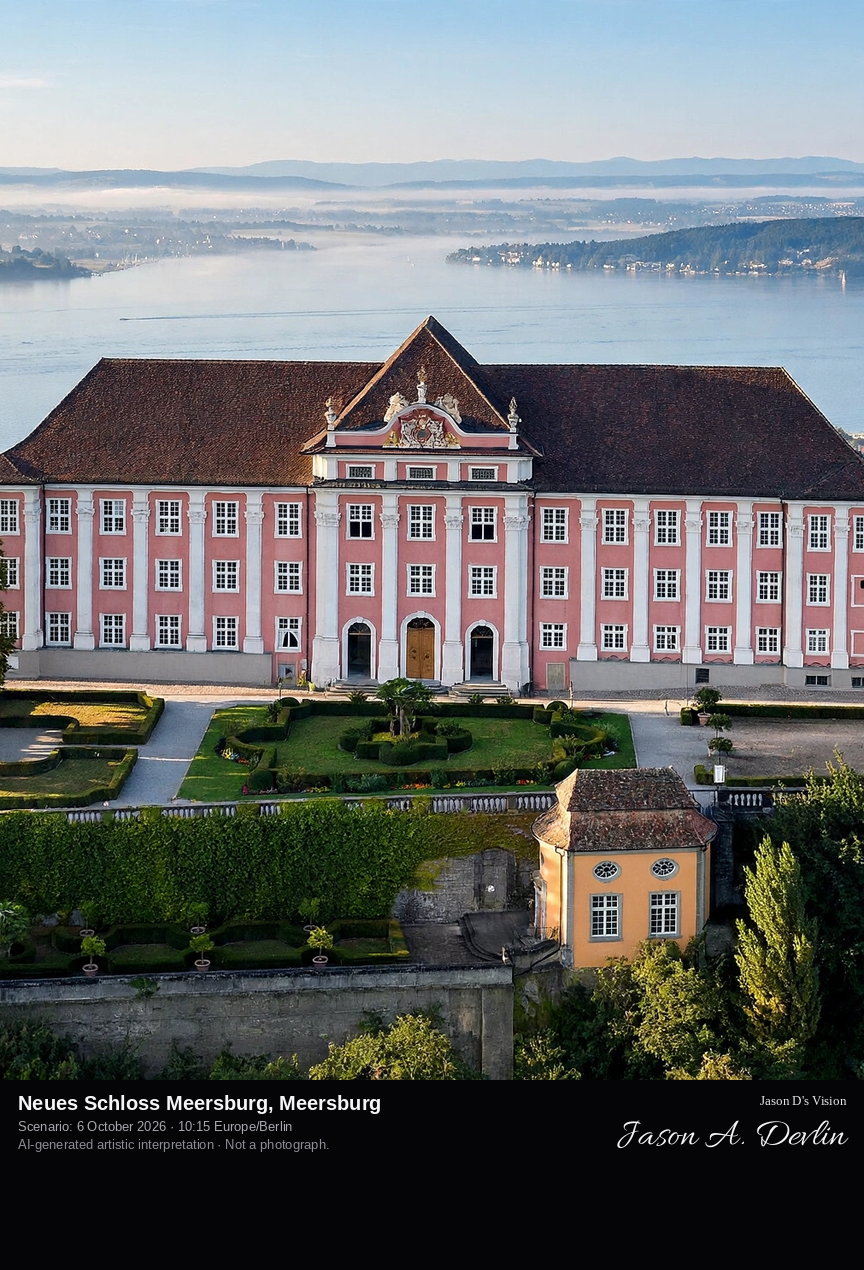
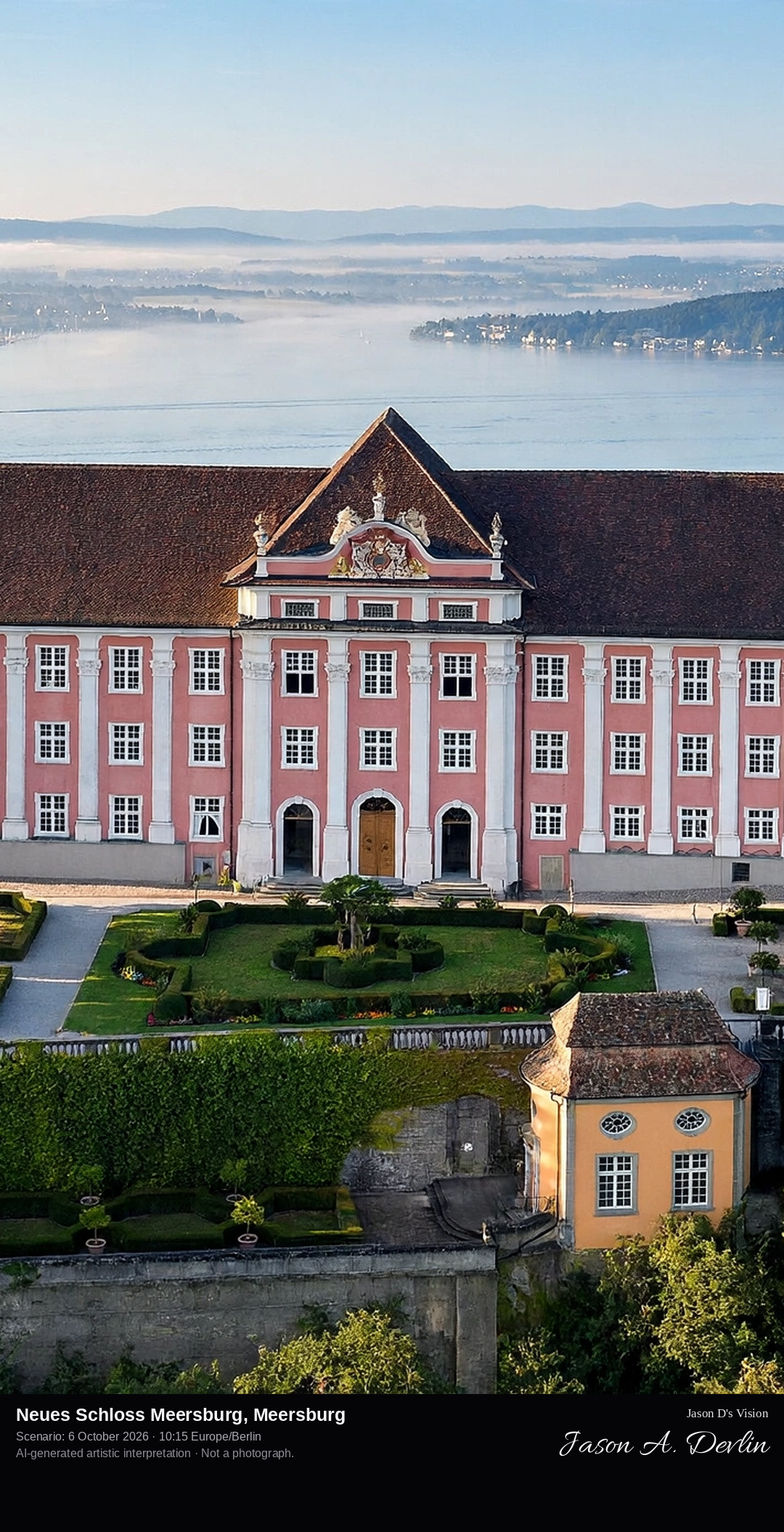
The Neues Schloss at Meersburg, built from 1710 for the Prince-Bishops of Constance, fronts the old town with a broad rose-pink Baroque facade. Inside, Balthasar Neumann's ceremonial staircase is famed far beyond Lake Constance, whose waters spread below the terrace.
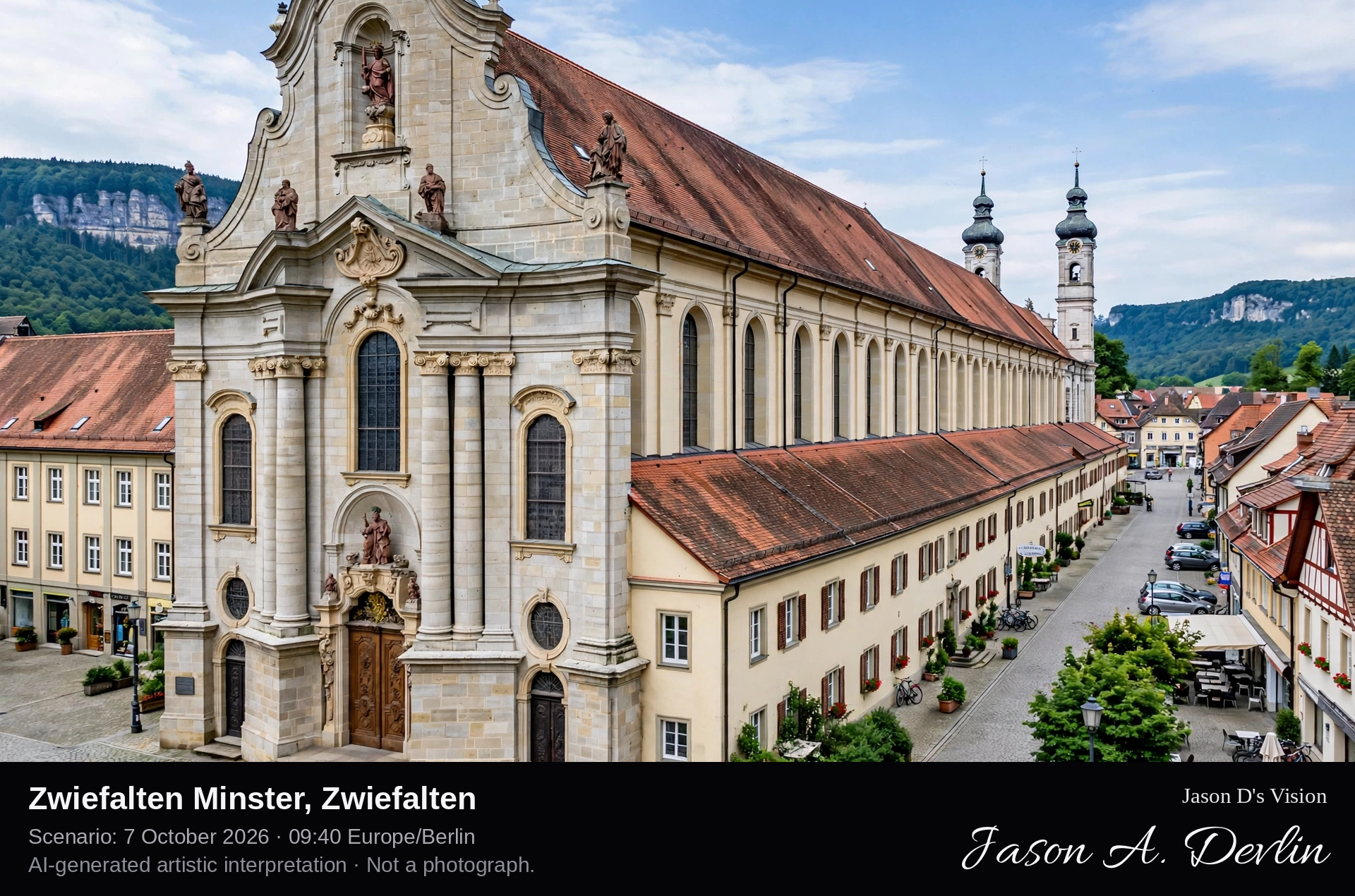
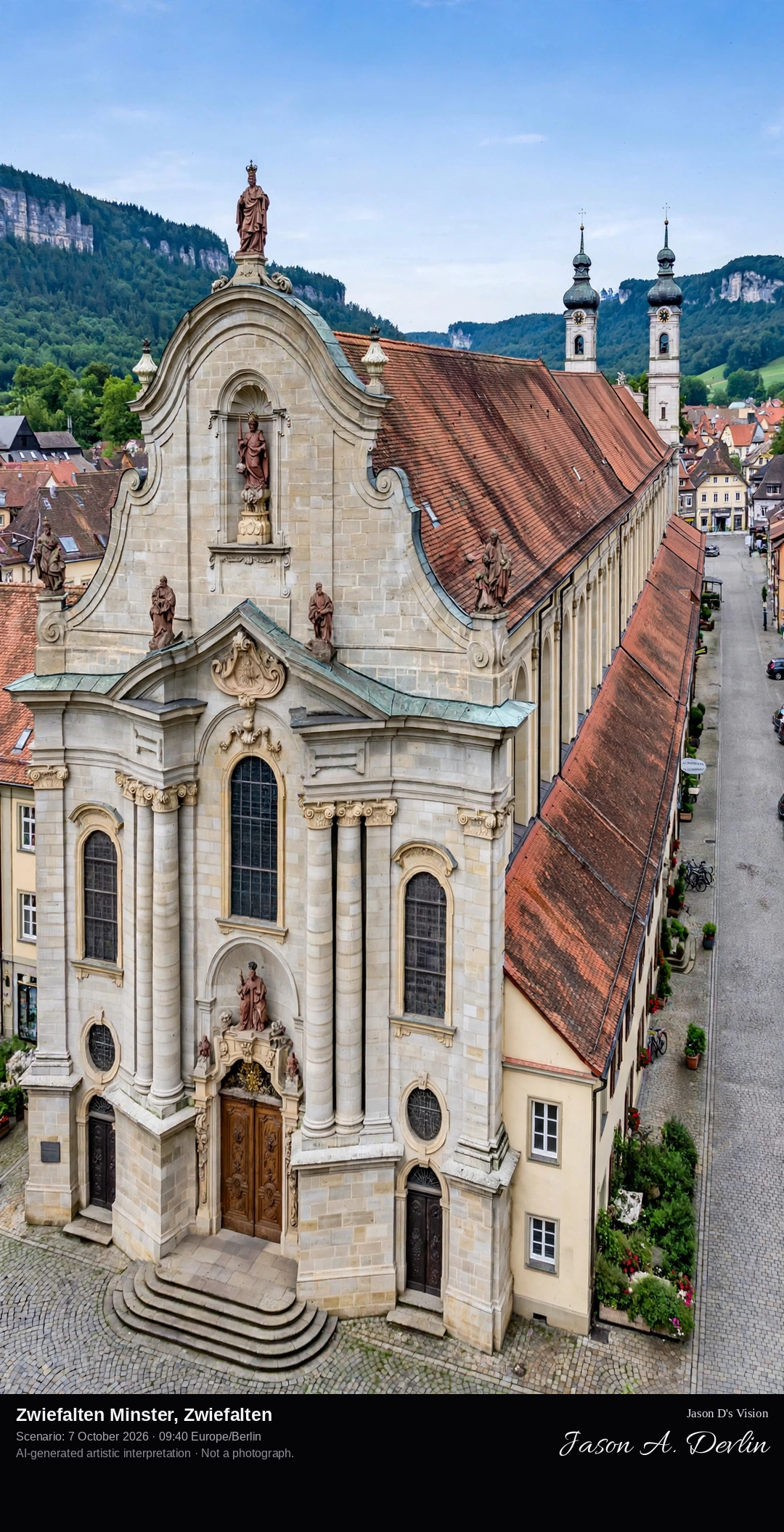
The towerless west front and long nave, twin towers rising at the far east end · AI-generated artistic interpretation
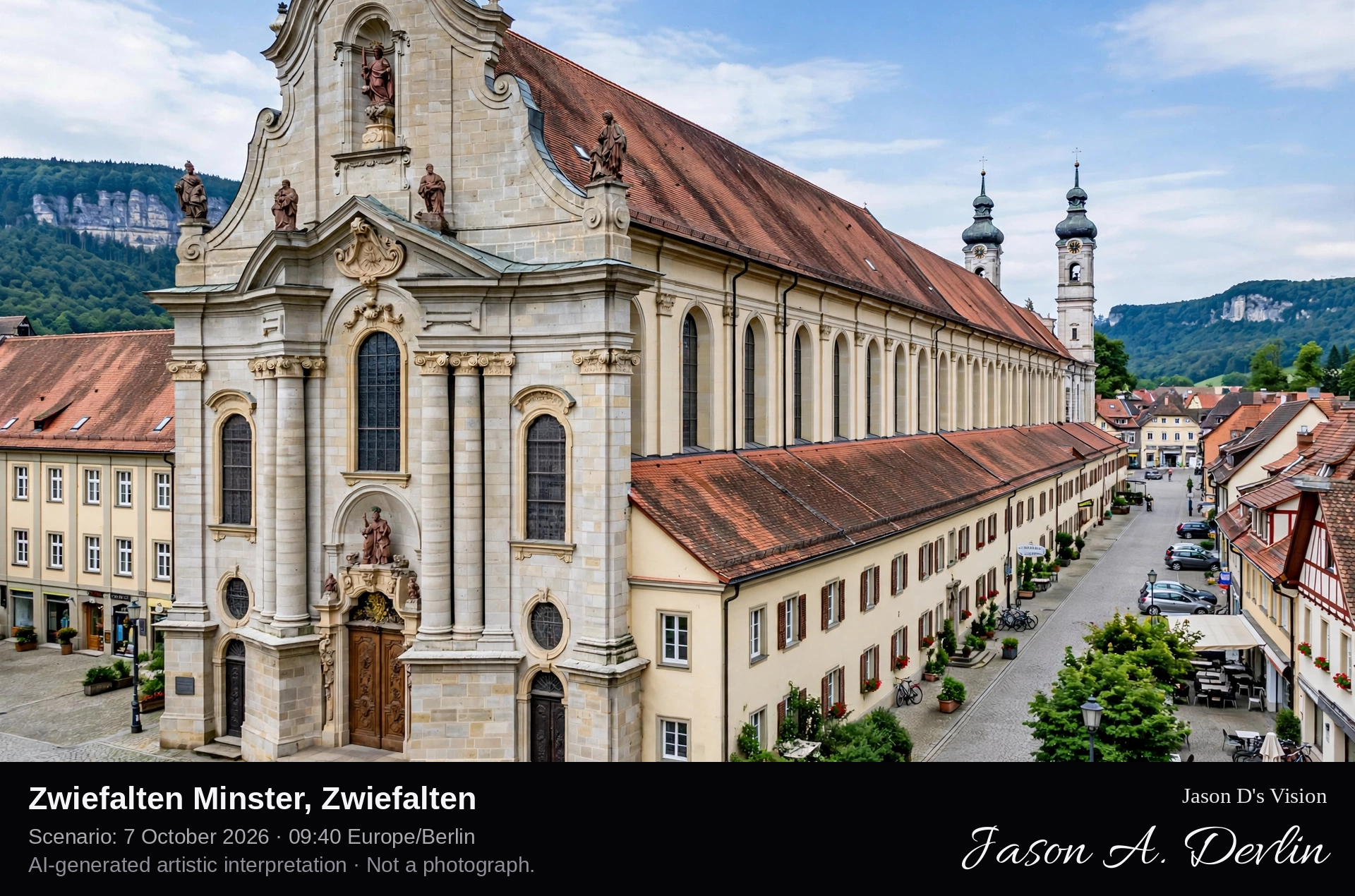
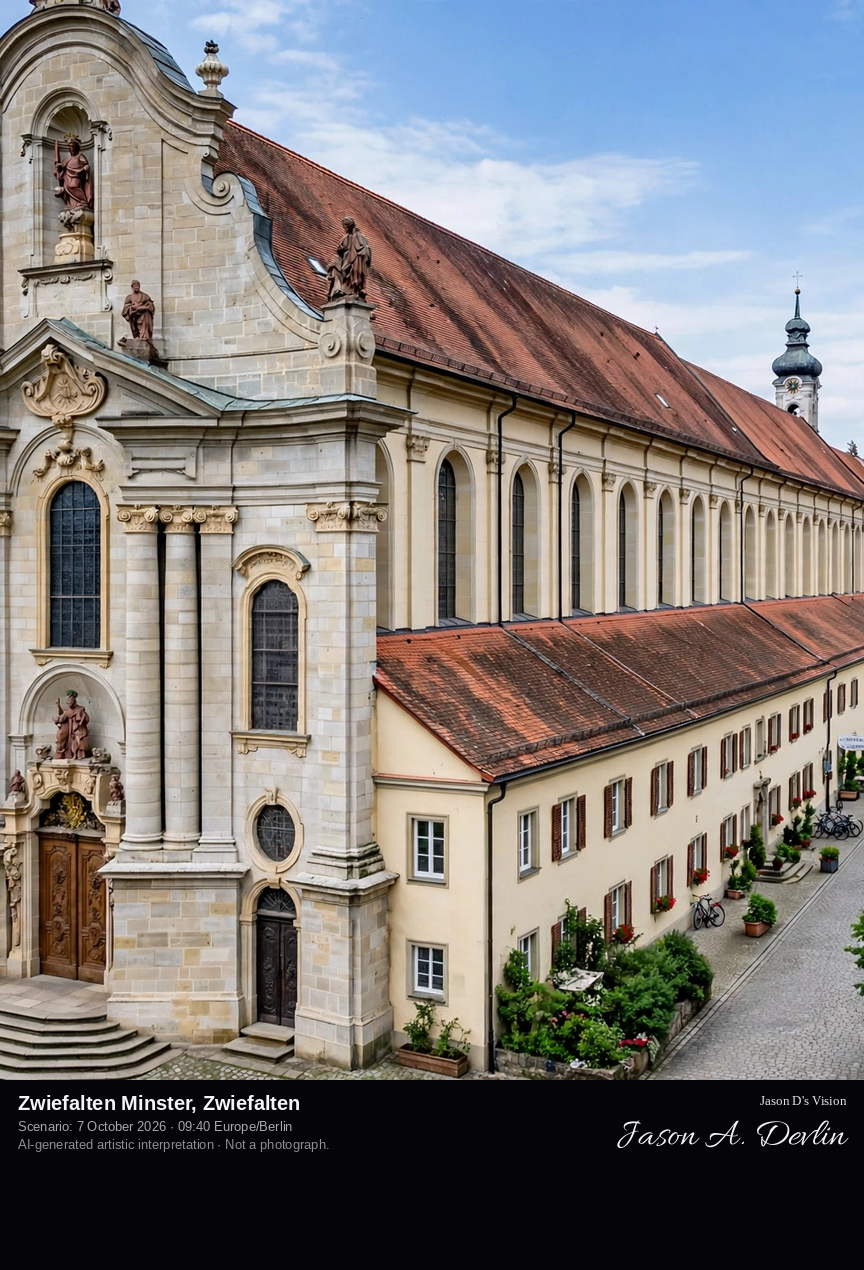
Zwiefalten's former abbey church, Our Lady's Minster, runs back from a plain west front to twin Baroque towers at its east end, its nave among the most richly frescoed in Swabia. Pilgrims have climbed to its altars since the monastery was founded in 1089.
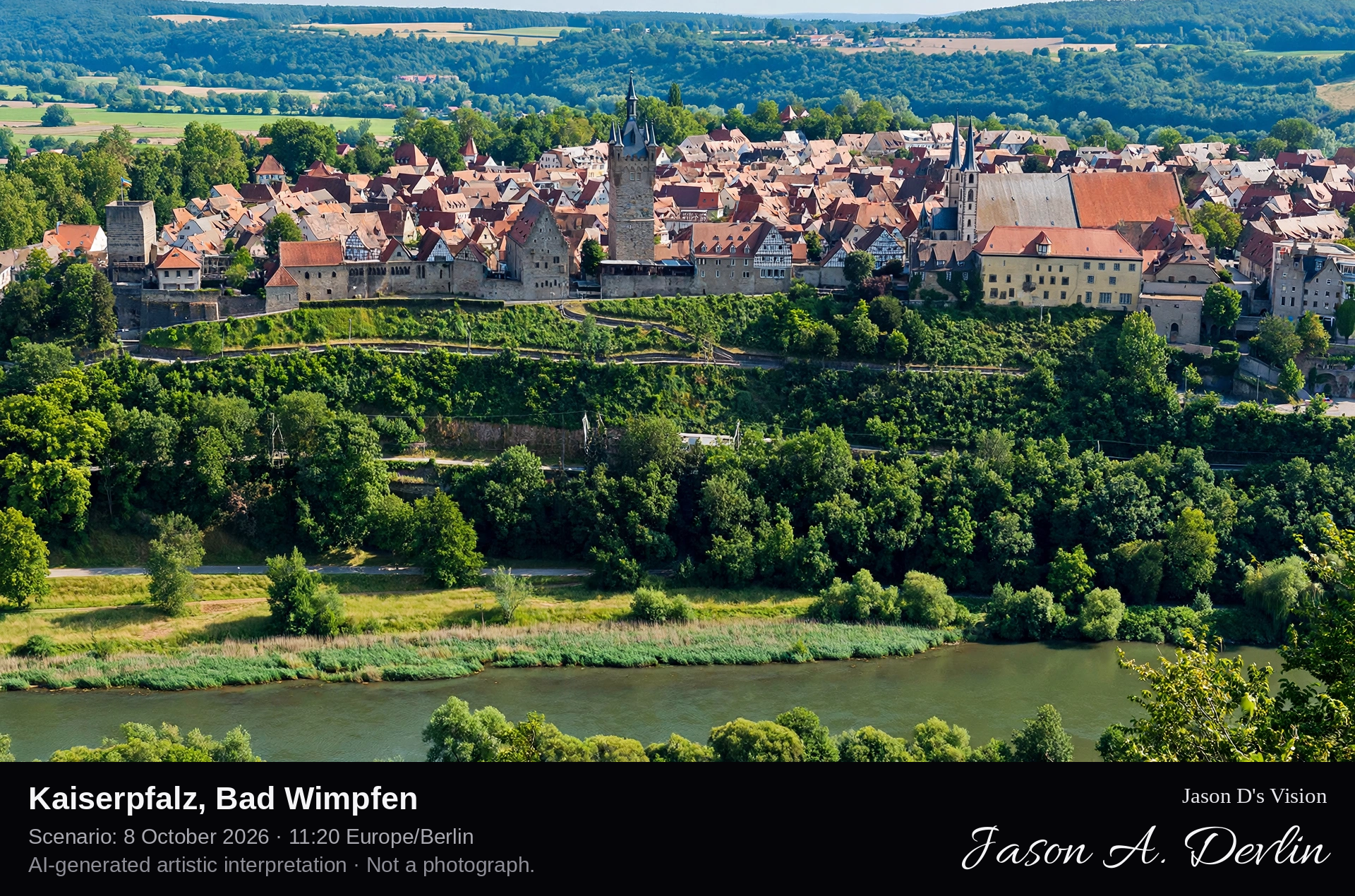
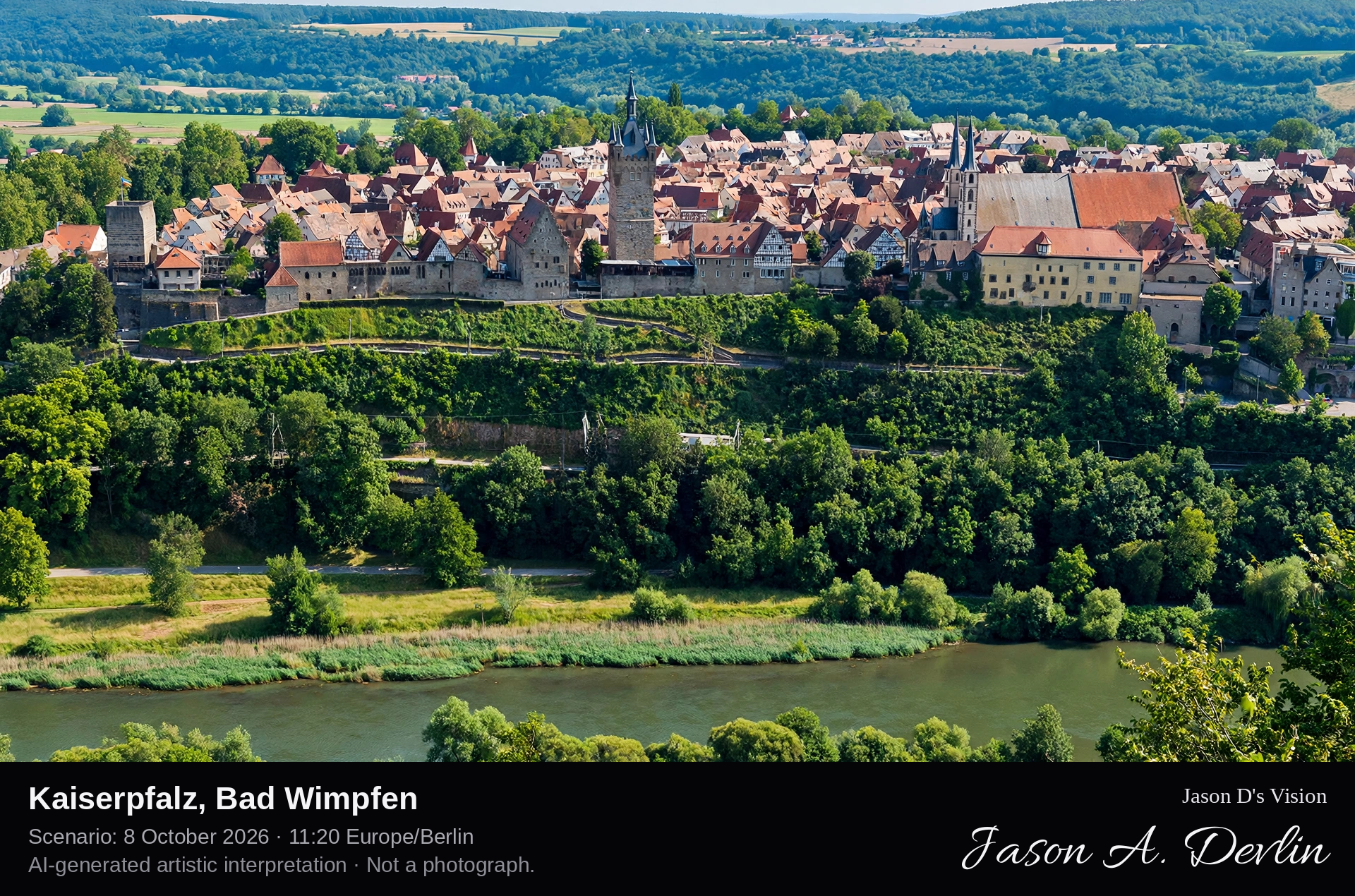
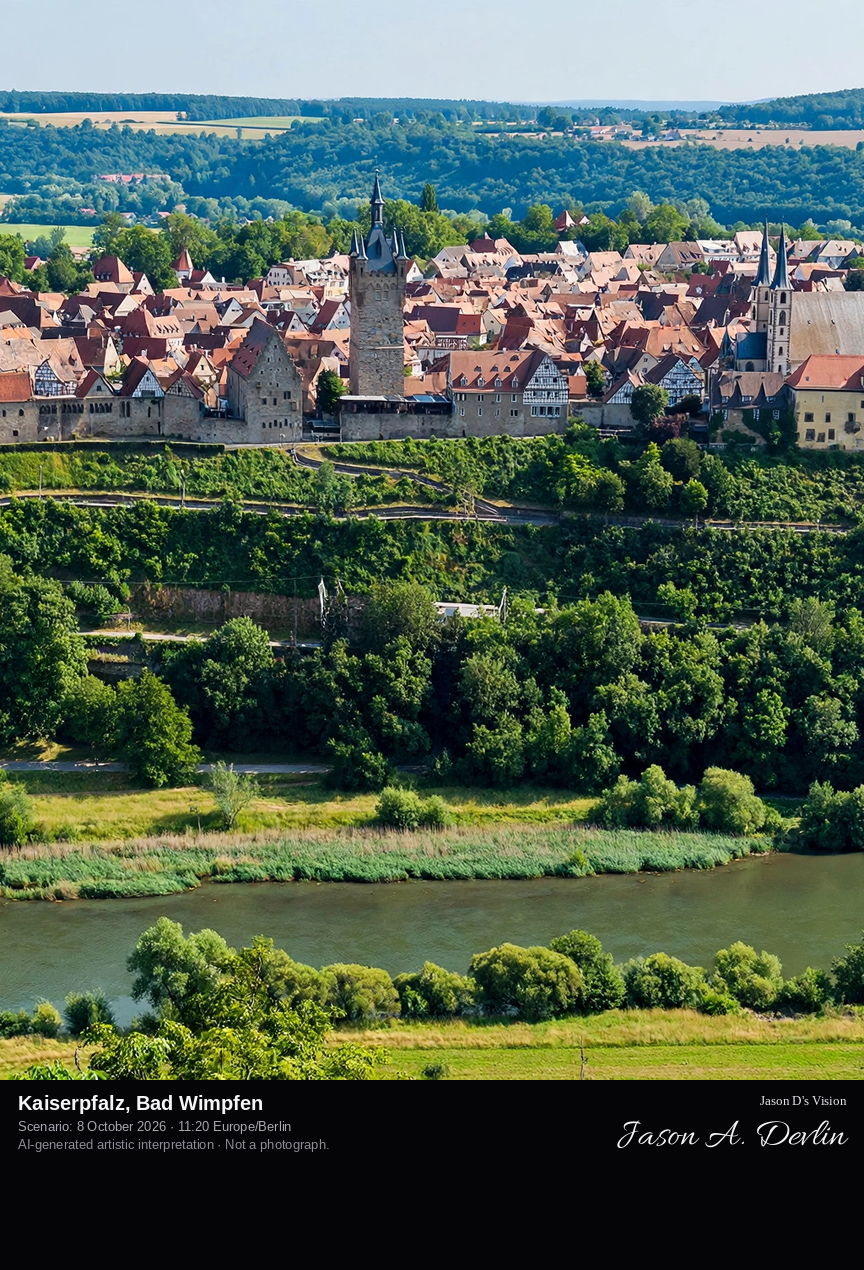
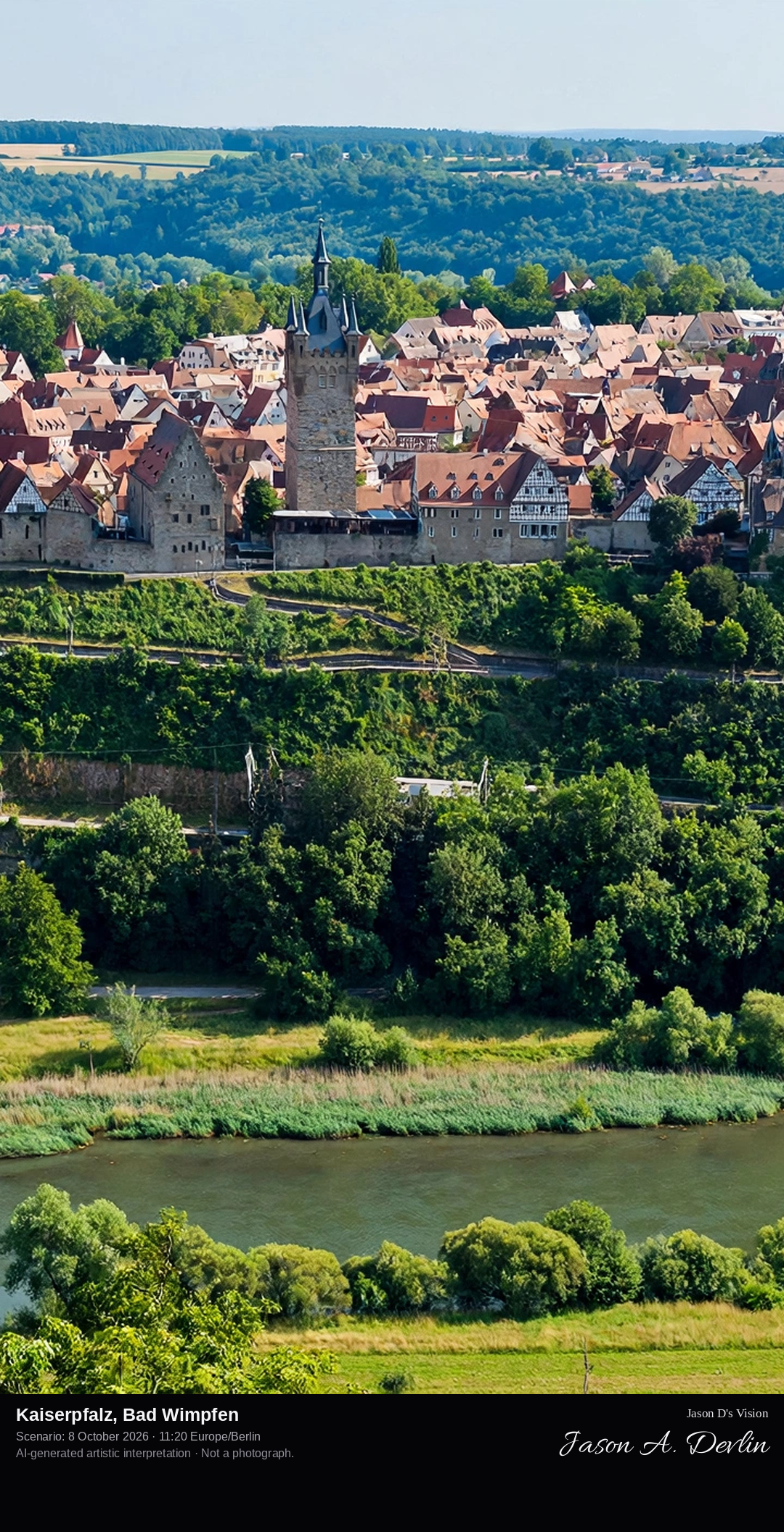
The Staufer palace buildings and Blue Tower along the ridge above the Neckar · AI-generated artistic interpretation
Bad Wimpfen preserves the largest imperial palace of the Hohenstaufen north of the Alps, raised around 1200 above the Neckar. Its Blue Tower, the old palace keep, still watches over a skyline of half-timbered lanes and red roofs.
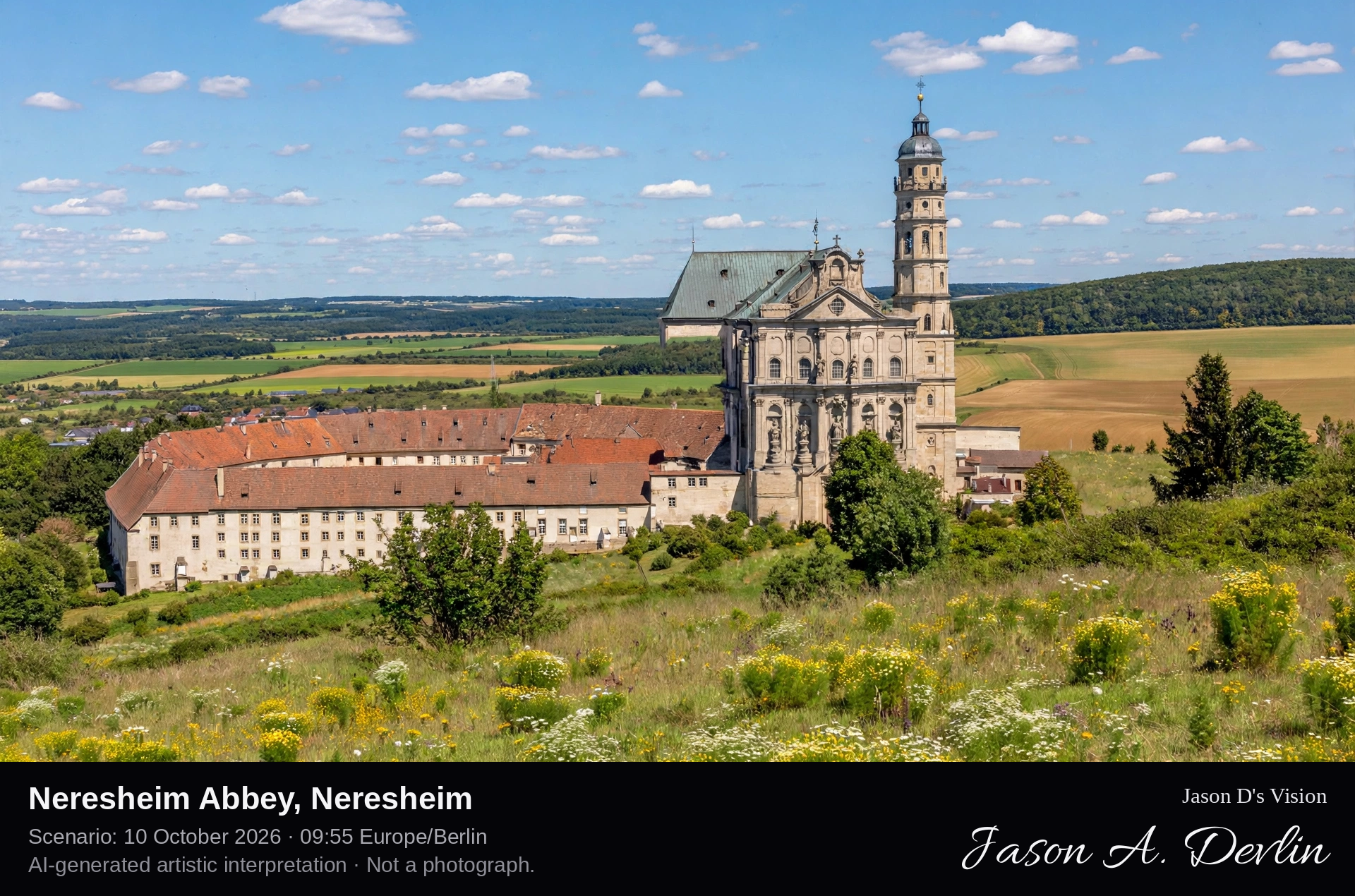
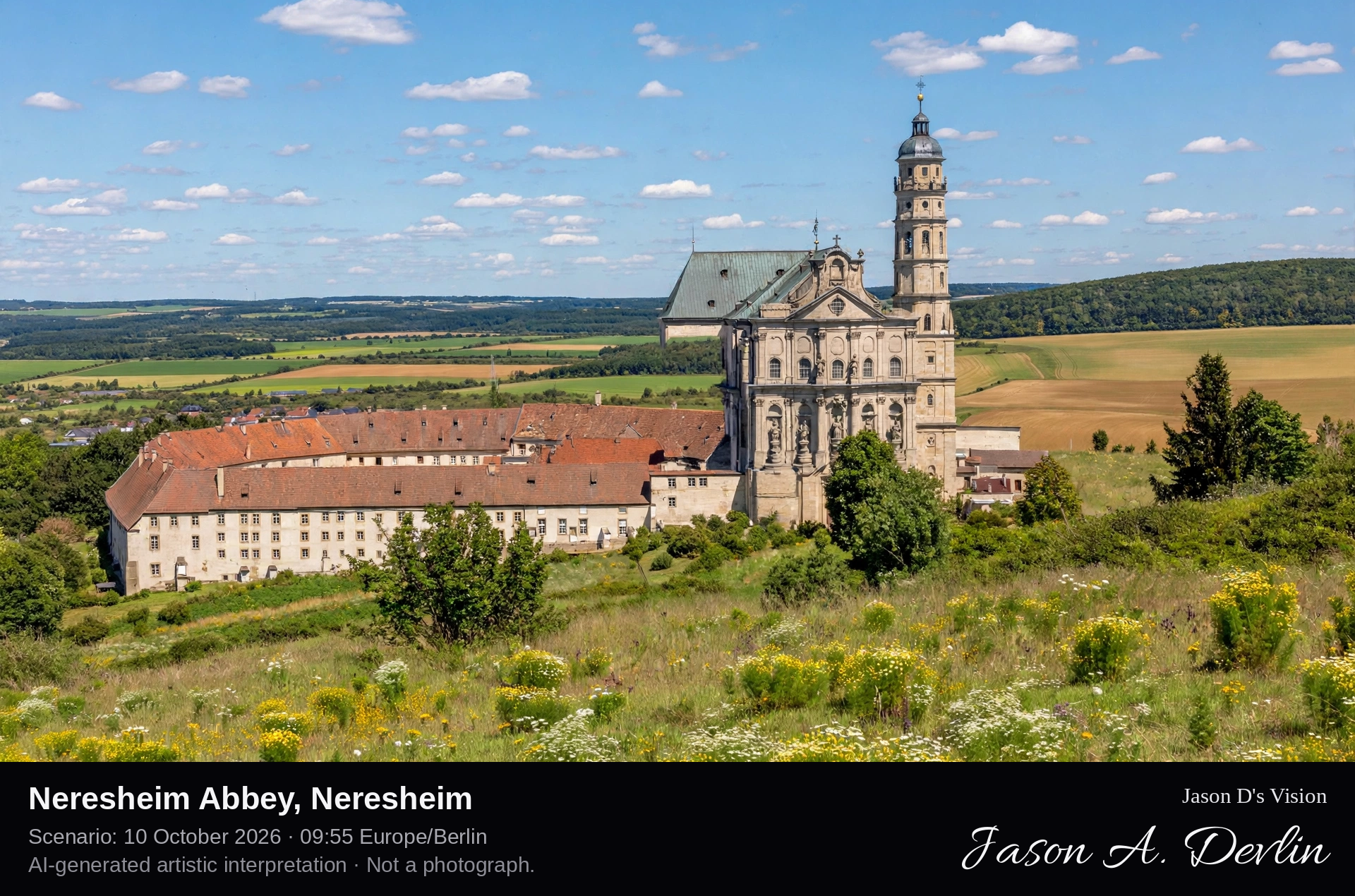
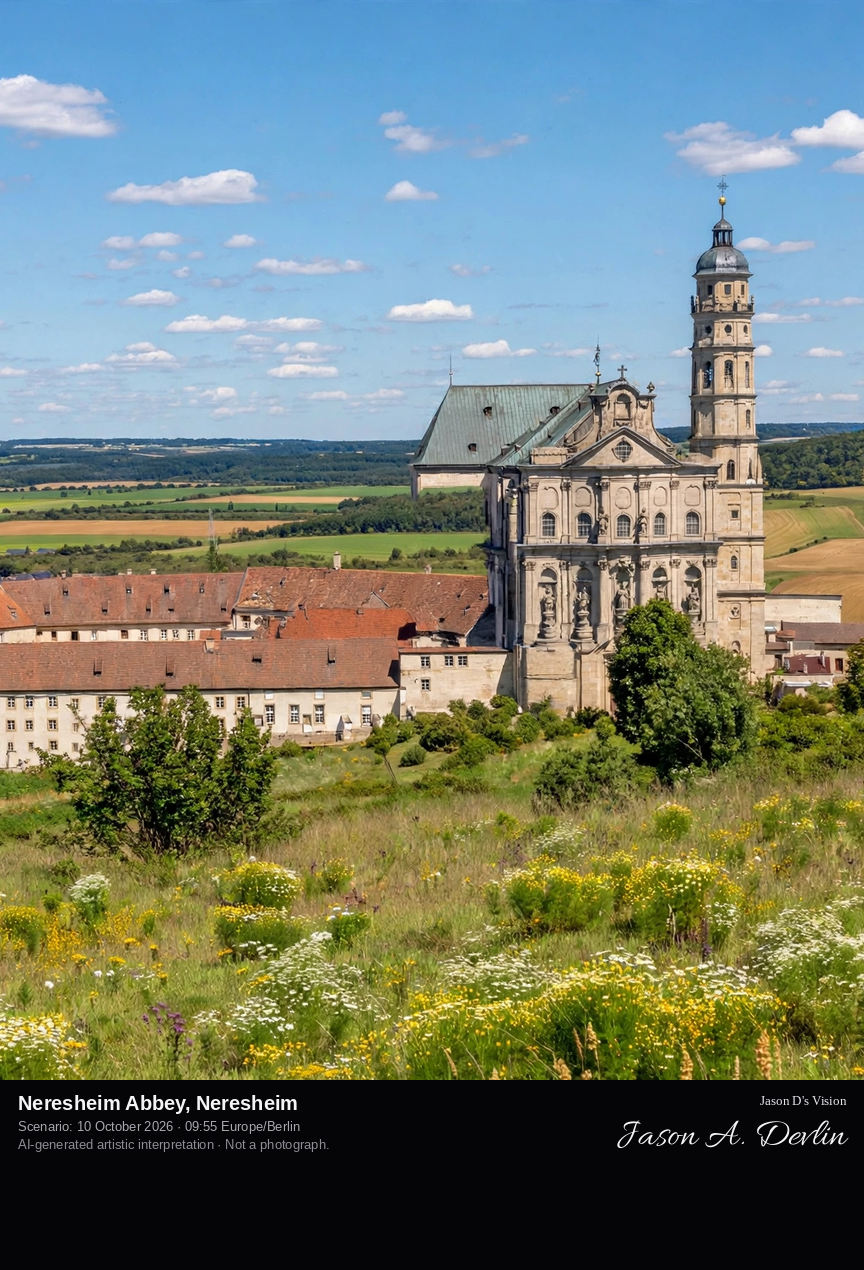
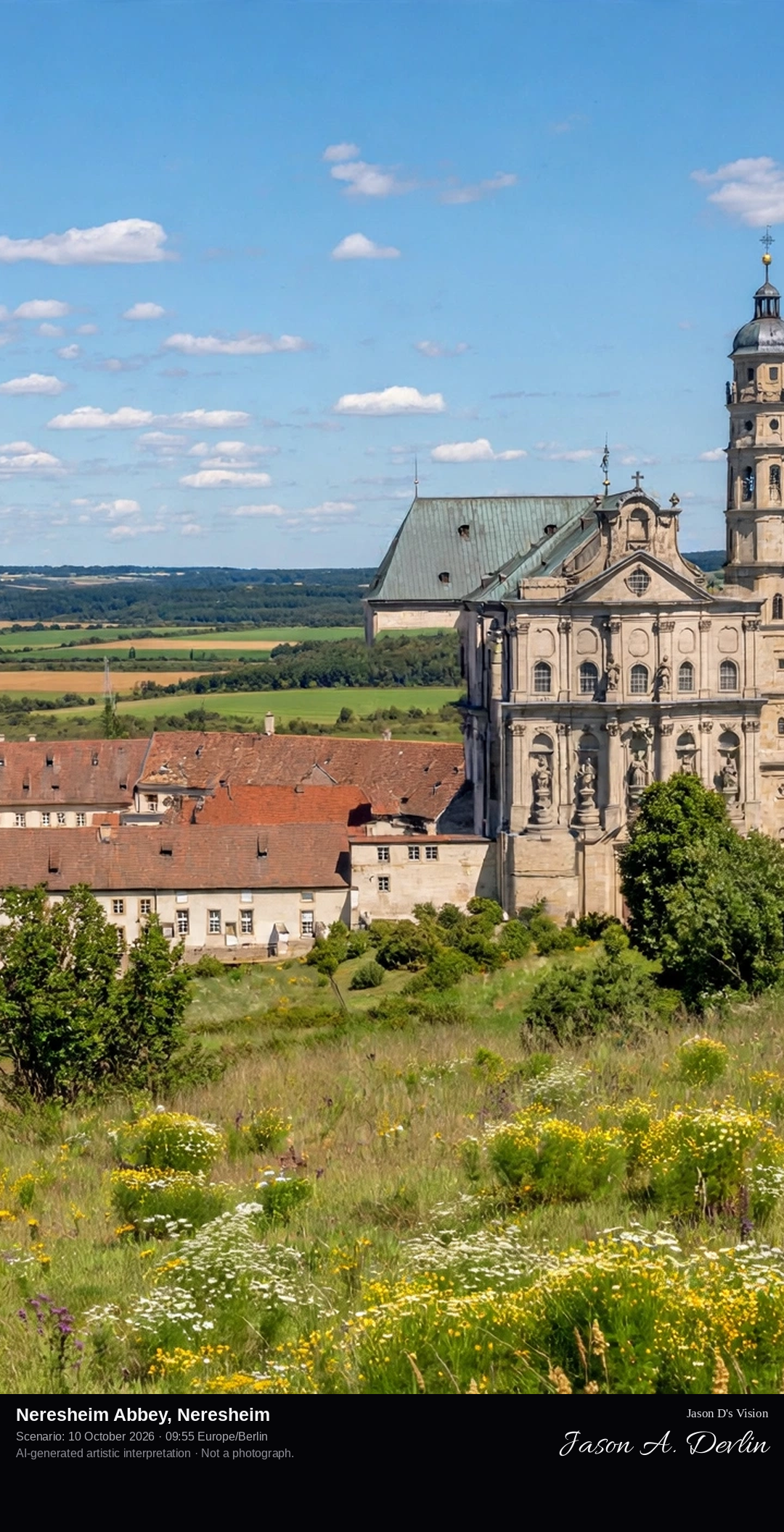
The single slender tower and long green roof of the abbey church · AI-generated artistic interpretation
Neresheim Abbey church, Balthasar Neumann's last great work, lifts a single slender tower above the sculpted facade of the long church behind it. Inside, Martin Knoller's ceiling frescoes flood the pale hall with light above the Härtsfeld plateau.
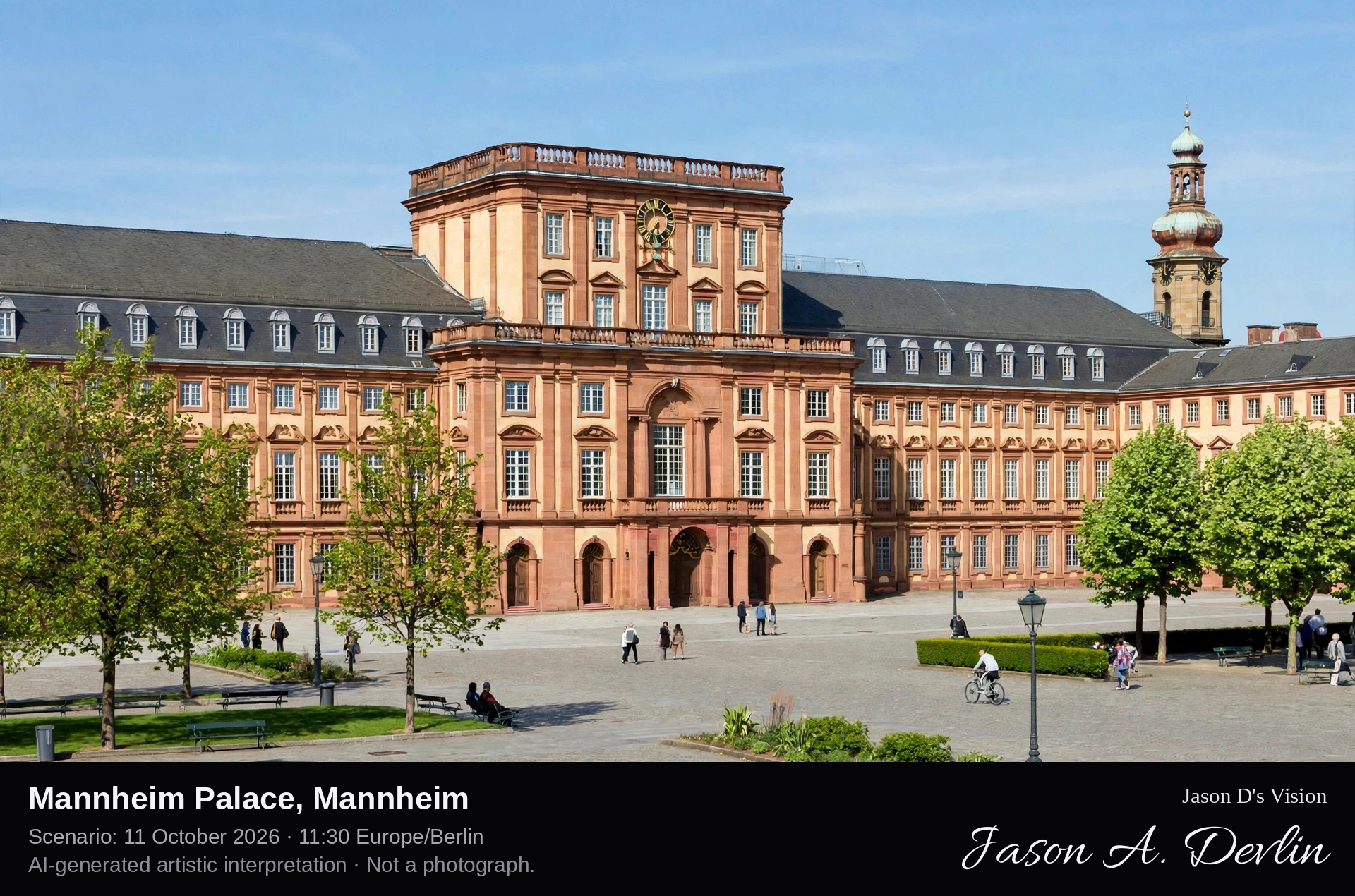
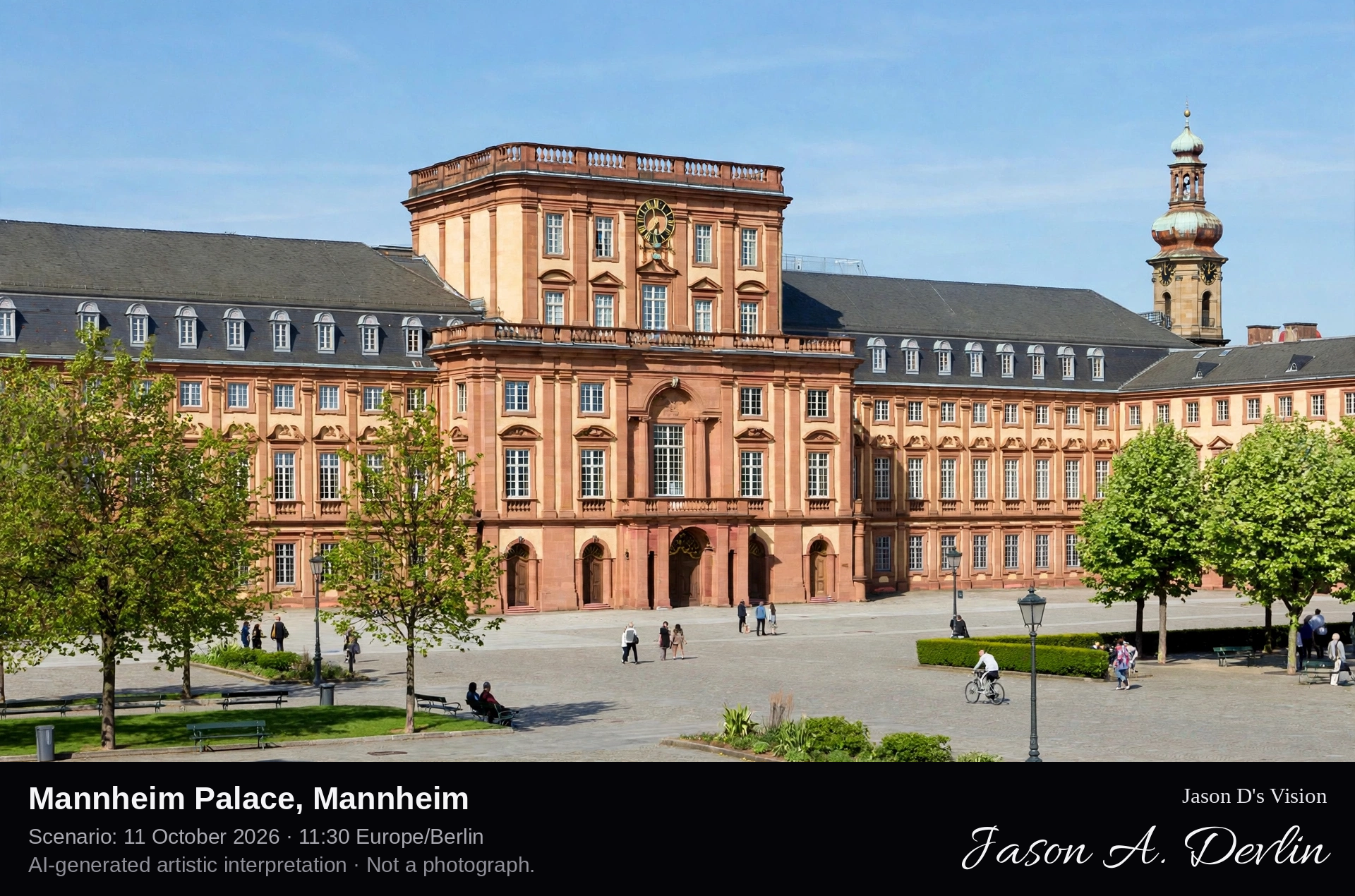
The immense Baroque palace front closing the city grid · AI-generated artistic interpretation
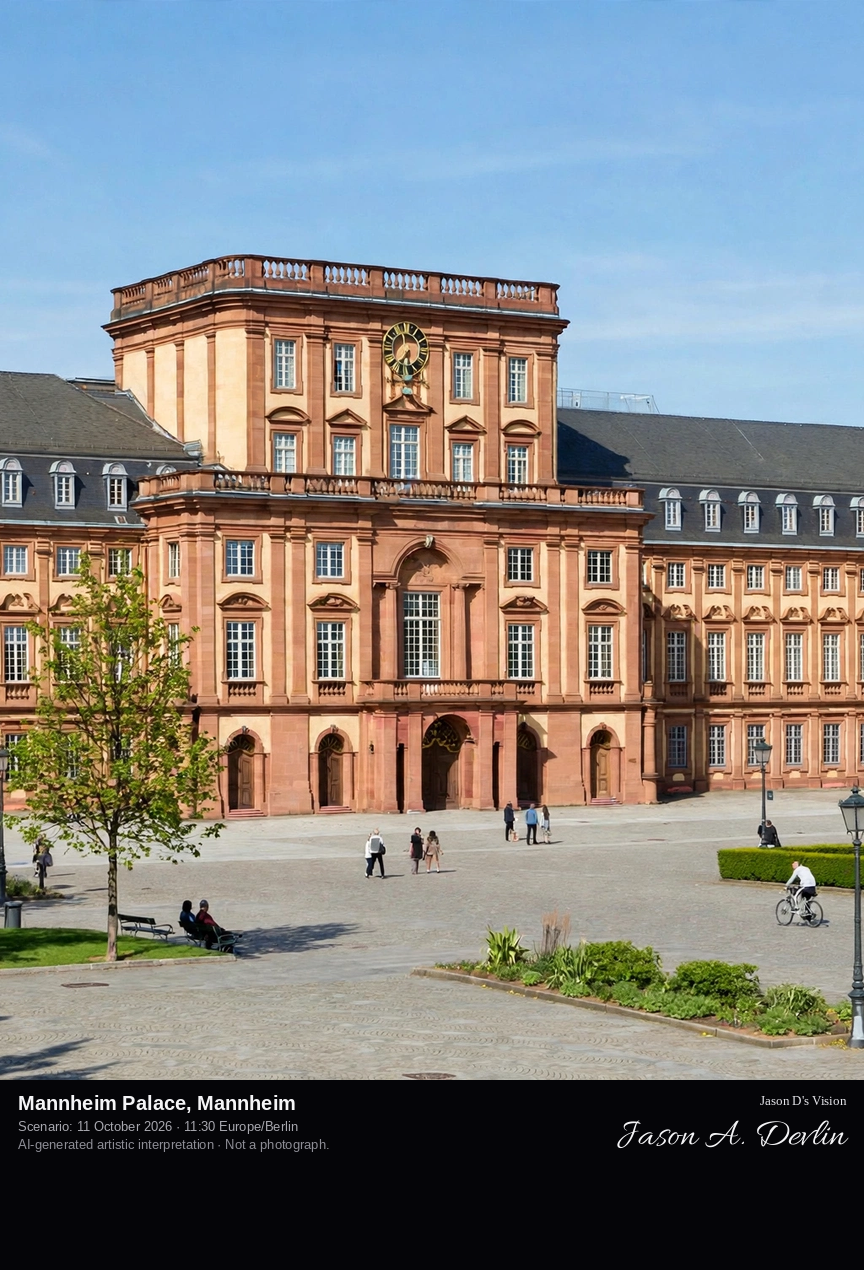
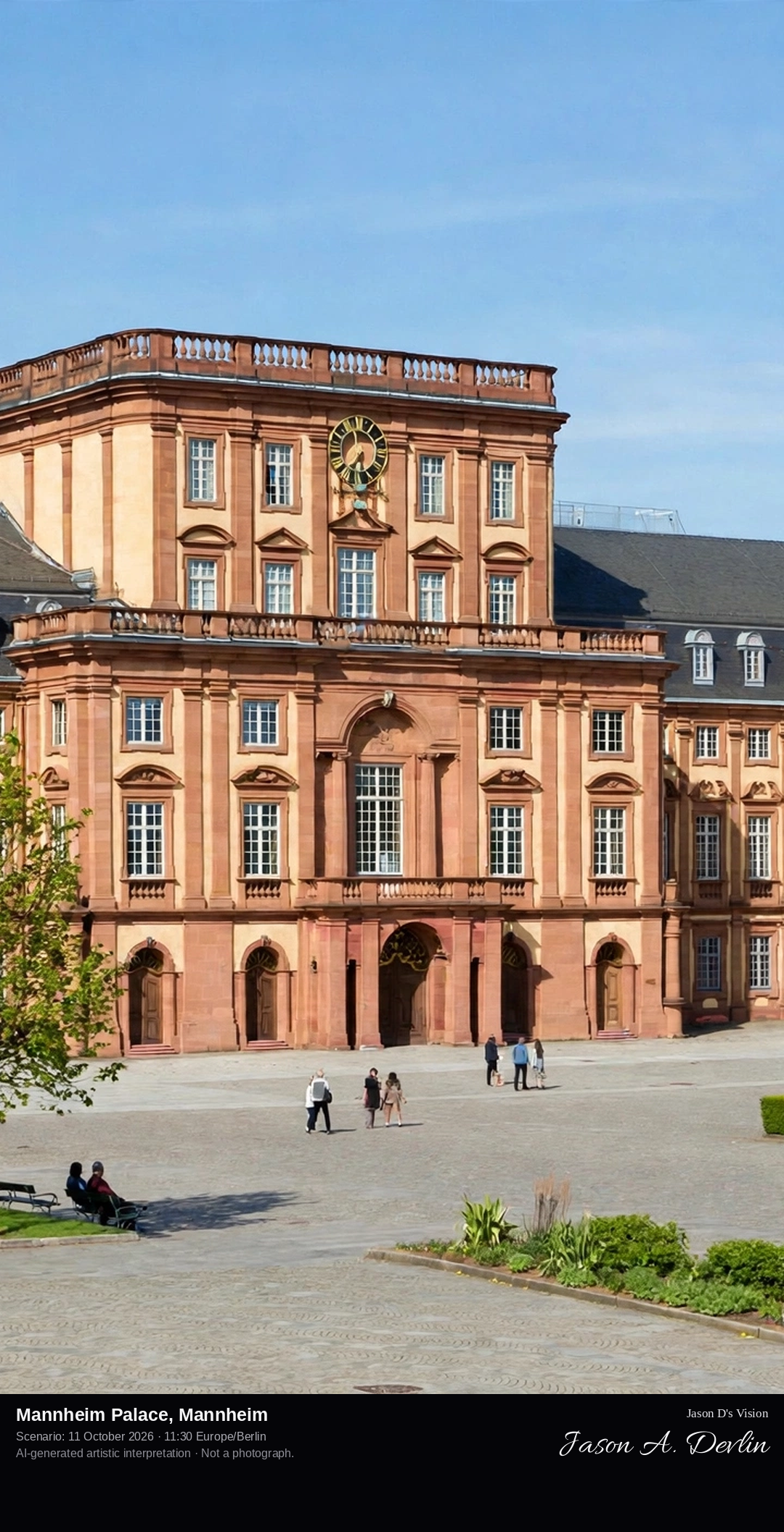
Mannheim's Baroque palace stretches more than 400 metres along the city grid, one of the largest palace complexes in Europe. Built from 1720 for the Electors Palatine behind its long sandstone facade, it houses the university today.
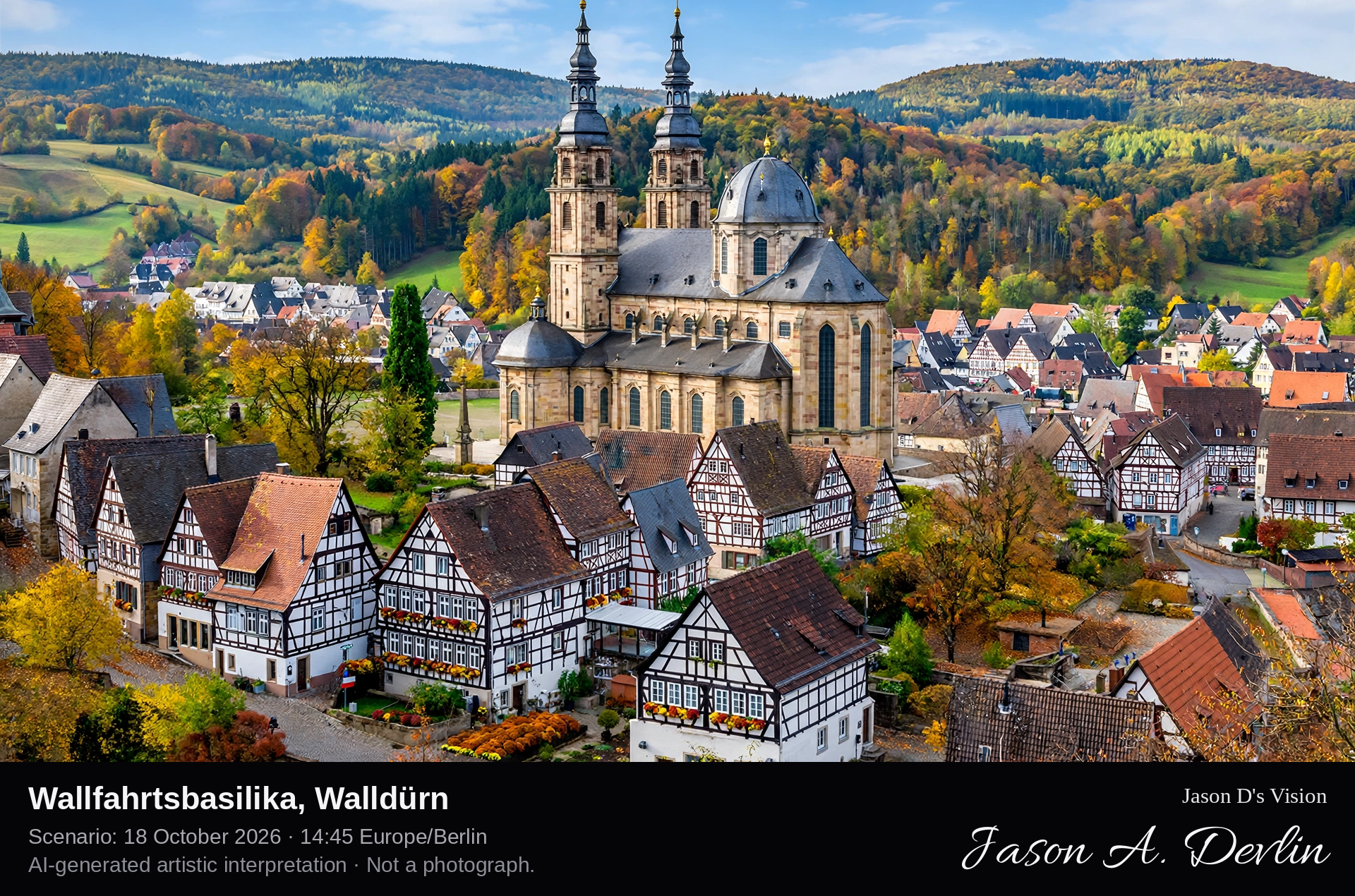
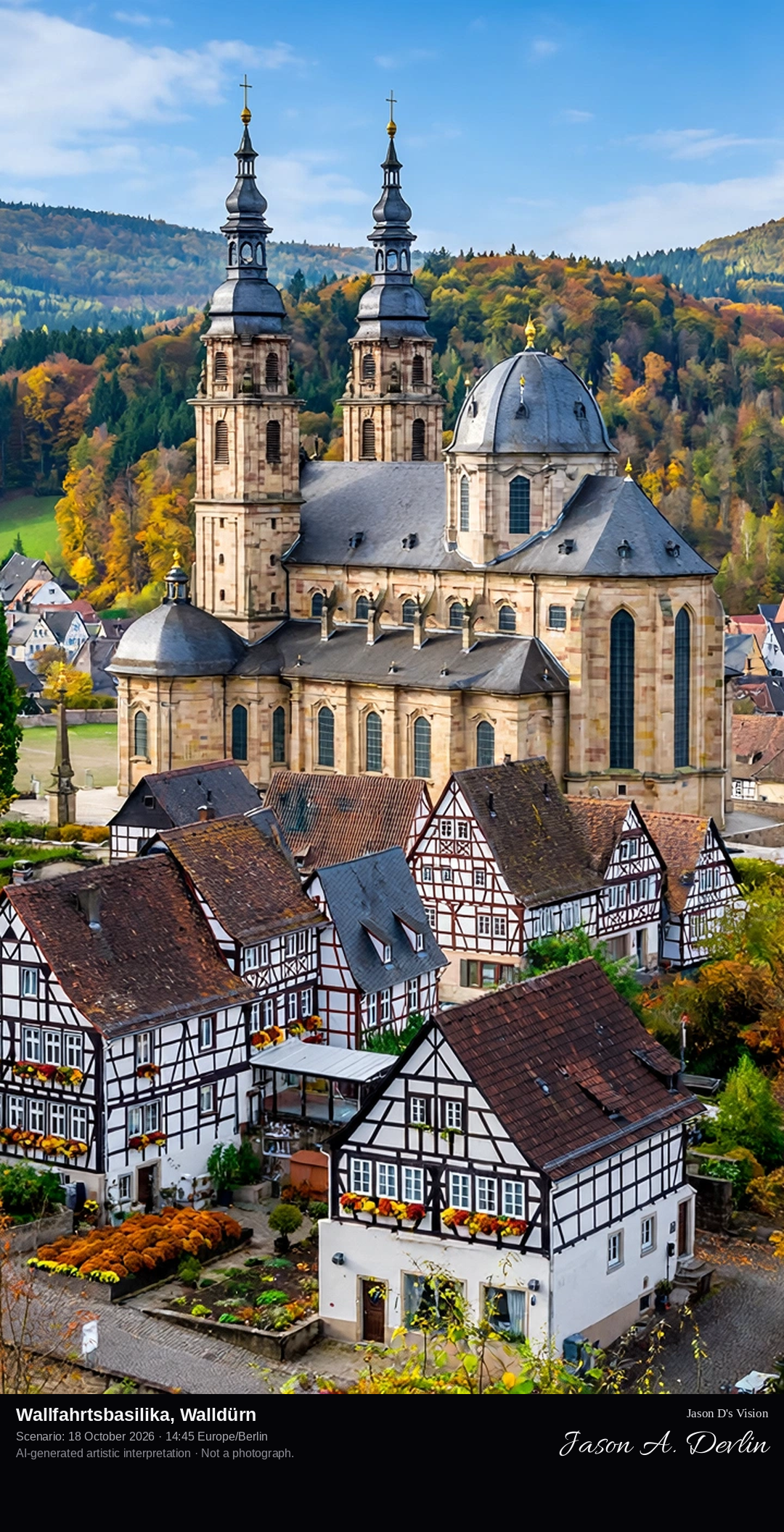
Twin-towered basilica above the half-timbered old town · AI-generated artistic interpretation
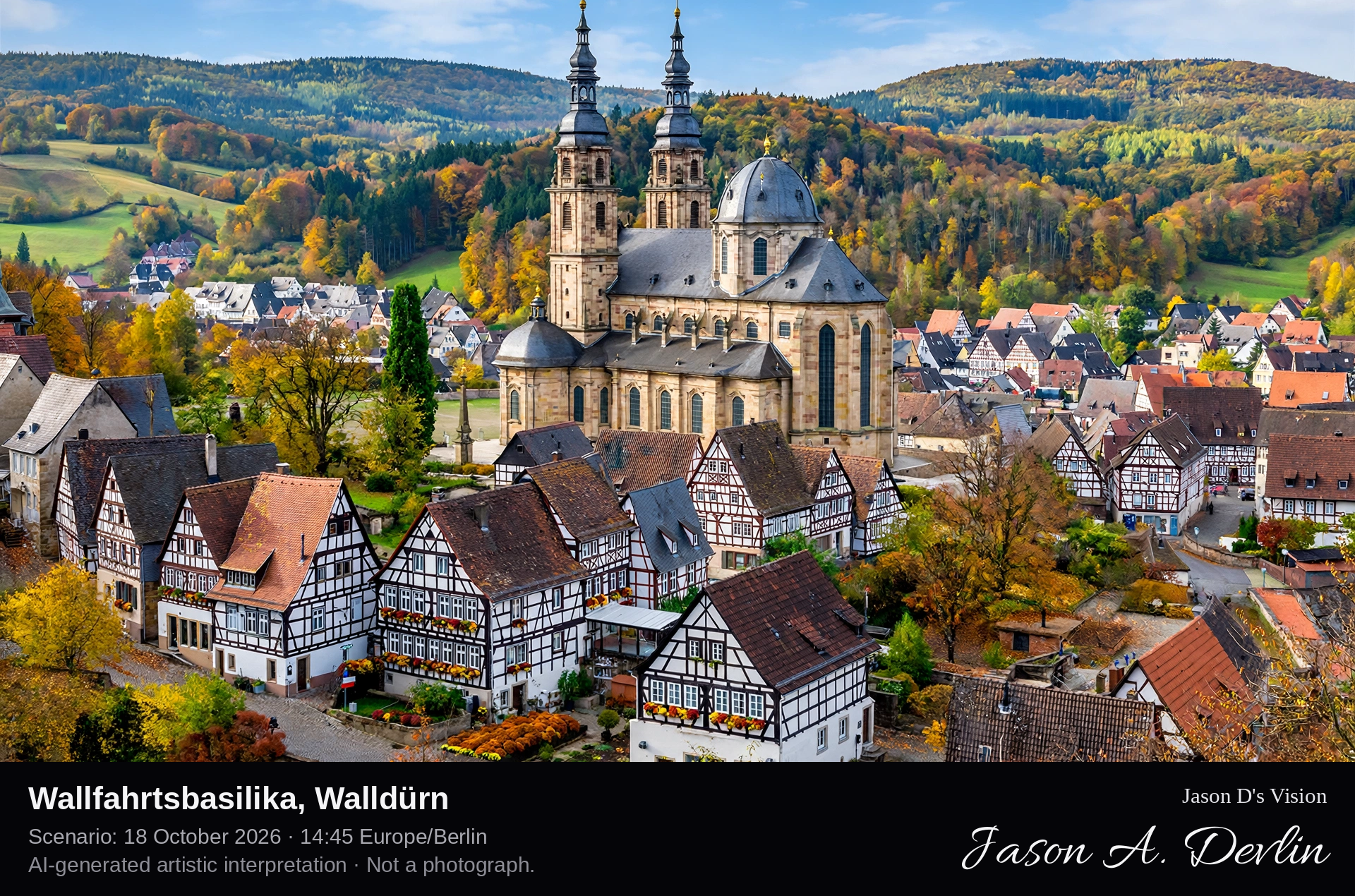
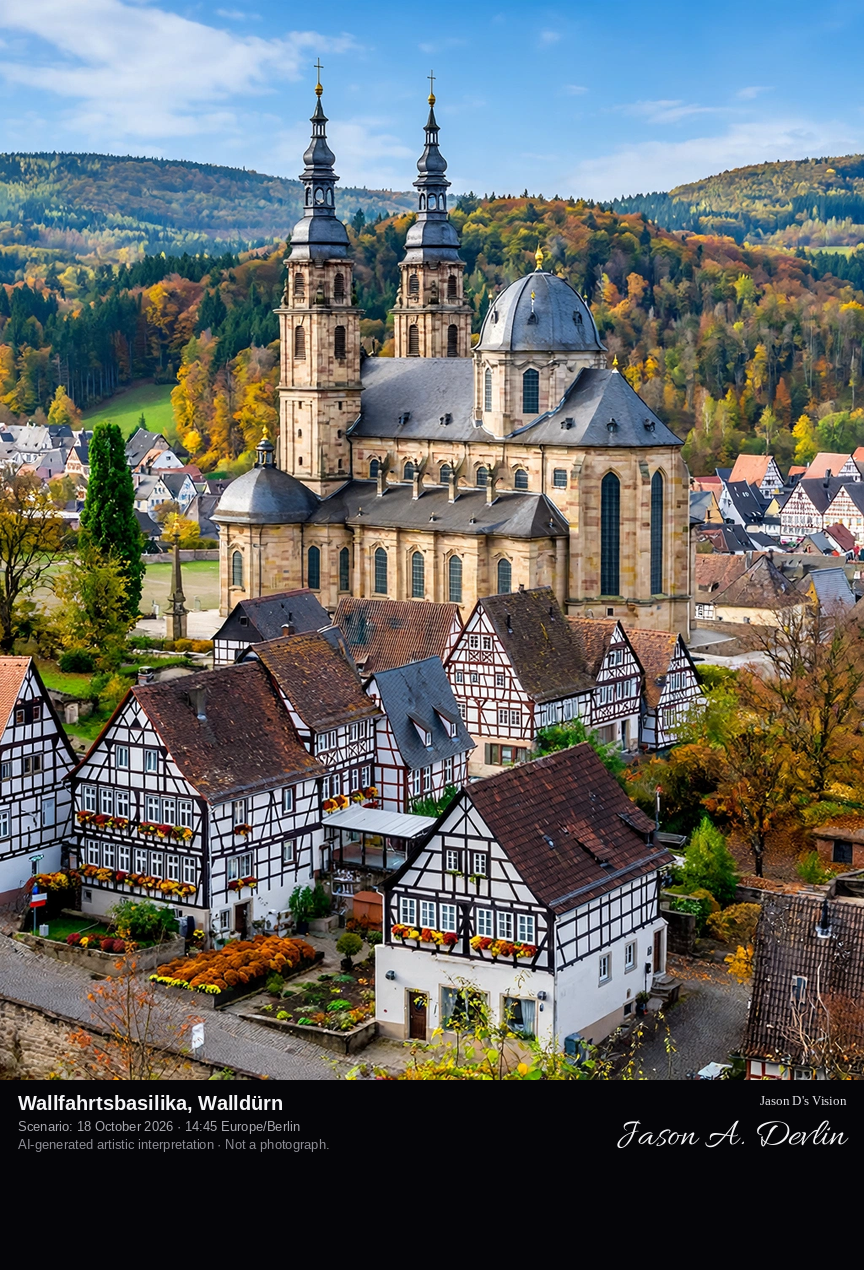
The pilgrimage basilica of St Georg in Walldürn is one of the oldest eucharistic pilgrimage sites in the country, drawing pilgrims to the Holy Blood relic since the fourteenth century. Built of red sandstone, the Baroque church raises two towers above the half-timbered houses of this Fachwerkstrasse town. The annual Holy Blood pilgrimage remains the defining event of the town year.
Every image in Jason D’s Vision is free to use for any purpose — personal or commercial. No credit is required. If you’d like to credit, ‘Jason D’s Vision’ is appreciated, but it’s entirely your choice.
Jason D’s Vision waives its own rights in these images. This doesn’t waive anyone else’s rights: if an image happens to include a trademark, logo, or other third-party material, those rights still belong to their owners. All images are AI-generated artistic interpretations, not photographs, and use of an image doesn’t imply endorsement by Jason D’s Vision.